AB 2936: Higher Education Reconciliation Act.
- Session Year: 2023-2024
- House: Assembly
- Latest Version Date: 2024-09-05
Current Status:
Failed
(2024-09-28: Vetoed by Governor.)
Introduced
In Committee
First Chamber
In Committee
Second Chamber
Enacted
Existing law establishes the California Community Colleges, under the administration of the Board of Governors of the California Community Colleges, the California State University, under the administration of the Trustees of the California State University, and the University of California, under the administration of the Regents of the University of California, as the segments of public postsecondary education in this state.
This bill would require the California State University, and request the University of California, on or before July 1, 2026, and, within 18 months of an appropriation by the Legislature, require the California Community Colleges, to develop and implement, a systemwide and campus-level reconciliation master plan for use on each of their respective campuses to respond to and address cultural and political conflicts that arise on campus, as provided. The bill would require the California Community Colleges and the California State University, and request the University of California, to use the recommendations contained in the report submitted by their respective stakeholder workgroups, convened as described below, as a basis for the development of the reconciliation master plan, as provided.
This bill would require the Chancellor of the California State University, and request the President of the University of California, on or before July 1, 2025, and within 6 months of an appropriation by the Legislature, require the Chancellor of the California Community Colleges, to convene stakeholder workgroups in their respective segments that include representatives from specified stakeholders, including faculty, staff, and students. The bill would require each stakeholder workgroup to submit to the Legislature and the board president or chancellor of its respective system 9 months after the first meeting of the stakeholder workgroup a report that includes recommendations related to responding to cultural and political conflicts that arise, with the goal of promoting reconciliation on each of its respective campuses. In preparing this report, the bill would require each stakeholder workgroup, at a minimum, to evaluate and report on existing systemwide and campus policies, procedures, and processes regarding cultural and political conflicts.
To the extent the bill would impose additional duties on community college districts, the bill would impose a state-mandated local program.
The California Constitution requires the state to reimburse local agencies and school districts for certain costs mandated by the state. Statutory provisions establish procedures for making that reimbursement.
This bill would provide that, if the Commission on State Mandates determines that the bill contains costs mandated by the state, reimbursement for those costs shall be made pursuant to the statutory provisions noted above.
Existing law establishes the California Community Colleges, under the administration of the Board of Governors of the California Community Colleges, the California State University, under the administration of the Trustees of the California State University, and the University of California, under the administration of the Regents of the University of California, as the segments of public postsecondary education in this state.
This bill would require the California Community Colleges and the California State University, and request the University of California, to develop and implement, on or before July 1, 2026, and, within 18 months of an appropriation by the Legislature, require the California Community Colleges, to develop and implement, a systemwide and campus-level reconciliation master plan for use on each of their respective campuses to respond to and address cultural and political conflicts that arise on campus, as provided. The bill would require the California Community Colleges and the California State University, and request the University of California, to use the recommendations contained in the report submitted by their respective stakeholder workgroups workgroups, convened as described below below, as a basis for the development of the reconciliation master plan, as provided.
This bill would require the Chancellor of the California Community Colleges and the Chancellor of the California State University, and request the President of the University of California, on or before July 1, 2025, and within 6 months of an appropriation by the Legislature, require the Chancellor of the California Community Colleges, to convene stakeholder workgroups in their respective segments that include representatives from specified stakeholders, including faculty, staff, and students. The bill would require each stakeholder workgroup to submit to the Legislature and the board president of its respective system 9 months after the first meeting of the stakeholder workgroup a report that includes recommendations related to responding to cultural and political conflicts that arise, with the goal of promoting reconciliation on each of its respective campuses. In preparing this report, the bill would require each stakeholder workgroup, at a minimum, to evaluate and report on existing systemwide and campus policies, procedures, and processes regarding cultural and political conflicts. The bill would repeal these provisions on January 1, 2030.
To the extent the bill would impose additional duties on community college districts, the bill would impose a state-mandated local program.
The California Constitution requires the state to reimburse local agencies and school districts for certain costs mandated by the state. Statutory provisions establish procedures for making that reimbursement.
This bill would provide that, if the Commission on State Mandates determines that the bill contains costs mandated by the state, reimbursement for those costs shall be made pursuant to the statutory provisions noted above.
Existing law establishes the California Community Colleges, under the administration of the Board of Governors of the California Community Colleges, the California State University, under the administration of the Trustees of the California State University, and the University of California, under the administration of the Regents of the University of California, as the segments of public postsecondary education in this state.
This bill would require the California Community Colleges and the California State University, and request the University of California, to develop a and implement, on or before July 1, 2026, a systemwide and campus-level reconciliation master plan for use on each of their respective campuses to respond to and address cultural and political conflicts that arise on campus. campus, as provided. The bill would require the plan to ensure that students have a forum to be seen, have their voices heard, and feel safe. California Community Colleges and the California State University, and request the University of California, to use the recommendations contained in the report submitted by their respective stakeholder workgroups convened as described below as a basis for the development of the reconciliation master plan, as provided.
This bill would require the Chancellor of the California Community Colleges and the Chancellor of the California State University, and request the President of the University of California, on or before July 1, 2025, to convene stakeholder workgroups in their respective segments that include representatives from specified stakeholders, including faculty, staff, and students. The bill would require each stakeholder workgroup to submit to the Legislature and the board president of its respective system 9 months after the first meeting of the stakeholder workgroup a report that includes recommendations related to responding to cultural and political conflicts that arise, with the goal of promoting reconciliation on each of its respective campuses. In preparing this report, the bill would require each stakeholder workgroup, at a minimum, to evaluate and report on (1) existing systemwide and campus policies, procedures, and processes regarding cultural and political conflicts, and (2) systemwide and campus-level plans for responding to cultural and political conflicts that arise on campuses, as provided. conflicts. The bill would repeal these provisions on January 1, 2030.
To the extent the bill would impose additional duties on community college districts, the bill would impose a state-mandated local program.
The California Constitution requires the state to reimburse local agencies and school districts for certain costs mandated by the state. Statutory provisions establish procedures for making that reimbursement.
This bill would provide that, if the Commission on State Mandates determines that the bill contains costs mandated by the state, reimbursement for those costs shall be made pursuant to the statutory provisions noted above.
Existing law establishes the California Community Colleges, under the administration of the Board of Governors of the California Community Colleges, the California State University, under the administration of the Trustees of the California State University, and the University of California, under the administration of the Regents of the University of California, as the segments of public postsecondary education in this state.
This bill would require the California Community Colleges and the California State University, and request the University of California, to develop a reconciliation master plan for use on each of their respective campuses to address cultural and political conflicts that arise on campus. The bill would require the plan to ensure that students have a forum to be seen, have their voices heard, and feel safe.
This bill would require the Chancellor of the California Community Colleges and the Chancellor of the California State University, and request the President of the University of California, on or before July 1, 2025, to convene stakeholder workgroups in their respective segments that include representatives from specified stakeholders, including faculty, staff, and students. The bill would require each stakeholder workgroup to submit to the Legislature and the board president of its respective system 9 months after the first meeting of the stakeholder workgroup a report that includes recommendations related to responding to cultural and political conflicts that arise, with the goal of promoting reconciliation on each of its respective campuses. In preparing this report, the bill would require each stakeholder workgroup, at a minimum, to evaluate and report on (1) existing systemwide and campus policies, procedures, and processes regarding cultural and political conflicts, and (2) systemwide and campus-level plans for responding to cultural and political conflicts that arise on campuses, as provided. The bill would repeal its these provisions on January 1, 2030. To
To the extent this the bill would impose additional duties on community college districts, the bill would impose a state-mandated local program.
The California Constitution requires the state to reimburse local agencies and school districts for certain costs mandated by the state. Statutory provisions establish procedures for making that reimbursement.
This bill would provide that, if the Commission on State Mandates determines that the bill contains costs mandated by the state, reimbursement for those costs shall be made pursuant to the statutory provisions noted above.
Existing law establishes the California Community Colleges, under the administration of the Board of Governors of the California Community Colleges, the California State University, under the administration of the Trustees of the California State University, and the University of California, under the administration of the Regents of the University of California, as the segments of public postsecondary education in this state.
This bill would require the Chancellor of the California Community Colleges and the Chancellor of the California State University, and request the President of the University of California, on or before July 1, 2025, to convene stakeholder workgroups in their respective segments that include representatives from specified stakeholders, including faculty, staff, and students. The bill would require each stakeholder workgroup to submit to the Legislature and the board president of its respective system 9 months after the first meeting of the stakeholder workgroup a report that includes recommendations to promote reconciliation on each of its respective campuses, specifically in response related to responding to cultural and political conflicts that arise. arise, with the goal of promoting reconciliation on each of its respective campuses. In preparing this report, the bill would require each stakeholder workgroup, at a minimum, to evaluate and report on (1) existing systemwide and campus policies, procedures, and processes regarding cultural and political conflicts, and (2) alternative dispute resolution options to ensure that students have a forum to be seen, have their voices heard, and feel safe. systemwide and campus-level plans for responding to cultural and political conflicts that arise on campuses, as provided. The bill would repeal its provisions on January 1, 2030. To the extent this would impose additional duties on community college districts, the bill would impose a state-mandated local program.
The California Constitution requires the state to reimburse local agencies and school districts for certain costs mandated by the state. Statutory provisions establish procedures for making that reimbursement.
This bill would provide that, if the Commission on State Mandates determines that the bill contains costs mandated by the state, reimbursement for those costs shall be made pursuant to the statutory provisions noted above.
Existing law establishes the California Community Colleges, under the administration of the Board of Governors of the California Community Colleges, the California State University, under the administration of the Trustees of the California State University, and the University of California, under the administration of the Regents of the University of California, as the segments of public postsecondary education in this state.
This bill would require the California Community Colleges and the California State University, and request the University of California, to develop a reconciliation master plan for use on each of their respective campuses to address cultural and political conflicts that arise on campus. The bill would require the plan to ensure that students have a forum to be seen, have their voices heard, and feel safe. By imposing new requirements on community college districts, the bill would impose a state-mandated local program.This bill would require the Chancellor of the California Community Colleges and the Chancellor of the California State University, and request the President of the University of California, on or before July 1, 2025, to convene stakeholder workgroups in their respective segments that include representatives from specified stakeholders, including faculty, staff, and students. The bill would require each stakeholder workgroup to submit to the Legislature and the board president of its respective system 9 months after the first meeting of the stakeholder workgroup a report that includes recommendations to promote reconciliation on each of its respective campuses, specifically in response to cultural and political conflicts that arise. In preparing this report, the bill would require each stakeholder workgroup, at a minimum, to evaluate and report on (1) existing systemwide and campus policies, procedures, and processes regarding cultural and political conflicts, and (2) alternative dispute resolution options to ensure that students have a forum to be seen, have their voices heard, and feel safe. The bill would repeal its provisions on January 1, 2030. To the extent this would impose additional duties on community college districts, the bill would impose a state-mandated local program.
The California Constitution requires the state to reimburse local agencies and school districts for certain costs mandated by the state. Statutory provisions establish procedures for making that reimbursement.This bill would provide that, if the Commission on State Mandates determines that the bill contains costs mandated by the state, reimbursement for those costs shall be made pursuant to the statutory provisions noted above.Existing law establishes the California Community Colleges, under the administration of the Board of Governors of the California Community Colleges, the California State University, under the administration of the Trustees of the California State University, and the University of California, under the administration of the Regents of the University of California, as the segments of public postsecondary education in this state.
This bill would require the California Community Colleges and the California State University, and request the University of California, to develop a reconciliation master plan for use on each of their respective campuses to address cultural and political conflicts that arise on campus. The bill would require the plan to ensure that students have a forum to be seen, have their voices heard, and feel safe. By imposing new requirements on community college districts, the bill would impose a state-mandated local program.
The California Constitution requires the state to reimburse local agencies and school districts for certain costs mandated by the state. Statutory provisions establish procedures for making that reimbursement.
This bill would provide that, if the Commission on State Mandates determines that the bill contains costs mandated by the state, reimbursement for those costs shall be made pursuant to the statutory provisions noted above.
This chapter shall be known, and may be cited, as the Higher Education Reconciliation Act.
66296.(a)(1)The California State University shall, and the University of California is requested to, develop and implement, on or before July 1, 2026, a systemwide and campus-level reconciliation master plan for use on each of their respective campuses to respond to and address cultural and political conflicts that arise on campus.
(2)The plans developed pursuant to paragraph (1) shall include options for alternative dispute resolution to respond to cultural and political conflicts on campus as they arise, with an emphasis on ensuring, in the event of a cultural and political conflict, that the students have a forum to be seen, have their voices heard, and feel safe.
(b)The California State University shall, and the University of California is requested to, use the recommendations contained in the report submitted by their respective stakeholder workgroup pursuant to Section 66296.5 as a basis for the development of the reconciliation master plans.
66296.5.(a)On or before July 1, 2025, the Chancellor of the California State University shall, and the President of the University of California is requested to, convene stakeholder workgroups in their respective segments that include, but are not limited to, representatives from all of the following stakeholders:
(1)Faculty.
(2)Staff, including, but not limited to, campus health and safety personnel and campus student center personnel.
(3)Students, representing both the associated students and student organizations from a cross-section of the campus community.
(4)An individual who has expertise in Title VI of the Civil Rights Act of 1964 (Public Law 88-352) and Article 3 (commencing with Section 66270) of Chapter 4.5, or is a representative from the Civil Rights Department with expertise in Title VI of the Civil Rights Act of 1964 (Public Law 88-352) or Article 9.5 (commencing with Section 11135) of Chapter 1 of Part 1 of Division 3 of Title 2 of the Government Code.
(b)Each stakeholder workgroup shall submit a report to the Legislature and the board president of its respective system nine months after the first meeting of the stakeholder workgroup that includes recommendations related to responding to cultural and political conflicts that arise, with the goal of promoting reconciliation on each of its respective campuses.
(c)In preparing the report pursuant to subdivision (b), each stakeholder workgroup shall, at a minimum, evaluate and report on existing systemwide and campus-level policies, procedures, and processes regarding cultural and political conflicts.
(d)(1)A report to be submitted pursuant to subdivision (b) shall be submitted in compliance with Section 9795 of the Government Code.
(2)Pursuant to Section 10231.5 of the Government Code, this section is repealed on January 1, 2030.
66297.(a)(1)Upon an appropriation in the annual Budget Act or another statute for these purposes, the California Community Colleges shall, within 18 months of that appropriation, develop and implement a systemwide and campus-level reconciliation master plan for use on each of its campuses to respond to and address cultural and political conflicts that arise on campus.
(2)The plan developed pursuant to paragraph (1) shall include options for alternative dispute resolution to respond to cultural and political conflicts on campus as they arise, with an emphasis on ensuring, in the event of a cultural and political conflict, that the students have a forum to be seen, have their voices heard, and feel safe.
(b)The California Community Colleges shall use the recommendations contained in the report submitted by its stakeholder workgroup pursuant to Section 66297.5 as a basis for the development of the reconciliation master plan.
66297.5.(a)Upon an appropriation in the annual Budget Act or another statute for these purposes, the Chancellor of the California Community Colleges shall, within six months of that appropriation, convene a stakeholder workgroup that includes, but is not limited to, representatives from all of the following stakeholders:
(1)Faculty.
(2)Staff, including, but not limited to, campus health and safety personnel and campus student center personnel.
(3)Students, representing both the associated students and student organizations from a cross-section of the campus community.
(4)An individual who has expertise in Title VI of the Civil Rights Act of 1964 (Public Law 88-352) and Article 3 (commencing with Section 66270) of Chapter 4.5, or is a representative from the Civil Rights Department with expertise in Title VI of the Civil Rights Act of 1964 (Public Law 88-352) or Article 9.5 (commencing with Section 11135) of Chapter 1 of Part 1 of Division 3 of Title 2 of the Government Code.
(b)The stakeholder workgroup shall submit a report to the Legislature and the Chancellor nine months after the first meeting of the stakeholder workgroup that includes recommendations related to responding to cultural and political conflicts that arise, with the goal of promoting reconciliation on each campus.
(c)In preparing the report pursuant to subdivision (b), the stakeholder workgroup shall, at a minimum, evaluate and report on existing systemwide and campus-level policies, procedures, and processes regarding cultural and political conflicts.
(d)(1)A report to be submitted pursuant to subdivision (b) shall be submitted in compliance with Section 9795 of the Government Code.
(2)Pursuant to Section 10231.5 of the Government Code, this section is repealed on January 1 of the year four years after the year in which the appropriation of funds for the workgroup becomes effective.
SEC. 2.If the Commission on State Mandates determines that this act contains costs mandated by the state, reimbursement to local agencies and school districts for those costs shall be made pursuant to Part 7 (commencing with Section 17500) of Division 4 of Title 2 of the Government Code.
This chapter shall be known, and may be cited, as the Higher Education Reconciliation Act.
66296.(a)(1)The California Community Colleges and the California State University shall, and the University of California is requested to, each develop and implement, on or before July 1, 2026, a systemwide and campus-level reconciliation master plan for use on each of their respective campuses to respond to and address cultural and political conflicts that arise on campus.
(2)The plans developed pursuant to paragraph (1) shall include options for alternative dispute resolution to respond to cultural and political conflicts on campus as they arise, with an emphasis on ensuring, in the event of a cultural and political conflict, that the students have a forum to be seen, have their voices heard, and feel safe.
(b)The California Community Colleges and the California State University shall, and the University of California is requested to, use the recommendations contained in the report submitted by their respective stakeholder workgroup pursuant to Section 66297 66296.5 as a basis for the development of the reconciliation master plans.
66297.66296.5.(a)On or before July 1, 2025, the Chancellor of the California Community Colleges and the Chancellor of the California State University shall, and the President of the University of California is requested to, convene stakeholder workgroups in their respective segments that include, but are not limited to, representatives from all of the following stakeholders:
(1)Faculty.
(2)Staff, including, but not limited to, campus health and safety personnel and campus student center personnel.
(3)Students, representing both the associated students and student organizations from a cross-section of the campus community.
(4)An individual who has expertise in Title VI of the Civil Rights Act of 1964 (Public Law 88-352) and Article 3 (commencing with Section 66270) of Chapter 4.5, or is a representative specializing from the Civil Rights Department with expertise in Title VI from the Civil Rights Department. of the Civil Rights Act of 1964 (Public Law 88-352) or Article 9.5 (commencing with Section 11135) of Chapter 1 of Part 1 of Division 3 of Title 2 of the Government Code.
(b)Each stakeholder workgroup shall submit a report to the Legislature and the board president of its respective system nine months after the first meeting of the stakeholder workgroup that includes recommendations related to responding to cultural and political conflicts that arise, with the goal of promoting reconciliation on each of its respective campuses.
(c)In preparing the report pursuant to subdivision (b), each stakeholder workgroup shall, at a minimum, evaluate and report on existing systemwide and campus-level policies, procedures, and processes regarding cultural and political conflicts.
(d)(1)A report to be submitted pursuant to subdivision (b) shall be submitted in compliance with Section 9795 of the Government Code.
(2)Pursuant to Section 10231.5 of the Government Code, this section is repealed on January 1, 2030.
66297.(a)(1)Upon an appropriation in the annual Budget Act or another statute for these purposes, the California Community Colleges shall, within 18 months of that appropriation, develop and implement a systemwide and campus-level reconciliation master plan for use on each of its campuses to respond to and address cultural and political conflicts that arise on campus.
(2)The plan developed pursuant to paragraph (1) shall include options for alternative dispute resolution to respond to cultural and political conflicts on campus as they arise, with an emphasis on ensuring, in the event of a cultural and political conflict, that the students have a forum to be seen, have their voices heard, and feel safe.
(b)The California Community Colleges shall use the recommendations contained in the report submitted by its stakeholder workgroup pursuant to Section 66297.5 as a basis for the development of the reconciliation master plan.
66297.5.(a)Upon an appropriation in the annual Budget Act or another statute for these purposes, the Chancellor of the California Community Colleges shall, within six months of that appropriation, convene a stakeholder workgroup that includes, but is not limited to, representatives from all of the following stakeholders:
(1)Faculty.
(2)Staff, including, but not limited to, campus health and safety personnel and campus student center personnel.
(3)Students, representing both the associated students and student organizations from a cross-section of the campus community.
(4)An individual who has expertise in Title VI of the Civil Rights Act of 1964 (Public Law 88-352) and Article 3 (commencing with Section 66270) of Chapter 4.5, or is a representative from the Civil Rights Department with expertise in Title VI of the Civil Rights Act of 1964 (Public Law 88-352) or Article 9.5 (commencing with Section 11135) of Chapter 1 of Part 1 of Division 3 of Title 2 of the Government Code.
(b)The stakeholder workgroup shall submit a report to the Legislature and the Chancellor nine months after the first meeting of the stakeholder workgroup that includes recommendations related to responding to cultural and political conflicts that arise, with the goal of promoting reconciliation on each campus.
(c)In preparing the report pursuant to subdivision (b), the stakeholder workgroup shall, at a minimum, evaluate and report on existing systemwide and campus-level policies, procedures, and processes regarding cultural and political conflicts.
(d)(1)A report to be submitted pursuant to subdivision (b) shall be submitted in compliance with Section 9795 of the Government Code.
(2)Pursuant to Section 10231.5 of the Government Code, this section is repealed on January 1 of the year four years after the year in which the appropriation of funds for the workgroup becomes effective.
SEC. 2.If the Commission on State Mandates determines that this act contains costs mandated by the state, reimbursement to local agencies and school districts for those costs shall be made pursuant to Part 7 (commencing with Section 17500) of Division 4 of Title 2 of the Government Code.
This chapter shall be known, and may be cited, as the Higher Education Reconciliation Act.
66296.(a)(1)The California Community Colleges and the California State University shall, and the University of California is requested to, each develop and implement, on or before July 1, 2026, a systemwide and campus-level reconciliation master plan for use on each of their respective campuses to respond to and address cultural and political conflicts that arise on campus.
(b)The plan developed pursuant to subdivision (a) shall ensure that students have a forum to be seen, have their voices heard, and feel safe.(2)The plans developed pursuant to paragraph (1) shall include options for alternative dispute resolution to respond to cultural and political conflicts on campus as they arise, with an emphasis on ensuring, in the event of a cultural and political conflict, that the students have a forum to be seen, have their voices heard, and feel safe.
(b)The California Community Colleges and the California State University shall, and the University of California is requested to, use the recommendations contained in the report submitted by their respective stakeholder workgroup pursuant to Section 66297 as a basis for the development of the reconciliation master plans.
66297.(a)On or before July 1, 2025, the Chancellor of the California Community Colleges and the Chancellor of the California State University shall, and the President of the University of California is requested to, convene stakeholder workgroups in their respective segments that include, but are not limited to, representatives from all of the following stakeholders:
(1)Faculty.
(2)Staff, including, but not limited to, campus health and safety personnel and campus student center personnel.
(3)Students, representing both the associated students and student organizations from a cross-section of the campus community.
(4)An individual who has expertise in Title VI of the Civil Rights Act of 1964 (Public Law 88-352) and Article 3 (commencing with Section 66270) of Chapter 4.5, or is a representative specializing in Title VI from the Civil Rights Department.
(b)Each stakeholder workgroup shall submit a report to the Legislature and the board president of its respective system nine months after the first meeting of the stakeholder workgroup that includes recommendations related to responding to cultural and political conflicts that arise, with the goal of promoting reconciliation on each of its respective campuses.
(c)In preparing the report pursuant to subdivision (b), each stakeholder workgroup shall, at a minimum, evaluate and report on both of the following: existing systemwide and campus-level policies, procedures, and processes regarding cultural and political conflicts.
(1)Existing systemwide and campus policies, procedures, and processes regarding cultural and political conflicts.(2)Systemwide and campus-level plans for responding to cultural and political conflicts that arise on campuses. These plans shall include options for alternative dispute resolution to respond to cultural and political conflicts on campus as they arise, with an emphasis on ensuring, in the event of a cultural and political conflict, that students have a forum to be seen, have their voices heard, and feel safe.(d)(1)A report to be submitted pursuant to subdivision (b) shall be submitted in compliance with Section 9795 of the Government Code.
(2)Pursuant to Section 10231.5 of the Government Code, this section is repealed on January 1, 2030.
SEC. 2.If the Commission on State Mandates determines that this act contains costs mandated by the state, reimbursement to local agencies and school districts for those costs shall be made pursuant to Part 7 (commencing with Section 17500) of Division 4 of Title 2 of the Government Code.
This chapter shall be known, and may be cited, as the Higher Education Reconciliation Act.
(a)66296.(a)The California Community Colleges and the California State University shall, and the University of California is requested to, develop a reconciliation master plan for use on each of their respective campuses to address cultural and political conflicts that arise on campus.
(b)The plan developed pursuant to subdivision (a) shall ensure that students have a forum to be seen, have their voices heard, and feel safe.
66297.(a)On or before July 1, 2025, the Chancellor of the California Community Colleges and the Chancellor of the California State University shall, and the President of the University of California is requested to, convene stakeholder workgroups in their respective segments that include, but are not limited to, representatives from all of the following stakeholders:(1)Faculty.(2)Staff, including, but not limited to, campus health and safety personnel and campus student center personnel.(3)Students, representing both the associated students and student organizations from a cross-section of the campus community.(4)An individual who has expertise in Title VI of the Civil Rights Act of 1964 (Public Law 88-352) and Article 3 (commencing with Section 66270) of Chapter 4.5, or is a representative specializing in Title VI from the Civil Rights Department.(b)Each stakeholder workgroup shall submit a report to the Legislature and the board president of its respective system nine months after the first meeting of the stakeholder workgroup that includes recommendations related to responding to cultural and political conflicts that arise, with the goal of promoting reconciliation on each of its respective campuses.(c)In preparing the report pursuant to subdivision (b), each stakeholder workgroup shall, at a minimum, evaluate and report on both of the following:(1)Existing systemwide and campus policies, procedures, and processes regarding cultural and political conflicts.(2)Systemwide and campus-level plans for responding to cultural and political conflicts that arise on campuses. These plans shall include options for alternative dispute resolution to respond to cultural and political conflicts on campus as they arise, with an emphasis on ensuring, in the event of a cultural and political conflict, that students have a forum to be seen, have their voices heard, and feel safe.(d)(1)A report to be submitted pursuant to subdivision (b) shall be submitted in compliance with Section 9795 of the Government Code.(2)Pursuant to Section 10231.5 of the Government Code, this chapter section is repealed on January 1, 2030.SEC. 2.If the Commission on State Mandates determines that this act contains costs mandated by the state, reimbursement to local agencies and school districts for those costs shall be made pursuant to Part 7 (commencing with Section 17500) of Division 4 of Title 2 of the Government Code.
This chapter shall be known, and may be cited, as the Higher Education Reconciliation Act.
(a)On or before July 1, 2025, the Chancellor of the California Community Colleges and the Chancellor of the California State University shall, and the President of the University of California is requested to, convene stakeholder workgroups in their respective segments that include, but are not limited to, representatives from all of the following stakeholders:
(1)Faculty.
(2)Staff.(2)Staff, including, but not limited to, campus health and safety personnel and campus student center personnel.
(3)Students, representing both the associated students and student organizations from a cross-section of the campus community.
(4)Campus health and safety personnel.(5)Campus student center personnel.(6)(4)An individual who has expertise in Title VI of the Civil Rights Act of 1964 (Public Law 88-352), 88-352) and Article 3 (commencing with Section 66270) of Chapter 4.5, or is a representative specializing in Title VI from the Civil Rights Department.
(b)Each stakeholder workgroup shall submit a report to the Legislature and the board president of its respective system nine months after the first meeting of the stakeholder workgroup that includes recommendations to promote reconciliation on each of its respective campuses, specifically in response related to responding to cultural and political conflicts that arise. arise, with the goal of promoting reconciliation on each of its respective campuses.
(c)In preparing the report pursuant to subdivision (b), each stakeholder workgroup shall, at a minimum, evaluate and report on both of the following:
(1)Existing systemwide and campus policies, procedures, and processes regarding cultural and political conflicts.
(2)Alternative dispute resolution options to ensure that students have a forum to be seen, have their voices heard, and feel safe.(2)Systemwide and campus-level plans for responding to cultural and political conflicts that arise on campuses. These plans shall include options for alternative dispute resolution to respond to cultural and political conflicts on campus as they arise, with an emphasis on ensuring, in the event of a cultural and political conflict, that students have a forum to be seen, have their voices heard, and feel safe.
(d)(1)A report to be submitted pursuant to subdivision (b) shall be submitted in compliance with Section 9795 of the Government Code.
(2)Pursuant to Section 10231.5 of the Government Code, this chapter is repealed on January 1, 2030.
SEC. 2.If the Commission on State Mandates determines that this act contains costs mandated by the state, reimbursement to local agencies and school districts for those costs shall be made pursuant to Part 7 (commencing with Section 17500) of Division 4 of Title 2 of the Government Code.
This chapter shall be known, and may be cited, as the Higher Education Reconciliation Act.
(a)On or before July 1, 2025, the Chancellor of the California Community Colleges and the Chancellor of the California State University shall, and the President of the University of California is requested to, convene stakeholder workgroups in their respective segments that include, but are not limited to, representatives from all of the following stakeholders:
(1)Faculty.
(2)Staff.
(3)Students, representing both the associated students and student organizations from a cross-section of the campus community.
(4)Campus health and safety personnel.
(5)Campus student center personnel.
(6)An individual who has expertise in Title VI of the Civil Rights Act of 1964 (Public Law 88-352), or is a representative specializing in Title VI from the Civil Rights Department.
(b)Each stakeholder workgroup shall submit a report to the Legislature and the board president of its respective system nine months after the first meeting of the stakeholder workgroup that includes recommendations to promote reconciliation on each of its respective campuses, specifically in response to cultural and political conflicts that arise.
(c)In preparing the report pursuant to subdivision (b), each stakeholder workgroup shall, at a minimum, evaluate and report on both of the following:
(1)Existing systemwide and campus policies, procedures, and processes regarding cultural and political conflicts.
(2)Alternative dispute resolution options to ensure that students have a forum to be seen, have their voices heard, and feel safe.
(d)(1)A report to be submitted pursuant to subdivision (b) shall be submitted in compliance with Section 9795 of the Government Code.
(2)Pursuant to Section 10231.5 of the Government Code, this chapter is repealed on January 1, 2030.
SEC. 3.SEC. 2.If the Commission on State Mandates determines that this act contains costs mandated by the state, reimbursement to local agencies and school districts for those costs shall be made pursuant to Part 7 (commencing with Section 17500) of Division 4 of Title 2 of the Government Code.This act shall be known, and may be cited, as the Higher Education Reconciliation Master Plan.
SEC. 2.Section 66304 is added to the Education Code, to read:66304.(a)The California Community Colleges and the California State University shall, and the University of California is requested to, develop a reconciliation master plan for use on each of their respective campuses to address cultural and political conflicts that arise on campus.
(b)The plan developed pursuant to subdivision (a) shall ensure that students have a forum to be seen, have their voices heard, and feel safe.
SEC. 3.If the Commission on State Mandates determines that this act contains costs mandated by the state, reimbursement to local agencies and school districts for those costs shall be made pursuant to Part 7 (commencing with Section 17500) of Division 4 of Title 2 of the Government Code.
|
Date
|
Status
|
|---|---|
| Sep 28, 2024 | Vetoed by Governor. |
| Sep 13, 2024 | Enrolled and presented to the Governor at 4 p.m. |
| Aug 31, 2024 | Senate amendments concurred in. To Engrossing and Enrolling. (Ayes 77. Noes 0.). |
| Aug 30, 2024 | In Assembly. Concurrence in Senate amendments pending. |
| Aug 30, 2024 | Read third time. Passed. Ordered to the Assembly. (Ayes 40. Noes 0.). |
| Aug 26, 2024 | Ordered to special consent calendar. |
| Aug 19, 2024 | Read second time. Ordered to third reading. |
| Aug 15, 2024 | Read second time and amended. Ordered returned to second reading. |
| Aug 15, 2024 | From committee: Amend, and do pass as amended. (Ayes 7. Noes 0.) (August 15). |
| Aug 5, 2024 | In committee: Referred to APPR suspense file. |
| Jul 2, 2024 | Read second time and amended. Re-referred to Com. on APPR. |
| Jul 1, 2024 | From committee: Amend, and do pass as amended and re-refer to Com. on APPR with recommendation: To Consent Calendar. (Ayes 7. Noes 0.) (June 26). |
| Jun 11, 2024 | From committee chair, with author's amendments: Amend, and re-refer to committee. Read second time, amended, and re-referred to Com. on ED. |
| Jun 5, 2024 | Referred to Com. on ED. |
| May 24, 2024 | In Senate. Read first time. To Com. on RLS. for assignment. |
| May 23, 2024 | Read third time. Passed. Ordered to the Senate. (Ayes 71. Noes 0. Page 5611.) |
| May 20, 2024 | Read second time. Ordered to third reading. |
| May 16, 2024 | Read second time and amended. Ordered returned to second reading. |
| May 16, 2024 | From committee: Amend, and do pass as amended. (Ayes 11. Noes 0.) (May 16). |
| May 16, 2024 | Assembly Rule 63 suspended. |
| May 8, 2024 | In committee: Set, first hearing. Referred to APPR. suspense file. |
| Apr 29, 2024 | Re-referred to Com. on APPR. |
| Apr 25, 2024 | Read second time and amended. |
| Apr 24, 2024 | From committee: Amend, and do pass as amended and re-refer to Com. on APPR. (Ayes 10. Noes 0.) (April 23). |
| Mar 11, 2024 | Referred to Com. on HIGHER ED. |
| Feb 16, 2024 | From printer. May be heard in committee March 17. |
| Feb 15, 2024 | Read first time. To print. |
|
Date
|
Description
|
Location
|
Votes
|
|
|---|---|---|---|---|
| Aug 31, 2024 | AB 2936 Jackson Concurrence in Senate Amendments | Assembly Floor |
Passed |
|
| Aug 30, 2024 | Special Consent AB2936 Jackson By Eggman | Senate Floor |
Passed |
|
| Aug 15, 2024 | Do pass as amended | Senate Standing Committee on Appropriations |
Passed |
|
| Aug 5, 2024 | Placed on suspense file | Senate Standing Committee on Appropriations |
Passed |
|
| Jun 26, 2024 | Do pass as amended, but first amend, and re-refer to the Committee on [Appropriations] with the recommendation: To Consent Calendar | Senate Standing Committee on Education |
Passed |
|
| May 23, 2024 | AB 2936 Jackson Assembly Third Reading | Assembly Floor |
Passed |
|
| May 16, 2024 | Do pass as amended. | Assembly Standing Committee on Appropriations |
Passed |
|
| Apr 23, 2024 | Do pass as amended and be re-referred to the Committee on [Appropriations] | Assembly Standing Committee on Higher Education |
Passed |
This list shows positions taken on this bill by organizations on the date displayed, which is linked to the original source.
Positions by individuals are not included.
|
Organization
|
Position
|
Date
|
|---|---|---|
| California Teachers Association | ** Support |
GOVERNOR'S VETO
GV Bill Id:AB 2936
Author:(Jackson)
As Enrolled Ver:September 5, 2024
2/3 vote
SUMMARY
Requires the California State University (CSU), and requests the University of California (UC), to each (a) convene stakeholder workgroups in their respective segments and submit a report that includes recommendations related to responding to cultural and political conflicts that arise, with the goal of promoting reconciliation on each of its respective campuses; and, (b) by July 1, 2026, develop and implement a systemwide and campus-level reconciliation master plan for use on each of their respective campuses to respond to and address cultural and political conflicts that arise on campus. This bill applies these provisions to the California Community Colleges (CCC) upon appropriation.
Senate Amendments:
Amendments taken in the Senate:
- Establishes the Higher Education Reconciliation Act.
- Requires the CSU, and requests the UC, to each develop and implement, by July 1, 2026, a systemwide and campus-level reconciliation master plan for use on each of their respective campuses to respond to and address cultural and political conflicts that arise on campus.
- Applies requirements to the CCC upon appropriation, and includes an 18-month timeline for the development and implementation of a systemwide and campus-level reconciliations master plan.
- Requires the plans to include options for alternative dispute resolution to respond to cultural and political conflicts on campus as they arise, with an emphasis on ensuring, in the event of a cultural and political conflict, that the students have a forum to be seen, have their voices heard, and feel safe.
- Requires the CCC and CSU, and requests the UC, to use the recommendations contained in the report submitted by their respective stakeholder workgroups as a basis for the development of the reconciliation master plans.
Governor’s Veto Message
This bill would require the California State University (CSU) to develop and implement a systemwide and campus-level reconciliation master plan, for use on each campus, to address cultural and political conflicts that arise on campus. The bill also requires the CSU to convene stakeholder workgroups and submit a report with recommendations on responding to cultural and political conflicts that arise on campus. This bill requests the same actions of the University of California (UC) and applies these provisions to the California Community Colleges upon appropriation.
I take seriously the rise of incidents at our institutions of higher education that have left students feeling unsafe and created a culture of intolerance and hostility on campus. Earlier this year, my Administration released the Golden State Plan to Counter Antisemitism, as part of the state's broader Anti-Hate agenda and California's ongoing efforts to protect all communities from acts of bigotry and violence. In this plan, I urged campuses to strengthen student codes of conduct, enforce campus safety policies, and cultivate spaces for affinity and dialogue amid rising conflicts.
In addition, the 2024 Budget Act requires every CSU and UC campus to annually prepare a campus climate action notification by the beginning of the Fall 2024 term. This notification, among other elements, must include how the campus intends to foster healthy discourse and bring together campus community members and ideologically differing viewpoints, in order to best promote the educational mission of the institution and the exchange of ideas in a safe and peaceful manner. The CSU and the UC are required to submit a report outlining the campus climate action notifications by October 1 of this year.
Although this bill is well intended, it is premature to require new working groups that would develop new reports and master plans prior to evaluating the outcomes of these pending actions.
COMMENTS
What is happening on campuses? College campuses are more than vocational training centers – they are places where diverse individuals come together to learn, debate, and share ideas. As has been evidenced by the recent escalation of tensions in the Middle East, many students have indicated that they feel unsafe on their campuses.
The Chicago Project on Security and Threats at the University of Chicago (CPOST) recently conducted a study of the national campus environment titled Understanding Campus Fears After October 7 and How to Reduce Them. This study is based on two national surveys of 5,000 college students from over 600 four-year academic institutions, with an additional 5,000 American adults as a comparison set, which were fielded from mid-December 2023 to mid-January 2024. With the benefit of a previous baseline survey of 8,000 American adults fielded in spring of 2023, CPOST found that campus fears related to the current Israel-Palestinian conflict are more intense among certain groups and widespread across the student body than previously known. As a consequence of the conflict, numerous students are fearful because of their support of one side or the other:
- 56% of Jewish college students felt in personal danger.
- 52% of Muslim college students felt in personal danger.
- 16% of other college students felt in personal danger.
These findings equate to two to three million college students nationally. The findings also show that Jewish and Muslim students report fearing for their physical safety, and other students fear of being caught in the crossfire. Many are additionally concerned about academic discrimination and loss of professional opportunities. The findings show strong support for calming actions.
According to the Author
According to the author, there are not currently sufficient plans in place across the higher education infrastructure to handle the aftermath of conflict or tension that may arise on campuses. The intent of this bill is to provide ways to move forward while healing and mending tensions on college and university campuses. The author notes that the legislation is not intended to be a preventive measure for these tense situations on college campuses, but lay the foundation for de-escalation in a trauma informed way.
Arguments in Support
The California Teachers Association (CTA) wrote in support of AB 2936, noting that "a reconciliation master plan developed by California's public institutions of higher education will provide students with a safe, secure environment to pursue their academic goals. The provision of the bill ensuring that students have a forum to be seen, heard, and feel safe contributes to enhancing campus safety and overall well-being. A reconciliation master plan developed by California's public institutions of higher education will strengthen students' 1st Amendment right to free speech and help to secure academic freedom."
"CTA believes in the empowerment of student voices. Educators in all fields shape the minds of future leaders and are obligated to ensure that all students are offered safe spaces to use their agency, to be seen, heard and validated. With intent towards action, CTA and students may participate in debate reciprocally and respectfully. It is through these spaces that all students may lift their voices to express their needs, advocacy, and leadership with an emphasis on diversity, equity and inclusion. By creating spaces where students feel comfortable expressing themselves and engaging in constructive dialogue, the bill helps mitigate tensions that can lead to conflicts or incidents of harassment. This proactive approach to addressing cultural and political conflicts promotes a healthier campus climate, ultimately benefiting the mental and emotional health of students and fostering a more conducive environment for learning and personal growth."
Arguments in Opposition
None on file.
FISCAL COMMENTS
According to the Senate Committee on Appropriations:
- The CCC Chancellor's Office estimates one-time General Fund costs of $800,000 to comply with the bill's requirements. These funds would be used to fund two limited-term positions to convene the workgroup, provide research and policy and administrative support, and write the report.
- The CSU estimates one-time General Fund costs in the mid-hundreds of thousands of dollars to administer and facility the workgroup for administrative officials, faculty, and students.
- The UC indicates that any costs resulting from the bill would be minor and absorbable within existing resources.
VOTES
ASM HIGHER EDUCATION: 10-0-1
YES: Mike Fong, Ta, Arambula, Boerner, Chen, Essayli, Irwin, Jackson, Low, Muratsuchi
ABS, ABST OR NV: Quirk-Silva
ASM APPROPRIATIONS: 11-0-4
YES: Wicks, Arambula, Bryan, Calderon, Wendy Carrillo, Mike Fong, Grayson, Haney, Hart, Pellerin, Villapudua
ABS, ABST OR NV: Sanchez, Dixon, Jim Patterson, Ta
ASSEMBLY FLOOR: 71-0-9
YES: Addis, Aguiar-Curry, Alanis, Alvarez, Arambula, Bains, Bauer-Kahan, Bennett, Berman, Boerner, Bonta, Bryan, Calderon, Juan Carrillo, Wendy Carrillo, Chen, Connolly, Davies, Dixon, Flora, Mike Fong, Vince Fong, Friedman, Gabriel, Garcia, Gipson, Grayson, Haney, Hart, Hoover, Irwin, Jackson, Jones-Sawyer, Kalra, Lackey, Lee, Low, Lowenthal, Maienschein, McCarty, McKinnor, Muratsuchi, Stephanie Nguyen, Ortega, Pacheco, Papan, Jim Patterson, Pellerin, Petrie-Norris, Quirk-Silva, Ramos, Rendon, Reyes, Rodriguez, Sanchez, Santiago, Schiavo, Soria, Ta, Ting, Valencia, Villapudua, Waldron, Wallis, Ward, Weber, Wicks, Wilson, Wood, Zbur, Robert Rivas
ABS, ABST OR NV: Cervantes, Megan Dahle, Essayli, Gallagher, Holden, Mathis, Joe Patterson, Luz Rivas, Blanca Rubio
SENATE FLOOR: 40-0-0
YES: Allen, Alvarado-Gil, Archuleta, Ashby, Atkins, Becker, Blakespear, Bradford, Caballero, Cortese, Dahle, Dodd, Durazo, Eggman, Glazer, Gonzalez, Grove, Hurtado, Jones, Laird, Limón, McGuire, Menjivar, Min, Newman, Nguyen, Niello, Ochoa Bogh, Padilla, Portantino, Roth, Rubio, Seyarto, Skinner, Smallwood-Cuevas, Stern, Umberg, Wahab, Wiener, Wilk
ASSEMBLY FLOOR: 77-0-2
YES: Addis, Aguiar-Curry, Alanis, Alvarez, Arambula, Bains, Bauer-Kahan, Bennett, Berman, Boerner, Bonta, Bryan, Juan Carrillo, Wendy Carrillo, Cervantes, Chen, Connolly, Megan Dahle, Davies, Dixon, Essayli, Flora, Mike Fong, Friedman, Gabriel, Gallagher, Garcia, Gipson, Grayson, Haney, Hart, Holden, Hoover, Irwin, Jackson, Jones-Sawyer, Kalra, Lackey, Lee, Low, Lowenthal, Maienschein, Mathis, McCarty, McKinnor, Muratsuchi, Stephanie Nguyen, Pacheco, Papan, Jim Patterson, Joe Patterson, Pellerin, Petrie-Norris, Quirk-Silva, Ramos, Rendon, Reyes, Luz Rivas, Rodriguez, Blanca Rubio, Sanchez, Santiago, Schiavo, Soria, Ta, Ting, Valencia, Villapudua, Waldron, Wallis, Ward, Weber, Wicks, Wilson, Wood, Zbur, Robert Rivas
ABS, ABST OR NV: Calderon, Ortega
UPDATED
VERSION: September 5, 2024
CONSULTANT: Kevin Powers / HIGHER ED. / (916) 319-3960 FN: 0005187
CONCURRENCE IN SENATE AMENDMENTS
CSA1 Bill Id:AB 2936
Author:(Jackson)
As Amended Ver:August 15, 2024
Majority vote
SUMMARY
Requires the California State University (CSU), and requests the University of California (UC), to each a) convene stakeholder workgroups in their respective segments and submit a report that includes recommendations related to responding to cultural and political conflicts that arise, with the goal of promoting reconciliation on each of its respective campuses; and, b) by July 1, 2026, develop and implement a systemwide and campus-level reconciliation master plan for use on each of their respective campuses to respond to and address cultural and political conflicts that arise on campus. This bill applies these provisions to the California Community Colleges (CCC) upon appropriation.
Senate Amendments
Amendments taken in the Senate:
- Establishes the Higher Education Reconciliation Act.
- Requires the CSU, and requests the UC, to each develop and implement, by July 1, 2026, a systemwide and campus-level reconciliation master plan for use on each of their respective campuses to respond to and address cultural and political conflicts that arise on campus.
- Applies requirements to the CCC upon appropriation, and includes an 18-month timeline for the development and implementation of a systemwide and campus-level reconciliations master plan.
- Requires the plans to include options for alternative dispute resolution to respond to cultural and political conflicts on campus as they arise, with an emphasis on ensuring, in the event of a cultural and political conflict, that the students have a forum to be seen, have their voices heard, and feel safe.
- Requires the CCC and CSU, and requests the UC, to use the recommendations contained in the report submitted by their respective stakeholder workgroups as a basis for the development of the reconciliation master plans.
COMMENTS
What is happening on campuses? College campuses are more than vocational training centers – they are places where diverse individuals come together to learn, debate, and share ideas. As has been evidenced by the recent escalation of tensions in the Middle East, many students have indicated that they feel unsafe on their campuses.
The Chicago Project on Security and Threats at the University of Chicago (CPOST) recently conducted a study of the national campus environment titled Understanding Campus Fears After October 7 and How to Reduce Them. This study is based on two national surveys of 5,000 college students from over 600 four-year academic institutions, with an additional 5,000 American adults as a comparison set, which were fielded from mid-December 2023 to mid-January 2024. With the benefit of a previous baseline survey of 8,000 American adults fielded in spring of 2023, CPOST found that campus fears related to the current Israel-Palestinian conflict are more intense among certain groups and widespread across the student body than previously known. As a consequence of the conflict, numerous students are fearful because of their support of one side or the other:
- 56% of Jewish college students felt in personal danger.
- 52% of Muslim college students felt in personal danger.
- 16% of other college students felt in personal danger.
These findings equate to two to three million college students nationally. The findings also show that Jewish and Muslim students report fearing for their physical safety, and other students fear of being caught in the crossfire. Many are additionally concerned about academic discrimination and loss of professional opportunities. The findings show strong support for calming actions.
According to the Author
According to the author, there are not currently sufficient plans in place across the higher education infrastructure to handle the aftermath of conflict or tension that may arise on campuses. The intent of this bill is to provide ways to move forward while healing and mending tensions on college and university campuses. The author notes that the legislation is not intended to be a preventive measure for these tense situations on college campuses, but lay the foundation for de-escalation in a trauma informed way.
Arguments in Support
The California Teachers Association (CTA) wrote in support of AB 2936, noting that "a reconciliation master plan developed by California's public institutions of higher education will provide students with a safe, secure environment to pursue their academic goals. The provision of the bill ensuring that students have a forum to be seen, heard, and feel safe contributes to enhancing campus safety and overall well-being. A reconciliation master plan developed by California's public institutions of higher education will strengthen students' 1st Amendment right to free speech and help to secure academic freedom."
"CTA believes in the empowerment of student voices. Educators in all fields shape the minds of future leaders and are obligated to ensure that all students are offered safe spaces to use their agency, to be seen, heard and validated. With intent towards action, CTA and students may participate in debate reciprocally and respectfully. It is through these spaces that all students may lift their voices to express their needs, advocacy, and leadership with an emphasis on diversity, equity and inclusion. By creating spaces where students feel comfortable expressing themselves and engaging in constructive dialogue, the bill helps mitigate tensions that can lead to conflicts or incidents of harassment. This proactive approach to addressing cultural and political conflicts promotes a healthier campus climate, ultimately benefiting the mental and emotional health of students and fostering a more conducive environment for learning and personal growth."
Arguments in Opposition
None on file.
FISCAL COMMENTS
According to the Senate Committee on Appropriations:
- The CCC Chancellor's Office estimates one-time General Fund costs of $800,000 to comply with the bill's requirements. These funds would be used to fund two limited-term positions to convene the workgroup, provide research and policy and administrative support, and write the report.
- The CSU estimates one-time General Fund costs in the mid-hundreds of thousands of dollars to administer and facility the workgroup for administrative officials, faculty, and students.
- The UC indicates that any costs resulting from the bill would be minor and absorbable within existing resources.
VOTES:
ASM HIGHER EDUCATION: 10-0-1
YES: Mike Fong, Ta, Arambula, Boerner, Chen, Essayli, Irwin, Jackson, Low, Muratsuchi
ABS, ABST OR NV: Quirk-Silva
ASM APPROPRIATIONS: 11-0-4
YES: Wicks, Arambula, Bryan, Calderon, Wendy Carrillo, Mike Fong, Grayson, Haney, Hart, Pellerin, Villapudua
ABS, ABST OR NV: Sanchez, Dixon, Jim Patterson, Ta
ASSEMBLY FLOOR: 71-0-9
YES: Addis, Aguiar-Curry, Alanis, Alvarez, Arambula, Bains, Bauer-Kahan, Bennett, Berman, Boerner, Bonta, Bryan, Calderon, Juan Carrillo, Wendy Carrillo, Chen, Connolly, Davies, Dixon, Flora, Mike Fong, Vince Fong, Friedman, Gabriel, Garcia, Gipson, Grayson, Haney, Hart, Hoover, Irwin, Jackson, Jones-Sawyer, Kalra, Lackey, Lee, Low, Lowenthal, Maienschein, McCarty, McKinnor, Muratsuchi, Stephanie Nguyen, Ortega, Pacheco, Papan, Jim Patterson, Pellerin, Petrie-Norris, Quirk-Silva, Ramos, Rendon, Reyes, Rodriguez, Sanchez, Santiago, Schiavo, Soria, Ta, Ting, Valencia, Villapudua, Waldron, Wallis, Ward, Weber, Wicks, Wilson, Wood, Zbur, Robert Rivas
ABS, ABST OR NV: Cervantes, Megan Dahle, Essayli, Gallagher, Holden, Mathis, Joe Patterson, Luz Rivas, Blanca Rubio
UPDATED
VERSION: August 15, 2024
CONSULTANT: Kevin J. Powers / HIGHER ED. / (916) 319-3960 FN: 0004770
SENATE RULES COMMITTEE Office of Senate Floor Analyses (916) 651-1520 Fax: (916) 327-4478 | AB 2936 |
THIRD READING
Bill No: AB 2936
Author: Jackson (D)
Amended: 8/15/24 in Senate
Vote: 21
SENATE EDUCATION COMMITTEE: 7-0, 6/26/24
AYES: Newman, Ochoa Bogh, Cortese, Glazer, Gonzalez, Smallwood-Cuevas, Wilk
SENATE APPROPRIATIONS COMMITTEE: 7-0, 8/15/24
AYES: Caballero, Jones, Ashby, Becker, Bradford, Seyarto, Wahab
ASSEMBLY FLOOR: 71-0, 5/23/24 - See last page for vote
SUBJECT: Higher Education Reconciliation Act
SOURCE: Author
DIGEST:
This bill requires the California State University (CSU), and requests the University of California (UC), to each (a) convene stakeholder workgroups in their respective segments and submit a report that includes recommendations related to responding to cultural and political conflicts that arise, with the goal of promoting reconciliation on each of its respective campuses; and, (b) by July 1, 2026, develop and implement a systemwide and campus-level reconciliation master plan for use on each of their respective campuses to respond to and address cultural and political conflicts that arise on campus. This bill applies these provisions to the California Community Colleges (CCC) upon appropriation.
ANALYSIS:
Existing law:
- Establishes the UC as a public trust to be administered by the Regents of the UC; and, grants the Regents full powers of organization and government, subject only to such legislative control as may be necessary to insure security of its funds, compliance with the terms of its endowments, statutory requirements around competitive bidding and contracts, sales of property and the purchase of materials, goods and services. (California Constitution, Article IX, § 9)
- Establishes the Donahoe Higher Education Act, setting forth the mission of the UC, CSU, and CCC. (Education Code (EC) § 66010, et seq.)
- Confers upon the CSU Trustees the powers, duties, and functions with respect to the management, administration, control of the CSU system and provides that the Trustees are responsible for the rule of government of their appointees and employees. (EC § 66606 and § 89500, et seq.)
- Establishes the CCC under the administration of the Board of Governors of the CCC, as one of the segments of public postsecondary education in this state, and provides that the CCC is comprised of community college districts. (EC § 70900)
- Requires the CSU Chancellor to convene a stakeholder workgroup for the purpose of making recommendations to alleviate concerns of current emergency response programs on CSU campuses. (EC § 89562)
This bill:
- Establishes the Higher Education Reconciliation Act.
Stakeholder workgroups and reports
- Requires the CSU Chancellor and requests the UC President, to convene stakeholder workgroups in their respective segments, by July 1, 2025, that include, but are not limited to, representatives from all of the following stakeholders:
- Faculty.
- Staff, including, but not limited to, campus health and safety personnel and campus student center personnel.
- Students, representing both the associated students and student organizations from a cross-section of the campus community.
- An individual who has expertise in Title VI of the Civil Rights Act of 1964, or is a representative specializing in Title VI from the Civil Rights Department.
- Applies the requirements in 2) to the CCC upon appropriation, and includes a six-month timeline to convene a stakeholder workgroup.
- Requires each stakeholder workgroup to submit a report to the Legislature and the board president of its respective system nine months after the first meeting of the stakeholder workgroup that includes recommendations related to responding to cultural and political conflicts that arise, with the goal of promoting reconciliation on each of its respective campuses.
- Requires each stakeholder workgroup, in preparing the report to, at a minimum, evaluate and report on existing systemwide and campus-level policies, procedures, and processes regarding cultural and political conflicts.
- Sunsets the workgroups and reporting requirement:
- For the CSU and UC on January 1, 2030.
- For the CCC on January 1 of the year four years after the year in which the appropriation for the workgroups becomes effective.
Reconciliation master plan
- Requires the CSU, and requests the UC, to each develop and implement, by July 1, 2026, a systemwide and campus-level reconciliation master plan for use on each of their respective campuses to respond to and address cultural and political conflicts that arise on campus.
- Applies the requirements in 6) to the CCC upon appropriation, and includes an 18-month timeline for the development and implementation of a systemwide and campus-level reconciliations master plan.
- Requires the plans to include options for alternative dispute resolution to respond to cultural and political conflicts on campus as they arise, with an emphasis on ensuring, in the event of a cultural and political conflict, that the students have a forum to be seen, have their voices heard, and feel safe.
- Requires the CCC and CSU, and requests the UC, to use the recommendations contained in the report submitted by their respective stakeholder workgroups described in # 2) - 4) above as a basis for the development of the reconciliation master plans.
Comments
- Need for the bill. According to the author, “Currently, there aren’t sufficient plans in place across the higher education infrastructure to handle the aftermath of conflict or tension that may arise on campuses. The intent of this bill is to provide ways to move forward while healing and mending tensions on college and university campuses. This legislation is not intended to be a preventive measure for these tense situations on college campuses, but lay the foundation for de-escalation in a trauma informed way.”
- What is happening on campuses? There are numerous examples of recent incidents on campuses of California’s public postsecondary educational institutions relating to protests and responses to those protests. This bill requires the CCC and CSU, and requests UC, to establish workgroups and reconciliation master plans to respond to and address cultural and political conflicts that arise on campus.
FISCAL EFFECT: Appropriation: No Fiscal Com.: Yes Local: Yes
According to the Senate Appropriations Committee, this bill would impose the following costs:
- The CCC Chancellor’s Office estimates one-time General Fund costs of $800,000 to comply with the bill’s requirements. These funds would be used to fund two limited-term positions to convene the workgroup, provide research and policy and administrative support, and write the report. The bill provides that this requirement would be subject to an appropriation.
- While the bill’s requirement for CCCs to develop and implement a systemwide and campus-level reconciliation master plan would be subject to an appropriation, it could result in Proposition 98 General Fund cost pressures in the hundreds of thousands to low millions of dollars each year to fund these activities.
- The CSU estimates one-time General Fund costs in the mid-hundreds of thousands of dollars to administer and facility the workgroup for administrative officials, faculty, and students.
- The UC indicates that any costs resulting from the bill would be minor and absorbable within existing resources.
SUPPORT: (Verified 8/19/24)
California Teachers Association
OPPOSITION: (Verified 8/19/24)
None received
ASSEMBLY FLOOR: 71-0, 5/23/24
AYES: Addis, Aguiar-Curry, Alanis, Alvarez, Arambula, Bains, Bauer-Kahan, Bennett, Berman, Boerner, Bonta, Bryan, Calderon, Juan Carrillo, Wendy Carrillo, Chen, Connolly, Davies, Dixon, Flora, Mike Fong, Vince Fong, Friedman, Gabriel, Garcia, Gipson, Grayson, Haney, Hart, Hoover, Irwin, Jackson, Jones-Sawyer, Kalra, Lackey, Lee, Low, Lowenthal, Maienschein, McCarty, McKinnor, Muratsuchi, Stephanie Nguyen, Ortega, Pacheco, Papan, Jim Patterson, Pellerin, Petrie-Norris, Quirk-Silva, Ramos, Rendon, Reyes, Rodriguez, Sanchez, Santiago, Schiavo, Soria, Ta, Ting, Valencia, Villapudua, Waldron, Wallis, Ward, Weber, Wicks, Wilson, Wood, Zbur, Robert Rivas
NO VOTE RECORDED: Cervantes, Megan Dahle, Essayli, Gallagher, Holden, Mathis, Joe Patterson, Luz Rivas, Blanca Rubio
Prepared by: Lynn Lorber / ED. / (916) 651-4105
8/19/24 12:41:01
**** END ****
SENATE COMMITTEE ON
Senator Anna Caballero, Chair
2023 - 2024 Regular Session
AB 2936 (Jackson) - Higher Education Reconciliation Act
Version: | Policy Vote: |
Urgency: | Mandate: |
Hearing Date: | Consultant: |
Bill Summary:
This bill requires the California Community Colleges (CCCs) and the California State University (CSU), and requests the University of California (UC), to convene a stakeholder workgroup in their respective segments and submit a report that includes recommendations related to responding to cultural and political conflicts and alternative dispute resolution options.
*********** ANALYSIS ADDENDUM – SUSPENSE FILE ***********
The following information is revised to reflect amendments
adopted by the committee on August 15, 2024
Fiscal Impact:
- The CCC Chancellor’s Office estimates one-time General Fund costs of $800,000 to comply with the bill’s requirements. These funds would be used to fund two limited-term positions to convene the workgroup, provide research and policy and administrative support, and write the report. The bill provides that this requirement would be subject to an appropriation.
- While the bill’s requirement for CCCs to develop and implement a systemwide and campus-level reconciliation master plan would be subject to an appropriation, it could result in Proposition 98 General Fund cost pressures in the hundreds of thousands to low millions of dollars each year to fund these activities.
- The CSU estimates one-time General Fund costs in the mid-hundreds of thousands of dollars to administer and facility the workgroup for administrative officials, faculty, and students.
- The UC indicates that any costs resulting from the bill would be minor and absorbable within existing resources.
Author Amendments:
Require the CCCs, within 18 months of an appropriation by the Legislature, to develop and implement a systemwide and campus-level reconciliation master plan for use on their campuses to respond to and address cultural and political conflicts that arise; provide that the requirement for the Chancellor of the CCCs to convene the stakeholder workgroup would be subject to an appropriation, as specified; and make other clarifying changes.
-- END --
SENATE COMMITTEE ON
Senator Anna Caballero, Chair
2023 - 2024 Regular Session
AB 2936 (Jackson) - Higher Education Reconciliation Act
Version: | Policy Vote: |
Urgency: | Mandate: |
Hearing Date: | Consultant: |
Bill Summary:
This bill requires the California Community Colleges (CCCs) and the California State University (CSU), and requests the University of California (UC), to convene a stakeholder workgroup in their respective segments and submit a report that includes recommendations related to responding to cultural and political conflicts and alternative dispute resolution options.
Fiscal Impact:
- The CCC Chancellor’s Office estimates one-time General Fund costs of $800,000 to comply with the bill’s requirements. These funds would be used to fund two limited-term positions to convene the workgroup, provide research and policy and administrative support, and write the report.
- The CSU estimates one-time General Fund costs in the mid-hundreds of thousands of dollars to administer and facility the workgroup for administrative officials, faculty, and students.
- The UC indicates that any costs resulting from the bill would be minor and absorbable within existing resources.
Background:
Existing law establishes the UC as a public trust to be administered by the Regents of the UC; and, grants the Regents full powers of organization and government, subject only to such legislative control as may be necessary to insure security of its funds, compliance with the terms of its endowments, statutory requirements around competitive bidding and contracts, sales of property and the purchase of materials, goods and services.
Existing law establishes the Donahoe Higher Education Act, setting forth the mission of the UC, CSU, and CCC.
Existing law confers upon the CSU Trustees the powers, duties, and functions with respect to the management, administration, control of the CSU system and provides that the Trustees are responsible for the rule of government of their appointees and employees.
Existing law establishes the CCC under the administration of the Board of Governors of the CCC, as one of the segments of public postsecondary education in this state, and provides that the CCC is comprised of community college districts.
Proposed Law:
This bill requires the CCCs and CSU, and requests the UC, to each develop and implement, on or before July 1, 2026, a systemwide and campus-level reconciliation master plan for use on each of their respective campuses to respond to and address cultural and political conflicts that arise on campus. The plans developed shall include options for alternative dispute resolution to respond to cultural and political conflicts on campus as they arise, with an emphasis on ensuring, in the event of a cultural and political conflict, that the students have a forum to be seen, have their voices heard, and feel safe. The bill provides that the CCCs and the CSU shall, and the UC is requested to, use the recommendations contained in the report submitted by their respective stakeholder workgroup as a basis for the development of the reconciliation master plans.
This bill requires the CCC Chancellor and the CSU Chancellor, and requests the UC President, to convene a stakeholder workgroup in their respective segments, by July 1, 2025, that include, but are not limited to, representatives from all of the following stakeholders:
- Faculty.
- Staff, including, but not limited to, campus health and safety personnel and campus student center personnel.
- Students, representing both the associated students and student organizations from a cross-section of the campus community.
- An individual who has expertise in Title VI of the Civil Rights Act of 1964, or is a representative specializing in Title VI from the Civil Rights Department.
This bill requires each stakeholder workgroup to submit a report to the Legislature and the board president of its respective system nine months after the first meeting of the stakeholder workgroup that includes recommendations related to responding to cultural and political conflicts that arise, with the goal of promoting reconciliation on each of its respective campuses.
This bill requires each stakeholder workgroup, in preparing the report to, at a minimum, evaluate and report on existing systemwide and campus policies, procedures, and processes regarding cultural and political conflicts.
The workgroups and reporting requirement would sunset on January 1, 2030.
Related Legislation:
AB 2925 (Friedman, 2024) requires the CCCs, CSU, and independent and private postsecondary educational institutions, and requests the UC, to include training to address discrimination against the five most targeted groups in the state as part of any anti-discrimination training or diversity, equity, and inclusion training that is offered by the institution. AB 2925 is pending in this Committee.
SB 1287 (Glazer, 2024) requires the CSU Trustees and the CCC Board of Governors, and requests the UC Regents, to adopt and enforce student code of conduct policies pertaining to specified behavior on campus and also maintain and enforce time, place, and manner restrictions. SB 1287 is pending in the Assembly Appropriations Committee.
Staff Comments:
There are numerous examples of recent incidents on campuses of California’s public postsecondary educational institutions relating to protests and responses to those protests. According to the author, “Currently, there aren’t sufficient plans in place across the higher education infrastructure to handle the aftermath of conflict or tension that may arise on campuses. The intent of this bill is to provide ways to move forward while healing and mending tensions on college and university campuses. This legislation is not intended to be a preventive measure for these tense situations on college campuses, but lay the foundation for de-escalation in a trauma informed way.”
This bill requires the CCC and CSU, and requests UC, to establish workgroups and reconciliation master plans to respond to and address cultural and political conflicts that arise on campus.
-- END --
SENATE COMMITTEE ON EDUCATION
Senator Josh Newman, Chair
2023 - 2024 Regular
Bill No: Hearing Date: June 26, 2024
Author: | Jackson | ||
Version: |
| ||
Urgency: | Fiscal: | ||
Consultant: | |||
Subject: .
SUMMARY
This bill requires the California Community Colleges (CCC) and the California State University (CSU), and requests the University of California (UC), to (a) convene stakeholder workgroups in their respective segments and submit a report that includes recommendations related to responding to cultural and political conflicts that arise, with the goal of promoting reconciliation on each of its respective campuses; and, (b) develop a reconciliation master plan for use on each of their respective campuses to address cultural and political conflicts that arise on campus.
BACKGROUND
Existing law:
- Establishes the UC as a public trust to be administered by the Regents of the UC; and, grants the Regents full powers of organization and government, subject only to such legislative control as may be necessary to insure security of its funds, compliance with the terms of its endowments, statutory requirements around competitive bidding and contracts, sales of property and the purchase of materials, goods and services. (California Constitution, Article IX, § 9)
- Establishes the Donahoe Higher Education Act, setting forth the mission of the UC, CSU, and CCC. (Education Code (EC) § 66010, et seq.)
- Confers upon the CSU Trustees the powers, duties, and functions with respect to the management, administration, control of the CSU system and provides that the Trustees are responsible for the rule of government of their appointees and employees. (EC § 66606 and § 89500, et seq.)
- Establishes the CCC under the administration of the Board of Governors of the CCC, as one of the segments of public postsecondary education in this state, and provides that the CCC is comprised of community college districts. (EC § 70900)
- Requires the CSU Chancellor to convene a stakeholder workgroup for the purpose of making recommendations to alleviate concerns of current emergency response programs on CSU campuses. (EC § 89562)
ANALYSIS
This bill:
- Establishes the Higher Education Reconciliation Act.
Stakeholder workgroups and reports
- Requires the CCC Chancellor and the CSU Chancellor and requests the UC President, to convene stakeholder workgroups in their respective segments, by July 1, 2025, that include, but are not limited to, representatives from all of the following stakeholders:
- Faculty.
- Staff, including, but not limited to, campus health and safety personnel and campus student center personnel.
- Students, representing both the associated students and student organizations from a cross-section of the campus community.
- An individual who has expertise in Title VI of the Civil Rights Act of 1964, or is a representative specializing in Title VI from the Civil Rights Department.
- Faculty.
- Requires each stakeholder workgroup to submit a report to the Legislature and the board president of its respective system nine months after the first meeting of the stakeholder workgroup that includes recommendations related to responding to cultural and political conflicts that arise, with the goal of promoting reconciliation on each of its respective campuses.
- Requires each stakeholder workgroup, in preparing the report to, at a minimum, evaluate and report on both of the following:
- Existing systemwide and campus policies, procedures, and processes regarding cultural and political conflicts.
- Systemwide and campus-level plans for responding to cultural and political conflicts that arise on campuses, and requires these plans to include options for alternative dispute resolution to respond to cultural and political conflicts on campus as they arise, with an emphasis on ensuring, in the event of a cultural and political conflict, that students have a forum to be seen, have their voices heard, and feel safe.
- Existing systemwide and campus policies, procedures, and processes regarding cultural and political conflicts.
- Sunsets the workgroups and reporting requirement on January 1, 2030.
Reconciliation master plan
- Requires the CCC and CSU, and requests the UC, to develop a reconciliation master plan for use on each of their respective campuses to address cultural and political conflicts that arise on campus.
- Requires the plan to ensure that students have a forum to be seen, have their voices heard, and feel safe.
STAFF COMMENTS
- Need for the bill. According to the author, “Currently, there aren’t sufficient plans in place across the higher education infrastructure to handle the aftermath of conflict or tension that may arise on campuses. The intent of this bill is to provide ways to move forward while healing and mending tensions on college and university campuses. This legislation is not intended to be a preventive measure for these tense situations on college campuses, but lay the foundation for de-escalation in a trauma informed way.”
- What is happening on campuses? There are numerous examples of recent incidents on campuses of California’s public postsecondary educational institutions relating to protests and responses to those protests. This bill requires the CCC and CSU, and requests UC, to establish workgroups and reconciliation master plans to respond to and address cultural and political conflicts that arise on campus.
- Workgroup reports and segment reconciliation plans. This bill requires each segment of public postsecondary education to establish a workgroup, and requires each stakeholder workgroup to submit a report that includes recommendations related to responding to cultural and political conflicts that arise, with the goal of promoting reconciliation on each of its respective campuses. While this bill requires each segment to develop a reconciliation master plan for use on each of their respective campuses to address cultural and political conflicts that arise on campus, the bill does not link the workgroup recommendations to the reconciliation plan. Staff recommends the following amendments:
- Shift the inclusion of options for alternative dispute resolution to respond to cultural and political conflicts from the workgroup report to the reconciliation plan.
- Require the CCC and CSU, and request UC, to use the recommendations of the workgroup reports as a basis for the development of their reconciliation master plans.
- Specifically require the reconciliation master plan to be implemented.
- Require each segment to develop and implement its reconciliation master plan by July 1, 2026.
- Shift the inclusion of options for alternative dispute resolution to respond to cultural and political conflicts from the workgroup report to the reconciliation plan.
- Fiscal impact. According to the Assembly Appropriations Committee, this bill would impose one-time, General Fund costs of in the mid hundreds of thousands of dollars each to the CCC, CSU, and UC, for limited-term staff and other costs associated with convening the workgroup and writing the required report.
- Related legislation.
AB 2925 (Friedman, 2024) requires the CCCs, CSU, independent institutions of higher education that receive state financial assistance, and private postsecondary educational institutions that receive state financial assistance, and requests the UC, to include training to address discrimination against the five most targeted groups in the state (as specified) as part of any anti-discrimination training or diversity, equity, and inclusion training that is offered by the institution, except any trainings targeted to solely address discrimination based on age, disability, or sexual orientation. AB 2925 is pending in the Senate Judiciary Committee.
SB 1287 (Glazer, 2024) requires the CSU Trustees and the CCC Board of Governors, and requests the UC Regents to: (a) adopt and enforce student code of conduct policies pertaining to specified behavior on campus; (b) maintain and enforce time, place, and manner restrictions; (c) designate the sections of campuses that are considered public and non – public spaces; and, (d) develop mandatory training programs for students pertaining to protests and the exchange of ideas on campus. SB 1287 is pending in the Assembly Judiciary Committee.
SUPPORT
None received
OPPOSITION
None received
-- END --
ASSEMBLY THIRD READING
ATR Bill Id:AB 2936
Author:(Jackson)
As Amended Ver:May 16, 2024
Majority vote
SUMMARY
Requires, by July 1, 2025, the Chancellor of the California Community Colleges (CCC) and the Chancellor of the California State University (CSU), and requests the President of the University of California (UC), to convene stakeholder workgroup for each of their respective segments.
Major Provisions
- Requires the segmental workgroups to provide a report to the Legislature and others nine months after the first meeting of the stakeholder workgroup. The report is to include recommendations related to responding to cultural and political conflicts that arise, with the goal of promoting reconciliation on each of its respective campuses.
- Requires the following to be included in the workgroups: faculty, staff, including, but not limited to, campus health and safety personnel and campus student center personnel, students, and an individual who has expertise or specializes in the federal Civil Rights Act.
- The bill further requires the reports to be developed by the workgroup to include evaluations of the following:
- Existing systemwide and campus policies, procedures, and processes regarding cultural and political conflicts; and,
- Systemwide and campus-level plans for responding to cultural and political conflicts that arise on campuses. These plans shall include options for alternative dispute resolution to respond to cultural and political conflicts on campus as they arise, with an emphasis on ensuring, in the event of a cultural and political conflict, that students have a forum to be seen, have their voices heard, and feel safe.
COMMENTS
What is happening on campuses? College campuses are more than vocational training centers – they are places where diverse individuals come together to learn, debate, and share ideas. As has been evidenced by the recent escalation of tensions in the Middle East, many students have indicated that they feel unsafe on their campuses.
The Chicago Project on Security and Threats at the University of Chicago (CPOST) recently conducted a study of the national campus environment titled Understanding Campus Fears After October 7 and How to Reduce Them. This study is based on two national surveys of 5,000 college students from over 600 four-year academic institutions, with an additional 5,000 American adults as a comparison set, which were fielded from mid-December 2023 to mid-January 2024. With the benefit of a previous baseline survey of 8,000 American adults fielded in spring of 2023, CPOST found that campus fears related to the current Israel-Palestinian conflict are more intense among certain groups and widespread across the student body than previously known. As a consequence of the conflict, numerous students are fearful because of their support of one side or the other:
- 56% of Jewish college students felt in personal danger.
- 52% of Muslim college students felt in personal danger.
- 16% of other college students felt in personal danger.
These findings equate to two to three million college students nationally. The findings also show that Jewish and Muslim students report fearing for their physical safety, and other students fear of being caught in the crossfire. Many are additionally concerned about academic discrimination and loss of professional opportunities. The findings show strong support for calming actions.
According to the Author
According to the author, there are not currently sufficient plans in place across the higher education infrastructure to handle the aftermath of conflict or tension that may arise on campuses. The intent of this billis to provide ways to move forward while healing and mending tensions on college and university campuses. The author notes that the legislation is not intended to be a preventive measure for these tense situations on college campuses, but lay the foundation for de-escalation in a trauma informed way.
Arguments in Support
The California Teachers Association (CTA) wrote in support of AB 2936, noting that "a reconciliation master plan developed by California's public institutions of higher education will provide students with a safe, secure environment to pursue their academic goals. The provision of the bill ensuring that students have a forum to be seen, heard, and feel safe contributes to enhancing campus safety and overall well-being. A reconciliation master plan developed by California's public institutions of higher education will strengthen students' 1st Amendment right to free speech and help to secure academic freedom."
"CTA believes in the empowerment of student voices. Educators in all fields shape the minds of future leaders and are obligated to ensure that all students are offered safe spaces to use their agency, to be seen, heard and validated. With intent towards action, CTA and students may participate in debate reciprocally and respectfully. It is through these spaces that all students may lift their voices to express their needs, advocacy, and leadership with an emphasis on diversity, equity and inclusion. By creating spaces where students feel comfortable expressing themselves and engaging in constructive dialogue, the bill helps mitigate tensions that can lead to conflicts or incidents of harassment. This proactive approach to addressing cultural and political conflicts promotes a healthier campus climate, ultimately benefiting the mental and emotional health of students and fostering a more conducive environment for learning and personal growth."
Arguments in Opposition
None on file.
FISCAL COMMENTS
According to the Assembly Committee on Appropriations:
- One-time, General Fund costs of in the mid hundreds of thousands of dollars each to the CCC, CSU, and UC, for limited-term staff and other costs associated with convening the workgroup and writing the required report.
VOTES
ASM HIGHER EDUCATION: 10-0-1
YES: Mike Fong, Ta, Arambula, Boerner, Chen, Essayli, Irwin, Jackson, Low, Muratsuchi
ABS, ABST OR NV: Quirk-Silva
ASM APPROPRIATIONS: 11-0-4
YES: Wicks, Arambula, Bryan, Calderon, Wendy Carrillo, Mike Fong, Grayson, Haney, Hart, Pellerin, Villapudua
ABS, ABST OR NV: Sanchez, Dixon, Jim Patterson, Ta
UPDATED
VERSION: May 16, 2024
CONSULTANT: Kevin J. Powers / HIGHER ED. / (916) 319-3960 FN: 0003394
Date of Hearing: May 8, 2024
ASSEMBLY COMMITTEE ON APPROPRIATIONS
Buffy Wicks, Chair
ABPCA Bill Id:AB 2936
Author:(Jackson) – As Amended Ver:April 25, 2024
Policy Committee: | Higher Education | Vote: | 10 - 0 |
|
| ||
|
|
Urgency: No State Mandated Local Program: Yes Reimbursable: Yes
SUMMARY:
This bill requires, by July 1, 2025, the Chancellor of the California Community Colleges (CCC) and the Chancellor of the California State University (CSU), and requests the President of the University of California (UC), to convene stakeholder workgroup for each of their respective segments. The workgroups are to provide a report to the Legislature and others nine months after the first meeting of the stakeholder workgroup. The report is to include recommendation related to responding to cultural and political conflicts and alternative dispute resolution options.
Specifically, this bill requires the following to be included in the workgroups: faculty, staff, students, campus health and safety personnel, campus student center personnel, and an individual who has expertise or specializes in the federal Civil Rights Act. The bill further requires the reports to be developed by the workgroup to include evaluations of the following:
- Existing systemwide and campus policies, procedures, and processes regarding cultural and political conflicts.
- Alternative dispute resolution options to ensure that students have a forum to be seen, have their voices heard, and feel safe.
FISCAL EFFECT:
One-time, General Fund costs of in the mid hundreds of thousands of dollars each to the CCC, CSU, and UC, for limited-term staff and other costs associated with convening the workgroup and writing the required report.
If the Commission on State Mandates determines the bill’s requirements to be a reimbursable state mandate, the state would need to reimburse these costs to CCCs.
COMMENTS:
- Purpose. According to the California Teachers Association, a supporter of this bill:
By creating spaces where students feel comfortable expressing themselves and engaging in constructive dialogue, the bill helps mitigate tensions that can lead to conflicts or incidents of harassment. This proactive approach to addressing cultural and political conflicts promotes a healthier campus climate, ultimately benefiting the mental and emotional health of students and fostering a more conducive environment for learning and personal growth.
- Background. Recent research has found that since the October 7, 2023, attack on Israel, numerous postsecondary students are fearful on campus. A recent University of Chicago survey indicates 56% of Jewish students and 52% of Muslim students report fearing for their physical safety.
This bill requires the CCC and CSU, and requests the UC, to convene stakeholder workgroups to develop recommendations related to responding to cultural and political conflicts and alternative dispute resolution options.
- Related Legislation. AB 2925 (Friedman) requires the CCC, CSU, and requests the UC and private colleges, to include training to address discrimination against the five most targeted groups in the state as part of any antidiscrimination training or diversity, equity, and inclusion training that is offered by the college or university. The bill is pending in this committee.
Analysis Prepared by: Natasha Collins / APPR. / (916) 319-2081
Date of Hearing: April 23, 2024
ASSEMBLY COMMITTEE ON HIGHER EDUCATION
Mike Fong, Chair
ABPCA Bill Id:AB 2936 (
Author:Jackson) – As Introduced Ver:February 15, 2024
SUBJECT: Higher Education Reconciliation Master Plan
SUMMARY: Requires the California Community Colleges (CCC) and the California State University (CSU), and request the University of California (UC), to develop a reconciliation master plan for use on each of their respective campuses to address cultural and political conflicts that arise on campus. Specifically, this bill:
- Establishes the Higher Education Reconciliation Master Plan.
- Requires the CCC and the CSU, and requests the UC, develop a reconciliation master plan for use on each of their respective campuses to address cultural and political conflicts that arise on campus.
- The plan developed to pursuant to 2) above will ensure that students have a forum to be seen, have their voices heard, and feel safe.
EXISTING LAW:
- Establishes the UC as a public trust to be administered by the Regents of the UC; and, grants the Regents full powers of organization and government, subject only to such legislative control as may be necessary to insure security of its funds, compliance with the terms of its endowments, statutory requirements around competitive bidding and contracts, sales of property and the purchase of materials, goods and services. (Article IX, Section (9)(a) of the California Constitution)
- Establishes the Donahoe Higher Education Act, setting forth the mission of the UC, CSU, and CCC. (Education Code (EDC) Section 66010, et seq.)
- Confers upon the CSU Trustees the powers, duties, and functions with respect to the management, administration, control of the CSU system and provides that the Trustees are responsible for the rule of government of their appointees and employees. (EDC Sections 66606 and 89500, et seq.)
- Establishes the CCC under the administration of the Board of Governors of the CCC, as one of the segments of public postsecondary education in this state. The CCC shall be comprised of community college districts. (EDC Section 70900)
FISCAL EFFECT: Unknown
COMMENTS: Purpose. According to the author, there are not currently sufficient plans in place across the higher education infrastructure to handle the aftermath of conflict or tension that may arise on campuses. The intent of this billis to provide ways to move forward while healing and mending tensions on college and university campuses. The author notes that the legislation is not intended to be a preventive measure for these tense situations on college campuses, but lay the foundation for de-escalation in a trauma informed way.
What is happening on campuses? College campuses are more than vocational training centers – they are places where diverse individuals come together to learn, debate, and share ideas. As has been evidenced by the recent escalation of tensions in the Middle East, many students have indicated that they feel unsafe on their campuses.
The Chicago Project on Security and Threats at the University of Chicago (CPOST) recently conducted a study of the national campus environment titled Understanding Campus Fears After October 7 and How to Reduce Them. This study is based on two national surveys of 5,000 college students from over 600 four-year academic institutions, with an additional 5,000 American adults as a comparison set, which were fielded from mid-December 2023 to mid-January 2024. With the benefit of a previous baseline survey of 8,000 American adults fielded in spring of 2023, CPOST found that campus fears related to the current Israel-Palestinian conflict are more intense among certain groups and widespread across the student body than previously known. As a consequence of the conflict, numerous students are fearful because of their support of one side or the other:
- 56% of Jewish college students felt in personal danger.
- 52% of Muslim college students felt in personal danger.
- 16% of other college students felt in personal danger.
These findings equate to two to three million college students nationally. The findings also show that Jewish and Muslim students report fearing for their physical safety, and other students fear of being caught in the crossfire. Many are additionally concerned about academic discrimination and loss of professional opportunities. The findings show strong support for calming actions.
Arguments in support. The California Teachers Association (CTA) wrote in support of AB 2936, noting that “a reconciliation master plan developed by California’s public institutions of higher education will provide students with a safe, secure environment to pursue their academic goals. The provision of the bill ensuring that students have a forum to be seen, heard, and feel safe contributes to enhancing campus safety and overall well-being. A reconciliation master plan developed by California’s public institutions of higher education will strengthen students’ 1st Amendment right to free speech and help to secure academic freedom.”
“CTA believes in the empowerment of student voices. Educators in all fields shape the minds of future leaders and are obligated to ensure that all students are offered safe spaces to use their agency, to be seen, heard and validated. With intent towards action, CTA and students may participate in debate reciprocally and respectfully. It is through these spaces that all students may lift their voices to express their needs, advocacy, and leadership with an emphasis on diversity, equity and inclusion. By creating spaces where students feel comfortable expressing themselves and engaging in constructive dialogue, the bill helps mitigate tensions that can lead to conflicts or incidents of harassment. This proactive approach to addressing cultural and political conflicts promotes a healthier campus climate, ultimately benefiting the mental and emotional health of students and fostering a more conducive environment for learning and personal growth.”
Committee comments. Committee Staff recommends, and the author has accepted, amendments that will accomplish the following:
- Strike the contents of the bill.
- Require the CCC and CSU, and requests the UC, to convene stakeholder workgroups by July 1, 2025, with membership including:
- Faculty.
- Staff.
- Students, as specified.
- Campus health and safety personnel.
- Campus student center personnel.
- An individual who has expertise in Title VI, or is a representative specializing in Title VI from the California Civil Rights Department.
- Requires the stakeholder working group to evaluate and report on the following:
- Existing systemwide and campus policies, procedures, and processes regarding cultural and political conflicts.
- Alternative dispute resolution options to ensure that students have a forum to be seen, have their voices heard, and feel safe.
- Requires the stakeholder working group to submit a report to the Assembly Committee on Higher Education, the Senate Education Committee, the Assembly Committee on the Judiciary, and the Senate Judiciary Committee, and the budget committees of both the Assembly and Senate, and Board Presidents of their respective system by July 1, 2026 that includes recommendations to promote reconciliation on each of their respective campuses, specifically in response to cultural and political conflicts that arise.
- In preparing the report pursuant to subdivision (b), the stakeholder workgroup shall, at a minimum, evaluate and report on both of the following:
- Existing systemwide and campus policies, procedures, and processes regarding cultural and political conflicts.
- Alternative dispute resolution options to ensure that students have a forum to be seen, have their voices heard, and feel safe.
- Sunsets the code on July 1, 2029.
Prior legislation. AB 1997 (Gibson), Chapter 931, Statutes of 2022, required the Chancellor of the CSU, on or before July 1, 2023, to convene a stakeholder workgroup that includes a representative from specified stakeholders to evaluate and report on alternative options to current emergency response programs on CSU campuses and alternative dispute resolution options to resolve employee conflicts.
REGISTERED SUPPORT / OPPOSITION:
Support
California Teachers Association
Opposition
None on file.
Analysis Prepared by: Kevin J. Powers / HIGHER ED. / (916) 319-3960
Discussed in Hearing
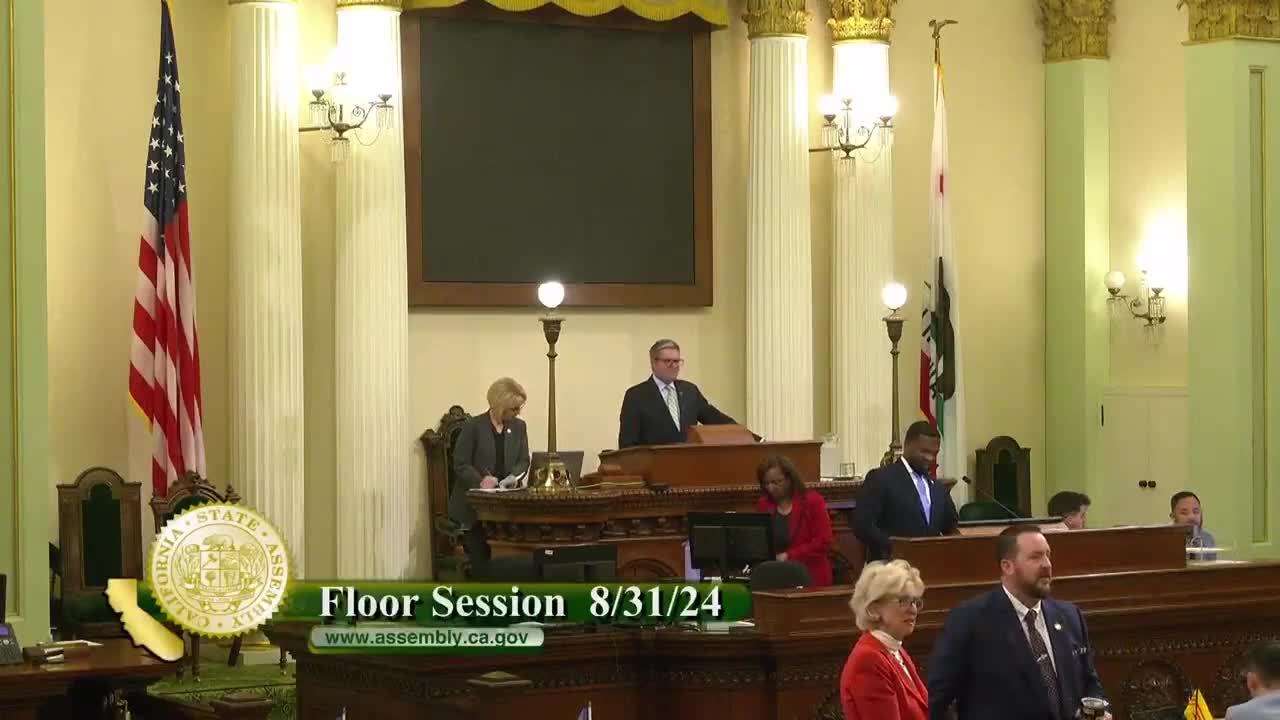 1MIN
Assembly Floor
 1MIN
Senate Standing Committee on Appropriations
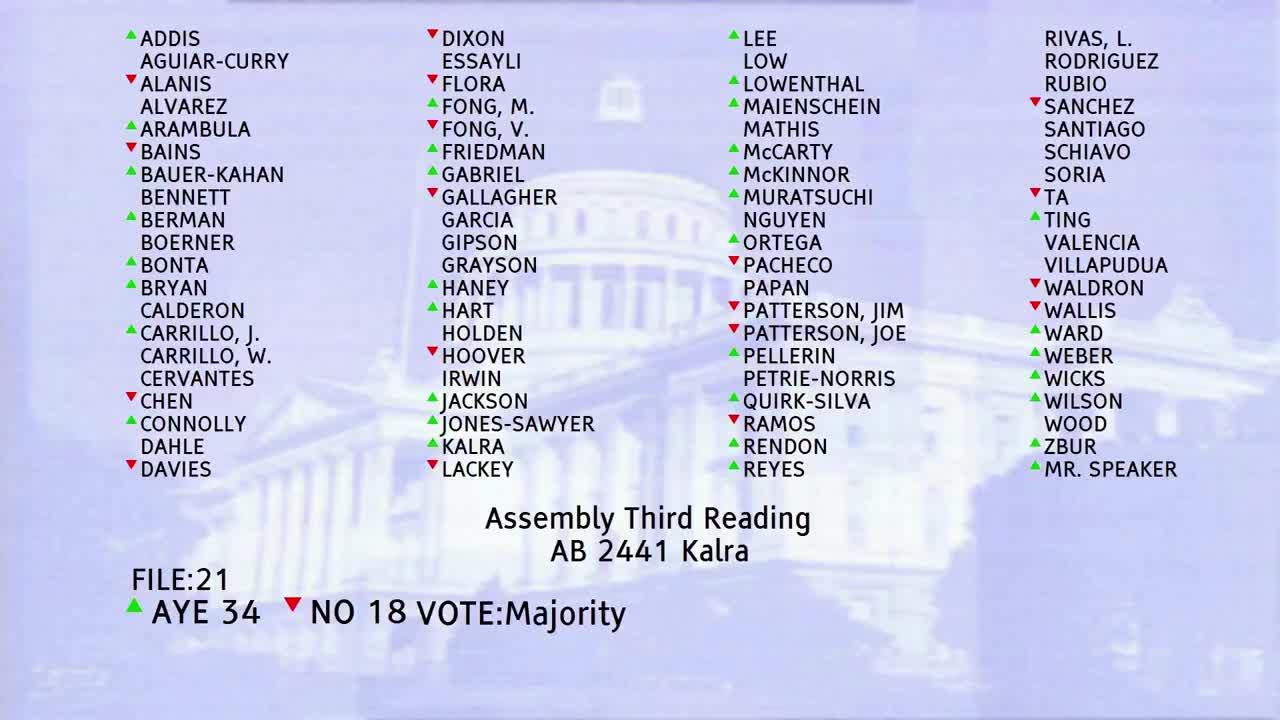 2MIN
Assembly Floor
 3MIN
Assembly Standing Committee on Higher Education
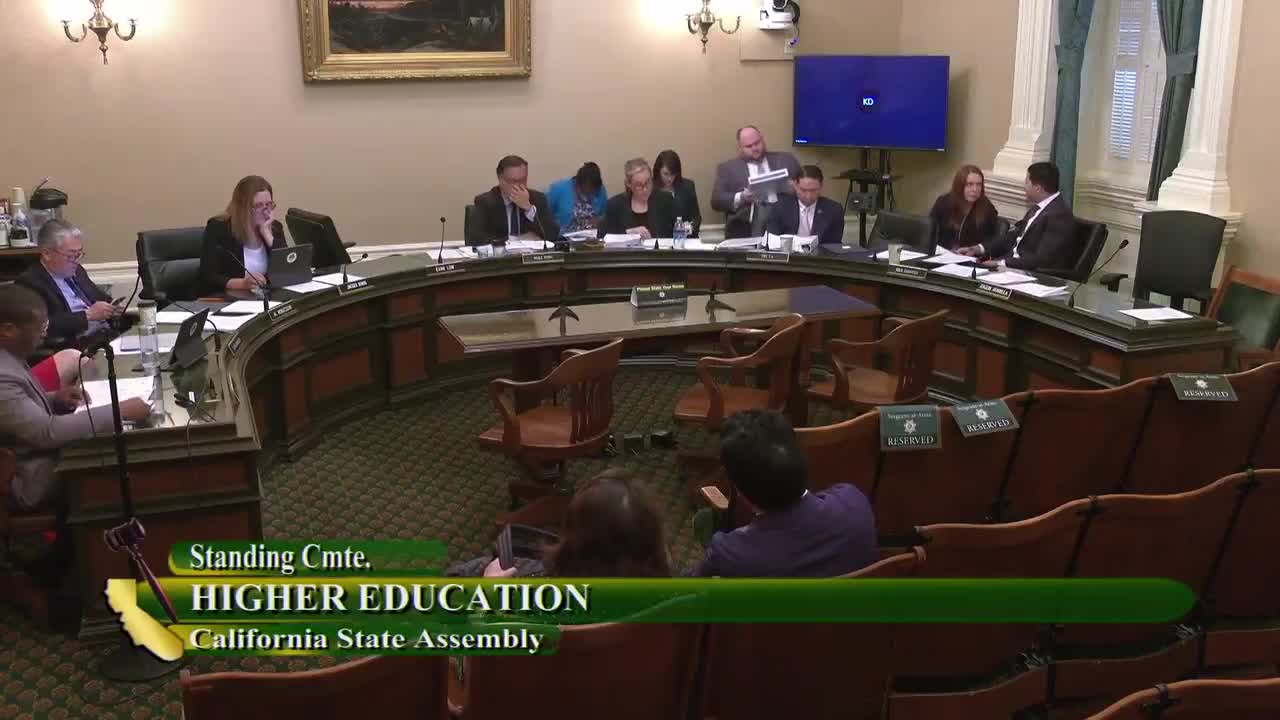 23SEC
Assembly Standing Committee on Higher Education
Bill Author

Bill Co-Author(s):