AB 2971: Classified Employee Staffing Ratio Workgroup: community college districts.
- Session Year: 2023-2024
- House: Assembly
- Latest Version Date: 2024-09-22
Current Status:
Passed
(2024-09-22: Chaptered by Secretary of State - Chapter 425, Statutes of 2024.)
Introduced
In Committee
First Chamber
In Committee
Second Chamber
Enacted
Existing law requires the governing board of a community college district to employ persons for positions that are not academic positions and to classify those employees and positions, and requires that they be known as the classified service.
Existing law requires the State Department of Education, in consultation with the Division of Occupational Safety and Health, the Department of Industrial Relations, the Labor Commissioner, representatives of employee organizations, and representatives of voluntary local educational agencies to convene the Classified Employee Staffing Ratio Workgroup on or before December 31, 2024, as provided.
Existing law defines, for the purposes of the above provision, voluntary local educational agencies to mean school districts, county offices of education, and special education local plan areas electing to participate in the workgroup.
This bill would broaden the definition of voluntary local educational agencies to include community college districts.
Existing law requires the above-mentioned workgroup to group classified assignments in a manner that reflects the environmental setting of the assignment, the type of work to be completed, the impact on the assignment made by enrollment at a schoolsite, specialized needs, including certifications or licenses, and other reasonable factors, as specified, and to recommend staffing ratios per grouping, as specified. Existing law requires the workgroup to report its recommendations to the Legislature on or before December 31, 2025, as specified.
This bill would require the workgroup to group those classified assignments described above for both K12 and community colleges. The bill would also require the workgroup to convene on or before July 31, 2025, rather than December 31, 2024, and report its recommendations to the Legislature on or before July 31, 2026, rather than December 31, 2025.
Existing law requires the governing board of a community college district to employ persons for positions that are not academic positions and to classify those employees and positions, and requires that they be known as the classified service.
Existing law requires the State Department of Education, in consultation with the Division of Occupational Safety and Health, the Department of Industrial Relations, the Labor Commissioner, representatives of employee organizations, and representatives of voluntary local educational agencies to convene the Classified Employee Staffing Ratio Workgroup on or before December 31, 2024, as provided.
Existing law defines, for the purposes of the above provision, voluntary local educational agencies to mean school districts, county offices of education, and special education local plan areas electing to participate in the workgroup.
This bill would broaden the definition of voluntary local educational agencies to include community college districts.
Existing law requires the above-mentioned workgroup to group classified assignments in a manner that reflects the environmental setting of the assignment, the type of work to be completed, the impact on the assignment made by enrollment at a schoolsite, specialized needs, including certifications or licenses, and other reasonable factors, as specified, and to recommend staffing ratios per grouping, as specified. Existing law requires the workgroup to report its recommendations to the Legislature on or before December 31, 2025, as specified.
This bill would require the workgroup to group those classified assignments described above for both K12 and community colleges.
(a)(1)The department, in consultation with the Division of Occupational Safety and Health, the Department of Industrial Relations, the Labor Commissioner, representatives of employee organizations, and representatives of voluntary local educational agencies, including, but not limited to, members of governing boards of school districts, shall convene the Classified Employee Staffing Ratio Workgroup on or before July 31, 2025.
(2)For purposes of paragraph (1), voluntary local educational agencies means school districts, county offices of education, community college districts, and special education local plan areas electing to participate in the workgroup.
(b)(1)(A)The workgroup shall group classified assignments, for both K12 and community colleges, in a manner that reflects the environmental setting of the assignment, the type of work to be completed, the impact on the assignment made by enrollment at a schoolsite or campus, specialized needs, including certifications or licenses, and other reasonable factors.
(B)The groupings may include, but are not necessarily limited to, the categories of food service, maintenance and operations, office and technical services, paraeducators, special services, including law enforcement, and transportation services.
(2)The workgroup shall recommend staffing ratios per grouping identified pursuant to paragraph (1).
(3)The workgroup shall take into account the physical, mental, and emotional impact of a pandemic or other emergency environment on workers.
(4)The staffing ratios shall compare the number of classified staff needed for each group with the number of pupils, or students, as applicable. The staffing ratio may compare other factors, as relevant to the group of classified workers.
(c)Notwithstanding Section 10231.5 of the Government Code, the workgroup shall, on or before July 31, 2026, report recommendations on appropriate staffing ratios for classified employees in schools and community colleges to the Legislature, consistent with Section 9795 of the Government Code.
(a)(1)The department, in consultation with the Division of Occupational Safety and Health, the Department of Industrial Relations, the Labor Commissioner, representatives of employee organizations, and representatives of voluntary local educational agencies, including, but not limited to, members of governing boards of school districts, shall convene the Classified Employee Staffing Ratio Workgroup on or before December 31, 2024. July 31, 2025.
(2)For purposes of paragraph (1), voluntary local educational agencies means school districts, county offices of education, community college districts, and special education local plan areas electing to participate in the workgroup.
(b)(1)(A)The workgroup shall group classified assignments, for both K12 and community colleges, in a manner that reflects the environmental setting of the assignment, the type of work to be completed, the impact on the assignment made by enrollment at a schoolsite or campus, specialized needs, including certifications or licenses, and other reasonable factors.
(B)The groupings may include, but are not necessarily limited to, the categories of food service, maintenance and operations, office and technical services, paraeducators, special services, including law enforcement, and transportation services.
(2)The workgroup shall recommend staffing ratios per grouping identified pursuant to paragraph (1).
(3)The workgroup shall take into account the physical, mental, and emotional impact of a pandemic or other emergency environment on workers.
(4)The staffing ratios shall compare the number of classified staff needed for each group with the number of pupils, or students, as applicable. The staffing ratio may compare other factors, as relevant to the group of classified workers.
(c)Notwithstanding Section 10231.5 of the Government Code, the workgroup shall, on or before December 31, 2025, July 31, 2026, report recommendations on appropriate staffing ratios for classified employees in schools and community colleges to the Legislature, consistent with Section 9795 of the Government Code.
(d)This section shall become operative on July 1, 2024.(a)(1)The department, in consultation with the Division of Occupational Safety and Health, the Department of Industrial Relations, the Labor Commissioner, representatives of employee organizations, and representatives of voluntary local educational agencies, including, but not limited to, members of governing boards of school districts, shall convene the Classified Employee Staffing Ratio Workgroup on or before December 31, 2024.
(2)For purposes of paragraph (1), voluntary local educational agencies means school districts, county offices of education, community college districts, and special education local plan areas electing to participate in the workgroup.
(b)(1)(A)The workgroup shall group classified assignments assignments, for both K12 and community colleges, in a manner that reflects the environmental setting of the assignment, the type of work to be completed, the impact on the assignment made by enrollment at a schoolsite, schoolsite or campus, specialized needs, including certifications or licenses, and other reasonable factors.
(B)The groupings may include, but are not necessarily limited to, the categories of food service, maintenance and operations, office and technical services, paraeducators, special services, including law enforcement, and transportation services.
(2)The workgroup shall recommend staffing ratios per grouping identified pursuant to paragraph (1).
(3)The workgroup shall take into account the physical, mental, and emotional impact of a pandemic or other emergency environment on workers.
(4)The staffing ratios shall compare the number of classified staff needed for each group with the number of pupils. pupils, or students, as applicable. The staffing ratio may compare other factors, as relevant to the group of classified workers.
(c)Notwithstanding Section 10231.5 of the Government Code, the workgroup shall, on or before December 31, 2025, report recommendations on appropriate staffing ratios for classified school employees in schools and community colleges to the Legislature, consistent with Section 9795 of the Government Code.
(d)This section shall become operative on July 1, 2024.
|
Date
|
Status
|
|---|---|
| Sep 22, 2024 | Chaptered by Secretary of State - Chapter 425, Statutes of 2024. |
| Sep 22, 2024 | Approved by the Governor. |
| Sep 3, 2024 | Enrolled and presented to the Governor at 3:30 p.m. |
| Aug 26, 2024 | In Assembly. Ordered to Engrossing and Enrolling. |
| Aug 26, 2024 | Read third time. Passed. Ordered to the Assembly. (Ayes 30. Noes 9.). |
| Aug 19, 2024 | Read second time. Ordered to third reading. |
| Aug 15, 2024 | From committee: Do pass. (Ayes 4. Noes 2.) (August 15). |
| Jun 24, 2024 | In committee: Referred to suspense file. |
| Jun 12, 2024 | From committee: Do pass and re-refer to Com. on APPR. (Ayes 4. Noes 1.) (June 12). Re-referred to Com. on APPR. |
| May 29, 2024 | Referred to Com. on L., P.E. & R. |
| May 21, 2024 | In Senate. Read first time. To Com. on RLS. for assignment. |
| May 20, 2024 | Read third time. Passed. Ordered to the Senate. (Ayes 60. Noes 8. Page 5319.) |
| May 9, 2024 | Read second time. Ordered to third reading. |
| May 8, 2024 | From committee: Do pass. (Ayes 11. Noes 2.) (May 8). |
| Apr 29, 2024 | Re-referred to Com. on APPR. |
| Apr 25, 2024 | Read second time and amended. |
| Apr 24, 2024 | From committee: Amend, and do pass as amended and re-refer to Com. on APPR. (Ayes 7. Noes 1.) (April 23). |
| Apr 3, 2024 | From committee: Do pass and re-refer to Com. on HIGHER ED. (Ayes 6. Noes 1.) (April 3). Re-referred to Com. on HIGHER ED. |
| Mar 11, 2024 | Referred to Coms. on P.E. & R. and HIGHER ED. |
| Feb 17, 2024 | From printer. May be heard in committee March 18. |
| Feb 16, 2024 | Read first time. To print. |
|
Date
|
Description
|
Location
|
Votes
|
|
|---|---|---|---|---|
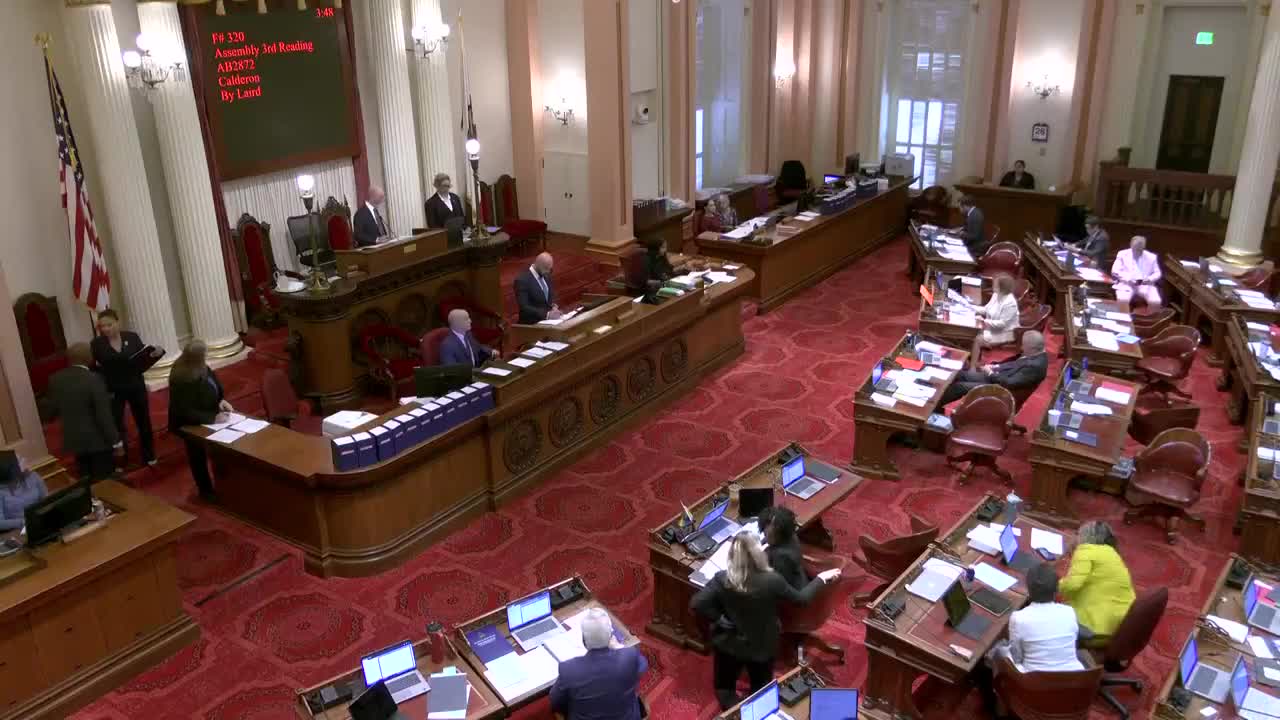
| Aug 26, 2024 | Assembly 3rd Reading AB2971 Maienschein By Cortese | Senate Floor |
Passed |
|
| Aug 15, 2024 | Do pass | Senate Standing Committee on Appropriations |
Passed |
|
| Jun 24, 2024 | Placed on suspense file | Senate Standing Committee on Appropriations |
Passed |
|
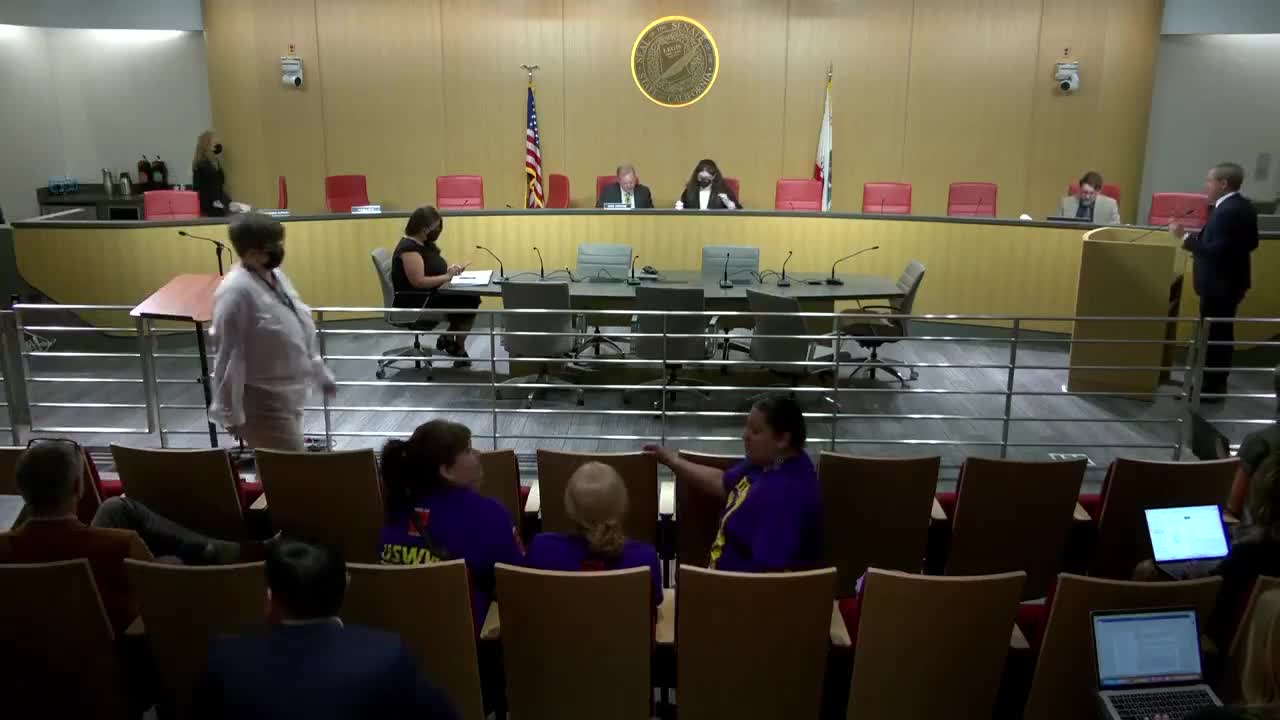
| Jun 12, 2024 | Do pass, but first be re-referred to the Committee on [Appropriations] | Senate Standing Committee on Labor, Public Employment and Retirement |
Passed |
|
| May 20, 2024 | AB 2971 Maienschein Assembly Third Reading | Assembly Floor |
Passed |
|
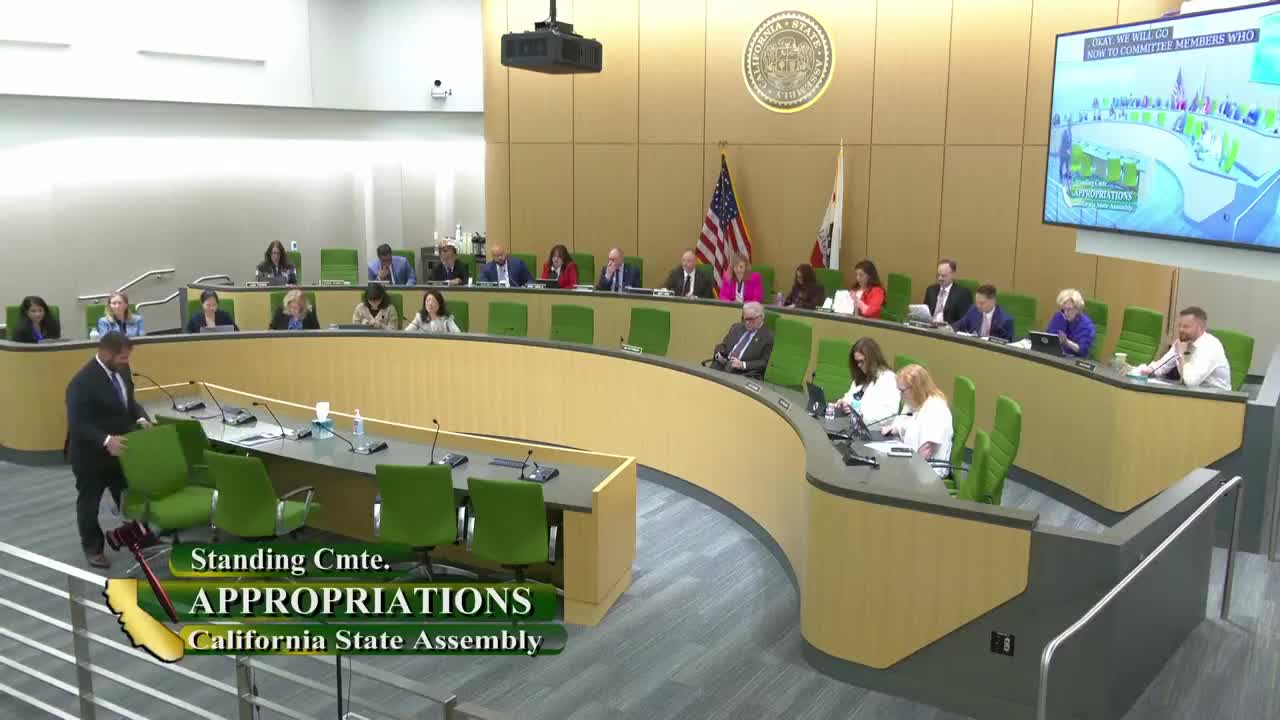
| May 8, 2024 | Do pass. | Assembly Standing Committee on Appropriations |
Passed |
|
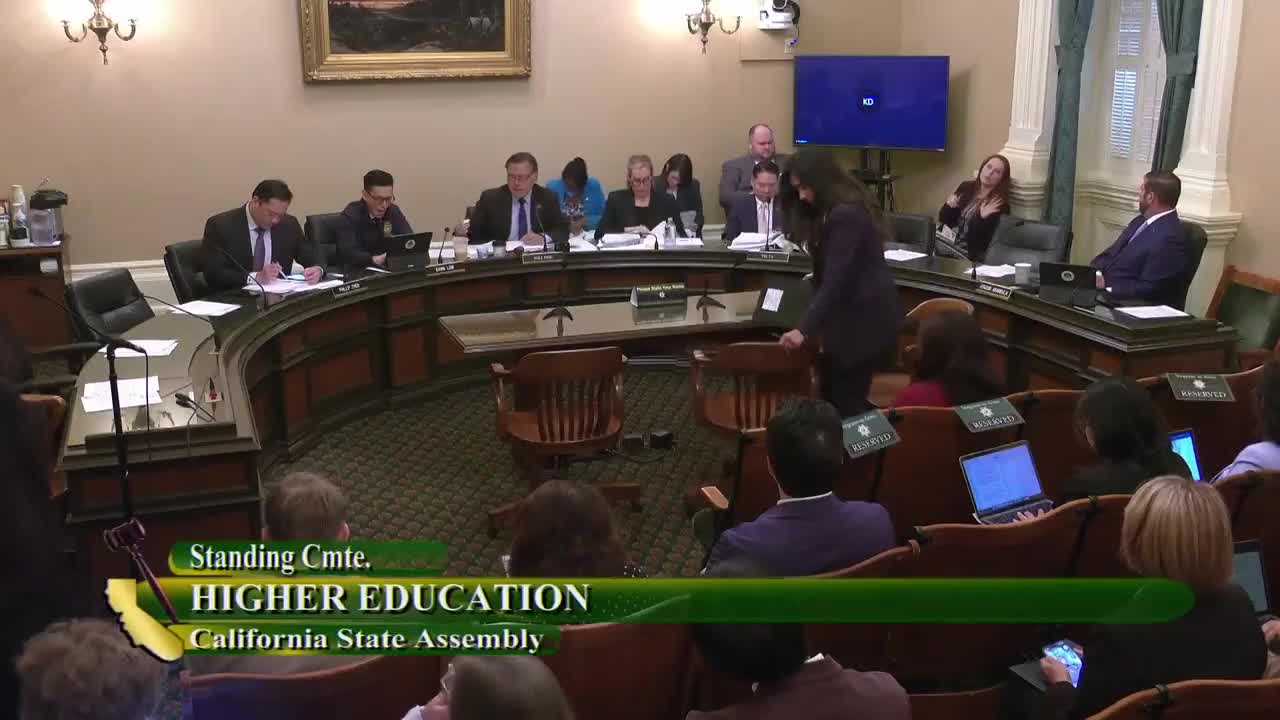
| Apr 23, 2024 | Do pass as amended and be re-referred to the Committee on [Appropriations] | Assembly Standing Committee on Higher Education |
Passed |
|
| Apr 3, 2024 | Do pass and be re-referred to the Committee on [Higher Education] | Assembly Standing Committee on Public Employment and Retirement |
Passed |
This list shows positions taken on this bill by organizations on the date displayed, which is linked to the original source.
Positions by individuals are not included.
|
Organization
|
Position
|
Date
|
|---|---|---|
| American Federation of State, County and Municipal Employees | ** Support | |
| California Federation Of Teachers | ** Support | |
| California Labor Federation | * Support | Apr 23, 2024 |
| California School Employees Association | ** Support | |
| California Teachers Association | ** Support | |
| SEIU | * Support | Apr 23, 2024 |
SENATE RULES COMMITTEE Office of Senate Floor Analyses (916) 651-1520 Fax: (916) 327-4478 | AB 2971 |
THIRD READING
Bill No: AB 2971
Author: Maienschein (D)
Amended: 4/25/24 in Assembly
Vote: 21
SENATE LABOR, PUB. EMP. & RET. COMMITTEE: 4-1, 6/12/24
AYES: Cortese, Durazo, Gonzalez, Laird
NOES: Wilk
SENATE APPROPRIATIONS COMMITTEE: 4-2, 8/15/24
AYES: Caballero, Ashby, Becker, Wahab
NOES: Jones, Seyarto
NO VOTE RECORDED: Bradford
ASSEMBLY FLOOR: 60-8, 5/20/24 - See last page for vote
SUBJECT: Classified Employee Staffing Ratio Workgroup: community college districts
SOURCE: California Federation of Teachers
DIGEST:
This bill adds community college districts to the California Department of Education (CDE)’s Classified Employee Staffing Ratio Workgroup, which current statute tasks with studying and making recommendations to the Legislature on classified employee staffing ratios. This bill also changes the date that the workgroup must report its recommendations to the Legislature from December 31, 2025, to July 31, 2026.
ANALYSIS:
Existing law:
- Requires the California Department of Education (CDE) to convene the Classified Employee Staffing Ratio Workgroup on or before December 31, 2024, in consultation with the Division of Occupational Safety and Health (CalOSHA), the Department of Industrial Relations (DIR), the Labor Commissioner (LC), representatives of employee organizations, and representatives of voluntary local educational agencies, including, but not limited to, members of governing boards of school districts. (Education Code (ED) § 45118 (a) (1))
- Defines “voluntary local educational agencies” to mean school districts, county offices of education, and special education local plan areas electing to participate in the workgroup. (ED § 45118 (a) (2))
- Requires the workgroup to group classified assignments in a manner that reflects the environmental setting of the assignment, the type of work to be completed, the impact on the assignment made by enrollment at a school site, specialized needs, including certifications or licenses, and other reasonable factors. (ED § 45118 (b) (1) (A))
- Permits the workgroup to include in the groupings of classified assignments the categories of food service, maintenance and operations, office and technical services, para-educators, special services, including law enforcement, and transportation services. (ED § 45118 (b) (1) (B))
- Requires the workgroup to recommend staffing ratios per identified grouping of classified assignments. (ED § 45118 (b) (2))
- Requires the workgroup to take into account the physical, mental, and emotional impact of a pandemic or other emergency environment on workers. (ED § 45118 (b) (3))
- Requires the staffing ratios to compare the number of classified staff needed for each group with the number of pupils. The staffing ratio may compare other factors, as relevant to the group of classified workers. (ED § 45118 (b) (4))
- Requires the workgroup, on or before December 31, 2025, to report recommendations on appropriate staffing ratios for classified school employees to the Legislature, as specified. (ED § 45118 (c))
- Provides that this bill becomes operative July 1, 2024. (ED § 45118 (d))
This bill:
- Adds community college districts to the definition of “voluntary local education agencies” with which CDE must consult as part of a workgroup to study and make recommendations on classified employee staffing ratios.
- Clarifies that the workgroup must group classified assignments for both K-12 and community colleges, as specified.
- Makes related conforming technical changes to reference community college districts, campuses, and students.
- Changes the date that the workgroup must report its classified staffing ratio recommendations to the Legislature from December 31, 2025, to July 31, 2026.
- Deletes the statute’s existing reference to a July 1, 2024, operative date.
Comments
According to the sponsor:
“Prior to AB 1273 (Bonta, 2023), no state policy assessed or quantified how many classified employees are reasonably required to meet the needs of the health and safety of students and staff at school sites. Classified school employees perform a myriad of jobs that keep schools clean, safe, and operative and ensure that janitorial, para-education service, and maintenance needs are met. Hundreds of classifications perform this work; from trades workers to clerical staff, custodial and the list goes on. Unfortunately, not every school site is staffed with adequate personnel to meet the needs of each school site.
AB 1273 (Bonta) created a process by which stakeholders will develop optimal classified staffing ratios for schools, and the group conducting this research is currently being formed. However, this bill omitted community colleges from the discussion, despite the fact that community colleges require the work of classified staff just as much as any other type of education institution. AB 2971 (Maienschein) simply adds community colleges into the existing process created by AB 1273, with no other changes to current law. With this addition, our community college system can join all other areas of our education infrastructure in also benefitting from the work of this group.”
Related/Prior Legislation
AB 1273 (Bonta, Chapter 364, Statutes of 2023) required the California Department of Education (CDE) to convene a workgroup on or before December 31, 2024, for the purpose of reporting recommendations to the Legislature on or before December 31, 2025, on appropriate staffing ratios for classified school employees. The bill becomes operative July 1, 2024.
AB 185 (Committee on Budget, Chapter, 571, Statutes of 2022) clarified, under the Education Finance budget trailer bill, that Transitional Kindergarten (TK) class size requirements are not subject to collectively bargained kindergarten class size alternative requirements (14); and also clarified how class size and the adult-to-pupil ratio should be defined for purposes of calculating the TK Local Control Funding Formula (25).
FISCAL EFFECT: Appropriation: No Fiscal Com.: Yes Local: No
According to the Senate Appropriations Committee:
- CDE indicates that it would incur General Fund costs of $430,000 over two years to implement the provisions of the bill.
- The California Community Colleges indicate that its administrative costs would be driven by the bill’s implementation; as currently drafted, it is unclear how many community colleges would be asked to participate in the workgroup. If one representative were to participate, administrative costs would likely be minor.
SUPPORT: (Verified 8/15/24)
California Federation of Teachers (Source)
American Federation of State, County and Municipal Employees
California School Employees Association
California Teachers Association
OPPOSITION: (Verified 8/15/24)
None received
ARGUMENTS IN SUPPORT: According to the American Federation of State, County and Municipal Employees, “AB 1273 (Chapter 364, Statutes of 2023) established the Classified Employee Staffing Ratio Workgroup to consider the physical, mental, and emotional impact of a pandemic or other emergency environment on workers. AB 2971 makes the simple change of adding classified employees at community colleges to this workgroup so that a more robust, informed, and productive discussion can occur.”
According to the California School Employees Association, “Classified employees are the backbone of our TK-12 schools and community colleges. They ensure schools are clean, that students are fed and get to school safely. Unfortunately, not all schools are staffed with enough classified school employees to successfully meet the needs of students.”
ASSEMBLY FLOOR: 60-8, 5/20/24
AYES: Addis, Aguiar-Curry, Alvarez, Bains, Bauer-Kahan, Bennett, Berman, Boerner, Bonta, Bryan, Calderon, Juan Carrillo, Wendy Carrillo, Connolly, Mike Fong, Friedman, Garcia, Gipson, Grayson, Haney, Hart, Holden, Irwin, Jackson, Jones-Sawyer, Kalra, Lackey, Lee, Low, Lowenthal, Maienschein, McCarty, McKinnor, Muratsuchi, Ortega, Pacheco, Papan, Pellerin, Petrie-Norris, Quirk-Silva, Ramos, Rendon, Reyes, Rodriguez, Blanca Rubio, Santiago, Schiavo, Soria, Ting, Valencia, Villapudua, Waldron, Wallis, Ward, Weber, Wicks, Wilson, Wood, Zbur, Robert Rivas
NOES: Davies, Dixon, Essayli, Vince Fong, Gallagher, Jim Patterson, Joe Patterson, Sanchez
NO VOTE RECORDED: Alanis, Arambula, Cervantes, Chen, Megan Dahle, Flora, Gabriel, Hoover, Mathis, Stephanie Nguyen, Luz Rivas, Ta
Prepared by: Glenn Miles / L., P.E. & R. / (916) 651-1556
8/18/24 17:50:23
**** END ****
SENATE COMMITTEE ON APPROPRIATIONS
Senator Anna Caballero, Chair
2023 - 2024 Regular Session
AB 2971 (Maienschein) - Classified Employee Staffing Ratio Workgroup: community college districts
Version: April 25, 2024 | Policy Vote: L., P.E. & R. 4 - 1 |
Urgency: No | Mandate: No |
Hearing Date: June 24, 2024 | Consultant: Robert Ingenito |
Bill Summary:
AB 2971 would (1) add community college districts to the California Department of Education (CDE)’s Classified Employee Staffing Ratio Workgroup, and (2) change the date that the workgroup must report its recommendations to the Legislature, from December 31, 2025, to July 31, 2026.
Fiscal Impact:
- CDE indicates that it would incur General Fund costs of $430,000 over two years to implement the provisions of the bill.
- The California Community Colleges indicate that its administrative costs would be driven by the bill’s implementation; as currently drafted, it is unclear how many community colleges would be asked to participate in the workgroup. If one representative were to participate, administrative costs would likely be minor.
Background:
Classified school employees serve at K-12 schools and community colleges in positions not requiring certification. Classified staff include bus drivers, clerical staff, instructional aids, custodial staff, workers at school district warehouses, and others.
AB 1273 (Bonta, 2023),established a Classified Employee Staffing Ratio Workgroup, with the primary responsibility of making recommendations to the Legislature on appropriate staffing ratios for classified school employees at K-12 school districts. The group has yet to meet.
Proposed Law:
This bill, among other things, would (1) add community college districts to the definition of “voluntary local education agencies” with which CDE must consult as part of a workgroup to study and make recommendations on classified employee staffing ratios, (2) clarify that the workgroup must group classified assignments for both K-12 and community colleges, as specified, and (3) change the date that the workgroup must report its classified staffing ratio recommendations to the Legislature from December 31, 2025, to July 31, 2026.
Related Legislation:
- AB 1273 (Bonta, Chapter 364, Statutes of 2023) requires the California Department of Education (CDE) to convene a workgroup on or before December 31, 2024, for the purpose of reporting recommendations to the Legislature on or before December 31, 2025, on appropriate staffing ratios for classified school employees. The bill becomes operative July 1, 2024.
- AB 185 (Committee on Budget, Chapter, 571, Statutes of 2022), the Education Finance budget trailer bill, clarified that Transitional Kindergarten (TK) class size requirements are not subject to collectively bargained kindergarten class size alternative requirements (14); and also clarified how class size and the adult-to-pupil ratio should be defined for purposes of calculating the TK Local Control Funding Formula (25).
Staff Comments:
A version of AB 1273 prior to its enactment required the working group to consult with the Chancellor’s Office of the California Community Colleges for existing guidance and, if applicable, extrapolate from those guidelines in order to include classified employees at community colleges in the report. If there was no guidance, or the workgroup determined that the guidance was not applicable, then the workgroup was to not include community college classified employees in the report. This provision related to community colleges was removed while the bill was in this Committee.
-- END --
SENATE COMMITTEE ON LABOR, PUBLIC EMPLOYMENT AND RETIREMENT
Senator Lola Smallwood-Cuevas, Chair
2023 - 2024 Regular
Bill No: AB 2971 Hearing Date: June 12, 2024
Author: | Maienschein | ||
Version: | April 25, 2024 | ||
Urgency: | No | Fiscal: | Yes |
Consultant: | Glenn Miles | ||
SUBJECT: Classified Employee Staffing Ratio Workgroup: community college districts
KEY ISSUE
This bill adds community college districts to the California Department of Education (CDE)’s Classified Employee Staffing Ratio Workgroup, which current statute tasks with studying and making recommendations to the Legislature on classified employee staffing ratios.
The bill also changes the date that the workgroup must report its recommendations to the Legislature from December 31, 2025, to July 31, 2026.
ANALYSIS
Existing law:
- Requires the California Department of Education (CDE) to convene the Classified Employee Staffing Ratio Workgroup on or before December 31, 2024, in consultation with the Division of Occupational Safety and Health (CalOSHA), the Department of Industrial Relations (DIR), the Labor Commissioner (LC), representatives of employee organizations, and representatives of voluntary local educational agencies, including, but not limited to, members of governing boards of school districts. (Education Code (ED) § 45118 (a) (1))
- Defines “voluntary local educational agencies” to mean school districts, county offices of education, and special education local plan areas electing to participate in the workgroup. (ED § 45118 (a) (2))
- Requires the workgroup to group classified assignments in a manner that reflects the environmental setting of the assignment, the type of work to be completed, the impact on the assignment made by enrollment at a schoolsite, specialized needs, including certifications or licenses, and other reasonable factors. (ED § 45118 (b) (1) (A))
- Permits the workgroup to include in the groupings of classified assignments the categories of food service, maintenance and operations, office and technical services, para-educators, special services, including law enforcement, and transportation services. (ED § 45118 (b) (1) (B))
- Requires the workgroup to recommend staffing ratios per identified grouping of classified assignments. (ED § 45118 (b) (2))
- Requires the workgroup to take into account the physical, mental, and emotional impact of a pandemic or other emergency environment on workers. (ED § 45118 (b) (3))
- Requires the staffing ratios to compare the number of classified staff needed for each group with the number of pupils. The staffing ratio may compare other factors, as relevant to the group of classified workers. (ED § 45118 (b) (4))
- Requires the workgroup, on or before December 31, 2025, to report recommendations on appropriate staffing ratios for classified school employees to the Legislature, as specified. (ED § 45118 (c))
- Provides that this bill becomes operative July 1, 2024. (ED § 45118 (d))
This bill:
- Adds community college districts to the definition of “voluntary local education agencies” with which CDE must consult as part of a workgroup to study and make recommendations on classified employee staffing ratios.
- Clarifies that the workgroup must group classified assignments for both K-12 and community colleges, as specified.
- Makes related conforming technical changes to reference community college districts, campuses, and students.
- Changes the date that the workgroup must report its classified staffing ratio recommendations to the Legislature from December 31, 2025, to July 31, 2026.
- Deletes the statute’s existing reference to a July 1, 2024, operative date.
COMMENTS
1. Need for this bill?
According to the sponsor:
“Prior to AB 1273 (Bonta, 2023), no state policy assessed or quantified how many classified employees are reasonably required to meet the needs of the health and safety of students and staff at school sites. Classified school employees perform a myriad of jobs that keep schools clean, safe, and operative and ensure that janitorial, para-education service, and maintenance needs are met. Hundreds of classifications perform this work; from trades workers to clerical staff, custodial and the list goes on. Unfortunately, not every school site is staffed with adequate personnel to meet the needs of each school site.
AB 1273 (Bonta) created a process by which stakeholders will develop optimal classified staffing ratios for schools, and the group conducting this research is currently being formed. However, this bill omitted community colleges from the discussion, despite the fact that community colleges require the work of classified staff just as much as any other type of education institution. AB 2971 (Maienschein) simply adds community colleges into the existing process created by AB 1273, with no other changes to current law. With this addition, our community college system can join all other areas of our education infrastructure in also benefitting from the work of this group.”
2. Proponent Arguments
According to the American Federation of State, County and Municipal Employees:
“AB 1273 (Chapter 364, Statutes of 2023) established the Classified Employee Staffing Ratio Workgroup to consider the physical, mental, and emotional impact of a pandemic or other emergency environment on workers. AB 2971 makes the simple change of adding classified employees at community colleges to this workgroup so that a more robust, informed, and productive discussion can occur.”
According to the California School Employees Association:
“Classified employees are the backbone of our TK-12 schools and community colleges. They ensure schools are clean, that students are fed and get to school safely. Unfortunately, not all schools are staffed with enough classified school employees to successfully meet the needs of students.”
3. Opponent Arguments:
None received.
4. Prior Legislation:
AB 1273 (Bonta, Chapter 364, Statutes of 2023) requires the California Department of Education (CDE) to convene a workgroup on or before December 31, 2024, for the purpose of reporting recommendations to the Legislature on or before December 31, 2025, on appropriate staffing ratios for classified school employees. The bill becomes operative July 1, 2024.
AB 185 (Committee on Budget, Chapter, 571, Statutes of 2022), the Education Finance budget trailer bill, clarified that Transitional Kindergarten (TK) class size requirements are not subject to collectively bargained kindergarten class size alternative requirements (14); and also clarified how class size and the adult-to-pupil ratio should be defined for purposes of calculating the TK Local Control Funding Formula (25).
SUPPORT
California Federation of Teachers (Sponsor)
American Federation of State, County and Municipal Employees
California School Employees Association
California Teachers Association
OPPOSITION
None received.
-- END --
ASSEMBLY THIRD READING
ATR Bill Id:AB 2971
Author:(Maienschein)
As Amended Ver:April 25, 2024
Majority vote
SUMMARY
Makes changes to existing law relating to the Classified Employee Staffing Ratio Workgroup (CESRW).
Major Provisions
- Add community college districts to the definition of "voluntary local education agencies."
- Clarify by adding that the CESRW must group classified assignments for both K-12 and community colleges, and among other things, the impact on the assignment made by enrollment at a schoolsite or campus.
- Amend existing law to require the CESRW to convene on or before July 31, 2025, rather than December 31, 2024, and report its recommendations to the Legislature on or before July 31, 2026, rather than December 31, 2025.
COMMENTS
Background
Last year, the Governor signed Assembly Bill 1273 (Bonta), Chapter 364, Statutes of 2023 that established the CESRW. As that bill advanced through the Legislature, a provision was added that required the workgroup to consult with the Chancellor's Office of the California Community Colleges (COCCC) for existing guidance, among other requirements. Thereafter, the bill was again amended in which the COCCC and its role regarding the workgroup were removed from its provisions, thereby, not including a core segment of the state's public educational system in the CESRW.
This Bill
This bill makes changes to the CESRW by including community college districts to the definition of "voluntary local education agencies," and clarifying that the workgroup must classify assignment for both K-12 and community colleges, as prescribed, among other provisions.
Please see the respective policy committee analyses for a full discussion of this bill.
According to the Author
"Dedicated to advancing equitable and efficient educational infrastructure in California, [this bill] expands on the groundwork of [the enabling CESRW statute] which established a framework for determining the appropriate ratios of classified workers to students]. This ensures a comprehensive approach to staffing throughout our educational system. [This bill] now includes community colleges in this process, acknowledging the essential role these institutions play in our education landscape. Addressing the need for classified workers in community colleges is crucial to maintaining standards of cleanliness, upkeep, and functionality vital for student success. [This bill] represents the initial step toward meeting these expectations and ensuring the optimal functioning of our community college infrastructure."
Arguments in Support
Generally, supporters state that prior to the CESRW enabling statute, there was no state policy to assess or quantify the number of classified employees reasonably required to meet the health and safety needs of students and staff at schools, and because this classifications performs a multitude of various jobs at schools, the inclusion of community colleges is necessary towards reviewing adequate staffing ratios in school and community college districts.
Arguments in Opposition
None.
FISCAL COMMENTS
According to the Assembly Appropriations Committee, this bill would result in likely minor and absorbable one-time General Fund costs for the California Department of Education (CDE) to adjust to the changes proposed by this bill. CDE indicated it would require $637,000 for two years to oversee the group under its original timelines. This bill shifts the group's work by six months, but still requires two years of supervision.
VOTES
ASM PUBLIC EMPLOYMENT AND RETIREMENT: 6-1-0
YES: McKinnor, Lackey, Boerner, Hart, Stephanie Nguyen, Luz Rivas
NO: Vince Fong
ASM HIGHER EDUCATION: 7-1-3
YES: Mike Fong, Arambula, Boerner, Irwin, Jackson, Low, Muratsuchi
NO: Essayli
ABS, ABST OR NV: Ta, Chen, Quirk-Silva
ASM APPROPRIATIONS: 11-2-2
YES: Wicks, Arambula, Bryan, Calderon, Wendy Carrillo, Mike Fong, Friedman, Haney, Hart, Pellerin, Villapudua
NO: Sanchez, Dixon
ABS, ABST OR NV: Jim Patterson, Ta
UPDATED
VERSION: April 25, 2024
CONSULTANT: Michael Bolden / P. E. & R. / (916) 319-3957 FN: 0002902
Date of Hearing: May 8, 2024
ASSEMBLY COMMITTEE ON APPROPRIATIONS
Buffy Wicks, Chair
ABPCA Bill Id:AB 2971
Author:(Maienschein) – As Amended Ver:April 25, 2024
Policy Committee: | Public Employment and Retirement | Vote: | 6 - 1 |
Higher Education | 7 - 1 | ||
|
|
Urgency: No State Mandated Local Program: No Reimbursable: No
SUMMARY:
This bill expands voluntary membership of the recently authorized “Classified Employee Staffing Ratio Workgroup,” convened by the California Department of Education (CDE), to include community college districts and expands the jurisdiction of the workgroup to examine and to recommend appropriate classified staffing ratios at community colleges. The bill moves the date by which the workgroup is to convene, from December 31, 2024, to July 31, 2025, and requires the group to report its findings to the Legislature by July 31, 2026, instead of December 31, 2025, as is required by current law.
FISCAL EFFECT:
Likely minor and absorbable one-time General Fund costs for CDE to adjust to the changes proposed by this bill. CDE indicated it would require $637,000 for two years to oversee the group under its original timelines. This bill shifts the group’s work by six months, but still requires two years of supervision.
COMMENTS:
- Purpose. According to the California Federation of Teachers, a union that represents some classified staff and the sponsor of this bill:
AB 1273 (Bonta) created a process by which stakeholders will develop optimal classified staffing ratios for schools, and the group conducting this research is currently being formed. However, this bill omitted community colleges from the discussion, despite the fact that community colleges require the work of classified staff just as much as any other type of education institution. AB 2971 (Maienschein) simply adds community colleges into the existing process created by AB 1273, with no other changes to current law. With this addition, our community college system can join all other areas of our education infrastructure in also benefitting from the work of this group.
- Background. AB 1273 (Bonta), Chapter 364, Statutes of 2023, established a Classified Employee Staffing Ratio Workgroup, with the primary responsibility of making recommendations to the Legislature on appropriate staffing ratios for classified school employees at K-12 school districts. The group has yet to meet.
An earlier version of AB 1273 required the working group to consult with the Chancellor’s Office of the California Community Colleges for existing guidance and, if applicable, extrapolate from those guidelines in order to include classified employees at community colleges in the report. If there was no guidance, or the workgroup determined that the guidance was not applicable, then the workgroup was to not include community college classified employees in the report. An amendment off of the Senate Appropriations Committee suspense file removed this provision related to community colleges from the bill.
AB 2971 (Maienschein) seeks to expand the purview of the workgroup to require the workgroup to examine the appropriate staffing ratios for classified staff at community colleges.
Analysis Prepared by: Natasha Collins / APPR. / (916) 319-2081
Date of Hearing: April 23, 2024
ASSEMBLY COMMITTEE ON HIGHER EDUCATION
Mike Fong, Chair
ABPCA Bill Id:AB 2971 (
Author:Maienschein) – As Introduced Ver:February 16, 2024
SUBJECT: Classified Employee Staffing Ratio Workgroup: community college districts
SUMMARY: Expands an existing “Classified Employee Staffing Ratio Workgroup” to include community colleges and expands the jurisdiction of the workgroup to examine and to recommend appropriate classified staffing ratios at community colleges to the Legislature by December 31, 2025. Specifically, this bill:
- Updates existing law as to who can volunteer to participate in the “Classified Employee Staffing Ratio Workgroup” to include community college districts.
- Requires the “Classified Employee Staffing Ratio Workgroup” to examine classified assignments for both K-12 and community colleges in a manner that reflects the environmental settling of the classified assignment, the type of work to be completed, and the impact on the assignment made by enrollment at the school site or campus. The workgroup will group the classified staff into categories and then determine the staffing ratios for each category based on the number of pupils (K-12) or students (community colleges).
- Requires the workgroup to provide a report to the Legislature by December 31, 2025 with recommendations on the appropriate staffing ratios for classified employees in schools and community colleges.
EXISTING LAW:
- Authorizes the California Department of Education (CDE) by December 31, 2024 to convene the Classified Employee Staffing Ratio Workgroup. In convening the workgroup CDE will consultation with the Division of Occupational Safety and Health, the Department of Industrial Relations, the Labor Commissioner, the representatives of employee organizations, and representatives of voluntary local educational agencies, including, but not limited to, members of governing boards of school. The workgroup will do the following:
- Group classified assignments in a manner that reflects the environmental setting of the assignment, the type of work to be completed, the impact on the assignment made by the enrollment at a school site, specialized needs including certificates or licenses, and other reasonable factor;
- Recommend staffing ratios per grouping identified in (a) enumerated above and the staffing rations will compare the number of classified staff needed for each group with the number of pupils. The staffing ratio may compare other factors as relevant to the group of classified workers;
- Take into consideration the physical, mental, and emotional impact of the pandemic or other emergency environment on workers; and,
- After completing the work enumerated above, provide a report with recommendation on appropriate staffing ratios for classified school employees to the Legislature (Education Code (EDC) Section 45118).
- Establishes the California Community Colleges (CCC) under the administration of the Board of Governors of the CCC, as one of the segments of public postsecondary education in California. The CCC shall be comprised of community college districts (EDC Section 70900).
- Establishes that CCC districts are under the control of a board of trustees, known as the governing board, who has the authority to establish, maintain, operate, and govern one or more community colleges, within its district as specified. Permits districts to establish policies for and the approval of courses of instruction and educational programs (EDC Section 70902).
FISCAL EFFECT: Unknown.
COMMENTS: Double Referral. AB 2971 (Maienschein) was heard in the Assembly Committee on Public Employment and Retirement on April 03, 2024, where it passed with 6-1 vote. A review on the issues of the measure germane to public employment and retirement is addressed in the Committee’s analysis.
Purpose. As explained by the Author, “AB 2971 expands on the groundwork of AB 1273 (Bonta). Which established a framework for determining the appropriate ratios of classified workers to students. This ensures a comprehensive approach to staffing throughout our educational system. AB 2971 now includes community colleges in this process, acknowledging the essential role these institutions play in our education landscape. Addressing the need for classified workers in community colleges is crucial to maintaining standards of cleanliness, upkeep, and functionality vital for student success. AB 2971 represents the initial step toward meeting these expectations and ensuring the optimal functioning of our community college infrastructure.”
AB 1273 (Bonta), Chapter 364, Statutes of 2023. In 2023, the Legislature passed AB 1273 (Bonta), which established a Classified Employee Staffing Ratio Workgroup (workgroup), whose primary responsibility was to make recommendations to the Legislature on appropriate staffing ratios for classified school employees at K-12 school districts. AB 2971 (Maienschein) seeks to expand the purview of the workgroup to require the workgroup to examine the appropriate staffing ratios for classified staff at community colleges.
Assemblymember Bonta, argued the need for the Classified Employee Staffing Ratio Workgroup, because:
“Optimal learning environment for a student to succeed requires that many factors be available and true at a school campus. Students have to be physically and mentally present, not distracted by hunger or pests, they have to be able to breath clean air, have lead-free water, and have access to adequate instructional materials. All of these conditions are made possible by the hardworking classified staff at school. Classified workers are the bus drivers, crossing guards, custodians, groundskeepers, and [information technology] professionals, food service workers, as well as the office staff who processes attendance and ensures the school’s finances and emergency plans and contacts. The question of how many staff is necessary to create this a good learning climate is one that California has not answered. There is currently no guidance for administrators or parents, and that is what [AB 1273] seeks to answer.”[1]
While classified staff at community colleges may not daily interface with community college students, they are still an integral part of the community college daily operations. Classified job classifications at the community colleges include office assistances, campus security, janitorial staff, and accountants. In some cases, even child care offered on campus is operated by classified staff.[2]
Requiring an existing workgroup to examine the appropriate level of classified staff for K-12 districts and community college districts not only provides parity and equity in the K-14 system, but would provide the Legislature with an important data point as to how many classified staff should be hired to maintain community college campuses.
Parity with community college full-time faculty. In 1988, the Legislature partnered with the Board of Governors to set a goal of every community college having full-time faculty teach 75% of for-credit class instruction. This agreement is also known as the full-time faculty obligation (FON). The Board of Governors adopted regulations requiring community college districts to increase their base number of full-time faculty over the prior year in proportion to the amount of growth in funded credit of full-time equivalent students. Essentially, the FON establishes a staffing ratio where the minimum number of full-time faculty grows is proportional to the funding provided for student enrollment, with the ultimate goal of 75% of credit-bearing course instruction being taught by a full-time faculty. A State Audit published in February 23, 2023, found the CCC system has not met the long-standing state goal of having 75% of instruction taught by full-time faculty, even with $450 million in state funds having been allocated for hiring and retention of full-time faculty.[3] In the fall of 2023, the statewide total percentage of the full-time faculty that were teaching courses at the community college was 60%.
AB 2971 (Maienschein) seeks to provide parity between faculty and classified staff at the community colleges by establishing a workgroup to examine and provide recommendations on appropriate staffing ratios for classified staff at the community colleges in the same manner the full-time faculty obligation requires community colleges to maintain full-time faculty ratios.
Arguments in support. The California Federation of Teachers, contents the need for AB 2971 (Maienschein), as “COVID-19 exposed the lack of capacity that local education agencies’ workforces had in order to deal with the constant need to keep students and staff safe and healthy. Workforce loads in every sector suffered, including food service that prepared lunches to-go, custodial workers to keep facilities disinfected, and clerical workers who needed to track students and assist the administration and faculty with the day-to-day needs of providing services. Prior to AB 1273 (Bonta, 2023), no state policy assessed or quantified how many classified employees are reasonably required to meet the needs of the health and safety of students and staff at school sites. Classified school employees perform a myriad of jobs that keep schools clean, safe, and operative and ensure that janitorial, para-education service, and maintenance needs are met. Hundreds of classifications perform this work; from trades workers to clerical staff, custodial and the list goes on. Unfortunately, not every school site is staffed with adequate personnel to meet the needs of each school site. AB 1273 (Bonta) created a process by which stakeholders will develop optimal classified staffing ratios for schools, and the group conducting this research is currently being formed. However, this bill omitted community colleges from the discussion, despite the fact that community colleges require the work of classified staff just as much as any other type of education institution. AB 2971 (Maienschein) simply adds community colleges into the existing process created by AB 1273, with no other changes to current law. With this addition, our community college system can join all other areas of our education infrastructure in also benefitting from the work of this group.”
Committee comments. As mentioned by the proponents of this measure, the AB 2971 (Maienschein) would permit community colleges to engage with an existing workgroup whose task is to examine the appropriate ratios of classified staff for K-12 districts. The workgroup is spearheaded by the CDE, who will work collaboratively with the Division of Occupational Safety and Health, the Department of Industrial Relations, the Labor Commissioner, the representatives of employee organizations, and representatives of voluntary local educational agencies.
Technically, the workgroup has yet to meet, but is statutorily required to meet by December 31 of this year. AB 2971 (Maienschein) which expands the scope of the workgroup, will not be enacted until January 1, 2025. Therefore if the workgroup is to engage with community colleges and examine classified staffing ratios at community colleges, the implementation of the workgroup should be delayed after January 1, 2025, and the required report should also be delayed accordingly.
Committee Staff have suggested and the Author has agreed to amend the measure to have the workgroup convene on or before July 31, 2025 and to delay the required report to the Legislature on staffing ratios until July 31, 2026.
The CDE is the lead on the project and is asked to consult with various entities including voluntary local education agencies. The CDE is the state agency which oversees K-12 districts in the State of California. Since AB 2971 (Maienschein) will expand the consultation to include community colleges and the scope of the “staffing ratios” report to include classified staff at community colleges, the author may wish to include the body that oversees community college districts.
Moving forward the Author may wish to include the Chancellor’s Office of the California Community Colleges as one of the entities the CDE consults with as part of the workgroup.
REGISTERED SUPPORT / OPPOSITION:
Support
American Federation of State, County and Municipal Employees, Afl-cio
California Federation of Teachers Afl-cio
California School Employees Association, Afl-cio
California Teachers Association
Opposition
None on file.
Analysis Prepared by: Ellen Cesaretti-Monroy / HIGHER ED. / (916) 319-3960
Date of Hearing: April 3, 2024
ASSEMBLY COMMITTEE ON PUBLIC EMPLOYMENT AND RETIREMENT
Tina S. McKinnor, Chair
ABPCA Bill Id:AB 2971 (
Author:Maienschein) – As Introduced Ver:February 16, 2024
SUBJECT: Classified Employee Staffing Ratio Workgroup: community college districts
SUMMARY: Makes changes to existing law relating to the Classified Employee Staffing Ratio Workgroup (CESRW). Specifically, this bill:
- Adds community college districts to the definition of “voluntary local education agencies.”
- Clarifies by adding that the CESRW must group classified assignments for both K-12 and community colleges.
- Makes related technical, clarifying, or conforming changes for these purposes.
EXISTING LAW:
- Regarding the Classified Employee Staffing Ratio Workgroup:[1]
- Requires the California Department of Education (CDE), in consultation with the Department of Industrial Relations’ Division of Occupational Safety and Health (Cal/OSHA), the Labor Commissioner, representatives of employee organizations, and the University of California, Los Angeles’ Labor Center (UCLA Labor Center), to convene the CESRW on or before December 31, 2024.
- Requires the CESRW to group classified assignments in a reasonable manner that reflects the environmental setting of the assignment; the type of work to be completed; the impact on the assignment made by enrollment at a schoolsite; specialized needs, including certifications or licenses, and other reasonable factors.
- Requires the CESRW to recommend staffing rations per grouping, as stated in “b)” above, and to take into account the physical, mental, and emotional impact of a pandemic or other emergency environment on workers.
- Requires, on or before December 31, 2025, the CESRW to report recommendations on appropriate staffing rations for classified school employees to the Legislature, as provided.
- Defines “voluntary local education agencies” for these purposes to mean school districts, county offices of education, and special education local plan areas electing to participate in the workgroup.
- Sets forth the employment of classified employees in elementary, secondary, and postsecondary education, as provided.[2]
- Establishes the “merit system” as a method of personnel management, which is designed to promote the efficiency and economy of the education workforce, and the good of the public by providing for the selection and retention of employees, promotional opportunities, in-service training, and other related matters on the basis of merit, fitness, and the principle of “like pay for like work.” The merit system in California’s public education is administered by various personnel commissions throughout the state for educational jurisdictions that have adopted this system. [3]
FISCAL EFFECT: Unknown. This bill is flagged as fiscal by Legislative Counsel.
COMMENTS:
- Dual Referral
The committee is informed that this bill is dual referred to the Assembly Committee on Higher Education.
- Background
Last year, the Governor signed Assembly Bill 1273 (Bonta, 2023) that established the CESRW.[4] As that bill advanced through the Legislature, a provision was added that required the workgroup to consult with the Chancellor’s Office of the California Community Colleges (COCCC) for existing guidance, among other requirements. Thereafter, the bill was again amended in which the COCCC and its role regarding the workgroup were removed from its provisions, thereby, not including a core segment of the state’s public educational system in the CESRW.
- This Bill
This bill makes changes to the CESRW by including community college districts to the definition of “voluntary local education agencies,” and clarifying that the workgroup must classify assignment for both K-12 and community colleges, as prescribed, among other provisions.
- Author Statement
Information provided by the author states that, “[w]ithout this bill, the classified worker ratio development process will ignore community colleges. Community college students will not benefit from the way this discussion will eventually lead to higher functioning institutions and a better student experience for covered schools, to say nothing of better working conditions for community college classified workers. The need for classified workers at community colleges is great, and the need to include these workers in the ratio development process is just as strong as it is in other areas of our education infrastructure.”
For these purposes, the author states that, “[d]edicated to advancing equitable and efficient educational infrastructure in California, [this bill] expands on the groundwork of [the enabling CESRW statute] which established a framework for determining the appropriate ratios of classified workers to students]. This ensures a comprehensive approach to staffing throughout our educational system. [This bill] now includes community colleges in this process, acknowledging the essential role these institutions play in our education landscape. Addressing the need for classified workers in community colleges is crucial to maintaining standards of cleanliness, upkeep, and functionality vital for student success. [This bill] represents the initial step toward meeting these expectations and ensuring the optimal functioning of our community college infrastructure.”
- Comments by Supporters
Generally, supporters state that prior to the CESRW enabling statute, there was no state policy to assess or quantify the number of classified employees reasonably required to meet the health and safety needs of students and staff at schools, and because this classifications performs a multitude of various jobs at schools, the inclusion of community colleges is necessary towards reviewing adequate staffing ratios in school and community college districts.
- Comments by Opponents
None on file.
- Prior or Related Legislation
Chapter 364, Statutes 2023 (Assembly Bill 1273, Bonta) requires the convening of a CESRW, as specified, to consider and make recommendations regarding certain aspects relating to classified employees, among other provisions.
REGISTERED SUPPORT / OPPOSITION:
Support
California Federation of Teachers, AFL-CIO (Co-sponsor)
California School Employees Association, AFL-CIO (Co-sponsor)
American Federation of State, County and Municipal Employees, AFL-CIO
Opposition
None on file.
Analysis Prepared by: Michael Bolden / P. E. & R. / (916) 319-3957
Discussed in Hearing
 2MIN
Senate Floor
 4MIN
Senate Standing Committee on Labor, Public Employment and Retirement
 1MIN
Assembly Floor
 1MIN
Assembly Standing Committee on Appropriations
 3MIN
Assembly Standing Committee on Higher Education
58SEC
Assembly Standing Committee on Higher Education
 30SEC
Assembly Standing Committee on Higher Education
 4MIN
Assembly Standing Committee on Public Employment and Retirement
Bill Author

Bill Co-Author(s):