AB 298: Honoring Our Blind Veterans Act.
- Session Year: 2023-2024
- House: Assembly
- Latest Version Date: 2023-10-04
Current Status:
Passed
(2023-10-04: Chaptered by Secretary of State - Chapter 299, Statutes of 2023.)
Introduced
In Committee
First Chamber
In Committee
Second Chamber
Enacted
Existing law provides for various memorials and monuments within the State Capitol Building and on the State Capitol grounds. Existing law prescribes various duties of the Department of General Services in connection with the development and maintenance of the State Capitol Building and grounds.
This bill would authorize a nonprofit organization that represents blind veterans, in consultation with the Department of General Services, to plan, construct, and maintain a braille American flag to serve as a monument to the blind veterans of California and the United States in the State Capitol Building. The bill would specify duties for the Department of General Services in connection with the planning, construction, and maintenance of the monument. The bill would prohibit the construction of the monument until the Joint Rules Committee of the California Legislature approves and adopts a plan for the monument and the committee and the Department of Finance determine that sufficient private funding is available to construct and maintain the monument.
This act shall be known as the Honoring Our Blind Veterans Act.
SEC. 2.Section 14635.5 is added to the Government Code, to read:14635.5.(a)A recognized nonprofit organization that is tax exempt pursuant to Section 501(c)(3) of the Internal Revenue Code, and that represents blind veterans, in consultation with the Department of General Services, may plan, construct, and maintain in the State Capitol Building, in accordance with this section, a braille American flag to serve as a monument to the blind veterans of California and the United States.
(b)The Department of General Services, in consultation with the nonprofit organization representing blind veterans, shall do all of the following:
(1)Review the preliminary design plans to identify potential maintenance concerns.
(2)Ensure compliance with the federal Americans with Disabilities Act of 1990 (42 U.S.C. Sec. 12101 et seq.) and address safety concerns.
(3)Review and approve any documents, if applicable, prepared pursuant to the California Environmental Quality Act (Division 13 (commencing with Section 21000) of the Public Resources Code) for any work performed on the grounds of the State Capitol or within the State Capitol Building.
(4)Review final construction documents to ensure that the documents comply with all applicable laws.
(5)Prepare the right-of-entry permit outlining the final area of work, final construction documents, construction plans, the contractor hired to perform the work, insurance, bonding, provisions for damage to state property, and inspection requirements.
(6)Prepare a maintenance agreement outlining the responsibility of the nonprofit organization for the long-term maintenance of the monument due to aging, vandalism, or relocation.
(7)Inspect all construction performed pursuant to this section by the contractor selected by the nonprofit organization.
(c)If a nonprofit organization representing blind veterans undertakes responsibility for planning, constructing, and maintaining a braille American flag pursuant to this section, it shall submit a plan to the Joint Rules Committee for its review and approval. The organization shall not begin construction of the flag until both of the following have occurred:
(1)The Joint Rules Committee has approved and adopted the plan for the flag.
(2)The Joint Rules Committee and the Department of Finance have determined that sufficient private funding is available to construct and maintain the flag.
(d)The planning, construction, and maintenance of the braille American flag shall be funded exclusively through private funding.
This act shall be known as the Honoring Our Blind Veterans Act.
SECTION 1.SEC. 2.Section 14635.5 is added to the Government Code, to read:14635.5.(a)A recognized nonprofit organization that is tax exempt pursuant to Section 501(c)(3) of the Internal Revenue Code, and that represents blind veterans, in consultation with the Department of General Services, may plan, construct, and maintain in the State Capitol Building, in accordance with this section, a braille American flag to serve as a monument to the blind veterans of California and the United States.
(b)The Department of General Services, in consultation with the nonprofit organization representing blind veterans, shall do all of the following:
(1)Review the preliminary design plans to identify potential maintenance concerns.
(2)Ensure compliance with the federal Americans with Disabilities Act of 1990 (42 U.S.C. Sec. 12101 et seq.) and address safety concerns.
(3)Review and approve any documents, if applicable, prepared pursuant to the California Environmental Quality Act (Division 13 (commencing with Section 21000) of the Public Resources Code) for any work performed on the grounds of the State Capitol or within the State Capitol Building.
(4)Review final construction documents to ensure that the documents comply with all applicable laws.
(5)Prepare the right-of-entry permit outlining the final area of work, final construction documents, construction plans, the contractor hired to perform the work, insurance, bonding, provisions for damage to state property, and inspection requirements.
(6)Prepare a maintenance agreement outlining the responsibility of the nonprofit organization for the long-term maintenance of the monument due to aging, vandalism, or relocation.
(7)Inspect all construction performed pursuant to this section by the contractor selected by the nonprofit organization.
(c)If a nonprofit organization representing blind veterans undertakes responsibility for planning, constructing, and maintaining a braille American flag pursuant to this section, it shall submit a plan to the Joint Rules Committee for its review and approval. The organization shall not begin construction of the flag until both of the following have occurred:
(1)The Joint Rules Committee has approved and adopted the plan for the flag.
(2)The Joint Rules Committee and the Department of Finance have determined that sufficient private funding is available to construct and maintain the flag.
(d)The planning, construction, and maintenance of the braille American flag shall be funded exclusively through private funding.
(a)A recognized nonprofit organization that is tax exempt pursuant to Section 501(c)(3) of the Internal Revenue Code, and that represents blind veterans, in consultation with the Department of General Services, may plan, construct, and maintain in the State Capitol Building, in accordance with this section, a braille American flag to serve as a monument to the blind veterans of California and the United States.
(b)The Department of General Services, in consultation with the nonprofit organization representing blind veterans, shall do all of the following:
(1)Review the preliminary design plans to identify potential maintenance concerns.
(2)Ensure compliance with the federal Americans with Disabilities Act of 1990 (42 U.S.C. Sec. 12101 et seq.) and address safety concerns.
(3)Review and approve any documents, if applicable, prepared pursuant to the California Environmental Quality Act (Division 13 (commencing with Section 21000) of the Public Resources Code) for any work performed on the grounds of the State Capitol or within the State Capitol Building.
(4)Review final construction documents to ensure that the documents comply with all applicable laws.
(5)Prepare the right-of-entry permit outlining the final area of work, final construction documents, construction plans, the contractor hired to perform the work, insurance, bonding, provisions for damage to state property, and inspection requirements.
(6)Prepare a maintenance agreement outlining the responsibility of the nonprofit organization for the long-term maintenance of the monument due to aging, vandalism, or relocation.
(7)Inspect all construction performed pursuant to this section by the contractor selected by the nonprofit organization.
(c)If a nonprofit organization representing blind veterans undertakes responsibility for planning, constructing, and maintaining a braille American flag pursuant to this section, it shall submit a plan to the Joint Rules Committee for its review and approval. The organization shall not begin construction of the flag until both of the following have occurred:
(1)The Joint Rules Committee has approved and adopted the plan for the flag.
(2)The Joint Rules Committee and the Department of Finance have determined that sufficient private funding is available to construct and maintain the flag.
(d)The planning, construction, and maintenance of the braille American flag shall be funded exclusively through private funding.
|
Date
|
Status
|
|---|---|
| Oct 4, 2023 | Chaptered by Secretary of State - Chapter 299, Statutes of 2023. |
| Oct 4, 2023 | Approved by the Governor. |
| Sep 13, 2023 | Enrolled and presented to the Governor at 3 p.m. |
| Sep 6, 2023 | In Assembly. Ordered to Engrossing and Enrolling. |
| Sep 6, 2023 | Read third time. Passed. Ordered to the Assembly. (Ayes 39. Noes 0. Page 2388.). |
| Jun 27, 2023 | Read second time. Ordered to third reading. |
| Jun 26, 2023 | From committee: Be ordered to second reading pursuant to Senate Rule 28.8. |
| Jun 13, 2023 | From committee: Do pass and re-refer to Com. on APPR. (Ayes 14. Noes 0.) (June 13). Re-referred to Com. on APPR. |
| May 24, 2023 | Referred to Com. on G.O. |
| May 11, 2023 | In Senate. Read first time. To Com. on RLS. for assignment. |
| May 11, 2023 | Read third time. Passed. Ordered to the Senate. (Ayes 66. Noes 0. Page 1522.) |
| May 4, 2023 | Read second time. Ordered to Consent Calendar. |
| May 3, 2023 | From committee: Do pass. To Consent Calendar. (Ayes 16. Noes 0.) (May 3). |
| Apr 20, 2023 | From committee: Do pass and re-refer to Com. on APPR. with recommendation: To Consent Calendar. (Ayes 13. Noes 0.) (April 20). Re-referred to Com. on APPR. |
| Apr 3, 2023 | Re-referred to Com. on RLS. |
| Mar 30, 2023 | Referred to Com. on RLS. |
| Mar 30, 2023 | From committee chair, with author's amendments: Amend, and re-refer to Com. on RLS. Read second time and amended. |
| Jan 27, 2023 | From printer. May be heard in committee February 26. |
| Jan 26, 2023 | Read first time. To print. |
|
Date
|
Description
|
Location
|
Votes
|
|
|---|---|---|---|---|
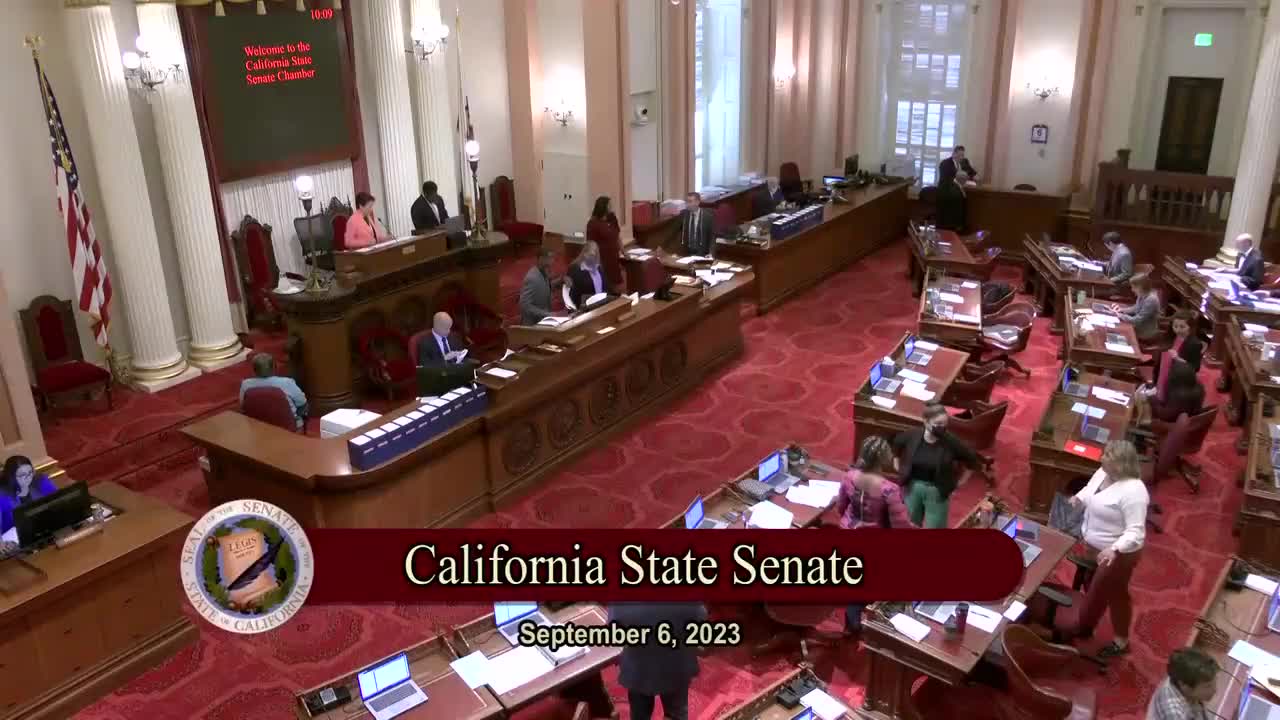
| Sep 6, 2023 | Assembly 3rd Reading AB298 Mathis et al. By Nguyen | Senate Floor |
Passed |
|
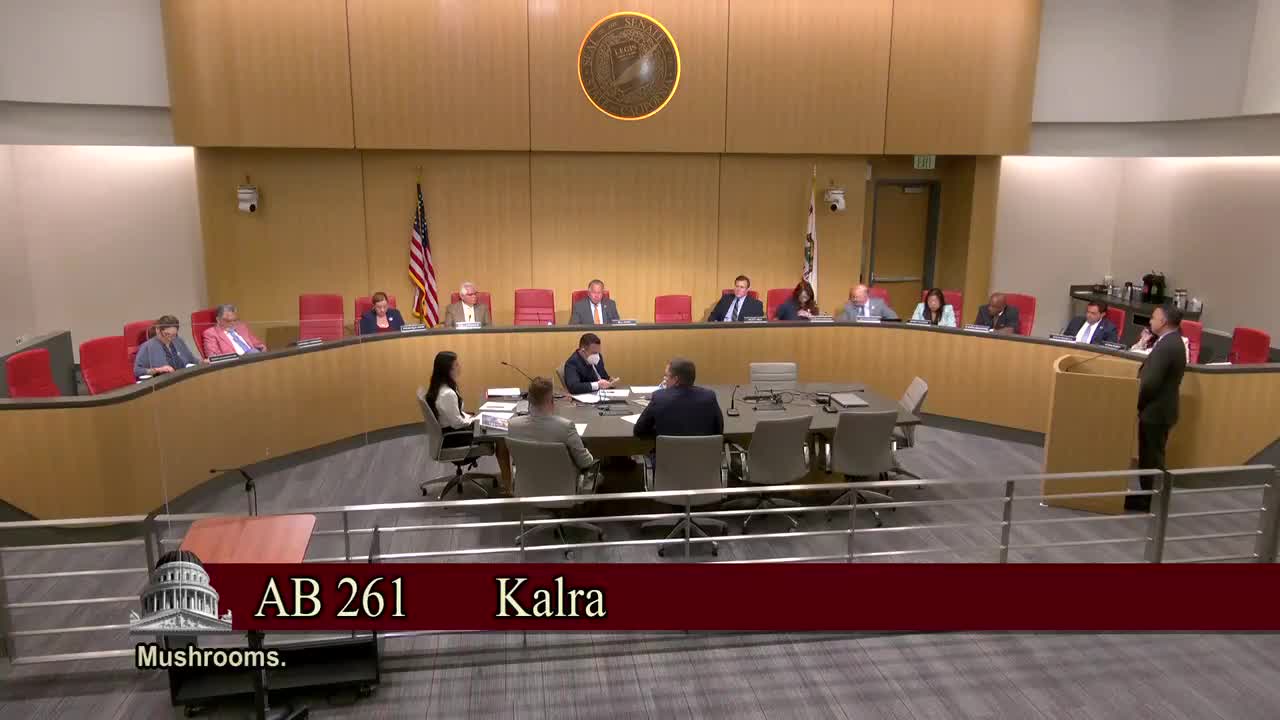
| Jun 13, 2023 | Do pass, but first be re-referred to the Committee on [Appropriations] | Senate Standing Committee on Governmental Organization |
Passed |
|
| May 11, 2023 | AB 298 Mathis Consent Calendar Second Day Regular Session | Assembly Floor |
Passed |
|
| May 3, 2023 | Do pass. To Consent Calendar. | Assembly Standing Committee on Appropriations |
Passed |
|
| Apr 20, 2023 | Do pass and be re-referred to the Committee on [Appropriations] with recommendation: To Consent Calendar | Assembly Standing Committee on Rules |
Passed |
This list shows positions taken on this bill by organizations on the date displayed, which is linked to the original source.
Positions by individuals are not included.
|
Organization
|
Position
|
Date
|
|---|---|---|
| American Legion-Department of California | ** Support | |
| AMVETS-Department of California | ** Support | |
| California Association Of County Veterans Service Officers | ** Support | |
| California Optometric Association | ** Support | |
| California State Commanders Veterans Council | ** Support | |
| Disability Rights California | ** Support | |
| Military Officers Association of America-California Council of Chapters | ** Support | |
| Reeb Government Relations | * Support | Jun 13, 2023 |
| Vietnam Veterans Association, California State Council | ** Support |
SENATE RULES COMMITTEE Office of Senate Floor Analyses (916) 651-1520 Fax: (916) 327-4478 | AB 298 |
THIRD READING
Bill No: AB 298
Author: Mathis (R), Davies (R), Garcia (D) and Ramos (D), et al.
Amended: 3/30/23 in Assembly
Vote: 21
SENATE GOVERNMENTAL ORG. COMMITTEE: 14-0, 6/13/23
AYES: Dodd, Wilk, Alvarado-Gil, Archuleta, Ashby, Bradford, Glazer, Nguyen, Ochoa Bogh, Padilla, Portantino, Roth, Rubio, Seyarto
NO VOTE RECORDED: Jones
SENATE APPROPRIATIONS COMMITTEE: Senate Rule 28.8
ASSEMBLY FLOOR: 66-0, 5/11/23 (Consent) - See last page for vote
SUBJECT: Honoring Our Blind Veterans Act
SOURCE: Author
DIGEST:
This bill authorizes a nonprofit organization that represents blind veterans to plan, construct, and maintain a Braille American flag to serve as a monument to the blind veterans of California and the United States in the California State Capitol Building, as specified.
ANALYSIS:
Existing law:
- Provides for various memorials and monuments within the State Capitol Building and on the State Capitol grounds, and prescribes various duties of the Department of General Services (DGS) in connection with the development and maintenance of the State Capitol Building and grounds.
- Establishes the Historic State Capitol Commission for the purposes of, among other things, reviewing and advising the Legislature on any development, improvement, or other physical change in any aspect of the historic State Capitol.
- Authorizes, under the State Capitol Building Annex Act of 2016, the Joint Rules Committee to pursue the construction of a state capitol building annex or the restoration, rehabilitation, renovation, or reconstruction of the existing Annex, and any other ancillary improvements, as specified.
This bill:
- Authorizes a recognized nonprofit organization that is tax exempt pursuant to the Internal Revenue Code, as specified, and that represents blind veterans, in consultation with DGS, to plan, construct, and maintain a Braille American flag in the State Capitol Building to serve as a monument to the blind veterans of California and the United States.
- Requires DGS, in consultation with the nonprofit organization representing blind veterans, to do all of the following:
- Review the preliminary design plans to identify potential maintenance concerns.
- Ensure compliance with the federal Americans with Disabilities Act of 1990 and address safety concerns.
- Review and approve any documents, if applicable, prepared pursuant to the California Environmental Quality Act for any work performed on the grounds of the State Capitol or within the State Capitol Building.
- Review final construction documents to ensure that the documents comply with all applicable laws.
- Prepare the right-of-entry permit outlining the final area of work, final construction documents, construction plans, the contractor hired to perform the work, insurance bonding, provisions for damage to state property, and inspection requirements.
- Prepare a maintenance agreement outlining the responsibility of the nonprofit organization for the long-term maintenance of the monument due to aging, vandalism, or relocation.
- Inspect all construction performed by the contractor selected by the nonprofit organization.
- Requires a nonprofit organization representing blind veterans undertaking the responsibility for planning, construction, and maintaining a Braille American flag to submit a plan to the Joint Rules Committee for its review and approval. The organization shall not begin construction of the flag until both of the following have occurred:
- The Joint Rules Committee has approved and adopted the plan for the flag.
- The Joint Rules Committee and the Department of Finance (DOF) have determined that sufficient private funding is available to construct and maintain the flag.
- Requires that the planning, construction, and maintenance of the Braille American flag to be funded exclusively through private funding.
Background
Author Statement. According to the author’s office, “America’s more than 158,000 blind veterans are often forgotten—despite their permanent sacrifices. This isn’t because blind veterans are becoming less common: A full 13% of wounded troops returning from Iraq and Afghanistan sustained a serious eye injury. It’s rather because we haven’t collectively acknowledged those who’ve sacrificed so much. AB 298 is our acknowledgement to blind veterans. It demonstrates that we honor their sacrifice, today and forever, and want them to feel included at our state Capitol. It is the least we can do because without our blind veterans, we’d have no Capitol, no California, no United States.”
California’s Veteran Population. California is home to over 1.8 million former service members, which is the largest veteran population of any state in the United States. Veterans, particularly those transitioning into civilian life, are often undercounted during the census. The California Department of Veterans Affairs (CalVet) works to serve California veterans and their families. According to its website, “CalVet strives to ensure that veterans of every era and their families receive the state and federal benefits and services they have earned and deserve as a result of selfless and honorable military service, CalVet strives to ensure that its veterans of every era and their families get the state and federal benefits and services they have earned and deserve as a result of selfless and honorable military service.”
Blinded Veterans. In 1944, in the midst of World War II, President Franklin D. Roosevelt signed an executive order that stated, in part, that “no blinded servicemen from World War II would be returned to their homes without adequate training to meet the problems of necessity imposed upon them by their blindness.”
The United States Department of Veterans Affairs (VA) estimates there are approximately 130,000 veterans in the United States who are legally blind, and more than a million veterans who have low vision that causes a loss of ability to perform necessary daily activities. In veterans of advanced age, major causes of vision loss include age-related macular degeneration, glaucoma, cataracts, stroke, and diabetic retinopathy. Among veterans who have served in Iraq and Afghanistan, blast-related brain injuries can be followed by vision problems such as blurred vision, double vision, sensitivity to light, and difficulty reading. The VA estimates that as many as 64 percent of service members with traumatic injuries also have a vision problem.
Throughout the nation, the VA operates 13 Blind Rehabilitation Centers (BRCs). These are residential inpatient training programs that help veterans adjust to their blindness. BRCs offer a variety of courses designed to help blinded veterans achieve a realistic level of independence. The VA also operates 22 intermediate and advanced low vision clinics and 23 advanced ambulatory low vision clinics.
The Blinded Veterans Association (BVA) is the only national Veterans Service Organization chartered by the United States Congress and exclusively dedicated to assisting America’s blinded veterans and their families. Approximately 100 war-blinded soldiers from World War II founded BVA in 1945. There are currently three regional groups of the BVA within California, the Charles Register Regional Group, the San Diego Regional Group, and the Southern California Regional Group.
California State Capitol Park. In the past 30 years, three new memorials have been erected in Capitol Park: the California Veterans Memorial, the California Firefighters Memorial, and the World Peace Rose Garden. Additionally, there are the following memorials within the boundaries of Capitol Park: California Vietnam Veterans Memorial, California Peace Officers Memorial, California Veterans of the Korean War Memorial, California Mexican-American Veterans Memorial, Spanish-American War Memorial, California Hispanic Veterans memorial, Fallen Employees of the Department of Transportation Memorial, the Military Order of the Purple Heart Memorial, and the Civil War Memorial Grove. Furthermore, Capitol Park contains a monument in honor of Thomas Starr King, and bronze seals commemorating the California Indians and Spanish/Mexican settlers.
These memorials were originally established with the support of outside organizations, nonprofits, and commissions with financial and management responsibility for the memorials. Over time, some of these organizations have dissolved leaving some memorials with no oversight and no statutory authority for maintenance.
Additionally, several memorials have been approved by the Legislature (see Related/Prior Legislation) but the Legislature has conditioned the start of construction of those memorials on adoption of a master plan for the Capitol Park by the Joint Committee on Rules. This requirement is intended to address logistical concerns with respect to the specific location and particular size of each memorial and the cumulative effect on the Park’s overall environment. For example, a particular group may desire that their specific project be placed in a more visible area of the Park or be larger in size than what can be easily accommodated and overshadow existing memorials.
California State Capitol Complex. The Capitol Complex is comprised of two sections: the original west wing, completed between 1860-1874, and the attached Annex, constructed in 1952, which adjoins the east side of the historic west wing. Prior to 2022, the Annex was home to the Governor’s offices, 115 of California’s 120 lawmakers, and key legislative professional support offices. In 2016, the complex had nearly 2 million visitors, including tens of thousands of grade school children.
The Annex was built before the invention of a number of modern technologies or adoption of accessibility standards, and is faced with failing systems and infrastructure. In 2016, the Legislature approved and the Governor signed the State Capitol Building Annex Act, which provides funding for a project to address deficiencies in the existing Annex. In 2017, the Joint Rules Committee contracted with an independent architectural and engineering firm to assess the current uses and further needs of the Annex, titled “The California State Capitol Annex Project Planning Study.” The findings of this study were presented at an informational hearing held by the Joint Rules Committee.
In December 2022, California’s 3rd District Court of Appeals in Sacramento found that DGS did not include a thorough analysis of the project’s impact on historical resources, aesthetics, or analysis of alternatives. The ruling requires the state to collect feedback on the design of the new annex, which was decided after the first public comment periods originally closed. The public comment period for the annex project has been extended to June 15, 2023, with an additional public hearing scheduled for early June. According to new plans, construction likely will continue until at least 2026.
Moratorium. The 2007 Budget Act provided $1.5 million from the General Fund to complete a Capitol Park Master Plan, which is intended to identify the historic landscape of the Park, current infrastructure conditions, security and maintenance needs, and future memorial locations, and how to address these issues over the next 50 years. The Joint Rules Committee is currently working with DGS to develop a master plan for the Capitol Park grounds. Until the plan is developed, DGS has instituted an “unofficial” moratorium on additional memorials and monuments in Capitol Park, which is supported by the Joint Rules Committee.
Braille American Flag. The Braille flag was designed by the president of the Kansas Braille Transcription Institute to honor his dad, a World War II veteran who lost his sight. In 2008, Congress approved the Braille flag as an official American flag and passed a bill authorizing the placement of the flag at Arlington National Cemetery.
The Braille flag is much smaller than a traditional flag, made of bronze instead of cloth, and mounted on a post in the ground. The Stars and Stripes design is raised on the bronze for tactile recognition, and the Pledge of Allegiance is also inscribed in Braille.
This bill, the Honoring Our Blind Veterans Act, authorizes a nonprofit organization that represents blind veterans to plan, construct, and maintain a Braille American flag in the State Capitol Building. This bill requires the nonprofit organization to work in consultation with DGS to plan, construct, and maintain the Braille American flag to serve as a monument to the blind veterans of California and the United States.
A nonprofit organization representing blind veterans, tasked with planning, constructing, and maintaining a Braille American flag in the Capitol, must submit a plan to the Joint Rules Committee for approval. The organization cannot begin construction until the Joint Rules Committee has approved and adopted the plan and the committee and the Department of Finance have determined that sufficient private funding is available to construct and maintain the flag. The planning, construction, and maintenance of the Braille American flag are required to be funded exclusively through private means.
Related/Prior Legislation
AB 1350 (Soria, 2023) creates the Capitol Park Veterans Memorial Fund, to be administered by the Department of Veterans Affairs, for the purpose of the maintenance and rehabilitation of existing veterans memorials in the State Capitol. (Pending in the Senate Military and Veterans Affairs Committee)
AB 1452 (Mathis, 2023) authorizes the construction and maintenance of a monument to the veterans of the wars in Iraq, Afghanistan, and Kuwait on the grounds of the State Capitol, as specified. (Pending on the Senate Floor)
AB 1459 (Ramos, 2023) requires that any construction, restoration, rehabilitation, renovation, or reconstruction of the State Capitol Building Annex incorporate a mural honoring Native Americans in California in one of the main hearing rooms. (Pending in the Appropriations Committee)
AB 1762 (Mathis, Chapter 205, Statutes of 2022) authorized the construction and maintenance of a monument to the Gold Star Families of California on the grounds of the State Capitol, as specified.
AB 2704 (Gipson, Chapter, Statutes of 2016) authorized the construction and maintenance of a bust in the State Capitol Building Annex to honor Mervyn M. Dymally.
AB 2358 (Hagman, Chapter 682, Statutes of 2012) authorized the construction of a memorial in the State Capitol Building Annex to honor former Governor and United State President, Ronald Reagan.
AB 2767 (W. Brown, Chapter 1757, Statutes of 1984) created the Historic State Capitol Commission to review and hold limited management over specified aspects of the State Capitol, as specified.
FISCAL EFFECT: Appropriation: No Fiscal Com.: Yes Local: No
SUPPORT: (Verified 6/26/23)
American Legion-Department of California
AMVETS-Department of California
California Association of County Veterans Service Officers
California Optometric Association
California State Commanders Veterans Council
Disability Rights California
Military Officers Association of America-California Council of Chapters
Vietnam Veterans Association-California State Council
OPPOSITION: (Verified 6/26/23)
None received
ARGUMENTS IN SUPPORT: In support of this bill, the California Optometric Association writes that, “[i]t is significant we honor blinded veterans that bravely served in the United States Armed Forces. Inclusivity and accessibility are vital aspects of our Nation’s policies. This monument would allow veterans with vision loss and all visually impaired citizens to ‘see’ the American flag by the touch of their fingertips.”
ASSEMBLY FLOOR: 66-0, 5/11/23
AYES: Addis, Aguiar-Curry, Alanis, Bains, Bennett, Berman, Boerner, Bryan, Calderon, Wendy Carrillo, Chen, Connolly, Megan Dahle, Davies, Essayli, Flora, Mike Fong, Vince Fong, Friedman, Gabriel, Gallagher, Garcia, Gipson, Grayson, Haney, Holden, Hoover, Irwin, Jackson, Jones-Sawyer, Kalra, Lackey, Low, Lowenthal, Maienschein, Mathis, McKinnor, Muratsuchi, Stephanie Nguyen, Pacheco, Papan, Joe Patterson, Pellerin, Petrie-Norris, Quirk-Silva, Ramos, Reyes, Luz Rivas, Robert Rivas, Rodriguez, Blanca Rubio, Sanchez, Santiago, Schiavo, Soria, Ta, Ting, Valencia, Villapudua, Waldron, Wallis, Weber, Wicks, Wilson, Zbur, Rendon
NO VOTE RECORDED: Alvarez, Arambula, Bauer-Kahan, Bonta, Juan Carrillo, Cervantes, Dixon, Hart, Lee, McCarty, Ortega, Jim Patterson, Ward, Wood
Prepared by: Brian Duke / G.O. / (916) 651-1530
6/28/23 11:06:28
**** END ****
SENATE COMMITTEE ON GOVERNMENTAL ORGANIZATION
Senator Bill Dodd
Chair
2023 - 2024 Regular
Bill No: Hearing Date: 6/13/2023
Author: | , et al. | ||
Version: | Amended | ||
Urgency: | Fiscal: | ||
Consultant: | |||
SUBJECT:
DIGEST: This bill authorizes a nonprofit organization that represents blind veterans to plan, construct, and maintain a Braille American flag to serve as a monument to the blind veterans of California and the United States in the California State Capitol Building, as specified.
ANALYSIS:
Existing law:
- Provides for various memorials and monuments within the State Capitol Building and on the State Capitol grounds, and prescribes various duties of the Department of General Services (DGS) in connection with the development and maintenance of the State Capitol Building and grounds.
- Establishes the Historic State Capitol Commission for the purposes of, among other things, reviewing and advising the Legislature on any development, improvement, or other physical change in any aspect of the historic State Capitol.
- The State Capitol Building Annex Act of 2016 authorizes the Joint Rules Committee to pursue the construction of a state capitol building annex or the restoration, rehabilitation, renovation, or reconstruction of the existing Annex, and any other ancillary improvements, as specified.
This bill:
- Authorizes a recognized nonprofit organization that is tax exempt pursuant to the Internal Revenue Code, as specified, and that represents blind veterans, in consultation with DGS, to plan, construct, and maintain a Braille American flag in the State Capitol Building to serve as a monument to the blind veterans of California and the United States.
- Requires DGS, in consultation with the nonprofit organization representing blind veterans, to do all of the following:
- Review the preliminary design plans to identify potential maintenance concerns.
- Ensure compliance with the federal Americans with Disabilities Act of 1990 and address safety concerns.
- Review and approve any documents, if applicable, prepared pursuant to the California Environmental Quality Act for any work performed on the grounds of the State Capitol or within the State Capitol Building.
- Review final construction documents to ensure that the documents comply with all applicable laws.
- Prepare the right-of-entry permit outlining the final area of work, final construction documents, construction plans, the contractor hired to perform the work, insurance bonding, provisions for damage to state property, and inspection requirements.
- Prepare a maintenance agreement outlining the responsibility of the nonprofit organization for the long-term maintenance of the monument due to aging, vandalism, or relocation.
- Inspect all construction performed by the contractor selected by the nonprofit organization.
- Requires a nonprofit organization representing blind veterans undertaking the responsibility for planning, construction, and maintaining a Braille American flag to submit a plan to the Joint Rules Committee for its review and approval. The organization shall not begin construction of the flag until both of the following have occurred:
- The Joint Rules Committee has approved and adopted the plan for the flag.
- The Joint Rules Committee and the Department of Finance (DOF) have determined that sufficient private funding is available to construct and maintain the flag.
- Requires that the planning, construction, and maintenance of the Braille American flag to be funded exclusively through private funding.
Background
Author Statement. According to the author’s office, “America’s more than 158,000 blind veterans are often forgotten—despite their permanent sacrifices. This isn’t because blind veterans are becoming less common: A full 13% of wounded troops returning from Iraq and Afghanistan sustained a serious eye injury. It’s rather because we haven’t collectively acknowledged those who’ve sacrificed so much. AB 298 is our acknowledgement to blind veterans. It demonstrates that we honor their sacrifice, today and forever, and want them to feel included at our state Capitol. It is the least we can do because without our blind veterans, we’d have no Capitol, no California, no United States.”
California’s Veteran Population. California is home to over 1.8 million former service members, which is the largest veteran population of any state in the United States. Veterans, particularly those transitioning into civilian life, are often undercounted during the census. The California Department of Veterans Affairs (CalVet) works to serve California veterans and their families. According to its website, “CalVet strives to ensure that veterans of every era and their families receive the state and federal benefits and services they have earned and deserve as a result of selfless and honorable military service, CalVet strives to ensure that its veterans of every era and their families get the state and federal benefits and services they have earned and deserve as a result of selfless and honorable military service.”
Blinded Veterans. In 1944, in the midst of World War II, President Franklin D. Roosevelt signed an executive order that stated, in part, that “no blinded servicemen from World War II would be returned to their homes without adequate training to meet the problems of necessity imposed upon them by their blindness.”
The United States Department of Veterans Affairs (VA) estimates there are approximately 130,000 veterans in the United States who are legally blind, and more than a million veterans who have low vision that causes a loss of ability to perform necessary daily activities. In veterans of advanced age, major causes of vision loss include age-related macular degeneration, glaucoma, cataracts, stroke, and diabetic retinopathy. Among veterans who have served in Iraq and Afghanistan, blast-related brain injuries can be followed by vision problems such as blurred vision, double vision, sensitivity to light, and difficulty reading. The VA estimates that as many as 64 percent of service members with traumatic injuries also have a vision problem.
Throughout the nation, the VA operates 13 Blind Rehabilitation Centers (BRCs). These are residential inpatient training programs that help veterans adjust to their blindness. BRCs offer a variety of courses designed to help blinded veterans achieve a realistic level of independence. The VA also operates 22 intermediate and advanced low vision clinics and 23 advanced ambulatory low vision clinics.
The Blinded Veterans Association (BVA) is the only national Veterans Service Organization chartered by the United States Congress and exclusively dedicated to assisting America’s blinded veterans and their families. Approximately 100 war-blinded soldiers from World War II founded BVA in 1945. There are currently three regional groups of the BVA within California, the Charles Register Regional Group, the San Diego Regional Group, and the Southern California Regional Group.
California State Capitol Park. In the past 30 years, three new memorials have been erected in Capitol Park: the California Veterans Memorial, the California Firefighters Memorial, and the World Peace Rose Garden. Additionally, there are the following memorials within the boundaries of Capitol Park: California Vietnam Veterans Memorial, California Peace Officers Memorial, California Veterans of the Korean War Memorial, California Mexican-American Veterans Memorial, Spanish-American War Memorial, California Hispanic Veterans memorial, Fallen Employees of the Department of Transportation Memorial, the Military Order of the Purple Heart Memorial, and the Civil War Memorial Grove. Furthermore, Capitol Park contains a monument in honor of Thomas Starr King, and bronze seals commemorating the California Indians and Spanish/Mexican settlers.
These memorials were originally established with the support of outside organizations, nonprofits, and commissions with financial and management responsibility for the memorials. Over time, some of these organizations have dissolved leaving some memorials with no oversight and no statutory authority for maintenance.
Additionally, several memorials have been approved by the Legislature (see Prior/Related Legislation) but the Legislature has conditioned the start of construction of those memorials on adoption of a master plan for the Capitol Park by the Joint Committee on Rules. This requirement is intended to address logistical concerns with respect to the specific location and particular size of each memorial and the cumulative effect on the Park’s overall environment. For example, a particular group may desire that their specific project be placed in a more visible area of the Park or be larger in size than what can be easily accommodated and overshadow existing memorials.
California State Capitol Complex. The Capitol Complex is comprised of two sections: the original west wing, completed between 1860-1874, and the attached Annex, constructed in 1952, which adjoins the east side of the historic west wing. Prior to 2022, the Annex was home to the Governor’s offices, 115 of California’s 120 lawmakers, and key legislative professional support offices. In 2016, the complex had nearly 2 million visitors, including tens of thousands of grade school children.
The Annex was built before the invention of a number of modern technologies or adoption of accessibility standards, and is faced with failing systems and infrastructure. In 2016, the Legislature approved and the Governor signed the State Capitol Building Annex Act, which provides funding for a project to address deficiencies in the existing Annex. In 2017, the Joint Rules Committee contracted with an independent architectural and engineering firm to assess the current uses and further needs of the Annex, titled “The California State Capitol Annex Project Planning Study.” The findings of this study were presented at an informational hearing held by the Joint Rules Committee.
In December 2022, California’s 3rd District Court of Appeals in Sacramento found that DGS did not include a thorough analysis of the project’s impact on historical resources, aesthetics, or analysis of alternatives. The ruling requires the state to collect feedback on the design of the new annex, which was decided after the first public comment periods originally closed. The public comment period for the annex project has been extended to June 15, 2023, with an additional public hearing scheduled for early June. According to new plans, construction likely will continue until at least 2026.
Moratorium. The 2007 Budget Act provided $1.5 million from the General Fund to complete a Capitol Park Master Plan, which is intended to identify the historic landscape of the Park, current infrastructure conditions, security and maintenance needs, and future memorial locations, and how to address these issues over the next 50 years. The Joint Committee on Rules is currently working with DGS to develop a master plan for the Capitol Park grounds. Until the plan is developed, DGS has instituted an “unofficial” moratorium on additional memorials and monuments in Capitol Park, which is supported by the Joint Committee on Rules.
Braille American Flag. The Braille flag was designed by the president of the Kansas Braille Transcription Institute to honor his dad, a World War II veteran who lost his sight. In 2008, Congress approved the Braille flag as an official American flag and passed a bill authorizing the placement of the flag at Arlington National Cemetery.
The Braille flag is much smaller than a traditional flag, made of bronze instead of cloth, and mounted on a post in the ground. The Stars and Stripes design is raised on the bronze for tactile recognition, and the Pledge of Allegiance is also inscribed in Braille.
This bill, the Honoring Our Blind Veterans Act, would authorize a nonprofit organization that represents blind veterans to plan, construct, and maintain a Braille American flag in the State Capitol Building. This bill requires the nonprofit organization to work in consultation with DGS to plan, construct, and maintain the Braille American flag to serve as a monument to the blind veterans of California and the United States.
A nonprofit organization representing blind veterans, tasked with planning, constructing, and maintaining a Braille American flag in the Capitol, must submit a plan to the Joint Rules Committee for approval. The organization cannot begin construction until the Joint Rules Committee has approved and adopted the plan and the committee and the Department of Finance have determined that sufficient private funding is available to construct and maintain the flag. The planning, construction, and maintenance of the Braille American flag are required to be funded exclusively through private means.
Prior/Related Legislation
AB 1350 (Soria, 2023) creates the Capitol Park Veterans Memorial Fund, to be administered by the Department of Veterans Affairs, for the purpose of the maintenance and rehabilitation of existing veterans memorials in the State Capitol. (Pending referral in the Senate)
AB 1452 (Mathis, 2023) would authorize the construction and maintenance of a monument to the veterans of the wars in Iraq, Afghanistan, and Kuwait on the grounds of the State Capitol, as specified. (Pending in the Senate Governmental Organization Committee)
AB 1459 (Ramos, 2023) would require that any construction, restoration, rehabilitation, renovation, or reconstruction of the State Capitol Building Annex incorporate a mural honoring Native Americans in California in one of the main hearing rooms. (Pending in the Senate Governmental Organization Committee)
AB 1762 (Mathis, Chapter 205, Statutes of 2022) authorized the construction and maintenance of a monument to the Gold Star Families of California on the grounds of the State Capitol, as specified.
AB 2704 (Gipson, Chapter, Statutes of 2016) authorized the construction and maintenance of a bust in the State Capitol Building Annex to honor Mervyn M. Dymally.
AB 2358 (Hagman, Chapter 682, Statutes of 2012) authorized the construction of a memorial in the State Capitol Building Annex to honor former Governor and United State President, Ronald Reagan.
AB 2767 (W. Brown, Chapter 1757, Statutes of 1984) created the Historic State Capitol Commission to review and hold limited management over specified aspects of the State Capitol, as specified.
FISCAL EFFECT: Appropriation: Fiscal Com.: Local:
SUPPORT:
American Legion-Department of California
AMVETS-Department of California
California Association of County Veterans Service Officers
California Optometric Association
California State Commanders Veterans Council
Military Officers Association of America-California Council of Chapters
Vietnam Veterans Association-California State Council
OPPOSITION:
None received
ARGUMENTS IN SUPPORT: In support of the bill, the California Optometric Association writes that, “[i]t is significant we honor blinded veterans that bravely served in the United States Armed Forces. Inclusivity and accessibility are vital aspects of our Nation’s policies. This monument would allow veterans with vision loss and all visually impaired citizens to ‘see’ the American flag by the touch of their fingertips.”
Date of Hearing: May 3, 2023
ASSEMBLY COMMITTEE ON APPROPRIATIONS
Chris Holden, Chair
ABPCA Bill Id:AB 298
Author:(Mathis) – As Amended Ver:March 30, 2023
Policy Committee: | Rules | Vote: | 13 - 0 |
|
| ||
|
|
Urgency: No State Mandated Local Program: No Reimbursable: No
SUMMARY:
This bill authorizes the construction and maintenance of a braille American flag in the State Capitol Building to serve as a monument to the blind veterans of California and the United States.
Specifically, this bill:
- Authorizes a recognized 501(c)(3) nonprofit organization representing blind veterans, in consultation with the Department of General Services (DGS), to plan for a braille American flag in the State Capitol Building to serve as a monument to blind veterans. The nonprofit must submit a plan to the Joint Rules Committee for review and approval.
- Requires the monument to be privately funded and prohibits construction of the monument until the Joint Rules Committee and the Department of Finance (DOF) determine sufficient private funding is available.
FISCAL EFFECT:
- Minor and absorbable costs to DGS for consultation and maintenance of the monument’s construction on the State Capitol grounds.
- Minor and absorbable costs to the Joint Rules Committee and DOF to review construction and funding plans for the monument.
COMMENTS:
- Purpose. According to the author:
America’s more than 158,000 blind veterans are often forgotten, despite their permanent sacrifices. This isn’t because blind veterans are becoming less common: A full 13% of wounded trips returning from Iraq and Afghanistan sustained a serious eye injury. It is rather because we haven’t collectively acknowledged those who’ve sacrificed so much. AB 298 is our acknowledgement to blind veterans. It demonstrates that we honor their sacrifice, today and forever, and want them to feel included at our state Capitol. It is the least we can do because without our blind veterans, we’d have no Capitol, no California, and no United States.
This bill is supported by many veterans groups and the California Optometric Association.
- Monuments at the State Capitol. Aside from their role in state governance, the State Capitol building itself and Capitol Park are significant for their many memorials recognizing groups and individuals who have contributed to California’s history. This bill allows for maintenance of a braille American flag in the State Capitol Building to serve as a monument to blind veterans if specified design conditions are met and sufficient private funding is available. The final location of the flag will need approval from DGS and the Joint Rules Committee.
- Related Legislation. AB 1452 (Mathis) authorizes the construction and maintenance of a monument to veterans of the wars in Iraq, Afghanistan, and Kuwait on the grounds of the State Capitol. AB 1452 is pending hearing in this committee.
AB 1459 (Ramos) requires the reconstruction of the State Capitol Building Annex to incorporate in one of the main hearing rooms a mural honoring Native Americans in California. AB 1459 is pending hearing in this committee.
- Prior Legislation. AB 1762 (Mathis), Chapter 205, Statutes of 2022, authorized the construction and maintenance of a monument to the Gold Star Families of California on the grounds of the State Capitol.
AB 338 (Ramos), Chapter 280, Statutes of 2021, repealed the requirement for a monument to Father Junipero Serra be on the State Capitol grounds and instead authorized the construction and maintenance of a monument to the California Native people of the Sacramento, California region.
Analysis Prepared by: Irene Ho / APPR. / (916) 319-2081
Date of Hearing: April 20, 2023
ASSEMBLY COMMITTEE ON RULES
James Ramos, Chair
ABPCA Bill Id:AB 298 (
Author:Mathis) – As Amended Ver:March 30, 2023
SUBJECT: Honoring Our Blind Veterans Act
SUMMARY: Authorizes the construction and maintenance of a braille American flag in the State Capitol Building to serve as a monument to the blind veterans of California and the United States. Specifically, this bill:
- Requires the Department of General Services (DGS) in consultation with a nonprofit organization that represents blind veterans, to be responsible for the planning, construction, and maintenance of a braille American flag in the State Capitol Building to serve as a monument to blind veterans.
- Requires the planning, construction, and maintenance of the braille American flag to be funded exclusively through private funding.
- Prohibits construction of the flag until the Joint Committee on Rules has approved and adopted the plan for the monument; and, the Joint Committee on Rules and the Department of Finance (DOF) have determined that sufficient private funding is available to construct and maintain the flag.
- Provides that this act shall be known as the “Honoring Our Blind Veterans Act”.
EXISTING LAW:
- Requires DGS to oversee the buildings and grounds of the state, including the historic State Capitol and the State Capitol Building Annex.
- Requires the Joint Committee on Rules to approve and adopt plans for memorials in the State Capitol Park and statues in the State Capitol Building Annex.
- Defines “Capitol Park” as the area lying between 9th Street on the west, 15th Street on the east, N Street on the south, and L Street on the north.
FISCAL EFFECT: Unknown
COMMENTS:
- Purpose of the bill: In support of AB 298, the author states:
America’s more than 158,000 blind veterans are often forgotten, despite their permanent sacrifices. This isn’t because blind veterans are becoming less common: A full 13% of wounded troops returning from Iraq and Afghanistan sustained a serious eye injury. It is rather because we haven’t collectively acknowledged those who’ve sacrificed so much. AB 298 is our acknowledgement to blind veterans. It demonstrates that we honor their sacrifice, today and forever, and want them to feel included at our state Capitol. It is the least we can do because without our blind veterans, we’d have no Capitol, no California, and no United States.
- Location in the Capitol: AB 298 does not specify where the flag would be placed in the State Capitol Building. The location will need final approval from DGS and the Joint Committee on Rules.
- Prior Legislation: AB 1762 (Chapter 205, Statutes of 2022) authorized the construction and maintenance of a monument to the Gold Star Families of California on the grounds of the State Capitol.
- Arguments in Support: The California Optometric Association writes in support of AB 298:
It is significant we honor blinded veterans that bravely served in the United State Armed Forces. Inclusivity and accessibility are vital aspects of our Nation’s policies. This monument would allow veterans with vision loss and all visually impaired citizens to “see” the American flag by the touch of their fingertips.
REGISTERED SUPPORT / OPPOSITION:
Support
California Optometric Association
Opposition
None on file
Analysis Prepared by: Michael Erke / RLS. / (916) 319-2800
Discussed in Hearing
 51SEC
Senate Floor
 4MIN
Senate Standing Committee on Governmental Organization



Bill Co-Author(s):