AB 3024: Civil rights.
- Session Year: 2023-2024
- House: Assembly
- Latest Version Date: 2024-09-25
Current Status:
Passed
(2024-09-25: Chaptered by Secretary of State - Chapter 584, Statutes of 2024.)
Introduced
In Committee
First Chamber
In Committee
Second Chamber
Enacted
Existing law, the Ralph Civil Rights Act of 1976, affords all persons within the jurisdiction of this state the right to be free from any violence, or intimidation by threat of violence, committed against their persons or property because of political affiliation, any specified personal characteristic, or position in a labor dispute, or because another person perceives them to have one or more of those characteristics. Existing law specifies that whoever denies this right, or aids, incites, or conspires in that denial, is liable for each and every offense for the actual damages suffered by any person denied that right and, in addition, exemplary damages, a civil penalty of $25,000, and attorneys fees. Existing law authorizes a person claiming to be aggrieved by an alleged unlawful practice in violation of this right to also file a verified complaint with the Civil Rights Department. Existing law defines the phrase intimidation by threat of violence for purposes of this provision.
This bill would expand the definition of intimidation by threat of violence for purposes of these provisions to also include terrorizing the owner or occupant of private property with the distribution of materials on the private property, without authorization, with the purpose of terrorizing, as defined, the owner or occupant of that private property. The bill would prohibit speech alone from supporting an action brought pursuant to the Ralph Civil Rights Act of 1976 unless there is a showing that the speech itself threatens violence against a specific person or group of persons, the person or group of persons against whom the threat is directed reasonably fears that, because of the speech, violence will be committed against them or their property, and the person threatening violence is acting in reckless disregard for the threatening nature of their speech and has the apparent ability to carry out the threat. The bill would prohibit that restriction on speech alone supporting an action from being construed to negate or otherwise abrogate the requirements set forth in other specified provisions of the Ralph Civil Rights Act of 1976 to bring an action pursuant to that act.
This bill would declare that it is to take effect immediately as an urgency statute.
Existing law, the Ralph Civil Rights Act of 1976, affords all persons within the jurisdiction of this state the right to be free from any violence, or intimidation by threat of violence, committed against their persons or property because of political affiliation, any specified personal characteristic, or position in a labor dispute, or because another person perceives them to have one or more of those characteristics. Existing law specifies that whoever denies this right, or aids, incites, or conspires in that denial, is liable for each and every offense for the actual damages suffered by any person denied that right and, in addition, exemplary damages, a civil penalty of $25,000, and attorneys fees. Existing law authorizes a person claiming to be aggrieved by an alleged unlawful practice in violation of this right to also file a verified complaint with the Civil Rights Department. Existing law defines the phrase intimidation by threat of violence for purposes of this provision.
This bill would expand the definition of intimidation by threat of violence for purposes of these provisions to also include terrorizing the owner or occupant of private property with the distribution of materials on the private property, without authorization, with the purpose of terrorizing, as defined, the owner or occupant of that private property. The bill would make prohibit speech alone insufficient to support from supporting an action brought pursuant to these provisions the Ralph Civil Rights Act of 1976 unless there is a showing that the speech itself threatens violence against a specific person or group of persons, and the person or group of persons against whom the threat is directed reasonably fears that, because of the speech, violence will be committed against them or their property property, and that the person threatening violence is acting in reckless disregard for the threatening nature of their speech and has the apparent ability to carry out the threat. The bill would prohibit that restriction on speech alone supporting an action from being construed to negate or otherwise abrogate the requirements set forth in other specified provisions of the Ralph Civil Rights Act of 1976 to bring an action pursuant to that act.
This bill would declare that it is to take effect immediately as an urgency statute.
Existing law, the Ralph Civil Rights Act of 1976, affords all persons within the jurisdiction of this state the right to be free from any violence, or intimidation by threat of violence, committed against their persons or property because of political affiliation, any specified personal characteristic, or position in a labor dispute, or because another person perceives them to have one or more of those characteristics. Existing law specifies that whoever denies this right, or aids, incites, or conspires in that denial, is liable for each and every offense for the actual damages suffered by any person denied that right and, in addition, exemplary damages, a civil penalty of $25,000, and attorneys fees. Existing law authorizes a person claiming to be aggrieved by an alleged unlawful practice in violation of this right to also file a verified complaint with the Civil Rights Department. Existing law defines the phrase intimidation by threat of violence for purposes of this provision.
This bill would expand the definition of intimidation by threat of violence for purposes of these provisions to also include terrorizing the owner or occupant of private property with the distribution of materials on the private property, without authorization, with the purpose of terrorizing, as defined, the owner or occupant of that private property. The bill would make speech alone insufficient to support an action brought pursuant to these provisions unless there is a showing that the speech itself threatens violence against a specific person or group of persons, and the person or group of persons against whom the threat is directed reasonably fears that, because of the speech, violence will be committed against them or their property and that the person threatening violence has the apparent ability to carry out the threat.
This bill would declare that it is to take effect immediately as an urgency statute.
Existing law, the Ralph Civil Rights Act of 1976, affords all persons within the jurisdiction of this state the right to be free from any violence, or intimidation by threat of violence, committed against their persons or property because of political affiliation, any specified personal characteristic, or position in a labor dispute, or because another person perceives them to have one or more of those characteristics. Existing law specifies that whoever denies this right, or aids, incites, or conspires in that denial, is liable for each and every offense for the actual damages suffered by any person denied that right and, in addition, exemplary damages, a civil penalty of $25,000, and attorneys fees. Existing law authorizes a person claiming to be aggrieved by an alleged unlawful practice in violation of this right to also file a verified complaint with the Civil Rights Department. Existing law defines the phrase intimidation by threat of violence for purposes of this provision.
This bill would expand the definition of intimidation by threat of violence for purposes of these provisions to also include terrorizing the owner or resident occupant of private property with the distribution of materials on the private property property, without authorization authorization, with the purpose of terrorizing, as defined, the owner or occupant of that private property.
This bill would declare that it is to take effect immediately as an urgency statute.
Existing law, the Ralph Civil Rights Act of 1976, affords all persons within the jurisdiction of this state the right to be free from any violence, or intimidation by threat of violence, committed against their persons or property because of political affiliation, any specified personal characteristic, or position in a labor dispute, or because another person perceives them to have one or more of those characteristics. Existing law specifies that whoever denies this right, or aids, incites, or conspires in that denial, is liable for each and every offense for the actual damages suffered by any person denied that right and, in addition, exemplary damages, a civil penalty of $25,000, and attorneys fees. Existing law authorizes a person claiming to be aggrieved by an alleged unlawful practice in violation of this right to also file a verified complaint with the Civil Rights Department. Existing law defines the phrase intimidation by threat of violence for purposes of this provision.
This bill would expand the definition of intimidation by threat of violence for purposes of these provisions to also include terrorizing the owner or resident of private property with the distribution of hateful materials on the private property of another without authorization for with the purpose of terrorizing, as defined, the owner or occupant of that private property.
This bill would declare that it is to take effect immediately as an urgency statute.
Existing law, the Ralph Civil Rights Act of 1976, affords all persons within the jurisdiction of this state the right to be free from any violence, or intimidation by threat of violence, committed against their persons or property because of political affiliation, any specified personal characteristic, or position in a labor dispute, or because another person perceives them to have one or more of those characteristics. Existing law specifies that whoever denies this right, or aids, incites, or conspires in that denial, is liable for each and every offense for the actual damages suffered by any person denied that right and, in addition, exemplary damages, a civil penalty of $25,000, and attorneys fees. Existing law authorizes a person claiming to be aggrieved by an alleged unlawful practice in violation of this right to also file a verified complaint with the Civil Rights Department. Existing law defines the phrase intimidation by threat of violence for purposes of this provision.
This bill would expand the definition of intimidation by threat of violence for purposes of these provisions to also include distribution of hateful materials on the private property of another without authorization for the purpose of terrorizing, as defined, the owner or occupant of that private property.
This bill would declare that it is to take effect immediately as an urgency statute.
Existing law, the Ralph Civil Rights Act of 1976, affords all persons within the jurisdiction of this state the right to be free from any violence, or intimidation by threat of violence, committed against their persons or property because of political affiliation, any specified personal characteristic, or position in a labor dispute, or because another person perceives them to have one or more of those characteristics. Existing law specifies that whoever denies this right, or aids, incites, or conspires in that denial, is liable for each and every offense for the actual damages suffered by any person denied that right and, in addition, exemplary damages, a civil penalty of $25,000, and attorneys fees. Existing law authorizes a person claiming to be aggrieved by an alleged unlawful practice in violation of this right to also file a verified complaint with the Civil Rights Department. Existing law defines the phrase intimidation by threat of violence for purposes of this provision.
This bill would expand the definition of intimidation by threat of violence for purposes of these provisions to also include distribution of hateful materials on the private property of another without authorization for the purpose of terrorizing, as defined, the owner or occupant of that private property or in reckless disregard of the risk of terrorizing the owner or occupant of that private property.
Existing law defines a nuisance as anything which is injurious to health or is indecent or offensive to the senses, is an obstruction to the free use of property so as to interfere with the comfortable enjoyment of life or property, or unlawfully obstructs the free passage or use, in the customary manner, of any navigable lake, or river, bay, stream, canal, or basin, or any public park, square, street, or highway. Existing law defines a public nuisance as one that affects at the same time an entire community or neighborhood, or any considerable number of persons, although the extent of the annoyance or damage inflicted upon individuals may be unequal.Existing law authorizes a person to abate a public nuisance which is specially injurious to them by removing, or, if necessary, destroying the thing which constitutes the same, without committing a breach of the peace, or doing unnecessary injury.This bill would make a nonsubstantive change to that authorization.Existing law defines a nuisance as anything which is injurious to health or is indecent or offensive to the senses, is an obstruction to the free use of property so as to interfere with the comfortable enjoyment of life or property, or unlawfully obstructs the free passage or use, in the customary manner, of any navigable lake, or river, bay, stream, canal, or basin, or any public park, square, street, or highway. Existing law defines a public nuisance as one that affects at the same time an entire community or neighborhood, or any considerable number of persons, although the extent of the annoyance or damage inflicted upon individuals may be unequal.
Existing law authorizes a person to abate a public nuisance which is specially injurious to them by removing, or, if necessary, destroying the thing which constitutes the same, without committing a breach of the peace, or doing unnecessary injury.
This bill would make a nonsubstantive change to that authorization.
(a)This section shall be known, and may be cited, as the Ralph Civil Rights Act of 1976.
(b)(1)All persons within the jurisdiction of this state have the right to be free from any violence, or intimidation by threat of violence, committed against their persons or property because of political affiliation, or on account of any characteristic listed or defined in subdivision (b) or (e) of Section 51, or position in a labor dispute, or because another person perceives them to have one or more of those characteristics. The identification in this subdivision of particular bases of discrimination is illustrative rather than restrictive.
(2)For purposes of this subdivision, intimidation by threat of violence includes, but is not limited to, making or threatening to make a claim or report to a peace officer or law enforcement agency that falsely alleges that another person has engaged in unlawful activity or in an activity that requires law enforcement intervention, knowing that the claim or report is false, or with reckless disregard for the truth or falsity of the claim or report.
(3)For purposes of this subdivision, intimidation by threat of violence includes, but is not limited to, terrorizing the owner or occupant of private property with the distribution of materials on the private property, without authorization, with the purpose of terrorizing the owner or occupant of that private property.
(4)For purposes of this subdivision, terrorize means to cause a person of ordinary emotions and sensibilities to fear for personal safety.
(c)(1)A person shall not require another person to waive any legal right, penalty, remedy, forum, or procedure for a violation of this section, as a condition of entering into a contract for goods or services, including the right to file and pursue a civil action or complaint with, or otherwise notify, the Attorney General or any other public prosecutor, or law enforcement agency, the Civil Rights Department, or any court or other governmental entity.
(2)A person shall not refuse to enter into a contract with, or refuse to provide goods or services to, another person on the basis that the other person refuses to waive any legal right, penalty, remedy, forum, or procedure for a violation of this section, including the right to file and pursue a civil action or complaint with, or otherwise notify, the Attorney General or any other public prosecutor, or law enforcement agency, the Civil Rights Department, or any other governmental entity.
(3)Any waiver of any legal right, penalty, remedy, forum, or procedure for a violation of this section, including the right to file and pursue a civil action or complaint with, or otherwise notify, the Attorney General or any other public prosecutor, or law enforcement agency, the Civil Rights Department, or any other governmental entity shall be knowing and voluntary, in writing, and expressly not made as a condition of entering into a contract for goods or services or as a condition of providing or receiving goods and services.
(4)Any waiver of any legal right, penalty, remedy, forum, or procedure for a violation of this section that is required as a condition of entering into a contract for goods or services shall be deemed involuntary, unconscionable, against public policy, and unenforceable. This subdivision does not affect the enforceability or validity of any other provision of the contract.
(5)A person who seeks to enforce a waiver of any legal right, penalty, remedy, forum, or procedure for a violation of this section has the burden of proving that the waiver was knowing and voluntary and not made as a condition of the contract or of providing or receiving the goods or services.
(6)The exercise of a persons right to refuse to waive any legal right, penalty, remedy, forum, or procedure for a violation of this section, including a rejection of a contract requiring a waiver, does not affect any otherwise legal terms of a contract or an agreement.
(7)This subdivision does not apply to an agreement to waive any legal rights, penalties, remedies, forums, or procedures for a violation of this section after a legal claim has arisen.
(8)This subdivision applies to an agreement to waive any legal right, penalty, remedy, forum, or procedure for a violation of this section, including an agreement to accept private arbitration, entered into, altered, modified, renewed, or extended on or after January 1, 2015.
(d)This section does not apply to statements concerning positions in a labor dispute that are made during otherwise lawful labor picketing.
(e)(1)Speech alone shall not support an action brought pursuant to this section, except upon a showing of all of the following:
(A)The speech itself threatens violence against a specific person or group of persons.
(B)The person or group of persons against whom the threat is directed reasonably fears that, because of the speech, violence will be committed against them or their property.
(C)The person threatening violence is acting in reckless disregard for the threatening nature of their speech.
(D)The person threatening violence has the apparent ability to carry out the threat.
(2)This subdivision shall not be construed to negate or otherwise abrogate the requirements set forth in subdivisions (b) to (d), inclusive, to bring an action pursuant to this section.
(f)The Legislature finds and declares that this section was enacted as part of the Ralph Civil Rights Act of 1976, in Chapter 1293 of the Statutes of 1976.
(g)This section does not negate or otherwise abrogate the provisions of Sections 1668, 1953, and 3513.
SEC. 2.This act is an urgency statute necessary for the immediate preservation of the public peace, health, or safety within the meaning of Article IV of the California Constitution and shall go into immediate effect. The facts constituting the necessity are:
In order to address the rapidly growing trend of hate littering incidents in the community, deter future incidents, and give victims the recourse needed to recover from their trauma as soon as possible, it is necessary that this act go into effect immediately.
(a)This section shall be known, and may be cited, as the Ralph Civil Rights Act of 1976.
(b)(1)All persons within the jurisdiction of this state have the right to be free from any violence, or intimidation by threat of violence, committed against their persons or property because of political affiliation, or on account of any characteristic listed or defined in subdivision (b) or (e) of Section 51, or position in a labor dispute, or because another person perceives them to have one or more of those characteristics. The identification in this subdivision of particular bases of discrimination is illustrative rather than restrictive.
(2)For purposes of this subdivision, intimidation by threat of violence includes, but is not limited to, making or threatening to make a claim or report to a peace officer or law enforcement agency that falsely alleges that another person has engaged in unlawful activity or in an activity that requires law enforcement intervention, knowing that the claim or report is false, or with reckless disregard for the truth or falsity of the claim or report.
(3)For purposes of this subdivision, intimidation by threat of violence includes, but is not limited to, terrorizing the owner or occupant of private property with the distribution of materials on the private property, without authorization, with the purpose of terrorizing the owner or occupant of that private property.
(4)For purposes of this subdivision, terrorize means to cause a person of ordinary emotions and sensibilities to fear for personal safety.
(c)(1)A person shall not require another person to waive any legal right, penalty, remedy, forum, or procedure for a violation of this section, as a condition of entering into a contract for goods or services, including the right to file and pursue a civil action or complaint with, or otherwise notify, the Attorney General or any other public prosecutor, or law enforcement agency, the Civil Rights Department, or any court or other governmental entity.
(2)A person shall not refuse to enter into a contract with, or refuse to provide goods or services to, another person on the basis that the other person refuses to waive any legal right, penalty, remedy, forum, or procedure for a violation of this section, including the right to file and pursue a civil action or complaint with, or otherwise notify, the Attorney General or any other public prosecutor, or law enforcement agency, the Civil Rights Department, or any other governmental entity.
(3)Any waiver of any legal right, penalty, remedy, forum, or procedure for a violation of this section, including the right to file and pursue a civil action or complaint with, or otherwise notify, the Attorney General or any other public prosecutor, or law enforcement agency, the Civil Rights Department, or any other governmental entity shall be knowing and voluntary, in writing, and expressly not made as a condition of entering into a contract for goods or services or as a condition of providing or receiving goods and services.
(4)Any waiver of any legal right, penalty, remedy, forum, or procedure for a violation of this section that is required as a condition of entering into a contract for goods or services shall be deemed involuntary, unconscionable, against public policy, and unenforceable. This subdivision does not affect the enforceability or validity of any other provision of the contract.
(5)A person who seeks to enforce a waiver of any legal right, penalty, remedy, forum, or procedure for a violation of this section has the burden of proving that the waiver was knowing and voluntary and not made as a condition of the contract or of providing or receiving the goods or services.
(6)The exercise of a persons right to refuse to waive any legal right, penalty, remedy, forum, or procedure for a violation of this section, including a rejection of a contract requiring a waiver, does not affect any otherwise legal terms of a contract or an agreement.
(7)This subdivision does not apply to an agreement to waive any legal rights, penalties, remedies, forums, or procedures for a violation of this section after a legal claim has arisen.
(8)This subdivision applies to an agreement to waive any legal right, penalty, remedy, forum, or procedure for a violation of this section, including an agreement to accept private arbitration, entered into, altered, modified, renewed, or extended on or after January 1, 2015.
(d)This section does not apply to statements concerning positions in a labor dispute that are made during otherwise lawful labor picketing.
(e)(1)Speech alone is not sufficient to shall not support an action brought pursuant to this section, except upon a showing that the of all of the following:
(A)The speech itself threatens violence against a specific person or group of persons, and the persons.
(B)The person or group of persons against whom the threat is directed reasonably fears that, because of the speech, violence will be committed against them or their property and that the property.
(C)The person threatening violence is acting in reckless disregard for the threatening nature of their speech.
(D)The person threatening violence has the apparent ability to carry out the threat.
(2)This subdivision shall not be construed to negate or otherwise abrogate the requirements set forth in subdivisions (b) to (d), inclusive, to bring an action pursuant to this section.
(f)The Legislature finds and declares that this section was enacted as part of the Ralph Civil Rights Act of 1976, in Chapter 1293 of the Statutes of 1976.
(g)This section does not negate or otherwise abrogate the provisions of Sections 1668, 1953, and 3513.
SEC. 2.This act is an urgency statute necessary for the immediate preservation of the public peace, health, or safety within the meaning of Article IV of the California Constitution and shall go into immediate effect. The facts constituting the necessity are:
In order to address the rapidly growing trend of hate littering incidents in the community, deter future incidents, and give victims the recourse needed to recover from their trauma as soon as possible, it is necessary that this act go into effect immediately.
(a)This section shall be known, and may be cited, as the Ralph Civil Rights Act of 1976.
(b)(1)All persons within the jurisdiction of this state have the right to be free from any violence, or intimidation by threat of violence, committed against their persons or property because of political affiliation, or on account of any characteristic listed or defined in subdivision (b) or (e) of Section 51, or position in a labor dispute, or because another person perceives them to have one or more of those characteristics. The identification in this subdivision of particular bases of discrimination is illustrative rather than restrictive.
(2)For purposes of this subdivision, intimidation by threat of violence includes, but is not limited to, making or threatening to make a claim or report to a peace officer or law enforcement agency that falsely alleges that another person has engaged in unlawful activity or in an activity that requires law enforcement intervention, knowing that the claim or report is false, or with reckless disregard for the truth or falsity of the claim or report.
(3)For purposes of this subdivision, intimidation by threat of violence includes, but is not limited to, terrorizing the owner or occupant of private property with the distribution of materials on the private property, without authorization, with the purpose of terrorizing the owner or occupant of that private property.
(4)For purposes of this subdivision, terrorize means to cause a person of ordinary emotions and sensibilities to fear for personal safety.
(c)(1)A person shall not require another person to waive any legal right, penalty, remedy, forum, or procedure for a violation of this section, as a condition of entering into a contract for goods or services, including the right to file and pursue a civil action or complaint with, or otherwise notify, the Attorney General or any other public prosecutor, or law enforcement agency, the Civil Rights Department, or any court or other governmental entity.
(2)A person shall not refuse to enter into a contract with, or refuse to provide goods or services to, another person on the basis that the other person refuses to waive any legal right, penalty, remedy, forum, or procedure for a violation of this section, including the right to file and pursue a civil action or complaint with, or otherwise notify, the Attorney General or any other public prosecutor, or law enforcement agency, the Civil Rights Department, or any other governmental entity.
(3)Any waiver of any legal right, penalty, remedy, forum, or procedure for a violation of this section, including the right to file and pursue a civil action or complaint with, or otherwise notify, the Attorney General or any other public prosecutor, or law enforcement agency, the Civil Rights Department, or any other governmental entity shall be knowing and voluntary, in writing, and expressly not made as a condition of entering into a contract for goods or services or as a condition of providing or receiving goods and services.
(4)Any waiver of any legal right, penalty, remedy, forum, or procedure for a violation of this section that is required as a condition of entering into a contract for goods or services shall be deemed involuntary, unconscionable, against public policy, and unenforceable. This subdivision does not affect the enforceability or validity of any other provision of the contract.
(5)A person who seeks to enforce a waiver of any legal right, penalty, remedy, forum, or procedure for a violation of this section has the burden of proving that the waiver was knowing and voluntary and not made as a condition of the contract or of providing or receiving the goods or services.
(6)The exercise of a persons right to refuse to waive any legal right, penalty, remedy, forum, or procedure for a violation of this section, including a rejection of a contract requiring a waiver, does not affect any otherwise legal terms of a contract or an agreement.
(7)This subdivision does not apply to an agreement to waive any legal rights, penalties, remedies, forums, or procedures for a violation of this section after a legal claim has arisen.
(8)This subdivision applies to an agreement to waive any legal right, penalty, remedy, forum, or procedure for a violation of this section, including an agreement to accept private arbitration, entered into, altered, modified, renewed, or extended on or after January 1, 2015.
(d)This section does not apply to statements concerning positions in a labor dispute that are made during otherwise lawful labor picketing.
(e)Speech alone is not sufficient to support an action brought pursuant to this section, except upon a showing that the speech itself threatens violence against a specific person or group of persons, and the person or group of persons against whom the threat is directed reasonably fears that, because of the speech, violence will be committed against them or their property and that the person threatening violence has the apparent ability to carry out the threat.
(e)(f)The Legislature finds and declares that this section was enacted as part of the Ralph Civil Rights Act of 1976, in Chapter 1293 of the Statutes of 1976.
(f)(g)This section does not negate or otherwise abrogate the provisions of Sections 1668, 1953, and 3513.
SEC. 2.This act is an urgency statute necessary for the immediate preservation of the public peace, health, or safety within the meaning of Article IV of the California Constitution and shall go into immediate effect. The facts constituting the necessity are:
In order to address the rapidly growing trend of hate littering incidents in the community, deter future incidents, and give victims the recourse needed to recover from their trauma as soon as possible, it is necessary that this act go into effect immediately.
(a)This section shall be known, and may be cited, as the Ralph Civil Rights Act of 1976.
(b)(1)All persons within the jurisdiction of this state have the right to be free from any violence, or intimidation by threat of violence, committed against their persons or property because of political affiliation, or on account of any characteristic listed or defined in subdivision (b) or (e) of Section 51, or position in a labor dispute, or because another person perceives them to have one or more of those characteristics. The identification in this subdivision of particular bases of discrimination is illustrative rather than restrictive.
(2)For purposes of this subdivision, intimidation by threat of violence includes, but is not limited to, making or threatening to make a claim or report to a peace officer or law enforcement agency that falsely alleges that another person has engaged in unlawful activity or in an activity that requires law enforcement intervention, knowing that the claim or report is false, or with reckless disregard for the truth or falsity of the claim or report.
(3)For purposes of this subdivision, intimidation by threat of violence includes, but is not limited to, terrorizing the owner or resident occupant of private property with the distribution of materials on the private property property, without authorization authorization, with the purpose of terrorizing the owner or occupant of that private property.
(4)For purposes of this subdivision, terrorize means to cause a person of ordinary emotions and sensibilities to fear for personal safety.
(c)(1)A person shall not require another person to waive any legal right, penalty, remedy, forum, or procedure for a violation of this section, as a condition of entering into a contract for goods or services, including the right to file and pursue a civil action or complaint with, or otherwise notify, the Attorney General or any other public prosecutor, or law enforcement agency, the Civil Rights Department, or any court or other governmental entity.
(2)A person shall not refuse to enter into a contract with, or refuse to provide goods or services to, another person on the basis that the other person refuses to waive any legal right, penalty, remedy, forum, or procedure for a violation of this section, including the right to file and pursue a civil action or complaint with, or otherwise notify, the Attorney General or any other public prosecutor, or law enforcement agency, the Civil Rights Department, or any other governmental entity.
(3)Any waiver of any legal right, penalty, remedy, forum, or procedure for a violation of this section, including the right to file and pursue a civil action or complaint with, or otherwise notify, the Attorney General or any other public prosecutor, or law enforcement agency, the Civil Rights Department, or any other governmental entity shall be knowing and voluntary, in writing, and expressly not made as a condition of entering into a contract for goods or services or as a condition of providing or receiving goods and services.
(4)Any waiver of any legal right, penalty, remedy, forum, or procedure for a violation of this section that is required as a condition of entering into a contract for goods or services shall be deemed involuntary, unconscionable, against public policy, and unenforceable. This subdivision does not affect the enforceability or validity of any other provision of the contract.
(5)A person who seeks to enforce a waiver of any legal right, penalty, remedy, forum, or procedure for a violation of this section has the burden of proving that the waiver was knowing and voluntary and not made as a condition of the contract or of providing or receiving the goods or services.
(6)The exercise of a persons right to refuse to waive any legal right, penalty, remedy, forum, or procedure for a violation of this section, including a rejection of a contract requiring a waiver, does not affect any otherwise legal terms of a contract or an agreement.
(7)This subdivision does not apply to an agreement to waive any legal rights, penalties, remedies, forums, or procedures for a violation of this section after a legal claim has arisen.
(8)This subdivision applies to an agreement to waive any legal right, penalty, remedy, forum, or procedure for a violation of this section, including an agreement to accept private arbitration, entered into, altered, modified, renewed, or extended on or after January 1, 2015.
(d)This section does not apply to statements concerning positions in a labor dispute that are made during otherwise lawful labor picketing.
(e)The Legislature finds and declares that this section was enacted as part of the Ralph Civil Rights Act of 1976, in Chapter 1293 of the Statutes of 1976.
(f)This section does not negate or otherwise abrogate the provisions of Sections 1668, 1953, and 3513.
SEC. 2.This act is an urgency statute necessary for the immediate preservation of the public peace, health, or safety within the meaning of Article IV of the California Constitution and shall go into immediate effect. The facts constituting the necessity are:
In order to address the rapidly growing trend of hate littering incidents in the community, deter future incidents, and give victims the recourse needed to recover from their trauma as soon as possible, it is necessary that this act go into effect immediately.
(a)This section shall be known, and may be cited, as the Ralph Civil Rights Act of 1976.
(b)(1)All persons within the jurisdiction of this state have the right to be free from any violence, or intimidation by threat of violence, committed against their persons or property because of political affiliation, or on account of any characteristic listed or defined in subdivision (b) or (e) of Section 51, or position in a labor dispute, or because another person perceives them to have one or more of those characteristics. The identification in this subdivision of particular bases of discrimination is illustrative rather than restrictive.
(2)For purposes of this subdivision, intimidation by threat of violence includes, but is not limited to, making or threatening to make a claim or report to a peace officer or law enforcement agency that falsely alleges that another person has engaged in unlawful activity or in an activity that requires law enforcement intervention, knowing that the claim or report is false, or with reckless disregard for the truth or falsity of the claim or report.
(3)For purposes of this subdivision, intimidation by threat of violence includes, but is not limited to, terrorizing the owner or resident of private property with the distribution of hateful materials on the private property of another without authorization for with the purpose of terrorizing the owner or occupant of that private property.
(4)For purposes of this subdivision, terrorize means to cause a person of ordinary emotions and sensibilities to fear for personal safety.
(c)(1)A person shall not require another person to waive any legal right, penalty, remedy, forum, or procedure for a violation of this section, as a condition of entering into a contract for goods or services, including the right to file and pursue a civil action or complaint with, or otherwise notify, the Attorney General or any other public prosecutor, or law enforcement agency, the Civil Rights Department, or any court or other governmental entity.
(2)A person shall not refuse to enter into a contract with, or refuse to provide goods or services to, another person on the basis that the other person refuses to waive any legal right, penalty, remedy, forum, or procedure for a violation of this section, including the right to file and pursue a civil action or complaint with, or otherwise notify, the Attorney General or any other public prosecutor, or law enforcement agency, the Civil Rights Department, or any other governmental entity.
(3)Any waiver of any legal right, penalty, remedy, forum, or procedure for a violation of this section, including the right to file and pursue a civil action or complaint with, or otherwise notify, the Attorney General or any other public prosecutor, or law enforcement agency, the Civil Rights Department, or any other governmental entity shall be knowing and voluntary, in writing, and expressly not made as a condition of entering into a contract for goods or services or as a condition of providing or receiving goods and services.
(4)Any waiver of any legal right, penalty, remedy, forum, or procedure for a violation of this section that is required as a condition of entering into a contract for goods or services shall be deemed involuntary, unconscionable, against public policy, and unenforceable. This subdivision does not affect the enforceability or validity of any other provision of the contract.
(5)A person who seeks to enforce a waiver of any legal right, penalty, remedy, forum, or procedure for a violation of this section has the burden of proving that the waiver was knowing and voluntary and not made as a condition of the contract or of providing or receiving the goods or services.
(6)The exercise of a persons right to refuse to waive any legal right, penalty, remedy, forum, or procedure for a violation of this section, including a rejection of a contract requiring a waiver, does not affect any otherwise legal terms of a contract or an agreement.
(7)This subdivision does not apply to an agreement to waive any legal rights, penalties, remedies, forums, or procedures for a violation of this section after a legal claim has arisen.
(8)This subdivision applies to an agreement to waive any legal right, penalty, remedy, forum, or procedure for a violation of this section, including an agreement to accept private arbitration, entered into, altered, modified, renewed, or extended on or after January 1, 2015.
(d)This section does not apply to statements concerning positions in a labor dispute that are made during otherwise lawful labor picketing.
(e)The Legislature finds and declares that this section was enacted as part of the Ralph Civil Rights Act of 1976, in Chapter 1293 of the Statutes of 1976.
(f)This section does not negate or otherwise abrogate the provisions of Sections 1668, 1953, and 3513.
SEC. 2.This act is an urgency statute necessary for the immediate preservation of the public peace, health, or safety within the meaning of Article IV of the California Constitution and shall go into immediate effect. The facts constituting the necessity are:
In order to address the rapidly growing trend of hate littering incidents in the community, deter future incidents, and give victims the recourse needed to recover from their trauma as soon as possible, it is necessary that this act go into effect immediately.
(a)This section shall be known, and may be cited, as the Ralph Civil Rights Act of 1976.
(b)(1)All persons within the jurisdiction of this state have the right to be free from any violence, or intimidation by threat of violence, committed against their persons or property because of political affiliation, or on account of any characteristic listed or defined in subdivision (b) or (e) of Section 51, or position in a labor dispute, or because another person perceives them to have one or more of those characteristics. The identification in this subdivision of particular bases of discrimination is illustrative rather than restrictive.
(2)For purposes of this subdivision, intimidation by threat of violence includes, but is not limited to, making or threatening to make a claim or report to a peace officer or law enforcement agency that falsely alleges that another person has engaged in unlawful activity or in an activity that requires law enforcement intervention, knowing that the claim or report is false, or with reckless disregard for the truth or falsity of the claim or report.
(3)For purposes of this subdivision, intimidation by threat of violence includes, but is not limited to, distribution of hateful materials on the private property of another without authorization for the purpose of terrorizing the owner or occupant of that private property.
(4)For purposes of this subdivision, terrorize means to cause a person of ordinary emotions and sensibilities to fear for personal safety.
(c)(1)A person shall not require another person to waive any legal right, penalty, remedy, forum, or procedure for a violation of this section, as a condition of entering into a contract for goods or services, including the right to file and pursue a civil action or complaint with, or otherwise notify, the Attorney General or any other public prosecutor, or law enforcement agency, the Civil Rights Department, or any court or other governmental entity.
(2)A person shall not refuse to enter into a contract with, or refuse to provide goods or services to, another person on the basis that the other person refuses to waive any legal right, penalty, remedy, forum, or procedure for a violation of this section, including the right to file and pursue a civil action or complaint with, or otherwise notify, the Attorney General or any other public prosecutor, or law enforcement agency, the Civil Rights Department, or any other governmental entity.
(3)Any waiver of any legal right, penalty, remedy, forum, or procedure for a violation of this section, including the right to file and pursue a civil action or complaint with, or otherwise notify, the Attorney General or any other public prosecutor, or law enforcement agency, the Civil Rights Department, or any other governmental entity shall be knowing and voluntary, in writing, and expressly not made as a condition of entering into a contract for goods or services or as a condition of providing or receiving goods and services.
(4)Any waiver of any legal right, penalty, remedy, forum, or procedure for a violation of this section that is required as a condition of entering into a contract for goods or services shall be deemed involuntary, unconscionable, against public policy, and unenforceable. This subdivision does not affect the enforceability or validity of any other provision of the contract.
(5)A person who seeks to enforce a waiver of any legal right, penalty, remedy, forum, or procedure for a violation of this section has the burden of proving that the waiver was knowing and voluntary and not made as a condition of the contract or of providing or receiving the goods or services.
(6)The exercise of a persons right to refuse to waive any legal right, penalty, remedy, forum, or procedure for a violation of this section, including a rejection of a contract requiring a waiver, does not affect any otherwise legal terms of a contract or an agreement.
(7)This subdivision does not apply to an agreement to waive any legal rights, penalties, remedies, forums, or procedures for a violation of this section after a legal claim has arisen.
(8)This subdivision applies to an agreement to waive any legal right, penalty, remedy, forum, or procedure for a violation of this section, including an agreement to accept private arbitration, entered into, altered, modified, renewed, or extended on or after January 1, 2015.
(d)This section does not apply to statements concerning positions in a labor dispute that are made during otherwise lawful labor picketing.
(e)The Legislature finds and declares that this section was enacted as part of the Ralph Civil Rights Act of 1976, in Chapter 1293 of the Statutes of 1976.
(f)This section does not negate or otherwise abrogate the provisions of Sections 1668, 1953, and 3513.
SEC. 2.This act is an urgency statute necessary for the immediate preservation of the public peace, health, or safety within the meaning of Article IV of the California Constitution and shall go into immediate effect. The facts constituting the necessity are:
In order to address the rapidly growing trend of hate littering incidents in the community, deter future incidents, and give victims the recourse needed to recover from their trauma as soon as possible, it is necessary that this act go into effect immediately.
(a)This section shall be known, and may be cited, as the Ralph Civil Rights Act of 1976.
(b)(1)All persons within the jurisdiction of this state have the right to be free from any violence, or intimidation by threat of violence, committed against their persons or property because of political affiliation, or on account of any characteristic listed or defined in subdivision (b) or (e) of Section 51, or position in a labor dispute, or because another person perceives them to have one or more of those characteristics. The identification in this subdivision of particular bases of discrimination is illustrative rather than restrictive.
(2)For purposes of this subdivision, intimidation by threat of violence includes, but is not limited to, making or threatening to make a claim or report to a peace officer or law enforcement agency that falsely alleges that another person has engaged in unlawful activity or in an activity that requires law enforcement intervention, knowing that the claim or report is false, or with reckless disregard for the truth or falsity of the claim or report.
(3)For purposes of this subdivision, intimidation by threat of violence includes, but is not limited to, distribution of hateful materials on the private property of another without authorization for the purpose of terrorizing the owner or occupant of that private property or in reckless disregard of the risk of terrorizing the owner or occupant of that private property.
(4)For purposes of this subdivision, terrorize means to cause a person of ordinary emotions and sensibilities to fear for personal safety.
(c)(1)A person shall not require another person to waive any legal right, penalty, remedy, forum, or procedure for a violation of this section, as a condition of entering into a contract for goods or services, including the right to file and pursue a civil action or complaint with, or otherwise notify, the Attorney General or any other public prosecutor, or law enforcement agency, the Civil Rights Department, or any court or other governmental entity.
(2)A person shall not refuse to enter into a contract with, or refuse to provide goods or services to, another person on the basis that the other person refuses to waive any legal right, penalty, remedy, forum, or procedure for a violation of this section, including the right to file and pursue a civil action or complaint with, or otherwise notify, the Attorney General or any other public prosecutor, or law enforcement agency, the Civil Rights Department, or any other governmental entity.
(3)Any waiver of any legal right, penalty, remedy, forum, or procedure for a violation of this section, including the right to file and pursue a civil action or complaint with, or otherwise notify, the Attorney General or any other public prosecutor, or law enforcement agency, the Civil Rights Department, or any other governmental entity shall be knowing and voluntary, in writing, and expressly not made as a condition of entering into a contract for goods or services or as a condition of providing or receiving goods and services.
(4)Any waiver of any legal right, penalty, remedy, forum, or procedure for a violation of this section that is required as a condition of entering into a contract for goods or services shall be deemed involuntary, unconscionable, against public policy, and unenforceable. This subdivision does not affect the enforceability or validity of any other provision of the contract.
(5)A person who seeks to enforce a waiver of any legal right, penalty, remedy, forum, or procedure for a violation of this section has the burden of proving that the waiver was knowing and voluntary and not made as a condition of the contract or of providing or receiving the goods or services.
(6)The exercise of a persons right to refuse to waive any legal right, penalty, remedy, forum, or procedure for a violation of this section, including a rejection of a contract requiring a waiver, does not affect any otherwise legal terms of a contract or an agreement.
(7)This subdivision does not apply to an agreement to waive any legal rights, penalties, remedies, forums, or procedures for a violation of this section after a legal claim has arisen.
(8)This subdivision applies to an agreement to waive any legal right, penalty, remedy, forum, or procedure for a violation of this section, including an agreement to accept private arbitration, entered into, altered, modified, renewed, or extended on or after January 1, 2015.
(d)This section does not apply to statements concerning positions in a labor dispute that are made during otherwise lawful labor picketing.
(e)The Legislature finds and declares that this section was enacted as part of the Ralph Civil Rights Act of 1976, in Chapter 1293 of the Statutes of 1976.
(f)This section does not negate or otherwise abrogate the provisions of Sections 1668, 1953, and 3513.
SECTION 1.Section 3495 of the Civil Code is amended to read:3495.Any person may abate a public nuisance which is specially injurious to them by removing, or, if necessary, destroying the thing which constitutes the same, without committing a breach of the peace, or doing unnecessary injury.Any person may abate a public nuisance which is specially injurious to him them by removing, or, if necessary, destroying the thing which constitutes the same, without committing a breach of the peace, or doing unnecessary injury.
|
Date
|
Status
|
|---|---|
| Sep 25, 2024 | Chaptered by Secretary of State - Chapter 584, Statutes of 2024. |
| Sep 25, 2024 | Approved by the Governor. |
| Sep 13, 2024 | Enrolled and presented to the Governor at 4 p.m. |
| Aug 31, 2024 | Urgency clause adopted. Senate amendments concurred in. To Engrossing and Enrolling. (Ayes 61. Noes 2.). |
| Aug 31, 2024 | In Assembly. Concurrence in Senate amendments pending. |
| Aug 31, 2024 | Read third time. Urgency clause adopted. Passed. Ordered to the Assembly. (Ayes 30. Noes 0.). |
| Aug 29, 2024 | Read second time. Ordered to third reading. |
| Aug 28, 2024 | Read third time and amended. Ordered to second reading. |
| Aug 28, 2024 | Joint Rule 61 suspended. (Ayes 30. Noes 8.) |
| Aug 20, 2024 | Read second time. Ordered to third reading. |
| Aug 19, 2024 | Read third time and amended. Ordered to second reading. |
| Jun 20, 2024 | Read second time and amended. Ordered to third reading. |
| Jun 19, 2024 | From committee: Amend, and do pass as amended. (Ayes 8. Noes 2.) (June 18). |
| Jun 10, 2024 | From committee chair, with author's amendments: Amend, and re-refer to committee. Read second time, amended, and re-referred to Com. on JUD. |
| May 8, 2024 | Referred to Com. on JUD. |
| Apr 29, 2024 | In Senate. Read first time. To Com. on RLS. for assignment. |
| Apr 29, 2024 | Read third time. Urgency clause adopted. Passed. Ordered to the Senate. (Ayes 61. Noes 3. Page 5029.). |
| Apr 22, 2024 | Read third time and amended. Ordered to third reading. (Page 4917.) |
| Apr 4, 2024 | Read second time. Ordered to third reading. |
| Apr 3, 2024 | Read second time and amended. Ordered returned to second reading. |
| Apr 2, 2024 | From committee: Amend, and do pass as amended. (Ayes 10. Noes 1.) (April 2). |
| Mar 19, 2024 | Re-referred to Com. on JUD. |
| Mar 18, 2024 | Referred to Com. on JUD. |
| Mar 18, 2024 | From committee chair, with author's amendments: Amend, and re-refer to Com. on JUD. Read second time and amended. |
| Feb 17, 2024 | From printer. May be heard in committee March 18. |
| Feb 16, 2024 | Read first time. To print. |
|
Date
|
Description
|
Location
|
Votes
|
|
|---|---|---|---|---|
| Aug 31, 2024 | AB 3024 Ward Concurrence in Senate Amendments | Assembly Floor |
Passed |
|
| Aug 31, 2024 | Assembly 3rd Reading AB3024 Ward et al. By Allen Urgency Clause | Senate Floor |
Passed |
|
| Jun 18, 2024 | Do pass as amended | Senate Standing Committee on Judiciary |
Passed |
|
| Apr 29, 2024 | AB 3024 Ward Third Reading Urgency | Assembly Floor |
Passed |
|
| Apr 2, 2024 | Do pass as amended. | Assembly Standing Committee on Judiciary |
Passed |
This list shows positions taken on this bill by organizations on the date displayed, which is linked to the original source.
Positions by individuals are not included.
|
Organization
|
Position
|
Date
|
|---|---|---|
| Aclu California Action | ** Against | |
| AJC California | ** Support | |
| Anti-Defamation League | ** Support | |
| City Of La Mesa | ** Support | |
| City Of San Diego | * Support | Jun 18, 2024 |
| City of San Diego Councilmember Raul Campillo | ** Support | |
| cleanearth4kids.org | ** Support | |
| Councilmember Raul Campillo | * Support | Apr 2, 2024 |
| Democrats for Israel Los Angeles | ** Support | |
| Democrats for Israel – California | ** Support | |
| ETTA | ** Support | |
| First Amendment Coalition | ** Against | |
| Hadassah | ** Support | |
| Hias | ** Support | |
| Holocaust Museum Los Angeles | ** Support | |
| Jewish Big Brothers Big Sisters of Los Angeles | ** Support | |
| Jewish Center for Justice | ** Support | |
| Jewish Community Federation & Endowment Fund | ** Support | |
| Jewish Community Relations Council of the Bay Area | ** Support | |
| Jewish Democratic Club of Marin | ** Support | |
| Jewish Democratic Club of Solano County | ** Support | |
| Jewish Democratic Coalition of the Bay Area | ** Support | |
| Jewish Family & Children’s Services of San Francisco, the Peninsula, Marin & Sonoma Counties | ** Support | |
| Jewish Family and Children Services Long Beach and Orange County | ** Support | |
| Jewish Family Service Los Angeles | ** Support | |
| Jewish Family Service of San Diego | ** Support | |
| Jewish Family Services of Silicon Valley | ** Support | |
| Jewish Federation Los Angeles | ** Support | |
| Jewish Federation of The Greater San Gabriel and Pomona Valleys | ** Support | |
| Jewish Free Loan Association | ** Support | |
| Jewish Long Beach | ** Support | |
| Jewish Public Affairs Committee Of California | ** Support | |
| Jewish Silicon Valley | ** Support | |
| Mara W. Elliott, City Attorney for the City of San Diego | ** Support | |
| Progressive Zionists of California | ** Support | |
| Raul A. Campillo, Councilmember, City of San Diego | ** Support | |
| Todd Gloria, Mayor, City of San Diego | ** Support | |
| TransYouth Liberation | * Support | Apr 2, 2024 |
CONCURRENCE IN SENATE AMENDMENTS
CSA1 Bill Id:AB 3024
Author:(Ward)
As Amended Ver:August 28, 2024
2/3 vote. Urgency
SUMMARY
Prohibits, as a part of the protections afforded by the Ralph Civil Rights Act, the distribution of materials on the private property of another person for the purpose of terrorizing the owner or occupant of that private property.
Major Provisions
- Clarifies that the definition of "intimidation by threat of violence" in the Ralph Civil Rights Act includes, but is not limited to, distribution of materials on the private property of another without authorization for the purpose of terrorizing the owner or occupant of that private property.
- Defines for the purpose of 1) "terrorize" to mean to cause a person of ordinary emotions and sensibilities to fear for personal safety.
- Clarifies that speech alone is insufficient to support a cause of action under this bill except upon a showing of the following:
- The speech itself threatens violence against a specific person or group of persons;
- The person or group of persons against whom the threat is directed reasonably fears that, because of the speech, violence will be committed against them or their property;
- The person threatening violence is acting in reckless disregard for the threatening nature of their speech; and
- The person threatening violence has the apparent ability to carry out the threat.
- Adopts an urgency clause.
Senate Amendments
- Eliminate the need for distributed materials to be "hateful."
- Ensure consistent use of the phrase "owner or occupant" of a private property throughout the bill.
- Clarify that speech alone is insufficient to support a cause of action under this bill, except as specified.
COMMENTS
Existing law, the Ralph Civil Rights Act, protects Californians from violence and intimidation based on a person's membership in a protected class. Despite these protections, hate crimes remain a troubling problem in this state. One such hateful act is known as "hate littering," whereby a person intentionally distributes or places hateful propaganda onto another person's property, seeking to intimidate that person. While California law makes certain egregious types of hate littering a criminal offense, lower-level offenses are harder to deter. This bill would establish civil penalties for all types of hate littering.
California maintains some of the nation's most robust civil rights laws. The Unruh Civil Rights Act was one of the nation's first state-level civil rights laws, and thanks to a series of amendments to the law, it remains one of the most widely encompassing civil rights statutes in the country. Similarly, the Ralph Civil Rights Act provides persons who suffer violence or threats of violence on the basis of being a member of a protected class the ability to recover financial penalties from the person who violated their civil rights. Additionally, the state possesses robust criminal statutes preventing hate crimes. Most recently, in response to rising anti-Semitism across the country, the Legislature made it a crime to a place a swastika, noose, or desecrated cross on another person's property seeking to terrorize that person. AB 2282 (Bauer-Kahan) Chapter 397, Statutes of 2022.
However, a troubling rise in hate crimes continues to plague California. In 2022, the Attorney General's Office noted that hate-driven crimes increased 20% from 2021 to 2022. (California Justice Information Services Division, Hate Crime in California, California Department of Justice (2022) at p. 1.) More troublingly, the data indicates that hate crimes rose across an array of protected classes including race, religion, and sexual orientation. (Id. at p. 8.) The author and proponents of this bill note that a growing type of hate crime involves the placing of hateful flyers, stickers, banners, graffiti, and posters on private property seeking to intimidate the property owner, also known as "hate littering." According to data provided to the Committee from the Anti-Defamation League, one of the supporters of this bill, the rate of hate littering incidents grew by 38% nationally in 2022. The proponents of this measure contend that without new legal tools, property owners will possess few tools to stop hate littering.
Seeking to stop the proliferation of hate littering, this bill would make the practice a violation of the Ralph Civil Rights Act. The bill simply expands the existing definition of "intimidation by threat of violence" in the Ralph Civil Rights Act to include the intentional distribution of hateful materials on the private property of another, without authorization, for the purpose of terrorizing the owner or occupant of that private property. The bill also defines "terrorizing" to mean something that would cause a person of ordinary emotions and sensibilities to fear for personal safety. By adding these provisions to the Ralph Civil Rights Act, an aggrieved party would be able to seek damages from the person hate littering on their property.
Given that this measure seeks to prohibit the distribution of hateful materials on another's property, by its nature, this bill is a limitation on speech. While the First Amendment to the United States Constitution prohibits the government from limiting speech, these prohibitions generally do not apply to private property. However, the California Supreme Court has held that some limits on speech on private property violate the Constitution. The State Supreme Court held that soliciting signatures for a petition at a shopping mall is protected speech. (Robins v. Pruneyard Shopping Center, (1979) 23 Cal. 3d 899.) The State Supreme Court explicitly noted that California's constitutional speech protections are more inclusive than those at the federal level. (Wilson v. Superior Court (1983) 34 Cal. 3d 777.) Accordingly, given that the state prohibits some restriction of speech even on private property, to determine the constitutionality of this measure, the nature of the restriction of speech proposed by this bill must be examined.
This measure is clearly aimed at threatening speech, as it is reforming the definition of a "threat" in the Ralph Civil Rights Act. Both the United States and California Supreme Courts have held that "true threats" are not protected speech under the First Amendment. (See, Virginia v. Black (2003) 538 U.S. 343; People v. Lowery (2011) 52 Cal.4th 419.) As it pertains to what is a "true threat," the California courts have upheld language nearly identical to the language proposed in this bill. Language in former Penal Code Section 11411, the section upon which this bill is modeled, stated, "Any person who burns or desecrates a cross or other religious symbol, knowing it to be a religious symbol, on the private property of another without authorization for the purpose of terrorizing the owner or occupant of that private property," is guilty of a crime. That code section also defined "'terrorize'" as "to cause a person of ordinary emotions and sensibilities to fear for personal safety." The court contended that because a reasonable person would feel, "fear and intimidation… it conveys a threat of future physical harm." (In re Steven S. (1994) 25 Cal.App.4th 598, 607.) In addition to being a "true threat," the court also noted that such actions constitute "fighting words," another class of unprotected speech. (Id. at p. 609.) Thus it appears that this language sufficiently falls within the California case law to be considered a threat and therefore can be prohibited.
Additionally, because limits on speech must be as narrow as possible it must be determined if the language of this statute is sufficiently clear to pass constitutional muster. Again, Penal Code Section 11411 and associated case law provide helpful guidance. In holding that the verbiage of that statute, mimicked in this bill, is sufficiently clear, California courts held, "An offender who has a purpose… of terrorizing--that is, of causing 'a person of ordinary emotions and sensibilities to fear for personal safety'" can have no doubt that the behavior is threatening. (In re Steven S., supra, at p. 614.) Essentially, because the statute requires a person to intend to commit an act that would make an ordinary person fear for their safety, the court believes this standard is sufficiently clear. There appears no reason why the logic would change simply because this bill is a civil matter and not a criminal statute.
Seeking to further ensure that this bill does not violate the First Amendment, the measure clarifies that speech alone is not sufficient to bring a cause of action unless the speech is specifically targeting an individual or group of individuals and the person making the threatening speech has the apparent ability to act on their threats. Overall, given the parallels between the language utilized in this measure and language that has passed constitutional muster in Penal Code Section 11411, this bill is unlikely to violate the First Amendment.
According to the Author
The Stop Hate Littering Act, AB 3024, will protect individuals from the distribution of hateful propaganda in the form of flyers, posters, or symbols with the intent to terrorize vulnerable communities. These forms of hateful propaganda have rapidly become the preferred tactic of hate groups because it maximizes personal impact, while allowing them to remain anonymous and avoid accountability.
These are not just pieces of paper with words, these are deliberate, targeted attacks that are intended to harass and intimidate victims, dehumanizing them based on their religion, gender or sexual orientation, or other characteristic. They are being left on our windshields, in our driveways, and on our front doors. They have no place in our communities.
Arguments in Support
This bill is sponsored by the Anti-Defamation League (ADL) and is supported by a range of civil rights organizations, the City of San Diego, and several local elected officials from San Diego. In support of this bill the Anti-Defamation League writes:
According to ADL's own data, we have seen a precipitous rise of antisemitic incidents across the state. Last year, flyers with horrific antisemitic and anti-LGBTQ+ messages were distributed in the dark of night across the state, attacking not only the values that we hold as a community but threatening the individuals who live in it. We must do all that we can to speak out and take action against this extremist activity and conduct that seeks to have our communities live in fear of hate and potential violence.
AB 3024 will make necessary improvements to existing law by strengthening the Ralph Civil Rights Act of 1976 to ensure victims are provided adequate protections against these new tactics and create new legal tools to deter terrorizing activity and hold offenders accountable.
This spike in hate has made the path forward clear. California must take action to counter this rise in hate and bigotry. AB 3024 is the first of many steps toward that aim.
Arguments in Opposition
ACLU California Action and the First Amendment Coalition jointly write:
It is well settled that "true threats" are not protected by the First Amendment. However, in order to punish someone for issuing a true threat, the government must prove that there was a direct threat of unlawful violence to a particular individual.1 AB 3024 invites an overbroad application of civil penalties for the distribution of materials that express disfavored views or views that private property owners disagree with and find upsetting, but that do not target or intend to place any individual in fear of bodily harm or death.
While we appreciate your laudable goal to address so-called "hateful propaganda," we are concerned with the foreseeable unintended consequences of utilizing significant financial civil penalties to punish people for their speech. We are also concerned with the definitions from the California Penal Code being applied to the California Civil Code.
The primary concern with this bill is that the prohibitions do not fall within the "true threat" doctrine and therefore violate the First Amendment. Consequently, AB 3024 invites discriminatory civil actions to be wielded as a tool for the distribution of materials that express disfavored views or views that private property owners disagree with and find upsetting yet do not target or intend to place any individual in fear of bodily harm or death.
FISCAL COMMENTS
None.
VOTES:
ASM JUDICIARY: 10-1-1
YES: Kalra, Bauer-Kahan, Bryan, Connolly, Haney, Maienschein, McKinnor, Pacheco, Reyes, Waldron
NO: Dixon
ABS, ABST OR NV: Sanchez
ASSEMBLY FLOOR: 61-3-16
YES: Addis, Aguiar-Curry, Arambula, Bains, Bauer-Kahan, Bennett, Berman, Boerner, Bonta, Bryan, Calderon, Juan Carrillo, Wendy Carrillo, Cervantes, Connolly, Mike Fong, Friedman, Gabriel, Garcia, Gipson, Grayson, Haney, Hart, Holden, Irwin, Jackson, Jones-Sawyer, Kalra, Lee, Low, Lowenthal, Maienschein, McCarty, McKinnor, Muratsuchi, Stephanie Nguyen, Ortega, Pacheco, Papan, Pellerin, Petrie-Norris, Quirk-Silva, Ramos, Rendon, Reyes, Luz Rivas, Rodriguez, Santiago, Schiavo, Soria, Ting, Villapudua, Waldron, Wallis, Ward, Weber, Wicks, Wilson, Wood, Zbur, Robert Rivas
NO: Essayli, Vince Fong, Gallagher
ABS, ABST OR NV: Alanis, Alvarez, Chen, Megan Dahle, Davies, Dixon, Flora, Hoover, Lackey, Mathis, Jim Patterson, Joe Patterson, Blanca Rubio, Sanchez, Ta, Valencia
UPDATED
VERSION: August 28, 2024
CONSULTANT: Nicholas Liedtke / JUD. / (916) 319-2334 FN: 0004972
SENATE RULES COMMITTEE Office of Senate Floor Analyses (916) 651-1520 Fax: (916) 327-4478 | AB 3024 |
THIRD READING
Bill No: AB 3024
Author: Ward (D), et al.
Amended: 8/28/24 in Senate
Vote: 27 - Urgency
SENATE JUDICIARY COMMITTEE: 8-2, 6/18/24
AYES: Umberg, Allen, Ashby, Caballero, Durazo, Roth, Stern, Wahab
NOES: Wilk, Niello
NO VOTE RECORDED: Laird
ASSEMBLY FLOOR: 61-3, 4/29/24 - See last page for vote
SUBJECT: Civil rights
SOURCE: Anti-Defamation League
Mara W. Elliott, City Attorney for the City of San Diego
Raul A. Campillo, Councilmember, City of San Diego
Todd Gloria, Mayor, City of San Diego
DIGEST:
This bill provides that, under the Ralph Civil Rights Act of 1976 (Ralph Act), “intimidation by threat of violence” includes terrorizing the owner or resident of private property with the distribution of materials on that private property, without authorization, with the purpose of terrorizing the owner or occupant of that property; and defines “terrorize” as to cause a person of ordinary emotions and sensibilities to fear for their personal safety.
Senate Floor Amendments of 8/28/24 add an element to the provision clarifying that speech along may not constitute a cause of action under the Ralph Act to ensure that the provision is consistent with existing First Amendment precedent.
ANALYSIS:
Existing law:
- Provides that Congress shall make no law abridging the freedom of speech, or the right of the people to peaceably assemble, and to petition the government for redress of grievances. (U.S. Constitution First Amendment & 14th Amendment; see Gitlow v. People of State of New York (1925) 268 U.S. 652, 666 (First Amendment guarantees apply to the states through the due process clause of the Fourteenth Amendment)
- Provides that every person may freely speak, write, and publish their sentiments on all subjects, and that a law may not restrain or abridge liberty of speech. (California Constitution Article I § 2 )
- Establishes the Ralph Act, which provides that all persons within the jurisdiction of this state have the right to be free from any violence, or intimidation by threat of violence, committed against their persons or property because of political affiliation, or on account of any characteristic listed in the Unruh Civil Rights Act (set forth below), or position in a labor dispute, or because another person perceives them to have one or more of those characteristics. (Civil (Civ.) Code § 51.7)
- The perceived characteristics imported from the Unruh Civil Rights Act are: sex, race, color, religion, ancestry, national origin, disability, medical condition, genetic information, marital status, citizenship, primary language, and immigration status, as defined. (Civ. Code § 51 (a)(e))
- The bases of discrimination set forth in the Ralph Civil Rights Act are illustrative rather than restrictive. (Civ. Code § 51.7(b)(1))
- Provides that, for purposes of the Ralph Act, “intimidation by threat of violence” includes, but is not limited to, making or threatening to make a claim or report to a police officer or law enforcement agency that falsely alleges that another person has engaged in unlawful activity or in an activity that requires law enforcement intervention, knowing that the claim or report is false, or with reckless disregard for the truth or falsity of the claim or report. (Civ. Code § 51.7(b)(2))
- Provides that the rights in 1) may not be waived, and any attempt to enforce a purported waiver is unenforceable. (Civ. Code § 51.7(c))
- Provides that whoever denies a right provided in 1), or aids, incites, or conspires in that denial, is liable for each and every offense for the actual damages suffered by any person denied that right and, in addition, the following:
- An amount to be determined by a jury, or a court sitting without a jury, for exemplary damage fees.
- A civil penalty of $25,000 to be awarded to the person denied the right in any action brought by the person, or by the Attorney General, a district attorney, or a city attorney. An action for the penalty shall be commenced within three years of the alleged practice.
- Attorney fees as may be determined by the court. (Civ. Code § 52(b))
- Establishes the crime of terrorism of a person, which prohibits the display or placement of certain items, signs, and symbols on private and specified property, as follows:
- The enumerated prohibited acts are: hanging a noose, with knowledge that it is a symbol representing a threat to life; placing a sign, mark, symbol, emblem, or other physical impression, including, but not limited to, a Nazi swastika; and burning or desecrating a cross or other religious symbol, knowing it to be a religious symbol.
- The locations at which the acts are prohibited are: private property, or on the property of a school, college campus, public place, place of worship, cemetery, or place of employment.
- The prohibited act must be committed (1) for the purpose of terrorizing the owner or occupant of the private property on which the act is committed, or with reckless disregard of the risk of terrorizing the owner of that private property, or (2) for the purpose of terrorizing a person who attends, works at, or is otherwise associated with the school, college campus, public place, place of worship, cemetery, or place of employment. (Penal (Pen.) Code § 11411(b)-(d))
- Provides that a person who engages in 5) shall be punished by imprisonment for 16 months or two or three years, by a fine of not more than $10,000, or by both the fine and imprisonment, or in a county jail not to exceed one year, or by a fine not to exceed $5,000, or by both the fine and imprisonment for the first conviction; a second or subsequent conviction increases the maximum fine to $15,000 or $10,000. (Pen. Code § 11411(b)-(e))
- Defines “terrorize,” for purposes of 5), to mean to cause a person of ordinary emotions and sensibilities to fear for personal safety. (Pen. Code § 11411(f))
This bill:
- Provides that “intimidation by threat of violence,” for purposes of the Ralph Act, includes, but is not limited to, terrorizing the owner or resident of private property with the distribution of materials on the private property, without authorization, with the purpose of terrorizing the owner or occupant of that property.
- Defines “terrorize” as causing a person of ordinary emotions and sensibilities to fear for their personal safety.
- States that speech alone is not sufficient to support an action brought pursuant to the Ralph Act, except upon a showing that (1) the speech itself threatens violence against a specific person or group of persons; the person or group of persons against whom the threat is directed reasonably fears that, because of the speech, violence will be committed against them or their property; (3) the person threatening violence is acting in reckless disregard for the threatening nature of their speech; and (4) that the person threatening violence has the apparent ability to carry out the threat.
- Provides that 3) shall not be construed to negate or otherwise abrogate the requirements set forth in the Ralph Act to bring a cause of action.
- Includes an urgency cause.
Comments
Despite California’s strong civil rights protections, hate crimes have increased in California over the past decade. The California Department of Justice’s most recent annual hate crimes report shows that the number of reported hate crimes in the state increased by 145.7 percent over the last 10 years, with increases in a number of protected categories, including race, religion, and sexual orientation. The author and proponents of this bill note that a growing type of hate crime involves the placing of hateful flyers, stickers, banners, graffiti, and posters on private property with the goal of making their targets fear for their safety, also known as “hate littering.” According to the author and supporters, hate littering has gained popularity because online hate messaging can be easily blocked or filtered.
This bill is intended to provide a civil remedy for hate littering that rises to the level of a deliberate threat. Specifically, this bill provides that “intimidation by threat of violence” under the Ralph Act includes terrorizing the owner or resident of private property with the distribution of materials on the private property, without authorization, with the purpose of terrorizing the owner or occupant of that property. This bill also defines “terrorizing” as “caus[ing] a person of ordinary emotions and sensibilities to fear for their personal safety.” This bill’s language is modeled after an existing California statute that criminalizes placing symbols or marks on the property of another, without authorization, with the purpose of terrorizing an owner or occupant of the property. [1] The definition of “terrorize” is identical to the definition in the Penal Code, and the scope of the proscribed conduct—placing materials on the private property of another, without authorization, with the intent of terrorizing the owner or occupant—is broadly the same, except that this bill requires specific intent to terrorize; recklessness is insufficient. [2] This bill also does not apply to the non-private properties listed in the Penal Code section.[3] Additionally, in keeping with the fact that this bill permits an affected party to sue in court for damages, this bill requires that the target have actually been terrorized—in other words, that the target must have actually feared for their personal safety.
Recent floor amendments to the bill reaffirm that the Ralph Act cause of action does not apply to speech unless that speech falls into existing exceptions to the First Amendment. The amendments set, as a baseline, the requirements articulated by the United States Supreme Court in Counterman v. Colorado (2023) 600 U.S. 66, which requires the speaker of a “true threat” to have spoken with, at a minimum, reckless disregard for the threatening nature of their speech. As noted above, the cause of action for hate littering requires a higher mental state—the defendant must have acted with the intent to terrorize the owner of the property—but the amendments will ensure that the Ralph Act as a whole remains consistent with the boundaries of the First Amendment.
FISCAL EFFECT: Appropriation: No Fiscal Com.: No Local: No
SUPPORT: (Verified 8/28/24)
Anti-Defamation League (co-source)
Mara W. Elliott, City Attorney for the City of San Diego (co-source)
Raul A. Campillo, Councilmember, City of San Diego (co-source)
Todd Gloria, Mayor, City of San Diego (co-source)
AJC California
City of La Mesa
CleanEarth4Kids.org
Democrats for Israel – California
Democrats for Israel – Los Angeles
ETTA
Hadassah
HIAS
Holocaust Museum Los Angeles
Jewish Big Brothers Big Sisters of Los Angeles
Jewish Center for Justice
Jewish Community Federation & Endowment Fund
Jewish Community Relations Council of the Bay Area
Jewish Democratic Club of Marin
Jewish Democratic Club of Solano County
Jewish Democratic Coalition of the Bay Area
Jewish Family & Children’s Services of San Francisco, the Peninsula, Marin & Sonoma Counties
Jewish Family Service Los Angeles
Jewish Family Service of San Diego
Jewish Family Services of Silicon Valley
Jewish Federation Los Angeles
Jewish Federation of the Greater San Gabriel and Pomona Valleys
Jewish Free Loan Association
Jewish Long Beach
Jewish Silicon Valley
Jewish Family and Children Services Long Beach and Orange County
Jewish Public Affairs Committee of California
Progressive Zionists of California
1 individual
OPPOSITION: (Verified 8/28/24)
ACLU California Action
First Amendment Coalition
ARGUMENTS IN SUPPORT: According to Todd Gloria, the Mayor of the City of San Diego and a co-sponsor of this bill:
In 2022, Attorney General Rob Bonta released the annual Hate Crime in California Report, which highlighted a 20.2% increase in hate-motivated crime events from 1,763 in 2021 to 2,120 in 2022. One area that has seen a significant rise in the past few years has been the use of hate-motivated propaganda efforts, including hate littering in the form of racist, anti-Semitic and anti-LGBTQ+ flyers, stickers, banners, graffiti and posters. Further, data collected by the Anti-Defamation League’s (ADL) Center on Extremism shows a 38% increase in these incidents from the previous year, with 6,751 cases reported in 2022, compared to 4,876 in 2021. This is the highest number of white supremacist propaganda incidents ADL has ever recorded.
As a state, we must recognize that these materials are not just pieces of paper, or expression of free speech. They are direct threats placed on the personal property of targeted community members and their neighbors with the intention to harass, intimidate, and dehumanize them.
AB 3024 will make necessary improvements to existing law by strengthening the Ralph Civil Rights Act of 1976 to ensure victims are provided adequate protections against hate littering and create new legal tools to deter terrorizing activity and hold offenders accountable.
ARGUMENTS IN OPPOSITION: According to ACLU California Action and First Amendment Coalition:
While we appreciate your laudable goal to address so-called “hateful propaganda,” we are concerned with the foreseeable unintended consequences of utilizing significant financial civil penalties to punish people for their speech. We are also concerned with the definitions from the California Penal Code being applied to the California Civil Code.
We understand that the bill’s expansion of the meaning of the term “intimidation by threat of violence” is based upon Penal Code Section 11411, and that you believed the language does not violate the First Amendment because a previous version of Section 11411 survived constitutional challenge in In re Steven S., 25 Cal. App. 4th 598, 602 (1994). But that case is distinguishable as In re Steven S. only addressed the cross-burning and religious desecration provisions of the original version subdivision (c). The appellate court’s holding is limited to the very specific terrorizing nature of burning a cross on someone else’s private property.
Burning a cross on someone else’s private property “without authorization for the purpose of terrorizing the owner or occupant of that private property” fits within the “true threat” exception. Because this action sends a fairly unmistakable message of impending violence directed at the property owner. On the other hand, even if the flyers contain language some individuals find extremely hateful, the mere act of placing a flyer on a car windshield or on someone’s doorstep typically does not carry the same type of historical symbolism or instill the same fear as burning a cross on an individual’s property. The government may only prohibit such flyers if they communicate a true threat. Otherwise, they are protected by the First Amendment.
ASSEMBLY FLOOR: 61-3, 4/29/24
AYES: Addis, Aguiar-Curry, Arambula, Bains, Bauer-Kahan, Bennett, Berman, Boerner, Bonta, Bryan, Calderon, Juan Carrillo, Wendy Carrillo, Cervantes, Connolly, Mike Fong, Friedman, Gabriel, Garcia, Gipson, Grayson, Haney, Hart, Holden, Irwin, Jackson, Jones-Sawyer, Kalra, Lee, Low, Lowenthal, Maienschein, McCarty, McKinnor, Muratsuchi, Stephanie Nguyen, Ortega, Pacheco, Papan, Pellerin, Petrie-Norris, Quirk-Silva, Ramos, Rendon, Reyes, Luz Rivas, Rodriguez, Santiago, Schiavo, Soria, Ting, Villapudua, Waldron, Wallis, Ward, Weber, Wicks, Wilson, Wood, Zbur, Robert Rivas
NOES: Essayli, Vince Fong, Gallagher
NO VOTE RECORDED: Alanis, Alvarez, Chen, Megan Dahle, Davies, Dixon, Flora, Hoover, Lackey, Mathis, Jim Patterson, Joe Patterson, Blanca Rubio, Sanchez, Ta, Valencia
Prepared by: Allison Whitt Meredith / JUD. / (916) 651-4113
8/29/24 16:35:31
**** END ****
SENATE RULES COMMITTEE Office of Senate Floor Analyses (916) 651-1520 Fax: (916) 327-4478 | AB 3024 |
THIRD READING
Bill No: AB 3024
Author: Ward (D), et al.
Amended: 8/19/24 in Senate
Vote: 27 - Urgency
SENATE JUDICIARY COMMITTEE: 8-2, 6/18/24
AYES: Umberg, Allen, Ashby, Caballero, Durazo, Roth, Stern, Wahab
NOES: Wilk, Niello
NO VOTE RECORDED: Laird
ASSEMBLY FLOOR: 61-3, 4/29/24 - See last page for vote
SUBJECT: Civil rights
SOURCE: Anti-Defamation League
Mara W. Elliott, City Attorney for the City of San Diego
Raul A. Campillo, Councilmember, City of San Diego
Todd Gloria, Mayor, City of San Diego
DIGEST:
This bill provides that, under the Ralph Civil Rights Act of 1976 (Ralph Act), “intimidation by threat of violence” includes terrorizing the owner or resident of private property with the distribution of materials on that private property, without authorization, with the purpose of terrorizing the owner or occupant of that property; and defines “terrorize” as to cause a person of ordinary emotions and sensibilities to fear for their personal safety.
Senate Floor Amendments of 8/19/24 add a provision reaffirming that speech alone is not sufficient to support an action brought pursuant to the Ralph Act, except upon a showing that the speech itself threatens violence against a specific person or group of persons, and the person or group of persons against whom the threat is directed reasonably fears that, because of the speech, violence will be committed against them or their property and that the person threatening violence has the apparent ability to carry out the threat.
ANALYSIS:
Existing law:
- Provides that Congress shall make no law abridging the freedom of speech, or the right of the people to peaceably assemble, and to petition the government for redress of grievances. (U.S. Constitution First Amendment & 14th Amendment; see Gitlow v. People of State of New York (1925) 268 U.S. 652, 666 (First Amendment guarantees apply to the states through the due process clause of the Fourteenth Amendment)
- Provides that every person may freely speak, write, and publish their sentiments on all subjects, and that a law may not restrain or abridge liberty of speech. (California Constitution Article I § 2 )
- Establishes the Ralph Act, which provides that all persons within the jurisdiction of this state have the right to be free from any violence, or intimidation by threat of violence, committed against their persons or property because of political affiliation, or on account of any characteristic listed in the Unruh Civil Rights Act (set forth below), or position in a labor dispute, or because another person perceives them to have one or more of those characteristics. (Civil (Civ.) Code § 51.7)
- The perceived characteristics imported from the Unruh Civil Rights Act are: sex, race, color, religion, ancestry, national origin, disability, medical condition, genetic information, marital status, citizenship, primary language, and immigration status, as defined. (Civ. Code § 51 (a)(e))
- The bases of discrimination set forth in the Ralph Civil Rights Act are illustrative rather than restrictive. (Civ. Code § 51.7(b)(1))
- Provides that, for purposes of the Ralph Act, “intimidation by threat of violence” includes, but is not limited to, making or threatening to make a claim or report to a police officer or law enforcement agency that falsely alleges that another person has engaged in unlawful activity or in an activity that requires law enforcement intervention, knowing that the claim or report is false, or with reckless disregard for the truth or falsity of the claim or report. (Civ. Code § 51.7(b)(2))
- Provides that the rights in 1) may not be waived, and any attempt to enforce a purported waiver is unenforceable. (Civ. Code § 51.7(c))
- Provides that whoever denies a right provided in 1), or aids, incites, or conspires in that denial, is liable for each and every offense for the actual damages suffered by any person denied that right and, in addition, the following:
- An amount to be determined by a jury, or a court sitting without a jury, for exemplary damage fees.
- A civil penalty of $25,000 to be awarded to the person denied the right in any action brought by the person, or by the Attorney General, a district attorney, or a city attorney. An action for the penalty shall be commenced within three years of the alleged practice.
- Attorney fees as may be determined by the court. (Civ. Code § 52(b))
- Establishes the crime of terrorism of a person, which prohibits the display or placement of certain items, signs, and symbols on private and specified property, as follows:
- The enumerated prohibited acts are: hanging a noose, with knowledge that it is a symbol representing a threat to life; placing a sign, mark, symbol, emblem, or other physical impression, including, but not limited to, a Nazi swastika; and burning or desecrating a cross or other religious symbol, knowing it to be a religious symbol.
- The locations at which the acts are prohibited are: private property, or on the property of a school, college campus, public place, place of worship, cemetery, or place of employment.
- The prohibited act must be committed (1) for the purpose of terrorizing the owner or occupant of the private property on which the act is committed, or with reckless disregard of the risk of terrorizing the owner of that private property, or (2) for the purpose of terrorizing a person who attends, works at, or is otherwise associated with the school, college campus, public place, place of worship, cemetery, or place of employment. (Penal (Pen.) Code § 11411(b)-(d))
- Provides that a person who engages in 5) shall be punished by imprisonment for 16 months or two or three years, by a fine of not more than $10,000, or by both the fine and imprisonment, or in a county jail not to exceed one year, or by a fine not to exceed $5,000, or by both the fine and imprisonment for the first conviction; a second or subsequent conviction increases the maximum fine to $15,000 or $10,000. (Pen. Code § 11411(b)-(e))
- Defines “terrorize,” for purposes of 5), to mean to cause a person of ordinary emotions and sensibilities to fear for personal safety. (Pen. Code § 11411(f))
This bill:
- Provides that “intimidation by threat of violence,” for purposes of the Ralph Act, includes, but is not limited to, terrorizing the owner or resident of private property with the distribution of materials on the private property, without authorization, with the purpose of terrorizing the owner or occupant of that property.
- Defines “terrorize” as causing a person of ordinary emotions and sensibilities to fear for their personal safety.
- States that speech alone is not sufficient to support an action brought pursuant to the Ralph Act, except upon a showing that the speech itself threatens violence against a specific person or group of persons, and the person or group of persons against whom the threat is directed reasonably fears that, because of the speech, violence will be committed against them or their property and that the person threatening violence has the apparent ability to carry out the threat.
- Includes an urgency cause.
Comments
Despite California’s strong civil rights protections, hate crimes have increased in California over the past decade. The California Department of Justice’s most recent annual hate crimes report shows that the number of reported hate crimes in the state increased by 145.7 percent over the last 10 years, with increases in a number of protected categories, including race, religion, and sexual orientation. The author and proponents of this bill note that a growing type of hate crime involves the placing of hateful flyers, stickers, banners, graffiti, and posters on private property with the goal of making their targets fear for their safety, also known as “hate littering.” According to the author and supporters, hate littering has gained popularity because online hate messaging can be easily blocked or filtered.
This bill is intended to provide a civil remedy for hate littering that rises to the level of a deliberate threat. Specifically, this bill provides that “intimidation by threat of violence” under the Ralph Act includes terrorizing the owner or resident of private property with the distribution of materials on the private property, without authorization, with the purpose of terrorizing the owner or occupant of that property. This bill also defines “terrorizing” as “caus[ing] a person of ordinary emotions and sensibilities to fear for their personal safety.” This bill’s language is modeled after an existing California statute that criminalizes placing symbols or marks on the property of another, without authorization, with the purpose of terrorizing an owner or occupant of the property. [1] The definition of “terrorize” is identical to the definition in the Penal Code, and the scope of the proscribed conduct—placing materials on the private property of another, without authorization, with the intent of terrorizing the owner or occupant—is broadly the same, except that this bill requires specific intent to terrorize; recklessness is insufficient. [2] This bill also does not apply to the non-private properties listed in the Penal Code section.[3] Additionally, in keeping with the fact that this bill permits an affected party to sue in court for damages, this bill requires that the target have actually been terrorized—in other words, that the target must have actually feared for their personal safety. Finally, floor amendments to the bill reaffirm that the Ralph Act cause of action does not apply to speech unless that speech falls into existing exceptions to the First Amendment.
FISCAL EFFECT: Appropriation: No Fiscal Com.: No Local: No
SUPPORT: (Verified 8/15/24)
Anti-Defamation League (co-source)
Mara W. Elliott, City Attorney for the City of San Diego (co-source)
Raul A. Campillo, Councilmember, City of San Diego (co-source)
Todd Gloria, Mayor, City of San Diego (co-source)
AJC California
City of La Mesa
CleanEarth4Kids.org
Democrats for Israel – California
Democrats for Israel – Los Angeles
ETTA
Hadassah
HIAS
Holocaust Museum Los Angeles
Jewish Big Brothers Big Sisters of Los Angeles
Jewish Center for Justice
Jewish Community Federation & Endowment Fund
Jewish Community Relations Council of the Bay Area
Jewish Democratic Club of Marin
Jewish Democratic Club of Solano County
Jewish Democratic Coalition of the Bay Area
Jewish Family & Children’s Services of San Francisco, the Peninsula, Marin & Sonoma Counties
Jewish Family Service Los Angeles
Jewish Family Service of San Diego
Jewish Family Services of Silicon Valley
Jewish Federation Los Angeles
Jewish Federation of the Greater San Gabriel and Pomona Valleys
Jewish Free Loan Association
Jewish Long Beach
Jewish Silicon Valley
Jewish Family and Children Services Long Beach and Orange County
Jewish Public Affairs Committee of California
Progressive Zionists of California
1 individual
OPPOSITION: (Verified 8/15/24)
ACLU California Action
First Amendment Coalition
ARGUMENTS IN SUPPORT: According to Todd Gloria, the Mayor of the City of San Diego and a co-sponsor of this bill:
In 2022, Attorney General Rob Bonta released the annual Hate Crime in California Report, which highlighted a 20.2% increase in hate-motivated crime events from 1,763 in 2021 to 2,120 in 2022. One area that has seen a significant rise in the past few years has been the use of hate-motivated propaganda efforts, including hate littering in the form of racist, anti-Semitic and anti-LGBTQ+ flyers, stickers, banners, graffiti and posters. Further, data collected by the Anti-Defamation League’s (ADL) Center on Extremism shows a 38% increase in these incidents from the previous year, with 6,751 cases reported in 2022, compared to 4,876 in 2021. This is the highest number of white supremacist propaganda incidents ADL has ever recorded.
As a state, we must recognize that these materials are not just pieces of paper, or expression of free speech. They are direct threats placed on the personal property of targeted community members and their neighbors with the intention to harass, intimidate, and dehumanize them.
AB 3024 will make necessary improvements to existing law by strengthening the Ralph Civil Rights Act of 1976 to ensure victims are provided adequate protections against hate littering and create new legal tools to deter terrorizing activity and hold offenders accountable.
ARGUMENTS IN OPPOSITION: According to ACLU California Action and First Amendment Coalition:
While we appreciate your laudable goal to address so-called “hateful propaganda,” we are concerned with the foreseeable unintended consequences of utilizing significant financial civil penalties to punish people for their speech. We are also concerned with the definitions from the California Penal Code being applied to the California Civil Code.
We understand that the bill’s expansion of the meaning of the term “intimidation by threat of violence” is based upon Penal Code Section 11411, and that you believed the language does not violate the First Amendment because a previous version of Section 11411 survived constitutional challenge in In re Steven S., 25 Cal. App. 4th 598, 602 (1994). But that case is distinguishable as In re Steven S. only addressed the cross-burning and religious desecration provisions of the original version subdivision (c). The appellate court’s holding is limited to the very specific terrorizing nature of burning a cross on someone else’s private property.
Burning a cross on someone else’s private property “without authorization for the purpose of terrorizing the owner or occupant of that private property” fits within the “true threat” exception. Because this action sends a fairly unmistakable message of impending violence directed at the property owner. On the other hand, even if the flyers contain language some individuals find extremely hateful, the mere act of placing a flyer on a car windshield or on someone’s doorstep typically does not carry the same type of historical symbolism or instill the same fear as burning a cross on an individual’s property. The government may only prohibit such flyers if they communicate a true threat. Otherwise, they are protected by the First Amendment.
ASSEMBLY FLOOR: 61-3, 4/29/24
AYES: Addis, Aguiar-Curry, Arambula, Bains, Bauer-Kahan, Bennett, Berman, Boerner, Bonta, Bryan, Calderon, Juan Carrillo, Wendy Carrillo, Cervantes, Connolly, Mike Fong, Friedman, Gabriel, Garcia, Gipson, Grayson, Haney, Hart, Holden, Irwin, Jackson, Jones-Sawyer, Kalra, Lee, Low, Lowenthal, Maienschein, McCarty, McKinnor, Muratsuchi, Stephanie Nguyen, Ortega, Pacheco, Papan, Pellerin, Petrie-Norris, Quirk-Silva, Ramos, Rendon, Reyes, Luz Rivas, Rodriguez, Santiago, Schiavo, Soria, Ting, Villapudua, Waldron, Wallis, Ward, Weber, Wicks, Wilson, Wood, Zbur, Robert Rivas
NOES: Essayli, Vince Fong, Gallagher
NO VOTE RECORDED: Alanis, Alvarez, Chen, Megan Dahle, Davies, Dixon, Flora, Hoover, Lackey, Mathis, Jim Patterson, Joe Patterson, Blanca Rubio, Sanchez, Ta, Valencia
Prepared by: Allison Whitt Meredith / JUD. / (916) 651-4113
8/20/24 17:21:16
**** END ****
SENATE RULES COMMITTEE Office of Senate Floor Analyses (916) 651-1520 Fax: (916) 327-4478 | AB 3024 |
THIRD READING
Bill No: AB 3024
Author: Ward (D), et al.
Amended: 6/20/24 in Senate
Vote: 27 - Urgency
SENATE JUDICIARY COMMITTEE: 8-2, 6/18/24
AYES: Umberg, Allen, Ashby, Caballero, Durazo, Roth, Stern, Wahab
NOES: Wilk, Niello
NO VOTE RECORDED: Laird
ASSEMBLY FLOOR: 61-3, 4/29/24 - See last page for vote
SUBJECT: Civil rights
SOURCE: Mara W. Elliott, City Attorney for the City of San Diego
Raul A. Campillo, Councilmember, City of San Diego
Todd Gloria, Mayor, City of San Diego
Anti-Defamation League
DIGEST:
This bill provides that, under the Ralph Civil Rights Act of 1976 (Ralph Act), “intimidation by threat of violence” includes terrorizing the owner or resident of private property with the distribution of materials on that private property, without authorization, with the purpose of terrorizing the owner or occupant of that property; and defines “terrorize” as to cause a person of ordinary emotions and sensibilities to fear for their personal safety.
ANALYSIS:
Existing law:
- Provides that Congress shall make no law abridging the freedom of speech, or the right of the people to peaceably assemble, and to petition the government for redress of grievances. (U.S. Constitution First Amendment & 14th Amendment; see Gitlow v. People of State of New York (1925) 268 U.S. 652, 666 (First Amendment guarantees apply to the states through the due process clause of the Fourteenth Amendment)
- Provides that every person may freely speak, write, and publish their sentiments on all subjects, and that a law may not restrain or abridge liberty of speech. (California Constitution Article I § 2 )
- Establishes the Ralph Act, which provides that all persons within the jurisdiction of this state have the right to be free from any violence, or intimidation by threat of violence, committed against their persons or property because of political affiliation, or on account of any characteristic listed in the Unruh Civil Rights Act (set forth below), or position in a labor dispute, or because another person perceives them to have one or more of those characteristics. (Civil (Civ.) Code § 51.7)
- The perceived characteristics imported from the Unruh Civil Rights Act are: sex, race, color, religion, ancestry, national origin, disability, medical condition, genetic information, marital status, citizenship, primary language, and immigration status, as defined. (Civ. Code § 51 (a)(e))
- The bases of discrimination set forth in the Ralph Civil Rights Act are illustrative rather than restrictive. (Civ. Code § 51.7(b)(1))
- Provides that, for purposes of the Ralph Act, “intimidation by threat of violence” includes, but is not limited to, making or threatening to make a claim or report to a police officer or law enforcement agency that falsely alleges that another person has engaged in unlawful activity or in an activity that requires law enforcement intervention, knowing that the claim or report is false, or with reckless disregard for the truth or falsity of the claim or report. (Civ. Code § 51.7(b)(2))
- Provides that the rights in 1) may not be waived, and any attempt to enforce a purported waiver is unenforceable. (Civ. Code § 51.7(c))
- Provides that whoever denies a right provided in 1), or aids, incites, or conspires in that denial, is liable for each and every offense for the actual damages suffered by any person denied that right and, in addition, the following:
- An amount to be determined by a jury, or a court sitting without a jury, for exemplary damage fees.
- A civil penalty of $25,000 to be awarded to the person denied the right in any action brought by the person, or by the Attorney General, a district attorney, or a city attorney. An action for the penalty shall be commenced within three years of the alleged practice.
- Attorney fees as may be determined by the court. (Civ. Code § 52(b))
- Establishes the crime of terrorism of a person, which prohibits the display or placement of certain items, signs, and symbols on private and specified property, as follows:
- The enumerated prohibited acts are: hanging a noose, with knowledge that it is a symbol representing a threat to life; placing a sign, mark, symbol, emblem, or other physical impression, including, but not limited to, a Nazi swastika; and burning or desecrating a cross or other religious symbol, knowing it to be a religious symbol.
- The locations at which the acts are prohibited are: private property, or on the property of a school, college campus, public place, place of worship, cemetery, or place of employment.
- The prohibited act must be committed (1) for the purpose of terrorizing the owner or occupant of the private property on which the act is committed, or with reckless disregard of the risk of terrorizing the owner of that private property, or (2) for the purpose of terrorizing a person who attends, works at, or is otherwise associated with the school, college campus, public place, place of worship, cemetery, or place of employment. (Penal (Pen.) Code § 11411(b)-(d))
- Provides that a person who engages in 5) shall be punished by imprisonment for 16 months or two or three years, by a fine of not more than $10,000, or by both the fine and imprisonment, or in a county jail not to exceed one year, or by a fine not to exceed $5,000, or by both the fine and imprisonment for the first conviction; a second or subsequent conviction increases the maximum fine to $15,000 or $10,000. (Pen. Code § 11411(b)-(e))
- Defines “terrorize,” for purposes of 5), to mean to cause a person of ordinary emotions and sensibilities to fear for personal safety. (Pen. Code § 11411(f))
This bill:
- Provides that “intimidation by threat of violence,” for purposes of the Ralph Act, includes, but is not limited to, terrorizing the owner or resident of private property with the distribution of materials on the private property, without authorization, with the purpose of terrorizing the owner or occupant of that property.
- Defines “terrorize” as causing a person of ordinary emotions and sensibilities to fear for their personal safety.
- Includes an urgency cause.
Comments
Despite California’s strong civil rights protections, hate crimes have increased in California over the past decade. The California Department of Justice’s most recent annual hate crimes report shows that the number of reported hate crimes in the state increased by 145.7 percent over the last 10 years, with increases in a number of protected categories, including race, religion, and sexual orientation. The author and proponents of this bill note that a growing type of hate crime involves the placing of hateful flyers, stickers, banners, graffiti, and posters on private property with the goal of making their targets fear for their safety, also known as “hate littering.” According to the author and supporters, hate littering has gained popularity because online hate messaging can be easily blocked or filtered.
This bill is intended to provide a civil remedy for hate littering that rises to the level of a deliberate threat. Specifically, this bill provides that “intimidation by threat of violence” under the Ralph Act includes terrorizing the owner or resident of private property with the distribution of materials on the private property, without authorization, with the purpose of terrorizing the owner or occupant of that property. This bill also defines “terrorizing” as “caus[ing] a person of ordinary emotions and sensibilities to fear for their personal safety.” This bill’s language is modeled after an existing California statute that criminalizes placing symbols or marks on the property of another, without authorization, with the purpose of terrorizing an owner or occupant of the property. The definition of “terrorize” is identical to the definition in the Penal Code, and the scope of the proscribed conduct—placing materials on the private property of another, without authorization, with the intent of terrorizing the owner or occupant—is broadly the same, except that this bill requires specific intent to terrorize; recklessness is insufficient. This bill also does not apply to the non-private properties listed in the Penal Code section.[1] Additionally, in keeping with the fact that this bill permits an affected party to sue in court for damages, this bill requires that the target have actually been terrorized—in other words, that the target must have actually feared for their personal safety.
FISCAL EFFECT: Appropriation: No Fiscal Com.: No Local: No
SUPPORT: (Verified 6/19/24)
Anti-Defamation League (co-source)
Mara W. Elliott, City Attorney for the City of San Diego (co-source)
Raul A. Campillo, Councilmember, City of San Diego (co-source)
Todd Gloria, Mayor, City of San Diego (co-source)
AJC California
City of La Mesa
CleanEarth4Kids.org
Democrats for Israel – California
Democrats for Israel – Los Angeles
ETTA
Hadassah
HIAS
Holocaust Museum Los Angeles
Jewish Big Brothers Big Sisters of Los Angeles
Jewish Center for Justice
Jewish Community Federation & Endowment Fund
Jewish Community Relations Council of the Bay Area
Jewish Democratic Club of Marin
Jewish Democratic Club of Solano County
Jewish Democratic Coalition of the Bay Area
Jewish Family & Children’s Services of San Francisco, the Peninsula, Marin & Sonoma Counties
Jewish Family Service Los Angeles
Jewish Family Service of San Diego
Jewish Family Services of Silicon Valley
Jewish Federation Los Angeles
Jewish Federation of the Greater San Gabriel and Pomona Valleys
Jewish Free Loan Association
Jewish Long Beach
Jewish Silicon Valley
Jewish Family and Children Services Long Beach and Orange County
Jewish Public Affairs Committee of California
Progressive Zionists of California
1 individual
OPPOSITION: (Verified 6/19/24)
ACLU California Action
First Amendment Coalition
ARGUMENTS IN SUPPORT: According to Todd Gloria, the Mayor of the City of San Diego and a co-sponsor of this bill:
In 2022, Attorney General Rob Bonta released the annual Hate Crime in California Report, which highlighted a 20.2% increase in hate-motivated crime events from 1,763 in 2021 to 2,120 in 2022. One area that has seen a significant rise in the past few years has been the use of hate-motivated propaganda efforts, including hate littering in the form of racist, anti-Semitic and anti-LGBTQ+ flyers, stickers, banners, graffiti and posters. Further, data collected by the Anti-Defamation League’s (ADL) Center on Extremism shows a 38% increase in these incidents from the previous year, with 6,751 cases reported in 2022, compared to 4,876 in 2021. This is the highest number of white supremacist propaganda incidents ADL has ever recorded.
As a state, we must recognize that these materials are not just pieces of paper, or expression of free speech. They are direct threats placed on the personal property of targeted community members and their neighbors with the intention to harass, intimidate, and dehumanize them.
AB 3024 will make necessary improvements to existing law by strengthening the Ralph Civil Rights Act of 1976 to ensure victims are provided adequate protections against hate littering and create new legal tools to deter terrorizing activity and hold offenders accountable.
ARGUMENTS IN OPPOSITION: According to ACLU California Action and First Amendment Coalition:
While we appreciate your laudable goal to address so-called “hateful propaganda,” we are concerned with the foreseeable unintended consequences of utilizing significant financial civil penalties to punish people for their speech. We are also concerned with the definitions from the California Penal Code being applied to the California Civil Code.
We understand that the bill’s expansion of the meaning of the term “intimidation by threat of violence” is based upon Penal Code Section 11411, and that you believed the language does not violate the First Amendment because a previous version of Section 11411 survived constitutional challenge in In re Steven S., 25 Cal. App. 4th 598, 602 (1994). But that case is distinguishable as In re Steven S. only addressed the cross-burning and religious desecration provisions of the original version subdivision (c). The appellate court’s holding is limited to the very specific terrorizing nature of burning a cross on someone else’s private property.
Burning a cross on someone else’s private property “without authorization for the purpose of terrorizing the owner or occupant of that private property” fits within the “true threat” exception. Because this action sends a fairly unmistakable message of impending violence directed at the property owner. On the other hand, even if the flyers contain language some individuals find extremely hateful, the mere act of placing a flyer on a car windshield or on someone’s doorstep typically does not carry the same type of historical symbolism or instill the same fear as burning a cross on an individual’s property. The government may only prohibit such flyers if they communicate a true threat. Otherwise, they are protected by the First Amendment.
ASSEMBLY FLOOR: 61-3, 4/29/24
AYES: Addis, Aguiar-Curry, Arambula, Bains, Bauer-Kahan, Bennett, Berman, Boerner, Bonta, Bryan, Calderon, Juan Carrillo, Wendy Carrillo, Cervantes, Connolly, Mike Fong, Friedman, Gabriel, Garcia, Gipson, Grayson, Haney, Hart, Holden, Irwin, Jackson, Jones-Sawyer, Kalra, Lee, Low, Lowenthal, Maienschein, McCarty, McKinnor, Muratsuchi, Stephanie Nguyen, Ortega, Pacheco, Papan, Pellerin, Petrie-Norris, Quirk-Silva, Ramos, Rendon, Reyes, Luz Rivas, Rodriguez, Santiago, Schiavo, Soria, Ting, Villapudua, Waldron, Wallis, Ward, Weber, Wicks, Wilson, Wood, Zbur, Robert Rivas
NOES: Essayli, Vince Fong, Gallagher
NO VOTE RECORDED: Alanis, Alvarez, Chen, Megan Dahle, Davies, Dixon, Flora, Hoover, Lackey, Mathis, Jim Patterson, Joe Patterson, Blanca Rubio, Sanchez, Ta, Valencia
Prepared by: Allison Whitt Meredith / JUD. / (916) 651-4113
6/21/24 14:58:04
**** END ****
See ibid. ↑
Senator Thomas Umberg, Chair
2023-2024 Regular Session
Bill No: AB 3024 (Author:Ward)
Version: June 10, 2024
Hearing Date: June 18, 2024
Fiscal: No
Urgency: Yes
Consultant: AWM
SUBJECT
Civil rights
DIGEST
This bill provides that, under the Ralph Civil Rights Act of 1976 (Ralph Act), “intimidation by threat of violence” includes terrorizing the owner or resident of private property with the distribution of materials on that private property, without authorization, with the purpose of terrorizing the owner or occupant of that property; and defines “terrorize” as to cause a person of ordinary emotions and sensibilities to fear for their personal safety.
EXECUTIVE SUMMARY
Despite California’s strong civil rights protections, hate crimes have increased in California over the past decade. The California Department of Justice’s most recent annual hate crimes report shows that the number of reported hate crimes in the state increased by 145.7 percent over the last 10 years, with increases in a number of protected categories, including race, religion, and sexual orientation. The author and proponents of this bill note that a growing type of hate crime involves the placing of hateful flyers, stickers, banners, graffiti, and posters on private property with the goal of making their targets fear for their safety, also known as “hate littering.” According to the author and supporters, hate littering has gained popularity because online hate messaging can be easily blocked or filtered.
This bill is intended to provide a civil remedy for hate littering that rises to the level of a deliberate threat. Specifically, this bill provides that “intimidation by threat of violence” under the Ralph Act includes terrorizing the owner or resident of private property with the distribution of materials on the private property, without authorization, with the purpose of terrorizing the owner or occupant of that property. The bill also defines “terrorizing” as “caus[ing] a person of ordinary emotions and sensibilities to fear for their personal safety.” The bill’s language is modeled after an existing California statute that criminalizes placing symbols or marks on the property of another, without authorization, with the purpose of terrorizing an owner or occupant of the property.
This bill is sponsored by San Diego City Councilmember Raul Campillo, San Diego City Attorney Mara Elliott, San Diego Mayor Todd Gloria, and the Anti-Defamation League, and is supported by over 20 organizations and 1 individual. The Committee has not received timely opposition to this bill.
PROPOSED CHANGES TO THE LAW
Existing constitutional law:
- Provides that Congress shall make no law abridging the freedom of speech, or the right of the people to peaceably assemble, and to petition the government for redress of grievances. (U.S. Const., 1st amend. (the First Amendment) & 14th amends.; see Gitlow v. People of State of New York (1925) 268 U.S. 652, 666 (First Amendment guarantees apply to the states through the due process clause of the Fourteenth Amendment).)
- Provides that every person may freely speak, write, and publish their sentiments on all subjects, and that a law may not restrain or abridge liberty of speech. (Cal. Const., art. I, § 2 (Section 2).)
Existing state law:
- Establishes the Ralph Act, which provides that all persons within the jurisdiction of this state have the right to be free from any violence, or intimidation by threat of violence, committed against their persons or property because of political affiliation, or on account of any characteristic listed in the Unruh Civil Rights Act (set forth below), or position in a labor dispute, or because another person perceives them to have one or more of those characteristics. (Civ. Code, § 51.7.)
- The perceived characteristics imported from the Unruh Civil Rights Act are: sex, race, color, religion, ancestry, national origin, disability, medical condition, genetic information, marital status, citizenship, primary language, and immigration status, as defined. (Civ. Code, § 51(a), (e).)
- The bases of discrimination set forth in the Ralph Civil Rights Act are illustrative rather than restrictive. (Civ. Code, § 51.7(b)(1).)
- Provides that, for purposes of the Ralph Act, “intimidation by threat of violence” includes, but is not limited to, making or threatening to make a claim or report to a police officer or law enforcement agency that falsely alleges that another person has engaged in unlawful activity or in an activity that requires law enforcement intervention, knowing that the claim or report is false, or with reckless disregard for the truth or falsity of the claim or report. (Civ. Code, § 51.7(b)(2).)
- Provides that the rights in 1) may not be waived, and any attempt to enforce a purported waiver is unenforceable. (Civ. Code, § 51.7(c).)
- Provides that whoever denies a right provided in 1), or aids, incites, or conspires in that denial, is liable for each and every offense for the actual damages suffered by any person denied that right and, in addition, the following:
- An amount to be determined by a jury, or a court sitting without a jury, for exemplary damage fees.
- A civil penalty of $25,000 to be awarded to the person denied the right in any action brought by the person, or by the Attorney General, a district attorney, or a city attorney. An action for the penalty shall be commenced within three years of the alleged practice.
- Attorney fees as may be determined by the court. (Civ. Code, § 52(b).)
- Establishes the crime of terrorism of a person, which prohibits the display or placement of certain items, signs, and symbols on private and specified property, as follows:
- The enumerated prohibited acts are: hanging a noose, with knowledge that it is a symbol representing a threat to life; placing a sign, mark, symbol, emblem, or other physical impression, including, but not limited to, a Nazi swastika; and burning or desecrating a cross or other religious symbol, knowing it to be a religious symbol.
- The locations at which the acts are prohibited are: private property, or on the property of a school, college campus, public place, place of worship, cemetery, or place of employment.
- The prohibited act must be committed (1) for the purpose of terrorizing the owner or occupant of the private property on which the act is committed, or with reckless disregard of the risk of terrorizing the owner of that private property, or (2) for the purpose of terrorizing a person who attends, works at, or is otherwise associated with the school, college campus, public place, place of worship, cemetery, or place of employment. (Pen. Code, § 11411(b)-(d).)
- Provides that a person who engages in 5) shall be punished by imprisonment for 16 months or two or three years, by a fine of not more than $10,000, or by both the fine and imprisonment, or in a county jail not to exceed one year, or by a fine not to exceed $5,000, or by both the fine and imprisonment for the first conviction; a second or subsequent conviction increases the maximum fine to $15,000 or $10,000. (Pen. Code, § 11411(b)-(e).)
- Defines “terrorize,” for purposes of 5), to mean to cause a person of ordinary emotions and sensibilities to fear for personal safety. (Pen. Code, § 11411(f).)
This bill:
- Provides that “intimidation by threat of violence,” for purposes of the Ralph Act, includes, but is not limited to, terrorizing the owner or resident of private property with the distribution of materials on the private property, without authorization, with the purpose of terrorizing the owner or occupant of that property.
- Defines “terrorize” as causing a person of ordinary emotions and sensibilities to fear for their personal safety.
- Includes an urgency cause.
COMMENTS
- Author’s comment
According to the author:
The Stop Hate Littering Act, AB 3024, will protect individuals from the distribution of hateful propaganda in the form of flyers, posters, or symbols with the intent to terrorize vulnerable communities. These forms of hateful propaganda have rapidly become the preferred tactic of hate groups because it maximizes personal impact, while allowing them to remain anonymous and avoid accountability.
These are not just pieces of paper with words, these are deliberate, targeted attacks that are intended to harass and intimidate victims, dehumanizing them based on their religion, gender or sexual orientation, or other characteristic. They are being left on our windshields, in our driveways, and on our front doors. They have no place in our communities.
2. Background on California’s civil rights laws and the pernicious rise in hate crimes
California maintains some the nation’s most robust civil rights laws. The Unruh Civil Rights Act[1] was one of the nation’s first state-level civil rights laws, and thanks to a series of amendments to the law, it remains one of the most widely encompassing civil rights statutes in the country. Similarly, the Ralph Act provides persons who suffer violence or threats of violence on the basis of being a member of a protected class the ability to recover financial penalties from the person who violated their civil rights.[2] The Attorney General, any district attorney, or city attorney may also bring a civil action against a person or group engaged in conduct intended to deny the full exercise of rights guaranteed under the Unruh Civil Rights Act and the Ralph Act to seek and obtain injunctive or other preventive relief against the violators.[3]
The Penal Code also provides protections against hate crimes committed against a person on the basis of their membership, or perceived membership, in a protected class.[4] Additionally—and relevant to this bill—it is a crime in California to place various symbols or marks on the private property of another, without authorization, for the purpose of terrorizing the owner or occupant of that property or with reckless disregard of the risk of terrorizing the owner or occupant of the property.[5] The same statute prohibits placing such symbols or marks on the property of a school, college campus, public place, place of worship, cemetery, or place of employment, for the purpose of a person who attends, works at, or is otherwise associated with the location.[6]
Despite California’s strong civil rights protections, hate crimes have increased in California over the past decade. The California Department of Justice’s most recent annual hate crimes report shows that the number of reported hate crimes in the state increased by 145.7 percent over the last 10 years.[7] The report shows that hate crimes rose across protected categories, including race, religion, and sexual orientation.[8] The author and proponents of this bill note that a growing type of hate crime involves the placing of hateful flyers, stickers, banners, graffiti, and posters on private property with the goal of making their targets fear for their safety, also known as “hate littering.” According to the author and supporters, hate littering has gained popularity because online hate messaging can be easily blocked or filtered.
3. This bill provides that the Ralph Act prohibits deliberately terrorizing a person, on the basis of their membership in a protected class, by distributing messages without authorization on private property
This bill is intended to provide a civil remedy for hate littering that rises to the level of a deliberate threat. Specifically, this bill provides that “intimidation by threat of violence” under the Ralph Act includes terrorizing the owner or resident of private property with the distribution of materials on the private property, without authorization, with the purpose of terrorizing the owner or occupant of that property. The bill also defines “terrorizing” as “caus[ing] a person of ordinary emotions and sensibilities to fear for personal safety.”
This bill is modeled after California’s statute that criminalizes placing symbols or marks on the property of another, without authorization, with the purpose of terrorizing an owner or occupant of the property.[9] The definition of “terrorize” is identical to the definition in the Penal Code, and the scope of the proscribed conduct—placing materials on the private property of another, without authorization, with the intent of terrorizing the owner or occupant—is broadly the same, except that this bill requires specific intent to terrorize; recklessness is insufficient. This bill also does not apply to the non-private properties listed in the Penal Code section.[10] Additionally, in keeping with the fact that this bill permits an affected party to sue in court for damages, the bill requires that the target have actually been terrorized—in other words, that the target must have actually feared for their personal safety. As discussed below in the next section, these features of the bill make it likely that the bill is consistent with the First Amendment. The author has agreed to technical amendments that will more closely conform the language and punctuation of the bill to the existing Penal Code section.
4. This bill appears sufficiently narrowly tailored to survive First Amendment scrutiny
The federal and state Constitutions prohibit the government from abridging the freedom of speech.[11] Conduct that is “ ‘sufficiently imbued with elements of communication’ ” to express an idea also receives First Amendment protections.[12] “The vitality of civil and political institutions in our society depends on free discussion…it is only through free debate and free exchange of ideas that government remains responsive to the will of the people and peaceful change is effective. “If there is a bedrock principle underlying the First Amendment, it is that the government may not prohibit the expression of an idea simply because society finds the idea itself offensive or disagreeable.”[13]
That said, although the First Amendment’s speech guarantee is written as an absolute, there are certain narrow categories of speech that fall outside of the First Amendment’s protections.[14] This bill, and the Penal Code section on which it is modeled, address speech and expressive conduct that constitutes a “true threat.” “When a reasonable person would foresee that the context and import of the words will cause the listener to believe he or she will be subjected to physical violence, the threat falls outside First Amendment protection.”[15]
While the rationale behind the true threats doctrine is based on the harm to the listener—“[t]rue threats subject individuals to ‘fear of violence’ and to the many kinds of ‘disruption that fear engenders’ ”—the United States Supreme Court recently held that liability for true threats requires a “culpable mental state.”[16] This limitation is intended to prevent “ ‘self-censorship’ of speech that could not be proscribed.”[17]
This bill requires, as elements of liability, that (1) the defendant intended to cause the victim to fear for their personal safety, (2) the victim actually feared for their personal safety, and (3) the act would have caused a person of ordinary emotions and sensibilities to fear for personal safety. By imposing both a subjective mental state requirement on the defendant and an objective reasonableness requirement on the victim, this bill appears to narrowly target speech and conduct that constitutes a true threat that falls outside First Amendment protection. The fact that the bill requires a trespass to property also reduces the likelihood that legitimate speech will be chilled; by definition, the bill would not reach materials left in locations where speech is normally conducted.
It also appears unlikely that the bill runs afoul of precedent relating to content neutrality. “The first Amendment generally prevents government from proscribing speech, or even expressive conduct, because of disapproval of the ideas expressed.”[18] As a result, “[c]ontent-based regulations are presumptively invalid.”[19] The California Supreme Court has explained that the proper analysis of whether a regulation on speech or expressive conduct is content-neutral looks at “the topic of a punishable threat of violence,” not the motivation behind the threat.[20] Under this analysis, the California Supreme Court upheld California’s hate crime law, which penalizes threats made to a person because of their race or other protected characteristic.[21] The same analysis applies here: the bill is silent as to the content of the speech or conduct that gives rise to a prescribed threat—the perpetrator must have intended to threaten, and the victim must have objectively and subjectively felt threatened, regardless of the content of the threat—and the fact that the perpetrator must have been motivated by the victim’s protected characteristic does not alter that analysis.
5. Amendments
As noted above in Part 3, the author has agreed to minor technical amendments to conform the bill more closely with the Penal Code statute on which this bill is based. These amendments (1) replace the word “resident” with “occupant” in the new paragraph (3) of subdivision (a); and (2) add commas before and after “without authorization” in the same paragraph.
6. Arguments in support
According to Todd Gloria, the Mayor of the City of San Diego and a co-sponsor of this bill:
In 2022, Attorney General Rob Bonta released the annual Hate Crime in California Report, which highlighted a 20.2% increase in hate-motivated crime events from 1,763 in 2021 to 2,120 in 2022. One area that has seen a significant rise in the past few years has been the use of hate-motivated propaganda efforts, including hate littering in the form of racist, anti-Semitic and anti-LGBTQ+ flyers, stickers, banners, graffiti and posters. Further, data collected by the Anti-Defamation League’s (ADL) Center on Extremism shows a 38% increase in these incidents from the previous year, with 6,751 cases reported in 2022, compared to 4,876 in 2021. This is the highest number of white supremacist propaganda incidents ADL has ever recorded.
As a state, we must recognize that these materials are not just pieces of paper, or expression of free speech. They are direct threats placed on the personal property of targeted community members and their neighbors with the intention to harass, intimidate, and dehumanize them.
AB 3024 will make necessary improvements to existing law by strengthening the Ralph Civil Rights Act of 1976 to ensure victims are provided adequate protections against hate littering and create new legal tools to deter terrorizing activity and hold offenders accountable
SUPPORT
Mara W. Elliott, City Attorney for the City of San Diego (co-sponsor)
Raul A. Campillo, Councilmember, City of San Diego (co-sponsor)
Todd Gloria, Mayor, City of San Diego (co-sponsor)
ADL
AJC California
CleanEarth4Kids.org
Democrats for Israel – California
Democrats for Israel – Los Angeles
ETTA
Hadassah
HIAS
Holocaust Museum LA
Jewish Big Brothers Big Sisters of Los Angeles
Jewish Community Federation & Endowment Fund
Jewish Community Relations Council of the Bay Area
Jewish Democratic Club of Marin
Jewish Democratic Club of Solano County
Jewish Democratic Coalition of the Bay Area
Jewish Family & Children’s Services of San Francisco, the Peninsula, Marin & Sonoma Counties
Jewish Family Service LA
Jewish Family Service of San Diego
Jewish Federation Los Angeles
Jewish Federation of the Greater San Gabriel and Pomona Valleys
Jewish Long Beach
Jewish Silicon Valley
JFCS Long Beach and Orange County
JPAC—Jewish Public Affairs Committee of California
Progressive Zionists of California
One individual
OPPOSITION
None received
RELATED LEGISLATION
Pending Legislation: AB 2604 (Low, 2024) specifies that discriminatory selection of a victim of a crime because of a protected characteristic, as specified, is a type of bias motivation for purposes of determining whether a crime was committed because of a protected characteristic under the state’s hate crime statutes. AB 2604 is pending before the Assembly Public Safety Committee.
Prior Legislation:
AB 1064 (Low, 2023) would have provided that evidence that a person was motivated by bias on the basis of a protected characteristic, for purposes of the state’s hate crime statutes, could include specified attitudes and mental states. AB 1064 was held in the Assembly Appropriations Committee.
AB 2282 (Bauer-Kahan, Ch. 397, Stats. 2022) brought into conformity the penalties for the crimes of hanging a noose, displaying hate symbols (including a Nazi swastika), and burning or desecrating religious symbols, on specified property, for the purpose of terrorizing, and expanded and aligned the list of locations at which the conduct is a prohibited for each offense.
AB 1775 (Jones-Sawyer, Ch. 327, Stats. 2020) among other things, specified that intimidation by threat of violence under the Ralph Act includes knowingly or recklessly threatening to make a false claim or report to a peace officer or law enforcement agency alleging that another person has engaged in unlawful activity or in an activity that requires law enforcement intervention.
PRIOR VOTES:
Assembly Floor (Ayes 61, Noes 3)
Assembly Judiciary Committee (Ayes 10, Noes 1)
**************
Civ. Code, § 51. ↑
Id., §§ 51.7, 52. ↑
Id., § 52. ↑
See Pen. Code, §§ 422.55-422.86. ↑
Id., § 11411. ↑
Ibid. ↑
California Department of Justice, Hate Crime in California 2022, p. 1, available at https://data-openjustice.doj.ca.gov/sites/default/files/2023-06/Hate%20Crime%20In%20CA%202022f.pdf. (Link current as of June 13, 2024.) ↑
Id. at pp. 29-30. ↑
See Pen. Code, § 11411. ↑
See ibid. ↑
U.S. Const., 1st & 14th Amends.; Cal. Const., art. I, §§ 2, 3. ↑
Texas v. Johnson (1989) 491 U.S. 397, 414 (Johnson) ↑
Id. at p. 404. ↑
Counterman v. Colorado (2023) 600 U.S. 66, 74. ↑
In re M.S. (1995) 10 Cal.4th 698, 711. ↑
Counterman, supra, 600 U.S. at pp. 74, 76. ↑
Id. at p. 75. ↑
R.A.V. v. City of St. Paul (1992) 505 U.S. 377, 382. ↑
Ibid. (internal citations omitted). ↑
In re M.S., supra, 10 Cal.4th at p. 722. ↑
Id. at pp. 721-722. ↑
ASSEMBLY THIRD READING
ATR Bill Id:AB 3024
Author:(Ward)
As Amended Ver:April 22, 2024
Majority vote
SUMMARY
Prohibits, as a part of the protections afforded by the Ralph Civil Rights Act, the distribution of hateful materials on the private property of another person for the purpose of terrorizing the owner or occupant of that private property.
Major Provisions
- Clarifies that the definition of "intimidation by threat of violence" in the Ralph Civil Rights Act includes, but is not limited to, distribution of hateful materials on the private property of another without authorization for the purpose of terrorizing the owner or occupant of that private property.
- Defines for the purpose of 1) "terrorize" to mean to cause a person of ordinary emotions and sensibilities to fear for personal safety.
- Adopts an urgency clause.
COMMENTS
Existing law, the Ralph Civil Rights Act, protects Californians from violence and intimidation based on a person's membership in a protected class. Despite these protections, hate crimes remain a troubling problem in this state. One such hateful act is known as "hate littering," whereby a person intentionally distributes or places hateful propaganda onto another person's property, seeking to intimidate that person. While California law makes certain egregious types of hate littering a criminal offense, lower-level offenses are harder to deter. This bill would establish civil penalties for all types of hate littering.
California maintains some of the nation's most robust civil rights laws. The Unruh Civil Rights Act was one of the nation's first state-level civil rights laws, and thanks to a series of amendments to the law, it remains one of the most widely encompassing civil rights statutes in the country. Similarly, the Ralph Civil Rights Act provides persons who suffer violence or threats of violence on the basis of being a member of a protected class the ability to recover financial penalties from the person who violated their civil rights. Additionally, the state possesses robust criminal statutes preventing hate crimes. Most recently, in response to rising anti-Semitism across the country, the Legislature made it a crime to a place a swastika, noose, or desecrated cross on another person's property seeking to terrorize that person. AB 2282 (Bauer-Kahan) Chapter 397, Statutes of 2022.
However, a troubling rise in hate crimes continues to plague California. In 2022, the Attorney General's Office noted that hate-driven crimes increased 20% from 2021 to 2022. (California Justice Information Services Division, Hate Crime in California, California Department of Justice (2022) at p. 1.) More troublingly, the data indicates that hate crimes rose across an array of protected classes including race, religion, and sexual orientation. (Id. at p. 8.) The author and proponents of this bill note that a growing type of hate crime involves the placing of hateful flyers, stickers, banners, graffiti, and posters on private property seeking to intimidate the property owner, also known as "hate littering." According to data provided to the Committee from the Anti-Defamation League, one of the supporters of this bill, the rate of hate littering incidents grew by 38% nationally in 2022. The proponents of this measure contend that without new legal tools, property owners will possess few tools to stop hate littering.
Seeking to stop the proliferation of hate littering, this bill would make the practice a violation of the Ralph Civil Rights Act. The bill simply expands the existing definition of "intimidation by threat of violence" in the Ralph Civil Rights Act to include the intentional distribution of hateful materials on the private property of another, without authorization, for the purpose of terrorizing the owner or occupant of that private property. The bill also defines "terrorizing" to mean something that would cause a person of ordinary emotions and sensibilities to fear for personal safety. By adding these provisions to the Ralph Civil Rights Act, an aggrieved party would be able to seek damages from the person hate littering on their property.
Given that this measure seeks to prohibit the distribution of hateful materials on another's property, by its nature, this bill is a limitation on speech. While the First Amendment to the United States Constitution prohibits the government from limiting speech, these prohibitions generally do not apply to private property. However, the California Supreme Court has held that some limits on speech on private property violate the Constitution. The State Supreme Court held that soliciting signatures for a petition at a shopping mall is protected speech. (Robins v. Pruneyard Shopping Center, (1979) 23 Cal. 3d 899.) The State Supreme Court explicitly noted that California's constitutional speech protections are more inclusive than those at the federal level. (Wilson v. Superior Court (1983) 34 Cal. 3d 777.) Accordingly, given that the state prohibits some restriction of speech even on private property, to determine the constitutionality of this measure, the nature of the restriction of speech proposed by this bill must be examined.
This measure is clearly aimed at threatening speech, as it is reforming the definition of a "threat" in the Ralph Civil Rights Act. Both the United States and California Supreme Courts have held that "true threats" are not protected speech under the First Amendment. (See, Virginia v. Black (2003) 538 U.S. 343; People v. Lowery (2011) 52 Cal.4th 419.) As it pertains to what is a "true threat," the California courts have upheld language nearly identical to the language proposed in this bill. Language in former Penal Code Section 11411, the section upon which this bill is modeled, stated, "Any person who burns or desecrates a cross or other religious symbol, knowing it to be a religious symbol, on the private property of another without authorization for the purpose of terrorizing the owner or occupant of that private property," is guilty of a crime. That code section also defined "'terrorize'" as "to cause a person of ordinary emotions and sensibilities to fear for personal safety." The court contended that because a reasonable person would feel, "fear and intimidation… it conveys a threat of future physical harm." (In re Steven S. (1994) 25 Cal.App.4th 598, 607.) In addition to being a "true threat," the court also noted that such actions constitute "fighting words," another class of unprotected speech. (Id. at p. 609.) Thus it appears that this language sufficiently falls within the California case law to be considered a threat and therefore can be prohibited.
Additionally, because limits on speech must be as narrow as possible it must be determined if the language of this statute is sufficiently clear to pass constitutional muster. Again, Penal Code Section 11411 and associated case law provide helpful guidance. In holding that the verbiage of that statute, mimicked in this bill, is sufficiently clear, California courts held, "An offender who has a purpose… of terrorizing--that is, of causing 'a person of ordinary emotions and sensibilities to fear for personal safety'" can have no doubt that the behavior is threatening. (In re Steven S., supra, at p. 614.) Essentially, because the statute requires a person to intend to commit an act that would make an ordinary person fear for their safety, the court believes this standard is sufficiently clear. There appears no reason why the logic would change simply because this bill is a civil matter and not a criminal statute.
Overall, given the parallels between the language utilized in this measure and language that has passed constitutional muster in Penal Code Section 11411, this bill is unlikely to violate the First Amendment.
According to the Author
The Stop Hate Littering Act, AB 3024, will protect individuals from the distribution of hateful propaganda in the form of flyers, posters, or symbols with the intent to terrorize vulnerable communities. These forms of hateful propaganda have rapidly become the preferred tactic of hate groups because it maximizes personal impact, while allowing them to remain anonymous and avoid accountability.
These are not just pieces of paper with words, these are deliberate, targeted attacks that are intended to harass and intimidate victims, dehumanizing them based on their religion, gender or sexual orientation, or other characteristic. They are being left on our windshields, in our driveways, and on our front doors. They have no place in our communities.
Arguments in Support
This bill is sponsored by the Anti-Defamation League (ADL) and is supported by a range of civil rights organizations, the City of San Diego, and several local elected officials from San Diego. In support of this bill the Anti-Defamation League writes:
According to ADL's own data, we have seen a precipitous rise of antisemitic incidents across the state. Last year, flyers with horrific antisemitic and anti-LGBTQ+ messages were distributed in the dark of night across the state, attacking not only the values that we hold as a community but threatening the individuals who live in it. We must do all that we can to speak out and take action against this extremist activity and conduct that seeks to have our communities live in fear of hate and potential violence.
AB 3024 will make necessary improvements to existing law by strengthening the Ralph Civil Rights Act of 1976 to ensure victims are provided adequate protections against these new tactics and create new legal tools to deter terrorizing activity and hold offenders accountable.
This spike in hate has made the path forward clear. California must take action to counter this rise in hate and bigotry. AB 3024 is the first of many steps toward that aim.
Arguments in Opposition
No opposition on file.
FISCAL COMMENTS
None.
VOTES
ASM JUDICIARY: 10-1-1
YES: Kalra, Bauer-Kahan, Bryan, Connolly, Haney, Maienschein, McKinnor, Pacheco, Reyes, Waldron
NO: Dixon
ABS, ABST OR NV: Sanchez
UPDATED
VERSION: April 22, 2024
CONSULTANT: Nicholas Liedtke / JUD. / (916) 319-2334 FN: 0002760
ASSEMBLY THIRD READING
ATR Bill Id:AB 3024
Author:(Ward)
As Amended Ver:April 03, 2024
Majority vote
SUMMARY
Prohibits, as a part of the protections afforded by the Ralph Civil Rights Act, the distribution of hateful materials on the private property of another person for the purpose of terrorizing the owner or occupant of that private property.
Major Provisions
- Clarifies that the definition of "intimidation by threat of violence" in the Ralph Civil Rights Act includes, but is not limited to, distribution of hateful materials on the private property of another without authorization for the purpose of terrorizing the owner or occupant of that private property.
- Defines for the purpose of 1) "terrorize" to mean to cause a person of ordinary emotions and sensibilities to fear for personal safety.
COMMENTS
Existing law, the Ralph Civil Rights Act, protects Californians from violence and intimidation based on a person's membership in a protected class. Despite these protections, hate crimes remain a troubling problem in this state. One such hateful act is known as "hate littering," whereby a person intentionally distributes or places hateful propaganda onto another person's property, seeking to intimidate that person. While California law makes certain egregious types of hate littering a criminal offense, lower-level offenses are harder to deter. This bill would establish civil penalties for all types of hate littering.
California maintains some of the nation's most robust civil rights laws. The Unruh Civil Rights Act was one of the nation's first state-level civil rights laws, and thanks to a series of amendments to the law, it remains one of the most widely encompassing civil rights statutes in the country. Similarly, the Ralph Civil Rights Act provides persons who suffer violence or threats of violence on the basis of being a member of a protected class the ability to recover financial penalties from the person who violated their civil rights. Additionally, the state possesses robust criminal statutes preventing hate crimes. Most recently, in response to rising anti-Semitism across the country, the Legislature made it a crime to a place a swastika, noose, or desecrated cross on another person's property seeking to terrorize that person. AB 2282 (Bauer-Kahan) Chapter 397, Statutes of 2022.
However, a troubling rise in hate crimes continues to plague California. In 2022, the Attorney General's Office noted that hate-driven crimes increased 20% from 2021 to 2022. (California Justice Information Services Division, Hate Crime in California, California Department of Justice (2022) at p. 1.) More troublingly, the data indicates that hate crimes rose across an array of protected classes including race, religion and sexual orientation. (Id. at p. 8.) The author and proponents of this bill note that a growing type of hate crime involves the placing of hateful flyers, stickers, banners, graffiti, and posters on private property seeking to intimidate the property owner, also known as "hate littering." According to data provided to the Committee from the Anti-Defamation League, one of the supporters of this bill, the rate of hate littering incidents grew by 38% nationally in 2022. The proponents of this measure contend that without new legal tools, property owners will possess few tools to stop hate littering.
Seeking to stop the proliferation of hate littering, this bill would make the practice a violation of the Ralph Civil Rights Act. The bill simply expands the existing definition of "intimidation by threat of violence" in the Ralph Civil Rights Act to include the intentional distribution of hateful materials on the private property of another, without authorization, for the purpose of terrorizing the owner or occupant of that private property. The bill also defines "terrorizing" to mean something that would cause a person of ordinary emotions and sensibilities to fear for personal safety. By adding these provisions to the Ralph Civil Rights Act, an aggrieved party would be able to seek damages from the person hate littering on their property.
Given that this measure seeks to prohibit the distribution of hateful materials on another's property, by its nature, this bill is a limitation on speech. While the First Amendment to the United States Constitution prohibits the government from limiting speech, these prohibitions generally do not apply to private property. However, the California Supreme Court has held that some limits on speech on private property violate the Constitution. The State Supreme Court held that soliciting signatures for a petition at a shopping mall is protected speech. (Robins v. Pruneyard Shopping Center, (1979) 23 Cal. 3d 899.) The State Supreme Court explicitly noted that California's constitutional speech protections are more inclusive than those at the federal level. (Wilson v. Superior Court (1983) 34 Cal. 3d 777.) Accordingly, given that the state prohibits some restriction of speech even on private property, to determine the constitutionality of this measure, the nature of the restriction of speech proposed by this bill must be examined.
This measure is clearly aimed at threatening speech, as it is reforming the definition of a "threat" in the Ralph Civil Rights Act. Both the United States and California Supreme Courts have held that "true threats" are not protected speech under the First Amendment. (See, Virginia v. Black (2003) 538 U.S. 343; People v. Lowery (2011) 52 Cal.4th 419.) As it pertains to what is a "true threat," the California courts have upheld language nearly identical to the language proposed in this bill. Language in former Penal Code Section 11411, the section upon which this bill is modeled, stated, "Any person who burns or desecrates a cross or other religious symbol, knowing it to be a religious symbol, on the private property of another without authorization for the purpose of terrorizing the owner or occupant of that private property," is guilty of a crime. That code section also defined "'terrorize'" as "to cause a person of ordinary emotions and sensibilities to fear for personal safety." The court contended that because a reasonable person would feel, "fear and intimidation… it conveys a threat of future physical harm." (In re Steven S. (1994) 25 Cal.App.4th 598, 607.) In addition to being a "true threat," the court also noted that such actions constitute "fighting words," another class of unprotected speech. (Id. at p. 609.) Thus it appears that this language sufficiently falls within the California case law to be considered a threat and therefore can be prohibited.
Additionally, because limits on speech must be as narrow as possible it must be determined if the language of this statute is sufficiently clear to pass constitutional muster. Again, Penal Code Section 11411 and associated case law provide helpful guidance. In holding that the verbiage of that statute, mimicked in this bill, is sufficiently clear, California courts held, "An offender who has a purpose… of terrorizing--that is, of causing 'a person of ordinary emotions and sensibilities to fear for personal safety'" can have no doubt that the behavior is threatening. (In re Steven S., supra, at p. 614.) Essentially, because the statute requires a person to intend to commit an act that would make an ordinary person fear for their safety, the court believes this standard is sufficiently clear. There appears no reason why the logic would change simply because this bill is a civil matter and not a criminal statute.
Overall, given the parallels between the language utilized in this measure and language that has passed constitutional muster in Penal Code Section 11411, this bill is unlikely to violate the First Amendment.
According to the Author
The Stop Hate Littering Act, AB 3024, will protect individuals from the distribution of hateful propaganda in the form of flyers, posters, or symbols with the intent to terrorize vulnerable communities. These forms of hateful propaganda have rapidly become the preferred tactic of hate groups because it maximizes personal impact, while allowing them to remain anonymous and avoid accountability.
These are not just pieces of paper with words, these are deliberate, targeted attacks that are intended to harass and intimidate victims, dehumanizing them based on their religion, gender or sexual orientation, or other characteristic. They are being left on our windshields, in our driveways, and on our front doors. They have no place in our communities.
Arguments in Support
This bill is sponsored by the Anti-Defamation League (ADL) and is supported by a range of civil rights organizations, the City of San Diego, and several local elected officials from San Diego. In support of this bill the Anti-Defamation League writes:
According to ADL's own data, we have seen a precipitous rise of antisemitic incidents across the state. Last year, flyers with horrific antisemitic and anti-LGBTQ+ messages were distributed in the dark of night across the state, attacking not only the values that we hold as a community but threatening the individuals who live in it. We must do all that we can to speak out and take action against this extremist activity and conduct that seeks to have our communities live in fear of hate and potential violence.
AB 3024 will make necessary improvements to existing law by strengthening the Ralph Civil Rights Act of 1976 to ensure victims are provided adequate protections against these new tactics and create new legal tools to deter terrorizing activity and hold offenders accountable.
This spike in hate has made the path forward clear. California must take action to counter this rise in hate and bigotry. AB 3024 is the first of many steps toward that aim.
Arguments in Opposition
No opposition on file.
FISCAL COMMENTS
None.
VOTES
ASM JUDICIARY: 10-1-1
YES: Kalra, Bauer-Kahan, Bryan, Connolly, Haney, Maienschein, McKinnor, Pacheco, Reyes, Waldron
NO: Dixon
ABS, ABST OR NV: Sanchez
UPDATED
VERSION: April 03, 2024
CONSULTANT: Nicholas Liedtke / JUD. / (916) 319-2334 FN: 0002687
Date of Hearing: April 2, 2024
ASSEMBLY COMMITTEE ON JUDICIARY
Ash Kalra, Chair
ABPCA Bill Id:AB 3024
Author:(Ward) – As Amended Ver:March 18, 2024
As Proposed to be Amended
SUBJECT: Civil rights
KEY ISSUE: should the protections of the ralph civil rights act be expanded to prohibit the distribution of hateful materials on the private property of another without authorization when the purpose of distribution is to terrorize the owner of the property?
SYNOPSIS
In the wake of the Unite the Right rally in Charlottesville, VA, the pandemic, and ongoing societal change in views toward the LGBTQ+ community, a range of studies indicates that there has been a troubling rise in hate crimes and related acts. Indeed, the California Attorney General reported a double digit rise in the rate of hate crimes during the pandemic. One new form of discriminatory behavior is “hate littering,” or the act of placing literature, pamphlets, stickers, or graffiti onto private property owned by a member of a minority group in an attempt to intimidate and threaten them. Because these activities do not necessarily rise to the level of a hate crime or trigger California’s anti-hate prohibitions on activities such as cross burning, these actions can be difficult to punish or deter under existing California law.
Seeking to provide new legal tools to combat hate littering, this bill would make it a violation of the Ralph Civil Rights Act to distribute hateful materials on the private property of another person for the purpose of terrorizing the owner or occupant of that private property. Because this bill would update the Ralph Civil Rights Act, it would allow victims to seek the civil damages authorized by the existing law for violations of that Act.
This measure is sponsored by the Anti-Defamation League and is supported by civil rights organizations, as well as the City of San Diego and several local elected officials. The proponents of this measure highlight the growing instances of hate crimes and associated acts and highlight the need to continue to authorize legal tools to crack down on hate-driven violence and threats. This measure, as in print and as proposed to be amended, has no registered opposition.
SUMMARY: Prohibits, as a part of the protections afforded by the Ralph Civil Rights Act, the distribution of hateful materials on the private property of another person for the purpose of terrorizing the owner or occupant of that private property. Specifically, this bill:
- Clarifies that the definition of “intimidation by threat of violence” in the Ralph Civil Rights Act includes, but is not limited to, distribution of hateful materials on the private property of another without authorization for the purpose of terrorizing the owner or occupant of that private property.
- Defines for the purpose of 1) “terrorize” to mean to cause a person of ordinary emotions and sensibilities to fear for personal safety.
EXISTING LAW:
- Provides that all persons within the jurisdiction of this state have the right to be free from any violence, or intimidation by threat of violence, committed against their persons or property because of political affiliation, or on account of the persons membership in a protected class, or position in a labor dispute, or because another person perceives them to have one or more of those characteristics, as specified. (Civil Code Section 51.7 (b)(1).)
- Specifies that the protections provided for in 1) are part of the Ralph Civil Rights Act of 1976. (Civil Code Section 51.7 (a).)
- Provides that a person who violates 1) is liable for the actual damages suffered by any person denied the rights provided in 1) and the following:
- An amount to be determined by a jury, or a court sitting without a jury, for exemplary damages;
- A civil penalty of twenty-five thousand dollars ($25,000); and
- Attorney’s costs and fees. (Civil Code Section 52 (b).)
- Provides that a person who hangs a noose, knowing it to be a symbol representing a threat to life, on the private property of another, without authorization, for the purpose of terrorizing the owner or occupant of that private property or in reckless disregard of the risk of terrorizing the owner or occupant of that private property, or who hangs a noose, knowing it to be a symbol representing a threat to life, on the property of a school, college campus, public place, place of worship, cemetery, or place of employment, for the purpose of terrorizing a person who attends, works at, or is otherwise associated with the school, college campus, public place, place of worship, cemetery, or place of employment is subject to imprisonment for 16 months or two or three years, by a fine of not more than ten thousand dollars ($10,000), or by both the fine and imprisonment, or in a county jail not to exceed one year, or by a fine not to exceed five thousand dollars ($5,000), or by both the fine and imprisonment for the first conviction. (Penal Code Section 11411 (b).)
- Provides that a person who places or displays a sign, mark, symbol, emblem, or other physical impression, including, but not limited to, a Nazi swastika, on the private property of another, without authorization, for the purpose of terrorizing the owner or occupant of that private property or in reckless disregard of the risk of terrorizing the owner or occupant of that private property, or who places or displays a sign, mark, symbol, emblem, or other physical impression, including, but not limited to, a Nazi swastika, on the property of a school, college campus, public place, place of worship, cemetery, or place of employment, for the purpose of terrorizing a person who attends, works at, or is otherwise associated with the school, college campus, public place, place of worship, cemetery, or place of employment is subject to imprisonment for 16 months or two or three years, by a fine of not more than ten thousand dollars ($10,000), or by both the fine and imprisonment, or in a county jail not to exceed one year, by a fine not to exceed five thousand dollars ($5,000), or by both the fine and imprisonment for the first conviction. (Penal Code Section 11411 (c).)
- Provides that a person who burns or desecrates a cross or other religious symbol, knowing it to be a religious symbol, on the private property of another without authorization for the purpose of terrorizing the owner or occupant of that private property or in reckless disregard of the risk of terrorizing the owner or occupant of that private property, or who burns, desecrates, or destroys a cross or other religious symbol, knowing it to be a religious symbol, on the property of a school, college campus, public place, place of worship, cemetery, or place of employment for the purpose of terrorizing a person who attends, works at, or is otherwise associated with the school, college campus, public place, place of worship, cemetery, or place of employment is subject to imprisonment for 16 months or two or three years, by a fine of not more than ten thousand dollars ($10,000), or by both the fine and imprisonment, or by imprisonment in a county jail not to exceed one year, by a fine not to exceed five thousand dollars ($5,000), or by both the fine and imprisonment for the first conviction. (Penal Code Section 11411 (d).)
- Defines for the purposes of 4) through 6) “terrorize” to mean causing a person of ordinary emotions and sensibilities to fear for personal safety. (Penal Code Section 11411 (f).)
FISCAL EFFECT: As currently in print this bill is keyed non-fiscal.
COMMENTS: Existing law, the Ralph Civil Rights Act, protects Californians from violence and intimidation based on a person’s membership in a protected class. Despite these protections, hate crimes remain a troubling problem in this state. One such hateful act is known as “hate littering,” whereby a person intentionally distributes or places hateful propaganda onto another person’s property, seeking to intimidate that person. While California law makes certain egregious types of hate littering a criminal offense, lower-level offenses are harder to deter. This bill would establish civil penalties for all types of hate littering. In support of this bill the author states:
The Stop Hate Littering Act, AB 3024, will protect individuals from the distribution of hateful propaganda in the form of flyers, posters, or symbols with the intent to terrorize vulnerable communities. These forms of hateful propaganda have rapidly become the preferred tactic of hate groups because it maximizes personal impact, while allowing them to remain anonymous and avoid accountability.
These are not just pieces of paper with words, these are deliberate, targeted attacks that are intended to harass and intimidate victims, dehumanizing them based on their religion, gender or sexual orientation, or other characteristic. They are being left on our windshields, in our driveways, and on our front doors. They have no place in our communities.
An array of civil and criminal statutes seek to prevent hate crimes. California maintains some the nation’s most robust civil rights laws. The Unruh Civil Rights Act was one of the nation’s first state-level civil rights laws, and thanks to a series of amendments to the law, it remains one of the most widely encompassing civil rights statutes in the country. Similarly, the Ralph Civil Rights Act provides persons who suffer violence or threats of violence on the basis of being a member of a protected class the ability to recover financial penalties from the person who violated their civil rights. Additionally, the state possess robust criminal statutes preventing hate crimes. Most recently, in response to rising anti-Semitism across the country, the Legislature made it a crime to a place a swastika, noose, or desecrated cross on another person’s property seeking to terrorize that person. (AB 2282 (Bauer-Kahan) Chap. 397, Stats. 2022.)
However, a troubling rise in hate crimes continues to plague California. In 2022, the Attorney General’s Office noted that hate-driven crimes increased 20 percent from 2021 to 2022. (California Justice Information Services Division, Hate Crime in California, California Department of Justice (2022) at p. 1.) More troublingly, the data indicates that hate crimes rose across an array of protected classes including race, religion and sexual orientation. (Id. at p. 8.) The author and proponents of this bill note that a growing type of hate crime involves the placing hateful flyers, stickers, banners, graffiti, and posters on private property seeking to intimidate the property owner, also known as “hate littering.” According to data provided to the Committee from the Anti-Defamation League, one of the supporters of this bill, the rate of hate littering incidents grew by 38 percent nationally in 2022. The proponents of this measure contend that without new legal tools, property owners will possess few tools to stop hate littering.
This bill. Seeking to stop the proliferation of hate littering, this bill would make the practice a violation of the Ralph Civil Rights Act. The bill simply expands the existing definition of “intimidation by threat of violence” in the Ralph Civil Rights Act to include the intentional distribution of hateful materials on the private property of another, without authorization, for the purpose of terrorizing the owner or occupant of that private property. The bill also defines “terrorizing” to mean something that would cause a person of ordinary emotions and sensibilities to fear for personal safety. By adding these provisions to the Ralph Civil Rights Act, an aggrieved party would be able to seek damages from the person hate littering on their property.
This measure is narrowly tailored to avoid infringing on the First Amendment right to free speech. Given that this measure seeks to prohibit the distribution of hateful materials on another’s property, by its nature, this bill is a limitation on speech. While the First Amendment to the United States Constitution prohibits the government from limiting speech, these prohibitions generally do not apply to private property. However, the California Supreme Court has held that some limits on speech on private property violate the Constitution. The State Supreme Court held that soliciting signatures for a petition at a shopping mall is protected speech. (Robins v. Pruneyard Shopping Center, (1979) 23 Cal. 3d 899.) The State Supreme Court explicitly noted that California’s constitutional speech protections are more inclusive than those at the federal level. (Wilson v. Superior Court (1983) 34 Cal. 3d 777.) Accordingly, given that the state prohibits some restriction of speech even on private property, to determine the constitutionality of this measure, the nature of the restriction of speech proposed by this bill must be examined.
This measure is clearly aimed at threatening speech, as it is reforming the definition of a “threat” in the Ralph Civil Rights Act. Both the United States and California Supreme Courts have held that “true threats” are not protected speech under the First Amendment. (See, Virginia v. Black (2003) 538 U.S. 343; People v. Lowery (2011) 52 Cal.4th 419.) As it pertains to what is a “true threat,” the California courts have upheld language nearly identical to the language proposed in this bill. Language in former Penal Code Section 11411, the section upon which this bill is modeled, stated, “Any person who burns or desecrates a cross or other religious symbol, knowing it to be a religious symbol, on the private property of another without authorization for the purpose of terrorizing the owner or occupant of that private property,” is guilty of a crime. That code section also defined “‘terrorize’” as “to cause a person of ordinary emotions and sensibilities to fear for personal safety.” The court contended that because a reasonable person would feel, “fear and intimidation… it conveys a threat of future physical harm.” (In re Steven S. (1994) 25 Cal.App.4th 598, 607.) In addition to being a “true threat,” the court also noted that such actions constitute “fighting words,” another class of unprotected speech. (Id. at p. 609.) Thus it appears that this language sufficiently falls within the California case law to be considered a threat and therefore can be prohibited.
Additionally, because limits on speech must be as narrow as possible it must be determined if the language of this statute is sufficiently clear to pass constitutional muster. Again, Penal Code Section 11411 and associated case law provide helpful guidance. In holding that the verbiage of that statute, mimicked in this bill, is sufficiently clear California courts held, “An offender who has a purpose… of terrorizing--that is, of causing ‘a person of ordinary emotions and sensibilities to fear for personal safety’” can have no doubt that the behavior is threatening. (In re Steven S., supra, at p. 614.) Essentially, because the statute requires a person to intend to commit an act that would make an ordinary person fear for their safety, the court believes this standard is sufficiently clear. There appears no reason why the logic would change simply because this bill is a civil matter and not a criminal statute.
Overall, given the parallels between the language utilized in this measure and language that has passed constitutional muster in Penal Code Section 11411, this Committee sees no reason why a court would treat the two code sections differently. Accordingly, this bill is unlikely to violate the First Amendment.
Proposed amendments eliminate duplicative and ambiguous language. While this bill is likely constitutional, some language of the bill in print is slightly duplicative. The bill requires a showing that a defendant intentionally acted to terrorize a person based on a protected class such that an ordinary person would be fearful of harm. This ordinary person standard eliminates the need for the reference to “reckless disregard” in the existing bill. To avoid confusion, and to ensure any limit on speech is as narrow as possible, the author is proposing the following amendment to eliminate reckless disregard provisions of the bill as follows:
(3) For purposes of this subdivision, “intimidation by threat of violence” includes, but is not limited to, distribution of hateful materials on the private property of another without authorization for the purpose of terrorizing the owner or occupant of that private property. or in reckless disregard of the risk of terrorizing the owner or occupant of that private property.
ARGUMENTS IN SUPPORT: This bill is sponsored by the Anti-Defamation League and is supported by a range of civil rights organizations, the City of San Diego, and several local elected officials from San Diego. In support of this bill the Anti-Defamation League writes:
According to ADL’s own data, we have seen a precipitous rise of antisemitic incidents across the state. Last year, flyers with horrific antisemitic and anti-LGBTQ+ messages were distributed in the dark of night across the state, attacking not only the values that we hold as a community but threatening the individuals who live in it. We must do all that we can to speak out and take action against this extremist activity and conduct that seeks to have our communities live in fear of hate and potential violence.
AB 3024 will make necessary improvements to existing law by strengthening the Ralph Civil Rights Act of 1976 to ensure victims are provided adequate protections against these new tactics and create new legal tools to deter terrorizing activity and hold offenders accountable.
This spike in hate has made the path forward clear. California must take action to counter this rise in hate and bigotry. AB 3024 is the first of many steps toward that aim.
REGISTERED SUPPORT / OPPOSITION:
Support
Anti-Defamation League (sponsor)
City of San Diego
City of San Diego Councilmember Raul Campillo
Jewish Family Service of San Diego
Mayor Todd Gloria, City of San Diego
San Diego City Attorney's Office
Opposition
None on file
Analysis Prepared by: Nicholas Liedtke / JUD. / (916) 319-2334
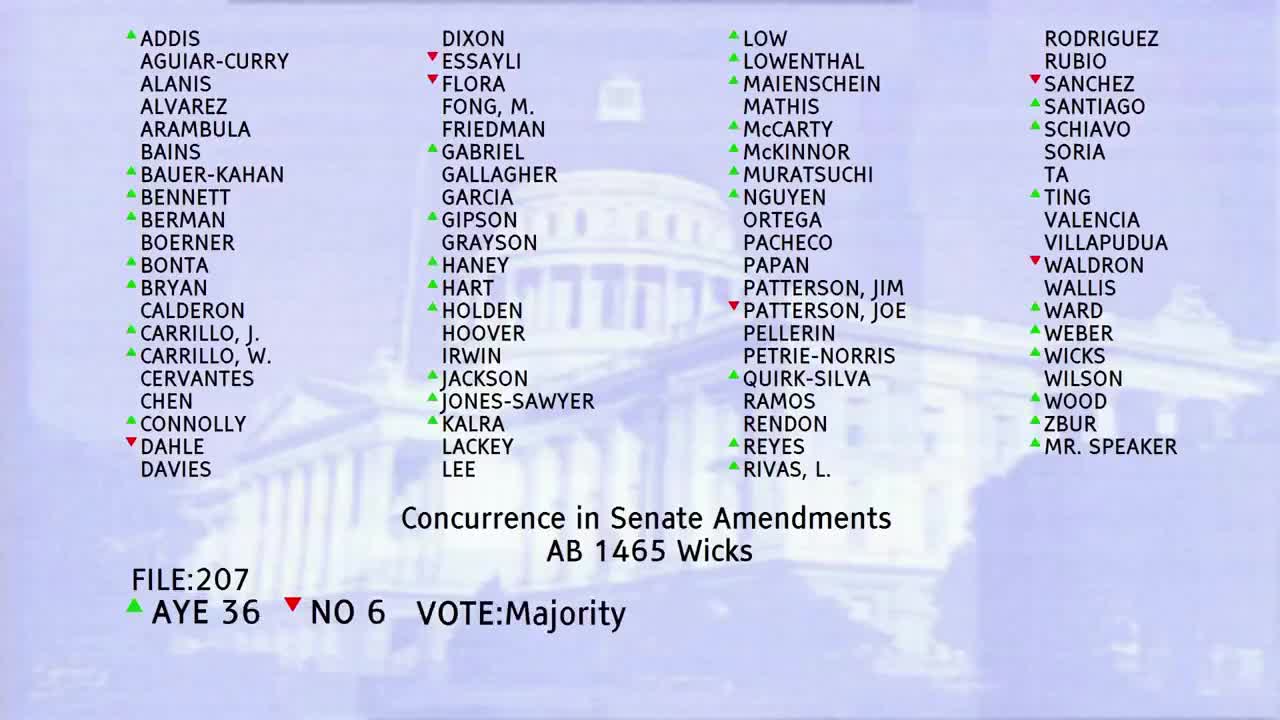
Bill Author