AB 3062: Fire protection districts: electrical corporations and local publicly owned electric utilities: prescribed or controlled burns: notice requirements.
- Session Year: 2023-2024
- House: Assembly
- Latest Version Date: 2024-09-27
Current Status:
Passed
(2024-09-27: Chaptered by Secretary of State - Chapter 753, Statutes of 2024.)
Introduced
In Committee
First Chamber
In Committee
Second Chamber
Enacted
Existing law vests the Public Utilities Commission with regulatory authority over electrical corporations, while local publicly owned electric utilities are under the direction of their governing boards. Existing law requires each electrical corporation and local publicly owned electric utility to annually prepare and submit a wildfire mitigation plan, which includes a description of its procedures for notifying customers who may be impacted by the deenergizing of electrical lines. Existing law requires those procedures to direct notification to all affected public safety offices, critical first responders, health care facilities, and operators of telecommunications infrastructure.
This bill would authorize a fire protection district, as defined, to require an electrical corporation or local publicly owned electric utility to notify the district at least 24 hours before performing a prescribed or controlled burn, except as provided.
Under existing law, a violation of the Public Utilities Act or any order, decision, rule, direction, demand, or requirement of the commission is a crime.
Because the above provisions would be part of the act and a violation of a commission action implementing this bills requirements would be a crime, the bill would impose a state-mandated local program. Additionally, to the extent this bill would mandate that a local publicly owned electric utility, which is an entity of local government, provide a new program or higher level of service, the bill would impose a state-mandated local program.
The California Constitution requires the state to reimburse local agencies and school districts for certain costs mandated by the state. Statutory provisions establish procedures for making that reimbursement.
This bill would provide that no reimbursement is required by this act for specified reasons.
Existing law vests the Public Utilities Commission with regulatory authority over electrical corporations, while local publicly owned electric utilities are under the direction of their governing boards. Existing law requires each electrical corporation and local publicly owned electric utility to annually prepare and submit a wildfire mitigation plan, which includes a description of its procedures for notifying customers who may be impacted by the deenergizing of electrical lines. Existing law requires those procedures to direct notification to all affected public safety offices, critical first responders, health care facilities, and operators of telecommunications infrastructure. Existing law prohibits an electrical corporation from recovering a fine or penalty through a rate approved by the commission.
This bill would authorize a fire protection district, as defined, to require an electrical corporation or local publicly owned electric utility to notify the district at least 24 hours before performing scheduled, nonemergency hot work, deploying a safety and infrastructure protection team, or performing a prescribed or controlled burn within the districts jurisdiction, burn, except as provided. The bill would subject an electrical corporation that fails to provide that notice to a civil penalty of $500.
Under existing law, a violation of the Public Utilities Act or any order, decision, rule, direction, demand, or requirement of the commission is a crime.
Because the above provisions would be part of the act and a violation of a commission action implementing this bills requirements would be a crime, the bill would impose a state-mandated local program. Additionally, to the extent this bill would mandate that a local publicly owned electric utility, which is an entity of local government, provide a new program or higher level of service, the bill would impose a state-mandated local program.
The California Constitution requires the state to reimburse local agencies and school districts for certain costs mandated by the state. Statutory provisions establish procedures for making that reimbursement.
This bill would provide that no reimbursement is required by this act for specified reasons.
Existing law vests the Public Utilities Commission with regulatory authority over electrical corporations, while local publicly owned electric utilities are under the direction of their governing boards. Existing law requires each electrical corporation and local publicly owned electric utility to annually prepare and submit a wildfire mitigation plan, which includes a description of its procedures for notifying customers who may be impacted by the deenergizing of electrical lines. Existing law requires those procedures to direct notification to all affected public safety offices, critical first responders, health care facilities, and operators of telecommunications infrastructure. Existing law prohibits an electrical corporation from recovering a fine or penalty through a rate approved by the commission.
This bill would authorize a fire protection district, as defined, to require an electrical corporation or local publicly owned electric utility to notify the district at least 24 hours before performing scheduled, nonemergency hot work, deploying a safety and infrastructure protection team, or performing a prescribed or controlled burn within the districts jurisdiction, except as provided. The bill would subject an electrical corporation that fails to provide that notice to a civil penalty of $500.
Under existing law, a violation of the Public Utilities Act or any order, decision, rule, direction, demand, or requirement of the commission is a crime.
Because the above provisions would be part of the act and a violation of a commission action implementing this bills requirements would be a crime, the bill would impose a state-mandated local program. Additionally, to the extent this bill would mandate that a local publicly owned electric utility, which is an entity of local government, provide a new program or higher level of service, the bill would impose a state-mandated local program.
The California Constitution requires the state to reimburse local agencies and school districts for certain costs mandated by the state. Statutory provisions establish procedures for making that reimbursement.
This bill would provide that no reimbursement is required by this act for specified reasons.
(a)A fire protection district may require an electrical corporation or local publicly owned electric utility to notify the fire protection district at least 24 hours before performing a prescribed or controlled burn.
(b)If an electrical corporation or local publicly owned electric utility cannot provide 24 hours notice pursuant to subdivision (a) due to unforeseen circumstances, the electrical corporation or local publicly owned electric utility shall notify the fire protection district at the earliest possible time.
(c)An electrical corporation or local publicly owned electric utility shall provide notice to a fire protection district pursuant to this section by both telephone and email.
(d)This section does not limit or otherwise affect the ability of a fire protection district or any other local agency to require different notice for a prescribed or controlled burn, or impose other requirements allowable by law regarding a prescribed or controlled burn.
SEC. 2.No reimbursement is required by this act pursuant to Section 6 of Article XIIIB of the California Constitution because a local agency or school district has the authority to levy service charges, fees, or assessments sufficient to pay for the program or level of service mandated by this act or because costs that may be incurred by a local agency or school district will be incurred because this act creates a new crime or infraction, eliminates a crime or infraction, or changes the penalty for a crime or infraction, within the meaning of Section 17556 of the Government Code, or changes the definition of a crime within the meaning of Section 6 of Article XIIIB of the California Constitution.
(a)A fire protection district may require an electrical corporation or local publicly owned electric utility to notify the fire protection district at least 24 hours before performing any of the following actions within the fire protection districts jurisdiction, except as specified in subdivision (c): a prescribed or controlled burn.
(1)The performance of scheduled, nonemergency hot work in a high fire risk area.(2)The deployment of a safety and infrastructure protection team, or a similar fire suppression or emergency response crew, to a location in a high fire risk area where hot work will be performed.(3)The performance of a prescribed or controlled burn.(c)(b)If an electrical corporation or local publicly owned electric utility cannot provide 24 hours notice pursuant to subdivision (b) (a) due to unforeseen circumstances or an immediate need to perform critical or emergency repairs, circumstances, the electrical corporation or local publicly owned electric utility shall notify the fire protection district at the earliest possible time.
(d)(c)An electrical corporation or local publicly owned electric utility shall provide notice to a fire protection district pursuant to this section by both telephone and email.
(e)An electrical corporation or local publicly owned electric utility shall not be required to pay any fee for a fire districts costs to preposition resources in response to a notice provided pursuant to this section.(f)(1)An electrical corporation or local publicly owned electric utility that fails to provide notice as required pursuant to subdivision (b) shall be subject to a civil penalty of five hundred dollars ($500).(2)Consistent with Section 748.1, an electrical corporation shall not recover from ratepayers any costs incurred pursuant to this subdivision. Those costs shall be paid solely by the shareholders of the electrical corporation.SEC. 2.No reimbursement is required by this act pursuant to Section 6 of Article XIIIB of the California Constitution because a local agency or school district has the authority to levy service charges, fees, or assessments sufficient to pay for the program or level of service mandated by this act or because costs that may be incurred by a local agency or school district will be incurred because this act creates a new crime or infraction, eliminates a crime or infraction, or changes the penalty for a crime or infraction, within the meaning of Section 17556 of the Government Code, or changes the definition of a crime within the meaning of Section 6 of Article XIIIB of the California Constitution.
(a)For purposes of this section, the following definitions apply:
(1)Fire protection district means any special district, or any other municipal or public corporation or district, that is authorized by law to provide fire protection and prevention services.
(2)High fire risk area means an area within a high, very high, or extreme fire threat zone as identified on the Department of Forestry and Fire Protections most recent Fire and Resource Assessment Program fire threat map or within a Tier 2 (elevated) or Tier 3 (extreme) zone as identified on the commissions most recent fire-threat map.
(3)Hot work means work on an energized overhead electrical line greater than 15 kilovolts and cutting, welding, thermit welding, brazing, soldering, grinding, thermal spraying, thawing pipe, installation of torch-applied roof systems, or any other similar activity on electrical infrastructure.
(4)Prescribed or controlled burn has the same meaning as prescribed burning is defined in Section 4464 of the Public Resources Code.
(5)Safety and infrastructure protection team means personnel deployed to support work on overhead electrical infrastructure in a high fire risk area by an electrical corporation or local publicly owned electric utility.
(b)A fire protection district may require an electrical corporation or local publicly owned electric utility to notify the fire protection district at least 24 hours before performing any of the following actions within the fire protection districts jurisdiction, except as specified in subdivision (c):
(1)The performance of scheduled, nonemergency hot work in a high fire risk area.
(2)The deployment of a safety and infrastructure protection team, or a similar fire suppression or emergency response crew, to a location in a high fire risk area where hot work will be performed.
(3)The performance of a prescribed or controlled burn.
(c)If an electrical corporation or local publicly owned electric utility cannot provide 24 hours notice pursuant to subdivision (b) due to unforeseen circumstances or an immediate need to perform critical or emergency repairs, the electrical corporation or local publicly owned electric utility shall notify the fire protection district at the earliest possible time.
(d)An electrical corporation or local publicly owned electric utility shall provide notice to a fire protection district pursuant to this section by both telephone and email.
(e)An electrical corporation or local publicly owned electric utility shall not be required to pay any fee for a fire districts costs to preposition resources in response to a notice provided pursuant to this section.
(f)(1)An electrical corporation or local publicly owned electric utility that fails to provide notice as required pursuant to subdivision (b) shall be subject to a civil penalty of five hundred dollars ($500).
(2)Consistent with Section 748.1, an electrical corporation shall not recover from ratepayers any costs incurred pursuant to this subdivision. Those costs shall be paid solely by the shareholders of the electrical corporation.
SEC. 2.No reimbursement is required by this act pursuant to Section 6 of Article XIIIB of the California Constitution because a local agency or school district has the authority to levy service charges, fees, or assessments sufficient to pay for the program or level of service mandated by this act or because costs that may be incurred by a local agency or school district will be incurred because this act creates a new crime or infraction, eliminates a crime or infraction, or changes the penalty for a crime or infraction, within the meaning of Section 17556 of the Government Code, or changes the definition of a crime within the meaning of Section 6 of Article XIIIB of the California Constitution.
|
Date
|
Status
|
|---|---|
| Sep 27, 2024 | Chaptered by Secretary of State - Chapter 753, Statutes of 2024. |
| Sep 27, 2024 | Approved by the Governor. |
| Aug 23, 2024 | Enrolled and presented to the Governor at 4 p.m. |
| Aug 15, 2024 | Senate amendments concurred in. To Engrossing and Enrolling. (Ayes 76. Noes 0. Page 6309.). |
| Aug 12, 2024 | In Assembly. Concurrence in Senate amendments pending. May be considered on or after August 14 pursuant to Assembly Rule 77. |
| Aug 12, 2024 | Read third time. Passed. Ordered to the Assembly. (Ayes 38. Noes 0. Page 5045.). |
| Aug 6, 2024 | Read second time. Ordered to Consent Calendar. |
| Aug 5, 2024 | From committee: Be ordered to second reading file pursuant to Senate Rule 28.8 and ordered to Consent Calendar. |
| Jul 3, 2024 | Read second time and amended. Re-referred to Com. on APPR. |
| Jul 3, 2024 | From committee: Amend, and do pass as amended and re-refer to Com. on APPR with recommendation: To Consent Calendar. (Ayes 7. Noes 0.) (July 3). |
| Jun 18, 2024 | From committee: Do pass and re-refer to Com. on L. GOV. (Ayes 18. Noes 0.) (June 18). Re-referred to Com. on L. GOV. |
| May 29, 2024 | Referred to Coms. on E., U. & C. and L. GOV. |
| May 22, 2024 | In Senate. Read first time. To Com. on RLS. for assignment. |
| May 21, 2024 | Read third time. Passed. Ordered to the Senate. (Ayes 71. Noes 0. Page 5446.) |
| May 16, 2024 | Read second time. Ordered to Consent Calendar. |
| May 15, 2024 | From committee: Do pass. To Consent Calendar. (Ayes 15. Noes 0.) (May 15). |
| Apr 30, 2024 | Re-referred to Com. on APPR. |
| Apr 29, 2024 | Read second time and amended. |
| Apr 25, 2024 | From committee: Amend, and do pass as amended and re-refer to Com. on APPR. with recommendation: To Consent Calendar. (Ayes 16. Noes 0.) (April 24). |
| Mar 11, 2024 | Referred to Com. on U. & E. |
| Feb 17, 2024 | From printer. May be heard in committee March 18. |
| Feb 16, 2024 | Read first time. To print. |
|
Date
|
Description
|
Location
|
Votes
|
|
|---|---|---|---|---|
| Aug 15, 2024 | AB 3062 Bauer-Kahan Concurrence in Senate Amendments | Assembly Floor |
Passed |
|
| Aug 12, 2024 | Consent Calendar 2nd AB3062 Bauer-Kahan | Senate Floor |
Passed |
|
| Jul 3, 2024 | Do pass as amended, but first amend, and re-refer to the Committee on [Appropriations] with the recommendation: To Consent Calendar | Senate Standing Committee on Local Government |
Passed |
|
| Jun 18, 2024 | Do pass, but first be re-referred to the Committee on [Local Government] | Senate Standing Committee on Energy, Utilities and Communications |
Passed |
|
| May 21, 2024 | AB 3062 Bauer-Kahan Consent Calendar Second Day Regular Session | Assembly Floor |
Passed |
|
| May 15, 2024 | Do pass. To Consent Calendar. | Assembly Standing Committee on Appropriations |
Passed |
|
| Apr 24, 2024 | Do pass as amended, and be re-referred to the Committee on [Appropriations] with recommendation: To Consent Calendar | Assembly Standing Committee on Utilities and Energy |
Passed |
This list shows positions taken on this bill by organizations on the date displayed, which is linked to the original source.
Positions by individuals are not included.
|
Organization
|
Position
|
Date
|
|---|---|---|
| 350 Contra Costa Action | ** Support | |
| California Fire Chiefs Association | ** Support | |
| Democrats of Rossmoor | ** Support | |
| Edison International And Affiliates, Including Southern California Edison | ** Against | |
| Fire Districts Association Of California | ** Support | |
| Marin Clean Energy | ** Support | |
| Pacific Gas And Electric Company And Its Affiliated Entities | ** Against | |
| San Diego Gas and Electric Company | ** Against |
CONCURRENCE IN SENATE AMENDMENTS
CSA1 Bill Id:AB 3062
Author:(Bauer-Kahan)
As Amended Ver:July 3, 2024
Majority vote
SUMMARY
Authorizes a fire protection district to require utilities to provide at least 24 hours' notice before performing a prescribed or controlled burn.
Senate Amendments
Establishes that this provision does not limit or otherwise affect the ability of a fire protection district to require different notice for a prescribed or controlled burn, or impose other requirements allowable by law.
COMMENTS
Wildfire represents the single most significant risk for all of California's investor-owned electric utilities (IOUs), according to the CPUC. Electrical equipment, including downed power lines, arcing, and conductor contact with trees and grass, can act as an ignition source. To mitigate these risks, electric utilities are required to develop and implement a wildfire mitigation plan (WMP),
Electric utilities are required to develop a wildfire mitigation plan (WMP), which is approved and enforced by the Office of Energy Infrastructure Safety for investor-owned utilities or the Wildfire Safety Oversight Advisory Board for local publicly-owned utilities. During the development of WMPs, utilities typically collaborate with external stakeholders, including the California Department of Forestry and Fire Protection as well as local fire departments, fire protection districts, emergency management departments, and communications departments.
WMPs are required to address crew-accompanying ignition prevention and suppression resources and services, and personnel work procedures and training in conditions of elevated fire risk. When utilities do this work, personnel and resources, which could be contracted for, or be a safety team of utility employees, are deployed who are trained to perform fire prevention duties when at-risk work is performed. The safety and infrastructure protection teams conduct numerous activities, including applying fire retardant to combustible utility infrastructure during wildfires and providing standby fire protection resources for utility worker crews performing work in the high fire threat districts during elevated risk conditions.
To the extent some electric utilities conduct prescribed burning, they must comply with the permit and notification statutes in the Public Resources Code. However, this bill's proposal to require advance notices to fire districts for prescribed burning activities by electric utilities seems reasonable to the extent such notifications do not negate the requirements already in statute. This bill also provides some flexibility to the electric utility should 24 hour notice not be provided due to unforeseen circumstances, in which case the utility must notify the fire protection district at the earliest possible time.
According to the Author
"Climate change has made our fire season much less predictable, and has contributed to both the intensity and duration of wildfires that our state faces. California had its worst fire season in modern history in 2020, with over 10,000 wildfires burning over 4.2 million acres of land. It is past time for our state to take action in the face of these fires and natural calamities. AB 3062 will increase accountability and transparency by having the option to require electrical utilities to notify local fire districts at least 24 hours before conducting planned burns in a high fire risk area during fire season. When fire districts know in advance that there is risky work being conducted in their area, they can be prepared by having fire personnel and equipment poised and ready. Without this critical notification from utilities, districts can be caught off guard and lose precious moments to stop the flames should a fire break out. It is essential we give fire districts all the tools they need, especially during fire season. "
Arguments in Support
Together, the California Fire Chiefs Association and the Fire Districts Association of California write, "[This bill] represents a crucial advancement in our ongoing efforts to prevent wildfires and enhance the safety of California's communities. It fosters essential collaboration between utility companies and fire districts, aiming to minimize the risk of accidental fires during critical mitigation activities. Such partnerships are vital for improving the efficacy of wildfire prevention strategies and safeguarding communities situated in high-risk zones."
Arguments in Opposition
None on file.
FISCAL COMMENTS
According to the Assembly Committee on Appropriations, this bill entails no state costs.
VOTES:
ASM UTILITIES AND ENERGY: 16-0-0
YES: Petrie-Norris, Jim Patterson, Bauer-Kahan, Calderon, Chen, Connolly, Friedman, Holden, Joe Patterson, Reyes, Santiago, Schiavo, Ting, Wallis, Wood, Zbur
ASM APPROPRIATIONS: 15-0-0
YES: Wicks, Sanchez, Arambula, Bryan, Calderon, Wendy Carrillo, Dixon, Mike Fong, Grayson, Haney, Hart, Jim Patterson, Pellerin, Ta, Villapudua
ASSEMBLY FLOOR: 71-0-9
YES: Addis, Aguiar-Curry, Alanis, Alvarez, Arambula, Bains, Bauer-Kahan, Bennett, Berman, Boerner, Bonta, Bryan, Juan Carrillo, Wendy Carrillo, Chen, Connolly, Davies, Dixon, Essayli, Flora, Mike Fong, Vince Fong, Gallagher, Garcia, Gipson, Grayson, Haney, Hart, Hoover, Irwin, Jackson, Jones-Sawyer, Kalra, Lackey, Lee, Low, Lowenthal, Maienschein, McCarty, McKinnor, Muratsuchi, Stephanie Nguyen, Ortega, Pacheco, Jim Patterson, Joe Patterson, Pellerin, Petrie-Norris, Quirk-Silva, Ramos, Rendon, Reyes, Rodriguez, Blanca Rubio, Sanchez, Santiago, Schiavo, Soria, Ta, Ting, Valencia, Villapudua, Waldron, Wallis, Ward, Weber, Wicks, Wilson, Wood, Zbur, Robert Rivas
ABS, ABST OR NV: Calderon, Cervantes, Megan Dahle, Friedman, Gabriel, Holden, Mathis, Papan, Luz Rivas
SENATE FLOOR: 38-0-2
YES: Alvarado-Gil, Archuleta, Ashby, Atkins, Becker, Blakespear, Bradford, Caballero, Cortese, Dahle, Dodd, Durazo, Eggman, Glazer, Gonzalez, Grove, Hurtado, Jones, Laird, Limón, McGuire, Menjivar, Min, Newman, Nguyen, Niello, Ochoa Bogh, Padilla, Portantino, Roth, Rubio, Seyarto, Skinner, Smallwood-Cuevas, Stern, Wahab, Wiener, Wilk
ABS, ABST OR NV: Allen, Umberg
UPDATED
VERSION: July 3, 2024
CONSULTANT: Kathleen Chen / U. & E. / (916) 319-2083 FN: 0003873
SENATE RULES COMMITTEE Office of Senate Floor Analyses (916) 651-1520 Fax: (916) 327-4478 | AB 3062 |
CONSENT
Bill No: AB 3062
Author: Bauer-Kahan (D)
Amended: 7/3/24 in Senate
Vote: 21
SENATE ENERGY, U. & C. COMMITTEE: 18-0, 6/18/24
AYES: Bradford, Dahle, Ashby, Becker, Caballero, Dodd, Durazo, Eggman, Gonzalez, Grove, Limón, Min, Newman, Rubio, Seyarto, Skinner, Stern, Wilk
SENATE LOCAL GOVERNMENT COMMITTEE: 7-0, 7/3/24
AYES: Durazo, Seyarto, Dahle, Glazer, Skinner, Wahab, Wiener
SENATE APPROPRIATIONS COMMITTEE: Senate Rule 28.8
ASSEMBLY FLOOR: 71-0, 5/21/24 (Consent) - See last page for vote
SUBJECT: Fire protection districts: electrical corporations and local publicly owned electric utilities: prescribed or controlled burns: notice requirements
SOURCE: Author
DIGEST:
This bill authorizes a fire protection district to require electric utilities to notify the district at least 24 hours before performing a prescribed or controlled burn.
ANALYSIS:
Existing law:
- Establishes the Wildfire Safety Division (WSD) within the California Public Utilities Commission (CPUC) and transfers, by July 1, 2021, all functions of the WSD to the Office of Energy Infrastructure Safety (OEIS) within the Natural Resources Agency. (Public Utilities Code §326 and Government Code §15470, et seq.)
- Establishes the Wildfire Safety Oversight Advisory Board. (Public Utilities Code §326.1)
- Requires each electrical corporation, local publicly owned electric utility, and electrical cooperative to construct, maintain, and operate its electrical lines and equipment in a manner that will minimize the risk of catastrophic wildfire posed by those electrical lines and equipment. Requires each electrical corporation and local publicly owned electric utility to annually prepare and submit (to WSD and the Wildfire Safety Oversight Advisory Board, respectively) a wildfire mitigation plan which includes a description of its procedures for notifying customers who may be impacted by the deenergizing of electrical lines. Requires those procedures to direct notification to all affected public safety offices, critical first responders, health care facilities, and operators of telecommunications infrastructure. (Public Utilities Code §§8386, 8387)
- Requires the CPUC and California Department of Fire and Forestry Protection (Cal FIRE) to enter into a memorandum of understanding (MOU) to cooperatively develop consistent approaches and share data related to fire prevention, safety, vegetation management, and energy distribution systems and to share results from various fire prevention activities, including relevant inspections and fire ignition data. (Public Utilities Code §8386.5)
- Defines “prescribed burning” to mean the planned application of fire to wild land fuels on land selected in advance of that application to achieve, among other objectives, vegetation management, and prevention of high-intensity wild land fires through reduction of the volume and continuity of wild land fuels. (Public Resources Code §4464)
This bill:
- Authorizes a fire protection district to require an electrical corporation or local publicly owned electric utility to notify the district at least 24 hours before performing a prescribed or controlled burn.
- Provides that if the electric utility cannot provide 24 hours’ notice due to unforeseen circumstances, the electrical corporation or local publicly owned electric utility shall notify the fire protection district at the earliest possible time.
- Requires the electric utility to provide notice to a fire protection district by both telephone and email.
Background
- Electric utility-related wildfires. Wildfire represents the single most significant risk for all of California’s investor-owned electric utilities (IOUs), according to the CPUC. Electrical equipment, including downed power lines, arcing, and conductor contact with trees and grass, can act as an ignition source. The risks for wildfires has increased with extended drought conditions, bark beetle infestation that has increased tree mortalities, extreme heat and high wind events, along with increased encroachment of development into forested and high-fire threat areas. In response to a number of catastrophic and deadly wildfires ignited by electric utility infrastructure, including the Camp Fire (2018), the state has passed many statutes to require electric utilities to mitigate the risk of their equipment igniting wildfires. Additionally, electric utilities shoulder the property liability risks and associated costs from wildfires ignited by their equipment through the application of inverse condemnation.
- Wildfire mitigation plans (WMPs). Electrical equipment, including downed power lines, arcing, and conductor contact with trees and grass, can act as an ignition source. Risks for wildfires has increased with extended drought conditions, bark beetle infestation that has increased tree mortalities, extreme heat and high wind events, along with increased encroachment of development into forested and high-fire threat areas. After numerous wildfires, including several catastrophic and deadly wildfires, the state has passed numerous statues to require electric utilities to mitigate wildfire risks, including requirements on electric utilities to file WMPs. The WMPs detail, describe, and summarize electric utility responsibilities, actions, and resources to mitigate wildfires. These actions include plans to harden their system and conduct vegetation management to prevent wildfire ignitions caused by utility infrastructure. The WMPs also require electric utilities to incorporate their protocols and procedures for proactive power shutoffs intended to be used as a last-resort to prevent wildfire ignitions, including required notifications to public safety agencies. Electrical corporations must file their WMPs with the OEIS at the Natural Resources Agency. The WSD reviews and determines whether to approve these plans and ensures compliance with guidance and statute. Local publicly owned electric utilities submit their plans to the Wildfire Safety Oversight Advisory Board, which reviews the plans and provides advisory comments.
- Prescribed burns. One method of vegetation management is to conduct prescribed burns, also known as controlled burns. Prescribed burning is the planned application of fire to wild land fuels on land selected in advance of that application to achieve, among other objectives, vegetation management, and prevention of high-intensity wild land fires through reduction of the volume and continuity of wild land fuels. In areas where the Cal FIRE provides fire protection services, any entity conducting a prescribed burn must receive permission from Cal FIRE. In areas where a local agency provides fire protection services, requirements can vary, but some local agencies require permission while others require notice. Burn permits are also required by the local air pollution control district with jurisdiction over the area where a burn will occur. Local agencies have also required electric utilities to notify them prior to conducting “hot work”—work on energized electrical systems, and operations including cutting, welding, and other similar activities. For example, the San Ramon Valley Fire Protection District adopted an ordinance in 2021 (Ordinance No. 35) that requires Pacific Gas and Electric and other utilities to notify the district 24 hours in advance of conducting hot work, with the goal of pre-positioning firefighting resources near the sites so that crews can be on hand if a fire breaks out.
Comments
- Need for this bill. The fire protection districts in support of this bill note that electric utilities use “controlled burns” among the methods to manage vegetation and utility infrastructure in order to help prevent future wildfires. With a controlled burn a team will set a fire intentionally in order to make that area less susceptible to wildfires in the future. The fire protection districts have previously expressed concerns that these vegetation mitigation efforts are being carried out by electric utility companies without the collaboration or even simple notification of the local fire district. As with all mitigation efforts, these burns, when done during high winds or high risk times have the potential to get out of control and lead to a deadly wildfire. Some fire protection districts have contended that electric utilities have resisted providing proper notification to local fire authorities when they are conducting controlled burns. To combat this, the City of San Ramon and Orinda have passed local ordinances which require electrical utilities to notify the fire district when doing maintenance in a fire risk zone. These measures attempted to improve communication and collaboration between the utilities and the Fire Districts locally.
- Flexibility afforded. This bill authorizes fire protection districts to require at least 24 hour notification by an electric utility of a prescribed or controlled burn. This bill also provides some flexibility to the electric utility should 24 hour notice not be provided due to unforeseen circumstances, in which case the utility must notify the fire protection district at the earliest possible time.
Related/Prior Legislation
AB 2070 (Bauer-Kahan, 2022) would have authorized a fire protection district to require an electrical corporation or local publicly owned electric utility to notify the district at least 24 hours, via both telephone and email, before the utility performs specified work within the fire protection district’s jurisdiction. The bill also would have established civil penalties for failing to provide the required notifications. The bill was held in this committee.
SB 247 (Dodd, Chapter 406, Statutes of 2019) made several changes related to the vegetation management requirements of electrical corporations, including: specifying qualifications and prevailing wages for line clearance tree trimmers, and other requirements.
AB 1054 (Holden, Chapter 79, Statutes of 2019) shifted the responsibility for review of WMPs from the CPUC to the WSD of the CPUC (temporarily located there) and made modifications to the review process, among other provisions.
AB 111 (Committee on Budget, Chapter 81, Statutes of 2019) required, by January 1, 2020, the CPUC to establish the WSD within the CPUC and required all functions of the WSD to be transferred to the OEIS, effective July 1, 2021.
SB 901 (Dodd, Chapter 626, Statutes of 2018) established the requirement that the WMPs of each electrical corporation meet a number of specified requirements, among other provisions.
SB 1028 (Hill, Chapter 598, Statutes of 2016) required electric IOUs to file annual WMPs and requires the CPUC to review and comment on those plans. The bill also required POU and electrical cooperatives to determine their risk of catastrophic wildfire that can be caused by their electric lines and equipment and, if a risk exists, submit WMPs to their governing board for its approval.
FISCAL EFFECT: Appropriation: No Fiscal Com.: Yes Local: Yes
SUPPORT: (Verified 8/5/24)
California Fire Chiefs Association
Fire Districts Association of California
Marin Clean Energy
OPPOSITION: (Verified 8/5/24)
None received
ARGUMENTS IN SUPPORT: The California Fire Chiefs Association and Fire District Associations state:
AB 3062 represents a crucial advancement in our ongoing efforts to prevent wildfires and enhance the safety of California's communities. It fosters essential collaboration between utility companies and fire districts, aiming to minimize the risk of accidental fires during critical mitigation activities. Such partnerships are vital for improving the efficacy of wildfire prevention strategies and safeguarding communities situated in highrisk zones. AB 3062 is a pragmatic and necessary measure that will substantially bolster our wildfire prevention capabilities and protect the lives and properties of Californians.
ASSEMBLY FLOOR: 71-0, 5/21/24
AYES: Addis, Aguiar-Curry, Alanis, Alvarez, Arambula, Bains, Bauer-Kahan, Bennett, Berman, Boerner, Bonta, Bryan, Juan Carrillo, Wendy Carrillo, Chen, Connolly, Davies, Dixon, Essayli, Flora, Mike Fong, Vince Fong, Gallagher, Garcia, Gipson, Grayson, Haney, Hart, Hoover, Irwin, Jackson, Jones-Sawyer, Kalra, Lackey, Lee, Low, Lowenthal, Maienschein, McCarty, McKinnor, Muratsuchi, Stephanie Nguyen, Ortega, Pacheco, Jim Patterson, Joe Patterson, Pellerin, Petrie-Norris, Quirk-Silva, Ramos, Rendon, Reyes, Rodriguez, Blanca Rubio, Sanchez, Santiago, Schiavo, Soria, Ta, Ting, Valencia, Villapudua, Waldron, Wallis, Ward, Weber, Wicks, Wilson, Wood, Zbur, Robert Rivas
NO VOTE RECORDED: Calderon, Cervantes, Megan Dahle, Friedman, Gabriel, Holden, Mathis, Papan, Luz Rivas
Prepared by: Nidia Bautista / E., U. & C. / (916) 651-4107
8/7/24 13:38:52
SENATE COMMITTEE ON LOCAL GOVERNMENT
Senator María Elena Durazo, Chair
2023 - 2024 Regular
Bill No: | AB 3062 | Hearing Date: | 7/3/24 |
Author: | Bauer-Kahan | Fiscal: | Yes |
Version: | 4/29/24 | Consultant: | Favorini-Csorba |
Fire protection districts: electrical corporations and local publicly owned electric utilities: prescribed or controlled burns: notice requirements
Allows a fire district to require electric utilities to provide at least 24 hours’ notice before performing a prescribed or controlled burn.
Background
Fire protection districts. The Fire Protection District Law of 1987 establishes the powers and organization of fire protection districts in California (SB 515, Bergeson, 1987). These special districts have the power to provide a wide range of services: fire protection, rescue, emergency medicine, hazardous material emergency response, ambulance services, and other services that protect lives and property. To finance their operations, fire districts can levy assessments or special taxes with voter approval, as well as fees.
Fire districts may adopt ordinances and establish and enforce rules and regulations for the administration, operation, and maintenance of the services they are empowered to provide.
Electric utility-related wildfires. Wildfire represents the single most significant risk for all of California’s investor-owned electric utilities (IOUs), according to the California Public Utilities Commission (CPUC). Electrical equipment, including downed power lines, arcing, and conductor contact with trees and grass, can act as an ignition source. The risks for wildfires has increased with extended drought conditions, bark beetle infestation that has increased tree mortalities, extreme heat and high wind events, along with increased encroachment of development into forested and high-fire threat areas.
Wildfire mitigation plans (WMPs). In response to a number of catastrophic and deadly wildfires ignited by electric utility infrastructure, including the Camp Fire (2018), the state has passed many statutes to require electric utilities to mitigate the risk of their equipment igniting wildfires. One requirement that electric utilities must meet is to develop wildfire mitigation plans (WMPs). The WMPs detail, describe, and summarize electric utility responsibilities, actions, and resources to mitigate wildfires. These actions include plans to harden their system and conduct vegetation management to prevent wildfire ignitions caused by utility infrastructure. The WMPs also require electric utilities to incorporate their protocols and procedures for proactive power shutoffs intended to be used as a last-resort to prevent wildfire ignitions, including required notifications to public safety agencies.
Prescribed burns. One method of vegetation management is to conduct prescribed burns, also known as controlled burns. Prescribed burning is the planned application of fire to wild land fuels on land selected in advance of that application to achieve, among other objectives, vegetation management, and prevention of high-intensity wild land fires through reduction of the volume and continuity of wild land fuels.
In areas where the California Department of Forestry and Fire Protection (CALFIRE) provides fire protection services, any entity conducting a prescribed burn must receive permission from CALFIRE. In areas where a local agency provides fire protection services, requirements can vary, but some local agencies require permission while others require notice. Burn permits are also required by the local air pollution control district with jurisdiction over the area where a burn will occur.
Local agencies have also required electric utilities to notify them prior to conducting “hot work”—work on energized electrical systems, and operations including cutting, welding, and other similar activities. For example, the San Ramon Valley Fire Protection District adopted an ordinance in 2021 (Ordinance No. 35) that requires Pacific Gas and Electric and other utilities to notify the district 24 hours in advance of conducting hot work, with the goal of pre-positioning firefighting resources near the sites so that crews can be on hand if a fire breaks out.
The author wants to ensure that local agencies have adequate notice of prescribed burns.
Proposed Law
Assembly Bill 3062 allows a fire district to require an IOU or local publicly owned electric utility to notify, by telephone and email, the fire district at least 24 hours before performing a prescribed or controlled burn. If an IOU or local publicly owned electric utility cannot provide 24 hours’ notice due to unforeseen circumstances, the electrical corporation or local publicly owned electric utility must notify the fire protection district at the earliest possible time.
Comments
1. Purpose of the bill. According to the author, “Climate change has made our fire season much less predictable, and has contributed to both the intensity and duration of wildfires that our state faces. California had its worst fire season in modern history in 2020, with over 10,000 wildfires burning over 4.2 million acres of land. It is past time for our state to take action in the face of these fires and natural calamities. AB 3062 will increase accountability and transparency by having the option to require electrical utilities to notify local fire districts at least 24 hours before conducting planned burns in a high fire risk area during fire season. When fire districts know in advance that there is risky work being conducted in their area, they can be prepared by having fire personnel and equipment poised and ready. Without this critical notification from utilities, districts can be caught off guard and lose precious moments to stop the flames should a fire break out. It is essential we give fire districts all the tools they need, especially during fire season.”
2. Let’s be clear. AB 3062 allows fire districts to require at least 24 hours’ notice from electric utilities. However, some local governments have already adopted ordinances that require various notices or require permit approval absent this bill. The California Supreme Court noted in Candid Enterprises, Inc. v. Grossmont Union High School Dist. (1985 Cal. LEXIS 341) that state law preempts local authority when there is a conflict between the two, either expressly or by legislative implication. An implicit conflict may exist if “the subject matter has been partially covered by general law couched in such terms as to indicate clearly that a paramount state concern will not tolerate further or additional local action.” Because AB 3062 covers similar ground as existing local ordinances, it runs the risk of being seen as preempting local authority to adopt different noticing requirements. To clarify this bill does not preempt local ordinances by fire districts or other local governments, the Committee may wish to consider amending AB 3062 to state that its provisions do not limit the ability of a fire district or any other local government to impose increased notification requirements for prescribed burning otherwise allowable by law.
3. Mandate. The California Constitution requires the state to reimburse local governments for the costs of new or expanded state mandated local programs. Because AB 3062 adds to the Public Utilities Act, violation of which is a crime, and because the bill may add to the duties of publicly owned electric utilities, Legislative Counsel says that the bill imposes a new state mandate. AB 3062 disclaims the state's responsibility for providing reimbursement by citing local governments’ authority to charge for the costs of implementing the bill’s provisions and because the bill expands the definition of a crime.
4. Incoming! The Senate Rules Committee has ordered a double referral of AB 3065: first to the Committee on Energy, Utilities, and Communications, which approved the bill at its June 18th hearing on a vote of 18-0, and then to the Committee on Local Government.
5. Related legislation. AB 2070 (Bauer-Kahan, 2022) would have authorized a fire protection district to require an electrical corporation or local publicly owned electric utility to notify the district at least 24 hours, via both telephone and email, before the utility performs specified work within the fire protection district’s jurisdiction. The bill also would have established civil penalties for failing to provide the required notifications. AB 2070 was held in the Senate Energy, Utilities, and Communications Committee.
Assembly Actions
Assembly Utilities and Energy Committee: 16-0
Assembly Appropriations Committee: 15-0
Assembly Floor: 71-0
Support and Opposition
(6/28/24)
Support: 350 Contra Costa Action
California Fire Chiefs Association
Democrats of Rossmoor
Fire Districts Association of California
Marin Clean Energy (MCE)
Opposition: None submitted.
-- END --
SENATE COMMITTEE ON ENERGY, UTILITIES AND COMMUNICATIONS
Senator Steven Bradford, Chair
2023 - 2024 Regular
Bill No: Hearing Date: 6/18/2024
Author: | |||
Version: | Amended | ||
Urgency: | Fiscal: | ||
Consultant: | |||
SUBJECT:
DIGEST: This bill authorizes a fire protection district to require an electric utilities to notify the district at least 24 hours before performing a prescribed or controlled burn.
ANALYSIS:
Existing law:
- Establishes and vests the California Public Utilities Commission (CPUC) with regulatory authority over electrical corporations. (Article XII of the California Constitution)
- Establishes the Wildfire Safety Division (WSD) within the CPUC and transfers, by July 1, 2021, all functions of the WSD to the Office of Energy Infrastructure Safety (OEIS) within the Natural Resources Agency. (Public Utilities Code §326 and Government Code §15470, et seq.)
- Establishes the Wildfire Safety Oversight Advisory Board. (Public Utilities Code §326.1)
- Requires each electrical corporation, local publicly owned electric utility, and electrical cooperative to construct, maintain, and operate its electrical lines and equipment in a manner that will minimize the risk of catastrophic wildfire posed by those electrical lines and equipment. Requires each electrical corporation and local publicly owned electric utility to annually prepare and submit (to WSD and the Wildfire Safety Oversight Advisory Board, respectively) a wildfire mitigation plan which includes a description of its procedures for notifying customers who may be impacted by the deenergizing of electrical lines. Requires those procedures to direct notification to all affected public safety offices, critical first responders, health care facilities, and operators of telecommunications infrastructure. (Public Utilities Code §§8386, 8387)
- Requires the CPUC and California Department of Fire and Forestry Protection (Cal FIRE) to enter into a memorandum of understanding (MOU) to cooperatively develop consistent approaches and share data related to fire prevention, safety, vegetation management, and energy distribution systems and to share results from various fire prevention activities, including relevant inspections and fire ignition data. (Public Utilities Code §8386.5)
- Requires an electrical corporation, that has a contract for private fire safety and prevention, mitigation, or maintenance services, to only use those services for the direct defense of utility infrastructure when conducting fire safety and prevention, mitigation, and maintenance activities as determined by the electrical corporation and requires those electrical corporations to make an effort to reduce or eliminate the use of contract private fire safety and prevention personnel in favor of employing highly skilled and apprenticed personnel to perform those services in direct defense of utility infrastructure in collaboration with public agency fire departments having jurisdiction. States that nothing in the code section prohibits an electrical corporation from contracting with a public agency fire department or relevant agency. (Public Utilities Code §764)
- Defines “prescribed burning” to mean the planned application of fire to wild land fuels on land selected in advance of that application to achieve, among other objectives, vegetation management, and prevention of high-intensity wild land fires through reduction of the volume and continuity of wild land fuels. (Public Resources Code §4464)
This bill:
- Authorizes a fire protection district to require an electrical corporation or local publicly owned electric utility to notify the district at least 24 hours before performing a prescribed or controlled burn.
- Provides that if the electric utility cannot provide 24 hours’ notice due to unforeseen circumstances, the electrical corporation or local publicly owned electric utility shall notify the fire protection district at the earliest possible time.
- Requires the electric utility to provide notice to a fire protection district by both telephone and email.
Background
Electric utility-related wildfires. Wildfire represents the single most significant risk for all of California’s investor-owned electric utilities (IOUs), according to the CPUC. Electrical equipment, including downed power lines, arcing, and conductor contact with trees and grass, can act as an ignition source. The risks for wildfires has increased with extended drought conditions, bark beetle infestation that has increased tree mortalities, extreme heat and high wind events, along with increased encroachment of development into forested and high-fire threat areas. In response to a number of catastrophic and deadly wildfires ignited by electric utility infrastructure, including the Camp Fire (2018), the state has passed many statutes to require electric utilities to mitigate the risk of their equipment igniting wildfires. Additionally, electric utilities shoulder the property liability risks and associated costs from wildfires ignited by their equipment through the application of inverse condemnation.
Wildfire mitigation plans (WMPs). Electrical equipment, including downed power lines, arcing, and conductor contact with trees and grass, can act as an ignition source. Risks for wildfires has increased with extended drought conditions, bark beetle infestation that has increased tree mortalities, extreme heat and high wind events, along with increased encroachment of development into forested and high-fire threat areas. After numerous wildfires, including several catastrophic and deadly wildfires, the state has passed numerous statues to require electric utilities to mitigate wildfire risks, including requirements on electric utilities to file WMPs. The WMPs detail, describe, and summarize electric utility responsibilities, actions, and resources to mitigate wildfires. These actions include plans to harden their system and conduct vegetation management to prevent wildfire ignitions caused by utility infrastructure. The WMPs also require electric utilities to incorporate their protocols and procedures for proactive power shutoffs intended to be used as a last-resort to prevent wildfire ignitions, including required notifications to public safety agencies. Electrical corporations must file their WMPs with the OEIS at the Natural Resources Agency. The WSD reviews and determines whether to approve these plans and ensures compliance with guidance and statute. Local publicly owned electric utilities submit their plans to the Wildfire Safety Oversight Advisory Board, which reviews the plans and provides advisory comments.
WMP requirements to address crew-accompanying ignition prevention and suppression. Electrical corporations’ WMPs are required to address crew-accompanying ignition prevention and suppression resources and services, and personnel work procedures and training in conditions of elevated fire risk. When utilities do this work, personnel and resources, which could be contracted for, or be a safety team of utility employees, are deployed who are trained to perform fire prevention duties when at-risk work is performed. As an example, Southern California Edison’s (SCE’s) WMP has noted contract crews performing specified work, known as “hot work,” are equipped with basic fire mitigation and suppression tools “with the goal of preventing ignitions and rapidly responding to incipient stage ignitions should one occur during the normal course of their work in the field.” In the case of Pacific Gas & Electric (PG&E), the utility deploys safety and infrastructure protection teams (SIPTs) which have consisted of 40 two-person International Brotherhood of Electrical Workers (IBEW) crews, with 40 engines and associated equipment, who are trained and certified in safety and infrastructure protection. The SIPTs conduct numerous activities, including applying fire retardant to combustible utility infrastructure during wildfires, collecting fuels data to support decision-making related to deenergization events, and provide standby fire protection resources for PG&E crews performing work in the high fire threat districts during elevated risk conditions. In its WMP, PG&E has noted authorization to increase staffing for the SIPT.
Comments
Need for this bill. The fire protection districts in support of this bill note that electric utilities use “controlled burns” among the methods to manage vegetation and utility infrastructure in order to help prevent future wildfires. This is when a team will set a fire intentionally, in order to make that area less susceptible to wildfires in the future. The fire protection districts have previously expressed concerns that these vegetation mitigation efforts are being carried out by electric utility companies without the collaboration or even simple notification of the local fire district. As with all mitigation efforts, these burns, when done during high winds or high risk times have the potential to get out of control and lead to a deadly wildfire. Some fire protection districts have contended that electric utilities have resisted providing proper notification to local fire authorities when they are conducting controlled burns. To combat this, the City of San Ramon and Orinda have passed local ordinances which require electrical utilities to notify the fire district when doing maintenance in a fire risk zone. These measures attempted to improve communication and collaboration between the utilities and the Fire Districts locally.
Flexibility afforded. This bill authorizes fire protection districts to require at least 24 hour notification by an electric utility of a prescribed or controlled burn. The bill also provides some flexibility to the electric utility should 24 hour notice not be provided due to unforeseen circumstances, the utility must notify the fire protection district at the earliest possible time.
Dual Referral. Should this bill be approved by this committee, it will be re-referred to the Senate Committee on Local Government.
Prior/Related Legislation
AB 2070 (Bauer-Kahan, 2022) would have authorized a fire protection district to require an electrical corporation or local publicly owned electric utility to notify the district at least 24 hours, via both telephone and email, before the utility performs specified work within the fire protection district’s jurisdiction. The bill also would have established civil penalties for failing to provide the required notifications. The bill was held in this committee.
SB 247 (Dodd, Chapter 406, Statutes of 2019) made several changes related to the vegetation management requirements of electrical corporations, including: specifying qualifications and prevailing wages for line clearance tree trimmers, and other requirements.
AB 1054 (Holden, Chapter 79, Statutes of 2019) shifted the responsibility for review of WMPs from the CPUC to the WSD of the CPUC (temporarily located there) and made modifications to the review process, among other provisions.
AB 111 (Committee on Budget, Chapter 81, Statutes of 2019) required, by January 1, 2020, the CPUC to establish the WSD within the CPUC and required all functions of the WSD to be transferred to the OEIS, effective July 1, 2021.
SB 901 (Dodd, Chapter 626, Statutes of 2018) established the requirement that the WMPs of each electrical corporation meet a number of specified requirements, among other provisions.
SB 1028 (Hill, Chapter 598, Statutes of 2016) required electric IOUs to file annual WMPs and requires the CPUC to review and comment on those plans. The bill also required POU and electrical cooperatives to determine their risk of catastrophic wildfire that can be caused by their electric lines and equipment and, if a risk exists, submit WMPs to their governing board for its approval.
FISCAL EFFECT: Appropriation: Fiscal Com.: Local:
SUPPORT:
California Fire Chiefs Association
Fire Districts Association of California
Marin Clean Energy
OPPOSITION:
None received
ARGUMENTS IN SUPPORT: The California Fire Chiefs Association and Fire District Associations state:
AB 3062 represents a crucial advancement in our ongoing efforts to prevent wildfires and enhance the safety of California's communities. It fosters essential collaboration between utility companies and fire districts, aiming to minimize the risk of accidental fires during critical mitigation activities. Such partnerships are vital for improving the efficacy of wildfire prevention strategies and safeguarding communities situated in highrisk zones. AB 3062 is a pragmatic and necessary measure that will substantially bolster our wildfire prevention capabilities and protect the lives and properties of Californians.
-- END --
Date of Hearing: May 15, 2024
ASSEMBLY COMMITTEE ON APPROPRIATIONS
Buffy Wicks, Chair
ABPCA Bill Id:AB 3062
Author:(Bauer-Kahan) – As Amended Ver:April 29, 2024
Policy Committee: | Utilities and Energy | Vote: | 16 - 0 |
|
| ||
|
|
Urgency: No State Mandated Local Program: Yes Reimbursable: No
SUMMARY:
This bill authorizes a fire protection district to require an investor-owned electrical utility (IOU) or local publicly owned electric utility (POU) to notify the fire protection district at least 24 hours before performing a prescribed or controlled burn. The bill directs an IOU or POU that cannot provide 24- hours’ notice due to unforeseen circumstances to notify the fire protection district at the earliest possible time. The bill requires the notifications to be by both telephone and email.
FISCAL EFFECT:
No state costs.
COMMENTS:
In recent years, California has suffered many especially large, and especially destructive wildfires. The risk of wildfire is likely to continue, and grow, as it is warmer and drier for longer periods of the year. Electrical utility crews regularly perform a variety of work on power lines. The author intends this bill to provide advanced notification to a fire protection district officials when an electric utility is to perform a controlled or prescribed burn within the district’s jurisdiction. According to the author, “Without this critical notification from utilities, districts can be caught off guard and lose precious moments to stop the flames should a fire break out. It is essential we give fire districts all the tools they need, especially during fire season.”
Analysis Prepared by: Jay Dickenson / APPR. / (916) 319-2081
Date of Hearing: April 24, 2024
ASSEMBLY COMMITTEE ON UTILITIES AND ENERGY
Cottie Petrie-Norris, Chair
ABPCA Bill Id:AB 3062 (
Author:Bauer-Kahan) – As Introduced Ver:February 16, 2024
SUBJECT: Fire protection districts: electrical corporations and local publicly owned electric utilities: wildfire mitigation: notice requirements
SUMMARY: Authorizes a fire protection district to require an investor-owned electric utility (IOU) or local publicly owned electric utility (POU) to notify the district at least 24 hours, via both telephone and email, before the utility performs specified work within the fire protection district’s jurisdiction. Establishes civil penalties for failing to provide the required notifications.
Specifically, this bill:
- Defines “hot work” as work on an energized overhead electrical line greater than 15 kilovolts and cutting, welding, thermit welding, brazing, soldering, grinding, thermal spraying, thawing pipe, installation of torch-applied roof systems, or any other similar activity on electrical infrastructure.
- Authorizes a fire protection district to require an IOU or POU to notify the district at least 24 hours, via both telephone and email, before performing any of the following specified work within the fire protection district’s jurisdiction:
- Scheduled, nonemergency hot work in a high fire risk area;
- The deployment of a safety and infrastructure protection team (SIFT), or a similar fire suppression or emergency response crew, to a location in a high fire risk area where hot work will be performed; and
- The performance of a prescribed or controlled burn.
- Provides that if utilities cannot provide 24 hour notice due to unforeseen circumstances or an immediate need to perform critical or emergency repairs, the electric utility must notify, via both telephone and email, the fire protection district at the earliest possible time.
- Exempts utilities from any fees for a fire district’s costs to preposition resources in response to the proposed required notice.
- Establishes a civil penalty of $500 for failure to notify a fire district and restates law that the penalty is not eligible for rate recovery.
EXISTING LAW:
- Establishes the Wildfire Safety Division (WSD) within the California Public Utilities Commission (CPUC) and transfers, by July 1, 2021, all functions of the WSD to the Office of Energy Infrastructure Safety (OEIS) within the Natural Resources Agency. (Public Utilities Code § 326 and Government Code §15470)
- Establishes the Wildfire Safety Oversight Advisory Board. (Public Utilities Code § 326.1)
- Requires each IOU, POU, and electrical cooperative to construct, maintain, and operate its electrical lines and equipment in a manner that will minimize the risk of catastrophic wildfire posed by those electrical lines and equipment. Requires each IOU and POU to annually prepare and submit (to WSD and the Wildfire Safety Oversight Advisory Board, respectively) a wildfire mitigation plan. (Public Utilities Code §§ 8386 and 8387)
- Requires an IOU that has a contract for fire safety and prevention, mitigation, or maintenance services, to only use those services for the direct defense of utility infrastructure when conducting fire safety and prevention, mitigation, and maintenance activities. And requires such an IOU to make efforts towards eliminating the use of contract private services in favor of working or contracting with public agency fire departments. (Public Utilities Code § 764)
- Prohibits rate recovery of fines and penalties by an electric or gas corporation. (Public Utilities Code § 748.1)
- Defines “prescribed burning” to mean the planned application of fire to wildland fuels on land selected in advance of that application to achieve, among other objectives, vegetation management, and prevention of high-intensity wildland fires through reduction of the volume and continuity of wildland fuels. (Public Resources Code § 4464)
- Authorizes persons, firms, or corporations to apply for permission to utilize prescribed burning for public purposes, as specified. (Public Resources Code § 4492)
FISCAL EFFECT: Unknown. This bill is keyed fiscal and will be referred to the Committee on Appropriations for its review.
BACKGROUND:
Electric utility-related wildfires – California has experienced some of the most devastating and costly wildfires over the past decade. Spurred by climate change, the risks for wildfires has increased with larger populations of dead trees – which serve as fuel – from extended drought conditions and bark beetle infestations,[1] more frequent extreme heat and high wind events, and growing encroachment of development into forested and high-fire threat areas.[2] Of the 20 most destructive wildfires since 2015, power lines have caused six.[3] Utility-caused fires are often more destructive than those resulting from other sources because many occur in remote areas during high wind events, and those same weather conditions cause the fire to spread quickly, making it difficult to control. In response, the Legislature has passed many statutes to require electric utilities to mitigate the risk of their equipment and operations from igniting wildfires.
Wildfire mitigation plans (WMPs) – Utilities are required to develop a wildfire mitigation plan, which is approved and enforced by OEIS and the Wildfire Safety Oversight Advisory Board. The plans employ a variety of strategies and programs to minimize the risk of catastrophic wildfires caused by electrical lines and equipment, including vegetation management, prescribed fires, system hardening, and public safety power shutoffs.[4] During the development of WMPs, utilities typically collaborate with external stakeholders, including the California Department of Forestry and Fire Protection as well as local fire departments, fire protection districts, emergency management departments, and communications departments.[5]
Crew-accompanying ignition prevention and suppression. Electrical corporations’ WMPs are required to address crew-accompanying ignition prevention and suppression resources and services, and personnel work procedures and training in conditions of elevated fire risk. When utilities do this work, personnel and resources, which could be contracted for, or be a safety team of utility employees, are deployed who are trained to perform fire prevention duties when at-risk work is performed. As an example, Southern California Edison’s (SCE’s) most recent WMP notes contract crews performing specified work, known as “hot work,” are equipped with basic fire mitigation and suppression tools “with the goal of preventing ignitions and rapidly responding to incipient stage ignitions should one occur during the normal course of their work in the field.” [6] In the case of Pacific Gas & Electric (PG&E), the utility deploys safety and infrastructure protection teams (SIPTs) which consist of two- to three-person International Brotherhood of Electrical Workers (IBEW) crews who are trained and certified in safety and infrastructure protection.[7] The SIPTs conduct numerous activities, including applying fire retardant to combustible utility infrastructure during wildfires, collecting fuels data to support decision-making related to deenergization events, and providing standby fire protection resources for PG&E crews performing work in the high fire threat districts during elevated risk conditions. In their 2022 WMP, PG&E noted authorization to increase staffing for the SIPT to 130 employees.[8]
“Hot work” – Hot work is generally defined as activities that are capable of initiating a fire or generating potential ignition sources through a flame, heat, or a spark. Electric utility hot work activities generally include metal cutting, welding, brazing, soldering grinding, thermal spraying, pipe thawing, installation of torch-applied roof systems, burning, and oxygenated arc cutting. Crews working on utility lines are designated as qualified electrical workers (QEWs or linemen). In the industry, the work is also referred to as “working hot.” Hot work is a constant for any electric utility, as repairing and conducting maintenance of electric infrastructure is a constant.
COMMENTS:
- Author’s statement. According to the author, “Climate change has made our fire season much less predictable, and has contributed to both the intensity and duration of wildfires that our state faces. California had its worst fire season in modern history in 2020, with over 10,000 wildfires burning over 4.2 million acres of land. It is past time for our state to take action in the face of these fires and natural calamities. AB 3062 will increase accountability and transparency by requiring all electrical utilities to notify local fire districts at least 24 hours before conducting mitigation or planned burns in a high fire risk area during fire season. This will ensure that local fire districts are aware and prepared when utility companies conduct “hot work” or controlled burns within their jurisdiction. When fire districts know in advance that there is risky work being conducted in their area, they can be prepared by having fire personnel and equipment poised and ready. Without this critical notification from utilities, districts can be caught off guard and lose precious moments to stop the flames should a fire break out. It is essential we give fire districts all the tools they need, especially during fire season.”
- Hot work is constant and, often, routine. The most common causes of utility-related ignitions are vegetation contact, contact with foreign objects, and equipment failures.[9] As of the writing of this analysis, there were no known examples or data on ignitions caused by electric utilities from doing hot work. Based on estimated provided by SCE and PG&E, each utility estimates that hundreds of daily activities conducted by their respective utilities would fall under this bill’s definition of “hot work” in a high fire risk area that would require 24 hour daily notices to local fire districts via telephone and email. Yet, electric utilities may feel compelled to avoid necessary maintenance and safety activities on their circuits in order to avoid fines, as proposed by this bill. These policy signals could work to undermine safety and not improve safety, at a time when electric utilities need to aggressively conduct upgrades and maintenance on their infrastructure in order to prevent additional fires.
To the extent some electric utilities conduct prescribed burning, they must comply with the permit and notification statutes in the Public Resources Code. However, this bill’s proposal to require advance notices to fire districts for prescribed burning activities by electric utilities seems reasonable to the extent such notifications do not negate the requirements already in statute. Yet, the broad application of hot work in this bill, which would encompass routine utility work, seems overly prescriptive and not warranted. As such, the committee recommends striking all aspects of this bill except the 24-hour notification requirement for the performance of prescribed or controlled burns.
- Prior legislation.
AB 2070 (Bauer-Kahan, 2022), as reintroduced in this measure, would have authorized fire protection districts to require electrical corporations to notify the district at least 24 hours, via both telephone and email, before the utility performs specified work within the fire protection district’s jurisdiction. Establishes civil penalties for failing to provide the required notifications. Status: Held in Senate Committee on Utilities, Energy, and Communications.
AB 1054 (Holden) established the California Wildfire Safety Advisory Board (CWSAB) to review and provide comments and advisory opinions to each POU and IOU regarding the context and sufficiency of its WMPs. Also established the Wildfire Fund, which would be funded by a nonbypassable charge to ratepayers, to pay eligible claims arising from a covered wildfire, as provided. Status: Chapter 79, Statutes of 2019.
AB 111 (Committee on Budget) created OEIS within the Natural Resources Agency, under the supervision of a director appointed by the Governor, to oversee each IOU’s WMPs. Status: Chapter 81, Statutes of 2019.
SB 901 (Dodd) established, among other provisions, the requirement that the WMPs of each electrical corporation meet a number of specified requirements. Status: Chapter 626, Statutes of 2018.
SB 1028 (Hill) required IOUs to file annual WMPs and required the CPUC to review and comment on those plans. Status: Chapter 598, Statutes of 2016.
REGISTERED SUPPORT / OPPOSITION:
Support
350 Bay Area Action
350 Contra Costa Action (350 Cca)
California Fire Chiefs Association
Democrats of Rossmoor
Fire Districts Association of California
Marin Clean Energy (MCE)
Opposition
Edison International and Affiliates, Including Southern California Edison
Pacific Gas and Electric Company and Its Affiliated Entities
San Diego Gas and Electric Company
Analysis Prepared by: Kathleen Chen / U. & E. / (916) 319-2083
Vox; “Beetles, drought, and fires are a ticking time bomb in the West”; July 2021; https://www.vox.com/2021/7/29/22594137/bark-beetles-wildfire-california-oregon-climate-change. ↑
Stanford News; “The shifting burden of wildfires in the United States”; January 2021; https://news.stanford.edu/2021/01/12/shifting-burden-wildfires-united-states/. ↑
State Auditor; “Electrical System Safety: California’s Oversight of the Efforts by Investor-Owned Utilities to Mitigate the Risk of Wildfires Needs Improvement”; March 2022. ↑
Table 7.1.4-4, PG&E; “2023-2025 Wildfire Mitigation Plan”; March 2023. ↑
Table 8-61, PG&E; “2023-2025 Wildfire Mitigation Plan”; March 2023. ↑
Pg. 340, SCE; “2023-2025 Wildfire Mitigation Plan”; October 2023. ↑
Pg. 476, PG&E; “2022 Wildfire Mitigation Plan”; February 2022. ↑
Pg. 416, PG&E; “2022 Wildfire Mitigation Plan”; February 2022. ↑
WSD, Boston Consulting Group; Reducing Utility-Related Wildfire Risk; December 2020. ↑
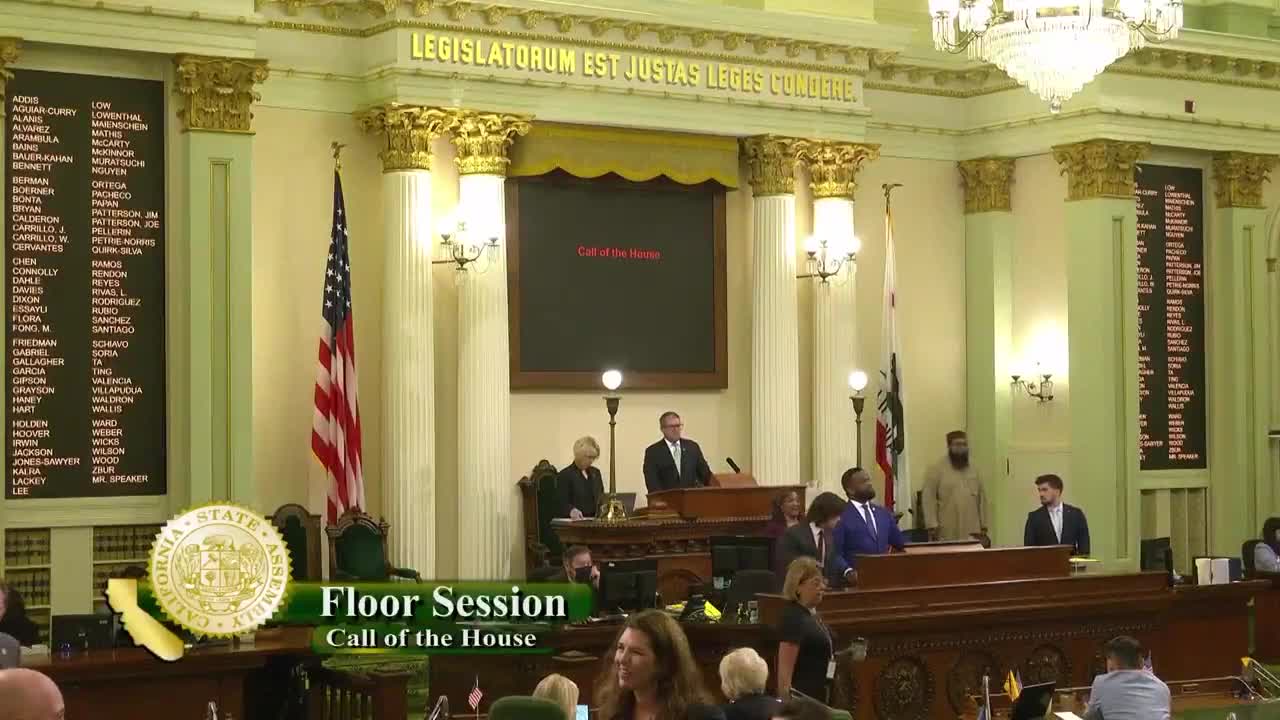
Bill Author

Bill Co-Author(s):