AB 3072: Child custody: ex parte orders.
- Session Year: 2023-2024
- House: Assembly
- Latest Version Date: 2024-09-20
Current Status:
Passed
(2024-09-20: Chaptered by Secretary of State - Chapter 317, Statutes of 2024.)
Introduced
In Committee
First Chamber
In Committee
Second Chamber
Enacted
Existing law requires the court to refrain from making an order granting or modifying a child custody order on an ex parte basis unless there has been a showing of immediate harm to the child, as defined, or immediate risk that the child will be removed from the State of California.
This bill would require a court to consider a parents illegal access to firearms and ammunition when determining whether there is a showing of immediate harm to the child, as specified.
Existing law governs the determination of child custody and visitation in contested proceedings. Existing law requires the court, for purposes of deciding custody or visitation, to determine the best interests of the child based on certain factors, including the health, safety, and welfare of the child, and the nature and amount of contact with both parents, except as specified. If a protective order has been issued restraining a parent, existing law requires the court to determine whether to require that visitation to be supervised, suspended, limited, or denied.
This bill would also require the court to determine whether to require that visitation be supervised, suspended, limited, or denied if it has found that circumstances warrant making an order granting or modifying a custody order on an ex parte basis because there has been a showing of immediate harm to the child or immediate risk that the child will be removed from the State of California.
Existing law requires the court to refrain from making an order granting or modifying a child custody order on an ex parte basis unless there has been a showing of immediate harm to the child, as defined, or immediate risk that the child will be removed from the State of California.
This bill would require a court to consider a parents illegal access to firearms and ammunition when determining whether there is a showing of immediate harm to the child, as specified. The bill would also require a court to consider whether the safety and best interest of the child requires the suspension, denial, or limitation of visitation if there is a showing of immediate harm.
Existing law requires the court to refrain from making an order granting or modifying a child custody order on an ex parte basis unless there has been a showing of immediate harm to the child, as defined, or immediate risk that the child will be removed from the State of California.
This bill would require a court to consider a parents access to firearms and ammunition when determining whether there is a showing of immediate harm to the child, as specified. The bill would also require a court to consider whether the safety and best interest of the child requires the suspension, denial, or limitation of visitation if there is a showing of immediate harm.
Existing law establishes the Domestic Violence Prevention Act, and provides that the purpose of the act is to prevent acts of domestic violence, abuse, and sexual abuse and to provide for a separation of the persons involved in the domestic violence for a period sufficient to enable them to seek a resolution of the causes of the violence.This bill would make technical, nonsubstantive changes to those provisions.Existing law establishes the Domestic Violence Prevention Act, and provides that the purpose of the act is to prevent acts of domestic violence, abuse, and sexual abuse and to provide for a separation of the persons involved in the domestic violence for a period sufficient to enable them to seek a resolution of the causes of the violence.
This bill would make technical, nonsubstantive changes to those provisions.
(a)The court shall refrain from making an order granting or modifying a custody order on an ex parte basis unless there has been a showing of immediate harm to the child or immediate risk that the child will be removed from the State of California.
(b)(1)Immediate harm to the child includes, but is not limited to, either of the following:
(A)Having a parent who has committed acts of domestic violence, if the court determines that the acts of domestic violence are of recent origin or are part of a demonstrated and continuing pattern of acts of domestic violence.
(B)Sexual abuse of the child, if the court determines that the acts of sexual abuse are of recent origin or are part of a demonstrated and continuing pattern of acts of sexual abuse.
(2)(A)In determining whether there is a showing of immediate harm to the child, the court shall consider a parents illegal access to firearms and ammunition, including, but not limited to, whether a parent is prohibited from having firearms and ammunition.
(B)Illegal access to firearms and ammunition includes the possession, purchase, or receipt of a firearm or ammunition in violation of state or federal law, a restraining order, a protective order, or an injunction, or a condition of probation or parole.
SEC. 2.Section 3100 of the Family Code is amended to read:3100.(a)In making an order pursuant to Chapter 4 (commencing with Section 3080), the court shall grant reasonable visitation rights to a parent when it is shown that the visitation would be in the best interest of the child, as defined in Section 3011, and consistent with Section 3020. In the discretion of the court, reasonable visitation rights may be granted to any other person having an interest in the welfare of the child.
(b)(1)(A)If a protective order, as defined in Section 6218 of this code or Section 136.2 of the Penal Code, has been issued restraining a parent, the court shall consider whether the best interest of the child requires that visitation by that parent be suspended, denied, or limited to situations in which a third person, specified by the court, is present, including virtual visitation.
(B)A parent may submit to the court the name of a person who the parent deems suitable to be present during visitation.
(C)The court may order supervised visitation with the person whose name was submitted, but the submission of a name does not require the court to order supervised visitation if it is not in the best interest of the child, nor does a parents submission of a name constitute agreement or stipulation to supervised visitation.
(2)In determining the type of visitation with the restrained party, if any, is in the best interest of the child pursuant to paragraph (1), the court shall consider the nature of the acts that led to the protective order, the period of time that has elapsed since that order, and whether the restrained party has committed further acts of abuse.
(c)(1)(A)If the court has found that circumstances warrant making an order granting or modifying a custody order on an ex parte basis under Section 3064, the court shall consider whether the best interest of the child requires that visitation by the party whose conduct presents a risk of immediate harm to the child or immediate risk that the child will be removed from the State of California should be suspended, denied, or limited to situations in which a third person, specified by the court, is present, including virtual visitation.
(B)A parent may submit to the court the name of a person who the parent deems suitable to be present during visitation, which may be accepted or rejected by the court as set forth in subparagraph (C) of paragraph (1) of subdivision (b).
(2)In determining the type of visitation with the party whose conduct presents a risk of immediate harm to the child or immediate risk that the child will be removed from the State of California, if any, is in the best interest of the child pursuant to paragraph (1), the court shall consider the nature of the acts that led to the finding of the risk of immediate harm or immediate risk of removal.
(d)If visitation is ordered in a case in which domestic violence is alleged and an emergency protective order, protective order, or other restraining order has been issued, the visitation order shall specify the time, day, place, and manner of the visitation, including virtual visitation, or any transfer of the child, so as to limit the childs exposure to potential domestic conflict or abuse, to ensure the safety of all family members, and to minimize any opportunity for the use of abuse, including coercive control. If a criminal protective order has been issued pursuant to Section 136.2 of the Penal Code, the visitation order shall make reference to, and, unless there is an emergency protective order that has precedence in enforcement pursuant to paragraph (1) of subdivision (c) of Section 136.2 of the Penal Code or a no-contact order, as described in Section 6320, acknowledge the precedence of enforcement of, an appropriate criminal protective order.
(e)(1)If the court finds a party is staying in a place designated as a shelter for victims of domestic violence or other confidential location, the courts order shall be designed to prevent disclosure of the location of the shelter or other confidential location and to protect all adults and children living in that location.
(2)If a court finds that a parent is residing in a confidential shelter due to domestic violence or fear of domestic violence from the other parent, the court shall order in-person visitation with the other parent only if the court finds that in-person visitation is in the best interest of the child, taking into account all of the following:
(A)The other parents access to firearms and ammunition, including, but not limited to, whether the other parent is prohibited from having firearms and ammunition.
(B)If a parent is the subject of an emergency protective order, protective order, or other restraining order, whether that parent has violated that order, and the nature of any violation.
(C)Information obtained pursuant to Section 6306, the requirements of this section, and the information obtained pursuant to Section 3011.
(D)The potential for disclosure of the confidential location.
(3)A court shall make its findings pursuant to paragraphs (1) and (2) in writing or on the record.
(f)For purposes of this section, virtual visitation means use of audiovisual electronic communication tools to provide contact between a parent and their children as part of a parenting plan or custody order. Virtual visitation may be supervised or unsupervised, based on the courts determination of what is in the best interest of the child.
(a)The court shall refrain from making an order granting or modifying a custody order on an ex parte basis unless there has been a showing of immediate harm to the child or immediate risk that the child will be removed from the State of California.
(b)(1)Immediate harm to the child includes, but is not limited to, either of the following:
(A)Having a parent who has committed acts of domestic violence, if the court determines that the acts of domestic violence are of recent origin or are part of a demonstrated and continuing pattern of acts of domestic violence.
(B)Sexual abuse of the child, if the court determines that the acts of sexual abuse are of recent origin or are part of a demonstrated and continuing pattern of acts of sexual abuse.
(2)(A)In determining whether there is a showing of immediate harm to the child, the court shall consider a parents illegal access to firearms and ammunition, including, but not limited to, whether a parent is prohibited from having firearms and ammunition.
(B)Illegal access to firearms and ammunition includes the possession, purchase, or receipt of a firearm or ammunition in violation of state or federal law, a restraining order, a protective order, or an injunction, or a condition of probation or parole.
SEC. 2.Section 3100 of the Family Code is amended to read:3100.(a)In making an order pursuant to Chapter 4 (commencing with Section 3080), the court shall grant reasonable visitation rights to a parent when it is shown that the visitation would be in the best interest of the child, as defined in Section 3011, and consistent with Section 3020. In the discretion of the court, reasonable visitation rights may be granted to any other person having an interest in the welfare of the child.
(b)(1)(A)If a protective order, as defined in Section 6218 of this code or Section 136.2 of the Penal Code, has been issued restraining a parent or the court has found that circumstances warrant making an order granting or modifying a custody order on an ex parte basis under Section 3064, parent, the court shall consider whether the best interest of the child requires that any visitation by that parent be suspended, denied, or limited to situations in which a third person, specified by the court, is present, including virtual visitation. A
(B)A parent may submit to the court the name of a person that who the parent deems suitable to be present during visitation. The
(C)The court may order supervised visitation with the person whose name was submitted, but the submission of a name does not require the court to order supervised visitation if it is not in the best interest of the child, nor does a parents submission of a name constitute agreement or stipulation to supervised visitation.
(2)In determining what the type of visitation with the restrained party, if any, is in the best interest of the child pursuant to paragraph (1), the court shall consider the nature of the acts that led to the protective order, the period of time that has elapsed since that order, and whether the restrained party has committed further acts of abuse.
(c)(1)(A)If the court has found that circumstances warrant making an order granting or modifying a custody order on an ex parte basis under Section 3064, the court shall consider whether the best interest of the child requires that visitation by the party whose conduct presents a risk of immediate harm to the child or immediate risk that the child will be removed from the State of California should be suspended, denied, or limited to situations in which a third person, specified by the court, is present, including virtual visitation.
(B)A parent may submit to the court the name of a person who the parent deems suitable to be present during visitation, which may be accepted or rejected by the court as set forth in subparagraph (C) of paragraph (1) of subdivision (b).
(2)In determining the type of visitation with the party whose conduct presents a risk of immediate harm to the child or immediate risk that the child will be removed from the State of California, if any, is in the best interest of the child pursuant to paragraph (1), the court shall consider the nature of the acts that led to the finding of the risk of immediate harm or immediate risk of removal.
(c)(d)If visitation is ordered in a case in which domestic violence is alleged and an emergency protective order, protective order, or other restraining order has been issued, the visitation order shall specify the time, day, place, and manner of the visitation, including virtual visitation, or any transfer of the child, so as to limit the childs exposure to potential domestic conflict or abuse, to ensure the safety of all family members, and to minimize any opportunity for the use of abuse, including coercive control. If a criminal protective order has been issued pursuant to Section 136.2 of the Penal Code, the visitation order shall make reference to, and, unless there is an emergency protective order that has precedence in enforcement pursuant to paragraph (1) of subdivision (c) of Section 136.2 of the Penal Code or a no-contact order, as described in Section 6320, acknowledge the precedence of enforcement of, an appropriate criminal protective order.
(d)(e)(1)If the court finds a party is staying in a place designated as a shelter for victims of domestic violence or other confidential location, the courts order shall be designed to prevent disclosure of the location of the shelter or other confidential location and to protect all adults and children living in that location.
(2)If a court finds that a parent is residing in a confidential shelter due to domestic violence or fear of domestic violence from the other parent, the court shall order in-person visitation with the other parent only if the court finds that in-person visitation is in the best interest of the child, taking into account all of the following:
(A)The other parents access to firearms and ammunition, including, but not limited to, whether the other parent is prohibited from having firearms and ammunition.
(B)If a parent is the subject of an emergency protective order, protective order, or other restraining order, whether that parent has violated that order, and the nature of any violation.
(C)Information obtained pursuant to Section 6306, the requirements of this section, and the information obtained pursuant to Section 3011.
(D)The potential for disclosure of the confidential location.
(3)A court shall make its findings pursuant to paragraphs (1) and (2) in writing or on the record.
(e)(f)For purposes of this section, virtual visitation means use of audiovisual electronic communication tools to provide contact between a parent and their children as part of a parenting plan or custody order. Virtual visitation may be supervised or unsupervised, based on the courts determination of what is in the best interest of the child.
(a)The court shall refrain from making an order granting or modifying a custody order on an ex parte basis unless there has been a showing of immediate harm to the child or immediate risk that the child will be removed from the State of California.
(b)(1)Immediate harm to the child includes, but is not limited to, either of the following:
(A)Having a parent who has committed acts of domestic violence, if the court determines that the acts of domestic violence are of recent origin or are part of a demonstrated and continuing pattern of acts of domestic violence.
(B)Sexual abuse of the child, if the court determines that the acts of sexual abuse are of recent origin or are part of a demonstrated and continuing pattern of acts of sexual abuse.
(2)(A)In determining whether there is a showing of immediate harm to the child, the court shall consider a parents illegal access to firearms and ammunition, including, but not limited to, whether a parent is prohibited from having firearms and ammunition.
(B)Illegal access to firearms and ammunition includes the possession, purchase, or receipt of a firearm or ammunition in violation of state or federal law, a restraining order, a protective order, or an injunction, or a condition of probation or parole.
SEC. 2.Section 3100 of the Family Code is amended to read:3100.(a)In making an order pursuant to Chapter 4 (commencing with Section 3080), the court shall grant reasonable visitation rights to a parent when it is shown that the visitation would be in the best interest of the child, as defined in Section 3011, and consistent with Section 3020. In the discretion of the court, reasonable visitation rights may be granted to any other person having an interest in the welfare of the child.
(b)(1)If a protective order, as defined in Section 6218 of this code or Section 136.2 of the Penal Code, has been issued restraining a parent, parent or the court has found that circumstances warrant making an order granting or modifying a custody order on an ex parte basis under Section 3064, the court shall consider whether the best interest of the child requires that any visitation by that parent be suspended, denied, or limited to situations in which a third person, specified by the court, is present, including virtual visitation. A parent may submit to the court the name of a person that the parent deems suitable to be present during visitation. The court may order supervised visitation with the person whose name was submitted, but the submission of a name does not require the court to order supervised visitation if it is not in the best interest of the child, nor does a parents submission of a name constitute agreement or stipulation to supervised visitation.
(2)In determining what type of visitation with the restrained party, if any, is in the best interest of the child pursuant to paragraph (1), the court shall consider the nature of the acts that led to the protective order, the period of time that has elapsed since that order, and whether the restrained party has committed further acts of abuse.
(c)If visitation is ordered in a case in which domestic violence is alleged and an emergency protective order, protective order, or other restraining order has been issued, the visitation order shall specify the time, day, place, and manner of the visitation, including virtual visitation, or any transfer of the child, so as to limit the childs exposure to potential domestic conflict or abuse, to ensure the safety of all family members, and to minimize any opportunity for the use of abuse, including coercive control. If a criminal protective order has been issued pursuant to Section 136.2 of the Penal Code, the visitation order shall make reference to, and, unless there is an emergency protective order that has precedence in enforcement pursuant to paragraph (1) of subdivision (c) of Section 136.2 of the Penal Code or a no-contact order, as described in Section 6320, acknowledge the precedence of enforcement of, an appropriate criminal protective order.
(d)(1)If the court finds a party is staying in a place designated as a shelter for victims of domestic violence or other confidential location, the courts order shall be designed to prevent disclosure of the location of the shelter or other confidential location and to protect all adults and children living in that location.
(2)If a court finds that a parent is residing in a confidential shelter due to domestic violence or fear of domestic violence from the other parent, the court shall order in-person visitation with the other parent only if the court finds that in-person visitation is in the best interest of the child, taking into account all of the following:
(A)The other parents access to firearms and ammunition, including, but not limited to, whether the other parent is prohibited from having firearms and ammunition.
(B)If a parent is the subject of an emergency protective order, protective order, or other restraining order, whether that parent has violated that order, and the nature of any violation.
(C)Information obtained pursuant to Section 6306, the requirements of this section, and the information obtained pursuant to Section 3011.
(D)The potential for disclosure of the confidential location.
(3)A court shall make its findings pursuant to paragraphs (1) and (2) in writing or on the record.
(e)For purposes of this section, virtual visitation means use of audiovisual electronic communication tools to provide contact between a parent and their children as part of a parenting plan or custody order. Virtual visitation may be supervised or unsupervised, based on the courts determination of what is in the best interest of the child.
(a)The court shall refrain from making an order granting or modifying a custody order on an ex parte basis unless there has been a showing of immediate harm to the child or immediate risk that the child will be removed from the State of California.
(b)(1)Immediate harm to the child includes, but is not limited to, either of the following:
(A)Having a parent who has committed acts of domestic violence, if the court determines that the acts of domestic violence are of recent origin or are part of a demonstrated and continuing pattern of acts of domestic violence.
(B)Sexual abuse of the child, if the court determines that the acts of sexual abuse are of recent origin or are part of a demonstrated and continuing pattern of acts of sexual abuse.
(2)(A)In determining whether there is a showing of immediate harm to the child, the court shall consider a parents illegal access to firearms and ammunition, including, but not limited to, whether a parent is prohibited from having firearms and ammunition.
(B)Illegal access to firearms and ammunition includes the possession, purchase, or receipt of a firearm or ammunition in violation of state or federal law, a restraining order, a protective order, or an injunction, or a condition of probation or parole.
(c)If there is a showing of immediate harm to the child, the court shall consider whether the safety and best interest of the child requires that visitation by that parent be suspended, denied, or limited to situations in which a third person, as specified by the court, is present, including virtual visitation.(a)The court shall refrain from making an order granting or modifying a custody order on an ex parte basis unless there has been a showing of immediate harm to the child or immediate risk that the child will be removed from the State of California.
(b)(1)Immediate harm to the child includes, but is not limited to, either of the following:
(A)Having a parent who has committed acts of domestic violence, if the court determines that the acts of domestic violence are of recent origin or are part of a demonstrated and continuing pattern of acts of domestic violence.
(B)Sexual abuse of the child, if the court determines that the acts of sexual abuse are of recent origin or are part of a demonstrated and continuing pattern of acts of sexual abuse.
(2)In determining whether there is a showing of immediate harm to the child, the court shall consider a parents illegal access to firearms and ammunition, including, but not limited to, whether a parent is prohibited from having firearms and ammunition.
(c)If there is a showing of immediate harm to the child, the court shall consider whether the safety and best interest of the child requires that visitation by that parent be suspended, denied, or limited to situations in which a third person, as specified by the court, is present, including virtual visitation.
REVISIONS: HeadingLine 2.(a)The court shall refrain from making an order granting or modifying a custody order on an ex parte basis unless there has been a showing of immediate harm to the child or immediate risk that the child will be removed from the State of California.
(b)(1)Immediate harm to the child includes, but is not limited to, either of the following:
(1)(A)Having a parent who has committed acts of domestic violence, where if the court determines that the acts of domestic violence are of recent origin or are a part of a demonstrated and continuing pattern of acts of domestic violence.
(2)(B)Sexual abuse of the child, where if the court determines that the acts of sexual abuse are of recent origin or are a part of a demonstrated and continuing pattern of acts of sexual abuse.
(2)In determining whether there is a showing of immediate harm to the child, the court shall consider a parents access to firearms and ammunition, including, but not limited to, whether a parent is prohibited from having firearms and ammunition.
(c)If there is a showing of immediate harm to the child, the court shall consider whether the safety and best interest of the child requires that visitation by that parent be suspended, denied, or limited to situations in which a third person, as specified by the court, is present, including virtual visitation.
SECTION 1.Section 6220 of the Family Code is amended to read:6220.The purpose of this division is to prevent acts of domestic violence, abuse, and sexual abuse, and to provide for a separation of the persons involved in the domestic violence for a period sufficient to enable them to seek a resolution of the causes of the violence.The purpose of this division is to prevent acts of domestic violence, abuse, and sexual abuse abuse, and to provide for a separation of the persons involved in the domestic violence for a period sufficient to enable these persons them to seek a resolution of the causes of the violence.
|
Date
|
Status
|
|---|---|
| Sep 20, 2024 | Chaptered by Secretary of State - Chapter 317, Statutes of 2024. |
| Sep 20, 2024 | Approved by the Governor. |
| Sep 5, 2024 | Enrolled and presented to the Governor at 4 p.m. |
| Aug 27, 2024 | Senate amendments concurred in. To Engrossing and Enrolling. (Ayes 77. Noes 0.). |
| Aug 21, 2024 | In Assembly. Concurrence in Senate amendments pending. May be considered on or after August 23 pursuant to Assembly Rule 77. |
| Aug 21, 2024 | Read third time. Passed. Ordered to the Assembly. (Ayes 33. Noes 0. Page 5265.). |
| Jun 5, 2024 | Read second time and amended. Ordered to third reading. |
| Jun 4, 2024 | From committee: Amend, and do pass as amended. (Ayes 11. Noes 0.) (June 4). |
| May 20, 2024 | From committee chair, with author's amendments: Amend, and re-refer to committee. Read second time, amended, and re-referred to Com. on JUD. |
| May 7, 2024 | From committee chair, with author's amendments: Amend, and re-refer to committee. Read second time, amended, and re-referred to Com. on JUD. |
| May 1, 2024 | Referred to Com. on JUD. |
| Apr 8, 2024 | In Senate. Read first time. To Com. on RLS. for assignment. |
| Apr 8, 2024 | Read third time. Passed. Ordered to the Senate. (Ayes 74. Noes 0. Page 4661.) |
| Apr 3, 2024 | Read second time. Ordered to Consent Calendar. |
| Apr 2, 2024 | From committee: Do pass. To Consent Calendar. (Ayes 12. Noes 0.) (April 2). |
| Apr 2, 2024 | Coauthors revised. |
| Mar 20, 2024 | Re-referred to Com. on JUD. |
| Mar 19, 2024 | From committee chair, with author's amendments: Amend, and re-refer to Com. on JUD. Read second time and amended. |
| Mar 12, 2024 | Re-referred to Com. on JUD. |
| Mar 11, 2024 | Referred to Com. on JUD. |
| Mar 11, 2024 | From committee chair, with author's amendments: Amend, and re-refer to Com. on JUD. Read second time and amended. |
| Feb 17, 2024 | From printer. May be heard in committee March 18. |
| Feb 16, 2024 | Read first time. To print. |
|
Date
|
Description
|
Location
|
Votes
|
|
|---|---|---|---|---|
| Aug 27, 2024 | AB 3072 Petrie-Norris Concurrence in Senate Amendments | Assembly Floor |
Passed |
|
| Aug 21, 2024 | Assembly 3rd Reading AB3072 Petrie-Norris et al. By Rubio | Senate Floor |
Passed |
|
| Jun 4, 2024 | Do pass as amended | Senate Standing Committee on Judiciary |
Passed |
|
| Apr 8, 2024 | AB 3072 Petrie-Norris Consent Calendar Second Day Regular Session | Assembly Floor |
Passed |
|
| Apr 2, 2024 | Do pass. To Consent Calendar. | Assembly Standing Committee on Judiciary |
Passed |
This list shows positions taken on this bill by organizations on the date displayed, which is linked to the original source.
Positions by individuals are not included.
|
Organization
|
Position
|
Date
|
|---|---|---|
| California Protective Parents Association | ** Support | |
| Center for Judicial Excellence | ** Support | |
| Family Violence Appellate Project | ** Support | |
| Giffords Law Center to Prevent Gun Violence | * Support | Jun 4, 2024 |
| Legislative Coalition to Prevent Child Abuse | ** Support | |
| Legislative Coalition to Prevent Child Abuse | * Support | Jun 4, 2024 |
| Sacramento Regional Family Justice Center Foundation | ** Support |
CONCURRENCE IN SENATE AMENDMENTS
CSA1 Bill Id:AB 3072
Author:(Petrie-Norris)
As Amended Ver:June 5, 2024
Majority vote
SUMMARY
Requires a court to consider a parent's illegal access to firearms when determining whether there has been a showing of immediate harm in an ex parte custody order.
Major Provisions
- Requires a court, in determining whether there is a sufficient showing of immediate harm to the child to justify an ex parte custody order, to consider a parent's illegal access to firearms and ammunition, including, but not limited to, whether a parent is prohibited from having firearms and ammunition.
- Requires a court, upon a showing of immediate harm to the child or risk that the child will be removed from the State of California, to consider whether the safety and best interest of the child requires that visitation by that parent be suspended, denied, or limited to situations in which a third person is present, including virtual visitation. Permits a parent to submit to the court the name of a person who the parent deems suitable to be present during visitation, which may be accepted or rejected by the court as specified.
Senate Amendments
- Permit a parent to submit to the court the name of a person who the parent deems suitable to be present during visitation, which may be accepted or rejected by the court as specified.
- Specify that, in determining the type of visitation is in the best interest of the child, as specified, the court shall consider the nature of the acts that led to the finding of the risk of immediate harm or immediate risk of removal.
COMMENTS
Presumptions in favor of joint custody, continuing contact, and the best interests of the child. Under existing law, both parents have an equal right to custody of an un-emancipated minor child. As such, in cases of divorce or separation, the law creates a presumption that joint legal and physical custody serves the best interests of the minor child, which is why any order denying joint custody must state the reasons for denying the request. Moreover, even where joint custody is denied, the law favors orders that provide children with continuing and frequent contact with both parents. (Family Code Sections 3020, 3080-3082.)
However, the Legislature has also declared that ensuring the health, safety, and welfare of a child shall be the court's primary concern when issuing custody orders, and thus a court may deny custody and limit visitation rights where there is a history of abuse or violence by a parent or any other person seeking custody. Because of the delicate nature of balancing child welfare and continuing contact, the family courts are generally provided with discretion to perform these balancing acts on a case-by-case basis. Ideally, parents agree to custody and visitation arrangements that serve the best interests of a child; however, where agreement cannot be reached, the court must issue orders that, in its view, best ensure the health, safety, and welfare of the child in light of all the evidence. Most germane to this bill, existing Family Code Section 3046 restricts the court's ability to issue ex-parte custody orders – that is, orders based solely on the petition of one parent – unless there has been a showing of "immediate harm to the child" or an "immediate risk" that the child will be removed from California.
This bill proposes two changes to Section 3046 and the court's ability to issue ex parte custody orders. First, this measure would require the court, when considering whether there has been a sufficient showing of "immediate harm" to justify an ex parte order, to consider whether a parent has illegal access to a firearm or ammunition as part of its determination. In addition, this bill would require a court, if there were a showing of immediate harm in an ex parte custody proceeding, to consider whether the best interests of a child required that a parent's visitation rights be denied, suspended, or limited to situations in which a third person is present, or by virtual visitation. It is unclear the extent to which this provision constitutes a substantial change in the law, as existing law already requires the court to consider the health, safety, and welfare of the child when issuing custody and visitation orders. Existing law also already permits the court to order supervised visitation, including virtual visitation by electronic means. (See e.g. Family Code Section 3100.)
According to the Author
According to the author, it is "well known that the risk to victims during instances of domestic violence rises dramatically when there is a firearm present. In addition, during custody battles, children are put at enhanced risk when a parent has access to a firearm. There have been several recent high-profile cases where a child was murdered during an in-person court-ordered visitation." While existing law permits custody orders to be issued on an ex parte basis where there has been a showing of "immediate harm" to the child, the author contends that, when determining the risk of immediate harm, the court should also consider whether or not a parent has illegal access to firearms and ammunition. The author believes that this measure "will enhance the protections afforded to children during ex-parte custody orders by, first, requiring that a court consider a parent's illegal access to firearms [and second by requiring the] court to consider whether the safety and best interests of the child are better served by limiting or suspending visitation by that parent."
Arguments in Support
In support of this bill, the California Protective Parents Association writes:
AB 3072 will help ensure the safety and well-being of children by requiring family court judges to consider alternative options to in-person contact, such as virtual visitation, during emergency hearings where there is a showing of immediate harm to the child. In cases of escalating parental violence, an immediate temporary no-contact order can be crucial in protecting a child from harm. AB 3072 also requires that judges consider a parent's access to illegal firearms and ammunition when assessing the level of danger the child may be facing. This consideration is vital for safeguarding children from potential violence by individuals prohibited from possessing firearms due to previous court determinations.
[AB 3072 is] a sensible response to a pressing crisis. Alarmingly, statistics show that since 2020, twenty-three children in California from families grappling with dissolution and visitation issues have tragically lost their lives at the hands of a parent during court-ordered visitation, with thirteen of these deaths involving firearms. Despite court awareness of domestic violence, attempted strangulations, threats to kill family members, violent assaults, illicit drug use and mental health related violence requiring detention, families and domestic violence legal advocates were not able to obtain needed protection that may have prevented loss of life.
Arguments in Opposition
No opposition on file.
FISCAL COMMENTS
None.
VOTES:
ASM JUDICIARY: 12-0-0
YES: Kalra, Dixon, Bauer-Kahan, Bryan, Connolly, Haney, Maienschein, McKinnor, Pacheco, Reyes, Sanchez, Waldron
ASSEMBLY FLOOR: 74-0-6
YES: Addis, Aguiar-Curry, Alanis, Alvarez, Arambula, Bains, Bennett, Berman, Boerner, Bonta, Bryan, Calderon, Juan Carrillo, Wendy Carrillo, Cervantes, Chen, Connolly, Davies, Dixon, Essayli, Flora, Mike Fong, Vince Fong, Friedman, Gabriel, Gallagher, Garcia, Grayson, Haney, Hart, Holden, Hoover, Irwin, Jackson, Kalra, Lackey, Lee, Low, Lowenthal, Maienschein, McKinnor, Muratsuchi, Stephanie Nguyen, Ortega, Pacheco, Papan, Jim Patterson, Joe Patterson, Pellerin, Petrie-Norris, Quirk-Silva, Ramos, Rendon, Reyes, Luz Rivas, Rodriguez, Blanca Rubio, Sanchez, Santiago, Schiavo, Soria, Ta, Ting, Valencia, Villapudua, Waldron, Wallis, Ward, Weber, Wicks, Wilson, Wood, Zbur, Robert Rivas
ABS, ABST OR NV: Bauer-Kahan, Megan Dahle, Gipson, Jones-Sawyer, Mathis, McCarty
UPDATED
VERSION: June 5, 2024
CONSULTANT: Tom Clark / JUD. / (916) 319-2334 FN: 0004274
SENATE RULES COMMITTEE Office of Senate Floor Analyses (916) 651-1520 Fax: (916) 327-4478 | AB 3072 |
THIRD READING
Bill No: AB 3072
Author: Petrie-Norris (D), et al.
Amended: 6/5/24 in Senate
Vote: 21
SENATE JUDICIARY COMMITTEE: 11-0, 6/4/24
AYES: Umberg, Wilk, Ashby, Caballero, Durazo, Laird, Niello, Roth, Stern, Wahab, Wiener
ASSEMBLY FLOOR: 74-0, 4/8/24 (Consent) - See last page for vote
SUBJECT: Child custody: ex parte orders
SOURCE: Author
DIGEST:
This bill clarifies that a court, when determining whether there is a showing of immediate harm to the child warranting an ex parte custody order, should consider a parent’s illegal access to firearms and ammunition, as defined; and clarifies that a court, when making an ex parte custody order, should consider whether the best interests of the child warrant suspending visitation or ordering supervised or virtual visitation with the parent whose conduct gave rise to the need for the ex parte order.
ANALYSIS:
Existing law:
- States that it is the public policy of this state to ensure that:
- The health, safety, and welfare of children is the court’s primary concern in determining the best interests of children when making any orders regarding the physical or legal custody or visitation of children;
- Children have the right to be safe and free from abuse, because the perpetration of child abuse or domestic violence in a household where a child resides is detrimental to the health, safety, and welfare of the child; and
- Children have frequent and continuing contact with both parents after the parents have separated or dissolved their marriage, or ended their relationship, and parents are encouraged to share the rights and responsibilities of child rearing in order to effect this policy, except when the contact would not be in the best interests of the child, as provided. (Family Code (Fam. Code) § 3020(a)(b))
- Provides that, when the policies set forth in 1a) and c) above are in conflict, a court’s order regarding physical or legal custody or visitation must be made in a manner that ensures the health, safety, and welfare of the child and the safety of all family members. (Fam. Code § 3020(c))
- Requires a court, when determining the best interest of the child in a proceeding to determine child custody and visitation rights, to consider all of the following and any other factors it finds relevant:
- The health, safety, and welfare of the child.
- A history of abuse by one parent or any other person seeking custody against a child to whom the parent is related or with whom the parent has a caretaking relationship, as specified; by the other parent; or by a parent or current spouse, of the parent, or a person with whom the parent has a dating or engagement relationship.
- The nature and amount of contact with both parents.
- The habitual or continual illegal use of controlled substances and the habitual or continual abuse of alcohol or prescribed controlled substances, as specified. (Fam. Code §§ 3011, 3021)
- Provides that, upon a finding by the court that a party seeking custody of a child has perpetrated domestic violence within the previous five years against the other party seeking custody of the child, against the child, or other specified individuals, there is a rebuttable presumption that an award of sole or joint physical or legal custody of a child to that party is detrimental to the best interest of the child. This presumption may be rebutted only by a preponderance of the evidence. (Fam. Code § 3044(a))
- Provides that, to overcome the presumption in 4), the court must be satisfied and find that the perpetrator of domestic violence has demonstrated that giving sole or joint legal or physical custody of the child to the perpetrator is in the best interest of the child, and that the following factors, on balance, support the legislative findings set forth in 1):
- The perpetrator has successfully completed a batterer’s program that meets the criteria outlined in section 1203.097 of the Penal Code.
- The perpetrator has successfully completed a program of alcohol or drug abuse counseling, if the court determines that counseling is appropriate.
- The perpetrator has successfully completed a parenting class, if the court determines the class to be appropriate.
- The perpetrator is on probation or parole, and has or has not complied with the terms and conditions of probation or parole.
- The perpetrator is restrained by a protective order or restraining order, and has or has not complied with its terms and conditions.
- The perpetrator has committed further acts of domestic violence.
- The court has determined that the perpetrator is a restrained person in possession or control of a firearm in violation of the Domestic Violence Prevention Act (DVPA) (Fam. Code, div. 10 §§ 6200 et seq.)(Fam. Code § 3044(a)(b))
- Provides that a person has “perpetrated domestic violence” for purposes of 5) when the person is found by the court to have intentionally or recklessly caused or attempted to cause bodily injury, or sexual assault, or to have placed a person in reasonable apprehension of imminent serious bodily injury to that person or to another, or to have engaged in behavior involving, but not limited to, threatening, striking, harassing, destroying personal property, or disturbing the peace of another, for which a court may issue an ex parte order pursuant to the DVPA to protect the other party seeking custody of the child or to protect the child and the child's siblings. (Fam. Code § 3044(c))
- Requires a court, when a protective order has been directed to a parent pursuant to the DVPA or under section 136.2 of the Penal Code, to consider whether the best interest of the child requires that visitation by that parent should be limited to supervised visitation or whether visitation should be suspended, limited, or denied.
- The court must consider, as part of its deliberation, the nature of the acts that led to the protective order, the period of time that has elapsed since that order, and whether the restrained party has committed further acts of abuse.
- A parent may submit to the court the name of a person that the parent deems suitable to supervise visitation; however, the court is not required to order supervised visitation, and the submission of a name does not constitute a stipulation to supervised visitation. (Fam. Code § 3100(b))
- Requires, where the court issues an order for visitation in a case in which domestic violence is alleged and an emergency protective order, protective order, or other restraining order has been issued, the visitation order to specify the time, day, place, and manner of the transfer of the child so as to limit the child’s exposure to potential domestic conflict or violence, to ensure the safety of all family members, and to minimize the opportunity for abuse. (Fam. Code § 3100(c))
- Provides that a court shall refrain from making an order granting or modifying a custody order on an ex parte basis unless there has been a showing of immediate harm to the child or immediate risk that the child will be removed from the State of California. “Immediate harm” includes, but is not limited to:
- Having a parent who has committed acts of domestic violence, where the court determines that the acts of domestic violence are of recent origin or are a part of a demonstrated and continuing pattern of acts of domestic violence.
- Sexual abuse of the child, where the court determines that the acts of sexual abuse are of recent origin or are a part of a demonstrated and continuing pattern of acts of sexual abuse. (Fam. Code § 3064)
This bill:
- Clarifies that a court, in determining whether there is a showing of immediate harm to a child for purposes of making an ex parte order granting or modifying a custody order, must consider a parent’s illegal access to firearms and ammunition, including, but not limited to, whether a parent is prohibited from having firearms and ammunition.
- Defines “illegal access to firearms and ammunition” to include the possession, purchase, or receipt of a firearm or ammunition in violation of state or federal law, a restraining order, a protective order, or an injunction, or a condition of probation or parole.
- Requires a court that has found that circumstances warrant making an order granting or modifying a custody order on an ex parte basis to consider whether the best interest of the child requires that any visitation by that parent be suspended, denied, or limited to situations in which a third person, specified by the court, is present, including virtual visitation.
- A parent may submit to the court the name of a person that the parent deems suitable to supervise visitation; however, the court is not required to order supervised visitation, and the submission of a name does not constitute a stipulation to supervised visitation.
- The court must consider, as part of its deliberation, the nature of the acts that led to the finding of the risk of immediate harm or immediate risk of removal.
Comments
Under current law, a court generally may not issue an order granting or modifying a child custody order on an ex parte basis, i.e., without giving both parents notice and an opportunity to be heard. This general rule is consistent with the Constitutional right to parent one’s children. There is a narrow exception to the rule, however: the court may make an ex parte custody order when there has been a showing of immediate harm to the child, as defined, or if there is an immediate risk that the child will be removed from California. These narrow circumstances permit the court to take emergency action when the child’s safety or security are at risk.
This bill clarifies that a court, when determining whether there has been a showing of immediate harm that warrants an ex parte custody order, to consider a parent’s illegal access to firearms and ammunition. This bill defines “illegal access to firearms and ammunition” to include the possession, purchase, or receipt of a firearm in violation of state or federal law, various court orders, or conditions of probation or parole. This bill also provides that, when a court finds that the circumstances warrant issuing an ex parte custody order, the court should consider whether the best interest of the child requires supervised visitation with a parent, including virtual visitation.
FISCAL EFFECT: Appropriation: No Fiscal Com.: No Local: No
SUPPORT: (Verified 6/5/24)
Advocates for Child Empowerment and Safety
California Protective Parents Association
Center for Judicial Excellence
GIFFORDS
Legislative Coalition to Prevent Child Abuse
Sacramento Regional Family Justice Center
OPPOSITION: (Verified 6/5/24)
None received
ARGUMENTS IN SUPPORT: According to the California Protective Parents Association:
This important bill will help ensure the safety and well-being of children by requiring family court judges to consider alternatives to in-person contact, including virtual visitation, during emergency hearings where there is a plausible showing of immediate harm to the child. In cases of escalating parental violence, an immediate temporary no-contact order can be crucial in protecting a child from harm…
Importantly, AB 3072 also requires that judges consider a parent's access to illegal firearms and ammunition when assessing the level of potential danger/lethality to the child. This consideration is vital to safeguarding children, particularly in those cases where a parent who may have visitation rights to a child is prohibited from possessing firearms under a prior court determination.
ASSEMBLY FLOOR: 74-0, 4/8/24
AYES: Addis, Aguiar-Curry, Alanis, Alvarez, Arambula, Bains, Bennett, Berman, Boerner, Bonta, Bryan, Calderon, Juan Carrillo, Wendy Carrillo, Cervantes, Chen, Connolly, Davies, Dixon, Essayli, Flora, Mike Fong, Vince Fong, Friedman, Gabriel, Gallagher, Garcia, Grayson, Haney, Hart, Holden, Hoover, Irwin, Jackson, Kalra, Lackey, Lee, Low, Lowenthal, Maienschein, McKinnor, Muratsuchi, Stephanie Nguyen, Ortega, Pacheco, Papan, Jim Patterson, Joe Patterson, Pellerin, Petrie-Norris, Quirk-Silva, Ramos, Rendon, Reyes, Luz Rivas, Rodriguez, Blanca Rubio, Sanchez, Santiago, Schiavo, Soria, Ta, Ting, Valencia, Villapudua, Waldron, Wallis, Ward, Weber, Wicks, Wilson, Wood, Zbur, Robert Rivas
NO VOTE RECORDED: Bauer-Kahan, Megan Dahle, Gipson, Jones-Sawyer, Mathis, McCarty
Prepared by: Allison Whitt Meredith / JUD. / (916) 651-4113
6/5/24 11:55:02
**** END ****
Senator Thomas Umberg, Chair
2023-2024 Regular Session
Bill No: AB 3072 (Author:Petrie-Norris)
Version: May 20, 2024
Hearing Date: June 4, 2024
Fiscal: No
Urgency: No
Consultant: AWM
SUBJECT
Child custody: ex parte orders
DIGEST
This bill clarifies that a court, when determining whether there is a showing of immediate harm to the child warranting an ex parte custody order, should consider a parent’s illegal access to firearms and ammunition, as defined; and clarifies that a court, when making an ex parte custody order, should consider whether the best interests of the child warrant suspending visitation or ordering supervised or virtual visitation with the parent whose conduct gave rise to the need for the ex parte order.
EXECUTIVE SUMMARY
Under current law, a court generally may not issue an order granting or modifying a child custody order on an ex parte basis, i.e., without giving both parents notice and an opportunity to be heard. This general rule is consistent with the Constitutional right to parent one’s children. There is a narrow exception to the rule, however: the court may make an ex parte custody order when there has been a showing of immediate harm to the child, as defined, or if there is an immediate risk that the child will be removed from California. These narrow circumstances permit the court to take emergency action when the child’s safety or security are at risk.
This bill clarifies that a court, when determining whether there has been a showing of immediate harm that warrants an ex parte custody order, to consider a parent’s illegal access to firearms and ammunition. The bill defines “illegal access to firearms and ammunition” to include the possession, purchase, or receipt of a firearm in violation of state or federal law, various court orders, or conditions of probation or parole. The bill also provides that, when a court finds that the circumstances warrant issuing an ex parte custody order, the court should consider whether the best interest of the child requires supervised visitation with a parent, including virtual visitation. The author has agreed to nonsubstantive amendments to clarify the provisions setting forth the court’s consideration of whether, and under what circumstances, to award visitation with the parent whose conduct gave rise to the need for the ex parte order.
This bill is sponsored by the author and is supported by Advocates for Child Empowerment and Safety, the California Protective Parents Association, the Center for Judicial Excellence, the Legislative Coalition to Prevent Child Abuse, and the Sacramento Regional Family Justice Center. The Committee has not received timely opposition to this bill.
PROPOSED CHANGES TO THE LAW
Existing law:
- States that it is the public policy of this state to ensure that:
- The health, safety, and welfare of children is the court’s primary concern in determining the best interests of children when making any orders regarding the physical or legal custody or visitation of children;
- Children have the right to be safe and free from abuse, because the perpetration of child abuse or domestic violence in a household where a child resides is detrimental to the health, safety, and welfare of the child; and
- Children have frequent and continuing contact with both parents after the parents have separated or dissolved their marriage, or ended their relationship, and parents are encouraged to share the rights and responsibilities of child rearing in order to effect this policy, except when the contact would not be in the best interests of the child, as provided. (Fam. Code, § 3020(a), (b).).
- Provides that, when the policies set forth in 1a) and c) above are in conflict, a court’s order regarding physical or legal custody or visitation must be made in a manner that ensures the health, safety, and welfare of the child and the safety of all family members. (Fam. Code, § 3020(c).)
- Requires a court, when determining the best interest of the child in a proceeding to determine child custody and visitation rights, to consider all of the following and any other factors it finds relevant:
- The health, safety, and welfare of the child.
- A history of abuse by one parent or any other person seeking custody against a child to whom the parent is related or with whom the parent has a caretaking relationship, as specified; by the other parent; or by a parent or current spouse, of the parent, or a person with whom the parent has a dating or engagement relationship.
- The nature and amount of contact with both parents.
- The habitual or continual illegal use of controlled substances and the habitual or continual abuse of alcohol or prescribed controlled substances, as specified. (Fam. Code, §§ 3011, 3021.)
- Provides that, upon a finding by the court that a party seeking custody of a child has perpetrated domestic violence within the previous five years against the other party seeking custody of the child, against the child, or other specified individuals, there is a rebuttable presumption that an award of sole or joint physical or legal custody of a child to that party is detrimental to the best interest of the child. This presumption may be rebutted only by a preponderance of the evidence. (Fam. Code, § 3044(a).)
- Provides that, to overcome the presumption in 4), the court must be satisfied and find that the perpetrator of domestic violence has demonstrated that giving sole or joint legal or physical custody of the child to the perpetrator is in the best interest of the child, and that the following factors, on balance, support the legislative findings set forth in 1):
- The perpetrator has successfully completed a batterer’s program that meets the criteria outlined in section 1203.097 of the Penal Code.
- The perpetrator has successfully completed a program of alcohol or drug abuse counseling, if the court determines that counseling is appropriate.
- The perpetrator has successfully completed a parenting class, if the court determines the class to be appropriate.
- The perpetrator is on probation or parole, and has or has not complied with the terms and conditions of probation or parole.
- The perpetrator is restrained by a protective order or restraining order, and has or has not complied with its terms and conditions.
- The perpetrator has committed further acts of domestic violence.
- The court has determined that the perpetrator is a restrained person in possession or control of a firearm in violation of the Domestic Violence Prevention Act (DVPA) (Fam. Code, div. 10, §§ 6200 et seq.). (Fam. Code, § 3044(a), (b).)
- Provides that a person has “perpetrated domestic violence” for purposes of 5) when the person is found by the court to have intentionally or recklessly caused or attempted to cause bodily injury, or sexual assault, or to have placed a person in reasonable apprehension of imminent serious bodily injury to that person or to another, or to have engaged in behavior involving, but not limited to, threatening, striking, harassing, destroying personal property, or disturbing the peace of another, for which a court may issue an ex parte order pursuant to the DVPA to protect the other party seeking custody of the child or to protect the child and the child's siblings. (Fam. Code, § 3044(c).)
- Requires a court, when a protective order has been directed to a parent pursuant to the DVPA or under section 136.2 of the Penal Code, to consider whether the best interest of the child requires that visitation by that parent should be limited to supervised visitation or whether visitation should be suspended, limited, or denied.
- The court must consider, as part of its deliberation, the nature of the acts that led to the protective order, the period of time that has elapsed since that order, and whether the restrained party has committed further acts of abuse.
- A parent may submit to the court the name of a person that the parent deems suitable to supervise visitation; however, the court is not required to order supervised visitation, and the submission of a name does not constitute a stipulation to supervised visitation. (Fam. Code, § 3100(b).)
- Requires, where the court issues an order for visitation in a case in which domestic violence is alleged and an emergency protective order, protective order, or other restraining order has been issued, the visitation order to specify the time, day, place, and manner of the transfer of the child so as to limit the child’s exposure to potential domestic conflict or violence, to ensure the safety of all family members, and to minimize the opportunity for abuse. (Fam. Code, § 3100(c).)
- Provides that a court shall refrain from making an order granting or modifying a custody order on an ex parte basis unless there has been a showing of immediate harm to the child or immediate risk that the child will be removed from the State of California. “Immediate harm” includes, but is not limited to:
- Having a parent who has committed acts of domestic violence, where the court determines that the acts of domestic violence are of recent origin or are a part of a demonstrated and continuing pattern of acts of domestic violence.
- Sexual abuse of the child, where the court determines that the acts of sexual abuse are of recent origin or are a part of a demonstrated and continuing pattern of acts of sexual abuse. (Fam. Code, § 3064.)
This bill:
- Clarifies that a court, in determining whether there is a showing of immediate harm to a child for purposes of making an ex parte order granting or modifying a custody order, must consider a parent’s illegal access to firearms and ammunition, including, but not limited to, whether a parent is prohibited from having firearms and ammunition.
- Defines “illegal access to firearms and ammunition” to include the possession, purchase, or receipt of a firearm or ammunition in violation of state or federal law, a restraining order, a protective order, or an injunction, or a condition of probation or parole.
- Requires a court that has found that circumstances warrant making an order granting or modifying a custody order on an ex parte basis to consider whether the best interest of the child requires that any visitation by that parent be suspended, denied, or limited to situations in which a third person, specified by the court, is present, including virtual visitation.
COMMENTS
- Author’s comment
According to the author:
It is well known that the risk to victims during instances of domestic violence rises dramatically when there is a firearm present. In addition, during custody battles, children are put at enhanced risk when a parent has access to a firearm. There have been several recent high-profile cases where a child was murdered during an in-person court-ordered visitation.
Under existing law, California Family Code § 3064 restricts the court’s ability to alter ex-parte custody orders unless there has been a showing of immediate harm to the child or immediate risk that the child will be removed from California. This restriction, however, does not require the court to consider a parent’s illegal access to firearms. Furthermore, existing law also does not allow courts to consider safer alternatives to in-person contact with children during these situations.
AB 3072 will enhance the protections afforded to children during ex-parte custody orders by requiring that a court consider a parent’s illegal access to firearms when determining if there is an immediate risk to the child. This will help prevent violence and keep children safe during custody battles.
2. Child custody and visitation determinations
“Under California’s statutory scheme governing child custody and visitation determinations, the overarching concern is the best interest of the child.”[1] That scheme “allows the court and the family the widest discretion to choose a parenting plan that is in the best interest of the child.”[2] When determining the best interest of a child, a court may consider any relevant factors, and must consider the following: the health, safety, and welfare of the child; any history of abuse or neglect by the party seeking custody; the nature and amount of contact with the parents; and substance abuse by a parent.[3] The analysis is always informed by the fact that the right to participate in the raising of one’s child is a protected constitutional right that cannot be cast aside without good cause.[4]
In the past several years, several measures enacted by the Legislature have been focused on “requir[ing] family courts to give due weight to the issue of domestic violence.”[5] Intimate partner violence and child abuse are closely correlated and present a clear threat to the safety of a child: “several studies show that [domestic violence and intimate partner violence] offenders kill their partners’ children to retaliate against them, often after separation or threat of separation.”[6] The goal of the State’s legislation, therefore, has been to require courts to take domestic violence seriously as a risk to a child’s safety and escape the status quo wherein “ ‘it has been too easy for courts to ignore evidence of domestic abuse or assume that it will not happen again.’ ”[7] Accordingly, while California law still establishes joint custody as the preferred custodial framework,[8] when a parent has been accused of or found to have committed domestic violence or abuse, courts must take extra precautions in order to ensure that the child’s safety and welfare are paramount.[9]
Another factor that is increasingly, and depressingly, relevant in child custody determinations is a parent’s illegal access to firearms, particularly when the parent is in possession of a firearm in violation of a protective order or restraining order. An abuser’s access to firearms dramatically increases the danger of further abuse or death: a victim or survivor of intimate partner violence is five times more likely to die when an abusive partner has access to a gun;[10] nearly two-thirds of child fatalities occurring in a domestic violence setting are committed with firearms; and of firearm homicides of children under 13 years of age, 85 percent occur in the home and nearly one-third are related to intimate partner violence.[11]
3. This bill clarifies the circumstances under which a court may issue, and the factors a court should consider when issuing, an ex parte custody order
This bill is intended to provide clarity to the courts with respect to ex parte custody orders. First, the bill expressly states that, when determining whether there is a risk of immediate harm to the child that warrants the issuance of an ex parte order, the court should consider whether a parent has illegal access to firearms and ammunition. The bill defines “illegal access to firearms and ammunition” to include the possession, purchase, or receipt of a firearm or ammunition in violation of state or federal law, a restraining order, a protective order, an injunction, or a condition of probation or parole. This provision makes it clear that the court’s consideration should reach only circumstances where the parent is already prohibited from possessing a firearm, thereby avoiding any Second Amendment issues.[12]
Second, the bill clarifies that, when a court determines that an ex parte custody order is warranted due to a risk of immediate harm to the child or immediate risk that the child will be removed from the state, the court shall consider whether the best interest of the child warrants suspending or limiting visitation with the parent whose actions gave rise to the risk of harm or removal. The bill further specifies that the court should consider whether the best interest of the child warrants visitation with that parent under supervised conditions or through virtual visitation, which is visitation through audiovisual means rather than in person. While a court is always charged with determining the type of custody or visitation that is in the child’s best interest, these provisions are intended to make clear that, when a parent’s actions are so severe as to warrant an ex parte custody order, the court should seriously consider whether, and in what setting, continued visitation with that parent is in the child’s best interest. These additions bring the court’s determination regarding visitation in an ex parte order into conformity with the court’s determination regarding visitation with a parent who is the subject of a protective order; given that both circumstances involve a high degree of risk to the child, the parity appears reasonable.
4. Amendments
The author has agreed to nonsubstantive amendments to Section 2 of the bill to clarify the court’s obligations when considering whether to allow visitation, and what form of visitation is appropriate, in an ex parte custody order. As currently in print, the bill’s changes to Family Code section 3100 create some confusion with the existing subject matter and create ambiguities with the statute’s current reference to “the restrained party.” The amendments agreed to by the author will create a new subdivision for the court’s grant of visitation, if any, in circumstances when the court has determined that an ex parte custody order is appropriate; these provisions will mirror the existing provisions in subdivision (a) of Family Code section 3100, but with specific references to the considerations at issue in the ex parte context.
5. Arguments in support
According to the California Protective Parents Association:
This important bill will help ensure the safety and well-being of children by requiring family court judges to consider alternatives to in-person contact, including virtual visitation, during emergency hearings where there is a plausible showing of immediate harm to the child. In cases of escalating parental violence, an immediate temporary no-contact order can be crucial in protecting a child from harm…
Importantly, AB 3072 also requires that judges consider a parent's access to illegal firearms and ammunition when assessing the level of potential danger/lethality to the child. This consideration is vital to safeguarding children, particularly in those cases where a parent who may have visitation rights to a child is prohibited from possessing firearms under a prior court determination.
SUPPORT
Advocates for Child Empowerment and Safety
California Protective Parents Association
Center for Judicial Excellence
Legislative Coalition to Prevent Child Abuse
Sacramento Regional Family Justice Center
OPPOSITION
None known
RELATED LEGISLATION
Pending Legislation:
SB 899 (Skinner, 2024) clarifies that the additional factors a court should consider in determining whether to award sole custody of a child to a person with a history of domestic violence includes whether the person is a restrained person in possession or control of a firearm or ammunition in violation of any civil protective order, as provided. SB 899 is pending in the Assembly.
AB 2759 (Petrie-Norris, 2024) modifies the process by which a court may make an exemption to the DVPA firearm relinquishment requirement. AB 2759 is pending before the Senate Public Safety Committee.
Prior Legislation:
SB 599 (Caballero, Ch. 493, Stats. 2023) clarified and strengthened provisions requiring a family court to take into account a parent’s acts of domestic violence or child abuse or the issuance of a protective order against a parent when making orders for custody or visitation, as well as provisions requiring the court to take into account the fact that a party is staying in a domestic violence shelter or other confidential location when issuing orders for the time, day, place, and manner of visitation or transfer of a child.
SB 1265 (Rubio, 2022) would have created a procedure whereby, if a person who is the subject of a restraining order and also has court-ordered custody or visitation with children is arrested for or charged with a crime involving assaultive conduct or use of a weapon on another person, the protected party may file for an ex parte modification to the visitation or custody order. SB 1265 died in the Assembly Judiciary Committee.
SB 654 (Min, Ch. 768, Stats. 2021) required a court that grants unsupervised visitation to parents with histories of abuse, neglect, or substance abuse to state its reasons for doing so in writing or on the record, and provides that if a child addresses a court regarding custody or visitation, they generally must be permitted to do so without the parties being present.
SB 320 (Eggman, Ch. 685, Stats. 2021) codified Rules of Court related to the relinquishment of a firearm by a person subject to a civil domestic violence restraining order and requires the courts to notify law enforcement and the county prosecutor’s office when there has been a violation of a firearm relinquishment order.
AB 2044 (Stone, Ch. 941, Stats. 2018) strengthened the presumption against custody for perpetrators of domestic violence by extending the presumption to individuals whom a court found to have perpetrated domestic violence within the previous five years against specified individuals.
PRIOR VOTES:
Assembly Floor (Ayes 74, Noes 0)
Assembly Judiciary Committee (Ayes 12, Noes 0)
**************
Montenegro v. Diaz (2001) 26 Cal.4th 249, 255; see §§ 3011, 3020, 3040 & 3041. ↑
Fam. Code, § 3040. ↑
Id., §§ 3011, 3020. ↑
E.g., Troxel v. Granville (2000) 530 U.S. 57, 65-66. ↑
Jaime G. v. H.L. (2018) 25 Cal.App.5th 794, 806. ↑
Ellyson, et al., Threats, Violence, and Weapon Use Against Children in Domestic Violence Protection Orders, Pediatrics (2024) 153 (3), p. 2. ↑
Ibid. Even with the mandatory presumption that joint or sole custody should not be awarded to a parent who has been found to have committed domestic violence or child abuse against specified persons in the prior five years, trial courts have repeatedly failed to apply the presumption or explain its order granting custody to an abuser using the mandatory factors set forth in statute. (E.g., City and County of San Francisco v. H.H. (2022) 76 Cal.App.5th 531, 544; Celia S. v. Hugo H. (2016) 3 Cal.App.5th 655, 664; In re Marriage of Fajota (2014) 230 Cal.App.4th 1487, 1499-1500.) ↑
Fam. Code, § 3040. ↑
Id., §§ 3044, 3100. ↑
Tobin-Tyler, Intimate Partner Violence, Firearm Injuries and Homicides: A Health Justice Approach to Two Intersecting Public Health Crises, J. Law. Med. Ethics (2023 Spring) 51(1) 64-76, available at https://www.ncbi.nlm.nih.gov/pmc/articles/PMC10209983/ (link current as of May 30, 2024). ↑
Ellyson, supra, at p. 2. ↑
In November 2023, the United States Supreme Court heard oral argument in United States v. Rahimi. (See United States v. Rahimi, Supreme Court Docket No. 22-915.) The case arises from an opinion of the United States Court of Appeals for the Fifth Circuit holding that a federal law prohibiting a person subject to a domestic violence restraining order from possessing a firearm violated the Second Amendment of the United States Constitution. (See United States v. Rahimi (5th Cir. 2023) 61 F.4th 443, 448.) The outcome in Rahimi could implicate California’s ability to prohibit the subject of a restraining order or protective order from possessing a firearm, but for the time being, the State retains that authority. ↑
Date of Hearing: April 2, 2024
ASSEMBLY COMMITTEE ON JUDICIARY
Ash Kalra, Chair
ABPCA Bill Id:AB 3072
Author:(Petrie-Norris) – As Amended Ver:March 19, 2024
proposed consent
SUBJECT: Child custody: ex parte orders
KEY ISSUES:
- When determining whether there is the requisite “Immediate Harm” to justify an ex parte child custody order, should the court consider a parent’s illegal access to firearms and ammunition?
- if there is a showing of immediate harm to the child, should the court consider whether the best interest of the child requires that visitation by a parent be suspended, denied, or limited to supervised or virtual visitation?
SYNOPSIS
Under existing law, a court may not issue an order granting or modifying a child custody order on an ex parte basis, unless there has been a showing of immediate harm to the child, as defined, or if there is an immediate risk that the child will be removed from California. In general, that is, fairness requires that both parents be present when the court issues any order concerning child custody. However, in a case where there is risk of immediate harm or flight, the court may make an exception and issue the order ex parte.
This bill would require a court, when determining whether there has been a showing of immediate harm, to consider a parent’s illegal access to firearms and ammunition. Presumably a parent has “illegal” access to firearms if they are otherwise disqualified from owning, purchasing, or possessing guns, and this would include anyone who has been convicted of a felony, certain misdemeanors or firearms offenses, or someone who has been the subject of a domestic violence restraining order or who has been subject to an involuntary commitment due to mental illness. In addition, if there is a showing of immediate harm or risk of flight, the bill would require a court to consider whether the best interests of the child requires a suspension or limitation of a parent’s visitation rights.
This bill is supported by several groups dedicated to preventing child abuse and family violence, as well as Giffords, a national organization that advocates gun safety laws. There is no registered opposition to bill.
SUMMARY: Requires a court to consider a parent’s illegal access to firearms when determining whether there has been a showing of immediate harm in an ex parte custody order. Specifically, this bill:
- Requires a court, in determining whether there is a sufficient showing of immediate harm to the child to justify an ex parte custody order, to consider a parent’s illegal access to firearms and ammunition, including, but not limited to, whether a parent is prohibited from having firearms and ammunition.
- Requires a court, if there is a showing of immediate harm to the child, to consider whether the safety and best interest of the child requires that visitation by that parent be suspended, denied, or limited to situations in which a third person, as specified by the court, is present, including virtual visitation.
EXISTING LAW:
- Finds and declares that it is the public policy of this state to ensure that the health, safety, and welfare of children shall be the court’s primary concern in determining the best interest of children when making any orders regarding the physical or legal custody or visitation of children. Further finds and declares that it is the public policy of the state to ensure that all children have frequent and continuing contact with both parents after the parents have separated or dissolved a marriage. (Family Code Section 3020. Subsequent section numbers reference the Family Code unless otherwise indicated.)
- Creates a rebuttable presumption against an award of sole or joint physical custody to a parent or other person seeking custody if the parent or other person has perpetrated domestic violence against the other party seeking custody of the child, the child, or the child’s sibling. (Section 3044.)
- Provides that if parties have reached an agreement or understanding on the custody of their children, a copy of the agreement or an affidavit as to their understanding shall be attached to the petition or action for a child custody order. Requires the court, as promptly as possible after this filing, to enter an order granting temporary custody in accordance with the agreement or understanding or in accordance with any stipulation of the parties. (Section 3061.)
- Provides that in the absence of an agreement, understanding, or stipulation, the court may enter an ex parte temporary custody order, set a hearing date within 20 days, and issue an order to show cause on the responding party. If the responding party does not appear or respond within the time set, the temporary custody order may be extended as necessary. (Section 3062.)
- Requires the court, in conjunction with any ex parte order seeking or modifying a custody order, to enter an order restraining the person receiving custody from removing the child from the state pending notice and a hearing on the order seeking or modifying custody. (Section 3063.)
- Requires the court to refrain from making an order granting or modifying a custody order on an ex parte basis unless there has been a showing of immediate harm to the child or immediate risk that the child will be removed from the state. Defines “immediate harm to the child” to include the following: a) having a parent who has committed acts of domestic violence, where the court determines that the acts of domestic violence are of recent origin or are a part of a demonstrated and continuing pattern of acts of domestic violence; b) a parent has sexually abused the child, where the court determines that the acts of sexual abuse are of recent origin or are a part of a demonstrated and continuing pattern of acts of sexual abuse. (Section 3064.)
- Prohibits any person who has been convicted of a felony, or is addicted to the use of narcotic drugs, from owning, purchasing, or possessing a firearm. (Penal Code Section 298000.)
- Prohibits any person who is subject to a protective order, pursuant to specified provisions of the Family Code and Welfare & Institutions Code, from owning, purchasing, or possessing a firearm. (Penal Code Section 29825.)
- Prohibits any person who has been subject to certain involuntary holds for reasons of mental illness from owning, purchasing, or possessing a firearm. (Welfare & Institutions Code Section 8103.)
FISCAL EFFECT: As currently in print this bill is keyed non-fiscal.
COMMENTS: According to the author, it is “well known that the risk to victims during instances of domestic violence rises dramatically when there is a firearm present. In addition, during custody battles, children are put at enhanced risk when a parent has access to a firearm. There have been several recent high-profile cases where a child was murdered during an in-person court-ordered visitation.” While existing law permits custody orders to be issued on an ex parte basis where there has been a showing of “immediate harm” to the child, the author contends that, when determining the risk of immediate harm, the court should also consider whether or not a parent has illegal access to firearms and ammunition. The author believes that this measure “will enhance the protections afforded to children during ex-parte custody orders by, first, requiring that a court consider a parent’s illegal access to firearms [and second by requiring the] court to consider whether the safety and best interests of the child are better served by limiting or suspending visitation by that parent.”
Presumptions in favor of joint custody, continuing contact, and the best interests of the child. Under existing law, both parents have an equal right to custody of an un-emancipated minor child. As such, in cases of divorce or separation, the law creates a presumption that joint legal and physical custody serves the best interests of the minor child, which is why any order denying joint custody must state the reasons for denying the request. Moreover, even where joint custody is denied, the law favors orders that provide children with continuing and frequent contact with both parents. (Family Code Sections 3020, 3080-3082.)
However, the Legislature has also declared that ensuring the health, safety, and welfare of a child shall be the court’s primary concern when issuing custody orders, and thus a court may deny custody and limit visitation rights where there is a history of abuse or violence by a parent or any other person seeking custody. Because of the delicate nature of balancing child welfare and continuing contact, the family courts are generally provided with discretion to perform these balancing acts on a case-by-case basis. Ideally, parents agree to custody and visitation arrangements that serve the best interests of a child; however, where agreement cannot be reached, the court must issue orders that, in its view, best ensure the health, safety, and welfare of the child in light of all the evidence. Most germane to this bill, existing Family Code Section 3046 restricts the court’s ability to issue ex-parte custody orders – that is, orders based solely on the petition of one parent – unless there has been a showing of “immediate harm to the child” or an “immediate risk” that the child will be removed from California.
This bill proposes two changes to Section 3046 and the court’s ability to issue ex parte custody orders. First, this measure would require the court, when considering whether there has been a sufficient showing of “immediate harm” to justify an ex parte order, to consider whether a parent has “illegal access to a firearm or ammunition” as part of its determination. Although the bill as introduced required the court to consider only a parent’s “access” to firearms, the bill was recently amended to have the court consider only “illegal” access to firearms. Presumably then, as recently amended, the bill would not require a court to consider a parent’s access to firearms unless the parent was barred by law from possessing a firearm. For example, persons convicted of a felony, or who are addicted to narcotics, are prohibited from owning, purchasing, or possessing firearms. (Penal Code Section 298000.) Perhaps most relevant to this bill, persons who are subject to a domestic violence restraining order are also prohibited from owning, purchasing, or possessing guns. (Family Code Section 6389 and Penal Code Section 29825.) Finally, a person who has been subject to certain involuntary holds for mental illness may not own, possess, or purchase any firearm for a period of five years. (Welfare & Institutions Code Section 8103.)
In addition, this bill would require a court, if there were a showing of immediate harm in an ex parte custody proceeding, to consider whether the best interests of a child required that a parent’s visitation rights be denied, suspended, or limited to situations in which a third person is present, or by virtual visitation. It is unclear the extent to which this provision constitutes a substantial change in the law, as existing law already requires the court to consider the health, safety, and welfare of the child when issuing custody and visitation orders. Existing law also already permits the court to order supervised visitation, including virtual visitation by electronic means. (See e.g. Family Code Section 3100.)
ARGUMENTS IN SUPPORT: In support of this bill, the California Protective Parents Association writes:
AB 3072 will help ensure the safety and well-being of children by requiring family court judges to consider alternative options to in-person contact, such as virtual visitation, during emergency hearings where there is a showing of immediate harm to the child. In cases of escalating parental violence, an immediate temporary no-contact order can be crucial in protecting a child from harm. AB 3072 also requires that judges consider a parent's access to illegal firearms and ammunition when assessing the level of danger the child may be facing. This consideration is vital for safeguarding children from potential violence by individuals who are prohibited from possessing firearms due to previous court determinations.
[AB 3072 is] a sensible response to a pressing crisis. Alarmingly, statistics show that since 2020, twenty-three children in California from families grappling with dissolution and visitation issues have tragically lost their lives at the hands of a parent during court-ordered visitation, with thirteen of these deaths involving firearms. Despite court awareness of domestic violence, attempted strangulations, threats to kill family members, violent assaults, illicit drug use and mental health related violence requiring detention, families and domestic violence legal advocates were not able to obtain needed protection that may have prevented loss of life.
REGISTERED SUPPORT / OPPOSITION:
Support
California Protective Parents Association
Center for Judicial Excellence
Family Violence Appellate Project
Giffords
Legislative Coalition to Prevent Child Abuse
Sacramento Regional Family Justice Center Foundation
Opposition
None on file
Analysis Prepared by: Tom Clark / JUD. / (916) 319-2334
Discussed in Hearing
 44SEC
Assembly Floor
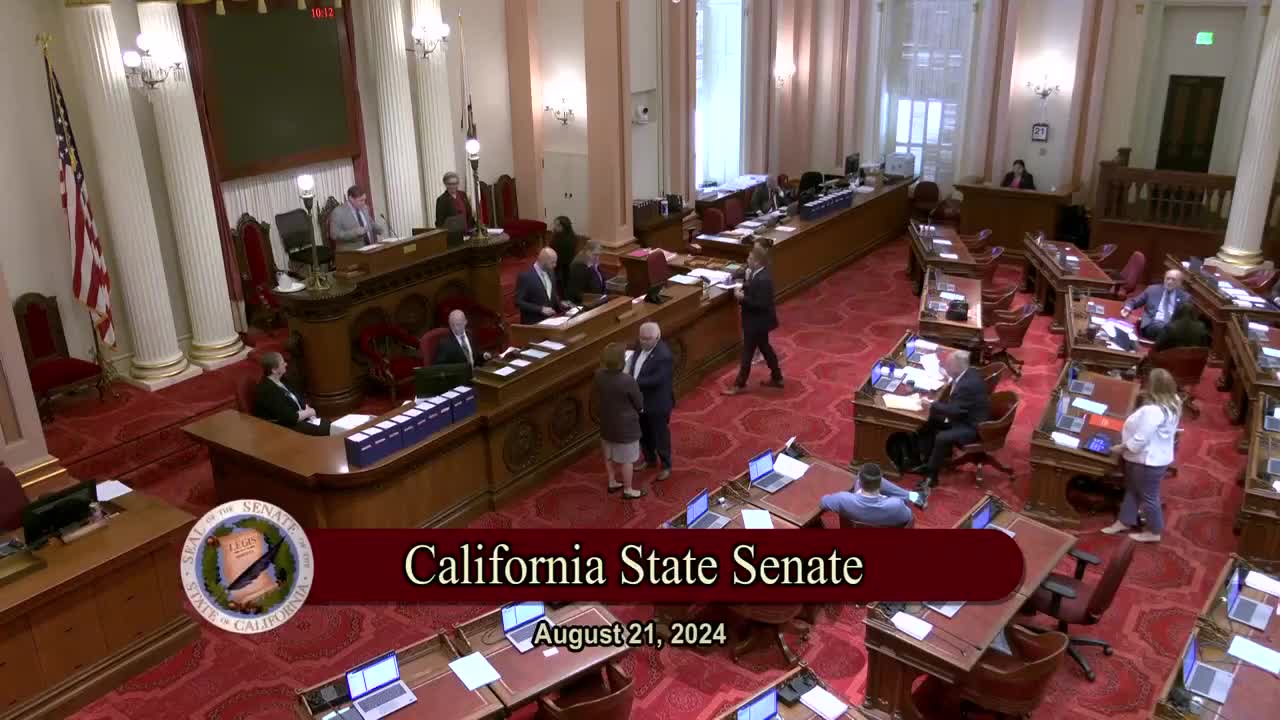 1MIN
Senate Floor
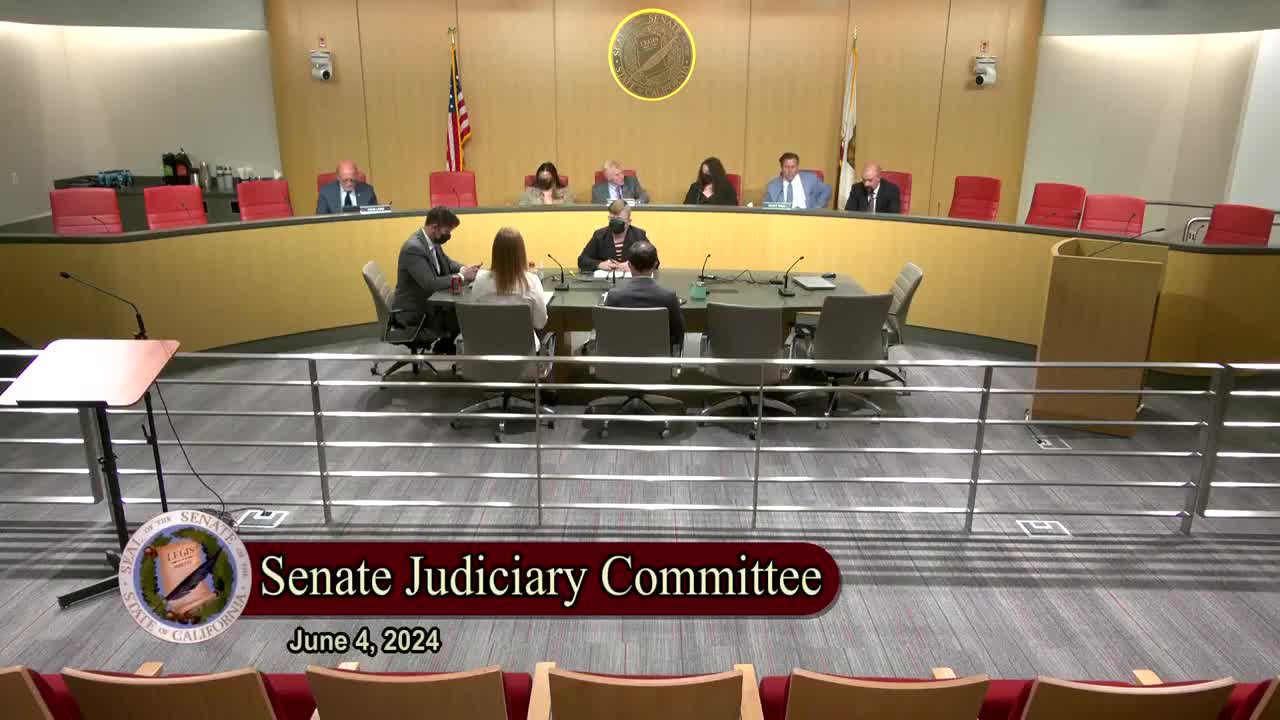 6MIN
Senate Standing Committee on Judiciary
Bill Author

Bill Co-Author(s):
