AB 3089: Chattel slavery: formal apology.
- Session Year: 2023-2024
- House: Assembly
- Latest Version Date: 2024-09-26
Current Status:
Passed
(2024-09-26: Chaptered by Secretary of State - Chapter 624, Statutes of 2024.)
Introduced
In Committee
First Chamber
In Committee
Second Chamber
Enacted
Former law established, until July 1, 2023, the Task Force to Study and Develop Reparation Proposals for African Americans, with a Special Consideration for African Americans Who are Descendants of Persons Enslaved in the United States. Former law required the Task Force to, among other things, identify, compile, and synthesize the relevant corpus of evidentiary documentation of the institution of slavery that existed within the United States and the colonies that became the United States, and to recommend appropriate remedies in consideration of the Task Forces findings, as specified. Former law required the Task Force to submit a written report of its findings and recommendations to the Legislature, as specified.
This bill would provide that the State of California recognizes and accepts responsibility for all of the harms and atrocities committed by the state, its representatives thereof, and entities under its jurisdiction who promoted, facilitated, enforced, and permitted the institution of chattel slavery and the enduring legacy of ongoing badges and incidents from which the systemic structures of discrimination have come to exist. The bill would further provide that the State of California apologizes for perpetuating the harms African Americans have faced and affirms its role in protecting the descendants of enslaved people and all Black Californians. The bill would require a plaque memorializing this apology to be publicly and conspicuously installed and maintained in the State Capitol Building. The bill would impose various duties on the Department of General Services and the Joint Rules Committee relating to the installation and maintenance of the plaque. The bill would authorize the Department of General Services and the Joint Rules Committee to receive money from grants and private donations and would continuously appropriate those funds for this purpose, as specified.
The bill would require the Legislature to prepare the formal apology and would request it be signed by specified state leaders. The bill would require the Secretary of State to submit a final copy of this formal apology to the State Archives, where it would be available for viewing by the general public in perpetuity. The bill would include related legislative findings.
Previously existing law established, until July 1, 2023, the Task Force to Study and Develop Reparation Proposals for African Americans, with a Special Consideration for African Americans Who are Descendants of Persons Enslaved in the United States. Previously existing law required the Task Force to, among other things, identify, compile, and synthesize the relevant corpus of evidentiary documentation of the institution of slavery that existed within the United States and the colonies that became the United States, as specified, and to recommend appropriate remedies in consideration of the Task Forces findings, as specified. Previously existing law required the Task Force to submit a written report of its findings and recommendations to the Legislature, as specified.
This bill would provide that the State of California recognizes and accepts responsibility for all of the harms and atrocities committed by the state, its representatives thereof, and entities under its jurisdiction who promoted, facilitated, enforced, and permitted the institution of chattel slavery and the enduring legacy of ongoing badges and incidents from which the systemic structures of discrimination have come to exist. The bill would further provide that the State of California apologize for perpetuating the harms African Americans have faced and affirms its role in protecting the descendants of enslaved people and all Black Californians. The bill would require a plaque memorializing this apology to be publicly and conspicuously installed and maintained in the State Capitol Building. The bill would impose various duties on the Department of General Services and the Joint Rules Committee relating to the installation and maintenance of the plaque. The bill would authorize the Department of General Services and the Joint Rules Committee to receive money from grants and private donations and would continuously appropriate those funds for this purpose, as specified.
The bill would require the Legislature to prepare the formal apology and would request it be signed by specified state leaders. Additionally, the bill would require the Secretary of State to submit a final copy of this formal apology to the State Archives, where it would be available for viewing by the general public in perpetuity. The bill would include related legislative findings.
Previously existing law established, until July 1, 2023, the Task Force to Study and Develop Reparation Proposals for African Americans, with a Special Consideration for African Americans Who are Descendants of Persons Enslaved in the United States. Previously existing law required the Task Force to, among other things, identify, compile, and synthesize the relevant corpus of evidentiary documentation of the institution of slavery that existed within the United States and the colonies that became the United States, as specified, and to recommend appropriate remedies in consideration of the Task Forces findings, as specified. Previously existing law required the Task Force to submit a written report of its findings and recommendations to the Legislature, as specified.
This bill would provide that the State of California recognizes and accepts responsibility for all of the harms and atrocities committed by the state, its representatives thereof, and entities under its jurisdiction who promoted, facilitated, enforced, and permitted the institution of chattel slavery and the enduring legacy of ongoing badges and incidents from which the systemic structures of discrimination have come to exist. The bill would further provide that the State of California accepts this responsibility with a formal apology for the harms perpetrated by the state, and orders this apology to be memorialized in the form of a proclamation apologize for perpetuating the harms African Americans have faced and affirms its role in protecting the descendants of enslaved people and all Black Californians. The bill would require a plaque memorializing this apology to be publicly and conspicuously displayed permanently installed and maintained in the California State Capitol building. Building.
The bill would require the Legislature to prepare the formal apology proclamation, which would and would request it be signed by specified state leaders. Additionally, the bill would require the Secretary of State to submit a final copy of this formal apology proclamation to the State Archives, where it would be available for viewing by the general public in perpetuity. The bill would include related legislative findings.
Previously existing law established, until July 1, 2023, the Task Force to Study and Develop Reparation Proposals for African Americans, with a Special Consideration for African Americans Who are Descendants of Persons Enslaved in the United States. Previously existing law required the Task Force to, among other things, identify, compile, and synthesize the relevant corpus of evidentiary documentation of the institution of slavery that existed within the United States and the colonies that became the United States, as specified, and to recommend appropriate remedies in consideration of the Task Forces findings, as specified. Previously existing law required the Task Force to submit a written report of its findings and recommendations to the Legislature, as specified.
This bill would provide that the State of California recognizes and accepts responsibility for all of the harms and atrocities committed by the state, its representatives thereof, and entities under its jurisdiction who promoted, facilitated, enforced, and permitted the institution of chattel slavery and the enduring legacy of ongoing badges and incidents from which the systemic structures of discrimination have come to exist. The bill would further provide that the State of California accepts this responsibility with a formal apology for the harms perpetrated by the state, and orders this apology to be memorialized in the form of a proclamation to be publicly and conspicuously displayed permanently in the California State Capitol building.
The bill would require the Legislature to prepare the formal apology proclamation, which would be signed by specified state leaders. Additionally, the bill would require the Secretary of State to submit a final copy of this formal apology proclamation to the State Archives, where it would be available for viewing by the general public in perpetuity. The bill would include related legislative findings.
This chapter shall be known, and may be cited, as the Apology Act for the Perpetration of Gross Human Rights Violations and Crimes Against Humanity, with special consideration for African Slaves and their Descendants.
8301.1.(a)The Legislature finds and declares all of the following:
(1)In 2020, the people of California established the Task Force to Study and Develop Reparation Proposals for African Americans, with a Special Consideration for African Americans Who are Descendants of Persons Enslaved in the United States (Task Force) and required the Task Force to address, among other things, how the State of California will offer a formal apology on behalf of the people of California for the perpetration of gross human rights violations and crimes against humanity on African slaves and their descendants, and how California laws and policies that continue to disproportionately and negatively affect African Americans as a group and perpetuate the lingering material and psychosocial effects of slavery can be eliminated.
(2)Based on the Task Forces evidentiary findings and recommendations outlined in the report to the Legislature as required by the statute, the people of the State of California hereby acknowledge being a beneficiary of the forced enslavement of African slaves brought to California and the subordination of Black Californians that continued following the adoption of the Thirteenth Amendment to the United States Constitution.
(3)Well after California entered the Union and declared itself a free state outlawing slavery, more than 2,000 enslaved African people were brought to California from 1850 to 1860.
(4)The California Supreme Court enforced fugitive slave laws until 1865, stating that the antislavery law in the California Constitution was merely a declaration of a principle.
(5)Throughout the states history, Californias executive, judicial, and legislative branches continuously denied African slaves and their descendants basic humanity and fundamental liberties.
(6)Moreover, Californias cities, counties, special districts, joint powers authorities, and other quasi-governmental entities exerted demonstrable undue pressure upon African slaves and Black Californians throughout the territory.
(7)California industries benefited from ill-gotten gains based on chattel slavery in the form of agricultural and other industrial production. The State of California should consider reviewing these gains in order to potentially fund reparatory efforts.
(8)California courts prevented Black citizens from testifying in legal proceedings against a white person, and Californias Legislature vehemently opposed Congressional civil rights laws and delayed ratification of the Fourteenth and Fifteenth Amendments to the United States Constitution, hindering Black Americans the right to citizenship, due process under the law, and right to vote.
(9)California further disenfranchised Black Californians by enacting deliberate racial barriers such as poll taxes and literacy tests, prohibiting interracial marriage, and passing antimiscegenation laws in its first legislative session in 1850.
(10)California constructed monuments, memorials, markers, and plaques to preserve and memorialize Confederate principles, glorifying subjugation, slavery, and white supremacy.
(11)From the brutality of enslavement to extrajudicial police killings, state-sanctioned violence at all levels of government, such as lynching, coercive sterilization, torture, and property destruction inflicted death, physical injury, and psychological harm on Black Californians.
(12)California openly sanctioned widespread segregation and discrimination against African Americans in workplaces, educational facilities, and public spaces, and enacted predatory licensing laws, fire and safety codes, and antinuisance laws to disrupt African American businesses and patrons.
(13)Discriminatory housing policies, including redlining, residential zoning ordinances, and loan practices, produced persistent housing segregation and longstanding inequities in home ownership for Black Californians.
(14)State and local governments targeted property owned by African Americans for renewal and development projects employing unjust uses of eminent domain, often without providing just compensation, yet those same authorities enacted and enforced laws that historically excluded African Americans from outdoor recreation, public transit, and other public infrastructure.
(15)The eugenics movement thrived in California and thousands of African Americans were forcibly sterilized or were the subjects of medical experiments without valid consent.
(b)According to the United Nations Principles on Reparation, an apology, when combined with material forms of reparations, provides an opportunity for communal reckoning with the past and repair for moral, physical, and dignitary harms.
2.Recognition and Acceptance of Responsibility for Harms and Atrocities Committed: Formal Apology8301.2.(a)The State of California recognizes and accepts responsibility for all of the harms and atrocities committed by the state, its representatives thereof, and entities under its jurisdiction who promoted, facilitated, enforced, and permitted the institution of chattel slavery and the enduring legacy of ongoing badges and incidents from which the systemic structures of discrimination have come to exist.
(b)The State of California apologizes for perpetuating the harms African Americans faced by having imbued racial prejudice through segregation, public and private discrimination, and unequal disbursal of state and federal funding and declares that such actions shall not be repeated. The State of California acknowledges the work of the Task Force to Study and Develop Reparation Proposals for African Americans, with a Special Consideration for African Americans Who are Descendants of Persons Enslaved in the United States. This task force, established by Assembly Bill 3121 (2020), detailed the harms faced by African Americans in California and provided numerous legislative recommendations, including this formal apology. The State of California affirms its role in protecting the descendants of enslaved people and all Black Californians as well as their civil, political, and sociocultural rights. The State of California humbly asks for forgiveness from those affected by past atrocities, both deliberately and negligently, and acknowledges and affirms its responsibility to end ongoing harm. The State of California commits to restore and repair affected peoples with actions beyond this apology.
8301.3.(a)A plaque memorializing this apology, including the contents of Sections 8301.1 and 8301.2 shall be installed and maintained publicly and conspicuously in the State Capitol Building.
(b)The Department of General Services, in consultation with the Joint Rules Committee, shall plan a plaque pursuant to this section in the State Capitol Building.
(c)The Department of General Services, in consultation with the Joint Rules Committee, shall complete all of the following goals:
(1)Review of the preliminary design plans to identify potential maintenance concerns.
(2)Ensure Americans with Disabilities Act of 1990 (42 U.S.C. Sec. 12101, et seq.) compliance and other safety concerns.
(3)Review and approval of California Environmental Quality Act (Division 13 (commencing with Section 21000) of the Public Resources Code) documents prepared for work at the designated historic property.
(4)Review of final construction documents to ensure that all requirements are met.
(5)Prepare a maintenance agreement outlining the Department of General Services responsibility for the long-term maintenance of the plaque due to aging, vandalism, or relocation.
(d)The Department of General Services shall, in consultation with the Joint Rules Committee, establish a schedule for the design, construction, and dedication of the plaque, implement procedures to solicit designs for the plaque, devise a selection process for the choice of the design, and establish a program for the dedication of the plaque.
(e)The Joint Rules Committee shall approve the design and any other aspect of the plaque and the Department of General Services shall provide for the continuous maintenance and upkeep of the fixture.
8301.4.The Secretary of State shall submit a final copy of this formal apology to the State Archives, where it shall be available for viewing by the general public in perpetuity. The Legislature shall prepare the formal apology, which shall bear the Great Seal of the State and requests that this apology be signed by the Speaker of the Assembly, the President pro Tempore of the Senate, the Governor, and the Chief Justice of California.
8302.5.Notwithstanding any other provision of law, the Department of General Services and the Joint Rules Committee may receive moneys from any federal, state, or local grant, or from any private donation or grant, for the purposes of this chapter. Notwithstanding Section 13340, any funds received pursuant to this section are continuously appropriated to the Department of General Services and the Joint Rules Committee, without regard to fiscal years, for the purpose of this chapter.
This chapter shall be known, and may be cited, as the Apology Act for the Perpetration of Gross Human Rights Violations and Crimes Against Humanity, with special consideration for African Slaves and their Descendants.
8301.1.(a)The Legislature finds and declares all of the following:
(1)In 2020, the people of California established the Task Force to Study and Develop Reparation Proposals for African Americans, with a Special Consideration for African Americans Who are Descendants of Persons Enslaved in the United States (Task Force) and required the Task Force to address, among other things, how the State of California will offer a formal apology on behalf of the people of California for the perpetration of gross human rights violations and crimes against humanity on African slaves and their descendants, and how California laws and policies that continue to disproportionately and negatively affect African Americans as a group and perpetuate the lingering material and psychosocial effects of slavery can be eliminated.
(2)Based on the Task Forces evidentiary findings and recommendations outlined in the report to the Legislature as required by the statute, the people of the State of California hereby acknowledge being a beneficiary of the forced enslavement of African slaves brought to California and the subordination of Black Californians that continued following the adoption of the Thirteenth Amendment to the United States Constitution.
(3)Well after California entered the Union and declared itself a free state outlawing slavery, more than 2,000 enslaved African people were brought to California from 1850 to 1860.
(4)The California Supreme Court enforced fugitive slave laws until 1865, stating that the antislavery law in the California Constitution was merely a declaration of a principle.
(5)Throughout the states history, Californias executive, judicial, and legislative branches continuously denied African slaves and their descendants basic humanity and fundamental liberties.
(6)Moreover, Californias cities, counties, special districts, joint powers authorities, and other quasi-governmental entities exerted demonstrable undue pressure upon African slaves and Black Californians throughout the territory.
(7)California industries benefited from ill-gotten gains based on chattel slavery in the form of agricultural and other industrial production. The State of California should consider reviewing these gains in order to potentially fund reparatory efforts.
(8)California courts prevented Black citizens from testifying in legal proceedings against a white person, and Californias Legislature vehemently opposed Congressional civil rights laws and delayed ratification of the Fourteenth and Fifteenth Amendments to the United States Constitution, hindering Black Americans the right to citizenship, due process under the law, and right to vote.
(9)California further disenfranchised Black Californians by enacting deliberate racial barriers such as poll taxes and literacy tests, prohibiting interracial marriage, and passing antimiscegenation laws in its first legislative session in 1850.
(10)California constructed monuments, memorials, markers, and plaques to preserve and memorialize Confederate principles, glorifying subjugation, slavery, and white supremacy.
(11)From the brutality of enslavement to extrajudicial police killings, state-sanctioned violence at all levels of government, such as lynching, coercive sterilization, torture, and property destruction inflicted death, physical injury, and psychological harm on Black Californians.
(12)California openly sanctioned widespread segregation and discrimination against African Americans in workplaces, educational facilities, and public spaces, and enacted predatory licensing laws, fire and safety codes, and antinuisance laws to disrupt African American businesses and patrons.
(13)Discriminatory housing policies, including redlining, residential zoning ordinances, and loan practices, produced persistent housing segregation and longstanding inequities in home ownership for Black Californians.
(14)State and local governments targeted property owned by African Americans for renewal and development projects employing unjust uses of eminent domain, often without providing just compensation, yet those same authorities enacted and enforced laws that historically excluded African Americans from outdoor recreation, public transit, and other public infrastructure.
(15)The eugenics movement thrived in California and thousands of African Americans were forcibly sterilized or were the subjects of medical experiments without valid consent.
(b)According to the United Nations Principles on Reparation, an apology, when combined with material forms of reparations, provides an opportunity for communal reckoning with the past and repair for moral, physical, and dignitary harms.
2.Recognition and Acceptance of Responsibility for Harms and Atrocities Committed: Formal Apology8301.2.(a)The State of California recognizes and accepts responsibility for all of the harms and atrocities committed by the state, its representatives thereof, and entities under its jurisdiction who promoted, facilitated, enforced, and permitted the institution of chattel slavery and the enduring legacy of ongoing badges and incidents from which the systemic structures of discrimination have come to exist.
(b)The State of California apologizes for perpetuating the harms African Americans faced by having imbued racial prejudice through segregation, public and private discrimination, and unequal disbursal of state and federal funding and declares that such actions shall not be repeated. The State of California acknowledges the work of the Task Force to Study and Develop Reparation Proposals for African Americans, with a Special Consideration for African Americans Who are Descendants of Persons Enslaved in the United States. This task force, established by Assembly Bill 3121 (2020), detailed the harms faced by African Americans in California and provided numerous legislative recommendations, including this formal apology. The State of California affirms its role in protecting the descendants of enslaved people and all Black Californians as well as their civil, political, and sociocultural rights. The State of California humbly asks for forgiveness from those affected by past atrocities, both deliberately and negligently, and acknowledges and affirms its responsibility to end ongoing harm. The State of California commits to restore and repair affected peoples with actions beyond this apology.
8301.3.(a)A plaque memorializing this apology, including the contents of Sections 8301.1 and 8301.2 shall be installed and maintained publicly and conspicuously in the State Capitol Building.
(b)The Department of General Services, in consultation with the Joint Rules Committee, shall plan a plaque pursuant to this section in the State Capitol Building.
(c)The Department of General Services, in consultation with the Joint Rules Committee, shall complete all of the following goals:
(1)Review of the preliminary design plans to identify potential maintenance concerns.
(2)Ensure Americans with Disabilities Act of 1990 (42 U.S.C. Sec. 12101, et seq.) compliance and other safety concerns.
(3)Review and approval of California Environmental Quality Act (Division 13 (commencing with Section 21000) of the Public Resources Code) documents prepared for work at the designated historic property.
(4)Review of final construction documents to ensure that all requirements are met.
(5)Prepare a maintenance agreement outlining the Department of General Services responsibility for the long-term maintenance of the plaque due to aging, vandalism, or relocation.
(d)The Department of General Services shall, in consultation with the Joint Rules Committee, establish a schedule for the design, construction, and dedication of the plaque, implement procedures to solicit designs for the plaque, devise a selection process for the choice of the design, and establish a program for the dedication of the plaque.
(e)The Joint Rules Committee shall approve the design and any other aspect of the plaque and the Department of General Services shall provide for the continuous maintenance and upkeep of the fixture.
8301.4.The Secretary of State shall submit a final copy of this formal apology to the State Archives, where it shall be available for viewing by the general public in perpetuity. The Legislature shall prepare the formal apology, which shall bear the Great Seal of the State and requests that this apology be signed by the Speaker of the Assembly, the President pro Tempore of the Senate, the Governor, and the Chief Justice of the California Supreme Court. California.
8302.5.Notwithstanding any other provision of law, the Department of General Services and the Joint Rules Committee may receive moneys from any federal, state, or local grant, or from any private donation or grant, for the purposes of this chapter. Notwithstanding Section 13340, any funds received pursuant to this section are continuously appropriated to the Department of General Services and the Joint Rules Committee, without regard to fiscal years, for the purpose of this chapter.
This chapter shall be known, and may be cited, as the Apology Act for the Perpetration of Gross Human Rights Violations and Crimes Against Humanity, with special consideration for African Slaves and their Descendants.
8301.1.(a)The Legislature finds and declares all of the following:
(1)In 2020, the people of California established the Task Force to Study and Develop Reparation Proposals for African Americans, with a Special Consideration for African Americans Who are Descendants of Persons Enslaved in the United States (Task Force) and required the Task Force to address, among other things, how the State of California will offer a formal apology on behalf of the people of California for the perpetration of gross human rights violations and crimes against humanity on African slaves and their descendants, and how California laws and policies that continue to disproportionately and negatively affect African Americans as a group and perpetuate the lingering material and psychosocial effects of slavery can be eliminated.
(2)Based on the Task Forces evidentiary findings and recommendations outlined in the report to the Legislature as required by the statute, the people of the State of California hereby acknowledge being a beneficiary of the forced enslavement of African slaves brought to California and continuing the subordination of Black Californians. Californians that continued following the adoption of the Thirteenth Amendment to the United States Constitution.
(3)Well after California entered the Union and declared itself a free state outlawing slavery, more than 2,000 enslaved African people were brought to California from 1850 to 1860.
(4)The California Supreme Court enforced fugitive slave laws until 1865, stating that the antislavery law in the California Constitution was merely a declaration of a principle.
(5)Throughout the states history, Californias executive, judicial, and legislative branches continuously denied African slaves and their descendants basic humanity and fundamental liberties from before the Civil War to the present. liberties.
(6)Moreover, Californias cities, counties, special districts, joint powers authorities, and other quasi-governmental entities exerted demonstrable undue pressure upon African slaves and Black Californians throughout the territory.
(7)California industries benefited from ill-gotten gains based on chattel slavery in the form of agricultural and other industrial production. The State of California should consider reviewing these gains in order to potentially fund reparatory efforts.
(8)California courts prevented Black citizens from testifying in legal proceedings against a white person, and Californias Legislature vehemently opposed Congressional civil rights laws and delayed ratification of the Fourteenth and Fifteenth Amendments to the United States Constitution, hindering Black Americans the right to citizenship, due process under the law, and right to vote.
(9)California further disenfranchised Black Californians by enacting deliberate racial barriers such as poll taxes and literacy tests, prohibiting interracial marriage, and passing antimiscegenation laws in its first legislative session in 1850.
(10)California constructed monuments, memorials, markers, and plaques to preserve and memorialize Confederate principles, glorifying subjugation, slavery, and white supremacy.
(11)From the brutality of enslavement to modern-day extrajudicial police killings, state-sanctioned violence at all levels of government, such as lynching, coercive sterilization, torture, and property destruction inflicted death, physical injury, and psychological harm on Black Californians.
(12)California openly sanctioned widespread segregation and discrimination against African Americans in workplaces, educational facilities, and public spaces, and enacted predatory licensing laws, fire and safety codes, and antinuisance laws to disrupt African American businesses and patrons.
(13)Discriminatory housing policies, including redlining, residential zoning ordinances, and loan practices, produced persistent housing segregation and longstanding inequities in home ownership for Black Californians.
(14)State and local governments targeted property owned by African Americans for renewal and development projects employing unjust uses of eminent domain, often without providing just compensation, yet those same authorities enacted and enforced laws that historically excluded African Americans from outdoor recreation, public transit, and other public infrastructure.
(15)The eugenics movement thrived in California and thousands of African Americans were forcibly sterilized or were the subjects of medical experiments without valid consent.
(b)According to the United Nations Principles on Reparation, an apology, when combined with material forms of reparations, provides an opportunity for communal reckoning with the past and repair for moral, physical, and dignitary harms.
2.Recognition and Acceptance of Responsibility for Harms and Atrocities Committed: Formal Apology8301.2.(a)The State of California recognizes and accepts responsibility for all of the harms and atrocities committed by the state, its representatives thereof, and entities under its jurisdiction who promoted, facilitated, enforced, and permitted the institution of chattel slavery and the enduring legacy of ongoing badges and incidents from which the systemic structures of discrimination have come to exist.
(b)The State of California apologizes for perpetuating the harms African Americans faced by having imbued racial prejudice through segregation, public and private discrimination, and unequal disbursal of state and federal funding and declares that such actions shall not be repeated. The State of California acknowledges the work of the Task Force to Study and Develop Reparation Proposals for African Americans, with a Special Consideration for African Americans Who are Descendants of Persons Enslaved in the United States. This task force, established by Assembly Bill 3121 (2020), detailed the harms faced by African Americans in California and provided numerous legislative recommendations, including this formal apology. The State of California affirms its role in protecting the descendants of enslaved people and all Black Californians as well as their civil, political, and socio-cultural sociocultural rights. California The State of California humbly asks for forgiveness from those affected by past atrocities, both deliberately and negligently, and acknowledges and affirms its responsibility to end ongoing harm. The State of California commits to restore and repair affected peoples with actions beyond this apology.
(c)8301.3.(a)A plaque memorializing this apology, including the contents of Section 8301.1 and subdivisions (a) and (b) of this section, Sections 8301.1 and 8301.2 shall be installed and maintained by the Department of Parks and Recreation publicly and conspicuously in the State Capitol Building.
(b)The Department of General Services, in consultation with the Joint Rules Committee, shall plan a plaque pursuant to this section in the State Capitol Building.
(c)The Department of General Services, in consultation with the Joint Rules Committee, shall complete all of the following goals:
(1)Review of the preliminary design plans to identify potential maintenance concerns.
(2)Ensure Americans with Disabilities Act of 1990 (42 U.S.C. Sec. 12101, et seq.) compliance and other safety concerns.
(3)Review and approval of California Environmental Quality Act (Division 13 (commencing with Section 21000) of the Public Resources Code) documents prepared for work at the designated historic property.
(4)Review of final construction documents to ensure that all requirements are met.
(5)Prepare a maintenance agreement outlining the Department of General Services responsibility for the long-term maintenance of the plaque due to aging, vandalism, or relocation.
(d)The Department of General Services shall, in consultation with the Joint Rules Committee, establish a schedule for the design, construction, and dedication of the plaque, implement procedures to solicit designs for the plaque, devise a selection process for the choice of the design, and establish a program for the dedication of the plaque.
(e)The Joint Rules Committee shall approve the design and any other aspect of the plaque and the Department of General Services shall provide for the continuous maintenance and upkeep of the fixture.
(d)8301.4.The Secretary of State shall submit a final copy of this formal apology to the State Archives, where it shall be available for viewing by the general public in perpetuity. The Legislature shall prepare the formal apology, which shall bear the Great Seal of the state State and requests that this apology be signed by the Speaker of the Assembly, the President pro Tempore of the Senate, the Governor, and the Chief Justice of the California Supreme Court.
8302.5.Notwithstanding any other provision of law, the Department of General Services and the Joint Rules Committee may receive moneys from any federal, state, or local grant, or from any private donation or grant, for the purposes of this chapter. Notwithstanding Section 13340, any funds received pursuant to this section are continuously appropriated to the Department of General Services and the Joint Rules Committee, without regard to fiscal years, for the purpose of this chapter.
This chapter shall be known, and may be cited, as the Apology Act for the Perpetration of Gross Human Rights Violations and Crimes Against Humanity, with special consideration for African Slaves and their Descendants.
8301.1.(a)The Legislature finds and declares all of the following:
(1)In 2020, the people of California established the Task Force to Study and Develop Reparation Proposals for African Americans, with a Special Consideration for African Americans Who are Descendants of Persons Enslaved in the United States (Task Force) and required the Task Force to address, among other things, how the State of California will offer a formal apology on behalf of the people of California for the perpetration of gross human rights violations and crimes against humanity on African slaves and their descendants, and how California laws and policies that continue to disproportionately and negatively affect African Americans as a group and perpetuate the lingering material and psychosocial effects of slavery can be eliminated.
(2)Based on the Task Forces evidentiary findings and recommendations outlined in the report to the Legislature as required by the statute, the people of the State of California hereby acknowledge being a beneficiary of the forced enslavement of African slaves brought to California and continuing the subordination of Black Californians.
(3)Well after California entered the Union and declared itself a free state outlawing slavery, more than 2,000 enslaved African people were brought to California from 1850 to 1860.
(4)The California Supreme Court enforced fugitive slave laws until 1865, stating that the antislavery law in the California Constitution was merely a declaration of a principle.
(5)Throughout the states history, Californias executive, judicial, and legislative branches continuously denied African slaves and their descendants basic humanity and fundamental liberties from before the Civil War to the present.
(6)Moreover, Californias cities, counties, special districts, joint powers authorities, and other quasi-governmental entities exerted demonstrable undue pressure upon African slaves and Black Californians throughout the territory.
(7)California industries benefited from ill-gotten gains based on chattel slavery in the form of agricultural and other industrial production. The State of California should consider reviewing these gains in order to potentially fund reparatory efforts.
(8)California courts prevented Black citizens from testifying in legal proceedings against a white person, and Californias Legislature vehemently opposed Congressional civil rights laws and delayed ratification of the Fourteenth and Fifteenth Amendments to the United States Constitution, hindering Black Americans the right to citizenship, due process under the law, and right to vote.
(9)California further disenfranchised Black Californians by enacting deliberate racial barriers such as poll taxes and literacy tests, prohibiting interracial marriage, and passing antimiscegenation laws in its first legislative session in 1850.
(10)California constructed monuments, memorials, markers, and plaques to preserve and memorialize Confederate principles, glorifying subjugation, slavery, and white supremacy.
(11)From the brutality of enslavement to modern-day police killings, state-sanctioned violence at all levels of government, such as lynching, coercive sterilization, torture, and property destruction inflicted death, physical injury, and psychological harm on Black Californians.
(12)California openly sanctioned widespread segregation and discrimination against African Americans in workplaces, educational facilities, and public spaces, and enacted predatory licensing laws, fire and safety codes, and antinuisance laws to disrupt African American businesses and patrons.
(13)Discriminatory housing policies, including redlining, residential zoning ordinances, and loan practices, produced persistent housing segregation and longstanding inequities in home ownership for Black Californians.
(14)State and local governments targeted property owned by African Americans for renewal and development projects employing unjust uses of eminent domain, often without providing just compensation, yet those same authorities enacted and enforced laws that historically excluded African Americans from outdoor recreation, public transit, and other public infrastructure.
(15)The eugenics movement thrived in California and thousands of African Americans were forcibly sterilized or were the subjects of medical experiments without valid consent.
(b)According to the United Nations Principles on Reparation, an apology, when combined with material forms of reparations, provides an opportunity for communal reckoning with the past and repair for moral, physical, and dignitary harms.
2.Recognition and Acceptance of Responsibility for Harms and Atrocities Committed: Formal Apology Proclamation8301.2.(a)The State of California recognizes and accepts responsibility for all of the harms and atrocities committed by the state, its representatives thereof, and entities under its jurisdiction who promoted, facilitated, enforced, and permitted the institution of chattel slavery and the enduring legacy of ongoing badges and incidents from which the systemic structures of discrimination have come to exist.
(b)The State of California accepts this responsibility with a formal apology for the harms perpetrated by the state, and hereby orders this apology to be memorialized in the form of a proclamation to be publicly and conspicuously displayed permanently in the California State Capitol building.(c)The Legislature shall prepare the formal apology proclamation, which shall bear the Great Seal of this State and be signed by the Speaker of the Assembly, the President pro Tempore of the Senate, the Governor, and the Chief Justice of the California Supreme Court.(b)The State of California apologizes for perpetuating the harms African Americans faced by having imbued racial prejudice through segregation, public and private discrimination, and unequal disbursal of state and federal funding and declares that such actions shall not be repeated. The State of California acknowledges the work of the Task Force to Study and Develop Reparation Proposals for African Americans, with a Special Consideration for African Americans Who are Descendants of Persons Enslaved in the United States. This task force, established by Assembly Bill 3121 (2020), detailed the harms faced by African Americans in California and provided numerous legislative recommendations, including this formal apology. The State of California affirms its role in protecting the descendants of enslaved people and all Black Californians as well as their civil, political, and socio-cultural rights. California acknowledges and affirms its responsibility to end ongoing harm. The State of California commits to restore and repair affected peoples with actions beyond this apology.
(c)A plaque memorializing this apology, including the contents of Section 8301.1 and subdivisions (a) and (b) of this section, shall be installed and maintained by the Department of Parks and Recreation publicly and conspicuously in the State Capitol Building.
(d)The Secretary of State shall submit a final copy of this formal apology proclamation to the State Archives, where it shall be available for viewing by the general public in perpetuity. The Legislature shall prepare the formal apology, which shall bear the Great Seal of the state and requests that this apology be signed by the Speaker of the Assembly, the President pro Tempore of the Senate, the Governor, and the Chief Justice of the California Supreme Court.
8301.3.The formal apology proclamation pursuant to Section 8301.2 shall contain the following written components:(a)The written findings of all of the harms and atrocities committed, as set forth in Section 8301.1.(b)The written acknowledgement and acceptance of responsibility for past harms, as set forth in subdivisions (a) and (b) of Section 8301.2.(c)Inclusion of the following statement in its entirety:The State of California apologizes for perpetuating the harms African Americans faced by having imbued racial prejudice through segregation, public and private discrimination, and unequal disbursal of state and federal funding and declares that such actions shall not be repeated. The State of California acknowledges the work of the Task Force to Study and Develop Reparation Proposals for African Americans, with a Special Consideration for African Americans Who are Descendants of Persons Enslaved in the United States. This task force, established by Assembly Bill 3121 (2020), detailed the harms faced by African Americans in California and provided numerous legislative recommendations, including this formal apology. The State of California affirms its role in protecting the descendants of enslaved people and all Black Californians as well as their civil, political, and socio-cultural rights. California acknowledges and affirms its responsibility to end ongoing harm. The State of California commits to restore and repair affected peoples with actions beyond this apology. REVISIONS: HeadingLine 5.This chapter shall be known, and may be cited, as the Apology Act for the Perpetration of Gross Human Rights Violations and Crimes Against Humanity, with special consideration for African Slaves and their Descendants.
8301.1.(a)The Legislature finds and declares all of the following:
(1)In 2020, the people of California established the Task Force to Study and Develop Reparation Proposals for African Americans, with a Special Consideration for African Americans Who are Descendants of Persons Enslaved in the United States (Task Force) and required the Task Force to address, among other things, how the State of California will offer a formal apology on behalf of the people of California for the perpetration of gross human rights violations and crimes against humanity on African slaves and their descendants, and how California laws and policies that continue to disproportionately and negatively affect African Americans as a group and perpetuate the lingering material and psychosocial effects of slavery can be eliminated.
(2)Based on the Task Forces evidentiary findings and recommendations outlined in the report to the Legislature as required by the statute, the people of the State of California hereby acknowledge being a beneficiary of the forced enslavement of African slaves brought to California and continuing the subordination of Black Californians.
(3)Well after California entered the Union and declared itself a free state outlawing slavery, more than 2,000 enslaved African people were brought to California from 1850 to 1860.
(4)The California Supreme Court enforced fugitive slave laws until 1865, stating that the antislavery law in the California Constitution was merely a declaration of a principle.
(5)Throughout the states history, Californias executive, judicial, and legislative branches continuously denied African slaves and their descendants basic humanity and fundamental liberties from before the Civil War to the present.
(6)Moreover, Californias cities, counties, special districts, joint powers authorities, and other quasi-governmental entities exerted demonstrable undue pressure upon African slaves and Black Californians throughout the territory.
(7)California industries benefited from ill-gotten gains based on chattel slavery in the form of agricultural and other industrial production. The State of California should consider reviewing these gains in order to potentially fund reparatory efforts.
(8)California courts prevented Black citizens from testifying in legal proceedings against a white person, and Californias Legislature vehemently opposed Congressional civil rights laws and delayed ratification of the Fourteenth and Fifteenth Amendments to the United States Constitution, hindering Black Americans the right to citizenship, due process under the law, and right to vote.
(9)California further disenfranchised Black Californians by enacting deliberate racial barriers such as poll taxes and literacy tests, prohibiting interracial marriage, and passing antimiscegenation laws in its first legislative session in 1850.
(10)California constructed monuments, memorials, markers, and plaques to preserve and memorialize Confederate principles, glorifying subjugation, slavery, and white supremacy.
(11)From the brutality of enslavement to modern-day police killings, state-sanctioned violence at all levels of government, such as lynching, coercive sterilization, torture, and property destruction inflicted death, physical injury, and psychological harm on Black Californians.
(12)California openly sanctioned widespread segregation and discrimination against African Americans in workplaces, educational facilities, and public spaces, and enacted predatory licensing laws, fire and safety codes, and antinuisance laws to disrupt African American businesses and patrons.
(13)Discriminatory housing policies, including redlining, residential zoning ordinances, and loan practices, produced persistent housing segregation and longstanding inequities in home ownership for Black Californians.
(14)State and local governments targeted property owned by African Americans for renewal and development projects employing unjust uses of eminent domain, often without providing just compensation, yet those same authorities enacted and enforced laws that historically excluded African Americans from outdoor recreation, public transit, and other public infrastructure.
(15)The eugenics movement thrived in California and thousands of African Americans were forcibly sterilized or were the subjects of medical experiments without valid consent.
(b)According to the United Nations Principles on Reparation, an apology, when combined with material forms of reparations, provides an opportunity for communal reckoning with the past and repair for moral, physical, and dignitary harms.
2.Recognition and Acceptance of Responsibility for Harms and Atrocities Committed: Formal Apology Proclamation8301.2.(a)The State of California recognizes and accepts responsibility for all of the harms and atrocities committed by the state, its representatives thereof, and entities under its jurisdiction who promoted, facilitated, enforced, and permitted the institution of chattel slavery and the enduring legacy of ongoing badges and incidents from which the systemic structures of discrimination have come to exist.
(b)The State of California accepts this responsibility with a formal apology for the harms perpetrated by the state, and hereby orders this apology to be memorialized in the form of a proclamation to be publicly and conspicuously displayed permanently in the California State Capitol building.
(c)The Legislature shall prepare the formal apology proclamation, which shall bear the Great Seal of this State and be signed by the Speaker of the Assembly, the President pro Tempore of the Senate, the Governor, and the Chief Justice of the California Supreme Court.
(d)The Secretary of State shall submit a final copy of this formal apology proclamation to the State Archives, where it shall be available for viewing by the general public in perpetuity.
8301.3.The formal apology proclamation pursuant to Section 8301.2 shall contain the following written components:
(a)The written findings of all of the harms and atrocities committed, as set forth in Section 8301.1.
(b)The written acknowledgement and acceptance of responsibility for past harms, as set forth in subdivisions (a) and (b) of Section 8301.2.
(c)Inclusion of the following statement in its entirety:
The State of California apologizes for perpetuating the harms African Americans faced by having imbued racial prejudice through segregation, public and private discrimination, and unequal disbursal of state and federal funding and declares that such actions shall not be repeated. The State of California acknowledges the work of the Task Force to Study and Develop Reparation Proposals for African Americans, with a Special Consideration for African Americans Who are Descendants of Persons Enslaved in the United States. This task force, established by Assembly Bill 3121 (2020), detailed the harms faced by African Americans in California and provided numerous legislative recommendations, including this formal apology. The State of California affirms its role in protecting the descendants of enslaved people and all Black Californians as well as their civil, political, and socio-cultural rights. California acknowledges and affirms its responsibility to end ongoing harm. The State of California commits to restore and repair affected peoples with actions beyond this apology.
|
Date
|
Status
|
|---|---|
| Sep 26, 2024 | Chaptered by Secretary of State - Chapter 624, Statutes of 2024. |
| Sep 26, 2024 | Approved by the Governor. |
| Sep 11, 2024 | Enrolled and presented to the Governor at 4 p.m. |
| Aug 29, 2024 | Senate amendments concurred in. To Engrossing and Enrolling. (Ayes 72. Noes 0.). |
| Aug 29, 2024 | Assembly Rule 77 suspended. |
| Aug 28, 2024 | In Assembly. Concurrence in Senate amendments pending. May be considered on or after August 30 pursuant to Assembly Rule 77. |
| Aug 28, 2024 | Read third time. Passed. Ordered to the Assembly. (Ayes 32. Noes 0.). |
| Aug 19, 2024 | Read second time. Ordered to third reading. |
| Aug 15, 2024 | From committee: Do pass. (Ayes 5. Noes 0.) (August 15). |
| Aug 5, 2024 | In committee: Referred to APPR suspense file. |
| Jun 25, 2024 | From committee: Do pass and re-refer to Com. on APPR. (Ayes 11. Noes 0.) (June 25). Re-referred to Com. on APPR. |
| Jun 20, 2024 | Read second time and amended. Re-referred to Com. on G.O. |
| Jun 19, 2024 | From committee: Amend, and do pass as amended and re-refer to Com. on G.O. (Ayes 9. Noes 0.) (June 18). |
| Jun 10, 2024 | From committee chair, with author's amendments: Amend, and re-refer to committee. Read second time, amended, and re-referred to Com. on JUD. |
| May 29, 2024 | Referred to Coms. on JUD. and G.O. |
| May 16, 2024 | In Senate. Read first time. To Com. on RLS. for assignment. |
| May 16, 2024 | Read third time. Passed. Ordered to the Senate. (Ayes 64. Noes 0.) |
| May 2, 2024 | Read second time. Ordered to third reading. |
| May 1, 2024 | From committee: Do pass. (Ayes 11. Noes 0.) (May 1). |
| Apr 16, 2024 | From committee: Do pass and re-refer to Com. on APPR. (Ayes 10. Noes 0.) (April 16). Re-referred to Com. on APPR. |
| Apr 16, 2024 | Coauthors revised. |
| Apr 3, 2024 | Re-referred to Com. on JUD. |
| Apr 2, 2024 | In committee: Set, first hearing. Hearing canceled at the request of author. |
| Apr 2, 2024 | From committee chair, with author's amendments: Amend, and re-refer to Com. on JUD. Read second time and amended. |
| Mar 21, 2024 | In committee: Hearing postponed by committee. |
| Mar 11, 2024 | Referred to Com. on JUD. |
| Feb 17, 2024 | From printer. May be heard in committee March 18. |
| Feb 16, 2024 | Read first time. To print. |
|
Date
|
Description
|
Location
|
Votes
|
|
|---|---|---|---|---|
| Aug 29, 2024 | AB 3089 Jones-Sawyer Concurrence in Senate Amendments | Assembly Floor |
Passed |
|
| Aug 28, 2024 | Assembly 3rd Reading AB3089 Jones-Sawyer et al. By Bradford | Senate Floor |
Passed |
|
| Aug 15, 2024 | Do pass | Senate Standing Committee on Appropriations |
Passed |
|
| Aug 5, 2024 | Placed on suspense file | Senate Standing Committee on Appropriations |
Passed |
|
| Jun 25, 2024 | Do pass, but first be re-referred to the Committee on [Appropriations] | Senate Standing Committee on Governmental Organization |
Passed |
|
| Jun 18, 2024 | Do pass as amended, but first amend, and re-refer to the Committee on [Governmental Organization] | Senate Standing Committee on Judiciary |
Passed |
|
| May 16, 2024 | AB 3089 Jones-Sawyer Assembly Third Reading | Assembly Floor |
Passed |
|
| May 1, 2024 | Do pass. | Assembly Standing Committee on Appropriations |
Passed |
|
| Apr 16, 2024 | Do pass and be re-referred to the Committee on [Appropriations] | Assembly Standing Committee on Judiciary |
Passed |
This list shows positions taken on this bill by organizations on the date displayed, which is linked to the original source.
Positions by individuals are not included.
|
Organization
|
Position
|
Date
|
|---|---|---|
| Aclu California Action | ** Support | |
| Activist San Diego | ** Support | May 1, 2024 |
| Alameda County | * Support | Apr 16, 2024 |
| All Home | ** Support | |
| Alliance for Reparations, Reconciliation, and Truth | ** Support | |
| Black Equity Collective | ** Support | |
| Brighter Beginnings | ** Support | May 1, 2024 |
| California Academy of Child & Adolescent Psychology | ** Support | |
| California African American Chamber Of Commerce | ** Support | |
| California Association Of Local Conservation Corps | * Support | Jun 26, 2024 |
| California Association Of Realtors | ** Support | |
| California Black Power Network | ** Support | |
| California Federation Of Teachers | ** Support | |
| California Reparations Task Force Member Don Tamaki | ** Support | |
| California Reparations Task Force Member Dr. Cheryl Grills | ** Support | |
| California Reparations Task Force Member Lisa Holder | ** Support | |
| California Teachers Association, AFL-CIO | ** Support | |
| Californians for Safety and Justice | * Support | Apr 16, 2024 |
| Catalyst California | ** Support | |
| Center For Environmental Health | ** Support | May 1, 2024 |
| City and County of San Francisco | ** Support | |
| City Of San Diego | ** Support | |
| Clean Earth 4 Kids | * Support | May 1, 2024 |
| County Of Los Angeles | ** Support | |
| democratic party of contra costa county | ** Support | |
| Democrats of Rossmoor | ** Support | |
| Diamond Bar Country | * Support | Apr 16, 2024 |
| Don Tamaki, California Reparations Task Force Member | ** Support | |
| Dr. Cheryl Grills, California Reparations Task Force Member | ** Support | |
| Ella Baker Center For Human Rights | ** Support | |
| Emend The Mass Media Group | * Support | Apr 16, 2024 |
| Equal Justice Society | ** Support | |
| Equality California | ** Support | |
| FACTS | ** Support | May 1, 2024 |
| Fieldstead And Company | ** Support | |
| Galt, California | * Support | Apr 16, 2024 |
| Grandparents for Action | ** Support | May 1, 2024 |
| Greater Sacramento Urban League | ** Support | |
| ikar | ** Support | |
| Interfaith Coalition for Earth Justice | ** Support | May 1, 2024 |
| Latino Community Foundation | ** Support | |
| Lisa Holder, California Reparations Task Force Member | ** Support | |
| Livefree California | ** Support | |
| Multi-faith Action Coalition | ** Support | |
| NAACP California Hawaii State Conference | ** Support | |
| North County Equity and Justice Coalition | ** Support | May 1, 2024 |
| San Diego Unified School District | ** Support | |
| Santa Monica Democratic Club | ** Support | |
| Secure Justice | ** Support | |
| The Greenlining Institute | ** Support | |
| The Western Center on Law and Poverty | * Support | Jun 20, 2024 |
CONCURRENCE IN SENATE AMENDMENTS
CSA1 Bill Id:AB 3089
Author:(Jones-Sawyer, et al.)
As Amended Ver:June 20, 2024
Majority vote
SUMMARY
Apologizes for the State of California's role in perpetuating slavery and its ongoing legacy of systemic racism.
Major Provisions
- Makes findings and declarations relating to the establishment of the Task Force to Study and Develop Reparation Proposals for African Americans and provides a summary of its major conclusions, and finds and declares that, according to the United Nations Principles on Reparation, an apology, when combined with material forms of reparations, provides an opportunity for communal reckoning with the past and repair for moral, physical, and dignitary harms.
- Accepts responsibility, on behalf of the State of California, for all of the harms and atrocities committed by the state, its representatives thereof, and entities under its jurisdiction who promoted, facilitated, enforced, and permitted the institution of chattel slavery and the enduring legacy of ongoing badges and incidents from which the systemic structures of discrimination have come to exist.
- Apologizes, on behalf of the State of California, for perpetuating the harms African Americans faced by having imbued racial prejudice through segregation, public and private discrimination, and unequal disbursal of state and federal funding and declares that such actions shall not be repeated.
- Affirms the State of California's role in protecting the descendants of enslaved people and all Black Californians as well as their civil, political, and socio-cultural rights. California acknowledges and affirms its responsibility to end ongoing harm.
- Commits the State of California to restore and repair affected peoples with actions beyond this apology.
- Provides that a plaque memorializing the apology shall be installed and maintained by the Department of Parks and Recreation publicly and conspicuously in the State Capitol Building.
- Requires the Secretary of State to submit a final copy of this formal apology to the State Archives, where it shall be available for viewing by the general public in perpetuity. Requires the Legislature to prepare the formal apology, which shall bear the Great Seal of the state, and requests that this apology be signed by the Speaker of the Assembly, the President pro Tempore of the Senate, the Governor, and the Chief Justice of the California Supreme Court.
Senate Amendments
Make clarifying amendments relating to the maintenance and funding of the plaque.
COMMENTS
Task Force to Study and Develop Reparations Proposals. AB 3121 (Chapter 319, Statutes of 2020) established a nine-member "Task Force to Study and Develop Reparation Proposals for African Americans, with a Special Consideration for African Americans Who are Descendants of Persons Enslaved in the United States." The legislation required the Task Force to, among other things, identify, compile, and synthesize the relevant evidence and documentation on the institution of slavery that existed within the United States and the colonies. It also required the Task Force to recommend the forms that any compensation might take and who should be eligible for such compensation. Finally, the bill required the Task Force to submit a written report of its findings and recommendations to the Legislature. The final report was released on June 29, 2023, and the legislation establishing the Task Force became inoperative on July 1, 2023.
The more than 1000-page Task Force report lays out both the past and continuing legacy of California laws and policies that were, according to the Task Force, designed to prevent African Americans in California from enjoying the full benefits of their citizenship. (The California Reparations Report, "Executive Summary," page 48.) The section headings and chapter titles of the Report suggest a breathtaking range of laws and policies that have harmed African Americans: enslavement, racial terror, political disfranchisement, housing segregation, separate and unequal education, employment discrimination, and an unjust legal system that has led to unconscionable rates of incarceration for Black Californians. After laying out these findings of harm, the Report then examines international approaches to reparations and healing, from Germany, Chile, and South Africa, among others. These remedies can take the form of restitution, economic compensation, or programs of "rehabilitation," which could include an array of legal and social services or educational programs. The remaining parts of the Report suggest specific remedies for California, starting with a formal apology. Because "apologies alone are inadequate reparations for victims," the final sections of the Report make concrete policy recommendations, designed to provide true reparations for the harms documented in the Report. As the Report stresses on more than one occasion, the harms inflicted "have not been incidental or accidental," but are often the intentional result of "an all-encompassing web of discriminatory laws, regulations, and policies enacted by government." Therefore, addressing these wrongs will require changes in existing laws and the disruption of institutionalized patterns of racism.
Although the Final Report stressed that apologies alone were inadequate, it nonetheless advocated a formal apology as an essential step. This bill provides that formal apology. The apology begins, appropriately, with findings and declarations that reiterate the findings of the Task Force, from the state's complicity in slavery and Jim Crow segregation laws, to continuing patterns of discrimination and institutional racism into the present. The Second section of the bill offers the formal apology for the state's role in perpetuating historic harms, and requires that a plaque containing the apology be conspicuously displayed in the State Capitol building and that a copy of the apology be kept at the State Archives, where it shall be available for public viewing. Finally, the bill requires that the apology bear the Great Seal of the State of California and requests that it be signed by the Speaker of the Assembly, the President Pro Tempore of the Senate, the Governor, and the Chief Justice of the California Supreme Court.
According to the Author
According to the author, "this bill would offer the state's formal apology for its complicity in America's original sin of forced human chattel slavery and offer the state's commitment to non-repetition of these harms." The author notes that during two years of public hearings, "the [Task Force to Study and Develop Reparation Proposals for African Americans] heard countless hours of testimony from expert witnesses and citizens, and received hundreds of pages of preserved historical records from government agencies, private entities, and citizens, establishing that millions of Africans and their descendants were brutally enslaved and traded as property, propelling California's ascension to prosperity during the Gold Rush Era. The Task Force report further outlines the myriad of ways that these harms continue to plague Black Californians today." The author hopes that this bill will "ensure that we, the People of this state and our elected representative and appointed adjudicators, always remember the harms of our past."
Arguments in Support
The Alliance for Reparations, Reconciliation, and Truth (Alliance) write that, while acknowledgement and apology alone are "not enough to repair the harm caused by California's role in U.S. chattel slavery and its vestiges, as detailed in the final report of the Task Force to Study and Develop Reparation Proposals for African Americans, its passage would be a significant step towards 'satisfaction' as defined under international human rights law." The Alliance sees this bill as "an important step toward righting a centuries-long wrong, through its acknowledgement of the harm, apology for the harm and provisions for a memorial. California has an opportunity to be the first State in the nation to finally formally recognize and acknowledge the atrocities caused by its role in U.S. chattel slavery and its vestiges." The Alliance concludes that this is "an opportunity to affirm the State of California's role in protecting the descendants of enslaved people as well as the civil, political, and socio-cultural rights of Black Californians, particularly during a time when the rights of minority and traditionally underrepresented groups are being targeted, attacked, and devalued."
The California Black Chamber of Commerce adds that "the passage of AB 3089 will not only provide a formal acknowledgment and apology for California's historical involvement in forced human enslavement but will also affirm the state's commitment to remediation and non-repetition of such atrocities. The provision for permanent public access to the apology in the California State Capitol complex and the California State Archives ensures that this acknowledgment is preserved for future generations."
Arguments in Opposition
No opposition on file.
FISCAL COMMENTS
According to the Senate Appropriations analysis, the Department of General Services (DGS) estimates $110,000-$155,000 in one-time costs and $250 per year in ongoing costs (General Fund) to comply with this bill. Specifically, DGS indicates a one-time cost of $25,000-$50,000 for the design of the plaque, $30,000-$50,000 for installation of the plaque, $35,000 for environmental and historic documentation, and $20,000 for project management and inspection. Maintenance costs are anticipated to be approximately $250 per year.
VOTES:
ASM JUDICIARY: 10-0-2
YES: Kalra, Bauer-Kahan, Bryan, Connolly, Haney, Maienschein, McKinnor, Pacheco, Reyes, Waldron
ABS, ABST OR NV: Dixon, Sanchez
ASM APPROPRIATIONS: 11-0-4
YES: Wicks, Arambula, Bryan, Calderon, Wendy Carrillo, Mike Fong, Grayson, Haney, Hart, Pellerin, Villapudua
ABS, ABST OR NV: Sanchez, Dixon, Jim Patterson, Ta
ASSEMBLY FLOOR: 64-0-16
YES: Aguiar-Curry, Alanis, Alvarez, Arambula, Bains, Bauer-Kahan, Bennett, Berman, Boerner, Bonta, Bryan, Calderon, Juan Carrillo, Wendy Carrillo, Chen, Connolly, Mike Fong, Friedman, Gabriel, Garcia, Grayson, Haney, Hart, Holden, Hoover, Jackson, Jones-Sawyer, Kalra, Lackey, Lee, Low, Lowenthal, Maienschein, McCarty, McKinnor, Muratsuchi, Stephanie Nguyen, Ortega, Pacheco, Papan, Pellerin, Petrie-Norris, Quirk-Silva, Ramos, Rendon, Reyes, Luz Rivas, Rodriguez, Blanca Rubio, Santiago, Schiavo, Soria, Ting, Valencia, Villapudua, Waldron, Wallis, Ward, Weber, Wicks, Wilson, Wood, Zbur, Robert Rivas
ABS, ABST OR NV: Addis, Cervantes, Megan Dahle, Davies, Dixon, Essayli, Flora, Vince Fong, Gallagher, Gipson, Irwin, Mathis, Jim Patterson, Joe Patterson, Sanchez, Ta
SENATE FLOOR: 32-0-8
YES: Allen, Archuleta, Ashby, Atkins, Becker, Blakespear, Bradford, Caballero, Cortese, Dodd, Durazo, Eggman, Glazer, Gonzalez, Hurtado, Laird, Limón, McGuire, Menjivar, Min, Newman, Padilla, Portantino, Roth, Rubio, Skinner, Smallwood-Cuevas, Stern, Umberg, Wahab, Wiener, Wilk
ABS, ABST OR NV: Alvarado-Gil, Dahle, Grove, Jones, Nguyen, Niello, Ochoa Bogh, Seyarto
UPDATED
VERSION: June 20, 2024
CONSULTANT: Tom Clark / JUD. / (916) 319-2334 FN: 0004275
CONCURRENCE IN SENATE AMENDMENTS
CSA1 Bill Id:AB 3089
Author:(Jones-Sawyer, et al.)
As Amended Ver:June 20, 2024
Majority vote
SUMMARY
Apologizes for the State of California's role in perpetuating slavery and its ongoing legacy of systemic racism.
Major Provisions
- Makes findings and declarations relating to the establishment of the Task Force to Study and Develop Reparation Proposals for African Americans and provides a summary of its major conclusions, and finds and declares that, according to the United Nations Principles on Reparation, an apology, when combined with material forms of reparations, provides an opportunity for communal reckoning with the past and repair for moral, physical, and dignitary harms.
- Accepts responsibility, on behalf of the State of California, for all of the harms and atrocities committed by the state, its representatives thereof, and entities under its jurisdiction who promoted, facilitated, enforced, and permitted the institution of chattel slavery and the enduring legacy of ongoing badges and incidents from which the systemic structures of discrimination have come to exist.
- Apologizes, on behalf of the State of California, for perpetuating the harms African Americans faced by having imbued racial prejudice through segregation, public and private discrimination, and unequal disbursal of state and federal funding and declares that such actions shall not be repeated.
- Affirms the State of California's role in protecting the descendants of enslaved people and all Black Californians as well as their civil, political, and socio-cultural rights. California acknowledges and affirms its responsibility to end ongoing harm.
- Commits the State of California to restore and repair affected peoples with actions beyond this apology.
- Provides that a plaque memorializing the apology shall be installed and maintained by the Department of Parks and Recreation publicly and conspicuously in the State Capitol Building.
- Requires the Secretary of State to submit a final copy of this formal apology to the State Archives, where it shall be available for viewing by the general public in perpetuity. Requires the Legislature to prepare the formal apology, which shall bear the Great Seal of the state, and requests that this apology be signed by the Speaker of the Assembly, the President pro Tempore of the Senate, the Governor, and the Chief Justice of the California Supreme Court.
Senate Amendments
Make clarifying amendments relating to the maintenance and funding of the plaque.
COMMENTS
Task Force to Study and Develop Reparations Proposals. AB 3121 (Chapter 319, Statutes of 2020) established a nine-member "Task Force to Study and Develop Reparation Proposals for African Americans, with a Special Consideration for African Americans Who are Descendants of Persons Enslaved in the United States." The legislation required the Task Force to, among other things, identify, compile, and synthesize the relevant evidence and documentation on the institution of slavery that existed within the United States and the colonies. It also required the Task Force to recommend the forms that any compensation might take and who should be eligible for such compensation. Finally, the bill required the Task Force to submit a written report of its findings and recommendations to the Legislature. The final report was released on June 29, 2023, and the legislation establishing the Task Force became inoperative on July 1, 2023.
The more than 1000-page Task Force report lays out both the past and continuing legacy of California laws and policies that were, according to the Task Force, designed to prevent African Americans in California from enjoying the full benefits of their citizenship. (The California Reparations Report, "Executive Summary," page 48.) The section headings and chapter titles of the Report suggest a breathtaking range of laws and policies that have harmed African Americans: enslavement, racial terror, political disfranchisement, housing segregation, separate and unequal education, employment discrimination, and an unjust legal system that has led to unconscionable rates of incarceration for Black Californians. After laying out these findings of harm, the Report then examines international approaches to reparations and healing, from Germany, Chile, and South Africa, among others. These remedies can take the form of restitution, economic compensation, or programs of "rehabilitation," which could include an array of legal and social services or educational programs. The remaining parts of the Report suggest specific remedies for California, starting with a formal apology. Because "apologies alone are inadequate reparations for victims," the final sections of the Report make concrete policy recommendations, designed to provide true reparations for the harms documented in the Report. As the Report stresses on more than one occasion, the harms inflicted "have not been incidental or accidental," but are often the intentional result of "an all-encompassing web of discriminatory laws, regulations, and policies enacted by government." Therefore, addressing these wrongs will require changes in existing laws and the disruption of institutionalized patterns of racism.
Although the Final Report stressed that apologies alone were inadequate, it nonetheless advocated a formal apology as an essential step. This bill provides that formal apology. The apology begins, appropriately, with findings and declarations that reiterate the findings of the Task Force, from the state's complicity in slavery and Jim Crow segregation laws, to continuing patterns of discrimination and institutional racism into the present. The Second section of the bill offers the formal apology for the state's role in perpetuating historic harms, and requires that a plaque containing the apology be conspicuously displayed in the State Capitol building and that a copy of the apology be kept at the State Archives, where it shall be available for public viewing. Finally, the bill requires that the apology bear the Great Seal of the State of California and requests that it be signed by the Speaker of the Assembly, the President Pro Tempore of the Senate, the Governor, and the Chief Justice of the California Supreme Court.
According to the Author
According to the author, "this bill would offer the state's formal apology for its complicity in America's original sin of forced human chattel slavery and offer the state's commitment to non-repetition of these harms." The author notes that during two years of public hearings, "the [Task Force to Study and Develop Reparation Proposals for African Americans] heard countless hours of testimony from expert witnesses and citizens, and received hundreds of pages of preserved historical records from government agencies, private entities, and citizens, establishing that millions of Africans and their descendants were brutally enslaved and traded as property, propelling California's ascension to prosperity during the Gold Rush Era. The Task Force report further outlines the myriad of ways that these harms continue to plague Black Californians today." The author hopes that this bill will "ensure that we, the People of this state and our elected representative and appointed adjudicators, always remember the harms of our past."
Arguments in Support
The Alliance for Reparations, Reconciliation, and Truth (Alliance) write that, while acknowledgement and apology alone are "not enough to repair the harm caused by California's role in U.S. chattel slavery and its vestiges, as detailed in the final report of the Task Force to Study and Develop Reparation Proposals for African Americans, its passage would be a significant step towards 'satisfaction' as defined under international human rights law." The Alliance sees this bill as "an important step toward righting a centuries-long wrong, through its acknowledgement of the harm, apology for the harm and provisions for a memorial. California has an opportunity to be the first State in the nation to finally formally recognize and acknowledge the atrocities caused by its role in U.S. chattel slavery and its vestiges." The Alliance concludes that this is "an opportunity to affirm the State of California's role in protecting the descendants of enslaved people as well as the civil, political, and socio-cultural rights of Black Californians, particularly during a time when the rights of minority and traditionally underrepresented groups are being targeted, attacked, and devalued."
The California Black Chamber of Commerce adds that "the passage of AB 3089 will not only provide a formal acknowledgment and apology for California's historical involvement in forced human enslavement but will also affirm the state's commitment to remediation and non-repetition of such atrocities. The provision for permanent public access to the apology in the California State Capitol complex and the California State Archives ensures that this acknowledgment is preserved for future generations."
Arguments in Opposition
No opposition on file.
FISCAL COMMENTS
According to the Senate Appropriations analysis, the Department of General Services (DGS) estimates $110,000-$155,000 in one-time costs and $250 per year in ongoing costs (General Fund) to comply with this bill. Specifically, DGS indicates a one-time cost of $25,000-$50,000 for the design of the plaque, $30,000-$50,000 for installation of the plaque, $35,000 for environmental and historic documentation, and $20,000 for project management and inspection. Maintenance costs are anticipated to be approximately $250 per year.
VOTES:
ASM JUDICIARY: 10-0-2
YES: Kalra, Bauer-Kahan, Bryan, Connolly, Haney, Maienschein, McKinnor, Pacheco, Reyes, Waldron
ABS, ABST OR NV: Dixon, Sanchez
ASM APPROPRIATIONS: 11-0-4
YES: Wicks, Arambula, Bryan, Calderon, Wendy Carrillo, Mike Fong, Grayson, Haney, Hart, Pellerin, Villapudua
ABS, ABST OR NV: Sanchez, Dixon, Jim Patterson, Ta
ASSEMBLY FLOOR: 64-0-16
YES: Aguiar-Curry, Alanis, Alvarez, Arambula, Bains, Bauer-Kahan, Bennett, Berman, Boerner, Bonta, Bryan, Calderon, Juan Carrillo, Wendy Carrillo, Chen, Connolly, Mike Fong, Friedman, Gabriel, Garcia, Grayson, Haney, Hart, Holden, Hoover, Jackson, Jones-Sawyer, Kalra, Lackey, Lee, Low, Lowenthal, Maienschein, McCarty, McKinnor, Muratsuchi, Stephanie Nguyen, Ortega, Pacheco, Papan, Pellerin, Petrie-Norris, Quirk-Silva, Ramos, Rendon, Reyes, Luz Rivas, Rodriguez, Blanca Rubio, Santiago, Schiavo, Soria, Ting, Valencia, Villapudua, Waldron, Wallis, Ward, Weber, Wicks, Wilson, Wood, Zbur, Robert Rivas
ABS, ABST OR NV: Addis, Cervantes, Megan Dahle, Davies, Dixon, Essayli, Flora, Vince Fong, Gallagher, Gipson, Irwin, Mathis, Jim Patterson, Joe Patterson, Sanchez, Ta
UPDATED
VERSION: June 20, 2024
CONSULTANT: Tom Clark / JUD. / (916) 319-2334 FN: 0004275
SENATE RULES COMMITTEE Office of Senate Floor Analyses (916) 651-1520 Fax: (916) 327-4478 | AB 3089 |
THIRD READING
Bill No: AB 3089
Author: Jones-Sawyer (D), Bonta (D), Bryan (D), Gipson (D), Holden (D), Jackson (D), McCarty (D), McKinnor (D), Weber (D) and Wilson (D), et al.
Amended: 6/20/24 in Senate
Vote: 21
SENATE JUDICIARY COMMITTEE: 9-0, 6/18/24
AYES: Umberg, Wilk, Allen, Ashby, Caballero, Durazo, Roth, Stern, Wahab
NO VOTE RECORDED: Laird, Niello
SENATE GOVERNMENTAL ORG. COMMITTEE: 11-0, 6/25/24
AYES: Dodd, Wilk, Alvarado-Gil, Archuleta, Ashby, Bradford, Glazer, Padilla, Roth, Rubio, Smallwood-Cuevas
NO VOTE RECORDED: Jones, Nguyen, Ochoa Bogh, Portantino, Seyarto
SENATE APPROPRIATIONS COMMITTEE: 5-0, 8/15/24
AYES: Caballero, Ashby, Becker, Bradford, Wahab
NO VOTE RECORDED: Jones, Seyarto
ASSEMBLY FLOOR: 64-0, 5/16/24 - See last page for vote
SUBJECT: Chattel slavery: formal apology
SOURCE: Author
DIGEST:
This bill states that the State of California recognizes and accepts responsibility for all of the harms committed by the state in connection with chattel slavery and its enduring legacy, issues an apology from the State of California for perpetuating the harms African Americans face through state and private action, and requires a plaque memorializing the apology to be installed in the State Capitol.
ANALYSIS:
Existing law:
- Establish the Apology Act for the 1930s Mexican Repatriation Program, which does all of the following:
- Makes findings and declarations relating to California’s role in the forcible removal of persons of Mexican ancestry from the United States beginning in 1929.
- Provides that the State of California apologizes to the persons forcibly removed and other victims for the fundamental violations of their basic civil liberties and constitutional rights committed during the period of illegal deportation and coerced immigration, and that the State of California regrets the suffering and hardship those individuals and their families endured as a direct result of the government-sponsored Repatriation Program of the 1930s.
- Requires a plaque commemorating the victims of the Repatriation Program be installed and maintained by the Department of Parks and Recreation at an appropriate public place in Los Angeles, as specified. (Gov. Code, tit. 2, div. 1, ch. 8.5, §§ 8720 et seq.)
- Provide that the State of California apologizes to all California Native Americans on behalf of all citizens of the State of California for the many instances of violence, maltreatment, and neglect California inflicted on tribes. (Governor’s Exec. Order No. N-15-19 (Jun. 18, 2019).)
- Established the Task Force to develop reparations proposals for African Americans, with special consideration for African Americans who are descended from persons enslaved in the United States, and provided that the Task Force statutes would remain in effect until July 1, 2023, and as of that date be repealed. (former Gov. Code, §§ 8301-8301.7, repealed by Gov. Code § 8301.7.)
This bill:
- Establishes the Apology Act for the Perpetration of Gross Human Rights Violations and Crimes Against Humanity, with special consideration for African Slaves and their Descendants.
- Makes findings and declarations relating to the establishment of the Task Force to Study and Develop Reparation Proposals for African Americans and provides a summary of its major conclusions, and finds and declares that, according to the United Nations Principles on Reparation, an apology, when combined with material forms of reparations, provides an opportunity for communal reckoning with the past and repair for moral, physical, and dignitary harms.
- States that the State of California does all of the following:
- Recognizes and accepts responsibility for all of the harms and atrocities committed by the state, its representatives thereof, and entities under its jurisdiction who promoted, facilitated, enforced, and permitted the institution of chattel slavery and the enduring legacy of ongoing badges and incidents from which the systematic structures of discrimination have come to exist.
- Apologizes for perpetuating the harms African Americans have faced by having imbued racial prejudice through segregation, public and private discrimination, and unequal disbursal of state and federal funding and declares that such actions shall not be repeated.
- Acknowledges the work of the Task Force, established by Assembly Bill 3121 (Weber, Ch. 319, Stats. 2020), which detailed the harms faced by African Americans in California and provided numerous legislative recommendations, including this formal apology.
- Affirms its role in protecting the descendants of enslaved people and all Black Californians as well as their civil, political, and sociocultural rights.
- Humbly asks for forgiveness from those affected by past atrocities, both deliberately and negligently.
- Acknowledges and affirms its responsibility to end ongoing harm.
- Commits to restore and repair affected peoples with actions beyond this apology.
- Requires a plaque memorializing this policy, including the findings and declarations set forth in 2) and the statements in 3), be installed and maintained publicly and conspicuously in the State Capitol Building.
- Requires DGS, in consultation with the Joint Rules Committee, to develop the plan for the plaque in 4); the Joint Rules Committee shall approve the design and any other aspect of the plaque, and DGS shall provide for its continuous maintenance and upkeep.
- Requires the Secretary of State to submit a final copy of this formal apology to the State Archives, where it shall be available for viewing by the general public in perpetuity. The Legislature shall prepare the formal apology, which shall bear the Great Seal of the State and requests that this apology be signed by the Speaker of the Assembly, the President pro Tempore of the Senate, the Governor, and the Chief Justice of California.
- Permits, notwithstanding any other provision of law, DGS and the Joint Rules Committee to receive moneys from any federal, state, or local grant, or from any private donation or grant, for the purposes of 1)-6), and any funds received are continuously appropriated to DGS and the Joint Rules Committee for those purposes.
Comments
In 2020, the Legislature enacted AB 3121 (Weber, Chapter 319, Statutes of 2020), which created the first-in-the-nation Task Force to explore options for providing reparations to African Americans, and particularly the descendants of enslaved persons, in recognition of California’s role in the heinous institution of slavery and the post-abolition perpetuation of racist institutions. On June 29, 2023, the Task Force issued its final report to the California Legislature.[1] The final report incorporates and updates the interim report and recommends appropriate remedies, including compensation, for African Americans as recompense for the State’s gross human rights violations against African Americans and their descendants.[2] The final report explains:
[T]he harms inflicted upon African Americans have not been incidental or accidental—they have been by design. They are the result of an all-encompassing web of discriminatory laws, regulations, and policies enacted by government. These laws and policies have enabled government officials and private individuals and entities to perpetuate the legacy of slavery by subjecting African Americans as a group to discrimination, exclusion, neglect, and violence in every facet of American life. And there has been no comprehensive effort to disrupt and dismantle institutionalized racism, stop the harm, and redress the specific injuries caused to descendants and the larger African American community.[3]
The Task Force developed its recommendations for reparations taking into account this willful infliction of harm and applying international standards and principles for the remedy of wrongs and injuries caused by a government.[4] One of the Task Force’s recommendations is that the State formally apologize and ask forgiveness for its human rights abuses.[5]
This bill implements one of the Task Force’s recommendations by acknowledging the harms and abuses perpetrated by the State against African Americans, accepting responsibility for the harms and atrocities it caused, apologizing for them, and asking for forgiveness. This apology is generally consistent with the Task Force’s assessment of what constitutes a meaningful apology, in that it apologizes on behalf of the State, includes censure for the gravest barbarities carried out by state actors, asks for forgiveness, and commits to restoring and repairing affected peoples with actions beyond the apology.[6] The bill also, consistent with the Task Force’s recommendations,[7] requires the establishment of a plaque memorializing the apology, which will be completed by DGS in consultation with the Joint Rules Committee. The Senate Governmental Organization Committee, which will hear this bill if it passes out of this Committee, will address the creation of the plaque.
FISCAL EFFECT: Appropriation: Yes Fiscal Com.: Yes Local: No
According to the Senate Appropriations Committee, the Department of General Services (DGS) estimates $110,000-$155,000 in one-time costs and $250 per year in ongoing costs (General Fund) to comply with this bill. Specifically, DGS indicates a one-time cost of $25,000-$50,000 for the design of the plaque, $30,000-$50,000 for installation of the plaque, $35,000 for environmental and historic documentation, and $20,000 for project management and inspection. Maintenance costs are anticipated to be approximately $250 per year.
SUPPORT: (Verified 8/13/24)
ACLU California Action
All Home
Alliance for Reparations, Reconciliation, and Truth
Black Equity Collective
California Academy of Child & Adolescent Psychology
California African American Chamber of Commerce
California Association of Realtors
California Federation of Teachers
California Black Power Network
California Teachers Association, AFL-CIO
Catalyst California
City and County of San Francisco
City of San Diego
County of Los Angeles
Democratic Party of Contra Costa County
Democrats of Rossmoor
Don Tamaki, California Reparations Task Force Member
Dr. Cheryl Grills, California Reparations Task Force Member
Ella Baker Center for Human Rights
Equal Justice Society
Equality California
Fieldstead and Company
Greater Sacramento Urban League
IKAR
Latino Community Foundation
Lisa Holder, California Reparations Task Force Member
Live Free California
Multi-Faith ACTION Coalition
NAACP California-Hawaii State Conference
San Diego Unified School District
Santa Monica Democratic Club
Secure Justice
The Greenlining Institute
OPPOSITION: (Verified 8/13/24)
None received
ARGUMENTS IN SUPPORT: According to the Alliance for Reparations, Reconciliation, and Truth:
While AB 3089 alone is not enough to repair the harm caused by California’s role in U.S. chattel slavery and its vestiges, as detailed in the final report of the Task Force to Study and Develop Reparation Proposals for African Americans, its passage would be a significant step towards “satisfaction” as defined under international human rights law. Harm cannot be repaired unless and until one acknowledges that it exists. The task force’s over 1,100-page report details the harm done by the State of California in maintaining and enforcing the institution of slavery and, even upon its dissolution, continuing to cause harm to Black communities throughout the State of California.
AB 3089 is an important step to righting a centuries-long wrong. California not only has an opportunity to become the first State in the nation to finally formally recognize and acknowledge the harms and atrocities caused by its role in U.S. chattel slavery and its vestiges, but it would also affirm the State of California’s role in protecting the descendants of enslaved people as well as the civil, political, and socio-cultural rights of Black Californians, particularly during a time when the rights of minority and traditionally underrepresented groups are being targeted, attacked, and devalued.
ASSEMBLY FLOOR: 64-0, 5/16/24
AYES: Aguiar-Curry, Alanis, Alvarez, Arambula, Bains, Bauer-Kahan, Bennett, Berman, Boerner, Bonta, Bryan, Calderon, Juan Carrillo, Wendy Carrillo, Chen, Connolly, Mike Fong, Friedman, Gabriel, Garcia, Grayson, Haney, Hart, Holden, Hoover, Jackson, Jones-Sawyer, Kalra, Lackey, Lee, Low, Lowenthal, Maienschein, McCarty, McKinnor, Muratsuchi, Stephanie Nguyen, Ortega, Pacheco, Papan, Pellerin, Petrie-Norris, Quirk-Silva, Ramos, Rendon, Reyes, Luz Rivas, Rodriguez, Blanca Rubio, Santiago, Schiavo, Soria, Ting, Valencia, Villapudua, Waldron, Wallis, Ward, Weber, Wicks, Wilson, Wood, Zbur, Robert Rivas
NO VOTE RECORDED: Addis, Cervantes, Megan Dahle, Davies, Dixon, Essayli, Flora, Vince Fong, Gallagher, Gipson, Irwin, Mathis, Jim Patterson, Joe Patterson, Sanchez, Ta
Prepared by: Allison Whitt Meredith / JUD. / (916) 651-4113
8/18/24 9:19:38
**** END ****
See generally California Task Force to Study and Develop Reparation Proposals for African Americans, Final Report (Jun. 29, 2023), p. 4, available at https://oag.ca.gov/system/files/media/full-ca-reparations.pdf (Final Report). ↑
Id. at p. 4. ↑
Id. at p. 48. ↑
Id. at p. 512. ↑
Id. at pp. 596-597. ↑
Id., at pp. 597-601. ↑
See id. at p. 601. ↑
SENATE COMMITTEE ON
Senator Anna Caballero, Chair
2023 - 2024 Regular Session
AB 3089 (Jones-Sawyer) - Chattel slavery: formal apology
Version: | Policy Vote: |
Urgency: | Mandate: |
Hearing Date: | Consultant: |
Bill Summary:
AB 3089 apologizes for the State of California’s role in perpetuating slavery and its ongoing legacy of systemic racism.
Fiscal Impact:
The Department of General Services (DGS) estimates $110,000-$155,000 in one-time costs and $250 per year in ongoing costs (General Fund) to comply with this bill. Specifically, DGS indicates a one-time cost of $25,000-$50,000 for the design of the plaque, $30,000-$50,000 for installation of the plaque, $35,000 for environmental and historic documentation, and $20,000 for project management and inspection. Maintenance costs are anticipated to be approximately $250 per year. (See Staff Comments)
Background:
In 2020, the Legislature enacted AB 3121 (Weber), Chapter 319, Statutes of 2020, which created the Task Force to explore options for providing reparations to African Americans, and particularly the descendants of enslaved persons, in recognition of California’s role in the institution of slavery and the post-abolition perpetuation of racist institutions. The Task Force released an interim report on June 1, 2022, which detailed their preliminary findings regarding the ongoing harms caused by federal, state, and local government from slavery long after slavery was formally abolished. The report notes that, because “the effects of slavery infected every aspect of American society over the last 500 years…it is nearly impossible to identify every ‘badge and incident of slavery,’ to include every piece of evident, or describe ever harm done to African Americans.” Specific to this bill, in its report to the Legislature, the Task Force was required to recommend how the State of California will offer a formal apology on behalf of the people of California for the perpetration of gross human rights violations and crimes against humanity on African Slaves and their descendants.
Proposed Law:
- States that the State of California recognizes and accepts responsibility for all the harms and atrocities committed by the state, its representatives, and entities under its jurisdiction, who promoted, facilitated, enforced, and permitted the institution of chattel slavery and the enduring legacy of ongoing badges and incidents from which the systemic structures of discrimination have become to exist.
- Provides that the State of California apologizes for perpetuating the harms African Americans faced by having imbued racial prejudice through segregation, public and private discrimination, and unequal disbursal of state and federal funding and declares that such actions shall not be repeated.
- Provides that the State of California affirms its role in protecting the descendants of enslaved people and all Black Californians as well as their civil, political, and sociocultural rights.
- States that the State of California humbly asks for forgiveness from those affected by past atrocities, both deliberately and negligently, and acknowledges and affirms its responsibility to end ongoing harm.
- Provides that the State of California commits to restore and repair affected peoples with actions beyond this apology.
- Requires a plaque memorializing this apology, as specified, to be installed and maintained publicly and conspicuously in the State Capitol Building.
- Requires DGS, in consultation with the Joint Rules Committee, to complete all of the following goals:
- Review of the preliminary design plans to identify potential maintenance concerns.
- Ensure American with Disabilities Act of 1990 compliance and other safety concerns.
- Review and approval of California Environmental Quality Act documents prepared for work at the designated historic property.
- Review of final construction documents to ensure that all requirements are met.
- Prepare a maintenance agreement outlining DGS responsibility for the long-term maintenance of the plaque due to aging, vandalism, or relocation.
- Requires DGS, in consultation with the Joint Rules Committee, to establish a schedule for the design, construction, and dedication of the plaque, implement procedures to solicit designs for the plaque, devise a selection process for the choice of the design, and establish a program for the dedication of the plaque.
- Requires the Joint Rules Committee to approve the design and any other aspect of the plaque and DGS to provide for the continuous maintenance and upkeep of the fixture.
- Requires the Secretary of the State to submit a final copy of this formal apology to the State Archives, where it shall be available for viewing by the general public in perpetuity.
- Requires the Legislature to prepare the formal apology, which shall bear the Great Seal of the State and request that this apology be signed by the Speaker of the Assembly, the President Pro Tempore of the Senate, the Governor, and the Chief Justice California.
- Authorizes DGS and the Joint Rules Committee to receive moneys from any federal, state, or local grant, or from any private donation or grant, for the purpose of this bill, as specified.
- Includes various legislative findings.
Staff Comments: DGS notes that the plaque requirement in this bill is not made contingent upon receipt of funding. DGS does not have any funding available for this purpose. Therefore, unless other funds are provided, DGS would need to request a funding augmentation to support these costs, likely a transfer from the General Fund to the Architectural Revolving Fund.
-- END --
SENATE COMMITTEE ON GOVERNMENTAL ORGANIZATION
Senator Bill Dodd
Chair
2023 - 2024 Regular
Bill No: 3089 Hearing Date: 6/25/2024
Author: | , et al. | ||
Version: | 6/20/2024 Amended | ||
Urgency: | No | Fiscal: | Yes |
Consultant: | Felipe Lopez | ||
SUBJECT: Chattel slavery: formal apology
DIGEST: This bill, the “Apology Act for Perpetration of Gross Human Rights Violations and Crimes Against Humanity, with special consideration for African Slaves and their Descendants,” apologizes for the State of California’s role in perpetuating slavery and its ongoing legacy of systemic racism.
ANALYSIS:
Existing law:
- Established, until July 1, 2023, the Task Force to Study and Develop Reparation Proposals for African Americans (Task Force), with a Special Consideration for African Americans Who are Descendants of persons enslaved in the United States.
- Required the Task Force, among other things, to identify, compile, and synthesize the relevant corpus of evidentiary documentation of the institution of slavery that existed within the United States and the colonies that became the United States, as specified.
- Required the Task Force to recommend appropriate remedies in consideration of the Task Force’s findings, as specified.
- Required the Task Force to submit a written report of its findings and recommendations to the Legislature, as specified.
- Expresses the apology of the State of California to the victims that were illegally deported or coerced into leaving the United States under the Mexican Repatriation Program of the 1930s and requires a plaque be placed in a designated public location to commemorate the victims of the repatriation program.
- Prescribes various duties for the Department of General Services (DGS) in connection with development and maintenance of the park around the State Capitol Building.
This bill:
- States that the State of California recognizes and accepts responsibility for all the harms and atrocities committed by the state, its representatives, and entities under its jurisdiction, who promoted, facilitated, enforced, and permitted the institution of chattel slavery and the enduring legacy of ongoing badges and incidents from which the systemic structures of discrimination have become to exist.
- Provides that the state of California apologizes for perpetuating the harms African Americans faced by having imbued racial prejudice through segregation, public and private discrimination, and unequal disbursal of state and federal funding and declares that such actions shall not be repeated.
- Provides that the State of California affirms its role in protecting the descendants of enslaved people and all Black Californians as well as their civil, political, and sociocultural rights.
- States that the State of California humbly asks for forgiveness from those affected by past atrocities, both deliberately and negligently, and acknowledges and affirms its responsibility to end ongoing harm.
- Provides that the State of California commits to restore and repair affected peoples with actions beyond this apology.
- Requires a plaque memorializing this apology, as specified, to be installed and maintained publicly and conspicuously in the State Capitol Building.
- Requires DGS, in consultation with the Joint Rules Committee, to complete all of the following goals:
- Review of the preliminary design plans to identify potential maintenance concerns.
- Ensure American with Disabilities Act of 1990 compliance and other safety concerns.
- Review and approval of California Environmental Quality Act documents prepared for work at the designated historic property.
- Review of final construction documents to ensure that all requirements are met.
- Prepare a maintenance agreement outlining DGS responsibility for the long-term maintenance of the plaque due to aging, vandalism, or relocation.
- Requires DGS, in consultation with the Joint Rules Committee, to establish a schedule for the design, construction, and dedication of the plaque, implement procedures to solicit designs for the plaque, devise a selection process for the choice of the design, and establish a program for the dedication of the plaque.
- Requires the Joint Rules Committee to approve the design and any other aspect of the plaque and DGS to provide for the continuous maintenance and upkeep of the fixture.
- Requires the Secretary of the State to submit a final copy of this formal apology to the State Archives, where it shall be available for viewing by the general public in perpetuity.
- Requires the Legislature to prepare the formal apology, which shall bear the Great Seal of the State and request that this apology be signed by the Speaker of the Assembly, the President Pro Tempore of the Senate, the Governor, and the Chief Justice California.
- Authorizes DGS and the Joint Rules Committee to receive moneys from any federal, state, or local grant, or from any private donation or grant, for the purpose of this bill, as specified.
- Includes various legislative findings.
Background
Author Statement. According to the author’s office, “during the two years of public hearings, the Task Force heard countless hours of testimony from expert witnesses and citizens, and received hundreds of pages of preserved historical records from government agencies, private entities, and citizens, establishing that millions of Africans and their descendants were brutally enslaved and traded as property, propelling California’s ascension to prosperity during the Gold Rush Era. The Task Force report further outlines the myriad of ways that these harms continue to plague Black Californians today. This bill would offer the state’s formal apology for its complicity in America’s original sin of forced human chattel slavery and offer the state’s commitment to nonrepetition of these harms.”
Task Force Findings. In 2020, the Legislature enacted AB 3121 (Weber, Chapter 319, Statutes of 2020) which created the Task Force to explore options for providing reparations to African Americans, and particularly the descendants of enslaved persons, in recognition of California’s role in the institution of slavery and the post-abolition perpetuation of racist institutions. The Task Force released an interim report on June 1, 2022, which detailed the Task Force’s preliminary findings regarding the ongoing harms caused by federal, state, and local government from slavery long after slavery was formally abolished. The report notes that, because “the effects of slavery infected every aspect of American society over the last 500 years…it is nearly impossible to identify every ‘badge and incident of slavery,’ to include every piece of evident, or describe ever harm done to African Americans.”
The Task Force released its final report in June of 2023. The report recommends appropriate remedies, including compensation, for African Americans as recompense for the State’s human rights violations against African Americans and their descendants. The Task Force developed its recommendations for reparations taking into account the willful infliction of harm and by applying international standards and principles for the remedy of wrongs and injuries caused by a government.
The Task Force detailed quite a number of various recommendations through all sectors of society. Some of these recommendations include: abolish the death penalty; establish and fund community wellness centers in African American Communities; require district-based voting and independent redistricting commissions to safeguard against the dilution of the African American voting bloc; provide property tax relief to African Americans, increase funding to schools to address racial disparities, develop climate resilience hubs in redlined and descendant communities; reduce and seek to eliminate racial disparities in the removal of African American children from their homes and families; and many others.
Specific to this bill, in its report to the Legislature, the Task Force was required to recommend how the State of California will offer a formal apology on behalf of the people of California for the perpetration of gross human rights violations and crimes against humanity on African Slaves and their descendants.
Plaque Requirement. The bill requires that a plaque memorializing the apology provided by this bill to be installed and maintained publicly and conspicuously in the State Capitol Building. DGS, in consultation with the Joint Rules Committee, is required to plan the details of this plaque and is tasked with completing various tasks including the review of the preliminary plans to identify potential maintenance concerns. The Joint Rules Committee is required to approve the design and any other aspect of the plaque.
Prior/Related Legislation
SB 1403 (Bradford, 2024) establishes the California American Freedmen Affairs Agency in state government, which would be required to implement the recommendations of the Task Force. (Pending in the Assembly Appropriations Committee)
SB 490 (Bradford, 2023) similarly establishes the California Freedmen Affairs Agency, which would be required to implement the recommendations of the Task Force to Study and Develop Reparation Proposals for African Americans. (Pending in the Assembly Judiciary Committee)
SB 1050 (Bradford, 2024) requires the Office of the Chief Financial Officer within the Agency to collect and investigate claims of racially motivated eminent domain, as defined, and to distribute, upon appropriation by the Legislature, just compensation to the rightful owner of the property. (Pending on the Assembly Floor)
SB 1331 (Bradford, 2024) establishes the Fund for Reparations and Reparative Justice in the State Treasury with the purpose of funding policies that indemnify African American descendants of a chattel enslaved person or descendants of a free Black person living in the United States prior to the end of the 19th century, and provides funding, as specified. (Pending in the Assembly Appropriations Committee)
ACA 7 (Jackson, 2024) proposed an amendment to the California Constitution’s prohibition on the State granting preferential treatment to any group on the basis of race, sex, color, ethnicity, or national origin in the operation of public employment, public education, or public contracting, to permit the state to use state monies to fund research-based and culturally specific programs in any industry, as specified. (Pending in the Senate Judiciary Committee)
AB 2296 (Jones-Sawyer, 2022) would have made it easier for members of the Task Force to be removed, allowed officers of the Task Force to be removed by a majority vote of the members, and extended the July 1, 2023, sunset on the Task Force to July 1, 2024. (Vetoed by Governor Newsom)
AB 3121 (Weber, Chapter 319, Statues of 2020) established the Task Force to study and develop proposals for reparations to African Americans, with special consideration for African Americans who are descendants of persons enslaved in the United States.
SB 670 (Dunn, Chapter 663, Statutes of 2005) expresses the apology of the State of California to the victims that were illegally deported or coerced into leaving the United States under the Mexican Repatriation Program of the 1930’s and requires a plaque be placed in a designated public location to commemorate the victims of the repatriation program.
FISCAL EFFECT: Appropriation: Fiscal Com.: Local:
SUPPORT:
ACLU California Action
Alliance for Reparations, Reconciliation, and Truth
Black Equity Collective
California Academy of Child and Adolescent Psychiatry
California African American Chamber of Commerce
California Black Power Network
California Association of Realtors
California Federation of Teachers AFL – CIO
California-Hawaii State Conference of the NAACP
California Teachers Association
Catalyst California
CFT – A Union of Educators & Classified Professionals, AFT, AFL – CIO
County of Los Angeles
Democrats of Rossmoor
Equality California
Equal Justice Society
Fieldstead and Company, Inc.
The Greenlining Institute
Greater Sacramento Urban League
IKAR
Livefree California
Multi-Faith Action Coalition
Santa Monica Democratic Club
Secure Justice
OPPOSITION:
None received
ARGUMENTS IN SUPPORT: Supporters of the bill state that , “AB 3089 is an important step to righting a centuries-long wrong. California not only has an opportunity to become the first State in the nation to finally formally recognize and acknowledge the harms and atrocities caused by its role in U.S. chattel slavery and its vestiges, but it would also affirm the State of California’s role in protecting the descendants of enslaved people as well as the civil, political, and socio-cultural rights of Black Californians, particularly during time when the rights of minority and traditionally underrepresented groups are being targeted, attacked, and devalued.”
DUAL REFERRAL: Senate Judiciary Committee (9-0) & Senate Governmental Organization Committee
Senator Thomas Umberg, Chair
2023-2024 Regular Session
Bill No: AB 3089 (Author:Jones-Sawyer)
Version: June 10, 2024
Hearing Date: June 18, 2024
Fiscal: Yes
Urgency: No
Consultant: AWM
SUBJECT
Chattel slavery: formal apology
DIGEST
This bill states that the State of California recognizes and accepts responsibility for all of the harms committed by the state in connection with chattel slavery and its enduring legacy, and issues an apology from the State of California for perpetuating the harms African Americans face through state and private action.
EXECUTIVE SUMMARY
In 2020, the Legislature passed, and the Governor signed, SB 3121 (Weber, Ch. 319, Stats. 2020), which established the first-in-the nation Task Force to Study and Develop Reparations Proposals for African Americans, with a Special Consideration for African Americans Who are Descendants of Persons Enslaved in the United States (Task Force) to study and develop reparations proposals for California’s role in accommodating and facilitating slavery, perpetuating the vestiges of enslavement, enforcing state-sanctioned discrimination, and permitting pervasive, systematic structures of discrimination against African Americans. The Task Force completed its work and issued its final report in 2023. The report contains a number of recommended remedies the state could implement in order to atone for its decades of state-sanctioned white supremacy.
This bill implements one of the Task Force’s recommendations by acknowledging the harms and abuses perpetrated by the State against African Americans, accepting responsibility for the harms and atrocities it caused, apologizing for them, and asking for forgiveness. The bill also, consistent with the Task Force’s recommendations, requires the establishment of a plaque memorializing the apology, which will be completed by Department of General Services in consultation with the Joint Rules Committee. The author has agreed to a technical amendment correcting the title of the Chief Justice of California.
This bill is sponsored by the author and is supported by 17 organizations, including racial justice, civil liberties, and labor organizations, and three members of the Task Force. The Committee has not received timely opposition to this bill. If this Committee passes this bill, it will then be heard by the Senate Governmental Organization Committee.
PROPOSED CHANGES TO THE LAW
Existing federal law:
- States that the Congress recognizes that, as described by the Commission on Wartime Relocation and Internment of Civilians, a grave injustice was done to both citizens and permanent resident aliens of Japanese ancestry by the evacuation, relocation, and internment of civilians during World War II. As the Commission documents, these actions were carried out without adequate security reasons and without any acts of espionage or sabotage documented by the Commission, and were motivated largely by racial prejudice, wartime hysteria, and a failure of political leadership. The excluded individuals of Japanese ancestry suffered enormous damages, both material and intangible, and there were incalculable losses in education and job training, all of which resulted in significant human suffering for which appropriate compensation has not been made. For these fundamental violations of the basic civil liberties and constitutional rights of these individuals of Japanese ancestry, the Congress apologizes on behalf of the Nation. (50 U.S.C. § 4020(a).)
- Establishes the Civil Liberties Act of 1988, which provided restitution to the individuals described in 1) and their descendants. (50 U.S.C. §§ 4211-4220.)
- Establishes the Radiation Exposure Compensation Act, in which Congress apologizes on behalf of the Nation to individuals who were exposed to fallout emitted during the U.S. Government’s atmospheric nuclear tests, as specified, and establishes a trust fund for those individuals. (42 U.S.C. § 2210 note.)
Existing state law and executive orders:
- Establish the Apology Act for the 1930s Mexican Repatriation Program, which does all of the following:
- Makes findings and declarations relating to California’s role in the forcible removal of persons of Mexican ancestry from the United States beginning in 1929.
- Provides that the State of California apologizes to the persons forcibly removed and other victims for the fundamental violations of their basic civil liberties and constitutional rights committed during the period of illegal deportation and coerced immigration, and that the State of California regrets the suffering and hardship those individuals and their families endured as a direct result of the government-sponsored Repatriation Program of the 1930s.
- Requires a plaque commemorating the victims of the Repatriation Program be installed and maintained by the Department of Parks and Recreation at an appropriate public place in Los Angeles, as specified. (Gov. Code, tit. 2, div. 1, ch. 8.5, §§ 8720 et seq.)
- Provide that the State of California apologizes to all California Native Americans on behalf of all citizens of the State of California for the many instances of violence, maltreatment, and neglect California inflicted on tribes. (Governor’s Exec. Order No. N-15-19 (Jun. 18, 2019).)
Former state law:
- Established the Task Force to develop reparations proposals for African Americans, with special consideration for African Americans who are descended from persons enslaved in the United States, and provided that the Task Force statutes would remain in effect until July 1, 2023, and as of that date be repealed. (former Gov. Code, §§ 8301-8301.7, repealed by Gov. Code § 8301.7.)
This bill:
- Establishes the Apology Act for the Perpetration of Gross Human Rights Violations and Crimes Against Humanity, with special consideration for African Slaves and their Descendants.
- Makes findings and declarations relating to the establishment of the Task Force to Study and Develop Reparation Proposals for African Americans and provides a summary of its major conclusions, and finds and declares that, according to the United Nations Principles on Reparation, an apology, when combined with material forms of reparations, provides an opportunity for communal reckoning with the past and repair for moral, physical, and dignitary harms.
- States that the State of California does all of the following:
- Recognizes and accepts responsibility for all of the harms and atrocities committed by the state, its representatives thereof, and entities under its jurisdiction who promoted, facilitated, enforced, and permitted the institution of chattel slavery and the enduring legacy of ongoing badges and incidents from which the systematic structures of discrimination have come to exist.
- Apologizes for perpetuating the harms African Americans have faced by having imbued racial prejudice through segregation, public and private discrimination, and unequal disbursal of state and federal funding and declares that such actions shall not be repeated.
- Acknowledges the work of the Task Force, established by Assembly Bill 3121 (Weber, Ch. 319, Stats. 2020), which detailed the harms faced by African Americans in California and provided numerous legislative recommendations, including this formal apology.
- Affirms its role in protecting the descendants of enslaved people and all Black Californians as well as their civil, political, and sociocultural rights.
- Humbly asks for forgiveness from those affected by past atrocities, both deliberately and negligently.
- Acknowledges and affirms its responsibility to end ongoing harm.
- Commits to restore and repair affected peoples with actions beyond this apology.
- Requires a plaque memorializing this policy, including the findings and declarations set forth in 2) and the statements in 3), be installed and maintained publicly and conspicuously in the State Capitol Building.
- Requires DGS, in consultation with the Joint Rules Committee, to develop the plan for the plaque in 4); the Joint Rules Committee shall approve the design and any other aspect of the plaque, and DGS shall provide for its continuous maintenance and upkeep.
- Requires the Secretary of State to submit a final copy of this formal apology to the State Archives, where it shall be available for viewing by the general public in perpetuity. The Legislature shall prepare the formal apology, which shall bear the Great Seal of the State and requests that this apology be signed by the Speaker of the Assembly, the President pro Tempore of the Senate, the Governor, and the Chief Justice of the California Supreme Court.
- Permits, notwithstanding any other provision of law, DGS and the Joint Rules Committee to receive moneys from any federal, state, or local grant, or from any private donation or grant, for the purposes of 1)-6), and any funds received are continuously appropriated to DGS and the Joint Rules Committee for those purposes.
COMMENTS
- Author’s comment
According to the author:
During two years of public hearings, the Task Force to Study and Develop Reparation Proposals for African Americans heard countless hours of testimony from expert witnesses and citizens, and received hundreds of pages of preserved historical records from government agencies, private entities, and citizens, establishing that millions of Africans and their descendants were brutally enslaved and traded as property, propelling California’s ascension to prosperity during the Gold Rush Era. The Task Force report further outlines the myriad of ways that these harms continue to plague Black Californians today.
This bill would offer the state’s formal apology for its complicity in America’s original sin of forced human chattel slavery and offer the state’s commitment to nonrepetiton of these harms.
2. California’s long, shameful history of supporting slavery and implementing discriminatory policies targeted at African Americans
There is not room in this analysis for a full account of California’s willful, intentional discrimination against African Americans or the effects of centuries of discrimination and unequal treatment. The Task Force to Study and Develop Reparation Proposals for African Americans (Task Force) issued a final report on the matter that is over 1,000 pages long (discussed further in Part 3); this analysis is not intended to be nearly as comprehensive. Instead, this analysis discusses some of the most egregious instances of discrimination and resulting inequalities listed in this bill.
Because California was officially admitted to the United States as a “free state,”[1] its role in perpetuating slavery is often overlooked. At a national level, California was admitted to the Union as part of a compromise that also included the passage of the Fugitive Slave Act of 1850, which compelled officials to aid in the return of escaped enslaved persons and denied escaped enslaved persons (or alleged escaped enslaved persons) the right to a jury trial.[2] Here, despite California’s “free state” status, slavery was common within the state.[3] Indeed, California was so willing to perpetuate the institution of slavery that in 1852, California enacted its own fugitive slave statute that (1) made it easier for enslaved persons who fled to California to be recaptured and returned to the state in which they were held in bondage, and (2) required all enslaved persons who were brought or introduced to the State before its admission to the United States to return to their original state, or else be deemed fugitives.[4] The California Supreme Court upheld the 1852 Fugitive Slave Act, affirming that enslavers who brought enslaved persons from other states were not affected by the anti-slavery clause in the constitution.[5]
Similarly, while California fought on the side of the Union in the Civil War, the State remained hostile to racial equality. While the nation as a whole ratified the “Reconstruction Amendments”—the Thirteenth, Fourteenth, and Fifteenth Amendments to the United States Constitution—California dragged its feet. The State did not ratify the Thirteenth Amendment (prohibiting slavery) until after the amendment had already become the law of the land,[6] and it did not ratify the Fourteenth Amendment (promising equal protection under the law) and the Fifteenth Amendment (protecting the right to vote) until 1959 and 1962.[7]
California’s refusal to endorse measures to promote equality at the national level was matched by measures dedicated to preserving white supremacy within the state. California adopted several measures intended to prevent persons of color, including African Americans, from voting, including adding a literacy requirement in 1894 that lasted until 1970.[8] The State’s ban on interracial marriage lasted until 1948, when it was struck down by the California Supreme Court;[9] the Legislature refused to repeal the law for another 11 years.[10] California also permitted employers and labor unions to openly discriminate on the basis of race.[11]
The State’s anti-African American animus is particularly clear in the realm of property rights and home ownership. Federal, state, and local governments established systems of “redlining, zoning ordinances, school and highway siting decisions, and discriminatory federal mortgage policy,” which prevented African Americans from developing intergenerational wealth, devalued property owned by African Americans, and deliberately placed health hazards (such as freeways and chemical plants) in neighborhoods with high African American populations.[12] California also permitted white homeowners to enter into agreements not to sell homes to African American buyers (and, often, other people of color), known as “racially restrictive covenants”; the California Supreme Court approved of the practice in 1919,[13] and that ruling stayed in effect until the United States Supreme Court prohibited the enforcement of racially restrictive covenants in 1948.[14] In 1964, Californians overwhelmingly approved a ballot measure to prohibit the state Fair Employment Practices Commission to intervene on behalf of potential tenants and homebuyers in housing discrimination cases.[15]
The 1950s and 1960s are often recognized as the end of explicit (de jure) race-based discriminatory laws, but in many cases, state efforts to maintain white supremacy merely shifted to legislation targeted at African Americans without mentioning them by name (de facto discrimination). One significant example of this phenomenon is the use of the criminal justice system to target African Americans, which resulted in the U.S. prison population quadrupling between 1980 and 2000.[16] The increase in imprisonment was not due to an increase in crime, but an increase in long prison sentences and other “tough-on-crime” measures targeted at African Americans, such as the 1986 Anti-Drug Abuse Act’s provision of a five-year minimum sentence for possession of five grams of crack cocaine (commonly associated with African American drug users) and five hundred grams of powder cocaine (commonly associated with white drug users).[17] African Americans were also disproportionately targeted and charged with crimes:
‘Between 1983 and 1997, the number of African Americans admitted to prison for drug offenses increased more than twenty-six-fold, relative to a sevenfold increase for whites … By 2001, there were more than twice as many African Americans as whites in state prison for drug offenses.’[18]
There is no evidence suggesting that African Americans sell or use drugs at a greater rate than whites, much less at a rate that would explain the vast disparity in prison populations.[19]
As a result of centuries of deliberate, systematic discrimination and exclusion, African Americans in California are significantly worse off than their white counterparts across multiple metrics. Economically, policies that bolstered the development of white wealth and prevented the development of African American wealth were effective: as of 2019, white households owned nine times more assets than Black households.[20] Disproportionate incarceration rates had ripple effects far beyond the term of imprisonment, including increasing the risk of homelessness.[21] African American families have also been disproportionately harmed: as of July 2023, African American children made up nearly 20 percent of children in foster care in the state,[22] even though African American children are approximately 5.4 percent of the state’s child population.[23] And “African Americans have higher rates of morbidity and mortality than white Americans for almost all health outcomes in the United States,” which is the result of “a culmination of historical racial inequalities, discriminatory health policy, and persistent racial discrimination in many sectors of life in the United States.”[24]
3. The Task Force’s reports and recommendation that the State issue a formal apology
In 2020, the Legislature enacted AB 3121 (Weber, Ch. 319, Stats. 2020), which created the first-in-the-nation Task Force to explore options for providing reparations to African Americans, and particularly the descendants of enslaved persons, in recognition of California’s role in the heinous institution of slavery and the post-abolition perpetuation of racist institutions.[25] The Task Force released an interim report on June 1, 2022, which provided the Task Force’s preliminary findings regarding the ongoing and compounding harms caused by federal, state, and local governments from slavery and the “ ‘badges and incidents of slavery’ ” that continued to be imposed on African Americans long after slavery was formally abolished.[26] The report notes that, because “the effects of slavery infected every aspect of American society over the last 400 years…it is nearly impossible to identify every ‘badge and incident of slavery,’ to include every piece of evidence, or describe every harm done to African Americans.”[27]
On June 29, 2023, the Task Force issued its final report to the California Legislature.[28] The final report incorporates and updates the interim report and recommends appropriate remedies, including compensation, for African Americans as recompense for the State’s gross human rights violations against African Americans and their descendants.[29] The final report explains:
[T]he harms inflicted upon African Americans have not been incidental or accidental—they have been by design. They are the result of an all-encompassing web of discriminatory laws, regulations, and policies enacted by government. These laws and policies have enabled government officials and private individuals and entities to perpetuate the legacy of slavery by subjecting African Americans as a group to discrimination, exclusion, neglect, and violence in every facet of American life. And there has been no comprehensive effort to disrupt and dismantle institutionalized racism, stop the harm, and redress the specific injuries caused to descendants and the larger African American community.[30]
The Task Force developed its recommendations for reparations taking into account this willful infliction of harm and applying international standards and principles for the remedy of wrongs and injuries caused by a government.[31] One of the Task Force’s recommendations is that the State formally apologize and ask forgiveness for its human rights abuses.[32]
4. This bill offers an apology on behalf of the State of California, and asks forgiveness, for all of the harms committed by the state in connection with chattel enslavement and the ensuing systematic structures of discrimination
This bill implements one of the Task Force’s recommendations by acknowledging the harms and abuses perpetrated by the State against African Americans, accepting responsibility for the harms and atrocities it caused, apologizing for them, and asking for forgiveness. This apology is generally consistent with the Task Force’s assessment of what constitutes a meaningful apology, in that it apologizes on behalf of the State, includes censure for the gravest barbarities carried out by state actors, asks for forgiveness, and commits to restoring and repairing affected peoples with actions beyond the apology.[33] The bill also, consistent with the Task Force’s recommendations,[34] requires the establishment of a plaque memorializing the apology, which will be completed by DGS in consultation with the Joint Rules Committee. The Senate Governmental Organization Committee, which will hear this bill if it passes out of this Committee, will address the creation of the plaque.
The Task Force’s Final Report recognizes, “[a]pologies alone are inadequate to provide justice to victims of redress.”[35] The apology in this bill is just one component of the California Black Caucus’s 2024 Reparations Bill Package, which is intended to ensure that California backs the message of this apology with meaningful action. Some of these bills are listed in the “Related Legislation” section of this analysis.
5. This apology is not intended to, and does not appear to, create legal liability on behalf of the State
Although this bill states that California recognizes and accepts responsibility for all the harms and atrocity committed by the state, its representatives, and entities under its jurisdiction in connection with the institution of chattel slavery and the its enduring legacy of discrimination, this bill is not intended to, and appears very unlikely to, establish legal liability on behalf of the State. First and foremost, it does not appear that there is any precedent for an apology of this type—in which a governmental actor apologizes for historical wrongs—resulting in legal liability; Committee staff were unable to find any case law to that effect. Moreover, a number of legal doctrines appear to make a lawsuit based on this bill’s apology legally impossible, including sovereign immunity,[36] the political question doctrine,[37] and statutes of limitations.[38] Also, “the primacy of the individual is critical to American jurisprudence,” which has led to a general judicial refusal to impose liability on a group basis;[39] because this bill’s apology does not address specific injuries to specific individuals, it is almost certainly too vague to satisfy the legal requirements of harm, causation, and damages necessary in a legal action.
Indeed, State has already issued formal apologies for a number of atrocities committed or sanctioned by the state without incurring liability, including:
- The Apology Act for the 1930s Mexican Repatriation Program, which apologized to the persons forcibly removed and other victims for California’s role in the forcible removal of persons of Mexican ancestry from the United States beginning in 1929 and the fundamental violations of their basic civil liberties and constitutional rights committed during that period.[40]
- Executive Order N-15-19, through which Governor Gavin Newson ordered that the State of California “apologizes on behalf of the citizens of the State of California to all California Native Americans for the many instances of violence, maltreatment and neglect California inflicted on tribes.”[41]
- Governor Gray Davis and Attorney General Bill Lockyer apologized for California’s eugenics program that forcibly sterilized patients in state hospitals and homes between 1909 and 1979.[42] Eighteen years later, the Legislature enacted the Forced or Involuntary Sterilization Compensation Program to provide compensation to survivors of state-sponsored sterilization.[43]
- The Assembly passed a House Resolution that apologized to all Americans of Japanese ancestry for its past actions in support of the unjust exclusion, removal, and incarceration of persons of Japanese descent during World War II.[44]
It does not appear that any of these past apologies, or apologies issued by the federal government,[45] resulted in legal liability for the acts apologized for.
6. Amendment
The author has agreed to make a minor technical amendment to the bill, to correct the title of the Chief Justice of California.
7. Arguments in support
According to the Alliance for Reparations, Reconciliation, and Truth:
While AB 3089 alone is not enough to repair the harm caused by California’s role in U.S. chattel slavery and its vestiges, as detailed in the final report of the Task Force to Study and Develop Reparation Proposals for African Americans, its passage would be a significant step towards “satisfaction” as defined under international human rights law. Harm cannot be repaired unless and until one acknowledges that it exists. The task force’s over 1,100-page report details the harm done by the State of California in maintaining and enforcing the institution of slavery and, even upon its dissolution, continuing to cause harm to Black communities throughout the State of California.
AB 3089 is an important step to righting a centuries-long wrong. California not only has an opportunity to become the first State in the nation to finally formally recognize and acknowledge the harms and atrocities caused by its role in U.S. chattel slavery and its vestiges, but it would also affirm the State of California’s role in protecting the descendants of enslaved people as well as the civil, political, and socio-cultural rights of Black Californians, particularly during a time when the rights of minority and traditionally underrepresented groups are being targeted, attacked, and devalued.
SUPPORT
ACLU California Action
Alliance for Reparations, Reconciliation, and Truth
Black Equity Collective
California Academy of Child & Adolescent Psychology
California Association of Realtors
California Federation of Teachers
California Black Power Network
California Teachers Association
Catalyst California
Don Tamaki, Task Force Member
Dr. Cheryl Grills, Task Force Member
Equality California
Fieldstead and Company
Latino Community Foundation
Lisa Holder, Task Force Member
Live Free California
Multi-Faith ACTION Coalition
Santa Monica Democratic Club
Secure Justice
The Greenlining Institute
OPPOSITION
None received
RELATED LEGISLATION
Pending Legislation:
SCR 113 (Smallwood-Cuevas, 2024) acknowledges the harms and atrocities committed by representatives of the State of California who promoted, facilitated, enforced, and permitted the institution of chattel slavery and the legacy of ongoing badges and incidents of slavery that form the systemic structures of discrimination; accepts the State’s responsibility for all of these harms and atrocities; and affirms the State’s role in protecting the descendants of enslaved people as well as their civil, political, and socio-cultural rights. SCR 113 is pending on the Assembly Floor.
ACR 135 (Weber, 2024) is substantially similar to SCR 113. ACR 135 is pending before this Committee.
Prior Legislation:
AB 3121 (Weber, Ch. 319, Stats. 2020) established a nine-member “Task Force to Study and Develop Reparation Proposals for African Americans, with a Special Consideration for African Americans Who are Descendants of Persons Enslaved in the United States.” This bill is discussed in further detail in Part 3 of this analysis.
AJR 21 (Gonzalez, 2019) would have formally apologized for California’s past complicity in enabling and furthering the practice of slavery and urged the United States Congress and the President of the United States to enact House Resolution 40 to study the legacy of slavery and provide recommendations on redress for descendants of enslaved persons. AJR 12 died in the Senate Rules Committee.
PRIOR VOTES:
Assembly Floor (Ayes 64, Noes 0)
Assembly Appropriations Committee (Ayes 11, Noes 0)
Assembly Judiciary Committee (Ayes 10, Noes 0)
**************
See Pub. L. No. 31-50 (Sept. 9, 1850), 9 Stat. 452. ↑
See Pub. L. No. 31-60 (Sept. 18, 1850), 9 Stat. 462. Several states’ legislatures passed acts purporting to nullify the federal Fugitive Slave Act; California was not among them. ↑
Smith, Remaking Slavery in a Free State: Masters and Slaves in Gold Rush California, 80 Pacific Historical Review 28, 29-30 (2011). The exact number of African American enslaved persons in California in the 1850s is unknown, but estimates range from several hundred to a few thousand. (Id., p. 29, fn. 2.) ↑
See An Act Respecting Fugitives from Labor, and Slaves brought to this State prior to her Admission into the Union, April 15, 1852, ch. 33, California Statutes, at 67-69. ↑
In re Perkins (1852) 2 Cal. 424, 437-441, 454-457. ↑
Katz, et al., Reckoning With Our Rights: The Evolution of Voter Access in California (2020), p. 6, available at https://tinyurl.com/5xzhj32p. All links in this analysis are current as of June 13, 2024. ↑
California Task Force to Study and Develop Reparation Proposals for African Americans, Final Report (Jun. 29, 2023), p. 4, available at https://oag.ca.gov/system/files/media/full-ca-reparations.pdf (Final Report). ↑
Castro v. State of California (1970) 2 Cal.3d 223, 231, 243. The literacy requirement was struck down by the California Supreme Court. (Id. at p. 243.) ↑
Perez v. Sharp (1948) 32 Cal.2d 711, 731-732. ↑
Final Report, supra, p. 309. ↑
Id. at p. 375. ↑
Id. at pp. 9-10. ↑
Los Angeles Inv. Co. v. Gary (1919) 181 Cal.60, 684. ↑
Shelley v. Kraemer (1948) 334 U.S. 1, 20. Racially restrictive covenants were not actually outlawed until the passage of the federal Fair Housing Act in 1948. (See 42 U.S.C. § 3604.) ↑
Reft, How Prop 14 Shaped California’s Racial Covenants, KCET.org (Sept. 20, 2017), https://www.kcet.org/shows/city-rising/how-prop-14-shaped-californias-racial-covenants. The ballot measure passed with 65 percent of the vote. (Ibid.) The ballot measure was eventually struck down. (See Reitman v. Mulkey (1967) 387 U.S. 369, 373-374 (affirming California Supreme Court opinion striking Proposition 14 as unconstitutional.)) ↑
Coates, The Black Family in the Age of Mass Incarceration, The Atlantic (Oct. 2015), available at https://www.theatlantic.com/magazine/archive/2015/10/the-black-family-in-the-age-of-mass-incarceration/403246/. ↑
Ibid. ↑
Ibid. ↑
Final Report, supra, p. 411. ↑
Final Report, supra, p. 15. ↑
Id. at pp. 417-418. ↑
California Child Welfare Indicators Project, University of California at Berkeley, Report: Children in Foster Care by Ethnic Group: Number in Care, CWS/CMS 2023 Quarter 4 Extract (retrieved Jun. 13, 2024), available at https://ccwip.berkeley.edu/childwelfare/reports/InCareRates/MTSG/r/rts/l. ↑
Id., Report: Children in Foster Care by Ethnic Group: Total Child Population. ↑
Final Report, supra, p. 462. ↑
HR 40 (Lee, 118th Cong., 2023-2024), a federal bill to create a federal commission to study the effects of slavery and discrimination on African Americans and devise reparations proposals, is pending before the House Committee on Judiciary. The bill has been introduced every year since 1989. ↑
California Task Force to Study and Develop Reparation Proposals for African Americans, Interim Report (June 1, 2022), available at https://oag.ca.gov/ab3121/reports. ↑
Id. at p. 5. ↑
See generally Final Report, supra. ↑
Id. at p. 4. ↑
Id. at p. 48. ↑
Id. at p. 512. ↑
Id. at pp. 596-597. ↑
Id., at pp. 597-601. ↑
See id. at p. 601. ↑
Id., at p. 596. ↑
E.g., Sonoma Ag Art v. Dept. of Food & Agriculture (2004) 125 Cal.App.4th 122, 124 (“ ‘Sovereign immunity is the rule in California’ ”); see also Gov. Code, § 815; ↑
E.g., Powell v. McCormack (1969) 395 U.S. 486, 518-522; see In re Nazi Era Cases Against German Defenses Litig. (D.N.J. 2001) 129 F.Supp.2d 370, 383-384 (ruling that political question doctrine rendered plaintiff’s suit seeking damages from companies for atrocities committed in Nazi Germany non-justiciable). ↑
See Code Civ. Proc., pt. 2, tit. 2, §§ 312 et seq. ↑
Burkett, Reconciliation and Nonrepetition: A new Paradigm for African-American Reparations, 86 Or. L. Rev. 99, 126-127 (2007). ↑
Gov. Code, tit. 2, div. 1, ch. 8.5, §§ 8720 et seq. ↑
Governor’s Exec. Order No. N-15-19 (Jun. 18, 2019). ↑
Final Report, supra, at p. 597. ↑
AB 137 (Committee on Budget, Ch. 77, Stats. 2021); Health & Saf. Code, div. 20, ch. 1.6, §§ 24210 et seq. ↑
HR 77 (Muratsuchi, 2020). A virtually identical resolution was introduced in the Senate, but it was held due to COVID-19-related bill limits. (See SR 72 (Pan, 2020).) ↑
Federal government apologies include the Civil Liberties Act of 1988, which apologized for unjustly interning persons of Japanese descent during World War II (50 U.S.C. §§ 4211-4220); a resolution apologizing to Native Hawaiians for the overthrow of the Kingdom of Hawai’i (Pub. L. 103-150 (Nov. 23, 1993) 107 Stat. 1510); and President Clinton’s apology for the so-called “syphilis study” at Tuskegee (National Archives, Remarks by the President In Apology for Study Done in Tuskegee (May 16, 1997), https://clintonwhitehouse4.archives.gov/textonly/New/Remarks/Fri/19970516-898.html). ↑
ASSEMBLY THIRD READING
ATR Bill Id:AB 3089
Author:(Jones-Sawyer, et al.)
As Amended Ver:April 2, 2024
Majority vote
SUMMARY
Apologizes for the State of California's role in perpetuating slavery and its ongoing legacy of systemic racism.
Major Provisions
- Makes findings and declarations relating to the establishment of the Task Force to Study and Develop Reparation Proposals for African Americans and provides a summary of its major conclusions, and finds and declares that, according to the United Nations Principles on Reparation, an apology, when combined with material forms of reparations, provides an opportunity for communal reckoning with the past and repair for moral, physical, and dignitary harms.
- Accepts responsibility, on behalf of the State of California, for all of the harms and atrocities committed by the state, its representatives thereof, and entities under its jurisdiction who promoted, facilitated, enforced, and permitted the institution of chattel slavery and the enduring legacy of ongoing badges and incidents from which the systemic structures of discrimination have come to exist.
- Apologizes, on behalf of the State of California, for perpetuating the harms African Americans faced by having imbued racial prejudice through segregation, public and private discrimination, and unequal disbursal of state and federal funding and declares that such actions shall not be repeated.
- Affirms the State of California's role in protecting the descendants of enslaved people and all Black Californians as well as their civil, political, and socio-cultural rights. California acknowledges and affirms its responsibility to end ongoing harm.
- Commits the State of California to restore and repair affected peoples with actions beyond this apology.
- Provides that a plaque memorializing the apology shall be installed and maintained by the Department of Parks and Recreation publicly and conspicuously in the State Capitol Building.
- Requires the Secretary of State to submit a final copy of this formal apology to the State Archives, where it shall be available for viewing by the general public in perpetuity. Requires the Legislature to prepare the formal apology, which shall bear the Great Seal of the state, and requests that this apology be signed by the Speaker of the Assembly, the President pro Tempore of the Senate, the Governor, and the Chief Justice of the California Supreme Court.
COMMENTS
Task Force to Study and Develop Reparations Proposals. AB 3121 (Chapter 319, Statutes of 2020) established a nine-member "Task Force to Study and Develop Reparation Proposals for African Americans, with a Special Consideration for African Americans Who are Descendants of Persons Enslaved in the United States." The legislation required the Task Force to, among other things, identify, compile, and synthesize the relevant evidence and documentation on the institution of slavery that existed within the United States and the colonies. It also required the Task Force to recommend the forms that any compensation might take and who should be eligible for such compensation. Finally, the bill required the Task Force to submit a written report of its findings and recommendations to the Legislature. The final report was released on June 29, 2023, and the legislation establishing the Task Force became inoperative on July 1, 2023.
The more than 1000-page Task Force report lays out both the past and continuing legacy of California laws and policies that were, according to the Task Force, designed to prevent African Americans in California from enjoying the full benefits of their citizenship. (The California Reparations Report, "Executive Summary," page 48.) The section headings and chapter titles of the Report suggest a breathtaking range of laws and policies that have harmed African Americans: enslavement, racial terror, political disfranchisement, housing segregation, separate and unequal education, employment discrimination, and an unjust legal system that has led to unconscionable rates of incarceration for Black Californians. After laying out these findings of harm, the Report then examines international approaches to reparations and healing, from Germany, Chile, and South Africa, among others. These remedies can take the form of restitution, economic compensation, or programs of "rehabilitation," which could include an array of legal and social services or educational programs. The remaining parts of the Report suggest specific remedies for California, starting with a formal apology. Because "apologies alone are inadequate reparations for victims," the final sections of the Report make concrete policy recommendations, designed to provide true reparations for the harms documented in the Report. As the Report stresses on more than one occasion, the harms inflicted "have not been incidental or accidental," but are often the intentional result of "an all-encompassing web of discriminatory laws, regulations, and policies enacted by government." Therefore, addressing these wrongs will require changes in existing laws and the disruption of institutionalized patterns of racism.
Although the Final Report stressed that apologies alone were inadequate, it nonetheless advocated a formal apology as an essential step. This bill provides that formal apology. The apology begins, appropriately, with findings and declarations that reiterate the findings of the Task Force, from the state's complicity in slavery and Jim Crow segregation laws, to continuing patterns of discrimination and institutional racism into the present. The Second section of the bill offers the formal apology for the state's role in perpetuating historic harms, and requires that a plaque containing the apology be conspicuously displayed in the State Capitol building and that a copy of the apology be kept at the State Archives, where it shall be available for public viewing. Finally, the bill requires that the apology bear the Great Seal of the State of California and requests that it be signed by the Speaker of the Assembly, the President Pro Tempore of the Senate, the Governor, and the Chief Justice of the California Supreme Court.
According to the Author
According to the author, "this bill would offer the state's formal apology for its complicity in America's original sin of forced human chattel slavery and offer the state's commitment to non-repetition of these harms." The author notes that during two years of public hearings, "the [Task Force to Study and Develop Reparation Proposals for African Americans] heard countless hours of testimony from expert witnesses and citizens, and received hundreds of pages of preserved historical records from government agencies, private entities, and citizens, establishing that millions of Africans and their descendants were brutally enslaved and traded as property, propelling California's ascension to prosperity during the Gold Rush Era. The Task Force report further outlines the myriad of ways that these harms continue to plague Black Californians today." The author hopes that this bill will "ensure that we, the People of this state and our elected representative and appointed adjudicators, always remember the harms of our past."
Arguments in Support
The Alliance for Reparations, Reconciliation, and Truth (Alliance) write that, while acknowledgement and apology alone are "not enough to repair the harm caused by California's role in U.S. chattel slavery and its vestiges, as detailed in the final report of the Task Force to Study and Develop Reparation Proposals for African Americans, its passage would be a significant step towards 'satisfaction' as defined under international human rights law." The Alliance sees this bill as "an important step toward righting a centuries-long wrong, through its acknowledgement of the harm, apology for the harm and provisions for a memorial. California has an opportunity to be the first State in the nation to finally formally recognize and acknowledge the atrocities caused by its role in U.S. chattel slavery and its vestiges." The Alliance concludes that this is "an opportunity to affirm the State of California's role in protecting the descendants of enslaved people as well as the civil, political, and socio-cultural rights of Black Californians, particularly during a time when the rights of minority and traditionally underrepresented groups are being targeted, attacked, and devalued."
The California Black Chamber of Commerce adds that "the passage of AB 3089 will not only provide a formal acknowledgment and apology for California's historical involvement in forced human enslavement but will also affirm the state's commitment to remediation and non-repetition of such atrocities. The provision for permanent public access to the apology in the California State Capitol complex and the California State Archives ensures that this acknowledgment is preserved for future generations."
Arguments in Opposition
No opposition on file.
FISCAL COMMENTS
According to the Assembly Appropriations analysis, costs to the Department of Parks and Recreation, Secretary of State, and State Archives likely below $150,000.
VOTES
ASM JUDICIARY: 10-0-2
YES: Kalra, Bauer-Kahan, Bryan, Connolly, Haney, Maienschein, McKinnor, Pacheco, Reyes, Waldron
ABS, ABST OR NV: Dixon, Sanchez
ASM APPROPRIATIONS: 11-0-4
YES: Wicks, Arambula, Bryan, Calderon, Wendy Carrillo, Mike Fong, Grayson, Haney, Hart, Pellerin, Villapudua
ABS, ABST OR NV: Sanchez, Dixon, Jim Patterson, Ta
UPDATED
VERSION: April 2, 2024
CONSULTANT: Tom Clark / JUD. / (916) 319-2334 FN: 0002831
Date of Hearing: May 1, 2024
ASSEMBLY COMMITTEE ON APPROPRIATIONS
Buffy Wicks, Chair
ABPCA Bill Id:AB 3089
Author:(Jones-Sawyer) – As Amended Ver:April 2, 2024
Policy Committee: | Judiciary | Vote: | 10 - 0 |
|
| ||
|
|
Urgency: No State Mandated Local Program: No Reimbursable: No
SUMMARY:
This bill contains a formal apology from the State of California for the harms and atrocities committed by the state through the institution of chattel slavery and related, ongoing, structural discrimination.
FISCAL EFFECT:
Costs to the Department of Parks and Recreation, Secretary of State, and State Archives likely below $150,000.
COMMENTS:
- Purpose. According to the author:
Since its inception, the every branch of California Government has knowingly and intentionally perpetuated the harms of human enslavement and its lasting effects on Black Californians. Despite small moments of positive confrontation of these harms, these infrequent moments are vastly overshadowed by the repeated negative impact of state-sanctioned violence…Despite having joined the Union as a free state, California has contradicted its pledge time after time. If we are to maintain the positive momentum toward truth and reconciliation, this apology and the small plaque shows the world that we honor our commitment to rectifying past wrongs.
- Background. AB 3121 (Chapter 319, Statutes of 2020) established a the Task Force to Study and Develop Reparation Proposals for African Americans, with a Special Consideration for African Americans Who are Descendants of Persons Enslaved in the United States. In June 2023, the task force issued its final report to the Legislature. The report includes detailed information about the horrors of slavery, the ongoing harms experienced by African Americans as a result of slavery, and the task force’s reparations proposals. The reparations proposals include a number of specific policy recommendations that relate to racial terror, political disenfranchisement, separate and unequal education, and racism in environment and infrastructure, among others. The task force also recommended the state make a formal apology “on behalf of the People of California for the perpetration of gross human rights violations and crimes against humanity against African enslaved people and their descendants.”
This bill contains such an apology:
The State of California apologizes for perpetuating the harms African Americans faced by having imbued racial prejudice through segregation, public and private discrimination, and unequal disbursal of state and federal funding and declares that such actions shall not be repeated. The State of California acknowledges the work of the Task Force to Study and Develop Reparation Proposals for African Americans, with a Special Consideration for African Americans Who are Descendants of Persons Enslaved in the United States. This task force, established by Assembly Bill 3121 (2020), detailed the harms faced by African Americans in California and provided numerous legislative recommendations, including this formal apology. The State of California affirms its role in protecting the descendants of enslaved people and all Black Californians as well as their civil, political, and socio-cultural rights. California acknowledges and affirms its responsibility to end ongoing harm. The State of California commits to restore and repair affected peoples with actions beyond this apology.
The bill requires this apology be memorialized in several ways. First, the Department of Parks and Recreation must install and maintain a plaque with the apology in the State Capitol Building. Additionally, the Secretary of State must submit a final copy of the apology to the State Archives, where it must be available for viewing by the general public.
Analysis Prepared by: Annika Carlson / APPR. / (916) 319-2081
Date of Hearing: April 16, 2024
ASSEMBLY COMMITTEE ON JUDICIARY
Ash Kalra, Chair
ABPCA Bill Id:AB 3089
Author:(Jones-Sawyer) – As Amended Ver:April 2, 2024
SUBJECT: Chattel slavery: formal apology
KEY ISSUE: should the state of california issue a formal apology for the documented wrongs that the state has committed against enslaved persons and their ancestors?
SYNOPSIS
Earlier this session, this Committee heard and passed ACR 135 and SCR 113, both of which acknowledged the wrongs that the State of California, though entering the union as a “Free State,” committed against enslaved and free African-Americans, from the establishment of the state in 1850 to the present day. Those wrongs have been thoroughly documented in the Final Report of the Task Force to Study and Develop Reparation Proposals for African Americans. This bill goes beyond merely recognizing the history set forth in the report to issue a formal apology on behalf of the State of California for the state’s role in “perpetuating the harms African Americans have faced and affirms its role in protecting the descendants of enslaved people and all Black Californians.” While the Final Report stressed that apologies alone are inadequate, it nonetheless called for acknowledgement and formal apology as a necessary first step.
This bill offers that formal apology on behalf of the State of California. The apology begins, appropriately, with findings and declarations that recite the findings of the Task Force, from the state’s complicity in slavery and Jim Crow segregation laws, to continuing patterns of discrimination and institutional racism into the present. The Second section of the bill offers the formal apology, and requires a plaque containing the apology to be conspicuously displayed in the State Capitol building. It also requires that a copy of the apology be kept at the State Archives, where it shall be available for public viewing. Finally, the bill requires that the apology bear the Great Seal of the State of California and requests that it be signed by the Speaker of the Assembly, the President Pro Tempore of the Senate, the Governor, and the Chief Justice of the California Supreme Court.
The bill is supported by the Alliance for Reparations, Reconciliation, and Truth, a collaboration of several advocacy groups and former members of the Task Force, as well as other civil rights and social justice groups. There is no registered opposition to this bill.
SUMMARY: Apologizes for the State of California’s role in perpetuating slavery and its ongoing legacy of systemic racism. Specifically, this bill:
- Makes findings and declarations relating to the establishment of the Task Force to Study and Develop Reparation Proposals for African Americans and provides a summary of its major conclusions, and finds and declares that, according to the United Nations Principles on Reparation, an apology, when combined with material forms of reparations, provides an opportunity for communal reckoning with the past and repair for moral, physical, and dignitary harms.
- Accepts responsibility, on behalf of the State of California, for all of the harms and atrocities committed by the state, its representatives thereof, and entities under its jurisdiction who promoted, facilitated, enforced, and permitted the institution of chattel slavery and the enduring legacy of ongoing badges and incidents from which the systemic structures of discrimination have come to exist.
- Apologizes, on behalf of the State of California, for perpetuating the harms African Americans faced by having imbued racial prejudice through segregation, public and private discrimination, and unequal disbursal of state and federal funding and declares that such actions shall not be repeated.
- Affirms the State of California’s role in protecting the descendants of enslaved people and all Black Californians as well as their civil, political, and socio-cultural rights. California acknowledges and affirms its responsibility to end ongoing harm.
- Commits the State of California to restore and repair affected peoples with actions beyond this apology.
- Provides that a plaque memorializing the apology shall be installed and maintained by the Department of Parks and Recreation publicly and conspicuously in the State Capitol Building.
- Requires the Secretary of State to submit a final copy of this formal apology to the State Archives, where it shall be available for viewing by the general public in perpetuity. Requires the Legislature to prepare the formal apology, which shall bear the Great Seal of the state, and requests that this apology be signed by the Speaker of the Assembly, the President pro Tempore of the Senate, the Governor, and the Chief Justice of the California Supreme Court.
EXISTING LAW:
- Established, until July 1, 2023, the Task Force to Study and Develop Reparation Proposals for African Americans, with a Special Consideration for African Americans Who are Descendants of Persons Enslaved in the United States.
- Required the Task Force to identify, compile, and synthesize the relevant documentation of the institution of slavery that existed within the United States and to recommend appropriate remedies in consideration of the Task Force’s findings. Required the Task Force to submit a written report of its findings and recommendations to the Legislature, as specified.
FISCAL EFFECT: As currently in print this bill is keyed fiscal.
COMMENTS: According to the author, “this bill would offer the state’s formal apology for its complicity in America’s original sin of forced human chattel slavery and offer the state’s commitment to non-repetition of these harms.” The author notes that during two years of public hearings, “the [Task Force to Study and Develop Reparation Proposals for African Americans] heard countless hours of testimony from expert witnesses and citizens, and received hundreds of pages of preserved historical records from government agencies, private entities, and citizens, establishing that millions of Africans and their descendants were brutally enslaved and traded as property, propelling California’s ascension to prosperity during the Gold Rush Era. The Task Force report further outlines the myriad of ways that these harms continue to plague Black Californians today.” The author hopes that AB 3089 will “ensure that we, the People of this state and our elected representative and appointed adjudicators, always remember the harms of our past.”
Task Force to Study and Develop Reparations Proposals. AB 3121 (Chap. 319, Stats. 2020) established a nine-member “Task Force to Study and Develop Reparation Proposals for African Americans, with a Special Consideration for African Americans Who are Descendants of Persons Enslaved in the United States.” The legislation required the Task Force to, among other things, identify, compile, and synthesize the relevant evidence and documentation on the institution of slavery that existed within the United States and the colonies. It also required the Task Force to recommend the forms that any compensation might take and who should be eligible for such compensation. Finally, the bill required the Task Force to submit a written report of its findings and recommendations to the Legislature. The final report was released on June 29, 2023, and the legislation establishing the Task Force became inoperative on July 1, 2023.
The more than 1000-page Task Force report lays out both the past and continuing legacy of California laws and policies that were, according to the Task Force, designed to prevent African Americans in California from enjoying the full benefits of their citizenship. (The California Reparations Report, “Executive Summary,” p. 48.) The section headings and chapter titles of the Report suggest a breathtaking range of laws and policies that have harmed African Americans: enslavement, racial terror, political disfranchisement, housing segregation, separate and unequal education, employment discrimination, and an unjust legal system that has led to unconscionable rates of incarceration for Black Californians. After laying out these findings of harm, the Report then examines international approaches to reparations and healing, from Germany, Chile, and South Africa, among others. These remedies can take the form of restitution, economic compensation, or programs of “rehabilitation,” which could include an array of legal and social services or educational programs. The remaining parts of the Report suggest specific remedies for California, starting with a formal apology. Because “apologies alone are inadequate reparations for victims,” the final sections of the Report make concrete policy recommendations, designed to provide true reparations for the harms documented in the Report. As the Report stresses on more than one occasion, the harms inflicted “have not been incidental or accidental,” but are often the intentional result of “an all-encompassing web of discriminatory laws, regulations, and policies enacted by government.” Therefore, addressing these wrongs will require changes in existing laws and the disruption of institutionalized patterns of racism.
Although the Final Report stressed that apologies alone were inadequate, it nonetheless advocated a formal apology as an essential step. This bill provides that formal apology. The apology begins, appropriately, with findings and declarations that reiterate the findings of the Task Force, from the state’s complicity in slavery and Jim Grow segregation laws, to continuing patterns of discrimination and institutional racism into the present. The Second section of the bill offers the formal apology for the state’s role in perpetuating historic harms, and requires that a plaque containing the apology be conspicuously displayed in the State Capitol building and that a copy of the apology be kept at the State Archives, where it shall be available for public viewing. Finally, the bill requires that the apology bear the Great Seal of the State of California and requests that it be signed by the Speaker of the Assembly, the President Pro Tempore of the Senate, the Governor, and the Chief Justice of the California Supreme Court.
ARGUMENTS IN SUPPORT: The Alliance for Reparations, Reconciliation, and Truth (Alliance) write that, while acknowledgement and apology alone are “not enough to repair the harm caused by California’s role in U.S. chattel slavery and its vestiges, as detailed in the final report of the Task Force to Study and Develop Reparation Proposals for African Americans, its passage would be a significant step towards ‘satisfaction’ as defined under international human rights law.” The Alliance sees AB 3089 as “an important step toward righting a centuries-long wrong, through its acknowledgement of the harm, apology for the harm and provisions for a memorial. California has an opportunity to be the first State in the nation to finally formally recognize and acknowledge the atrocities caused by its role in U.S. chattel slavery and its vestiges.” The Alliance concludes that this is “an opportunity to affirm the State of California’s role in protecting the descendants of enslaved people as well as the civil, political, and socio-cultural rights of Black Californians, particularly during a time when the rights of minority and traditionally underrepresented groups are being targeted, attacked, and devalued.”
The California Black Chamber of Commerce adds that “the passage of AB 3089 will not only provide a formal acknowledgment and apology for California's historical involvement in forced human enslavement but will also affirm the state's commitment to remediation and non-repetition of such atrocities. The provision for permanent public access to the apology in the California State Capitol complex and the California State Archives ensures that this acknowledgment is preserved for future generations.”
REGISTERED SUPPORT / OPPOSITION:
Support
ACLU California Action
Alliance for Reparations, Reconciliation, and Truth
Black Equity Collective
California Academy of Child and Adolescent Psychiatry
California African American Chamber of Commerce
California Black Power Network
California Federation of Teachers
California Reparations Task Force Members Dr. Cheryl Grills, Lisa Holder, and Don Tamaki
California-Hawaii State Conference of the NAACP
Catalyst California
Democrats of Rossmoor
Equal Justice Society
Greater Sacramento Urban League
Livefree California
Multi-Faith Action Coalition
Opposition
None on file
Analysis Prepared by: Tom Clark / JUD. / (916) 319-2334
Discussed in Hearing
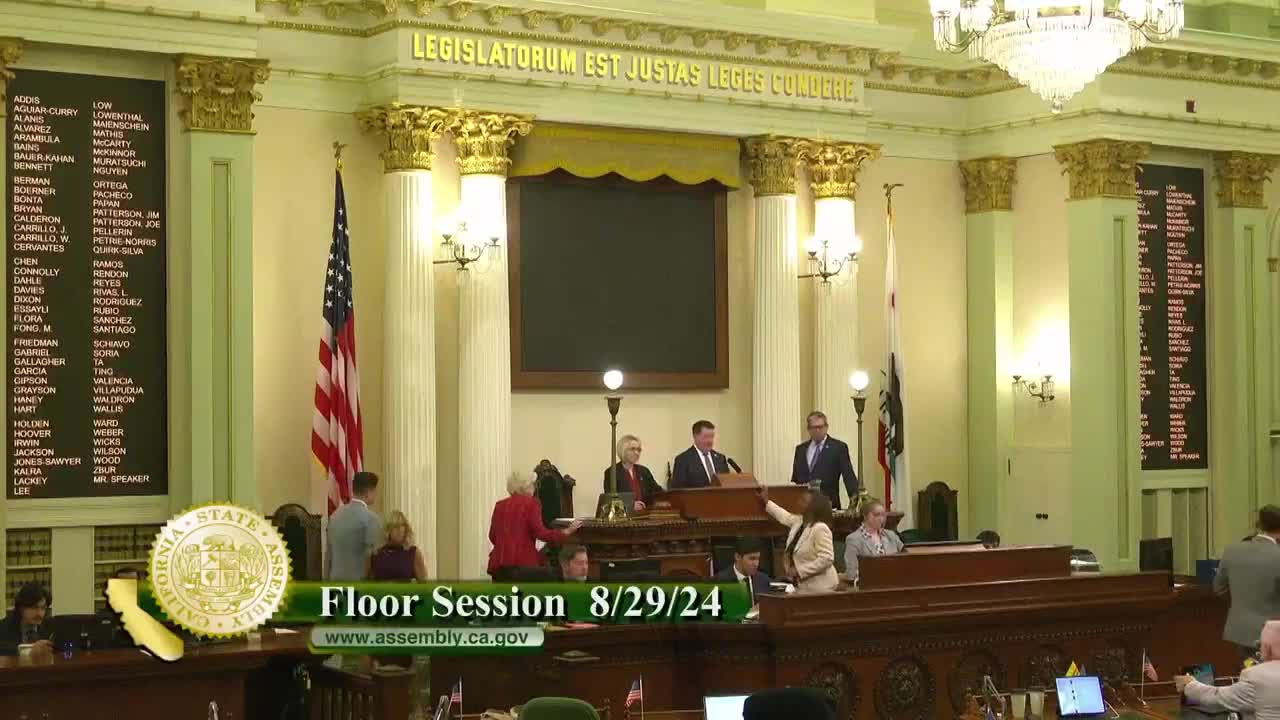 3MIN
Assembly Floor
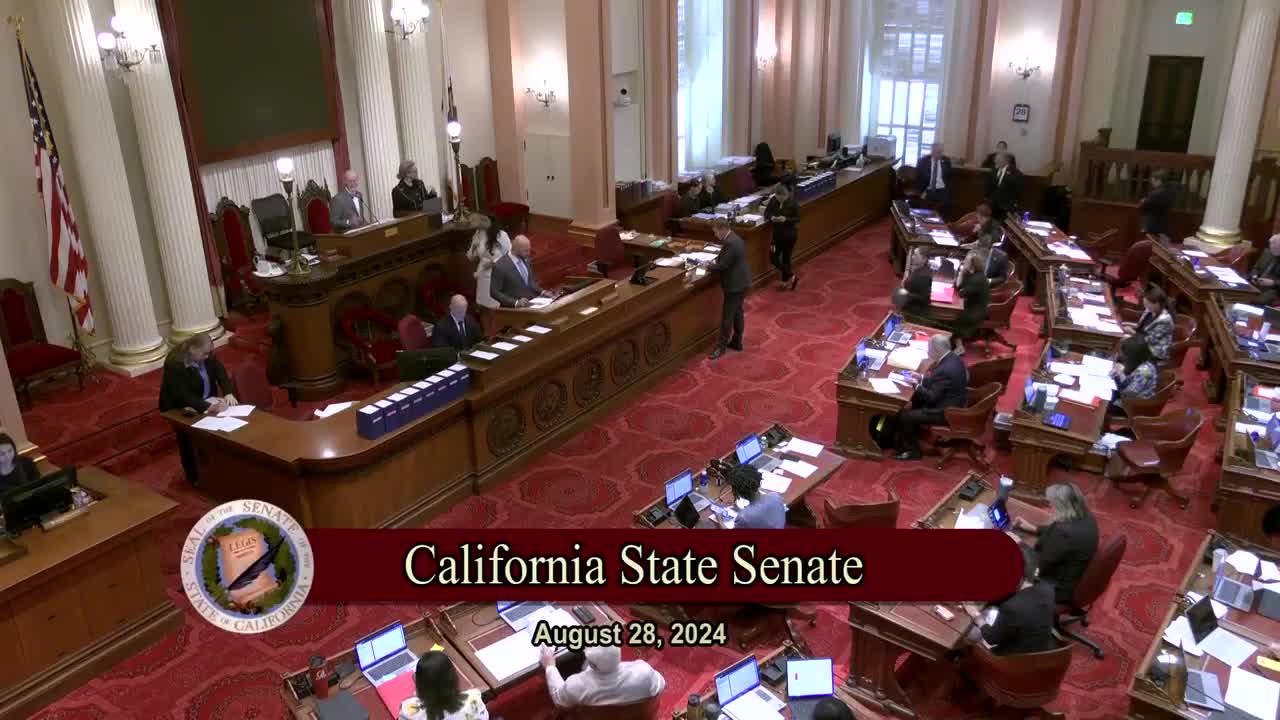 3MIN
Senate Floor
 1MIN
Senate Standing Committee on Appropriations
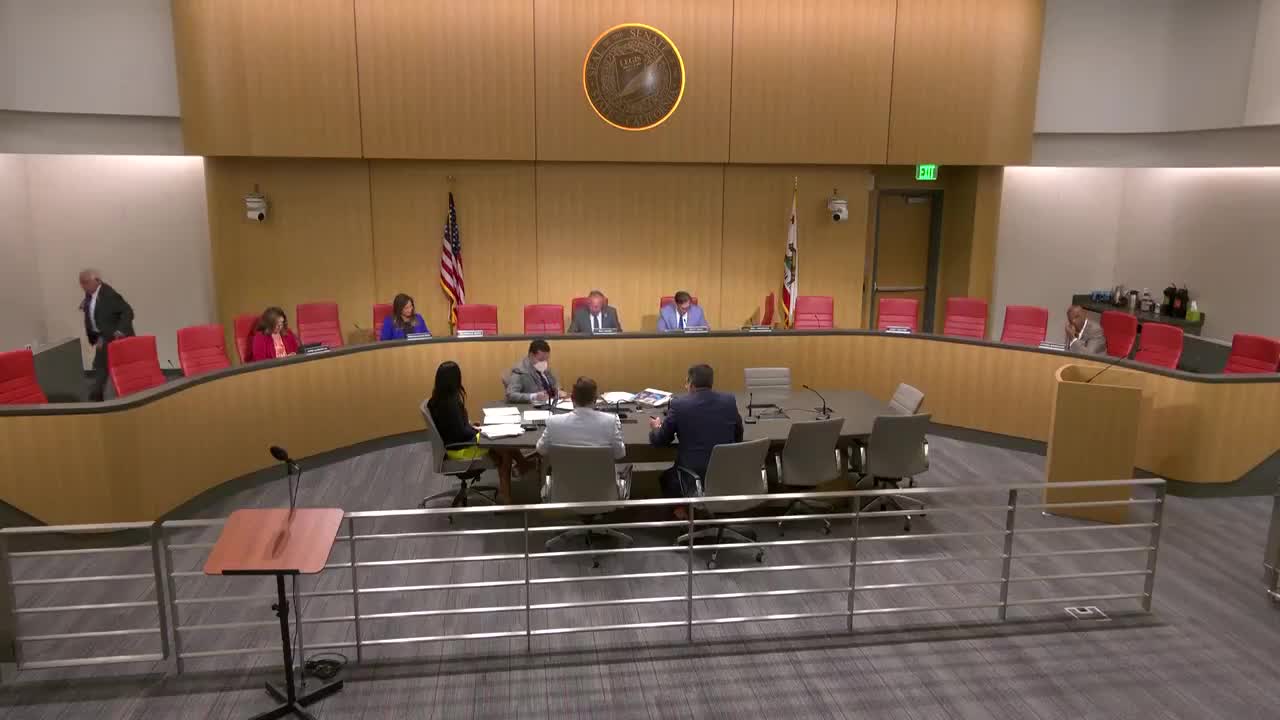 5MIN
Senate Standing Committee on Governmental Organization
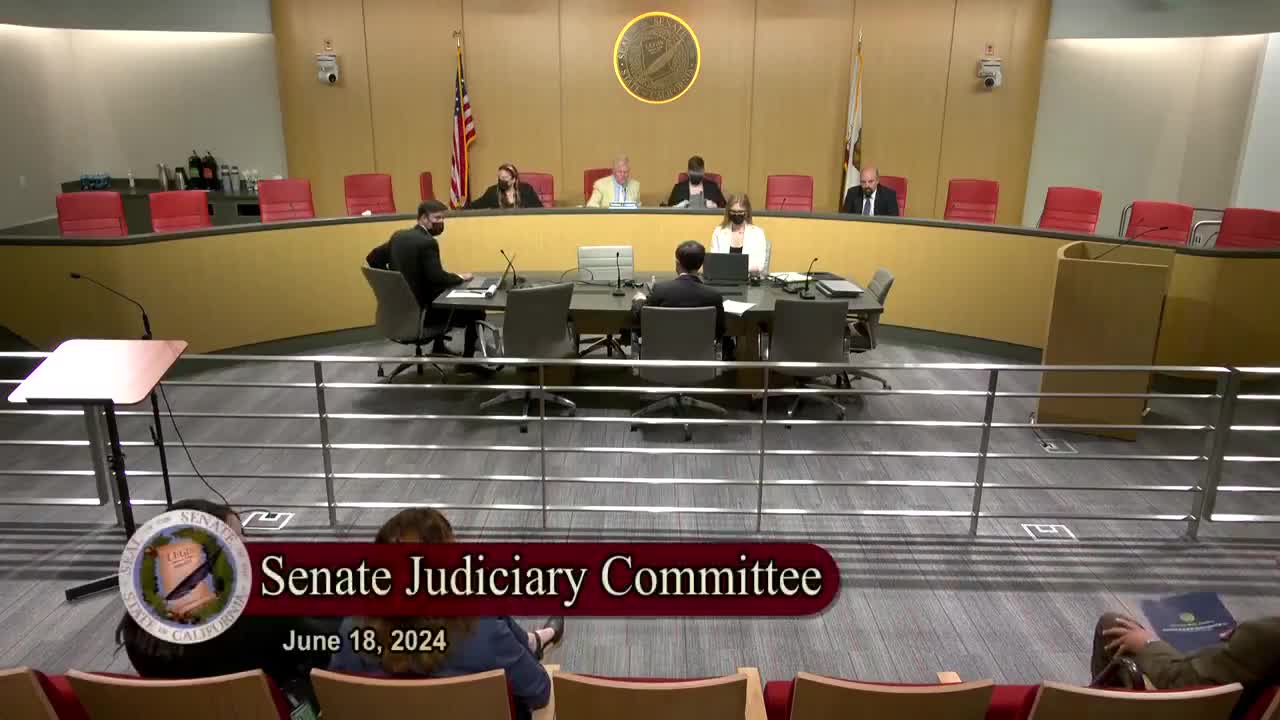 5MIN
Senate Standing Committee on Judiciary
 31MIN
Assembly Floor
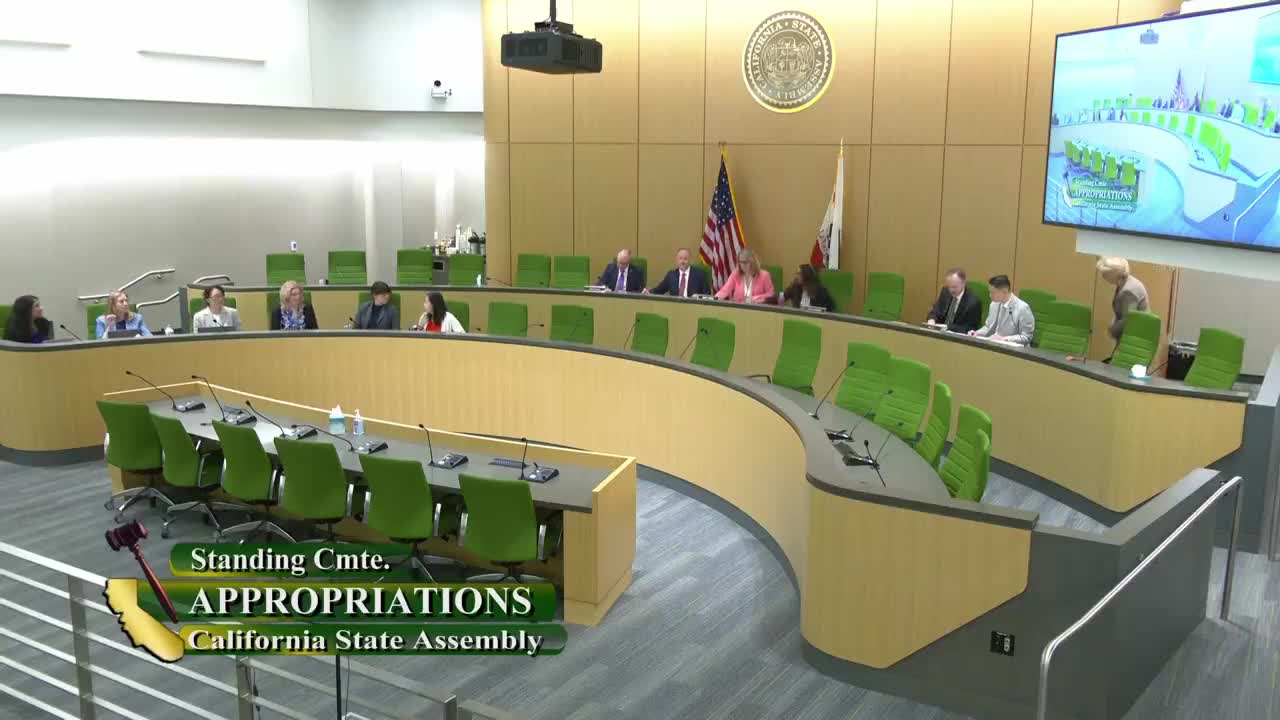 2MIN
Assembly Standing Committee on Appropriations
 13MIN