AB 314: Sales and Use Tax: exemptions: trucks for use in interstate or out-of-state commerce.
- Session Year: 2023-2024
- House: Assembly
- Latest Version Date: 2023-10-08
Current Status:
Passed
(2023-10-08: Chaptered by Secretary of State - Chapter 427, Statutes of 2023.)
Introduced
In Committee
First Chamber
In Committee
Second Chamber
Enacted
What does this bill do?
The bill extends through January 1, 2029 a state sales and use tax exemption for heavy trucks, trailers, and semitrailers (6,000+ pounds) bought in California but driven or moved out of the state within 30 or 75 days, affecting buyers such as trucking companies and dealers. It adds used trailers to the exemption, requires purchasers to provide sworn affidavits (making false statements a possible perjury offense, i.e., lying under oath), and specifies the state will not reimburse local governments for any lost sales tax revenue.
The summary is provided by generative AI which can make mistakes. For original language, please view the details in the table below.
Existing state sales and use tax laws impose a tax on retailers measured by the gross receipts from the sale of tangible personal property sold at retail in this state or on the storage, use, or other consumption in this state of tangible personal property purchased from a retailer for storage, use, or other consumption in this state. The Sales and Use Tax Law provides various exemptions from those taxes, including, until January 1, 2024, an exemption for the sale of, or the storage, use, or other consumption of, a new, used, or remanufactured truck, or a new or remanufactured trailer or semitrailer, with an unladen weight of 6,000 pounds or more that is purchased for use without this state and is delivered to the purchaser within this state, and the purchaser drives or moves the vehicle to any point outside this state within 30 or 75 days, as applicable, from and after the date of delivery, if the purchaser furnishes certain documents to the manufacturer or remanufacturer. Those documents include the purchasers affidavit as to the exclusive use of the vehicle in interstate or foreign commerce, and the vehicle having been taken out of the state within the applicable time period.
This bill would extend that exemption until January 1, 2029, and would similarly exempt a used trailer or semitrailer until that date. By requiring additional purchaser affidavits with respect to a used trailer or semitrailer, this bill would expand the crime of perjury and impose a state-mandated local program.
Existing law requires a bill authorizing a new tax expenditure to contain, among other things, specific goals, purposes, and objectives that the tax expenditure will achieve, detailed performance indicators, and data collection requirements.
The bill would make findings detailing the goals of the above-described tax expenditure, performance indicators for determining whether the tax expenditure meets the goals, and data collection requirements.
The Bradley-Burns Uniform Local Sales and Use Tax Law authorizes counties and cities to impose local sales and use taxes in conformity with the Sales and Use Tax Law, and existing laws authorize districts, as specified, to impose transactions and use taxes in accordance with the Transactions and Use Tax Law, which generally conforms to the Sales and Use Tax Law. Amendments to the Sales and Use Tax Law are automatically incorporated into the local tax laws.
Existing law requires the state to reimburse counties and cities for revenue losses caused by the enactment of sales and use tax exemptions.
This bill would provide that, notwithstanding Section 2230 of the Revenue and Taxation Code, no appropriation is made and the state shall not reimburse any local agencies for sales and use tax revenues lost by them pursuant to this bill.
The California Constitution requires the state to reimburse local agencies and school districts for certain costs mandated by the state. Statutory provisions establish procedures for making that reimbursement.
This bill would provide that no reimbursement is required by this act for a specified reason.
This bill would take effect immediately as a tax levy.
Existing state sales and use tax laws impose a tax on retailers measured by the gross receipts from the sale of tangible personal property sold at retail in this state or on the storage, use, or other consumption in this state of tangible personal property purchased from a retailer for storage, use, or other consumption in this state. The Sales and Use Tax Law provides various exemptions from those taxes, including, until January 1, 2024, an exemption for the sale of, or the storage, use, or other consumption of, a new, used, or remanufactured truck, or a new or remanufactured trailer or semitrailer, with an unladen weight of 6,000 pounds or more that is purchased for use without this state and is delivered to the purchaser within this state, and the purchaser drives or moves the vehicle to any point outside this state within 30 or 75 days, as applicable, from and after the date of delivery, if the purchaser furnishes certain documents to the manufacturer or remanufacturer. Those documents include the purchasers affidavit as to the exclusive use of the vehicle in interstate or foreign commerce, and the vehicle having been taken out of the state within the applicable time period.
This bill would extend that exemption until January 1, 2029, and would similarly exempt, without any time limitation, exempt a used trailer or semitrailer. semitrailer until that date. By requiring additional purchaser affidavits with respect to a used trailer or semitrailer, this bill would expand the crime of perjury and impose a state-mandated local program.
Existing law requires a bill authorizing a new tax expenditure to contain, among other things, specific goals, purposes, and objectives that the tax expenditure will achieve, detailed performance indicators, and data collection requirements.
The bill would make findings detailing the goals of the above-described tax expenditure, performance indicators for determining whether the tax expenditure meets the goals, and data collection requirements.
The Bradley-Burns Uniform Local Sales and Use Tax Law authorizes counties and cities to impose local sales and use taxes in conformity with the Sales and Use Tax Law, and existing laws authorize districts, as specified, to impose transactions and use taxes in accordance with the Transactions and Use Tax Law, which generally conforms to the Sales and Use Tax Law. Amendments to the Sales and Use Tax Law are automatically incorporated into the local tax laws.
Existing law requires the state to reimburse counties and cities for revenue losses caused by the enactment of sales and use tax exemptions.
This bill would provide that, notwithstanding Section 2230 of the Revenue and Taxation Code, no appropriation is made and the state shall not reimburse any local agencies for sales and use tax revenues lost by them pursuant to this bill.
The California Constitution requires the state to reimburse local agencies and school districts for certain costs mandated by the state. Statutory provisions establish procedures for making that reimbursement.
This bill would provide that no reimbursement is required by this act for a specified reason.
This bill would take effect immediately as a tax levy.
Existing state sales and use tax laws impose a tax on retailers measured by the gross receipts from the sale of tangible personal property sold at retail in this state or on the storage, use, or other consumption in this state of tangible personal property purchased from a retailer for storage, use, or other consumption in this state. The Sales and Use Tax Law provides various exemptions from those taxes, including, until January 1, 2024, an exemption for the sale of, or the storage, use, or other consumption of, a new, used, or remanufactured truck, or a new or remanufactured trailer or semitrailer, with an unladen weight of 6,000 pounds or more that is purchased for use without this state and is delivered to the purchaser within this state, and the purchaser drives or moves the vehicle to any point outside this state within 30 or 75 days, as applicable, from and after the date of delivery, if the purchaser furnishes certain documents to the manufacturer or remanufacturer. Those documents include the purchasers affidavit as to the exclusive use of the vehicle in interstate or foreign commerce, and the vehicle having been taken out of the state within the applicable time period.
This bill would extend that exemption until January 1, 2029, and would similarly exempt, without any time limitation, a used trailer or semitrailer. By requiring additional purchaser affidavits with respect to a used trailer or semitrailer, this bill would expand the crime of perjury and impose a state-mandated local program.
Existing law requires a bill authorizing a new tax expenditure to contain, among other things, specific goals, purposes, and objectives that the tax expenditure will achieve, detailed performance indicators, and data collection requirements.
The bill would make findings detailing the goals of the above-described tax expenditure, performance indicators for determining whether the tax expenditure meets the goals, and data collection requirements.
The Bradley-Burns Uniform Local Sales and Use Tax Law authorizes counties and cities to impose local sales and use taxes in conformity with the Sales and Use Tax Law, and existing laws authorize districts, as specified, to impose transactions and use taxes in accordance with the Transactions and Use Tax Law, which generally conforms to the Sales and Use Tax Law. Amendments to the Sales and Use Tax Law are automatically incorporated into the local tax laws.
Existing law requires the state to reimburse counties and cities for revenue losses caused by the enactment of sales and use tax exemptions.
This bill would provide that, notwithstanding Section 2230 of the Revenue and Taxation Code, no appropriation is made and the state shall not reimburse any local agencies for sales and use tax revenues lost by them pursuant to this bill.
The California Constitution requires the state to reimburse local agencies and school districts for certain costs mandated by the state. Statutory provisions establish procedures for making that reimbursement.
This bill would provide that no reimbursement is required by this act for a specified reason.
This bill would take effect immediately as a tax levy.
(a)Notwithstanding Section 6388, if a new, used, or remanufactured truck or a new, used, or remanufactured trailer or semitrailer, any of which has an unladen weight of 6,000 pounds or more that has been manufactured or remanufactured outside this state is purchased for use without this state and is delivered by the manufacturer, remanufacturer, or dealer to the purchaser within this state, and the purchaser drives or moves the vehicle to any point outside this state within 30 days from and after the date of delivery, or whenever a new, used, or remanufactured truck or a new, used, or remanufactured trailer or semitrailer, any of which has an unladen weight of 6,000 pounds or more that has been manufactured or remanufactured in this state is purchased for use without this state and is delivered by the manufacturer, remanufacturer, or dealer to the purchaser within this state, and the purchaser drives or moves the vehicle to any point outside this state within 75 days from and after the date of delivery, there are exempted from the taxes imposed by this part, Part 1.5 (commencing with Section 7200), and Part 1.6 (commencing with Section 7251) the gross receipts from the sale of and the storage, use, or other consumption of the vehicle within the state, if the purchaser or the purchasers agent furnishes all of the following to the manufacturer, remanufacturer, or dealer:
(1)(A)Written evidence of an out-of-state license and registration for the vehicle.
(B)If the vehicle is subject to the permanent trailer identification plate program under Section 5014.1 of the Vehicle Code and is used exclusively in interstate or foreign commerce, or both, written evidence of the purchasers or lessees United States Department of Transportation number or Unified Carrier Registration System filing may be substituted for the written evidence described in subparagraph (A).
(C)If the vehicle is registered under the International Registration Plan pursuant to Section 8052 of the Vehicle Code and is used exclusively in interstate or foreign commerce, or both, written evidence of the purchasers or lessees United States Department of Transportation number or Unified Carrier Registration System filing may be substituted for the written evidence described in subparagraph (A).
(2)The purchasers affidavit attesting that the purchaser purchased the vehicle from a dealer at a specified location for use exclusively outside this state, or exclusively in interstate or foreign commerce, or both.
(3)The purchasers affidavit that the vehicle has been moved or driven to a point outside this state within the appropriate period of either 30 days or 75 days of the date of the delivery of the vehicle to the purchaser.
(b)For the purpose of complying with Section 41, the Legislature declares the following with respect to the extension of the exemption by this section and the application of this section to the sale of a used trailer or semitrailer:
(1)(A)The goal of this section, as amended by Chapter 226 of the Statutes of 2019 and the act adding this subdivision, is to bring, and continue to bring, parity to the law regulating interstate commerce and to allow commercial trucks to meet the same requirements as commercial trailers that are purchased in the state for use either entirely outside the state or strictly in interstate commerce.
(B)The goal of this section, as amended by the act adding this subdivision, is also to bring parity to the law with respect to used trailers and semitrailers.
(2)The goal of this policy is to increase sales of commercial trucks and used trailers and semitrailers that have an unladen weight of 6,000 pounds or more that will be used in interstate commerce.
(c)This section shall become inoperative on January 1, 2029, and as of that date is repealed.
SEC. 2.Section 6388.5 of the Revenue and Taxation Code, as amended by Section 29 of Chapter 371 of the Statutes of 2020, is amended to read:6388.5.(a)Notwithstanding Section 6388, if a new or remanufactured trailer or semitrailer with an unladen weight of 6,000 pounds or more that has been manufactured or remanufactured outside this state is purchased for use without this state and is delivered by the manufacturer, remanufacturer, or dealer to the purchaser within this state, and the purchaser drives or moves the vehicle to any point outside this state within 30 days from and after the date of delivery, or whenever a new or remanufactured trailer or semitrailer with an unladen weight of 6,000 pounds or more that has been manufactured or remanufactured in this state is purchased for use without this state and is delivered by the manufacturer, remanufacturer, or dealer to the purchaser within this state, and the purchaser drives or moves the vehicle to any point outside this state within 75 days from and after the date of delivery, there are exempted from the taxes imposed by this part, Part 1.5 (commencing with Section 7200), and Part 1.6 (commencing with Section 7251) the gross receipts from the sale of and the storage, use, or other consumption of the vehicle within the state, if the purchaser or the purchasers agent furnishes all of the following to the manufacturer, remanufacturer, or dealer:
(1)(A)Written evidence of an out-of-state license and registration for the vehicle.
(B)If the vehicle is subject to the permanent trailer identification plate program under Section 5014.1 of the Vehicle Code and is used exclusively in interstate or foreign commerce, or both, written evidence of the purchasers or lessees United States Department of Transportation number or Unified Carrier Registration System filing may be substituted for the written evidence described in subparagraph (A).
(2)The purchasers affidavit attesting that the purchaser purchased the vehicle from a dealer at a specified location for use exclusively outside this state, or exclusively in interstate or foreign commerce, or both.
(3)The purchasers affidavit that the vehicle has been moved or driven to a point outside this state within the appropriate period of either 30 days or 75 days of the date of the delivery of the vehicle to the purchaser.
(b)This section shall become operative on January 1, 2029.
SEC. 3.Notwithstanding Section 2230 of the Revenue and Taxation Code, no appropriation is made by this act and the state shall not reimburse any local agency for any sales and use tax revenues lost by it under this act.
SEC. 4.No reimbursement is required by this act pursuant to Section 6 of Article XIIIB of the California Constitution because the only costs that may be incurred by a local agency or school district will be incurred because this act creates a new crime or infraction, eliminates a crime or infraction, or changes the penalty for a crime or infraction, within the meaning of Section 17556 of the Government Code, or changes the definition of a crime within the meaning of Section 6 of Article XIIIB of the California Constitution.
SEC. 5.This act provides for a tax levy within the meaning of Article IV of the California Constitution and shall go into immediate effect.
(a)Notwithstanding Section 6388, if a new, used, or remanufactured truck or a new, used, or remanufactured trailer or semitrailer, any of which has an unladen weight of 6,000 pounds or more that has been manufactured or remanufactured outside this state is purchased for use without this state and is delivered by the manufacturer, remanufacturer, or dealer to the purchaser within this state, and the purchaser drives or moves the vehicle to any point outside this state within 30 days from and after the date of delivery, or whenever a new, used, or remanufactured truck or a new new, used, or remanufactured trailer or semitrailer, any of which has an unladen weight of 6,000 pounds or more that has been manufactured or remanufactured in this state is purchased for use without this state and is delivered by the manufacturer, remanufacturer, or dealer to the purchaser within this state, and the purchaser drives or moves the vehicle to any point outside this state within 75 days from and after the date of delivery, there are exempted from the taxes imposed by this part, Part 1.5 (commencing with Section 7200), and Part 1.6 (commencing with Section 7251) the gross receipts from the sale of and the storage, use, or other consumption of the vehicle within the state, if the purchaser or the purchasers agent furnishes all of the following to the manufacturer, remanufacturer, or dealer:
(1)(A)Written evidence of an out-of-state license and registration for the vehicle.
(B)If the vehicle is subject to the permanent trailer identification plate program under Section 5014.1 of the Vehicle Code and is used exclusively in interstate or foreign commerce, or both, written evidence of the purchasers or lessees United States Department of Transportation number or Unified Carrier Registration System filing may be substituted for the written evidence described in subparagraph (A).
(C)If the vehicle is registered under the International Registration Plan pursuant to Section 8052 of the Vehicle Code and is used exclusively in interstate or foreign commerce, or both, written evidence of the purchasers or lessees United States Department of Transportation number or Unified Carrier Registration System filing may be substituted for the written evidence described in subparagraph (A).
(2)The purchasers affidavit attesting that the purchaser purchased the vehicle from a dealer at a specified location for use exclusively outside this state, or exclusively in interstate or foreign commerce, or both.
(3)The purchasers affidavit that the vehicle has been moved or driven to a point outside this state within the appropriate period of either 30 days or 75 days of the date of the delivery of the vehicle to the purchaser.
(b)For the purpose of complying with Section 41, the Legislature declares the following with respect to the extension of the exemption by this section and the application of this section to the sale of a used trailer or semitrailer:
(1)(A)The goal of this section, as amended by Chapter 226 of the Statutes of 2019 and the act adding this subdivision, is to bring, and continue to bring, parity to the law regulating interstate commerce and to allow commercial trucks to meet the same requirements as commercial trailers that are purchased in the state for use either entirely outside the state or strictly in interstate commerce.
(B)The goal of this section, as amended by the act adding this subdivision, is also to bring parity to the law with respect to used trailers and semitrailers.
(2)The goal of this policy is to increase sales of commercial trucks and used trailers and semitrailers that have an unladen weight of 6,000 pounds or more that will be used in interstate commerce.
(3)To measure the goals described in paragraph (1), the Legislative Analysts Office shall measure, and report biannually to the Legislature its findings regarding, both of the following:(A)The number of in-state truck deliveries that were affected by this section, as amended by Chapter 226 of the Statutes of 2019 and the act adding this subdivision.(B)The number of in-state used trailer or semitrailer deliveries that were affected by this section, as amended by the act adding this subdivision.(c)This section shall become inoperative on January 1, 2029, and as of that date is repealed.
SEC. 2.Section 6388.5 of the Revenue and Taxation Code, as amended by Section 29 of Chapter 371 of the Statutes of 2020, is amended to read:6388.5.(a)Notwithstanding Section 6388, if a new, used, new or remanufactured trailer or semitrailer with an unladen weight of 6,000 pounds or more that has been manufactured or remanufactured outside this state is purchased for use without this state and is delivered by the manufacturer, remanufacturer, or dealer to the purchaser within this state, and the purchaser drives or moves the vehicle to any point outside this state within 30 days from and after the date of delivery, or whenever a new or remanufactured trailer or semitrailer with an unladen weight of 6,000 pounds or more that has been manufactured or remanufactured in this state is purchased for use without this state and is delivered by the manufacturer, remanufacturer, or dealer to the purchaser within this state, and the purchaser drives or moves the vehicle to any point outside this state within 75 days from and after the date of delivery, there are exempted from the taxes imposed by this part, Part 1.5 (commencing with Section 7200), and Part 1.6 (commencing with Section 7251) the gross receipts from the sale of and the storage, use, or other consumption of the vehicle within the state, if the purchaser or the purchasers agent furnishes all of the following to the manufacturer, remanufacturer, or dealer:
(1)(A)Written evidence of an out-of-state license and registration for the vehicle.
(B)If the vehicle is subject to the permanent trailer identification plate program under Section 5014.1 of the Vehicle Code and is used exclusively in interstate or foreign commerce, or both, written evidence of the purchasers or lessees United States Department of Transportation number or Unified Carrier Registration System filing may be substituted for the written evidence described in subparagraph (A).
(2)The purchasers affidavit attesting that the purchaser purchased the vehicle from a dealer at a specified location for use exclusively outside this state, or exclusively in interstate or foreign commerce, or both.
(3)The purchasers affidavit that the vehicle has been moved or driven to a point outside this state within the appropriate period of either 30 days or 75 days of the date of the delivery of the vehicle to the purchaser.
(b)This section shall become operative on January 1, 2029.
SEC. 3.Notwithstanding Section 2230 of the Revenue and Taxation Code, no appropriation is made by this act and the state shall not reimburse any local agency for any sales and use tax revenues lost by it under this act.
SEC. 4.No reimbursement is required by this act pursuant to Section 6 of Article XIIIB of the California Constitution because the only costs that may be incurred by a local agency or school district will be incurred because this act creates a new crime or infraction, eliminates a crime or infraction, or changes the penalty for a crime or infraction, within the meaning of Section 17556 of the Government Code, or changes the definition of a crime within the meaning of Section 6 of Article XIIIB of the California Constitution.
SEC. 5.This act provides for a tax levy within the meaning of Article IV of the California Constitution and shall go into immediate effect.
(a)Notwithstanding Section 6388, whenever if a new, used, or remanufactured truck or a new or new, used, or remanufactured trailer or semitrailer, any of which has an unladen weight of 6,000 pounds or more that has been manufactured or remanufactured outside this state is purchased for use without this state and is delivered by the manufacturer, remanufacturer, or dealer to the purchaser within this state, and the purchaser drives or moves the vehicle to any point outside this state within 30 days from and after the date of delivery, or whenever a new, used, or remanufactured truck or a new or remanufactured trailer or semitrailer, any of which has an unladen weight of 6,000 pounds or more that has been manufactured or remanufactured in this state is purchased for use without this state and is delivered by the manufacturer, remanufacturer, or dealer to the purchaser within this state, and the purchaser drives or moves the vehicle to any point outside this state within 75 days from and after the date of delivery, there are exempted from the taxes imposed by this part, Part 1.5 (commencing with Section 7200), and Part 1.6 (commencing with Section 7251) the gross receipts from the sale of and the storage, use, or other consumption of the vehicle within the state, if the purchaser or the purchasers agent furnishes all of the following to the manufacturer, remanufacturer, or dealer:
(1)(A)Written evidence of an out-of-state license and registration for the vehicle.
(B)In cases where If the vehicle is subject to the permanent trailer identification plate program under Section 5014.1 of the Vehicle Code and is used exclusively in interstate or foreign commerce, or both, written evidence of the purchasers or lessees United States Department of Transportation number or Unified Carrier Registration System filing may be substituted for the written evidence described in subparagraph (A).
(C)In cases where If the vehicle is registered under the International Registration Plan pursuant to Section 8052 of the Vehicle Code and is used exclusively in interstate or foreign commerce, or both, written evidence of the purchasers or lessees United States Department of Transportation number or Unified Carrier Registration System filing may be substituted for the written evidence described in subparagraph (A).
(2)The purchasers affidavit attesting that the purchaser purchased the vehicle from a dealer at a specified location for use exclusively outside this state, or exclusively in interstate or foreign commerce, or both.
(3)The purchasers affidavit that the vehicle has been moved or driven to a point outside this state within the appropriate period of either 30 days or 75 days of the date of the delivery of the vehicle to the purchaser.
(b)For the purpose of complying with Section 41, the Legislature declares the following with respect to the extension of the exemption by this section and the application of this section to the sale of a used trailer or semitrailer:
(1)(A)The goal of this section, as amended by Chapter 226 of the Statutes of 2019 and the act adding this subdivision, is to bring, and continue to bring, parity to the law regulating interstate commerce and to allow commercial trucks to meet the same requirements as commercial trailers that are purchased in the state for use either entirely outside the state or strictly in interstate commerce.
(B)The goal of this section, as amended by the act adding this subdivision, is also to bring parity to the law with respect to used trailers and semitrailers.
(2)The goal of this policy is to increase sales of commercial trucks and used trailers and semitrailers that have an unladen weight of 6,000 pounds or more that will be used in interstate commerce.
(3)To measure the goals described in paragraph (1), the Legislative Analysts Office shall measure, and report biannually to the Legislature its findings regarding, both of the following:
(A)The number of in-state truck deliveries that were affected by this section, as amended by Chapter 226 of the Statutes of 2019 and the act adding this subdivision.
(B)The number of in-state used trailer or semitrailer deliveries that were affected by this section, as amended by the act adding this subdivision.
(b)(c)This section shall become inoperative on January 1, 2024, 2029, and as of that date is repealed.
SEC. 2.Section 6388.5 of the Revenue and Taxation Code, as amended by Section 29 of Chapter 371 of the Statutes of 2020, is amended to read:6388.5.(a)Notwithstanding Section 6388, whenever if a new or new, used, or remanufactured trailer or semitrailer with an unladen weight of 6,000 pounds or more that has been manufactured or remanufactured outside this state is purchased for use without this state and is delivered by the manufacturer, remanufacturer, or dealer to the purchaser within this state, and the purchaser drives or moves the vehicle to any point outside this state within 30 days from and after the date of delivery, or whenever a new or remanufactured trailer or semitrailer with an unladen weight of 6,000 pounds or more that has been manufactured or remanufactured in this state is purchased for use without this state and is delivered by the manufacturer, remanufacturer, or dealer to the purchaser within this state, and the purchaser drives or moves the vehicle to any point outside this state within 75 days from and after the date of delivery, there are exempted from the taxes imposed by this part, Part 1.5 (commencing with Section 7200), and Part 1.6 (commencing with Section 7251) the gross receipts from the sale of and the storage, use, or other consumption of the vehicle within the state, if the purchaser or the purchasers agent furnishes all of the following to the manufacturer, remanufacturer, or dealer:
(1)(A)Written evidence of an out-of-state license and registration for the vehicle.
(B)In cases where If the vehicle is subject to the permanent trailer identification plate program under Section 5014.1 of the Vehicle Code and is used exclusively in interstate or foreign commerce, or both, written evidence of the purchasers or lessees United States Department of Transportation number or Unified Carrier Registration System filing may be substituted for the written evidence described in subparagraph (A).
(2)The purchasers affidavit attesting that the purchaser purchased the vehicle from a dealer at a specified location for use exclusively outside this state, or exclusively in interstate or foreign commerce, or both.
(3)The purchasers affidavit that the vehicle has been moved or driven to a point outside this state within the appropriate period of either 30 days or 75 days of the date of the delivery of the vehicle to the purchaser.
(b)This section shall become operative on January 1, 2024. 2029.
SEC. 3.Notwithstanding Section 2230 of the Revenue and Taxation Code, no appropriation is made by this act and the state shall not reimburse any local agency for any sales and use tax revenues lost by it under this act.
SEC. 4.No reimbursement is required by this act pursuant to Section 6 of Article XIIIB of the California Constitution because the only costs that may be incurred by a local agency or school district will be incurred because this act creates a new crime or infraction, eliminates a crime or infraction, or changes the penalty for a crime or infraction, within the meaning of Section 17556 of the Government Code, or changes the definition of a crime within the meaning of Section 6 of Article XIIIB of the California Constitution.
SEC. 5.This act provides for a tax levy within the meaning of Article IV of the California Constitution and shall go into immediate effect.
|
Date
|
Status
|
|---|---|
| Oct 8, 2023 | Chaptered by Secretary of State - Chapter 427, Statutes of 2023. |
| Oct 8, 2023 | Approved by the Governor. |
| Sep 20, 2023 | Enrolled and presented to the Governor at 4 p.m. |
| Sep 13, 2023 | In Assembly. Ordered to Engrossing and Enrolling. |
| Sep 13, 2023 | Read third time. Passed. Ordered to the Assembly. (Ayes 39. Noes 0. Page 2763.). |
| Jun 27, 2023 | Read second time. Ordered to third reading. |
| Jun 26, 2023 | From committee: Be ordered to second reading pursuant to Senate Rule 28.8. |
| Jun 7, 2023 | From committee: Do pass and re-refer to Com. on APPR. (Ayes 8. Noes 0.) (June 7). Re-referred to Com. on APPR. |
| May 3, 2023 | Referred to Com. on GOV. & F. |
| Apr 18, 2023 | In Senate. Read first time. To Com. on RLS. for assignment. |
| Apr 17, 2023 | Read third time. Passed. Ordered to the Senate. (Ayes 79. Noes 0. Page 1178.) |
| Mar 30, 2023 | Read second time. Ordered to Consent Calendar. |
| Mar 29, 2023 | From committee: Do pass. To Consent Calendar. (Ayes 14. Noes 0.) (March 29). |
| Mar 20, 2023 | Re-referred to Com. on APPR. |
| Mar 16, 2023 | Read second time and amended. |
| Mar 15, 2023 | From committee: Amend, and do pass as amended and re-refer to Com. on APPR. (Ayes 11. Noes 0.) (March 13). |
| Feb 9, 2023 | Referred to Com. on REV. & TAX. |
| Jan 27, 2023 | From printer. May be heard in committee February 26. |
| Jan 26, 2023 | Read first time. To print. |
|
Date
|
Description
|
Location
|
Votes
|
|
|---|---|---|---|---|
| Sep 13, 2023 | Assembly 3rd Reading AB314 Jim Patterson By Dahle | Senate Floor |
Passed |
|
| Jun 7, 2023 | Do pass, but first be re-referred to the Committee on [Appropriations] | Senate Standing Committee on Governance and Finance |
Passed |
|
| Apr 17, 2023 | AB 314 Jim Patterson Consent Calendar Second Day Regular Session | Assembly Floor |
Passed |
|
| Mar 29, 2023 | Do pass. To Consent Calendar. | Assembly Standing Committee on Appropriations |
Passed |
|
| Mar 13, 2023 | Do pass as amended and be re-referred to the Committee on [Appropriations] | Assembly Standing Committee on Revenue and Taxation |
Passed |
This list shows positions taken on this bill by organizations on the date displayed, which is linked to the original source.
Positions by individuals are not included.
|
Organization
|
Position
|
Date
|
|---|---|---|
| California Trucking Association | ** Support |
SENATE RULES COMMITTEE Office of Senate Floor Analyses (916) 651-1520 Fax: (916) 327-4478 | AB 314 |
THIRD READING
Bill No: AB 314
Author: Jim Patterson (R)
Amended: 3/16/23 in Assembly
Vote: 21- Urgency
SENATE GOVERNANCE & FIN. COMMITTEE: 8-0, 6/7/23
AYES: Caballero, Seyarto, Blakespear, Dahle, Durazo, Glazer, Skinner, Wiener
SENATE APPROPRIATIONS COMMITTEE: Senate Rule 28.8
ASSEMBLY FLOOR: 79-0, 4/17/23 (Consent) - See last page for vote
SUBJECT: Sales and Use Tax: exemptions: trucks for use in interstate or out-of-state commerce
SOURCE: Author
DIGEST:
This bill extends and expands modifications made to the sales and use tax exemption for trailers and semitrailers used in interstate commerce.
ANALYSIS:
Existing law:
- Imposes the sales tax on every retailer “engaged in business in this state” that sells tangible personal property, and requires them to register with the California Department of Tax and Fee Administration (CDTFA), and remit amounts collected to CDFTA.
- Applies whenever a retail sale occurs, which is generally any sale other than one for resale in the regular course of business.
- Exempts from sales tax products sold to purchasers in California, which are then shipped out of state for use outside the state pursuant to the contract of sale.
- Exempts from sales tax sales of trailers or semi-trailers with an unladen weight of 6,000 pounds are more, when the manufacturer or dealer delivers the item directly to the purchaser in California, and the purchaser removes the item from the state within 30 days for use exclusively in interstate commerce or outside California (or 75 days if the trailer or semitrailer is manufactured in California).
- Provides that to claim the exemption, the purchaser must provide specified information, including:
- An affidavit attesting the taxpayer purchased the vehicle from a dealer at a specified location for use exclusively outside the state or for use in interstate or foreign commerce, and that the trailer or semitrailer has been moved outside the state within the applicable time period.
- Written evidence of out-of-state license and registration for the vehicle, or the applicable registration number if used in interstate commerce from the United States Department of Transportation or Unified Carrier Registration System, or the trailer identification program established under the Vehicle Code.
- Extends the sales tax exemption for trailers and semitrailers when delivered to a purchaser in state for use in interstate commerce to include new or remanufactured trucks until January 1, 2024 (AB 321, Patterson, Chapter 226, Statutes of 2019).
- Reverts to the previous exemption that applies solely to trailers or semi-trailers on January 1, 2024.
This bill:
- Extends the sunset date on AB 321’s expansion to the specific exemption for vehicles used in interstate commerce from January 1, 2024, to January 1, 2029.
- Adds used trailers or semitrailers into the exemption.
- Includes legislative findings and declarations to comply with Section 41 of the Revenue and Taxation Code.
Background
Purchasers do not pay sales tax on property made in California if they accept delivery outside the state, because the sales tax only applies when title to the property transfers within the borders of the state. Additionally, California law like other states has a general state and local sales and use tax exemption for products sold to purchasers in California, but are then shipped out of state for use outside the state pursuant to the contract of sale. The exemption applies because these transactions can be considered interstate commerce, and imposing any tax could run afoul of federal Constitutional limits on state taxation, in addition to disadvantaging California manufacturers and retailers against their out-of-state competitors. However, absent an exemption, when a purchaser accepts delivery of an item in California, even for use outside the state, it triggers a sales tax obligation.
Unless the purchaser pays the sales tax to the retailer, they are liable for the use tax, which the law imposes on any person consuming tangible personal property in the state. The use tax is the same rate as the sales tax, and must be remitted on or before the last day of the month following the quarterly period in which the person made the purchase. Use tax normally applies when property bought elsewhere is used in California, but the use tax does not when the property’s use in California is part of its interstate commerce activities. State law provides an interstate commerce use tax exemption when the purchaser applies the sales tax exemption described above because the property was shipped out of state. The use tax exemption applies even if they return the property back to the state and use it here, so long as the purchaser first uses the property outside the state in interstate or foreign commerce before it re-enters the state, and the purchaser continuously uses the property in such commerce after it exits again.
Before AB 321, the specific sales tax exemption for in-state sales of trailers and semi-trailers did not apply to new or remanufactured trucks, though California truck sellers could still make tax-free sales when delivering the item to the purchaser outside the state by applying the general exemption for any property sold here but shipped out of state for use outside the state. Its purchaser was also exempt from use tax because its first use occurred out of state. Proponents argue by extending AB 321’s exemption, AB 314 prevents this unnecessary trip out of state because the exemption it extends applies where purchasers take delivery in the California and its first use commences in the state.
FISCAL EFFECT: Appropriation: No Fiscal Com.: Yes Local: Yes
SUPPORT: (Verified 6/27/23)
California Trucking Association
OPPOSITION: (Verified 6/27/23)
None received
ARGUMENTS IN SUPPORT: According to the author, “AB 314 will bring parity to the law regulating interstate commerce, allowing commercial vehicles to meet the same single prerequisite as new trailers. By removing the requirement that commercial vehicles must be brought into the state after the purchase (even when those vehicles otherwise originated in California), this bill will reduce greenhouse gas emissions, reduce wear and tear on the roads, and save both buyers and dealers time when purchasing/selling commercial vehicles. It also encourages buyers to purchase their commercial trucks in California. Finally, this bill makes a simple clarification that used trailers would also be added to this section, as new trailers are already exempt from the first-use requirement.”
ASSEMBLY FLOOR: 79-0, 4/17/23
AYES: Addis, Aguiar-Curry, Alanis, Alvarez, Arambula, Bains, Bauer-Kahan, Bennett, Berman, Boerner Horvath, Bonta, Bryan, Calderon, Juan Carrillo, Wendy Carrillo, Cervantes, Chen, Connolly, Megan Dahle, Davies, Dixon, Essayli, Flora, Mike Fong, Vince Fong, Friedman, Gabriel, Gallagher, Garcia, Gipson, Grayson, Hart, Holden, Hoover, Irwin, Jackson, Jones-Sawyer, Kalra, Lackey, Lee, Low, Lowenthal, Maienschein, Mathis, McCarty, McKinnor, Muratsuchi, Stephanie Nguyen, Ortega, Pacheco, Papan, Jim Patterson, Joe Patterson, Pellerin, Petrie-Norris, Quirk-Silva, Ramos, Reyes, Luz Rivas, Robert Rivas, Rodriguez, Blanca Rubio, Sanchez, Santiago, Schiavo, Soria, Ta, Ting, Valencia, Villapudua, Waldron, Wallis, Ward, Weber, Wicks, Wilson, Wood, Zbur, Rendon
NO VOTE RECORDED: Haney
Prepared by: Colin Grinnell / GOV. & F. / (916) 651-4119
6/28/23 11:05:19
**** END ****
SENATE COMMITTEE ON GOVERNANCE AND FINANCE
Senator Anna M. Caballero, Chair
2023 - 2024 Regular
Bill No: | AB 314 | Hearing Date: | 6/7/23 |
Author: | Jim Patterson | Tax Levy: | Yes |
Version: | 3/16/23 | Fiscal: | Yes |
Consultant: | Grinnell | ||
Sales and Use Tax: exemptions: trucks for use in interstate or out-of-state commerce
Extends and expands modifications made to the sales and use tax exemption for trailers and semitrailers used in interstate commerce.
Background
Sales and Use Taxes. State law imposes the sales tax on every retailer “engaged in business in this state” that sells tangible personal property, and requires them to register with the California Department of Tax and Fee Administration (CDTFA), and remit amounts collected to CDFTA. Sales tax applies whenever a retail sale occurs, which is generally any sale other than one for resale in the regular course of business. The current rate is 7.25% as shown in the table below. Additionally, cities, counties, and specified special districts may increase the sales and use tax, also known as district or transactions and use taxes.
Rate | Jurisdiction | Purpose/Authority | |
|---|---|---|---|
3.9375% | State (General Fund) | State general purposes | |
1.0625% |
| Local governments to fund local public safety services | |
0.50% | State (1991 Realignment) | Local governments to fund health and welfare programs | |
0.50% | State (Proposition 172 - 1993) | Local governments to fund public safety services | |
1.25% | Local (City/County) 1.00% City and County | City and county general operations. Dedicated to county transportation purposes | |
7.25% | Total Statewide Rate |
Purchasers do not pay sales tax on property made in California if they accept delivery outside the state because the sales tax only applies when title to the property transfers within the borders of the state. Additionally, California law like other states has a general state and local sales and use tax exemption for products sold to purchasers in California, which are then shipped out of state for use outside the state pursuant to the contract of sale. The exemption applies because these transactions are considered interstate commerce, and imposing any tax could run afoul of federal Constitutional limits on state taxation, in addition to disadvantaging California manufacturers and retailers against their out-of-state competitors.
Unless the purchaser pays the sales tax to the retailer, they are liable for the use tax, which the law imposes on any person consuming tangible personal property in the state. The use tax is the same rate as the sales tax, and must be remitted on or before the last day of the month following the quarterly period in which the person made the purchase. Use tax normally applies when property bought elsewhere is used in California, but the use tax does not when the property’s use in California is part of its interstate commerce activities. However, absent an exemption, when a purchaser accepts delivery of an item in California, even for use outside the state, it triggers a sales tax obligation. State law provides an interstate commerce use tax exemption when the purchaser applies the sales tax exemption described above because the property was shipped out of state. The use tax exemption applies even if they return the property back to the state and use it here, so long as the purchaser first uses the property outside the state in interstate or foreign commerce before it re-enters the state, and the purchaser continuously uses the property in such commerce after it exits again.
Because vehicles, especially trucks, are often sold in California but used in other states or interstate commerce, the Legislature has enacted two sales and use tax exemptions to prevent its manufacturers and retailers from being disadvantaged against out-of-state competitors. In 1959, the Legislature enacted a specific exemption from state and local sales and use taxes for certain types of vehicles sold in California but used outside the state, beginning with an exemption for new trailer coaches manufactured in California, but only when purchased from out-of-state dealers, and where the out-of-state resident took delivery in California. The exemption applied only when the purchaser exclusively used the trailer outside the state, the California manufacturer delivered the trailer at its place of business, and the purchaser removed the trailer from California within 30 days. The Legislature enacted the exemption to create an incentive for out-of-state purchasers to buy California-built trailer coaches. In 1963, the Legislature expanded it to include new or remanufactured trucks, truck tractors, semitrailers, and trailers with an unladen weight of 6,000 pounds or more, as well as auxiliary dollies.
In 1974, the Legislature enacted a different exemption to allow anyone, not just a non-resident, to apply a similar exemption for purchases from California manufacturers and dealers. This exemption applied only to trailers or semi-trailers with an unladen weight of 6,000 pounds are more, when the manufacturer or dealer delivers the item directly to the purchaser in California, and the purchaser removes the item from the state within 30 days for use exclusively in interstate commerce or outside California (or 75 days if the trailer or semitrailer is manufactured in California). Under the specific exemption, the purchaser must provide specified information, including:
- An affidavit attesting the taxpayer purchased the vehicle from a dealer at a specified location for use exclusively outside the state or for use in interstate or foreign commerce, and that the trailer or semitrailer has been moved outside the state within the applicable time period.
- Written evidence of out-of-state license and registration for the vehicle, or the applicable registration number if used in interstate commerce from the United States Department of Transportation or Unified Carrier Registration System, or the trailer identification program established under the Vehicle Code.
However, until recently, this specific exemption did not apply to new or remanufactured trucks, though California truck sellers could still make tax-free sales when delivering the item to the purchaser outside the state by applying the general exemption for any property sold here but shipped out of state for use outside the state. In 2018, the Legislature enacted AB 321 (Patterson), which expanded the specific trailer and semitrailer exemption to include new, used, or remanufactured trucks, thereby applying it when California residents purchase the item from a California manufacturer or dealer and take delivery in the state, so long as they subsequently remove it for exclusive use in interstate commerce or in another state.
AB 321’s exemption sunsets on January 1, 2024, at which time the law reverts to the specific exemption before the bill was enacted, which applied only to new or remanufactured trailers or semitrailers. Additionally, while AB 321 applied to new or remanufactured trailers, it did not apply to used ones. The author wants to extend the exemption until January 1, 2029, and expand it to include used trailers.
Proposed Law
Assembly Bill 314 extends the sunset date on AB 321’s expansion to the specific exemption for vehicles used in interstate commerce from January 1, 2024, to January 1, 2029. The measure also adds used trailers or semitrailers into the exemption. Additionally, the bill includes legislative findings and declarations to comply with Section 41 of the Revenue and Taxation Code.
State Revenue Impact
According to CDTFA, the revenue effect of AB 314 is indeterminable.
Comments
1. Purpose of the bill. According to the author, “AB 314 will bring parity to the law regulating interstate commerce, allowing commercial vehicles to meet the same single prerequisite as new trailers. By removing the requirement that commercial vehicles must be brought into the state after the purchase (even when those vehicles otherwise originated in California), this bill will reduce greenhouse gas emissions, reduce wear and tear on the roads, and save both buyers and dealers time when purchasing/selling commercial vehicles. It also encourages buyers to purchase their commercial trucks in California. Finally, this bill makes a simple clarification that used trailers would also be added to this section, as new trailers are already exempt from the first-use requirement.”
2. Revenue loss? Normally, extending and expanding a sales and use tax exemption would result in revenue losses for state and local agencies. However, AB 314 is unlikely to affect revenues much. With or without SB 314’s exemption, tax does not apply to any item that is sold in California and shipped to an out-of-state purchaser for use outside California pursuant to the sales contract, including when delivered to the seller’s out of state facility. The specific exemption that AB 314 extends allows similar tax treatment for in-state deliveries as out-of-state ones.
3. Section 41. Section 41 of the Revenue and Taxation Code, requires any bill authorizing a new tax expenditure to contain, among other things, specific goals, purposes, and objectives that the tax expenditure will achieve, and detailed performance indicators, along with data collection and reporting requirements (SB 1335, Leno, 2014). When the Legislature enacted AB 321, it stated its goal is to bring parity to the law regulating interstate commerce, and allow commercial trucks to meet the same requirements as commercial trailers purchased in the state for use either entirely outside the state or strictly in interstate commerce, and to increase sales of commercial trucks that have an unladen weight of 6,000 pounds or more that will be used in interstate commerce. The measure then required the Legislative Analyst’s Office (LAO) to measure how many in-state truck deliveries were affected by the bill’s changes. However, LAO stated that:
To acquire these data, we have contacted two state departments, three industry associations, and three market research firms known for their truck expertise. Based on these inquiries, we have concluded that the statutory requirement is infeasible.
Instead, AB 314 makes legislative findings and declarations to comply with Section 41 that maintain the same goals as AB 321 and add the goal of bringing parity to the law with respect to used trailers and semitrailers; the measure does not contain a study requirement.
4. Mandate. The California Constitution requires the state to reimburse local governments for the costs of new or expanded state mandated local programs. Because SB 314 extends and expands a sales and use tax exemption, Legislative Counsel states it imposes a new state mandate. However, the bill says the state shall not reimburse any local agency for any sales and use tax revenues lost as a result of the bill.
Assembly Actions
Assembly Revenue and Taxation Committee: 11-0
Assembly Appropriations Committee: 14-0
Assembly Floor: 79-0
Support and Opposition
(6/2/23)
Support: California Trucking Association
Opposition: None submitted.
-- END --
Date of Hearing: March 29, 2023
ASSEMBLY COMMITTEE ON APPROPRIATIONS
Chris Holden, Chair
ABPCA Bill Id:AB 314
Author:(Jim Patterson) – As Amended Ver:March 16, 2023
Policy Committee: | Revenue and Taxation | Vote: | 11 - 0 |
|
| ||
|
|
Urgency: No State Mandated Local Program: Yes Reimbursable: No
SUMMARY:
This bill expands the existing sales and use tax (SUT) exemption for a new or remanufactured trailer or semi-trailer delivered to a purchaser in California, but used exclusively outside the state or for interstate or foreign commerce.
Specifically, this bill:
- Allows a used trailer or semi-trailer to qualify for the SUT exemption and extends the exemption’s existing sunset date by five years to January 1, 2029.
- Declares the goal of extending and expanding the exemption is to bring parity to the law regarding taxation of commercial trucks and trailers used outside the state or strictly in interstate commerce.
- Prohibits the state from reimbursing any local agency for lost SUT revenues.
FISCAL EFFECT:
- Annual General Fund and local revenue loss of an unknown amount, due to uncertain purchasing variables. Although unlikely, the California Department of Tax and Fee Administration (CDTFA) notes revenue loss could exceed $150,000 if the exemption applied to more than 1% of trailers purchased outside the state, brought into the state, and then removed from the state within 30 days. However, CDTFA cannot estimate this universe of trailers and taxpayer behavior absent the exemption. The most likely practical impact of this bill is to allow a commercial vehicle purchaser to more easily claim a SUT exemption the purchaser may already claim if a more complicated process is followed.
- Minor and absorbable costs to CDTFA to continue to administer an expanded exemption.
COMMENTS:
- Purpose. According to the author, this bill will “bring parity to the law regulating interstate commerce,” as well as “reduce greenhouse gas emissions, reduce wear and tear on the roads, and save both buyers and dealers time when purchasing/selling commercial vehicles” and encourage the purchase of commercial trucks in California. This bill is supported by the California Trucking Association.
- Complicated SUT Exemptions for Commercial Vehicles Used in Interstate Commerce. Similar to other states, California has a general interstate commerce SUT exemption for sales of products to a purchaser in California, who then ships the property out of state for use. Accordingly, no sales tax is due when the property’s title transfers to the purchaser and use tax does not apply if the purchaser later brings the property back in-state for use in California, so long as the purchaser has used the property for interstate or foreign commerce before the property re-enters the state and the purchaser continuously uses the property for such commerce after the property’s exit.
Existing law also grants a non-California resident a SUT exemption for a new or remanufactured truck, truck tractor, semi-trailer, or trailer purchased from a dealer outside the state, but delivered to the purchaser in California for use outside the state, so long as the purchaser drives the vehicle out of California within 30 days.
Finally, existing law grants a SUT exemption for a new or remanufactured trailer or semi-trailer purchased for use outside of California, regardless of the purchaser’s residency or dealer’s location. AB 321 (Patterson), Chapter 226, Statutes of 2019, temporarily broadened, until January 1, 2024, this third exemption to apply to a new or remanufactured truck, similar to the benefit already provided to non-residents making a comparable purchase, as well as to a used truck. Thus, prior to AB 321, a California resident could be exempt from SUT only on a new or remanufactured truck purchase if the resident took delivery on the item out-of-state, triggering the general SUT exemption for products shipped out-of-state for use in interstate or foreign commerce. Similarly, both California residents and non-residents alike could be exempt from SUT only on a used truck via the general SUT exemption for products shipped out-of-state for use in interstate or foreign commerce. This bill further expands the AB 321 exemption to used trailers and semi-trailers and extends the sunset date to January 1, 2029.
- Tax Expenditure Performance Metrics. Existing law requires a bill authorizing a new tax expenditure, such as an expanded SUT exemption, to contain specific goals, purposes, and objectives the tax expenditure will achieve, as well as detailed performance indicators and data collection requirements. To meet these requirements, AB 321 required the Legislative Analyst’s Office (LAO) to biennially report how many in-state truck deliveries were affected by the bill, a measure of the bill’s stated goals to bring parity between commercial trucks and trailers and increase sales of commercial trucks used in interstate commerce. However, in a December 2021 post, the LAO concluded the statutory reporting requirement was infeasible after contacting two state departments, three industry associations, and three market research firms known for their truck expertise. Thus, this bill only declares the goals of the tax expenditure and does not include performance indicators or data collection requirements.
Analysis Prepared by: Irene Ho / APPR. / (916) 319-2081
Date of Hearing: March 13, 2023
ASSEMBLY COMMITTEE ON REVENUE AND TAXATION
Jacqui Irwin, Chair
ABPCA Bill Id:AB 314 (
Author:Jim Patterson) – As Introduced Ver:January 26, 2023
Majority vote. Tax levy. Fiscal committee.
SUBJECT: Sales and Use Tax: exemptions: trucks for use in interstate or out-of-state commerce
SUMMARY: Broadens the sales and use tax (SUT) exemption currently available for new, used, or remanufactured trucks and new or remanufactured trailers and semitrailers delivered in California to a purchaser for use in interstate or foreign commerce, to include used trailers and semitrailers. Specifically, this bill:
- Extends the sunset date for the current expanded exemption from January 1, 2024, to January 1, 2029.
- Delays the operative date of the narrower and permanent SUT exemption from January 1, 2024, to January 1, 2029, and expands it indefinitely to include used trailers and semitrailers.
- Provides that, notwithstanding existing law, the state shall not reimburse any local agency for any SUT revenues lost by it under this bill.
- Provides that no reimbursement is required pursuant to Section 6 of Article XIIIB of the California Constitution for specified reasons.
- Provides that, for purposes of complying with Revenue and Taxation Code (R&TC) Section 41, the Legislature declares the following with respect to the extension of this SUT exemption and its application to used trailers and semitrailers:
- The goals of this bill are to:
- Bring, and continue to bring, parity to the law regulating interstate commerce and to allow commercial trucks to meet the same requirements as commercial trailers that are purchased in California for use either entirely outside the state or strictly in interstate commerce;
- Bring parity to the law with respect to used trailers and semitrailers; and,
- Increase sales of commercial trucks and used trailers and semitrailers that have an unladen weight of 6,000 pounds or more that will be used in interstate commerce.
- To measure these goals, the Legislative Analyst's Office (LAO) shall measure, and report biannually to the Legislature, its findings regarding both of the following:
- The number of in-state truck deliveries that were affected by R&TC Section 6388.5, as amended by Chapter 226 of the Statutes of 2019 and this bill; and,
- The number of in-state used trailer or semitrailer deliveries that were affected by R&TC Section 6388.5, as amended by this bill.
- The goals of this bill are to:
- Takes immediate effect as a tax levy.
EXISTING LAW:
- Imposes a sales tax on retailers for the privilege of selling tangible personal property (TPP), absent a specific exemption. The tax is based upon the retailer's gross receipts from TPP sales in this state.
- Imposes a complimentary use tax on the storage, use, or other consumption of TPP generally purchased out-of-state and brought into California. The use tax is imposed on the purchaser; and unless the purchaser pays the use tax to an entity registered to collect California's use tax, the purchaser remains liable for the tax. The use tax is set at the same rate as the state's sales tax and must generally be remitted to the California Department of Tax and Fee Administration (CDTFA).
- Provides various exemptions under the SUT Law.
- Provides, until January 1, 2024, a SUT exemption for a new, used, or remanufactured truck, or a new or remanufactured trailer or semitrailer, with an unladen weight of 6,000 pounds or more, that is purchased for use outside California but is delivered to the purchaser in California, provided the purchaser drives or moves the vehicle to any point outside this state within 30 or 75 days, as applicable, from the date of delivery. (R&TC Section 6388.5).
- Requires purchasers using this exemption to provide specified documents to the manufacturer, remanufacturer, or dealer including an affidavit as to the exclusive use of the vehicle in interstate or foreign commerce, and the vehicle having been taken out of the state within the applicable time period.
- Requires any bill introduced on or after January 1, 2020, that authorizes a SUT exemption, to contain all of the following:
- Specific goals, purposes, and objectives that the tax expenditure will achieve;
- Detailed performance indicators for the Legislature to use when measuring whether the tax expenditure meets the goals, purposes, and objectives stated in the bill; and,
- Specified data collection requirements to enable the Legislature to determine whether the tax expenditure is meeting, failing to meet, or exceeding those specific goals, purposes, and objectives. (R&TC Section 41(a)).
- Specific goals, purposes, and objectives that the tax expenditure will achieve;
FISCAL EFFECT: A revenue estimate is pending, but CDTFA notes that the revenue loss is likely to be below $150,000 annually.
COMMENTS:
- The author has provided the following statement in support of this bill:
AB 314 will bring parity to the law regulating interstate commerce, allowing commercial vehicles to meet the same single prerequisite as new trailers. By removing the requirement that commercial vehicles must be brought into the state after the purchase (even when those vehicles otherwise originated in California), this bill will reduce greenhouse gas emissions, reduce wear and tear on the roads, and save both buyers and dealers time when purchasing/selling commercial vehicles. It also encourages buyers to purchase their commercial trucks in California. Finally, this bill makes a simple clarification that used trailers would also be added to this section, as new trailers are already exempt from the first-use requirement.
- This bill is supported by the California Trucking Association, which notes:
Equipment purchased for use in interstate commerce has long been exempt from sales and use tax, but required that the equipment first be used out of state. AB 321 (Patterson - 2019) repealed the first-use requirement, which has reduced unnecessary out-of-state shipments by truck dealers and the associated fuel, greenhouse gases and road wear. This provision sunsets in 2024.
LAO was tasked with assessing the [provision's] impact and found that it could not quantify any fiscal impact associated with AB 321. If the sunset were to lapse, no additional tax revenue would accrue to the State or local government as out of state shipments would simply resume.
AB 314 extends this sunset provision to 2029 and would add used trailers to this section as new trailers are already exempt from the first-use requirement.
AB 314 will benefit air quality and congestion by reducing unnecessary truck trips by dealers and keep California's truck dealers competitive in an increasingly difficult operating environment.
- Committee Staff Comments:
- The general exemption: R&TC Section 6388 provides the "general" SUT exemption for commercial vehicles used in interstate commerce. Specifically, this exemption applies to new or remanufactured trucks, truck tractors, semitrailers, or trailers with an unladen weight of 6,000 pounds or more. For the exemption to apply, a number of conditions must be met. First, the commercial vehicle must be purchased from a dealer located outside California for use outside this state. The vehicle can then be delivered by the manufacturer (or remanufacturer) to the purchaser in California tax free. Thereafter, however, the purchaser must drive the vehicle out of California within 30 days. The purchaser must also provide specified information to the manufacturer or remanufacturer including an affidavit attesting that the purchaser is not a resident of California.
- The "other" exemption: Under R&TC Section 6388.5, there are permanent special exemption provisions for new or remanufactured trailers or semitrailers with an unladen weight of 6,000 pounds or more that are purchased for use outside this state. AB 321 (Patterson), Chapter 226, Statutes of 2019, temporarily broadened these special exemption provisions to also include, until January 1, 2024, new, used, or remanufactured trucks.
Under these provisions, when the vehicle is manufactured (or remanufactured) outside California, the exemption applies when the vehicle is delivered by the manufacturer, remanufacturer, or dealer to the purchaser in California and the purchaser, in turn, drives the vehicle outside of California within 30 days.
When the vehicle is manufactured or remanufactured in California, the exemption applies when the vehicle is delivered by the manufacturer, remanufacturer, or dealer to the purchaser in California and the purchaser drives the vehicle outside of California within 75 days.
As with the general exemption, the purchaser must provide specified information, but the exemption applies irrespective of whether the purchaser is a California resident. In addition, unlike the general exemption, the special exemption also applies when the purchaser buys the qualifying vehicle from a California dealer.
Put simply, it is Committee staff's understanding that AB 321 was advanced to allow California residents to purchase commercial trucks from California dealers tax free provided the purchaser complies with the other requirements of Section 6388.5. Prior to AB 321, California residents intending to purchase trucks for interstate commerce could obtain an exemption, but they were forced to take delivery of their trucks outside of California and make the first functional use of the truck in interstate or foreign commerce.
- What would this bill do? First and foremost, this bill extends by five years the expanded SUT exemption described above and does so by striking the current January 1, 2024 sunset date and replacing that date with a January 1, 2029 sunset date. Second, this bill adds used trailers and semitrailers to the expanded exemption. Currently, the expanded provisions only apply to new and remanufactured trailers and semitrailers. Third, this bill seeks to add used trailers and semitrailers to the list of vehicles covered in the narrower exemption currently set to become operative in the future (i.e., on January 1, 2024 without this bill, and on January 1, 2029 with this bill). Finally, this bill charges the LAO with reporting biannually to the Legislature its findings regarding the exemption and, in particular, the number of in-state used trailer or semitrailer deliveries affected by this bill.
- Suggested amendments:
- Technical amendment: For the sake of consistency, Committee staff suggests striking the term "new" on page 3, line 10, and inserting, "new, used," before "or remanufactured"; and,
- Compliance with Committee's sunset policy: As noted above, this bill adds used trailers and semitrailers to the expanded SUT exemption available to California residents. Under this bill, this expanded SUT exemption would sunset automatically on January 1, 2029, in full compliance with this Committee's policy on tax expenditures. This bill, however, also seeks to add used trailers and semitrailers to the narrower and permanent exemption that becomes operative with the expiration of the expanded exemption. By doing so, this bill would expand the exemption indefinitely, without a sunset date, and in violation of Committee policy. To ensure this bill is eligible for a vote, the author has committed to taking amendments striking used trailers and semitrailers from the permanent exemption.
- The LAO has already weighed in on trucks, with limited success: As noted above,
AB 321 (Patterson), Chapter 226, Statutes of 2019, temporarily broadened the SUT exemption to include new, used, or remanufactured trucks. AB 321 also directed the LAO to submit a biannual report measuring the number of truck deliveries affected by the exemption. On December 1, 2021, the LAO issued a "Budget and Policy Post" noting:
To acquire these data, we have contacted two state departments, three industry associations, and three market research firms known for their truck expertise. Based on these inquiries, we have concluded that the statutory requirement is infeasible.
Given that the LAO, despite its best efforts, was unable to obtain useful data on interstate commerce truck sales, this Committee may wish to consider whether it makes sense to continue this reporting requirement into the future and extend it to used trailers and semi-trailers, for which better data presumably are not available.
- A bit more history: R&TC Section 6388 was added to law in 1959 to exempt sales of new trailer coaches by out-of-state dealers when an out-of-state resident took delivery in California, provided: (i) the trailer was to be used exclusively outside the state, (ii) delivery was by the California manufacturer at the manufacturer's California place of business, and (iii) the trailer was removed from California within 30 days. The exemption was intended to attract out-of-state purchasers of California-built trailer coaches. Proponents also noted that an incidental benefit would accrue to businesses catering to the tourist trade since qualified purchasers would be permitted to use their trailers within California without incurring a tax liability for a period of 30 days after delivery.
In 1963, this exemption was expanded to include trucks, truck tractors, semitrailers, trailers, and auxiliary dollies.
R&TC Section 6388.5 was added to law in 1974 to extend and expand the Section 6388 exemption so that a purchaser could purchase a trailer or semitrailer from a California dealer – provided the manufacturer delivered the item directly to the purchaser and the purchaser removed the item from California within 30 days for use exclusively in interstate commerce or exclusively outside of California.
In 1982, this exemption was further expanded to allow the trailers or semitrailers to be removed to a point outside California within 75 days from delivery if the item was manufactured in California. Also, any dealer could make the delivery to the purchaser (not just the manufacturer as previously required). The reason behind the 75 days was that one manufacturer (Utility Trailer Manufacturing Company located in Los Angeles) had intended to sell 400 trailers to a purchaser who planned to use them outside of California. The purchaser was concerned that it would not be possible to meet the conditions of the exemption at the time, which required removal from California within 30 days from the date of delivery, given the large number of trailers involved. The transaction, therefore, fell through.
- Committee's tax expenditure policy: Both R&TC Section 41 and Committee policy require any tax expenditure bill to outline specific goals, purposes, and objectives that the tax expenditure will achieve, along with detailed performance indicators for the Legislature to use when measuring whether the tax expenditure meets those stated goals, purposes, and objectives. A tax expenditure bill will not be eligible for a Committee vote unless it has complied with these requirements. This bill, in turn, complies with R&TC Section 41.
In addition to the R&TC Section 41 requirements, this Committee's policy also requires that all tax expenditure proposals contain an appropriate sunset provision to be eligible for a vote. According to this policy, an "appropriate sunset provision" means five years, except in the case of a tax expenditure measure providing relief to California veterans, in which case "appropriate sunset provision" means ten years. Assuming this bill is amended to remove used trailers and semitrailers from the permanent exemption, this bill will comply with this Committee's policy on sunsets.
REGISTERED SUPPORT / OPPOSITION:
Support
California Trucking Association
Opposition
None on file
Analysis Prepared by: M. David Ruff / REV. & TAX. / (916) 319-2098
Discussed in Hearing
 2MIN
Senate Floor
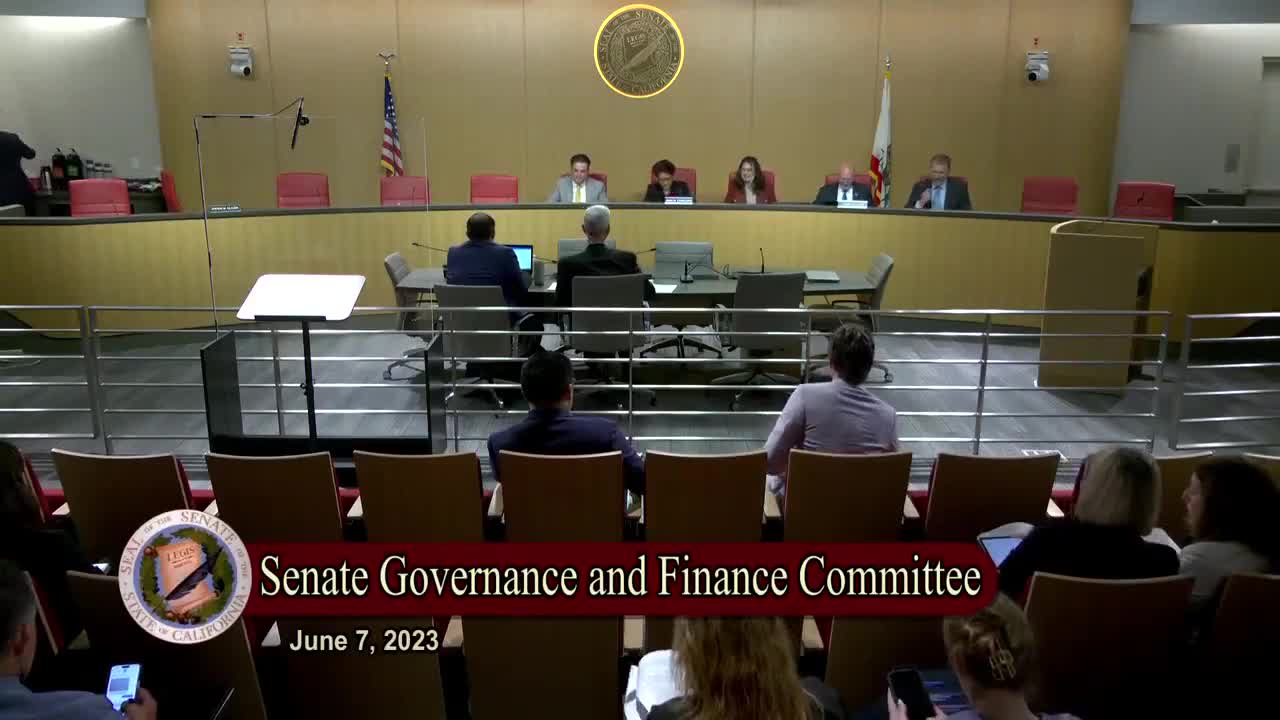 5MIN
Senate Standing Committee on Governance and Finance
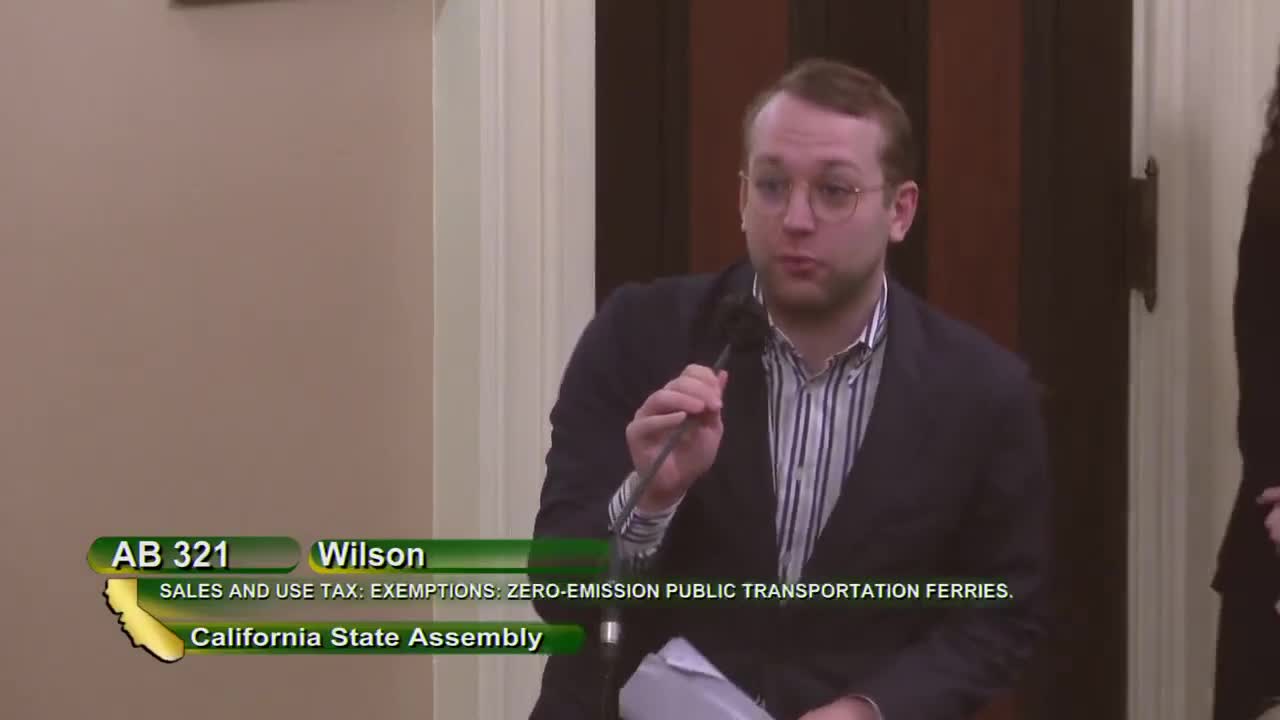 8MIN
Assembly Standing Committee on Revenue and Taxation
Bill Author

Bill Co-Author(s):