AB 3162: Octopus: aquaculture: prohibition.
- Session Year: 2023-2024
- House: Assembly
- Latest Version Date: 2024-09-27
Current Status:
Passed
(2024-09-27: Chaptered by Secretary of State - Chapter 758, Statutes of 2024.)
Introduced
In Committee
First Chamber
In Committee
Second Chamber
Enacted
What does this bill do?
This bill makes it illegal to raise any species of octopus in aquaculture for human consumption and bans selling, possessing, or transporting octopus that were farmed. It affects octopus aquaculture operators, seafood sellers, distributors, and other businesses that handle farmed octopus.
The summary is provided by generative AI which can make mistakes. For original language, please view the details in the table below.
Existing law provides for the regulation and development of aquaculture and requires the owner of each aquaculture facility to register with the Department of Fish and Wildlife. Existing law makes it unlawful to spawn, incubate, or cultivate any transgenic species of finfish belonging to the family Salmonidae anywhere in this state, except as specified. A violation of the Fish and Game Code is a crime.
This bill would prohibit the aquaculture of any species of octopus for the purpose of human consumption. The bill would prohibit a business owner or operator from selling, possessing, or transporting any species of octopus that is the result of aquaculture. By creating a new crime, the bill would impose a state-mandated local program.
The California Constitution requires the state to reimburse local agencies and school districts for certain costs mandated by the state. Statutory provisions establish procedures for making that reimbursement.
This bill would provide that no reimbursement is required by this act for a specified reason.
Existing law provides for the regulation and development of aquaculture and requires the owner of each aquaculture facility to register with the Department of Fish and Wildlife. Existing law makes it unlawful to spawn, incubate, or cultivate any transgenic species of finfish belonging to the family Salmonidae anywhere in this state, except as specified. A violation of the Fish and Game Code is a crime.
This bill would prohibit a person from engaging in the aquaculture, as defined, the aquaculture of any species of octopus for the purpose of human consumption. The bill would prohibit a business owner or operator from knowingly engaging in the sale in the state of selling, possessing, or transporting any species of octopus that is the result of aquaculture. By creating a new crime, this the bill would impose a state-mandated local program.
The California Constitution requires the state to reimburse local agencies and school districts for certain costs mandated by the state. Statutory provisions establish procedures for making that reimbursement.
This bill would provide that no reimbursement is required by this act for a specified reason.
Existing law provides for the regulation and development of aquaculture and requires the owner of each aquaculture facility to register with the Department of Fish and Wildlife. Existing law makes it unlawful to spawn, incubate, or cultivate any transgenic species of finfish belonging to the family Salmonidae anywhere in this state, except as specified. A violation of the Fish and Game Code is a crime.
This bill would prohibit a person from engaging in an aquaculture activity in the state that involves the propagation, cultivation, maintenance, or harvest the aquaculture, as defined, of any species of octopus for the purpose of human consumption. The bill would prohibit a business owner or operator from knowingly engaging in the sale in the state of any species of octopus that is the result of an aquaculture activity that involves the propagation, cultivation, maintenance, or harvest of any species of octopus. The bill would define aquaculture activity as including the use of land-based recirculating aquaculture systems. aquaculture. By creating a new crime, this bill would impose a state-mandated local program.
The California Constitution requires the state to reimburse local agencies and school districts for certain costs mandated by the state. Statutory provisions establish procedures for making that reimbursement.
This bill would provide that no reimbursement is required by this act for a specified reason.
Existing law provides for the regulation and development of aquaculture and requires the owner of each aquaculture facility to register with the Department of Fish and Wildlife. Existing law makes it unlawful to spawn, incubate, or cultivate any transgenic species of finfish belonging to the family Salmonidae anywhere in this state, except as specified. A violation of the Fish and Game Code is a crime.
This bill would prohibit a person from engaging in an aquaculture activity in the state that involves the propagation, cultivation, maintenance, or harvest of any species of octopus for the purpose of human consumption. The bill would prohibit a business owner or operator from knowingly engaging in the sale in the state of octopus that is the result of an aquaculture activity that involves the propagation, cultivation, maintenance, or harvest of any species of octopus. The bill would define aquaculture activity as including the use of land-based recirculating aquaculture systems. By creating a new crime, this bill would impose a state-mandated local program.
The California Constitution requires the state to reimburse local agencies and school districts for certain costs mandated by the state. Statutory provisions establish procedures for making that reimbursement.
This bill would provide that no reimbursement is required by this act for a specified reason.
The Legislature finds and declares all of the following:
(a)Octopuses are highly intelligent, curious, problem-solving animals. They are conscious, sentient beings that exhibit cognitive and behavioral complexity, and are capable of experiencing pain, stress, and fear, as well as pleasure, equanimity, and social bonds.
(b)Octopuses have long-term memory and are capable of retaining information and recognizing individual people. The octopus carries out extensive foraging trips and uses landmarks to navigate the course.
(c)Octopuses have a well-developed nervous system, large brains relative to their body size, and a high level of problem-solving ability. They are known for their ability to learn, use tools, and exhibit behaviors that suggest a level of consciousness. Octopuses also display flexibility in their responses to different situations, which is indicative of cognitive complexity.
(d)In a November 2021 London School of Economics analysis of over 300 studies, researchers found that because of the asocial, solitary nature of these creatures, they can become aggressive toward each other when kept in confinement.
(e)Octopuses are carnivores, requiring aquatic animal protein in their diets. Thus, farming them will further deplete fish stocks. An octopus feed conversion ratio is approximately 3 to 1, so the weight of feed to sustain an octopus is around three times its weight. Nitrogen and phosphorus waste would be a product of octopuses raised in confinement.
SEC. 2.Section 15007.5 is added to the Fish and Game Code, to read:15007.5.(a)It shall be unlawful to engage in the aquaculture of any species of octopus for the purpose of human consumption.
(b)A business owner or operator shall not sell, possess, or transport any species of octopus that is the result or product of aquaculture.
SEC. 3.No reimbursement is required by this act pursuant to Section 6 of Article XIIIB of the California Constitution because the only costs that may be incurred by a local agency or school district will be incurred because this act creates a new crime or infraction, eliminates a crime or infraction, or changes the penalty for a crime or infraction, within the meaning of Section 17556 of the Government Code, or changes the definition of a crime within the meaning of Section 6 of Article XIIIB of the California Constitution.
The Legislature finds and declares all of the following:
(a)Octopuses are highly intelligent, curious, problem-solving animals. They are conscious, sentient beings that exhibit cognitive and behavioral complexity, and are capable of experiencing pain, stress, and fear, as well as pleasure, equanimity, and social bonds.
(b)Octopuses have long-term memory and are capable of retaining information and recognizing individual people. The octopus carries out extensive foraging trips and uses landmarks to navigate the course.
(c)Octopuses have a well-developed nervous system, large brains relative to their body size, and a high level of problem-solving ability. They are known for their ability to learn, use tools, and exhibit behaviors that suggest a level of consciousness. Octopuses also display flexibility in their responses to different situations, which is indicative of cognitive complexity.
(d)In a November 2021 London School of Economics analysis of over 300 studies, researchers found that because of the asocial, solitary nature of these creatures, they can become aggressive toward each other when kept in confinement.
(e)Octopuses are carnivores, requiring aquatic animal protein in their diets. Thus, farming them will further deplete fish stocks. An octopus feed conversion ratio is approximately 3 to 1, so the weight of feed to sustain an octopus is around three times its weight. Nitrogen and phosphorus waste would be a product of octopuses raised in confinement.
SEC. 2.Section 15007.5 is added to the Fish and Game Code, to read:15007.5.(a)A person shall not It shall be unlawful to engage in the aquaculture of any species of octopus for the purpose of human consumption.
(b)A business owner or operator shall not knowingly engage in the sale in the state of sell, possess, or transport any species of octopus that is the result or product of aquaculture.
(c)For purposes of this section, aquaculture means the form of agriculture devoted to the propagation, cultivation, maintenance, and harvesting of any species of octopus, which includes, but is not limited to, the use of land-based recirculating aquaculture systems.SEC. 3.No reimbursement is required by this act pursuant to Section 6 of Article XIIIB of the California Constitution because the only costs that may be incurred by a local agency or school district will be incurred because this act creates a new crime or infraction, eliminates a crime or infraction, or changes the penalty for a crime or infraction, within the meaning of Section 17556 of the Government Code, or changes the definition of a crime within the meaning of Section 6 of Article XIIIB of the California Constitution.
The Legislature finds and declares all of the following:
(a)Octopuses are highly intelligent, curious, problem-solving animals. They are conscious, sentient beings that exhibit cognitive and behavioral complexity, and are capable of experiencing pain, stress, and fear, as well as pleasure, equanimity, and social bonds.
(b)Octopuses have long-term memory and are capable of retaining information and recognizing individual people. The octopus carries out extensive foraging trips and uses landmarks to navigate the course.
(c)Octopuses have a well-developed nervous system, large brains relative to their body size, and a high level of problem-solving ability. They are known for their ability to learn, use tools, and exhibit behaviors that suggest a level of consciousness. Octopuses also display flexibility in their responses to different situations, which is indicative of cognitive complexity.
(d)In a November 2021 London School of Economics analysis of over 300 studies, researchers found that because of the asocial, solitary nature of these creatures, they can become aggressive toward each other when kept in confinement.
(e)Octopuses are carnivores, requiring aquatic animal protein in their diets. Thus, farming them will further deplete fish stocks. An octopus feed conversion ratio is approximately 3 to 1, so the weight of feed to sustain an octopus is around three times its weight. Nitrogen and phosphorus waste would be a product of octopus octopuses raised in confinement.
SEC. 2.Section 15007.5 is added to the Fish and Game Code, to read:15007.5.(a)A person shall not engage in an aquaculture activity in the state that involves the propagation, cultivation, maintenance, or harvest of the aquaculture of any species of octopus for the purpose of human consumption.
(b)A business owner or operator shall not knowingly engage in the sale in the state of any species of octopus that is the result of an aquaculture activity that involves the propagation, cultivation, maintenance, or harvest of any species of octopus. aquaculture.
(c)For purposes of this section, aquaculture activity aquaculture means the form of agriculture devoted to the propagation, cultivation, maintenance, and harvesting of any species of octopus, which includes, but is not limited to, the use of land-based recirculating aquaculture systems.
SEC. 3.No reimbursement is required by this act pursuant to Section 6 of Article XIIIB of the California Constitution because the only costs that may be incurred by a local agency or school district will be incurred because this act creates a new crime or infraction, eliminates a crime or infraction, or changes the penalty for a crime or infraction, within the meaning of Section 17556 of the Government Code, or changes the definition of a crime within the meaning of Section 6 of Article XIIIB of the California Constitution.
REVISIONS: HeadingLine 2.The Legislature finds and declares all of the following:
(a)Octopuses are highly intelligent, curious, problem-solving animals. They are conscious, sentient beings that exhibit cognitive and behavioral complexity, and are capable of experiencing pain, stress, and fear, as well as pleasure, equanimity, and social bonds.
(b)Octopuses have long-term memory and are capable of retaining information and recognizing individual people. The octopus carries out extensive foraging trips and uses landmarks to navigate the course.
(c)Octopuses have a well-developed nervous system, large brains relative to their body size, and a high level of problem-solving ability. They are known for their ability to learn, use tools, and exhibit behaviors that suggest a level of consciousness. Octopuses also display flexibility in their responses to different situations, which is indicative of cognitive complexity.
(d)In a November 2021 London School of Economics analysis of over 300 studies, researchers found that because of the asocial, solitary nature of these creatures, they can become aggressive toward each other when kept in confinement.
(e)Octopuses are carnivores, requiring aquatic animal protein in their diets. Thus, farming them will further deplete fish stocks. An octopus feed conversion ratio is approximately 3 to 1, so the weight of feed to sustain an octopus is around three times its weight. Nitrogen and phosphorus waste would be a product of octopus raised in confinement.
SEC. 2.Section 15007.5 is added to the Fish and Game Code, to read:15007.5.(a)A person shall not engage in an aquaculture activity in the state that involves the propagation, cultivation, maintenance, or harvest of any species of octopus for the purpose of human consumption.
(b)A business owner or operator shall not knowingly engage in the sale in the state of octopus that is the result of an aquaculture activity that involves the propagation, cultivation, maintenance, or harvest of any species of octopus.
(c)For purposes of this section, aquaculture activity includes, but is not limited to, the use of land-based recirculating aquaculture systems.
SEC. 3.No reimbursement is required by this act pursuant to Section 6 of Article XIIIB of the California Constitution because the only costs that may be incurred by a local agency or school district will be incurred because this act creates a new crime or infraction, eliminates a crime or infraction, or changes the penalty for a crime or infraction, within the meaning of Section 17556 of the Government Code, or changes the definition of a crime within the meaning of Section 6 of Article XIIIB of the California Constitution.
|
Date
|
Status
|
|---|---|
| Sep 27, 2024 | Chaptered by Secretary of State - Chapter 758, Statutes of 2024. |
| Sep 27, 2024 | Approved by the Governor. |
| Sep 5, 2024 | Enrolled and presented to the Governor at 4 p.m. |
| Aug 27, 2024 | Senate amendments concurred in. To Engrossing and Enrolling. (Ayes 59. Noes 10.). |
| Aug 27, 2024 | Assembly Rule 77 suspended. |
| Aug 26, 2024 | In Assembly. Concurrence in Senate amendments pending. May be considered on or after August 28 pursuant to Assembly Rule 77. |
| Aug 26, 2024 | Read third time. Passed. Ordered to the Assembly. (Ayes 36. Noes 0.). |
| Aug 20, 2024 | Read second time. Ordered to third reading. |
| Aug 19, 2024 | Read third time and amended. Ordered to second reading. |
| Aug 19, 2024 | Read second time. Ordered to third reading. |
| Aug 15, 2024 | From committee: Do pass. (Ayes 7. Noes 0.) (August 15). |
| Jun 24, 2024 | In committee: Referred to suspense file. |
| Jun 11, 2024 | From committee: Do pass and re-refer to Com. on APPR. (Ayes 11. Noes 0.) (June 11). Re-referred to Com. on APPR. |
| May 15, 2024 | Referred to Com. on N.R. & W. |
| Apr 22, 2024 | In Senate. Read first time. To Com. on RLS. for assignment. |
| Apr 22, 2024 | Read third time. Passed. Ordered to the Senate. (Ayes 51. Noes 10. Page 4918.) |
| Apr 18, 2024 | Read second time. Ordered to third reading. |
| Apr 17, 2024 | From committee: Do pass. (Ayes 11. Noes 4.) (April 17). |
| Apr 17, 2024 | Coauthors revised. |
| Apr 9, 2024 | From committee: Do pass and re-refer to Com. on APPR. (Ayes 12. Noes 1.) (April 9). Re-referred to Com. on APPR. |
| Apr 8, 2024 | Re-referred to Com. on W., P., & W. |
| Apr 4, 2024 | From committee chair, with author's amendments: Amend, and re-refer to Com. on W., P., & W. Read second time and amended. |
| Mar 11, 2024 | Referred to Com. on W., P., & W. |
| Feb 17, 2024 | From printer. May be heard in committee March 18. |
| Feb 16, 2024 | Read first time. To print. |
|
Date
|
Description
|
Location
|
Votes
|
|
|---|---|---|---|---|
| Aug 27, 2024 | AB 3162 Bennett Concurrence in Senate Amendments | Assembly Floor |
Passed |
|
| Aug 26, 2024 | Assembly 3rd Reading AB3162 Bennett et al. By Min | Senate Floor |
Passed |
|
| Aug 15, 2024 | Do pass | Senate Standing Committee on Appropriations |
Passed |
|
| Jun 24, 2024 | Placed on suspense file | Senate Standing Committee on Appropriations |
Passed |
|
| Jun 11, 2024 | Do pass, but first be re-referred to the Committee on [Appropriations] | Senate Standing Committee on Natural Resources and Water |
Passed |
|
| Apr 22, 2024 | AB 3162 Bennett Assembly Third Reading | Assembly Floor |
Passed |
|
| Apr 17, 2024 | Do pass. | Assembly Standing Committee on Appropriations |
Passed |
|
| Apr 9, 2024 | Do pass and be re-referred to the Committee on [Appropriations] | Assembly Standing Committee on Water, Parks, and Wildlife |
Passed |
This list shows positions taken on this bill by organizations on the date displayed, which is linked to the original source.
Positions by individuals are not included.
|
Organization
|
Position
|
Date
|
|---|---|---|
| A Passion for Paws - Akita Rescue | ** Support | |
| Acción Océanos | ** Support | |
| Action for Dolphins | ** Support | |
| Action for Protection of Animals Africa | ** Support | |
| AEL Advocacy | ** Support | |
| Africa Network for Animal Welfare USA | ** Support | |
| African Marine Mammal Conservation Organization | ** Support | |
| Alexandria Turtle and Wildlife Rescue | ** Support | |
| Alianima | ** Support | |
| Anima International | ** Support | |
| Anima Naturalis | ** Support | |
| ANIMAL | ** Support | |
| Animal Advocacy Africa | ** Support | |
| Animal Advocacy International | ** Support | |
| Animal Coalition Group, Inc. | ** Support | |
| Animal Empathy Philippines | ** Support | |
| Animal Equality | ** Support | |
| Animal Friends Croatia | ** Support | |
| Animal Interfaith Alliance | ** Support | |
| Animal Justice Canada | ** Support | |
| Animal Kingdom Foundation | ** Support | |
| Animal Law Italia | ** Support | |
| Animal Legal Defense Fund | ** Support | |
| Animal Nepal | ** Support | |
| Animal Policy International | ** Support | |
| Animal Rights Center Japan | ** Support | |
| Animal Rights Initiative | ** Support | |
| Animal Rights Initiative | * Support | Apr 9, 2024 |
| Animal Society e.V. | ** Support | |
| Animal Solutions | ** Support | |
| Animal Welfare Advocates Association the Gambia | ** Support | |
| Animal Welfare and Environment Network for Tanzania | ** Support | |
| Animal Welfare Concern | ** Support | |
| Animal Welfare Institute | ** Support | |
| ANIMAL WELLNESS ACTION | ** Support | |
| Animals Aotearoa | ** Support | |
| Animals Australia | ** Support | |
| Animals Don’t Speak Human | ** Support | |
| Animals Now | ** Support | |
| Apon Welfare | ** Support | |
| Aquatic Life Institute | ** Support | |
| Aquatic Life Institute | * Support | Apr 9, 2024 |
| ARAF-PLATEAU DOGON | ** Support | |
| ARBA | ** Support | |
| Arusha Society for the Protection of Animals | ** Support | |
| Aware | ** Support | |
| Barks of Love Animal Rescue | ** Support | |
| BC SPCA | ** Support | |
| Better Together Forever | ** Support | |
| Buddy's Angels | ** Support | |
| Buddy’s Angels Rescue Foundation | ** Support | |
| California Department of Finance | ** Against | |
| California Institute For Biodiversity | * Support | Jun 11, 2024 |
| Catholic Concern for Animals | ** Support | |
| Catmosphere Laguna Foundation | ** Support | |
| Center for a Humane Economy | ** Support | |
| Center for Biological Diversity | * Support | Jun 11, 2024 |
| cleanearth4kids.org | ** Support | |
| Coalition of African Animal Welfare Organizations | ** Support | |
| Compassion in World Farming | ** Support | |
| Congo Basin Conservation Society CBCS-Network | ** Support | |
| Conservative Animal Welfare Foundation | ** Support | |
| Crustacean compassion | ** Support | |
| Cultivate Empathy for All | ** Support | |
| DEMOCRATS FOR THE PROTECTION OF ANIMALS | ** Support | |
| Depana | ** Support | |
| Deutscher Tierschutzbund | ** Support | |
| Dharma Voices for Animals | ** Support | |
| Dieren Bescherming | ** Support | |
| Djurens Rätt | ** Support | |
| Dyrenes Alliance | ** Support | |
| Education for African Animals Welfare | ** Support | |
| EKO | ** Support | |
| Ekō | ** Support | |
| Environmental and Animal Society of Taiwan | ** Support | |
| Environmental Defense Center | ** Support | |
| Essere Animali | ** Support | |
| Estonian Union for the Protection of Animals | ** Support | |
| Ethical Farming Ireland | ** Support | |
| F.R.E.E. | ** Support | |
| FAADA | ** Support | |
| Farm Sanctuary | ** Support | |
| Farmállatvédelem | ** Support | |
| Feedback Global | ** Support | |
| Fish Welfare Initiative | ** Support | |
| FoodsbyJude | ** Support | |
| Fórum Animal | ** Support | |
| Friends of Phillip | ** Support | |
| Fundacion defense y derecho animal | ** Support | |
| Fundación Veg | ** Support | |
| Future for Fish | ** Support | |
| German Shepherd Rescue of Orange County | ** Support | |
| Ghana Animal Welfare Society | ** Support | |
| Greater Los Angeles Animals Spay Neuter Collaborative | ** Support | |
| Green REV Institute | ** Support | |
| Gurrs and Purrs Rescue | ** Support | |
| Hanaeleh | ** Support | |
| Humane Africa Trust | ** Support | |
| Humane League; the | ** Support | |
| Humánny pokrok | ** Support | |
| Humboldt Humane | ** Support | |
| In Defense of Animals | ** Support | |
| Institute of Animal Law Asia | ** Support | |
| Invisible Animals | ** Support | |
| Kesar & Cardi LLC | ** Support | |
| Kesar and Cardi LLC | ** Support | |
| Kindred Spirits Care Farm | ** Support | |
| Kitwe Animal Welfare Association | ** Support | |
| Kurdistan Organization for Animal Rights Protection | ** Support | |
| L214 | ** Support | |
| Lady Freethinker | ** Support | |
| Latino Alliance for Animal Care Foundation | ** Support | |
| Lilongwe Society for Protection and Care of Animals | ** Support | |
| Love Leo Rescue | ** Support | |
| Luv 4 all:Uganda | ** Support | |
| Mercy for Animals | ** Support | |
| Meru Animal Welfare Organization | ** Support | |
| Motherlode Feral Cat Alliance | ** Support | |
| National Council of SPCAs | ** Support | |
| Nepal Animal Welfare and Research Center | ** Support | |
| New Roots Institute | ** Support | |
| Northwest Animal Rights Network | ** Support | |
| Nurture Imvelo Trust | ** Support | |
| NY 4 Whales | ** Support | |
| NY4Whales | ** Support | |
| Oikeutta eläimille | ** Support | |
| OIPA – International Organization for Animal Protection | ** Support | |
| One Health and Development Initiative | ** Support | |
| ONG Santa Animale Afrique | ** Support | |
| Only Sunshine Sanctuary | ** Support | |
| Outta the Cage | ** Support | |
| Paaw- People Advocating for Animal Welfare | ** Support | |
| Pasado Safe Haven | ** Support | |
| Pasado's Safe Haven | ** Support | |
| PAZ | ** Support | |
| People Advocating for Animal Welfare – Contra Costa | ** Support | |
| People for the Ethical Treatment of Animals | ** Support | |
| Planet For All | ** Support | |
| Plataforma ALTO | ** Support | |
| Poison Free Malibu | ** Support | |
| Preetirang Sanctuary | ** Support | |
| Project Minnie | ** Support | |
| Protección Animal Ecuador | ** Support | |
| Proyecto ALA | ** Support | |
| RENCTAS | ** Support | |
| Rwanda Animal Welfare Organization | ** Support | |
| Sacramento Vegan Society | ** Support | |
| SAFCEI | ** Support | |
| SAFE | ** Support | |
| Samayu | ** Support | |
| Saving Imperial Rescue | ** Support | |
| Sea First | ** Support | |
| Seastemik | ** Support | |
| Sentience | ** Support | |
| Sentient Media | ** Support | |
| Shellfish Network | ** Support | |
| Shelter Transport Animal Rescue Team | ** Support | |
| Shrimp Welfare Project | ** Support | |
| Sibanye Animal Welfare and Conservancy Trust | ** Support | |
| Sinergia Animal | ** Support | |
| Social Compassion In Legislation | ** Support | |
| Somali Animal Welfare Society | ** Support | |
| Sȏng Thuȃn Chay | ** Support | |
| SPCA Montreal | ** Support | |
| SPCA New Zealand | ** Support | |
| SPCA Selangor | ** Support | |
| Take Me Home | ** Support | |
| Tanzania Animal Welfare Society | ** Support | |
| Tanzania Animals Protection Organization | ** Support | |
| Terra Advocati | ** Support | |
| The Animal Coalition Group | ** Support | |
| The Animal Law Foundation | ** Support | |
| The Animal Rescue Mission | ** Support | |
| The Canine Condition Foundation | ** Support | |
| The Dark Hobby | ** Support | |
| The Humane Global Network | ** Support | |
| The Humane League | ** Support | |
| The Humane Society of the United States | ** Support | |
| The Last Cage | ** Support | |
| Tikobane Trust | ** Support | |
| Tippedears | ** Support | |
| Todos Somos Animales | ** Support | |
| Tourists Against Trophy Hunting | ** Support | |
| Uganda vegan Society | ** Support | |
| UnchainedTV | ** Support | |
| University of Guilan | ** Support | |
| Utunzi Animal Welfare Organization | ** Support | |
| Vegan Planet Africa | ** Support | |
| Vege Zajednica | ** Support | |
| Vissenbescherming | ** Support | |
| Voices for Animals | ** Support | |
| Voters for Animal Rights | ** Support | |
| We Animals | ** Support | |
| Welfare Footprint Project | ** Support | |
| Welfarm | ** Support | |
| West Africa Centre for the Protection of Animal Welfare | ** Support | |
| Westside German Shepherd Rescue | ** Support | |
| Women United for Animal Welfare | ** Support | |
| World Animal Protection | ** Support | |
| WTS | ** Support |
CONCURRENCE IN SENATE AMENDMENTS
CSA1 Bill Id:AB 3162
Author:(Bennett and Friedman)
As Amended Ver:August 19, 2024
Majority vote
SUMMARY
Prohibits the aquaculture of any species of octopus for human consumption and prohibits the sale, possession, or transportation of an octopus that is known to be the result or product of aquaculture.
Senate Amendments
- Clarifies that a person is prohibited from selling, possessing, or transporting any species of octopus that is a result or a product of aquaculture.
- Makes technical and clarifying changes.
COMMENTS
Octopuses are members of the order Octopoda, a name derived from the Greek works for 'eight' and 'leg.' There are around 300 species of octopus included in the order. Octopuses are masters of disguise, able to change color and pattern as they travel along the seafloor using their eight arms. If the camouflage fails, the octopus can quickly propel itself away and disorient predators with a jet of ink. Several octopus species are found along the Pacific coast, including the giant Pacific octopus, which is the largest octopus species in the world with arm span that can reach 14 feet.
California aquaculture. The California Department of Fish and Wildlife (DFW) and the Fish and Wildlife Commission (Commission) are the principal state government entities responsible for the management, protection, and conservation of the state's fish and wildlife resources. As part of that responsibility, the Commission has the authority to regulate certain aspects of commercial marine aquaculture on state lands or in state waters, while DFW has management responsibility. Commercial aquaculture in California is relatively modest in scale, but supports many different species, raised for many diverse purposes, and are cultured using a variety of techniques. So far, none of the species can be considered commodity products; each of them fit into fairly small-volume, high-value niche markets. A total of 5,740 acres of California public tidelands are leased for marine aquaculture, the majority in Humboldt and Tomales Bays, according to the 2020 report The Status of Commercial Marine Aquaculture in California.
Aquaculture, not octoculture. The market and consumption of octopus in California and the rest of the United States is significantly less than other countries where octopus is considered a delicacy. Because of the solitary nature and habitat of octopuses, they are generally caught with traps and nets, which does not enable an easy, substantial haul. To meet the growing demand, some countries are experimenting with raising octopuses by aquaculture. A Spanish seafood company, Nueva Pescanova, plans to build a farm along the Canary Islands to culture octopuses in tanks. Recently, a Hawaiian octopus "farm" was ordered to cease and desist nonpermitted aquaculture activities. The owners of the establishment note that, despite the name of their business, the octopuses were not reared for human consumption.
In response to this, the State of Washington introduced HB 1153 this year to prohibit octopus farming, which was signed by the Washington Governor on March 13, 2024. Hawaii also introduced similar legislation this year (HB 2262).
There are currently no octopus aquaculture operations in California. Violating this section of code would be a misdemeanor according to Fish and Game Code (FGC) § 12000.
According to the Author
"Octopuses are primarily solitary creatures that are not suited for large scale breeding. They have demonstrated an aptitude for learning and their acute intelligence is becoming well recorded among the scientific community. Outside the U.S., there is a growing trend of recognizing the sentience of this eight-legged cephalopod and the inappropriateness of captive breeding and harvesting. Currently there are no known large-scale octopus breeding and harvesting programs in California. Now is the appropriate time to make it clear that California does not support this activity. [This bill] provides that clarity."
Arguments in Support
Numerous animal welfare groups write in support citing the reasons to preemptive banning octopus aquaculture such as the environmental impact of feeding carnivorous octopuses, the recognized intelligence of octopuses, and the lack of humane farming and slaughter methods.
Arguments in Opposition
None on file.
FISCAL COMMENTS
According to the Assembly Appropriations Committee, this bill has the following fiscal impact:
"Potential costs to [DFW] of an unknown amount, likely under $150,000, to enforce the prohibitions in this bill [Fish and Game Preservation Fund (FGPF)]. There are currently no known octopus aquaculture operations in California. If such operations come to exist in California at some point in the future, DFW's enforcement costs may grow.
A violation of the prohibitions in this bill would be considered a misdemeanor under FGC § 12000. Most FGC misdemeanors may be punished by up to six months in jail or a fine, or both. DFW's portion of any fines are deposited into the FGPF, unless otherwise specified. DFW notes that while wild octopuses are sold commercially, if a restaurant or a grocery store is selling farmed octopus imported from out of state, it is unlikely DFW law enforcement would be able to tell the difference between legally sourced octopus and octopus that is a result of aquaculture."
VOTES:
ASM WATER, PARKS, AND WILDLIFE: 12-1-2
YES: Papan, Addis, Alanis, Alvarez, Bennett, Bonta, Garcia, Hart, Luz Rivas, Schiavo, Villapudua, Weber
NO: Davies
ABS, ABST OR NV: Mathis, Gallagher
ASM APPROPRIATIONS: 11-4-0
YES: Wicks, Arambula, Bryan, Calderon, Wendy Carrillo, Mike Fong, Grayson, Haney, Hart, Pellerin, Villapudua
NO: Sanchez, Dixon, Jim Patterson, Ta
ASSEMBLY FLOOR: 51-10-19
YES: Addis, Aguiar-Curry, Alanis, Arambula, Bauer-Kahan, Bennett, Berman, Boerner, Bryan, Calderon, Wendy Carrillo, Connolly, Essayli, Mike Fong, Friedman, Garcia, Gipson, Grayson, Haney, Irwin, Jackson, Jones-Sawyer, Kalra, Maienschein, McCarty, McKinnor, Stephanie Nguyen, Ortega, Pacheco, Papan, Pellerin, Petrie-Norris, Quirk-Silva, Ramos, Rendon, Luz Rivas, Rodriguez, Blanca Rubio, Santiago, Schiavo, Soria, Ting, Valencia, Villapudua, Waldron, Ward, Weber, Wilson, Wood, Zbur, Robert Rivas
NO: Davies, Dixon, Flora, Vince Fong, Gallagher, Jim Patterson, Joe Patterson, Sanchez, Ta, Wallis
ABS, ABST OR NV: Alvarez, Bains, Bonta, Juan Carrillo, Cervantes, Chen, Megan Dahle, Gabriel, Hart, Holden, Hoover, Lackey, Lee, Low, Lowenthal, Mathis, Muratsuchi, Reyes, Wicks
SENATE FLOOR: 37-0-3
YES: Allen, Alvarado-Gil, Archuleta, Ashby, Atkins, Becker, Blakespear, Bradford, Caballero, Cortese, Dahle, Dodd, Durazo, Eggman, Glazer, Gonzalez, Grove, Hurtado, Jones, Laird, Limón, McGuire, Menjivar, Min, Newman, Padilla, Portantino, Roth, Rubio, Seyarto, Skinner, Smallwood-Cuevas, Stern, Umberg, Wahab, Wiener, Wilk
ABS, ABST OR NV: Nguyen, Niello, Ochoa Bogh
UPDATED
VERSION: August 19, 2024
CONSULTANT: Stephanie Mitchell / W., P., & W. / (916) 319-2096 FN: 0004761
SENATE RULES COMMITTEE Office of Senate Floor Analyses (916) 651-1520 Fax: (916) 327-4478 | AB 3162 |
THIRD READING
Bill No: AB 3162
Author: Bennett (D) and Friedman (D), et al.
Amended: 8/19/24 in Senate
Vote: 21
SENATE NATURAL RES. & WATER COMMITTEE: 11-0, 6/11/24
AYES: Min, Seyarto, Allen, Dahle, Eggman, Grove, Hurtado, Laird, Limón, Padilla, Stern
SENATE APPROPRIATIONS COMMITTEE: 7-0, 8/15/24
AYES: Caballero, Jones, Ashby, Becker, Bradford, Seyarto, Wahab
ASSEMBLY FLOOR: 51-10, 4/22/24 - See last page for vote
SUBJECT: Octopus: aquaculture: prohibition
SOURCE: Animal Legal Defense Fund
Social Compassion in Legislation
DIGEST:
This bill makes it unlawful to engage in the aquaculture of octopus, and to sell, possess or transport octopus resulting from or produced by aquaculture, as provided.
Senate Floor Amendments of 8/19/24 were technical amendments to language to facilitate enforcement.
ANALYSIS:
Existing law:
- Establishes the California Department of Fish and Wildlife (CDFW) and the California Fish and Game Commission (Commission) in the California Natural Resources Agency.
In general, the Commission sets regulations that CDFW implements and enforces. CDFW also provides data and expertise to inform the Commission’s decision-making process.
- "Aquaculture" is defined as a form of agriculture devoted to the propagation, cultivation, maintenance, and harvesting of aquatic plants and animals in marine, brackish, and fresh water. "Aquaculture" does not include species of ornamental marine or freshwater plants and animals not utilized for human consumption or bait purposes that are maintained in closed systems for personal, pet industry, or hobby purposes. (Fish and Game Code (FGC) § 17)
- Finds and declares, under the California Aquaculture Development Act, that it is in the interest of the people of the state that the practice of aquaculture be encouraged in order to augment food supplies, expand employment, promote economic activity, increase native fish stocks, enhance commercial and recreational fishing, and protect and better use the land and water resources of the state. (Public Resources Code § 826)
- Authorizes the Commission to prohibit the placement of specific species of aquatic plants or animals in designated waters of the state. (FGC § 15202)
- Prohibits any person to possess, sell, offer for sale, trade or distribute a shark fin, or detached tail of an elasmobranch, as provided. (FGC § 2021)
- Prohibits any person to possess, sell, offer for sale, possess with intent to sell, or import with intent to sell ivory or rhinoceros horn, as provided. (FGC § 2022)
- Prohibits the take, possession, or landing of octopuses, among other animals, for the purposes of the marine aquaria pet trade, without a valid permit. (FGC § 8597)
- Prohibits a person from force feeding a bird for the purpose of enlarging the bird’s liver beyond normal size, or hire another person to do so; and prohibits a product sold in the state to be a result of that practice. (Health and Safety Code §§ 25981, 25982)
This bill makes it unlawful to engage in the aquaculture of octopus, and to sell, possess or transport octopus resulting from or produced by aquaculture, as provided. Specifically, this bill:
- Provides that it is unlawful to engage in the aquaculture of any species of octopus for the purpose of human consumption.
- Prohibits a business owner or operator from selling, possessing, or transporting any species of octopus that is the result or product of aquaculture.
- Makes multiple relevant legislative findings and declarations, and provides that no reimbursement is required for a local mandate, as specified.
Background
Human consumption of octopus is popular: wild octopus landings have increased by at least a factor of three globally in the last 50 years. However, there do not appear to be any commercial-scale octopus aquaculture operations producing octopus for human consumption. This bill does not affect the permitted take of wild octopus in state waters.
[Additional information can be found in the Senate Natural Resources and Water Committee’s bill analysis.]
FISCAL EFFECT: Appropriation: No Fiscal Com.: Yes Local: Yes
According to the Senate Appropriations Committee:
- Unknown, potentially significant ongoing costs (Fish and Game Preservation Fund [FGPF]) for the Department of Fish and Wildlife to enforce the prohibitions in this bill. DFW notes that currently wild octopuses are sold commercially, and if there is a situation where farmed octopus (non-California origin) is also present in a restaurant or grocery store, it is unlikely Department law enforcement would be able to tell the difference.
- Unknown cost pressure (General Fund) to prosecute and adjudicate any charges brought against defendants for a violation of the prohibitions in this bill, which would be considered a misdemeanor under Fish and Game Code (FGC) § 12000. Most FGC misdemeanors may be punished by up to six months in jail or a fine, or both. Successful prosecutions could result in the collection of fines and unknown potential civil penalty revenues. DFW’s portion of any fines would be deposited into the FGPF, unless otherwise specified.
SUPPORT: (Verified 8/13/24)
Animal Legal Defense Fund (co-source)
Social Compassion in Legislation (co-source)
A Passion for Paws Akita Rescue
Acción Océanos
Action for Protection of Animals Africa
Action for Dolphins
AEL Advocacy
Africa Network for Animal Welfare USA
African Marine Mammal Conservation Organization
Alexandria Turtle and Wildlife Rescue
Alianima
Anima International
Anima Naturalis
ANIMAL
Animal Advocacy Africa
Animal Advocacy International
Animal Coalition Group, Inc.
Animal Empathy Philippines
Animal Equality
Animal Friends Croatia
Animal Interfaith Alliance
Animal Justice Canada
Animal Kingdom Foundation
Animal Law Italia
Animal Nepal
Animal Policy International
Animal Rights Center Japan
Animal Rights Initiative
Animal Society e.V.
Animal Solutions
Animal Welfare Advocates Association the Gambia
Animal Welfare and Environment Network for Tanzania
Animal Welfare Concern
Animal Welfare Institute
Animal Wellness Action
Animals Aotearoa
Animals Australia
Animals Don’t Speak Human
Animals Now
Apon Welfare
Aquatic Life Institute
ARAF-PLATEAU DOGON
ARBA
Arusha Society for the Protection of Animals
Aware
Barks of Love Animal Rescue
BC SPCA
betterTogether Forever
Buddy’s Angels Rescue Foundation
Catholic Concern for Animals
Catmosphere Laguna Foundation
Center for a Humane Economy
CleanEarth4Kids.org
Compassion in World Farming
Congo Basin Conservation Society CBCS-Network
Coalition of African Animal Welfare Organizations
Compassion in World Farming
Conservative Animal Welfare Foundation
Crustacean compassion
Cultivate Empathy for All
Democrats for the Protection of Animals
Depana
Deutscher Tierschutzbund
Dharma Voices for Animals
Dieren Bescherming
Djurens Rätt
Dyrenes Alliance
Education for African Animals Welfare
Ekō
Environmental and Animal Society of Taiwan (EAST)
Environmental Defense Center
Essere Animali
Estonian Union for the Protection of Animals (MTÜ Eestimaa Loomakaitse Liit)
Ethical Farming Ireland
FAADA
Farm Sanctuary
Farmállatvédelem
Feedback Global
Fish Welfare Initiative
FoodsbyJude
Fórum Animal
F.R.E.E.
Friends of Phillip
Fundacion defense y derecho animal
Fundación Veg
Future for Fish
German Shepherd Rescue of Orange County
Ghana Animal Welfare Society
Greater Los Angeles Animal Spay Neuter Collaborative
Green REV Institute
Gurrs and Purrs Rescue
Hanaeleh
Humane Africa Trust
Humánny pokrok
Humboldt Humane
In Defense of Animals
Institute of Animal Law Asia
Invisible Animals (Neidimi Zhivotni)
Kesar & Cardi LLC
Kindred Spirits Care Farm
Kitwe Animal Welfare Association
Kurdistan Organization for Animal Rights Protection
L214
Lady Freethinker
Latino Alliance for Animal Care Foundation
Lilongwe Society for Protection and Care of Animals
Luv 4 all:Uganda
Love leo rescue
Mercy For Animals
Meru Animal Welfare Organization
Motherlode Feral Cat Alliance
National Council of SPCAs
Nepal Animal Welfare and Research Center
New Roots Institute
Northwest Animal Rights Network
Nurture Imvelo Trust
NY4Whales
Oikeutta eläimille
OIPA – International Organization for Animal Protection
One Health and Development Initiative
ONG Santa Animale Afrique (SAA)
Only Sunshine Sanctuary
Outta the Cage
Pasado Safe Haven
PAZ
People Advocating for Animal Welfare – Contra Costa
People for the Ethical Treatment of Animals (PETA)
Planet For All
Plataforma ALTO
Poison Free Malibu
PreetiRang Sanctuary
Project Minnie
Protección Animal Ecuador (PAE)
Proyecto ALA
RENCTAS
Rwanda Animal Welfare Organization (RAWO)
Sacramento Vegan Society
SAFCEI
SAFE
Samayu
Saving Imperial Rescue
Sea First
Seastemik
Sentience
Sentient Media
Shellfish Network
Shelter Transport Animal Rescue Team (START Rescue)
Shrimp Welfare Project
Sibanye Animal Welfare and Conservancy Trust
Sinergia Animal
Somali Animal Welfare Society (SAWS)
Sȏng Thuȃn Chay
SPCA Montreal
SPCA New Zealand
SPCA Selangor
Take Me Home
Tanzania Animal Welfare Society (TAWESO)
Tanzania Animals Protection Organization
Terra Advocati
The Animal Law Foundation
The Animal Rescue Mission
The Canine Condition Foundation
The Dark Hobby
The Humane Global Network
The Humane League
The Humane Society of the United States
The Last Cage
Tikobane Trust
TippedEars
Todos Somos Animales
Tourists Against Trophy Hunting
Uganda vegan Society
UnchainedTV
University of Guilan
Utunzi Animal Welfare Organization
Vegan Planet Africa
Vege Zajednica
Vissenbescherming
Voices for Animals
Voters for Animals Rights
We Animals
Welfare Footprint Project (Center for Welfare Metrics)
Welfarm
West Africa Centre for the Protection of Animal Welfare (WACPAW)
Westside German Shepherd Rescue
Women United for Animal Welfare
World Animal Protection
WTS
OPPOSITION: (Verified 8/13/24)
California Department of Finance
ARGUMENTS IN SUPPORT: According to the author, “Octopuses are primarily solitary creatures that are not suited for large scale breeding. They have demonstrated an aptitude for learning and their acute intelligence is becoming well recorded among the scientific community. Outside the U.S., there is a growing trend of recognizing the sentience of this eight-legged cephalopod and the inappropriateness of captive breeding and harvesting. Currently there are no known large-scale octopus breeding and harvesting programs in California. Now is the appropriate time to make it clear that California does not support this activity. AB 3162 provides that clarity.”
ARGUMENTS IN OPPOSITION: According to the Department of Finance, it is opposed to the bill because “enforcement activities against farmed octopus, which is indistinguishable from wild-caught octopus, create unknown and potentially significant cost pressure to the General Fund at a time when the state faces a $46.8 billion shortfall for the 2024-25 fiscal year.”
ASSEMBLY FLOOR: 51-10, 4/22/24
AYES: Addis, Aguiar-Curry, Alanis, Arambula, Bauer-Kahan, Bennett, Berman, Boerner, Bryan, Calderon, Wendy Carrillo, Connolly, Essayli, Mike Fong, Friedman, Garcia, Gipson, Grayson, Haney, Irwin, Jackson, Jones-Sawyer, Kalra, Maienschein, McCarty, McKinnor, Stephanie Nguyen, Ortega, Pacheco, Papan, Pellerin, Petrie-Norris, Quirk-Silva, Ramos, Rendon, Luz Rivas, Rodriguez, Blanca Rubio, Santiago, Schiavo, Soria, Ting, Valencia, Villapudua, Waldron, Ward, Weber, Wilson, Wood, Zbur, Robert Rivas
NOES: Davies, Dixon, Flora, Vince Fong, Gallagher, Jim Patterson, Joe Patterson, Sanchez, Ta, Wallis
NO VOTE RECORDED: Alvarez, Bains, Bonta, Juan Carrillo, Cervantes, Chen, Megan Dahle, Gabriel, Hart, Holden, Hoover, Lackey, Lee, Low, Lowenthal, Mathis, Muratsuchi, Reyes, Wicks
Prepared by: Katharine Moore / N.R. & W. / (916) 651-4116
8/20/24 16:11:16
**** END ****
SENATE RULES COMMITTEE Office of Senate Floor Analyses (916) 651-1520 Fax: (916) 327-4478 | AB 3162 |
THIRD READING
Bill No: AB 3162
Author: Bennett (D) and Friedman (D), et al.
Amended: 4/4/24 in Assembly
Vote: 21
SENATE NATURAL RES. & WATER COMMITTEE: 11-0, 6/11/24
AYES: Min, Seyarto, Allen, Dahle, Eggman, Grove, Hurtado, Laird, Limón, Padilla, Stern
SENATE APPROPRIATIONS COMMITTEE: 7-0, 8/15/24
AYES: Caballero, Jones, Ashby, Becker, Bradford, Seyarto, Wahab
ASSEMBLY FLOOR: 51-10, 4/22/24 - See last page for vote
SUBJECT: Octopus: aquaculture: sale: prohibition
SOURCE: Animal Legal Defense Fund
Social Compassion in Legislation
DIGEST:
This bill prohibits the aquaculture of octopus and the sale of octopus resulting from aquaculture in the state, as provided.
ANALYSIS:
Existing law:
- Establishes the California Department of Fish and Wildlife (CDFW) and the California Fish and Game Commission (Commission) in the California Natural Resources Agency.
In general, the Commission sets regulations that CDFW implements and enforces. CDFW also provides data and expertise to inform the Commission’s decision-making process.
- "Aquaculture" is defined as a form of agriculture devoted to the propagation, cultivation, maintenance, and harvesting of aquatic plants and animals in marine, brackish, and fresh water. "Aquaculture" does not include species of ornamental marine or freshwater plants and animals not utilized for human consumption or bait purposes that are maintained in closed systems for personal, pet industry, or hobby purposes. (Fish and Game Code (FGC) § 17)
- Finds and declares, under the California Aquaculture Development Act, that it is in the interest of the people of the state that the practice of aquaculture be encouraged in order to augment food supplies, expand employment, promote economic activity, increase native fish stocks, enhance commercial and recreational fishing, and protect and better use the land and water resources of the state. (Public Resources Code § 826)
- Authorizes the Commission to prohibit the placement of specific species of aquatic plants or animals in designated waters of the state. (FGC § 15202)
- Prohibits any person to possess, sell, offer for sale, trade or distribute a shark fin, or detached tail of an elasmobranch, as provided. (FGC § 2021)
- Prohibits any person to possess, sell, offer for sale, possess with intent to sell, or import with intent to sell ivory or rhinoceros horn, as provided. (FGC § 2022)
- Prohibits the take, possession, or landing of octopuses, among other animals, for the purposes of the marine aquaria pet trade, without a valid permit. (FGC § 8597)
- Prohibits a person from force feeding a bird for the purpose of enlarging the bird’s liver beyond normal size, or hire another person to do so; and prohibits a product sold in the state to be a result of that practice. (Health and Safety Code §§ 25981, 25982)
This bill prohibits the aquaculture of octopus and the sale of octopus resulting from aquaculture in the state, as provided. Specifically, this bill:
- Prohibits a person from engaging in the aquaculture of any species of octopus for the purpose of human consumption.
- Prohibits a business owner or operator from knowingly engaging in the sale in the state of any species of octopus that is the result of aquaculture.
- Defines aquaculture for these purposes to mean the form of agriculture devoted to the propagation, cultivation, maintenance, and harvesting of any species of octopus including, but not limited to, the use of land-based recirculating aquaculture systems.
- Makes multiple relevant legislative findings and declarations, and provides that no reimbursement is required for a local mandate, as specified.
Background
Human consumption of octopus is popular: wild octopus landings have increased by at least a factor of three globally in the last 50 years. However, there do not appear to be any commercial-scale octopus aquaculture operations producing octopus for human consumption. This bill does not affect the permitted take of wild octopus in state waters.
[Additional information can be found in the Senate Natural Resources and Water Committee’s bill analysis.]
FISCAL EFFECT: Appropriation: No Fiscal Com.: Yes Local: Yes
According to the Senate Appropriations Committee:
- Unknown, potentially significant ongoing costs (Fish and Game Preservation Fund [FGPF]) for the Department of Fish and Wildlife to enforce the prohibitions in this bill. DFW notes that currently wild octopuses are sold commercially, and if there is a situation where farmed octopus (non-California origin) is also present in a restaurant or grocery store, it is unlikely Department law enforcement would be able to tell the difference.
- Unknown cost pressure (General Fund) to prosecute and adjudicate any charges brought against defendants for a violation of the prohibitions in this bill, which would be considered a misdemeanor under Fish and Game Code (FGC) § 12000. Most FGC misdemeanors may be punished by up to six months in jail or a fine, or both. Successful prosecutions could result in the collection of fines and unknown potential civil penalty revenues. DFW’s portion of any fines would be deposited into the FGPF, unless otherwise specified.
SUPPORT: (Verified 8/13/24)
Animal Legal Defense Fund (co-source)
Social Compassion in Legislation (co-source)
A Passion for Paws Akita Rescue
Acción Océanos
Action for Protection of Animals Africa
Action for Dolphins
AEL Advocacy
Africa Network for Animal Welfare USA
African Marine Mammal Conservation Organization
Alexandria Turtle and Wildlife Rescue
Alianima
Anima International
Anima Naturalis
ANIMAL
Animal Advocacy Africa
Animal Advocacy International
Animal Coalition Group, Inc.
Animal Empathy Philippines
Animal Equality
Animal Friends Croatia
Animal Interfaith Alliance
Animal Justice Canada
Animal Kingdom Foundation
Animal Law Italia
Animal Nepal
Animal Policy International
Animal Rights Center Japan
Animal Rights Initiative
Animal Society e.V.
Animal Solutions
Animal Welfare Advocates Association the Gambia
Animal Welfare and Environment Network for Tanzania
Animal Welfare Concern
Animal Welfare Institute
Animal Wellness Action
Animals Aotearoa
Animals Australia
Animals Don’t Speak Human
Animals Now
Apon Welfare
Aquatic Life Institute
ARAF-PLATEAU DOGON
ARBA
Arusha Society for the Protection of Animals
Aware
Barks of Love Animal Rescue
BC SPCA
betterTogether Forever
Buddy’s Angels Rescue Foundation
Catholic Concern for Animals
Catmosphere Laguna Foundation
Center for a Humane Economy
CleanEarth4Kids.org
Compassion in World Farming
Congo Basin Conservation Society CBCS-Network
Coalition of African Animal Welfare Organizations
Compassion in World Farming
Conservative Animal Welfare Foundation
Crustacean compassion
Cultivate Empathy for All
Democrats for the Protection of Animals
Depana
Deutscher Tierschutzbund
Dharma Voices for Animals
Dieren Bescherming
Djurens Rätt
Dyrenes Alliance
Education for African Animals Welfare
Ekō
Environmental and Animal Society of Taiwan (EAST)
Environmental Defense Center
Essere Animali
Estonian Union for the Protection of Animals (MTÜ Eestimaa Loomakaitse Liit)
Ethical Farming Ireland
FAADA
Farm Sanctuary
Farmállatvédelem
Feedback Global
Fish Welfare Initiative
FoodsbyJude
Fórum Animal
F.R.E.E.
Friends of Phillip
Fundacion defense y derecho animal
Fundación Veg
Future for Fish
German Shepherd Rescue of Orange County
Ghana Animal Welfare Society
Greater Los Angeles Animal Spay Neuter Collaborative
Green REV Institute
Gurrs and Purrs Rescue
Hanaeleh
Humane Africa Trust
Humánny pokrok
Humboldt Humane
In Defense of Animals
Institute of Animal Law Asia
Invisible Animals (Neidimi Zhivotni)
Kesar & Cardi LLC
Kindred Spirits Care Farm
Kitwe Animal Welfare Association
Kurdistan Organization for Animal Rights Protection
L214
Lady Freethinker
Latino Alliance for Animal Care Foundation
Lilongwe Society for Protection and Care of Animals
Luv 4 all:Uganda
Love leo rescue
Mercy For Animals
Meru Animal Welfare Organization
Motherlode Feral Cat Alliance
National Council of SPCAs
Nepal Animal Welfare and Research Center
New Roots Institute
Northwest Animal Rights Network
Nurture Imvelo Trust
NY4Whales
Oikeutta eläimille
OIPA – International Organization for Animal Protection
One Health and Development Initiative
ONG Santa Animale Afrique (SAA)
Only Sunshine Sanctuary
Outta the Cage
Pasado Safe Haven
PAZ
People Advocating for Animal Welfare – Contra Costa
People for the Ethical Treatment of Animals (PETA)
Planet For All
Plataforma ALTO
Poison Free Malibu
PreetiRang Sanctuary
Project Minnie
Protección Animal Ecuador (PAE)
Proyecto ALA
RENCTAS
Rwanda Animal Welfare Organization (RAWO)
Sacramento Vegan Society
SAFCEI
SAFE
Samayu
Saving Imperial Rescue
Sea First
Seastemik
Sentience
Sentient Media
Shellfish Network
Shelter Transport Animal Rescue Team (START Rescue)
Shrimp Welfare Project
Sibanye Animal Welfare and Conservancy Trust
Sinergia Animal
Somali Animal Welfare Society (SAWS)
Sȏng Thuȃn Chay
SPCA Montreal
SPCA New Zealand
SPCA Selangor
Take Me Home
Tanzania Animal Welfare Society (TAWESO)
Tanzania Animals Protection Organization
Terra Advocati
The Animal Law Foundation
The Animal Rescue Mission
The Canine Condition Foundation
The Dark Hobby
The Humane Global Network
The Humane League
The Humane Society of the United States
The Last Cage
Tikobane Trust
TippedEars
Todos Somos Animales
Tourists Against Trophy Hunting
Uganda vegan Society
UnchainedTV
University of Guilan
Utunzi Animal Welfare Organization
Vegan Planet Africa
Vege Zajednica
Vissenbescherming
Voices for Animals
Voters for Animals Rights
We Animals
Welfare Footprint Project (Center for Welfare Metrics)
Welfarm
West Africa Centre for the Protection of Animal Welfare (WACPAW)
Westside German Shepherd Rescue
Women United for Animal Welfare
World Animal Protection
WTS
OPPOSITION: (Verified 8/13/24)
California Department of Finance
ARGUMENTS IN SUPPORT: According to the author, “Octopuses are primarily solitary creatures that are not suited for large scale breeding. They have demonstrated an aptitude for learning and their acute intelligence is becoming well recorded among the scientific community. Outside the U.S., there is a growing trend of recognizing the sentience of this eight-legged cephalopod and the inappropriateness of captive breeding and harvesting. Currently there are no known large-scale octopus breeding and harvesting programs in California. Now is the appropriate time to make it clear that California does not support this activity. AB 3162 provides that clarity.”
ARGUMENTS IN OPPOSITION: According to the Department of Finance, it is opposed to the bill because “enforcement activities against farmed octopus, which is indistinguishable from wild-caught octopus, create unknown and potentially significant cost pressure to the General Fund at a time when the state faces a $46.8 billion shortfall for the 2024-25 fiscal year.”
ASSEMBLY FLOOR: 51-10, 4/22/24
AYES: Addis, Aguiar-Curry, Alanis, Arambula, Bauer-Kahan, Bennett, Berman, Boerner, Bryan, Calderon, Wendy Carrillo, Connolly, Essayli, Mike Fong, Friedman, Garcia, Gipson, Grayson, Haney, Irwin, Jackson, Jones-Sawyer, Kalra, Maienschein, McCarty, McKinnor, Stephanie Nguyen, Ortega, Pacheco, Papan, Pellerin, Petrie-Norris, Quirk-Silva, Ramos, Rendon, Luz Rivas, Rodriguez, Blanca Rubio, Santiago, Schiavo, Soria, Ting, Valencia, Villapudua, Waldron, Ward, Weber, Wilson, Wood, Zbur, Robert Rivas
NOES: Davies, Dixon, Flora, Vince Fong, Gallagher, Jim Patterson, Joe Patterson, Sanchez, Ta, Wallis
NO VOTE RECORDED: Alvarez, Bains, Bonta, Juan Carrillo, Cervantes, Chen, Megan Dahle, Gabriel, Hart, Holden, Hoover, Lackey, Lee, Low, Lowenthal, Mathis, Muratsuchi, Reyes, Wicks
Prepared by: Katharine Moore / N.R. & W. / (916) 651-4116
8/18/24 13:37:23
**** END ****
SENATE COMMITTEE ON APPROPRIATIONS
Senator Anna Caballero, Chair
2023 - 2024 Regular Session
AB 3162 (Bennett) - Octopus: aquaculture: sale: prohibition
Version: April 4, 2024 | Policy Vote: N.R. & W. 11 - 0 |
Urgency: No | Mandate: Yes |
Hearing Date: June 24, 2024 | Consultant: Ashley Ames |
Bill Summary:
This bill would prohibit the aquaculture of octopus and the sale of octopus resulting from aquaculture in the state, as provided
Fiscal Impact:
- Unknown, potentially significant ongoing costs (Fish and Game Preservation Fund [FGPF]) for the Department of Fish and Wildlife to enforce the prohibitions in this bill. DFW notes that currently wild octopuses are sold commercially, and if there is a situation where farmed octopus (non-California origin) is also present in a restaurant or grocery store, it is unlikely Department law enforcement would be able to tell the difference.
- Unknown cost pressure (General Fund) to prosecute and adjudicate any charges brought against defendants for a violation of the prohibitions in this bill, which would be considered a misdemeanor under Fish and Game Code (FGC) § 12000. Most FGC misdemeanors may be punished by up to six months in jail or a fine, or both. Successful prosecutions could result in the collection of fines and unknown potential civil penalty revenues. DFW’s portion of any fines would be deposited into the FGPF, unless otherwise specified.
Background:
All octopus species are members of the order Octopoda in the Cephalopod class within the Mollusca phylum (other mollusks include clams, mussels, oysters, and other shelled species). There are around 300 species of octopus included in the order.
Octopuses are able to change color and pattern and disguise themselves as they move along the seafloor. If their camouflage fails, an octopus can quickly propel itself away and disorient predators with a jet of ink. Octopuses are carnivores, and generally solitary. Several octopus species are found along the Pacific coast, including the giant Pacific octopus, which is the largest octopus species in the world with an arm span that can reach 14 feet.
Aquaculture in California, according to information available from California Department of Fish and Wildlife, is very diverse and includes a variety of species raised in different environments. It ranges from the raising of freshwater fish or seaweeds in tanks on land to the cultivation of oysters in bay tidelands. Many of the species raised – oysters, mussels, clams, abalone, and seaweed -- are produced for high-value niche markets. As of 2021, there were about 110 registered aquaculturists in the state. Species No species of octopus are raised by aquaculturists in California, and, in 2023, there were commercial landings of about 3,155 pounds of octopus in the state.
Given the popularity of octopus for human consumption – annual global landings appear to have increased at least 3-fold in the last 50 years - there is interest in developing octopus aquaculture. There do not appear to be any commercial-scale octopus aquaculture operations for human consumption. A Spanish seafood company, Nueva Pescanova, has sought permits for tank-based aquaculture of octopus on a dock in the Canary Islands. News reports indicate that the company claims to have made significant advancements to address the multiple challenges of farming octopus. Apparently, their intent is to produce about 3,000 metric tons annually from one million individual animals raised in small narrow cages. Recently, a Hawaiian octopus “farm” was also ordered to cease and desist all non-permitted aquaculture activities, and the owners claim the octopuses were not being raised for human consumption.
There are numerous challenges associated with octopus aquaculture. Octopuses, as noted above, are carnivores and eat live prey. Large-scale octopus cultivation would therefore require significant amounts of fish and other marine life: about 3 pounds of ingested food produce about one pound of octopus. Octopus waste includes elevated concentrations of nitrogen and phosphorus. This suggests that large-scale octopus aquaculture would, at a minimum, have significant challenges to achieve environmental sustainability.
Further, observations of captive octopuses have shown that they can become aggressive towards other octopus when confined. There is also a growing recognition of the intelligence of octopus, including their abilities to learn, problem-solve, use tools, and demonstrate behavioral flexibility in response to different stimuli that suggests some level of consciousness. Experts argue that there is strong evidence of sentience in octopus, and, for these and other reasons, that aquaculture is incapable of providing appropriate living conditions for octopus within a farm setting.
Proposed Law:
This bill would prohibit the aquaculture of octopus and the sale of octopus resulting from aquaculture in the state, as provided. Specifically, this bill would:
- Prohibit a person from engaging in the aquaculture of any species of octopus for the purpose of human consumption.
- Prohibit a business owner or operator from knowingly engaging in the sale in the state of any species of octopus that is the result of aquaculture.
- Define aquaculture for these purposes to mean the form of agriculture devoted to the propagation, cultivation, maintenance, and harvesting of any species of octopus including, but not limited to, the use of land-based recirculating aquaculture systems.
- Make multiple relevant legislative findings and declarations, and provide that no reimbursement is required for a local mandate, as specified.
-- END --
SENATE COMMITTEE ON NATURAL RESOURCES AND WATER
Senator Dave Min, Chair
2023 - 2024 Regular
Bill No: AB 3162 Hearing Date: June 11, 2024
Author: | |||
Version: | Amended | ||
Urgency: | Fiscal: | ||
Consultant: | |||
Subject: Octopus: aquaculture: sale: prohibition
SUMMARY
This bill would prohibit the aquaculture of octopus and the sale of octopus resulting from aquaculture in the state, as provided.
BACKGROUND AND EXISTING LAW
All octopus species are members of the order Octopoda in the Cephalopod class within the Mollusca phylum (other mollusks include clams, mussels, oysters, and other shelled species). There are around 300 species of octopus included in the order.
Octopuses are able to change color and pattern and disguise themselves as they move along the seafloor. If their camouflage fails, an octopus can quickly propel itself away and disorient predators with a jet of ink. Octopuses are carnivores, and generally solitary. Several octopus species are found along the Pacific coast, including the giant Pacific octopus, which is the largest octopus species in the world with an arm span that can reach 14 feet.
Aquaculture in California, according to information available from California Department of Fish and Wildlife, is very diverse and includes a variety of species raised in different environments. It ranges from the raising of freshwater fish or seaweeds in tanks on land to the cultivation of oysters in bay tidelands. Many of the species raised – oysters, mussels, clams, abalone, and seaweed -- are produced for high-value niche markets. As of 2021, there were about 110 registered aquaculturists in the state. Species No species of octopus are raised by aquaculturists in California, and, in 2023, there were commercial landings of about 3,155 pounds of octopus in the state.
Given the popularity of octopus for human consumption – annual global landings appear to have increased at least 3-fold in the last 50 years - there is interest in developing octopus aquaculture. There do not appear to be any commercial-scale octopus aquaculture operations for human consumption. A Spanish seafood company, Nueva Pescanova, has sought permits for tank-based aquaculture of octopus on a dock in the Canary Islands. News reports indicate that the company claims to have made significant advancements to address the multiple challenges of farming octopus. Apparently, their intent is to produce about 3,000 metric tons annually from one million individual animals raised in small narrow cages. Recently, a Hawaiian octopus “farm” was also ordered to cease and desist all non-permitted aquaculture activities, and the owners claim the octopuses were not being raised for human consumption.
There are numerous challenges associated with octopus aquaculture. Octopuses, as noted above, are carnivores and eat live prey. Large-scale octopus cultivation would therefore require significant amounts of fish and other marine life: about 3 pounds of ingested food produce about one pound of octopus. Octopus waste includes elevated concentrations of nitrogen and phosphorus. This suggests that large-scale octopus aquaculture would, at a minimum, have significant challenges to achieve environmental sustainability.
Further, observations of captive octopuses have shown that they can become aggressive towards other octopus when confined. There is also a growing recognition of the intelligence of octopus, including their abilities to learn, problem-solve, use tools, and demonstrate behavioral flexibility in response to different stimuli that suggests some level of consciousness. Experts argue that there is strong evidence of sentience in octopus, and, for these and other reasons, that aquaculture is incapable of providing appropriate living conditions for octopus within a farm setting.
Existing law:
- Establishes the California Department of Fish and Wildlife (CDFW) and the California Fish and Game Commission (Commission) in the California Natural Resources Agency.
In general, the Commission sets regulations that CDFW implements and enforces. CDFW also provides data and expertise to inform the Commission’s decision-making process.
- "Aquaculture" is defined as a form of agriculture devoted to the propagation, cultivation, maintenance, and harvesting of aquatic plants and animals in marine, brackish, and fresh water. "Aquaculture" does not include species of ornamental marine or freshwater plants and animals not utilized for human consumption or bait purposes that are maintained in closed systems for personal, pet industry, or hobby purposes. (Fish and Game Code (FGC) § 17)
- Finds and declares, under the California Aquaculture Development Act, that it is in the interest of the people of the state that the practice of aquaculture be encouraged in order to augment food supplies, expand employment, promote economic activity, increase native fish stocks, enhance commercial and recreational fishing, and protect and better use the land and water resources of the state. (Public Resources Code § 826)
- Authorizes the Commission to prohibit the placement of specific species of aquatic plants or animals in designated waters of the state. (FGC § 15202)
- Prohibits any person to possess, sell, offer for sale, trade or distribute a shark fin, or detached tail of an elasmobranch, as provided. (FGC § 2021)
- Prohibits any person to possess, sell, offer for sale, possess with intent to sell, or import with intent to sell ivory or rhinoceros horn, as provided. (FGC § 2022)
- Prohibits the take, possession, or landing of octopuses, among other animals, for the purposes of the marine aquaria pet trade, without a valid permit. (FGC § 8597)
- Prohibits a person from force feeding a bird for the purpose of enlarging the bird’s liver beyond normal size, or hire another person to do so; and prohibits a product sold in the state to be a result of that practice. (Health and Safety Code §§ 25981, 25982)
PROPOSED LAW
This bill would prohibit the aquaculture of octopus and the sale of octopus resulting from aquaculture in the state, as provided. Specifically, this bill would:
- Prohibit a person from engaging in the aquaculture of any species of octopus for the purpose of human consumption.
- Prohibit a business owner or operator from knowingly engaging in the sale in the state of any species of octopus that is the result of aquaculture.
- Define aquaculture for these purposes to mean the form of agriculture devoted to the propagation, cultivation, maintenance, and harvesting of any species of octopus including, but not limited to, the use of land-based recirculating aquaculture systems.
- Make multiple relevant legislative findings and declarations, and provide that no reimbursement is required for a local mandate, as specified.
ARGUMENTS IN SUPPORT
According to the author, “Octopuses are primarily solitary creatures that are not suited for large scale breeding. They have demonstrated an aptitude for learning and their acute intelligence is becoming well recorded among the scientific community. Outside the U.S., there is a growing trend of recognizing the sentience of this eight-legged cephalopod and the inappropriateness of captive breeding and harvesting. Currently there are no known large-scale octopus breeding and harvesting programs in California. Now is the appropriate time to make it clear that California does not support this activity. AB 3162 provides that clarity.”
ARGUMENTS IN OPPOSITION
None received
COMMENTS
Other states have taken or are considering similar action. In Washington, HB 1153, a bill to prohibit octopus farming was signed by the Governor on March 13, 2024. A similar bill was introduced this year in the Hawaiian Legislature.
California has repeatedly taken action to promote animal welfare. Proposition 12, passed by the voters in 2018, requires that certain minimum amounts of space be provided to sows (mother pigs), egg-laying chickens, and calves used for veal. Trade in shark fins, as well as rhinoceros horn, among other animal parts, is also prohibited. After years of litigation, the ban on foie gras sales within the state was found to be constitutional in 2023.
Commercial and recreational take of wild octopus in state waters. Commercial take of octopus under a tidal invertebrate permit authorizes take between the high tide mark and 1,000 feet beyond the low tide mark of any shoreline (see Title 14, California Code of Regulations, § 123). Methods of take allowed are by hook and line, by hand, or incidentally in the conduct of other fisheries. Apparently, there was only one hook and line landing in 2023.
Recreational anglers only need a fishing permit to take octopus. The methods allowed are by hook and line, and by hand. The daily limit is 35 octopuses.
This bill does not affect the permitted take of wild octopus in state waters.
SUGGESTED AMENDMENTS: none
SUPPORT
Animal Legal Defense Fund (co-sponsor)
Social Compassion in Legislation (co-sponsor)
A Passion for Paws Akita Rescue
Animal Coalition Group, Inc.
Animal Rights Initiative
Animal Solutions
Animal Wellness Action
Aquatic Life Institute
Barks of Love Animal Rescue
betterTogether Forever
Buddy’s Angels Rescue Foundation
Catmosphere Laguna Foundation
Center for a Humane Economy
CleanEarth4Kids.org
Compassion in World Farming
Democrats for the Protection of Animals
Cultivate Empathy for All
Environmental Defense Center
Farm Sanctuary
FoodsbyJude
German Shepherd Rescue of Orange County
Greater Los Angeles Animal Spay Neuter Collaborative
Gurrs and Purrs Rescue
Hanaeleh
Humboldt Humane
Kesar & Cardi LLC
Kindred Spirits Care Farm
Latino Alliance for Animal Care Foundation
Love leo rescue
Mercy For Animals
Motherlode Feral Cat Alliance
Northwest Animal Rights Network
NY4Whales
Only Sunshine Sanctuary
Outta the Cage
Pasado Safe Haven
People Advocating for Animal Welfare – Contra Costa
People for the Ethical Treatment of Animals (PETA)
Poison Free Malibu
PreetiRang Sanctuary
Project Minnie
Sacramento Vegan Society
Saving Imperial Rescue
Shelter Transport Animal Rescue Team (START Rescue)
Take Me Home
Terra Advocati
The Animal Rescue Mission
The Canine Condition Foundation
The Humane League
The Humane Society of the United States
TippedEars
UnchainedTV
Westside German Shepherd Rescue
Women United for Animal Welfare
World Animal Protection
Numerous individuals
OPPOSITION
None received
-- END --
ASSEMBLY THIRD READING
ATR Bill Id:AB 3162
Author:(Bennett and Friedman)
As Amended Ver:April 4, 2024
Majority vote
SUMMARY
Prohibits a person from engaging in octopus aquaculture for human consumption and prohibits the sale of an octopus that is known to be the result of aquaculture.
Major Provisions
- Prohibits a person from engaging in octopus aquaculture for the purpose of human consumption.
- Prohibits a business owner or operator from knowingly engaging in the sale of any species of octopus.
- Clarifies for the purposes of this bill that "aquaculture" means the form of agriculture devoted to the propagation, cultivation, maintenance, and harvesting of octopus, which includes, but is not limited to, the use of land-based recirculating aquaculture systems.
- Makes findings and declarations regarding the intelligence of octopuses and the likely challenges of octopus aquaculture.
COMMENTS
Octopuses are members of the order Octopoda, a name derived from the Greek words for 'eight' and 'leg.' There are around 300 species of octopus included in the order. Octopuses are masters of disguise, able to change color and pattern as they travel along the seafloor using their eight arms. If the camouflage fails, the octopus can quickly propel itself away and disorient predators with a jet of ink. Several octopus species are found along the Pacific coast, including the giant Pacific octopus, which is the largest octopus species in the world with arm span that can reach 14 feet.
California aquaculture. The California Department of Fish and Wildlife (DFW) and the Fish and Game Commission (Commission) are the principal state government entities responsible for the management, protection, and conservation of the state's fish and wildlife resources. As part of that responsibility, the Commission has the authority to regulate certain aspects of commercial marine aquaculture on state lands or in state waters, while DFW has management responsibility. Commercial aquaculture in California is relatively modest in scale, but supports many different species, raised for many diverse purposes, and are cultured using a variety of techniques. So far, none of the species can be considered commodity products; each of them fit into fairly small-volume, high-value niche markets. A total of 5,740 acres of California public tidelands are leased for marine aquaculture, the majority in Humboldt and Tomales Bays, according to the 2020 report The Status of Commercial Marine Aquaculture in California.
Aquaculture, not octoculture. The market and consumption of octopus in California and the rest of the United States is significantly less than other countries where octopus is considered a delicacy. Because of the solitary nature and habitat of octopuses, they are generally caught with traps and nets, which does not enable an easy, substantial haul. To meet the growing demand, some countries are experimenting with raising octopuses by aquaculture. A Spanish seafood company, Nueva Pescanova, plans to build a farm along the Canary Islands to culture octopuses in tanks. Recently, a Hawaiian octopus "farm" was ordered to cease and desist nonpermitted aquaculture activities. The owners of the establishment note that, despite the name of their business, the octopuses were not reared for human consumption.
In response to this, Washington state introduced HB 1153 this year to prohibit octopus farming, which was signed by the Governor on March 13, 2024. Hawaii also introduced similar legislation this year (HB 2262).
There are currently no octopus aquaculture operations in California.
According to the Author
"Octopuses are primarily solitary creatures that are not suited for large scale breeding. They have demonstrated an aptitude for learning and their acute intelligence is becoming well recorded among the scientific community. Outside the U.S., there is a growing trend of recognizing the sentience of this eight-legged cephalopod and the inappropriateness of captive breeding and harvesting. Currently there are no known large-scale octopus breeding and harvesting programs in California. Now is the appropriate time to make it clear that California does not support this activity. [This bill] provides that clarity."
Arguments in Support
Numerous animal welfare groups write in support citing the reasons to preemptive banning octopus aquaculture such as the environmental impact of feeding carnivorous octopuses, the recognized intelligence of octopuses, and the lack of humane farming and slaughter methods.
Arguments in Opposition
None on file.
FISCAL COMMENTS
According to the Assembly Appropriations Committee, this bill has the following fiscal impacts:
- Potential costs to the California Department of Fish and Wildlife (CDFW) of an unknown amount, likely under $150,000, to enforce the prohibitions in this bill (Fish and Game Preservation Fund (FGPF.) There are currently no known octopus aquaculture operations in California. If such operations come to exist in California at some point in the future, CDFW's enforcement costs may grow.
- A violation of the prohibitions in this bill would be considered a misdemeanor under Fish and Game Code (FGC) Section 12000. Most FGC misdemeanors may be punished by up to six months in jail or a fine, or both. CDFW's portion of any fines are deposited into the FGPF, unless otherwise specified. CDFW notes that while wild octopuses are sold commercially, if a restaurant or a grocery store is selling farmed octopus imported from out of state, it is unlikely CDFW law enforcement would be able to tell the difference between legally sourced octopus and octopus that is a result of aquaculture.
VOTES
ASM WATER, PARKS, AND WILDLIFE: 12-1-2
YES: Papan, Addis, Alanis, Alvarez, Bennett, Bonta, Garcia, Hart, Luz Rivas, Schiavo, Villapudua, Weber
NO: Davies
ABS, ABST OR NV: Mathis, Gallagher
ASM APPROPRIATIONS: 11-4-0
YES: Wicks, Arambula, Bryan, Calderon, Wendy Carrillo, Mike Fong, Grayson, Haney, Hart, Pellerin, Villapudua
NO: Sanchez, Dixon, Jim Patterson, Ta
UPDATED
VERSION: April 4, 2024
CONSULTANT: Stephanie Mitchell / W., P., & W. / (916) 319-2096 FN: 0002743
Date of Hearing: April 17, 2024
ASSEMBLY COMMITTEE ON APPROPRIATIONS
Buffy Wicks, Chair
ABPCA Bill Id:AB 3162
Author:(Bennett) – As Amended Ver:April 4, 2024
Policy Committee: | Water, Parks and Wildlife | Vote: | 12 - 1 |
|
| ||
|
|
Urgency: No State Mandated Local Program: Yes Reimbursable: No
SUMMARY:
This bill (1) prohibits a person from engaging in the aquaculture of any species of octopus for the purpose of human consumption, and (2) prohibits a business owner or operator from knowingly engaging in the sale in the state of any species of octopus that is the result of aquaculture.
FISCAL EFFECT:
Potential costs to the California Department of Fish and Wildlife (CDFW) of an unknown amount, likely under $150,000, to enforce the prohibitions in this bill (Fish and Game Preservation Fund (FGPF.)) There are currently no known octopus aquaculture operations in California. If such operations come to exist in California at some point in the future, CDFW’s enforcement costs may grow.
A violation of the prohibitions in this bill would be considered a misdemeanor under Fish and Game Code (FGC) § 12000. Most FGC misdemeanors may be punished by up to six months in jail or a fine, or both. CDFW’s portion of any fines are deposited into the FGPF, unless otherwise specified. CDFW notes that while wild octopuses are sold commercially, if a restaurant or a grocery store is selling farmed octopus imported from out of state, it is unlikely CDFW law enforcement would be able to tell the difference between legally sourced octopus and octopus that is a result of aquaculture.
COMMENTS:
1) Purpose. According to the author:
Octopuses are primarily solitary creatures that are not suited for large scale breeding. They have demonstrated an aptitude for learning and their acute intelligence is becoming well recorded among the scientific community. Outside the U.S., there is a growing trend of recognizing the sentience of this eight-legged cephalopod and the inappropriateness of captive breeding and harvesting. Currently there are no known large-scale octopus breeding and harvesting programs in California. Now is the appropriate time to make it clear that California does not support this activity. [This bill] provides that clarity.
2) Background. According to CDFW’s 2020 report “The Status of Commercial Marine Aquaculture in California,” aquaculture is a form of agriculture devoted to the propagation, cultivation, maintenance, and harvesting of aquatic plants and animals in marine, brackish, and freshwater. CDFW and the California Fish and Game Commission (FGC) are the principal state government entities responsible for the management, protection, and conservation of the state’s fish and wildlife resources. As part of that responsibility, FGC has the authority to regulate certain aspects of commercial marine aquaculture on state lands or in state waters, while CDFW has management responsibility. A total of 5,740 acres of California public tidelands are leased for marine aquaculture.
As detailed in the Assembly Water, Parks, and Wildlife Committee analysis of this bill, the market for and consumption of octopus in California and the rest of the United States is significantly less than in other countries where octopus is considered more of a delicacy. To meet the growing demand, some countries are experimenting with raising octopuses by aquaculture. A Spanish seafood company, Nueva Pescanova, plans to build a farm along the Canary Islands to culture octopuses in tanks. Recently, a Hawaiian octopus “farm” was ordered to cease and desist unpermitted aquaculture activities. The owners of the establishment note that, despite the name of their business, the octopuses were not reared for human consumption. In response, the State of Washington passed legislation earlier this year to prohibit octopus farming. Hawaii has also introduced similar legislation this year.
A coalition of organizations writes in support of this bill:
Octopuses are sentient beings with significant cognitive abilities…due to their complex mental ability, octopuses have high enrichment needs that simply cannot be met in farming environments…the environmental implications of octopus farming are manifold. These carnivorous animals require diets rich in marine ingredients at a 3:1 food conversion ratio, exacerbating the pressure on already declining wild fish populations and undermining global sustainable development goals.
Large-scale aquatic farms serve as breeding grounds for pathogenic bacteria, contributing to the dangerous proliferation of multidrug-resistant bacteria. The discharge of new effluents and the risk of farm escapes threaten local ecosystems and biodiversity, emphasizing the need for stringent environmental safeguards. Further, the introduction of octopus farming could pose significant public health risks. The overuse of antibiotics in aquaculture has been linked to the emergence of multidrug-resistant bacteria, with potential spillover effects into human populations.
Analysis Prepared by: Nikita Koraddi / APPR. / (916) 319-2081
Date of Hearing: April 9, 2024
ASSEMBLY COMMITTEE ON WATER, PARKS, AND WILDLIFE
Diane Papan, Chair
ABPCA Bill Id:AB 3162 (
Author:Bennett) – As Amended Ver:April 4, 2024
SUBJECT: Octopus: aquaculture: sale: prohibition
SUMMARY: Prohibits a person from engaging in octopus aquaculture for human consumption and prohibits the sale of an octopus that is known to be the result of aquaculture. Specifically, this bill:
- Prohibits a person from engaging in octopus aquaculture for the purpose of human consumption.
- Prohibits a business owner or operator from knowingly engaging in the sale of any species of octopus.
- Clarifies for the purposes of this bill that “aquaculture” means the form of agriculture devoted to the propagation, cultivation, maintenance, and harvesting of octopus, which includes, but is not limited to, the use of land-based recirculating aquaculture systems.
- Makes findings and declarations regarding the intelligence of octopuses and the likely challenges of octopus aquaculture.
EXISTING LAW:
- Defines “aquaculture” as the form of agriculture devoted to the propagation, cultivation, maintenance, and harvesting of aquatic plants and animals in marine, brackish, and fresh water; and specifies that aquaculture does not include species of ornamental marine or freshwater plants and animals not utilized for human consumption or bait purposes that are maintained in closed systems for personal, pet industry, or hobby purposes [Fish and Game Code (FGC) § 17].
- Enables the Fish and Game Commission (Commission) prohibit the placement of specific species of aquatic plants or animals in designated waters of the state (FGC § 15202).
- Prohibits the import of the dead body, a part or product thereof, of various animals including polar bear, leopard, sea turtle, dolphin, elephant, and alligator into the state for commercial purposes (Penal Code § 653o).
- Prohibits the take, possession, or landing of octopuses, among other animals, for the purposes of the marine aquaria pet trade, without a valid permit (FGC § 8597).
- Provides that any violation of the FGC or any rule, regulation, or order made or adopted under the FGC is a misdemeanor, except where expressly provided otherwise. Generally makes a misdemeanor punishable by a fine of not more than $1,000, imprisonment in county jail for not more than six months, or by both the fine and imprisonment. (FGC § 12000; § 12002).
- Prohibits a person from force feeding a bird for the purpose of enlarging the bird’s liver beyond normal size, or hire another person to do so; and prohibits a product sold in the state to be a result of that practice (Health and Safety Code §§ 25981, 25982).
FISCAL EFFECT: Unknown. This bill is keyed fiscal.
COMMENTS:
- Purpose of this bill. This bill prohibits the aquaculture of octopuses for human consumption and prohibits the knowing sale of octopuses that are a result of aquaculture. According to the author, “Octopuses are primarily solitary creatures that are not suited for large scale breeding. They have demonstrated an aptitude for learning and their acute intelligence is becoming well recorded among the scientific community. Outside the U.S., there is a growing trend of recognizing the sentience of this eight-legged cephalopod and the inappropriateness of captive breeding and harvesting. Currently there are no known large-scale octopus breeding and harvesting programs in California. Now is the appropriate time to make it clear that California does not support this activity. [This bill] provides that clarity.”
- Background. An Octopuses are members of the order Octopoda, a name derived from the Greek works for ‘eight’ and ‘leg.’ There are around 300 species of octopus included in the order. Octopuses are masters of disguise, able to change color and pattern as they travel along the seafloor using their eight arms. If the camouflage fails, the octopus can quickly propel itself away and disorient predators with a jet of ink. Several octopus species are found along the Pacific coast, including the giant Pacific octopus, which is the largest octopus species in the world with arm span that can reach 14 feet.
California aquaculture. The California Department of Fish and Wildlife (DFW) and the Commission are the principal state government entities responsible for the management, protection, and conservation of the state’s fish and wildlife resources. As part of that responsibility, the Commission has the authority to regulate certain aspects of commercial marine aquaculture on state lands or in state waters, while DFW has management responsibility. Commercial aquaculture in California is relatively modest in scale, but supports many different species, raised for many diverse purposes, and are cultured using a variety of techniques. So far, none of the species can be considered commodity products; each of them fit into fairly small-volume, high-value niche markets. A total of 5,740 acres of California public tidelands are leased for marine aquaculture, the majority in Humboldt and Tomales Bays, according to the 2020 report The Status of Commercial Marine Aquaculture in California.
Aquaculture, not octoculture. The market and consumption of octopus in California and the rest of the United States is significantly less than other countries where octopus is considered a delicacy. Because of the solitary nature and habitat of octopuses, they are generally caught with traps and nets, which does not enable an easy, substantial haul. To meet the growing demand, some countries are experimenting with raising octopuses by aquaculture. A Spanish seafood company, Nueva Pescanova, plans to build a farm along the Canary Islands to culture octopuses in tanks. Recently, a Hawaiian octopus “farm” was ordered to cease and desist nonpermitted aquaculture activities. The owners of the establishment note that, despite the name of their business, the octopuses were not reared for human consumption.
In response to this, Washington state introduced HB 1153 this year to prohibit octopus farming, which was signed by the Governor on March 13, 2024. Hawaii also introduced similar legislation this year (HB 2262).
There are currently no octopus aquaculture operations in California. Violating this section of code would be a misdemeanor according to FGC § 12000.
- Arguments in support. Numerous animal welfare groups write in support citing the reasons to preemptive banning octopus aquaculture such as the environmental impact of feeding carnivorous octopuses, the recognized intelligence of octopuses, and the lack of humane farming and slaughter methods.
REGISTERED SUPPORT / OPPOSITION:
Support
Animal Legal Defense Fund (Co-Sponsor)
Social Compassion in Legislation (Co-Sponsor)
1323 Individuals
A Passion for Paws - Akita Rescue
Animal Rights Initiative
Animal Solutions
Aquatic Life Institute
Barks of Love Animal Rescue
Better Together Forever
Buddy's Angels
Compassion in World Farming
Cultivate Empathy for All
Environmental Defense Center
Farm Sanctuary
Greater Los Angeles Animal Spay Neuter Collaborative
Hanaeleh
Humane League; the
Humane Society of The United States; the
Humboldt Humane
I Am an Individual
Kesar and Cardi LLC
Kindred Spirits Care Farm
Latino Alliance for Animal Care Foundation
Los Angeles Democrats for the Protection of Animals
Love Leo Rescue
Mercy for Animals
Motherlode Feral Cat Alliance
Northwest Animal Rights Network
NY 4 Whales
Only Sunshine Sanctuary
Outta the Cage
Paaw- People Advocating for Animal Welfare
Pasado's Safe Haven
People for the Ethical Treatment of Animals
Poison Free Malibu
Preetirang Sanctuary
Project Minnie
Saving Imperial Rescue
Take Me Home
The Animal Coalition Group
Tippedears
Unchainedtv
Women United for Animal Welfare
World Animal Protection
Opposition
None on file
Analysis Prepared by: Stephanie Mitchell / W., P., & W. / (916) 319-2096
Discussed in Hearing
 57SEC
Assembly Floor
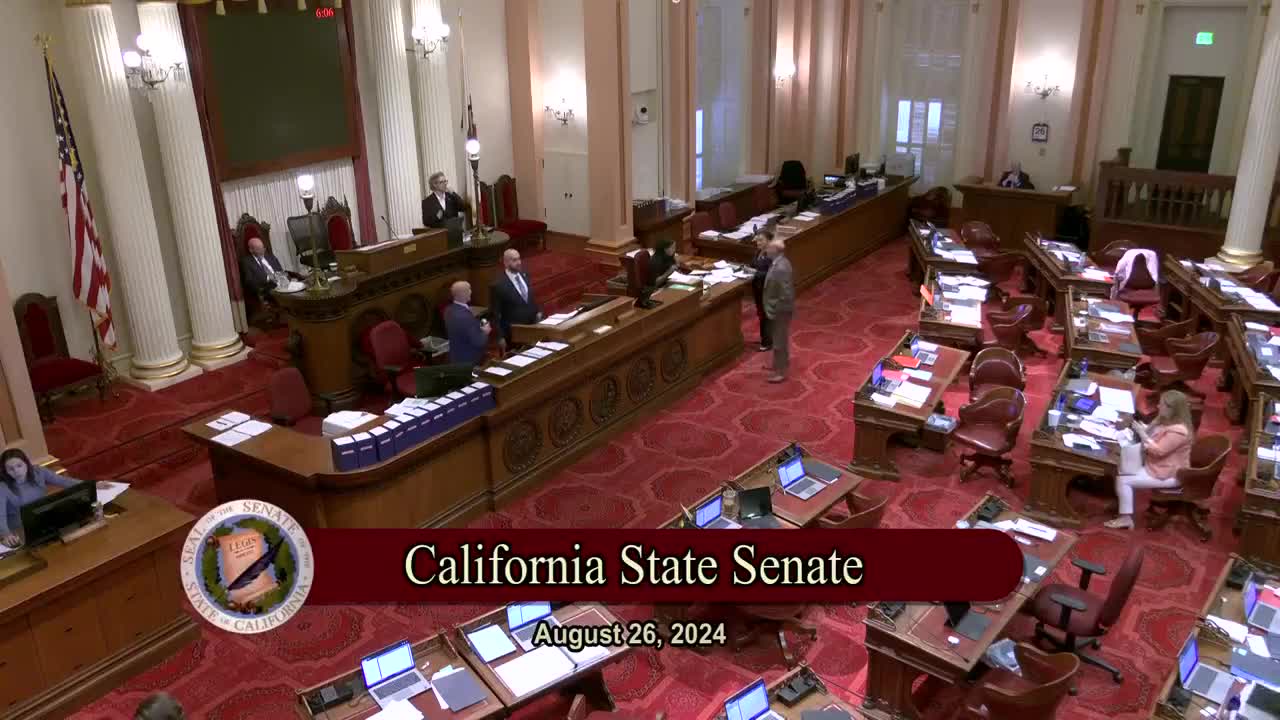 4MIN
Senate Floor
 2MIN
Senate Standing Committee on Appropriations
 5MIN
Senate Standing Committee on Natural Resources and Water
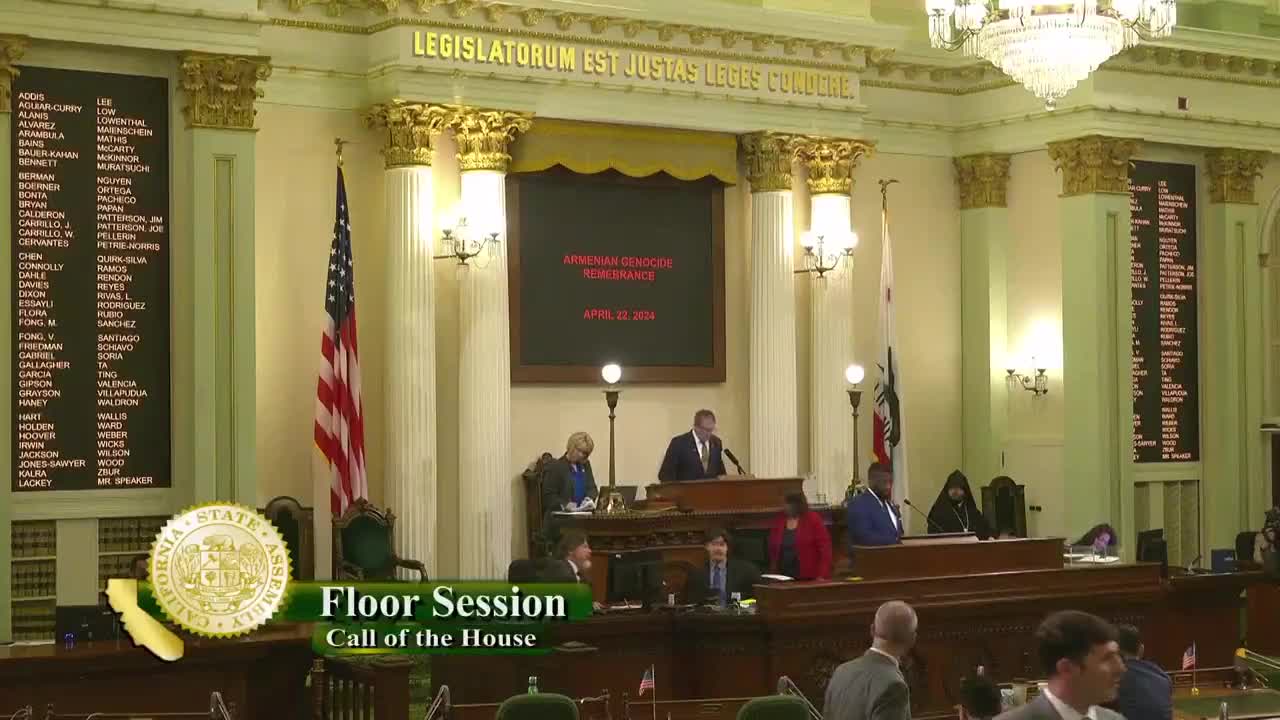 1MIN
Assembly Floor
 8MIN
Assembly Standing Committee on Water, Parks, and Wildlife


Bill Co-Author(s):
