AB 3223: Foster Youth Services Coordinating Program.
- Session Year: 2023-2024
- House: Assembly
- Latest Version Date: 2024-09-28
Current Status:
Passed
(2024-09-28: Chaptered by Secretary of State - Chapter 850, Statutes of 2024.)
Introduced
In Committee
First Chamber
In Committee
Second Chamber
Enacted
What does this bill do?
The bill expands who counts as a “pupil in foster care” for the state’s Foster Youth Services Coordinating Program to include a child who is the subject of a juvenile court petition (a formal juvenile court case) and has been identified by a county child welfare agency, a probation department, or certain Indian tribes as being at imminent risk of removal into foster care. That change allows county offices of education to offer the program’s coordinated educational supports and services to those at‑risk children as if they were in foster care.
The summary is provided by generative AI which can make mistakes. For original language, please view the details in the table below.
Existing law establishes the Foster Youth Services Coordinating Program, under the administration of the Superintendent of Public Instruction, to provide supplemental funding to county offices of education to coordinate and ensure that local educational agencies within a county office of educations jurisdiction are providing services to pupils in foster care pursuant to a foster youth services coordinating plan with the purpose of ensuring positive educational outcomes. Existing law defines pupil in foster care for these purposes.
This bill would add to the definition of pupil in foster care a child who is the subject of a juvenile court petition and has been identified by a county child welfare agency, a probation department, or an Indian tribe meeting specified criteria as being at imminent risk of removal and placement into foster care, as provided.
This bill would incorporate additional changes to Section 42921 of the Education Code proposed by AB 2137 to be operative only if this bill and AB 2137 are enacted and this bill is enacted last.
Existing law establishes the Foster Youth Services Coordinating Program, under the administration of the Superintendent of Public Instruction, to provide supplemental funding to county offices of education to coordinate and ensure that local educational agencies within a county office of educations jurisdiction are providing services to pupils in foster care pursuant to a foster youth services coordinating plan with the purpose of ensuring positive educational outcomes. Existing law defines pupil in foster care for these purposes.
This bill would add to the definition of pupil in foster care a child who is the subject of a juvenile court petition and has been identified by a county child welfare agency, a probation department, or an Indian tribe meeting specified criteria as being at imminent risk of removal and placement into foster care, as provided.
Existing law establishes the Foster Youth Services Coordinating Program, under the administration of the Superintendent of Public Instruction, to provide supplemental funding to county offices of education to coordinate and ensure that local educational agencies within a county office of educations jurisdiction are providing services to pupils in foster care pursuant to a foster youth services coordinating plan with the purpose of ensuring positive educational outcomes. Existing law defines pupil in foster care for these purposes.
This bill would add to the definition of pupil in foster care a child who is the subject of a juvenile court petition and has been identified as being at imminent risk of removal and placement into foster care, as provided.
(a)A county office of education, or a consortium of county offices of education, may apply to the Superintendent for grant funding, to the extent funds are available, to operate an education-based foster youth services coordinating program to provide educational support for pupils in foster care.
(b)Each foster youth services coordinating program operated pursuant to this chapter, if sufficient funds are available, shall have at least one person identified as the foster youth educational services coordinator. The foster youth educational services coordinator shall facilitate the provision of educational support pursuant to subdivisions (d) and (e) to any pupil in foster care residing or attending school in the county or consortium of counties.
(c)For purposes of this chapter, a pupil in foster care means a foster youth, as defined in subdivision (b) of Section 42238.01, a foster child who is detained in a county-operated juvenile detention facility, or a child who is the subject of a petition filed pursuant to Section 602 of the Welfare and Institutions Code and has been identified by a county child welfare agency, probation department, or Indian tribe that entered into an agreement pursuant to Section 10553.1 of the Welfare and Institutions Code as being at imminent risk of removal and placement into foster care.
(d)It is the intent of the Legislature that pupils in foster care with the greatest need for services be identified as the first priority for foster youth services coordinating programs. Priority shall be given to pupils who are living in out-of-home placements.
(e)As a condition of receiving funds pursuant to this chapter, each foster youth services coordinating program operated by a county office of education or a consortium of county offices of education pursuant to this chapter shall develop and implement a foster youth services coordinating plan for purposes of establishing guiding principles and protocols to provide supports for foster care pupils aligned with the population priorities established in subdivision (f). The plan shall include, to the extent possible, but not be limited to, all of the following:
(1)(A)A description of how the program will establish ongoing collaboration with local educational agencies, county child welfare agencies, and county probation departments, to determine the proper educational placement of the foster youth. This includes, but is not limited to, all of the following:
(i)Building the capacity of county agencies, school districts, and community organizations to better support the educational success of pupils in foster care.
(ii)Facilitating collaboration between county agencies, school districts, and community organizations to ensure coordinated and nonduplicative service delivery and to ensure pupils in foster care receive the educational supports and services they need to succeed in school. This may include, but is not limited to, education emancipation services such as support with transitions to postsecondary education or career technical education programs.
(iii)Providing services and educational case management in support of individual pupils in foster care, as necessary. This may include, but is not limited to, transition and school social work to support transition between schools or school districts.
(B)The primary goal of the collaboration required pursuant to this section shall be to minimize changes in school placement by supporting the implementation of Section 48850, subdivision (c) of Section 48853, and all related statutes that pertain to pupils in foster care. As necessary, and in accordance with Section 48853.5, the foster youth services coordinating program may pay for the cost of transportation to support this subparagraph.
(i)If it is in the best interests of a pupil in foster care to transfer schools, the foster youth services coordinating program shall support local educational agencies in the implementation of Section 48853.5, and all related statutes pertaining to pupils in foster care, such as ensuring transfers are done at an educationally appropriate time, educational records are quickly transferred, appropriate partial credits are awarded, and the pupil in foster care is quickly enrolled in appropriate classes.
(ii)In determining the appropriate educational placement of foster youth pupils, local educational agencies, county welfare agencies, and county probation departments shall consult with an educational rights holder, caregiver, social worker, teacher, counselor, court-appointed special advocate, other stakeholders, and the pupil, as appropriate. The purpose of the consultation shall be to ensure all educational programmatic options are considered, including, but not limited to, English learner, special education, advanced placement, and career technical education.
(2)(A)If a school district annually certifies in writing to the foster youth services coordinating program that it is unable, using any other state, federal, local, or private funds, to provide tutoring, mentoring, and counseling, and if those services are established as needed and identified by the appropriate school district, in collaboration with the county child welfare agency or county probation department, the school district may enter into a temporary agreement with the foster youth services coordinating program to provide those services.
(B)It is the intent of the Legislature that local educational agencies include information provided in subparagraph (C) in their local control and accountability plans when describing their services for foster youth pupils as required pursuant to paragraph (10) of subdivision (d) of Section 52066.
(C)It is the intent of the Legislature that county offices of education, in the development and adoption of their local control and accountability plans, include information specific to the transition requirement established pursuant to subdivision (b) of Section 42920.5, when describing the coordination of services for foster youth pupils required pursuant to paragraph (10) of subdivision (d) of Section 52066.
(3)(A)Policies and procedures to ensure educational placement for a foster youth pupil is not delayed, including, but not limited to, facilitating the establishment of an individualized education program in accordance with the federal Individuals with Disabilities Education Act (20 U.S.C. Sec. 1400 et seq.), if applicable, the transfer of records, transcripts, and other relevant educational information.
(B)The plan shall also describe how the program will facilitate coordination with local postsecondary educational institutions, including, but not limited to, the California Community Colleges, the California State University, and the University of California, to ensure foster youth pupils meet admission requirements and access programs that support their matriculation needs. The plan shall describe how the program will coordinate efforts to ensure, to the extent possible, the completion of the Free Application for Federal Student Aid or the California Dream Act Application for foster youth pupils who are in grade 12.
(4)Policies and procedures for local educational agencies, county welfare agencies, and county probation departments to share all relevant educational information for foster youth to ensure the court has updated and accurate information as it makes decisions regarding foster youths.
(f)When developing the plan required pursuant to this section, the county office of education, or the consortium of county offices of education, shall consider the needs of specific age groups, pupils in foster care in specific geographic areas with the highest concentration of pupils in foster care, and pupils in foster care with the greatest academic need. A foster youth services coordinating program is encouraged to first provide services for pupils in foster care who reside in group homes, institutional settings, or other placements with pupils with high academic needs, as determined by the local Executive Advisory Council.
(g)(1)Each foster youth services coordinating program operated pursuant to this chapter shall establish a local interagency Executive Advisory Council.
(2)The Executive Advisory Council may include representatives from the county child welfare agency, the county probation department, local educational agencies, local postsecondary educational institutions, and community organizations. If possible, the Executive Advisory Council may include, but is not limited to, foster youth, caregivers, educational rights holders, dependency attorneys, court representatives, court-appointed special advocates, and other interested stakeholders.
(3)The foster youth educational services coordinator shall be a permanent member of the Executive Advisory Council.
(4)The Executive Advisory Council shall regularly review the recommendations to the foster youth services plan required pursuant to subdivision (e).
SEC. 1.5.Section 42921 of the Education Code is amended to read:42921.(a)A county office of education, or a consortium of county offices of education, may apply to the Superintendent for grant funding, to the extent funds are available, to operate an education-based foster youth services coordinating program to provide educational support for pupils in foster care.
(b)Each foster youth services coordinating program operated pursuant to this chapter, if sufficient funds are available, shall have at least one person identified as the foster youth educational services coordinator. The foster youth educational services coordinator shall facilitate the provision of educational support pursuant to subdivisions (d) and (e) to any pupil in foster care residing or attending school in the county or consortium of counties.
(c)For purposes of this chapter, a pupil in foster care means a foster youth, as defined in subdivision (b) of Section 42238.01, a foster child who is detained in a county-operated juvenile detention facility, or a child who is the subject of a petition filed pursuant to Section 602 of the Welfare and Institutions Code and has been identified by a county child welfare agency, probation department, or Indian tribe that entered into an agreement pursuant to Section 10553.1 of the Welfare and Institutions Code as being at imminent risk of removal and placement into foster care.
(d)It is the intent of the Legislature that pupils in foster care with the greatest need for services be identified as the first priority for foster youth services coordinating programs. Priority shall be given to pupils who are living in out-of-home placements.
(e)As a condition of receiving funds pursuant to this chapter, each foster youth services coordinating program operated by a county office of education or a consortium of county offices of education pursuant to this chapter shall develop and implement a foster youth services coordinating plan for purposes of establishing guiding principles and protocols to provide supports for foster care pupils aligned with the population priorities established in subdivision (f). The plan shall include, to the extent possible, but not be limited to, all of the following:
(1)(A)A description of how the program will establish ongoing collaboration with local educational agencies, county child welfare agencies, and county probation departments to determine the proper educational placement of the foster youth. This includes, but is not limited to, all of the following:
(i)Building the capacity of county agencies, school districts, and community organizations to better support the educational success of pupils in foster care.
(ii)Facilitating collaboration between county agencies, school districts, and community organizations to ensure coordinated and nonduplicative service delivery and to ensure pupils in foster care receive the educational supports and services they need to succeed in school. This may include, but is not limited to, education emancipation services such as support with transitions to postsecondary education or career technical education programs.
(iii)Providing services and educational case management in support of individual pupils in foster care, as necessary. This may include, but is not limited to, transition and school social work to support transition between schools or school districts.
(B)The primary goal of the collaboration required pursuant to this section shall be to minimize changes in school placement by supporting the implementation of Section 48850, subdivision (c) of Section 48853, and all related statutes that pertain to pupils in foster care. As necessary, and in accordance with Section 48853.5, the foster youth services coordinating program may pay for the cost of transportation to support this subparagraph.
(i)If it is in the best interests of a pupil in foster care to transfer schools, the foster youth services coordinating program shall support local educational agencies in the implementation of Section 48853.5, and all related statutes pertaining to pupils in foster care, such as ensuring transfers are done at an educationally appropriate time, educational records are quickly transferred, appropriate partial credits are awarded, and the pupil in foster care is quickly enrolled in appropriate classes.
(ii)In determining the appropriate educational placement of foster youth pupils, local educational agencies, county welfare agencies, and county probation departments shall consult with an educational rights holder, caregiver, social worker, teacher, counselor, court-appointed special advocate, other stakeholders, and the pupil, as appropriate. The purpose of the consultation shall be to ensure all educational programmatic options are considered, including, but not limited to, English learner, special education, advanced placement, and career technical education.
(2)(A)If a foster youth educational services coordinator annually determines that the foster youth services coordinator is unable, through coordinating activities required under this section and using any other state, federal, local, or private funds, to secure tutoring, mentoring, and counseling services provided by a foster youth pupils school district, and if those services are established as needed and identified by the foster youth educational services coordinator, the foster youth services coordinating program may provide those services to the pupil.
(B)It is the intent of the Legislature that local educational agencies include information provided in subparagraph (C) in their local control and accountability plans when describing their services for foster youth pupils as required pursuant to paragraph (10) of subdivision (d) of Section 52066.
(C)It is the intent of the Legislature that county offices of education, in the development and adoption of their local control and accountability plans, include information specific to the transition requirement established pursuant to subdivision (b) of Section 42920.5, when describing the coordination of services for foster youth pupils required pursuant to paragraph (10) of subdivision (d) of Section 52066.
(3)(A)Policies and procedures to ensure educational placement for a foster youth pupil is not delayed, including, but not limited to, facilitating the establishment of an individualized education program in accordance with the federal Individuals with Disabilities Education Act (20 U.S.C. Sec. 1400 et seq.), if applicable, the transfer of records, transcripts, and other relevant educational information.
(B)The plan shall also describe how the program will facilitate coordination with local postsecondary educational institutions, including, but not limited to, the California Community Colleges, the California State University, and the University of California, to ensure foster youth pupils meet admission requirements and access programs that support their matriculation needs. The plan shall describe how the program will coordinate efforts to ensure, to the extent possible, the completion of the Free Application for Federal Student Aid or the California Dream Act Application for foster youth pupils who are in grade 12.
(4)Policies and procedures for local educational agencies, county welfare agencies, and county probation departments to share all relevant educational information for foster youth to ensure the court has updated and accurate information as it makes decisions regarding foster youths.
(f)When developing the plan required pursuant to this section, the county office of education, or the consortium of county offices of education, shall consider the needs of specific age groups, pupils in foster care in specific geographic areas with the highest concentration of pupils in foster care, and pupils in foster care with the greatest academic need. A foster youth services coordinating program is encouraged to first provide services for pupils in foster care who reside in group homes, institutional settings, or other placements with pupils with high academic needs, as determined by the local Executive Advisory Council.
(g)(1)Each foster youth services coordinating program operated pursuant to this chapter shall establish a local interagency Executive Advisory Council.
(2)The Executive Advisory Council may include representatives from the county child welfare agency, the county probation department, local educational agencies, local postsecondary educational institutions, and community organizations. If possible, the Executive Advisory Council may include, but is not limited to, foster youth, caregivers, educational rights holders, dependency attorneys, court representatives, court-appointed special advocates, and other interested stakeholders.
(3)The foster youth educational services coordinator shall be a permanent member of the Executive Advisory Council.
(4)The Executive Advisory Council shall regularly review the recommendations to the foster youth services plan required pursuant to subdivision (e).
SEC. 2.Section 1.5 of this bill incorporates amendments to Section 42921 of the Education Code proposed by both this bill and Assembly Bill 2137. That section of this bill shall only become operative if (1) both bills are enacted and become effective on or before January 1, 2025, (2) each bill amends Section 42921 of the Education Code, and (3) this bill is enacted after Assembly Bill 2137, in which case Section 1 of this bill shall not become operative.
(a)A county office of education, or a consortium of county offices of education, may elect to apply to the Superintendent for grant funding, to the extent funds are available, to operate an education-based foster youth services coordinating program to provide educational support for pupils in foster care.
(b)Each foster youth services coordinating program operated pursuant to this chapter, if sufficient funds are available, shall have at least one person identified as the foster youth educational services coordinator. The foster youth educational services coordinator shall facilitate the provision of educational support pursuant to subdivisions (d) and (e) to any pupil in foster care residing or attending school in the county or consortium of counties.
(c)For purposes of this chapter, a pupil in foster care means a foster youth, as defined in subdivision (b) of Section 42238.01, a foster child who is detained in a county-operated juvenile detention facility, or a child who is the subject of a petition filed pursuant to Section 602 of the Welfare and Institutions Code and has been identified by a county child welfare agency, probation department, or Indian tribe that entered into an agreement pursuant to Section 10553.1 of the Welfare and Institutions Code as being at imminent risk of removal and placement into foster care.
(d)It is the intent of the Legislature that pupils in foster care with the greatest need for services be identified as the first priority for foster youth services coordinating programs. Priority shall be given to pupils who are living in out-of-home placements.
(e)As a condition of receiving funds pursuant to this chapter, each foster youth services coordinating program operated by a county office of education or a consortium of county offices of education pursuant to this chapter shall develop and implement a foster youth services coordinating plan for purposes of establishing guiding principles and protocols to provide supports for foster care pupils aligned with the population priorities established in subdivision (f). The plan shall include, to the extent possible, but not be limited to, all of the following:
(1)(A)A description of how the program will establish ongoing collaboration with local educational agencies, county child welfare agencies, and county probation departments, to determine the proper educational placement of the foster youth. This includes, but is not limited to, all of the following:
(i)Building the capacity of county agencies, school districts, and community organizations to better support the educational success of pupils in foster care.
(ii)Facilitating collaboration between county agencies, school districts, and community organizations to ensure coordinated and nonduplicative service delivery and to ensure pupils in foster care receive the educational supports and services they need to succeed in school. This may include, but is not limited to, education emancipation services such as support with transitions to postsecondary education or career technical education programs.
(iii)Providing services and educational case management in support of individual pupils in foster care, as necessary. This may include, but is not limited to, transition and school social work to support transition between schools or school districts.
(B)The primary goal of the collaboration required pursuant to this section shall be to minimize changes in school placement by supporting the implementation of Section 48850, subdivision (c) of Section 48853, and all related statutes that pertain to pupils in foster care. As necessary, and in accordance with Section 48853.5, the foster youth services coordinating program may pay for the cost of transportation to support this paragraph. subparagraph.
(i)If it is in the best interests of a pupil in foster care to transfer schools, the foster youth services coordinating program shall support local educational agencies in the implementation of Section 48853.5, and all related statutes pertaining to pupils in foster care, such as ensuring transfers are done at an educationally appropriate time, educational records are quickly transferred, appropriate partial credits are awarded, and the pupil in foster care is quickly enrolled in appropriate classes.
(ii)In determining the appropriate educational placement of foster youth pupils, local educational agencies, county welfare agencies, and county probation departments shall consult with an educational rights holder, caregiver, social worker, teacher, counselor, court-appointed special advocate, other stakeholders, and the pupil, as appropriate. The purpose of the consultation shall be to ensure all educational programmatic options are considered, including, but not limited to, English learner, special education, advanced placement, and career technical education.
(2)(A)If a school district annually certifies in writing to the foster youth services coordinating program that it is unable, using any other state, federal, local, or private funds, to provide tutoring, mentoring, and counseling, and if those services are established as needed and identified by the appropriate school district, in collaboration with the county child welfare agency or county probation department, the school district may enter into a temporary agreement with the foster youth services coordinating program to provide those services.
(B)It is the intent of the Legislature that local educational agencies include information provided in subparagraph (C) in their local control and accountability plans when describing their services for foster youth pupils as required pursuant to paragraph (10) of subdivision (d) of Section 52066.
(C)It is the intent of the Legislature that county offices of education, in the development and adoption of their local control and accountability plans, include information specific to the transition requirement established pursuant to subdivision (b) of Section 42920.5, when describing the coordination of services for foster youth pupils required pursuant to paragraph (10) of subdivision (d) of Section 52066.
(3)(A)Policies and procedures to ensure educational placement for a foster youth pupil is not delayed, including, but not limited to, facilitating the establishment of an individualized education program in accordance with the federal Individuals with Disabilities Education Act (20 U.S.C. Sec. 1400 et seq.), if applicable, the transfer of records, transcripts, and other relevant educational information.
(B)The plan shall also describe how the program will facilitate coordination with local postsecondary educational institutions, including, but not limited to, the California Community Colleges, the California State University, and the University of California, to ensure foster youth pupils meet admission requirements and access programs that support their matriculation needs. The plan shall describe how the program will coordinate efforts to ensure, to the extent possible, the completion of the Free Application for Federal Student Aid or the California Dream Act Application for foster youth pupils who are in grade 12.
(4)Policies and procedures for local educational agencies, county welfare agencies, and county probation departments to share all relevant educational information for foster youth to ensure the court has updated and accurate information as it makes decisions regarding foster youths.
(f)When developing the plan required pursuant to this section, the county office of education, or the consortium of county offices of education, shall consider the needs of specific age groups, pupils in foster care in specific geographic areas with the highest concentration of pupils in foster care, and pupils in foster care with the greatest academic need. A foster youth services coordinating program is encouraged to first provide services for pupils in foster care who reside in group homes, institutional settings, or other placements with pupils with high academic needs, as determined by the local Executive Advisory Council.
(g)(1)Each foster youth services coordinating program operated pursuant to this chapter shall establish a local interagency Executive Advisory Council.
(2)The Executive Advisory Council may include representatives from the county child welfare agency, the county probation department, local educational agencies, local postsecondary educational institutions, and community organizations. If possible, the Executive Advisory Council may include, but is not limited to, foster youth, caregivers, educational rights holders, dependency attorneys, court representatives, court-appointed special advocates, and other interested stakeholders.
(3)The foster youth educational services coordinator shall be a permanent member of the Executive Advisory Council.
(4)The Executive Advisory Council shall regularly review the recommendations to the foster youth services plan required pursuant to subdivision (e).
SEC. 1.5.Section 42921 of the Education Code is amended to read:42921.(a)A county office of education, or a consortium of county offices of education, may elect to apply to the Superintendent for grant funding, to the extent funds are available, to operate an education-based foster youth services coordinating program to provide educational support for pupils in foster care.
(b)Each foster youth services coordinating program operated pursuant to this chapter, if sufficient funds are available, shall have at least one person identified as the foster youth educational services coordinator. The foster youth educational services coordinator shall facilitate the provision of educational support pursuant to subdivisions (d) and (e) to any pupil in foster care residing or attending school in the county or consortium of counties.
(c)For purposes of this chapter, a pupil in foster care means a foster youth, as defined in subdivision (b) of Section 42238.01, or a foster child who is detained in a county-operated juvenile detention facility. facility, or a child who is the subject of a petition filed pursuant to Section 602 of the Welfare and Institutions Code and has been identified by a county child welfare agency, probation department, or Indian tribe that entered into an agreement pursuant to Section 10553.1 of the Welfare and Institutions Code as being at imminent risk of removal and placement into foster care.
(d)It is the intent of the Legislature that pupils in foster care with the greatest need for services be identified as the first priority for foster youth services coordinating programs. Priority shall be given to pupils who are living in out-of-home placements.
(e)As a condition of receiving funds pursuant to this chapter, each foster youth services coordinating program operated by a county office of education or a consortium of county offices of education pursuant to this chapter shall develop and implement a foster youth services coordinating plan for purposes of establishing guiding principles and protocols to provide supports for foster care pupils aligned with the population priorities established in subdivision (f). The plan shall include, to the extent possible, but not be limited to, all of the following:
(1)(A)A description of how the program will establish ongoing collaboration with local educational agencies, county child welfare agencies, and county probation departments, departments to determine the proper educational placement of the foster youth. This includes, but is not limited to, all of the following:
(i)Building the capacity of county agencies, school districts, and community organizations to better support the educational success of pupils in foster care.
(ii)Facilitating collaboration between county agencies, school districts, and community organizations to ensure coordinated and nonduplicative service delivery and to ensure pupils in foster care receive the educational supports and services they need to succeed in school. This may include, but is not limited to, education emancipation services such as support with transitions to postsecondary education or career technical education programs.
(iii)Providing services and educational case management in support of individual pupils in foster care, as necessary. This may include, but is not limited to, transition and school social work to support transition between schools or school districts.
(B)The primary goal of the collaboration required pursuant to this section shall be to minimize changes in school placement by supporting the implementation of Section 48850, subdivision (c) of Section 48853, and all related statutes that pertain to pupils in foster care. As necessary, and in accordance with Section 48853.5, the foster youth services coordinating program may pay for the cost of transportation to support this paragraph. subparagraph.
(i)If it is in the best interests of a pupil in foster care to transfer schools, the foster youth services coordinating program shall support local educational agencies in the implementation of Section 48853.5, and all related statutes pertaining to pupils in foster care, such as ensuring transfers are done at an educationally appropriate time, educational records are quickly transferred, appropriate partial credits are awarded, and the pupil in foster care is quickly enrolled in appropriate classes.
(ii)In determining the appropriate educational placement of foster youth pupils, local educational agencies, county welfare agencies, and county probation departments shall consult with an educational rights holder, caregiver, social worker, teacher, counselor, court-appointed special advocate, other stakeholders, and the pupil, as appropriate. The purpose of the consultation shall be to ensure all educational programmatic options are considered, including, but not limited to, English learner, special education, advanced placement, and career technical education.
(2)(A)If a school district annually certifies in writing to foster youth educational services coordinator annually determines that the foster youth services coordinating program that it is unable, coordinator is unable, through coordinating activities required under this section and using any other state, federal, local, or private funds, to provide secure tutoring, mentoring, and counseling, counseling services provided by a foster youth pupils school district, and if those services are established as needed and identified by the appropriate school district, in collaboration with the county child welfare agency or county probation department, the school district may enter into a temporary agreement with the foster youth educational services coordinator, the foster youth services coordinating program to may provide those services. services to the pupil.
(B)It is the intent of the Legislature that local educational agencies include information provided in subparagraph (C) in their local control and accountability plans when describing their services for foster youth pupils as required pursuant to paragraph (10) of subdivision (d) of Section 52066.
(C)It is the intent of the Legislature that county offices of education, in the development and adoption of their local control and accountability plans, include information specific to the transition requirement established pursuant to subdivision (b) of Section 42920.5, when describing the coordination of services for foster youth pupils required pursuant to paragraph (10) of subdivision (d) of Section 52066.
(3)(A)Policies and procedures to ensure educational placement for a foster youth pupil is not delayed, including, but not limited to, facilitating the establishment of an individualized education program in accordance with the federal Individuals with Disabilities Education Act (20 U.S.C. Sec. 1400 et seq.), if applicable, the transfer of records, transcripts, and other relevant educational information.
(B)The plan shall also describe how the program will facilitate coordination with local postsecondary educational institutions, including, but not limited to, the California Community Colleges, the California State University, and the University of California, to ensure foster youth pupils meet admission requirements and access programs that support their matriculation needs. The plan shall describe how the program will coordinate efforts to ensure, to the extent possible, the completion of the Free Application for Federal Student Aid or the California Dream Act Application for foster youth pupils who are in grade 12.
(4)Policies and procedures for local educational agencies, county welfare agencies, and county probation departments to share all relevant educational information for foster youth to ensure the court has updated and accurate information as it makes decisions regarding foster youths.
(f)When developing the plan required pursuant to this section, the county office of education, or the consortium of county offices of education, shall consider the needs of specific age groups, pupils in foster care in specific geographic areas with the highest concentration of pupils in foster care, and pupils in foster care with the greatest academic need. A foster youth services coordinating program is encouraged to first provide services for pupils in foster care who reside in group homes, institutional settings, or other placements with pupils with high academic needs, as determined by the local Executive Advisory Council.
(g)(1)Each foster youth services coordinating program operated pursuant to this chapter shall establish a local interagency Executive Advisory Council.
(2)The Executive Advisory Council may include representatives from the county child welfare agency, the county probation department, local educational agencies, local postsecondary educational institutions, and community organizations. If possible, the Executive Advisory Council may include, but is not limited to, foster youth, caregivers, educational rights holders, dependency attorneys, court representatives, court-appointed special advocates, and other interested stakeholders.
(3)The foster youth educational services coordinator shall be a permanent member of the Executive Advisory Council.
(4)The Executive Advisory Council shall regularly review the recommendations to the foster youth services plan required pursuant to subdivision (e).
SEC. 2.Section 1.5 of this bill incorporates amendments to Section 42921 of the Education Code proposed by both this bill and Assembly Bill 2137. That section of this bill shall only become operative if (1) both bills are enacted and become effective on or before January 1, 2025, (2) each bill amends Section 42921 of the Education Code, and (3) this bill is enacted after Assembly Bill 2137, in which case Section 1 of this bill shall not become operative.
(a)A county office of education, or a consortium of county offices of education, may elect to apply to the Superintendent for grant funding, to the extent funds are available, to operate an education-based foster youth services coordinating program to provide educational support for pupils in foster care.
(b)Each foster youth services coordinating program operated pursuant to this chapter, if sufficient funds are available, shall have at least one person identified as the foster youth educational services coordinator. The foster youth educational services coordinator shall facilitate the provision of educational support pursuant to subdivisions (d) and (e) to any pupil in foster care residing or attending school in the county or consortium of counties.
(c)For purposes of this chapter, a pupil in foster care means a foster youth, as defined in subdivision (b) of Section 42238.01, a foster child who is detained in a county-operated juvenile detention facility, or a child who is the subject of a petition filed pursuant to Section 602 of the Welfare and Institutions Code and has been identified by a county child welfare agency, probation department, or Indian tribe that entered into an agreement pursuant to Section 10553.1 of the Welfare and Institutions Code as being at imminent risk of removal and placement into foster care pursuant to Section 8.1 of the federal Child Welfare Policy Manual. care.
(d)It is the intent of the Legislature that pupils in foster care with the greatest need for services be identified as the first priority for foster youth services coordinating programs. Priority shall be given to pupils who are living in out-of-home placements.
(e)As a condition of receiving funds pursuant to this chapter, each foster youth services coordinating program operated by a county office of education or a consortium of county offices of education pursuant to this chapter shall develop and implement a foster youth services coordinating plan for purposes of establishing guiding principles and protocols to provide supports for foster care pupils aligned with the population priorities established in subdivision (f). The plan shall include, to the extent possible, but not be limited to, all of the following:
(1)(A)A description of how the program will establish ongoing collaboration with local educational agencies, county child welfare agencies, and county probation departments, to determine the proper educational placement of the foster youth. This includes, but is not limited to, all of the following:
(i)Building the capacity of county agencies, school districts, and community organizations to better support the educational success of pupils in foster care.
(ii)Facilitating collaboration between county agencies, school districts, and community organizations to ensure coordinated and nonduplicative service delivery and to ensure pupils in foster care receive the educational supports and services they need to succeed in school. This may include, but is not limited to, education emancipation services such as support with transitions to postsecondary education or career technical education programs.
(iii)Providing services and educational case management in support of individual pupils in foster care, as necessary. This may include, but is not limited to, transition and school social work to support transition between schools or school districts.
(B)The primary goal of the collaboration required pursuant to this section shall be to minimize changes in school placement by supporting the implementation of Section 48850, subdivision (c) of Section 48853, and all related statutes that pertain to pupils in foster care. As necessary, and in accordance with Section 48853.5, the foster youth services coordinating program may pay for the cost of transportation to support this paragraph.
(i)If it is in the best interests of a pupil in foster care to transfer schools, the foster youth services coordinating program shall support local educational agencies in the implementation of Section 48853.5, and all related statutes pertaining to pupils in foster care, such as ensuring transfers are done at an educationally appropriate time, educational records are quickly transferred, appropriate partial credits are awarded, and the pupil in foster care is quickly enrolled in appropriate classes.
(ii)In determining the appropriate educational placement of foster youth pupils, local educational agencies, county welfare agencies, and county probation departments shall consult with an educational rights holder, caregiver, social worker, teacher, counselor, court-appointed special advocate, other stakeholders, and the pupil, as appropriate. The purpose of the consultation shall be to ensure all educational programmatic options are considered, including, but not limited to, English learner, special education, advanced placement, and career technical education.
(2)(A)If a school district annually certifies in writing to the foster youth services coordinating program that it is unable, using any other state, federal, local, or private funds, to provide tutoring, mentoring, and counseling, and if those services are established as needed and identified by the appropriate school district, in collaboration with the county child welfare agency or county probation department, the school district may enter into a temporary agreement with the foster youth services coordinating program to provide those services.
(B)It is the intent of the Legislature that local educational agencies include information provided in subparagraph (C) in their local control and accountability plans when describing their services for foster youth pupils as required pursuant to paragraph (10) of subdivision (d) of Section 52066.
(C)It is the intent of the Legislature that county offices of education, in the development and adoption of their local control and accountability plans, include information specific to the transition requirement established pursuant to subdivision (b) of Section 42920.5, when describing the coordination of services for foster youth pupils required pursuant to paragraph (10) of subdivision (d) of Section 52066.
(3)(A)Policies and procedures to ensure educational placement for a foster youth pupil is not delayed, including, but not limited to, facilitating the establishment of an individualized education program in accordance with the federal Individuals with Disabilities Education Act (20 U.S.C. Sec. 1400 et seq.), if applicable, the transfer of records, transcripts, and other relevant educational information.
(B)The plan shall also describe how the program will facilitate coordination with local postsecondary educational institutions, including, but not limited to, the California Community Colleges, the California State University, and the University of California, to ensure foster youth pupils meet admission requirements and access programs that support their matriculation needs. The plan shall describe how the program will coordinate efforts to ensure, to the extent possible, the completion of the Free Application for Federal Student Aid or the California Dream Act Application for foster youth pupils who are in grade 12.
(4)Policies and procedures for local educational agencies, county welfare agencies, and county probation departments to share all relevant educational information for foster youth to ensure the court has updated and accurate information as it makes decisions regarding foster youths.
(f)When developing the plan required pursuant to this section, the county office of education, or the consortium of county offices of education, shall consider the needs of specific age groups, pupils in foster care in specific geographic areas with the highest concentration of pupils in foster care, and pupils in foster care with the greatest academic need. A foster youth services coordinating program is encouraged to first provide services for pupils in foster care who reside in group homes, institutional settings, or other placements with pupils with high academic needs, as determined by the local Executive Advisory Council.
(g)(1)Each foster youth services coordinating program operated pursuant to this chapter shall establish a local interagency Executive Advisory Council.
(2)The Executive Advisory Council may include representatives from the county child welfare agency, the county probation department, local educational agencies, local postsecondary educational institutions, and community organizations. If possible, the Executive Advisory Council may include, but is not limited to, foster youth, caregivers, educational rights holders, dependency attorneys, court representatives, court-appointed special advocates, and other interested stakeholders.
(3)The foster youth educational services coordinator shall be a permanent member of the Executive Advisory Council.
(4)The Executive Advisory Council shall regularly review the recommendations to the foster youth services plan required pursuant to subdivision (e).
(a)A county office of education, or a consortium of county offices of education, may elect to apply to the Superintendent for grant funding, to the extent funds are available, to operate an education-based foster youth services coordinating program to provide educational support for pupils in foster care.
(b)Each foster youth services coordinating program operated pursuant to this chapter, if sufficient funds are available, shall have at least one person identified as the foster youth educational services coordinator. The foster youth educational services coordinator shall facilitate the provision of educational support pursuant to subdivisions (d) and (e) to any pupil in foster care residing or attending school in the county or consortium of counties.
(c)For purposes of this chapter, a pupil in foster care means a foster youth, as defined in subdivision (b) of Section 42238.01, or a foster child who is detained in a county-operated juvenile detention facility. facility, or a child who is the subject of a petition filed pursuant to Section 602 of the Welfare and Institutions Code and has been identified as being at imminent risk of removal and placement into foster care pursuant to Section 8.1 of the federal Child Welfare Policy Manual.
(d)It is the intent of the Legislature that pupils in foster care with the greatest need for services be identified as the first priority for foster youth services coordinating programs. Priority shall be given to pupils who are living in out-of-home placements.
(e)As a condition of receiving funds pursuant to this chapter, each foster youth services coordinating program operated by a county office of education or a consortium of county offices of education pursuant to this chapter shall develop and implement a foster youth services coordinating plan for purposes of establishing guiding principles and protocols to provide supports for foster care pupils aligned with the population priorities established in subdivision (f). The plan shall include, to the extent possible, but not be limited to, all of the following:
(1)(A)A description of how the program will establish ongoing collaboration with local educational agencies, county child welfare agencies, and county probation departments, to determine the proper educational placement of the foster youth. This includes, but is not limited to, all of the following:
(i)Building the capacity of county agencies, school districts, and community organizations to better support the educational success of pupils in foster care.
(ii)Facilitating collaboration between county agencies, school districts, and community organizations to ensure coordinated and nonduplicative service delivery and to ensure pupils in foster care receive the educational supports and services they need to succeed in school. This may include, but is not limited to, education emancipation services such as support with transitions to postsecondary education or career technical education programs.
(iii)Providing services and educational case management in support of individual pupils in foster care, as necessary. This may include, but is not limited to, transition and school social work to support transition between schools or school districts.
(B)The primary goal of the collaboration required pursuant to this section shall be to minimize changes in school placement by supporting the implementation of Section 48850, subdivision (c) of Section 48853, and all related statutes that pertain to pupils in foster care. As necessary, and in accordance with Section 48853.5, the foster youth services coordinating program may pay for the cost of transportation to support this paragraph.
(i)If it is in the best interests of a pupil in foster care to transfer schools, the foster youth services coordinating program shall support local educational agencies in the implementation of Section 48853.5, and all related statutes pertaining to pupils in foster care, such as ensuring transfers are done at an educationally appropriate time, educational records are quickly transferred, appropriate partial credits are awarded, and the pupil in foster care is quickly enrolled in appropriate classes.
(ii)In determining the appropriate educational placement of foster youth pupils, local educational agencies, county welfare agencies, and county probation departments shall consult with an educational rights holder, caregiver, social worker, teacher, counselor, court-appointed special advocate, other stakeholders, and the pupil, as appropriate. The purpose of the consultation shall be to ensure all educational programmatic options are considered, including, but not limited to, English learner, special education, advanced placement, and career technical education.
(2)(A)If a school district annually certifies in writing to the foster youth services coordinating program that it is unable, using any other state, federal, local, or private funds, to provide tutoring, mentoring, and counseling, and if those services are established as needed and identified by the appropriate school district, in collaboration with the county child welfare agency or county probation department, the school district may enter into a temporary agreement with the foster youth services coordinating program to provide those services.
(B)It is the intent of the Legislature that local educational agencies include information provided in subparagraph (C) in their local control and accountability plans when describing their services for foster youth pupils as required pursuant to paragraph (10) of subdivision (d) of Section 52066.
(C)It is the intent of the Legislature that county offices of education, in the development and adoption of their local control and accountability plans, include information specific to the transition requirement established pursuant to subdivision (b) of Section 42920.5, when describing the coordination of services for foster youth pupils required pursuant to paragraph (10) of subdivision (d) of Section 52066.
(3)(A)Policies and procedures to ensure educational placement for a foster youth pupil is not delayed, including, but not limited to, facilitating the establishment of an individualized education program in accordance with the federal Individuals with Disabilities Education Act (20 U.S.C. Sec. 1400 et seq.), if applicable, the transfer of records, transcripts, and other relevant educational information.
(B)The plan shall also describe how the program will facilitate coordination with local postsecondary educational institutions, including, but not limited to, the California Community Colleges, the California State University, and the University of California, to ensure foster youth pupils meet admission requirements and access programs that support their matriculation needs. The plan shall describe how the program will coordinate efforts to ensure, to the extent possible, the completion of the Free Application for Federal Student Aid or the California Dream Act Application for foster youth pupils who are in grade 12.
(4)Policies and procedures for local educational agencies, county welfare agencies, and county probation departments to share all relevant educational information for foster youth to ensure the court has updated and accurate information as it makes decisions regarding foster youths.
(f)When developing the plan required pursuant to this section, the county office of education, or the consortium of county offices of education, shall consider the needs of specific age groups, pupils in foster care in specific geographic areas with the highest concentration of pupils in foster care, and pupils in foster care with the greatest academic need. A foster youth services coordinating program is encouraged to first provide services for pupils in foster care who reside in group homes, institutional settings, or other placements with pupils with high academic needs, as determined by the local Executive Advisory Council.
(g)(1)Each foster youth services coordinating program operated pursuant to this chapter shall establish a local interagency Executive Advisory Council.
(2)The Executive Advisory Council may include representatives from the county child welfare agency, the county probation department, local educational agencies, local postsecondary educational institutions, and community organizations. If possible, the Executive Advisory Council may include, but is not limited to, foster youth, caregivers, educational rights holders, dependency attorneys, court representatives, court-appointed special advocates, and other interested stakeholders.
(3)The foster youth educational services coordinator shall be a permanent member of the Executive Advisory Council.
(4)The Executive Advisory Council shall regularly review the recommendations to the foster youth services plan required pursuant to subdivision (e).
|
Date
|
Status
|
|---|---|
| Sep 28, 2024 | Chaptered by Secretary of State - Chapter 850, Statutes of 2024. |
| Sep 28, 2024 | Approved by the Governor. |
| Sep 16, 2024 | Enrolled and presented to the Governor at 3:30 p.m. |
| Aug 31, 2024 | Senate amendments concurred in. To Engrossing and Enrolling. (Ayes 76. Noes 0.). |
| Aug 31, 2024 | In Assembly. Concurrence in Senate amendments pending. |
| Aug 30, 2024 | Read third time. Passed. Ordered to the Assembly. (Ayes 38. Noes 0.). |
| Aug 26, 2024 | Read second time. Ordered to third reading. |
| Aug 23, 2024 | Read third time and amended. Ordered to second reading. |
| Aug 22, 2024 | Read second time. Ordered to third reading. |
| Aug 21, 2024 | Read third time and amended. Ordered to second reading. |
| Aug 19, 2024 | Read second time. Ordered to third reading. |
| Aug 15, 2024 | From committee: Do pass. (Ayes 6. Noes 0.) (August 15). |
| Jun 17, 2024 | In committee: Referred to suspense file. |
| Jun 5, 2024 | From committee: Do pass and re-refer to Com. on APPR. (Ayes 7. Noes 0.) (June 5). Re-referred to Com. on APPR. |
| May 29, 2024 | Referred to Com. on ED. |
| May 16, 2024 | In Senate. Read first time. To Com. on RLS. for assignment. |
| May 16, 2024 | Read third time. Passed. Ordered to the Senate. (Ayes 71. Noes 0.) |
| May 9, 2024 | Read second time. Ordered to Consent Calendar. |
| May 8, 2024 | From committee: Do pass. To Consent Calendar. (Ayes 15. Noes 0.) (May 8). |
| Apr 24, 2024 | From committee: Do pass and re-refer to Com. on APPR. with recommendation: To Consent Calendar. (Ayes 6. Noes 0.) (April 23). Re-referred to Com. on APPR. |
| Apr 4, 2024 | From committee: Do pass and re-refer to Com. on HUM. S. with recommendation: To Consent Calendar. (Ayes 7. Noes 0.) (April 3). Re-referred to Com. on HUM. S. |
| Mar 11, 2024 | Referred to Coms. on ED. and HUM. S. |
| Feb 17, 2024 | From printer. May be heard in committee March 18. |
| Feb 16, 2024 | Read first time. To print. |
|
Date
|
Description
|
Location
|
Votes
|
|
|---|---|---|---|---|
| Aug 31, 2024 | AB 3223 Wilson Concurrence in Senate Amendments | Assembly Floor |
Passed |
|
| Aug 30, 2024 | Assembly 3rd Reading AB3223 Wilson By Limón | Senate Floor |
Passed |
|
| Aug 15, 2024 | Do pass | Senate Standing Committee on Appropriations |
Passed |
|
| Jun 17, 2024 | Placed on suspense file | Senate Standing Committee on Appropriations |
Passed |
|
| Jun 5, 2024 | Do pass, but first be re-referred to the Committee on [Appropriations] | Senate Standing Committee on Education |
Passed |
|
| May 16, 2024 | AB 3223 Wilson Consent Calendar Second Day Regular Session | Assembly Floor |
Passed |
|
| May 8, 2024 | Do pass. To Consent Calendar. | Assembly Standing Committee on Appropriations |
Passed |
|
| Apr 23, 2024 | Do pass and be re-referred to the Committee on [Appropriations] with recommendation: To Consent Calendar | Assembly Standing Committee on Human Services |
Passed |
|
| Apr 3, 2024 | Do pass and be re-referred to the Committee on [Human Services] with recommendation: To Consent Calendar | Assembly Standing Committee on Education |
Passed |
This list shows positions taken on this bill by organizations on the date displayed, which is linked to the original source.
Positions by individuals are not included.
|
Organization
|
Position
|
Date
|
|---|---|---|
| Alameda County Office Of Education | ** Support | |
| California County Superintendents of Schools | * Against Unless Amend | Jun 6, 2024 |
| Chief Probation Officers Of California | ** Support |
CONCURRENCE IN SENATE AMENDMENTS
CSA1 Bill Id:AB 3223
Author:(Wilson)
As Amended Ver:August 23, 2024
Majority vote
SUMMARY
Expands eligibility for the Foster Youth Services Coordinating Program (FYSCP) to youth who are subject to a juvenile court petition and who have been identified as being at imminent risk of removal and placement into foster care.
Senate Amendments
- Requires, for purposes of the definition of foster youth eligible for the FYSCP program, that the identification of foster youth as being at imminent risk of removal and placement into foster care be made by a county child welfare agency, probation department, or Indian tribe, instead of pursuant to the federal Child Welfare Policy Manual.
- Add language to avoid conflicts with AB 2137 of this Session.
COMMENTS
Title IV-E. This bill permits a child who is the subject of a petition filed pursuant to Section 602 of the WIC and who has been identified as being at imminent risk of removal. According to the California Department of Social Services (CDSS), the federal definition of a Title IV-E candidate for foster care is a child at "imminent" or "serious" risk of removal, when placement in foster care is the planned arrangement.
Different definitions of foster youth for different purposes. Foster youth are defined differently for purposes of services, funding, and rights, in different sections of state and federal law. The chart below shows these definitions, as posted on the CDE website. The inclusion of students considered Title IV-E candidates, as proposed by this bill, will not align with other definitions used for purposes of educational rights, funding, and data collection, among other functions.
CATEGORY OF FOSTER YOUTH | Included in Local Control Funding Formula (LCFF) | Included in Every Student Succeeds Act (ESSA) | Included in CDSS' Definition of Care and Placement | CA Foster Youth Educational Rights | Available in California Longitudinal Pupil Achievement Data (CALPADS) System via Foster Match Process | |
OUT-OF-HOME Child Welfare | Yes | Yes | Yes | Yes | Yes | |
OUT-OF-HOME Probation | Yes | Yes | Yes | Yes | Yes | |
IN-HOME PROBATION | Not Included | Not Included | Not Included | Yes | Not Available | |
FAMILY MAINTENANCE | Yes | Not Included | Not Included | Yes | Yes | |
NON-MINOR DEPENDENTS | Yes | Yes | Yes | Yes | Yes | |
VOLUNTARY PLACEMENT AGREEMENTS | Yes | Yes | Yes | Yes | Yes | |
TRIBAL FOSTER YOUTH (AB 1962) | Yes | Only for Title IV-E tribes | N/A | Yes | In CALPADS, but not via Foster Match process | |
EMERGENCY REMOVALS | Not Included | Does not differentiate between emergency removal and placement | Yes | Yes | Yes (if in placement more than 7 days) | |
Foster Youth Services Coordinating Program. The CDE administers the FYSCPs through COEs to provide support services to foster children who suffer the traumatic effects of displacement from family and schools and multiple placements in foster care. These FYSCPs have the ability and authority to ensure that health and school records are obtained to establish appropriate placements and coordinate instruction, counseling, tutoring, mentoring, vocational training, emancipation services, training for independent living, and other related services. The goal of FYSCPs is to increase the stability of placements for foster children and youth. The services are designed to improve the children's educational performance and personal achievement, directly benefiting them as well as providing long-range cost savings to the state.
The program began in 1981 as a pilot program in four school districts, was expanded the program statewide through COEs in 1998, and was expanded again in 2006 to include additional eligible students. In 2013, the Local Control Funding Formula (LCFF) eliminated approximately three-quarters of all K-12 education categorical programs, but Foster Youth Services (FYS) is one of the few programs that has remained "outside" the LCFF as a categorical program.
According to the Author
"The California Department of Education (CDE) administers the Foster Youth Services Coordinating Programs (FYSCPs) through county offices of education (COEs) to provide support services for foster youth and coordinates instruction, counseling, tutoring, mentoring, vocational training, training for independent living, and other related services. The FYSCPs are designed to increase stability and educational support.
Currently, the Education Code establishing FYSCPs includes foster youth in the child welfare system that are in placement as well as youth who remain in the home and are receiving family maintenance services. Also included as eligible youth for this program are youth with a WIC 602 petition who have been made wards of the court and ordered into foster care.
However, youth that probation works with that are subject to a WIC 602 petition at risk of placement as identified as Title IV-E candidates, which is similar in nature to child welfare youth in family maintenance, are not expressly included. The services provided via the FYSCP would be beneficial to these youth in their educational development, but it is not expressly reflected in Educational Code Section 42921.
By expressly clarifying that these youth are eligible for FYSCP services, it supports parity for this population of youth and allows for them to receive educational supports, mentoring, tutoring and other services through the county offices of education with the goal of supporting their educational needs in an effort to help provide stability in the home and mitigate risk of placement."
Arguments in Support
The Chief Probation Officers of California writes, "Currently, the Education Code establishing FYSCPs includes foster youth in the child welfare system that are in placement as well as youth who remain in the home and are receiving family maintenance services. Also included as eligible youth for this program are youth with a WIC 602 petition who have been made wards of the court and ordered into foster care.
However, youth that probation works with that are subject to a WIC 602 petition who are at risk of removal and placement into foster care and identified as Title IV-E candidates are similar in nature to child welfare youth in family maintenance, but are not expressly included. The services provided via the FYSCP would be beneficial to these youth in their educational development, but it is not expressly reflected in Educational Code Section 42921.
AB 3223 would clarify the applicability of the Foster Youth Services Coordinating Program in also serving youth with a WIC 602 petition who have been identified as a Title IV-E candidate and at risk of placement into foster care. By expressly clarifying that these youth are eligible for FYSCP services, it allows for them to receive educational supports, mentoring, tutoring and other services through the county offices of education with the goal of supporting their educational needs in an effort to help provide stability in the home and mitigate risk of placement."
Arguments in Opposition
None on file/
FISCAL COMMENTS
According to the Senate Appropriations Committee, pursuant to Senate Rule 28.8, negligible state costs.
VOTES:
ASM EDUCATION: 7-0-0
YES: Muratsuchi, Addis, Alvarez, Bonta, Flora, Hoover, McCarty
ASM HUMAN SERVICES: 6-0-1
YES: Lee, Essayli, Calderon, Gipson, Jackson, Ortega
ABS, ABST OR NV: Mathis
ASM APPROPRIATIONS: 15-0-0
YES: Wicks, Sanchez, Arambula, Bryan, Calderon, Wendy Carrillo, Dixon, Mike Fong, Friedman, Haney, Hart, Jim Patterson, Pellerin, Ta, Villapudua
ASSEMBLY FLOOR: 71-0-9
YES: Aguiar-Curry, Alanis, Arambula, Bains, Bauer-Kahan, Bennett, Berman, Boerner, Bonta, Bryan, Calderon, Juan Carrillo, Wendy Carrillo, Chen, Connolly, Davies, Dixon, Essayli, Mike Fong, Friedman, Gabriel, Gallagher, Garcia, Grayson, Haney, Hart, Holden, Hoover, Jackson, Jones-Sawyer, Kalra, Lackey, Lee, Low, Lowenthal, Maienschein, McCarty, McKinnor, Muratsuchi, Stephanie Nguyen, Ortega, Pacheco, Papan, Jim Patterson, Joe Patterson, Pellerin, Petrie-Norris, Quirk-Silva, Ramos, Rendon, Reyes, Luz Rivas, Rodriguez, Blanca Rubio, Sanchez, Santiago, Schiavo, Soria, Ta, Ting, Valencia, Villapudua, Waldron, Wallis, Ward, Weber, Wicks, Wilson, Wood, Zbur, Robert Rivas
ABS, ABST OR NV: Addis, Alvarez, Cervantes, Megan Dahle, Flora, Vince Fong, Gipson, Irwin, Mathis
SENATE FLOOR: 40-0-0
YES: Allen, Alvarado-Gil, Archuleta, Ashby, Atkins, Becker, Blakespear, Bradford, Caballero, Cortese, Dahle, Dodd, Durazo, Eggman, Glazer, Gonzalez, Grove, Hurtado, Jones, Laird, Limón, McGuire, Menjivar, Min, Newman, Nguyen, Niello, Ochoa Bogh, Padilla, Portantino, Roth, Rubio, Seyarto, Skinner, Smallwood-Cuevas, Stern, Umberg, Wahab, Wiener, Wilk
UPDATED
VERSION: August 23, 2024
CONSULTANT: Tanya Lieberman / ED. / (916) 319-2087 FN: 0004917
SENATE RULES COMMITTEE Office of Senate Floor Analyses (916) 651-1520 Fax: (916) 327-4478 | AB 3223 |
THIRD READING
Bill No: AB 3223
Author: Wilson (D)
Amended: 8/23/24 in Senate
Vote: 21
SENATE EDUCATION COMMITTEE: 7-0, 6/5/24
AYES: Newman, Jones, Cortese, Glazer, Gonzalez, Smallwood-Cuevas, Wilk
SENATE APPROPRIATIONS COMMITTEE: 6-0, 8/15/24
AYES: Caballero, Jones, Ashby, Becker, Seyarto, Wahab
NO VOTE RECORDED: Bradford
ASSEMBLY FLOOR: 71-0, 5/16/24 (Consent) - See last page for vote
SUBJECT: Foster Youth Services Coordinating Program
SOURCE: Chief Probation Officers of California
DIGEST:
This bill expands eligibility for the Foster Youth Services Coordinating Program (FYSCP) to youth who are subject to a juvenile court petition and who have been identified as being at imminent risk of removal and placement into foster care.
Senate Floor Amendments of 8/23/24 resolve chaptering issues with AB 2137 (Quirk-Silva, 2024).
ANALYSIS:
Existing law:
- Establishes the FYSCP, administered by the Superintendent of Public Instruction (SPI), to provide supplemental funding to county offices of education, or a consortium of county offices of education, to coordinate and ensure that local educational agencies (LEAs) within its jurisdiction are providing services to foster youth, with the purpose of ensuring positive educational outcomes. Existing law requires a FYSCP to meet minimum standards established by the SPI. (Education Code (EC) § 42920.5)
- Authorizes a county offices of education, or a consortium of county offices of education, to apply to the SPI for grant funding, to the extent funds are available, to operate an education-based foster youth services coordinating program to provide educational support for pupils in foster care. (EC § 42921)
- Requires each FYSCP to have at least one person identified as the foster youth educational services coordinator. (EC § 42921)
- Defines a student in foster care, for purposes of the FYSCP, the same as the definition of foster youth used for purposes of the Local Control Funding Formula, or a foster child who is detained in a county-operated juvenile detention facility. (EC § 42921)
- Requires, as a condition of receiving funds, each FYSCP to develop and implement a foster youth services coordinating plan to establish guiding principles and protocols to provide supports for foster care students aligned with the established population priorities. (EC § 42921)
- Requires the foster youth services coordinating plan to include, to the extent possible, but not be limited to, specified information. Existing law requires the plan to include a description of how the program will establish ongoing collaboration with LEAs, county child welfare agencies, and county probation departments, to determine the proper educational placement of the foster youth, including specified activities. (EC § 42921)
This bill:
- Expands eligibility for the FYSCP to youth who are subject to a juvenile court petition and who have been identified by a county child welfare agency, probation department, or Indian tribe as being at imminent risk of removal and placement into foster care.
- Clarifies that each FYSCP is to include all of the specified information and activities in the development and implementation of a foster youth services coordinating plan.
Comments
- Need for the bill. According to the author, “Currently, the Education Code establishing FYSCPs includes foster youth in the child welfare system that are in placement as well as youth who remain in the home and are receiving family maintenance services. Also included as eligible youth for this program are youth with a WIC 602 petition who have been made wards of the court and ordered into foster care
“However, youth that probation works with that are subject to a WIC 602 petition at risk of placement as identified as Title IV-E candidates, which is similar in nature to child welfare youth in family maintenance, are not expressly included. The services provided via the FYSCP would be beneficial to these youth in their educational development, but it is not expressly reflected in Educational Code Section 42921. By expressly clarifying that these youth are eligible for FYSCP services, it supports parity for this population of youth and allows for them to receive educational supports, mentoring, tutoring and other services through the county offices of education with the goal of supporting their educational needs in an effort to help provide stability in the home and mitigate risk of placement.” - Which youth would now be eligible? This bill expands eligibility for the FYSCP to youth who are subject to a juvenile court petition and who have been identified as being at imminent risk of removal and placement into foster care. According to the California Department of Social Services, the Federal definition of a Title IV-E candidate for foster care is a child at “imminent” or “serious” risk of removal, when placement in foster care is the planned arrangement.
Probation-involved youth who are not detained in a juvenile detention facility but who are subject to a petition for “at risk of placement” (not detained but under the supervision of probation and at risk of being placed in foster care) are not specifically eligible for FYSCP services. This bill specifies that these youth are to be eligible for FYSCP services.
FISCAL EFFECT: Appropriation: No Fiscal Com.: Yes Local: No
According to the Senate Appropriations Committee:
- The CDE estimates that this bill would result in a minimum of $2.1 million in annual Proposition 98 General Fund costs. This estimate assumes that an additional 2,500 youth would be eligible for the program. The CDE also indicates that additional staff may be required at almost every county office of education to support the increased pool of eligible youth receiving services and support, resulting in additional, unknown Proposition 98 General Fund costs.
- The CDE indicates that if the FYSCP were to expand its capacity to include the necessary programmatic requirements and resources for the newly-eligible students, it would need to increase its funding to the Technical Assistance Provider for the program to conduct staff training, create work products, and establish a differentiated delivery system. The extent of these General Fund costs is unknown. The Los Angeles County Office of Education, in partnership with the Sacramento County Office of Education, currently serves as the Technical Assistance Provider for the FYSCP. The CDE also estimates General Fund costs of $168,000 each year for 1.0 position to monitor the work of the Technical Assistance Provider.
SUPPORT: (Verified 8/26/24)
Chief Probation Officers of California (source)
Alameda County Office of Education
OPPOSITION: (Verified 8/26/24)
None received
ASSEMBLY FLOOR: 71-0, 5/16/24
AYES: Aguiar-Curry, Alanis, Arambula, Bains, Bauer-Kahan, Bennett, Berman, Boerner, Bonta, Bryan, Calderon, Juan Carrillo, Wendy Carrillo, Chen, Connolly, Davies, Dixon, Essayli, Mike Fong, Friedman, Gabriel, Gallagher, Garcia, Grayson, Haney, Hart, Holden, Hoover, Jackson, Jones-Sawyer, Kalra, Lackey, Lee, Low, Lowenthal, Maienschein, McCarty, McKinnor, Muratsuchi, Stephanie Nguyen, Ortega, Pacheco, Papan, Jim Patterson, Joe Patterson, Pellerin, Petrie-Norris, Quirk-Silva, Ramos, Rendon, Reyes, Luz Rivas, Rodriguez, Blanca Rubio, Sanchez, Santiago, Schiavo, Soria, Ta, Ting, Valencia, Villapudua, Waldron, Wallis, Ward, Weber, Wicks, Wilson, Wood, Zbur, Robert Rivas
NO VOTE RECORDED: Addis, Alvarez, Cervantes, Megan Dahle, Flora, Vince Fong, Gipson, Irwin, Mathis
Prepared by: Lynn Lorber / ED. / (916) 651-4105
8/26/24 17:01:39
**** END ****
SENATE RULES COMMITTEE Office of Senate Floor Analyses (916) 651-1520 Fax: (916) 327-4478 | AB 3223 |
THIRD READING
Bill No: AB 3223
Author: Wilson (D)
Introduced: 8/21/24 in Senate
Vote: 21
SENATE EDUCATION COMMITTEE: 7-0, 6/5/24
AYES: Newman, Jones, Cortese, Glazer, Gonzalez, Smallwood-Cuevas, Wilk
SENATE APPROPRIATIONS COMMITTEE: 6-0, 8/15/24
AYES: Caballero, Jones, Ashby, Becker, Seyarto, Wahab
NO VOTE RECORDED: Bradford
ASSEMBLY FLOOR: 71-0, 5/16/24 (Consent) - See last page for vote
SUBJECT: Foster Youth Services Coordinating Program
SOURCE: Chief Probation Officers of California
DIGEST:
This bill expands eligibility for the Foster Youth Services Coordinating Program (FYSCP) to youth who are subject to a juvenile court petition and who have been identified as being at imminent risk of removal and placement into foster care.
Senate Floor amendments of 8/21/24 (1) strike reference to the federal Child Welfare Policy Manual in regards to the identification of child being at imminent risk of removal and placement into foster care; and, (2) clarify that the identification of a child as being subject to a juvenile court petition is to be made by a county child welfare agency, probation department, or Indian tribe, as specified.
ANALYSIS:
Existing law:
- Establishes the FYSCP, administered by the Superintendent of Public Instruction (SPI), to provide supplemental funding to county offices of education, or a consortium of county offices of education, to coordinate and ensure that local educational agencies (LEAs) within its jurisdiction are providing services to foster youth, with the purpose of ensuring positive educational outcomes. Existing law requires a FYSCP to meet minimum standards established by the SPI. (Education Code (EC) § 42920.5)
- Authorizes a county offices of education, or a consortium of county offices of education, to apply to the SPI for grant funding, to the extent funds are available, to operate an education-based foster youth services coordinating program to provide educational support for pupils in foster care. (EC § 42921)
- Requires each FYSCP to have at least one person identified as the foster youth educational services coordinator. (EC § 42921)
- Defines a student in foster care, for purposes of the FYSCP, the same as the definition of foster youth used for purposes of the Local Control Funding Formula, or a foster child who is detained in a county-operated juvenile detention facility. (EC § 42921)
- Requires, as a condition of receiving funds, each FYSCP to develop and implement a foster youth services coordinating plan to establish guiding principles and protocols to provide supports for foster care students aligned with the established population priorities. (EC § 42921)
- Requires the foster youth services coordinating plan to include, to the extent possible, but not be limited to, specified information. Existing law requires the plan to include a description of how the program will establish ongoing collaboration with LEAs, county child welfare agencies, and county probation departments, to determine the proper educational placement of the foster youth, including specified activities. (EC § 42921)
This bill:
- Expands eligibility for the FYSCP to youth who are subject to a juvenile court petition and who have been identified by a county child welfare agency, probation department, or Indian tribe as being at imminent risk of removal and placement into foster care.
- Clarifies that each FYSCP is to include all of the specified information and activities in the development and implementation of a foster youth services coordinating plan.
Comments
- Need for the bill. According to the author, “Currently, the Education Code establishing FYSCPs includes foster youth in the child welfare system that are in placement as well as youth who remain in the home and are receiving family maintenance services. Also included as eligible youth for this program are youth with a WIC 602 petition who have been made wards of the court and ordered into foster care
“However, youth that probation works with that are subject to a WIC 602 petition at risk of placement as identified as Title IV-E candidates, which is similar in nature to child welfare youth in family maintenance, are not expressly included. The services provided via the FYSCP would be beneficial to these youth in their educational development, but it is not expressly reflected in Educational Code Section 42921. By expressly clarifying that these youth are eligible for FYSCP services, it supports parity for this population of youth and allows for them to receive educational supports, mentoring, tutoring and other services through the county offices of education with the goal of supporting their educational needs in an effort to help provide stability in the home and mitigate risk of placement.” - Which youth would now be eligible? This bill expands eligibility for the FYSCP to youth who are subject to a juvenile court petition and who have been identified as being at imminent risk of removal and placement into foster care. According to the California Department of Social Services, the Federal definition of a Title IV-E candidate for foster care is a child at “imminent” or “serious” risk of removal, when placement in foster care is the planned arrangement.
Probation-involved youth who are not detained in a juvenile detention facility but who are subject to a petition for “at risk of placement” (not detained but under the supervision of probation and at risk of being placed in foster care) are not specifically eligible for FYSCP services. This bill specifies that these youth are to be eligible for FYSCP services.
FISCAL EFFECT: Appropriation: No Fiscal Com.: Yes Local: No
According to the Senate Appropriations Committee:
- The CDE estimates that this bill would result in a minimum of $2.1 million in annual Proposition 98 General Fund costs. This estimate assumes that an additional 2,500 youth would be eligible for the program. The CDE also indicates that additional staff may be required at almost every county office of education to support the increased pool of eligible youth receiving services and support, resulting in additional, unknown Proposition 98 General Fund costs.
- The CDE indicates that if the FYSCP were to expand its capacity to include the necessary programmatic requirements and resources for the newly-eligible students, it would need to increase its funding to the Technical Assistance Provider for the program to conduct staff training, create work products, and establish a differentiated delivery system. The extent of these General Fund costs is unknown. The Los Angeles County Office of Education, in partnership with the Sacramento County Office of Education, currently serves as the Technical Assistance Provider for the FYSCP. The CDE also estimates General Fund costs of $168,000 each year for 1.0 position to monitor the work of the Technical Assistance Provider.
SUPPORT: (Verified 8/20/24)
Chief Probation Officers of California (source)
Alameda County Office of Education
OPPOSITION: (Verified 8/20/24)
None received
ASSEMBLY FLOOR: 71-0, 5/16/24
AYES: Aguiar-Curry, Alanis, Arambula, Bains, Bauer-Kahan, Bennett, Berman, Boerner, Bonta, Bryan, Calderon, Juan Carrillo, Wendy Carrillo, Chen, Connolly, Davies, Dixon, Essayli, Mike Fong, Friedman, Gabriel, Gallagher, Garcia, Grayson, Haney, Hart, Holden, Hoover, Jackson, Jones-Sawyer, Kalra, Lackey, Lee, Low, Lowenthal, Maienschein, McCarty, McKinnor, Muratsuchi, Stephanie Nguyen, Ortega, Pacheco, Papan, Jim Patterson, Joe Patterson, Pellerin, Petrie-Norris, Quirk-Silva, Ramos, Rendon, Reyes, Luz Rivas, Rodriguez, Blanca Rubio, Sanchez, Santiago, Schiavo, Soria, Ta, Ting, Valencia, Villapudua, Waldron, Wallis, Ward, Weber, Wicks, Wilson, Wood, Zbur, Robert Rivas
NO VOTE RECORDED: Addis, Alvarez, Cervantes, Megan Dahle, Flora, Vince Fong, Gipson, Irwin, Mathis
Prepared by: Lynn Lorber / ED. / (916) 651-4105
8/22/24 16:10:46
**** END ****
SENATE RULES COMMITTEE Office of Senate Floor Analyses (916) 651-1520 Fax: (916) 327-4478 | AB 3223 |
THIRD READING
Bill No: AB 3223
Author: Wilson (D)
Introduced: 2/16/24
Vote: 21
SENATE EDUCATION COMMITTEE: 7-0, 6/5/24
AYES: Newman, Jones, Cortese, Glazer, Gonzalez, Smallwood-Cuevas, Wilk
SENATE APPROPRIATIONS COMMITTEE: 6-0, 8/15/24
AYES: Caballero, Jones, Ashby, Becker, Seyarto, Wahab
NO VOTE RECORDED: Bradford
ASSEMBLY FLOOR: 71-0, 5/16/24 (Consent) - See last page for vote
SUBJECT: Foster Youth Services Coordinating Program
SOURCE: Chief Probation Officers of California
DIGEST:
This bill expands eligibility for the Foster Youth Services Coordinating Program (FYSCP) to youth who are subject to a juvenile court petition and who have been identified as being at imminent risk of removal and placement into foster care.
ANALYSIS:
Existing law:
- Establishes the FYSCP, administered by the Superintendent of Public Instruction (SPI), to provide supplemental funding to county offices of education, or a consortium of county offices of education, to coordinate and ensure that local educational agencies (LEAs) within its jurisdiction are providing services to foster youth, with the purpose of ensuring positive educational outcomes. Existing law requires a FYSCP to meet minimum standards established by the SPI. (Education Code (EC) § 42920.5)
- Authorizes a county offices of education, or a consortium of county offices of education, to apply to the SPI for grant funding, to the extent funds are available, to operate an education-based foster youth services coordinating program to provide educational support for pupils in foster care. (EC § 42921)
- Requires each FYSCP to have at least one person identified as the foster youth educational services coordinator. (EC § 42921)
- Defines a student in foster care, for purposes of the FYSCP, the same as the definition of foster youth used for purposes of the Local Control Funding Formula, or a foster child who is detained in a county-operated juvenile detention facility. (EC § 42921)
- Requires, as a condition of receiving funds, each FYSCP to develop and implement a foster youth services coordinating plan to establish guiding principles and protocols to provide supports for foster care students aligned with the established population priorities. (EC § 42921)
- Requires the foster youth services coordinating plan to include, to the extent possible, but not be limited to, specified information. Existing law requires the plan to include a description of how the program will establish ongoing collaboration with LEAs, county child welfare agencies, and county probation departments, to determine the proper educational placement of the foster youth, including specified activities. (EC § 42921)
This bill:
- Expands eligibility for the FYSCP to youth who are subject to a juvenile court petition and who have been identified as being at imminent risk of removal and placement into foster care.
- Clarifies that each FYSCP is to include all of the specified information and activities in the development and implementation a foster youth services coordinating plan.
Comments
- Need for the bill. According to the author, “Currently, the Education Code establishing FYSCPs includes foster youth in the child welfare system that are in placement as well as youth who remain in the home and are receiving family maintenance services. Also included as eligible youth for this program are youth with a WIC 602 petition who have been made wards of the court and ordered into foster care
“However, youth that probation works with that are subject to a WIC 602 petition at risk of placement as identified as Title IV-E candidates, which is similar in nature to child welfare youth in family maintenance, are not expressly included. The services provided via the FYSCP would be beneficial to these youth in their educational development, but it is not expressly reflected in Educational Code Section 42921. By expressly clarifying that these youth are eligible for FYSCP services, it supports parity for this population of youth and allows for them to receive educational supports, mentoring, tutoring and other services through the county offices of education with the goal of supporting their educational needs in an effort to help provide stability in the home and mitigate risk of placement.” - Which youth would now be eligible? This bill expands eligibility for the FYSCP to youth who are subject to a juvenile court petition and who have been identified as being at imminent risk of removal and placement into foster care. According to the California Department of Social Services, the Federal definition of a Title IV-E candidate for foster care is a child at "imminent” or “serious” risk of removal, when placement in foster care is the planned arrangement.
Probation-involved youth who are not detained in a juvenile detention facility but who are subject to a petition for “at risk of placement” (not detained but under the supervision of probation and at risk of being placed in foster care) are not specifically eligible for FYSCP services. This bill specifies that these youth are to be eligible for FYSCP services.
FISCAL EFFECT: Appropriation: No Fiscal Com.: Yes Local: No
According to the Senate Appropriations Committee:
- The CDE estimates that this bill would result in a minimum of $2.1 million in annual Proposition 98 General Fund costs. This estimate assumes that an additional 2,500 youth would be eligible for the program. The CDE also indicates that additional staff may be required at almost every county office of education to support the increased pool of eligible youth receiving services and support, resulting in additional, unknown Proposition 98 General Fund costs.
- The CDE indicates that if the FYSCP were to expand its capacity to include the necessary programmatic requirements and resources for the newly-eligible students, it would need to increase its funding to the Technical Assistance Provider for the program to conduct staff training, create work products, and establish a differentiated delivery system. The extent of these General Fund costs is unknown. The Los Angeles County Office of Education, in partnership with the Sacramento County Office of Education, currently serves as the Technical Assistance Provider for the FYSCP. The CDE also estimates General Fund costs of $168,000 each year for 1.0 position to monitor the work of the Technical Assistance Provider.
SUPPORT: (Verified 8/15/24)
Chief Probation Officers of California (source)
Alameda County Office of Education
OPPOSITION: (Verified 8/15/24)
None received
ASSEMBLY FLOOR: 71-0, 5/16/24
AYES: Aguiar-Curry, Alanis, Arambula, Bains, Bauer-Kahan, Bennett, Berman, Boerner, Bonta, Bryan, Calderon, Juan Carrillo, Wendy Carrillo, Chen, Connolly, Davies, Dixon, Essayli, Mike Fong, Friedman, Gabriel, Gallagher, Garcia, Grayson, Haney, Hart, Holden, Hoover, Jackson, Jones-Sawyer, Kalra, Lackey, Lee, Low, Lowenthal, Maienschein, McCarty, McKinnor, Muratsuchi, Stephanie Nguyen, Ortega, Pacheco, Papan, Jim Patterson, Joe Patterson, Pellerin, Petrie-Norris, Quirk-Silva, Ramos, Rendon, Reyes, Luz Rivas, Rodriguez, Blanca Rubio, Sanchez, Santiago, Schiavo, Soria, Ta, Ting, Valencia, Villapudua, Waldron, Wallis, Ward, Weber, Wicks, Wilson, Wood, Zbur, Robert Rivas
NO VOTE RECORDED: Addis, Alvarez, Cervantes, Megan Dahle, Flora, Vince Fong, Gipson, Irwin, Mathis
Prepared by: Lynn Lorber / ED. / (916) 651-4105
8/18/24 13:37:26
**** END ****
SENATE COMMITTEE ON APPROPRIATIONS
Senator Anna Caballero, Chair
2023 - 2024 Regular Session
AB 3223 (Wilson) - Foster Youth Services Coordinating Program
Version: February 16, 2024 | Policy Vote: ED. 7 - 0 |
Urgency: No | Mandate: No |
Hearing Date: June 17, 2024 | Consultant: Lenin Del Castillo |
Bill Summary:
This bill expands eligibility for the Foster Youth Services Coordinating Program (FYSCP) to youth who are subject to a juvenile court petition and who have been identified as being at imminent risk of removal and placement into foster care.
Fiscal Impact:
- The California Department of Education (CDE) estimates that this bill would result in a minimum of $2.1 million in annual Proposition 98 General Fund costs. This estimate assumes that an additional 2,500 youth would be eligible for the program. The CDE also indicates that additional staff may be required at almost every County Office of Education (COE) to support the increased pool of eligible youth receiving services and support, resulting in additional, unknown Proposition 98 General Fund costs.
- The CDE indicates that if the FYSCP were to expand its capacity to include the necessary programmatic requirements and resources for the 602 student population, it would need to increase its funding to the Technical Assistance Provider for the program to conduct staff training, create work products, and establish a differentiated delivery system. The extent of these General Fund costs is unknown. The Los Angeles County Office of Education, in partnership with the Sacramento County Office of Education, currently serves as the Technical Assistance Provider for the FYSCP. The CDE also estimates General Fund costs of $168,000 each year for 1.0 position to monitor the work of the Technical Assistance Provider.
Background:
Existing law establishes the FYSCP, administered by the Superintendent of Public Instruction (SPI), to provide supplemental funding to county offices of education, or a consortium of county offices of education, to coordinate and ensure that LEAs within its jurisdiction are providing services to foster youth, with the purpose of ensuring positive educational outcomes.
Existing law authorizes a county office of education, or a consortium of county offices of education, to apply to the SPI for grant funding, to the extent funds are available, to operate an education-based foster youth services coordinating program to provide educational support for pupils in foster care. The law also requires each FYSCP to have at least one person identified as the foster youth educational services coordinator.
Existing law requires, as a condition of receiving funds, each FYSCP to develop and implement a foster youth services coordinating plan to establish guiding principles and protocols to provide supports for foster care students aligned with the established population priorities. The law requires the foster youth services coordinating plan to include, to the extent possible, but not be limited to, specified information. Existing law requires the plan to include a description of how the program will establish ongoing collaboration with LEAs, county child welfare agencies, and county probation departments, to determine the proper educational placement of the foster youth, including specified activities.
Proposed Law:
This bill expands eligibility for the FYSCP to youth who are subject to a juvenile court petition and who have been identified as being at imminent risk of removal and placement into foster care. The bill also clarifies that each FYSCP is to include all of the specified information and activities in the development and implementation a foster youth services coordinating plan.
Related Legislation:
AB 2137 (Quirk-Silva, 2024) would make several changes to the Foster Youth Services Coordinating Program to ensure the coordination of school-related services for foster youth and pupils experiencing homelessness. This bill also expands the activities that must occur before a school district considers the adoption of a local control and accountability plan (LCAP) or an annual update to LCAP, to include the consultation of homeless and foster youth liaisons in the development of school-related services for foster youth and pupils experiencing homelessness. This bill is pending in this Committee.
Staff Comments:
This bill expands eligibility for the FYSCP to youth who are subject to a juvenile court petition and who have been identified as being at imminent risk of removal and placement into foster care. According to the California Department of Social Services, the Federal definition of a Title IV-E candidate for foster care is a child at "imminent” or “serious” risk of removal, when placement in foster care is the planned arrangement. Probation-involved youth who are not detained in a juvenile detention facility but who are subject to a petition for “at risk of placement” (not detained but under the supervision of probation and at risk of being placed in foster care) are not specifically eligible for FYSCP services. This bill specifies that these youth are to be eligible for FYSCP services. The CDE indicates that there is no process to identify 602 students within the LEA systems and parents of these students do not consider them to be in foster care or a foster youth. Currently, all in-home 602s must self-identify in order for LEAs to know they are eligible for entitlements that are offered in existing law.
-- END --
SENATE COMMITTEE ON EDUCATION
Senator Josh Newman, Chair
2023 - 2024 Regular
Bill No: AB 3223 Hearing Date: June 5, 2024
Author: | |||
Version: | February 16, 2024 | ||
Urgency: | No | Fiscal: | Yes |
Consultant: | Lynn Lorber | ||
Subject: Foster Youth Services Coordinating Program.
SUMMARY
This bill expands eligibility for the Foster Youth Services Coordinating Program (FYSCP) to youth who are subject to a juvenile court petition and who have been identified as being at imminent risk of removal and placement into foster care.
BACKGROUND
Existing law:
Foster youth
- Establishes the FYSCP, administered by the Superintendent of Public Instruction (SPI), to provide supplemental funding to county offices of education, or a consortium of county offices of education, to coordinate and ensure that local educational agencies (LEAs) within its jurisdiction are providing services to foster youth, with the purpose of ensuring positive educational outcomes. Existing law requires a FYSCP to meet minimum standards established by the SPI. (Education Code (EC) § 42920.5)
- Authorizes a county offices of education, or a consortium of county offices of education, to apply to the SPI for grant funding, to the extent funds are available, to operate an education-based foster youth services coordinating program to provide educational support for pupils in foster care. (EC § 42921)
- Requires each FYSCP to have at least one person identified as the foster youth educational services coordinator. (EC § 42921)
- Defines a student in foster care, for purposes of the FYSCP, the same as the definition of foster youth used for purposes of the Local Control Funding Formula, or a foster child who is detained in a county-operated juvenile detention facility. (EC § 42921)
- Requires, as a condition of receiving funds, each FYSCP to develop and implement a foster youth services coordinating plan to establish guiding principles and protocols to provide supports for foster care students aligned with the established population priorities. (EC § 42921)
- Requires the foster youth services coordinating plan to include, to the extent possible, but not be limited to, specified information. Existing law requires the plan to include a description of how the program will establish ongoing collaboration with LEAs, county child welfare agencies, and county probation departments, to determine the proper educational placement of the foster youth, including specified activities. (EC § 42921)
ANALYSIS
This bill:
- Expands eligibility for the FYSCP to youth who are subject to a juvenile court petition and who have been identified as being at imminent risk of removal and placement into foster care.
- Clarifies that each FYSCP is to include all of the specified information and activities in the development and implementation a foster youth services coordinating plan.
STAFF COMMENTS
- Need for the bill. According to the author, “Currently, the Education Code establishing FYSCPs includes foster youth in the child welfare system that are in placement as well as youth who remain in the home and are receiving family maintenance services. Also included as eligible youth for this program are youth with a WIC 602 petition who have been made wards of the court and ordered into foster care
“However, youth that probation works with that are subject to a WIC 602 petition at risk of placement as identified as Title IV-E candidates, which is similar in nature to child welfare youth in family maintenance, are not expressly included. The services provided via the FYSCP would be beneficial to these youth in their educational development, but it is not expressly reflected in Educational Code Section 42921. By expressly clarifying that these youth are eligible for FYSCP services, it supports parity for this population of youth and allows for them to receive educational supports, mentoring, tutoring and other services through the county offices of education with the goal of supporting their educational needs in an effort to help provide stability in the home and mitigate risk of placement.” - Which youth would now be eligible? This bill expands eligibility for the FYSCP to youth who are subject to a juvenile court petition and who have been identified as being at imminent risk of removal and placement into foster care. According to the California Department of Social Services, the Federal definition of a Title IV-E candidate for foster care is a child at "imminent” or “serious” risk of removal, when placement in foster care is the planned arrangement.
Probation-involved youth who are not detained in a juvenile detention facility but who are subject to a petition for “at risk of placement” (not detained but under the supervision of probation and at risk of being placed in foster care) are not specifically eligible for FYSCP services. This bill specifies that these youth are to be eligible for FYSCP services. - Data sharing issues. Senate Education Committee staff believes that the data sharing infrastructure does not exist to ensure county offices of education (which operate FYSCPs) receive information from probation to know which students are subject to a juvenile court petition and who have been identified as being at imminent risk of removal and placement into foster care. Data sharing currently existing between probation and the California Department of Education with regard to students who are wards of the court and in foster care, but not probation youth who remain in their homes (not detained and not in foster care). Committee staff believes there is no statewide database of information on these students. Committee staff encourages the author to work with probation and county offices of education to resolve this issue.
- Fiscal impact. According to the Assembly Appropriations Committee, this bill would impose the following costs:
- Potential, minor Proposition 98 General Fund cost shifts within the annual funding allocations to COEs from the Foster Youth Services Coordinating Program to provide services to an additional category of students.
- According to the 2022 California School Dashboard, there are 31,060 foster youth enrolled in California public schools. It is unclear how many more students would qualify for the FYSCP pursuant to this bill.
- Potential, minor Proposition 98 General Fund cost shifts within the annual funding allocations to COEs from the Foster Youth Services Coordinating Program to provide services to an additional category of students.
- Related legislation.
AB 2137 (Quirk-Silva, 2024) among other things, would (1) expand the activities that must occur before the governing board of a school district considers the adoption of a local control and accountability plant (LCAP) or an annual update to LCAP, to include consultation with the homeless liaison and foster youth liaison to develop specific actions in the LCAP or annual update to the LCAP to address and reduce disparities in opportunities and outcomes between pupil groups, and address any locally identified priorities; (2) require the instructions for the State Board of Education-adopted LCAP template to specify, beginning with LCAPs for the 2025–26 school year, that LEAs with a number of homeless students identified that is less than 10 percent of the number of the districts students identified as eligible for free or reduced-price meals, must include a description of how the LEA has implemented or intends to implement the existing requirement to identify all homeless youth and unaccompanied youth enrolled in the LEA; and, (3) eliminate the “school district waiver” that currently allows school districts to shift the provision of direct services to the FYSCP AB 2137 is scheduled to be heard in this committee on June 5, 2024.
SUPPORT
Chief Probation Officers' of California (Sponsor)
Alameda County Office of Education
OPPOSITION
None received
-- END --
Date of Hearing: May 8, 2024
ASSEMBLY COMMITTEE ON APPROPRIATIONS
Buffy Wicks, Chair
ABPCA Bill Id:AB 3223
Author:(Wilson) – As Introduced Ver:February 16, 2024
Policy Committee: | Education | Vote: | 7 - 0 |
Human Services | 6 - 0 | ||
|
|
Urgency: No State Mandated Local Program: No Reimbursable: No
SUMMARY:
This bill adds youth who are subject to a juvenile court petition and who have been identified as being at imminent risk of removal and placement into foster care to the list of youth eligible to receive services through the Foster Youth Services Coordinating Program administered by County Offices of Education (COEs).
Specifically, this bill adds a child served by probation who is subject to a juvenile court petition and is at imminent risk of placement into foster care as eligible for Foster Youth Services Coordinating Program.
FISCAL EFFECT:
Potential, minor Proposition 98 General Fund cost shifts within the annual funding allocations to COEs from the Foster Youth Services Coordinating Program to provide services to an additional category of students.
According to the California Department of Education (CDE) 2022 California School Dashboard, there are 31,060 foster youth enrolled in California public schools. It is unclear how many more students would qualify for the Foster Youth Services Coordinating Program under this bill.
COMMENTS:
- Background. The CDE administers the Foster Youth Services Coordinating Program through COEs to provide support services for foster youth and coordinates instruction, counseling, tutoring, mentoring, vocational training, training for independent living, and other related services. Current law designates all of the following as all eligible for Foster Youth Services Coordinating Program support: a child in the child welfare system who is in a placement, a child who remains in the home and receives family maintenance services, and a child who is subject to a juvenile court petition and ordered into foster care. However, current law does not explicitly designate for such support services a child served by probation who is subject to a juvenile court petition and is at imminent risk of removal and placement into foster care.
This bill explicitly makes eligible for the Foster Youth Services Coordinating Program a child served by probation who is subject to a juvenile court petition and is at imminent risk of removal and placement into foster care.
The Foster Youth Services Coordinating Program is funded with Proposition 98 General Fund annually at a set amount, with periodic cost-of-living-adjustments. Each of the state’s 58 COEs receive program funding, with 70% of funding allocated based on the number of foster youths in the county and the remaining 30% based on the number of school districts in the county. Each county receives base funding of $75,000. The 2023-24 budget act provides $32 million to the program.
- Related Legislation. AB 2137 (Quirk-Silva) makes several changes to existing services and plans to ensure the coordination of school-related services for foster youth and pupils experiencing homelessness, including authorizing the Foster Youth Services Coordinating Program to provide tutoring, mentoring, and counseling to the pupil, if a foster youth educational services coordinator determines that it is in the best interest of a foster youth to do so. The bill is pending in this committee.
Analysis Prepared by: Natasha Collins / APPR. / (916) 319-2081
Date of Hearing: April 23, 2024
ASSEMBLY COMMITTEE ON HUMAN SERVICES
Alex Lee, Chair
ABPCA Bill Id:AB 3223 (
Author:Wilson) – As Introduced Ver:February 16, 2024
SUBJECT: Foster Youth Services Coordinating Program
SUMMARY: Expands eligibility for the Foster Youth Services Coordinating Program (FYSCP) to include a child who is the subject of a petition filed in juvenile court, and has been identified as being at imminent risk of removal and placement into foster care.
EXISTING LAW:
State Law:
- Specifies that any minor who is between 12 and 17 years of age, inclusive, when they violate any law of this state or of the United States or any ordinance of any city or county of this state defining crime other than an ordinance establishing a curfew based solely on age, is within the jurisdiction of the juvenile court, which may adjudge the minor to be a ward of the court. (Welfare and Institutions Code [WIC] § 602(a))
- Provides that any minor who is under 12 years of age when they are alleged to have committed any of the following offenses is within the jurisdiction of the juvenile court, which may adjudge the minor to be a ward of the court:
- Murder;
- Rape by force, violence, duress, menace, or fear of immediate and unlawful bodily injury;
- Sodomy by force, violence, duress, menace, or fear of immediate and unlawful bodily injury;
- Oral copulation by force, violence, duress, menace, or fear of immediate and unlawful bodily injury; and,
- Sexual penetration by force, violence, duress, menace, or fear of immediate and unlawful bodily injury. (WIC § 602(b))
- Establishes the FYSCP and authorizes a county office of education (COE), or a consortium of COEs, to elect to apply to the Superintendent of Public Instruction for grant funding, to the extent funds are available, to operate an education-based FYSCP program. (Education Code [EDC] § 42921(a))
- Requires each FYSCP to have at least one person identified as the foster youth educational services coordinator to facilitate the provision of educational support to any pupil in foster care residing or attending school in the county or consortium of counties. (EDC § 42921(b))
- Defines a student in foster care, for purposes of the FYSCP, to be a foster youth as defined for purposes of the Local Control Funding Formula (LCFF), or a foster youth who is detained in a county-operated juvenile detention facility. (EDC § 42921(c))
- Requires each FYSCP to develop and implement a foster youth services coordinating plan for purposes of establishing guiding principles and protocols to provide supports for foster care pupils. (EDC § 42921(e))
- Defines “foster youth” for purposes of the LCFF to mean any of the following:
- A child who is the subject of a petition filed as a result of evidence of neglect or abuse, whether the child has been removed from the child’s home;
- A child who is the subject of a petition filed as a result of a violation of law, has been removed from the child’s home by the juvenile court pursuant to a permanency planning hearing, and is in foster care as a probation-supervised youth;
- A nonminor under the transition jurisdiction of the juvenile court, who satisfies all of the following criteria:
- The nonminor has attained 18 years of age while under an order of foster care placement by the juvenile court, and is not more than 21 years of age, on or after January 1, 2014; and,
- The nonminor is in foster care under the placement and care responsibility of the county welfare department, county probation department, Indian tribe, consortium of tribes, or tribal organization that entered into an agreement, as specified.
- The nonminor is participating in a transitional independent living case plan. A dependent child of the court of an Indian tribe, consortium of tribes, or tribal organization who is the subject of a petition filed in the tribal court pursuant to the tribal court’s jurisdiction in accordance with the tribe’s law; and,
- A child who is the subject of a voluntary placement agreement, as defined. (EDC § 42238.01(b))
Federal Law:
- Title IV-E of the Social Security Act establishes the foster care and adoption assistance programs. The Title IV-E Program authorizes the federal-state Foster Care, Prevention, and Permanency program. (42 United States Code [U.S.C.] §§ 670 – 679)
- Specifies that among other requirements, to be a candidate for foster care, a child has to be potentially eligible for Title IV-E foster care benefits. Specifically, this means that the Title IV-E agency has made a decision that the out-of-home placement for the child will be a foster care setting. A child is not a candidate for foster care when the planned out-of-home placement for the child is an arrangement outside of foster care, such as a detention facility. (42 U.S.C. § 47(i)(2))
- Mandates that the title IV-E agency must make reasonable efforts to prevent a child’s removal from home. (Social Security Act § 471(a)(15)(B)(i))
FISCAL EFFECT: Unknown, this bill has not been analyzed by a fiscal committee.
COMMENTS:
Background: Foster Youth Services Coordinating Programs. FYSCPs play a crucial role in coordinating between local education agencies and county child welfare agencies. Data show FYSCPs enhance the identification and enrollment of students who are placed in foster care, safeguard their educational rights, and improve high school graduation and college enrollment rates.
Since 1981, the California Department of Education has administered a statewide grant program, the Foster Youth Services Program, now referred to as the FYSCP, which provides funding to COEs to improve interagency support for students in foster care. In order to coordinate services across county agencies, county FYSCPs developed memorandums of understanding (MOUs) with county child welfare agencies for the purpose of drawing down Title IV-E federal dollars for eligible case management activities that support the coordination of services for foster youth. The FYSCPs also developed policies and procedures for information-sharing among county agencies concerning foster youth. This shared information is used by education, child welfare, and probation agencies to track the progress of foster youth in both care and education and, when needed, quickly transfer students between districts. The county-administered FYSCPs have also developed agreements to address transportation to a child’s school of origin to promote school stability.
Some of the types of educational case management activities that can be included in these MOUs enumerate what the COEs agree to provide, such as working with the child welfare department to minimize changes in school placement; assisting with the prompt transfer of educational records, including the health and education passport, between educational institutions when placement changes are necessary; and, facilitating communication between the education rights holder, the foster care provider, teacher, and any other school staff or education service providers for the child. In 2003, through the enactment of AB 490, (Steinberg), Chapter 862, Statutes of 2003, LEAs that operate a FYSCP are required to appoint a staff person to act as an educational liaison for foster youth. The liaison helps to ensure proper placement, school enrollment, and to assist them in transferring from one school to another by seeing that necessary records, credits, and grades are transferred.
Existing law related to FYSCPs includes foster youth in the child welfare system who are in placement, as well as youth who remain in the home and are receiving family maintenance services. Also included as eligible youth for the FYSCP, are youth with a WIC 602 petition (see the Existing Law section 1) and 2) above) who are wards of the court and have been ordered into foster care.
However, probation-supervised youth who have been identified as at risk of placement as Title IV-E candidates, which is similar to youth with child welfare involvement receiving family maintenance services, are not expressly included in statute as being eligible for the FYSCP program.
This bill would add probation youth with a WIC 602 petition and who have been identified as Title IV-E candidates who are at imminent risk of being removed from the home for foster care placement, to the list of youth eligible to receive services through the FYSCPs.
The Federal Child Welfare Policy Manual is published by the Federal Administration of Children and Families (ACF) under the United States Department of Health and Human Services. Once a bill is enacted, the federal government is responsible for developing guidance and procedures for the administration of new programs. The primary source of information is the legislation on which the program is based; the next source is in regulations. The Children's Bureau, which falls under ACF, issues guidance to the states on the administration of state grant programs, in the various formats, which includes the Child Welfare Policy Manual. The manual conveys mandatory policies that have their basis in federal law and/or program regulations. It also provides interpretations of federal statutes and program regulations initiated by inquiries from state child welfare agencies or ACF Regional Offices. This bill specifies that youth who are the subject of a petition filed in juvenile court, and who have been identified as being at imminent risk of removal and placement into foster care according to the Child Welfare Policy Manual, are eligible for the FYSCP.
Author’s Statement: According to the Author, “By expressly clarifying that youth subject to a WIC 602 petition and at risk of placement as identified as Title IV-E candidates are eligible for FYSCP services, it supports parity for this population of youth and allows for them to receive educational supports, mentoring, tutoring and other services through the county offices of education with the goal of supporting their educational needs in an effort to help provide stability in the home and mitigate risk of placement.”
Equity Implications: The services provided via the FYSCP would be beneficial to these youth in their educational development. By expressly clarifying that these youth are eligible for FYSCP services, it supports parity for this population of youth and allows for them to receive educational supports, mentoring, tutoring, and other services through the COEs with the goal of supporting their educational needs in an effort to help provide stability in the home and mitigate risk of placement.
Double referral: This bill was previously heard in the Assembly Education Committee on April 3, 2024, and was approved on consent with a 7-0 vote.
RELATED AND PRIOR LEGISLATION:
AB 2137 (Quirk-Silva) of the current legislative session, revises requirements related to FYSCP coordinating plans, and the adoption and annual updates of local control and accountability plans as it relates to homeless and foster youth. AB 2137 is pending before the Assembly Human Services Committee and is set for a hearing on April 23, 2024.
AB 1055 (Ramos), Chapter 287, Statutes of 2021, revised the definition of students in foster care for purposes of the LCFF and for purposes of specified educational rights of students in foster care, to include those students subject to a voluntary placement agreement and by eliminating the requirement that a dependent child of the court of an Indian tribe also meet the definition of a dependent child of a county court.
REGISTERED SUPPORT / OPPOSITION:
Support
Chief Probation Officers' of California (CPOC) (Sponsor)
Alameda County Office of Education
Opposition
None on file.
Analysis Prepared by: Jessica Langtry / HUM. S. / (916) 319-2089
Date of Hearing: April 3, 2024
ASSEMBLY COMMITTEE ON EDUCATION
Al Muratsuchi, Chair
ABPCA Bill Id:AB 3223 (
Author:Wilson) – As Introduced Ver:February 16, 2024
[This bill has been double referred to the Assembly Committee on Human Services and will be heard by that Committee as it relates to issues under its jurisdiction.]
SUBJECT: Foster Youth Services Coordinating Program
SUMMARY: Permits a child who is the subject of a petition filed pursuant to Section 602 of the Welfare and Institutions Code (WIC) and who has been identified as being at imminent risk of removal and placement into foster care to be served by the Foster Youth Services Coordinating Program (FYSCP). Specifically, this bill:
- Authorizes a child who is the subject of a petition filed pursuant to Section 602 of the WIC and has been identified as being at imminent risk of removal and placement into foster care pursuant to Section 8.1 of the federal Child Welfare Policy Manual, to be served through the FYSCP.
EXISTING LAW:
- Establishes the FYSCP and authorizes a county office of education (COE), or a consortium of COEs, to elect to apply to the Superintendent of Public Instruction (SPI) for grant funding, to the extent funds are available, to operate an education-based FYSCP program. (Education Code (EC) 42921).
- Requires each FYSCP to have at least one person identified as the foster youth educational services coordinator to facilitate the provision of educational support to any pupil in foster care residing or attending school in the county or consortium of counties.
- Defines a student in foster care, for purposes of the FYSCP, to be a foster youth as defined for purposes of the Local Control Funding Formula (LCFF), or a foster youth who is detained in a county-operated juvenile detention facility.
- Requires each FYSCP to develop and implement a foster youth services coordinating plan for purposes of establishing guiding principles and protocols to provide supports for foster care pupils.
- Requires each foster youth services coordinating program operated pursuant to this chapter shall establish a local interagency Executive Advisory Council, as specified.
- Defines “foster youth” for purposes of the LCFF to mean any of the following:
- A child who is the subject of a petition filed pursuant to Section 300 of the WIC, whether or not the child has been removed from the child’s home by the juvenile court pursuant to Section 319 or 361 of the WIC.
- A child who is the subject of a petition filed pursuant to Section 602 of the WIC, has been removed from the child’s home by the juvenile court pursuant to Section 727 of the WIC, and is in foster care as defined by subdivision (d) of Section 727.4 of the WIC.
- A nonminor under the transition jurisdiction of the juvenile court, as described in Section 450 of the WIC, who satisfies all of the following criteria:
- The nonminor has attained 18 years of age while under an order of foster care placement by the juvenile court, and is not more than 19 years of age on or after January 1, 2012, not more than 20 years of age on or after January 1, 2013, and not more than 21 years of age, on or after January 1, 2014, and as described in Section 10103.5 of the WIC.
- The nonminor is in foster care under the placement and care responsibility of the county welfare department, county probation department, Indian tribe, consortium of tribes, or tribal organization that entered into an agreement pursuant to Section 10553.1 of the WIC.
- The nonminor is participating in a transitional independent living case plan pursuant to Section 475(8) of the federal Social Security Act (42 U.S.C. Sec. 675), as contained in the federal Fostering Connections to Success and Increasing Adoptions Act of 2008 (Public Law 110-351), as described in Section 11403 of the WIC.
- A dependent child of the court of an Indian tribe, consortium of tribes, or tribal organization who is the subject of a petition filed in the tribal court pursuant to the tribal court’s jurisdiction in accordance with the tribe’s law.
- A child who is the subject of a voluntary placement agreement, as defined in subdivision (p) of Section 11400 of the WIC. (EC 42238.01)
- Defines pupil in foster care, for purposes of educational rights of foster youth to mean any of the following:
- A child who has been removed from their home pursuant to Section 309 of the WIC;
- A child who is the subject of a petition filed under Section 300 or 602 of the WIC, whether or not the child has been removed from their home;
- A dependent child of the court of an Indian tribe, consortium of tribes, or tribal organization who is the subject of a petition filed in the tribal court pursuant to the tribal court’s jurisdiction in accordance with the tribe’s law; and
- A child who is the subject of a voluntary placement agreement. (EC 51225.1, EC 48853.5)
FISCAL EFFECT: Unknown
COMMENTS:
Need for the bill. The author states, “The California Department of Education (CDE) administers the Foster Youth Services Coordinating Programs (FYSCPs) through county offices of education (COEs) to provide support services for foster youth and coordinates instruction, counseling, tutoring, mentoring, vocational training, training for independent living, and other related services. The FYSCPs are designed to increase stability and educational support.
Currently, the Education Code establishing FYSCPs includes foster youth in the child welfare system that are in placement as well as youth who remain in the home and are receiving family maintenance services. Also included as eligible youth for this program are youth with a WIC 602 petition who have been made wards of the court and ordered into foster care.
However, youth that probation works with that are subject to a WIC 602 petition at risk of placement as identified as Title IV-E candidates, which is similar in nature to child welfare youth in family maintenance, are not expressly included. The services provided via the FYSCP would be beneficial to these youth in their educational development, but it is not expressly reflected in Educational Code Section 42921.
By expressly clarifying that these youth are eligible for FYSCP services, it supports parity for this population of youth and allows for them to receive educational supports, mentoring, tutoring and other services through the county offices of education with the goal of supporting their educational needs in an effort to help provide stability in the home and mitigate risk of placement.”
Title IV-E. According to the California Department of Social Services (CDSS), the Federal definition of a Title IV-E candidate for foster care is a child at "imminent” or “serious” risk of removal, when placement in foster care is the planned arrangement.
Different definitions of foster youth for different purposes. Foster youth are defined differently for purposes of services, funding, and rights, in different sections of state and federal law. The chart below shows these definitions, as posted on the CDE website. The Committee may wish to consider that the inclusion of students considered Title IV-E candidates will not align with other definitions used for purposes of educational rights, funding, and data collection, among other functions.
CATEGORY OF FOSTER YOUTH | Included in Local Control Funding Formula (LCFF) | Included in Every Student Succeeds Act (ESSA) | Included in CDSS' Definition of Care and Placement | CA Foster Youth Educational Rights | Available in California Longitudinal Pupil Achievement Data (CALPADS) System via Foster Match Process |
OUT-OF-HOME Child Welfare | Yes | Yes | Yes | Yes | Yes |
OUT-OF-HOME Probation | Yes | Yes | Yes | Yes | Yes |
IN-HOME PROBATION | Not Included | Not Included | Not Included | Yes | Not Available |
FAMILY MAINTENANCE | Yes | Not Included | Not Included | Yes | Yes |
NON-MINOR DEPENDENTS | Yes | Yes | Yes | Yes | Yes |
VOLUNTARY PLACEMENT AGREEMENTS | Yes | Yes | Yes | Yes | Yes |
TRIBAL FOSTER YOUTH (AB 1962) | Yes | Only for Title IV-E tribes | N/A | Yes | In CALPADS, but not via Foster Match process |
EMERGENCY REMOVALS | Not Included | Does not differentiate between emergency removal and placement | Yes | Yes | Yes (if in placement more than 7 days) |
Foster Youth Services Coordinating Program. The CDE administers the FYSCPs through COEs to provide support services to foster children who suffer the traumatic effects of displacement from family and schools and multiple placements in foster care. These FYSCPs have the ability and authority to ensure that health and school records are obtained to establish appropriate placements and coordinate instruction, counseling, tutoring, mentoring, vocational training, emancipation services, training for independent living, and other related services. The goal of FYSCPs is to increase the stability of placements for foster children and youth. The services are designed to improve the children's educational performance and personal achievement, directly benefiting them as well as providing long-range cost savings to the state.
The program began in 1981 as a pilot program in four school districts, was expanded the program statewide through COEs in 1998, and was expanded again in 2006 to include additional eligible students. In 2013, the Local Control Funding Formula (LCFF) eliminated approximately three-quarters of all K-12 education categorical programs, but Foster Youth Services (FYS) is one of the few programs that has remained “outside” as a dedicated funding source.
FYSCP report and recommendations. Current law requires the CDE, every other year, to report on the activities of FYSCP and student learning outcomes of foster youth. The most recent report, submitted in 2022, covers the 2019–20 and 2020–21 school years.
According to the CDE, the FYSCPs have demonstrated substantial progress in building collaborative relationships among various agencies and systems that work with foster youth, focusing support on data sharing, transportation procedures to support school stability, learning support, and college and career transitions. The interagency collaborative relationships developed by the FYSCPs have resulted in the expanded capacity of providing comprehensive services to foster youth and the improvement in their academic outcomes. These data show that the FYSCP helped to:
- Increase the school stability rate. There was an increase of 6% in foster youth stability rates between the 2019–20 and 2020–21 school years. This large increase in the rate is a significant step toward closing the opportunity gap between foster and non-foster youth;
- Decrease the statewide juvenile detention rate for foster youth by 2.4% from 2019–20 to 2020–21, representing more than 1,100 fewer foster youth receiving instruction in a juvenile detention facility;
- Increase the high school graduation rate. The two-year increase in the foster youth graduation rate of 2.6% is much higher than the non-foster youth 0.5% increase from 2018 to 2020;
- Increase foster youth FAFSA/CADAA completion rates from 2019–20 to 2020–21 by 4.4%;
- Coordinate services and information with LEAs and other partners to obtain necessary records to determine appropriate school placements and coordinate instruction;
- Increase collaboration and build capacity among partner agencies and systems in order to increase access to meaningful educational support for foster youth;
- Provide guidance and support to LEAs on the development of integrated policy and practice for LCAP to engage in effective program planning for foster youth under LCFF;
- Provide direct service and referrals for educational support services, vocational training, and training for independent living; and
- Develop formal agreements to formalize collaboration among county agencies to optimize resources and eliminate redundant services.
To improve the program, the CDE recommends:
- Amending existing law for the FYSCP to remove the annual LEA waiver requirements to provide direct services to foster youth;
- Securing funding to support district foster youth educational liaison positions, and
- Continuation of the funding of the FYSCP to ensure the support infrastructure remains in place.
Foster youth outcomes often lag behind those of other students. According to the CDE’s 2022 California School Dashboard, there are 31,060 foster youth enrolled in California public schools. The instability foster youth’s home and school placements often negatively impacts students’ learning achievement. In California, foster youth perform lower on all educational outcomes than any other student group in the state including homeless youth, English learners (ELs), and socioeconomically disadvantaged students. Foster youth data on the 2022 California School Dashboard shows:
- 42.1% of foster students were chronically absent versus 30% of all students;
- 12.4% of foster students were suspended from school one or more times versus 3.1% of all students;
- Foster students were 85.6 points below the state standard on the Smarter Balanced Assessment in English Language Arts (versus all students at 12.2 points below standard);
- Foster students were 126.3 points below the state standard on the Smarter Balanced Assessment in mathematics (versus 51.7 points below for all students); and
- 64.1% of foster pupils graduated from high school versus 87.4% of all students.
Research further confirms the challenges and outcomes facing foster youth:
- 66% of students in foster care remained in the same school through the 2018-19 year, while 95% of non-foster students did so;
- 71% of students in foster care changed school during the school year in at least one of our years from 2015-16 to 2018-19, compared to 15% of all other students;
- 24% of students in foster care met or exceeded standards in English Language Arts in 2018-19, compared to 51% of other students; and
- 15% of students in foster care met or exceeded standards in mathematics in 2018-19, compared to 40% of other students. (Burns, 2022)
In 2018–19, around 18% of California’s K–12 youth in foster care were African American, compared to just 5% African American students in the overall student population. The majority of students in foster care were Latino/a (55%), which matches the percentage of Latino/a students in the statewide student population. California students in foster care are also more likely than the general population to identify as LGBTQ. A 2019 study using a statewide sample of California students ages 10–18 found that 30% of students in foster care identified as LGBTQ, compared to an estimated 11% among similar-age nonfoster students. Students in foster care are also disproportionately likely to be eligible for special education services. In 2018–19, 31% of students in foster care were eligible for special education, compared to just 13% of their non-foster peers. Students in foster care also include “dual system” students—those involved with both the child welfare and the juvenile justice systems. (Burns, 2022)
Districts with students in foster care receive LCFF funding to support their learning needs. In particular, districts receive increased funding based on the unduplicated percentage of enrolled students from low-income families, English learners (ELs), and students in foster care. However, students in foster care do not actually generate additional funding because they are already considered eligible for free meals. Researchers suggest that their inclusion in LCFF unduplicated counts brings important visibility to this student group and means that the needs of students in foster care should be considered in Local Control Accountability Plans (LCAPs), in which districts specify learning goals for included student groups and create plans to achieve those goals. COEs must also include measures of progress for students in foster care in the Dashboard, the state’s accountability system. (Burns, 2022)
Arguments in support. The Chief Probation Officers of California writes, “Currently, the Education Code establishing FYSCPs includes foster youth in the child welfare system that are in placement as well as youth who remain in the home and are receiving family maintenance services. Also included as eligible youth for this program are youth with a WIC 602 petition who have been made wards of the court and ordered into foster care.
However, youth that probation works with that are subject to a WIC 602 petition who are at risk of removal and placement into foster care and identified as Title IV-E candidates are similar in nature to child welfare youth in family maintenance, but are not expressly included. The services provided via the FYSCP would be beneficial to these youth in their educational development, but it is not expressly reflected in Educational Code Section 42921.
AB 3223 would clarify the applicability of the Foster Youth Services Coordinating Program in also serving youth with a WIC 602 petition who have been identified as a Title IV-E candidate and at risk of placement into foster care. By expressly clarifying that these youth are eligible for FYSCP services, it allows for them to receive educational supports, mentoring, tutoring and other services through the county offices of education with the goal of supporting their educational needs in an effort to help provide stability in the home and mitigate risk of placement.”
Related legislation. AB 2137 (Quirk-Silva) of the 2023-24 Session would make several changes to existing services and plans to ensure the coordination of school-related services for foster youth and pupils experiencing homelessness, including authorizing the FYSCP to provide tutoring, mentoring, and counseling to the pupil, if a foster youth educational services coordinator determines that it is in the best interest of a foster youth to do so.
AB 1055 (Ramos), Chapter 287, Statutes of 2021, revises the definition of students in foster care for purposes of the LCFF and for purposes of specified educational rights of students in foster care, to include those students subject to a voluntary placement agreement and by eliminating the requirement that a dependent child of the court of an Indian tribe also meet the definition of a dependent child of a county court.
AB 1962 (Wood), Chapter 748, Statutes of 2018, amended the definition of foster youth for LCFF purposes to include a dependent child of the court of an Indian tribe, consortium of tribes, or tribal organization who is the subject of a petition filed in the tribal court pursuant to the tribal court’s jurisdiction in accordance with the tribe’s law, provided that the child would also meet one of the descriptions in Section 300 of the WIC, describing when a child may be adjudged a dependent child of the juvenile court.
AB 854 (Weber) Chapter 781, Statutes of 2015, restructured the existing FYS program by shifting the primary function from direct services to coordination, and allows program funds to be used to support all students in foster care, irrespective of placement.
AB 379 (Gordon) Chapter 772, Statutes of 2015, makes complaints regarding the educational rights of students in foster care subject to the Uniform Complaint Procedures process.
AB 224 (Jones-Sawyer) Chapter 554, Statutes of 2015, requires that a notice of educational rights of foster youth be created and disseminated.
AB 1808 (Steinberg, Chapter 75, Statutes of 2006) Expanded the FYS program to serve youth in foster family homes, foster family agencies, and juvenile detention facilities.
AB 2489 (Leno) of the 2005-06 Session would have expanded the FYS program and required that each program identify a foster youth educational services advocate. This bill was held in the Assembly Appropriations Committee.
AB 490 (Steinberg) Chapter 862, Statutes of 2003, expands and stipulates authority for school records of foster, homeless, and incarcerated youth.
SB 1677 (Alpert) Chapter 785, Statutes of 2002, strengthened and clarified requirements regarding surrogate parents and responsible adults who make educational decisions for children.
AB 2453 (Runner), Chapter 67, Statutes of 2000, gave foster family agencies access to records of grades and transcripts and individualized education programs maintained by districts or private schools.
SB 933 (Thompson), Chapter 311, Statutes of 1998, expands the FYS program statewide through COEs, with funding targeted to students residing in licensed children’s institutions.
REGISTERED SUPPORT / OPPOSITION:
Support
Alameda County Office of Education
Chief Probation Officers' of California
Opposition
None on file
Analysis Prepared by: Tanya Lieberman / ED. / (916) 319-2087
Discussed in Hearing
 1MIN
Assembly Floor
 43SEC
Senate Floor
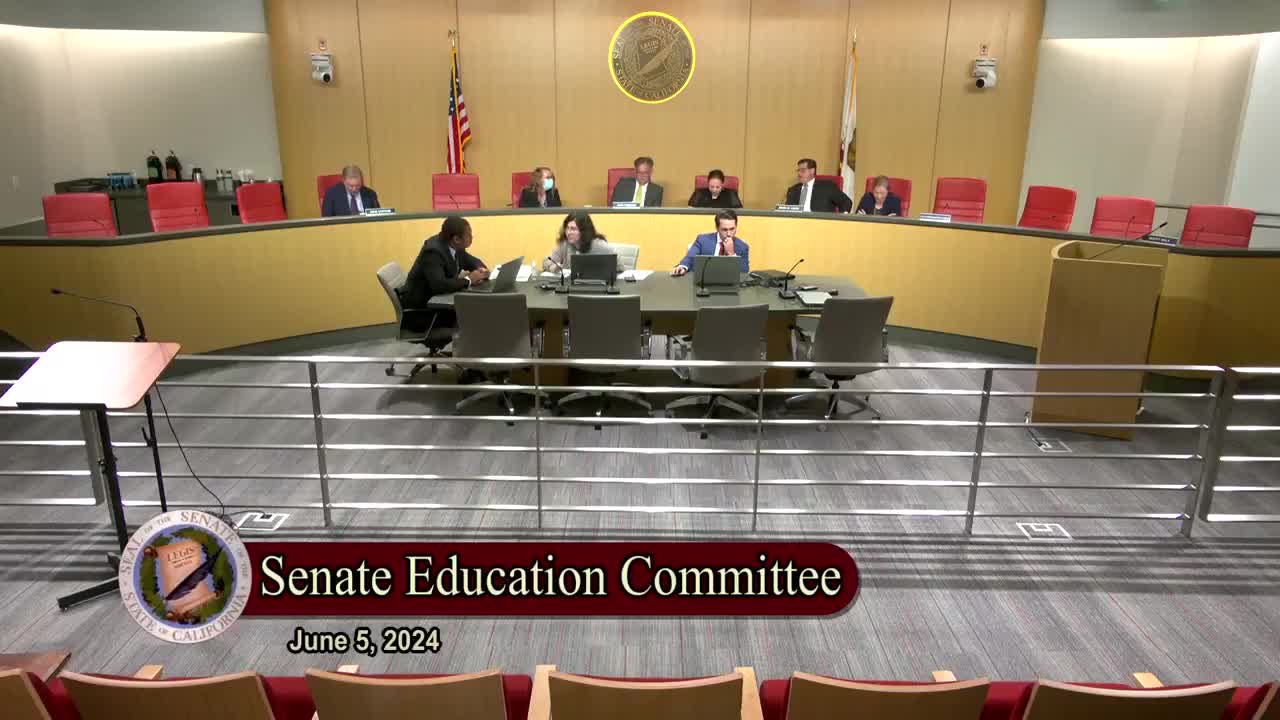 9MIN
Senate Standing Committee on Education
Bill Author

Bill Co-Author(s):