AB 3264: Energy: cost framework: residential rates: demand-side management programs report: electrical transmission grid study.
- Session Year: 2023-2024
- House: Assembly
- Latest Version Date: 2024-09-27
Current Status:
Passed
(2024-09-27: Chaptered by Secretary of State - Chapter 762, Statutes of 2024.)
Introduced
In Committee
First Chamber
In Committee
Second Chamber
Enacted
Existing law vests the Public Utilities Commission (PUC) with regulatory authority over public utilities, including electrical corporations and gas corporations.
This bill would require the PUC, in consultation with the State Energy Resources Conservation and Development Commission (Energy Commission), to develop a framework for assessing, tracking, and analyzing total annual energy costs paid by residential households in California, as specified. The bill would authorize the PUC to use the framework for purposes of evaluating any request by an electrical corporation and gas corporation to track new spending eligible for recovery or to adjust a revenue requirement. The bill would require the PUC to submit a report to the Legislature containing the framework and certain information. The bill would require large electrical corporations, as defined, and large gas corporations, as defined, by January 1, 2026, and each year thereafter, to publish on their internet websites and provide to the PUC a visual representation of certain cost categories included in residential electric or gas rates for the succeeding calendar year.
Existing law requires the PUC, triennially, to submit a report to the Legislature on the energy efficiency and conservation programs it oversees.
This bill instead would require the PUC to submit a report to the Legislature on the demand-side management programs it oversees or that are paid for by ratepayers of community choice aggregators, electrical corporations, or gas corporations. The bill would revise the information required to be included in the report.
This bill would require the PUC, in consultation with the Energy Commission, the California Infrastructure and Economic Development Bank, and the Independent System Operator, by July 1, 2025, to submit to the Governor and the Legislature a study identifying proposals to reduce the cost to ratepayers of expanding the states electrical transmission grid as necessary to achieve the states goals, to meet the states requirements, and to reduce the emissions of greenhouse gases, as specified in law, regulation, or executive order.
Under existing law, a violation of the Public Utilities Act or an order, decision, rule, direction, demand, or requirement of the PUC is a crime.
Because certain of the above-described provisions would be part of the act and a violation of those provisions or a PUC action implementing this bills requirements would be a crime, the bill would impose a state-mandated local program.
The California Constitution requires the state to reimburse local agencies and school districts for certain costs mandated by the state. Statutory provisions establish procedures for making that reimbursement.
This bill would provide that no reimbursement is required by this act for a specified reason.
Existing law establishes the State Energy Resources Conservation and Development Commission (Energy Commission) and prescribes its authorities, duties, and responsibilities pertaining to energy matters. Existing law vests the Public Utilities Commission (PUC) with regulatory jurisdiction over public utilities, including electrical corporations. Existing law requires all charges demanded or received by a public utility for a product or commodity furnished, or to be furnished, or any service rendered, or to be rendered, to be just and reasonable.This bill would state the intent of the Legislature that the Energy Commission, in consultation with the PUC, review all feasible options for the allocation to ratepayers of costs required to meet the needs of the states electrical grid. The bill would state the intent of the Legislature that the PUC, in collaboration with the Energy Commission, produce an affordability metric for use in general rate cases and any application for the recovery of costs from ratepayers.Existing law requires the PUC to allocate certain funds collected from ratepayers for various purposes, including cost-effective energy efficiency and conservation activities.This bill would make nonsubstantive changes to that provision.Existing law authorizes the PUC to issue a financing order to allow recovery through fixed recovery charges of certain costs and expenses, if an electrical corporation files for recovery of recovery costs, as defined, and the PUC finds that some or all of those costs and expenses are just and reasonable, as specified, or the PUC allocates to the ratepayers some or all of those costs and expenses, as provided. Existing law defines various terms for these purposes.This bill would make nonsubstantive changes to the provision related to the costs and expenses eligible for a financial order and to those definitions. The bill would state the intent of the Legislature that the recovery of costs and expenses for which a financing order is issued is to be recovered through a fixed charge pursuant to requirements established by the Legislature. The bill would state the intent of the Legislature that the financing entity of an electrical corporation authorized by the PUC under a financing order be authorized to issue recovery bonds upon approval by the PUC in a financing order. The bill would state the intent of the Legislature to prevent the inclusion in the rate base of an electrical corporation funds securitized by the electrical corporation.Existing law requires each electrical corporation to annually prepare and submit a wildfire mitigation plan to the Office of Energy Infrastructure Safety for review and approval, as provided. Existing law specifies the duties of the office in overseeing the electrical corporations compliance with their approved wildfire mitigation plans.This bill would make nonsubstantive changes to the provisions specifying the duties of the office in overseeing the electrical corporations compliance with their approved wildfire mitigation plans.Existing law establishes the State Energy Resources Conservation and Development Commission (Energy Commission) and prescribes its authorities, duties, and responsibilities pertaining to energy matters. Existing law vests the Public Utilities Commission (PUC) with regulatory jurisdiction over public utilities, including electrical corporations. Existing law requires all charges demanded or received by a public utility for a product or commodity furnished, or to be furnished, or any service rendered, or to be rendered, to be just and reasonable.
This bill would state the intent of the Legislature that the Energy Commission, in consultation with the PUC, review all feasible options for the allocation to ratepayers of costs required to meet the needs of the states electrical grid. The bill would state the intent of the Legislature that the PUC, in collaboration with the Energy Commission, produce an affordability metric for use in general rate cases and any application for the recovery of costs from ratepayers.
Existing law requires the PUC to allocate certain funds collected from ratepayers for various purposes, including cost-effective energy efficiency and conservation activities.
This bill would make nonsubstantive changes to that provision.
Existing law authorizes the PUC to issue a financing order to allow recovery through fixed recovery charges of certain costs and expenses, if an electrical corporation files for recovery of recovery costs, as defined, and the PUC finds that some or all of those costs and expenses are just and reasonable, as specified, or the PUC allocates to the ratepayers some or all of those costs and expenses, as provided. Existing law defines various terms for these purposes.
This bill would make nonsubstantive changes to the provision related to the costs and expenses eligible for a financial order and to those definitions. The bill would state the intent of the Legislature that the recovery of costs and expenses for which a financing order is issued is to be recovered through a fixed charge pursuant to requirements established by the Legislature. The bill would state the intent of the Legislature that the financing entity of an electrical corporation authorized by the PUC under a financing order be authorized to issue recovery bonds upon approval by the PUC in a financing order. The bill would state the intent of the Legislature to prevent the inclusion in the rate base of an electrical corporation funds securitized by the electrical corporation.
Existing law requires each electrical corporation to annually prepare and submit a wildfire mitigation plan to the Office of Energy Infrastructure Safety for review and approval, as provided. Existing law specifies the duties of the office in overseeing the electrical corporations compliance with their approved wildfire mitigation plans.
This bill would make nonsubstantive changes to the provisions specifying the duties of the office in overseeing the electrical corporations compliance with their approved wildfire mitigation plans.
Existing law establishes a Power Exchange as a nonprofit public benefit corporation to provide an efficient competitive auction, open on a nondiscriminatory basis to all suppliers of electricity, that meets the loads of all of its customers at efficient prices.This bill would abolish the Power Exchange and would make various conforming changes.Existing law establishes a Power Exchange as a nonprofit public benefit corporation to provide an efficient competitive auction, open on a nondiscriminatory basis to all suppliers of electricity, that meets the loads of all of its customers at efficient prices.
This bill would abolish the Power Exchange and would make various conforming changes.
(a)The Legislature finds and declares all of the following:
(1)Energy costs can significantly burden residential households in California.
(2)Increases in total energy costs disproportionately burden low-income and disadvantaged communities.
(3)The Public Utilities Commission, as a part of its 2021 Utility Costs and Affordability En Banc hearings, developed a Residential Energy Cost Calculator that assessed total electricity, natural gas, and gasoline prices and price forecasts.
(4)The total energy costs that are borne by residential households include not only rate regulated forms of energy, such as electricity and natural gas, but also other forms of energy, such as gasoline, propane, and diesel fuel.
(b)It is the intent of the Legislature to provide a mechanism to assess, track, and analyze total annual energy costs paid by residential households in California to identify evidence-based approaches to mitigating, reducing, and managing those costs.
SEC. 2.Section 369.5 is added to the Public Utilities Code, to read:369.5.(a)On or before December 31, 2026, the commission, in consultation with the Energy Commission, shall develop a framework for assessing, tracking, and analyzing total annual energy costs paid by residential households in California. The framework shall include all of the following:
(1)A methodology for identifying, categorizing, and quantifying major residential household energy sources.
(2)The total annual energy costs borne by residential households.
(3)Annual costs for major residential household energy sources, including, but not limited to, electricity, natural gas, propane, gasoline, and diesel.
(4)Changes in the total annual energy costs for residential households over time.
(5)The relative contributions of different energy sources to the total annual energy costs borne by residential households.
(6)The annual growth rate of energy costs for residential households by energy source.
(7)Projections of possible future total energy costs for residential households for the next 10 years.
(8)Scenarios of actions that may lead to a 5 percent, 10 percent, and 15 percent reduction in total annual energy costs paid by residential households in 2035, relative to 2024 total annual energy costs after adjusting for inflation.
(9)An assessment of the actions identified pursuant to paragraph (8) and the effects they may have on public health and safety, electrical and gas system reliability, and the achievement of the states 2045 clean electricity goal developed pursuant to Section 454.53 and the states 2045 carbon neutrality goal developed pursuant to Section 38562.2 of the Health and Safety Code.
(b)The commission may use the total annual energy cost framework pursuant to subdivision (a) for purposes of evaluating any request by an electrical corporation and gas corporation to track new spending eligible for recovery or to adjust a revenue requirement. In evaluating any such request, the commission shall consider whether the electrical corporation and gas corporation should take additional actions to achieve the reductions in total annual energy costs identified in paragraph (8) of subdivision (a).
(c)(1)On or before December 31, 2026, the commission shall submit a report to the Legislature containing the framework and the information in subdivision (a).
(2)Pursuant to Section 10231.5 of the Government Code, this subdivision shall become inoperative on December 31, 2030.
SEC. 3.Section 455.7 is added to the Public Utilities Code, to read:455.7.(a)For purposes of this section, the following definitions apply:
(1)Large electrical corporation has the same meaning as defined in Section 3280.
(2)Large gas corporation means a gas corporation with 250,000 or more customer accounts within the state.
(b)By January 1, 2026, and each year thereafter, each large electrical corporation shall publish on its internet website, and provide to the commission, a visual representation of the cost categories included in residential electric rates for the succeeding calendar year that includes all of the following cost categories:
(1)Costs associated with electrical distribution grid infrastructure, not including costs associated specifically with wildfire mitigation.
(2)Costs associated with wildfire mitigation activities pursuant to Chapter 6 (commencing with Section 8385) of Division 4.1.
(3)Costs associated with the electrical transmission infrastructure, separating transmission costs in the jurisdiction of the commission from those in the jurisdiction of the Federal Energy Regulatory Commission.
(4)Costs due to energization, including pursuant to Article 14.5 (commencing with Section 931) of Chapter 4.
(5)Costs due to catastrophic events and emergencies.
(6)Costs due to net metering and net billing tariffs, including pursuant to Sections 2827 to 2827.10, inclusive.
(7)Costs due to commodity prices, including natural gas.
(8)Costs due to energy efficiency programs, including programs established pursuant to Sections 379.5, 381, 382, 399.4, and 399.8.
(9)Costs due to insurance, including self-insurance.
(10)Costs due to metering and billing.
(11)Costs due to taxes.
(12)Costs due to unrecovered arrearages.
(13)Any other cost categories, as determined by the commission.
(c)On or before January 1, 2026, and each year thereafter, each large gas corporation shall publish on its internet website, and provide to the commission, a visual representation of the cost categories included in residential gas rates for the succeeding calendar year that includes all of the following cost categories:
(1)Costs associated with gas distribution grid infrastructure.
(2)Costs associated with gas transmission infrastructure, separating transmission costs in the jurisdiction of the commission from those in the jurisdiction of the Federal Energy Regulatory Commission.
(3)Costs due to catastrophic events and emergencies.
(4)Costs due to commodity prices, including natural gas.
(5)Costs due to energy efficiency programs, including programs established pursuant to Sections 379.5, 382, and 399.4.
(6)Costs due to insurance.
(7)Costs due to metering and billing.
(8)Costs due to taxes.
(9)Costs due to unrecovered arrearages.
(10)Any other cost categories, as determined by the commission.
SEC. 4.Section 913.5 of the Public Utilities Code is amended to read:913.5.(a)(1)Before July 1, 2022, and every three years thereafter, the commission shall submit a report to the Legislature on the demand-side management programs it oversees or that are paid for by ratepayers of community choice aggregators, electrical corporations, or gas corporations, including, but not limited to, energy efficiency and demand response programs.
(2)The report shall include a list of all demand-side management programs, inclusive of codes and standards programs, with evaluations for each program that include, but are not limited to, all of the following:
(A)Program description and target population.
(B)Authorized budgets and actual expenditures.
(C)Projected and actual energy savings over the program cycle.
(D)Projected and actual bill savings to the average participating and the average nonparticipating ratepayer.
(E)Cost-effectiveness analysis, including a total resource cost test and a program administrator cost test.
(F)Public interest impacts, as applicable.
(G)Actual customers served, aggregated by customer class, geographic distribution, and income level.
(H)Peak demand reduction, as applicable.
(I)Total system benefits, as adopted in the commissions Decision 21-09-037 (September 23, 2021) Decision Adopting Energy Efficiency Goals for 2022-2032.
(3)The commission may provide evaluations at a portfolio level in addition to the individual program evaluation required pursuant to paragraph (2).
(b)In the report submitted pursuant to subdivision (a), the commission shall also report to the Legislature on the progress toward achieving the targets established pursuant to subdivision (a) of Section 454.55 and subdivision (a) of Section 454.56. The commission shall include specific strategies for, and an update on, progress toward maximizing the contribution of energy and electricity efficiency bill savings in disadvantaged communities identified pursuant to Section 39711 of the Health and Safety Code.
SEC. 5.Section 913.10 is added to the Public Utilities Code, to read:913.10.(a)On or before July 1, 2025, the commission, in consultation with the Energy Commission, the California Infrastructure and Economic Development Bank, and the Independent System Operator, shall submit to the Governor and the Legislature a study, including findings and recommendations, identifying proposals to reduce the cost to ratepayers of expanding the states electrical transmission grid as necessary to achieve the states goals, to meet the states requirements, and to reduce the emissions of greenhouse gases, as specified in statute, regulation, or executive order.
(b)In conducting the study, the commission shall evaluate, at minimum, all of the following:
(1)Public financing of transmission projects, including approaches to lower the cost of financing, and the use of nonratepayer funds to pay, a portion of the costs of transmission projects necessary to achieve relevant public policy goals. The study shall identify nonratepayer funding sources that may be suitable for this purpose.
(2)The costs and benefits of different ownership models, lease agreements, or other public-private arrangements necessary to build the transmission projects using public financing.
(3)Other proposals identified by the commission or other consulted parties that, in the judgment of the commission, could accelerate the development of, and reduce the cost to ratepayers of expanding, the states electrical transmission grid.
(4)Estimated cost savings of each option.
(5)Thresholds or criteria for transmission projects to be considered eligible for public financing, including, but not limited to, project size, cost, location, or achievement of statewide policy.
(6)Appropriate cost limitations and protections in exercising public financing for this purpose.
(7)Relevant local, state, and federal statute applicable to public financing of transmission infrastructure.
(c)In conducting the study, the commission shall provide opportunities for public input on which proposals to consider and on draft findings and recommendations.
(d)Pursuant to Section 10231.5 of the Government Code, this section is repealed on January 1, 2030.
SEC. 6.No reimbursement is required by this act pursuant to Section 6 of Article XIIIB of the California Constitution because the only costs that may be incurred by a local agency or school district will be incurred because this act creates a new crime or infraction, eliminates a crime or infraction, or changes the penalty for a crime or infraction, within the meaning of Section 17556 of the Government Code, or changes the definition of a crime within the meaning of Section 6 of Article XIIIB of the California Constitution.
(a)The Legislature finds and declares all of the following:
(1)Energy costs can significantly burden residential households in California.
(2)Increases in total energy costs disproportionately burden low-income and disadvantaged communities.
(3)The Public Utilities Commission, as a part of its 2021 Utility Costs and Affordability En Banc hearings, developed a Residential Energy Cost Calculator that assessed total electricity, natural gas, and gasoline prices and price forecasts.
(4)The total energy costs that are borne by residential households include not only rate regulated forms of energy, such as electricity and natural gas, but also other forms of energy, such as gasoline, propane, and diesel fuel.
(b)It is the intent of the Legislature to provide a mechanism to assess, track, and analyze total annual energy costs paid by residential households in California to identify evidence-based approaches to mitigating, reducing, and managing those costs.
SEC. 2.Section 369.5 is added to the Public Utilities Code, to read:369.5.(a)On or before December 31, 2026, the commission, in consultation with the Energy Commission, shall develop a framework for assessing, tracking, and analyzing total annual energy costs paid by residential households in California. The framework shall include all of the following:
(1)A methodology for identifying, categorizing, and quantifying major residential household energy sources.
(2)The total annual energy costs borne by residential households.
(3)Annual costs for major residential household energy sources, including, but not limited to, electricity, natural gas, propane, gasoline, and diesel.
(4)Changes in the total annual energy costs for residential households over time.
(5)The relative contributions of different energy sources to the total annual energy costs borne by residential households.
(6)The annual growth rate of energy costs for residential households by energy source.
(7)Projections of possible future total energy costs for residential households for the next 10 years.
(8)Scenarios of actions that may lead to a 5 percent, 10 percent, and 15 percent reduction in total annual energy costs paid by residential households in 2035, relative to 2024 total annual energy costs after adjusting for inflation.
(9)An assessment of the actions identified pursuant to paragraph (8) and the effects they may have on public health and safety, electrical and gas system reliability, and the achievement of the states 2045 clean electricity goal developed pursuant to Section 454.53 and the states 2045 carbon neutrality goal developed pursuant to Section 38562.2 of the Health and Safety Code.
(b)The commission may use the total annual energy cost framework pursuant to subdivision (a) for purposes of evaluating any request by an electrical corporation and gas corporation to track new spending eligible for recovery or to adjust a revenue requirement. In evaluating any such request, the commission shall consider whether the electrical corporation and gas corporation should take additional actions to achieve the reductions in total annual energy costs identified in paragraph (8) of subdivision (a).
(c)(1)On or before December 31, 2026, the commission shall submit a report to the Legislature containing the framework and the information in subdivision (a).
(2)Pursuant to Section 10231.5 of the Government Code, this subdivision shall become inoperative on December 31, 2030.
SEC. 3.Section 455.7 is added to the Public Utilities Code, to read:455.7.(a)For purposes of this section, the following definitions apply:
(1)Large electrical corporation has the same meaning as defined in Section 3280.
(2)Large gas corporation means a gas corporation with 250,000 or more customer accounts within the state.
(b)By January 1, 2026, and each year thereafter, each large electrical corporation shall publish on its internet website, and provide to the commission, a visual representation of the cost categories included in residential electric rates for the succeeding calendar year that includes all of the following cost categories:
(1)Costs associated with electrical distribution grid infrastructure, not including costs associated specifically with wildfire mitigation.
(2)Costs associated with wildfire mitigation activities pursuant to Chapter 6 (commencing with Section 8385) of Division 4.1.
(3)Costs associated with the electrical transmission infrastructure, separating transmission costs in the jurisdiction of the commission from those in the jurisdiction of the Federal Energy Regulatory Commission.
(4)Costs due to energization, including pursuant to Article 14.5 (commencing with Section 931) of Chapter 4.
(5)Costs due to catastrophic events and emergencies.
(6)Costs due to net metering and net billing tariffs, including pursuant to Sections 2827 to 2827.10, inclusive.
(7)Costs due to commodity prices, including natural gas.
(8)Costs due to energy efficiency programs, including programs established pursuant to Sections 379.5, 381, 382, 399.4, and 399.8.
(9)Costs due to insurance, including self-insurance.
(10)Costs due to metering and billing.
(11)Costs due to taxes.
(12)Costs due to unrecovered arrearages.
(13)Any other cost categories, as determined by the commission.
(c)On or before January 1, 2026, and each year thereafter, each large gas corporation shall publish on its internet website, and provide to the commission, a visual representation of the cost categories included in residential gas rates for the succeeding calendar year that includes all of the following cost categories:
(1)Costs associated with gas distribution grid infrastructure.
(2)Costs associated with gas transmission infrastructure, separating transmission costs in the jurisdiction of the commission from those in the jurisdiction of the Federal Energy Regulatory Commission.
(3)Costs due to catastrophic events and emergencies.
(4)Costs due to commodity prices, including natural gas.
(5)Costs due to energy efficiency programs, including programs established pursuant to Sections 379.5, 382, and 399.4.
(6)Costs due to insurance.
(7)Costs due to metering and billing.
(8)Costs due to taxes.
(9)Costs due to unrecovered arrearages.
(10)Any other cost categories, as determined by the commission.
SEC. 4.Section 913.5 of the Public Utilities Code is amended to read:913.5.(a)(1)Before July 1, 2022, and every three years thereafter, the commission shall submit a report to the Legislature on the energy efficiency and conservation demand-side management programs it oversees. The oversees or that are paid for by ratepayers of community choice aggregators, electrical corporations, or gas corporations, including, but not limited to, energy efficiency and demand response programs.
(2)The report shall include information regarding authorized utility a list of all demand-side management programs, inclusive of codes and standards programs, with evaluations for each program that include, but are not limited to, all of the following:
(A)Program description and target population.
(B)Authorized budgets and expenditures and projected actual expenditures.
(C)Projected and actual energy savings over the program cycle.
(D)Projected and actual bill savings to the average participating and the average nonparticipating ratepayer.
(E)Cost-effectiveness analysis, including a total resource cost test and a program administrator cost test.
(F)Public interest impacts, as applicable.
(G)Actual customers served, aggregated by customer class, geographic distribution, and income level.
(H)Peak demand reduction, as applicable.
(I)Total system benefits, as adopted in the commissions Decision 21-09-037 (September 23, 2021) Decision Adopting Energy Efficiency Goals for 2022-2032.
(3)The commission may provide evaluations at a portfolio level in addition to the individual program evaluation required pursuant to paragraph (2).
(b)In the report submitted pursuant to subdivision (a), the commission shall also report to the Legislature on the progress toward achieving the targets established pursuant to subdivision (a) of Section 454.55 and subdivision (a) of Section 454.56. The commission shall include specific strategies for, and an update on, progress toward maximizing the contribution of energy and electricity efficiency bill savings in disadvantaged communities identified pursuant to Section 39711 of the Health and Safety Code.
SEC. 5.Section 913.10 is added to the Public Utilities Code, to read:913.10.(a)On or before July 1, 2025, the commission, in consultation with the Energy Commission, the California Infrastructure and Economic Development Bank, and the Independent System Operator, shall submit to the Governor and the Legislature a study, including findings and recommendations, identifying proposals to reduce the cost to ratepayers of expanding the states electrical transmission grid as necessary to achieve the states goals, to meet the states requirements, and to reduce the emissions of greenhouse gases, as specified in statute, regulation, or executive order.
(b)In conducting the study, the commission shall evaluate, at minimum, all of the following:
(1)Public financing of transmission projects, including approaches to lower the cost of financing, and the use of nonratepayer funds to pay, a portion of the costs of transmission projects necessary to achieve relevant public policy goals. The study shall identify nonratepayer funding sources that may be suitable for this purpose.
(2)The costs and benefits of different ownership models, lease agreements, or other public-private arrangements necessary to build the transmission projects using public financing.
(3)Other proposals identified by the commission or other consulted parties that, in the judgment of the commission, could accelerate the development of, and reduce the cost to ratepayers of expanding, the states electrical transmission grid.
(4)Estimated cost savings of each option.
(5)Thresholds or criteria for transmission projects to be considered eligible for public financing, including, but not limited to, project size, cost, location, or achievement of statewide policy.
(6)Appropriate cost limitations and protections in exercising public financing for this purpose.
(7)Relevant local, state, and federal statute applicable to public financing of transmission infrastructure.
(c)In conducting the study, the commission shall provide opportunities for public input on which proposals to consider and on draft findings and recommendations.
(d)Pursuant to Section 10231.5 of the Government Code, this section is repealed on January 1, 2030.
SEC. 6.No reimbursement is required by this act pursuant to Section 6 of Article XIIIB of the California Constitution because the only costs that may be incurred by a local agency or school district will be incurred because this act creates a new crime or infraction, eliminates a crime or infraction, or changes the penalty for a crime or infraction, within the meaning of Section 17556 of the Government Code, or changes the definition of a crime within the meaning of Section 6 of Article XIIIB of the California Constitution.
All matter omitted in this version of the bill appears in the bill as amended in the Senate, June 10, 2024. (JR11)It is the intent of the Legislature that the commission, in consultation with the Public Utilities Commission, review all feasible options for the allocation to ratepayers of costs required to meet the needs of the states electrical grid.
SEC. 2.Section 380.7 is added to the Public Utilities Code, to read:380.7.It is the intent of the Legislature that the commission, in collaboration with the Energy Commission, produce an affordability metric for use in general rate cases and any application for the recovery of costs from ratepayers.
SEC. 3.Section 381 of the Public Utilities Code is amended to read:381.(a)To ensure that the funding for the programs described in subdivision (b) and Section 382 are not commingled with other revenues, the commission shall require each electrical corporation to identify a separate rate component to collect the revenues used to fund these those programs. The rate component shall be a nonbypassable element of the local distribution service.
(b)The commission shall allocate funds collected pursuant to subdivision (a), and any interest earned on collected funds, to programs that enhance system reliability and provide in-state benefits as follows:
(1)Cost-effective energy efficiency and conservation activities.
(2)Public interest research and development not adequately provided by competitive and regulated markets.
(3)In-state operation and development of existing and new and emerging eligible renewable energy resources, as defined in Section 399.12.
(c)The commission shall order the respective electrical corporations to collect and spend these funds at the levels and for the purposes required in Section 399.8.
(d)Each electrical corporation shall allow customers to make voluntary contributions through their utility bill payments as either a fixed amount or a variable amount to support programs established pursuant to paragraph (3) of subdivision (b). Funds collected by electrical corporations for these purposes shall be forwarded in a timely manner to the appropriate fund as specified by the commission.
SEC. 4.Section 835 is added to the Public Utilities Code, to read:835.(a)It is the intent of the Legislature that, for the purpose of mitigating the impacts to ratepayers of capital investments, if an electrical corporation submits an application for recovery of costs and expenses in rates and the commission finds that some or all of the costs and expenses identified in the electrical corporations application are just and reasonable pursuant to Section 451, the electrical corporation may file an application requesting the commission to issue a financing order to authorize the recovery of those just and reasonable costs and expenses by means of a financing order, with those costs and expenses being recovered through a fixed charge pursuant to requirements that shall be established by the Legislature.
(b)It is the further intent of the Legislature that the financing entity of an electrical corporation so authorized by the commission may issue recovery bonds upon approval by the commission in a financing order.
SEC. 5.Section 850 of the Public Utilities Code is amended to read:850.(a)This article applies in any of the following circumstances:
(1)If an electrical corporation applies to the commission for recovery of costs and expenses related to a catastrophic wildfire and the commission finds some or all of the costs and expenses to be reasonable pursuant to Section 451.1, or for the amount of costs and expenses determined pursuant to subdivision (c) of Section 451.2, then the electrical corporation may file an application requesting the commission to issue a financing order to authorize these costs and expenses to be recovered through fixed recovery charges pursuant to this article.
(2)If an electrical corporation submits an application for recovery of costs and expenses related to catastrophic wildfires, including fire risk mitigation capital expenditures identified in subdivision (e) of Section 8386.3, in a proceeding to recover costs and expenses in rates and the commission finds that some or all of the costs and expenses identified in the electrical corporations application are just and reasonable pursuant to Section 451, the electrical corporation may file an application requesting the commission to issue a financing order to authorize the recovery of those just and reasonable costs and expenses by means of a financing order, with those costs and expenses being recovered through a fixed charge pursuant to this article. This paragraph does not apply for costs and expenses incurred by the electrical corporation after December 31, 2035.
(3)(A)An electrical corporation may file an application requesting the commission to issue a financing order to authorize the recovery of verified incremental undercollection amounts for calendar year 2020 through fixed recovery charges pursuant to this article, if an electrical corporations annual true-up advice letter is accepted and either or both of the following incremental undercollection amounts are verified for calendar year 2020:
(i)An incremental undercollection amount equal to the difference between the forecasted amount of billed revenues for that year, based on the authorized sales forecast, and the revenues actually billed by an electrical corporation with respect to all revenue balancing accounts, if the incremental amount as a percent of the forecasted amount of billed revenues for that year is at least 5 percent.
(ii)An incremental undercollection amount equal to the residential and small business customer bad debt expense recorded for that year that exceeds the bad debt expense for that year that was adopted by the commission in the general rate case, if the incremental undercollection amount is otherwise eligible for recovery in rates.
(B)The incremental undercollection amounts subject to a commission-approved financing order shall be prohibited from being recovered through any other cost recovery application, mechanism, or request by the electrical corporation.
(C)The commission shall ensure any costs included in incremental undercollections described in this paragraph and subject to a financing order are just and reasonable consistent with the requirements of subdivision (a) of Section 850.1.
(D)In resolving a request for the issuance of a financing order, the commission may assign cost recovery to each customer class based on their contribution to the incremental undercollection described in this paragraph.
(b)For the purposes of this article, the following terms shall have the following meanings: definitions apply:
(1)Ancillary agreement means a bond insurance policy, letter of credit, reserve account, surety bond, swap arrangement, hedging arrangement, liquidity or credit support arrangement, or other similar agreement or arrangement entered into in connection with the issuance of recovery bonds that is designed to promote the credit quality and marketability of the bonds or to mitigate the risk of an increase in interest rates.
(2)Catastrophic wildfire amounts means the portion of costs and expenses the commission finds to be just and reasonable pursuant to Section 451.1 or the amount determined pursuant to subdivision (c) of Section 451.2.
(3)Consumer means any an individual, governmental body, trust, business entity, or nonprofit organization that consumes electricity that has been transmitted or distributed by means of electric electrical transmission or distribution facilities, whether those electric electrical transmission or distribution facilities are owned by the consumer, the electrical corporation, or any other party.
(4)Financing costs means the costs to issue, service, repay, or refinance recovery bonds, whether incurred or paid upon issuance of the recovery bonds or over the life of the recovery bonds, if they are approved for recovery by the commission in a financing order. Financing costs may include any of the following:
(A)Principal, interest, and redemption premiums that are payable on recovery bonds.
(B)A payment required under an ancillary agreement.
(C)An amount required to fund or replenish reserve accounts or other accounts established under an indenture, ancillary agreement, or other financing document relating to the recovery bonds.
(D)Taxes, franchise fees, or license fees imposed on fixed recovery charges.
(E)Costs related to issuing and servicing recovery bonds or the application for a financing order, including, without limitation, servicing fees and expenses, trustee fees and expenses, legal fees and expenses, accounting fees, administrative fees, underwriting and placement fees, financial advisory fees, original issue discount, capitalized interest, rating agency fees, and any other related costs that are approved for recovery in the financing order.
(F)Other costs as specifically authorized by a financing order.
(5)Financing entity means the electrical corporation or any a subsidiary or affiliate of the electrical corporation that is authorized by the commission to issue recovery bonds or acquire recovery property, or both.
(6)Financing order means an order of the commission adopted in accordance with this article, which shall include, without limitation, a procedure to require the expeditious approval by the commission of periodic adjustments to fixed recovery charges and to any associated fixed recovery tax amounts included in that financing order to ensure recovery of all recovery costs and the costs associated with the proposed recovery, financing, or refinancing thereof, including the costs of servicing and retiring the recovery bonds contemplated by the financing order.
(7)Fixed recovery charges means those nonbypassable rates and other charges, including, but not limited to, distribution, connection, disconnection, and termination rates and charges, that are authorized by the commission in a financing order to recover both of the following:
(A)Recovery costs specified in the financing order.
(B)The costs of recovering, financing, or refinancing those recovery costs through a plan approved by the commission in the financing order, including the costs of servicing and retiring recovery bonds.
(8)Fixed recovery tax amounts means those nonbypassable rates and other charges, including, but not limited to, distribution, connection, disconnection, and termination rates and charges, that are needed to recover federal and State of California income and franchise taxes associated with fixed recovery charges authorized by the commission in a financing order, but are not approved as financing costs financed from proceeds of recovery bonds.
(9)Recovery bonds means bonds, notes, certificates of participation or beneficial interest, or other evidences of indebtedness or ownership, issued pursuant to an executed indenture or other agreement of a financing entity, the proceeds of which are used, directly or indirectly, to recover, finance, or refinance recovery costs, and that are directly or indirectly secured by, or payable from, recovery property.
(10)Recovery costs means any of the following:
(A)The catastrophic wildfire amounts or costs pursuant to paragraph (2) of subdivision (a) authorized by the commission in a financing order for recovery.
(B)The incremental undercollection amounts that the commission authorizes for recovery in a financing order pursuant to paragraph (3) of subdivision (a).
(C)Federal and State of California income and franchise taxes associated with recovery of the amounts pursuant to subparagraph (A) or (B).
(D)Financing costs.
(E)Professional fees, consultant fees, redemption premiums, tender premiums, and other costs incurred by the electrical corporation in using proceeds of recovery bonds to acquire outstanding securities of the electrical corporation, as authorized by the commission in a financing order.
(11)(A)Recovery property means the property right created pursuant to this article, including, without limitation, the right, title, and interest of the electrical corporation or its transferee:
(i)In and to the fixed recovery charges established pursuant to a financing order, including all rights to obtain adjustments to the fixed recovery charges in accordance with Section 850.1 and the financing order.
(ii)To be paid the amount that is determined in a financing order to be the amount that the electrical corporation or its transferee is lawfully entitled to receive pursuant to the provisions of this article and the proceeds thereof, and in and to all revenues, collections, claims, payments, moneys, or proceeds of or arising from the fixed recovery charges that are the subject of a financing order.
(B)Recovery property shall not include a right to be paid fixed recovery tax amounts.
(C)Recovery property shall constitute a current property right, notwithstanding the fact that the value of the property right will depend on consumers using electricity or, in those instances where consumers are customers of the electrical corporation, the electrical corporation performing certain services.
(12)(A)Revenue balancing account means a balancing account reflecting the balance between the electrical corporations authorized revenue requirements relating to the volumetric sale of electricity and billed revenues associated with those sales. A revenue balancing account includes accounts reflecting the balance between the electrical corporations authorized distribution base revenue requirements and recorded billed revenues from authorized distribution rates, and accounts reflecting the difference between the amount of the discount provided to consumers enrolled in the California Alternative Rates for Energy (CARE) program and the CARE surcharge charged to non-CARE consumers.
(B)Revenue balancing account shall not include amounts reflecting the balance between costs and expenses relating to fuel and purchased electricity by the electrical corporation.
(13)Service territory means the geographical area that the electrical corporation provides with electric distribution service.
(14)True-up adjustment means a formulaic adjustment to the fixed recovery charges as they appear on customer bills that is necessary to correct for any overcollection or undercollection of the fixed recovery charges authorized by a financing order and to otherwise ensure the timely and complete payment and recovery of recovery costs over the authorized repayment term.
SEC. 6.Section 937.5 is added to the Public Utilities Code, to read:937.5.It is the intent of the Legislature to enact provisions to prevent the inclusion in the rate base of an electrical corporation any funds securitized by that electrical corporation.
SEC. 7.Section 8386.3 of the Public Utilities Code is amended to read:8386.3.(a)The Wildfire Safety Division office shall approve or deny each wildfire mitigation plan and update submitted by an electrical corporation within three months of its submission, unless the division office makes a written determination, which shall include reasons supporting the determination, that the three-month deadline cannot be met. Each electrical corporations approved plan shall remain in effect until the division office approves the electrical corporations subsequent plan. The division office shall consult with the Office of the State Fire Marshal on the review of each wildfire mitigation plan and update. In rendering its decision, the division office shall consider comments submitted pursuant to subdivision (d) of Section 8386. Before approval, the division office may require modifications of the plan. After approval by the division, office, the commission shall ratify the action of the division. office.
(b)The Wildfire Safety Divisions offices approval of a plan is not a defense to any enforcement action by the office or for a violation of a commission enforcement action, decision, order, or rule.
(c)Following approval of a wildfire mitigation plan, the Wildfire Safety Division office shall oversee compliance with the plan consistent with all of the following:
(1)Three months after the end of an electrical corporations initial compliance period, as established by the Wildfire Safety Division office pursuant to subdivision (b) of Section 8386, and annually thereafter, each electrical corporation shall file with the division office a report addressing the electrical corporations compliance with the plan during the prior calendar year.
(2)(A)Before March 1, 2021, and before each March 1 thereafter, the Wildfire Safety Division, of each year, the office, in consultation with the Office of the State Fire Marshal, shall make available a list of qualified independent evaluators with experience in assessing the safe operation of electrical infrastructure.
(B)(i)Each electrical corporation shall engage an independent evaluator listed pursuant to subparagraph (A) to review and assess the electrical corporations compliance with its plan. The engaged independent evaluator shall consult with, and operate under the direction of, the office. The independent evaluator shall issue a report on July 1 of each year in which a report required by paragraph (1) is filed. As a part of the independent evaluators report, the independent evaluator shall determine whether the electrical corporation failed to fund any activities included in its plan.
(ii)The Wildfire Safety Division office shall consider the independent evaluators findings, but the independent evaluators findings are not binding on the division, office, except as otherwise specified.
(iii)The independent evaluators findings shall be used by the Wildfire Safety Division office to carry out its obligations under Article 1 (commencing with Section 451) of Chapter 3 of Part 1 of Division 1.
(iv)The independent evaluators findings do not apply to events that occurred before the initial plan is approved for the electrical corporation.
(3)The commission shall authorize the electrical corporation to recover in rates the costs of the independent evaluator.
(4)The Wildfire Safety Division office shall complete its compliance review within 18 months after the submission of the electrical corporations compliance report.
(5)(A)An electrical corporation shall notify the Wildfire Safety Division, office, within one month after it completes a substantial portion of the vegetation management requirements in its wildfire mitigation plan, of the completion. Upon receiving the notice from the electrical corporation, the division office shall, consistent with its authority pursuant to paragraph (1) of subdivision (a) of Section 326, promptly audit the work performed by, or on behalf of, the electrical corporation. The audit shall specify any failure of the electrical corporation to fully comply with the vegetation management requirements in the wildfire mitigation plan. The division office shall provide the audit to the electrical corporation. The electrical corporation shall have a reasonable time, as determined by the division, office, to correct and eliminate any deficiency specified in the audit.
(B)The Wildfire Safety Division office may engage its own independent evaluator, who shall be a certified arborist and shall have any other qualifications determined appropriate by the division, office, to conduct the audit specified in subparagraph (A). The independent evaluator shall consult with, and operate under the direction of, the division. office.
(C)Within one year of the expiration of the time period for an electrical corporation to correct and eliminate any deficiency identified in the audit, the independent evaluator shall issue a report to the electrical corporation, the Wildfire Safety Division, office, and the Safety and Enforcement Division of the commission specifically describing any failure of the electrical corporation to substantially comply with the substantial portion of the vegetation management requirements in the electrical corporations wildfire mitigation plan. The report shall be made publicly available. The Wildfire Safety Division office shall include the report in its compliance review prepared pursuant to paragraph (4).
(6)Each electrical corporation shall reimburse the Wildfire Safety Division office for the divisions offices costs to implement this section with respect to that electrical corporation.
(d)(1)An electrical corporation shall not divert revenues authorized by the commission to implement the wildfire mitigation plan to any activities or investments outside of the plan. An electrical corporation shall notify the commission by advice letter of both of the following:
(A)The date when the electrical corporation projects that it will have spent, or incurred obligations to spend, its entire annual revenue requirement for vegetation management in its wildfire mitigation plan not less than 30 days before that date.
(B)A detailed summary of the electrical corporations workforce development efforts completed in compliance with the Office of Federal Contract Compliance Programs, including, but not limited to, all of the following:
(i)A description of and data on the extent to which the electrical corporation advertises job openings to members of California Conservation Corps crews and members of community conservation corps, as defined in Section 14507.5 of the Public Resources Code.
(ii)A description of and data on the extent to which the electrical corporation, in seeking to develop potential members of its workforce, has links to or otherwise works with community-based or other organizations that work with current members of California Conservation Corps crews and current members of community conservation corps, as defined in Section 14507.5 of the Public Resources Code, and formerly incarcerated conservation crew members.
(iii)A description of the extent to which the electrical corporation supports skill-development efforts that would assist current and former members of California Conservation Corps crews, members of community conservation corps, as defined in Section 14507.5 of the Public Resources Code, formerly incarcerated conservation crew members, and others with similar skillsets in acquiring skills needed to complete work on or near electrical facilities. Nothing in this clause alters This clause does not alter the requirements imposed on an employer pursuant to Section 12952 of the Government Code.
(2)An electrical corporation shall provide to the office a copy of the advice letter pursuant to paragraph (1) at the same time the advice letter is submitted to the commission.
(e)The commission shall not allow a large electrical corporation to include in its equity rate base its share, as determined pursuant to the Wildfire Fund allocation metric specified in Section 3280, of the first five billion dollars ($5,000,000,000) expended in aggregate by large electrical corporations on fire risk mitigation capital expenditures included in the electrical corporations approved wildfire mitigation plans. An electrical corporations share of the fire risk mitigation capital expenditures and the debt financing costs of these fire risk mitigation capital expenditures may be financed through a financing order pursuant to Section 850.1 subject to the requirements of that financing order.
(f)This section does not impose any liability on the Wildfire Safety Division office regarding the performance of its duties.
All matter omitted in this version of the bill appears in the bill as introduced in the Assembly, February 16, 2024. (JR11)In order to To provide guidance in carrying out this chapter, the Legislature finds and declares all of the following:
(a)It is the intent of the Legislature that a cumulative rate reduction of at least 20 percent be achieved not later than April 1, 2002, for residential and small commercial customers, from the rates in effect on June 10, 1996. In determining that the April 1, 2002, rate reduction has been met, the commission shall exclude the costs of the competitively procured electricity and the costs associated with the rate reduction bonds, as defined in Section 840.
(b)The people, businesses, and institutions of California spend nearly twenty-three billion dollars ($23,000,000,000) annually on electricity, so that reductions in the price of electricity would significantly benefit the economy of the state and its residents.
(c)The Public Utilities Commission commission has opened rulemaking and investigation proceedings with regard to restructuring Californias electric power electricity industry and reforming utility regulation.
(d)The commission has found, after an extensive public review process, that the interests of ratepayers and the state as a whole will be best served by moving from the regulatory framework existing on January 1, 1997, in which retail electricity service is provided principally by electrical corporations subject to an obligation to provide ultimate consumers in exclusive service territories with reliable electric service at regulated rates, to a framework under which competition would be allowed in the supply of electric power electricity and customers would be allowed to have the right to choose their supplier of electric power. electricity.
(e)Competition in the electric generation market will encourage innovation, efficiency, and better service from all market participants, and will permit the reduction of costly regulatory oversight.
(f)The delivery of electricity over transmission and distribution systems is currently regulated, and will continue to be regulated to ensure system safety, reliability, environmental protection, and fair access for all market participants.
(g)Reliable electric service is of utmost importance to the safety, health, and welfare of the states citizenry and economy. It is the intent of the Legislature that electric industry restructuring should enhance the reliability of the interconnected regional transmission systems, and provide strong coordination and enforceable protocols for all users of the power grid.
(h)It is important that sufficient supplies of electric generation will be available to maintain the reliable service to the citizens and businesses of the state.
(i)Reliable electric service depends on conscientious inspection and maintenance of transmission and distribution systems. To continue and enhance the reliability of the delivery of electricity, the Independent System Operator and the commission, respectively, should set inspection, maintenance, repair, and replacement standards.
(j)It is the intent of the Legislature that California enter into a compact with western region states. That compact should require the publicly and investor-owned utilities located in those states, that sell energy to California retail customers, to adhere to enforceable standards and protocols to protect the reliability of the interconnected regional transmission and distribution systems.
(k)In order to To achieve meaningful wholesale and retail competition in the electric generation market, it is essential to do all of the following:
(1)Separate monopoly utility transmission functions from competitive generation functions, through development of independent, third-party control of transmission access and pricing.
(2)Permit all customers to choose from among competing suppliers of electric power. electricity.
(3)Provide customers and suppliers with open, nondiscriminatory, and comparable access to transmission and distribution services.
(l)The commission has properly concluded that:
(1)This competition will best be introduced by the creation of an Independent System Operator and an independent Power Exchange. Operator.
(2)Generation of electricity should be open to competition.
(3)There is a need to ensure that no participant in these new market institutions has the ability to exercise significant market power so that operation of the new market institutions would be distorted.
(4)These new market institutions should commence simultaneously with the phase in of customer choice, and the public will be best served if these institutions and the nonbypassable transition cost recovery mechanism referred to in subdivisions (s) to (w), inclusive, are in place simultaneously and no later than January 1, 1998.
(m)It is the intention of the Legislature that Californias publicly owned electric utilities and investor-owned electric utilities should commit control of their transmission facilities to the Independent System Operator. These utilities should jointly advocate to the Federal Energy Regulatory Commission a pricing methodology for the Independent System Operator that results in an equitable return on capital investment in transmission facilities for all Independent System Operator participants.
(n)Opportunities to acquire electric power electricity in the competitive market must be available to California consumers as soon as practicable, but no later than January 1, 1998, so that all customers can share in the benefits of competition.
(o)Under the existing regulatory framework, Californias electrical corporations were granted franchise rights to provide electricity to consumers in their service territories.
(p)Consistent with federal and state policies, California electrical corporations invested in power plants and entered into contractual obligations in order to provide reliable electrical service on a nondiscriminatory basis to all consumers within their service territories who requested service.
(q)The cost of these investments and contractual obligations are currently being recovered in electricity rates charged by electrical corporations to their consumers.
(r)Transmission and distribution of electric power electricity remain essential services imbued with the public interest that are provided over facilities owned and maintained by the states electrical corporations.
(s)It is proper to allow electrical corporations an opportunity to continue to recover, over a reasonable transition period, those costs and categories of costs for generation-related assets and obligations, including costs associated with any subsequent renegotiation or buyout of existing generation-related contracts, that the commission, prior to before December 20, 1995, had authorized for collection in rates and that may not be recoverable in market prices in a competitive generation market, and appropriate additions incurred after December 20, 1995, for capital additions to generating facilities existing as of December 20, 1995, that the commission determines are reasonable and should be recovered, provided that if the costs are necessary to maintain those facilities through December 31, 2001. In determining the costs to be recovered, it is appropriate to net the negative value of above market assets against the positive value of below market assets.
(t)The transition to a competitive generation market should be orderly, protect electric system reliability, provide the investors in these electrical corporations with a fair opportunity to fully recover the costs associated with commission approved generation-related assets and obligations, and be completed as expeditiously as possible.
(u)The transition to expanded customer choice, competitive markets, and performance based ratemaking as described in Decision 95-12-063, as modified by Decision 96-01-009, of the Public Utilities Commission, commission, can produce hardships for employees who have dedicated their working lives to utility employment. It is preferable that any necessary reductions in the utility workforce directly caused by electrical restructuring, be accomplished through offers of voluntary severance, retraining, early retirement, outplacement, and related benefits. Whether workforce reductions are voluntary or involuntary, reasonable costs associated with these sorts of benefits should be included in the competition transition charge.
(v)Charges associated with the transition should be collected over a specific period of time on a nonbypassable basis and in a manner that does not result in an increase in rates to customers of electrical corporations. In order to insulate the policy of nonbypassability against incursions, if exemptions from the competition transition charge are granted, a firewall shall be created that segregates recovery of the cost of exemptions as follows:
(1)The cost of the competition transition charge exemptions granted to members of the combined class of residential and small commercial customers shall be recovered only from those customers.
(2)The cost of the competition transition charge exemptions granted to members of the combined class of customers other than residential and small commercial customers shall be recovered only from those customers. The commission shall retain existing cost allocation authority provided that the firewall and rate freeze principles are not violated.
(w)It is the intent of the Legislature to require and enable electrical corporations to monetize a portion of the competition transition charge for residential and small commercial consumers so that these customers will receive rate reductions of no less than 10 percent for 1998 continuing through 2002. Electrical corporations shall, by June 1, 1997, or earlier, secure the means to finance the competition transition charge by applying concurrently for financing orders from the Public Utilities Commission commission and for rate reduction bonds from the California Infrastructure and Economic Development Bank.
(x)Californias public utility electrical corporations provide substantial benefits to all Californians, including employment and support of the states economy. Restructuring the electric services industry pursuant to the act that added this chapter will continue these benefits, and will also offer meaningful and immediate rate reductions for residential and small commercial customers, and facilitate competition in the supply of electric power. electricity.
SEC. 2.Section 331 of the Public Utilities Code is amended to read:331.The definitions set forth in this section shall govern the construction of this chapter.
(a)Aggregator means any a marketer, broker, public agency, city, county, or special district, that combines the loads of multiple end-use customers in facilitating the sale and purchase of electric energy, electricity, transmission, and other services on behalf of these customers.
(b)Broker means an entity that arranges the sale and purchase of electric energy, electricity, transmission, and other services between buyers and sellers, but does not take title to any of the power electricity sold.
(c)Direct transaction means a contract between any one or more electric generators, marketers, or brokers of electric power electricity and one or more retail customers providing for the purchase and sale of electric power electricity or any ancillary services.
(d)Fire wall means the line of demarcation separating residential and small commercial customers from all other customers as described in subdivision (e) of Section 367.
(e)Marketer means any an entity that buys electric energy, electricity, transmission, and other services from traditional utilities and other suppliers, and then resells those services at wholesale or to an end-use customer.
(f)Microcogeneration facility means a cogeneration facility of less than one megawatt.
(g)Restructuring trusts means the two tax-exempt public benefit trusts trust established by Decision 96-08-038 of the Public Utilities Commission commission to provide for design and development of the hardware and software systems for the Power Exchange and the Independent System Operator, respectively, Operator and that may undertake other activities, as needed, as ordered by the commission.
(h)Small commercial customer means a customer that has a maximum peak demand of less than 20 kilowatts.
SEC. 3.Section 335 of the Public Utilities Code is amended to read:335.In order to To ensure that the interests of the people of California are served, a five-member Electricity Oversight Board is hereby created as provided in Section 336. For purposes of this chapter, any reference to the Oversight Board shall mean the Electricity Oversight Board. Its functions shall be all of the following:
(a)To oversee the Independent System Operator and the Power Exchange. Operator.
(b)To determine the composition and terms of service and to exercise the exclusive right to decline to confirm the appointments of specific members of the governing board of the Power Exchange.(c)(b)To serve as an appeal board for majority decisions of the Independent System Operator governing board, as they relate to matters subject to exclusive state jurisdiction, as specified in Section 339.
(d)Those members of the Power Exchange governing board whose appointments the Oversight Board has the exclusive right to decline to confirm include proposed governing board members representing agricultural end users, industrial end users, commercial end users, residential end users, end users at large, nonmarket participants, and public interest groups.(e)(c)To investigate any matter related to the wholesale market for electricity to ensure that the interests of Californias citizens and consumers are served, protected, and represented in relation to the availability of electric transmission and generation and related costs, during periods of peak demand.
SEC. 4.Section 338 of the Public Utilities Code is repealed.338.The Oversight Board shall have the exclusive right to approve procedures and the qualifications for Power Exchange governing board members specified in subdivision (d) of Section 335, all of whom shall be required to be electricity customers in the area served by the Power Exchange. The Power Exchange governing board shall include, but not be limited to, representatives of investor-owned electric distribution companies, publicly owned electric distribution companies, nonutility generators, public buyers and sellers, private buyers and sellers, industrial end-users, commercial end-users, residential end-users, agricultural end-users, public interest groups, and nonmarket participant representatives. The structural composition of the Power Exchange governing board existing on July 1, 1999, shall remain in effect until an agreement with a participating state is legally in effect. However, prior to such an agreement, California shall retain the right to change the Power Exchange governing board into a nonstakeholder board. In the event of such a legislative change, revised bylaws shall be filed with the Federal Energy Regulatory Commission under Section 205 of the Federal Power Act (16 U.S.C.A. Sec. 824d).SEC. 5.Section 339 of the Public Utilities Code is amended to read:339.(a)The Oversight Board is the appeal board for majority decisions of the Independent System Operator governing board relating to matters that are identified in subdivision (b) as they pertain to the Independent System Operator.
(b)The following matters are subject to Californias exclusive jurisdiction:
(1)Selections by California of governing board members, as described in Sections 335, 337, and 338.
(2)Matters pertaining to retail electric service or retail sales of electric energy. electricity.
(3)Ensuring that the purposes and functions of the Independent System Operator and Power Exchange are consistent with the purposes and functions of California nonprofit public benefit corporations, including duties of care and conflict of interest standards for directors of the corporations. corporation.
(4)State functions assigned to the Independent System Operator and Power Exchange under state law.
(5)Open meeting standards and meeting notice requirements.
(6)Appointment of advisory representatives representing state interests.
(7)Public access to corporate records.
(8)The amendment of bylaws relevant to these matters.
(c)Only members of the Independent System Operator governing board may appeal a majority decision of the Independent System Operator related to any of the matters specified in subdivision (b) to the Oversight Board.
SEC. 6.Section 340 of the Public Utilities Code is amended to read:340.The Oversight Board shall take the steps that are necessary to ensure the earliest possible incorporation of the Independent System Operator and the Power Exchange as separately an incorporated public benefit, nonprofit corporations corporation under the Corporations Code.
SEC. 7.Section 341.2 of the Public Utilities Code is amended to read:341.2.The Bagley-Keene Open Meeting Act (Article 9 (commencing with Section 11120) of Chapter 1 of Part 1 of Division 3 of Title 2 of the Government Code) applies to meetings of the Oversight Board. In addition to the allowances of that act, the Oversight Board may hold a closed session to consider the appointment of one or more candidates to the governing board of the Power Exchange, deliberate on matters involving the removal of a member of the governing board of the Power Exchange, or to consider a matter based on information that has received a grant of confidential status pursuant to regulations of the Oversight Board, provided that Board and any action taken on such a that matter shall be taken by vote in an open session.
SEC. 8.Section 341.5 of the Public Utilities Code is amended to read:341.5.(a)The Independent System Operator and Power Exchange bylaws shall contain provisions that identify those matters specified in subdivision (b) of Section 339 as matters within state jurisdiction. The bylaws shall also contain provisions which that state that Californias bylaws approval function with respect to the matters specified in subdivision (b) of Section 339 shall not preclude the Federal Energy Regulatory Commission from taking any action necessary to address undue discrimination or other violations of the Federal Power Act (16 U.S.C.A. Sec. 791a et seq.) or to exercise any other commission responsibility under the Federal Power Act. In taking any such action, the Federal Energy Regulatory Commission shall give due respect to Californias jurisdictional interests in the functions of the Independent System Operator and Power Exchange and to attempt to accommodate state interests to the extent those interests are not inconsistent with the Federal Energy Regulatory Commissions statutory responsibilities. The bylaws shall state that any future agreement regarding the apportionment of the Independent System Operator and Power Exchange board appointment function among participating states associated with the expansion of the Independent System Operator and Power Exchange into a multistate entities entity shall be filed with the Federal Energy Regulatory Commission pursuant to Section 205 of the Federal Power Act (16 U.S.C.A. Sec. 824d).
(b)Any necessary bylaw changes to implement the provisions of Section 335, 337, 338, 339, or subdivision (a) of this section, or changes required pursuant to an agreement as contemplated by subdivision (a) of this section with a participating state for a regional organization, shall be effective upon approval of the respective governing boards and the Oversight Board and acceptance for filing by the Federal Energy Regulatory Commission.
SEC. 9.Article 4 (commencing with Section 355) of Chapter 2.3 of Part 1 of Division 1 of the Public Utilities Code is repealed.SEC. 10.Section 361 of the Public Utilities Code is amended to read:361.The commission shall ensure that any funds secured by the restructuring trusts established for the purposes of developing the Independent System Operator and the Power Exchange shall be placed at the disposal of the Independent System Operator and the Power Exchange respectively. Operator.
SEC. 11.Section 365 of the Public Utilities Code is amended to read:365.The actions of the commission pursuant to this chapter shall be consistent with the findings and declarations contained in Section 330. In addition, the commission shall do all of the following:
(a)Facilitate the efforts of the states electrical corporations to develop and obtain authorization from the Federal Energy Regulatory Commission for the creation and operation of an Independent System Operator and an independent Power Exchange, for the determination of which transmission and distribution facilities are subject to the exclusive jurisdiction of the commission, and for approval, to the extent necessary, of the cost recovery mechanism established as provided in Sections 367 to 376, inclusive. The commission shall also participate fully in all proceedings before the Federal Energy Regulatory Commission in connection with the Independent System Operator and the independent Power Exchange, and shall encourage the Federal Energy Regulatory Commission to adopt protocols and procedures that strengthen the reliability of the interconnected transmission grid, encourage all publicly owned utilities in California to become full participants, and maximize enforceability of such protocols and procedures by all market participants.
(b)(1)Authorize direct transactions between electricity suppliers and end use customers, subject to implementation of the nonbypassable charge referred to in Sections 367 to 376, inclusive. Direct transactions shall commence simultaneously with the start of an Independent System Operator and Power Exchange referred to in subdivision (a). The simultaneous commencement shall occur as soon as practicable, but no later than January 1, 1998. The commission shall develop a phase-in schedule at the conclusion of which all customers shall have the right to engage in direct transactions. Any phase-in of customer eligibility for direct transactions ordered by the commission shall be equitable to all customer classes and accomplished as soon as practicable, consistent with operational and other technological considerations, and shall be completed for all customers by January 1, 2002.
(2)Customers shall be eligible for direct access irrespective of any direct access phase-in implemented pursuant to this section if at least one-half of that customers electrical load is supplied by energy from a renewable resource provider certified pursuant to Section 383, provided however that nothing in this section shall provide for direct access for electric consumers served by municipal utilities unless so authorized by the governing board of that municipal utility.
SEC. 12.Section 367 of the Public Utilities Code is amended to read:367.The commission shall identify and determine those costs and categories of costs for generation-related assets and obligations, consisting of generation facilities, generation-related regulatory assets, nuclear settlements, and power purchase contracts, including, but not limited to, restructurings, renegotiations or terminations thereof approved by the commission, that were being collected in commission-approved rates on December 20, 1995, and that may become uneconomic as a result of a competitive generation market, in that these costs may not be recoverable in market prices in a competitive market, and appropriate costs incurred after December 20, 1995, for capital additions to generating facilities existing as of December 20, 1995, that the commission determines are reasonable and should be recovered, provided that if these additions are necessary to maintain the facilities through December 31, 2001. These uneconomic costs shall include transition costs as defined in subdivision (f) of Section 840, and shall be recovered from all customers or in the case of fixed transition amounts, from the customers specified in subdivision (a) of Section 841, on a nonbypassable basis and shall:
(a)Be amortized over a reasonable time period, including collection on an accelerated basis, consistent with not increasing rates for any rate schedule, contract, or tariff option above the levels in effect on June 10, 1996; provided that, the recovery shall not extend beyond December 31, 2001, except as follows:
(1)Costs associated with employee-related transition costs as set forth in subdivision (b) of Section 375 shall continue until fully collected; provided, however, that the cost collection shall not extend beyond December 31, 2006.
(2)Power purchase contract obligations shall continue for the duration of the contract. Costs associated with any buy-out, buy-down, or renegotiation of the contracts shall continue to be collected for the duration of any agreement governing the buy-out, buy-down, or renegotiated contract; provided, however, no power purchase contract shall be extended as a result of the buy-out, buy-down, or renegotiation.
(3)Costs associated with contracts approved by the commission to settle issues associated with the Biennial Resource Plan Update may be collected through March 31, 2002; provided that only 80 percent of the balance of the costs remaining after December 31, 2001, shall be eligible for recovery.
(4)Nuclear incremental cost incentive plans for the San Onofre nuclear generating station shall continue for the full term as authorized by the commission in Decision 96-01-011 and Decision 96-04-059; provided that the recovery shall not extend beyond December 31, 2003.
(5)Costs associated with the exemptions provided in subdivision (a) of Section 374 may be collected through March 31, 2002, provided that only fifty million dollars ($50,000,000) of the balance of the costs remaining after December 31, 2001, shall be eligible for recovery.
(6)Fixed transition amounts, as defined in subdivision (d) of Section 840, may be recovered from the customers specified in subdivision (a) of Section 841 until all rate reduction bonds associated with the fixed transition amounts have been paid in full by the financing entity.
(b)Be based on a calculation mechanism that nets the negative value of all above market utility-owned generation-related assets against the positive value of all below market utility-owned generation related assets. For those assets subject to valuation, the valuations used for the calculation of the uneconomic portion of the net book value shall be determined not later than December 31, 2001, and shall be based on appraisal, sale, or other divestiture. The commissions determination of the costs eligible for recovery and of the valuation of those assets at the time the assets are exposed to market risk or retired, in a proceeding under Section 455.5, 851, or otherwise, shall be final, and notwithstanding Section 1708 or any other provision of law, may shall not be rescinded, altered altered, or amended.
(c)Be limited in the case of utility-owned fossil generation to the uneconomic portion of the net book value of the fossil capital investment existing as of January 1, 1998, and appropriate costs incurred after December 20, 1995, for capital additions to generating facilities existing as of December 20, 1995, that the commission determines are reasonable and should be recovered, provided that if the additions are necessary to maintain the facilities through December 31, 2001. All going forward costs of fossil plant operation, including operation and maintenance, administrative and general, fuel and fuel transportation costs, shall be recovered solely from independent Power Exchange revenues or from contracts with the Independent System Operator, provided that for the purposes of this chapter, the following costs may be recoverable pursuant to this section:
(1)Commission-approved operating costs for particular utility-owned fossil powerplants or units, at particular times when reactive power/voltage support is not yet procurable at market-based rates in locations where it is deemed needed for the reactive power/voltage support by the Independent System Operator, provided that if the units are otherwise authorized to recover market-based rates and provided further that if for an electrical corporation that is also a gas corporation and that serves at least four million customers as of December 20, 1995, the commission shall allow authorize the electrical corporation to retain any earnings from operations of the reactive power/voltage support plants or units and shall not require the utility to apply any portions to offset recovery of transition costs. Cost recovery under the cost recovery mechanism shall end on December 31, 2001.
(2)An electrical corporation that, as of December 20, 1995, served at least four million customers, and that was also a gas corporation that served less than four thousand customers, may recover, pursuant to this section, 100 percent of the uneconomic portion of the fixed costs paid under fuel and fuel transportation contracts that were executed prior to before December 20, 1995, and were subsequently determined to be reasonable by the commission, or 100 percent of the buy-down or buy-out costs associated with the contracts to the extent the costs are determined to be reasonable by the commission.
(d)Be adjusted throughout the period through March 31, 2002, to track accrual and recovery of costs provided for in this subdivision. Recovery of costs prior to before December 31, 2001, shall include a return as provided for in commission Decision 95-12-063, as modified by Decision 96-01-009, together with associated taxes.
(e)(1)Be allocated among the various classes of customers, rate schedules, and tariff options to ensure that costs are recovered from these classes, rate schedules, contract rates, and tariff options, including self-generation deferral, interruptible, and standby rate options in substantially the same proportion as similar costs are recovered as of June 10, 1996, through the regulated retail rates of the relevant electric utility, provided that there shall be a firewall segregating the recovery of the costs of competition transition charge exemptions such that the costs of competition transition charge exemptions granted to members of the combined class of residential and small commercial customers shall be recovered only from these customers, and the costs of competition transition charge exemptions granted to members of the combined class of customers, other than residential and small commercial customers, shall be recovered only from these customers.
(2)Individual customers shall not experience rate increases as a result of the allocation of transition costs. However, customers who elect to purchase energy from suppliers other than the Power Exchange through a direct transaction, may incur increases in the total price they pay for electricity to the extent the price for the energy exceeds the Power Exchange price.
(3)The commission shall retain existing cost allocation authority, provided if the firewall and rate freeze principles are not violated.
SEC. 13.Section 367.7 of the Public Utilities Code is repealed.367.7.(a)It is the intent of the Legislature in enacting this section to ensure that individual customers do not experience rate increases as a result of the allocation of transition costs, in accordance with paragraph (2) of subdivision (e) of Section 367.(b)The commission shall implement a methodology whereby the Power Exchange energy credit for a customer with a meter installed on or after June 30, 2000, that is capable of recording hourly data is calculated based on the actual hourly data for that customer. The Power Exchange energy credit for a customer with a meter installed before June 30, 2000, that is capable of recording hourly data shall, at the election of the customer, on a one-time basis before June 30, 2000, be calculated based on either (1) the actual hourly data for that customer or (2) the average load profile for that customer class. If the customer fails to make an election, that customers Power Exchange energy credit shall continue to be based on the average load profile for that customer class.(c)Additional incremental billing costs incurred as a result of the methodology implemented by the commission pursuant to subdivision (b) may be recoverable through rates for that customer class, if the commission finds that the costs are reasonable.(d)The methodology implemented by the commission pursuant to subdivisions (b) and (c) shall not result in any shifts in cost between customer classes and shall be consistent with the firewall provision set forth in subdivision (e) of Section 367.SEC. 14.Section 373 of the Public Utilities Code is amended to read:373.(a)Electrical corporations may apply to the commission for an order determining that the costs identified in Sections 367, 368, 375, and 376 not be collected from a particular class of customer or category of electricity consumption.
(b)Subject to the fire wall specified in subdivision (e) of Section 367, the provisions of this section and Sections 372 and 374 shall apply in the event the commission authorizes a nonbypassable charge prior to before the implementation of an Independent System Operator and Power Exchange referred to in subdivision (a) of Section 365.
SEC. 15.Section 376 of the Public Utilities Code is amended to read:376.To the extent that the costs of programs to accommodate implementation of direct access, the Power Exchange, access and the Independent System Operator, Operator that have been funded by an electrical corporation and have been found by the commission or the Federal Energy Regulatory Commission to be recoverable from the utilitys customers, reduce an electrical corporations opportunity to recover its utility generation-related plant and regulatory assets by the end of the year 2001, the electrical corporation may recover unrecovered utility generation-related plant and regulatory assets after December 31, 2001, in an amount equal to the utilitys cost of commission-approved or Federal Energy Regulatory Commission approved restructuring-related implementation programs. An electrical corporations ability to collect the amounts from retail customers after the year 2001 shall be reduced to the extent the Independent System Operator or the Power Exchange reimburses the electrical corporation for the costs of any of these programs.
SEC. 16.Section 390 of the Public Utilities Code is amended to read:390.(a)Subject to applicable contractual terms, energy prices paid to nonutility power generators by a public utility an electrical corporation based upon on the commissions prescribed short run avoided cost energy methodology shall be determined as set forth in subdivisions (b) and (c). subdivision (b).
(b)Until the requirements of subdivision (c) have been satisfied, short Short run avoided cost energy payments paid to nonutility power generators by an electrical corporation shall be based on a formula that reflects a starting energy price, adjusted monthly to reflect changes in a starting gas index price in relation to an average of current California natural gas border price indices. The starting energy price shall be based on 12-month averages of recent, pre-January 1, 1996, short-run avoided energy prices paid by each public utility electrical corporation to nonutility power generators. The starting gas index price shall be established as an average of index gas prices for the same annual periods.
(c)The short-run avoided cost energy payments paid to nonutility power generators by electrical corporations shall be based on the clearing price paid by the independent Power Exchange if (1) the commission has issued an order determining that the independent Power Exchange is functioning properly for the purposes of determining the short-run avoided cost energy payments to be made to nonutility power generators, and either (2) the fossil-fired generation units owned, directly or indirectly, by the public utility electrical corporation are authorized to charge market-based rates and the going forward costs of those units are being recovered solely through the clearing prices paid by the independent Power Exchange or from contracts with the Independent System Operator, whether those contracts are market-based or based on operating costs for particular utility-owned powerplant units and at particular times when reactive power/voltage support is not yet procurable at market-based rates at locations where it is needed, and are not being recovered directly or indirectly through any other source, or (3) the public utility electrical corporation has divested 90 percent of its gas-fired generation facilities that were operated to meet load in 1994 and 1995. However, nonutility power generators subject to this section may, upon appropriate notice to the public utility electrical corporation, exercise a one-time option to elect to thereafter receive energy payments based upon the clearing price from the independent Power Exchange.(d)If a nonutility power generator is being paid short-run avoided costs energy payments by an electrical corporation by a firm capacity contract, a forecast as-available capacity contract, or a forecast as-delivered capacity contract on the basis of the clearing price paid by the independent Power Exchange as described in subdivision (c) above, the value of capacity in the clearing price, if any, shall not be paid to the nonutility power generator. The value of capacity in the clearing price, if any, equals the difference between the market clearing customer demand bid at the level of generation dispatched by the independent Power Exchange and the highest supplier bid dispatched.(e)(c)Short-run avoided energy cost payments made pursuant to this section are in addition to contractually specified capacity payments. Nothing in this section shall be construed to This section does not affect, modify modify, or amend the terms and conditions of existing nonutility power generators contracts with respect to the sale of energy or capacity or otherwise.
(f)Nothing in this section shall be construed to(d)This section does not limit the level of transition cost recovery provided to utilities under electric industry restructuring policies established by the commission.
(g)(e)(1)The term going forward costs shall include, but not be limited to, all costs associated with fuel transportation and fuel supply, administrative and general, and operation and maintenance; provided that, for purposes of this section, the maintenance.
(2)The following shall not be considered going forward costs: (1) commission-approved
(A)Commission-approved capital costs for capital additions to fossil-fueled powerplants, provided that if such additions are necessary for the continued operation of the powerplants utilized used to meet load and such additions are not undertaken primarily to expand, repower repower, or enhance the efficiency of plant operations; or, (2) commission-approved operations.
(B)Commission-approved operating costs for particular utility-owned powerplant units and at particular times when reactive power/voltage support is not yet procurable at market-based rates in locations where it is needed, provided that if the recovery shall end on December 31, 2001.
|
Date
|
Status
|
|---|---|
| Sep 27, 2024 | Chaptered by Secretary of State - Chapter 762, Statutes of 2024. |
| Sep 27, 2024 | Approved by the Governor. |
| Sep 16, 2024 | Enrolled and presented to the Governor at 3:30 p.m. |
| Aug 31, 2024 | Senate amendments concurred in. To Engrossing and Enrolling. (Ayes 73. Noes 0.). |
| Aug 31, 2024 | In Assembly. Concurrence in Senate amendments pending. |
| Aug 31, 2024 | Read third time. Passed. Ordered to the Assembly. (Ayes 39. Noes 1.). |
| Aug 30, 2024 | Read second time. Ordered to third reading. |
| Aug 30, 2024 | Joint Rule 10.5 suspended. (Ayes 31. Noes 8.) |
| Aug 30, 2024 | From committee: Do pass. (Ayes 17. Noes 0.) . |
| Aug 29, 2024 | In committee: Hearing postponed by committee. |
| Aug 28, 2024 | Joint Rules 61 and 62(a) suspended. (Ayes 29. Noes 8.) |
| Aug 28, 2024 | Senate rules suspended. (Ayes 30. Noes 8.). |
| Aug 28, 2024 | From committee chair, with author's amendments: Amend, and re-refer to committee. Read second time, amended, and re-referred to Com. on E., U. & C. |
| Jun 26, 2024 | In committee: Set, second hearing. Hearing canceled at the request of author. |
| Jun 10, 2024 | In committee: Set, first hearing. Hearing canceled at the request of author. |
| Jun 10, 2024 | From committee chair, with author's amendments: Amend, and re-refer to committee. Read second time, amended, and re-referred to Com. on E., U. & C. |
| Jun 5, 2024 | Referred to Com. on E., U. & C. |
| May 23, 2024 | In Senate. Read first time. To Com. on RLS. for assignment. |
| May 22, 2024 | Read third time. Passed. Ordered to the Senate. (Ayes 70. Noes 0. Page 5552.) |
| Apr 8, 2024 | Read second time. Ordered to third reading. |
| Apr 4, 2024 | From committee: Do pass. (Ayes 15. Noes 0.) (April 3). |
| Mar 11, 2024 | Referred to Com. on U. & E. |
| Feb 17, 2024 | From printer. May be heard in committee March 18. |
| Feb 16, 2024 | Read first time. To print. |
|
Date
|
Description
|
Location
|
Votes
|
|
|---|---|---|---|---|
| Aug 31, 2024 | AB 3264 Petrie-Norris Concurrence in Senate Amendments | Assembly Floor |
Passed |
|
| Aug 31, 2024 | Assembly 3rd Reading AB3264 Petrie-Norris et al. | Senate Floor |
Passed |
|
| Aug 30, 2024 | Do pass | Senate Standing Committee on Energy, Utilities and Communications |
Passed |
|
| May 22, 2024 | AB 3264 Petrie-Norris Assembly Third Reading | Assembly Floor |
Passed |
|
| Apr 3, 2024 | Do pass. | Assembly Standing Committee on Utilities and Energy |
Passed |
This list shows positions taken on this bill by organizations on the date displayed, which is linked to the original source.
Positions by individuals are not included.
|
Organization
|
Position
|
Date
|
|---|---|---|
| Advanced Energy United | ** Support | |
| American Clean Power Association | ** Support | |
| Building Decarbonization Coalition | ** Support | |
| California Public Interest Research Group | ** Support | |
| Earthjustice | ** Support | |
| Environmental Defense Fund | ** Support | |
| FissionTransition | ** Against | |
| Natural Resources Defense Council | ** Support | |
| Public Advocates Office | ** Support | |
| Silicon Valley Leadership Group | ** Support | |
| The Utility Reform Network | ** Support | |
| Union Of Concerned Scientists | ** Support |
CONCURRENCE IN SENATE AMENDMENTS
CSA1 Bill Id:AB 3264
Author:(Petrie-Norris and Robert Rivas)
As Amended Ver:August 28, 2024
Majority vote
SUMMARY
Requires a suite of actions by the California Public Utilities Commission (CPUC) to help address energy costs.
Senate Amendments
Remove the entirety of the bill and add the following major provisions:
- Requires the CPUC, in consultation with the California Energy Commission (CEC) to develop a framework for assessing, tracking, and analyzing total annual energy costs paid by residential households in California, by December 31, 2026. Requires specified reporting and elements, including:
- Total annual costs for residential household energy sources, including, but not limited to, electricity, natural gas, propane, gasoline, and diesel;
- Relative contributions of different energy sources to the total annual energy costs for a residential household;
- Projections of possible future total energy costs for residential households for the next 10 years;
- Scenarios of actions that may lead to a 5%, 10%, and 15% reduction in total annual energy costs paid by residential households in 2035, relative to 2024; and
- An assessment of the actions from the scenarios and their effects on public health and safety, electrical and gas system reliability, and the achievement of the state's clean energy and climate goals.
- Authorizes the CPUC to use the framework for purposes of evaluating any request by an electrical corporation and gas corporation to track new spending eligible for recovery or to adjust a revenue requirement.
- Requires large electrical corporations, as defined, and large gas corporations, as defined, to publish – by January 1, 2026, and each year thereafter – on their internet websites and provide to the CPUC a visual representation of certain cost categories included in residential electric or gas rates for the succeeding calendar year.
- Broadens a triennial report required of the CPUC on energy efficiency and conservation programs to also include all demand-side management programs it oversees or that are paid for by ratepayers of community choice aggregators, electrical corporations, or gas corporations. Revises the information required to be included in the report, including evaluations for each program with specified criteria concerning bill savings, impacts, and others.
- Requires the CPUC, in consultation with the CEC, the California Infrastructure and Economic Development Bank (I-Bank), and the California Independent System Operator (CAISO) to submit to the Governor and the Legislature, by July 1, 2025, a study identifying proposals to reduce the cost to ratepayers of expanding the state's electrical transmission grid as necessary to achieve the state's goals, to meet the state's requirements, and to reduce the emissions of greenhouse gases (GHGs), as specified in law, regulation, or executive order.
- Makes several findings and declarations concerning the burden on residential households in California regarding energy costs.
COMMENTS
Since 2013, rates have increased across all three investor-owned utilities (IOUs) and exceeded the assumed rate of inflation. California's high electricity prices are currently second only to Hawaii's, propelled in large part by Pacific Gas & Electric (PG&E) which hiked residential electricity rates by 20% in January 2024. Compounded by other economic stressors, including inflation and rising housing and food costs, about 2.4 million customers of California's three largest utilities are behind on their bills. According to the Public Advocate's Office, the primary drivers for these electric rate increases arise from wildfire mitigation work, transmission and distribution investments, and rooftop solar incentives. In an analysis by the CPUC, increases in natural gas rates in recent years were primarily driven by increased commodity prices, which felt upward pressure from gas market conditions, colder winter weather, and gas pipeline infrastructure and storage issues.
Utility bill affordability concerns are exacerbated by the state's policies to reduce energy sector GHG emissions by shifting away from fossil fuels towards cleaner alternatives. A major trend for consumers in the energy transition is electrification. Unfortunately, future electricity cost projections resulting from increasing energy demand and electrification offer little relief that the upward trend in rates will subside. Ballooning cost projections suggest that many, and more, California households may struggle with energy affordability. Such a consequence could lead to Californians becoming reluctant to electrify, thereby potentially slowing progress towards the state's climate goals.
The CPUC annually publishes a cost report, as directed by the Legislature through the passage of SB 695 (Kehoe), Chapter 337, Statutes of 2009, that puts forth actions that could be taken within the succeeding 12 months to limit utility costs and rate increases. The report includes information about electricity and natural gas utility bills, cost drivers, information broken out by large electrical corporations, and rate forecasts, among others. In complement with the SB 695 report, this bill would require the CPUC to provide a one-time study, including findings and recommendations, specifically identifying proposals to reduce the cost to ratepayers from expanding the state's electrical transmission grid, which, alongside wildfire mitigation, is one of the primary drivers expected to increase electricity rates over the next several years.
An important consideration to the affordability of electrification is a household's full energy portfolio, which seeks to capture the totality of energy costs a consumer bears. Merely tracking customer electric or gas bills can miss major contributors to consumers' monthly energy expenditures. For example, switching to an electric vehicle means saving at the gasoline pump, savings that would not be revealed by tracking electricity usage and billing alone. This bill directs the CPUC to develop a framework for assessing, tracking, and analyzing costs of the full energy portfolio for residential households, including consideration of the costs for electricity, fuel for heating (including natural gas and propane), and fuel for transportation (including gasoline and diesel). Caution is warranted in expecting cost reductions from energy sources that are not regulated by the CPUC, including gasoline, diesel, and propane; however, their inclusion within the metric could be useful to policymakers.
This bill would also expand the CPUC's triennial evaluation of energy efficiency and conservation programs to all demand-side management programs, and require assessment of each program's bill savings to ratepayers, cost-effectiveness, and impacts, among other requirements. These evaluations may help policymakers track the activity levels of these programs – particularly bringing acuteness to programs that may not be attracting participation or are not being actively managed – and adjust their needs or budgets, which, if reduced or recouped, could provide relief to ratepayers.
According to the Author
"Roughly 1 in 4 Californians are energy-insecure, or on the cusp of disconnection. Over the last year, the Legislature has received enormous outreach on the skyrocketing costs of electricity bills. The situation is untenable. AB 3264 puts forward a diverse suite of solutions that seek to bend the cost curve on energy expenses, and establish clear priorities on electric affordability. Taken together, this suite of solutions will result in lower bills in the long term and put more money back in the pockets of California families."
Arguments in Support
The California Public Interest Research Group writes, "California utility rates are some of the highest in the nation… High electric rates are not only a problem for us as consumers, but also create a hurdle in the race to meet the state's climate goals, which can only be met if we ditch fossil fuels and use renewably generated electricity to power our cars and homes. High electric rates make that transition financially unattractive… This legislation will help provide long-term rate relief to Californians and help the state meet our electrification and clean energy goals."
Arguments in Opposition
None on file, but this bill has been significantly amended, and the committee has not heard from interested parties on the most recent version.
FISCAL COMMENTS
Unknown. This bill has been significantly amended, and the current version has not received review by a fiscal committee.
VOTES:
ASM UTILITIES AND ENERGY: 15-0-1
YES: Petrie-Norris, Jim Patterson, Calderon, Chen, Connolly, Friedman, Holden, Joe Patterson, Reyes, Santiago, Schiavo, Ting, Wallis, Wood, Zbur
ABS, ABST OR NV: Bauer-Kahan
ASSEMBLY FLOOR: 70-0-10
YES: Addis, Aguiar-Curry, Alanis, Alvarez, Arambula, Bains, Bauer-Kahan, Bennett, Berman, Boerner, Bonta, Bryan, Juan Carrillo, Wendy Carrillo, Chen, Connolly, Davies, Dixon, Flora, Mike Fong, Vince Fong, Gabriel, Garcia, Gipson, Grayson, Haney, Hart, Hoover, Irwin, Jackson, Jones-Sawyer, Kalra, Lackey, Lee, Low, Lowenthal, Maienschein, McCarty, McKinnor, Muratsuchi, Stephanie Nguyen, Ortega, Pacheco, Papan, Jim Patterson, Pellerin, Petrie-Norris, Quirk-Silva, Ramos, Rendon, Reyes, Rodriguez, Blanca Rubio, Sanchez, Santiago, Schiavo, Soria, Ta, Ting, Valencia, Villapudua, Waldron, Wallis, Ward, Weber, Wicks, Wilson, Wood, Zbur, Robert Rivas
ABS, ABST OR NV: Calderon, Cervantes, Megan Dahle, Essayli, Friedman, Gallagher, Holden, Mathis, Joe Patterson, Luz Rivas
UPDATED
VERSION: August 28, 2024
CONSULTANT: Kathleen Chen / U. & E. / (916) 319-2083 FN: 0005062
SENATE COMMITTEE ON ENERGY, UTILITIES AND COMMUNICATIONS
Senator Steven Bradford, Chair
2023 - 2024 Regular
Bill No: Hearing Date: 8/30/2024
Author: | |||
Version: | Amended | ||
Urgency: | Fiscal: | ||
Consultant: | |||
SUBJECT:
DIGEST: This bill includes a suite of proposals to help address energy costs. These include: requiring the California Public Utilities Commission (CPUC) to develop a framework to address energy costs from electricity, natural gas, gasoline, and propane; and requiring the CPUC to submit a study to the Legislature on options to reduce costs on ratepayers of expanding the electrical transmission system.
ANALYSIS:
Existing law:
- Establishes and vests the CPUC with regulatory jurisdiction over public utilities, including electrical corporations. (Article XII of the California Constitution)
- Establishes the State Energy Resources Conservation and Development Commission (California Energy Commission (CEC)) and prescribes its authorities, duties, and responsibilities pertaining to energy matters. (Public Resources Code §25200 et seq.)
- Establishes the California Independent System Operator (CAISO) as a nonprofit public benefit corporation and requires the CAISO to ensure efficient use and reliable operation of the electrical transmission grid consistent with achieving planning and operating reserve criteria no less stringent than those established by the Western Electricity Coordinating Council and the North American Electric Reliability Corporation. (Public Utilities Code §345.5)
- Requires all charges demanded or received by a public utility for a product or commodity furnished, or to be furnished, or any service rendered, or to be rendered, to be just and reasonable. (Public Utilities Code §451)
- Requires the CPUC to allocate certain funds collected from ratepayers for various purposes, including cost-effective energy efficiency and conservation activities. (Public Utilities Code § 381, among others)
- Requires the CPUC to prepare a written report on the costs of programs and activities conducted by each electrical corporation and gas corporation with more than 1,000,000 and 500,000 retail customers in California, respectively. Requires the report to be completed on an annual basis before April 1st of each year, and shall identify all of the following:
- Each program mandated by statute and its annual cost to ratepayers;
- Each program mandated by the CPUC and its annual cost to ratepayers;
- Energy purchase contract costs and bond-related costs incurred pursuant to Division 27 (commencing with Section 80000) of the Water Code; and
- All other aggregated categories of costs currently recovered in retail rates as determined by the CPUC. (Public Utilities Code §913)
- Requires the CPUC, by May 1st of each year, to prepare and submit a written report with recommendations for actions that can be undertaken during the succeeding 12 months to limit utility cost and rate increases, known as the SB 695 Cost Report. (Public Utilities Code §913.1)
- Requires the CPUC, before July 1, 2022, and every three years thereafter, to submit a report to the Legislature on the energy efficiency and conservation programs it oversees. Requires the report to include information regarding authorized utility budgets and expenditures and projected and actual energy savings over the program cycle. (Public Utilities Code §913.5)
- Establishes the Federal Energy Regulatory Commission (FERC) has exclusive jurisdiction over the transmission of electricity in interstate commerce, over the sale of electricity at wholesale in interstate commerce, and over all facilities for the transmission or sale of electricity in interstate commerce. (Federal Power Act §§§201, 205, 206 (16 USC 824, 824d, 824e))
This bill:
- Makes several findings and declarations concerning the burden on residential households in California regarding energy costs.
- Requires the CPUC, in consultation with the CEC, by December 31, 2026, to develop a framework for assessing, tracking, and analyzing total annual energy costs paid by residential households in California. Requires specified reporting and elements, including:
- total annual energy costs for residential household energy sources, not limited to, electricity, natural gas, propane, gasoline, and diesel;
- a requirement for scenarios that may lead to specified reductions in total annual energy costs paid by residential households in 2035 relative to 2024; and
- an assessment of the actions from the scenarios and their effects on public health, safety, energy system reliability, and achieving the state’s clean energy and climate goals.
- Authorizes the CPUC to use the framework for purposes of evaluating any request by an electrical corporation and gas corporation to track new spending eligible for recovery or to adjust a revenue requirement.
- Requires the CPUC, by December 31, 2026, to submit a report to the Legislature containing the framework and the information from its various elements.
- Requires large electrical corporations, as defined, and large gas corporations, as defined, by January 1, 2026, and each year thereafter, to publish on their internet websites and provide to the CPUC a visual representation of certain cost categories included in residential electric or gas rates for the succeeding calendar year.
- Makes changes to a required report by the CPUC to the Legislature on energy efficiency and conservation (Public Utilities Code §913.5). Specifically, recasts the report to include all demand-side management programs the CPUC oversees or that are paid for by ratepayers of community choice aggregators (CCAs), electrical corporations, or gas corporations. Revises the information required to be included in the report, including evaluations for each program with specified criteria concerning bill savings, impacts, and others.
- Requires the CPUC, in consultation with the CEC, the California Infrastructure and Economic Development Bank (I-Bank), and CAISO, by July 1, 2025, to submit to the Governor and the Legislature a study identifying proposals to reduce the cost to ratepayers of expanding the state’s electrical transmission grid as necessary to achieve the state’s goals, to meet the state’s requirements, and to reduce the emissions of greenhouse gases (GHG), as specified in law, regulation, or executive order.
Background
Energy utility costs rising. Californians generally enjoyed lower energy bills when compared to the rest of the country, largely due to milder weather and investments in energy efficiency, even as electric rates have been higher than many other states. However, in more recent years, these trends have been changing as California’s higher energy rates are also resulting in higher energy utility bills, both electricity and natural gas. As such, there are growing concerns about the affordability of utility bills on household budgets and commercial and industrial entities’ balance sheets. Many Californians have also struggled to overcome economic challenges, including impacts from the COVID-19 pandemic. Low-income and fixed-income residents have fallen behind on paying their bills, including the utility debt accumulated over the time of the pandemic. The Legislature and Governor have helped alleviate these concerns by approving over $2 billion in funding to address energy utility bill arrearages and another $1 billion to address water utility bill arrearages. Nonetheless, the growing costs for goods and services due to inflation and supply shortages is also affecting the cost of utility bills and the ability for Californians to manage their household budgets. Utility bill affordability has been a topic of two hearings by this committee within the past two years, and continues to be an area of concern.
Cost drivers for electricity utility bills. A number of drivers are increasing costs of electricity utility bills. According to the CPUC’s 2022 annual SB 695 Cost Report, since 2013, bundled residential average rates have increased at an annual average rate of about seven percent for Pacific Gas & Electric (PG&E), five percent for Southern California Edison (SCE), and 10 percent for San Diego Gas & Electric (SDG&E). The primary drivers include wildfire mitigation investments, and transmission and distribution costs. Advancing electrification policies and practices will likely place further pressure on electric costs for distribution, transmission, and generation.
Cost drivers for natural gas utility bills. Californians have seen a rise in natural gas utility costs, partly associated with safety improvements in response to the tragic explosion in San Bruno in 2008. Additionally, just last winter, Californians experienced disparate price spikes compared to most part of the country as the commodity price of natural gas increased significantly, most acutely in California and other West Coast states.
Electrification, gasoline, diesel. Utility bill affordability concerns are exacerbated by the interest to adopt policies to reduce the state’s GHG emissions by shifting away from fossil fuels towards alternatives, including electrification in the transportation and building sectors. Such a transition relies on changing customer behaviors, in addition to changing policies. However, Californians may be reluctant to switch fuels if electric utility costs are unaffordable, thereby potentially slowing progress towards the state’s climate goals. Additionally, these costs would need to compete with the costs (and likely convenience and inertia) of using fuels, such as gasoline and diesel in transportation.
SB 695 Cost Report. To aid cost management, the CPUC annually puts forth a report of actions that could be taken within the succeeding 12 months to limit utility costs and rate increases, as directed by the Legislature through the enactment of SB 695 (Kehoe, Chapter 337, Statutes of 2009). The report includes information about electricity and natural gas utility bills, cost drivers, forecast of rates, information broken out by large electrical corporations, and actions taken to address affordability, among others. More recently, the report has included affordability outlook as measured by a CPUC adopted “affordability ratio” developed in the CPUC Affordability proceeding (R. 18-07-006), which uses the most recently available data and presents affordability results for essential level of electricity service for forecasts years.
Comments
Need for this bill. The author expresses concerns that electric utility bills, in particular, are becoming unaffordable. According to the California Public Advocates Office (PAO), PG&E’s electric rates have more than doubled over the last decade. These high rates are coinciding with increased electricity usage throughout the state, as high heat events are driving more air conditioning and climate goals are prompting greater home electrification (e.g., electric vehicle charging). The result of these increasing rates alongside increasing usage is an unaffordable electric bill. The author contends that this bill will provide opportunities to better evaluate existing ratepayer demand-side programs and assess other opportunities to reduce costs on utility bills, including options for the necessary buildout of the transmission system. In this regard, this approach builds off of and expands from existing efforts to better track electricity and natural gas utility costs, including the SB 695 Cost Report, and the affordability metric required by SB 1020 (Laird, Chapter 361, Statutes of 2022).
Timing. The evaluations and assessments required by this bill include a transmission study and assessment of ratepayer funded demand-side programs by July 1, 2025, while the broader energy costs framework will be first completed by December 31, 2026. In this regard, some of the findings can be provided sooner to allow for adjustments to costs on utility bills more quickly, while the broader framework to look at energy costs is intended to affect rates with a longer-term horizon. Though depending on the findings, additional legislation may be needed to implement any recommendations or learnings.
Gasoline, propane, and diesel? The author contends that an important consideration to the affordability of energy is a household's full energy portfolio, which includes fuel for vehicles (especially gasoline and diesel) or propane for space heating (where natural gas utility service may not be available). The addition of these metrics is an expansion into energy sources not provided by a regulated utility under the jurisdiction of the CPUC. These sources are sold by unregulated entities (relative to pricing) in the free market. However, the author contends that merely tracking customer electric or gas bills can miss major contributors to consumers' monthly energy expenditures. Therefore, tracking prices of these other energy sources can provide a fuller picture of the impacts to California households. While some caution is warranted, in terms of expecting cost reductions from these unregulated sources, the inclusion within the metric could be useful to policymakers. Should this bill move forward, members may wish to revisit this approach and whether it is providing a level of helpful information that can benefit policy action or whether it is creating additional work without the intended benefit.
Prior/Related Legislation
AB 2462 (Calderon, 2024) requires additional information in the SB 695 Cost Report regarding costs of electricity utility bills, including requiring the CPUC to identify how current rate trends affect households across their energy uses. The bill is heading to the Governor.
SB 1020 (Laird, Chapter 361, Statutes of 2022) among its provisions, required the CPUC to develop electric and natural gas utility service affordability metrics.
AB 2696 (E. Garcia, 2022) would have required the CEC to conduct a study that reviews lower cost ownership and alternative financing for new transmission facilities, among other provisions. The bill was held in the Senate Committee on Appropriations.
SB 695 (Kehoe, Chapter 337, Statutes of 2009) required the CPUC to annually report on recommendations for actions that can be undertaken during the succeeding 12 months to limit utility cost and rate increases, consistent with the state’s energy and environmental goals.
AB 67 (Levine, Chapter 562, Statutes of 2005) required the CPUC to annually report on the costs of programs and activities conducted by an electrical corporation or gas corporation that have more than 1,000,000 and 500,000 retail customers, respectively, in California, including activities conducted to comply with their duty to serve.
FISCAL EFFECT: Appropriation: Fiscal Com.: Local:
SUPPORT:
California Public Interest Research Group
Public Advocates Office
The Utility Reform Network
OPPOSITION:
None received
ARGUMENTS IN SUPPORT: The California Public Interest Research Group
states:
California utility rates are some of the highest in the nation. PG&E customers, for example, pay rates two to three times higher than the national average. High electric rates are not only a problem for us as consumers, but also create a hurdle in the race to meet the state’s climate goals, which can only be met if we ditch fossil fuels and use renewably generated electricity to power our cars and homes. High electric rates make that transition financially unattractive. …This legislation will help to provide long-term rate relief to Californians and help the state meet our electrification and clean energy goals.
-- END --
SENATE RULES COMMITTEE Office of Senate Floor Analyses (916) 651-1520 Fax: (916) 327-4478 | AB 3264 |
THIRD READING
Bill No: AB 3264
Author: Petrie-Norris (D) and Robert Rivas (D)
Amended: 8/28/24 in Senate
Vote: 21
PRIOR VOTES NOT RELEVANT
SENATE ENERGY, U. & C. COMMITTEE: 17-0, 8/30/24
AYES: Bradford, Dahle, Ashby, Becker, Caballero, Dodd, Durazo, Eggman, Gonzalez, Limón, Min, Newman, Rubio, Seyarto, Skinner, Stern, Wilk
NO VOTE RECORDED: Grove
SUBJECT: Energy: cost framework: residential rates: demand-side management programs report: electrical transmission grid study
SOURCE: Author
DIGEST:
: This bill includes a suite of proposals to help address energy costs. These include: requiring the California Public Utilities Commission (CPUC) to develop a framework to address energy costs from electricity, natural gas, gasoline, and propane; and requiring the CPUC to submit a study to the Legislature on options to reduce costs on ratepayers of expanding the electrical transmission system.
ANALYSIS:
Existing law:
- Establishes and vests the CPUC with regulatory jurisdiction over public utilities, including electrical corporations. (Article XII of the California Constitution)
- Establishes the State Energy Resources Conservation and Development Commission (California Energy Commission (CEC)) and prescribes its authorities, duties, and responsibilities pertaining to energy matters. (Public Resources Code §25200 et seq.)
- Establishes the California Independent System Operator (CAISO) as a nonprofit public benefit corporation and requires the CAISO to ensure efficient use and reliable operation of the electrical transmission grid consistent with achieving planning and operating reserve criteria no less stringent than those established by the Western Electricity Coordinating Council and the North American Electric Reliability Corporation. (Public Utilities Code §345.5)
- Requires all charges demanded or received by a public utility for a product or commodity furnished, or to be furnished, or any service rendered, or to be rendered, to be just and reasonable. (Public Utilities Code §451)
- Requires the CPUC to allocate certain funds collected from ratepayers for various purposes, including cost-effective energy efficiency and conservation activities. (Public Utilities Code § 381, among others)
- Requires the CPUC to prepare a written report on the costs of programs and activities conducted by each electrical corporation and gas corporation with more than 1,000,000 and 500,000 retail customers in California, respectively. Requires the report to be completed on an annual basis before April 1st of each year, and shall identify all of the following:
- Each program mandated by statute and its annual cost to ratepayers;
- Each program mandated by the CPUC and its annual cost to ratepayers;
- Energy purchase contract costs and bond-related costs incurred pursuant to Division 27 (commencing with Section 80000) of the Water Code; and
- All other aggregated categories of costs currently recovered in retail rates as determined by the CPUC. (Public Utilities Code §913)
- Requires the CPUC, by May 1st of each year, to prepare and submit a written report with recommendations for actions that can be undertaken during the succeeding 12 months to limit utility cost and rate increases, known as the SB 695 Cost Report. (Public Utilities Code §913.1)
- Requires the CPUC, before July 1, 2022, and every three years thereafter, to submit a report to the Legislature on the energy efficiency and conservation programs it oversees. Requires the report to include information regarding authorized utility budgets and expenditures and projected and actual energy savings over the program cycle. (Public Utilities Code §913.5)
- Establishes the Federal Energy Regulatory Commission (FERC) has exclusive jurisdiction over the transmission of electricity in interstate commerce, over the sale of electricity at wholesale in interstate commerce, and over all facilities for the transmission or sale of electricity in interstate commerce. (Federal Power Act §§§201, 205, 206 (16 USC 824, 824d, 824e))
This bill:
- Makes several findings and declarations concerning the burden on residential households in California regarding energy costs.
- Requires the CPUC, in consultation with the CEC, by December 31, 2026, to develop a framework for assessing, tracking, and analyzing total annual energy costs paid by residential households in California. Requires specified reporting and elements, including:
- total annual energy costs for residential household energy sources, not limited to, electricity, natural gas, propane, gasoline, and diesel;
- a requirement for scenarios that may lead to specified reductions in total annual energy costs paid by residential households in 2035 relative to 2024; and
- an assessment of the actions from the scenarios and their effects on public health, safety, energy system reliability, and achieving the state’s clean energy and climate goals.
- Authorizes the CPUC to use the framework for purposes of evaluating any request by an electrical corporation and gas corporation to track new spending eligible for recovery or to adjust a revenue requirement.
- Requires the CPUC, by December 31, 2026, to submit a report to the Legislature containing the framework and the information from its various elements.
- Requires large electrical corporations, as defined, and large gas corporations, as defined, by January 1, 2026, and each year thereafter, to publish on their internet websites and provide to the CPUC a visual representation of certain cost categories included in residential electric or gas rates for the succeeding calendar year.
- Makes changes to a required report by the CPUC to the Legislature on energy efficiency and conservation (Public Utilities Code §913.5). Specifically, recasts the report to include all demand-side management programs the CPUC oversees or that are paid for by ratepayers of community choice aggregators (CCAs), electrical corporations, or gas corporations. Revises the information required to be included in the report, including evaluations for each program with specified criteria concerning bill savings, impacts, and others.
- Requires the CPUC, in consultation with the CEC, the California Infrastructure and Economic Development Bank (I-Bank), and CAISO, by July 1, 2025, to submit to the Governor and the Legislature a study identifying proposals to reduce the cost to ratepayers of expanding the state’s electrical transmission grid as necessary to achieve the state’s goals, to meet the state’s requirements, and to reduce the emissions of greenhouse gases (GHG), as specified in law, regulation, or executive order.
Background
- Energy utility costs rising. Californians generally enjoyed lower energy bills when compared to the rest of the country, largely due to milder weather and investments in energy efficiency, even as electric rates have been higher than many other states. However, in more recent years, these trends have been changing as California’s higher energy rates are also resulting in higher energy utility bills, both electricity and natural gas. As such, there are growing concerns about the affordability of utility bills on household budgets and commercial and industrial entities’ balance sheets. Many Californians have also struggled to overcome economic challenges, including impacts from the COVID-19 pandemic. Low-income and fixed-income residents have fallen behind on paying their bills, including the utility debt accumulated over the time of the pandemic. The Legislature and Governor have helped alleviate these concerns by approving over $2 billion in funding to address energy utility bill arrearages and another $1 billion to address water utility bill arrearages. Nonetheless, the growing costs for goods and services due to inflation and supply shortages is also affecting the cost of utility bills and the ability for Californians to manage their household budgets. Utility bill affordability has been a topic of two hearings by the Senate Committee on Energy, Utilities and Communications within the past two years, and continues to be an area of concern.
- Cost drivers for electricity utility bills. A number of drivers are increasing costs of electricity utility bills. According to the CPUC’s 2022 annual SB 695 Cost Report, since 2013, bundled residential average rates have increased at an annual average rate of about seven percent for Pacific Gas & Electric (PG&E), five percent for Southern California Edison (SCE), and 10 percent for San Diego Gas & Electric (SDG&E). The primary drivers include wildfire mitigation investments, and transmission and distribution costs. Advancing electrification policies and practices will likely place further pressure on electric costs for distribution, transmission, and generation.
- Cost drivers for natural gas utility bills. Californians have seen a rise in natural gas utility costs, partly associated with safety improvements in response to the tragic explosion in San Bruno in 2008. Additionally, just last winter, Californians experienced disparate price spikes compared to most part of the country as the commodity price of natural gas increased significantly, most acutely in California and other West Coast states.
- Electrification, gasoline, diesel. Utility bill affordability concerns are exacerbated by the interest to adopt policies to reduce the state’s GHG emissions by shifting away from fossil fuels towards alternatives, including electrification in the transportation and building sectors. Such a transition relies on changing customer behaviors, in addition to changing policies. However, Californians may be reluctant to switch fuels if electric utility costs are unaffordable, thereby potentially slowing progress towards the state’s climate goals. Additionally, these costs would need to compete with the costs (and likely convenience and inertia) of using fuels, such as gasoline and diesel in transportation.
- SB 695 Cost Report. To aid cost management, the CPUC annually puts forth a report of actions that could be taken within the succeeding 12 months to limit utility costs and rate increases, as directed by the Legislature through the enactment of SB 695 (Kehoe, Chapter 337, Statutes of 2009). The report includes information about electricity and natural gas utility bills, cost drivers, forecast of rates, information broken out by large electrical corporations, and actions taken to address affordability, among others. More recently, the report has included affordability outlook as measured by a CPUC adopted “affordability ratio” developed in the CPUC Affordability proceeding (R. 18-07-006), which uses the most recently available data and presents affordability results for essential level of electricity service for forecasts years.
Comments
- Need for this bill.The author expresses concerns that electric utility bills, in particular, are becoming unaffordable. According to the California Public Advocates Office (PAO), PG&E’s electric rates have more than doubled over the last decade. These high rates are coinciding with increased electricity usage throughout the state, as high heat events are driving more air conditioning and climate goals are prompting greater home electrification (e.g., electric vehicle charging). The result of these increasing rates alongside increasing usage is an unaffordable electric bill. The author contends that this bill will provide opportunities to better evaluate existing ratepayer demand-side programs and assess other opportunities to reduce costs on utility bills, including options for the necessary buildout of the transmission system. In this regard, this approach builds off of and expands from existing efforts to better track electricity and natural gas utility costs, including the SB 695 Cost Report, and the affordability metric required by SB 1020 (Laird, Chapter 361, Statutes of 2022).
- Timing. The evaluations and assessments required by this bill include a transmission study and assessment of ratepayer funded demand-side programs by July 1, 2025, while the broader energy costs framework will be first completed by December 31, 2026. In this regard, some of the findings can be provided sooner to allow for adjustments to costs on utility bills more quickly, while the broader framework to look at energy costs is intended to affect rates with a longer-term horizon. Though depending on the findings, additional legislation may be needed to implement any recommendations or learnings.
- Gasoline, propane, and diesel? The author contends that an important consideration to the affordability of energy is a household's full energy portfolio, which includes fuel for vehicles (especially gasoline and diesel) or propane for space heating (where natural gas utility service may not be available). The addition of these metrics is an expansion into energy sources not provided by a regulated utility under the jurisdiction of the CPUC. These sources are sold by unregulated entities (relative to pricing) in the free market. However, the author contends that merely tracking customer electric or gas bills can miss major contributors to consumers' monthly energy expenditures. Therefore, tracking prices of these other energy sources can provide a fuller picture of the impacts to California households. While some caution is warranted, in terms of expecting cost reductions from these unregulated sources, the inclusion within the metric could be useful to policymakers. Should this bill move forward, members may wish to revisit this approach and whether it is providing a level of helpful information that can benefit policy action or whether it is creating additional work without the intended benefit.
Related\Prior Legislation
AB 2462 (Calderon, 2024) would require additional information in the SB 695 Cost Report regarding costs of electricity utility bills, including requiring the CPUC to identify how current rate trends affect households across their energy uses. The bill is pending before the full Assembly.
SB 1020 (Laird, Chapter 361, Statutes of 2022) among its provisions, required the CPUC to develop electric and natural gas utility service affordability metrics.
AB 2696 (E. Garcia, 2022) would have required the CEC to conduct a study that reviews lower cost ownership and alternative financing for new transmission facilities, among other provisions. The bill was held in the Senate Committee on Appropriations.
SB 695 (Kehoe, Chapter 337, Statutes of 2009) required the CPUC to annually report on recommendations for actions that can be undertaken during the succeeding 12 months to limit utility cost and rate increases, consistent with the state’s energy and environmental goals.
AB 67 (Levine, Chapter 562, Statutes of 2005) required the CPUC to annually report on the costs of programs and activities conducted by an electrical corporation or gas corporation that have more than 1,000,000 and 500,000 retail customers, respectively, in California, including activities conducted to comply with their duty to serve.
FISCAL EFFECT: Appropriation: No Fiscal Com.: Yes Local: Yes
SUPPORT: (Verified 8/30/24)
Advanced Energy United
American Clean Power Association
Building Decarbonization Coalition
California Public Interest Research Group
Earthjustice
Environmental Defense Fund
Natural Resources Defense Council
Public Advocates Office
Silicon Valley Leadership Group
The Utility Reform Network
Union of Concerned Scientists
OPPOSITION: (Verified 8/30/24)
None received
ARGUMENTS IN SUPPORT: The California Public Interest Research Group
states:
California utility rates are some of the highest in the nation. PG&E customers, for example, pay rates two to three times higher than the national average. High electric rates are not only a problem for us as consumers, but also create a hurdle in the race to meet the state’s climate goals, which can only be met if we ditch fossil fuels and use renewably generated electricity to power our cars and homes. High electric rates make that transition financially unattractive. …This legislation will help to provide long-term rate relief to Californians and help the state meet our electrification and clean energy goals.
ASSEMBLY FLOOR: 70-0, 5/22/24
AYES: Addis, Aguiar-Curry, Alanis, Alvarez, Arambula, Bains, Bauer-Kahan, Bennett, Berman, Boerner, Bonta, Bryan, Juan Carrillo, Wendy Carrillo, Chen, Connolly, Davies, Dixon, Flora, Mike Fong, Vince Fong, Gabriel, Garcia, Gipson, Grayson, Haney, Hart, Hoover, Irwin, Jackson, Jones-Sawyer, Kalra, Lackey, Lee, Low, Lowenthal, Maienschein, McCarty, McKinnor, Muratsuchi, Stephanie Nguyen, Ortega, Pacheco, Papan, Jim Patterson, Pellerin, Petrie-Norris, Quirk-Silva, Ramos, Rendon, Reyes, Rodriguez, Blanca Rubio, Sanchez, Santiago, Schiavo, Soria, Ta, Ting, Valencia, Villapudua, Waldron, Wallis, Ward, Weber, Wicks, Wilson, Wood, Zbur, Robert Rivas
NO VOTE RECORDED: Calderon, Cervantes, Megan Dahle, Essayli, Friedman, Gallagher, Holden, Mathis, Joe Patterson, Luz Rivas
Prepared by: Nidia Bautista / E., U. & C. / (916) 651-4107
8/30/24 17:27:02
**** END ****
ASSEMBLY THIRD READING
ATR Bill Id:AB 3264
Author:(Petrie-Norris)
As Introduced Ver:February 16, 2024
Majority vote
SUMMARY
Code clean-up. Removes references to the defunct Power Exchange (PX) and its duties as an electric market operator.
Existing Law:
Establishes the Power Exchange as a nonprofit public benefit corporation to provide an efficient competitive auction for wholesale electricity, open on a nondiscriminatory basis to all suppliers of electricity that meet loads of all of its customers at efficient prices. (Public Utilities Code Section 355)
Major Provisions
COMMENTS
Restructuring California's Electricity Market. California began the formal process of restructuring its electricity market in 1994. AB 1890 (Brulte, Chapter 854, Statutes of 1996), transitioned California from a system of regulated monopolies to a competitive wholesale electricity market. As such, the bill codified numerous regulatory changes and initiatives that include:
- Creating a nonprofit corporation, the California Power Exchange (PX), to run wholesale auctions of electricity;
- Transferring control of electricity transmission to a newly created nonprofit corporation, the California Independent System Operator (CAISO)
2000–2001 California Electricity Crisis. Between August 1998 and March 1999, reports began circulating expressing concern about the functioning of California's wholesale electricity market. Multiple factors such as a Pacific Northwest drought, unexpected outages at nuclear power plants, and high natural gas prices, created instability in the supply of electricity generation. Hydroelectric power became limited due to the drought in the Pacific West. This downward shift in supply (either intended or not) combined with higher-than-expected demand due to changes in weather patterns and economic growth set the stage for what some called, "the perfect storm." The state faced its first energy emergency on June 14, 2000. While the public was alerted to the possibility of power shortages, the rolling blackouts began on January 17, 2001.
The PX Bankruptcy: The PX trading floor was open to all suppliers on a somewhat non-discriminatory basis, much like a commodities exchange. It generated its operating revenue based on the volume of electricity traded. With uncertainty in California's electricity market, the Federal Energy Regulatory Commission (FERC) relieved the investor-owned utilities (IOUs) from the mandatory purchase requirement, and the PX's revenue significantly declined. In addition, the PX could not get the IOUs to pay their bills because they were on the brink of bankruptcy (the IOUs' revenue was limited by retail price caps that remained in place even while wholesale prices skyrocketed). The PX could not settle the transactions due to lack of IOU payments and open FERC refund proceedings brought about by the California parties, leaving the PX virtually paralyzed. The PX ceased operating its markets and declared bankruptcy in January 2001.
The California Independent System Operator (CAISO). The plan's other new institution, the
CAISO took over the task of coordinating supply and demand in the state's electricity transmission system—a job that had formerly been done by the IOUs that owned the transmission lines. A primary goal for the CAISO was to ensure nondiscriminatory access. Besides scheduling power supplies from various sources for the next day (consistent with projections of next-day demand), the CAISO is responsible for acquiring access to additional supplies to meet unanticipated surges in demand or losses of generation. To that end, the CAISO operates a real-time market—an auction for acquiring power supplies in the next hour, separate from the auctions formerly run by the PX.
As a result, the PX remains defunct, has no activities, and no operational footprint.
According to the Author
According to the author, "AB 3264 would update the Public Utilities Code to reflect [the] current state of electric markets in California. This bill would remove references to duties assigned to the defunct Power Exchange (PX) as an electric market operator given that the California Independent System Operator has assumed the responsibilities of the PX. As such, AB 3264, is a code clean up that would have no effect on present electricity markets and operations."
Arguments in Support
None on file.
Arguments in Opposition
The arguments brought forth by Fission Transition are outside the scope of this legislation.
FISCAL COMMENTS
This bill is keyed non-fiscal.
VOTES
ASM UTILITIES AND ENERGY: 15-0-1
YES: Petrie-Norris, Jim Patterson, Calderon, Chen, Connolly, Friedman, Holden, Joe Patterson, Reyes, Santiago, Schiavo, Ting, Wallis, Wood, Zbur
ABS, ABST OR NV: Bauer-Kahan
UPDATED
VERSION: February 16, 2024
CONSULTANT: Lina V. Malova / U. & E. / (916) 319-2083 FN: 0002696
Date of Hearing: April 3, 2024
ASSEMBLY COMMITTEE ON UTILITIES AND ENERGY
Cottie Petrie-Norris, Chair
ABPCA Bill Id:AB 3264 (
Author:Petrie-Norris) – As Introduced Ver:February 16, 2024
SUBJECT: Electricity: Power Exchange
SUMMARY: Updates numerous sections of the Public Utilities Code to reflect the current state of electric markets in California.
Specifically, this bill:
- Removes references to the defunct Power Exchange (PX) and its duties as an electric market operator.
EXISTING LAW:
- Establishes that the FERC has exclusive jurisdiction over the transmission of electric energy in interstate commerce. Also, establishes the process and procedures for establishing transmission of electric energy in interstate commerce by public utilities, i.e., the rates, terms, and conditions of interstate electric transmission by public utilities. (Federal Power Act §§§ 201, 205, 206 (16 USC 824, 824d, 824e))
- Provides for the restructuring of the electricity industry and creates several entities: the Energy Oversight Board (not operational), the Power Exchange (defunct), and the Calfornia Independent System Operator (CAISO). (Public Utilities Code §§ 334, et. seq.)
- Establishes the CAISO governing board with five members appointed for three-year terms by the governor and subject to confirmation by the Senate. (Public Utilities Code §§ 337, et. seq.)
- Charges CAISO with management of the transmission grid and related energy markets in order to ensure the reliability of electric service and the health and safety of the public. (Public Utilities Code § 345.5)
- Establishes the Power Exchange as a nonprofit public benefit corporation to provide an efficient competitive auction for wholesale electricity, open on a nondiscriminatory basis to all suppliers of electricity that meet loads of all of its customers at efficient prices. (Public Utilities Code § 355)
FISCAL EFFECT: Unknown. This bill is keyed non-fiscal.
BACKGROUND:
Restructuring California’s Electricity Market. California began the formal process of restructuring its electricity market in 1994.[1] In doing so, the state was building on federal actions dating back to the late 1970s that were intended to increase competition in electricity markets and lower electricity prices across the nation. At the time of the restructuring, California's electricity rates were on average 50% higher than any other state.[2] The restructuring plan under AB 1890 (Brulte, Chapter 854, Statutes of 1996), transitioned California from a system of regulated monopolies to a competitive wholesale electricity market. While the state continued to regulate retail rates based on the cost of providing service, FERC had implemented a market-based system in the wholesale markets, moving California away from cost-based pricing to market-based pricing.
AB 1890 codified numerous regulatory changes and initiatives that include:
- Requiring the state’s three major investor-owned utilities — Pacific Gas and Electric (PG&E), Southern California Edison (SCE), and San Diego Gas and Electric (SDG&E) — to sell half of their fossil-fuel capacity (they eventually sold all of it, excluding nuclear, hydroelectric and some other generation assets);
- Transferring control of electricity transmission to a newly created nonprofit corporation, the California Independent System Operator (CAISO);
- Creating another nonprofit corporation, the California Power Exchange (PX), to run wholesale auctions of electricity;
- Recovering of "stranded costs" (costs that were anticipated to be above future market prices) through a "competitive transition charge" investor-owned utilities to be paid by all retail customers; and,
- Freezing retail electricity prices until 2002 (or such time as the utilities recover certain costs).
Before passage of AB 1890, the three investor-owned utilities (IOUs) provided power to 77%[3] of the state, pursuant to strict price regulation based on the cost of providing the service. The other 23%[4] of the state obtained power from publicly owned, or municipal, utilities, which were not covered by the restructuring plan, and typically provided power on a cost-of-service basis.[5] The state also imported power. In the summer months, approximately 20% of California’s power was imported, mostly from northwestern hydroelectric sources. In winter, flows typically reversed, with California power producers supplementing Northwest supplies.
This restructuring plan was based on the assumption that greater competition among independent power generators would cause wholesale prices for electricity to fall; and that supposition seemed reasonable in part because in the mid-1990s, generating capacity in the Western states exceeded the demand for electricity by roughly 20%.[6]
California Power Exchange (PX). Created by 1890 (Brulte), the PX was a not-for-profit public benefit corporation that provided a competitive auction for wholesale electricity. The PX trading floor was open to all suppliers on a somewhat non-discriminatory basis, much like a commodities exchange. The IOUs had to purchase wholesale electricity from the PX for "day-ahead" purchases, and the CAISO (also created by AB 1890) for "real-time" purchases to balance the transmission system. The PX day-ahead auction was intended to provide the IOUs with the lowest-priced wholesale electricity, which in turn would be passed on to retail customers.
2000–2001 California Electricity Crisis. The PX began to operate at the end of March 1998 and between August 1998 and March 1999, reports began circulating expressing concern about the functioning of California’s wholesale electricity market.[7] Multiple factors such as a Pacific Northwest drought,[8] unexpected outages at nuclear power plants, and high natural gas prices, created instability in the supply of electricity generation. This downward shift in supply (either intended or not) combined with transmission constraints and higher-than-expected demand due to changes in weather patterns and economic growth, set the stage for what some called, "the perfect storm." The state became vulnerable to generators who exercised market power to manipulate wholesale electricity prices. In 1999, the first full year of deregulation, California paid $7.4 billion for wholesale electricity. A year later, these costs rose 277%— $27.1 billion.[9] Hydroelectric power became limited due to the drought in the Pacific West. The state faced its first energy emergency on June 14, 2000. While the public was alerted to the possibility of power shortages, the rolling blackouts began on January 17, 2001.
The PX Bankruptcy: The PX generated its operating revenue based on the volume of electricity traded. Since the FERC relieved the IOUs from the mandatory purchase requirement, the PX's revenue significantly declined. In addition, the PX could not get the IOUs to pay their bills because they were on the brink of bankruptcy (the IOUs' revenue was limited by retail price caps that remained in place even while wholesale prices skyrocketed). The PX could not settle the transactions due to lack of IOU payments and open FERC refund proceedings brought about by the California parties, which left the PX virtually paralyzed. Following a FERC order in December 2000, the PX ceased operating its markets and declared bankruptcy in January 2001.
The California Independent System Operator (CAISO). The plan’s other new institution, the
CAISO took over the task of coordinating supply and demand in the state’s electricity transmission system—a job that had formerly been done by the IOUs that owned the transmission lines. Electric Transmission requires the continuous balance of power supply with customer demand (or load): too much or not enough power at any moment can crash the electric system (hence blackouts). The vertically integrated utilities that owned the lines had managed to balance that task. However, with open access to transmission lines, there was concern that the IOUs would give preference in scheduling to power from their own generators. A primary goal for the CAISO was to ensure nondiscriminatory access. Besides scheduling power supplies from various sources for the next day (consistent with projections of next-day demand), the CAISO is responsible for acquiring access to additional supplies to meet unanticipated surges in demand or losses of generation. To that end, the CAISO operates a real-time market—an auction for acquiring power supplies in the next hour, separate from the auctions formerly run by the PX.
As a result, the PX remains defunct, has no activities, and no operational footprint.
COMMENTS:
- Author’s Statement. According to the author, “AB 3264 would update the Public Utilities Code to reflect current state of electric markets in California. This bill would remove references to duties assigned to the defunct Power Exchange (PX) as an electric market operator given that the California Independent System Operator has assumed the responsibilities of the PX. As such, AB 3264, is a code clean up that would have no effect on present electricity markets and operations.”
- Code Cleanup. This bill deletes a series of references in the Public Utilities Code to the defunct Power Exchange, which has not been operational for more than two decades.
- Prior Legislation
AB 1890 (Brulte) transitioned California from a system of regulated monopolies to a competitive wholesale electricity market, and created the Power Exchange. Status: Chapter 854, Statutes of 1996.
REGISTERED SUPPORT / OPPOSITION:
Support
None on file.
Opposition
Fission Transition
Analysis Prepared by: Lina V. Malova / U. & E. / (916) 319-2083
The California Public Utility Commission (CPUC) begins a formal rulemaking procedure to consider approaches to restructuring the state’s electricity market. That action builds on changes in federal law and regulation that began with the Public Utilities Regulatory Policy Act of 1978 and continued with the Energy Policy Act of 1992. ↑
Frontline, “The California Crisis,” https://www.pbs.org/wgbh/pages/frontline/shows/blackout/california/ ↑
Attorney General Bill Lockyer, “A LAW ENFORCEMENT PERSPECTIVE ON THE CALIFORNIA ENERGY CRISIS.” April 2004 ↑
Ibid ↑
Congressional Budget Office, “Causes and Lessons of the California Electricity Crisis” September 2001 ↑
Ibid ↑
A drought in the Pacific Northwest significantly decreased the amount of electricity available for import from hydroelectric power plants to California. This drove up the price for electricity in the market, making electric companies in the other states reluctant to sell to California. In addition, a hotter than usual summer led to spikes in demand that California’s system could not handle. ↑
Pg.6, “Attorney General’s Energy White Paper”; April 2004 ↑
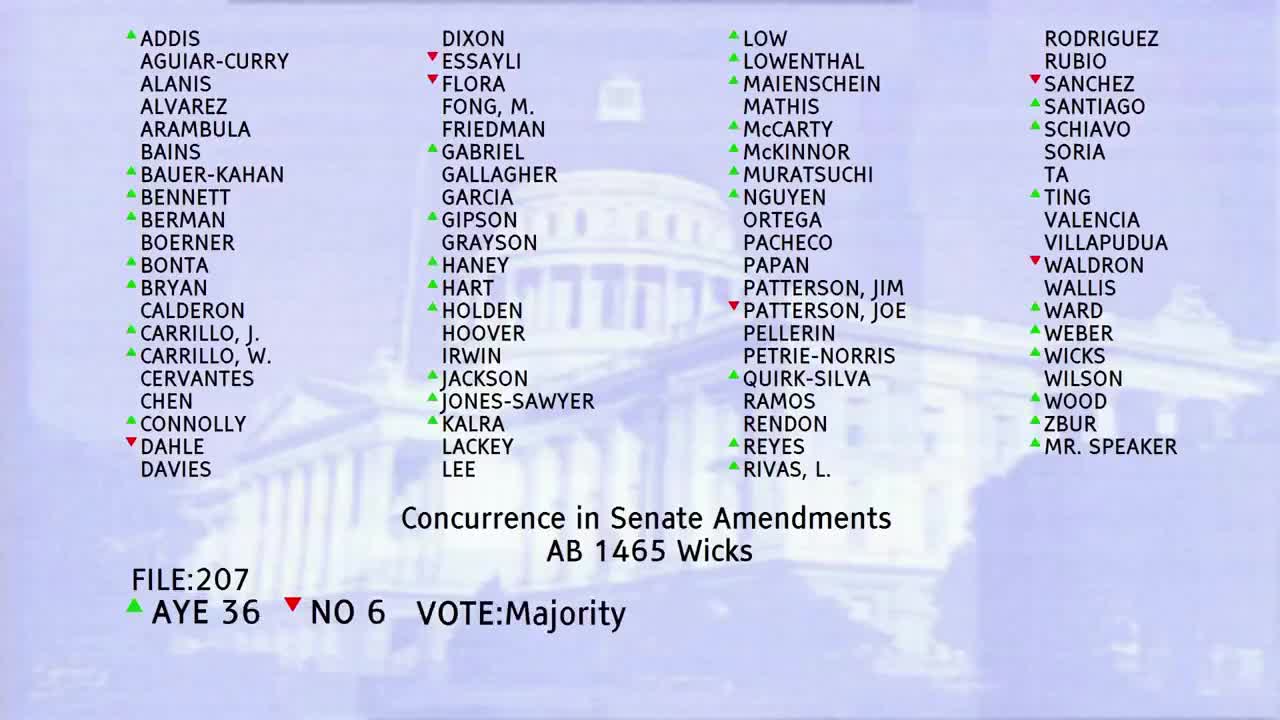
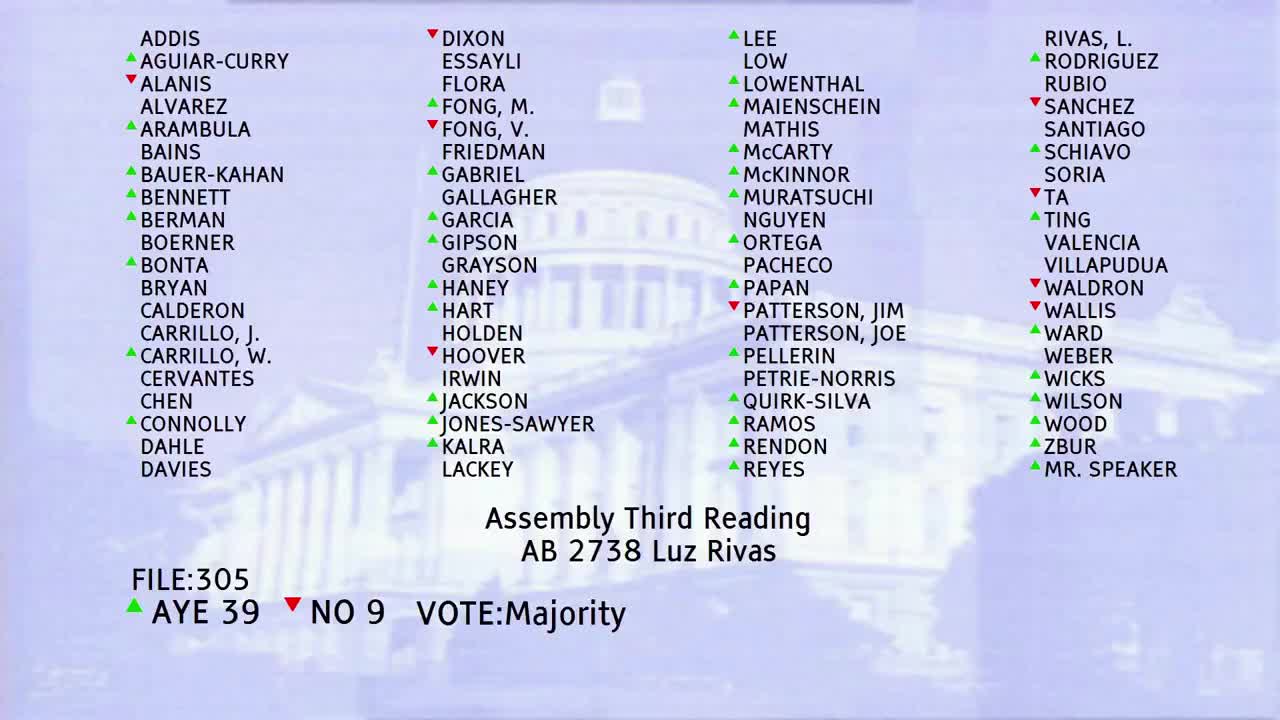
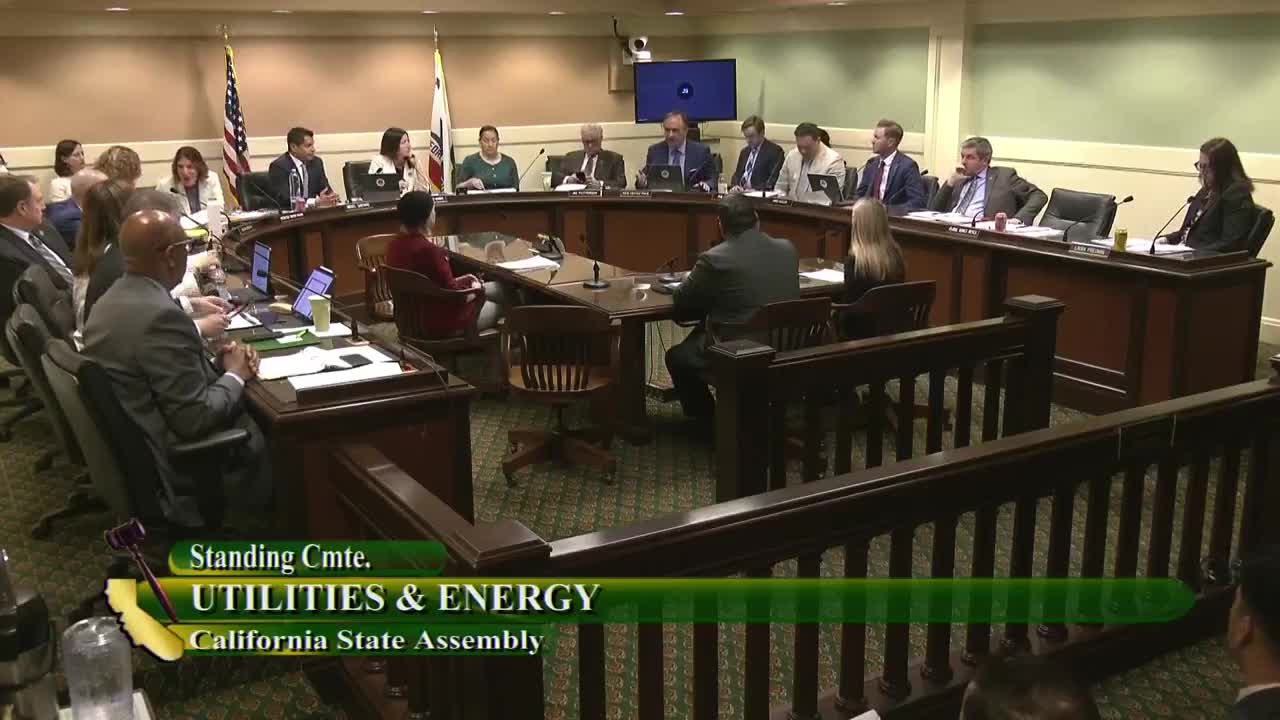


Bill Co-Author(s):