AB 3277: Local agency formation commission: districts: property tax.
- Session Year: 2023-2024
- House: Assembly
- Latest Version Date: 2024-07-02
Current Status:
Passed
(2024-07-02: Chaptered by Secretary of State - Chapter 70, Statutes of 2024.)
Introduced
In Committee
First Chamber
In Committee
Second Chamber
Enacted
Existing law, the Cortese-Knox-Hertzberg Local Government Reorganization Act of 2000, establishes the sole and exclusive authority and procedures for the initiation, conduct, and completion of changes of organization and reorganization for cities and districts. Existing law requires proceedings for the formation of a district to be conducted as authorized by the principal act of the proposed district, and authorizes the local agency formation commission in each county to serve as the conducting authority, as specified. Existing law requires a commission to determine the amount of property tax revenue to be exchanged by an affected local agency, as specified, if the proposal includes the formation of a district, as defined.
This bill would, instead, require a commission to determine the amount of property tax revenue to be exchanged by an affected local agency if the proposal includes the formation of a district and the applicant is seeking a share of the 1% ad valorem property taxes. By adding to the duties of a local agency formation commission, the bill would impose a state-mandated local program.
The California Constitution requires the state to reimburse local agencies and school districts for certain costs mandated by the state. Statutory provisions establish procedures for making that reimbursement.
This bill would provide that, if the Commission on State Mandates determines that the bill contains costs mandated by the state, reimbursement for those costs shall be made pursuant to the statutory provisions noted above.
Existing law, the Cortese-Knox-Hertzberg Local Government Reorganization Act of 2000, establishes the sole and exclusive authority and procedures for the initiation, conduct, and completion of changes of organization and reorganization for cities and districts. Existing law requires proceedings for the formation of a district to be conducted as authorized by the principal act of the proposed district, and authorizes the local agency formation commission in each county to serve as the conducting authority, as specified. Existing law requires a commission to determine the amount of property tax revenue to be exchanged by an affected local agency, as specified, if the proposal includes the formation of a district, as defined.
This bill would, instead, require a commission to determine the amount of property tax revenue to be exchanged by an affected local agency if the proposal includes the formation of a district and the applicant is seeking a share of the 1% ad valorem property taxes. By adding to the duties of a local agency formation commission, the bill would impose a state-mandated local program.
The California Constitution requires the state to reimburse local agencies and school districts for certain costs mandated by the state. Statutory provisions establish procedures for making that reimbursement.
This bill would provide that, if the Commission on State Mandates determines that the bill contains costs mandated by the state, reimbursement for those costs shall be made pursuant to the statutory provisions noted above.
Existing law, the Cortese-Knox-Hertzberg Local Government Reorganization Act of 2000, establishes the sole and exclusive authority and procedures for the initiation, conduct, and completion of changes of organization and reorganization for cities and districts. Existing law requires proceedings for the formation of a district to be conducted as authorized by the principal act of the proposed district, and authorizes the local agency formation commission in each county to serve as the conducting authority, as specified. Existing law requires a commission to determine the amount of property tax revenue to be exchanged by an affected local agency, as specified, if the proposal includes the formation of a district, as defined.
This bill would, instead, require a commission to determine the amount of property tax revenue to be exchanged by an affected local agency if the proposal includes the formation of a district and the applicant is seeking a share of the 1% ad valorem property taxes. By adding to the duties of a local agency formation commission, the bill would impose a state-mandated local program.
The California Constitution requires the state to reimburse local agencies and school districts for certain costs mandated by the state. Statutory provisions establish procedures for making that reimbursement.
This bill would provide that, if the Commission on State Mandates determines that the bill contains costs mandated by the state, reimbursement for those costs shall be made pursuant to the statutory provisions noted above.
(a)(1)If the proposal includes the incorporation of a city, as defined in Section 56043, the commission shall determine the amount of property tax revenue to be exchanged by the affected local agency pursuant to this section and Section 56815.
(2)If the proposal includes the formation of a district, as defined in Section 2215 of the Revenue and Taxation Code, and if the applicant is seeking a share of the 1 percent ad valorem property taxes, the commission shall determine the amount of property tax to be exchanged by the affected local agency pursuant to this section.
(b)The commission shall notify the county auditor of the proposal and the services which the new jurisdiction proposes to assume within the area, and identify for the auditor the existing service providers within the area subject to the proposal.
(c)If the proposal would not transfer all of an affected agencys service responsibilities to the proposed city or district, the commission and the county auditor shall do all of the following:
(1)The county auditor shall determine the proportion that the amount of property tax revenue derived by each affected local agency pursuant to subdivision (b) of Section 93 of the Revenue and Taxation Code bears to the total amount of revenue from all sources, available for general purposes, received by each affected local agency in the prior fiscal year. For purposes of making this determination and the determination required by paragraph (3), total amount of revenue from all sources available for general purposes means the total amount of revenue which an affected local agency may use on a discretionary basis for any purpose and does not include any of the following:
(A)Revenue which, by statute, is required to be used for a specific purpose.
(B)Revenue from fees, charges, or assessments which are levied to specifically offset the cost of particular services and do not exceed the cost reasonably borne in providing these services.
(C)Revenue received from the federal government which is required to be used for a specific purpose.
(2)The commission shall determine, based on information submitted by each affected local agency, an amount equal to the total net cost to each affected local agency during the prior fiscal year of providing those services which the new jurisdiction will assume within the area subject to the proposal. For purposes of this paragraph, total net cost means the total direct and indirect costs that were funded by general purpose revenues of the affected local agency and excludes any portion of the total cost that was funded by any revenues of that agency that are specified in subparagraphs (A), (B), and (C) of paragraph (1).
(3)The commission shall multiply the amount determined pursuant to paragraph (2) for each affected local agency by the corresponding proportion determined pursuant to paragraph (1) to derive the amount of property tax revenue used to provide services by each affected local agency during the prior fiscal year within the area subject to the proposal. The county auditor shall adjust the amount described in the previous sentence by the annual tax increment according to the procedures set forth in Chapter 6 (commencing with Section 95) of Part 0.5 of Division 1 of the Revenue and Taxation Code, to the fiscal year in which the new city or district receives its initial allocation of property taxes.
(4)For purposes of this subdivision, in any county in which, prior to the adoption of Article XIIIA of the California Constitution, and continuing thereafter, a separate fund or funds were established consisting of revenues derived from the unincorporated area of the county and from which fund or funds services rendered in the unincorporated area have been paid, the amount of property tax revenues derived pursuant to paragraph (3), may, at the discretion of the commission, be transferred to the proposed city over a period not to exceed 12 fiscal years following its incorporation. In determining whether the transfer of the amount of property tax revenues determined pursuant to paragraph (3) shall occur entirely within the fiscal year immediately following the incorporation of the proposed city or shall be phased in over a period not to exceed 12 full fiscal years following the incorporation, the commission shall consider each of the following:
(A)The total amount of revenue from all sources available to the proposed city.
(B)The fiscal impact of the proposed transfer on the transferring agency.
(C)Any other relevant facts which interested parties to the exchange may present to the commission in written form.
The decision of the commission shall be supported by written findings setting forth the basis for its decision.
(d)If the proposal would transfer all of an affected agencys service responsibilities to the proposed city or district, the commission shall request the auditor to determine the property tax revenue generated for the affected service providers by tax rate area, or portion thereof, and transmit that information to the commission.
(e)The executive officer shall notify the auditor of the amount determined pursuant to paragraph (3) of subdivision (c) or subdivision (d), as the case may be, and, where applicable, the period of time within which and the procedure by which the transfer of property tax revenues will be effected pursuant to paragraph (4) of subdivision (c), at the time the executive officer records a certificate of completion pursuant to Section 57203 for any proposal described in subdivision (a), and the auditor shall transfer that amount to the new jurisdiction.
(f)The amendments to this section enacted during the 198586 Regular Session of the Legislature shall apply to any proposal described in subdivision (a) for which a certificate of completion is recorded with the county recorder on or after January 1, 1987.
(g)For purposes of this section, prior fiscal year means the most recent fiscal year for which data on actual direct and indirect costs and revenues needed to perform the calculations required by this section are available preceding the issuance of the certificate of filing.
(h)An action brought by a city or district to contest any determinations of the county auditor or the commission with regard to the amount of property tax revenue to be exchanged by the affected local agency pursuant to this section shall be commenced within three years of the effective date of the citys incorporation or the districts formation. These actions may be brought by any city that incorporated or by any district that formed on or after January 1, 1986.
(i)This section applies to any city that incorporated or district that formed on or after January 1, 1986.
(j)The calculations and procedures specified in this section shall be made prior to and shall be incorporated into the calculations specified in Section 56815.
SEC. 2.If the Commission on State Mandates determines that this act contains costs mandated by the state, reimbursement to local agencies and school districts for those costs shall be made pursuant to Part 7 (commencing with Section 17500) of Division 4 of Title 2 of the Government Code.
(a)(1)If the proposal includes the incorporation of a city, as defined in Section 56043, the commission shall determine the amount of property tax revenue to be exchanged by the affected local agency pursuant to this section and Section 56815.
(2)If the proposal includes the formation of a district, as defined in Section 2215 of the Revenue and Taxation Code, and if the applicant is seeking a share of the 1 percent ad valorem property taxes, the commission shall determine the amount of property tax to be exchanged by the affected local agency pursuant to this section.
(b)The commission shall notify the county auditor of the proposal and the services which the new jurisdiction proposes to assume within the area, and identify for the auditor the existing service providers within the area subject to the proposal.
(c)If the proposal would not transfer all of an affected agencys service responsibilities to the proposed city or district, the commission and the county auditor shall do all of the following:
(1)The county auditor shall determine the proportion that the amount of property tax revenue derived by each affected local agency pursuant to subdivision (b) of Section 93 of the Revenue and Taxation Code bears to the total amount of revenue from all sources, available for general purposes, received by each affected local agency in the prior fiscal year. For purposes of making this determination and the determination required by paragraph (3), total amount of revenue from all sources available for general purposes means the total amount of revenue which an affected local agency may use on a discretionary basis for any purpose and does not include any of the following:
(A)Revenue which, by statute, is required to be used for a specific purpose.
(B)Revenue from fees, charges, or assessments which are levied to specifically offset the cost of particular services and do not exceed the cost reasonably borne in providing these services.
(C)Revenue received from the federal government which is required to be used for a specific purpose.
(2)The commission shall determine, based on information submitted by each affected local agency, an amount equal to the total net cost to each affected local agency during the prior fiscal year of providing those services which the new jurisdiction will assume within the area subject to the proposal. For purposes of this paragraph, total net cost means the total direct and indirect costs that were funded by general purpose revenues of the affected local agency and excludes any portion of the total cost that was funded by any revenues of that agency that are specified in subparagraphs (A), (B), and (C) of paragraph (1).
(3)The commission shall multiply the amount determined pursuant to paragraph (2) for each affected local agency by the corresponding proportion determined pursuant to paragraph (1) to derive the amount of property tax revenue used to provide services by each affected local agency during the prior fiscal year within the area subject to the proposal. The county auditor shall adjust the amount described in the previous sentence by the annual tax increment according to the procedures set forth in Chapter 6 (commencing with Section 95) of Part 0.5 of Division 1 of the Revenue and Taxation Code, to the fiscal year in which the new city or district receives its initial allocation of property taxes.
(4)For purposes of this subdivision, in any county in which, prior to the adoption of Article XIIIA of the California Constitution, and continuing thereafter, a separate fund or funds were established consisting of revenues derived from the unincorporated area of the county and from which fund or funds services rendered in the unincorporated area have been paid, the amount of property tax revenues derived pursuant to paragraph (3), may, at the discretion of the commission, be transferred to the proposed city over a period not to exceed 12 fiscal years following its incorporation. In determining whether the transfer of the amount of property tax revenues determined pursuant to paragraph (3) shall occur entirely within the fiscal year immediately following the incorporation of the proposed city or shall be phased in over a period not to exceed 12 full fiscal years following the incorporation, the commission shall consider each of the following:
(A)The total amount of revenue from all sources available to the proposed city.
(B)The fiscal impact of the proposed transfer on the transferring agency.
(C)Any other relevant facts which interested parties to the exchange may present to the commission in written form.
The decision of the commission shall be supported by written findings setting forth the basis for its decision.
(d)If the proposal would transfer all of an affected agencys service responsibilities to the proposed city or district, the commission shall request the auditor to determine the property tax revenue generated for the affected service providers by tax rate area, or portion thereof, and transmit that information to the commission.
(e)The executive officer shall notify the auditor of the amount determined pursuant to paragraph (3) of subdivision (c) or subdivision (d), as the case may be, and, where applicable, the period of time within which and the procedure by which the transfer of property tax revenues will be effected pursuant to paragraph (4) of subdivision (c), at the time the executive officer records a certificate of completion pursuant to Section 57203 for any proposal described in subdivision (a), and the auditor shall transfer that amount to the new jurisdiction.
(f)The amendments to this section enacted during the 198586 Regular Session of the Legislature shall apply to any proposal described in subdivision (a) for which a certificate of completion is recorded with the county recorder on or after January 1, 1987.
(g)For purposes of this section, prior fiscal year means the most recent fiscal year for which data on actual direct and indirect costs and revenues needed to perform the calculations required by this section are available preceding the issuance of the certificate of filing.
(h)An action brought by a city or district to contest any determinations of the county auditor or the commission with regard to the amount of property tax revenue to be exchanged by the affected local agency pursuant to this section shall be commenced within three years of the effective date of the citys incorporation or the districts formation. These actions may be brought by any city that incorporated or by any district that formed on or after January 1, 1986.
(i)This section applies to any city that incorporated or district that formed on or after January 1, 1986.
(j)The calculations and procedures specified in this section shall be made prior to and shall be incorporated into the calculations specified in Section 56815.
SEC. 2.If the Commission on State Mandates determines that this act contains costs mandated by the state, reimbursement to local agencies and school districts for those costs shall be made pursuant to Part 7 (commencing with Section 17500) of Division 4 of Title 2 of the Government Code.
(a)(1)If the proposal includes the incorporation of a city, as defined in Section 56043, the commission shall determine the amount of property tax revenue to be exchanged by the affected local agency pursuant to this section and Section 56815.
(2)If the proposal includes the formation of a district, as defined in Section 2215 of the Revenue and Taxation Code, and if the applicant is seeking a share of the 1 percent ad valorem property taxes, the commission shall determine the amount of property tax to be exchanged by the affected local agency pursuant to this section.
(b)The commission shall notify the county auditor of the proposal and the services which the new jurisdiction proposes to assume within the area, and identify for the auditor the existing service providers within the area subject to the proposal.
(c)If the proposal would not transfer all of an affected agencys service responsibilities to the proposed city or district, the commission and the county auditor shall do all of the following:
(1)The county auditor shall determine the proportion that the amount of property tax revenue derived by each affected local agency pursuant to subdivision (b) of Section 93 of the Revenue and Taxation Code bears to the total amount of revenue from all sources, available for general purposes, received by each affected local agency in the prior fiscal year. For purposes of making this determination and the determination required by paragraph (3), total amount of revenue from all sources available for general purposes means the total amount of revenue which an affected local agency may use on a discretionary basis for any purpose and does not include any of the following:
(A)Revenue which, by statute, is required to be used for a specific purpose.
(B)Revenue from fees, charges, or assessments which are levied to specifically offset the cost of particular services and do not exceed the cost reasonably borne in providing these services.
(C)Revenue received from the federal government which is required to be used for a specific purpose.
(2)The commission shall determine, based on information submitted by each affected local agency, an amount equal to the total net cost to each affected local agency during the prior fiscal year of providing those services which the new jurisdiction will assume within the area subject to the proposal. For purposes of this paragraph, total net cost means the total direct and indirect costs that were funded by general purpose revenues of the affected local agency and excludes any portion of the total cost that was funded by any revenues of that agency that are specified in subparagraphs (A), (B), and (C) of paragraph (1).
(3)The commission shall multiply the amount determined pursuant to paragraph (2) for each affected local agency by the corresponding proportion determined pursuant to paragraph (1) to derive the amount of property tax revenue used to provide services by each affected local agency during the prior fiscal year within the area subject to the proposal. The county auditor shall adjust the amount described in the previous sentence by the annual tax increment according to the procedures set forth in Chapter 6 (commencing with Section 95) of Part 0.5 of Division 1 of the Revenue and Taxation Code, to the fiscal year in which the new city or district receives its initial allocation of property taxes.
(4)For purposes of this subdivision, in any county in which, prior to the adoption of Article XIIIA of the California Constitution, and continuing thereafter, a separate fund or funds were established consisting of revenues derived from the unincorporated area of the county and from which fund or funds services rendered in the unincorporated area have been paid, the amount of property tax revenues derived pursuant to paragraph (3), may, at the discretion of the commission, be transferred to the proposed city over a period not to exceed 12 fiscal years following its incorporation. In determining whether the transfer of the amount of property tax revenues determined pursuant to paragraph (3) shall occur entirely within the fiscal year immediately following the incorporation of the proposed city or shall be phased in over a period not to exceed 12 full fiscal years following the incorporation, the commission shall consider each of the following:
(A)The total amount of revenue from all sources available to the proposed city.
(B)The fiscal impact of the proposed transfer on the transferring agency.
(C)Any other relevant facts which interested parties to the exchange may present to the commission in written form.
The decision of the commission shall be supported by written findings setting forth the basis for its decision.
(d)If the proposal would transfer all of an affected agencys service responsibilities to the proposed city or district, the commission shall request the auditor to determine the property tax revenue generated for the affected service providers by tax rate area, or portion thereof, and transmit that information to the commission.
(e)The executive officer shall notify the auditor of the amount determined pursuant to paragraph (3) of subdivision (c) or subdivision (d), as the case may be, and, where applicable, the period of time within which and the procedure by which the transfer of property tax revenues will be effected pursuant to paragraph (4) of subdivision (c), at the time the executive officer records a certificate of completion pursuant to Section 57203 for any proposal described in subdivision (a), and the auditor shall transfer that amount to the new jurisdiction.
(f)The amendments to this section enacted during the 198586 Regular Session of the Legislature shall apply to any proposal described in subdivision (a) for which a certificate of completion is recorded with the county recorder on or after January 1, 1987.
(g)For purposes of this section, prior fiscal year means the most recent fiscal year for which data on actual direct and indirect costs and revenues needed to perform the calculations required by this section are available preceding the issuance of the certificate of filing.
(h)An action brought by a city or district to contest any determinations of the county auditor or the commission with regard to the amount of property tax revenue to be exchanged by the affected local agency pursuant to this section shall be commenced within three years of the effective date of the citys incorporation or the districts formation. These actions may be brought by any city that incorporated or by any district that formed on or after January 1, 1986.
(i)This section applies to any city that incorporated or district that formed on or after January 1, 1986.
(j)The calculations and procedures specified in this section shall be made prior to and shall be incorporated into the calculations specified in Section 56815.
SEC. 2.If the Commission on State Mandates determines that this act contains costs mandated by the state, reimbursement to local agencies and school districts for those costs shall be made pursuant to Part 7 (commencing with Section 17500) of Division 4 of Title 2 of the Government Code.
|
Date
|
Status
|
|---|---|
| Jul 2, 2024 | Chaptered by Secretary of State - Chapter 70, Statutes of 2024. |
| Jul 2, 2024 | Approved by the Governor. |
| Jun 25, 2024 | Enrolled and presented to the Governor at 4 p.m. |
| Jun 13, 2024 | In Assembly. Ordered to Engrossing and Enrolling. |
| Jun 13, 2024 | Read third time. Passed. Ordered to the Assembly. (Ayes 37. Noes 0. Page 4492.). |
| Jun 11, 2024 | Read second time. Ordered to Consent Calendar. |
| Jun 10, 2024 | From committee: Be ordered to second reading file pursuant to Senate Rule 28.8 and ordered to Consent Calendar. |
| May 29, 2024 | From committee: Do pass and re-refer to Com. on APPR with recommendation: To Consent Calendar. (Ayes 7. Noes 0.) (May 29). Re-referred to Com. on APPR. |
| May 8, 2024 | Referred to Com. on L. GOV. |
| Apr 29, 2024 | In Senate. Read first time. To Com. on RLS. for assignment. |
| Apr 29, 2024 | Read third time. Passed. Ordered to the Senate. (Ayes 71. Noes 0. Page 5032.) |
| Apr 23, 2024 | Read second time. Ordered to third reading. |
| Apr 22, 2024 | Withdrawn from committee. |
| Apr 22, 2024 | Ordered to second reading. |
| Apr 11, 2024 | From committee: Do pass and re-refer to Com. on APPR. with recommendation: To Consent Calendar. (Ayes 9. Noes 0.) (April 10). Re-referred to Com. on APPR. |
| Mar 18, 2024 | Referred to Com. on L. GOV. |
| Feb 28, 2024 | From printer. May be heard in committee March 29. |
| Feb 27, 2024 | Read first time. To print. |
|
Date
|
Description
|
Location
|
Votes
|
|
|---|---|---|---|---|
| Jun 13, 2024 | Consent Calendar 2nd AB3277 L. GOV. (Carrillo, J.) | Senate Floor |
Passed |
|
| May 29, 2024 | Do pass, but first be re-referred to the Committee on [Appropriations] with the recommendation: To Consent Calendar | Senate Standing Committee on Local Government |
Passed |
|
| Apr 29, 2024 | AB 3277 Local Government Assembly Third Reading By CARRILLO, J. | Assembly Floor |
Passed |
|
| Apr 10, 2024 | Do pass and be re-referred to the Committee on [Appropriations] with recommendation: To Consent Calendar | Assembly Standing Committee on Local Government |
Passed |
This list shows positions taken on this bill by organizations on the date displayed, which is linked to the original source.
Positions by individuals are not included.
|
Organization
|
Position
|
Date
|
|---|---|---|
| Alameda LAFCO | ** Support | |
| Amador Lafco | ** Support | |
| Butte Lafco | ** Support | |
| California Association of LAFCOs | ** Support | |
| Contra Costa LAFCO | ** Support | |
| Del Norte LAFCO | ** Support | |
| El Dorado LAFCO | ** Support | |
| Fresno Lafco | ** Support | |
| Los Angeles Lafco | ** Support | |
| Marin Lafco | ** Support | |
| Mendocino Lafco | ** Support | |
| Nevada LAFCO | ** Support | |
| Orange LAFCO | ** Support | |
| Placer Lafco | ** Support | |
| Riverside LAFCO | ** Support | |
| San Joaquin LAFCO | ** Support | |
| San Mateo LAFCO | ** Support | |
| Santa Cruz LAFCO | ** Support | |
| Sonoma LAFCO | ** Support | |
| Stanislaus LAFCO | ** Support | |
| Yolo Lafco | ** Support |
SENATE RULES COMMITTEE Office of Senate Floor Analyses (916) 651-1520 Fax: (916) 327-4478 | AB 3277 |
CONSENT
Bill No: AB 3277
Author: Committee on Local Government
Introduced: 2/27/24
Vote: 21
SENATE LOCAL GOVERNMENT COMMITTEE: 7-0, 5/29/24
AYES: Durazo, Seyarto, Dahle, Glazer, Skinner, Wahab, Wiener
SENATE APPROPRIATIONS COMMITTEE: Senate Rule 28.8
ASSEMBLY FLOOR: 71-0, 4/29/24 - See last page for vote
SUBJECT: Local agency formation commission: districts: property tax
SOURCE: California Association of Local Agency Formation Commissions
DIGEST:
This bill specifies that, if a proposal includes the formation of a district, a local agency formation commission only needs to determine the amount of property tax revenue to be exchanged by an affected local agency if the applicant is seeking a share of the property tax.
ANALYSIS: Existing law requires a local agency formation commission (LAFCO) to determine the amount of property taxes to be exchanged among affected local agencies for proposals to form a new special district or incorporate a new city by calculating the net costs for the new special district or city to provide a service.
This bill provides that LAFCO only needs to determine the property taxes to be exchanged if the applicant for the formation of a new special district is requesting a share of the property tax.
Background
The Cortese-Knox-Hertzberg Local Government Reorganization Act (the Act) delegates the Legislature’s power to control the boundaries of cities and special districts to local agency formation commissions (LAFCOs). The courts call LAFCOs the Legislature’s watchdog over local boundary changes.
As practitioners find problems with the Act, they ask for statutory improvements. These minor problems do not warrant separate (and expensive) bills. According to the Legislative Analyst, in 2001-02 the cost of producing a bill was $17,890. Legislators respond by combining several of these minor amendments into an annual “omnibus bill.” In 2023, for example, the LAFCO omnibus bill was AB 1753 (Assembly Local Government Committee) which contained two noncontroversial statutory changes to LAFCO law, avoiding significant legislative costs.
Current law requires LAFCO to determine the amount of property taxes to be exchanged among affected local agencies for proposals to form a new special district or incorporate a new city by calculating the net costs for the new special district or city to provide a service. The Los Angeles LAFCO notes that over the past four years, it has received four applications initiating the formation of special districts. However, for two of these applications, the applicants have explicitly indicated they are not seeking, nor will they accept a share of, the property tax. Los Angeles LAFCO staff, in compliance with Government Code section 56810, has initiated the multiple requests to agencies to compile the financial information necessary to perform the statutory calculation. However, for one application, the proposed territory includes multiple cities and the County and having to obtain this information can delay or stall the processing of an application.
Comments
Purpose of the bill. Even the best written statutes contain minor flaws. When statutory problems appear in the state law affecting LAFCOs, the Assembly Local Government Committee makes small but needed changes to state law that might not otherwise find an author. When there are multiple such changes, the annual LAFCO omnibus bill also avoids legislative costs by combining several changes to state laws into a single, consensus bill. This bill makes a minor fix to LAFCO law. By carefully reviewing each item with the affected parties, the Committee avoids controversy. The changes made by this bill do not raise statewide policy questions and makes a complex statute easier for property owners, residents, and local officials to use.
FISCAL EFFECT: Appropriation: No Fiscal Com.: Yes Local: Yes
SUPPORT: (Verified 6/11/24)
CA Association of Local Agency Formation Commissions (source)
Alameda LAFCO
Amador LAFCO
Butte LAFCO
Calaveras LAFCO
Colusa LAFCO
Contra Costa LAFCO
Del Norte Local LAFCO
El Dorado LAFCO
Fresno LAFCO
Lake LAFCO
Los Angeles LAFCO
Marin LAFCO
Mendocino LAFCO
Merced LAFCO
Nevada LAFCO
Orange LAFCO
Placer Lafco
Riverside LAFCO
Sacramento LAFCO
San Bernardino LAFCO
San Joaquin LAFCO
San Mateo LAFCO
Santa Barbara LAFCO
Santa Clara LAFCO
Santa Cruz LAFCO
Shasta LAFCO
Solano LAFCO
Sonoma LAFCO
Stanislaus LAFCO
Yolo LAFCO
OPPOSITION: (Verified 6/11/24)
None received
ASSEMBLY FLOOR: 71-0, 4/29/24
AYES: Addis, Aguiar-Curry, Alanis, Arambula, Bauer-Kahan, Bennett, Berman, Boerner, Bonta, Bryan, Calderon, Juan Carrillo, Wendy Carrillo, Cervantes, Chen, Connolly, Davies, Dixon, Flora, Mike Fong, Vince Fong, Friedman, Gabriel, Garcia, Gipson, Grayson, Haney, Hart, Holden, Hoover, Irwin, Jackson, Jones-Sawyer, Kalra, Lackey, Lee, Low, Lowenthal, Maienschein, McCarty, McKinnor, Muratsuchi, Stephanie Nguyen, Ortega, Pacheco, Papan, Jim Patterson, Joe Patterson, Pellerin, Petrie-Norris, Quirk-Silva, Ramos, Reyes, Luz Rivas, Rodriguez, Santiago, Schiavo, Soria, Ta, Ting, Valencia, Villapudua, Waldron, Wallis, Ward, Weber, Wicks, Wilson, Wood, Zbur, Robert Rivas
NO VOTE RECORDED: Alvarez, Bains, Megan Dahle, Essayli, Gallagher, Mathis, Rendon, Blanca Rubio, Sanchez
Prepared by: Anton Favorini-Csorba / L. GOV. / (916) 651-4119
6/11/24 10:01:25
**** END ****
SENATE COMMITTEE ON LOCAL GOVERNMENT
Senator María Elena Durazo, Chair
2023 - 2024 Regular
Bill No: | AB 3277 | Hearing Date: | 5/29/24 |
Author: | Committee on Local Government | Fiscal: | Yes |
Version: | 2/27/24 | Consultant: | Favorini-Csorba |
Local agency formation commission: districts: property tax
Specifies that, if a proposal includes the formation of a district, a local agency formation commission only needs to determine the amount of property tax revenue to be exchanged by an affected local agency if the applicant is seeking a share of the property tax.
Background
The Cortese-Knox-Hertzberg Local Government Reorganization Act (the Act) delegates the Legislature’s power to control the boundaries of cities and special districts to local agency formation commissions (LAFCOs). The courts call LAFCOs the Legislature’s watchdog over local boundary changes.
As practitioners find problems with the Act, they ask for statutory improvements. These minor problems do not warrant separate (and expensive) bills. According to the Legislative Analyst, in 2001-02 the cost of producing a bill was $17,890. Legislators respond by combining several of these minor amendments into an annual “omnibus bill.” In 2023, for example, the LAFCO omnibus bill was AB 1753 (Assembly Local Government Committee) which contained two noncontroversial statutory changes to LAFCO law, avoiding significant legislative costs.
Proposed Law
Current law requires LAFCO to determine the amount of property taxes to be exchanged among affected local agencies for proposals to form a new special district or incorporate a new city by calculating the net costs for the new special district or city to provide a service. The Los Angeles LAFCO notes that over the past four years, it has received four applications initiating the formation of special districts. However, for two of these applications, the applicants have explicitly indicated they are not seeking, nor will they accept a share of, the property tax. Los Angeles LAFCO staff, in compliance with Government Code section 56810, has initiated the multiple requests to agencies to compile the financial information necessary to perform the statutory calculation. However, for one application, the proposed territory includes multiple cities and the County and having to obtain this information can delay or stall the processing of an application. AB 3277 provides that LAFCO only needs to determine the property taxes to be exchanged if the applicant for the formation of a new special district is requesting a share of the property tax.
Comments
Purpose of the bill. Even the best written statutes contain minor flaws. When statutory problems appear in the state law affecting LAFCOs, the Assembly Local Government Committee makes small but needed changes to state law that might not otherwise find an author. When there are multiple such changes, the annual LAFCO omnibus bill also avoids legislative costs by combining several changes to state laws into a single, consensus bill. AB 3277 makes a minor fix to LAFCO law. By carefully reviewing each item with the affected parties, the Committee avoids controversy. The changes made by AB 3277 do not raise statewide policy questions and makes a complex statute easier for property owners, residents, and local officials to use.
Assembly Actions
Assembly Local Government Committee: 9-0
Assembly Floor: 71-0
Support and Opposition
(5/24/24)
Support: CA Association of Local Agency Formation Commissions (Sponsor)
Alameda LAFCO
Amador LAFCO
Butte LAFCO
Calaveras LAFCO
Colusa LAFCO
Contra Costa LAFCO
Del Norte Local LAFCO
El Dorado LAFCO
Fresno LAFCO
Lake LAFCO
Los Angeles LAFCO
Marin LAFCO
Mendocino LAFCO
Nevada LAFCO
Orange LAFCO
Placer Lafco
Riverside LAFCO
Sacramento LAFCO
San Bernardino LAFCO
San Joaquin LAFCO
San Mateo LAFCO
Santa Barbara LAFCO
Santa Clara LAFCO
Santa Cruz LAFCO
Shasta LAFCO
Solano LAFCO
Sonoma LAFCO
Stanislaus LAFCO
Yolo LAFCO
Opposition: None received.
-- END --
ASSEMBLY THIRD READING
ATR Bill Id:AB 3277
Author:(Committee on Local Government)
As Introduced Ver:February 27, 2024
Majority vote
SUMMARY
Specifies that, if a proposal includes the formation of a district, a Local Agency Formation Commission (LAFCO) shall only determine the amount of property tax revenue to be exchanged by an affected local agency if the applicant is seeking a share of the 1% ad valorem property taxes.
Major Provisions
This bill maintains the authority and requirement for a LAFCO to determine the property tax revenues to be exchanged for an affected agency for applications involving the formation of a special district when the affected agency is seeking a share of the 1%, while excluding this requirement if the applicant has indicated that the agency will not be seeking a share of the 1% ad valorem property tax.
COMMENTS
Local Government Boundaries. The Legislature has the authority to create, dissolve, or otherwise modify the boundaries and services of local governments. Beginning in 1963, the Legislature delegated the ongoing responsibility to control the boundaries of cities, county service areas, and most special districts to LAFCOs in each county. The responsibilities and authority of LAFCOs have been modified in subsequent legislation, including a major revision of the LAFCO statutes in the Cortese-Knox-Hertzberg Local Government Reorganization Act of 2000 (AB 2838 (Hertzberg), Chapter 761, Statutes of 2000). The courts often refer to LAFCOs as the Legislature's watchdog over boundary changes.
Local governments can only exercise their powers and provide services where LAFCO allows them to. LAFCOs' boundary decisions must be consistent with spheres of influence (SOIs) that LAFCOs adopt to show the future boundaries and service areas of the cities and special districts. Before LAFCOs can adopt their SOIs, they must prepare Municipal Service Reviews (MSRs) which analyze population growth, public facilities, and service demands. LAFCOs may also conduct special studies of local governments.
Most boundary changes begin when a city or special district applies to a LAFCO, or when registered voters or landowners file petitions with a LAFCO. In limited circumstances, LAFCOs can initiate some special district boundary changes: consolidations, dissolutions, mergers, subsidiary districts, or reorganizations. Formations of special districts are generally conducted as authorized in the principal act of the special district, except that the LAFCO typically serves as the conducting authority.
Existing law includes the process for LAFCOs to determine the amount of property tax revenues to be exchanged by the affected local agency for proposals involving the formation of a special district. The law requires LAFCOs to calculate the net costs for each local agency to provide the service that would be provided by the new special district.
According to the Author
This bill makes a minor change to LAFCO law to ensure the efficient and effective use of limited resources when LAFCOs are processing applications for formation of special districts.
Arguments in Support
The California Association of LAFCOs, sponsor of this bill, states, "Under existing statute, a commission must perform a financial analysis of ad valorem property taxes each time that a proposal is received that includes the incorporation of a city and the formation of a district – regardless of whether a prorated share of the taxes is being sought. However, the sole purpose of this analysis is to determine how best to apportion the ad valorem property taxes between the agencies.
"Occasionally, an application is received in which the district waives any portion of the ad valorem taxes making a fiscal analysis unnecessary. Yet, statute is silent on that circumstance which has the effect of requiring LAFCOs to expend staff time or funds to perform an unneeded analysis. This bill, consequently, will add language that differentiates that the performance of that financial analysis is required only in those instances when it is actually needed."
Arguments in Opposition
None on file.
FISCAL COMMENTS
This bill was withdrawn from the Assembly Appropriations Committee.
VOTES
ASM LOCAL GOVERNMENT: 9-0-0
YES: Juan Carrillo, Waldron, Essayli, Haney, Kalra, Pacheco, Ramos, Ward, Wilson
UPDATED
VERSION: February 27, 2024
CONSULTANT: Claire Norton / L. GOV. / (916) 319-3958 FN: 0002770
Date of Hearing: April 10, 2024
ASSEMBLY COMMITTEE ON LOCAL GOVERNMENT
Juan Carrillo, Chair
ABPCA Bill Id:AB 3277 (
Author:Committee on Local Government) – As Introduced Ver:February 27, 2024
SUBJECT: Local agency formation commission: districts: property tax.
SUMMARY: Specifies that, if a proposal includes the formation of a district, a Local Agency Formation Commission (LAFCO) shall only determine the amount of property tax revenue to be exchanged by an affected local agency if the applicant is seeking a share of the 1% ad valorem property taxes.
EXISTING LAW:
- Specifies that if a proposal to LAFCO includes the incorporation of a city, as defined, the commission shall determine the amount of property tax revenue to be exchanged by the affected local agency, as specified [Government Code (GC) § 56810].
- Provides that if a proposal includes the formation of a district, as defined, the commission shall determine the amount of property tax to be exchanged by the affected local agency, as specified (GC § 56810).
- Requires the LAFCO to notify the county auditor of the proposal and the services which the new jurisdiction proposes to assume within the area, and identify for the auditor the existing service providers within the area subject to the proposal (GC § 56810).
FISCAL EFFECT: This bill is keyed fiscal and contains a state-mandated local program.
COMMENTS:
- Local Government Boundaries. The Legislature has the authority to create, dissolve, or otherwise modify the boundaries and services of local governments. Beginning in 1963, the Legislature delegated the ongoing responsibility to control the boundaries of cities, county service areas, and most special districts to LAFCOs in each county. The responsibilities and authority of LAFCOs have been modified in subsequent legislation, including a major revision of the LAFCO statutes in the Cortese-Knox-Hertzberg Local Government Reorganization Act of 2000 [AB 2838 (Hertzberg), Chapter 761, Statutes of 2000]. The courts often refer to LAFCOs as the Legislature’s watchdog over boundary changes.
Local governments can only exercise their powers and provide services where LAFCO allows them to. LAFCOs’ boundary decisions must be consistent with spheres of influence (SOIs) that LAFCOs adopt to show the future boundaries and service areas of the cities and special districts. Before LAFCOs can adopt their SOIs, they must prepare Municipal Service Reviews (MSRs) which analyze population growth, public facilities, and service demands. LAFCOs may also conduct special studies of local governments.
Most boundary changes begin when a city or special district applies to a LAFCO, or when registered voters or landowners file petitions with a LAFCO. In limited circumstances, LAFCOs can initiate some special district boundary changes: consolidations, dissolutions, mergers, subsidiary districts, or reorganizations. Formations of special districts are generally conducted as authorized in the principal act of the special district, except that the LAFCO typically serves as the conducting authority.
- Purpose of the Bill. Current state law includes the process for LAFCOs to determine the amount of property tax revenues to be exchanged by the affected local agency for proposals involving the formation of a special district. The law requires LAFCOs to calculate the net costs for each local agency to provide the service that would be provided by the new special district.
According to the Los Angeles LAFCO, over the past four years, it has received four applications initiating the formation of special districts. However, for two of these applications, the applicants have explicitly indicated that they are not seeking, nor will accept a share of, the 1% ad valorem property tax. Los Angeles LAFCO staff, in compliance with Government Code section 56810, has initiated the multiple requests to agencies to compile the financial information necessary to perform the statutory calculation. However, for one application, the proposed territory includes multiple cities and the County. Being required to obtain this information can delay or stall the processing of an application.
This bill maintains the authority and requirement for a LAFCO to determine the property tax revenues to be exchanged for an affected agency for applications involving the formation of a special district when the affected agency is seeking a share of the 1%, while excluding this requirement if the applicant has indicated that the agency will not be seeking a share of the 1% ad valorem property tax.
- Arguments in Support. The California Association of LAFCOs, sponsor of this bill, states, “Under existing statute, a commission must perform a financial analysis of ad valorem property taxes each time that a proposal is received that includes the incorporation of a city and the formation of a district – regardless of whether a prorated share of the taxes is being sought. However, the sole purpose of this analysis is to determine how best to apportion the ad valorem property taxes between the agencies.
“Occasionally, an application is received in which the district waives any portion of the ad valorem taxes making a fiscal analysis unnecessary. Yet, statute is silent on that circumstance which has the effect of requiring LAFCOs to expend staff time or funds to perform an unneeded analysis. This bill, consequently, will add language that differentiates that the performance of that financial analysis is required only in those instances when it is actually needed.”
- Arguments in Opposition. None on file.
REGISTERED SUPPORT / OPPOSITION:
Support
California Association of LAFCOs [SPONSOR]
Alameda LAFCO
Amador LAFCO
Butte LAFCO
Contra Costa LAFCO
Del Norte LAFCO
El Dorado LAFCO
Fresno LAFCO
Los Angeles LAFCO
Marin LAFCO
Mendocino LAFCO
Nevada LAFCO
Orange LAFCO
Placer LAFCO
Riverside LAFCO
San Joaquin LAFCO
San Mateo LAFCO
Santa Cruz LAFCO
Sonoma LAFCO
Stanislaus LAFCO
Yolo LAFCO
Opposition
None on file.
Analysis Prepared by: Claire Norton / L. GOV. / (916) 319-3958
Discussed in Hearing
View Older Hearings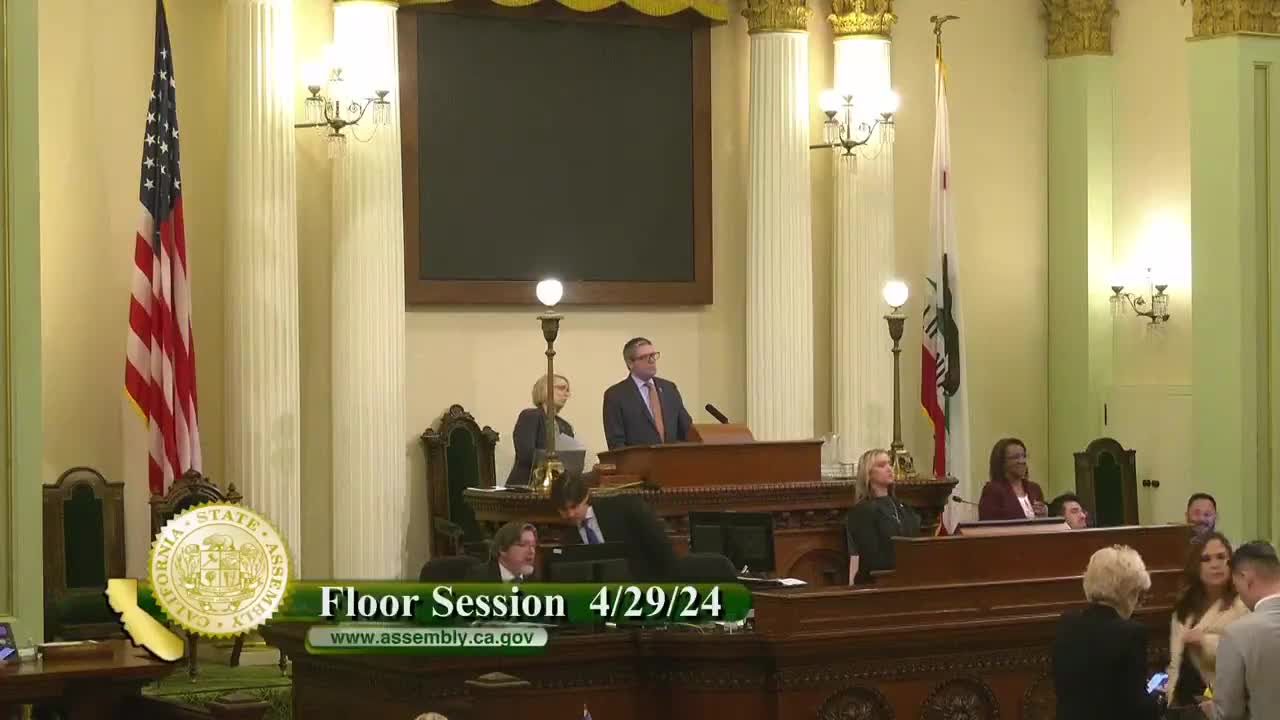
Bill Author
Bill Co-Author(s):