AB 3279: State Bar of California.
- Session Year: 2023-2024
- House: Assembly
- Latest Version Date: 2024-09-12
Current Status:
Passed
(2024-09-12: Chaptered by Secretary of State - Chapter 227, Statutes of 2024.)
Introduced
In Committee
First Chamber
In Committee
Second Chamber
Enacted
What does this bill do?
The bill changes how the State Bar regulates lawyers and law schools and how client trust accounts are tracked, affecting California attorneys, unaccredited J.D. programs, banks, and the State Bar. It requires financial institutions to collect attorneys’ State Bar license numbers and report client trust account data to the State Bar, gives the Bar broader access to trust-account records (while keeping those records confidential), allows appointing authorities to remove board members, shifts oversight of unaccredited J.D. programs to the examining committee, and authorizes temporary fee changes and new fee surcharges to fund various State Bar costs and programs.
The summary is provided by generative AI which can make mistakes. For original language, please view the details in the table below.
Existing law, the State Bar Act, provides for the licensure and regulation of attorneys by the State Bar of California (State Bar), a public corporation governed by a board of trustees. Existing law prescribes the manner of appointment of members of the board by the Supreme Court, the Senate Committee on Rules, the Speaker of the Assembly, and the Governor. Existing law establishes 4-year terms of office for attorney and public members of the board, and authorizes attorney members to be appointed for only one additional term.
This bill would authorize an appointing authority to remove from office at any time a member of the board appointed by that appointing authority for continued neglect of duties, incompetence, or unprofessional or dishonorable conduct.
Existing law requires the State Bar to collect fees for the California Lawyers Association, provided the board determines that the California Lawyers Association continues to serve a public purpose, as prescribed, and continues to comply with certain legal requirements related to establishing criteria for membership in the California Young Lawyers Association. Existing law requires funds received from collection of unpaid amounts owed to the State Bar pursuant to the Interagency Intercept Collections Program to be allocated for specified purposes.
This bill would delete the above-described requirement on establishing criteria for membership in the California Young Lawyers Association. The bill, until January 1, 2026, would require funds collected pursuant to the Interagency Intercept Collections Program to be deposited into the State Bars general fund.
Existing law requires the Committee of Bar Examiners to adopt rules for the regulation and oversight of unaccredited law schools that are required to be authorized to operate as a business in California and to have an administrative office in California that are not accredited by the American Bar Association or the Committee of Bar Examiners, and to adopt rules for the regulation and oversight of nonlaw school legal programs leading to a juris doctor (J.D.) degree, bachelor of laws (LL.B.) degree, or other law study program.
This bill would instead make the Committee of Bar Examiners responsible for the approval, regulation, and oversight of degree-granting unaccredited law schools that award the juris doctor (J.D.) degree and that are not approved by the American Bar Association or examining committee.
Existing law makes the examining committee of the State Bar responsible for the approval, regulation, or oversight of certain law schools and law study programs that do not meet specified criteria that became inoperative on January 1, 2008.
This bill would repeal those provisions and instead would make the examining committee responsible for the approval, regulation, and oversight of degree-granting law schools that award the juris doctor professional degree in California and are not approved by the American Bar Association.
Existing law requires the board of trustees to evaluate the bar examination and report the results of the evaluation and any determination regarding adjustment of a passing score to the Supreme Court and the Legislature at least every 7 years.
This bill would defer the report due in 2025 for a period not to exceed 7 years from the deployment of a new bar examination, as specified. The bill, beginning on July 1, 2026, until January 1, 2030, would require the State Bar to annually report to the Legislature on the number of complaints regarding access issues relating to the biannual state bar exam.
Existing law requires the State Bar to submit to the Department of Justice fingerprint images and related information for licensees that are required to be fingerprinted pursuant to specified provisions of the California Rules of Court.
This bill would delete that provision and instead would require the State Bar to submit that information for all active and inactive licensees who are seeking to change their license status from active to inactive or whose fingerprints have not otherwise been submitted.
Existing law exempts certain full-time employees from continuing legal education otherwise required to be completed by active licensees.
This bill would define full-time employees for those purposes to include employees of the California State Legislature, and would declare that this provision is declaratory of existing law.
Existing law provides for the appointment of a presiding judge and hearing judges to the State Bar Court. Existing law requires a hearing judge to be paid a certain percentage of the salary of a superior court judge and requires the presiding judge to be paid the same salary as a superior court judge.
This bill would instead require a hearing judge to be paid the salary of a superior court judge and would require the presiding judge to be paid the same as a justice of the court of appeal. The bill would limit the use of license fees to compensate State Bar Court judges, as specified.
Existing law requires the board of trustees to establish and administer a Client Security Fund to relieve or mitigate pecuniary losses caused by the dishonest conduct of licensees of the State Bar, among others, arising from the practice of law.
This bill would state that judicial review of a decision to approve or deny an application for reimbursement from the Client Security Fund may be had by filing a petition for a writ of administrative mandamus, and would declare that this provision is declaratory of existing law.
Existing law authorizes the State Bar to impose various annual fees on active and inactive licensees, including an annual license fee. Existing law, until January 1, 2025, requires the board to fix the annual license fee for active licensees for 2024 at a sum not exceeding $390. Existing law also requires the board to fix the annual license fee for inactive licensees for 2024 at a sum not exceeding $97.40. Existing law requires the annual license fee for active licensees to be payable on or before the first day of February each year.
This bill would instead authorize the board, until January 1, 2026, to fix the annual license fee for active licensees for 2025 at a sum not exceeding $400 and to fix the annual license fee for inactive licensees for 2025 at a sum not exceeding $100. The bill would require payment of the annual license fee for active licensees to be payable on or before a date set by the State Bar, not less than 12 months from the prior years due date, and would require individuals who qualified for a specified waiver to pay the fee on an installment basis. The bill would authorize the State Bar to annually collect additional annual fees from active and inactive licensees, including, until January 1, 2030, an annual fee to pay for costs associated with leasing space in a certain building in San Francisco; until January 1, 2028, an annual fee to fund salaries and benefits of State Bar employees; until January 1, 2029, an annual fee to fund the cost of administering compliance reviews and audits of client trust accounts; and, until January 1, 2029, an annual fee to fund certain disciplinary diversion pilot programs.
Existing law, until December 31, 2024, requires $5 of specified annual fees authorized to be imposed on licensees, unless a licensee elects otherwise, to be allocated to qualified legal services projects or qualified support centers to fund law student summer fellowships for the purpose of supporting law students interested in pursuing a career in legal services for indigent persons.
This bill would extend that requirement until January 1, 2030, and would increase the amount of the fee to $10.
Existing law requires the board to establish and administer a Client Security Fund to relieve or mitigate pecuniary losses caused by the dishonest conduct of licensees and other registrants of the State Bar. Existing law requires a licensee to reimburse the Client Security Fund for all moneys paid out as a result of the licensees conduct, payable to and for the benefit of the State Bar, to promote rehabilitation and protect the public.
This bill would require 50 percent of the collections received during 2025 to be deposited in the Client Security Fund and 50 percent to be deposited in the State Bars general fund.
Existing law authorizes the board to increase the annual license fees for active licensees up to $40 and, for inactive licensees, up to $10, for purposes of the Client Security Fund and the costs of its administration.
This bill, notwithstanding that provision, would authorize the board to disburse to the State Bars general fund $2,000,000 from the Client Security Fund as reimbursement for specified prior transfers from other funds to the Client Security Fund.
Existing law prohibits an entity, among others, from operating for the purpose of referring clients to attorneys unless certain requirements are satisfied.
This bill would instead make those provisions applicable to nongovernmental entities, among others, and would revise the requirements.
Existing law requires a financial institution that is a depository for attorney trust accounts to report to the State Bar in the event any properly payable instrument is presented against an attorney trust account containing insufficient funds. Existing law, the California Financial Information Privacy Act, generally prohibits a financial institution from disclosing a consumers nonpublic personal information with any nonaffiliated third party without the consumers consent, and makes an entity that violates those provisions subject to specified civil penalties. Existing law, the California Right to Financial Privacy Act, generally prohibits a state or local agency, in connection with a civil or criminal investigation of a customer, to request or receive copies of the financial records of any customer from a financial institution, except under specified circumstances.
This bill would require a financial institution, commencing January 1, 2026, to collect an attorneys license number upon the establishment of a new client trust account. The bill would require a financial institution, on or before March 1, 2026, and annually thereafter, to provide certain information for every client trust account, including the name of the attorney or law firm associated with the client trust account. The bill would require the State Bar, on or before July 1, 2026, to require a licensed attorney to furnish their State Bar license number to the financial institution where the client trust account is maintained, and would require a financial institution to incorporate that information into its records. The bill would exempt the dissemination of financial information and records pursuant to those provisions from the California Financial Information Privacy Act and the California Right to Financial Privacy Act. The bill would require the State Bar to annually submit to the Assembly and Senate Judiciary Committees a report pertaining to client trust accounts that includes, among other information, referrals for possible discipline the State Bar made in the prior year. The bill would require all licensees, limited liability partnerships, or registered law corporations to provide to the State Bar, pursuant to a request made as part of a compliance review or investigative audit specified information relating to the receipt, holding, and disbursement of funds, securities, or other property.
Existing law requires the State Bar, by April 30 of each year, to include in its Annual Discipline Report certain information on the number of complaints filed against California attorneys alleging a violation of specified financial service provisions. Existing law also requires the State Bar to report, no later than April 30 of each year, as part of its Annual Discipline Report to the Legislature and the Chairs of the Senate and Assembly Judiciary Committees, certain information relating to demand letters received by the State Bar, including the number of investigations opened concerning a violation of construction-related accessibility claim.
This bill would delete the above-described April 30 deadline for those annual reports.
Existing law, when an affidavit is taken before a judge or court in another state or foreign country, requires the clerk of the court to certify the genuineness of the signature of the judge, the existence of the court, and the fact that the judge is a member of the court.
This bill would make those provisions inapplicable to oaths administered for admission to the State Bar. The bill would make other conforming and related changes.
Existing constitutional provisions require that a statute that limits the right of access to the meetings of public bodies or the writings of public officials and agencies be adopted with findings demonstrating the interest protected by the limitation and the need for protecting that interest.
This bill would make legislative findings to that effect.
Existing law, the State Bar Act, provides for the licensure and regulation of attorneys by the State Bar of California (State Bar), a public corporation governed by a board of trustees. Existing law prescribes the manner of appointment of members of the board by the Supreme Court, the Senate Committee on Rules, the Speaker of the Assembly, and the Governor. Existing law establishes 4-year terms of office for attorney and public members of the board, and authorizes attorney members to be appointed for only one additional term.
This bill would authorize an appointing authority to remove from office at any time a member of the board appointed by that appointing authority for continued neglect of duties, incompetence, or unprofessional or dishonorable conduct.
Existing law requires the State Bar to collect fees for the California Lawyers Association, provided the board determines that the California Lawyers Association continues to serve a public purpose, as prescribed, and continues to comply with certain legal requirements related to establishing criteria for membership in the California Young Lawyers Association. Existing law requires funds received from collection of unpaid amounts owed to the State Bar pursuant to the Interagency Intercept Collections Program to be allocated for specified purposes.
This bill would delete the above-described requirement on establishing criteria for membership in the California Young Lawyers Association. The bill, until January 1, 2026, would require funds collected pursuant to the Interagency Intercept Collections Program to be deposited into the State Bars general fund.
Existing law requires the Committee of Bar Examiners to adopt rules for the regulation and oversight of unaccredited law schools that are required to be authorized to operate as a business in California and to have an administrative office in California that are not accredited by the American Bar Association or the Committee of Bar Examiners, and to adopt rules for the regulation and oversight of nonlaw school legal programs leading to a juris doctor (J.D.) degree, bachelor of laws (LL.B.) degree, or other law study program.
This bill would instead make the Committee of Bar Examiners responsible for the approval, regulation, and oversight of degree-granting unaccredited law schools that award the juris doctor (J.D.) degree and that are not approved by the American Bar Association or examining committee.
Existing law makes the examining committee of the State Bar responsible for the approval, regulation, or oversight of certain law schools and law study programs that do not meet specified criteria that became inoperative on January 1, 2008.
This bill would repeal those provisions and instead would make the examining committee responsible for the approval, regulation, and oversight of degree-granting law schools that award the juris doctor professional degree in California and are not approved by the American Bar Association.
Existing law requires the board of trustees to evaluate the bar examination and report the results of the evaluation and any determination regarding adjustment of a passing score to the Supreme Court and the Legislature at least every 7 years.
This bill would defer the report due in 2025 for a period not to exceed 7 years from the deployment of a new bar examination, as specified. The bill, beginning on July 1, 2026, until January 1, 2030, would require the State Bar to annually report to the Legislature on the number of complaints regarding access issues relating to the biannual state bar exam.
Existing law requires the State Bar to submit to the Department of Justice fingerprint images and related information for licensees that are required to be fingerprinted pursuant to specified provisions of the California Rules of Court.
This bill would delete that provision and instead would require the State Bar to submit that information for all active and inactive licensees who are seeking to change their license status from active to inactive or whose fingerprints have not otherwise been submitted.
Existing law exempts certain full-time employees from continuing legal education otherwise required to be completed by active licensees.
This bill would define full-time employees for those purposes to include employees of the California State Legislature, and would declare that this provision is declaratory of existing law.
Existing law provides for the appointment of a presiding judge and hearing judges to the State Bar Court. Existing law requires a hearing judge to be paid a certain percentage of the salary of a superior court judge and requires the presiding judge to be paid the same salary as a superior court judge.
This bill would instead require a hearing judge to be paid the salary of a superior court judge and would require the presiding judge to be paid the same as a justice of the court of appeal. The bill would limit the use of license fees to compensate State Bar Court judges, as specified.
Existing law requires the Board of Trustees of the State Bar board of trustees to establish and administer a Client Security Fund to relieve or mitigate pecuniary losses caused by the dishonest conduct of licensees of the State Bar, among others, arising from the practice of law.
This bill would state that judicial review of a decision to approve or deny an application for reimbursement from the Client Security Fund may be had by filing a petition for a writ of administrative mandamus, and would declare that this provision is declaratory of existing law.
Existing law authorizes the State Bar to impose various annual fees on active and inactive licensees, including an annual license fee. Existing law, until January 1, 2025, requires the board to fix the annual license fee for active licensees for 2024 at a sum not exceeding $390. Existing law also requires the board to fix the annual license fee for inactive licensees for 2024 at a sum not exceeding $97.40. Existing law requires the annual license fee for active licensees to be payable on or before the first day of February each year.
This bill would instead authorize the board, until January 1, 2026, to fix the annual license fee for active licensees for 2025 at a sum not exceeding $400 and to fix the annual license fee for inactive licensees for 2025 at a sum not exceeding $100. The bill would require the date set for payment of the annual license fee for active licensees to be payable on or before a date set by the State Bar, not less than 12 months from the prior years due date, and would require individuals who qualified for a specified waiver to pay the fee on an installment basis. The bill would authorize the State Bar to annually collect additional annual fees from active and inactive licensees, including, until January 1, 2030, an annual fee to pay for costs associated with leasing space in a certain building in San Francisco; until January 1, 2028, an annual fee to fund salaries and benefits of State Bar employees; until January 1, 2029, an annual fee to fund the cost of administering compliance reviews and audits of client trust accounts; and, until January 1, 2029, an annual fee to fund certain disciplinary diversion pilot programs.
Existing law, until December 31, 2024, requires $5 of specified annual fees authorized to be imposed on licensees, unless a licensee elects otherwise, to be allocated to qualified legal services projects or qualified support centers to fund law student summer fellowships for the purpose of supporting law students interested in pursuing a career in legal services for indigent persons.
This bill would extend that requirement until January 1, 2030. 2030, and would increase the amount of the fee to $10.
Existing law requires the board to establish and administer a Client Security Fund to relieve or mitigate pecuniary losses caused by the dishonest conduct of licensees and other registrants of the State Bar. Existing law requires a licensee to reimburse the Client Security Fund for all moneys paid out as a result of the licensees conduct, payable to and for the benefit of the State Bar, to promote rehabilitation and protect the public.
This bill would require 50 percent of the collections received during 2025 to be deposited in the Client Security Fund and 50 percent to be deposited in the State Bars general fund.
Existing law authorizes the board to increase the annual license fees for active licensees up to $40 and, for inactive licensees, up to $10, for purposes of the Client Security Fund and the costs of its administration.
This bill, notwithstanding that provision, would authorize the board to disburse to the State Bars general fund $2,000,000 from the Client Security Fund as reimbursement for specified prior transfers from other funds to the Client Security Fund.
Existing law prohibits an entity, among others, from operating for the purpose of referring clients to attorneys unless certain requirements are satisfied.
This bill would instead make those provisions applicable to nongovernmental entities, among others, and would revise the requirements.
Existing law requires a financial institution that is a depository for attorney trust accounts to report to the State Bar in the event any properly payable instrument is presented against an attorney trust account containing insufficient funds. Existing law, the California Financial Information Privacy Act, generally prohibits a financial institution from disclosing a consumers nonpublic personal information with any nonaffiliated third party without the consumers consent, and makes an entity that violates those provisions subject to specified civil penalties. Existing law, the California Right to Financial Privacy Act, generally prohibits a state or local agency, in connection with a civil or criminal investigation of a customer, to request or receive copies of the financial records of any customer from a financial institution, except under specified circumstances.
This bill would require a financial institution, commencing January 1, 2026, to collect an attorneys license number upon the establishment of a new client trust account. The bill would require a financial institution, commencing January 1, 2026, to annually furnish to the State Bar a statement of account for every client trust account, and, commencing January 1, 2027, to annually furnish to the State Bar a report for every client trust account known to the financial institution. The bill would require the State Bar to provide certain information to the financial institutions, and would authorize the State Bar to collect an annual fee from licensees to cover the cost of implementing those provisions. on or before March 1, 2026, and annually thereafter, to provide certain information for every client trust account, including the name of the attorney or law firm associated with the client trust account. The bill would require the State Bar, on or before July 1, 2026, to require a licensed attorney to furnish their State Bar license number to the financial institution where the client trust account is maintained, and would require a financial institution to incorporate that information into its records. The bill would exempt the dissemination of financial information and records pursuant to those provisions from the California Financial Information Privacy Act and the California Right to Financial Privacy Act. The bill would require the State Bar to annually submit to the Assembly and Senate Judiciary Committees a report pertaining to client trust accounts that includes, among other information, referrals for possible discipline the State Bar made in the prior year. The bill would require all licensees, limited liability partnerships, or registered law corporations to provide to the State Bar, pursuant to a request made as part of a compliance review or investigative audit specified information relating to the receipt, holding, and disbursement of funds, securities, or other property.
Existing law, the California Financial Information Privacy Act, generally prohibits a financial institution from disclosing a consumers nonpublic personal information with any nonaffiliated third party without the consumers consent, and makes an entity that violates those provisions subject to specified civil penalties. Existing law exempts from this prohibition the disclosure of a consumers nonpublic personal information when the nonpublic personal information is released to the extent specifically required or permitted by law to specified entities, including, among others, law enforcement agencies.This bill would also authorize the disclosure of a consumers nonpublic personal information to the extent specifically required or permitted by law to the State Bar.Existing law requires the State Bar, by April 30 of each year, to include in its Annual Discipline Report certain information on the number of complaints filed against California attorneys alleging a violation of specified financial service provisions. Existing law also requires the State Bar to report, no later than April 30 of each year, as part of its Annual Discipline Report to the Legislature and the Chairs of the Senate and Assembly Judiciary Committees, certain information relating to demand letters received by the State Bar, including the number of investigations opened concerning a violation of construction-related accessibility claim.
This bill would delete the above-described April 30 deadline for those annual reports.
Existing law, when an affidavit is taken before a judge or court in another state or foreign country, requires the clerk of the court to certify the genuineness of the signature of the judge, the existence of the court, and the fact that the judge is a member of the court.
This bill would make those provisions inapplicable to oaths administered for admission to the State Bar. The bill would make other conforming and related changes.
Existing constitutional provisions require that a statute that limits the right of access to the meetings of public bodies or the writings of public officials and agencies be adopted with findings demonstrating the interest protected by the limitation and the need for protecting that interest.
This bill would make legislative findings to that effect.
Existing law, the State Bar Act, provides for the licensure and regulation of attorneys by the State Bar of California (State Bar), a public corporation governed by a board of trustees. Existing law prescribes the manner of appointment of members of the board by the Supreme Court, the Senate Committee on Rules, the Speaker of the Assembly, and the Governor. Existing law establishes 4-year terms of office for attorney and public members of the board, and authorizes attorney members to be appointed for only one additional term.
This bill would authorize an appointing authority to remove from office at any time a member of the board appointed by that appointing authority for continued neglect of duties, incompetence, or unprofessional or dishonorable conduct.
Existing law requires the State Bar to collect fees for the California Lawyers Association, provided the board determines that the California Lawyers Association continues to serve a public purpose, as prescribed, and continues to comply with certain legal requirements related to establishing criteria for membership in the California Young Lawyers Association.
This bill would delete the above-described requirement on establishing criteria for membership in the California Young Lawyers Association.
Existing law requires the Committee of Bar Examiners to adopt rules for the regulation and oversight of unaccredited law schools that are required to be authorized to operate as a business in California and to have an administrative office in California that are not accredited by the American Bar Association or the Committee of Bar Examiners, and to adopt rules for the regulation and oversight of nonlaw school legal programs leading to a juris doctor (J.D.) degree, bachelor of laws (LL.B.) degree, or other law study program.
This bill would instead make the Committee of Bar Examiners responsible for the approval, regulation, and oversight of degree-granting unaccredited law schools that award the juris doctor (J.D.) degree and that are not approved by the American Bar Association or examining committee.
Existing law makes the examining committee of the State Bar responsible for the approval, regulation, or oversight of certain law schools and law study programs that do not meet specified criteria that became inoperative on January 1, 2008.
This bill would repeal those provisions and instead would make the examining committee responsible for the approval, regulation, and oversight of degree-granting law schools that award the juris doctor professional degree in California and are not approved by the American Bar Association.
This bill, beginning on July 1, 2026, until January 1, 2030, would require the State Bar to annually report to the Legislature on the number of complaints regarding access issues relating to the biannual state bar exam.
Existing law exempts certain full-time employees from continuing legal education otherwise required to be completed by active licensees.
This bill would define full-time employees for those purposes to include employees of the California State Legislature, and would declare that this provision is declaratory of existing law.
Existing law provides for the appointment of a presiding judge and hearing judges to the State Bar Court. Existing law requires a hearing judge to be paid a certain percentage of the salary of a superior court judge and requires the presiding judge to be paid the same salary as a superior court judge.
This bill would instead require a hearing judge to be paid the salary of a superior court judge and would require the presiding judge to be paid the same as a justice of the court of appeal. The bill would prohibit funding for State Bar Court judges in excess of the amount authorized as of December 31, 2024, to be paid from certain annual fees imposed on licensees. limit the use of license fees to compensate State Bar Court judges, as specified.
Existing law requires the Board of Trustees of the State Bar to establish and administer a Client Security Fund to relieve or mitigate pecuniary losses caused by the dishonest conduct of licensees of the State Bar, among others, arising from the practice of law.
This bill would state that judicial review of a decision to approve or deny an application for reimbursement from the Client Security Fund may be had by filing a petition for a writ of administrative mandamus, and would declare that this provision is declaratory of existing law.
Existing law authorizes the State Bar to impose various annual fees on active and inactive licensees, including an annual license fee. Existing law, until January 1, 2025, requires the board to fix the annual license fee for active licensees for 2024 at a sum not exceeding $390. Existing law also requires the board to fix the annual license fee for inactive licensees for 2024 at a sum not exceeding $97.40.
This bill would extend the operation of the provision requiring the board to fix the annual license fees at the amounts specified above until January 1, 2026. instead authorize the board, until January 1, 2026, to fix the annual license fee for active licensees for 2025 at a sum not exceeding $400 and to fix the annual license fee for inactive licensees for 2025 at a sum not exceeding $100. The bill would require the date set for payment of the annual license fee for active licensees to be not less than 12 months from the prior years due date, and would require individuals who qualified for a specified waiver to pay the fee on an installment basis. The bill would authorize the State Bar to annually collect additional annual fees from active and inactive licensees, including, until January 1, 2030, an annual fee to pay for costs associated with leasing space in a certain building in San Francisco; until January 1, 2028, an annual fee to fund salaries and benefits, as specified; salary and, until January 1, 2029, an annual fee to fund the Office of Chief Trial Counsels pilot disciplinary diversion program. benefits of State Bar employees; until January 1, 2029, an annual fee to fund the cost of administering compliance reviews and audits of client trust accounts; and, until January 1, 2029, an annual fee to fund certain disciplinary diversion pilot programs.
Existing law, until December 31, 2024, requires $5 of specified annual fees authorized to be imposed on licensees, unless a licensee elects otherwise, to be allocated to qualified legal services projects or qualified support centers to fund law student summer fellowships for the purpose of supporting law students interested in pursuing a career in legal services for indigent persons.
This bill would extend that requirement until January 1, 2030.
Existing law requires a financial institution that is a depository for attorney trust accounts to report to the State Bar in the event any properly payable instrument is presented against an attorney trust account containing insufficient funds.
This bill would require a financial institution, commencing January 1, 2026, to collect an attorneys license number upon the establishment of a new client trust account. The bill would require a financial institution, commencing January 1, 2026, to annually furnish to the State Bar a statement of account for every client trust account, and, commencing January 1, 2027, to annually furnish to the State Bar a report for every client trust account known to the financial institution. The bill would require the State Bar to provide certain information to the financial institutions, and would authorize the State Bar to collect an annual fee from licensees to cover the cost of implementing those provisions.
Existing law, the California Financial Information Privacy Act, generally prohibits a financial institution from disclosing a consumers nonpublic personal information with any nonaffiliated third party without the consumers consent, and makes an entity that violates those provisions subject to specified civil penalties. Existing law exempts from this prohibition the disclosure of a consumers nonpublic personal information when the nonpublic personal information is released to the extent specifically required or permitted by law to specified entities, including, among others, law enforcement agencies.
This bill would also authorize the disclosure of a consumers nonpublic personal information to the extent specifically required or permitted by law to the State Bar.
Existing law requires the State Bar, by April 30 of each year, to include in its Annual Discipline Report certain information on the number of complaints filed against California attorneys alleging a violation of specified financial service provisions. Existing law also requires the State Bar to report, no later than April 30 of each year, as part of its Annual Discipline Report to the Legislature and the Chairs of the Senate and Assembly Judiciary Committees, certain information relating to demand letters received by the State Bar, including the number of investigations opened concerning a violation of construction-related accessibility claim.
This bill would delete the above-described April 30 deadline for those annual reports.
Existing law, when an affidavit is taken before a judge or court in another state or foreign country, requires the clerk of the court to certify the genuineness of the signature of the judge, the existence of the court, and the fact that the judge is a member of the court.
This bill would make those provisions inapplicable to oaths administered for admission to the State Bar.
Existing law, the State Bar Act, provides for the licensure and regulation of attorneys by the State Bar of California (State Bar), a public corporation governed by a board of trustees. Existing Existing law prescribes the manner of appointment of members of the board by the Supreme Court, the Senate Committee on Rules, the Speaker of the Assembly, and the Governor. Existing law establishes 4-year terms of office for attorney and public members of the board, and authorizes attorney members to be appointed for only one additional term.
This bill would authorize an appointing authority to remove from office at any time a member of the board appointed by that appointing authority for continued neglect of duties, incompetence, or unprofessional or dishonorable conduct.
Existing law requires the State Bar to collect fees for the California Lawyers Association, provided the board determines that the California Lawyers Association continues to serve a public purpose, as prescribed, and continues to comply with certain legal requirements related to establishing criteria for membership in the California Young Lawyers Association.
This bill would delete the above-described requirement on establishing criteria for membership in the California Young Lawyers Association.
Existing law makes the examining committee of the State Bar responsible for the approval, regulation, or oversight of certain law schools and law study programs that do not meet specified criteria that became inoperative on January 1, 2008.
This bill would repeal those provisions and instead would make the examining committee responsible for the approval, regulation, and oversight of degree-granting law schools that award the juris doctor professional degree in California and are not approved by the American Bar Association.
This bill, beginning on July 1, 2026, until January 1, 2030, would require the State Bar to annually report to the Legislature on the number of complaints regarding access issues relating to the biannual state bar exam.
Existing law exempts certain full-time employees from continuing legal education otherwise required to be completed by active licensees.
This bill would define full-time employees for those purposes to include employees of the California State Legislature, and would declare that this provision is declaratory of existing law.
Existing law provides for the appointment of a presiding judge and hearing judges to the State Bar Court. Existing law requires a hearing judge to be paid a certain percentage of the salary of a superior court judge and requires the presiding judge to be paid the same salary as a superior court judge.
This bill would instead require a hearing judge to be paid the salary of a superior court judge and would require the presiding judge to be paid the same as a justice of the court of appeal. The bill would prohibit funding for State Bar Court judges in excess of the amount authorized as of December 31, 2024, to be paid from certain annual fees imposed on licensees.
Existing law, law authorizes the State Bar to impose various annual fees on active and inactive licensees, including an annual license fee. Existing law, until January 1, 2025, requires the board to fix the annual license fee for active licensees for 2024 at a sum not exceeding $390. Existing law also requires the board to fix the annual license fee for inactive licensees for 2024 at a sum not exceeding $97.40.
This bill, until January 1, 2026, would instead require the board to fix both the annual licensee fee for active licensees and inactive licensees for 2025 at a sum not exceeding an unspecified amount. bill would extend the operation of the provision requiring the board to fix the annual license fees at the amounts specified above until January 1, 2026. The bill would authorize the State Bar to annually collect additional annual fees from active and inactive licensees, including, until January 1, 2030, an annual fee to pay for costs associated with leasing space in a certain building in San Francisco; until January 1, 2028, an annual fee to fund salaries and benefits, as specified; salary and, until January 1, 2029, an annual fee to fund the Office of Chief Trial Counsels pilot disciplinary diversion program.
Existing law, until December 31, 2024, requires $5 of specified annual fees authorized to be imposed on licensees, unless a licensee elects otherwise, to be allocated to qualified legal services projects or qualified support centers to fund law student summer fellowships for the purpose of supporting law students interested in pursuing a career in legal services for indigent persons.
This bill would extend that requirement until January 1, 2030.
Existing law requires a financial institution that is a depository for attorney trust accounts to report to the State Bar in the event any properly payable instrument is presented against an attorney trust account containing insufficient funds.
This bill would require a financial institution, commencing January 1, 2026, to collect an attorneys license number upon the establishment of a new client trust account. The bill would require a financial institution, commencing January 1, 2026, to annually furnish to the State Bar a statement of account for every client trust account, and, commencing January 1, 2027, to annually furnish to the State Bar a report for every client trust account known to the financial institution. The bill would require the State Bar to provide certain information to the financial institutions, and would authorize the State Bar to collect an annual fee from licensees to cover the cost of implementing those provisions.
Existing law, the California Financial Information Privacy Act, generally prohibits a financial institution from disclosing a consumers nonpublic personal information with any nonaffiliated third party without the consumers consent, and makes an entity that violates those provisions subject to specified civil penalties. Existing law exempts from this prohibition the disclosure of a consumers nonpublic personal information when the nonpublic personal information is released to the extent specifically required or permitted by law to specified entities, including, among others, law enforcement agencies.
This bill would also authorize the disclosure of a consumers nonpublic personal information to the extent specifically required or permitted by law to the State Bar.
Existing law requires the State Bar, by April 30 of each year, to include in its Annual Discipline Report certain information on the number of complaints filed against California attorneys alleging a violation of specified financial service provisions. Existing law also requires the State Bar to report, no later than April 30 of each year, as part of its Annual Discipline Report to the Legislature and the Chairs of the Senate and Assembly Judiciary Committees, certain information relating to demand letters received by the State Bar, including the number of investigations opened concerning a violation of construction-related accessibility claim.
This bill would delete the above-described April 30 deadline for those annual reports.
Existing law, when an affidavit is taken before a judge or court in another state or foreign country, requires the clerk of the court to certify the genuineness of the signature of the judge, the existence of the court, and the fact that the judge is a member of the court.
This bill would make those provisions inapplicable to oaths administered for admission to the State Bar.
Existing law, the State Bar Act, provides for the licensure and regulation of attorneys by the State Bar of California (State Bar), a public corporation governed by a board of trustees. Existing law requires the State Bar to collect fees for the California Lawyers Association, provided the board determines that the California Lawyers Association continues to serve a public purpose, as prescribed, and continues to comply with certain legal requirements related to establishing criteria for membership in the California Young Lawyers Association.
This bill would delete the above-described requirement on establishing criteria for membership in the California Young Lawyers Association.
Existing law, until January 1, 2025, requires the board to fix the annual license fee for active licensees for 2024 at a sum not exceeding $390. Existing law also requires the board to fix the annual license fee for inactive licensees for 2024 at a sum not exceeding $97.40.
This bill, until January 1, 2026, would instead require the board to fix both the annual licensee fee for active licensees and inactive licensees for 2025 at a sum not exceeding an unspecified amount.
Existing law requires the State Bar, by April 30 of each year, to include in its Annual Discipline Report certain information on the number of complaints filed against California attorneys alleging a violation of specified financial service provisions. Existing law also requires the State Bar to report, no later than April 30 of each year, as part of its Annual Discipline Report to the Legislature and the Chairs of the Senate and Assembly Judiciary Committees, certain information relating to demand letters received by the State Bar, including the number of investigations opened concerning a violation of construction-related accessibility claim.
This bill would delete the above-described April 30 deadline for those annual reports.
(a)A licensee of the State Bar shall maintain all of the following on the official licensing records of the State Bar:
(1)The licensees current office address and telephone number or, if no office is maintained, the address to be used for State Bar purposes or purposes of the agency charged with attorney discipline.
(2)All specialties in which the licensee is certified.
(3)Any other jurisdictions in which the licensee is admitted and the dates of their admission.
(4)The jurisdiction, and the nature and date of any discipline imposed by another jurisdiction, including the terms and conditions of any probation imposed, and, if suspended or disbarred in another jurisdiction, the date of any reinstatement in that jurisdiction.
(5) Any other information as may be required by agreement with or by conditions of probation imposed by the agency charged with attorney discipline.
A licensee shall notify the licensing records office of the State Bar of any change in the information required by paragraphs (1), (4), and (5) within 30 days of any change and of the change in the information required by paragraphs (2) and (3) on or before the date set by the State Bar for payment of license fees pursuant to Section 6140 or 6141.
(b)Every former licensee of the State Bar who has been ordered by the Supreme Court to comply with Rule 9.20 of the California Rules of Court shall maintain on the official licensing records of the State Bar the former licensees current address and within 10 days after any change therein, shall file a change of address with a licensing records office of the State Bar until such time as the former licensee is no longer subject to the order.
(c)The notice initiating a proceeding conducted under this chapter may be served upon the licensee or former licensee of the State Bar to whom it is directed by certified mail, return receipt requested, addressed to the licensee or former licensee at the latest address shown on the official licensing records of the State Bar. The service is complete at the time of the mailing but any prescribed period of notice and any right or duty to do any act or make any response within any prescribed period or on a date certain after the notice is served by mail shall be extended five days if the place of address is within the State of California, 10 days if the place of address is outside the State of California but within the United States, and 20 days if the place of address is outside the United States. A licensee of the State Bar or former licensee may waive the requirements of this subdivision and may, with the written consent of another licensee of the State Bar, designate that other licensee to receive service of any notice or papers in any proceeding conducted under this chapter.
(d)The State Bar shall not make available to the general public the information specified in paragraph (5) of subdivision (a) unless that information is required to be made available by a condition of probation. That information is, however, available to the State Bar, the Supreme Court, or the agency charged with attorney discipline.
(e)The State Bar may develop a prescribed form for the making of reports required by this section, usage of which it may require by rule or regulation.
SEC. 2.Section 6016.2 is added to the Business and Professions Code, to read:6016.2.(a)Each appointing authority may remove from office at any time any member of the board appointed by that authority for continued neglect of duties required by law, or for incompetence or unprofessional or dishonorable conduct.
(b)Nothing in this section shall be construed as a limitation or restriction on the power of the appointing authority conferred on the appointing authority by any other provision of law to remove any member of the board.
(c)As used in this section, appointing authority means the person or entity with authority to make an appointment to the board as provided in this article.
SEC. 3.Section 6031.5 of the Business and Professions Code is amended to read:6031.5.(a)The California Lawyers Association and its activities shall not be funded with mandatory fees collected pursuant to subdivision (a) of Section 6140.
The State Bar may provide the California Lawyers Association with administrative and support services, provided the California Lawyers Association agrees, before such services are provided, to the nature, scope, and cost of those services. The State Bar shall be reimbursed for the full cost of those services out of funds collected pursuant to subdivision (b) or funds provided by the California Lawyers Association. The financial audit specified in Section 6145 shall confirm that the amount assessed by the State Bar for providing the services reimburses the costs of providing them, and shall verify that mandatory fees are not used to fund the California Lawyers Association. The State Bar and the California Lawyers Association may also contract for other services provided by the State Bar or by the California Lawyers Association.
(b)Notwithstanding any other law, the State Bar shall collect fees for the California Lawyers Association provided the Board of Trustees of the State Bar determines that the California Lawyers Association continues to serve a public purpose by providing the services described in subdivision (f) of Section 6056. The California Lawyers Association shall pay for the actual costs of the collection.
(c)(1)Notwithstanding any other law, the State Bar is expressly authorized to collect, in conjunction with the State Bars collection of its annual license fees up to and through the collection of fees authorized for the year 2019, voluntary fees or donations on behalf of the Conference of Delegates of California Bar Associations, the independent nonprofit successor entity to the former Conference of Delegates of the State Bar which has been incorporated for the purposes of aiding in matters pertaining to the advancement of the science of jurisprudence or to the improvement of the administration of justice, and to convey any unexpended voluntary fees or donations previously made to the Conference of Delegates of the State Bar pursuant to this section to the Conference of Delegates of California Bar Associations. The Conference of Delegates of California Bar Associations shall pay for the cost of the collection. The State Bar and the Conference of Delegates of California Bar Associations may also contract for other services. The financial audit specified in Section 6145 shall confirm that the amount of any contract shall fully cover the costs of providing the services, and shall verify that mandatory fees are not used to fund any successor entity.
(2)The Conference of Delegates of California Bar Associations, which is the independent nonprofit successor entity to the former Conference of Delegates of the State Bar as referenced in paragraph (1), is a voluntary association, is not a part of the State Bar of California, and shall not be funded in any way through mandatory fees collected by the State Bar of California. Any contribution or membership option included with a State Bar of California mandatory fees billing statement shall include a statement that the Conference of Delegates of California Bar Associations is not a part of the State Bar of California and that membership in that organization is voluntary.
(3)This subdivision shall become inoperative on January 1, 2020.
SEC. 4.Section 6034 of the Business and Professions Code is amended to read:6034.(a)The State Bar of California is authorized and directed to participate as a state agency in the Interagency Intercept Collections Program established pursuant to Section 12419.2 of the Government Code for the collection of any unpaid amounts owed to the State Bar of California, including any fine, penalty, assessment, cost, or reimbursement imposed under Section 6086.10, subdivision (c) of Section 6140.5, and any other applicable law. All funds received by the State Bar of California shall be deposited in the State Bars general fund.
(b)This section shall remain in effect only until January 1, 2026, and as of that date is repealed.
SEC. 5.Section 6034 is added to the Business and Professions Code, to read:6034.(a)The State Bar of California is authorized and directed to participate as a state agency in the Interagency Intercept Collections Program established pursuant to Section 12419.2 of the Government Code for the collection of any unpaid amounts owed to the State Bar of California, including any fine, penalty, assessment, cost, or reimbursement imposed under Section 6086.10, subdivision (c) of Section 6140.5, and any other applicable law. All funds received by the State Bar of California shall be allocated for the purposes established pursuant to Section 6033.
(b)This section shall become operative on January 1, 2026.
SEC. 6.Section 6046.7 of the Business and Professions Code is amended to read:6046.7.(a)Notwithstanding any other law, the examining committee shall be responsible for the approval, regulation, and oversight of degree-granting unaccredited law schools that meet both of the following:
(1)Award the juris doctor (J.D.) professional degree in California.
(2)Are not approved by the American Bar Association or the Committee of Bar Examiners.
(b)The Committee of Bar Examiners shall assess and collect a fee from unaccredited law schools in an amount sufficient to fund the regulatory and oversight responsibilities imposed by this section. Nothing in this subdivision precludes the board of trustees from using other funds or fees collected by the State Bar or by the examining committee to supplement the funding of the regulatory and oversight responsibilities imposed by this section with other funds, if that supplemental funding is deemed necessary and appropriate to mitigate some of the additional costs of the regulation and oversight to facilitate the provision of a legal education at an affordable cost.
SEC. 7.Section 6046.8 of the Business and Professions Code is amended to read:6046.8.(a)At least once every seven years, or more frequently if directed by the Supreme Court, the board of trustees shall oversee an evaluation of the bar examination to determine if it properly tests for minimally needed competence for entry-level attorneys and shall make a determination, supported by findings, whether to adjust the examination or the passing score based on the evaluation.
(b)The board of trustees shall report the results of the evaluation and any determination regarding adjustment in the passing score to the Supreme Court and the Legislature no later than March 15, 2018, and at least every seven years from the date of the previous report.
(c)Notwithstanding subdivision (b), the report due in 2025 shall be deferred for a period of time not to exceed seven years from the deployment of a new bar examination developed in accordance with the order of the California Supreme Court.
SEC. 8.Section 6054 of the Business and Professions Code is amended to read:6054.(a)State and local law enforcement and licensing bodies and departments, officers and employees thereof, and officials and attaches of the courts of this state shall cooperate with and give reasonable assistance and information, including the providing of state summary criminal history information and local summary criminal history information, to the State Bar of California or any authorized representative thereof, in connection with any investigation or proceeding within the jurisdiction of the State Bar of California, regarding the admission to the practice of law or discipline of attorneys or their reinstatement to the practice of law.
(b)The State Bar of California shall require that an applicant for admission or reinstatement to the practice of law in California, or may require a licensee, to submit or resubmit fingerprints to the Department of Justice and to the Federal Bureau of Investigation in order to establish the identity of the applicant and in order to determine whether the applicant or licensee has a record of criminal conviction in this state or in other states, including through a national criminal history check.
(c)(1)Pursuant to subdivision (u) of Section 11105 of the Penal Code, the State Bar shall submit to the Department of Justice fingerprint images and related information required by the Department of Justice for all persons applying for admission to the State Bar of California for all applicants for reinstatement, and for all active and inactive licensees of the State Bar who are seeking to change their license status from inactive to active or whose fingerprints have not otherwise been submitted to the Department of Justice for the purposes described in this section. The Department of Justice shall provide a state or federal level response pursuant to subdivision (p) of Section 11105 of the Penal Code.
(2)As used in this subdivision, applicant for reinstatement means individuals initiating reinstatement proceedings with the State Bar after resignation with or without charges pending and after disbarment.
(d)The State Bar may use the information obtained from the Department of Justice and the Federal Bureau of Investigation as a result of the fingerprinting of an applicant or licensee, and the State Bars use of that information shall be limited to the official use of the State Bar in establishing the identity of the applicant and in determining the character and fitness of the applicant for admission or reinstatement, and in discovering prior and subsequent criminal arrests of an applicant, licensee, or applicant for reinstatement. The State Bar shall notify the Department of Justice about individuals who are no longer licensees and applicants who are denied admission to the State Bar within 30 days of any change in status of a licensee or denial of admission. All fingerprint records of applicants admitted or licensees reinstated, or provided by a licensee, shall be retained thereafter by the Department of Justice for the limited purpose of criminal arrest notification to the State Bar.
(e)If required to be fingerprinted pursuant to this section, a licensee of the State Bar who fails to be fingerprinted may be enrolled as an inactive licensee pursuant to rules adopted by the board of trustees.
SEC. 9.Section 6060.7 of the Business and Professions Code is repealed.SEC. 10.Section 6060.7 is added to the Business and Professions Code, to read:6060.7.The examining committee shall be responsible for the approval, regulation, and oversight of degree-granting law schools that meet both of the following:
(a)Award the juris doctor (J.D.) professional degree in California.
(b)Are not approved by the American Bar Association.
SEC. 11.Section 6060.10 is added to the Business and Professions Code, to read:6060.10.(a)Commencing July 1, 2026, and annually thereafter, the State Bar shall transmit to the Legislature a report detailing the number of complaints regarding access issues related to the biannual state bar exam detailed as follows:
(1)The testing location in which the complaints occurred.
(2)The nature of the access related complaints.
(3)Accommodations provided to persons levying access related complaints.
(4)Any additional information the State Bar determines to be relevant and necessary for the assessment of the existing programs for addressing access issues related to the biannual state bar exam.
(b)This section shall remain in effect only until January 1, 2030, and as of that date is repealed.
SEC. 12.Section 6070.1 is added to the Business and Professions Code, to read:6070.1.(a)For the purpose of subdivision (c) of Section 6070, full-time employees of the State of California shall include all licensees of the State Bar employed by the California State Legislature, regardless of the licensees official position classification.
(b)This section is declaratory of existing law.
SEC. 13.Section 6079.1 of the Business and Professions Code is amended to read:6079.1.(a)The Supreme Court shall appoint a presiding judge of the State Bar Court. In addition, five hearing judges shall be appointed, two by the Supreme Court, one by the Governor, one by the Senate Committee on Rules, and one by the Speaker of the Assembly, to efficiently decide any and all regulatory matters pending before the Hearing Department of the State Bar Court. The presiding judge and all other judges of that department shall be appointed for a term of six years and may be reappointed for additional six-year terms. Any judge appointed under this section shall be subject to admonition, censure, removal, or retirement by the Supreme Court upon the same grounds as provided for judges of courts of record of this state.
(b)Judges of the State Bar Court appointed under this section shall not engage in the private practice of law. The State Bar Court shall be broadly representative of the ethnic, sexual, and racial diversity of the population of California and composed in accordance with Sections 11140 and 11141 of the Government Code. Each judge:
(1)Shall have been a licensee of the State Bar for at least five years.
(2)Shall not have any record of the imposition of discipline as an attorney in California or any other jurisdiction.
(3)Shall meet any other requirements as may be established by subdivision (d) of Section 12011.5 of the Government Code.
(c)Applicants for appointment or reappointment as a State Bar Court judge shall be screened by an applicant evaluation committee as directed by the Supreme Court. The committee, appointed by the Supreme Court, shall submit evaluations and recommendations to the appointing authority and the Supreme Court as provided in Rule 9.11 of the California Rules of Court, or as otherwise directed by the Supreme Court. The committee shall submit no fewer than three recommendations for each available position.
(d)(1)For judges appointed pursuant to this section or Section 6086.65, the board shall fix and pay reasonable compensation and expenses and provide adequate supporting staff and facilities. Hearing judges shall be paid the salary of a superior court judge. The presiding judge shall be paid the same salary as a justice of the court of appeal.
(2)Any compensation increase for State Bar Court judges on or after January 1, 2025, that is attributable to increases in the salary of a superior court judge or a justice of the court of appeal shall only be funded by license fees up to the amount of the increase that would have occurred in the absence of the changes to this subdivision made by the act adding this subdivision.
(e)From among the licensees of the State Bar or retired judges, the Supreme Court or the board may appoint pro tempore judges to decide matters in the Hearing Department of the State Bar Court when a judge of the State Bar Court is unavailable to serve without undue delay to the proceeding. Subject to modification by the Supreme Court, the board may set the qualifications, terms, and conditions of service for pro tempore judges and may, in its discretion, compensate some or all of them out of funds appropriated by the board for this purpose.
(f)A judge or pro tempore judge appointed under this section shall hear every regulatory matter pending in the Hearing Department of the State Bar Court as to which the taking of testimony or offering of evidence at trial has not commenced, and when so assigned, shall sit as the sole adjudicator, except for rulings that are to be made by the presiding judge of the State Bar Court or referees of other departments of the State Bar Court.
(g)Any judge or pro tempore judge of the State Bar Court as well as any employee of the State Bar assigned to the State Bar Court shall have the same immunity that attaches to judges in judicial proceedings in this state. Nothing in this subdivision limits or alters the immunities accorded the State Bar, its officers and employees, or any judge or referee of the State Bar Court as they existed prior to January 1, 1989. This subdivision does not constitute a change in, but is cumulative with, existing law.
(h)Nothing in this section shall be construed to prohibit the board from appointing persons to serve without compensation to arbitrate fee disputes under Article 13 (commencing with Section 6200) or to monitor the probation of a licensee of the State Bar, whether those appointed under Section 6079, as added by Chapter 1114 of the Statutes of 1986, serve in the State Bar Court or otherwise.
SEC. 14.Section 6091.3 is added to the Business and Professions Code, to read:6091.3.(a)Commencing January 1, 2026, upon the establishment of a new client trust account associated with an attorney licensed to practice in California, the financial institution shall collect and retain within its books and records an attorneys State Bar license number where the number is made available to the financial institution by the attorney associated with the client trust account in the format described in subdivision (c).
(b)On or before March 1, 2026, and annually on or before March 1 thereafter, a financial institution shall electronically provide via secure file transport protocol or another format mutually acceptable to the financial institution and the State Bar, the following for every client trust account actually known to the financial institution associated with an attorneys State Bar license number:
(1)The name of the financial institution in which the client trust account is held.
(2)The name of the attorney or law firm associated with the client trust account.
(3)The account number of the client trust account.
(4)The attorneys State Bar license number associated with the trust account.
(5)The trust account balance as of December 31 of the previous year. If December 31 is a holiday, the account balance as of the preceding business day may be reported.
(c)On or before January 1, 2026, the State Bar shall create a standard form for use by an attorney licensed to practice in California wherein the attorney shall submit their State Bar license number and the name and account number of all applicable associated client trust accounts to a financial institution pursuant to subdivision (d).
(d)On or before July 1, 2026, the State Bar shall require an attorney licensed to practice in California to furnish their State Bar license number to the financial institution where the attorney associated with the client trust account maintains the account. If the client trust account is maintained by a law firm, the law firm shall designate one of its members to provide the members State Bar license number. The attorney licensed to practice in California shall submit the completed form to satisfy the requirements in this subdivision to the financial institution pursuant to Section 684.115 of the Code of Civil Procedure.
(e)A financial institution receiving a completed form containing a State Bar license number pursuant to subdivision (d) shall, in reliance on the license number, incorporate into its books and records the attorneys State Bar license number for known client trust accounts where the license number was previously not collected.
(f)This section is intended to supplement, and not eliminate nor replace, the remittance, reporting, and other obligations of a financial institution under Section 6212, which shall remain in full force and effect. This section does not affect the obligations of an attorney or a law firm relating to maintaining an interest-bearing IOLTA account under Section 6211, which shall remain in full force and effect.
(g)No action shall lie against a financial institution or any of its officers, directors, or employees relating to their discharge of, or their alleged failure to discharge, any obligation under this section.
(h)On or before November 30, 2026, and annually on or before November 30 thereafter, the State Bar shall submit to the Assembly Committee on Judiciary and the Senate Committee on Judiciary a report detailing the number of findings, mandatory corrective actions, and referrals for possible discipline that the State Bar made in the prior fiscal year pertaining to client trust accounts. The report shall be submitted in compliance with Section 9795 of the Government Code.
SEC. 15.Section 6091.4 is added to the Business and Professions Code, to read:6091.4.(a)Notwithstanding subdivision (e) of Section 6068, Article 3 (commencing with Section 950) of Chapter 4 of Division 8 of the Evidence Code, the Attorney Work Product doctrine as restated in Chapter 4 (commencing with Section 2018.010) of Title 4 of Part 4 of the Code of Civil Procedure, or any other law, licensees of the State Bar, limited liability partnerships, or law corporations registered with the State Bar shall, pursuant to a request made as part of a compliance review or investigative audit being conducted by or at the direction of the State Bar, provide to the State Bar or its agents all requested information, records, or communications, including, but not limited to, account journals, client ledgers, fee agreements, client files, and billing statements related to the receipt, holding, and disbursement of funds, securities, or other property in which the licensee, limited liability partnership, or law corporation knows or reasonably should know a client or other person has an interest.
(b)By providing any information, records, or communications under subdivision (a), an attorney does not violate, waive, or extinguish the duty to maintain the confidence and preserve the secrets of their client under subdivision (e) of Section 6068, the Lawyer-Client Privilege under Article 3 (commencing with Section 950) of Chapter 4 of Division 8 of the Evidence Code, the Attorney Work Product doctrine as restated in Chapter 4 (commencing with Section 2018.010) of Title 4 of Part 4 of the Code of Civil Procedure, or the protections of any other rule or law related to attorney work product or the attorney-client privilege.
(c)Any information, records, or communications provided under subdivision (a) shall remain confidential unless disclosure by the State Bar or its agents is required to fulfill its licensing, regulatory, and disciplinary functions, including, but not limited to, investigation or formal proceedings concerning alleged misconduct of a licensee, limited liability partnership, or law corporation or the disclosure of alleged misconduct under Section 6044.5. In no event shall disclosure by the State Bar or its agents be deemed a waiver of the confidential character of the information for any other purpose nor shall the disclosing licensee be considered in violation of any of the duties listed in subdivision (b) as related to the disclosure of such items by the State Bar or its agents.
(d)Any information, records, or communications provided under subdivision (a) shall not be disclosed pursuant to any state law, including but not limited to, the California Public Records Act (Division 10 (commencing with Section 7920.000) of Title 1 of the Government Code).
SEC. 16.Section 6140 of the Business and Professions Code is amended to read:6140.(a)The board shall fix the annual license fee for active licensees for 2025 at a sum not exceeding four hundred dollars ($400).
(b)The annual license fee for active licensees is payable on or before the date set by the State Bar, which shall not be less than 12 months from the prior years due date. Individuals who qualify for a waiver pursuant to subdivision (b) of Section 6141.1 shall be permitted to pay fees on an installment basis, with interest and other costs directly associated with the use of an installment plan, in the manner determined by the State Bar. Additionally, if the board finds it appropriate and feasible, it may provide by rule for payment of fees on an installment basis with interest, by credit card, or by other means, and may charge licensees choosing any alternative method of payment an additional fee to defray costs incurred by that election.
(c)This section shall remain in effect only until January 1, 2026, and as of that date is repealed.
SEC. 17.Section 6140.03 of the Business and Professions Code is amended to read:6140.03.(a)The board shall increase each of the annual license fees fixed by Sections 6140 and 6141 by an additional forty-five dollars ($45), to be allocated only for the purposes established pursuant to Section 6033 and subdivision (b), except to the extent that a licensee elects not to support those activities.
(b)(1)Ten dollars ($10) of the forty-five-dollar ($45) fee shall be allocated to qualified legal services projects or qualified support centers, as defined in Section 6213, to fund law student summer fellowships for the purpose of supporting law students interested in pursuing a career in legal services for indigent persons. The State Bar shall not make any deductions from the ten dollars ($10) for any reason, including, but not limited to, administrative fees, costs, or expenses of the State Bar.
(2)Except as provided in paragraphs (4) and (5), funds shall be allocated pursuant to a competitive grant process administered by the Legal Services Trust Fund Commission and not through the formula set forth in Section 6216.
(3)In awarding these grants, preference shall be given to fund proposals for fellowships serving rural or underserved communities and that serve clients regardless of immigration or citizenship status.
(4)Any funds under paragraph (1) not allocated as of January 1, 2030, shall be distributed to qualified legal services projects and support centers pursuant to the formula set forth in Section 6216.
(5)The allocation described in this subdivision shall remain in effect until January 1, 2030, and after that date, the entire forty-five dollars ($45) shall be allocated only for the purposes established pursuant to Section 6033.
(c)The invoice provided to licensees for payment of the annual license fee shall provide each licensee the option of deducting forty-five dollars ($45) from the annual license fee if the licensee elects not to have this amount allocated for the purposes established pursuant to Section 6033.
SEC. 18.Section 6140.5 of the Business and Professions Code is amended to read:6140.5.(a)The board shall establish and administer a Client Security Fund to relieve or mitigate pecuniary losses caused by the dishonest conduct of licensees of the State Bar, foreign legal consultants registered with the State Bar, and attorneys registered with the State Bar under the Multijurisdictional Practice Program, arising from or connected with the practice of law. Any payments from the fund shall be discretionary and shall be subject to regulation, conditions, and rules as the board shall prescribe. The board may delegate the administration of the fund to the State Bar Court, or to any board or committee created by the board of trustees.
(b)Upon making a payment to a person who has applied to the fund for payment to relieve or mitigate pecuniary losses caused by the dishonest conduct of a licensee, the State Bar is subrogated, to the extent of that payment, to the rights of the applicant against any person or persons who, or entity that, caused the pecuniary loss. The State Bar may bring an action to enforce those rights within three years from the date of payment to the applicant.
(c)Any licensee whose actions have caused the payment of funds to an applicant from the Client Security Fund shall owe those funds to the State Bar and reimburse the Client Security Fund for all moneys paid out as a result of the licensees conduct with interest, in addition to payment of the assessment for the procedural costs of processing the claim. The State Bar may collect any money paid out by the Client Security Fund pursuant to this subdivision through any means provided by law. The licensees obligation to reimburse the Client Security Fund pursuant to this section is imposed as a penalty, payable to and for the benefit of the State Bar of California, a public corporation created pursuant to Article VI of the California Constitution, to promote rehabilitation and protect the public. This subdivision is declaratory of existing law.
(d)For a publicly reproved or suspended licensee, the reimbursed amount by the Client Security Fund, plus applicable interest and costs, shall be paid as a condition of continued practice. This amount shall be added to and become a part of the license fee of a publicly reproved or suspended licensee unless time for payment is extended or otherwise modified.
(e)For a licensee who resigns with disciplinary charges pending or a licensee who is resigned or disbarred, the reimbursed amount by the Client Security Fund, plus applicable interest and costs, shall be paid as a condition of applying for reinstatement of the licensees license to practice law or return to active license status.
(f)Any assessment against an attorney pursuant to subdivision (c) that is part of an order imposing a public reproval on a licensee or is part of an order imposing discipline or accepting a resignation with a disciplinary matter pending, or any reimbursed amount that is part of a final determination by the Client Security Fund, may also be enforced as a money judgment. This subdivision does not limit the power of the Supreme Court to alter the restitution amount owed pursuant to an order imposing public reproval on a licensee or an order imposing discipline or accepting a resignation with a disciplinary matter pending, or to authorize the State Bar Court to do the same.
(g)To obtain a money judgment pursuant to subdivision (f) that is not part of a court order imposing a public reproval on a licensee or is not part of a court order imposing discipline or accepting a resignation with a disciplinary matter pending, the State Bar shall file a certified copy of the Notice of Payment of the Client Security Fund with the clerk of the superior court of any county. The clerk shall immediately enter judgment in conformity with the Notice of Payment. The judgment shall have the same force and effect as a judgment in a civil action and may be enforced in the same manner as any other judgment.
(h)The defense of laches shall not be raised by the licensee whose actions have caused the payment of funds to an applicant from the Client Security Fund with respect to any payment owed to the State Bar, or with respect to any collections efforts by the State Bar for those payments.
(i)Judicial review of a decision to approve or deny, in whole or in part, an application for reimbursement from the Client Security Fund may be had by filing a petition for a writ of administrative mandamus pursuant to Section 1094.5 of the Code of Civil Procedure within 90 days after the date the decision was served. This subdivision is declaratory of existing law.
(j)Subdivisions (c), (f), and (h) have, and shall have, retroactive application, as well as prospective application.
(k)(1)A licensee may be granted relief, in whole or in part, from any payment obligation under subdivision (c), including compromise of any money judgment, or may be granted an extension of time to pay, at the discretion of the State Bar, upon grounds of hardship, special circumstances, or other good cause.
(2)Notwithstanding subdivision (c), 50 percent of the collections received during the 2025 calendar year shall be deposited in the Client Security Fund and 50 percent shall be deposited in the State Bars general fund.
(l)As used in this section, licensee shall include a foreign legal consultant registered with the State Bar.
SEC. 19.Section 6140.55 of the Business and Professions Code, as added by Section 25 of Chapter 697 of the Statutes of 2023, is amended to read:6140.55.(a)The board may increase the annual license fees fixed by it pursuant to Section 6140 by an additional amount per active licensee not to exceed forty dollars ($40), and the annual license fees fixed by it pursuant to Section 6141 by an additional amount per inactive licensee not to exceed ten dollars ($10), in any year, the additional amount to be applied only for the purposes of the Client Security Fund and the costs of its administration, including, but not limited to, the costs of processing, determining, defending, or insuring claims against the fund.
(b)Notwithstanding subdivision (a), the board may disburse to the State Bars general fund two million dollars ($2,000,000) from the Client Security Fund as reimbursement for funds provided to the Client Security Fund from the State Bars general fund in 2017 and the legislative activities fund in 2016.
(c)This section shall be operative on January 1, 2025.
SEC. 20.Section 6140.10 is added to the Business and Professions Code, to read:6140.10.(a)In addition to the fee collected pursuant to Sections 6140 and 6141, the State Bar may collect revenue to pay for lease costs associated with leasing space in the building located at 180 Howard Street, San Francisco, as follows:
(1)A fee not to exceed fifteen dollars ($15) annually from each individual active licensee.
(2)A fee not to exceed three dollars and fifty cents ($3.50) from each individual inactive licensee.
(b)On or before July 1, 2028, the State Bar shall transmit to the Legislature a report detailing the following:
(1)Potential options for lowering the costs associated with leasing the property at 180 Howard Street, San Francisco, including, but not limited to, the following:
(A)Strategies for subleasing space at the property at 180 Howard Street, San Francisco.
(B)Options for ending the lease at the property at 180 Howard Street, San Francisco, prior to its expiration, including the amount of money required to pay liquidated damages for ending the lease before term.
(C)Identify potential state-owned buildings in the San Francisco-Oakland-Hayward census area.
(c)This section shall remain in effect only until January 1, 2030, and as of that date is repealed.
SEC. 21.Section 6140.11 is added to the Business and Professions Code, to read:6140.11.(a)In addition to the fee collected pursuant to Sections 6140 and 6141, the State Bar may collect revenue to fund the salaries and benefits of employees of the State Bar, including benefits identified in the applicable memorandums of understandings with the bargaining units of State Bar employees, as follows:
(1)A fee not to exceed fifty-two dollars ($52) annually from each individual active licensee.
(2)A fee not to exceed fourteen dollars ($14) from each individual inactive licensee.
(b)The State Bar shall seek to achieve, through employee attrition only, a 15 percent vacancy rate by April 1, 2027.
(c)The State Bar shall not terminate an employee solely for the purpose of meeting the target vacancy rate specified in subdivision (b).
(d)This section shall remain in effect only until January 1, 2028, and as of that date is repealed.
SEC. 22.Section 6140.13 is added to the Business and Professions Code, to read:6140.13.(a)In addition to the fee collected pursuant to Sections 6140 and 6141, the State Bar may collect revenue not to exceed the actual cost of administering compliance reviews and audits of client trust accounts, as follows:
(1)A fee not to exceed five dollars and fifty cents ($5.50) annually from each individual active licensee.
(2)A fee not to exceed one dollar and twenty-five cents ($1.25) from each individual inactive licensee.
(b)This section shall remain in effect only until January 1, 2029, and as of that date is repealed.
SEC. 23.Section 6140.14 is added to the Business and Professions Code, to read:6140.14.(a)In addition to the fee collected pursuant to Sections 6140 and 6141, the State Bar may collect revenue not to exceed the actual cost of the pilot programs to fund the disciplinary diversion programs, as described in the report to the Legislature submitted pursuant to Section 6145.1, as follows:
(1)A fee not to exceed five dollars and fifty cents ($5.50) annually from each individual active licensee.
(2)A fee not to exceed one dollar and twenty-five cents ($1.25) from each individual inactive licensee.
(b)On or before April 1, 2027, the State Bar shall transmit to the Legislature a report detailing the following:
(1)The number of attorneys referred to the diversion program.
(2)The number of complaints resulting in a referral to the diversion program.
(3)The rate of reoffending by attorneys referred to the diversion program.
(4)The total reduction in caseload for the Office of Chief Trial Counsel resulting from the pilot disciplinary diversion program.
(c)This section shall remain in effect only until January 1, 2029, and as of that date is repealed.
SEC. 24.Section 6141 of the Business and Professions Code is amended to read:6141.(a)The board shall fix the annual license fee for inactive licensees at a sum not exceeding one hundred dollars ($100). The annual license fee for inactive licensees for 2025 is payable on or before the first day of February of each year. The annual license fee for active licensees is payable on or before the date set by the State Bar, which shall not be less than 12 months from the prior years due date.
(b)An inactive licensee shall not be required to pay the annual license fee for inactive licensees for any calendar year following the calendar year in which the licensee attains 70 years of age.
(c)This section shall remain in effect only until January 1, 2026, and as of that date is repealed.
SEC. 25.Section 6155 of the Business and Professions Code is amended to read:6155.(a)An individual, partnership, corporation, association, or any other nongovernmental entity shall not operate for the direct or indirect purpose, in whole or in part, of referring potential clients to attorneys, and no attorney shall accept a referral of such potential clients, unless all of the following requirements are met:
(1)The service is certified by the State Bar of California and is operated in conformity with minimum standards for a lawyer referral service established by the State Bar and approved by the Supreme Court.
(2)The combined charges to the potential client by the referral service and the attorney to whom the potential client is referred do not exceed the total cost that the client would normally pay if no referral service were involved.
(b)A referral service shall not be owned or operated, in whole or in part, directly or indirectly, by those lawyers to whom, individually or collectively, more than 20 percent of referrals are made. For purposes of this subdivision, a referral service that is owned or operated by a bar association, as defined in the minimum standards, shall be deemed to be owned or operated by its governing committee so long as the governing committee is constituted and functions in the manner prescribed by the minimum standards.
(c)None of the following is a lawyer referral service:
(1)A plan of legal insurance as defined in Section 119.6 of the Insurance Code.
(2)A group or prepaid legal plan, whether operated by a union, trust, mutual benefit or aid association, public or private corporation, or other entity or person, which meets both of the following conditions:
(A)It recommends, furnishes, or pays for legal services to its members or beneficiaries.
(B)It provides telephone advice or personal consultation.
(3)A program having as its purpose the referral of clients to attorneys for representation on a pro bono basis.
(4)A nonprofit organization that partners with a referral service as provided in this article.
(d)The following are in the public interest and do not constitute an unlawful restraint of trade or commerce:
(1)An agreement between a referral service and a participating attorney to eliminate or restrict the attorneys fee for an initial office consultation for each potential client or to provide free or reduced fee services.
(2)Requirements by a referral service that attorneys meet reasonable participation requirements, including experience, education, and training requirements.
(3)Provisions of the minimum standards as approved by the Supreme Court.
(4)Requirements that the application and renewal fees for certification as a lawyer referral service be determined, in whole or in part, by a consideration of any combination of the following factors: a referral services gross annual revenues, number of panels, number of panel members, amount of fees charged to panel members, or for-profit or nonprofit status; provided that the application and renewal fees are reasonable and necessary to cover the cost of the program and established by the State Bar through the rulemaking process.
(5)Requirements that, to increase access to the justice system for all Californians, lawyer referral services establish separate ongoing activities or arrangements that serve persons of limited means.
(6)Partnerships or agreements between a referral service and a participants nonprofit organization to refer potential clients for assistance.
(e)A violation or threatened violation of this section may be enjoined by any person.
(f)With the approval of the Supreme Court, the State Bar shall formulate and enforce rules and regulations for carrying out this section, including rules and regulations which do the following:
(1)Establish minimum standards for lawyer referral services.
(2)Require that an entity seeking to qualify as a lawyer referral service register with the State Bar and obtain certification from the State Bar.
(3)Require that the certificate may be obtained, maintained, suspended, or revoked pursuant to procedures set forth in the rules and regulations.
(4)Require the lawyer referral service to pay an application and renewal fee for the certificate in such reasonable amounts as may be determined by the State Bar. The State Bar shall adopt rules authorizing the waiver or reduction of the fees upon a demonstration of financial necessity. The State Bar may require that the application and renewal fees for certification as a lawyer referral service be determined, in whole or in part, by a consideration of any combination of the following factors: a referral services gross annual revenues, number of panels, number of panel members, amount of fees charged to panel members, or for-profit or nonprofit status.
(5)Require that, to increase access to the justice system for all Californians, lawyer referral services establish separate ongoing activities or arrangements that serve persons of limited means.
(6)Require each lawyer who is a member of a certified lawyer referral service to comply with all applicable professional standards, rules, and regulations, and to possess a policy of errors and omissions insurance in an amount not less than one hundred thousand dollars ($100,000) for each occurrence and three hundred thousand dollars ($300,000) aggregate, per year. By rule, the State Bar may provide for alternative proof of financial responsibility to meet this requirement.
(7)Establish minimum standards for nonprofit organizations that partner with lawyer referral services.
(g)Provide that cause for denial of certification or recertification or revocation of certification of a lawyer referral service shall include, but not be limited to:
(1)Noncompliance with the statutes or minimum standards governing lawyer referral services as adopted and from time to time amended.
(2)Sharing common or cross ownership, interests, or operations with any entity which engages in referrals to licensed or unlicensed health care providers.
(3)Direct or indirect consideration regarding referrals between an owner, operator, or member of a lawyer referral service and any licensed or unlicensed health care provider.
(4)Advertising on behalf of attorneys in violation of the Rules of Professional Conduct or the Business and Professions Code.
(h)This section shall not be construed to prohibit attorneys from jointly advertising their services.
(1)Permissible joint advertising, among other things, identifies by name the advertising attorneys or law firms whom the consumer of legal services may select and initiate contact with.
(2)Certifiable referral activity involves, among other things, some person or entity other than the consumer and advertising attorney or law firms which, in person, electronically, or otherwise, refers the consumer to an attorney or law firm not identified in the advertising.
(i)A lawyer referral service certified under this section and operating in full compliance with this section, and in full compliance with the minimum standards and the rules and regulations of the State Bar governing lawyer referral services, shall not be deemed to be in violation of Section 3215 of the Labor Code or Section 750 of the Insurance Code.
(j)The payment by an attorney or law firm member of a certified referral service of the normal fees of that service shall not be deemed to be in violation of Section 3215 of the Labor Code or Section 750 of the Insurance Code, provided that the attorney or law firm member is in full compliance with the minimum standards and the rules and regulations of the State Bar governing lawyer referral services.
(k)Certifications of lawyer referral services issued by the State Bar shall not be transferable.
SEC. 26.Section 6177 of the Business and Professions Code is amended to read:6177.The State Bar shall include in its Annual Discipline Report information on the number of complaints filed against California attorneys alleging a violation of this article. The report shall also include the type of charges made in each complaint, the number of resulting investigations initiated, and the number and nature of any disciplinary actions taken by the State Bar for violations of this article.
SEC. 27.Section 55.32 of the Civil Code is amended to read:55.32.(a)An attorney who provides a demand letter, as defined in subdivision (a) of Section 55.3, shall do all of the following:
(1)Include the attorneys State Bar license number in the demand letter.
(2)Within five business days of providing the demand letter, send a copy of the demand letter, and submit information about the demand letter in a standard format specified by the California Commission on Disability Access on the commissions internet website pursuant to Section 14985.8 of the Government Code, to the commission.
(b)An attorney who sends or serves a complaint, as defined in subdivision (a) of Section 55.3, or a complaint alleging that an internet website is not accessible, shall do both of the following:
(1)Send a copy of the complaint and submit information about the complaint in a standard format specified by the California Commission on Disability Access on the commissions internet website pursuant to Section 14985.8 of the Government Code to the commission within five business days of sending or serving the complaint.
(2)Notify the California Commission on Disability Access within five business days of judgment, settlement, or dismissal of the claim or claims alleged in the complaint of the following information in a standard format specified by the commission on the commissions internet website pursuant to Section 14985.8 of the Government Code:
(A)The date of the judgment, settlement, or dismissal.
(B)Whether or not the construction-related accessibility violations or accessibility violations related to an internet website alleged in the complaint were remedied in whole or in part after the plaintiff filed a complaint or provided a demand letter, as defined by Section 55.3.
(C)If the construction-related accessibility violations or accessibility violations related to an internet website alleged in the complaint were not remedied in whole or in part after the plaintiff filed a complaint or provided a demand letter, as defined by Section 55.3, whether or not another favorable result was achieved after the plaintiff filed the complaint or provided the demand letter.
(D)Whether or not the defendant submitted an application for an early evaluation conference and stay pursuant to Section 55.54, whether the defendant requested a site inspection of an alleged construction-related accessibility violation, the date of any early evaluation conference, and the date of any site inspection of an alleged construction-related accessibility violation.
(c)A violation of paragraph (2) of subdivision (a) or subdivision (b) shall constitute cause for the imposition of discipline of an attorney if a copy of the demand letter, complaint, or notification of a case outcome is not sent to the California Commission on Disability Access in the standard format specified on the commissions internet website pursuant to Section 14985.8 of the Government Code within five business days. In the event the State Bar receives information indicating that an attorney has failed to send a copy of the demand letter, complaint, or notification of a case outcome to the California Commission on Disability Access in the standard format specified on the commissions internet website pursuant to Section 14985.8 of the Government Code within five business days, the State Bar shall investigate to determine whether paragraph (2) of subdivision (a) or subdivision (b) has been violated.
(d)Notwithstanding subdivisions (a) and (b), an attorney is not required to send to the California Commission on Disability Access a copy of any subsequent demand letter or amended complaint in the same dispute following the initial demand letter or complaint, unless that subsequent demand letter or amended complaint alleges a new construction-related accessibility claim.
(e)A demand letter or notification of a case outcome sent to the California Commission on Disability Access shall be for the informational purposes of Section 14985.8 of the Government Code. A demand letter received by the State Bar from the recipient of the demand letter shall be reviewed by the State Bar to determine whether subdivision (b) or (c) of Section 55.31 has been violated.
(f)(1)Notwithstanding Section 10231.5 of the Government Code, and annually as part of the Annual Discipline Report, the State Bar shall report to the Legislature and the Chairs of the Senate and Assembly Judiciary Committees, both of the following with respect to demand letters received by the State Bar:
(A)The number of investigations opened to date on a suspected violation of subdivision (b) or (c) of Section 55.31.
(B)Whether any disciplinary action resulted from the investigation, and the results of that disciplinary action.
(2)A report to be submitted pursuant to this subdivision shall be submitted in compliance with Section 9795 of the Government Code.
(g)The California Commission on Disability Access shall review and report on the demand letters, complaints, and notifications of case outcomes it receives as provided in Section 14985.8 of the Government Code.
(h)The expiration of any ground for discipline of an attorney shall not affect the imposition of discipline for any act prior to the expiration. An act or omission that constituted cause for imposition of discipline of an attorney when committed or omitted prior to January 1, 2019, shall continue to constitute cause for the imposition of discipline of that attorney on and after January 1, 2019.
(i)Paragraph (2) of subdivision (a) and subdivision (b) shall not apply to a demand letter or complaint sent or filed by an attorney employed or retained by a qualified legal services project or a qualified support center, as defined in Section 6213 of the Business and Professions Code, when acting within the scope of employment in asserting a construction-related accessibility claim. The Legislature finds and declares that qualified legal services projects and support centers are extensively regulated by the State Bar of California, and that there is no evidence of any abusive use of demand letters or complaints by these organizations. The Legislature further finds that, in light of the evidence of the extraordinarily small number of construction-related accessibility cases brought by regulated legal services programs, and given the resources of those programs, exempting regulated legal services programs from the requirements of this section to report to the California Commission on Disability Access will not affect the purpose of the reporting to, and tabulation by, the commission of all other construction-related accessibility claims.
SEC. 28.Section 2015 of the Code of Civil Procedure is amended to read:2015.(a)When an affidavit is taken before a judge or a court in another state or in a foreign country, the genuineness of the signature of the judge, the existence of the court, and the fact that such judge is a member thereof, must be certified by the clerk of the court under the seal thereof.
(b)This section shall not apply to oaths administered for admission to the State Bar of California pursuant to Section 6067 of the Business and Professions Code.
SEC. 29.Section 4056 of the Financial Code is amended to read:4056.(a)This division shall not apply to information that is not personally identifiable to a particular person.
(b)Notwithstanding Sections 4052.5, 4053, 4054, and 4054.6, a financial institution may release nonpublic personal information under the following circumstances:
(1)The nonpublic personal information is necessary to effect, administer, or enforce a transaction requested or authorized by the consumer, or in connection with servicing or processing a financial product or service requested or authorized by the consumer, or in connection with maintaining or servicing the consumers account with the financial institution, or with another entity as part of a private label credit card program or other extension of credit on behalf of that entity, or in connection with a proposed or actual securitization or secondary market sale, including sales of servicing rights, or similar transactions related to a transaction of the consumer.
(2)The nonpublic personal information is released with the consent of or at the direction of the consumer.
(3)The nonpublic personal information is:
(A)Released to protect the confidentiality or security of the financial institutions records pertaining to the consumer, the service or product, or the transaction therein.
(B)Released to protect against or prevent actual or potential fraud, identity theft, unauthorized transactions, claims, or other liability.
(C)Released for required institutional risk control, or for resolving customer disputes or inquiries.
(D)Released to persons holding a legal or beneficial interest relating to the consumer, including for purposes of debt collection.
(E)Released to persons acting in a fiduciary or representative capacity on behalf of the consumer.
(4)The nonpublic personal information is released to provide information to insurance rate advisory organizations, guaranty funds or agencies, applicable rating agencies of the financial institution, persons assessing the institutions compliance with industry standards, and the institutions attorneys, accountants, and auditors.
(5)The nonpublic personal information is released to the extent specifically required or specifically permitted under other provisions of law and in accordance with the Right to Financial Privacy Act of 1978 (12 U.S.C. Sec. 3401 et seq.), to law enforcement agencies, including a federal functional regulator, the Secretary of the Treasury with respect to subchapter II of Chapter 53 of Title 31, and Chapter 2 of Title I of Public Law 91-508 (12 U.S.C. Secs. 1951-1959), the California Department of Insurance or other state insurance regulators, the State Bar of California, or the Federal Trade Commission, and self-regulatory organizations, or for an investigation on a matter related to public safety.
(6)The nonpublic personal information is released in connection with a proposed or actual sale, merger, transfer, or exchange of all or a portion of a business or operating unit if the disclosure of nonpublic personal information concerns solely consumers of the business or unit.
(7)The nonpublic personal information is released to comply with federal, state, or local laws, rules, and other applicable legal requirements; to comply with a properly authorized civil, criminal, administrative, or regulatory investigation or subpoena or summons by federal, state, or local authorities; or to respond to judicial process or government regulatory authorities having jurisdiction over the financial institution for examination, compliance, or other purposes as authorized by law.
(8)When a financial institution is reporting a known or suspected instance of elder or dependent adult financial abuse or is cooperating with a local adult protective services agency investigation of known or suspected elder or dependent adult financial abuse pursuant to Article 3 (commencing with Section 15630) of Chapter 11 of Part 3 of Division 9 of the Welfare and Institutions Code.
(9)The nonpublic personal information is released to an affiliate or a nonaffiliated third party in order for the affiliate or nonaffiliated third party to perform business or professional services, such as printing, mailing services, data processing or analysis, or customer surveys, on behalf of the financial institution, provided that all of the following requirements are met:
(A)The services to be performed by the affiliate or nonaffiliated third party could lawfully be performed by the financial institution.
(B)There is a written contract between the affiliate or nonaffiliated third party and the financial institution that prohibits the affiliate or nonaffiliated third party, as the case may be, from disclosing or using the nonpublic personal information other than to carry out the purpose for which the financial institution disclosed the information, as set forth in the written contract.
(C)The nonpublic personal information provided to the affiliate or nonaffiliated third party is limited to that which is necessary for the affiliate or nonaffiliated third party to perform the services contracted for on behalf of the financial institution.
(D)The financial institution does not receive any payment from or through the affiliate or nonaffiliated third party in connection with, or as a result of, the release of the nonpublic personal information.
(10)The nonpublic personal information is released to identify or locate missing and abducted children, witnesses, criminals and fugitives, parties to lawsuits, parents delinquent in child support payments, organ and bone marrow donors, pension fund beneficiaries, and missing heirs.
(11)The nonpublic personal information is released to a real estate appraiser licensed or certified by the state for submission to central data repositories such as the California Market Data Cooperative, and the nonpublic personal information is compiled strictly to complete other real estate appraisals and is not used for any other purpose.
(12)The nonpublic personal information is released as required by Title III of the federal United and Strengthening America by Providing Appropriate Tools Required to Intercept and Obstruct Terrorism Act of 2001 (USA Patriot Act; P.L. 107-56).
(13)The nonpublic personal information is released either to a consumer reporting agency pursuant to the Fair Credit Reporting Act (15 U.S.C. Sec. 1681 et seq.) or from a consumer report reported by a consumer reporting agency.
(14)The nonpublic personal information is released in connection with a written agreement between a consumer and a broker-dealer registered under the Securities Exchange Act of 1934 or an investment adviser registered under the Investment Advisers Act of 1940 to provide investment management services, portfolio advisory services, or financial planning, and the nonpublic personal information is released for the sole purpose of providing the products and services covered by that agreement.
(c)Nothing in this division is intended to change existing law relating to access by law enforcement agencies to information held by financial institutions.
SEC. 30.Section 7480 of the Government Code is amended to read:7480.Nothing in this chapter shall prohibit any of the following:
(a)The dissemination of any financial information that is not identified with, or identifiable as being derived from, the financial records of a particular customer.
(b)When any police, sheriffs department, district attorney, or special agent with the Department of Justice in this state certifies to a bank, credit union, or savings association in writing that a crime report has been filed that involves the alleged fraudulent use of drafts, checks, access cards, or other orders drawn upon any bank, credit union, or savings association in this state, the police, sheriffs department, district attorney, special agent with the Department of Justice, or a county adult protective services agency when investigating the financial abuse of an elder or dependent adult, or a long-term care ombudsperson when investigating the financial abuse of an elder or dependent adult, may request a bank, credit union, or savings association to furnish, and a bank, credit union, or savings association shall furnish, a statement setting forth the following information with respect to a customer account specified by the requesting party for a period 90 days before, and up to 60 days following, the date of occurrence of the alleged illegal act involving the account:
(1)The number of items dishonored.
(2)The number of items paid that created overdrafts.
(3)The dollar volume of the dishonored items and items paid which created overdrafts and a statement explaining any credit arrangement between the bank, credit union, or savings association and customer to pay overdrafts.
(4)The dates and amounts of deposits and debits and the account balance on these dates.
(5)A copy of the signature card, including the signature and any addresses appearing on a customers signature card.
(6)New bank cards issued.
(7)Change of address requests received.
(8)Power of attorney or trust documents submitted or executed.
(9)The date the account opened and, if applicable, the date the account closed.
(10)Surveillance photographs and video recordings of persons accessing the crime victims financial account via an automated teller machine (ATM) or from within the financial institution for dates on which illegal acts involving the account were alleged to have occurred. Nothing in this paragraph does any of the following:
(A)Requires a financial institution to produce a photograph or video recording if it does not possess the photograph or video recording.
(B)Affects any existing civil immunities as provided in Section 47 of the Civil Code or any other provision of law.
(11)A bank, credit union, or savings association that provides the requesting party with copies of one or more complete account statements prepared in the regular course of business shall be deemed to be in compliance with paragraphs (1), (2), (3), and (4).
(c)When any police, sheriffs department, district attorney, or special agent with the Department of Justice in this state certifies to a bank, credit union, or savings association in writing that a crime report has been filed that involves the alleged fraudulent use of drafts, checks, access cards, or other orders drawn upon any bank, credit union, or savings association doing business in this state, the police, sheriffs department, district attorney, special agent with the Department of Justice, a county adult protective services office when investigating the financial abuse of an elder or dependent adult, or a long-term care ombudsperson when investigating the financial abuse of an elder or dependent adult, may request, with the consent of the accountholder, the bank, credit union, or savings association to furnish, and the bank, credit union, or savings association shall furnish, a statement setting forth the following information with respect to a customer account specified by the requesting party for a period 30 days before, and up to 30 days following, the date of occurrence of the alleged illegal act involving the account:
(1)The number of items dishonored.
(2)The number of items paid that created overdrafts.
(3)The dollar volume of the dishonored items and items paid which created overdrafts and a statement explaining any credit arrangement between the bank, credit union, or savings association and customer to pay overdrafts.
(4)The dates and amounts of deposits and debits and the account balance on these dates.
(5)A copy of the signature card, including the signature and any addresses appearing on a customers signature card.
(6)The date the account opened and, if applicable, the date the account closed.
(7)Surveillance photographs and video recordings of persons accessing the crime victims financial account via an automated teller machine (ATM) or from within the financial institution for dates on which illegal acts involving this account were alleged to have occurred. Nothing in this paragraph does any of the following:
(A)Requires a financial institution to produce a photograph or video recording if it does not possess the photograph or video recording.
(B)Affects any existing civil immunities as provided in Section 47 of the Civil Code or any other provision of law.
(8)A bank, credit union, or savings association doing business in this state that provides the requesting party with copies of one or more complete account statements prepared in the regular course of business shall be deemed to be in compliance with paragraphs (1), (2), (3), and (4).
(d)For purposes of subdivision (c), consent of the accountholder shall be satisfied if an accountholder provides to the financial institution and the person or entity seeking disclosure, a signed and dated statement containing all of the following:
(1)Authorization of the disclosure for the period specified in subdivision (c).
(2)The name of the agency or department to which disclosure is authorized and, if applicable, the statutory purpose for which the information is to be obtained.
(3)A description of the financial records that are authorized to be disclosed.
(e)(1)The Attorney General, a supervisory agency, the Franchise Tax Board, the State Board of Equalization, the Employment Development Department, the Controller, or an inheritance tax referee when administering the Prohibition of Gift and Death Taxes (Part 8 (commencing with Section 13301) of Division 2 of the Revenue and Taxation Code), a police or sheriffs department or district attorney, a county adult protective services office when investigating the financial abuse of an elder or dependent adult, a long-term care ombudsperson when investigating the financial abuse of an elder or dependent adult, a county welfare department when investigating welfare fraud, a county auditor-controller or director of finance when investigating fraud against the county, or the Department of Financial Protection and Innovation when conducting investigations in connection with the enforcement of laws administered by the Commissioner of Financial Protection and Innovation, from requesting of an office or branch of a financial institution, and the office or branch from responding to a request, as to whether a person has an account or accounts at that office or branch and, if so, any identifying numbers of the account or accounts.
(2)No additional information beyond that specified in this section shall be released to a county welfare department without either the accountholders written consent or a judicial writ, search warrant, subpoena, or other judicial order.
(3)A county auditor-controller or director of finance who unlawfully discloses information they are authorized to request under this subdivision is guilty of the unlawful disclosure of confidential data, a misdemeanor, which shall be punishable as set forth in Section 7485.
(f)The examination by, or disclosure to, any supervisory agency of financial records that relate solely to the exercise of its supervisory function. The scope of an agencys supervisory function shall be determined by reference to statutes that grant authority to examine, audit, or require reports of financial records or financial institutions as follows:
(1)With respect to the Commissioner of Financial Protection and Innovation by reference to Division 1 (commencing with Section 99), Division 1.1 (commencing with Section 1000), Division 1.2 (commencing with Section 2000), Division 1.6 (commencing with Section 4800), Division 2 (commencing with Section 5000), Division 5 (commencing with Section 14000), Division 7 (commencing with Section 18000), Division 15 (commencing with Section 31000), and Division 16 (commencing with Section 33000), of the Financial Code.
(2)With respect to the Controller by reference to Title 10 (commencing with Section 1300) of Part 3 of the Code of Civil Procedure.
(3)With respect to the Administrator of Local Agency Security by reference to Article 2 (commencing with Section 53630) of Chapter 4 of Part 1 of Division 2 of Title 5 of the Government Code.
(g)The disclosure to the Franchise Tax Board of (1) the amount of any security interest that a financial institution has in a specified asset of a customer or (2) financial records in connection with the filing or audit of a tax return or tax information return that are required to be filed by the financial institution pursuant to Part 10 (commencing with Section 17001), Part 11 (commencing with Section 23001), or Part 18 (commencing with Section 38001), of the Revenue and Taxation Code.
(h)The disclosure to the State Board of Equalization of any of the following:
(1)The information required by Sections 6702, 6703, 8954, 8957, 30313, 30315, 32383, 32387, 38502, 38503, 40153, 40155, 41122, 41123.5, 43443, 43444.2, 44144, 45603, 45605, 46404, 46406, 50134, 50136, 55203, 55205, 60404, and 60407 of the Revenue and Taxation Code.
(2)The financial records in connection with the filing or audit of a tax return required to be filed by the financial institution pursuant to Part 1 (commencing with Section 6001), Part 2 (commencing with Section 7301), Part 3 (commencing with Section 8601), Part 13 (commencing with Section 30001), Part 14 (commencing with Section 32001), and Part 17 (commencing with Section 37001), of Division 2 of the Revenue and Taxation Code.
(3)The amount of any security interest a financial institution has in a specified asset of a customer, if the inquiry is directed to the branch or office where the interest is held.
(i)The disclosure to the Controller of the information required by Section 7853 of the Revenue and Taxation Code.
(j)The disclosure to the Employment Development Department of the amount of any security interest a financial institution has in a specified asset of a customer, if the inquiry is directed to the branch or office where the interest is held.
(k)The disclosure by a construction lender, as defined in Section 8006 of the Civil Code, to the Registrar of Contractors, of information concerning the making of progress payments to a prime contractor requested by the registrar in connection with an investigation under Section 7108.5 of the Business and Professions Code.
(l)Upon receipt of a written request from a local child support agency referring to a support order pursuant to Section 17400 of the Family Code, a financial institution shall disclose the following information concerning the account or the person named in the request, whom the local child support agency shall identify, whenever possible, by social security number:
(1)If the request states the identifying number of an account at a financial institution, the name of each owner of the account.
(2)Each account maintained by the person at the branch to which the request is delivered, and, if the branch is able to make a computerized search, each account maintained by the person at any other branch of the financial institution located in this state.
(3)For each account disclosed pursuant to paragraphs (1) and (2), the account number, current balance, street address of the branch where the account is maintained, and, to the extent available through the branchs computerized search, the name and address of any other person listed as an owner.
(4)Whenever the request prohibits the disclosure, a financial institution shall not disclose either the request or its response, to an owner of the account or to any other person, except the officers and employees of the financial institution who are involved in responding to the request and to attorneys, employees of the local child support agencies, auditors, and regulatory authorities who have a need to know in order to perform their duties, and except as disclosure may be required by legal process.
(5)No financial institution, or any officer, employee, or agent thereof, shall be liable to any person for (A) disclosing information in response to a request pursuant to this subdivision, (B) failing to notify the owner of an account, or complying with a request under this paragraph not to disclose to the owner, the request or disclosure under this subdivision, or (C) failing to discover any account owned by the person named in the request pursuant to a computerized search of the records of the financial institution.
(6)The local child support agency may request information pursuant to this subdivision only when the local child support agency has received at least one of the following types of physical evidence:
(A)Any of the following, dated within the last three years:
(i)Form 599.
(ii)Form 1099.
(iii)A bank statement.
(iv)A check.
(v)A bank passbook.
(vi)A deposit slip.
(vii)A copy of a federal or state income tax return.
(viii)A debit or credit advice.
(ix)Correspondence that identifies the child support obligor by name, the bank, and the account number.
(x)Correspondence that identifies the child support obligor by name, the bank, and the banking services related to the account of the obligor.
(xi)An asset identification report from a federal agency.
(B)A sworn declaration of the custodial parent during the 12 months immediately preceding the request that the person named in the request has had or may have had an account at an office or branch of the financial institution to which the request is made.
(7)Information obtained by a local child support agency pursuant to this subdivision shall be used only for purposes that are directly connected with the administration of the duties of the local child support agency pursuant to Section 17400 of the Family Code.
(m)(1)As provided in paragraph (1) of subdivision (c) of Section 666 of Title 42 of the United States Code, upon receipt of an administrative subpoena on the current federally approved interstate child support enforcement form, as approved by the federal Office of Management and Budget, a financial institution shall provide the information or documents requested by the administrative subpoena.
(2)The administrative subpoena shall refer to the current federal Office of Management and Budget control number and be signed by a person who states that they are an authorized agent of a state or county agency responsible for implementing the child support enforcement program set forth in Part D (commencing with Section 651) of Subchapter IV of Chapter 7 of Title 42 of the United States Code. A financial institution may rely on the statements made in the subpoena and has no duty to inquire into the truth of any statement in the subpoena.
(3)If the person who signs the administrative subpoena directs a financial institution in writing not to disclose either the subpoena or its response to any owner of an account covered by the subpoena, the financial institution shall not disclose the subpoena or its response to the owner.
(4)No financial institution, or any officer, employee, or agent thereof, shall be liable to any person for (A) disclosing information or providing documents in response to a subpoena pursuant to this subdivision, (B) failing to notify any owner of an account covered by the subpoena or complying with a request not to disclose to the owner, the subpoena or disclosure under this subdivision, or (C) failing to discover any account owned by the person named in the subpoena pursuant to a computerized search of the records of the financial institution.
(n)The dissemination of financial information and records pursuant to any of the following:
(1)Compliance by a financial institution with the requirements of Section 2892 of the Probate Code.
(2)Compliance by a financial institution with the requirements of Section 2893 of the Probate Code.
(3)An order by a judge upon a written ex parte application by a peace officer showing specific and articulable facts that there are reasonable grounds to believe that the records or information sought are relevant and material to an ongoing investigation of a felony violation of Section 186.10 or of any felony subject to the enhancement set forth in Section 186.11.
(A)The ex parte application shall specify with particularity the records to be produced, which shall be only those of the individual or individuals who are the subject of the criminal investigation.
(B)The ex parte application and any subsequent judicial order shall be open to the public as a judicial record unless ordered sealed by the court, for a period of 60 days. The sealing of these records may be extended for 60-day periods upon a showing to the court that it is necessary for the continuance of the investigation. Sixty-day extensions may continue for up to one year or until termination of the investigation of the individual or individuals, whichever is sooner.
(C)The records ordered to be produced shall be returned to the peace officer applicant or their designee within a reasonable time period after service of the order upon the financial institution.
(D)Nothing in this subdivision shall preclude the financial institution from notifying a customer of the receipt of the order for production of records unless a court orders the financial institution to withhold notification to the customer upon a finding that the notice would impede the investigation.
(E)Where a court has made an order pursuant to this paragraph to withhold notification to the customer under this paragraph, the peace officer or law enforcement agency who obtained the financial information shall notify the customer by delivering a copy of the ex parte order to the customer within 10 days of the termination of the investigation.
(4)An order by a judge issued pursuant to subdivision (c) of Section 532f of the Penal Code.
(5)No financial institution, or any officer, employee, or agent thereof, shall be liable to any person for any of the following:
(A)Disclosing information to a probate court pursuant to Sections 2892 and 2893.
(B)Disclosing information in response to a court order pursuant to paragraph (3).
(C)Complying with a court order under this subdivision not to disclose to the customer, the order, or the dissemination of information pursuant to the court order.
(o)Disclosure by a financial institution to a peace officer, as defined in Section 830.1 of the Penal Code, pursuant to the following:
(1)Paragraph (1) of subdivision (a) of Section 1748.95 of the Civil Code, provided that the financial institution has first complied with the requirements of paragraph (2) of subdivision (a) and subdivision (b) of Section 1748.95 of the Civil Code.
(2)Paragraph (1) of subdivision (a) of Section 4002 of the Financial Code, provided that the financial institution has first complied with the requirements of paragraph (2) of subdivision (a) and subdivision (b) of Section 4002 of the Financial Code.
(3)Paragraph (1) of subdivision (a) of Section 22470 of the Financial Code, provided that any financial institution that is a finance lender has first complied with the requirements of paragraph (2) of subdivision (a) and subdivision (b) of Section 22470 of the Financial Code.
(p)When the governing board of the Public Employees Retirement System or the State Teachers Retirement System certifies in writing to a financial institution that a benefit recipient has died and that transfers to the benefit recipients account at the financial institution from the retirement system occurred after the benefit recipients date of death, the financial institution shall furnish the retirement system with the name and address of any coowner, cosigner, or any other person who had access to the funds in the account following the date of the benefit recipients death, or if the account has been closed, the name and address of the person who closed the account.
(q)When the retirement board of a retirement system established under the County Employees Retirement Law of 1937 certifies in writing to a financial institution that a retired member or the beneficiary of a retired member has died and that transfers to the account of the retired member or beneficiary of a retired member at the financial institution from the retirement system occurred after the date of death of the retired member or beneficiary of a retired member, the financial institution shall furnish the retirement system with the name and address of any coowner, cosigner, or any other person who had access to the funds in the account following the date of death of the retired member or beneficiary of a retired member, or if the account has been closed, the name and address of the person who closed the account.
(r)When the Franchise Tax Board certifies in writing to a financial institution that (1) a taxpayer filed a tax return that authorized a direct deposit refund with an incorrect financial institution account or routing number that resulted in all or a portion of the refund not being received, directly or indirectly, by the taxpayer; (2) the direct deposit refund was not returned to the Franchise Tax Board; and (3) the refund was deposited directly on a specified date into the account of an accountholder of the financial institution who was not entitled to receive the refund, then the financial institution shall furnish to the Franchise Tax Board the name and address of any coowner, cosigner, or any other person who had access to the funds in the account following the date of direct deposit refund, or if the account has been closed, the name and address of the person who closed the account.
(s)The dissemination of financial information and records pursuant to Section 6091.3 of the Business and Professions Code.
SEC. 31.The Legislature finds and declares that Section 15 of this act, which adds Section 6091.4 to the Business and Professions Code, imposes a limitation on the publics right of access to the meetings of public bodies or the writings of public officials and agencies within the meaning of Section 3 of Article I of the California Constitution. Pursuant to that constitutional provision, the Legislature makes the following findings to demonstrate the interest protected by this limitation and the need for protecting that interest:
In order to allow the State Bar of California to fully accomplish its objectives, including, but not limited to, its licensing, regulatory, and disciplinary functions, it is imperative to protect the privacy interests of those individuals whose identity, financial, and other sensitive information may be contained within the records produced to the State Bar of California in the course of its compliance reviews or investigative audits of entrusted funds, securities, and other property. Such information is protected as confidential.
(a)A licensee of the State Bar shall maintain all of the following on the official licensing records of the State Bar:
(1)The licensees current office address and telephone number or, if no office is maintained, the address to be used for State Bar purposes or purposes of the agency charged with attorney discipline.
(2)All specialties in which the licensee is certified.
(3)Any other jurisdictions in which the licensee is admitted and the dates of his or her their admission.
(4)The jurisdiction, and the nature and date of any discipline imposed by another jurisdiction, including the terms and conditions of any probation imposed, and, if suspended or disbarred in another jurisdiction, the date of any reinstatement in that jurisdiction.
(5) Any other information as may be required by agreement with or by conditions of probation imposed by the agency charged with attorney discipline.
A licensee shall notify the licensing records office of the State Bar of any change in the information required by paragraphs (1), (4), and (5) within 30 days of any change and of the change in the information required by paragraphs (2) and (3) on or before the first day of February of each year. date set by the State Bar for payment of license fees pursuant to Section 6140 or 6141.
(b)Every former licensee of the State Bar who has been ordered by the Supreme Court to comply with Rule 9.20 of the California Rules of Court shall maintain on the official licensing records of the State Bar the former licensees current address and within 10 days after any change therein, shall file a change of address with a licensing records office of the State Bar until such time as the former licensee is no longer subject to the order.
(c)The notice initiating a proceeding conducted under this chapter may be served upon the licensee or former licensee of the State Bar to whom it is directed by certified mail, return receipt requested, addressed to the licensee or former licensee at the latest address shown on the official licensing records of the State Bar. The service is complete at the time of the mailing but any prescribed period of notice and any right or duty to do any act or make any response within any prescribed period or on a date certain after the notice is served by mail shall be extended five days if the place of address is within the State of California, 10 days if the place of address is outside the State of California but within the United States, and 20 days if the place of address is outside the United States. A licensee of the State Bar or former licensee may waive the requirements of this subdivision and may, with the written consent of another licensee of the State Bar, designate that other licensee to receive service of any notice or papers in any proceeding conducted under this chapter.
(d)The State Bar shall not make available to the general public the information specified in paragraph (5) of subdivision (a) unless that information is required to be made available by a condition of probation. That information is, however, available to the State Bar, the Supreme Court, or the agency charged with attorney discipline.
(e)The State Bar may develop a prescribed form for the making of reports required by this section, usage of which it may require by rule or regulation.
SECTION 1.SEC. 2.Section 6016.2 is added to the Business and Professions Code, to read:6016.2.(a)Each appointing authority may remove from office at any time any member of the board appointed by that authority for continued neglect of duties required by law, or for incompetence or unprofessional or dishonorable conduct.
(b)Nothing in this section shall be construed as a limitation or restriction on the power of the appointing authority conferred on the appointing authority by any other provision of law to remove any member of the board.
(c)As used in this section, appointing authority means the person or entity with authority to make an appointment to the board as provided in this article.
SEC. 2.SEC. 3.Section 6031.5 of the Business and Professions Code is amended to read:6031.5.(a)The California Lawyers Association and its activities shall not be funded with mandatory fees collected pursuant to subdivision (a) of Section 6140.
The State Bar may provide the California Lawyers Association with administrative and support services, provided the California Lawyers Association agrees, before such services are provided, to the nature, scope, and cost of those services. The State Bar shall be reimbursed for the full cost of those services out of funds collected pursuant to subdivision (b) or funds provided by the California Lawyers Association. The financial audit specified in Section 6145 shall confirm that the amount assessed by the State Bar for providing the services reimburses the costs of providing them, and shall verify that mandatory fees are not used to fund the California Lawyers Association. The State Bar and the California Lawyers Association may also contract for other services provided by the State Bar or by the California Lawyers Association.
(b)Notwithstanding any other law, the State Bar shall collect fees for the California Lawyers Association provided the Board of Trustees of the State Bar determines that the California Lawyers Association continues to serve a public purpose by providing the services described in subdivision (f) of Section 6056. The California Lawyers Association shall pay for the actual costs of the collection.
(c)(1)Notwithstanding any other law, the State Bar is expressly authorized to collect, in conjunction with the State Bars collection of its annual license fees up to and through the collection of fees authorized for the year 2019, voluntary fees or donations on behalf of the Conference of Delegates of California Bar Associations, the independent nonprofit successor entity to the former Conference of Delegates of the State Bar which has been incorporated for the purposes of aiding in matters pertaining to the advancement of the science of jurisprudence or to the improvement of the administration of justice, and to convey any unexpended voluntary fees or donations previously made to the Conference of Delegates of the State Bar pursuant to this section to the Conference of Delegates of California Bar Associations. The Conference of Delegates of California Bar Associations shall pay for the cost of the collection. The State Bar and the Conference of Delegates of California Bar Associations may also contract for other services. The financial audit specified in Section 6145 shall confirm that the amount of any contract shall fully cover the costs of providing the services, and shall verify that mandatory fees are not used to fund any successor entity.
(2)The Conference of Delegates of California Bar Associations, which is the independent nonprofit successor entity to the former Conference of Delegates of the State Bar as referenced in paragraph (1), is a voluntary association, is not a part of the State Bar of California, and shall not be funded in any way through mandatory fees collected by the State Bar of California. Any contribution or membership option included with a State Bar of California mandatory fees billing statement shall include a statement that the Conference of Delegates of California Bar Associations is not a part of the State Bar of California and that membership in that organization is voluntary.
(3)This subdivision shall become inoperative on January 1, 2020.
SEC. 4.Section 6034 of the Business and Professions Code is amended to read:6034.(a)The State Bar of California is authorized and directed to participate as a state agency in the Interagency Intercept Collections Program established pursuant to Section 12419.2 of the Government Code for the collection of any unpaid amounts owed to the State Bar of California, including any fine, penalty, assessment, cost, or reimbursement imposed under Section 6086.10, subdivision (c) of Section 6140.5, and any other applicable law. All funds received by the State Bar of California shall be allocated for the purposes established pursuant to Section 6033. deposited in the State Bars general fund.
(b)This section shall remain in effect only until January 1, 2026, and as of that date is repealed.
SEC. 5.Section 6034 is added to the Business and Professions Code, to read:6034.(a)The State Bar of California is authorized and directed to participate as a state agency in the Interagency Intercept Collections Program established pursuant to Section 12419.2 of the Government Code for the collection of any unpaid amounts owed to the State Bar of California, including any fine, penalty, assessment, cost, or reimbursement imposed under Section 6086.10, subdivision (c) of Section 6140.5, and any other applicable law. All funds received by the State Bar of California shall be allocated for the purposes established pursuant to Section 6033.
(b)This section shall become operative on January 1, 2026.
SEC. 3.SEC. 6.Section 6046.7 of the Business and Professions Code is amended to read:6046.7.(a)Notwithstanding any other law, the examining committee shall be responsible for the approval, regulation, and oversight of degree-granting unaccredited law schools that meet both of the following:
(1)Award the juris doctor (J.D.) professional degree in California.
(2)Are not approved by the American Bar Association or the Committee of Bar Examiners.
(b)The Committee of Bar Examiners shall assess and collect a fee from unaccredited law schools in an amount sufficient to fund the regulatory and oversight responsibilities imposed by this section. Nothing in this subdivision precludes the board of trustees from using other funds or fees collected by the State Bar or by the examining committee to supplement the funding of the regulatory and oversight responsibilities imposed by this section with other funds, if that supplemental funding is deemed necessary and appropriate to mitigate some of the additional costs of the regulation and oversight to facilitate the provision of a legal education at an affordable cost.
SEC. 7.Section 6046.8 of the Business and Professions Code is amended to read:6046.8.(a)At least once every seven years, or more frequently if directed by the Supreme Court, the board of trustees shall oversee an evaluation of the bar examination to determine if it properly tests for minimally needed competence for entry-level attorneys and shall make a determination, supported by findings, whether to adjust the examination or the passing score based on the evaluation. The
(b)The board of trustees shall report the results of the evaluation and any determination regarding adjustment in the passing score to the Supreme Court and the Legislature no later than March 15, 2018, and at least every seven years from the date of the previous report.
(c)Notwithstanding subdivision (b), the report due in 2025 shall be deferred for a period of time not to exceed seven years from the deployment of a new bar examination developed in accordance with the order of the California Supreme Court.
SEC. 8.Section 6054 of the Business and Professions Code is amended to read:6054.(a)State and local law enforcement and licensing bodies and departments, officers and employees thereof, and officials and attaches of the courts of this state shall cooperate with and give reasonable assistance and information, including the providing of state summary criminal history information and local summary criminal history information, to the State Bar of California or any authorized representative thereof, in connection with any investigation or proceeding within the jurisdiction of the State Bar of California, regarding the admission to the practice of law or discipline of attorneys or their reinstatement to the practice of law.
(b)The State Bar of California shall require that an applicant for admission or reinstatement to the practice of law in California, or may require a licensee, to submit or resubmit fingerprints to the Department of Justice and to the Federal Bureau of Investigation in order to establish the identity of the applicant and in order to determine whether the applicant or licensee has a record of criminal conviction in this state or in other states, including through a national criminal history check.
(c)(1)Pursuant to subdivision (u) of Section 11105 of the Penal Code, the State Bar shall submit to the Department of Justice fingerprint images and related information required by the Department of Justice for all persons applying for admission to the State Bar of California for all applicants for reinstatement, and for licensees that are required to be fingerprinted under Rule 9.9.5 of the California Rules of Court, as it read on January 1, 2023. all active and inactive licensees of the State Bar who are seeking to change their license status from inactive to active or whose fingerprints have not otherwise been submitted to the Department of Justice for the purposes described in this section. The Department of Justice shall provide a state or federal level response pursuant to subdivision (p) of Section 11105 of the Penal Code.
(2)As used in this subdivision, applicant for reinstatement means individuals initiating reinstatement proceedings with the State Bar after resignation with or without charges pending and after disbarment.
(d)The State Bar may use the information obtained from the Department of Justice and the Federal Bureau of Investigation as a result of the fingerprinting of an applicant or licensee, and the State Bars use of that information shall be limited to the official use of the State Bar in establishing the identity of the applicant and in determining the character and fitness of the applicant for admission or reinstatement, and in discovering prior and subsequent criminal arrests of an applicant, licensee, or applicant for reinstatement. The State Bar shall notify the Department of Justice about individuals who are no longer licensees and applicants who are denied admission to the State Bar within 30 days of any change in status of a licensee or denial of admission. All fingerprint records of applicants admitted or licensees reinstated, or provided by a licensee, shall be retained thereafter by the Department of Justice for the limited purpose of criminal arrest notification to the State Bar.
(e)If required to be fingerprinted pursuant to this section, a licensee of the State Bar who fails to be fingerprinted may be enrolled as an inactive licensee pursuant to rules adopted by the board of trustees.
SEC. 4.SEC. 9.Section 6060.7 of the Business and Professions Code is repealed.SEC. 5.SEC. 10.Section 6060.7 is added to the Business and Professions Code, to read:6060.7.The examining committee shall be responsible for the approval, regulation, and oversight of degree-granting law schools that meet both of the following:
(a)Award the juris doctor (J.D.) professional degree in California.
(b)Are not approved by the American Bar Association.
SEC. 6.SEC. 11.Section 6060.10 is added to the Business and Professions Code, to read:6060.10.(a)Commencing July 1, 2026, and annually thereafter, the State Bar shall transmit to the Legislature a report detailing the number of complaints regarding access issues related to the biannual state bar exam detailed as follows:
(1)The testing location in which the complaints occurred.
(2)The nature of the access related complaints.
(3)Accommodations provided to persons levying access related complaints.
(4)Any additional information the State Bar determines to be relevant and necessary for the assessment of the existing programs for addressing access issues related to the biannual state bar exam.
(b)This section shall remain in effect only until January 1, 2030, and as of that date is repealed.
SEC. 7.SEC. 12.Section 6070.1 is added to the Business and Professions Code, to read:6070.1.(a)For the purpose of subdivision (c) of Section 6070, full-time employees of the State of California shall include all licensees of the State Bar employed by the California State Legislature, regardless of the licensees official position classification.
(b)This section is declaratory of existing law.
SEC. 8.SEC. 13.Section 6079.1 of the Business and Professions Code is amended to read:6079.1.(a)The Supreme Court shall appoint a presiding judge of the State Bar Court. In addition, five hearing judges shall be appointed, two by the Supreme Court, one by the Governor, one by the Senate Committee on Rules, and one by the Speaker of the Assembly, to efficiently decide any and all regulatory matters pending before the Hearing Department of the State Bar Court. The presiding judge and all other judges of that department shall be appointed for a term of six years and may be reappointed for additional six-year terms. Any judge appointed under this section shall be subject to admonition, censure, removal, or retirement by the Supreme Court upon the same grounds as provided for judges of courts of record of this state.
(b)Judges of the State Bar Court appointed under this section shall not engage in the private practice of law. The State Bar Court shall be broadly representative of the ethnic, sexual, and racial diversity of the population of California and composed in accordance with Sections 11140 and 11141 of the Government Code. Each judge:
(1)Shall have been a licensee of the State Bar for at least five years.
(2)Shall not have any record of the imposition of discipline as an attorney in California or any other jurisdiction.
(3)Shall meet any other requirements as may be established by subdivision (d) of Section 12011.5 of the Government Code.
(c)Applicants for appointment or reappointment as a State Bar Court judge shall be screened by an applicant evaluation committee as directed by the Supreme Court. The committee, appointed by the Supreme Court, shall submit evaluations and recommendations to the appointing authority and the Supreme Court as provided in Rule 9.11 of the California Rules of Court, or as otherwise directed by the Supreme Court. The committee shall submit no fewer than three recommendations for each available position.
(d)(1)For judges appointed pursuant to this section or Section 6086.65, the board shall fix and pay reasonable compensation and expenses and provide adequate supporting staff and facilities. Hearing judges shall be paid the salary of a superior court judge. The presiding judge shall be paid the same salary as a justice of the court of appeal.
(2)Any compensation increase for State Bar Court judges on or after January 1, 2025, that is attributable to increases in the salary of a superior court judge or a justice of the court of appeal shall only be funded by license fees up to the amount of the increase that would have occurred in the absence of the changes to this subdivision made by the act adding this subdivision.
(e)From among the licensees of the State Bar or retired judges, the Supreme Court or the board may appoint pro tempore judges to decide matters in the Hearing Department of the State Bar Court when a judge of the State Bar Court is unavailable to serve without undue delay to the proceeding. Subject to modification by the Supreme Court, the board may set the qualifications, terms, and conditions of service for pro tempore judges and may, in its discretion, compensate some or all of them out of funds appropriated by the board for this purpose.
(f)A judge or pro tempore judge appointed under this section shall hear every regulatory matter pending in the Hearing Department of the State Bar Court as to which the taking of testimony or offering of evidence at trial has not commenced, and when so assigned, shall sit as the sole adjudicator, except for rulings that are to be made by the presiding judge of the State Bar Court or referees of other departments of the State Bar Court.
(g)Any judge or pro tempore judge of the State Bar Court as well as any employee of the State Bar assigned to the State Bar Court shall have the same immunity that attaches to judges in judicial proceedings in this state. Nothing in this subdivision limits or alters the immunities accorded the State Bar, its officers and employees, or any judge or referee of the State Bar Court as they existed prior to January 1, 1989. This subdivision does not constitute a change in, but is cumulative with, existing law.
(h)Nothing in this section shall be construed to prohibit the board from appointing persons to serve without compensation to arbitrate fee disputes under Article 13 (commencing with Section 6200) or to monitor the probation of a licensee of the State Bar, whether those appointed under Section 6079, as added by Chapter 1114 of the Statutes of 1986, serve in the State Bar Court or otherwise.
SEC. 9.Section 6091.3 is added to the Business and Professions Code, to read:6091.3.(a)Commencing January 1, 2026, upon the establishment of a new client trust account associated with an attorney licensed to practice in California, the financial institution shall collect and retain within its books and records the attorney license number.(b)Commencing January 1, 2026, a financial institution shall furnish on an annual basis a statement of account for every client trust account actually known to the financial institution based on its books and records that are associated with an attorney licensed to practice in California in a format mutually acceptable by the financial institution and the State Bar. The statement of account shall include, but not be limited to, the name and address of the account holder, other information necessary to identify the account holder, and the account balance as of December 31 of the prior year.(c)On or before July 1, 2026, the State Bar shall furnish to a financial institution the name, address, and attorney license number for client trust accounts reported from the statement of accounts provided pursuant to subdivision (b), and by attorneys licensed to practice in California to the State Bar that are not included within the statement of accounts furnished by the financial institution pursuant to subdivision (b). The State Bar shall only furnish information to the financial institution where the account holder is a customer of the same financial institution as reported by the attorney licensed to practice in California.(d)Financial institutions shall cooperate with the State Bar to assist in identifying the license number of any remaining client trust account holders that are not identified pursuant to the process identified in subdivision (c).(e)Commencing January 1, 2027, a financial institution shall furnish to the State Bar on an annual basis a report for every client trust account actually known to the financial institution based on its books and records that are associated with an attorney licensed to practice in California. The report shall include, but not be limited to, the name and address of the account holder, the attorney license number, and the account balance as of December 31 of the prior year.(f)A financial institution receiving information pursuant to subdivision (c), shall, after validating the accuracy of the information furnished by the State Bar, incorporate into its books and records the attorney license number for client trust accounts where such information was previously not collected. SEC. 14.Section 6091.3 is added to the Business and Professions Code, to read:6091.3.(a)Commencing January 1, 2026, upon the establishment of a new client trust account associated with an attorney licensed to practice in California, the financial institution shall collect and retain within its books and records an attorneys State Bar license number where the number is made available to the financial institution by the attorney associated with the client trust account in the format described in subdivision (c).
(b)On or before March 1, 2026, and annually on or before March 1 thereafter, a financial institution shall electronically provide via secure file transport protocol or another format mutually acceptable to the financial institution and the State Bar, the following for every client trust account actually known to the financial institution associated with an attorneys State Bar license number:
(1)The name of the financial institution in which the client trust account is held.
(2)The name of the attorney or law firm associated with the client trust account.
(3)The account number of the client trust account.
(4)The attorneys State Bar license number associated with the trust account.
(5)The trust account balance as of December 31 of the previous year. If December 31 is a holiday, the account balance as of the preceding business day may be reported.
(c)On or before January 1, 2026, the State Bar shall create a standard form for use by an attorney licensed to practice in California wherein the attorney shall submit their State Bar license number and the name and account number of all applicable associated client trust accounts to a financial institution pursuant to subdivision (d).
(d)On or before July 1, 2026, the State Bar shall require an attorney licensed to practice in California to furnish their State Bar license number to the financial institution where the attorney associated with the client trust account maintains the account. If the client trust account is maintained by a law firm, the law firm shall designate one of its members to provide the members State Bar license number. The attorney licensed to practice in California shall submit the completed form to satisfy the requirements in this subdivision to the financial institution pursuant to Section 684.115 of the Code of Civil Procedure.
(e)A financial institution receiving a completed form containing a State Bar license number pursuant to subdivision (d) shall, in reliance on the license number, incorporate into its books and records the attorneys State Bar license number for known client trust accounts where the license number was previously not collected.
(f)This section is intended to supplement, and not eliminate nor replace, the remittance, reporting, and other obligations of a financial institution under Section 6212, which shall remain in full force and effect. This section does not affect the obligations of an attorney or a law firm relating to maintaining an interest-bearing IOLTA account under Section 6211, which shall remain in full force and effect.
(g)No action shall lie against a financial institution or any of its officers, directors, or employees relating to their discharge of, or their alleged failure to discharge, any obligation under this section.
(h)On or before November 30, 2026, and annually on or before November 30 thereafter, the State Bar shall submit to the Assembly Committee on Judiciary and the Senate Committee on Judiciary a report detailing the number of findings, mandatory corrective actions, and referrals for possible discipline that the State Bar made in the prior fiscal year pertaining to client trust accounts. The report shall be submitted in compliance with Section 9795 of the Government Code.
SEC. 15.Section 6091.4 is added to the Business and Professions Code, to read:6091.4.(a)Notwithstanding subdivision (e) of section 6068, Article 3 (commencing with Section 950) of Chapter 4 of Division 8 of the Evidence Code, the Attorney Work Product doctrine as restated in Chapter 4 (commencing with Section 2018.010) of Title 4 of Part 4 of the Code of Civil Procedure, or any other law, licensees of the State Bar, limited liability partnerships, or law corporations registered with the State Bar shall, pursuant to a request made as part of a compliance review or investigative audit being conducted by or at the direction of the State Bar, provide to the State Bar or its agents all requested information, records, or communications, including, but not limited to, account journals, client ledgers, fee agreements, client files, and billing statements related to the receipt, holding, and disbursement of funds, securities, or other property in which the licensee, limited liability partnership, or law corporation knows or reasonably should know a client or other person has an interest.
(b)By providing any information, records, or communications under subdivision (a), an attorney does not violate, waive, or extinguish the duty to maintain the confidence and preserve the secrets of their client under subdivision (e) of Section 6068, the Lawyer-Client Privilege under Article 3 (commencing with Section 950) of Chapter 4 of Division 8 of the Evidence Code, the Attorney Work Product doctrine as restated in Chapter 4 (commencing with Section 2018.010) of Title 4 of Part 4 of the Code of Civil Procedure, or the protections of any other rule or law related to attorney work product or the attorney-client privilege.
(c)Any information, records, or communications provided under subdivision (a) shall remain confidential unless disclosure by the State Bar or its agents is required to fulfill its licensing, regulatory, and disciplinary functions, including, but not limited to, investigation or formal proceedings concerning alleged misconduct of a licensee, limited liability partnership, or law corporation or the disclosure of alleged misconduct under Section 6044.5. In no event shall disclosure by the State Bar or its agents be deemed a waiver of the confidential character of the information for any other purpose nor shall the disclosing licensee be considered in violation of any of the duties listed in subdivision (b) as related to the disclosure of such items by the State Bar or its agents.
(d)Any information, records, or communications provided under subdivision (a) shall not be disclosed pursuant to any state law, including but not limited to, the California Public Records Act (Division 10 (commencing with Section 7920.000) of Title 1 of the Government Code).
SEC. 10.SEC. 16.Section 6140 of the Business and Professions Code is amended to read:6140.(a)The board shall fix the annual license fee for active licensees for 2025 at a sum not exceeding four hundred dollars ($400).
(b)The annual license fee for active licensees is payable on or before the date set by the State Bar, which shall not be less than 12 months from the prior years due date. Individuals who qualify for a waiver pursuant to subdivision (b) of Section 6141.1 shall be permitted to pay fees on an installment basis, with interest, interest and other costs directly associated with the use of an installment plan, in the manner determined by the State Bar. Additionally, if the board finds it appropriate and feasible, it may provide by rule for payment of fees on an installment basis with interest, by credit card, or by other means, and may charge licensees choosing any alternative method of payment an additional fee to defray costs incurred by that election.
(c)This section shall remain in effect only until January 1, 2026, and as of that date is repealed.
SEC. 11.SEC. 17.Section 6140.03 of the Business and Professions Code is amended to read:6140.03.(a)The board shall increase each of the annual license fees fixed by Sections 6140 and 6141 by an additional forty-five dollars ($45), to be allocated only for the purposes established pursuant to Section 6033 and subdivision (b), except to the extent that a licensee elects not to support those activities.
(b)(1)Five Ten dollars ($5) ($10) of the forty-five-dollar ($45) fee shall be allocated to qualified legal services projects or qualified support centers, as defined in Section 6213, to fund law student summer fellowships for the purpose of supporting law students interested in pursuing a career in legal services for indigent persons. The State Bar shall not make any deductions from the five ten dollars ($5) ($10) for any reason, including, but not limited to, administrative fees, costs, or expenses of the State Bar.
(2)Except as provided in paragraphs (4) and (5), funds shall be allocated pursuant to a competitive grant process administered by the Legal Services Trust Fund Commission and not through the formula set forth in Section 6216.
(3)In awarding these grants, preference shall be given to fund proposals for fellowships serving rural or underserved communities and that serve clients regardless of immigration or citizenship status.
(4)Any funds under paragraph (1) not allocated as of January 1, 2025, 2030, shall be distributed to qualified legal services projects and support centers pursuant to the formula set forth in Section 6216.
(5)The allocation described in this subdivision shall remain in effect until January 1, 2030, and after that date, the entire forty-five dollars ($45) shall be allocated only for the purposes established pursuant to Section 6033.
(c)The invoice provided to licensees for payment of the annual license fee shall provide each licensee the option of deducting forty-five dollars ($45) from the annual license fee if the licensee elects not to have this amount allocated for the purposes established pursuant to Section 6033.
SEC. 12.SEC. 18.Section 6140.5 of the Business and Professions Code is amended to read:6140.5.(a)The board shall establish and administer a Client Security Fund to relieve or mitigate pecuniary losses caused by the dishonest conduct of licensees of the State Bar, foreign legal consultants registered with the State Bar, and attorneys registered with the State Bar under the Multijurisdictional Practice Program, arising from or connected with the practice of law. Any payments from the fund shall be discretionary and shall be subject to regulation, conditions, and rules as the board shall prescribe. The board may delegate the administration of the fund to the State Bar Court, or to any board or committee created by the board of trustees.
(b)Upon making a payment to a person who has applied to the fund for payment to relieve or mitigate pecuniary losses caused by the dishonest conduct of a licensee, the State Bar is subrogated, to the extent of that payment, to the rights of the applicant against any person or persons who, or entity that, caused the pecuniary loss. The State Bar may bring an action to enforce those rights within three years from the date of payment to the applicant.
(c)Any licensee whose actions have caused the payment of funds to an applicant from the Client Security Fund shall owe those funds to the State Bar and reimburse the Client Security Fund for all moneys paid out as a result of the licensees conduct with interest, in addition to payment of the assessment for the procedural costs of processing the claim. The State Bar may collect any money paid out by the Client Security Fund pursuant to this subdivision through any means provided by law. The licensees obligation to reimburse the Client Security Fund pursuant to this section is imposed as a penalty, payable to and for the benefit of the State Bar of California, a public corporation created pursuant to Article VI of the California Constitution, to promote rehabilitation and protect the public. This subdivision is declaratory of existing law.
(d)For a publicly reproved or suspended licensee, the reimbursed amount by the Client Security Fund, plus applicable interest and costs, shall be paid as a condition of continued practice. This amount shall be added to and become a part of the license fee of a publicly reproved or suspended licensee. licensee unless time for payment is extended or otherwise modified.
(e)For a licensee who resigns with disciplinary charges pending or a licensee who is resigned or disbarred, the reimbursed amount by the Client Security Fund, plus applicable interest and costs, shall be paid as a condition of applying for reinstatement of the licensees license to practice law or return to active license status.
(f)Any assessment against an attorney pursuant to subdivision (c) that is part of an order imposing a public reproval on a licensee or is part of an order imposing discipline or accepting a resignation with a disciplinary matter pending, or any reimbursed amount that is part of a final determination by the Client Security Fund, may also be enforced as a money judgment. This subdivision does not limit the power of the Supreme Court to alter the restitution amount owed pursuant to an order imposing public reproval on a licensee or an order imposing discipline or accepting a resignation with a disciplinary matter pending, or to authorize the State Bar Court to do the same.
(g)To obtain a money judgment pursuant to subdivision (f) that is not part of a court order imposing a public reproval on a licensee or is not part of a court order imposing discipline or accepting a resignation with a disciplinary matter pending, the State Bar shall file a certified copy of the Notice of Payment of the Client Security Fund with the clerk of the superior court of any county. The clerk shall immediately enter judgment in conformity with the Notice of Payment. The judgment shall have the same force and effect as a judgment in a civil action and may be enforced in the same manner as any other judgment.
(h)The defense of laches shall not be raised by the licensee whose actions have caused the payment of funds to an applicant from the Client Security Fund with respect to any payment owed to the State Bar, or with respect to any collections efforts by the State Bar for those payments.
(i)Judicial review of a decision to approve or deny, in whole or in part, an application for reimbursement from the Client Security Fund may be had by filing a petition for a writ of administrative mandamus pursuant to Section 1094.5 of the Code of Civil Procedure within 90 days after the date the decision was served. This subdivision is declaratory of existing law.
(j)Subdivisions (c), (f), and (h) have, and shall have, retroactive application, as well as prospective application.
(k)(1)A licensee may be granted relief, in whole or in part, from any payment obligation under subdivision (c), including compromise of any money judgment, or may be granted an extension of time to pay, at the discretion of the State Bar, upon grounds of hardship, special circumstances, or other good cause.
(2)Notwithstanding subdivision (c), 50 percent of the collections received during the 2025 calendar year shall be deposited in the Client Security Fund and 50 percent shall be deposited in the State Bars general fund.
(k)(l)As used in this section, licensee shall include a foreign legal consultant registered with the State Bar.
SEC. 19.Section 6140.55 of the Business and Professions Code, as added by Section 25 of Chapter 697 of the Statutes of 2023, is amended to read:6140.55.(a)The board may increase the annual license fees fixed by it pursuant to Section 6140 by an additional amount per active licensee not to exceed forty dollars ($40), and the annual license fees fixed by it pursuant to Section 6141 by an additional amount per inactive licensee not to exceed ten dollars ($10), in any year, the additional amount to be applied only for the purposes of the Client Security Fund and the costs of its administration, including, but not limited to, the costs of processing, determining, defending, or insuring claims against the fund.
(b)Notwithstanding subdivision (a), the board may disburse to the State Bars general fund two million dollars ($2,000,000) from the Client Security Fund as reimbursement for funds provided to the Client Security Fund from the State Bars general fund in 2017 and the legislative activities fund in 2016.
(b)(c)This section shall be operative on January 1, 2025.
SEC. 13.SEC. 20.Section 6140.10 is added to the Business and Professions Code, to read:6140.10.(a)In addition to the fee collected pursuant to Sections 6140 and 6141, the State Bar may collect revenue to pay for lease costs associated with leasing space in the building located at 180 Howard Street, San Francisco Francisco, as follows:
(1)A fee not to exceed fifteen dollars ($15) annually from each individual active licensee.
(2)A fee not to exceed three dollars and fifty cents ($3.50) from each individual inactive licensee.
(b)On or before July 1, 2028, the State Bar shall transmit to the Legislature a report detailing the following:
(1)Potential options for lowering the costs associated with leasing the property at 180 Howard Street, San Francisco Francisco, including, but not limited to, the following:
(A)Strategies for subleasing space at the property at 180 Howard Street, San Francisco.
(B)Options for ending the lease at the property at 180 Howard Street, San Francisco Francisco, prior to its expiration, including the amount of money required to pay liquidated damages for ending the lease before term.
(C)Identify potential state-owned buildings in the San Francisco-Oakland-Hayward census area.
(c)This section shall remain in effect only until January 1, 2030, and as of that date is repealed.
SEC. 14.SEC. 21.Section 6140.11 is added to the Business and Professions Code, to read:6140.11.(a)In addition to the fee collected pursuant to Sections 6140 and 6141, the State Bar may collect revenue to fund the salaries and benefits of employees of the State Bar, including benefits identified in the applicable memorandums of understandings with the bargaining units of State Bar employees, as follows:
(1)A fee not to exceed fifty-two dollars ($52) annually from each individual active licensee.
(2)A fee not to exceed fourteen dollars ($14) from each individual inactive licensee.
(b)The State Bar shall seek to achieve, through employee attrition only, a 15 percent vacancy rate by April 1, 2027.
(c)The State Bar shall not terminate an employee solely for the purpose of meeting the target vacancy rate specified in subdivision (b).
(d)This section shall remain in effect only until January 1, 2028, and as of that date is repealed.
SEC. 15.SEC. 22.Section 6140.13 is added to the Business and Professions Code, to read:6140.13.(a)In addition to the fee collected pursuant to Sections 6140 and 6141, the State Bar may collect revenue not to exceed the actual cost of administering compliance reviews and audits of client trust accounts, as follows:
(1)A fee not to exceed five dollars and fifty cents ($5.50) annually from each individual active licensee.
(2)A fee not to exceed one dollar and twenty-five cents ($1.25) from each individual inactive licensee.
(b)This section shall remain in effect only until January 1, 2029, and as of that date is repealed.
SEC. 16.SEC. 23.Section 6140.14 is added to the Business and Professions Code, to read:6140.14.(a)In addition to the fee collected pursuant to Sections 6140 and 6141, the State Bar may collect revenue not to exceed the actual cost of the pilot programs to fund the disciplinary diversion programs, as described in the report to the Legislature submitted pursuant to Section 6145.1, as follows:
(1)A fee not to exceed five dollars and fifty cents ($5.50) annually from each individual active licensee.
(2)A fee not to exceed one dollar and twenty-five cents ($1.25) from each individual inactive licensee.
(b)On or before April 1, 2027, the State Bar shall transmit to the Legislature a report detailing the following:
(1)The number of attorneys referred to the diversion program.
(2)The number of complaints resulting in a referral to the diversion program.
(3)The rate of reoffending by attorneys referred to the diversion program.
(4)The total reduction in caseload for the Office of Chief Trial Counsel resulting from the pilot disciplinary diversion program.
(c)This section shall remain in effect only until January 1, 2029, and as of that date is repealed.
SEC. 17.SEC. 24.Section 6141 of the Business and Professions Code is amended to read:6141.(a)The board shall fix the annual license fee for inactive licensees at a sum not exceeding one hundred dollars ($100). The annual license fee for inactive licensees for 2025 is payable on or before the first day of February of each year. The annual license fee for active licensees is payable on or before the date set by the State Bar, which shall not be less than 12 months from the prior years due date.
(b)An inactive licensee shall not be required to pay the annual license fee for inactive licensees for any calendar year following the calendar year in which the licensee attains 70 years of age.
(c)This section shall remain in effect only until January 1, 2026, and as of that date is repealed.
SEC. 25.Section 6155 of the Business and Professions Code is amended to read:6155.(a)An individual, partnership, corporation, association, or any other nongovernmental entity shall not operate for the direct or indirect purpose, in whole or in part, of referring potential clients to attorneys, and no attorney shall accept a referral of such potential clients, unless all of the following requirements are met:
(1)The service is registered with certified by the State Bar of California and (a) on July 1, 1988, is operated in conformity with minimum standards for a lawyer referral service established by the State Bar, or (b) upon approval by the Supreme Court of minimum standards for a lawyer referral service, is operated in conformity with those standards. Bar and approved by the Supreme Court.
(2)The combined charges to the potential client by the referral service and the attorney to whom the potential client is referred do not exceed the total cost that the client would normally pay if no referral service were involved.
(b)A referral service shall not be owned or operated, in whole or in part, directly or indirectly, by those lawyers to whom, individually or collectively, more than 20 percent of referrals are made. For purposes of this subdivision, a referral service that is owned or operated by a bar association, as defined in the minimum standards, shall be deemed to be owned or operated by its governing committee so long as the governing committee is constituted and functions in the manner prescribed by the minimum standards.
(c)None of the following is a lawyer referral service:
(1)A plan of legal insurance as defined in Section 119.6 of the Insurance Code.
(2)A group or prepaid legal plan, whether operated by a union, trust, mutual benefit or aid association, public or private corporation, or other entity or person, which meets both of the following conditions:
(A)It recommends, furnishes, or pays for legal services to its members or beneficiaries.
(B)It provides telephone advice or personal consultation.
(3)A program having as its purpose the referral of clients to attorneys for representation on a pro bono basis.
(4)A nonprofit organization that partners with a referral service as provided in this article.
(d)The following are in the public interest and do not constitute an unlawful restraint of trade or commerce:
(1)An agreement between a referral service and a participating attorney to eliminate or restrict the attorneys fee for an initial office consultation for each potential client or to provide free or reduced fee services.
(2)Requirements by a referral service that attorneys meet reasonable participation requirements, including experience, education, and training requirements.
(3)Provisions of the minimum standards as approved by the Supreme Court.
(4)Requirements that the application and renewal fees for certification as a lawyer referral service be determined, in whole or in part, by a consideration of any combination of the following factors: a referral services gross annual revenues, number of panels, number of panel members, amount of fees charged to panel members, or for-profit or nonprofit status; provided that the application and renewal fees do not exceed ten thousand dollars ($10,000) or 1 percent of the gross annual revenues, whichever is less. are reasonable and necessary to cover the cost of the program and established by the State Bar through the rulemaking process.
(5)Requirements that, to increase access to the justice system for all Californians, lawyer referral services establish separate ongoing activities or arrangements that serve persons of limited means.
(6)Partnerships or agreements between a referral service and a participants nonprofit organization to refer potential clients for assistance.
(e)A violation or threatened violation of this section may be enjoined by any person.
(f)With the approval of the Supreme Court, the State Bar shall formulate and enforce rules and regulations for carrying out this section, including rules and regulations which do the following:
(1)Establish minimum standards for lawyer referral services. The minimum standards shall include provisions ensuring that panel membership shall be open to all attorneys practicing in the geographical area served who are qualified by virtue of suitable experience, and limiting attorney registration and membership fees to reasonable sums which do not discourage widespread attorney membership.
(2)Require that an entity seeking to qualify as a lawyer referral service register with the State Bar and obtain certification from the State Bar a certificate of compliance with the minimum standards for lawyer referral services. Bar.
(3)Require that the certificate may be obtained, maintained, suspended, or revoked pursuant to procedures set forth in the rules and regulations.
(4)Require the lawyer referral service to pay an application and renewal fee for the certificate in such reasonable amounts as may be determined by the State Bar. The State Bar shall adopt rules authorizing the waiver or reduction of the fees upon a demonstration of financial necessity. The State Bar may require that the application and renewal fees for certification as a lawyer referral service be determined, in whole or in part, by a consideration of any combination of the following factors: a referral services gross annual revenues, number of panels, number of panel members, amount of fees charged to panel members, or for-profit or nonprofit status; provided that the application and renewal fees do not exceed ten thousand dollars ($10,000) or 1 percent of the gross annual revenues, whichever is less. status.
(5)Require that, to increase access to the justice system for all Californians, lawyer referral services establish separate ongoinq ongoing activities or arrangements that serve persons of limited means.
(6)Require each lawyer who is a member of a certified lawyer referral service to comply with all applicable professional standards, rules, and regulations, and to possess a policy of errors and omissions insurance in an amount not less than one hundred thousand dollars ($100,000) for each occurrence and three hundred thousand dollars ($300,000) aggregate, per year. By rule, the State Bar may provide for alternative proof of financial responsibility to meet this requirement.
(7)Establish minimum standards for nonprofit organizations that partner with lawyer referral services.
(g)Provide that cause for denial of certification or recertification or revocation of certification of a lawyer referral service shall include, but not be limited to:
(1)Noncompliance with the statutes or minimum standards governing lawyer referral services as adopted and from time to time amended.
(2)Sharing common or cross ownership, interests, or operations with any entity which engages in referrals to licensed or unlicensed health care providers.
(3)Direct or indirect consideration regarding referrals between an owner, operator, or member of a lawyer referral service and any licensed or unlicensed health care provider.
(4)Advertising on behalf of attorneys in violation of the Rules of Professional Conduct or the Business and Professions Code.
(h)This section shall not be construed to prohibit attorneys from jointly advertising their services.
(1)Permissible joint advertising, among other things, identifies by name the advertising attorneys or law firms whom the consumer of legal services may select and initiate contact with.
(2)Certifiable referral activity involves, among other things, some person or entity other than the consumer and advertising attorney or law firms which, in person, electronically, or otherwise, refers the consumer to an attorney or law firm not identified in the advertising.
(i)A lawyer referral service certified under this section and operating in full compliance with this section, and in full compliance with the minimum standards and the rules and regulations of the State Bar governing lawyer referral services, shall not be deemed to be in violation of Section 3215 of the Labor Code or Section 750 of the Insurance Code.
(j)The payment by an attorney or law firm member of a certified referral service of the normal fees of that service shall not be deemed to be in violation of Section 3215 of the Labor Code or Section 750 of the Insurance Code, provided that the attorney or law firm member is in full compliance with the minimum standards and the rules and regulations of the State Bar governing lawyer referral services.
(k)Certifications of lawyer referral services issued by the State Bar shall not be transferable.
SEC. 18.SEC. 26.Section 6177 of the Business and Professions Code is amended to read:6177.The State Bar shall include in its Annual Discipline Report information on the number of complaints filed against California attorneys alleging a violation of this article. The report shall also include the type of charges made in each complaint, the number of resulting investigations initiated, and the number and nature of any disciplinary actions taken by the State Bar for violations of this article.
SEC. 19.SEC. 27.Section 55.32 of the Civil Code is amended to read:55.32.(a)An attorney who provides a demand letter, as defined in subdivision (a) of Section 55.3, shall do all of the following:
(1)Include the attorneys State Bar license number in the demand letter.
(2)Within five business days of providing the demand letter, send a copy of the demand letter, and submit information about the demand letter in a standard format specified by the California Commission on Disability Access on the commissions internet website pursuant to Section 14985.8 of the Government Code, to the commission.
(b)An attorney who sends or serves a complaint, as defined in subdivision (a) of Section 55.3, or a complaint alleging that an internet website is not accessible, shall do both of the following:
(1)Send a copy of the complaint and submit information about the complaint in a standard format specified by the California Commission on Disability Access on the commissions internet website pursuant to Section 14985.8 of the Government Code to the commission within five business days of sending or serving the complaint.
(2)Notify the California Commission on Disability Access within five business days of judgment, settlement, or dismissal of the claim or claims alleged in the complaint of the following information in a standard format specified by the commission on the commissions internet website pursuant to Section 14985.8 of the Government Code:
(A)The date of the judgment, settlement, or dismissal.
(B)Whether or not the construction-related accessibility violations or accessibility violations related to an internet website alleged in the complaint were remedied in whole or in part after the plaintiff filed a complaint or provided a demand letter, as defined by Section 55.3.
(C)If the construction-related accessibility violations or accessibility violations related to an internet website alleged in the complaint were not remedied in whole or in part after the plaintiff filed a complaint or provided a demand letter, as defined by Section 55.3, whether or not another favorable result was achieved after the plaintiff filed the complaint or provided the demand letter.
(D)Whether or not the defendant submitted an application for an early evaluation conference and stay pursuant to Section 55.54, whether the defendant requested a site inspection of an alleged construction-related accessibility violation, the date of any early evaluation conference, and the date of any site inspection of an alleged construction-related accessibility violation.
(c)A violation of paragraph (2) of subdivision (a) or subdivision (b) shall constitute cause for the imposition of discipline of an attorney if a copy of the demand letter, complaint, or notification of a case outcome is not sent to the California Commission on Disability Access in the standard format specified on the commissions internet website pursuant to Section 14985.8 of the Government Code within five business days. In the event the State Bar receives information indicating that an attorney has failed to send a copy of the demand letter, complaint, or notification of a case outcome to the California Commission on Disability Access in the standard format specified on the commissions internet website pursuant to Section 14985.8 of the Government Code within five business days, the State Bar shall investigate to determine whether paragraph (2) of subdivision (a) or subdivision (b) has been violated.
(d)Notwithstanding subdivisions (a) and (b), an attorney is not required to send to the California Commission on Disability Access a copy of any subsequent demand letter or amended complaint in the same dispute following the initial demand letter or complaint, unless that subsequent demand letter or amended complaint alleges a new construction-related accessibility claim.
(e)A demand letter or notification of a case outcome sent to the California Commission on Disability Access shall be for the informational purposes of Section 14985.8 of the Government Code. A demand letter received by the State Bar from the recipient of the demand letter shall be reviewed by the State Bar to determine whether subdivision (b) or (c) of Section 55.31 has been violated.
(f)(1)Notwithstanding Section 10231.5 of the Government Code, and annually as part of the Annual Discipline Report, the State Bar shall report to the Legislature and the Chairs of the Senate and Assembly Judiciary Committees, both of the following with respect to demand letters received by the State Bar:
(A)The number of investigations opened to date on a suspected violation of subdivision (b) or (c) of Section 55.31.
(B)Whether any disciplinary action resulted from the investigation, and the results of that disciplinary action.
(2)A report to be submitted pursuant to this subdivision shall be submitted in compliance with Section 9795 of the Government Code.
(g)The California Commission on Disability Access shall review and report on the demand letters, complaints, and notifications of case outcomes it receives as provided in Section 14985.8 of the Government Code.
(h)The expiration of any ground for discipline of an attorney shall not affect the imposition of discipline for any act prior to the expiration. An act or omission that constituted cause for imposition of discipline of an attorney when committed or omitted prior to January 1, 2019, shall continue to constitute cause for the imposition of discipline of that attorney on and after January 1, 2019.
(i)Paragraph (2) of subdivision (a) and subdivision (b) shall not apply to a demand letter or complaint sent or filed by an attorney employed or retained by a qualified legal services project or a qualified support center, as defined in Section 6213 of the Business and Professions Code, when acting within the scope of employment in asserting a construction-related accessibility claim. The Legislature finds and declares that qualified legal services projects and support centers are extensively regulated by the State Bar of California, and that there is no evidence of any abusive use of demand letters or complaints by these organizations. The Legislature further finds that, in light of the evidence of the extraordinarily small number of construction-related accessibility cases brought by regulated legal services programs, and given the resources of those programs, exempting regulated legal services programs from the requirements of this section to report to the California Commission on Disability Access will not affect the purpose of the reporting to, and tabulation by, the commission of all other construction-related accessibility claims.
SEC. 20.SEC. 28.Section 2015 of the Code of Civil Procedure is amended to read:2015.(a)When an affidavit is taken before a judge or a court in another state or in a foreign country, the genuineness of the signature of the judge, the existence of the court, and the fact that such judge is a member thereof, must be certified by the clerk of the court under the seal thereof.
(b)This section shall not apply to oaths administered for admission to the State Bar of California pursuant to Section 6067 of the Business and Professions Code.
SEC. 21.SEC. 29.Section 4056 of the Financial Code is amended to read:4056.(a)This division shall not apply to information that is not personally identifiable to a particular person.
(b)Notwithstanding Sections 4052.5, 4053, 4054, and 4054.6, a financial institution may release nonpublic personal information under the following circumstances:
(1)The nonpublic personal information is necessary to effect, administer, or enforce a transaction requested or authorized by the consumer, or in connection with servicing or processing a financial product or service requested or authorized by the consumer, or in connection with maintaining or servicing the consumers account with the financial institution, or with another entity as part of a private label credit card program or other extension of credit on behalf of that entity, or in connection with a proposed or actual securitization or secondary market sale, including sales of servicing rights, or similar transactions related to a transaction of the consumer.
(2)The nonpublic personal information is released with the consent of or at the direction of the consumer.
(3)The nonpublic personal information is:
(A)Released to protect the confidentiality or security of the financial institutions records pertaining to the consumer, the service or product, or the transaction therein.
(B)Released to protect against or prevent actual or potential fraud, identity theft, unauthorized transactions, claims, or other liability.
(C)Released for required institutional risk control, or for resolving customer disputes or inquiries.
(D)Released to persons holding a legal or beneficial interest relating to the consumer, including for purposes of debt collection.
(E)Released to persons acting in a fiduciary or representative capacity on behalf of the consumer.
(4)The nonpublic personal information is released to provide information to insurance rate advisory organizations, guaranty funds or agencies, applicable rating agencies of the financial institution, persons assessing the institutions compliance with industry standards, and the institutions attorneys, accountants, and auditors.
(5)The nonpublic personal information is released to the extent specifically required or specifically permitted under other provisions of law and in accordance with the Right to Financial Privacy Act of 1978 (12 U.S.C. Sec. 3401 et seq.), to law enforcement agencies, including a federal functional regulator, the Secretary of the Treasury with respect to subchapter II of Chapter 53 of Title 31, and Chapter 2 of Title I of Public Law 91-508 (12 U.S.C. Secs. 1951-1959), the California Department of Insurance or other state insurance regulators, the State Bar of California, or the Federal Trade Commission, and self-regulatory organizations, or for an investigation on a matter related to public safety.
(6)The nonpublic personal information is released in connection with a proposed or actual sale, merger, transfer, or exchange of all or a portion of a business or operating unit if the disclosure of nonpublic personal information concerns solely consumers of the business or unit.
(7)The nonpublic personal information is released to comply with federal, state, or local laws, rules, and other applicable legal requirements; to comply with a properly authorized civil, criminal, administrative, or regulatory investigation or subpoena or summons by federal, state, or local authorities; or to respond to judicial process or government regulatory authorities having jurisdiction over the financial institution for examination, compliance, or other purposes as authorized by law.
(8)When a financial institution is reporting a known or suspected instance of elder or dependent adult financial abuse or is cooperating with a local adult protective services agency investigation of known or suspected elder or dependent adult financial abuse pursuant to Article 3 (commencing with Section 15630) of Chapter 11 of Part 3 of Division 9 of the Welfare and Institutions Code.
(9)The nonpublic personal information is released to an affiliate or a nonaffiliated third party in order for the affiliate or nonaffiliated third party to perform business or professional services, such as printing, mailing services, data processing or analysis, or customer surveys, on behalf of the financial institution, provided that all of the following requirements are met:
(A)The services to be performed by the affiliate or nonaffiliated third party could lawfully be performed by the financial institution.
(B)There is a written contract between the affiliate or nonaffiliated third party and the financial institution that prohibits the affiliate or nonaffiliated third party, as the case may be, from disclosing or using the nonpublic personal information other than to carry out the purpose for which the financial institution disclosed the information, as set forth in the written contract.
(C)The nonpublic personal information provided to the affiliate or nonaffiliated third party is limited to that which is necessary for the affiliate or nonaffiliated third party to perform the services contracted for on behalf of the financial institution.
(D)The financial institution does not receive any payment from or through the affiliate or nonaffiliated third party in connection with, or as a result of, the release of the nonpublic personal information.
(10)The nonpublic personal information is released to identify or locate missing and abducted children, witnesses, criminals and fugitives, parties to lawsuits, parents delinquent in child support payments, organ and bone marrow donors, pension fund beneficiaries, and missing heirs.
(11)The nonpublic personal information is released to a real estate appraiser licensed or certified by the state for submission to central data repositories such as the California Market Data Cooperative, and the nonpublic personal information is compiled strictly to complete other real estate appraisals and is not used for any other purpose.
(12)The nonpublic personal information is released as required by Title III of the federal United and Strengthening America by Providing Appropriate Tools Required to Intercept and Obstruct Terrorism Act of 2001 (USA Patriot Act; P.L. 107-56).
(13)The nonpublic personal information is released either to a consumer reporting agency pursuant to the Fair Credit Reporting Act (15 U.S.C. Sec. 1681 et seq.) or from a consumer report reported by a consumer reporting agency.
(14)The nonpublic personal information is released in connection with a written agreement between a consumer and a broker-dealer registered under the Securities Exchange Act of 1934 or an investment adviser registered under the Investment Advisers Act of 1940 to provide investment management services, portfolio advisory services, or financial planning, and the nonpublic personal information is released for the sole purpose of providing the products and services covered by that agreement.
(c)Nothing in this division is intended to change existing law relating to access by law enforcement agencies to information held by financial institutions.
SEC. 30.Section 7480 of the Government Code is amended to read:7480.Nothing in this chapter shall prohibit any of the following:
(a)The dissemination of any financial information that is not identified with, or identifiable as being derived from, the financial records of a particular customer.
(b)When any police, sheriffs department, district attorney, or special agent with the Department of Justice in this state certifies to a bank, credit union, or savings association in writing that a crime report has been filed that involves the alleged fraudulent use of drafts, checks, access cards, or other orders drawn upon any bank, credit union, or savings association in this state, the police, sheriffs department, district attorney, special agent with the Department of Justice, or a county adult protective services agency when investigating the financial abuse of an elder or dependent adult, or a long-term care ombudsperson when investigating the financial abuse of an elder or dependent adult, may request a bank, credit union, or savings association to furnish, and a bank, credit union, or savings association shall furnish, a statement setting forth the following information with respect to a customer account specified by the requesting party for a period 90 days before, and up to 60 days following, the date of occurrence of the alleged illegal act involving the account:
(1)The number of items dishonored.
(2)The number of items paid that created overdrafts.
(3)The dollar volume of the dishonored items and items paid which created overdrafts and a statement explaining any credit arrangement between the bank, credit union, or savings association and customer to pay overdrafts.
(4)The dates and amounts of deposits and debits and the account balance on these dates.
(5)A copy of the signature card, including the signature and any addresses appearing on a customers signature card.
(6)New bank cards issued.
(7)Change of address requests received.
(8)Power of attorney or trust documents submitted or executed.
(9)The date the account opened and, if applicable, the date the account closed.
(10)Surveillance photographs and video recordings of persons accessing the crime victims financial account via an automated teller machine (ATM) or from within the financial institution for dates on which illegal acts involving the account were alleged to have occurred. Nothing in this paragraph does any of the following:
(A)Requires a financial institution to produce a photograph or video recording if it does not possess the photograph or video recording.
(B)Affects any existing civil immunities as provided in Section 47 of the Civil Code or any other provision of law.
(11)A bank, credit union, or savings association that provides the requesting party with copies of one or more complete account statements prepared in the regular course of business shall be deemed to be in compliance with paragraphs (1), (2), (3), and (4).
(c)When any police, sheriffs department, district attorney, or special agent with the Department of Justice in this state certifies to a bank, credit union, or savings association in writing that a crime report has been filed that involves the alleged fraudulent use of drafts, checks, access cards, or other orders drawn upon any bank, credit union, or savings association doing business in this state, the police, sheriffs department, district attorney, special agent with the Department of Justice, a county adult protective services office when investigating the financial abuse of an elder or dependent adult, or a long-term care ombudsperson when investigating the financial abuse of an elder or dependent adult, may request, with the consent of the accountholder, the bank, credit union, or savings association to furnish, and the bank, credit union, or savings association shall furnish, a statement setting forth the following information with respect to a customer account specified by the requesting party for a period 30 days before, and up to 30 days following, the date of occurrence of the alleged illegal act involving the account:
(1)The number of items dishonored.
(2)The number of items paid that created overdrafts.
(3)The dollar volume of the dishonored items and items paid which created overdrafts and a statement explaining any credit arrangement between the bank, credit union, or savings association and customer to pay overdrafts.
(4)The dates and amounts of deposits and debits and the account balance on these dates.
(5)A copy of the signature card, including the signature and any addresses appearing on a customers signature card.
(6)The date the account opened and, if applicable, the date the account closed.
(7)Surveillance photographs and video recordings of persons accessing the crime victims financial account via an automated teller machine (ATM) or from within the financial institution for dates on which illegal acts involving this account were alleged to have occurred. Nothing in this paragraph does any of the following:
(A)Requires a financial institution to produce a photograph or video recording if it does not possess the photograph or video recording.
(B)Affects any existing civil immunities as provided in Section 47 of the Civil Code or any other provision of law.
(8)A bank, credit union, or savings association doing business in this state that provides the requesting party with copies of one or more complete account statements prepared in the regular course of business shall be deemed to be in compliance with paragraphs (1), (2), (3), and (4).
(d)For purposes of subdivision (c), consent of the accountholder shall be satisfied if an accountholder provides to the financial institution and the person or entity seeking disclosure, a signed and dated statement containing all of the following:
(1)Authorization of the disclosure for the period specified in subdivision (c).
(2)The name of the agency or department to which disclosure is authorized and, if applicable, the statutory purpose for which the information is to be obtained.
(3)A description of the financial records that are authorized to be disclosed.
(e)(1)The Attorney General, a supervisory agency, the Franchise Tax Board, the State Board of Equalization, the Employment Development Department, the Controller, or an inheritance tax referee when administering the Prohibition of Gift and Death Taxes (Part 8 (commencing with Section 13301) of Division 2 of the Revenue and Taxation Code), a police or sheriffs department or district attorney, a county adult protective services office when investigating the financial abuse of an elder or dependent adult, a long-term care ombudsperson when investigating the financial abuse of an elder or dependent adult, a county welfare department when investigating welfare fraud, a county auditor-controller or director of finance when investigating fraud against the county, or the Department of Financial Protection and Innovation when conducting investigations in connection with the enforcement of laws administered by the Commissioner of Financial Protection and Innovation, from requesting of an office or branch of a financial institution, and the office or branch from responding to a request, as to whether a person has an account or accounts at that office or branch and, if so, any identifying numbers of the account or accounts.
(2)No additional information beyond that specified in this section shall be released to a county welfare department without either the accountholders written consent or a judicial writ, search warrant, subpoena, or other judicial order.
(3)A county auditor-controller or director of finance who unlawfully discloses information they are authorized to request under this subdivision is guilty of the unlawful disclosure of confidential data, a misdemeanor, which shall be punishable as set forth in Section 7485.
(f)The examination by, or disclosure to, any supervisory agency of financial records that relate solely to the exercise of its supervisory function. The scope of an agencys supervisory function shall be determined by reference to statutes that grant authority to examine, audit, or require reports of financial records or financial institutions as follows:
(1)With respect to the Commissioner of Financial Protection and Innovation by reference to Division 1 (commencing with Section 99), Division 1.1 (commencing with Section 1000), Division 1.2 (commencing with Section 2000), Division 1.6 (commencing with Section 4800), Division 2 (commencing with Section 5000), Division 5 (commencing with Section 14000), Division 7 (commencing with Section 18000), Division 15 (commencing with Section 31000), and Division 16 (commencing with Section 33000), of the Financial Code.
(2)With respect to the Controller by reference to Title 10 (commencing with Section 1300) of Part 3 of the Code of Civil Procedure.
(3)With respect to the Administrator of Local Agency Security by reference to Article 2 (commencing with Section 53630) of Chapter 4 of Part 1 of Division 2 of Title 5 of the Government Code.
(g)The disclosure to the Franchise Tax Board of (1) the amount of any security interest that a financial institution has in a specified asset of a customer or (2) financial records in connection with the filing or audit of a tax return or tax information return that are required to be filed by the financial institution pursuant to Part 10 (commencing with Section 17001), Part 11 (commencing with Section 23001), or Part 18 (commencing with Section 38001), of the Revenue and Taxation Code.
(h)The disclosure to the State Board of Equalization of any of the following:
(1)The information required by Sections 6702, 6703, 8954, 8957, 30313, 30315, 32383, 32387, 38502, 38503, 40153, 40155, 41122, 41123.5, 43443, 43444.2, 44144, 45603, 45605, 46404, 46406, 50134, 50136, 55203, 55205, 60404, and 60407 of the Revenue and Taxation Code.
(2)The financial records in connection with the filing or audit of a tax return required to be filed by the financial institution pursuant to Part 1 (commencing with Section 6001), Part 2 (commencing with Section 7301), Part 3 (commencing with Section 8601), Part 13 (commencing with Section 30001), Part 14 (commencing with Section 32001), and Part 17 (commencing with Section 37001), of Division 2 of the Revenue and Taxation Code.
(3)The amount of any security interest a financial institution has in a specified asset of a customer, if the inquiry is directed to the branch or office where the interest is held.
(i)The disclosure to the Controller of the information required by Section 7853 of the Revenue and Taxation Code.
(j)The disclosure to the Employment Development Department of the amount of any security interest a financial institution has in a specified asset of a customer, if the inquiry is directed to the branch or office where the interest is held.
(k)The disclosure by a construction lender, as defined in Section 8006 of the Civil Code, to the Registrar of Contractors, of information concerning the making of progress payments to a prime contractor requested by the registrar in connection with an investigation under Section 7108.5 of the Business and Professions Code.
(l)Upon receipt of a written request from a local child support agency referring to a support order pursuant to Section 17400 of the Family Code, a financial institution shall disclose the following information concerning the account or the person named in the request, whom the local child support agency shall identify, whenever possible, by social security number:
(1)If the request states the identifying number of an account at a financial institution, the name of each owner of the account.
(2)Each account maintained by the person at the branch to which the request is delivered, and, if the branch is able to make a computerized search, each account maintained by the person at any other branch of the financial institution located in this state.
(3)For each account disclosed pursuant to paragraphs (1) and (2), the account number, current balance, street address of the branch where the account is maintained, and, to the extent available through the branchs computerized search, the name and address of any other person listed as an owner.
(4)Whenever the request prohibits the disclosure, a financial institution shall not disclose either the request or its response, to an owner of the account or to any other person, except the officers and employees of the financial institution who are involved in responding to the request and to attorneys, employees of the local child support agencies, auditors, and regulatory authorities who have a need to know in order to perform their duties, and except as disclosure may be required by legal process.
(5)No financial institution, or any officer, employee, or agent thereof, shall be liable to any person for (A) disclosing information in response to a request pursuant to this subdivision, (B) failing to notify the owner of an account, or complying with a request under this paragraph not to disclose to the owner, the request or disclosure under this subdivision, or (C) failing to discover any account owned by the person named in the request pursuant to a computerized search of the records of the financial institution.
(6)The local child support agency may request information pursuant to this subdivision only when the local child support agency has received at least one of the following types of physical evidence:
(A)Any of the following, dated within the last three years:
(i)Form 599.
(ii)Form 1099.
(iii)A bank statement.
(iv)A check.
(v)A bank passbook.
(vi)A deposit slip.
(vii)A copy of a federal or state income tax return.
(viii)A debit or credit advice.
(ix)Correspondence that identifies the child support obligor by name, the bank, and the account number.
(x)Correspondence that identifies the child support obligor by name, the bank, and the banking services related to the account of the obligor.
(xi)An asset identification report from a federal agency.
(B)A sworn declaration of the custodial parent during the 12 months immediately preceding the request that the person named in the request has had or may have had an account at an office or branch of the financial institution to which the request is made.
(7)Information obtained by a local child support agency pursuant to this subdivision shall be used only for purposes that are directly connected with the administration of the duties of the local child support agency pursuant to Section 17400 of the Family Code.
(m)(1)As provided in paragraph (1) of subdivision (c) of Section 666 of Title 42 of the United States Code, upon receipt of an administrative subpoena on the current federally approved interstate child support enforcement form, as approved by the federal Office of Management and Budget, a financial institution shall provide the information or documents requested by the administrative subpoena.
(2)The administrative subpoena shall refer to the current federal Office of Management and Budget control number and be signed by a person who states that they are an authorized agent of a state or county agency responsible for implementing the child support enforcement program set forth in Part D (commencing with Section 651) of Subchapter IV of Chapter 7 of Title 42 of the United States Code. A financial institution may rely on the statements made in the subpoena and has no duty to inquire into the truth of any statement in the subpoena.
(3)If the person who signs the administrative subpoena directs a financial institution in writing not to disclose either the subpoena or its response to any owner of an account covered by the subpoena, the financial institution shall not disclose the subpoena or its response to the owner.
(4)No financial institution, or any officer, employee, or agent thereof, shall be liable to any person for (A) disclosing information or providing documents in response to a subpoena pursuant to this subdivision, (B) failing to notify any owner of an account covered by the subpoena or complying with a request not to disclose to the owner, the subpoena or disclosure under this subdivision, or (C) failing to discover any account owned by the person named in the subpoena pursuant to a computerized search of the records of the financial institution.
(n)The dissemination of financial information and records pursuant to any of the following:
(1)Compliance by a financial institution with the requirements of Section 2892 of the Probate Code.
(2)Compliance by a financial institution with the requirements of Section 2893 of the Probate Code.
(3)An order by a judge upon a written ex parte application by a peace officer showing specific and articulable facts that there are reasonable grounds to believe that the records or information sought are relevant and material to an ongoing investigation of a felony violation of Section 186.10 or of any felony subject to the enhancement set forth in Section 186.11.
(A)The ex parte application shall specify with particularity the records to be produced, which shall be only those of the individual or individuals who are the subject of the criminal investigation.
(B)The ex parte application and any subsequent judicial order shall be open to the public as a judicial record unless ordered sealed by the court, for a period of 60 days. The sealing of these records may be extended for 60-day periods upon a showing to the court that it is necessary for the continuance of the investigation. Sixty-day extensions may continue for up to one year or until termination of the investigation of the individual or individuals, whichever is sooner.
(C)The records ordered to be produced shall be returned to the peace officer applicant or their designee within a reasonable time period after service of the order upon the financial institution.
(D)Nothing in this subdivision shall preclude the financial institution from notifying a customer of the receipt of the order for production of records unless a court orders the financial institution to withhold notification to the customer upon a finding that the notice would impede the investigation.
(E)Where a court has made an order pursuant to this paragraph to withhold notification to the customer under this paragraph, the peace officer or law enforcement agency who obtained the financial information shall notify the customer by delivering a copy of the ex parte order to the customer within 10 days of the termination of the investigation.
(4)An order by a judge issued pursuant to subdivision (c) of Section 532f of the Penal Code.
(5)No financial institution, or any officer, employee, or agent thereof, shall be liable to any person for any of the following:
(A)Disclosing information to a probate court pursuant to Sections 2892 and 2893.
(B)Disclosing information in response to a court order pursuant to paragraph (3).
(C)Complying with a court order under this subdivision not to disclose to the customer, the order, or the dissemination of information pursuant to the court order.
(o)Disclosure by a financial institution to a peace officer, as defined in Section 830.1 of the Penal Code, pursuant to the following:
(1)Paragraph (1) of subdivision (a) of Section 1748.95 of the Civil Code, provided that the financial institution has first complied with the requirements of paragraph (2) of subdivision (a) and subdivision (b) of Section 1748.95 of the Civil Code.
(2)Paragraph (1) of subdivision (a) of Section 4002 of the Financial Code, provided that the financial institution has first complied with the requirements of paragraph (2) of subdivision (a) and subdivision (b) of Section 4002 of the Financial Code.
(3)Paragraph (1) of subdivision (a) of Section 22470 of the Financial Code, provided that any financial institution that is a finance lender has first complied with the requirements of paragraph (2) of subdivision (a) and subdivision (b) of Section 22470 of the Financial Code.
(p)When the governing board of the Public Employees Retirement System or the State Teachers Retirement System certifies in writing to a financial institution that a benefit recipient has died and that transfers to the benefit recipients account at the financial institution from the retirement system occurred after the benefit recipients date of death, the financial institution shall furnish the retirement system with the name and address of any coowner, cosigner, or any other person who had access to the funds in the account following the date of the benefit recipients death, or if the account has been closed, the name and address of the person who closed the account.
(q)When the retirement board of a retirement system established under the County Employees Retirement Law of 1937 certifies in writing to a financial institution that a retired member or the beneficiary of a retired member has died and that transfers to the account of the retired member or beneficiary of a retired member at the financial institution from the retirement system occurred after the date of death of the retired member or beneficiary of a retired member, the financial institution shall furnish the retirement system with the name and address of any coowner, cosigner, or any other person who had access to the funds in the account following the date of death of the retired member or beneficiary of a retired member, or if the account has been closed, the name and address of the person who closed the account.
(r)When the Franchise Tax Board certifies in writing to a financial institution that (1) a taxpayer filed a tax return that authorized a direct deposit refund with an incorrect financial institution account or routing number that resulted in all or a portion of the refund not being received, directly or indirectly, by the taxpayer; (2) the direct deposit refund was not returned to the Franchise Tax Board; and (3) the refund was deposited directly on a specified date into the account of an accountholder of the financial institution who was not entitled to receive the refund, then the financial institution shall furnish to the Franchise Tax Board the name and address of any coowner, cosigner, or any other person who had access to the funds in the account following the date of direct deposit refund, or if the account has been closed, the name and address of the person who closed the account.
(s)The dissemination of financial information and records pursuant to Section 6091.3 of the Business and Professions Code.
SEC. 31.The Legislature finds and declares that Section 15 of this act, which adds Section 6091.4 to the Business and Professions Code, imposes a limitation on the publics right of access to the meetings of public bodies or the writings of public officials and agencies within the meaning of Section 3 of Article I of the California Constitution. Pursuant to that constitutional provision, the Legislature makes the following findings to demonstrate the interest protected by this limitation and the need for protecting that interest:
In order to allow the State Bar of California to fully accomplish its objectives, including, but not limited to, its licensing, regulatory, and disciplinary functions, it is imperative to protect the privacy interests of those individuals whose identity, financial, and other sensitive information may be contained within the records produced to the State Bar of California in the course of its compliance reviews or investigative audits of entrusted funds, securities, and other property. Such information is protected as confidential.
(a)Each appointing authority may remove from office at any time any member of the board appointed by that authority for continued neglect of duties required by law, or for incompetence or unprofessional or dishonorable conduct.
(b)Nothing in this section shall be construed as a limitation or restriction on the power of the appointing authority conferred on the appointing authority by any other provision of law to remove any member of the board.
(c)As used in this section, appointing authority means the person or entity with authority to make an appointment to the board as provided in this article.
SEC. 2.Section 6031.5 of the Business and Professions Code is amended to read:6031.5.(a)The California Lawyers Association and its activities shall not be funded with mandatory fees collected pursuant to subdivision (a) of Section 6140.
The State Bar may provide the California Lawyers Association with administrative and support services, provided the California Lawyers Association agrees, before such services are provided, to the nature, scope, and cost of those services. The State Bar shall be reimbursed for the full cost of those services out of funds collected pursuant to subdivision (b) or funds provided by the California Lawyers Association. The financial audit specified in Section 6145 shall confirm that the amount assessed by the State Bar for providing the services reimburses the costs of providing them, and shall verify that mandatory fees are not used to fund the California Lawyers Association. The State Bar and the California Lawyers Association may also contract for other services provided by the State Bar or by the California Lawyers Association.
(b)Notwithstanding any other law, the State Bar shall collect fees for the California Lawyers Association provided the Board of Trustees of the State Bar determines that the California Lawyers Association continues to serve a public purpose by providing the services described in subdivision (f) of Section 6056. The California Lawyers Association shall pay for the actual costs of the collection.
(c)(1)Notwithstanding any other law, the State Bar is expressly authorized to collect, in conjunction with the State Bars collection of its annual license fees up to and through the collection of fees authorized for the year 2019, voluntary fees or donations on behalf of the Conference of Delegates of California Bar Associations, the independent nonprofit successor entity to the former Conference of Delegates of the State Bar which has been incorporated for the purposes of aiding in matters pertaining to the advancement of the science of jurisprudence or to the improvement of the administration of justice, and to convey any unexpended voluntary fees or donations previously made to the Conference of Delegates of the State Bar pursuant to this section to the Conference of Delegates of California Bar Associations. The Conference of Delegates of California Bar Associations shall pay for the cost of the collection. The State Bar and the Conference of Delegates of California Bar Associations may also contract for other services. The financial audit specified in Section 6145 shall confirm that the amount of any contract shall fully cover the costs of providing the services, and shall verify that mandatory fees are not used to fund any successor entity.
(2)The Conference of Delegates of California Bar Associations, which is the independent nonprofit successor entity to the former Conference of Delegates of the State Bar as referenced in paragraph (1), is a voluntary association, is not a part of the State Bar of California, and shall not be funded in any way through mandatory fees collected by the State Bar of California. Any contribution or membership option included with a State Bar of California mandatory fees billing statement shall include a statement that the Conference of Delegates of California Bar Associations is not a part of the State Bar of California and that membership in that organization is voluntary.
(3)This subdivision shall become inoperative on January 1, 2020.
SEC. 3.Section 6046.7 of the Business and Professions Code is amended to read:6046.7.(a)(1)Notwithstanding any other provision of law, the Committee of Bar Examiners shall adopt rules that shall be effective on and after January 1, 2008, for the regulation and oversight of unaccredited law schools that are required to be authorized to operate as a business in California and to have an administrative office in California, including correspondence schools, that are not accredited by the American Bar Association or the Committee of Bar Examiners, with the goal of ensuring consumer protection and a legal education at an affordable cost.(2)Notwithstanding any other provision of law, the committee shall adopt rules that shall be effective on and after January 1, 2008, for the regulation and oversight of nonlaw school legal programs leading to a juris doctor (J.D.) degree, bachelor of laws (LL.B.) degree, or other law study degree.6046.7.(a)Notwithstanding any other law, the examining committee shall be responsible for the approval, regulation, and oversight of degree-granting unaccredited law schools that meet both of the following:
(1)Award the juris doctor (J.D.) professional degree in California.
(2)Are not approved by the American Bar Association or the Committee of Bar Examiners.
(b)Commencing January 1, 2008, the committee The Committee of Bar Examiners shall assess and collect a fee from unaccredited law schools and legal programs in nonlaw schools in an amount sufficient to fund the regulatory and oversight responsibilities imposed by this section. Nothing in this subdivision precludes the board of trustees from using other funds or fees collected by the State Bar or by the examining committee to supplement the funding of the regulatory and oversight responsibilities imposed by this section with other funds, if that supplemental funding is deemed necessary and appropriate to mitigate some of the additional costs of the regulation and oversight to facilitate the provision of a legal education at an affordable cost.
SEC. 3.SEC. 4.Section 6060.7 of the Business and Professions Code is repealed.SEC. 4.SEC. 5.Section 6060.7 is added to the Business and Professions Code, to read:6060.7.The examining committee shall be responsible for the approval, regulation, and oversight of degree-granting law schools that meet both of the following:
(a)Award the juris doctor (J.D.) professional degree in California.
(b)Are not approved by the American Bar Association.
SEC. 5.SEC. 6.Section 6060.10 is added to the Business and Professions Code, to read:6060.10.(a)Commencing July 1, 2026, and annually thereafter, the State Bar shall transmit to the Legislature a report detailing the number of complaints regarding access issues related to the biannual state bar exam detailed as follows:
(1)The testing location in which the complaints occurred.
(2)The nature of the access related complaints.
(3)The passage rate of those levying access related complaints. (4)(3)Accommodations provided to persons levying access related complaints.
(4)Any additional information the State Bar determines to be relevant and necessary for the assessment of the existing programs for addressing access issues related to the biannual state bar exam.
(b)This section shall remain in effect only until January 1, 2030, and as of that date is repealed.
SEC. 6.SEC. 7.Section 6070.1 is added to the Business and Professions Code, to read:6070.1.(a)For the purpose of subdivision (c) of Section 6070, full-time employees of the State of California shall include all licensees of the State Bar employed by the California State Legislature, regardless of the licensees official position classification.
(b)This section is declaratory of existing law.
SEC. 7.SEC. 8.Section 6079.1 of the Business and Professions Code is amended to read:6079.1.(a)The Supreme Court shall appoint a presiding judge of the State Bar Court. In addition, five hearing judges shall be appointed, two by the Supreme Court, one by the Governor, one by the Senate Committee on Rules, and one by the Speaker of the Assembly, to efficiently decide any and all regulatory matters pending before the Hearing Department of the State Bar Court. The presiding judge and all other judges of that department shall be appointed for a term of six years and may be reappointed for additional six-year terms. Any judge appointed under this section shall be subject to admonition, censure, removal, or retirement by the Supreme Court upon the same grounds as provided for judges of courts of record of this state.
(b)Judges of the State Bar Court appointed under this section shall not engage in the private practice of law. The State Bar Court shall be broadly representative of the ethnic, sexual, and racial diversity of the population of California and composed in accordance with Sections 11140 and 11141 of the Government Code. Each judge:
(1)Shall have been a licensee of the State Bar for at least five years.
(2)Shall not have any record of the imposition of discipline as an attorney in California or any other jurisdiction.
(3)Shall meet any other requirements as may be established by subdivision (d) of Section 12011.5 of the Government Code.
(c)Applicants for appointment or reappointment as a State Bar Court judge shall be screened by an applicant evaluation committee as directed by the Supreme Court. The committee, appointed by the Supreme Court, shall submit evaluations and recommendations to the appointing authority and the Supreme Court as provided in Rule 9.11 of the California Rules of Court, or as otherwise directed by the Supreme Court. The committee shall submit no fewer than three recommendations for each available position.
(d)(1)For judges appointed pursuant to this section or Section 6086.65, the board shall fix and pay reasonable compensation and expenses and provide adequate supporting staff and facilities. Hearing judges shall be paid the salary of a superior court judge. The presiding judge shall be paid the same salary as a justice of the court of appeal.
(2)Any funding for judges of the State Bar Court in excess of the amount authorized on December 31, 2024, shall not be paid from the annual licensing fee imposed on licensees.(2)Any compensation increase for State Bar Court judges on or after January 1, 2025, that is attributable to increases in the salary of a superior court judge or a justice of the court of appeal shall only be funded by license fees up to the amount of the increase that would have occurred in the absence of the changes to this subdivision made by the act adding this subdivision.
(e)From among the licensees of the State Bar or retired judges, the Supreme Court or the board may appoint pro tempore judges to decide matters in the Hearing Department of the State Bar Court when a judge of the State Bar Court is unavailable to serve without undue delay to the proceeding. Subject to modification by the Supreme Court, the board may set the qualifications, terms, and conditions of service for pro tempore judges and may, in its discretion, compensate some or all of them out of funds appropriated by the board for this purpose.
(f)A judge or pro tempore judge appointed under this section shall hear every regulatory matter pending in the Hearing Department of the State Bar Court as to which the taking of testimony or offering of evidence at trial has not commenced, and when so assigned, shall sit as the sole adjudicator, except for rulings that are to be made by the presiding judge of the State Bar Court or referees of other departments of the State Bar Court.
(g)Any judge or pro tempore judge of the State Bar Court as well as any employee of the State Bar assigned to the State Bar Court shall have the same immunity that attaches to judges in judicial proceedings in this state. Nothing in this subdivision limits or alters the immunities accorded the State Bar, its officers and employees, or any judge or referee of the State Bar Court as they existed prior to January 1, 1989. This subdivision does not constitute a change in, but is cumulative with, existing law.
(h)Nothing in this section shall be construed to prohibit the board from appointing persons to serve without compensation to arbitrate fee disputes under Article 13 (commencing with Section 6200) or to monitor the probation of a licensee of the State Bar, whether those appointed under Section 6079, as added by Chapter 1114 of the Statutes of 1986, serve in the State Bar Court or otherwise.
SEC. 8.SEC. 9.Section 6091.3 is added to the Business and Professions Code, to read:6091.3.(a)Commencing January 1, 2026, upon the establishment of a new client trust account associated with an attorney licensed to practice in California, the financial institution shall collect and retain within its books and records the attorney license number.
(b)Commencing January 1, 2026, a financial institution shall furnish on an annual basis a statement of account for every client trust account actually known to the financial institution based on its books and records that are associated with an attorney licensed to practice in California in a format mutually acceptable by the financial institution and the State Bar. The statement of account shall include, but not be limited to, the name and address of the account holder, other information necessary to identify the account holder, and the account balance as of December 31 of the prior year.
(c)On or before July 1, 2026, the State Bar shall furnish to a financial institution the name, address, and attorney license number for client trust accounts reported from the statement of accounts provided pursuant to subdivision (b), and by attorneys licensed to practice in California to the State Bar that are not included within the statement of accounts furnished by the financial institution pursuant to subdivision (b). The State Bar shall only furnish information to the financial institution where the account holder is a customer of the same financial institution as reported by the attorney licensed to practice in California.
(d)Financial institutions shall cooperate with the State Bar to assist in identifying the license number of any remaining client trust account holders that are not identified pursuant to the process identified in subdivision (c).
(e)Commencing January 1, 2027, a financial institution shall furnish to the State Bar on an annual basis a report for every client trust account actually known to the financial institution based on its books and records that are associated with an attorney licensed to practice in California. The report shall include, but not be limited to, the name and address of the account holder, the attorney license number, and the account balance as of December 31 of the prior year.
(f)A financial institution receiving information pursuant to subdivision (c), shall, after validating the accuracy of the information furnished by the State Bar, incorporate into its books and records the attorney license number for client trust accounts where such information was previously not collected.
SEC. 9.SEC. 10.Section 6140 of the Business and Professions Code is amended to read:6140.(a)The board shall fix the annual license fee for active licensees for 2025 at a sum not exceeding three hundred and ninety dollars ($390). four hundred dollars ($400).
(b)The annual license fee for active licensees is payable on or before the first day of February of each year. If date set by the State Bar, which shall not be less than 12 months from the prior years due date. Individuals who qualify for a waiver pursuant to subdivision (b) of Section 6141.1 shall be permitted to pay fees on an installment basis, with interest, in the manner determined by the State Bar. Additionally, if the board finds it appropriate and feasible, it may provide by rule for payment of fees on an installment basis with interest, by credit card, or by other means, and may charge licensees choosing any alternative method of payment an additional fee to defray costs incurred by that election.
(c)This section shall remain in effect only until January 1, 2026, and as of that date is repealed.
SEC. 10.SEC. 11.Section 6140.03 of the Business and Professions Code is amended to read:6140.03.(a)The board shall increase each of the annual license fees fixed by Sections 6140 and 6141 by an additional forty-five dollars ($45), to be allocated only for the purposes established pursuant to Section 6033 and subdivision (b), except to the extent that a licensee elects not to support those activities.
(b)(1)Five dollars ($5) of the forty-five-dollar ($45) fee shall be allocated to qualified legal services projects or qualified support centers, as defined in Section 6213, to fund law student summer fellowships for the purpose of supporting law students interested in pursuing a career in legal services for indigent persons. The State Bar shall not make any deductions from the five dollars ($5) for any reason, including, but not limited to, administrative fees, costs, or expenses of the State Bar.
(2)Except as provided in paragraphs (4) and (5), funds shall be allocated pursuant to a competitive grant process administered by the Legal Services Trust Fund Commission and not through the formula set forth in Section 6216.
(3)In awarding these grants, preference shall be given to fund proposals for fellowships serving rural or underserved communities and that serve clients regardless of immigration or citizenship status.
(4)Any funds under paragraph (1) not allocated as of January 1, 2025, shall be distributed to qualified legal services projects and support centers pursuant to the formula set forth in Section 6216.
(5)The allocation described in this subdivision shall remain in effect until January 1, 2030, and after that date, the entire forty-five dollars ($45) shall be allocated only for the purposes established pursuant to Section 6033.
(c)The invoice provided to licensees for payment of the annual license fee shall provide each licensee the option of deducting forty-five dollars ($45) from the annual license fee if the licensee elects not to have this amount allocated for the purposes established pursuant to Section 6033.
SEC. 12.Section 6140.5 of the Business and Professions Code is amended to read:6140.5.(a)The board shall establish and administer a Client Security Fund to relieve or mitigate pecuniary losses caused by the dishonest conduct of licensees of the State Bar, foreign legal consultants registered with the State Bar, and attorneys registered with the State Bar under the Multijurisdictional Practice Program, arising from or connected with the practice of law. Any payments from the fund shall be discretionary and shall be subject to regulation, conditions, and rules as the board shall prescribe. The board may delegate the administration of the fund to the State Bar Court, or to any board or committee created by the board of trustees.
(b)Upon making a payment to a person who has applied to the fund for payment to relieve or mitigate pecuniary losses caused by the dishonest conduct of a licensee, the State Bar is subrogated, to the extent of that payment, to the rights of the applicant against any person or persons who, or entity that, caused the pecuniary loss. The State Bar may bring an action to enforce those rights within three years from the date of payment to the applicant.
(c)Any licensee whose actions have caused the payment of funds to an applicant from the Client Security Fund shall owe those funds to the State Bar and reimburse the Client Security Fund for all moneys paid out as a result of the licensees conduct with interest, in addition to payment of the assessment for the procedural costs of processing the claim. The State Bar may collect any money paid out by the Client Security Fund pursuant to this subdivision through any means provided by law. The licensees obligation to reimburse the Client Security Fund pursuant to this section is imposed as a penalty, payable to and for the benefit of the State Bar of California, a public corporation created pursuant to Article VI of the California Constitution, to promote rehabilitation and protect the public. This subdivision is declaratory of existing law.
(d)For a publicly reproved or suspended licensee, the reimbursed amount by the Client Security Fund, plus applicable interest and costs, shall be paid as a condition of continued practice. This amount shall be added to and become a part of the license fee of a publicly reproved or suspended licensee.
(e)For a licensee who resigns with disciplinary charges pending or a licensee who is resigned or disbarred, the reimbursed amount by the Client Security Fund, plus applicable interest and costs, shall be paid as a condition of applying for reinstatement of the licensees license to practice law or return to active license status.
(f)Any assessment against an attorney pursuant to subdivision (c) that is part of an order imposing a public reproval on a licensee or is part of an order imposing discipline or accepting a resignation with a disciplinary matter pending, or any reimbursed amount that is part of a final determination by the Client Security Fund, may also be enforced as a money judgment. This subdivision does not limit the power of the Supreme Court to alter the restitution amount owed pursuant to an order imposing public reproval on a licensee or an order imposing discipline or accepting a resignation with a disciplinary matter pending, or to authorize the State Bar Court to do the same.
(g)To obtain a money judgment pursuant to subdivision (f) that is not part of a court order imposing a public reproval on a licensee or is not part of a court order imposing discipline or accepting a resignation with a disciplinary matter pending, the State Bar shall file a certified copy of the Notice of Payment of the Client Security Fund with the clerk of the superior court of any county. The clerk shall immediately enter judgment in conformity with the Notice of Payment. The judgment shall have the same force and effect as a judgment in a civil action and may be enforced in the same manner as any other judgment.
(h)The defense of laches shall not be raised by the licensee whose actions have caused the payment of funds to an applicant from the Client Security Fund with respect to any payment owed to the State Bar, or with respect to any collections efforts by the State Bar for those payments.
(i)Judicial review of a decision to approve or deny, in whole or in part, an application for reimbursement from the Client Security Fund may be had by filing a petition for a writ of administrative mandamus pursuant to Section 1094.5 of the Code of Civil Procedure within 90 days after the date the decision was served. This subdivision is declaratory of existing law.
(i)(j)Subdivisions (c), (f), and (h) have, and shall have, retroactive application, as well as prospective application.
(j)(k)As used in this section, licensee shall include a foreign legal consultant registered with the State Bar.
SEC. 11.SEC. 13.Section 6140.10 is added to the Business and Professions Code, to read:6140.10.(a)In addition to the fee collected pursuant to Sections 6140 and 6141, the State Bar may collect revenue not to exceed three million four hundred thousand dollars ($3,400,000) annually to pay for lease costs associated with leasing space in the building located at 180 Howard Street, San Francisco as follows:
(1)A fee not to exceed fifteen dollars ($15) annually from each individual active licensee.
(2)A fee not to exceed three dollars and fifty cents ($3.50) from each individual inactive licensee.
(b)On or before July 1, 2028, the State Bar shall transmit to the Legislature a report detailing the following:
(1)Potential options for lowering the costs associated with leasing the property at 180 Howard Street, San Francisco including, but not limited to, the following:
(A)Strategies for subleasing space at the property at 180 Howard Street, San Francisco.
(B)Options for ending the lease at the property at 180 Howard Street, San Francisco prior to its expiration, including the amount of money required to pay liquidated damages for ending the lease before term.
(C)Identify potential state-owned buildings in the San Francisco-Oakland-Hayward census area.
(c)This section shall remain in effect only until January 1, 2030, and as of that date is repealed.
SEC. 12.SEC. 14.Section 6140.11 is added to the Business and Professions Code, to read:6140.11.(a)In addition to the fee collected pursuant to Sections 6140 and 6141, the State Bar may collect revenue not to exceed eight million two hundred thousand dollars ($8,200,000) to fund employee salaries and benefits including those benefits identified in the General Unit Memorandum of Understanding between the State Bar and the Service Employees International Union that took effect January 1, 2023, to fund the salaries and benefits of employees of the State Bar, including benefits identified in the applicable memorandums of understandings with the bargaining units of State Bar employees, as follows:
(1)A fee not to exceed thirty nine dollars ($39) fifty-two dollars ($52) annually from each individual active licensee.
(2)A fee not to exceed ten dollars ($10) fourteen dollars ($14) from each individual inactive licensee.
(b)The State Bar shall seek to achieve, through employee attrition only, a 15 percent vacancy rate by April 1, 2026. 2027.
(c)Nothing in subdivision (b) authorizes the State Bar to terminate any employee.(c)The State Bar shall not terminate an employee solely for the purpose of meeting the target vacancy rate specified in subdivision (b).
(d)This section shall remain in effect only until January 1, 2028, and as of that date is repealed.
SEC. 13.SEC. 15.Section 6140.13 is added to the Business and Professions Code, to read:6140.13.(a)In addition to the fee collected pursuant to Sections 6140 and 6141, the State Bar may collect revenue not to exceed one million two hundred thousand dollars ($1,200,000), or the actual cost of administering the diversion program, whichever is less, to implement the provisions of Section 6091.3, compliance reviews and audits of client trust accounts, as follows:
(1)A fee not to exceed five dollars and fifty cents ($5.50) annually from each individual active licensee.
(2)A fee not to exceed one dollar and twenty five twenty-five cents ($1.25) from each individual inactive licensee.
(b)This section shall remain in effect only until January 1, 2029, and as of that date is repealed.
SEC. 14.SEC. 16.Section 6140.14 is added to the Business and Professions Code, to read:6140.14.(a)In addition to the fee collected pursuant to Sections 6140 and 6141, the State Bar may collect revenue not to exceed one million two hundred thousand dollars ($1,200,000), or the actual cost of the pilot program whichever is less, to fund the Office of Chief Trial Counsels pilot disciplinary diversion program, programs to fund the disciplinary diversion programs, as described in the report to the Legislature submitted pursuant to Section 6145.1, as follows:
(1)A fee not to exceed five dollars and fifty cents ($5.50) annually from each individual active licensee.
(2)A fee not to exceed one dollar and twenty five twenty-five cents ($1.25) from each individual inactive licensee.
(b)On or before April 1, 2027, the State Bar shall transmit to the Legislature a report detailing the following:
(1)The number of attorneys referred to the diversion program.
(2)The number of complaints resulting in a referral to the diversion program.
(3)The rate of reoffending by attorneys referred to the diversion program.
(4)The total reduction in caseload for the Office of Chief Trial Counsel resulting from the pilot disciplinary diversion program.
(c)This section shall remain in effect only until January 1, 2029, and as of that date is repealed.
SEC. 15.SEC. 17.Section 6141 of the Business and Professions Code is amended to read:6141.(a)The board shall fix the annual license fee for inactive licensees at a sum not exceeding ninety-seven dollars and forty cents ($97.40). one hundred dollars ($100). The annual license fee for inactive licensees for 2025 is payable on or before the first day of February of each year.
(b)An inactive licensee shall not be required to pay the annual license fee for inactive licensees for any calendar year following the calendar year in which the licensee attains 70 years of age.
(c)This section shall remain in effect only until January 1, 2026, and as of that date is repealed.
SEC. 16.SEC. 18.Section 6177 of the Business and Professions Code is amended to read:6177.The State Bar shall include in its Annual Discipline Report information on the number of complaints filed against California attorneys alleging a violation of this article. The report shall also include the type of charges made in each complaint, the number of resulting investigations initiated, and the number and nature of any disciplinary actions taken by the State Bar for violations of this article.
SEC. 17.SEC. 19.Section 55.32 of the Civil Code is amended to read:55.32.(a)An attorney who provides a demand letter, as defined in subdivision (a) of Section 55.3, shall do all of the following:
(1)Include the attorneys State Bar license number in the demand letter.
(2)Within five business days of providing the demand letter, send a copy of the demand letter, and submit information about the demand letter in a standard format specified by the California Commission on Disability Access on the commissions internet website pursuant to Section 14985.8 of the Government Code, to the commission.
(b)An attorney who sends or serves a complaint, as defined in subdivision (a) of Section 55.3, or a complaint alleging that an internet website is not accessible, shall do both of the following:
(1)Send a copy of the complaint and submit information about the complaint in a standard format specified by the California Commission on Disability Access on the commissions internet website pursuant to Section 14985.8 of the Government Code to the commission within five business days of sending or serving the complaint.
(2)Notify the California Commission on Disability Access within five business days of judgment, settlement, or dismissal of the claim or claims alleged in the complaint of the following information in a standard format specified by the commission on the commissions internet website pursuant to Section 14985.8 of the Government Code:
(A)The date of the judgment, settlement, or dismissal.
(B)Whether or not the construction-related accessibility violations or accessibility violations related to an internet website alleged in the complaint were remedied in whole or in part after the plaintiff filed a complaint or provided a demand letter, as defined by Section 55.3.
(C)If the construction-related accessibility violations or accessibility violations related to an internet website alleged in the complaint were not remedied in whole or in part after the plaintiff filed a complaint or provided a demand letter, as defined by Section 55.3, whether or not another favorable result was achieved after the plaintiff filed the complaint or provided the demand letter.
(D)Whether or not the defendant submitted an application for an early evaluation conference and stay pursuant to Section 55.54, whether the defendant requested a site inspection of an alleged construction-related accessibility violation, the date of any early evaluation conference, and the date of any site inspection of an alleged construction-related accessibility violation.
(c)A violation of paragraph (2) of subdivision (a) or subdivision (b) shall constitute cause for the imposition of discipline of an attorney if a copy of the demand letter, complaint, or notification of a case outcome is not sent to the California Commission on Disability Access in the standard format specified on the commissions internet website pursuant to Section 14985.8 of the Government Code within five business days. In the event the State Bar receives information indicating that an attorney has failed to send a copy of the demand letter, complaint, or notification of a case outcome to the California Commission on Disability Access in the standard format specified on the commissions internet website pursuant to Section 14985.8 of the Government Code within five business days, the State Bar shall investigate to determine whether paragraph (2) of subdivision (a) or subdivision (b) has been violated.
(d)Notwithstanding subdivisions (a) and (b), an attorney is not required to send to the California Commission on Disability Access a copy of any subsequent demand letter or amended complaint in the same dispute following the initial demand letter or complaint, unless that subsequent demand letter or amended complaint alleges a new construction-related accessibility claim.
(e)A demand letter or notification of a case outcome sent to the California Commission on Disability Access shall be for the informational purposes of Section 14985.8 of the Government Code. A demand letter received by the State Bar from the recipient of the demand letter shall be reviewed by the State Bar to determine whether subdivision (b) or (c) of Section 55.31 has been violated.
(f)(1)Notwithstanding Section 10231.5 of the Government Code, and annually as part of the Annual Discipline Report, the State Bar shall report to the Legislature and the Chairs of the Senate and Assembly Judiciary Committees, both of the following with respect to demand letters received by the State Bar:
(A)The number of investigations opened to date on a suspected violation of subdivision (b) or (c) of Section 55.31.
(B)Whether any disciplinary action resulted from the investigation, and the results of that disciplinary action.
(2)A report to be submitted pursuant to this subdivision shall be submitted in compliance with Section 9795 of the Government Code.
(g)The California Commission on Disability Access shall review and report on the demand letters, complaints, and notifications of case outcomes it receives as provided in Section 14985.8 of the Government Code.
(h)The expiration of any ground for discipline of an attorney shall not affect the imposition of discipline for any act prior to the expiration. An act or omission that constituted cause for imposition of discipline of an attorney when committed or omitted prior to January 1, 2019, shall continue to constitute cause for the imposition of discipline of that attorney on and after January 1, 2019.
(i)Paragraph (2) of subdivision (a) and subdivision (b) shall not apply to a demand letter or complaint sent or filed by an attorney employed or retained by a qualified legal services project or a qualified support center, as defined in Section 6213 of the Business and Professions Code, when acting within the scope of employment in asserting a construction-related accessibility claim. The Legislature finds and declares that qualified legal services projects and support centers are extensively regulated by the State Bar of California, and that there is no evidence of any abusive use of demand letters or complaints by these organizations. The Legislature further finds that, in light of the evidence of the extraordinarily small number of construction-related accessibility cases brought by regulated legal services programs, and given the resources of those programs, exempting regulated legal services programs from the requirements of this section to report to the California Commission on Disability Access will not affect the purpose of the reporting to, and tabulation by, the commission of all other construction-related accessibility claims.
SEC. 18.SEC. 20.Section 2015 of the Code of Civil Procedure is amended to read:2015.(a)When an affidavit is taken before a judge or a court in another state or in a foreign country, the genuineness of the signature of the judge, the existence of the court, and the fact that such judge is a member thereof, must be certified by the clerk of the court under the seal thereof.
(b)This section shall not apply to oaths administered for admission to the State Bar of California pursuant to Section 6067 of the Business and Professions Code.
SEC. 19.SEC. 21.Section 4056 of the Financial Code is amended to read:4056.(a)This division shall not apply to information that is not personally identifiable to a particular person.
(b)Notwithstanding Sections 4052.5, 4053, 4054, and 4054.6, a financial institution may release nonpublic personal information under the following circumstances:
(1)The nonpublic personal information is necessary to effect, administer, or enforce a transaction requested or authorized by the consumer, or in connection with servicing or processing a financial product or service requested or authorized by the consumer, or in connection with maintaining or servicing the consumers account with the financial institution, or with another entity as part of a private label credit card program or other extension of credit on behalf of that entity, or in connection with a proposed or actual securitization or secondary market sale, including sales of servicing rights, or similar transactions related to a transaction of the consumer.
(2)The nonpublic personal information is released with the consent of or at the direction of the consumer.
(3)The nonpublic personal information is:
(A)Released to protect the confidentiality or security of the financial institutions records pertaining to the consumer, the service or product, or the transaction therein.
(B)Released to protect against or prevent actual or potential fraud, identity theft, unauthorized transactions, claims, or other liability.
(C)Released for required institutional risk control, or for resolving customer disputes or inquiries.
(D)Released to persons holding a legal or beneficial interest relating to the consumer, including for purposes of debt collection.
(E)Released to persons acting in a fiduciary or representative capacity on behalf of the consumer.
(4)The nonpublic personal information is released to provide information to insurance rate advisory organizations, guaranty funds or agencies, applicable rating agencies of the financial institution, persons assessing the institutions compliance with industry standards, and the institutions attorneys, accountants, and auditors.
(5)The nonpublic personal information is released to the extent specifically required or specifically permitted under other provisions of law and in accordance with the Right to Financial Privacy Act of 1978 (12 U.S.C. Sec. 3401 et seq.), to law enforcement agencies, including a federal functional regulator, the Secretary of the Treasury with respect to subchapter II of Chapter 53 of Title 31, and Chapter 2 of Title I of Public Law 91-508 (12 U.S.C. Secs. 1951-1959), the California Department of Insurance or other state insurance regulators, the State Bar of California, or the Federal Trade Commission, and self-regulatory organizations, or for an investigation on a matter related to public safety.
(6)The nonpublic personal information is released in connection with a proposed or actual sale, merger, transfer, or exchange of all or a portion of a business or operating unit if the disclosure of nonpublic personal information concerns solely consumers of the business or unit.
(7)The nonpublic personal information is released to comply with federal, state, or local laws, rules, and other applicable legal requirements; to comply with a properly authorized civil, criminal, administrative, or regulatory investigation or subpoena or summons by federal, state, or local authorities; or to respond to judicial process or government regulatory authorities having jurisdiction over the financial institution for examination, compliance, or other purposes as authorized by law.
(8)When a financial institution is reporting a known or suspected instance of elder or dependent adult financial abuse or is cooperating with a local adult protective services agency investigation of known or suspected elder or dependent adult financial abuse pursuant to Article 3 (commencing with Section 15630) of Chapter 11 of Part 3 of Division 9 of the Welfare and Institutions Code.
(9)The nonpublic personal information is released to an affiliate or a nonaffiliated third party in order for the affiliate or nonaffiliated third party to perform business or professional services, such as printing, mailing services, data processing or analysis, or customer surveys, on behalf of the financial institution, provided that all of the following requirements are met:
(A)The services to be performed by the affiliate or nonaffiliated third party could lawfully be performed by the financial institution.
(B)There is a written contract between the affiliate or nonaffiliated third party and the financial institution that prohibits the affiliate or nonaffiliated third party, as the case may be, from disclosing or using the nonpublic personal information other than to carry out the purpose for which the financial institution disclosed the information, as set forth in the written contract.
(C)The nonpublic personal information provided to the affiliate or nonaffiliated third party is limited to that which is necessary for the affiliate or nonaffiliated third party to perform the services contracted for on behalf of the financial institution.
(D)The financial institution does not receive any payment from or through the affiliate or nonaffiliated third party in connection with, or as a result of, the release of the nonpublic personal information.
(10)The nonpublic personal information is released to identify or locate missing and abducted children, witnesses, criminals and fugitives, parties to lawsuits, parents delinquent in child support payments, organ and bone marrow donors, pension fund beneficiaries, and missing heirs.
(11)The nonpublic personal information is released to a real estate appraiser licensed or certified by the state for submission to central data repositories such as the California Market Data Cooperative, and the nonpublic personal information is compiled strictly to complete other real estate appraisals and is not used for any other purpose.
(12)The nonpublic personal information is released as required by Title III of the federal United and Strengthening America by Providing Appropriate Tools Required to Intercept and Obstruct Terrorism Act of 2001 (USA Patriot Act; P.L. 107-56).
(13)The nonpublic personal information is released either to a consumer reporting agency pursuant to the Fair Credit Reporting Act (15 U.S.C. Sec. 1681 et seq.) or from a consumer report reported by a consumer reporting agency.
(14)The nonpublic personal information is released in connection with a written agreement between a consumer and a broker-dealer registered under the Securities Exchange Act of 1934 or an investment adviser registered under the Investment Advisers Act of 1940 to provide investment management services, portfolio advisory services, or financial planning, and the nonpublic personal information is released for the sole purpose of providing the products and services covered by that agreement.
(c)Nothing in this division is intended to change existing law relating to access by law enforcement agencies to information held by financial institutions.
(a)Each appointing authority may remove from office at any time any member of the board appointed by that authority for continued neglect of duties required by law, or for incompetence or unprofessional or dishonorable conduct.
(b)Nothing in this section shall be construed as a limitation or restriction on the power of the appointing authority conferred on the appointing authority by any other provision of law to remove any member of the board.
(c)As used in this section, appointing authority means the person or entity with authority to make an appointment to the board as provided in this article.
SECTION 1.SEC. 2.Section 6031.5 of the Business and Professions Code is amended to read:6031.5.(a)The California Lawyers Association and its activities shall not be funded with mandatory fees collected pursuant to subdivision (a) of Section 6140.
The State Bar may provide the California Lawyers Association with administrative and support services, provided the California Lawyers Association agrees, before such services are provided, to the nature, scope, and cost of those services. The State Bar shall be reimbursed for the full cost of those services out of funds collected pursuant to subdivision (b) or funds provided by the California Lawyers Association. The financial audit specified in Section 6145 shall confirm that the amount assessed by the State Bar for providing the services reimburses the costs of providing them, and shall verify that mandatory fees are not used to fund the California Lawyers Association. The State Bar and the California Lawyers Association may also contract for other services provided by the State Bar or by the California Lawyers Association.
(b)Notwithstanding any other law, the State Bar shall collect fees for the California Lawyers Association provided the Board of Trustees of the State Bar determines that the California Lawyers Association continues to serve a public purpose by providing the services described in subdivision (g) (f) of Section 6056. The California Lawyers Association shall pay for the actual costs of the collection.
(c)(1)Notwithstanding any other law, the State Bar is expressly authorized to collect, in conjunction with the State Bars collection of its annual license fees up to and through the collection of fees authorized for the year 2019, voluntary fees or donations on behalf of the Conference of Delegates of California Bar Associations, the independent nonprofit successor entity to the former Conference of Delegates of the State Bar which has been incorporated for the purposes of aiding in matters pertaining to the advancement of the science of jurisprudence or to the improvement of the administration of justice, and to convey any unexpended voluntary fees or donations previously made to the Conference of Delegates of the State Bar pursuant to this section to the Conference of Delegates of California Bar Associations. The Conference of Delegates of California Bar Associations shall pay for the cost of the collection. The State Bar and the Conference of Delegates of California Bar Associations may also contract for other services. The financial audit specified in Section 6145 shall confirm that the amount of any contract shall fully cover the costs of providing the services, and shall verify that mandatory fees are not used to fund any successor entity.
(2)The Conference of Delegates of California Bar Associations, which is the independent nonprofit successor entity to the former Conference of Delegates of the State Bar as referenced in paragraph (1), is a voluntary association, is not a part of the State Bar of California, and shall not be funded in any way through mandatory fees collected by the State Bar of California. Any contribution or membership option included with a State Bar of California mandatory fees billing statement shall include a statement that the Conference of Delegates of California Bar Associations is not a part of the State Bar of California and that membership in that organization is voluntary.
(3)This subdivision shall become inoperative on January 1, 2020.
SEC. 3.Section 6060.7 of the Business and Professions Code is repealed.6060.7.(a)From January 1, 2007, to December 31, 2007, law schools and law study degree programs shall be subject to the following:(1)The examining committee shall be responsible for the approval, regulation, and oversight of degree-granting law schools that (A) exclusively offer bachelors, masters, or doctorate degrees in law, such as juris doctor, and (B) do not meet the criteria set forth in Section 94750 of the Education Code. This paragraph does not apply to unaccredited law schools, which remain subject to the jurisdiction of the Bureau of Private Postsecondary Education or its successor agency.(2)If a law school that does not meet the criteria set forth in Section 94750 of the Education Code offers educational services other than bachelors, masters, or doctorate-degree programs in law, only the law schools degree programs in law shall be subject to the approval, regulation, and oversight of the examining committee.(b)On and after January 1, 2008, law schools and law study degree programs shall be subject to the following:(1)The examining committee shall be responsible for the approval, regulation, and oversight of degree-granting law schools that (A) exclusively offer bachelors, masters, or doctorate degrees in law, such as juris doctor, and (B) do not meet the criteria set forth in Section 94750 of the Education Code.(2)If a law school that does not meet the criteria set forth in Section 94750 of the Education Code offers educational services other than bachelors, masters, or doctorate-degree programs in law, only the law schools degree programs in law shall be subject to the approval, regulation, and oversight of the examining committee.(3)If a nonlaw school that does not meet the criteria set forth in Section 94750 of the Education Code offers educational programs leading to a juris doctor (J.D.) degree, bachelor of laws (LL.B.) degree, or other law study degree, those programs shall be subject to the regulation and oversight of the examining committee. The provisions of this paragraph shall not apply to paralegal programs.SEC. 4.Section 6060.7 is added to the Business and Professions Code, to read:6060.7.The examining committee shall be responsible for the approval, regulation, and oversight of degree-granting law schools that meet both of the following:
(a)Award the juris doctor (J.D.) professional degree in California.
(b)Are not approved by the American Bar Association.
SEC. 5.Section 6060.10 is added to the Business and Professions Code, to read:6060.10.(a)Commencing July 1, 2026, and annually thereafter, the State Bar shall transmit to the Legislature a report detailing the number of complaints regarding access issues related to the binannual state bar exam detailed as follows:
(1)The testing location in which the complaints occurred.
(2)The nature of the access related complaints.
(3)The passage rate of those levying access related complaints.
(4)Accommodations provided to persons levying access related complaints.
(b)This section shall remain in effect only until January 1, 2030, and as of that date is repealed.
SEC. 6.Section 6070.1 is added to the Business and Professions Code, to read:6070.1.(a)For the purpose of subdivision (c) of Section 6070, full-time employees of the State of California shall include all licensees of the State Bar employed by the California State Legislature, regardless of the licensees official position classification.
(b)This section is declaratory of existing law.
SEC. 7.Section 6079.1 of the Business and Professions Code is amended to read:6079.1.(a)The Supreme Court shall appoint a presiding judge of the State Bar Court. In addition, five hearing judges shall be appointed, two by the Supreme Court, one by the Governor, one by the Senate Committee on Rules, and one by the Speaker of the Assembly, to efficiently decide any and all regulatory matters pending before the Hearing Department of the State Bar Court. The presiding judge and all other judges of that department shall be appointed for a term of six years and may be reappointed for additional six-year terms. Any judge appointed under this section shall be subject to admonition, censure, removal, or retirement by the Supreme Court upon the same grounds as provided for judges of courts of record of this state.
(b)Judges of the State Bar Court appointed under this section shall not engage in the private practice of law. The State Bar Court shall be broadly representative of the ethnic, sexual, and racial diversity of the population of California and composed in accordance with Sections 11140 and 11141 of the Government Code. Each judge:
(1)Shall have been a licensee of the State Bar for at least five years.
(2)Shall not have any record of the imposition of discipline as an attorney in California or any other jurisdiction.
(3)Shall meet any other requirements as may be established by subdivision (d) of Section 12011.5 of the Government Code.
(c)Applicants for appointment or reappointment as a State Bar Court judge shall be screened by an applicant evaluation committee as directed by the Supreme Court. The committee, appointed by the Supreme Court, shall submit evaluations and recommendations to the appointing authority and the Supreme Court as provided in Rule 9.11 of the California Rules of Court, or as otherwise directed by the Supreme Court. The committee shall submit no fewer than three recommendations for each available position.
(d)(1)For judges appointed pursuant to this section or Section 6086.65, the board shall fix and pay reasonable compensation and expenses and provide adequate supporting staff and facilities. Hearing judges shall be paid 91.3225 percent of the salary of a superior court judge. The presiding judge shall be paid the same salary as a superior court judge. justice of the court of appeal.
(2)Any funding for judges of the State Bar Court in excess of the amount authorized on December 31, 2024, shall not be paid from the annual licensing fee imposed on licensees.
(e)From among the licensees of the State Bar or retired judges, the Supreme Court or the board may appoint pro tempore judges to decide matters in the Hearing Department of the State Bar Court when a judge of the State Bar Court is unavailable to serve without undue delay to the proceeding. Subject to modification by the Supreme Court, the board may set the qualifications, terms, and conditions of service for pro tempore judges and may, in its discretion, compensate some or all of them out of funds appropriated by the board for this purpose.
(f)A judge or pro tempore judge appointed under this section shall hear every regulatory matter pending in the Hearing Department of the State Bar Court as to which the taking of testimony or offering of evidence at trial has not commenced, and when so assigned, shall sit as the sole adjudicator, except for rulings that are to be made by the presiding judge of the State Bar Court or referees of other departments of the State Bar Court.
(g)Any judge or pro tempore judge of the State Bar Court as well as any employee of the State Bar assigned to the State Bar Court shall have the same immunity that attaches to judges in judicial proceedings in this state. Nothing in this subdivision limits or alters the immunities accorded the State Bar, its officers and employees, or any judge or referee of the State Bar Court as they existed prior to January 1, 1989. This subdivision does not constitute a change in, but is cumulative with, existing law.
(h)Nothing in this section shall be construed to prohibit the board from appointing persons to serve without compensation to arbitrate fee disputes under Article 13 (commencing with Section 6200) or to monitor the probation of a licensee of the State Bar, whether those appointed under Section 6079, as added by Chapter 1114 of the Statutes of 1986, serve in the State Bar Court or otherwise.
SEC. 8.Section 6091.3 is added to the Business and Professions Code, to read:6091.3.(a)Commencing January 1, 2026, upon the establishment of a new client trust account associated with an attorney licensed to practice in California, the financial institution shall collect and retain within its books and records the attorney license number.
(b)Commencing January 1, 2026, a financial institution shall furnish on an annual basis a statement of account for every client trust account actually known to the financial institution based on its books and records that are associated with an attorney licensed to practice in California in a format mutually acceptable by the financial institution and the State Bar. The statement of account shall include, but not be limited to, the name and address of the account holder, other information necessary to identify the account holder, and the account balance as of December 31 of the prior year.
(c)On or before July 1, 2026, the State Bar shall furnish to a financial institution the name, address, and attorney license number for client trust accounts reported from the statement of accounts provided pursuant to subdivision (b), and by attorneys licensed to practice in California to the State Bar that are not included within the statement of accounts furnished by the financial institution pursuant to subdivision (b). The State Bar shall only furnish information to the financial institution where the account holder is a customer of the same financial institution as reported by the attorney licensed to practice in California.
(d)Financial institutions shall cooperate with the State Bar to assist in identifying the license number of any remaining client trust account holders that are not identified pursuant to the process identified in subdivision (c).
(e)Commencing January 1, 2027, a financial institution shall furnish to the State Bar on an annual basis a report for every client trust account actually known to the financial institution based on its books and records that are associated with an attorney licensed to practice in California. The report shall include, but not be limited to, the name and address of the account holder, the attorney license number, and the account balance as of December 31 of the prior year.
(f)A financial institution receiving information pursuant to subdivision (c), shall, after validating the accuracy of the information furnished by the State Bar, incorporate into its books and records the attorney license number for client trust accounts where such information was previously not collected.
SEC. 2.SEC. 9.Section 6140 of the Business and Professions Code is amended to read:6140.(a)The board shall fix the annual license fee for active licensees for 2025 at a sum not exceeding ____ ($____). three hundred and ninety dollars ($390).
(b)The annual license fee for active licensees is payable on or before the first day of February of each year. If the board finds it appropriate and feasible, it may provide by rule for payment of fees on an installment basis with interest, by credit card, or by other means, and may charge licensees choosing any alternative method of payment an additional fee to defray costs incurred by that election.
(c)This section shall remain in effect only until January 1, 2026, and as of that date is repealed.
SEC. 10.Section 6140.03 of the Business and Professions Code is amended to read:6140.03.(a)The board shall increase each of the annual license fees fixed by Sections 6140 and 6141 by an additional forty-five dollars ($45), to be allocated only for the purposes established pursuant to Section 6033 and subdivision (b), except to the extent that a licensee elects not to support those activities.
(b)(1)Five dollars ($5) of the forty-five-dollar ($45) fee shall be allocated to qualified legal services projects or qualified support centers, as defined in Section 6213, to fund law student summer fellowships for the purpose of supporting law students interested in pursuing a career in legal services for indigent persons. The State Bar shall not make any deductions from the five dollars ($5) for any reason, including, but not limited to, administrative fees, costs, or expenses of the State Bar.
(2)Except as provided in paragraphs (4) and (5), funds shall be allocated pursuant to a competitive grant process administered by the Legal Services Trust Fund Commission and not through the formula set forth in Section 6216.
(3)In awarding these grants, preference shall be given to fund proposals for fellowships serving rural or underserved communities and that serve clients regardless of immigration or citizenship status.
(4)Any funds under paragraph (1) not allocated as of January 1, 2025, shall be distributed to qualified legal services projects and support centers pursuant to the formula set forth in Section 6216.
(5)The allocation described in this subdivision shall remain in effect until December 31, 2024, January 1, 2030, and after that date, the entire forty-five dollars ($45) shall be allocated only for the purposes established pursuant to Section 6033.
(c)The invoice provided to licensees for payment of the annual license fee shall provide each licensee the option of deducting forty-five dollars ($45) from the annual license fee if the licensee elects not to have this amount allocated for the purposes established pursuant to Section 6033.
(d)This section shall become operative on January 1, 2023.SEC. 11.Section 6140.10 is added to the Business and Professions Code, to read:6140.10.(a)In addition to the fee collected pursuant to Sections 6140 and 6141, the State Bar may collect revenue not to exceed three million four hundred thousand dollars ($3,400,000) annually to pay for lease costs associated with leasing space in the building located at 180 Howard Street, San Francisco as follows:
(1)A fee not to exceed fifteen dollars ($15) annually from each individual active licensee.
(2)A fee not to exceed three dollars and fifty cents ($3.50) from each individual inactive licensee.
(b)On or before July 1, 2028, the State Bar shall transmit to the Legislature a report detailing the following:
(1)Potential options for lowering the costs associated with leasing the property at 180 Howard Street, San Francisco including, but not limited to, the following:
(A)Strategies for subleasing space at the property at 180 Howard Street, San Francisco.
(B)Options for ending the lease at the property at 180 Howard Street, San Francisco prior to its expiration, including the amount of money required to pay liquidated damages for ending the lease before term.
(C)Identify potential state-owned buildings in the San Francisco-Oakland-Hayward census area.
(c)This section shall remain in effect only until January 1, 2030, and as of that date is repealed.
SEC. 12.Section 6140.11 is added to the Business and Professions Code, to read:6140.11.(a)In addition to the fee collected pursuant to Sections 6140 and 6141, the State Bar may collect revenue not to exceed eight million two hundred thousand dollars ($8,200,000) to fund employee salaries and benefits including those benefits identified in the General Unit Memorandum of Understanding between the State Bar and the Service Employees International Union that took effect January 1, 2023, as follows:
(1)A fee not to exceed thirty nine dollars ($39) annually from each individual active licensee.
(2)A fee not to exceed ten dollars ($10) from each individual inactive licensee.
(b)The State Bar shall seek to achieve, through employee attrition only, a 15 percent vacancy rate by April 1, 2026.
(c)Nothing in subdivision (b) authorizes the State Bar to terminate any employee.
(d)This section shall remain in effect only until January 1, 2028, and as of that date is repealed.
SEC. 13.Section 6140.13 is added to the Business and Professions Code, to read:6140.13.(a)In addition to the fee collected pursuant to Sections 6140 and 6141, the State Bar may collect revenue not to exceed one million two hundred thousand dollars ($1,200,000), or the actual cost of administering the diversion program, whichever is less, to implement the provisions of Section 6091.3, as follows:
(1)A fee not to exceed five dollars and fifty cents ($5.50) annually from each individual active licensee.
(2)A fee not to exceed one dollar and twenty five cents ($1.25) from each individual inactive licensee.
(b)This section shall remain in effect only until January 1, 2029, and as of that date is repealed.
SEC. 14.Section 6140.14 is added to the Business and Professions Code, to read:6140.14.(a)In addition to the fee collected pursuant to Sections 6140 and 6141, the State Bar may collect revenue not to exceed one million two hundred thousand dollars ($1,200,000), or the actual cost of the pilot program whichever is less, to fund the Office of Chief Trial Counsels pilot disciplinary diversion program, as follows:
(1)A fee not to exceed five dollars and fifty cents ($5.50) annually from each individual active licensee.
(2)A fee not to exceed one dollar and twenty five cents ($1.25) from each individual inactive licensee.
(b)On or before April 1, 2027, the State Bar shall transmit to the Legislature a report detailing the following:
(1)The number of attorneys referred to the diversion program.
(2)The number of complaints resulting in a referral to the diversion program.
(3)The rate of reoffending by attorneys referred to the diversion program.
(4)The total reduction in caseload for the Office of Chief Trial Counsel resulting from the pilot disciplinary diversion program.
(c)This section shall remain in effect only until January 1, 2029, and as of that date is repealed.
SEC. 3.SEC. 15.Section 6141 of the Business and Professions Code is amended to read:6141.(a)The board shall fix the annual license fee for inactive licensees at a sum not exceeding _____ ($____). ninety-seven dollars and forty cents ($97.40). The annual license fee for inactive licensees for 2025 is payable on or before the first day of February of each year.
(b)An inactive licensee shall not be required to pay the annual license fee for inactive licensees for any calendar year following the calendar year in which the licensee attains 70 years of age.
(c)This section shall remain in effect only until January 1, 2026, and as of that date is repealed.
SEC. 4.SEC. 16.Section 6177 of the Business and Professions Code is amended to read:6177.The State Bar shall include in its Annual Discipline Report information on the number of complaints filed against California attorneys alleging a violation of this article. The report shall also include the type of charges made in each complaint, the number of resulting investigations initiated, and the number and nature of any disciplinary actions taken by the State Bar for violations of this article.
SEC. 5.SEC. 17.Section 55.32 of the Civil Code is amended to read:55.32.(a)An attorney who provides a demand letter, as defined in subdivision (a) of Section 55.3, shall do all of the following:
(1)Include the attorneys State Bar license number in the demand letter.
(2)Within five business days of providing the demand letter, send a copy of the demand letter, and submit information about the demand letter in a standard format specified by the California Commission on Disability Access on the commissions internet website pursuant to Section 14985.8 of the Government Code, to the commission.
(b)An attorney who sends or serves a complaint, as defined in subdivision (a) of Section 55.3, or a complaint alleging that an internet website is not accessible, shall do both of the following:
(1)Send a copy of the complaint and submit information about the complaint in a standard format specified by the California Commission on Disability Access on the commissions internet website pursuant to Section 14985.8 of the Government Code to the commission within five business days of sending or serving the complaint.
(2)Notify the California Commission on Disability Access within five business days of judgment, settlement, or dismissal of the claim or claims alleged in the complaint of the following information in a standard format specified by the commission on the commissions internet website pursuant to Section 14985.8 of the Government Code:
(A)The date of the judgment, settlement, or dismissal.
(B)Whether or not the construction-related accessibility violations or accessibility violations related to an internet website alleged in the complaint were remedied in whole or in part after the plaintiff filed a complaint or provided a demand letter, as defined by Section 55.3.
(C)If the construction-related accessibility violations or accessibility violations related to an internet website alleged in the complaint were not remedied in whole or in part after the plaintiff filed a complaint or provided a demand letter, as defined by Section 55.3, whether or not another favorable result was achieved after the plaintiff filed the complaint or provided the demand letter.
(D)Whether or not the defendant submitted an application for an early evaluation conference and stay pursuant to Section 55.54, whether the defendant requested a site inspection of an alleged construction-related accessibility violation, the date of any early evaluation conference, and the date of any site inspection of an alleged construction-related accessibility violation.
(c)A violation of paragraph (2) of subdivision (a) or subdivision (b) shall constitute cause for the imposition of discipline of an attorney if a copy of the demand letter, complaint, or notification of a case outcome is not sent to the California Commission on Disability Access in the standard format specified on the commissions internet website pursuant to Section 14985.8 of the Government Code within five business days. In the event the State Bar receives information indicating that an attorney has failed to send a copy of the demand letter, complaint, or notification of a case outcome to the California Commission on Disability Access in the standard format specified on the commissions internet website pursuant to Section 14985.8 of the Government Code within five business days, the State Bar shall investigate to determine whether paragraph (2) of subdivision (a) or subdivision (b) has been violated.
(d)Notwithstanding subdivisions (a) and (b), an attorney is not required to send to the California Commission on Disability Access a copy of any subsequent demand letter or amended complaint in the same dispute following the initial demand letter or complaint, unless that subsequent demand letter or amended complaint alleges a new construction-related accessibility claim.
(e)A demand letter or notification of a case outcome sent to the California Commission on Disability Access shall be for the informational purposes of Section 14985.8 of the Government Code. A demand letter received by the State Bar from the recipient of the demand letter shall be reviewed by the State Bar to determine whether subdivision (b) or (c) of Section 55.31 has been violated.
(f)(1)Notwithstanding Section 10231.5 of the Government Code, and annually as part of the Annual Discipline Report, the State Bar shall report to the Legislature and the Chairs of the Senate and Assembly Judiciary Committees, both of the following with respect to demand letters received by the State Bar:
(A)The number of investigations opened to date on a suspected violation of subdivision (b) or (c) of Section 55.31.
(B)Whether any disciplinary action resulted from the investigation, and the results of that disciplinary action.
(2)A report to be submitted pursuant to this subdivision shall be submitted in compliance with Section 9795 of the Government Code.
(g)The California Commission on Disability Access shall review and report on the demand letters, complaints, and notifications of case outcomes it receives as provided in Section 14985.8 of the Government Code.
(h)The expiration of any ground for discipline of an attorney shall not affect the imposition of discipline for any act prior to the expiration. An act or omission that constituted cause for imposition of discipline of an attorney when committed or omitted prior to January 1, 2019, shall continue to constitute cause for the imposition of discipline of that attorney on and after January 1, 2019.
(i)Paragraph (2) of subdivision (a) and subdivision (b) shall not apply to a demand letter or complaint sent or filed by an attorney employed or retained by a qualified legal services project or a qualified support center, as defined in Section 6213 of the Business and Professions Code, when acting within the scope of employment in asserting a construction-related accessibility claim. The Legislature finds and declares that qualified legal services projects and support centers are extensively regulated by the State Bar of California, and that there is no evidence of any abusive use of demand letters or complaints by these organizations. The Legislature further finds that, in light of the evidence of the extraordinarily small number of construction-related accessibility cases brought by regulated legal services programs, and given the resources of those programs, exempting regulated legal services programs from the requirements of this section to report to the California Commission on Disability Access will not affect the purpose of the reporting to, and tabulation by, the commission of all other construction-related accessibility claims.
SEC. 18.Section 2015 of the Code of Civil Procedure is amended to read:2015.(a)When an affidavit is taken before a Judge judge or a Court court in another State, state or in a foreign country, the genuineness of the signature of the Judge, judge, the existence of the Court, court, and the fact that such Judge judge is a member thereof, must be certified by the Clerk clerk of the Court, court under the seal thereof.
(b)This section shall not apply to oaths administered for admission to the State Bar of California pursuant to Section 6067 of the Business and Professions Code.
SEC. 19.Section 4056 of the Financial Code is amended to read:4056.(a)This division shall not apply to information that is not personally identifiable to a particular person.
(b)Notwithstanding Sections 4052.5, 4053, 4054, and 4054.6, a financial institution may release nonpublic personal information under the following circumstances:
(1)The nonpublic personal information is necessary to effect, administer, or enforce a transaction requested or authorized by the consumer, or in connection with servicing or processing a financial product or service requested or authorized by the consumer, or in connection with maintaining or servicing the consumers account with the financial institution, or with another entity as part of a private label credit card program or other extension of credit on behalf of that entity, or in connection with a proposed or actual securitization or secondary market sale, including sales of servicing rights, or similar transactions related to a transaction of the consumer.
(2)The nonpublic personal information is released with the consent of or at the direction of the consumer.
(3)The nonpublic personal information is:
(A)Released to protect the confidentiality or security of the financial institutions records pertaining to the consumer, the service or product, or the transaction therein.
(B)Released to protect against or prevent actual or potential fraud, identity theft, unauthorized transactions, claims, or other liability.
(C)Released for required institutional risk control, or for resolving customer disputes or inquiries.
(D)Released to persons holding a legal or beneficial interest relating to the consumer, including for purposes of debt collection.
(E)Released to persons acting in a fiduciary or representative capacity on behalf of the consumer.
(4)The nonpublic personal information is released to provide information to insurance rate advisory organizations, guaranty funds or agencies, applicable rating agencies of the financial institution, persons assessing the institutions compliance with industry standards, and the institutions attorneys, accountants, and auditors.
(5)The nonpublic personal information is released to the extent specifically required or specifically permitted under other provisions of law and in accordance with the Right to Financial Privacy Act of 1978 (12 U.S.C. Sec. 3401 et seq.), to law enforcement agencies, including a federal functional regulator, the Secretary of the Treasury with respect to subchapter II of Chapter 53 of Title 31, and Chapter 2 of Title I of Public Law 91-508 (12 U.S.C. Secs. 1951-1959), the California Department of Insurance or other state insurance regulators, the State Bar of California, or the Federal Trade Commission, and self-regulatory organizations, or for an investigation on a matter related to public safety.
(6)The nonpublic personal information is released in connection with a proposed or actual sale, merger, transfer, or exchange of all or a portion of a business or operating unit if the disclosure of nonpublic personal information concerns solely consumers of the business or unit.
(7)The nonpublic personal information is released to comply with federal, state, or local laws, rules, and other applicable legal requirements; to comply with a properly authorized civil, criminal, administrative, or regulatory investigation or subpoena or summons by federal, state, or local authorities; or to respond to judicial process or government regulatory authorities having jurisdiction over the financial institution for examination, compliance, or other purposes as authorized by law.
(8)When a financial institution is reporting a known or suspected instance of elder or dependent adult financial abuse or is cooperating with a local adult protective services agency investigation of known or suspected elder or dependent adult financial abuse pursuant to Article 3 (commencing with Section 15630) of Chapter 11 of Part 3 of Division 9 of the Welfare and Institutions Code.
(9)The nonpublic personal information is released to an affiliate or a nonaffiliated third party in order for the affiliate or nonaffiliated third party to perform business or professional services, such as printing, mailing services, data processing or analysis, or customer surveys, on behalf of the financial institution, provided that all of the following requirements are met:
(A)The services to be performed by the affiliate or nonaffiliated third party could lawfully be performed by the financial institution.
(B)There is a written contract between the affiliate or nonaffiliated third party and the financial institution that prohibits the affiliate or nonaffiliated third party, as the case may be, from disclosing or using the nonpublic personal information other than to carry out the purpose for which the financial institution disclosed the information, as set forth in the written contract.
(C)The nonpublic personal information provided to the affiliate or nonaffiliated third party is limited to that which is necessary for the affiliate or nonaffiliated third party to perform the services contracted for on behalf of the financial institution.
(D)The financial institution does not receive any payment from or through the affiliate or nonaffiliated third party in connection with, or as a result of, the release of the nonpublic personal information.
(10)The nonpublic personal information is released to identify or locate missing and abducted children, witnesses, criminals and fugitives, parties to lawsuits, parents delinquent in child support payments, organ and bone marrow donors, pension fund beneficiaries, and missing heirs.
(11)The nonpublic personal information is released to a real estate appraiser licensed or certified by the state for submission to central data repositories such as the California Market Data Cooperative, and the nonpublic personal information is compiled strictly to complete other real estate appraisals and is not used for any other purpose.
(12)The nonpublic personal information is released as required by Title III of the federal United and Strengthening America by Providing Appropriate Tools Required to Intercept and Obstruct Terrorism Act of 2001 (USA Patriot Act; P.L. 107-56).
(13)The nonpublic personal information is released either to a consumer reporting agency pursuant to the Fair Credit Reporting Act (15 U.S.C. Sec. 1681 et seq.) or from a consumer report reported by a consumer reporting agency.
(14)The nonpublic personal information is released in connection with a written agreement between a consumer and a broker-dealer registered under the Securities Exchange Act of 1934 or an investment adviser registered under the Investment Advisers Act of 1940 to provide investment management services, portfolio advisory services, or financial planning, and the nonpublic personal information is released for the sole purpose of providing the products and services covered by that agreement.
(c)Nothing in this division is intended to change existing law relating to access by law enforcement agencies to information held by financial institutions.
(a)The California Lawyers Association and its activities shall not be funded with mandatory fees collected pursuant to subdivision (a) of Section 6140.
The State Bar may provide the California Lawyers Association with administrative and support services, provided the California Lawyers Association agrees, before such services are provided, to the nature, scope, and cost of those services. The State Bar shall be reimbursed for the full cost of those services out of funds collected pursuant to subdivision (b) or funds provided by the California Lawyers Association. The financial audit specified in Section 6145 shall confirm that the amount assessed by the State Bar for providing the services reimburses the costs of providing them, and shall verify that mandatory fees are not used to fund the California Lawyers Association. The State Bar and the California Lawyers Association may also contract for other services provided by the State Bar or by the California Lawyers Association.
(b)Notwithstanding any other law, the State Bar shall collect fees for the California Lawyers Association provided the Board of Trustees of the State Bar determines that both of the following conditions are met: (1) the California Lawyers Association continues to comply with the requirements in subdivision (b) of Section 6056, and (2) the California Lawyers Association continues to serve a public purpose by providing the services described in subdivision (g) of Section 6056. The California Lawyers Association shall pay for the actual costs of the collection.
(c)(1)Notwithstanding any other law, the State Bar is expressly authorized to collect, in conjunction with the State Bars collection of its annual license fees up to and through the collection of fees authorized for the year 2019, voluntary fees or donations on behalf of the Conference of Delegates of California Bar Associations, the independent nonprofit successor entity to the former Conference of Delegates of the State Bar which has been incorporated for the purposes of aiding in matters pertaining to the advancement of the science of jurisprudence or to the improvement of the administration of justice, and to convey any unexpended voluntary fees or donations previously made to the Conference of Delegates of the State Bar pursuant to this section to the Conference of Delegates of California Bar Associations. The Conference of Delegates of California Bar Associations shall pay for the cost of the collection. The State Bar and the Conference of Delegates of California Bar Associations may also contract for other services. The financial audit specified in Section 6145 shall confirm that the amount of any contract shall fully cover the costs of providing the services, and shall verify that mandatory fees are not used to fund any successor entity.
(2)The Conference of Delegates of California Bar Associations, which is the independent nonprofit successor entity to the former Conference of Delegates of the State Bar as referenced in paragraph (1), is a voluntary association, is not a part of the State Bar of California, and shall not be funded in any way through mandatory fees collected by the State Bar of California. Any contribution or membership option included with a State Bar of California mandatory fees billing statement shall include a statement that the Conference of Delegates of California Bar Associations is not a part of the State Bar of California and that membership in that organization is voluntary.
(3)This subdivision shall become inoperative on January 1, 2020.
SEC. 2.Section 6140 of the Business and Professions Code is amended to read:6140.(a)The board shall fix the annual license fee for active licensees for 2024 2025 at a sum not exceeding three hundred ninety dollars ($390). ____ ($____).
(b)The annual license fee for active licensees is payable on or before the first day of February of each year. If the board finds it appropriate and feasible, it may provide by rule for payment of fees on an installment basis with interest, by credit card, or by other means, and may charge licensees choosing any alternative method of payment an additional fee to defray costs incurred by that election.
(c)This section shall remain in effect only until January 1, 2025, 2026, and as of that date is repealed.
SEC. 3.Section 6141 of the Business and Professions Code is amended to read:6141.(a)The board shall fix the annual license fee for inactive licensees at a sum not exceeding ninety-seven dollars and forty cents ($97.40). _____ ($____). The annual license fee for inactive licensees for 2025 is payable on or before the first day of February of each year.
(b)An inactive licensee shall not be required to pay the annual license fee for inactive licensees for any calendar year following the calendar year in which the licensee attains 70 years of age.
(c)This section shall become operative on January 1, 2024.(c)This section shall remain in effect only until January 1, 2026, and as of that date is repealed.
SEC. 4.Section 6177 of the Business and Professions Code is amended to read:6177.The State Bar by April 30 of each year shall include in its Annual Discipline Report information on the number of complaints filed against California attorneys alleging a violation of this article. The report shall also include the type of charges made in each complaint, the number of resulting investigations initiated, and the number and nature of any disciplinary actions taken by the State Bar for violations of this article.
SEC. 5.Section 55.32 of the Civil Code is amended to read:55.32.(a)An attorney who provides a demand letter, as defined in subdivision (a) of Section 55.3, shall do all of the following:
(1)Include the attorneys State Bar license number in the demand letter.
(2)Within five business days of providing the demand letter, send a copy of the demand letter, and submit information about the demand letter in a standard format specified by the California Commission on Disability Access on the commissions internet website pursuant to Section 14985.8 of the Government Code, to the commission.
(b)An attorney who sends or serves a complaint, as defined in subdivision (a) of Section 55.3, or a complaint alleging that an internet website is not accessible, shall do both of the following:
(1)Send a copy of the complaint and submit information about the complaint in a standard format specified by the California Commission on Disability Access on the commissions internet website pursuant to Section 14985.8 of the Government Code to the commission within five business days of sending or serving the complaint.
(2)Notify the California Commission on Disability Access within five business days of judgment, settlement, or dismissal of the claim or claims alleged in the complaint of the following information in a standard format specified by the commission on the commissions internet website pursuant to Section 14985.8 of the Government Code:
(A)The date of the judgment, settlement, or dismissal.
(B)Whether or not the construction-related accessibility violations or accessibility violations related to an internet website alleged in the complaint were remedied in whole or in part after the plaintiff filed a complaint or provided a demand letter, as defined by Section 55.3.
(C)If the construction-related accessibility violations or accessibility violations related to an internet website alleged in the complaint were not remedied in whole or in part after the plaintiff filed a complaint or provided a demand letter, as defined by Section 55.3, whether or not another favorable result was achieved after the plaintiff filed the complaint or provided the demand letter.
(D)Whether or not the defendant submitted an application for an early evaluation conference and stay pursuant to Section 55.54, whether the defendant requested a site inspection of an alleged construction-related accessibility violation, the date of any early evaluation conference, and the date of any site inspection of an alleged construction-related accessibility violation.
(c)A violation of paragraph (2) of subdivision (a) or subdivision (b) shall constitute cause for the imposition of discipline of an attorney if a copy of the demand letter, complaint, or notification of a case outcome is not sent to the California Commission on Disability Access in the standard format specified on the commissions internet website pursuant to Section 14985.8 of the Government Code within five business days. In the event the State Bar receives information indicating that an attorney has failed to send a copy of the demand letter, complaint, or notification of a case outcome to the California Commission on Disability Access in the standard format specified on the commissions internet website pursuant to Section 14985.8 of the Government Code within five business days, the State Bar shall investigate to determine whether paragraph (2) of subdivision (a) or subdivision (b) has been violated.
(d)Notwithstanding subdivisions (a) and (b), an attorney is not required to send to the California Commission on Disability Access a copy of any subsequent demand letter or amended complaint in the same dispute following the initial demand letter or complaint, unless that subsequent demand letter or amended complaint alleges a new construction-related accessibility claim.
(e)A demand letter or notification of a case outcome sent to the California Commission on Disability Access shall be for the informational purposes of Section 14985.8 of the Government Code. A demand letter received by the State Bar from the recipient of the demand letter shall be reviewed by the State Bar to determine whether subdivision (b) or (c) of Section 55.31 has been violated.
(f)(1)Notwithstanding Section 10231.5 of the Government Code, on or before April 30, 2019, and annually as part of the Annual Discipline Report, no later than April 30 thereafter, the State Bar shall report to the Legislature and the Chairs of the Senate and Assembly Judiciary Committees, both of the following with respect to demand letters received by the State Bar:
(A)The number of investigations opened to date on a suspected violation of subdivision (b) or (c) of Section 55.31.
(B)Whether any disciplinary action resulted from the investigation, and the results of that disciplinary action.
(2)A report to be submitted pursuant to this subdivision shall be submitted in compliance with Section 9795 of the Government Code.
(g)The California Commission on Disability Access shall review and report on the demand letters, complaints, and notifications of case outcomes it receives as provided in Section 14985.8 of the Government Code.
(h)The expiration of any ground for discipline of an attorney shall not affect the imposition of discipline for any act prior to the expiration. An act or omission that constituted cause for imposition of discipline of an attorney when committed or omitted prior to January 1, 2019, shall continue to constitute cause for the imposition of discipline of that attorney on and after January 1, 2019.
(i)Paragraph (2) of subdivision (a) and subdivision (b) shall not apply to a demand letter or complaint sent or filed by an attorney employed or retained by a qualified legal services project or a qualified support center, as defined in Section 6213 of the Business and Professions Code, when acting within the scope of employment in asserting a construction-related accessibility claim. The Legislature finds and declares that qualified legal services projects and support centers are extensively regulated by the State Bar of California, and that there is no evidence of any abusive use of demand letters or complaints by these organizations. The Legislature further finds that, in light of the evidence of the extraordinarily small number of construction-related accessibility cases brought by regulated legal services programs, and given the resources of those programs, exempting regulated legal services programs from the requirements of this section to report to the California Commission on Disability Access will not affect the purpose of the reporting to, and tabulation by, the commission of all other construction-related accessibility claims.
|
Date
|
Status
|
|---|---|
| Sep 12, 2024 | Chaptered by Secretary of State - Chapter 227, Statutes of 2024. |
| Sep 12, 2024 | Approved by the Governor. |
| Sep 5, 2024 | Enrolled and presented to the Governor at 4 p.m. |
| Aug 27, 2024 | Senate amendments concurred in. To Engrossing and Enrolling. (Ayes 56. Noes 14.). |
| Aug 27, 2024 | Assembly Rule 77 suspended. |
| Aug 26, 2024 | In Assembly. Concurrence in Senate amendments pending. May be considered on or after August 28 pursuant to Assembly Rule 77. |
| Aug 26, 2024 | Read third time. Passed. Ordered to the Assembly. (Ayes 33. Noes 6.). |
| Aug 22, 2024 | Read second time. Ordered to third reading. |
| Aug 21, 2024 | Read third time and amended. Ordered to second reading. |
| Aug 5, 2024 | Read second time. Ordered to third reading. |
| Jul 3, 2024 | From committee: Do pass. (Ayes 11. Noes 0.) (July 2). |
| Jun 5, 2024 | From committee chair, with author's amendments: Amend, and re-refer to committee. Read second time, amended, and re-referred to Com. on JUD. |
| May 29, 2024 | Referred to Com. on JUD. |
| May 21, 2024 | In Senate. Read first time. To Com. on RLS. for assignment. |
| May 20, 2024 | Read third time. Passed. Ordered to the Senate. (Ayes 55. Noes 14. Page 5314.) |
| May 6, 2024 | Read second time. Ordered to third reading. |
| May 2, 2024 | Read second time and amended. Ordered returned to second reading. |
| May 1, 2024 | From committee: Amend, and do pass as amended. (Ayes 7. Noes 3.) (April 30). |
| Mar 18, 2024 | Referred to Com. on JUD. |
| Mar 1, 2024 | From printer. May be heard in committee March 31. |
| Feb 29, 2024 | Read first time. To print. |
|
Date
|
Description
|
Location
|
Votes
|
|
|---|---|---|---|---|
| Aug 27, 2024 | AB 3279 Judiciary Concurrence in Senate Amendments By KALRA | Assembly Floor |
Passed |
|
| Aug 26, 2024 | Assembly 3rd Reading AB3279 JUD. (Kalra) By Umberg | Senate Floor |
Passed |
|
| Jul 2, 2024 | Do pass | Senate Standing Committee on Judiciary |
Passed |
|
| May 20, 2024 | AB 3279 Judiciary Assembly Third Reading By KALRA | Assembly Floor |
Passed |
|
| Apr 30, 2024 | Do pass as amended. | Assembly Standing Committee on Judiciary |
Passed |
This list shows positions taken on this bill by organizations on the date displayed, which is linked to the original source.
Positions by individuals are not included.
|
Organization
|
Position
|
Date
|
|---|---|---|
| California Access to Justice Commission | ** Support | |
| California State Bar | ** Support | |
| Consumer Protection Policy Center | ** Support | |
| Disability Rights California | ** Support | |
| Legal Services for Prisoners with Children | ** Support | |
| National Health Law Program | ** Support | |
| western center on law & poverty | ** Support |
CONCURRENCE IN SENATE AMENDMENTS
CSA1 Bill Id:AB 3279
Author:(Committee on Judiciary)
As Amended Ver:August 21, 2024
Majority vote
SUMMARY
Authorizes the State Bar of California to collect the 2025 annual licensing fee from active and inactive licensees of the State Bar.
Major Provisions
- Authorizes the State Bar to collect an annual license fee from active licensees in an amount not to exceed $400.
- Authorizes the State Bar to collect an annual license fee from inactive licensees in an amount not to exceed $100.
- Authorizes in addition to the fees to be collected to 1) and 2) the State Bar to collect revenue not to exceed $3,400,000 annually to pay for lease costs associated with leasing space in the building located at 180 Howard Street, San Francisco as follows:
- A fee not to exceed $15 annually from each individual active licensee; and
- A fee not to exceed $3.50 from each individual inactive licensee.
- Authorizes in addition to the fees to be collected to 1) and 2) the State Bar to collect revenue not to exceed $8,200,000 to fund employee salaries and benefits including those benefits identified in the General Unit Memorandum of Understanding between the State Bar and the Service Employees International Union that took effect January 1, 2023, as follows:
- A fee not to exceed $39 annually from each individual active licensee; and
- A fee not to exceed $10 from each individual inactive licensee.
- Authorizes in addition to the fees to be collected to 1) and 2) the State Bar to collect revenue not to exceed $1,200,000, or the actual cost of the pilot program whichever is less, to fund the Office of Chief Trial Counsel's pilot disciplinary diversion program, as follows:
- A fee not to exceed $5.50 annually from each individual active licensee; and
- A fee not to exceed $1.25 from each individual inactive licensee.
- Authorizes in addition to the fees to be collected to 1) and 2) the State Bar to collect revenue not to exceed $1,200,000, or the actual cost, whichever is less, of administering the new client trust account monitoring program per the provisions of 17) through 22) below as follows:
- A fee not to exceed $5.50 annually from each individual active licensee; and
- A fee not to exceed $1.25 from each individual inactive licensee.
- Requires on or before July 1, 2028 the State Bar to transmit to the Legislature a report detailing the potential options for lowering the costs associated with leasing the property at 180 Howard Street, San Francisco including but not limited to the following:
- Strategies for subleasing space at the property at 180 Howard Street, San Francisco;
- Options for ending the lease at the property at 180 Howard Street, San Francisco prior to its expiration, including the amount of money required to pay liquidated damages for ending the lease before term; and
- Identify potential state owned buildings in the San Francisco-Oakland-Hayward census area for which the State Bar may utilize in lieu of the property at 180 Howard Street, San Francisco.
- Directs the State Bar to seek to achieve, through employee attrition only, a 15% vacancy rate by April 1, 2026.
- Requires on or before April 1, 2027 the State Bar shall transmit to the Legislature a report regarding the Office of the Chief Trial Counsel's pilot disciplinary diversionary pilot program detailing the following:
- The number of attorneys referred to the diversion program;
- The number of complaints resulting in a referral to the diversion program;
- The rate of reoffending by attorneys referred to the diversion program; and
- The total reduction in caseload for the Office of Chief Trial Counsel resulting from the pilot disciplinary diversion program.
- Requires, commencing January 1, 2026, upon the establishment of a new client trust account associated with an attorney licensed to practice in California, a financial institution to collect and retain within its books and records the attorney license number, as specified.
- Specifies the obligations of attorneys, financial institutions, and the State Bar sufficient to carry out the client trust account reporting program established in 10).
- Requires, commencing July 1, 2026 and annually thereafter, the State Bar to transmit to the Legislature a report detailing the number of access related complaints related to the biannual state bar exam, as specified.
- Provides that judges of the State Bar Court are to be paid an amount equal to a superior court judge and that the presiding judge of the State Bar Court is to be paid an amount equal to a justice of the Court of Appeal, so long as the pay does not require the use of annual dues revenue in excess of the amount currently utilized to pay judicial salaries.
- Authorizes financial institutions to share specified non-public information with the State Bar.
- Authorizes the authority that appointed a member to the Board of Trustees of the State Bar to remove that member from office at any time as a result of the member's continued neglect of duties, incompetence, or unprofessional conduct.
Senate Amendments
- Increase the annual license fee for active attorneys by $10 and inactive attorneys by $2.60.
- Revise and recast the client trust account reporting program.
- Authorize the use of some Client Security Fund monies to be utilized for technology improvements.
- Authorize the State Bar to seek settlements for money judgments owned by disciplined attorneys.
- Adopt various technical and conforming changes.
COMMENTS
Attorneys who wish to practice law in California generally must be admitted and licensed in this state by the State Bar. (Cal. Const., Art. VI, Sec. 9.) The State Bar of California is the largest state bar in the country, with approximately 196,997 active attorneys practicing law in the state. Unfortunately, in recent years, the State Bar has been plagued by scandals and budgetary shortfalls. Despite some operational improvements, the State Bar's budget remains a significant impediment to the success of the agency. In 2023, the California State Auditor recommended a fee increase of $24 to ensure that the State Bar could meet operating expenses. (Cal. State Auditor, The State Bar of California: It Will Need a Mandatory Licensing Fee Increase in 2024 to Support Its Operations (Apr. 2023) available at: https://information.auditor.ca.gov/reports/2022-031/index.html#section1.) In the intervening year, the State Bar's budget situation has become more precarious. Due to contractually obligated staff salary and benefit increases, and the State Bar's remarkable success in recent hiring, the agency now faces a budget deficit of several million dollars. Seeking to better understand the nature of the State Bar's budget difficulties, last year's bar fee measure required that the State Bar provide the Legislature with a detailed request for a fee increase, including how the proceeds would be spent. That report was received by the Judiciary Committee and reviewed with assistance from the Legislative Analysts' Office. The following recommendations for various program-specific fee increases are the result of the Committee's review of the State Bar's report. It should be noted at the onset that the Committee is approaching the fee proposal with two overarching goals: (1) protecting the State Bar's rank and file employees from layoffs and benefit reductions and (2) stabilizing the State Bar's budget in a manner that promotes efficiency and regulatory innovation. In total, the Committee is recommending a net increase of licensing fees of $88 for active attorneys and $23.60 for inactive attorneys.
According to the Author
Unfortunately, due to growing cost pressures, and, at times, questions budgetary practices at the State Bar the agency now needs an increase of the annual fee to fund its operations. This measure would authorize an increase in the annual licensing fee of $65 for active licensees and $16 for inactive members.
These fee increases reflect this Committee's primary objectives for the State Bar. Those objectives include protecting all staff from layoffs and guaranteeing all salaries and benefits promised by the State Bar. The fee also seeks to stabilize the State Bar's budget and encourage the State Bar to become more efficient through the development of a diversionary program in lieu of strict discipline for attorneys who commit minor violations of the Rules of Professional conduct for the first time. This diversion program should reduce disciplinary workloads and ensure attorneys are better trained to avoid mistakes. This fee also provides for the deployment of the State Bar's proactive measures to better police client trust accounts to ensure that would-be fraud and malfeasance are detected before clients can ever be harmed.
Although this Committee rarely supports any increases in licensing fees for attorneys, a reluctance based on the State Bar's many prior missteps, this year's fee increase is the result of careful deliberations and reflects the funding priorities of this Committee and the need to support the State Bar's new and innovative programs that will ensure the agency functions and a modern and efficient regulatory body.
Arguments in Support
This measure would be supported by the State Bar of California if it were amended to give the State Bar all of the requested fee increases. In support of their preferred fee increase, the State Bar writes:
As detailed in the State Bar's Justification for a Licensing Fee Increase dated April 1, 2024, which the Board voted to approve at its March 21, 2024, meeting, and summarized in this resource, $95 of the proposed fee increase is essential to maintaining existing operations including satisfying existing contractual obligations to State Bar staff. Absent this funding, the State Bar will be forced to drastically reduce its headcount in 2025. The remaining $30 will support key legislative priorities and enhance the State Bar's ability to protect the public through efforts including a diversion program for lower-level offenses, and enhancing our client trust account protection program to proactively identify misappropriation before irreparable client harm is caused.
For all of these reasons, the State Bar supports AB 3279, if amended to increase State Bar licensing fees by $125.
Arguments in Opposition
No opposition on file.
FISCAL COMMENTS
None.
VOTES:
ASM JUDICIARY: 7-3-2
YES: Kalra, Bryan, Connolly, Haney, Maienschein, Pacheco, Reyes
NO: Dixon, Essayli, Sanchez
ABS, ABST OR NV: Bauer-Kahan, McKinnor
ASSEMBLY FLOOR: 55-14-11
YES: Addis, Aguiar-Curry, Alanis, Bennett, Berman, Boerner, Bonta, Bryan, Calderon, Juan Carrillo, Wendy Carrillo, Connolly, Mike Fong, Friedman, Garcia, Gipson, Grayson, Haney, Hart, Holden, Irwin, Jackson, Jones-Sawyer, Kalra, Lee, Low, Lowenthal, Maienschein, McCarty, McKinnor, Muratsuchi, Ortega, Pacheco, Papan, Pellerin, Petrie-Norris, Quirk-Silva, Ramos, Rendon, Reyes, Rodriguez, Blanca Rubio, Santiago, Schiavo, Ting, Valencia, Villapudua, Waldron, Ward, Weber, Wicks, Wilson, Wood, Zbur, Robert Rivas
NO: Bauer-Kahan, Chen, Davies, Dixon, Flora, Vince Fong, Gallagher, Hoover, Lackey, Jim Patterson, Joe Patterson, Sanchez, Ta, Wallis
ABS, ABST OR NV: Alvarez, Arambula, Bains, Cervantes, Megan Dahle, Essayli, Gabriel, Mathis, Stephanie Nguyen, Luz Rivas, Soria
SENATE FLOOR: 33-6-1
YES: Allen, Archuleta, Ashby, Atkins, Becker, Blakespear, Bradford, Caballero, Cortese, Dodd, Durazo, Eggman, Glazer, Gonzalez, Hurtado, Laird, Limón, McGuire, Menjivar, Min, Newman, Niello, Padilla, Portantino, Roth, Rubio, Skinner, Smallwood-Cuevas, Stern, Umberg, Wahab, Wiener, Wilk
NO: Alvarado-Gil, Dahle, Grove, Jones, Nguyen, Seyarto
ABS, ABST OR NV: Ochoa Bogh
UPDATED
VERSION: August 21, 2024
CONSULTANT: Nicholas Liedtke and Manuela Boucher / JUD. / (916) 319-2334 FN: 0004500
SENATE RULES COMMITTEE Office of Senate Floor Analyses (916) 651-1520 Fax: (916) 327-4478 | AB 3279 |
THIRD READING
Bill No: AB 3279
Author: Committee on Judiciary
Amended: 8/21/24 in Senate
Vote: 21
SENATE JUDICIARY COMMITTEE: 11-0, 7/2/24
AYES: Umberg, Wilk, Allen, Ashby, Caballero, Durazo, Laird, Niello, Roth, Stern, Wahab
ASSEMBLY FLOOR: 55-14, 5/20/24 - See last page for vote
SUBJECT: State Bar of California
SOURCE: Author
DIGEST:
This bill authorizes the State Bar of California (State Bar) to collect $553 in annual license fees for active licensees for 2024 and $161 in fees from inactive licensees for 2024, an increase of $88 and $23.60, respectively, from 2023. The bill makes various other changes to the State Bar Act, as provided.
Senate Floor Amendments of 8/21/24 make various changes to the bill, including: (1) allowing funds collected through the Interagency Intercept Collections Program to be deposited into the State Bar’s general fund until January 1, 2026; (2) defer the due date of a report on the Bar Exam, as specified; (3) clarify when fingerprints of licensees are needed to be submitted to the Department of Justice; (4) require financial institutions to provide the State Bar certain information on client trust accounts, as specified; (5) provide the State Bar with enhanced authority to investigate compliance of client trust accounts; (6) authorize the State bar to institute an offer and compromise program to collect moneys owed; (7) authorize a specified sum of money to be transferred from the Client Security Fund to the State Bar’s General Fund as reimbursement for funds that were provided to the Client Security fund in 2016; and (8) make various changes to the statute governing lawyer referral services.
ANALYSIS:
Existing law:
- Requires all attorneys who practice law in California to be licensed by the State Bar and establishes the State Bar, within the judicial branch of state government, for the purpose of regulating the legal profession. (Cal. const., art. VI, § 9; Business & Professions (Bus. & Prof.) Code § 6000 et seq.)
- The Legislature sets the annual fees. (Bus. & Prof. Code § 6140, 6141.)
- The State Bar is governed by the Board of Trustees of the State Bar (Board). (Bus. & Prof. Code § 6010 et seq.; § 6016.)
- Establishes that protection of the public, which includes support for greater access to, and inclusion in, the legal system, is the highest priority for the State Bar in exercising their licensing, regulatory, and disciplinary functions. Whenever the protection of the public is inconsistent with other interests sought to be promoted, the protection of the public is to be paramount. (Bus. & Prof. Code § 6001.1.)
- Authorizes the State Bar to collect $465 in fees from active licensees for the year 2024. (Bus. & Prof. Code §§ 6140, 6140.55, 6140.6, and 6140.9 )
- Authorizes the State Bar to collect $137.40 in fees from inactive licensees for the year 2024. (Bus. & Prof. Code §§ 6141(a), 6140.55, 6140.6, § 6140.9, 6141(b).)
- Specifies that the license fee is payable on or before the first day of February of each year. (Bus. & Prof. Code § 6140 & 6141.)
- Requires the State Bar to charge a $45 fee in addition to the annual license fee for active and inactive licensees for the purposes of funding legal services for persons of limited means, as provided, unless a licensee elects not to support those activities in which case the licensee can deduct the amount from the annual license fee. Requires $5 of the $45 fee to be allocated to qualified legal services projects or qualified support centers, as defined, to hire law school graduates with a temporary provisional license issued by the State Bar, as provided. (Bus. & Prof. Code § 6140.03.)
- Requires the State Bar to contract with the California State Auditor’s Office to conduct a performance audit of the State Bar’s operations every two years. (Bus. & Prof. Code § 6145(b).)
- Provides that the Chief Trial Counsel (CTC), with or without the filing or presentation of any complaint, may initiate and conduct investigations of all matters affecting or relating to: the discipline of the licensees of the State Bar; the acts or practices of a person whom the CTC has reason to believe has violated or is about to violate any provision of law related to the unlawful practice of law and unlawful solicitation; and any other matter within the jurisdiction of the State Bar. (Bus. & Prof. Code § 6044.)
- Provides that officers and elected officials of the State of California, and full-time professors at law schools accredited by the State Bar, the American Bar Association, or both, and full-time employees of the State of California, acting within the scope of their employment, are exempt from mandatory continuing legal education. (Bus. & Prof. Code § 6070(c).)
- Requires an attorney or law firm that, in the course of the practice of law, receives or disburses trust funds to establish and maintain an Interest on Lawyers' Trust Account (IOLTA) in which the attorney or law firm deposits or invests all client deposits or funds that are nominal in amount or are on deposit or invested for a short period of time, and that all such client funds may be deposited or invested in a single unsegregated account. (Bus. & Prof. Code § 6211(a).)
- Requires the interest and dividends earned on all those accounts described in 9) to be paid to the State Bar to be used for funding specified legal services for indigent litigants. (Ibid.)
This bill:
- Authorizes the State Bar to collect $553 in fees from active licensees for the year 2025.
- Authorizes the State Bar to collect $161 in fees from inactive licensees, except for those 70 years old or older, for the year 2025.
- Revises when the licensee fees are payable to a date set by the State Bar, which is not to be less than 12 months from the prior year’s due date, and permits individuals who qualify for a waiver to pay fees on an installment basis, with interest, in the manner determined by the State Bar.
- Requires the State Bar to transmit to the Legislature a report detailing potential options for lowering the costs associated with leasing the property at 180 Howard Street, San Francisco, as provided.
- Requires the State Bar, on or before April 1, 2027, to transmit to the Legislature a report regarding the diversion program, as specified.
- Requires the State Bar to seek to achieve, through employee attrition only, a 15 percent vacancy rate by April 1, 2027, and prohibits the State Bar from terminating an employee solely for the purpose of meeting the target vacancy rate.
- Specifies that each appointing authority may remove from office at any time any member of the board appointed by that authority for continued neglect of duties required by law, or for incompetence or unprofessional or dishonorable conduct.
- Authorizes judicial review of a decision to approve or deny, in whole or in part, an application for reimbursement from the Client Security Fund to be had by filing a petition for a writ of administrative mandamus within 90 days after the date the decision was served. States that this provision is declaratory of existing law.
- Provides that the Examining Committee is responsible for the approval, regulation, and oversight of degree-granting unaccredited law schools that meet both of the following: (a) award the juris doctor (J.D.) professional degree in California; and (2) are not approved by the American Bar Association or the Committee of Bar Examiners.
- Requires, commencing July 1, 2026, and annually thereafter, the State Bar to transmit to the Legislature a report detailing the number of complaints regarding access issues related to the biannual state bar exam detailed as provided.
- Specifies that full-time employees of the State of California includes all licensees of the State Bar employed by the California State Legislature, regardless of the licensee’s official position classification, for purposes of mandatory continuing legal education exemptions. States this is declaratory of existing law.
- Provides that a presiding state court judge is to be paid the same salary as a justice of the court of appeal, as provided.
- Requires, on and after January 1, 2026, a financial institution to furnish on an annual basis a statement of account for every client trust account actually known to the financial institution based on its books and records that are associated with an attorney licensed to practice in California in a format mutually acceptable by the financial institution and the State Bar, as specified.
- Requires a financial institution, commencing January 1, 2027, to furnish to the State Bar specified information on client trust accounts. Provides the State Bar enhanced powers to investigate compliance of client trust accounts with existing law.
Comment
In 2019, based largely on recommendations from the California State Auditor and the Legislative Analyst’s Office, the 2020 annual license fee was increased to $438 for active licensees and $108 for inactive licensees. The 2021 annual license fee was decreased to $395 for active licensees and $97.40 for inactive licensees through AB 3362 (Committee on Judiciary, Chapter 360, Statutes of 2020). The decrease included the cessation of several of the onetime fee increases imposed in 2020. The 2022 annual license fee was the same as the license fee for 2021. (SB 211, Umberg, Chapter 723, Statutes of 2021.). The 2023 annual license fees were the same as 2022, except it provided that the active license fee is to be reduced by $4 and the inactive licensee fee by $1 if the State Bar has entered into a contract to sell its San Francisco office building by October 31, 2022. The State Bar sold its building November 2023 for $54 million.
Last year, the Legislature asked the State Bar to submit a report providing written justification for how it would use revenue generated by an increase in the mandatory annual license fee. (Bus. & Prof. Code § 6145.1.) The State Bar submitted this report and requested a $125 increase in the active license fee stating it is faced with a structural operating deficit and shrinking reserves and need this fee to maintain and increase public protection.[1] They point to the fact that the licensing fee has only been increased once in the last 25 years and that had the fee increased with inflation it would be over $700 today. They state that $95 of the requested fee is to maintain existing programs and staff and fulfill contractual obligations. The other $30 would be used to support new staff and programs.
The State Bar’s highest priority is the protection of the public, which includes quickly finding and disciplining dishonest or incompetent attorneys. (Bus. & Prof. Code § 6001.1.). The ability of the State Bar to meet this priority was seriously called into question over the past several years due to the Thomas Girardi scandal. The Senate and Assembly Judiciary Committees held a joint oversight hearing of the State Bar in May 2023 and provided an in-depth analysis of the scandal in their background paper.[2] In summary, in 2021, Girardi was accused of stealing millions of dollars from his injured clients over many years. The State Bar did not take action against Girardi until 2021 when he was disbarred by the California Supreme Court after a disciplinary hearing, even though serious and repeated allegations of misconduct against Girardi were reported to the State Bar. This disciplinary action only occurred after a federal court found that he had misappropriated $2 million that was awarded to victims’ families in the Lion Air flight 610 plane crash of 2018, and referred the matter to federal prosecutors for further investigation. Documentation eventually released by the State Bar detailed roughly 40 years of disciplinary records that showed Girardi had over 200 complaints filed against him since 1983, many of which alleged misappropriation of client finds. Further investigations detailed an alarming history of weak internal enforcement of conflict of interests and troubling relationships between employees of the State Bar and Girardi. The Senate and Assembly Judiciary Committees concluded that the State Bar has quite a long way to go to gain back public trust and correct issues with its disciplinary system. As such, last year’s state bar fee bill SB 40 (Umberg, Chapter 697, Statutes of 2023) did not provide a fee increase for the State Bar.
The State Bar has a history of imprudent spending and questionable decisions that have impacted the protection of the public. These include the 2012 purchase of a building in Los Angeles. According to the State Auditor, the State Bar did not perform a cost-benefit analysis to determine if the purchase was appropriate and warranted before receiving approval from its Board to purchase the building, did not fully inform the Legislature of its plans, and potentially risked public safety by doing so and not prioritizing other areas, such as attorney discipline. Several years later, in 2016, the State Bar took out a $10 million loan to make upgrades and tenant improvements on its San Francisco building at 180 Howard Street. The State Bar did this without any input or approval from the Legislature. In order to use some of the loan as security for repayment, the State Bar chose to secure the loan through a security interest in future member dues, again without consulting the Legislature. As identified in the 2017 audit by the State Auditor.[3] For example, the State Bar spent $156,900 on alcohol between January 2015 and September 2016, and paid $768,000 for lobbying activities between 2014 and 2016. Further reports showed that the State Bar paid for various trips to El Salvador, Mexico, Guatemala, Nicaragua, Peru, and Mongolia according to documents compiled by The Recorder.[4] In response to these reports and deunification, the State Bar reduced its expenses in many of these areas and prohibited the purchase of alcohol for its events and meetings.
This bill makes several other changes to the State Bar Act, including, but not limited to:
- Ensuring State Bar judges are compensated in a manner to attract the best talent to the organization, while not impacting the need to increase license fees;
- Requires the State Bar to submit specified data regarding access-related bar exam complaints;
- Clarifies the State Bar's duties as it pertains to regulating legal education programs not accredited by the American Bar Association and eliminates the need for the State Bar to oversee non-degree granting institutions;
- Clarifies long-standing ambiguity as to which state employees are exempt from mandatory continuing legal education requirements;
- Clarifies that the entity that appointed a member of the State Bar’s Board of Trustees may remove that member if the member is derelict in their duties or commits ethical violations; and
- Providing the State Bar enhanced powers to investigate compliance of client trust accounts with existing law.
FISCAL EFFECT: Appropriation: No Fiscal Com.: No Local: No
SUPPORT: (Verified 8/21/24)
California Access to Justice Commission
California State Bar
Disability Rights California
Legal Services for Prisoners With Children
National Health Law Program
Western Center on Law & Poverty
OPPOSITION: (Verified 8/21/24)
None received
ARGUMENTS IN SUPPORT: The author writes:
AB 3279 is the annual bill to authorize the collection of a fee from licensed attorneys in California to fund the operations of the State Bar of California, the regulator of attorneys in this state.
Unfortunately, due to growing cost pressures, and, at times, questionable budgetary practices at the State Bar the agency now needs an increase of the annual fee to fund its operations. These fee increases reflect the Committee’s primary objectives for the State Bar. Those objectives include protecting all staff from layoffs and guaranteeing all salaries and benefits promised by the State Bar. The fee also seeks to stabilize the State Bar’s budget and encourage the State Bar to become more efficient through the development of a diversionary program in lieu of strict discipline for attorneys who commit minor violations of the Rules of Professional conduct for the first time. This diversion program should reduce disciplinary workloads and ensure attorneys are better trained to avoid mistakes. This fee also provides for the deployment of the State Bar’s proactive measures to better police client trust accounts to ensure that would-be fraud and malfeasance are detected before clients can ever be harmed.
Although the [Assembly Judiciary] Committee rarely supports any increases in licensing fees for attorneys, a reluctance based on the State Bar’s many prior missteps, this year’s fee increase is the result of careful deliberations and reflects the funding priorities of this Committee and the need to support the State Bar’s new and innovative programs that will ensure the agency functions and a modern and efficient regulatory body.
The State Bar writes in support of the bill but notes that they have not received the identified $95 to maintain existing operations and programs:
the State Bar identified the need for a $95 increase in attorney licensing fees to maintain existing operations and services or “keep the lights on.” AB 3279 goes a long way toward achieving that goal, providing $77 to support existing operations. The primary difference between the $95 need identified by the State Bar and the $77 reflected in the bill relates to staffing levels; AB 3279 anticipates the Bar doubling its vacancy rate by an additional 45 – 50 positions by April 2027. Despite the Legislature’s significant commitment to supporting existing operations, a doubling of the State Bar’s vacancy rate, particularly absent the ability to make necessary investments in technology to support this type of headcount reduction, will necessarily impact our ability to protect the public.
The State Bar has proposed using just over $5 million of the $9.3 million of reserves set aside in the Client Security Fund to fund immediate information technology (IT) needs, as well as the authority to use a portion of future revenue generated by enhanced collections activity to support additional IT investment. The committee’s support of this request, which would not further impact the licensing fee, would go a long way to ensuring the State Bar’s ability to address the requested funding not provided in the bill.
ASSEMBLY FLOOR: 55-14, 5/20/24
AYES: Addis, Aguiar-Curry, Alanis, Bennett, Berman, Boerner, Bonta, Bryan, Calderon, Juan Carrillo, Wendy Carrillo, Connolly, Mike Fong, Friedman, Garcia, Gipson, Grayson, Haney, Hart, Holden, Irwin, Jackson, Jones-Sawyer, Kalra, Lee, Low, Lowenthal, Maienschein, McCarty, McKinnor, Muratsuchi, Ortega, Pacheco, Papan, Pellerin, Petrie-Norris, Quirk-Silva, Ramos, Rendon, Reyes, Rodriguez, Blanca Rubio, Santiago, Schiavo, Ting, Valencia, Villapudua, Waldron, Ward, Weber, Wicks, Wilson, Wood, Zbur, Robert Rivas
NOES: Bauer-Kahan, Chen, Davies, Dixon, Flora, Vince Fong, Gallagher, Hoover, Lackey, Jim Patterson, Joe Patterson, Sanchez, Ta, Wallis
NO VOTE RECORDED: Alvarez, Arambula, Bains, Cervantes, Megan Dahle, Essayli, Gabriel, Mathis, Stephanie Nguyen, Luz Rivas, Soria
Prepared by: Amanda Mattson / JUD. / (916) 651-4113
8/22/24 16:10:47
**** END ****
Justification for a Fee Increase, State Bar of Cal. (Apr. 1, 2024), available at https://www.calbar.ca.gov/Portals/0/documents/reports/Justification-for-a-Licensing-Fee-Increase.pdf. ↑
See The California State Bar - Administrative Arm of the Supreme Court:
Disconcerting Revelations Raise Questions About its Ability to Protect the Public, Oversight Hearing of the Ass. & Sen. Jud. Comm., (May 23, 2023), available at https://sjud.senate.ca.gov/sites/sjud.senate.ca.gov/files/background_paper_final_letterhead.pdf. ↑
Cal. State Auditor, The State Bar of California: It Needs Additional Revisions to its Expense Policies to Ensure That It Uses Funds Prudently (June 2017). ↑
Cheryl Miller, Joe Dunn, Bar Officials Spent Freely on Foreign Travel, The Recorder (Jan. 25, 2016). ↑
SENATE RULES COMMITTEE Office of Senate Floor Analyses (916) 651-1520 Fax: (916) 327-4478 | AB 3279 |
THIRD READING
Bill No: AB 3279
Author: Committee on Judiciary
Amended: 6/5/24 in Senate
Vote: 21
SENATE JUDICIARY COMMITTEE: 11-0, 7/2/24
AYES: Umberg, Wilk, Allen, Ashby, Caballero, Durazo, Laird, Niello, Roth, Stern, Wahab
ASSEMBLY FLOOR: 55-14, 5/20/24 - See last page for vote
SUBJECT: State Bar of California
SOURCE: Author
DIGEST:
This bill authorizes the State Bar of California (State Bar) to collect $553 in annual license fees for active licensees for 2024 and $161 in fees from inactive licensees for 2024, an increase of $88 and $23.60, respectively, from 2023. This bill makes various other changes to the State Bar Act, as provided.
ANALYSIS:
Existing law:
- Requires all attorneys who practice law in California to be licensed by the State Bar and establishes the State Bar, within the judicial branch of state government, for the purpose of regulating the legal profession. (Cal. const., art. VI, § 9; Bus. & Prof. Code § 6000 et seq.)
- The Legislature sets the annual fees. (Bus. & Prof. Code § 6140, 6141)
- The State Bar is governed by the Board of Trustees of the State Bar (Board). (Bus. & Prof. Code § 6010 et seq.; § 6016)
- Establishes that protection of the public, which includes support for greater access to, and inclusion in, the legal system, is the highest priority for the State Bar in exercising their licensing, regulatory, and disciplinary functions. Whenever the protection of the public is inconsistent with other interests sought to be promoted, the protection of the public is to be paramount. (Bus. & Prof. Code § 6001.1)
- Authorizes the State Bar to collect $465 in fees from active licensees for the year 2024 as follows:
- $390 annual license fee. (Bus. & Prof. Code § 6140)
- $40 fee for the Client Security Fund. (Bus. & Prof. Code § 6140.55)
- $25 fee for the costs of the disciplinary system. (Bus. & Prof. Code § 6140.6)
- $10 fee for the attorney diversion and assistance program. (Bus. & Prof. Code § 6140.9)
- Authorizes the State Bar to collect $137.40 in fees from inactive licensees for the year 2024 as follows:
- $97.40 annual license fee. (Bus. & Prof. Code § 6141(a).)
- $10 fee for the Client Security Fund. (Bus. & Prof. Code § 6140.55.)
- $25 fee for the costs of the disciplinary system. (Bus. & Prof. Code § 6140.6)
- $5 fee for the attorney diversion and assistance program. (Bus. & Prof. Code § 6140.9)
- An inactive licensee who is 70 years old or older is not required to pay an annual license fee. (Bus. & Prof. Code § 6141(b))
- Specifies that the license fee is payable on or before the first day of February of each year. (Bus. & Prof. Code § 6140 & 6141)
- Requires the State Bar to charge a $45 fee in addition to the annual license fee for active and inactive licensees for the purposes of funding legal services for persons of limited means, as provided, unless a licensee elects not to support those activities in which case the licensee can deduct the amount from the annual license fee. Requires $5 of the $45 fee to be allocated to qualified legal services projects or qualified support centers, as defined, to hire law school graduates with a temporary provisional license issued by the State Bar, as provided. (Bus. & Prof. Code § 6140.03)
- Requires the State Bar to contract with the California State Auditor’s Office to conduct a performance audit of the State Bar’s operations every two years. (Bus. & Prof. Code § 6145(b))
- Provides that the Chief Trial Counsel (CTC), with or without the filing or presentation of any complaint, may initiate and conduct investigations of all matters affecting or relating to: the discipline of the licensees of the State Bar; the acts or practices of a person whom the CTC has reason to believe has violated or is about to violate any provision of law related to the unlawful practice of law and unlawful solicitation; and any other matter within the jurisdiction of the State Bar. (Bus. & Prof. Code § 6044)
- Provides that officers and elected officials of the State of California, and full-time professors at law schools accredited by the State Bar, the American Bar Association, or both, and full-time employees of the State of California, acting within the scope of their employment, are exempt from mandatory continuing legal education. (Bus. & Prof. Code § 6070(c))
- Requires an attorney or law firm that, in the course of the practice of law, receives or disburses trust funds to establish and maintain an Interest on Lawyers' Trust Account (IOLTA) in which the attorney or law firm deposits or invests all client deposits or funds that are nominal in amount or are on deposit or invested for a short period of time, and that all such client funds may be deposited or invested in a single unsegregated account. (Bus. & Prof. Code § 6211(a))
- Requires the interest and dividends earned on all those accounts described in 9) to be paid to the State Bar of California to be used for funding specified legal services for indigent litigants. (Ibid.)
This bill:
- Authorizes the State Bar to collect $553 in fees from active licensees for the year 2025 as follows:
- $478 annual license fee.
- $40 fee for the Client Security Fund.
- $25 fee for the costs of the disciplinary system.
- $10 fee for the attorney diversion and assistance program.
- Authorizes the State Bar to collect $161 in fees from inactive licensees, except for those 70 years old or older, for the year 2025 as follows:
- $121 annual license fee.
- $10 fee for the Client Security Fund.
- $25 fee for the costs of the disciplinary system.
- $5 fee for the attorney diversion and assistance program.
- An inactive licensee who is 70 years old or older is not required to pay an annual license fee. (Bus. & Prof. Code § 6141(b).)
- Revises when the licensee fees are payable to a date set by the State Bar, which is not to be less than 12 months from the prior year’s due date, and permits individuals who qualify for a waiver to pay fees on an installment basis, with interest, in the manner determined by the State Bar.
- Requires the State Bar to transmit to the Legislature a report detailing potential options for lowering the costs associated with leasing the property at 180 Howard Street, San Francisco, as provided.
- Requires the State Bar, on or before April 1, 2027, to transmit to the Legislature a report regarding the diversion program, as specified.
- Requires the State Bar to seek to achieve, through employee attrition only, a 15 percent vacancy rate by April 1, 2027, and prohibits the State Bar from terminating an employee solely for the purpose of meeting the target vacancy rate.
- Specifies that each appointing authority may remove from office at any time any member of the board appointed by that authority for continued neglect of duties required by law, or for incompetence or unprofessional or dishonorable conduct.
- Authorizes judicial review of a decision to approve or deny, in whole or in part, an application for reimbursement from the Client Security Fund to be had by filing a petition for a writ of administrative mandamus within 90 days after the date the decision was served. States that this provision is declaratory of existing law.
- Provides that the Examining Committee is responsible for the approval, regulation, and oversight of degree-granting unaccredited law schools that meet both of the following: (a) award the juris doctor (J.D.) professional degree in California; and (b) are not approved by the American Bar Association or the Committee of Bar Examiners.
- Requires, commencing July 1, 2026, and annually thereafter, the State Bar to transmit to the Legislature a report detailing the number of complaints regarding access issues related to the biannual state bar exam detailed as provided.
- Specifies that full-time employees of the State of California includes all licensees of the State Bar employed by the California State Legislature, regardless of the licensee’s official position classification, for purposes of mandatory continuing legal education exemptions. States this is declaratory of existing law.
- Provides that a presiding state court judge is to be paid the same salary as a justice of the court of appeal, as provided.
- Requires, on and after January 1, 2026, a financial institution to furnish on an annual basis a statement of account for every client trust account actually known to the financial institution based on its books and records that are associated with an attorney licensed to practice in California in a format mutually acceptable by the financial institution and the State Bar, as specified.
- Requires a financial institution, commencing January 1, 2027, to furnish to the State Bar on an annual basis a report for every client trust account actually known to the financial institution based on its books and records that are associated with an attorney licensed to practice in California. The report is to include, but not be limited to, the name and address of the account holder, the attorney license number, and the account balance as of December 31 of the prior year
Comments
In 2019, based largely on recommendations from the California State Auditor and the Legislative Analyst’s Office, the 2020 annual license fee was increased to $438 for active licensees and $108 for inactive licensees. The 2021 annual license fee was decreased to $395 for active licensees and $97.40 for inactive licensees through AB 3362 (Committee on Judiciary, Chapter 360, Statutes of 2020). The decrease included the cessation of several of the onetime fee increases imposed in 2020. The 2022 annual license fee was the same as the license fee for 2021. (SB 211 (Umberg, Chapter 723, Statutes of 2021.) The 2023 annual license fees were the same as 2022, except it provided that the active license fee is to be reduced by $4 and the inactive licensee fee by $1 if the State Bar has entered into a contract to sell its San Francisco office building by October 31, 2022. The State Bar sold its building November 2023 for $54 million. Last year, the Legislature asked the State Bar to submit a report providing written justification for how it would use revenue generated by an increase in the mandatory annual license fee. (Bus. & Prof. Code § 6145.1) The State Bar submitted this report and requested a $125 increase in the active license fee stating it is faced with a structural operating deficit and shrinking reserves and need this fee to maintain and increase public protection.[1] They point to the fact that the licensing fee has only been increased once in the last 25 years and that had the fee increased with inflation it would be over $700 today. They state that $95 of the requested fee is to maintain existing programs and staff and fulfill contractual obligations. The other $30 would be used to support new staff and programs.
The State Bar’s highest priority is the protection of the public, which includes quickly finding and disciplining dishonest or incompetent attorneys. (Bus. & Prof. Code § 6001.1) The ability of the State Bar to meet this priority was seriously called into question over the past several years due to the Thomas Girardi scandal. The Senate and Assembly Judiciary Committees held a joint oversight hearing of the State Bar in May 2023 and provided an in-depth analysis of the scandal in their background paper.[2] In summary, in 2021, Girardi was accused of stealing millions of dollars from his injured clients over many years. The State Bar did not take action against Girardi until 2021 when he was disbarred by the California Supreme Court after a disciplinary hearing, even though serious and repeated allegations of misconduct against Girardi were reported to the State Bar. This disciplinary action only occurred after a federal court found that he had misappropriated $2 million that was awarded to victims’ families in the Lion Air flight 610 plane crash of 2018, and referred the matter to federal prosecutors for further investigation. Documentation eventually released by the State Bar detailed roughly 40 years of disciplinary records that showed Girardi had over 200 complaints filed against him since 1983, many of which alleged misappropriation of client finds. Further investigations detailed an alarming history of weak internal enforcement of conflict of interests and troubling relationships between employees of the State Bar and Girardi. The Senate and Assembly Judiciary Committees concluded that the State Bar has quite a long way to go to gain back public trust and correct issues with its disciplinary system. As such, last year’s state bar fee bill SB 40 (Umberg, Ch. 697, Stats. 2023) did not provide a fee increase for the State Bar.
The State Bar has a history of imprudent spending and questionable decisions that have impacted the protection of the public. These include the 2012 purchase of a building in Los Angeles. According to the State Auditor, the State Bar did not perform a cost-benefit analysis to determine if the purchase was appropriate and warranted before receiving approval from its Board to purchase the building, did not fully inform the Legislature of its plans, and potentially risked public safety by doing so and not prioritizing other areas, such as attorney discipline. Several years later, in 2016, the State Bar took out a $10 million loan to make upgrades and tenant improvements on its San Francisco building at 180 Howard Street. The State Bar did this without any input or approval from the Legislature. In order to use some of the loan as security for repayment, the State Bar chose to secure the loan through a security interest in future member dues, again without consulting the Legislature. as identified in the 2017 audit by the State Auditor.[3] For example, the State Bar spent $156,900 on alcohol between January 2015 and September 2016, and paid $768,000 for lobbying activities between 2014 and 2016. Further reports showed that the State Bar paid for various trips to El Salvador, Mexico, Guatemala, Nicaragua, Peru, and Mongolia according to documents compiled by The Recorder.[4] In response to these reports and deunification, the State Bar reduced its expenses in many of these areas and prohibited the purchase of alcohol for its events and meetings.
This bill makes several other changes to the State Bar Act, including:
- Ensuring State Bar judges are compensated in a manner to attract the best talent to the organization, while not impacting the need to increase license fees;
- Requires the State Bar to submit specified data regarding access-related bar exam complaints;
- Clarifies the State Bar's duties as it pertains to regulating legal education programs not accredited by the American Bar Association and eliminates the need for the State Bar to oversee non-degree granting institutions;
- Clarifies long-standing ambiguity as to which state employees are exempt from mandatory continuing legal education requirements; and
- Clarifies that the entity that appointed a member of the State Bar’s Board of Trustees may remove that member if the member is derelict in their duties or commits ethical violations.
FISCAL EFFECT: Appropriation: No Fiscal Com.: No Local: No
SUPPORT: (Verified 7/15/24)
California State Bar
OPPOSITION: (Verified 7/15/24)
None received
ARGUMENTS IN SUPPORT: The author writes:
AB 3279 is the annual bill to authorize the collection of a fee from licensed attorneys in California to fund the operations of the State Bar of California, the regulator of attorneys in this state.
Unfortunately, due to growing cost pressures, and, at times, questionable budgetary practices at the State Bar the agency now needs an increase of the annual fee to fund its operations. These fee increases reflect the Committee’s primary objectives for the State Bar. Those objectives include protecting all staff from layoffs and guaranteeing all salaries and benefits promised by the State Bar. The fee also seeks to stabilize the State Bar’s budget and encourage the State Bar to become more efficient through the development of a diversionary program in lieu of strict discipline for attorneys who commit minor violations of the Rules of Professional conduct for the first time. This diversion program should reduce disciplinary workloads and ensure attorneys are better trained to avoid mistakes. This fee also provides for the deployment of the State Bar’s proactive measures to better police client trust accounts to ensure that would-be fraud and malfeasance are detected before clients can ever be harmed.
Although the [Assembly Judiciary] Committee rarely supports any increases in licensing fees for attorneys, a reluctance based on the State Bar’s many prior missteps, this year’s fee increase is the result of careful deliberations and reflects the funding priorities of this Committee and the need to support the State Bar’s new and innovative programs that will ensure the agency functions and a modern and efficient regulatory body.
The State Bar writes in support of the bill but notes that they have not received the identified $95 to maintain existing operations and programs:
The State Bar identified the need for a $95 increase in attorney licensing fees to maintain existing operations and services or “keep the lights on.” AB 3279 goes a long way toward achieving that goal, providing $77 to support existing operations. The primary difference between the $95 need identified by the State Bar and the $77 reflected in the bill relates to staffing levels; AB 3279 anticipates the Bar doubling its vacancy rate by an additional 45 – 50 positions by April 2027. Despite the Legislature’s significant commitment to supporting existing operations, a doubling of the State Bar’s vacancy rate, particularly absent the ability to make necessary investments in technology to support this type of headcount reduction, will necessarily impact our ability to protect the public.
The State Bar has proposed using just over $5 million of the $9.3 million of reserves set aside in the Client Security Fund to fund immediate information technology (IT) needs, as well as the authority to use a portion of future revenue generated by enhanced collections activity to support additional IT investment. The committee’s support of this request, which would not further impact the licensing fee, would go a long way to ensuring the State Bar’s ability to address the requested funding not provided in the bill.
ASSEMBLY FLOOR: 55-14, 5/20/24
AYES: Addis, Aguiar-Curry, Alanis, Bennett, Berman, Boerner, Bonta, Bryan, Calderon, Juan Carrillo, Wendy Carrillo, Connolly, Mike Fong, Friedman, Garcia, Gipson, Grayson, Haney, Hart, Holden, Irwin, Jackson, Jones-Sawyer, Kalra, Lee, Low, Lowenthal, Maienschein, McCarty, McKinnor, Muratsuchi, Ortega, Pacheco, Papan, Pellerin, Petrie-Norris, Quirk-Silva, Ramos, Rendon, Reyes, Rodriguez, Blanca Rubio, Santiago, Schiavo, Ting, Valencia, Villapudua, Waldron, Ward, Weber, Wicks, Wilson, Wood, Zbur, Robert Rivas
NOES: Bauer-Kahan, Chen, Davies, Dixon, Flora, Vince Fong, Gallagher, Hoover, Lackey, Jim Patterson, Joe Patterson, Sanchez, Ta, Wallis
NO VOTE RECORDED: Alvarez, Arambula, Bains, Cervantes, Megan Dahle, Essayli, Gabriel, Mathis, Stephanie Nguyen, Luz Rivas, Soria
Prepared by: Amanda Mattson / JUD. / (916) 651-4113 7/31/24 15:30:58
7/31/24 15:30:58
Justification for a Fee Increase, State Bar of Cal. (Apr. 1, 2024), available at https://www.calbar.ca.gov/Portals/0/documents/reports/Justification-for-a-Licensing-Fee-Increase.pdf. ↑
See The California State Bar - Administrative Arm of the Supreme Court:
Disconcerting Revelations Raise Questions About its Ability to Protect the Public, Oversight Hearing of the Ass. & Sen. Jud. Comm., (May 23, 2023), available at https://sjud.senate.ca.gov/sites/sjud.senate.ca.gov/files/background_paper_final_letterhead.pdf. ↑
Cal. State Auditor, The State Bar of California: It Needs Additional Revisions to its Expense Policies to Ensure That It Uses Funds Prudently (June 2017). ↑
Cheryl Miller, Joe Dunn, Bar Officials Spent Freely on Foreign Travel, The Recorder (Jan. 25, 2016). ↑
Senator Thomas Umberg, Chair
2023-2024 Regular Session
Bill No: AB 3279 (Author:Committee on Judiciary)
Version: June 5, 2024
Hearing Date: July 2, 2024
Fiscal: No
Urgency: No
Consultant: AM
SUBJECT
State Bar of California
DIGEST
This bill authorizes the State Bar of California (State Bar) to collect $553 in annual license fees for active licensees for 2024 and $161 in fees from inactive licensees for 2024, an increase of $88 and $23.60, respectively, from 2023. The bill makes various other changes to the State Bar Act, as provided.
EXECUTIVE SUMMARY
The State Bar of California (State Bar) is a public corporation and the largest state bar in the country. Attorneys who wish to practice law in California generally must be admitted and licensed by the State Bar. (Cal. Const., art. VI, § 9.) This bill is the annual State Bar licensing fee bill. Last year, the Legislature asked the State Bar to submit a report providing written justification for how it would use revenue generated by an increase in the mandatory annual license fee. The State Bar submitted the report and requested a $125 active licensee fee increase. This bill provides an $88 active license fee increase. The bill also makes various other changes to the State Bar Act, including requiring a report on complaints received regarding access issues related to the biannual bar exam. The bill is author sponsored. No timely support or opposition was received by this Committee.
PROPOSED CHANGES TO THE LAW
Existing law:
- Requires all attorneys who practice law in California to be licensed by the State Bar and establishes the State Bar, within the judicial branch of state government, for the purpose of regulating the legal profession. (Cal. const., art. VI, § 9; Bus. & Prof. Code § 6000 et seq.)
- The Legislature sets the annual fees. (Bus. & Prof. Code § 6140, 6141.)
- The State Bar is governed by the Board of Trustees of the State Bar (Board). (Bus. & Prof. Code § 6010 et seq.; § 6016.)
- Establishes that protection of the public, which includes support for greater access to, and inclusion in, the legal system, is the highest priority for the State Bar in exercising their licensing, regulatory, and disciplinary functions. Whenever the protection of the public is inconsistent with other interests sought to be promoted, the protection of the public is to be paramount. (Bus. & Prof. Code § 6001.1.)
- Authorizes the State Bar to collect $465 in fees from active licensees for the year 2024 as follows:
- $390 annual license fee. (Bus. & Prof. Code § 6140.)
- $40 fee for the Client Security Fund. (Bus. & Prof. Code § 6140.55.)
- $25 fee for the costs of the disciplinary system. (Bus. & Prof. Code § 6140.6.)
- $10 fee for the attorney diversion and assistance program. (Bus. & Prof. Code § 6140.9.)
- Authorizes the State Bar to collect $137.40 in fees from inactive licensees for the year 2024 as follows:
- $97.40 annual license fee. (Bus. & Prof. Code § 6141(a).)
- $10 fee for the Client Security Fund. (Bus. & Prof. Code § 6140.55.)
- $25 fee for the costs of the disciplinary system. (Bus. & Prof. Code § 6140.6.)
- $5 fee for the attorney diversion and assistance program. (Bus. & Prof. Code § 6140.9.)
- An inactive licensee who is 70 years old or older is not required to pay an annual license fee. (Bus. & Prof. Code § 6141(b).)
- Specifies that the license fee is payable on or before the first day of February of each year. (Bus. & Prof. Code § 6140 & 6141.)
- Authorizes the State Bar Board of Trustees to waive the fee by rule, and specifies that an active licensee who can demonstrate total gross annual individual income from all sources of less than $60,478.35 presumptively qualifies for a waiver of 25 percent of the annual license fee. (Bus. & Prof. Code § 6141.1.)
- Requires the State Bar to charge a $45 fee in addition to the annual license fee for active and inactive licensees for the purposes of funding legal services for persons of limited means, as provided, unless a licensee elects not to support those activities in which case the licensee can deduct the amount from the annual license fee.
- Requires $5 of the $45 fee to be allocated to qualified legal services projects or qualified support centers, as defined, to hire law school graduates with a temporary provisional license issued by the State Bar, as provided. (Bus. & Prof. Code § 6140.03.)
- Requires the State Bar to contract with the California State Auditor’s Office to conduct a performance audit of the State Bar’s operations every two years. (Bus. & Prof. Code § 6145(b).)
- Provides that the Chief Trial Counsel (CTC), with or without the filing or presentation of any complaint, may initiate and conduct investigations of all matters affecting or relating to: the discipline of the licensees of the State Bar; the acts or practices of a person whom the CTC has reason to believe has violated or is about to violate any provision of law related to the unlawful practice of law and unlawful solicitation; and any other matter within the jurisdiction of the State Bar. (Bus. & Prof. Code § 6044.)
- Requires the State Bar to report to the Board of Trustees and Legislature on an annual basis regarding the implementation and operation of the Attorney Diversion and Assistance Program. (Bus. & Prof. Code § 6238.)
- Provides that officers and elected officials of the State of California, and full-time professors at law schools accredited by the State Bar, the American Bar Association, or both, and full-time employees of the State of California, acting within the scope of their employment, are exempt from mandatory continuing legal education. (Bus. & Prof. Code § 6070(c).)
- Requires an attorney or law firm that, in the course of the practice of law, receives or disburses trust funds to establish and maintain an Interest on Lawyers' Trust Account (IOLTA) in which the attorney or law firm deposits or invests all client deposits or funds that are nominal in amount or are on deposit or invested for a short period of time, and that all such client funds may be deposited or invested in a single unsegregated account. (Bus. & Prof. Code § 6211(a).)
- Requires the interest and dividends earned on all those accounts described in 9) to be paid to the State Bar of California to be used for funding specified legal services for indigent litigants. (Ibid.)
This bill:
- Authorizes the State Bar to collect $553 in fees from active licensees for the year 2025 as follows:
- $478 annual license fee.
- $40 fee for the Client Security Fund.
- $25 fee for the costs of the disciplinary system.
- $10 fee for the attorney diversion and assistance program.
- Authorizes the State Bar to collect $161 in fees from inactive licensees, except for those 70 years old or older, for the year 2025 as follows:
- $121 annual license fee.
- $10 fee for the Client Security Fund.
- $25 fee for the costs of the disciplinary system.
- $5 fee for the attorney diversion and assistance program.
- An inactive licensee who is 70 years old or older is not required to pay an annual license fee. (Bus. & Prof. Code § 6141(b).)
- Revises when the licensee fees are payable to a date set by the State Bar, which is not to be less than 12 months from the prior year’s due date.
- Individuals who qualify for a waiver are permitted to pay fees on an installment basis, with interest, in the manner determined by the State Bar.
- Requires the State Bar to transmit to the Legislature a report detailing potential options for lowering the costs associated with leasing the property at 180 Howard Street, San Francisco, as provided.
- Requires the State Bar, on or before April 1, 2027, to transmit to the Legislature a report detailing all of the following:
- the number of attorneys referred to the diversion program;
- the number of complaints resulting in a referral to the diversion program;
- the rate of reoffending by attorneys referred to the diversion program; and
- the total reduction in caseload for the Office of Chief Trial Counsel (OCTC) resulting from the pilot disciplinary diversion program.
- Requires the State Bar to seek to achieve, through employee attrition only, a 15 percent vacancy rate by April 1, 2027, and prohibits the State Bar from terminating an employee solely for the purpose of meeting the target vacancy rate.
- Specifies that each appointing authority may remove from office at any time any member of the board appointed by that authority for continued neglect of duties required by law, or for incompetence or unprofessional or dishonorable conduct.
- Authorizes judicial review of a decision to approve or deny, in whole or in part, an application for reimbursement from the Client Security Fund to be had by filing a petition for a writ of administrative mandamus within 90 days after the date the decision was served. States that this provision is declaratory of existing law.
- The bill provides that the Examining Committee is responsible for the approval, regulation, and oversight of degree-granting unaccredited law schools that meet both of the following:
- award the juris doctor (J.D.) professional degree in California; and
- are not approved by the American Bar Association or the Committee of Bar Examiners.
- Requires, commencing July 1, 2026, and annually thereafter, the State Bar to transmit to the Legislature a report detailing the number of complaints regarding access issues related to the biannual state bar exam detailed as follows:
- the testing location in which the complaints occurred;
- the nature of the access related complaints;
- accommodations provided to persons levying access related complaints;
- any additional information the State Bar determines to be relevant and necessary for the assessment of the existing programs for addressing access issues related to the biannual state bar exam.
- Specifies that full-time employees of the State of California includes all licensees of the State Bar employed by the California State Legislature, regardless of the licensee’s official position classification, for purposes of mandatory continuing legal education exemptions. States this is declaratory of existing law.
- Provides that a presiding state court judge is to be paid the same salary as a justice of the court of appeal.
- Specifies that any compensation increase for State Bar Court judges on or after January 1, 2025, that is attributable to increases in the salary of a superior court judge or a justice of the court of appeal is only to be funded by license fees up to the amount of the increase that would have occurred in the absence of the changes made by 7) above.
- Requires, on and after January 1, 2026, a financial institution to furnish on an annual basis a statement of account for every client trust account actually known to the financial institution based on its books and records that are associated with an attorney licensed to practice in California in a format mutually acceptable by the financial institution and the State Bar.
- The statement of account is to include, but not be limited to, the name and address of the account holder, other information necessary to identify the account holder, and the account balance as of December 31 of the prior year.
- Requires the State Bar to furnish to a financial institution the name, address, and attorney license number for client trust accounts reported from the statement of accounts provided pursuant to a), above, and by attorneys licensed to practice in California to the State Bar that are not included within the statement of accounts furnished by the financial institution. The State Bar is only to furnish information to the financial institution where the account holder is a customer of the same financial institution as reported by the attorney licensed to practice in California.
- Requires financial institutions to cooperate with the State Bar to assist in identifying the license number of any remaining client trust account holders that are not identified pursuant to the process identified in b), above.
- Requires a financial institution receiving information pursuant to c), above, to incorporate into its books and records the attorney license number for client trust accounts where such information was previously not collected, after validating the accuracy of the information furnished by the State Bar.
- Requires a financial institution, commencing January 1, 2027, to furnish to the State Bar on an annual basis a report for every client trust account actually known to the financial institution based on its books and records that are associated with an attorney licensed to practice in California. The report is to include, but not be limited to, the name and address of the account holder, the attorney license number, and the account balance as of December 31 of the prior year
COMMENTS
- Stated need for the bill
The author writes:
AB 3279 is the annual bill to authorize the collection of a fee from licensed attorneys in California to fund the operations of the State Bar of California, the regulator of attorneys in this state.
Unfortunately, due to growing cost pressures, and, at times, questionable budgetary practices at the State Bar the agency now needs an increase of the annual fee to fund its operations. These fee increases reflect the Committee’s primary objectives for the State Bar. Those objectives include protecting all staff from layoffs and guaranteeing all salaries and benefits promised by the State Bar. The fee also seeks to stabilize the State Bar’s budget and encourage the State Bar to become more efficient through the development of a diversionary program in lieu of strict discipline for attorneys who commit minor violations of the Rules of Professional conduct for the first time. This diversion program should reduce disciplinary workloads and ensure attorneys are better trained to avoid mistakes. This fee also provides for the deployment of the State Bar’s proactive measures to better police client trust accounts to ensure that would-be fraud and malfeasance are detected before clients can ever be harmed.
Although the [Assembly Judiciary] Committee rarely supports any increases in licensing fees for attorneys, a reluctance based on the State Bar’s many prior missteps, this year’s fee increase is the result of careful deliberations and reflects the funding priorities of this Committee and the need to support the State Bar’s new and innovative programs that will ensure the agency functions and a modern and efficient regulatory body.
- State Bar of California functions as the administrative arm of the Supreme Court for the purpose of assisting in attorney admissions and discipline
As a constitutional matter, the judicial power of California is vested in the Supreme Court, Courts of Appeal, and superior courts. (Cal. Const., art. VI, Sec. 1.) (In re Attorney Discipline System (1998) 19 Cal.4th 582, 592; Obrien v. Jones (2000) 23 Cal.4th 40, 48.) In addressing this inherent authority to regulate the practice of law, the Supreme Court has explained: “’The important difference between regulation of the legal profession and regulation of other professions is this: Admission to the bar is a judicial function, and members of the bar are officers of the court, subject to discipline by the court. Hence, under the constitutional doctrine of separation of powers, the court has inherent and primary regulatory power.’” (In re Attorney Discipline System, supra, 19 Cal.4th at 593.) The State Bar functions as the administrative arm of the Supreme Court for the purpose of assisting in attorney admissions and discipline, with the court retaining its inherent judicial authority to disbar or suspend attorneys. (In re Attorney Discipline System, supra, 19 Cal.4th at 599-600; see Keller v. State Bar of California (1990) 496 U.S. 1, 11.)
Attorneys who wish to practice law in California generally must be admitted and licensed by the State Bar. (Cal. Const., art. VI, Sec. 9.) The State Bar of California is a public corporation. Although originally a creature of statute, the State Bar is now “a constitutional entity within the judicial article of the California Constitution.” (Obrien, supra, 23 Cal.4th at 48; see Cal. Const., art. VI, § 9; Bus. & Prof. Code, Sec. 6001.) The State Bar’s regulatory assistance is an integral part of the judicial function. (Obrien, supra, 23 Cal.4th at 48.) Emphasizing the sui generis nature of the State Bar as its administrative arm, the Supreme Court has made clear that “express legislative recognition of reserved judicial power over admission and discipline is critical to the constitutionality of the State Bar Act.” (In re Attorney Discipline System, supra, 19 Cal.4th at 600, citing Bus. & Prof. Code Sec. 6087.)
At the same time, the Legislature’s exercise, under the police power, of a reasonable degree of regulation and control over the profession and practice of law in California, is well established. (Obrien, supra, 23 Cal.4th at 48.) The Legislature exercises regulatory authority pursuant to the State Bar Act and has authority to set the amount of license fees necessary to fund the disciplinary system. The Legislature has enacted statutes making protection of the public the highest priority of the State Bar (Bus. & Prof. Code § 6001.1) and subjecting the CTC of the State Bar to Senate confirmation (Bus. & Prof. Code § 6079.5).
The State Bar of California is the largest state bar in the country. As of April 22, 2023, the total State Bar membership is 293,304, which includes 197,479 active licensees, 2,267 judge members, 17,851 licensees who are “Not Eligible to Practice Law,” and approximately 75,707 inactive members.[1] The State Bar’s programs are financed mostly by annual license fees paid by attorneys as well as other fees paid by applicants seeking to practice law. The State Bar is governed by a Board of Trustees (Board). Pursuant to SB 36 (Jackson, Ch. 422, Stats. 2017), the Board was required to transition to a 13 member board comprised of Governor, Supreme Court, Assembly, and Senate appointees.
- Attorney licensee fees
In 2019, based largely on recommendations from the California State Auditor and the Legislative Analyst’s Office, the 2020 annual license fee was increased to $438 for active licensees and $108 for inactive licensees. This fee increase consisted of a $71 increase on an ongoing basis and a onetime fee increase of $52 for active licensees, and a $20 increase on an ongoing basis and a onetime fee increase of $13 for inactive licensees. The 2021 annual license fee was decreased to $395 for active licensees and $97.40 for inactive licensees through AB 3362 (Committee on Judiciary, Ch. 360, Stats. 2020). The decrease included the cessation of several of the onetime fee increases imposed in 2020. When all fees were added together, excluding the optional legal services fee, the total license fee for 2021 was $470 for active licensees and $137.40 for inactive licensees.[2] The 2022 annual license fee was the same as the license fee for 2021. (SB 211 (Umberg, Ch. 723, Stats. 2021.) The 2023 annual license fees were the same as 2022, except it provided that the active license fee is to be reduced by $4 and the inactive licensee fee by $1 if the State Bar has entered into a contract to sell its San Francisco office building by October 31, 2022. The State Bar sold its building November 2023 for $54 million. Leah Wilson, Executive Director of the State Bar stated “the sale of 180 Howard was a prudent and necessary action on our part in these post-pandemic and precarious financial times. This deal helps our finances by allowing us to remain whole through 2024. It also allows us to remain in the building we have called home for 25 years.”[3]
- The State Bar requests a licensing fee increase of $125
Last year, the Legislature asked the State Bar to submit a report providing written justification for how it would use revenue generated by an increase in the mandatory annual license fee. (Bus. & Prof. Code § 6145.1.) The State Bar submitted this report and requested a $125 increase in the active license fee stating it is faced with a structural operating deficit and shrinking reserves and need this fee to maintain and increase public protection.[4] They point to the fact that the licensing fee has only been increased once in the last 25 years and that had the fee increased with inflation it would be over $700 today. They state that $95 of the requested fee is to maintain existing programs and staff and fulfill contractual obligations. The other $30 would be used to support new staff and programs.
The State Bar provides several justifications and arguments for why the fee increase should be granted. They note that for the last several years, the number of active attorneys has grown more slowly than the number of inactive attorneys and that the proportion of the inactive population age 70 and older, who therefore pay no licensing fees, is growing. They point to the fact that the State Bar has been tasked by the California Supreme Court with enforcing the Client Trust Account Program and enforcing new Rule of Professional Conduct 8.3 on mandatory reporting of attorney misconduct.[5] The State Bar reports that from “August 1, 2023, to March 1, 2024, nearly 300 complaints were filed by California attorneys pursuant to rule 8.3, comprising 60 percent of all complaints filed by California attorneys during the period.” The State Bar notes that they processes complaints at a lower cost-per-complaint ratio than its peers, while it receives more complaints per capita, on average, than other states, including states with the largest number of attorneys. They also point out that California’s current license fee is lower than that of 17 other states.
- The State Bar has a troubled history prioritizing protection of the public and making imprudent financial decisions
- Girardi scandal
The State Bar’s highest priority is the protection of the public, which includes quickly finding and disciplining dishonest or incompetent attorneys. (Bus. & Prof. Code § 6001.1.) The ability of the State Bar to meet this priority was seriously called into question over the past several years due to the Thomas Girardi scandal. The Senate and Assembly Judiciary Committees held a joint oversight hearing of the State Bar in May 2023 and provided an in-depth analysis of the scandal in their background paper.[6] In summary, in 2021, Girardi was accused of stealing millions of dollars from his injured clients over many years. The State Bar did not take action against Girardi until 2021 when he was disbarred by the California Supreme Court after a disciplinary hearing, even though serious and repeated allegations of misconduct against Girardi were reported to the State Bar. This disciplinary action only occurred after a federal court found that he had misappropriated $2 million that was awarded to victims’ families in the Lion Air flight 610 plane crash of 2018, and referred the matter to federal prosecutors for further investigation. Documentation eventually released by the State Bar detailed roughly 40 years of disciplinary records that showed Girardi had over 200 complaints filed against him since 1983, many of which alleged misappropriation of client finds. Further investigations detailed an alarming history of weak internal enforcement of conflict of interests and troubling relationships between employees of the State Bar and Girardi. The Senate and Assembly Judiciary Committees concluded that the State Bar has quite a long way to go to gain back public trust and correct issues with its disciplinary system. As such, last year’s state bar fee bill SB 40 (Umberg, Ch. 697, Stats. 2023) did not provide a fee increase for the State Bar.
- Imprudent spending and questionable decisions that impact protection of the public
In 2012, the State Bar purchased a building in Los Angeles. However, according to the State Auditor, the State Bar did not perform a cost-benefit analysis to determine if the purchase was appropriate and warranted before receiving approval from its Board to purchase the building, did not fully inform the Legislature of its plans, and potentially risked public safety by doing so and not prioritizing other areas, such as attorney discipline. The Auditor found that the decision to purchase the Los Angles building jeopardized the State Bar’s core function to protect public safety: "Rather than using its financial resources to improve its attorney discipline system, the State Bar dedicated a significant portion of its funds to purchase and renovate a building in Los Angeles in 2012."[7] Even more troubling, the State Bar chose to secure the additional funding for the Los Angeles building, in part, through a loan that required the State Bar to use $4.6 million of its Public Protection Fund as collateral for the loan. The sole purpose of the Public Protection Fund is to protect the public in the event of a financial emergency. However, without any notification to its members or the Legislature, the State Bar decided, unilaterally, to tie up over 70 percent of its Public Protection Fund – $4.6 million of the $6.5 million fund – for the 15-year life of the loan. The State Auditor noted that the use of money in the Public Protection Fund was part of a larger pattern in which the State Bar had been transferring money between its various funds and using the money on unrelated items. The Auditor found that the State Bar made 50 transfers between funds involving a total of $64.2 million from 2009 through 2012.[8]
Several years later, in 2016, the State Bar took out a $10 million loan to make upgrades and tenant improvements on its San Francisco building at 180 Howard Street. The State Bar did this without any input or approval from the Legislature. In order to use some of the loan as security for repayment, the State Bar chose to secure the loan through a security interest in future member dues, again without consulting the Legislature. The loan was secured on future license fees and was entered on March 1, 2016 for a term of ten years. Before receiving approval from the Board to take out the loan, the State Bar requested an opinion from its staff on the legality of the revenue pledge. Though staff found the loan to be legally permitted, legal staff suitably warned that the pledge has the:
[P]otential to impact the Bar's regulatory functions, could additionally be deemed inconsistent with the later adoption of Business & Professions Code, section 6001.1, which provides that the Bar must place public protection as its highest priority and additionally states, “[w]henever the protection of the public is inconsistent with other interest sought to be promoted, the protection of the public shall be paramount.” … [S]uch a pledge could subject the Bar to criticism on the basis that it could place funds that govern its core regulatory activities at what may be deemed to be unnecessary risk.[9]
When the proposal was presented to the Board for approval, these risks were not included in the materials presented to the Board. Furthermore, this decision was taken just one year after the Auditor questioned the State Bar's decision to purchase its Los Angeles building on the basis that the State Bar had not considered whether the resources to repay the loan might be better spent on improving the discipline system and had noted that not doing so posed a potential risk to public protection.
The State Bar also had a pattern of disconcerting spending on various expenses as identified in the 2017 audit by the State Auditor.[10] For example, the State Bar spent $156,900 on alcohol between January 2015 and September 2016, and paid $768,000 for lobbying activities between 2014 and 2016. Further reports showed that the State Bar paid for various trips to El Salvador, Mexico, Guatemala, Nicaragua, Peru, and Mongolia according to documents compiled by The Recorder.[11] In response to these reports and deunification, the State Bar reduced its expenses in many of these areas and prohibited the purchase of alcohol for its events and meetings.
Committee staff does not mention the above to rehash the past but to demonstrate why the Senate and Assembly Judiciary Committees have been so resistant to authorizing a fee increase for the State Bar. In its report requesting a fee increase, the State Bar noted:
Over the course of this last quarter century, the amount of pressure and attention on the State Bar to effectively and responsibly fulfill its mission has grown—rightfully so—while resources have stagnated. Although the organization has been able to prudently manage its resources for these last two-plus decades, time has effectively run out on the State Bar’s ability to remain solvent, let alone meet the public’s expectations of performance and accountability.[12]
- This bill increases the active license fee by $88 and the inactive license fee by $23.60
In 2024, the State Auditor confirmed that the State Bar’s is facing significant and legitimate financial hardships.[13] The Assembly Judiciary Committee analysis of this bill states that “the State Bar’s budget situation has become more precarious [since last year]. Due to contractually obligated staff salary and benefit increases, and the State Bar’s remarkable success in recent hiring, the agency now faces a budget deficit of several million dollars.”[14] Furthermore, the Assembly Judiciary Committee analysis highlights that “thanks to the dedication of the State Bar’s line prosecutors and support staff, it appears that meaningful improvements in the quality and efficiency of the State Bar’s disciplinary system have been achieved. The Office of the Chief Trial Counsel (OCTC) deserves significant credit for the efficiencies realized as a result of the Office’s reorganization.”[15] After taking into account all of the above and after thorough review of the report submitted by the State Bar, this bill raises the active license fee by $88 and the inactive license fee by $23.60.
The fee increase for active licensees can be broken down as follows:
- a $10 increase in the base active license fee;
- a $15 increase to pay for lease costs associated with leasing space in the building located at 180 Howard Street, San Francisco;
- a $52 increase to fund the salaries and benefits of employees of the State Bar, including benefits identified in the applicable memorandums of understandings with the bargaining units of State Bar employees;
- a $5.50 increase to fund the actual cost of administering compliance reviews and audits of client trust accounts; and
- a $5.50 increase to fund the disciplinary diversion pilot program.
The fee increase for inactive licensees can be broken down as follows:
- a $3.60 increase in the base inactive license fee;
- a $3.50 increase to pay for lease costs associated with leasing space in the building located at 180 Howard Street, San Francisco;
- a $14 increase to fund the salaries and benefits of employees of the State Bar, including benefits identified in the applicable memorandums of understandings with the bargaining units of State Bar employees;
- a $1.25 increase to fund the actual cost of administering compliance reviews and audits of client trust accounts; and
- a $1.50 increase to fund the disciplinary diversion pilot program.
- A major part of the fee increase is to protect State Bar employees from layoffs and benefit reductions
The Assembly Judiciary Committee analysis of this bill highlights one of the main drivers behind authorizing a fee increase – to protect State Bar employees from layoffs and benefit reductions:
The State Bar employs over 650 persons working in a range of functions from attorneys investigating and prosecuting complaints against attorneys, to those who proctor the biannual bar exam, to IT and other support staff. In 2023, the State Bar and the Service Employees International Union negotiated a new salary and benefits agreement. While there is little question the State Bar’s employees deserved their new contract, unfortunately the employees’ raises and benefits were agreed to without the State Bar having previously secured the funding necessary to meet their obligations to their employees.
As a result of the State Bar agreeing to raises before securing the funding necessary to provide increased employee compensation, the State Bar has now placed this Committee in an untenable position. This Committee must now retroactively approve the funding needed to meet the State Bar’s contractual obligation to its employees or risk these employees facing layoffs. As noted above, a primary object of this measure is to protect the State Bar’s employees from layoffs or benefit cuts.
However, when reviewing the State Bar’s request for a fee increase to fund employee salaries and benefits, several concerns arose. First, the State Bar proposed two separate categories of a fee increase to fund employee salaries and benefits. The first request was for $39 for active licensees and $10 for inactive licensees. The second request merged some aspects of employee compensation into a request for IT services and contracts. As a result, it was very difficult for this Committee to clearly parse which aspects of the fee increase request would go to funding employee salaries and benefits and which aspect would fund IT services. Additionally, the State Bar is currently operating with a vacancy rate of 7.5 percent. In consulting with the Legislature’s own budget experts, it has been suggested to this Committee that the typical state agency operates with a vacancy rate of 15 to 20 percent. The larger vacancy rate at most state agencies is intentional, as these vacancies permit the agencies to promote high achieving employees in place or fund merit raises. Because the State Bar is operating with such a low vacancy rate, it has virtually no flexibility to promote employees or offer merit increases without seeking funding from the Legislature. It also appears that the State Bar can meet its operational goals with a vacancy rate in excess of the current 7.5 percent. Indeed, the State Bar’s own report seeking a fee increase noted that the Office of the General Counsel was meeting its case review targets with a 12 percent vacancy rate.[16]
- Lease payments for San Francisco office
The State Bar requested an increase in license fees to cover the full $4.4 million in annual lease payments to the new owner of the Howard Street building. That total would amount to a fee increase of $21 for active licensees and $5 for inactive licensees. The Assembly Judiciary Committee notes that:
[…] the State Bar’s report also suggested that the State Bar is now saving approximately $1.36 million as a result of selling the [San Francisco] building. These savings take into account the loss of lease revenue associated with owning the building. This Committee believes that attorneys should benefit from these cost savings. Accordingly, the Committee is proposing to reduce the fee increase request to reflect the State Bar’s savings related to the sale of the building. Thus, the Committee is proposing a fee increase of $15 for active licensees and $3.50 for inactive licensees. The Committee is also proposing that the State Bar study how to further reduce the costs associated with leasing office space, including moving out of the Howard Street building early or seeking subleases.[17]
- License fee increase will fund two new programs to bolster regulatory efficiencies and hopefully lessen the need for additional or future fee increases
In addition to funding core operating expenses, the State Bar requested substantial additional funding for the creation or expansion of various programs within the agency. Some of these new programs present an opportunity for the State Bar to achieve operational efficiencies and regulatory innovation. The first program proposed by the State Bar that this bill funds is a program to more efficiently monitor attorneys with client trust accounts. The essence of the Girardi scandal involved misappropriation of client funds. In order to prevent such a situation from ever happening again, the State Bar is now proposing a trust account monitoring program. This program will alert the State Bar to potential client fund issues long before a consumer can be defrauded by their attorney. Both the statutory approval for the program and corresponding fee increase to fund the program are included in this statute. The inclusion of these provisions was based on significant negotiations with banking industry stakeholders and their agreement that the provisions were operationally feasible. To the extent that stakeholders have concerns, these provisions may need to be changed as the bill continues to move through the legislative process.
The second new program involves adoption of a diversion program for low-level, first time offenders caught in the attorney discipline process. Many complaints against attorneys are the result of inexperience or poor training and not malfeasance, and therefore can be addressed through additional training and mentoring and not formal discipline. The State Bar states that a diversion program could redirect up to 20 percent of all cases currently prosecuted by the OCTC. In addition to funding the program, the bill requires a report on the progress of the program be submitted to the Legislature.
- Other changes in the bill
This bill makes several other changes to the State Bar Act.
- Ensures State Bar judges are compensated in a manner to attract the best talent to the organization
Judges of the State Bar Court have to act very similar to trial court judges in that they hear evidence, rule on objections, and manage State Bar Court trials; however, they are paid less than their peers on the superior court. According to the State Bar Court judges, this is causing a recruitment and retention issue. Accordingly, the State Bar Court judges now seek pay parity with their superior court peers. Notably, due to vacancy rates on the State Bar bench, the Court can absorb these raises in their existing budget without impacting licensing fees. Given that increasing State Bar Court judges’ salaries will be revenue neutral, the Assembly Judiciary Committee sought fit to approve their request; however, to ensure that future pay does not place upward pressure on the licensing fee, language limiting the future use of fees to pay for State Bar Court salaries is included in the bill.
- Complaints about bar exam testing accommodations
The Assembly Judiciary Committee states that “[s]ince the COVID-19 pandemic, and the temporary use of online technology to administer the biannual bar exam, this Committee has noticed an uptick in complaints from test takers contending that disability accommodations have not been adequately provided by the State Bar.”[18] This Committee has observed a similar uptick in complaints being reported as well. Complaints received have varied from inadequate venues, proctors that are distracting, failure to respond to accommodation requests in a timely manner, asking for too much evidence, and not following the provisions of the federal American with Disabilities Act. There have been several suits against the State Bar alleging failure to provide accommodations in accordance with the American with Disabilities Act that are in varying stages of litigation. The State Bar reviewed its rules and has a proposal of revised rules regarding testing accommodations that have yet been presented to the California Supreme Court for approval, though the State Bar may submit them for approval this year.[19] Many individuals who have made complaints to this Committee and the Assembly Judiciary Committee regarding exam accommodations are requesting that this Committee waive sovereign immunity (for the State Bar) so they can seek damages and other remedies. This approach seems heavy-handed and would require in-depth research into the constitutional implications, such as separation of powers. In order to monitor this issue and receive more data, the bill requires the State Bar to submit specified data regarding access-related complaints to the Committee.
- Various other changes in the bill
This bill makes several other minor statutory changes to assist in the State Bar’s governance. First, the bill clarifies the State Bar's duties as it pertains to regulating legal education programs not accredited by the American Bar Association and eliminates the need for the State Bar to oversee non-degree granting institutions. Secondly, the bill clarifies long-standing ambiguity as to which state employees are exempt from mandatory continuing legal education requirements. Further, the bill clarifies what seals must be placed on the documents attesting that a new lawyer has been properly sworn into practice. The bill clarifies that the entity that appointed a member of the State Bar’s Board of Trustees may remove that member if the member is derelict in their duties or commits ethical violations. Finally, the bill revises when the licensee fees are payable to a date set by the State Bar, which is not to be less than 12 months from the prior year’s due date, and specifies that individuals who qualify for a waiver are permitted to pay fees on an installment basis, with interest.
- Statements in support
The State Bar writes in support of the bill but notes that they have not received the identified $95 to maintain existing operations and programs:
the State Bar identified the need for a $95 increase in attorney licensing fees to maintain existing operations and services or “keep the lights on.” AB 3279 goes a long way toward achieving that goal, providing $77 to support existing operations. The primary difference between the $95 need identified by the State Bar and the $77 reflected in the bill relates to staffing levels; AB 3279 anticipates the Bar doubling its vacancy rate by an additional 45 – 50 positions by April 2027. Despite the Legislature’s significant commitment to supporting existing operations, a doubling of the State Bar’s vacancy rate, particularly absent the ability to make necessary investments in technology to support this type of headcount reduction, will necessarily impact our ability to protect the public.
The State Bar has proposed using just over $5 million of the $9.3 million of reserves set aside in the Client Security Fund to fund immediate information technology (IT) needs, as well as the authority to use a portion of future revenue generated by enhanced collections activity to support additional IT investment. The committee’s support of this request, which would not further impact the licensing fee, would go a long way to ensuring the State Bar’s ability to address the requested funding not provided in the bill.
SUPPORT
California State Bar
OPPOSITION
None received
RELATED LEGISLATION
Pending Legislation:
SB 940 (Umberg, 2024), among other things, authorizes the State Bar to create a program to certify alternative dispute resolution firms or providers, as specified. SB 940 is currently pending on the Assembly Floor.
AB 2505 (Gabriel, 2024) requires every active licensee of the California State Bar, except as specified, to report whether they have provided pro bono legal services during the calendar year, as specified. AB 2505 is currently pending in the Senate Floor.
Prior Legislation:
SB 40 (Umberg, Ch. 697, Stats. 2023) authorized the State Bar to collect annual licensing fees in the same amount as 2022 and made other changes, including strengthen conflict of interest statutes and require Senate confirmation of the executive director and general counsel of the State Bar.
AB 2958 (Committee on Judiciary, Ch. 419, Stats. 2022) authorized the State Bar to collect annual licensing fees of $395 for active licensees and $97.40 for inactive licensees and enacted other reforms.
SB 211 (Umberg, 2021, Ch. 723, Stats. 2021) authorized the State Bar to collect annual licensing fees of $395 for active licensees and $97.40 for inactive licensees and enacted other reforms. The bill required the Auditor’s Office to conduct an independent audit to determine if the discipline process adequately protects the public from misconduct by licensed attorneys or those who wrongfully hold themselves out as licensed attorneys.
AB 3362 (Committee on Judiciary, Ch. 360, Stats. 2020) authorized the State Bar to collect annual licensing fees of $395 for active licensees and $97.40 for inactive licensees and enacted other reforms.
SB 176 (Jackson, Ch. 698, Stats. 2019) authorized the State Bar to collet annual licensing fees of $438 for 2020 and enacted other reforms.
AB 3249 (Committee on Judiciary, Ch. 659, Stats. 2018) authorized the State Bar to collect annual licensing fees of $390 for 2019 and enacted other reforms, including a strengthening of the attorney discipline system.
SB 36 (Jackson, 2017, Ch. 422, Stats. 2017) authorized the State Bar to collect active membership dues of up to $390 for the year 2018; reformed the State Bar Act by separating the sections from the State Bar and creating what is now the California Lawyers Association; changed the composition of the State Bar Board; and enacted various reforms to remove politics from the Board.
PRIOR VOTES
Assembly Floor (Ayes 55, Noes 14)
Assembly Judiciary Committee (Ayes 7, Noes 3)
**************
Attorney Status, State Bar of Cal. (current as of June 17, 2024), available at https://members.calbar.ca.gov/search/demographics.aspx. ↑
This amount includes the fee for the Attorney Diversion and Assistance Program of $10 for active licensees and $5 for inactive licensees, which last year was only $1 and $0, respectively. (Bus. & Prof. Code § 6140.9(a).). ↑
State Bar of California Sells 180 Howard Building in San Francisco, State Bar of Cal., (Nov. 14, 2023), available at https://www.calbar.ca.gov/About-Us/News/News-Releases/state-bar-of-california-sells-180-howard-building-in-san-francisco. ↑
Justification for a Fee Increase, State Bar of Cal. (Apr. 1, 2024), available at https://www.calbar.ca.gov/Portals/0/documents/reports/Justification-for-a-Licensing-Fee-Increase.pdf. ↑
These State Bar proposals were both approved by the California Supreme Court. The mandatory reporting rule was only proposed by the State Bar after the introduction of SB 42 (Umberg, 2023). ↑
See The California State Bar - Administrative Arm of the Supreme Court:
Disconcerting Revelations Raise Questions About its Ability to Protect the Public, Oversight Hearing of the Ass. & Sen. Jud. Comm., (May 23, 2023), available at https://sjud.senate.ca.gov/sites/sjud.senate.ca.gov/files/background_paper_final_letterhead.pdf. ↑
Cal. State Auditor, State Bar of California: It Has Not Consistently Protected the Public Through its Attorney Discipline Process and Lacks Accountability (June 2015) at 43. ↑
Id at 13. ↑
Asm. Com. on Jud. Analysis of S.B. 36 (2017-18 reg. session) as amended Apr. 6, 2017 at p. 8. ↑
Cal. State Auditor, The State Bar of California: It Needs Additional Revisions to its Expense Policies to Ensure That It Uses Funds Prudently (June 2017). ↑
Cheryl Miller, Joe Dunn, Bar Officials Spent Freely on Foreign Travel, The Recorder (Jan. 25, 2016). ↑
Justification for a Fee Increase, supra at fn. 4 at p. 4. ↑
Cal. State Auditor, The State Bar of California: It Will Need a Mandatory Licensing Fee Increase in 2024 to Support Its Operations (Apr. 2023) available at: https://information.auditor.ca.gov/reports/2022-031/index.html#section1. ↑
Asm. Jud. Comm. analysis AB 3279 (2023-24 reg. sess.) as amended Feb. 9, 2024 at p. 6. ↑
Ibid. ↑
Id. at 8-9. ↑
Id. at 10. ↑
Id. at 13. ↑
Revised Amendments to Testing Accommodations Rules, Cal. State Bar, (Oct. 7, 2023), available at https://www.calbar.ca.gov/About-Us/Our-Mission/Protecting-the-Public/Public-Comment/Public-Comment-Archives/2023-Public-Comment/Revised-Amendments-to-Testing-Accommodations-Rules#:~:text=The%20proposed%20rules%20provide%20for,permanent%20physical%20or%20mental%20disability. ↑
ASSEMBLY THIRD READING
ATR Bill Id:AB 3279
Author:(Committee on Judiciary)
As Introduced Ver:February 29, 2024
Majority vote
SUMMARY
Authorizes the State Bar of California to collect the 2025 annual licensing fee from active and inactive licensees of the State Bar.
Major Provisions
- Authorizes the State Bar to collect an annual license fee from active licensees in an amount not to exceed $390.
- Authorizes the State Bar to collect an annual license fee from inactive licensees in an amount not to exceed $97.40.
- Authorizes in addition to the fees to be collected to 1) and 2) the State Bar to collect revenue not to exceed $3,400,000 annually to pay for lease costs associated with leasing space in the building located at 180 Howard Street, San Francisco as follows:
- A fee not to exceed $15 annually from each individual active licensee; and
- A fee not to exceed $3.50 from each individual inactive licensee.
- Authorizes in addition to the fees to be collected to 1) and 2) the State Bar to collect revenue not to exceed $8,200,000 to fund employee salaries and benefits including those benefits identified in the General Unit Memorandum of Understanding between the State Bar and the Service Employees International Union that took effect January 1, 2023, as follows:
- A fee not to exceed $39 annually from each individual active licensee; and
- A fee not to exceed $10 from each individual inactive licensee.
- Authorizes in addition to the fees to be collected to 1) and 2) the State Bar to collect revenue not to exceed $1,200,000, or the actual cost of the pilot program whichever is less, to fund the Office of Chief Trial Counsel's pilot disciplinary diversion program, as follows:
- A fee not to exceed $5.50 annually from each individual active licensee; and
- A fee not to exceed $1.25 from each individual inactive licensee.
- Authorizes in addition to the fees to be collected to 1) and 2) the State Bar to collect revenue not to exceed $1,200,000, or the actual cost, whichever is less, of administering the new client trust account monitoring program per the provisions of 17) through 22) below as follows:
- A fee not to exceed $5.50 annually from each individual active licensee; and
- A fee not to exceed $1.25 from each individual inactive licensee.
- Requires on or before July 1, 2028 the State Bar to transmit to the Legislature a report detailing the potential options for lowering the costs associated with leasing the property at 180 Howard Street, San Francisco including but not limited to the following:
- Strategies for subleasing space at the property at 180 Howard Street, San Francisco;
- Options for ending the lease at the property at 180 Howard Street, San Francisco prior to its expiration, including the amount of money required to pay liquidated damages for ending the lease before term; and
- Identify potential state owned buildings in the San Francisco-Oakland-Hayward census area for which the State Bar may utilize in lieu of the property at 180 Howard Street, San Francisco.
- Directs the State Bar to seek to achieve, through employee attrition only, a 15% vacancy rate by April 1, 2026.
- Requires on or before April 1, 2027 the State Bar shall transmit to the Legislature a report regarding the Office of the Chief Trial Counsel's pilot disciplinary diversionary pilot program detailing the following:
- The number of attorneys referred to the diversion program;
- The number of complaints resulting in a referral to the diversion program;
- The rate of reoffending by attorneys referred to the diversion program; and
- The total reduction in caseload for the Office of Chief Trial Counsel resulting from the pilot disciplinary diversion program.
- Requires, commencing January 1, 2026, upon the establishment of a new client trust account associated with an attorney licensed to practice in California, a financial institution to collect and retain within its books and records the attorney license number, as specified.
- Requires, commencing July 1, 2026 and annually thereafter, the State Bar to transmit to the Legislature a report detailing the number of access related complaints related to the biannual state bar exam, as specified.
- Provides that judges of the State Bar Court are to be paid an amount equal to a superior court judge and that the presiding judge of the State Bar Court is to be paid an amount equal to a justice of the Court of Appeal.
- Authorizes financial institutions to share specified non-public information with the State Bar.
- Authorizes the authority that appointed a member to the Board of Trustees of the State Bar to remove that member from office at any time as a result of the member's continued neglect of duties, incompetence, or unprofessional conduct.
COMMENTS
Attorneys who wish to practice law in California generally must be admitted and licensed in this state by the State Bar. (Cal. Const., Art. VI, Sec. 9.) The State Bar of California is the largest state bar in the country, with approximately 196,997 active attorneys practicing law in the state. Unfortunately, in recent years, the State Bar has been plagued by scandals and budgetary shortfalls. Despite some operational improvements, the State Bar's budget remains a significant impediment to the success of the agency. In 2023, the California State Auditor recommended a fee increase of $24 to ensure that the State Bar could meet operating expenses. (Cal. State Auditor, The State Bar of California: It Will Need a Mandatory Licensing Fee Increase in 2024 to Support Its Operations (Apr. 2023) available at: https://information.auditor.ca.gov/reports/2022-031/index.html#section1.) In the intervening year, the State Bar's budget situation has become more precarious. Due to contractually obligated staff salary and benefit increases, and the State Bar's remarkable success in recent hiring, the agency now faces a budget deficit of several million dollars. Seeking to better understand the nature of the State Bar's budget difficulties, last year's bar fee measure required that the State Bar provide the Legislature with a detailed request for a fee increase, including how the proceeds would be spent. That report was received by this Committee and reviewed with assistance from the Legislative Analysts' Office. The following recommendations for various program-specific fee increases are the result of the Committee's review of the State Bar's report. It should be noted at the onset that the Committee is approaching the fee proposal with two overarching goals: (1) protecting the State Bar's rank and file employees from layoffs and benefit reductions and (2) stabilizing the State Bar's budget in a manner that promotes efficiency and regulatory innovation. In total, the Committee is recommending a net increase of licensing fees of $65 for active attorneys and $16 for inactive attorneys.
According to the Author
Unfortunately, due to growing cost pressures, and, at times, questions budgetary practices at the State Bar the agency now needs an increase of the annual fee to fund its operations. This measure would authorize an increase in the annual licensing fee of $65 for active licensees and $16 for inactive members.
These fee increases reflect this Committee's primary objectives for the State Bar. Those objectives include protecting all staff from layoffs and guaranteeing all salaries and benefits promised by the State Bar. The fee also seeks to stabilize the State Bar's budget and encourage the State Bar to become more efficient through the development of a diversionary program in lieu of strict discipline for attorneys who commit minor violations of the Rules of Professional conduct for the first time. This diversion program should reduce disciplinary workloads and ensure attorneys are better trained to avoid mistakes. This fee also provides for the deployment of the State Bar's proactive measures to better police client trust accounts to ensure that would-be fraud and malfeasance are detected before clients can ever be harmed.
Although this Committee rarely supports any increases in licensing fees for attorneys, a reluctance based on the State Bar's many prior missteps, this year's fee increase is the result of careful deliberations and reflects the funding priorities of this Committee and the need to support the State Bar's new and innovative programs that will ensure the agency functions and a modern and efficient regulatory body.
Arguments in Support
This measure would be supported by the State Bar of California if it were amended to give the State Bar all of the requested fee increases. In support of their preferred fee increase, the State Bar writes:
As detailed in the State Bar's Justification for a Licensing Fee Increase dated April 1, 2024, which the Board voted to approve at its March 21, 2024, meeting, and summarized in this resource, $95 of the proposed fee increase is essential to maintaining existing operations including satisfying existing contractual obligations to State Bar staff. Absent this funding, the State Bar will be forced to drastically reduce its headcount in 2025. The remaining $30 will support key legislative priorities and enhance the State Bar's ability to protect the public through efforts including a diversion program for lower-level offenses, and enhancing our client trust account protection program to proactively identify misappropriation before irreparable client harm is caused.
For all of these reasons, the State Bar supports AB 3279, if amended to increase State Bar licensing fees by $125.
Arguments in Opposition
No opposition on file.
FISCAL COMMENTS
None.
VOTES
ASM JUDICIARY: 7-3-2
YES: Kalra, Bryan, Connolly, Haney, Maienschein, Pacheco, Reyes
NO: Dixon, Essayli, Sanchez
ABS, ABST OR NV: Bauer-Kahan, McKinnor
UPDATED
VERSION: February 29, 2024
CONSULTANT: Nicholas Liedtke and Manuela Boucher / JUD. / (916) 319-2334 FN: 0002820
Date of Hearing: April 30, 2024
ASSEMBLY COMMITTEE ON JUDICIARY
Ash Kalra, Chair
ABPCA Bill Id:AB 3279
Author:(Committee on Judiciary) – As Introduced Ver:February 29, 2024
As Proposed to be Amended
SUBJECT: State Bar of California
KEY ISSUE: should the annual licensing fee for actively practicing attorneys in California be increased by $65 and the fee for inactive attorneys increased by $16?
SYNOPSIS
This measure is the annual bill that reauthorizes the fees imposed on attorneys licensed in California and serves as a tool for implementing policy reforms for the agency. The annual bill allows the Legislature to review the performance and operation of the State Bar in the past year and determine if any statutory changes are needed to improve the Bar’s functioning, as well as approve annual licensing fees for attorneys in the state. Unfortunately, as a result of the precarious financial situation of the State Bar of California, this year’s fee measure focuses far less on the policy priorities of the State Bar, and instead focuses on ensuring the fiscal solvency of this vital agency tasked with protecting the public from unscrupulous attorneys.
Seeking to stabilize the State Bar’s budget this year’s fee bill proposes a fee increase of $65 for active attorneys and $16 for inactive attorneys. The fees would be specifically allocated to fund staff salaries and benefits, as well as the rent on the State Bar’s office facility in San Francisco, a pilot program to divert attorneys who commit low-level, first-time violations of the Rules of Professional Conduct out of the formal disciplinary process and into a more constructive rehabilitation program, and to fund the creation of a new client trust account oversight program. These fees balance the need to support the rank and file employees of the Bar with supporting innovative programs that should reduce workloads for the agency and promote regulatory efficiencies, and ideally, thus negating the need for large future fee increases.
This measure is supported, if amended, by the State Bar of California and the Consumer Protection Policy Center. The would-be proponents of this measure argue that this Committee should provide the State Bar the entire $125 fee increase for active licensees that the State Bar desires. For reasons discussed in this analysis, this Committee disagrees with the need for such a sizable increase, hence the lower $65 dollar increase proposed by this bill. This measure is opposed by one individual who believes the State Bar needs to do more to accommodate bar exam test takers with disabilities.
SUMMARY: Authorizes the State Bar of California to collect the 2025 annual licensing fee from active and inactive licensees of the State Bar. Specifically, this bill:
- Authorizes the State Bar to collect an annual license fee from active licensees in an amount not to exceed $390.
- Sunsets the authority provided in 1) on January 1, 2026.
- Authorizes the State Bar to collect an annual license fee from inactive licensees in an amount not to exceed $97.40.
- Sunsets the authority provided in 3) on January 1, 2026.
- Authorizes in addition to the fees to be collected to 1) and 3) the State Bar to collect revenue not to exceed three million four hundred thousand ($3,400,000) annually to pay for lease costs associated with leasing space in the building located at 180 Howard Street, San Francisco as follows:
- A fee not to exceed fifteen dollars ($15) annually from each individual active licensee; and
- A fee not to exceed three dollars and fifty cents ($3.50) from each individual inactive licensee.
- Sunset the provisions of 5) and 13) on January 1, 2030.
- Authorizes in addition to the fees to be collected to 1) and 3) the State Bar to collect revenue not to exceed eight million two hundred thousand dollars ($8,200,000) to fund employee salaries and benefits including those benefits identified in the General Unit Memorandum of Understanding between the State Bar and the Service Employees International Union that took effect January 1, 2023, as follows:
- A fee not to exceed thirty nine dollars ($39) annually from each individual active licensee; and
- A fee not to exceed ten dollars ($10) from each individual inactive licensee.
- Sunsets the provisions of 7) and 14) on January 1, 2028.
- Authorizes in addition to the fees to be collected to 1) and 3) the State Bar to collect revenue not to exceed one million two hundred thousand dollars ($1,200,000), or the actual cost of the pilot program whichever is less, to fund the Office of Chief Trial Counsel’s pilot disciplinary diversion program, as follows:
- A fee not to exceed five dollars and fifty cents ($5.50) annually from each individual active licensee; and
- A fee not to exceed one dollar and twenty five cents ($1.25) from each individual inactive licensee.
- Sunsets the provisions of 9) and 16) on January 1, 2029.
- Authorizes in addition to the fees to be collected to 1) and 3) the State Bar to collect revenue not to exceed one million two hundred thousand dollars ($1,200,000), or the actual cost, whichever is less, of administering the new client trust account monitoring program per the provisions of 17) through 22) below as follows:
- A fee not to exceed five dollars and fifty cents ($5.50) annually from each individual active licensee; and
- A fee not to exceed one dollar and twenty five cents ($1.25) from each individual inactive licensee.
- Sunsets the provisions of 11) on January 1, 2029.
- Requires on or before July 1, 2028 the State Bar to transmit to the Legislature a report detailing the potential options for lowering the costs associated with leasing the property at 180 Howard Street, San Francisco including but not limited to the following:
- Strategies for subleasing space at the property at 180 Howard Street, San Francisco;
- Options for ending the lease at the property at 180 Howard Street, San Francisco prior to its expiration, including the amount of money required to pay liquidated damages for ending the lease before term; and
- Identify potential state owned buildings in the San Francisco-Oakland-Hayward census area for which the State Bar may utilize in lieu of the property at 180 Howard Street, San Francisco.
- Directs the State Bar to seek to achieve, through employee attrition only, a fifteen percent vacancy rate by April 1, 2026.
- Clarifies that nothing in 14) authorizes the State Bar to terminate any employee.
- Requires on or before April 1, 2027 the State Bar shall transmit to the Legislature a report regarding the Office of the Chief Trial Counsel’s pilot disciplinary diversionary pilot program detailing the following:
- The number of attorneys referred to the diversion program;
- The number of complaints resulting in a referral to the diversion program;
- The rate of reoffending by attorneys referred to the diversion program; and
- The total reduction in caseload for the Office of Chief Trial Counsel resulting from the pilot disciplinary diversion program.
- Requires, commencing January 1, 2026, upon the establishment of a new client trust account associated with an attorney licensed to practice in California, a financial institution to collect and retain within its books and records the attorney license number.
- Requires, commencing January 1, 2026, a financial institution to furnish a statement of account for every client trust account actually known to the financial institution based on its books and records that are associated with an attorney licensed to practice in California in a format mutually acceptable by the financial institution and the State Bar. The statement of account must include, but not be limited to, the name and address of the accountholder, other information necessary to identify the account holder, and the account balance as of December 31 of the prior year.
- Requires, on or before July 1, 2026, the State Bar of California to furnish to a financial institution the name, address and attorney license number for client trust accounts reported from the statement of accounts provided pursuant to 18), and by attorneys licensed to practice in California to the State Bar of California that are not included within the statements of account furnished by the financial institution pursuant to 18). The State Bar of California can only furnish information to the financial institution where the accountholder is a customer of the same financial institution as reported by the attorney licensed to practice in California.
- Requires financial institutions to cooperate with the State Bar to assist in identifying the license number of any remaining client trust account holders that are not identified pursuant to the process identified in 19).
- Requires, commencing January 1, 2027, a financial institution to furnish on an annual basis a report for every client trust account actually known to the financial institution based on its books and records that are associated with an attorney licensed to practice in California. The report must include, but not be limited to, the name and address of the accountholder, the attorney license number, and the account balance as of December 31 of the prior year.
- Requires a financial institution receiving information pursuant to 19) to, after validating the accuracy of the information furnished by the State Bar of California, incorporate into its books and records the attorney license number for client trust accounts where such information was previously not collected.
- Clarifies that the examining committee of the State Bar is only responsible for the approval, regulation, and oversight of degree-granting law schools that do the following:
- Award the Juris Doctor (J.D.) professional degree in California; and
- Are not approved by the American Bar Association.
- Requires, commencing July 1, 2026 and annually thereafter, the State Bar to transmit to the Legislature a report detailing the number of access related complaints related to the biannual state bar exam, as specified.
- Sunsets the provisions of 24) on January 1, 2030.
- Clarifies, and states to be declaratory of existing law, that the definition of “full-time employees of the State of California” for the purposes of continuing legal education requirements includes all licensees of the State Bar employed by the California State Legislature, regardless of the licensee’s official position classification.
- Provides that judges of the State Bar Court are to be paid an amount equal to a superior court judge and that the presiding judge of the State Bar Court is to be paid an amount equal to a justice of the Court of Appeal.
- Requires that any funding for the judges of the State Bar Court in excess of the amount authorized for the State Bar Court on December 31, 2024 must be paid from a source other than annual license fees.
- Authorizes financial institutions to share specified non-public information with the State Bar.
- Authorizes the authority that appointed a member to the Board of Trustees of the State Bar to remove that member from office at any time as a result of the member’s continued neglect of duties, incompetence, or unprofessional conduct.
- Clarifies the procedures related to the oath administered to persons admitted to practice law in California.
EXISTING LAW:
- Requires all attorneys who practice law in California to be licensees of the State Bar and establishes the State Bar for the purpose of regulating the legal profession. Pursuant to the State Bar Act, requires the annual mandatory membership fee set by the Board to pay for discipline and other functions to be ratified by the Legislature. (Business and Professions Code Section 6000 et seq.)
- Provides that protection of the public, which includes support for greater access to, and inclusion in, the legal system, is the highest priority of the State Bar and its Board of Trustees in exercising their licensing, regulatory, and disciplinary functions. Whenever the protection of the public is inconsistent with other interests sought to be promoted, provides that the protection of the public shall be paramount. (Business and Professions Code Section 6001.1.)
- Authorizes the State Bar to collect up to $390 in annual licensing fees from active members for a total annual fees bill of up to $465 for the year 2024, and an additional $75 authorization to assess annually the following fees: $40 for the Client Security Fund; $25 for the disciplinary system; and $10 for the Lawyer Assistance Program. (Business and Professions Code Sections 6140, 6140.55, 6140.6, 6140.9.)
- Authorizes the State Bar to collect up to $97.40 in annual membership fees from inactive members for a total annual dues bill of up to $137.40, and $40 authorization to assess annually the following fees: $10 for the Client Security Fund; $25 for the disciplinary system; and $5 for the Lawyer Assistance Program. (Business and Professions Code Sections 6141, 6140.55, 6140.6, 6140.9.)
- Requires the State Bar to report to the Board of Trustees and Legislature on an annual basis regarding the implementation and operation of the Attorney Diversion and Assistance Program. (Business and Professions Code Section 6238.)
- Provides for the membership of the Board of Trustees of the State Bar to include the following persons:
- Five attorney members appointed by the Supreme Court;
- One attorney member appointed by the Speaker of the Assembly and one attorney member appointed by the Senate Rules Committee:
- One public member appointed by the Speaker of the Assembly and one public member appointed by the Senate Rules Committee; and
- Four public members appointed by the Governor. (Business and Professions Code Sections 6013.1 through 6013.5.)
- Requires the State Bar to make available, upon request of a member of the public, the classification and total annual compensation paid to each of its employees by name, as well as any and all rules, policies, and agreements pertaining to the compensation and benefits of any employees of the State Bar. (Business and Professions Code Section 6001.4.)
- Provides that officers and elected officials of the State of California, and full-time professors at law schools accredited by the State Bar of California, the American Bar Association, or both, and full-time employees of the State of California, acting within the scope of their employment, be exempt from mandatory continuing legal education. (Business and Professions Code Section 6070 (c).)
- Requires an attorney or law firm that, in the course of the practice of law, receives or disburses trust funds to establish and maintain an Interest on Lawyers' Trust Account (IOLTA) in which the attorney or law firm deposits or invests all client deposits or funds that are nominal in amount or are on deposit or invested for a short period of time, and that all such client funds may be deposited or invested in a single unsegregated account. (Business and Professions Code Section 6211 (a).)
- Requires the interest and dividends earned on all those accounts described in 9) to be paid to the State Bar of California to be used for funding specified legal services for indigent litigants. (Ibid.)
FISCAL EFFECT: As currently in print this bill is keyed non-fiscal.
COMMENTS: Attorneys who wish to practice law in California generally must be admitted and licensed in this state by the State Bar. (Cal. Const., Art. VI, Sec. 9.) The State Bar of California is the largest state bar in the country, with approximately 196,997 active attorneys practicing law in the state. Unfortunately, in recent years, the State Bar has been plagued by scandals and budgetary shortfalls. However, thanks to the dedication of the State Bar’s line prosecutors and support staff, it appears that meaningful improvements in the quality and efficiency of the State Bar’s disciplinary system have been achieved. The Office of the Chief Trial Counsel (OCTC) deserves significant credit for the efficiencies realized as a result of the Office’s reorganization. However, the State Bar’s budget remains a significant impediment to the success of the agency. In 2023, the California State Auditor recommended a fee increase of $24 to ensure that the State Bar could meet operating expenses. (Cal. State Auditor, The State Bar of California: It Will Need a Mandatory Licensing Fee Increase in 2024 to Support Its Operations (Apr. 2023) available at: https://information.auditor.ca.gov/reports/2022-031/index.html#section1.) However, due to the ongoing fallout from the Thomas Girardi scandal the Legislature opted not to authorize the suggested fee increase (for more on the scandal see this Committee’s analysis of SB 40 (Umberg) Chap. 679, Stats. 2023 available at: https://leginfo.legislature.ca.gov/faces/billAnalysisClient.xhtml?bill_id=202320240SB40#.).
In the intervening year, the State Bar’s budget situation has become more precarious. Due to contractually obligated staff salary and benefit increases, and the State Bar’s remarkable success in recent hiring, the agency now faces a budget deficit of several million dollars. Seeking to better understand the nature of the State Bar’s budget difficulties, last year’s bar fee measure required that the State Bar provide the Legislature with a detailed request for a fee increase, including how the proceeds would be spent. That report was received by this Committee and reviewed with assistance from the Legislative Analysts’ Office. The following recommendations for various program-specific fee increases are the result of the Committee’s review of the State Bar’s report. It should be noted at the onset that the Committee is approaching the fee proposal with two overarching goals: (1) protecting the State Bar’s rank and file employees from layoffs and benefit reductions and (2) stabilizing the State Bar’s budget in a manner that promotes efficiency and regulatory innovation. In total, the Committee is recommending a net increase of licensing fees of $65 for active attorneys and $16 for inactive attorneys. In support of this bill, the Committee notes:
AB 3279 is the annual bill to authorize the collection of a fee from licensed attorneys in California to fund the operations of the State Bar of California, the regulator of attorneys in this state.
Unfortunately, due to growing cost pressures, and, at times, questions budgetary practices at the State Bar the agency now need an increase of the annual fee to fund its operations. This measure would authorize an increase in the annual licensing fee of $65 for active licensees and $16 for inactive members.
These fee increases reflect this Committee’s primary objectives for the State Bar. Those objectives include protecting all staff from layoffs and guaranteeing all salaries and benefits promised by the State Bar. The fee also seeks to stabilize the State Bar’s budget and encourage the State Bar to become more efficient through the development of a diversionary program in lieu of strict discipline for attorneys who commit minor violations of the Rules of Professional conduct for the first time. This diversion program should reduce disciplinary workloads and ensure attorneys are better trained to avoid mistakes. This fee also provides for the deployment of the State Bar’s proactive measures to better police client trust accounts to ensure that would-be fraud and malfeasance are detected before clients can ever be harmed.
Although this Committee rarely supports any increases in licensing fees for attorneys, a reluctance based on the State Bar’s many prior missteps, this year’s fee increase is the result of careful deliberations and reflects the funding priorities of this Committee and the need to support the State Bar’s new and innovative programs that will ensure the agency functions and a modern and efficient regulatory body.
The combination of prior fiscal mismanagement and economy-wide inflation is stressing the State Bar’s budget to the breaking point. The inflationary pressures of recent years have spared few areas of the economy. The State Bar’s budget is no exception. As a result of increased costs and the provision of necessary cost-of-living adjustments for staff, the State Bar’s budget is facing a significant operating deficit. While many of the State Bar’s budgetary woes are related to the prior, questionable, decisions by the Bar’s leadership (these decisions are discussed at length in this Committee’s analyses of prior State Bar fee bills), the State Auditor has confirmed that the State Bar’s is facing significant and legitimate financial hardships. (California State Auditor, The State Bar of California- It Will Need a Mandatory Licensing Fee Increase in 2024 to Support Its Operations, supra.)
Throughout 2023, the State Bar provided this Committee with widely varying estimates as to how much funding would actually be needed to stabilize the organization’s finances. As a result of the Committee’s growing frustration with the constantly changing budget projections, the 2023 fee bill required the State Bar to provide the Legislature a comprehensive report detailing the need for a fee increase and detailing how those funds would be spent. That report (available here: https://www.calbar.ca.gov/About-Us/News/News-Releases/state-bar-of-california-publishes-reports-outlining-fee-increase-needs#:~:text=Justification%20for%20a%20Fee%20Increase,maintain%20and%20increase%20public%20protection) requested a $125 dollar increase from this Committee to fund not only staffing needs, but also several projects prioritized by the State Bar. As noted above, after reviewing the report, the Committee can only justify an increase of $65 for active attorneys at this time. To accomplish this increase, the Committee is proposing amendments to this measure to reestablish the existing base licensing fees then adding new, standalone, code sections authorizing the individual programs to be funded via the fee increase. Accordingly, amendments to Business and Professions Code Sections 6140 and 6141 will reestablish the base fee for 2025. The language of those sections will read as follows:
6140. (a) The board shall fix the annual license fee for active licensees for 2025 at a sum not exceeding three hundred and ninety dollars ($390).
(b) The annual license fee for active licensees is payable on or before the first day of February of each year. If the board finds it appropriate and feasible, it may provide by rule for payment of fees on an installment basis with interest, by credit card, or by other means, and may charge licensees choosing any alternative method of payment an additional fee to defray costs incurred by that election.
(c) This section shall remain in effect only until January 1, 2026, and as of that date is repealed.
6141. (a) The board shall fix the annual license fee for inactive licensees at a sum not exceeding ninety-seven dollars and forty cents ($97.40). The annual license fee for inactive licensees for 2025 is payable on or before the first day of February of each year.
(b) An inactive licensee shall not be required to pay the annual license fee for inactive licensees for any calendar year following the calendar year in which the licensee attains 70 years of age.
(c) This section shall remain in effect only until January 1, 2026, and as of that date is repealed.
A fee increase is needed to protect employees from layoffs and benefit reductions. The State Bar employs over 650 persons working in a range of functions from attorneys investigating and prosecuting complaints against attorneys, to those who proctor the biannual bar exam, to IT and other support staff. In 2023, the State Bar and the Service Employees International Union negotiated a new salary and benefits agreement. While there is little question the State Bar’s employees deserved their new contract, unfortunately the employees’ raises and benefits were agreed to without the State Bar having previously secured the funding necessary to meet their obligations to their employees.
As a result of the State Bar agreeing to raises before securing the funding necessary to provide increased employee compensation, the State Bar has now placed this Committee in an untenable position. This Committee must now retroactively approve the funding needed to meet the State Bar’s contractual obligation to its employees or risk these employees facing layoffs. As noted above, a primary object of this measure is to protect the State Bar’s employees from layoffs or benefit cuts.
However, when reviewing the State Bar’s request for a fee increase to fund employee salaries and benefits, several concerns arose. First, the State Bar proposed two separate categories of a fee increase to fund employee salaries and benefits. The first request was for $39 for active licensees and $10 for inactive licensees. The second request merged some aspects of employee compensation into a request for IT services and contracts. As a result, it was very difficult for this Committee to clearly parse which aspects of the fee increase request would go to funding employee salaries and benefits and which aspect would fund IT services. Additionally, the State Bar is currently operating with a vacancy rate of 7.5 percent. In consulting with the Legislature’s own budget experts, it has been suggested to this Committee that the typical state agency operates with a vacancy rate of 15 to 20 percent. The larger vacancy rate at most state agencies is intentional, as these vacancies permit the agencies to promote high achieving employees in place or fund merit raises. Because the State Bar is operating with such a low vacancy rate, it has virtually no flexibility to promote employees or offer merit increases without seeking funding from the Legislature. It also appears that the State Bar can meet its operational goals with a vacancy rate in excess of the current 7.5 percent. Indeed, the State Bar’s own report seeking a fee increase noted that the Office of the General Counsel was meeting its case review targets with a 12 percent vacancy rate.
Seeking to protect staff and ensure they have opportunities for promotion and career growth, while simultaneously keeping the fee increase imposed on attorneys to a minimum, the Committee is putting forward the following proposal. The Committee recommends fully funding the State Bar’s request for a fee increase of $39 for active licensees and $10 for inactive licensees to fund employee salaries and benefits. Simultaneously, the Committee is suggesting that the State Bar target a 15 percent staff vacancy rate by April 2026. In their report to the Committee, the State Bar suggested they can achieve this vacancy rate on this timeline through natural staff attrition (retirements and leaving for other opportunities) alone, thus alleviating the need for layoffs. To adopt this fee increase and set the staffing targets, this measure adds a new Business and Professions Code Section 6140.11 to read as follows:
(a) In addition to the fee collected pursuant to Sections 6140 and 6141 the State Bar may collect revenue not to exceed eight million two hundred thousand dollars ($8,200,000) to fund employee salaries and benefits including those benefits identified in the General Unit Memorandum of Understanding between the State Bar and the Service Employees International Union that took effect January 1, 2023, as follows:
(1) A fee not to exceed thirty nine dollars ($39) annually from each individual active licensee.
(2)A fee not to exceed ten dollars ($10) from each individual inactive licensee.
(b) The State Bar shall seek to achieve, through employee attrition only, a fifteen percent vacancy rate by April 1, 2026.
(c)Nothing in subdivision (b) authorizes the State Bar to terminate any employee.
(d) This section shall remain in effect until January 1, 2028 and as of that date repealed.
Finally, it should be noted that due to the State Bar’s conflation of staffing and IT costs, the Committee has requested that the State Bar separate and further clarify their funding request in this area. Should it subsequently become clear that additional funding for staffing is necessary, in keeping with this Committee’s commitment to protect the rank and file employees of the State Bar, the fee authority provided for in this section may need to be increased as this measure advances.
Although the State Bar is beginning to exit the real estate business, ongoing costs associated with the State Bar’s San Francisco office remain. A longstanding source of contention between the Legislature and the State Bar involved the State Bar’s purchase and maintenance of two office buildings. Unlike most state agencies, which hold office space in buildings owned by the State of California and managed by the Department of General Services, the State Bar owns its own offices. By owning their own buildings, the State Bar is responsible for maintenance and upkeep of the properties, thus costing the agency millions of dollars in expenses wholly unrelated to regulating the practice of law. In 2023, the State Bar finally sold one of its two properties, its offices located at 180 Howard Street in San Francisco. As a part of the sale agreement, in an attempt to boost the sales price, the State Bar committed to leasing its office space in the building from the new owner. The State Bar is now requesting that attorneys pay for their lease payments.
As a part of the request for a fee increase, the State Bar sought an increase necessary to cover the full $4.4 million in annual lease payments to the owner of the Howard Street building. That total would amount to a fee increase of $21 for active licensees and $5 for inactive licensees. However, the State Bar’s report also suggested that the State Bar is now saving approximately $1.36 million as a result of selling the building. These savings take into account the loss of lease revenue associated with owning the building. This Committee believes that attorneys should benefit from these cost savings. Accordingly, the Committee is proposing to reduce the fee increase request to reflect the State Bar’s savings related to the sale of the building. Thus, the Committee is proposing a fee increase of $15 for active licensees and $3.50 for inactive licensees. The Committee is also proposing that the State Bar study how to further reduce the costs associated with leasing office space, including moving out of the Howard Street building early or seeking subleases. The building related fee authorization and reporting requirements will be adopted in a new Business and Professions Code Section 6140.10 to read as follows:
(a) In addition to the fee collected pursuant to Sections 6140 and 6141 the State Bar may collect revenue not to exceed three million four hundred thousand ($3,400,000) annually to pay for lease costs associated with leasing space in the building located 180 Howard Street, San Francisco as follows:
(1) A fee not to exceed fifteen dollars ($15) annually from each individual active licensee.
(2)A fee not to exceed three dollars and fifty cents ($3.50) from each individual inactive licensee.
(b) On or before July 1, 2028 the State Bar shall transmit to the Legislature a report detailing the following:
(1) Potential options for lowering the costs associated with leasing the property at 180 Howard Street, San Francisco including but not limited to the following:
(A) Strategies for subleasing space at the property at 180 Howard Street, San Francisco.
(B) Options for ending lease at the property at 180 Howard Street, San Francisco prior to its expiration, including the amount of money required to pay liquidated damages for ending the lease before term.
(C) Identify potential state owned buildings in the San Francisco-Oakland-Hayward census area the State Bar may utilize in lieu of the property at 180 Howard Street, San Francisco.
(c) This section shall remain in effect until January 1, 2030 and as of that date repealed.
This measure funds two innovative programs designed to boost regulatory efficiencies and lessen the need for additional or future fee increases. In addition to funding core operating expenses, the State Bar requested significant additional funding for the creation or expansion of programs within the agency. Some of these new programs present significant opportunities for the State Bar to achieve operational efficiencies and regulatory innovation. The first innovative program suggested by the State Bar that this Committee seeks to fund is a program to better monitor attorneys with client trust accounts. At its core, the Thomas Girardi scandal involved misappropriation of client funds. Seeking to prevent such an occurrence from ever happening again, after significant negotiations with banking industry stakeholders, the State Bar is now proposing a new trust account monitoring program. This program will alert the State Bar to potential client fund issues long before a consumer can be defrauded by their attorney. Both the statutory approval for the program and corresponding fee increase to fund the program will be amended into this measure. The operational language for the program will be adopted into proposed Business and Professions Section 6091.3 to read as follows:
(a)Commencing January 1, 2026, upon the establishment of a new client trust account associated with an attorney licensed to practice in California, the financial institution shall collect and retain within its books and records the attorney license number.
(b)Commencing January 1, 2026, a financial institution shall furnish a statement of account for every client trust account actually known to the financial institution based on its books and records that are associated with an attorney licensed to practice in California in a format mutually acceptable by the financial institution and the State Bar. The statement of account shall include, but not be limited to, the name and address of the accountholder, other information necessary to identify the account holder, and the account balance as of December 31 of the prior year.
(c) On or before July 1, 2026, the State Bar of California shall furnish to a financial institution the name, address and attorney license number for client trust accounts reported from the statement of accounts provided pursuant to subdivision (b), and by attorneys licensed to practice in California to the State Bar of California that are not included within the statements of account furnished by the financial institution pursuant to subdivision (b). The State Bar of California shall only furnish information to the financial institution where the accountholder is a customer of the same financial institution as reported by the attorney licensed to practice in California.
(d) Financial institutions shall cooperate with the State Bar to assist in identifying the license number of any remaining client trust account holders that are not identified pursuant to the process identified in subdivision (c).
(e) Commencing January 1, 2027, a financial institution shall furnish on an annual basis a report for every client trust account actually known to the financial institution based on its books and records that are associated with an attorney licensed to practice in California. The report shall include, but not be limited to, the name and address of the accountholder, the attorney license number, and the account balance as of December 31 of the prior year.
(f) A financial institution receiving information pursuant to subdivision (c), shall, after validating the accuracy of the information furnished by the State Bar of California, incorporate into its books and records the attorney license number for client trust accounts where such information was previously not collected.
An additional minor technical change will be made to Section 4056 of the Financial Code to facilitate this program. The Committee is proposing to fund this program by adopting the State Bar’s suggested fee increase of $5.50 for active licensees and $1.50 for inactive licensees. The fee authority will be adopted in the proposed Business and Professions Code Section 6140.13 to read as follows:
(a) In addition to the fee collected pursuant to Sections 6140 and 6141 the State Bar may collect revenue not to exceed one million two hundred thousand dollars ($1,200,000), or the actual cost of administering program whichever is less, implement the provisions of Section 6091.3, as follows:
(1) A fee not to exceed five dollars and fifty cents ($5.50) annually from each individual active licensee.
(2)A fee not to exceed one dollar and twenty five cents ($1.25) from each individual inactive licensee.
(b) This section shall remain in effect until January 1, 2029 and as of that date repealed.
A second highly encouraging program involves the State Bar adopting this Committee’s longstanding suggestion to create a diversion program for low-level, first time offenders caught in the attorney discipline process. Many complaints against attorneys are the result of inexperience or poor training and not malfeasance, and thus can be remediated through additional training and mentoring and not formal discipline. The State Bar suggests that a diversion program may be able to redirect up to 20 percent of all cases currently prosecuted by the OCTC. In addition to funding the program at the full level sought by the State Bar, the Committee is proposing to add a reporting requirement enabling the Committee to monitor the program’s success. Accordingly, the fee and reporting requirement will be adopted in the proposed Business and Professions Code Section 6140.12 to read as follows:
(a) In addition to the fee collected pursuant to Sections 6140 and 6141 the State Bar may collect revenue not to exceed one million two hundred thousand dollars ($1,200,000), or the actual cost of the pilot program whichever is less, to fund the Office of Chief Trial Counsel’s pilot disciplinary diversion program, as follows:
(1) A fee not to exceed five dollars and fifty cents ($5.50) annually from each individual active licensee.
(2)A fee not to exceed one dollar and twenty five cents ($1.25) from each individual inactive licensee.
(b) On or before April 1, 2027 the State Bar shall transmit to the Legislature a report detailing the following:
(1) The number of attorneys referred to the diversion program.
(2) The number of complaints resulting in a referral to the diversion program.
(3) The rate of reoffending by attorneys referred to the diversion program.
(4) The total reduction in caseload for the Office of Chief Trial Counsel resulting from the pilot disciplinary diversion program.
(c) This section shall remain in effect until January 1, 2029 and as of that date repealed.
Finally, it should be noted that the State Bar requested an additional fee increase of $15.25 for active licensees and $ 3.75 for inactive licensees to increase the staff at the OCTC. Furthermore, the State Bar sought to double those fees each of the next two years to further boost OCTC staffing. Given that the State Bar’s own data suggests that the number of attorneys practicing in California is declining (and thus fewer attorneys are likely to face discipline) and the above discussed programs may significantly reduce the OCTC’s workload, this Committee is rejecting this fee increase request at this time. Should data suggest that the above described programs do not reduce OCTC’s workload, the Committee may reexamine this request in future years. However, at the present time, it makes little sense to this Committee to provide significant resources to a State Bar program that may actually experience a significant workload decrease in the coming years.
Ensuring State Bar judges are compensated in a manner to attract the best talent to the organization. The final step in the attorney discipline process is a trial before the State Bar Court. Most recently alleged January 6th co-conspirator John Eastman was tried before a State Bar Court and was disbarred for his conduct violating the Rules of Professional Conduct. The judges of the State Bar Court must act much like trial judges in that they hear evidence, rule on objections, and manage State Bar Court trials. However, they are paid less than their peers on the superior court. The State Bar Court judges suggest this is now causing a recruitment and retention problem, as aspiring judicial officers seek the greater payday at the superior court. Accordingly, the State Bar Court judges now seek pay parity with their superior court peers. Notably, due to vacancy rates on the State Bar bench, the Court can absorb these raises in their existing budget without impacting licensing fees. Given that increasing State Bar Court judges’ salaries will be revenue neutral, this Committee is poised to approve this request. However, to ensure that future pay does not place upward pressure on the licensing fee, this Committee is placing language limiting the future use of fees to pay for State Bar Court salaries. To enact these changes subdivisions (d) of Business and Professions Code Section 6079.1 will be amended to read:
(d) (1) For judges appointed pursuant to this section or Section 6086.65, the board shall fix and pay reasonable compensation and expenses and provide adequate supporting staff and facilities. Hearing judges shall be paid 91.3225 percent of the salary of a superior court judge. The presiding judge shall be paid the same salary as a justice of the court of appeal superior court judge.
(2) Any funding for judges of the State Bar Court in excess of the amount authorized on December 31, 2024 shall not be paid from the annual licensing fee imposed on licensees.
Although there is no evidence suggesting widespread issues, the Committee has received several complaints about bar exam testing accommodations in recent years. Since the COVID-19 pandemic, and the temporary use of online technology to administer the biannual bar exam, this Committee has noticed an uptick in complaints from test takers contending that disability accommodations have not been adequately provided by the State Bar. These complaints have lingered even as the bar exam has returned to in-person administration. The Committee has not taken action, to date, as the nature of these complaints varied significantly. One recent complaint contended that the special accommodation area at the February 2024 San Francisco site was too cold. Another complaint contended that the State Bar failed to respond to accommodation requests in a timely manner. While there may not actually be significant patterns to these complaints necessitating any policy changes, the Committee does not possess accurate data to opine on the matter. Many of those lodging complaints with this Committee regarding exam access also request that this Committee waive sovereign immunity (for the State Bar and other state agencies) so they can seek damages from the State Bar. Such a heavy handed approach seems premature. However, seeking to improve data collection on this topic the Committee is proposing that the State Bar, for a limited time, submit data regarding access-related complaints to the Committee. This data will enable this Committee to better evaluate any testing-related complaints received in a broader context. Accordingly, a new Business and Professions Code Section 6060.10 to read as follows:
(a) Commencing July 1, 2026, and annually thereafter, the State Bar shall transmit to the Legislature a report detailing the number of complaints regarding access issues related to the biannual state bar exam detailed as follows:
(1) The testing location in which the complaints occurred.
(2) The nature of the access related complaints.
(3) The passage rate of those levying access related complaints.
(4) Accommodations provided to persons levying access related complaints.
(b) This section shall remain in effect until January 1, 2030.
Additional statutory changes will improve State Bar operations. This measure proposes several other minor statutory changes to assist in the State Bar’s governance. First, the bill clarifies the State Bar's duties as it pertains to regulating legal education programs not accredited by the American Bar Association and eliminates the need for the State Bar to oversee non-degree granting institutions. Secondly, the bill clarifies long-standing ambiguity as to which state employees are exempt from mandatory continuing legal education requirements. The bill will also clarify what seals must be placed on the documents attesting that a new lawyer has been properly sworn into practice. Finally, this bill clarifies that the entity that appointed a member of the State Bar’s Board of Trustees may remove that member if the member is derelict in their duties or commits ethical violations.
Its due time for the State Bar to become a full participant in the state budget process. With perhaps the sole exception of the State Bar, nearly every agency in state government is overseen by two legislative committees: a policy committee to oversee programmatic decision making and policy directive, and the budget committee to evaluate fiscal considerations. Even the Judicial Council and California’s court system are subject to this dual oversight scheme.
As evidenced from the extensive discussion above regarding the funding State Bar, in a policy committee analysis no less, the deficiencies in the existing legislative oversight of the State Bar are clear. Traditionally the budget committee would ensure the agency is fiscally solvent and this Committee would be able to focus on ensuring that the Legislature’s policy priorities are met. Unfortunately, as a result of the pressing need for this Committee and various State Bar stakeholders to address the agency’s budget issues, policy discussions have been largely put on hold this session. Although this Committee has attempted to grapple with the State Bar’s finances in the past, the agency’s massive budget deficit is reinforcing the need for a committee with greater financial expertise to evaluate the State Bar’s budget. Accordingly, this Committee urges the Legislature and the co-equal branches of government to strongly consider moving the financial oversight of the State Bar into the budget process.
One final note… It has recently come to the attention of this Committee that the tone and tenor of prior bar fee bill analyses, as well as policy mandates put forward by this Committee, are alleged to have significantly undermined morale at the State Bar. This Committee is truly sorry to any rank and file employee of the State Bar that was offended by prior criticism of the agency by this Committee.
It is evident, based on conversations between Committee staff and the rank and file staff at the State Bar, that all parties clearly share a commitment to public protection and ensuring that the State Bar is a model regulatory agency. To the extent that any policy mandates from this Committee seemed unreasonable, the employees of the State Bar should know they were never intended to be punitive, but rather to further the shared goal of public protection. Although noted earlier in this analysis, in light of the State Bar’s current financial predicament, this Committee reiterates its commitment to fully protecting employee positions, benefits, and salaries.
ARGUMENTS IN SUPPORT: This measure would be supported by the State Bar of California if it were amended to give the State Bar all of the requested fee increases. In support of their preferred fee increase, the State Bar writes:
As detailed in the State Bar’s Justification for a Licensing Fee Increase dated April 1, 2024, which the Board voted to approve at its March 21, 2024, meeting, and summarized in this resource, $95 of the proposed fee increase is essential to maintaining existing operations including satisfying existing contractual obligations to State Bar staff. Absent this funding, the State Bar will be forced to drastically reduce its headcount in 2025. The remaining $30 will support key legislative priorities and enhance the State Bar’s ability to protect the public through efforts including a diversion program for lower-level offenses, and enhancing our client trust account protection program to proactively identify misappropriation before irreparable client harm is caused.
As trustees, we appreciate the Legislature’s observations and concerns voiced over the past several years and write to assure you that the State Bar has worked diligently to improve accountability, transparency, and public trust. Our proposal to increase licensing fees for just the second time in 25 years is a necessary step simply to keep pace with the rising costs of operating in California and effectively fulfill our statutory mission.
For all of these reasons, the State Bar supports AB 3279, if amended to increase State Bar licensing fees by $125.
REGISTERED SUPPORT / OPPOSITION:
Support
Consumer Protection Policy Center (if amended)
State Bar of California (if amended)
Opposition
One individual
Analysis Prepared by: Nicholas Liedtke and Manuela Boucher / JUD. / (916) 319-2334
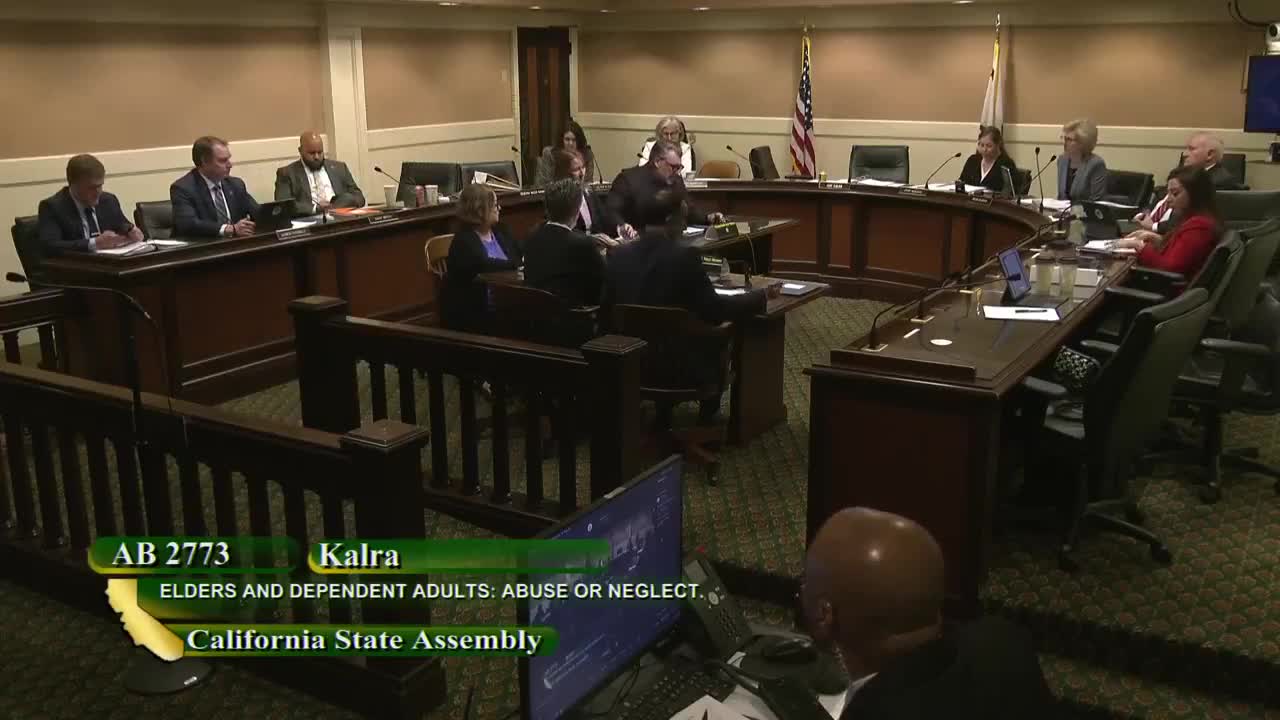
Bill Author
Bill Co-Author(s):