AB 355: Firearms: assault weapons: exception for peace officer training.
- Session Year: 2023-2024
- House: Assembly
- Latest Version Date: 2023-09-26
Current Status:
Passed
(2023-09-26: Chaptered by Secretary of State - Chapter 235, Statutes of 2023.)
Introduced
In Committee
First Chamber
In Committee
Second Chamber
Enacted
Existing law requires the loan of a firearm to be processed through a licensed firearm dealer. Existing law exempts from this requirement the loan of a firearm to a person enrolled in the course of basic training prescribed by the Commission on Peace Officer Standards and Training, or any other course certified by the commission, for purposes of participation in the course.
Existing law prohibits the sale, transfer, or possession of a large-capacity magazine, as defined. Existing law exempts from this prohibition the sale or transfer to, or the possession by, a peace officer or retired peace officer, as specified, or to or by a person enrolled in the course of basic training prescribed by the Commission on Peace Officer Standards and Training, or any other course certified by the commission, for purposes of participation in the course, as specified.
Existing law prohibits the sale, transfer, or possession of an assault weapon, as specified. Existing law exempts from this prohibition the sale or transfer of an assault weapon to, or the possession of an assault weapon by, a peace officer, as specified.
This bill would also exempt from this prohibition the loaning of an assault weapon to, or the possession of an assault weapon by, a person enrolled in the course of basic training prescribed by the Commission on Peace Officer Standards and Training, while engaged in firearms training and being supervised by a firearms instructor. The bill would also prohibit the loaned assault weapon from leaving the training facility and would require the enrollee to be currently employed by a law enforcement agency, as specified.
Existing law requires the loan of a firearm to be processed through a licensed firearm dealer. Existing law exempts from this requirement the loan of a firearm to a person enrolled in the course of basic training prescribed by the Commission on Peace Officer Standards and Training, or any other course certified by the commission, for purposes of participation in the course.
Existing law prohibits the sale, transfer, or possession of a large-capacity magazine, as defined. Existing law exempts from this prohibition the sale or transfer to, or the possession by, a peace officer or retired peace officer, as specified, or to or by a person enrolled in the course of basic training prescribed by the Commission on Peace Officer Standards and Training, or any other course certified by the commission, for purposes of participation in the course, as specified.
Existing law prohibits the sale, transfer, or possession of an assault weapon, as specified. Existing law exempts from this prohibition the sale or transfer of an assault weapon to, or the possession of an assault weapon by, a peace officer, as specified.
This bill would also exempt from this prohibition the loaning of an assault weapon to, or the possession of an assault weapon by, a person enrolled in the course of basic training prescribed by the Commission on Peace Officer Standards and Training, or any other course certified by the commission, while engaged in firearms training and being supervised by a firearms instructor. The bill would also prohibit the loaned assault weapon from leaving the training facility and would require the enrollee to be currently employed by a law enforcement agency, as specified.
Existing law requires the loan of a firearm to be processed through a licensed firearm dealer. Existing law exempts from this requirement the loan of a firearm to a person enrolled in the course of basic training prescribed by the Commission on Peace Officer Standards and Training, or any other course certified by the commission, for purposes of participation in the course.
Existing law prohibits the sale, transfer, or possession of a large-capacity magazine, as defined. Existing law exempts from this prohibition the sale or transfer to, or the possession by, a peace officer or retired peace officer, as specified, or to or by a person enrolled in the course of basic training prescribed by the Commission on Peace Officer Standards and Training, or any other course certified by the commission, for purposes of participation in the course, as specified.
Existing law prohibits the sale, transfer, or possession of an assault weapon, as specified. Existing law exempts from this prohibition the sale or transfer of an assault weapon to, or the possession of an assault weapon by, a peace officer, as specified.
This bill would also exempt from this prohibition the loaning of an assault weapon to, or the possession of an assault weapon by, a person enrolled in the course of basic training prescribed by the Commission on Peace Officer Standards and Training, or any other course certified by the commission, while engaged in firearms training. training and being supervised by a firearms instructor.
Existing law requires the loan of a firearm to be processed through a licensed firearm dealer. Existing law exempts from this requirement the loan of a firearm to a person enrolled in the course of basic training prescribed by the Commission on Peace Officer Standards and Training, or any other course certified by the commission, for purposes of participation in the course.
Existing law prohibits the sale, transfer, or possession of a large-capacity magazine, as defined. Existing law exempts from this prohibition the sale or transfer to, or the possession by, a peace officer or retired peace officer, as specified, or to or by a person enrolled in the course of basic training prescribed by the Commission on Peace Officer Standards and Training, or any other course certified by the commission, for purposes of participation in the course, as specified.
Existing law prohibits the sale, transfer, or possession of an assault weapon, as specified. Existing law exempts from this prohibition the sale or transfer of an assault weapon to, or the possession of an assault weapon by, a peace officer, as specified.
This bill would also exempt from this prohibition the loaning of an assault weapon to, or the possession of an assault weapon by, a person enrolled in the course of basic training prescribed by the Commission on Peace Officer Standards and Training, or any other course certified by the commission, while engaged in firearms training.
Sections 30600 and 30605 do not apply to the loan of an assault weapon to, nor the possession of an assault weapon by, a person enrolled in the course of basic training prescribed by the Commission on Peace Officer Standards and Training, or any other course certified by the commission, while engaged in firearms training and being supervised by a firearms instructor, if the following requirements are met:
(a)The loaned assault weapon does not leave the training facility.
(b)The enrollee has met the minimum peace officer hiring standards as stated in Sections 1029, 1030, and 1031 of the Government Code prior to entry to the course and is currently employed by any of the following:
(1)A police department or sheriffs office.
(2)A marshals office.
(3)The Department of Justice.
(4)The Department of the California Highway Patrol.
(5)The Department of Fish and Wildlife.
Sections 30600 and 30605 do not apply to the loan of an assault weapon to, nor the possession of an assault weapon by, a person enrolled in the course of basic training prescribed by the Commission on Peace Officer Standards and Training, or any other course certified by the commission, while engaged in firearms training and being supervised by a firearms instructor. instructor, if the following requirements are met:
(a)The loaned assault weapon does not leave the training facility.
(b)The enrollee has met the minimum peace officer hiring standards as stated in Sections 1029, 1030, and 1031 of the Government Code prior to entry to the course and is currently employed by any of the following:
(1)A police department or sheriffs office.
(2)A marshals office.
(3)The Department of Justice.
(4)The Department of the California Highway Patrol.
(5)The Department of Fish and Wildlife.
Sections 30600 and 30605 do not apply to the loan of an assault weapon to, nor the possession of an assault weapon by, a person enrolled in the course of basic training prescribed by the Commission on Peace Officer Standards and Training, or any other course certified by the commission, while engaged in firearms training. training and being supervised by a firearms instructor.
Sections 30600 and 30605 do not apply to the loan of an assault weapon to, nor the possession of an assault weapon by, a person enrolled in the course of basic training prescribed by the Commission on Peace Officer Standards and Training, or any other course certified by the commission, while engaged in firearms training.
|
Date
|
Status
|
|---|---|
| Sep 26, 2023 | Chaptered by Secretary of State - Chapter 235, Statutes of 2023. |
| Sep 26, 2023 | Approved by the Governor. |
| Sep 13, 2023 | Enrolled and presented to the Governor at 3 p.m. |
| Sep 7, 2023 | Senate amendments concurred in. To Engrossing and Enrolling. (Ayes 73. Noes 0. Page 3072.). |
| Sep 7, 2023 | Assembly Rule 77 suspended. (Page 3011.) |
| Sep 6, 2023 | In Assembly. Concurrence in Senate amendments pending. May be considered on or after September 8 pursuant to Assembly Rule 77. |
| Sep 6, 2023 | Read third time. Passed. Ordered to the Assembly. (Ayes 40. Noes 0. Page 2391.). |
| Jul 13, 2023 | Read second time. Ordered to third reading. |
| Jul 12, 2023 | From committee: Do pass. (Ayes 4. Noes 0.) (July 11). |
| Jun 19, 2023 | From committee chair, with author's amendments: Amend, and re-refer to committee. Read second time, amended, and re-referred to Com. on PUB S. |
| Jun 14, 2023 | Referred to Com. on PUB S. |
| Jun 1, 2023 | In Senate. Read first time. To Com. on RLS. for assignment. |
| May 31, 2023 | Read third time. Passed. Ordered to the Senate. (Ayes 79. Noes 0. Page 1950.) |
| Mar 9, 2023 | Read second time. Ordered to third reading. |
| Mar 8, 2023 | Read second time and amended. Ordered returned to second reading. |
| Mar 7, 2023 | From committee: Amend, and do pass as amended. (Ayes 8. Noes 0.) (March 7). |
| Feb 9, 2023 | Referred to Com. on PUB. S. |
| Feb 1, 2023 | From printer. May be heard in committee March 3. |
| Jan 31, 2023 | Read first time. To print. |
|
Date
|
Description
|
Location
|
Votes
|
|
|---|---|---|---|---|
| Sep 7, 2023 | AB 355 Alanis Concurrence in Senate Amendments | Assembly Floor |
Passed |
|
| Sep 6, 2023 | Assembly 3rd Reading AB355 Alanis By Alvarado-Gil | Senate Floor |
Passed |
|
| Jul 11, 2023 | Do pass | Senate Standing Committee on Public Safety |
Passed |
|
| May 31, 2023 | AB 355 Alanis Assembly Third Reading | Assembly Floor |
Passed |
|
| Mar 7, 2023 | Do pass as amended. | Assembly Standing Committee on Public Safety |
Passed |
This list shows positions taken on this bill by organizations on the date displayed, which is linked to the original source.
Positions by individuals are not included.
|
Organization
|
Position
|
Date
|
|---|---|---|
| Aaron Reed and Associates | * Support | Jul 11, 2023 |
| Arc Strategies LLC | * Support | Mar 7, 2023 |
| Arcadia Peace Officers Association | ** Support | |
| Brady Campaign | ** Against | |
| Brady Campaign California | ** Against | |
| Burbank Peace Officers Association | ** Support | |
| California Association Of Highway Patrolmen | ** Support | |
| California Coalition of School Safety Professionals | ** Support | |
| California Commission on Peace Officer Standards and Training | * Support | Mar 7, 2023 |
| California Police Chiefs Association | ** Support | |
| California Reserve Peace Officers Association | * Support | Jul 11, 2023 |
| California State Sheriffs Association | ** Support | |
| Claremont Peace Officers Association | ** Support | |
| Corona Peace Officers Association | ** Support | |
| Culver City Peace Officers Association | ** Support | |
| Fullerton Peace Officers Association | ** Support | |
| INGLEWOOD POLICE ASSOCIATION | ** Support | |
| Los Angeles School Police Association | ** Support | |
| Newport Beach Police Association | ** Support | |
| Palos Verdes Peace Officers Association | ** Support | |
| Peace Officers Research Association Of California | ** Support | |
| PLACER COUNTY DEPUTY SHERIFFS ASSOCIATION | ** Support | |
| Pomona Peace Officers Association | ** Support | |
| Riverside Peace Officers Association | ** Support | |
| RIVERSIDE POLICE OFFICERS ASSOCIATION | ** Support | |
| Riverside Sheriffs Association | ** Support | |
| Santa Ana Peace Officers Association | ** Support | |
| Stanislaus County Deputy Sheriff’s Association | ** Support | |
| Turlock Associated Police Officers | ** Support | |
| Upland Peace Officers Association | ** Support |
CONCURRENCE IN SENATE AMENDMENTS
CSA1 Bill Id:AB 355
Author:(Alanis)
As Amended Ver:June 19, 2023
Majority vote
SUMMARY
Exempts persons enrolled in specified peace officer training courses from assault weapon prohibitions while they are engaged in firearms training, being supervised by a firearms instructor, and the enrollee has met specified hiring and employment standards.
Senate Amendments
- Clarify that loaned assault weapon may not leave the training facility.
- Specify that the enrollee must have met certain minimum peace officer hiring standards prior to entry in the course and be employed by:
- A police or sheriff's office;
- A Marshal's office;
- The Department of Justice;
- The California Highway Patrol; or,
- The Department of Fish and Wildlife.
COMMENTS
As Passed by the Assembly: This bill exempted persons enrolled in specified peace officer training courses from assault weapon prohibitions while they are engaged in firearms training and being supervised by a firearms instructor.
According to the Author
"Assembly Bill 355 corrects an oversight in current law by allowing peace officer cadets enrolled in basic training prescribed by the Commission on Peace Officers Standards and Training (POST), or other certified training, to use a tactical (assault) rifle while engaged in firearms training.
"As narrowly drafted, AB 335 does not allow cadets to use or possess an assault rifle anywhere but under the supervision of trainers during firearms training. In doing so, AB 335 will allow cadets to complete necessary training components during the academy, and avoid costly logistical and procedural issues created by current law."
Arguments in Support
According to this bill's sponsor, the California Police Chiefs Association, "Penal Code Sections 30600 and 30605 make it illegal to manufacture, distribute, transport, import, or possess any assault weapon in California, and set penalties accordingly. Ensuing sections (Penal Code Sections 30625 and 30630) exempt law enforcement from these restrictions. However, the exemptions contained in those sections apply only to sworn peace officers, not cadets enrolled in POST training. This has caused logistical issues with getting cadets properly trained and certified during the academy in preparation for entry into the Field Training Program.
"Every person designated a peace officer in California must 'satisfactorily complete an introductory training course prescribed by the Commission on Peace Officer Standards and Training' (Penal Code 832). All cadets are required to obtain firearms clearance through the Department of Justice prior to enrolling in one of the POST-certified academies. Once enrolled, part of that training requires a demonstration of proficiency in the use of firearms – both handguns and tactical (assault) rifles.
"While cadets are required to train with handguns during the POST academy, under existing law they are technically prohibited from going through that same training with tactical rifles. However, POST requires proficiency in the use of these firearms. To resolve this conflict, agencies are having to graduate cadets without completing tactical rifle training, then send them back to receive the rest of their firearms training as sworn officers. This has caused logistical and cost issues for agencies and POST, wasting resources and staff time that should be better spent providing public safety services. At a time when agencies are all severely understaffed and public safety needs are increasing, this change would be a better use of available resources.
"AB 355 creates Penal Code Section 30631 that specifies the prohibitions against possession of an assault weapon do not apply to the loan or possession by a person enrolled in a POST academy or certified training, while engaged in firearms training. As narrowly drafted, AB 335 does not allow cadets to use or possess an assault rifle anywhere but under the supervision of trainers during firearms training. In doing so, AB 335 will allow cadets to be able to complete necessary training components during the Academy and avoid costly logistical and procedural issues created by our current statutes."
Arguments in Opposition
According to the Brady Campaign to Prevent Gun Violence, "Assault weapons are uniquely lethal - and that's due to specific features that differentiate these weapons from hunting rifles that fire the same caliber ammunition. These features - including detachable magazines, barrel shrouds, pistol grips, forward grips, and telescoping stocks - allow a shooter to either conceal the weapon or to make it easier to fire a high volume of ammunition in a short period of time while maintaining accuracy. A typical AR-15 bullet leaves the barrel of the gun three times faster than a typical 9mm handgun bullet. When it enters a human body, the .223 caliber bullet is designed to fragment and tumble. The high velocity damages and kills tissue as the bullet travels, causing catastrophic internal bleeding. California has taken a strong position on assault weapons, and this bill aims to weaken that, allowing any person enrolled in the course of basic training prescribed by the Commission on Peace Officer Standards and Training, or any other firearms course training certified by the commission, to possess these weapons of war.
It is extremely troubling that not only are the persons allowed to possess assault weapons as trainees, but also – because of the way these training works – the trainees include people who are not working towards becoming a traditional peace officer. The trainees could include any number of people who have no need for this type of training and who have not been subject to a thorough background check or psychological examination. Permitting any person involved in this course to possess these weapons undermines the law and is dangerous. There already exists a carve out for actual peace officers, which is a properly constructed and narrow exception that makes sense.
Importantly, it is entirely unclear why this exemption is needed now. These training sessions have been carried out since this law went into effect without the participants having access to these weapons, and there is no evidence that California law enforcement is not sufficiently trained in weaponry. Placing these weapons in the hands of any person taking these courses because they may want to handle these guns is irresponsible. Californians have clearly stated their position on assault weapons, and more generally on gun violence prevention, and this would undermine the will of the people and to public health and safety. For these reasons, Brady and Brady California oppose AB 355."
FISCAL COMMENTS
Unknown. This bill is keyed non-fiscal by the Legislative Counsel.
VOTES:
ASM PUBLIC SAFETY: 8-0-0
YES: Jones-Sawyer, Alanis, Bonta, Bryan, Lackey, Ortega, Santiago, Zbur
ASSEMBLY FLOOR: 79-0-1
YES: Addis, Aguiar-Curry, Alanis, Alvarez, Arambula, Bains, Bauer-Kahan, Bennett, Berman, Boerner, Bonta, Bryan, Calderon, Juan Carrillo, Wendy Carrillo, Cervantes, Chen, Connolly, Megan Dahle, Davies, Dixon, Essayli, Flora, Mike Fong, Vince Fong, Friedman, Gabriel, Gallagher, Garcia, Gipson, Grayson, Haney, Hart, Holden, Hoover, Irwin, Jackson, Jones‑Sawyer, Kalra, Lackey, Low, Lowenthal, Maienschein, Mathis, McCarty, McKinnor, Muratsuchi, Stephanie Nguyen, Ortega, Pacheco, Papan, Jim Patterson, Joe Patterson, Pellerin, Petrie-Norris, Quirk-Silva, Ramos, Reyes, Luz Rivas, Robert Rivas, Rodriguez, Blanca Rubio, Sanchez, Santiago, Schiavo, Soria, Ta, Ting, Valencia, Villapudua, Waldron, Wallis, Ward, Weber, Wicks, Wilson, Wood, Zbur, Rendon
ABS, ABST OR NV: Lee
SENATE FLOOR: 40-0-0
YES: Allen, Alvarado-Gil, Archuleta, Ashby, Atkins, Becker, Blakespear, Bradford, Caballero, Cortese, Dahle, Dodd, Durazo, Eggman, Glazer, Gonzalez, Grove, Hurtado, Jones, Laird, Limón, McGuire, Menjivar, Min, Newman, Nguyen, Niello, Ochoa Bogh, Padilla, Portantino, Roth, Rubio, Seyarto, Skinner, Smallwood-Cuevas, Stern, Umberg, Wahab, Wiener, Wilk
UPDATED
VERSION: June 19, 2023
CONSULTANT: Mureed Rasool / PUB. S. / (916) 319-3744 FN: 0001832
SENATE RULES COMMITTEE Office of Senate Floor Analyses (916) 651-1520 Fax: (916) 327-4478 | AB 355 |
THIRD READING
Bill No: AB 355
Author: Alanis (R)
Amended: 6/19/23 in Senate
Vote: 21
SENATE PUBLIC SAFETY COMMITTEE: 4-0, 7/11/23
AYES: Bradford, Ochoa Bogh, Skinner, Wiener
NO VOTE RECORDED: Wahab
ASSEMBLY FLOOR: 79-0, 5/31/23 - See last page for vote
SUBJECT: Firearms: assault weapons: exception for peace officer training
SOURCE: California Police Chiefs Association
DIGEST:
This bill, under specified conditions, exempts persons enrolled in specified peace officer training courses from existing assault weapons prohibitions while they are engaged in firearms training and being supervised by a firearms instructor.
ANALYSIS:
Existing law:
- States the intent of the Legislature to place restrictions on the use of assault weapons and .50 BMG rifles and to establish a registration and permit procedure for their lawful sale and possession. (Penal Code § 30505.)
- Defines an “assault weapon” by specifying certain firearms such as the Beretta AR-70, Armalite AR-180, all AK series rifles, and UZI, among others. (Pen. Code, § 30510.)
- Defines an “assault weapon” as also including a firearm with certain characteristics such as a semiautomatic centerfire rifle with an overall length of less than 30 inches, a semiautomatic pistol with a fixed magazine that can accept more than 10 rounds, and other enumerated characteristics. (Pen. Code, § 30515.)
- Defines a “.50 BMG rifle” as a center fire rifle that can fire a .50 BMG cartridge and is not already an assault weapon or machinegun, and additionally defines “.50 BMG cartridge” to mean a cartridge with certain physical specifications. (Penal Code §§ 30525, 30530).
- Prohibits, among other things, the giving or lending of any assault weapon, and states that a violation is a felony punishable by four, six or eight years in county jail. (Pen. Code, § 30600.)
- Prohibits the possession of any assault weapon, except as provided, and states that a violation may be a misdemeanor punishable by up to one year in county jail, or a felony punishable by 16 months, or 2, or 3 years. (Pen. Code, § 30605.)
- Provides an exception to assault weapon prohibitions for the sale, purchase, import, or possession by the Department of Justice (DOJ), police departments, sheriffs’ offices, and other specified law enforcement agencies for use in the discharge of their official duties. (Pen. Code, § 30625.)
- Provides an exception to the possession of an assault weapon for specified peace officers for law enforcement purposes, whether they are on or off duty. (Pen. Code, § 30630, subd. (a).)
- Provides an exception to the sale or possession of an assault weapon for specified peace officers if their employer authorizes possession, as outlined. (Pen. Code, § 30630, subd. (b).)
- Provides various other exemptions related to the possession and manufacture of assault weapons and .50 BMG weapons. (Pen. Code, § 30635 et. seq.)
- Provides that possession of any assault weapon or .50 BMG rifle except as authorized constitutes a public nuisance, and that the Attorney General, any district attorney, or any city attorney may, in lieu of criminal prosecution, bring a civil action or reach a civil compromise in any superior court to enjoin the manufacture of, importation of, keeping for sale of, offering or exposing for sale, giving, lending, or possession of an assault weapon or .50 BMG rifle. (Penal Code §30800).
- Requires the Commission on Peace Officers Standards and Training (POST) to establish a certification program for peace officers. (Pen. Code, § 13510.1.)
- Requires each applicant for admission to a basic course of training certified by POST that includes the carrying and use of firearms, as specified, shall be required to submit written certification from the DOJ that the applicant has no criminal history background which would disqualify them from owning, possessing or having under their control a firearm. (Penal Code §13511.5.)
This bill provides that specified prohibitions regarding the giving, lending or possession of an assault weapon do not apply to the loan of an assault weapon to, nor the possession of an assault weapon by, a person enrolled in the course of basic training prescribed by POST, or any other course certified by POST, while engaged in firearms training and being supervised by a firearms instructor, if the following requirements are met:
- The loaned assault weapon does not leave the training facility.
- The enrollee has met the minimum peace officer hiring standards, as specified, prior to entry to the course and is currently employed by any of the following:
- A police department or sheriff’s office
- A marshal’s office
- The Department of Justice
- The Department of the California Highway Patrol
- The Department of Fish and Wildlife
Comments
According to the author, “Assembly Bill 355 corrects an oversight in current law by allowing peace officer cadets enrolled in basic training prescribed by the Commission on Peace Officers Standards and Training (POST), or other certified training, to use a tactical (assault) rifle while engaged in firearms training while under the supervision of a firearms instructor. As narrowly drafted, AB 335 does not allow cadets to use or possess an assault rifle anywhere but under the supervision of trainers during firearms training. In doing so, AB 335 will allow cadets to complete necessary training components during the academy, and avoid costly logistical and procedural issues created by current law.”
Existing law contains several exemptions to the state’s comprehensive assault weapons restrictions, particularly for law enforcement officers and agencies. Specifically, existing law permits agencies to purchase, import and possess assault weapons, permits sworn peace officers to possess or use assault weapons for law enforcement purposes whether on or off duty, and permits the sale, delivery or transfer of an assault weapon to a sworn peace officer if the peace officer is authorized by their employer. However, according to the Author, these exemptions do not apply to cadets enrolled in POST training, leading to logistical issues with getting cadets properly training and certified during the academy.
This bill creates an exemption to assault weapon prohibitions for peace officer cadets while they are engaged in firearms training and being supervised by a firearms instructor, but only if two conditions are met. First, the assault weapon being used may not leave the training facility. Second, the trainee using the weapon is required to have met minimum hiring standards set forth in existing law (Gov. Code §§1029-1031) prior to entry to the training course, and at the time of training must be employed by one of the following agencies: a police or sheriff’s department, a marshal’s office, the DOJ, the CHP or the Department of Fish and Wildlife. As such, this bill likely resolves many of the logistical and procedural issues that law enforcement agencies face when training cadets with assault weapons.
FISCAL EFFECT: Appropriation: No Fiscal Com.: No Local: No
SUPPORT: (Verified 7/12/23)
California Police Chiefs Association (source)
Arcadia Peace Officers Association
Burbank Peace Officers Association
California Association of Highway Patrolmen
California Coalition of School Safety Professionals
California State Sheriffs Association
Claremont Peace Officers Association
Corona Peace Officers Association
Culver City Peace Officers Association
Fullerton Peace Officers Association
Inglewood Police Association
Los Angeles School Police Association
Newport Beach Police Association
Palos Verdes Peace Officers Association
Peace Officers Research Association of California
Placer County Deputy Sheriffs Association
Pomona Peace Officers Association
Riverside Peace Officers Association
Riverside Sheriffs Association
Santa Ana Peace Officers Association
Stanislaus County Deputy Sheriff’s Association
Turlock Associated Police Officers
Upland Peace Officers Association
OPPOSITION: (Verified 7/12/23)
None received
ASSEMBLY FLOOR: 79-0, 5/31/23
AYES: Addis, Aguiar-Curry, Alanis, Alvarez, Arambula, Bains, Bauer-Kahan, Bennett, Berman, Boerner, Bonta, Bryan, Calderon, Juan Carrillo, Wendy Carrillo, Cervantes, Chen, Connolly, Megan Dahle, Davies, Dixon, Essayli, Flora, Mike Fong, Vince Fong, Friedman, Gabriel, Gallagher, Garcia, Gipson, Grayson, Haney, Hart, Holden, Hoover, Irwin, Jackson, Jones-Sawyer, Kalra, Lackey, Low, Lowenthal, Maienschein, Mathis, McCarty, McKinnor, Muratsuchi, Stephanie Nguyen, Ortega, Pacheco, Papan, Jim Patterson, Joe Patterson, Pellerin, Petrie-Norris, Quirk-Silva, Ramos, Reyes, Luz Rivas, Robert Rivas, Rodriguez, Blanca Rubio, Sanchez, Santiago, Schiavo, Soria, Ta, Ting, Valencia, Villapudua, Waldron, Wallis, Ward, Weber, Wicks, Wilson, Wood, Zbur, Rendon
NO VOTE RECORDED: Lee
Prepared by: Alex Barnett / PUB. S. /
8/9/23 20:19:34
**** END ****
SENATE COMMITTEE ON PUBLIC SAFETY
Senator Aisha Wahab, Chair
2023 - 2024 Regular
Bill No: AB 355 Hearing Date: July 11, 2023
Author: | Alanis | ||
Version: | June 19, 2023 | ||
Urgency: | No | Fiscal: | No |
Consultant: | AB | ||
Subject: Firearms: assault weapons: exception for peace officer training
HISTORY
Source: California Police Chiefs Association
Prior Legislation: AB 50 (Koretz, Ch. 494, Stats. of 2004
SB 626 (Perata), Chapter 937, Statutes of 2001
SB 23 (Perata, Ch. 129, Stats. of 1999)
Roberti-Roos Assault Weapons Ban (AB 357, Chapter 19, Statutes of 1989 and SB 292, Chapter 18, Statutes of 1989)
Support: Arcadia Peace Officers Association; Burbank Peace Officers Association; California Association of Highway Patrolmen; California Coalition of School Safety Professionals; California State Sheriffs Association; Claremont Peace Officers Association; Corona Peace Officers Association; Culver City Peace Officers Association; Fullerton Peace Officers Association; Inglewood Police Association; Los Angeles School Police Association; Newport Beach Police Association; Palos Verdes Peace Officers Association; Peace Officers Research Association of California (PORAC); Placer County Deputy Sheriffs Association; Pomona Peace Officers Association; Riverside Peace Officers Association; Riverside Sheriffs Association; Santa Ana Peace Officers Association; Stanislaus County Deputy Sheriff’s Association; Turlock Associated Police Officers; Upland Peace Officers Association
Opposition: None known
Assembly Floor Vote: 79 - 0
PURPOSE
The purpose of this bill is to exempt, under specified conditions, persons enrolled in specified peace officer training courses from existing assault weapons prohibitions while they are engaged in firearms training and being supervised by a firearms instructor.
Existing law states the intent of the Legislature to place restrictions on the use of assault weapons and .50 BMG rifles and to establish a registration and permit procedure for their lawful sale and possession. (Penal Code § 30505.)
Existing law defines an “assault weapon” by specifying certain firearms such as the Beretta AR-70, Armalite AR-180, all AK series rifles, and UZI, among others. (Pen. Code, § 30510.)
Existing law defines an “assault weapon” as also including a firearm with certain characteristics such as a semiautomatic centerfire rifle with an overall length of less than 30 inches, a semiautomatic pistol with a fixed magazine that can accept more than 10 rounds, and other enumerated characteristics. (Pen. Code, § 30515.)
Existing law defines a “.50 BMG rifle” as a center fire rifle that can fire a .50 BMG cartridge and is not already an assault weapon or machinegun, and additionally defines “.50 BMG cartridge” to mean a cartridge with certain physical specifications. (Penal Code §§ 30525, 30530).
Existing law prohibits, among other things, the giving or lending of any assault weapon, and states that a violation is a felony punishable by four, six or eight years in county jail. (Pen. Code, § 30600.)
Existing law prohibits the possession of any assault weapon, except as provided, and states that a violation may be a misdemeanor punishable by up to one year in county jail, or a felony punishable by 16 months, or 2, or 3 years. (Pen. Code, § 30605.)
Existing law provides an exception to assault weapon prohibitions for the sale, purchase, import, or possession by the Department of Justice (DOJ), police departments, sheriffs’ offices, and other specified law enforcement agencies for use in the discharge of their official duties. (Pen. Code, § 30625.)
Existing law provides an exception to the possession of an assault weapon for specified peace officers for law enforcement purposes, whether they are on or off duty. (Pen. Code, § 30630, subd. (a).)
Existing law provides an exception to the sale or possession of an assault weapon for specified peace officers if their employer authorizes possession, as outlined. (Pen. Code, § 30630, subd. (b).)
Existing law provides various other exemptions related to the possession and manufacture of assault weapons and .50 BMG weapons. (Pen. Code, § 30635 et. seq.)
Existing law provides that possession of any assault weapon or .50 BMG rifle except as authorized constitutes a public nuisance, and that the Attorney General, any district attorney, or any city attorney may, in lieu of criminal prosecution, bring a civil action or reach a civil compromise in any superior court to enjoin the manufacture of, importation of, keeping for sale of, offering or exposing for sale, giving, lending, or possession of an assault weapon or .50 BMG rifle. (Penal Code §30800).
Existing law requires the Commission on Peace Officers Standards and Training (POST) to establish a certification program for peace officers. (Pen. Code, § 13510.1.)
Existing law requires each applicant for admission to a basic course of training certified by POST that includes the carrying and use of firearms, as specified, shall be required to submit written certification from the DOJ that the applicant has no criminal history background which would disqualify them from owning, possessing or having under their control a firearm. (Penal Code §13511.5.)
This bill provides that specified prohibitions regarding the giving, lending or possession of an assault weapon do not apply to the loan of an assault weapon to, nor the possession of an assault weapon by, a person enrolled in the course of basic training prescribed by POST, or any other course certified by POST, while engaged in firearms training and being supervised by a firearms instructor, if the following requirements are met:
- The loaned assault weapon does not leave the training facility
- The enrollee has met the minimum peace officer hiring standards, as specified, prior to entry to the course and is currently employed by any of the following:
- A police department or sheriff’s office
- A marshal’s office
- The Department of Justice
- The Department of the California Highway Patrol
- The Department of Fish and Wildlife
COMMENTS
- Need for This Bill
According to the Author:
Assembly Bill 355 corrects an oversight in current law by allowing peace officer cadets enrolled in basic training prescribed by the Commission on Peace Officers Standards and Training (POST), or other certified training, to use a tactical (assault) rifle while engaged in firearms training while under the supervision of a firearms instructor. As narrowly drafted, AB 335 does not allow cadets to use or possess an assault rifle anywhere but under the supervision of trainers during firearms training. In doing so, AB 335 will allow cadets to complete necessary training components during the academy, and avoid costly logistical and procedural issues created by current law.
- California’s Assault Weapons Laws
California’s ban on assault weapons was enacted over three decades ago, with the Roberti-Roos Assault Weapons Control Act of 1989 (AWCA), which prohibited the possession and transfer of over 50 specific brands and models of semi-automatic firearms.[1] The law was augmented in 1999 to restrict acquisition and transfer of magazines that could hold more than 10 rounds of ammunition.[2] In 2004, AB 50 (Koretz, Ch. 494, Stats. of 2004), also known as the .50 Caliber BMG Regulation Act of 2004 effectively banned the sale of all .50 BMG-caliber rifles in the state by including such weapons within the definition of “assault weapon.” SB 118 (Committee on Budget, Ch. 29, Stats. of 2020), 2020’s public safety budget trailer bill, further expanded the definition of “assault weapon” to include semiautomatic centerfire firearms that are not pistols, shotguns or rifles, and do not have a fixed magazine, but do have other specific features.[3]
In addition to defining which weapons constitute prohibited assault weapons, existing law imposes various penalties for various conduct related to these weapons. Specifically, any person who manufactures or causes to be manufactured, distributes, transports, or imports into the state, keeps for sale, or offers or exposes for sale, or who gives or lends any assault weapon, with limited exception, is guilty of a felony.[4] Possession of an assault weapon is a wobbler. Recent legislation authorized a prosecutor, in lieu of criminal prosecution for possession of an assault weapon, to institute a civil action for an injunction, fine, and destruction of the firearm as a nuisance.[5]
Existing law also contains several exemptions to the state’s comprehensive assault weapons restrictions, particularly for law enforcement officers and agencies. Specifically, existing law permits agencies to purchase, import and possess assault weapons, permits sworn peace officers to possess or use assault weapons for law enforcement purposes whether on or off duty, and permits the sale, delivery or transfer of an assault weapon to a sworn peace officer if the peace officer is authorized by their employer.[6] However, according to the Author, these exemptions do not apply to cadets enrolled in POST training, leading to logistical issues with getting cadets properly training and certified during the academy. The sponsor of the bill, the California Police Chiefs Association, articulates the problem as follows:
Every person designated a peace officer in California must “satisfactorily complete an introductory training course prescribed by the Commission on Peace Officer Standards and Training.” (Penal Code §832) All cadets are required to obtain firearms clearance through the Department of Justice prior to enrolling in one of the POST-certified academies. Once enrolled, part of that training requires a demonstration of proficiency in the use of firearms – both handguns and tactical (assault) rifles.
While cadets are required to train with handguns during the POST academy, under existing law they are technically prohibited from going through that same training with tactical rifles. However, POST requires proficiency in the use of these firearms. To resolve this conflict, agencies are having to graduate cadets without completing tactical rifle training, then send them back to receive the rest of their firearms training as sworn officers. This has caused logistical and cost issues for agencies and POST, wasting resources and staff time that should be better spent providing public safety services.
This bill would create an exemption to assault weapon prohibitions for peace officer cadets while they are engaged in firearms training and being supervised by a firearms instructor, but only if two conditions are met. First, the assault weapon being used may not leave the training facility. Second, the trainee using the weapon is required to have met minimum hiring standards set forth in existing law (Gov. Code §§1029-1031) prior to entry to the training course, and at the time of training must be employed by one of the following agencies: a police or sheriff’s department, a marshal’s office, the DOJ, the CHP or the Department of Fish and Wildlife. As such, this bill likely resolves many of the logistical and procedural issues that law enforcement agencies face when training cadets with assault weapons.
- Argument in Support
According to the California State Sheriffs Association:
All peace officers must complete a POST-certified academy, in which cadets must demonstrate proficiency in a number of areas, including the use of both handguns and tactical rifles. Existing law exempts sworn peace officers from specified prohibitions related to assault weapons. However, cadets are currently not explicitly exempt from these prohibitions. This inability for cadets to complete firearms training is causing logistical issues and delays for departments that are preparing cadets for their field training programs. AB 355 closes a technical loophole by clarifying that POST academy cadets can possess tactical rifles in the course of their firearm training.
-- END –
Penal Code §§30500 et. seq. ↑
SB 23 (Perata), Ch. 129, Stats. of 1999; Firearms and magazines that were legally owned when the law went into effect were grandfathered if they were registered with DOJ. ↑
Penal Code §30515(a). ↑
Penal Code §30600. ↑
Penal Code §30800, enacted by AB 879 (Gipson), Ch. 730, Stats. of 2019. ↑
Penal Code §§ 30625, 30630. ↑
ASSEMBLY THIRD READING
ATR Bill Id:AB 355
Author:(Alanis)
As Amended Ver:March 8, 2023
Majority vote
SUMMARY
Exempts persons enrolled in specified peace officer training courses from assault weapon prohibitions while they are engaged in firearms training and being supervised by a firearms instructor.
Major Provisions
COMMENTS
According to the Author
"Assembly Bill 355 corrects an oversight in current law by allowing peace officer cadets enrolled in basic training prescribed by the Commission on Peace Officers Standards and Training (POST), or other certified training, to use a tactical (assault) rifle while engaged in firearms training."
"As narrowly drafted, AB 335 does not allow cadets to use or possess an assault rifle anywhere but under the supervision of trainers during firearms training. In doing so, AB 335 will allow cadets to complete necessary training components during the academy, and avoid costly logistical and procedural issues created by current law."
Arguments in Support
According to this bill's sponsor, the California Police Chiefs Association, "Penal Code Sections 30600 and 30605 make it illegal to manufacture, distribute, transport, import, or possess any assault weapon in California, and set penalties accordingly. Ensuing sections (Penal Code Sections 30625 and 30630) exempt law enforcement from these restrictions. However, the exemptions contained in those sections apply only to sworn peace officers, not cadets enrolled in POST training. This has caused logistical issues with getting cadets properly trained and certified during the academy in preparation for entry into the Field Training Program.
"Every person designated a peace officer in California must satisfactorily complete an introductory training course prescribed by the Commission on Peace Officer Standards and Training' (Penal Code [Section] 832). All cadets are required to obtain firearms clearance through the Department of Justice prior to enrolling in one of the POST-certified academies. Once enrolled, part of that training requires a demonstration of proficiency in the use of firearms, both handguns and tactical (assault) rifles.
"While cadets are required to train with handguns during the POST academy, under existing law they are technically prohibited from going through that same training with tactical rifles. However, POST requires proficiency in the use of these firearms. To resolve this conflict, agencies are having to graduate cadets without completing tactical rifle training, then send them back to receive the rest of their firearms training as sworn officers. This has caused logistical and cost issues for agencies and POST, wasting resources and staff time that should be better spent providing public safety services. At a time when agencies are all severely understaffed and public safety needs are increasing, this change would be a better use of available resources.
"AB 355 creates Penal Code Section 30631 that specifies the prohibitions against possession of an assault weapon do not apply to the loan or possession by a person enrolled in a POST academy or certified training, while engaged in firearms training. As narrowly drafted, AB 335 does not allow cadets to use or possess an assault rifle anywhere but under the supervision of trainers during firearms training. In doing so, AB 335 will allow cadets to be able to complete necessary training components during the Academy and avoid costly logistical and procedural issues created by our current statutes."
Arguments in Opposition
According to the Brady Campaign to Prevent Gun Violence, "Assault weapons are uniquely lethal - and that's due to specific features that differentiate these weapons from hunting rifles that fire the same caliber ammunition. These features - including detachable magazines, barrel shrouds, pistol grips, forward grips, and telescoping stocks - allow a shooter to either conceal the weapon or to make it easier to fire a high volume of ammunition in a short period of time while maintaining accuracy. A typical AR-15 bullet leaves the barrel of the gun three times faster than a typical 9mm handgun bullet. When it enters a human body, the .223 caliber bullet is designed to fragment and tumble. The high velocity damages and kills tissue as the bullet travels, causing catastrophic internal bleeding. California has taken a strong position on assault weapons, and this bill aims to weaken that, allowing any person enrolled in the course of basic training prescribed by the Commission on Peace Officer Standards and Training, or any other firearms course training certified by the commission, to possess these weapons of war.
"It is extremely troubling that not only are the persons allowed to possess assault weapons as trainees, but also – because of the way these training works – the trainees include people who are not working towards becoming a traditional peace officer. The trainees could include any number of people who have no need for this type of training and who have not been subject to a thorough background check or psychological examination. Permitting any person involved in this course to possess these weapons undermines the law and is dangerous. There already exists a carve out for actual peace officers, which is a properly constructed and narrow exception that makes sense.
"Importantly, it is entirely unclear why this exemption is needed now. These training sessions have been carried out since this law went into effect without the participants having access to these weapons, and there is no evidence that California law enforcement is not sufficiently trained in weaponry. Placing these weapons in the hands of any person taking these courses because they may want to handle these guns is irresponsible. Californians have clearly stated their position on assault weapons, and more generally on gun violence prevention, and this would undermine the will of the people and to public health and safety. For these reasons, Brady and Brady California oppose AB 355."
FISCAL COMMENTS
Unknown. This bill is keyed non-fiscal by the Legislative Counsel.
VOTES
ASM PUBLIC SAFETY: 8-0-0
YES: Jones-Sawyer, Alanis, Bonta, Bryan, Lackey, Ortega, Santiago, Zbur
UPDATED
VERSION: March 8, 2023
CONSULTANT: Mureed Rasool / PUB. S. / (916) 319-3744 FN: 0000018
Date of Hearing: March 7, 2023
Counsel: Mureed Rasool
ASSEMBLY COMMITTEE ON
Reginald Byron Jones-Sawyer, Sr., Chair
ABPCA Bill Id:
Author:() – As Ver:
As Proposed to be Amended in Committee
SUMMARY:
Exempts persons enrolled in specified peace officer training courses from assault weapon prohibitions while they are engaged in firearms training and being supervised by a firearms instructor.
EXISTING LAW:
- Defines an “assault weapon” by specifying certain firearms such as the Beretta AR-70, Armalite AR-180, all AK series rifles, and UZI, among others. (Pen. Code, § 30510.)
- Defines an “assault weapon” as also including a firearm with certain characteristics such as a semiautomatic centerfire rifle with an overall length of less than 30 inches, a semiautomatic pistol with a fixed magazine that can accept more than 10 rounds, and other enumerated characteristics. (Pen. Code, § 30515.)
- Prohibits, among other things, the giving or lending of any assault weapon, and states that a violation is a felony punishable by four, six or eight years in county jail. (Pen. Code, § 30600.)
- Prohibits the possession of any assault weapon, except as provided, and states that a violation may be a misdemeanor punishable by up to one year in county jail, or a felony punishable by 16 months, or two, or3 years . (Pen. Code, § 30605.)
- Provides an exception to assault weapon prohibitions for the sale, purchase, import, or possession by the Department of Justice (DOJ), police departments, sheriffs’ offices, and other specified law enforcement agencies for use in the discharge of their official duties. (Pen. Code, § 30625.)
- Provides an exception to the possession of an assault weapon for specified peace officers for law enforcement purposes, whether they are on or off duty. (Pen. Code, § 30630, subd. (a).)
- Provides an exception to the sale or possession of an assault weapon for specified peace officers if their employer authorizes possession, as outlined. (Pen. Code, § 30630, subd. (b).)
- Requires the Commission on Peace Officers Standards and Training (POST) to establish a certification program for peace officers. (Pen. Code, § 13510.1.)
FISCAL EFFECT:
Unknown
COMMENTS:
- Author's Statement: According to the author, “Assembly Bill 355 corrects an oversight in current law by allowing peace officer cadets enrolled in basic training prescribed by the Commission on Peace Officers Standards and Training (POST), or other certified training, to use a tactical (assault) rifle while engaged in firearms training.
“As narrowly drafted, AB 335 does not allow cadets to use or possess an assault rifle anywhere but under the supervision of trainers during firearms training. In doing so, AB 335 will allow cadets to complete necessary training components during the academy, and avoid costly logistical and procedural issues created by current law.” - Assault Weapons and Peace Officers: Under current state law, civilians are generally prohibited from possessing assault weapons unless the firearm is registered, as outlined subject to certain exceptions. (Pen. Code, § 30600 et seq.; Pen. Code, § 30900 et seq.) Peace officers working in specified law enforcement agencies are exempted from such possession prohibitions. (Pen. Code, § 30630, subd. (a).)
According to the author of this bill, the law only makes an exception for peace officers and not cadets who are enrolled in certified peace officer training courses, creating costly logistical and procedural issues for law enforcement agencies.
This bill would create an exemption to assault weapon prohibitions for peace officer cadets while they are engaged in firearms training and being supervised by a firearms instructor. As such, this bill would allow peace officer cadets to receive their assault weapon training without the current procedural issues they face in trying to do so. - Argument in Support: According to the bill’s sponsor, the California Police Chiefs Association, “Penal Code Sections 30600 and 30605 make it illegal to manufacture, distribute, transport, import, or possess any assault weapon in California, and set penalties accordingly. Ensuing sections (Penal Code Sections 30625 and 30630) exempt law enforcement from these restrictions. However, the exemptions contained in those sections apply only to sworn peace officers, not cadets enrolled in POST training. This has caused logistical issues with getting cadets properly trained and certified during the academy in preparation for entry into the Field Training Program.
“Every person designated a peace officer in California must ‘satisfactorily complete an introductory training course prescribed by the Commission on Peace Officer Standards and Training’ (Penal Code 832). All cadets are required to obtain firearms clearance through the Department of Justice prior to enrolling in one of the POST-certified academies. Once enrolled, part of that training requires a demonstration of proficiency in the use of firearms – both handguns and tactical (assault) rifles.
“While cadets are required to train with handguns during the POST academy, under existing law they are technically prohibited from going through that same training with tactical rifles. However, POST requires proficiency in the use of these firearms. To resolve this conflict, agencies are having to graduate cadets without completing tactical rifle training, then send them back to receive the rest of their firearms training as sworn officers. This has caused logistical and cost issues for agencies and POST, wasting resources and staff time that should be better spent providing public safety services. At a time when agencies are all severely understaffed and public safety needs are increasing, this change would be a better use of available resources.
“AB 355 creates Penal Code Section 30631 that specifies the prohibitions against possession of an assault weapon do not apply to the loan or possession by a person enrolled in a POST academy or certified training, while engaged in firearms training. As narrowly drafted, AB 335 does not allow cadets to use or possess an assault rifle anywhere but under the supervision of trainers during firearms training. In doing so, AB 335 will allow cadets to be able to complete necessary training components during the Academy and avoid costly logistical and procedural issues created by our current statutes.” - Argument in Opposition: According to the Brady Campaign to Prevent Gun Violence, “Assault weapons are uniquely lethal - and that’s due to specific features that differentiate these weapons from hunting rifles that fire the same caliber ammunition. These features - including detachable magazines, barrel shrouds, pistol grips, forward grips, and telescoping stocks - allow a shooter to either conceal the weapon or to make it easier to fire a high volume of ammunition in a short period of time while maintaining accuracy. A typical AR-15 bullet leaves the barrel of the gun three times faster than a typical 9mm handgun bullet. When it enters a human body, the .223 caliber bullet is designed to fragment and tumble. The high velocity damages and kills tissue as the bullet travels, causing catastrophic internal bleeding. California has taken a strong position on assault weapons, and this bill aims to weaken that, allowing any person enrolled in the course of basic training prescribed by the Commission on Peace Officer Standards and Training, or any other firearms course training certified by the commission, to possess these weapons of war.
It is extremely troubling that not only are the persons allowed to possess assault weapons as trainees, but also – because of the way these training works – the trainees include people who are not working towards becoming a traditional peace officer. The trainees could include any number of people who have no need for this type of training and who have not been subject to a thorough background check or psychological examination. Permitting any person involved in this course to possess these weapons undermines the law and is dangerous. There already exists a carve out for actual peace officers, which is a properly constructed and narrow exception that makes sense.
Importantly, it is entirely unclear why this exemption is needed now. These training
sessions have been carried out since this law went into effect without the participants
having access to these weapons, and there is no evidence that California law
enforcement is not sufficiently trained in weaponry. Placing these weapons in the
hands of any person taking these courses because they may want to handle these
guns is irresponsible. Californians have clearly stated their position on assault
weapons, and more generally on gun violence prevention, and this would undermine
the will of the people and to public health and safety. For these reasons, Brady and
Brady California oppose AB 355.”
- Related Legislation: SB 735 (Cortese), would require a motion picture production firearms armorer or other specified individual handling a firearm, including an assault weapon, to apply for and obtain a specified state permit outlining for the possession and custody of the firearm. SB 735 in currently pending in the Labor, Public Employment and Retirement Committee.
- Prior Legislation: Roberti-Roos Assault Weapons Control Act – Ch. 19, § 3, Stats. 1989, defined and prohibited the possession of assault weapons, subject to certain exemptions including those for peace officers.
REGISTERED SUPPORT / OPPOSITION:
Support
California Police Chiefs Association (Sponsor)
Arcadia Police Officers' Association
Burbank Police Officers' Association
California Coalition of School Safety Professionals
California State Sheriffs' Association
Claremont Police Officers Association
Corona Police Officers Association
Culver City Police Officers' Association
Fullerton Police Officers' Association
Inglewood Police Officers Association
Los Angeles School Police Officers Association
Newport Beach Police Association
Palos Verdes Police Officers Association
Peace Officers Research Association of California (PORAC)
Placer County Deputy Sheriffs' Association
Pomona Police Officers' Association
Riverside Police Officers Association
Riverside Sheriffs' Association
Santa Ana Police Officers Association
Turlock Associated Police Officers
Upland Police Officers Association
2 Private Individuals
Opposition
Brady Campaign
Brady Campaign California
Analysis Prepared by:
Discussed in Hearing
 1MIN
Assembly Floor
 2MIN
Senate Floor
 6MIN
Senate Standing Committee on Public Safety
 4MIN
Assembly Floor
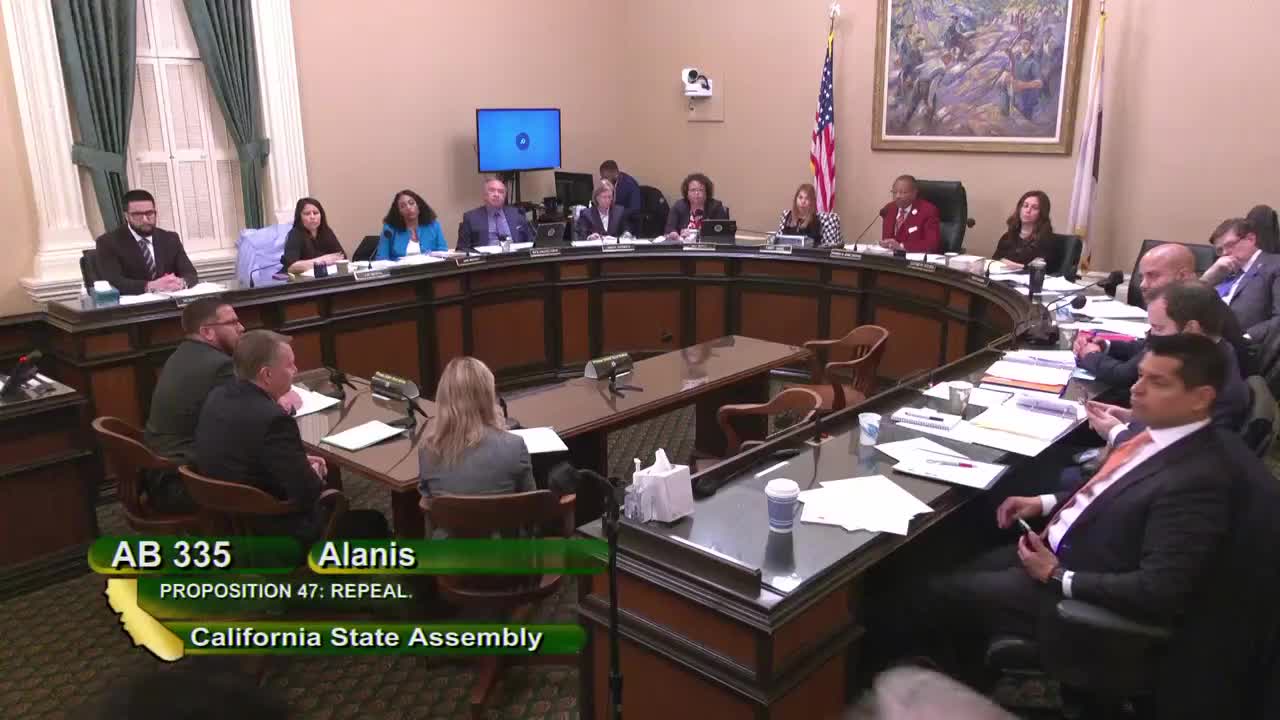 21MIN
Assembly Standing Committee on Public Safety
 39MIN
Assembly Standing Committee on Public Safety
Bill Author

Bill Co-Author(s):