AB 384: School facilities: recommended interior temperatures: inventory of heating and cooling systems.
- Session Year: 2023-2024
- House: Assembly
- Latest Version Date: 2023-09-14
Current Status:
Failed
(2024-01-25: Consideration of Governor's veto stricken from file.)
Introduced
In Committee
First Chamber
In Committee
Second Chamber
Enacted
Existing law, the Leroy F. Greene State School Building Lease-Purchase Law of 1976, effectuates the declaration of the Legislature that it is in the interest of the state and its people to reconstruct, remodel, or replace existing school buildings that are educationally inadequate or that do not meet present-day structural safety requirements, and to acquire new schoolsites and buildings for the purpose of making them available to local school districts for the pupils of the public school system. Good repair is defined, for purposes of the Leroy F. Greene State School Building Lease-Purchase Law of 1976, to mean, among other things, with respect to mechanical systems, including heating, ventilation, and air conditioning systems, maintaining interior temperatures within normally acceptable ranges.
This bill would require the State Department of Education to conduct a research study on recommended indoor air temperature ranges and temperature control standards for public schools serving kindergarten and grades 1 to 12, inclusive, and an inventory of heating and cooling systems, as specified. The bill would require the department to submit a report on the findings and recommendations of the study to the Legislature by January 1, 2026, as provided.
This bill would require the department to develop policy recommendations for safe indoor air temperature standards for elementary and secondary public school facilities based on the research study findings, and additional policy recommendations that will address how to ensure that public school facilities can maintain the recommended safe indoor air temperature range, as provided. The bill would require the department to submit those policies recommendations to the Legislature by January 1, 2027.
This bill would repeal these provisions as of January 1, 2028.
Existing law, the Leroy F. Greene State School Building Lease-Purchase Law of 1976, effectuates the declaration of the Legislature that it is in the interest of the state and its people to reconstruct, remodel, or replace existing school buildings that are educationally inadequate or that do not meet present-day structural safety requirements, and to acquire new schoolsites and buildings for the purpose of making them available to local school districts for the pupils of the public school system. Good repair is defined, for purposes of the Leroy F. Greene State School Building Lease-Purchase Law of 1976, to mean, among other things, with respect to mechanical systems, including heating, ventilation, and air conditioning systems, maintaining interior temperatures within normally acceptable ranges.
This bill would require the State Department of Education to conduct a research study on recommended indoor air temperature ranges and temperature control standards for public schools and an inventory of heating and cooling systems, and to submit a report on the findings and recommendations of the study to the Legislature by January 1, 2026, as provided.
The bill would require the governing board or body of each local educational agency, as defined, that receives any funds pursuant to the Leroy F. Greene School Facilities Act of 1998 or the California Schools Healthy Air, Plumbing, and Efficiency Program administered by the State Energy Resources Conservation and Development Commission to provide to the department an inventory of heating and cooling systems, as defined, at each of its schoolsites, as provided. The bill would require the governing board or body of each local educational agency maintaining an elementary or secondary school to include in the School Accountability Report Card, for each of its schoolsites, an inventory of heating and cooling systems at that schoolsite. The bill would require the department to compile a statewide inventory of heating and cooling systems and interventions in all public schools from the information provided by local educational agencies, reducing any potential duplication of collecting the same information more than once from the same local educational agency. By imposing new duties on local educational agencies, this bill would impose a state-mandated local program.TheThis bill would require the department to develop policy recommendations for safe indoor air temperature standards for elementary and secondary public school facilities based on the research study findings and the compiled statewide inventory, findings, and that will address how to ensure that public school facilities can maintain the recommended safe indoor air temperature range, as provided. The bill would require the department to submit those policies recommendations to the Legislature by January 1, 2027.
The California Constitution requires the state to reimburse local agencies and school districts for certain costs mandated by the state. Statutory provisions establish procedures for making that reimbursement.This bill would provide that, if the Commission on State Mandates determines that the bill contains costs mandated by the state, reimbursement for those costs shall be made pursuant to the statutory provisions noted above.This bill would repeal these provisions as of January 1, 2028.
Existing law, the Leroy F. Greene State School Building Lease-Purchase Law of 1976, effectuates the declaration of the Legislature that it is in the interest of the state and its people to reconstruct, remodel, or replace existing school buildings that are educationally inadequate or that do not meet present-day structural safety requirements, and to acquire new schoolsites and buildings for the purpose of making them available to local school districts for the pupils of the public school system. Good repair is defined, for purposes of the Leroy F. Greene State School Building Lease-Purchase Law of 1976, to mean, among other things, with respect to mechanical systems, including heating, ventilation, and air conditioning systems, maintaining interior temperatures within normally acceptable ranges.
This bill would state the intent of the Legislature to enact future legislation to establish healthy and safe temperature requirements in public schools. require the State Department of Education to conduct a research study on recommended indoor air temperature ranges and temperature control standards for public schools and submit a report on the findings and recommendations of the study to the Legislature by January 1, 2026, as provided.
The bill would require the governing board or body of each local educational agency, as defined, that receives any funds pursuant to the Leroy F. Greene School Facilities Act of 1998 or the California Schools Healthy Air, Plumbing, and Efficiency Program administered by the State Energy Resources Conservation and Development Commission to provide to the department an inventory of heating and cooling systems, as defined, at each of its schoolsites, as provided. The bill would require the governing board or body of each local educational agency maintaining an elementary or secondary school to include in the School Accountability Report Card, for each of its schoolsites, an inventory of heating and cooling systems at that schoolsite. The bill would require the department to compile a statewide inventory of heating and cooling systems and interventions in all public schools from the information provided by local educational agencies, reducing any potential duplication of collecting the same information more than once from the same local educational agency. By imposing new duties on local educational agencies, this bill would impose a state-mandated local program.
The bill would require the department to develop policy recommendations for safe indoor air temperature standards for elementary and secondary public school facilities based on the research study findings and the compiled statewide inventory, and that will address how to ensure that public school facilities can maintain the recommended safe indoor air temperature range, as provided. The bill would require the department to submit those policies recommendations to the Legislature by January 1, 2027.
The California Constitution requires the state to reimburse local agencies and school districts for certain costs mandated by the state. Statutory provisions establish procedures for making that reimbursement.
This bill would provide that, if the Commission on State Mandates determines that the bill contains costs mandated by the state, reimbursement for those costs shall be made pursuant to the statutory provisions noted above.
Existing law, the Leroy F. Greene State School Building Lease-Purchase Law of 1976, effectuates the declaration of the Legislature that it is in the interest of the state and its people to reconstruct, remodel, or replace existing school buildings that are educationally inadequate or that do not meet present-day structural safety requirements, and to acquire new schoolsites and buildings for the purpose of making them available to local school districts for the pupils of the public school system. Good repair is defined, for purposes of the Leroy F. Greene State School Building Lease-Purchase Law of 1976, to mean, among other things, with respect to mechanical systems, including heating, ventilation, and air conditioning systems, maintaining interior temperatures within normally acceptable ranges.
This bill would state the intent of the Legislature to enact future legislation to establish healthy and safe temperature requirements in public schools.
The Legislature finds and declares all of the following:
(a)In April 2022, California released Protecting Californians from Extreme Heat: A State Action Plan to Build Community Resilience which warned of the threats extreme heat poses to public health and safety, economic prosperity, and the natural environment and cautioned that extreme heat can be dangerous or even deadly to vulnerable populations, including children, without access to cooling or shade.
(b)According to research by the United Nations Childrens Fund (UNICEF), virtually all 2 billion children on earth will be exposed to more frequent, longer lasting, and more severe heat waves by 2050.
(c)The latest California Climate Change Assessment projects hotter, longer, and more frequent heat events. Extreme heat is responsible for more deaths than all other extreme weather events, and disproportionately impacts communities of color, persons with disabilities, seniors, and low-income communities.
(d)Children in disadvantaged communities, including rural and urbanized regions built with heat-retaining materials that are ill-equipped to shelter pupils from extreme heat, are at heightened risk of suffering heat-related illnesses, poor health outcomes, and a reduction in their ability to learn, as excessive heat interrupts outdoor activity and exercise.
(e)The Legislature has recognized extreme heat as a serious and urgent threat and has called on state agencies and departments to invest resources in increasing resilience to extreme heat.
SEC. 2.Section 17662 is added to the Education Code, immediately following Section 17661, to read:17662.(a)The department shall conduct a research study on both of the following:
(1)Recommended indoor air temperature ranges and temperature control standards for public schools serving kindergarten and grades 1 to 12, inclusive.
(2)(A)An inventory of heating and cooling systems, based on a representative sample of local educational agencies statewide.
(B)The department may add additional data elements to the inventory.
(b)In conducting the study, the department shall review data, including, but not limited to, safe and healthy minimum and maximum air temperature in public school facilities, disaggregated by both of the following:
(1)Pupil age.
(2)Location of the schoolsite.
(c)In conducting the study the department may collaborate or contract with other public agencies, including, but not limited to, the State Department of Public Health, private sector firms, or individuals qualified to perform the necessary services.
(d)The department may work with the United States Department of Energys Grants for Energy Improvements at Public School Facilities program to implement this section.
(e)By January 1, 2026, the department shall submit a report on the findings and recommendations of the study to the Legislature in compliance with Section 9795 of the Government Code.
(f)For purposes of this section, the following definitions apply:
(1)Inventory of heating and cooling systems means a list of heating, ventilation, and air conditioning equipment and systems, including, but not limited to, air conditioning and heat pumps.
(2)Local educational agency means a school district, county office of education, or charter school.
(g)This section shall remain in effect only until January 1, 2028, and as of that date is repealed.
SEC. 3.Section 17663 is added to the Education Code, immediately following Section 17662, to read:17663.(a)The department shall develop policy recommendations for safe indoor air temperature standards for elementary and secondary public school facilities based on study findings developed pursuant to Section 17662. The department shall also develop policy recommendations that will address how to ensure that public school facilities can maintain a recommended safe indoor air temperature range. The policy recommendations shall be flexible and allow schools to phase in to the recommended safe indoor air temperature range. In developing these policy recommendations, the department shall consider each of the following:
(1)State climate goals.
(2)The Extreme Heat Plan.
(3)Regional temperature differences.
(4)Various methods for maintaining indoor air temperatures that take into account factors, including, but not limited to, all of the following:
(A)Technical feasibility.
(B)Building and site electrical system limitations.
(C)Cost barriers.
(D)Electric utility capacity limitations.
(E)Federal and state law.
(F)Weather-related federal and state emergencies.
(b)In developing the policy recommendations pursuant to subdivision (a), the department shall consult with a diverse group of stakeholders with knowledge of education, public health, labor, and other relevant subject matter.
(c)In developing the policy recommendations pursuant to subdivision (a), the department may collaborate or contract with other public agencies, private sector firms, or individuals qualified to perform the necessary services.
(d)By January 1, 2027, the department shall submit the policy recommendations to the Legislature in compliance with Section 9795 of the Government Code.
(e)This section shall remain in effect only until January 1, 2028, and as of that date is repealed.
The Legislature finds and declares all of the following:
(a)In April 2022, California released Protecting Californians from Extreme Heat: A State Action Plan to Build Community Resilience which warned of the threats extreme heat poses to public health and safety, economic prosperity, and the natural environment and cautioned that extreme heat can be dangerous or even deadly to vulnerable populations, including children, without access to cooling or shade.
(b)According to research by the United Nations Childrens Fund (UNICEF), virtually all 2 billion children on earth will be exposed to more frequent, longer lasting, and more severe heat waves by 2050.
(c)The latest California Climate Change Assessment projects hotter, longer, and more frequent heat events. Extreme heat is responsible for more deaths than all other extreme weather events, and disproportionately impacts communities of color, persons with disabilities, seniors, and low-income communities.
(d)Children in disadvantaged communities, including rural and urbanized regions built with heat-retaining materials that are ill-equipped to shelter pupils from extreme heat, are at heightened risk of suffering heat-related illnesses, poor health outcomes, and a reduction in their ability to learn, as excessive heat interrupts outdoor activity and exercise.
(e)The Legislature has recognized extreme heat as a serious and urgent threat and has called on state agencies and departments to invest resources in increasing resilience to extreme heat.
SEC. 2.Section 17662 is added to the Education Code, immediately following Section 17661, to read:17662.(a)The department shall conduct a research study on recommended both of the following:
(1)Recommended indoor air temperature ranges and temperature control standards for public schools serving kindergarten and grades 1 to 12, inclusive.
(2)(A)An inventory of heating and cooling systems, based on a representative sample of local educational agencies statewide.
(B)The department may add additional data elements to the inventory.
(b)In conducting the study, the department shall review data, including, but not limited to, safe and healthy minimum and maximum air temperature in public school facilities, disaggregated by both of the following:
(1)Pupil age.
(2)Location of the schoolsite.
(c)In conducting the study the department may collaborate or contract with other public agencies, including, but not limited to, the State Department of Public Health, private sector firms, or individuals qualified to perform the necessary services.
(d)The department may work with the United States Department of Energys Grants for Energy Improvements at Public School Facilities program to implement this section.
(d)(e)By January 1, 2026, the department shall submit a report on the findings and recommendations of the study to the Legislature in compliance with Section 9795 of the Government Code.
(f)For purposes of this section, the following definitions apply:
(1)Inventory of heating and cooling systems means a list of heating, ventilation, and air conditioning equipment and systems, including, but not limited to, air conditioning and heat pumps.
(2)Local educational agency means a school district, county office of education, or charter school.
(g)This section shall remain in effect only until January 1, 2028, and as of that date is repealed.
SEC. 3.Section 17663 is added to the Education Code, immediately following Section 17662, to read:17663.(a)For purposes of this section, the following definitions apply:(1)Local educational agency means a school district, county office of education, or charter school.(2)Inventory of heating and cooling systems means a list of all heating, ventilation, and air conditioning equipment and systems, including, but not limited to, any of the following:(A)Air conditioning.(B)Heat pumps.(C)Cool roofs.(D)Insulation.(E)Green schools.(F)Window shading.(G)Double-paned windows.(H)Air sealing.(b)The governing board or body of each local educational agency that receives any funds pursuant to the Leroy F. Greene School Facilities Act of 1998 (Chapter 12.5 (commencing with Section 17070.10) of Part 10) or the California Schools Healthy Air, Plumbing, and Efficiency Program administered by the State Energy Resources Conservation and Development Commission shall provide to the department, by January 1, 2026, an inventory of heating and cooling systems at each of its schoolsites.(c)The governing board or body of each local educational agency maintaining an elementary or secondary school shall include in the School Accountability Report Card, developed pursuant to Section 35256, for each of its schoolsites an inventory of heating and cooling systems at that schoolsite.(d)The department shall compile and, as necessary, update a statewide inventory of heating and cooling systems and interventions in all public schools from the information provided by local educational agencies pursuant to subdivisions (b) and (c), reducing any potential duplication of collecting the same information more than once from the same local educational agency.(e)The department may work with the United States Department of Energys Energy Improvements at Public School Facilities Program to implement this section.SEC. 4.Section 17664 is added to the Education Code, immediately following Section 17663, to read:17664.SEC. 3.Section 17663 is added to the Education Code, immediately following Section 17662, to read:17663.(a)The department shall develop policy recommendations for safe indoor air temperature standards for elementary and secondary public school facilities based on study findings developed pursuant to Section 17662 and the statewide inventory developed pursuant to subdivision (c) of Section 17663. 17662. The department shall also develop policy recommendations that will address how to ensure that public school facilities can maintain a recommended safe indoor air temperature range. The policy recommendations shall be flexible and allow schools to phase in to the recommended safe indoor air temperature range. In developing these policy recommendations, the department shall consider each of the following:
(1)State climate goals.
(2)The Extreme Heat Plan.
(3)Regional temperature differences.
(4)Various methods for maintaining indoor air temperatures that take into account factors, including, but not limited to, all of the following:
(A)Technical feasibility.
(B)Building and site electrical system limitations.
(C)Cost barriers.
(D)Electric utility capacity limitations.
(E)Federal and state law.
(F)Weather-related federal and state emergencies.
(b)In developing the policy recommendations pursuant to subdivision (a), the department shall consult with a diverse group of stakeholders with knowledge of education, public health, labor, and other relevant subject matter.
(c)In developing the policy recommendations pursuant to subdivision (a), the department may collaborate or contract with other public agencies, private sector firms, or individuals qualified to perform the necessary services.
(d)By January 1, 2027, the department shall submit the policy recommendations to the Legislature in compliance with Section 9795 of the Government Code.
(e)This section shall remain in effect only until January 1, 2028, and as of that date is repealed.
SEC. 5.If the Commission on State Mandates determines that this act contains costs mandated by the state, reimbursement to local agencies and school districts for those costs shall be made pursuant to Part 7 (commencing with Section 17500) of Division 4 of Title 2 of the Government Code.The Legislature finds and declares all of the following:
(a)In April 2022, California released Protecting Californians from Extreme Heat: A State Action Plan to Build Community Resilience which warned of the threats extreme heat poses to public health and safety, economic prosperity, and the natural environment and cautioned that extreme heat can be dangerous or even deadly to vulnerable populations, including children, without access to cooling or shade.
(b)According to research by the United Nations Childrens Fund (UNICEF), virtually all 2 billion children on earth will be exposed to more frequent, longer lasting, and more severe heat waves by 2050.
(c)The latest California Climate Change Assessment projects hotter, longer, and more frequent heat events. Extreme heat is responsible for more deaths than all other extreme weather events, and disproportionately impacts communities of color, persons with disabilities, seniors, and low-income communities.
(d)Children in disadvantaged communities, including rural and urbanized regions built with heat-retaining materials that are ill-equipped to shelter pupils from extreme heat, are at heightened risk of suffering heat-related illnesses, poor health outcomes, and a reduction in their ability to learn, as excessive heat interrupts outdoor activity and exercise.
(e)The Legislature has recognized extreme heat as a serious and urgent threat and has called on state agencies and departments to invest resources in increasing resilience to extreme heat.
SEC. 2.Section 17662 is added to the Education Code, immediately following Section 17661, to read:17662.(a)The department shall conduct a research study on recommended indoor air temperature ranges and temperature control standards for public schools serving kindergarten and grades 1 to 12, inclusive.
(b)In conducting the study, the department shall review data, including, but not limited to, safe and healthy minimum and maximum air temperature in public school facilities, disaggregated by both of the following:
(1)Pupil age.
(2)Location of the schoolsite.
(c)In conducting the study the department may collaborate or contract with other public agencies, including, but not limited to, the State Department of Public Health, private sector firms, or individuals qualified to perform the necessary services.
(d)By January 1, 2026, the department shall submit a report on the findings and recommendations of the study to the Legislature in compliance with Section 9795 of the Government Code.
SEC. 3.Section 17663 is added to the Education Code, immediately following Section 17662, to read:17663.(a)For purposes of this section, the following definitions apply:
(1)Local educational agency means a school district, county office of education, or charter school.
(2)Inventory of heating and cooling systems means a list of all heating, ventilation, and air conditioning equipment and systems, including, but not limited to, any of the following:
(A)Air conditioning.
(B)Heat pumps.
(C)Cool roofs.
(D)Insulation.
(E)Green schools.
(F)Window shading.
(G)Double-paned windows.
(H)Air sealing.
(b)The governing board or body of each local educational agency that receives any funds pursuant to the Leroy F. Greene School Facilities Act of 1998 (Chapter 12.5 (commencing with Section 17070.10) of Part 10) or the California Schools Healthy Air, Plumbing, and Efficiency Program administered by the State Energy Resources Conservation and Development Commission shall provide to the department, by January 1, 2026, an inventory of heating and cooling systems at each of its schoolsites.
(c)The governing board or body of each local educational agency maintaining an elementary or secondary school shall include in the School Accountability Report Card, developed pursuant to Section 35256, for each of its schoolsites an inventory of heating and cooling systems at that schoolsite.
(d)The department shall compile and, as necessary, update a statewide inventory of heating and cooling systems and interventions in all public schools from the information provided by local educational agencies pursuant to subdivisions (b) and (c), reducing any potential duplication of collecting the same information more than once from the same local educational agency.
(e)The department may work with the United States Department of Energys Energy Improvements at Public School Facilities Program to implement this section.
SEC. 4.Section 17664 is added to the Education Code, immediately following Section 17663, to read:17664.(a)The department shall develop policy recommendations for safe indoor air temperature standards for elementary and secondary public school facilities based on study findings developed pursuant to Section 17662 and the statewide inventory developed pursuant to subdivision (c) of Section 17663. The department shall also develop policy recommendations that will address how to ensure that public school facilities can maintain a recommended safe indoor air temperature range. The policy recommendations shall be flexible and allow schools to phase in to the recommended safe indoor air temperature range. In developing these policy recommendations, the department shall consider each of the following:
(1)State climate goals.
(2)The Extreme Heat Plan.
(3)Regional temperature differences.
(4)Various methods for maintaining indoor air temperatures that take into account factors, including, but not limited to, all of the following:
(A)Technical feasibility.
(B)Building and site electrical system limitations.
(C)Cost barriers.
(D)Electric utility capacity limitations.
(E)Federal and state law.
(F)Weather-related federal and state emergencies.
(b)In developing the policy recommendations pursuant to subdivision (a), the department shall consult with a diverse group of stakeholders with knowledge of education, public health, labor, and other relevant subject matter.
(c)In developing the policy recommendations pursuant to subdivision (a), the department may collaborate or contract with other public agencies, private sector firms, or individuals qualified to perform the necessary services.
(d)By January 1, 2027, the department shall submit the policy recommendations to the Legislature in compliance with Section 9795 of the Government Code.
SEC. 5.If the Commission on State Mandates determines that this act contains costs mandated by the state, reimbursement to local agencies and school districts for those costs shall be made pursuant to Part 7 (commencing with Section 17500) of Division 4 of Title 2 of the Government Code.
SECTION 1.It is the intent of the Legislature to enact future legislation to establish healthy and safe temperature requirements in public schools.It is the intent of the Legislature to enact future legislation to establish healthy and safe temperature requirements in public schools.
|
Date
|
Status
|
|---|---|
| Jan 25, 2024 | Consideration of Governor's veto stricken from file. |
| Jan 3, 2024 | Consideration of Governor's veto pending. |
| Oct 8, 2023 | Vetoed by Governor. |
| Sep 19, 2023 | Enrolled and presented to the Governor at 4 p.m. |
| Sep 12, 2023 | In Assembly. Ordered to Engrossing and Enrolling. |
| Sep 12, 2023 | Read third time. Passed. Ordered to the Assembly. (Ayes 39. Noes 0. Page 2685.). |
| Sep 8, 2023 | Ordered to special consent calendar. |
| Sep 5, 2023 | Read second time. Ordered to third reading. |
| Sep 1, 2023 | From committee: Do pass. (Ayes 7. Noes 0.) (September 1). |
| Jul 10, 2023 | In committee: Referred to APPR. suspense file. |
| Jun 28, 2023 | From committee: Do pass and re-refer to Com. on APPR with recommendation: To Consent Calendar. (Ayes 7. Noes 0.) (June 28). Re-referred to Com. on APPR. |
| Jun 14, 2023 | Referred to Com. on ED. |
| Jun 1, 2023 | In Senate. Read first time. To Com. on RLS. for assignment. |
| May 31, 2023 | Read third time. Passed. Ordered to the Senate. (Ayes 80. Noes 0. Page 1975.) |
| May 18, 2023 | Read second time. Ordered to third reading. |
| May 18, 2023 | From committee: Do pass. (Ayes 15. Noes 0.) (May 18). |
| May 10, 2023 | In committee: Set, first hearing. Referred to APPR. suspense file. |
| May 3, 2023 | In committee: Hearing postponed by committee. |
| Apr 18, 2023 | Re-referred to Com. on APPR. |
| Apr 17, 2023 | Read second time and amended. |
| Apr 13, 2023 | From committee: Amend, and do pass as amended and re-refer to Com. on APPR. with recommendation: To Consent Calendar. (Ayes 7. Noes 0.) (April 12). |
| Mar 27, 2023 | Re-referred to Com. on ED. |
| Mar 23, 2023 | Referred to Com. on ED. |
| Mar 23, 2023 | From committee chair, with author's amendments: Amend, and re-refer to Com. on ED. Read second time and amended. |
| Feb 3, 2023 | From printer. May be heard in committee March 5. |
| Feb 2, 2023 | Read first time. To print. |
|
Date
|
Description
|
Location
|
Votes
|
|
|---|---|---|---|---|
| Sep 12, 2023 | Special Consent AB384 Calderon et al. By Gonzalez | Senate Floor |
Passed |
|
| Sep 1, 2023 | Do pass | Senate Standing Committee on Appropriations |
Passed |
|
| Jul 10, 2023 | Placed on suspense file | Senate Standing Committee on Appropriations |
Passed |
|
| Jun 28, 2023 | Do pass, but first be re-referred to the Committee on [Appropriations] with the recommendation: To Consent Calendar | Senate Standing Committee on Education |
Passed |
|
| May 31, 2023 | AB 384 Calderon Assembly Third Reading | Assembly Floor |
Passed |
|
| May 18, 2023 | Do pass. | Assembly Standing Committee on Appropriations |
Passed |
|
| Apr 12, 2023 | Do pass as amended, and be re-referred to the Committee on [Appropriations] with recommendation: To Consent Calendar | Assembly Standing Committee on Education |
Passed |
This list shows positions taken on this bill by organizations on the date displayed, which is linked to the original source.
Positions by individuals are not included.
GOVERNOR'S VETO
GV Bill Id:AB 384
Author:(Calderon)
As Enrolled Ver:September 14, 2023
2/3 vote
SUMMARY
Requires the California Department of Education (CDE) to conduct a study on recommended indoor air temperature ranges and temperature control standards for public schools and include a representative sample inventory of heating and cooling systems and interventions in public schools, and to develop policy recommendations for safe indoor air temperature standards for public school facilities.
Major Provisions
- Requires, in conducting the study, the CDE to review data, including, but not limited to, safe and healthy minimum and maximum air temperature in public school facilities, disaggregated by pupil age, and location of the schoolsite.
- Requires, by January 1, 2026, the CDE to submit a report on the findings and recommendations of the study to the Legislature.
- Requires the CDE to develop policy recommendations for safe indoor air temperature standards for elementary and secondary public school facilities based on the aforementioned study findings and statewide inventory. Requires the CDE to also develop policy recommendations that will address how to ensure that public school facilities can maintain a recommended safe indoor air temperature range. Requires the policy recommendations to be flexible and allow schools to phase in to the recommended safe indoor air temperature range. Requires, in developing these policy recommendations, the CDE to consider state climate goals, the Extreme Heat Plan, regional temperature differences, and various methods for maintaining indoor air temperatures that take into account specific factors.
- Requires, by January 1, 2027, the CDE to submit the policy recommendations to the Legislature.
Governor’s Veto Message
This bill would require the California Department of Education to conduct a research study by January l, 2026, on recommended indoor air temperature ranges and temperature control standards for public K-12 schools and compile a statewide inventory of heating and cooling systems based on a representative sample. The results of the research study would then be used to develop policy recommendations by January 1, 2027, for safe indoor air temperature standards for public K-12 school facilities.
While I appreciate the author's goal of supporting access to indoor temperatures most conducive to student learning, this bill creates significant long-term cost pressures that are not accounted for in the budget. In partnership with the Legislature, we enacted a budget that closed a shortfall
of more than $30 billion through balanced solutions that avoided deep program cuts and protected education, health care, climate, public safety, and social service programs that are relied on by millions of Californians. This year, however, the Legislature sent me bills outside of this budget process that, if all enacted, would add nearly $19 billion of unaccounted costs in the budget, of which $11 billion would be ongoing.
With our state facing continuing economic risk and revenue uncertainty, it is important to remain disciplined when considering bills with significant fiscal implications, such as this measure.
COMMENTS
The impact of heat on students and their academic performance. As climate change intensifies, students are increasingly burdened by worsening heat waves, wildfires, drought, and other extreme weather-related events that hinder their well-being and academic development, according to a 2023 report from the Sean N. Parker Center for Allergy and Asthma Research at Stanford University and other partners, Climate Resilient California Schools: Safeguarding Children’s Health and Opportunity to Learn in TK-12. Children are particularly vulnerable to extreme weather conditions because their bodies are more sensitive and less capable of self-regulating temperature.
According to a 2022 Legislative Analyst Office report, Climate Change Impacts Across California K-12 Education, climate change has led to students experiencing greater learning loss, poorer academic outcomes, food insecurity, and traumatic mental health problems. Moreover, minority children who live in high-poverty neighborhoods are often exposed to more heat, which contributes to racial disparities in health outcomes. School facilities located in low-income neighborhoods have historically had fewer financial resources to invest in efficient HVAC systems, thereby compounding student health risks from worsening climate change.
Indoor temperatures in California public schools are not currently subject to any upper limits in existing law, and schools are not required to have air conditioning or other cooling systems. Indoor classrooms that cannot maintain healthy temperatures exacerbate existing inequities in student and health outcomes (Patel, 2023). According to a 2020 Journal of Human Resources article, Hot Temperature and High Stakes Performance, hot temperature reduces performance by up to 13% of a standard deviation and leads to persistent impacts on high school graduation status, despite compensatory responses by teachers who selectively upward manipulate grades after hotter exams. According to a 2020 American Economic Journal: Economic Policy article, Heat and Learning, students of color and students in lower-income areas are the most affected by heat-driven learning losses, exacerbating racial and income-based achievement gaps. It is estimated that 5% of the nationwide gap in academic achievement between white and Black students is due to heat and air conditioning disparities.
California lacks an inventory of public school facilities, including heating and cooling devices. While the state has general information on the number of K-12 schools (10,521 schools, including alternative schools), there is not an inventory on the number of school buildings within a schoolsite or the types of facilities in those buildings (e.g., gymnasiums, multipurpose rooms, etc.). Beginning in 2008, school districts applying for state bond funds must complete an informational worksheet on the project. Data on the number of new facilities and the types of facilities constructed since 2008 is available, but is not comprehensive. California does not maintain a statewide database for tracking which schools have air conditioning, appropriately shaded schoolyards, and other heat interventions, according to the 2019 American Society of Civil Engineers Report Card for California’s Infrastructure. According to a 2020 Public Policy Institute of California (PPIC) report, Improving K-12 School Facilities in California, not every California school has adequate access to indoor cooling, making it impossible to universally maintain temperatures ideal for teachers to educate and students to learn.
According to the Author
"As climate change intensifies, millions of school-age children are burdened by worsening extreme weather-related events, such as heat waves, wildfires, and drought. School facilities located in low-income neighborhoods have historically been underfunded, making climate resilient infrastructure upgrades especially difficult. While public schools play an integral role in educating California’s students, it is imperative that students are provided a healthy learning environment. Not only is there is a lack of consensus regarding safe indoor temperature ranges, there is also a lack of data tracking which schools have adequate heating and cooling interventions.
To maximize learning and health, Assembly Bill 384 requires the California Department of Education (CDE) to conduct a study to determine recommended safe indoor temperature ranges for K-12 public school classrooms. This bill also tasks CDE with tracking and updating information related to heating and cooling management in schools through a statewide database. This bill will help ensure students are attending schools that are both functional and comfortable."
Arguments in Support
None on file
Arguments in Opposition
None on file
FISCAL COMMENTS
According to the Assembly Appropriations Committee, "One-time General Fund to CDE of $115,000 to comply with the various requirements of this bill."
VOTES
ASM EDUCATION: 7-0-0
YES: Muratsuchi, Megan Dahle, Juan Carrillo, Hoover, Lee, McCarty, Quirk-Silva
ASM APPROPRIATIONS: 15-0-1
YES: Holden, Megan Dahle, Bryan, Calderon, Wendy Carrillo, Dixon, Mike Fong, Hart, Lowenthal, Mathis, Papan, Pellerin, Sanchez, Weber, Ortega
ABS, ABST OR NV: Robert Rivas
ASSEMBLY FLOOR: 80-0-0
YES: Addis, Aguiar-Curry, Alanis, Alvarez, Arambula, Bains, Bauer-Kahan, Bennett, Berman, Boerner, Bonta, Bryan, Calderon, Juan Carrillo, Wendy Carrillo, Cervantes, Chen, Connolly, Megan Dahle, Davies, Dixon, Essayli, Flora, Mike Fong, Vince Fong, Friedman, Gabriel, Gallagher, Garcia, Gipson, Grayson, Haney, Hart, Holden, Hoover, Irwin, Jackson, Jones‑Sawyer, Kalra, Lackey, Lee, Low, Lowenthal, Maienschein, Mathis, McCarty, McKinnor, Muratsuchi, Stephanie Nguyen, Ortega, Pacheco, Papan, Jim Patterson, Joe Patterson, Pellerin, Petrie-Norris, Quirk-Silva, Ramos, Reyes, Luz Rivas, Robert Rivas, Rodriguez, Blanca Rubio, Sanchez, Santiago, Schiavo, Soria, Ta, Ting, Valencia, Villapudua, Waldron, Wallis, Ward, Weber, Wicks, Wilson, Wood, Zbur, Rendon
SENATE FLOOR: 39-0-1
YES: Allen, Alvarado-Gil, Archuleta, Ashby, Atkins, Becker, Blakespear, Bradford, Cortese, Dahle, Dodd, Durazo, Eggman, Glazer, Gonzalez, Grove, Hurtado, Jones, Laird, Limón, McGuire, Menjivar, Min, Newman, Nguyen, Niello, Ochoa Bogh, Padilla, Portantino, Roth, Rubio, Seyarto, Skinner, Smallwood-Cuevas, Stern, Umberg, Wahab, Wiener, Wilk
ABS, ABST OR NV: Caballero
UPDATED
VERSION: September 14, 2023
CONSULTANT: Marguerite Ries / ED. / (916) 319-2087 FN: 0002530
SENATE RULES COMMITTEE Office of Senate Floor Analyses (916) 651-1520 Fax: (916) 327-4478 | AB 384 |
THIRD READING
Bill No: AB 384
Author: Calderon (D), et al.
Amended: 4/17/23 in Assembly
Vote: 21
SENATE EDUCATION COMMITTEE: 7-0, 6/28/23
AYES: Newman, Ochoa Bogh, Cortese, Glazer, McGuire, Smallwood-Cuevas, Wilk
SENATE APPROPRIATIONS COMMITTEE: 7-0, 9/1/23
AYES: Portantino, Jones, Ashby, Bradford, Seyarto, Wahab, Wiener
ASSEMBLY FLOOR: 80-0, 5/31/23 - See last page for vote
SUBJECT: School facilities: recommended interior temperatures: inventory of heating and cooling systems
SOURCE: Author
DIGEST:
This bill requires the California Department of Education (CDE) to conduct a research study on recommended indoor air temperature ranges and temperature control standards for public schools and an inventory of heating and cooling systems, and to submit a report to the Legislature by January 1, 2026.
ANALYSIS:
Existing law:
- Defines “good repair” to mean a school facility that is maintained in a manner that assures that it is clean, safe, and functional as determined pursuant to a school facility inspection and evaluation instrument developed by the Office of Public School Construction (OPSC) and approved by the State Board of Education (SBE) or a local evaluation instrument that meets the same criteria, and requires the evaluation instrument to include mechanical systems, including heating, ventilation, and air-conditioning systems, that are functional and unobstructed, appear to supply adequate amount of air to all classrooms, work spaces, and facilities, and maintain interior temperatures within normally acceptable ranges. (Education Code (EC) 17002(d))
- Requires the CDE to establish standards for use by school districts to ensure that the design and construction of school facilities is educationally appropriate, promotes school safety, and provides school districts with flexibility in designing instructional facilities. (EC 17251(c))
- Requires, the Department of General Services (DGS), under the police power of the state, to supervise the design and construction of any school building or the reconstruction or alteration of or addition to any school building to ensure that plans and specifications comply with the specified rules and regulations, and to ensure that the work of construction has been performed in accordance with the approved plans and specifications, for the protection of life and property. (EC 17280)
- Requires, as a condition of child care licensure, a comfortable temperature for children to be maintained at all times. Requires the licensee to maintain the temperature in rooms that children occupy between a minimum of 68°Fahrenheit (F) and a maximum of 85°F. Requires, in areas of extreme heat, the maximum to be 20°F less than the outside temperature. (California Code of Regulations, Title 22, §101239)
This bill:
- Requires, in conducting the study, the CDE to review data, including, but not limited to, safe and healthy minimum and maximum air temperature in public school facilities, disaggregated by pupil age, and location of the schoolsite.
- Requires, by January 1, 2026, the CDE to submit a report on the findings and recommendations of the study to the Legislature.
- Requires the CDE to develop policy recommendations for safe indoor air temperature standards for elementary and secondary public school facilities based on the aforementioned study findings and statewide inventory. Requires the CDE to also develop policy recommendations that will address how to ensure that public school facilities can maintain a recommended safe indoor air temperature range. Requires the policy recommendations to be flexible and allow schools to phase into the recommended safe indoor air temperature range. Requires, in developing these policy recommendations, the CDE to consider state climate goals, the Extreme Heat Plan, regional temperature differences, and various methods for maintaining indoor air temperatures that take into account specific factors.
- Requires, by January 1, 2027, the CDE to submit the policy recommendations to the Legislature.
Comments
- Need for the bill. According to the author, “As climate change intensifies, millions of school-age children are burdened by worsening extreme weather-related events, such as heat waves, wildfires, and drought. School facilities located in low-income neighborhoods have historically been underfunded, making climate resilient infrastructure upgrades especially difficult. While public schools play an integral role in educating California’s students, it is imperative that students are provided a healthy learning environment. Not only is there is a lack of consensus regarding safe indoor temperature ranges, there is also a lack of data tracking which schools have adequate heating and cooling interventions.
To maximize learning and health, Assembly Bill 384 requires the California Department of Education (CDE) to conduct a study to determine recommended safe indoor temperature ranges for K-12 public school classrooms. This bill also tasks CDE with tracking and updating information related to heating and cooling management in schools through a statewide database. This bill will help ensure students are attending schools that are both functional and comfortable.”
- Heat impact on students and their academic performance. As climate change intensifies, students are increasingly burdened by worsening heat waves, wildfires, drought, and other extreme weather-related events that hinder their well-being and academic development, according to a 2023 report from the Sean N. Parker Center for Allergy and Asthma Research at Stanford University and other partners, Climate Resilient California Schools: Safeguarding Children’s Health and Opportunity to Learn in TK-12. Children are particularly vulnerable to extreme weather conditions because their bodies are more sensitive and less capable of self-regulating temperature.
According to a 2022 Legislative Analyst Office report, Climate Change Impacts Across California K-12 Education, climate change has led to students experiencing greater learning loss, poorer academic outcomes, food insecurity, and traumatic mental health problems. Moreover, minority children who live in high-poverty neighborhoods are often exposed to more heat, which contributes to racial disparities in health outcomes. School facilities located in low-income neighborhoods have historically had fewer financial resources to invest in efficient HVAC systems, thereby compounding student health risks from worsening climate change.
Indoor temperatures in California public schools are not currently subject to any upper limits in existing law, and schools are not required to have air conditioning or other cooling systems. Indoor classrooms that cannot maintain healthy temperatures exacerbate existing inequities in student and health outcomes (Patel, 2023). According to a 2020 Journal of Human Resources article, Hot Temperature and High Stakes Performance, hot temperature reduces performance by up to 13% of a standard deviation and leads to persistent impacts on high school graduation status, despite compensatory responses by teachers who selectively upward manipulate grades after hotter exams. According to a 2020 American Economic Journal: Economic Policy article, Heat and Learning, students of color and students in lower-income areas are the most affected by heat-driven learning losses, exacerbating racial and income-based achievement gaps. It is estimated that 5% of the nationwide gap in academic achievement between white and Black students is due to heat and air conditioning disparities.
- California lacks an inventory of public school facilities, including heating and cooling devices. While the state has general information on the number of K-12 schools (10,521 schools, including alternative schools), there is not an inventory on the number of school buildings within a schoolsite or the types of facilities in those buildings (e.g., gymnasiums, multipurpose rooms, etc.). Beginning in 2008, school districts applying for state bond funds must complete an informational worksheet on the project. Data on the number of new facilities and the types of facilities constructed since 2008 is available, but is not comprehensive. California does not maintain a statewide database for tracking which schools have air conditioning, appropriately shaded schoolyards, and other heat interventions, according to the 2019 American Society of Civil Engineers Report Card for California's Infrastructure. According to a 2020 Public Policy Institute of California (PPIC) report, Improving K-12 School Facilities in California, not every California school has adequate access to indoor cooling, making it impossible to universally maintain temperatures ideal for teachers to educate and students to learn.
FISCAL EFFECT: Appropriation: No Fiscal Com.: Yes Local: No
According to the Senate Appropriations Committee, the CDE estimates one-time General Fund costs of $115,000 to comply with the bill’s requirements. This estimates assumes that CDE would need to consult with the Division of the State Architect, the California Department of Public health, and the State Air Resources Board, and have some consultation with LEAs would be required. The CDE also indicates that the required elements are extensive and will require consultation with a range subject matter experts (for state climate goals, and regional temperature differences) and experienced district personnel (for cost barriers and technical feasibility. The work would also require some technical needs and the collection of multiple data points.
SUPPORT: (Verified 9/1/23)
None received
OPPOSITION: (Verified 9/1/23)
ASSEMBLY FLOOR: 80-0, 5/31/23
AYES: Addis, Aguiar-Curry, Alanis, Alvarez, Arambula, Bains, Bauer-Kahan, Bennett, Berman, Boerner, Bonta, Bryan, Calderon, Juan Carrillo, Wendy Carrillo, Cervantes, Chen, Connolly, Megan Dahle, Davies, Dixon, Essayli, Flora, Mike Fong, Vince Fong, Friedman, Gabriel, Gallagher, Garcia, Gipson, Grayson, Haney, Hart, Holden, Hoover, Irwin, Jackson, Jones-Sawyer, Kalra, Lackey, Lee, Low, Lowenthal, Maienschein, Mathis, McCarty, McKinnor, Muratsuchi, Stephanie Nguyen, Ortega, Pacheco, Papan, Jim Patterson, Joe Patterson, Pellerin, Petrie-Norris, Quirk-Silva, Ramos, Reyes, Luz Rivas, Robert Rivas, Rodriguez, Blanca Rubio, Sanchez, Santiago, Schiavo, Soria, Ta, Ting, Valencia, Villapudua, Waldron, Wallis, Ward, Weber, Wicks, Wilson, Wood, Zbur, Rendon
Prepared by: Ian Johnson / ED. / (916) 651-4105
9/2/23 14:45:59
**** END ****
SENATE COMMITTEE ON APPROPRIATIONS
Senator Anthony Portantino, Chair
2023 - 2024 Regular Session
AB 384 (Calderon) - School facilities: recommended interior temperatures: inventory of heating and cooling systems
Version: April 17, 2023 | Policy Vote: ED. 7 - 0 |
Urgency: No | Mandate: No |
Hearing Date: July 10, 2023 | Consultant: Lenin Del Castillo |
Bill Summary:
This bill requires the California Department of Education (CDE) to conduct a research study on recommended indoor air temperature ranges and temperature control standards for public schools and an inventory of heating and cooling systems, and to submit a report to the Legislature by January 1, 2026.
Fiscal Impact:
- The CDE estimates one-time General Fund costs of $115,000 to comply with the bill’s requirements. This estimates assumes that CDE would need to consult with the Division of the State Architect, the California Department of Public health, and the State Air Resources Board, and have some consultation with LEAs would be required. The CDE also indicates that the required elements are extensive and will require consultation with a range subject matter experts (for state climate goals, and regional temperature differences) and experienced district personnel (for cost barriers and technical feasibility. The work would also require some technical needs and the collection of multiple data points.
Background:
California does not currently have a comprehensive inventory on the number of school buildings within a schoolsite or the types of facilities in those buildings. Additionally, the state does not maintain a statewide database for tracking which schools have air conditioning, appropriately shaded schoolyards, and other heat interventions, according to the 2019 American Society of Civil Engineers Report Card for California's Infrastructure. According to a 2020 Public Policy Institute of California (PPIC) report, Improving K-12 School Facilities in California, not every California school has adequate access to indoor cooling, making it impossible to universally maintain temperatures ideal for teachers to educate and students to learn.
Proposed Law:
This bill requires the CDE to conduct a research study on recommended indoor air temperature ranges and temperature control standards for public schools and an inventory of heating and cooling systems. In conducting the study, the bill requires CDE to review data, including, but not limited to, safe and healthy minimum and maximum air temperature in public school facilities, disaggregated by pupil age, and location of the schoolsite. The bill requires, by January 1, 2026, the CDE to submit a report on the findings and recommendations of the study to the Legislature.
This bill requires the CDE to develop policy recommendations for safe indoor air temperature standards for elementary and secondary public school facilities based on the aforementioned study findings and statewide inventory. Requires the CDE to also develop policy recommendations that will address how to ensure that public school facilities can maintain a recommended safe indoor air temperature range. Requires the policy recommendations to be flexible and allow schools to phase into the recommended safe indoor air temperature range. Requires, in developing these policy recommendations, the CDE to consider state climate goals, the Extreme Heat Plan, regional temperature differences, and various methods for maintaining indoor air temperatures that take into account specific factors. The bill requires, by January 1, 2027, the CDE to submit the policy recommendations to the Legislature.
Related Legislation:
AB 544 (O’Donnell, 2021-22) would have required LEAs to provide CDE information related to each school facility, schoolsite, or school property owned or leased by the LEA. This bill was held in the Senate Education Committee.
-- END --
SENATE COMMITTEE ON EDUCATION
Senator Josh Newman, Chair
2023 - 2024 Regular
Bill No: Hearing Date: June 28, 2023
Author: | Calderon | ||
Version: |
| ||
Urgency: | Fiscal: | ||
Consultant: | |||
Subject: .
SUMMARY
This bill requires the California Department of Education (CDE) to conduct a research study on recommended indoor air temperature ranges and temperature control standards for public schools and an inventory of heating and cooling systems, and to submit a report to the Legislature by January 1, 2026.
BACKGROUND
Existing law:
- Defines “good repair” to mean a school facility that is maintained in a manner that assures that it is clean, safe, and functional as determined pursuant to a school facility inspection and evaluation instrument developed by the Office of Public School Construction (OPSC) and approved by the State Board of Education (SBE) or a local evaluation instrument that meets the same criteria, and requires the evaluation instrument to include mechanical systems, including heating, ventilation, and air-conditioning systems, that are functional and unobstructed, appear to supply adequate amount of air to all classrooms, work spaces, and facilities, and maintain interior temperatures within normally acceptable ranges. (Education Code (EC) 17002(d))
- Requires the CDE to establish standards for use by school districts to ensure that the design and construction of school facilities is educationally appropriate, promotes school safety, and provides school districts with flexibility in designing instructional facilities. (EC 17251(c))
- Requires, the Department of General Services (DGS), under the police power of the state, to supervise the design and construction of any school building or the reconstruction or alteration of or addition to any school building to ensure that plans and specifications comply with the specified rules and regulations, and to ensure that the work of construction has been performed in accordance with the approved plans and specifications, for the protection of life and property. (EC 17280)
- Requires, as a condition of child care licensure, a comfortable temperature for children to be maintained at all times. Requires the licensee to maintain the temperature in rooms that children occupy between a minimum of 68°Fahrenheit (F) and a maximum of 85°F. Requires, in areas of extreme heat, the maximum to be 20°F less than the outside temperature. (California Code of Regulations, Title 22, §101239)
ANALYSIS
This bill:
- Requires, in conducting the study, the CDE to review data, including, but not limited to, safe and healthy minimum and maximum air temperature in public school facilities, disaggregated by pupil age, and location of the schoolsite.
- Requires, by January 1, 2026, the CDE to submit a report on the findings and recommendations of the study to the Legislature.
- Requires the CDE to develop policy recommendations for safe indoor air temperature standards for elementary and secondary public school facilities based on the aforementioned study findings and statewide inventory. Requires the CDE to also develop policy recommendations that will address how to ensure that public school facilities can maintain a recommended safe indoor air temperature range. Requires the policy recommendations to be flexible and allow schools to phase into the recommended safe indoor air temperature range. Requires, in developing these policy recommendations, the CDE to consider state climate goals, the Extreme Heat Plan, regional temperature differences, and various methods for maintaining indoor air temperatures that take into account specific factors.
4) Requires, by January 1, 2027, the CDE to submit the policy recommendations to the Legislature.
STAFF COMMENTS
- Need for the bill. According to the author, “As climate change intensifies, millions of school-age children are burdened by worsening extreme weather-related events, such as heat waves, wildfires, and drought. School facilities located in low-income neighborhoods have historically been underfunded, making climate resilient infrastructure upgrades especially difficult. While public schools play an integral role in educating California’s students, it is imperative that students are provided a healthy learning environment. Not only is there is a lack of consensus regarding safe indoor temperature ranges, there is also a lack of data tracking which schools have adequate heating and cooling interventions.
To maximize learning and health, Assembly Bill 384 requires the California Department of Education (CDE) to conduct a study to determine recommended safe indoor temperature ranges for K-12 public school classrooms. This bill also tasks CDE with tracking and updating information related to heating and cooling management in schools through a statewide database. This bill will help ensure students are attending schools that are both functional and comfortable.”
- Heat impact on students and their academic performance. As climate change intensifies, students are increasingly burdened by worsening heat waves, wildfires, drought, and other extreme weather-related events that hinder their well-being and academic development, according to a 2023 report from the Sean N. Parker Center for Allergy and Asthma Research at Stanford University and other partners, Climate Resilient California Schools: Safeguarding Children’s Health and Opportunity to Learn in TK-12. Children are particularly vulnerable to extreme weather conditions because their bodies are more sensitive and less capable of self-regulating temperature.
According to a 2022 Legislative Analyst Office report, Climate Change Impacts Across California K-12 Education, climate change has led to students experiencing greater learning loss, poorer academic outcomes, food insecurity, and traumatic mental health problems. Moreover, minority children who live in high-poverty neighborhoods are often exposed to more heat, which contributes to racial disparities in health outcomes. School facilities located in low-income neighborhoods have historically had fewer financial resources to invest in efficient HVAC systems, thereby compounding student health risks from worsening climate change.
Indoor temperatures in California public schools are not currently subject to any upper limits in existing law, and schools are not required to have air conditioning or other cooling systems. Indoor classrooms that cannot maintain healthy temperatures exacerbate existing inequities in student and health outcomes (Patel, 2023). According to a 2020 Journal of Human Resources article, Hot Temperature and High Stakes Performance, hot temperature reduces performance by up to 13% of a standard deviation and leads to persistent impacts on high school graduation status, despite compensatory responses by teachers who selectively upward manipulate grades after hotter exams. According to a 2020 American Economic Journal: Economic Policy article, Heat and Learning, students of color and students in lower-income areas are the most affected by heat-driven learning losses, exacerbating racial and income-based achievement gaps. It is estimated that 5% of the nationwide gap in academic achievement between white and Black students is due to heat and air conditioning disparities.
- California lacks an inventory of public school facilities, including heating and cooling devices. While the state has general information on the number of K-12 schools (10,521 schools, including alternative schools), there is not an inventory on the number of school buildings within a schoolsite or the types of facilities in those buildings (e.g., gymnasiums, multipurpose rooms, etc.). Beginning in 2008, school districts applying for state bond funds must complete an informational worksheet on the project. Data on the number of new facilities and the types of facilities constructed since 2008 is available, but is not comprehensive. California does not maintain a statewide database for tracking which schools have air conditioning, appropriately shaded schoolyards, and other heat interventions, according to the 2019 American Society of Civil Engineers Report Card for California's Infrastructure. According to a 2020 Public Policy Institute of California (PPIC) report, Improving K-12 School Facilities in California, not every California school has adequate access to indoor cooling, making it impossible to universally maintain temperatures ideal for teachers to educate and students to learn.
SUPPORT
None received
OPPOSITION
None received
-- END --
ASSEMBLY THIRD READING
ATR Bill Id:AB 384
Author:(Calderon)
As Amended Ver:April 17, 2023
Majority vote
SUMMARY
Requires the California Department of Education (CDE) to conduct a study on recommended indoor air temperature ranges and temperature control standards for public schools and include a representative sample inventory of heating and cooling systems and interventions in public schools, and to develop policy recommendations for safe indoor air temperature standards for public school facilities.
Major Provisions
- Requires, in conducting the study, the CDE to review data, including, but not limited to, safe and healthy minimum and maximum air temperature in public school facilities, disaggregated by pupil age, and location of the schoolsite.
- Requires, by January 1, 2026, the CDE to submit a report on the findings and recommendations of the study to the Legislature.
- Requires the CDE to develop policy recommendations for safe indoor air temperature standards for elementary and secondary public school facilities based on the aforementioned study findings and statewide inventory. Requires the CDE to also develop policy recommendations that will address how to ensure that public school facilities can maintain a recommended safe indoor air temperature range. Requires the policy recommendations to be flexible and allow schools to phase in to the recommended safe indoor air temperature range. Requires, in developing these policy recommendations, the CDE to consider state climate goals, the Extreme Heat Plan, regional temperature differences, and various methods for maintaining indoor air temperatures that take into account specific factors.
- Requires, by January 1, 2027, the CDE to submit the policy recommendations to the Legislature.
COMMENTS
The impact of heat on students and their academic performance. As climate change intensifies, students are increasingly burdened by worsening heat waves, wildfires, drought, and other extreme weather-related events that hinder their well-being and academic development, according to a 2023 report from the Sean N. Parker Center for Allergy and Asthma Research at Stanford University and other partners, Climate Resilient California Schools: Safeguarding Children's Health and Opportunity to Learn in TK-12. Children are particularly vulnerable to extreme weather conditions because their bodies are more sensitive and less capable of self-regulating temperature.
According to a 2022 Legislative Analyst Office report, Climate Change Impacts Across California K-12 Education, climate change has led to students experiencing greater learning loss, poorer academic outcomes, food insecurity, and traumatic mental health problems. Moreover, minority children who live in high-poverty neighborhoods are often exposed to more heat, which contributes to racial disparities in health outcomes. School facilities located in low-income neighborhoods have historically had fewer financial resources to invest in efficient HVAC systems, thereby compounding student health risks from worsening climate change.
Indoor temperatures in California public schools are not currently subject to any upper limits in existing law, and schools are not required to have air conditioning or other cooling systems. Indoor classrooms that cannot maintain healthy temperatures exacerbate existing inequities in student and health outcomes (Patel, 2023). According to a 2020 Journal of Human Resources article, Hot Temperature and High Stakes Performance, hot temperature reduces performance by up to 13% of a standard deviation and leads to persistent impacts on high school graduation status, despite compensatory responses by teachers who selectively upward manipulate grades after hotter exams. According to a 2020 American Economic Journal: Economic Policy article, Heat and Learning, students of color and students in lower-income areas are the most affected by heat-driven learning losses, exacerbating racial and income-based achievement gaps. It is estimated that 5% of the nationwide gap in academic achievement between white and Black students is due to heat and air conditioning disparities.
California lacks an inventory of public school facilities, including heating and cooling devices. While the state has general information on the number of K-12 schools (10,521 schools, including alternative schools), there is not an inventory on the number of school buildings within a schoolsite or the types of facilities in those buildings (e.g., gymnasiums, multipurpose rooms, etc.). Beginning in 2008, school districts applying for state bond funds must complete an informational worksheet on the project. Data on the number of new facilities and the types of facilities constructed since 2008 is available, but is not comprehensive. California does not maintain a statewide database for tracking which schools have air conditioning, appropriately shaded schoolyards, and other heat interventions, according to the 2019 American Society of Civil Engineers Report Card for California's Infrastructure. According to a 2020 Public Policy Institute of California (PPIC) report, Improving K-12 School Facilities in California, not every California school has adequate access to indoor cooling, making it impossible to universally maintain temperatures ideal for teachers to educate and students to learn.
According to the Author
"As climate change intensifies, millions of school-age children are burdened by worsening extreme weather-related events, such as heat waves, wildfires, and drought. School facilities located in low-income neighborhoods have historically been underfunded, making climate resilient infrastructure upgrades especially difficult. While public schools play an integral role in educating California's students, it is imperative that students are provided a healthy learning environment. Not only is there is a lack of consensus regarding safe indoor temperature ranges, there is also a lack of data tracking which schools have adequate heating and cooling interventions.
To maximize learning and health, Assembly Bill 384 requires the California Department of Education (CDE) to conduct a study to determine recommended safe indoor temperature ranges for K-12 public school classrooms. This bill also tasks CDE with tracking and updating information related to heating and cooling management in schools through a statewide database. This bill will help ensure students are attending schools that are both functional and comfortable."
Arguments in Support
None on file
Arguments in Opposition
None on file
FISCAL COMMENTS
According to the Assembly Appropriations Committee, "One-time General Fund to CDE of $115,000 to comply with the various requirements of this bill."
VOTES
ASM EDUCATION: 7-0-0
YES: Muratsuchi, Megan Dahle, Juan Carrillo, Hoover, Lee, McCarty, Quirk-Silva
ASM APPROPRIATIONS: 15-0-1
YES: Holden, Megan Dahle, Bryan, Calderon, Wendy Carrillo, Dixon, Mike Fong, Hart, Lowenthal, Mathis, Papan, Pellerin, Sanchez, Weber, Ortega
ABS, ABST OR NV: Robert Rivas
UPDATED
VERSION: April 17, 2023
CONSULTANT: Marguerite Ries / ED. / (916) 319-2087 FN: 0000818
Date of Hearing: May 10, 2023
ASSEMBLY COMMITTEE ON APPROPRIATIONS
Chris Holden, Chair
ABPCA Bill Id:AB 384
Author:(Calderon) – As Amended Ver:April 17, 2023
Policy Committee: | Education | Vote: | 7 - 0 |
|
| ||
|
|
Urgency: No State Mandated Local Program: No Reimbursable: No
SUMMARY:
This bill requires the California Department of Education (CDE) to conduct a research study and submit a report and policy recommendations to the Legislature related to safe indoor air temperature at public schools.
Specifically, this bill requires CDE to conduct a research study on (a) recommended indoor air temperature ranges and temperature control standards for public schools serving kindergarten and grades one through 12 and (b) the inventory of heating and cooling systems, based on a representative sample of local educational agencies (LEAs) statewide. The bill requires CDE, by January 1, 2026, to submit a report on the findings and recommendations of the study to the Legislature.
The bill also requires CDE to develop policy recommendations for safe indoor air temperature standards for elementary and secondary public school facilities based on the aforementioned study findings, in consultation with a group of stakeholders, and to develop policy recommendations that will address how to ensure that public school facilities can maintain a recommended safe indoor air temperature. CDE, by January 1, 2027, is to report these policy recommendations to the Legislature.
FISCAL EFFECT:
One-time General Fund to CDE of $115,000 to comply with the various requirements of this bill.
Because this is a bill that creates a study and report, it will be placed on this committee’s suspense file.
COMMENTS:
- Purpose. According to the author:
As climate change intensifies, millions of school-age children are burdened by worsening extreme weather-related events, such as heat waves, wildfires, and drought. School facilities located in low-income neighborhoods have historically been underfunded, making climate resilient infrastructure upgrades especially difficult. While public schools play an integral role in educating California’s students, it is imperative that students are provided a healthy learning environment. Not only is there is a lack of consensus regarding safe indoor temperature ranges, there is also a lack of data tracking which schools have adequate heating and cooling interventions…This bill will help ensure students are attending schools that are both functional and comfortable.
- Background. California does not maintain a comprehensive inventory of school facilities, nor does it not maintain an inventory of which schools have air conditioning, appropriately shaded schoolyards, and other heat interventions. According to research conducted by the Public Policy Institute of California, some California schools do not have adequate access to indoor cooling.
- Related Legislation. AB 247 (Muratsuchi) of this legislative session would place the Kindergarten-Community Colleges Public Education Facilities Bond Act of 2024 on the 2024 statewide ballot, to be operative only if approved by voters at that election. AB 247 is pending a hearing in this committee.
- Prior Legislation. AB 544 (O’Donnell), of the 2021-22 Legislative Session, would have required LEAs to provide CDE information related to each school facility, schoolsite, or school property owned or leased by the LEA. This bill was referred to, but not heard by, the Senate Education Committee.
Analysis Prepared by: Natasha Collins / APPR. / (916) 319-2081
Date of Hearing: April 12, 2023
ASSEMBLY COMMITTEE ON EDUCATION
Al Muratsuchi, Chair
ABPCA Bill Id:AB 384 (
Author:Calderon) – As Amended Ver:March 23, 2023
SUBJECT: School facilities: maintenance in good repair: recommended interior temperatures: reporting of inventory
SUMMARY: Requires the California Department of Education (CDE) to conduct a study on recommended indoor air temperature ranges and temperature control standards for public schools, to compile a statewide inventory of heating and cooling systems and interventions in all public schools, and to develop policy recommendations for safe indoor air temperature standards for public school facilities. Specifically, this bill:
- Requires the CDE to conduct a study on recommended indoor air temperature ranges and temperature control standards for public schools serving kindergarten and grades 1 to 12, inclusive.
- Requires, in conducting the study, the CDE to review data, including, but not limited to, safe and healthy minimum and maximum air temperature in public school facilities, disaggregated by pupil age, and location of the schoolsite.
- Authorizes, in conducting the study, the CDE to collaborate or contract with other public agencies, including, but not limited to, the State Department of Public Health (CDPH), private sector firms, or individuals qualified to perform the necessary services.
- Requires, by January 1, 2026, the CDE to submit a report on the findings and recommendations of the study to the Legislature.
- Requires governing board or body of each local educational agency (LEA) that receives any funds pursuant to the Leroy F. Greene School Facilities Act of 1998 or the California Schools Healthy Air, Plumbing, and Efficiency Program administered by the State Energy Resources Conservation and Development Commission to provide to the CDE, by January 1, 2026, an inventory of heating and cooling systems at each of its schoolsites.
- Requires the governing board or body of each LEA maintaining an elementary or secondary school to include in the School Accountability Report Card (SARC), for each of its schoolsites an inventory of heating and cooling systems at that schoolsite.
- Requires the CDE to compile and, as necessary, update a statewide inventory of heating and cooling systems and interventions in all public schools from the information provided by LEAs pursuant to (5) and (6) above, reducing any potential duplication of collecting the same information more than once from the same LEA.
- Authorizes the CDE to work with the United States Department of Energy’s Energy Improvements at Public School Facilities Program to implement this requirement.
- Defines the following:
- “Local educational agency” to mean a school district, county office of education (COE), or charter school.
- “Inventory of heating and cooling systems” to mean a list of all heating, ventilation, and air conditioning equipment and systems, including, but not limited to, any of the following: air conditioning, heat pumps, cool roofs, insulation, green schools, window shading, double-paned windows, and air sealing.
- Requires the CDE to develop policy recommendations for safe indoor air temperature standards for elementary and secondary public school facilities based on the aforementioned study findings and statewide inventory. Requires the CDE to also develop policy recommendations that will address how to ensure that public school facilities can maintain a recommended safe indoor air temperature range. Requires the policy recommendations to be flexible and allow schools to phase in to the recommended safe indoor air temperature range. Requires, in developing these policy recommendations, the CDE to consider state climate goals, the Extreme Heat Plan, regional temperature differences, and various methods for maintaining indoor air temperatures that take into account specific factors.
- Requires the CDE, in developing the policy recommendations to consult with a diverse group of stakeholders with knowledge of education, public health, labor, and other relevant subject matter.
- Authorizes the CDE, in developing policy recommendations, to collaborate or contract with other public agencies, private sector firms, or individuals qualified to perform the necessary services.
- Requires, by January 1, 2027, the CDE to submit the policy recommendations to the Legislature.
EXISTING LAW:
- Defines “good repair” to mean a school facility that is maintained in a manner that assures that it is clean, safe, and functional as determined pursuant to a school facility inspection and evaluation instrument developed by the Office of Public School Construction (OPSC) and approved by the State Board of Education (SBE) or a local evaluation instrument that meets the same criteria, and requires the evaluation instrument to include mechanical systems, including heating, ventilation, and air-conditioning systems, that are functional and unobstructed, appear to supply adequate amount of air to all classrooms, work spaces, and facilities, and maintain interior temperatures within normally acceptable ranges. (Education Code (EC) 17002(d))
- Requires the CDE to establish standards for use by school districts to ensure that the design and construction of school facilities is educationally appropriate, promotes school safety, and provides school districts with flexibility in designing instructional facilities. (EC 17251(c))
- Requires, the Department of General Services (DGS), under the police power of the state, to supervise the design and construction of any school building or the reconstruction or alteration of or addition to any school building to ensure that plans and specifications comply with the specified rules and regulations, and to ensure that the work of construction has been performed in accordance with the approved plans and specifications, for the protection of life and property. (EC 17280)
- Requires, as a condition of child care licensure, a comfortable temperature for children to be maintained at all times. Requires the licensee to maintain the temperature in rooms that children occupy between a minimum of 68°Fahrenheit (F) and a maximum of 85°F. Requires, in areas of extreme heat, the maximum to be 20°F less than the outside temperature. (California Code of Regulations, Title 22, §101239)
FISCAL EFFECT: Unknown
COMMENTS:
Need for the bill. According to the author, “As climate change intensifies, millions of school-age children are burdened by worsening extreme weather-related events, such as heat waves, wildfires, and drought. School facilities located in low-income neighborhoods have historically been underfunded, making climate resilient infrastructure upgrades especially difficult. While public schools play an integral role in educating California’s students, it is imperative that students are provided a healthy learning environment. Not only is there is a lack of consensus regarding safe indoor temperature ranges, there is also a lack of data tracking which schools have adequate heating and cooling interventions.
To maximize learning and health, Assembly Bill 384 requires the California Department of Education (CDE) to conduct a study to determine recommended safe indoor temperature ranges for K-12 public school classrooms. This bill also tasks CDE with tracking and updating information related to heating and cooling management in schools through a statewide database. This bill will help ensure students are attending schools that are both functional and comfortable.”
Climate change impacts in California. California’s climate is generally expected to become hotter, drier, and more variable over the coming decades, increasing the risk of catastrophic wildfires, droughts, floods, extreme weather, biodiversity loss, and sea level rise. California’s Fourth Climate Assessment estimates the economic cost to California for these losses by 2050 will be over $100 billion annually. Average global temperatures have increased since 1895, with the fastest relative increase beginning in the 1980s. Nine of the ten hottest years recorded have occurred in the last decade. In California, the statewide average temperature is predicted to increase 1.9°F by 2025 and 4.6°F by 2050. Populations in cooler parts of the state, particularly along the coast, are generally at a greater risk for health-related illness because they are less acclimatized to heat, people may be less aware of behaviors to reduce exposure, and the built environment is not designed for warmer temperatures.
Urban areas have higher temperatures than in surrounding areas due to pavement and building materials that absorb sunlight and heat. This phenomenon is referred to as the urban heat island effect. Average daytime temperatures in urban areas are 1-6°F warmer than surrounding areas, but at night that increases to as much as 22°F as the heat is gradually released from buildings and paved surfaces. The urban heat island effect increases the health risks associated with extreme heat for populations living in those areas. A number of strategies can be used to mitigate the urban heat island effect, such as shading, green spaces, and the use of cool building and paving materials.
The impact of heat on students and their academic performance. As climate change intensifies, students are increasingly burdened by worsening heat waves, wildfires, drought, and other extreme weather-related events that hinder their well-being and academic development, according to a 2023 report from the Sean N. Parker Center for Allergy and Asthma Research at Stanford University and other partners, Climate Resilient California Schools: Safeguarding Children’s Health and Opportunity to Learn in TK-12. Children are particularly vulnerable to extreme weather conditions because their bodies are more sensitive and less capable of self-regulating temperature.
According to a 2022 Legislative Analyst Office report, Climate Change Impacts Across California K-12 Education, climate change has led to students experiencing greater learning loss, poorer academic outcomes, food insecurity, and traumatic mental health problems. Moreover, minority children who live in high-poverty neighborhoods are often exposed to more heat, which contributes to racial disparities in health outcomes. School facilities located in low-income neighborhoods have historically had fewer financial resources to invest in efficient HVAC systems, thereby compounding student health risks from worsening climate change.
Indoor temperatures in California public schools are not currently subject to any upper limits in existing law, and schools are not required to have air conditioning or other cooling systems. Indoor classrooms that cannot maintain healthy temperatures exacerbate existing inequities in student and health outcomes (Patel, 2023). According to a 2020 Journal of Human Resources article, Hot Temperature and High Stakes Performance, hot temperature reduces performance by up to 13% of a standard deviation and leads to persistent impacts on high school graduation status, despite compensatory responses by teachers who selectively upward manipulate grades after hotter exams. According to a 2020 American Economic Journal: Economic Policy article, Heat and Learning, students of color and students in lower-income areas are the most affected by heat-driven learning losses, exacerbating racial and income-based achievement gaps. It is estimated that 5% of the nationwide gap in academic achievement between white and Black students is due to heat and air conditioning disparities.
California lacks an inventory of public school facilities, including heating and cooling devices. While the state has general information on the number of K-12 schools (10,521 schools, including alternative schools), there is not an inventory on the number of school buildings within a schoolsite or the types of facilities in those buildings (e.g., gymnasiums, multipurpose rooms, etc.). Beginning in 2008, school districts applying for state bond funds must complete an informational worksheet on the project. Data on the number of new facilities and the types of facilities constructed since 2008 is available, but is not comprehensive. California does not maintain a statewide database for tracking which schools have air conditioning, appropriately shaded schoolyards, and other heat interventions, according to the 2019 American Society of Civil Engineers Report Card for California’s Infrastructure. According to a 2020 Public Policy Institute of California (PPIC) report, Improving K-12 School Facilities in California, not every California school has adequate access to indoor cooling, making it impossible to universally maintain temperatures ideal for teachers to educate and students to learn. And with limited statewide school facility data, the Committee may wish to consider it is difficult to know how widespread the problem is, or what the cost of interventions will be.
Recommended Committee Amendments. Staff recommend that this bill be amended as follows:
- Require the research study conducted by the CDE on recommended indoor air temperature ranges and temperature control standards to also include a representative sample inventory of heating and cooling systems and interventions in public schools.
- Remove the requirement for the CDE to compile a statewide inventory of heating and cooling systems and interventions in all public schools.
- Remove the requirement for the governing board or body of each LEA maintaining an elementary or secondary school to include in the SARC, for each of its schoolsites an inventory of heating and cooling systems at that schoolsite.
Related legislation. AB 247 (Muratsuchi) of the 2023-24 Session would place the Kindergarten-Community Colleges Public Education Facilities Bond Act of 2024 on the 2024 statewide ballot, to be operative only if approved by voters at that election.
AB 1642 (Gipson) of the 2023-24 Session would require the CDE and the Natural Resources Agency, in consultation with the Division of the State Architect, the OPSC, and any other appropriate state entities to facilitate an interagency and stakeholder engagement process to develop, on or before December 1, 2024, recommendations for a master plan for green schoolyards. Requires a report of the recommendations for a master plan for green schoolyards to be sent to the appropriate policy and fiscal committees of the Legislature on or before December 1, 2024.
SB 28 (Glazer) of the 2023-24 Session would place the Public Preschool, K-12, and College Health and Safety Bond Act on the ballot for the March 2024 statewide primary election.
SB 394 (Gonzalez) of the 2023-24 Session would require the State Energy Resources Conservation and Development Commission to develop a Master Plan for Healthy, Sustainable, and Climate-Resilient Schools on or before November 1, 2024, if an appropriation is made for that purpose. Requires the master plan to include specified elements, including, an inventory of the state’s public elementary and secondary school buildings and grounds and a set of priorities, benchmarks, and milestones for health, resilience, and decarbonization of public school campuses and support facilities.
SB 499 (Menjivar) of the 2023-24 Session would require 1) all schoolsites and child care facilities to develop and implement an extreme heat action plan to plant shade trees, install a school garden, and plant a coniferous tree barrier; 2) the CDE, in consultation with the California Department of Social Services (CDSS), to develop a template for an extreme heat action plan, make available a model program guidebook; and, 3) the CDSS to identify a liaison for child care facilities.
SB 515 (Stern) of the 2023-24 Session would exempt the installation of shade structures on the Division of the State Architect’s (DSA’s) approved pre-check design list from requiring LEAs to also provide an accessible path of travel under the California Building Standards Code.
AB 544 (O’Donnell) of the 2021-22 Session would have required LEAs to provide the CDE information related to each school facility, schoolsite, or school property owned or leased by the LEA. This bill was held in the Senate Education Committee.
AB 2232 (McCarty), Chapter 777, Statutes of 2022, requires a covered school (school district, COE, charter school, private school, the California Community Colleges, the California State University, and requests the University of California (UC), to ensure that facilities, including classrooms for students, have HVAC systems that meet minimum ventilation rate requirements, as specified, and to install filtration that achieves minimum efficiency reporting values (MERV) levels of 13 or higher. Requires the California Building Standards Commission and the DSA to propose for adoption mandatory standards for carbon dioxide monitors in classrooms of a covered school and the UC.
AB 2597 (Bloom) of the 2021-22 Session would have required the Department of Housing and Community Development to develop, propose, and submit to the California Building Standards Commission standards for adequate residential cooling for both new and existing units. This bill was held in the Senate Housing Committee.
SB 1167 (Mendoza), Chapter 839, Statutes of 2016, requires the Division of Occupational Safety and Health to propose to the Occupational Safety and Health Standards Board for review and adoption, a standard that minimizes heat-related illness and injury among workers working in indoor places of employment by January 1, 2019.
AB 1292 (Evans) of the 2005-06 Session would have required school districts to ensure that facilities, including, but not limited to, classrooms, have HVAC systems that meet minimum requirements of indoor air quality, as adopted by the California Occupational Safety and Health Standards Board. This bill was held in the Assembly Appropriations Committee.
AB 2863 (Pavley) of the 2003-04 Session would have required a school district applying for state school facilities funds to include in its plans for new construction and modernization of a school building an indoor air quality management plan, and authorizes the use of certain funds to prevent indoor air problems in school facilities. This bill was held in the Assembly Appropriations Committee.
REGISTERED SUPPORT / OPPOSITION:
Support
None on file
Opposition
None on file
Analysis Prepared by: Marguerite Ries / ED. / (916) 319-2087
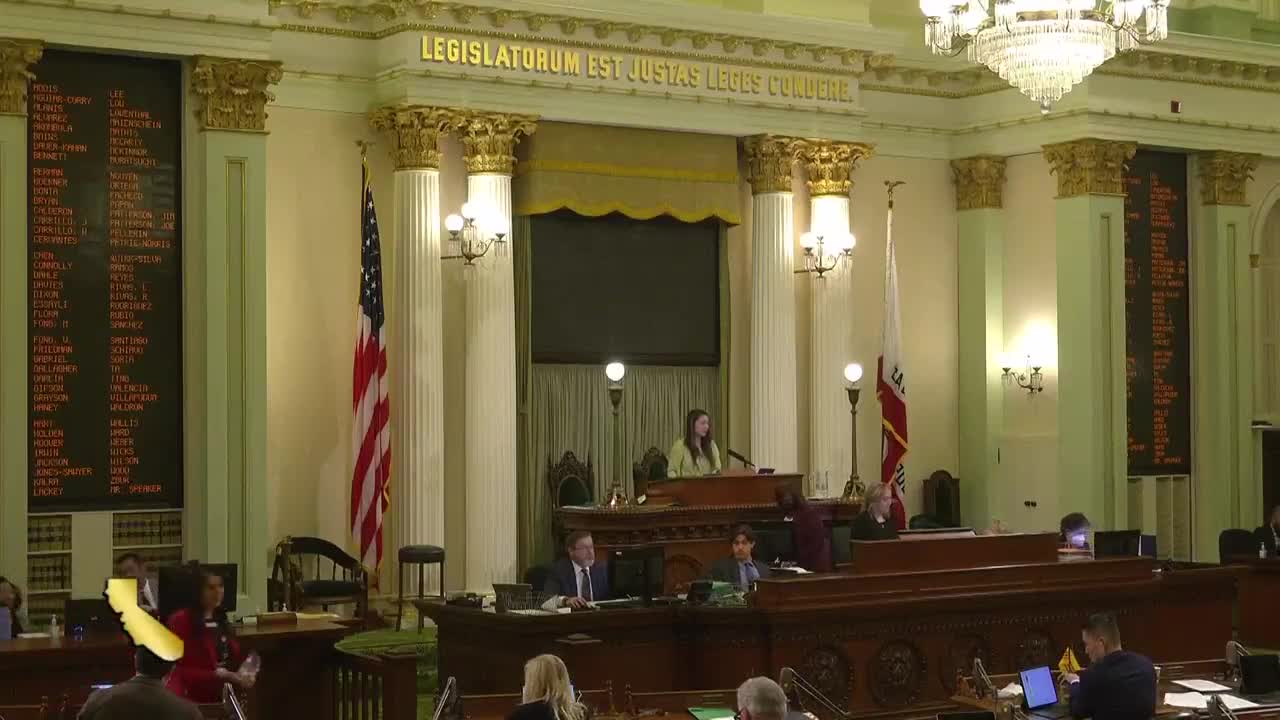
Bill Author