AB 393: Childcare: dual language learners.
- Session Year: 2023-2024
- House: Assembly
- Latest Version Date: 2023-10-08
Current Status:
Passed
(2023-10-08: Chaptered by Secretary of State - Chapter 435, Statutes of 2023.)
Introduced
In Committee
First Chamber
In Committee
Second Chamber
Enacted
What does this bill do?
The bill expands existing preschool rules so the Director of Social Services must create procedures for general and migrant childcare programs to identify and report children who are dual language learners, and aligns those rules with state preschool requirements. It requires use of a family language form and a family language-and-interest interview to collect basic data (home language, language child uses most, family's preferred language, race/ethnicity, program language practices, and staff language mix), and says parents cannot be forced to participate and refusal won’t affect a child’s enrollment or a provider’s contract.
The summary is provided by generative AI which can make mistakes. For original language, please view the details in the table below.
Existing law, the Early Education Act, requires the Superintendent of Public Instruction to provide an inclusive and cost-effective preschool program. Existing law requires the Superintendent to develop procedures for state preschool contractors to identify and report data on dual language learners enrolled in a preschool program. Existing law requires these procedures, at minimum, to include a distribution and collection of a family language instrument, as specified, and a family language and interest interview. Existing law requires the reported data to include, among other things, a childs home language and the language composition of the program staff.
Existing law, the Child Care and Development Services Act, administered by the State Department of Social Services, establishes a system of childcare and development services for children up to 13 years of age, which includes various programs and services, including, among others, general childcare and development programs and migrant childcare and development programs.
This bill would similarly require the Director of Social Services to develop procedures for general or migrant childcare and development contractors to identify and report data on dual language learners enrolled in a general childcare and development program or migrant childcare and development program, as specified, and requires the director to develop informal directives and adopt regulations to implement these provisions. The bill would require the Superintendent and the director to coordinate efforts to implement these provisions.
The bill would prohibit the use of these provisions to compel a parent or guardian to participate in the data collection procedures described above. The bill would further clarify that a familys decision to decline to complete the family language instrument or family language and interest interview shall not affect the contract of a state preschool contractor or general or migrant childcare and development contractor. The bill would also specify that these provisions shall not affect the eligibility of a child to enroll in a state preschool program or a general or migrant childcare and development program.
Existing law, the Early Education Act, requires the Superintendent of Public Instruction to provide an inclusive and cost-effective preschool program. Existing law requires the Superintendent to develop procedures for state preschool contractors to identify and report data on dual language learners enrolled in a preschool program, as specified, and program. Existing law requires these procedures, at minimum, to include a distribution and collection of a family language instrument, as specified, and a family language and interest interview. Existing law requires the reported data to include, among other things, a childs home language and the language composition of the program staff.
Existing law, the Child Care and Development Services Act, administered by the State Department of Social Services, establishes a system of childcare and development services for children up to 13 years of age, which includes various programs and services, including, among others, general childcare and development programs and migrant childcare and development programs.
This bill would similarly require the Director of Social Services to develop procedures for general or migrant childcare and development contractors to identify and report data on dual language learners enrolled in a general childcare and development program or migrant childcare and development program, as specified, and requires the director to develop informal directives and adopt regulations to implement these provisions. The bill would require the Superintendent and the director to coordinate their efforts in developing the procedures for the dual language learner data collection and reporting. efforts to implement these provisions.
The bill would prohibit the use of these provisions to compel a parent or guardian to participate in the data collection procedures described above. The bill would further clarify that a familys decision to decline to complete the family language instrument or family language and interest interview shall not affect the contract of a state preschool contractor or general or migrant childcare and development contractor. The bill would also specify that these provisions shall not affect the eligibility of a child to enroll in a state preschool program or a general or migrant childcare and development program.
Existing law, the Early Education Act, requires the Superintendent of Public Instruction to provide an inclusive and cost-effective preschool program. Existing law requires the Superintendent to develop procedures for state preschool contractors to identify and report data on dual language learners enrolled in a preschool program, as specified, and requires the reported data to include, among other things, a childs home language and the language composition of the program staff.
Existing law, the Child Care and Development Services Act, administered by the State Department of Social Services, establishes a system of childcare and development services for children up to 13 years of age, which includes various programs and services, including, among others, general childcare and development programs and migrant childcare and development programs.
This bill would similarly require the Director of Social Services to develop procedures for general or migrant childcare and development contractors to identify and report data on dual language learners enrolled in a general childcare and development program or migrant childcare and development program, as specified, and requires the director to develop informal directives and adopt regulations to implement these provisions. The bill would require the Superintendent and the director to coordinate their efforts in developing the procedures for the dual language learner data collection and reporting.
(a)It is the intent of the Legislature for the state preschool contractors, teachers, and staff to better understand the language and developmental needs of dual language learners enrolled in publicly funded preschool programs by identifying them as a dual language learner through a family language instrument and support their needs through a family language and interest interview. The identification of dual language learners will help improve program quality and inform the allocation and use of state and program resources to better support them and their linguistic and developmental needs for success in school and in life.
(b)The Superintendent shall develop procedures for state preschool contractors to identify and report data on dual language learners enrolled in a preschool program administered pursuant to Article 2 (commencing with Section 8207).
(c)The procedures developed by the Superintendent pursuant to this section to identify dual language learners shall, at a minimum, include all of the following:
(1)(A)The distribution and collection of a completed family language instrument developed by the Superintendent from a parent or guardian of each child enrolled in a preschool program no later than upon enrollment. The family language instrument shall, at a minimum, be able to identify which languages the child is exposed to in the childs home and community environment, which languages the child understands, and which languages the child is able to speak.
(B)Notwithstanding subparagraph (A), a state preschool contractor serving a schoolage child enrolled in a K12 education program who has been designated by the childs school district, county office of education, or charter school as an English learner through the state assessment for English language proficiency may use that designation as an English learner to identify the child as a dual language learner.
(C)Notwithstanding subparagraph (A), a state preschool contractor may use the previous designation of child as a dual language learner by a general childcare and development program or migrant childcare program to identify the child as a dual language learner.
(2)Criteria for state preschool contractors to use to accurately identify dual language learners enrolled in their preschool programs based on the information collected from the family language instrument and criteria for the family language and interest interview.
(d)For any child enrolled in a preschool program who has been identified as a dual language learner pursuant to subdivision (c), a family language and interest interview shall be conducted by the childs teacher or other designated staff that shall include, at a minimum, an inquiry and a discussion about the strengths and interests of the child, the language background of the child, and the needs of parents, guardians, or family members of the child to support the language and development of the child. The Superintendent shall develop the family language and interest interview to be used by teachers and designated staff for purposes of this subdivision.
(e)The reported data about dual language learners and a preschool program shall include, at a minimum, all of the following:
(1)A childs home language, the language the child uses most, and the familys preferred language in which to receive verbal and written communication.
(2)A childs race or ethnicity.
(3)Language characteristics of the preschool program, including, but not limited to, whether the program uses the home language for instruction, such as a dual language immersion program, or another program that supports the development of home languages.
(4)The language composition of the program staff.
(f)To the maximum extent possible, the Superintendent shall use existing enrollment and reporting procedures for state preschool contractors to meet the requirements of this section.
(g)(1)To ensure dual language learners and their linguistic and developmental needs are accurately identified in order to be effectively supported by state preschool contractors, the Superintendent shall develop clear implementation procedures and related guidance for state preschool contractors.
(2)The Superintendent shall adopt regulations to implement this section. Notwithstanding Chapter 3.5 (commencing with Section 11340) of Part 1 of Division 3 of Title 2 of the Government Code, on or before August 15, 2022, the Superintendent shall develop informal directives and bulletins to implement this section until the time regulations are adopted.
(h)It is the intent of the Legislature to connect information about dual language learners in the California Cradle-to-Career Data System.
(i)The procedures developed by the Superintendent to identify dual language learners pursuant to subdivisions (b) and (c) shall not be connected to or associated with the designation of an English learner in the K12 public school system.
(j)The procedures to identify and report dual language learners pursuant to this section shall be the sole responsibility of the state preschool contractor. Family childcare providers shall not be responsible nor liable for the accuracy of data. The identification and reporting of dual language learners by state preschool contractors shall not impact the status of a provider within a family childcare home education network.
(k)In order to minimize the administrative work required of contractors, teachers, staff, and families involved in the state preschool program, a general childcare and development program, or a migrant childcare and development program, as specified in this section and Section 10209.6 of the Welfare and Institutions Code, the Superintendent and the Director of Social Services shall coordinate efforts to implement this section.
(l)(1)Nothing in this section shall be construed to compel a parent or guardian of a child enrolled in a state preschool program to complete the family language instrument described in subparagraph (A) of paragraph (1) of subdivision (c) or to participate in the family language and interest interview described in subdivision (d).
(2)A contract for a state preschool program shall not be affected by a parent or guardian of a child enrolled in a state preschool program who declines to complete the family language instrument described in subparagraph (A) of paragraph (1) of subdivision (c) or the family language and interest interview described in subdivision (d).
(3)Nothing in this section shall be construed to affect the eligibility of a child to enroll in a state preschool program under Section 8208.
SEC. 2.Section 10209.6 is added to the Welfare and Institutions Code, to read:10209.6.(a)It is the intent of the Legislature for general or migrant childcare and development contractors, teachers, and staff to better understand the language and developmental needs of dual language learners enrolled in publicly funded general childcare and development programs or migrant childcare and development programs by identifying them as a dual language learner through a family language instrument and support their needs through a family language and interest interview. The identification of dual language learners will help improve program quality and inform the allocation and use of state and program resources to better support them and their linguistic and developmental needs for success in school and in life.
(b)The Director of Social Services shall develop procedures for general or migrant childcare and development contractors to identify and report data on dual language learners enrolled in a general childcare and development program administered pursuant to Chapter 7 (commencing with Section 10240) or a migrant childcare and development program administered pursuant to Chapter 6 (commencing with Section 10235). To the maximum extent practicable, the procedures developed by the director shall align to the procedures required for state preschool contractors, as specified in Section 8241.5 of the Education Code.
(c)The procedures developed by the director pursuant to this section to identify dual language learners shall, at a minimum, include both of the following:
(1)(A)The distribution and collection of a completed family language instrument developed by the director from a parent or guardian of each child enrolled in a general childcare and development program or migrant childcare and development program no later than upon enrollment. The family language instrument shall, at a minimum, be able to identify which languages the child is exposed to in the childs home and community environment, and which languages the child demonstrates an understanding of or is able to speak.
(B)Notwithstanding subparagraph (A), a general or migrant childcare and development contractor serving a schoolage child enrolled in a K12 education program who has been designated by the childs school district, county office of education, or charter school as an English learner through the state assessment for English language proficiency may use that designation as an English learner to identify the child as a dual language learner.
(2)Criteria for general or migrant childcare and development contractors to use to accurately identify dual language learners enrolled in their programs based on the information collected from the family language instrument and criteria for the family language and interest interview.
(d)For any child enrolled in a general childcare and development program or migrant childcare and development program who has been identified as a dual language learner pursuant to subdivision (c), a family language and interest interview shall be conducted by the childs teacher or other designated staff that shall include, at a minimum, an inquiry and a discussion about the strengths and interests of the child, the language background of the child, and the needs of parents, guardians, or family members of the child to support the language and development of the child. The director shall develop the family language and interest interview to be used by teachers and designated staff for purposes of this subdivision. To the maximum extent practicable, the family language and interest interview developed by the director shall align to the interview required for state preschool program contractors, as specified in Section 8241.5 of the Education Code.
(e)The reported data about dual language learners in a general childcare and development program or migrant childcare and development program shall be submitted at a timeframe determined by the director in line with the reporting requirements specified in Section 10267.5, and shall include, at a minimum, all of the following:
(1)A childs home language, the language the child is most exposed to, and the familys preferred language in which to receive verbal and written communication.
(2)A childs race or ethnicity.
(3)Language characteristics of the general childcare and development program or migrant childcare and development program, including, but not limited to, whether the program uses the home language for instruction, such as a dual language immersion program, or another program that supports the development of home languages.
(4)The language composition of the program staff.
(f)To the maximum extent possible, the director shall use existing enrollment and reporting procedures for general or migrant childcare and development contractors to meet the requirements of this section.
(g)(1)To ensure dual language learners and their linguistic and developmental needs are accurately identified in order to be effectively supported by general or migrant childcare and development contractors, the director shall develop clear implementation procedures and related guidance for those contractors that, to the maximum extent practicable, shall align to the procedures and guidance developed by the Superintendent for state preschool program contractors pursuant to Section 8241.5 of the Education Code.
(2)The director shall adopt regulations to implement this section. Notwithstanding Chapter 3.5 (commencing with Section 11340) of Part 1 of Division 3 of Title 2 of the Government Code, on or before August 16, 2024, the director shall develop informal directives to implement this section until the time regulations are adopted.
(h)It is the intent of the Legislature to connect information about dual language learners in the California Cradle-to-Career Data System.
(i)The procedures developed by the director to identify dual language learners pursuant to subdivisions (b) and (c) shall not be connected to or associated with the designation of an English learner in the K12 public school system.
(j)The procedures to identify and report dual language learners pursuant to this section shall be the sole responsibility of the general or migrant childcare and development contractor. Family childcare providers shall not be responsible nor liable for the accuracy of data. The identification and reporting of dual language learners by general or migrant childcare and development contractors shall not impact the status of a provider within a family childcare home education network. Family childcare providers shall not be responsible for conducting family language and interest interviews. General or migrant childcare and development contractors shall provide the designated staff to conduct family language and interest interviews for families enrolled in family childcare homes.
(k)In order to minimize the administrative work required of contractors, teachers, staff, and families involved in a general childcare and development program, a migrant childcare and development program, or the state preschool program, as specified in this section and Section 8241.5 of the Education Code, the director and Superintendent of Public Instruction shall coordinate efforts to implement this section.
(l)(1)Nothing in this section shall be construed to compel a parent or guardian of a child enrolled in a general childcare and development program or migrant childcare and development program to complete the family language instrument described in subparagraph (A) of paragraph (1) of subdivision (c) or the family language and interest interview described in subdivision (d).
(2)A contract for a state preschool program shall not be affected by a parent or guardian of a child enrolled in a general childcare and development program or migrant childcare and development program who declines to complete the family language instrument described in subparagraph (A) of paragraph (1) of subdivision (c) or the family language and interest interview described in subdivision (d).
(3)Nothing in this section shall be construed to affect the eligibility of a child to enroll in a general childcare and development program or migrant childcare and development program under Section 10271.
(a)It is the intent of the Legislature for the state preschool contractors, teachers, and staff to better understand the language and developmental needs of dual language learners enrolled in publicly funded preschool programs by identifying them as a dual language learner through a family language instrument and support their needs through a family language and interest interview. The identification of dual language learners will help improve program quality and inform the allocation and use of state and program resources to better support them and their linguistic and developmental needs for success in school and in life.
(b)The Superintendent shall develop procedures for state preschool contractors to identify and report data on dual language learners enrolled in a preschool program administered pursuant to Article 2 (commencing with Section 8207).
(c)The procedures developed by the Superintendent pursuant to this section to identify dual language learners shall, at a minimum, include all of the following:
(1)(A)The distribution and collection of a completed family language instrument developed by the Superintendent from a parent or guardian of each child enrolled in a preschool program no later than upon enrollment. The family language instrument shall, at a minimum, be able to identify which languages the child is exposed to in the childs home and community environment, which languages the child understands, and which languages the child is able to speak.
(B)Notwithstanding subparagraph (A), a state preschool contractor serving a schoolage child enrolled in a K12 education program who has been designated by the childs school district, county office of education, or charter school as an English learner through the state assessment for English language proficiency may use that designation as an English learner to identify the child as a dual language learner.
(C)Notwithstanding subparagraph (A), a state preschool contractor may use the previous designation of child as a dual language learner by a general childcare and development program or migrant childcare program to identify the child as a dual language learner.
(2)Criteria for state preschool contractors to use to accurately identify dual language learners enrolled in their preschool programs based on the information collected from the family language instrument and criteria for the family language and interest interview.
(d)For any child enrolled in a preschool program who has been identified as a dual language learner pursuant to subdivision (c), a family language and interest interview shall be conducted by the childs teacher or other designated staff that shall include, at a minimum, an inquiry and a discussion about the strengths and interests of the child, the language background of the child, and the needs of parents, guardians, or family members of the child to support the language and development of the child. The Superintendent shall develop the family language and interest interview to be used by teachers and designated staff for purposes of this subdivision.
(e)The reported data about dual language learners and a preschool program shall include, at a minimum, all of the following:
(1)A childs home language, the language the child uses most, and the familys preferred language in which to receive verbal and written communication.
(2)A childs race or ethnicity.
(3)Language characteristics of the preschool program, including, but not limited to, whether the program uses the home language for instruction, such as a dual language immersion program, or another program that supports the development of home languages.
(4)The language composition of the program staff.
(f)To the maximum extent possible, the Superintendent shall use existing enrollment and reporting procedures for state preschool contractors to meet the requirements of this section.
(g)(1)To ensure dual language learners and their linguistic and developmental needs are accurately identified in order to be effectively supported by state preschool contractors, the Superintendent shall develop clear implementation procedures and related guidance for state preschool contractors.
(2)The Superintendent shall adopt regulations to implement this section. Notwithstanding Chapter 3.5 (commencing with Section 11340) of Part 1 of Division 3 of Title 2 of the Government Code, on or before August 15, 2022, the Superintendent shall develop informal directives and bulletins to implement this section until the time regulations are adopted.
(h)It is the intent of the Legislature to connect information about dual language learners in the California Cradle-to-Career Data System.
(i)The procedures developed by the Superintendent to identify dual language learners pursuant to subdivisions (b) and (c) shall not be connected to or associated with the designation of an English learner in the K12 public school system.
(j)The procedures to identify and report dual language learners pursuant to this section shall be the sole responsibility of the state preschool contractor. Family childcare providers shall not be responsible nor liable for the accuracy of data. The identification and reporting of dual language learners by state preschool contractors shall not impact the status of a provider within a family childcare home education network.
(k)In order to minimize the administrative work required of contractors, teachers, staff, and families involved in the state preschool program, a general childcare and development program, or a migrant childcare and development program, as specified in this section and Section 10209.6 of the Welfare and Institutions Code, the Superintendent and the Director of Social Services shall coordinate efforts to implement this section.
(l)(1)Nothing in this section shall be construed to compel a parent or guardian of a child enrolled in a state preschool program to complete the family language instrument described in subparagraph (A) of paragraph (1) of subdivision (c) or to participate in the family language and interest interview described in subdivision (d).
(2)A contract for a state preschool program shall not be affected by a parent or guardian of a child enrolled in a state preschool program who declines to complete the family language instrument described in subparagraph (A) of paragraph (1) of subdivision (c) or the family language and interest interview described in subdivision (d).
(3)Nothing in this section shall be construed to affect the eligibility of a child to enroll in a state preschool program under Section 8208.
SEC. 2.Section 10209.6 is added to the Welfare and Institutions Code, to read:10209.6.(a)It is the intent of the Legislature for general or migrant childcare and development contractors, teachers, and staff to better understand the language and developmental needs of dual language learners enrolled in publicly funded general childcare and development programs or migrant childcare and development programs by identifying them as a dual language learner through a family language instrument and support their needs through a family language and interest interview. The identification of dual language learners will help improve program quality and inform the allocation and use of state and program resources to better support them and their linguistic and developmental needs for success in school and in life.
(b)The Director of Social Services shall develop procedures for general or migrant childcare and development contractors to identify and report data on dual language learners enrolled in a general childcare and development program administered pursuant to Chapter 7 (commencing with Section 10240) or a migrant childcare and development program administered pursuant to Chapter 6 (commencing with Section 10235). To the maximum extent practicable, the procedures developed by the director shall align to the procedures required for state preschool contractors, as specified in Section 8241.5 of the Education Code.
(c)The procedures developed by the director pursuant to this section to identify dual language learners shall, at a minimum, include both of the following:
(1)(A)The distribution and collection of a completed family language instrument developed by the director from a parent or guardian of each child enrolled in a general childcare and development program or migrant childcare and development program no later than upon enrollment. The family language instrument shall, at a minimum, be able to identify which languages the child is exposed to in the childs home and community environment, and which languages the child demonstrates an understanding of or is able to speak.
(B)Notwithstanding subparagraph (A), a general or migrant childcare and development contractor serving a schoolage child enrolled in a K12 education program who has been designated by the childs school district, county office of education, or charter school as an English learner through the state assessment for English language proficiency may use that designation as an English learner to identify the child as a dual language learner.
(2)Criteria for general or migrant childcare and development contractors to use to accurately identify dual language learners enrolled in their programs based on the information collected from the family language instrument and criteria for the family language and interest interview.
(d)For any child enrolled in a general childcare and development program or migrant childcare and development program who has been identified as a dual language learner pursuant to subdivision (c), a family language and interest interview shall be conducted by the childs teacher or other designated staff that shall include, at a minimum, an inquiry and a discussion about the strengths and interests of the child, the language background of the child, and the needs of parents, guardians, or family members of the child to support the language and development of the child. The director shall develop the family language and interest interview to be used by teachers and designated staff for purposes of this subdivision. To the maximum extent practicable, the family language and interest interview developed by the director shall align to the interview required for state preschool program contractors, as specified in Section 8241.5 of the Education Code.
(e)The reported data about dual language learners in a general childcare and development program or migrant childcare and development program shall be submitted at a timeframe determined by the director in line with the reporting requirements specified in Section 10267.5, and shall include, at a minimum, all of the following:
(1)A childs home language, the language the child is most exposed to, and the familys preferred language in which to receive verbal and written communication.
(2)A childs race or ethnicity.
(3)Language characteristics of the general childcare and development program or migrant childcare and development program, including, but not limited to, whether the program uses the home language for instruction, such as a dual language immersion program, or another program that supports the development of home languages.
(4)The language composition of the program staff.
(f)To the maximum extent possible, the director shall use existing enrollment and reporting procedures for general or migrant childcare and development contractors to meet the requirements of this section.
(g)(1)To ensure dual language learners and their linguistic and developmental needs are accurately identified in order to be effectively supported by general or migrant childcare and development contractors, the director shall develop clear implementation procedures and related guidance for those contractors that, to the maximum extent practicable, shall align to the procedures and guidance developed by the Superintendent for state preschool program contractors pursuant to Section 8241.5 of the Education Code.
(2)The director shall adopt regulations to implement this section. Notwithstanding Chapter 3.5 (commencing with Section 11340) of Part 1 of Division 3 of Title 2 of the Government Code, on or before March 15, 2024, August 16, 2024, the director shall develop informal directives to implement this section until the time regulations are adopted.
(h)It is the intent of the Legislature to connect information about dual language learners in the California Cradle-to-Career Data System.
(i)The procedures developed by the director to identify dual language learners pursuant to subdivisions (b) and (c) shall not be connected to or associated with the designation of an English learner in the K12 public school system.
(j)The procedures to identify and report dual language learners pursuant to this section shall be the sole responsibility of the general or migrant childcare and development contractor. Family childcare providers shall not be responsible nor liable for the accuracy of data. The identification and reporting of dual language learners by general or migrant childcare and development contractors shall not impact the status of a provider within a family childcare home education network.
(k)In order to minimize the administrative work required of contractors, teachers, staff, and families involved in a general childcare and development program, a migrant childcare and development program, or the state preschool program, as specified in this section and Section 8241.5 of the Education Code, the director and Superintendent of Public Instruction shall coordinate efforts to implement this section.
(l)(1)Nothing in this section shall be construed to compel a parent or guardian of a child enrolled in a general childcare and development program or migrant childcare and development program to complete the family language instrument described in subparagraph (A) of paragraph (1) of subdivision (c) or the family language and interest interview described in subdivision (d).
(2)A contract for a state preschool program shall not be affected by a parent or guardian of a child enrolled in a general childcare and development program or migrant childcare and development program who declines to complete the family language instrument described in subparagraph (A) of paragraph (1) of subdivision (c) or the family language and interest interview described in subdivision (d).
(3)Nothing in this section shall be construed to affect the eligibility of a child to enroll in a general childcare and development program or migrant childcare and development program under Section 10271.
(a)It is the intent of the Legislature for the state preschool contractors, teachers, and staff to better understand the language and developmental needs of dual language learners enrolled in publicly funded preschool programs by identifying them as a dual language learner through a family language instrument and support their needs through a family language and interest interview. The identification of dual language learners will help improve program quality and inform the allocation and use of state and program resources to better support them and their linguistic and developmental needs for success in school and in life.
(b)The Superintendent shall develop procedures for state preschool contractors to identify and report data on dual language learners enrolled in a preschool program administered pursuant to Article 2 (commencing with Section 8207).
(c)The procedures developed by the Superintendent pursuant to this section to identify dual language learners shall, at a minimum, include all of the following:
(1)(A)The distribution and collection of a completed family language instrument developed by the Superintendent from a parent or guardian of each child enrolled in a preschool program no later than upon enrollment. The family language instrument shall, at a minimum, be able to identify which languages the child is exposed to in the childs home and community environment, which languages the child understands, and which languages the child is able to speak.
(B)Notwithstanding subparagraph (A), a state preschool contractor serving a schoolage child enrolled in a K12 education program who has been designated by the childs school district, county office of education, or charter school as an English learner through the state assessment for English language proficiency may use that designation as an English learner to identify the child as a dual language learner.
(C)Notwithstanding subparagraph (A), a state preschool contractor may use the previous designation of child as a dual language learner by a general childcare and development program or migrant childcare program to identify the child as a dual language learner.
(2)Criteria for state preschool contractors to use to accurately identify dual language learners enrolled in their preschool programs based on the information collected from the family language instrument and criteria for the family language and interest interview.
(d)For any child enrolled in a preschool program who has been identified as a dual language learner pursuant to subdivision (c), a family language and interest interview shall be conducted by the childs teacher or other designated staff that shall include, at a minimum, an inquiry and a discussion about the strengths and interests of the child, the language background of the child, and the needs of parents, guardians, or family members of the child to support the language and development of the child. The Superintendent shall develop the family language and interest interview to be used by teachers and designated staff for purposes of this subdivision.
(e)The reported data about dual language learners and a preschool program shall include, at a minimum, all of the following:
(1)A childs home language, the language the child uses most, and the familys preferred language in which to receive verbal and written communication.
(2)A childs race or ethnicity.
(3)Language characteristics of the preschool program, including, but not limited to, whether the program uses the home language for instruction, such as a dual language immersion program, or another program that supports the development of home languages.
(4)The language composition of the program staff.
(f)To the maximum extent possible, the Superintendent shall use existing enrollment and reporting procedures for state preschool contractors to meet the requirements of this section.
(g)(1)To ensure dual language learners and their linguistic and developmental needs are accurately identified in order to be effectively supported by state preschool contractors, the Superintendent shall develop clear implementation procedures and related guidance for state preschool contractors.
(2)The Superintendent shall adopt regulations to implement this section. Notwithstanding Chapter 3.5 (commencing with Section 11340) of Part 1 of Division 3 of Title 2 of the Government Code, on or before August 15, 2022, the Superintendent shall develop informal directives and bulletins to implement this section until the time regulations are adopted.
(h)It is the intent of the Legislature to connect information about dual language learners in the California Cradle-to-Career Data System.
(i)The procedures developed by the Superintendent to identify dual language learners pursuant to subdivisions (b) and (c) shall not be connected to or associated with the designation of an English learner in the K12 public school system.
(j)The procedures to identify and report dual language learners pursuant to this section shall be the sole responsibility of the state preschool contractor. Family childcare providers shall not be responsible nor liable for the accuracy of data. The identification and reporting of dual language learners by state preschool contractors shall not impact the status of a provider within a family childcare home education network.
(k)In order to minimize the administrative work required of contractors, teachers, staff, and families involved in the state preschool program, a general childcare and development program, or a migrant childcare and development program, as specified in this section and Section 10209.6 of the Welfare and Institutions Code, the Superintendent and the Director of Social Services shall coordinate their efforts in developing the procedures for data collection and reporting. to implement this section.
(l)(1)Nothing in this section shall be construed to compel a parent or guardian of a child enrolled in a state preschool program to complete the family language instrument described in subparagraph (A) of paragraph (1) of subdivision (c) or to participate in the family language and interest interview described in subdivision (d).
(2)A contract for a state preschool program shall not be affected by a parent or guardian of a child enrolled in a state preschool program who declines to complete the family language instrument described in subparagraph (A) of paragraph (1) of subdivision (c) or the family language and interest interview described in subdivision (d).
(3)Nothing in this section shall be construed to affect the eligibility of a child to enroll in a state preschool program under Section 8208.
SEC. 2.Section 10209.6 is added to the Welfare and Institutions Code, to read:10209.6.(a)It is the intent of the Legislature for general or migrant childcare and development contractors, teachers, and staff to better understand the language and developmental needs of dual language learners enrolled in publicly funded general childcare and development programs or migrant childcare and development programs by identifying them as a dual language learner through a family language instrument and support their needs through a family language and interest interview. The identification of dual language learners will help improve program quality and inform the allocation and use of state and program resources to better support them and their linguistic and developmental needs for success in school and in life.
(b)The Director of Social Services shall develop procedures for general or migrant childcare and development contractors to identify and report data on dual language learners enrolled in a general childcare and development program administered pursuant to Chapter 7 (commencing with Section 10240) or a migrant childcare and development program administered pursuant to Chapter 6 (commencing with Section 10235). To the maximum extent practicable, the procedures developed by the director shall align to the procedures required for state preschool contractors, as specified in Section 8241.5 of the Education Code.
(c)The procedures developed by the director pursuant to this section to identify dual language learners shall, at a minimum, include both of the following:
(1)(A)The distribution and collection of a completed family language instrument developed by the director from a parent or guardian of each child enrolled in a general childcare and development program or migrant childcare and development program no later than upon enrollment. The family language instrument shall, at a minimum, be able to identify which languages the child is exposed to in the childs home and community environment, and which languages the child demonstrates an understanding of or is able to speak.
(B)Notwithstanding subparagraph (A), a general or migrant childcare and development contractor serving a schoolage child enrolled in a K12 education program who has been designated by the childs school district, county office of education, or charter school as an English learner through the state assessment for English language proficiency may use that designation as an English learner to identify the child as a dual language learner.
(2)Criteria for general or migrant childcare and development contractors to use to accurately identify dual language learners enrolled in their programs based on the information collected from the family language instrument and criteria for the family language and interest interview.
(d)For any child enrolled in a general childcare and development program or migrant childcare and development program who has been identified as a dual language learner pursuant to subdivision (c), a family language and interest interview shall be conducted by the childs teacher or other designated staff that shall include, at a minimum, an inquiry and a discussion about the strengths and interests of the child, the language background of the child, and the needs of parents, guardians, or family members of the child to support the language and development of the child. The director shall develop the family language and interest interview to be used by teachers and designated staff for purposes of this subdivision. To the maximum extent practicable, the family language and interest interview developed by the director shall align to the interview required for state preschool program contractors, as specified in Section 8241.5 of the Education Code.
(e)The reported data about dual language learners in a general childcare and development program or migrant childcare and development program shall be submitted at a timeframe determined by the director in line with the reporting requirements specified in Section 10267.5, and shall include, at a minimum, all of the following:
(1)A childs home language, the language the child is most exposed to, and the familys preferred language in which to receive verbal and written communication.
(2)A childs race or ethnicity.
(3)Language characteristics of the general childcare and development program or migrant childcare and development program, including, but not limited to, whether the program uses the home language for instruction, such as a dual language immersion program, or another program that supports the development of home languages.
(4)The language composition of the program staff.
(f)To the maximum extent possible, the director shall use existing enrollment and reporting procedures for general or migrant childcare and development contractors to meet the requirements of this section.
(g)(1)To ensure dual language learners and their linguistic and developmental needs are accurately identified in order to be effectively supported by general or migrant childcare and development contractors, the director shall develop clear implementation procedures and related guidance for those contractors that, to the maximum extent practicable, shall align to the procedures and guidance developed by the Superintendent for state preschool program contractors pursuant to Section 8241.5 of the Education Code.
(2)The director shall adopt regulations to implement this section. Notwithstanding Chapter 3.5 (commencing with Section 11340) of Part 1 of Division 3 of Title 2 of the Government Code, on or before March 15, 2024, the director shall develop informal directives to implement this section until the time regulations are adopted.
(h)It is the intent of the Legislature to connect information about dual language learners in the California Cradle-to-Career Data System.
(i)The procedures developed by the director to identify dual language learners pursuant to subdivisions (b) and (c) shall not be connected to or associated with the designation of an English learner in the K12 public school system.
(j)The procedures to identify and report dual language learners pursuant to this section shall be the sole responsibility of the general or migrant childcare and development contractor. Family childcare providers shall not be responsible nor liable for the accuracy of data. The identification and reporting of dual language learners by general or migrant childcare and development contractors shall not impact the status of a provider within a family childcare home education network.
(k)In order to minimize the administrative work required of contractors, teachers, staff, and families involved in a general childcare and development program, a migrant childcare and development program, or the state preschool program, as specified in this section and Section 8241.5 of the Education Code, the director and Superintendent of Public Instruction shall coordinate their efforts in developing the procedures for data collection and reporting. to implement this section.
(l)(1)Nothing in this section shall be construed to compel a parent or guardian of a child enrolled in a general childcare and development program or migrant childcare and development program to complete the family language instrument described in subparagraph (A) of paragraph (1) of subdivision (c) or the family language and interest interview described in subdivision (d).
(2)A contract for a state preschool program shall not be affected by a parent or guardian of a child enrolled in a general childcare and development program or migrant childcare and development program who declines to complete the family language instrument described in subparagraph (A) of paragraph (1) of subdivision (c) or the family language and interest interview described in subdivision (d).
(3)Nothing in this section shall be construed to affect the eligibility of a child to enroll in a general childcare and development program or migrant childcare and development program under Section 10271.
(a)It is the intent of the Legislature for the state preschool contractors, teachers, and staff to better understand the language and developmental needs of dual language learners enrolled in publicly funded preschool programs by identifying them as a dual language learner through a family language instrument and support their needs through a family language and interest interview. The identification of dual language learners will help improve program quality and inform the allocation and use of state and program resources to better support them and their linguistic and developmental needs for success in school and in life.
(b)The Superintendent shall develop procedures for state preschool contractors to identify and report data on dual language learners enrolled in a preschool program administered pursuant to Article 2 (commencing with Section 8207).
(c)The procedures developed by the Superintendent pursuant to this section to identify dual language learners shall, at a minimum, include all of the following:
(1)(A)The distribution and collection of a completed family language instrument developed by the Superintendent from a parent or guardian of each child enrolled in a preschool program no later than upon enrollment. The family language instrument shall, at a minimum, be able to identify which languages the child is exposed to in the childs home and community environment, which languages the child understands, and which languages the child is able to speak.
(B)Notwithstanding subparagraph (A), a state preschool contractor serving a schoolage child enrolled in a K12 education program who has been designated by the childs school district, county office of education, or charter school as an English learner through the state assessment for English language proficiency may use that designation as an English learner to identify the child as a dual language learner.
(2)Criteria for state preschool contractors to use to accurately identify dual language learners enrolled in their preschool programs based on the information collected from the family language instrument and criteria for the family language and interest interview.
(d)For any child enrolled in a preschool program who has been identified as a dual language learner pursuant to subdivision (c), a family language and interest interview shall be conducted by the childs teacher or other designated staff that shall include, at a minimum, an inquiry and a discussion about the strengths and interests of the child, the language background of the child, and the needs of parents, guardians, or family members of the child to support the language and development of the child. The Superintendent shall develop the family language and interest interview to be used by teachers and designated staff for purposes of this subdivision.
(e)The reported data about dual language learners and a preschool program shall include, at a minimum, all of the following:
(1)A childs home language, the language the child uses most, and the familys preferred language in which to receive verbal and written communication.
(2)A childs race or ethnicity.
(3)Language characteristics of the preschool program, including, but not limited to, whether the program uses the home language for instruction, such as a dual language immersion program, or another program that supports the development of home languages.
(4)The language composition of the program staff.
(f)To the maximum extent possible, the Superintendent shall use existing enrollment and reporting procedures for state preschool contractors to meet the requirements of this section.
(g)(1)To ensure dual language learners and their linguistic and developmental needs are accurately identified in order to be effectively supported by state preschool contractors, the Superintendent shall develop clear implementation procedures and related guidance for state preschool contractors.
(2)The Superintendent shall adopt regulations to implement this section. Notwithstanding Chapter 3.5 (commencing with Section 11340) of Part 1 of Division 3 of Title 2 of the Government Code, on or before August 15, 2022, the Superintendent shall develop informal directives and bulletins to implement this section until the time regulations are adopted.
(h)It is the intent of the Legislature to connect information about dual language learners in the California Cradle-to-Career Data System.
(i)The procedures developed by the Superintendent to identify dual language learners pursuant to subdivisions (b) and (c) shall not be connected to or associated with the designation of an English learner in the K12 public school system.
(j)The procedures to identify and report dual language learners pursuant to this section shall be the sole responsibility of the state preschool contractor. Family childcare providers shall not be responsible nor liable for the accuracy of data. The identification and reporting of dual language learners by state preschool contractors shall not impact the status of a provider within a family childcare home education network.
(k)In order to minimize the administrative work required of contractors, teachers, staff, and families involved in the state preschool program, a general childcare and development program, or a migrant childcare and development program, as specified in this section and Section 10209.6 of the Welfare and Institutions Code, the Superintendent and the Director of Social Services shall coordinate their efforts in developing the procedures for data collection and reporting.
SEC. 2.Section 10209.6 is added to the Welfare and Institutions Code, to read:10209.6.(a)It is the intent of the Legislature for general or migrant childcare and development contractors, teachers, and staff to better understand the language and developmental needs of dual language learners enrolled in publicly funded general childcare and development programs or migrant childcare and development programs by identifying them as a dual language learner through a family language instrument and support their needs through a family language and interest interview. The identification of dual language learners will help improve program quality and inform the allocation and use of state and program resources to better support them and their linguistic and developmental needs for success in school and in life.
(b)The Director of Social Services shall develop procedures for general or migrant childcare and development contractors to identify and report data on dual language learners enrolled in a general childcare and development program administered pursuant to Chapter 7 (commencing with Section 10240) or a migrant childcare and development program administered pursuant to Chapter 6 (commencing with Section 10235). To the maximum extent practicable, the procedures developed by the director shall align to the procedures required for state preschool contractors, as specified in Section 8241.5 of the Education Code.
(c)The procedures developed by the director pursuant to this section to identify dual language learners shall, at a minimum, include both of the following:
(1)(A)The distribution and collection of a completed family language instrument developed by the director from a parent or guardian of each child enrolled in a general childcare and development program or migrant childcare and development program no later than upon enrollment. The family language instrument shall, at a minimum, be able to identify which languages the child is exposed to in the childs home and community environment, and which languages the child demonstrates an understanding of or is able to speak.
(B)Notwithstanding subparagraph (A), a general or migrant childcare and development contractor serving a schoolage child enrolled in a K12 education program who has been designated by the childs school district, county office of education, or charter school as an English learner through the state assessment for English language proficiency may use that designation as an English learner to identify the child as a dual language learner.
(2)Criteria for general or migrant childcare and development contractors to use to accurately identify dual language learners enrolled in their programs based on the information collected from the family language instrument and criteria for the family language and interest interview.
(d)For any child enrolled in a general childcare and development program or migrant childcare and development program who has been identified as a dual language learner pursuant to subdivision (c), a family language and interest interview shall be conducted by the childs teacher or other designated staff that shall include, at a minimum, an inquiry and a discussion about the strengths and interests of the child, the language background of the child, and the needs of parents, guardians, or family members of the child to support the language and development of the child. The director shall develop the family language and interest interview to be used by teachers and designated staff for purposes of this subdivision. To the maximum extent practicable, the family language and interest interview developed by the director shall align to the interview required for state preschool program contractors, as specified in Section 8241.5 of the Education Code.
(e)The reported data about dual language learners in a general childcare and development program or migrant childcare and development program shall be submitted at a timeframe determined by the director in line with the reporting requirements specified in Section 10267.5, and shall include, at a minimum, all of the following:
(1)A childs home language, the language the child is most exposed to, and the familys preferred language in which to receive verbal and written communication.
(2)A childs race or ethnicity.
(3)Language characteristics of the general childcare and development program or migrant childcare and development program, including, but not limited to, whether the program uses the home language for instruction, such as a dual language immersion program, or another program that supports the development of home languages.
(4)The language composition of the program staff.
(f)To the maximum extent possible, the director shall use existing enrollment and reporting procedures for general or migrant childcare and development contractors to meet the requirements of this section.
(g)(1)To ensure dual language learners and their linguistic and developmental needs are accurately identified in order to be effectively supported by general or migrant childcare and development contractors, the director shall develop clear implementation procedures and related guidance for those contractors that, to the maximum extent practicable, shall align to the procedures and guidance developed by the Superintendent for state preschool program contractors pursuant to Section 8241.5 of the Education Code.
(2)The director shall adopt regulations to implement this section. Notwithstanding Chapter 3.5 (commencing with Section 11340) of Part 1 of Division 3 of Title 2 of the Government Code, on or before March 15, 2024, the director shall develop informal directives to implement this section until the time regulations are adopted.
(h)It is the intent of the Legislature to connect information about dual language learners in the California Cradle-to-Career Data System.
(i)The procedures developed by the director to identify dual language learners pursuant to subdivisions (b) and (c) shall not be connected to or associated with the designation of an English learner in the K12 public school system.
(j)The procedures to identify and report dual language learners pursuant to this section shall be the sole responsibility of the general or migrant childcare and development contractor. Family childcare providers shall not be responsible nor liable for the accuracy of data. The identification and reporting of dual language learners by general or migrant childcare and development contractors shall not impact the status of a provider within a family childcare home education network.
(k)In order to minimize the administrative work required of contractors, teachers, staff, and families involved in a general childcare and development program, a migrant childcare and development program, or the state preschool program, as specified in this section and Section 8241.5 of the Education Code, the director and Superintendent of Public Instruction shall coordinate their efforts in developing the procedures for data collection and reporting.
REVISIONS: HeadingLine 2.|
Date
|
Status
|
|---|---|
| Oct 8, 2023 | Chaptered by Secretary of State - Chapter 435, Statutes of 2023. |
| Oct 8, 2023 | Approved by the Governor. |
| Sep 20, 2023 | Enrolled and presented to the Governor at 4 p.m. |
| Sep 13, 2023 | Senate amendments concurred in. To Engrossing and Enrolling. (Ayes 80. Noes 0. Page 3417.). |
| Sep 12, 2023 | In Assembly. Concurrence in Senate amendments pending. |
| Sep 12, 2023 | Read third time. Passed. Ordered to the Assembly. (Ayes 38. Noes 0. Page 2662.). |
| Sep 11, 2023 | Read second time. Ordered to third reading. |
| Sep 8, 2023 | Read third time and amended. Ordered to second reading. |
| Sep 5, 2023 | Read second time. Ordered to third reading. |
| Sep 1, 2023 | Read second time and amended. Ordered returned to second reading. |
| Sep 1, 2023 | From committee: Amend, and do pass as amended. (Ayes 7. Noes 0.) (September 1). |
| Aug 14, 2023 | In committee: Referred to APPR suspense file. |
| Jul 13, 2023 | From committee: Do pass and re-refer to Com. on APPR with recommendation: To Consent Calendar. (Ayes 7. Noes 0.) (July 12). Re-referred to Com. on APPR. |
| Jul 5, 2023 | From committee: Do pass and re-refer to Com. on ED. with recommendation: To Consent Calendar. (Ayes 5. Noes 0.) (July 3). Re-referred to Com. on ED. |
| Jun 21, 2023 | From committee chair, with author's amendments: Amend, and re-refer to committee. Read second time, amended, and re-referred to Com. on HUMAN S. |
| Jun 14, 2023 | Referred to Coms. on HUMAN S. and ED. |
| Jun 1, 2023 | In Senate. Read first time. To Com. on RLS. for assignment. |
| May 31, 2023 | Read third time. Passed. Ordered to the Senate. (Ayes 80. Noes 0. Page 1975.) |
| May 18, 2023 | Read second time. Ordered to third reading. |
| May 18, 2023 | From committee: Do pass. (Ayes 15. Noes 0.) (May 18). |
| May 3, 2023 | In committee: Set, first hearing. Referred to APPR. suspense file. |
| Apr 26, 2023 | In committee: Hearing postponed by committee. |
| Mar 30, 2023 | From committee: Do pass and re-refer to Com. on APPR. with recommendation: To Consent Calendar. (Ayes 6. Noes 0.) (March 29). Re-referred to Com. on APPR. |
| Mar 30, 2023 | Coauthors revised. |
| Mar 14, 2023 | From committee: Do pass and re-refer to Com. on ED. (Ayes 8. Noes 0.) (March 14). Re-referred to Com. on ED. |
| Feb 9, 2023 | Referred to Coms. on HUM. S. and ED. |
| Feb 3, 2023 | From printer. May be heard in committee March 5. |
| Feb 2, 2023 | Read first time. To print. |
|
Date
|
Description
|
Location
|
Votes
|
|
|---|---|---|---|---|
| Sep 13, 2023 | AB 393 Luz Rivas Concurrence in Senate Amendments | Assembly Floor |
Passed |
|
| Sep 12, 2023 | Assembly 3rd Reading AB393 Luz Rivas et al. By Limón | Senate Floor |
Passed |
|
| Sep 1, 2023 | Do pass as amended | Senate Standing Committee on Appropriations |
Passed |
|
| Aug 14, 2023 | Placed on suspense file | Senate Standing Committee on Appropriations |
Passed |
|
| Jul 12, 2023 | Do pass, but first be re-referred to the Committee on [Appropriations] with the recommendation: To Consent Calendar | Senate Standing Committee on Education |
Passed |
|
| Jul 3, 2023 | Do pass, but first be re-referred to the Committee on [Education] with the recommendation: To Consent Calendar | Senate Standing Committee on Human Services |
Passed |
|
| May 31, 2023 | AB 393 Luz Rivas Assembly Third Reading | Assembly Floor |
Passed |
|
| May 18, 2023 | Do pass. | Assembly Standing Committee on Appropriations |
Passed |
|
| Mar 29, 2023 | Do pass and be re-referred to the Committee on [Appropriations] with recommendation: To Consent Calendar | Assembly Standing Committee on Education |
Passed |
|
| Mar 14, 2023 | Do pass and be re-referred to the Committee on [Education] | Assembly Standing Committee on Human Services |
Passed |
This list shows positions taken on this bill by organizations on the date displayed, which is linked to the original source.
Positions by individuals are not included.
|
Organization
|
Position
|
Date
|
|---|---|---|
| Abriendo Puertas/Opening Doors | ** Support | |
| Alliance for A Better Community | ** Support | |
| Association of Mexican American Educators | ** Support | |
| Association of Two-way Dual Language Education | ** Support | |
| California Association of Bilingual Education | ** Support | |
| California Council on Teacher Education | ** Support | |
| California Federation of Teachers, AFL-CIO | ** Support | |
| California State PTA | ** Support | |
| California Teachers Association | ** Support | |
| Californians Together | ** Support | |
| Catalyst California | ** Support | |
| Childcare Providers United | ** Support | |
| Children Now | ** Support | |
| ChildrenS Institute | ** Support | |
| Community Access Center | ** Support | |
| Early Edge California | ** Support | |
| Fresno Unified School District | * Support | Mar 14, 2023 |
| Hispanas Organized for Political Equality | ** Support | |
| Institute for Racial Equity and Excellence | ** Support | |
| Kern County Superintendent of Schools Office | ** Support | |
| Kidango | ** Support | |
| Loyola Marymount University - The Center for Equity for English Learners | ** Support | |
| North Bay Leadership Council | ** Support | |
| Parent Institute for Quality Education | ** Support | |
| SCIU | * Support | Mar 14, 2023 |
| Sobrato Early Academic Language | ** Support | |
| The Children's Partnership | ** Support | |
| The Education Trust - West | ** Support | |
| UDW | * Support | Mar 14, 2023 |
| Unidosus | ** Support | |
| Unite-la, INC. | ** Support |
CONCURRENCE IN SENATE AMENDMENTS
CSA1 Bill Id:AB 393
Author:(Luz Rivas)
As Amended Ver:September 8, 2023
Majority vote
SUMMARY
Requires the Director of the California Department of Social Services (CDSS) to develop procedures for general or migrant childcare and development contractors to identify and report data on dual language learners (DLLs) in General Childcare and Development Programs (CCTRs) or Migrant Childcare and Development Programs (CMIGs) and further requires the Superintendent of Public Instruction (SPI) and the Director of CDSS (Director) to coordinate their efforts in developing procedures and reporting data regarding DLLs.
Senate Amendments
- Permit a state preschool contractor to use the previous designation of child as a DLL by a CCTR or a CMIG to identify the child as a DLL.
- Clarify that nothing in these provisions shall be construed to compel a parent or guardian of a child enrolled in a state preschool program/CCTR/CMIG to complete the family language instrument or to participate in the family language and interest interview.
- Clarify family childcare providers are not responsible for conducting family language and interest interviews.
- Require CCTR and CMIG contractors to provide the designated staff to conduct family language and interest interviews for families enrolled in family childcare homes.
- Prohibit a contract for a state preschool program from being affected by a parent or guardian of a child enrolled in a state preschool program/CCTR/CMIG who declines to complete the family language instrument or the family language and interest interview.
- Specify that nothing in these provisions shall be construed to affect the eligibility of a child to enroll in a state preschool program/CCTR/CMIG.
- Revise the date requiring informal directives to implement these provisions, until the time regulations are adopted, from March 15, 2024, to August 16, 2024.
COMMENTS
Dual Language Learners Data Collection: Currently, the K-12 school system and the California state preschool program utilize language instruments to identify DLL students. Because state preschool, CCTR, and CMIG are under different purviews, CCTRs and CMIGs are not included in the requirement to identify and collect data on DLLs. This bill builds upon prior efforts to collect data and establish language instruments to determine DLL students within additional subsidized childcare options.
California Cradle-to-Career Data System: The California Cradle-to-Career Data System was enacted through the Budget with the passage of SB 75 (Budget and Fiscal Review Committee), Chapter 51, Statutes of 2019, to establish of a statewide, longitudinal data system. The system aims to link existing education, workforce, financial aid, and social service information so that policymakers, educators, and the public can better address disparities and improve outcomes for students throughout the state. The data system is designed to be used to provide access to data and information necessary to provide insights into critical milestones in the education-to-employment pipeline, including insight regarding early learning. This bill states intent that the data collected is included in this system.
Subsidized childcare: California's subsidized childcare system is designed to provide assistance to parents and guardians who are working, in training, seeking employment, incapacitated, or in need of respite. Center-based direct-contract child care and development programs are dually administered by CDSS and the California Department of Education (CDE). CDE administers the state preschool program, which provides developmentally, culturally, and linguistically appropriate curriculum to eligible three- and four-year olds, while CDSS administers the CCTR and CMIG programs, among others.
To operate these programs, the state contracts directly with child care centers and Family Child Care Education Home Networks Program (FCCHENs) for a fixed number of child care slots. These contractors provide child development services for children from birth through 12 years of age as well as older children with exceptional needs to provide a developmentally, culturally, and linguistically appropriate educational component. The programs also provide meals and snacks to children, parent education, referrals to health and social services for families, and staff development opportunities to employees. Voucher-based subsidized childcare includes programs for parents participating in California Work Opportunity and Responsibility to Kids (CalWORKs), as well as families transitioning from and no longer receiving CalWORKs aid. These parents can be eligible for childcare, which is offered in three stages, of which Stages 2 and 3 fall under CDSS' purview.
Similar to the CCTRs, CMIGs also provide culturally, linguistically, and developmentally appropriate care for the children served along with meals and snacks, parent education, referrals to health and social services for agricultural families, and staff development opportunities to employees. A migrant agricultural worker family, is eligible for services when the parents are one of the following: a current aid recipient, income eligible, experiencing homeless, or one whose child is the recipient of protective services, or whose child has been identified as being abused, neglected, or exploited, or at risk of being abused, neglected, or exploited. CMIG services are unique because some of the contractors provide services year round, while others open their doors in alignment with the agricultural seasons in the communities in which they serve. As of January 2023, a total of 507 children were in enrolled in the migrant childcare and development program, however when migrant camps were open for the season, the number of children enrolled in the same program in June 2022 was 1,461.
Assembly Blue Ribbon Commission on Early Childhood Education report. The state Assembly convened a Blue Ribbon Commission to examine early education and provide policy recommendations. The Blue Ribbon Commission released a report in April 2019 that included several recommendations to address disparities in compensation and career advancement in childcare and urged the establishment of supports and systems to optimize all providers' ability to meet the diverse needs of children and families, including working with DLLs, supporting culturally responsive practices, and providing trauma-informed care and instruction. The report also emphasized the need to recognize the assets of DLLs, increase language access and cultural competence, remove systemic barriers due to cultural and linguistic bias, and to expand investments in professional development opportunities to support all DLL children. The report also suggested that professional development for service providers who work with parents should include best practices on family engagement and joint decision-making and that providers and parents should collaborate to design training for providers, including programs focused on parents of DLLs.
Master Planning for Early Learning and Care. Building upon the Blue Ribbon Commission, in November 2019, the California Health and Human Services Agency created a roadmap to begin implementing recommendations from past research and to build upon these efforts to better understand the benefit of early education. The task force that authored this roadmap, Master Planning for Early Learning and Care, focused on early learning and care system: access, quality, universal preschool, facilities, and financing. The report identified four major policy goals:
1) unify programs to improve access and equity, 2) support children's learning and development by enhancing educator competencies, incentivizing, and funding career pathways, and implementing supportive program standards, 3) unify funding to advance equity and opportunity, and 4) streamline early childhood governance and administration to improve equity.
The report further explains that, "Approximately 75% of California's young children are nonwhite, 60% of whom speak a home language other than English, and 13% of whom receive special education supports. Yet, California lacks a basic universal infrastructure for identifying DLLs and practices that lead to equitable identification of young children that benefit from special education supports. Caregivers often lack the support they need in order to provide these children with high-quality, culturally relevant experiences in both English and the children's home language. Research supports providing DLLs with high-quality language experiences in both English and their home language as a foundation for future academic success. Bilingualism has associated benefits such as strengthened cognitive and memory processes, improved communication abilities, social and cultural benefits, and advantages in the job market." As noted in the Assembly's Blue Ribbon Commission report, the state's DLL/ EL students enter the education system with linguistic, cultural, and intellectual assets that contribute to the rich diversity of California.
Research has indicated that DLLs often struggle navigating through school, higher education, and life due to language barriers. Identifying where DLLs are enrolled has the potential to help establish ways to provide resources and create parity in educational outcomes. A report from the National Center on Immigration Integration Policy states that for DLLs, the quality, type, and amount of care outside of the home can make a significant difference in kindergarten readiness, including measures of math and literacy skills. Early educational interventions can lead to later academic successes.
According to the Author
"[This bill], takes a critical step in implementing the Master Plan for Early Learning and Care recommendations supporting our children who are DLLs. Despite the state's positive shift acknowledging linguistic and cultural diversity as assets, and although 60% of children ages birth to five live in households in which a language other than English is spoken, there is no consistent manner of identifying DLLs in California's general child care programs. The absence of information about the state's DLLs impairs the ability of state policymakers to make informed decisions over resources that could be leveraged to nurture and develop the early linguistic assets of these children for their benefit and the greater benefit of California."
Arguments in Support
The California Teachers Association writes in support, "This bill will help childcare programs become more culturally and linguistically responsive and will encourage the integration of support to ensure that dual language learners' linguistic and related developmental needs are met."
Arguments in Opposition
No opposition on file
FISCAL COMMENTS
According to the Senate Appropriations Committee on September 1, 2023:
- Ongoing local assistance General Fund costs of $297,000 for the additional administrative workload required by child care contractors; and General Fund costs of $759,000 in 2023-24 and $737,000 in 2024-25 for CDSS for state administration.
- General Fund costs of $379,885 in the first year and $374,315 ongoing thereafter for the California Department of Education (CDE) for staffing resources to provide technical assistance and collaboration.
VOTES:
ASM HUMAN SERVICES: 8-0-0
YES: Jackson, Sanchez, Alanis, Arambula, Bonta, Bryan, Calderon, Garcia
ASM EDUCATION: 6-0-1
YES: Muratsuchi, Megan Dahle, Juan Carrillo, Hoover, Lee, Quirk-Silva
ABS, ABST OR NV: McCarty
ASM APPROPRIATIONS: 15-0-1
YES: Holden, Megan Dahle, Bryan, Calderon, Wendy Carrillo, Dixon, Mike Fong, Hart, Lowenthal, Mathis, Papan, Pellerin, Sanchez, Weber, Ortega
ABS, ABST OR NV: Robert Rivas
ASSEMBLY FLOOR: 80-0-0
YES: Addis, Aguiar-Curry, Alanis, Alvarez, Arambula, Bains, Bauer-Kahan, Bennett, Berman, Boerner, Bonta, Bryan, Calderon, Juan Carrillo, Wendy Carrillo, Cervantes, Chen, Connolly, Megan Dahle, Davies, Dixon, Essayli, Flora, Mike Fong, Vince Fong, Friedman, Gabriel, Gallagher, Garcia, Gipson, Grayson, Haney, Hart, Holden, Hoover, Irwin, Jackson, Jones- Sawyer, Kalra, Lackey, Lee, Low, Lowenthal, Maienschein, Mathis, McCarty, McKinnor, Muratsuchi, Stephanie Nguyen, Ortega, Pacheco, Papan, Jim Patterson, Joe Patterson, Pellerin, Petrie-Norris, Quirk-Silva, Ramos, Reyes, Luz Rivas, Robert Rivas, Rodriguez, Blanca Rubio, Sanchez, Santiago, Schiavo, Soria, Ta, Ting, Valencia, Villapudua, Waldron, Wallis, Ward, Weber, Wicks, Wilson, Wood, Zbur, Rendon
UPDATED
VERSION: September 8, 2023
CONSULTANT: Jessica Langtry / HUM. S. / (916) 319-2089 FN: 0002398
SENATE RULES COMMITTEE Office of Senate Floor Analyses (916) 651-1520 Fax: (916) 327-4478 | AB 393 |
THIRD READING
Bill No: AB 393
Author: Luz Rivas (D), et al.
Amended: 9/8/23 in Senate
Vote: 21
SENATE HUMAN SERVICES COMMITTEE: 5-0, 7/3/23
AYES: Alvarado-Gil, Ochoa Bogh, Hurtado, Menjivar, Wahab
SENATE EDUCATION COMMITTEE: 7-0, 7/12/23
AYES: Newman, Ochoa Bogh, Cortese, Glazer, McGuire, Smallwood-Cuevas, Wilk
SENATE APPROPRIATIONS COMMITTEE: 7-0, 9/1/23
AYES: Portantino, Jones, Ashby, Bradford, Seyarto, Wahab, Wiener
ASSEMBLY FLOOR: 80-0, 5/31/23 - See last page for vote
SUBJECT: Childcare: dual language learners
SOURCE: California Association of Bilingual Education
Californians Together
Early Edge California
DIGEST:
This bill requires the Director of the California Department of Social Services (CDSS) to develop procedures for General Child Care and Development (CCTR) and Migrant Child Care and Development (CMIG) contractors to identify and report data on dual language learners (DLLs) enrolled in CCTR and CMIG programs. This bill requires the Superintendent of Public Instruction (Superintendent) and Director of CDSS (Director) to coordinate efforts in developing procedures for data collection and reporting for families involved in a California State Preschool Program (CSPP), CCTR, or CMIG program. This bill makes specific requirements for the family language and interest interview used to identify DLLs. This bill prohibits a parent or guardian from being compelled to complete the family language instrument or participate in the family language and interest interview. This bill requires the Director to adopt regulations, and develop informal directives on or before August 16, 2024 until regulations are adopted.
Senate Floor Amendments of 9/8/23 clarify responsibilities of family childcare providers and general or migrant childcare and development contractors related to conducting family language and interest interviews.
ANALYSIS:
Existing law:
- States the intent of the Legislature for CSPP contractors, teachers, and staff to identify DLLs through a family language instrument and support their needs through a family language and interest interview in order to better understand the language and developmental needs of DLLs enrolled in publicly funded CPPs. Further states that the identification of DLLs will help improve program quality and inform the allocation and use of state and program resources to better support DLLs and their linguistic and developmental needs for success in school and in life. (EDC 8241.5(a))
- Requires the Superintendent to develop procedures, as specified, for state preschool contractors to identify and report data on DLLs enrolled in a CSPP. (EDC 8241.5(b-j))
- Establishes the “Child Care and Development Services Act” to provide child care and development services as part of a coordinated, comprehensive, and cost-effective system serving children from birth to 13 years old and their parents including a full range of supervision, health, and support services through full- and part-time programs. (WIC 10207 et seq.)
- Requires CDSS to administer all CMIGs and to support and encourage the state-level coordination of all agencies that offer services to migrant children and their families and state-level coordination of existing health funds for migrants. (WIC 10235)
- Requires CDSS to develop appropriate quality indicators for the CMIG program, as specified, and offer bilingual liaison services; identification, documentation, and follow-up referrals of family needs, as appropriate; staff who reflect the linguistic and cultural background of children being served; recruitment and hiring of migrants in child care and development programs; health and dental screening and follow-up treatment; and health records. (WIC 10237)
- Defines “English learner” as a pupil who is “limited English proficient,” as defined in the federal No Child Left Behind Act of 2001. (EDC 306(a))
- Requires CDSS, with funds appropriated for this purpose, to administer CCTR programs, which include:
- Age and developmentally appropriate activities for children;
- Supervision;
- Parenting education and parent involvement;
- Social services that include, but are not limited to, identification of child and family needs and referral to appropriate agencies;
- Health services;
- Nutrition; and,
- Training and career ladder opportunities, documentation of which shall be provided by CDSS. (WIC 10240)
This bill:
- Allows a CSPP contractor to use the previous designation of a child as a DLL as made by a CCTR or CMIG program to identify the child as a DLL.
- Requires the Superintendent and Director of CDSS (Director) to coordinate efforts in developing procedures for data collection and reporting for families involved in a CSPP, CCTR program, or CMIG program.
- Specifies that a parent or guardian of a child enrolled in a state preschool program shall not be compelled to complete the family language instrument or to participate in the family language and interest interview, and that a CSPP contract shall not be affected by a parent or guardian of a child enrolled in a CSPP, CCTR, or CMIG program who declines to complete the family language instrument or interest interview. Further states that the completion of a family language instrument, participation in the family language and interest interview, or lack thereof, shall not affect the eligibility of a child to enroll in a CSPP, CCTR, or CMIG program.
- States the intent of the Legislature for CCTR or CMIG contractors, teachers, and staff to better understand the language and developmental needs of DLLs enrolled in publicly funded CCTR or CMIG programs by identifying them as a DLL through a family language instrument and support their needs through a family language and interest interview. Further, states the identification of DLLs will help improve program quality and inform the allocation and use of state and program resources to better support them and their linguistic and developmental needs for success in school and in life.
- Requires the Director to develop procedures for CCTR or CMIG contractors to identify and report data on DLLs enrolled in a CCTR or CMIG program, and requires the procedures to align to those required for CSPP contractors.
- Requires the procedures to identify DLLs to, at a minimum, include both of the following:
- The distribution and collection of a completed family language instrument, as specified, developed by the Director from a parent or guardian of each child enrolled in a CCTR or CMIG program no later than upon enrollment.
- Criteria for CCTR or CMIG contractors to use to accurately identify DLLs enrolled in their programs based on the information collected from the family language instrument and criteria for the family language and interest interview.
- Authorizes a CCTR or CMIG contractor serving a school age child enrolled in a K-12 education program who has been designated by the child’s school district, county office of education, or charter school as an English learner, as specified, to use that designation as an English learner to identify the child as a DLL.
- Requires the family language and interest interview to be conducted by the child’s teacher or other designated staff, and requires the interview to include, but not be limited to:
- An inquiry and a discussion about the strengths and interests of the child,
- The language background of the child, and
- The needs of parents, guardians, or family members of the child to support the language and development of the child.
- Requires the family language and interest interview to align with the interview required for CSPP contractors.
- Requires the reported data about DLLs in a CCTR or CMIG program to be submitted at a timeframe determined by the Director and to include the following:
- A child’s home language, the language the child is most exposed to, and the family’s preferred language in which to receive verbal and written communication;
- A child’s race or ethnicity;
- Language characteristics of the CCTR or CMIG program, including, but not limited to, whether the program uses the home language for instruction, such as a dual language immersion program, or another program that supports the development of home languages.
- The language composition of the program staff.
- Requires the Director to use existing enrollment and reporting procedures for CCTR or CMIG contractors to the maximum extent possible.
- Requires the Director to develop clear implementation procedures and related guidance for contractors, and requires these procedures and guidance to align to the procedures and guidance developed by the Superintendent for CSPP contractors, to the maximum extent possible.
- Requires the Director to adopt regulations to implement this act, and develop informal directives to implement this act on or before March 15, 2024, until the time regulations are adopted.
- States the intent of the Legislature to connect information about DLLs in the California C2C Data System.
- Requires the procedures developed by the Director to identify DLLs to not be connected to or associated with the designation of an English learner in the K-12 public school system.
- Requires the procedures to identify and report DLLs to be the sole responsibility of the CCTR or CMIG contractor, and specifies that family child care providers shall not be responsible nor liable for the accuracy of data. Further specifies that the identification and reporting of DLLs by CCTR or CMIG contractors shall not impact the status of a provider within a family child care home education network. Further specifies that family childcare providers shall not be responsible for conducting family language and interviews, and that CCTR or CMIG contractors shall provide the designated staff to conduct family language and interest interviews for families enrolled in family childcare homes.
- Requires the Director and Superintendent to coordinate their efforts in developing the procedures for data collection and reporting.
Comments
Purpose of the bill. According to the author, “My bill, AB 393, takes a critical step in implementing the Master Plan for Early Learning and Care recommendations supporting our children who are DLLs. Despite the state’s positive shift acknowledging linguistic and cultural diversity as assets, and although 60% of children ages birth to five live in households in which a language other than English is spoken, there is no consistent manner of identifying DLLs in California’s general child care programs. The absence of information about the state’s DLLs impairs the ability of state policymakers to make informed decisions over resources that could be leveraged to nurture and develop the early linguistic assets of these children for their benefit and the greater benefit of California.”
Dual Language Learners. A policy brief from UCLA Center for Health Policy Research using data from the California Health Interview Survey for the years 2011–2014 made the following observations (see more in the Committee analysis):
- About 60 percent of households in California with children ages 0-5 speak a language other than or in addition to English in the home.
- Most of the children in the respondent families who were DLLs were in Spanish-speaking families, followed by families speaking an Asian language.
- DLL families are not a homogenous population. Parents in the two largest language groups—Spanish and Asian languages—differ in household income and education levels. On average, Asian parents have higher household incomes and higher education levels than Latino parents.
The brief also explained how differences in income and parent education levels can affect DLL children’s English language acquisition and life outcomes:
Children from low-income families and those whose parents have not graduated from high school are more likely to enter kindergarten with less developed primary language skills than children from middle-and upper-income families and from families in which the parents have more education. […] Children who enter school without strong skills in their primary language have more difficulty becoming proficient in English, and they often end up as long-term English-language learners. This puts them at a significant disadvantage when they reach high school, diminishing their higher education and career opportunities.
Related/Prior Legislation
AB 321 (Valladares, Chapter 903, Statutes of 2022) added prioritization for children who come from a family in which the primary home language is a language other than English into CSPPs.
AB 1363 (Luz Rivas, Chapter 498, Statutes of 2021) required the Superintendent to develop procedures for providers to identify and report data on DLLs enrolled in CSPPs.
AB 1012 (Reyes, 2019) would have required, upon an appropriation, the California Department of Education (CDE) to provide grants to local educational agencies for professional learning for child development providers to support the development of DLLs, among other purposes. AB 1012 was held in the Assembly Appropriations Committee.
AB 2514 (Thurmond, Chapter 763, Statutes of 2018) established the Pathways to Success Grant Program to provide grants for the establishment and expansion of dual language immersion programs, developmental bilingual programs for English learners, and early learning DLL programs.
FISCAL EFFECT: Appropriation: No Fiscal Com.: Yes Local: No
According to the Senate Appropriations Committee:
- Ongoing local assistance General Fund costs of $297,000 for the additional administrative workload required by child care contractors; and General Fund costs of $759,000 in 2023-24 and $737,000 in 2024-25 for CDSS for state administration.
- General Fund costs of $379,885 in the first year and $374,315 ongoing thereafter for the CDE for staffing resources to provide technical assistance and collaboration.
SUPPORT: (Verified 9/8/23)
California Association of Biligual Education (co-source)
Californians Together (co-source)
Early Edge California (co-source)
Abriendo Puertas/opening Doors
California Federation of Teachers, AFL-CIO
California Teachers Association
Catalyst California
Children Now
Children’s Institute
Community Access Center
Kern County Superintendent of Schools Office
Kidango
Parent Institute for Quality Education
Sobrato Early Academic Language
The Children's Partnership
The Education Trust - West
Unidosus
UNITE-LA, Inc.
OPPOSITION: (Verified 9/8/23)
None received
ASSEMBLY FLOOR: 80-0, 5/31/23
AYES: Addis, Aguiar-Curry, Alanis, Alvarez, Arambula, Bains, Bauer-Kahan, Bennett, Berman, Boerner, Bonta, Bryan, Calderon, Juan Carrillo, Wendy Carrillo, Cervantes, Chen, Connolly, Megan Dahle, Davies, Dixon, Essayli, Flora, Mike Fong, Vince Fong, Friedman, Gabriel, Gallagher, Garcia, Gipson, Grayson, Haney, Hart, Holden, Hoover, Irwin, Jackson, Jones-Sawyer, Kalra, Lackey, Lee, Low, Lowenthal, Maienschein, Mathis, McCarty, McKinnor, Muratsuchi, Stephanie Nguyen, Ortega, Pacheco, Papan, Jim Patterson, Joe Patterson, Pellerin, Petrie-Norris, Quirk-Silva, Ramos, Reyes, Luz Rivas, Robert Rivas, Rodriguez, Blanca Rubio, Sanchez, Santiago, Schiavo, Soria, Ta, Ting, Valencia, Villapudua, Waldron, Wallis, Ward, Weber, Wicks, Wilson, Wood, Zbur, Rendon
Prepared by: Diana Dominguez / HUMAN S. / (916) 651-1524
9/11/23 12:22:54
**** END ****
SENATE COMMITTEE ON APPROPRIATIONS
Senator Anthony Portantino, Chair
2023 - 2024 Regular Session
AB 393 (Luz Rivas) - Childcare: dual language learners
Version: June 21, 2023 | Policy Vote: HUMAN S. 5 - 0, ED. 7 - 0 |
Urgency: No | Mandate: No |
Hearing Date: September 1, 2023 | Consultant: Agnes Lee |
Bill Summary:
AB 393 would require the California Department of Social Services (CDSS) to develop procedures for general or migrant childcare and development contractors to identify and report data on dual language learners (DLLs).
*********** ANALYSIS ADDENDUM – SUSPENSE FILE ***********
The following information is revised to reflect amendments
adopted by the committee on September 1, 2023
Fiscal Impact:
- Ongoing local assistance General Fund costs of $297,000 for the additional administrative workload required by child care contractors; and General Fund costs of $759,000 in 2023-24 and $737,000 in 2024-25 for CDSS for state administration.
- General Fund costs of $379,885 in the first year and $374,315 ongoing thereafter for the California Department of Education (CDE) for staffing resources to provide technical assistance and collaboration.
Author Amendments:
Author amendments delay adoption of CDSS regulations from March 15, 2024 to August 16, 2024.
-- END --
SENATE COMMITTEE ON APPROPRIATIONS
Senator Anthony Portantino, Chair
2023 - 2024 Regular Session
AB 393 (Luz Rivas) - Childcare: dual language learners
Version: June 21, 2023 | Policy Vote: HUMAN S. 5 - 0, ED. 7 - 0 |
Urgency: No | Mandate: No |
Hearing Date: August 14, 2023 | Consultant: Agnes Lee |
Bill Summary:
AB 393 would require the California Department of Social Services (CDSS) to develop procedures for general or migrant childcare and development contractors to identify and report data on dual language learners (DLLs).
Fiscal Impact:
- The CDSS estimates annual local assistance General Fund costs of $297,000 for the additional administrative workload required by child care contractors; and General Fund costs of $759,000 in 2023-24 and $737,000 in 2024-25 for state administration.
- The California Department of Education (CDE) estimates General Fund costs of $379,885 in the first year and $374,315 ongoing thereafter for staffing resources to provide technical assistance and collaboration.
Background:
The CDE administers state preschool programs which provide age and developmentally appropriate programs designed to facilitate the transition to kindergarten for three- and four-year-old children in educational development, health services, social services, nutritional services, parent education and parent participation, evaluation, and staff development. Current law requires the state Superintendent of Public Instruction (SPI) to develop procedures for state preschool contractors to identify and report data on DLLs enrolled in a state preschool program. Current law requires, that for any child enrolled in a preschool program who has been identified as a DLL, a family language and interest interview be conducted by the child’s teacher or other designated staff that must include, at a minimum, an inquiry and a discussion about the strengths and interests of the child, the language background of the child, and the needs of parents, guardians, or family members of the child to support the language and development of the child.
The CDSS administers numerous child care and development programs, including, but not limited to, center-based direct-contract child care programs. This includes General Childcare and Development Programs and Migrant Child Care and Development Programs (CMIG). Current law requires CDSS to develop appropriate quality indicators for the CMIG program, as specified, and offer bilingual liaison services; identification, documentation, and follow-up referrals of family needs, as appropriate; staff who reflect the linguistic and cultural background of children being served; recruitment and hiring of migrants in child care and development programs; health and dental screening and follow-up treatment; and health records. Currently, there is no statutory requirement to identify or report data on DLLs in these CDSS-administered programs.
Proposed Law:
Specific provisions of the bill would:
- Require CDSS to develop procedures for general or migrant childcare and development contractors to identify and report data on DLLs enrolled in these programs, as specified.
- Require that, for any child enrolled in a general or migrant childcare and development program who has been identified as a DLL, a family language and interest interview be conducted by the child’s teacher or other designated staff, as specified.
- Prohibit the provisions from being used to compel a parent or guardian of a child enrolled in a general or migrant childcare and development program, or preschool program, to participate in the DLL data collection procedures, as specified.
- Require the director of the CDSS and the SPI, in order to minimize the administrative work required of contractors, teachers, staff, and families, to coordinate efforts for implementation.
- Require CDSS to adopt regulations to implement these requirements and, on or before March 15, 2024, to develop informal directives until regulations are adopted.
-- END --
SENATE COMMITTEE ON EDUCATION
Senator Josh Newman, Chair
2023 - 2024 Regular
Bill No: AB 393 Hearing Date: July 12, 2023
Author: | |||
Version: | June 21, 2023 | ||
Urgency: | No | Fiscal: | Yes |
Consultant: | Lynn Lorber | ||
Subject: Childcare: dual language learners.
SUMMARY
This bill requires child care and development programs under the administration of the Department of Social Services (DSS) to identify dual language learners through a family language instrument and a family language and interest interview, mirroring existing provisions that apply to state preschool programs.
BACKGROUND
Existing law:
State preschools and the identification of dual language learners
- Establishes the Early Education Act to provide an inclusive and cost-effective preschool program that provides high-quality learning experiences, coordinated services, and referrals for families to access health and social-emotional support services through full- and part-day programs. (Education Code (EC) § 8200 et seq.)
- State legislative intent for state preschool contractors, teachers, and staff to better understand the language and developmental needs of dual language learners enrolled in publicly funded preschool programs by identifying them as a dual language learner through a family language instrument and support their needs through a family language and interest interview. The identification of dual language learners will help improve program quality and inform the allocation and use of state and program resources to better support them and their linguistic and developmental needs for success in school and in life. (EC § 8241.5)
- Requires the Superintendent of Public Instruction (SPI) to develop procedures for state preschool contractors to identify and report data on dual language learners enrolled in a state preschool program. (EC) § 8241.5)
- Requires the procedures developed by the SPI to identify dual language learners to include all of the following, at a minimum:
- The distribution and collection of a completed family language instrument (developed by the SPI) from a parent or guardian of each child enrolled in a state preschool program no later than upon enrollment. The family language instrument must be able to identify which languages the child is exposed to in the child’s home and community environment, which languages the child understands, and which languages the child is able to speak.
- Criteria for state preschool contractors to use to accurately identify dual language learners enrolled in their preschool programs based on the information collected from the family language instrument and criteria for the family language and interest interview. (EC § 8241.5)
- The distribution and collection of a completed family language instrument (developed by the SPI) from a parent or guardian of each child enrolled in a state preschool program no later than upon enrollment. The family language instrument must be able to identify which languages the child is exposed to in the child’s home and community environment, which languages the child understands, and which languages the child is able to speak.
- Requires the SPI to develop clear implementation procedures and related guidance for state preschool contractors to ensure dual language learners and their linguistic and developmental needs are accurately identified in order to be effectively supported by state preschool contractors. (EC § 8241.5)
- Defines “dual language learner children” as children whose first language is a language other than English or children who are developing two or more languages, one of which may be English. (EC § 8205)
- Defines “California state preschool program” as those programs that offer part-day or full-day, or both, educational programs for eligible three- and four-year old children. These programs may be offered by a public, private, or proprietary agency, and operated in child care centers or family child care homes operating through a family child care home education network. (EC § 8205)
Child care and development programs
- Establishes the Child Care and Development Services Act to provide child care and development services as part of a coordinated, comprehensive, and cost-effective system serving children from birth to 13 years old and their parents including a full range of supervision, health, and support services through full- and part-time programs. (Welfare and Institutions Code (WIC) § 10207 et seq.)
- Requires DSS to administer all migrant child care and development programs. In addition, the department shall support and encourage the state-level coordination of all agencies that offer services to migrant children and their families and state-level coordination of existing health funds for migrants. (WIC § 10235)
- Requires DSS to develop appropriate quality indicators for migrant program, as specified, and offer bilingual liaison services; identification, documentation, and follow-up referrals of family needs, as appropriate; staff who reflect the linguistic and cultural background of children being served; recruitment and hiring of migrants in child care and development programs; health and dental screening and follow-up treatment; and health records. (WIC § 10237)
ANALYSIS
This bill requires child care and development programs under the administration of DSS to identify dual language learners through a family language instrument and a family language and interest interview, mirroring existing provisions that apply to state preschool programs. Specifically, this bill:
Child care and development programs
- States legislative intent for general or migrant childcare and development contractors, teachers, and staff to better understand the language and developmental needs of dual language learners enrolled in publicly funded general childcare and development programs or migrant childcare and development programs by identifying them as a dual language learner through a family language instrument and support their needs through a family language and interest interview. The identification of dual language learners will help improve program quality and inform the allocation and use of state and program resources to better support them and their linguistic and developmental needs for success in school and in life.
- Requires the Director of DSS to develop procedures for general or migrant childcare and development contractors to identify and report data on dual language learners enrolled in a general childcare and development program or a migrant childcare and development program.
- Requires, to the maximum extent practicable, the procedures developed by the Director to align to the procedures required for state preschool contractors.
- Requires the procedures developed by the Director to identify dual language learners to include, at a minimum, both of the following:
- The distribution and collection of a completed family language instrument (developed by the Director) from a parent or guardian of each child enrolled in a general childcare and development program or migrant childcare and development program no later than upon enrollment. The family language instrument must be able to identify which languages the child is exposed to in the child’s home and community environment, and which languages the child demonstrates an understanding of or is able to speak.
- Criteria for general or migrant childcare and development contractors to use to accurately identify dual language learners enrolled in their programs based on the information collected from the family language instrument and criteria for the family language and interest interview.
- The distribution and collection of a completed family language instrument (developed by the Director) from a parent or guardian of each child enrolled in a general childcare and development program or migrant childcare and development program no later than upon enrollment. The family language instrument must be able to identify which languages the child is exposed to in the child’s home and community environment, and which languages the child demonstrates an understanding of or is able to speak.
- Authorizes a general or migrant childcare and development contractor serving a schoolage child enrolled in a K–12 education program who has been designated by the child’s school district, county office of education, or charter school as an English learner through the state assessment for English language proficiency to use that designation as an English learner to identify the child as a dual language learner (rather than distributing and collecting a family language instrument and conducting a family language and interest interview).
- Requires, for any child enrolled in a general childcare and development program or migrant childcare and development program who has been identified as a dual language learner, a family language and interest interview to be conducted by the child’s teacher or other designated staff that must include, at a minimum:
- An inquiry and a discussion about the strengths and interests of the child;
- The language background of the child; and,
- The needs of parents, guardians, or family members of the child to support the language and development of the child.
- An inquiry and a discussion about the strengths and interests of the child;
- Requires the Director to develop the family language and interest interview to be used by teachers and designated staff, and requires, to the maximum extent practicable, the family language and interest interview developed by the Director to align to the interview required for state preschool program contractors.
- Requires the reported data about dual language learners in a general childcare and development program or migrant childcare and development program to be submitted at a timeframe determined by the Director and include, at a minimum, all of the following:
- A child’s home language, the language the child is most exposed to, and the family’s preferred language in which to receive verbal and written communication.
- A child’s race or ethnicity.
- Language characteristics of the general childcare and development program or migrant childcare and development program, including, but not limited to, whether the program uses the home language for instruction, such as a dual language immersion program, or another program that supports the development of home languages.
- The language composition of the program staff.
- A child’s home language, the language the child is most exposed to, and the family’s preferred language in which to receive verbal and written communication.
- Requires the Director, to the maximum extent possible, to use existing enrollment and reporting procedures for general or migrant childcare and development contractors to meet the requirements of this bill.
- Requires the Director to develop clear implementation procedures and related guidance to ensure dual language learners and their linguistic and developmental needs are accurately identified in order to be effectively supported by general or migrant childcare and development contractors that, to the maximum extent practicable, align to the procedures and guidance developed by the SPI for state preschool program contractors.
- Requires the Director to adopt regulations to implement this bill.
- Requires the Director, by March 15, 2024, to develop informal directives to implement this bill until the time regulations are adopted.
- States legislative intent to connect information about dual language learners in the California Cradle-to-Career Data System.
- Prohibits the procedures developed by the Director to identify dual language learners from being connected to or associated with the designation of an English learner in the K–12 public school system.
- Requires the procedures to identify and report dual language learners to be the sole responsibility of the general or migrant childcare and development contractor.
- Prohibits family childcare providers from being responsible or liable for the accuracy of data.
- Prohibits the identification and reporting of dual language learners by general or migrant childcare and development contractors from impacting the status of a provider within a family childcare home education network.
- Requires the Director and SPI to coordinate efforts to implement the requirements of this bill in order to minimize the administrative work required of contractors, teachers, staff, and families involved in a general childcare and development program, a migrant childcare and development program, or the state preschool program.
- Provides that nothing compels a parent or guardian of a child enrolled in a general childcare and development program or migrant childcare and development program to complete the family language instrument or the family language and interest interview.
- Prohibits a contract for a state preschool program from being affected by a parent or guardian of a child enrolled in a general childcare and development program or migrant childcare and development program who declines to complete the family language instrument or the family language and interest interview.
- Provides that this bill is not to be construed to affect the eligibility of a child to enroll in a general childcare and development program or migrant childcare and development program.
State preschool
- Authorizes state preschool contractors to use a previous designation of child as a dual language learner by a child care program to identify the child as a dual language learner, rather than distributing and collecting a family language instrument and conducting a family language and interest interview.
- Requires the SPI and the Director of DSS to coordinate efforts to implement requirements related to the identification of dual language learners through a family language instrument and a family language and interest interview in order to minimize the administrative work required of contractors, teachers, staff, and families.
- Provides that nothing compels a parent or guardian of a child enrolled in a state preschool program to complete the family language instrument or to participate in the family language and interest interview.
- Prohibits a contract for a state preschool program from being affected by a parent or guardian of a child enrolled in a state preschool program who declines to complete the family language instrument or the family language and interest interview.
- Provides that this bill is not to be construed to affect the eligibility of a child to enroll in a state preschool program.
STAFF COMMENTS
- Need for the bill. According to the author, “My bill, AB 393, takes a critical step in implementing the Master Plan for Early Learning and Care recommendations supporting our children who are DLLs. Despite the state’s positive shift acknowledging linguistic and cultural diversity as assets, and although 60% of children ages birth to five live in households in which a language other than English is spoken, there is no consistent manner of identifying DLLs in California’s general child care programs. The absence of information about the state’s DLLs impairs the ability of state policymakers to make informed decisions over resources that could be leveraged to nurture and develop the early linguistic assets of these children for their benefit and the greater benefit of California.”
- Mirrors existing identification requirements for state preschool programs. Existing law requires the SPI to develop a family language instrument and criteria for a family language and interest interview for state preschool providers, who serve three- and four-year old children. This bill establishes a nearly identical process general child care and development and migrant child care programs, which serve children aged birth to 13-years old.
- Master Plan for Early Learning and Care recommends identification of dual language learners. This bill is consistent with some of the recommendations in the Master Plan for Early Learning and Care, released in December, 2020 by the California Health and Human Services Agency. Specifically, the Master Plan recommended providing dual language with high-quality language experiences in both English and their home language as a foundation for future academic success, noting that bilingualism has associated benefits such as strengthened cognitive and memory processes, improved communication abilities, social and cultural benefits, and advantages in the job market.
The Master Plan also found that California lacks a basic universal infrastructure for identifying dual language learners and that caregivers often lack the support they need in order to provide these children with high-quality, culturally relevant experiences in both English and the children’s home language.
The Master Plan recommended that legislation require identification and reporting of the language status of children from birth through five years in subsidized early learning and care (disaggregated by age, race, ethnicity, language, and disability). - Fiscal impact. According to the Assembly Appropriations Committee, this bill would impose the following costs:
- Estimated ongoing General Fund costs to DSS of an unknown amount, but likely in the mid-hundreds of thousands of dollars annually, for additional staff to develop procedures for contractors and to update the database, once a database is established, among other tasks necessary to comply with the bill's requirements.
- Potential costs of an unknown amount, but potentially substantial, for child care contractors to make required adjustments to identify dual language students and report data.
- Estimated ongoing General Fund costs to DSS of an unknown amount, but likely in the mid-hundreds of thousands of dollars annually, for additional staff to develop procedures for contractors and to update the database, once a database is established, among other tasks necessary to comply with the bill's requirements.
- Prior legislation
AB 1012 (Reyes, 2019) would have required, subject to an appropriation, the CDE to provide grants to local educational agencies for, among other purposes, professional learning for child development providers to support the development of dual language learners. AB 1012 was held in the Assembly Appropriations Committee.
SUPPORT
Early Edge California (Co-Sponsor)
Abriendo Puertas/Opening Doors
Catalyst California
Children Now
Children's Institute
Hispanas Organized for Political Equality
Kern County Superintendent of Schools Office
Kidango
Parent Institute for Quality Education
Sobrato Early Academic Language
The Children's Partnership
The Education Trust - West
Unite-LA
OPPOSITION
None received
-- END --
SENATE COMMITTEE ON HUMAN SERVICES
Senator Alvarado-Gil, Chair
2023 - 2024 Regular
Bill No: | AB 393 | ||
Author: | Luz Rivas | ||
Version: | June 21, 2023 | Hearing Date: | July 3, 2023 |
Urgency: | No | Fiscal: | Yes |
Consultant: | Diana Dominguez | ||
Subject: Childcare: dual language learners.
SUMMARY
This bill requires the Director of the California Department of Social Services (CDSS) to develop procedures for General Child Care and Development (CCTR) and Migrant Child Care and Development (CMIG) contractors to identify and report data on dual language learners (DLLs) enrolled in CCTR and CMIG programs. This bill requires the Superintendent of Public Instruction (Superintendent) and Director of CDSS (Director) to coordinate efforts in developing procedures for data collection and reporting for families involved in a California State Preschool Program (CSPP), CCTR, or CMIG program. This bill makes specific requirements for the family language and interest interview used to identify DLLs. This bill prohibits a parent or guardian from being compelled to complete the family language instrument or participate in the family language and interest interview. This bill requires the Director to adopt regulations, and develop informal directives on or before March 15, 2024 until regulations are adopted.
ABSTRACT
Existing law:
- States the intent of the Legislature for CSPP contractors, teachers, and staff to identify DLLs through a family language instrument and support their needs through a family language and interest interview in order to better understand the language and developmental needs of DLLs enrolled in publicly funded CPPs. Further states that the identification of DLLs will help improve program quality and inform the allocation and use of state and program resources to better support DLLs and their linguistic and developmental needs for success in school and in life. (EDC 8241.5(a))
- Requires the Superintendent to develop procedures, as specified, for state preschool contractors to identify and report data on DLLs enrolled in a CSPP. (EDC 8241.5(b-j))
- Establishes the “Child Care and Development Services Act” to provide child care and development services as part of a coordinated, comprehensive, and cost-effective system serving children from birth to 13 years old and their parents including a full range of supervision, health, and support services through full- and part-time programs. (WIC 10207 et seq.)
- Requires CDSS to administer all CMIGs and to support and encourage the state-level coordination of all agencies that offer services to migrant children and their families and state-level coordination of existing health funds for migrants. (WIC 10235)
- Requires CDSS to develop appropriate quality indicators for the CMIG program, as specified, and offer bilingual liaison services; identification, documentation, and follow-up referrals of family needs, as appropriate; staff who reflect the linguistic and cultural background of children being served; recruitment and hiring of migrants in child care and development programs; health and dental screening and follow-up treatment; and health records. (WIC 10237)
- Defines “English learner” as a pupil who is “limited English proficient,” as defined in the federal No Child Left Behind Act of 2001. (EDC 306(a))
- Requires CDSS, with funds appropriated for this purpose, to administer CCTR programs, which include:
- Age and developmentally appropriate activities for children;
- Supervision;
- Parenting education and parent involvement;
- Social services that include, but are not limited to, identification of child and family needs and referral to appropriate agencies;
- Health services;
- Nutrition; and,
- Training and career ladder opportunities, documentation of which shall be provided by CDSS. (WIC 10240)
- Age and developmentally appropriate activities for children;
This bill:
- Allows a CSPP contractor to use the previous designation of a child as a DLL as made by a CCTR or CMIG program to identify the child as a DLL.
- Requires the Superintendent and Director of CDSS (Director) to coordinate efforts in developing procedures for data collection and reporting for families involved in a CSPP, CCTR program, or CMIG program.
- Specifies that a parent or guardian of a child enrolled in a state preschool program shall not be compelled to complete the family language instrument or to participate in the family language and interest interview, and that a CSPP contract shall not be affected by a parent or guardian of a child enrolled in a CSPP, CCTR, or CMIG program who declines to complete the family language instrument or interest interview. Further states that the completion of a family language instrument, participation in the family language and interest interview, or lack thereof, shall not affect the eligibility of a child to enroll in a CSPP, CCTR, or CMIG program.
- States the intent of the Legislature for CCTR or CMIG contractors, teachers, and staff to better understand the language and developmental needs of DLLs enrolled in publicly funded CCTR or CMIG programs by identifying them as a DLL through a family language instrument and support their needs through a family language and interest interview. Further, states the identification of DLLs will help improve program quality and inform the allocation and use of state and program resources to better support them and their linguistic and developmental needs for success in school and in life.
- Requires the Director to develop procedures for CCTR or CMIG contractors to identify and report data on DLLs enrolled in a CCTR or CMIG program, and requires the procedures to align to those required for CSPP contractors.
- Requires the procedures to identify DLLs to, at a minimum, include both of the following:
- The distribution and collection of a completed family language instrument, as specified, developed by the Director from a parent or guardian of each child enrolled in a CCTR or CMIG program no later than upon enrollment.
- Criteria for CCTR or CMIG contractors to use to accurately identify DLLs enrolled in their programs based on the information collected from the family language instrument and criteria for the family language and interest interview.
- The distribution and collection of a completed family language instrument, as specified, developed by the Director from a parent or guardian of each child enrolled in a CCTR or CMIG program no later than upon enrollment.
- Authorizes a CCTR or CMIG contractor serving a school age child enrolled in a K-12 education program who has been designated by the child’s school district, county office of education, or charter school as an English learner, as specified, to use that designation as an English learner to identify the child as a DLL.
- Requires the family language and interest interview to be conducted by the child’s teacher or other designated staff, and requires the interview to include, but not be limited to:
- An inquiry and a discussion about the strengths and interests of the child,
- The language background of the child, and
- The needs of parents, guardians, or family members of the child to support the language and development of the child.
- An inquiry and a discussion about the strengths and interests of the child,
- Requires the family language and interest interview to align with the interview required for CSPP contractors.
- Requires the reported data about DLLs in a CCTR or CMIG program to be submitted at a timeframe determined by the Director and to include the following:
- A child’s home language, the language the child is most exposed to, and the family’s preferred language in which to receive verbal and written communication;
- A child’s race or ethnicity;
- Language characteristics of the CCTR or CMIG program, including, but not limited to, whether the program uses the home language for instruction, such as a dual language immersion program, or another program that supports the development of home languages.
- The language composition of the program staff.
- A child’s home language, the language the child is most exposed to, and the family’s preferred language in which to receive verbal and written communication;
- Requires the Director to use existing enrollment and reporting procedures for CCTR or CMIG contractors to the maximum extent possible.
- Requires the Director to develop clear implementation procedures and related guidance for contractors, and requires these procedures and guidance to align to the procedures and guidance developed by the Superintendent for CSPP contractors, to the maximum extent possible.
- Requires the Director to adopt regulations to implement this act, and develop informal directives to implement this act on or before March 15, 2024, until the time regulations are adopted.
- States the intent of the Legislature to connect information about DLLs in the California C2C Data System.
- Requires the procedures developed by the Director to identify DLLs to not be connected to or associated with the designation of an English learner in the K-12 public school system.
- Requires the procedures to identify and report DLLs to be the sole responsibility of the CCTR or CMIG contractor, and specifies that family child care providers shall not be responsible nor liable for the accuracy of data. Further specifies that the identification and reporting of DLLs by CCTR or CMIG contractors shall not impact the status of a provider within a family child care home education network.
- Requires the Director and Superintendent to coordinate their efforts in developing the procedures for data collection and reporting.
FISCAL IMPACT
The Assembly Appropriations Committee estimated ongoing General Fund costs to CDSS of an unknown amount, but likely in the mid-hundreds of thousands of dollars annually, for additional staff to develop procedures for contractors and to update the database, once a database is established, among other tasks necessary to comply with the bill’s requirements. Potential costs of an unknown amount, but potentially substantial, for CCTR and CMIG contractors to make required adjustments to identify DLL students and report data.
BACKGROUND AND DISCUSSION
Purpose of the bill:
According to the author, “My bill, AB 393, takes a critical step in implementing the Master Plan for Early Learning and Care recommendations supporting our children who are DLLs. Despite the state’s positive shift acknowledging linguistic and cultural diversity as assets, and although 60% of children ages birth to five live in households in which a language other than English is spoken, there is no consistent manner of identifying DLLs in California’s general child care programs. The absence of information about the state’s DLLs impairs the ability of state policymakers to make informed decisions over resources that could be leveraged to nurture and develop the early linguistic assets of these children for their benefit and the greater benefit of California.”
Dual Language Learners
A policy brief[1] using data from the California Health Interview Survey for the years 2011-2014 made the following observations:
- About 60 percent of households in California with children ages 0-5 speak a language other than or in addition to English in the home.
- Most of the children in the respondent families who were DLLs were in Spanish-speaking families, followed by families speaking an Asian language.
- Of the parents in DLL families, 70 percent were Hispanic, 10.2 percent were White non-Hispanic, 17.9 percent were Asian, and 2.2 percent were other races (including African-American).
- About two-thirds of the parent respondents in DLL families were born outside the U.S., and 23.4 percent had been naturalized.
- Ten percent of respondents spoke only another language in the home, excluding Spanish.
- More than 60 percent of the parent respondents said they spoke English well or very well, and 37 percent said they spoke English ‘not well’ or ‘not at all.’
- DLL families are not a homogenous population. Parents in the two largest language groups—Spanish and Asian languages—differ in household income and education levels. On average, Asian parents have higher household incomes and higher education levels than Latino parents.
- About 60 percent of households in California with children ages 0-5 speak a language other than or in addition to English in the home.
The brief also explained how differences in income and parent education levels can affect DLL children’s English language acquisition and life outcomes:
“Children from low-income families and those whose parents have not graduated from high school are more likely to enter kindergarten with less developed primary language skills than children from middle-and upper-income families and from families in which the parents have more education. […] Children who enter school without strong skills in their primary language have more difficulty becoming proficient in English, and they often end up as long-term English-language learners. This puts them at a significant disadvantage when they reach high school, diminishing their higher education and career opportunities.”
Related legislation:
AB 321 (Valladares, Chapter 903, Statutes of 2022) added prioritization for children who come from a family in which the primary home language is a language other than English into CSPPs.
AB 1363 (Luz Rivas, Chapter 498, Statutes of 2021) required the Superintendent to develop procedures for providers to identify and report data on DLLs enrolled in CSPPs.
AB 1012 (Reyes, 2019) would have required, upon an appropriation, the California Department of Education (CDE) to provide grants to local educational agencies for professional learning for child development providers to support the development of DLLs, among other purposes. AB 1012 was held in the Assembly Appropriations Committee.
AB 2514 (Thurmond, Chapter 763, Statutes of 2018) established the Pathways to Success Grant Program to provide grants for the establishment and expansion of dual language immersion programs, developmental bilingual programs for English learners, and early learning DLL programs.
COMMENTS
This bill seeks to standardize how direct contractors of general and migrant childcare programs identify pupils who are DLLs in accordance with existing policy for CSPP contractors. This bill also prohibits a child from a family who chooses not to complete or participate in DLL identification tools from being compelled to do so, or from having their eligibility for programs withdrawn. This bill is aligned with the Master Plan for Early Learning and Care recommendation to update early learning guidelines to expand and integrate support for DLLs.
PRIOR VOTES
| |
Assembly Floor: | 80 - 0 |
Assembly Appropriations Committee: | 15 - 0 |
Assembly Education Committee: | 6 - 0 |
Assembly Human Services Committee: | 8 - 0 |
POSITIONS
Support:
California Association of Biligual Education (Co-Sponsor)
Californians Together (Co-Sponsor)
Early Edge California (Co-Sponsor)
Abriendo Puertas/opening Doors
California Federation of Teachers AFL-CIO
California Teachers Association
Catalyst California
Children Now
Children's Institute
Community Access Center
Kern County Superintendent of Schools Office
Kidango
Parent Institute for Quality Education
Sobrato Early Academic Language (SEAL)
The Children's Partnership
The Education Trust - West
Unidosus
Unite-la, INC.
Oppose:
None received
-- END --
https://www.ccfc.ca.gov/pdf/whatwedo/whatweknow/Child_PB_FINAL_5-31-17.pdf ↑
ASSEMBLY THIRD READING
ATR Bill Id:AB 393
Author:(Luz Rivas)
As Introduced Ver:February 2, 2023
Majority vote
SUMMARY
Requires the Director of the California Department of Social Services (CDSS) to develop procedures for general or migrant childcare and development contractors to identify and report data on dual language learners (DLLs) in General Childcare and Development Programs (CCTRs) or Migrant Childcare and Development Programs (CMIGs) and further requires the Superintendent of Public Instruction (SPI) and the Director of CDSS (Director) to coordinate their efforts in developing procedures and reporting data regarding DLLs.
Major Provisions
- Requires the procedures developed by the Director to identify DLLs to, at a minimum, include the following:
- No later than upon enrollment, the distribution and collection of a completed family language instrument, which must identify languages the child is exposed to and demonstrates understanding or is able to speak, from a parent or guardian of each CCTR or CMIG enrolled child.
- Criteria for childcare and development contractors to use to accurately identify DLLs enrolled in their programs based on the information collected from the family language instrument and criteria for the family language and interest interview.
- Permits the state assessment to be used to designate a DLL when a childcare and development contractor serving a K-12 education program designated by the child's school district, county education office, or charter school.
- Requires, for any child enrolled in a CCTR or CMIG who has been identified as a DLL, a family language and interest interview to be conducted by the child's teacher or other designated staff. At minimum, requires the interview to include an inquiry and a discussion about the strengths and interests of the child, the language background of the child, and the needs of parents, guardians, or family members of the child to support the language and development of the child.
- Requires the Director to develop the family language and interest interview to be used by teachers and designated staff for purposes of these provisions, and to the maximum extent practicable, for the family language and interest interview to align to the interview required for state preschool program contractors.
- Requires the reported data about DLLs in a CCTR or a CMIG to be submitted at a timeframe determined by the Director in line with the Child Care and Development Services Act, and to include, at a minimum, all of the following:
- A child's home language, the language the child is most exposed to, and the family's preferred language in which to receive verbal and written communication;
- A child's race or ethnicity;
- Language characteristics of the childcare and development program, including, but not limited to, whether the program uses the home language for instruction, such as a dual language immersion program, or another program that supports the development of home languages; and,
- The language composition of the program staff.
- Requires, to the maximum extent possible, the Director to use existing enrollment and reporting procedures for childcare and development contractors to meet the requirements of these provisions.
- Requires the Director to develop clear implementation procedures and related guidance for those contractors that, to the maximum extent practicable, align to the procedures and guidance developed by the SPI for state preschool program contractors.
- Requires the Director to adopt regulations on or before March 15, 2024, and to provide informal directives to implement these provisions until the time regulations are adopted.
- Prohibits the procedures developed by the Director to identify DLLs from being connected to or associated with the designation of an English learner (EL) in the K–12 public school system.
- Requires the procedures to identify and report DLLs to be the sole responsibility of the childcare and development contractor and specifies that family childcare providers shall not be responsible nor liable for the accuracy of data. Clarifies that the identification and reporting of DLLs by childcare and development contractors shall not impact the status of a provider within a family childcare home education network.
- Requires, in order to minimize the administrative work required of contractors, teachers, staff, and families involved in a childcare and development program, or the state preschool program, as specified, the Director and SPI to coordinate their efforts in developing the procedures for data collection and reporting.
COMMENTS
Dual Language Learners Data Collection: Currently, the K-12 school system and the California state preschool program utilize language instruments to identify DLL students. Because state preschool, CCTR, and CMIG are under different purviews, CCTRs and CMIGs are not included in the requirement to identify and collect data on DLLs. This bill builds upon prior efforts to collect data and establish language instruments to determine DLL students within additional subsidized childcare options.
California Cradle-to-Career Data System: The California Cradle-to-Career Data System was enacted through the Budget with the passage of SB 75 (Committee on Budget and Fiscal Review), Chapter 51, Statutes of 2019, to establish of a statewide, longitudinal data system. The system aims to link existing education, workforce, financial aid, and social service information so that policymakers, educators, and the public can better address disparities and improve outcomes for students throughout the state. The data system is designed to be used to provide access to data and information necessary to provide insights into critical milestones in the education-to-employment pipeline, including insight regarding early learning. This bill states intent that the data collected is included in this system.
Subsidized childcare: California's subsidized childcare system is designed to provide assistance to parents and guardians who are working, in training, seeking employment, incapacitated, or in need of respite. Center-based direct-contract child care and development programs are dually administered by CDSS and the California Department of Education (CDE). CDE administers the state preschool program, which provides developmentally, culturally, and linguistically appropriate curriculum to eligible three- and four-year olds, while CDSS administers the CCTR and CMIG programs, among others.
To operate these programs, the state contracts directly with child care centers and Family Child Care Education Home Networks Program (FCCHENs) for a fixed number of child care slots. These contractors provide child development services for children from birth through 12 years of age as well as older children with exceptional needs to provide a developmentally, culturally, and linguistically appropriate educational component. The programs also provide meals and snacks to children, parent education, referrals to health and social services for families, and staff development opportunities to employees.
Voucher-based subsidized childcare includes programs for parents participating in California Work Opportunity and Responsibility to Kids (CalWORKs), as well as families transitioning from and no longer receiving CalWORKs aid. These parents can be eligible for childcare, which is offered in three stages, of which Stages 2 and 3 fall under CDSS' purview.
Similar to the CCTRs, CMIGs also provide culturally, linguistically, and developmentally appropriate care for the children served along with meals and snacks, parent education, referrals to health and social services for agricultural families, and staff development opportunities to employees. A migrant agricultural worker family, is eligible for services when the parents are one of the following: a current aid recipient, income eligible, experiencing homeless, or one whose child is the recipient of protective services, or whose child has been identified as being abused, neglected, or exploited, or at risk of being abused, neglected, or exploited. CMIG services are unique because some of the contractors provide services year round, while others open their doors in alignment with the agricultural seasons in the communities in which they serve. As of January 2023, a total of 507 children were in enrolled in the migrant childcare and development program, however when migrant camps were open for the season, the number of children enrolled in the same program in June 2022 was 1,461.
Assembly Blue Ribbon Commission on Early Childhood Education report. The state Assembly convened a Blue Ribbon Commission to examine early education and provide policy recommendations. The Blue Ribbon Commission released a report in April 2019 that included several recommendations to address disparities in compensation and career advancement in childcare and urged the establishment of supports and systems to optimize all providers' ability to meet the diverse needs of children and families, including working with DLLs, supporting culturally responsive practices, and providing trauma-informed care and instruction. The report also emphasized the need to recognize the assets of DLLs, increase language access and cultural competence, remove systemic barriers due to cultural and linguistic bias, and to expand investments in professional development opportunities to support all DLL children.
The report also suggested that professional development for service providers who work with parents should include best practices on family engagement and joint decision-making and that providers and parents should collaborate to design training for providers, including programs focused on parents of DLLs.
Master Planning for Early Learning and Care. Building upon the Blue Ribbon Commission, in November 2019, the California Health and Human Services Agency created a roadmap to begin implementing recommendations from past research and to build upon these efforts to better understand the benefit of early education. The task force that authored this roadmap, Master Planning for Early Learning and Care, focused on early learning and care system: access, quality, universal preschool, facilities, and financing. The report identified four major policy goals:
1) unify programs to improve access and equity, 2) support children's learning and development by enhancing educator competencies, incentivizing, and funding career pathways, and implementing supportive program standards, 3) unify funding to advance equity and opportunity, and 4) streamline early childhood governance and administration to improve equity.
The report further explains that, "Approximately 75 percent of California's young children are nonwhite, sixty percent of whom speak a home language other than English, and thirteen percent of whom receive special education supports. Yet, California lacks a basic universal infrastructure for identifying DLLs and practices that lead to equitable identification of young children that benefit from special education supports. Caregivers often lack the support they need in order to provide these children with high-quality, culturally relevant experiences in both English and the children's home language. Research supports providing DLLs with high-quality language experiences in both English and their home language as a foundation for future academic success. Bilingualism has associated benefits such as strengthened cognitive and memory processes, improved communication abilities, social and cultural benefits, and advantages in the job market."
As noted in the Assembly's Blue Ribbon Commission report, the state's DLL/ EL students enter the education system with linguistic, cultural, and intellectual assets that contribute to the rich diversity of California.
Research has indicated that DLLs often struggle navigating through school, higher education, and life due to language barriers. Identifying where DLLs are enrolled has the potential to help establish ways to provide resources and create parity in educational outcomes. A report from the National Center on Immigration Integration Policy states that for DLLs, the quality, type, and amount of care outside of the home can make a significant difference in kindergarten readiness, including measures of math and literacy skills. Early educational interventions can lead to later academic successes.
According to the Author
"[This bill], takes a critical step in implementing the Master Plan for Early Learning and Care recommendations supporting our children who are DLLs. Despite the state's positive shift acknowledging linguistic and cultural diversity as assets, and although 60% of children ages birth to five live in households in which a language other than English is spoken, there is no consistent manner of identifying DLLs in California's general child care programs. The absence of information about the state's DLLs impairs the ability of state policymakers to make informed decisions over resources that could be leveraged to nurture and develop the early linguistic assets of these children for their benefit and the greater benefit of California."
Arguments in Support
According to co-sponsor, Early Edge, "Childcare programs must be culturally and linguistically responsive and integrate supports to ensure that DLL's linguistic and related developmental needs are met. Standardizing DLL identification and collecting crucial information about their assets helps raise awareness about the importance and benefits of home language and bilingualism. This bill will ensure DLLs have positive outcomes and provide them with the support they need to be successful in a global economy."
Arguments in Opposition
None on file
FISCAL COMMENTS
According to the Assembly Appropriations Committee on May 3, 2023:
- Estimated ongoing General Fund costs to CDSS of an unknown amount, but likely in the mid-hundreds of thousands of dollars annually, for additional staff to develop procedures for contractors and to update the database, once a database is established, among other tasks necessary to comply with the bill's requirements.
- Potential costs of an unknown amount, but potentially substantial, for CCTR and CMIG contractors to make required adjustments to identify DLL students and report data.
VOTES
ASM HUMAN SERVICES: 8-0-0
YES: Jackson, Sanchez, Alanis, Arambula, Bonta, Bryan, Calderon, Garcia
ASM EDUCATION: 6-0-1
YES: Muratsuchi, Megan Dahle, Juan Carrillo, Hoover, Lee, Quirk-Silva
ABS, ABST OR NV: McCarty
ASM APPROPRIATIONS: 15-0-1
YES: Holden, Megan Dahle, Bryan, Calderon, Wendy Carrillo, Dixon, Mike Fong, Hart, Lowenthal, Mathis, Papan, Pellerin, Sanchez, Weber, Ortega
ABS, ABST OR NV: Robert Rivas
UPDATED
VERSION: February 2, 2023
CONSULTANT: Jessica Langtry / HUM. S. / (916) 319-2089 FN: 0000722
Date of Hearing: May 3, 2023
ASSEMBLY COMMITTEE ON APPROPRIATIONS
Chris Holden, Chair
ABPCA Bill Id:AB 393
Author:(Luz Rivas) – As Introduced Ver:February 2, 2023
Policy Committee: | Human Services | Vote: | 8 - 0 |
Education | 6 - 0 | ||
|
|
Urgency: No State Mandated Local Program: No Reimbursable: No
SUMMARY:
This bill requires the California Department of Social Services (CDSS) to develop procedures for general or migrant childcare and development contractors to identify and report data on dual language learners (DLLs) in General Childcare and Development Programs (CCTRs) or Migrant Childcare and Development Programs (CMIGs).
Among this bill’s provisions:
- Requires the director of CDSS to develop procedures for CCTR or CMIG contractors to identify and report data on DLLs enrolled in those programs.
- Requires, to the maximum extent practicable, these procedures align to the procedures required for state preschool (CSPP) contractors.
- Requires the procedures to identify DLLs to, at a minimum, include both of the following:
- The distribution and collection of a completed family language instrument developed by CDSS from a parent or guardian of each child enrolled in a CCTR or CMIG program no later than upon enrollment. Requires the family language instrument to, at a minimum, be able to identify the languages the child is exposed to in the child’s home and community environment and the languages the child demonstrates an understanding of or is able to speak.
- Criteria for a CCTR or a CMIG contractor to use to accurately identify DLLs enrolled in its program based on the information collected from the family language instrument and criteria for the family language and interest interview.
- States legislative intent to connect information about DLL in the California Cradle-to-Career Data System.
- Requires CDSS to adopt regulations to implement these requirements and, on or before March 15, 2024, to develop informal directives until regulations are adopted.
- Requires the Superintendent of Public Instruction (SPI) and the director of CDSS, in order to minimize the administrative work required of contractors, teachers, staff, and families involved in the CSPP, a CCTR, or a CMIG, to coordinate efforts in developing the procedures for data collection and reporting.
FISCAL EFFECT:
- Estimated ongoing General Fund costs to CDSS of an unknown amount, but likely in the mid-hundreds of thousands of dollars annually, for additional staff to develop procedures for contractors and to update the database, once a database is established, among other tasks necessary to comply with the bill’s requirements.
- Potential costs of an unknown amount, but potentially substantial, for CCTR and CMIG contractors to make required adjustments to identify DLL students and report data.
COMMENTS:
- Purpose. According to the author:
[This bill] takes a critical step in implementing the Master Plan for Early Learning and Care recommendations supporting our children who are DLLs. Despite the state’s positive shift acknowledging linguistic and cultural diversity as assets, and although 60% of children ages birth to five live in households in which a language other than English is spoken, there is no consistent manner of identifying DLLs in California’s general child care programs. The absence of information about the state’s DLLs impairs the ability of state policymakers to make informed decisions over resources that could be leveraged to nurture and develop the early linguistic assets of these children for their benefit and the greater benefit of California.
- Background. Data from the California Health Interview Survey for the years 2011 to 2014 show the majority (58%) of families with young children in California speak languages other than English. Research indicates that DLLs often struggle navigating through school, higher education, and life due to language barriers. A report from the National Center on Immigration Integration Policy states that, for DLLs, the quality, type, and amount of care outside of the home can make a significant difference in kindergarten readiness, including measures of math and literacy skills. Early educational interventions can lead to later academic successes.
Existing law requires the SPI to develop procedures for state preschool contractors to identify and report data on dual language learners enrolled in a CSPP and requires the reported data to include, among other things, a child’s home language and the language composition of the program staff. This bill would similarly require the director of CDSS to develop procedures for general or migrant childcare and development contractors to identify and report data on dual language learners enrolled in CCTR and CMIG programs.
- Master Plan for Early Learning and Care. The Master Plan for Early Learning and Care (Master Plan), released in December 2020 by the California Health and Human Services Agency, reported that California lacks a basic universal infrastructure for identifying DLLs, and caregivers often lack the support they need to provide these children with high-quality, culturally relevant experiences in both English and the children’s home language. The Master Plan recommended legislation to require identification and reporting of the language status of children from birth through five years in subsidized early learning and care (disaggregated by age, race, ethnicity, language, and disability). This bill is consistent with that recommendation.
- Subsidized Childcare. California’s subsidized childcare system is designed to assist parents and guardians who are working, in training, seeking employment, incapacitated, or in need of respite. CDE administers CSPP, which serves eligible three- and four-year olds, while CDSS administers, among other programs, the CCTR and CMIG programs, which serve children from birth through 12 year of age and older children with exceptional needs.
- Prior Legislation. AB 1363 (Luz Rivas), Chapter 498, Statutes of 2021, required the SPI to develop procedures for providers to identify and report data on DLLs enrolled in CSPPs.
Analysis Prepared by: Jennifer Swenson / APPR. / (916) 319-2081
Date of Hearing: March 29, 2023
ASSEMBLY COMMITTEE ON EDUCATION
Al Muratsuchi, Chair
ABPCA Bill Id:AB 393 (
Author:Luz Rivas) – As Introduced Ver:February 2, 2023
[This bill is double referred to the Assembly Committee on Human Services and was heard in that Committee regarding issues under its jurisdiction.]
SUBJECT: Childcare: DLLs
SUMMARY: Requires the Department of Social Services (DSS) to develop procedures for General Childcare and Development (CCTR) or Migrant Childcare and Development program (CMIG) contractors to identify and report data on dual language learners (DLLs), including a family language instrument and criteria for a family language and interest interview, and requires providers in those programs to use those procedures and report data on DLLs to the DSS. Specifically, this bill:
- Requires the director of the DSS to develop procedures for CCTR or CMIG contractors to identify and report data on DLLs enrolled in those programs.
- Requires, that, to the maximum extent practicable, these procedures align to the procedures required for state preschool (CSPP) contractors.
- Requires that the procedures to identify DLLs shall, at a minimum, include both of the following:
- The distribution and collection of a completed family language instrument developed by the DSS from a parent or guardian of each child enrolled in a CCTR or CMIG program no later than upon enrollment. Requires the family language instrument to, at a minimum, be able to identify
- Which languages the child is exposed to in the child’s home and community environment, and
- Which languages the child demonstrates an understanding of or is able to speak.
- Criteria for CCTR or CMIG contractors to use to accurately identify DLLs enrolled in their programs based on the information collected from the family language instrument and criteria for the family language and interest interview.
- Requires that a family language and interest interview be conducted by the child’s teacher or other designated staff that includes, at a minimum, an inquiry and a discussion about the strengths and interests of the child, the language background of the child, and the needs of parents, guardians, or family members of the child to support the language and development of the child.
- Requires the director of the DSS to develop the family language and interest interview to be used by teachers and designated staff.
- Requires that, to the maximum extent practicable, the family language and interest interview developed by the director align to the interview required for state preschool program contractors.
- States that a CCTR or CMIG contractor serving a schoolage child enrolled in a K–12 education program who has been designated by the child’s school district, county office of education (COE), or charter school as an English learner (EL) through the state assessment for English language proficiency may use that designation as an EL to identify the child as a DLL.
- Requires that data about DLLs in a CCTR or a CMIG program be submitted at a timeframe determined by the director of the DSS, and include, at a minimum, all of the following:
- A child’s home language, the language the child is most exposed to, and the family’s preferred language in which to receive verbal and written communication;
- A child’s race or ethnicity;
- Language characteristics of the program, including, whether the program uses the home language for instruction, such as a dual language immersion program, or another program that supports the development of home languages; and
- The language composition of the program staff.
- Requires that, to the maximum extent possible, the DSS use existing enrollment and reporting procedures for a CCTR or CMIG contractor to meet these requirements.
- Requires the director of the DSS, in order to ensure that DLLs and their linguistic and developmental needs are accurately identified in order to be effectively supported to develop clear implementation procedures and related guidance for contractors that, to the maximum extent practicable, align to the procedures and guidance developed for the CSPP.
- Requires the DSS to adopt regulations to implement these requirements, and on or before March 15, 2024, to develop informal directives to implement this section until regulations are adopted.
- States the intent of the Legislature to connect information about DLLs in the California Cradle-to-Career Data System.
- States that the procedures developed by the director to identify DLLs may not be connected to or associated with the designation of an EL in the K–12 public school system.
- Requires that the procedures to identify and report DLLs be the sole responsibility of the general or migrant childcare and development contractor.
- States that family childcare providers are not responsible nor liable for the accuracy of data.
- States that the identification and reporting of DLLs by general or migrant childcare and development contractors shall not impact the status of a provider within a family childcare home education network (FCHEN).
- Requires the director of the DSS and the Superintendent of Public Instruction (SPI), in order to minimize the administrative work required of contractors, teachers, staff, and families involved in CCTR, CMIG, and CSPP programs, to coordinate their efforts in developing the procedures for data collection and reporting. Restates this requirement in the section of the Education Code which establishes procedures for identification of DLLs in the CSPP.
- States the intent of the Legislature that CCTR or CMIG contractors, teachers, and staff better understand the language and developmental needs of DLLs enrolled in these programs by identifying them as a DLL through a family language instrument and support their needs through a family language and interest interview. States that the identification of DLLs will help improve program quality and inform the allocation and use of state and program resources to better support them and their linguistic and developmental needs for success in school and in life.
EXISTING LAW:
- States the intent of the Legislature that state preschool contractors, teachers, and staff better understand the language and developmental needs of DLLs enrolled in publicly funded preschool programs by identifying them as a DLL through a family language instrument and support their needs through a family language and interest interview. States that the identification of DLLs will help improve program quality and inform the allocation and use of state and program resources to better support them and their linguistic and developmental needs for success in school and in life.
- Requires the SPI to develop procedures for state preschool contractors to identify and report data on DLLs enrolled in a state preschool program.
- Requires that those procedures, at a minimum, include all of the following:
- The distribution and collection of a completed family language instrument developed by the SPI from a parent or guardian of each child enrolled in a preschool program no later than upon enrollment, as specified:
- Requires the family language instrument to able to identify which languages the child is exposed to in the child’s home and community environment, which languages the child understands, and which languages the child is able to speak.
- Authorizes a CSPP contractor serving a schoolage child enrolled in a K–12 education program who has been designated by the child’s school district, COE, or charter school as an EL through the state assessment for English language proficiency to use that designation to identify the child as a DLL.
- Criteria for CSPP contractors to use to accurately identify DLLs enrolled in their programs based on the information collected from the family language instrument and criteria for the family language and interest interview.
- Requires, that for any child enrolled in a CSPP who has been identified as a DLL a family language and interest interview be conducted by the child’s teacher or other designated staff that must include, at a minimum, an inquiry and a discussion about the strengths and interests of the child, the language background of the child, and the needs of parents, guardians, or family members of the child to support the language and development of the child.
- Requires the SPI to develop the family language and interest interview to be used by teachers and designated staff.
- Requires the reported data about DLLs and a CSPP to include, at a minimum, all of the following:
- A child’s home language, the language the child uses most, and the family’s preferred language in which to receive verbal and written communication;
- A child’s race or ethnicity;
- Language characteristics of the preschool program, including, but not limited to, whether the program uses the home language for instruction, such as a dual language immersion program, or another program that supports the development of home languages; and
- The language composition of the program staff.
- Requires the SPI, to the maximum extent possible, to use existing enrollment and reporting procedures for CSPP contractors to meet the requirements of this section.
- Requires the SPI, to ensure DLLs and their linguistic and developmental needs are accurately identified in order to be effectively supported CSPP contractors, to develop clear implementation procedures and related guidance for CSPP contractors.
- Requires the SPI to adopt regulations to implement these requirements, and requires the SPI to adopt informal directives and bulletins until the time regulations are adopted.
- States the intent of the Legislature to connect information about DLLs in the California Cradle-to-Career Data System.
- Prohibits the procedures developed by the SPI to identify DLLs from being connected to or associated with the designation of an EL in the K–12 public school system.
- Requires the procedures to identify and report DLLs to be the sole responsibility of the CSPP contractor, and states that family childcare providers are not responsible nor liable for the accuracy of data. States that the identification and reporting of DLLs by CSPP contractors may not impact the status of a provider within a FCHEN. (Education Code (EC) 8241.5)
- Requires the SPI to develop standards for the implementation of quality programs. Requires indicators of quality to include, program activities and services that meet the cultural and linguistic needs of children and families. (EC 8203)
- Requires the development of prekindergarten learning development guidelines. (EC 8203.3)
- Establishes, in regulations, the Desired Results Developmental Profile (DRDP) to record the information in the "developmental profile,” a record of a child's physical, cognitive, social, and emotional development that is used to inform teachers and parents about a child's developmental progress in meeting desired results. (CCR Title V, Section 18270.5)
- Requires that each school district take a census of EL, in a form and manner prescribed by the SPI in accordance with uniform census taking methods, and requires the results of the census to be reported by grade level on a school-by-school basis to the CDE not later than April 30 of each year. (CCR Title V, Section 11307)
- Requires the SPI to prescribe census taking methods for the determination of the primary language of students. Requires that this determination occur when students enroll, and once determined need not be redetermined unless the parent or guardian claims that there is an error. States that home language determinations are made only once, unless the parent disputes them. (EC 52164)
- Through initiative statute, requires that public schools ensure that students obtain English language proficiency. Requires school districts to solicit parent/community input in developing language acquisition programs. Requires instruction to ensure English acquisition as rapidly and effectively as possible. Authorizes school districts to establish dual–language immersion programs for both native and non–native English speakers. (EC 305)
FISCAL EFFECT: Unknown
COMMENTS:
Need for the bill. The author states “My bill, AB 393, takes a critical step in implementing the Master Plan for Early Learning and Care recommendations supporting our children who are DLLs. Despite the state’s positive shift acknowledging linguistic and cultural diversity as assets, and although 60% of children ages birth to five live in households in which a language other than English is spoken, there is no consistent manner of identifying DLLs in California’s general child care programs. The absence of information about the state’s DLLs impairs the ability of state policymakers to make informed decisions over resources that could be leveraged to nurture and develop the early linguistic assets of these children for their benefit and the greater benefit of California.”
Bill proposes to mirror current DLL identification requirements for state preschool programs. Current law requires the SPI to develop a family language instrument and criteria for a family language and interest interview for CSPP providers, who serve children aged 3 and 4. This bill proposes to create a similar process for two types of child care programs – the General Child Care and Migrant Child Care programs, which serve children aged birth to 13 years old.
Status of CSPP DLL family language instrument and interest interview. In December, 2022, the CDE issued a Management Bulletin 22-04(a) with the Family Language Instrument and the Family Language and Interest Interview. As authorized under existing law, this management bulletin is in effect until superseded by regulations.
The FLI included states that the purpose of this instrument is to identify and understand each child’s language background in order to support and strengthen their language development including supporting them in becoming multilingual and multi-literate in both English and their home language(s).
The family language instrument includes the following questions:
- Which language(s) does your child hear at home? This includes the language(s) spoken by parents, grandparents, siblings, extended family, or others living within or visiting the home.
- Which language(s) does your child hear in their neighborhood and community? For example, with friends and neighbors, at church, or at after school programs or activities. This is to demonstrate language exposure not to measure language proficiency.
- Which language(s) does your child understand?
- Which language(s) does your child speak?
The family language and interest interview document states that the interview is designed to make families feel comfortable in answering questions about their child and for the program to share the benefits of multilingualism and to encourage families to continue developing their child’s home language in the home. It also states that the interview includes some resources about the benefits of multilingualism that should be shared with families.
The family language and interest interview document includes the following questions:
- What are your child’s interests and favorite activities? (For example, does your child have favorite stories, books, and songs)
- What are some strengths you see in your child that we can build on? (For example, do they like to build things, do art, etc.)
- How can we help support your child’s language and development at home? (For example, books to read at home, materials, activity ideas)
- Young children love to talk, read, sing and are able to learn all the languages around them. Which language(s) does your child speak the most at home?
- We want to best support your child’s language development and understand what language(s) they speak with family members. What language(s) does your child speak with their siblings, grandparents, other family members?
- Which language(s) does your child speak the most overall? This would be inside and outside of the home combined.
- In what language would you prefer to receive written communication from us? (While we would like to be able to accommodate all requests for written communication in a parent's requested language, our program may not be able to translate written communication materials into that language.)
- In what language would you prefer us to communicate verbally with you? (While we would like to be able to accommodate all requests for verbal communication in a parent's requested language, our program may not be able to offer translation into that language.)
- Families’ questions and concerns.
Well-intentioned policies can result in administrative burdens for families if not carefully coordinated. The purpose of establishing DLL definition, according to current law, is to “improve program quality and inform the allocation and use of state and program resources to better support [DLLs] and their linguistic and developmental needs for success in school and in life.” This is a laudable goal.
But establishing these definitions in the context of a fractured system may create burdens for families. A family who enrolls their child in a CCTR program when she is one year old, a CSPP 3 years, and kindergarten at 5, may be evaluated or assessed three times. These kinds of experiences can be confusing and frustrating for families and can even undermine the goal of the initiative.
In acknowledgement of this challenge this bill requires the director of the DSS and the SPI, in order to minimize the administrative work required of contractors, teachers, staff, and families involved in general child care, migrant child care, and CSPPs, to coordinate their efforts in developing the procedures for data collection and reporting. This bill additionally places this requirement in the section of the Education Code which establishes procedures for identification of DLLs in the state preschool program. The bill also requires, that, to the maximum extent practicable, the procedures for CCTR and CMIG providers align to the procedures required for state preschool (CSPP) contractors.
Who are California DLLs ages 0-5? Data from the California Health Interview Survey for the years 2011-2014 show that the majority (58%) of families with young children in California speak languages other than English (Holtby, 2017).
Most of the children in the surveyed families who were DLLs lived in Spanish-speaking families, followed by families speaking an Asian language. 10% of respondents spoke only another language in the home, excluding Spanish. More than 60% of the parents said they spoke English well or very well, and 37% said they spoke English “not well” or “not at all.” Of the parents in DLL families, 70% were Hispanic, 10.2% were white, 17.9% were Asian, and 2.2% were other races (including African-American).
About two-thirds of the parents in these families were born outside the U.S., and 23.4% had been naturalized. The data also show that DLL families are not a homogenous population. Families differ in household income and education levels, and this heterogeneity may have implications for programs and policy.
According to the Migration Policy Institute, while California has the largest number of DLLs of all the states (1.7 million children), and the highest percentage of DLLs in the population of children ages 0-5 (59%), California does not rank in the top 15 states for the percentage of DLL children whose families are low income.
Master Plan for Early Learning and Care recommends identification of DLLs. This bill is consistent with some of the recommendations in the Master Plan for Early Learning and Care (Master Plan), released in December, 2020 by the California Health and Human Services Agency.
The Master Plan recommended providing DLLs with high-quality language experiences in both English and their home language as a foundation for future academic success, noting that bilingualism has associated benefits such as strengthened cognitive and memory processes, improved communication abilities, social and cultural benefits, and advantages in the job market.
The Master Plan also found that California lacks a basic universal infrastructure for identifying DLLs and that caregivers often lack the support they need in order to provide these children with high-quality, culturally relevant experiences in both English and the children’s home language.
The Master Plan recommended that legislation require identification and reporting of the language status of children from birth through five years in subsidized early learning and care (disaggregated by age, race, ethnicity, language, and disability). It also recommended that California:
- Require specialized training and development to address dual language development, children with disabilities, and how to eliminate bias and inequitable practices.
- Make explicit, within licensure, Commission on Teacher Credentialing (CTC)-issued permits and credentials, and other workforce requirements, the need for requirements to support anti-bias, DLLs, children with disabilities, and children who have experienced trauma.
- Incentivize and provide affordable community-based professional development and online professional development offerings to license-exempt providers on best practices and strategies that support DLLs and children with disabilities.
- Update early learning guidelines to expand and integrate throughout DLLs and children with disabilities.
- Collect and use data to support DLLs and children with disabilities and address issues of equity. Identification, assessment, and progress monitoring on language development for DLLs varies by funding stream (e.g., Head Start, CSPP, private) and is limited by a lack of DLL-specific measures and tools to monitor instruction and learning for DLLs.
- Legislation could require monitoring through data collection of developmental assessments in English and in the child’s home language (e.g., DRDP or other assessments).
In 2016, the U.S. Department of Education (USDOE) also recommended that states identify DLLs to guide policy and inform resource allocation. The USDOE recommended that states establish a home language survey (HLS) policy that would require or encourage all early childhood programs to determine the home language or children at enrollment. The USDOE noted that better data can assist states in deciding how to allocate limited resources and developing new valid and reliable tools for screening and assessment.
Effect of the COVID-19 pandemic on programs serving DLLs. In the summer of 2020, the American Institutes for Research (AIR) and Early Edge California conducted a survey of a representative sample of early learning and care programs in California to understand the status of early learning programs—80% of which serve DLLs—and the ways they have adapted during the pandemic and the challenges they face. They found that the pandemic has significantly disrupted the support system on which families of DLLs rely. They found:
- Program closures and restrictions on group sizes due to the pandemic have displaced large numbers of children, including many DLLs. Based on the survey data, nearly eight of 10 children (78%) enrolled in licensed early learning programs prior to COVID-19 were no longer receiving care in those programs as of June or July 2020.
- The impact on DLLs has been even greater. At the time of the survey, 81% of DLLs (compared with 73% of non-DLLs) were no longer being served in the programs in which they were enrolled prior to COVID-19. This disparity is greater in center-based programs, where 89% of DLLs were no longer receiving in-person care at their program, compared with 72% of non-DLLs. Again, these shifts in enrollment are likely due to multiple factors, including the fact that communities of color and immigrant communities have been disproportionally affected by the COVID-19 pandemic and the economic disruptions associated with it.
- Although many children lost their care arrangement due to COVID-19, the survey data indicate that some programs actually began enrolling new children after the initial stay-at-home order, including children of essential workers or from vulnerable populations. About half (56%) of open centers and a third (33%) of open family child care homes reported enrolling new children since March. But only 40% of the new children being served in these programs are DLLs.
- Not only did more DLLs who were enrolled in March lose their spots due to COVID-19, but fewer DLLs secured new spots as programs began enrolling new children during the pandemic. DLLs are particularly underserved in centers, comprising only 23% of the children newly enrolled in centers. In contrast, 48% of the newly enrolled children in family child care homes are DLLs.
- Among the many programs that are not serving all of their pre-COVID-19 families—whether they are closed or have reduced enrollment—about half (51%) reported communicating (by phone, e-mail, or other means) at least once a week with the families they could not serve in person. An additional 35% reported reaching out to these families but on a less frequent basis.
- 43% of the DLL-serving programs that have families they cannot serve in person reported having staff that can communicate with all families in their home language. The remaining 57% of programs do not have staff who speak some (or any) of the languages spoken by families in the program.
“The purpose of the assessment must guide the choice of measures.” In a 2017 report by the National Academies of Science, Engineering, and Medicine (NASEM) titled Promising and Effective Practices in Assessment of Dual Language Learners’ and English Learners’ Educational Progress, the authors begin by noting that “a central tenet of selecting appropriate assessment instruments is that the purpose of the assessment must guide the choice of measures.” The report notes that the National Education Goals Panel established four main purposes of early care and education assessments:
- To promote learning and development of individual children;
- To identify children with special needs and health conditions for intervention purposes;
- To monitor trends in programs and evaluate program effectiveness; and
- To obtain benchmark data for accountability purposes at the local, state, and national level.
The NASEM report also noted the importance of understanding the impact of sociocultural and language learning contexts on DLL’s development, and the importance of selecting instruments and procedures that match the purpose for the assessment and the characteristics of the children. They note that researchers have found stronger relationships between parents’ reports of their children’s language abilities than between teachers’ reports and direct child assessments, particularly the area of vocabulary knowledge. The report argues that it is important that family language surveys or interviews should:
- Be available in the languages families speak; and
- Include questions about:
- Which language a child first learned to speak;
- The language of the child’s primary caregiver;
- The age of the child when first exposed to English; and
- The language spoken by other adults and peers who interact with the child regularly.
Lessons from the K-12 home language survey. Current law requires public schools to determine the language(s) spoken in the home of each student. This determination begins with the parent’s completion of a home language survey (HLS) when the student is first enrolled. The CDE provides a sample form, available in two languages, to assist with this identification process. This form includes the following questions:
- Which language did your child learn when they first began to talk?
- Which language does your child most frequently speak at home?
- Which language do you (the parents and guardians) most frequently use when speaking with your child?
- Which language is most often spoken by adults in the home? (parents, guardians, grandparents, or any other adults)
If the HLS indicates that a language other than English is spoken in the home, current law requires that the student be assessed to determine their English proficiency level using the English Language Proficiency Assessments for California (ELPAC). If a language other than English was inaccurately included on the HLS, a parent/guardian may request to update the HLS to accurately reflect the language(s) spoken in the home. However, once a student has taken the ELPAC and has been designated an EL, the student must take the assessment annually until they are reclassified as fluent English proficient.
In 2013, in response to concerns about the HLS raised by parents, educators, and the U.S. Department of Education Office for Civil Rights, the Council of Chief State School Officers (CCSSO) convened a national working group, and in 2014 issued a working paper titled Reprising the Home Language Survey. This paper noted concerns that existing home language surveys may not reveal accurate information about students’ language skills or exposure to English language and literacy because of inconsistency in administering these surveys, among other reasons. The paper notes that these factors may contribute to poor data quality, which can result in the misidentification of potential EL students in school districts, and that misidentifying students poses a challenge for both districts and state education departments when they allocate resources to support EL students’ success. The report noted that, “to date, no validity studies have been conducted by states on the accuracy of HLS, so little is known about the quality of the information HLS yield (Bailey, 2010). Where there has been opportunity to evaluate HLS, researchers have found them lacking.”
The CCSSO report recommended that states work to strengthen several key dimensions of their HLS in order to ensure that they serve their intended purpose, by:
- Clarifying the key purposes and intended uses of the home language survey;
- Identifying essential and associated constructs aligned to those purposes and uses;
- Formulating HLS questions that target those essential and associated constructs;
- Recommending key administrative procedures to ensure effective survey provision; and
- Suggesting guidelines for decision rules to strengthen the reliability and validity of inferences and actions derived from survey results.
The paper also concluded that “there is clearly a need to empirically test the proposed HLS questions and decision rules in relation to ELP screener/assessment results in order to strengthen survey quality as well as to validate that the right students are being appropriately identified as potential English learners.”
English Learner Roadmap for California shifts to an asset-based orientation toward home language and culture. In July, 2017, the State Board of Education adopted the California English Learner Roadmap State Board of Education Policy. The Roadmap is intended to articulate a common vision and mission for educating English learners and to assist the CDE in providing guidance to LEAs in order to welcome, understand, and educate the diverse population of students who are English learners attending California public schools.
The vision of the Roadmap is: “English learners fully and meaningfully access and participate in a twenty-first century education from early childhood through grade twelve that results in their attaining high levels of English proficiency, mastery of grade level standards, and opportunities to develop proficiency in multiple languages.” The principles of the Roadmap are:
- Assets-Oriented and Needs-Responsive Schools;
- Intellectual Quality of Instruction and Meaningful Access;
- System Conditions that Support Effectiveness; and
- Alignment and Articulation Within and Across Systems.
The first principle is assets-oriented and needs-responsive schools, which is described: “Pre-schools and schools are responsive to different English learner (EL) strengths, needs, and identities and support the socio-emotional health and development of English learners. Programs value and build upon the cultural and linguistic assets students bring to their education in safe and affirming school climates. Educators value and build strong family, community, and school partnerships.”
Early education dual immersion programs. Research supports the early exposure of children to language rich environments. California’s Preschool Learning Foundations support the use of home language in instruction at this age, noting its benefits for language acquisition and development of the brain:
The development of language and literacy skills in a child’s first language is important for the development of skills in a second language and, therefore, should be considered the first step in the range of expectations for children learning English as a second language. Learning by these children is not confined to one language. Children who have the skills to understand and communicate in their home language will transfer that knowledge to their learning of a second language, resulting in a more effective and efficient second-language learning process. Recent research suggests that the development of two languages benefits the brain through the increase in density of brain tissue in areas related to language, memory, and attention. This increased brain activity may have long-term positive effects.
A key challenge facing the broad scale establishment and expansion of early education dual language immersion programs is the availability of qualified teachers. The Center for the Study of Child Care Employment at the University of California, Berkeley reported in 2008 that licensed family child care providers and assistant teachers in centers are more linguistically diverse than the California adult population, but that the more qualified teachers are less likely to be able to communicate fluently with children and families in a language other than English. Providers (43%) and assistant teachers (49%) were the most likely, and teachers (37%) and directors (25%) were less likely, to have these language skills.
In addition to issues of supply, there is currently no early childhood education permit or supplementary authorization which qualifies a preschool teacher as a bilingual educator. Employers use their own means of determining whether early childhood educators possess the language and pedagogical skill to teach in another language.
Arguments in support. Early Edge California writes, “This bill builds on landmark legislation which for the first time in the nation, improved and standardized the identification of DLLs to be able to better resource and support them. This is a critical next step as it will build a foundation for the cradle-to-career data system that builds on DLLs’ linguistic skills and needs. Specifically, AB 393 requires the Department of Social Services to establish a standardized process for identifying DLLs enrolled in CCTR or CMIG programs and requires contractors to report essential information about them. This information will help childcare providers support DLLs develop their home language and English. In addition, it will help inform state resource allocation decisions that could be leveraged to support the long-term success of DLLs by developing their early linguistic assets that benefit them and the state as a whole. Childcare programs must be culturally and linguistically responsive and integrate supports to ensure that DLL’s linguistic and related developmental needs are met. Standardizing DLL identification and collecting crucial information about their assets helps raise awareness about the importance and benefits of home language and bilingualism.”
Related legislation. AB 1363 (Luz Rivas), Chapter 498, Statutes of 2021, required the SPI to develop procedures for providers to identify and report data on DLLs enrolled in CSPPs.
AB 321 (Valladares), Chapter 903, Statutes of 2022, added prioritization for children who come from a family in which the primary home language is a language other than English into specified federal and state subsidized child development services programs.
AB 1012 (Reyes) of the 2019-20 Session would have required, subject to an appropriation, the CDE to provide grants to LEAs for, among other purposes, professional learning for child development providers to support the development of DLLs. This bill was held in the Assembly Appropriations Committee.
REGISTERED SUPPORT / OPPOSITION:
Support
California Association for Bilingual Education (co-sponsor)
Californians Together (co-sponsor)
Early Edge California (co-sponsor)
Alliance for A Better Community
Association of Mexican American Educators
Association of Two-way Dual Language Education
California Association for Bilingual Education
California Council on Teacher Education
California State PTA
Catalyst California
Child Care Providers United
Children Now
Institute for Racial Equity and Excellence
Kidango, Inc.
Loyola Marymount University - The Center for Equity for English Learners
North Bay Leadership Council
Parent Institute for Quality Education
Sobrato Early Academic Language (SEAL)
The Children's Partnership
The Education Trust - West
Unidosus
Opposition
None on file
Analysis Prepared by: Tanya Lieberman / ED. / (916) 319-2087
Date of Hearing: March 14, 2023
ASSEMBLY COMMITTEE ON HUMAN SERVICES
Corey A. Jackson, Chair
ABPCA Bill Id:AB 393 (
Author:Luz Rivas) – As Introduced Ver:February 2, 2023
SUBJECT: Childcare: dual language learners
SUMMARY: Requires the Director of the California Department of Social Services (CDSS) to develop procedures for general or migrant childcare and development contractors to identify and report data on dual language learners (DLLs) in General Childcare and Development Programs (CCTRs) or Migrant Childcare and Development Programs (CMIGs) and further requires the Superintendent of Public Instruction (SPI) and the Director of CDSS (Director) to coordinate their efforts in developing procedures and reporting data regarding DLLs. Specifically, this bill:
- Requires the procedures developed by the Director to identify DLLs to, at a minimum, include the following:
- No later than upon enrollment, the distribution and collection of a completed family language instrument, which must identify languages the child is exposed to and demonstrates understanding or is able to speak, from a parent or guardian of each CCTR or CMIG enrolled child.
- Criteria for childcare and development contractors to use to accurately identify DLLs enrolled in their programs based on the information collected from the family language instrument and criteria for the family language and interest interview.
- Permits the state assessment to be used to designate a DLL when a childcare and development contractor serving a K-12 education program designated by the child’s school district, county education office, or charter school.
- Requires, for any child enrolled in a CCTR or CMIG who has been identified as a DLL, a family language and interest interview to be conducted by the child’s teacher or other designated staff. At minimum, requires the interview to include an inquiry and a discussion about the strengths and interests of the child, the language background of the child, and the needs of parents, guardians, or family members of the child to support the language and development of the child.
- Requires the Director to develop the family language and interest interview to be used by teachers and designated staff for purposes of these provisions, and to the maximum extent practicable, for the family language and interest interview to align to the interview required for state preschool program contractors.
- Requires the reported data about DLLs in a CCTR or a CMIG to be submitted at a timeframe determined by the Director in line with the Child Care and Development Services Act, and to include, at a minimum, all of the following:
- A child’s home language, the language the child is most exposed to, and the family’s preferred language in which to receive verbal and written communication;
- A child’s race or ethnicity;
- Language characteristics of the childcare and development program, including, but not limited to, whether the program uses the home language for instruction, such as a dual language immersion program, or another program that supports the development of home languages; and,
- The language composition of the program staff.
- Requires, to the maximum extent possible, the Director to use existing enrollment and reporting procedures for childcare and development contractors to meet the requirements of these provisions.
- Requires the Director to develop clear implementation procedures and related guidance for those contractors that, to the maximum extent practicable, align to the procedures and guidance developed by the SPI for state preschool program contractors.
- Requires the Director to adopt regulations on or before March 15, 2024, and to provide informal directives to implement these provisions until the time regulations are adopted.
- Prohibits the procedures developed by the Director to identify DLLs from being connected to or associated with the designation of an English learner (EL) in the K–12 public school system.
- Requires the procedures to identify and report DLLs to be the sole responsibility of the childcare and development contractor and specifies that family childcare providers shall not be responsible nor liable for the accuracy of data. Clarifies that the identification and reporting of DLLs by childcare and development contractors shall not impact the status of a provider within a family childcare home education network.
- Requires, in order to minimize the administrative work required of contractors, teachers, staff, and families involved in a childcare and development program, or the state preschool program, as specified, the Director and SPI to coordinate their efforts in developing the procedures for data collection and reporting.
- States legislative intent to connect information about DLLs in the California Cradle-to-Career Data System.
- States legislative intent for general or migrant childcare and development contractors, teachers, and staff to better understand the language and developmental needs of DLLs enrolled in publicly funded general and migrant childcare and development programs by identifying them as DLLs through a family language instrument and to support their needs through a family language and interest interview.
- States further intent that the identification of DLLs will help improve program quality and inform the allocation and use of state and program resources to better support DLLs and their linguistic and developmental needs for success in school and in life.
EXISTING LAW:
- Establishes the “Child Care and Development Services Act” to provide child care and development services as part of a coordinated, comprehensive, and cost-effective system serving children from birth to 13 years old and their parents including a full range of supervision, health, and support services through full- and part-time programs. (Welfare and Institutions Code Section [WIC] 10207 et seq.)
- Defines terms within the Child Care and Development Services Act as follows:
- “Caregiver” means a person who provides direct care, supervision, and guidance to children in a child care and development facility. (WIC 10213.5(g))
- “Child care and development facility” means a residence or building or part thereof in which child care and development services are provided. (WIC 10213.5(h))
- “Child care and development programs” means those programs that offer a full range of services for children from infancy to 13 years of age, for any part of a day, by a public or private agency, in centers and family child care homes. These programs include, but are not limited to, general child care and development and migrant child care and development. (WIC 10213.5(i))
- “Child care and development services” means those services designed to meet a wide variety of needs of children and their families, while their parents or guardians are working, in training, seeking employment, incapacitated, or in need of respite. These services may include direct care and supervision, instructional activities, resource and referral programs, and alternative payment arrangements. (WIC 10212(j))
- Requires CDSS to administer all CMIGs and to support and encourage the state-level coordination of all agencies that offer services to migrant children and their families and state-level coordination of existing health funds for migrants. (WIC 10235)
- Defines a “migrant agricultural worker family” to mean a family that has earned at least 50% of its total gross income from employment in fishing, agriculture, or agriculturally related work during the 12-month period immediately preceding the date of application for child care and development services. (WIC 10236(a))
- Requires children of migrant agricultural worker families to be enrolled in child development programs on the basis of the following priorities:
- The family moves from place to place;
- The family has qualified under (a) within the past five years and is currently dependent for its income on agricultural employment, but is currently settled near agricultural areas;
- The family resides in a rural agricultural area and is dependent upon seasonal agricultural work, and,
- Eligibility and priority for services for the federally funded CMIG shall be in accordance with the applicable federal regulations. (WIC 10236(b))
- Requires CDSS to develop appropriate CMIG quality indicators, as specified, and the following:
- Social services;
- Bilingual liaison between migrant parents and the center or family child care home, or both;
- Liaison between the agency and the relevant community agencies and organizations, including health and social services; and,
- Identification and documentation of family needs and follow-up referrals as appropriate.
- Staffing; and,
- Requires bilingual health personnel to be available to each program site of a migrant child care and development agency;
- Requires professional and nonprofessional staff to reflect the linguistic and cultural background of the children being served; and,
- Whenever possible, migrants will be recruited, trained, and hired in child care and development programs. Requires documentation of training and career ladder opportunities and of recruitment and hiring efforts to be provided to CDSS. Requires staff training to include principles and practices of child care and development for the age groups of children being served, and,
- Health services in migrant child care and development programs to include health and dental screening and follow-up treatment and requires health records for all migrant children to follow the child. (WIC 10237)
- “English learner” means a pupil who is “limited English proficient” as that term is defined in the federal No Child Left Behind Act of 2001 (20 U.S.C. Sec. 7801(25)). (Education Code Section 306(a))
- Requires CDSS, with funds appropriated for this purpose, to administer CCTR programs, which include:
- Age and developmentally appropriate activities for children;
- Supervision;
- Parenting education and parent involvement;
- Social services that include, but are not limited to, identification of child and family needs and referral to appropriate agencies;
- Health services;
- Nutrition; and,
- Training and career ladder opportunities, documentation of which shall be provided by CDSS. (WIC 10240)
- Establishes the “California Community Care Facilities Act”, which provides regulatory structure for a coordinated and comprehensive statewide system of care for the mentally ill, developmentally and physically disabled, and children and adults who require care or services provided by licensed community care facilities, and establishes regulatory structure for licensed child care. (Health and Safety Code 1500 et seq.)
FISCAL EFFECT: Unknown, this bill has not been analyzed by a fiscal committee.
COMMENTS:
Background: Dual Language Learners Data Collection: Currently, the K-12 school system and the California state preschool program utilize language instruments to identify DLL students. Because state preschool, CCTR, and CMIG are under different purviews, CCTRs and CMIGs are not included in the requirement to identify and collect data on DLLs. This bill builds upon prior efforts to collect data and establish language instruments to determine DLL students within additional subsidized childcare options.
California Cradle-to-Career Data System: The California Cradle-to-Career Data System was enacted through the Budget with the passage of SB 75 (Committee on Budget and Fiscal Review), Chapter 51, Statutes of 2019, to establish of a statewide, longitudinal data system. The system aims to link existing education, workforce, financial aid, and social service information so that policymakers, educators, and the public can better address disparities and improve outcomes for students throughout the state. The data system is designed to be used to provide access to data and information necessary to provide insights into critical milestones in the education-to-employment pipeline, including insight regarding early learning. This bill states intent that the data collected is included in this system.
Subsidized childcare: California’s subsidized childcare system is designed to provide assistance to parents and guardians who are working, in training, seeking employment, incapacitated, or in need of respite. Center-based direct-contract child care and development programs are dually administered by CDSS and the California Department of Education (CDE). CDE administers the state preschool program, which provides developmentally, culturally, and linguistically appropriate curriculum to eligible three- and four-year olds, while CDSS administers the CCTR and CMIG programs, among others.
To operate these programs, the state contracts directly with child care centers and Family Child Care Education Home Networks Program (FCCHENs) for a fixed number of child care slots. These contractors provide child development services for children from birth through 12 years of age as well as older children with exceptional needs to provide a developmentally, culturally, and linguistically appropriate educational component. The programs also provide meals and snacks to children, parent education, referrals to health and social services for families, and staff development opportunities to employees.
Voucher-based subsidized childcare includes programs for parents participating in California Work Opportunity and Responsibility to Kids (CalWORKs), as well as families transitioning from and no longer receiving CalWORKs aid. These parents can be eligible for childcare, which is offered in three stages, of which Stages 2 and 3 fall under CDSS’ purview.
Similar to the CCTRs, CMIGs also provide culturally, linguistically, and developmentally appropriate care for the children served along with meals and snacks, parent education, referrals to health and social services for agricultural families, and staff development opportunities to employees. A migrant agricultural worker family, is eligible for services when the parents are one of the following: a current aid recipient, income eligible, experiencing homeless, or one whose child is the recipient of protective services, or whose child has been identified as being abused, neglected, or exploited, or at risk of being abused, neglected, or exploited. CMIG services are unique because some of the contractors provide services year round, while others open their doors in alignment with the agricultural seasons in the communities in which they serve. As of January 2023, a total of 507 children were in enrolled in the migrant childcare and development program, however when migrant camps were open for the season, the number of children enrolled in the same program in June 2022 was 1,461.
Assembly Blue Ribbon Commission on Early Childhood Education report. The state Assembly convened a Blue Ribbon Commission to examine early education and provide policy recommendations. The Blue Ribbon Commission released a report in April 2019 that included several recommendations to address disparities in compensation and career advancement in childcare and urged the establishment of supports and systems to optimize all providers’ ability to meet the diverse needs of children and families, including working with DLLs, supporting culturally responsive practices, and providing trauma-informed care and instruction. The report also emphasized the need to recognize the assets of DLLs, increase language access and cultural competence, remove systemic barriers due to cultural and linguistic bias, and to expand investments in professional development opportunities to support all DLL children.
The report also suggested that professional development for service providers who work with parents should include best practices on family engagement and joint decision-making and that providers and parents should collaborate to design training for providers, including programs focused on parents of DLLs.
Master Planning for Early Learning and Care. Building upon the Blue Ribbon Commission, in November 2019, the California Health and Human Services Agency created a roadmap to begin implementing recommendations from past research and to build upon these efforts to better understand the benefit of early education. The task force that authored this roadmap, Master Planning for Early Learning and Care, focused on early learning and care system: access, quality, universal preschool, facilities, and financing. The report identified four major policy goals:
1) unify programs to improve access and equity, 2) support children’s learning and development by enhancing educator competencies, incentivizing, and funding career pathways, and implementing supportive program standards, 3) unify funding to advance equity and opportunity, and 4) streamline early childhood governance and administration to improve equity.
The report further explains that, “Approximately 75 percent of California’s young children are nonwhite, sixty percent of whom speak a home language other than English, and thirteen percent of whom receive special education supports. Yet, California lacks a basic universal infrastructure for identifying DLLs and practices that lead to equitable identification of young children that benefit from special education supports.
“Caregivers often lack the support they need in order to provide these children with high-quality, culturally relevant experiences in both English and the children’s home language. Research supports providing DLLs with high-quality language experiences in both English and their home language as a foundation for future academic success. Bilingualism has associated benefits such as strengthened cognitive and memory processes, improved communication abilities, social and cultural benefits, and advantages in the job market.”
Author statement: According to the Author, “[This bill], takes a critical step in implementing the Master Plan for Early Learning and Care recommendations supporting our children who are DLLs. Despite the state’s positive shift acknowledging linguistic and cultural diversity as assets, and although 60% of children ages birth to five live in households in which a language other than English is spoken, there is no consistent manner of identifying DLLs in California’s general child care programs. The absence of information about the state’s DLLs impairs the ability of state policymakers to make informed decisions over resources that could be leveraged to nurture and develop the early linguistic assets of these children for their benefit and the greater benefit of California.”
Need for this bill: The provisions of this bill seek to build upon the changes that were enacted through the passage of AB 1363 (Luz Rivas), Chapter 498, Statutes of 2021, by expanding the reach of DLL identification across the state’s mixed-delivery system to ensure that all childcare programs are equipped with sufficient bilingual staff and materials to serve California’s multilingual children.
As noted in the Assembly’s Blue Ribbon Commission report, the state’s DLL/ EL students enter the education system with linguistic, cultural, and intellectual assets that contribute to the rich diversity of California.
Research has indicated that DLLs often struggle navigating through school, higher education, and life due to language barriers. Identifying where DLLs are enrolled has the potential to help establish ways to provide resources and create parity in educational outcomes. A report from the National Center on Immigration Integration Policy states that for DLLs, the quality, type, and amount of care outside of the home can make a significant difference in kindergarten readiness, including measures of math and literacy skills. Early educational interventions can lead to later academic successes.
Staff comments: While this bill is consistent with the recommendations in the Master Plan for Early Learning and Care and the Assembly Blue Ribbon Commission to embrace DLLs and the benefits of learning more than one language, the author may wish to consider clarifying how provisions related to collecting and reporting data will be implemented in order to better understand whether it is logistical feasible to require general and migrant childcare and development contractors to collect this information and the reporting timelines that would be appropriate.
Double referral: This bill will be referred to the Assembly Education Committee should it pass out of this committee.
RELATED AND PRIOR LEGISLATION:
AB 321 (Valladares), Chapter 903, Statutes of 2022, added prioritization for children who come from a family in which the primary home language is a language other than English into specified federal and state subsidized child development services programs.
AB 1363 (Luz Rivas), Chapter 498, Statutes of 2021, required the SPI to develop procedures for providers to identify and report data on DLLs enrolled in CSPPs.
AB 1012 (Reyes) of 2019, would have required, upon an appropriation, CDE to provide grants to local educational agencies for, among other purposes, professional learning for child development providers to support the development of DLLs. AB 1012 was held on the Assembly Appropriations Committee suspense file.
AB 2514 (Thurmond), Chapter 763, Statutes of 2018, established the “Pathways to Success Grant Program”, to provide grants for the establishment and expansion of dual language immersion programs, developmental bilingual programs for ELs, and early learning DLL programs.
REGISTERED SUPPORT / OPPOSITION:
Support
California Association of Biligual Education (Co-Sponsor)
Californians Together (Co-Sponsor)
Early Edge California (Co-Sponsor)
California State PTA
Catalyst California
Child Care Providers United (CCPU)
Children Now
Institute for Racial Equity and Excellence
Kidango
North Bay Leadership Council
Parent Institute for Quality Education
Sobrato Early Academic Language (SEAL)
The Children's Partnership
The Education Trust - West
Opposition
None on file
Analysis Prepared by: Jessica Langtry / HUM. S. / (916) 319-2089
Discussed in Hearing
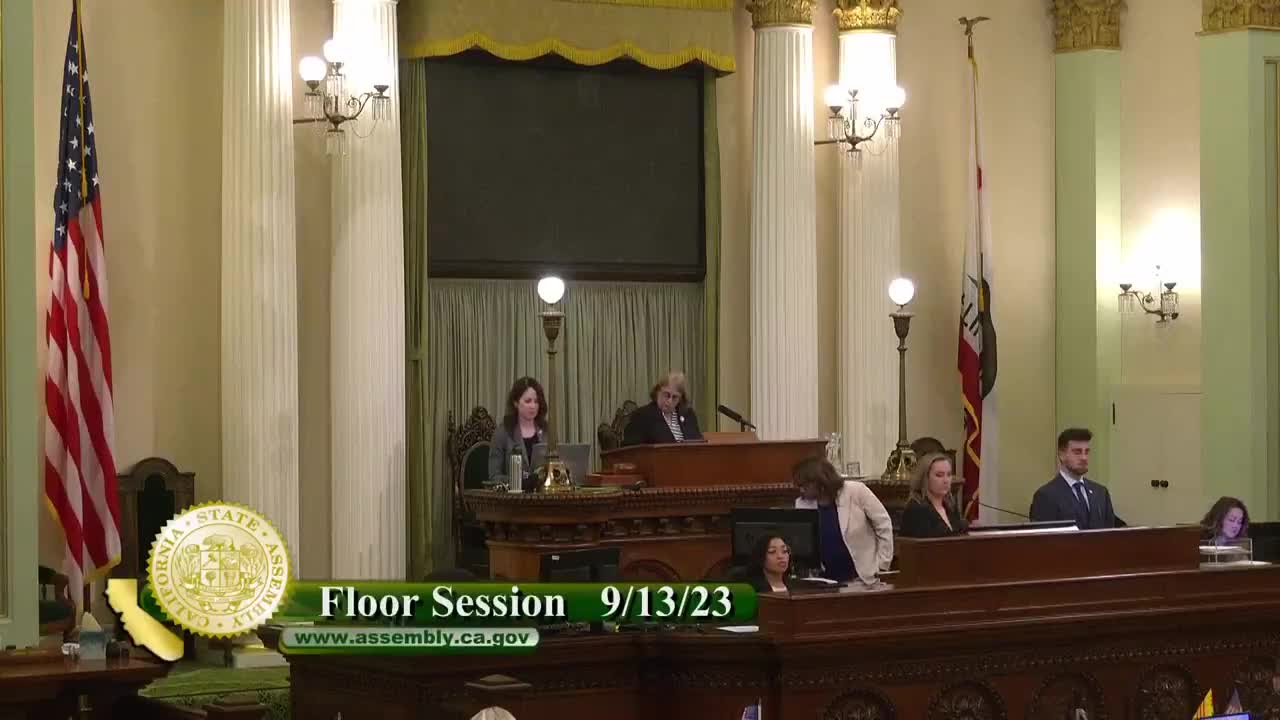 47SEC
Assembly Floor
 2MIN
Senate Floor
 59SEC
Senate Standing Committee on Appropriations
 10MIN
Assembly Standing Committee on Human Services
Bill Author

Bill Co-Author(s):