AB 529: Adaptive reuse projects.
- Session Year: 2023-2024
- House: Assembly
- Latest Version Date: 2023-10-11
Current Status:
Passed
(2023-10-11: Chaptered by Secretary of State - Chapter 743, Statutes of 2023.)
Introduced
In Committee
First Chamber
In Committee
Second Chamber
Enacted
The Planning and Zoning Law requires each county and city to adopt a comprehensive, long-term general plan for the physical development of the county or city, and specified land outside its boundaries, that includes, among other specified mandatory elements, a housing element. That law requires the Department of Housing and Community Development to determine whether the housing element is in substantial compliance with specified provisions of that law.
Existing law, for award cycles commenced after July 1, 2021, awards a city, county, or city and county that has adopted a housing element determined by the department to be in substantial compliance with specified provisions of the Planning and Zoning Law and that has been designated by the department as prohousing based upon their adoption of prohousing local policies, as specified, additional points in the scoring of program applications for housing and infrastructure programs pursuant to regulations adopted by the department, as provided. Existing law defines prohousing local policies as policies that facilitate the planning, approval, or construction of housing, including, but not limited to, local financial incentives for housing, reduced parking requirements for sites that are zoned for residential development, and the adoption of zoning allowing for use by right for residential and mixed-use development.
This bill would add the facilitation of the conversion or redevelopment of commercial properties into housing, including the adoption of adaptive reuse, as defined, ordinances or other mechanisms that reduce barriers for these conversions, to the list of specified prohousing local policies.
Existing law, the California Building Standards Law, establishes the California Building Standards Commission within the Department of General Services. Existing law requires the commission to approve and adopt building standards and to codify those standards in the California Building Standards Code, which is required to be published once every 3 years.
This bill would require the Department of Housing and Community Development to convene a working group no later than December 31, 2024, to identify challenges to, and opportunities that help support, the creation and promotion of adaptive reuse residential projects, as specified, including identifying and recommending amendments to state building standards. The bill would require the Department of Housing and Community Development to report its findings to the Legislature no later than December 31, 2025. The bill would require, if the report identifies and recommends amendments to building standards, that the Department of Housing and Community Development and the other state agencies in the working group research, develop, and consider proposing adaptive reuse building standards for adoption by the California Building Standards Commission, as specified.
This bill would incorporate additional changes to Section 65589.9 of the Government Code proposed by SB 341 to be operative only if this bill and SB 341 are enacted and this bill is enacted last.
The Planning and Zoning Law requires each county and city to adopt a comprehensive, long-term general plan for the physical development of the county or city, and specified land outside its boundaries, that includes, among other specified mandatory elements, a housing element. That law requires the Department of Housing and Community Development to determine whether the housing element is in substantial compliance with specified provisions of that law.
Existing law, for award cycles commenced after July 1, 2021, awards a city, county, or city and county, that has adopted a housing element determined by the department to be in substantial compliance with specified provisions of the Planning and Zoning Law and that has been designated by the department as prohousing based upon their adoption of prohousing local policies, as specified, additional points in the scoring of program applications for housing and infrastructure programs pursuant to guidelines adopted by the department, as provided. Existing law defines prohousing local policies as policies that facilitate the planning, approval, or construction of housing, including, but not limited to, local financial incentives for housing, reduced parking requirements for sites that are zoned for residential development, and the adoption of zoning allowing for use by right for residential and mixed-use development.
This bill would add the facilitation of the conversion or redevelopment of commercial properties into housing, including the adoption of adaptive reuse, as defined, ordinances or other mechanisms that reduce barriers for these conversions, to the list of specified prohousing local policies.
Existing law, the California Building Standards Law, establishes the California Building Standards Commission within the Department of General Services. Existing law requires the commission to approve and adopt building standards and to codify those standards in the California Building Standards Code, which is required to be published once every 3 years.
This bill would require the Department of Housing and Community Development, in consultation with the State Fire Marshal, to research and develop revisions and clarifications to the California Building Standards Code, as specified, pertaining to the requirements for Development to convene a working group no later than December 31, 2024, to identify challenges to, and opportunities that help support, the creation and promotion of adaptive reuse development residential projects, and authorizes the department to propose these revisions and clarifications to the California Building Standards Commission. The bill would require the commission to consider for adoption the revisions and clarifications proposed by the Department of Housing and Community Development. as specified, including identifying and recommending amendments to state building standards. The bill would require the Department of Housing and Community Development to report its findings to the Legislature no later than December 31, 2025. The bill would require, if the report identifies and recommends amendments to building standards, that the Department of Housing and Community Development and the other state agencies in the working group research, develop, and consider proposing adaptive reuse building standards for adoption by the California Building Standards Commission, as specified.
The Planning and Zoning Law requires each county and city to adopt a comprehensive, long-term general plan for the physical development of the county or city, and specified land outside its boundaries, that includes, among other specified mandatory elements, a housing element. That law requires the Department of Housing and Community Development to determine whether the housing element is in substantial compliance with specified provisions of that law.
Existing law, for award cycles commenced after July 1, 2021, awards a city, county, or city and county, that has adopted a housing element determined by the department to be in substantial compliance with specified provisions of the Planning and Zoning Law and that has been designated by the department as prohousing based upon their adoption of prohousing local policies, as specified, additional points in the scoring of program applications for housing and infrastructure programs pursuant to guidelines adopted by the department, as provided. Existing law defines prohousing local policies as policies that facilitate the planning, approval, or construction of housing, including, but not limited to, local financial incentives for housing, reduced parking requirements for sites that are zoned for residential development, and the adoption of zoning allowing for use by right for residential and mixed-use development.
This bill would add the facilitation of the conversion or redevelopment of commercial properties into housing, as specified, including the adoption of adaptive reuse, as defined, ordinances or other mechanisms that reduce barriers for these conversions, to the list of specified prohousing local policies.
Existing law, the California Building Standards Law, establishes the California Building Standards Commission within the Department of General Services. Existing law requires the commission to approve and adopt building standards and to codify those standards in the California Building Standards Code, which is required to be published once every 3 years.
This bill would require the California Building Standards Commission, in consultation with the Department of Housing and Community Development, to update, adopt, approve, codify, and publish building standards in the California Existing Building Code that revise and clarify fire, safety, health, structural, seismic, and environmental elements that apply to adaptive reuse projects, as specified. The bill would require the building standards to facilitate the development of adaptive reuse projects.This bill would require the Department of Housing and Community Development, in consultation with the State Fire Marshal, to research and develop revisions and clarifications to the California Building Standards Code, as specified, pertaining to the requirements for adaptive reuse development projects, and authorizes the department to propose these revisions and clarifications to the California Building Standards Commission. The bill would require the commission to consider for adoption the revisions and clarifications proposed by the Department of Housing and Community Development.
The Planning and Zoning Law requires each county and city to adopt a comprehensive, long-term general plan for the physical development of the county or city, and specified land outside its boundaries, that includes, among other specified mandatory elements, a housing element. That law requires the Department of Housing and Community Development to determine whether the housing element is in substantial compliance with specified provisions of that law.
Existing law, for award cycles commenced after July 1, 2021, awards a city, county, or city and county, that has adopted a housing element determined by the department to be in substantial compliance with specified provisions of the Planning and Zoning Law and that has been designated by the department as prohousing based upon their adoption of prohousing local policies, as specified, additional points in the scoring of program applications for housing and infrastructure programs pursuant to guidelines adopted by the department, as provided. Existing law defines prohousing local policies as policies that facilitate the planning, approval, or construction of housing, including, but not limited to, local financial incentives for housing, reduced parking requirements for sites that are zoned for residential development, and the adoption of zoning allowing for use by right for residential and mixed-use development.
This bill would add the expansion of adaptive reuse projects facilitation of the conversion or redevelopment of commercial properties into housing, as specified, to the list of specified prohousing local policies.
Existing law, the California Building Standards Law, establishes the California Building Standards Commission within the Department of General Services. Existing law requires the commission to approve and adopt building standards and to codify those standards in the California Building Standards Code, which is required to be published once every 3 years.
This bill would require the California Building Standards Commission, in consultation with the Department of Housing and Community Development, to update, adopt, approve, codify, and publish building standards in the California Existing Building Code that revise and clarify fire, safety, health, structural, seismic, and environmental elements that apply to adaptive reuse projects, as specified. The bill would require the building standards to facilitate the development of adaptive reuse projects.
The Planning and Zoning Law requires each county and city to adopt a comprehensive, long-term general plan for the physical development of the county or city, and specified land outside its boundaries, that includes, among other specified mandatory elements, a housing element. That law requires the Department of Housing and Community Development to determine whether the housing element is in substantial compliance with specified provisions of that law.
Existing law, for award cycles commenced after July 1, 2021, awards a city, county, or city and county, that has adopted a housing element determined by the department to be in substantial compliance with specified provisions of the Planning and Zoning Law and that has been designated by the department as prohousing based upon their adoption of prohousing local policies, as specified, additional points in the scoring of program applications for housing and infrastructure programs pursuant to guidelines adopted by the department, as provided. Existing law defines prohousing local policies as policies that facilitate the planning, approval, or construction of housing, including, but not limited to, local financial incentives for housing, reduced parking requirements for sites that are zoned for residential development, and the adoption of zoning allowing for use by right for residential and mixed-use development.
This bill would add the expansion of adaptive reuse projects to the list of specified prohousing local policies.
Existing law, the California Building Standards Law, establishes the California Building Standards Commission within the Department of General Services. Existing law requires the commission to approve and adopt building standards and to codify those standards in the California Building Standards Code, which is required to be published once every 3 years.
This bill would require the California Building Standards Commission, in consultation with the Department of Housing and Community Development, to update, adopt, approve, codify, and publish building standards in the California Existing Building Code that revise and clarify fire, safety, health, structural, seismic, and environmental elements that apply to adaptive reuse projects, as specified. The bill would require the building standards to facilitate the development of adaptive reuse projects.
(a)It is the intent of the Legislature to create incentives for jurisdictions that are compliant with housing element requirements and have enacted prohousing local policies. It is the intent of the Legislature that these incentives be in the form of additional points or other preference in the scoring of competitive housing and infrastructure programs. It is the intent of the Legislature that, in adopting regulations related to prohousing local policy criteria, the department shall create criteria that consider the needs of rural, suburban, and urban jurisdictions and how those criteria may differ in those areas.
(b)For award cycles commenced after July 1, 2021, jurisdictions that have adopted a housing element that has been found by the department to be in substantial compliance with the requirements of this article pursuant to Section 65585, and that have been designated prohousing pursuant to subdivision (c) based upon their adoption of prohousing local policies, shall be awarded additional points or preference in the scoring of program applications for the following programs:
(1)The Affordable Housing and Sustainable Communities Program established by Part 1 (commencing with Section 75200) of Division 44 of the Public Resources Code.
(2)The Transformative Climate Communities Program established by Part 4 (commencing with Section 75240) of Division 44 of the Public Resources Code.
(3)The Infill Incentive Grant Program of 2007 established by Section 53545.13 of the Health and Safety Code.
(4)Additional bonus points may be awarded to other state programs when already allowable under state law.
(c)The department shall designate jurisdictions as prohousing pursuant to the emergency regulations adopted pursuant to subdivision (d) and report these designations to the Office of Planning and Research, and any other applicable agency or department, annually and upon request.
(d)(1)By July 1, 2021, the department, in collaboration with stakeholders, shall adopt emergency regulations to implement this section.
(2)Notwithstanding Section 11346.1, the emergency regulations adopted pursuant to this subdivision shall remain in effect until the date that permanent regulations to implement this section become effective.
(e)On or before January 1, 2021, and annually thereafter, the department shall publish on its internet website the list of programs included under subdivision (b).
(f)For purposes of this section, the following definitions shall apply:
(1)Adaptive reuse shall have the same meaning as in Section 53559.1 of the Health and Safety Code.
(2)Compliant housing element means an adopted housing element that has been found to be in substantial compliance with the requirements of this article by the department pursuant to Section 65585.
(3)Prohousing local policies means policies that facilitate the planning, approval, or construction of housing. These policies may include, but are not limited to, the following:
(A)Local financial incentives for housing, including, but not limited to, establishing a local housing trust fund.
(B)Reduced parking requirements for sites that are zoned for residential development.
(C)Adoption of zoning allowing for use by right for residential and mixed-use development.
(D)Zoning more sites for residential development or zoning sites at higher densities than is required to accommodate the minimum existing regional housing need allocation for the current housing element cycle.
(E)Adoption of accessory dwelling unit ordinances or other mechanisms that reduce barriers for property owners to create accessory dwelling units beyond the requirements outlined in Section 65852.2, as determined by the department.
(F)Reduction of permit processing time.
(G)Creation of objective development standards.
(H)Reduction of development impact fees.
(I)Establishment of a Workforce Housing Opportunity Zone, as defined in Section 65620, or a housing sustainability district, as defined in Section 66200.
(J)Preservation of affordable housing units through the extension of existing project-based rental assistance covenants to avoid the displacement of affected tenants and a reduction in available affordable housing units.
(K)Facilitation of the conversion or redevelopment of commercial properties into housing, including the adoption of adaptive reuse ordinances or other mechanisms that reduce barriers for these conversions.
SEC. 1.5.Section 65589.9 of the Government Code is amended to read:65589.9.(a)It is the intent of the Legislature to create incentives for jurisdictions that are compliant with housing element requirements and have enacted prohousing local policies. It is the intent of the Legislature that these incentives be in the form of additional points or other preference in the scoring of competitive housing and infrastructure programs. It is the intent of the Legislature that, in adopting regulations related to prohousing local policy criteria, the department shall create criteria that consider the needs of rural, suburban, and urban jurisdictions and how those criteria may differ in those areas.
(b)For award cycles commenced after July 1, 2021, jurisdictions that have adopted a housing element that has been found by the department to be in substantial compliance with the requirements of this article pursuant to Section 65585, and that have been designated prohousing pursuant to subdivision (c) based upon their adoption of prohousing local policies, shall be awarded additional points or preference in the scoring of program applications for the following programs:
(1)The Affordable Housing and Sustainable Communities Program established by Part 1 (commencing with Section 75200) of Division 44 of the Public Resources Code.
(2)The Transformative Climate Communities Program established by Part 4 (commencing with Section 75240) of Division 44 of the Public Resources Code.
(3)The qualifying infill area portion of the Infill Incentive Grant Program of 2007 established by Section 53545.13 of the Health and Safety Code.
(4)The qualifying infill area and catalytic qualifying infill area portions of the Infill Infrastructure Grant Program of 2019 established by Section 53559 of the Health and Safety Code.
(5)Additional bonus points may be awarded to other state programs when already allowable under state law.
(c)The department shall designate jurisdictions as prohousing pursuant to the emergency regulations adopted pursuant to subdivision (d) and report these designations to the Office of Planning and Research, and any other applicable agency or department, annually and upon request.
(d)(1)By July 1, 2021, the department, in collaboration with stakeholders, shall adopt emergency regulations to implement this section.
(2)Notwithstanding Section 11346.1, the emergency regulations adopted pursuant to this subdivision shall remain in effect until the date that permanent regulations to implement this section become effective.
(e)On or before January 1, 2021, and annually thereafter, the department shall publish on its internet website the list of programs included under subdivision (b).
(f)For purposes of this section, the following definitions shall apply:
(1)Adaptive reuse shall have the same meaning as in Section 53559.1 of the Health and Safety Code.
(2)Compliant housing element means an adopted housing element that has been found to be in substantial compliance with the requirements of this article by the department pursuant to Section 65585.
(3)Prohousing local policies means policies that facilitate the planning, approval, or construction of housing. These policies may include, but are not limited to, the following:
(A)Local financial incentives for housing, including, but not limited to, establishing a local housing trust fund.
(B)Reduced parking requirements for sites that are zoned for residential development.
(C)Adoption of zoning allowing for use by right for residential and mixed-use development.
(D)Zoning more sites for residential development or zoning sites at higher densities than is required to accommodate the minimum existing regional housing need allocation for the current housing element cycle.
(E)Adoption of accessory dwelling unit ordinances or other mechanisms that reduce barriers for property owners to create accessory dwelling units beyond the requirements outlined in Section 65852.2, as determined by the department.
(F)Reduction of permit processing time.
(G)Creation of objective development standards.
(H)Reduction of development impact fees.
(I)Establishment of a Workforce Housing Opportunity Zone, as defined in Section 65620, or a housing sustainability district, as defined in Section 66200.
(J)Preservation of affordable housing units through the extension of existing project-based rental assistance covenants to avoid the displacement of affected tenants and a reduction in available affordable housing units.
(K)Facilitation of the conversion or redevelopment of commercial properties into housing, including the adoption of adaptive reuse ordinances or other mechanisms that reduce barriers for these conversions.
SEC. 2.Section 17921.9 is added to the Health and Safety Code, to read:17921.9.(a)No later than December 31, 2024, the Department of Housing and Community Development shall convene a working group, including, but not limited to, the California Building Standards Commission, Energy Commission, State Fire Marshal, Public Utilities Commission, local government representatives, and stakeholders, to identify challenges to, and opportunities that help support, the creation and promotion of adaptive reuse residential projects statewide while not reducing minimum health and safety standards, including identifying and recommending amendments to state building standards. Each entity shall provide input relative to its area of expertise and oversight.
(b)The working group may consider the following issues:
(1)Energy and insulation upgrades.
(2)Fire-rated assemblies.
(3)Water and sewer piping.
(4)Energy infrastructure, including individual utility meter upgrades.
(5)Habitability.
(6)Any other local or state building requirement that may render the conversion or reuse of an existing building financially infeasible for residential uses.
(c)No later than December 31, 2025, the Department of Housing and Community Development shall provide a one-time report of its findings to the Legislature in the annual report required by Section 50408.
(d)If the working group identifies and recommends amendments to building standards in the report described in subdivision (c), the Department of Housing and Community Development and other state agencies within the working group with authority to propose adoption of building standards shall research, develop, and consider proposing for adoption by the California Building Standards Commission adaptive reuse building standards within each agencys respective authority for the next triennial update of the California Building Standards Code that occurs on or after January 1, 2026, and, if available, the next intervening code adoption cycle that commences on or after January 1, 2025.
(e)For purposes of this section, adaptive reuse shall have the same meaning as in Section 53559.1.
SEC. 3.Section 1.5 of this bill incorporates amendments to Section 65589.9 of the Government Code proposed by both this bill and Senate Bill 341. That section shall only become operative if (1) both bills are enacted and become effective on or before January 1, 2024, (2) each bill amends Section 65589.9 of the Government Code, and (3) this bill is enacted after Senate Bill 341, in which case Section 1 of this bill shall not become operative.
(a)It is the intent of the Legislature to create incentives for jurisdictions that are compliant with housing element requirements and have enacted prohousing local policies. It is the intent of the Legislature that these incentives be in the form of additional points or other preference in the scoring of competitive housing and infrastructure programs. It is the intent of the Legislature that, in adopting regulations related to prohousing local policy criteria, the department shall create criteria that consider the needs of rural, suburban, and urban jurisdictions and how those criteria may differ in those areas.
(b)For award cycles commenced after July 1, 2021, jurisdictions that have adopted a housing element that has been found by the department to be in substantial compliance with the requirements of this article pursuant to Section 65585, and that have been designated prohousing pursuant to subdivision (c) based upon their adoption of prohousing local policies, shall be awarded additional points or preference in the scoring of program applications for the following programs:
(1)The Affordable Housing and Sustainable Communities Program established by Part 1 (commencing with Section 75200) of Division 44 of the Public Resources Code.
(2)The Transformative Climate Communities Program established by Part 4 (commencing with Section 75240) of Division 44 of the Public Resources Code.
(3)The Infill Incentive Grant Program of 2007 established by Section 53545.13 of the Health and Safety Code.
(4)Additional bonus points may be awarded to other state programs when already allowable under state law.
(c)The department shall designate jurisdictions as prohousing pursuant to the emergency regulations adopted pursuant to subdivision (d) and report these designations to the Office of Planning and Research, and any other applicable agency or department, annually and upon request.
(d)(1)By July 1, 2021, the department, in collaboration with stakeholders, shall adopt emergency regulations to implement this section.
(2)Notwithstanding Section 11346.1, the emergency regulations adopted pursuant to this subdivision shall remain in effect until the date that permanent regulations to implement this section become effective.
(e)On or before January 1, 2021, and annually thereafter, the department shall publish on its internet website the list of programs included under subdivision (b).
(f)For purposes of this section, the following definitions shall apply:
(1)Adaptive reuse shall have the same meaning as in Section 53559.1 of the Health and Safety Code.
(2)Compliant housing element means an adopted housing element that has been found to be in substantial compliance with the requirements of this article by the department pursuant to Section 65585.
(3)Prohousing local policies means policies that facilitate the planning, approval, or construction of housing. These policies may include, but are not limited to, the following:
(A)Local financial incentives for housing, including, but not limited to, establishing a local housing trust fund.
(B)Reduced parking requirements for sites that are zoned for residential development.
(C)Adoption of zoning allowing for use by right for residential and mixed-use development.
(D)Zoning more sites for residential development or zoning sites at higher densities than is required to accommodate the minimum existing regional housing need allocation for the current housing element cycle.
(E)Adoption of accessory dwelling unit ordinances or other mechanisms that reduce barriers for property owners to create accessory dwelling units beyond the requirements outlined in Section 65852.2, as determined by the department.
(F)Reduction of permit processing time.
(G)Creation of objective development standards.
(H)Reduction of development impact fees.
(I)Establishment of a Workforce Housing Opportunity Zone, as defined in Section 65620, or a housing sustainability district, as defined in Section 66200.
(J)Preservation of affordable housing units through the extension of existing project-based rental assistance covenants to avoid the displacement of affected tenants and a reduction in available affordable housing units.
(K)Facilitation of the conversion or redevelopment of commercial properties into housing, including the adoption of adaptive reuse ordinances or other mechanisms that reduce barriers for these conversions.
SEC. 1.5.Section 65589.9 of the Government Code is amended to read:65589.9.(a)It is the intent of the Legislature to create incentives for jurisdictions that are compliant with housing element requirements and have enacted prohousing local policies. It is the intent of the Legislature that these incentives be in the form of additional points or other preference in the scoring of competitive housing and infrastructure programs. It is the intent of the Legislature that, in adopting regulations related to prohousing local policy criteria, the department shall create criteria that consider the needs of rural, suburban, and urban jurisdictions and how those criteria may differ in those areas.
(b)For award cycles commenced after July 1, 2021, jurisdictions that have adopted a housing element that has been found by the department to be in substantial compliance with the requirements of this article pursuant to Section 65585, and that have been designated prohousing pursuant to subdivision (c) based upon their adoption of prohousing local policies, shall be awarded additional points or preference in the scoring of program applications for the following programs:
(1)The Affordable Housing and Sustainable Communities Program established by Part 1 (commencing with Section 75200) of Division 44 of the Public Resources Code.
(2)The Transformative Climate Communities Program established by Part 4 (commencing with Section 75240) of Division 44 of the Public Resources Code.
(3)The qualifying infill area portion of the Infill Incentive Grant Program of 2007 established by Section 53545.13 of the Health and Safety Code.
(4)The qualifying infill area and catalytic qualifying infill area portions of the Infill Infrastructure Grant Program of 2019 established by Section 53559 of the Health and Safety Code.
(4)(5)Additional bonus points may be awarded to other state programs when already allowable under state law.
(c)The department shall designate jurisdictions as prohousing pursuant to the emergency regulations adopted pursuant to subdivision (d) and report these designations to the Office of Planning and Research, and any other applicable agency or department, annually and upon request.
(d)(1)By July 1, 2021, the department, in collaboration with stakeholders, shall adopt emergency regulations to implement this section.
(2)Notwithstanding Section 11346.1, the emergency regulations adopted pursuant to this subdivision shall remain in effect until the date that permanent regulations to implement this section become effective.
(e)On or before January 1, 2021, and annually thereafter, the department shall publish on its internet website the list of programs included under subdivision (b).
(f)For purposes of this section, the following definitions shall apply:
(1)Adaptive reuse shall have the same meaning as in Section 53559.1 of the Health and Safety Code.
(1)(2)Compliant housing element means an adopted housing element that has been found to be in substantial compliance with the requirements of this article by the department pursuant to Section 65585.
(2)(3)Prohousing local policies means policies that facilitate the planning, approval, or construction of housing. These policies may include, but are not limited to, the following:
(A)Local financial incentives for housing, including, but not limited to, establishing a local housing trust fund.
(B)Reduced parking requirements for sites that are zoned for residential development.
(C)Adoption of zoning allowing for use by right for residential and mixed-use development.
(D)Zoning more sites for residential development or zoning sites at higher densities than is required to accommodate the minimum existing regional housing need allocation for the current housing element cycle.
(E)Adoption of accessory dwelling unit ordinances or other mechanisms that reduce barriers for property owners to create accessory dwelling units beyond the requirements outlined in Section 65852.2, as determined by the department.
(F)Reduction of permit processing time.
(G)Creation of objective development standards.
(H)Reduction of development impact fees.
(I)Establishment of a Workforce Housing Opportunity Zone, as defined in Section 65620, or a housing sustainability district, as defined in Section 66200.
(J)Preservation of affordable housing units through the extension of existing project-based rental assistance covenants to avoid the displacement of affected tenants and a reduction in available affordable housing units.
(K)Facilitation of the conversion or redevelopment of commercial properties into housing, including the adoption of adaptive reuse ordinances or other mechanisms that reduce barriers for these conversions.
SEC. 2.Section 17921.9 is added to the Health and Safety Code, to read:17921.9.(a)No later than December 31, 2024, the Department of Housing and Community Development shall convene a working group, including, but not limited to, the California Building Standards Commission, Energy Commission, State Fire Marshal, Public Utilities Commission, local government representatives, and stakeholders, to identify challenges to, and opportunities that help support, the creation and promotion of adaptive reuse residential projects statewide while not reducing minimum health and safety standards, including identifying and recommending amendments to state building standards. Each entity shall provide input relative to its area of expertise and oversight.
(b)The working group may consider the following issues:
(1)Energy and insulation upgrades.
(2)Fire-rated assemblies.
(3)Water and sewer piping.
(4)Energy infrastructure, including individual utility meter upgrades.
(5)Habitability.
(6)Any other local or state building requirement that may render the conversion or reuse of an existing building financially infeasible for residential uses.
(c)No later than December 31, 2025, the Department of Housing and Community Development shall provide a one-time report of its findings to the Legislature in the annual report required by Section 50408.
(d)If the working group identifies and recommends amendments to building standards in the report described in subdivision (c), the Department of Housing and Community Development and other state agencies within the working group with authority to propose adoption of building standards shall research, develop, and consider proposing for adoption by the California Building Standards Commission adaptive reuse building standards within each agencys respective authority for the next triennial update of the California Building Standards Code that occurs on or after January 1, 2026, and, if available, the next intervening code adoption cycle that commences on or after January 1, 2025.
(e)For purposes of this section, adaptive reuse shall have the same meaning as in Section 53559.1.
SEC. 3.Section 1.5 of this bill incorporates amendments to Section 65589.9 of the Government Code proposed by both this bill and Senate Bill 341. That section shall only become operative if (1) both bills are enacted and become effective on or before January 1, 2024, (2) each bill amends Section 65589.9 of the Government Code, and (3) this bill is enacted after Senate Bill 341, in which case Section 1 of this bill shall not become operative.
(a)It is the intent of the Legislature to create incentives for jurisdictions that are compliant with housing element requirements and have enacted prohousing local policies. It is the intent of the Legislature that these incentives be in the form of additional points or other preference in the scoring of competitive housing and infrastructure programs. It is the intent of the Legislature that, in adopting regulations related to prohousing local policy criteria, the department shall create criteria that consider the needs of rural, suburban, and urban jurisdictions and how those criteria may differ in those areas.
(b)For award cycles commenced after July 1, 2021, jurisdictions that have adopted a housing element that has been found by the department to be in substantial compliance with the requirements of this article pursuant to Section 65585, and that have been designated prohousing pursuant to subdivision (c) based upon their adoption of prohousing local policies, shall be awarded additional points or preference in the scoring of program applications for the following programs:
(1)The Affordable Housing and Sustainable Communities Program established by Part 1 (commencing with Section 75200) of Division 44 of the Public Resources Code.
(2)The Transformative Climate Communities Program established by Part 4 (commencing with Section 75240) of Division 44 of the Public Resources Code.
(3)The Infill Incentive Grant Program of 2007 established by Section 53545.13 of the Health and Safety Code.
(4)Additional bonus points may be awarded to other state programs when already allowable under state law.
(c)The department shall designate jurisdictions as prohousing pursuant to the emergency regulations adopted pursuant to subdivision (d) and report these designations to the Office of Planning and Research, and any other applicable agency or department, annually and upon request.
(d)(1)By July 1, 2021, the department, in collaboration with stakeholders, shall adopt emergency regulations to implement this section.
(2)Notwithstanding Section 11346.1, the emergency regulations adopted pursuant to this subdivision shall remain in effect until the date that permanent regulations to implement this section become effective.
(e)On or before January 1, 2021, and annually thereafter, the department shall publish on its internet website the list of programs included under subdivision (b).
(f)For purposes of this section, the following definitions shall apply:
(1)Adaptive reuse shall have the same meaning as in Section 53559.1 of the Health and Safety Code.
(1)(2)Compliant housing element means an adopted housing element that has been found to be in substantial compliance with the requirements of this article by the department pursuant to Section 65585.
(2)(3)Prohousing local policies means policies that facilitate the planning, approval, or construction of housing. These policies may include, but are not limited to, the following:
(A)Local financial incentives for housing, including, but not limited to, establishing a local housing trust fund.
(B)Reduced parking requirements for sites that are zoned for residential development.
(C)Adoption of zoning allowing for use by right for residential and mixed-use development.
(D)Zoning more sites for residential development or zoning sites at higher densities than is required to accommodate the minimum existing regional housing need allocation for the current housing element cycle.
(E)Adoption of accessory dwelling unit ordinances or other mechanisms that reduce barriers for property owners to create accessory dwelling units beyond the requirements outlined in Section 65852.2, as determined by the department.
(F)Reduction of permit processing time.
(G)Creation of objective development standards.
(H)Reduction of development impact fees.
(I)Establishment of a Workforce Housing Opportunity Zone, as defined in Section 65620, or a housing sustainability district, as defined in Section 66200.
(J)Preservation of affordable housing units through the extension of existing project-based rental assistance covenants to avoid the displacement of affected tenants and a reduction in available affordable housing units.
(K)Facilitation of the conversion or redevelopment of commercial properties into housing, including the adoption of adaptive reuse ordinances or other mechanisms that reduce barriers for these conversions.
SEC. 2.Section 17921.9 is added to the Health and Safety Code, to read:17921.9.(a)It is the intent of the Legislature that any revisions and clarifications to the California Building Standards Code (Title 24 of the California Code of Regulations) proposed or adopted pursuant to this section facilitate the development of adaptive reuse projects.(b)The Department of Housing and Community Development, in consultation with the State Fire Marshal, upon the next triennial update of the California Building Standards Code that occurs on or after January 1, 2024, shall research and develop, and may propose to the California Building Standards Commission, revisions and clarifications to the California Building Standards Code, including, but not limited to, the California Existing Building Code (Part 10 of Title 24 of the California Code of Regulations), pertaining to the requirements for adaptive reuse development projects.(c)The California Building Standards Commission shall consider for adoption the revisions and clarifications proposed by the Department of Housing and Community Development pursuant to subdivision (b).(d)For17921.9.(a)No later than December 31, 2024, the Department of Housing and Community Development shall convene a working group, including, but not limited to, the California Building Standards Commission, Energy Commission, State Fire Marshal, Public Utilities Commission, local government representatives, and stakeholders, to identify challenges to, and opportunities that help support, the creation and promotion of adaptive reuse residential projects statewide while not reducing minimum health and safety standards, including identifying and recommending amendments to state building standards. Each entity shall provide input relative to its area of expertise and oversight.
(b)The working group may consider the following issues:
(1)Energy and insulation upgrades.
(2)Fire-rated assemblies.
(3)Water and sewer piping.
(4)Energy infrastructure, including individual utility meter upgrades.
(5)Habitability.
(6)Any other local or state building requirement that may render the conversion or reuse of an existing building financially infeasible for residential uses.
(c)No later than December 31, 2025, the Department of Housing and Community Development shall provide a one-time report of its findings to the Legislature in the annual report required by Section 50408.
(d)If the working group identifies and recommends amendments to building standards in the report described in subdivision (c), the Department of Housing and Community Development and other state agencies within the working group with authority to propose adoption of building standards shall research, develop, and consider proposing for adoption by the California Building Standards Commission adaptive reuse building standards within each agencys respective authority for the next triennial update of the California Building Standards Code that occurs on or after January 1, 2026, and, if available, the next intervening code adoption cycle that commences on or after January 1, 2025.
(e)For purposes of this section, adaptive reuse shall have the same meaning as in Section 53559.1.
(a)It is the intent of the Legislature to create incentives for jurisdictions that are compliant with housing element requirements and have enacted prohousing local policies. It is the intent of the Legislature that these incentives be in the form of additional points or other preference in the scoring of competitive housing and infrastructure programs. It is the intent of the Legislature that, in adopting regulations related to prohousing local policy criteria, the department shall create criteria that consider the needs of rural, suburban, and urban jurisdictions and how those criteria may differ in those areas.
(b)For award cycles commenced after July 1, 2021, jurisdictions that have adopted a housing element that has been found by the department to be in substantial compliance with the requirements of this article pursuant to Section 65585, and that have been designated prohousing pursuant to subdivision (c) based upon their adoption of prohousing local policies, shall be awarded additional points or preference in the scoring of program applications for the following programs:
(1)The Affordable Housing and Sustainable Communities Program established by Part 1 (commencing with Section 75200) of Division 44 of the Public Resources Code.
(2)The Transformative Climate Communities Program established by Part 4 (commencing with Section 75240) of Division 44 of the Public Resources Code.
(3)The Infill Incentive Grant Program of 2007 established by Section 53545.13 of the Health and Safety Code.
(4)Additional bonus points may be awarded to other state programs when already allowable under state law.
(c)The department shall designate jurisdictions as prohousing pursuant to the emergency regulations adopted pursuant to subdivision (d) and report these designations to the Office of Planning and Research, and any other applicable agency or department, annually and upon request.
(d)(1)By July 1, 2021, the department, in collaboration with stakeholders, shall adopt emergency regulations to implement this section.
(2)Notwithstanding Section 11346.1, the emergency regulations adopted pursuant to this subdivision shall remain in effect until the date that permanent regulations to implement this section become effective.
(e)On or before January 1, 2021, and annually thereafter, the Department of Finance shall publish on its internet website the list of programs included under subdivision (b).
(f)For purposes of this section, the following definitions shall apply:
(1)Adaptive reuse shall have the same meaning as in Section 53559.1 of the Health and Safety Code.
(1)(2)Compliant housing element means an adopted housing element that has been found to be in substantial compliance with the requirements of this article by the department pursuant to Section 65585.
(2)(3)Prohousing local policies means policies that facilitate the planning, approval, or construction of housing. These policies may include, but are not limited to, the following:
(A)Local financial incentives for housing, including, but not limited to, establishing a local housing trust fund.
(B)Reduced parking requirements for sites that are zoned for residential development.
(C)Adoption of zoning allowing for use by right for residential and mixed-use development.
(D)Zoning more sites for residential development or zoning sites at higher densities than is required to accommodate the minimum existing regional housing need allocation for the current housing element cycle.
(E)Adoption of accessory dwelling unit ordinances or other mechanisms that reduce barriers for property owners to create accessory dwelling units beyond the requirements outlined in Section 65852.2, as determined by the department.
(F)Reduction of permit processing time.
(G)Creation of objective development standards.
(H)Reduction of development impact fees.
(I)Establishment of a Workforce Housing Opportunity Zone, as defined in Section 65620, or a housing sustainability district, as defined in Section 66200.
(J)Preservation of affordable housing units through the extension of existing project-based rental assistance covenants to avoid the displacement of affected tenants and a reduction in available affordable housing units.
(K)Facilitation of the conversion or redevelopment of commercial properties into housing, including the adoption of adaptive reuse ordinances or other mechanisms that reduce barriers for these conversions.
SEC. 2.Section 18941.16 is added to the Health and Safety Code, to read:18941.16.The California Building Standards Commission, in consultation with the Department of Housing and Community Development, shall update, adopt, approve, codify, and publish building standards in the California Existing Building Code (Part 10 of Title 24 of the California Code of Regulations) that revise and clarify fire, safety, health, structural, seismic, and environmental elements applicable to adaptive reuse projects. The building standards shall facilitate the development of adaptive reuse projects. This section shall commence with the next triennial edition of the California Building Standards Code (Title 24 of the California Code of Regulations) adopted after January 1, 2024.SEC. 2.Section 17921.9 is added to the Health and Safety Code, to read:17921.9.(a)It is the intent of the Legislature that any revisions and clarifications to the California Building Standards Code (Title 24 of the California Code of Regulations) proposed or adopted pursuant to this section facilitate the development of adaptive reuse projects.
(b)The Department of Housing and Community Development, in consultation with the State Fire Marshal, upon the next triennial update of the California Building Standards Code that occurs on or after January 1, 2024, shall research and develop, and may propose to the California Building Standards Commission, revisions and clarifications to the California Building Standards Code, including, but not limited to, the California Existing Building Code (Part 10 of Title 24 of the California Code of Regulations), pertaining to the requirements for adaptive reuse development projects.
(c)The California Building Standards Commission shall consider for adoption the revisions and clarifications proposed by the Department of Housing and Community Development pursuant to subdivision (b).
(d)For purposes of this section, adaptive reuse shall have the same meaning as in Section 53559.1.
(a)It is the intent of the Legislature to create incentives for jurisdictions that are compliant with housing element requirements and have enacted prohousing local policies. It is the intent of the Legislature that these incentives be in the form of additional points or other preference in the scoring of competitive housing and infrastructure programs. It is the intent of the Legislature that, in adopting regulations related to prohousing local policy criteria, the department shall create criteria that consider the needs of rural, suburban, and urban jurisdictions and how those criteria may differ in those areas.
(b)For award cycles commenced after July 1, 2021, jurisdictions that have adopted a housing element that has been found by the department to be in substantial compliance with the requirements of this article pursuant to Section 65585, and that have been designated prohousing pursuant to subdivision (c) based upon their adoption of prohousing local policies, shall be awarded additional points or preference in the scoring of program applications for the following programs:
(1)The Affordable Housing and Sustainable Communities Program established by Part 1 (commencing with Section 75200) of Division 44 of the Public Resources Code.
(2)The Transformative Climate Communities Program established by Part 4 (commencing with Section 75240) of Division 44 of the Public Resources Code.
(3)The Infill Incentive Grant Program of 2007 established by Section 53545.13 of the Health and Safety Code.
(4)Additional bonus points may be awarded to other state programs when already allowable under state law.
(c)The department shall designate jurisdictions as prohousing pursuant to the emergency regulations adopted pursuant to subdivision (d) and report these designations to the Office of Planning and Research, and any other applicable agency or department, annually and upon request.
(d)(1)By July 1, 2021, the department, in collaboration with stakeholders, shall adopt emergency regulations to implement this section.
(2)Notwithstanding Section 11346.1, the emergency regulations adopted pursuant to this subdivision shall remain in effect until the date that permanent regulations to implement this section become effective.
(e)On or before January 1, 2021, and annually thereafter, the Department of Finance shall publish on its internet website the list of programs included under subdivision (b).
(f)For purposes of this section, the following definitions shall apply:
(1)Compliant housing element means an adopted housing element that has been found to be in substantial compliance with the requirements of this article by the department pursuant to Section 65585.
(2)Prohousing local policies means policies that facilitate the planning, approval, or construction of housing. These policies may include, but are not limited to, the following:
(A)Local financial incentives for housing, including, but not limited to, establishing a local housing trust fund.
(B)Reduced parking requirements for sites that are zoned for residential development.
(C)Adoption of zoning allowing for use by right for residential and mixed-use development.
(D)Zoning more sites for residential development or zoning sites at higher densities than is required to accommodate the minimum existing regional housing need allocation for the current housing element cycle.
(E)Adoption of accessory dwelling unit ordinances or other mechanisms that reduce barriers for property owners to create accessory dwelling units beyond the requirements outlined in Section 65852.2, as determined by the department.
(F)Reduction of permit processing time.
(G)Creation of objective development standards.
(H)Reduction of development impact fees.
(I)Establishment of a Workforce Housing Opportunity Zone, as defined in Section 65620, or a housing sustainability district, as defined in Section 66200.
(J)Preservation of affordable housing units through the extension of existing project-based rental assistance covenants to avoid the displacement of affected tenants and a reduction in available affordable housing units.
(K)Expansion Facilitation of the conversion or redevelopment of commercial properties into housing, including the adoption of adaptive reuse projects. ordinances or other mechanisms that reduce barriers for these conversions.
SEC. 2.Section 18941.16 is added to the Health and Safety Code, to read:18941.16.The California Building Standards Commission, in consultation with the Department of Housing and Community Development, shall update, adopt, approve, codify, and publish building standards in the California Existing Building Code (Part 10 of Title 24 of the California Code of Regulations) that revise and clarify fire, safety, health, structural, seismic, and environmental elements applicable to adaptive reuse projects. The building standards shall facilitate the development of adaptive reuse projects. This section shall commence with the next triennial edition of the California Building Standards Code (Title 24 of the California Code of Regulations) adopted after January 1, 2024.
(a)It is the intent of the Legislature to create incentives for jurisdictions that are compliant with housing element requirements and have enacted prohousing local policies. It is the intent of the Legislature that these incentives be in the form of additional points or other preference in the scoring of competitive housing and infrastructure programs. It is the intent of the Legislature that, in adopting regulations related to prohousing local policy criteria, the department shall create criteria that consider the needs of rural, suburban, and urban jurisdictions and how those criteria may differ in those areas.
(b)For award cycles commenced after July 1, 2021, jurisdictions that have adopted a housing element that has been found by the department to be in substantial compliance with the requirements of this article pursuant to Section 65585, and that have been designated prohousing pursuant to subdivision (c) based upon their adoption of prohousing local policies, shall be awarded additional points or preference in the scoring of program applications for the following programs:
(1)The Affordable Housing and Sustainable Communities Program established by Part 1 (commencing with Section 75200) of Division 44 of the Public Resources Code.
(2)The Transformative Climate Communities Program established by Part 4 (commencing with Section 75240) of Division 44 of the Public Resources Code.
(3)The Infill Incentive Grant Program of 2007 established by Section 53545.13 of the Health and Safety Code.
(4)Additional bonus points may be awarded to other state programs when already allowable under state law.
(c)The department shall designate jurisdictions as prohousing pursuant to the emergency regulations adopted pursuant to subdivision (d) and report these designations to the Office of Planning and Research, and any other applicable agency or department, annually and upon request.
(d)(1)By July 1, 2021, the department, in collaboration with stakeholders, shall adopt emergency regulations to implement this section.
(2)Notwithstanding Section 11346.1, the emergency regulations adopted pursuant to this subdivision shall remain in effect until the date that permanent regulations to implement this section become effective.
(e)On or before January 1, 2021, and annually thereafter, the Department of Finance shall publish on its internet website the list of programs included under subdivision (b).
(f)For purposes of this section, the following definitions shall apply:
(1)Compliant housing element means an adopted housing element that has been found to be in substantial compliance with the requirements of this article by the department pursuant to Section 65585.
(2)Prohousing local policies means policies that facilitate the planning, approval, or construction of housing. These policies may include, but are not limited to, the following:
(A)Local financial incentives for housing, including, but not limited to, establishing a local housing trust fund.
(B)Reduced parking requirements for sites that are zoned for residential development.
(C)Adoption of zoning allowing for use by right for residential and mixed-use development.
(D)Zoning more sites for residential development or zoning sites at higher densities than is required to accommodate the minimum existing regional housing need allocation for the current housing element cycle.
(E)Adoption of accessory dwelling unit ordinances or other mechanisms that reduce barriers for property owners to create accessory dwelling units beyond the requirements outlined in Section 65852.2, as determined by the department.
(F)Reduction of permit processing time.
(G)Creation of objective development standards.
(H)Reduction of development impact fees.
(I)Establishment of a Workforce Housing Opportunity Zone, as defined in Section 65620, or a housing sustainability district, as defined in Section 66200.
(J)Preservation of affordable housing units through the extension of existing project-based rental assistance covenants to avoid the displacement of affected tenants and a reduction in available affordable housing units.
(K)Expansion of adaptive reuse projects.
SEC. 2.Section 18941.16 is added to the Health and Safety Code, to read:18941.16.The California Building Standards Commission, in consultation with the Department of Housing and Community Development, shall update, adopt, approve, codify, and publish building standards in the California Existing Building Code (Part 10 of Title 24 of the California Code of Regulations) that revise and clarify fire, safety, health, structural, seismic, and environmental elements applicable to adaptive reuse projects. The building standards shall facilitate the development of adaptive reuse projects. This section shall commence with the next triennial edition of the California Building Standards Code (Title 24 of the California Code of Regulations) adopted after January 1, 2024.
|
Date
|
Status
|
|---|---|
| Oct 11, 2023 | Chaptered by Secretary of State - Chapter 743, Statutes of 2023. |
| Oct 11, 2023 | Approved by the Governor. |
| Sep 21, 2023 | Enrolled and presented to the Governor at 3:30 p.m. |
| Sep 14, 2023 | Senate amendments concurred in. To Engrossing and Enrolling. (Ayes 80. Noes 0. Page 3572.). |
| Sep 13, 2023 | In Assembly. Concurrence in Senate amendments pending. |
| Sep 13, 2023 | Read third time. Passed. Ordered to the Assembly. (Ayes 39. Noes 0. Page 2731.). |
| Sep 11, 2023 | Read second time. Ordered to third reading. |
| Sep 8, 2023 | Read third time and amended. Ordered to second reading. |
| Sep 7, 2023 | Read second time. Ordered to third reading. |
| Sep 6, 2023 | Read third time and amended. Ordered to second reading. |
| Sep 5, 2023 | Read second time. Ordered to third reading. |
| Sep 1, 2023 | From committee: Do pass. (Ayes 7. Noes 0.) (September 1). |
| Aug 14, 2023 | In committee: Referred to APPR suspense file. |
| Jul 11, 2023 | From committee: Do pass and re-refer to Com. on APPR. (Ayes 11. Noes 0.) (July 10). Re-referred to Com. on APPR. |
| Jun 14, 2023 | Referred to Com. on HOUSING. |
| Jun 1, 2023 | In Senate. Read first time. To Com. on RLS. for assignment. |
| May 31, 2023 | Read third time. Passed. Ordered to the Senate. (Ayes 79. Noes 0. Page 2054.) |
| May 18, 2023 | Read second time. Ordered to third reading. |
| May 18, 2023 | From committee: Do pass. (Ayes 15. Noes 0.) (May 18). |
| May 10, 2023 | In committee: Set, first hearing. Referred to APPR. suspense file. |
| Apr 20, 2023 | From committee: Do pass and re-refer to Com. on APPR. with recommendation: To Consent Calendar. (Ayes 8. Noes 0.) (April 19). Re-referred to Com. on APPR. |
| Apr 3, 2023 | Re-referred to Com. on L. GOV. |
| Mar 30, 2023 | Read second time and amended. |
| Mar 29, 2023 | From committee: Amend, and do pass as amended and re-refer to Com. on L. GOV. (Ayes 8. Noes 0.) (March 29). |
| Mar 21, 2023 | Re-referred to Com. on H. & C.D. |
| Mar 20, 2023 | From committee chair, with author's amendments: Amend, and re-refer to Com. on H. & C.D. Read second time and amended. |
| Feb 17, 2023 | Referred to Coms. on H. & C.D. and L. GOV. |
| Feb 9, 2023 | From printer. May be heard in committee March 11. |
| Feb 8, 2023 | Read first time. To print. |
|
Date
|
Description
|
Location
|
Votes
|
|
|---|---|---|---|---|
| Sep 14, 2023 | AB 529 Gabriel Concurrence in Senate Amendments | Assembly Floor |
Passed |
|
| Sep 13, 2023 | Assembly 3rd Reading AB529 Gabriel et al. By Blakespear | Senate Floor |
Passed |
|
| Sep 1, 2023 | Do pass | Senate Standing Committee on Appropriations |
Passed |
|
| Aug 14, 2023 | Placed on suspense file | Senate Standing Committee on Appropriations |
Passed |
|
| Jul 10, 2023 | Do pass, but first be re-referred to the Committee on [Appropriations] | Senate Standing Committee on Housing |
Passed |
|
| May 31, 2023 | AB 529 Gabriel Assembly Third Reading | Assembly Floor |
Passed |
|
| May 18, 2023 | Do pass. | Assembly Standing Committee on Appropriations |
Passed |
|
| Apr 19, 2023 | Do pass and be re-referred to the Committee on [Appropriations] with recommendation: To Consent Calendar | Assembly Standing Committee on Local Government |
Passed |
|
| Mar 29, 2023 | Do pass as amended and be re-referred to the Committee on [Local Government] | Assembly Standing Committee on Housing and Community Development |
Passed |
This list shows positions taken on this bill by organizations on the date displayed, which is linked to the original source.
Positions by individuals are not included.
|
Organization
|
Position
|
Date
|
|---|---|---|
| AARP | ** Support | |
| Aids Healthcare Foundation | ** Support | |
| American Institute Of Architects California | ** Support | |
| California Apartment Association | ** Support | |
| California Business Properties Association | ** Support | |
| California Housing Partnership | ** Support | |
| California State Assembly | * Support | Mar 29, 2023 |
| California YIMBY | ** Support | |
| City of Santa Monica | * Support | Jul 10, 2023 |
| CivicWell | ** Support | |
| CTY Housing | ** Support | |
| Cty Housing, INC. | ** Support | |
| Devine & Gong | ** Support | |
| East Bay YIMBY | ** Support | |
| Eden Housing | ** Support | |
| Generation Housing | ** Support | |
| Govern for California | ** Support | |
| Grow the Richmond | ** Support | |
| How to ADU | ** Support | |
| International Interior Design Association Northern California Chapter Inc | ** Support | |
| International Interior Design Association Southern California Chapter | ** Support | |
| Livable California | ** Support | |
| Merritt Community Capital Corporation | ** Support | |
| Meta | ** Support | |
| Mountain View YIMBY | ** Support | |
| Napa-Solano for Everyone | ** Support | |
| Non-Profit Housing Association of Northern California | ** Support | |
| Nonprofit Housing Association Northern California | * Support | Jul 10, 2023 |
| Northern Neighbors | ** Support | |
| Peninsula for Everyone | ** Support | |
| People For Housing Orange County | ** Support | |
| Progress Noe Valley | ** Support | |
| San Francisco Bay Area Planning and Urban Research Association | ** Support | |
| San Francisco Yimby | ** Support | |
| Santa Cruz Yimby | ** Support | |
| Santa Rosa Yimby | ** Support | |
| SLO County YIMBY | ** Support | |
| South Bay Yimby | ** Support | |
| Southside Forward | ** Support | |
| Stop Waste | * Support | Jul 10, 2023 |
| The John Stewart Company | ** Support | |
| The San Francisco Housing Accelerator Fund | ** Support | |
| Urban Environmentalists | ** Support | |
| Ventura County YIMBY | ** Support | |
| Yimby Action | ** Support |
CONCURRENCE IN SENATE AMENDMENTS
CSA1 Bill Id:AB 529
Author:(Gabriel and Haney)
As Amended Ver:September 8, 2023
Majority vote
SUMMARY
Requires the Department of Housing and Community Development (HCD) to convene a working group regarding adaptive reuse residential projects, including identifying and recommending amendments to state building standards, and makes other changes to state law related to adaptive reuse projects.
Senate Amendments:
- Delete the requirement for HCD to research and develop revisions and clarifications to the California Building Standards Code pertaining to adaptive reuse projects, and instead require HCD to convene a working group of specified stakeholders by December 31, 2024 to identify challenges to, and opportunities that help support, the creation and promotion of adaptive reuse residential projects while not reducing minimum health and safety standards.
- Require the working group to identify and recommend amendments to state building standards, related to energy and insulation upgrades, fire-rated assemblies, water and sewer piping, energy infrastructure, habitability, and any other local or state building requirement that may render the conversion or reuse of an existing building financially infeasible for residential uses.
- Require HCD to provide a report to the Legislature no later than December 31, 2025 of its findings.
- Provide that if the working group identifies and recommends amendments to building standards in the report, HCD and other state agencies with the authority to propose building standards must research and develop, and consider proposing for adoption by the California Building Standards Commission (CBSC), adaptive reuse building standards for the next triennial update of the California Building Standards Code that occurs after January 1, 2026, and, if available, the next intervening code adoption cycle that commences after January 1, 2025.
COMMENTS
Background on Building Standards: The California Building Standards Law establishes the process for adopting state building standards by CBSC. Statewide building standards are intended to provide uniformity in building across the state. CBSC's duties include the following: receiving proposed building standards from state agencies for consideration in each triennial and intervening building code adoption cycle; reviewing and approving building standards submitted by state agencies; adopting building standards for state buildings where no other state agency is authorized by law; and publishing the approved building standards in the California Building Standards Code (California Code of Regulations, Title 24).
There are approximately 20 state agencies that develop building standards and propose them for adoption to CBSC. HCD is responsible for the standards for residential buildings, hotels and motels. The California Existing Building Code governs the structural capacity, life-safety system, and environmental performance requirements for adaptive reuse projects. Updates and changes to building standards are adopted on two timelines: through the triennial code adoption cycle which occurs every three years and through the intervening code adoption cycle which provides an update to codes 18 months after the publication of the triennial codes. Regulatory activities for each cycle begin over two years before the effective date of the codes. The standards adopted in the next intervening code cycle will be effective on July 1, 2024 and the next triennial cycle's standards will be effective on January 1, 2026.
Adaptive Reuse: Adaptive reuse refers to the repurposing of existing building structures for new uses. This can include small projects, like converting an old church into a storefront or restaurant, or large projects, such as converting former offices, malls, or business parks into mixed-use spaces or multifamily housing.
A UC Berkeley Terner Center for Housing Innovation report from November 2021, "Adaptive Reuse Challenges and Opportunities in California," finds that adaptive reuse of existing commercial buildings to multifamily housing "tends to be more expensive than new construction, particularly when unexpected expenses (e.g., seismic retrofitting or environmental remediation) are taken into account. The structure of the existing building also determines the feasibility and cost of conversion, meaning that not every commercial property will be a good candidate for redevelopment. Buildings with specific architectural characteristics, such as shallow floor plates, generous exterior exposure, or unique building features, are especially conducive to adaptive reuse."
The report goes on to note that there are significant differences in building standard requirements for residential and commercial uses, which challenge the viability of these types of development in unique ways. These differences are most complex as they relate to requirements for natural light and ventilation, seismic safety, fire safety, and environmental quality or hazardous material remediation. The report recommends local jurisdictions adopt ordinances that clarify building code requirements for these projects, and notes that "the state could support more adaptive reuse projects by providing technical guidance or training in inspections, as well as by making revisions to the [California Existing Building Code] and/or to the California Residential Code." This bill requires HCD to convene a working group to research possible changes to building standards for adaptive reuse residential projects, and requests the working group to propose any recommended revisions for consideration by the CBSC.
Pro-Housing Designation for Locals: In 2019, the Legislature required HCD to designate cities and counties as pro-housing if their local policies facilitate the planning, approval, or construction of housing. "Pro-housing" jurisdictions receive a competitive advantage in applying for certain state programs, including the Affordable Housing and Sustainable Communities Program, Transformative Climate Communities Program, and the Infill Incentive Grant Program.
Although AB 101 (Budget Committee), Chapter 26, Statutes of 2019, provided examples of pro-housing local polices, HCD had discretion over the final designation criteria, which they adopted via emergency regulations in July 2021 and subsequently converted to permanent regulations in April 2022 (California Code of Regulations, Title 25, Sections 6600-6608). This bill would add the facilitation of the conversion or redevelopment of commercial properties into housing, including the adoption of adaptive reuse ordinances or other mechanisms that reduce barriers for these conversions, to the list of examples of pro-housing policies that HCD may consider. As the list of pro-housing local policies in statute is permissive and HCD has already adopted permanent regulations establishing the pro-housing designation program criteria, the expansion of criteria in this bill may not result in changes to HCD's specific regulations.
According to the Author
"Encouraging residential development on commercially zoned land through adaptive reuse can accomplish a number of California's policy goals. The construction of new homes and mixed-use projects on underutilized retail and office property spurs economic growth while also addressing California's housing shortage. Furthermore, this type of redevelopment promotes key environmental and infill development goals by bringing residents closer to jobs, amenities, and public transportation, which reduces the state's per capita greenhouse gas emissions from personal vehicle use. Incentivizing local governments to create smarter adaptive reuse policies supports the efforts of infill and affordable housing builders who have a great interest in building these kinds of projects. In the post-pandemic economy, there are new opportunities to convert underutilized commercial spaces to housing. Aligning state and local adaptive reuse goals and funds ensures that we can take full advantage of this unique historic and economic opportunity."
Arguments in Support
According to the Non-Profit Housing Association of Northern California, the bill's sponsor, "Encouraging residential development on commercially zoned land through adaptive reuse can accomplish several of California's policy goals. The construction of new homes and mixed-use projects on underutilized retail and office property will spur economic growth while also addressing California's housing shortage. AB 529 would incentivize local jurisdictions to develop these underutilized retail and office properties into affordable housing by adding adaptive reuse to the list of prohousing criteria that local jurisdiction can adopt in order to be granted the prohousing designation. […] In addition to including adaptive reuse in the prohousing criteria, AB 529 directs state agencies to modernize and update existing building standards for adaptive reuse construction. Through both these important changes, AB 529 ensures that we reward communities that are actively working to address the housing needs of the state, while also revisiting the standards for these projects as they become increasingly utilized."
Arguments in Opposition
None on file.
FISCAL COMMENTS
According to the Senate Appropriations Committee:
- HCD estimates ongoing costs of approximately $358,000 annually for 2.0 personnel years of staff to research, develop, and propose revisions and clarifications to the Building Standards Code for adoption by the Building Standards Commission, and to evaluate and monitor implementation of the regulations for future updates in subsequent triennial updates. (General Fund)
- Minor and absorbable costs for the State Fire Marshal to assist HCD in the investigation of possible building standards changes. (General Fund)
- Minor and absorbable costs for the BSC to consider the proposed revisions and clarifications to the Building Standards Code for adoption as part of next triennial update. (Building Standards Administration Revolving Fund)
VOTES:
ASM HOUSING AND COMMUNITY DEVELOPMENT: 8-0-0
YES: Wicks, Joe Patterson, Wendy Carrillo, Gabriel, Juan Carrillo, Quirk-Silva, Sanchez, Ward
ASM LOCAL GOVERNMENT: 7-0-0
YES: Aguiar-Curry, Dixon, Pacheco, Ramos, Robert Rivas, Waldron, Wilson
ASM APPROPRIATIONS: 15-0-1
YES: Holden, Megan Dahle, Bryan, Calderon, Wendy Carrillo, Dixon, Mike Fong, Hart, Lowenthal, Mathis, Papan, Pellerin, Sanchez, Weber, Ortega
ABS, ABST OR NV: Robert Rivas
ASSEMBLY FLOOR: 79-0-1
YES: Addis, Aguiar-Curry, Alanis, Alvarez, Arambula, Bains, Bauer-Kahan, Bennett, Berman, Boerner, Bonta, Bryan, Calderon, Juan Carrillo, Wendy Carrillo, Cervantes, Chen, Connolly, Megan Dahle, Davies, Dixon, Flora, Mike Fong, Vince Fong, Friedman, Gabriel, Gallagher, Garcia, Gipson, Grayson, Haney, Hart, Holden, Hoover, Irwin, Jackson, Jones-Sawyer, Kalra, Lackey, Lee, Low, Lowenthal, Maienschein, Mathis, McCarty, McKinnor, Muratsuchi, Stephanie Nguyen, Ortega, Pacheco, Papan, Jim Patterson, Joe Patterson, Pellerin, Petrie-Norris, Quirk-Silva, Ramos, Reyes, Luz Rivas, Robert Rivas, Rodriguez, Blanca Rubio, Sanchez, Santiago, Schiavo, Soria, Ta, Ting, Valencia, Villapudua, Waldron, Wallis, Ward, Weber, Wicks, Wilson, Wood, Zbur, Rendon
ABS, ABST OR NV: Essayli
SENATE FLOOR: 39-0-1
YES: Allen, Alvarado-Gil, Archuleta, Ashby, Atkins, Becker, Blakespear, Bradford, Cortese, Dahle, Dodd, Durazo, Eggman, Glazer, Gonzalez, Grove, Hurtado, Jones, Laird, Limón, McGuire, Menjivar, Min, Newman, Nguyen, Niello, Ochoa Bogh, Padilla, Portantino, Roth, Rubio, Seyarto, Skinner, Smallwood-Cuevas, Stern, Umberg, Wahab, Wiener, Wilk
ABS, ABST OR NV: Caballero
UPDATED
VERSION: September 8, 2023
CONSULTANT: Nicole Restmeyer / H. & C.D. / (916) 319-2085 FN: 0002054
SENATE RULES COMMITTEE Office of Senate Floor Analyses (916) 651-1520 Fax: (916) 327-4478 | AB 529 |
THIRD READING
Bill No: AB 529
Author: Gabriel (D) and Haney (D)
Amended: 9/8/23 in Senate
Vote: 21
SENATE HOUSING COMMITTEE: 11-0, 7/10/23
AYES: Wiener, Ochoa Bogh, Blakespear, Caballero, Cortese, McGuire, Padilla, Seyarto, Skinner, Umberg, Wahab
SENATE APPROPRIATIONS COMMITTEE: 7-0, 9/1/23
AYES: Portantino, Jones, Ashby, Bradford, Seyarto, Wahab, Wiener
ASSEMBLY FLOOR: 79-0, 5/31/23 - See last page for vote
SUBJECT: Adaptive reuse projects
SOURCE: Non-Profit Housing Association of Northern California
DIGEST:
This bill allows the Department of Housing and Community Development (HCD) to propose revisions and clarifications to the California Building Standards Code pertaining to adaptive reuse to the California Buildings Standards Commission (BSC) and makes other changes to state law related to adaptive reuse projects.
Senate Floor Amendments of 9/8/23 address chaptering issues.
ANALYSIS:
Existing law:
- Defines “adaptive reuse” to mean the repurposing of building structures for residential purposes, such as former office use, commercial use, or business parks. When referring to building structures, adaptive reuse means retrofitting and repurposing of existing buildings that create new residential units, and expressly excludes a project that involves rehabilitation of any construction affecting existing residential units that are, or have been, recently occupied.
- Establishes the BSC within the Department of General Services (DGS), and requires the commission to approve and adopt building standards through a triennial rulemaking process to revise and update the California Building Standards Code.
- Defines “prohousing local policies” to mean policies that facilitate the planning, approval, or construction of housing. Specifies that these policies may include, but are not limited to, the following:
- Local financial incentives for housing, including, but not limited to, establishing a local housing trust fund.
- Reduced parking requirements for sites that are zoned for residential development.
- Adoption of zoning allowing for use by right for residential and mixed-use development.
- Zoning more sites for residential development or zoning sites at higher densities than is required to accommodate the minimum existing regional housing need allocation for the current housing element cycle.
- Adoption of accessory dwelling unit ordinances or other mechanisms that reduce barriers for property owners to create accessory dwelling units beyond existing law requirements, as determined by HCD.
- Reduction of permit processing time.
- Creation of objective development standards.
- Reduction of development impact fees.
- Establishment of a Workforce Housing Opportunity Zone or a housing sustainability district.
This bill:
- Adds the facilitation of the conversion or redevelopment of commercial properties into housing, including the adoption of adaptive reuse ordinances or other mechanisms that reduce barriers for these conversions, to the list of pro-housing local policies the HCD may consider in designating jurisdictions as pro-housing.
- Requires HCD to convene a working group no later than December 31, 2024, including, but not limited to, the BSC, Energy Commission (CEC), State Fire Marshal, Public Utilities Commission (PUC), local government representatives, and stakeholders, to consider issues relating to adaptive reuse projects, as specified.
- Requires HCD to submit a one-time report of the working group findings to the Legislature no later than December 31, 2025.
- Requires, if the working group identifies and recommends amendments to building standards, the working group to propose adaptive reuse building standards for adoption by BSC in the next intervening code cycle commencing on or after January 1, 2025, if the recommendations are available, or in the next triennial update of the California Building Standards Code occurring on or after January 1, 2026.
Background
California has a housing shortage. The need for and costs of housing have consistently outpaced the development of affordable housing for over 30 years. The lack of supply is the primary factor underlying California’s housing crunch. The state HCD estimates that California needs to build 180,000 new homes a year to keep up with population growth. HCD noted in its statewide housing plan that California must plan for more than 2.5 million homes over the next eight-year cycle, and no less than one million of those homes must meet the needs of lower-income households.
Comments
- Author’s statement. “Encouraging residential development on commercially zoned land through adaptive reuse can accomplish a number of California’s policy goals. The construction of new homes and mixed-use projects on underutilized retail and office property spurs economic growth while also addressing California's housing shortage. Furthermore, this type of redevelopment promotes key environmental and infill development goals by bringing residents closer to jobs, amenities, and public transportation, which reduces the state’s per capita greenhouse gas emissions from personal vehicle use. Incentivizing local governments to create smarter adaptive reuse policies supports the efforts of infill and affordable housing builders who have a great interest in building these kinds of projects. In the post-pandemic economy, there are new opportunities to convert underutilized commercial spaces to housing. Aligning state and local adaptive reuse goals and funds ensures that we can take full advantage of this unique historic and economic opportunity.”
- Pro-housing designations. HCD offers additional points or preference in scoring of certain program applications if a jurisdiction has an adopted housing element that has been found in compliance and has been designated prohousing. Bonus points are intended to incentivize local governments to seek compliance with state housing law, but may have unintended penalties for housing developers and advocates working in cities and counties that do not have an approved housing element or prohousing designation. The programs in which applicants in prohousing jurisdictions can receive these additional points or preference in scoring include: the Affordable Housing and Sustainable Communities (AHSC) Program, the Transformative Climate Communities (TCC) Program, the Infill Incentive Grant Program of 2007 (IIG of 2007), and other state programs when already allowable under state law, pursuant to regulations adopted by HCD. Some cities that have not adopted a substantially compliant housing element are adverse to housing development overall and are arguably the cities that need housing the most.
A prohousing designation can be earned from HCD by demonstrating that the local government is promoting climate-smart housing in a variety of ways, including but not limited to: streamlining multifamily housing development, up-zoning in places near jobs and transit to reduce emissions, and creating more affordable homes in places that historically or currently exclude households earning lower incomes and households of color. As of April 2023, there are 18 cities and four counties designated as prohousing. This bill adds the facilitation of adaptive reuse to the list of policies that HCD considers when designating jurisdictions as pro-housing.
- Adaptive reuse for housing. According to a 2021 report from the Terner Center, many consider the conversion of commercial properties into residential developments a promising strategy for addressing California’s ongoing housing challenges. The COVID-19 pandemic has only increased attention on commercial property: office vacancy rates were high across the state’s major metropolitan areas, ranging from 14.3% in San Diego to 20% in San Francisco. Empty office buildings and strip malls might seem like perfect opportunities for conversion to housing, especially when those properties are widely distributed throughout the state.
However, commercial conversions are relatively rare, and they are more likely to entail demolition and new construction than the adaptive reuse of any existing structure. Adapting existing commercial buildings to residential developments tends to be more expensive than new construction, particularly when unexpected expenses (e.g., seismic retrofitting or environmental remediation) are taken into account. The structure of the existing building also determines the feasibility and cost of conversion, meaning that not every commercial property will be a good candidate for redevelopment. Buildings with specific architectural characteristics, such as shallow floor plates, generous exterior exposure, or unique building features, are especially conducive to adaptive reuse.
Increasing the ability of developers to adapt older buildings to new housing offers a potential path to meeting both housing supply and environmental sustainability goals. According to a 2021 white paper from Central City Association, 8,000 to 16,000 new homes could be built in the City of Los Angeles if only 10% of the city’s total 155,000,000 sq. ft. of office space was converted to housing. Local policies can promote adaptive reuse projects. For example, Los Angeles’s 1999 Adaptive Reuse Ordinance has been credited with facilitating more than 14,000 new units converted from underused office space. This bill intends to reduce barriers to adaptive reuse by asking HCD to propose revisions and clarifications to the California Building Standards Code pertaining to adaptive reuse.
- Convening the experts. The sponsor, Non-Profit Housing Association of Northern California, polled dozens of its members to determine their areas of concern with how the California building code impacts the cost and possibility of converting commercial projects into residential projects. They identified issues related to fees, individually metered units, grandfathered compliance, redundant building upgrades, and more. Some of these issues are not regulated under the California Building Standards Code but are statutory requirements (i.e. the Public Utilities Code mandates that every residential unit in a multiunit development be individually metered, as specified). By requiring a working group submit a report to the legislature no later than December 31, 2025, this bill will allow for a more holistic review of policies affecting the feasibility of adaptive reuse projects.
- Establishing building standards. The Legislature typically offers guidelines, or directs agencies to consider specific standards, in order to provide flexibility. After the proposal of building standards by state agencies, the standards undergo a public vetting process. A code advisory committee, composed of experts in a particular scope of code, reviews the proposed standards, followed by public review. The proposing agency considers feedback and may then amend the standards and re-submit them to the BSC for consideration. The codes are updated every three years with an intervening cycle every 18 months. If the working group recommends updates to the California Building Standards Code, this bill requires HCD and the relevant state agencies to propose revisions, in parallel to the report to the legislature, in the next intervening code update cycle commencing January 1, 2025, if available, or in the next triennial code update commencing January 1, 2026, at the latest.
Related/Prior Legislation
AB 1695 (Santiago, Chapter 639, Statutes of 2022) required HCD’s affordable multifamily housing loan programs to allow adaptive reuse as an eligible activity for a notice of funding availability application.
FISCAL EFFECT: Appropriation: No Fiscal Com.: Yes Local: No
According to the Senate Appropriations Committee:
- HCD estimates ongoing costs of approximately $358,000 annually for 2.0 PY of staff to research, develop, and propose revisions and clarifications to the Building Standards Code for adoption by the Building Standards Commission, and to evaluate and monitor implementation of the regulations for future updates in subsequent triennial updates. (General Fund)
- Minor and absorbable costs for the State Fire Marshal to assist HCD in the investigation of possible building standards changes. (General Fund)
- Minor and absorbable costs for the BSC to consider the proposed revisions and clarifications to the Building Standards Code for adoption as part of next triennial update. (Building Standards Administration Revolving Fund)
SUPPORT: (Verified 9/1/23)
Non-Profit Housing Association of Northern California (source)
AARP
AIDS Healthcare Foundation
American Institute of Architects California
California Apartment Association
California Business Properties Association
California Housing Partnership
California YIMBY
CivicWell
Devine & Gong
East Bay YIMBY
Eden Housing
Generation Housing
Govern for California
Grow the Richmond
How to ADU
International Interior Design Association Northern California Chapter
International Interior Design Association Southern California Chapter
Livable California
Meta
Mountain View YIMBY
Napa-Solano for Everyone
Northern Neighbors
Peninsula for Everyone
People for Housing Orange County
San Francisco YIMBY
Santa Cruz YIMBY
Santa Rosa YIMBY
SLO County YIMBY
South Bay YIMBY
Southside Forward
Urban Environmentalists
Ventura County YIMBY
YIMBY Action
OPPOSITION: (Verified 9/1/23)
None received
ASSEMBLY FLOOR: 79-0, 5/31/23
AYES: Addis, Aguiar-Curry, Alanis, Alvarez, Arambula, Bains, Bauer-Kahan, Bennett, Berman, Boerner, Bonta, Bryan, Calderon, Juan Carrillo, Wendy Carrillo, Cervantes, Chen, Connolly, Megan Dahle, Davies, Dixon, Flora, Mike Fong, Vince Fong, Friedman, Gabriel, Gallagher, Garcia, Gipson, Grayson, Haney, Hart, Holden, Hoover, Irwin, Jackson, Jones-Sawyer, Kalra, Lackey, Lee, Low, Lowenthal, Maienschein, Mathis, McCarty, McKinnor, Muratsuchi, Stephanie Nguyen, Ortega, Pacheco, Papan, Jim Patterson, Joe Patterson, Pellerin, Petrie-Norris, Quirk-Silva, Ramos, Reyes, Luz Rivas, Robert Rivas, Rodriguez, Blanca Rubio, Sanchez, Santiago, Schiavo, Soria, Ta, Ting, Valencia, Villapudua, Waldron, Wallis, Ward, Weber, Wicks, Wilson, Wood, Zbur, Rendon
NO VOTE RECORDED: Essayli
Prepared by: Aiyana Cortez / HOUSING / (916) 651-4124
9/11/23 12:50:02
**** END ****
SENATE RULES COMMITTEE Office of Senate Floor Analyses (916) 651-1520 Fax: (916) 327-4478 | AB 529 |
THIRD READING
Bill No: AB 529
Author: Gabriel (D) and Haney (D)
Amended: 9/6/23 in Senate
Vote: 21
SENATE HOUSING COMMITTEE: 11-0, 7/10/23
AYES: Wiener, Ochoa Bogh, Blakespear, Caballero, Cortese, McGuire, Padilla, Seyarto, Skinner, Umberg, Wahab
SENATE APPROPRIATIONS COMMITTEE: 7-0, 9/1/23
AYES: Portantino, Jones, Ashby, Bradford, Seyarto, Wahab, Wiener
ASSEMBLY FLOOR: 79-0, 5/31/23 - See last page for vote
SUBJECT: Adaptive reuse projects
SOURCE: Non-Profit Housing Association of Northern California
DIGEST:
This bill allows the Department of Housing and Community Development (HCD) to propose revisions and clarifications to the California Building Standards Code pertaining to adaptive reuse to the California Buildings Standards Commission (BSC) and makes other changes to state law related to adaptive reuse projects.
Senate Floor Amendments of 9/6/23 establish a timeline for HCD to convene a working group including, but not limited to, the California Building Standards Commission, Energy Commission, State Fire Marshal, Public Utilities Commission, local government representatives, and stakeholders, that will submit a report to the legislature on proposed statutory changes alongside proposing changes to the California Building Standards Code.
ANALYSIS:
Existing law:
- Defines “adaptive reuse” to mean the repurposing of building structures for residential purposes, such as former office use, commercial use, or business parks. When referring to building structures, adaptive reuse means retrofitting and repurposing of existing buildings that create new residential units, and expressly excludes a project that involves rehabilitation of any construction affecting existing residential units that are, or have been, recently occupied.
- Establishes the BSC within the Department of General Services (DGS), and requires the commission to approve and adopt building standards through a triennial rulemaking process to revise and update the California Building Standards Code.
- Defines “prohousing local policies” to mean policies that facilitate the planning, approval, or construction of housing. Specifies that these policies may include, but are not limited to, the following:
- Local financial incentives for housing, including, but not limited to, establishing a local housing trust fund.
- Reduced parking requirements for sites that are zoned for residential development.
- Adoption of zoning allowing for use by right for residential and mixed-use development.
- Zoning more sites for residential development or zoning sites at higher densities than is required to accommodate the minimum existing regional housing need allocation for the current housing element cycle.
- Adoption of accessory dwelling unit ordinances or other mechanisms that reduce barriers for property owners to create accessory dwelling units beyond existing law requirements, as determined by HCD.
- Reduction of permit processing time.
- Creation of objective development standards.
- Reduction of development impact fees.
- Establishment of a Workforce Housing Opportunity Zone or a housing sustainability district.
This bill:
- Adds the facilitation of the conversion or redevelopment of commercial properties into housing, including the adoption of adaptive reuse ordinances or other mechanisms that reduce barriers for these conversions, to the list of pro-housing local policies the HCD may consider in designating jurisdictions as pro-housing.
- Requires HCD to convene a working group no later than December 31, 2024, including, but not limited to, the BSC, Energy Commission (CEC), State Fire Marshal, Public Utilities Commission (PUC), local government representatives, and stakeholders, to consider issues relating to adaptive reuse projects, as specified.
- Requires HCD to submit a one-time report of the working group findings to the Legislature no later than December 31, 2025.
- Requires, if the working group identifies and recommends amendments to building standards, the working group to propose adaptive reuse building standards for adoption by BSC in the next intervening code cycle commencing on or after January 1, 2025, if the recommendations are available, or in the next triennial update of the California Building Standards Code occurring on or after January 1, 2026.
Background
California has a housing shortage. The need for and costs of housing have consistently outpaced the development of affordable housing for over 30 years. The lack of supply is the primary factor underlying California’s housing crunch. The state HCD estimates that California needs to build 180,000 new homes a year to keep up with population growth. HCD noted in its statewide housing plan that California must plan for more than 2.5 million homes over the next eight-year cycle, and no less than one million of those homes must meet the needs of lower-income households.
Comments
- Author’s statement. “Encouraging residential development on commercially zoned land through adaptive reuse can accomplish a number of California’s policy goals. The construction of new homes and mixed-use projects on underutilized retail and office property spurs economic growth while also addressing California's housing shortage. Furthermore, this type of redevelopment promotes key environmental and infill development goals by bringing residents closer to jobs, amenities, and public transportation, which reduces the state’s per capita greenhouse gas emissions from personal vehicle use. Incentivizing local governments to create smarter adaptive reuse policies supports the efforts of infill and affordable housing builders who have a great interest in building these kinds of projects. In the post-pandemic economy, there are new opportunities to convert underutilized commercial spaces to housing. Aligning state and local adaptive reuse goals and funds ensures that we can take full advantage of this unique historic and economic opportunity.”
- Pro-housing designations. HCD offers additional points or preference in scoring of certain program applications if a jurisdiction has an adopted housing element that has been found in compliance and has been designated prohousing. Bonus points are intended to incentivize local governments to seek compliance with state housing law, but may have unintended penalties for housing developers and advocates working in cities and counties that do not have an approved housing element or prohousing designation. The programs in which applicants in prohousing jurisdictions can receive these additional points or preference in scoring include: the Affordable Housing and Sustainable Communities (AHSC) Program, the Transformative Climate Communities (TCC) Program, the Infill Incentive Grant Program of 2007 (IIG of 2007), and other state programs when already allowable under state law, pursuant to regulations adopted by HCD. Some cities that have not adopted a substantially compliant housing element are adverse to housing development overall and are arguably the cities that need housing the most.
A prohousing designation can be earned from HCD by demonstrating that the local government is promoting climate-smart housing in a variety of ways, including but not limited to: streamlining multifamily housing development, up-zoning in places near jobs and transit to reduce emissions, and creating more affordable homes in places that historically or currently exclude households earning lower incomes and households of color. As of April 2023, there are 18 cities and four counties designated as prohousing. This bill adds the facilitation of adaptive reuse to the list of policies that HCD considers when designating jurisdictions as pro-housing.
- Adaptive reuse for housing. According to a 2021 report from the Terner Center, many consider the conversion of commercial properties into residential developments a promising strategy for addressing California’s ongoing housing challenges. The COVID-19 pandemic has only increased attention on commercial property: office vacancy rates were high across the state’s major metropolitan areas, ranging from 14.3% in San Diego to 20% in San Francisco. Empty office buildings and strip malls might seem like perfect opportunities for conversion to housing, especially when those properties are widely distributed throughout the state.
However, commercial conversions are relatively rare, and they are more likely to entail demolition and new construction than the adaptive reuse of any existing structure. Adapting existing commercial buildings to residential developments tends to be more expensive than new construction, particularly when unexpected expenses (e.g., seismic retrofitting or environmental remediation) are taken into account. The structure of the existing building also determines the feasibility and cost of conversion, meaning that not every commercial property will be a good candidate for redevelopment. Buildings with specific architectural characteristics, such as shallow floor plates, generous exterior exposure, or unique building features, are especially conducive to adaptive reuse.
Increasing the ability of developers to adapt older buildings to new housing offers a potential path to meeting both housing supply and environmental sustainability goals. According to a 2021 white paper from Central City Association, 8,000 to 16,000 new homes could be built in the City of Los Angeles if only 10% of the city’s total 155,000,000 sq. ft. of office space was converted to housing. Local policies can promote adaptive reuse projects. For example, Los Angeles’s 1999 Adaptive Reuse Ordinance has been credited with facilitating more than 14,000 new units converted from underused office space. This bill intends to reduce barriers to adaptive reuse by asking HCD to propose revisions and clarifications to the California Building Standards Code pertaining to adaptive reuse.
- Convening the experts. The sponsor, Non-Profit Housing Association of Northern California, polled dozens of its members to determine their areas of concern with how the California building code impacts the cost and possibility of converting commercial projects into residential projects. They identified issues related to fees, individually metered units, grandfathered compliance, redundant building upgrades, and more. Some of these issues are not regulated under the California Building Standards Code but are statutory requirements (i.e. the Public Utilities Code mandates that every residential unit in a multiunit development be individually metered, as specified). By requiring a working group submit a report to the legislature no later than December 31, 2025, this bill will allow for a more holistic review of policies affecting the feasibility of adaptive reuse projects.
- Establishing building standards. The Legislature typically offers guidelines, or directs agencies to consider specific standards, in order to provide flexibility. After the proposal of building standards by state agencies, the standards undergo a public vetting process. A code advisory committee, composed of experts in a particular scope of code, reviews the proposed standards, followed by public review. The proposing agency considers feedback and may then amend the standards and re-submit them to the BSC for consideration. The codes are updated every three years with an intervening cycle every 18 months. If the working group recommends updates to the California Building Standards Code, this bill requires HCD and the relevant state agencies to propose revisions, in parallel to the report to the legislature, in the next intervening code update cycle commencing January 1, 2025, if available, or in the next triennial code update commencing January 1, 2026, at the latest.
Related/Prior Legislation
AB 1695 (Santiago, Chapter 639, Statutes of 2022) required HCD’s affordable multifamily housing loan programs to allow adaptive reuse as an eligible activity for a notice of funding availability application.
FISCAL EFFECT: Appropriation: No Fiscal Com.: Yes Local: No
According to the Senate Appropriations Committee:
- HCD estimates ongoing costs of approximately $358,000 annually for 2.0 PY of staff to research, develop, and propose revisions and clarifications to the Building Standards Code for adoption by the Building Standards Commission, and to evaluate and monitor implementation of the regulations for future updates in subsequent triennial updates. (General Fund)
- Minor and absorbable costs for the State Fire Marshal to assist HCD in the investigation of possible building standards changes. (General Fund)
- Minor and absorbable costs for the BSC to consider the proposed revisions and clarifications to the Building Standards Code for adoption as part of next triennial update. (Building Standards Administration Revolving Fund)
SUPPORT: (Verified 9/1/23)
Non-Profit Housing Association of Northern California (source)
AARP
AIDS Healthcare Foundation
American Institute of Architects California
California Apartment Association
California Business Properties Association
California Housing Partnership
California YIMBY
CivicWell
Devine & Gong
East Bay YIMBY
Eden Housing
Generation Housing
Govern for California
Grow the Richmond
How to ADU
International Interior Design Association Northern California Chapter
International Interior Design Association Southern California Chapter
Livable California
Meta
Mountain View YIMBY
Napa-Solano for Everyone
Northern Neighbors
Peninsula for Everyone
People for Housing Orange County
San Francisco YIMBY
Santa Cruz YIMBY
Santa Rosa YIMBY
SLO County YIMBY
South Bay YIMBY
Southside Forward
Urban Environmentalists
Ventura County YIMBY
YIMBY Action
OPPOSITION: (Verified 9/1/23)
None received
ASSEMBLY FLOOR: 79-0, 5/31/23
AYES: Addis, Aguiar-Curry, Alanis, Alvarez, Arambula, Bains, Bauer-Kahan, Bennett, Berman, Boerner, Bonta, Bryan, Calderon, Juan Carrillo, Wendy Carrillo, Cervantes, Chen, Connolly, Megan Dahle, Davies, Dixon, Flora, Mike Fong, Vince Fong, Friedman, Gabriel, Gallagher, Garcia, Gipson, Grayson, Haney, Hart, Holden, Hoover, Irwin, Jackson, Jones-Sawyer, Kalra, Lackey, Lee, Low, Lowenthal, Maienschein, Mathis, McCarty, McKinnor, Muratsuchi, Stephanie Nguyen, Ortega, Pacheco, Papan, Jim Patterson, Joe Patterson, Pellerin, Petrie-Norris, Quirk-Silva, Ramos, Reyes, Luz Rivas, Robert Rivas, Rodriguez, Blanca Rubio, Sanchez, Santiago, Schiavo, Soria, Ta, Ting, Valencia, Villapudua, Waldron, Wallis, Ward, Weber, Wicks, Wilson, Wood, Zbur, Rendon
NO VOTE RECORDED: Essayli
Prepared by: Aiyana Cortez / HOUSING / (916) 651-4124
9/7/23 10:26:43
**** END ****
SENATE COMMITTEE ON
Senator Anthony Portantino, Chair
2023 - 2024 Regular Session
AB 529 (Gabriel) - Adaptive reuse projects
Version: | Policy Vote: |
Urgency: | Mandate: |
Hearing Date: | Consultant: |
Bill Summary:
AB 529 would expand the list of local policies and actions that the Department of Housing and Community Development (HCD) considers when designating a local agency as prohousing to include those that facilitate adaptive reuse, as specified. The bill would also require HCD to research and develop proposed building standards pertaining to requirements for adaptive reuse development projects.
Fiscal Impact:
- HCD estimates ongoing costs of approximately $358,000 annually for 2.0 PY of staff to research, develop, and propose revisions and clarifications to the Building Standards Code for adoption by the Building Standards Commission, and to evaluate and monitor implementation of the regulations for future updates in subsequent triennial updates. (General Fund)
- Minor and absorbable costs for the State Fire Marshal to assist HCD in the investigation of possible building standards changes. (General Fund)
- Minor and absorbable costs for the BSC to consider the proposed revisions and clarifications to the Building Standards Code for adoption as part of next triennial update. (Building Standards Administration Revolving Fund)
Background:
Existing law, the California Building Standards Law, authorizes the BSC to approve and adopt building standards through a triennial rulemaking process to revise and update the California Building Standards Code. There are approximately twenty state agencies that develop building standards for submittal to the BSC for review, approval, and adoption. HCD is responsible for proposing building standards to the BSC for residential buildings including, hotels, motels, lodging houses, apartment houses, dwellings, buildings and structures. In the absence of a designated state agency, the BSC is required to adopt specific building standards, as prescribed. Building standards take effect 180 days after they are published, unless a different date is specified. The most recent update to the Building Standards Code, the 2022 Triennial Edition, is effect from January 1, 2023 until December 31, 2025.
Existing law requires HCD to designate jurisdictions as prohousing if they have adopted policies that facilitate the planning, approval, or construction of housing, including the following:
- Local financial incentives for housing, including establishing a housing trust fund.
- Reduced parking requirements for sites zoned for residential development.
- Adoption of zoning allowing for use by right for residential and mixed-use projects.
- Zoning more sites for residential development or at higher densities than is required to accommodate the minimum existing regional housing need allocation.
- Adoption of accessory dwelling unit (ADU) ordinances or other mechanisms that reduce barriers for the creation of ADUs beyond specified requirements.
- Reduction of permit processing time.
- Creation of objective development standards.
- Reduction of development impact fees.
- Establishment of a Workforce Housing Opportunity Zone, or housing sustainability district, as specified.
- Preservation of affordable housing units through extension of project-based rental assistance covenants to avoid displacement of affected tenants and a reduction in available affordable housing units.
Existing law requires additional points or preference in the scoring of program applications submitted by cities and counties that have adopted a housing element that HCD has found to be in substantial compliance with specified provisions, and that have been designated as prohousing, as specified, for the following programs:
- The Affordable Housing and Sustainable Communities Program.
- The Transformative Climate Communities Program.
- The Infill Incentive Grant Program of 2007.
- Other state programs when already allowable under state law.
Existing law defines “adaptive reuse” as the repurposing of building structures for residential purposes, such as former office use, commercial use, or business parks. When referring to building structures, adaptive reuse means retrofitting and repurposing of existing buildings that create new residential rental units, and expressly excludes a project that involves rehabilitation of any construction affecting existing residential units that are, or have been, recently occupied.
Proposed Law:
AB 529 would expand the list of local policies that facilitate the planning, approval, or construction of housing for purposes of HCD designating a city or county as prohousing to include the facilitation of the conversion or redevelopment of commercial properties into housing, including the adoption of adaptive reuse ordinances or other mechanisms that reduce barriers for these conversions.
The bill would also require HCD, in consultation with the State Fire Marshal, to research and develop revisions and clarifications to the Building Standards Code pertaining to the requirements for adaptive reuse development projects. The bill would authorize HCD to propose those revisions and clarifications for adoption by the BSC upon the next triennial update of the California Building Standards Code that occurs on or after January 1, 2024, and require the BSC to consider those changes for adoption.
Related Legislation:
AB 1695 (Santiago), Chap. 639/2022, required HCD to include a statement in all notices of funding availability (NOFAs) for an affordable multifamily housing loan program that adaptive reuse of a property for affordable housing purposes is an eligible activity.
-- END --
SENATE COMMITTEE ON HOUSING
Senator Scott Wiener, Chair
2023 - 2024 Regular
Bill No: AB 529 Hearing Date: 7/10/2023
Author: | Gabriel | ||
Version: | 3/30/2023 | ||
Urgency: | No | Fiscal: | Yes |
Consultant: | Aiyana Cortez | ||
SUBJECT: Adaptive reuse projects
DIGEST: This bill allows the Department of Housing and Community Development (HCD) to propose revisions and clarifications to the California Building Standards Code pertaining to adaptive reuse to the California Buildings Standards Commissions (CBSC) and makes other changes to state law related to adaptive reuse projects.
ANALYSIS:
Existing law:
- Defines “adaptive reuse” to mean the repurposing of building structures for residential purposes, such as former office use, commercial use, or business parks. When referring to building structures, adaptive reuse means retrofitting and repurposing of existing buildings that create new residential units, and expressly excludes a project that involves rehabilitation of any construction affecting existing residential units that are, or have been, recently occupied.
- Establishes the CBSC within the Department of General Services (DGS), and requires the commission to approve and adopt building standards and to codify those standards in the California Building Standards Code.
- Defines “prohousing local policies” to mean policies that facilitate the planning, approval, or construction of housing. Specifies that these policies may include, but are not limited to, the following:
- Local financial incentives for housing, including, but not limited to, establishing a local housing trust fund.
- Reduced parking requirements for sites that are zoned for residential development.
- Adoption of zoning allowing for use by right for residential and mixed-use development.
- Zoning more sites for residential development or zoning sites at higher densities than is required to accommodate the minimum existing regional housing need allocation for the current housing element cycle.
- Adoption of accessory dwelling unit ordinances or other mechanisms that reduce barriers for property owners to create accessory dwelling units beyond existing law requirements, as determined by HCD.
- Reduction of permit processing time.
- Creation of objective development standards.
- Reduction of development impact fees.
- Establishment of a Workforce Housing Opportunity Zone or a housing sustainability district.
- Preservation of affordable housing units through the extension of existing project-based rental assistance contracts to avoid the displacement of affected tenants and a reduction in available affordable housing units
This bill:
- Adds the facilitation of the conversion or redevelopment of commercial properties into housing, including the adoption of adaptive reuse ordinances or other mechanisms that reduce barriers for these conversions, to the list of pro-housing local policies the HCD may consider in designating jurisdictions as pro-housing.
- Requires HCD, in consultation with the State Fire Marshal, to research and develop building standards pertaining to the requirements for adaptive reuse development projects.
- Allows HCD to propose revisions and clarifications to the California Building Standards Code pertaining to adaptive reuse to the CBSC.
- Specifies that the bill’s building code provisions related to HCD and the State Fire Marshal shall commence with the next triennial edition of the California Building Standards Code adopted after January 1, 2024.
- Requires the CBSC to consider for adoption the revisions and clarifications proposed by HCD.
COMMENTS:
- Author’s statement. “Encouraging residential development on commercially zoned land through adaptive reuse can accomplish a number of California’s policy goals. The construction of new homes and mixed-use projects on underutilized retail and office property spurs economic growth while also addressing California's housing shortage. Furthermore, this type of redevelopment promotes key environmental and infill development goals by bringing residents closer to jobs, amenities, and public transportation, which reduces the state’s per capita greenhouse gas emissions from personal vehicle use. Incentivizing local governments to create smarter adaptive reuse policies supports the efforts of infill and affordable housing builders who have a great interest in building these kinds of projects. In the post-pandemic economy, there are new opportunities to convert underutilized commercial spaces to housing. Aligning state and local adaptive reuse goals and funds ensures that we can take full advantage of this unique historic and economic opportunity.”
- California has a housing shortage. The need for and costs of housing have consistently outpaced the development of affordable housing for over 30 years. The lack of supply is the primary factor underlying California’s housing crunch. The state HCD estimates that California needs to build 180,000 new homes a year to keep up with population growth. HCD noted in its statewide housing plan that California must plan for more than 2.5 million homes over the next eight-year cycle, and no less than one million of those homes must meet the needs of lower-income households.
- Pro-housing designations. HCD offers additional points or preference in scoring of certain program applications if a jurisdiction has an adopted housing element that has been found in compliance and has been designated prohousing. Bonus points are intended to incentivize local governments to seek compliance with state housing law, but may have unintended penalties for housing developers and advocates working in cities and counties that do not have an approved housing element or prohousing designation. The programs in which applicants in prohousing jurisdictions can receive these additional points or preference in scoring include: the Affordable Housing and Sustainable Communities (AHSC) Program, the Transformative Climate Communities (TCC) Program, the Infill Incentive Grant Program of 2007 (IIG of 2007), and other state programs when already allowable under state law, pursuant to regulations adopted by HCD. Some cities that have not adopted a substantially compliant housing element are adverse to housing development overall and are arguably the cities that need housing the most.
A prohousing designation can be earned from HCD by demonstrating that the local government is promoting climate-smart housing in a variety of ways, including but not limited to: streamlining multifamily housing development, up-zoning in places near jobs and transit to reduce emissions, and creating more affordable homes in places that historically or currently exclude households earning lower incomes and households of color. As of April 2023, there are 18 cities and 4 counties designated as prohousing. This bill would add the facilitation of adaptive reuse to the list of policies that HCD considers when designating jurisdictions as pro-housing.
- Adaptive reuse for housing. According to a 2021 report from the Terner Center, many consider the conversion of commercial properties into residential developments a promising strategy for addressing California’s ongoing housing challenges. The COVID-19 pandemic has only increased attention on commercial property: office vacancy rates were high across the state’s major metropolitan areas, ranging from 14.3% in San Diego to 20% in San Francisco. Empty office buildings and strip malls might seem like perfect opportunities for conversion to housing, especially when those properties are widely distributed throughout the state.
However, commercial conversions are relatively rare, and they are more likely to entail demolition and new construction than the adaptive reuse of any existing structure. Adapting existing commercial buildings to residential developments tends to be more expensive than new construction, particularly when unexpected expenses (e.g., seismic retrofitting or environmental remediation) are taken into account. The structure of the existing building also determines the feasibility and cost of conversion, meaning that not every commercial property will be a good candidate for redevelopment. Buildings with specific architectural characteristics, such as shallow floor plates, generous exterior exposure, or unique building features, are especially conducive to adaptive reuse.
Increasing the ability of developers to adapt older buildings to new housing offers a potential path to meeting both housing supply and environmental sustainability goals. According to a 2021 white paper from Central City Association, 8,000 to 16,000 new homes could be built in the City of Los Angeles if only 10% of the city’s total 155,000,000 sq. ft. of office space was converted to housing. Local policies can promote adaptive reuse projects. For example, Los Angeles’s 1999 Adaptive Reuse Ordinance has been credited with facilitating more than 14,000 new units converted from underused office space. This bill intends to reduce barriers to adaptive reuse by asking HCD to propose revisions and clarifications to the California Building Standards Code pertaining to adaptive reuse.
- Establishing building standards. The legislature typically offers guidelines, or directs agencies to consider specific standards, in order to provide flexibility. After the proposal of building standards by state agencies, the standards undergo a public vetting process. A code advisory committee, composed of experts in a particular scope of code, reviews the proposed standards, followed by public review. The proposing agency considers feedback and may then amend the standards and re-submit them to the CBSC for consideration. The codes are updated every three years with an intervening cycle every 18 months. The next code adoption cycle is currently underway and set to become effective in 2026. This bill requires the adaptive reuse code updates to be considered in the following cycle.
Related Legislation:
AB 1695 (Santiago, Chapter 639, Statutes of 2022) — required HCD’s affordable multifamily housing loan programs to allow adaptive reuse as an eligible activity for a notice of funding availability application.
FISCAL EFFECT: Appropriation: Fiscal Com.: Local:
POSITIONS: (Communicated to the committee before noon on Wednesday,
July 5, 2023.)
SUPPORT:
Non-profit Housing Association of Northern California (NPH) (Sponsor)
AIDS Healthcare Foundation
American Institute of Architects California
California Apartment Association
California Housing Partnership
California YIMBY
CivicWell
East Bay YIMBY
Eden Housing
Grow the Richmond
How to ADU
International Interior Design Association Northern California Chapter
International Interior Design Association Southern California Chapter
Livable California
Meta
Mountain View YIMBY
Napa-Solano for Everyone
Northern Neighbors
Peninsula for Everyone
People for Housing Orange County
San Francisco YIMBY
Santa Cruz YIMBY
Santa Rosa YIMBY
Slo County YIMBY
South Bay YIMBY
Southside Forward
Urban Environmentalists
Ventura County YIMBY
YIMBY Action
OPPOSITION:
None received.
-- END --
ASSEMBLY THIRD READING
ATR Bill Id:AB 529
Author:(Gabriel and Haney)
As Amended Ver:March 30, 2023
Majority vote
SUMMARY
Makes changes to state law related to adaptive reuse projects.
Major Provisions
- Requires the Department of Housing and Community Development (HCD), in consultation with the State Fire Marshal, upon the next triennial update of the California Building Standards Code that occurs on or after January 1, 2024, to research and develop, and to consider proposing to the California Building Standards Commission (CBSC), revisions and clarifications to the California Building Standards Code pertaining to adaptive reuse development projects.
- Requires the CBSC to consider for adoption the revisions and clarifications proposed by HCD.
- Adds the facilitation of the conversion or redevelopment of commercial properties into housing, including the adoption of adaptive reuse ordinances or other mechanisms that reduce barriers for these conversions, to the list of prohousing local policies HCD may consider in designating jurisdictions as prohousing.
COMMENTS
Background on building standards: The California Building Standards Law establishes the process for adopting state building standards by CBSC. Statewide building standards are intended to provide uniformity in building across the state. CBSC's duties include the following: receiving proposed building standards from state agencies for consideration in each triennial and intervening building code adoption cycle; reviewing and approving building standards submitted by state agencies; adopting building standards for state buildings where no other state agency is authorized by law; and publishing the approved building standards in the California Building Standards Code (California Code of Regulations, Title 24).
There are approximately 20 state agencies that develop building standards and propose them for adoption to CBSC. HCD is responsible for the standards for residential buildings, hotels and motels. The California Existing Building Code governs the structural capacity, life-safety system, and environmental performance requirements for adaptive reuse projects. Updates and changes to building standards are adopted on two timelines: through the triennial code adoption cycle which occurs every three years and through the intervening code adoption cycle which provides an update to codes 18 months after the publication of the triennial codes. Regulatory activities for each cycle begin over two years before the effective date of the codes. The standards adopted in the next intervening code cycle will be effective on July 1, 2024 and the next triennial cycle's standards will be effective on January 1, 2026.
Adaptive reuse: Adaptive reuse refers to the repurposing of existing building structures for new uses. This can include small projects, like converting an old church into a storefront or restaurant, or large projects, such as converting former offices, malls, or business parks into mixed-use spaces or multifamily housing.
A UC Berkeley Terner Center for Housing Innovation report from November 2021, "Adaptive Reuse Challenges and Opportunities in California," finds that adaptive reuse of existing commercial buildings to multifamily housing "tends to be more expensive than new construction, particularly when unexpected expenses (e.g., seismic retrofitting or environmental remediation) are taken into account. The structure of the existing building also determines the feasibility and cost of conversion, meaning that not every commercial property will be a good candidate for redevelopment. Buildings with specific architectural characteristics, such as shallow floor plates, generous exterior exposure, or unique building features, are especially conducive to adaptive reuse."
The report goes on to note that there are significant differences in building standard requirements for residential and commercial uses, which challenge the viability of these types of development in unique ways. These differences are most complex as they relate to requirements for natural light and ventilation, seismic safety, fire safety, and environmental quality or hazardous material remediation. The report recommends local jurisdictions adopt ordinances that clarify building code requirements for these projects, and notes that "the state could support more adaptive reuse projects by providing technical guidance or training in inspections, as well as by making revisions to the [California Existing Building Code] and/or to the California Residential Code." This bill requires HCD to research and requests them to propose those revisions for consideration by the CBSC.
Pro-housing designation for locals: In 2019, the Legislature required HCD to designate cities and counties as pro-housing if their local policies facilitate the planning, approval, or construction of housing. "Pro-housing" jurisdictions receive a competitive advantage in applying for certain state programs, including the Affordable Housing and Sustainable Communities Program, Transformative Climate Communities Program, and the Infill Incentive Grant Program.
Although AB 101 (Committee on Budget), Chapter 159, Statutes of 2019, provided examples of pro-housing local polices, HCD had discretion over the final designation criteria, which they adopted via emergency regulations in July 2021 and subsequently converted to permanent regulations in April 2022 (California Code of Regulations, Title 25, Sections 6600-6608). This bill would add the facilitation of the conversion or redevelopment of commercial properties into housing, including the adoption of adaptive reuse ordinances or other mechanisms that reduce barriers for these conversions, to the list of examples of pro-housing policies that HCD may consider. As the list of pro-housing local policies in statute is permissive and HCD has already adopted permanent regulations establishing the pro-housing designation program criteria, the expansion of criteria in this bill may not result in changes to HCD's specific regulations.
According to the Author
"Encouraging residential development on commercially zoned land through adaptive reuse can accomplish several of California's policy goals. The construction of new homes and mixed-use projects on underutilized retail and office property will spur economic growth while also addressing California's crippling housing shortage. Furthermore, this type of redevelopment promotes key environmental and infill development goals by bringing residents closer to jobs, amenities, and public transportation, which reduces the state's per capita greenhouse gas emissions from personal vehicle use. In the post-pandemic economy, there are new opportunities to convert underutilized commercial spaces into housing. Aligning state and local adaptive reuse goals and funds ensures that we can take full advantage of this unique opportunity."
Arguments in Support
According to the Non-Profit Housing Association of Northern California, the bill's sponsor, "Encouraging residential development on commercially zoned land through adaptive reuse can accomplish several of California's policy goals. The construction of new homes and mixed-use projects on underutilized retail and office property will spur economic growth while also addressing California's housing shortage. AB 529 would incentivize local jurisdictions to develop these underutilized retail and office properties into affordable housing by adding adaptive reuse to the list of prohousing criteria that local jurisdiction can adopt in order to be granted the prohousing designation. […] In addition to including adaptive reuse in the prohousing criteria, AB 529 directs state agencies to modernize and update existing building standards for adaptive reuse construction. Through both these important changes, AB 529 ensures that we reward communities that are actively working to address the housing needs of the state, while also revisiting the standards for these projects as they become increasingly utilized."
Arguments in Opposition
None on file.
FISCAL COMMENTS
According to the Assembly Committee on Appropriations: HCD estimates ongoing General Fund costs of $358,000 annually for two staff positions to research and develop building standards for adaptive reuse projects and to prepare, evaluate, and monitor the implementation of resulting regulations.
VOTES
ASM HOUSING AND COMMUNITY DEVELOPMENT: 8-0-0
YES: Wicks, Joe Patterson, Wendy Carrillo, Gabriel, Juan Carrillo, Quirk-Silva, Sanchez, Ward
ASM LOCAL GOVERNMENT: 7-0-0
YES: Aguiar-Curry, Dixon, Pacheco, Ramos, Robert Rivas, Waldron, Wilson
ASM APPROPRIATIONS: 15-0-1
YES: Holden, Megan Dahle, Bryan, Calderon, Wendy Carrillo, Dixon, Mike Fong, Hart, Lowenthal, Mathis, Papan, Pellerin, Sanchez, Weber, Ortega
ABS, ABST OR NV: Robert Rivas
UPDATED
VERSION: March 30, 2023
CONSULTANT: Nicole Restmeyer / H. & C.D. / (916) 319-2085 FN: 0000478
Date of Hearing: May 10, 2023
ASSEMBLY COMMITTEE ON APPROPRIATIONS
Chris Holden, Chair
ABPCA Bill Id:AB 529
Author:(Gabriel) – As Amended Ver:March 30, 2023
Policy Committee: | Housing and Community Development | Vote: | 8 - 0 |
Local Government | 8 - 0 | ||
|
|
Urgency: No State Mandated Local Program: No Reimbursable: No
SUMMARY:
This bill expands the activities that the Department of Housing and Community Development (HCD) may consider as a pro-housing local policy to include actions that facilitate adaptive reuse. The bill also requires HCD to research and develop proposed building standards for adaptive reuse development projects.
Specifically, this bill:
- Adds facilitating the conversion or redevelopment of commercial properties into housing (adaptive reuse), including the adoption of adaptive reuse ordinances or other mechanisms that reduce barriers for these conversions to the list of pro-housing local policies HCD must consider in designating local jurisdictions as pro-housing.
- Requires HCD, in consultation with the State Fire Marshal, upon the next triennial update of the California Building Standards Code that occurs on or after January 1, 2024, to research and develop, and to consider proposing to CBSC, revisions and clarifications to the California Building Standards Code pertaining to adaptive reuse development projects.
- Requires the CBSC to consider for adoption the revisions and clarifications proposed by HCD.
FISCAL EFFECT:
HCD estimates ongoing General Fund costs of $358,000 annually for two staff positions to research and develop building standards for adaptive reuse projects and to prepare, evaluate, and monitor the implementation of resulting regulations.
COMMENTS:
- Purpose. The author of this bill seeks to help address the state’s housing shortage by encouraging residential development on commercially zoned land. According to the author:
The construction of new homes and mixed-use projects on underutilized retail and office property will spur economic growth while also addressing California's crippling housing shortage. In the post-pandemic economy, there are new opportunities to convert underutilized commercial spaces into housing. Aligning state and local adaptive reuse goals and funds ensures that we can take full advantage of this unique opportunity.
- Pro-housing Designation. AB 101 (Committee on Budget), Chapter 26, Statutes of 2019, required HCD to designate cities and counties as pro-housing if their local policies facilitate the planning, approval, or construction of housing. “Pro-housing” jurisdictions can earn a competitive advantage in applying for certain state programs, including the Affordable Housing and Sustainable Communities Program, Transformative Climate Communities Program, and the Infill Incentive Grant Program.
HCD adopted final “pro-housing” designation criteria through regulations in April 2022. The regulations, among other things, provide competitive points to jurisdictions for actions to facilitate the creation of multifamily housing – without regard to the specific type of development that creates the multifamily housing. Adaptive reuse projects often reconfigure midsize and large office or commercial buildings into multifamily housing and likely qualify for these points under the existing regulations. This bill adds adaptive reuse policies to the statutory list of examples of pro-housing policies HCD may consider, but may not result in changes to HCD’s specific regulations.
- Building Standards. A UC Berkeley Terner Center for Housing Innovation report from November 2021 finds that adaptive reuse of existing commercial buildings to multifamily housing “tends to be more expensive than new construction, particularly when unexpected expenses (such as seismic retrofitting or environmental remediation) are taken into account.”
The report goes on to note there are significant differences in building standard requirements for residential and commercial uses, which challenge the viability of these types of development in unique ways. These differences are most complex as they relate to requirements for natural light and ventilation, seismic safety, fire safety, and environmental quality or hazardous material remediation. The report recommends local jurisdictions adopt ordinances that clarify building code requirements for these projects and notes “the state could support more adaptive reuse projects by providing technical guidance or training in inspections, as well as by making revisions to the [California Existing Building Code] and to the California Residential Code.” This bill requires CBSC to develop and adopt those revisions upon the next triennial update.
- Adaptive Reuse. Adaptive reuse refers to the repurposing of existing building structures for new uses. This can include small projects like converting an old church into a storefront or restaurant, or large projects, such as converting former offices, malls, or business parks into mixed-use spaces or multifamily housing. Adaptive reuse eliminates the need to demolish the existing building, which can be an expensive component of the overall development costs of a project.
- Prior Legislation. AB 1695 (Santiago), Chapter 639, Statutes of 2022, required HCD’s affordable multifamily housing loan programs to allow adaptive reuse as an eligible activity for a notice of funding availability application.
Analysis Prepared by: Jennifer Swenson / APPR. / (916) 319-2081
Date of Hearing: April 19, 2023
ASSEMBLY COMMITTEE ON LOCAL GOVERNMENT
Cecilia Aguiar-Curry, Chair
ABPCA Bill Id:AB 529 (
Author:Gabriel) – As Amended Ver:March 30, 2023
SUBJECT: Adaptive reuse projects.
SUMMARY: Makes changes to state law related to adaptive reuse projects. Specifically, this bill:
- Adds the facilitation of the conversion or redevelopment of commercial properties into housing, including the adoption of adaptive reuse ordinances or other mechanisms that reduce barriers for these conversions, to the list of pro-housing local policies the Department of Housing and Community Development (HCD) may consider in designating jurisdictions as pro-housing.
- Requires HCD, in consultation with the State Fire Marshal, to research and develop building standards pertaining to the requirements for adaptive reuse development projects.
- Allows HCD to propose revisions and clarifications to the California Building Standards Code pertaining to adaptive reuse to the California Buildings Standards Commissions (CBSC).
- Specifies that the bill’s building code provisions related to HCD and the State Fire Marshal shall commence with the next triennial edition of the California Building Standards Code adopted after January 1, 2024.
- Requires the CBSC to consider for adoption the revisions and clarifications proposed by HCD.
- Expresses legislative intent that any revisions and clarifications to the California Building Standards Code proposed or adopted pursuant to this bill facilitate the development of adaptive reuse projects.
EXISTING LAW:
- Defines “adaptive reuse” to mean the repurposing of building structures for residential purposes, such as former office use, commercial use, or business parks. When referring to building structures, adaptive reuse means retrofitting and repurposing of existing buildings that create new residential units, and expressly excludes a project that involves rehabilitation of any construction affecting existing residential units that are, or have been, recently occupied (Health and Safety Code § 53559.1).
- Establishes the CBSC within the Department of General Services (DGS), and requires the commission to approve and adopt building standards and to codify those standards in the California Building Standards Code (Health and Safety Code § 18930).
- Defines “prohousing local policies” to mean policies that facilitate the planning, approval, or construction of housing. Specifies that these policies may include, but are not limited to, the following:
- Local financial incentives for housing, including, but not limited to, establishing a local housing trust fund.
- Reduced parking requirements for sites that are zoned for residential development.
- Adoption of zoning allowing for use by right for residential and mixed-use development.
- Zoning more sites for residential development or zoning sites at higher densities than is required to accommodate the minimum existing regional housing need allocation for the current housing element cycle.
- Adoption of accessory dwelling unit ordinances or other mechanisms that reduce barriers for property owners to create accessory dwelling units beyond existing law requirements, as determined by HCD.
- Reduction of permit processing time.
- Creation of objective development standards.
- Reduction of development impact fees.
- Establishment of a Workforce Housing Opportunity Zone or a housing sustainability district.
- Preservation of affordable housing units through the extension of existing project-based rental assistance contracts to avoid the displacement of affected tenants and a reduction in available affordable housing units (Government Code § 65589.9).
FISCAL EFFECT: This bill is keyed fiscal.
COMMENTS:
- Bill Summary and Author’s Statement. This bill expands the activities that HCD must consider as a pro-housing local policy to include actions that facilitate adaptive reuse as specified. This bill also requires HCD to research and develop, and consider proposing building standards pertaining to adaptive reuse development projects. Finally this bill requires CBSC to consider the revisions and clarifications proposed by HCD.
According to the author, “Encouraging residential development on commercially zoned land through adaptive reuse can accomplish several of California’s policy goals. The construction of new homes and mixed-use projects on underutilized retail and office property will spur economic growth while also addressing California's crippling housing shortage. Furthermore, this type of redevelopment promotes key environmental and infill development goals by bringing residents closer to jobs, amenities, and public transportation, which reduces the state’s per capita greenhouse gas emissions from personal vehicle use. In the post-pandemic economy, there are new opportunities to convert underutilized commercial spaces into housing. Aligning state and local adaptive reuse goals and funds ensures that we can take full advantage of this unique opportunity.”
This bill is sponsored by the Non-Profit Housing Association of Northern California.
- Adaptive Reuse. Adaptive reuse refers to the repurposing of existing building structures for new uses. This can include small projects, like converting an old church into a storefront or restaurant, or large projects, such as converting former offices, malls, or business parks into mixed-use spaces or multifamily housing. In communities with historic architecture, adaptive reuse can serve as a form of historic preservation by maintaining exterior facades of buildings while allowing the conversion of interiors for modernized or different uses. Adaptive reuse for residential projects can also promote greenhouse gas reduction by facilitating infill development near existing jobs, transit, and retail and reducing the need for vehicle trips. In some instances, rehabilitating an existing building can bring new housing online quicker than a traditional new construction project. Adaptive reuse also eliminates the need to demolish the existing building, which can be an expensive component of the overall development costs of a project.
However, a UC Berkeley Terner Center for Housing Innovation report from November 2021, “Adaptive Reuse Challenges and Opportunities in California,” finds that adaptive reuse of existing commercial buildings to multifamily housing “tends to be more expensive than new construction, particularly when unexpected expenses (e.g., seismic retrofitting or environmental remediation) are taken into account. The structure of the existing building also determines the feasibility and cost of conversion, meaning that not every commercial property will be a good candidate for redevelopment. Buildings with specific architectural characteristics, such as shallow floor plates, generous exterior exposure, or unique building features, are especially conducive to adaptive reuse.”
- Pro-housing Local Policies. In 2019, the Legislature enacted AB 101 (Committee on Budget), Chapter 26, Statutes of 2019, which required HCD to designate cities and counties as pro-housing if their local policies facilitate the planning, approval, or construction of housing. “Pro-housing” jurisdictions receive a competitive advantage in applying for certain state programs, including the Affordable Housing and Sustainable Communities Program, Transformative Climate Communities Program, and the Infill Incentive Grant Program.
Although AB 101 provided examples of pro-housing local polices, HCD has discretion over the final designation criteria, which were adopted via emergency regulations in July 2021 and subsequently converted to permanent regulations in April 2022. This bill would add the facilitation of the conversion or redevelopment of commercial properties into housing, including the adoption of adaptive reuse ordinances or other mechanisms that reduce barriers for these conversions, to the list of examples of pro-housing policies that HCD may consider.
Adaptive reuse projects often reconfigure midsize and large office or commercial buildings into multifamily housing. The final regulations adopted by HCD already provide specific points to jurisdictions for taking actions to facilitate the creation of multifamily housing – without regard to the specific type of development that creates the multifamily housing.
As the list of pro-housing local policies in statute is permissive and HCD has already adopted permanent regulations establishing the pro-housing designation program criteria, the expansion of criteria in this bill may not result in changes to HCD’s specific regulations.
- The California Building Standards Code. The California Building Standards Law establishes the process for adopting state building standards by CBSC. Statewide building standards are intended to provide uniformity in building across the state. CBSC’s duties include the following: receiving proposed building standards from state agencies for consideration in each triennial and intervening building code adoption cycle; reviewing and approving building standards submitted by state agencies; adopting building standards for state buildings where no other state agency is authorized by law; and publishing the approved building standards in the California Building Standards Code (California Code of Regulations, Title 24).
There are approximately 20 state agencies that develop building standards and propose them for adoption to CBSC. HCD is responsible for the standards for residential buildings, hotels and motels. The California Existing Building Code governs the structural capacity, life-safety system, and environmental performance requirements for adaptive reuse projects. Updates and changes to building standards are adopted on two timelines: through the triennial code adoption cycle which occurs every three years and through the intervening code adoption cycle which provides an update to codes 18 months after the publication of the triennial codes.
- Arguments in Support. The Non-Profit Housing Association of Northern California, writes in support, “Encouraging residential development on commercially zoned land through adaptive reuse can accomplish several of California’s policy goals. The construction of new homes and mixed-use projects on underutilized retail and office property will spur economic growth while also addressing California’s housing shortage.”
- Arguments in Opposition. None on file.
- Previous Legislation. AB 1029 (Mullin), Chapter 28, Statutes of 2021, added the preservation of affordable housing units as a pro-housing, local policy that HCD can consider in developing a pro-housing designation.
AB 101 (Committee on Budget), Chapter 26, Statutes of 2019, required HCD to designate cities and counties as pro-housing if their local policies facilitate the planning, approval, or construction of housing.
- Double-Referral. This bill was double-referred to the Housing and Community Development Committee, where it passed on a 8-0 vote on March 29, 2023.
REGISTERED SUPPORT / OPPOSITION:
Support
Non-profit Housing Association of Northern California [SPONSOR]
AARP
Aids Healthcare Foundation
California Apartment Association
California Housing Partnership
California Yimby
Civicwell (formally the Local Government Commission)
Cty Housing, INC.
Devine & Gong, INC.
East Bay Yimby
Facebook, INC.
Grow the Richmond
How to ADU
Merritt Community Capital Corporation
Mountain View Yimby
Napa-Solano for Everyone
Northern Neighbors Sf
Peninsula for Everyone
People for Housing Orange County
Progress Noe Valley
San Francisco Bay Area Planning and Urban Research Association
San Francisco Yimby
Santa Cruz Yimby
Santa Rosa Yimby
South Bay Yimby
Southside Forward
The John Stewart Company
The San Francisco Housing Accelerator Fund
Urban Environmentalists
Ventura County Yimby
Yimby Action
Yimby Slo
Opposition
None on file
Analysis Prepared by: Hank Brady / L. GOV. / (916) 319-3958
Date of Hearing: March 29, 2023
ASSEMBLY COMMITTEE ON HOUSING AND COMMUNITY DEVELOPMENT
Buffy Wicks, Chair
ABPCA Bill Id:AB 529 (
Author:Gabriel) – As Amended Ver:March 20, 2023
SUBJECT: Adaptive reuse projects
SUMMARY: Makes changes to state law related to adaptive reuse projects. Specifically, this bill:
- Requires the California Building Standards Commission (CBSC), in consultation with the Department of Housing and Community Development (HCD), to update, adopt, codify, and publish building standards in the California Existing Building Code that revise and clarify fire, safety, health, structural, seismic, and environmental elements applicable to adaptive reuse projects.
- Requires the building standards to facilitate the development of adaptive reuse projects.
- Requires the update to commence with the next triennial edition of the California Building Standards Code adopted after January 1, 2024.
- Adds the facilitation of the conversion or redevelopment of commercial properties into housing, including the adoption of adaptive reuse ordinances or other mechanisms that reduce barriers for these conversions, to the list of prohousing local policies HCD may consider in designating jurisdictions as prohousing.
EXISTING LAW:
- Defines “adaptive reuse” to mean the repurposing of building structures for residential purposes, such as former office use, commercial use, or business parks. When referring to building structures, adaptive reuse means retrofitting and repurposing of existing buildings that create new residential units, and expressly excludes a project that involves rehabilitation of any construction affecting existing residential units that are, or have been, recently occupied. (Health and Safety Code (HSC) 53559.1)
- Establishes the CBSC within the Department of General Services (DGS), and requires the commission to approve and adopt building standards and to codify those standards in the California Building Standards Code. (HSC 18930)
- Requires proposed building standards that are submitted to CBSC for consideration to be accompanied by an analysis completed by the appropriate state agency that justifies approval based on the following criteria:
- The building standard does not conflict with, overlap, or duplicate other building standards;
- The proposed standard is within the parameters of the agency's jurisdiction;
- The public interest requires the adoption of the building standard;
- The standard is not unreasonable, arbitrary, unfair, or capricious;
- The cost to the public is reasonable, based on the overall benefit to be derived from the building standard;
- The standard is not unnecessarily ambiguous or vague; and
- The applicable national specifications, published standards, and model codes have been appropriately incorporated into the standard. (HSC 18930)
- Requires CBSC to receive proposed building standards from a state agency for consideration in an 18-month code adoption cycle. Requires CBSC to adopt regulations governing the procedures for 18-month code adoption cycle, which must include adequate provision of the following:
- Public participation in the development of standards;
- Notice in written form to the public of the compiled building standards with justifications;
- Technical review of the proposed building standards and accompanying justification by advisory boards appointed by CBSC; and,
- Time for review of recommendations by the advisory boards prior to CBSC taking action. (HSC 18929.1)
- Requires HCD to propose the adoption, amendment, or repeal of building standards to CBSC for residential buildings, including hotels, motels, lodging houses, apartment houses, dwellings, buildings, and structures. (HSC 17921)
- Requires the State Fire Marshal to adopt, amend, and repeal other rules and regulations for fire and panic safety in all hotels, motels, lodging houses, apartment houses and dwellings, buildings, and accessory structures. (HSC 17921)
- Provides that only those building standards that are approved by the CBSC and are in effect at the local level at the time an application for a building permit is submitted shall apply to the plans and specifications for construction. (HSC 18938.5)
- Requires CBSC to publish editions of the code in its entirety once every three years. In the intervening period the commission shall publish, or cause to be published, supplements as necessary. (HSC 18942)
- For award cycles after July 1, 2021, awards additional points or preference in the scoring of certain housing and infrastructure funding program applications to jurisdictions that have adopted a substantially compliant housing element and that have been designated prohousing based upon their adoption of prohousing local policies. (Government Code (GC) 65889.9)
- Defines “prohousing local policies” to mean policies that facilitate the planning, approval, or construction of housing. Specifies that these policies may include, but are not limited to, the following:
- Local financial incentives for housing, including, but not limited to, establishing a local housing trust fund;
- Reduced parking requirements for sites that are zoned for residential development;
- Adoption of zoning allowing for use by right for residential and mixed-use development;
- Zoning more sites for residential development or zoning sites at higher densities than is required to accommodate the minimum existing regional housing need allocation for the current housing element cycle;
- Adoption of accessory dwelling unit ordinances or other mechanisms that reduce barriers for property owners to create accessory dwelling units beyond existing law requirements, as determined by HCD;
- Reduction of permit processing time;
- Creation of objective development standards;
- Reduction of development impact fees;
- Establishment of a Workforce Housing Opportunity Zone or a housing sustainability district; and
- Preservation of affordable housing units through the extension of existing project-based rental assistance contracts to avoid the displacement of affected tenants and a reduction in available affordable housing units. (GC 65589.9)
FISCAL EFFECT: Unknown.
COMMENTS:
Author’s statement. According to the author, “Encouraging residential development on commercially zoned land through adaptive reuse can accomplish several of California’s policy goals. The construction of new homes and mixed-use projects on underutilized retail and office property will spur economic growth while also addressing California's crippling housing shortage. Furthermore, this type of redevelopment promotes key environmental and infill development goals by bringing residents closer to jobs, amenities, and public transportation, which reduces the state’s per capita greenhouse gas emissions from personal vehicle use. In the post-pandemic economy, there are new opportunities to convert underutilized commercial spaces into housing. Aligning state and local adaptive reuse goals and funds ensures that we can take full advantage of this unique opportunity.”
Background on building standards. The California Building Standards Law establishes the process for adopting state building standards by CBSC. Statewide building standards are intended to provide uniformity in building across the state. CBSC’s duties include the following: receiving proposed building standards from state agencies for consideration in each triennial and intervening building code adoption cycle; reviewing and approving building standards submitted by state agencies; adopting building standards for state buildings where no other state agency is authorized by law; and publishing the approved building standards in the California Building Standards Code (California Code of Regulations, Title 24).
There are approximately 20 state agencies that develop building standards and propose them for adoption to CBSC. HCD is responsible for the standards for residential buildings, hotels and motels. The California Existing Building Code governs the structural capacity, life-safety system, and environmental performance requirements for adaptive reuse projects. Updates and changes to building standards are adopted on two timelines: through the triennial code adoption cycle which occurs every three years and through the intervening code adoption cycle which provides an update to codes 18 months after the publication of the triennial codes. Regulatory activities for each cycle begin over two years before the effective date of the codes. The standards adopted in the next intervening code cycle will be effective on July 1, 2024 and the next triennial cycle’s standards will be effective on January 1, 2026.
Adaptive reuse. Adaptive reuse refers to the repurposing of existing building structures for new uses. This can include small projects, like converting an old church into a storefront or restaurant, or large projects, such as converting former offices, malls, or business parks into mixed-use spaces or multifamily housing. In communities with historic architecture, adaptive reuse can serve as a form of historic preservation by maintaining exterior facades of buildings while allowing the conversion of interiors for modernized or different uses. Adaptive reuse for residential projects can also promote greenhouse gas reduction by facilitating infill development near existing jobs, transit, and retail and reducing the need for vehicle trips. In some instances, rehabilitating an existing building can bring new housing online quicker than a traditional new construction project. Adaptive reuse also eliminates the need to demolish the existing building, which can be an expensive component of the overall development costs of a project.
However, a UC Berkeley Terner Center for Housing Innovation report from November 2021, “Adaptive Reuse Challenges and Opportunities in California,” finds that adaptive reuse of existing commercial buildings to multifamily housing “tends to be more expensive than new construction, particularly when unexpected expenses (e.g., seismic retrofitting or environmental remediation) are taken into account. The structure of the existing building also determines the feasibility and cost of conversion, meaning that not every commercial property will be a good candidate for redevelopment. Buildings with specific architectural characteristics, such as shallow floor plates, generous exterior exposure, or unique building features, are especially conducive to adaptive reuse.”
The report goes on to note that there are significant differences in building standard requirements for residential and commercial uses, which challenge the viability of these types of development in unique ways. These differences are most complex as they relate to requirements for natural light and ventilation, seismic safety, fire safety, and environmental quality or hazardous material remediation. The report recommends local jurisdictions adopt ordinances that clarify building code requirements for these projects, and notes that “the state could support more adaptive reuse projects by providing technical guidance or training in inspections, as well as by making revisions to the [California Existing Building Code] and/or to the California Residential Code.” This bill would require those revisions to be developed and adopted by the CBSC.
Adaptive reuse funding and DGS report. AB 257 (Committee on Budget), Chapter 570, Statutes of 2022, created the catalytic qualifying infill area (CQIA) set-aside within the Infill Infrastructure Grant Program, and provided $450 million one-time General Fund ($200 million in 2022-23 and $250 million in 2023-24) to provide gap funding for infrastructure improvements, factory-built housing components, and adaptive reuse necessary to convert existing commercial or office space to affordable housing. These grants, among other things, will help remove cost impediments to adaptive reuse (e.g., structural improvements, plumbing/electrical design, and ingress/egress) and help accelerate residential conversions, with a priority on projects located in downtown-oriented areas.
Additionally, last year the Legislature enacted AB 2592 (McCarty), Chapter 439, Statutes of 2022, which requires DGS to prepare a report for a streamlined plan to transition underutilized multistory state buildings into housing, for purposes of expanding affordable housing development and adaptive reuse opportunities and to facilitate use of the adaptive reuse funding included in last year’s budget. DGS must submit the report to the Legislature by January 1, 2024.
The Affordable Housing and High Road Jobs Act of 2022. Last year, the Legislature enacted AB 2011 (Wicks), Chapter 647, Statutes of 2022, known as the “Affordable Housing and High Road Jobs Act of 2022.” This bill facilitates the development of two kinds of housing – 100 percent affordable housing and mixed-income housing. To qualify to utilize the by-right provisions of this bill, both kinds of housing projects must be located in zones where office, retail, or parking are a principally permitted use. Mixed-income housing projects would be limited to sites that abut a "commercial corridor," which is a local road with a right-of-way of 70 to 150 feet (generally, four to eight lanes). These commercial corridors are typically the location of strip retail centers and parking lots. To protect existing communities, projects will not be allowed to demolish existing housing. Additionally, the development could not lead to the demolition of a historic structure.
The Act goes into effect July 1, 2023. While not directly related to the provisions of AB 529 (Gabriel), the creation of the ministerial approval process in AB 2011 (Wicks) for developments in office and retail zones – and the specific demolition prohibitions for historic structures – may result in an increase in the number of adaptive reuse projects that localities must consider for approval. Revising existing building standards with an eye toward facilitating those adaptive reuse projects could help some developers avail themselves of the streamlined process in AB 2011 (Wicks) more easily.
Pro-housing designation for locals. In 2019, the Legislature enacted legislation (AB 101 (Committee on Budget), Chapter 26, Statutes of 2019) that required HCD to designate cities and counties as pro-housing if their local policies facilitate the planning, approval, or construction of housing. “Pro-housing” jurisdictions receive a competitive advantage in applying for certain state programs, including but not limited to the Affordable Housing and Sustainable Communities Program, Transformative Climate Communities Program, and the Infill Incentive Grant Program.
Although AB 101 provided examples of pro-housing local polices, HCD had discretion over the final designation criteria, which they adopted via emergency regulations in July 2021 and subsequently converted to permanent regulations in April 2022 (California Code of Regulations, Title 25, Sections 6600-6608). This bill would add the facilitation of the conversion or redevelopment of commercial properties into housing, including the adoption of adaptive reuse ordinances or other mechanisms that reduce barriers for these conversions, to the list of examples of pro-housing policies that HCD may consider.
Adaptive reuse projects often reconfigure midsize and large office or commercial buildings into multifamily housing. The final regulations adopted by HCD already provide specific points to jurisdictions for taking actions to facilitate the creation of multifamily housing – without regard to the specific type of development that creates the multifamily housing.
As the list of pro-housing local policies in statute is permissive and HCD has already adopted permanent regulations establishing the pro-housing designation program criteria, the expansion of criteria in this bill may not result in changes to HCD’s specific regulations.
Arguments in support. According to the Non-Profit Housing Association of Northern California, the bill’s sponsor, “Encouraging residential development on commercially zoned land through adaptive reuse can accomplish several of California’s policy goals. The construction of new homes and mixed-use projects on underutilized retail and office property will spur economic growth while also addressing California’s housing shortage. AB 529 would incentivize local jurisdictions to develop these underutilized retail and office properties into affordable housing by adding adaptive reuse to the list of prohousing criteria that local jurisdiction can adopt in order to be granted the prohousing designation. […] In addition to including adaptive reuse in the prohousing criteria, AB 529 directs state agencies to modernize and update existing building standards for adaptive reuse construction. Through both these important changes, AB 529 ensures that we reward communities that are actively working to address the housing needs of the state, while also revisiting the standards for these projects as they become increasingly utilized.”
Arguments in opposition. None on file.
Committee amendments. Since the building standards code adoption cycle is a formal regulatory process that involves extensive stakeholder input and public feedback, staff recommends this bill be amended to instead require HCD to research and develop, and authorize them to propose to CBSC, the revisions and clarifications applicable to adaptive reuse projects. Amendments are as follows:
- In Section 1 of the bill, add a cross-reference to the HSC Section 53559.1 definition of “adaptive reuse.”
- In Section 2 of the bill, strike the current language in HSC Section 18941.16 and insert the following into a new HSC Section 17921.9:
18941.16. The California Building Standards Commission, in consultation with the Department of Housing and Community Development, shall update, adopt, approve, codify, and publish building standards in the California Existing Building Code (Part 10 of Title 24 of the California Code of Regulations) that revise and clarify fire, safety, health, structural, seismic, and environmental elements applicable to adaptive reuse projects. The building standards shall facilitate the development of adaptive reuse projects. This section shall commence with the next triennial edition of the California Building Standards Code (Title 24 of the California Code of Regulations) adopted after January 1, 2024.
Section 17921.9 is added to the Health and Safety Code, to read:
17921.9. (a) It is the intent of the Legislature that any revisions and clarifications to the California Building Standards Code (Title 24 of the California Code of Regulations) proposed or adopted pursuant to this section facilitate the development of adaptive reuse projects.
(b) The Department of Housing and Community Development, in consultation with the State Fire Marshal, upon the next triennial update of the California Building Standards Code (Title 24 of the California Code of Regulations) that occurs on or after January 1, 2024, research and develop, and may propose to the California Building Standards Commission, revisions and clarifications to the California Building Standards Code, including, but not limited to, the California Existing Building Code (Part 10 of Title 24 of the California Code of Regulations), pertaining to the requirements for adaptive reuse development projects.
(c) The California Building Standards Commission shall consider for adoption the revisions and clarifications proposed by the Department of Housing and Community Development pursuant to subdivision (a).
(d) For purposes of this section, “adaptive reuse” shall have the same meaning as in Section 53559.1.
Double referred. This bill was also referred to the Assembly Committee on Local Government, where it will be heard should it pass out of this committee.
Related legislation:
AB 157 (Committee on Budget), Chapter 570, Statutes of 2022, created the catalytic qualifying infill area set-aside within the Infill Infrastructure Grant Program.
AB 1695 (Santiago), Chapter 639, Statutes of 2022, required HCD’s affordable multifamily housing loan programs to allow adaptive reuse as an eligible activity for a notice of funding availability application.
AB 2011 (Wicks), Chapter 647, Statutes of 2022, enacted the “Affordable Housing and High Road Jobs Act of 2022” to create a ministerial, streamlined approval process for 100% affordable housing projects in commercial zones and for mixed-income housing projects along commercial corridors, as specified. The bill also imposed specified labor standards on those projects, including requirements that contractors pay prevailing wages, participate in apprenticeship programs, and make specified healthcare expenditures.
AB 2592 (McCarty), Chapter 439, Statutes of 2022, requires the Department of General Services to prepare a plan to transition underutilized multistory state buildings into housing for purposes of expanding affordable housing development and adaptive reuse opportunities of multistory state office buildings and for adaptive reuse incentive grants, and requires them to submit that plan as a report to the Legislature by January 1, 2024.
SB 1369 (Wieckowski) of the 2021-22 Session would have made an adaptive reuse project a use by right in all areas regardless of zoning, made changes to the Infill Infrastructure Grant program, and required the issuance of building standards that revise and clarify existing building codes applicable to adaptive reuse projects commencing with the next triennial edition of the California Building Standards Code adopted after January 1, 2023. This bill died in the Senate Committee on Governance and Finance.
AB 101 (Committee on Budget), Chapter 26, Statutes of 2019, required HCD to designate cities and counties as pro-housing if their local policies facilitate the planning, approval, or construction of housing.
REGISTERED SUPPORT / OPPOSITION:
Support
Non-Profit Housing Association of Northern California (Sponsor)
AARP
AIDS Healthcare Foundation
California Apartment Association
California Housing Partnership
California Yimby
CivicWell (formally the Local Government Commission)
CTY Housing
Devine & Gong
East Bay Yimby
Grow the Richmond
How to ADU
Merritt Community Capital Corporation
Mountain View Yimby
Napa-Solano for Everyone
Northern Neighbors Sf
Peninsula for Everyone
People for Housing Orange County
Progress Noe Valley
San Francisco Bay Area Planning and Urban Research Association (SPUR)
San Francisco Yimby
Santa Cruz Yimby
Santa Rosa Yimby
South Bay Yimby
South Side Forward
The John Stewart Company
The San Francisco Housing Accelerator Fund
Urban Environmentalists
Ventura County Yimby
Yimby Action
Yimby SLO
Opposition
None on file.
Analysis Prepared by: Nicole Restmeyer / H. & C.D. / (916) 319-2085
Discussed in Hearing
 6MIN
Assembly Floor
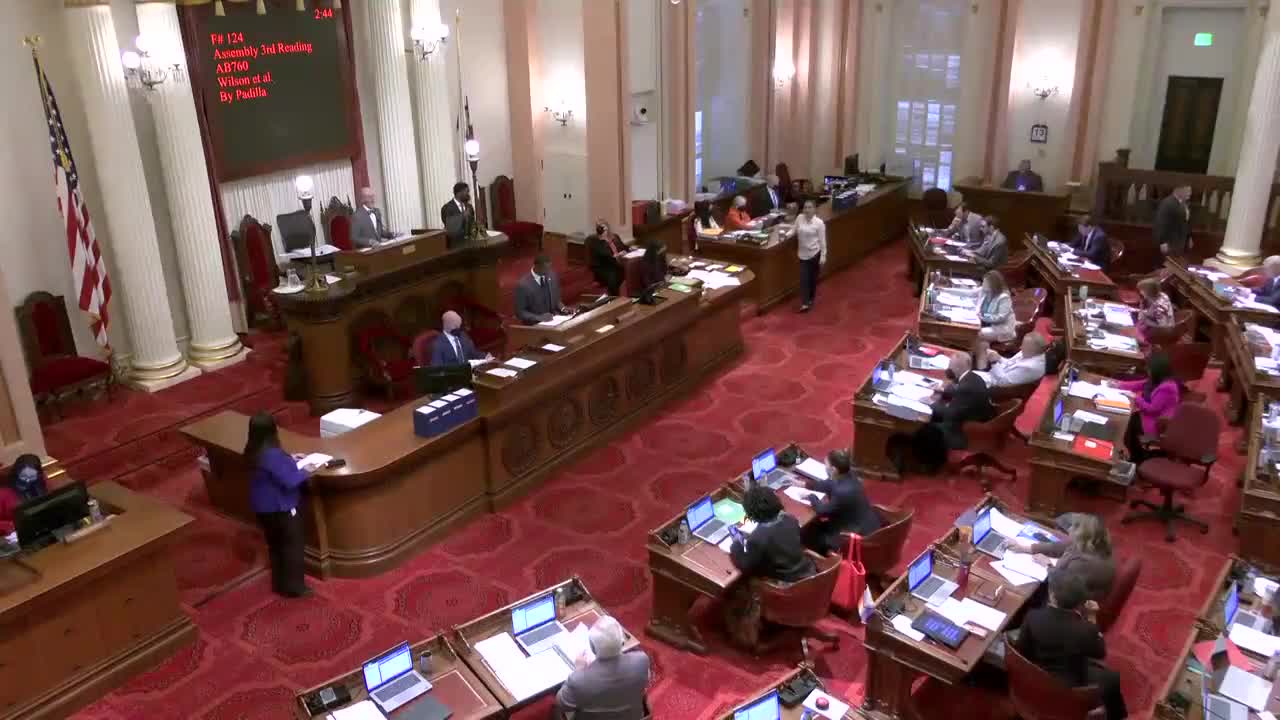 2MIN
Senate Floor
 1MIN
Senate Standing Committee on Appropriations
 4MIN
Senate Standing Committee on Housing
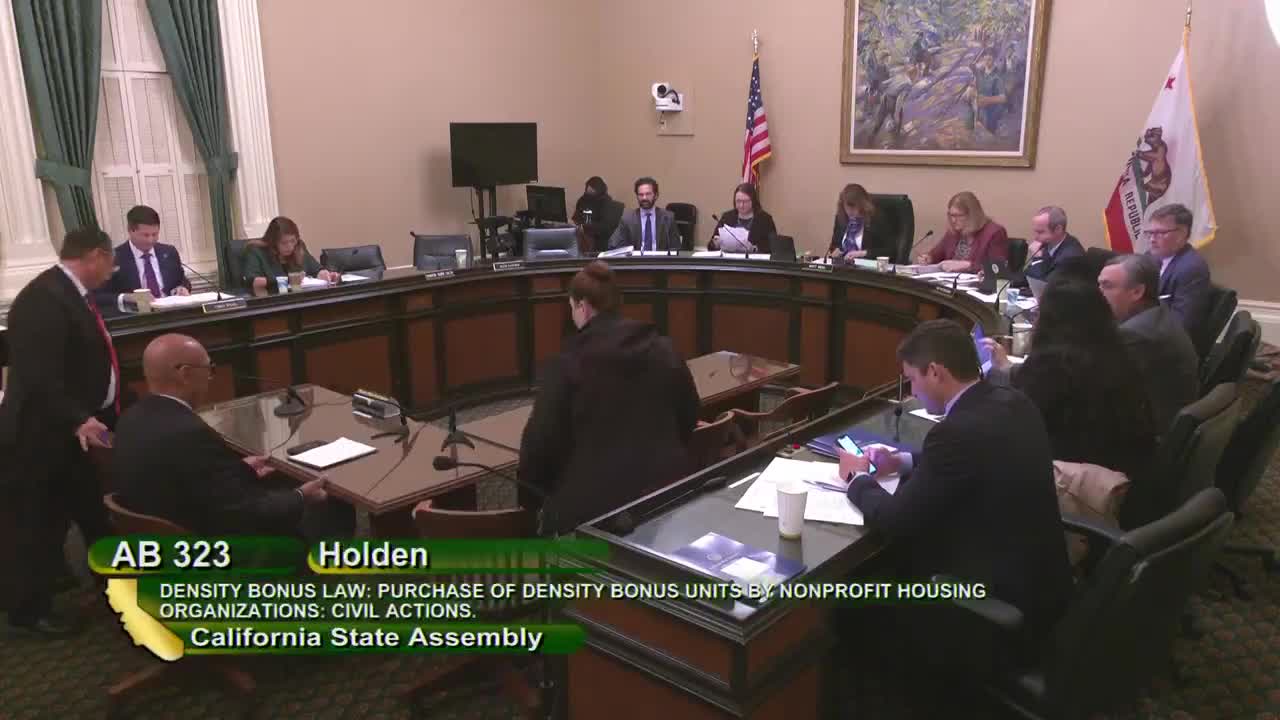 5MIN
Assembly Standing Committee on Housing and Community Development


Bill Co-Author(s):