AB 546: Alcoholic beverages: advertising and brandy tastings.
- Session Year: 2023-2024
- House: Assembly
- Latest Version Date: 2023-10-08
Current Status:
Passed
(2023-10-08: Chaptered by Secretary of State - Chapter 532, Statutes of 2023.)
Introduced
In Committee
First Chamber
In Committee
Second Chamber
Enacted
What does this bill do?
The bill changes tasting rules for brandy makers, allowing them to hold tastings on or off their premises under set limits (no more than 1/4 ounce per taste and six tastes per person) and removing a prior ban on serving tastings as cocktails or mixed drinks. It also widens restrictions that stop manufacturers and wholesalers from paying or crediting retailers, making those limits apply to advertising and the sale of all alcoholic beverages and adding out‑of‑state beer makers to the covered parties. The bill further bars credits or rebates for signs, window, or floor displays in retail outlets and requires beer signs custom‑made for a retailer to be sold by the wholesaler at no less than current market price.
The summary is provided by generative AI which can make mistakes. For original language, please view the details in the table below.
Existing law, the Alcoholic Beverage Control Act, which is administered by the Department of Alcoholic Beverage Control, regulates the application, issuance, and suspension of alcoholic beverage licenses. Under the act, a brandy manufacturers license authorizes the licensee to conduct tastings of brandy, subject to certain conditions, including a prohibition on giving tastings on the licensees premises in the form of a cocktail or a mixed drink.
This bill would remove that prohibition from the conditions under which a licensee may conduct tastings of brandy.
Existing law, known as tied-house restrictions, prohibits various alcoholic beverage licensees, or their officer, director, or agent, from, among other things, paying, crediting, or compensating a retailer or retailers for advertising, display, or distribution service in connection with the advertising and sale of distilled spirits. Existing law generally provides that a violation of the act is a crime.
This bill would revise the tied-house restriction described above to apply instead to the advertising and sale of alcoholic beverages. The bill would include out-of-state beer manufacturer certificate holders and their officers, directors, and agents among the individuals who are subject to the revised tied-house restriction.
Existing law also prohibits paying money or giving or furnishing anything of value for the privilege of placing or painting a sign or advertisement or window display on or in any premises selling alcoholic beverages at retail.
This bill would expand that restriction to include providing credit or rebate for that privilege, which the bill would also expand to include the placing or painting of a floor display on or in those premises.
Existing law authorizes any manufacturer, winegrower, manufacturers agent, rectifier, distiller, bottler, importer, or wholesaler, or any officer, director, or agent of any of those persons to furnish, give, lend, sell, or rent specified types of signs, including signs relating to advertising beer.
This bill would require interior signs advertising beer that are customized for the retailer to be sold by the wholesaler at a price not less than current market price.
By expanding the scope of an existing crime, the bill would impose a state-mandated local program.
The California Constitution requires the state to reimburse local agencies and school districts for certain costs mandated by the state. Statutory provisions establish procedures for making that reimbursement.
This bill would provide that no reimbursement is required by this act for a specified reason.
Existing law, the Alcoholic Beverage Control Act, which is administered by the Department of Alcoholic Beverage Control, regulates the application, issuance, and suspension of alcoholic beverage licenses. Existing Under the act, a brandy manufacturers license authorizes the licensee to conduct tastings of brandy, subject to certain conditions, including a prohibition on giving tastings on the licensees premises in the form of a cocktail or a mixed drink.
This bill would remove that prohibition from the conditions under which a licensee may conduct tastings of brandy.
Existing law, known as tied-house restrictions, prohibits various alcoholic beverage licensees, or their officer, director, or agent, from, among other things, paying, crediting, or compensating a retailer or retailers for advertising, display, or distribution service in connection with the advertising and sale of distilled spirits. Existing law generally provides that a violation of the act is a crime.
This bill would revise the tied-house restriction described above to apply instead to the advertising and sale of alcoholic beverages. The bill would include out-of-state beer manufacturer certificate holders and their officers, directors, and agents among the individuals who are subject to the revised tied-house restriction.
Existing law also prohibits the above-described individuals from furnishing, giving, lending, or renting to any person any decorations, paintings, or signs, except as specified.This bill would expand that restriction to include the furnishing, giving, lending, or renting of other related things of value.Existing law also prohibits paying money or giving or furnishing anything of value for the privilege of placing or painting a sign or advertisement or window display on or in any premises selling alcoholic beverages at retail.
This bill would expand that restriction to include providing credit or rebate for that privilege. privilege, which the bill would also expand to include the placing or painting of a floor display on or in those premises.
Existing law authorizes any manufacturer, winegrower, manufacturers agent, rectifier, distiller, bottler, importer, or wholesaler, or any officer, director, or agent of any of those persons to furnish, give, lend, sell, or rent specified types of signs, including signs relating to advertising beer.
This bill would require interior signs advertising beer that are customized for the retailer to be sold by the wholesaler at a price not less than current market price.
By expanding the scope of an existing crime, the bill would impose a state-mandated local program.
The California Constitution requires the state to reimburse local agencies and school districts for certain costs mandated by the state. Statutory provisions establish procedures for making that reimbursement.
This bill would provide that no reimbursement is required by this act for a specified reason.
Existing law, the Alcoholic Beverage Control Act, which is administered by the Department of Alcoholic Beverage Control, regulates the application, issuance, and suspension of alcoholic beverage licenses. Existing law, known as tied-house restrictions, prohibits various licensees, or their officer, director, or agent, from, among other things, paying, crediting, or compensating a retailer or retailers for advertising, display, or distribution service in connection with the advertising and sale of distilled spirits. Existing law generally provides that a violation of the act is a crime.
This bill would revise the tied-house restriction described above to apply instead to the advertising and sale of alcoholic beverages. The bill would include out-of-state beer manufacturer certificate holders and their officers, directors, and agents among the individuals who are subject to the revised tied-house restriction.
Existing law also prohibits the above-described individuals from furnishing, giving, lending, or renting to any person any decorations, paintings, or signs, except as specified.
This bill would expand that restriction to include the furnishing, giving, lending, or renting of other related things of value.
Existing law also prohibits paying money or giving or furnishing anything of value for the privilege of placing or painting a sign or advertisement or window display on or in any premises selling alcoholic beverages at retail.
This bill would expand that restriction to include providing credit or rebate for that privilege.
Existing law authorizes any manufacturer, winegrower, manufacturers agent, rectifier, distiller, bottler, importer, or wholesaler, or any officer, director, or agent of any of those persons to furnish, give, lend, sell, or rent specified types of signs, including signs relating to advertising beer.
This bill would require interior signs advertising beer that are customized for the retailer to be sold by the wholesaler at a price not less than current market price.
By expanding the scope of an existing crime, the bill would impose a state-mandated local program.
The California Constitution requires the state to reimburse local agencies and school districts for certain costs mandated by the state. Statutory provisions establish procedures for making that reimbursement.
This bill would provide that no reimbursement is required by this act for a specified reason.
Existing law, the Alcoholic Beverage Control Act, which is administered by the Department of Alcoholic Beverage Control, regulates the application, issuance, and suspension of alcoholic beverage licenses. Existing law, known as tied-house restrictions, prohibits various licensees, or their officer, director, or agent, from, among other things, paying, crediting, or compensating a retailer or retailers for advertising, display, or distribution service in connection with the advertising and sale of distilled spirits. Existing law generally provides that a violation of the act is a crime.
This bill would revise the tied-house restriction described above to apply instead to the advertising and sale of alcoholic beverages. By
Existing law also prohibits the above-described individuals from furnishing, giving, lending, or renting to any person any decorations, paintings, or signs, except as specified.
This bill would expand that restriction to include the furnishing, giving, lending, or renting of other related things of value.
Existing law also prohibits paying money or giving or furnishing anything of value for the privilege of placing or painting a sign or advertisement or window display on or in any premises selling alcoholic beverages at retail.
This bill would expand that restriction to include providing credit or rebate for that privilege.
By expanding the scope of an existing crime, the bill would impose a state-mandated local program.
The California Constitution requires the state to reimburse local agencies and school districts for certain costs mandated by the state. Statutory provisions establish procedures for making that reimbursement.
This bill would provide that no reimbursement is required by this act for a specified reason.
Existing law, the Alcoholic Beverage Control Act, which is administered by the Department of Alcoholic Beverage Control, regulates the application, issuance, and suspension of alcoholic beverage licenses. Existing law, known as tied-house restrictions, prohibits various licensees, or their officer, director, or agent, from, among other things, paying, crediting, or compensating a retailer or retailers for advertising, display, or distribution service in connection with the advertising and sale of distilled spirits. Existing law generally provides that a violation of the act is a crime.
This bill would revise the tied-house restriction described above to apply instead to the advertising and sale of alcoholic beverages. By expanding the scope of an existing crime, the bill would impose a state-mandated local program.
The California Constitution requires the state to reimburse local agencies and school districts for certain costs mandated by the state. Statutory provisions establish procedures for making that reimbursement.
This bill would provide that no reimbursement is required by this act for a specified reason.
(a)A brandy manufacturers license authorizes the licensee to conduct tastings of brandy produced or bottled by, or produced or bottled for, the licensee, on or off the licensees premises.
(b)(1)A brandy manufacturer shall not sell or solicit sales of brandy at the event. The sponsoring organization shall first obtain a permit from the department.
(2)For purposes of this subdivision, nonprofit organization does not include any community college or other institution of higher learning, as defined in the Education Code, nor does it include any officially recognized club, fraternity, or sorority, whether or not that entity is located on or off the institutions campus.
(c)Tastings on the licensees premises shall be subject to the following conditions:
(1)Tastings of brandy shall not exceed one-fourth of one ounce and shall be limited to no more than six tastes per individual per day.
(2)Tastings shall only include the products that are authorized to be produced or bottled by or for the licensee.
(3)A person under 21 years of age shall not serve tastes of brandy.
(d)Notwithstanding Section 25600, the licensee may provide brandy without charge for any tastings conducted pursuant to this section. The licensee may charge for tastings conducted by the licensee on its licensed premises.
(e)This section shall not relieve the holder of a brandy manufacturers license of any civil or criminal liability arising out of a violation of Section 25602.
SEC. 2.Section 25503 of the Business and Professions Code is amended to read:25503.No manufacturer, winegrower, manufacturers agent, California winegrowers agent, rectifier, distiller, bottler, importer, out-of-state beer manufacturer certificate holder, or wholesaler, or any officer, director, or agent of any such person, shall do any of the following:
(a)Directly or indirectly, deliver the possession of any alcoholic beverages to any on- or off-sale licensee under an agreement of consignment whereby title to the alcoholic beverages is retained by the seller or whereby the licensee receiving the alcoholic beverages has the right at any time prior to sale to relinquish possession to or return them to the original seller.
(b)Directly or indirectly, give any licensee or any person any alcoholic beverages as free goods as a part of any sale or transaction involving alcoholic beverages.
(c)Give secret rebates or make any secret concessions to any licensee or the employees or agents of any licensee, and no licensee shall request or knowingly accept from another licensee secret rebates or secret concessions.
(d)Give or furnish, directly or indirectly, to any employee of any holder of a retail on-sale or off-sale license only anything of value for the purpose or with the intent to solicit, acquire, or obtain the help or assistance of the employee to encourage or promote either the purchase or the sale of the alcoholic beverage sold or manufactured by the licensee giving or furnishing anything of value, and any employee who accepts or acquires anything of value contrary to the provisions of this subdivision is guilty of a misdemeanor.
(e)Willfully or knowingly discriminate, in the same trading area, either directly or indirectly, in the price of any brand of distilled spirits sold to different retail licensees purchasing under like terms and conditions.
(f)Pay, credit, or compensate a retailer or retailers for advertising, display, or distribution service in connection with the advertising and sale of alcoholic beverages.
(g)Furnish, give, lend, or rent, directly or indirectly, to any person any decorations, paintings, or signs, other than signs advertising their own products as permitted by Section 25611.1.
(h)Pay money, provide credit, rebate, or give or furnish anything of value for the privilege of placing or painting a sign or advertisement, floor or window display, on or in any premises selling alcoholic beverages at retail.
SEC. 3.Section 25611.1 of the Business and Professions Code is amended to read:25611.1.(a)Any manufacturer, winegrower, manufacturers agent, rectifier, distiller, bottler, importer, or wholesaler, or any officer, director, or agent of any of these persons may furnish, give, lend, sell, or rent:
(1)Interior signs, advertising either wine or distilled spirits, for use in on-sale retail premises, each of which shall not exceed 630 square inches in size. This limitation on the size of interior signs, advertising either wine or distilled spirits, shall not be applicable to off-sale retail premises.
(2)Interior signs advertising beer in on-sale or off-sale retail premises which shall bear conspicuous notice of the beer manufacturers name, brand name, trade name, slogans, markings, trademarks, or other symbols commonly associated with and generally used by the beer manufacturer in identifying the beer manufacturers name or product, and which may bear graphic or pictorial advertising representations. These signs shall include, but are not limited to, posters, placards, stickers, decals, shelf strips, wall panels, plaques, shadow boxes, mobiles, dummy bottles, bottle toppers, case wrappers, brand-identifying statuettes, tap markers, and table tents. These interior signs advertising beer shall not be deemed of intrinsic or utilitarian value and shall remain the property of the beer wholesaler who authorized and furnished them, unless given or sold to the retail licensee.
(3)Interior signs advertising beer for use in on-sale or off-sale retail premises, which are illuminated or mechanized, and which shall principally bear a conspicuous notice of the beer manufacturers name, brand name, trade name, slogans, markings, trademarks, or other symbols commonly associated with and generally used by the beer manufacturer in identifying the beer manufacturers name or product, and which may bear graphic or pictorial advertising representations. These illuminated or mechanized interior signs advertising beer shall not be deemed of intrinsic or utilitarian value and shall remain the property of the beer wholesaler who authorized and furnished them, unless given or sold to the retail licensee.
(4)Signs or other advertising matter for exterior use at any on-sale or off-sale retail premises as may be permitted by this division and rules of the department adopted pursuant thereto.
(b)Interior signs advertising beer that are customized for the retailer shall be sold by the wholesaler at a price not less than current market price.
SEC. 4.No reimbursement is required by this act pursuant to Section 6 of Article XIIIB of the California Constitution because the only costs that may be incurred by a local agency or school district will be incurred because this act creates a new crime or infraction, eliminates a crime or infraction, or changes the penalty for a crime or infraction, within the meaning of Section 17556 of the Government Code, or changes the definition of a crime within the meaning of Section 6 of Article XIIIB of the California Constitution.
(a)A brandy manufacturers license authorizes the licensee to conduct tastings of brandy produced or bottled by, or produced or bottled for, the licensee, on or off the licensees premises.
(b)(1)A brandy manufacturer shall not sell or solicit sales of brandy at the event. The sponsoring organization shall first obtain a permit from the department.
(2)For purposes of this subdivision, nonprofit organization does not include any community college or other institution of higher learning, as defined in the Education Code, nor does it include any officially recognized club, fraternity, or sorority, whether or not that entity is located on or off the institutions campus.
(c)Tastings on the licensees premises shall be subject to the following conditions:
(1)Tastings of brandy shall not exceed one-fourth of one ounce and shall be limited to no more than six tastes per individual per day.
(2)Tastings shall only include the products that are authorized to be produced or bottled by or for the licensee.
(3)A person under 21 years of age shall not serve tastes of brandy.
(4)Tastings of brandy shall not be given in the form of a cocktail or a mixed drink.(d)Notwithstanding Section 25600, the licensee may provide brandy without charge for any tastings conducted pursuant to this section. The licensee may charge for tastings conducted by the licensee on its licensed premises.
(e)This section shall not relieve the holder of a brandy manufacturers license of any civil or criminal liability arising out of a violation of Section 25602.
SECTION 1.SEC. 2.Section 25503 of the Business and Professions Code is amended to read:25503.No manufacturer, winegrower, manufacturers agent, California winegrowers agent, rectifier, distiller, bottler, importer, out-of-state beer manufacturer certificate holder, or wholesaler, or any officer, director, or agent of any such person, shall do any of the following:
(a)Directly or indirectly, deliver the possession of any alcoholic beverages to any on- or off-sale licensee under an agreement of consignment whereby title to the alcoholic beverages is retained by the seller or whereby the licensee receiving the alcoholic beverages has the right at any time prior to sale to relinquish possession to or return them to the original seller.
(b)Directly or indirectly, give any licensee or any person any alcoholic beverages as free goods as a part of any sale or transaction involving alcoholic beverages.
(c)Give secret rebates or make any secret concessions to any licensee or the employees or agents of any licensee, and no licensee shall request or knowingly accept from another licensee secret rebates or secret concessions.
(d)Give or furnish, directly or indirectly, to any employee of any holder of a retail on-sale or off-sale license only anything of value for the purpose or with the intent to solicit, acquire, or obtain the help or assistance of the employee to encourage or promote either the purchase or the sale of the alcoholic beverage sold or manufactured by the licensee giving or furnishing anything of value, and any employee who accepts or acquires anything of value contrary to the provisions of this subdivision is guilty of a misdemeanor.
(e)Willfully or knowingly discriminate, in the same trading area, either directly or indirectly, in the price of any brand of distilled spirits sold to different retail licensees purchasing under like terms and conditions.
(f)Pay, credit, or compensate a retailer or retailers for advertising, display, or distribution service in connection with the advertising and sale of alcoholic beverages.
(g)Furnish, give, lend, or rent, directly or indirectly, to any person any decorations, paintings, signs or signs, other than signs advertising their own products as permitted by Section 25611.1.
(h)Pay money, provide credit, rebate, or give or furnish anything of value for the privilege of placing or painting a sign or advertisement, floor or window display, on or in any premises selling alcoholic beverages at retail.
SEC. 2.SEC. 3.Section 25611.1 of the Business and Professions Code is amended to read:25611.1.(a)Any manufacturer, winegrower, manufacturers agent, rectifier, distiller, bottler, importer, or wholesaler, or any officer, director, or agent of any of these persons may furnish, give, lend, sell, or rent:
(1)Interior signs, advertising either wine or distilled spirits, for use in on-sale retail premises, each of which shall not exceed 630 square inches in size. This limitation on the size of interior signs, advertising either wine or distilled spirits, shall not be applicable to off-sale retail premises.
(2)Interior signs advertising beer in on-sale or off-sale retail premises which shall bear conspicuous notice of the beer manufacturers name, brand name, trade name, slogans, markings, trademarks, or other symbols commonly associated with and generally used by the beer manufacturer in identifying the beer manufacturers name or product, and which may bear graphic or pictorial advertising representations. These signs shall include, but are not limited to, posters, placards, stickers, decals, shelf strips, wall panels, plaques, shadow boxes, mobiles, dummy bottles, bottle toppers, case wrappers, brand-identifying statuettes, tap markers, and table tents. These interior signs advertising beer shall not be deemed of intrinsic or utilitarian value and shall remain the property of the beer wholesaler who authorized and furnished them, unless given or sold to the retail licensee.
(3)Interior signs advertising beer for use in on-sale or off-sale retail premises, which are illuminated or mechanized, and which shall principally bear a conspicuous notice of the beer manufacturers name, brand name, trade name, slogans, markings, trademarks, or other symbols commonly associated with and generally used by the beer manufacturer in identifying the beer manufacturers name or product, and which may bear graphic or pictorial advertising representations. These illuminated or mechanized interior signs advertising beer shall not be deemed of intrinsic or utilitarian value and shall remain the property of the beer wholesaler who authorized and furnished them, unless given or sold to the retail licensee.
(4)Signs or other advertising matter for exterior use at any on-sale or off-sale retail premises as may be permitted by this division and rules of the department adopted pursuant thereto.
(b)Interior signs advertising beer that are customized for the retailer shall be sold by the wholesaler at a price not less than current market price.
SEC. 3.SEC. 4.No reimbursement is required by this act pursuant to Section 6 of Article XIIIB of the California Constitution because the only costs that may be incurred by a local agency or school district will be incurred because this act creates a new crime or infraction, eliminates a crime or infraction, or changes the penalty for a crime or infraction, within the meaning of Section 17556 of the Government Code, or changes the definition of a crime within the meaning of Section 6 of Article XIIIB of the California Constitution.
No manufacturer, winegrower, manufacturers agent, California winegrowers agent, rectifier, distiller, bottler, importer, out-of-state beer manufacturer certificate holder, or wholesaler, or any officer, director, or agent of any such person, shall do any of the following:
(a)Directly or indirectly, deliver the possession of any alcoholic beverages to any on- or off-sale licensee under an agreement of consignment whereby title to the alcoholic beverages is retained by the seller or whereby the licensee receiving the alcoholic beverages has the right at any time prior to sale to relinquish possession to or return them to the original seller.
(b)Directly or indirectly, give any licensee or any person any alcoholic beverages as free goods as a part of any sale or transaction involving alcoholic beverages.
(c)Give secret rebates or make any secret concessions to any licensee or the employees or agents of any licensee, and no licensee shall request or knowingly accept from another licensee secret rebates or secret concessions.
(d)Give or furnish, directly or indirectly, to any employee of any holder of a retail on-sale or off-sale license only anything of value for the purpose or with the intent to solicit, acquire, or obtain the help or assistance of the employee to encourage or promote either the purchase or the sale of the alcoholic beverage sold or manufactured by the licensee giving or furnishing anything of value, and any employee who accepts or acquires anything of value contrary to the provisions of this subdivision is guilty of a misdemeanor.
(e)Willfully or knowingly discriminate, in the same trading area, either directly or indirectly, in the price of any brand of distilled spirits sold to different retail licensees purchasing under like terms and conditions.
(f)Pay, credit, or compensate a retailer or retailers for advertising, display, or distribution service in connection with the advertising and sale of alcoholic beverages.
(g)Furnish, give, lend, or rent, directly or indirectly, to any person any decorations, paintings, signs other than signs advertising their own products as permitted by Section 25611.1, or related things of value. 25611.1.
(h)Pay money, provide credit, rebate, or give or furnish anything of value for the privilege of placing or painting a sign or advertisement, floor or window display, on or in any premises selling alcoholic beverages at retail.
SEC. 2.Section 25611.1 of the Business and Professions Code is amended to read:25611.1.(a)Any manufacturer, winegrower, manufacturers agent, rectifier, distiller, bottler, importer, or wholesaler, or any officer, director, or agent of any of these persons may furnish, give, lend, sell, or rent:
(a)(1)Interior signs, advertising either wine or distilled spirits, for use in on-sale retail premises, each of which shall not exceed 630 square inches in size. This limitation on the size of interior signs, advertising either wine or distilled spirits, shall not be applicable to off-sale retail premises.
(b)(2)Interior signs advertising beer in on-sale or off-sale retail premises which shall bear conspicuous notice of the beer manufacturers name, brand name, trade name, slogans, markings, trademarks, or other symbols commonly associated with and generally used by the beer manufacturer in identifying the beer manufacturers name or product, and which may bear graphic or pictorial advertising representations. These signs shall include, but are not limited to, posters, placards, stickers, decals, shelf strips, wall panels, plaques, shadow boxes, mobiles, dummy bottles, bottle toppers, case wrappers, brand-identifying statuettes, tap markers, and table tents. These interior signs advertising beer shall not be deemed of intrinsic or utilitarian value and shall remain the property of the beer wholesaler who authorized and furnished them, unless given or sold to the retail licensee.
(c)(3)Interior signs advertising beer for use in on-sale or off-sale retail premises, which are illuminated or mechanized, and which shall principally bear a conspicuous notice of the beer manufacturers name, brand name, trade name, slogans, markings, trademarks, or other symbols commonly associated with and generally used by the beer manufacturer in identifying the beer manufacturers name or product, and which may bear graphic or pictorial advertising representations. These illuminated or mechanized interior signs advertising beer shall not be deemed of intrinsic or utilitarian value and shall remain the property of the beer wholesaler who authorized and furnished them, unless given or sold to the retail licensee.
(d)(4)Signs or other advertising matter for exterior use at any on-sale or off-sale retail premises as may be permitted by this division and rules of the department adopted pursuant thereto.
(b)Interior signs advertising beer that are customized for the retailer shall be sold by the wholesaler at a price not less than current market price.
SEC. 2. SEC. 3.No reimbursement is required by this act pursuant to Section 6 of Article XIIIB of the California Constitution because the only costs that may be incurred by a local agency or school district will be incurred because this act creates a new crime or infraction, eliminates a crime or infraction, or changes the penalty for a crime or infraction, within the meaning of Section 17556 of the Government Code, or changes the definition of a crime within the meaning of Section 6 of Article XIIIB of the California Constitution.
No manufacturer, winegrower, manufacturers agent, California winegrowers agent, rectifier, distiller, bottler, importer, or wholesaler, or any officer, director, or agent of any such person, shall do any of the following:
(a)Directly or indirectly, deliver the possession of any alcoholic beverages to any on- or off-sale licensee under an agreement of consignment whereby title to the alcoholic beverages is retained by the seller or whereby the licensee receiving the alcoholic beverages has the right at any time prior to sale to relinquish possession to or return them to the original seller.
(b)Directly or indirectly, give any licensee or any person any alcoholic beverages as free goods as a part of any sale or transaction involving alcoholic beverages.
(c)Give secret rebates or make any secret concessions to any licensee or the employees or agents of any licensee, and no licensee shall request or knowingly accept from another licensee secret rebates or secret concessions.
(d)Give or furnish, directly or indirectly, to any employee of any holder of a retail on-sale or off-sale license only anything of value for the purpose or with the intent to solicit, acquire, or obtain the help or assistance of the employee to encourage or promote either the purchase or the sale of the alcoholic beverage sold or manufactured by the licensee giving or furnishing anything of value, and any employee who accepts or acquires anything of value contrary to the provisions of this subdivision is guilty of a misdemeanor.
(e)Willfully or knowingly discriminate, in the same trading area, either directly or indirectly, in the price of any brand of distilled spirits sold to different retail licensees purchasing under like terms and conditions.
(f)Pay, credit, or compensate a retailer or retailers for advertising, display, or distribution service in connection with the advertising and sale of alcoholic beverages.
(g)Furnish, give, lend, or rent, directly or indirectly, to any person any decorations, paintings, or signs, signs other than signs advertising their own products as permitted by Section 25611.1. 25611.1, or related things of value.
(h)Pay money or money, provide credit, rebate, or give or furnish anything of value for the privilege of placing or painting a sign or advertisement, or window display, on or in any premises selling alcoholic beverages at retail.
SEC. 2.No reimbursement is required by this act pursuant to Section 6 of Article XIIIB of the California Constitution because the only costs that may be incurred by a local agency or school district will be incurred because this act creates a new crime or infraction, eliminates a crime or infraction, or changes the penalty for a crime or infraction, within the meaning of Section 17556 of the Government Code, or changes the definition of a crime within the meaning of Section 6 of Article XIIIB of the California Constitution.
No manufacturer, winegrower, manufacturers agent, California winegrowers agent, rectifier, distiller, bottler, importer, or wholesaler, or any officer, director, or agent of any such person, shall do any of the following:
(a)Directly or indirectly, deliver the possession of any alcoholic beverages to any on- or off-sale licensee under an agreement of consignment whereby title to the alcoholic beverages is retained by the seller or whereby the licensee receiving the alcoholic beverages has the right at any time prior to sale to relinquish possession to or return them to the original seller.
(b)Directly or indirectly, give any licensee or any person any alcoholic beverages as free goods as a part of any sale or transaction involving alcoholic beverages.
(c)Give secret rebates or make any secret concessions to any licensee or the employees or agents of any licensee, and no licensee shall request or knowingly accept from another licensee secret rebates or secret concessions.
(d)Give or furnish, directly or indirectly, to any employee of any holder of a retail on-sale or off-sale license only anything of value for the purpose or with the intent to solicit, acquire, or obtain the help or assistance of the employee to encourage or promote either the purchase or the sale of the alcoholic beverage sold or manufactured by the licensee giving or furnishing anything of value, and any employee who accepts or acquires anything of value contrary to the provisions of this subdivision is guilty of a misdemeanor.
(e)Willfully or knowingly discriminate, in the same trading area, either directly or indirectly, in the price of any brand of distilled spirits sold to different retail licensees purchasing under like terms and conditions.
(f)Pay, credit, or compensate a retailer or retailers for advertising, display, or distribution service in connection with the advertising and sale of distilled spirits. alcoholic beverages.
(g)Furnish, give, lend, or rent, directly or indirectly, to any person any decorations, paintings, or signs, other than signs advertising their own products as permitted by Section 25611.1.
(h)Pay money or give or furnish anything of value for the privilege of placing or painting a sign or advertisement, or window display, on or in any premises selling alcoholic beverages at retail.
SEC. 2.No reimbursement is required by this act pursuant to Section 6 of Article XIIIB of the California Constitution because the only costs that may be incurred by a local agency or school district will be incurred because this act creates a new crime or infraction, eliminates a crime or infraction, or changes the penalty for a crime or infraction, within the meaning of Section 17556 of the Government Code, or changes the definition of a crime within the meaning of Section 6 of Article XIIIB of the California Constitution.
|
Date
|
Status
|
|---|---|
| Oct 8, 2023 | Chaptered by Secretary of State - Chapter 532, Statutes of 2023. |
| Oct 8, 2023 | Approved by the Governor. |
| Sep 15, 2023 | Enrolled and presented to the Governor at 4 p.m. |
| Sep 11, 2023 | Senate amendments concurred in. To Engrossing and Enrolling. (Ayes 80. Noes 0. Page 3188.). |
| Sep 7, 2023 | In Assembly. Concurrence in Senate amendments pending. May be considered on or after September 9 pursuant to Assembly Rule 77. |
| Sep 7, 2023 | Read third time. Passed. Ordered to the Assembly. (Ayes 40. Noes 0. Page 2453.). |
| Aug 29, 2023 | Read second time. Ordered to third reading. |
| Aug 28, 2023 | Read third time and amended. Ordered to second reading. |
| Aug 15, 2023 | Read second time. Ordered to third reading. |
| Aug 14, 2023 | Read third time and amended. Ordered to second reading. |
| Jul 13, 2023 | Ordered to third reading. |
| Jul 13, 2023 | From Consent Calendar. |
| Jul 11, 2023 | Read second time. Ordered to Consent Calendar. |
| Jul 10, 2023 | From committee: Be ordered to second reading file pursuant to Senate Rule 28.8 and ordered to Consent Calendar. |
| Jun 27, 2023 | From committee: Do pass and re-refer to Com. on APPR with recommendation: To Consent Calendar. (Ayes 15. Noes 0.) (June 27). Re-referred to Com. on APPR. |
| Jun 7, 2023 | Referred to Com. on G.O. |
| May 26, 2023 | In Senate. Read first time. To Com. on RLS. for assignment. |
| May 25, 2023 | Read third time. Passed. Ordered to the Senate. (Ayes 76. Noes 0. Page 1811.) |
| May 18, 2023 | Read second time. Ordered to Consent Calendar. |
| May 17, 2023 | From committee: Do pass. To Consent Calendar. (Ayes 15. Noes 0.) (May 17). |
| Mar 22, 2023 | From committee: Do pass and re-refer to Com. on APPR. with recommendation: To Consent Calendar. (Ayes 20. Noes 0.) (March 22). Re-referred to Com. on APPR. |
| Mar 15, 2023 | Re-referred to Com. on G.O. |
| Mar 14, 2023 | From committee chair, with author's amendments: Amend, and re-refer to Com. on G.O. Read second time and amended. |
| Feb 17, 2023 | Referred to Com. on G.O. |
| Feb 9, 2023 | From printer. May be heard in committee March 11. |
| Feb 8, 2023 | Read first time. To print. |
|
Date
|
Description
|
Location
|
Votes
|
|
|---|---|---|---|---|
| Sep 11, 2023 | AB 546 Villapudua Concurrence in Senate Amendments | Assembly Floor |
Passed |
|
| Sep 7, 2023 | Assembly 3rd Reading AB546 Villapudua By Wilk | Senate Floor |
Passed |
|
| Jun 27, 2023 | Do pass, but first be re-referred to the Committee on [Appropriations] with the recommendation: To Consent Calendar | Senate Standing Committee on Governmental Organization |
Passed |
|
| May 25, 2023 | AB 546 Villapudua Consent Calendar Second Day Regular Session | Assembly Floor |
Passed |
|
| May 17, 2023 | Do pass. To Consent Calendar. | Assembly Standing Committee on Appropriations |
Passed |
|
| Mar 22, 2023 | Do pass and be re-referred to the Committee on [Appropriations] with recommendation: To Consent Calendar | Assembly Standing Committee on Governmental Organization |
Passed |
This list shows positions taken on this bill by organizations on the date displayed, which is linked to the original source.
Positions by individuals are not included.
|
Organization
|
Position
|
Date
|
|---|---|---|
| Alcohol Justice | ** Support | |
| California Beer and Beverage Distributors | ** Support |
CONCURRENCE IN SENATE AMENDMENTS
CSA1 Bill Id:AB 546
Author:(Villapudua)
As Amended Ver:August 28, 2023
Majority vote
SUMMARY
This bill expands and clarifies an existing tied-house restriction that prohibits alcohol licensees from, among other things, paying, crediting, or compensating a retailer for advertising, display, or distribution service in connection with the advertising and sale of alcoholic beverages. Additionally, the bill clarifies that specified alcohol licensees may sell customized interior signs to retailers at a price not less than current market value. Finally, the bill removes a current prohibition that prohibits a brandy manufacturer from conducting tastings of brandy in the form of a cocktail or a mixed drink.
Senate Amendments
- Clarify that interior signs advertising beer that are customized for the retailer shall be sold by the wholesaler at a price not less than current market price.
- Include out-of-state beer manufacturer certificate holders and their officers, directors, and agents among the individuals who are subject to the revised tied-house restriction.
- Remove a current prohibition that prohibits a brandy manufacturer from conducting tastings of brandy in the form of a cocktail or a mixed drink.
- Make technical and clarifying changes.
COMMENTS
Background.
Tied-house laws. State and federal laws generally prohibit certain relationships among those who produce, distribute, and sell alcoholic beverages. The term "tied-house" is derived from a common practice in England whereby a bar or public house was "tied" – by ownership, contractual obligations, or other influences – to a specific manufacturer. In some instances, that model encouraged intemperance in alcohol consumption. This was because retailers would offer manufacturers generous favors, such as expensive business meals and gifts. In order to recoup these costs, aggressive product promotion was needed. Manufacturers sometimes used their influence to force tied houses to sell their products and exclude products from other manufacturers.
As a result, after the repeal of prohibition in 1933, California's current "three-tier" system was introduced. This body of law was initially created to: a) promote the state's interest in an orderly market; b) prohibit vertical integration and dominance by a single producer in the market place; c) stop commercial bribery and safeguard the public from predatory marketing techniques; d) discourage and/or prevent intemperate drinking.
Exceptions and interpretation of Tied-house laws. Existing laws and/or Tied-house laws generally prohibit manufacturers, winegrowers, and distributors from offering anything of value, including services to retail licensees. Specifically, the Act regulates the provision of signs and other advertising material to licensed retail premises by manufacturers and others under the "tied-house" and "free goods" provisions. Existing law provides that no licensee shall, directly or indirectly, give any premium, gift, free goods, or other thing of value in connection with the sale, distribution, or sale and distribution of alcoholic beverages, and no retailer shall, directly or indirectly, receive any premium, gift, free goods or other thing of value from a supplier of alcoholic beverages, except as allowed by the department.
It should be noted that numerous exceptions to this restriction have been enacted through the years in specific instances where the Legislature determined that the public's interests were protected. However, the Legislature traditionally does not grant exemptions that favor the products of the entity seeking the exemption or exemptions that unfairly compromise the role of distributors and/or create an unfair advantage for one licensee over another.
The ABC has maintained a long-standing interpretation that prohibits any financial benefit to a retailer in connection with the advertising and sale of all alcoholic beverages, but the current statute only specifies distilled spirits. AB 546 would amend the statute to reflect ABC's current interpretation and the industry's understanding of the alcohol beverages covered by the prohibition. It would also provide further definitional clarification of what are prohibited things of value.
Custom Signs. Distributors have in house print shops that are used for merchandising signage. Occasionally alcohol retailers have asked these distributors to print signage for them that is separate from what is provided through their distribution account. This has been happening for decades. Recently the Department of ABC raised concerns that this might be problematic given the provisions under tied-house rules and recommended that the law be changed to ensure compliance with the ABC Act. This bill simply clarifies that distributors can sell customized interior signage as long as the price is not less than current market value.
Brandy Tastings. Current law authorizes a brandy manufacturer to provide tastings of brandy, subject to certain conditions, including a prohibition on giving tastings on the licensed premises in the form of a cocktail or a mixed drink. This bill removes that prohibition and thus allowing brandy manufacturers to provide for tasting of brandy in the form of a cocktail or a mixed drink on the brandy manufacturer's licensed premises.
According to the Author
According to the author's office, "This bill will ensure further clarification that the prohibition on paying, crediting, or compensating a retailer for advertising, display, or distribution services in connection with the advertising and sale of distilled spirits applies to all alcohol beverages. The statutory prohibition on paying a retailer for the privilege of placing advertising should be broadened to further identify credits and rebates as things of value, not just money."
Arguments in Support
According to the California Beer & Beverage Distributors, "the [ABC] has maintained a long-standing interpretation that prohibits any financial benefit to a retailer in connection with the advertising and sale of all alcohol beverages, but the current statute only specifies distilled spirits. AB 546 would amend the statute to reflect the current department interpretation and industry understanding of the alcohol beverages covered by the prohibition and to provide further definitional clarification of what are prohibited things of value."
Arguments in Opposition
None on file.
FISCAL COMMENTS
According to the Senate Appropriations Committee, pursuant to Senate Rule 28.8, negligible state costs.
VOTES:
ASM GOVERNMENTAL ORGANIZATION: 20-0-2
YES: Santiago, Lackey, Aguiar-Curry, Berman, Bryan, Megan Dahle, Davies, Garcia, Gipson, Jones-Sawyer, Low, McCarty, McKinnor, Jim Patterson, Quirk-Silva, Ramos, Robert Rivas, Blanca Rubio, Ta, Villapudua
ABS, ABST OR NV: Cervantes, Mathis
ASM APPROPRIATIONS: 15-0-1
YES: Holden, Megan Dahle, Bryan, Calderon, Wendy Carrillo, Dixon, Mike Fong, Hart, Lowenthal, Mathis, Papan, Pellerin, Robert Rivas, Sanchez, Ortega
ABS, ABST OR NV: Weber
ASSEMBLY FLOOR: 76-0-4
YES: Addis, Alanis, Alvarez, Arambula, Bains, Bauer-Kahan, Bennett, Berman, Boerner, Bonta, Bryan, Calderon, Juan Carrillo, Wendy Carrillo, Cervantes, Chen, Connolly, Megan Dahle, Davies, Dixon, Essayli, Flora, Mike Fong, Vince Fong, Friedman, Gabriel, Gallagher, Garcia, Gipson, Grayson, Haney, Hart, Holden, Hoover, Irwin, Jackson, Jones‑Sawyer, Lackey, Lee, Low, Lowenthal, Maienschein, McCarty, McKinnor, Muratsuchi, Stephanie Nguyen, Ortega, Pacheco, Jim Patterson, Joe Patterson, Pellerin, Petrie-Norris, Quirk‑Silva, Ramos, Reyes, Luz Rivas, Robert Rivas, Rodriguez, Blanca Rubio, Sanchez, Santiago, Schiavo, Soria, Ta, Ting, Valencia, Villapudua, Waldron, Wallis, Ward, Weber, Wicks, Wilson, Wood, Zbur, Rendon
ABS, ABST OR NV: Aguiar-Curry, Kalra, Mathis, Papan
SENATE FLOOR: 40-0-0
YES: Allen, Alvarado-Gil, Archuleta, Ashby, Atkins, Becker, Blakespear, Bradford, Caballero, Cortese, Dahle, Dodd, Durazo, Eggman, Glazer, Gonzalez, Grove, Hurtado, Jones, Laird, Limón, McGuire, Menjivar, Min, Newman, Nguyen, Niello, Ochoa Bogh, Padilla, Portantino, Roth, Rubio, Seyarto, Skinner, Smallwood-Cuevas, Stern, Umberg, Wahab, Wiener, Wilk
UPDATED
VERSION: August 28, 2023
CONSULTANT: Eric Johnson / G.O. / (916) 319-2531 FN: 0001976
SENATE RULES COMMITTEE Office of Senate Floor Analyses (916) 651-1520 Fax: (916) 327-4478 | AB 546 |
THIRD READING
Bill No: AB 546
Author: Villapudua (D)
Amended: 8/28/23 in Senate
Vote: 21
SENATE GOVERNMENTAL ORG. COMMITTEE: 15-0, 6/27/23
AYES: Dodd, Wilk, Alvarado-Gil, Archuleta, Ashby, Bradford, Glazer, Jones, Nguyen, Ochoa Bogh, Padilla, Portantino, Roth, Rubio, Seyarto
SENATE APPROPRIATIONS COMMITTEE: Senate Rule 28.8
ASSEMBLY FLOOR: 76-0, 5/25/23 (Consent) - See last page for vote
SUBJECT: Alcoholic beverages: advertising and brandy tastings
SOURCE: California Beer and Beverage Distributors
DIGEST: This bill expands and clarifies an existing tied-house restriction that prohibits alcohol licensees from, among other things, paying, crediting, or compensating a retailer for advertising, display, or distribution service in connection with the advertising and sale of alcoholic beverages. Additionally, the bill clarifies that specified alcohol licensees may sell customized interior signs to retailers at a price not less than current market value. Finally, the bill removes a current probhition that prohibits a brandy manufacturer from conducting tastings of brandy in the form of a cocktail or a mixed drink.
Senate Floor Amendments of 8/28/23 remove a current prohibition that prohibits a brandy manufacturer from conducting tastings of brandy in the form of a cocktail or a mixed drink.
Senate Floor Amendments of 8/14/23 clarify that specified alcohol licensees may sell customized interior signs to retailers at a price not less than current market value.
ANALYSIS:
Existing law:
- Establishes the Department of Alcoholic Beverage Control (ABC) and grants it exclusive authority to administer the provisions of the ABC Act in accordance with laws enacted by the Legislature. This involves licensing individuals and businesses associated with the manufacture, importation, and sale of alcoholic beverages and the collection of license fees for this purpose.
- Separates the alcoholic beverage industry into three component parts, or tiers, of the manufacturer (including breweries, wineries, and distilleries), wholesaler, and retailer (both on-sale and off-sale). This is referred to as the “tied-house” law or “three-tier” system. Generally, other than exceptions granted by the Legislature, the holder of one type of license is not permitted to do business as another type of licensee within the “three-tier” system.
- Prohibits a manufacturer, winegrower, manufacturer’s agent, California winegrower’s agent, rectifier, distiller, bottler, importer, or wholesaler, or any officer, director, or agent from, among other things, paying, crediting, or compensating a retailer or retailers for advertising, display, or distribution service in connection with the advertising and sale of distilled spirits.
- Authorizes specified licensees to furnish, give, lend, sell or rent interior signs, as specified.
- Authorizes a brandy manufacturer to conduct tasting of brandy, subject to certain conditions, including a prohibition on giving tastings on the licensee’s premises in the form of a cocktail or a mixed drink.
This bill:
- Adds to current tied-house restrictions that prohibits a manufacturer, winegrower, manufacturer’s agent, California winegrower’s agent, rectifier, distiller, bottler, importer or wholesaler, or any officer, director, or agent of any such person, from doing any of the following:
- Pay, credit, or compensate a retailer or retailers for advertising, display, or distribution service in connection with the advertising and sale of alcoholic beverages.
- Expands a restriction to providing “related things of value” to the things that cannot be furnished, given, lent, or rented to any person any decorations, paintings, or signs, except as specified.
- Adds a prohibition to “providing credit” and “rebates” for the privilege of placing or painting a sign or advertising, or window display, on or in any premises selling alcoholic beverages at retail.
- Clarifies that alcohol licensees may sell customized interior signs to retailers at a price not less than current market value.
- Removes a current probhition that prohibits a brandy manufacturer from conducting tastings of brandy in the form of a cocktail or a mixed drink.
- Makes technical and clarifying changes to the ABC Act.
Background
Author Statement. According to the author’s office, “This bill will ensure further clarification that the prohibition on paying, crediting, or compensating a retailer for advertising, display, or distribution services in connection with the advertising and sale of distilled spirits applies to all alcohol beverages. The statutory prohibition on paying a retailer for the privilege of placing advertising should be broadened to further identify credits and rebates as things of value, not just money.”
Tied-House Laws. State and federal law prohibit certain relations between those engaged in the production, distribution, and retail sale of alcoholic beverages. The term “tied-house” is derived from a common practice in England whereby a bar or public house was “tied” - by ownership, contractual obligations, or other influences - to a specific manufacturer. In some instances, that model encouraged intemperance in alcohol consumption, as retailers would offer to manufacturers generous favors, such as expensive business meals and gifts, which added costs that needed to be recouped through aggressive product promotion. Tied houses were also subject to undue influence from manufacturers, who sometimes used their influence to force tied houses to sell their products and exclude other manufacturers’ products.
As a result, after the repeal of prohibition in 1933, California’s current “three-tier” system was introduced. The original policy rationale for this body of law was to: a) promote the state’s interest in an orderly market; b) prohibit the vertical integration and dominance by a single producer in the market place; c) prohibit commercial bribery and to protect the public from predatory marketing practices; and, d) discourage and/or prevent the intemperate use of alcoholic beverages.
Current Department of ABC Interpretation. Existing laws and/or Tied-house laws generally prohibit manufacturers, winegrowers, and distributors from offering anything of value, including services to retail licensees. Specifically, the ABC Act regulates the provision of signs and other advertising material to licensed retail premises by manufacturers and others under the "tied-house" and "free goods" provisions.
Existing law provides that no licensee shall, directly or indirectly, give any premium, gift, free goods, or other thing of value in connection with the sale, distribution, or sale and distribution of alcoholic beverages, and no retailer shall, directly or indirectly, receive any premium, gift, free goods or other thing of value from a supplier of alcoholic beverages, except as allowed by the department. It should be noted that numerous exceptions to this restriction have been enacted through the years in specific instances where the Legislature determined that the public’s interests were protected.
The Department of ABC has maintained a long-standing interpretation that prohibits any financial benefit to a retailer in connection with the advertising and sale of all alcoholic beverages, but the current statute only specifies distilled spirits. AB 546 would amend the statute to reflect the Department of ABC’s current interpretation and the industry's understanding of the alcohol beverages covered by the prohibition. It would also provide further definitional clarification of what are prohibited things of value.
Custom Signs. Distributors have in house print shops that are used for merchandising signage. Occasionally alcohol retailers have asked these distributors to print signage for them that is separate from what is provided through their distribution account. This has been happening for decades. Recently the Department of ABC raised concerns that this might be problematic given the provisions under tied-house rules and recommended that the law be changed to ensure compliance with the ABC Act. This bill simply clarifies that distributors can sell customized interior signage as long as the price is not less than current market value.
Brandy Tastings. Current law authorizes a brandy manufacturer to provide tastings of brandy, subject to certain conditions, including a prohibition on giving tastings on the licensed premises in the form of a cocktail or a mixed drink. This bill removes that prohibition and thus allowing brandy manufacturers to provide for tasting of brandy in the form of a cocktail or a mixed drink on the brandy manufacturer’s licensed premises.
Related/Prior Legislation
AB 1149 (Villapudua, Chapter 271, Statutes of 2021) extended a tied-house exception to limitations provided for beer, to also apply to brands of distilled spirits and wine in single-serve containers for the purpose of stocking, rotating, displaying, and merchandising the product by specified distributor licensees at off-sale retail outlets.
AB 113 (Low, Chapter 623, Statutes of 2019) allowed a beer manufacturer to give up to five cases of glassware to each on-sale retail licensee and allows an on-sale retail licensee to accept, up to 10 cases of retail advertising glassware, per year per licensed premises, from any license beer manufacturers.
AB 1246 (Mcleod, Chapter 395, Statutes of 2008) allowed a beer wholesaler to sell exterior signs advertising beer for use at any on-sale or off-sale retail premises at no less than cost, as defined.
AB 395 (Briggs, Chapter 207, Statutes of 2001) provided that interior signs advertising beer that are provided to on or off-sale retail establishments remain the property of the beer wholesaler who authorized and furnished the signs, unless given or sold to the licensee.
AB 973 (Papan, Chapter 26, Statutes of 1997) clarified the type of alcohol advertising signs manufacturers and wholesalers may provide to retail licensees, with interior signs advertising beer, bearing conspicuous notice of the beer manufacturer's name and other information identifying the beer manufacturer's name or product as specified.
AB 3144 (Granlund, Chapter 99, Statutes of 1996) among other things, allowed a wholesaler to furnish acrylic tent holders to retailers in addition to other specified permissible items.
FISCAL EFFECT: Appropriation: No Fiscal Com.: Yes Local: Yes
SUPPORT: (Verified 8/29/23)
California Beer and Beverage Distributors (source)
Alcohol Justice
OPPOSITION: (Verified 8/29/23)
None received
ARGUMENTS IN SUPPORT: According to the California Beer & Beverage Distributors, “the [Department of ABC] has maintained a long-standing interpretation that prohibits any financial benefit to a retailer in connection with the advertising and sale of all alcohol beverages, but the current statute only specifies distilled spirits. AB 546 would amend the statute to reflect the current department interpretation and industry understanding of the alcohol beverages covered by the prohibition and to provide further definitional clarification of what are prohibited things of value.”
ASSEMBLY FLOOR: 76-0, 5/25/23
AYES: Addis, Alanis, Alvarez, Arambula, Bains, Bauer-Kahan, Bennett, Berman, Boerner, Bonta, Bryan, Calderon, Juan Carrillo, Wendy Carrillo, Cervantes, Chen, Connolly, Megan Dahle, Davies, Dixon, Essayli, Flora, Mike Fong, Vince Fong, Friedman, Gabriel, Gallagher, Garcia, Gipson, Grayson, Haney, Hart, Holden, Hoover, Irwin, Jackson, Jones-Sawyer, Lackey, Lee, Low, Lowenthal, Maienschein, McCarty, McKinnor, Muratsuchi, Stephanie Nguyen, Ortega, Pacheco, Jim Patterson, Joe Patterson, Pellerin, Petrie-Norris, Quirk-Silva, Ramos, Reyes, Luz Rivas, Robert Rivas, Rodriguez, Blanca Rubio, Sanchez, Santiago, Schiavo, Soria, Ta, Ting, Valencia, Villapudua, Waldron, Wallis, Ward, Weber, Wicks, Wilson, Wood, Zbur, Rendon
NO VOTE RECORDED: Aguiar-Curry, Kalra, Mathis, Papan
Prepared by: Felipe Lopez / G.O. / (916) 651-1530
8/29/23 13:20:11
**** END ****
SENATE COMMITTEE ON GOVERNMENTAL ORGANIZATION
Senator Bill Dodd
Chair
2023 - 2024 Regular
Bill No: 546 Hearing Date: 6/27/2023
Author: | |||
Version: | 3/14/2023 Introduced | ||
Urgency: | No | Fiscal: | Yes |
Consultant: | Felipe Lopez | ||
SUBJECT: Tied-house restrictions
DIGEST: This bill expands and clarifies an existing tied-house restriction that prohibits alcohol licensees from, among other things, paying, crediting, or compensating a retailer for advertising, display, or distribution service in connection with the advertising and sale of alcoholic beverages.
ANALYSIS:
Existing law:
- Establishes the Department of Alcoholic Beverage Control (ABC) and grants it exclusive authority to administer the provisions of the ABC Act in accordance with laws enacted by the Legislature. This involves licensing individuals and businesses associated with the manufacture, importation, and sale of alcoholic beverages and the collection of license fees for this purpose.
- Separates the alcoholic beverage industry into three component parts, or tiers, of the manufacturer (including breweries, wineries, and distilleries), wholesaler, and retailer (both on-sale and off-sale). This is referred to as the “tied-house” law or “three-tier” system. Generally, other than exceptions granted by the Legislature, the holder of one type of license is not permitted to do business as another type of licensee within the “three-tier” system.
- Prohibits a manufacturer, winegrower, manufacturer’s agent, California winegrower’s agent, rectifier, distiller, bottler, importer, or wholesaler, or any officer, director, or agent from, among other things, paying, crediting, or compensating a retailer or retailers for advertising, display, or distribution service in connection with the advertising and sale of distilled spirits.
This bill:
- Adds to current tied-house restrictions that prohibits a manufacturer, winegrower, manufacturer’s agent, California winegrower’s agent, rectifier, distiller, bottler, importer or wholesaler, or any officer, director, or agent of any such person, from doing any of the following:
- Pay, credit, or compensate a retailer or retailers for advertising, display, or distribution service in connection with the advertising and sale of alcoholic beverages.
- Expands a restriction to providing “related things of value” to the things that cannot be furnished, given, lent, or rented to any person any decorations, paintings, or signs, except as specified.
- Adds a prohibition to “providing credit” and “rebates” for the privilege of placing or painting a sign or advertising, or window display, on or in any premises selling alcoholic beverages at retail.
- Makes technical and clarifying changes to the ABC Act.
Background
Author Statement. According to the author’s office, “this bill will ensure further clarification that the prohibition on paying, crediting, or compensating a retailer for advertising, display, or distribution services in connection with the advertising and sale of distilled spirits applies to all alcohol beverages. The statutory prohibition on paying a retailer for the privilege of placing advertising should be broadened to further identify credits and rebates as things of value, not just money.”
Tied-House Laws. State and federal law prohibit certain relations between those engaged in the production, distribution, and retail sale of alcoholic beverages. The term “tied-house” is derived from a common practice in England whereby a bar or public house was “tied” - by ownership, contractual obligations, or other influences - to a specific manufacturer. In some instances, that model encouraged intemperance in alcohol consumption, as retailers would offer to manufacturers generous favors, such as expensive business meals and gifts, which added costs that needed to be recouped through aggressive product promotion. Tied houses were also subject to undue influence from manufacturers, who sometimes used their influence to force tied houses to sell their products and exclude other manufacturers’ products.
As a result, after the repeal of prohibition in 1933, California’s current “three-tier” system was introduced. The original policy rationale for this body of law was to: a) promote the state’s interest in an orderly market; b) prohibit the vertical integration and dominance by a single producer in the market place; c) prohibit commercial bribery and to protect the public from predatory marketing practices; and, d) discourage and/or prevent the intemperate use of alcoholic beverages.
Current Department of ABC Interpretation. Existing laws and/or Tied-house laws generally prohibit manufacturers, winegrowers, and distributors from offering anything of value, including services to retail licensees. Specifically, the ABC Act regulates the provision of signs and other advertising material to licensed retail premises by manufacturers and others under the "tied-house" and "free goods" provisions.
Existing law provides that no licensee shall, directly or indirectly, give any premium, gift, free goods, or other thing of value in connection with the sale, distribution, or sale and distribution of alcoholic beverages, and no retailer shall, directly or indirectly, receive any premium, gift, free goods or other thing of value from a supplier of alcoholic beverages, except as allowed by the department. It should be noted that numerous exceptions to this restriction have been enacted through the years in specific instances where the Legislature determined that the public’s interests were protected.
The Department of ABC has maintained a long-standing interpretation that prohibits any financial benefit to a retailer in connection with the advertising and sale of all alcoholic beverages, but the current statute only specifies distilled spirits. AB 546 would amend the statute to reflect the Department of ABC’s current interpretation and the industry's understanding of the alcohol beverages covered by the prohibition. It would also provide further definitional clarification of what are prohibited things of value.
Prior/Related Legislation
AB 1149 (Villapudua, Chapter 271, Statutes of 2021) extended a tied-house exception to limitations provided for beer, to also apply to brands of distilled spirits and wine in single-serve containers for the purpose of stocking, rotating, displaying, and merchandising the product by specified distributor licensees at off-sale retail outlets.
AB 113 (Low, Chapter 623, Statutes of 2019) allows a beer manufacturer to give up to five cases of glassware to each on-sale retail licensee and allows an on-sale retail licensee to accept, up to 10 cases of retail advertising glassware, per year per licensed premises, from any license beer manufacturers.
AB 1246 (Mcleod, Chapter 395, Statutes of 2008) allows a beer wholesaler to sell exterior signs advertising beer for use at any on-sale or off-sale retail premises at no less than cost, as defined.
AB 395 (Briggs, Chapter 207, Statutes of 2001) provides that interior signs advertising beer that are provided to on or off-sale retail establishments remain the property of the beer wholesaler who authorized and furnished the signs, unless given or sold to the licensee.
AB 973 (Papan, Chapter 26, Statutes of 1997) clarifies the type of alcohol advertising signs manufacturers and wholesalers may provide to retail licensees, with interior signs advertising beer, bearing conspicuous notice of the beer manufacturer's name and other information identifying the beer manufacturer's name or product as specified.
AB 3144 (Granlund, Chapter 99, Statutes of 1996) among other things, allows a wholesaler to furnish acrylic tent holders to retailers in addition to other specified permissible items.
FISCAL EFFECT: Appropriation: Fiscal Com.: Local:
SUPPORT:
California Beer and Beverage Distributors (Source)
Alcohol Justice
OPPOSITION:
None received
ARGUMENTS IN SUPPORT: According to the California Beer & Beverage Distributors, “the [Department of ABC] has maintained a long-standing interpretation that prohibits any financial benefit to a retailer in connection with the advertising and sale of all alcohol beverages, but the current statute only specifies distilled spirits. AB 546 would amend the statute to reflect the current department interpretation and industry understanding of the alcohol beverages covered by the prohibition and to provide further definitional clarification of what are prohibited things of value.”
Date of Hearing: May 17, 2023
ASSEMBLY COMMITTEE ON APPROPRIATIONS
Chris Holden, Chair
ABPCA Bill Id:AB 546
Author:(Villapudua) – As Amended Ver:March 14, 2023
Policy Committee: | Governmental Organization | Vote: | 20 - 0 |
|
| ||
|
|
Urgency: No State Mandated Local Program: Yes Reimbursable: No
SUMMARY:
This bill makes clarifying and conforming changes to tied-house restrictions under the Alcoholic Beverage Control Act.
Specifically, this bill prohibits certain licensees from paying, crediting, or compensating a retailer for advertising, display, or distribution service in connection with the advertising and sale of alcoholic beverages, not just distilled spirits. This bill also further details prohibited exchanges between licensees.
FISCAL EFFECT:
No costs to the Department of Alcoholic Beverage Control (ABC), which indicates this bill’s proposed changes are consistent with existing law.
COMMENTS:
- Purpose. According to the author, “this bill will ensure further clarification that the prohibition on paying, crediting, or compensating a retailer for advertising, display, or distribution services in connection with the advertising and sale of distilled spirits applies to all alcoholic beverages.” This bill is supported by Alcohol Justice and the California Beer and Beverage Distributors.
- Tied-house Law. California’s tied-house law prevents the vertical integration of the alcohol industry by keeping the manufacturer, wholesaler, and retailer separated. Generally, one type of license holder is not permitted to do business as another type of licensee, and licensees are prohibited from directly or indirectly giving away anything of value, such as free goods, services, or advertising, in connection with the sale or distribution of an alcoholic beverage.
ABC has maintained a long-standing interpretation that prohibits any financial benefit to a retailer in connection with the advertising and sale of all alcoholic beverages, but the current statute only specifies distilled spirits. This bill codifies ABC’s current interpretation and the industry’s understanding of the alcoholic beverages covered by this prohibition.
Analysis Prepared by: Irene Ho / APPR. / (916) 319-2081
Date of Hearing: March 22, 2023
ASSEMBLY COMMITTEE ON GOVERNMENTAL ORGANIZATION
Miguel Santiago, Chair
ABPCA Bill Id:AB 546 (
Author:Villapudua) – As Amended Ver:March 14, 2023
SUBJECT: Tied-house restrictions
SUMMARY: This bill would expand and clarify an existing Tied-house restriction that prohibits various licensees, or their officer, director, or agent, from, among other things, paying, crediting, or compensating a retailer or retailers for advertising, display, or distribution service in connection with the advertising and sale of alcoholic beverages. Specifically, this bill:
1) Adds to current Tied-house restrictions that prohibits a manufacturer, winegrower, manufacturer’s agent, California winegrower’s agent, rectifier, distiller, bottler, importer, or wholesaler, or any officer, director, or agent of any such person, from doing any of the following:
a) Pay, credit, or compensate a retailer or retailers for advertising, display, or distribution service in connection with the advertising and sale of alcoholic beverages.
b) Expands a restriction to providing “related things of value” to the things that cannot be furnished, given, lent, or rented to any person any decorations, paintings, or signs, except as specified.
c) Add a prohibition to “providing credit” and “rebates” for the privilege of placing or painting a sign or advertisement, or window display, on or in any premises selling alcoholic beverages at retail.
2) Makes technical and clarifying changes to the Alcoholic Beverage Control Act (Act).
EXISTING LAW:
1) The enactment of the 21st Amendment to the United States (U.S.) Constitution in 1933 repealed the 18th Amendment and ended the era of Prohibition. Accordingly, states were granted the authority to establish alcoholic beverage laws and administrative structures to
regulate the sale and distribution of alcoholic beverages.
2) Establishes the Department of Alcoholic Beverage Control (ABC) and grants it exclusive authority to administer the provisions of the Act in accordance with laws enacted by the Legislature. This involves licensing individuals and businesses associated with the manufacture, importation, and sale of alcoholic beverages and the collection of license fees for this purpose.
3) Provides, under the Act, for the issuance of various categories of alcoholic beverage licenses, including the imposition of fees, conditions, and restrictions in connection with the issuance of those licenses.
4) Existing law, known as the "Tied-house" law, separates the alcoholic beverage industry into three component parts of manufacturer, wholesaler, and retailer. The original policy
rationale for this body of law was to prohibit the vertical integration of the alcohol industry
and to protect the public from predatory marketing practices. Generally, other than
exemptions granted by the Legislature, the holder of one type of license is not permitted to
do business as another type of licensee within the "three-tier" system.
5) Prohibits manufacturer, winegrower, manufacturer’s agent, California winegrower’s agent, rectifier, distiller, bottler, importer, or wholesaler, or any officer, director, or agent from, among other things, paying, crediting, or compensating a retailer or retailers for advertising, display, or distribution service in connection with the advertising and sale of distilled spirits. (California Business and Professions Code § 25503)
6) Provides no licensee shall, directly or indirectly, give any premium, gift, free goods, or other thing of value in connection with the sale, distribution, or sale and distribution of alcoholic beverages, and no retailer shall, directly or indirectly, receive any premium, gift, free goods or other thing of value from a supplier of alcoholic beverages, except as authorized by this rule or the Act. (ABC Rule § 106)
6) States that no more than 33% of the square footage of the windows and clear doors may have advertising or signs of any sort. Signage shall be placed so that law enforcement personnel have a clear and unobstructed view of the interior of the store from the outside. This includes areas where the cash register is located. (California Business and Professions Code § 25612.5)
FISCAL EFFECT: This bill has been keyed fiscal by Legislative counsel.
COMMENTS:
Background.
Tied-house laws. State and federal laws generally prohibit certain relationships among those who produce, distribute, and sell alcoholic beverages. The term "tied-house" is derived from a common practice in England whereby a bar or public house was "tied"—by ownership, contractual obligations, or other influences—to a specific manufacturer. In some instances, that model encouraged intemperance in alcohol consumption. This was because retailers would offer manufacturers generous favors, such as expensive business meals and gifts. In order to recoup these costs, aggressive product promotion was needed. Manufacturers sometimes used their influence to force tied houses to sell their products and exclude products from other manufacturers.
As a result, after the repeal of prohibition in 1933, California’s current “three-tier” system was introduced. This body of law was initially created to: a) promote the state’s interest in an orderly market; b) prohibit vertical integration and dominance by a single producer in the market place; c) stop commercial bribery and safeguard the public from predatory marketing techniques; d) discourage and/or prevent intemperate drinking.
Exceptions and interpretation of Tied-house laws. Existing laws and/or Tied-house laws generally prohibit manufacturers, winegrowers, and distributors from offering anything of value, including services to retail licensees. Specifically, the Act regulates the provision of signs and other advertising material to licensed retail premises by manufacturers and others under the "tied-house" and "free goods" provisions. Existing law provides that no licensee shall, directly or indirectly, give any premium, gift, free goods, or other thing of value in connection with the sale, distribution, or sale and distribution of alcoholic beverages, and no retailer shall, directly or indirectly, receive any premium, gift, free goods or other thing of value from a supplier of alcoholic beverages, except as allowed by the department.
It should be noted that numerous exceptions to this restriction have been enacted through the years in specific instances where the Legislature determined that the public’s interests were protected. However, the Legislature traditionally does not grant exemptions that favor the products of the entity seeking the exemption or exemptions that unfairly compromise the role of distributors and/or create an unfair advantage for one licensee over another.
The ABC has maintained a long-standing interpretation that prohibits any financial benefit to a retailer in connection with the advertising and sale of all alcoholic beverages, but the current statute only specifies distilled spirits. AB 546 would amend the statute to reflect ABC’s current interpretation and the industry's understanding of the alcohol beverages covered by the prohibition. It would also provide further definitional clarification of what are prohibited things of value.
Purpose of the bill. According to the author’s office, "this bill will ensure further clarification that the prohibition on paying, crediting, or compensating a retailer for advertising, display, or distribution services in connection with the advertising and sale of distilled spirits applies to all alcohol beverages." The author’s office also states that the statutory prohibition on paying a retailer for the privilege of placing advertising should be broadened to further identify credit and rebates as things of value, not just money.
Prior legislation. AB 1149 (Villapudua), Chapter 271, Statutes of 2021. Allowed specified manufacturers and wholesalers to merchandise (e.g., stock and arrange products on shelves, etc.) single-serve containers of wine and distilled spirits, similar to as currently authorized for beer, at off-sale retail licensed premises.
AB 1133 (Low), Chapter 623, Statutes of 2019. Allowed a beer manufacturer to give up to five cases of retail advertising glassware to each on-sale retail licensee and allowed an on-sale retail licensee to accept, up to 10 cases of retail advertising glassware, per year per licensed premises, from any licensed beer manufacturers.
SB 1246 (Negrete McLeod), Chapter 395, Statutes of 2008. Allowed a beer wholesaler to sell or rent exterior signs advertising beer for use at any on-sale or off-sale retail premises at no less than "cost," as defined in existing law.
AB 395 (Briggs), Chapter 207, Statutes of 2001. Provided that interior signs advertising beer that are provided to on or off-sale retail establishments remain the property of the beer wholesaler who authorized and furnished the signs, unless given or sold to the licensee.
AB 973 (Papan), Chapter 26, Statutes of 1997. Clarified the type of alcohol advertising signs manufacturers and wholesalers may provide to retail licensees, with interior signs advertising beer, bearing conspicuous notice of the beer manufacturer's name and other information identifying the beer manufacturer's name or product as specified.
AB 3144 (Granlund), Chapter 99, Statutes of 1996. Among other things, allowed a wholesaler to furnish acrylic tent holders to retailers in addition to other specified permissible items.
REGISTERED SUPPORT / OPPOSITION:
Support
Alcohol Justice
California Beer and Beverage Distributors
Opposition
None on file
Analysis Prepared by: Eric Johnson / G.O. / (916) 319-2531
Discussed in Hearing
View Older Hearings
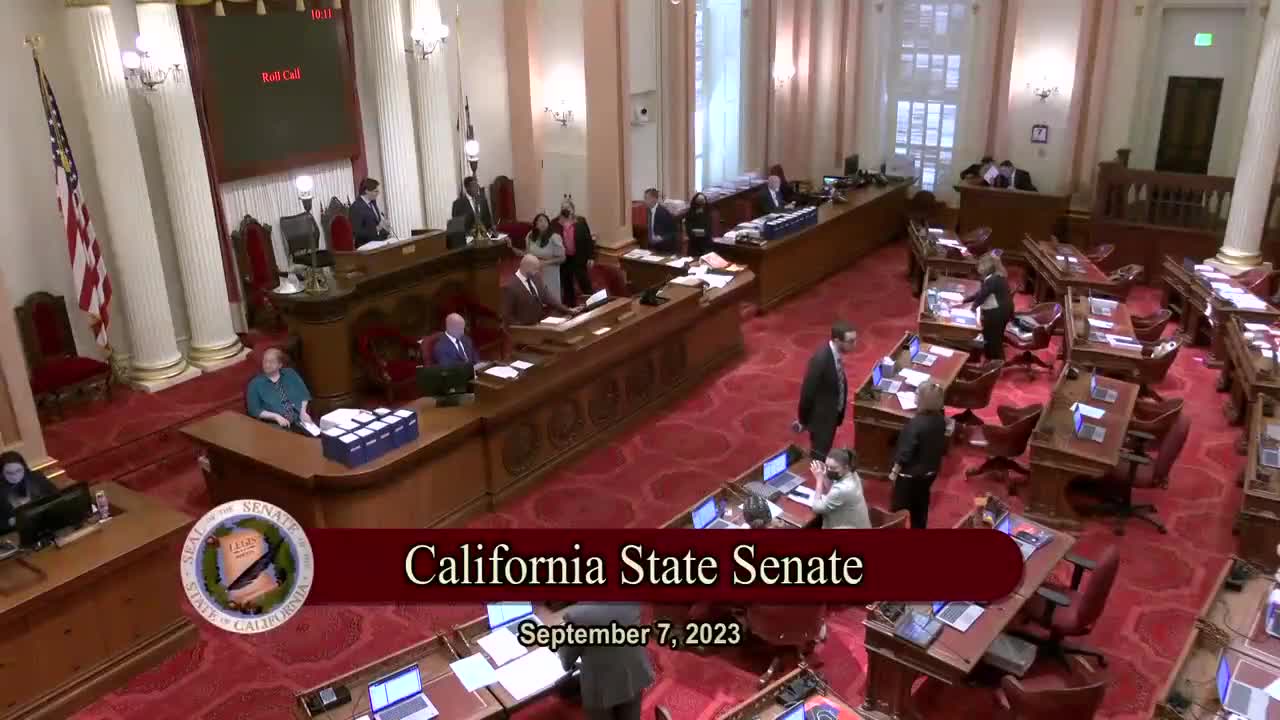
Bill Author

Bill Co-Author(s):