AB 574: Firearms: dealer records of sale.
- Session Year: 2023-2024
- House: Assembly
- Latest Version Date: 2023-09-26
Current Status:
Passed
(2023-09-26: Chaptered by Secretary of State - Chapter 237, Statutes of 2023.)
Introduced
In Committee
First Chamber
In Committee
Second Chamber
Enacted
What does this bill do?
The bill requires licensed firearms dealers to include a yes-or-no acknowledgment in the sale or transfer record showing the buyer or transferee has, within the past 30 days, checked and confirmed possession of every firearm they own or possess, affecting people acquiring firearms and dealers who keep those records.
The summary is provided by generative AI which can make mistakes. For original language, please view the details in the table below.
Existing law requires, except as exempted, any sale, loan, or transfer of a firearm to be conducted through a licensed firearm dealer, as specified.
Existing law requires each firearm dealer to keep a register or record of each firearm transaction and requires that register or record to include certain specified information, including information about the purchaser, information about the firearm, and the answers to certain questions by the purchaser or transferee relating to their eligibility to own or possess a firearm.
This bill would, beginning on March 1, 2025, additionally require the register or record to include the acknowledgment by the purchaser or transferee that they have, within the past 30 days, confirmed possession of every firearm that they own or possess.
This bill would incorporate additional changes to Section 28160 of the Penal Code proposed by AB 1420 to be operative only if this bill and AB 1420 are enacted and this bill is enacted last.
Existing law requires, except as exempted, any sale, loan, or transfer of a firearm to be conducted through a licensed firearm dealer, as specified.
Existing law requires each firearm dealer to keep a register or record of each firearm transaction and requires that register or record to include certain specified information, including information about the purchaser, information about the firearm, and the answers to certain questions by the purchaser or transferee relating to their eligibility to own or possess a firearm.
This bill would would, beginning on March 1, 2025, additionally require the register or record to include the acknowledgment by the purchaser or transferee that they have, within the past 30 days, confirmed possession of every firearm that they own or possess.
Existing law requires, except as exempted, any sale, loan, or transfer of a firearm to be conducted through a licensed firearm dealer, as specified.
Existing law requires each firearm dealer to keep a register or record of each firearm transaction and requires that register or record to include certain specified information, including information about the purchaser, information about the firearm, and the answers to certain questions by the purchaser or transferee relating to their eligibility to own or possess a firearm.
This bill would additionally require the register or record to include the acknowledgment by the purchaser or transferee that they have, within the past 30 days, confirmed possession of every firearm that they own or possess.
Existing law authorizes the sheriff of a county or the chief or other head of a municipal police department of any city or city and county to issue a license to carry a concealed firearm to an applicant for that license if the applicant is of good moral character, good cause exists for issuance of the license, the applicant meets specified residency requirements, and the applicant has completed a specified course of training, acceptable to the licensing authority. Existing law requires the course of training to include instruction on firearm handling and shooting technique and to also include a demonstration by the applicant of shooting proficiency and safe handling of each firearm the applicant will be licensed to carry and to include live-fire exercises conducted on a firing range.This bill would make technical, nonsubstantive changes to those provisions.Existing law authorizes the sheriff of a county or the chief or other head of a municipal police department of any city or city and county to issue a license to carry a concealed firearm to an applicant for that license if the applicant is of good moral character, good cause exists for issuance of the license, the applicant meets specified residency requirements, and the applicant has completed a specified course of training, acceptable to the licensing authority. Existing law requires the course of training to include instruction on firearm handling and shooting technique and to also include a demonstration by the applicant of shooting proficiency and safe handling of each firearm the applicant will be licensed to carry and to include live-fire exercises conducted on a firing range.
This bill would make technical, nonsubstantive changes to those provisions.
(a)For all firearms, the register or record of electronic transfer shall include all of the following information:
(1)The date and time of sale.
(2)The make of firearm.
(3)Peace officer exemption status pursuant to the provisions listed in subdivision (c) of Section 16585, and the agency name.
(4)Any applicable waiting period exemption information.
(5)California Firearms Dealer number issued pursuant to Article 1 (commencing with Section 26700) of Chapter 2.
(6)For transactions occurring on or after January 1, 2003, the purchasers handgun safety certificate number issued pursuant to Article 2 (commencing with Section 31610) of Chapter 4 of Division 10, or pursuant to former Article 8 (commencing with Section 12800) of Chapter 6 of Title 2 of Part 4, as that article read at any time from when it became operative on January 1, 2003, to when it was repealed by the Deadly Weapons Recodification Act of 2010.
(7)Manufacturers name if stamped on the firearm.
(8)Model name or number, if stamped on the firearm.
(9)Serial number, if applicable.
(10)Other number, if more than one serial number is stamped on the firearm.
(11)Any identification number or mark assigned to the firearm pursuant to Section 23910.
(12)If the firearm is not a handgun and does not have a serial number, identification number, or mark assigned to it, a notation as to that fact.
(13)Caliber.
(14)Type of firearm.
(15)If the firearm is new or used.
(16)Barrel length.
(17)Color of the firearm.
(18)Full name of purchaser.
(19)Purchasers complete date of birth.
(20)Purchasers local address.
(21)If current address is temporary, complete permanent address of purchaser.
(22)Identification of purchaser.
(23)Purchasers place of birth (state or country).
(24)Purchasers complete telephone number.
(25)Purchasers occupation.
(26)Purchasers gender.
(27)Purchasers physical description.
(28)All legal names and aliases ever used by the purchaser.
(29)Yes or no answer to questions that prohibit purchase, including, but not limited to, conviction of a felony as described in Chapter 2 (commencing with Section 29800) or an offense described in Chapter 3 (commencing with Section 29900) of Division 9, the purchasers status as a person described in Section 8100 of the Welfare and Institutions Code, whether the purchaser is a person who has been adjudicated by a court to be a danger to others or found not guilty by reason of insanity, and whether the purchaser is a person who has been found incompetent to stand trial or placed under conservatorship by a court pursuant to Section 8103 of the Welfare and Institutions Code.
(30)Signature of purchaser.
(31)Signature of salesperson, as a witness to the purchasers signature.
(32)Salespersons certificate of eligibility number, if the salesperson has obtained a certificate of eligibility.
(33)Name and complete address of the dealer or firm selling the firearm as shown on the dealers license.
(34)The establishment number, if assigned.
(35)The dealers complete business telephone number.
(36)Any information required by Chapter 5 (commencing with Section 28050).
(37)Any information required to determine whether subdivision (f) of Section 27540 applies.
(38)A statement of the penalties for signing a fictitious name or address, knowingly furnishing any incorrect information, or knowingly omitting any information required to be provided for the register.
(39)A statement informing the purchaser, after taking ownership of a firearm, of all of the following:
(A)Upon application, the Department of Justice shall furnish to the purchaser any information reported to the department as it relates to their ownership of that firearm.
(B)The purchaser is entitled to file a report of their acquisition, disposition, or ownership of a firearm with the department pursuant to Section 28000.
(C)Instructions for accessing the departments internet website for more information.
(40)For transactions on and after January 1, 2015, the purchasers firearm safety certificate number, except that in the case of a handgun, the number from an unexpired handgun safety certificate may be used.
(b)The purchaser shall provide the purchasers right thumbprint on the register in a manner prescribed by the department. No exception to this requirement shall be permitted except by regulations adopted by the department.
(c)The firearms dealer shall record on the register or record of electronic transfer the date that the firearm is delivered, together with the firearm dealers signature indicating delivery of the firearm.
(d)The purchaser shall sign the register or the record of electronic transfer on the date that the firearm is delivered to them.
(e)This section shall become inoperative on March 1, 2025, and, as of January 1, 2026, is repealed.
SEC. 1.5.Section 28160 of the Penal Code is amended to read:28160.(a)For all firearms, the register or record of electronic transfer shall include all of the following information:
(1)The date and time of sale.
(2)The make of firearm.
(3)Peace officer exemption status pursuant to the provisions listed in subdivision (c) of Section 16585, and the agency name.
(4)Any applicable waiting period exemption information.
(5)California Firearms Dealer number issued pursuant to Article 1 (commencing with Section 26700) of Chapter 2.
(6)The purchasers firearm safety certificate number issued pursuant to Article 2 (commencing with Section 31610) of Chapter 4 of Division 10 of this title.
(7)Manufacturers name if stamped on the firearm.
(8)Model name or number, if stamped on the firearm.
(9)Serial number, if applicable.
(10)Other number, if more than one serial number is stamped on the firearm.
(11)Any identification number or mark assigned to the firearm pursuant to Section 23910.
(12)If the firearm is not a handgun and does not have a serial number, identification number, or mark assigned to it, a notation as to that fact.
(13)Caliber.
(14)Type of firearm.
(15)If the firearm is new or used.
(16)Barrel length.
(17)Color of the firearm.
(18)Full name of purchaser.
(19)Purchasers complete date of birth.
(20)Purchasers local address.
(21)If current address is temporary, complete permanent address of purchaser.
(22)For transactions on and after September 1, 2025, purchasers email address.
(23)Identification of purchaser.
(24)Purchasers place of birth (state or country).
(25)Purchasers complete telephone number.
(26)Purchasers occupation.
(27)Purchasers gender.
(28)Purchasers physical description.
(29)All legal names and aliases ever used by the purchaser.
(30)Yes or no answer to questions that prohibit purchase, including, but not limited to, conviction of a felony as described in Chapter 2 (commencing with Section 29800) or an offense described in Chapter 3 (commencing with Section 29900) of Division 9, the purchasers status as a person described in Section 8100 of the Welfare and Institutions Code, whether the purchaser is a person who has been adjudicated by a court to be a danger to others or found not guilty by reason of insanity, and whether the purchaser is a person who has been found incompetent to stand trial or placed under conservatorship by a court pursuant to Section 8103 of the Welfare and Institutions Code.
(31)Signature of purchaser.
(32)Signature of salesperson, as a witness to the purchasers signature.
(33)Salespersons certificate of eligibility number, if the salesperson has obtained a certificate of eligibility.
(34)Name and complete address of the dealer or firm selling the firearm as shown on the dealers license.
(35)The establishment number, if assigned.
(36)The dealers complete business telephone number.
(37)Any information required by Chapter 5 (commencing with Section 28050).
(38)Any information required to determine whether subdivision (f) of Section 27540 applies.
(39)A statement of the penalties for signing a fictitious name or address, knowingly furnishing any incorrect information, or knowingly omitting any information required to be provided for the register.
(40)A statement informing the purchaser, after taking ownership of a firearm, of all of the following:
(A)Upon application, the Department of Justice shall furnish to the purchaser any information reported to the department as it relates to their ownership of that firearm.
(B)The purchaser is entitled to file a report of their acquisition, disposition, or ownership of a firearm with the department pursuant to Section 28000.
(C)Instructions for accessing the departments internet website for more information.
(41)For transactions on and after January 1, 2015, the purchasers firearm safety certificate number, except that in the case of a handgun, the number from an unexpired handgun safety certificate may be used.
(b)The purchaser shall provide the purchasers right thumbprint on the register in a manner prescribed by the department. No exception to this requirement shall be permitted except by regulations adopted by the department.
(c)The firearms dealer shall record on the register or record of electronic transfer the date that the firearm is delivered, together with the firearm dealers signature indicating delivery of the firearm.
(d)The purchaser shall sign the register or the record of electronic transfer on the date that the firearm is delivered to them.
(e)This section shall become inoperative on March 1, 2025, and, as of January 1, 2026, is repealed.
SEC. 2.Section 28160 is added to the Penal Code, to read:28160.(a)For all firearms, the register or record of electronic transfer shall include all of the following information:
(1)The date and time of sale.
(2)The make of firearm.
(3)Peace officer exemption status pursuant to the provisions listed in subdivision (c) of Section 16585, and the agency name.
(4)Any applicable waiting period exemption information.
(5)California Firearms Dealer number issued pursuant to Article 1 (commencing with Section 26700) of Chapter 2.
(6)For transactions occurring on or after January 1, 2003, the purchasers handgun safety certificate number issued pursuant to Article 2 (commencing with Section 31610) of Chapter 4 of Division 10, or pursuant to former Article 8 (commencing with Section 12800) of Chapter 6 of Title 2 of Part 4, as that article read at any time from when it became operative on January 1, 2003, to when it was repealed by the Deadly Weapons Recodification Act of 2010.
(7)Manufacturers name if stamped on the firearm.
(8)Model name or number, if stamped on the firearm.
(9)Serial number, if applicable.
(10)Other number, if more than one serial number is stamped on the firearm.
(11)Any identification number or mark assigned to the firearm pursuant to Section 23910.
(12)If the firearm is not a handgun and does not have a serial number, identification number, or mark assigned to it, a notation as to that fact.
(13)Caliber.
(14)Type of firearm.
(15)If the firearm is new or used.
(16)Barrel length.
(17)Color of the firearm.
(18)Full name of purchaser.
(19)Purchasers complete date of birth.
(20)Purchasers local address.
(21)If current address is temporary, complete permanent address of purchaser.
(22)Identification of purchaser.
(23)Purchasers place of birth (state or country).
(24)Purchasers complete telephone number.
(25)Purchasers occupation.
(26)Purchasers gender.
(27)Purchasers physical description.
(28)All legal names and aliases ever used by the purchaser.
(29)Yes or no answer to questions that prohibit purchase, including, but not limited to, conviction of a felony as described in Chapter 2 (commencing with Section 29800) or an offense described in Chapter 3 (commencing with Section 29900) of Division 9, the purchasers status as a person described in Section 8100 of the Welfare and Institutions Code, whether the purchaser is a person who has been adjudicated by a court to be a danger to others or found not guilty by reason of insanity, and whether the purchaser is a person who has been found incompetent to stand trial or placed under conservatorship by a court pursuant to Section 8103 of the Welfare and Institutions Code.
(30)Yes or no answer to a question that inquires whether the purchaser has, within the past 30 days, checked and confirmed possession of all firearms currently owned or possessed.
(31)Signature of purchaser.
(32)Signature of salesperson, as a witness to the purchasers signature.
(33)Salespersons certificate of eligibility number, if the salesperson has obtained a certificate of eligibility.
(34)Name and complete address of the dealer or firm selling the firearm as shown on the dealers license.
(35)The establishment number, if assigned.
(36)The dealers complete business telephone number.
(37)Any information required by Chapter 5 (commencing with Section 28050).
(38)Any information required to determine whether subdivision (f) of Section 27540 applies.
(39)A statement of the penalties for signing a fictitious name or address, knowingly furnishing any incorrect information, or knowingly omitting any information required to be provided for the register.
(40)A statement informing the purchaser, after taking ownership of a firearm, of all of the following:
(A)Upon application, the Department of Justice shall furnish to the purchaser any information reported to the department as it relates to their ownership of that firearm.
(B)The purchaser is entitled to file a report of their acquisition, disposition, or ownership of a firearm with the department pursuant to Section 28000.
(C)Instructions for accessing the departments internet website for more information.
(41)For transactions on and after January 1, 2015, the purchasers firearm safety certificate number, except that in the case of a handgun, the number from an unexpired handgun safety certificate may be used.
(b)The purchaser shall provide the purchasers right thumbprint on the register in a manner prescribed by the department. No exception to this requirement shall be permitted except by regulations adopted by the department.
(c)The firearms dealer shall record on the register or record of electronic transfer the date that the firearm is delivered, together with the firearm dealers signature indicating delivery of the firearm.
(d)The purchaser shall sign the register or the record of electronic transfer on the date that the firearm is delivered to them.
(e)This section shall become operative on March 1, 2025.
SEC. 2.5.Section 28160 is added to the Penal Code, to read:28160.(a)For all firearms, the register or record of electronic transfer shall include all of the following information:
(1)The date and time of sale.
(2)The make of firearm.
(3)Peace officer exemption status pursuant to the provisions listed in subdivision (c) of Section 16585, and the agency name.
(4)Any applicable waiting period exemption information.
(5)California Firearms Dealer number issued pursuant to Article 1 (commencing with Section 26700) of Chapter 2.
(6)The purchasers firearm safety certificate number issued pursuant to Article 2 (commencing with Section 31610) of Chapter 4 of Division 10 of this title.
(7)Manufacturers name if stamped on the firearm.
(8)Model name or number, if stamped on the firearm.
(9)Serial number, if applicable.
(10)Other number, if more than one serial number is stamped on the firearm.
(11)Any identification number or mark assigned to the firearm pursuant to Section 23910.
(12)If the firearm is not a handgun and does not have a serial number, identification number, or mark assigned to it, a notation as to that fact.
(13)Caliber.
(14)Type of firearm.
(15)If the firearm is new or used.
(16)Barrel length.
(17)Color of the firearm.
(18)Full name of purchaser.
(19)Purchasers complete date of birth.
(20)Purchasers local address.
(21)If current address is temporary, complete permanent address of purchaser.
(22)For transactions on and after September 1, 2025, purchasers email address.
(23)Identification of purchaser.
(24)Purchasers place of birth (state or country).
(25)Purchasers complete telephone number.
(26)Purchasers occupation.
(27)Purchasers gender.
(28)Purchasers physical description.
(29)All legal names and aliases ever used by the purchaser.
(30)Yes or no answer to questions that prohibit purchase, including, but not limited to, conviction of a felony as described in Chapter 2 (commencing with Section 29800) or an offense described in Chapter 3 (commencing with Section 29900) of Division 9, the purchasers status as a person described in Section 8100 of the Welfare and Institutions Code, whether the purchaser is a person who has been adjudicated by a court to be a danger to others or found not guilty by reason of insanity, and whether the purchaser is a person who has been found incompetent to stand trial or placed under conservatorship by a court pursuant to Section 8103 of the Welfare and Institutions Code.
(31)Yes or no answer to a question that inquires whether the purchaser has, within the past 30 days, checked and confirmed possession of all firearms currently owned or possessed.
(32)Signature of purchaser.
(33)Signature of salesperson, as a witness to the purchasers signature.
(34)Salespersons certificate of eligibility number, if the salesperson has obtained a certificate of eligibility.
(35)Name and complete address of the dealer or firm selling the firearm as shown on the dealers license.
(36)The establishment number, if assigned.
(37)The dealers complete business telephone number.
(38)Any information required by Chapter 5 (commencing with Section 28050).
(39)Any information required to determine whether subdivision (f) of Section 27540 applies.
(40)A statement of the penalties for signing a fictitious name or address, knowingly furnishing any incorrect information, or knowingly omitting any information required to be provided for the register.
(41)A statement informing the purchaser, after taking ownership of a firearm, of all of the following:
(A)Upon application, the Department of Justice shall furnish to the purchaser any information reported to the department as it relates to their ownership of that firearm.
(B)The purchaser is entitled to file a report of their acquisition, disposition, or ownership of a firearm with the department pursuant to Section 28000.
(C)Instructions for accessing the departments internet website for more information.
(42)For transactions on and after January 1, 2015, the purchasers firearm safety certificate number, except that in the case of a handgun, the number from an unexpired handgun safety certificate may be used.
(b)The purchaser shall provide the purchasers right thumbprint on the register in a manner prescribed by the department. No exception to this requirement shall be permitted except by regulations adopted by the department.
(c)The firearms dealer shall record on the register or record of electronic transfer the date that the firearm is delivered, together with the firearm dealers signature indicating delivery of the firearm.
(d)The purchaser shall sign the register or the record of electronic transfer on the date that the firearm is delivered to them.
(e)This section shall become operative on March 1, 2025.
SEC. 3.(a)Section 1.5 of this bill incorporates amendments to Section 28160 of the Penal Code proposed by both this bill and Assembly Bill 1420. That section shall only become operative if (1) both bills are enacted and become effective on or before January 1, 2023, (2) each bill amends Section 28160 of the Penal Code, and (3) this bill is enacted after Assembly Bill 1420, in which case Section 1 of this bill shall not become operative.
(b)Section 2.5 of this bill incorporates amendments to Section 28160 of the Penal Code proposed by both this bill and Assembly Bill 1420. That section shall only become operative if (1) both bills are enacted and become effective on or before January 1, 2023, and (2) each bill amends Section 28160 of the Penal Code, in which case Section 2 of this bill shall not become operative.
(a)For all firearms, the register or record of electronic transfer shall include all of the following information:
(1)The date and time of sale.
(2)The make of firearm.
(3)Peace officer exemption status pursuant to the provisions listed in subdivision (c) of Section 16585, and the agency name.
(4)Any applicable waiting period exemption information.
(5)California Firearms Dealer number issued pursuant to Article 1 (commencing with Section 26700) of Chapter 2.
(6)For transactions occurring on or after January 1, 2003, the purchasers handgun safety certificate number issued pursuant to Article 2 (commencing with Section 31610) of Chapter 4 of Division 10, or pursuant to former Article 8 (commencing with Section 12800) of Chapter 6 of Title 2 of Part 4, as that article read at any time from when it became operative on January 1, 2003, to when it was repealed by the Deadly Weapons Recodification Act of 2010.
(7)Manufacturers name if stamped on the firearm.
(8)Model name or number, if stamped on the firearm.
(9)Serial number, if applicable.
(10)Other number, if more than one serial number is stamped on the firearm.
(11)Any identification number or mark assigned to the firearm pursuant to Section 23910.
(12)If the firearm is not a handgun and does not have a serial number, identification number, or mark assigned to it, a notation as to that fact.
(13)Caliber.
(14)Type of firearm.
(15)If the firearm is new or used.
(16)Barrel length.
(17)Color of the firearm.
(18)Full name of purchaser.
(19)Purchasers complete date of birth.
(20)Purchasers local address.
(21)If current address is temporary, complete permanent address of purchaser.
(22)Identification of purchaser.
(23)Purchasers place of birth (state or country).
(24)Purchasers complete telephone number.
(25)Purchasers occupation.
(26)Purchasers gender.
(27)Purchasers physical description.
(28)All legal names and aliases ever used by the purchaser.
(29)Yes or no answer to questions that prohibit purchase, including, but not limited to, conviction of a felony as described in Chapter 2 (commencing with Section 29800) or an offense described in Chapter 3 (commencing with Section 29900) of Division 9, the purchasers status as a person described in Section 8100 of the Welfare and Institutions Code, whether the purchaser is a person who has been adjudicated by a court to be a danger to others or found not guilty by reason of insanity, and whether the purchaser is a person who has been found incompetent to stand trial or placed under conservatorship by a court pursuant to Section 8103 of the Welfare and Institutions Code.
(30)Signature of purchaser.
(31)Signature of salesperson, as a witness to the purchasers signature.
(32)Salespersons certificate of eligibility number, if the salesperson has obtained a certificate of eligibility.
(33)Name and complete address of the dealer or firm selling the firearm as shown on the dealers license.
(34)The establishment number, if assigned.
(35)The dealers complete business telephone number.
(36)Any information required by Chapter 5 (commencing with Section 28050).
(37)Any information required to determine whether subdivision (f) of Section 27540 applies.
(38)A statement of the penalties for signing a fictitious name or address, knowingly furnishing any incorrect information, or knowingly omitting any information required to be provided for the register.
(39)A statement informing the purchaser, after taking ownership of a firearm, of all of the following:
(A)Upon application, the Department of Justice shall furnish to the purchaser any information reported to the department as it relates to their ownership of that firearm.
(B)The purchaser is entitled to file a report of their acquisition, disposition, or ownership of a firearm with the department pursuant to Section 28000.
(C)Instructions for accessing the departments internet website for more information.
(40)For transactions on and after January 1, 2015, the purchasers firearm safety certificate number, except that in the case of a handgun, the number from an unexpired handgun safety certificate may be used.
(b)The purchaser shall provide the purchasers right thumbprint on the register in a manner prescribed by the department. No exception to this requirement shall be permitted except by regulations adopted by the department.
(c)The firearms dealer shall record on the register or record of electronic transfer the date that the firearm is delivered, together with the firearm dealers signature indicating delivery of the firearm.
(d)The purchaser shall sign the register or the record of electronic transfer on the date that the firearm is delivered to them.
(e)This section shall become inoperative on March 1, 2025, and, as of January 1, 2026, is repealed.
SEC. 1.5.Section 28160 of the Penal Code is amended to read:28160.(a)For all firearms, the register or record of electronic transfer shall include all of the following information:
(1)The date and time of sale.
(2)The make of firearm.
(3)Peace officer exemption status pursuant to the provisions listed in subdivision (c) of Section 16585, and the agency name.
(4)Any applicable waiting period exemption information.
(5)California Firearms Dealer number issued pursuant to Article 1 (commencing with Section 26700) of Chapter 2.
(6)For transactions occurring on or after January 1, 2003, the purchasers handgun The purchasers firearm safety certificate number issued pursuant to Article 2 (commencing with Section 31610) of Chapter 4 of Division 10 of this title, or pursuant to former Article 8 (commencing with Section 12800) of Chapter 6 of Title 2 of Part 4, as that article read at any time from when it became operative on January 1, 2003, to when it was repealed by the Deadly Weapons Recodification Act of 2010. 10 of this title.
(7)Manufacturers name if stamped on the firearm.
(8)Model name or number, if stamped on the firearm.
(9)Serial number, if applicable.
(10)Other number, if more than one serial number is stamped on the firearm.
(11)Any identification number or mark assigned to the firearm pursuant to Section 23910.
(12)If the firearm is not a handgun and does not have a serial number, identification number, or mark assigned to it, a notation as to that fact.
(13)Caliber.
(14)Type of firearm.
(15)If the firearm is new or used.
(16)Barrel length.
(17)Color of the firearm.
(18)Full name of purchaser.
(19)Purchasers complete date of birth.
(20)Purchasers local address.
(21)If current address is temporary, complete permanent address of purchaser.
(22)For transactions on and after September 1, 2025, purchasers email address.
(22)(23)Identification of purchaser.
(23)(24)Purchasers place of birth (state or country).
(24)(25)Purchasers complete telephone number.
(25)(26)Purchasers occupation.
(26)(27)Purchasers gender.
(27)(28)Purchasers physical description.
(28)(29)All legal names and aliases ever used by the purchaser.
(29)(30)Yes or no answer to questions that prohibit purchase, including, but not limited to, conviction of a felony as described in Chapter 2 (commencing with Section 29800) or an offense described in Chapter 3 (commencing with Section 29900) of Division 9 of this title, 9, the purchasers status as a person described in Section 8100 of the Welfare and Institutions Code, whether the purchaser is a person who has been adjudicated by a court to be a danger to others or found not guilty by reason of insanity, and whether the purchaser is a person who has been found incompetent to stand trial or placed under conservatorship by a court pursuant to Section 8103 of the Welfare and Institutions Code.
(30)(31)Signature of purchaser.
(31)(32)Signature of salesperson, as a witness to the purchasers signature.
(32)(33)Salespersons certificate of eligibility number, if the salesperson has obtained a certificate of eligibility.
(33)(34)Name and complete address of the dealer or firm selling the firearm as shown on the dealers license.
(34)(35)The establishment number, if assigned.
(35)(36)The dealers complete business telephone number.
(36)(37)Any information required by Chapter 5 (commencing with Section 28050).
(37)(38)Any information required to determine whether subdivision (f) of Section 27540 applies.
(38)(39)A statement of the penalties for signing a fictitious name or address, knowingly furnishing any incorrect information, or knowingly omitting any information required to be provided for the register.
(39)(40)A statement informing the purchaser, after his or her taking ownership of a firearm, of all of the following:
(A)Upon his or her application, the Department of Justice shall furnish him or her to the purchaser any information reported to the department as it relates to his or her their ownership of that firearm.
(B)The purchaser is entitled to file a report of his or her their acquisition, disposition, or ownership of a firearm with the department pursuant to Section 28000.
(C)Instructions for accessing the departments Internet Web site internet website for more information.
(40)(41)For transactions on and after January 1, 2015, the purchasers firearm safety certificate number, except that in the case of a handgun, the number from an unexpired handgun safety certificate may be used.
(b)The purchaser shall provide the purchasers right thumbprint on the register in a manner prescribed by the department. No exception to this requirement shall be permitted except by regulations adopted by the department.
(c)The firearms dealer shall record on the register or record of electronic transfer the date that the firearm is delivered, together with the firearm dealers signature indicating delivery of the firearm.
(d)The purchaser shall sign the register or the record of electronic transfer on the date that the firearm is delivered to him or her. them.
(e)This section shall become inoperative on March 1, 2025, and, as of January 1, 2026, is repealed.
SEC. 2.Section 28160 is added to the Penal Code, to read:28160.(a)For all firearms, the register or record of electronic transfer shall include all of the following information:
(1)The date and time of sale.
(2)The make of firearm.
(3)Peace officer exemption status pursuant to the provisions listed in subdivision (c) of Section 16585, and the agency name.
(4)Any applicable waiting period exemption information.
(5)California Firearms Dealer number issued pursuant to Article 1 (commencing with Section 26700) of Chapter 2.
(6)For transactions occurring on or after January 1, 2003, the purchasers handgun safety certificate number issued pursuant to Article 2 (commencing with Section 31610) of Chapter 4 of Division 10, or pursuant to former Article 8 (commencing with Section 12800) of Chapter 6 of Title 2 of Part 4, as that article read at any time from when it became operative on January 1, 2003, to when it was repealed by the Deadly Weapons Recodification Act of 2010.
(7)Manufacturers name if stamped on the firearm.
(8)Model name or number, if stamped on the firearm.
(9)Serial number, if applicable.
(10)Other number, if more than one serial number is stamped on the firearm.
(11)Any identification number or mark assigned to the firearm pursuant to Section 23910.
(12)If the firearm is not a handgun and does not have a serial number, identification number, or mark assigned to it, a notation as to that fact.
(13)Caliber.
(14)Type of firearm.
(15)If the firearm is new or used.
(16)Barrel length.
(17)Color of the firearm.
(18)Full name of purchaser.
(19)Purchasers complete date of birth.
(20)Purchasers local address.
(21)If current address is temporary, complete permanent address of purchaser.
(22)Identification of purchaser.
(23)Purchasers place of birth (state or country).
(24)Purchasers complete telephone number.
(25)Purchasers occupation.
(26)Purchasers gender.
(27)Purchasers physical description.
(28)All legal names and aliases ever used by the purchaser.
(29)Yes or no answer to questions that prohibit purchase, including, but not limited to, conviction of a felony as described in Chapter 2 (commencing with Section 29800) or an offense described in Chapter 3 (commencing with Section 29900) of Division 9, the purchasers status as a person described in Section 8100 of the Welfare and Institutions Code, whether the purchaser is a person who has been adjudicated by a court to be a danger to others or found not guilty by reason of insanity, and whether the purchaser is a person who has been found incompetent to stand trial or placed under conservatorship by a court pursuant to Section 8103 of the Welfare and Institutions Code.
(30)Yes or no answer to a question that inquires whether the purchaser has, within the past 30 days, checked and confirmed possession of all firearms currently owned or possessed.
(31)Signature of purchaser.
(32)Signature of salesperson, as a witness to the purchasers signature.
(33)Salespersons certificate of eligibility number, if the salesperson has obtained a certificate of eligibility.
(34)Name and complete address of the dealer or firm selling the firearm as shown on the dealers license.
(35)The establishment number, if assigned.
(36)The dealers complete business telephone number.
(37)Any information required by Chapter 5 (commencing with Section 28050).
(38)Any information required to determine whether subdivision (f) of Section 27540 applies.
(39)A statement of the penalties for signing a fictitious name or address, knowingly furnishing any incorrect information, or knowingly omitting any information required to be provided for the register.
(40)A statement informing the purchaser, after taking ownership of a firearm, of all of the following:
(A)Upon application, the Department of Justice shall furnish to the purchaser any information reported to the department as it relates to their ownership of that firearm.
(B)The purchaser is entitled to file a report of their acquisition, disposition, or ownership of a firearm with the department pursuant to Section 28000.
(C)Instructions for accessing the departments internet website for more information.
(41)For transactions on and after January 1, 2015, the purchasers firearm safety certificate number, except that in the case of a handgun, the number from an unexpired handgun safety certificate may be used.
(b)The purchaser shall provide the purchasers right thumbprint on the register in a manner prescribed by the department. No exception to this requirement shall be permitted except by regulations adopted by the department.
(c)The firearms dealer shall record on the register or record of electronic transfer the date that the firearm is delivered, together with the firearm dealers signature indicating delivery of the firearm.
(d)The purchaser shall sign the register or the record of electronic transfer on the date that the firearm is delivered to them.
(e)This section shall become operative on March 1, 2025.
SEC. 2.5.Section 28160 is added to the Penal Code, to read:28160.(a)For all firearms, the register or record of electronic transfer shall include all of the following information:
(1)The date and time of sale.
(2)The make of firearm.
(3)Peace officer exemption status pursuant to the provisions listed in subdivision (c) of Section 16585, and the agency name.
(4)Any applicable waiting period exemption information.
(5)California Firearms Dealer number issued pursuant to Article 1 (commencing with Section 26700) of Chapter 2.
(6)The purchasers firearm safety certificate number issued pursuant to Article 2 (commencing with Section 31610) of Chapter 4 of Division 10 of this title.
(7)Manufacturers name if stamped on the firearm.
(8)Model name or number, if stamped on the firearm.
(9)Serial number, if applicable.
(10)Other number, if more than one serial number is stamped on the firearm.
(11)Any identification number or mark assigned to the firearm pursuant to Section 23910.
(12)If the firearm is not a handgun and does not have a serial number, identification number, or mark assigned to it, a notation as to that fact.
(13)Caliber.
(14)Type of firearm.
(15)If the firearm is new or used.
(16)Barrel length.
(17)Color of the firearm.
(18)Full name of purchaser.
(19)Purchasers complete date of birth.
(20)Purchasers local address.
(21)If current address is temporary, complete permanent address of purchaser.
(22)For transactions on and after September 1, 2025, purchasers email address.
(23)Identification of purchaser.
(24)Purchasers place of birth (state or country).
(25)Purchasers complete telephone number.
(26)Purchasers occupation.
(27)Purchasers gender.
(28)Purchasers physical description.
(29)All legal names and aliases ever used by the purchaser.
(30)Yes or no answer to questions that prohibit purchase, including, but not limited to, conviction of a felony as described in Chapter 2 (commencing with Section 29800) or an offense described in Chapter 3 (commencing with Section 29900) of Division 9, the purchasers status as a person described in Section 8100 of the Welfare and Institutions Code, whether the purchaser is a person who has been adjudicated by a court to be a danger to others or found not guilty by reason of insanity, and whether the purchaser is a person who has been found incompetent to stand trial or placed under conservatorship by a court pursuant to Section 8103 of the Welfare and Institutions Code.
(31)Yes or no answer to a question that inquires whether the purchaser has, within the past 30 days, checked and confirmed possession of all firearms currently owned or possessed.
(32)Signature of purchaser.
(33)Signature of salesperson, as a witness to the purchasers signature.
(34)Salespersons certificate of eligibility number, if the salesperson has obtained a certificate of eligibility.
(35)Name and complete address of the dealer or firm selling the firearm as shown on the dealers license.
(36)The establishment number, if assigned.
(37)The dealers complete business telephone number.
(38)Any information required by Chapter 5 (commencing with Section 28050).
(39)Any information required to determine whether subdivision (f) of Section 27540 applies.
(40)A statement of the penalties for signing a fictitious name or address, knowingly furnishing any incorrect information, or knowingly omitting any information required to be provided for the register.
(41)A statement informing the purchaser, after taking ownership of a firearm, of all of the following:
(A)Upon application, the Department of Justice shall furnish to the purchaser any information reported to the department as it relates to their ownership of that firearm.
(B)The purchaser is entitled to file a report of their acquisition, disposition, or ownership of a firearm with the department pursuant to Section 28000.
(C)Instructions for accessing the departments internet website for more information.
(42)For transactions on and after January 1, 2015, the purchasers firearm safety certificate number, except that in the case of a handgun, the number from an unexpired handgun safety certificate may be used.
(b)The purchaser shall provide the purchasers right thumbprint on the register in a manner prescribed by the department. No exception to this requirement shall be permitted except by regulations adopted by the department.
(c)The firearms dealer shall record on the register or record of electronic transfer the date that the firearm is delivered, together with the firearm dealers signature indicating delivery of the firearm.
(d)The purchaser shall sign the register or the record of electronic transfer on the date that the firearm is delivered to them.
(e)This section shall become operative on March 1, 2025.
SEC. 3.(a)Section 1.5 of this bill incorporates amendments to Section 28160 of the Penal Code proposed by both this bill and Assembly Bill 1420. That section shall only become operative if (1) both bills are enacted and become effective on or before January 1, 2023, (2) each bill amends Section 28160 of the Penal Code, and (3) this bill is enacted after Assembly Bill 1420, in which case Section 1 of this bill shall not become operative.
(b)Section 2.5 of this bill incorporates amendments to Section 28160 of the Penal Code proposed by both this bill and Assembly Bill 1420. That section shall only become operative if (1) both bills are enacted and become effective on or before January 1, 2023, and (2) each bill amends Section 28160 of the Penal Code, in which case Section 2 of this bill shall not become operative.
(a)For all firearms, the register or record of electronic transfer shall include all of the following information:
(1)The date and time of sale.
(2)The make of firearm.
(3)Peace officer exemption status pursuant to the provisions listed in subdivision (c) of Section 16585, and the agency name.
(4)Any applicable waiting period exemption information.
(5)California Firearms Dealer number issued pursuant to Article 1 (commencing with Section 26700) of Chapter 2.
(6)For transactions occurring on or after January 1, 2003, the purchasers handgun safety certificate number issued pursuant to Article 2 (commencing with Section 31610) of Chapter 4 of Division 10 of this title, 10, or pursuant to former Article 8 (commencing with Section 12800) of Chapter 6 of Title 2 of Part 4, as that article read at any time from when it became operative on January 1, 2003, to when it was repealed by the Deadly Weapons Recodification Act of 2010.
(7)Manufacturers name if stamped on the firearm.
(8)Model name or number, if stamped on the firearm.
(9)Serial number, if applicable.
(10)Other number, if more than one serial number is stamped on the firearm.
(11)Any identification number or mark assigned to the firearm pursuant to Section 23910.
(12)If the firearm is not a handgun and does not have a serial number, identification number, or mark assigned to it, a notation as to that fact.
(13)Caliber.
(14)Type of firearm.
(15)If the firearm is new or used.
(16)Barrel length.
(17)Color of the firearm.
(18)Full name of purchaser.
(19)Purchasers complete date of birth.
(20)Purchasers local address.
(21)If current address is temporary, complete permanent address of purchaser.
(22)Identification of purchaser.
(23)Purchasers place of birth (state or country).
(24)Purchasers complete telephone number.
(25)Purchasers occupation.
(26)Purchasers gender.
(27)Purchasers physical description.
(28)All legal names and aliases ever used by the purchaser.
(29)Yes or no answer to questions that prohibit purchase, including, but not limited to, conviction of a felony as described in Chapter 2 (commencing with Section 29800) or an offense described in Chapter 3 (commencing with Section 29900) of Division 9 of this title, 9, the purchasers status as a person described in Section 8100 of the Welfare and Institutions Code, whether the purchaser is a person who has been adjudicated by a court to be a danger to others or found not guilty by reason of insanity, and whether the purchaser is a person who has been found incompetent to stand trial or placed under conservatorship by a court pursuant to Section 8103 of the Welfare and Institutions Code.
(30)Signature of purchaser.
(31)Signature of salesperson, as a witness to the purchasers signature.
(32)Salespersons certificate of eligibility number, if the salesperson has obtained a certificate of eligibility.
(33)Name and complete address of the dealer or firm selling the firearm as shown on the dealers license.
(34)The establishment number, if assigned.
(35)The dealers complete business telephone number.
(36)Any information required by Chapter 5 (commencing with Section 28050).
(37)Any information required to determine whether subdivision (f) of Section 27540 applies.
(38)A statement of the penalties for signing a fictitious name or address, knowingly furnishing any incorrect information, or knowingly omitting any information required to be provided for the register.
(39)A statement informing the purchaser, after his or her taking ownership of a firearm, of all of the following:
(A)Upon his or her application, the Department of Justice shall furnish him or her to the purchaser any information reported to the department as it relates to his or her their ownership of that firearm.
(B)The purchaser is entitled to file a report of his or her their acquisition, disposition, or ownership of a firearm with the department pursuant to Section 28000.
(C)Instructions for accessing the departments Internet Web site internet website for more information.
(40)For transactions on and after January 1, 2015, the purchasers firearm safety certificate number, except that in the case of a handgun, the number from an unexpired handgun safety certificate may be used.
(b)The purchaser shall provide the purchasers right thumbprint on the register in a manner prescribed by the department. No exception to this requirement shall be permitted except by regulations adopted by the department.
(c)The firearms dealer shall record on the register or record of electronic transfer the date that the firearm is delivered, together with the firearm dealers signature indicating delivery of the firearm.
(d)The purchaser shall sign the register or the record of electronic transfer on the date that the firearm is delivered to him or her. them.
(e)This section shall become inoperative on March 1, 2025, and, as of January 1, 2026, is repealed.
SEC. 2.Section 28160 is added to the Penal Code, to read:28160.(a)For all firearms, the register or record of electronic transfer shall include all of the following information:
(1)The date and time of sale.
(2)The make of firearm.
(3)Peace officer exemption status pursuant to the provisions listed in subdivision (c) of Section 16585, and the agency name.
(4)Any applicable waiting period exemption information.
(5)California Firearms Dealer number issued pursuant to Article 1 (commencing with Section 26700) of Chapter 2.
(6)For transactions occurring on or after January 1, 2003, the purchasers handgun safety certificate number issued pursuant to Article 2 (commencing with Section 31610) of Chapter 4 of Division 10, or pursuant to former Article 8 (commencing with Section 12800) of Chapter 6 of Title 2 of Part 4, as that article read at any time from when it became operative on January 1, 2003, to when it was repealed by the Deadly Weapons Recodification Act of 2010.
(7)Manufacturers name if stamped on the firearm.
(8)Model name or number, if stamped on the firearm.
(9)Serial number, if applicable.
(10)Other number, if more than one serial number is stamped on the firearm.
(11)Any identification number or mark assigned to the firearm pursuant to Section 23910.
(12)If the firearm is not a handgun and does not have a serial number, identification number, or mark assigned to it, a notation as to that fact.
(13)Caliber.
(14)Type of firearm.
(15)If the firearm is new or used.
(16)Barrel length.
(17)Color of the firearm.
(18)Full name of purchaser.
(19)Purchasers complete date of birth.
(20)Purchasers local address.
(21)If current address is temporary, complete permanent address of purchaser.
(22)Identification of purchaser.
(23)Purchasers place of birth (state or country).
(24)Purchasers complete telephone number.
(25)Purchasers occupation.
(26)Purchasers gender.
(27)Purchasers physical description.
(28)All legal names and aliases ever used by the purchaser.
(29)Yes or no answer to questions that prohibit purchase, including, but not limited to, conviction of a felony as described in Chapter 2 (commencing with Section 29800) or an offense described in Chapter 3 (commencing with Section 29900) of Division 9, the purchasers status as a person described in Section 8100 of the Welfare and Institutions Code, whether the purchaser is a person who has been adjudicated by a court to be a danger to others or found not guilty by reason of insanity, and whether the purchaser is a person who has been found incompetent to stand trial or placed under conservatorship by a court pursuant to Section 8103 of the Welfare and Institutions Code.
(30)Yes or no answer to a question that inquires whether the purchaser has, within the past 30 days, checked and confirmed possession of all firearms currently owned or possessed.
(31)Signature of purchaser.
(32)Signature of salesperson, as a witness to the purchasers signature.
(33)Salespersons certificate of eligibility number, if the salesperson has obtained a certificate of eligibility.
(34)Name and complete address of the dealer or firm selling the firearm as shown on the dealers license.
(35)The establishment number, if assigned.
(36)The dealers complete business telephone number.
(37)Any information required by Chapter 5 (commencing with Section 28050).
(38)Any information required to determine whether subdivision (f) of Section 27540 applies.
(39)A statement of the penalties for signing a fictitious name or address, knowingly furnishing any incorrect information, or knowingly omitting any information required to be provided for the register.
(40)A statement informing the purchaser, after taking ownership of a firearm, of all of the following:
(A)Upon application, the Department of Justice shall furnish to the purchaser any information reported to the department as it relates to their ownership of that firearm.
(B)The purchaser is entitled to file a report of their acquisition, disposition, or ownership of a firearm with the department pursuant to Section 28000.
(C)Instructions for accessing the departments internet website for more information.
(41)For transactions on and after January 1, 2015, the purchasers firearm safety certificate number, except that in the case of a handgun, the number from an unexpired handgun safety certificate may be used.
(b)The purchaser shall provide the purchasers right thumbprint on the register in a manner prescribed by the department. No exception to this requirement shall be permitted except by regulations adopted by the department.
(c)The firearms dealer shall record on the register or record of electronic transfer the date that the firearm is delivered, together with the firearm dealers signature indicating delivery of the firearm.
(d)The purchaser shall sign the register or the record of electronic transfer on the date that the firearm is delivered to them.
(e)This section shall become operative on March 1, 2025.
SECTION 1.Section 28160 of the Penal Code is amended to read:28160.(a)For all firearms, the register or record of electronic transfer shall include all of the following information:(1)The date and time of sale.(2)The make of firearm.(3)Peace officer exemption status pursuant to the provisions listed in subdivision (c) of Section 16585, and the agency name.(4)Any applicable waiting period exemption information.(5)California Firearms Dealer number issued pursuant to Article 1 (commencing with Section 26700) of Chapter 2.(6)For transactions occurring on or after January 1, 2003, the purchasers handgun safety certificate number issued pursuant to Article 2 (commencing with Section 31610) of Chapter 4 of Division 10, or pursuant to former Article 8 (commencing with Section 12800) of Chapter 6 of Title 2 of Part 4, as that article read at any time from when it became operative on January 1, 2003, to when it was repealed by the Deadly Weapons Recodification Act of 2010.(7)Manufacturers name if stamped on the firearm.(8)Model name or number, if stamped on the firearm.(9)Serial number, if applicable.(10)Other number, if more than one serial number is stamped on the firearm.(11)Any identification number or mark assigned to the firearm pursuant to Section 23910.(12)If the firearm is not a handgun and does not have a serial number, identification number, or mark assigned to it, a notation as to that fact.(13)Caliber.(14)Type of firearm.(15)If the firearm is new or used.(16)Barrel length.(17)Color of the firearm.(18)Full name of purchaser.(19)Purchasers complete date of birth.(20)Purchasers local address.(21)If current address is temporary, complete permanent address of purchaser.(22)Identification of purchaser.(23)Purchasers place of birth (state or country).(24)Purchasers complete telephone number.(25)Purchasers occupation.(26)Purchasers gender.(27)Purchasers physical description.(28)All legal names and aliases ever used by the purchaser.(29)Yes or no answer to questions that prohibit purchase, including, but not limited to, conviction of a felony as described in Chapter 2 (commencing with Section 29800) or an offense described in Chapter 3 (commencing with Section 29900) of Division 9, the purchasers status as a person described in Section 8100 of the Welfare and Institutions Code, whether the purchaser is a person who has been adjudicated by a court to be a danger to others or found not guilty by reason of insanity, and whether the purchaser is a person who has been found incompetent to stand trial or placed under conservatorship by a court pursuant to Section 8103 of the Welfare and Institutions Code.(30)Yes or no answer to a question that inquires whether the purchaser has, within the past 30 days, checked and confirmed possession of all firearms currently owned or possessed.(31)Signature of purchaser.(32)Signature of salesperson, as a witness to the purchasers signature.(33)Salespersons certificate of eligibility number, if the salesperson has obtained a certificate of eligibility.(34)Name and complete address of the dealer or firm selling the firearm as shown on the dealers license.(35)The establishment number, if assigned.(36)The dealers complete business telephone number.(37)Any information required by Chapter 5 (commencing with Section 28050).(38)Any information required to determine whether subdivision (f) of Section 27540 applies.(39)A statement of the penalties for signing a fictitious name or address, knowingly furnishing any incorrect information, or knowingly omitting any information required to be provided for the register.(40)A statement informing the purchaser, after taking ownership of a firearm, of all of the following:(A)Upon application, the Department of Justice shall furnish to the purchaser any information reported to the department as it relates to their ownership of that firearm.(B)The purchaser is entitled to file a report of their acquisition, disposition, or ownership of a firearm with the department pursuant to Section 28000.(C)Instructions for accessing the departments internet website for more information.(41)For transactions on and after January 1, 2015, the purchasers firearm safety certificate number, except that in the case of a handgun, the number from an unexpired handgun safety certificate may be used.(b)The purchaser shall provide the purchasers right thumbprint on the register in a manner prescribed by the department. No exception to this requirement shall be permitted except by regulations adopted by the department.(c)The firearms dealer shall record on the register or record of electronic transfer the date that the firearm is delivered, together with the firearm dealers signature indicating delivery of the firearm.(d)The purchaser shall sign the register or the record of electronic transfer on the date that the firearm is delivered to them.(a)For all firearms, the register or record of electronic transfer shall include all of the following information:
(1)The date and time of sale.
(2)The make of firearm.
(3)Peace officer exemption status pursuant to the provisions listed in subdivision (c) of Section 16585, and the agency name.
(4)Any applicable waiting period exemption information.
(5)California Firearms Dealer number issued pursuant to Article 1 (commencing with Section 26700) of Chapter 2.
(6)For transactions occurring on or after January 1, 2003, the purchasers handgun safety certificate number issued pursuant to Article 2 (commencing with Section 31610) of Chapter 4 of Division 10 of this title, 10, or pursuant to former Article 8 (commencing with Section 12800) of Chapter 6 of Title 2 of Part 4, as that article read at any time from when it became operative on January 1, 2003, to when it was repealed by the Deadly Weapons Recodification Act of 2010.
(7)Manufacturers name if stamped on the firearm.
(8)Model name or number, if stamped on the firearm.
(9)Serial number, if applicable.
(10)Other number, if more than one serial number is stamped on the firearm.
(11)Any identification number or mark assigned to the firearm pursuant to Section 23910.
(12)If the firearm is not a handgun and does not have a serial number, identification number, or mark assigned to it, a notation as to that fact.
(13)Caliber.
(14)Type of firearm.
(15)If the firearm is new or used.
(16)Barrel length.
(17)Color of the firearm.
(18)Full name of purchaser.
(19)Purchasers complete date of birth.
(20)Purchasers local address.
(21)If current address is temporary, complete permanent address of purchaser.
(22)Identification of purchaser.
(23)Purchasers place of birth (state or country).
(24)Purchasers complete telephone number.
(25)Purchasers occupation.
(26)Purchasers gender.
(27)Purchasers physical description.
(28)All legal names and aliases ever used by the purchaser.
(29)Yes or no answer to questions that prohibit purchase, including, but not limited to, conviction of a felony as described in Chapter 2 (commencing with Section 29800) or an offense described in Chapter 3 (commencing with Section 29900) of Division 9 of this title, 9, the purchasers status as a person described in Section 8100 of the Welfare and Institutions Code, whether the purchaser is a person who has been adjudicated by a court to be a danger to others or found not guilty by reason of insanity, and whether the purchaser is a person who has been found incompetent to stand trial or placed under conservatorship by a court pursuant to Section 8103 of the Welfare and Institutions Code.
(30)Yes or no answer to a question that inquires whether the purchaser has, within the past 30 days, checked and confirmed possession of all firearms currently owned or possessed.
(30)(31)Signature of purchaser.
(31)(32)Signature of salesperson, as a witness to the purchasers signature.
(32)(33)Salespersons certificate of eligibility number, if the salesperson has obtained a certificate of eligibility.
(33)(34)Name and complete address of the dealer or firm selling the firearm as shown on the dealers license.
(34)(35)The establishment number, if assigned.
(35)(36)The dealers complete business telephone number.
(36)(37)Any information required by Chapter 5 (commencing with Section 28050).
(37)(38)Any information required to determine whether subdivision (f) of Section 27540 applies.
(38)(39)A statement of the penalties for signing a fictitious name or address, knowingly furnishing any incorrect information, or knowingly omitting any information required to be provided for the register.
(39)(40)A statement informing the purchaser, after his or her ownership taking ownership of a firearm, of all of the following:
(A)Upon his or her application, the Department of Justice shall furnish him or her to the purchaser any information reported to the department as it relates to his or her their ownership of that firearm.
(B)The purchaser is entitled to file a report of his or her their acquisition, disposition, or ownership of a firearm with the department pursuant to Section 28000.
(C)Instructions for accessing the departments Internet Web site internet website for more information.
(40)(41)For transactions on and after January 1, 2015, the purchasers firearm safety certificate number, except that in the case of a handgun, the number from an unexpired handgun safety certificate may be used.
(b)The purchaser shall provide the purchasers right thumbprint on the register in a manner prescribed by the department. No exception to this requirement shall be permitted except by regulations adopted by the department.
(c)The firearms dealer shall record on the register or record of electronic transfer the date that the firearm is delivered, together with the firearm dealers signature indicating delivery of the firearm.
(d)The purchaser shall sign the register or the record of electronic transfer on the date that the firearm is delivered to him or her. them.
SECTION 1.Section 26165 of the Penal Code is amended to read:26165.(a)For new license applicants, the course of training for issuance of a license under Section 26150 or 26155 may be any course acceptable to the licensing authority that meets all of the following criteria:(1)The course shall be no less than eight hours, but shall not be required to exceed 16 hours in length.(2)The course shall include instruction on firearm safety, firearm handling, shooting technique, and laws regarding the permissible use of a firearm.(3)The course shall include live-fire shooting exercises on a firing range and shall include a demonstration by the applicant of safe handling of, and shooting proficiency with, each firearm that the applicant is applying to be licensed to carry.(b)A licensing authority shall establish, and make available to the public, the standards it uses when issuing licenses with regards to the required live-fire shooting exercises, including, but not limited to, a minimum number of rounds to be fired and minimum passing scores from specified firing distances.(c)Notwithstanding subdivision (a), the licensing authority may require a community college course certified by the Commission on Peace Officer Standards and Training, up to a maximum of 24 hours, but only if required uniformly of all license applicants without exception.(d)For license renewal applicants, the course of training may be any course acceptable to the licensing authority, shall be no less than four hours, and shall satisfy the requirements of paragraphs (2) and (3) of subdivision (a). A course of training shall not be required for any person certified by the licensing authority as a trainer for purposes of this section, in order for that person to renew a license issued pursuant to this article.(e)The applicant shall not be required to pay for any training courses prior to the determination of good cause being made pursuant to Section 26202.(a)For new license applicants, the course of training for issuance of a license under Section 26150 or 26155 may be any course acceptable to the licensing authority that meets all of the following criteria:
(1)The course shall be no less than eight hours, but shall not be required to exceed 16 hours in length.
(2)The course shall include instruction on firearm safety, firearm handling, shooting technique, and laws regarding the permissible use of a firearm.
(3)The course shall include live-fire shooting exercises on a firing range and shall include a demonstration by the applicant of safe handling of, and shooting proficiency with, each firearm that the applicant is applying to be licensed to carry.
(b)A licensing authority shall establish, and make available to the public, the standards it uses when issuing licenses with regards to the required live-fire shooting exercises, including, but not limited to, a minimum number of rounds to be fired and minimum passing scores from specified firing distances.
(c)Notwithstanding subdivision (a), the licensing authority may require a community college course certified by the Commission on Peace Officer Standards and Training, up to a maximum of 24 hours, but only if required uniformly of all license applicants without exception.
(d)For license renewal applicants, the course of training may be any course acceptable to the licensing authority, shall be no less than four hours, and shall satisfy the requirements of paragraphs (2) and (3) of subdivision (a). No A course of training shall not be required for any person certified by the licensing authority as a trainer for purposes of this section, in order for that person to renew a license issued pursuant to this article.
(e)The applicant shall not be required to pay for any training courses prior to the determination of good cause being made pursuant to Section 26202.
|
Date
|
Status
|
|---|---|
| Sep 26, 2023 | Chaptered by Secretary of State - Chapter 237, Statutes of 2023. |
| Sep 26, 2023 | Approved by the Governor. |
| Sep 20, 2023 | Enrolled and presented to the Governor at 4 p.m. |
| Sep 13, 2023 | Senate amendments concurred in. To Engrossing and Enrolling. (Ayes 59. Noes 16. Page 3484.). |
| Sep 13, 2023 | In Assembly. Concurrence in Senate amendments pending. |
| Sep 13, 2023 | Read third time. Passed. Ordered to the Assembly. (Ayes 27. Noes 9. Page 2711.). |
| Sep 11, 2023 | Read second time. Ordered to third reading. |
| Sep 8, 2023 | Read third time and amended. Ordered to second reading. |
| Sep 5, 2023 | Read second time. Ordered to third reading. |
| Sep 1, 2023 | Read second time and amended. Ordered returned to second reading. |
| Sep 1, 2023 | From committee: Amend, and do pass as amended. (Ayes 5. Noes 2.) (September 1). |
| Aug 14, 2023 | In committee: Referred to APPR suspense file. |
| Jul 12, 2023 | From committee: Do pass and re-refer to Com. on APPR. (Ayes 3. Noes 0.) (July 11). Re-referred to Com. on APPR. |
| Jun 14, 2023 | Referred to Com. on PUB S. |
| Jun 1, 2023 | In Senate. Read first time. To Com. on RLS. for assignment. |
| May 31, 2023 | Read third time. Passed. Ordered to the Senate. (Ayes 58. Noes 13. Page 2059.) |
| May 18, 2023 | Read second time. Ordered to third reading. |
| May 18, 2023 | From committee: Do pass. (Ayes 11. Noes 2.) (May 18). |
| May 10, 2023 | In committee: Set, first hearing. Referred to APPR. suspense file. |
| May 3, 2023 | In committee: Hearing postponed by committee. |
| Apr 26, 2023 | In committee: Hearing postponed by committee. |
| Apr 12, 2023 | From committee: Do pass and re-refer to Com. on APPR. (Ayes 7. Noes 0.) (April 11). Re-referred to Com. on APPR. |
| Mar 13, 2023 | Re-referred to Com. on PUB. S. |
| Mar 9, 2023 | Referred to Com. on PUB. S. |
| Mar 9, 2023 | From committee chair, with author's amendments: Amend, and re-refer to Com. on PUB. S. Read second time and amended. |
| Feb 9, 2023 | From printer. May be heard in committee March 11. |
| Feb 8, 2023 | Read first time. To print. |
|
Date
|
Description
|
Location
|
Votes
|
|
|---|---|---|---|---|
| Sep 13, 2023 | AB 574 Jones-Sawyer Concurrence in Senate Amendments | Assembly Floor |
Passed |
|
| Sep 13, 2023 | Assembly 3rd Reading AB574 Jones-Sawyer By Ashby | Senate Floor |
Passed |
|
| Sep 1, 2023 | Do pass as amended | Senate Standing Committee on Appropriations |
Passed |
|
| Aug 14, 2023 | Placed on suspense file | Senate Standing Committee on Appropriations |
Passed |
|
| Jul 11, 2023 | Do pass, but first be re-referred to the Committee on [Appropriations] | Senate Standing Committee on Public Safety |
Passed |
|
| May 31, 2023 | AB 574 Jones-Sawyer Assembly Third Reading | Assembly Floor |
Passed |
|
| May 18, 2023 | Do pass. | Assembly Standing Committee on Appropriations |
Passed |
|
| Apr 11, 2023 | Do pass and be re-referred to the Committee on [Appropriations] | Assembly Standing Committee on Public Safety |
Passed |
This list shows positions taken on this bill by organizations on the date displayed, which is linked to the original source.
Positions by individuals are not included.
|
Organization
|
Position
|
Date
|
|---|---|---|
| California Rifle and Pistol Association | ** Against | Apr 11, 2023 |
| Every Town for Gun Safety | * Support | Jul 11, 2023 |
| Everytown for Gun Safety Action Fund | ** Support | |
| Gun Owners Of California Inc | ** Against | |
| Initiate Justice | ** Support | |
| National Rifle Association | * Against | Apr 11, 2023 |
| Peace Officers Research Association Of California | ** Against | |
| the Friends Committee on Legislation of California | * Support | Jul 11, 2023 |
CONCURRENCE IN SENATE AMENDMENTS
CSA1 Bill Id:AB 574
Author:(Jones-Sawyer)
As Amended Ver:September 8, 2023
Majority vote
SUMMARY
Requires, commencing March 1, 2025, individuals in the process of purchasing a firearm, to verify on the dealer record of sale whether they have, within the past 30 days, checked and confirmed possession of all firearms they currently own or possess.
Senate Amendments
- Delay the implementation of these provisions until March 1, 2025.
- Double joint this bill with AB 1420 (Berman) in order to avoid chaptering out issues.
COMMENTS
Significance of Tracing Lost or Stolen Firearms: According to the US Bureau of Alcohol, Tobacco, Firearms and Explosives (ATF), “Lost and stolen firearms pose a substantial threat to public safety and to law enforcement. Those that steal firearms commit violent crimes with stolen guns, transfer stolen firearms to others who commit crimes, and create an unregulated secondary market for firearms, including a market for those who are prohibited by law from possessing a gun… Lost firearms pose a similar threat. Like stolen firearms, they are most often bought and sold in an unregulated secondary market where law enforcement is unable to trace transactions.” (US Bureau of Alcohol, Tobacco, Firearms and Explosives, (2013). 2012 Summary: Firearms Reported Lost and Stolen. [https://www.atf.gov/resource-center/docs/2012-firearms-reported-lost-and-stolenpdf-1/download] [as of Mar. 30, 2023].)
Such lost or stolen firearms may become “crime guns” which are defined as, “any firearm used in a crime or suspected to have been used in a crime. This may include firearms abandoned or otherwise taken into law enforcement custody that are either suspected to have been used in a crime or whose proper disposition can be facilitated through a firearms trace.” Upon recovery of a crime gun, law enforcement officers "trace" it, which involves systematically tracking the movement of a recovered firearm back to its importation into, or manufacture in, the United States through the distribution chain and to the point of its first retail sale. (ATF. (2011). Firearms Tracing Guide: Tracing Firearms to Reduce Violent Crime. [https://www.atf.gov/file/58631/download] [Mar. 30, 2023].)
From a general perspective, tracing a crime gun back to its origins can help law enforcement identify patterns in the supply of gun trafficking by locating, and investigating, the circumstances surrounding a gun that leaves the legal marketplace and enters the illicit secondary market. (Brady Campaign to Prevent Gun Violence. The Sources of Crime Guns: How City Officials Can Reduce Gun Deaths & Injuries in Their Communities.) For individual cases, tracing can help develop potential witnesses, prove ownership, and can generate investigative leads. (ATF. (2011). Firearms Tracing Guide: Tracing Firearms to Reduce Violent Crime. [https://www.atf.gov/file/58631/download] [Mar. 30, 2023].)
From 2017 to 2021, law enforcement agencies submitted 1,922,577 crime guns to the ATF for tracing purposes. (ATF. National Firearms Commerce and Trafficking Assessment (NFCTA): Crime Guns – Volume Two. Part III: Crime Guns Recovered and Traced Within the United States and Its Territories. (Jan. 11, 2023) <https://www.atf.gov/firearms/national-firearms-commerce-and-trafficking-assessment-nfcta-crime-guns-volume-two> [as of Apr. 2, 2023] at p. 1.) The ATF was able to trace 77% of the firearms to a purchaser. (Id. at 2.) Of the firearms that were successfully traced back to a purchaser, 58% of them were possessed by someone other than the purchaser, 29% were recovered without a known possessor, and only 12% had the same purchaser and possessor. (Id. at 26.)
At the federal level, there is no requirement for private citizens or law enforcement agencies to report lost or stolen firearms; only federal firearm licensees (FFLs) are required to report within 48 hours of discovery. (US Bureau of Alcohol, Tobacco, Firearms and Explosives. (2013). 2012 Summary: Firearms Reported Lost and Stolen. [https://www.atf.gov/resource-center/docs/2012-firearms-reported-lost-and-stolenpdf-1/download] [Mar. 30, 2023]; 27 Code of Federal Regulations Section 478.39a (a) (1).) According to Everytown For Gun Safety, there are only fifteen states that do have a reporting requirement. (Everytown. Which states require reporting of lost or stolen guns? (Last updated Jan. 12, 2023) [https://everytownresearch.org/rankings/law/lost-and-stolen-reporting/] [as of Mar. 30, 2023].)
Because there is no reporting requirements for private citizens at the federal level, there is significant underreporting; with some estimates indicating only 75% of private gun thefts are reported to law enforcement. (ATF. National Firearms Commerce and Trafficking Assessment (NFCTA): Crime Guns – Volume Two. Part V: Firearm Thefts. (Jan. 11, 2023) [https://www.atf.gov/firearms/national-firearms-commerce-and-trafficking-assessment-nfcta-crime-guns-volume-two] [as of Apr. 2, 2023] at p. 1.) This is concerning considering the fact that thefts from private citizens account for nearly 96% of all firearms reported stolen from 2017 to 2021. (Id. at 23.)
Under existing law, California gun owners are already required to report a lost or stolen firearm within five days of when they knew, or reasonably should have known, that the firearm was lost. (Penal Code Section 25250.) According to one study, crime guns originating in states with lost/stolen reporting requirements were 30% less likely to end up in another state, indicating the reporting requirements help reduce interstate gun trafficking. (Bloomberg et al. "Preventing the Diversion of Guns to Criminals Through Effective Firearm Sales Laws," in Reducing Gun Violence in America: Informing Policy with Evidence and Analysis (2013) [https://muse.jhu.edu/pub/1/oa_monograph/chapter/757454] [as of Apr. 2, 2023] at p. 117; Giffords. Reporting Lost & Stolen Guns. [https://giffords.org/lawcenter/gun-laws/policy-areas/owner-responsibilities/reporting-lost-stolen-guns/#footnote_8_5611] [as of Apr. 2, 2023].)
This bill would expand on California's current reporting law by requiring firearm owners who are seeking to purchase a new firearm to affirm that they have checked and confirmed, within the past 30 days, that they are still in possession of any firearm they currently own or possess. By doing so, this bill will help encourage firearm owners to check where their firearms are before they purchase additional firearms. This may also help facilitate the reporting of a lost or stolen firearm, which could result in the firearm being traced by law enforcement before it is used in a crime.
According to the Author
"There are too many examples in our country's recent history that show what a firearm can do in the hands of the wrong people. There must be commonsense accountability and safety measures for those who utilize their rights to own and bear arms. In an effort to promote responsible firearm ownership and safety, AB 574 creates a process that ensures gun owners know where their guns are located before they buy a new one."
Arguments in Support
According to Initiate Justice, "Data from more than 1,000 law enforcement agencies in 36 states and Washington D.C. found more than 204,000 guns stolen since 2010. In California, 71,000 guns have been reported lost or stolen since 2010. Unfortunately, many firearms aren't reported stolen until after they have been used in a crime. Additionally, many reported lost or stolen guns are never found or retrieved, likely making their way into other states and countries.
"All firearm purchases and transfers, including private party transactions and sales at gun shows, must be made through a California licensed dealer under the Dealer's Record of Sale (DROS) process. California law imposes a 10-day waiting period before a firearm can be released to a purchaser or transferee. Seeking to remedy the growing problem of underreported firearms as lost or stolen, Proposition 63 (2017) required gun owners to report within five days of when they knew or reasonably should have known of its loss or theft. However, proving when someone should have "reasonably" known that their firearm was stolen is difficult.
"AB 574 acts as a helpful reminder to firearm weapon owners to check their weapon inventory regularly, ensuring nothing has been lost or stolen. AB 574 will also equip the Department of Justice with more accurate gun ownership and maintenance information. This bill does not create new penalties; they would only apply when the purchaser intentionally lied. Additionally, this requirement would not apply to first-time gun buyers. For these reasons, we support AB 574 (Jones-Sawyer) and urge the Legislature to pass this important bill."
Arguments in Opposition
According to the Gun Owners of California, "New gun buyers or transferees will be signing this record under penalty of perjury. This is a wholly unreasonable requirement that serves no purpose except to force gun buyers to check all their firearms 30 days before they buy a new gun. Many lawful gun owners have very large collections and often times, they are not kept at the same location and sometimes out of state. This bill requires everyone, with no exceptions, who buys or transfers a firearm to comply with this mandate. That is the same as requiring someone who buys or transfers a new knife to sign under penalty of perjury that they have checked and confirmed the possession of all of their knives, kitchen, hunting, camping, work related and everyday cutlery. After all, more people in California are killed or assaulted with knives than guns.
There is no apparent purpose for this legislation other than to create yet another hurdle that Californians must overcome in order to legally purchase a firearm.
Our organization has a 40-year history of fighting for effective crime control and opposing ineffective gun control. The safety of Californians is at the very foundation of our mission, and it has been our consistent goal to work toward common sense solutions regarding the issue of crime and firearm ownership; this can be done, however, without sacrificing our Constitutional rights and the ability of the law abiding to protect their families."
FISCAL COMMENTS
According to the Senate Appropriations Committee, The Department of Justice (DOJ) reports one-time costs of approximately $800,000 in order to plan, develop, test, and implement changes to the register or record of electronic transfer in order to capture and record the information required under AB 574 (Dealer Record of Sale Fund).
VOTES:
ASM PUBLIC SAFETY: 7-0-1
YES: Jones-Sawyer, Alanis, Bonta, Jackson, Ortega, Santiago, Zbur
ABS, ABST OR NV: Lackey
ASM APPROPRIATIONS: 11-2-3
YES: Holden, Bryan, Calderon, Wendy Carrillo, Mike Fong, Hart, Lowenthal, Papan, Pellerin, Weber, Ortega
NO: Megan Dahle, Sanchez
ABS, ABST OR NV: Dixon, Mathis, Robert Rivas
ASSEMBLY FLOOR: 58-13-9
YES: Addis, Aguiar-Curry, Alanis, Alvarez, Arambula, Bauer-Kahan, Bennett, Berman, Boerner, Bonta, Bryan, Calderon, Juan Carrillo, Wendy Carrillo, Cervantes, Connolly, Dixon, Mike Fong, Friedman, Garcia, Gipson, Grayson, Haney, Hart, Holden, Irwin, Jackson, Jones‑Sawyer, Kalra, Lee, Low, Lowenthal, Maienschein, McCarty, McKinnor, Muratsuchi, Ortega, Pacheco, Papan, Pellerin, Petrie-Norris, Quirk-Silva, Ramos, Reyes, Luz Rivas, Robert Rivas, Blanca Rubio, Santiago, Soria, Ting, Villapudua, Ward, Weber, Wicks, Wilson, Wood, Zbur, Rendon
NO: Chen, Megan Dahle, Davies, Essayli, Flora, Vince Fong, Gallagher, Hoover, Jim Patterson, Joe Patterson, Sanchez, Waldron, Wallis
ABS, ABST OR NV: Bains, Gabriel, Lackey, Mathis, Stephanie Nguyen, Rodriguez, Schiavo, Ta, Valencia
UPDATED
VERSION: September 8, 2023
CONSULTANT: Mureed Rasool / PUB. S. / (916) 319-3744 FN: 0002317
SENATE RULES COMMITTEE Office of Senate Floor Analyses (916) 651-1520 Fax: (916) 327-4478 | AB 574 |
THIRD READING
Bill No: AB 574
Author: Jones-Sawyer (D)
Amended: 9/8/23 in Senate
Vote: 21
SENATE PUBLIC SAFETY COMMITTEE: 3-0, 7/11/23
AYES: Bradford, Skinner, Wiener
NO VOTE RECORDED: Ochoa Bogh, Wahab
SENATE APPROPRIATIONS COMMITTEE: 5-2, 9/1/23
AYES: Portantino, Ashby, Bradford, Wahab, Wiener
NOES: Jones, Seyarto
ASSEMBLY FLOOR: 58-13, 5/31/23 - See last page for vote
SUBJECT: Firearms: dealer records of sale
SOURCE: Author
DIGEST:
This bill requires firearm purchasers to verify on the dealer record of sale whether they have, within the past 30 days, checked and confirmed possession of all firearms they currently own or possess.
Senate Floor Amendments of 9/8/23 address potential chaptering issues with AB 1420 (Berman, 2023).
ANALYSIS:
Existing law:
- Requires every person to report the loss or theft of a firearm he or she owns or possesses to a local law enforcement agency in the jurisdiction in which the theft or loss occurred within five days of the time he or she knew or reasonably should have known that the firearm had been stolen or lost. (Pen. Code, §25250, subd. (a).)
- Provides that every person who has reported a firearm lost or stolen pursuant to the above shall notify local law enforcement within five days if the firearm is subsequently recovered. (Pen. Code, §25250, subd. (b).)
- Specifies that a person is not required to report the loss of an antique firearm, as defined. (Pen. Code, §25250, subd. (c).)
- Exempts peace officers acting within the course and scope of their duties from reporting the theft or loss of a firearm if they reported it to their employing agency. Also exempts members of the U.S. Armed Forces, and other specified persons, if they lost the firearm while engage in their official duties, as well as firearms lost or stolen prior to July 1, 2017. (Pen. Code, § 25255.)
- Requires law enforcement officials to submit a description of the reported lost or stolen firearm into the DOJ Automated Firearms System. (Pen. Code, § 25260.)
- Punishes the failure to report a lost or stolen firearm as an infraction with a fine up to $100 for a first offense and up to $1,000 for a second offense, and as a misdemeanor for any subsequent offense. (Pen. Code, § 25265.)
- Provides that every person reporting a lost or stolen firearm shall report the make, model and serial number of the firearm, if known by the person, and any additional relevant information required by the local law enforcement agency taking the report. (Pen. Code, § 25270.)
- Makes it an infraction to report to a local law enforcement agency that a firearm has been lost or stolen knowing the report to be false, and punishes a first violation by a fine not exceeding $250 and by a fine not exceeding $1,000 for any second or subsequent offense. (Pen. Code, § 25275.)
- Requires licensed firearms dealers to post a sign in a conspicuous place that informs persons of the requirement to report a lost or stolen firearm to law enforcement within five days of knowing or when they reasonably should have known. (Pen. Code, § 26835, subd. (a)(9).)
- Prohibits the sale, lease, or transfer of firearms unless the firearm dealer has been issued a license by the DOJ, and establishes various exceptions to this prohibition. (Pen. Code, §§ 26500-26625.)
- Requires firearms dealers to keep a register or record of electronic or telephonic transfer of firearms, unless certain specified circumstances apply. Makes a failure to comply a misdemeanor. (Pen. Code, § 28100.)
- Provides that the register required above shall be prepared by and obtained from the State Printer, and that DOJ shall prescribe the form of the register and the record of electronic transfer. (Pen. Code, §§28105, 28155.)
- Provides that the DOJ may conduct onsite inspections of firearm dealer locations to determine compliance with firearms laws, including the keeping of registers or records of electronic or telephonic firearms transfers, and authorizes the DOJ to remove a firearm dealer’s license for noncompliance of such recordkeeping requirements. (Pen. Code, §§ 26700; 26715, subd. (b)(1); 26720; 16575, subd. (a)(20).)
- Requires the register or record of electronic transfer to include the following information, among other things:
- Date and time of sale;
- Make of firearm;
- Serial number or any assigned identification number or mark;
- Caliber;
- Type of firearm;
- Barrel length;
- Full name, date of birth, and purchaser’s address;
- Purchaser’s phone number;
- Purchaser’s gender;
- All of the purchaser’s legal names or aliases;
- ‘Yes or no’ answer to questions inquiring whether the purchaser is prohibited from possessing a firearm;
- Signature of purchaser;
- Right thumbprint of the purchaser; and,
- A statement of the penalties for signing a fictitious name or address, knowingly furnishing any incorrect information, or knowingly omitting any information required to be provided for the register. (Pen. Code, § 28160.)
- Provides that on or after January 1, 2003, all firearm purchaser information shall be made exclusively by electronic transfer, subject to limitations. (Pen. Code, § 28205.)
- Provides that the dealer or salesperson must ensure all required information has been obtained and be informed that incomplete information will delay sales. (Pen. Code, § 28175.)
- Makes it a misdemeanor for a person to furnish a fictitious name or address, or knowingly furnish incorrect information, or knowingly omit any information on the register or electronic transfer forms. (Pen. Code, § 28250, subd. (a).)
- Makes it a felony for a prohibited person to knowingly furnish a fictitious name, address, incorrect information, or to omit any information on the register or electronic transfer forms. (Pen. Code, § 28250, subd. (b).)
This bill commencing March 1, 2025, requires the register or record of electronic transfer to include the acknowledgement by the purchaser or transferee that they have, within the past 30 days, confirmed possession of every firearm they own or possess.
Comments
According to the author, “Our nation's recent history is riddled with examples of the dangers that can arise when firearms fall into the wrong hands. Therefore, it is vital that measures are put in place to ensure accountability and safety for those who exercise their right to bear arms. AB 574 aims to promote responsible firearm ownership by mandating a process that requires gun owners to know the whereabouts of their firearms before purchasing any new ones.”
California has some of the strictest firearm purchasing policies in the nation. Subject to narrow exceptions, existing law generally requires all firearm sales or transfers to be completed through a licensed dealer. When both parties to a sale or transfer are not licensed, licensed dealers act as intermediaries, who must conduct the required background checks and deliver the firearm to the transferee. Only certain gun sales and transfers are exempt from participation by a licensed dealer, including infrequent transfers between immediate family members, certain government-sponsored transfers, transfers to historical societies, museums or institutional collections, and transfers to licensed firearms manufacturers and importers, among a few others. Existing law includes several grounds for the forfeiture of a license to sell firearms if the various procedures prescribed by law are not followed.
Background checks are a central component of firearm sales and transfers in California. Federal law requires federally licensed firearms dealers (known as “FFLs”) to initiate a background check on purchasers prior to a sale. Federal law also provides states with the option of serving as a “point of contact” and conducting their own background checks or having checks performed by the FBI. California’s Proposition 63, effective July 1, 2017, required the DOJ to serve as the point of contact for firearm purchaser background checks. Thus, dealers must initiate the background check required by federal law by contacting the DOJ, and must furnish the DOJ with various information about the purchaser. Collectively, this information is known as the Dealer’s Record of Sale and includes 40 distinct pieces of information about the purchaser pursuant to Penal Code §28160. Among these data points are four ‘yes or no’ questions requiring the purchaser to certify under penalty of perjury whether they are a prohibited person under existing law, including whether they have been convicted of a felony or specified misdemeanor, whether they are prohibited due to a mental illness, and whether they are prohibited due to being subject to a restraining order or condition of probation, as specified.
This bill adds an additional question to this list of required ‘yes or no’ questions that the purchaser must answer and which the dealer must provide to DOJ. Specifically, this bill requires that the information that the dealer collects from the purchaser or transferee of a firearm to include the acknowledgement by the purchaser or transferee that they have, within the past 30 days, confirmed possession of every firearm that they own or possess. Existing law requires that this acknowledgment be made under penalty of perjury: a felony for a prohibited person and a misdemeanor for any other purchaser or transferee.
FISCAL EFFECT: Appropriation: No Fiscal Com.: Yes Local: No
According to the Senate Appropriations Committee, the Department of Justice (DOJ) reports one-time costs of approximately $800,000 in order to plan, develop, test, and implement changes to the register or record of electronic transfer in order to capture and record the information required under AB 574 (Dealer Record of Sale Fund).
SUPPORT: (Verified 9/8/23)
Everytown for Gun Safety Action Fund
Initiate Justice
OPPOSITION: (Verified 9/8/23)
Gun Owners of California, Inc.
Peace Officers Research Association of California
ASSEMBLY FLOOR: 58-13, 5/31/23
AYES: Addis, Aguiar-Curry, Alanis, Alvarez, Arambula, Bauer-Kahan, Bennett, Berman, Boerner, Bonta, Bryan, Calderon, Juan Carrillo, Wendy Carrillo, Cervantes, Connolly, Dixon, Mike Fong, Friedman, Garcia, Gipson, Grayson, Haney, Hart, Holden, Irwin, Jackson, Jones-Sawyer, Kalra, Lee, Low, Lowenthal, Maienschein, McCarty, McKinnor, Muratsuchi, Ortega, Pacheco, Papan, Pellerin, Petrie-Norris, Quirk-Silva, Ramos, Reyes, Luz Rivas, Robert Rivas, Blanca Rubio, Santiago, Soria, Ting, Villapudua, Ward, Weber, Wicks, Wilson, Wood, Zbur, Rendon
NOES: Chen, Megan Dahle, Davies, Essayli, Flora, Vince Fong, Gallagher, Hoover, Jim Patterson, Joe Patterson, Sanchez, Waldron, Wallis
NO VOTE RECORDED: Bains, Gabriel, Lackey, Mathis, Stephanie Nguyen, Rodriguez, Schiavo, Ta, Valencia
Prepared by: Alex Barnett / PUB. S. /
9/11/23 13:47:08
**** END ****
SENATE RULES COMMITTEE Office of Senate Floor Analyses (916) 651-1520 Fax: (916) 327-4478 | AB 574 |
THIRD READING
Bill No: AB 574
Author: Jones-Sawyer (D)
Amended: 9/1/23 in Senate
Vote: 21
SENATE PUBLIC SAFETY COMMITTEE: 3-0, 7/11/23
AYES: Bradford, Skinner, Wiener
NO VOTE RECORDED: Ochoa Bogh, Wahab
SENATE APPROPRIATIONS COMMITTEE: 5-2, 9/1/23
AYES: Portantino, Ashby, Bradford, Wahab, Wiener
NOES: Jones, Seyarto
ASSEMBLY FLOOR: 58-13, 5/31/23 - See last page for vote
SUBJECT: Firearms: dealer records of sale
SOURCE: Author
DIGEST:
This bill requires firearm purchasers to verify on the dealer record of sale whether they have, within the past 30 days, checked and confirmed possession of all firearms they currently own or possess.
ANALYSIS:
Existing law:
- Requires every person to report the loss or theft of a firearm he or she owns or possesses to a local law enforcement agency in the jurisdiction in which the theft or loss occurred within five days of the time he or she knew or reasonably should have known that the firearm had been stolen or lost. (Pen. Code, §25250, subd. (a).)
- Provides that every person who has reported a firearm lost or stolen pursuant to the above shall notify local law enforcement within 5 days if the firearm is subsequently recovered. (Pen. Code, §25250, subd. (b).)
- Specifies that a person is not required to report the loss of an antique firearm, as defined. (Pen. Code, §25250, subd. (c).)
- Exempts peace officers acting within the course and scope of their duties from reporting the theft or loss of a firearm if they reported it to their employing agency. Also exempts members of the U.S. Armed Forces, and other specified persons, if they lost the firearm while engage in their official duties, as well as firearms lost or stolen prior to July 1, 2017. (Pen. Code, § 25255.)
- Requires law enforcement officials to submit a description of the reported lost or stolen firearm into the DOJ Automated Firearms System. (Pen. Code, § 25260.)
- Punishes the failure to report a lost or stolen firearm as an infraction with a fine up to $100 for a first offense and up to $1,000 for a second offense, and as a misdemeanor for any subsequent offense. (Pen. Code, § 25265.)
- Provides that every person reporting a lost or stolen firearm shall report the make, model and serial number of the firearm, if known by the person, and any additional relevant information required by the local law enforcement agency taking the report. (Pen. Code, § 25270.)
- Makes it an infraction to report to a local law enforcement agency that a firearm has been lost or stolen, knowing the report to be false, and punishes a first violation by a fine not exceeding $250 and by a fine not exceeding $1,000 for any second or subsequent offense. (Pen. Code, § 25275.)
- Requires licensed firearms dealers to post a sign in a conspicuous place that informs persons of the requirement to report a lost or stolen firearm to law enforcement within 5 days of knowing or when they reasonably should have known. (Pen. Code, § 26835, subd. (a)(9).)
- Prohibits the sale, lease, or transfer of firearms unless the firearm dealer has been issued a license by the DOJ, and establishes various exceptions to this prohibition. (Pen. Code, §§ 26500-26625.)
- Requires firearms dealers to keep a register or record of electronic or telephonic transfer of firearms, unless certain specified circumstances apply. Makes a failure to comply a misdemeanor. (Pen. Code, § 28100.)
- Provides that the register required above shall be prepared by and obtained from the State Printer, and that DOJ shall prescribe the form of the register and the record of electronic transfer. (Pen. Code, §§28105, 28155.)
- Provides that the DOJ may conduct onsite inspections of firearm dealer locations to determine compliance with firearms laws, including the keeping of registers or records of electronic or telephonic firearms transfers, and authorizes the DOJ to remove a firearm dealer’s license for noncompliance of such recordkeeping requirements. (Pen. Code, §§ 26700; 26715, subd. (b)(1); 26720; 16575, subd. (a)(20).)
- Requires the register or record of electronic transfer to include the following information, among other things:
- Date and time of sale
- Make of firearm
- Serial number or any assigned identification number or mark;
- Caliber;
- Type of firearm;
- Barrel length;
- Full name, date of birth, and purchaser’s address;
- Purchaser’s phone number;
- Purchaser’s gender;
- All of the purchaser’s legal names or aliases;
- Yes or no answer to questions inquiring whether the purchaser is prohibited from possessing a firearm;
- Signature of purchaser;
- Right thumbprint of the purchaser; and,
- A statement of the penalties for signing a fictitious name or address, knowingly furnishing any incorrect information, or knowingly omitting any information required to be provided for the register. (Pen. Code, § 28160.)
- Provides that on or after January 1, 2003, all firearm purchaser information shall be made exclusively by electronic transfer, subject to limitations. (Pen. Code, § 28205.)
- Provides that the dealer or salesperson must ensure all required information has been obtained and be informed that incomplete information will delay sales. (Pen. Code, § 28175.)
- Makes it a misdemeanor for a person to furnish a fictitious name or address, or knowingly furnish incorrect information, or knowingly omit any information on the register or electronic transfer forms. (Pen. Code, § 28250, subd. (a).)
- Makes it a felony for a prohibited person to knowingly furnish a fictitious name, address, incorrect information, or to omit any information on the register or electronic transfer forms. (Pen. Code, § 28250, subd. (b).)
This bill commencing March 1, 2025, requires the register or record of electronic transfer to include the acknowledgement by the purchaser or transferee that they have, within the past 30 days, confirmed possession of every firearm they own or possess.
Comments
According to the author, “Our nation's recent history is riddled with examples of the dangers that can arise when firearms fall into the wrong hands. Therefore, it is vital that measures are put in place to ensure accountability and safety for those who exercise their right to bear arms. AB 574 aims to promote responsible firearm ownership by mandating a process that requires gun owners to know the whereabouts of their firearms before purchasing any new ones.”
California has some of the strictest firearm purchasing policies in the nation. Subject to narrow exceptions, existing law generally requires all firearm sales or transfers to be completed through a licensed dealer. When both parties to a sale or transfer are not licensed, licensed dealers act as intermediaries, who must conduct the required background checks and deliver the firearm to the transferee. Only certain gun sales and transfers are exempt from participation by a licensed dealer, including infrequent transfers between immediate family members, certain government-sponsored transfers, transfers to historical societies, museums or institutional collections, and transfers to licensed firearms manufacturers and importers, among a few others. Existing law includes several grounds for the forfeiture of a license to sell firearms if the various procedures prescribed by law are not followed.
Background checks are a central component of firearm sales and transfers in California. Federal law requires federally licensed firearms dealers (known as “FFLs”) to initiate a background check on purchasers prior to a sale. Federal law also provides states with the option of serving as a “point of contact” and conducting their own background checks or having checks performed by the FBI. California’s Proposition 63, effective July 1, 2017, required the DOJ to serve as the point of contact for firearm purchaser background checks. Thus, dealers must initiate the background check required by federal law by contacting the DOJ, and must furnish the DOJ with various information about the purchaser. Collectively, this information is known as the Dealer’s Record of Sale, or DROS, and includes 40 distinct pieces of information about the purchaser pursuant to Penal Code §28160. Among these data points are four yes/no questions requiring the purchaser to certify under penalty of perjury whether they are a prohibited person under existing law, including whether they have been convicted of a felony or specified misdemeanor, whether they are prohibited due to a mental illness, and whether they are prohibited due to being subject to a restraining order or condition of probation, as specified.
This bill adds an additional question to this list of required yes/no questions that the purchaser must answer and which the dealer must provide to DOJ. Specifically, this bill requires that the information that the dealer collects from the purchaser or transferee of a firearm to include the acknowledgement by the purchaser or transferee that they have, within the past 30 days, confirmed possession of every firearm that they own or possess. Existing law requires that this acknowledgment be made under penalty of perjury: a felony for a prohibited person and a misdemeanor for any other purchaser or transferee.
FISCAL EFFECT: Appropriation: No Fiscal Com.: Yes Local: No
According to the Senate Appropriations Committee, the Department of Justice (DOJ) reports one-time costs of approximately $800,000 in order to plan, develop, test, and implement changes to the register or record of electronic transfer in order to capture and record the information required under AB 574 (Dealer Record of Sale Fund).
SUPPORT: (Verified 9/1/23)
Everytown for Gun Safety Action Fund
Initiate Justice
OPPOSITION: (Verified 9/1/23)
Gun Owners of California, Inc.
Peace Officers Research Association of California
ASSEMBLY FLOOR: 58-13, 5/31/23
AYES: Addis, Aguiar-Curry, Alanis, Alvarez, Arambula, Bauer-Kahan, Bennett, Berman, Boerner, Bonta, Bryan, Calderon, Juan Carrillo, Wendy Carrillo, Cervantes, Connolly, Dixon, Mike Fong, Friedman, Garcia, Gipson, Grayson, Haney, Hart, Holden, Irwin, Jackson, Jones-Sawyer, Kalra, Lee, Low, Lowenthal, Maienschein, McCarty, McKinnor, Muratsuchi, Ortega, Pacheco, Papan, Pellerin, Petrie-Norris, Quirk-Silva, Ramos, Reyes, Luz Rivas, Robert Rivas, Blanca Rubio, Santiago, Soria, Ting, Villapudua, Ward, Weber, Wicks, Wilson, Wood, Zbur, Rendon
NOES: Chen, Megan Dahle, Davies, Essayli, Flora, Vince Fong, Gallagher, Hoover, Jim Patterson, Joe Patterson, Sanchez, Waldron, Wallis
NO VOTE RECORDED: Bains, Gabriel, Lackey, Mathis, Stephanie Nguyen, Rodriguez, Schiavo, Ta, Valencia
Prepared by: Alex Barnett / PUB. S. /
9/2/23 9:57:20
**** END ****
SENATE COMMITTEE ON
Senator Anthony Portantino, Chair
2023 - 2024 Regular Session
AB 574 (Jones-Sawyer) - Firearms: dealer records of sale
Version: | Policy Vote: |
Urgency: | Mandate: |
Hearing Date: | Consultant: |
Bill Summary:
AB 574 would require firearm purchasers to verify on the dealer record of sale whether they have, within the past 30 days, checked and confirmed possession of all firearms they currently own or possess.
*********** ANALYSIS ADDENDUM – SUSPENSE FILE ***********
The following information is revised to reflect amendments
adopted by the committee on September 1, 2023
Fiscal Impact:
The Department of Justice (DOJ) reports one-time costs of approximately $800,000 in order to plan, develop, test, and implement changes to the register or record of electronic transfer in order to capture and record the information required under AB 574 (Dealer Record of Sale Fund).
Author Amendments:
Delay implementation until March 1, 2025.
-- END --
SENATE COMMITTEE ON APPROPRIATIONS
Senator Anthony Portantino, Chair
2023 - 2024 Regular Session
AB 574 (Jones-Sawyer) - Firearms: dealer records of sale
Version: March 9, 2023 | Policy Vote: PUB. S. 3 - 0 |
Urgency: No | Mandate: No |
Hearing Date: August 14, 2023 | Consultant: Matthew Fleming |
Bill Summary:
AB 574 would require firearm purchasers to verify on the dealer record of sale whether they have, within the past 30 days, checked and confirmed possession of all firearms they currently own or possess.
Fiscal Impact:
The Department of Justice (DOJ) reports one-time costs of approximately $800,000 in order to plan, develop, test, and implement changes to the register or record of electronic transfer in order to capture and record the information required under AB 574 (Dealer Record of Sale Fund).
Background:
California has some of the strictest firearm purchasing policies in the nation. Subject to narrow exceptions, existing law generally requires all firearm sales or transfers to be completed through a licensed dealer. When both parties to a sale or transfer are not licensed, licensed dealers act as intermediaries, who must conduct the required background checks and deliver the firearm to the transferee. Only certain gun sales and transfers are exempt from participation by a licensed dealer, including infrequent transfers between immediate family members, certain government-sponsored transfers, transfers to historical societies, museums or institutional collections, and transfers to licensed firearms manufacturers and importers, among a few others. Existing law includes several grounds for the forfeiture of a license to sell firearms if the various procedures prescribed by law are not followed.
Background checks are a central component of firearm sales and transfers in California. Federal law requires federally licensed firearms dealers (known as “FFLs”) to initiate a background check on purchasers prior to a sale. Federal law also provides states with the option of serving as a “point of contact” and conducting their own background checks or having checks performed by the FBI. California’s Proposition 63, effective July 1, 2017, required the DOJ to serve as the point of contact for firearm purchaser background checks. Thus, dealers must initiate the background check required by federal law by contacting the DOJ, and must furnish the DOJ with various information about the purchaser. Collectively, this information is known as the Dealer’s Record of Sale, or DROS, and includes 40 distinct pieces of information about the purchaser pursuant. Among these data points are four yes/no questions requiring the purchaser to certify under penalty of perjury whether they are a prohibited person under existing law, including whether they have been convicted of a felony or specified misdemeanor, whether they are prohibited due to a mental illness, and whether they are prohibited due to being subject to a restraining order or condition of probation, as specified.
Proposed Law:
Requires the register or record of electronic transfer to include the acknowledgement by the purchaser or transferee that they have, within the past 30 days, confirmed possession of every firearm they own or possess.
Related Legislation:
- AB 2222 (Quirk) Chapter 864, Statutes of 2018, among other things, shortened the timeline for all law enforcement agencies to report to the DOJ of a recovered lost or stolen firearm to 7 days.
- Proposition 63 of the November 2016 general election, required, in part, that every person owning or possessing a firearm report its theft or loss to law enforcement within five days of when they reasonably should have known it was lost or stolen.
- AB 1060 (Liu), Chapter 715, Statutes of 2005, required every sheriff or police chief executive to enter information about certain firearms into the Automated Firearms System and required such information to remain in the system until the reported firearm was found, recovered, no longer under observation, or was determined to be entered erroneously.
-- END --
SENATE COMMITTEE ON PUBLIC SAFETY
Senator Aisha Wahab, Chair
2023 - 2024 Regular
Bill No: AB 574 Hearing Date: July 11, 2023
Author: | Jones-Sawyer | ||
Version: | March 9, 2023 | ||
Urgency: | No | Fiscal: | Yes |
Consultant: | AB | ||
Subject: Firearms: dealer records of sale
HISTORY
Source: Author
Prior Legislation: AB 1621 (Gipson, Ch. 76, Stats. of 2021)
AB 2222 (Quirk, Ch. 864, Stats. of 2018)
AB 1060 (Liu, Ch. 715, Stats. of 2005)
Support: Everytown for Gun Safety Action Fund; Initiate Justice
Opposition: Gun Owners of California, Inc.; Peace Officers Research Association of California (PORAC)
Assembly Floor Vote: 58 - 13
PURPOSE
The purpose of this bill is to require firearm purchasers to verify on the dealer record of sale whether they have, within the past 30 days, checked and confirmed possession of all firearms they currently own or possess.
Existing law requires every person to report the loss or theft of a firearm he or she owns or possesses to a local law enforcement agency in the jurisdiction in which the theft or loss occurred within five days of the time he or she knew or reasonably should have known that the firearm had been stolen or lost. (Pen. Code, §25250, subd. (a).)
Existing law provides that every person who has reported a firearm lost or stolen pursuant to the above shall notify local law enforcement within 5 days if the firearm is subsequently recovered. (Pen. Code, §25250, subd. (b).)
Existing law specifies that a person is not required to report the loss of an antique firearm, as defined. (Pen. Code, §25250, subd. (c).)
Existing law exempts peace officers acting within the course and scope of their duties from reporting the theft or loss of a firearm if they reported it to their employing agency. Also exempts members of the U.S. Armed Forces, and other specified persons, if they lost the firearm while engage in their official duties, as well as firearms lost or stolen prior to July 1, 2017. (Pen. Code, § 25255.)
Existing law requires law enforcement officials to submit a description of the reported lost or stolen firearm into the DOJ Automated Firearms System. (Pen. Code, § 25260.)
Existing law punishes the failure to report a lost or stolen firearm as an infraction with a fine up to $100 for a first offense and up to $1,000 for a second offense, and as a misdemeanor for any subsequent offense. (Pen. Code, § 25265.)
Existing law provides that every person reporting a lost or stolen firearm shall report the make, model and serial number of the firearm, if known by the person, and any additional relevant information required by the local law enforcement agency taking the report. (Pen. Code, § 25270.)
Existing law makes it an infraction to report to a local law enforcement agency that a firearm has been lost or stolen, knowing the report to be false, and punishes a first violation by a fine not exceeding $250 and by a fine not exceeding $1,000 for any second or subsequent offense. (Pen. Code, § 25275.)
Existing law requires licensed firearms dealers to post a sign in a conspicuous place that informs persons of the requirement to report a lost or stolen firearm to law enforcement within 5 days of knowing or when they reasonably should have known. (Pen. Code, § 26835, subd. (a)(9).)
Existing law prohibits the sale, lease, or transfer of firearms unless the firearm dealer has been issued a license by the DOJ, and establishes various exceptions to this prohibition. (Pen. Code, §§ 26500-26625.)
Existing law requires firearms dealers to keep a register or record of electronic or telephonic transfer of firearms, unless certain specified circumstances apply. Makes a failure to comply a misdemeanor. (Pen. Code, § 28100.)
Existing law provides that the register required above shall be prepared by and obtained from the State Printer, and that DOJ shall prescribe the form of the register and the record of electronic transfer. (Pen. Code, §§28105, 28155.)
Existing law provides that the DOJ may conduct onsite inspections of firearm dealer locations to determine compliance with firearms laws, including the keeping of registers or records of electronic or telephonic firearms transfers, and authorizes the DOJ to remove a firearm dealer’s license for noncompliance of such recordkeeping requirements. (Pen. Code, §§ 26700; 26715, subd. (b)(1); 26720; 16575, subd. (a)(20).)
Existing law requires the register or record of electronic transfer to include the following information, among other things:
- Date and time of sale;
- Make of firearm;
- Serial number or any assigned identification number or mark;
- Caliber;
- Type of firearm;
- Barrel length;
- Full name, date of birth, and purchaser’s address;
- Purchaser’s phone number;
- Purchaser’s gender;
- All of the purchaser’s legal names or aliases;
- Yes or no answer to questions inquiring whether the purchaser is prohibited from possessing a firearm;
- Signature of purchaser;
- Right thumbprint of the purchaser; and,
- A statement of the penalties for signing a fictitious name or address, knowingly furnishing any incorrect information, or knowingly omitting any information required to be provided for the register. (Pen. Code, § 28160.)
Existing law provides that on or after January 1, 2003, all firearm purchaser information shall be made exclusively by electronic transfer, subject to limitations. (Pen. Code, § 28205.)
Existing law provides that the dealer or salesperson must ensure all required information has been obtained and be informed that incomplete information will delay sales. (Pen. Code, § 28175.)
Existing law makes it a misdemeanor for a person to furnish a fictitious name or address, or knowingly furnish incorrect information, or knowingly omit any information on the register or electronic transfer forms. (Pen. Code, § 28250, subd. (a).)
Existing law makes it a felony for a prohibited person to knowingly furnish a fictitious name, address, incorrect information, or to omit any information on the register or electronic transfer forms. (Pen. Code, § 28250, subd. (b).)
This bill requires the register or record of electronic transfer to include the acknowledgement by the purchaser or transferee that they have, within the past 30 days, confirmed possession of every firearm they own or possess.
COMMENTS
- Need for This Bill
According to the Author:
Our nation's recent history is riddled with examples of the dangers that can arise when firearms fall into the wrong hands. Therefore, it is vital that measures are put in place to ensure accountability and safety for those who exercise their right to bear arms. AB 574 aims to promote responsible firearm ownership by mandating a process that requires gun owners to know the whereabouts of their firearms before purchasing any new ones.
- Tracing Lost or Stolen Firearms – “Crime Guns”
According to the US Bureau of Alcohol, Tobacco, Firearms and Explosives (ATF):
Lost and stolen firearms pose a substantial threat to public safety and to law enforcement. Those that steal firearms commit violent crimes with stolen guns, transfer stolen firearms to others who commit crimes, and create an unregulated secondary market for firearms, including a market for those who are prohibited by law from possessing a gun. Moreover, thieves and illicit traffickers often obliterate the serial numbers of stolen firearms so that if a stolen firearm is later recovered by law enforcement, it cannot identified as stolen or traced to the original purchaser. Lost firearms pose a similar threat. Like stolen firearms, they are most often bought and sold in an unregulated secondary market where law enforcement is unable to trace transactions. As a result, when a lost or stolen gun is later recovered from a crime scene, tracing (which only identifies the original manufacturer, the licensed dealer who sold the firearm, and the original purchaser) will not provide a direct link to the perpetrator of the crime.[1]
Lost or stolen firearms may become “crime guns,” which are defined by ATF as “any firearm used in a crime or suspected to have been used in a crime, which may include firearms abandoned or otherwise taken into law enforcement custody that are either suspected to have been used in a crime or whose proper disposition can be facilitated through a firearms trace.”[2] When a crime gun is recovered, standard practice dictates that law enforcement officials trace the firearm, beginning with its importation into, or manufacture in, the United States through the distribution chain of Federal firearms licensees to the point of its first retail sale. Neither ATF nor any other federal agency maintains a national database of ownership for firearms, but federal law requires federal firearms licensees to maintain business records of their transactions and provide information from these records to law enforcement upon request.[3]
From 2017 to 2021, law enforcement agencies submitted 1,922,577 crime guns to the ATF for tracing purposes. The ATF was able to trace 77% of the firearms to a purchaser. (Id. at 2.) Of the firearms that were successfully traced back to a purchaser, 58% of them were possessed by someone other than the purchaser, 29% were recovered without a known possessor, and only 12% had the same purchaser and possessor.[4]
At the federal level, there is no requirement for private citizens or law enforcement agencies to report lost or stolen firearms, though federal firearm licensees are required to report lost or stolen firearms within 48 hours.[5] California law, however, requires gun owners to report a lost or stolen firearm within five days of the time they knew or reasonably should have known that the firearm had been lost or stolen, and makes failure to do so an infraction until the third or subsequent violation, at which point violations become misdemeanors.[6] According to one study, crime guns originating in states with lost or stolen reporting requirements were 30% less likely to end up in another state, indicating that such reporting requirements help reduce interstate gun trafficking.[7]
- Procedures for Purchasing a Firearm in California
California has some of the strictest firearm purchasing policies in the nation. Subject to narrow exceptions, existing law generally requires all firearm sales or transfers to be completed through a licensed dealer. When both parties to a sale or transfer are not licensed, licensed dealers act as intermediaries, who must conduct the required background checks and deliver the firearm to the transferee.[8] Only certain gun sales and transfers are exempt from participation by a licensed dealer, including infrequent transfers between immediate family members, certain government-sponsored transfers, transfers to historical societies, museums or institutional collections, and transfers to licensed firearms manufacturers and importers, among a few others.[9] Existing law includes several grounds for the forfeiture of a license to sell firearms if the various procedures prescribed by law are not followed.[10]
Background checks are a central component of firearm sales and transfers in California. Federal law requires federally licensed firearms dealers (known as “FFLs”) to initiate a background check on purchasers prior to a sale. Federal law also provides states with the option of serving as a “point of contact” and conducting their own background checks or having checks performed by the FBI. California’s Proposition 63, effective July 1, 2017, required the DOJ to serve as the point of contact for firearm purchaser background checks. Thus, dealers must initiate the background check required by federal law by contacting the DOJ, and must furnish the DOJ with various information about the purchaser.[11] Collectively, this information is known as the Dealer’s Record of Sale, or DROS, and includes 40 distinct pieces of information about the purchaser pursuant to Penal Code §28160.[12] Among these data points are four yes/no questions requiring the purchaser to certify under penalty of perjury whether they are a prohibited person under existing law, including whether they have been convicted of a felony or specified misdemeanor, whether they are prohibited due to a mental illness, and whether they are prohibited due to being subject to a restraining order or condition of probation, as specified.
This bill adds an additional question to this list of required yes/no questions that the purchaser must answer and which the dealer must provide to DOJ. Specifically, this bill requires that the information that the dealer collects from the purchaser or transferee of a firearm to include the acknowledgement by the purchaser or transferee that they have, within the past 30 days, confirmed possession of every firearm that they own or possess. Existing law requires that this acknowledgment be made under penalty of perjury: a felony for a prohibited person and a misdemeanor for any other purchaser or transferee.[13]
- Argument in Support
According to Everytown for Gun Safety Action Fund:
AB 574 promotes gun safety by requiring gun owners to confirm that all of their registered firearms are in their possession at the time of a new gun purchase. California law requires gun owners to report lost or stolen firearms within five days of when they knew or reasonably should have known of the loss or theft. Laws requiring that lost and stolen guns be reported to law enforcement are associated with significant reductions in gun trafficking. One study found that these laws were associated with a 30 percent lower risk that guns would be purchased in that state and recovered after a crime in another state. The majority of the 23,000 stolen firearms recovered by police between 2010 and 2016 were recovered in connection with crimes, including more than 1,500 violent acts.
AB 574 builds on California’s existing law by requiring a person purchasing a new firearm to proactively affirm that they have had all of their firearms in their possession within the past 30 days. In doing so, it incorporates a tenet of responsible gun ownership into the process of firearm purchase, as it specifically requires firearm owners to maintain awareness of any firearms they own to ensure prompt reporting of any theft or loss.
- Argument in Opposition
According to the Peace Officers Research Association of California (PORAC):
Current law requires each firearm dealer to keep a register or record of each firearm transaction and requires that register or record to include certain specified information, including information about the purchaser, information about the firearm, and the answers to certain questions by the purchaser or transferee relating to their eligibility to own or possess a firearm. This bill would additionally require the register or record to include the acknowledgment by the purchaser or transferee that they have, within the past 30 days, confirmed possession of every firearm that they own or possess. AB 574 is yet another bill that adds hoops that responsible gun owners must go through. This bill will not lead to increased public safety.
-- END –
US Bureau of Alcohol, Tobacco, Firearms and Explosives, (2013). 2012 Summary: Firearms Reported Lost and Stolen. <https://www.atf.gov/resource-center/docs/2012-firearms-reported-lost-and-stolenpdf-1/download ↑
“ATF Firearms Tracing Guide,” p.5. download (atf.gov) ↑
Ibid. ↑
“National Firearms Commerce and Trafficking Assessment (NFCTA): Crime Guns – Volume Two. Part III: Crime Guns Recovered and Traced Within the United States and Its Territories.” ATF. PART III: Crime Guns Recovered and Traced Within the United States and Its Territories (atf.gov) ↑
27 C.F.R. § 478.39a (a) (1) ↑
Penal Code §§25250, 25265. ↑
Bloomberg et al. “Preventing the Diversion of Guns to Criminals Through Effective Firearm Sales Laws,” in Reducing Gun Violence in America: Informing Policy with Evidence and Analysis (2013) https://muse.jhu.edu/pub/1/oa_monograph/chapter/757454, at p. 117; Giffords. Reporting Lost & Stolen Guns. https://giffords.org/lawcenter/gun-laws/policy-areas/owner-responsibilities/reporting-lost-stolen-guns/#footnote_8_5611 ↑
Penal Code §27545 ↑
Penal Code §27850 et. seq. ↑
Panel Code §26800 et. seq. ↑
Penal Code §§28160, 28205 ↑
Here is the DROS Worksheet that must be submitted to DOJ: BOF 929 Dealer's Record of Sale (DROS) Worksheet (ca.gov) ↑
See Penal Code §28250. ↑
ASSEMBLY THIRD READING
ATR Bill Id:AB 574
Author:(Jones-Sawyer)
As Amended Ver:March 9, 2023
Majority vote
SUMMARY
Requires individuals in the process of purchasing a firearm, to verify on the dealer record of sale whether they have, within the past 30 days, checked and confirmed possession of all firearms they currently own or possess.
Major Provisions
COMMENTS
Significance of Tracing Lost or Stolen Firearms: According to the United States (US) Bureau of Alcohol, Tobacco, Firearms and Explosives (ATF), "Lost and stolen firearms pose a substantial threat to public safety and to law enforcement. Those that steal firearms commit violent crimes with stolen guns, transfer stolen firearms to others who commit crimes, and create an unregulated secondary market for firearms, including a market for those who are prohibited by law from possessing a gun… Lost firearms pose a similar threat. Like stolen firearms, they are most often bought and sold in an unregulated secondary market where law enforcement is unable to trace transactions." (US Bureau of Alcohol, Tobacco, Firearms and Explosives, (2013). 2012 Summary: Firearms Reported Lost and Stolen. <https://www.atf.gov/resource-center/docs/2012-firearms-reported-lost-and-stolenpdf-1/download> [as of March 30, 2023].)
Such lost or stolen firearms may become "crime guns" which are defined as, "any firearm used in a crime or suspected to have been used in a crime. This may include firearms abandoned or otherwise taken into law enforcement custody that are either suspected to have been used in a crime or whose proper disposition can be facilitated through a firearms trace." Upon recovery of a crime gun, law enforcement officers "trace" it, which involves systematically tracking the movement of a recovered firearm back to its importation into, or manufacture in, the United States through the distribution chain and to the point of its first retail sale. (ATF. (2011). Firearms Tracing Guide: Tracing Firearms to Reduce Violent Crime. <https://www.atf.gov/file/58631/download> [March 30, 2023].)
From a general perspective, tracing a crime gun back to its origins can help law enforcement identify patterns in the supply of gun trafficking by locating, and investigating, the circumstances surrounding a gun that leaves the legal marketplace and enters the illicit secondary market. (Brady Campaign to Prevent Gun Violence. The Sources of Crime Guns: How City Officials Can Reduce Gun Deaths & Injuries in Their Communities.) For individual cases, tracing can help develop potential witnesses, prove ownership, and can generate investigative leads. (ATF. (2011). Firearms Tracing Guide: Tracing Firearms to Reduce Violent Crime. <https://www.atf.gov/file/58631/download> [March 30, 2023].)
From 2017 to 2021, law enforcement agencies submitted 1,922,577 crime guns to the ATF for tracing purposes. (ATF. National Firearms Commerce and Trafficking Assessment (NFCTA): Crime Guns – Volume Two. Part III: Crime Guns Recovered and Traced Within the United States and Its Territories. (Jan. 11, 2023) <https://www.atf.gov/firearms/national-firearms-commerce-and-trafficking-assessment-nfcta-crime-guns-volume-two> [as of April 2, 2023] at p. 1.) The ATF was able to trace 77% of the firearms to a purchaser. (Id. at 2.) Of the firearms that were successfully traced back to a purchaser, 58% of them were possessed by someone other than the purchaser, 29% were recovered without a known possessor, and only 12% had the same purchaser and possessor. (Id. at 26.)
At the federal level, there is no requirement for private citizens or law enforcement agencies to report lost or stolen firearms; only federal firearm licensees (FFLs) are required to report within 48 hours of discovery. (US Bureau of Alcohol, Tobacco, Firearms and Explosives. (2013). 2012 Summary: Firearms Reported Lost and Stolen. <https://www.atf.gov/resource-center/docs/2012-firearms-reported-lost-and-stolenpdf-1/download> [March 30, 2023]; 27 Code of Federal Regulations Section 478.39a (a) (1).) According to Everytown For Gun Safety, there are only fifteen states that do have a reporting requirement. (Everytown. Which states require reporting of lost or stolen guns? (Last updated Jan. 12, 2023) <https://everytownresearch.org/rankings/law/lost-and-stolen-reporting/> [as of Mar. 30, 2023].)
Because there is no reporting requirements for private citizens at the federal level, there is significant underreporting; with some estimates indicating only 75% of private gun thefts are reported to law enforcement. (ATF. National Firearms Commerce and Trafficking Assessment (NFCTA): Crime Guns – Volume Two. Part V: Firearm Thefts. (January 11, 2023) <https://www.atf.gov/firearms/national-firearms-commerce-and-trafficking-assessment-nfcta-crime-guns-volume-two> [as of April 2, 2023] at p. 1.) This is concerning considering the fact that thefts from private citizens account for nearly 96% of all firearms reported stolen from 2017 to 2021. (Id. at 23.)
Under existing law, California gun owners are already required to report a lost or stolen firearm within five days of when they knew, or reasonably should have known, that the firearm was lost. (Penal Code Section 25250.) According to one study, crime guns originating in states with lost/stolen reporting requirements were 30% less likely to end up in another state, indicating the reporting requirements help reduce interstate gun trafficking. (Bloomberg et al. "Preventing the Diversion of Guns to Criminals Through Effective Firearm Sales Laws," in Reducing Gun Violence in America: Informing Policy with Evidence and Analysis (2013) <https://muse.jhu.edu/pub/1/oa_monograph/chapter/757454> [as of Apr. 2, 2023] at p. 117; Giffords. Reporting Lost & Stolen Guns. <https://giffords.org/lawcenter/gun-laws/policy-areas/owner-responsibilities/reporting-lost-stolen-guns/#footnote_8_5611> [as of Apr. 2, 2023].)
This bill would expand on California's current reporting law by requiring firearm owners who are seeking to purchase a new firearm to affirm that they have checked and confirmed, within the past 30 days, that they are still in possession of any firearm they currently own or possess. By doing so, this bill will help encourage firearm owners to check where their firearms are before they purchase additional firearms. This may also help facilitate the reporting of a lost or stolen firearm, which could result in the firearm being traced by law enforcement before it is used in a crime.
According to the Author
"There are too many examples in our country's recent history that show what a firearm can do in the hands of the wrong people. There must be commonsense accountability and safety measures for those who utilize their rights to own and bear arms. In an effort to promote responsible firearm ownership and safety, AB 574 creates a process that ensures gun owners know where their guns are located before they buy a new one."
Arguments in Support
None Received.
Arguments in Opposition
According to the Gun Owners of California, "New gun buyers or transferees will be signing this record under penalty of perjury. This is a wholly unreasonable requirement that serves no purpose except to force gun buyers to check all their firearms 30 days before they buy a new gun. Many lawful gun owners have very large collections and often times, they are not kept at the same location and sometimes out of state. This bill requires everyone, with no exceptions, who buys or transfers a firearm to comply with this mandate. That is the same as requiring someone who buys or transfers a new knife to sign under penalty of perjury that they have checked and confirmed the possession of all of their knives, kitchen, hunting, camping, work related and everyday cutlery. After all, more people in California are killed or assaulted with knives than guns.
There is no apparent purpose for this legislation other than to create yet another hurdle that Californians must overcome in order to legally purchase a firearm.
Our organization has a 40-year history of fighting for effective crime control and opposing ineffective gun control. The safety of Californians is at the very foundation of our mission, and it has been our consistent goal to work toward common sense solutions regarding the issue of crime and firearm ownership; this can be done, however, without sacrificing our Constitutional rights and the ability of the law abiding to protect their families."
FISCAL COMMENTS
According to the Assembly Appropriations Committee, "Costs (DROS Fund, General Fund) to the Department of Justice (DOJ) in the hundreds of thousands of dollars to comply with the requirements of this bill. DOJ reports anticipated costs of $719,000 in fiscal year (FY) 2023-24 and $64,000 in FY 2024-25 for developer consultants, limited term IT positions, and support from technical analysts to plan and implement the changes needed to add new information to DOJ's databases. If there are insufficient resources in the DROS Fund to support the costs of this bill, the bill may add cost pressures to the General Fund."
VOTES
ASM PUBLIC SAFETY: 7-0-1
YES: Jones-Sawyer, Alanis, Bonta, Jackson, Ortega, Santiago, Zbur
ABS, ABST OR NV: Lackey
ASM APPROPRIATIONS: 11-2-3
YES: Holden, Bryan, Calderon, Wendy Carrillo, Mike Fong, Hart, Lowenthal, Papan, Pellerin, Weber, Ortega
NO: Megan Dahle, Sanchez
ABS, ABST OR NV: Dixon, Mathis, Robert Rivas
UPDATED
VERSION: March 9, 2023
CONSULTANT: Mureed Rasool / PUB. S. / (916) 319-3744 FN: 0000721
Date of Hearing: May 10, 2023
ASSEMBLY COMMITTEE ON APPROPRIATIONS
Chris Holden, Chair
ABPCA Bill Id:AB 574
Author:(Jones-Sawyer) – As Amended Ver:March 9, 2023
Policy Committee: | Public Safety | Vote: | 7 - 0 |
|
| ||
|
|
Urgency: No State Mandated Local Program: No Reimbursable: No
SUMMARY:
This bill adds to the Dealer Record of Sale (DROS) of a firearm a question that inquires whether the purchaser of the firearm has, within the last 30 days, checked and confirmed possession of all firearms they currently own or possess.
FISCAL EFFECT:
Costs (DROS Fund, General Fund) to the Department of Justice (DOJ) in the hundreds of thousands of dollars to comply with the requirements of this bill. DOJ reports anticipated costs of $719,000 in fiscal year (FY) 2023-24 and $64,000 in FY 2024-25 for developer consultants, limited term IT positions, and support from technical analysts to plan and implement the changes needed to add new information to DOJ’s databases. If there are insufficient resources in the DROS Fund to support the costs of this bill, the bill may add cost pressures to the General Fund.
COMMENTS:
- Author’s Statement. According to the author:
There are too many examples in our country’s recent history that show what a firearm can do in the hands of the wrong people. There must be commonsense accountability and safety measures for those who utilize their rights to own and bear arms. In an effort to promote responsible firearm ownership and safety, AB 574 creates a process that ensures gun owners know where their guns are located before they buy a new one.
- Background. The DROS is a record that memorializes the sale of a firearm and includes information about the purchaser, firearm dealer, and the firearm. It is a misdemeanor for a person to provide incorrect information or omit information from the DROS. It is a felony for someone who is prohibited from purchasing a firearm to knowingly provide incorrect information on the DROS. A firearm dealer must send information from the DROS to DOJ, and, as required by law, DOJ maintains DROS data as part of its statewide firearms registry.
This bill would require DOJ to add a question to the DROS that requires a current firearm owner who is purchasing another firearm to certify that they have, within the last 30 days, checked and confirmed possession of all other firearms they currently own or possess. Firearm owners are required by existing law to inform a local law enforcement agency if any of their firearms are lost or stolen. The owner must make such a report within five days of when they know, or reasonably should have known, that their firearm was stolen or lost. This bill adds another mechanism that requires a firearms owner who is trying to purchase another firearm to certify that they have confirmed that their other firearms are in their possession. As described above, DOJ will incur costs in updating its databases to include the new DROS question added by the bill.
Analysis Prepared by: Annika Carlson / APPR. / (916) 319-2081
Date of Hearing: April 11, 2023
Counsel: Mureed Rasool
ASSEMBLY COMMITTEE ON
Reginald Byron Jones-Sawyer, Sr., Chair
ABPCA Bill Id:
Author:() – As Ver:
SUMMARY:
Requires individuals in the process of purchasing a firearm, to verify on the dealer record of sale whether they have, within the past 30 days, checked and confirmed possession of all firearms they currently own or possess.
EXISTING LAW:
- Requires every person owning or possessing a firearm to report the loss or theft of the firearm, including the serial number of the firearm, to a local law enforcement agency within five days of when they know, or reasonably should have known, that the firearm had been stolen or lost. (Pen. Code, §§ 25250 & 25270.)
- Requires licensed firearms dealers to post a sign in a conspicuous place that informs persons of the requirement to report a lost or stolen firearm to law enforcement within five days of knowing, or reasonably should have known, it was lost or stolen. (Pen. Code, § 26835, subd. (a)(9).)
- Requires law enforcement officials to submit a description of a reported lost or stolen firearm into the Department of Justice (DOJ) Automated Firearms System. (Pen. Code, § 25260.)
- Prohibits the sale, lease, or transfer of firearms unless the firearm dealer has been issued a license by the DOJ, and establishes various exceptions to this prohibition. (Pen. Code, §§ 26500-26625.)
- Requires firearms dealers to keep a register or record of electronic or telephonic transfer of firearms, unless certain specified circumstances apply. Makes a failure to comply a misdemeanor. (Pen. Code, § 28100.)
- Defines a “firearm” for purposes of records of transfer of firearms, as including the frame or receiver, or a firearm precursor part; excludes the provision governing the reporting of lost or stolen firearms. (Pen. Code, §16520, subd. (b)(15).)
- States that the DOJ may conduct onsite inspections of firearm dealer locations to determine compliance with firearms laws, including the keeping of registers or records of electronic or telephonic firearms transfers, and authorizes the DOJ to remove a firearm dealer’s license for noncompliance of such recordkeeping requirements. (Pen. Code, §§ 26700; 26715, subd. (b)(1); 26720; 16575, subd. (a)(20).)
- States that the register required to be kept by firearms dealers must be prepared and obtained from the State Printer. In the case of electronic transfer of applicant information, the DOJ must develop standards for all appropriate electronic equipment. (Pen. Code, § 28105.)
- Provides that the DOJ must prescribe the form of the register and the record of electronic transfer. (Pen. Code, § 28155.)
- Requires the firearm register or record of electronic transfers to include the following information, among other things:
- Date and time of sale;
- Make of firearm;
- Serial number or any assigned identification number or mark;
- Caliber;
- Type of firearm;
- Barrel length;
- Full name, date of birth, and purchaser’s address;
- Purchaser’s phone number;
- Purchaser’s gender;
- All of the purchaser’s legal names or aliases;
- Yes or no answer to questions inquiring whether the purchaser is prohibited from possessing a firearm;
- Signature of purchaser;
- Right thumbprint of the purchaser; and,
- A statement of the penalties for signing a fictitious name or address, knowingly furnishing any incorrect information, or knowingly omitting any information required to be provided for the register. (Pen. Code, § 28160.)
- States that on or after January 1, 2003, all firearm purchaser information shall be made exclusively by electronic transfer, subject to limitations. (Pen. Code, § 28205.)
- Provides that the dealer or salesperson must ensure all required information has been obtained and be informed that incomplete information will delay sales. (Pen. Code, § 28175.)
- Makes it a misdemeanor for a person to furnish a fictitious name or address, or knowingly furnish incorrect information, or knowingly omit any information on the register or electronic transfer forms. (Pen. Code, § 28250, subd. (a).)
- Makes it a felony for a prohibited person to knowingly furnish a fictitious name, address, incorrect information, or to omit any information on the register or electronic transfer forms. (Pen. Code, § 28250, subd. (b).)
FISCAL EFFECT:
Unknown
COMMENTS:
- Author's Statement: According to the author, “There are too many examples in our country’s recent history that show what a firearm can do in the hands of the wrong people. There must be commonsense accountability and safety measures for those who utilize their rights to own and bear arms. In an effort to promote responsible firearm ownership and safety, AB 574 creates a process that ensures gun owners know where their guns are located before they buy a new one.”
- Significance of Tracing Lost or Stolen Firearms: According to the US Bureau of Alcohol, Tobacco, Firearms and Explosives (ATF), “Lost and stolen firearms pose a substantial threat to public safety and to law enforcement. Those that steal firearms commit violent crimes with stolen guns, transfer stolen firearms to others who commit crimes, and create an unregulated secondary market for firearms, including a market for those who are prohibited by law from possessing a gun… Lost firearms pose a similar threat. Like stolen firearms, they are most often bought and sold in an unregulated secondary market where law enforcement is unable to trace transactions.” (US Bureau of Alcohol, Tobacco, Firearms and Explosives, (2013). 2012 Summary: Firearms Reported Lost and Stolen. <https://www.atf.gov/resource-center/docs/2012-firearms-reported-lost-and-stolenpdf-1/download> [as of Mar. 30, 2023].)
Such lost or stolen firearms may become “crime guns” which are defined as, “any firearm used in a crime or suspected to have been used in a crime. This may include firearms abandoned or otherwise taken into law enforcement custody that are either suspected to have been used in a crime or whose proper disposition can be facilitated through a firearms trace.” Upon recovery of a crime gun, law enforcement officers “trace” it, which involves systematically tracking the movement of a recovered firearm back to its importation into, or manufacture in, the United States through the distribution chain and to the point of its first retail sale. (ATF. (2011). Firearms Tracing Guide: Tracing Firearms to Reduce Violent Crime. <https://www.atf.gov/file/58631/download> [Mar. 30, 2023].)
From a general perspective, tracing a crime gun back to its origins can help law enforcement identify patterns in the supply of gun trafficking by locating, and investigating, the circumstances surrounding a gun that leaves the legal marketplace and enters the illicit secondary market. (Brady Campaign to Prevent Gun Violence. The Sources of Crime Guns: How City Officials Can Reduce Gun Deaths & Injuries in Their Communities.) For individual cases, tracing can help develop potential witnesses, prove ownership, and can generate investigative leads. (ATF. (2011). Firearms Tracing Guide: Tracing Firearms to Reduce Violent Crime. <https://www.atf.gov/file/58631/download> [Mar. 30, 2023].)
From 2017 to 2021, law enforcement agencies submitted 1,922,577 crime guns to the ATF for tracing purposes. (ATF. National Firearms Commerce and Trafficking Assessment (NFCTA): Crime Guns – Volume Two. Part III: Crime Guns Recovered and Traced Within the United States and Its Territories. (Jan. 11, 2023) <https://www.atf.gov/firearms/national-firearms-commerce-and-trafficking-assessment-nfcta-crime-guns-volume-two> [as of Apr. 2, 2023] at p. 1.) The ATF was able to trace 77% of the firearms to a purchaser. (Id. at 2.) Of the firearms that were successfully traced back to a purchaser, 58% of them were possessed by someone other than the purchaser, 29% were recovered without a known possessor, and only 12% had the same purchaser and possessor. (Id. at 26.)
At the federal level, there is no requirement for private citizens or law enforcement agencies to report lost or stolen firearms; only federal firearm licensees (FFLs) are required to report within 48 hours of discovery. (US Bureau of Alcohol, Tobacco, Firearms and Explosives. (2013). 2012 Summary: Firearms Reported Lost and Stolen. <https://www.atf.gov/resource-center/docs/2012-firearms-reported-lost-and-stolenpdf-1/download> [Mar. 30, 2023]; 27 C.F.R. § 478.39a (a) (1).) According to Everytown For Gun Safety, there are only fifteen states that do have a reporting requirement. (Everytown. Which states require reporting of lost or stolen guns? (Last updated Jan. 12, 2023) <https://everytownresearch.org/rankings/law/lost-and-stolen-reporting/> [as of Mar. 30, 2023].)
Because there is no reporting requirements for private citizens at the federal level, there is significant underreporting; with some estimates indicating only 75% of private gun thefts are reported to law enforcement. (ATF. National Firearms Commerce and Trafficking Assessment (NFCTA): Crime Guns – Volume Two. Part V: Firearm Thefts. (Jan. 11, 2023) <https://www.atf.gov/firearms/national-firearms-commerce-and-trafficking-assessment-nfcta-crime-guns-volume-two> [as of Apr. 2, 2023] at p. 1.) This is concerning considering the fact that thefts from private citizens account for nearly 96% of all firearms reported stolen from 2017 to 2021. (Id. at 23.)
Under existing law, California gun owners are already required to report a lost or stolen firearm within five days of when they knew, or reasonably should have known, that the firearm was lost. (Pen. Code, § 25250.) According to one study, crime guns originating in states with lost/stolen reporting requirements were 30% less likely to end up in another state, indicating the reporting requirements help reduce interstate gun trafficking. (Bloomberg et al. “Preventing the Diversion of Guns to Criminals Through Effective Firearm Sales Laws,” in Reducing Gun Violence in America: Informing Policy with Evidence and Analysis (2013) <https://muse.jhu.edu/pub/1/oa_monograph/chapter/757454> [as of Apr. 2, 2023] at p. 117; Giffords. Reporting Lost & Stolen Guns. <https://giffords.org/lawcenter/gun-laws/policy-areas/owner-responsibilities/reporting-lost-stolen-guns/#footnote_8_5611> [as of Apr. 2, 2023].)
This bill would expand on California’s current reporting law by requiring firearm owners who are seeking to purchase a new firearm to affirm that they have checked and confirmed, within the past 30 days, that they are still in possession of any firearm they currently own or possess. By doing so, this bill will help encourage firearm owners to check where their firearms are before they purchase additional firearms. This may also help facilitate the reporting of a lost or stolen firearm, which could result in the firearm being traced by law enforcement before it is used in a crime.
- Argument in Support: None received.
- Argument in Opposition: According to the Gun Owners of California, “New gun buyers or transferees will be signing this record under penalty of perjury. This is a wholly unreasonable requirement that serves no purpose except to force gun buyers to check all their firearms 30 days before they buy a new gun. Many lawful gun owners have very large collections and often times, they are not kept at the same location and sometimes out of state. This bill requires everyone, with no exceptions, who buys or transfers a firearm to comply with this mandate. That is the same as requiring someone who buys or transfers a new knife to sign under penalty of perjury that they have checked and confirmed the possession of all of their knives, kitchen, hunting, camping, work related and everyday cutlery. After all, more people in California are killed or assaulted with knives than guns.
There is no apparent purpose for this legislation other than to create yet another hurdle that Californians must overcome in order to legally purchase a firearm.
Our organization has a 40-year history of fighting for effective crime control and opposing ineffective gun control. The safety of Californians is at the very foundation of our mission, and it has been our consistent goal to work toward common sense solutions regarding the issue of crime and firearm ownership; this can be done, however, without sacrificing our Constitutional rights and the ability of the law abiding to protect their families.”
- Related Legislation:
- SB 2 (Portantino), would, among other provisions, disqualify an individual from the ability to obtain a concealed carry (CCW) permit if they failed to report the loss of their firearm as required by any local, state, or federal law. SB 2 is currently pending hearing in the Senate Appropriations Committee.
- SB 8 (Blakespear), would hold any firearm owner civilly liable for incidences of property damage or bodily injury that results from use of their firearm unless they previously reported their firearm lost or stolen. SB 8 is currently set to be heard in the Senate Insurance Committee on April 26.
- AB 725 (Lowenthal) would require that firearm frames, receivers, and precursor parts be defined as a “firearm” for purposes of reporting a lost or stolen firearm, and makes the failure to do so punishable as an infraction. AB 725 is pending in the Assembly Appropriations Committee.
- SB 2 (Portantino), would, among other provisions, disqualify an individual from the ability to obtain a concealed carry (CCW) permit if they failed to report the loss of their firearm as required by any local, state, or federal law. SB 2 is currently pending hearing in the Senate Appropriations Committee.
- Prior Legislation:
- AB 1621 (Gipson) Chapter 76, Statutes of 2022, required, in part, that firearm precursor parts be defined as firearms for various purposes.
- AB 2222 (Quirk) Chapter 864, Statutes of 2018, among other things, shortened the timeline for all law enforcement agencies to report to the DOJ of a recovered lost or stolen firearm to 7 days.
- Proposition 63 of the November 2016 general election, required, in part, that every person owning or possessing a firearm report its theft or loss to law enforcement within five days of when they reasonably should have known it was lost or stolen.
- AB 1060 (Liu), Chapter 715, Statutes of 2005, required every sheriff or police chief executive to enter information about certain firearms into the Automated Firearms System and required such information to remain in the system until the reported firearm was found, recovered, no longer under observation, or was determined to be entered erroneously.
- AB 1621 (Gipson) Chapter 76, Statutes of 2022, required, in part, that firearm precursor parts be defined as firearms for various purposes.
REGISTERED SUPPORT / OPPOSITION:
Support
None received.
Oppose
Gun Owners of California, INC.
Analysis Prepared by:
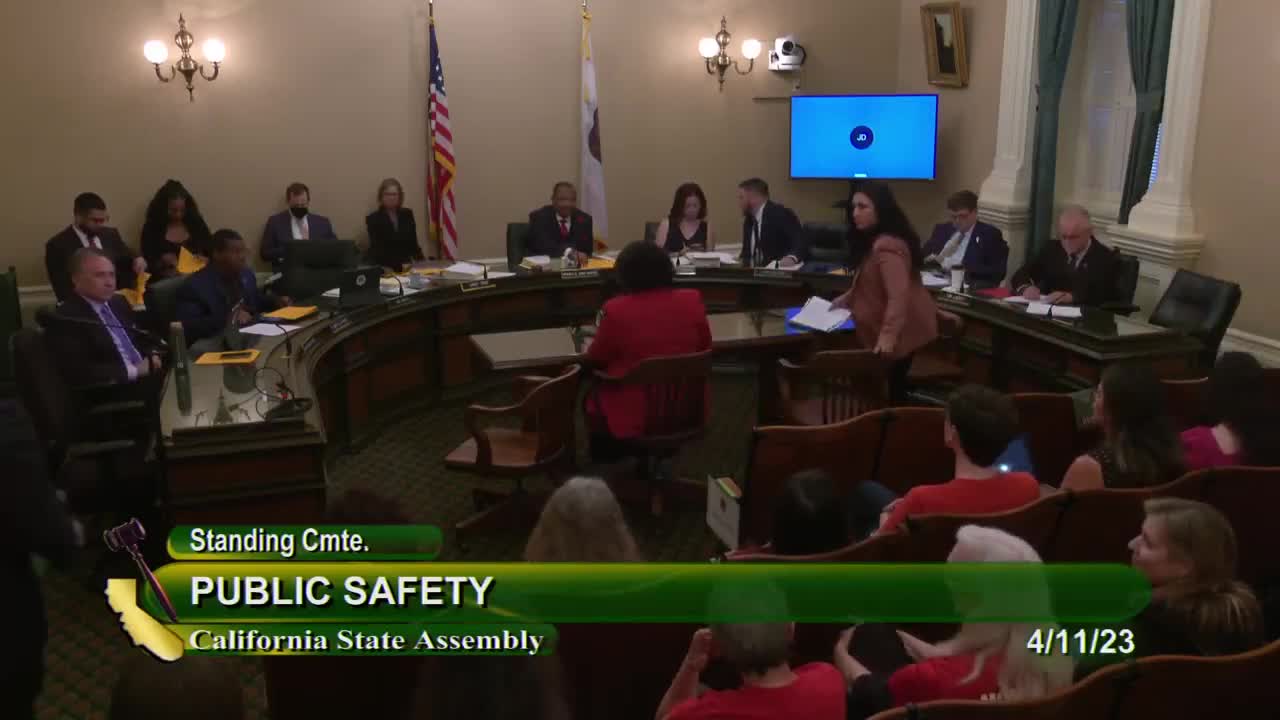
Bill Author

Bill Co-Author(s):