AB 598: San Francisco Bay Area Regional Housing Finance Act: regional and county expenditure plans.
- Session Year: 2023-2024
- House: Assembly
- Latest Version Date: 2024-09-27
Current Status:
Passed
(2024-09-27: Chaptered by Secretary of State - Chapter 671, Statutes of 2024.)
Introduced
In Committee
First Chamber
In Committee
Second Chamber
Enacted
What does this bill do?
This bill stops the Bay Area Housing Finance Authority (BAHFA) from declaring projects ineligible for regional housing funds just because of a city’s or county’s land use or housing policies, affecting developers and local governments seeking or managing BAHFA funding. It also bars the authority from adding extra requirements for a county expenditure plan to be considered complete before funds are allocated, while still allowing BAHFA to set project-specific priorities and to enter into agreements with counties or cities to carry out the plans.
The summary is provided by generative AI which can make mistakes. For original language, please view the details in the table below.
Existing law, the San Francisco Bay Area Regional Housing Finance Act, establishes the Bay Area Housing Finance Authority (BAHFA) to raise, administer, and allocate funding for affordable housing in the San Francisco Bay area, as defined, and provide technical assistance at a regional level for tenant protection, affordable housing preservation, and new affordable housing production. The act requires the executive board and the authority board of BAHFA to form an advisory committee, as specified, to assist in the development of funding guidelines and overall implementation of the program.
The act authorizes the authority to impose various funding mechanisms including a parcel tax and a special tax measured by gross receipts. The act authorizes the authority to issue general obligation bonds secured by the levy of ad valorem property taxes, in accordance with applicable constitutional requirements. The act requires the executive board and BAHFA, in consultation with the advisory committee, to adopt a regional expenditure plan for the use of housing revenue that includes specified information, including a description of any specific project or program proposed to receive funding, as specified. The act requires up to 20% of the revenue received by BAHFA from any of the aforementioned funding mechanisms to be collected by BAHFA for expenditures consistent with the regional expenditure plan adopted, as specified, and to be eligible to be spent in any county in which the funding measure is in effect.
This bill would prohibit the regional expenditure plan from rendering projects ineligible for funding based on the presence or absence of any city, county, or city and county land use or housing policies. Notwithstanding that provision, the bill would authorize BAHFA to use project-specific conditions to prioritize projects for funding.
The act requires each county to adopt a county expenditure plan that includes specified information, including the proposed share of revenues that will be allocated to the construction of new affordable housing, affordable housing preservation, and tenant protection programs. The act requires at least 80% of the revenue received by BAHFA from any of the aforementioned funding mechanisms to be allocated to the county of origin for expenditure in that county, consistent with the adopted county expenditure plan.
This bill would prohibit the authority from imposing any other conditions for a county expenditure plan to be deemed complete to allocate funds. Notwithstanding that provision, the bill would authorize the authority to enter into an agreement with a county or city that receives an allocation of county housing revenue to ensure that the authority or the county, city, or city and county take the actions necessary or incidental to implementing the above-described provisions.
This bill would make legislative findings and declarations as to the necessity of a special statute for the San Francisco Bay area.
Existing law, the San Francisco Bay Area Regional Housing Finance Act, establishes the Bay Area Housing Finance Authority (BAHFA) to raise, administer, and allocate funding for affordable housing in the San Francisco Bay area, as defined, and provide technical assistance at a regional level for tenant protection, affordable housing preservation, and new affordable housing production. The act requires the executive board of BAHFA to form an advisory committee, as specified, to assist in the development of funding guidelines and overall implementation of the program.
The act authorizes the authority to impose various funding mechanisms including a parcel tax and a special tax measured by gross receipts. The act authorizes the authority to issue general obligation bonds secured by the levy of ad valorem property taxes, in accordance with applicable constitutional requirements. The act requires the executive board and BAHFA, in consultation with the advisory committee, to adopt a regional expenditure plan for the use of housing revenue that includes specified information, including a description of any specific project or program proposed to receive funding, as specified. The act requires up to 20% of the revenue received by BAHFA from any of the aforementioned funding mechanisms to be collected by BAHFA for expenditures consistent with the regional expenditure plan adopted, as specified, and to be eligible to be spent in any county in which the funding measure is in effect.
This bill would prohibit the regional expenditure plan from rendering projects ineligible for funding based on the presence or absence of any city, county, or city and county land use or housing policies. Notwithstanding that provision, the bill would authorize BAHFA to use project-specific conditions to prioritize projects for funding.
The act requires each county to adopt a county expenditure plan that includes specified information, including the proposed share of revenues that will be allocated to the construction of new affordable housing, affordable housing preservation, and tenant protection programs. The act requires at least 80% of the revenue received by BAHFA from any of the aforementioned funding mechanisms to be allocated to the county of origin for expenditure in that county, consistent with the adopted county expenditure plan.
This bill would prohibit the authority from imposing any other conditions for a county expenditure plan to be deemed complete to allocate funds. Notwithstanding that provision, the bill would authorize the authority to enter into an agreement with a county or city that receives an allocation of county housing revenue to ensure that the authority or the county, city, or city and county take the actions necessary or incidental to implementing the above-described provisions.
This bill would make legislative findings and declarations as to the necessity of a special statute for the San Francisco Bay area.
Existing law, the California Healthy Youth Act, requires school districts to ensure that all pupils in grades 7 to 12, inclusive, receive comprehensive sexual health education and human immunodeficiency virus (HIV) prevention education, as specified. Under the act, this instruction includes, among other things, information about local resources related to sexual and reproductive health, pregnancy prevention and care, and assistance with sexual assault and intimate partner violence, and information about pregnancy, including parenting, adoption, and abortion, as provided.This bill would revise the information included in this instruction related to local resources, as specified, and would require that pupils receive a physical or digital resource detailing certain local resources upon completion of the applicable instruction. By imposing additional duties on local educational agencies, the bill would impose a state-mandated local program.Existing law authorizes anonymous, voluntary, and confidential research and evaluation tools to measure pupils health behaviors and risks, including tests, questionnaires, and surveys containing age-appropriate questions about the pupils attitudes concerning or practices relating to sex, to be administered to any pupil in grades 7 to 12, inclusive. The California Healthy Kids Survey is an anonymous, confidential survey of school climate and safety, student wellness, and youth resiliency.This bill would require the State Department of Education to ensure the California Healthy Kids Survey includes questions about sexual and reproductive health care as a core survey module for pupils in grades 7, 9, and 11. The bill would require each school district serving pupils in any of grades 5, 7, 9, or 11 to administer the California Healthy Kids Survey to pupils in the applicable grades, as provided. By imposing new requirements on local educational agencies, the bill would impose a state-mandated local program.The California Constitution requires the state to reimburse local agencies and school districts for certain costs mandated by the state. Statutory provisions establish procedures for making that reimbursement.This bill would provide that, if the Commission on State Mandates determines that the bill contains costs mandated by the state, reimbursement for those costs shall be made pursuant to the statutory provisions noted above.Existing law, the California Healthy Youth Act, requires school districts to ensure that all pupils in grades 7 to 12, inclusive, receive comprehensive sexual health education and human immunodeficiency virus (HIV) prevention education, as specified. Under the act, this instruction includes, among other things, information about local resources related to sexual and reproductive health, pregnancy prevention and care, and assistance with sexual assault and intimate partner violence, and information about pregnancy, including parenting, adoption, and abortion, as provided.
This bill would revise the information included in this instruction related to local resources and abortion, resources, as specified, and would require that pupils receive a physical or digital resource detailing certain local resources upon completion of the applicable instruction. By imposing additional duties on local educational agencies, the bill would impose a state-mandated local program.
Existing law authorizes anonymous, voluntary, and confidential research and evaluation tools to measure pupils health behaviors and risks, including tests, questionnaires, and surveys containing age-appropriate questions about the pupils attitudes concerning or practices relating to sex, to be administered to any pupil in grades 7 to 12, inclusive. The California Healthy Kids Survey is an anonymous, confidential survey of school climate and safety, student wellness, and youth resiliency.
This bill would require the State Department of Education to ensure the California Healthy Kids Survey includes questions about sexual and reproductive health care as a core survey module for pupils in grades 7, 9, and 11. The bill would require each school district serving pupils in any of grades 5, 7, 9, or 11 to administer the California Healthy Kids Survey to pupils in the applicable grades, as provided. By imposing new requirements on local educational agencies, the bill would impose a state-mandated local program.
The California Constitution requires the state to reimburse local agencies and school districts for certain costs mandated by the state. Statutory provisions establish procedures for making that reimbursement.
This bill would provide that, if the Commission on State Mandates determines that the bill contains costs mandated by the state, reimbursement for those costs shall be made pursuant to the statutory provisions noted above.
Existing law, the California Healthy Youth Act, requires school districts to ensure that all pupils in grades 7 to 12, inclusive, receive comprehensive sexual health education and human immunodeficiency virus (HIV) prevention education, as specified. Under the act, this instruction includes, among other things, information about local resources related to sexual and reproductive health, pregnancy prevention and care, and assistance with sexual assault and intimate partner violence, and information about pregnancy, including parenting, adoption, and abortion, as provided.
This bill would revise the information included in this instruction related to local resources and abortion, as specified, and would require that pupils receive a physical or digital resource detailing certain local resources upon completion of the applicable instruction. By imposing additional duties on local educational agencies, the bill would impose a state-mandated local program.
Existing law authorizes anonymous, voluntary, and confidential research and evaluation tools to measure pupils health behaviors and risks, including tests, questionnaires, and surveys containing age-appropriate questions about the pupils attitudes concerning or practices relating to sex, to be administered to any pupil in grades 7 to 12, inclusive. The California Healthy Kids Survey is an anonymous, confidential survey of school climate and safety, student wellness, and youth resiliency.
This bill would declare the Legislature's intent to enact subsequent legislation that would require school districts to participate in the State Department of Education to ensure the California Healthy Kids Survey, an anonymous, confidential survey of school climate and safety, student wellness, and youth resiliency, and include a module on Survey includes questions about sexual and reproductive health care as a core survey module. module for pupils in grades 7, 9, and 11. The bill would require each school district serving pupils in any of grades 5, 7, 9, or 11 to administer the California Healthy Kids Survey to pupils in the applicable grades, as provided. By imposing new requirements on local educational agencies, the bill would impose a state-mandated local program.
The California Constitution requires the state to reimburse local agencies and school districts for certain costs mandated by the state. Statutory provisions establish procedures for making that reimbursement.
This bill would provide that, if the Commission on State Mandates determines that the bill contains costs mandated by the state, reimbursement for those costs shall be made pursuant to the statutory provisions noted above.
Existing law authorizes anonymous, voluntary, and confidential research and evaluation tools to measure pupils health behaviors and risks, including tests, questionnaires, and surveys containing age-appropriate questions about the pupils attitudes concerning or practices relating to sex, to be administered to any pupil in grades 7 to 12, inclusive. The California Healthy Kids Survey is an anonymous, confidential survey of school climate and safety, student wellness, and youth resiliency.
This bill would declare the Legislature's intent to enact subsequent legislation that would require school districts to participate in the California Healthy Kids Survey, an anonymous, confidential survey of school climate and safety, student wellness, and youth resiliency, and include a module on sexual and reproductive health care as a core survey module.
(a)(1)Revenue generated pursuant to this part shall be used for the construction of new affordable housing, affordable housing preservation, tenant protection programs, planning and technical assistance related to affordable housing, and for infrastructure to support housing and other purposes, as provided for in this section.
(2)For purposes of this section:
(A)County housing revenue are those funds distributed pursuant to subparagraph (A) of paragraph (1) of subdivision (d) and subparagraph (A) of paragraph (2) of subdivision (d).
(B)Regional housing revenues are those revenues described in subparagraph (B) of paragraph (1) of subdivision (d) and subparagraph (B) of paragraph (2) of subdivision (d).
(b)(1)The allocation of regional housing revenues to projects and programs shall be first approved by the executive board and subsequently by the authority. If the authority takes an action different from the executive board, the executive board must subsequently approve the action.
(2)Subject to funding eligibility and adjustment pursuant to paragraph (3), the authority shall distribute regional housing revenue in the form of a grant, loan, or other financing tool pursuant to subdivision (k) of Section 64520 in a manner that achieves the following minimum shares over five-year periods commencing after revenue is approved by voters as follows:
(A)(i)A minimum of two-thirds for production and preservation of affordable housing as follows:
(I)A minimum of 52 percent for the production of rental housing that is restricted by recorded document to be affordable to lower income households for at least 55 years, including, but not limited to, housing serving specific populations such as veterans, seniors, people with disabilities, current or former foster youth, victims of abuse, and people experiencing or at risk of homelessness. Eligible expenses, for purposes of this paragraph, include, but are not limited to, development costs, as defined in Section 50065 of the Health and Safety Code.
(II)A minimum of 15 percent for preservation of housing that is restricted by recorded document to be affordable to low- or moderate-income households for 55 years. Funding pursuant to this clause for preservation programs may be used to acquire, rehabilitate, and preserve existing housing units restricted for affordability, as well as housing from the private market, including residential hotels, as defined in paragraph (1) of subdivision (b) of Section 50519 of the Health and Safety Code, in order to prevent the loss of affordability. Funding provided pursuant to this clause shall be subject to both of the following conditions:
(ia)Existing residents of buildings acquired for the purpose of affordable housing preservation shall not be displaced, even if the residents household income exceeds the moderate-income limits in Section 50093 of the Health and Safety Code.
(ib)Buildings acquired for the purpose of affordable housing preservation shall achieve 100 percent occupancy by low- or moderate-income households over time through unit turnover.
(ii)Funding provided pursuant to this subparagraph shall be subject to the following conditions in the event that demolition or rehabilitation of housing units is required:
(I)If the housing units are occupied at the date of acquisition, the housing development shall provide at least the same number of units of equivalent number of bedrooms to be made available at affordable rent or affordable housing cost to, and occupied by, persons and families in the same or lower income category as those households in occupancy.
(II)If existing residents must be relocated due to demolition or rehabilitation needs, the developer must provide relocation benefits to the occupants of those housing rental units subject to Chapter 16 (commencing with Section 7260) of Division 7 of Title 1. This subclause does not supersede any provision of a locally adopted ordinance that requires greater relocation assistance to displaced households.
(III)If existing residents must be relocated due to demolition or rehabilitation needs, the developer shall provide a right of first refusal for a comparable unit available in the new or rehabilitated housing development that is affordable to the household at an affordable rent, as defined in Section 50053 of the Health and Safety Code, or an affordable housing cost, as defined in Section 50052.5 of the Health and Safety Code.
(B)A minimum of 5 percent for tenant protection programs for low- and moderate-income households. However, regional housing revenues derived from a bond authorized in Section 64631 shall not be spent for these purposes unless, and only to the extent, permitted by law. The executive board and the authority board shall prioritize the use of revenue sources that are eligible for tenant protection programs in order to meet the minimum requirement of this subparagraph, or as that requirement is modified pursuant to paragraph (3), to the extent feasible. Eligible expenses provided pursuant to this paragraph may only be spent on the following:
(i)Preeviction and eviction legal services, counseling, advice and consultation, training, renter education, and representation, and services to improve habitability that protect against displacement of tenants.
(ii)Providing emergency rental assistance for lower income households. Rental assistance provided pursuant to this clause shall not exceed 48 months for each assisted household, except that for severely rent-burdened seniors on fixed incomes, rental assistance may be renewed for successive 48-month terms. For purposes of this clause, a severely rent-burdened senior is a senior that pays more than 50 percent of their pretax income on rent.
(iii)Homelessness prevention services, including, but not limited to, emergency financial assistance, supportive services, and housing problem solving.
(iv)Providing relocation assistance for lower income households beyond what is legally required of landlords according to local or state law.
(v)Collection and tracking of information related to displacement and displacement risk, rents, and evictions in the region.
(C)A maximum of 10 percent for a grant program for local governments that qualify based on criteria established in funding guidelines adopted by the executive board and the authority board, in consultation with the advisory committee. Subject to any limitations on the funding source, eligible expenditures pursuant to this subparagraph must support housing and related uses, including, but not limited to, grants for the following purposes:
(i)Technical assistance, preparation, and adoption of planning documents and process improvements to accelerate and support housing production, preservation, and tenant protections.
(ii)Infrastructure needs associated with increased housing production, including, but not limited to, transportation, schools, and parks.
(iii)One-time uses that address homelessness, including, but not limited to, homeless shelters and infrastructure to support those shelters, and homeless prevention programs.
(iv)Programs to enable low- or moderate-income households to become or remain homeowners, including, but not limited to, below market rate ownership programs, downpayment assistance programs, residential rehabilitation loan programs, and grants or loans to assist in the rehabilitation or replacement of existing mobilehomes located in a mobilehome or manufactured home community.
(v)Tenant protection programs, as described in subparagraph (B).
(D)Funding subject to this paragraph that is derived from a bond issued pursuant to Section 64631 shall be expended consistent with Article XIII A of the California Constitution and any amendment thereto.
(3)No earlier than five years after approval of a funding measure under Chapter 2 (commencing with Section 64610) and subject to consultation with the advisory committee, the executive board and the authority board may change any of the minimum requirements in subparagraph (A) or (B) of paragraph (2) if the executive board and the authority board each adopt a finding that the regions needs in a given category differ from those requirements. The executive board must approve the finding by a two-thirds vote, which must be subsequently approved by the authority board by a two-thirds vote. Approval of the finding shall be subject to the public participation requirements provided in subdivision (e) of Section 64511.
(4)The authority shall distribute the revenues derived from a commercial linkage fee established, increased, or imposed pursuant to Article 2 (commencing with Section 64620) of Chapter 2, net of related administrative costs of the authority, to each city or county in a manner that is consistent with the regional nexus study adopted by the executive board and the authority board. A city or county that receives revenues pursuant to this paragraph shall use that revenue solely for affordable housing necessitated by a commercial development project on which the fee was imposed, as determined by the executive board and the authority board pursuant to Section 64621.
(c)Except as otherwise provided in paragraph (4) of subdivision (b), the executive board and the authority board may approve funds for a project or program directly to a city, a county, a public entity, or a private project sponsor.
(d)(1)The authority shall distribute funds received through the funding measures authorized in Sections 64610 and 64611 and Article 3 (commencing with Section 64630) of Chapter 2 as follows:
(A)At least 80 percent of the revenue received shall be allocated to the county of origin for expenditure in that county, consistent with the county expenditure plan adopted pursuant to paragraph (6). Each county board of supervisors shall determine the appropriate entity or entities within their county to administer the funds. Counties may use up to 5 percent of these funds for administrative purposes to assist with the development and implementation of the expenditure plan in their county.
(B)Up to 20 percent of the revenue received shall be collected by the authority for expenditures consistent with the regional expenditure plan adopted pursuant to paragraph (5) and for the purposes set forth in subdivision (a), and shall be eligible to be spent in any county in which the measure is in effect.
(2)The authority shall distribute funds received through the funding measure authorized in Section 64612 as follows:
(A)At least 50 percent of the revenue received shall be allocated to the county of origin for expenditure in the county, consistent with the county expenditure plan adopted pursuant to paragraph (6). Each county board of supervisors shall determine the appropriate entity within their county to administer the funds allocated to their county. Counties may use up to 5 percent of these funds for administrative purposes to assist with the development and implementation of the expenditure plan in their county.
(B)Up to 50 percent of the revenue received shall be collected by the authority for expenditures consistent with the regional expenditure plan adopted pursuant to paragraph (5) and for the purposes set forth in subdivision (a), and shall be eligible to be spent in any county in which the measure is in effect.
(3)No earlier than five years after approval of a funding measure under Chapter 2 (commencing with Section 64610), the executive board and the authority board may review and adjust the minimum requirements regarding the distribution of funds in paragraphs (1) and (2). After consultation with the advisory committee and subject to the public participation requirements of subdivision (e) of Section 64511, the executive board and the authority board may adopt a finding that it is in the best interest of the region to modify the distribution of funds and adopt a revised policy. A vote in support of modifying the distribution of funds in paragraphs (1) and (2) must be approved first by a two-thirds vote of the executive board, followed by a subsequent two-thirds vote of the authority.
(4)County housing revenue may be spent on affordable housing production, affordable housing preservation, and tenant protection programs, as described in subparagraphs (A) and (B) of paragraph (2) of subdivision (b), provided that the expenditures are consistent with the county expenditure plan and the California Constitution.
(A)A county, including a city and county, shall provide a direct allocation to a city in their county if it is one of the three largest cities, including a city and county, in the San Francisco Bay area, as determined by the most recent population estimate by the Department of Finance. The direct allocation shall be based on the citys share of the countys regional housing need allocation pursuant to Section 65584 for lower income households. A city described in this subparagraph may use up to 5 percent of its direct allocation for administrative purposes to assist with the development and implementation of its expenditure plan.
(B)A county receiving funds from this chapter that does not include one of the three largest cities, including a city and county, in the region shall provide an option for a direct allocation to a city that has been allocated more than 30 percent of that countys regional housing need allocation for lower income households during that regional housing need allocation period. The direct allocation shall be based on the citys share of the countys regional housing need allocation for lower income households. A city described in this subparagraph may use up to 5 percent of its direct allocation for administrative purposes to assist with the development and implementation of its expenditure plan.
(C)A city that receives a direct allocation shall prepare, adopt, and transmit to the county in which it is located an expenditure plan consistent with the provisions in paragraph (6) and prioritize projects that help the city achieve its regional housing need allocation. A city receiving a direct allocation shall be subject to the same minimum shares applicable to counties in clause (i) of subparagraph (B) of paragraph (6), unless the executive board and the authority each adopt a finding, based on a thorough review and after consultation with the advisory committee, that the minimum allocation requirements are not the best use of the funds to address the citys affordable housing needs. The executive board must approve the finding by a two-thirds vote, which must be subsequently approved by the authority board by a two-thirds vote.
(5)(A)The executive board and the authority board shall, in consultation with the advisory committee, adopt a regional expenditure plan for the use of housing revenue by July 1 of each year, except the executive board and the authority board shall select the deadline to adopt the first regional expenditure plan. The regional expenditure plan may cover multiple years, as determined by the executive board and the authority board. The authority may take action on the regional expenditure plan only after it has been approved by the executive board. If the authority adopts changes to the regional expenditure plan, the changes must be subsequently approved by the executive board.
(B)(i)The regional expenditure plan shall set forth the share of revenue and estimated funding amount to be spent on each of the categories established in subdivision (b), indicate the household income levels to be served within each category of expenditures, and estimate the number of affordable housing units to be built or preserved and the number of tenants to be protected. To the extent feasible, the regional expenditure plan shall include a description of any specific project or program proposed to receive funding, including the location, amount of funding, and anticipated outcomes, as well as the estimated funding level for each of the categories listed in subparagraph (A) or (B) of paragraph (2) of subdivision (b). Beginning the second year, the authority shall include a report in the regional expenditure plan that provides its allocations and expenditures to date of projects and programs funded and the extent to which the minimum targets in subparagraph (A) or (B) of paragraph (2) of subdivision (b) were achieved.
(ii)(I)The regional expenditure plan shall not render projects ineligible for funding based on the presence or absence of any city, county, or city and county land use or housing policies.
(II)Notwithstanding subclause (I), the authority may use project-specific conditions to prioritize projects for funding.
(C)The regional expenditure plan shall include the following information for any specific project that has received an allocation of regional housing revenue during the prior year:
(i)Whether the project proponent has requested a building permit for the project, and if so, the date when it was requested.
(ii)Whether the project proponent is eligible to request a building permit for the project, and if so, the date when it became eligible.
(iii)Whether the project proponent has obtained final approval or certification that the housing development is habitable, such as a certificate of occupancy, and if so, the date when it was obtained.
(6)Each county shall adopt a county expenditure plan applicable to county housing revenue no sooner than 30 days after a draft of the plan has been placed on an agenda of the governing body for discussion. Each county shall transmit the county expenditure plan to the executive board and the authority as follows:
(A)The expenditure plan shall be transmitted by July 1 of each year, except the executive board and the authority board shall select the deadline for the transmission of the first expenditure plan. The deadline for the transmission of the first expenditure plan shall provide at least 90 days for a county to prepare the expenditure plan after the election approving a tax or bond pursuant to this part is certified. An expenditure plan may cover multiple years, as determined by the county.
(B)(i)To be deemed complete, the expenditure plan shall specify the proposed allocation of funds as follows:
(I)The proposed share of revenues that will be allocated to the construction of new affordable housing, affordable housing preservation, and tenant protection programs. Except as provided in subclause (IV), the expenditure plan shall demonstrate that over a five-year period the county will meet the following allocations:
(ia)A minimum allocation of 52 percent towards construction of new affordable housing that prioritizes projects that help achieve regional housing need allocation targets for housing affordable to extremely low income, very low income, and lower income households.
(ib)A minimum allocation of 15 percent towards affordable housing preservation.
(ic)A minimum allocation of 5 percent towards tenant protection programs.
(id)A county expenditure plan may deviate from the minimum shares required by this clause if the executive board and the authority board each adopt a finding, based on a thorough review and after consultation with the advisory committee, that the minimum allocations are not the best use of the funds to address the countys affordable housing needs. The executive board must adopt the finding by a two-thirds vote, which must be subsequently approved by the authority board by a two-thirds vote.
(II)To the extent feasible, the plan shall include a description of any specific project or program proposed to receive funding, including the location, amount of funding, and anticipated outcomes, as well as the estimated funding level for each of the categories listed in clause (i).
(III)The plan shall demonstrate the county has consulted with each city in the county, excluding cities that receive a direct allocation.
(IV)Commencing with the second year, each county shall include in its expenditure plan a report on its allocations and expenditures to date of projects and programs funded and the extent to which the minimum targets in clause (i) were achieved.
(ii)(I)The authority shall not impose any other conditions for a county expenditure plan to be deemed complete to allocate funds.
(II)Notwithstanding subclause (I), the authority may enter into an agreement with a county or city that receives an allocation of county housing revenue to ensure that the authority or the county, city, or city and county take the actions necessary or incidental to implementing the purpose of this section.
(7)If the executive board and the authority board each determine by a majority vote that a county has not submitted a complete expenditure plan pursuant to the requirements of subparagraph (B) of paragraph (6), the authority may withhold allocation of revenues to that county until the county submits a complete expenditure plan.
(8)The authority shall post each completed expenditure plan on its internet website.
(9)A county may request the executive board and the authority to administer all or a portion of its county housing revenue. If the executive board and the authority board agree to administer the funds, they shall develop and adopt an annual expenditure plan applicable to that portion of the funds that shall be jointly approved by the executive board and the authority board, in consultation with the county, and projects allocated according to that plan shall be subject to the same timelines described in paragraph (10).
(10)After county housing revenues are committed to a specific project, they shall remain available for expenditure for three years. A county may authorize expenditures beyond three years pursuant to guidelines that shall be reviewed and adopted by the executive board and the authority board, in consultation with the advisory committee.
(11)(A)Funds allocated to a city pursuant to paragraph (3) shall be committed to a specific project within five years of receipt.
(B)Once committed to a specific project, funds shall remain available for expenditure for an additional five years, unless an extension is authorized pursuant to subparagraph (C).
(C)If the funds have not been expended within five years of receipt as required in subparagraph (B), the city shall show that it has made adequate progress towards completing the project. If the county in which the city is located finds that adequate progress has been made, the county shall authorize an additional 24 months to grant entitlements to the remainder of the project. If the county in which the city is located does not find that adequate progress has been made, the funds shall be transferred to the county. The county shall hold the funds until the city submits a plan satisfactory to the county to move forward with the project or allocate funds to another qualified project consistent with the citys expenditure plan.
(D)For purposes of this paragraph, adequate progress means the project has received the land use approvals or entitlements necessary for at least 75 percent of the projects units.
(e)Before the distribution of funds each year in accordance with subdivision (d), the authority shall be entitled to up to 5 percent of the funds of any measure approved pursuant to this part for general administration and overhead.
SEC. 2.The Legislature finds and declares that a special statute is necessary and that a general statute cannot be made applicable within the meaning of Section 16 of Article IV of the California Constitution because of the uniquely severe shortage of available funding and resources for the development and preservation of affordable housing and the particularly acute nature of the housing crisis within the nine counties of the San Francisco Bay area region.
(a)(1)Revenue generated pursuant to this part shall be used for the construction of new affordable housing, affordable housing preservation, tenant protection programs, planning and technical assistance related to affordable housing, and for infrastructure to support housing and other purposes, as provided for in this section.
(2)For purposes of this section:
(A)County housing revenue are those funds distributed pursuant to subparagraph (A) of paragraph (1) of subdivision (d) and subparagraph (A) of paragraph (2) of subdivision (d).
(B)Regional housing revenues are those revenues described in subparagraph (B) of paragraph (1) of subdivision (d) and subparagraph (B) of paragraph (2) of subdivision (d).
(b)(1)The allocation of regional housing revenues to projects and programs shall be first approved by the executive board and subsequently by the authority. If the authority takes an action different from the executive board, the executive board must subsequently approve the action.
(2)Subject to funding eligibility and adjustment pursuant to paragraph (3), the authority shall distribute regional housing revenue in the form of a grant, loan, or other financing tool pursuant to subdivision (k) of Section 64520 in a manner that achieves the following minimum shares over five-year periods commencing after revenue is approved by voters as follows:
(A)(i)A minimum of two-thirds for production and preservation of affordable housing as follows:
(I)A minimum of 52 percent for the production of rental housing that is restricted by recorded document to be affordable to lower income households for at least 55 years, including, but not limited to, housing serving specific populations such as veterans, seniors, people with disabilities, current or former foster youth, victims of abuse, and people experiencing or at risk of homelessness. Eligible expenses, for purposes of this paragraph, include, but are not limited to, development costs, as defined in Section 50065 of the Health and Safety Code.
(II)A minimum of 15 percent for preservation of housing that is restricted by recorded document to be affordable to low- or moderate-income households for 55 years. Funding pursuant to this clause for preservation programs may be used to acquire, rehabilitate, and preserve existing housing units restricted for affordability, as well as housing from the private market, including residential hotels, as defined in paragraph (1) of subdivision (b) of Section 50519 of the Health and Safety Code, in order to prevent the loss of affordability. Funding provided pursuant to this clause shall be subject to both of the following conditions:
(ia)Existing residents of buildings acquired for the purpose of affordable housing preservation shall not be displaced, even if the residents household income exceeds the moderate-income limits in Section 50093 of the Health and Safety Code.
(ib)Buildings acquired for the purpose of affordable housing preservation shall achieve 100 percent occupancy by low- or moderate-income households over time through unit turnover.
(ii)Funding provided pursuant to this subparagraph shall be subject to the following conditions in the event that demolition or rehabilitation of housing units is required:
(I)If the housing units are occupied at the date of acquisition, the housing development shall provide at least the same number of units of equivalent number of bedrooms to be made available at affordable rent or affordable housing cost to, and occupied by, persons and families in the same or lower income category as those households in occupancy.
(II)If existing residents must be relocated due to demolition or rehabilitation needs, the developer must provide relocation benefits to the occupants of those housing rental units subject to Chapter 16 (commencing with Section 7260) of Division 7 of Title 1. This subclause does not supersede any provision of a locally adopted ordinance that requires greater relocation assistance to displaced households.
(III)If existing residents must be relocated due to demolition or rehabilitation needs, the developer shall provide a right of first refusal for a comparable unit available in the new or rehabilitated housing development that is affordable to the household at an affordable rent, as defined in Section 50053 of the Health and Safety Code, or an affordable housing cost, as defined in Section 50052.5 of the Health and Safety Code.
(B)A minimum of 5 percent for tenant protection programs for low- and moderate-income households. However, regional housing revenues derived from a bond authorized in Section 64631 shall not be spent for these purposes unless, and only to the extent, permitted by law. The executive board and the authority board shall prioritize the use of revenue sources that are eligible for tenant protection programs in order to meet the minimum requirement of this subparagraph, or as that requirement is modified pursuant to paragraph (3), to the extent feasible. Eligible expenses provided pursuant to this paragraph may only be spent on the following:
(i)Preeviction and eviction legal services, counseling, advice and consultation, training, renter education, and representation, and services to improve habitability that protect against displacement of tenants.
(ii)Providing emergency rental assistance for lower income households. Rental assistance provided pursuant to this clause shall not exceed 48 months for each assisted household, except that for severely rent-burdened seniors on fixed incomes, rental assistance may be renewed for successive 48-month terms. For purposes of this clause, a severely rent-burdened senior is a senior that pays more than 50 percent of their pretax income on rent.
(iii)Homelessness prevention services, including, but not limited to, emergency financial assistance, supportive services, and housing problem solving.
(iv)Providing relocation assistance for lower income households beyond what is legally required of landlords according to local or state law.
(v)Collection and tracking of information related to displacement and displacement risk, rents, and evictions in the region.
(C)A maximum of 10 percent for a grant program for local governments that qualify based on criteria established in funding guidelines adopted by the executive board and the authority board, in consultation with the advisory committee. Subject to any limitations on the funding source, eligible expenditures pursuant to this subparagraph must support housing and related uses, including, but not limited to, grants for the following purposes:
(i)Technical assistance, preparation, and adoption of planning documents and process improvements to accelerate and support housing production, preservation, and tenant protections.
(ii)Infrastructure needs associated with increased housing production, including, but not limited to, transportation, schools, and parks.
(iii)One-time uses that address homelessness, including, but not limited to, homeless shelters and infrastructure to support those shelters, and homeless prevention programs.
(iv)Programs to enable low- or moderate-income households to become or remain homeowners, including, but not limited to, below market rate ownership programs, downpayment assistance programs, residential rehabilitation loan programs, and grants or loans to assist in the rehabilitation or replacement of existing mobilehomes located in a mobilehome or manufactured home community.
(v)Tenant protection programs, as described in subparagraph (B).
(D)Funding subject to this paragraph that is derived from a bond issued pursuant to Section 64631 shall be expended consistent with Article XIII A of the California Constitution and any amendment thereto.
(3)No earlier than five years after approval of a funding measure under Chapter 2 (commencing with Section 64610) and subject to consultation with the advisory committee, the executive board and the authority board may change any of the minimum requirements in subparagraph (A) or (B) of paragraph (2) if the executive board and the authority board each adopt a finding that the regions needs in a given category differ from those requirements. The executive board must approve the finding by a two-thirds vote, which must be subsequently approved by the authority board by a two-thirds vote. Approval of the finding shall be subject to the public participation requirements provided in subdivision (e) of Section 64511.
(4)The authority shall distribute the revenues derived from a commercial linkage fee established, increased, or imposed pursuant to Article 2 (commencing with Section 64620) of Chapter 2, net of related administrative costs of the authority, to each city or county in a manner that is consistent with the regional nexus study adopted by the executive board and the authority board. A city or county that receives revenues pursuant to this paragraph shall use that revenue solely for affordable housing necessitated by a commercial development project on which the fee was imposed, as determined by the executive board and the authority board pursuant to Section 64621.
(c)Except as otherwise provided in paragraph (4) of subdivision (b), the executive board and the authority board may approve funds for a project or program directly to a city, a county, a public entity, or a private project sponsor.
(d)(1)The authority shall distribute funds received through the funding measures authorized in Sections 64610 and 64611 and Article 3 (commencing with Section 64630) of Chapter 2 as follows:
(A)At least 80 percent of the revenue received shall be allocated to the county of origin for expenditure in that county, consistent with the county expenditure plan adopted pursuant to paragraph (6). Each county board of supervisors shall determine the appropriate entity or entities within their county to administer the funds. Counties may use up to 5 percent of these funds for administrative purposes to assist with the development and implementation of the expenditure plan in their county.
(B)Up to 20 percent of the revenue received shall be collected by the authority for expenditures consistent with the regional expenditure plan adopted pursuant to paragraph (5) and for the purposes set forth in subdivision (a), and shall be eligible to be spent in any county in which the measure is in effect.
(2)The authority shall distribute funds received through the funding measure authorized in Section 64612 as follows:
(A)At least 50 percent of the revenue received shall be allocated to the county of origin for expenditure in the county, consistent with the county expenditure plan adopted pursuant to paragraph (6). Each county board of supervisors shall determine the appropriate entity within their county to administer the funds allocated to their county. Counties may use up to 5 percent of these funds for administrative purposes to assist with the development and implementation of the expenditure plan in their county.
(B)Up to 50 percent of the revenue received shall be collected by the authority for expenditures consistent with the regional expenditure plan adopted pursuant to paragraph (5) and for the purposes set forth in subdivision (a), and shall be eligible to be spent in any county in which the measure is in effect.
(3)No earlier than five years after approval of a funding measure under Chapter 2 (commencing with Section 64610), the executive board and the authority board may review and adjust the minimum requirements regarding the distribution of funds in paragraphs (1) and (2). After consultation with the advisory committee and subject to the public participation requirements of subdivision (e) of Section 64511, the executive board and the authority board may adopt a finding that it is in the best interest of the region to modify the distribution of funds and adopt a revised policy. A vote in support of modifying the distribution of funds in paragraphs (1) and (2) must be approved first by a two-thirds vote of the executive board, followed by a subsequent two-thirds vote of the authority.
(4)County housing revenue may be spent on affordable housing production, affordable housing preservation, and tenant protection programs, as described in subparagraphs (A) and (B) of paragraph (2) of subdivision (b), provided that the expenditures are consistent with the county expenditure plan and the California Constitution.
(A)A county, including a city and county, shall provide a direct allocation to a city in their county if it is one of the three largest cities, including a city and county, in the San Francisco Bay area, as determined by the most recent population estimate by the Department of Finance. The direct allocation shall be based on the citys share of the countys regional housing need allocation pursuant to Section 65584 for lower income households. A city described in this subparagraph may use up to 5 percent of its direct allocation for administrative purposes to assist with the development and implementation of its expenditure plan.
(B)A county receiving funds from this chapter that does not include one of the three largest cities, including a city and county, in the region shall provide an option for a direct allocation to a city that has been allocated more than 30 percent of that countys regional housing need allocation for lower income households during that regional housing need allocation period. The direct allocation shall be based on the citys share of the countys regional housing need allocation for lower income households. A city described in this subparagraph may use up to 5 percent of its direct allocation for administrative purposes to assist with the development and implementation of its expenditure plan.
(C)A city that receives a direct allocation shall prepare, adopt, and transmit to the county in which it is located an expenditure plan consistent with the provisions in paragraph (6) and prioritize projects that help the city achieve its regional housing need allocation. A city receiving a direct allocation shall be subject to the same minimum shares applicable to counties in clause (i) of subparagraph (B) of paragraph (6), unless the executive board and the authority each adopt a finding, based on a thorough review and after consultation with the advisory committee, that the minimum allocation requirements are not the best use of the funds to address the citys affordable housing needs. The executive board must approve the finding by a two-thirds vote, which must be subsequently approved by the authority board by a two-thirds vote.
(5)(A)The executive board and the authority board shall, in consultation with the advisory committee, adopt a regional expenditure plan for the use of housing revenue by July 1 of each year, except the executive board and the authority board shall select the deadline to adopt the first regional expenditure plan. The regional expenditure plan may cover multiple years, as determined by the executive board and the authority board. The authority may take action on the regional expenditure plan only after it has been approved by the executive board. If the authority adopts changes to the regional expenditure plan, the changes must be subsequently approved by the executive board.
(B)(i)The regional expenditure plan shall set forth the share of revenue and estimated funding amount to be spent on each of the categories established in subdivision (b), indicate the household income levels to be served within each category of expenditures, and estimate the number of affordable housing units to be built or preserved and the number of tenants to be protected. To the extent feasible, the regional expenditure plan shall include a description of any specific project or program proposed to receive funding, including the location, amount of funding, and anticipated outcomes, as well as the estimated funding level for each of the categories listed in subparagraph (A) or (B) of paragraph (2) of subdivision (b). Beginning the second year, the authority shall include a report in the regional expenditure plan that provides its allocations and expenditures to date of projects and programs funded and the extent to which the minimum targets in subparagraph (A) or (B) of paragraph (2) of subdivision (b) were achieved.
(ii)(I)The regional expenditure plan shall not render projects ineligible for funding based on the presence or absence of any city, county, or city and county land use or housing policies.
(II)Notwithstanding subclause (I), the authority may use project-specific conditions to prioritize projects for funding.
(C)The regional expenditure plan shall include the following information for any specific project that has received an allocation of regional housing revenue during the prior year:
(i)Whether the project proponent has requested a building permit for the project, and if so, the date when it was requested.
(ii)Whether the project proponent is eligible to request a building permit for the project, and if so, the date when it became eligible.
(iii)Whether the project proponent has obtained final approval or certification that the housing development is habitable, such as a certificate of occupancy, and if so, the date when it was obtained.
(6)Each county shall adopt a county expenditure plan applicable to county housing revenue no sooner than 30 days after a draft of the plan has been placed on an agenda of the governing body for discussion. Each county shall transmit the county expenditure plan to the executive board and the authority as follows:
(A)The expenditure plan shall be transmitted by July 1 of each year, except the executive board and the authority board shall select the deadline for the transmission of the first expenditure plan. The deadline for the transmission of the first expenditure plan shall provide at least 90 days for a county to prepare the expenditure plan after the election approving a tax or bond pursuant to this part is certified. An expenditure plan may cover multiple years, as determined by the county.
(B)(i)To be deemed complete, the expenditure plan shall specify the proposed allocation of funds as follows:
(i)(I)The proposed share of revenues that will be allocated to the construction of new affordable housing, affordable housing preservation, and tenant protection programs. Except as provided in subclause (IV), the expenditure plan shall demonstrate that over a five-year period the county will meet the following allocations:
(I)(ia)A minimum allocation of 52 percent towards construction of new affordable housing that prioritizes projects that help achieve regional housing need allocation targets for housing affordable to extremely low income, very low income, and lower income households.
(II)(ib)A minimum allocation of 15 percent towards affordable housing preservation.
(III)(ic)A minimum allocation of 5 percent towards tenant protection programs.
(IV)(id)A county expenditure plan may deviate from the minimum shares required by this clause if the executive board and the authority board each adopt a finding, based on a thorough review and after consultation with the advisory committee, that the minimum allocations are not the best use of the funds to address the countys affordable housing needs. The executive board must adopt the finding by a two-thirds vote, which must be subsequently approved by the authority board by a two-thirds vote.
(ii)(II)To the extent feasible, the plan shall include a description of any specific project or program proposed to receive funding, including the location, amount of funding, and anticipated outcomes, as well as the estimated funding level for each of the categories listed in clause (i).
(iii)(III)The plan shall demonstrate the county has consulted with each city in the county, excluding cities that receive a direct allocation.
(iv)(IV)Commencing with the second year, each county shall include in its expenditure plan a report on its allocations and expenditures to date of projects and programs funded and the extent to which the minimum targets in clause (i) were achieved.
(ii)(I)The authority shall not impose any other conditions for a county expenditure plan to be deemed complete to allocate funds.
(II)Notwithstanding subclause (I), the authority may enter into an agreement with a county or city that receives an allocation of county housing revenue to ensure that the authority or the county, city, or city and county take the actions necessary or incidental to implementing the purpose of this section.
(7)If the executive board and the authority board each determine by a majority vote that a county has not submitted a complete expenditure plan pursuant to the requirements of subparagraph (B) of paragraph (6), the authority may withhold allocation of revenues to that county until the county submits a complete expenditure plan.
(8)The authority shall post each completed expenditure plan on its internet website.
(9)A county may request the executive board and the authority to administer all or a portion of its county housing revenue. If the executive board and the authority board agree to administer the funds, they shall develop and adopt an annual expenditure plan applicable to that portion of the funds that shall be jointly approved by the executive board and the authority board, in consultation with the county, and projects allocated according to that plan shall be subject to the same timelines described in paragraph (10).
(10)After county housing revenues are committed to a specific project, they shall remain available for expenditure for three years. A county may authorize expenditures beyond three years pursuant to guidelines that shall be reviewed and adopted by the executive board and the authority board, in consultation with the advisory committee.
(11)(A)Funds allocated to a city pursuant to paragraph (3) shall be committed to a specific project within five years of receipt.
(B)Once committed to a specific project, funds shall remain available for expenditure for an additional five years, unless an extension is authorized pursuant to subparagraph (C).
(C)If the funds have not been expended within five years of receipt as required in subparagraph (B), the city shall show that it has made adequate progress towards completing the project. If the county in which the city is located finds that adequate progress has been made, the county shall authorize an additional 24 months to grant entitlements to the remainder of the project. If the county in which the city is located does not find that adequate progress has been made, the funds shall be transferred to the county. The county shall hold the funds until the city submits a plan satisfactory to the county to move forward with the project or allocate funds to another qualified project consistent with the citys expenditure plan.
(D)For purposes of this paragraph, adequate progress means the project has received the land use approvals or entitlements necessary for at least 75 percent of the projects units.
(e)Before the distribution of funds each year in accordance with subdivision (d), the authority shall be entitled to up to 5 percent of the funds of any measure approved pursuant to this part for general administration and overhead.
SEC. 2.The Legislature finds and declares that a special statute is necessary and that a general statute cannot be made applicable within the meaning of Section 16 of Article IV of the California Constitution because of the uniquely severe shortage of available funding and resources for the development and preservation of affordable housing and the particularly acute nature of the housing crisis within the nine counties of the San Francisco Bay area region.
SECTION 1.Section 51934 of the Education Code is amended to read:51934.(a)Each school district shall ensure that all pupils in grades 7 to 12, inclusive, receive comprehensive sexual health education and HIV prevention education from instructors trained in the appropriate courses. Each pupil shall receive this instruction at least once in junior high or middle school and at least once in high school. This instruction shall include all of the following:(1)Information on the nature of HIV, as well as other sexually transmitted infections, and their effects on the human body.(2)Information on the manner in which HIV and other sexually transmitted infections are and are not transmitted, including information on the relative risk of infection according to specific behaviors, including sexual activities and injection drug use.(3)Information that abstinence from sexual activity and injection drug use is the only certain way to prevent HIV and other sexually transmitted infections and abstinence from sexual intercourse is the only certain way to prevent unintended pregnancy. This instruction shall provide information about the value of delaying sexual activity while also providing medically accurate information on other methods of preventing HIV and other sexually transmitted infections and pregnancy.(4)Information about the effectiveness and safety of all federal Food and Drug Administration (FDA) approved methods that prevent or reduce the risk of contracting HIV and other sexually transmitted infections, including use of antiretroviral medication, consistent with the federal Centers for Disease Control and Prevention.(5)Information about the effectiveness and safety of reducing the risk of HIV transmission as a result of injection drug use by decreasing needle use and needle sharing.(6)Information about the treatment of HIV and other sexually transmitted infections, including how antiretroviral therapy can dramatically prolong the lives of many people living with HIV and reduce the likelihood of transmitting HIV to others.(7)Discussion about social views on HIV and AIDS, including addressing unfounded stereotypes and myths regarding HIV and AIDS and people living with HIV. This instruction shall emphasize that successfully treated HIV-positive individuals have a normal life expectancy, all people are at some risk of contracting HIV, and the only way to know if one is HIV-positive is to get tested.(8)(A)Information about local resources, how to access local resources, and pupils legal rights to access local resources for sexual and reproductive health care, including, but not limited to, information regarding:(i)Testing, preventive care, and treatment for HIV and other sexually transmitted infections.(ii)Pregnancy prevention and care, including, but not limited to, guidance regarding contraceptive methods and abortion.(iii)Assistance with and medical care pertaining to sexual assault and intimate partner violence.(B)Upon completion of the instruction described in subparagraph (A), all pupils shall receive a physical or digital resource detailing the local resources described in subparagraph (A).(9)Information about the effectiveness and safety of all FDA-approved contraceptive methods in preventing pregnancy, including, but not limited to, emergency contraception. Instruction on pregnancy shall include an objective discussion of all legally available pregnancy outcomes, including, but not limited to, all of the following:(A)Parenting, adoption, and abortion.(B)Information on the law on surrendering physical custody of a minor child 72 hours of age or younger, pursuant to Section 1255.7 of the Health and Safety Code and Section 271.5 of the Penal Code.(C)The importance of prenatal care.(10)Information about sexual harassment, sexual assault, sexual abuse, and human trafficking. Information on human trafficking shall include both of the following:(A) Information on the prevalence, nature, and strategies to reduce the risk of human trafficking, techniques to set healthy boundaries, and how to safely seek assistance.(B)Information on how social media and mobile device applications are used for human trafficking.(11)Information about adolescent relationship abuse and intimate partner violence, including the early warning signs thereof.(b)A school district may provide optional instruction, as part of comprehensive sexual health education and HIV prevention education, regarding the potential risks and consequences of creating and sharing sexually suggestive or sexually explicit materials through cellular telephones, social networking internet websites, computer networks, or other digital media.(c)A school district may provide comprehensive sexual health education or HIV prevention education consisting of age-appropriate instruction earlier than grade 7 using instructors trained in the appropriate courses. A school district that elects to offer comprehensive sexual health education or HIV prevention education earlier than grade 7 may provide age appropriate and medically accurate information on any of the general topics contained in paragraphs (1) to (11), inclusive, of subdivision (a).SEC. 2.Section 51934.1 is added to the Education Code, to read:51934.1.(a)The department shall ensure that the California Healthy Kids Survey includes questions about sexual and reproductive health care as a core module for pupils in grades 7, 9, and 11.(b)After the California Healthy Kids Survey is modified pursuant to subdivision (a), each school district serving pupils in any of grades 5, 7, 9, or 11 shall administer the California Healthy Kids Survey, consistent with Sections 51938 and 51939, to pupils in those applicable grades. Questions about sexual and reproductive health shall only be included in the surveys administered to pupils in grades 7, 9, and 11.SEC. 3.If the Commission on State Mandates determines that this act contains costs mandated by the state, reimbursement to local agencies and school districts for those costs shall be made pursuant to Part 7 (commencing with Section 17500) of Division 4 of Title 2 of the Government Code.(a)Each school district shall ensure that all pupils in grades 7 to 12, inclusive, receive comprehensive sexual health education and HIV prevention education from instructors trained in the appropriate courses. Each pupil shall receive this instruction at least once in junior high or middle school and at least once in high school. This instruction shall include all of the following:
(1)Information on the nature of HIV, as well as other sexually transmitted infections, and their effects on the human body.
(2)Information on the manner in which HIV and other sexually transmitted infections are and are not transmitted, including information on the relative risk of infection according to specific behaviors, including sexual activities and injection drug use.
(3)Information that abstinence from sexual activity and injection drug use is the only certain way to prevent HIV and other sexually transmitted infections and abstinence from sexual intercourse is the only certain way to prevent unintended pregnancy. This instruction shall provide information about the value of delaying sexual activity while also providing medically accurate information on other methods of preventing HIV and other sexually transmitted infections and pregnancy.
(4)Information about the effectiveness and safety of all federal Food and Drug Administration (FDA) approved methods that prevent or reduce the risk of contracting HIV and other sexually transmitted infections, including use of antiretroviral medication, consistent with the federal Centers for Disease Control and Prevention.
(5)Information about the effectiveness and safety of reducing the risk of HIV transmission as a result of injection drug use by decreasing needle use and needle sharing.
(6)Information about the treatment of HIV and other sexually transmitted infections, including how antiretroviral therapy can dramatically prolong the lives of many people living with HIV and reduce the likelihood of transmitting HIV to others.
(7)Discussion about social views on HIV and AIDS, including addressing unfounded stereotypes and myths regarding HIV and AIDS and people living with HIV. This instruction shall emphasize that successfully treated HIV-positive individuals have a normal life expectancy, all people are at some risk of contracting HIV, and the only way to know if one is HIV-positive is to get tested.
(8)(A)Information about local resources, how to access local resources, and pupils legal rights to access local resources for sexual and reproductive health care, including, but not limited to, information regarding:
(i)Testing, preventive care, and treatment for HIV and other sexually transmitted infections.
(ii)Pregnancy prevention and care, including, but not limited to, guidance regarding contraceptive methods and abortion.
(iii)Assistance with and medical care pertaining to sexual assault and intimate partner violence.
(B)Upon completion of the instruction described in subparagraph (A), all pupils shall receive a physical or digital resource detailing the local resources described in subparagraph (A).
(9)Information about the effectiveness and safety of all FDA-approved contraceptive methods in preventing pregnancy, including, but not limited to, emergency contraception. Instruction on pregnancy shall include an objective discussion of all legally available pregnancy outcomes, including, but not limited to, all of the following:
(A)Parenting, adoption, and abortion.
(B)Information on the law on surrendering physical custody of a minor child 72 hours of age or younger, pursuant to Section 1255.7 of the Health and Safety Code and Section 271.5 of the Penal Code.
(C)The importance of prenatal care.
(10)Information about obtaining abortions during different stages of pregnancy, including informational resources, methods, and medical risks. Instruction shall also discuss accessibility of and community attitudes toward reproductive care, with an emphasis on positive community tenets such as inclusivity and support in conversations surrounding abortion or contraception.(11)(10)Information about sexual harassment, sexual assault, sexual abuse, and human trafficking. Information on human trafficking shall include both of the following:
(A) Information on the prevalence, nature, and strategies to reduce the risk of human trafficking, techniques to set healthy boundaries, and how to safely seek assistance.
(B)Information on how social media and mobile device applications are used for human trafficking.
(12)(11)Information about adolescent relationship abuse and intimate partner violence, including the early warning signs thereof.
(b)A school district may provide optional instruction, as part of comprehensive sexual health education and HIV prevention education, regarding the potential risks and consequences of creating and sharing sexually suggestive or sexually explicit materials through cellular telephones, social networking internet websites, computer networks, or other digital media.
(c)A school district may provide comprehensive sexual health education or HIV prevention education consisting of age-appropriate instruction earlier than grade 7 using instructors trained in the appropriate courses. A school district that elects to offer comprehensive sexual health education or HIV prevention education earlier than grade 7 may provide age appropriate and medically accurate information on any of the general topics contained in paragraphs (1) to (12), (11), inclusive, of subdivision (a).
SEC. 2.Section 51934.1 is added to the Education Code, to read:51934.1.(a)The department shall ensure that the California Healthy Kids Survey includes questions about sexual and reproductive health care as a core module for pupils in grades 7, 9, and 11.
(b)After the California Healthy Kids Survey is modified pursuant to subdivision (a), each school district serving pupils in any of grades 5, 7, 9, or 11 shall administer the California Healthy Kids Survey, consistent with Sections 51938 and 51939, to pupils in those applicable grades. Questions about sexual and reproductive health shall only be included in the surveys administered to pupils in grades 7, 9, and 11.
SEC. 3.If the Commission on State Mandates determines that this act contains costs mandated by the state, reimbursement to local agencies and school districts for those costs shall be made pursuant to Part 7 (commencing with Section 17500) of Division 4 of Title 2 of the Government Code.
(a)Each school district shall ensure that all pupils in grades 7 to 12, inclusive, receive comprehensive sexual health education and HIV prevention education from instructors trained in the appropriate courses. Each pupil shall receive this instruction at least once in junior high or middle school and at least once in high school. This instruction shall include all of the following:
(1)Information on the nature of HIV, as well as other sexually transmitted infections, and their effects on the human body.
(2)Information on the manner in which HIV and other sexually transmitted infections are and are not transmitted, including information on the relative risk of infection according to specific behaviors, including sexual activities and injection drug use.
(3)Information that abstinence from sexual activity and injection drug use is the only certain way to prevent HIV and other sexually transmitted infections and abstinence from sexual intercourse is the only certain way to prevent unintended pregnancy. This instruction shall provide information about the value of delaying sexual activity while also providing medically accurate information on other methods of preventing HIV and other sexually transmitted infections and pregnancy.
(4)Information about the effectiveness and safety of all federal Food and Drug Administration (FDA) approved methods that prevent or reduce the risk of contracting HIV and other sexually transmitted infections, including use of antiretroviral medication, consistent with the federal Centers for Disease Control and Prevention.
(5)Information about the effectiveness and safety of reducing the risk of HIV transmission as a result of injection drug use by decreasing needle use and needle sharing.
(6)Information about the treatment of HIV and other sexually transmitted infections, including how antiretroviral therapy can dramatically prolong the lives of many people living with HIV and reduce the likelihood of transmitting HIV to others.
(7)Discussion about social views on HIV and AIDS, including addressing unfounded stereotypes and myths regarding HIV and AIDS and people living with HIV. This instruction shall emphasize that successfully treated HIV-positive individuals have a normal life expectancy, all people are at some risk of contracting HIV, and the only way to know if one is HIV-positive is to get tested.
(8)(A)Information about local resources, how to access local resources, and pupils legal rights to access local resources for sexual and reproductive health care such as testing and medical care for HIV and other sexually transmitted infections and pregnancy prevention and care, as well as local resources for assistance with sexual assault and intimate partner violence. care, including, but not limited to, information regarding:
(i)Testing, preventive care, and treatment for HIV and other sexually transmitted infections.
(ii)Pregnancy prevention and care, including, but not limited to, guidance regarding contraceptive methods and abortion.
(iii)Assistance with and medical care pertaining to sexual assault and intimate partner violence.
(B)Upon completion of the instruction described in subparagraph (A), all pupils shall receive a physical or digital resource detailing the local resources described in subparagraph (A).
(9)Information about the effectiveness and safety of all FDA-approved contraceptive methods in preventing pregnancy, including, but not limited to, emergency contraception. Instruction on pregnancy shall include an objective discussion of all legally available pregnancy outcomes, including, but not limited to, all of the following:
(A)Parenting, adoption, and abortion.
(B)Information on the law on surrendering physical custody of a minor child 72 hours of age or younger, pursuant to Section 1255.7 of the Health and Safety Code and Section 271.5 of the Penal Code.
(C)The importance of prenatal care.
(10)Information about obtaining abortions during different stages of pregnancy, including informational resources, methods, and medical risks. Instruction shall also discuss accessibility of and community attitudes toward reproductive care, with an emphasis on positive community tenets such as inclusivity and support in conversations surrounding abortion or contraception.
(10)(11)Information about sexual harassment, sexual assault, sexual abuse, and human trafficking. Information on human trafficking shall include both of the following:
(A) Information on the prevalence, nature, and strategies to reduce the risk of human trafficking, techniques to set healthy boundaries, and how to safely seek assistance.
(B)Information on how social media and mobile device applications are used for human trafficking.
(11)(12)Information about adolescent relationship abuse and intimate partner violence, including the early warning signs thereof.
(b)A school district may provide optional instruction, as part of comprehensive sexual health education and HIV prevention education, regarding the potential risks and consequences of creating and sharing sexually suggestive or sexually explicit materials through cellular telephones, social networking Internet Web sites, internet websites, computer networks, or other digital media.
(c)A school district may provide comprehensive sexual health education or HIV prevention education consisting of age-appropriate instruction earlier than grade 7 using instructors trained in the appropriate courses. A school district that elects to offer comprehensive sexual health education or HIV prevention education earlier than grade 7 may provide age appropriate and medically accurate information on any of the general topics contained in paragraphs (1) to (11), (12), inclusive, of subdivision (a).
SEC. 2.Section 51934.1 is added to the Education Code, to read:51934.1.(a)The department shall ensure that the California Healthy Kids Survey includes questions about sexual and reproductive health care as a core module for pupils in grades 7, 9, and 11.
(b)After the California Healthy Kids Survey is modified pursuant to subdivision (a), each school district serving pupils in any of grades 5, 7, 9, or 11 shall administer the California Healthy Kids Survey, consistent with Sections 51938 and 51939, to pupils in those applicable grades. Questions about sexual and reproductive health shall only be included in the surveys administered to pupils in grades 7, 9, and 11.
SEC. 3.If the Commission on State Mandates determines that this act contains costs mandated by the state, reimbursement to local agencies and school districts for those costs shall be made pursuant to Part 7 (commencing with Section 17500) of Division 4 of Title 2 of the Government Code.
SECTION 1.It is the intent of the Legislature to enact subsequent legislation that would require school districts to participate in the California Healthy Kids Survey and include a module on sexual and reproductive health care as a core survey module.It is the intent of the Legislature to enact subsequent legislation that would require school districts to participate in the California Healthy Kids Survey and include a module on sexual and reproductive health care as a core survey module.
|
Date
|
Status
|
|---|---|
| Sep 27, 2024 | Chaptered by Secretary of State - Chapter 671, Statutes of 2024. |
| Sep 27, 2024 | Approved by the Governor. |
| Sep 11, 2024 | Enrolled and presented to the Governor at 4 p.m. |
| Sep 9, 2024 | Enrolled measure version corrected. |
| Aug 31, 2024 | Senate amendments concurred in. To Engrossing and Enrolling. (Ayes 67. Noes 2.). |
| Aug 30, 2024 | From committee: That the Senate amendments be concurred in. (Ayes 7. Noes 0.) (August 30). |
| Aug 30, 2024 | In Assembly. Concurrence in Senate amendments pending. |
| Aug 30, 2024 | Joint Rule 62(a) suspended. |
| Aug 30, 2024 | Re-referred to Com. on H. & C.D. pursuant to Assembly Rule 77.2. |
| Aug 29, 2024 | Read third time. Passed. Ordered to the Assembly. (Ayes 40. Noes 0.). |
| Aug 5, 2024 | Read second time. Ordered to Consent Calendar. |
| Aug 5, 2024 | Ordered to third reading. |
| Aug 5, 2024 | From Consent Calendar. |
| Jul 3, 2024 | From committee: Do pass. To Consent Calendar. (Ayes 7. Noes 0.) (July 3). |
| Jun 25, 2024 | From committee: Do pass and re-refer to Com. on L. GOV. with recommendation: To Consent Calendar. (Ayes 10. Noes 0.) (June 24). Re-referred to Com. on L. GOV. |
| Jun 12, 2024 | Re-referred to Coms. on HOUSING and L. GOV. |
| Jun 11, 2024 | Re-referred to Com. on RLS. |
| Jun 11, 2024 | Withdrawn from committee. |
| Jun 10, 2024 | From committee chair, with author's amendments: Amend, and re-refer to committee. Read second time, amended, and re-referred to Com. on ED. |
| Jul 5, 2023 | In committee: Set, second hearing. Hearing canceled at the request of author. |
| Jun 26, 2023 | In committee: Set, first hearing. Hearing canceled at the request of author. |
| Jun 14, 2023 | Referred to Com. on ED. |
| Jun 1, 2023 | In Senate. Read first time. To Com. on RLS. for assignment. |
| May 31, 2023 | Read third time. Passed. Ordered to the Senate. (Ayes 64. Noes 16. Page 2025.) |
| May 18, 2023 | From committee: Do pass. (Ayes 11. Noes 4.) (May 18). |
| May 18, 2023 | Read second time. Ordered to third reading. |
| May 3, 2023 | In committee: Set, first hearing. Referred to APPR. suspense file. |
| Apr 19, 2023 | Re-referred to Com. on APPR. |
| Apr 18, 2023 | Read second time and amended. |
| Apr 17, 2023 | From committee: Amend, and do pass as amended and re-refer to Com. on APPR. (Ayes 5. Noes 2.) (April 12). |
| Mar 13, 2023 | Re-referred to Com. on ED. |
| Mar 9, 2023 | Referred to Com. on ED. |
| Mar 9, 2023 | From committee chair, with author's amendments: Amend, and re-refer to Com. on ED. Read second time and amended. |
| Feb 10, 2023 | From printer. May be heard in committee March 12. |
| Feb 9, 2023 | Read first time. To print. |
|
Date
|
Description
|
Location
|
Votes
|
|
|---|---|---|---|---|
| Aug 31, 2024 | AB 598 Wicks Concurrence in Senate Amendments | Assembly Floor |
Passed |
|
| Aug 30, 2024 | With recommendation: That Senate amendments be concurred in. | Assembly Standing Committee on Housing and Community Development |
Passed |
|
| Aug 29, 2024 | Assembly 3rd Reading AB598 Wicks By Dodd | Senate Floor |
Passed |
|
| Jul 3, 2024 | Do pass and be ordered to the Consent Calendar | Senate Standing Committee on Local Government |
Passed |
|
| Jun 24, 2024 | Do pass, but first be re-referred to the Committee on [Local Government] with the recommendation: To Consent Calendar | Senate Standing Committee on Housing |
Passed |
|
| May 31, 2023 | AB 598 Wicks Assembly Third Reading | Assembly Floor |
Passed |
|
| May 18, 2023 | Do pass. | Assembly Standing Committee on Appropriations |
Passed |
|
| Apr 12, 2023 | Do pass as amended and be re-referred to the Committee on [Appropriations] | Assembly Standing Committee on Education |
Passed |
This list shows positions taken on this bill by organizations on the date displayed, which is linked to the original source.
Positions by individuals are not included.
|
Organization
|
Position
|
Date
|
|---|---|---|
| All Home | ** Support | |
| American College Of Obstetricians And Gynecologists District Ix | ** Support | |
| Association Of Bay Area Governments | ** Support | |
| Attorney General Rob Bonta | ** Support | |
| Bay Area Council | ** Support | |
| Building Industry Association of the Bay Area | ** Support | |
| California Catholic Conference | ** Against | |
| california health professional student alliance | ** Support | |
| California Latinas for Reproductive Justice | * Support | Apr 12, 2023 |
| California Nurse Midwives Association | ** Support | |
| California Teachers Association | ** Support | |
| CFT- a Union of Educators & Classified Professionals, Aft, Afl-cio | ** Support | |
| Community Action Marin | ** Support | |
| Enterprise Community Partners Inc | ** Support | |
| Feminist Majority Foundation | ** Support | |
| Generation Housing | ** Support | |
| GENup | ** Support | |
| IGNITE | * Support | Apr 12, 2023 |
| LISC Bay Area | ** Support | |
| Los Angeles County Office Of Education | ** Support | |
| Metropolitan Transportation Commission | ** Support | |
| NARAL Pro-Choice California | ** Support | |
| Non-Profit Housing Association of Northern California | ** Support | |
| Resources for Community Development | ** Support | |
| San Francisco City Attorney's Office | ** Support | |
| Training In Early Abortion For Comprehensive Healthcare | ** Support | |
| Youth Power Project | * Support | Apr 12, 2023 |
Date of Hearing: August 30, 2024
ASSEMBLY COMMITTEE ON HOUSING AND COMMUNITY DEVELOPMENT
Christopher M. Ward, Chair
ABPCA Bill Id:AB 598 (
Author:Wicks) – As Amended Ver:June 10, 2024
SUBJECT: San Francisco Bay Area Regional Housing Finance Act: regional and county expenditure plans
SUMMARY: Makes several changes to the Bay Area Housing Finance Authority (BAHFA). Specifically, this bill:
- Provides that the regional expenditure plan created by BAHFA shall not render projects ineligible for funding based on the presence or absence of any city or county land use or housing policies.
- Allows BAHFA to impose project-specific conditions to prioritize projects for funding.
- Prohibits BAHFA from imposing any other conditions for a local expenditure plan, beyond what is currently required to deem a plan complete.
- Allows BAHFA to enter into an agreement with a county or city that receives an allocation of county housing revenue to ensure that BAHFA or the city or county take the actions necessary or incidental to implementing the county plan.
EXISTING LAW:
- Establishes BAHFA, and specifies:
- Its jurisdiction includes the nine Bay Area counties;
- Its governance structure, including that it is governed by the same board that governs the Metropolitan Transportation Commission, and any effort to collect revenues or plans to expend them must be approved by the Executive Committee of the Association of Bay Area Governments;
- Its powers, including that:
- It may place a measure on the ballot to raise revenue and allocate funds throughout the San Francisco Bay area;
- It may allocate and deploy revenues to the cities, counties, other public agencies within the San Francisco Bay area, and private affordable housing developers to finance affordable housing development, preserve and enhance existing affordable housing, and fund tenant protection programs;
- It may incur and issue bonds and other indebtedness; and
- Its powers include any other implied powers necessary to carry out the intent and purposes of the law.
- That the requirements for the language in a ballot measure include an expenditure plan prepared by BAHFA, which must include a description of any specific projects planned to be funded.
- The mechanisms by which it may raise revenues, including:
- Special taxes, subject to voter approval;
- A parcel tax;
- A gross receipts business license tax;
- A special business tax; and
- A commercial linkage fee.
- The allocation of resources, including that:
- At least 80 percent of the revenue must return to the county of origin, except for a commercial linkage fee, in which 50 percent would return to the county of origin;
- A minimum of 52 percent of the revenues must be for production of affordable housing;
- A minimum of 15 percent of the revenues must be for preservation of affordable housing;
- A minimum of 5 percent of the revenues must be for tenant protection programs for low- and moderate-income households; and
- For money that is not returned to the counties and is retained by BAHFA, a maximum of 10 percent of the revenues must be used for a grant program for local governments to support technical assistance, infrastructure needs, and homeownership (Government Code (GC) 64650).
- Specifies the following requirements for the BAHFA expenditure plan:
- Requires a minimum of 2/3 of funding dedicated to the production and preservation of affordable housing and a minimum of 5% for tenant protection programs for low- and moderate-income households; and a minimum of 10% for a grant program for other specified activities;
- Requires the executive board and the authority to, in consultation with the advisory committee, adopt a regional expenditure plan for the uses of housing revenue by July 1 of each year. The expenditure plan shall set forth: (a) the share of revenue and estimated funding amount to be spent in each of the authorized categories, (b) indicate the household income levels to be served within each category of expenditures, and (c) estimate the number of affordable housing units to be built or preserved and the number of tenants to be protected;
- Requires, to the extent feasible, the expenditure plan to include a description of projects to be funded, location, amount of funding, and anticipated outcomes. Beginning in year two, the authority shall include a report in the regional expenditure plan that provides the allocations and expenditures of projects and projects funded;
- Requires the regional housing plan to contain specified information for any specific project that has received an allocation of regional housing revenue during the prior year, including whether the project proponent has requested or been eligible to receive a building permit and whether the project proponent has obtained approval or certification that the development is habitable; and
- Requires each county to adopt an expenditure plan applicable to county housing revenue that specifies the proposed allocation of funds and demonstrates how the funds will meet the minimum allocations identified, as specified. (GC 64650).
FISCAL EFFECT: None.
COMMENTS:
Author’s statement: According to the author, "BAHFA has the potential to be a game-changer for the production of affordable housing in the Bay Area. This bill helps ensure there is alignment among stakeholders by clarifying provisions of the law to ensure that BAHFA does not overstep its bounds and require local land use and housing policies.”
BAHFA: In 2019, following a robust regional collaborative effort, the legislature passed and the governor signed AB 1487 (Chiu, Chapter 598, Statutes of 2019) which established BAHFA throughout the San Francisco Bay Area and set forth the governing structure and powers of the board, allowable financing activities, and allowable uses of the revenues generated. Its purpose was to raise, administer, and allocate funding and provide technical assistance at a regional level for tenant protection, affordable housing preservation, and new affordable housing production. That bill established Metropolitan Transportation Commission (MTC) as the board of the authority, and Association of Bay Area Governments Bay (ABAG) as the executive board, making ABAG the lead agency.
Since the passage of AB 1487, BAHFA has hired an executive director and staff, and completed a draft Business Plan and Equity Framework. In 2020, BAHFA received $20 million from the state budget to help pilot large-scale approaches to address regional housing challenges, including a region-wide online portal designed to simplify the process of finding and applying for an affordable unit. More recently, BAHFA voted to place a $20 billion bond on the November 2024 ballot, the purpose of which is to fulfill its mission of delivering housing affordability at scale. BAHFA voted to not move forward with the bond for the November 2024 ballot.
According to the author, BAHFA convened a variety of stakeholders to develop its Expenditure Plan. Members of the business community expressed concern about regional bond funds being conditioned on localities adopting certain land use or housing policies that they believe impede housing development. While BAHFA does not believe it has authority to condition funding in this manner, the concerns remain. This bill is intended to make it clear that BAHFA may not condition a project's eligibility for the regional funds based on a jurisdiction's land use or housing policies. It also prohibits BAHFA from imposing conditions on localities' expenditure plans.
Arguments in support: According to the sponsor, MTC and ABAG this bill responds to issues raised by the business community during the stakeholder outreach process for BAHFA’s Expenditure Plan. “Members of the business community expressed concern that BAHFA might, at some point, limit eligibility for its 20 percent to projects located in jurisdictions that have adopted specific land use or housing policies. While placing such a requirement on individual projects would run counter to BAHFA’s goal of building affordable homes throughout the Bay Area, it is not prohibited by statute. The business community also requested BAHFA refrain from conditioning local funds on a requirement for the locality to adopt specific land use or housing policies. We believe state law implicitly prohibits BAHFA from attaching conditions beyond those specified in the Government Code but agreed to seek legislation to clarify this point as well as BAHFA’s intent for allocating its 20 percent.”
Arguments in opposition: None on file.
Related legislation:
AB 1487 (Chiu, Chapter 598, Statutes of 2019): This bill established BAHFA throughout the San Francisco Bay Area and sets forth the governing structure and powers of the BAHFA Board, allowable financing activities, and allowable expenditures of the revenues generated.
REGISTERED SUPPORT / OPPOSITION:
Support
Association of Bay Area Governments (Sponsor)
Metropolitan Transportation Commission (Sponsor)
All Home
Association of Bay Area Government
Bay Area Council
Building Industry Association of The Bay Area
CFT- A Union of Educators & Classified Professionals, AFT, AFL-CIO
Community Action Marin
Enterprise Community Partners, INC.
Generation Housing
LISC Bay Area
Non-profit Housing Association of Northern California
Resources for Community Development
Opposition
None on file.
Analysis Prepared by: Lisa Engel / H. & C.D. / (916) 319-2085
CONCURRENCE IN SENATE AMENDMENTS
CSA1 Bill Id:AB 598
Author:(Wicks)
As Amended Ver:June 10, 2024
Majority vote
SUMMARY
Makes several changes to the Bay Area Housing Finance Authority (BAHFA).
Senate Amendments
Delete the Assembly version of the bill and instead:
- Provides that the regional expenditure plan created by BAHFA shall not render projects ineligible for funding based on the presence or absence of any city or county land use or housing policies.
- Allows BAHFA to impose project-specific conditions to prioritize projects for funding.
- Prohibits BAHFA from imposing any other conditions for a local expenditure plan, beyond what is currently required to deem a plan complete.
- Allows BAHFA to enter into an agreement with a county or city that receives an allocation of county housing revenue to ensure that BAHFA or the city or county take the actions necessary or incidental to implementing the county plan.
COMMENTS
In 2019, following a robust regional collaborative effort, the legislature passed and the governor signed AB 1487 (Chiu), Chapter 598, Statutes of 2019 which established BAHFA throughout the San Francisco Bay Area and set forth the governing structure and powers of the board, allowable financing activities, and allowable uses of the revenues generated. Its purpose was to raise, administer, and allocate funding and provide technical assistance at a regional level for tenant protection, affordable housing preservation, and new affordable housing production. That bill established Metropolitan Transportation Commission (MTC) as the board of the authority, and Association of Bay Area Governments Bay (ABAG) as the executive board, making ABAG the lead agency.
Since the passage of AB 1487, BAHFA has hired an executive director and staff, and completed a draft Business Plan and Equity Framework. In 2020, BAHFA received $20 million from the state budget to help pilot large-scale approaches to address regional housing challenges, including a region-wide online portal designed to simplify the process of finding and applying for an affordable unit. More recently, BAHFA voted to place a $20 billion bond on the November 2024 ballot, the purpose of which is to fulfill its mission of delivering housing affordability at scale. BAHFA voted to not move forward with the bond for the November 2024 ballot.
According to the author, BAHFA convened a variety of stakeholders to develop its Expenditure Plan. Members of the business community expressed concern about regional bond funds being conditioned on localities adopting certain land use or housing policies that they believe impede housing development. While BAHFA does not believe it has authority to condition funding in this manner, the concerns remain. This bill is intended to make it clear that BAHFA may not condition a project's eligibility for the regional funds based on a jurisdiction's land use or housing policies. It also prohibits BAHFA from imposing conditions on localities' expenditure plans.
According to the Author
According to the author, "BAHFA has the potential to be a game-changer for the production of affordable housing in the Bay Area. This bill helps ensure there is alignment among stakeholders by clarifying provisions of the law to ensure that BAHFA does not overstep its bounds and require local land use and housing policies."
Arguments in Support
According to the sponsor, MTC and ABAG this bill responds to issues raised by the business community during the stakeholder outreach process for BAHFA's Expenditure Plan. "Members of the business community expressed concern that BAHFA might, at some point, limit eligibility for its 20 percent to projects located in jurisdictions that have adopted specific land use or housing policies. While placing such a requirement on individual projects would run counter to BAHFA's goal of building affordable homes throughout the Bay Area, it is not prohibited by statute. The business community also requested BAHFA refrain from conditioning local funds on a requirement for the locality to adopt specific land use or housing policies. We believe state law implicitly prohibits BAHFA from attaching conditions beyond those specified in the Government Code but agreed to seek legislation to clarify this point as well as BAHFA's intent for allocating its 20 percent."
Arguments in Opposition
None on file.
FISCAL COMMENTS
None.
VOTES:
ASM EDUCATION: 5-2-0
YES: Muratsuchi, Juan Carrillo, Lee, McCarty, Quirk-Silva
NO: Megan Dahle, Hoover
ASM APPROPRIATIONS: 11-4-1
YES: Holden, Bryan, Calderon, Wendy Carrillo, Mike Fong, Hart, Lowenthal, Papan, Pellerin, Weber, Ortega
NO: Megan Dahle, Dixon, Mathis, Sanchez
ABS, ABST OR NV: Robert Rivas
ASSEMBLY FLOOR: 64-16-0
YES: Addis, Aguiar-Curry, Alanis, Alvarez, Arambula, Bains, Bauer-Kahan, Bennett, Berman, Boerner, Bonta, Bryan, Calderon, Juan Carrillo, Wendy Carrillo, Cervantes, Connolly, Mike Fong, Friedman, Gabriel, Garcia, Gipson, Grayson, Haney, Hart, Holden, Irwin, Jackson, Jones-Sawyer, Kalra, Lee, Low, Lowenthal, Maienschein, McCarty, McKinnor, Muratsuchi, Stephanie Nguyen, Ortega, Pacheco, Papan, Pellerin, Petrie-Norris, Quirk-Silva, Ramos, Reyes, Luz Rivas, Robert Rivas, Rodriguez, Blanca Rubio, Santiago, Schiavo, Soria, Ting, Valencia, Villapudua, Wallis, Ward, Weber, Wicks, Wilson, Wood, Zbur, Rendon
NO: Chen, Megan Dahle, Davies, Dixon, Essayli, Flora, Vince Fong, Gallagher, Hoover, Lackey, Mathis, Jim Patterson, Joe Patterson, Sanchez, Ta, Waldron
SENATE FLOOR: 40-0-0
YES: Allen, Alvarado-Gil, Archuleta, Ashby, Atkins, Becker, Blakespear, Bradford, Caballero, Cortese, Dahle, Dodd, Durazo, Eggman, Glazer, Gonzalez, Grove, Hurtado, Jones, Laird, Limón, McGuire, Menjivar, Min, Newman, Nguyen, Niello, Ochoa Bogh, Padilla, Portantino, Roth, Rubio, Seyarto, Skinner, Smallwood-Cuevas, Stern, Umberg, Wahab, Wiener, Wilk
UPDATED
VERSION: June 10, 2024
CONSULTANT: Lisa Engel / H. & C.D. / (916) 319-2085 FN: 0004993
CONCURRENCE IN SENATE AMENDMENTS
CSA2 Bill Id:AB 598
Author:(Wicks)
As Amended Ver:June 10, 2024
Majority vote
SUMMARY
Original Committee of Reference: Education
Makes several changes to the Bay Area Housing Finance Authority (BAHFA).
Senate Amendments
Current Committee Recommendation: Concur
Delete the Assembly version of the bill and instead:
- Provides that the regional expenditure plan created by BAHFA shall not render projects ineligible for funding based on the presence or absence of any city or county land use or housing policies.
- Allows BAHFA to impose project-specific conditions to prioritize projects for funding.
- Prohibits BAHFA from imposing any other conditions for a local expenditure plan, beyond what is currently required to deem a plan complete.
- Allows BAHFA to enter into an agreement with a county or city that receives an allocation of county housing revenue to ensure that BAHFA or the city or county take the actions necessary or incidental to implementing the county plan.
COMMENTS
In 2019, following a robust regional collaborative effort, the legislature passed and the governor signed AB 1487 (Chiu, Chapter 598, Statutes of 2019) which established BAHFA throughout the San Francisco Bay Area and set forth the governing structure and powers of the board, allowable financing activities, and allowable uses of the revenues generated. Its purpose was to raise, administer, and allocate funding and provide technical assistance at a regional level for tenant protection, affordable housing preservation, and new affordable housing production. That bill established Metropolitan Transportation Commission (MTC) as the board of the authority, and Association of Bay Area Governments Bay (ABAG) as the executive board, making ABAG the lead agency.
Since the passage of AB 1487, BAHFA has hired an executive director and staff, and completed a draft Business Plan and Equity Framework. In 2020, BAHFA received $20 million from the state budget to help pilot large-scale approaches to address regional housing challenges, including a region-wide online portal designed to simplify the process of finding and applying for an affordable unit. More recently, BAHFA voted to place a $20 billion bond on the November 2024 ballot, the purpose of which is to fulfill its mission of delivering housing affordability at scale. BAHFA voted to not move forward with the bond for the November 2024 ballot.
According to the author, BAHFA convened a variety of stakeholders to develop its Expenditure Plan. Members of the business community expressed concern about regional bond funds being conditioned on localities adopting certain land use or housing policies that they believe impede housing development. While BAHFA does not believe it has authority to condition funding in this manner, the concerns remain. This bill is intended to make it clear that BAHFA may not condition a project's eligibility for the regional funds based on a jurisdiction's land use or housing policies. It also prohibits BAHFA from imposing conditions on localities' expenditure plans.
According to the Author
According to the author, "BAHFA has the potential to be a game-changer for the production of affordable housing in the Bay Area. This bill helps ensure there is alignment among stakeholders by clarifying provisions of the law to ensure that BAHFA does not overstep its bounds and require local land use and housing policies.”
Arguments in Support
According to the sponsor, MTC and ABAG this bill responds to issues raised by the business community during the stakeholder outreach process for BAHFA’s Expenditure Plan. “Members of the business community expressed concern that BAHFA might, at some point, limit eligibility for its 20 percent to projects located in jurisdictions that have adopted specific land use or housing policies. While placing such a requirement on individual projects would run counter to BAHFA’s goal of building affordable homes throughout the Bay Area, it is not prohibited by statute. The business community also requested BAHFA refrain from conditioning local funds on a requirement for the locality to adopt specific land use or housing policies. We believe state law implicitly prohibits BAHFA from attaching conditions beyond those specified in the Government Code but agreed to seek legislation to clarify this point as well as BAHFA’s intent for allocating its 20 percent.”
Arguments in Opposition
None on file.
FISCAL COMMENTS
None.
VOTES
ASM EDUCATION: 5-2-0
YES: Muratsuchi, Juan Carrillo, Lee, McCarty, Quirk-Silva
NO: Megan Dahle, Hoover
ASM APPROPRIATIONS: 11-4-1
YES: Holden, Bryan, Calderon, Wendy Carrillo, Mike Fong, Hart, Lowenthal, Papan, Pellerin, Weber, Ortega
NO: Megan Dahle, Dixon, Mathis, Sanchez
ABS, ABST OR NV: Robert Rivas
ASSEMBLY FLOOR: 64-16-0
YES: Addis, Aguiar-Curry, Alanis, Alvarez, Arambula, Bains, Bauer-Kahan, Bennett, Berman, Boerner, Bonta, Bryan, Calderon, Juan Carrillo, Wendy Carrillo, Cervantes, Connolly, Mike Fong, Friedman, Gabriel, Garcia, Gipson, Grayson, Haney, Hart, Holden, Irwin, Jackson, Jones-Sawyer, Kalra, Lee, Low, Lowenthal, Maienschein, McCarty, McKinnor, Muratsuchi, Stephanie Nguyen, Ortega, Pacheco, Papan, Pellerin, Petrie-Norris, Quirk-Silva, Ramos, Reyes, Luz Rivas, Robert Rivas, Rodriguez, Blanca Rubio, Santiago, Schiavo, Soria, Ting, Valencia, Villapudua, Wallis, Ward, Weber, Wicks, Wilson, Wood, Zbur, Rendon
NO: Chen, Megan Dahle, Davies, Dixon, Essayli, Flora, Vince Fong, Gallagher, Hoover, Lackey, Mathis, Jim Patterson, Joe Patterson, Sanchez, Ta, Waldron
SENATE FLOOR: 40-0-0
YES: Allen, Alvarado-Gil, Archuleta, Ashby, Atkins, Becker, Blakespear, Bradford, Caballero, Cortese, Dahle, Dodd, Durazo, Eggman, Glazer, Gonzalez, Grove, Hurtado, Jones, Laird, Limón, McGuire, Menjivar, Min, Newman, Nguyen, Niello, Ochoa Bogh, Padilla, Portantino, Roth, Rubio, Seyarto, Skinner, Smallwood-Cuevas, Stern, Umberg, Wahab, Wiener, Wilk
UPDATED
VERSION: June 10, 2024
CONSULTANT: Lisa Engel / H. & C.D. / (916) 319-2085 FN: 0005055
CONCURRENCE IN SENATE AMENDMENTS
CSA2 Bill Id:AB 598
Author:(Wicks)
As Amended Ver:June 10, 2024
Majority vote
SUMMARY
Original Committee of Reference: Education
Makes several changes to the Bay Area Housing Finance Authority (BAHFA).
Senate Amendments
Current Committee Recommendation: Concur
Delete the Assembly version of the bill and instead:
- Provides that the regional expenditure plan created by BAHFA shall not render projects ineligible for funding based on the presence or absence of any city or county land use or housing policies.
- Allows BAHFA to impose project-specific conditions to prioritize projects for funding.
- Prohibits BAHFA from imposing any other conditions for a local expenditure plan, beyond what is currently required to deem a plan complete.
- Allows BAHFA to enter into an agreement with a county or city that receives an allocation of county housing revenue to ensure that BAHFA or the city or county take the actions necessary or incidental to implementing the county plan.
COMMENTS
In 2019, following a robust regional collaborative effort, the legislature passed and the governor signed AB 1487 (Chiu, Chapter 598, Statutes of 2019) which established BAHFA throughout the San Francisco Bay Area and set forth the governing structure and powers of the board, allowable financing activities, and allowable uses of the revenues generated. Its purpose was to raise, administer, and allocate funding and provide technical assistance at a regional level for tenant protection, affordable housing preservation, and new affordable housing production. That bill established Metropolitan Transportation Commission (MTC) as the board of the authority, and Association of Bay Area Governments Bay (ABAG) as the executive board, making ABAG the lead agency.
Since the passage of AB 1487, BAHFA has hired an executive director and staff, and completed a draft Business Plan and Equity Framework. In 2020, BAHFA received $20 million from the state budget to help pilot large-scale approaches to address regional housing challenges, including a region-wide online portal designed to simplify the process of finding and applying for an affordable unit. More recently, BAHFA voted to place a $20 billion bond on the November 2024 ballot, the purpose of which is to fulfill its mission of delivering housing affordability at scale. BAHFA voted to not move forward with the bond for the November 2024 ballot.
According to the author, BAHFA convened a variety of stakeholders to develop its Expenditure Plan. Members of the business community expressed concern about regional bond funds being conditioned on localities adopting certain land use or housing policies that they believe impede housing development. While BAHFA does not believe it has authority to condition funding in this manner, the concerns remain. This bill is intended to make it clear that BAHFA may not condition a project's eligibility for the regional funds based on a jurisdiction's land use or housing policies. It also prohibits BAHFA from imposing conditions on localities' expenditure plans.
According to the Author
According to the author, "BAHFA has the potential to be a game-changer for the production of affordable housing in the Bay Area. This bill helps ensure there is alignment among stakeholders by clarifying provisions of the law to ensure that BAHFA does not overstep its bounds and require local land use and housing policies.”
Arguments in Support
According to the sponsor, MTC and ABAG this bill responds to issues raised by the business community during the stakeholder outreach process for BAHFA’s Expenditure Plan. “Members of the business community expressed concern that BAHFA might, at some point, limit eligibility for its 20 percent to projects located in jurisdictions that have adopted specific land use or housing policies. While placing such a requirement on individual projects would run counter to BAHFA’s goal of building affordable homes throughout the Bay Area, it is not prohibited by statute. The business community also requested BAHFA refrain from conditioning local funds on a requirement for the locality to adopt specific land use or housing policies. We believe state law implicitly prohibits BAHFA from attaching conditions beyond those specified in the Government Code but agreed to seek legislation to clarify this point as well as BAHFA’s intent for allocating its 20 percent.”
Arguments in Opposition
None on file.
FISCAL COMMENTS
None.
VOTES
ASM EDUCATION: 5-2-0
YES: Muratsuchi, Juan Carrillo, Lee, McCarty, Quirk-Silva
NO: Megan Dahle, Hoover
ASM APPROPRIATIONS: 11-4-1
YES: Holden, Bryan, Calderon, Wendy Carrillo, Mike Fong, Hart, Lowenthal, Papan, Pellerin, Weber, Ortega
NO: Megan Dahle, Dixon, Mathis, Sanchez
ABS, ABST OR NV: Robert Rivas
ASSEMBLY FLOOR: 64-16-0
YES: Addis, Aguiar-Curry, Alanis, Alvarez, Arambula, Bains, Bauer-Kahan, Bennett, Berman, Boerner, Bonta, Bryan, Calderon, Juan Carrillo, Wendy Carrillo, Cervantes, Connolly, Mike Fong, Friedman, Gabriel, Garcia, Gipson, Grayson, Haney, Hart, Holden, Irwin, Jackson, Jones-Sawyer, Kalra, Lee, Low, Lowenthal, Maienschein, McCarty, McKinnor, Muratsuchi, Stephanie Nguyen, Ortega, Pacheco, Papan, Pellerin, Petrie-Norris, Quirk-Silva, Ramos, Reyes, Luz Rivas, Robert Rivas, Rodriguez, Blanca Rubio, Santiago, Schiavo, Soria, Ting, Valencia, Villapudua, Wallis, Ward, Weber, Wicks, Wilson, Wood, Zbur, Rendon
NO: Chen, Megan Dahle, Davies, Dixon, Essayli, Flora, Vince Fong, Gallagher, Hoover, Lackey, Mathis, Jim Patterson, Joe Patterson, Sanchez, Ta, Waldron
SENATE FLOOR: 40-0-0
YES: Allen, Alvarado-Gil, Archuleta, Ashby, Atkins, Becker, Blakespear, Bradford, Caballero, Cortese, Dahle, Dodd, Durazo, Eggman, Glazer, Gonzalez, Grove, Hurtado, Jones, Laird, Limón, McGuire, Menjivar, Min, Newman, Nguyen, Niello, Ochoa Bogh, Padilla, Portantino, Roth, Rubio, Seyarto, Skinner, Smallwood-Cuevas, Stern, Umberg, Wahab, Wiener, Wilk
ASM HOUSING AND COMMUNITY DEVELOPMENT: 7-0-2
YES: Ward, Grayson, Kalra, Lee, Quirk-Silva, Reyes, Wilson
ABS, ABST OR NV: Joe Patterson, Sanchez
UPDATED
VERSION: June 10, 2024
CONSULTANT: Lisa Engel / H. & C.D. / (916) 319-2085 FN: 0005055
SENATE RULES COMMITTEE Office of Senate Floor Analyses (916) 651-1520 Fax: (916) 327-4478 | AB 598 |
THIRD READING
Bill No: AB 598
Author: Wicks (D)
Amended: 6/10/24 in Senate
Vote: 21
SENATE HOUSING COMMITTEE: 10-0, 6/24/24
AYES: Skinner, Ochoa Bogh, Blakespear, Caballero, Cortese, Menjivar, Padilla, Seyarto, Umberg, Wahab
SENATE LOCAL GOVERNMENT COMMITTEE: 7-0, 7/3/24
AYES: Durazo, Seyarto, Dahle, Glazer, Skinner, Wahab, Wiener
ASSEMBLY FLOOR: 64-16, 5/31/23 – See last page for vote
SUBJECT: San Francisco Bay Area Regional Housing Finance Act: regional and county expenditure plans
SOURCE: Association of Bay Area Governments
Metropolitan Transportation Commission
DIGEST:
This bill makes several changes to the Bay Area Housing Finance Authority (BAHFA).
ANALYSIS:
Existing law:
- Established BAHFA throughout the San Francisco Bay Area and set forth the governing structure and powers of the executive board, allowable financing activities, and allowable expenditures of the revenues generated.
BAHFA Governing Board
- States that the purpose of the authority is to raise, administer, and allocate funding and provide technical assistance at a regional level for tenant protection, affordable housing preservation, and new affordable housing production.
BAHFA Powers
- Authorizes BAHFA to do, among other things, the following:
- Subject to the approval of the executive board, place a measure on the ballot to raise revenue and allocate funds throughout the San Francisco Bay Area.
- Apply for and receive grants or loans from public and private entities.
- Hire staff and utilize staff employed by Metropolitan Transportation Commission (MTC).
- Allocate and deploy capital and generated fees or income in the form of grants, loans, equity, interest rate subsidies, and other financing tools to the cities, counties and other public agencies within the San Francisco Bay Area, and private affordable housing developers to finance affordable housing development, preserve and enhance existing affordable housing, and fund tenant protection programs.
- Incur and issue bonds and other indebtedness.
- Provides that, subject to approval by the executive board, if the authority proposes a measure that will generate revenues and that requires voter approval, the board of supervisors of the county or counties in which the authority has determined to place the measure on the ballot shall call a special election on the measure.
- Requires each county included in the ballot measure to include, among other things, a summary of an expenditure plan provided by the authority for inclusion in the ballot pamphlet, as specified.
BAHFA Financing Activities
- Authorizes the authority, subject to prior approval by the executive board, to raise and allocate new revenue through several tools including the following:
- Special taxes, subject to voter approval, including a parcel tax, gross receipts business license taxes (gross receipts tax), and a special business tax (head tax).
- Commercial linkage fees.
- General obligation bonds.
Expenditures
- Requires a minimum of 2/3 of funding dedicated to the production and preservation of affordable housing and a minimum of 5% for tenant protection programs for low- and moderate-income households; and a minimum of 10% for a grant program for other specified activities.
- Requires the executive board and the authority to, in consultation with the advisory committee, adopt a regional expenditure plan for the uses of housing revenue by July 1 of each year. The expenditure plan shall set forth: (a) the share of revenue and estimated funding amount to be spent in each of the authorized categories, (b) indicate the household income levels to be served within each category of expenditures, and (c) estimate the number of affordable housing units to be built or preserved and the number of tenants to be protected.
- Requires, to the extent feasible, the expenditure plan to include a description of projects to be funded, location, amount of funding, and anticipated outcomes. Beginning in year two, the authority shall include a report in the regional expenditure plan that provides the allocations and expenditures of projects and projects funded.
- Requires the regional housing plan to contain specified information for any specific project that has received an allocation of regional housing revenue during the prior year, including whether the project proponent has requested or been eligible to receive a building permit and whether the project proponent has obtained approval or certification that the development is habitable.
- Requires each county to adopt an expenditure plan applicable to county housing revenue that specifies the proposed allocation of funds and demonstrates how the funds will meet the minimum allocations identified, as specified.
This bill:
- Provides that the regional expenditure plan shall not render projects ineligible for funding based on the presence or absence of any local government land use or housing policies.
- Provides that the authority shall not impose any other conditions for a county expenditure plan to be deemed complete to allocate funds.
Background
In 2019, following a robust regional collaborative effort, the legislature passed and the governor signed AB 1487 (Chiu, Chapter 598, Statutes of 2019) which established BAHFA throughout the San Francisco Bay Area and set forth the governing structure and powers of the board, allowable financing activities, and allowable uses of the revenues generated. Its purpose was to raise, administer, and allocate funding and provide technical assistance at a regional level for tenant protection, affordable housing preservation, and new affordable housing production. That bill established MTC as the board of the authority, and ABAG as the executive board, making ABAG the lead agency.
Comments
- Author’s statement. According to the author, "BAHFA has the potential to be a game-changer for the production of affordable housing in the Bay Area. This bill helps ensure there is alignment among stakeholders by clarifying provisions of the law to ensure that BAHFA does not overstep its bounds and require local land use and housing policies.”
- Actions taken since 2019. Since the passage of AB 1487, BAHFA has hired an executive director and staff, and completed a draft Business Plan and Equity Framework. In 2020, BAHFA received $20 million from the state budget to help pilot large-scale approaches to address regional housing challenges, including a region-wide online portal designed to simplify the process of finding and applying for an affordable unit. More recently, BAHFA voted to place a $20 billion bond on the November 2024 ballot, the purpose of which is to fulfill its mission of delivering housing affordability at scale.
- Let’s be clear. According to the author, BAHFA convened a variety of stakeholders to develop its Expenditure Plan. Members of the business community expressed concern about regional bond funds being conditioned on localities adopting certain land use or housing policies that they believe impede housing development. While BAHFA does not believe it has authority to condition funding in this manner, the concerns remain. This bill is intended to make it clear that BAHFA may not condition a project's eligibility for the regional funds based on a jurisdiction's land use or housing policies. It also prohibits BAHFA from imposing conditions on localities' expenditure plans.
FISCAL EFFECT: Appropriation: No Fiscal Com.: No Local: No
SUPPORT: (Verified 7/8/24)
Association of Bay Area Governments (co-source)
Metropolitan Transportation Commission (co-source)
All Home
Bay Area Council
Building Industry Association of The Bay Area
Community Action Marin
Enterprise Community Partners, INC.
Generation Housing
LISC Bay Area
Non-profit Housing Association of Northern California
Resources for Community Development
OPPOSITION: (Verified 7/8/24)
None received
ASSEMBLY FLOOR: 64-16, 5/31/23
AYES: Addis, Aguiar-Curry, Alanis, Alvarez, Arambula, Bains, Bauer-Kahan, Bennett, Berman, Boerner, Bonta, Bryan, Calderon, Juan Carrillo, Wendy Carrillo, Cervantes, Connolly, Mike Fong, Friedman, Gabriel, Garcia, Gipson, Grayson, Haney, Hart, Holden, Irwin, Jackson, Jones-Sawyer, Kalra, Lee, Low, Lowenthal, Maienschein, McCarty, McKinnor, Muratsuchi, Stephanie Nguyen, Ortega, Pacheco, Papan, Pellerin, Petrie-Norris, Quirk-Silva, Ramos, Reyes, Luz Rivas, Robert Rivas, Rodriguez, Blanca Rubio, Santiago, Schiavo, Soria, Ting, Valencia, Villapudua, Wallis, Ward, Weber, Wicks, Wilson, Wood, Zbur, Rendon
NOES: Chen, Megan Dahle, Davies, Dixon, Essayli, Flora, Vince Fong, Gallagher, Hoover, Lackey, Mathis, Jim Patterson, Joe Patterson, Sanchez, Ta, Waldron
Prepared by: Alison Hughes / HOUSING / (916) 651-4124
8/7/24 17:51:12
**** END ****
SENATE RULES COMMITTEE Office of Senate Floor Analyses (916) 651-1520 Fax: (916) 327-4478 | AB 598 |
CONSENT
Bill No: AB 598
Author: Wicks (D)
Amended: 6/10/24 in Senate
Vote: 21
SENATE HOUSING COMMITTEE: 10-0, 6/24/24
AYES: Skinner, Ochoa Bogh, Blakespear, Caballero, Cortese, Menjivar, Padilla, Seyarto, Umberg, Wahab
SENATE LOCAL GOVERNMENT COMMITTEE: 7-0, 7/3/24
AYES: Durazo, Seyarto, Dahle, Glazer, Skinner, Wahab, Wiener
ASSEMBLY FLOOR: 64-16, 5/31/23 – See last page for vote
SUBJECT: San Francisco Bay Area Regional Housing Finance Act: regional and county expenditure plans
SOURCE: Association of Bay Area Governments
Metropolitan Transportation Commission
DIGEST:
This bill makes several changes to the Bay Area Housing Finance Authority (BAHFA).
ANALYSIS:
Existing law:
- Established BAHFA throughout the San Francisco Bay Area and set forth the governing structure and powers of the executive board, allowable financing activities, and allowable expenditures of the revenues generated.
BAHFA Governing Board
- States that the purpose of the authority is to raise, administer, and allocate funding and provide technical assistance at a regional level for tenant protection, affordable housing preservation, and new affordable housing production.
BAHFA Powers
- Authorizes BAHFA to do, among other things, the following:
- Subject to the approval of the executive board, place a measure on the ballot to raise revenue and allocate funds throughout the San Francisco Bay Area.
- Apply for and receive grants or loans from public and private entities.
- Hire staff and utilize staff employed by Metropolitan Transportation Commission (MTC).
- Allocate and deploy capital and generated fees or income in the form of grants, loans, equity, interest rate subsidies, and other financing tools to the cities, counties and other public agencies within the San Francisco Bay Area, and private affordable housing developers to finance affordable housing development, preserve and enhance existing affordable housing, and fund tenant protection programs.
- Incur and issue bonds and other indebtedness.
- Provides that, subject to approval by the executive board, if the authority proposes a measure that will generate revenues and that requires voter approval, the board of supervisors of the county or counties in which the authority has determined to place the measure on the ballot shall call a special election on the measure.
- Requires each county included in the ballot measure to include, among other things, a summary of an expenditure plan provided by the authority for inclusion in the ballot pamphlet, as specified.
BAHFA Financing Activities
- Authorizes the authority, subject to prior approval by the executive board, to raise and allocate new revenue through several tools including the following:
- Special taxes, subject to voter approval, including a parcel tax, gross receipts business license taxes (gross receipts tax), and a special business tax (head tax).
- Commercial linkage fees.
- General obligation bonds.
Expenditures
- Requires a minimum of 2/3 of funding dedicated to the production and preservation of affordable housing and a minimum of 5% for tenant protection programs for low- and moderate-income households; and a minimum of 10% for a grant program for other specified activities.
- Requires the executive board and the authority to, in consultation with the advisory committee, adopt a regional expenditure plan for the uses of housing revenue by July 1 of each year. The expenditure plan shall set forth: (a) the share of revenue and estimated funding amount to be spent in each of the authorized categories, (b) indicate the household income levels to be served within each category of expenditures, and (c) estimate the number of affordable housing units to be built or preserved and the number of tenants to be protected.
- Requires, to the extent feasible, the expenditure plan to include a description of projects to be funded, location, amount of funding, and anticipated outcomes. Beginning in year two, the authority shall include a report in the regional expenditure plan that provides the allocations and expenditures of projects and projects funded.
- Requires the regional housing plan to contain specified information for any specific project that has received an allocation of regional housing revenue during the prior year, including whether the project proponent has requested or been eligible to receive a building permit and whether the project proponent has obtained approval or certification that the development is habitable.
- Requires each county to adopt an expenditure plan applicable to county housing revenue that specifies the proposed allocation of funds and demonstrates how the funds will meet the minimum allocations identified, as specified.
This bill:
- Provides that the regional expenditure plan shall not render projects ineligible for funding based on the presence or absence of any local government land use or housing policies.
- Provides that the authority shall not impose any other conditions for a county expenditure plan to be deemed complete to allocate funds.
Background
In 2019, following a robust regional collaborative effort, the legislature passed and the governor signed AB 1487 (Chiu, Chapter 598, Statutes of 2019) which established BAHFA throughout the San Francisco Bay Area and set forth the governing structure and powers of the board, allowable financing activities, and allowable uses of the revenues generated. Its purpose was to raise, administer, and allocate funding and provide technical assistance at a regional level for tenant protection, affordable housing preservation, and new affordable housing production. That bill established MTC as the board of the authority, and ABAG as the executive board, making ABAG the lead agency.
Comments
- Author’s statement. According to the author, "BAHFA has the potential to be a game-changer for the production of affordable housing in the Bay Area. This bill helps ensure there is alignment among stakeholders by clarifying provisions of the law to ensure that BAHFA does not overstep its bounds and require local land use and housing policies.”
- Actions taken since 2019. Since the passage of AB 1487, BAHFA has hired an executive director and staff, and completed a draft Business Plan and Equity Framework. In 2020, BAHFA received $20 million from the state budget to help pilot large-scale approaches to address regional housing challenges, including a region-wide online portal designed to simplify the process of finding and applying for an affordable unit. More recently, BAHFA voted to place a $20 billion bond on the November 2024 ballot, the purpose of which is to fulfill its mission of delivering housing affordability at scale.
- Let’s be clear. According to the author, BAHFA convened a variety of stakeholders to develop its Expenditure Plan. Members of the business community expressed concern about regional bond funds being conditioned on localities adopting certain land use or housing policies that they believe impede housing development. While BAHFA does not believe it has authority to condition funding in this manner, the concerns remain. This bill is intended to make it clear that BAHFA may not condition a project's eligibility for the regional funds based on a jurisdiction's land use or housing policies. It also prohibits BAHFA from imposing conditions on localities' expenditure plans.
FISCAL EFFECT: Appropriation: No Fiscal Com.: No Local: No
SUPPORT: (Verified 7/8/24)
Association of Bay Area Governments (co-source)
Metropolitan Transportation Commission (co-source)
All Home
Bay Area Council
Building Industry Association of The Bay Area
Community Action Marin
Enterprise Community Partners, INC.
Generation Housing
LISC Bay Area
Non-profit Housing Association of Northern California
Resources for Community Development
OPPOSITION: (Verified 7/8/24)
None received
ASSEMBLY FLOOR: 64-16, 5/31/23
AYES: Addis, Aguiar-Curry, Alanis, Alvarez, Arambula, Bains, Bauer-Kahan, Bennett, Berman, Boerner, Bonta, Bryan, Calderon, Juan Carrillo, Wendy Carrillo, Cervantes, Connolly, Mike Fong, Friedman, Gabriel, Garcia, Gipson, Grayson, Haney, Hart, Holden, Irwin, Jackson, Jones-Sawyer, Kalra, Lee, Low, Lowenthal, Maienschein, McCarty, McKinnor, Muratsuchi, Stephanie Nguyen, Ortega, Pacheco, Papan, Pellerin, Petrie-Norris, Quirk-Silva, Ramos, Reyes, Luz Rivas, Robert Rivas, Rodriguez, Blanca Rubio, Santiago, Schiavo, Soria, Ting, Valencia, Villapudua, Wallis, Ward, Weber, Wicks, Wilson, Wood, Zbur, Rendon
NOES: Chen, Megan Dahle, Davies, Dixon, Essayli, Flora, Vince Fong, Gallagher, Hoover, Lackey, Mathis, Jim Patterson, Joe Patterson, Sanchez, Ta, Waldron
Prepared by: Alison Hughes / HOUSING / (916) 651-4124
7/31/24 15:30:41
**** END ****
SENATE COMMITTEE ON LOCAL GOVERNMENT
Senator María Elena Durazo, Chair
2023 - 2024 Regular
Bill No: | AB 598 | Hearing Date: | 7/3/24 |
Author: | Wicks | Fiscal: | No |
Version: | 6/10/24 | Consultant: | Peterson |
San Francisco Bay Area Regional Housing Finance Act: regional and county expenditure plans
Prevents the Bay Area Regional Housing Finance Authority from imposing restrictions on projects that render them infeasible without changes to local land use policies.
Background
Bay Area Housing Finance Authority. In 2019, the Legislature enacted AB 1487 (Chiu), which established the Bay Area Housing Finance Authority (BAHFA) to raise, administer, and allocate funding and provide technical assistance in the nine-county Bay Area region for tenant protection, affordable housing preservation, and new affordable housing production. Two governmental entities provide region-wide housing planning: the Metropolitan Transportation Commission (MTC) and the Association of Bay Area Governments (ABAG). These entities govern BAHFA. Among its powers, AB 1487 allows its board to place various types of revenue-generating measures on the ballot in all nine Bay Area counties. Specifically, the bill allows the authority to approve:
- Various types of special taxes, including parcel taxes;
- A regional commercial linkage fee; and
- General obligation and revenue bonds.
If approved, BAHFA retains 20 percent of revenue raised and distributes remaining funds directly to counties or specified cities for specified housing projects, programs, and related infrastructure. If BAHFA approves a regional commercial linkage fee, it must spend funds according to the regional nexus study, and can only impose the commercial linkage fee if voters first approve a tax. BAHFA planned to put a regional financing measure on the November 2020 ballot, but the COVID-19 pandemic forced the agency to delay its plans. The Budget Act of 2021 (SB 129, Skinner) allocated $20 million to BAHFA to fund five BAHFA pilot programs.
BAHFA must submit an annual regional expenditure plan that describes how it intends to spend regional funds, including the portion of funds dedicated to each household income category the funding supports, and beginning in the second year, information regarding project progress. Each county, and each city receiving direct allocation, must also submit an annual expenditure plan with the same information to BAHFA and the Executive Board for review. The plan can include a finding, which requires a 2/3 vote of each board, that the minimum funding categories are not feasible or the best use of funds to meet the county’s regional housing needs. Beginning in the second year of funding, each county must also include a report on its allocations and expenditures based on the minimum funding categories. If BAHFA determines a county did not submit a complete expenditure plan, it may withhold funds until the county submits a complete plan. BAHFA must post the expenditure plans to its website. AB 1319 (Wicks, 2023) make various changes to the BAHFA Act, including requiring the county expenditure plan to demonstrate the county has consulted with each city in the county, excluding cities that receive a direct allocation.
BAHFA is considering placing a $20 billion general obligation bond, meaning a bond secured by increasing ad valorem property taxes, on the November 2024 ballot to fund approximately 720,000 new housing units. BAHFA estimates a $20 billion bond would require an estimated tax of $19 per $100,000 in assessed value — or about $190 per year for a $1,000,000 home.
MTC and ABAG want to address concerns the business community has raised that BAHFA will condition regional bond funds on land use or housing policies they believe impede housing development.
Proposed Law
Assembly Bill 598 provides that the regional expenditure plan must not render projects ineligible for funding based on the presence or absence of any city, county, or city and county land use or housing policies. However, BAHFA may use project-specific conditions to prioritize projects for funding.
Besides for those listed in the BAHFA Act, BAHFA cannot impose any other conditions for a county expenditure plan to be deemed complete to allocate funds. However, BAHFA can enter into an agreement with a county or city that receives an allocation of county housing revenue to ensure that BAHFA, the county, or the city can take the actions necessary or incidental to implementing the BAHFA Act.
Comments
1. Purpose of the bill. According to the author, “BAHFA has the potential to be a game-changer for the production of affordable housing in the Bay Area. This bill helps ensure there is alignment among stakeholders by clarifying provisions of the law to ensure that BAHFA does not overstep its bounds and require local land use and housing policies.”
2. Gut and amend. As introduced and approved by the Assembly, AB 598 contained provisions relating to HIV prevention education. Amendments taken in the Senate deleted the initial contents of AB 598 and inserted the current language relating to BAHFA.
3. Special legislation. Section 16 of Article Four of the California Constitution prohibits special legislation when a general law can apply. AB 598 contains findings and declarations explaining the need for legislation that applies only to the nine counties of the San Francisco Bay area region.
4. Incoming! The Senate Housing Committee approved AB 598 at its June 24th hearing on a vote of 10-0. The Senate Local Government Committee is hearing AB 598 as the committee of second reference.
Assembly Actions
Prior Assembly votes not relevant.
Support and Opposition
(6/28/24)
Support: Association of Bay Area Governments (Co-Sponsor)
Metropolitan Transportation Commission (Co-Sponsor)
All Home
Bay Area Council
Building Industry Association of The Bay Area
CFT- a Union of Educators & Classified Professionals, AFT, AFL-CIO
Community Action Marin
Enterprise Community Partners, INC.
Generation Housing
Lisc Bay Area
Non-profit Housing Association of Northern California
Resources for Community Development
Opposition: None submitted.
-- END --
SENATE COMMITTEE ON HOUSING
Senator Nancy Skinner, Chair
2023 - 2024 Regular
Bill No: AB 598 Hearing Date: 6/24/2024
Author: | Wicks | ||
Version: | 6/10/2024 | ||
Urgency: | No | Fiscal: | No |
Consultant: | Alison Hughes | ||
SUBJECT: San Francisco Bay Area Regional Housing Finance Act: regional and county expenditure plans
DIGEST: This bill makes several changes to the Bay Area Housing Finance Authority (BAHFA).
ANALYSIS:
Existing law:
- Established BAHFA throughout the San Francisco Bay Area and set forth the governing structure and powers of the executive board, allowable financing activities, and allowable expenditures of the revenues generated.
BAHFA Governing Board
- States that the purpose of the authority is to raise, administer, and allocate funding and provide technical assistance at a regional level for tenant protection, affordable housing preservation, and new affordable housing production.
BAHFA Powers
- Authorizes BAHFA to do, among other things, the following:
- Subject to the approval of the executive board, place a measure on the ballot to raise revenue and allocate funds throughout the San Francisco Bay Area.
- Apply for and receive grants or loans from public and private entities.
- Hire staff and utilize staff employed by MTC.
- Allocate and deploy capital and generated fees or income in the form of grants, loans, equity, interest rate subsidies, and other financing tools to the cities, counties and other public agencies within the San Francisco Bay Area, and private affordable housing developers to finance affordable housing development, preserve and enhance existing affordable housing, and fund tenant protection programs.
- Incur and issue bonds and other indebtedness.
- Provides that, subject to approval by the executive board, if the authority proposes a measure that will generate revenues and that requires voter approval, the board of supervisors of the county or counties in which the authority has determined to place the measure on the ballot shall call a special election on the measure.
- Requires each county included in the ballot measure to include, among other things, a summary of an expenditure plan provided by the authority for inclusion in the ballot pamphlet, as specified.
BAHFA Financing Activities
- Authorizes the authority, subject to prior approval by the executive board, to raise and allocate new revenue through several tools including the following:
- Special taxes, subject to voter approval, including a parcel tax, gross receipts business license taxes (gross receipts tax), and a special business tax (head tax).
- Commercial linkage fees.
- General obligation bonds.
Expenditures
- Requires a minimum of 2/3 of funding dedicated to the production and preservation of affordable housing and a minimum of 5% for tenant protection programs for low- and moderate-income households; and a minimum of 10% for a grant program for other specified activities.
- Requires the executive board and the authority to, in consultation with the advisory committee, adopt a regional expenditure plan for the uses of housing revenue by July 1 of each year. The expenditure plan shall set forth: (a) the share of revenue and estimated funding amount to be spent in each of the authorized categories, (b) indicate the household income levels to be served within each category of expenditures, and (c) estimate the number of affordable housing units to be built or preserved and the number of tenants to be protected.
- Requires, to the extent feasible, the expenditure plan to include a description of projects to be funded, location, amount of funding, and anticipated outcomes. Beginning in year two, the authority shall include a report in the regional expenditure plan that provides the allocations and expenditures of projects and projects funded.
- Requires the regional housing plan to contain specified information for any specific project that has received an allocation of regional housing revenue during the prior year, including whether the project proponent has requested or been eligible to receive a building permit and whether the project proponent has obtained approval or certification that the development is habitable.
- Requires each county to adopt an expenditure plan applicable to county housing revenue that specifies the proposed allocation of funds and demonstrates how the funds will meet the minimum allocations identified, as specified.
This bill:
- Provides that the regional expenditure plan shall not render projects ineligible for funding based on the presence or absence of any local government land use or housing policies.
- Provides that the authority shall not impose any other conditions for a county expenditure plan to be deemed complete to allocate funds.
COMMENTS
- Author’s statement. "BAHFA has the potential to be a game-changer for the production of affordable housing in the Bay Area. This bill helps ensure there is alignment among stakeholders by clarifying provisions of the law to ensure that BAHFA does not overstep its bounds and require local land use and housing policies.”
- BAHFA. In 2019, following a robust regional collaborative effort, the legislature passed and the governor signed AB 1487 (Chiu, Chapter 598) which established BAHFA throughout the San Francisco Bay Area and set forth the governing structure and powers of the board, allowable financing activities, and allowable uses of the revenues generated. Its purpose was to raise, administer, and allocate funding and provide technical assistance at a regional level for tenant protection, affordable housing preservation, and new affordable housing production. That bill established MTC as the board of the authority, and ABAG as the executive board, making ABAG the lead agency.
- Actions taken since 2019. Since the passage of AB 1487, BAHFA has hired an executive director and staff, and completed a draft Business Plan and Equity Framework. In 2020, BAHFA received $20 million from the state budget to help pilot large-scale approaches to address regional housing challenges, including a region-wide online portal designed to simplify the process of finding and applying for an affordable unit. More recently, BAHFA voted to place a $20 billion bond on the November 2024 ballot, the purpose of which is to fulfill its mission of delivering housing affordability at scale.
- Let’s be clear. According to the author, BAHFA convened a variety of stakeholders to develop its Expenditure Plan. Members of the business community expressed concern about regional bond funds being conditioned on localities adopting certain land use or housing policies that they believe impede housing development. While BAHFA does not believe it has authority to condition funding in this manner, the concerns remain. This bill is intended to make it clear that BAHFA may not condition a project's eligibility for the regional funds based on a jurisdiction's land use or housing policies. It also prohibits BAHFA from imposing conditions on localities' expenditure plans.
- Gutted. This bill was gut and amended from a bill related to specified student education on June 10, 2024.
- Double-referral. This bill was also referred to the Local Government Committee.
Related Legislation:
AB 1319 (Wicks, Chapter 758, Statutes of 2023) — made several changes to BAHFA related to the revenue-raising process and the utilization and disbursement of revenues.
AB 1487 (Chiu, Chapter 598, Statutes of 2019) — established BAHFA throughout the San Francisco Bay Area and sets forth the governing structure and powers of the BAHFA Board, allowable financing activities, and allowable expenditures of the revenues generated.
FISCAL EFFECT: Appropriation: No Fiscal Com.: No Local: No
POSITIONS: (Communicated to the committee before noon on Wednesday,
June 19, 2024.)
SUPPORT:
Association of Bay Area Governments (Co-Sponsor)
Metropolitan Transportation Commission (Co-Sponsor)
Bay Area Council
Building Industry Association of The Bay Area
OPPOSITION:
None received.
-- END --
SENATE COMMITTEE ON EDUCATION
Senator Josh Newman, Chair
2023 - 2024 Regular
Bill No: AB 598 Hearing Date: July 5, 2023
Author: | |||
Version: | April 18, 2023 | ||
Urgency: | No | Fiscal: | Yes |
Consultant: | Kordell Hampton | ||
Subject: Sexual health education and human immunodeficiency virus (HIV) prevention education: school climate and safety: California Healthy Kids Survey.
SUMMARY
This bill requires local educational agencies (LEAs) and charter schools to provide students participating in comprehensive sexual health education to receive physical or digital resources, and administer the California Healthy Kids Survey (CHKS) in specified grades, related to sexual and reproductive health.
BACKGROUND
Existing Law:
Education Code (EC)
- Establishes the California Healthy Youth Act (CHYA), which requires LEAs defined as school districts, charter schools, county boards of education, county superintendents of schools, and the California Schools for the Deaf and for the Blind – hereafter referred to as “LEA”, to provide comprehensive sexual health and HIV prevention instruction to all students in grades seven to twelve, at least once in middle school and once in high school. (EC § 51933)
- Requires that pupils in grades seven to twelve, inclusive, receive comprehensive sexual health education at least once in junior high or middle school and at least once in high school. (EC § 51934)
3) Requires that the instruction and related instructional materials be, among other things:
a) Age appropriate.
b) Medically accurate and objective.
c) Appropriate for use with pupils of all races, genders, sexual orientations, and ethnic and cultural backgrounds, pupils with disabilities, and English learners.
d) Made available on an equal basis to a pupil who is an English learner, consistent with the existing curriculum and alternative options for an English learner pupil.
e) Accessible to pupils with disabilities. (EC § 51934)
- Authorizes an LEA to provide comprehensive sexual health education and HIV prevention education earlier than grade seven using instructors trained in the appropriate courses and age-appropriate and medically-accurate information. (EC § 51933)
- Requires LEAs, at the beginning of each school year, or, for a pupil who enrolls in a school after the beginning of the school year, at the time of that pupil’s enrollment, to provide parents and guardians with a notice:
a) About instruction in comprehensive sexual health education and HIV prevention education and research on pupil health behaviors and risks planned for the coming year.
b) Advise the parent or guardian that the educational materials used in sexual health education are available for inspection.
c) Advise the parent or guardian whether the comprehensive sexual health education or HIV prevention education will be taught by school district personnel or by outside consultant, as provided.
d) Advise the parent or guardian that the parent or guardian has the right to excuse their child from comprehensive sexual health education and HIV prevention education and that in order to excuse their child they must state their request in writing to the LEA. (EC § 51938)
- Provides that the parent or guardian of a pupil has the right to excuse their child from all or part of that education, including related assessments, through a passive consent (“opt-out”) process. (EC § 51938)
- Prohibits a school district from requiring active parental consent (“opt-in”) for sexual health education for pupils of any grade. (EC § 51938)
- Requires all notices, reports, statements, and records sent to the parent or guardian of any pupil by the public school or school district, if 15 percent or more of the pupils enrolled in a public school that provides instruction in kindergarten or any of grades 1 to 12, inclusive, speak a single primary language other than English, as determined from the census data submitted to the California Department of Education (CDE) in the preceding year, to be written in that primary language, in addition to English, and may be responded to either in English or the primary language. (EC § 48985)
ANALYSIS
This bill requires LEAs and charter schools to provide students participating in comprehensive sexual health education to receive physical or digital resources, and administer the CHKS in specified grades, related to sexual and reproductive health. Specifically, this bill:
- Requires LEAs and charter schools to provide students participating in comprehensive sexual health education to receive physical or digital resources.
- Requires the CDE to ensure that the CHKS includes questions about sexual and reproductive health care as a core module for pupils in grades seven, nine, and eleven and for those questions only to be administered to students in grades seven, nine, and eleven.
- Requires LEAs, after CDE has modified the CHKS to include questions about sexual and reproductive health, to provide notices to parents about the CHKS, consistent with existing law to students in grades five, seven, nine, eleven.
STAFF COMMENTS
- Need for the bill. According to the author, “Comprehensive sex education has a positive impact on young people’s sexual and reproductive health, enhancing their ability to make safe and informed decisions. But absent from most schools is curriculum ensuring that youth are connected to reproductive care for all pregnancy outcomes, even in states like California where abortion is legal.
Our cultural aversion to discussing abortion and educating our youth about comprehensive care diminishes their ability to make fully informed choices, and to exercise their right to legal, accessible abortion if they so choose.
We must ensure that all communities have access to medically accurate, honest, inclusive, and complete information about abortion services available in our state. Not only should California educate students about abortion, but it must ensure its students know how to access this care.
AB 598 updates sex education requirements in schools to include more information about reproductive care, including abortion, helps connect youth to local resources in their communities. To help inform policymakers and educators, it also requires school districts to participate in the California Healthy Kids Survey, with questions administered to grades 7, 9, and 11 about abortion and reproductive health.”
- California Healthy Youth Act. The CHYA took effect in 2003 and was originally known as the Comprehensive Sexual Health and HIV/AIDS Prevention Education Act. Initially, the act authorized LEAs to provide comprehensive sexual health education in any grade, including kindergarten, so long as it consisted of age-appropriate instruction and used instructors trained in the appropriate courses. Beginning in 2016 with AB 329 (Weber, 2015) the act was renamed the CHYA and for the first time required LEAs, excluding charter schools, to provide comprehensive sexual health education and HIV prevention education to all students at least once in middle school and at least once in high school. Beginning 2019, AB 2601 (Weber, 2018) required charter schools to provide that same instruction.
- Comprehensive sexual health education in lower grades. Comprehensive sexual health education in lower grades has always been, and remains, optional. Under existing law, for grades 6 and below, an LEA must “opt-in” to offer that instruction to students. The LEA is then required by law to notify parents and guardians of their right to “opt-out” their child, whether in part or completely. Existing law has always required that all comprehensive sexual health education be age-appropriate, medically accurate, and objective – regardless of grade.
According to the CDE, “in elementary school it is permissible to teach knowledge and skills related to comprehensive sexual health and HIV prevention education in grades kindergarten through grade six, inclusive. All instruction and materials in grades Kindergarten–six must meet the instructional criteria or baseline requirements of the CHYA and the content that is required in grades seven–twelve may be also be included in an age-appropriate way in earlier grades.”
- Opting Out: Parental Discretion and CHYA. From its inception in 2003 through today, the CHYA has always afforded parents the right to opt their child out of part, or all, of the instruction and required LEAs to notify parents and guardians of this right. Parents and guardians are able to exercise this right by informing the LEA in writing of their decision.
- California Healthy Kids Survey. The CHKS is an anonymous, confidential survey of school climate and safety, student wellness, and youth resiliency. It is administered to students at grades five, seven, nine, and eleven. It enables schools and communities to collect and analyze data regarding local youth health risks and behaviors, school connectedness, school climate, protective factors, and school violence. The CHKS is part of a comprehensive data-driven decision-making process on improving school climate and student learning environment for overall school improvements.
The CHKS is a companion tool to the California School Staff Survey (CSSS) for staff and the California School Parent Survey (CSPS) for parents. Together, they form the California School Climate, Health, and Learning Survey (Cal-SCHLS) System.
At the heart of the CHKS is a research-based core module that provides valid indicators to promote student engagement and achievement, safety, positive development, health, and overall well being. In addition, there are supplementary modules to choose from at the secondary school level that ask detailed questions on specific topics. These include more in-depth questions on school climate; resiliency and youth development; social emotional health and learning; mental health; tobacco use; alcohol and other drug use; safety/violence; physical health; sexual behavior; after school activities; gang awareness; lesbian, gay, bisexual, and transgender school experiences; and military connected school. Districts can also customize their questions in a custom module targeting topics of local interest.
- Opting Out: Parental Discretion and CHKS. As noted above, current law requires, for students in grades seven through eleven that parents have the right to excuse their children from a survey through a passive consent (“opt-out”) process. School districts are prohibited from requiring an active parental consent (“opt-in”) process for surveys in grades seven through eleven. Current law also requires that parents or guardians be notified in writing that a survey is to be administered, given the opportunity to review the survey if they wish, notified of their right to excuse their child from the survey, and informed that in order to excuse their child they must state their request in writing to the school district.
For students in kindergarten through grade six, current law requires that no survey containing any questions about the student’s personal beliefs or practices in sex, family life, morality, and religion, or any questions about those of their parents, may be given unless the parent or guardian is notified in writing that this survey is to be administered, and they provide written permission (“opt in,” or active parental consent) for the student to take it.
- Related Legislation
AB 2601 (Weber), Chapter 495, Statutes of 2018, extends to charter schools the requirement to provide instruction on comprehensive sexual health and HIV prevention.
AB 1868 (Cunningham), Chapter 428, Statutes of 2018, authorizes school districts to provide instruction, as part of the CHYA, on the potential risks and consequences of creating and sharing sexually-suggestive or explicit materials through cell phones, social networking sites, computer networks, or other digital media.
AB 329 (Weber), Chapter 398, Statues of 2015, requires schools to provide comprehensive sexual health education in grades seven-twelve, and modified the content of instruction on sexual health education and HIV prevention.
SUPPORT
American College of Obstetricians and Gynecologists District 1X
Attorney General Rob Bonta
California Nurse Midwives Association
California Teachers Association
Los Angeles County Office of Education
Naral Pro-Choice California
San Francisco City Attorney's Office
OPPOSITION
California Catholic Conference
5 Individuals
-- END --
ASSEMBLY THIRD READING
ATR Bill Id:AB 598
Author:(Wicks)
As Amended Ver:April 18, 2023
Majority vote
SUMMARY
Requires local educational agencies (LEAs) and charter schools to provide students participating in comprehensive sexual health education to receive a physical or digital resource detailing local resources for sexual and reproductive health, requires the California Healthy Kids Survey (CHKS) to be administered in specified grades, and requires the California Department of Education (CDE) to make sexual and reproductive health a core module of the CHKS.
Major Provisions
- Adds the following to the information on local resources, how to access them, and students' legal rights to access them, that LEAs, charter schools and the State Special Schools for the Deaf and the Blind are required to provide to students during comprehensive sexual health education:
- Preventative care and treatment (revised from "medical care") for HIV and sexually transmitted infections (STIs);
- Guidance regarding contraceptive methods and abortion; and
- Assistance with medical care pertaining to sexual assault and intimate partner violence.
- Requires that, upon completion of the instruction about these local resources, all students receive a physical or digital resource detailing the local resources.
- Requires the CDE to ensure that the CHKS includes questions about sexual and reproductive health care as a core module for students in grades 7, 9, and 11.
- Requires each school district serving students in any of grades 5, 7, 9, or 11, after the CHKS is modified, to include sexual and reproductive health as a core module, to administer the survey in those grades. Requires that questions about sexual and reproductive health only be included in the surveys administered to students in grades 7, 9, and 11.
COMMENTS
Current requirement regarding instruction on pregnancy outcomes. Current law requires that LEAs and charter schools provide comprehensive sexual health and HIV prevention instruction to all students in grades 7 to 12, at least once in middle school and once in high school, and requires that this instruction include an objective discussion of all legally available pregnancy outcomes, including, but not limited to, all of the following:
- Parenting, adoption, and abortion;
- Surrendering physical custody of a minor child 72 hours of age or younger; and
- The importance of prenatal care.
California Healthy Kids Survey (CHKS). The CHKS is an anonymous, confidential survey of school climate and safety, student wellness, and youth resiliency. With the exception of the requirement noted below, it is currently administered at local discretion.
The CHKS is designed to be administered to students at grades 5, 7, 9, and 11. It enables schools and communities to collect and analyze data regarding local youth health risks and behaviors, school connectedness, school climate, protective factors, and school violence. The CHKS is part of a comprehensive data-driven decision-making process on improving school climate and the student learning environment for overall school improvements. The CHKS also provides indicators to support meeting Local Control and Accountability Plan (LCAP) requirements.
LEAs receiving Tobacco-Use Prevention Education (TUPE) funding are required to conduct the CHKS at least once every two years with a representative sample of students in grades 7, 9, and 11. CDE also encourages school districts to use the CHKS as data for their School Climate indicator in preparing their LCAPs.
According to WestEd, in the two year cycle in 2020-21 and 2021-22, 694 school districts administered the CHKS in 5,227 schools, with 1,204,375 respondents. 296 districts administered the survey both of those years.
The CHKS offers core and supplementary modules. The core module assesses student attitudes, behaviors, and experiences related to school; academic and social-emotional learning; positive development; and overall health and well-being.
Supplementary CHKS modules at the secondary school level ask detailed questions on specific topics on school climate; resiliency and youth development; social emotional health and learning; mental health; tobacco use; alcohol and other drug use; safety/violence; physical health; sexual behavior; after school activities; gang awareness; lesbian, gay, bisexual, and transgender school experiences; and questions specific to military connected schools. Districts can also customize their questions in a custom module to target topics of local interest.
The CHKS supplementary module on sexual behavior, derived from the Youth Risk Behavior Survey administered by the federal Centers for Disease Control and Prevention (CDC), assesses:
- Sexual experience;
- Attitudes about sexual behavior;
- Pregnancy history; and
- HIV-related risk behaviors.
This includes the number of partners, perception of peer behavioral norms, use of contraception, alcohol and other drug use before sexual intercourse, family discussion, and exposure to HIV/AIDS education.
Parents' rights to opt their children out of the CHKS. This bill requires each school district serving students in any of grades 5, 7, 9, or 11 to administer the CHKS in those grades, once the CHKS includes questions about sexual and reproductive health care as a core module. It also requires that questions about sexual and reproductive health only be included in the surveys administered to students in grades 7, 9, and 11.
As noted above, current law requires, for students in grades 7 through 12, that parents have the right to excuse their children from a survey through a passive consent ("opt-out") process. School districts are prohibited from requiring an active parental consent ("opt-in") process for surveys in grades 7 through 12. Current law also requires that parents or guardians be notified in writing that a survey is to be administered, given the opportunity to review the survey if they wish, notified of their right to excuse their child from the survey, and informed that in order to excuse their child they must state their request in writing to the school district. (EC 51938)
For students in kindergarten through grade 6, current law requires that no survey containing any questions about the student's personal beliefs or practices in sex, family life, morality, and religion, or any questions about those of their parents, may be given unless 1) the parent or guardian is notified in writing that this survey is to be administered, and 2) they provide written permission ("opt in," or active parental consent) for the student to take it. (EC 51513)
According to the Author
"Comprehensive sex education has a positive impact on young people's sexual and reproductive health, enhancing their ability to make safe and informed decisions. But absent from most schools is curriculum ensuring that youth are connected to reproductive care for all pregnancy outcomes, even in states like California where abortion is legal.
Our cultural aversion to discussing abortion and educating our youth about comprehensive care diminishes their ability to make fully informed choices, and to exercise their right to legal, accessible abortion if they so choose.
We must ensure that all communities have access to medically accurate, honest, inclusive, and complete information about abortion services available in our state. Not only should California educate students about abortion, but it must ensure its students know how to access this care.
AB 598 updates sex education requirements in schools to include more information about reproductive care, including abortion, helps connect youth to local resources in their communities. To help inform policymakers and educators, it also requires school districts to participate in the California Healthy Kids Survey, with questions administered to grades 7, 9, and 11 about abortion and reproductive health."
Arguments in Support
GenUp writes, "AB 598 would empower students with the knowledge and ability to seek care for their reproductive and sexual health, including seeking abortions, contraception, support for domestic, sexual, or intimate partner violence, care for sexually transmitted infections, and much more, while ensuring that we are collecting data on the progress of sexual health education to continue to fill in gaps and keep our students informed."
Arguments in Opposition
California Parents Union writes, "CPUnion advocates for transparency and parental involvement in California schools and our members are concerned about the fact that this bill is ambiguous. It appears to add questions about very broad categories of content, inappropriate for a school setting, yet it does not clearly retain the parent's right to OPT OUT. Some of our parent members have communicated to us that they appreciate the ability to opt out of the California Healthy Kids Survey prior to it being administered at their children's school and they are now concerned AB 598 would require student participation in the survey. Many of our members also found the language of the bill confusing. Our legislative team analyzed the bill and realized there would still be an opt out available consistent with Sections 51938 but this needs to be made expressly clear."
FISCAL COMMENTS
According to the Assembly Appropriations Committee:
- Ongoing Proposition 98 General Fund costs to LEAs to (a) add certain information to the sexual health education and HIV prevention education it provides certain students and (b) provide those students with a physical or digital resource detailing certain local resources. The state has over 2,000 LEAs and over 11,000 schools, including charter schools.
- One-time Proposition 98 General Fund costs to LEAs, of at least of $1 million, to administer the California Healthy Kids Survey as required by this bill. Costs to administer the California Health Kids Survey not only include administration of the survey, but also required notifications to guardians of pupils of their right to opt their child out or in from the survey and other related activities.
According to CDE, the survey set-up fee is $150 per school and $0.40 per student with an additional $75 for school-level reports and $75 for the LEA raw data set. The state has about two million pupils enrolled in grades five, seven, nine, and 11. Just to administer the survey, at $0.40 for each survey, costs would be $800,000.
If the Commission on State Mandates determines the bill's requirements to be a reimbursable state mandate, the state would need to reimburse these costs to LEAs or provide funding through the K-12 Mandate Block Grant.
- Minor and absorbable one-time General Fund costs to CDE to update the California Healthy Kids Survey.
VOTES
ASM EDUCATION: 5-2-0
YES: Muratsuchi, Juan Carrillo, Lee, McCarty, Quirk-Silva
NO: Megan Dahle, Hoover
ASM APPROPRIATIONS: 11-4-1
YES: Holden, Bryan, Calderon, Wendy Carrillo, Mike Fong, Hart, Lowenthal, Papan, Pellerin, Weber, Ortega
NO: Megan Dahle, Dixon, Mathis, Sanchez
ABS, ABST OR NV: Robert Rivas
UPDATED
VERSION: April 18, 2023
CONSULTANT: Tanya Lieberman / ED. / (916) 319-2087 FN: 0000854
Date of Hearing: May 3, 2023
ASSEMBLY COMMITTEE ON APPROPRIATIONS
Chris Holden, Chair
ABPCA Bill Id:AB 598
Author:(Wicks) – As Amended Ver:April 18, 2023
Policy Committee: | Education | Vote: | 5 - 2 |
|
| ||
|
|
Urgency: No State Mandated Local Program: Yes Reimbursable: Yes
SUMMARY:
This bill adds information to the sexual health education and HIV prevention education an LEA must provide at least once to all pupils in middle school or junior high school and once in high school. Specifically, the bill adds to a section of existing law pertaining to the information a pupil must be provided about local resources for pregnancy prevention and care and sexual assault and intimate partner violence. The bill also requires that pupils receive a physical or digital resource detailing the local resources.
The bill also requires the California Department of Education (CDE) to ensure the California Health Kids Survey includes questions about sexual and reproductive health care as a core module for pupils in grades seven, nine, and 11. Once the CDE updates the survey, an LEA serving pupils in grades five, seven, nine, and 11 is to administer the survey. The questions about sexual and reproductive health care will be included in surveys administered to pupils only in grades seven, nine, and 11.
FISCAL EFFECT:
- Ongoing Proposition 98 General Fund costs to LEAs to (a) add certain information to the sexual health education and HIV prevention education it provides certain students and (b) provide those students with a physical or digital resource detailing certain local resources. The state has over 2,000 LEAs and over 11,000 schools, including charter schools.
- One-time Proposition 98 General Fund costs to LEAs, of at least of $1 million, to administer the California Health Kids Survey as required by this bill. Costs to administer the California Health Kids Survey not only include administration of the survey, but also required notifications to guardians of pupils of their right to opt their child out or in from the survey and other related activities.
According to CDE, the survey set-up fee is $150 per school and $0.40 per student with an additional $75 for school-level reports and $75 for the LEA raw data set. The state has about two million pupils enrolled in grades five, seven, nine, and 11. Just to administer the survey, at $0.40 for each survey, costs would be $800,000.
If the Commission on State Mandates determines the bill’s requirements to be a reimbursable state mandate, the state would need to reimburse these costs to LEAs or provide funding through the K-12 Mandate Block Grant.
- Minor and absorbable one-time General Fund costs to CDE to update the California Health Kids Survey.
COMMENTS:
- Comprehensive Sexual Health and HIV Prevention Instruction. Current law requires that LEAs provide comprehensive sexual health and HIV prevention instruction to all students in grades seven to 12, at least once in middle school and once in high school, and requires that this instruction include an objective discussion of all legally available pregnancy outcomes, including, but not limited to parenting, adoption, and abortion; surrendering physical custody of a minor child 72 hours of age or younger; and the importance of prenatal care. Current law also allows a guardian to excuse their child from all or part of comprehensive sexual health and HIV prevention instruction.
This bill requires additional information be added to the sexual health education and HIV prevention education an LEA must provide.
- The California Health Kids Survey. The California Health Kids Survey is an anonymous and confidential survey of school climate and safety, student wellness, school connectedness, and youth resiliency. LEAs voluntarily administer the survey, except in cases where the LEA receives Tobacco-Use Prevention Education funding. In these cases, an LEA is required to administer the survey once every two years with a representative sample of students in grades seven, nine, and 11. However, CDE encourages all LEAs to administer the survey. According to WestEd, during the 2020-21 and 2021-22 school years, 694 school districts administered the California Health Kids Survey in 5,227 schools, with 1.2 million respondents.
Current law permits the guardian of a pupil in grades seven to 12 to opt their child out of surveys that contain personal information about a student’s health behaviors. Current law also requires an LEA to notify a guardian in writing if these surveys are to be administered; give the guardian the opportunity to review the survey; notify the guardian of their right to excuse their child from the survey; and be informed that, in order to excuse their child, they must state their request in writing to the school district.
For pupils in grades kindergarten through six, current law requires LEAs to notify a guardian in writing if any survey that contains personal information about a student’s health behaviors is to be administered to the child. In these cases, current law requires a guardian to opt their student in to the survey.
This bill retains the opt out and opt in requirements in current law for the California Health Kids Survey.
- Prior Legislation. AB 2601 (Weber), Chapter 495, Statutes of 2018, extended to charter schools the requirement to provide comprehensive sexual health and HIV prevention instruction.
Analysis Prepared by: Natasha Collins / APPR. / (916) 319-2081
Date of Hearing: April 12, 2023
ASSEMBLY COMMITTEE ON EDUCATION
Al Muratsuchi, Chair
ABPCA Bill Id:AB 598 (
Author:Wicks) – As Amended Ver:March 9, 2023
SUBJECT: Sexual health education and human immunodeficiency virus (HIV) prevention education: school climate and safety: California Healthy Kids Survey
SUMMARY: Requires local educational agencies (LEAs) and charter schools to provide students participating in comprehensive sexual health education to receive a physical or digital resource detailing local resources for sexual and reproductive health, requires the California Healthy Kids Survey (CHKS) to be administered in specified grades, and requires the California Department of Education (CDE) to make sexual and reproductive health a core module of the CHKS. Specifically, this bill:
- Adds the following to the information on local resources, how to access them, and students’ legal rights to access them, that LEAs, charter schools and the State Special Schools for the Deaf and the Blind are required to provide to students during comprehensive sexual health education:
- Preventative care and treatment (revised from “medical care”) for HIV and sexually transmitted infections (STIs);
- Guidance regarding contraceptive methods and abortion; and
- Assistance with medical care pertaining to sexual assault and intimate partner violence.
- Requires that, upon completion of the instruction about these local resources, all students receive a physical or digital resource detailing the local resources.
- Requires that students receive information about obtaining abortions during different stages of pregnancy, including informational resources, methods, and medical risks.
- Requires this instruction to also include a discussion of the accessibility of, and community attitudes toward, reproductive care, with an emphasis on positive community tenets such as inclusivity and support in conversations surrounding abortion or contraception.
- Requires the CDE to ensure that the CHKS includes questions about sexual and reproductive health care as a core module for students in grades 7, 9, and 11.
- Requires each school district serving students in any of grades 5, 7, 9, or 11, after the CHKS is modified to include sexual and reproductive health as a core module, to administer the survey in those grades. Requires that questions about sexual and reproductive health shall only be included in the surveys administered to students in grades 7, 9, and 11.
EXISTING LAW:
- The California Healthy Youth Act (CHYA) requires schools operated by school districts, charter schools, county boards of education, county superintendents of schools, and the California Schools for the Deaf and for the Blind, to provide comprehensive sexual health and HIV prevention instruction to all students in grades 7 to 12, at least once in middle school and once in high school. (Education Code (EC) 51934)
- Requires that instruction on pregnancy include an objective discussion of all legally available pregnancy outcomes, including, but not limited to, all of the following:
- Parenting, adoption, and abortion;
- Surrendering physical custody of a minor child 72 hours of age or younger; and
- The importance of prenatal care.
- Requires that this instruction include information about the effectiveness and safety of all FDA-approved contraceptive methods in preventing pregnancy, including, but not limited to, emergency contraception.
- Requires that instruction include information about local resources, how to access local resources, and students’ legal rights to access local resources for sexual and reproductive health care such as testing and medical care for HIV and other sexually transmitted infections and pregnancy prevention and care, as well as local resources for assistance with sexual assault and intimate partner violence.
- Requires that parents or guardians be given the right to excuse their child from all or part of comprehensive sexual health and HIV prevention instruction.
- Requires that no test, questionnaire, survey, or examination containing any questions about the student’s personal beliefs or practices in sex, family life, morality, and religion, or any questions about the student’s parents’ or guardians’ beliefs and practices in sex, family life, morality, and religion, may be administered to any student in kindergarten through grade 12, inclusive, unless the parent or guardian of the student is notified in writing that this test, questionnaire, survey, or examination is to be administered and the parent or guardian of the student gives written permission for the student to take this test, questionnaire, survey, or examination. (EC 51513)
- Permits anonymous, voluntary, and confidential research and evaluation tools to measure students’ health behaviors and risks, including tests, questionnaires, and surveys containing age-appropriate questions about the student’s attitudes concerning or practices relating to sex, to be administered to any student in grades 7 to 12. Provides that a parent or guardian has the right to excuse their child from the test, questionnaire, or survey through a passive consent (“opt-out”) process. Prohibits a school district from requiring active parental consent (“opt-in”) for these tests, questionnaires, or surveys in grades 7 to 12, inclusive. Requires that parents or guardians be notified in writing that this test, questionnaire, or survey is to be administered, given the opportunity to review the test, questionnaire, or survey if they wish, notified of their right to excuse their child from the test, questionnaire, or survey, and informed that in order to excuse their child they must state their request in writing to the school district. (EC 51938)
FISCAL EFFECT: This bill has been keyed a possible state-mandated local program by the Office of Legislative Counsel.
COMMENTS:
Need for the bill. The author states, “Comprehensive sex education has a positive impact on young people’s sexual and reproductive health, enhancing their ability to make safe and informed decisions. But absent from most schools is curriculum ensuring that youth are connected to reproductive care for all pregnancy outcomes, even in states like California where abortion is legal.
Our cultural aversion to discussing abortion and educating our youth about comprehensive care diminishes their ability to make fully informed choices, and to exercise their right to legal, accessible abortion if they so choose.
We must ensure that all communities have access to medically accurate, honest, inclusive, and complete information about abortion services available in our state. Not only should California educate students about abortion, but it must ensure its students know how to access this care.
AB 598 updates sex education requirements in schools to include more information about reproductive care, including abortion, helps connect youth to local resources in their communities. To help inform policymakers and educators, it also requires school districts to participate in the California Healthy Kids Survey, with questions administered to grades 7, 9, and 11 about abortion and reproductive health.”
Current requirement regarding instruction on pregnancy outcomes. Current law requires that LEAs and charter schools provide comprehensive sexual health and HIV prevention instruction to all students in grades 7 to 12, at least once in middle school and once in high school, and requires that this instruction include an objective discussion of all legally available pregnancy outcomes, including, but not limited to, all of the following:
- Parenting, adoption, and abortion;
- Surrendering physical custody of a minor child 72 hours of age or younger; and
- The importance of prenatal care.
Challenges providing comprehensive sexual health education during COVID 19 school disruptions. According to the organization Sex Ed for Social Change:
In 2020, the coronavirus pandemic presented unique challenges in ensuring young people receive comprehensive sex education across the state. Early in the pandemic, some districts temporarily suspended sex education instruction, but [resumed] with the support of educators and a comprehensive plan to deliver instruction. Some districts have also implemented additional training for educators teaching sex education virtually and have promoted online safety practices to staff, students, and parents. Despite this, there continue to be concerns regarding privacy as students receive instruction.
California Healthy Kids Survey (CHKS). This bill requires the CDE to ensure that the CHKS includes questions about sexual and reproductive health care as a core module for students in grades 7, 9, and 11. It also requires each school district, after the CHKS is modified, to include sexual and reproductive health as a core module to administer the survey in grades 5, 7, 9, or 11. It also requires that questions about sexual and reproductive health only be included in the surveys administered to students in grades 7, 9, and 11.
The CHKS is an anonymous, confidential survey of school climate and safety, student wellness, and youth resiliency. With the exception of the requirement noted below, it is currently administered at local discretion.
The CHKS is administered to students at grades 5, 7, 9, and 11. It enables schools and communities to collect and analyze data regarding local youth health risks and behaviors, school connectedness, school climate, protective factors, and school violence. The CHKS is part of a comprehensive data-driven decision-making process on improving school climate and the student learning environment for overall school improvements. The CHKS also provides indicators to support meeting Local Control and Accountability Plan (LCAP) requirements.
LEAs receiving Tobacco-Use Prevention Education (TUPE) funding are required to conduct the CHKS at least once every two years with a representative sample of students in grades 7, 9, and 11. CDE also encourages school districts to also use the CHKS as data for their School Climate indicator in preparing their LCAPs.
According to WestEd, in the two year cycle in 2020-21 and 2021-22, 694 school districts administered the CHKS in 5,227 schools, with 1,204,375 respondents. 296 districts administered the survey both of those years.
The CHKS offers core and supplementary modules. The core module assesses student attitudes, behaviors, and experiences related to:
- School;
- Academic and social-emotional learning;
- Positive development; and
- Overall health and well-being.
Supplementary CHKS modules at the secondary school level ask detailed questions on specific topics on school climate; resiliency and youth development; social emotional health and learning; mental health; tobacco use; alcohol and other drug use; safety/violence; physical health; sexual behavior; after school activities; gang awareness; lesbian, gay, bisexual, and transgender school experiences; and questions specific to military connected schools. Districts can also customize their questions in a custom module targeting topics of local interest.
CHKS sexual behavior module. The CHKS supplementary module on sexual behavior, derived from the Youth Risk Behavior Survey administered by the federal Centers for Disease Control and Prevention (CDC), assesses:
- Sexual experience;
- Attitudes about sexual behavior;
- Pregnancy history; and
- HIV-related risk behaviors.
This includes the number of partners (a main HIV risk factor), perception of peer behavioral norms, use of contraception, alcohol and other drug use before sexual intercourse, family discussion, and exposure to HIV/AIDS education.
Parents’ rights to opt their children out of CHKS. This bill requires each school district serving students in any of grades 5, 7, 9, or 11 to administer the CHKS in those grades, once the CHKS includes questions about sexual and reproductive health care as a core module. It also requires that questions about sexual and reproductive health only be included in the surveys administered to students in grades 7, 9, and 11.
As noted above, current law requires, for students in grades 7 through 12, that parents have the right to excuse their children from a survey through a passive consent (“opt-out”) process. School districts are prohibited from requiring an active parental consent (“opt-in”) process for surveys in grades 7 through 12. Current law also requires that parents or guardians be notified in writing that a survey is to be administered, given the opportunity to review the survey if they wish, notified of their right to excuse their child from the survey, and informed that in order to excuse their child they must state their request in writing to the school district. (EC 51938)
For students in kindergarten through grade 6, current law requires that no survey containing any questions about the student’s personal beliefs or practices in sex, family life, morality, and religion, or any questions about those of their parents, may be given unless the parent or guardian is notified in writing that this survey is to be administered, and they provide written permission (“opt in,” or active parental consent) for the student to take it. (EC 51513)
Recommended Committee amendments. Staff recommends that the bill be amended to remove the proposed paragraph (10) from Section 51934(a), as information about abortion is already required to be provided as part of instruction on all legally available pregnancy outcomes.
Arguments in support. GenUp writes, “AB 598 would empower students with the knowledge and ability to seek care for their reproductive and sexual health, including seeking abortions, contraception, support for domestic, sexual, or intimate partner violence, care for sexually transmitted infections, and much more, while ensuring that we are collecting data on the progress of sexual health education to continue to fill in gaps and keep our students informed.”
Arguments in opposition. Several individuals expressed opposition to this bill, stating that reproductive health content, including abortion, should be discussed between parents and students and not in schools, and stating that the bill does not make it clear whether parents can opt their children out of the CHKS.
Related legislation. AB 2601 (Weber), Chapter 495, Statutes of 2018, extends to charter schools the requirement to provide instruction on comprehensive sexual health and HIV prevention.
AB 1868 (Cunningham), Chapter 428, Statutes of 2018, authorizes school districts to provide instruction, as part of the CHYA, on the potential risks and consequences of creating and sharing sexually-suggestive or explicit materials through cell phones, social networking sites, computer networks, or other digital media.
AB 1861 (Rodriguez) of the 2017-18 Session requires school districts to educate students and parents on how social media and mobile device applications are used to facilitate human trafficking.
AB 1227 (Bonta) Chapter 588, Statutes of 2017, requires schools to provide training on human trafficking, and makes changes to the Commercially Sexually Exploited Children Program by, among other things, including educational entities among the groups with whom a county must collaborate.
SB 1435 (Jackson) Chapter 633, Statutes of 2016, requires, when the health curriculum framework is next revised after January 1, 2017, the Instructional Quality Commission (IQC) to consider including comprehensive information for kindergarten and grades 1 to 8, inclusive, on the development of healthy relationships, as specified.
AB 329 (Weber), Chapter 398, Statues of 2015, requires schools to provide comprehensive sexual health education in grades 7-12, and modified the content of instruction on sexual health education and HIV prevention.
REGISTERED SUPPORT / OPPOSITION:
Support
California Health Professional Student Alliance
Feminist Majority Foundation
Genup (generation Up)
Ignite
Training in Early Abortion for Comprehensive Health Care
Youth Power Project
Opposition
4 individuals
Analysis Prepared by: Tanya Lieberman / ED. / (916) 319-2087
Discussed in Hearing
 1MIN
Assembly Floor
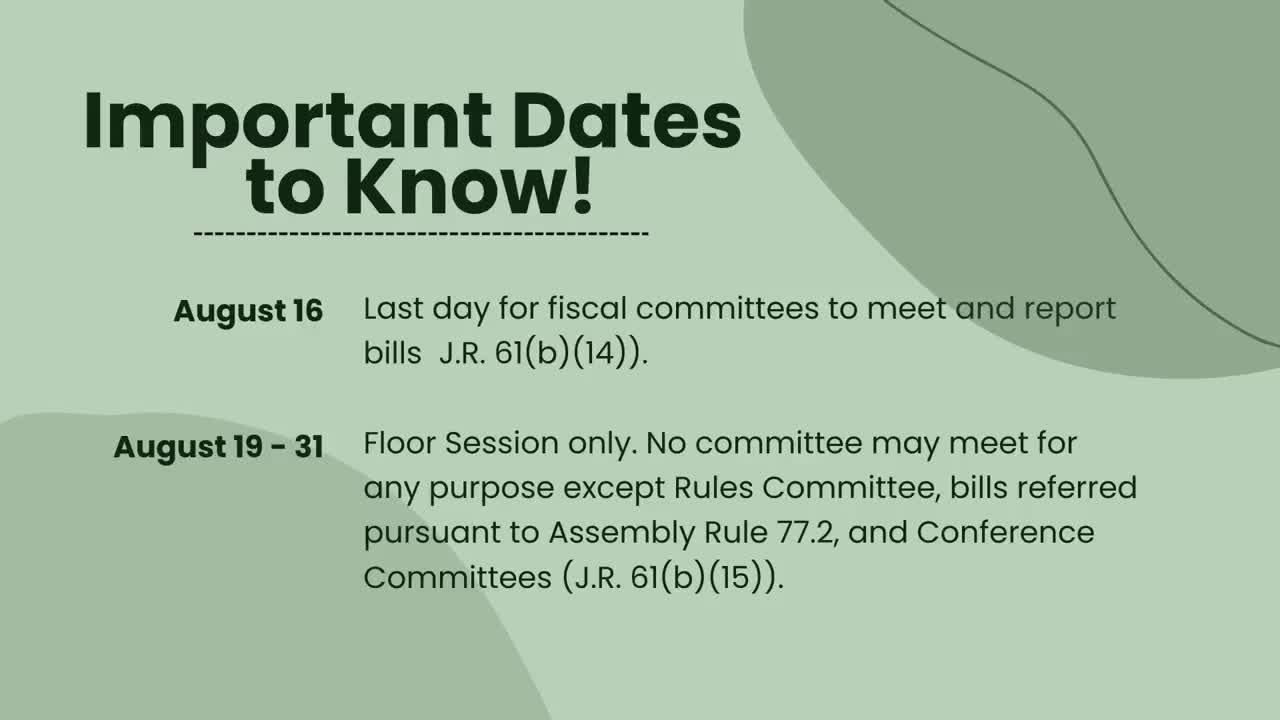 4MIN
Assembly Standing Committee on Housing and Community Development
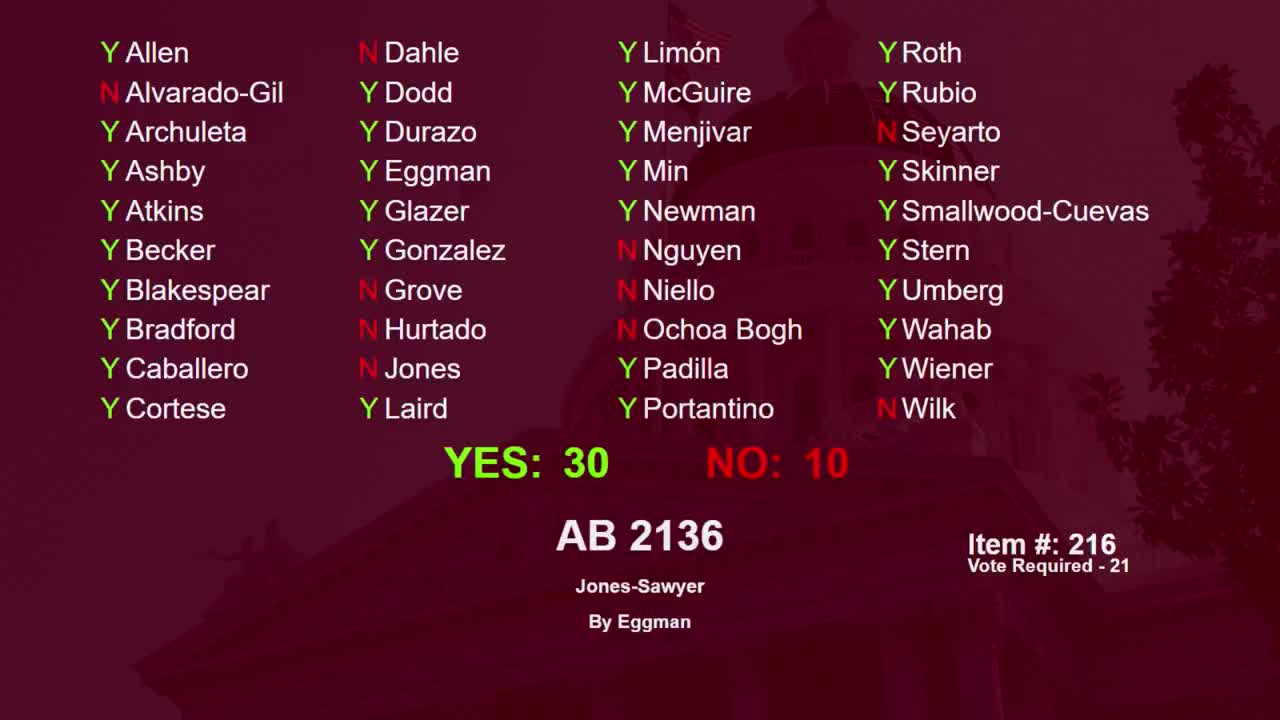 3MIN
Senate Floor
 10MIN
Assembly Standing Committee on Education
Bill Author

Bill Co-Author(s):
