AB 60: Restorative justice program.
- Session Year: 2023-2024
- House: Assembly
- Latest Version Date: 2023-10-08
Current Status:
Passed
(2023-10-08: Chaptered by Secretary of State - Chapter 513, Statutes of 2023.)
Introduced
In Committee
First Chamber
In Committee
Second Chamber
Enacted
Existing law establishes specified rights for victims and witnesses of crimes, including to be notified or informed regarding specified court proceedings and inmate placement or parole eligibility. Existing law requires the Attorney General to, by June 1, 2025, create and distribute a Victim Protections and Resources card, which contains information about victim rights and resources, as specified.
This bill would give a victim the right to be notified of the availability of community-based restorative justice programs and processes available to them, including programs serving their community, county, county jails, juvenile detention facilities, and the Department of Corrections and Rehabilitation, as specified. The bill would additionally require the Attorney General to include this information in the Victim Protections and Resources card, as specified.
Existing law establishes the jurisdiction of the juvenile court, which may adjudge a minor or nonminor to be a dependent or ward of the court under certain circumstances. Existing law requires the probation officer to inform the victim of a crime in a juvenile proceeding of the final disposition of the case and of any victim-offender conferencing program or victim impact class available in the county.
This bill would remove the requirement that the victim be notified of a victim-offender conferencing program, but would require the victim to be notified of the availability of community-based restorative justice programs and processes available to them. By increasing the duties of probation officers, this bill would impose a state-mandated local program.
The California Constitution requires the state to reimburse local agencies and school districts for certain costs mandated by the state. Statutory provisions establish procedures for making that reimbursement.
This bill would provide that, if the Commission on State Mandates determines that the bill contains costs mandated by the state, reimbursement for those costs shall be made pursuant to the statutory provisions noted above.
Existing law prescribes punishments, including incarceration, for various criminal offenses. Existing law authorizes a county to establish a pretrial diversion program for a defendant who has been charged with a misdemeanor offense, with certain exceptions.This bill would state the intent of the Legislature to enact legislation to establish a right for a victim to be informed of and participate in county-approved restorative justice programs, as provided.Existing law prescribes punishments, including incarceration, for various criminal offenses. Existing law authorizes a county to establish a pretrial diversion program for a defendant who has been charged with a misdemeanor offense, with certain exceptions.
This bill would state the intent of the Legislature to enact legislation to establish a right for a victim to be informed of and participate in county-approved restorative justice programs, as provided.
The Legislature finds and declares all of the following:
(a)Restorative justice is a practice and theory rooted in and developed from indigenous practices. When put into practice, restorative justice is a community-based, nonpunitive set of processes that center the needs of people who have been harmed. Restorative justice encourages accountability, healing, and repair when harm has occurred. These processes can include facilitated meetings between the person who was harmed, the person who harmed them, family members, and members of the community to discuss the causes and impact of the harm.
(b)Restorative justice processes often result in deep understanding of the harm caused, meaningful expressions of accountability, and agreements to take specific actions to repair harm, including personal or community service, engagement in employment or counseling, and payment of restitution. Restorative justice processes also provide an opportunity for victim or survivors to ask questions, share about the impact of harm, and engage in dialogue in ways that are not possible within the traditional criminal legal system.
(c)In 2015, a peer-reviewed study in the Journal of Experimental Criminology found that restorative justice processes can result in reduced feelings of fear, anger, post-traumatic stress symptoms, and depression for people who have been harmed. Researchers, including Dr. Mark Umbreit, studying the impact of restorative justice conferencing across different countries found that restorative justice processes result in higher rates of satisfaction for people who have been harmed than current criminal legal systems. In 2015, a study of Community Works Wests restorative justice youth diversion program in the County of Alameda showed that restorative justice processes also reduce future acts of harm and violence and have been used with documented success in counties throughout the state.
(d)Restorative justice offers the opportunity to better meet the needs that arise when harm has been caused than the traditional criminal legal system.
(e)It is the intent of the Legislature to establish a victims right to be informed of the availability and benefits of restorative justice programs.
SEC. 2.Section 679.02 of the Penal Code is amended to read:679.02.(a)The following rights are hereby established as the statutory rights of victims and witnesses of crimes:
(1)To be notified as soon as feasible that a court proceeding to which the victim or witness has been subpoenaed as a witness will not proceed as scheduled, provided the prosecuting attorney determines that the witness attendance is not required.
(2)Upon request of the victim or a witness, to be informed by the prosecuting attorney of the final disposition of the case, as provided by Section 11116.10.
(3)For the victim, the victims parents or guardian if the victim is a minor, or the next of kin of the victim if the victim has died, to be notified of all sentencing proceedings, and of the right to appear, to reasonably express their views, have those views preserved by audio or video means as provided in Section 1191.16, and to have the court consider their statements, as provided by Sections 1191.1 and 1191.15.
(4)For the victim, the victims parents or guardian if the victim is a minor, or the next of kin of the victim if the victim has died, to be notified of all juvenile disposition hearings in which the alleged act would have been a felony if committed by an adult, and of the right to attend and to express their views, as provided by Section 656.2 of the Welfare and Institutions Code.
(5)Upon request by the victim or the next of kin of the victim if the victim has died, to be notified of any parole eligibility hearing and of the right to appear, either personally as provided by Section 3043, or by other means as provided by Sections 3043.2 and 3043.25, to reasonably express their views, and to have their statements considered, as provided by Section 3043 of this code and by Section 1767 of the Welfare and Institutions Code.
(6)Upon request by the victim or the next of kin of the victim if the crime was a homicide, to be notified of an inmates placement in a reentry or work furlough program, or notified of the inmates escape as provided by Section 11155.
(7)To be notified that a witness may be entitled to witness fees and mileage, as provided by Section 1329.1.
(8)For the victim, to be provided with information concerning the victims right to civil recovery and the opportunity to be compensated from the Restitution Fund pursuant to Chapter 5 (commencing with Section 13959) of Part 4 of Division 3 of Title 2 of the Government Code and Section 1191.2 of this code.
(9)To the expeditious return of property that has allegedly been stolen or embezzled, when it is no longer needed as evidence, as provided by Chapter 12 (commencing with Section 1407) and Chapter 13 (commencing with Section 1417) of Title 10 of Part 2.
(10)To an expeditious disposition of the criminal action.
(11)To be notified, if applicable, in accordance with Sections 679.03 and 3058.8 if the defendant is to be placed on parole.
(12)For the victim, upon request, to be notified of any pretrial disposition of the case, to the extent required by Section 28 of Article I of the California Constitution.
(A)A victim may request to be notified of a pretrial disposition.
(B)The victim may be notified by any reasonable means available.
(C)This paragraph is not intended to affect the right of the people and the defendant to an expeditious disposition as provided in Section 1050.
(13)For the victim, to be notified by the district attorneys office of the right to request, upon a form provided by the district attorneys office, and receive a notice pursuant to paragraph (14), if the defendant is convicted of any of the following offenses:
(A)Assault with intent to commit rape, sodomy, oral copulation, or any violation of Section 264.1, 288, or 289, in violation of Section 220.
(B)A violation of Section 207 or 209 committed with the intent to commit a violation of Section 261, 286, 287, 288, or 289, or former Section 262 or 288a.
(C)Rape, in violation of Section 261.
(D)Oral copulation, in violation of Section 287 or former Section 288a.
(E)Sodomy, in violation of Section 286.
(F)A violation of Section 288.
(G)A violation of Section 289.
(14)When a victim has requested notification pursuant to paragraph (13), the sheriff shall inform the victim that the person who was convicted of the offense has been ordered to be placed on probation, and give the victim notice of the proposed date upon which the person will be released from the custody of the sheriff.
(15)For the victim, to be notified of the availability of community-based restorative justice programs and processes available to them, including, but not limited to, programs serving their community, county, county jails, juvenile detention facilities, and the Department of Corrections and Rehabilitation. The victim has a right to be notified as early and often as possible, including during the initial contact, during followup investigation, at the point of diversion, throughout the process of the case, and in postconviction proceedings.
(b)The rights set forth in subdivision (a) shall be set forth in the information and educational materials prepared pursuant to Section 13897.1. The information and educational materials shall be distributed to local law enforcement agencies and local victims programs by the Victims Legal Resource Center established pursuant to Chapter 11 (commencing with Section 13897) of Title 6 of Part 4.
(c)Local law enforcement agencies shall make available copies of the materials described in subdivision (b) to victims and witnesses.
(d)This section is not intended to affect the rights and services provided to victims and witnesses by the local assistance centers for victims and witnesses.
(e)The court shall not release statements made pursuant to paragraph (3) or (4) of subdivision (a) to the public prior to the statement being heard in court.
SEC. 3.Section 679.027 of the Penal Code is amended to read:679.027.(a)Every law enforcement agency investigating a criminal act and every agency prosecuting a criminal act shall, as provided herein, at the time of initial contact with a crime victim, during followup investigation, or as soon thereafter as deemed appropriate by investigating officers or prosecuting attorneys, inform each victim, or the victims next of kin if the victim is deceased, of the rights they may have under applicable law relating to the victimization, including rights relating to housing, employment, compensation, and immigration relief.
(b)(1) Every law enforcement agency investigating a criminal act and every agency prosecuting a criminal act shall, as provided herein, at the time of initial contact with a crime victim, during followup investigation, or as soon thereafter as deemed appropriate by investigating officers or prosecuting attorneys, provide or make available to each victim of the criminal act without charge or cost a Victim Protections and Resources card described in paragraph (3).
(2)The Victim Protections and Resources card may be designed as part of and included with the Marsy Rights card described by Section 679.026.
(3)By June 1, 2025, the Attorney General shall design and make available in PDF or other imaging format to every agency listed in paragraph (1) a Victim Protections and Resources card, which shall contain information in lay terms about victim rights and resources, including, but not limited to, the following:
(A)Information about the rights provided by Sections 230 and 230.1 of the Labor Code.
(B)Information about the rights provided by Section 1946.7 of the Civil Code.
(C)Information about the rights provided by Section 1161.3 of the Civil Code, including information in lay terms about which crimes and tenants are eligible and under what circumstances.
(D)Information about federal immigration relief available to certain victims of crime.
(E)Information about the program established by Chapter 5 (commencing with Section 13950) of Part 4 of Division 3 of Title 2 of the Government Code, including information about the types of expenses the program may reimburse, eligibility, and how to apply.
(F)Information about the program established by Chapter 3.1 (commencing with Section 6205) of Division 7 of Title 1 of the Government Code.
(G)Information about eligibility for filing a restraining or protective order.
(H)Contact information for the Victims Legal Resource Center established by Chapter 11 (commencing with Section 13897) of Title 6 of Part 4.
(I)A list of trauma recovery centers funded by the state pursuant to Section 13963.1 of the Government Code, with their contact information, which shall be updated annually.
(J)The availability of community-based restorative justice programs and processes available to them, including programs serving their community, county, county jails, juvenile detention facilities, and the Department of Corrections and Rehabilitation.
(c)This section shall become operative on July 1, 2024, only if General Fund moneys over the multiyear forecasts beginning in the 202425 fiscal year are available to support ongoing augmentations and actions, and if an appropriation is made to backfill the Restitution Fund to support the actions in this section.
SEC. 4.Section 742 of the Welfare and Institutions Code is amended to read:742.(a)Upon the request of an alleged victim of a crime, the probation officer shall, within 60 days of the final disposition of a case within which a petition has been filed pursuant to Section 602, inform that person by letter of the final disposition of the case. Final disposition means dismissal, acquittal, or findings made pursuant to this article. If the court orders that restitution shall be made to the victim of a crime, the amount, terms, and conditions thereof shall be included in the information provided pursuant to this section.
(b)When a petition has been filed pursuant to Section 602, the probation officer shall inform the victim of the offense, if any, of any victim impact class available in the county, and of their right pursuant to subdivision (a) to be informed of the final disposition of the case, including their right, if any, to victim restitution, as permitted by law.
(c)A victim shall be notified of the availability of community-based restorative justice programs and processes available to them, including, but not limited to, programs serving their community, county, county jails, juvenile detention facilities, and the Department of Corrections and Rehabilitation. The victim shall be notified as early and often as possible, including, but not limited to, during the initial contact, during followup investigation, at the point of diversion, throughout the process of the case, and in all postconviction proceedings.
SEC. 5.If the Commission on State Mandates determines that this act contains costs mandated by the state, reimbursement to local agencies and school districts for those costs shall be made pursuant to Part 7 (commencing with Section 17500) of Division 4 of Title 2 of the Government Code.
The Legislature finds and declares all of the following:
(a)Restorative justice is a practice and theory rooted in and developed from indigenous practices. When put into practice, restorative justice is a community-based, nonpunitive set of processes that center the needs of people who have been harmed. Restorative justice encourages accountability, healing, and repair when harm has occurred. These processes can include facilitated meetings between the person who was harmed, the person who harmed them, family members, and members of the community to discuss the causes and impact of the harm.
(b)Restorative justice processes often result in deep understanding of the harm caused, meaningful expressions of accountability, and agreements to take specific actions to repair harm, including personal or community service, engagement in employment or counseling, and payment of restitution. Restorative justice processes also provide an opportunity for victim or survivors to ask questions, share about the impact of harm, and engage in dialogue in ways that are not possible within the traditional criminal legal system.
(c)In 2015, a peer-reviewed study in the Journal of Experimental Criminology found that restorative justice processes can result in reduced feelings of fear, anger, post-traumatic stress symptoms, and depression for people who have been harmed. Researchers, including Dr. Mark Umbreit, studying the impact of restorative justice conferencing across different countries found that restorative justice processes result in higher rates of satisfaction for people who have been harmed than current criminal legal systems. In 2015, a study of Community Works Wests restorative justice youth diversion program in the County of Alameda showed that restorative justice processes also reduce future acts of harm and violence and have been used with documented success in counties throughout the state.
(d)Restorative justice offers the opportunity to better meet the needs that arise when harm has been caused than the traditional criminal legal system.
(e)It is the intent of the Legislature to establish a victims right to be informed of the availability and benefits of restorative justice programs.
SEC. 2.Section 679.02 of the Penal Code is amended to read:679.02.(a)The following rights are hereby established as the statutory rights of victims and witnesses of crimes:
(1)To be notified as soon as feasible that a court proceeding to which the victim or witness has been subpoenaed as a witness will not proceed as scheduled, provided the prosecuting attorney determines that the witness attendance is not required.
(2)Upon request of the victim or a witness, to be informed by the prosecuting attorney of the final disposition of the case, as provided by Section 11116.10.
(3)For the victim, the victims parents or guardian if the victim is a minor, or the next of kin of the victim if the victim has died, to be notified of all sentencing proceedings, and of the right to appear, to reasonably express their views, have those views preserved by audio or video means as provided in Section 1191.16, and to have the court consider their statements, as provided by Sections 1191.1 and 1191.15.
(4)For the victim, the victims parents or guardian if the victim is a minor, or the next of kin of the victim if the victim has died, to be notified of all juvenile disposition hearings in which the alleged act would have been a felony if committed by an adult, and of the right to attend and to express their views, as provided by Section 656.2 of the Welfare and Institutions Code.
(5)Upon request by the victim or the next of kin of the victim if the victim has died, to be notified of any parole eligibility hearing and of the right to appear, either personally as provided by Section 3043, or by other means as provided by Sections 3043.2 and 3043.25, to reasonably express their views, and to have their statements considered, as provided by Section 3043 of this code and by Section 1767 of the Welfare and Institutions Code.
(6)Upon request by the victim or the next of kin of the victim if the crime was a homicide, to be notified of an inmates placement in a reentry or work furlough program, or notified of the inmates escape as provided by Section 11155.
(7)To be notified that a witness may be entitled to witness fees and mileage, as provided by Section 1329.1.
(8)For the victim, to be provided with information concerning the victims right to civil recovery and the opportunity to be compensated from the Restitution Fund pursuant to Chapter 5 (commencing with Section 13959) of Part 4 of Division 3 of Title 2 of the Government Code and Section 1191.2 of this code.
(9)To the expeditious return of property that has allegedly been stolen or embezzled, when it is no longer needed as evidence, as provided by Chapter 12 (commencing with Section 1407) and Chapter 13 (commencing with Section 1417) of Title 10 of Part 2.
(10)To an expeditious disposition of the criminal action.
(11)To be notified, if applicable, in accordance with Sections 679.03 and 3058.8 if the defendant is to be placed on parole.
(12)For the victim, upon request, to be notified of any pretrial disposition of the case, to the extent required by Section 28 of Article I of the California Constitution.
(A)A victim may request to be notified of a pretrial disposition.
(B)The victim may be notified by any reasonable means available.
This(C)This paragraph is not intended to affect the right of the people and the defendant to an expeditious disposition as provided in Section 1050.
(13)For the victim, to be notified by the district attorneys office of the right to request, upon a form provided by the district attorneys office, and receive a notice pursuant to paragraph (14), if the defendant is convicted of any of the following offenses:
(A)Assault with intent to commit rape, sodomy, oral copulation, or any violation of Section 264.1, 288, or 289, in violation of Section 220.
(B)A violation of Section 207 or 209 committed with the intent to commit a violation of Section 261, 286, 287, 288, or 289, or former Section 262 or 288a.
(C)Rape, in violation of Section 261.
(D)Oral copulation, in violation of Section 287 or former Section 288a.
(E)Sodomy, in violation of Section 286.
(F)A violation of Section 288.
(G)A violation of Section 289.
(14)When a victim has requested notification pursuant to paragraph (13), the sheriff shall inform the victim that the person who was convicted of the offense has been ordered to be placed on probation, and give the victim notice of the proposed date upon which the person will be released from the custody of the sheriff.
(15)For the victim, to be notified of the availability of community-based restorative justice programs and processes available to them, including, but not limited to, programs serving their community, county, county jails, juvenile detention facilities, and the Department of Corrections and Rehabilitation. The victim has a right to be notified as early and often as possible, including during the initial contact, during followup investigation, at the point of diversion, throughout the process of the case, and in postconviction proceedings.
(b)The rights set forth in subdivision (a) shall be set forth in the information and educational materials prepared pursuant to Section 13897.1. The information and educational materials shall be distributed to local law enforcement agencies and local victims programs by the Victims Legal Resource Center established pursuant to Chapter 11 (commencing with Section 13897) of Title 6 of Part 4.
(c)Local law enforcement agencies shall make available copies of the materials described in subdivision (b) to victims and witnesses.
(d)This section is not intended to affect the rights and services provided to victims and witnesses by the local assistance centers for victims and witnesses.
(e)The court shall not release statements, statements made pursuant to paragraph (3) or (4) of subdivision (a), (a) to the public prior to the statement being heard in court.
SEC. 3.Section 679.027 of the Penal Code is amended to read:679.027.(a)Every law enforcement agency investigating a criminal act and every agency prosecuting a criminal act shall, as provided herein, at the time of initial contact with a crime victim, during followup investigation, or as soon thereafter as deemed appropriate by investigating officers or prosecuting attorneys, inform each victim, or the victims next of kin if the victim is deceased, of the rights they may have under applicable law relating to the victimization, including rights relating to housing, employment, compensation, and immigration relief.
(b)(1) Every law enforcement agency investigating a criminal act and every agency prosecuting a criminal act shall, as provided herein, at the time of initial contact with a crime victim, during followup investigation, or as soon thereafter as deemed appropriate by investigating officers or prosecuting attorneys, provide or make available to each victim of the criminal act without charge or cost a Victim Protections and Resources card described in paragraph (3).
(2)The Victim Protections and Resources card may be designed as part of and included with the Marsy Rights card described by Section 679.026.
(3)By June 1, 2025, the Attorney General shall design and make available in PDF or other imaging format to every agency listed in paragraph (1) a Victim Protections and Resources card, which shall contain information in lay terms about victim rights and resources, including, but not limited to, the following:
(A)Information about the rights provided by Sections 230 and 230.1 of the Labor Code.
(B)Information about the rights provided by Section 1946.7 of the Civil Code.
(C)Information about the rights provided by Section 1161.3 of the Civil Code, including information in lay terms about which crimes and tenants are eligible and under what circumstances.
(D)Information about federal immigration relief available to certain victims of crime.
(E)Information about the program established by Chapter 5 (commencing with Section 13950) of Part 4 of Division 3 of Title 2 of the Government Code, including information about the types of expenses the program may reimburse, eligibility, and how to apply.
(F)Information about the program established by Chapter 3.1 (commencing with Section 6205) of Division 7 of Title 1 of the Government Code.
(G)Information about eligibility for filing a restraining or protective order.
(H)Contact information for the Victims Legal Resource Center established by Chapter 11 (commencing with Section 13897) of Title 6 of Part 4.
(I)A list of trauma recovery centers funded by the state pursuant to Section 13963.1 of the Government Code, with their contact information, which shall be updated annually.
(J)The availability of community-based restorative justice programs and processes available to them, including programs serving their community, county, county jails, juvenile detention facilities, and the Department of Corrections and Rehabilitation.
(c)This section shall become operative on July 1, 2024, only if General Fund moneys over the multiyear forecasts beginning in the 202425 fiscal year are available to support ongoing augmentations and actions, and if an appropriation is made to backfill the Restitution Fund to support the actions in this section.
SEC. 4.Section 742 of the Welfare and Institutions Code is amended to read:742.(a)Upon the request of an alleged victim of a crime, the probation officer shall, within 60 days of the final disposition of a case within which a petition has been filed pursuant to Section 602, inform that person by letter of the final disposition of the case. Final disposition means dismissal, acquittal, or findings made pursuant to this article. If the court orders that restitution shall be made to the victim of a crime, the amount, terms, and conditions thereof shall be included in the information provided pursuant to this section.
(b)In any case in which When a petition has been filed pursuant to Section 602, the probation officer shall inform the victim of the offense, if any, of any victim-offender conferencing program or victim impact class available in the county, and of his or her their right pursuant to subdivision (a) to be informed of the final disposition of the case, including his or her their right, if any, to victim restitution, as permitted by law.
(c)A victim shall be notified of the availability of community-based restorative justice programs and processes available to them, including, but not limited to, programs serving their community, county, county jails, juvenile detention facilities, and the Department of Corrections and Rehabilitation. The victim shall be notified as early and often as possible, including, but not limited to, during the initial contact, during followup investigation, at the point of diversion, throughout the process of the case, and in all postconviction proceedings.
SEC. 5.If the Commission on State Mandates determines that this act contains costs mandated by the state, reimbursement to local agencies and school districts for those costs shall be made pursuant to Part 7 (commencing with Section 17500) of Division 4 of Title 2 of the Government Code.
SECTION 1.It is the intent of the Legislature to enact legislation to establish a right for a victim to be informed of and participate in county-approved restorative justice programs that prioritize victim needs, are administered by independent community-based organizations, occur in confidential settings, and offer the dismissal or nonfiling of charges if successful to all parties.It is the intent of the Legislature to enact legislation to establish a right for a victim to be informed of and participate in county-approved restorative justice programs that prioritize victim needs, are administered by independent community-based organizations, occur in confidential settings, and offer the dismissal or nonfiling of charges if successful to all parties.
|
Date
|
Status
|
|---|---|
| Oct 8, 2023 | Chaptered by Secretary of State - Chapter 513, Statutes of 2023. |
| Oct 8, 2023 | Approved by the Governor. |
| Sep 19, 2023 | Enrolled and presented to the Governor at 4 p.m. |
| Sep 12, 2023 | In Assembly. Ordered to Engrossing and Enrolling. |
| Sep 12, 2023 | Read third time. Passed. Ordered to the Assembly. (Ayes 39. Noes 0. Page 2684.). |
| Sep 8, 2023 | Ordered to special consent calendar. |
| Sep 5, 2023 | Read second time. Ordered to third reading. |
| Sep 1, 2023 | From committee: Do pass. (Ayes 7. Noes 0.) (September 1). |
| Jun 26, 2023 | In committee: Referred to APPR. suspense file. |
| Jun 13, 2023 | From committee: Do pass and re-refer to Com. on APPR with recommendation: To Consent Calendar. (Ayes 5. Noes 0.) (June 13). Re-referred to Com. on APPR. |
| May 31, 2023 | Referred to Com. on PUB S. |
| May 18, 2023 | In Senate. Read first time. To Com. on RLS. for assignment. |
| May 18, 2023 | Read third time. Passed. Ordered to the Senate. (Ayes 74. Noes 0. Page 1593.) |
| May 11, 2023 | Read second time. Ordered to Consent Calendar. |
| May 10, 2023 | From committee: Do pass. To Consent Calendar. (Ayes 14. Noes 0.) (May 10). |
| May 3, 2023 | In committee: Hearing postponed by committee. |
| Apr 19, 2023 | From committee: Do pass and re-refer to Com. on APPR. with recommendation: To Consent Calendar. (Ayes 8. Noes 0.) (April 18). Re-referred to Com. on APPR. |
| Mar 20, 2023 | Re-referred to Com. on PUB. S. |
| Mar 16, 2023 | Referred to Com. on PUB. S. |
| Mar 16, 2023 | From committee chair, with author's amendments: Amend, and re-refer to Com. on PUB. S. Read second time and amended. |
| Jan 4, 2023 | Read first time. |
| Dec 7, 2022 | From printer. May be heard in committee January 6. |
| Dec 6, 2022 | Introduced. To print. |
|
Date
|
Description
|
Location
|
Votes
|
|
|---|---|---|---|---|
| Sep 12, 2023 | Special Consent AB60 Bryan By Rubio | Senate Floor |
Passed |
|
| Sep 1, 2023 | Do pass | Senate Standing Committee on Appropriations |
Passed |
|
| Jun 26, 2023 | Placed on suspense file | Senate Standing Committee on Appropriations |
Passed |
|
| Jun 13, 2023 | Do pass, but first be re-referred to the Committee on [Appropriations] with the recommendation: To Consent Calendar | Senate Standing Committee on Public Safety |
Passed |
|
| May 18, 2023 | AB 60 Bryan Consent Calendar Second Day Regular Session | Assembly Floor |
Passed |
|
| May 10, 2023 | Do pass. To Consent Calendar. | Assembly Standing Committee on Appropriations |
Passed |
|
| Apr 18, 2023 | Do pass and be re-referred to the Committee on [Appropriations] with recommendation: To Consent Calendar | Assembly Standing Committee on Public Safety |
Passed |
This list shows positions taken on this bill by organizations on the date displayed, which is linked to the original source.
Positions by individuals are not included.
|
Organization
|
Position
|
Date
|
|---|---|---|
| Aclu California Action | ** Support | |
| Alliance for Boys and Men of Color | ** Support | |
| California Alliance for Youth and Community Justice | ** Support | |
| California Catholic Conference | ** Support | |
| California Conference for Equality and Justice | ** Support | |
| California Public Defenders Association | ** Support | |
| California-Hawaii State Conference Of The Naacp | ** Support | |
| Californians for Safety and Justice | ** Support | |
| Californians United for a Responsible Budget | ** Support | |
| Centinela Youth Services | ** Support | |
| Communities United for Restorative Youth Justice | ** Support | |
| Community Works West | ** Support | |
| Conflict Resolution Center of Santa Cruz County | ** Support | |
| Crime Survivors for Safety and Justice | ** Support | |
| DeafHope | ** Support | |
| Ella Baker Center For Human Rights | ** Support | |
| Grip Training Institute | ** Support | |
| Healing Dialogue and Action | ** Support | |
| Impact Justice | ** Support | |
| Initiate Justice | ** Support | |
| Insight Prison Project, Division of Five Keys Schools & Programs | ** Support | |
| Los Angeles County District Attorney | ** Support | |
| National Association Of Social Workers, California Chapter | ** Support | |
| Pacific Juvenile Defender Center | ** Support | |
| Peace Anger Love | ** Support | |
| Prosecutors Alliance California | ** Support | |
| San Diego Unified School District, Department of Restorative Justice Practices | ** Support | |
| San Francisco Public Defender | ** Support | |
| Sister Warriors Freedom Coalition | ** Support | |
| Students Deserve | ** Support | |
| The Collective Healing and Transformation Project | ** Support | |
| The Transformative In-prison Workgroup | ** Support | |
| University of San Diego, Center for Restorative Justice | ** Support |
SENATE RULES COMMITTEE Office of Senate Floor Analyses (916) 651-1520 Fax: (916) 327-4478 | AB 60 |
THIRD READING
Bill No: AB 60
Author: Bryan (D)
Amended: 3/16/23 in Assembly
Vote: 21
SENATE PUBLIC SAFETY COMMITTEE: 5-0, 6/13/23
AYES: Wahab, Ochoa Bogh, Bradford, Skinner, Wiener
SENATE APPROPRIATIONS COMMITTEE: 7-0, 9/1/23
AYES: Portantino, Jones, Ashby, Bradford, Seyarto, Wahab, Wiener
ASSEMBLY FLOOR: 74-0, 5/18/23 (Consent) - See last page for vote
SUBJECT: Restorative justice program
SOURCE: Alliance for Boys and Men of Color
Californians for Safety and Justice
Centinela Youth Services
Community Works West
Crime Survivors for Safety and Justice
Initiate Justice
Insight Prison Project, Division of Five Keys Schools & Programs
DIGEST:
This bill requires a victim to be notified of the availability of community-based restorative justice programs and processes available to them.
ANALYSIS:
Existing law:
- Establishes the following statutory rights of victims and witnesses of crimes:
- To be notified as soon as feasible that a court proceeding to which the victim or witness has been subpoenaed as a witness will not proceed as scheduled, provided the prosecuting attorney determines that the witness’ attendance is not required;
- Upon request of the victim or a witness, to be informed by the prosecuting attorney of the final disposition of the case;
- For the victim, the victim’s parents or guardian if the victim is a minor, or the next of kin of the victim if the victim has died, to be notified of all sentencing proceedings, and of the right to appear, to reasonably express their views, have those views preserved by audio or video means and to have the court consider their statements;
- For the victim, the victim’s parents or guardian if the victim is a minor, or the next of kin of the victim if the victim has died, to be notified of all juvenile disposition hearings in which the alleged act would have been a felony if committed by an adult, and of the right to attend and to express their views;
- Upon request by the victim or the next of kin of the victim if the victim has died, to be notified of any parole eligibility hearing and of the right to appear, either personally or by other means to reasonably express their views, and to have their statements considered;
- Upon request by the victim or the next of kin of the victim if the crime was a homicide, to be notified of an inmate’s placement in a reentry or work furlough program, or notified of the inmate’s escape;
- To be notified that a witness may be entitled to witness fees and mileage;
- For the victim, to be provided with information concerning the victim’s right to civil recovery and the opportunity to be compensated from the Restitution Fund;
- To the expeditious return of property that has allegedly been stolen or embezzled, when it is no longer needed as evidence;
- To an expeditious disposition of the criminal action;
- To be notified if the defendant is to be placed on parole;
- For the victim, to be notified by the district attorney’s office of the right to request, upon a form provided by the district attorney’s office, and receive a notice that the person who was convicted of one of the qualifying offenses has been ordered to be placed on probation, and give the victim notice of the proposed date upon which the person will be released from the custody; and
- If requested notification of above, the sheriff shall inform the victim that the person who was convicted of the offense has been ordered to be placed on probation, and give the victim notice of the proposed date upon which the person will be released from the custody. (Pen. Code, § 679.02.)
- Requires every law enforcement agency investigating a criminal act and every agency prosecuting a criminal act shall, as provided herein, at the time of initial contact with a crime victim, during followup investigation, or as soon thereafter as deemed appropriate by investigating officers or prosecuting attorneys, inform each victim, or the victim’s next of kin if the victim is deceased, of the rights they may have under applicable law relating to the victimization, including rights relating to housing, employment, compensation, and immigration relief. (Pen. Code, § 679.027, subd. (a).)
- Requires every law enforcement agency investigating a criminal act and every agency prosecuting a criminal act, at the time of initial contact with a crime victim, during followup investigation, or as soon thereafter as deemed appropriate by investigating officers or prosecuting attorneys, provide or make available to each victim without charge or cost a “Victim Protections and Resources” card. (Pen. Code, § 679.027, subd. (b)(1).)
- Requires the Attorney General (AG), by June 1, 2025, to design and make available in PDF or other imaging format to specified agencies a “Victim Protections and Resources” card that contains information in lay terms about victim rights and resources, as specified. (Pen. Code, § 679.027, subd. (b)(3).)
- Requires a probation officer, upon the request of an alleged victim of a crime and within 60 days of the final disposition of a juvenile’s case in a juvenile justice court, to inform that victim by letter of the final disposition of the case. (Welf. & Inst. Code, § 742, subd. (a).)
- Requires the probation officer, in any case in which a petition to involve a juvenile justice court has been filed, to inform the victim of the offense, if any, of any victim-offender conferencing program or victim impact class available in the county, and of their right to be informed of the final disposition of the case, including their right, if any, to victim restitution, as permitted by law. (Welf. & Inst. Code, § 742, subd. (b).)
This bill:
- Adds the statutory right for the victim to be notified of the availability of community-based restorative justice programs and processes available to them, including, but not limited to, programs serving their community, county, county jails, juvenile detention facilities, and the Department of Corrections and Rehabilitation (CDCR).
- Provides that the victim has a right to be notified as early and often as possible, including during the initial contact, during follow-up investigation, at the point of diversion, throughout the process of the case, and in postconviction proceedings.
- Requires the AG to include in the “Victim Protections and Resources” card information about the availability of community-based restorative justice programs and processes available to them, including programs serving their community, county, county jails, juvenile detention facilities, and CDCR.
- Removes reference to victim offender conferencing programs in existing law.
- Requires a victim to be notified of the availability of community-based restorative justice programs and processes available to them, including, but not limited to, programs serving their community, county, county jails, juvenile detention facilities, and CDCR. The victim shall be notified as early and often as possible, including, but not limited to, during the initial contact, during followup investigation, at the point of diversion, throughout the process of the case, and in all postconviction proceedings.
- States that it is the intent of the Legislature to establish a victim’s right to be informed of the availability and benefits of restorative justice programs.
- Contains various legislative findings and declarations related to the potential benefits of restorative justice.
Comments
According to the author of this bill:
Restorative Justice is a community-based, non-punitive set of processes that center the needs of people who have been harmed. These programs have shown successful results for participants and survivors in places it has been implemented. They have helped to bring healing and accountability for those who choose to participate.
Since there is no one-size-fits-all solution to healing, AB 60 will ensure that all victims of crime are informed of restorative justice programs that are available to them in their county. Victims should be informed of all the possible options they have in order to heal.
FISCAL EFFECT: Appropriation: No Fiscal Com.: Yes Local: Yes
According to the Senate Appropriations Committee:
- The Department of Justice (DOJ) reports one-time operating costs of $50,000 related to developing a new “Victim Protections and Resources” card as well as ongoing, annual costs of $269,000 (General Fund).
- Unknown, potentially reimbursable costs to local law enforcement agencies and county probation departments to provide notifications to victims about the availability of community-based restorative justice programs (local funds, General Fund). General Fund costs will depend on whether the duties imposed by this bill constitute a reimbursable state mandate, as determined by the Commission on State Mandates.
SUPPORT: (Verified 9/1/23)
Alliance for Boys and Men of Color (co-source)
Californians for Safety and Justice (co-source)
Centinela Youth Services (co-source)
Community Works West (co-source)
Crime Survivors for Safety and Justice (co-source)
Initiate Justice (co-source)
Insight Prison Project, Division of Five Keys Schools & Programs (co-source)
ACLU California Action
California Alliance for Youth and Community Justice
California Catholic Conference
California Conference for Equality and Justice
California Public Defenders Association
California-Hawaii State Conference of the NAACP
Californians United for a Responsible Budget
Communities United for Restorative Youth Justice
Conflict Resolution Center of Santa Cruz County
Deafhope
Ella Baker Center for Human Rights
Grip Training Institute
Healing Dialogue and Action
Impact Justice
Los Angeles County District Attorney
National Association of Social Workers, California Chapter
Pacific Juvenile Defender Center
Peace Anger Love
Prosecutors Alliance California
San Diego Unified School District, Department of Restorative Justice Practices
San Francisco Public Defender
Sister Warriors Freedom Coalition
Students Deserve
The Collective Healing and Transformation Project
The Transformative In-prison Workgroup
University of San Diego, Center for Restorative Justice
OPPOSITION: (Verified 9/1/23)
None received
ASSEMBLY FLOOR: 74-0, 5/18/23
AYES: Addis, Aguiar-Curry, Alanis, Alvarez, Arambula, Bains, Bauer-Kahan, Bennett, Berman, Boerner, Bonta, Bryan, Calderon, Juan Carrillo, Wendy Carrillo, Chen, Connolly, Megan Dahle, Davies, Dixon, Essayli, Flora, Mike Fong, Gabriel, Gallagher, Garcia, Gipson, Grayson, Haney, Hart, Holden, Hoover, Irwin, Jackson, Jones-Sawyer, Kalra, Lackey, Lee, Low, Lowenthal, Maienschein, Mathis, McCarty, McKinnor, Muratsuchi, Stephanie Nguyen, Ortega, Pacheco, Papan, Jim Patterson, Joe Patterson, Pellerin, Petrie-Norris, Quirk-Silva, Ramos, Reyes, Luz Rivas, Robert Rivas, Rodriguez, Blanca Rubio, Sanchez, Santiago, Schiavo, Soria, Ta, Ting, Valencia, Wallis, Ward, Weber, Wicks, Wood, Zbur, Rendon
NO VOTE RECORDED: Cervantes, Vince Fong, Friedman, Villapudua, Waldron, Wilson
Prepared by: Stella Choe / PUB. S. /
9/2/23 14:58:31
**** END ****
SENATE COMMITTEE ON
Senator Anthony Portantino, Chair
2023 - 2024 Regular Session
AB 60 (Bryan) - Restorative justice program
Version: | Policy Vote: |
Urgency: | Mandate: |
Hearing Date: | Consultant: |
Bill Summary:
AB 60 would establish the statutory right of victims of crimes to be informed of community-based restorative justice programs that are available to them.
Fiscal Impact:
- The Department of Justice (DOJ) reports one-time operating costs of $50,000 related to developing a new “Victim Protections and Resources” card as well as ongoing, annual costs of $269,000 (General Fund). See Staff Comments for additional detail.
- Unknown, potentially reimbursable costs to local law enforcement agencies and county probation departments to provide notifications to victims about the availability of community-based restorative justice programs (local funds, General Fund). General Fund costs will depend on whether the duties imposed by this bill constitute a reimbursable state mandate, as determined by the Commission on State Mandates.
Background:
Restorative justice is a fairly modern concept in the criminal justice system. Restorative justice programs focus on the rehabilitation of offenders through reconciliation with victims and the community at large. This is generally accomplished through a cooperative effort between victim and defendant in which defendants are made aware of the personal impact of their criminal actions. In addition, the victim of the crime has an opportunity to work with the defendant in an attempt to dissuade the defendant from committing similar crimes in the future. Restorative justice typically involves two major phases: opportunities for victims of crime to communicate with defendants, and opportunities for the community to impact the sentence and encourage the defendant to make different choices in the future.
Existing law provides statutory rights to victims of crimes, including, among other things, the right to be informed of the final disposition; the right to be notified of any pretrial disposition in the case; the right to receive notice that the defendant has been convicted; and the right to receive information about civil recovery and the opportunity to be compensated from the Restitution Fund. Existing law also requires the Attorney General, by June 1, 2025, to design and make available in PDF or other imaging format to specified agencies a “Victim Protections and Resources” card that contains information in lay terms about victim rights and resources, which a law enforcement agency investigating a criminal act and an agency prosecuting a criminal act will have to provide to each victim
Proposed Law:
- Adds the statutory right for the victim to be notified of the availability of community-based restorative justice programs and processes available to them, including, but not limited to, programs serving their community, county, county jails, juvenile detention facilities, and the Department of Corrections and Rehabilitation (CDCR).
- Provides that the victim has a right to be notified as early and often as possible, including during the initial contact, during follow-up investigation, at the point of diversion, throughout the process of the case, and in postconviction proceedings.
- Requires the AG to include in the “Victim Protections and Resources” card information about the availability of community-based restorative justice programs and processes available to them, including programs serving their community, county, county jails, juvenile detention facilities, and CDCR.
- Requires a victim to be notified of the availability of community-based restorative justice programs and processes available to them, including, but not limited to, programs serving their community, county, county jails, juvenile detention facilities, and CDCR.
- Provides that the victim shall be notified as early and often as possible, including, but not limited to, during the initial contact, during follow-up investigation, at the point of diversion, throughout the process of the case, and in all postconviction proceedings.
Related Legislation:
- AB 2167 (Kalra), Chapter 775, Statutes of 2022, requires a court presiding over a criminal matter to consider alternatives to incarceration, including restorative justice.
- AB 2598 (Weber), Chapter 914, Statutes of 2022, requires the Department of Education to develop evidence-based practices for restorative justice practice implementation in schools.
Staff Comments:
DOJ reports that the $50,000 one-time costs would be required for training, developing the revised “Victim Protections and Resources” card, creating best practices documents to best serve/inform victims on restorative justice options, translation and interpretation, brochures, travel for training when needed/required and for outreach statewide.
DOJ further reports that it anticipates an increase the number of inquiries received from victims, survivors, families, government and community-based organizations as a result of this bill. In order to address such inquiries, the Victim Services Unit (VSU) anticipates the need for specialized advocates. DOJ reports that the VSU would require 1.0 permanent Associate Governmental Program Analyst (AGPA), 1.0 permanent Staff Services Analyst (SSA), and additional operating costs. The AGPA would provide advocacy and information to restorative justice inquiries and serve as the point of contact for local district attorneys participating and implementing restorative justice programs. The SSA would collaborate with the AGPA in the development, translation and dissemination of the updated “Victim Protections and Resources” card. Staff notes that 2.0 additional permanent positions may be excessive absent additional information on what duties those positions would perform.
-- END --
SENATE COMMITTEE ON PUBLIC SAFETY
Senator Aisha Wahab, Chair
2023 - 2024 Regular
Bill No: AB 60 Hearing Date: June 13, 2023
Author: | Bryan | ||
Version: | March 16, 2023 | ||
Urgency: | No | Fiscal: | Yes |
Consultant: | SC | ||
Subject: Restorative justice program
HISTORY
Source: Alliance for Boys and Men of Color
Californians for Safety and Justice
Centinela Youth Services
Community Works West
Crime Survivors for Safety and Justice
Initiate Justice
Insight Prison Project, A Division of Five Keys Schools & Programs
Prior Legislation: SB 993 (Skinner), Assembly inactive file, 2022
AB 2167 (Kalra), Chapter 775, Statutes of 2022
AB 2598 (Weber), Ch. 914, Stats. 2022
SB 678 (Glazer), held on suspense in Sen. Approps., 2019
AB 1849 (Carter), held on suspense in Assembly Approps., 2012
AB 446 (Carter), Vetoed, 2011
AB 114 (Carter), Vetoed, 2010
AB 360 (Carter), Vetoed, 2008
Support: California Catholic Conference; California Conference for Equality and Justice; California Public Defenders Association (CPDA); California-Hawaii State Conference of the NAACP; Californians United for A Responsible Budget; Centinela Youth Services; Communities United for Restorative Youth Justice (CURYJ); Conflict Resolution Center of Santa Cruz County; Deafhope; Ella Baker Center for Human Rights; Grip Training Institute; Healing Dialogue and Action; Impact Justice; Initiate Justice; National Association of Social Workers, California Chapter; Pacific Juvenile Defender Center; Peace Anger Love; Prosecutors Alliance California; San Francisco Public Defender; San Diego Unified School District, Department of Restorative Justice Practices; Sister Warriors Freedom Coalition; Students Deserve; The Collective Healing and Transformation Project; The Transformative In-prison Workgroup; University of San Diego, Center for Restorative Justice
Opposition: None known
Assembly Floor Vote: 74 - 0
PURPOSE
The purpose of this bill is to require a victim to be notified of the availability of community-based restorative justice programs and processes available to them.
Existing law establishes the following statutory rights of victims and witnesses of crimes:
- To be notified as soon as feasible that a court proceeding to which the victim or witness has been subpoenaed as a witness will not proceed as scheduled, provided the prosecuting attorney determines that the witness’ attendance is not required;
- Upon request of the victim or a witness, to be informed by the prosecuting attorney of the final disposition of the case;
- For the victim, the victim’s parents or guardian if the victim is a minor, or the next of kin of the victim if the victim has died, to be notified of all sentencing proceedings, and of the right to appear, to reasonably express their views, have those views preserved by audio or video means and to have the court consider their statements;
- For the victim, the victim’s parents or guardian if the victim is a minor, or the next of kin of the victim if the victim has died, to be notified of all juvenile disposition hearings in which the alleged act would have been a felony if committed by an adult, and of the right to attend and to express their views;
- Upon request by the victim or the next of kin of the victim if the victim has died, to be notified of any parole eligibility hearing and of the right to appear, either personally or by other means to reasonably express their views, and to have their statements considered;
- Upon request by the victim or the next of kin of the victim if the crime was a homicide, to be notified of an inmate’s placement in a reentry or work furlough program, or notified of the inmate’s escape;
- To be notified that a witness may be entitled to witness fees and mileage;
- For the victim, to be provided with information concerning the victim’s right to civil recovery and the opportunity to be compensated from the Restitution Fund;
- To the expeditious return of property that has allegedly been stolen or embezzled, when it is no longer needed as evidence;
- To an expeditious disposition of the criminal action;
- To be notified if the defendant is to be placed on parole;
- For the victim, to be notified by the district attorney’s office of the right to request, upon a form provided by the district attorney’s office, and receive a notice that the person who was convicted of one of the qualifying offenses has been ordered to be placed on probation, and give the victim notice of the proposed date upon which the person will be released from the custody;
- If requested notification of above, the sheriff shall inform the victim that the person who was convicted of the offense has been ordered to be placed on probation, and give the victim notice of the proposed date upon which the person will be released from the custody.
This bill adds the statutory right for the victim to be notified of the availability of community-based restorative justice programs and processes available to them, including, but not limited to, programs serving their community, county, county jails, juvenile detention facilities, and the Department of Corrections and Rehabilitation (CDCR).
This bill provides that the victim has a right to be notified as early and often as possible, including during the initial contact, during follow-up investigation, at the point of diversion, throughout the process of the case, and in postconviction proceedings.
Existing law requires every law enforcement agency investigating a criminal act and every agency prosecuting a criminal act shall, as provided herein, at the time of initial contact with a crime victim, during followup investigation, or as soon thereafter as deemed appropriate by investigating officers or prosecuting attorneys, inform each victim, or the victim’s next of kin if the victim is deceased, of the rights they may have under applicable law relating to the victimization, including rights relating to housing, employment, compensation, and immigration relief. (Pen. Code, § 679.027, subd. (a).)
Existing law requires every law enforcement agency investigating a criminal act and every agency prosecuting a criminal act, at the time of initial contact with a crime victim, during followup investigation, or as soon thereafter as deemed appropriate by investigating officers or prosecuting attorneys, provide or make available to each victim without charge or cost a “Victim Protections and Resources” card. (Pen. Code, § 679.027, subd. (b)(1).)
Existing law requires the Attorney General (AG), by June 1, 2025, to design and make available in PDF or other imaging format to specified agencies a “Victim Protections and Resources” card that contains information in lay terms about victim rights and resources, as specified. (Pen. Code, § 679.027, subd. (b)(3).)
This bill requires the AG to include in the “Victim Protections and Resources” card information about the availability of community-based restorative justice programs and processes available to them, including programs serving their community, county, county jails, juvenile detention facilities, and CDCR.
Existing law requires a probation officer, upon the request of an alleged victim of a crime and within 60 days of the final disposition of a juvenile’s case in a juvenile justice court, to inform that victim by letter of the final disposition of the case. (Welf. & Inst. Code, § 742, subd. (a).)
Existing law requires the probation officer, in any case in which a petition to involve a juvenile justice court has been filed, to inform the victim of the offense, if any, of any victim-offender conferencing program or victim impact class available in the county, and of their right to be informed of the final disposition of the case, including their right, if any, to victim restitution, as permitted by law. (Welf. & Inst. Code, § 742, subd. (b).)
This bill removes reference to victim offender conferencing programs in existing law.
This bill requires a victim to be notified of the availability of community-based restorative justice programs and processes available to them, including, but not limited to, programs serving their community, county, county jails, juvenile detention facilities, and CDCR. The victim shall be notified as early and often as possible, including, but not limited to, during the initial contact, during followup investigation, at the point of diversion, throughout the process of the case, and in all postconviction proceedings.
This bill states that it is the intent of the Legislature to establish a victim’s right to be informed of the availability and benefits of restorative justice programs.
This bill contains various legislative findings and declarations related to the potential benefits of restorative justice.
COMMENTS
- Need for This Bill
According to the author of this bill:
Restorative Justice is a community-based, non-punitive set of processes that center the needs of people who have been harmed. These programs have shown successful results for participants and survivors in places it has been implemented. They have helped to bring healing and accountability for those who choose to participate.
Since there is no one-size-fits-all solution to healing, AB 60 will ensure that all victims of crime are informed of restorative justice programs that are available to them in their county. Victims should be informed of all the possible options they have in order to heal.
- Background: Restorative Justice
This bill establishes the right of victims to be notified of the availability of community-based restorative justice programs and processes available to them.
Restorative justice, a relatively recent development in the criminal justice system, is making a bid to follow drug courts as an experiment that eventually becomes a regular part of the mainstream experience of justice. Although programs that comprise portions of the restorative justice ideal have existed for many years, the concept of a holistic umbrella under which restorative programs can thrive is relatively new.
In short, restorative justice is a process by which the harm done to victims of crime can be reduced or repaired. This is generally a cooperative effort between victim and defendant in which defendants are made aware of the personal impact of their criminal actions. In addition, the victim of the crime has an opportunity to work with the defendant in an attempt to dissuade the defendant from committing similar crimes in the future.
In practice, restorative justice typically involves two major phases: opportunities for victims of crime to communicate with defendants, and opportunities for the community to impact the sentence and encourage the defendant to make different choices in the future. According to Restorative Justice Online, a restorative justice evangelism and resource guide, these phases often include victim/defendant mediation, victim impact circles and conferences, victim assistance by or with the defendant, monetary and nonmonetary restitution, and comprehensive community service opportunities. Many of these programs exist individually throughout the country but lack a central theme to drive and manage them cohesively within a given jurisdiction. Restorative justice attempts to remedy this.
(Longman, Making a case for restorative justice, American Bar Association (June 28, 2017).)
- Information for Victims
Existing law provides statutory rights to victims of crimes, including, among other things, the right to be informed of the final disposition; the right to be notified of any pretrial disposition in the case; the right to receive notice that the defendant has been convicted; and the right to receive information about civil recovery and the opportunity to be compensated from the Restitution Fund. (Pen. Code, § 679.02.) Every victim of crime has the right to receive without cost or charge a list of the rights of victims of crime. (Pen. Code, § 679.02, subd. (b).) This bill would provide that victims also have the right to be notified of the availability of community-based restorative justice programs and processes available to them.
Existing law also requires the Attorney General, by June 1, 2025, to design and make available in PDF or other imaging format to specified agencies a “Victim Protections and Resources” card that contains information in lay terms about victim rights and resources, which a law enforcement agency investigating a criminal act and an agency prosecuting a criminal act will have to provide to each victim. The card must contain information about the victim’s rights under applicable laws, including rights relating to housing, employment, compensation, and immigration relief. (Pen. Code, § 679.027, subd. (b)(3).)
This bill would require the “Victim Protections and Resources” card also to contain information about the availability of community-based restorative justice programs and processes available to the victim, including programs serving their community, county, county jails, juvenile detention facilities, and CDCR.
- Argument in Support
According to the Center for Restorative Justice at University of San Diego:
Survivors and victims of crime often do not feel their needs are met or that they have a meaningful opportunity to be heard in traditional criminal legal processes. Only 14% of California survivors surveyed in 2019 reported feeling “very supported” by the criminal legal system after their experience of crime. Restorative Justice is an alternative to the criminal legal system that centers the needs of people who have been harmed, and its practice and theory is rooted in and developed from indigenous practices. It is a community-based, nonpunitive process that provides victims/survivors and their loved ones the opportunity to ask questions, share about the impact of harm, and engage in dialogue with the person who caused them harm. Restorative Justice processes have resulted in higher rates of satisfaction for crime victims and survivors than going through the criminal legal system. Victims and survivors have also reported reduced feelings of fear, anger, post-traumatic stress symptoms, and depression after going through a Restorative Justice process.
AB 60 builds on California’s extensive framework of victim and survivor’s protections by expanding awareness about the availability and benefits of Restorative Justice processes, which is crucial to satisfy the unmet emotional and psychological needs of victims and survivors of crime. This bill gives crime victims and survivors the opportunity to learn about existing community-based programs in their communities, and to take advantage of these programs if they so choose.
-- END –
Date of Hearing: May 10, 2023
ASSEMBLY COMMITTEE ON APPROPRIATIONS
Chris Holden, Chair
ABPCA Bill Id:AB 60
Author:(Bryan) – As Amended Ver:March 16, 2023
Policy Committee: | Public Safety | Vote: | 8 - 0 |
|
| ||
|
|
Urgency: No State Mandated Local Program: Yes Reimbursable: Yes
SUMMARY:
This bill adds a statutory right of crime victims to be informed that community-based restorative justice programs are available to them and requires the Department of Justice (DOJ) to update the information on the Victim Protections and Resources card that is provided to crime victims by law enforcement agencies throughout the state.
FISCAL EFFECT:
- One-time costs of $50,000 (General Fund) to DOJ to update its Victim Protections and Resources card, conduct trainings, and develop additional materials containing information for victims about community-based restorative justice programs.
- Potentially reimbursable costs of an unknown amount (local funds/General Fund) to law enforcement agencies and county probation departments to provide notifications to victims about the availability of community-based restorative justice programs. One-time costs to agencies and departments to print updated Victim Protections and Resources cards to provide to victims. General Fund costs will depend on whether the duties imposed by this bill constitute a reimbursable state mandate, as determined by the Commission on State Mandates.
COMMENTS:
- Author’s Statement. According to the author:
Restorative Justice is a community-based, non-punitive set of processes that center the needs of people who have been harmed. These programs have shown successful results for participants and survivors in places it has been implemented. They have helped to bring healing and accountability for those who choose to participate. Since there is no one-size-fits-all solution to healing, AB 60 will ensure that all victims of crime are informed of restorative justice programs that are available to them in their county. Victims should be informed of all the possible options they have in order to heal.
- Background. State law recognizes certain rights of crime victims and witnesses of crimes. For example, a victim has a right to receive notice about pretrial and final case dispositions, a right to receive notice of certain conviction information, and a right to receive information about civil recovery and Restitution Fund compensation. This bill would add to state law a victim’s right to be notified of the availability of community-based restorative justice programs and processes available to them. It is not clear exactly how this new right would be enforced, but it may result in workload cost pressures to law enforcement agencies and county probation departments to provide additional information to victims. The bill also requires DOJ to update its Victim Protections and Resources card, which provides basic information to victims about their rights, state departments and other organizations that provide services to victims, and national hotlines concerning domestic violence, child abuse, and sexual assault.
Analysis Prepared by: Annika Carlson / APPR. / (916) 319-2081
Date of Hearing: April 18, 2023
Counsel: Andrew Ironside
ASSEMBLY COMMITTEE ON
Reginald Byron Jones-Sawyer, Sr., Chair
ABPCA Bill Id:
Author:() – As Ver:
SUMMARY:
Establishes the statutory right of victims of crimes to be informed that community-based restorative justice programs are available to them. Specifically, this bill:
- Provides that the victim of a crime has a right to be notified of the availability of community-based restorative justice programs and processes available to them, including, but not limited to, programs servicing their community county, county jails, juvenile detention facilities, and the Department of Corrections and Rehabilitation (CDCR).
- Provides that the victim has a right to be notified of such programs as early and often as possible, including during the initial contact, during follow-up investigation, at the point of diversion, throughout the process of the case, and in post-conviction proceedings.
- Requires the Attorney General to include in the “Victim Protections and Resources” card information about the availability of community-based restorative justice programs and processes available to them, including programs serving their community, county, county jails, juvenile detention facilities, and CDCR.
- Includes legislative findings and declarations.
EXISTING LAW:
- Establishes the following rights as the statutory rights of victims and witnesses of crimes:
- To be notified as soon as feasible that a court proceeding to which the victim or witness has been subpoenaed as a witness will not proceed as scheduled, provided the prosecuting attorney determines that the witness’ attendance is not required;
- Upon request of the victim or a witness, to be informed by the prosecuting attorney of the final disposition of the case, as specified;
- For the victim, the victim’s parents or guardian if the victim is a minor, or the next of kin of the victim if the victim has died, to be notified of all sentencing proceedings, and of the right to appear, to reasonably express their views, have those views preserved by audio or video means, and to have the court consider their statements;
- For the victim, the victim’s parents or guardian if the victim is a minor, or the next of kin of the victim if the victim has died, to be notified of all juvenile disposition hearings in which the alleged act would have been a felony if committed by an adult, and of the right to attend and to express their views, as specified;
- Upon request by the victim or the next of kin of the victim if the victim has died, to be notified of any parole eligibility hearing and of the right to appear, either personally or by other means, to reasonably express their views, and to have their statements considered;
- Upon request by the victim or the next of kin of the victim if the crime was a homicide, to be notified of an inmate’s placement in a reentry or work furlough program, or notified of the inmate’s escape;
- To be notified that a witness may be entitled to witness fees and mileage;
- For the victim, to be provided with information concerning the victim’s right to civil recovery and the opportunity to be compensated from the Restitution Fund;
- To the expeditious return of property that has allegedly been stolen or embezzled, when it is no longer needed as evidence;
- To an expeditious disposition of the criminal action;
- To be notified if the defendant is to be placed on parole;
- For the victim, upon request, to be notified of any pretrial disposition of the case, to the extent required by the California Constitution.
- For the victim, to be notified by the district attorney’s office of the right to request, upon a form provided by the district attorney’s office, and receive a notice if the defendant is convicted of specified offenses; and,
- When a victim has requested notification, the sheriff shall inform the victim that the person who was convicted of the offense has been ordered to be placed on probation, and give the victim notice of the proposed date upon which the person will be released from the custody of the sheriff. (Pen. Code, § 679.02, subd. (a)(1)-(14).)
- To be notified as soon as feasible that a court proceeding to which the victim or witness has been subpoenaed as a witness will not proceed as scheduled, provided the prosecuting attorney determines that the witness’ attendance is not required;
- Requires the Attorney General, by June 1, 2025, to design and make available in PDF or other imaging format to specified agencies a “Victim Protections and Resources” card that contains information in lay terms about victim rights and resources, as specified. (Pen. Code, § 679.027, subd. (b)(3).)
- Requires a probation officer, upon the request of an alleged victim of a crime and within 60 days of the final disposition of a juvenile’s case in a juvenile justice court, to inform that victim by letter of the final disposition of the case. (Welf. & Inst. Code, § 742, subd. (a).)
- Requires the probation officer, in any case in which a petition to involve a juvenile justice court has been filed, to inform the victim of the offense, if any, of any victim-offender conferencing program or victim impact class available in the county, and of their right to be informed of the final disposition of the case, including their right, if any, to victim restitution, as permitted by law. (Welf. & Inst. Code, § 742, subd. (b).)
FISCAL EFFECT:
Unknown
COMMENTS:
- Author's Statement: According to the author, “Restorative Justice is a community-based, non-punitive set of processes that center the needs of people who have been harmed. These programs have shown successful results for participants and survivors in places it has been implemented. They have helped to bring healing and accountability for those who choose to participate.
“Since there is no one-size-fits-all solution to healing, AB 60 will ensure that all victims of crime are informed of restorative justice programs that are available to them in their county. Victims should be informed of all the possible options they have in order to heal.” - Information to Victims: Existing law provides statutory rights to victims of crimes, including, among other things, the right to be informed of the final disposition; the right to be notified of any pretrial disposition in the case; the right to receive notice that the defendant has been convicted; and the right to receive information about civil recovery and the opportunity to be compensated from the Restitution Fund. (Pen. Code, § 679.02.) Every victim of crime has the right to receive without cost or charge a list of the rights of victims of crime. (Pen. Code, § 679.02, subd. (b).) This bill would provide that victims also have the right to be notified of the availability of community-based restorative justice programs and processes available to them.
Existing law also requires the Attorney General, by June 1, 2025, to design and make available in PDF or other imaging format to specified agencies a “Victim Protections and Resources” card that contains information in lay terms about victim rights and resources, which a law enforcement agency investigating a criminal act and an agency prosecuting a criminal act will have to provide to each victim. The card must contain information about the victim’s rights under applicable laws, including rights relating to housing, employment, compensation, and immigration relief. (Pen. Code, § 679.027, subd. (b)(3).)
This bill would require the “Victim Protections and Resources” card also to contain information about the availability of community-based restorative justice programs and processes available to the victim, including programs serving their community, county, county jails, juvenile detention facilities, and CDCR. - Argument in Support: According to the Conflict Resolution Center of Santa Cruz County, “Survivors and victims of harm often do not feel their needs are met or that they have a meaningful opportunity to be heard in traditional criminal and juvenile legal processes. Only 14% of California survivors surveyed in 2019 reported feeling ‘very supported’ by the criminal legal system after their experience of harm. Restorative Justice is an alternative to the criminal legal system that centers the needs of people who have been harmed, and its practice and theory is rooted in indigenous practices. It is a community-based, non-punitive process that provides victims/survivors and their loved ones the opportunity to ask questions, share about the impact of harm, and engage in dialogue with the person who caused them harm. Restorative Justice processes have resulted in higher rates of satisfaction for victims and survivors than going through the criminal legal system. Victims and survivors have also reported reduced feelings of fear, anger, post-traumatic stress symptoms, and depression after going through a Restorative Justice process.
“AB 60 builds on California’s extensive framework of victims’ and survivors’ protections by expanding awareness about the availability and benefits of Restorative Justice processes, which can be crucial to satisfy their unmet emotional and psychological needs. This bill gives victims and survivors of harm the opportunity to learn about and take advantage of existing community-based programs in their localities.” - Argument in Opposition: None submitted.
- Related Legislation:
- AB 1691 (Ortega), would create a grant program within the Department of Justice to provide funds to community-based organizations to implement and operate restorative justice programs for individuals who have committed hate violence, as defined, and their victims. AB 1691 is pending hearing in this committee.
- AB 1165 (McCarty), would require a pupil in grades 4-12 who is suspended or recommended for expulsion from school for participating in hate violence, as defined, to participate in a restorative justice program provided by the school. AB 1165 is pending hearing the Assembly Education Committee.
- AB 1691 (Ortega), would create a grant program within the Department of Justice to provide funds to community-based organizations to implement and operate restorative justice programs for individuals who have committed hate violence, as defined, and their victims. AB 1691 is pending hearing in this committee.
- Prior Legislation:
- AB 2167 (Kalra), Chapter 775, Statutes of 2022, requires a court presiding over a criminal matter to consider alternatives to incarceration, including restorative justice.
- AB 2598 (Weber), Chapter 914, Statutes of 2022, requires the Department of Education to develop evidence-based practices for restorative justice practice implementation in schools.
- AB 886 (Chiu), of the 2021-2022 Legislative Session, is substantially similar to AB 1691 (Ortega) above. AB 886 was held on suspense in the Assembly Appropriations Committee.
- AB 1670 (Bryan), of the 2021-2022 Legislative Session, would have created the Commission on Alternatives to Incarceration within the California Health and Human Services Agency to research, among other things, restorative justice practices and opportunities. AB 1670 was held on suspense in the Assembly Appropriations Committee.
- AB 160 (Committee on Budget), Chapter 771, Statutes of 2022, requires CDCR, if the victim has submitted a request for notice that an offender is being released from CDCR custody, to provide information to the victim about opportunities for victims or their family members to engage in restorative justice programs.
- SB 993 (Skinner), of the 2021-2022 Legislative Session, was substantially similar to AB 160 (Committee on Budget). SB 993 died on the inactive file in the Assembly.
- AB 2167 (Kalra), Chapter 775, Statutes of 2022, requires a court presiding over a criminal matter to consider alternatives to incarceration, including restorative justice.
REGISTERED SUPPORT / OPPOSITION:
Support
California for Safety and Justice (Sponsor)
Crime Survivors for Safety and Justice (Sponsor)
Community Works (Co-Sponsor)
Alliance for Boys and Men of Color
California Public Defenders Association (CPDA)
California-hawaii State Conference of The NAACP
Californians United for A Responsible Budget
Centinela Youth Services
Communities United for Restorative Youth Justice (CURYJ)
Conflict Resolution Center of Santa Cruz County
Deafhope
Ella Baker Center for Human Rights
Grip Training Institute
Initiate Justice
Pacific Juvenile Defender Center
Prosecutors Alliance California
Students Deserve
The Collective Healing and Transformation Project
The Transformative In-prison Workgroup
2 Private Individuals
Opposition
None
Analysis Prepared by:
Discussed in Hearing
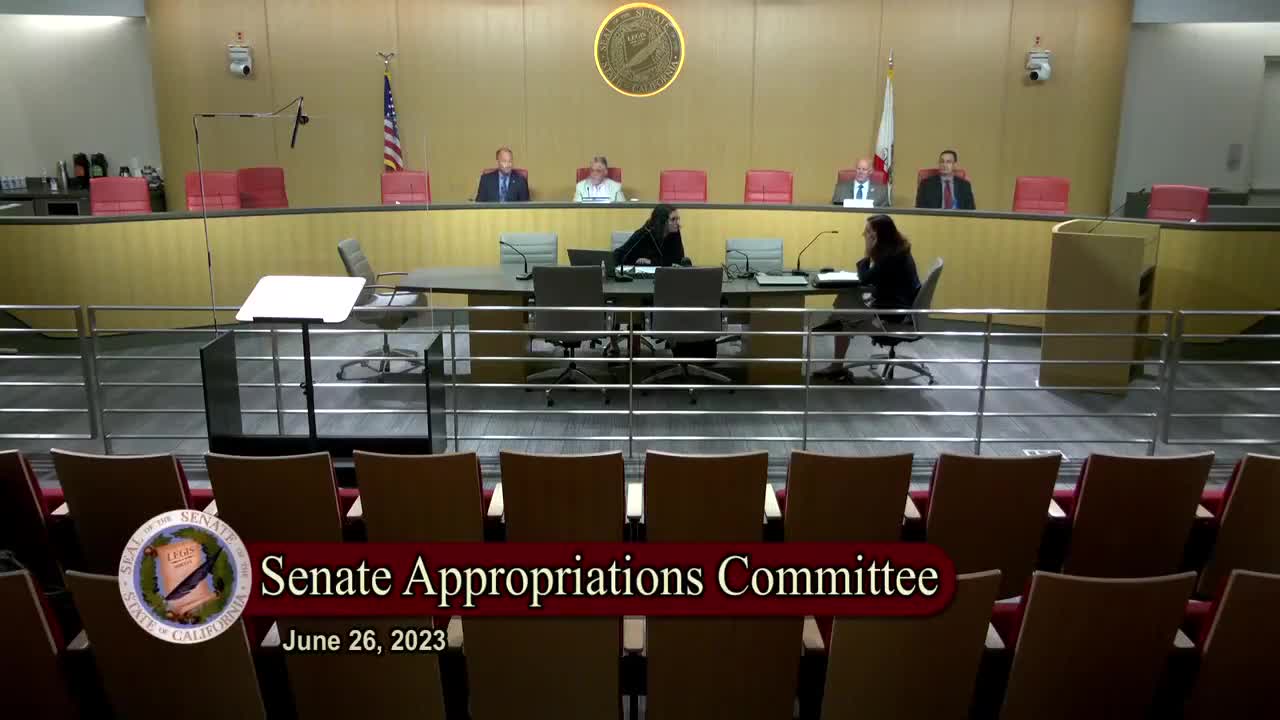 2MIN
Senate Standing Committee on Appropriations
Bill Author

Bill Co-Author(s):