AB 624: Public postsecondary education: disabled student services: assessments.
- Session Year: 2023-2024
- House: Assembly
- Latest Version Date: 2023-09-18
Current Status:
Failed
(2024-01-25: Consideration of Governor's veto stricken from file.)
Introduced
In Committee
First Chamber
In Committee
Second Chamber
Enacted
Existing law makes legislative findings and declarations that set forth the principles for public postsecondary institutions and budgetary control agencies to observe in providing postsecondary programs and services for students with disabilities, including the principle that state-funded activity is directly related to the functional limitations of the verifiable disabilities of the students to be served. Existing law states the intent of the Legislature that, as appropriate for each postsecondary segment, funds for disabled student programs and services be based on 3 categories of costs, including a continuing variable costs category for services that vary in frequency depending on the needs of students, such as, among other services, diagnostic assessment, including both individual and group assessment not otherwise provided by the institution to determine functional, educational, or employment levels or to certify specific disabilities.
Existing law requires the Board of Governors of the California Community Colleges to adopt rules and regulations for the administration and funding of educational programs and support services to be provided to disabled students by community college districts. Existing law requires those regulations to provide for the apportionment of funds to each community college district to offset the direct excess cost of providing specialized support services or instruction, or both, to disabled students enrolled in state-supported disabled student services programs or courses. Existing law describes those direct excess costs as those actual fixed, variable, and one-time costs, including those described above, that exceed the combined total of specified costs, revenues, and funds.
Existing law establishes the Department of General Services in the Government Operations Agency for purposes of providing centralized services of state government, as provided.
This bill would revise the intent of the Legislature relating to diagnostic assessments by including costs for continuing assessments, required documentation, and individual and group assessments provided by the institution or by an outside entity, as provided. The bill would also expand the purpose of the assessments to include defining specific disabilities of the student and as proof for academic or institutional accommodations.
The bill, commencing July 1, 2025, would require the Trustees of the California State University, and would request the Regents of the University of California, to cover the costs of diagnostic assessments for learning disabilities as proof for academic accommodations for any student who receives student financial aid or who is eligible for financial assistance from the institutions health or disability center, as provided. The bill would require state funds to be provided annually for the cost of these services on an actual-cost basis and would require each institution to be responsible for documenting its costs to the Department of General Services. The bill would require the Department of General Services to oversee reimbursements to institutions for their documented costs. The bill would require each educational institution to post on its internet website that the educational institution will cover the costs of the diagnostic assessments for such students.
Existing law makes legislative findings and declarations that set forth the principles for public postsecondary institutions and budgetary control agencies to observe in providing postsecondary programs and services for students with disabilities, including the principle that state-funded activity is directly related to the functional limitations of the verifiable disabilities of the students to be served. Existing law states the intent of the Legislature that, as appropriate for each postsecondary segment, funds for disabled student programs and services be based on 3 categories of costs, including a continuing variable costs category for services that vary in frequency depending on the needs of students, such as, among other services, diagnostic assessment, including both individual and group assessment not otherwise provided by the institution to determine functional, educational, or employment levels or to certify specific disabilities.
Existing law requires the Board of Governors of the California Community Colleges to adopt rules and regulations for the administration and funding of educational programs and support services to be provided to disabled students by community college districts. Existing law requires those regulations to provide for the apportionment of funds to each community college district to offset the direct excess cost of providing specialized support services or instruction, or both, to disabled students enrolled in state-supported disabled student services programs or courses. Existing law describes those direct excess costs as those actual fixed, variable, and one-time costs, including those described above, that exceed the combined total of specified costs, revenues, and funds.
The Lanterman Developmental Disabilities Services Act makes the State Department of Developmental Services responsible for providing various services and supports to individuals with developmental disabilities, and for ensuring the appropriateness and quality of those services and supports.Existing law establishes the Department of General Services in the Government Operations Agency for purposes of providing centralized services of state government, as provided.
This bill would revise the intent of the Legislature relating to diagnostic assessments by including costs for continuing assessments, required documentation, and individual and group assessments provided by the institution. The bill would also expand the purpose of the assessments to include defining specific disabilities of the student and as proof for academic or institutional accommodations.
The bill bill, commencing July 1, 2025, would require the Trustees of the California State University, and would request the Regents of the University of California, to cover the costs of diagnostic assessments for learning disabilities as proof for academic accommodations for any student who receives student financial aid or who is eligible for financial assistance from the institutions health or disability center. center, as provided. The bill would require state funds to be provided annually for the cost of these services on an actual-cost basis and would require each institution to be responsible for documenting its costs to the State Department of Developmental General Services. The bill would require the State Department of Developmental General Services to oversee reimbursements to institutions for their documented costs. The bill would require each governing body educational institution to post on its internet website that the governing body educational institution will cover the costs of the diagnostic assessments for such students.
Existing law makes legislative findings and declarations that set forth the principles for public postsecondary institutions and budgetary control agencies to observe in providing postsecondary programs and services for students with disabilities, including the principle that state-funded activity is directly related to the functional limitations of the verifiable disabilities of the students to be served. Existing law states the intent of the Legislature that, as appropriate for each postsecondary segment, funds for disabled student programs and services be based on 3 categories of costs, including a continuing variable costs category for services that vary in frequency depending on the needs of students, such as, among other services, diagnostic assessment, including both individual and group assessment not otherwise provided by the institution to determine functional, educational, or employment levels or to certify specific disabilities.
Existing law requires the Board of Governors of the California Community Colleges to adopt rules and regulations for the administration and funding of educational programs and support services to be provided to disabled students by community college districts. Existing law requires those regulations to provide for the apportionment of funds to each community college district to offset the direct excess cost of providing specialized support services or instruction, or both, to disabled students enrolled in state-supported disabled student services programs or courses. Existing law describes those direct excess costs as those actual fixed, variable, and one-time costs, including those described above, that exceed the combined total of specified costs, revenues, and funds.
The Lanterman Developmental Disabilities Services Act makes the State Department of Developmental Services responsible for providing various services and supports to individuals with developmental disabilities, and for ensuring the appropriateness and quality of those services and supports.
This bill would revise the intent of the Legislature relating to diagnostic assessments by including costs for continuing assessments, required documentation, and individual and group assessments provided by the institution. The bill would also expand the purpose of the assessments to include defining specific disabilities of the student and as proof for academic or institutional accommodations.
The bill would require the Trustees of the California State University, and would request the Regents of the University of California, to cover the costs of diagnostic assessments for learning disabilities as proof for academic accommodations for any student who receives student financial aid or who is eligible for financial assistance from the institutions health or disability center. The bill would authorize require state funds to be provided annually for the cost of these services on an actual-cost basis and would require each institution to be responsible for documenting its costs to the appropriate state agencies. State Department of Developmental Services. The bill would require the State Department of Developmental Services to oversee reimbursements to institutions for their documented costs. The bill would require each governing body to post on its internet website that the governing body will cover the costs of the diagnostic assessments for such students.
Existing law makes legislative findings and declarations that set forth the principles for public postsecondary institutions and budgetary control agencies to observe in providing postsecondary programs and services for students with disabilities, including the principle that state-funded activity is directly related to the functional limitations of the verifiable disabilities of the students to be served. Existing law states the intent of the Legislature that, as appropriate for each postsecondary segment, funds for disabled student programs and services be based on 3 categories of costs, including a continuing variable costs category for services that vary in frequency depending on the needs of students, such as, among other services, diagnostic assessment, including both individual and group assessment not otherwise provided by the institution to determine functional, educational, or employment levels or to certify specific disabilities.
Existing law requires the Board of Governors of the California Community Colleges to adopt rules and regulations for the administration and funding of educational programs and support services to be provided to disabled students by community college districts. Existing law requires those regulations to provide for the apportionment of funds to each community college district to offset the direct excess cost of providing specialized support services or instruction, or both, to disabled students enrolled in state-supported disabled student services programs or courses. Existing law describes those direct excess costs as those actual fixed, variable, and one-time costs, including those described above, that exceed the combined total of specified costs, revenues, and funds.
This bill would revise the intent of the Legislature relating to diagnostic assessments by including costs for continuing assessments, required documentation, and individual and group assessments provided by the institution. The bill would also expand the purpose of the assessments to include defining specific disabilities of the student and as proof for academic or institutional accommodations.
The bill would require the Trustees of the California State University, the Board of Governors of the California Community Colleges, and the governing bodies of private institutions of higher education, as described, for their respective systems, and would request the Regents of the University of California, to cover the costs of diagnostic assessments as proof for academic accommodations. accommodations for any student who receives student financial aid or who is eligible for financial assistance from the institutions health or disability center. The bill would authorize state funds to be provided annually for the cost of these services on an actual-cost basis and would require each institution to be responsible for documenting its costs to the appropriate state agencies. The bill would require each governing body to post on its internet website that the governing body will cover the costs of the diagnostic assessments. assessments for such students.
Existing law makes legislative findings and declarations that set forth the principles for public postsecondary institutions and budgetary control agencies to observe in providing postsecondary programs and services for students with disabilities, including the principle that state-funded activity is directly related to the functional limitations of the verifiable disabilities of the students to be served. Existing law states the intent of the Legislature that, as appropriate for each postsecondary segment, funds for disabled student programs and services be based on 3 categories of costs, including a continuing variable costs category for services that vary in frequency depending on the needs of students, such as, among other services, diagnostic assessment, including both individual and group assessment not otherwise provided by the institution to determine functional, educational, or employment levels or to certify specific disabilities.
Existing law requires the Board of Governors of the California Community Colleges to adopt rules and regulations for the administration and funding of educational programs and support services to be provided to disabled students by community college districts. Existing law requires those regulations to provide for the apportionment of funds to each community college district to offset the direct excess cost of providing specialized support services or instruction, or both, to disabled students enrolled in state-supported disabled student services programs or courses. Existing law describes those direct excess costs as those actual fixed, variable, and one-time costs, including those described above, that exceed the combined total of specified costs, revenues, and funds.
This bill would revise the intent of the Legislature relating to diagnostic assessments by including costs for continuing assessments, required documentation, and individual and group assessments provided by the institution. The bill would also expand the purpose of the assessments to include defining specific disabilities of the student and as proof for academic or institutional accommodations.
The bill would require the Trustees of the California State University, the Board of Governors of the California Community Colleges, and the governing bodies of private institutions of higher education, as described, for their respective systems, and would request the Regents of the University of California, to cover the costs of diagnostic assessments as proof for academic accommodations. The bill would authorize state funds to be provided annually for the cost of these services on an actual-cost basis and would require each institution to be responsible for documenting its costs to the appropriate state agencies. The bill would require each governing body to post on its internet website that the governing body will cover the costs of the diagnostic assessments.
Existing law makes legislative findings and declarations that set forth the principles for public postsecondary institutions and budgetary control agencies to observe in providing postsecondary programs and services for students with disabilities, including the principle that state-funded activity is directly related to the functional limitations of the verifiable disabilities of the students to be served. Existing law states the intent of the Legislature that, as appropriate for each postsecondary segment, funds for disabled student programs and services be based on 3 categories of costs, including a continuing variable costs category for services that vary in frequency depending on the needs of students, such as, among other services, diagnostic assessment, including both individual and group assessment not otherwise provided by the institution to determine functional, educational, or employment levels or to certify specific disabilities.
Existing law requires the Board of Governors of the California Community Colleges to adopt rules and regulations for the administration and funding of educational programs and support services to be provided to disabled students by community college districts. Existing law requires those regulations to provide for the apportionment of funds to each community college district to offset the direct excess cost of providing specialized support services or instruction, or both, to disabled students enrolled in state-supported disabled student services programs or courses. Existing law describes those direct excess costs as those actual fixed, variable, and one-time costs, including those described above, that exceed the combined total of specified costs, revenues, and funds.
This bill would revise the intent of the Legislature relating to diagnostic assessments by including costs for continuing assessments, required documentation, and individual and group assessments provided by the institution. The bill would also expand the purpose of the assessments to include defining specific disabilities of the student and as proof for academic or institutional accommodations.
It is the intent of the Legislature that, as appropriate for each postsecondary segment, funds for disabled student programs and services be based on the following three categories of costs:
(a)(1)Fixed costs associated with the ongoing administration and operation of the services and programs. These fixed costs are basic ongoing administrative and operational costs of campus programs that are relatively consistent in frequency from year-to-year, such as:
(A)Access to, and arrangements for, adaptive educational equipment, materials, and supplies required by disabled students.
(B)Job placement and development services related to the transition from school to employment.
(C)Liaisons with campus and community agencies, including referral and followup services to these agencies on behalf of disabled students.
(D)On-campus and off-campus registration assistance, including priority enrollment, applications for financial aid, and related college services.
(E)Special parking, including on-campus parking registration, temporary parking permit arrangements, and application assistance for students who do not have state handicapped placards or license plates.
(F)Supplemental specialized orientation to acquaint students with the campus environment.
(G)Activities to coordinate and administer specialized services and instruction.
(H)Activities to assess the planning, implementation, and effectiveness of disabled student services and programs.
(2)The baseline cost of these services shall be determined by the respective system and fully funded with annual adjustments for inflation and salary range changes, to the extent funds are provided.
(b)(1)Continuing variable costs that fluctuate with changes in the number of students or the unit load of students. These continuing variable costs are costs for services that vary in frequency depending on the needs of students, such as the following:
(A)(i)Diagnostic and continuing assessments and any required documentation, including both individual and group assessments provided by the institution or by an outside entity to determine functional, educational, or employment levels or to certify or define specific disabilities as proof for academic or institutional accommodations.
(ii)This subparagraph does not limit the ability of the institution to refer students to an outside entity for any of the services described in clause (i).
(B)On-campus mobility assistance, including mobility training and orientation and manual or automatic transportation assistance to and from college courses and related educational activities.
(C)Off-campus transportation assistance, including transporting students with disabilities to and from the campus in areas where accessible public transportation is unavailable, inadequate, or both.
(D)Disability-related counseling and advising, including specialized academic, vocational, personal, and peer counseling, that is developed specifically for disabled students and not duplicated by regular counseling and advising services available to all students.
(E)Interpreter services, including manual and oral interpreting for deaf and hard-of-hearing students.
(F)Reader services to coordinate and provide access to information required for equitable academic participation if this access is unavailable in other suitable modes.
(G)Services to facilitate the repair of equipment and learning assistance devices.
(H)Special class instruction that does not duplicate existing college courses but is necessary to meet the unique educational needs of particular groups of disabled students.
(I)Speech services, provided by licensed speech or language pathologists for students with verified speech disabilities.
(J)Test taking facilitation, including adapting tests for and proctoring test taking by, disabled students.
(K)Transcription services, including, but not limited to, the provision of Braille and print materials.
(L)Specialized tutoring services not otherwise provided by the institution.
(M)Notetaker services for writing, notetaking, and manual manipulation for classroom and related academic activities.
(2)State funds may be provided annually for the cost of these services on an actual-cost basis, including wages for the individuals providing these services and expenses for attendant supplies. Each institution shall be responsible for documenting its costs to the appropriate state agencies.
(c)One-time variable costs associated with the purchase or replacement of equipment. One-time variable costs are one-time expenditures for the purchase of supplies or the repair of equipment, such as adapted educational materials and vehicles. State funds shall be provided for these expenses on an actual-cost basis as documented by each institution.
SEC. 2.Section 67311.5 is added to the Education Code, to read:67311.5.(a)Commencing on July 1, 2025, the Trustees of the California State University shall, and the Regents of the University of California are requested to, cover the costs of diagnostic assessments for learning disabilities, including continuing assessments, any required documentation, and individual and group assessments provided by the institution or an outside entity if arranged directly by the institution, as proof for academic accommodations for any student who meets either of the following criteria:
(1)The student receives student financial aid.
(2)The student is eligible for financial assistance from the institutions health or disability center.
(b)State funds shall be provided annually for the cost of these services on an actual-cost basis, including wages for the individuals providing these services and expenses for attendant supplies. Each institution, as described in subdivision (a), shall be responsible for documenting its costs to the Department of General Services. The Department of General Services shall oversee reimbursements to institutions for their documented costs.
(c)An educational institution described in subdivision (a) shall post on its internet website, in a manner that is readily noticeable to students, that the educational institution will cover the costs described in subdivision (a) for any student described in subdivision (a).
(d)This section does not limit the ability of an educational institution to refer students to an outside entity for any of the services described in subdivision (a).
It is the intent of the Legislature that, as appropriate for each postsecondary segment, funds for disabled student programs and services be based on the following three categories of costs:
(a)(1)Fixed costs associated with the ongoing administration and operation of the services and programs. These fixed costs are basic ongoing administrative and operational costs of campus programs that are relatively consistent in frequency from year-to-year, such as:
(A)Access to, and arrangements for, adaptive educational equipment, materials, and supplies required by disabled students.
(B)Job placement and development services related to the transition from school to employment.
(C)Liaisons with campus and community agencies, including referral and followup services to these agencies on behalf of disabled students.
(D)On-campus and off-campus registration assistance, including priority enrollment, applications for financial aid, and related college services.
(E)Special parking, including on-campus parking registration, temporary parking permit arrangements, and application assistance for students who do not have state handicapped placards or license plates.
(F)Supplemental specialized orientation to acquaint students with the campus environment.
(G)Activities to coordinate and administer specialized services and instruction.
(H)Activities to assess the planning, implementation, and effectiveness of disabled student services and programs.
(2)The baseline cost of these services shall be determined by the respective system and fully funded with annual adjustments for inflation and salary range changes, to the extent funds are provided.
(b)(1)Continuing variable costs that fluctuate with changes in the number of students or the unit load of students. These continuing variable costs are costs for services that vary in frequency depending on the needs of students, such as the following:
(A)(i)Diagnostic and continuing assessments and any required documentation, including both individual and group assessments provided by the institution or by an outside entity to determine functional, educational, or employment levels or to certify or define specific disabilities as proof for academic or institutional accommodations.
(ii)This subparagraph does not limit the ability of the institution to refer students to an outside entity for any of the services described in clause (i).
(B)On-campus mobility assistance, including mobility training and orientation and manual or automatic transportation assistance to and from college courses and related educational activities.
(C)Off-campus transportation assistance, including transporting students with disabilities to and from the campus in areas where accessible public transportation is unavailable, inadequate, or both.
(D)Disability-related counseling and advising, including specialized academic, vocational, personal, and peer counseling, that is developed specifically for disabled students and not duplicated by regular counseling and advising services available to all students.
(E)Interpreter services, including manual and oral interpreting for deaf and hard-of-hearing students.
(F)Reader services to coordinate and provide access to information required for equitable academic participation if this access is unavailable in other suitable modes.
(G)Services to facilitate the repair of equipment and learning assistance devices.
(H)Special class instruction that does not duplicate existing college courses but is necessary to meet the unique educational needs of particular groups of disabled students.
(I)Speech services, provided by licensed speech or language pathologists for students with verified speech disabilities.
(J)Test taking facilitation, including adapting tests for and proctoring test taking by, disabled students.
(K)Transcription services, including, but not limited to, the provision of Braille and print materials.
(L)Specialized tutoring services not otherwise provided by the institution.
(M)Notetaker services for writing, notetaking, and manual manipulation for classroom and related academic activities.
(2)State funds may be provided annually for the cost of these services on an actual-cost basis, including wages for the individuals providing these services and expenses for attendant supplies. Each institution shall be responsible for documenting its costs to the appropriate state agencies.
(c)One-time variable costs associated with the purchase or replacement of equipment. One-time variable costs are one-time expenditures for the purchase of supplies or the repair of equipment, such as adapted educational materials and vehicles. State funds shall be provided for these expenses on an actual-cost basis as documented by each institution.
SEC. 2.Section 67311.5 is added to the Education Code, to read:67311.5.(a)The Commencing on July 1, 2025, the Trustees of the California State University shall, and the Regents of the University of California are requested to, cover the costs of diagnostic assessments for learning disabilities, including continuing assessments, any required documentation, and individual and group assessments provided by the institution, institution or an outside entity if arranged directly by the institution, as proof for academic accommodations for any student who meets either of the following criteria:
(1)The student receives student financial aid.
(2)The student is eligible for financial assistance from the institutions health or disability center.
(b)State funds shall be provided annually for the cost of these services on an actual-cost basis, including wages for the individuals providing these services and expenses for attendant supplies. Each institution, as described in subdivision (a), shall be responsible for documenting its costs to the State Department of Developmental General Services. The State Department of Developmental General Services shall oversee reimbursements to institutions for their documented costs.
(c)A governing body An educational institution described in subdivision (a) shall post on its internet website, in a manner that is readily noticeable to students, that the governing body educational institution will cover the costs described in subdivision (a) for any student described in subdivision (a).
(d)This section does not limit the ability of an educational institution to refer students to an outside entity for any of the services described in subdivision (a).
It is the intent of the Legislature that, as appropriate for each postsecondary segment, funds for disabled student programs and services be based on the following three categories of costs:
(a)(1)Fixed costs associated with the ongoing administration and operation of the services and programs. These fixed costs are basic ongoing administrative and operational costs of campus programs that are relatively consistent in frequency from year-to-year, such as:
(A)Access to, and arrangements for, adaptive educational equipment, materials, and supplies required by disabled students.
(B)Job placement and development services related to the transition from school to employment.
(C)Liaisons with campus and community agencies, including referral and followup services to these agencies on behalf of disabled students.
(D)On-campus and off-campus registration assistance, including priority enrollment, applications for financial aid, and related college services.
(E)Special parking, including on-campus parking registration, temporary parking permit arrangements, and application assistance for students who do not have state handicapped placards or license plates.
(F)Supplemental specialized orientation to acquaint students with the campus environment.
(G)Activities to coordinate and administer specialized services and instruction.
(H)Activities to assess the planning, implementation, and effectiveness of disabled student services and programs.
(2)The baseline cost of these services shall be determined by the respective system and fully funded with annual adjustments for inflation and salary range changes, to the extent funds are provided.
(b)(1)Continuing variable costs that fluctuate with changes in the number of students or the unit load of students. These continuing variable costs are costs for services that vary in frequency depending on the needs of students, such as the following:
(A)Diagnostic and continuing assessments and any required documentation, including both individual and group assessments provided by the institution or by an outside entity to determine functional, educational, or employment levels or to certify or define specific disabilities as proof for academic or institutional accommodations.
(B)On-campus mobility assistance, including mobility training and orientation and manual or automatic transportation assistance to and from college courses and related educational activities.
(C)Off-campus transportation assistance, including transporting students with disabilities to and from the campus in areas where accessible public transportation is unavailable, inadequate, or both.
(D)Disability-related counseling and advising, including specialized academic, vocational, personal, and peer counseling, that is developed specifically for disabled students and not duplicated by regular counseling and advising services available to all students.
(E)Interpreter services, including manual and oral interpreting for deaf and hard-of-hearing students.
(F)Reader services to coordinate and provide access to information required for equitable academic participation if this access is unavailable in other suitable modes.
(G)Services to facilitate the repair of equipment and learning assistance devices.
(H)Special class instruction that does not duplicate existing college courses but is necessary to meet the unique educational needs of particular groups of disabled students.
(I)Speech services, provided by licensed speech or language pathologists for students with verified speech disabilities.
(J)Test taking facilitation, including adapting tests for and proctoring test taking by, disabled students.
(K)Transcription services, including, but not limited to, the provision of Braille and print materials.
(L)Specialized tutoring services not otherwise provided by the institution.
(M)Notetaker services for writing, notetaking, and manual manipulation for classroom and related academic activities.
(2)State funds may be provided annually for the cost of these services on an actual-cost basis, including wages for the individuals providing these services and expenses for attendant supplies. Each institution shall be responsible for documenting its costs to the appropriate state agencies.
(c)One-time variable costs associated with the purchase or replacement of equipment. One-time variable costs are one-time expenditures for the purchase of supplies or the repair of equipment, such as adapted educational materials and vehicles. State funds shall be provided for these expenses on an actual-cost basis as documented by each institution.
SEC. 2.Section 67311.5 is added to the Education Code, to read:67311.5.(a)The Trustees of the California State University shall, and the Regents of the University of California are requested to, cover the costs of diagnostic assessments, assessments for learning disabilities, including continuing assessments, any required documentation, and individual and group assessments provided by the institution, as proof for academic accommodations for any student who meets either of the following criteria:
(1)The student receives student financial aid.
(2)The student is eligible for financial assistance from the institutions health or disability center.
(b)State funds may shall be provided annually for the cost of these services on an actual-cost basis, including wages for the individuals providing these services and expenses for attendant supplies. Each institution, as described in subdivision (a), shall be responsible for documenting its costs to the appropriate state agencies. State Department of Developmental Services. The State Department of Developmental Services shall oversee reimbursements to institutions for their documented costs.
(c)A governing body described in subdivision (a) shall post on its internet website, in a manner that is readily noticeable to students, that the governing body will cover the costs described in subdivision (a) for any student described in subdivision (a).
It is the intent of the Legislature that, as appropriate for each postsecondary segment, funds for disabled student programs and services be based on the following three categories of costs:
(a)(1)Fixed costs associated with the ongoing administration and operation of the services and programs. These fixed costs are basic ongoing administrative and operational costs of campus programs that are relatively consistent in frequency from year-to-year, such as:
(A)Access to, and arrangements for, adaptive educational equipment, materials, and supplies required by disabled students.
(B)Job placement and development services related to the transition from school to employment.
(C)Liaisons with campus and community agencies, including referral and followup services to these agencies on behalf of disabled students.
(D)On-campus and off-campus registration assistance, including priority enrollment, applications for financial aid, and related college services.
(E)Special parking, including on-campus parking registration, temporary parking permit arrangements, and application assistance for students who do not have state handicapped placards or license plates.
(F)Supplemental specialized orientation to acquaint students with the campus environment.
(G)Activities to coordinate and administer specialized services and instruction.
(H)Activities to assess the planning, implementation, and effectiveness of disabled student services and programs.
(2)The baseline cost of these services shall be determined by the respective system and fully funded with annual adjustments for inflation and salary range changes, to the extent funds are provided.
(b)(1)Continuing variable costs that fluctuate with changes in the number of students or the unit load of students. These continuing variable costs are costs for services that vary in frequency depending on the needs of students, such as the following:
(A)Diagnostic and continuing assessments and any required documentation, including both individual and group assessments provided by the institution or by an outside entity to determine functional, educational, or employment levels or to certify or define specific disabilities as proof for academic or institutional accommodations.
(B)On-campus mobility assistance, including mobility training and orientation and manual or automatic transportation assistance to and from college courses and related educational activities.
(C)Off-campus transportation assistance, including transporting students with disabilities to and from the campus in areas where accessible public transportation is unavailable, inadequate, or both.
(D)Disability-related counseling and advising, including specialized academic, vocational, personal, and peer counseling, that is developed specifically for disabled students and not duplicated by regular counseling and advising services available to all students.
(E)Interpreter services, including manual and oral interpreting for deaf and hard-of-hearing students.
(F)Reader services to coordinate and provide access to information required for equitable academic participation if this access is unavailable in other suitable modes.
(G)Services to facilitate the repair of equipment and learning assistance devices.
(H)Special class instruction that does not duplicate existing college courses but is necessary to meet the unique educational needs of particular groups of disabled students.
(I)Speech services, provided by licensed speech or language pathologists for students with verified speech disabilities.
(J)Test taking facilitation, including adapting tests for and proctoring test taking by, disabled students.
(K)Transcription services, including, but not limited to, the provision of Braille and print materials.
(L)Specialized tutoring services not otherwise provided by the institution.
(M)Notetaker services for writing, notetaking, and manual manipulation for classroom and related academic activities.
(2)State funds may be provided annually for the cost of these services on an actual-cost basis, including wages for the individuals providing these services and expenses for attendant supplies. Each institution shall be responsible for documenting its costs to the appropriate state agencies.
(c)One-time variable costs associated with the purchase or replacement of equipment. One-time variable costs are one-time expenditures for the purchase of supplies or the repair of equipment, such as adapted educational materials and vehicles. State funds shall be provided for these expenses on an actual-cost basis as documented by each institution.
SEC. 2.Section 67311.5 is added to the Education Code, to read:67311.5.(a)The Trustees of the California State University, the Board of Governors of the California Community Colleges, and the governing bodies of independent institutions of higher education, as defined in Section 66010, and private postsecondary educational institutions, as defined in Section 94858, shall, for their respective segments, University shall, and the Regents of the University of California are requested to, cover the costs of diagnostic assessments, including continuing assessments, any required documentation, and individual and group assessments provided by the institution, as proof for academic accommodations. accommodations for any student who meets either of the following criteria:
(1)The student receives student financial aid.
(2)The student is eligible for financial assistance from the institutions health or disability center.
(b)State funds may be provided annually for the cost of these services on an actual-cost basis, including wages for the individuals providing these services and expenses for attendant supplies. Each institution, as described in subdivision (a), shall be responsible for documenting its costs to the appropriate state agencies.
(c)A governing body described in subdivision (a) shall post on its internet website, in a manner that is readily noticeable to students, that the governing body will cover the costs described in subdivision (a). (a) for any student described in subdivision (a).
It is the intent of the Legislature that, as appropriate for each postsecondary segment, funds for disabled student programs and services be based on the following three categories of costs:
(a)(1)Fixed costs associated with the ongoing administration and operation of the services and programs. These fixed costs are basic ongoing administrative and operational costs of campus programs that are relatively consistent in frequency from year-to-year, such as:
(A)Access to, and arrangements for, adaptive educational equipment, materials, and supplies required by disabled students.
(B)Job placement and development services related to the transition from school to employment.
(C)Liaisons with campus and community agencies, including referral and followup services to these agencies on behalf of disabled students.
(D)On-campus and off-campus registration assistance, including priority enrollment, applications for financial aid, and related college services.
(E)Special parking, including on-campus parking registration, temporary parking permit arrangements, and application assistance for students who do not have state handicapped placards or license plates.
(F)Supplemental specialized orientation to acquaint students with the campus environment.
(G)Activities to coordinate and administer specialized services and instruction.
(H)Activities to assess the planning, implementation, and effectiveness of disabled student services and programs.
(2)The baseline cost of these services shall be determined by the respective system and fully funded with annual adjustments for inflation and salary range changes, to the extent funds are provided.
(b)(1)Continuing variable costs that fluctuate with changes in the number of students or the unit load of students. These continuing variable costs are costs for services that vary in frequency depending on the needs of students, such as the following:
(A)Diagnostic and continuing assessments and any required documentation, including both individual and group assessments provided by the institution or by an outside entity to determine functional, educational, or employment levels or to certify or define specific disabilities as proof for academic or institutional accommodations.
(B)On-campus mobility assistance, including mobility training and orientation and manual or automatic transportation assistance to and from college courses and related educational activities.
(C)Off-campus transportation assistance, including transporting students with disabilities to and from the campus in areas where accessible public transportation is unavailable, inadequate, or both.
(D)Disability-related counseling and advising, including specialized academic, vocational, personal, and peer counseling, that is developed specifically for disabled students and not duplicated by regular counseling and advising services available to all students.
(E)Interpreter services, including manual and oral interpreting for deaf and hard-of-hearing students.
(F)Reader services to coordinate and provide access to information required for equitable academic participation if this access is unavailable in other suitable modes.
(G)Services to facilitate the repair of equipment and learning assistance devices.
(H)Special class instruction that does not duplicate existing college courses but is necessary to meet the unique educational needs of particular groups of disabled students.
(I)Speech services, provided by licensed speech or language pathologists for students with verified speech disabilities.
(J)Test taking facilitation, including adapting tests for and proctoring test taking by, disabled students.
(K)Transcription services, including, but not limited to, the provision of Braille and print materials.
(L)Specialized tutoring services not otherwise provided by the institution.
(M)Notetaker services for writing, notetaking, and manual manipulation for classroom and related academic activities.
(2)State funds may be provided annually for the cost of these services on an actual-cost basis, including wages for the individuals providing these services and expenses for attendant supplies. Each institution shall be responsible for documenting its costs to the appropriate state agencies.
(c)One-time variable costs associated with the purchase or replacement of equipment. One-time variable costs are one-time expenditures for the purchase of supplies or the repair of equipment, such as adapted educational materials and vehicles. State funds shall be provided for these expenses on an actual cost actual-cost basis as documented by each institution.
SEC. 2.Section 67311.5 is added to the Education Code, to read:67311.5.(a)The Trustees of the California State University, the Board of Governors of the California Community Colleges, and the governing bodies of independent institutions of higher education, as defined in Section 66010, and private postsecondary educational institutions, as defined in Section 94858, shall, for their respective segments, and the Regents of the University of California are requested to, cover the costs of diagnostic assessments, including continuing assessments, any required documentation, and individual and group assessments provided by the institution, as proof for academic accommodations.
(b)State funds may be provided annually for the cost of these services on an actual-cost basis, including wages for the individuals providing these services and expenses for attendant supplies. Each institution, as described in subdivision (a), shall be responsible for documenting its costs to the appropriate state agencies.
(c)A governing body described in subdivision (a) shall post on its internet website, in a manner that is readily noticeable to students, that the governing body will cover the costs described in subdivision (a).
It is the desire and intent of the Legislature that, as appropriate for each postsecondary segment, funds for disabled student programs and services be based on the following three categories of costs:
(a)(1)Fixed costs associated with the ongoing administration and operation of the services and programs. These fixed costs are basic ongoing administrative and operational costs of campus programs that are relatively consistent in frequency from year-to-year, such as:
(1)(A)Access to, and arrangements for, adaptive educational equipment, materials, and supplies required by disabled students.
(2)(B)Job placement and development services related to the transition from school to employment.
(3)(C)Liaisons with campus and community agencies, including referral and followup services to these agencies on behalf of disabled students.
(4)(D)On-campus and off-campus registration assistance, including priority enrollment, applications for financial aid, and related college services.
(5)(E)Special parking, including on-campus parking registration, temporary parking permit arrangements, and application assistance for students who do not have state handicapped placards or license plates.
(6)(F)Supplemental specialized orientation to acquaint students with the campus environment.
(7)(G)Activities to coordinate and administer specialized services and instruction.
(8)(H)Activities to assess the planning, implementation, and effectiveness of disabled student services and programs.
The
(2)The baseline cost of these services shall be determined by the respective system and fully funded with annual adjustments for inflation and salary range changes, to the extent funds are provided.
(b)(1)Continuing variable costs that fluctuate with changes in the number of students or the unit load of students. These continuing variable costs are costs for services that vary in frequency depending on the needs of students, such as the following:
(1)(A)Diagnostic assessment, and continuing assessments and any required documentation, including both individual and group assessment not otherwise assessments provided by the institution or by an outside entity to determine functional, educational, or employment levels or to certify or define specific disabilities. disabilities as proof for academic or institutional accommodations.
(2)(B)On-campus mobility assistance, including mobility training and orientation and manual or automatic transportation assistance to and from college courses and related educational activities.
(3)(C)Off-campus transportation assistance, including transporting students with disabilities to and from the campus in areas where accessible public transportation is unavailable, inadequate, or both.
(4)(D)Disability-related counseling and advising, including specialized academic, vocational, personal, and peer counseling, that is developed specifically for disabled students and not duplicated by regular counseling and advising services available to all students.
(5)(E)Interpreter services, including manual and oral interpreting for deaf and hard-of-hearing students.
(6)(F)Reader services to coordinate and provide access to information required for equitable academic participation if this access is unavailable in other suitable modes.
(7)(G)Services to facilitate the repair of equipment and learning assistance devices.
(8)(H)Special class instruction that does not duplicate existing college courses but is necessary to meet the unique educational needs of particular groups of disabled students.
(9)(I)Speech services, provided by licensed speech or language pathologists for students with verified speech disabilities.
(10)(J)Test taking facilitation, including adapting tests for and proctoring test taking by, disabled students.
(11)(K)Transcription services, including, but not limited to, the provision of Braille and print materials.
(12)(L)Specialized tutoring services not otherwise provided by the institution.
(13)(M)Notetaker services for writing, notetaking, and manual manipulation for classroom and related academic activities.
State
(2)State funds may be provided annually for the cost of these services on an actual-cost basis, including wages for the individuals providing these services and expenses for attendant supplies. Each institution shall be responsible for documenting its costs to the appropriate state agencies.
(c)One-time variable costs associated with the purchase or replacement of equipment. One-time variable costs are one-time expenditures for the purchase of supplies or the repair of equipment, such as adapted educational materials and vehicles. State funds shall be provided for these expenses on an actual cost basis as documented by each institution.
|
Date
|
Status
|
|---|---|
| Jan 25, 2024 | Consideration of Governor's veto stricken from file. |
| Jan 3, 2024 | Consideration of Governor's veto pending. |
| Oct 8, 2023 | Vetoed by Governor. |
| Sep 21, 2023 | Enrolled and presented to the Governor at 3:30 p.m. |
| Sep 14, 2023 | Senate amendments concurred in. To Engrossing and Enrolling. (Ayes 80. Noes 0. Page 3566.). |
| Sep 13, 2023 | In Assembly. Concurrence in Senate amendments pending. |
| Sep 13, 2023 | Read third time. Passed. Ordered to the Assembly. (Ayes 39. Noes 0. Page 2765.). |
| Sep 8, 2023 | Ordered to special consent calendar. |
| Sep 5, 2023 | Read second time. Ordered to third reading. |
| Sep 1, 2023 | Read second time and amended. Ordered returned to second reading. |
| Sep 1, 2023 | From committee: Amend, and do pass as amended. (Ayes 7. Noes 0.) (September 1). |
| Aug 14, 2023 | In committee: Referred to APPR suspense file. |
| Jul 5, 2023 | From committee: Do pass and re-refer to Com. on APPR with recommendation: To Consent Calendar. (Ayes 5. Noes 0.) (July 3). Re-referred to Com. on APPR. |
| Jun 28, 2023 | Re-referred to Com. on HUMAN S. |
| Jun 21, 2023 | From committee: Do pass and re-refer to Com. on RLS. (Ayes 7. Noes 0.) (June 21). Re-referred to Com. on RLS. |
| Jun 12, 2023 | From committee chair, with author's amendments: Amend, and re-refer to committee. Read second time, amended, and re-referred to Com. on ED. |
| Jun 7, 2023 | Referred to Com. on ED. |
| May 31, 2023 | In Senate. Read first time. To Com. on RLS. for assignment. |
| May 30, 2023 | Read third time. Passed. Ordered to the Senate. (Ayes 80. Noes 0. Page 1908.) |
| May 22, 2023 | Read second time. Ordered to third reading. |
| May 18, 2023 | Read second time and amended. Ordered returned to second reading. |
| May 18, 2023 | From committee: Amend, and do pass as amended. (Ayes 11. Noes 0.) (May 18). |
| Apr 19, 2023 | In committee: Set, first hearing. Referred to APPR. suspense file. |
| Mar 22, 2023 | From committee: Do pass and re-refer to Com. on APPR. (Ayes 11. Noes 0.) (March 21). Re-referred to Com. on APPR. |
| Mar 14, 2023 | Re-referred to Com. on HIGHER ED. |
| Mar 13, 2023 | From committee chair, with author's amendments: Amend, and re-refer to Com. on HIGHER ED. Read second time and amended. |
| Feb 17, 2023 | Referred to Com. on HIGHER ED. |
| Feb 10, 2023 | From printer. May be heard in committee March 12. |
| Feb 9, 2023 | Read first time. To print. |
|
Date
|
Description
|
Location
|
Votes
|
|
|---|---|---|---|---|
| Sep 14, 2023 | AB 624 Grayson Concurrence in Senate Amendments | Assembly Floor |
Passed |
|
| Sep 13, 2023 | Special Consent AB624 Grayson By Newman | Senate Floor |
Passed |
|
| Sep 1, 2023 | Do pass as amended | Senate Standing Committee on Appropriations |
Passed |
|
| Aug 14, 2023 | Placed on suspense file | Senate Standing Committee on Appropriations |
Passed |
|
| Jul 3, 2023 | Do pass, but first be re-referred to the Committee on [Appropriations] with the recommendation: To Consent Calendar | Senate Standing Committee on Human Services |
Passed |
|
| Jun 21, 2023 | Do pass, but first be re-referred to the Committee on [Rules] | Senate Standing Committee on Education |
Passed |
|
| May 30, 2023 | AB 624 Grayson Assembly Third Reading | Assembly Floor |
Passed |
|
| May 18, 2023 | Do pass as amended. | Assembly Standing Committee on Appropriations |
Passed |
|
| Mar 21, 2023 | Do pass and be re-referred to the Committee on [Appropriations] | Assembly Standing Committee on Higher Education |
Passed |
This list shows positions taken on this bill by organizations on the date displayed, which is linked to the original source.
Positions by individuals are not included.
|
Organization
|
Position
|
Date
|
|---|---|---|
| Associated Students of UC Berkeley External Affairs | ** Support | |
| Associated Students of University of California, Berkeley | * Support | Mar 21, 2023 |
| California State Council on Developmental Disabilities | ** Support | |
| Generation Up | ** Support | |
| Learning Disabilities Interest Group of the California Association of Postsecondary Education and Disability | * For If Amend | Jun 21, 2023 |
| UC Berkeley | * Support | Mar 21, 2023 |
| University Of California Student Association | ** Support |
GOVERNOR'S VETO
GV Bill Id:AB 624
Author:(Grayson)
As Enrolled Ver:September 18, 2023
2/3 vote
SUMMARY
Requires the Trustees of the California State University (CSU) and would request the Regents of the University of California (UC), to cover the costs of diagnostic assessments as proof for academic accommodations for any student who receives student financial aid or who is eligible for financial assistance from the institution's health or disability center.
Senate Amendments
- Clarifies that the Trustees of the CSU will, and the Regents of the University of California are requested to assessments for learning disabilities.
- Delays implementation until July 1, 2025.
- Specifies that state funds will be provided annually for the cost of these services on an actual-cost basis, including wages for the individuals providing these services and expenses for attendant supplies, and that each institution, as specified, will be responsible for documenting its costs to the Department of General Services. Additionally specifies that the Department of General Services shall oversee reimbursements to institutions for their documented costs.
Specifies that assessments for learning disabilities, including continuing assessments, any required documentation, and individual and group assessments provided by the institution or an outside entity if arranged directly by the institution.
Governor's Veto Message
This bill, commencing July 1, 2025, requires the California State University Trustees and requests the University of California Regents, to cover the costs of diagnostic assessments for learning disabilities as proof for academic accommodations for any student who receives financial assistance or is eligible for financial assistance from the institution's health or disability center. The bill also specifies that state funds will be provided annually for the cost of these services, and that the Department of General Service shall oversee reimbursements to institutions for their documented costs.
While I support the author's goal of supporting students with learning disabilities, unfortunately, the bill creates at least $5 million in ongoing General Fund costs that are not reflected in the state's current fiscal plan. Additionally, the Department of General Services may not be the appropriate entity to administer the reimbursement.
In partnership with the Legislature, we enacted a budget that closed a shortfall of more than $30 billion through balanced solutions that avoided deep program cuts and protected education, health care, climate, public safety, and social service programs that are relied on by millions of Californians. This year, however, the Legislature sent me bills outside of this budget process that, if all enacted, would add nearly $19 billion of unaccounted costs in the budget, of which $11 billion would be ongoing.
With our state facing continuing economic risk and revenue uncertainty, it is important to remain disciplined when considering bills with significant fiscal implications, such as this measure.
COMMENTS
Accommodation on campus. CSU and UC campuses follow a set of systemwide guidelines for the accommodation of students with learning disabilities. CSU campuses note in their systemwide policy that "documentation should validate the need for accommodations and support services based on the student's current level of functioning in the educational setting. A school plan, such as an Individualized Education Program (IEP) or a '504 plan' alone is insufficient documentation to support a student's eligibility, but may be included as historical information in a more comprehensive assessment battery."
Committee staff understands that some CSU campuses have a dedicated learning disability specialist; however, campus learning disabilities specialists do not determine a specific diagnosis. Instead, these specialists provide an educational learning profile to help the student identify ideal ways of learning. CSU staff estimated that less than 10 campuses currently have learning disabilities specialists.
The UC's policy specifies that it is the responsibility of each student who requests accommodation services from the UC to provide a comprehensive written evaluation of their specific learning disorder. In order to document a student's need for reasonable accommodations and support services and verify the student's eligibility under Federal, State, and UC mandates, the aforementioned evaluation must demonstrate a clinical diagnosis of a specific learning disorder. The policy also notes that testing must be comprehensive, and that it is not acceptable to administer only one test in making a diagnosis
UC Los Angeles (UCLA) offers the Will Rogers Memorial Scholarship, which can be used by a student who is registered with the UCLA Center for Accessible Education for a different disability, but wishes to be assessed for a learning disability, or students who are referred for an assessment and begin the testing process.
Stanford University, one of California's independent institutions, require students, who request academic accommodations, to submit documentation concerning their disability.
Documentation is evaluated by professional staff and used to both verify disability and complement self-report of lived experience while determining appropriate academic accommodations. All student cases are assessed individually.
According to the Author
According to the author, "although students with disabilities in higher education are protected by state, federal, and local laws that prohibit discrimination, they still face significant barriers to academic success. In addition to the traditional challenges students may have for paying for college in general, students with disabilities may have other unique expenses related to their disability that may impact their ability to attend college and/or be academically successful."
"While testing accommodations and disability resources are available, students must still obtain their own medical testing and paperwork in order to qualify to receive accommodations on campus. These learning disability assessments can cost thousands of dollars, ranging between $500-$2,500 dollars, creating an unfair economic disparity for students who have disabilities. AB 624 supports students with disabilities by expanding the Legislature's commitment to equity by including the costs of continuing assessments for proof of academic accommodations."
Arguments in Support
Generation Up, the sponsor of this bill, writes that "with the demanding academic and economic burdens of higher education, students face an overwhelming amount of pressures that may be debilitating to their academic performance, but disproportionately affected by these challenges are students with disabilities. These students in higher education are to be protected by state, federal, and local laws that prohibit discrimination as well as mandate that there be services to help accommodate them, but universities are not doing enough…in order to receive accommodations on campus, these students are required to obtain medical testing and paperwork on their own. It is imperative that universities support all their students by waiving and/or covering the costs of learning disability assessments so that students can get the accommodations they need to test or retest without suffering from the financial burdens in this process. It is the responsibility of the university to provide an environment for students where they feel both acknowledged and supported when it comes to academic needs without any economic caveats."
Arguments in Opposition
None on file.
FISCAL COMMENTS
According to the Senate Appropriations Committee:
- The bill's requirements could result in additional, unknown General Fund costs to the CSU and UC to cover the costs of diagnostic assessments. A precise amount would depend on the number of students that come forward for testing as a result of this bill, but it could be in the low millions of dollars each year. The CSU indicates that if each CSU campus were to hire a Learning Disabilities Specialist to administer the assessments, systemwide costs would be about $2.5 million. There would be additional costs of approximately $1.2 million each year for the diagnostic testing assuming a cost of $1,133 for each test for 47 students.
- This bill requires that state funds be provided to cover all documented costs related to the diagnostic assessments, and that the Department of General Services (DGS) oversee the reimbursement of these costs to the institutions. The DGS is likely to incur additional, unknown General Fund costs to comply with this requirements.
- Further, the CSU and UC may incur additional General Fund costs to provide additional supports to students identified as having disabilities. The extent of these costs is unknown and would depend on the number of students identified as well as the types of services required.
VOTES
ASM HIGHER EDUCATION: 11-0-1
YES: Mike Fong, Ta, Addis, Arambula, Gabriel, Irwin, Low, Ortega, Sanchez, Santiago, Wallis
ABS, ABST OR NV: Weber
ASM APPROPRIATIONS: 11-0-5
YES: Holden, Bryan, Calderon, Wendy Carrillo, Mike Fong, Hart, Lowenthal, Papan, Pellerin, Weber, Ortega
ABS, ABST OR NV: Megan Dahle, Dixon, Mathis, Robert Rivas, Sanchez
ASSEMBLY FLOOR: 80-0-0
YES: Addis, Aguiar-Curry, Alanis, Alvarez, Arambula, Bains, Bauer-Kahan, Bennett, Berman, Boerner, Bonta, Bryan, Calderon, Juan Carrillo, Wendy Carrillo, Cervantes, Chen, Connolly, Megan Dahle, Davies, Dixon, Essayli, Flora, Mike Fong, Vince Fong, Friedman, Gabriel, Gallagher, Garcia, Gipson, Grayson, Haney, Hart, Holden, Hoover, Irwin, Jackson, Jones-Sawyer, Kalra, Lackey, Lee, Low, Lowenthal, Maienschein, Mathis, McCarty, McKinnor, Muratsuchi, Stephanie Nguyen, Ortega, Pacheco, Papan, Jim Patterson, Joe Patterson, Pellerin, Petrie-Norris, Quirk-Silva, Ramos, Reyes, Luz Rivas, Robert Rivas, Rodriguez, Blanca Rubio, Sanchez, Santiago, Schiavo, Soria, Ta, Ting, Valencia, Villapudua, Waldron, Wallis, Ward, Weber, Wicks, Wilson, Wood, Zbur, Rendon
SENATE FLOOR: 39-0-1
YES: Allen, Alvarado-Gil, Archuleta, Ashby, Atkins, Becker, Blakespear, Bradford, Cortese, Dahle, Dodd, Durazo, Eggman, Glazer, Gonzalez, Grove, Hurtado, Jones, Laird, Limón, McGuire, Menjivar, Min, Newman, Nguyen, Niello, Ochoa Bogh, Padilla, Portantino, Roth, Rubio, Seyarto, Skinner, Smallwood-Cuevas, Stern, Umberg, Wahab, Wiener, Wilk
ABS, ABST OR NV: Caballero
ASSEMBLY FLOOR: 80-0-0
YES: Addis, Aguiar-Curry, Alanis, Alvarez, Arambula, Bains, Bauer-Kahan, Bennett, Berman, Boerner, Bonta, Bryan, Calderon, Juan Carrillo, Wendy Carrillo, Cervantes, Chen, Connolly, Megan Dahle, Davies, Dixon, Essayli, Flora, Mike Fong, Vince Fong, Friedman, Gabriel, Gallagher, Garcia, Gipson, Grayson, Haney, Hart, Holden, Hoover, Irwin, Jackson, Jones-Sawyer, Kalra, Lackey, Lee, Low, Lowenthal, Maienschein, Mathis, McCarty, McKinnor, Muratsuchi, Stephanie Nguyen, Ortega, Pacheco, Papan, Jim Patterson, Joe Patterson, Pellerin, Petrie-Norris, Quirk-Silva, Ramos, Reyes, Luz Rivas, Robert Rivas, Rodriguez, Blanca Rubio, Sanchez, Santiago, Schiavo, Soria, Ta, Ting, Valencia, Villapudua, Waldron, Wallis, Ward, Weber, Wicks, Wilson, Wood, Zbur, Rendon
UPDATED
VERSION: September 18, 2023
CONSULTANT: Kevin Powers / HIGHER ED. / (916) 319-3960 FN: 0002487
CONCURRENCE IN SENATE AMENDMENTS
CSA1 Bill Id:AB 624
Author:(Grayson)
As Amended Ver:September 1, 2023
Majority vote
SUMMARY
Requires the Trustees of the California State University (CSU) and would request the Regents of the University of California (UC), to cover the costs of diagnostic assessments as proof for academic accommodations for any student who receives student financial aid or who is eligible for financial assistance from the institution's health or disability center.
Senate Amendments
- Clarifies that the Trustees of the CSU will, and the Regents of the University of California are requested to assessments for learning disabilities.
- Delays implementation until July 1, 2025.
- Specifies that state funds will be provided annually for the cost of these services on an actual-cost basis, including wages for the individuals providing these services and expenses for attendant supplies, and that each institution, as specified, will be responsible for documenting its costs to the Department of General Services. Additionally specifies that the Department of General Services shall oversee reimbursements to institutions for their documented costs.
- Specifies that assessments for learning disabilities, including continuing assessments, any required documentation, and individual and group assessments provided by the institution or an outside entity if arranged directly by the institution.
COMMENTS
Accommodation on campus. CSU and UC campuses follow a set of systemwide guidelines for the accommodation of students with learning disabilities. CSU campuses note in their systemwide policy that "documentation should validate the need for accommodations and support services based on the student's current level of functioning in the educational setting. A school plan, such as an Individualized Education Program (IEP) or a '504 plan' alone is insufficient documentation to support a student's eligibility, but may be included as historical information in a more comprehensive assessment battery."
Committee staff understands that some CSU campuses have a dedicated learning disability specialist; however, campus learning disabilities specialists do not determine a specific diagnosis. Instead, these specialists provide an educational learning profile to help the student identify ideal ways of learning. CSU staff estimated that less than 10 campuses currently have learning disabilities specialists.
The UC's policy specifies that it is the responsibility of each student who requests accommodation services from the UC to provide a comprehensive written evaluation of their specific learning disorder. In order to document a student's need for reasonable accommodations and support services and verify the student's eligibility under Federal, State, and UC mandates, the aforementioned evaluation must demonstrate a clinical diagnosis of a specific learning disorder. The policy also notes that testing must be comprehensive, and that it is not acceptable to administer only one test in making a diagnosis.
UC Los Angeles (UCLA) offers the Will Rogers Memorial Scholarship, which can be used by a student who is registered with the UCLA Center for Accessible Education for a different disability, but wishes to be assessed for a learning disability, or students who are referred for an assessment and begin the testing process.
Stanford University, one of California's independent institutions, require students, who request academic accommodations, to submit documentation concerning their disability.
Documentation is evaluated by professional staff and used to both verify disability and complement self-report of lived experience while determining appropriate academic accommodations. All student cases are assessed individually.
According to the Author
According to the author, "although students with disabilities in higher education are protected by state, federal, and local laws that prohibit discrimination, they still face significant barriers to academic success. In addition to the traditional challenges students may have for paying for college in general, students with disabilities may have other unique expenses related to their disability that may impact their ability to attend college and/or be academically successful."
"While testing accommodations and disability resources are available, students must still obtain their own medical testing and paperwork in order to qualify to receive accommodations on campus. These learning disability assessments can cost thousands of dollars, ranging between $500-$2,500 dollars, creating an unfair economic disparity for students who have disabilities. AB 624 supports students with disabilities by expanding the Legislature's commitment to equity by including the costs of continuing assessments for proof of academic accommodations."
Arguments in Support
Generation Up, the sponsor of this bill, writes that "with the demanding academic and economic burdens of higher education, students face an overwhelming amount of pressures that may be debilitating to their academic performance, but disproportionately affected by these challenges are students with disabilities. These students in higher education are to be protected by state, federal, and local laws that prohibit discrimination as well as mandate that there be services to help accommodate them, but universities are not doing enough…in order to receive accommodations on campus, these students are required to obtain medical testing and paperwork on their own. It is imperative that universities support all their students by waiving and/or covering the costs of learning disability assessments so that students can get the accommodations they need to test or retest without suffering from the financial burdens in this process. It is the responsibility of the university to provide an environment for students where they feel both acknowledged and supported when it comes to academic needs without any economic caveats."
Arguments in Opposition
None on file.
FISCAL COMMENTS
According to the Senate Committee Appropriations:
- The bill's requirements could result in additional, unknown General Fund costs to the CSU and UC to cover the costs of diagnostic assessments. A precise amount would depend on the number of students that come forward for testing as a result of this bill, but it could be in the low millions of dollars each year. The CSU indicates that if each CSU campus were to hire a Learning Disabilities Specialist to administer the assessments, systemwide costs would be about $2.5 million. There would be additional costs of approximately $1.2 million each year for the diagnostic testing assuming a cost of $1,133 for each test for 47 students.
- This bill requires that state funds be provided to cover all documented costs related to the diagnostic assessments, and that the Department of General Services (DGS) oversee the reimbursement of these costs to the institutions. The DGS is likely to incur additional, unknown General Fund costs to comply with this requirements.
- Further, the CSU and UC may incur additional General Fund costs to provide additional supports to students identified as having disabilities. The extent of these costs is unknown and would depend on the number of students identified as well as the types of services required.
VOTES:
ASM HIGHER EDUCATION: 11-0-1
YES: Mike Fong, Ta, Addis, Arambula, Gabriel, Irwin, Low, Ortega, Sanchez, Santiago, Wallis
ABS, ABST OR NV: Weber
ASM APPROPRIATIONS: 11-0-5
YES: Holden, Bryan, Calderon, Wendy Carrillo, Mike Fong, Hart, Lowenthal, Papan, Pellerin, Weber, Ortega
ABS, ABST OR NV: Megan Dahle, Dixon, Mathis, Robert Rivas, Sanchez
ASSEMBLY FLOOR: 80-0-0
YES: Addis, Aguiar-Curry, Alanis, Alvarez, Arambula, Bains, Bauer-Kahan, Bennett, Berman, Boerner, Bonta, Bryan, Calderon, Juan Carrillo, Wendy Carrillo, Cervantes, Chen, Connolly, Megan Dahle, Davies, Dixon, Essayli, Flora, Mike Fong, Vince Fong, Friedman, Gabriel, Gallagher, Garcia, Gipson, Grayson, Haney, Hart, Holden, Hoover, Irwin, Jackson, Jones‑Sawyer, Kalra, Lackey, Lee, Low, Lowenthal, Maienschein, Mathis, McCarty, McKinnor, Muratsuchi, Stephanie Nguyen, Ortega, Pacheco, Papan, Jim Patterson, Joe Patterson, Pellerin, Petrie-Norris, Quirk-Silva, Ramos, Reyes, Luz Rivas, Robert Rivas, Rodriguez, Blanca Rubio, Sanchez, Santiago, Schiavo, Soria, Ta, Ting, Valencia, Villapudua, Waldron, Wallis, Ward, Weber, Wicks, Wilson, Wood, Zbur, Rendon
SENATE FLOOR: 39-0-1
YES: Allen, Alvarado-Gil, Archuleta, Ashby, Atkins, Becker, Blakespear, Bradford, Cortese, Dahle, Dodd, Durazo, Eggman, Glazer, Gonzalez, Grove, Hurtado, Jones, Laird, Limón, McGuire, Menjivar, Min, Newman, Nguyen, Niello, Ochoa Bogh, Padilla, Portantino, Roth, Rubio, Seyarto, Skinner, Smallwood-Cuevas, Stern, Umberg, Wahab, Wiener, Wilk
ABS, ABST OR NV: Caballero
UPDATED
VERSION: September 1, 2023
CONSULTANT: Kevin J. Powers / HIGHER ED. / (916) 319-3960 FN: 0002370
SENATE RULES COMMITTEE Office of Senate Floor Analyses (916) 651-1520 Fax: (916) 327-4478 | AB 624 |
THIRD READING
Bill No: AB 624
Author: Grayson (D)
Amended: 9/1/23 in Senate
Vote: 21
SENATE EDUCATION COMMITTEE: 7-0, 6/21/23
AYES: Newman, Ochoa Bogh, Cortese, Glazer, McGuire, Smallwood-Cuevas, Wilk
SENATE HUMAN SERVICES COMMITTEE: 5-0, 7/3/23
AYES: Alvarado-Gil, Ochoa Bogh, Hurtado, Menjivar, Wahab
SENATE APPROPRIATIONS COMMITTEE: 7-0, 9/1/23
AYES: Portantino, Jones, Ashby, Bradford, Seyarto, Wahab, Wiener
ASSEMBLY FLOOR: 80-0, 5/30/23 - See last page for vote
SUBJECT: Public postsecondary education: disabled student services: assessments
SOURCE: Generation Up
DIGEST:
This bill requires the Trustees of the California State University (CSU) and requests the Regents of the University of California (UC), to cover the costs of diagnostic assessments as proof for academic accommodations for any student who receives student financial aid or who is eligible for financial assistance from the institution's health or disability center. Further, this bill requires that the Department of General Services oversee reimbursement to institutions for their documented costs for diagnostic services.
ANALYSIS:
Existing law:
- Makes legislative findings and declarations that set forth the principles for public postsecondary institutions and budgetary control agencies to observe in providing postsecondary programs and services for students with disabilities, including the principle that state-funded activity is directly related to the functional limitations of the verifiable disabilities of the students to be served. Additionally, establishes the intent of the Legislature that, as appropriate for each postsecondary segment, funds for disabled student programs and services be based on three categories of costs, including a continuing variable costs category for services that vary in frequency depending on the needs of students, such as, among other services, diagnostic assessment, including both individual and group assessment not otherwise provided by the institution to determine functional, educational, or employment levels or to certify specific disabilities. (Education Code § 67311)
- Makes, under the Lanterman Developmental Disabilities Services Act, the Department of Developmental Services responsible for providing various services and supports to individuals with developmental disabilities, and for ensuring the appropriateness and quality of those services and supports. (Welfare and Institutions Code § 4500-4501.5)
This bill:
- Requires the Trustees of the CSU and requests the UC Regents to, cover the costs of diagnostic assessments for learning disability, including continuing assessments, any required documentation, and individual and group assessments provided by the institution or an outside entity if arranged directly by the institution, as proof for academic accommodations for any student who meets either of the following criteria:
- The student receives student financial aid.
- The student is eligible for financial assistance from the institution’s health or disability center.
- Requires that state funds be provided annually for the cost of diagnostic services on an actual-cost basis, including wages for the individuals providing diagnostic services and expense for attendant supplies, and requires that each segment be responsible for documenting its costs to the Department of General Services.
- Requires that the Department of General Services oversee reimbursement to institutions for their documented costs.
- Requires CSU and requests UC to post on its internet website, in a manner that is readily noticeable to students, that it will cover the cost of diagnostic assessments for any eligible student.
- Provides that the bill’s provisions does not limit the ability of an educational institution to refer students to an outside entity for any of the services described in this bill.
- Modifies legislative intent language relating to diagnostic assessments by including costs for continuing assessments, required documentation, and individual and group assessments provided by the institution and expands the purpose of the assessments to include defining specific disabilities of the student and as proof for academic or institutional accommodations.
Comments
- Need for the bill. According to the author, “Although students with disabilities in higher education are protected by state, federal and local laws that prohibit discrimination, they still face significant barriers to academic success. In addition to the traditional challenges students may have for paying for college in general, students with disabilities may have other unique expenses related to their disability that may impact their ability to attend college and/or be academically successful. While testing accommodations and disability resources are available, students must still obtain their own medical testing and paperwork in order to qualify to receive accommodations on campus. These learning disability assessments can cost thousands of dollars, ranging between $500-$2,500, creating an unfair, economic disparity for students who have disabilities. AB 624 expands on the Legislature’s intent to promote educational equity and supports students living with disabilities who currently face barriers to academic success. Additionally, the bill requires the Trustees of the California State University and would request the Regents of the University of California, to cover the costs of diagnostic assessments as proof for academic accommodations for specified students.”
- Institutions of higher education can require proof but are not required to pay the costs of an assessment. As noted in the Assembly Appropriations Committee analysis, federal law, specifically Section 504 of the Rehabilitation Act of 1973 and Title II of the Americans with Disabilities Act of 1990, prohibit discrimination on the basis of disability. Section 504 and Title II apply to both K-12 schools and institutions of higher education (IHE). However, unlike a K-12 schools, an IHE is not required to identify a student as having a disability, assess a student’s needs or provide a free appropriate public education to them. Instead, a student with disabilities must inform an IHE of their disability and request supports. An IHE may require a student to provide documentation proving they have a disability. If the documentation a student has does not meet the IHE’s requirements, a student may need to obtain further proof of disability. Once adequate proof of disability is provided to an IHE, federal law requires the IHE to provide supports to a student with disabilities.
According to the U.S. Department of Education, the documentation provided to students with disabilities at their K-12 school, known as an individualized education program or Section 504 plan is generally not sufficient documentation to secure supports at an IHE. This is because of the differences in learning between secondary and postsecondary education may necessitate further assessments.
Current state and federal law does not require an IHE to pay the costs for a student to complete an assessment and obtain necessary documentation to prove their disability and therefore gain supports at the IHE. Students may have health insurance to cover these costs or may apply to the state’s vocational rehabilitation agency to cover costs. In other cases, a student may need to pay for an assessment and associated documents out-of-pocket. The costs of these assessments and documents may cost between $500 and $2,500.
This bill requires that CSU and recommends that UC cover the costs of diagnostic evaluations for some financially needy students and pursue reimbursement for said evaluations from the Department of General Services, which are used to establish the necessity for academic accommodations. It further calls for the allocation of state funds on an annual basis to cover the expenses incurred in connection with the provision of services outlined in this bill. These expenses include wages for individuals providing the services.
FISCAL EFFECT: Appropriation: No Fiscal Com.: Yes Local: No
According to the Senate Appropriations Committee:
- This bill’s requirements could result in additional, unknown General Fund costs to the CSU and UC to cover the costs of diagnostic assessments. A precise amount would depend on the number of students that come forward for testing as a result of this bill, but it could be in the low millions of dollars each year. The CSU indicates that if each CSU campus were to hire a Learning Disabilities Specialist to administer the assessments, systemwide costs would be about $2.5 million. There would be additional costs of approximately $1.2 million each year for the diagnostic testing assuming a cost of $1,133 for each test for 47 students.
- This bill requires that state funds be provided to cover all documented costs related to the diagnostic assessments, and that the Department of General Services (DGS) oversee the reimbursement of these costs to the institutions. The DGS is likely to incur additional, unknown General Fund costs to comply with this requirements.
- Further, the CSU and UC may incur additional General Fund costs to provide additional supports to students identified as having disabilities. The extent of these costs is unknown and would depend on the number of students identified as well as the types of services required.
SUPPORT: (Verified 9/1/2023)
Generation Up (source)
Associated Students of UC Berkeley External Affairs
California State Council on Developmental Disabilities
University of California Student Association
OPPOSITION: (Verified 9/1/2023)
None received
ASSEMBLY FLOOR: 80-0, 5/30/23
AYES: Addis, Aguiar-Curry, Alanis, Alvarez, Arambula, Bains, Bauer-Kahan, Bennett, Berman, Boerner, Bonta, Bryan, Calderon, Juan Carrillo, Wendy Carrillo, Cervantes, Chen, Connolly, Megan Dahle, Davies, Dixon, Essayli, Flora, Mike Fong, Vince Fong, Friedman, Gabriel, Gallagher, Garcia, Gipson, Grayson, Haney, Hart, Holden, Hoover, Irwin, Jackson, Jones-Sawyer, Kalra, Lackey, Lee, Low, Lowenthal, Maienschein, Mathis, McCarty, McKinnor, Muratsuchi, Stephanie Nguyen, Ortega, Pacheco, Papan, Jim Patterson, Joe Patterson, Pellerin, Petrie-Norris, Quirk-Silva, Ramos, Reyes, Luz Rivas, Robert Rivas, Rodriguez, Blanca Rubio, Sanchez, Santiago, Schiavo, Soria, Ta, Ting, Valencia, Villapudua, Waldron, Wallis, Ward, Weber, Wicks, Wilson, Wood, Zbur, Rendon
Prepared by: Olgalilia Ramirez / ED. / (916) 651-4105
9/5/23 9:33:30
**** END ****
SENATE COMMITTEE ON
Senator Anthony Portantino, Chair
2023 - 2024 Regular Session
AB 624 (Grayson) - Public postsecondary education: disabled student services: assessments
Version: | Policy Vote: |
Urgency: | Mandate: |
Hearing Date: | Consultant: |
Bill Summary:
This bill requires the California State University (CSU) and requests the University of California (UC) to cover the costs of diagnostic assessments for learning disabilities, as specified, as proof for academic accommodations for any student who receives student financial aid or who is eligible for financial assistance from the institution's health or disability center.
*********** ANALYSIS ADDENDUM – SUSPENSE FILE ***********
The following information is revised to reflect amendments
adopted by the committee on September 1, 2023
Fiscal Impact:
- The bill’s requirements could result in additional, unknown General Fund costs to the CSU and UC to cover the costs of diagnostic assessments. A precise amount would depend on the number of students that come forward for testing as a result of this bill, but it could be in the low millions of dollars each year. The CSU indicates that if each CSU campus were to hire a Learning Disabilities Specialist to administer the assessments, systemwide costs would be about $2.5 million. There would be additional costs of approximately $1.2 million each year for the diagnostic testing assuming a cost of $1,133 for each test for 47 students.
- This bill requires that state funds be provided to cover all documented costs related to the diagnostic assessments, and that the Department of General Services (DGS) oversee the reimbursement of these costs to the institutions. The DGS is likely to incur additional, unknown General Fund costs to comply with this requirements.
- Further, the CSU and UC may incur additional General Fund costs to provide additional supports to students identified as having disabilities. The extent of these costs is unknown and would depend on the number of students identified as well as the types of services required.
Author Amendments:
Allow students to be referred to outside provides and requires the DGS to administer the reimbursements.
-- END --
SENATE COMMITTEE ON APPROPRIATIONS
Senator Anthony Portantino, Chair
2023 - 2024 Regular Session
AB 624 (Grayson) - Public postsecondary education: disabled student services: assessments
Version: June 12, 2023 | Policy Vote: ED. 7 - 0, HUMAN S. 5 - 0 |
Urgency: No | Mandate: No |
Hearing Date: August 14, 2023 | Consultant: Lenin Del Castillo |
Bill Summary:
This bill requires the California State University (CSU) and requests the University of California (UC) to cover the costs of diagnostic assessments for learning disabilities, as specified, as proof for academic accommodations for any student who receives student financial aid or who is eligible for financial assistance from the institution's health or disability center.
Fiscal Impact:
The bill’s requirements could result in additional, unknown General Fund costs to the CSU and UC to cover the costs of diagnostic assessments. A precise amount would depend on the number of students that come forward for testing as a result of this bill, but it could be in the low millions of dollars each year. The CSU indicates that if each CSU campus were to hire a Learning Disabilities Specialist to administer the assessments, systemwide costs would be about $2.5 million. There would be additional costs of approximately $1.2 million each year for the diagnostic testing assuming a cost of $1,133 for each test for 47 students.
This bill requires that state funds be provided to cover all documented costs related to the diagnostic assessments, and that the Department of Developmental Services (DDS) oversee the reimbursement of these costs to the institutions. It is unclear if the DDS would require additional resources to comply with this requirement.
Further, the CSU and UC may incur additional General Fund costs to provide additional supports to students identified as having disabilities. The extent of these costs is unknown and would depend on the number of students identified as well as the types of services required.
Background:
Existing federal law, specifically Section 504 of the Rehabilitation Act of 1973 and Title II of the Americans with Disabilities Act of 1990, prohibits discrimination on the basis of disability. Section 504 and Title II applies to both K-12 schools and institutions of higher education (IHE). However, an IHE is not required to identify a student as having a disability, assess a student’s needs or provide a free appropriate public education to a student with disabilities. Instead, a student with disabilities must inform an IHE of their disability and request supports. An IHE may require a student to provide documentation proving they have a disability. If the documentation a student has does not meet the IHE’s requirements, a student may need to obtain further proof of disability. Once adequate proof of disability is provided to an IHE, federal law requires the IHE to provide supports to a student with disabilities.
Proposed Law:
This bill requires the Trustees of the CSU and requests the UC Regents to cover the costs of diagnostic assessments for a learning disability, including continuing assessments, any required documentation, and individual and group assessments provided by the institution, as proof for academic accommodations for any student who meets either of the following criteria: the student receives student financial aid or the student is eligible for financial assistance from the institution’s health or disability center.
This bill requires that state funds be provided annually for the cost of diagnostic services on an actual-cost basis, including wages for the individuals providing diagnostic services and expense for attendant supplies, and requires that each segment be responsible for documenting its costs to the DDS. The bill requires that the DDS oversee reimbursement to institutions for their documented costs.
This bill requires that the CSU Trustees and requests the UC Regents to post on its internet website, in a manner that is readily noticeable to students, that it will cover the cost of diagnostic assessments for any eligible student.
This bill modifies legislative intent language relating to diagnostic assessments by including costs for continuing assessments, required documentation, and individual and group assessments provided by the institution and expands the purpose of the assessments to include defining specific disabilities of the student and as proof for academic or institutional accommodations.
Staff Comments:
Current law does not require an institution to pay the costs for a student to complete an assessment and obtain necessary documentation to prove their disability and therefore gain supports at the institution. Students may have health insurance to cover these costs or may apply to the state’s vocational rehabilitation agency to cover the costs. In other cases, a student may need to pay for an assessment and documents out-of-pocket which can cost between $500 and $2,500.
This bill would require CSU and recommend that UC cover the costs of diagnostic evaluations for financially needy students and also pursue reimbursement for the evaluations from the DDS. The bill also provides for the allocation of state funds on an annual basis to cover the expenses incurred in connection with the provision of services, including wages for individuals that provide the services. In 2021, 7,921 students were identified as having learning disabilities across the CSU system.
-- END --
SENATE COMMITTEE ON HUMAN SERVICES
Senator Alvarado-Gil, Chair
2023 - 2024 Regular
Bill No: | AB 624 | ||
Author: | Grayson | ||
Version: | June 12, 2023 | Hearing Date: | July 3, 2023 |
Urgency: | No | Fiscal: | Yes |
Consultant: | Diana Dominguez | ||
Subject: Public postsecondary education: disabled student services: assessments
SUMMARY
This bill requires the Trustees of the California State University (CSU) and requests the Regents of the University of California (UC) to cover the costs of the diagnostic assessments as proof for academic accommodations for any student who receives student financial aid or who is eligible for financial assistance from the institution’s health or disability center. This bill requires the Department of Developmental Services (DDS) to oversee reimbursement to institutions for their documented costs for diagnostic services.
ABSTRACT
Existing law:
- States the intent of the Legislature that, as appropriate for each postsecondary segment, funds for disabled student programs and services be based on the following three categories of costs:
- Fixed costs associated with the basic ongoing administration and operation of campus services and programs, as specified, such as individual and group diagnostic assessments provided by the institution to determine functional, educational, or employment levels or to certify specific disabilities; adaptive educational equipment and supplies required by disabled students; job placement and development services related to the transition from school to employment; liaisons with campus and community agencies, on- and off-campus registration assistance and applications for financial aid; special parking and parking application assistance for students without state handicapped placards; supplemental specialized orientations; activities to coordinate and administer specialized services and instruction; and activities to assess the planning; implementation, and effectiveness of disabled student services and programs;
- Continuing variable costs that fluctuate with changes in the number of students or the unit load of students, as specified, such as on-campus mobility assistance, off-campus transportation assistance, disability-related counseling and advising developed specifically for disabled students, interpreter services, reader services, services to facilitate the repair of equipment and learning assistance devices, special class instruction necessary to meet the unique educational needs of particular groups of disabled students, speech services, test taking facilitation, transcription services, specialized tutoring services not otherwise provided by the institution, and notetaker services, as specified; and
- One-time variable costs associated with the purchase or replacement of equipment, as specified, such as adapted educational materials and vehicles. (EDC 67311)
- Fixed costs associated with the basic ongoing administration and operation of campus services and programs, as specified, such as individual and group diagnostic assessments provided by the institution to determine functional, educational, or employment levels or to certify specific disabilities; adaptive educational equipment and supplies required by disabled students; job placement and development services related to the transition from school to employment; liaisons with campus and community agencies, on- and off-campus registration assistance and applications for financial aid; special parking and parking application assistance for students without state handicapped placards; supplemental specialized orientations; activities to coordinate and administer specialized services and instruction; and activities to assess the planning; implementation, and effectiveness of disabled student services and programs;
- Names DDS as responsible for providing various services and supports to individuals with developmental disabilities, and for ensuring the appropriateness and quality of those services and supports. (WIC 4500-4501.5)
This bill:
- Modifies legislative intent language relating to diagnostic assessments by including costs for continuing assessments, any required documentation, and individual and group assessments provided by the institution or an outside entity, and expands the purpose of these assessments to include defining specific disabilities of the student as proof for academic or institutional accommodations.
- Requires the Trustees of the CSU, and requests the Regents of the UC, to cover the costs of diagnostic assessments for learning disabilities, including continuing assessments, any required documentation, and individual and group assessments provided by the institution, as proof for academic accommodations for any student meeting either of the following criteria:
- The student receives student financial aid, or
- The student is eligible for financial assistance from the institution’s health or disability center.
- The student receives student financial aid, or
- Specifies that state funds shall be provided annually for the cost of these services on an actual-cost basis, including wages for the individuals providing these services and expenses for attendant supplies. Specifies that the Trustees and Regents shall be responsible for documenting their costs to DDS, and that DDS shall oversee reimbursements to institutions for their documented costs.
- Requires the Trustees and Regents to post on their respective internet website that the governing body will cover costs of diagnostic assessments for learning disabilities.
FISCAL IMPACT
The Assembly Appropriations Committee estimates costs to UC as unknown, though potentially significant, ongoing General Fund costs to UC, depending on the number of students who come forward for testing as a result of this bill and how assessments are administered, and unknown, ongoing General Fund costs to UC to provide additional supports to students identified as having disabilities as a result of this bill, as required by federal law. Costs would depend on the number of students identified and the services they require.
Costs estimated to CSU as unknown, ongoing General Fund costs to CSU, potentially in the low millions of dollars annually, depending on the number of students who come forward for assessment as a result of this bill and how assessments are administered. If students were referred to private or community testing centers as a result of this bill, costs per student could range between $500 and $2,500 to receive an assessment and associated documents. If each campus were to hire a licensed Learning Disabilities Specialist to administer the assessments required by this bill, costs per specialist would be at least $100,000 annually, which would equate to about $2.5 million across 23 campuses. Unknown, ongoing General Fund costs to CSU to provide additional supports to students identified as having disabilities as a result of this bill, as required by federal law. Costs would depend on the number of students identified and the services they require. In 2021, 7,921 students were identified as having learning disabilities across the CSU system.
No cost to California Community College (CCC) as CCCs currently cover the costs of assessments via Disability Services and Programs for Students allocations.
BACKGROUND AND DISCUSSION
Purpose of the bill:
According to the author, “Although students with disabilities in higher education are protected by state, federal and local laws that prohibit discrimination, they still face significant barriers to academic success. In addition to the traditional challenges students may have for paying for college in general, students with disabilities may have other unique expenses related to their disability that may impact their ability to attend college and/or be academically successful. While testing accommodations and disability resources are available, students must still obtain their own medical testing and paperwork in order to qualify to receive accommodations on campus. These learning disability assessments can cost thousands of dollars, ranging between $500-$2,500, creating an unfair, economic disparity for students who have disabilities. AB 624 expands on the Legislature’s intent to promote educational equity and supports students living with disabilities who currently face barriers to academic success. Additionally, the bill requires the Trustees of the California State University and would request the Regents of the University of California, to cover the costs of diagnostic assessments as proof for academic accommodations for specified students.”
Institutions of Higher Education (IHEs) and Diagnostic Assessments
IHEs may require proof of a student’s disability but are not require to pay the costs of an assessment. Federal law, specifically Section 504 of the Rehabilitation Act of 1973 and Title II of the Americans with Disabilities Act of 1990, prohibits discrimination on the basis of disability. Section 504 and Title II apply to both K-12 schools and IHEs. However, unlike a K-12 school, an IHE is not required to identify a student as having a disability, assess a student’s needs or provide a free appropriate public education to them. Instead, a student with disabilities must inform an IHE of their disability and request supports. An IHE may require a student to provide documentation proving they have a disability. If the documentation a student has does not meet the IHE’s requirements, a student may need to obtain further proof of disability. Once adequate proof of disability is provided to an IHE, federal law requires the IHE to provide supports to a student with disabilities.
According to the U.S. Department of Education, the documentation provided to students with disabilities at their K-12 school, known as an individualized education program (IEP) or Section 504 plan is generally not sufficient documentation to secure supports at an IHE. This is because the differences in learning between secondary and postsecondary education may necessitate further assessments.
Current state and federal law does not require an IHE to pay the costs for a student to complete an assessment and obtain necessary documentation to prove their disability and therefore gain supports at the IHE. Students may have health insurance to cover these costs or may apply to the state’s vocational rehabilitation agency to cover costs. In other cases, a student may need to pay for an assessment and associated documents out-of-pocket. The costs of these assessments and documents may cost between $500 and $2,500.
This bill would require that CSU and recommend that UC cover the costs of diagnostic evaluations for students with financial need and pursue reimbursement for said evaluations from DDS, which are used to establish the necessity for academic accommodations. It further calls for the allocation of state funds on an annual basis to cover the expenses incurred in connection with the provision of services outlined in the bill. These expenses include wages for individuals providing the services. DDS would manage institutional cost reimbursements.
Related legislation:
AB 446 (Committee on Higher Education, Chapter 758, Statutes of 1995) declared that equal access to public postsecondary education is essential for the full integration of persons with disabilities into the social, political, and economic mainstream of California, and stated the intention of the Legislature that, through the state budget process, the public postsecondary institutions request, and the state provide, funds to cover the actual cost of providing services and instruction to disabled students.
COMMENTS
This bill seeks to require the CSU and request that the UC cover the costs of diagnostic evaluations as proof for academic accommodations for students receiving or eligible for financial aid through the institution’s health or disability center, and requires DDS to oversee reimbursement to IHEs for their documented associated costs.
Although students with disabilities are protected under law from being discriminated against, they still face barriers to academic success, such as the emotional toll of requesting disability accommodation and unique expenses related to their disability. This bill seems to make disability assessment less financially burdensome on students with disabilities to help them gain essential accommodations and ultimately improving their higher education outcomes.
PRIOR VOTES
Senate Education Committee: | 7 - 0 |
Assembly Floor: | 80 - 0 |
Assembly Appropriations Committee: | 11 - 0 |
Assembly Higher Education Committee: | 11 - 0 |
POSITIONS
Support:
None received
Oppose:
None received
-- END --
SENATE COMMITTEE ON EDUCATION
Senator Josh Newman, Chair
2023 - 2024 Regular
Bill No: AB 624 Hearing Date: June 21, 2023
Author: | |||
Version: | June 12, 2023 | ||
Urgency: | No | Fiscal: | Yes |
Consultant: | Olgalilia Ramirez | ||
Subject: Public postsecondary education: disabled student services: assessments.
NOTE: The Rules Committee has requested that this bill be returned if approved by the Committee on Education. A "do pass" motion should include referral to the Committee on Rules.
SUMMARY
This bill requires the Trustees of the California State University (CSU) and would request the Regents of the University of California (UC), to cover the costs of diagnostic assessments as proof for academic accommodations for any student who receives student financial aid or who is eligible for financial assistance from the institution's health or disability center. This bill further requires that the Department of Developmental Services (DDS) oversee reimbursement to institutions for their documented costs for diagnostic services.
BACKGROUND
Existing law:
1) Makes legislative findings and declarations that set forth the principles for public postsecondary institutions and budgetary control agencies to observe in providing postsecondary programs and services for students with disabilities, including the principle that state-funded activity is directly related to the functional limitations of the verifiable disabilities of the students to be served. Additionally, establishes the intent of the Legislature that, as appropriate for each postsecondary segment, funds for disabled student programs and services be based on three categories of costs, including a continuing variable costs category for services that vary in frequency depending on the needs of students, such as, among other services, diagnostic assessment, including both individual and group assessment not otherwise provided by the institution to determine functional, educational, or employment levels or to certify specific disabilities. (Education Code § 67311)
2) Makes, under the Lanterman Developmental Disabilities Services Act, the DDS responsible for providing various services and supports to individuals with developmental disabilities, and for ensuring the appropriateness and quality of those services and supports. (Welfare and Institutions Code § 4500-4501.5)
ANALYSIS
This bill:
- Requires the Trustees of the CSU and requests the UC Regents to, cover the costs of diagnostic assessments for learning disability, including continuing assessments, any required documentation, and individual and group assessments provided by the institution, as proof for academic accommodations for any student who meets either of the following criteria:
- The student receives student financial aid.
- The student is eligible for financial assistance from the institution’s health
or disability center.
- Requires that state funds be provided annually for the cost of diagnostic services on an actual-cost basis, including wages for the individuals providing diagnostic services and expense for attendant supplies, and requires that each segment be responsible for documenting its costs to the DDS.
- Requires that the DDS oversee reimbursement to institutions for their documented costs.
- Requires that the CSU Trustees and request UC Regents post on its internet website, in a manner that is readily noticeable to students, that it will cover the cost of diagnostic assessments for any eligible student.
- Modifies legislative intent language relating to diagnostic assessments by including costs for continuing assessments, required documentation, and individual and group assessments provided by the institution and expands the purpose of the assessments to include defining specific disabilities of the student and as proof for academic or institutional accommodations.
STAFF COMMENTS
- Need for the bill. According to the author, “Although students with disabilities in higher education are protected by state, federal and local laws that prohibit discrimination, they still face significant barriers to academic success. In addition to the traditional challenges students may have for paying for college in general, students with disabilities may have other unique expenses related to their disability that may impact their ability to attend college and/or be academically successful. While testing accommodations and disability resources are available, students must still obtain their own medical testing and paperwork in order to qualify to receive accommodations on campus. These learning disability assessments can cost thousands of dollars, ranging between $500-$2,500, creating an unfair, economic disparity for students who have disabilities. AB 624 expands on the Legislature’s intent to promote educational equity and supports students living with disabilities who currently face barriers to academic success. Additionally, the bill requires the Trustees of the California State University and would request the Regents of the University of California, to cover the costs of diagnostic assessments as proof for academic accommodations for specified students.”
- Institutions of higher education can require proof but are not required to pay the costs of an assessment. As noted in the Assembly Appropriations Committee analysis, Federal law, specifically Section 504 of the Rehabilitation Act of 1973 and Title II of the Americans with Disabilities Act of 1990, prohibit discrimination on the basis of disability. Section 504 and Title II apply to both K-12 schools and institutions of higher education (IHE). However, unlike a K-12 schools, an IHE is not required to identify a student as having a disability, assess a student’s needs or provide a free appropriate public education to them. Instead, a student with disabilities must inform an IHE of their disability and request supports. An IHE may require a student to provide documentation proving they have a disability. If the documentation a student has does not meet the IHE’s requirements, a student may need to obtain further proof of disability. Once adequate proof of disability is provided to an IHE, federal law requires the IHE to provide supports to a student with disabilities.
According to the U.S. Department of Education, the documentation provided to students with disabilities at their K-12 school, known as an individualized education program or Section 504 plan is generally not sufficient documentation to secure supports at an IHE. This is because of the differences in learning between secondary and postsecondary education may necessitate further assessments.
Current state and federal law does not require an IHE to pay the costs for a student to complete an assessment and obtain necessary documentation to prove their disability and therefore gain supports at the IHE. Students may have health insurance to cover these costs or may apply to the state’s vocational rehabilitation agency to cover costs. In other cases, a student may need to pay for an assessment and associated documents out-of-pocket. The costs of these assessments and documents may cost between $500 and $2,500.
This bill would require that CSU and recommend that UC cover the costs of diagnostic evaluations for some financially needy students and pursue reimbursement for said evaluations from the DDS, which are used to establish the necessity for academic accommodations. It further calls for the allocation of state funds on an annual basis to cover the expenses incurred in connection with the provision of services outlined in the bill. These expenses include wages for individuals providing the services. The DDS would manage institutional cost reimbursements.
- How are special education assessments and services funded for K-12 public school students? Since the 1970s, federal law has required public schools to provide special education services to students with disabilities that interfere with their ability to learn. Schools in California cover special education costs through a combination of local, state, and federal funding. Schools receive billions of dollars each year (mainly as local general purpose funding from the Local Control Funding Formula) to educate all students, including students with disabilities. Beyond general education costs, schools incur additional costs to serve students with disabilities (for example, to administer diagnostic assessments and provide specialized instructional support). To help cover these additional costs, schools receive funding from state and federal categorical funding specifically for special education. These fund sources together cover roughly one third of the additional cost of special education services. Schools cover remaining special education costs with their local general purpose funding.
In recent years, the DDS and the California Department of Education have an established partnership to provide early intervention services to children 0-3 years old and special education services to children 3 to 21 years old.
- Recent amendments trigger re-referral. This bill was recently amended to require the DDS to facilitate reimbursements for costs incurred by institutions. The Senate Committee on Human Services has jurisdiction over services provided to persons with disabilities and issues affecting DDS. Portions of this bill that impact related matters can be further discussed by the Senate Human Services Committee.
SUPPORT
Generation Up (Sponsor)
California State Council on Developmental Disabilities
OPPOSITION
None received
-- END --
ASSEMBLY THIRD READING
ATR Bill Id:AB 624
Author:(Grayson)
As Amended Ver:May 18, 2023
Majority vote
SUMMARY
Requires the Trustees of the California State University (CSU) and would request the Regents of the University of California (UC), to cover the costs of diagnostic assessments as proof for academic accommodations for any student who receives student financial aid or who is eligible for financial assistance from the institution's health or disability center.
Major Provisions
- Requires the Trustees of the CSU, and requests the UC, to cover the costs of diagnostic assessments, including continuing assessments, any required documentation, and individual and group assessments provided by the institution, as proof for academic accommodations for any student who meets either of the following criteria:
- The student receives student financial aid; and,
- The student is eligible for financial assistance from the institution's health or disability center.
- Specifies that state funds may be provided annually for the cost of these services on an actual-cost basis, including wages for the individuals providing these services and expenses for attendant supplies. Each institution, as described, is responsible for documenting its costs to the appropriate state agencies.
- Requires a governing body, as described, to post on its internet website, in a manner that is readily noticeable to students, that the governing body will cover the costs as specified.
- Revises the intent of the Legislature relating to diagnostic assessments by including costs for continuing assessments, required documentation, and individual and group assessments provided by the institution.
- Expands the purpose of the assessments to include defining specific disabilities of the student and as proof for academic or institutional accommodations.
COMMENTS
Review of data. According to the United States Census' American Community Survey (ACS), in 2021 13% of the civilian population reported having some form of disability. Among the disability types listed by the ACS (hearing, vision, cognitive, ambulatory, self-care, and independent living difficulties), ambulatory difficulties are the most reported (7%). There are also considerable differences in disability reporting by race/ethnicity, with Native American (15%), non-Hispanic White (14%), and Black (15%) populations the most likely to report having a disability. Asian (8%) people are the least likely to report having one.
Among the 38 million people who are 25 or older and report having a disability, 6.7 million (18%) held a bachelor's degree or higher in 2019, up from 13% in 2010. However, this is considerably lower than the 36% of the population who does not report a disability in 2019.
According to the National Center for Education Statistics, in the 2015-16 academic year the following groups self-reported having a disability:
- 19% of all enrolled undergraduates and 12% of all enrolled graduate students.
- 19% of male undergraduates and 20% of female undergraduates, and 10% of male and 13% of female graduate students.
- 26% of undergraduate student veterans and 17% of graduate student veterans.
- 23% of undergraduates ages 30 and older, 22% of undergraduates ages 24 to 29, and 18% of undergraduates ages 15 to 23.
- 14% of graduate students ages 30 and older, 11% of graduate students ages 24 to 29, and 8% of graduate students ages 15 to 23.
- Among undergraduates, 28% of Native American students, 24% of Pacific Islander students, 21% of white students, 18% of Hispanic students, 17% of Black students, and 15% of Asian students.
- Among graduate students, 15% of Pacific Islander students, 14% of Hispanic students, 13% of white students, 12% of Native American students, 10% of Black students, and 6% of Asian students
Accommodation on campus. CSU and UC campuses follow a set of systemwide guidelines for the accommodation of students with learning disabilities. CSU campuses note in their systemwide policy that "documentation should validate the need for accommodations and support services based on the student's current level of functioning in the educational setting. A school plan, such as an Individualized Education Program (IEP) or a '504 plan' alone is insufficient documentation to support a student's eligibility, but may be included as historical information in a more comprehensive assessment battery."
Committee staff understands that some CSU campuses have a dedicated learning disability specialist; however, campus learning disabilities specialists do not determine a specific diagnosis. Instead, these specialists provide an educational learning profile to help the student identify ideal ways of learning. CSU staff estimated that less than 10 campuses currently have learning disabilities specialists.
The UC's policy specifies that it is the responsibility of each student who requests accommodation services from the UC to provide a comprehensive written evaluation of their specific learning disorder. In order to document a student's need for reasonable accommodations and support services and verify the student's eligibility under Federal, State, and UC mandates, the aforementioned evaluation must demonstrate a clinical diagnosis of a specific learning disorder. The policy also notes that testing must be comprehensive, and that it is not acceptable to administer only one test in making a diagnosis.
UC Los Angeles (UCLA) offers the Will Rogers Memorial Scholarship, which can be used by a student who is registered with the UCLA Center for Accessible Education for a different disability, but wishes to be assessed for a learning disability, or students who are referred for an assessment and begin the testing process.
Stanford University, one of California's independent institutions, require students, who request academic accommodations, to submit documentation concerning their disability.
Documentation is evaluated by professional staff and used to both verify disability and complement self-report of lived experience while determining appropriate academic accommodations. All student cases are assessed individually.
According to the Author
According to the author, "although students with disabilities in higher education are protected by state, federal, and local laws that prohibit discrimination, they still face significant barriers to academic success. In addition to the traditional challenges students may have for paying for college in general, students with disabilities may have other unique expenses related to their disability that may impact their ability to attend college and/or be academically successful."
"While testing accommodations and disability resources are available, students must still obtain their own medical testing and paperwork in order to qualify to receive accommodations on campus. These learning disability assessments can cost thousands of dollars, ranging between $500-$2,500 dollars, creating an unfair economic disparity for students who have disabilities. AB 624 supports students with disabilities by expanding the Legislature's commitment to equity by including the costs of continuing assessments for proof of academic accommodations."
Arguments in Support
Generation Up, the sponsor of this bill, writes that "with the demanding academic and economic burdens of higher education, students face an overwhelming amount of pressures that may be debilitating to their academic performance, but disproportionately affected by these challenges are students with disabilities. These students in higher education are to be protected by state, federal, and local laws that prohibit discrimination as well as mandate that there be services to help accommodate them, but universities are not doing enough…in order to receive accommodations on campus, these students are required to obtain medical testing and paperwork on their own. It is imperative that universities support all their students by waiving and/or covering the costs of learning disability assessments so that students can get the accommodations they need to test or retest without suffering from the financial burdens in this process. It is the responsibility of the university to provide an environment for students where they feel both acknowledged and supported when it comes to academic needs without any economic caveats."
Arguments in Opposition
None on file.
FISCAL COMMENTS
According to the Assembly Committee Appropriations:
- UC
- Unknown, though potentially significant, ongoing General Fund costs to UC, depending on the number of students receiving financial aid who come forward for testing as a result of this bill and how assessments are administered.
- Unknown, ongoing General Fund costs to UC to provide additional supports to students identified as having disabilities as a result of this bill, as required by federal law. Costs would depend on the number of students identified and the services they require.
- CSU
- Unknown, ongoing General Fund costs to CSU, depending on the number of students receiving financial aid who come forward for assessment as a result of this bill and how assessments are administered. If students were referred to private or community testing centers as a result of this bill, costs per student could range between $500 and $2,500 to receive an assessment and associated documents. If each campus were to hire a licensed Learning Disabilities Specialist to administer the assessments required by this bill, costs per specialist would be at least $100,000 annually, which would equate to about $2.5 million across 23 campuses.
- Unknown, ongoing General Fund costs to CSU to provide additional supports to students identified as having disabilities as a result of this bill, as required by federal law. Costs would depend on the number of students identified and the services they require.
In 2021, 7,921 students were identified as having learning disabilities across the CSU system.
VOTES
ASM HIGHER EDUCATION: 11-0-1
YES: Mike Fong, Ta, Addis, Arambula, Gabriel, Irwin, Low, Ortega, Sanchez, Santiago, Wallis
ABS, ABST OR NV: Weber
ASM APPROPRIATIONS: 11-0-5
YES: Holden, Bryan, Calderon, Wendy Carrillo, Mike Fong, Hart, Lowenthal, Papan, Pellerin, Weber, Ortega
ABS, ABST OR NV: Megan Dahle, Dixon, Mathis, Robert Rivas, Sanchez
UPDATED
VERSION: May 18, 2023
CONSULTANT: Kevin J. Powers / HIGHER ED. / (916) 319-3960 FN: 0000880
Date of Hearing: April 19, 2023
ASSEMBLY COMMITTEE ON APPROPRIATIONS
Chris Holden, Chair
ABPCA Bill Id:AB 624
Author:(Grayson) – As Amended Ver:March 13, 2023
Policy Committee: | Higher Education | Vote: | 11 - 0 |
|
| ||
|
|
Urgency: No State Mandated Local Program: No Reimbursable: No
SUMMARY:
This bill requires the Trustees of the California State University (CSU), the Board of Governors of the California Community Colleges (CCC), the governing bodies of private colleges and universities, and request the Regents of the University of California (UC), to cover the costs of diagnostic assessments, including continuing assessments, any required documentation, and individual and group assessments provided by the institution, as proof for academic accommodations for students with disabilities. The bill authorizes state funds to be provided annually for the cost of these services and requires higher education governing bodies to post that these costs will be covered by the institution.
FISCAL EFFECT:
- UC
- Unknown, though potentially significant, ongoing General Fund costs to UC, depending on the number of students who come forward for testing as a result of this bill and how assessments are administered.
- Unknown, ongoing General Fund costs to UC to provide additional supports to students identified as having disabilities as a result of this bill, as required by federal law. Costs would depend on the number of students identified and the services they require.
- CSU
- Unknown, ongoing General Fund costs to CSU, potentially in the low millions of dollars annually, depending on the number of students who come forward for assessment as a result of this bill and how assessments are administered. If students were referred to private or community testing centers as a result of this bill, costs per student could range between $500 and $2,500 to receive an assessment and associated documents. If each campus were to hire a licensed Learning Disabilities Specialist to administer the assessments required by this bill, costs per specialist would be at least $100,000 annually, which would equate to about $2.5 million across 23 campuses.
- Unknown, ongoing General Fund costs to CSU to provide additional supports to students identified as having disabilities as a result of this bill, as required by federal law. Costs would depend on the number of students identified and the services they require.
In 2021, 7,921 students were identified as having learning disabilities across the CSU system.
- No cost to CCC as CCCs currently cover the costs of assessments via Disability Services and Programs for Students allocations.
COMMENTS:
- Background. Federal law, specifically Section 504 of the Rehabilitation Act of 1973 and Title II of the Americans with Disabilities Act of 1990, prohibit discrimination on the basis of disability. Section 504 and Title II applies to both K-12 schools and institutions of higher education (IHE). However, unlike a K-12 schools, an IHE is not required to identify a student as having a disability, assess a student’s needs or provide a free appropriate public education to a student with disabilities. Instead, a student with disabilities must inform an IHE of their disability and request supports. An IHE may require a student to provide documentation proving they have a disability. If the documentation a student has does not meet the IHE’s requirements, a student may need to obtain further proof of disability. Once adequate proof of disability is provided to an IHE, federal law requires the IHE to provide supports to a student with disabilities.
According to the U.S. Department of Education, the documentation provided to students with disabilities at their K-12 school, known as an individualized education program or Section 504 plan is generally not sufficient documentation to secure supports at an IHE. This is because of the differences in learning between secondary and postsecondary education may necessitate further assessments.
Current state and federal law does not require an IHE to pay the costs for a student to complete an assessment and obtain necessary documentation to prove their disability and therefore gain supports at the IHE. Students may have health insurance to cover these costs or may apply to the state’s vocational rehabilitation agency to cover costs. In other cases, a student may need to pay for an assessment and associated documents out-of-pocket. The costs of these assessments and documents may cost between $500 and $2,500.
- Related Legislation. AB 447 (Arambula) of this legislative session creates a support program for students with disabilities attending an IHE. The bill is pending in this committee.
Analysis Prepared by: Natasha Collins / APPR. / (916) 319-2081
Date of Hearing: March 21, 2023
ASSEMBLY COMMITTEE ON HIGHER EDUCATION
Mike Fong, Chair
ABPCA Bill Id:AB 624 (
Author:Grayson) – As Amended Ver:March 13, 2023
SUBJECT: Postsecondary education: disabled student services: assessments
SUMMARY: Requires the Trustees of the California State University (CSU), the Board of Governors of the California Community Colleges (CCC), and the governing bodies of private institutions of higher education, as described, for their respective systems, and would request the Regents of the University of California (UC), to cover the costs of diagnostic assessments as proof for academic accommodations. Specifically, this bill:
- Requires the Trustees of the CSU, the Board of Governors of the CCC, and the governing bodies of independent institutions of higher education, as defined, and private postsecondary educational institutions, as defined to cover the costs of diagnostic assessments, including continuing assessments, any required documentation, and individual and group assessments provided by the institution, as proof for academic accommodations.
- Requests the Regents of the UC are requested to cover the costs of diagnostic assessments, including continuing assessments, any required documentation, and individual and group assessments provided by the institution, as proof for academic accommodations.
- Specifies that state funds may be provided annually for the cost of these services on an actual-cost basis, including wages for the individuals providing these services and expenses for attendant supplies. Each institution, as described, is responsible for documenting its costs to the appropriate state agencies.
- Requires a governing body, as described, to post on its internet website, in a manner that is readily noticeable to students, that the governing body will cover the costs as specified.
- Revises the intent of the Legislature relating to diagnostic assessments by including costs for continuing assessments, required documentation, and individual and group assessments provided by the institution.
- Expands the purpose of the assessments to include defining specific disabilities of the student and as proof for academic or institutional accommodations.
EXISTING LAW:
- Makes legislative findings and declarations that set forth the principles for public postsecondary institutions and budgetary control agencies to observe in providing postsecondary programs and services for students with disabilities, including the principle that state-funded activity is directly related to the functional limitations of the verifiable disabilities of the students to be served. Additionally, establishes the intent of the Legislature that, as appropriate for each postsecondary segment, funds for disabled student programs and services be based on three categories of costs, including a continuing variable costs category for services that vary in frequency depending on the needs of students, such as, among other services, diagnostic assessment, including both individual and group assessment not otherwise provided by the institution to determine functional, educational, or employment levels or to certify specific disabilities. (Education Code (EDC) Section 67311)
FISCAL EFFECT: Unknown
COMMENTS: Purpose. According to the author, “although students with disabilities in higher education are protected by state, federal, and local laws that prohibit discrimination, they still face significant barriers to academic success. In addition to the traditional challenges students may have for paying for college in general, students with disabilities may have other unique expenses related to their disability that may impact their ability to attend college and/or be academically successful.”
“While testing accommodations and disability resources are available, students must still obtain their own medical testing and paperwork in order to qualify to receive accommodations on campus. These learning disability assessments can cost thousands of dollars, ranging between $500-$2,500 dollars, creating an unfair economic disparity for students who have disabilities. AB 624 supports students with disabilities by expanding the Legislature’s commitment to equity by including the costs of continuing assessments for proof of academic accommodations.”
Review of data. According to the U.S. Census’ American Community Survey (ACS), in 2021 13% of the civilian population reported having some form of disability. Among the disability types listed by the ACS (hearing, vision, cognitive, ambulatory, self-care, and independent living difficulties), ambulatory difficulties are the most reported (7%). There are also considerable differences in disability reporting by race/ethnicity, with Native American (15%), non-Hispanic White (14%), and Black (15%) populations the most likely to report having a disability. Asian (8%) people are the least likely to report having one.
Among the 38 million people who are 25 or older and report having a disability, 6.7 million (18%) held a bachelor’s degree or higher in 2019, up from 13% in 2010. However, this is considerably lower than the 36% of the population who does not report a disability in 2019.
According to the National Center for Education Statistics, in the 2015-16 academic year the following groups self-reported having a disability:
- 19% of all enrolled undergraduates and 12% of all enrolled graduate students.
- 19% of male undergraduates and 20% of female undergraduates, and 10% of male and 13% of female graduate students.
- 26% of undergraduate student veterans and 17% of graduate student veterans.
- 23% of undergraduates ages 30 and older, 22% of undergraduates ages 24 to 29, and 18% of undergraduates ages 15 to 23.
- 14% of graduate students ages 30 and older, 11% of graduate students ages 24 to 29, and 8% of graduate students ages 15 to 23.
- Among undergraduates, 28% of Native American students, 24% of Pacific Islander students, 21% of white students, 18% of Hispanic students, 17% of Black students, and 15% of Asian students.
- Among graduate students, 15% of Pacific Islander students, 14% of Hispanic students, 13% of white students, 12% of Native American students, 10% of Black students, and 6% of Asian students
Accommodation on campus. CSU and UC campuses follow a set of systemwide guidelines for the accommodation of students with learning disabilities. CSU campuses note in their systemwide policy that “documentation should validate the need for accommodations and support services based on the student’s current level of functioning in the educational setting. A school plan, such as an Individualized Education Program (IEP) or a ‘504 plan’ alone is insufficient documentation to support a student’s eligibility, but may be included as historical information in a more comprehensive assessment battery.”
Committee staff understands that some CSU campuses have a dedicated learning disability specialist; however, campus learning disabilities specialists do not determine a specific diagnosis. Instead, these specialists provide an educational learning profile to help the student identify ideal ways of learning. CSU staff estimated that less than 10 campuses currently have learning disabilities specialists.
The UC’s policy specifies that it is the responsibility of each student who requests accommodation services from the UC to provide a comprehensive written evaluation of their specific learning disorder. In order to document a student’s need for reasonable accommodations and support services and verify the student’s eligibility under Federal, State, and UC mandates, the aforementioned evaluation must demonstrate a clinical diagnosis of a specific learning disorder. The policy also notes that testing must be comprehensive, and that it is not acceptable to administer only one test in making a diagnosis.
UC Los Angeles (UCLA) offers the Will Rogers Memorial Scholarship, which can be used by a student who is registered with the UCLA Center for Accessible Education for a different disability, but wishes to be assessed for a learning disability, or students who are referred for an assessment and begin the testing process.
Stanford University, one of California’s independent institutions, require students, who request academic accommodations, to submit documentation concerning their disability.
Documentation is evaluated by professional staff and used to both verify disability and complement self-report of lived experience while determining appropriate academic accommodations. All student cases are assessed individually.
Arguments in support. Generation Up, the sponsor of this bill, writes that “with the demanding academic and economic burdens of higher education, students face an overwhelming amount of pressures that may be debilitating to their academic performance, but disproportionately affected by these challenges are students with disabilities. These students in higher education are to be protected by state, federal, and local laws that prohibit discrimination as well as mandate that there be services to help accommodate them, but universities are not doing enough…in order to receive accommodations on campus, these students are required to obtain medical testing and paperwork on their own. It is imperative that universities support all their students by waiving and/or covering the costs of learning disability assessments so that students can get the accommodations they need to test or retest without suffering from the financial burdens in this process. It is the responsibility of the university to provide an environment for students where they feel both acknowledged and supported when it comes to academic needs without any economic caveats.”
REGISTERED SUPPORT / OPPOSITION:
Support
Generation Up (Sponsor)
Opposition
None on file
Analysis Prepared by: Kevin J. Powers / HIGHER ED. / (916) 319-3960
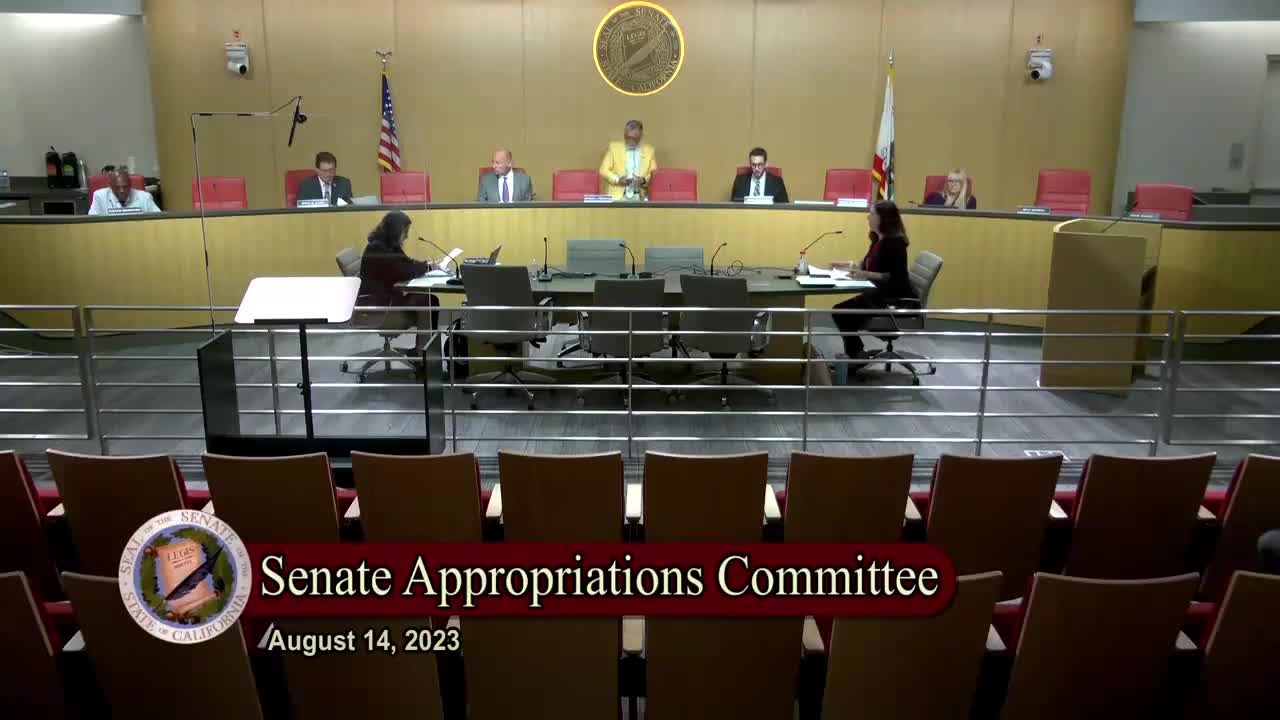
Bill Author

Bill Co-Author(s):