AB 628: Prisons: employment of inmates.
- Session Year: 2023-2024
- House: Assembly
- Latest Version Date: 2024-07-02
Current Status:
Passed
(2024-07-02: Chaptered by Secretary of State - Chapter 54, Statutes of 2024.)
Introduced
In Committee
First Chamber
In Committee
Second Chamber
Enacted
What does this bill do?
The bill would require the Department of Corrections and Rehabilitation to create a voluntary work program and set rules for work and other programs for people held in state prisons. It lets the CDCR secretary set wages for prison work, lets counties and cities set wages for jail work by local ordinance, and clarifies how inmate pay is counted in program costs and how earnings may be forfeited if someone escapes. The changes would take effect only if voters approve a related constitutional amendment.
The summary is provided by generative AI which can make mistakes. For original language, please view the details in the table below.
The California Constitution prohibits involuntary servitude, but exempts from this provision any servitude that is a punishment for a crime. Existing law requires the Department of Corrections and Rehabilitation (CDCR) to require each able-bodied inmate, including a condemned inmate, to work as prescribed by CDCR regulations. Existing CDCR regulations require each inmate to participate in 8 hours a day of programming, including labor, education, counseling, physical fitness, and other programs, 5 days per week. Under existing CDCR regulations, an inmate who fails to participate as required is subject to a loss of privileges, including the earning of good conduct credit.
Existing law also authorizes a board of supervisors or city council, through an order, to require all persons confined in a county or city jail, industrial farm, or road camp, as specified, to perform labor on the public works or ways in the county or city, respectively, and to engage in the prevention and suppression of forest, brush, and grass fires upon lands within the county or city, respectively.
This bill, contingent upon the passage and approval by the voters of a constitutional amendment that prohibits all involuntary servitude, would require CDCR to develop a voluntary work program and to prescribe rules and regulations regarding work and programming assignments for CDCR inmates, including the wages for work assignments, and would require wages for work assignments in county and city jail programs to be set by local ordinance.
The California Constitution prohibits involuntary servitude, but exempts from this provision any servitude that is a punishment for a crime. Existing law requires the Department of Corrections and Rehabilitation (CDCR) to require each able-bodied inmate, including a condemned inmate, to work as prescribed by CDCR regulations. Existing CDCR regulations require each inmate to participate in 8 hours a day of programming, including labor, education, counseling, physical fitness, and other programs, 5 days per week. Under existing CDCR regulations, an inmate who fails to participate as required is subject to a loss of privileges, including the earning of good conduct credit.
Existing law also authorizes a board of supervisors or city council, through an order, to require all persons confined in a county or city jail, industrial farm, or road camp, as specified, to perform labor on the public works or ways in the county or city, respectively, and to engage in the prevention and suppression of forest, brush, and grass fires upon lands within the county or city, respectively.
This bill would, bill, contingent upon the passage and approval by the voters of a constitutional amendment that prohibits all involuntary servitude, instead would require CDCR to develop a voluntary work program and to prescribe rules and regulations regarding work and programming assignments for CDCR inmates, including the wages for work assignments. assignments, and would require wages for work assignments in county and city jail programs to be set by local ordinance.
The California Constitution prohibits involuntary servitude, but exempts from this provision any servitude that is a punishment for a crime. Existing law requires the Department of Corrections and Rehabilitation (CDCR) to require each able-bodied inmate, including a condemned inmate, to work as prescribed by CDCR regulations. Existing CDCR regulations require each inmate to participate in 8 hours a day of programming, including labor, education, counseling, physical fitness, and other programs, 5 days per week. Under existing CDCR regulations, an inmate who fails to participate as required is subject to a loss of privileges, including the earning of good conduct credit.
This bill would, contingent upon the passage and approval by the voters of a constitutional amendment that prohibits all involuntary servitude, instead require CDCR to develop a voluntary work program and to prescribe rules and regulations regarding work and programming assignments for CDCR inmates, including the wages for work assignments.
Existing law establishes the Made in California Program within the Governors Office of Business and Economic Development for the purposes of encouraging consumer product awareness and fostering purchases of high-quality products made in this state. Existing law requires, in order to be eligible under the program, a company to establish that the product is substantially made by an individual located in the state and that the finished product could lawfully use a Made in U.S.A. label, as provided.This bill would remove the requirement that a company establish that the finished product could lawfully use a Made in U.S.A. label in order to be eligible under the program.Existing law requires the office to require each company to register with the office for use of the Made in California label and requires a company filing for registration to submit a qualified third-party certification, as defined, at least once every 3 years, as specified.This bill would remove the requirement that the certification described above be a qualified third-party certification and would instead require the certification to be signed under penalty of perjury. By expanding the scope of the crime of perjury, this bill would impose a state-mandated local program.Existing law authorizes the office to accept monetary donations or other donations from businesses, nonprofit organizations, or individuals for the purpose of implementing the Made in California Program.This bill would prohibit the office from accepting a donation that meets certain criteria, including that the donation would constitute more than 20 percent of the programs annual budget.The California Constitution requires the state to reimburse local agencies and school districts for certain costs mandated by the state. Statutory provisions establish procedures for making that reimbursement.This bill would provide that no reimbursement is required by this act for a specified reason.Existing law establishes the Made in California Program within the Governors Office of Business and Economic Development for the purposes of encouraging consumer product awareness and fostering purchases of high-quality products made in this state. Existing law requires, in order to be eligible under the program, a company to establish that the product is substantially made by an individual located in the state and that the finished product could lawfully use a Made in U.S.A. label, as provided.
This bill would remove the requirement that a company establish that the finished product could lawfully use a Made in U.S.A. label in order to be eligible under the program.
Existing law requires the office to require each company to register with the office for use of the Made in California label and requires a company filing for registration to submit a qualified third-party certification, as defined, at least once every 3 years, as specified.
This bill would remove the requirement that the certification described above be a qualified third-party certification and would instead require the certification to be signed under penalty of perjury. By expanding the scope of the crime of perjury, this bill would impose a state-mandated local program.
Existing law authorizes the office to accept monetary donations or other donations from businesses, nonprofit organizations, or individuals for the purpose of implementing the Made in California Program.
This bill would prohibit the office from accepting a donation that meets certain criteria, including that the donation would constitute more than 20 percent of the programs annual budget.
The California Constitution requires the state to reimburse local agencies and school districts for certain costs mandated by the state. Statutory provisions establish procedures for making that reimbursement.
This bill would provide that no reimbursement is required by this act for a specified reason.
(a)The Department of Corrections and Rehabilitation shall develop a voluntary work program and prescribe the rules and regulations regarding work and programming assignments for individuals incarcerated in facilities operated by the department.
(b)(1)Notwithstanding any state law or local ordinance governing minimum wages, compensation for any work assignment in state prison shall be set by regulations promulgated by the Secretary of the Department of Corrections and Rehabilitation.
(2)Notwithstanding any state law or local ordinance governing minimum wages, compensation for any work assignment in county and city jail programs shall be set by local ordinance.
(c)Whenever by any statute a price is required to be fixed for any services to be performed in connection with the work program of the department, the compensation paid to incarcerated persons shall be included as an item of cost in fixing the final statutory price.
(d)Incarcerated persons not engaged on work programs under the jurisdiction of the Prison Industry Authority, but who are engaged in productive labor outside of such programs may be compensated in like manner. The compensation of those persons shall be paid either out of funds appropriated by the Legislature for that purpose or out of such other funds available to the department for expenditure, as the Director of Finance may direct.
(e)When an incarcerated person escapes, the secretary shall determine what portion of that persons earnings shall be forfeited and the forfeiture shall be deposited in the State Treasury in a fund known as the Inmate Welfare Fund.
SEC. 2.This act shall only become operative upon the passage and subsequent approval by the voters of ACA 8 of the 202324 Regular Session, a measure amending Section 6 of Article I of the California Constitution.
(a)The Department of Corrections shall require of every able-bodied prisoner imprisoned in any state prison as many hours of faithful labor in each day and every day during his or her term of imprisonment as shall be prescribed by the rules and regulations of the Director of Corrections. and Rehabilitation shall develop a voluntary work program and prescribe the rules and regulations regarding work and programming assignments for individuals incarcerated in facilities operated by the department.
(b)Notwithstanding any state law or local ordinance governing minimum wages, compensation for any work assignment shall be set by regulations promulgated by the Secretary of the Department of Corrections and Rehabilitation.
(c)Whenever by any statute a price is required to be fixed for any services to be performed in connection with the work program of the Department of Corrections, department, the compensation paid to prisoners incarcerated persons shall be included as an item of cost in fixing the final statutory price.
Prisoners(d)Incarcerated persons not engaged on work programs under the jurisdiction of the Prison Industry Authority, but who are engaged in productive labor outside of such programs may be compensated in like manner. The compensation of such prisoners those persons shall be paid either out of funds appropriated by the Legislature for that purpose or out of such other funds available to the Department of Corrections department for expenditure, as the Director of Finance may direct.
(e)When any prisoner an incarcerated person escapes, the director secretary shall determine what portion of his or her that persons earnings shall be forfeited and such the forfeiture shall be deposited in the State Treasury in a fund known as the Inmate Welfare Fund of the Department of Corrections. Fund.
SEC. 2.This act shall only become operative upon the passage and subsequent approval by the voters of ACA 8 of the 202324 Regular Session, a measure amending Section 6 of Article I of the California Constitution.
SECTION 1.Section 12098.10 of the Government Code is amended to read:12098.10.(a)The Made in California Program, a public and private collaboration, is hereby created within the Governors Office of Business and Economic Development. The purposes of the program are to encourage consumer product awareness and to foster purchases of high-quality products made in this state.(b)(1)The office shall develop a program that permits a company to represent that a product is made in this state. To be eligible under the program, a company shall establish that the product is substantially made by an individual located in the state.(2)For purposes of this section, substantially made means completing an act that adds at least 51 percent of a final products wholesale value by manufacture, assembly, fabrication, or production to create a final, recognizable product. Substantially made does not include the act of packaging a product.(c)The program shall not apply to those agricultural products subject to the Buy California Program described in Section 58750 of the Food and Agricultural Code.(d)In accordance with the provisions of Chapter 1 (commencing with Section 58601) of Part 2 of Division 21 of the Food and Agricultural Code, the office may issue and make effective a marketing agreement, including, but not limited to, issuance of a Made in California label, and be advised by those California businesses willing to participate in the program on a voluntary basis via funding or in-kind contributions in a manner defined under the agreement.(e)(1)As part of the Made in California Program, the office shall require each company to register with the office for use of the Made in California label.(2)The company filing the registration shall submit a certification, signed under penalty of perjury, at least once every three years that the product is made in accordance with this section.(3)The office may require a fee to accompany the registration. The fee shall be determined by the office, and shall not exceed the reasonable costs to the office in providing the services for which it is charged, including, but not limited to, the costs to implement the marketing program. Proceeds from the fee shall be deposited in the Made in California Fund established in subdivision (h).(f)(1)The office may, subject to paragraph (3), accept monetary donations or other donations from businesses, nonprofit organizations, or individuals for the purpose of implementing the Made in California Program.(2)A donation accepted pursuant to this subdivision shall be deposited in the Made in California Fund established in subdivision (h).(3)(A)With respect to a donation for the general use of the program, the office shall not accept a donation if doing so would result in that donation constituting more than 20 percent of the programs annual budget. (B)With respect to a donation for a specific project, the office shall not accept a donation if doing so would result in that donation constituting more than 20 percent of the amount of the project cost.(g)(1)Notwithstanding Section 10231.5, the office shall report to the Legislature on January 1, 2015, and each successive January 1, regarding its expenditures, progress, and ongoing priorities with this program.(2)The report submitted to the Legislature pursuant to paragraph (1) shall be submitted pursuant to Section 9795.(h)(1)The Made in California Fund is hereby created as a fund within the State Treasury.(2)Notwithstanding Section 13340, funds deposited and maintained in the Made in California Fund that were donated pursuant to subdivision (f) are continuously appropriated, without regard to fiscal years, to the director, for the purposes of implementing the Made in California Program. Any other funds deposited and maintained in the Made in California Fund are available, subject to appropriation by the Legislature, for purposes of implementing the program.(3)(A)The office shall provide notice of the receipt of funds pursuant to subdivision (f) within 20 calendar days of receipt. (B)The office shall provide the notice required by this paragraph in writing to the Assembly Committee on Jobs, Economic Development, and the Economy, the Senate Committee on Business Professions and Economic Development, and the Joint Legislative Budget Committee. The notice shall include the amount of money donated, the name and contact information of the source of the donated money, and a general description of any conditions or requirements associated with the donation.SEC. 2.No reimbursement is required by this act pursuant to Section 6 of Article XIIIB of the California Constitution because the only costs that may be incurred by a local agency or school district will be incurred because this act creates a new crime or infraction, eliminates a crime or infraction, or changes the penalty for a crime or infraction, within the meaning of Section 17556 of the Government Code, or changes the definition of a crime within the meaning of Section 6 of Article XIIIB of the California Constitution.(a)The Made in California Program, a public and private collaboration, is hereby created within the Governors Office of Business and Economic Development. The purposes of the program are to encourage consumer product awareness and to foster purchases of high-quality products made in this state.
(b)(1)The office shall develop a program that permits a company to represent that a product is made in this state. To be eligible under the program, a company shall establish all of that the following: product is substantially made by an individual located in the state.
(A)The product is substantially made by an individual located in the state. (B)The finished product could lawfully use a Made in U.S.A. label and not violate Section 17533.7 of the Business and Professions Code.(2)For purposes of this section, substantially made means completing an act that adds at least 51 percent of a final products wholesale value by manufacture, assembly, fabrication, or production to create a final, recognizable product. Substantially made does not include the act of packaging a product.
(c)The program shall not apply to those agricultural products subject to the Buy California Program described in Section 58750 of the Food and Agricultural Code.
(d)In accordance with the provisions of Chapter 1 (commencing with Section 58601) of Part 2 of Division 21 of the Food and Agricultural Code, the office may issue and make effective a marketing agreement, including, but not limited to, issuance of a Made in California label, and be advised by those California businesses willing to participate in the program on a voluntary basis via funding or in-kind contributions in a manner defined under the agreement.
(e)(1)As part of the Made in California Program, the office shall require each company to register with the office for use of the Made in California label.
(2)The company filing the registration shall submit a qualified third-party certification certification, signed under penalty of perjury, at least once every three years that the product is made in accordance with this section.
(3)For purposes of this section, qualified third-party means an individual, group, or association that possesses a professional license, certification, or other equivalent documentation indicating sufficient training, education, or expertise to perform a regulatory compliance audit. (4)(3)The office may require a fee to accompany the registration. The fee shall be determined by the office, and shall not exceed the reasonable costs to the office in providing the services for which it is charged, including, but not limited to, the costs to implement the marketing program. Proceeds from the fee shall be deposited in the Made in California Fund established in subdivision (h).
(f)(1)The office may may, subject to paragraph (3), accept monetary donations or other donations from businesses, nonprofit organizations, or individuals for the purpose of implementing the Made in California Program. These donations shall be deposited in the Made in California Fund established in subdivision (h).
(2)A donation accepted pursuant to this subdivision shall be deposited in the Made in California Fund established in subdivision (h).
(3)(A)With respect to a donation for the general use of the program, the office shall not accept a donation if doing so would result in that donation constituting more than 20 percent of the programs annual budget.
(B)With respect to a donation for a specific project, the office shall not accept a donation if doing so would result in that donation constituting more than 20 percent of the amount of the project cost.
(g)(1)Notwithstanding Section 10231.5, the office shall report to the Legislature on January 1, 2015, and each successive January 1, regarding its expenditures, progress, and ongoing priorities with this program.
(2)The plan report submitted to the Legislature pursuant to paragraph (1) shall be submitted pursuant to Section 9795.
(h)(1)The Made in California Fund is hereby created as a fund within the State Treasury. Notwithstanding(2)Notwithstanding Section 13340, funds deposited and maintained in the Made in California Fund that were donated pursuant to subdivision (f) are continuously appropriated, without regard to fiscal years, to the director, for the purposes of implementing the Made in California Program. Any other funds deposited and maintained in the Made in California Fund are available, subject to appropriation by the Legislature, for purposes of implementing the program.
(3)(A)The office shall provide notice of the receipt of funds pursuant to subdivision (f) within 20 calendar days of receipt.
(B)The office shall provide the notice required by this paragraph in writing to the Assembly Committee on Jobs, Economic Development, and the Economy, the Senate Committee on Business Professions and Economic Development, and the Joint Legislative Budget Committee. The notice shall include the amount of money donated, the name and contact information of the source of the donated money, and a general description of any conditions or requirements associated with the donation.
SEC. 2.No reimbursement is required by this act pursuant to Section 6 of Article XIIIB of the California Constitution because the only costs that may be incurred by a local agency or school district will be incurred because this act creates a new crime or infraction, eliminates a crime or infraction, or changes the penalty for a crime or infraction, within the meaning of Section 17556 of the Government Code, or changes the definition of a crime within the meaning of Section 6 of Article XIIIB of the California Constitution.
|
Date
|
Status
|
|---|---|
| Jul 2, 2024 | Chaptered by Secretary of State - Chapter 54, Statutes of 2024. |
| Jul 2, 2024 | Approved by the Governor. |
| Jun 27, 2024 | Enrolled and presented to the Governor at 2 p.m. |
| Jun 27, 2024 | Assembly Rule 63 suspended. (Page 6083.) |
| Jun 27, 2024 | Assembly Rule 77 suspended. |
| Jun 27, 2024 | In Assembly. Concurrence in Senate amendments pending. May be considered on or after June 29 pursuant to Assembly Rule 77. |
| Jun 27, 2024 | Senate amendments concurred in. To Engrossing and Enrolling. (Ayes 67. Noes 0. Page 6088.). |
| Jun 27, 2024 | Read third time. Passed. Ordered to the Assembly. (Ayes 33. Noes 2.). |
| Jun 26, 2024 | Read second time. Ordered to third reading. |
| Jun 26, 2024 | From committee: Do pass. (Ayes 5. Noes 1.) (June 26). |
| Jun 25, 2024 | From committee: Do pass and re-refer to Com. on APPR. (Ayes 4. Noes 1.) (June 25). Re-referred to Com. on APPR. |
| Jun 24, 2024 | Joint Rule 62(a) suspended. (Ayes 30. Noes 6. Page 4666.) |
| Jun 20, 2024 | From committee chair, with author's amendments: Amend, and re-refer to committee. Read second time, amended, and re-referred to Com. on PUB S. |
| Jun 13, 2024 | Re-referred to Com. on RLS pursuant to Senate Rule 29.10(c). |
| Jun 13, 2024 | Re-referred to Com. on PUB S. |
| Jun 11, 2024 | Read second time. Ordered to third reading. |
| Jun 10, 2024 | Read second time and amended. Ordered returned to second reading. |
| Jun 10, 2024 | Ordered to second reading. |
| Jun 10, 2024 | From inactive file. |
| Jun 29, 2023 | Ordered to inactive file at the request of Senator Roth. |
| Jun 29, 2023 | From Consent Calendar. |
| Jun 27, 2023 | Read second time. Ordered to Consent Calendar. |
| Jun 26, 2023 | From committee: Be ordered to second reading file pursuant to Senate Rule 28.8 and ordered to Consent Calendar. |
| Jun 12, 2023 | From committee: Do pass and re-refer to Com. on APPR with recommendation: To Consent Calendar. (Ayes 12. Noes 0.) (June 12). Re-referred to Com. on APPR. |
| May 31, 2023 | Referred to Com. on B., P. & E. D. |
| May 18, 2023 | In Senate. Read first time. To Com. on RLS. for assignment. |
| May 18, 2023 | Read third time. Passed. Ordered to the Senate. (Ayes 74. Noes 0. Page 1595.) |
| May 11, 2023 | Read second time. Ordered to Consent Calendar. |
| May 10, 2023 | From committee: Do pass. To Consent Calendar. (Ayes 14. Noes 0.) (May 10). |
| Apr 25, 2023 | From committee: Do pass and re-refer to Com. on APPR. with recommendation: To Consent Calendar. (Ayes 7. Noes 0.) (April 25). Re-referred to Com. on APPR. |
| Feb 17, 2023 | Referred to Com. on J., E.D., & E. |
| Feb 10, 2023 | From printer. May be heard in committee March 12. |
| Feb 9, 2023 | Read first time. To print. |
|
Date
|
Description
|
Location
|
Votes
|
|
|---|---|---|---|---|
| Jun 27, 2024 | AB 628 WILSON Concurrence in Senate Amendments | Assembly Floor |
Passed |
|
| Jun 27, 2024 | Assembly 3rd Reading AB628 Wilson By Bradford | Senate Floor |
Passed |
|
| Jun 26, 2024 | Do pass | Senate Standing Committee on Appropriations |
Passed |
|
| Jun 25, 2024 | Do pass, but first be re-referred to the Committee on [Appropriations] | Senate Standing Committee on Public Safety |
Passed |
|
| Jun 12, 2023 | Do pass, but first be re-referred to the Committee on [Appropriations] with the recommendation: To Consent Calendar | Senate Standing Committee on Business, Professions and Economic Development |
Passed |
|
| May 18, 2023 | AB 628 Wilson Consent Calendar Second Day Regular Session | Assembly Floor |
Passed |
|
| May 10, 2023 | Do pass. To Consent Calendar. | Assembly Standing Committee on Appropriations |
Passed |
|
| Apr 25, 2023 | Do pass and be re-referred to the Committee on [Appropriations] with recommendation: To Consent Calendar | Assembly Standing Committee on Jobs, Economic Development, and the Economy |
Passed |
This list shows positions taken on this bill by organizations on the date displayed, which is linked to the original source.
Positions by individuals are not included.
|
Organization
|
Position
|
Date
|
|---|---|---|
| California Association For Local Economic Development | ** Support | |
| California Faculty Association | ** Support | |
| California Manufacturers And Technology Association | ** Support | |
| California Public Defenders Association | * Support | Jun 25, 2024 |
| Ella Baker Center For Human Rights | * Support | Jun 25, 2024 |
| Initiate Justice Action | * Support | Jun 25, 2024 |
| Moms for Change | * Support | Jun 25, 2024 |
(Without Reference to File)
CONCURRENCE IN SENATE AMENDMENTS
CSA1 Bill Id:AB 628
Author:(Wilson)
As Amended Ver:June 20, 2024
Majority vote
SUMMARY
This bill proposes to eliminate the state law mandating that all able-bodied incarcerated individuals must work daily. Instead, it would require the California Department of Corrections and Rehabilitation (CDCR) to develop a voluntary work program for those in prison.
Senate Amendments
- Removes all of the language in the bill in print.
- Requires the California Department of Corrections and Rehabilitation (CDCR) to develop a voluntary work program for individuals incarcerated in CDCR facilities.
- Exempts CDCR from minimum wage laws and specify that the Secretary of CDCR sets compensation for work assignments via regulations.
- Provides that the provisions of the bill only become operative if the voters approve ACA 8.
COMMENTS
This bill is a companion bill to ACA 8 (Wilson), of the current legislative session which would amend Section 6 of Article I of the State Constitution if approved by the voters to prohibit involuntary servitude, prohibit CDCR or a local entity from punishing an incarcerated person for refusing a work assignment, and clarify that its provisions do not prohibit CDCR or a local entity from awarding credits to an incarcerated person who voluntarily accepts a work assignment.
This bill deletes the requirement that every able-bodied person incarcerated in state prison work, and instead requires CDCR to develop a voluntary work program. By eliminating the requirement to work, the bill has the effect of prohibiting the department from punishing an incarcerated person for not having a work assignment. CDCR would still be able to reward an incarcerated person who voluntarily works with the various privileges.
According to the Author
AB 628 "brings California closer to abolishing the practice of forced labor for incarcerated workers and removing the last vestiges of slavery from the state constitution. Californians deserve the opportunity to abolish slavery once and for all."
Arguments in Support
According to the California Faculty Association (CFA), CFA believes that incarcerated people should be able to choose jobs and shifts that allow them to continue their education, use the law library, get counseling, and participate in other rehabilitative programs that facilitate growth and transformation. By requiring CDCR to develop a voluntary work program with wages, AB 628 prioritizes rehabilitation over punishment and represents a step towards a more just and equitable criminal justice system.
Arguments in Opposition
No opposition on file.
FISCAL COMMENTS
According to the Senate Appropriations Committee:
- Unknown, potentially significant ongoing state costs (General Fund) to the California Department of Corrections and Rehabilitation (CDCR), to pay compensation to incarcerated individuals participating in work assignments. (See staff comments.)
- Unknown, one-time and ongoing costs (General Fund) likely in the low hundreds of thousands to CDCR in order to develop and implement the voluntary work program required by this bill and to promulgate regulations setting compensation for inmate work assignments in state prisons.
- Unknown, potentially significant non-reimbursable ongoing local costs (local funds) for local agencies to set compensation for incarcerated individuals by local ordinance, and to pay such compensation to incarcerated individuals participating work assignments in city and county jails.
VOTES:
ASM JOBS, ECONOMIC DEVELOPMENT, AND THE ECONOMY: 7-0-0
YES: Villapudua, Hoover, Haney, Jackson, Petrie-Norris, Ramos, Wallis
ASM APPROPRIATIONS: 14-0-2
YES: Holden, Megan Dahle, Calderon, Wendy Carrillo, Dixon, Mike Fong, Addis, Lowenthal, Papan, Pellerin, Robert Rivas, Sanchez, Weber, Wilson
ABS, ABST OR NV: Bryan, Mathis
ASSEMBLY FLOOR: 74-0-6
YES: Addis, Aguiar-Curry, Alanis, Alvarez, Arambula, Bains, Bauer-Kahan, Bennett, Berman, Boerner, Bonta, Bryan, Calderon, Juan Carrillo, Wendy Carrillo, Chen, Connolly, Megan Dahle, Davies, Dixon, Essayli, Flora, Mike Fong, Gabriel, Gallagher, Garcia, Gipson, Grayson, Haney, Hart, Holden, Hoover, Irwin, Jackson, Jones-Sawyer, Kalra, Lackey, Lee, Low, Lowenthal, Maienschein, Mathis, McCarty, McKinnor, Muratsuchi, Stephanie Nguyen, Ortega, Pacheco, Papan, Jim Patterson, Joe Patterson, Pellerin, Petrie-Norris, Quirk-Silva, Ramos, Reyes, Luz Rivas, Robert Rivas, Rodriguez, Blanca Rubio, Sanchez, Santiago, Schiavo, Soria, Ta, Ting, Valencia, Wallis, Ward, Weber, Wicks, Wood, Zbur, Rendon
ABS, ABST OR NV: Cervantes, Vince Fong, Friedman, Villapudua, Waldron, Wilson
UPDATED
VERSION: June 20, 2024
CONSULTANT: Ashley Bennett / J., E.D., & E. / (916) 319-2090 FN: 0003662
SENATE COMMITTEE ON
Senator Anna Caballero, Chair
2023 - 2024 Regular Session
AB 628 (Wilson) - Prisons: employment of inmates
Version: | Policy Vote: |
Urgency: | Mandate: |
Hearing Date: | Consultant: |
Bill Summary:
AB 628 would strike the provision of state law requiring every able bodied person incarcerated in state prison to work as many hours of faithful labor in each day and every day during their term of imprisonment, and instead require CDCR to develop a voluntary work program for incarcerated individuals.
AB 628 would become operative upon the passage and subsequent approval by the voters of ACA 8 (Wilson) of the 2023–24 Regular Session. ACA 8 is pending hearing in this Committee. The provisions of AB 628 are intended to implement the constitutional amendment. The fiscal impact of this bill, as reflected in this analysis, is contingent upon the proposed changes made by ACA 8.
Fiscal Impact:
- Unknown, potentially significant ongoing state costs (General Fund) to the California Department of Corrections and Rehabilitation (CDCR), to pay compensation to incarcerated individuals participating in work assignments. (See staff comments.)
- Unknown, one-time and ongoing costs (General Fund) likely in the low hundreds of thousands to CDCR in order to develop and implement the voluntary work program required by this bill and to promulgate regulations setting compensation for inmate work assignments in state prisons.
- Unknown, potentially significant non-reimbursable ongoing local costs (local funds) for local agencies to set compensation for incarcerated individuals by local ordinance, and to pay such compensation to incarcerated individuals participating work assignments in city and county jails. (See staff comments.)
Background:
The 13th Amendment of the United States Constitution prohibits slavery and involuntary servitude. However, there is an exception if involuntary servitude is imposed as punishment for a crime. The California Constitution contains the same prohibition. Section 6 of Article I of the California Constitution provides: “Slavery is prohibited. Involuntary servitude is prohibited except to punish crime.” Otherwise, it is felony to hold any person in involuntary servitude. (Pen. Code, § 181.)
The United States Supreme Court has clearly defined involuntary servitude as a condition of servitude in which a person is forced to work by the use or threat of physical restraint or physical injury or by the use or threat of coercion through law or the legal process. This definition encompasses cases in which the person is held in servitude by placing them in fear of such physical restraint or injury or legal coercion. (United States v. Kozminski (1988) 487 U.S. 939, 953.)
Existing state law coerces inmate labor in state prisons. Penal Code section 2700 requires “of every able-bodied prisoner imprisoned in any state prison as many hours of faithful labor in each day and every day during his or her term of imprisonment as shall be prescribed by the rules and regulations [of the department].” Incarcerated individuals cannot refuse a job assignment and may be disciplined for refusing or failing to show up to work. Refusal to accept or perform in a work or training assignment can also lead to reduced privileges, including limitations on visits, phone calls, canteen purchases, and yard, entertainment and recreation access.
Proposed Law:
This bill deletes current provisions in state law that require all able-bodied people incarcerated in state prison work, and instead requires CDCR to develop a voluntary work program. Specifically, this bill:
- Provides that, notwithstanding any state law or local ordinance governing minimum wages, compensation for any work assignment in state prison shall be set by regulations promulgated by CDCR.
- Provides that, notwithstanding any state law or local ordinance governing minimum wages, compensation for any work assignment in county and city jail programs shall be set by local ordinance.
- Provides that these provisions shall only become operative upon the passage and subsequent approval by the voters of ACA 8 of the 2023–24 Regular Session, a measure amending Section 6 of Article I of the California Constitution.
ACA 8 (Wilson): As stated above, this bill is a companion bill to ACA 8 and is contingent on its passage and voter approval. In addition to prohibiting slavery and involuntary servitude in any form, ACA 8 would add provisions to the California Constitution that prohibit CDCR from disciplining any incarcerated person for refusing a work assignment, and clarify that CDCR can award credits to an incarcerated person who voluntarily accepts a work assignment.
It is not clear how the elimination of involuntary servitude for punishment of crime in the California Constitution would affect inmate labor in California prisons and jails as it currently exists. It is also unclear to what extent incarcerated persons would be required to pay a minimum wage should ACA 8 be enacted. To withstand constitutional challenges, courts would evaluate whether working conditions imposed upon incarcerated persons constitute forced labor compelled by the use or threat of physical or legal coercion.
Accordingly, this bill deletes the existing provision of law that compels inmate labor by threat of legal coercion, and allows CDCR and counties and cities to set compensation for incarcerated individuals who participate in any work assignment.
Related Legislation:
- ACA 8 (Wilson), of the 2023-2024 Legislative Session, would amend the California Constitution to prohibit involuntary servitude. ACA 8 is pending in this Committee.
- ACA 3 (Kamlager), of the 2021-2022 Legislative Session, was substantially similar to ACA 8. ACA 3 was ordered to the Senate Inactive File.
- SB 1371 (Bradford), of the 2021-2022 Legislative Session, would have required CDCR to adopt a 5-year implementation plan to increase inmate wages. SB 1371 was vetoed.
- SCR 69 (Bradford), of the 2019-2020 Legislative Session, would have expressed the Legislature’s support for fair and just wages for incarcerated individuals. SCR 69 was never heard in the Assembly Public Safety Committee.
Staff Comments:
Courts have consistently held that state prisoners are not employees entitled to minimum wage. (Burleson v. California (1996) 83 F.3d 311.) The provision of the California Constitution allowing involuntary servitude justifies not paying incarcerated persons a minimum wage, and presumably any other legal entitlement relating to employment. (Serra v. Lapin (9th Cir. 2010) 600 F.3d 1191; Piatt v. MacDougall (9th Cir. 1985) 733 F.2d 1032, 1035.) Generally, case law finding that inmates are not employees entitled to wages is based on the constitutional exception to the prohibition on involuntary servitude for punishment. Thus, it is uncertain whether a change to the California Constitution outlawing involuntary servitude as punishment for a crime would require incarcerated workers who receive compensation to be classified as “employees” entitled to a minimum wage. Likewise, it is unclear whether the fact that a person is incarcerated forecloses being considered an employee for purposes of the minimum wage provisions of the Fair Labor Standards Act (FLSA).
The category of prison inmate is not one of the groups Congress expressly excluded from coverage by FLSA. (Watson v. Graves, 909 F.2d 1549, 1554 (5th Cir. 1990); see also, Hale v. Arizona, 993 F.2d 1387 (9th Cir. 1993) [stating “we do not believe that prisoners are categorically excluded from the FLSA,” but declining to extend the FLSA to inmates because “convicted criminals do not have the right freely to sell their labor and are not protected by the Thirteenth Amendment against involuntary servitude”].)
The Ninth Circuit has adapted the "economic reality" test to the circumstances of inmate workers, noting that the "economic reality of the relationship between the worker and the entity for which the work was performed lies in the relationship between prison and prisoner. It is penological, not pecuniary." The court concluded that the economic reality is that inmates’ labor belongs to the institution, and held that inmates were not employees of the prison entitled to be paid a minimum wage under the FLSA. (Burleson v. State of California (1996) 83 F.3d 311, 313.) The court’s analysis hinged upon the fact that in California incarcerated persons are required to work pursuant to state statute. This bill would eliminate that statutory requirement.
Consequently, if involuntary servitude as punishment for a crime is abolished, and if correctional facilities set and pay compensation, the “economic reality” of the relationship between prisons and prisoners may no longer be penological, and would need to be re-examined. Incarcerated persons could presumably be considered “employees” and could have employment rights under state and federal law, including state and federal minimum wage laws like the FSLA.
There would be a substantial increase in current inmate pay rates if CDCR and county jails are required to pay a minimum wage. Due to the Constitution’s acquiescence to involuntary servitude as punishment for a crime, CDCR and local correctional facilities have had access to a captive pool of workers that it are currently paid token wages well below the legal minimum. CDCR and jails are not obligated to cover unemployment insurance, social security, worker's compensation insurance, or other employee benefit plans for incarcerated people. And, in certain circumstances, institutions can forgo hiring more expensive non-inmate employees because certain labor needs are in cheap and easy supply.
The most current pay rates for most inmate jobs at CDCR are as follows[1]:
Skill Level | Hourly (Min/Max) |
Level 1 (Lead Person) | $0.64-$0.74 |
Level 2 (Special Skill) | $0.38-$0.64 |
Level 3 (Technician) | $0.30-$0.48 |
Level 4 (Semi-Skilled) | $0.22-$0.36 |
Level 5 (Laborer) | $0.16-$0.26 |
Incarcerated individuals housed at one of the state’s conservation/fire camps are subject to a different pay scale with a pay rate of $5.80 to $10.24 per day based on skill level and position. Individuals working for the California Prison Industry Authority (CalPIA) are also subject to a different pay scale with the lowest paid ranging from $0.35-$0.45 per hour and the highest scale ranging from $0.80 to $1 per hour. (Cal. Code Regs., tit. 15, § 8006, subd. (d)(1).)
Assuming the average work week for a state prisoner is 20 hours, with pay rates ranging from $0.26 to $1.00 per hour, an incarcerated person’s annual income currently ranges from about $250.00 to $960 a year. The current federal minimum wage is $7.25[2] per hour; state minimum wage is $16.00 per hour. Thus, a part-time incarcerated person working 20 hours a week could earn annual salary of $6,960 or $15,360 per year, if paid a federal or state minimum wage.
In 2021, CDCR reported it had nearly 65,000 work assignments for incarcerated persons. If CDCR is required to pay minimum wage, using conservative estimates, increase costs could be in the billions of dollars annually, assuming CDCR maintains its current level of work assignments. Paying incarcerated persons minimum wage would result in significant cost pressures to the state, but a fraction could be offset by an increase in state and local income tax[3], paid restitution fines to compensate victims of crime and the state Restitution Fund[4], to family support and court ordered debt via wage garnishments, and some amounts could be applied to the incarcerated person’s room and board.[5] To the extent inmates are paid a higher wage, the measure could have other unknown effects on state and local government programs. For example, it could reduce the need for people exiting the incarceration to rely on government services, such as subsidized housing.
Alternatively, correctional facilities could allow incarcerated persons to choose, without coercion, to volunteer for work programs. In addition to relying on the exception to involuntary servitude for punishment for a crime, federal courts have found that inmate work does not constitute “involuntary servitude” when the person has a choice to work. For example, the Fifth District Court of Appeals held that participation in a work release program did not constitute involuntary servitude, because the incarcerated persons voluntarily chose to participate. (Watson v. Graves (1990) 909 F.2d 1549, 1552.) Under federal law, individuals who performs hours of service for a public agency for civic, charitable, or humanitarian reasons, without promise, expectation or receipt of compensation for services rendered, can be considered volunteers only where their services are offered freely and without pressure or coercion, direct or implied. (29 CFR 553.101.)
This bill would require CDCR to develop a voluntary work program in lieu of requiring every able bodied person to work. Nothing in state law prohibits county and city jails from doing the same. This bill requires compensation to be set for “any work assignment” in jail and prison. It is unclear whether “any work assignment” includes voluntary work assignments. Nonetheless, prisons and jails would not be required to provide any compensation to true volunteers, which could result in a costs savings. However, as discussed above, if incarcerated persons are unable to earn wages while imprisoned, the state would not be able to garnish pay to cover restitution orders, fines and fees, which could impact the Restitution Fund.
-- END --
Beginning on April 16, 2024, CDCR increased wages for all incarcerated workers to a maximum of $0.74 per hour. CDCR expects that up to 75 percent of assignments will be half-time. (Cal. Code Regs., tit. 15, § 3041.2, subd. (a)(1).) ↑
Even if CDCR and counties set compensation below the state’s minimum wage, as authorized by this bill, it is unclear to what extent any such compensation must comport with the federal minimum wage. Federal law allows state laws and local ordinances to set a minimum wage higher, but not lower than the federal minimum wage. (29 U.S.C. § 218.)
↑See, California Franchise Tax Board, 2023 California Tax Rate Schedules [Individuals who earn under $10,412 are taxed at 1%; individuals who earn $10,412 to $24,684 are taxed a 2%]. ↑
CDCR automatically collects 50% of prison wages or other money deposited into an incarcerated person’s trust account to pay court ordered restitution. CDCR always collects money to pay direct orders to victims before collecting money to pay for restitution fines, which are deposited into the Restitution Fund. The Restitution Fund has been operating under a structural deficiency for a number of years. ↑
For example, current law allows state prisoners employed in the Joint Venture Program to “earn wages paid by the joint-venture employer” comparable to wages earned by non-inmate employees performing similar work for the employer, and subjects those wages to deductions, including “reasonable charges for room and board, which shall be remitted to [CDCR].” (Pen. Code, § 2717.9.) ↑
SENATE RULES COMMITTEE Office of Senate Floor Analyses (916) 651-1520 Fax: (916) 327-4478 | AB 628 |
THIRD READING
Bill No: AB 628
Author: Wilson (D)
Amended: 6/20/24 in Senate
Vote: 21
PRIOR VOTES NOT RELEVANT
SENATE PUBLIC SAFETY COMMITTEE: 4-1, 6/25/24 (Pursuant to Senate Rule 29.10)
AYES: Wahab, Bradford, Skinner, Wiener
NOES: Seyarto
SENATE APPROPRIATIONS COMMITTEE: 5-1, 6/26/24
AYES: Caballero, Ashby, Becker, Bradford, Wahab
NOES: Seyarto
NO VOTE RECORDED: Jones
SUBJECT: Prisons: employment of inmates
SOURCE: Author
DIGEST:
This bill, contingent upon the passage and approval by the voters of a constitutional amendment that prohibits involuntary servitude, removes the requirement that all able-bodied people incarcerated in state prison work, and instead require the California Department of Corrections and Rehabilitation (CDCR) to develop a voluntary work program for incarcerated individuals.
Senate Floor Amendments of 6/20/24 (1) remove all of the language in the bill in print; (2) require the California Department of Corrections and Rehabilitation (CDCR) to develop a voluntary work program for individuals incarcerated in CDCR facilities; (3) exempt CDCR from minimum wage laws and specify that the Secretary of CDCR sets compensation for work assignments via regulations; and (4) provide that the provisions of the bill only become operative if the voters approve ACA 8.
ANALYSIS: Existing federal law states that neither slavery nor involuntary servitude, except as a punishment for crime whereof the party shall have been duly convicted, shall exist within the United States, or any place subject to their jurisdiction. (U.S. Const., 13th Amend.)
Existing state law:
- Prohibits slavery. (Cal. Const., art. I, § 6.)
- Prohibits involuntary servitude except to punish crime. (Cal. Const., art. I, § 6.)
- Authorizes the Secretary of the California Department of Corrections and Rehabilitation (CDCR) to enter into contracts with public entities, nonprofit or for profit organizations, and businesses for the purpose of conducting programs which use the labor of incarcerated individuals. (Cal. Const., art. XIV, § 5.)
- Provides that CDCR require every able-bodied incarcerated individual imprisoned in any state prison as many hours of faithful labor in each day and every day during the person’s term of imprisonment as is prescribed by the rules and regulations of the Secretary. (Pen. Code, § 2700.)
- Authorizes CDCR to employ incarcerated individuals for the rendering of services that are needed by the state or any political subdivision thereof, including any county, district, city, school or other public use, or for use by the federal government, or any agency or department thereof, or that may be needed for use by the government of any other state, or any department, agency, or corporation thereof, and allows CDCR to enter into contracts for this purpose. (Pen. Code, § 2701, subd. (a).)
- Allows CDCR to employ incarcerated individuals for the rendering of emergency services for the preservation of life or property within the state, whether that property is owned by public entities or private citizens, when a county level state of emergency has been declared due to a natural disaster and the local governing board has requested assistance. (Pen. Code, § 2701, subd. (b).)
- States that one of the purposes of the Prison Industry Authority (PIA) is to operate a work program for incarcerated individuals which will ultimately be self-supporting by generating sufficient funds from the sale of products and services to pay all the expenses of the program, and one which will provide goods and services which are or will be used by CDCR, thereby reducing the cost of its operation. (Pen. Code, § 2801, subd. (c).)
- Establishes a minimum wage. Requires the Director of Finance to calculate and adjust the minimum wage annually, as specified. (Lab. Code, § 1182.12.)
This bill:
- Requires CDCR to develop a voluntary work program and prescribe the rules and regulations regarding work and programming assignments for individuals incarcerated in facilities operated by the department.
- Provides that notwithstanding any state law or local ordinance governing minimum wages, compensation for any work assignment in state prison is set by regulations promulgated by the Secretary of CDCR.
- Provides that notwithstanding any state law or local ordinance governing minimum wages, compensation for any work assignment in county and city jail programs is set by local ordinance.
- Includes an operability provision which states that the provisions of this bill only become operative upon the passage and approval by the voters of ACA 8 (Wilson) of the 2023-2024 Regular Session.
Background
Penal Code section 2700 provides that CDCR “require of every able-bodied prisoner imprisoned in any state prison as many hours of faithful labor in each day and every day during his or her term of imprisonment as shall be prescribed by the rules and regulations [of the department].” Upon arrival at a prison reception center, incarcerated individuals go through a classification process. During the classification process, incarcerated individuals are placed on waiting lists for jobs and rehabilitative programs. Incarcerated individuals cannot refuse a job assignment and may be disciplined for refusing or failing to show up to work. Refusal to accept or perform in a work or training assignment can also lead to reduced privileges, including limitations on visits, phone calls, canteen purchases, and yard, entertainment and recreation access. (https://www.cdcr.ca.gov/ombuds/ombuds/entering-a-prison-faqs/) Notably, incarcerated individuals may be assigned to a job in lieu of enrollment and participation in rehabilitative programs without the individual’s consent. (Cal. Code Regs., tit. 15, § 3040, subd. (g).)
Wages Generally. Beginning on April 16, 2024, CDCR increased wages for all incarcerated workers. The wage increase is expected to result in up to 75 percent of assignments being half-time and the remained being full-time assignments. Given that many incarcerated people have historically worked full-time assignments and had to choose between work assignments and rehabilitative programs, CDCR asserts that these changes expand opportunities for incarcerated people to work and program. Wages were increased to a maximum of $0.74 per hour. (Cal. Code Regs., tit. 15, § 3041.2, subd. (a)(1).) Current pay rates for most jobs are as follows:
Skill Level | Hourly (Min/Max) |
Level 1 (Lead Person) | $0.64-$0.74 |
Level 2 (Special Skill) | $0.38-$0.64 |
Level 3 (Technician) | $0.30-$0.48 |
Level 4 (Semi-Skilled) | $0.22-$0.36 |
Level 5 (Laborer) | $0.16-$0.26 |
Incarcerated individuals housed at one of the state’s conservation/fire camps are subject to a different pay scale with a pay rate of $5.80 to $10.24 per day based on skill level and position. The new maximum daily wage of $10.24 represents a doubling of the previous daily wage.
Individuals working for CalPIA are also subject to a different pay scale. CalPIA is a self-supporting state entity that was established to operate industrial, agricultural, and service enterprises employing incarcerated individuals in CDCR facilities to provide products and services needed by the state or other public entity or public use. Penal Code section 2801 provides that CalPIA is required to create and maintain working conditions within the enterprises as much like those which prevail in private industry as possible, to assure incarcerated individuals employed by CalPIA have the opportunity to work productively, to earn funds, and to acquire or improve effective work habits and occupational skills. CalPIA manages over 100 manufacturing, service, and consumable operations, including optical labs, carpentry and custodial services, production of license plates, among others.
Penal Code section 2811 prohibits CalPIA compensation from exceeding half of the minimum wage. CalPIA currently has a five-level pay scale with the lowest paid scale ranging from $0.35-$0.45 per hour and the highest scale ranging from $0.80 to $1 per hour. (Cal. Code Regs., tit. 15, § 8006, subd. (d)(1).)
Work Groups and Privileges. Individuals incarcerated in the state’s prisons are assigned to a work group. Each work group has associated privileges, with Work Group A having the most privileges. (Cal. Code Regs., tit. 15, § 3044.) Regulations provide that “inmate privileges are administratively authorized activities and benefits required of the secretary, by statute, case law, governmental regulations, or executive orders… governed by an inmate’s behavior, custody classification and assignment.” (Cal. Code Regs., tit. 15, § 3044, subd. (c).) Individuals in Privilege Group A generally have a full-time work or training assignment, as defined. (Cal. Code Regs., tit. 15, § 3044, subd. (d)(1).) Privileges afforded to Group A include family visits, the maximum monthly canteen draw, phone and tablet access, access to yard, recreation, and entertainment activities during the person’s non-working or non-training hours, excused time off, and the receipt of four packages per year. (Cal. Code Regs., tit. 15, § 3044, subd. (d)(2).) In contrast, Privilege Group B is allowed fewer visits and seventy-five percent of the maximum monthly canteen draw. (Cal. Code Regs., tit. 15, § 3044, subd. (e)(2).) Individuals in Privilege Group C, including individuals who refuse to accept or perform in a work or training assignment, are not allowed family visits, access to recreation or entertainment activities, or to receive packages. (Cal. Code Regs., tit. 15, § 3044, subd. (f)(2).) In addition, individuals in Privilege Group C are only allowed twenty-five percent of the maximum monthly canteen draw and one personal call per week, and allowed exercise time that may be outdoors or in an enclosed setting as opposed to the access to yard that individuals in Groups A and B are allowed. (Ibid.)
This bill is a companion bill to ACA 8 (Wilson, 2024) which would amend Section 6 of Article I of the State Constitution if approved by the voters to prohibit involuntary servitude, prohibit CDCR or a local entity from punishing an incarcerated person for refusing a work assignment, and clarify that its provisions do not prohibit CDCR or a local entity from awarding credits to an incarcerated person who voluntarily accepts a work assignment.
This bill deletes the requirement that every able-bodied person incarcerated in state prison work, and instead requires CDCR to develop a voluntary work program. By eliminating the requirement to work, the bill has the effect of prohibiting the department from punishing an incarcerated person for not having a work assignment. However, CDCR would still be able to reward an incarcerated person who voluntarily works with the various privileges described in the previous section.
With respect to wages, this bill explicitly exempts CDCR from minimum wage laws and local ordinances and states that the Secretary of CDCR sets compensation for prison work assignments via regulation. This bill similarly exempts cities and counties from minimum wage laws and local ordinances and states that compensation for any work assignment in county and city jail programs is set by local ordinance. Finally, this bill contains an operability provision which states that the provisions of this bill only become operative upon the passage and approval by the voters of ACA 8 (Wilson, 2024) of the 2023-2024 Regular Session.
FISCAL EFFECT: Appropriation: No Fiscal Com.: Yes Local: No
SUPPORT: (Verified 6/25/24)
California Faculty Association
OPPOSITION: (Verified 6/25/24)
None received
ARGUMENT IN SUPPORT: The California Faculty Association writes:
AB 628 works in tandem with ACA 8, which upon passage and approval by the voters, would prohibit all involuntary servitude, an action we believe is long overdue. While the Thirteenth Amendment of the U.S. and the California Constitution prohibit slavery and involuntary servitude, both contain exceptions that allow involuntary servitude as a form of punishment for a crime. CDCR currently requires all able-bodied inmates to work or participate in programming for 8 hours per day, 5 days per week. Inmates who refuse can lose privileges, including earned good conduct credits. This effectively amounts to forced labor.
CFA believes that incarcerated people should be able to choose jobs and shifts that allow them to continue their education, use the law library, get counseling, and participate in other rehabilitative programs that facilitate growth and transformation. By requiring CDCR to develop a voluntary work program with wages, AB 628 prioritizes rehabilitation over punishment and represents a step towards a most just and equitable criminal justice system.
ASSEMBLY FLOOR: 74-0, 5/18/23
AYES: Addis, Aguiar-Curry, Alanis, Alvarez, Arambula, Bains, Bauer-Kahan, Bennett, Berman, Boerner, Bonta, Bryan, Calderon, Juan Carrillo, Wendy Carrillo, Chen, Connolly, Megan Dahle, Davies, Dixon, Essayli, Flora, Mike Fong, Gabriel, Gallagher, Garcia, Gipson, Grayson, Haney, Hart, Holden, Hoover, Irwin, Jackson, Jones-Sawyer, Kalra, Lackey, Lee, Low, Lowenthal, Maienschein, Mathis, McCarty, McKinnor, Muratsuchi, Stephanie Nguyen, Ortega, Pacheco, Papan, Jim Patterson, Joe Patterson, Pellerin, Petrie-Norris, Quirk-Silva, Ramos, Reyes, Luz Rivas, Robert Rivas, Rodriguez, Blanca Rubio, Sanchez, Santiago, Schiavo, Soria, Ta, Ting, Valencia, Wallis, Ward, Weber, Wicks, Wood, Zbur, Rendon
NO VOTE RECORDED: Cervantes, Vince Fong, Friedman, Villapudua, Waldron, Wilson
Prepared by: Stephanie Jordan / PUB. S. /
6/26/24 20:19:49
**** END ****
SENATE COMMITTEE ON PUBLIC SAFETY
Senator Aisha Wahab, Chair
2023 - 2024 Regular
Bill No: AB 628 Hearing Date: June 25, 2024
Author: | Wilson | ||
Version: | June 20, 2024 | ||
Urgency: | No | Fiscal: | Yes |
Consultant: | SJ | ||
Subject: Prisons: employment of inmates
HISTORY
Source: Author
Prior Legislation: ACA 3 (Kamlager), failed passage on the Senate Floor 2022
SB 1371 (Bradford), vetoed in 2022
SCR 69 (Bradford), not heard in Assembly Public Safety 2020
Support: California Faculty Association
Opposition: None known
Assembly Floor Vote: Not relevant
PURPOSE
The purpose of this bill is to, contingent upon the passage and approval by the voters of a constitutional amendment that prohibits all forms of slavery, remove the requirement that all able-bodied people incarcerated in state prison work, and instead require the California Department of Corrections and Rehabilitation (CDCR) to develop a voluntary work program for incarcerated individuals.
Existing federal law states that neither slavery nor involuntary servitude, except as a punishment for crime whereof the party shall have been duly convicted, shall exist within the United States, or any place subject to their jurisdiction. (U.S. Const., 13th Amend.)
Existing law prohibits slavery. (Cal. Const., art. I, § 6.)
Existing law prohibits involuntary servitude except to punish crime. (Cal. Const., art. I, § 6.)
Existing law authorizes the Secretary of the California Department of Corrections and Rehabilitation (CDCR) to enter into contracts with public entities, nonprofit or for profit organizations, and businesses for the purpose of conducting programs which use the labor of incarcerated individuals. (Cal. Const., art. XIV, § 5.)
Existing law provides that CDCR require every able-bodied incarcerated individual imprisoned in any state prison as many hours of faithful labor in each day and every day during the person’s term of imprisonment as is prescribed by the rules and regulations of the Secretary. (Pen. Code, § 2700.)
Existing law authorizes CDCR to employ incarcerated individuals for the rendering of services that are needed by the state or any political subdivision thereof, including any county, district, city, school or other public use, or for use by the federal government, or any agency or department thereof, or that may be needed for use by the government of any other state, or any department, agency, or corporation thereof, and allows CDCR to enter into contracts for this purpose. (Pen. Code, § 2701, subd. (a).)
Existing law allows CDCR to employ incarcerated individuals for the rendering of emergency services for the preservation of life or property within the state, whether that property is owned by public entities or private citizens, when a county level state of emergency has been declared due to a natural disaster and the local governing board has requested assistance. (Pen. Code, § 2701, subd. (b).)
Existing law states that one of the purposes of the Prison Industry Authority (PIA) is to operate a work program for incarcerated individuals which will ultimately be self-supporting by generating sufficient funds from the sale of products and services to pay all the expenses of the program, and one which will provide goods and services which are or will be used by CDCR, thereby reducing the cost of its operation. (Pen. Code, § 2801, subd. (c).)
Existing law establishes a minimum wage. Requires the Director of Finance to calculate and adjust the minimum wage annually, as specified. (Lab. Code, § 1182.12.)
This bill requires CDCR to develop a voluntary work program and prescribe the rules and regulations regarding work and programming assignments for individuals incarcerated in facilities operated by the department.
This bill provides that notwithstanding any state law or local ordinance governing minimum wages, compensation for any work assignment in state prison is set by regulations promulgated by the Secretary of CDCR.
This bill provides that notwithstanding any state law or local ordinance governing minimum wages, compensation for any work assignment in county and city jail programs is set by local ordinance.
This bill includes an operability provision which states that the provisions of this bill only become operative upon the passage and approval by the voters of ACA 8 of the 2023-2024 Regular Session.
COMMENTS
- Need For This Bill
According to the author:
Every single day, incarcerated and detained individuals in California’s prisons perform labor under threat of punishment during while they serve their sentences, with few exceptions. For many, it has become a largely normalized aspect of incarceration – a fact the feels strange and cruel when considered in its historical context, as the use of prisoner labor is deeply rooted in slavery. And yet, forced prison labor is still legal and commonplace in California. Incarcerated individuals in California are assigned jobs – whether they want them or not – and exploited for their labor under the threat of punishment. This bill, which is contingent upon the enactment of ACA 8 to remove the exception to involuntary servitude from the state constitution, would put an end to this racist, exploitative practice that often prevents inmates from participating in rehabilitative services. AB 628 would require the California Department of Corrections and Rehabilitation to create a voluntary work program, deleting the current statute that requires “every able-bodied prisoner” to be subject to as many hours of “faithful labor” as required by CDCR for the length of their imprisonment. Involuntary servitude is dehumanizing and strips individuals of their bodily autonomy and their dignity. This bill establishes a voluntary work program in state prisons, if voters approve ACA 8 to ban slavery and involuntary servitude.
- ACA 8
This Committee heard and passed ACA 8 on June 11, 2024. ACA 8 was subsequently amended on June 20, 2024. ACA 8 amends Section 6 of Article I of the State Constitution to prohibit slavery and involuntary servitude, prohibit CDCR or a local entity from punishing an incarcerated person for refusing a work assignment, and clarify that its provisions do not prohibit CDCR or a local entity from awarding credits to an incarcerated person who voluntarily accepts a work assignment. ACA 8 now reads:
Sec. 6
(a) Slavery and involuntary servitude are prohibited.
(b) The Department of Corrections and Rehabilitation or any local entity operating a jail facility shall not punish any incarcerated person for refusing a work assignment.
(c) This section does not prohibit the Department of Corrections and Rehabilitation or any local entity operating a jail facility from awarding an incarcerated person credit toward their sentence for voluntarily accepting a work assignment.
As of June 21, 2024, ACA 8 was pending in the Senate Appropriations Committee.
- Prison Labor Generally
Federal courts have held that the U.S. Constitution does not prohibit a requirement that incarcerated persons must work nor does it provide an incarcerated person a right to wages for work done in custody. Courts have consistently held that individuals incarcerated in state prisons are not employees entitled to minimum wage. (Burleson v. California (1996) 83 F.3d 311.)
In Serra v. Lappin (9th Cir. 2010) 600 F.3d 1191, current and former federal inmates alleged that the low wages they were paid for work performed in prison violated their due process rights and international law. In Serra, the federal inmates were paid for their work in prison based on a schedule set by the Inmate Work and Performance Pay Program. The wages were established by regulations promulgated by the Bureau of Prisons under the authority of the Attorney General. (Id. at p. 1195.) The incarcerated individuals earned between $19.00 and $145.00 per month at rates as low as nineteen cents per hour. (Ibid.) They argued the Federal Bureau of Prisons violated their rights by paying them such low wages. (Ibid.)
The Ninth Circuit Court of Appeals held that the U.S. Constitution does not provide incarcerated individuals any substantive entitlement to compensation for their labor. (Id. at p. 1196, citing Piatt v. MacDougall (9th Cir. 1985) 733 F.2d 1032, 1035 [holding that the state does not deprive a prisoner of a constitutionally protected liberty interest by forcing him to work without pay].) The court noted that, “Although the Constitution includes, in the Thirteenth Amendment, a general prohibition against involuntary servitude, it expressly excepts from that general prohibition forced labor “as a punishment for crime whereof the party shall have been duly convicted.” (Ibid.)
In addition to relying on the exception to involuntary servitude for punishment for a crime, federal courts have found that work performed by incarcerated individuals does not constitute “involuntary servitude” when the person has a choice to work. For example, the Fifth District Court of Appeals held that participation in a work release program did not constitute involuntary servitude, because the incarcerated persons were not “compelled” to participate in the work release program. The court acknowledged that the choice of whether to work outside of the jail for twenty dollars a day or remain inside the jail and earn nothing may have indeed been “painful” and quite possibly illegal under state law, but stated that the individuals were not forced to work or continued to work against their will. (Watson v. Graves (1990) 909 F.2d 1549, 1552.)
- Work and Wages for the Incarcerated Population in California Prisons
Penal Code section 2700 provides that CDCR “require of every able-bodied prisoner imprisoned in any state prison as many hours of faithful labor in each day and every day during his or her term of imprisonment as shall be prescribed by the rules and regulations [of the department].” (See also Cal. Code Regs., tit. 15, § 3040, subd. (a).) Upon arrival at a prison reception center, incarcerated individuals go through a classification process. During the classification process, incarcerated individuals are placed on waiting lists for jobs and rehabilitative programs. Incarcerated individuals cannot refuse a job assignment and may be disciplined for refusing or failing to show up to work. Refusal to accept or perform in a work or training assignment can also lead to reduced privileges, including limitations on visits, phone calls, canteen purchases, and yard, entertainment and recreation access. (https://www.cdcr.ca.gov/ombuds/ombuds/entering-a-prison-faqs/) Notably, incarcerated individuals may be assigned to a job in lieu of enrollment and participation in rehabilitative programs without the individual’s consent. (Cal. Code Regs., tit. 15, § 3040, subd. (g).)
Wages Generally
Beginning on April 16, 2024, CDCR increased wages for all incarcerated workers. The wage increase is expected to result in up to 75 percent of assignments being half-time and the remained being full-time assignments. Given that many incarcerated people have historically worked full-time assignments and had to choose between work assignments and rehabilitative programs, CDCR asserts that these changes expand opportunities for incarcerated people to work and program. Wages were increased to a maximum of $0.74 per hour. (Cal. Code Regs., tit. 15, § 3041.2, subd. (a)(1).) Current pay rates for most jobs are as follows:
Skill Level | Hourly (Min/Max) |
Level 1 (Lead Person) | $0.64-$0.74 |
Level 2 (Special Skill) | $0.38-$0.64 |
Level 3 (Technician) | $0.30-$0.48 |
Level 4 (Semi-Skilled) | $0.22-$0.36 |
Level 5 (Laborer) | $0.16-$0.26 |
Fire Camps
Incarcerated individuals housed at one of the state’s conservation/fire camps are subject to a different pay scale with a pay rate of $5.80 to $10.24 per day based on skill level and position. The new maximum daily wage of $10.24 represents a doubling of the previous daily wage.
CalPIA
Individuals working for the California Prison Industry Authority (CalPIA) are also subject to a different pay scale. CalPIA is a self-supporting state entity that was established to operate industrial, agricultural, and service enterprises employing incarcerated individuals in CDCR facilities to provide products and services needed by the state or other public entity or public use. Penal Code section 2801 provides that CalPIA is required to create and maintain working conditions within the enterprises as much like those which prevail in private industry as possible, to assure incarcerated individuals employed by CalPIA have the opportunity to work productively, to earn funds, and to acquire or improve effective work habits and occupational skills. CalPIA manages over 100 manufacturing, service, and consumable operations, including optical labs, carpentry and custodial services, production of license plates, among others.
Penal Code section 2811 prohibits CalPIA compensation from exceeding half of the minimum wage. CalPIA currently has a five-level pay scale with the lowest paid scale ranging from $0.35-$0.45 per hour and the highest scale ranging from $0.80 to $1 per hour. (Cal. Code Regs., tit. 15, § 8006, subd. (d)(1).)
- Work Groups and Privileges
Individuals incarcerated in the state’s prisons are assigned to a work group. Each work group has associated privileges, with Work Group A having the most privileges. (Cal. Code Regs., tit. 15, § 3044.) Regulations provide that “inmate privileges are administratively authorized activities and benefits required of the secretary, by statute, case law, governmental regulations, or executive orders… governed by an inmate’s behavior, custody classification and assignment.” (Cal. Code Regs., tit. 15, § 3044, subd. (c).) Individuals in Privilege Group A generally have a full-time work or training assignment, as defined. (Cal. Code Regs., tit. 15, § 3044, subd. (d)(1).) Privileges afforded to Group A include family visits, the maximum monthly canteen draw, phone and tablet access, access to yard, recreation, and entertainment activities during the person’s non-working or non-training hours, excused time off, and the receipt of four packages per year. (Cal. Code Regs., tit. 15, § 3044, subd. (d)(2).) In contrast, Privilege Group B is allowed fewer visits and seventy-five percent of the maximum monthly canteen draw. (Cal. Code Regs., tit. 15, § 3044, subd. (e)(2).) Individuals in Privilege Group C, including individuals who refuse to accept or perform in a work or training assignment, are not allowed family visits, access to recreation or entertainment activities, or to receive packages. (Cal. Code Regs., tit. 15, § 3044, subd. (f)(2).) In addition, individuals in Privilege Group C are only allowed twenty-five percent of the maximum monthly canteen draw and one personal call per week, and allowed exercise time that may be outdoors or in an enclosed setting as opposed to the access to yard that individuals in Groups A and B are allowed. (Ibid.)
- Effect of This Bill
This bill deletes the requirement that every able-bodied person incarcerated in state prison work, and instead requires CDCR to develop a voluntary work program. By eliminating the requirement to work, the bill has the effect of prohibiting the department from punishing an incarcerated person for not having a work assignment. However, CDCR would still be able to reward an incarcerated person who voluntarily works with the various privileges described in the previous section.
With respect to wages, this bill explicitly exempts CDCR from minimum wage laws and local ordinances and states that the Secretary of CDCR sets compensation for prison work assignments via regulation. This bill similarly exempts cities and counties from minimum wage laws and local ordinances and states that compensation for any work assignment in county and city jail programs is set by local ordinance. Finally, this bill contains an operability provision which states that the provisions of this bill only become operative upon the passage and approval by the voters of ACA 8 of the 2023-2024 Regular Session.
- Argument in Support
The California Faculty Association writes:
AB 628 works in tandem with ACA 8, which upon passage and approval by the voters, would prohibit all involuntary servitude, an action we believe is long overdue. While the Thirteenth Amendment of the U.S. and the California Constitution prohibit slavery and involuntary servitude, both contain exceptions that allow involuntary servitude as a form of punishment for a crime. CDCR currently requires all able-bodied inmates to work or participate in programming for 8 hours per day, 5 days per week. Inmates who refuse can lose privileges, including earned good conduct credits. This effectively amounts to forced labor.
CFA believes that incarcerated people should be able to choose jobs and shifts that allow them to continue their education, use the law library, get counseling, and participate in other rehabilitative programs that facilitate growth and transformation. By requiring CDCR to develop a voluntary work program with wages, AB 628 prioritizes rehabilitation over punishment and represents a step towards a most just and equitable criminal justice system.
-- END --
SENATE COMMITTEE ON PUBLIC SAFETY
Senator Aisha Wahab, Chair
2023 - 2024 Regular
Bill No: AB 628 Hearing Date: June 25, 2024
Author: | Wilson | ||
Version: | June 20, 2024 | ||
Urgency: | No | Fiscal: | Yes |
Consultant: | SJ | ||
Subject: Prisons: employment of inmates
HISTORY
Source: Author
Prior Legislation: ACA 3 (Kamlager), failed passage on the Senate Floor 2022
SB 1371 (Bradford), vetoed in 2022
SCR 69 (Bradford), not heard in Assembly Public Safety 2020
Support: California Faculty Association
Opposition: None known
Assembly Floor Vote: Not relevant
PURPOSE
The purpose of this bill is to, contingent upon the passage and approval by the voters of a constitutional amendment that prohibits all forms of slavery, remove the requirement that all able-bodied people incarcerated in state prison work, and instead require the California Department of Corrections and Rehabilitation (CDCR) to develop a voluntary work program for incarcerated individuals.
Existing federal law states that neither slavery nor involuntary servitude, except as a punishment for crime whereof the party shall have been duly convicted, shall exist within the United States, or any place subject to their jurisdiction. (U.S. Const., 13th Amend.)
Existing law prohibits slavery. (Cal. Const., art. I, § 6.)
Existing law prohibits involuntary servitude except to punish crime. (Cal. Const., art. I, § 6.)
Existing law authorizes the Secretary of the California Department of Corrections and Rehabilitation (CDCR) to enter into contracts with public entities, nonprofit or for profit organizations, and businesses for the purpose of conducting programs which use the labor of incarcerated individuals. (Cal. Const., art. XIV, § 5.)
Existing law provides that CDCR require every able-bodied incarcerated individual imprisoned in any state prison as many hours of faithful labor in each day and every day during the person’s term of imprisonment as is prescribed by the rules and regulations of the Secretary. (Pen. Code, § 2700.)
Existing law authorizes CDCR to employ incarcerated individuals for the rendering of services that are needed by the state or any political subdivision thereof, including any county, district, city, school or other public use, or for use by the federal government, or any agency or department thereof, or that may be needed for use by the government of any other state, or any department, agency, or corporation thereof, and allows CDCR to enter into contracts for this purpose. (Pen. Code, § 2701, subd. (a).)
Existing law allows CDCR to employ incarcerated individuals for the rendering of emergency services for the preservation of life or property within the state, whether that property is owned by public entities or private citizens, when a county level state of emergency has been declared due to a natural disaster and the local governing board has requested assistance. (Pen. Code, § 2701, subd. (b).)
Existing law states that one of the purposes of the Prison Industry Authority (PIA) is to operate a work program for incarcerated individuals which will ultimately be self-supporting by generating sufficient funds from the sale of products and services to pay all the expenses of the program, and one which will provide goods and services which are or will be used by CDCR, thereby reducing the cost of its operation. (Pen. Code, § 2801, subd. (c).)
Existing law establishes a minimum wage. Requires the Director of Finance to calculate and adjust the minimum wage annually, as specified. (Lab. Code, § 1182.12.)
This bill requires CDCR to develop a voluntary work program and prescribe the rules and regulations regarding work and programming assignments for individuals incarcerated in facilities operated by the department.
This bill provides that notwithstanding any state law or local ordinance governing minimum wages, compensation for any work assignment in state prison is set by regulations promulgated by the Secretary of CDCR.
This bill provides that notwithstanding any state law or local ordinance governing minimum wages, compensation for any work assignment in county and city jail programs is set by local ordinance.
This bill includes an operability provision which states that the provisions of this bill only become operative upon the passage and approval by the voters of ACA 8 of the 2023-2024 Regular Session.
COMMENTS
- Need For This Bill
According to the author:
Every single day, incarcerated and detained individuals in California’s prisons perform labor under threat of punishment during while they serve their sentences, with few exceptions. For many, it has become a largely normalized aspect of incarceration – a fact the feels strange and cruel when considered in its historical context, as the use of prisoner labor is deeply rooted in slavery. And yet, forced prison labor is still legal and commonplace in California. Incarcerated individuals in California are assigned jobs – whether they want them or not – and exploited for their labor under the threat of punishment. This bill, which is contingent upon the enactment of ACA 8 to remove the exception to involuntary servitude from the state constitution, would put an end to this racist, exploitative practice that often prevents inmates from participating in rehabilitative services. AB 628 would require the California Department of Corrections and Rehabilitation to create a voluntary work program, deleting the current statute that requires “every able-bodied prisoner” to be subject to as many hours of “faithful labor” as required by CDCR for the length of their imprisonment. Involuntary servitude is dehumanizing and strips individuals of their bodily autonomy and their dignity. This bill establishes a voluntary work program in state prisons, if voters approve ACA 8 to ban slavery and involuntary servitude.
- ACA 8
This Committee heard and passed ACA 8 on June 11, 2024. ACA 8 was subsequently amended on June 19, 2024. ACA 8 amends Section 6 of Article I of the State Constitution to eliminate any reference to involuntary servitude, prohibits CDCR or a local entity from punishing an incarcerated person for refusing a work assignment, and clarifies that its provisions do not prohibit CDCR or a local entity from awarding credits to an incarcerated person who voluntarily accepts a work assignment. ACA 8 now reads:
Sec. 6
(a) Slavery in any form is prohibited.
(b) The Department of Corrections and Rehabilitation or any local entity operating a jail facility shall not punish any incarcerated person for refusing a work assignment.
(c) This section does not prohibit the Department of Corrections and Rehabilitation or any local entity operating a jail facility from awarding an incarcerated person credit toward their sentence for voluntarily accepting a work assignment.
As of June 21, 2024, ACA 8 was pending in the Senate Appropriations Committee.
- Prison Labor Generally
Federal courts have held that the U.S. Constitution does not prohibit a requirement that incarcerated persons must work nor does it provide an incarcerated person a right to wages for work done in custody. Courts have consistently held that individuals incarcerated in state prisons are not employees entitled to minimum wage. (Burleson v. California (1996) 83 F.3d 311.)
In Serra v. Lappin (9th Cir. 2010) 600 F.3d 1191, current and former federal inmates alleged that the low wages they were paid for work performed in prison violated their due process rights and international law. In Serra, the federal inmates were paid for their work in prison based on a schedule set by the Inmate Work and Performance Pay Program. The wages were established by regulations promulgated by the Bureau of Prisons under the authority of the Attorney General. (Id. at p. 1195.) The incarcerated individuals earned between $19.00 and $145.00 per month at rates as low as nineteen cents per hour. (Ibid.) They argued the Federal Bureau of Prisons violated their rights by paying them such low wages. (Ibid.)
The Ninth Circuit Court of Appeals held that the U.S. Constitution does not provide incarcerated individuals any substantive entitlement to compensation for their labor. (Id. at p. 1196, citing Piatt v. MacDougall (9th Cir. 1985) 733 F.2d 1032, 1035 [holding that the state does not deprive a prisoner of a constitutionally protected liberty interest by forcing him to work without pay].) The court noted that, “Although the Constitution includes, in the Thirteenth Amendment, a general prohibition against involuntary servitude, it expressly excepts from that general prohibition forced labor “as a punishment for crime whereof the party shall have been duly convicted.” (Ibid.)
In addition to relying on the exception to involuntary servitude for punishment for a crime, federal courts have found that work performed by incarcerated individuals does not constitute “involuntary servitude” when the person has a choice to work. For example, the Fifth District Court of Appeals held that participation in a work release program did not constitute involuntary servitude, because the incarcerated persons were not “compelled” to participate in the work release program. The court acknowledged that the choice of whether to work outside of the jail for twenty dollars a day or remain inside the jail and earn nothing may have indeed been “painful” and quite possibly illegal under state law, but stated that the individuals were not forced to work or continued to work against their will. (Watson v. Graves (1990) 909 F.2d 1549, 1552.)
- Work and Wages for the Incarcerated Population in California Prisons
Penal Code section 2700 provides that CDCR “require of every able-bodied prisoner imprisoned in any state prison as many hours of faithful labor in each day and every day during his or her term of imprisonment as shall be prescribed by the rules and regulations [of the department].” (See also Cal. Code Regs., tit. 15, § 3040, subd. (a).) Upon arrival at a prison reception center, incarcerated individuals go through a classification process. During the classification process, incarcerated individuals are placed on waiting lists for jobs and rehabilitative programs. Incarcerated individuals cannot refuse a job assignment and may be disciplined for refusing or failing to show up to work. Refusal to accept or perform in a work or training assignment can also lead to reduced privileges, including limitations on visits, phone calls, canteen purchases, and yard, entertainment and recreation access. (https://www.cdcr.ca.gov/ombuds/ombuds/entering-a-prison-faqs/) Notably, incarcerated individuals may be assigned to a job in lieu of enrollment and participation in rehabilitative programs without the individual’s consent. (Cal. Code Regs., tit. 15, § 3040, subd. (g).)
Wages Generally
Beginning on April 16, 2024, CDCR increased wages for all incarcerated workers. The wage increase is expected to result in up to 75 percent of assignments being half-time and the remained being full-time assignments. Given that many incarcerated people have historically worked full-time assignments and had to choose between work assignments and rehabilitative programs, CDCR asserts that these changes expand opportunities for incarcerated people to work and program. Wages were increased to a maximum of $0.74 per hour. (Cal. Code Regs., tit. 15, § 3041.2, subd. (a)(1).) Current pay rates for most jobs are as follows:
Skill Level | Hourly (Min/Max) |
Level 1 (Lead Person) | $0.64-$0.74 |
Level 2 (Special Skill) | $0.38-$0.64 |
Level 3 (Technician) | $0.30-$0.48 |
Level 4 (Semi-Skilled) | $0.22-$0.36 |
Level 5 (Laborer) | $0.16-$0.26 |
ire Camps
Incarcerated individuals housed at one of the state’s conservation/fire camps are subject to a different pay scale with a pay rate of $5.80 to $10.24 per day based on skill level and position. The new maximum daily wage of $10.24 represents a doubling of the previous daily wage.
CalPIA
Individuals working for the California Prison Industry Authority (CalPIA) are also subject to a different pay scale. CalPIA is a self-supporting state entity that was established to operate industrial, agricultural, and service enterprises employing incarcerated individuals in CDCR facilities to provide products and services needed by the state or other public entity or public use. Penal Code section 2801 provides that CalPIA is required to create and maintain working conditions within the enterprises as much like those which prevail in private industry as possible, to assure incarcerated individuals employed by CalPIA have the opportunity to work productively, to earn funds, and to acquire or improve effective work habits and occupational skills. CalPIA manages over 100 manufacturing, service, and consumable operations, including optical labs, carpentry and custodial services, production of license plates, among others.
Penal Code section 2811 prohibits CalPIA compensation from exceeding half of the minimum wage. CalPIA currently has a five-level pay scale with the lowest paid scale ranging from $0.35-$0.45 per hour and the highest scale ranging from $0.80 to $1 per hour. (Cal. Code Regs., tit. 15, § 8006, subd. (d)(1).)
- Work Groups and Privileges
Individuals incarcerated in the state’s prisons are assigned to a work group. Each work group has associated privileges, with Work Group A having the most privileges. (Cal. Code Regs., tit. 15, § 3044.) Regulations provide that “inmate privileges are administratively authorized activities and benefits required of the secretary, by statute, case law, governmental regulations, or executive orders… governed by an inmate’s behavior, custody classification and assignment.” (Cal. Code Regs., tit. 15, § 3044, subd. (c).) Individuals in Privilege Group A generally have a full-time work or training assignment, as defined. (Cal. Code Regs., tit. 15, § 3044, subd. (d)(1).) Privileges afforded to Group A include family visits, the maximum monthly canteen draw, phone and tablet access, access to yard, recreation, and entertainment activities during the person’s non-working or non-training hours, excused time off, and the receipt of four packages per year. (Cal. Code Regs., tit. 15, § 3044, subd. (d)(2).) In contrast, Privilege Group B is allowed fewer visits and seventy-five percent of the maximum monthly canteen draw. (Cal. Code Regs., tit. 15, § 3044, subd. (e)(2).) Individuals in Privilege Group C, including individuals who refuse to accept or perform in a work or training assignment, are not allowed family visits, access to recreation or entertainment activities, or to receive packages. (Cal. Code Regs., tit. 15, § 3044, subd. (f)(2).) In addition, individuals in Privilege Group C are only allowed twenty-five percent of the maximum monthly canteen draw and one personal call per week, and allowed exercise time that may be outdoors or in an enclosed setting as opposed to the access to yard that individuals in Groups A and B are allowed. (Ibid.)
- Effect of This Bill
This bill deletes the requirement that every able-bodied person incarcerated in state prison work, and instead requires CDCR to develop a voluntary work program. By eliminating the requirement to work, the bill has the effect of prohibiting the department from punishing an incarcerated person for not having a work assignment. However, CDCR would still be able to reward an incarcerated person who voluntarily works with the various privileges described in the previous section.
With respect to wages, this bill explicitly exempts CDCR from minimum wage laws and local ordinances and states that the Secretary of CDCR sets compensation for prison work assignments via regulation. This bill similarly exempts cities and counties from minimum wage laws and local ordinances and states that compensation for any work assignment in county and city jail programs is set by local ordinance. Finally, this bill contains an operability provision which states that the provisions of this bill only become operative upon the passage and approval by the voters of ACA 8 of the 2023-2024 Regular Session.
- Argument in Support
The California Faculty Association writes:
AB 628 works in tandem with ACA 8, which upon passage and approval by the voters, would prohibit all involuntary servitude, an action we believe is long overdue. While the Thirteenth Amendment of the U.S. and the California Constitution prohibit slavery and involuntary servitude, both contain exceptions that allow involuntary servitude as a form of punishment for a crime. CDCR currently requires all able-bodied inmates to work or participate in programming for 8 hours per day, 5 days per week. Inmates who refuse can lose privileges, including earned good conduct credits. This effectively amounts to forced labor.
CFA believes that incarcerated people should be able to choose jobs and shifts that allow them to continue their education, use the law library, get counseling, and participate in other rehabilitative programs that facilitate growth and transformation. By requiring CDCR to develop a voluntary work program with wages, AB 628 prioritizes rehabilitation over punishment and represents a step towards a most just and equitable criminal justice system.
-- END --
SENATE RULES COMMITTEE Office of Senate Floor Analyses (916) 651-1520 Fax: (916) 327-4478 | AB 628 |
CONSENT
Bill No: AB 628
Author: Wilson (D)
Introduced: 2/9/23
Vote: 21
SENATE BUS., PROF. & ECON. DEV. COMMITTEE: 12-0, 6/12/23
AYES: Roth, Nguyen, Alvarado-Gil, Archuleta, Ashby, Becker, Dodd, Glazer, Niello, Smallwood-Cuevas, Wahab, Wilk
NO VOTE RECORDED: Eggman
SENATE APPROPRIATIONS COMMITTEE: Senate Rule 28.8
ASSEMBLY FLOOR: 74-0, 5/18/23 (Consent) - See last page for vote
SUBJECT: GO-Biz: Made in California Program
SOURCE: Author
DIGEST:
This bill updates the Made in California Program (Program) to clarify that a company does not have to establish that a finished product meets the requirements necessary to use a “Made in U.S.A.” label in order to be eligible under the Program. Creates the Made in California Fund (Fund) and permits a donation accepted to be deposited in the Fund, as well as specifications around accepting donations and providing notice of receipt of funds.
ANALYSIS:
Existing law:
- Establishes the Program within the Governor’s Office of Business and Economic Development (GO-Biz) for the purposes of encouraging consumer product awareness and fostering purchases of high-quality products made in this state. Existing law requires, in order to be eligible under the program, a company to establish that the product is substantially made by an individual located in the state and that the finished product could lawfully use a “Made in U.S.A.” label, as provided. (Government Code (GC) § 12098.10)
- Requires the office to require each company to register with the office for use of the Made in California label and requires a company filing for registration to submit a qualified third-party certification, as defined, at least once every 3 years, as specified. (GC § 12098.10(e)(2))
- Defines a qualified third-party certifier as an “individual, group, or association that possesses a professional license, certification, or other equivalent documentation indicating sufficient training, education, or expertise to perform a regulatory compliance audit.” (GC § 12098.10(e)(3))
- Defines further a third-party certifier as a “a qualified third-party as defined by the program who is legally and financially separate from the applicant, familiar with the product(s) being certified, and is legally authorized to do business in California.” (Title 10, California Code of Regulations § 8100)
This bill:
- Removes the requirement that a company establish that the finished product could lawfully use a “Made in U.S.A.” label in order to be eligible under the program.
- Removes the requirement that the certification described above be a qualified third-party certification.
- Creates the Made in California Fund (Fund) and permits a donation accepted to be deposited in the Fund.
- States GO-Biz cannot accept a donation if doing so would result in the donation constituting more than 20 percent of the Program’s annual budget or 20 percent of the project’s cost.
- Requires GO-Biz to provide notice of receipt of funds within 20 calendar days of receipt to the Legislature, as specified, including the amount of money donated, the name and contact information of the source of the money donated, and a general description of any conditions or requirements associated with the donation.
Background
Origins of the Made In California Program. In 2013, SB 12 (Corbett, Chapter 541, Statues of 2013) established the Program. The goal of the bill was to encourage consumer product awareness and purchases of California-manufactured products. The bill also qualified it would be an unfair business practice or method of competition to use the “Made in California” label without participating in the Program. The legislation tasked GO-Biz to: work toward a public-private collaboration and create a program that permits a company to represent that a product is made in California.
The legislation also required that, for program eligibility, a company must establish that: 1) the product is substantially made, as defined, by an individual located in the state; and 2) the finished product could lawfully use a “Made in U.S.A.” label. “Substantially made” was defined as completing an act that adds at least 51% of a final product’s wholesale value by manufacture, assembly, fabrication, or production to create a final, recognizable product; and specifies that the definition does not include the act of packaging a product. GO-Biz was also authorized to issue and make effective marketing agreements.
Relevant to this measure, SB 12 also required companies to register with GO-Biz for use of the Made in California label and to submit a qualified third-party certification triennially that the product is made in accordance with this bill. The bill defined “qualified third-party” as an individual, group, or association possessing a professional license, certification, or other equivalent documentation indicating sufficient training, education, or expertise to perform a regulatory compliance audit.
Made in California Program Today. The California Office of the Small Business Advocate (CalOSBA) within GO-Biz is responsible for administering the program. Despite many marketing efforts, the Program only received two applications throughout its history. According to a report released by GO-Biz earlier this year, this in large part was because third-party certification fees were a significant barrier to applicant certification, as fees approximated $2000 total. There have been no completed applications in the latest reportable year (Fall 2019-Fall 2020), and because no one is participating, the only third-party certifier withdrew its offering of a “California Made” certification service in June of 2020. Now, if businesses would like to say they have a product that is “California Made,” they would have to identify an independent qualified third-party certifier service and negotiate their own rate independently to complete the application. Additionally, the report shares that the two original businesses that applied for the certification are now no longer active in the program. GO-Biz and CalOSBA are continuing to monitor the Program and think of ways to promote California Made.
FISCAL EFFECT: Appropriation: No Fiscal Com.: Yes Local: Yes
SUPPORT: (Verified 6/26/23)
California Association for Local Economic Development
California Manufacturers and Technology Association
OPPOSITION: (Verified 6/26/23)
None received
ARGUMENTS IN SUPPORT: The California Association for Local Economic Development (CALED) writes in support: “This bill seeks to remove several statutory impediments to the effective operation of the Made in California program administered by the Governor’s Office of Business and Economic Development (GO-Biz), that have made the program time-intensive and costly for applicants.”
California Manufacturers and Technology Association writes in support: “To further understand the barriers to participation, GO-Biz conducted four focus groups across the state in late 2016 and found that firms were deterred by the third-party certification requirements and the associated on-site visits. Over the course of nearly five years, GO-Biz has received applications for only two manufacturers – one was certified in April 2017 and a second in August 2019. In a subsequent survey of over 100 small manufacturers conducted in 2019, respondents indicated that the costs and complexity of certification, including qualified third-party certification fees were a barrier. Further, while the requirement that 51 percent of manufacturing content be substantially made in California was overwhelmingly acceptable, the statute’s requirement for alignment with the “Made in U.S.A.” standard was not. The 90 percent or 95 percent threshold of components to be made in the U.S., in today’s increasingly global supply chain, is quite high and difficult and costly to track and certify. Further adding to the challenges of CA Made, the only willing independent, third-party certifier in the program, withdrew its certification offering in June 2020. Recruiting third-party certifiers was challenging at the program launch and is expected to remain so given the program requirements.
“Despite the size and economic contributions of California manufacturers, the state’s labelling program to promote the manufacturing sector is highly underutilized and inaccessible. AB 628 would relaunch the Made in California Program to leverage the California brand to promote California businesses, employees, and products.”
ASSEMBLY FLOOR: 74-0, 5/18/23
AYES: Addis, Aguiar-Curry, Alanis, Alvarez, Arambula, Bains, Bauer-Kahan, Bennett, Berman, Boerner, Bonta, Bryan, Calderon, Juan Carrillo, Wendy Carrillo, Chen, Connolly, Megan Dahle, Davies, Dixon, Essayli, Flora, Mike Fong, Gabriel, Gallagher, Garcia, Gipson, Grayson, Haney, Hart, Holden, Hoover, Irwin, Jackson, Jones-Sawyer, Kalra, Lackey, Lee, Low, Lowenthal, Maienschein, Mathis, McCarty, McKinnor, Muratsuchi, Stephanie Nguyen, Ortega, Pacheco, Papan, Jim Patterson, Joe Patterson, Pellerin, Petrie-Norris, Quirk-Silva, Ramos, Reyes, Luz Rivas, Robert Rivas, Rodriguez, Blanca Rubio, Sanchez, Santiago, Schiavo, Soria, Ta, Ting, Valencia, Wallis, Ward, Weber, Wicks, Wood, Zbur, Rendon
NO VOTE RECORDED: Cervantes, Vince Fong, Friedman, Villapudua, Waldron, Wilson
Prepared by: Dana Shaker / B., P. & E.D. /
6/28/23 10:41:52
**** END ****
SENATE COMMITTEE ON
BUSINESS, PROFESSIONS AND ECONOMIC DEVELOPMENT
Senator Richard Roth, Chair
2023 - 2024 Regular
Bill No: AB 628 Hearing Date: June 12, 2023
Author: | Wilson | ||
Version: | February 9, 2023 | ||
Urgency: | No | Fiscal: | Yes |
Consultant: | Dana Shaker | ||
Subject: GO-Biz: Made in California Program
SUMMARY:
Updates the Made in California Program (Program) to clarify that a company does not have to establish that a finished product meets the requirements necessary to use a “Made in U.S.A.” label in order to be eligible under the Program. Creates the Made in California Fund (Fund) and permits a donation accepted to be deposited in the Fund, as well as specifications around accepting donations and providing notice of receipt of funds.
Existing law:
- Existing law establishes the Program within the Governor’s Office of Business and Economic Development (GO-Biz) for the purposes of encouraging consumer product awareness and fostering purchases of high-quality products made in this state. Existing law requires, in order to be eligible under the program, a company to establish that the product is substantially made by an individual located in the state and that the finished product could lawfully use a “Made in U.S.A.” label, as provided. (Government Code (GC) § 12098.10)
- Existing law requires the office to require each company to register with the office for use of the Made in California label and requires a company filing for registration to submit a qualified third-party certification, as defined, at least once every 3 years, as specified. (GC § 12098.10(e)(2))
- Defines a qualified third-party certifier as an “individual, group, or association that possesses a professional license, certification, or other equivalent documentation indicating sufficient training, education, or expertise to perform a regulatory compliance audit.” (GC § 12098.10(e)(3))
- Defines further a third-party certifier as a “a qualified third-party as defined by the program who is legally and financially separate from the applicant, familiar with the product(s) being certified, and is legally authorized to do business in California.” (Title 10, California Code of Regulations § 8100)
This bill:
- Removes the requirement that a company establish that the finished product could lawfully use a “Made in U.S.A.” label in order to be eligible under the program.
- Removes the requirement that the certification described above be a qualified third-party certification.
- Creates the Made in California Fund (Fund) and permits a donation accepted to be deposited in the Fund.
- States GO-Biz cannot accept a donation if doing so would result in the donation constituting more than 20 percent of the Program’s annual budget or 20 percent of the project’s cost.
- Requires GO-Biz to provide notice of receipt of funds within 20 calendar days of receipt to the Legislature, as specified, including the amount of money donated, the name and contact information of the source of the money donated, and a general description of any conditions or requirements associated with the donation.
FISCAL EFFECT:
This bill is keyed fiscal by Legislative Counsel. According to the Assembly Committee on Appropriations, the bill will result in minor and absorbable costs to GO-Biz.
COMMENTS:
- Purpose. The Author is the Sponsor of the bill. The Author notes that “According to the 2019-20 annual report of the Made in California Program, GO-Biz and the Office of the Small Business Advocate (CalOSBA), who administers the program, have tried a variety of approaches but have been unsuccessful in implementing CA Made, the name GO-Biz branded for the Made in California Program.
In August 2019, GO-Biz partnered with CMTC to conduct a survey across its clients to understand program barriers and perceived value-add. With 111 survey responses, top barriers identified were third-party certification and fees (approximately $2000 total) and the Made in USA standard.”
Manufacturing plays an important role within the California economy, supporting international trade and small businesses within the global supply chain while providing high-paying jobs throughout. In 2017, California’s 35,321 manufacturing establishments accounted for 14.2% of all manufacturing plants in the US, which produced 10.67% of state GDP.”
- Background.
Origins of the Made In California Program. In 2013, SB 12 (Corbett, Chapter 541, Statues of 2013) established the Program. The goal of the bill was to encourage consumer product awareness and purchases of California-manufactured products. The bill also qualified it would be an unfair business practice or method of competition to use the “Made in California” label without participating in the Program. The legislation tasked GO-Biz to: work toward a public-private collaboration and create a program that permits a company to represent that a product is made in California.
The legislation also required that, for program eligibility, a company must establish that: 1) the product is substantially made, as defined, by an individual located in the state; and 2) the finished product could lawfully use a “Made in U.S.A.” label. “Substantially made” was defined as completing an act that adds at least 51% of a final product’s wholesale value by manufacture, assembly, fabrication, or production to create a final, recognizable product; and specifies that the definition does not include the act of packaging a product. GO-Biz was also authorized to issue and make effective marketing agreements.
Relevant to this measure, SB 12 also required companies to register with GO-Biz for use of the Made in California label and to submit a qualified third-party certification triennially that the product is made in accordance with this bill. The bill defined “qualified third-party” as an individual, group, or association possessing a professional license, certification, or other equivalent documentation indicating sufficient training, education, or expertise to perform a regulatory compliance audit.
Made in California Program Today. The California Office of the Small Business Advocate (CalOSBA) within GO-Biz is responsible for administering the program. Despite many marketing efforts, the Program only received two applications throughout its history. According to a report released by GO-Biz earlier this year, this in large part was because third-party certification fees were a significant barrier to applicant certification, as fees approximated $2000 total. There have been no completed applications in the latest reportable year (Fall 2019-Fall 2020), and because no one is participating, the only third-party certifier withdrew its offering of a “California Made” certification service in June of 2020. Now, if businesses would like to say they have a product that is “California Made,” they would have to identify an independent qualified third-party certifier service and negotiate their own rate independently to complete the application. Additionally, the report shares that the two original businesses that applied for the certification are now no longer active in the program. GO-Biz and CalOSBA are continuing to monitor the Program and think of ways to promote California Made.
- Prior Related Legislation. SB 808 (Roth, 2021) was identical to this bill. (Status: The bill did not advance from the Assembly Committee on Appropriations)
- Arguments in Support. The California Association for Local Economic Development (CALED) writes in support: “This bill seeks to remove several statutory impediments to the effective operation of the Made in California program administered by the Governor’s Office of Business and Economic Development (GO-Biz), that have made the program time-intensive and costly for applicants.”
California Manufacturers and Technology Association writes in support: “To further understand the barriers to participation, GO-Biz conducted four focus groups across the state in late 2016 and found that firms were deterred by the third-party certification requirements and the associated on-site visits. Over the course of nearly five years, GO-Biz has received applications for only two manufacturers – one was certified in April 2017 and a second in August 2019. In a subsequent survey of over 100 small manufacturers conducted in 2019, respondents indicated that the costs and complexity of certification, including qualified third-party certification fees were a barrier. Further, while the requirement that 51 percent of manufacturing content be substantially made in California was overwhelmingly acceptable, the statute’s requirement for alignment with the “Made in U.S.A.” standard was not. The 90 percent or 95 percent threshold of components to be made in the U.S., in today’s increasingly global supply chain, is quite high and difficult and costly to track and certify. Further adding to the challenges of CA Made, the only willing independent, third-party certifier in the program, withdrew its certification offering in June 2020. Recruiting third-party certifiers was challenging at the program launch and is expected to remain so given the program requirements.
Despite the size and economic contributions of California manufacturers, the state’s labelling program to promote the manufacturing sector is highly underutilized and inaccessible. AB 628 would relaunch the Made in California Program to leverage the California brand to promote California businesses, employees, and products.”
SUPPORT AND OPPOSITION:
Support:
California Association for Local Economic Development
California Manufacturers and Technology Association
Opposition:
None received
-- END --
Date of Hearing: May 10, 2023
ASSEMBLY COMMITTEE ON APPROPRIATIONS
Chris Holden, Chair
ABPCA Bill Id:AB 628
Author:(Wilson) – As Introduced Ver:February 9, 2023
Policy Committee: | Jobs, Economic Development, and the Economy | Vote: | 7 - 0 |
|
| ||
|
|
Urgency: No State Mandated Local Program: Yes Reimbursable: >
SUMMARY:
This bill makes several changes to the “Made in California” program administered by the Governor’s Office of Business and Economic Development (GO-Biz).
Specifically, this bill removes two conditions in current law necessary to qualify a product as Made in California: (a) a company establish its product meets the “Made in USA” standard and (b) a qualified third-party certify the product is Made in California. The bill instead requires a company certify, under penalty of perjury, its product is Made in California. Finally, the bill prohibits GO-Biz from accepting a donation that would constitute more than 20% of the program’s annual budget or 20% of a specific project cost, such as an event or conference. GO-Biz is to provide notice of the receipt of any donated funds to the Legislature within 20 calendar days.
By expanding the scope of the crime of perjury, this bill imposes a state-mandated local program.
FISCAL EFFECT:
Minor and absorbable costs to GO-Biz.
COMMENTS:
Background. In 2013, SB 12 (Corbett), Chapter 541, Statutes of 2013, established the Made in California program. The legislation tasked GO-Biz with creating a program that allows a company to lawfully represent that a product is made in California. The goal of the program is to encourage purchases of California-made products.
The Made in California program has received only two applications throughout its history. According to a report released by GO-Biz, third-party certification fees, which can total $2,000, are a significant barrier to program participation. Moreover, the only third-party certifier recently stopped offering certification. Another barrier identified in the report was a requirement that applicants meet the Made in the USA standard. The Made in the USA standard requires that a product and any article, unit or part of the product must be entirely or substantially made, manufactured, or produced in the United States.
This bill eliminates two major barriers to program participation GO-Biz has reported as hindering program expansion.
Analysis Prepared by: Natasha Collins / APPR. / (916) 319-2081
Date of Hearing: April 25, 2023
ASSEMBLY COMMITTEE ON JOBS, ECONOMIC DEVELOPMENT, AND THE ECONOMY
Carlos Villapudua, Chair
ABPCA Bill Id:AB 628 (
Author:Wilson) – As Introduced Ver:February 9, 2023
SUBJECT: GO-Biz: Made in California Program
SUMMARY: CA Made is a state labeling program designed to encourage consumer product awareness and promote the purchase of products manufactured in California. The CA Made program, is designed to enhance the ability of California manufacturers to promote products that are made in California. The program is administered by GO-Biz and is currently undersubscribed. This bill would remove the requirement that a company establish that the finished product could lawfully use a “Made in U.S.A.” label in order to be eligible under the program and instead, require the certification to be signed under penalty of perjury. By expanding the scope of the crime of perjury, this bill would impose a state-mandated local program.
EXISTING LAW:
- Existing law establishes the Made in California Program within the Governor’s Office of Business and Economic Development for the purposes of encouraging consumer product awareness and fostering purchases of high-quality products made in this state.
- Existing law requires, in order to be eligible under the program, a company to establish that the product is substantially made by an individual located in the state and that the finished product could lawfully use a “Made in U.S.A.” label, as provided.
- Existing law requires the office to require each company to register with the office for use of the Made in California label and requires a company filing for registration to submit a qualified third-party certification, as defined, at least once every 3 years, as specified.
- Existing law authorizes the office to accept monetary donations or other donations from businesses, nonprofit organizations, or individuals for the purpose of implementing the Made in California Program.
Related Legislation Previous Session:
SB 808 (Roth) 2021 GO-Biz: Made in California Program: This bill modifies the Made in California Program by removing the requirements that the finished product could lawfully use the “Made in USA” label, and that a qualified third party verify that the company and labeled products meet the requirements of the state program.
FISCAL EFFECT: This bill is expected to have an anticipated cost.
COMMENTS: The originating statute was passed in 2013 (Statutes of 2013, Chapter 541) and regulations for the Made in California program were approved in June 2016. The statute requires that eligible participants under the program are companies that certify that their product is “substantially made by an individual located in the state” and that a finished product can also use the Made in USA label (defined in Business & Professions Code §17533.7) which requires that all or virtually all of the product is obtained domestically. That is, at least 90 percent or 95 percent of final wholesale value must be made, manufactured, or produced in the U.S. The statute also requires a qualified third-party certification to attest to the eligibility every three years and allows GO-Biz to charge applicants reasonable fees. GO-Biz launched a promotional campaign to attract firms into the CA Made program in 2016. A robust website launch (www.camade.ca.gov), advertising, community outreach and engagement targeted the state’s small and medium-sized manufacturers, but was met with limited interest despite benefits offered to manufacturers, including:
• Use of the CA Made label on products, packaging, and point-of-sale merchandising
• Placement of the product and company bio on the CA Made Licensed Products website
• Marketing via GO-Biz's social media sites
• Business-to-business networking, technical advising, and additional marketing through the Made in California Partnership with California Manufacturing Technology Consulting (CMTC)
In a subsequent survey of over 100 small manufacturers conducted in 2019, respondents indicated that the costs and complexity of certification, including qualified third-party certification fees were a barrier. Further, while the requirement that 51 percent of manufacturing content be substantially Made in California was overwhelmingly acceptable, the statute’s requirement for alignment with the “Made in USA” standard was not. The 90 percent or 95 percent threshold of components to be made in the US, in today’s increasingly global supply chain, is quite high and difficult and costly to track and certify. AB 628 would make technical amendments to the statute that would increase participation in Made in California (CA Made) and promote manufacturing by removing common barriers of entry. These amendments would remove the “Made in U.S.A.” standard and third-party certification requirements in the current program, aligning the program requirements with “Made in” programs in other states across the country.
According to the 2019-20 annual report of the Made in California Program, GO-Biz and the Office of the Small Business Advocate (CalOSBA), who administers the program, have tried a variety of approaches but have been unsuccessful in implementing CA Made, the name GO-Biz branded for the Made in California Program.
In August 2019, GO-Biz partnered with CMTC to conduct a survey across its clients to understand program barriers and perceived value-added. With 111 survey responses, top barriers identified 1) third-party certification, 2) fees- approximately $2000 and 3) the Made in USA standard.
Manufacturing plays an important role within the California economy, supporting international trade and small businesses within the global supply chain while providing high-paying jobs throughout. In 2017, California’s 35,321 manufacturing establishments accounted for 14.2% of all manufacturing plants in the US, which produced 10.67% of state GDP.
AB 628 would make technical amendments to the statute that would increase participation in Made in California (CA Made) and promote manufacturing by removing common barriers of entry. These amendments would remove the “Made in U.S.A.” standard and third-party certification requirements in the current program, aligning the program requirements with “Made in” programs in other states across the country.
REGISTERED SUPPORT / OPPOSITION:
Support
California Manufacturers and Technology Association
California Association for Local Economic Development (CALED)
Opposition
None on file
Analysis Prepared by: Carla Castilla / J., E.D., & E. / (916) 319-2090
Discussed in Hearing
 1MIN
Assembly Floor
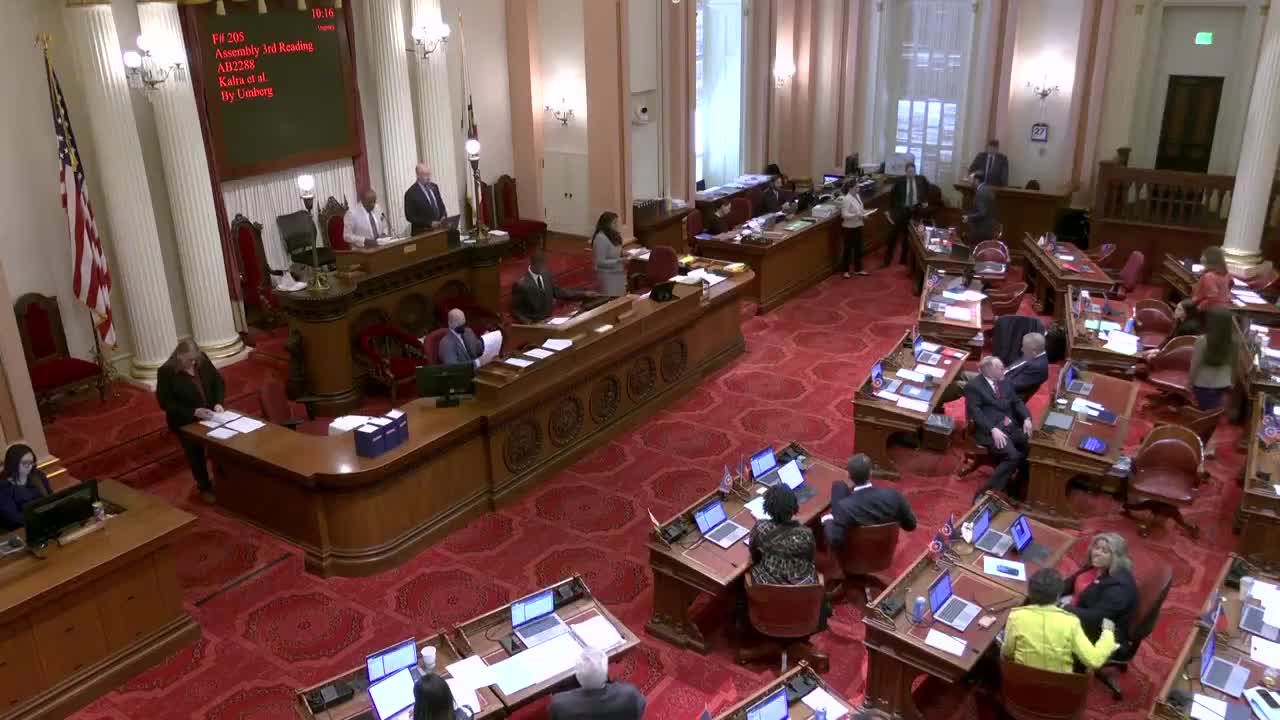 4MIN
Senate Floor
 3MIN
Senate Standing Committee on Appropriations
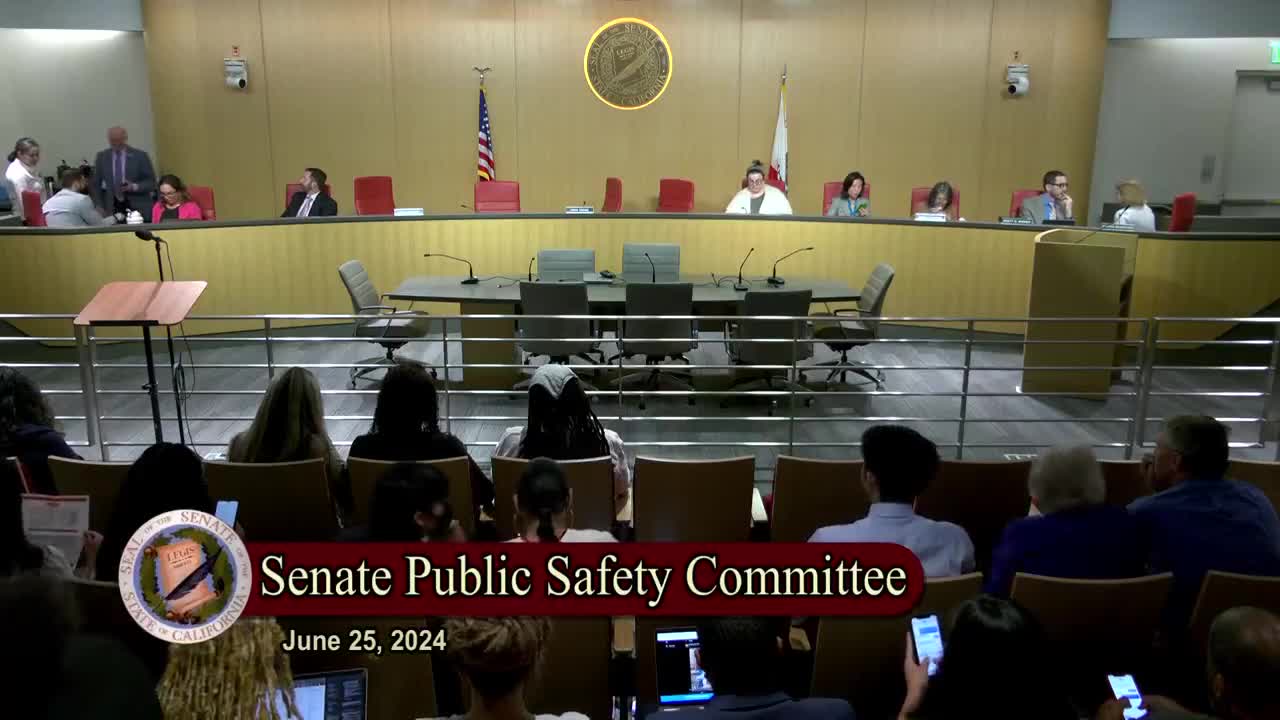 15MIN
Senate Standing Committee on Public Safety
 36SEC
Senate Standing Committee on Business, Professions and Economic Development
Bill Author

Bill Co-Author(s):