AB 63: Canvass of the vote: reporting results.
- Session Year: 2023-2024
- House: Assembly
- Latest Version Date: 2023-10-08
Current Status:
Passed
(2023-10-08: Chaptered by Secretary of State - Chapter 514, Statutes of 2023.)
Introduced
In Committee
First Chamber
In Committee
Second Chamber
Enacted
Existing law requires the official canvass for an election to begin no later than the Thursday following the election and to be continued daily until completed. Existing law requires the elections official to submit a certified statement of the results of the election to the governing body within 30 days of the election, except as specified, and to post the statement on the elections officials internet website. Existing law also requires the elections official, on the 2nd day after the election, to send a report to the Secretary of State containing the estimated number of outstanding unprocessed ballots, and beginning on the 6th day after the election, to send an updated report on any day that the elections official publicly releases updated election results.
Under the California Constitution, a person is ineligible to serve as a State Assembly Member or State Senator if they have not been a resident of their legislative district for one year immediately preceding the election. Existing statutory law also requires the Secretary of State to compile the results of an election for State Assembly Member and State Senator, as specified, and to transmit a certificate of election to each person who is elected.
This bill would require the elections official, beginning no later than the Thursday following the election until submission of a certified statement of the results, to post updated information regarding the election on their internet website at least once per week. The information must at a minimum include updated results for any candidate for office or measure appearing on the ballot, the number of ballots processed and an estimated number of outstanding unprocessed ballots, according to specified categories, and the date and time when it is expected that the next results will be posted. The bill would permit the elections official to stop posting the results when either a certified statement of results is published or the only ballots left to count are vote by mail ballots for which a voter has the opportunity to cure their ballot by verifying or providing their signature.
This bill would require the Secretary of State, when transmitting a certificate of election or unofficial election results to the State Assembly or State Senate regarding a person who appears to have received the plurality of votes in an election for legislative office, to include a notation, if applicable, that the person was not continuously registered to vote in the district in which the person appears to have received a plurality of votes from the date the candidate filed their declaration of candidacy to the date on which the Secretary of State transmits the certificate of election or unofficial election results.
By imposing new duties on local elections officials, the bill would impose a state-mandated local program.
The California Constitution requires the state to reimburse local agencies and school districts for certain costs mandated by the state. Statutory provisions establish procedures for making that reimbursement.
This bill would provide that, if the Commission on State Mandates determines that the bill contains costs mandated by the state, reimbursement for those costs shall be made pursuant to the statutory provisions noted above.
Existing law requires the official canvass for an election to begin no later than the Thursday following the election and to be continued daily until completed. Existing law requires the elections official to submit a certified statement of the results of the election to the governing body within 30 days of the election, except as specified, and to post the statement on the elections officials internet website. Existing law also requires the elections official, on the 2nd day after the election, to send a report to the Secretary of State containing the estimated number of outstanding unprocessed ballots, and beginning on the 6th day after the election, to send an updated report on any day that the elections official publicly releases updated election results.
Under the California Constitution, a person is ineligible to serve as a State Assembly Member or State Senator if they have not been a resident of their legislative district for one year immediately preceding the election. Existing statutory law also requires the Secretary of State to compile the results of an election for State Assembly Member and State Senator, as specified, and to transmit a certificate of election to each person who is elected.
This bill would require the elections official, beginning no later than the Thursday following the election until submission of a certified statement of the results, to post updated information regarding the election on their internet website at least once per week. The information must at a minimum include updated results for any candidate for office or measure appearing on the ballot, the number of ballots processed and an estimated number of outstanding unprocessed ballots, according to specified categories, and the date and time when it is expected that the next results will be posted. The bill would permit the elections official to stop posting the results when either a certified statement of results is published or the only ballots left to count are vote by mail ballots for which a voter has the opportunity to cure their ballot by verifying or providing their signature.
This bill would require the Secretary of State, when transmitting a certificate of election or unofficial election results to the State Assembly or State Senate regarding a person who appears to have received the plurality of votes in an election for legislative office, to include a notation, if applicable, that the person was not continuously registered to vote in the district in which the person appears to have received a plurality of votes from the date the candidate filed their declaration of candidacy to the date on which the Secretary of State transmits the certificate of election or other information. unofficial election results.
By imposing new duties on local elections officials, the bill would impose a state-mandated local program.
The California Constitution requires the state to reimburse local agencies and school districts for certain costs mandated by the state. Statutory provisions establish procedures for making that reimbursement.
This bill would provide that, if the Commission on State Mandates determines that the bill contains costs mandated by the state, reimbursement for those costs shall be made pursuant to the statutory provisions noted above.
Existing law requires the official canvass for an election to begin no later than the Thursday following the election and to be continued daily until completed. Existing law requires the elections official to submit a certified statement of the results of the election to the governing body within 30 days of the election, except as specified, and to post the statement on the elections officials internet website. Existing law also requires the elections official, on the 2nd day after the election, to send a report to the Secretary of State containing the estimated number of outstanding unprocessed ballots, and beginning on the 6th day after the election, to send an updated report on any day that the elections official publicly releases updated election results.
Under the California Constitution, a person is ineligible to serve as a State Assembly Member or State Senator if they have not been a resident of their legislative district for one year immediately preceding the election. Existing statutory law also requires the Secretary of State to compile the results of an election for State Assembly Member and State Senator, as specified, and to transmit a certificate of election to each person who is elected.
This bill would require the elections official, beginning no later than the Thursday following the election until submission of a certified statement of the results, to post updated information regarding the election on their internet website at least 2 times once per week. The information must at a minimum include updated results for any candidate for office or measure appearing on the ballot, the number of ballots processed and an estimated number of outstanding unprocessed ballots, according to specified categories, and the date and time when it is expected that the next results will be posted. The bill would permit the elections official to stop posting the results when either a certified statement of results is published or the only ballots left to count are vote by mail ballots for which a voter has the opportunity to cure their ballot by verifying or providing their signature.
This bill would require the Secretary of State, when transmitting a certificate of election or other information to the State Assembly or State Senate regarding a person who appears to have received the plurality of votes in an election for legislative office, to include a notation, if applicable, that the person was not continuously registered to vote in the district in which the person appears to have received a plurality of votes from the date the candidate filed their declaration of candidacy to the date on which the Secretary of State transmits the certificate of election or other information.
By imposing new duties on local elections officials, the bill would impose a state-mandated local program.
The California Constitution requires the state to reimburse local agencies and school districts for certain costs mandated by the state. Statutory provisions establish procedures for making that reimbursement.
This bill would provide that, if the Commission on State Mandates determines that the bill contains costs mandated by the state, reimbursement for those costs shall be made pursuant to the statutory provisions noted above.
Existing law requires the official canvass for an election to begin no later than the Thursday following the election and to be continued daily until completed. Existing law requires the elections official to submit a certified statement of the results of the election to the governing body within 30 days of the election, except as specified, and to post the statement on the elections officials internet website. Existing law also requires the elections official, on the 2nd day after the election, to send a report to the Secretary of State containing the estimated number of outstanding unprocessed ballots, and beginning on the 6th day after the election, to send an updated report on any day that the elections official publicly releases updated election results.
Under the California Constitution, a person is ineligible to serve as a State Assembly Member or State Senator if they have not been a resident of their legislative district for one year immediately preceding the election. Existing statutory law also requires the Secretary of State to compile the results of an election for State Assembly Member and State Senator, as specified, and to transmit a certificate of election to each person who is elected.
This bill would require the elections official, beginning no later than the Thursday following the election until submission of a certified statement of the results, to post updated information regarding the election on their internet website at least 2 times per week. The information must at a minimum include updated results for any candidate for office or measure appearing on the ballot, the number of ballots processed and an estimated number of outstanding unprocessed ballots, according to specified categories, and the date and time when it is expected that the next results will be posted. The bill would require permit the elections official to stop posting the results when either a certified statement of results is published or the only ballots left to count are those with missing signatures or signatures that do not compare, whichever occurs first. vote by mail ballots for which a voter has the opportunity to cure their ballot by verifying or providing their signature.
This bill would require the Secretary of State, when transmitting a certificate of election or other information to the State Assembly or State Senate regarding a person who appears to have received the plurality of votes in an election for legislative office, to include a notation, if applicable, that the person was not continuously registered to vote in the district in which the person appears to have received a plurality of votes from the date the candidate filed their declaration of candidacy to the date on which the Secretary of State transmits the certificate of election or other information.
By imposing new duties on local elections officials, the bill would impose a state-mandated local program.
The California Constitution requires the state to reimburse local agencies and school districts for certain costs mandated by the state. Statutory provisions establish procedures for making that reimbursement.
This bill would provide that, if the Commission on State Mandates determines that the bill contains costs mandated by the state, reimbursement for those costs shall be made pursuant to the statutory provisions noted above.
Existing law requires the official canvas canvass for an election to begin no later than the Thursday following the election and to be continued daily until completed. Existing law requires the elections official to submit a certified statement of the results of the election to the governing body within 30 days of the election, except as specified, and to post the statement on the elections officials internet website. Existing law also requires the elections official, on the 2nd day after the election, to send a report to the Secretary of State containing the estimated number of outstanding unprocessed ballots, and beginning on the 6th day after the election, to send an updated report on any day that the elections official publicly releases updated election results.
Under the California Constitution, a person is ineligible to serve as a State Assembly Member or State Senator if they have not been a resident of their legislative district for one year immediately preceding the election. Existing statutory law also requires the Secretary of State to compile the results of an election for State Assembly Member and State Senator, as specified, and to transmit a certificate of election to each person who is elected.
This bill would require the elections official, beginning no later than the Thursday following the election until submission of a certified statement of the results, to post updated information regarding the election on their internet website at least 3 2 times per week. The information must at a minimum include updated results for any candidate for office or measure appearing on the ballot, and ballot, the number of ballots processed and an estimated number of outstanding unprocessed ballots, according to specified categories. categories, and the date and time when it is expected that the next results will be posted. The bill would require the elections official to stop posting the results when either a certified statement of results is published or the only ballots left to count are those with missing signatures or signatures that do not compare, whichever occurs first.
This bill would require that whenever the Secretary of State transmits State, when transmitting a certificate of election or other information to the State Assembly or State Senate regarding a person who appears to have received the plurality of votes in an election for legislative office, the Secretary of State shall to include a notation, if applicable, that the person was not continuously registered to vote in the district in which the person appears to have received a plurality of votes from the date the candidate filed their declaration of candidacy to the date on which the Secretary of State transmits the certificate of election or other information.
By imposing new duties on local elections officials, the bill would impose a state-mandated local program.
The California Constitution requires the state to reimburse local agencies and school districts for certain costs mandated by the state. Statutory provisions establish procedures for making that reimbursement.
This bill would provide that, if the Commission on State Mandates determines that the bill contains costs mandated by the state, reimbursement for those costs shall be made pursuant to the statutory provisions noted above.
Existing law requires the official canvas for an election to begin no later than the Thursday following the election and to be continued daily until completed. Existing law requires the elections official to submit a certified statement of the results of the election to the governing body within 30 days of the election, except as specified, and to post the statement on the elections officials internet website. Existing law also requires the elections official, on the 2nd day after the election, to send a report to the Secretary of State containing the estimated number of outstanding unprocessed ballots, and beginning on the 6th day after the election, to send an updated report on any day that the elections official publicly releases updated election results.
Under the California Constitution, a person is ineligible to serve as a State Assembly Member or State Senator if they have not been a resident of their legislative district for one year immediately preceding the election. Existing statutory law also requires a Member of the State Board of Equalization to be and remain an inhabitant of the district in which they are elected to serve, or else a vacancy occurs. Existing statutory law also requires the Secretary of State to compile the results of an election for State Assembly Member and State Senator, as specified, and to transmit a certificate of election to each person who is elected.
This bill would require the elections official, beginning no later than the Thursday following the election until submission of a certified statement of the results, to post updated information regarding the election on their internet website at least 3 times per week. The information must at a minimum include 1) updated results for any candidate for office or measure appearing on the ballot, 2) and the number of ballots processed and an estimated number of outstanding unprocessed ballots, according to specified categories, and 3) each candidate for the State Assembly, State Senate, or State Board of Equalization who is running to represent a district within the jurisdiction of the elections official and is registered to vote in a different district. categories.
This bill would require that whenever the Secretary of State transmits a certificate of election or other information to the State Assembly or State Senate regarding a person who appears to have received the plurality of votes in an election for legislative office, the Secretary of State shall include a notation, if applicable, that the person was not continuously registered to vote in the district in which the person appears to have received a plurality of votes from the date the candidate filed their declaration of candidacy to the date on which the Secretary of State transmits the certificate of election or other information.
By imposing new duties on local elections officials, the bill would impose a state-mandated local program.
The California Constitution requires the state to reimburse local agencies and school districts for certain costs mandated by the state. Statutory provisions establish procedures for making that reimbursement.
This bill would provide that, if the Commission on State Mandates determines that the bill contains costs mandated by the state, reimbursement for those costs shall be made pursuant to the statutory provisions noted above.
Existing law requires the official canvas for an election to begin no later than the Thursday following the election and to be continued daily until completed. Existing law requires the elections official to submit a certified statement of the results of the election to the governing body within 30 days of the election, except as specified, and to post the statement on the elections officials internet website. Existing law also requires the elections official, on the 2nd day after the election, to send a report to the Secretary of State containing the estimated number of outstanding unprocessed ballots, and beginning on the 6th day after the election, to send an updated report on any day that the elections official publicly releases updated election results.
Under the California Constitution, a person is ineligible to serve as a State Assembly Member or State Senator if they have not been a resident of the their legislative district for one year immediately preceding the election. Existing statutory law also requires a Member of the State Board of Equalization to be and remain an inhabitant of the district in which they are elected to serve, or else a vacancy occurs.
This bill would require the elections official, beginning no later than the Thursday following the election until submission of a certified statement of the results, to post updated information regarding the election on their internet website at least 3 times per week. The information must at a minimum include 1) updated results for any candidate for office or measure appearing on the ballot, 2) the number of ballots processed and an estimated number of outstanding unprocessed ballots, according to specified categories, and 3) each candidate for the State Assembly, State Senate, or State Board of Equalization who is running to represent a district within the jurisdiction of the elections official and is registered to vote in a different district.
By imposing new duties on local elections officials, the bill would impose a state-mandated local program.
The California Constitution requires the state to reimburse local agencies and school districts for certain costs mandated by the state. Statutory provisions establish procedures for making that reimbursement.
This bill would provide that, if the Commission on State Mandates determines that the bill contains costs mandated by the state, reimbursement for those costs shall be made pursuant to the statutory provisions noted above.
This bill would state the intent of the Legislature to enact legislation that imposes certain consequences, including the ineligibility to serve in office, upon a candidate for any of the above offices if the candidate files an affidavit of voter registration that changes their residency, after being certified as a candidate but before the certification of election results.Under the California Constitution, a person is ineligible to serve as a State Assembly Member or State Senator if they have not been a resident of the their legislative district for one year. Existing statutory law also requires a Member of the State Board of Equalization to be and remain an inhabitant of the district in which they are elected to serve, or else a vacancy occurs.
This bill would state the intent of the Legislature to enact legislation that imposes certain consequences, including the ineligibility to serve in office, upon a candidate for any of the above offices if the candidate files an affidavit of voter registration that changes their residency, after being certified as a candidate but before the certification of election results.
(a)Beginning no later than the Thursday following an election, and until the time specified in subdivision (b), an elections official shall post updated information regarding the election on their internet website at least once per week. The update shall include at least the following information:
(1)Updated results for any candidate or measure appearing on the ballot.
(2)The number of ballots processed and an estimated number of outstanding ballots remaining unprocessed for each of the following categories: ballots voted at a polling place, vote by mail ballots received on or before election day, vote by mail ballots received after election day, provisional ballots, and conditional registration ballots.
(3)The date and time when it is expected that the next results will be posted.
(b)The elections official may stop posting the results described in subdivision (a) when either of the following occurs:
(1)A certified statement of results is published pursuant to Section 15372.
(2)The only ballots left to count are vote by mail ballots for which a voter has the opportunity either to verify their signature pursuant to subdivision (d) of Section 3019 or to provide their signature pursuant to subdivision (e) of Section 3019. If the elections official stops posting results for this reason, they shall post a notice stating this reason on their internet website.
(c)The requirements of this section are in addition to any other duty to report or publish information required of the elections official pursuant to Division 15 (commencing with Section 15000) or any other law.
SEC. 2.Section 15504.5 is added to the Elections Code, to read:15504.5.Whenever the Secretary of State transmits a certificate of election or unofficial election results to the State Senate or State Assembly regarding a person who appears to have received the plurality of votes in an election for State Senator or State Assembly Member, the Secretary of State shall include a notation in that information, if applicable, that the person was not continuously registered to vote in the district in which the person appears to have received a plurality of votes from the date the candidate filed their declaration of candidacy pursuant to Section 8020 to the date, inclusive, on which the Secretary of State transmits the certificate of election or unofficial election results.
SEC. 3.If the Commission on State Mandates determines that this act contains costs mandated by the state, reimbursement to local agencies and school districts for those costs shall be made pursuant to Part 7 (commencing with Section 17500) of Division 4 of Title 2 of the Government Code.
(a)Beginning no later than the Thursday following an election, and until the time specified in subdivision (b), an elections official shall post updated information regarding the election on their internet website at least once per week. The update shall include at least the following information:
(1)Updated results for any candidate or measure appearing on the ballot.
(2)The number of ballots processed and an estimated number of outstanding ballots remaining unprocessed for each of the following categories: ballots voted at a polling place, vote by mail ballots received on or before election day, vote by mail ballots received after election day, provisional ballots, and conditional registration ballots.
(3)The date and time when it is expected that the next results will be posted.
(b)The elections official may stop posting the results described in subdivision (a) when either of the following occurs:
(1)A certified statement of results is published pursuant to Section 15372.
(2)The only ballots left to count are vote by mail ballots for which a voter has the opportunity either to verify their signature pursuant to subdivision (d) of Section 3019 or to provide their signature pursuant to subdivision (e) of Section 3019. If the elections official stops posting results for this reason, they shall post a notice stating this reason on their internet website.
(c)The requirements of this section are in addition to any other duty to report or publish information required of the elections official pursuant to Division 15 (commencing with Section 15000) or any other law.
SEC. 2.Section 15504.5 is added to the Elections Code, to read:15504.5.Whenever the Secretary of State transmits a certificate of election or unofficial election results to the State Senate or State Assembly regarding a person who appears to have received the plurality of votes in an election for State Senator or State Assembly Member, the Secretary of State shall include a notation in that information, if applicable, that the person was not continuously registered to vote in the district in which the person appears to have received a plurality of votes from the date the candidate filed their declaration of candidacy pursuant to Section 8020 to the date, inclusive, on which the Secretary of State transmits the certificate of election or other information. unofficial election results.
SEC. 3.If the Commission on State Mandates determines that this act contains costs mandated by the state, reimbursement to local agencies and school districts for those costs shall be made pursuant to Part 7 (commencing with Section 17500) of Division 4 of Title 2 of the Government Code.
(a)Beginning no later than the Thursday following an election, and until the time specified in subdivision (b), an elections official shall post updated information regarding the election on their internet website at least two times once per week. The update shall include at least the following information:
(1)Updated results for any candidate or measure appearing on the ballot.
(2)The number of ballots processed and an estimated number of outstanding ballots remaining unprocessed for each of the following categories: ballots voted at a polling place, vote by mail ballots received on or before election day, vote by mail ballots received after election day, provisional ballots, and conditional registration ballots.
(3)The date and time when it is expected that the next results will be posted.
(b)The elections official may stop posting the results described in subdivision (a) when either of the following occurs:
(1)A certified statement of results is published pursuant to Section 15372.
(2)The only ballots left to count are vote by mail ballots for which a voter has the opportunity either to verify their signature pursuant to subdivision (d) of Section 3019 or to provide their signature pursuant to subdivision (e) of Section 3019. If the elections official stops posting results for this reason, they shall post a notice stating this reason on their internet website.
(c)The requirements of this section are in addition to any other duty to report or publish information required of the elections official pursuant to Division 15 (commencing with Section 15000) or any other law.
SEC. 2.Section 15504.5 is added to the Elections Code, to read:15504.5.Whenever the Secretary of State transmits a certificate of election or any other information to the State Senate or State Assembly regarding a person who appears to have received the plurality of votes in an election for State Senator or State Assembly Member, the Secretary of State shall include a notation in that information, if applicable, that the person was not continuously registered to vote in the district in which the person appears to have received a plurality of votes from the date the candidate filed their declaration of candidacy pursuant to Section 8020 to the date, inclusive, on which the Secretary of State transmits the certificate of election or other information.
SEC. 3.If the Commission on State Mandates determines that this act contains costs mandated by the state, reimbursement to local agencies and school districts for those costs shall be made pursuant to Part 7 (commencing with Section 17500) of Division 4 of Title 2 of the Government Code.
(a)Beginning no later than the Thursday following an election, and until the time specified in subdivision (b), an elections official shall post updated information regarding the election on their internet website at least two times per week. The update shall include at least the following information:
(1)Updated results for any candidate or measure appearing on the ballot.
(2)The number of ballots processed and an estimated number of outstanding ballots remaining unprocessed for each of the following categories: ballots voted at a polling place, vote by mail ballots received on or before election day, vote by mail ballots received after election day, provisional ballots, and conditional registration ballots.
(3)The date and time when it is expected that the next results will be posted.
(b)The elections official shall may stop posting the results described in subdivision (a) when either of the following occurs, whichever occurs first. occurs:
(1)A certified statement of results is published pursuant to Section 15372.
(2)The only ballots left to count are those with missing signatures or signatures that do not compare. If this condition occurs first, the elections official shall post a notice on their internet website stating this reason for stopping the posting of results. vote by mail ballots for which a voter has the opportunity either to verify their signature pursuant to subdivision (d) of Section 3019 or to provide their signature pursuant to subdivision (e) of Section 3019. If the elections official stops posting results for this reason, they shall post a notice stating this reason on their internet website.
(c)The requirements of this section are in addition to any other duty to report or publish information required of the elections official pursuant to Division 15 (commencing with Section 15000) or any other law.
SEC. 2.Section 15504.5 is added to the Elections Code, to read:15504.5.Whenever the Secretary of State transmits a certificate of election or any other information to the State Senate or State Assembly regarding a person who appears to have received the plurality of votes in an election for State Senator or State Assembly Member, the Secretary of State shall include a notation in that information, if applicable, that the person was not continuously registered to vote in the district in which the person appears to have received a plurality of votes from the date the candidate filed their declaration of candidacy pursuant to Section 8020 to the date, inclusive, on which the Secretary of State transmits the certificate of election or other information.
SEC. 3.If the Commission on State Mandates determines that this act contains costs mandated by the state, reimbursement to local agencies and school districts for those costs shall be made pursuant to Part 7 (commencing with Section 17500) of Division 4 of Title 2 of the Government Code.
(a)Beginning no later than the Thursday following an election, and until publication of a certified statement of results pursuant to Section 15372, the time specified in subdivision (b), an elections official shall post updated information regarding the election on their internet website at least three two times per week. The update shall include at least the following information:
(1)Updated results for any candidate or measure appearing on the ballot.
(2)The number of ballots processed and an estimated number of outstanding ballots remaining unprocessed for each of the following categories: ballots voted at a polling place, vote by mail ballots received on or before election day, vote by mail ballots received after election day, provisional ballots, and conditional registration ballots.
(3)The date and time when it is expected that the next results will be posted.
(b)The elections official shall stop posting the results described in subdivision (a) when either of the following occurs, whichever occurs first.
(1)A certified statement of results is published pursuant to Section 15372.
(2)The only ballots left to count are those with missing signatures or signatures that do not compare. If this condition occurs first, the elections official shall post a notice on their internet website stating this reason for stopping the posting of results.
(b)(c)The requirements of this section are in addition to any other duty to report or publish information required of the elections official pursuant to Division 15 (commencing with Section 15000) or any other law.
SEC. 2.Section 15504.5 is added to the Elections Code, to read:15504.5.Whenever the Secretary of State transmits a certificate of election or any other information to the State Senate or State Assembly regarding a person who appears to have received the plurality of votes in an election for State Senator or State Assembly Member, the Secretary of State shall include a notation in that information, if applicable, that the person was not continuously registered to vote in the district in which the person appears to have received a plurality of votes from the date the candidate filed their declaration of candidacy pursuant to Section 8020 to the date, inclusive, on which the Secretary of State transmits the certificate of election or other information.
SEC. 3.If the Commission on State Mandates determines that this act contains costs mandated by the state, reimbursement to local agencies and school districts for those costs shall be made pursuant to Part 7 (commencing with Section 17500) of Division 4 of Title 2 of the Government Code.
(a)Beginning no later than the Thursday following an election, and until publication of a certified statement of results pursuant to Section 15372, an elections official shall post updated information regarding the election on their internet website at least three times per week. The update shall include at least the following information:
(1)Updated results for any candidate or measure appearing on the ballot.
(2)The number of ballots processed and an estimated number of outstanding ballots remaining unprocessed for each of the following categories: ballots voted at a polling place, vote by mail ballots received on or before election day, vote by mail ballots received after election day, provisional ballots, and conditional registration ballots.
(3)Each candidate for the State Assembly, State Senate, or State Board of Equalization who is running to represent a district within the jurisdiction of the elections official and is registered to vote in a different district.(b)The requirements of this section are in addition to any other duty to report or publish information required of the elections official pursuant to Division 15 (commencing with Section 15000) or any other law.
SEC. 2.Section 15504.5 is added to the Elections Code, to read:15504.5.Whenever the Secretary of State transmits a certificate of election or any other information to the State Senate or State Assembly regarding a person who appears to have received the plurality of votes in an election for State Senator or State Assembly Member, the Secretary of State shall include a notation in that information, if applicable, that the person was not continuously registered to vote in the district in which the person appears to have received a plurality of votes from the date the candidate filed their declaration of candidacy pursuant to Section 8020 to the date, inclusive, on which the Secretary of State transmits the certificate of election or other information.
SEC. 2.SEC. 3.If the Commission on State Mandates determines that this act contains costs mandated by the state, reimbursement to local agencies and school districts for those costs shall be made pursuant to Part 7 (commencing with Section 17500) of Division 4 of Title 2 of the Government Code.
(a)Beginning no later than the Thursday following an election, and until publication of a certified statement of results pursuant to Section 15372, an elections official shall post updated information regarding the election on their internet website at least three times per week. The update shall include at least the following information:
(1)Updated results for any candidate or measure appearing on the ballot.
(2)The number of ballots processed and an estimated number of outstanding ballots remaining unprocessed for each of the following categories: ballots voted at a polling place, vote by mail ballots received on or before election day, vote by mail ballots received after election day, provisional ballots, and conditional registration ballots.
(3)Each candidate for the State Assembly, State Senate, or State Board of Equalization who is running to represent a district within the jurisdiction of the elections official and is registered to vote in a different district.
(b)The requirements of this section are in addition to any other duty to report or publish information required of the elections official pursuant to Division 15 (commencing with Section 15000) or any other law.
SEC. 2.If the Commission on State Mandates determines that this act contains costs mandated by the state, reimbursement to local agencies and school districts for those costs shall be made pursuant to Part 7 (commencing with Section 17500) of Division 4 of Title 2 of the Government Code.
SECTION 1.It is the intent of the Legislature to enact legislation that imposes consequences, including the ineligibility to serve in office, upon a candidate for the California State Assembly, the California State Senate, or the State Board of Equalization if the candidate files an affidavit of voter registration that changes the candidates residence to one that is outside of the district that they are seeking to represent, after being certified as a candidate for the office pursuant to Section 8120 of the Elections Code, but before the certification of election results for the general election for that office.It is the intent of the Legislature to enact legislation that imposes consequences, including the ineligibility to serve in office, upon a candidate for the California State Assembly, the California State Senate, or the State Board of Equalization if the candidate files an affidavit of voter registration that changes the candidates residence to one that is outside of the district that they are seeking to represent, after being certified as a candidate for the office pursuant to Section 8120 of the Elections Code, but before the certification of election results for the general election for that office.
|
Date
|
Status
|
|---|---|
| Oct 8, 2023 | Chaptered by Secretary of State - Chapter 514, Statutes of 2023. |
| Oct 8, 2023 | Approved by the Governor. |
| Sep 21, 2023 | Enrolled and presented to the Governor at 3:30 p.m. |
| Sep 14, 2023 | Senate amendments concurred in. To Engrossing and Enrolling. (Ayes 77. Noes 0. Page 3568.). |
| Sep 13, 2023 | In Assembly. Concurrence in Senate amendments pending. |
| Sep 13, 2023 | Read third time. Passed. Ordered to the Assembly. (Ayes 39. Noes 0. Page 2764.). |
| Sep 8, 2023 | Ordered to special consent calendar. |
| Sep 5, 2023 | Read second time. Ordered to third reading. |
| Sep 1, 2023 | Read second time and amended. Ordered returned to second reading. |
| Sep 1, 2023 | From committee: Amend, and do pass as amended. (Ayes 7. Noes 0.) (September 1). |
| Jul 3, 2023 | In committee: Referred to APPR suspense file. |
| Jun 26, 2023 | From committee chair, with author's amendments: Amend, and re-refer to committee. Read second time, amended, and re-referred to Com. on APPR. |
| Jun 20, 2023 | From committee: Do pass and re-refer to Com. on APPR. (Ayes 7. Noes 0.) (June 20). Re-referred to Com. on APPR. |
| Jun 8, 2023 | From committee chair, with author's amendments: Amend, and re-refer to committee. Read second time, amended, and re-referred to Com. on E. & C.A. |
| Jun 7, 2023 | Referred to Com. on E. & C.A. |
| May 26, 2023 | In Senate. Read first time. To Com. on RLS. for assignment. |
| May 25, 2023 | Read third time. Passed. Ordered to the Senate. (Ayes 75. Noes 0. Page 1790.) |
| May 22, 2023 | Read second time. Ordered to third reading. |
| May 18, 2023 | Read second time and amended. Ordered returned to second reading. |
| May 18, 2023 | From committee: Amend, and do pass as amended. (Ayes 11. Noes 0.) (May 18). |
| Apr 26, 2023 | In committee: Set, first hearing. Referred to APPR. suspense file. |
| Apr 3, 2023 | Re-referred to Com. on APPR. |
| Mar 30, 2023 | Read second time and amended. |
| Mar 29, 2023 | From committee: Amend, and do pass as amended and re-refer to Com. on APPR. (Ayes 8. Noes 0.) (March 29). |
| Mar 13, 2023 | Re-referred to Com. on ELECTIONS. |
| Mar 9, 2023 | Referred to Com. on ELECTIONS. |
| Mar 9, 2023 | From committee chair, with author's amendments: Amend, and re-refer to Com. on ELECTIONS. Read second time and amended. |
| Jan 4, 2023 | Read first time. |
| Dec 7, 2022 | From printer. May be heard in committee January 6. |
| Dec 6, 2022 | Introduced. To print. |
|
Date
|
Description
|
Location
|
Votes
|
|
|---|---|---|---|---|
| Sep 14, 2023 | AB 63 Cervantes Concurrence in Senate Amendments | Assembly Floor |
Passed |
|
| Sep 13, 2023 | Special Consent AB63 Cervantes By Laird | Senate Floor |
Passed |
|
| Sep 1, 2023 | Do pass as amended | Senate Standing Committee on Appropriations |
Passed |
|
| Jul 3, 2023 | Placed on suspense file | Senate Standing Committee on Appropriations |
Passed |
|
| Jun 20, 2023 | Do pass, but first be re-referred to the Committee on [Appropriations] | Senate Standing Committee on Elections and Constitutional Amendments |
Passed |
|
| May 25, 2023 | AB 63 Cervantes Assembly Third Reading | Assembly Floor |
Passed |
|
| May 18, 2023 | Do pass as amended. | Assembly Standing Committee on Appropriations |
Passed |
|
| Mar 29, 2023 | Do pass as amended and be re-referred to the Committee on [Appropriations] | Assembly Standing Committee on Elections |
Passed |
This list shows positions taken on this bill by organizations on the date displayed, which is linked to the original source.
Positions by individuals are not included.
|
Organization
|
Position
|
Date
|
|---|---|---|
| Election Integrity team of Alameda County | * Support | Mar 29, 2023 |
CONCURRENCE IN SENATE AMENDMENTS
CSA1 Bill Id:AB 63
Author:(Cervantes)
As Amended Ver:September 1, 2023
Majority vote
SUMMARY
Requires elections officials to update election results at least once a week until the results are complete, except as specified. Requires the Secretary of State (SOS) to inform the Legislature if a candidate who apparently was elected to the Legislature was not continuously registered to vote in the district in which the candidate was running between the date that the candidate filed for office and the date on which the SOS notifies the Legislature that the person apparently was elected.
Senate Amendments
- Reduce, from twice to once a week, the frequency at which elections officials would be required to update election results.
- Make technical and clarifying changes.
COMMENTS
Under existing law, county elections officials generally must verify information on a vote by mail (VBM) ballot identification envelope before the envelope can be opened and the ballot counted. That verification process means that tabulating VBM ballots generally is more time- and labor-intensive than tabulating ballots that are cast at in-person voting locations.
Once the polls close on election day, elections officials begin the semifinal official canvass, which includes tabulating VBM and precinct ballots and compiling the results. The first batch of results that elections officials release shortly after the polls close on election day primarily are VBM ballots that were received and processed by the elections official before election day. Subsequent updates to election results released on election night and into the next morning primarily are ballots that were cast at in-person voting locations on election day.
Many other ballots, however, are tabulated as part of the official canvass that must begin no later than the Thursday after election day. In particular, VBM ballots that are returned on or very shortly before election day and that cannot be verified before election day will be verified and tabulated in the days and weeks after election day as part of the official canvass. As the percentage of Californians who vote using a VBM ballot has increased, the number of ballots that are unable to be included in the semifinal official canvass (a.k.a., the "election night results") has similarly increased. For the November 2022 statewide general election, nearly half of all ballots cast were not included in the semifinal official canvass, but instead were tabulated in the days and weeks after election day as part of the official canvass of the election.
For elections for state and federal office and statewide ballot measures, existing law requires elections officials to provide regular updates to the results during the semifinal official canvass. By contrast, state law does not expressly require election results to be updated on any particular schedule during the official canvass. While many counties provide updated election results multiple times a week during the official canvass, other counties have chosen not to provide any updated election results until they have completed the official canvass. In those counties, election results may not be updated for four weeks – or longer – between election night and the certification of the election.
In addition to the provisions of this bill that require elections officials to update election results at least once a week, this bill also requires the SOS to identify situations where a candidate for Legislature moves out of the district in which the candidate is running after the candidate files to run. In background materials provided to the Assembly Elections Committee, the author explains that this provision of the bill is meant to address a recent instance in which a candidate for the Legislature changed residence to a location outside of the district in which the candidate was running in the period between the person's certification as a candidate and the certification of the results of the election.
California Constitution Article IV, Section 2, provides that "[a] person is ineligible to be a member of the Legislature unless the person is an elector and has been a resident of the legislative district for one year…and a resident of California for 3 years, immediately preceding the election" among other provisions. California courts generally have found that the authority to enforce these durational residency requirements rests exclusively with the respective houses of the Legislature.
In light of the Legislature's authority to judge the elections and qualifications of its members, a house of the Legislature theoretically could refuse to seat a member who did not meet the qualifications found in California Constitution Article IV, Section 2. In the case of a candidate who was registered to vote in a legislative district at the time that candidate was issued nomination papers, but who moved out of that district and re-registered in a different legislative district after filing for office but before the election at which the person was elected, a question could be raised about whether that person meets the requirement found in Article IV, Section 2 of the Constitution that the person must have been a "resident of the legislative district for one year…immediately preceding the election." By requiring the SOS to provide information to the Legislature if an apparently successful candidate was not continuously registered to vote in the district from which the person was elected after the candidate filed for office, this bill will provide the houses of the Legislature with important information that may be relevant to any effort to judge the qualifications and elections of its Members.
The Senate amendments to this bill reduce the frequency at which elections officials would be required to provide updated election results during the official canvass and make technical and clarifying changes to the bill. This bill, as amended in the Senate, is generally consistent with prior Assembly actions.
According to the Author
"Assembly Bill 63 will help improve transparency in California elections on two fronts. First, it will improve voters' confidence in California's elections systems by requiring county registrars to post more frequent election result updates during the official canvass of the vote. The bill would require county registrars to, at least [once] a week, provide on their websites updated election results as well as the number of ballots and types of ballots remaining to be counted…Second, AB 63 will impose a new notification requirement on the Secretary of State upon certification of final election results for statewide general elections and special elections. The Secretary would be required to notify the relevant house of the Legislature if any legislative candidate who won their race changed their voter registration to be outside of the district they ran to represent in the period between certification as a candidate for office and certification of the results of the official canvass. This would provide both houses of the Legislature with an opportunity to act in accordance with their constitutional duties to judge the qualifications of the members of their house, if necessary.
Arguments in Support
None received.
Arguments in Opposition
None received.
FISCAL COMMENTS
According to the Senate Appropriations Committee:
- By requiring a county elections official to report elections results more frequently, this bill creates a state-mandated local program. To the extent the Commission on State Mandates determines that the provisions of this bill create a new program or impose a higher level of service on local agencies, local agencies could claim reimbursement of those costs (General Fund). The magnitude is unknown, but potentially in excess of $50,000 annually.
- SOS would incur first-year General Fund costs $119,000, and $77,000 biennially thereafter, to implement the provisions of the bill. First-year costs include one-time modifications to the VoteCal statewide voter database. Ongoing costs reflect additional staff workload to train county and state elections workers to prepare additional canvass reports, and to verify the voter registration history of each elected Legislator.
VOTES:
ASM ELECTIONS: 8-0-0
YES: Bryan, Lackey, Bennett, Essayli, Lee, Low, Pellerin, Blanca Rubio
ASM APPROPRIATIONS: 11-0-5
YES: Holden, Bryan, Calderon, Wendy Carrillo, Mike Fong, Hart, Lowenthal, Papan, Pellerin, Weber, Ortega
ABS, ABST OR NV: Megan Dahle, Dixon, Mathis, Robert Rivas, Sanchez
ASSEMBLY FLOOR: 75-0-5
YES: Addis, Alanis, Alvarez, Arambula, Bains, Bauer-Kahan, Bennett, Berman, Boerner, Bonta, Bryan, Calderon, Juan Carrillo, Wendy Carrillo, Cervantes, Chen, Connolly, Megan Dahle, Davies, Dixon, Mike Fong, Vince Fong, Friedman, Gabriel, Gallagher, Garcia, Gipson, Grayson, Haney, Hart, Holden, Hoover, Irwin, Jackson, Jones-Sawyer, Kalra, Lackey, Lee, Low, Lowenthal, Maienschein, McCarty, McKinnor, Muratsuchi, Stephanie Nguyen, Ortega, Pacheco, Jim Patterson, Joe Patterson, Pellerin, Petrie-Norris, Quirk-Silva, Ramos, Reyes, Luz Rivas, Robert Rivas, Rodriguez, Blanca Rubio, Sanchez, Santiago, Schiavo, Soria, Ta, Ting, Valencia, Villapudua, Waldron, Wallis, Ward, Weber, Wicks, Wilson, Wood, Zbur, Rendon
ABS, ABST OR NV: Aguiar-Curry, Essayli, Flora, Mathis, Papan
SENATE FLOOR: 39-0-1
YES: Allen, Alvarado-Gil, Archuleta, Ashby, Atkins, Becker, Blakespear, Bradford, Cortese, Dahle, Dodd, Durazo, Eggman, Glazer, Gonzalez, Grove, Hurtado, Jones, Laird, Limón, McGuire, Menjivar, Min, Newman, Nguyen, Niello, Ochoa Bogh, Padilla, Portantino, Roth, Rubio, Seyarto, Skinner, Smallwood-Cuevas, Stern, Umberg, Wahab, Wiener, Wilk
ABS, ABST OR NV: Caballero
UPDATED
VERSION: September 1, 2023
CONSULTANT: Ethan Jones / ELECTIONS / (916) 319-2094 FN: 0001651
SENATE RULES COMMITTEE Office of Senate Floor Analyses (916) 651-1520 Fax: (916) 327-4478 | AB 63 |
THIRD READING
Bill No: AB 63
Author: Cervantes (D)
Amended: 9/1/23 in Senate
Vote: 21
SENATE ELECTIONS & C.A. COMMITTEE: 7-0, 6/20/23
AYES: Glazer, Nguyen, Allen, McGuire, Menjivar, Newman, Umberg
SENATE APPROPRIATIONS COMMITTEE: 7-0, 9/1/23
AYES: Portantino, Jones, Ashby, Bradford, Seyarto, Wahab, Wiener
ASSEMBLY FLOOR: 75-0, 5/25/23 - See last page for vote
SUBJECT: Canvass of the vote: reporting results
SOURCE: Author
DIGEST:
This bill requires elections officials to update election results at least two times a week until the results are complete, except as specified. This bill also requires the Secretary of State (SOS) to inform the Legislature if a candidate was elected to the Legislature but was not continuously registered to vote in the district in which the candidate was running between the date that the candidate filed for office and the date on which the SOS notifies the Legislature that the person apparently was elected.
ANALYSIS:
Existing law:
- Requires an elections official to mail a ballot to every active registered voter for every election in which the voter is eligible to participate.
- Permits any jurisdiction having the necessary computer capability to start to process vote by mail (VBM) ballots on the 29th day before the election. Provides that processing VBM ballots includes opening ballot return envelopes, removing ballots, duplicating damaged ballots, and preparing the ballots to be machine read or machine reading them, including processing write-in votes so that they can be tallied by the machine. Prohibits a vote count from being accessed or released until 8 p.m. on the day of the election.
- Requires an elections official to conduct a semifinal official canvass of each election by tabulating VBM and precinct ballots and compiling the results. Requires the semifinal official canvass to begin immediately upon the closing of the polls and to continue without adjournment until all precincts are accounted for.
- Requires the elections official to transmit the semifinal official results to the SOS in the manner and according to the schedule prescribed by the SOS prior to each election, as specified.
- Requires the elections official to transmit the results to the SOS at intervals no greater than two hours following commencement of the semifinal official canvass.
- Requires an official canvass of election results to commence no later than the Thursday following the election. Requires the official canvass to be open to the public and, for state elections, to result in a report of results to the SOS. Requires the official canvass be continued daily (except for Saturdays, Sundays, and holidays) for not less than six hours each day until completed.
- Requires the official canvass of election results to include various tasks, including processing and counting any valid VBM and provisional ballots not included in the semifinal official canvass, counting any valid write-in votes, and reporting final results to the governing board and the SOS, as specified.
- Requires the elections official to prepare a certified statement of the results of an election and submit it to the governing body within 30 days of the election or, in the case of school district, community college district, county board of education, or special district elections conducted on the first Tuesday after the first Monday in November of odd-numbered years, no later than the last Monday before the last Friday of that month.
- Requires an elections official, on the second day after an election, to send to the SOS an initial report containing the estimated number of outstanding unprocessed ballots. Requires the elections official, beginning on the sixth day after the election and on any day that the election official publicly releases updated election results, to send to the SOS a report on the estimated number of outstanding unprocessed ballots. Requires this report to be submitted in the form and manner prescribed by the SOS. Requires the last unprocessed ballot report to be delivered upon the completion of the official canvass. Defines “unprocessed ballot,” for these purposes, to mean a voted polling place ballot, voted VBM ballot, voted provisional ballot, or voted conditional registration ballot that has not yet been counted or processed for counting.
- Provides, unless otherwise specifically provided, that a person is not eligible to be elected to an elective office unless that person is a registered voter and otherwise qualified to vote for that office at the time that nomination papers are issued.
- Provides that a person is ineligible to be a member of the Legislature unless the person is an elector and has been a resident of the legislative district for one year, and a citizen of the US and a resident of California for three years, immediately preceding the election.
- Provides that each house of the Legislature shall judge the qualifications and elections of its Members.
- Provides that if a person who is chosen as a member of the BOE is not an inhabitant of the district for which the person is chosen, or if a member of the BOE ceases to be an inhabitant of the district for which the person is chosen, a vacancy occurs in the BOE.
- Provides that an office becomes vacant if the officeholder ceases to be an inhabitant of the state before the expiration of the term.
This bill:
- Requires an elections official, beginning no later than the Thursday following an election, and until publication of a certified statement of results to post updated information regarding the election on their internet website at least two times per week, as specified.
- Requires the SOS, whenever the SOS transmits a certificate of election or unofficial election results to the State Senate or State Assembly regarding a person who appears to have received the plurality of votes in an election for State Senator or State Assemblymember, to include a notation in that information, if applicable, that the person was not continuously registered to vote in the district in which the person appears to have received a plurality of votes from the date the candidate filed their declaration of candidacy to the date on which the SOS transmits the certificate of election or unofficial election results, as specified.
Background
Processing Ballots and Reporting of Election Results. In recent elections, California voters have increasingly used VBM ballots to vote in elections, particularly since state law was amended to require elections officials to mail a ballot to all active registered voters starting with the 2020 statewide general election.
As the percentage of Californians who vote using a VBM ballot has increased, the number of ballots that are unable to be included in the semifinal official canvass (i.e. the “Election Night results”) has similarly increased. For the November 2022 statewide general election, nearly half of all ballots cast were not included in the semifinal official canvass, but instead were tabulated in the days and weeks after Election Day as part of the official canvass of the election.
For elections for state and federal office and statewide ballot measures, existing law requires elections officials to provide regular updates to the results during the semifinal official canvass. While many counties provide updated election results multiple times a week during the official canvass, other counties have chosen not to provide any updated election results until they have completed the official canvass.
As fewer ballots are included in the “Election Night results” and more ballots are tabulated in the days and weeks after the election, there is a stronger public interest in requiring regular updates to election results during the official canvass. Such regular updates can help provide greater certainty in a timely manner about the likely outcome of most elections, even if the exact final vote tallies are not known until the election is certified approximately a month after the election.
Residency and Candidate Eligibility Requirements. This bill also require elections officials to update election results at least two times a week, this bill also requires elections officials to identify situations where a candidate for the Legislature is registered to vote in a district other than the one in which the candidate is running.
Existing law generally provides that a person is not eligible to be elected to an elective office unless that person is a registered voter and otherwise qualified to vote for that office at the time that nomination papers are issued. In accordance with that law, county elections officials generally will not issue nomination papers to a person to become a candidate for a legislative district unless the person is registered to vote in that district. However, once a candidate has been issued nomination papers, the Elections Code does not expressly address a situation where a candidate for the Legislature moves out of the district in which they are running.
Additionally, Article IV, Section 2 of the California Constitution provides that “[a] person is ineligible to be a member of the Legislature unless the person is an elector and has been a resident of the legislative district for one year…and a resident of California for 3 years, immediately preceding the election” among other provisions.
The residency requirements found in Article IV, Section 2, however, generally are not enforced as part of the candidate filing process or through any steps taken involving the conduct of the election. Rather, Article IV, Section 5 of the California Constitution provides that each house of the Legislature shall judge the qualifications and elections of its Members. In light of that provision, California courts have found that the authority to enforce the durational residency requirements found in Article IV, Section 2 of the California Constitution rests exclusively with the respective houses of the Legislature.
More than 110 years ago, in Allen v. Lelande (1912) 164 Cal.56, the California Supreme Court refused to issue a writ of mandate compelling a county clerk to strike the name of a candidate for the Assembly on the grounds that the candidate was not a resident of the district. In refusing to issue the writ, the Allen court cited the provision of the California Constitution that was the predecessor to Article IV, Section 5, and explained that “By that article the assembly is made the exclusive judge of the qualifications of its members. The law providing for an official ballot cannot be held to have changed the intent of the people in adopting that constitutional provision that the assembly should be the sole and exclusive judge of the eligibility of those whose election is properly certified. For this court to undertake to try the question of eligibility and to deprive the candidate of any chance to be elected, would simply be to usurp the jurisdiction of the assembly.”
Nearly 40 years later, the California Supreme Court reached a similar conclusion in In re McGee (1951) 36 Cal.2d 592. In that case, a losing candidate in a primary election for an Assembly seat filed an election contest alleging that the winning candidate failed to meet the durational residency requirements found in the Constitution for members of the Legislature. On appeal, the Supreme Court found that it had no jurisdiction over the election contest, concluding that the Constitution “confers exclusive jurisdiction on the Legislature to judge the qualifications and elections of its members.” The court rejected an argument that the power of the Assembly to judge the elections and qualifications of its members did not extend to primary elections, writing “the jurisdiction to judge qualifications and elections of assemblymen lies exclusively with the Assembly and it cannot delegate that duty and it cannot achieve that result indirectly by authorizing the courts to decide contests after primary elections.”
More recently, in Fuller v. Bowen (2012) 203 Cal.App.4th 1476, the Third District Court of Appeal, relying on Allen and McGee, ruled that California courts lacked the jurisdiction to determine whether a candidate for state Senate met the durational residency requirements in the Constitution, concluding that “the California Constitution vests in the Senate the sole authority to judge [the candidate’s] qualifications to serve as a senator.”
In light of the Legislature’s authority to judge the elections and qualifications of its members, a house of the Legislature theoretically could refuse to seat a member who did not meet the qualifications found in Article IV, Section 2. In the case of a candidate who met the requirements of Elections Code Section 201 by being registered to vote in a legislative district at the time that candidate was issued nomination papers, but who moved out of that district and re-registered in a different legislative district after filing for office but before the election at which the person was elected, a question could be raised about whether that person meets the requirement found in Article IV, Section 2 of the Constitution that the person must have been a “resident of the legislative district for one year…immediately preceding the election.”
The extent to which the durational residency requirements in Article IV, Section 2 would apply following redistricting is unclear. In Legislature v. Reinecke (1973) 10 Cal.3d 396, the California Supreme Court adopted redistricting plans when the Legislature and the Governor were unable to do so. In adopting plans at the end of November 1973 that would be in effect for a primary election held in June 1974, the court recognized that the durational residency requirements could create problems given that the district lines “did not exist in time for [candidates] to select a residence so as to become a resident of a district for a year preceding the election.” The court went on to say that “[i]n the exercise of our equitable powers to fashion remedial techniques in this area of law, we hold that a person is eligible to be a member of the Legislature if he becomes a resident of the district involved by January 28, 1974, the first day for filing the declaration of intention to become a candidate…and otherwise complies with election law requirements.” However, the court’s decision in Reinecke did not discuss the rulings in Allen and McGee, so it is unclear whether the court would have considered that holding to be binding on a house of the Legislature in judging the qualifications and elections of its Members.
Comments
According to the author, AB 63 will help improve transparency in California elections on two fronts. First, it will improve voters’ confidence in California’s elections by requiring county registrars to post more frequent election result updates during the official canvass of the vote. The bill would require county registrars to, at least two times a week, provide on their websites updated election results as well as the number of ballots and types of ballots remaining to be counted.
Second, AB 63 will impose a new notification requirement on the SOS upon certification of final election results for statewide general elections and special elections. The SOS would be required to notify the relevant house of the Legislature if any legislative candidate who won their race changed their voter registration to be outside of the district they ran to represent in the period between certification as a candidate for office and certification of the results of the official canvass. This will provide both houses of the Legislature with an opportunity to act in accordance with their constitutional duties to judge the qualifications of the members of their house, if necessary.
Related/Prior Legislation
SB 518 (Wilk) of 2023 requires an elections official to submit the certified statement of the results for an election to the governing body on the 30th calendar day following the election, except as specified, thereby prohibiting the elections official from submitting the results before the 30th calendar day following the election, which is permitted under existing law.
SB 718 (Wilk) of 2023 requires unprocessed ballot reports prepared by county elections officials to include the number of VBM ballots that have been processed but not counted because the identification envelope is missing the voter’s signature or has a signature that does not compare to the signature on file.
FISCAL EFFECT: Appropriation: No Fiscal Com.: Yes Local: Yes
According to the Senate Appropriations Committee:
- By requiring a county elections official to report elections results more frequently, this bill creates a state-mandated local program. To the extent the Commission on State Mandates determines that the provisions of this bill create a new program or impose a higher level of service on local agencies, local agencies could claim reimbursement of those costs (General Fund). The magnitude is unknown, but potentially in excess of $50,000 annually.
- SOS would incur first-year General Fund costs $119,000, and $77,000 biennially thereafter, to implement the provisions of the bill. First-year costs include one-time modifications to the VoteCal statewide voter database. Ongoing costs reflect additional staff workload to train county and state elections workers to prepare additional canvass reports, and to verify the voter registration history of each elected Legislator.
SUPPORT: (Verified 9/1/23)
None received
OPPOSITION: (Verified 9/1/23)
None received
ASSEMBLY FLOOR: 75-0, 5/25/23
AYES: Addis, Alanis, Alvarez, Arambula, Bains, Bauer-Kahan, Bennett, Berman, Boerner, Bonta, Bryan, Calderon, Juan Carrillo, Wendy Carrillo, Cervantes, Chen, Connolly, Megan Dahle, Davies, Dixon, Mike Fong, Vince Fong, Friedman, Gabriel, Gallagher, Garcia, Gipson, Grayson, Haney, Hart, Holden, Hoover, Irwin, Jackson, Jones-Sawyer, Kalra, Lackey, Lee, Low, Lowenthal, Maienschein, McCarty, McKinnor, Muratsuchi, Stephanie Nguyen, Ortega, Pacheco, Jim Patterson, Joe Patterson, Pellerin, Petrie-Norris, Quirk-Silva, Ramos, Reyes, Luz Rivas, Robert Rivas, Rodriguez, Blanca Rubio, Sanchez, Santiago, Schiavo, Soria, Ta, Ting, Valencia, Villapudua, Waldron, Wallis, Ward, Weber, Wicks, Wilson, Wood, Zbur, Rendon
NO VOTE RECORDED: Aguiar-Curry, Essayli, Flora, Mathis, Papan
Prepared by: Scott Matsumoto / E. & C.A. / (916) 651-4106
9/2/23 14:07:46
SENATE COMMITTEE ON
Senator Anthony Portantino, Chair
2023 - 2024 Regular Session
AB 63 (Cervantes) - Canvass of the vote: reporting results
Version: | Policy Vote: |
Urgency: | Mandate: |
Hearing Date: | Consultant: |
Bill Summary:
AB 63 would require elections officials to update election results at least once per a week until the results are complete, except as specified. Additionally, the bill would require the Secretary of State (SOS) to inform the Legislature if a candidate was elected to the Legislature but was not continuously registered to vote in the district in which the candidate was running between the date that the candidate filed for office and the date on which the SOS notification date to the Legislature, as specified.
*********** ANALYSIS ADDENDUM – SUSPENSE FILE ***********
The following information is revised to reflect amendments
adopted by the committee on September 1, 2023
Fiscal Impact:
- By requiring a county elections official to report elections results more frequently, this bill creates a state-mandated local program. To the extent the Commission on State Mandates determines that the provisions of this bill create a new program or impose a higher level of service on local agencies, local agencies could claim reimbursement of those costs (General Fund). The magnitude is unknown, but potentially in excess of $50,000 annually.
- SOS would incur first-year General Fund costs $119,000, and $77,000 biennially thereafter, to implement the provisions of the bill. First-year costs include one-time modifications to the VoteCal statewide voter database. Ongoing costs reflect additional staff workload to train county and state elections workers to prepare additional canvass reports, and to verify the voter registration history of each elected Legislator.
Author Amendments:
Make a clarification to the requirements imposed on SOS in communicating election results to the Legislature.
-- END --
SENATE COMMITTEE ON APPROPRIATIONS
Senator Anthony Portantino, Chair
2023 - 2024 Regular Session
AB 63 (Cervantes) - Canvass of the vote: reporting results
Version: June 26, 2023 | Policy Vote: E. & C.A. 7 - 0 |
Urgency: No | Mandate: Yes |
Hearing Date: July 3, 2023 | Consultant: Robert Ingenito |
Bill Summary:
AB 63 would require elections officials to update election results at least once per a week until the results are complete, except as specified. Additionally, the bill would require the Secretary of State (SOS) to inform the Legislature if a candidate was elected to the Legislature but was not continuously registered to vote in the district in which the candidate was running between the date that the candidate filed for office and the date on which the SOS notification date to the Legislature, as specified.
Fiscal Impact:
- By requiring a county elections official to report elections results more frequently, this bill creates a state-mandated local program. To the extent the Commission on State Mandates determines that the provisions of this bill create a new program or impose a higher level of service on local agencies, local agencies could claim reimbursement of those costs (General Fund). The magnitude is unknown, but potentially in excess of $50,000 annually.
- SOS would incur first-year General Fund costs $119,000, and $77,000 biennially thereafter, to implement the provisions of the bill. First-year costs include one-time modifications to the VoteCal statewide voter database. Ongoing costs reflect additional staff workload to train county and state elections workers to prepare additional canvass reports, and to verify the voter registration history of each elected Legislator.
Background:
Once the polls close on Election Day, elections officials begin the semifinal official canvass, which includes tabulating vote by mail (VBM) and precinct ballots and compiling the results. The first batch of results that elections officials release shortly after the polls close on Election Day primarily are VBM ballots that were received and processed before Election Day. Subsequent updates to election results released on Election Night and into the next morning primarily are ballots that were cast at in-person voting locations on Election Day. Ballots cast at in-person voting locations generally are included in the election results that are released as part of the semifinal official canvass, with some exceptions.
However, many other ballots are tabulated as part of the official canvass that must begin no later than the Thursday after Election Day. In particular, VBM ballots that are returned on or very shortly before Election Day and that cannot be verified before Election Day will be verified and tabulated in the days and weeks after Election Day as part of the official canvass. Provisional ballots and other ballots that require additional verification or processing also generally are tabulated during the official canvass.
In recent elections, California voters have increasingly used VBM ballots to vote in elections, particularly since state law was amended to require elections officials to mail a ballot to all active registered voters starting with the 2020 statewide General Election. At every statewide election held since California began mailing a ballot to every active registered voter, more than 86 percent of Californians who voted did so using a VBM ballot. As this percentage has increased, the number of ballots that are unable to be included in the semifinal official canvass (i.e. the “Election Night results”) has similarly increased. For the November 2022 statewide General Election, nearly half of all ballots cast were not included in the semifinal official canvass, but instead were tabulated in the days and weeks after Election Day as part of the official canvass of the election.
For elections for state and federal office and statewide ballot measures, current law requires elections officials to provide regular updates to the results during the semifinal official canvass. Specifically, existing law requires the elections official to transmit updated results to SOS during the semifinal official canvass at intervals of no greater than two hours. By contrast, state law does not expressly require election results to be updated on any particular schedule during the official canvass. While many counties provide updated election results multiple times a week during the official canvass, other counties have chosen not to provide any updated election results until they have completed the official canvass. In those counties, election results may not be updated for four weeks—or longer—between Election Night and the certification of the election.
Current law generally provides a person is not eligible for an elective office unless the person is a registered voter and otherwise qualified to vote for that office at the time the county elections official issues nomination papers. Existing law does not expressly address a situation where a candidate for the Legislature moves out of the district in which the candidate is running after filing nomination papers. However, the California Constitution specifies a member of the Legislature must be a resident of their legislative district for one year, but that it is up to each house of the Legislature to judge the qualifications and elections of its members. In light of this authority, a house of the Legislature theoretically could refuse to seat a member who does not meet residency requirements.
Proposed Law:
This bill would, among other things, do the following:
- Require an elections official, beginning no later than the Thursday following an election, and until publication of a certified statement of results, as specified, to post updated information regarding the election on their internet website at least once per week. Require the update to include at least the following information: (1) updated results for any candidate or measure appearing on the ballot, (2) the number of ballots processed and an estimated number of outstanding ballots remaining unprocessed for each of the following categories: ballots voted at a polling place, VBM ballots received on or before Election Day, VBM ballots received after Election Day, provisional ballots, and conditional registration ballots, and (3) the date and time when it is expected that the next results will be posted.
- Permit the elections official to stop posting the results if specified conditions are met.
- Require SOS, whenever it transmits a certificate of election to the State Senate or State Assembly regarding a person who appears to have received the plurality of votes in an election for State Senator or State Assemblymember, to include a notation in that information, if applicable, that the person was not continuously registered to vote in the district in which the person appears to have received a plurality of votes from the date the candidate filed their declaration of candidacy to the date, inclusive, on which the SOS transmits the certificate of election or other information.
Related Legislation:
- SB 518 (Wilk) would require an elections official to submit the certified statement of the results for an election to the governing body on the 30th calendar day following the election, except as specified, thereby prohibiting the elections official from submitting the results before the 30th calendar day following the election, which is permitted under existing law. The bill is pending consideration in the Assembly Committee on Elections.
- SB 718 (Wilk) would require unprocessed ballot reports that are prepared by county elections officials to include the number of VBM ballots that have not been processed because the ballot identification envelope is missing the voter’s signature and the number of VBM ballots that have not been processed because the ballot identification envelope has a signature that did not compare to a signature that is part of the voter’s registration record, and that therefore must be verified before the ballot is counted. The bill is pending in the Assembly Committee on Elections.
-- END --
SENATE COMMITTEE ON
ELECTIONS AND CONSTITUTIONAL AMENDMENTS
Senator Steven Glazer, Chair
2023 - 2024 Regular
Bill No: AB Hearing Date: 6/20/23
Author: | |||
Version: | 6/8/23 | ||
Urgency: | No | Fiscal: | Yes |
Consultant: | Scott Matsumoto | ||
Subject: Canvass of the vote: reporting results.
DIGEST
This bill requires elections officials to update election results at least two times a week until the results are complete, except as specified. This bill also requires the Secretary of State (SOS) to inform the Legislature if a candidate was elected to the Legislature but was not continuously registered to vote in the district in which the candidate was running between the date that the candidate filed for office and the date on which the SOS notifies the Legislature that the person apparently was elected.
ANALYSIS
Existing law:
- Requires an elections official to mail a ballot to every active registered voter for every election in which the voter is eligible to participate.
- Permits any jurisdiction having the necessary computer capability to start to process vote by mail (VBM) ballots on the 29th day before the election. Provides that processing VBM ballots includes opening ballot return envelopes, removing ballots, duplicating damaged ballots, and preparing the ballots to be machine read or machine reading them, including processing write-in votes so that they can be tallied by the machine. Prohibits a vote count from being accessed or released until 8 p.m. on the day of the election.
- Requires an elections official to conduct a semifinal official canvass of each election by tabulating VBM and precinct ballots and compiling the results. Requires the semifinal official canvass to begin immediately upon the closing of the polls and to continue without adjournment until all precincts are accounted for.
- Requires the elections official to transmit the semifinal official results to the SOS in the manner and according to the schedule prescribed by the SOS prior to each election, for the following:
- All candidates voted for statewide office.
- All candidates voted for the following offices:
- State Assembly.
- State Senate.
- Member of the United States (US) House of Representatives.
- Member of the Board of Equalization (BOE).
- Justice of the Court of Appeals.
- All persons voted for at the presidential primary or for electors of President and Vice President of the US.
- Statewide ballot measures.
- Requires the elections official to transmit the results to the SOS at intervals no greater than two hours following commencement of the semifinal official canvass.
- Requires an official canvass of election results to commence no later than the Thursday following the election. Requires the official canvass to be open to the public and, for state elections, to result in a report of results to the SOS. Requires the official canvass be continued daily (except for Saturdays, Sundays, and holidays) for not less than six hours each day until completed.
- Requires the official canvass of election results to include various tasks, including the following:
- Processing and counting any valid VBM and provisional ballots not included in the semifinal official canvass.
- Counting any valid write-in votes.
- Reporting final results to the governing board and the SOS, as required.
- Requires the elections official to prepare a certified statement of the results of an election and submit it to the governing body within 30 days of the election or, in the case of school district, community college district, county board of education, or special district elections conducted on the first Tuesday after the first Monday in November of odd-numbered years, no later than the last Monday before the last Friday of that month.
- Requires an elections official, on the second day after an election, to send to the SOS an initial report containing the estimated number of outstanding unprocessed ballots. Requires the elections official, beginning on the sixth day after the election and on any day that the election official publicly releases updated election results, to send to the SOS a report on the estimated number of outstanding unprocessed ballots. Requires this report to be submitted in the form and manner prescribed by the SOS. Requires the last unprocessed ballot report to be delivered upon the completion of the official canvass. Defines “unprocessed ballot,” for these purposes, to mean a voted polling place ballot, voted VBM ballot, voted provisional ballot, or voted conditional registration ballot that has not yet been counted or processed for counting.
- Provides, unless otherwise specifically provided, that a person is not eligible to be elected to an elective office unless that person is a registered voter and otherwise qualified to vote for that office at the time that nomination papers are issued.
- Provides that a person is ineligible to be a member of the Legislature unless the person is an elector and has been a resident of the legislative district for one year, and a citizen of the US and a resident of California for three years, immediately preceding the election.
- Provides that each house of the Legislature shall judge the qualifications and elections of its Members.
- Provides that if a person who is chosen as a member of the BOE is not an inhabitant of the district for which the person is chosen, or if a member of the BOE ceases to be an inhabitant of the district for which the person is chosen, a vacancy occurs in the BOE.
- Provides that an office becomes vacant if the officeholder ceases to be an inhabitant of the state before the expiration of the term.
This bill:
- Requires an elections official, beginning no later than the Thursday following an election, and until publication of a certified statement of results, as specified, to post updated information regarding the election on their internet website at least two times per week. Requires the update to include at least the following information:
- Updated results for any candidate or measure appearing on the ballot.
- The number of ballots processed and an estimated number of outstanding ballots remaining unprocessed for each of the following categories: ballots voted at a polling place, VBM ballots received on or before Election Day, VBM ballots received after Election Day, provisional ballots, and conditional registration ballots.
- The date and time when it is expected that the next results will be posted.
- Permits the elections official to stop posting the results in 1) if either of the following occurs:
- The certified statement of results is published pursuant to existing law.
- The only ballots left to count are VBM ballots for which a voter has the opportunity either to verify their signature or to provide their signature pursuant to existing law. Provides that if the elections official stops posting results for this reason, they shall post a notice stating this reason on their internet website.
- Provides that the reporting requirements pursuant to this bill are in addition to any other duty to report or publish information required of the elections official, as specified.
- Requires the SOS, whenever the SOS transmits a certificate of election or any other information to the State Senate or State Assembly regarding a person who appears to have received the plurality of votes in an election for State Senator or State Assemblymember, to include a notation in that information, if applicable, that the person was not continuously registered to vote in the district in which the person appears to have received a plurality of votes from the date the candidate filed their declaration of candidacy to the date, inclusive, on which the SOS transmits the certificate of election or other information.
BACKGROUND
Processing Ballots and Reporting of Election Results. Under existing law, when a voter casts a VBM ballot, that voter generally must return the completed VBM ballot in a ballot identification envelope that contains information about the voter to whom the ballot was issued. Among other purposes, the identification envelope serves as a way to verify the identity of the voter who cast the ballot. Accordingly, before a VBM ballot identification envelope can be opened and the ballot counted, the elections official must first verify information on the envelope, including comparing the voter’s signature on the identification envelope to the signature(s) in the voter’s registration record. That verification process means that tabulating VBM ballots generally is more time and labor intensive than tabulating ballots that are cast at in-person voting locations. Non-provisional ballots, (i.e. “live,” “regular,” or “polling place” ballots) that are cast at in-person voting locations generally are placed into a ballot box without first being put into an identification envelope, and can be counted by the elections official without needing to undergo further verification.
Existing law allows elections officials to begin processing VBM ballots before Election Day, and allows verified VBM ballots to be run through ballot tabulators before Election Day, provided that the elections official does not access or release election results before 8 p.m. on the day of the election. By Election Day, county elections officials generally have processed a substantial majority of VBM ballots that were received by the weekend before the election, and have run those ballots through ballot tabulators.
Once the polls close on Election Day, elections officials begin the semifinal official canvass, which includes tabulating VBM and precinct ballots and compiling the results. The first batch of results that elections officials release shortly after the polls close on Election Day primarily are VBM ballots that were received and processed by the elections official before Election Day. Subsequent updates to election results released on Election Night and into the next morning primarily are ballots that were cast at in-person voting locations on Election Day. Ballots cast at in-person voting locations generally are included in the election results that are released as part of the semifinal official canvass, with some exceptions. It should also be noted that while the description above provides a general overview of the semifinal official canvass, the exact types of ballots tabulated as part of that process varies from county-to-county.
However, many other ballots are tabulated as part of the official canvass that must begin no later than the Thursday after Election Day. In particular, VBM ballots that are returned on or very shortly before Election Day and that cannot be verified before Election Day will be verified and tabulated in the days and weeks after Election Day as part of the official canvass. Provisional ballots and other ballots that require additional verification or processing also generally are tabulated during the official canvass.
In recent elections, California voters have increasingly used VBM ballots to vote in elections, particularly since state law was amended to require elections officials to mail a ballot to all active registered voters starting with the 2020 statewide general election. At every statewide election held since California began mailing a ballot to every active registered voter, more than 86% of Californians who voted did so using a VBM ballot.
As the percentage of Californians who vote using a VBM ballot has increased, the number of ballots that are unable to be included in the semifinal official canvass (i.e. the “Election Night results”) has similarly increased. For the November 2022 statewide general election, nearly half of all ballots cast were not included in the semifinal official canvass, but instead were tabulated in the days and weeks after Election Day as part of the official canvass of the election.
For elections for state and federal office and statewide ballot measures, existing law requires elections officials to provide regular updates to the results during the semifinal official canvass. Specifically, subdivision (b) of section 15151 of the Elections Code requires the elections official to transmit updated results to the SOS during the semifinal official canvass at intervals of no greater than two hours. By contrast, state law does not expressly require election results to be updated on any particular schedule during the official canvass. While many counties provide updated election results multiple times a week during the official canvass, other counties have chosen not to provide any updated election results until they have completed the official canvass. In those counties, election results may not be updated for four weeks—or longer—between Election Night and the certification of the election.
As fewer ballots are included in the “Election Night results” and more ballots are tabulated in the days and weeks after the election, there is a stronger public interest in requiring regular updates to election results during the official canvass. Such regular updates can help provide greater certainty in a timely manner about the likely outcome of most elections, even if the exact final vote tallies are not known until the election is certified approximately a month after the election.
Residency and Candidate Eligibility Requirements. In addition to the provisions of this bill that require elections officials to update election results at least two times a week, this bill also requires elections officials to identify situations where a candidate for the Legislature is registered to vote in a district other than the one in which the candidate is running. In background materials provided to the committee, the author explains that this provision of the bill is meant to address a recent instance in which a candidate for the Legislature changed residence to a location outside of the district in which the candidate was running in the period between the person’s certification as a candidate and the certification of the results of the election.
As detailed above, Section 201 of the Elections Code generally provides that a person is not eligible to be elected to an elective office unless that person is a registered voter and otherwise qualified to vote for that office at the time that nomination papers are issued. In accordance with that law, county elections officials generally will not issue nomination papers to a person to become a candidate for a legislative district unless the person is registered to vote in that district. Once a candidate has been issued nomination papers, however, the Elections Code does not expressly address a situation where a candidate for the Legislature moves out of the district in which they are running.
More detailed residency requirements for members of the state Legislature are found in the California Constitution. Specifically, Article IV, Section 2 provides that “[a] person is ineligible to be a member of the Legislature unless the person is an elector and has been a resident of the legislative district for one year…and a resident of California for 3 years, immediately preceding the election” among other provisions.
The residency requirements found in Article IV, Section 2, however, generally are not enforced as part of the candidate filing process or through any steps taken involving the conduct of the election. Rather, Article IV, Section 5 of the California Constitution provides that each house of the Legislature shall judge the qualifications and elections of its Members. In light of that provision, California courts have found that the authority to enforce the durational residency requirements found in Article IV, Section 2 of the California Constitution rests exclusively with the respective houses of the Legislature.
More than 110 years ago, in Allen v. Lelande (1912) 164 Cal.56, the California Supreme Court refused to issue a writ of mandate compelling a county clerk to strike the name of a candidate for the Assembly on the grounds that the candidate was not a resident of the district. In refusing to issue the writ, the Allen court cited the provision of the California Constitution that was the predecessor to Article IV, Section 5, and explained that “By that article the assembly is made the exclusive judge of the qualifications of its members. The law providing for an official ballot cannot be held to have changed the intent of the people in adopting that constitutional provision that the assembly should be the sole and exclusive judge of the eligibility of those whose election is properly certified. For this court to undertake to try the question of eligibility and to deprive the candidate of any chance to be elected, would simply be to usurp the jurisdiction of the assembly.”
Nearly 40 years later, the California Supreme Court reached a similar conclusion in In re McGee (1951) 36 Cal.2d 592. In that case, a losing candidate in a primary election for an Assembly seat filed an election contest alleging that the winning candidate failed to meet the durational residency requirements found in the Constitution for members of the Legislature. On appeal, the Supreme Court found that it had no jurisdiction over the election contest, concluding that the Constitution “confers exclusive jurisdiction on the Legislature to judge the qualifications and elections of its members.” The court rejected an argument that the power of the Assembly to judge the elections and qualifications of its members did not extend to primary elections, writing “the jurisdiction to judge qualifications and elections of assemblymen lies exclusively with the Assembly and it cannot delegate that duty and it cannot achieve that result indirectly by authorizing the courts to decide contests after primary elections.”
More recently, in Fuller v. Bowen (2012) 203 Cal.App.4th 1476, the Third District Court of Appeal, relying on Allen and McGee, ruled that California courts lacked the jurisdiction to determine whether a candidate for state Senate met the durational residency requirements in the Constitution, concluding that “the California Constitution vests in the Senate the sole authority to judge [the candidate’s] qualifications to serve as a senator.”
In light of the Legislature’s authority to judge the elections and qualifications of its members, a house of the Legislature theoretically could refuse to seat a member who did not meet the qualifications found in Article IV, Section 2. In the case of a candidate who met the requirements of Elections Code Section 201 by being registered to vote in a legislative district at the time that candidate was issued nomination papers, but who moved out of that district and re-registered in a different legislative district after filing for office but before the election at which the person was elected, a question could be raised about whether that person meets the requirement found in Article IV, Section 2 of the Constitution that the person must have been a “resident of the legislative district for one year…immediately preceding the election.”
The extent to which the durational residency requirements in Article IV, Section 2 would apply following redistricting is unclear. In Legislature v. Reinecke (1973) 10 Cal.3d 396, the California Supreme Court adopted redistricting plans when the Legislature and the Governor were unable to do so. In adopting plans at the end of November 1973 that would be in effect for a primary election held in June 1974, the court recognized that the durational residency requirements could create problems given that the district lines “did not exist in time for [candidates] to select a residence so as to become a resident of a district for a year preceding the election.” The court went on to say that “[i]n the exercise of our equitable powers to fashion remedial techniques in this area of law, we hold that a person is eligible to be a member of the Legislature if he becomes a resident of the district involved by January 28, 1974, the first day for filing the declaration of intention to become a candidate…and otherwise complies with election law requirements.” However, the court’s decision in Reinecke did not discuss the rulings in Allen and McGee, so it is unclear whether the court would have considered that holding to be binding on a house of the Legislature in judging the qualifications and elections of its Members.
COMMENTS
According to the author: AB 63 will help improve transparency in California elections on two fronts. First, it will improve voters’ confidence in California’s elections by requiring county registrars to post more frequent election result updates during the official canvass of the vote. The bill would require county registrars to, at least two times a week, provide on their websites updated election results as well as the number of ballots and types of ballots remaining to be counted.
Second, AB 63 will impose a new notification requirement on the SOS upon certification of final election results for statewide general elections and special elections. The SOS would be required to notify the relevant house of the Legislature if any legislative candidate who won their race changed their voter registration to be outside of the district they ran to represent in the period between certification as a candidate for office and certification of the results of the official canvass. This will provide both houses of the Legislature with an opportunity to act in accordance with their constitutional duties to judge the qualifications of the members of their house, if necessary.
RELATED/PRIOR LEGISLATION
SB 518 (Wilk) of 2023 requires an elections official to submit the certified statement of the results for an election to the governing body on the 30th calendar day following the election, except as specified, thereby prohibiting the elections official from submitting the results before the 30th calendar day following the election, which is permitted under existing law. SB 518 is pending consideration in the Assembly Committee on Elections.
SB 718 (Wilk) requires unprocessed ballot reports that are prepared by county elections officials to include the number of VBM ballots that have not been processed because the ballot identification envelope is missing the voter’s signature and the number of VBM ballots that have not been processed because the ballot identification envelope has a signature that did not compare to a signature that is part of the voter’s registration record, and that therefore must be verified before the ballot is counted. SB 718 is pending consideration in the Assembly Committee on Elections.
PRIOR ACTION
Assembly Floor: | |
Assembly Appropriations Committee: | |
Assembly Elections Committee: |
POSITIONS
Sponsor: Author
Support: None received
Oppose: None received
-- END --
ASSEMBLY THIRD READING
ATR Bill Id:AB 63
Author:(Cervantes)
As Amended Ver:May 18, 2023
Majority vote
SUMMARY
Requires elections officials to update election results at least two times a week until the results are complete, except as specified. Requires the Secretary of State (SOS) to inform the Legislature if a candidate who apparently was elected to the Legislature was not continuously registered to vote in the district in which the candidate was running between the date that the candidate filed for office and the date on which the SOS notifies the Legislature that the person apparently was elected.
Major Provisions
- Requires an elections official, beginning no later than the Thursday following an election, and until the only ballots left to be counted are vote by mail (VBM) ballots with ballot return envelopes that are missing signatures or have signatures that do not compare with the signatures on file for the voters, to post updated information regarding the election (including updated results) on their internet website at least two times per week.
- Requires the SOS to include a notation in information that the SOS transmits to the Legislature regarding a person who appears to have received the plurality of votes in an election for a seat in the Legislature if the person was not continuously registered to vote in the district from the date the candidate filed their declaration of candidacy to the date on which the SOS transmits the information.
COMMENTS
Under existing law, county elections officials generally must verify information on a VBM ballot identification envelope before the envelope can be opened and the ballot counted. That verification process means that tabulating VBM ballots generally is more time- and labor-intensive than tabulating ballots that are cast at in-person voting locations.
Once the polls close on election day, elections officials begin the semifinal official canvass, which includes tabulating VBM and precinct ballots and compiling the results. The first batch of results that elections officials release shortly after the polls close on election day primarily are VBM ballots that were received and processed by the elections official before election day. Subsequent updates to election results released on election night and into the next morning primarily are ballots that were cast at in-person voting locations on election day.
Many other ballots, however, are tabulated as part of the official canvass that must begin no later than the Thursday after election day. In particular, VBM ballots that are returned on or very shortly before election day and that cannot be verified before election day will be verified and tabulated in the days and weeks after election day as part of the official canvass. As the percentage of Californians who vote using a VBM ballot has increased, the number of ballots that are unable to be included in the semifinal official canvass (a.k.a., the "election night results") has similarly increased. For the November 2022 statewide general election, nearly half of all ballots cast were not included in the semifinal official canvass, but instead were tabulated in the days and weeks after election day as part of the official canvass of the election.
For elections for state and federal office and statewide ballot measures, existing law requires elections officials to provide regular updates to the results during the semifinal official canvass. By contrast, state law does not expressly require election results to be updated on any particular schedule during the official canvass. While many counties provide updated election results multiple times a week during the official canvass, other counties have chosen not to provide any updated election results until they have completed the official canvass. In those counties, election results may not be updated for four weeks—or longer—between election night and the certification of the election.
In addition to the provisions of this bill that require elections officials to update election results at least two times a week, this bill also requires the SOS to identify situations where a candidate for Legislature moves out of the district in which the candidate is running after the candidate files to run. In background materials provided to the Assembly Elections Committee, the author explains that this provision of the bill is meant to address a recent instance in which a candidate for the Legislature changed residence to a location outside of the district in which the candidate was running in the period between the person's certification as a candidate and the certification of the results of the election.
Article IV, Section 2 of the California Constitution provides that "[a] person is ineligible to be a member of the Legislature unless the person is an elector and has been a resident of the legislative district for one year…and a resident of California for 3 years, immediately preceding the election" among other provisions. California courts generally have found that the authority to enforce these durational residency requirements rests exclusively with the respective houses of the Legislature.
In light of the Legislature's authority to judge the elections and qualifications of its members, a house of the Legislature theoretically could refuse to seat a member who did not meet the qualifications found in Article IV, Section 2. In the case of a candidate who was registered to vote in a legislative district at the time that candidate was issued nomination papers, but who moved out of that district and re-registered in a different legislative district after filing for office but before the election at which the person was elected, a question could be raised about whether that person meets the requirement found in Article IV, Section 2 of the Constitution that the person must have been a "resident of the legislative district for one year…immediately preceding the election." By requiring the SOS to provide information to the Legislature if an apparently successful candidate was not continuously registered to vote in the district from which the person was elected after the candidate filed for office, this bill will provide the houses of the Legislature with important information that may be relevant to any effort to judge the qualifications and elections of its Members.
Please see the policy committee analysis for a full discussion of this bill.
According to the Author
"Assembly Bill 63 will help improve transparency in California elections on two fronts. First, it will improve voters' confidence in California's elections systems by requiring county registrars to post more frequent election result updates during the official canvass of the vote. The bill would require county registrars to, at least [two] times a week, provide on their websites updated election results as well as the number of ballots and types of ballots remaining to be counted…Second, AB 63 will impose a new notification requirement on the Secretary of State upon certification of final election results for statewide general elections and special elections. The Secretary would be required to notify the relevant house of the Legislature if any legislative candidate who won their race changed their voter registration to be outside of the district they ran to represent in the period between certification as a candidate for office and certification of the results of the official canvass. This would provide both houses of the Legislature with an opportunity to act in accordance with their constitutional duties to judge the qualifications of the members of their house, if necessary."
Arguments in Support
None received.
Arguments in Opposition
None received.
FISCAL COMMENTS
- By requiring a county elections official to report elections results more frequently, this bill may create a state-mandated local program. If the Commission on State Mandates determines the provisions of this bill create a new program or impose a higher level of service for which the state must reimburse local costs, a county could claim reimbursement from the state (General Fund (GF)). Counties surveyed for this analysis estimated one-time and per-election costs to be minor and absorbable, although counties that did not respond to the survey could be those that update results less frequently, meaning counties not included in the survey could have costs that are more significant.
- GF costs of approximately $119,000 in the first year and $77,000 biennially thereafter to the SOS. First year costs include one-time modifications to the VoteCal statewide voter database to check the voter registration of each state legislator at least twice. Ongoing costs represent additional staff workload to train county and state elections workers to prepare additional canvass reports, and to verify the voter registration history of each elected State Assemblymember and State Senator. The SOS notes the time during which this verification must occur is an extremely busy period of the election cycle.
VOTES
ASM ELECTIONS: 8-0-0
YES: Bryan, Lackey, Bennett, Essayli, Lee, Low, Pellerin, Blanca Rubio
ASM APPROPRIATIONS: 11-0-5
YES: Holden, Bryan, Calderon, Wendy Carrillo, Mike Fong, Hart, Lowenthal, Papan, Pellerin, Weber, Ortega
ABS, ABST OR NV: Megan Dahle, Dixon, Mathis, Robert Rivas, Sanchez
UPDATED
VERSION: May 18, 2023
CONSULTANT: Ethan Jones / ELECTIONS / (916) 319-2094 FN: 0000907
Date of Hearing: April 26, 2023
ASSEMBLY COMMITTEE ON APPROPRIATIONS
Chris Holden, Chair
ABPCA Bill Id:AB 63
Author:(Cervantes) – As Amended Ver:March 30, 2023
Policy Committee: | Elections | Vote: | 8 - 0 |
|
| ||
|
|
Urgency: No State Mandated Local Program: Yes Reimbursable: Yes
SUMMARY:
This bill requires an elections official to update specified election results online at least three times per week until submission of a certified statement of results. This bill also requires the Secretary of State (SOS) to note, if applicable, on a certificate of election for a person who appears to have received the plurality of votes in an election for State Assembly or State Senate, that the person was not continuously registered to vote in the district after filing their declaration of candidacy.
FISCAL EFFECT:
- By requiring a county elections official to report elections results more frequently, this bill may create a state-mandated local program. If the Commission on State Mandates determines the provisions of this bill create a new program or impose a higher level of service for which the state must reimburse local costs, a county could claim reimbursement from the state (General Fund (GF)). Counties surveyed for this analysis estimated one-time and per-election costs to be minor and absorbable, although counties that did not respond to the survey could be those that update results less frequently, meaning counties not included in the survey could have costs that are more significant.
- GF costs of approximately $119,000 in the first year and $77,000 biennially thereafter to the SOS. First year costs include one-time modifications to the VoteCal statewide voter database to check the voter registration of each state legislator at least twice. Ongoing costs represent additional staff workload to train county and state elections workers to prepare additional canvass reports, and to verify the voter registration history of each elected State Assemblymember and State Senator. The SOS notes the time during which this verification must occur is an extremely busy period of the election cycle.
COMMENTS:
- Purpose. According to the author, “some counties in California do not provide any election result updates to the public for several weeks.” The author believes more frequent updates “will help voters stay better informed on the progress of the official canvass, and increase confidence in the integrity of the count.” Additionally, the author contends requiring the SOS to provide specified voter registration information to the Legislature would allow the State Assembly or State Senate “an opportunity to act in accordance with their constitutional duties to judge the qualifications of the members of their house, if necessary.”
- Reporting Election Results. Once the polls close on election day, elections officials begin the semifinal official canvass, which generally includes tabulating vote by mail (VBM) ballots received and processed before election day and precinct ballots cast in person on election day. Many other ballots, however, are tabulated as part of the official canvass that must begin no later than the Thursday after election day. Such ballots are generally VBM ballots returned on or very shortly before election day, provisional ballots, and other ballots requiring additional verification.
California voters have increasingly used VBM ballots in recent election. Thus, fewer ballots are included in the “election night results” and more ballots are tabulated in the days and weeks after the election. This bill requires elections officials to update their results at least three times per week during the official canvass.
- Residency Requirements. Existing law generally provides a person is not eligible for an elective office unless the person is a registered voter and otherwise qualified to vote for that office at the time the county elections official issues nomination papers. Existing law does not expressly address a situation where a candidate for the Legislature moves out of the district in which the candidate is running after filing nomination papers. However, the California Constitution specifies a member of the Legislature must be a resident of their legislative district for one year, but that it is up to each house of the Legislature to judge the qualifications and elections of its members.
In light of this authority, a house of the Legislature theoretically could refuse to seat a member who does not meet residency requirements. This bill requires the SOS to provide information to the Legislature if an apparently successful candidate was not continuously registered to vote in their district after filing for office. The body could then consider such information for purposes of judging the qualifications and elections of its members.
- Related Legislation. SB 718 (Wilk) requires an elections official to include in the unprocessed ballot report specified information about the number of unprocessed VBM ballots due to identification envelope issues. SB 718 is pending on the Senate Appropriations Committee suspense file.
Analysis Prepared by: Irene Ho / APPR. / (916) 319-2081
Date of Hearing: March 29, 2023
ASSEMBLY COMMITTEE ON ELECTIONS
Isaac G. Bryan, Chair
ABPCA Bill Id:AB 63 (
Author:Cervantes) – As Amended Ver:March 9, 2023
SUBJECT: Canvas of the vote: reporting results.
SUMMARY: Requires elections officials to update election results at least three times a week until the results are complete. Requires these results to include information about any candidate for Legislature or State Board of Equalization (BOE) who is registered to vote in a district other than the one in which the candidate is running. Specifically, this bill:
- Requires an elections official, beginning no later than the Thursday following an election, and until publication of a certified statement of results, as specified, to post updated information regarding the election on their internet website at least three times per week. Requires the update to include at least the following information:
- Updated results for any candidate or measure appearing on the ballot;
- The number of ballots processed and an estimated number of outstanding ballots remaining unprocessed for each of the following categories: ballots voted at a polling place, vote by mail (VBM) ballots received on or before election day, VBM ballots received after election day, provisional ballots, and conditional registration ballots.
- Each candidate for the State Assembly, State Senate, or BOE who is running to represent a district within the jurisdiction of the elections official and is registered to vote in a different district.
- Updated results for any candidate or measure appearing on the ballot;
- Provides that the provisions of this bill are in addition to any other duty to report or publish information required of the elections official, as specified.
EXISTING LAW:
- Requires an elections official to mail a ballot to every active registered voter for every election in which the voter is eligible to participate. (Elections Code §3000.5)
- Permits any jurisdiction having the necessary computer capability to start to process VBM ballots on the 29th day before the election. Provides that processing VBM ballots includes opening ballot return envelopes, removing ballots, duplicating damaged ballots, and preparing the ballots to be machine read, or machine reading them, including processing write-in votes so that they can be tallied by the machine. Prohibits a vote count from being accessed or released until 8 p.m. on the day of the election. (Elections Code §15101(b))
- Requires an elections official to conduct a semifinal official canvass of each election by tabulating VBM and precinct ballots and compiling the results. Requires the semifinal official canvass to begin immediately upon the closing of the polls and to continue without adjournment until all precincts are accounted for. (Elections Code §15150)
- Requires the elections official to transmit the semifinal official results to the Secretary of State (SOS) in the manner and according to the schedule prescribed by the SOS prior to each election, for the following:
- All candidates voted for statewide office.
- All candidates voted for the following offices:
- State Assembly.
- State Senate.
- Member of the United States (US) House of Representatives.
- Member of the BOE.
- Justice of the Court of Appeals.
- All persons voted for at the presidential primary or for electors of President and Vice President of the US.
- Statewide ballot measures.
- All candidates voted for statewide office.
Requires the elections official to transmit the results to the SOS at intervals no greater than two hours, following commencement of the semifinal official canvass. (Elections Code §15151)
- Requires an official canvass of election results to commence no later than the Thursday following the election. Requires the official canvass to be open to the public and, for state elections, to result in a report of results to the SOS. Requires the official canvass be continued daily (except for Saturdays, Sundays, and holidays) for not less than six hours each day until completed. (Elections Code §15301)
- Requires the official canvass of election results to include various tasks, including the following:
- Processing and counting any valid VBM and provisional ballots not included in the semifinal official canvass.
- Counting any valid write-in votes.
- Reporting final results to the governing board and the SOS, as required. (Elections Code §15302)
- Requires the elections official to prepare a certified statement of the results of an election and submit it to the governing body within 30 days of the election or, in the case of school district, community college district, county board of education, or special district elections conducted on the first Tuesday after the first Monday in November of odd-numbered years, no later than the last Monday before the last Friday of that month. (Elections Code §15372)
- Requires an elections official, on the second day after an election, to send to the SOS an initial report containing the estimated number of outstanding unprocessed ballots. Requires the elections official, beginning on the sixth day after the election and on any day that the election official publicly releases updated election results, to send to the SOS a report on the estimated number of outstanding unprocessed ballots. Requires this report to be submitted in the form and manner prescribed by the SOS. Requires the last unprocessed ballot report to be delivered upon the completion of the official canvass. Defines “unprocessed ballot,” for these purposes, to mean a voted polling place ballot, voted VBM ballot, voted provisional ballot, or voted conditional registration ballot that has not yet been counted or processed for counting. (Elections Code §15305)
- Provides, unless otherwise specifically provided, that a person is not eligible to be elected to an elective office unless that person is a registered voter and otherwise qualified to vote for that office at the time that nomination papers are issued. (Elections Code §201)
- Provides that a person is ineligible to be a member of the Legislature unless the person is an elector and has been a resident of the legislative district for one year, and a citizen of the US and a resident of California for three years, immediately preceding the election. (California Constitution, Article IV, §2(c))
- Provides that each house of the Legislature shall judge the qualifications and elections of its Members. (California Constitution, Article IV, §5)
- Provides that if a person who is chosen as a member of the BOE is not an inhabitant of the district for which the person is chosen, or if a member of the BOE ceases to be an inhabitant of the district for which the person is chosen, a vacancy occurs in the BOE. (Government Code §15602)
- Provides that an office becomes vacant if the officeholder ceases to be an inhabitant of the state before the expiration of the term. (Government Code §1770(e))
FISCAL EFFECT: Unknown. State-mandated local program; contains reimbursement direction.
COMMENTS:
- Purpose of the Bill: According to the author:
Assembly Bill 63 will help improve transparency in California elections on two fronts. First, it will improve voters’ confidence in California’s elections systems by requiring county registrars to post more frequent election result updates during the official canvass of the vote. The bill would require county registrars to, at least three times a week, provide on their websites updated election results as well as the number of ballots and types of ballots remaining to be counted.
While many county registrars already provide regular election result updates, a handful of counties provide only a minimal number of or zero updates between issuing the semifinal official canvass results (which is required by law and is usually issued within days of Election Day) tallying early vote-by-mail ballots and in-person ballots cast on Election Day, and certification of the final election results no later than thirty-one days after Election Day. This means that some counties in California do not provide any election result updates to the public for several weeks. The more frequent updates required by AB 63 will help voters stay better informed on the progress of the official canvass, and increase confidence in the integrity of the count.
Second, AB 63 will impose a new notification requirement on the Secretary of State upon certification of final election results for statewide general elections and special elections. The Secretary would be required to notify the relevant house of the Legislature if any legislative candidate who won their race changed their voter registration to be outside of the district they ran to represent in the period between certification as a candidate for office and certification of the results of the official canvass. This would provide both houses of the Legislature with an opportunity to act in accordance with their constitutional duties to judge the qualifications of the members of their house, if necessary.
- Processing Ballots and Reporting of Election Results: Under existing law, when a voter casts a VBM ballot, that voter generally must return the completed VBM ballot in a ballot identification envelope that contains information about the voter to whom the ballot was issued. Among other purposes, the identification envelope serves as a way to verify the identity of the voter who cast the ballot. Accordingly, before a VBM ballot identification envelope can be opened and the ballot counted, the elections official must first verify information on the envelope, including comparing the voter’s signature on the identification envelope to the signature(s) in the voter’s registration record. That verification process means that tabulating VBM ballots generally is more time- and labor-intensive than tabulating ballots that are cast at in-person voting locations. Non-provisional ballots (a.k.a., “live,” “regular,” or “polling place” ballots) that are cast at in-person voting locations generally are placed into a ballot box without first being put into an identification envelope, and can be counted by the elections official without needing to undergo further verification.
Existing law allows elections officials to begin processing VBM ballots before election day, and allows verified VBM ballots to be run through ballot tabulators before election day, provided that the elections official does not access or release election results before 8 p.m. on the day of the election. By election day, county elections officials generally have processed a substantial majority of VBM ballots that were received by the weekend before the election, and have run those ballots through ballot tabulators.
Once the polls close on election day, elections officials begin the semifinal official canvass, which includes tabulating VBM and precinct ballots and compiling the results. The first batch of results that elections officials release shortly after the polls close on election day primarily are VBM ballots that were received and processed by the elections official before election day. Subsequent updates to election results released on election night and into the next morning primarily are ballots that were cast at in-person voting locations on election day. Ballots cast at in-person voting locations generally are included in the election results that are released as part of the semifinal official canvass, with some exceptions. (While the description above provides a general overview of the semifinal official canvass, the exact types of ballots tabulated as part of that process varies from county-to-county.)
Many other ballots, however, are tabulated as part of the official canvass that must begin no later than the Thursday after election day. In particular, VBM ballots that are returned on or very shortly before election day and that cannot be verified before election day will be verified and tabulated in the days and weeks after election day as part of the official canvass. Provisional ballots and other ballots that require additional verification or processing also generally are tabulated during the official canvass.
In recent elections, California voters have increasingly used VBM ballots to vote in elections, particularly since state law was amended to require elections officials to mail a ballot to all active registered voters starting with the 2020 statewide general election. At every statewide election held since California began mailing a ballot to every active registered voter, more than 86% of Californians who voted did so using a VBM ballot.
As the percentage of Californians who vote using a VBM ballot has increased, the number of ballots that are unable to be included in the semifinal official canvass (a.k.a., the “election night results”) has similarly increased. For the November 2022 statewide general election, nearly half of all ballots cast were not included in the semifinal official canvass, but instead were tabulated in the days and weeks after election day as part of the official canvass of the election.
For elections for state and federal office and statewide ballot measures, existing law requires elections officials to provide regular updates to the results during the semifinal official canvass. Specifically, subdivision (b) of section 15151 of the Elections Code requires the elections official to transmit updated results to the SOS during the semifinal official canvass at intervals of no greater than two hours. By contrast, state law does not expressly require election results to be updated on any particular schedule during the official canvass. While many counties provide updated election results multiple times a week during the official canvass, other counties have chosen not to provide any updated election results until they have completed the official canvass. In those counties, election results may not be updated for four weeks—or longer—between election night and the certification of the election.
As fewer ballots are included in the “election night results” and more ballots are tabulated in the days and weeks after the election, there is a stronger public interest in requiring regular updates to election results during the official canvass. Such regular updates can help provide greater certainty in a timely manner about the likely outcome of most elections, even if the exact final vote tallies are not known until the election is certified approximately a month after the election.
This bill requires elections officials to update their results not less than three times a week during the official canvass. While requiring regular updates to election results may be justified in light of the information above, there may be times when it is not always appropriate or possible for elections officials to update results three times a week during the official canvass. For example, as elections officials near the completion of the tasks that are part of the official canvass, there may be relatively few ballots left to count. Requiring elections officials to update election results three times a week in such a situation could require an update to election results in situations where the official has not counted any additional ballots. Similarly, this bill could require an elections official to update results in situations where only a small number of ballots were counted since the previous release of results, and where the release of updated results could reveal how certain voters had voted. The author may wish to consider future changes to this bill to protect against these unintended consequences. - Residency and Candidate Eligibility Requirements: In addition to the provisions of this bill that require elections officials to update election results at least three times a week, this bill also requires elections officials to identify situations where a candidate for Legislature or BOE is registered to vote in a district other than the one in which the candidate is running. In background materials provided to the committee, the author explains that this provision of the bill is meant to address a recent instance in which a candidate for the Legislature changed residence to a location outside of the district in which the candidate was running in the period between the person’s certification as a candidate and the certification of the results of the election.
As detailed above, Section 201 of the Elections Code generally provides that a person is not eligible to be elected to an elective office unless that person is a registered voter and otherwise qualified to vote for that office at the time that nomination papers are issued. In accordance with that law, county elections officials generally will not issue nomination papers to a person to become a candidate for a legislative or BOE district unless the person is registered to vote in that district. Once a candidate has been issued nomination papers, however, the Elections Code does not expressly address a situation where a candidate for the Legislature or the BOE moves out of the district in which they are running.
Aside from the requirements of Section 201 of the Elections Code, the only other residency requirements that appear to apply to members of the BOE (aside from a generally-applicable law that provides that a public office in California becomes vacant if the officer ceases to be an inhabitant of the state during the term of office) is a law that provides that if a person who is chosen as a member of the BOE is not an inhabitant of the district for which the person is chosen, or if a member of the BOE ceases to be an inhabitant of the district for which the person is chosen, a vacancy occurs in that district. If a candidate for BOE moves out of the district after filing for office, but subsequently moves back into the district before being sworn-in to the BOE, it is not clear whether such a change in residency would affect the person’s eligibility to serve on the BOE.
More detailed residency requirements for members of the state Legislature are found in the California Constitution. Specifically, Article IV, Section 2 provides that “[a] person is ineligible to be a member of the Legislature unless the person is an elector and has been a resident of the legislative district for one year…and a resident of California for 3 years, immediately preceding the election” among other provisions.
The residency requirements found in Article IV, Section 2, however, generally are not enforced as part of the candidate filing process or through any steps taken involving the conduct of the election. Rather, Article IV, Section 5 of the California Constitution provides that each house of the Legislature shall judge the qualifications and elections of its Members. In light of that provision, California courts have found that the authority to enforce the durational residency requirements found in Article IV, Section 2 of the California Constitution rests exclusively with the respective houses of the Legislature.
More than 110 years ago, in Allen v. Lelande (1912) 164 Cal.56, the California Supreme Court refused to issue a writ of mandate compelling a county clerk to strike the name of a candidate for the Assembly on the grounds that the candidate was not a resident of the district. In refusing to issue the writ, the Allen court cited the provision of the California Constitution that was the predecessor to Article IV, Section 5, and explained that “By that article the assembly is made the exclusive judge of the qualifications of its members. The law providing for an official ballot cannot be held to have changed the intent of the people in adopting that constitutional provision that the assembly should be the sole and exclusive judge of the eligibility of those whose election is properly certified. For this court to undertake to try the question of eligibility and to deprive the candidate of any chance to be elected, would simply be to usurp the jurisdiction of the assembly.”
Nearly 40 years later, the California Supreme Court reached a similar conclusion in In re McGee (1951) 36 Cal.2d 592. In that case, a losing candidate in a primary election for an Assembly seat filed an election contest alleging that the winning candidate failed to meet the durational residency requirements found in the Constitution for members of the Legislature. On appeal, the Supreme Court found that it had no jurisdiction over the election contest, concluding that the Constitution “confers exclusive jurisdiction on the Legislature to judge the qualifications and elections of its members.” The court rejected an argument that the power of the Assembly to judge the elections and qualifications of its members did not extend to primary elections, writing “the jurisdiction to judge qualifications and elections of assemblymen lies exclusively with the Assembly and it cannot delegate that duty and it cannot achieve that result indirectly by authorizing the courts to decide contests after primary elections.”
More recently, in Fuller v. Bowen (2012) 203 Cal.App.4th 1476, the Third District Court of Appeal, relying on Allen and McGee, ruled that California courts lacked the jurisdiction to determine whether a candidate for state Senate met the durational residency requirements in the Constitution, concluding that “the California Constitution vests in the Senate the sole authority to judge [the candidate’s] qualifications to serve as a senator.”
In light of the Legislature’s authority to judge the elections and qualifications of its members, a house of the Legislature theoretically could refuse to seat a member who did not meet the qualifications found in Article IV, Section 2. In the case of a candidate who met the requirements of Elections Code Section 201 by being registered to vote in a legislative district at the time that candidate was issued nomination papers, but who moved out of that district and re-registered in a different legislative district after filing for office but before the election at which the person was elected, a question could be raised about whether that person meets the requirement found in Article IV, Section 2 of the Constitution that the person must have been a “resident of the legislative district for one year…immediately preceding the election.”
The extent to which the durational residency requirements in Article IV, Section 2 would apply following redistricting is unclear. In Legislature v. Reinecke (1973) 10 Cal.3d 396, the California Supreme Court adopted redistricting plans when the Legislature and the Governor were unable to do so. In adopting plans at the end of November 1973 that would be in effect for a primary election held in June 1974, the court recognized that the durational residency requirements could create problems given that the district lines “did not exist in time for [candidates] to select a residence so as to become a resident of a district for a year preceding the election.” The court went on to say that “[i]n the exercise of our equitable powers to fashion remedial techniques in this area of law, we hold that a person is eligible to be a member of the Legislature if he becomes a resident of the district involved by January 28, 1974, the first day for filing the declaration of intention to become a candidate…and otherwise complies with election law requirements.” (internal citations omitted) The court’s decision in Reinecke, however, did not discuss the rulings in Allen and McGee, so it is unclear whether the court would have considered that holding to be binding on a house of the Legislature in judging the qualifications and elections of its Members. - Suggested Amendments: Notwithstanding the author’s concern about a situation where a candidate for Legislature moves out of the district in which the person is running after filing for office, requiring elections officials to provide regular updates about any candidate for the Legislature or BOE who is running to represent a district other than the district in which the person is registered to vote would create significant logistical challenges for elections officials. Furthermore, it is unclear whether that requirement would provide actionable information in light of the discussion above about eligibility requirements.
In order to accomplish the author’s goals while minimizing the logistical challenges posed by this bill, committee staff recommends amendments to do the following:- Delete the requirement for elections officials to provide updates during the official canvass about each candidate for the Legislature or BOE who is running to represent a district and is registered to vote in a different district.
- Require the SOS, when transmitting a certificate of election or any other information to the Assembly or Senate about a person who appears to have received the plurality of votes in an election for a State Assembly or Senate district, to include a notation in that information if that person was not continuously registered to vote in the district in which the person appears to have received a plurality of the vote between the time that the candidate filed for office and the date on which the SOS transmits the information to the Assembly or Senate.
With these amendments, this bill would ensure that a house of the Legislature would receive information from the SOS if an apparently successful candidate for a seat in that house was not continuously registered to vote in the district from which the person was elected after the candidate filed for office. That house could then consider that information for the purpose of any effort to judge the qualifications and elections of its Members in accordance with Article IV, Section 5 of the California Constitution.
- Related Legislation: SB 518 (Wilk), which is pending in the Senate Elections & Constitutional Amendments Committee, requires an elections official to submit the certified statement of the results for an election to the governing body on the 30th calendar day following the election, except as specified, thereby prohibiting the elections official from submitting the results before the 30th calendar day following the election, which is permitted under existing law.
SB 718 (Wilk), which is pending in the Senate Appropriations Committee, requires unprocessed ballot reports that are prepared by county elections officials to include the number of VBM ballots that have not been processed because the ballot identification envelope is missing the voter’s signature and the number of VBM ballots that have not been processed because the ballot identification envelope has a signature that did not compare to a signature that is part of the voter’s registration record, and that therefore must be verified before the ballot is counted.
REGISTERED SUPPORT / OPPOSITION:
Support
None on file.
Opposition
None on file.
Analysis Prepared by: Ethan Jones / ELECTIONS / (916) 319-2094
Discussed in Hearing
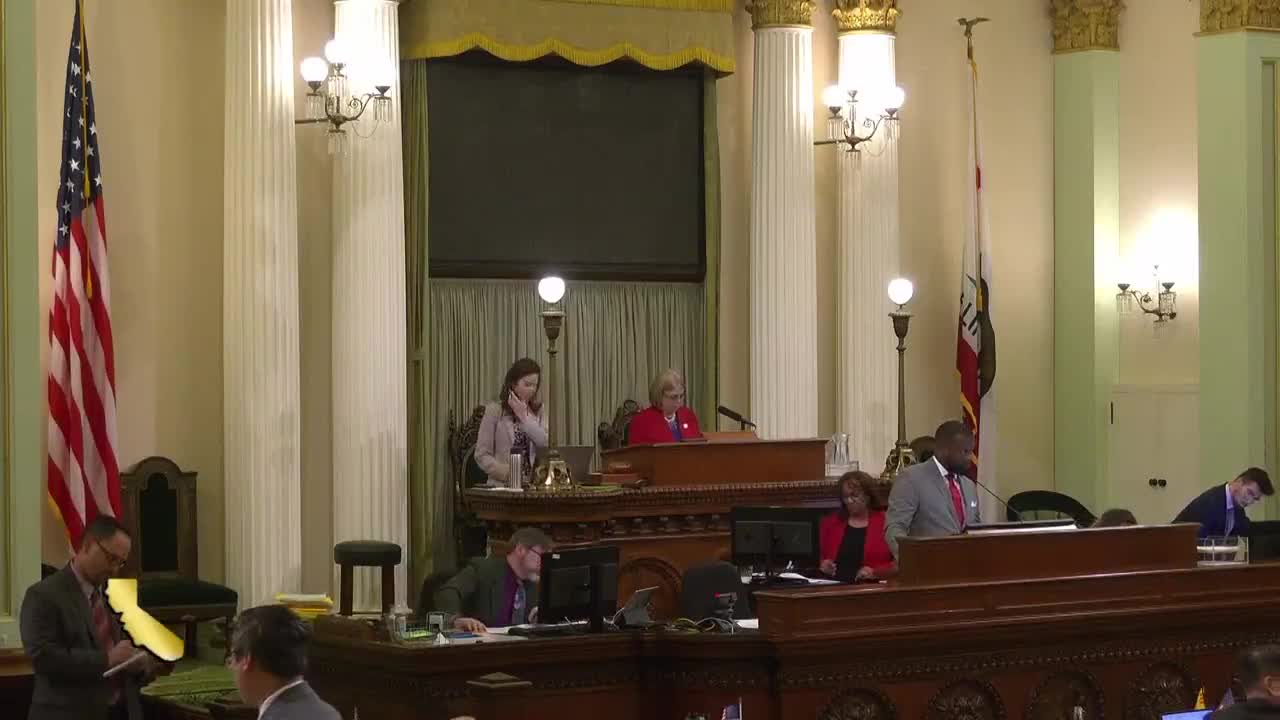 2MIN
Assembly Floor
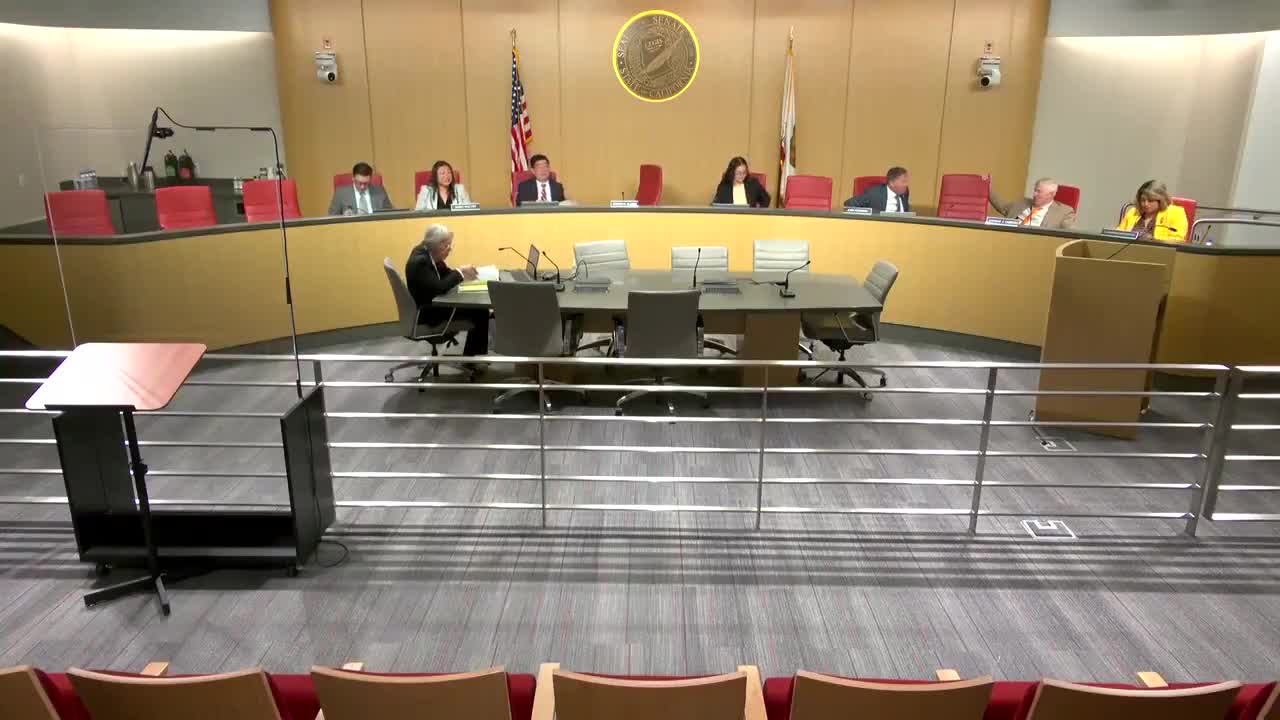 5MIN
Senate Standing Committee on Elections and Constitutional Amendments
 3MIN
Assembly Floor
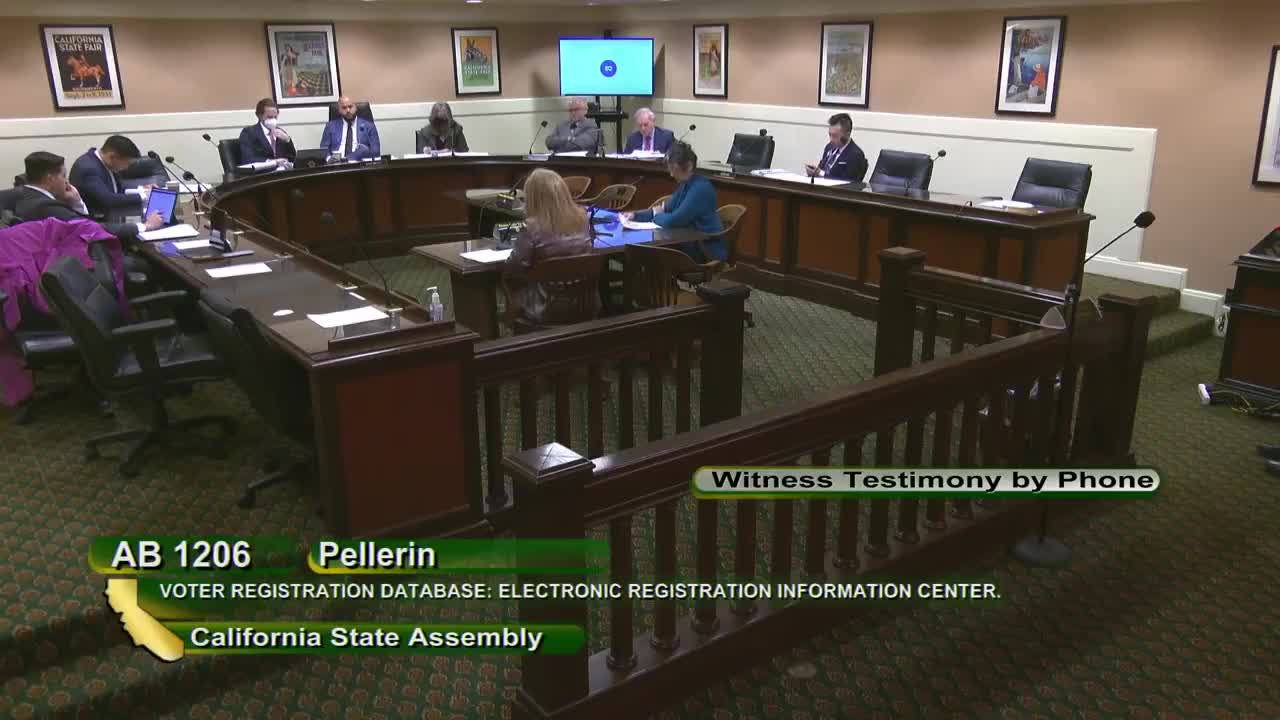 9MIN
Assembly Standing Committee on Elections
Bill Author

Bill Co-Author(s):