AB 630: Department of Transportation: contracts: tribes.
- Session Year: 2023-2024
- House: Assembly
- Latest Version Date: 2023-09-01
Current Status:
Passed
(2023-09-01: Chaptered by Secretary of State - Chapter 137, Statutes of 2023.)
Introduced
In Committee
First Chamber
In Committee
Second Chamber
Enacted
Existing law vests the Department of Transportation with full possession and control of all state highways and all property and rights in property acquired for state highway purposes. Existing law authorizes the department to make and enter into any contracts in the manner provided by law that are required for performance of its duties. Existing law requires that the departments contracts with federally recognized Indian tribes be limited to activities related to on-reservation or off-reservation cultural resource management and environmental studies and off-reservation traffic impact mitigation projects on or connecting to the state highway system, as specified. Existing law requires that off-reservation traffic impact mitigation contracts with federally recognized Indian tribes meet certain requirements, including that the contracts provide for limited waivers of sovereign immunity by those Indian tribes for the state for the purpose of enforcing obligations arising from the contracted activities.
This bill would delete that limitation on the activities for which the department is authorized to contract with federally recognized Indian tribes, and would expressly authorize the department to enter into contracts with those tribes and entities owned by those tribes. The bill would subject off-reservation traffic impact mitigation contracts between the department and entities owned by those tribes to the same requirements as are applicable to department contracts with those tribes, and would delete the requirement that the contracts provide for limited waivers of sovereign immunity, as specified.
Existing law vests the Department of Transportation with full possession and control of all state highways and all property and rights in property acquired for state highway purposes. Existing law authorizes the department to make and enter into any contracts in the manner provided by law that are required for performance of its duties. Existing law requires that the departments contracts with federally recognized Indian tribes be limited to activities related to on-reservation or off-reservation cultural resource management and environmental studies and off-reservation traffic impact mitigation projects on or connecting to the state highway system, as specified. Existing law requires that off-reservation traffic impact mitigation contracts with federally recognized Indian tribes meet certain requirements, including that the contracts provide for limited waivers of sovereign immunity by those Indian tribes for the state for the purpose of enforcing obligations arising from the contracted activities.
This bill would delete that limitation on the activities for which the department is authorized to contract with federally recognized Indian tribes, and would expressly authorize the department to enter into contracts with those tribes and entities owned by those tribes. The bill would subject off-reservation traffic impact mitigation contracts between the department and entities owned by federally recognized Indian those tribes to the same restrictions requirements as are applicable to department contracts with federally recognized Indian tribes. those tribes, and would delete the requirement that the contracts provide for limited waivers of sovereign immunity, as specified.
Existing law vests the Department of Transportation with full possession and control of all state highways and all property and rights in property acquired for state highway purposes. Existing law authorizes the department to make and enter into any contracts in the manner provided by law that are required for performance of its duties. Existing law requires that the departments contracts with federally recognized Indian tribes be limited to activities related to on-reservation or off-reservation cultural resource management and environmental studies and off-reservation traffic impact mitigation projects on or connecting to the state highway system, as specified.
This bill would subject contracts between the department and entities owned by federally recognized Indian tribes to the same restrictions as are applicable to department contracts with federally recognized Indian tribes.
(a)The department may make and enter into any contracts in the manner provided by law that are required for performance of its duties, including with federally recognized Indian tribes and entities owned by those tribes.
(b)To implement off-reservation traffic impact mitigation contracts with federally recognized Indian tribes, or entities owned by those tribes, all of the following shall apply:
(1)The contract shall provide for the full reimbursement of expenses and costs incurred by the department in the exercise of its contractual responsibilities. Funds for the project shall be placed in an escrow account before project development.
(2)The proposed transportation project shall comply with all applicable state and federal environmental impact and review requirements, including, but not limited to, the California Environmental Quality Act (Division 13 (commencing with Section 21000) of the Public Resources Code).
(3)The departments work on the transportation project under the contract shall not jeopardize or adversely affect the completion of other transportation projects included in the adopted State Transportation Improvement Program.
(4)The transportation project is included in or consistent with the affected regional transportation plan.
(a)The department may make and enter into any contracts in the manner provided by law that are required for performance of its duties, provided that contracts including with federally recognized Indian tribes, or tribes and entities owned by those tribes, shall be limited to activities related to on-reservation or off-reservation cultural resource management and environmental studies and off-reservation traffic impact mitigation projects on or connecting to the state highway system. tribes.
(b)To implement off-reservation traffic impact mitigation contracts with federally recognized Indian tribes, or entities owned by those tribes, all of the following shall apply:
(1)Any The contract shall provide for the full reimbursement of expenses and costs incurred by the department in the exercise of its contractual responsibilities. Funds for the project shall be placed in an escrow account before project development. The contract shall also provide for a limited waiver of sovereign immunity by that Indian tribe for the state for the purpose of enforcing obligations arising from the contracted activity.
(2)The proposed transportation project shall comply with all applicable state and federal environmental impact and review requirements, including, but not limited to, the California Environmental Quality Act (Division 13 (commencing with Section 21000) of the Public Resources Code).
(3)The departments work on the transportation project under the contract shall not jeopardize or adversely affect the completion of other transportation projects included in the adopted State Transportation Improvement Program.
(4)The transportation project is included in or consistent with the affected regional transportation plan.
(a)The department may make and enter into any contracts in the manner provided by law that are required for performance of its duties, provided that contracts with federally recognized Indian tribes tribes, or entities owned by those tribes, shall be limited to activities related to on-reservation or off-reservation cultural resource management and environmental studies and off-reservation traffic impact mitigation projects on or connecting to the state highway system.
(b)To implement off-reservation traffic impact mitigation contracts with federally recognized Indian tribes, tribes, or entities owned by those tribes, all of the following shall apply:
(1)Any contract shall provide for the full reimbursement of expenses and costs incurred by the department in the exercise of its contractual responsibilities. Funds for the project shall be placed in an escrow account prior to before project development. The contract shall also provide for a limited waiver of sovereign immunity by that Indian tribe for the state for the purpose of enforcing obligations arising from the contracted activity.
(2)The proposed transportation project shall comply with all applicable state and federal environmental impact and review requirements, including, but not limited to, the California Environmental Quality Act (Division 13 (commencing with Section 21000) of the Public Resources Code).
(3)The departments work on the transportation project under the contract shall not jeopardize or adversely affect the completion of other transportation projects included in the adopted State Transportation Improvement Program.
(4)The transportation project is included in or consistent with the affected regional transportation plan.
|
Date
|
Status
|
|---|---|
| Sep 1, 2023 | Chaptered by Secretary of State - Chapter 137, Statutes of 2023. |
| Sep 1, 2023 | Approved by the Governor. |
| Aug 29, 2023 | Enrolled and presented to the Governor at 11:30 a.m. |
| Aug 17, 2023 | In Assembly. Ordered to Engrossing and Enrolling. |
| Aug 17, 2023 | Read third time. Passed. Ordered to the Assembly. (Ayes 38. Noes 0. Page 2139.). |
| Aug 15, 2023 | Read second time. Ordered to Consent Calendar. |
| Aug 14, 2023 | From committee: Be ordered to second reading file pursuant to Senate Rule 28.8 and ordered to Consent Calendar. |
| Jul 6, 2023 | From committee: Do pass and re-refer to Com. on APPR with recommendation: To Consent Calendar. (Ayes 11. Noes 0.) (July 6). Re-referred to Com. on APPR. |
| Jun 28, 2023 | From committee: Do pass and re-refer to Com. on JUD. with recommendation: To Consent Calendar. (Ayes 16. Noes 0.) (June 27). Re-referred to Com. on JUD. |
| May 31, 2023 | Referred to Coms. on TRANS. and JUD. |
| May 18, 2023 | In Senate. Read first time. To Com. on RLS. for assignment. |
| May 18, 2023 | Read third time. Passed. Ordered to the Senate. (Ayes 74. Noes 0. Page 1595.) |
| May 11, 2023 | Read second time. Ordered to Consent Calendar. |
| May 10, 2023 | From committee: Do pass. To Consent Calendar. (Ayes 14. Noes 0.) (May 10). |
| May 3, 2023 | In committee: Hearing postponed by committee. |
| Apr 26, 2023 | In committee: Hearing postponed by committee. |
| Mar 28, 2023 | From committee: Do pass and re-refer to Com. on APPR. (Ayes 15. Noes 0.) (March 27). Re-referred to Com. on APPR. |
| Mar 20, 2023 | Re-referred to Com. on TRANS. |
| Mar 16, 2023 | From committee chair, with author's amendments: Amend, and re-refer to Com. on TRANS. Read second time and amended. |
| Feb 17, 2023 | Referred to Com. on TRANS. |
| Feb 10, 2023 | From printer. May be heard in committee March 12. |
| Feb 9, 2023 | Read first time. To print. |
|
Date
|
Description
|
Location
|
Votes
|
|
|---|---|---|---|---|
| Aug 17, 2023 | Consent Calendar 2nd AB630 Ramos et al. | Senate Floor |
Passed |
|
| Jul 6, 2023 | Do pass, but first be re-referred to the Committee on [Appropriations] with the recommendation: To Consent Calendar | Senate Standing Committee on Judiciary |
Passed |
|
| Jun 27, 2023 | Do pass, but first be re-referred to the Committee on [Judiciary] with the recommendation: To Consent Calendar | Senate Standing Committee on Transportation |
Passed |
|
| May 18, 2023 | AB 630 Ramos Consent Calendar Second Day Regular Session | Assembly Floor |
Passed |
|
| May 10, 2023 | Do pass. To Consent Calendar. | Assembly Standing Committee on Appropriations |
Passed |
|
| Mar 27, 2023 | Do pass and be re-referred to the Committee on [Appropriations] | Assembly Standing Committee on Transportation |
Passed |
This list shows positions taken on this bill by organizations on the date displayed, which is linked to the original source.
Positions by individuals are not included.
|
Organization
|
Position
|
Date
|
|---|---|---|
| California Transportation Commission | ** Support | |
| Habematolel Pomo Of Upper Lake | ** Support | |
| Tule River Tribe | ** Support |
SENATE RULES COMMITTEE Office of Senate Floor Analyses (916) 651-1520 Fax: (916) 327-4478 | AB 630 |
CONSENT
Bill No: AB 630
Author: Ramos (D) and Mathis (R)
Amended: 3/16/23 in Assembly
Vote: 21
SENATE TRANSPORTATION COMMITTEE: 16-0, 6/27/23
AYES: Gonzalez, Niello, Allen, Archuleta, Becker, Blakespear, Cortese, Dahle, Dodd, Limón, McGuire, Newman, Nguyen, Seyarto, Umberg, Wahab
SENATE JUDICIARY COMMITTEE: 11-0, 7/6/23
AYES: Umberg, Wilk, Allen, Ashby, Caballero, Durazo, Laird, Min, Niello, Stern, Wiener
SENATE APPROPRIATIONS COMMITTEE: Senate Rule 28.8
ASSEMBLY FLOOR: 74-0, 5/18/23 (Consent) - See last page for vote
SUBJECT: Department of Transportation: contracts: tribes
SOURCE: Tule River Tribe
DIGEST:
This bill removes requirements in existing law that limit the authority Department of Transportation to contract with federally recognized Indian tribes and entities they own.
ANALYSIS:
Existing law:
- Establishes California Department of Transportation (Caltrans) and provides that the department has full possession and control of all state highways and property and rights in property acquired for state highway purposes. (Streets and Highways Code (SHC) §90)
- Allows Caltrans to make and enter into any contracts that are required for performance of its duties, including with federally recognized Indian tribes related to on-reservation or off-reservation cultural resource management and environmental studies. (SHC §94)
- Requires off-reservation traffic impact mitigation contracts with federally recognized Indian tribes to adhere to the following:
- Indian tribes provide for full reimbursement of Caltrans’ costs;
- A limited waiver of sovereign immunity by that Indian tribe for the state for the purpose of enforcing obligations arising from the contracted activity;
- Funds for the project shall be placed in an escrow account prior to project development;
- Requires the project shall comply with all applicable state and federal environmental impact and review requirements;
- Caltrans’ work on the transportation project under the contract shall not jeopardize or adversely affect the completion of other transportation projects included in the adopted State Transportation Improvement Program; or
- Requires the project to be included in or consistent with the affected regional transportation plan.
This bill:
- Removes the current requirement that Caltrans’ contracts with federally recognized Indian tribes be limited to only those activities related to cultural resource management and environmental studies or traffic impact mitigation projects on, or connecting to, the state highway system.
- Authorizes Caltrans to contract with entities owned by a federally recognized Indian tribe, and not just the tribe itself, as per existing law.
- Eliminates the requirement in existing law that a contract between Caltrans and a federally recognized Indian tribe provide for a limited waiver of sovereign immunity by that Indian tribe for the purpose of enforcing obligations arising from the contracted activity.
Comments
- Purpose of bill. According to the author, “AB 630 updates existing law to allow Caltrans to enter into contracts with entities owned by federally recognized Indian tribes. The bill will allow Caltrans to collaborate with those entities on shared priorities for traffic mitigation, such as traffic impact mitigation around casinos.”
- Californian indigenous people. California is home to more people of Native American/Alaska Native heritage than any other state. There are currently 109 federally recognized Indian tribes in California and several non-federally recognized tribes petitioning for federal recognition through the Bureau of Indian Affairs-Office of Federal Recognition. Tribes in California currently have nearly 100 separate reservations or Rancherias. There are also a number of individual Indian trust allotments. Both federally recognized and non-federally recognized tribes have distinct organizational structures and cultures. Federally recognized tribes have the right and authority to regulate activities on their respective lands and are eligible applicants, and have received funds from the Active Transportation Program, the Highway Safety Improvement Program, and Caltrans’ Planning Grants program. Non-federal tribal governments may be consulted under state historic preservation law during environmental reviews of individual projects that have the potential to affect cultural resources of tribal significance within the state highway system.
On June 18, 2019, Governor Gavin Newsom issued Executive Order N-15-19, which acknowledges and apologizes on behalf of the State for the historical “violence, exploitation, dispossession and the attempted destruction of tribal communities” which dislocated California Native Americans from their ancestral land and sacred practices. It is the policy of the Newsom administration to “support California tribes’ co-management of and access to natural lands that are within a California tribe’s ancestral land and under the ownership or control of the State of California, and to work cooperatively with California tribes that are interested in acquiring natural lands in excess of State needs.”
- Tribal sovereignty. The United States Department of the Interior has the authority to regulate tribal governments’ land management and sovereignty. Tribal sovereignty refers to the concept that each tribe has the inherent right to govern itself within the borders of the United States. The treaties and laws created to manage the relationship between tribes and the federal government create a federal “trust responsibility”, to protect tribal lands and self-government and to provide federal assistance to ensure the success of tribal communities. Despite this legal responsibility, throughout U.S. history, federal administrative bodies have often failed to uphold the promises and obligations of sovereignty adequately. This has made tribal communities extremely wary about creating waivers for their sovereignty.
The exercise of tribal jurisdiction, or a tribe’s ability to create and enforce laws, for example, varies from state to state and tribe to tribe. California courts have limited civil jurisdiction, which means the courts can hear some civil matters while others are under the exclusive jurisdiction of the federal courts or the tribes. Tribal sovereignty can create barriers to cooperation between tribal and state governments because many grant programs require certain levels of financial oversight that require waivers of sovereign immunity. If a tribe is unwilling to waive sovereignty then the state agency will have to work with the Bureau of Indian Affairs or another intermediate to control the funds and work on the project, slowing down implementation and increasing costs.
Currently, Caltrans statutorily must include a limited waiver of sovereign immunity in contracts made with tribes. This bill would remove that requirement, allowing Caltrans to explore alternative methods of managing risk and oversight when working with tribes that do not require waivers of sovereignty.
- Caltrans contracting with tribal governments. Federally recognized tribal governments are independent sovereignties and, generally, are not subject to state law. However, tribal projects with the potential to impact the state highway system may be subject to state and federal laws, requirements, and/or standards for the portion of the project affecting the system. For example, gaming compacts between the state and tribes may require the tribes to prepare a tribal environmental document for a gaming facility. Approximately 50% of the federally recognized tribes operate gaming facilities, as provided for by the Indian Gaming Regulatory Act. Tribes without gaming operations are also expanding their members’ housing and health and social services as resources become available.
Currently there are statutory limitations and restrictions on Caltrans’ direct contracting authorization with tribal governments. Contracts must be for activities related to cultural resource management, environmental studies, or off-reservation traffic impact mitigation projects on or connecting to the state highway system. This bill eliminates those limitations, increasing the number of projects Caltrans can potentially contract with tribes to complete. This bill also expands Caltrans’ contracting authority to also allow for contracts with entities owned by federally recognized tribes, not just the tribes themselves. These changes increase the options for how Caltrans can collaborate with tribes.
FISCAL EFFECT: Appropriation: No Fiscal Com.: Yes Local: No
SUPPORT: (Verified 8/14/23)
Tule River Tribe (source)
California Transportation Commission
Habematolel Pomo of Upper Lake
OPPOSITION: (Verified 8/14/23)
None received
ARGUMENTS IN SUPPORT: According to the California Transportation Commission, “With limited resources available to tribal communities in funding programs like the Active Transportation Program and the new Local Transportation Climate Adaptation Program, it is important to remove any unnecessary statutory barriers that might delay or jeopardize critically needed transportation improvements. Deleting the requirement for a limited waiver of sovereign immunity will allow federally recognized Native American tribes to directly contract with Caltrans and expedite the delivery of projects that will have a significant positive impact in some of California’s most underserved and under resourced communities.”
ASSEMBLY FLOOR: 74-0, 5/18/23
AYES: Addis, Aguiar-Curry, Alanis, Alvarez, Arambula, Bains, Bauer-Kahan, Bennett, Berman, Boerner, Bonta, Bryan, Calderon, Juan Carrillo, Wendy Carrillo, Chen, Connolly, Megan Dahle, Davies, Dixon, Essayli, Flora, Mike Fong, Gabriel, Gallagher, Garcia, Gipson, Grayson, Haney, Hart, Holden, Hoover, Irwin, Jackson, Jones-Sawyer, Kalra, Lackey, Lee, Low, Lowenthal, Maienschein, Mathis, McCarty, McKinnor, Muratsuchi, Stephanie Nguyen, Ortega, Pacheco, Papan, Jim Patterson, Joe Patterson, Pellerin, Petrie-Norris, Quirk-Silva, Ramos, Reyes, Luz Rivas, Robert Rivas, Rodriguez, Blanca Rubio, Sanchez, Santiago, Schiavo, Soria, Ta, Ting, Valencia, Wallis, Ward, Weber, Wicks, Wood, Zbur, Rendon
NO VOTE RECORDED: Cervantes, Vince Fong, Friedman, Villapudua, Waldron, Wilson
Prepared by: Jacob O'Connor / TRANS. / (916) 651-4121
8/16/23 14:42:35
**** END ****
Senator Thomas Umberg, Chair
2023-2024 Regular Session
Bill No: AB 630 (Author:Ramos)
Version: March 16, 2023
Hearing Date: July 6, 2023
Fiscal: Yes
Urgency: No
Consultant: AWM
SUBJECT
Department of Transportation: contracts: tribes
DIGEST
This bill eliminates the requirement that a tribal government waive sovereign immunity and various restrictions when contracting with the California Department of Transportation (Caltrans), and expands the scope of entities for which the contracting requirements apply.
EXECUTIVE SUMMARY
Federally recognized Indian tribes occupy a unique status as “domestic independent nations that exercise inherent sovereign authority” within the United States. (Michigan v. Bay Mills Indian Community (2014) 572 U.S. 782, 788.) Caltrans operates and manages the State Highway System. Current state law authorizes federally recognized Indian tribes to enter into contracts with Caltrans to implement traffic mitigation contracts with federally recognized Indian tribes, provided that the contract (1) provides for the full reimbursement of expenses and costs incurred by Caltrans, with those funds placed in an escrow account prior to project development, and (2) provide for a limited waiver of sovereign immunity by the tribe for purposes of enforcing obligations under the contract.
This bill makes two changes intended to make it easier for federally recognized Indian tribes and Caltrans to enter into contracts for much-needed highway projects. First, the bill authorizes Caltrans to enter into contracts with entities owned by federally recognized tribes, which will facilitate agreements to, e.g., mitigate traffic surrounding tribal casinos. Second, the bill eliminates the requirement that a tribe or tribal entity waive sovereign immunity as part of the contract.
This bill is sponsored by the Tule River Indian Tribe of California and is supported by the California Transportation Commission and Habematolel of Upper Lake. There is no known opposition. The Senate Transportation Committee passed this bill with a vote of 16-0.
PROPOSED CHANGES TO THE LAW
Existing law:
- Establishes Caltrans, which has full possession and control of all state highways and rights in property acquired for state highway purposes, and is authorized to lay out and construct all state highways as specified. (St. & Hy. Code, § 90.)
- Authorizes Caltrans to make and enter into contracts required for the performance of its duties, except that contracts with federally recognized Indian tribes must be limited to activities related to on-reservation or off-reservation cultural resource management and environmental studies and off-reservation traffic impact mitigation projects on or connecting to the state highway system. (St. & Hy. Code, § 94(a).)
- Provides that the following applies in Caltrans contracts with federally recognized Indian tribes for off-reservation traffic impact mitigation:
- Any contract shall provide for the full reimbursement of expenses and costs incurred by Caltrans in the exercise of its contractual duties.
- Funding for the project shall be placed in an escrow account prior to the development.
- The contract shall provide for a limited waiver of sovereign immunity by the Indian tribe entering into the contract for the state for the purpose of enforcing obligations arising from the contracted activity.
- The proposed transportation project shall comply with all applicable state and federal environmental impact and review requirements.
- Caltrans’s work on the transportation project under the contract shall not jeopardize or adversely affect the completion of other transportation projects included in the adopted State Transportation Improvement Program.
- The transportation project is included in or consistent with the affected regional transportation plan. (St. & Hy. Code, § 94(b).)
- Establishes that Indian tribes are “domestic independent nations” that exercise inherent sovereign authority, including sovereign immunity from suits brought by private entities and the States that can be qualified only by an act of Congress. (Michigan v. Bay Mills Indian Community (2014) 572 U.S. 782, 788-789.)
This bill:
- Expands Caltrans’s authority to enter into contracts with Indian tribes to allow Caltrans to enter into contracts that are required for the performance of its duties, including with federally recognized Indian tribes and entities owned by those tribes.
- Eliminates the requirement that a contract between Caltrans and an Indian tribe pursuant to 1) provide for a limited waiver of the tribe’s sovereign immunity.
- Requires that the funds for a project pursuant to 1) be placed into an escrow account prior to project development.
COMMENTS
- Author’s comment
According to the author:
AB 630 amends existing law to allow Caltrans to enter into contracts with entities owned by federally recognized Indian tribes. The bill will allow Caltrans to collaborate with those entities on shared priorities for traffic mitigation, such as traffic impact mitigation around casinos.
2. This bill expands Caltrans’ authority to enter into contracts with federally recognized Indian tribes and entities owned by those tribes for the creation of traffic-related infrastructure
This bill modifies the terms under which Caltrans may contract with a federally recognized Indian tribe for the development of highway infrastructure in and around tribal lands and expands the scope of tribal entities that may enter into transportation contracts. The brunt of the bill is within the jurisdiction of the Senate Transportation Committee; the analysis of that Committee is incorporated herein by reference. The sponsor of the bill, the Tule River Indian Tribe of California, explains why the bill is needed:
Tribally owned business entities often share the needs of the communities where they are located, and wish to work with state or local governments to address those needs. By collaborating on planning and infrastructure, tribally owned entities and state and local government entities can best meet the needs of the region.
For purposes of this Committee’s jurisdiction, this bill eliminates the requirement that Indian tribes entering into contracts with Caltrans waive their sovereign immunity. As explained by the United States Supreme Court, “Indian tribes are domestic independent nations that exercise inherent sovereign authority” that can be modified only through Congressional action.[1] Tribal sovereign authority includes “the common-law immunity from suit traditionally enjoyed by sovereign powers,” which is “a necessary corollary to Indian sovereignty and self-governance.”[2] Tribal sovereign immunity extends to suits brought by states, including in state courts, as well as to suits brought by individuals.[3] Tribal sovereign immunity is broad, extending even to suits arising from tribal commercial activity taking place off of tribal land,[4] and extends to cases where it will deprive a state of the “most efficient remedy” against a tribe.[5]
The bill does not prohibit a tribe from waiving sovereign immunity in a contract with Caltrans; it simply removes the waiver as a mandatory element of a contract. Caltrans and tribes will still be able to negotiate contractual terms that address potential breaches and other factors. Moreover, the bill retains the requirement that funds for the project be placed in an escrow account prior to the project’s development, which significantly reduces Caltrans’s risk of losses. As the California Transportation Commission, writing in support, explains:
With limited resources available to tribal communities in funding programs like the Active Transportation Program and the new Local Transportation Climate Adaptation Program, it is important to remove any unnecessary statutory barriers that might delay or jeopardize critically needed transportation improvements. Deleting the requirement for a limited waiver of sovereign immunity will allow federally recognized Native American tribes to directly contract with Caltrans and expedite the delivery of projects that will have a significant positive impact on some of California’s most underserved and under-resourced communities.
SUPPORT
Tule River Indian Tribe of California (sponsor)
California Transportation Commission
Habematolel Pomo of Upper Lake
OPPOSITION
None known
RELATED LEGISLATION
Pending Legislation: None known.
Prior Legislation: None known.
PRIOR VOTES:
Senate Transportation Committee (Ayes 16, Noes 0)
Assembly Floor (Ayes 74, Noes 0)
Assembly Appropriations Committee (Ayes 14, Noes 0)
Assembly Transportation Committee (Ayes 15, Noes 0)
**************
SENATE COMMITTEE ON TRANSPORTATION
Senator Lena Gonzalez, Chair
2023 - 2024 Regular
Bill No: Hearing Date: 6/27/2023
Author: | Ramos | ||
Version: | 3/16/2023 Amended | ||
Urgency: | No | Fiscal: | Yes |
Consultant: | Jacob O'Connor | ||
SUBJECT:
DIGEST: This bill removes requirements in existing law that limit the authority Department of Transportation (Caltrans) to contract with federally recognized Indian tribes and entities they own.
ANALYSIS:
Existing law:
- Establishes California Department of Transportation (Caltrans) and provides that the department has full possession and control of all state highways and property and rights in property acquired for state highway purposes. (Streets and Highways Code (SHC) §90)
- Allows Caltrans to make and enter into any contracts that are required for performance of its duties, including with federally recognized Indian tribes related to on-reservation or off-reservation cultural resource management and environmental studies. (SHC §94)
- Requires off-reservation traffic impact mitigation contracts with federally recognized Indian tribes to adhere to the following:
- Indian tribes provide for full reimbursement of Caltrans’ costs;
- A limited waiver of sovereign immunity by that Indian tribe for the state for the purpose of enforcing obligations arising from the contracted activity;
- Funds for the project shall be placed in an escrow account prior to project development;
- Requires the project shall comply with all applicable state and federal environmental impact and review requirements;
- Caltrans’ work on the transportation project under the contract shall not jeopardize or adversely affect the completion of other transportation projects included in the adopted State Transportation Improvement Program; or
- Requires the project to be included in or consistent with the affected regional transportation plan.
This bill:
- Removes the current requirement that Caltrans’ contracts with federally recognized Indian tribes be limited to only those activities related to cultural resource management and environmental studies or traffic impact mitigation projects on, or connecting to, the state highway system.
- Authorizes Caltrans to contract with entities owned by a federally recognized Indian tribe, and not just the tribe itself, as per existing law.
- Eliminates the requirement in existing law that a contract between Caltrans and a federally recognized Indian tribe provide for a limited waiver of sovereign immunity by that Indian tribe for the purpose of enforcing obligations arising from the contracted activity.
COMMENTS:
- Purpose of bill. According to the author, “AB 630 updates existing law to allow Caltrans to enter into contracts with entities owned by federally recognized Indian tribes. The bill will allow Caltrans to collaborate with those entities on shared priorities for traffic mitigation, such as traffic impact mitigation around casinos.”
- Californian indigenous people. California is home to more people of Native American/Alaska Native heritage than any other state. There are currently 109 federally recognized Indian tribes in California and several non-federally recognized tribes petitioning for federal recognition through the Bureau of Indian Affairs-Office of Federal Recognition. Tribes in California currently have nearly 100 separate reservations or Rancherias. There are also a number of individual Indian trust allotments. Both federally recognized and non-federally recognized tribes have distinct organizational structures and cultures. Federally recognized tribes have the right and authority to regulate activities on their respective lands and are eligible applicants and have received funds from the Active Transportation Program, the Highway Safety Improvement Program, and Caltrans’ Planning Grants program. Non-federal tribal governments may be consulted under state historic preservation law during environmental reviews of individual projects that have the potential to affect cultural resources of tribal significance within the state highway system.
On June 18, 2019, Governor Gavin Newsom issued Executive Order N-15-19, which acknowledges and apologizes on behalf of the State for the historical “violence, exploitation, dispossession and the attempted destruction of tribal communities” which dislocated California Native Americans from their ancestral land and sacred practices. It is the policy of the Newsom administration to “support California tribes’ co-management of and access to natural lands that are within a California tribe’s ancestral land and under the ownership or control of the State of California, and to work cooperatively with California tribes that are interested in acquiring natural lands in excess of State needs.”
- Tribal sovereignty. The United States Department of the Interior has the authority to regulate tribal governments’ land management and sovereignty. Tribal sovereignty refers to the concept that each tribe has the inherent right to govern itself within the borders of the United States. The treaties and laws created to manage the relationship between tribes and the federal government create a federal “trust responsibility”, to protect tribal lands and self-government and to provide federal assistance to ensure the success of tribal communities. Despite this legal responsibility, throughout U.S. history, federal administrative bodies have often failed to uphold the promises and obligations of sovereignty adequately. This has made tribal communities extremely wary about creating waivers for their sovereignty.
The exercise of tribal jurisdiction, or a tribe’s ability to create and enforce laws, for example, varies from state to state and tribe to tribe. California courts have limited civil jurisdiction, which means the courts can hear some civil matters while others are under the exclusive jurisdiction of the federal courts or the tribes. Tribal sovereignty can create barriers to cooperation between tribal and state governments because many grant programs require certain levels of financial oversight that require waivers of sovereign immunity. If a tribe is unwilling to waive sovereignty then the state agency will have to work with the Bureau of Indian Affairs or another intermediate to control the funds and work on the project, slowing down implementation and increasing costs.
Currently Caltrans statutorily must include a limited waiver of sovereign immunity in contracts made with tribes. This bill would remove that requirement, allowing Caltrans to explore alternative methods of managing risk and oversight when working with tribes that do not require waivers of sovereignty.
- Caltrans contracting with tribal governments. Federally recognized tribal governments are independent sovereignties and, generally, are not subject to state law. However, tribal projects with the potential to impact the state highway system may be subject to state and federal laws, requirements, and/or standards for the portion of the project affecting the system. For example, gaming compacts between the state and tribes may require the tribes to prepare a tribal environmental document for a gaming facility. Approximately 50% of the federally recognized tribes operate gaming facilities, as provided for by the Indian Gaming Regulatory Act (IGRA). Tribes without gaming operations are also expanding their members’ housing and health and social services as resources become available.
Currently there are statutory limitations and restrictions on Caltrans’ direct contracting authorization with tribal governments. Contracts must be for activities related to cultural resource management, environmental studies, or off-reservation traffic impact mitigation projects on or connecting to the state highway system. This bill eliminates those limitations, increasing the number of projects Caltrans can potentially contract with tribes to complete. This bill also expands Caltrans’ contracting authority to also allow for contracts with entities owned by federally recognized tribes, not just the tribes themselves. These changes increase the options for how Caltrans can collaborate with tribes.
- Double referral. This bill has been double referred to the Senate Judiciary Committee.
Related Legislation:
AB 2877 (E. Garcia, Chapter 481, Statutes of 2022) required the state Water Resources Control Board, when administering funds under the Safe and Affordable Drinking Water Fund, to California Native American tribes to draft any waiver of tribal sovereign immunity as narrowly as possible.
SB 1189 (Chesbro, Chapter 274, Statutes of 2004) authorizes Caltrans to contract with federally recognized Indian tribes for the performance of specified transportation duties.
FISCAL EFFECT: Appropriation: No Fiscal Com.: Yes Local: No
According to the Assembly Appropriations Committee, Caltrans was not able to provide the committee its assessment of costs associated with this bill.
POSITIONS: (Communicated to the committee before noon on Wednesday, June 21st.)
SUPPORT:
California Transportation Commission
Habematolel Pomo of Upper Lake
Tule River Tribe (sponsor)
OPPOSITION:
None recieved
-- END --
Date of Hearing: May 10, 2023
ASSEMBLY COMMITTEE ON APPROPRIATIONS
Chris Holden, Chair
ABPCA Bill Id:AB 630
Author:(Ramos) – As Amended Ver:March 16, 2023
Policy Committee: | Transportation | Vote: | 15 - 0 |
|
| ||
|
|
Urgency: No State Mandated Local Program: No Reimbursable: No
SUMMARY:
This bill removes requirements in existing law that limit the authority Department of Transportation (Caltrans) to contract with federally recognized Indian tribes.
Specifically, this bill:
- Removes existing law that limits Caltrans’ contracts with federally recognized Indian tribe to only those activities related to on-reservation or off-reservation cultural resource management and environmental studies and off-reservation traffic impact mitigation projects on or connecting to the state highway system.
- Authorizes Caltrans to contract with entities owned by a federally recognized Indian tribe, and not just the tribe itself, as per existing law.
- Eliminates the requirement in existing law that a contract between Caltrans and a federally recognized Indian tribe provide for a limited waiver of sovereign immunity by that Indian tribe for the state for the purpose of enforcing obligations arising from the contracted activity.
FISCAL EFFECT:
Caltrans was not able to provide the committee its assessment of costs associated with this bill. Absent input from Caltrans, this analysis assumes the direct costs of this bill to Caltrans to be negligible.
COMMENTS:
Background and Purpose. California is home to many people descended from indigenous inhabitants of California. This includes members of several Indian tribes, over 100 of which are recognized by the government of the United States. According the United State Department of Justice, a federally recognized Indian tribe is one of which:
The United States recognizes a government-to-government relationship with a Tribe and that a Tribe exists politically in a "domestic dependent nation" status. Federally-recognized Tribes possess certain inherent powers of self-government and entitlement to certain federal benefits, services, and protections because of the special trust relationship.
Tribal lands are located throughout the state. The state highway system runs near to, next to or on top of these lands. Development of and activity on the highway system affects tribal lands. And development and activity on or near tribal lands affects the state highway system.
State law charges Caltrans generally with maintaining the state highway system and authorizes Caltrans to enter into any contracts necessary for performance of its duties. Existing state law restricts Caltrans’ ability to enter into contracts with federally recognized Indian tribes, stating that contracts between Caltrans and such a tribe be “limited to activities related to on-reservation or off-reservation cultural resource management and environmental studies and off-reservation traffic impact mitigation projects on or connecting to the state highway system.” Existing law does not authorize Caltrans to contract with an entity owned by a federally recognized Indian tribe.
State law requires a contract between Caltrans and a federally recognized Indian tribe provide for the full reimbursement of expenses and costs incurred by Caltrans in the exercise of its contractual responsibilities, and that funds for the contracted project be placed in an escrow account prior to project development. In addition, the law requires the contract include a limited waiver of sovereign immunity by the Indian tribe for the state for the purpose of enforcing obligations arising from the contracted activity.
This bill loosens the legal restrictions applicable to contracts between Caltrans and a federally recognized Indian tribe by (a) allowing contracting to address any type of project, not just those concerning activities related to cultural resource management and environmental studies and off-reservation traffic impact mitigation projects on or connecting to the state highway system; (b) authorizing Caltrans to enter into contracts with entities owned by a federally recognized Indian tribe, not just with the tribe itself; and (c) eliminating from law the requirement a contract between Caltrans and a federally recognized Indian tribe provide for a limited waiver of sovereign immunity by that Indian tribe for the state.
The author intends this bill to enable Caltrans and tribes to collaborate on a wider range of project types, “such as traffic impact mitigation around casinos,” that could benefit, at least, both the state highway system and the tribes.
Analysis Prepared by: Jay Dickenson / APPR. / (916) 319-2081
Date of Hearing: March 27, 2023
ASSEMBLY COMMITTEE ON TRANSPORTATION
Laura Friedman, Chair
ABPCA Bill Id:AB 630 (
Author:Ramos) – As Amended Ver:March 16, 2023
SUBJECT: Department of Transportation: contracts: tribes
SUMMARY: Eliminates the requirement for tribal governments to waive sovereign immunity and various restrictions when contracting with the California Department of Transportation (Caltrans), and adds entities owned by federally recognized Indian tribes to applicable contracting requirements.
EXISTING LAW:
- Establishes Caltrans and provides that it has full possession and control of all state highways and property and rights in property acquired for state highway purposes, construct all state highways. (Streets and Highways Code (SHC) 90)
- Allows Caltrans to make and enter into any contracts that are required for performance of its duties, including with federally recognized Indian tribes related to on-reservation or off-reservation cultural resource management and environmental studies. (SHC 94)
- Requires contracts with federally recognized Indian tribes, to implement off-reservation traffic impact mitigation contracts, adhere to the following:
- Indian tribes provide for full reimbursement of Caltrans’ costs.
- A limited waiver of sovereign immunity by that Indian tribe for the state for the purpose of enforcing obligations arising from the contracted activity.
- Funds for the project shall be placed in an escrow account prior to project development.
- Requires the project shall comply with all applicable state and federal environmental impact and review requirements.
- Caltrans’ work on the transportation project under the contract shall not jeopardize or adversely affect the completion of other transportation projects included in the adopted State Transportation Improvement Program.
- Requires the project to be included in or consistent with the affected regional transportation plan.
FISCAL EFFECT: Unknown
COMMENTS: As the owner and operator of the State Highway System (SHS), Caltrans has the responsibility and authority to engage in environmental and transportation review of proposed local development; to identify potential adverse impacts to the SHS resulting from such development; and, to participate, when appropriate, in determining mitigation for the impacts identified.
Local jurisdictions (e.g. cities and counties) with the authority to approve proposed local development projects are jurisdictions that are largely subject to the same state statutory and regulatory framework as Caltrans.
California is home to 110 federally recognized Indian tribes and approximately 80 non-recognized tribes. Both federally recognized and non-federally recognized tribes have distinct organizational structures and cultures. Federally recognized tribes have the right and authority to regulate activities on their respective lands. Non-federal tribal governments may, however, be consulted under state historic preservation law during environmental reviews of individual projects that have the potential to affect cultural resources of tribal significance within the SHS.
Of the 58 counties in the state, 32 have at least one federally recognized tribe within their boundaries. Of the 12 Caltrans districts, 10 have at least one federally recognized tribe within their boundaries. The SHS transects, abuts, or is near most tribal lands in California. Had the 18 original treaties with California Indian tribes been honored by the State and federal government, California Indian tribes would possess over 7.5 million acres of land. Today, California tribes collectively possess about 7% of their unratified treaty territory.
Federally recognized tribal governments in California are eligible applicants for certain transportation programs and have received funds from the Active Transportation Program, the Highway Safety Improvement Program, and Caltrans’ Planning Grants program.
Caltrans contracting authority with tribal governments. Federally recognized tribal governments are independent sovereignties and, generally, are not subject to state law. Caltrans is granted broad authority to protect and maintain the SHS, consistent with state laws, policies and procedures. However, tribal projects with the potential to impact the SHS may be subject to state and federal laws, requirements, and/or standards for the portion of the project affecting the SHS.
Gaming compacts between the state and tribes may require the tribes to prepare a tribal environmental document for a gaming facility. Approximately 50% of the federally recognized tribes operate gaming facilities, as provided for by the Indian Gaming Regulatory Act (IGRA). Gaming operations have led to increased development of additional economic enterprises, as well as projects for housing and enhanced health and social services for tribal members. Tribes without gaming operations are also expanding their members’ housing and health and social services as resources become available.
Increasingly, tribes are undertaking economic development and their requisite transportation requirements, both on and off tribal land. This bill seeks to remove certain limitations and restrictions on Caltrans’ direct contracting authorization with tribal governments.
Sovereignty. The United States (U.S.) Department of the Interior has the authority to regulate tribal governments’ land management and sovereignty. Tribal sovereignty refers to the fact that each tribe has the inherent right to govern itself. The federal government is obligated to promote tribal self-determination and tribes’ ability to provide for the health and welfare of tribal citizens within tribal lands. Yet despite its formal recognition of a certain degree of Native sovereignty, the federal government has also exercised significant control over tribal peoples and lands. Throughout U.S. history, federal administrative bodies, such as the U.S. Department of the Interior, have often failed to uphold the promises and obligations of sovereignty adequately. Tribal governments exist to provide for the welfare of the Indian people.
It is important to note that not all laws and policies aimed at governing the relationship between the U.S. Government, states, and tribes – often referred to as Indian Law or federal Indian law – affect all tribes in the same way.
The exercise of tribal jurisdiction, or a tribe’s ability to create and enforce laws, for example, varies from state to state and tribe to tribe. California courts have limited civil jurisdiction, which means the courts can hear some civil matters while others are under the exclusive jurisdiction of the federal courts or the tribes.
This bill removes statutory restrictions that require a limited waiver of sovereign immunity and that limit the types of projects for which Caltrans can directly contract with federally recognized Native American tribes. Caltrans typically must work through an agency such as the federal Bureau of Indian Affairs to partner with tribal governments on projects and this process can cause delays and uncertainties for tribal government projects. These restrictions can be removed without creating financial risks, including that funds for a project could still be placed in escrow prior to project development.
Limits to contracting. There are statutory limitations and restrictions on Caltrans’ direct contracting authorization with tribal governments, including; activities related to on-reservation or off-reservation cultural resource management and environmental studies, and off-reservation traffic impact mitigation projects on or connecting to the state highway system. This bill eliminates those limitations for both federally recognized tribes, and expands those contracting limitations to entities owned by federally recognized.
This bill’s elimination of both the waiver of sovereign immunity requirement, and limitations for contracting only for cultural resource management and environmental studies, removes a barrier to Caltrans entering into direct contracts with federally recognized tribes, because tribes have been reluctant to agree to the waiver. This bill seeks to prevent delays and uncertainties for tribal government projects.
According to the author. “AB 630 updates existing law to allow Caltrans to enter into contracts with entities owned by federally recognized Indian tribes. The bill will allow Caltrans to collaborate with those entities on shared priorities for traffic mitigation, such as traffic impact mitigation around casinos.”
In support, the Habematolel Pomo of Upper Lake writes, “California tribes and Caltrans will be able to collaborate on more issues that impact cultural resource management and environmental studies, off-reservation traffic impact mitigation projects in connection to state highway system issues, and similar priorities for traffic impact mitigations.”
Previous Legislation. SB 1189 (Chesbro), Chapter 274, Statutes of 2004 authorizes Caltrans to contract with federally recognized Indian tribes for the performance of specified transportation duties.
REGISTERED SUPPORT / OPPOSITION:
Support
Habematolel Pomo of Upper Lake
Opposition
None on file
Analysis Prepared by: Julia Kingsley / TRANS. / (916) 319-2093
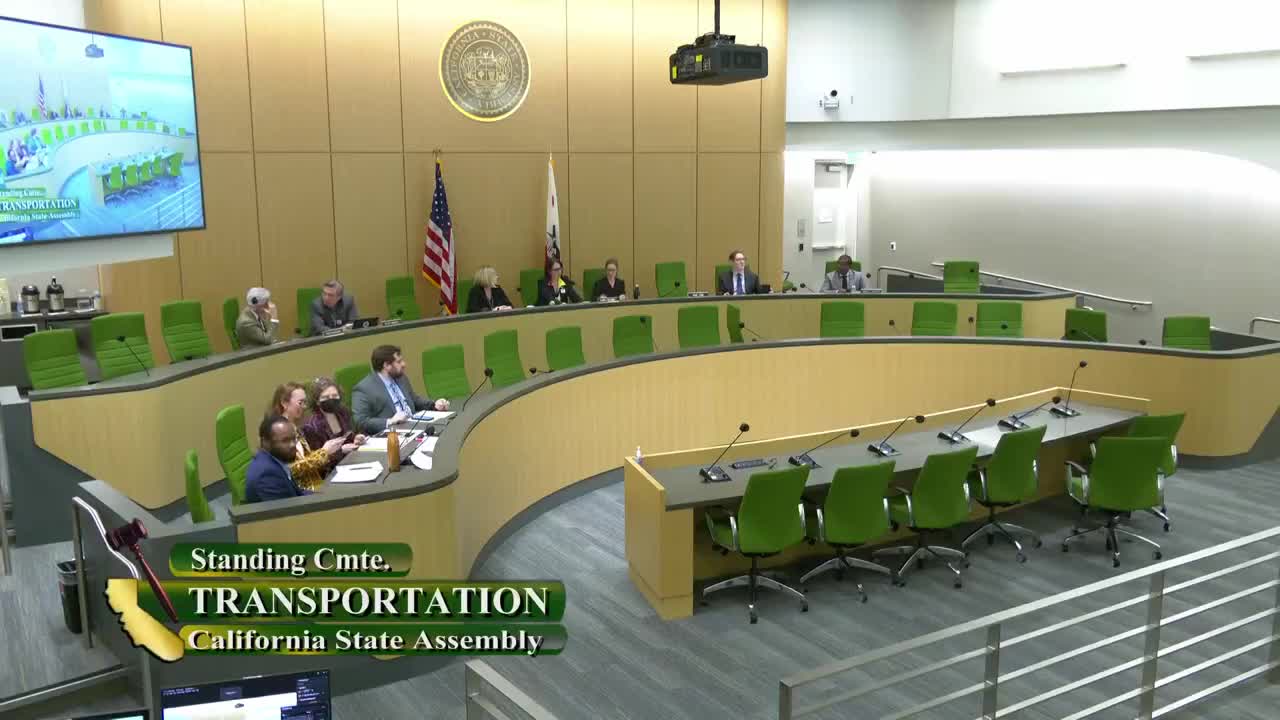
Discussed in Hearing
 4MIN
Assembly Standing Committee on Transportation


Bill Co-Author(s):