AB 678: Biomethane procurement targets or goals: core transport agents.
- Session Year: 2023-2024
- House: Assembly
- Latest Version Date: 2023-10-07
Current Status:
Passed
(2023-10-07: Chaptered by Secretary of State - Chapter 339, Statutes of 2023.)
Introduced
In Committee
First Chamber
In Committee
Second Chamber
Enacted
What does this bill do?
This bill directs the California Public Utilities Commission to consider setting biomethane purchase targets for both gas utilities and for core transport agents, the companies that arrange gas supply for core customers. If the commission adopts targets, core transport agents may contract with a gas utility to have the utility buy their share of biomethane, and the core transport agents must pay the costs. The commission must allocate any environmental attributes (like emissions credits) fairly and initially assigns each core transport agent a proportional share of the targets already set in Decision 22‑02‑025.
The summary is provided by generative AI which can make mistakes. For original language, please view the details in the table below.
Existing law vests the Public Utilities Commission with regulatory authority over public utilities, including gas corporations. Existing law requires the commission to require each gas corporation to provide bundled basic gas service to all core customers in its service territory unless the customer chooses or contracts to have natural gas purchased and supplied by another entity. Existing law requires the commission, in consultation with the State Air Resources Board, to consider adopting specific biomethane procurement targets or goals for each gas corporation, as specified.
This bill would revise that latter requirement to instead require the commission to consider adopting specific biomethane procurement targets or goals for each gas corporation and core transport agent, as defined. If the commission adopts the biomethane procurement targets or goals, the bill would require the commission to authorize a core transport agent to enter into an agreement with a gas corporation for the gas corporation to procure the core transport agents proportionate share of biomethane in order to satisfy the biomethane procurement targets or goals, with all costs paid for by the core transport agent and any environmental attributes allocated by the commission in a fair and transparent manner. The bill would require the commission to initially allocate each core transport agent their proportional share of the existing biomethane procurement targets established by commission Decision 22-02-025, as specified.
Under existing law, a violation of the Public Utilities Act or an order, decision, rule, direction, demand, or requirement of the commission is a crime.
Because the provisions of this bill would be a part of the act and because a violation of a commission action implementing its requirements would be a crime, the bill would impose a state-mandated local program.
The California Constitution requires the state to reimburse local agencies and school districts for certain costs mandated by the state. Statutory provisions establish procedures for making that reimbursement.
This bill would provide that no reimbursement is required by this act for a specified reason.
Existing law vests the Public Utilities Commission with regulatory authority over public utilities, including gas corporations. Existing law requires the commission to require each gas corporation to provide bundled basic gas service to all core customers in its service territory unless the customer chooses or contracts to have natural gas purchased and supplied by another entity. Existing law requires the commission, in consultation with the State Air Resources Board, to consider adopting specific biomethane procurement targets or goals for each gas corporation, as specified.
This bill would revise that latter requirement to instead require the commission to consider adopting specific biomethane procurement targets or goals for each gas corporation and core transport agent, as defined. If the commission adopts the biomethane procurement targets or goals, the bill would require the commission to authorize a core transport agent to have a enter into an agreement with a gas corporation for the gas corporation to procure the core transport agents proportionate share of biomethane in order to satisfy the biomethane procurement targets or goals, with all costs paid for by the core transport agent and any environmental attributes allocated by the commission in a fair and transparent manner. The bill would require the commission to initially allocate each core transport agent their proportional share of the existing biomethane procurement targets established by commission Decision 22-02-025, as specified.
Under existing law, a violation of the Public Utilities Act or an order, decision, rule, direction, demand, or requirement of the commission is a crime.
Because the provisions of this bill would be a part of the act and because a violation of a commission action implementing its requirements would be a crime, the bill would impose a state-mandated local program.
The California Constitution requires the state to reimburse local agencies and school districts for certain costs mandated by the state. Statutory provisions establish procedures for making that reimbursement.
This bill would provide that no reimbursement is required by this act for a specified reason.
Existing law vests the Public Utilities Commission with regulatory authority over public utilities, including gas corporations. Existing law requires the commission to require each gas corporation to provide bundled basic gas service to all core customers in its service territory unless the customer chooses or contracts to have natural gas purchased and supplied by another entity. Existing law requires the commission, in consultation with the State Air Resources Board, to consider adopting specific biomethane procurement targets or goals for each gas corporation, as specified.
This bill would revise that latter requirement to instead require the commission toconsider to consider adopting specific biomethane procurement targets or goals for each gas corporation and core transport agent, as defined. If the commission adopts the biomethane procurement targets or goals, the bill would require the commission to authorize a core transport agent to have a gas corporation procure the core transport agents proportionate share of biomethane in order to satisfy the biomethane procurement targets or goals, with all costs paid for by the core transport agent and any environmental attributes allocated by the commission in a fair and transparent manner.
Under existing law, a violation of the Public Utilities Act or an order, decision, rule, direction, demand, or requirement of the commission is a crime.
Because the provisions of this bill would be a part of the act and because a violation of a commission action implementing its requirements would be a crime, the bill would impose a state-mandated local program.
The California Constitution requires the state to reimburse local agencies and school districts for certain costs mandated by the state. Statutory provisions establish procedures for making that reimbursement.
This bill would provide that no reimbursement is required by this act for a specified reason.
Existing law vests the Public Utilities Commission with regulatory authority over public utilities, including gas corporations. Existing law requires the commission to require each gas corporation to provide bundled basic gas service to all core customers in its service territory unless the customer chooses or contracts to have natural gas purchased and supplied by another entity. Existing law requires the commission, in consultation with the State Air Resources Board, to consider adopting specific biomethane procurement targets or goals for each gas corporation, as specified.
This bill would revise that latter requirement to instead require the commission to establishconsider adopting specific biomethane procurement targets or goals for each gas corporation and core transport agents, agent, as defined, consistent with those biomethane procurement targets or goals described above. defined.
Under existing law, a violation of the Public Utilities Act or an order, decision, rule, direction, demand, or requirement of the commission is a crime.
Because the provisions of this bill would be a part of the act and because a violation of an order, decision, rule, direction, demand, or requirement of the a commission action implementing its requirements would be a crime, the bill would impose a state-mandated local program.
The California Constitution requires the state to reimburse local agencies and school districts for certain costs mandated by the state. Statutory provisions establish procedures for making that reimbursement.
This bill would provide that no reimbursement is required by this act for a specified reason.
Existing law vests the Public Utilities Commission with regulatory authority over public utilities, including gas corporations. Existing law requires the commission to require each gas corporation to provide bundled basic gas service to all core customers in its service territory unless the customer chooses or contracts to have natural gas purchased and supplied by another entity. Existing law requires the commission, in consultation with the State Air Resources Board, to consider adopting specific biomethane procurement targets or goals for each gas corporation, as specified.
This bill would require the commission to establish biomethane procurement targets or goals for core transport agents, as defined, consistent with those biomethane procurement targets or goals described above.
Under existing law, a violation of the Public Utilities Act or an order, decision, rule, direction, demand, or requirement of the commission is a crime.
Because the provisions of this bill would be a part of the act and because a violation of an order, decision, rule, direction, demand, or requirement of the commission implementing its requirements would be a crime, the bill would impose a state-mandated local program.
The California Constitution requires the state to reimburse local agencies and school districts for certain costs mandated by the state. Statutory provisions establish procedures for making that reimbursement.
This bill would provide that no reimbursement is required by this act for a specified reason.
(a)The commission, in consultation with the State Air Resources Board, shall consider adopting specific biomethane procurement targets or goals for each gas corporation and core transport agent, as defined in Section 980, so that each gas corporation and core transport agent procures a proportionate share, as determined by the commission, of biomethane annually. Before establishing biomethane procurement targets or goals, the commission shall make both of the following findings:
(1)The targets or goals are cost-effective means of achieving the forecast reduction in the emissions of short-lived climate pollutants pursuant to Section 39730.5 of the Health and Safety Code and other greenhouse gases pursuant to the California Global Warming Solutions Act of 2006 (Division 25.5 (commencing with Section 38500) of the Health and Safety Code).
(2)The targets or goals comply with all applicable state and federal laws.
(b)If the commission adopts specific biomethane procurement targets or goals for each gas corporation and core transport agent pursuant to subdivision (a), the commission shall do all of the following:
(1)Consider the recommendations developed pursuant to Section 39730.8 of the Health and Safety Code.
(2)Ensure the targets or goals are consistent with the organic waste disposal reduction targets specified in Section 39730.6 of the Health and Safety Code and the regulations adopted pursuant to Section 42652.5 of the Public Resources Code to achieve those targets.
(3)Ensure that biomethane eligible for any procurement program meets one of the following conditions:
(A)The biomethane is delivered to California through a dedicated pipeline.
(B)The biomethane is delivered to California through a common carrier pipeline and meets both of the following requirements:
(i)The source of biomethane injects the biomethane into a common carrier pipeline that physically flows within California, or toward the end user in California for which the biomethane was produced.
(ii)The seller or purchaser of the biomethane demonstrates that the capture or production of biomethane directly results in at least one of the following environmental benefits to California:
(I)The reduction or avoidance of the emission of any criteria air pollutant, toxic air contaminant, or greenhouse gas in California.
(II)The reduction or avoidance of pollutants that could have an adverse impact on waters of the state.
(III)The alleviation of a local nuisance within California that is associated with the emission of odors.
(4)Authorize a core transport agent to enter into an agreement with a gas corporation for the gas corporation to procure the core transport agents proportionate share of biomethane in order to satisfy the specific biomethane procurement targets or goals adopted by the commission, with all costs paid for by the core transport agent and any environmental attributes allocated by the commission in a fair and transparent manner.
(c) The commission shall initially allocate each core transport agent their proportional share of the existing biomethane procurement targets established by commission Decision 22-02-025 (February 24, 2022) Decision Implementing Senate Bill 1440 Biomethane Procurement Program. This subdivision shall not prohibit the commission from establishing additional biomethane targets.
SEC. 2.No reimbursement is required by this act pursuant to Section 6 of Article XIIIB of the California Constitution because the only costs that may be incurred by a local agency or school district will be incurred because this act creates a new crime or infraction, eliminates a crime or infraction, or changes the penalty for a crime or infraction, within the meaning of Section 17556 of the Government Code, or changes the definition of a crime within the meaning of Section 6 of Article XIIIB of the California Constitution.
(a)The commission, in consultation with the State Air Resources Board, shall consider adopting specific biomethane procurement targets or goals for each gas corporation and core transport agent, as defined in Section 980, so that each gas corporation and core transport agent procures a proportionate share, as determined by the commission, of biomethane annually. Before establishing biomethane procurement targets or goals, the commission shall make both of the following findings:
(1)The targets or goals are cost-effective means of achieving the forecast reduction in the emissions of short-lived climate pollutants pursuant to Section 39730.5 of the Health and Safety Code and other greenhouse gases pursuant to the California Global Warming Solutions Act of 2006 (Division 25.5 (commencing with Section 38500) of the Health and Safety Code).
(2)The targets or goals comply with all applicable state and federal laws.
(b)If the commission adopts specific biomethane procurement targets or goals for each gas corporation and core transport agent pursuant to subdivision (a), the commission shall do all of the following:
(1)Consider the recommendations developed pursuant to Section 39730.8 of the Health and Safety Code.
(2)Ensure the targets or goals are consistent with the organic waste disposal reduction targets specified in Section 39730.6 of the Health and Safety Code and the regulations adopted pursuant to Section 42652.5 of the Public Resources Code to achieve those targets.
(3)Ensure that biomethane eligible for any procurement program meets one of the following conditions:
(A)The biomethane is delivered to California through a dedicated pipeline.
(B)The biomethane is delivered to California through a common carrier pipeline and meets both of the following requirements:
(i)The source of biomethane injects the biomethane into a common carrier pipeline that physically flows within California, or toward the end user in California for which the biomethane was produced.
(ii)The seller or purchaser of the biomethane demonstrates that the capture or production of biomethane directly results in at least one of the following environmental benefits to California:
(I)The reduction or avoidance of the emission of any criteria air pollutant, toxic air contaminant, or greenhouse gas in California.
(II)The reduction or avoidance of pollutants that could have an adverse impact on waters of the state.
(III)The alleviation of a local nuisance within California that is associated with the emission of odors.
(4)Authorize a core transport agent to have a enter into an agreement with a gas corporation for the gas corporation to procure the core transport agents proportionate share of biomethane in order to satisfy the specific biomethane procurement targets or goals adopted by the commission, with all costs paid for by the core transport agent and any environmental attributes allocated by the commission in a fair and transparent manner.
(c) The commission shall initially allocate each core transport agent their proportional share of the existing biomethane procurement targets established by commission Decision 22-02-025 (February 24, 2022) Decision Implementing Senate Bill 1440 Biomethane Procurement Program. This subdivision shall not prohibit the commission from establishing additional biomethane targets.
SEC. 2.No reimbursement is required by this act pursuant to Section 6 of Article XIIIB of the California Constitution because the only costs that may be incurred by a local agency or school district will be incurred because this act creates a new crime or infraction, eliminates a crime or infraction, or changes the penalty for a crime or infraction, within the meaning of Section 17556 of the Government Code, or changes the definition of a crime within the meaning of Section 6 of Article XIIIB of the California Constitution.
(a)The commission, in consultation with the State Air Resources Board, shall consider adopting specific biomethane procurement targets or goals for each gas corporation and core transport agent, as defined in Section 980, so that each gas corporation and core transport agent procures a proportionate share, as determined by the commission, of biomethane annually. Before establishing biomethane procurement targets or goals, the commission shall make both of the following findings:
(1)The targets or goals are cost-effective means of achieving the forecast reduction in the emissions of short-lived climate pollutants pursuant to Section 39730.5 of the Health and Safety Code and other greenhouse gases pursuant to the California Global Warming Solutions Act of 2006 (Division 25.5 (commencing with Section 38500) of the Health and Safety Code).
(2)The targets or goals comply with all applicable state and federal laws.
(b)If the commission adopts specific biomethane procurement targets or goals for each gas corporation and core transport agent pursuant to subdivision (a), the commission shall do all of the following:
(1)Consider the recommendations developed pursuant to Section 39730.8 of the Health and Safety Code.
(2)Ensure the targets or goals are consistent with the organic waste disposal reduction targets specified in Section 39730.6 of the Health and Safety Code and the regulations adopted pursuant to Section 42652.5 of the Public Resources Code to achieve those targets.
(3)Ensure that biomethane eligible for any procurement program meets one of the following conditions:
(A)The biomethane is delivered to California through a dedicated pipeline.
(B)The biomethane is delivered to California through a common carrier pipeline and meets both of the following requirements:
(i)The source of biomethane injects the biomethane into a common carrier pipeline that physically flows within California, or toward the end user in California for which the biomethane was produced.
(ii)The seller or purchaser of the biomethane demonstrates that the capture or production of biomethane directly results in at least one of the following environmental benefits to California:
(I)The reduction or avoidance of the emission of any criteria air pollutant, toxic air contaminant, or greenhouse gas in California.
(II)The reduction or avoidance of pollutants that could have an adverse impact on waters of the state.
(III)The alleviation of a local nuisance within California that is associated with the emission of odors.
(4)Authorize a core transport agent to have a gas corporation procure the core transport agents proportionate share of biomethane in order to satisfy the specific biomethane procurement targets or goals adopted by the commission, with all costs paid for by the core transport agent and any environmental attributes allocated by the commission in a fair and transparent manner.
SEC. 2.No reimbursement is required by this act pursuant to Section 6 of Article XIIIB of the California Constitution because the only costs that may be incurred by a local agency or school district will be incurred because this act creates a new crime or infraction, eliminates a crime or infraction, or changes the penalty for a crime or infraction, within the meaning of Section 17556 of the Government Code, or changes the definition of a crime within the meaning of Section 6 of Article XIIIB of the California Constitution.
(a)The commission, in consultation with the State Air Resources Board, shall consider adopting specific biomethane procurement targets or goals for each gas corporation and core transport agent, as defined in Section 980, so that each gas corporation and core transport agent procures a proportionate share, as determined by the commission, of biomethane annually. Before establishing biomethane procurement targets or goals, the commission shall make both of the following findings:
(1)The targets or goals are cost-effective means of achieving the forecast reduction in the emissions of short-lived climate pollutants pursuant to Section 39730.5 of the Health and Safety Code and other greenhouse gases pursuant to the California Global Warming Solutions Act of 2006 (Division 25.5 (commencing with Section 38500) of the Health and Safety Code).
(2)The targets or goals comply with all applicable state and federal laws.
(b)If the commission adopts specific biomethane procurement targets or goals for each gas corporation and core transport agent pursuant to subdivision (a), the commission shall do all of the following:
(1)Consider the recommendations developed pursuant to Section 39730.8 of the Health and Safety Code.
(2)Ensure the targets or goals are consistent with the organic waste disposal reduction targets specified in Section 39730.6 of the Health and Safety Code and the regulations adopted pursuant to Section 42652.5 of the Public Resources Code to achieve those targets.
(3)Ensure that biomethane eligible for any procurement program meets one of the following conditions:
(A)The biomethane is delivered to California through a dedicated pipeline.
(B)The biomethane is delivered to California through a common carrier pipeline and meets both of the following requirements:
(i)The source of biomethane injects the biomethane into a common carrier pipeline that physically flows within California, or toward the end user in California for which the biomethane was produced.
(ii)The seller or purchaser of the biomethane demonstrates that the capture or production of biomethane directly results in at least one of the following environmental benefits to California:
(I)The reduction or avoidance of the emission of any criteria air pollutant, toxic air contaminant, or greenhouse gas in California.
(II)The reduction or avoidance of pollutants that could have an adverse impact on waters of the state.
(III)The alleviation of a local nuisance within California that is associated with the emission of odors.
(c)The commission shall establish biomethane procurement targets or goals for core transport agents, as defined in Section 980, consistent with biomethane procurement targets or goals established pursuant to subdivision (a).SEC. 2.No reimbursement is required by this act pursuant to Section 6 of Article XIIIB of the California Constitution because the only costs that may be incurred by a local agency or school district will be incurred because this act creates a new crime or infraction, eliminates a crime or infraction, or changes the penalty for a crime or infraction, within the meaning of Section 17556 of the Government Code, or changes the definition of a crime within the meaning of Section 6 of Article XIIIB of the California Constitution.
(a)The commission, in consultation with the State Air Resources Board, shall consider adopting specific biomethane procurement targets or goals for each gas corporation so that each gas corporation procures a proportionate share, as determined by the commission, of biomethane annually. Prior to Before establishing biomethane procurement targets or goals, the commission shall make both of the following findings:
(1)The targets or goals are cost-effective means of achieving the forecast reduction in the emissions of short-lived climate pollutants pursuant to Section 39730.5 of the Health and Safety Code and other greenhouse gases pursuant to Division the California Global Warming Solutions Act of 2006 (Division 25.5 (commencing with Section 38500) of the Health and Safety Code. Code).
(2)The targets or goals comply with all applicable state and federal laws.
(b)If the commission adopts specific biomethane procurement targets or goals for each gas corporation pursuant to subdivision (a), the commission shall do all of the following:
(1)Consider the recommendations developed pursuant to Section 39730.8 of the Health and Safety Code.
(2)Ensure the targets or goals are consistent with the organic waste disposal reduction targets specified in Section 39730.6 of the Health and Safety Code and the regulations adopted pursuant to Section 42652.5 of the Public Resources Code to achieve those targets.
(3)Ensure that biomethane eligible for any procurement program meets one of the following conditions:
(A)The biomethane is delivered to California through a dedicated pipeline.
(B)The biomethane is delivered to California through a common carrier pipeline and meets both of the following requirements:
(i)The source of biomethane injects the biomethane into a common carrier pipeline that physically flows within California, or toward the end user in California for which the biomethane was produced.
(ii)The seller or purchaser of the biomethane demonstrates that the capture or production of biomethane directly results in at least one of the following environmental benefits to California:
(I)The reduction or avoidance of the emission of any criteria air pollutant, toxic air contaminant, or greenhouse gas in California.
(II)The reduction or avoidance of pollutants that could have an adverse impact on waters of the state.
(III)The alleviation of a local nuisance within California that is associated with the emission of odors.
(c)The commission shall establish biomethane procurement targets or goals for core transport agents, as defined in Section 980, consistent with biomethane procurement targets or goals established pursuant to subdivision (a).
SEC. 2.No reimbursement is required by this act pursuant to Section 6 of Article XIIIB of the California Constitution because the only costs that may be incurred by a local agency or school district will be incurred because this act creates a new crime or infraction, eliminates a crime or infraction, or changes the penalty for a crime or infraction, within the meaning of Section 17556 of the Government Code, or changes the definition of a crime within the meaning of Section 6 of Article XIIIB of the California Constitution.
|
Date
|
Status
|
|---|---|
| Oct 7, 2023 | Chaptered by Secretary of State - Chapter 339, Statutes of 2023. |
| Oct 7, 2023 | Approved by the Governor. |
| Sep 20, 2023 | Enrolled and presented to the Governor at 4 p.m. |
| Sep 13, 2023 | Senate amendments concurred in. To Engrossing and Enrolling. (Ayes 62. Noes 8. Page 3476.). |
| Sep 13, 2023 | In Assembly. Concurrence in Senate amendments pending. |
| Sep 13, 2023 | Read third time. Passed. Ordered to the Assembly. (Ayes 33. Noes 0. Page 2706.). |
| Sep 11, 2023 | Read second time. Ordered to third reading. |
| Sep 8, 2023 | Read third time and amended. Ordered to second reading. |
| Aug 15, 2023 | Read second time. Ordered to third reading. |
| Aug 14, 2023 | From committee: Be ordered to second reading pursuant to Senate Rule 28.8. |
| Jul 13, 2023 | Read second time and amended. Re-referred to Com. on APPR. |
| Jul 12, 2023 | From committee: Amend, and do pass as amended and re-refer to Com. on APPR. (Ayes 11. Noes 2.) (July 3). |
| Jun 15, 2023 | In committee: Set, first hearing. Hearing canceled at the request of author. |
| May 31, 2023 | Referred to Com. on E., U. & C. |
| May 23, 2023 | In Senate. Read first time. To Com. on RLS. for assignment. |
| May 22, 2023 | Read third time. Passed. Ordered to the Senate. (Ayes 61. Noes 9. Page 1693.) |
| May 11, 2023 | Read second time. Ordered to third reading. |
| May 10, 2023 | From committee: Do pass. (Ayes 12. Noes 3.) (May 10). |
| Apr 25, 2023 | From committee: Do pass and re-refer to Com. on APPR. (Ayes 9. Noes 0.) (April 24). Re-referred to Com. on APPR. |
| Mar 28, 2023 | Re-referred to Com. on NAT. RES. |
| Mar 27, 2023 | Read second time and amended. |
| Mar 23, 2023 | From committee: Amend, and do pass as amended and re-refer to Com. on NAT. RES. (Ayes 12. Noes 0.) (March 22). |
| Feb 23, 2023 | Referred to Coms. on U. & E. and NAT. RES. |
| Feb 14, 2023 | From printer. May be heard in committee March 16. |
| Feb 13, 2023 | Read first time. To print. |
|
Date
|
Description
|
Location
|
Votes
|
|
|---|---|---|---|---|
| Sep 13, 2023 | AB 678 Alvarez Concurrence in Senate Amendments | Assembly Floor |
Passed |
|
| Sep 13, 2023 | Assembly 3rd Reading AB678 Alvarez By Bradford | Senate Floor |
Passed |
|
| Jul 3, 2023 | Do pass as amended, but first amend, and re-refer to the Committee on [Appropriations] | Senate Standing Committee on Energy, Utilities and Communications |
Passed |
|
| May 22, 2023 | AB 678 Alvarez Assembly Third Reading | Assembly Floor |
Passed |
|
| May 10, 2023 | Do pass. | Assembly Standing Committee on Appropriations |
Passed |
|
| Apr 24, 2023 | Do pass and be re-referred to the Committee on [Appropriations] | Assembly Standing Committee on Natural Resources |
Passed |
|
| Mar 22, 2023 | Do pass as amended and be re-referred to the Committee on [Natural Resources] | Assembly Standing Committee on Utilities and Energy |
Passed |
This list shows positions taken on this bill by organizations on the date displayed, which is linked to the original source.
Positions by individuals are not included.
|
Organization
|
Position
|
Date
|
|---|---|---|
| Agricultural Council Of California | ** Against | |
| Agricultural Energy Consumers Association | ** Against | |
| Bioenergy Association of California | ** Support | |
| California Cotton Ginners & Growers Association | ** Against | |
| California Farm Bureau | ** Against | |
| California Fresh Food Association | * Against | Jul 3, 2023 |
| California Fresh Fruit Association | ** Against | |
| California Hydrogen Business Council | ** Support | |
| California League of Food Producers | ** Against | |
| California Manufactures & Technology Association | ** Against | |
| California Tomato Growers Association | ** Against | |
| Center for Biological Diversity | * Against | Apr 24, 2023 |
| Coalition For Renewable Natural Gas | ** Support | |
| Electrochaea Corporation | ** Support | |
| Far West Equipment Dealers Association | ** Against | |
| Los Angeles County Sanitation Districts | ** Support | |
| Nisei Farmers League | ** Against | |
| Nrg Energy | ** Support | |
| Southern California Gas Company | ** Support | |
| Utility Workers Union of America | ** Support | |
| Western Agricultural Processors Association | ** Against |
CONCURRENCE IN SENATE AMENDMENTS
CSA1 Bill Id:AB 678
Author:(Alvarez)
As Amended Ver:September 8, 2023
Majority vote
SUMMARY
Expands the authority of the California Public Utilities Commission (CPUC) to establish biomethane procurement targets on gas corporations to also include core transport agents (CTAs – third-party natural gas providers), and requires the CPUC to initially allocate each CTA their proportionate share of the existing biomethane procurement targets established by CPUC Decision 22-02-025. The bill stipulates that, if the CPUC adopts the biomethane procurement targets or goals, the CPUC must authorize a CTA to be able to have a gas corporation procure the CTA's proportionate share of biomethane, with all costs paid for by the CTA and any environmental attributes allocated in a fair and transparent manner.
Senate Amendments
Requires the CPUC, in establishing biomethane procurement targets for CTAs, to initially allocate each CTA their proportionate share of the existing biomethane procurement targets established by CPUC Decision 22-02-025. Requires the CPUC, if it adopts biomethane procurement targets or goals for CTAs, to authorize CTAs to be able to have a gas corporation procure the CTA's proportionate share of biomethane in order to meet the targets.
COMMENTS
Biomethane. Biomethane is methane produced from biological feedstock, which can include forest waste, agriculture and food processing waste, organic urban waste, and other organic waste sources. Methane combustion releases carbon dioxide into the atmosphere, but methane itself is also a potent greenhouse gas. The combustion of biomethane prevents the emission of methane that would have otherwise been released naturally during the decomposition of the organic material, substantially reducing the environmental impact of biomethane relative to fossil-derived natural gas. Biomethane is subject to CPUC standards and can be substituted for fossil-derived natural gas to fulfill a wide variety of uses. The average price of biomethane, ~$19/MMBtu (metric million British thermal unit), is historically higher than the average price of fossil natural gas, $9.40/MMBtu. Following the passage of SB 1440 (Hueso), Chapter 739, Statutes of 2018, the CPUC adopted a short-term target for biomethane procurement of 17.6 billion cubic feet annually by 2025, to be distributed among the large gas corporations.
Existing Biomethane Procurement Targets. In the CPUC decision (22-02-025) on the implementation of biomethane targets under SB 1440, released in February 2022, the CPUC adopted a short-term target for biomethane procurement of 17.6 billion cubic feet (Bcf) annually by 2025. The commission distributed it among the gas corporations (also known as IOUs; i.e., Southern California Gas Company, Pacific Gas and Electric Company, San Diego Gas & Electric Company, and Southwest Gas Corporation), holding each responsible for procuring a percentage of the 17.6 billion cubic feet according to each of their respective Cap-and-Trade allowance shares: Southern California Gas Company 49.26%, Pacific Gas and Electric Company 42.34%, San Diego Gas & Electric Company 6.77%, and Southwest Gas Corporation 1.63%.
Core Transport Agents (CTAs). CTAs are entities which offer gas procurement service to customers within the service territory of a gas corporation, but are neither a gas corporation nor a public agency that offers gas service. CTAs are analogous to community choice aggregators (CCAs) but provide gas for customers instead of electricity. There are currently more than 40 registered CTAs in California. Recent efforts to decarbonize the natural gas system have not applied to CTAs, shifting the costs of climate efforts disproportionately to gas corporation customers. Requiring a specific subset of customers to participate in a decarbonization program that has benefits for all, unfairly distributes the cost of climate efforts. This bill authorizes the CPUC to set biomethane procurement targets for CTAs, likely resulting in the costs of decarbonization efforts being more evenly distributed across natural gas customers.
According to the Author
"California is the first state to establish a Renewable Gas Standard (RGS), but to achieve the desired intended results, legislation needs to be enacted to ensure that all core gas customers participate in the state's decarbonization efforts fairly and equitably. AB 678 supports decarbonization efforts while leveling the playing field for all gas customers by requiring the California Public Utilities Commission (CPUC) to establish biomethane procurement targets for Core Transport Agents (CTAs)."
Arguments in Support
Supporters of this bill, including SoCalGas and the California Hydrogen Business Council, argue that this bill would more evenly distribute the costs of biomethane procurement among natural gas customers in California.
Arguments in Opposition
None on file.
FISCAL COMMENTS
The CPUC anticipates only minor costs as a result of this bill as it has already done most of the work that would go into considering adopting biomethane procurement targets for CTAs.
VOTES:
ASM UTILITIES AND ENERGY: 12-0-3
YES: Garcia, Bauer-Kahan, Calderon, Wendy Carrillo, Connolly, Holden, Muratsuchi, Reyes, Santiago, Schiavo, Ting, Wallis
ABS, ABST OR NV: Jim Patterson, Chen, Mathis
ASM NATURAL RESOURCES: 9-0-2
YES: Luz Rivas, Addis, Friedman, Hoover, Muratsuchi, Pellerin, Ward, Wood, Zbur
ABS, ABST OR NV: Flora, Mathis
ASM APPROPRIATIONS: 12-3-1
YES: Holden, Bryan, Calderon, Wendy Carrillo, Mike Fong, Addis, Lowenthal, Papan, Pellerin, Robert Rivas, Weber, Wilson
NO: Megan Dahle, Dixon, Sanchez
ABS, ABST OR NV: Mathis
ASSEMBLY FLOOR: 61-9-10
YES: Addis, Aguiar-Curry, Alvarez, Arambula, Bauer-Kahan, Bennett, Berman, Boerner, Bonta, Bryan, Calderon, Juan Carrillo, Wendy Carrillo, Cervantes, Connolly, Mike Fong, Friedman, Gabriel, Garcia, Gipson, Grayson, Haney, Hart, Holden, Hoover, Irwin, Jackson, Jones-Sawyer, Kalra, Lee, Low, Lowenthal, Maienschein, McCarty, McKinnor, Muratsuchi, Stephanie Nguyen, Ortega, Pacheco, Papan, Pellerin, Petrie-Norris, Ramos, Reyes, Luz Rivas, Robert Rivas, Rodriguez, Blanca Rubio, Santiago, Schiavo, Ting, Valencia, Villapudua, Wallis, Ward, Weber, Wicks, Wilson, Wood, Zbur, Rendon
NO: Alanis, Megan Dahle, Davies, Dixon, Essayli, Vince Fong, Gallagher, Sanchez, Ta
ABS, ABST OR NV: Bains, Chen, Flora, Lackey, Mathis, Jim Patterson, Joe Patterson, Quirk- Silva, Soria, Waldron
UPDATED
VERSION: September 8, 2023
CONSULTANT: Samuel Mahanes / U. & E. / (916) 319-2083 FN: 0002222
SENATE RULES COMMITTEE Office of Senate Floor Analyses (916) 651-1520 Fax: (916) 327-4478 | AB 678 |
THIRD READING
Bill No: AB 678
Author: Alvarez (D)
Amended: 9/8/23 in Senate
Vote: 21
SENATE ENERGY, U. & C. COMMITTEE: 11-2, 7/3/23
AYES: Bradford, Ashby, Becker, Durazo, Eggman, McGuire, Min, Newman, Rubio, Skinner, Wilk
NOES: Dahle, Seyarto
NO VOTE RECORDED: Caballero, Dodd, Gonzalez, Grove, Stern
SENATE APPROPRIATIONS COMMITTEE: Senate Rule 28.8
ASSEMBLY FLOOR: 61-9, 5/22/23 - See last page for vote
SUBJECT: Biomethane procurement targets or goals: core transport agents
SOURCE: Southern California Gas Company
DIGEST:
This bill extends the authority of the California Public Utilities Commission (CPUC) to establish biomethane procurement targets on gas corporations to also include core transport agents – third-party natural gas providers.
Senate Floor Amendments of 9/8/23 require the CPUC to initially allocate each core transport agent their proportionate share of the existing procurement targets established by CPUC Decision 22-02-025 implementing SB 1440 (Hueso, Chapter 739, Statutes of 2018), while authorizing the CPUC to adjust future targets. Also, clarify that the CPUC can authorize core transport agents to enter into agreements with natural gas corporations to procure their share of the targets.
ANALYSIS:
Existing law:
- Establishes and vests the CPUC with regulatory authority over public utilities, including gas corporations. (California Constitution Article XII)
- Requires the CPUC to require each gas corporation to provide bundled basic gas service to all core customers in its service territory unless the customer chooses or contracts to have natural gas purchased and supplied by another entity. (Public Utilities Code §328.2)
- Requires the CPUC, in consultation with the California Air Resources Board (CARB), to consider adopting specific biomethane procurement targets or goals for each gas corporation. (Public Utilities Code §§650 and 651)
- Defines “core transport agent” to mean an entity that offers core gas procurement service to customers within the service territory of a gas corporation, but does not include a gas corporation, and does not include a public agency that offers gas service to core and noncore gas customers within its jurisdiction, or within the service territory of a local publicly owned gas utility. Defines “core transport agent” to include the unregulated affiliates and subsidiaries of a gas corporation. (Public Utilities Code §980)
- Requires core transport agents to register with the CPUC and provide specified information under oath, including disclosure of any civil, criminal, or regulatory sanctions. Requires the CPUC to issue a registration number no later than 45 days when all information has been submitted. (Public Utilities Code §§981 and 982)
- Directs CARB to ensure that statewide greenhouse gas (GHG) emissions are reduced to 40 percent below the 1990 level by 2030. (Health and Safety Code §38566)
- Requires CARB to implement a strategy to reduce emissions of short-lived climate pollutants to achieve a reduction in methane by 40 percent, hydrofluorocarbon gases by 40 percent, and anthropogenic black carbon by 50 percent below 2013 levels by 2030. (Health and Safety Code §39730.5)
- Directs CARB to adopt regulations to reduce methane emissions from livestock and dairy manure by up to 40 percent below 2013 levels by 2030 granted the regulations are economically feasible and a market exists for the products generated by these projects. (Health and Safety Code §39730.7)
- Requires the CPUC to adopt standards for biomethane that specify the concentrations of constituents of concerns that are reasonably necessary to protect public health and ensure pipeline integrity and safety and to adopt monitoring, testing, reporting and recordkeeping protocols. (Health and Safety Code §25421)
- Requires the CPUC to hold public hearings to identify impediments that limit procurement of biomethane in California, including impediments to interconnection, and to offer solutions. (Health and Safety Code §25326)
- Requires the CPUC to adopt pipeline access rules that ensure that each gas corporation provides nondiscriminatory access to the gas pipeline system to any party for the purposes of physically interconnecting with the gas pipeline system and effectuating the delivery of gas. (Public Utilities Code §784)
- Requires the CPUC to adopt policies and programs that promote the in-state production and distribution of biomethane and requires that those policies and programs facilitate the development of a variety of sources of in-state biomethane. (Public Utilities Code §399.24)
This bill:
- Revises the requirement on the CPUC to consider adopting biomethane procurement targets or goals for each gas corporation to instead require the CPUC to consider adopting specific biomethane procurement targets or goals for each gas corporation and core transport agent.
- Requires the CPUC, if the CPUC adopts the biomethane procurement targets or goals, to authorize a core transport agent to enter into an agreement with a gas corporation for gas corporation to procure the core transport agent’s proportionate share of biomethane in order to satisfy the biomethane procurement targets or goals, with all costs paid for by the core transport agent and any environmental attributes allocated in a fair and transparent manner.
- Requires the CPUC to initially allocate each core transport agent their proportionate share of the existing biomethane procurement targets established by CPUC Decision 22-02-025, and authorizes the CPUC to adopt future targets.
Background
Core transport agents (CTAs). CTAs are third-party natural gas fuel suppliers who procure natural gas on behalf of core customers, largely residential and small commercial customers, who otherwise receive gas procurement services from a natural gas investor-owned utility (IOU). Core customers within a natural gas IOU may elect to have their natural gas supplied by a CTA, however, customers continue to pay the natural gas IOU for the gas delivery service via the distribution pipelines and receive billing from the IOU. CTA rates are not regulated by the CPUC, but statute requires CTAs to register with the CPUC in order to conduct business in the state. The CPUC has the authority to suspend or revoke the registration of a noncompliant CTA and can help address customer complaints against CTAs. As of the most current list of registered CTAs available on the CPUC website, there are 36 registered CTAs providing natural gas fuel to customers within the service territories of Pacific Gas & Electric Company (PG&E), San Diego Gas & Electric Company (SDG&E), Southern California Gas Company (SoCalGas), and Southwest Gas Corporation (Southwest Gas). Some CTAs provide service to certain customer classes, such as medium and large commercial customers, while others provide service to any core customers within the gas corporation’s service territory. In general, CTAs provide service to a small fraction of the gas corporations’ core customers.
Biomethane. Biomethane – also referred to as renewable natural gas or RNG – is combustible gas produced from the anaerobic decomposition of organic materials that are captured and then purified to a quality suitable for injection into a natural gas utility pipeline. Sources of biomethane include: landfill waste (non-hazardous), waste from wastewater treatment facilities, organic waste, forest and other wood waste, agriculture and food processing waste, and animal manure. Methane emissions from these waste streams can be captured to create biomethane which is used as a direct replacement for fossil natural gas, thereby helping to reduce GHGs emissions. Unlike fossil natural gas, biomethane can be produced sustainably and consistently as it is derived from sources that are constantly being replenished because of regular human and animal activity.
Biomethane considered renewable energy. Biomethane is biogas that has been cleaned and processed to remove impurities. Although the combustion of biogas releases carbon dioxide (CO2), it also destroys methane, which is a more potent GHG than CO2 because of its global warming potential and is considered a short-lived climate pollutant. Biomethane is considered carbon neutral because CO2 that would be released into the atmosphere is utilized and thereby removed from the atmosphere. The usage of biomethane can also displace energy consumption from fossil fuels, thereby decreasing carbon intensity.
Biomethane procurement targets. Pursuant to SB 1440 (Hueso, Chapter 739, Statutes of 2018), the CPUC is required to consider adopting biomethane procurement targets or goals for each natural gas IOU. In February 2022, the CPUC adopted Decision 22-02-025 which established biomethane procurement targets for the state’s large natural gas IOUs – namely PG&E, SDG&E, SoCalGas, and Southwest Gas. The CPUC decision established a biomethane procurement program intended to help achieve the state’s short-lived climate pollutants goals which call for a 40 percent reduction in methane and other short-lived climate pollutants by 2030. Renewable gas procurement is intended to help reduce otherwise uncontrolled methane and black carbon emissions in waste, landfill, agricultural, and forest management sectors.
The decision establishes short-term and medium-term procurement goals:
- A short-term biomethane procurement target of 17.6 billion cubic feet of biomethane annually beginning in 2025, which corresponds to eight million tons of organic waste diverted annually from landfills. Each gas corporation is responsible for procuring a percentage of the total in accordance with its respective Cap-and-Trade allowance shares, as follows: PG&E 42.34 percent, SDG&E 6.77 percent, SoCalGas 49.26 percent, and Southwest Gas 1.63 percent.
- A medium-term target for biomethane procurement of 72.8 billion cubic feet per year beginning in 2030, is the Renewable Gas Standard for gas corporations. This higher amount will help the state achieve its goal to reduce methane emissions 40 percent by 2030. It reflects approximately 12.2 percent of bundled core customers’ usage in 2020.
Biomethane produced from dairies is limited. The CPUC limited the use of biomethane produced from dairies to only a limited amount within the medium-term target and none within the short-term target, given there are other state programs to incentivize biomethane procurement from dairies. For the medium-term goal, there is a ceiling on dairy biomethane of four percent of total biomethane procurement. Measures are required to avoid adverse environmental impacts to air and water quality from any dairies that provide biomethane.
Need to re-evaluate medium-term procurement target. The CPUC Decision stated the medium-term target would be re-evaluated beginning in 2025, including taking into consideration progress made toward achieving the short-term target, additional analysis on technical and economic feasibility, market conditions, procurement rules, eligible time periods for contracts and contract duration, and outcomes from the Long-Term Gas Planning Order Instituting Rulemaking 20-01-007.
Comments
This bill extends the authority of the CPUC to establish biomethane procurement requirements on gas corporations, pursuant to SB 1440, to include CTAs. This bill’s proponents state that the CPUC decision contemplated extending biomethane procurement requirements to CTAs but noted that statutory authority was needed (CPUC Decision 22-02-025, page 44).
CPUC required to evaluate cost-effectiveness. While procurement for biomethane is more expensive than natural gas (at a cost of double or more), the CPUC decision found the procurement targets to be cost-effective in consideration of achieving the state’s policy goals, especially those to address short-lived climate pollutants and greenhouse gas emissions. As part of SB 1440, the CPUC is required to make specified findings prior to establishing biomethane procurement targets, including that they are a cost-effective means of achieving the goals to reduce short-live climate pollutants and other GHGs. In the decision, the CPUC specifically cites the average costs of biomethane at $17.70 per metric million British thermal units (MMBtu) and the social cost of methane at $26 MMBtu, while also noting additional benefits in cost savings for ratepayers from reduced upstream interstate transmission use, avoided Cap-and-Trade payments due to decreased fossil fuel use, and avoided fossil gas commodity cost. The decision also requires a three-tiered advice letter process to review and approve biomethane procurement contracts based on costs, with higher priced contracts (including any priced above the social cost of methane) requiring more review and scrutiny by the CPUC. Additionally, the CPUC affords gas corporations flexible compliance methods and cost-containment provisions to protect against excessive costs, specifically allowing gas corporations: unlimited forward banking of excess procurement; carrying over of an annual deficit of 25 percent to the next three years; trading excess supplies among themselves; and procuring on behalf of each other.
Costs to ratepayers. As noted above, procurement of biomethane increases costs to natural gas utility customers. As currently applied, these costs are solely borne by core customers of natural gas IOUs, while customers of CTAs are currently exempt from these requirements. This bill attempts to level the playing field so that the biomethane procurement requirements are also applied to all core customers in the state, regardless of the natural gas provider. The CPUC has argued that such an application is akin to the state requiring renewable energy procurement requirements of all load-serving entities, not solely electric IOUs, but including community choice aggregators and electric service providers. Recent amendments have removed all previously registered opposition to this bill, as many of these agricultural and manufacturing-related entities support requiring the CPUC to initially proportionate out the existing biomethane procurement targets to CTAs, instead of establishing new targets.
Related/Prior Legislation
SB 1440 (Hueso, Chapter 739, Statutes of 2018) required the CPUC, in consultation with the CARB, to consider adopting specific biomethane procurement targets or goals for each natural gas corporation. The bill required the CPUC, if the CPUC adopts those targets or goals, to take certain actions in regards to the development of the targets or goals and the procurement of the biomethane to meet those targets or goals.
SB 1383 (Lara, Chapter 395, Statutes of 2016) required state agencies to consider and, as appropriate, adopt policies and incentives to significantly increase the sustainable production and use of renewable gas, including biomethane to meet the state’s climate change, renewable energy, low-carbon fuel, and short-lived climate pollutants goals, including black carbon, landfill diversion, and dairy methane targets.
SB 840 (Committee on Budget and Fiscal Review, Chapter 341, Statutes of 2016) required the CPUC to reevaluate its requirements and standards for biomethane to be injected into common carrier pipelines.
AB 1900 (Gatto, Chapter 602, Statutes of 2012) directed the CPUC to identify landfill gas constituents, develop testing protocols for landfill gas injected into common carrier pipelines, adopt standards for biomethane to ensure pipeline safety and integrity, and adopt rules to ensure open access to the gas pipeline system.
AB 2196 (Chesbro, Chapter 605, Statutes of 2012) ensured that biogas qualifies for RPS credit, provided its production, delivery and use meet certain conditions.
SB 1122 (Rubio, Chapter 612, Statutes of 2012) required IOUs to collectively procure at least 250 MW of generation eligible for the RPS from bioenergy generation project, including biogas projects.
FISCAL EFFECT: Appropriation: No Fiscal Com.: Yes Local: Yes
SUPPORT: (Verified 9/11/23)
Southern California Gas Company (source)
Bioenergy Association of California
California Hydrogen Business Council
Coalition for Renewable Natural Gas
Electrochaea Corporation
Los Angeles County Sanitation Districts
NRG Energy
Utility Workers Union of America
OPPOSITION: (Verified 9/11/23)
None received
ARGUMENTS IN SUPPORT: According to the author:
California is the first state to establish a Renewable Gas Standard (RGS), but to achieve the desired intended results, legislation needs to be enacted to ensure that all core gas customers participate in the state’s decarbonization efforts fairly and equitably. AB 678 supports decarbonization efforts while leveling the playing field for all gas customers by requiring the California Public Utilities Commission (CPUC) to establish biomethane procurement targets for Core Transport Agents (CTAs).
ASSEMBLY FLOOR: 61-9, 5/22/23
AYES: Addis, Aguiar-Curry, Alvarez, Arambula, Bauer-Kahan, Bennett, Berman, Boerner, Bonta, Bryan, Calderon, Juan Carrillo, Wendy Carrillo, Cervantes, Connolly, Mike Fong, Friedman, Gabriel, Garcia, Gipson, Grayson, Haney, Hart, Holden, Hoover, Irwin, Jackson, Jones-Sawyer, Kalra, Lee, Low, Lowenthal, Maienschein, McCarty, McKinnor, Muratsuchi, Stephanie Nguyen, Ortega, Pacheco, Papan, Pellerin, Petrie-Norris, Ramos, Reyes, Luz Rivas, Robert Rivas, Rodriguez, Blanca Rubio, Santiago, Schiavo, Ting, Valencia, Villapudua, Wallis, Ward, Weber, Wicks, Wilson, Wood, Zbur, Rendon
NOES: Alanis, Megan Dahle, Davies, Dixon, Essayli, Vince Fong, Gallagher, Sanchez, Ta
NO VOTE RECORDED: Bains, Chen, Flora, Lackey, Mathis, Jim Patterson, Joe Patterson, Quirk-Silva, Soria, Waldron
Prepared by: Nidia Bautista / E., U. & C. / (916) 651-4107
9/11/23 18:21:19
**** END ****
SENATE RULES COMMITTEE Office of Senate Floor Analyses (916) 651-1520 Fax: (916) 327-4478 | AB 678 |
THIRD READING
Bill No: AB 678
Author: Alvarez (D)
Amended: 7/13/23 in Senate
Vote: 21
SENATE ENERGY, U. & C. COMMITTEE: 11-2, 7/3/23
AYES: Bradford, Ashby, Becker, Durazo, Eggman, McGuire, Min, Newman, Rubio, Skinner, Wilk
NOES: Dahle, Seyarto
NO VOTE RECORDED: Caballero, Dodd, Gonzalez, Grove, Stern
SENATE APPROPRIATIONS COMMITTEE: Senate Rule 28.8
ASSEMBLY FLOOR: 61-9, 5/22/23 - See last page for vote
SUBJECT: Biomethane procurement targets or goals: core transport agents
SOURCE: Southern California Gas Company
DIGEST:
This bill extends the authority of the California Public Utilities Commission (CPUC) to establish biomethane procurement targets on gas corporations to also include core transport agents – third-party natural gas providers.
ANALYSIS:
Existing law:
- Establishes and vests the CPUC with regulatory authority over public utilities, including gas corporations. (California Constitution Article XII)
- Requires the CPUC to require each gas corporation to provide bundled basic gas service to all core customers in its service territory unless the customer chooses or contracts to have natural gas purchased and supplied by another entity. (Public Utilities Code §328.2)
- Requires the CPUC, in consultation with the California Air Resources Board (CARB), to consider adopting specific biomethane procurement targets or goals for each gas corporation. (Public Utilities Code §§650 and 651)
- Defines “core transport agent” to mean an entity that offers core gas procurement service to customers within the service territory of a gas corporation, but does not include a gas corporation, and does not include a public agency that offers gas service to core and noncore gas customers within its jurisdiction, or within the service territory of a local publicly owned gas utility. “Core transport agent” includes the unregulated affiliates and subsidiaries of a gas corporation. (Public Utilities Code §980)
- Requires core transport agents to register with the CPUC and provide specified information under oath, including disclosure of any civil, criminal, or regulatory sanctions. Requires the CPUC to issue a registration number no later than 45 days when all information has been submitted. (Public Utilities Code §§981 and 982)
- Directs CARB to ensure that statewide greenhouse gas (GHG) emissions are reduced to 40 percent below the 1990 level by 2030. (Health and Safety Code §38566)
- Requires CARB to implement a strategy to reduce emissions of short-lived climate pollutants to achieve a reduction in methane by 40 percent, hydrofluorocarbon gases by 40 percent, and anthropogenic black carbon by 50 percent below 2013 levels by 2030. (Health and Safety Code §39730.5)
- Directs CARB to adopt regulations to reduce methane emissions from livestock and dairy manure by up to 40 percent below 2013 levels by 2030 granted the regulations are economically feasible and a market exists for the products generated by these projects. (Health and Safety Code §39730.7)
- Requires the CPUC to adopt standards for biomethane that specify the concentrations of constituents of concerns that are reasonably necessary to protect public health and ensure pipeline integrity and safety and to adopt monitoring, testing, reporting and recordkeeping protocols. (Health and Safety Code §25421)
- Requires the CPUC to hold public hearings to identify impediments that limit procurement of biomethane in California, including impediments to interconnection, and to offer solutions. (Health and Safety Code §25326)
- Requires the CPUC to adopt pipeline access rules that ensure that each gas corporation provides nondiscriminatory access to the gas pipeline system to any party for the purposes of physically interconnecting with the gas pipeline system and effectuating the delivery of gas. (Public Utilities Code §784)
- Requires the CPUC to adopt policies and programs that promote the in-state production and distribution of biomethane and requires that those policies and programs facilitate the development of a variety of sources of in-state biomethane. (Public Utilities Code §399.24)
This bill:
- Revises the requirement on the CPUC to consider adopting biomethane procurement targets or goals for each gas corporation to instead require the CPUC to consider adopting specific biomethane procurement targets or goals for each gas corporation and core transport agent.
- Requires the CPUC, if the CPUC adopts the biomethane procurement targets or goals, to authorize a core transport agent to have a gas corporation procure the core transport agent’s proportionate share of biomethane in order to satisfy the biomethane procurement targets or goals, with all costs paid for by the core transport agent and any environmental attributes allocated in a fair and transparent manner.
Background
Core transport agents (CTAs). CTAs are third-party natural gas fuel suppliers who procure natural gas on behalf of core customers, largely residential and small commercial customers, who otherwise receive gas procurement services from a natural gas investor-owned utility (IOU). Core customers within a natural gas IOU may elect to have their natural gas supplied by a CTA, however, customers continue to pay the natural gas IOU for the gas delivery service via the distribution pipelines and receive billing from the IOU. CTA rates are not regulated by the CPUC, but statute requires CTAs to register with the CPUC in order to conduct business in the state. The CPUC has the authority to suspend or revoke the registration of a noncompliant CTA and can help address customer complaints against CTAs. As of the most current list of registered CTAs available on the CPUC website, there are 36 registered CTAs providing natural gas fuel to customers within the service territories of Pacific Gas & Electric Company (PG&E), San Diego Gas & Electric Company (SDG&E), Southern California Gas Company (SoCalGas), and Southwest Gas Corporation (Southwest Gas). Some CTAs provide service to certain customer classes, such as medium and large commercial customers, while others provide service to any core customers within the gas corporation’s service territory. In general, CTAs provide service to a small fraction of the gas corporations’ core customers.
Biomethane. Biomethane – also referred to as renewable natural gas or RNG – is combustible gas produced from the anaerobic decomposition of organic materials that are captured and then purified to a quality suitable for injection into a natural gas utility pipeline. Sources of biomethane include: landfill waste (non-hazardous), waste from wastewater treatment facilities, organic waste, forest and other wood waste, agriculture and food processing waste, and animal manure. Methane emissions from these waste streams can be captured to create biomethane which is used as a direct replacement for fossil natural gas, thereby helping to reduce GHGs emissions. Unlike fossil natural gas, biomethane can be produced sustainably and consistently as it is derived from sources that are constantly being replenished because of regular human and animal activity.
Biomethane considered renewable energy. Biomethane is biogas that has been cleaned and processed to remove impurities. Although the combustion of biogas releases carbon dioxide (CO2), it also destroys methane, which is a more potent GHG than CO2 because of its global warming potential and is considered a short-lived climate pollutant. Biomethane is considered carbon neutral because CO2 that would be released into the atmosphere is utilized and thereby removed from the atmosphere. The usage of biomethane can also displace energy consumption from fossil fuels, thereby decreasing carbon intensity.
Biomethane procurement targets. Pursuant to SB 1440 (Hueso, Chapter 739, Statutes of 2018), the CPUC is required to consider adopting biomethane procurement targets or goals for each natural gas IOU. In February 2022, the CPUC adopted Decision 22-02-025 which established biomethane procurement targets for the state’s large natural gas IOUs – namely PG&E, SDG&E, SoCalGas, and Southwest Gas. The CPUC decision established a biomethane procurement program intended to help achieve the state’s short-lived climate pollutants goals which call for a 40 percent reduction in methane and other short-lived climate pollutants by 2030. Renewable gas procurement is intended to help reduce otherwise uncontrolled methane and black carbon emissions in waste, landfill, agricultural, and forest management sectors.
The decision establishes short-term and medium-term procurement goals:
- A short-term biomethane procurement target of 17.6 billion cubic feet of biomethane annually beginning in 2025, which corresponds to eight million tons of organic waste diverted annually from landfills. Each gas corporation is responsible for procuring a percentage of the total in accordance with its respective Cap-and-Trade allowance shares, as follows: PG&E 42.34 percent, SDG&E 6.77 percent, SoCalGas 49.26 percent, and Southwest Gas 1.63 percent.
- A medium-term target for biomethane procurement of 72.8 billion cubic feet per year beginning in 2030, is the Renewable Gas Standard for gas corporations. This higher amount will help the state achieve its goal to reduce methane emissions 40 percent by 2030. It reflects approximately 12.2 percent of bundled core customers’ usage in 2020.
Biomethane produced from dairies is limited. The CPUC limited the use of biomethane produced from dairies to only a limited amount within the medium-term target and none within the short-term target, given there are other state programs to incentivize biomethane procurement from dairies. For the medium-term goal, there is a ceiling on dairy biomethane of four percent of total biomethane procurement. Measures are required to avoid adverse environmental impacts to air and water quality from any dairies that provide biomethane.
Need to re-evaluate medium-term procurement target. The CPUC Decision stated the medium-term target would be re-evaluated beginning in 2025, including taking into consideration progress made toward achieving the short-term target, additional analysis on technical and economic feasibility, market conditions, procurement rules, eligible time periods for contracts and contract duration, and outcomes from the Long-Term Gas Planning Order Instituting Rulemaking 20-01-007.
Comments
AB 678. This bill extends the authority of the CPUC to establish biomethane procurement requirements on gas corporations, pursuant to SB 1440, to include CTAs. This bill’s proponents state that the CPUC decision contemplated extending biomethane procurement requirements to CTAs but noted that statutory authority was needed, CPUC Decision 22-02-025, page 44.
CPUC required to evaluate cost-effectiveness. While procurement for biomethane is more expensive than natural gas (at a cost of double or more), the CPUC decision found the procurement targets to be cost-effective in consideration of achieving the state’s policy goals, especially those to address short-lived climate pollutants and greenhouse gas emissions. As part of SB 1440, the CPUC is required to make specified findings prior to establishing biomethane procurement targets, including that they are a cost-effective means of achieving the goals to reduce short-live climate pollutants and other GHGs. In the decision, the CPUC specifically cites the average costs of biomethane at $17.70 per metric million British thermal units (MMBtu) and the social cost of methane at $26 MMBtu, while also noting additional benefits in cost savings for ratepayers from reduced upstream interstate transmission use, avoided Cap-and-Trade payments due to decreased fossil fuel use, and avoided fossil gas commodity cost. The decision also requires a three-tiered advice letter process to review and approve biomethane procurement contracts based on costs, with higher priced contracts (including any priced above the social cost of methane) requiring more review and scrutiny by the CPUC. Additionally, the CPUC affords gas corporations flexible compliance methods and cost-containment provisions to protect against excessive costs, specifically allowing gas corporations: unlimited forward banking of excess procurement; carrying over of an annual deficit of 25 percent to the next three years; trading excess supplies among themselves; and procuring on behalf of each other.
Costs to ratepayers. As noted above, procurement of biomethane increases costs to natural gas ratepayers. As currently applied, these costs are solely borne by core customers of natural gas IOUs, while customers of CTAs are currently exempt from these requirements. This disparate application of the procurement requirements can lead to an unfair competitive disadvantage among providers based on the state’s policy. This bill attempts to level the playing field so that the biomethane procurement requirements are also applied to all core customers in the state, regardless of the natural gas provider. The CPUC has argued that such an application is akin to the state requiring renewable energy procurement requirements of all load-serving entities, not solely electric IOUs, but including community choice aggregators and electric service providers. The organizations opposed to this bill argue that extending the biomethane procurement requirement to CTAs will further increase natural gas costs in California for all ratepayers. While they acknowledge the lack of a level playing field among providers, they urge consideration of amendments that would limit the procurement requirements to those already adopted by the CPUC, but spread the costs to all customers. Additionally, NRG writing in support, if amended, similarly acknowledges the nascent stage of development of the biomethane market. NRG contends that “large wholesale buyers such as the gas corporations would be in a disproportionately more favorable position to meet the current biomethane mandate and facilitate the entry of new biomethane supply as compared to the CTAs due to economies of scale.” NRG supports the recent amendments that include the option for CTAs to have a gas corporation procure the biomethane on their behalf, with the costs paid for by the CTA or their customers.
In addition to the many cost-containment provisions incorporated into the decision to adopt biomethane procurement requirements, including revisiting the medium-term targets in 2025, the CPUC also acknowledged the potential to utilize a nonbypassable charge collected from all natural gas customers within the service territories of the large gas corporations, which would include CTA customers, as an alternative approach to require procurement compliance and will be considered in a future proceeding. Such an approach may help address the concerns by the opposition, in so far as the existing procurement requirements are not expanded.
Related/Prior Legislation
SB 1440 (Hueso, Chapter 739, Statutes of 2018) required the CPUC, in consultation with the CARB, to consider adopting specific biomethane procurement targets or goals for each natural gas corporation. The bill required the CPUC, if the CPUC adopts those targets or goals, to take certain actions in regards to the development of the targets or goals and the procurement of the biomethane to meet those targets or goals.
SB 1383 (Lara, Chapter 395, Statutes of 2016) required state agencies to consider and, as appropriate, adopt policies and incentives to significantly increase the sustainable production and use of renewable gas, including biomethane to meet the state’s climate change, renewable energy, low-carbon fuel, and short-lived climate pollutants goals, including black carbon, landfill diversion, and dairy methane targets.
SB 840 (Committee on Budget and Fiscal Review, Chapter 341, Statutes of 2016) required the CPUC to reevaluate its requirements and standards for biomethane to be injected into common carrier pipelines.
AB 1900 (Gatto, Chapter 602, Statutes of 2012) directed the CPUC to identify landfill gas constituents, develop testing protocols for landfill gas injected into common carrier pipelines, adopt standards for biomethane to ensure pipeline safety and integrity, and adopt rules to ensure open access to the gas pipeline system.
AB 2196 (Chesbro, Chapter 605, Statutes of 2012) ensured that biogas qualifies for RPS credit, provided its production, delivery and use meet certain conditions.
SB 1122 (Rubio, Chapter 612, Statutes of 2012) required IOUs to collectively procure at least 250 MW of generation eligible for the RPS from bioenergy generation project, including biogas projects.
FISCAL EFFECT: Appropriation: No Fiscal Com.: Yes Local: Yes
SUPPORT: (Verified 8/15/23)
Southern California Gas Company (source)
Bioenergy Association of California
California Hydrogen Business Council
Coalition for Renewable Natural Gas
Electrochaea Corporation
Los Angeles County Sanitation Districts
NRG Energy, if amended
Utility Workers Union of America
OPPOSITION: (Verified 8/15/23)
Agricultural Council of California
Agricultural Energy Consumers Association
California Cotton Ginners & Growers Association
California Farm Bureau
California Fresh Fruit Association
California League of Food Producers
California Manufactures & Technology Association
California Tomato Growers Association
Far West Equipment Dealers Association
Nisei Farmers League
Western Agricultural Processors Association
ARGUMENTS IN SUPPORT: According to the author:
California is the first state to establish a Renewable Gas Standard (RGS), but to achieve the desired intended results, legislation needs to be enacted to ensure that all core gas customers participate in the state’s decarbonization efforts fairly and equitably. AB 678 supports decarbonization efforts while leveling the playing field for all gas customers by requiring the California Public Utilities Commission (CPUC) to establish biomethane procurement targets for Core Transport Agents (CTAs).
ARGUMENTS IN OPPOSITION: The coalition of organizations in opposition to this bill raise concerns that extending the biomethane procurement requirements to CTAs will further increase costs of natural gas, thereby further burdening residential, commercial, agricultural, and industrial customers. They argue that this bill should be amended to limit the procurement to the existing targets spread out among all procurement entities and natural gas users.
ASSEMBLY FLOOR: 61-9, 5/22/23
AYES: Addis, Aguiar-Curry, Alvarez, Arambula, Bauer-Kahan, Bennett, Berman, Boerner, Bonta, Bryan, Calderon, Juan Carrillo, Wendy Carrillo, Cervantes, Connolly, Mike Fong, Friedman, Gabriel, Garcia, Gipson, Grayson, Haney, Hart, Holden, Hoover, Irwin, Jackson, Jones-Sawyer, Kalra, Lee, Low, Lowenthal, Maienschein, McCarty, McKinnor, Muratsuchi, Stephanie Nguyen, Ortega, Pacheco, Papan, Pellerin, Petrie-Norris, Ramos, Reyes, Luz Rivas, Robert Rivas, Rodriguez, Blanca Rubio, Santiago, Schiavo, Ting, Valencia, Villapudua, Wallis, Ward, Weber, Wicks, Wilson, Wood, Zbur, Rendon
NOES: Alanis, Megan Dahle, Davies, Dixon, Essayli, Vince Fong, Gallagher, Sanchez, Ta
NO VOTE RECORDED: Bains, Chen, Flora, Lackey, Mathis, Jim Patterson, Joe Patterson, Quirk-Silva, Soria, Waldron
Prepared by: Nidia Bautista / E., U. & C. / (916) 651-4107
8/16/23 10:14:37
**** END ****
SENATE COMMITTEE ON ENERGY, UTILITIES AND COMMUNICATIONS
Senator Steven Bradford, Chair
2023 - 2024 Regular
Bill No: AB 678 Hearing Date: 7/3/2023
Author: | Alvarez | ||
Version: | 3/27/2023 Amended | ||
Urgency: | No | Fiscal: | Yes |
Consultant: | Nidia Bautista | ||
SUBJECT: Biomethane procurement targets or goals: core transport agents
DIGEST: This bill would extend the authority of the California Public Utilities Commission (CPUC) to establish biomethane procurement targets on gas corporations to also include core transport agents - third-party natural gas providers.
ANALYSIS:
Existing law:
- Establishes and vests the CPUC with regulatory authority over public utilities, including gas corporations. (California Constitution Article XII)
- Requires the CPUC to require each gas corporation to provide bundled basic gas service to all core customers in its service territory unless the customer chooses or contracts to have natural gas purchased and supplied by another entity. (Public Utilities Code §328.2)
- Requires the CPUC, in consultation with the California Air Resources Board (CARB), to consider adopting specific biomethane procurement targets or goals for each gas corporation. (Public Utilities Code §§650 and 651)
- Defines “core transport agent” to mean an entity that offers core gas procurement service to customers within the service territory of a gas corporation, but does not include a gas corporation, and does not include a public agency that offers gas service to core and noncore gas customers within its jurisdiction, or within the service territory of a local publicly owned gas utility. “Core transport agent” includes the unregulated affiliates and subsidiaries of a gas corporation. (Public Utilities Code §980)
- Requires core transport agents to register with the CPUC and provide specified information under oath, including disclosure of any civil, criminal, or regulatory sanctions. Requires the CPUC to issue a registration number no later than 45 days when all information has been submitted. (Public Utilities Code §§981 and 982)
- Directs CARB to ensure that statewide greenhouse gas (GHG) emissions are reduced to 40 percent below the 1990 level by 2030. (Health and Safety Code §38566)
- Requires CARB to implement a strategy to reduce emissions of short-lived climate pollutants to achieve a reduction in methane by 40 percent, hydrofluorocarbon gases by 40 percent, and anthropogenic black carbon by 50 percent below 2013 levels by 2030. (Health and Safety Code §39730.5)
- Directs CARB to adopt regulations to reduce methane emissions from livestock and dairy manure by up to 40 percent below 2013 levels by 2030 granted the regulations are economically feasible and a market exists for the products generated by these projects. (Health and Safety Code §39730.7)
- Requires the CPUC to adopt standards for biomethane that specify the concentrations of constituents of concerns that are reasonably necessary to protect public health and ensure pipeline integrity and safety and to adopt monitoring, testing, reporting and recordkeeping protocols. (Health and Safety Code §25421)
- Requires the CPUC to hold public hearings to identify impediments that limit procurement of biomethane in California, including impediments to interconnection, and to offer solutions. (Health and Safety Code §25326)
- Requires the CPUC to adopt pipeline access rules that ensure that each gas corporation provides nondiscriminatory access to the gas pipeline system to any party for the purposes of physically interconnecting with the gas pipeline system and effectuating the delivery of gas. (Public Utilities Code §784)
- Requires the CPUC to adopt policies and programs that promote the in-state production and distribution of biomethane and requires that those policies and programs facilitate the development of a variety of sources of in-state biomethane. (Public Utilities Code §399.24)
This bill revises the requirement on the CPUC to consider adopting biomethane procurement targets or goals for each gas corporation to instead require the CPUC to consider adopting specific biomethane procurement targets or goals for each gas corporation and core transport agent.
Background
Core transport agents (CTAs). CTAs are third-party natural gas fuel suppliers who procure natural gas on behalf of core customers, largely residential and small commercial customers who otherwise receive gas procurement services from a natural gas investor-owned utility (IOU). Core customers within a natural gas IOU may elect to have their natural gas supplied by a CTA, however, customers continue to pay the natural gas IOU for the gas delivery service via the distribution pipelines. CTA rates are not regulated by the CPUC, but statute requires CTAs to register with the CPUC in order to conduct business in the state. The CPUC has the authority to suspend or revoke the registration of a noncompliant CTA and can help address customer complaints against CTAs. As of the most current list of registered CTAs available on the CPUC website, there are 36 registered CTAs providing natural gas fuel to customers within the service territories of Pacific Gas & Electric Company (PG&E), San Diego Gas & Electric Company (SDG&E), Southern California Gas Company (SoCalGas), and Southwest Gas Corporation (Southwest Gas). Some CTAs provide service to certain customer classes, such as medium and large commercial customers, while others provide service to any core customers within the gas corporation’s service territory. In general, CTAs provide service to a small fraction of the gas corporations’ core customers.
Biomethane. Biomethane – also referred to as renewable natural gas or RNG – is combustible gas produced from the anaerobic decomposition of organic materials that are captured and then purified to a quality suitable for injection into a natural gas utility pipeline. Sources of biomethane include: landfill waste (non-hazardous), waste from wastewater treatment facilities, organic waste, forest and other wood waste, agriculture and food processing waste, and animal manure. Methane emissions from these waste streams can be captured to create biomethane which is used as a direct replacement for fossil natural gas, thereby helping to reduce GHGs emissions. Unlike fossil natural gas, biomethane can be produced sustainably and consistently as it is derived from sources that are constantly being replenished because of regular human and animal activity.
Biomethane considered renewable energy. Biomethane is biogas that has been cleaned and processed to remove impurities. Although the combustion of biogas releases carbon dioxide (CO2), it also destroys methane, which is a more potent GHG than CO2 because of its global warming potential and is considered a short-lived climate pollutant. Biomethane is considered carbon neutral because CO2 that would be released into the atmosphere is utilized and thereby removed from the atmosphere. The usage of biomethane can also displace energy consumption from fossil fuels, thereby decreasing carbon intensity.
Biomethane procurement targets. Pursuant to SB 1440 (Hueso, Chapter 739, Statutes of 2018), the CPUC is required to consider adopting biomethane procurement targets or goals for each natural gas IOU. In February 2022, the CPUC adopted Decision 22-02-025 which established biomethane procurement targets for the state’s large natural gas IOUs – namely PG&E, SDG&E, SoCalGas, and Southwest Gas. The CPUC decision established a biomethane procurement program intended to help achieve the state’s short-lived climate pollutants goals which call for a 40 percent reduction in methane and other short-lived climate pollutants by 2030. Renewable gas procurement is intended to help reduce otherwise uncontrolled methane and black carbon emissions in waste, landfill, agricultural, and forest management sectors.
The decision establishes short-term and medium-term procurement goals:
- A short-term biomethane procurement target of 17.6 billion cubic feet of biomethane annually beginning in 2025, which corresponds to eight million tons of organic waste diverted annually from landfills. Each gas corporation is responsible for procuring a percentage of the total in accordance with its respective Cap-and-Trade allowance shares, as follows: PG&E 42.34 percent, SDG&E 6.77 percent, SoCalGas 49.26 percent, and Southwest Gas 1.63 percent.
- A medium-term target for biomethane procurement of 72.8 billion cubic feet per year beginning in 2030, is the Renewable Gas Standard for gas corporations. This higher amount will help the state achieve its goal to reduce methane emissions 40 percent by 2030. It reflects approximately 12.2 percent of bundled core customers’ usage in 2020.
Biomethane produced from dairies is limited. The CPUC limited the use of biomethane produced from dairies to only a limited amount within the medium-term target and none within the short-term target, given there are other state programs to incentivize biomethane procurement from dairies. For the medium-term goal, there is a ceiling on dairy biomethane of four percent of total biomethane procurement. Measures are required to avoid adverse environmental impacts to air and water quality from any dairies that provide biomethane.
Need to re-evaluate medium-term procurement target. The CPUC Decision stated the medium-term target would be re-evaluated beginning in 2025, including taking into consideration progress made toward achieving the short-term target, additional analysis on technical and economic feasibility, market conditions, procurement rules, eligible time periods for contracts and contract duration, and outcomes from the Long-Term Gas Planning Order Instituting Rulemaking 20-01-007.
Comments
AB 678. This bill would extend the authority of the CPUC to establish biomethane procurement requirements on gas corporations, pursuant to SB 1440, to include CTAs. This bill’s proponents state that the CPUC decision contemplated extending biomethane procurement requirements to CTAs but noted that statutory authority was needed. Per the CPUC decision:
“Ideally, legislation should be enacted requiring CTAs to procure biomethane at the same rate as the Joint Utilities [the four large gas corporations], similar legislation enacted in 2005 [SB 1078 (Sher, Chapter 516, Statutes of 2002] that requires Community Choice Aggregators to comply with RPS [renewable portfolio standard] compliance obligations established by the Commission [CPUC]. The Office of Governmental Affairs shall work with the Legislature and stakeholders to achieve this objective.” [CPUC Decision 22-02-025, page 44]
CPUC required to evaluate cost-effectiveness. While procurement for biomethane is more expensive than natural gas (at a cost of double or more), the CPUC decision found the procurement targets to be cost-effective in consideration of achieving the state’s policy goals. As part of SB 1440, the CPUC is required to make specified findings prior to establishing biomethane procurement targets, including that they are a cost-effective means of achieving the goals to reduce short-live climate pollutants and other GHGs. In the decision, the CPUC specifically cites the average costs of biomethane at $17.70 per metric million British thermal units (MMBtu) and the social cost of methane at $26 MMBtu, while also noting additional benefits in cost savings for ratepayers from reduced upstream interstate transmission use, avoided Cap-and-Trade payments due to decreased fossil fuel use, and avoided fossil gas commodity cost. The decision also requires a three-tiered advice letter process to review and approve biomethane procurement contracts based on costs, with higher priced contracts, including any priced above the social cost of methane, requiring more review and scrutiny by the CPUC. Additionally, the CPUC affords gas corporations flexible compliance methods to protect against being a captured buyer, specifically allowing gas corporations: unlimited forward banking of excess procurement; carrying over of an annual deficit of 25 percent to the next three years; trading excess supplies among themselves; and procuring on behalf of each other. Additionally, the CPUC agreed with parties to the proceeding that cost-containment provisions are necessary to avoid excessive rate increases.
Costs to ratepayers. As noted above, procurement of biomethane increases costs to natural gas ratepayers. As currently applied, these costs are solely borne by core customers of natural gas IOUs, while customers of CTAs are currently exempt from these requirements. This disparate application of the procurement requirements can lead to a competitive disadvantage among providers based on the state’s policy. This bill attempts to level the playing field so that the biomethane procurement requirements are also applied to all core customers in the state, regardless of the natural gas provider. The CPUC has argued that such an application is akin to the state requiring renewable energy procurement requirements of all load-serving entities. The organizations opposed to this bill argue that extending the biomethane procurement requirement to CTAs will further increase natural gas costs in California for all ratepayers. While they acknowledge the lack of a level playing field among providers, they urge consideration of amendments that would limit the procurement requirements to those already adopted by the CPUC, but spread the costs to all customers. Additionally, NRG writing in support, if amended, similarly acknowledges the nascent stage of development of the biomethane market. NRG contends that “large wholesale buyers such as the gas corporations would be in a disproportionately more favorable position to meet the current biomethane mandate and facilitate the entry of new biomethane supply as compared to the CTAs due to economies of scale.” NRG requests amendments that include the option for CTAs to have a gas corporation procure the biomethane on their behalf, with the costs paid for by the CTA or their customers and request similar flexibility afforded to gas corporations in the CPUC decision.
Need for amendments. In addition to the many cost-containment provisions incorporated into the decision to adopt procurement requirements, including revisiting the medium-term targets in 2025, the CPUC also acknowledged the potential to utilize a nonbypassable charge collected from all natural gas customers within the service territories of the large gas corporations, which would include CTA customers, as an alternative approach that will be considered in a future proceeding. Such an approach may help address the concerns by the opposition, in so far as the existing procurement requirements are not expanded, and allay concerns by CTAs, as raised by NRG, that provide the option to have gas corporations procure on behalf of CTA customers. Without prejudging the CPUC’s future determination on whether to utilize a nonbypassable charge, the author and committee may wish to amend this bill to explicitly authorize the CPUC to provide CTAs the option for gas corporations to procure the biomethane on behalf of the CTA, with the costs paid for by the CTA or their customers.
Prior/Related Legislation
SB 1440 (Hueso, Chapter 739, Statutes of 2018) required the CPUC, in consultation with the CARB, to consider adopting specific biomethane procurement targets or goals for each natural gas corporation. The bill required the CPUC, if the CPUC adopts those targets or goals, to take certain actions in regards to the development of the targets or goals and the procurement of the biomethane to meet those targets or goals.
SB 1383 (Lara, Chapter 395, Statutes of 2016) required state agencies to consider and, as appropriate, adopt policies and incentives to significantly increase the sustainable production and use of renewable gas, including biomethane to meet the state’s climate change, renewable energy, low-carbon fuel, and short-lived climate pollutants goals, including black carbon, landfill diversion, and dairy methane targets.
SB 840 (Committee on Budget and Fiscal Review, Chapter 341, Statutes of 2016) required the CPUC to reevaluate its requirements and standards for biomethane to be injected into common carrier pipelines.
AB 1900 (Gatto, Chapter 602, Statutes of 2012) directed the CPUC to identify landfill gas constituents, develop testing protocols for landfill gas injected into common carrier pipelines, adopt standards for biomethane to ensure pipeline safety and integrity, and adopt rules to ensure open access to the gas pipeline system.
AB 2196 (Chesbro, Chapter 605, Statutes of 2012) ensured that biogas qualifies for RPS credit, provided its production, delivery and use meet certain conditions.
SB 1122 (Rubio, Chapter 612, Statutes of 2012) required IOUs to collectively procure at least 250 MW of generation eligible for the RPS from bioenergy generation project, including biogas projects.
FISCAL EFFECT: Appropriation: No Fiscal Com.: Yes Local: Yes
SUPPORT:
Southern California Gas Company, Sponsor
Bioenergy Association of California
California Hydrogen Business Council
Coalition for Renewable Natural Gas
Electrochaea Corporation
Los Angeles County Sanitation Districts
NRG Energy, if amended
Utility Workers Union of America
OPPOSITION, unless amended:
Agricultural Council of California
Agricultural Energy Consumers Association
California Cotton Ginners & Growers Association
California Farm Bureau
California Fresh Fruit Association
California League of Food Producers
California Manufactures & Technology Association
California Tomato Growers Association
Far West Equipment Dealers Association
Nisei Farmers League
Western Agricultural Processors Association
ARGUMENTS IN SUPPORT: According to the author:
California is the first state to establish a Renewable Gas Standard (RGS), but to achieve the desired intended results, legislation needs to be enacted to ensure that all core gas customers participate in the state’s decarbonization efforts fairly and equitably. AB 678 supports decarbonization efforts while leveling the playing field for all gas customers by requiring the California Public Utilities Commission (CPUC) to establish biomethane procurement targets for Core Transport Agents (CTAs).
ARGUMENTS IN OPPOSITION: The coalition of organizations in opposition to this bill raise concerns that extending the biomethane procurement requirements to CTAs will further increase costs of natural gas further burdening residential, commercial, agricultural, and industrial customers. They argue that this bill should be amended to limit the procurement to the existing targets, just spread out among all procurement entities and natural gas users.
-- END --
ASSEMBLY THIRD READING
ATR Bill Id:AB 678
Author:(Alvarez)
As Amended Ver:March 27, 2023
Majority vote
SUMMARY
Requires the California Public Utilities Commission (CPUC) to consider adopting biomethane procurement targets or goals for core transport agents (CTAs – entities that offer natural gas procurement service to customers within the service territory of a gas corporation).
Major Provisions
Existing Law: Requires the CPUC, in consultation with the California Air Resources Board, to consider adopting specific biomethane procurement targets or goals for each gas corporation, as specified. (Public Utilities Code Section (PUC) 651)
COMMENTS
Biomethane. Biomethane is methane produced from biological feedstock, which can include forest waste, agriculture and food processing waste, organic urban waste, and other organic wastes sources. Methane combustion releases CO2 into the atmosphere, but methane itself is also a potent greenhouse gas. The combustion of biomethane prevents the emission of methane that would have otherwise been released naturally during the decomposition of the organic material, substantially reducing the environmental impact of biomethane relative to fossil-derived natural gas. Biomethane is subject to CPUC standards and can be substituted for fossil-derived natural gas to fulfill a wide variety of uses. The average price of biomethane, ~$19/MMBtu (metric million British thermal unit), is historically higher than the average price of fossil natural gas, $9.40/MMBtu. Following the passage of SB 1440 (Hueso), Chapter 739, Statutes of 2018, the CPUC adopted a short-term target for biomethane procurement of 17.6 billion cubic feet (Bcf) annually by 2025, to be distributed among the large gas corporations.
Core Transport Agents (CTAs). CTAs are entities which offer gas procurement service to customers within the service territory of a gas corporation, but are neither a gas corporation nor a public agency that offers gas service. CTAs are analogous to community choice aggregators (CCAs), but provide gas for customers instead of electricity. There are currently 43 registered CTAs in California. Recent efforts to decarbonize the natural gas system have not applied to CTAs, shifting the costs of climate efforts disproportionately to gas corporation customers. Requiring a specific subset of customers to participate in a decarbonization program that has statewide benefits unfairly distributes the cost of climate efforts. This bill authorizes the CPUC to set biomethane procurement targets for CTAs as well as gas corporations, likely resulting in the costs of decarbonization efforts being more equitably distributed.
According to the Author
"In 2018, Senator Ben Hueso introduced SB 1440, which established the framework for the California Public Utilities Commission to consider adopting specific biomethane procurement targets or goals for utility companies. Requiring utilities to procure biomethane generated from organic waste reduces landfill waste, open burning of agricultural and forest waste, and wildfires, which provides enormous benefits for public health and addresses the reduction of climate super pollutants methane and black carbon. Unfortunately, Core Transport Agents (CTA) were not included in the legislation, leaving them without biomethane procurement requirements. California is the first state to establish a Renewable Gas Standard (RGS), but to achieve the desired intended results, legislation needs to be enacted to ensure that all core gas customers participate in the state's decarbonization efforts fairly and equitably. AB 678 supports decarbonization efforts while leveling the playing field for all gas customers by requiring the California Public Utilities Commission (CPUC) to establish biomethane procurement targets for Core Transport Agents (CTAs)."
Arguments in Support
The bill is supported by associations of industries that produce biomethane, as well as Sempra Energy, the parent company of SoCalGas and SDG&E. Sempra asserts that the bill "improves existing law and promotes fairness and equity customers while ensuring that all customers participate in the decarbonization of the gas system."
Arguments in Opposition
The bill is opposed by a coalition of industry associations that use large quantities of natural gas, such as the California Farm Bureau, who contend the bill will "further increase the already high, and rapidly rising, cost of natural gas in the state, burdening residential, commercial, agricultural and industrial customers."
FISCAL COMMENTS
The CPUC anticipates only minor costs as a result of this bill as it has already done most of the work that would go into considering adopting biomethane procurement targets for CTAs.
VOTES
ASM UTILITIES AND ENERGY: 12-0-3
YES: Garcia, Bauer-Kahan, Calderon, Wendy Carrillo, Connolly, Holden, Muratsuchi, Reyes, Santiago, Schiavo, Ting, Wallis
ABS, ABST OR NV: Jim Patterson, Chen, Mathis
ASM NATURAL RESOURCES: 9-0-2
YES: Luz Rivas, Addis, Friedman, Hoover, Muratsuchi, Pellerin, Ward, Wood, Zbur
ABS, ABST OR NV: Flora, Mathis
ASM APPROPRIATIONS: 12-3-1
YES: Holden, Bryan, Calderon, Wendy Carrillo, Mike Fong, Addis, Lowenthal, Papan, Pellerin, Robert Rivas, Weber, Wilson
NO: Megan Dahle, Dixon, Sanchez
ABS, ABST OR NV: Mathis
UPDATED
VERSION: March 27, 2023
CONSULTANT: Samuel Mahanes / U. & E. / (916) 319-2083 FN: 0000372
Date of Hearing: May 10, 2023
ASSEMBLY COMMITTEE ON APPROPRIATIONS
Chris Holden, Chair
ABPCA Bill Id:AB 678
Author:(Alvarez) – As Amended Ver:March 27, 2023
Policy Committee: | Utilities and Energy | Vote: | 12 - 0 |
Natural Resources | 9 - 0 | ||
|
|
Urgency: No State Mandated Local Program: Yes Reimbursable: No
SUMMARY:
This bill requires the California Public Utilities Commission (CPUC), in consultation with the California Air Resources Board (CARB), to consider adopting biomethane procurement targets for core transport agents (CTAs)—that is, generally, an entity that offers core gas procurement service to customers within the service territory of a gas corporation. The bill does so by amending existing law that requires the CPUC to consider adopting biomethane procurement targets of investor-owned gas utilities.
FISCAL EFFECT:
The CPUC anticipates only minor costs as a result of this bill as it has already done most of the work that would go into considering adopting biomethane procurement targets for CTAs.
COMMENTS:
- Background and Purpose. Bioenergy is renewable energy produced from biomass wastes including forest and other wood waste, agriculture and food processing wastes, organic urban waste, waste and emissions from water treatment facilities, landfill gas, and other organic waste sources. Biomass waste can be used to generate renewable electricity, liquid fuels, and biogas.
From an environmental perspective, biogas has several advantages over conventional natural gas. Combustion of natural gas, including biogas, releases carbon dioxide (CO2) into the atmosphere. However, the combustion of natural gas destroys methane, a gas that is a much more potent GHG than is CO2. In addition to destroying methane, the combustion of biogas, for CO2 accounting purposes, is considered carbon neutral. This is because the carbon in biogas, unlike the carbon in conventional natural gas, was so recently present in the atmosphere. In addition, biogas can be used to displace the use of fossil fuels, such as conventional natural gas, thereby further decreasing its carbon intensity.
Biogas can be converted to biomethane by removing carbon dioxide and other impurities. Current law defines “biomethane” as biogas that meets the standards, adopted by the CPUC in keeping with statute, for injection into a common carrier pipeline. Biomethane can replace fossil sources of natural gas in homes and factories and compressed or liquefied as natural gas used in vehicles. Biomethane can also be used to produce renewable hydrogen in fuel cells.
The state has numerous programs to promote or financially incentivize the production and use of biomethane. In 2018, the Legislature enacted SB 1440 (Hueso), Chapter 739, Statutes of 2018, to require the CPUC to consider adopting specific biomethane procurement targets for each gas corporation. In response, in February of 2022, the CPUC adopted a biomethane procurement target of 17.6 billion cubic feet annually by 2025, which the CPUC distributed among the state’s gas corporations—Southern California Gas Company, Pacific Gas and Electric Company, San Diego Gas & Electric Company and Southwest Gas Corporation—according to each corporation’s relative share of cap-and-trade allowances.
Statute defines a core transport agent of gas as an entity that offers core gas procurement service to customers within the service territory of a gas corporation, but that is neither a gas corporation nor a public agency that offers gas service. The law requires a core transport agent to register with the CPUC; however, and the CPUC does not regulates the rates of service charged by a core transport agent.
The law does not direct the CPUC to adopt a biomethane procurement target for core transport agents, and the CPUC did not do so. Generally speaking, biomethane is more expensive than natural gas. In adopting its decision to apply biomethane procurement targets to the gas corporations, the CPUC noted that some customers could choose to procure gas from core transportation agents in order to avoid the cost of biomethane, thereby undercutting the effectiveness of the CPUC’s biomethane targets. For this reason, the CPUC recommended in its decision that legislation be enacted to require CTAs to procure biomethane at the same rate as the gas corporations. Accordingly, the author describes this bill as “leveling the playing field for all gas customers.”
- Support and Opposition. The bill is supported by associations of industries that produce biomethane, as well as Sempra Energy, the parent company of SoCal Gas and SDG&E. The bill is opposed by a coalition of industry associations that use large quantities of natural gas, such as the California Farm Bureau, who contend the bill will “further increase the already high, and rapidly rising, cost of natural gas in the state, burdening residential, commercial, agricultural and industrial customers.”
Analysis Prepared by: Jay Dickenson / APPR. / (916) 319-2081
Date of Hearing: April 24, 2023
ASSEMBLY COMMITTEE ON NATURAL RESOURCES
Luz Rivas, Chair
ABPCA Bill Id:AB 678 (
Author:Alvarez) – As Amended Ver:March 27, 2023
SUBJECT: Biomethane procurement targets or goals: core transport agents
SUMMARY: Requires the Public Utilities Commission (PUC) to consider adopting biomethane procurement targets or goals for core transport agents (an entity that offers core gas procurement service to customers within the service territory of a gas corporation).
EXISTING LAW:
- Requires the PUC to consider adopting specific biomethane procurement targets or goals for each gas corporation, as specified. (Public Utilities Code (PUC) 651)
- Defines “gas corporation” to include every corporation or person owning, controlling, operating, or managing any gas plant for compensation within this state, with exceptions. (PUC 222)
- Defines a “core transport agent” (CTA) as an entity that offers core gas procurement service to customers within the service territory of a gas corporation, but does not include a gas corporation, and does not include a public agency that offers gas service to core and noncore gas customers within its jurisdiction, or within the service territory of a local publicly owned gas utility. “Core transport agent” includes the unregulated affiliates and subsidiaries of a gas corporation. (PUC 980)
THIS BILL requires the PUC to consider adopting biomethane procurement targets or goals for core transport agents consistent with biomethane procurement targets or goals established for gas corporations.
FISCAL EFFECT: Unknown
COMMENTS:
- Background. A “core transport agent” is an entity that offers core gas procurement service to customers within the service territory of a gas corporation, but is neither a gas corporation nor a public agency that offers gas service. CTAs include the unregulated affiliates and subsidiaries of a gas corporation. CTAs are analogous to community choice aggregators (CCAs), but provide gas for customers instead of electricity. In order to provide gas through the utility’s distribution lines, the CTAs must enter into a contract with the utility subject to certain requirements. CTAs are required to register with the PUC, but the PUC does not regulate the rates that CTAs charge for natural gas service. There are currently 43 registered CTAs operating in California serving a variety of customers, from residential to large commercial and industrial. Recent efforts to decarbonize the natural gas system have not applied to CTAs, shifting the costs of ongoing climate efforts disproportionately to gas corporation customers and potentially introducing a financial incentive for gas corporation customers to switch their service to a CTA.
The PUC’s February 2022 decision on the implementation of biomethane targets under SB 1440 (Hueso), Chapter 739, Statutes of 2018, adopted a short-term target for biomethane procurement of 17.6 billion cubic feet (Bcf) annually by 2025. The decision distributed this procurement among the investor-owned gas utilities (i.e., Southern California Gas Company, Pacific Gas and Electric Company, San Diego Gas & Electric Company, and Southwest Gas Corporation), holding each responsible for a percentage of the 17.6 billion cubic feet according to their respective Cap-and-Trade allowance shares: Southern California Gas Company 49.26%, Pacific Gas and Electric Company 42.34%, San Diego Gas & Electric Company 6.77%, and Southwest Gas Corporation 1.63%.
- Author’s statement:
In 2018, Senator Ben Hueso introduced SB 1440, which established the framework for the PUC to consider adopting specific biomethane procurement targets or goals for utility companies. Requiring utilities to procure biomethane generated from organic waste reduces landfill waste, open burning of agricultural and forest waste, and wildfires, which provides enormous benefits for public health and addresses the reduction of climate super pollutants methane and black carbon.
Unfortunately, CTAs were not included in the legislation, leaving them without biomethane procurement requirements. California is the first state to establish a Renewable Gas Standard, but to achieve the desired intended results, legislation needs to be enacted to ensure that all core gas customers participate in the state’s decarbonization efforts fairly and equitably. AB 678 supports decarbonization efforts while leveling the playing field for all gas customers by requiring the PUC to establish biomethane procurement targets for CTAs.
- Will adding CTAs increase total biomethane procurement targets, or spread the costs of existing targets? Opposition to this bill centers on this question and the potential increased costs of larger biomethane procurement targets. The bill seems to leave the answer to the PUC. Under SB 1440, the PUC has discretion to set the procurement targets, as well as to determine the proportionate share of each gas utility. In adding CTAs, the PUC could increase the overall procurement targets adopted pursuant to SB 1440 or it could keep the existing targets and change the allocation and assign a proportionate share to CTAs.
- Double referral. This bill passed the Assembly Utilities and Energy Committee, with amendments, by a vote of 12-0 on March 22.
REGISTERED SUPPORT / OPPOSITION:
Support
San Diego Gas & Electric Company (sponsor)
California Hydrogen Business Council
Coalition for Renewable Natural Gas
Los Angeles County Sanitation Districts
Opposition
Agricultural Council of California
Agricultural Energy Consumers Association
California Cotton Ginners & Growers Association
California Farm Bureau
California Fresh Fruit Association
California League of Food Producers
California Manufactures & Technology Association
California Tomato Growers Association
Far West Equipment Dealers Association
Nisei Farmers League
Western Agricultural Processors Association
Analysis Prepared by: Lawrence Lingbloom / NAT. RES. /
Date of Hearing: March 22nd, 2023
ASSEMBLY COMMITTEE ON UTILITIES AND ENERGY
Eduardo Garcia, Chair
ABPCA Bill Id:AB 678 (
Author:Alvarez) – As Introduced Ver:February 13, 2023
SUBJECT: Biomethane procurement targets or goals: core transport agents
SUMMARY: Requires the California Public Utilities Commission (CPUC), in consultation with the California Air Resources Board (CARB), to consider adopting biomethane procurement targets for core transport agents (CTAs).
EXISTING LAW:
- Defines a “core transport agent” as an entity that offers core gas procurement service to customers within the service territory of a gas corporation, but does not include a gas corporation, and does not include a public agency that offers gas service to core and noncore gas customers within its jurisdiction, or within the service territory of a local publicly owned gas utility. “Core transport agent” includes the unregulated affiliates and subsidiaries of a gas corporation. (Public Utilities Code § 980)
- Requires the CPUC to adopt policies and programs that promote the in-state production and distribution of biomethane and requires that those policies and programs facilitate the development of a variety of sources of in-state biomethane. (Public Utilities Code § 399.24)
- Requires the CPUC to consider options, including whether to allow recovery in rates, to facilitate the procurement and installation of utility infrastructure necessary to achieve interconnection between the natural gas transmission and distribution pipeline network and biomethane generation and collection equipment, and of gathering lines for a dairy cluster biomethane project and to achieve interconnection with facilities that generate biomethane. (Public Utilities Code § 784.2)
- Requires the CPUC, in consultation with CARB, to consider adopting specific biomethane procurement targets or goals for each gas corporation, as specified. (Public Utilities Code § 651)
- Requires the CPUC to adopt standards for biomethane that specify the concentrations of constituents of concerns that are reasonably necessary to protect public health, ensure pipeline integrity and safety, and to adopt monitoring, testing, reporting and recordkeeping protocols. (Health and Safety Code § 25421)
FISCAL EFFECT: Unknown. This bill is keyed fiscal and will be referred to the Committee on Appropriations for its review.
BACKGROUND:
What are CTAs? A “core transport agent” is an entity that offers core gas procurement service to customers within the service territory of a gas corporation, but is neither a gas corporation nor a public agency that offers gas service. CTAs include the unregulated affiliates and subsidiaries of a gas corporation.[1] CTAs are analogous to community choice aggregators (CCAs), but provide gas for customers instead of electricity. In order to provide gas through the utility’s distribution lines, the CTAs must enter into a contract with the utility subject to certain requirements. CTAs are required to register with the CPUC, but the CPUC does not regulate the rates that CTAs charge for natural gas service. There are currently 43 registered CTAs operating in California serving a variety of customers, from residential to large commercial and industrial.[2] Recent efforts to decarbonize the natural gas system have not applied to CTAs,[3],[4],[5] shifting the costs of ongoing climate efforts disproportionately to gas corporation customers and potentially introducing a financial incentive for gas corporation customers to switch their service to a CTA.
What is biomethane? Biomethane is methane produced from biological feedstock. These feedstock sources include biomass waste including forest and other wood waste, agriculture and food processing waste, organic urban waste, waste and emissions from wastewater treatment facilities, landfill gas and other organic wastes sources. This type of waste can be used to produce liquid fuels, as the breakdown of carbon-based material results in a gaseous mixture of carbon dioxide (CO2) and methane, or direct energy generation, primarily from combustion. As an example, the natural decomposition of organic materials in municipal solid waste landfills provides an opportunity to capture landfill gas. This captured gas, or “biogas”, contains methane and CO2, along with other gasses. Biogas can then be used directly to generate electricity or it can be processed further to remove CO2 and other impurities and be converted to “pipeline” quality methane or “biomethane”.
Biogas and Biomethane – Current law defines “biogas” as a gas produced from the anaerobic decomposition of organic material[6]. The result is a gaseous mixture composed primarily of CO2 and methane. Depending on where it is produced, biogas can be categorized as landfill gas or digester gas. Landfill gas is produced by decomposition of organic waste in a municipal solid waste landfill. Digester gas is typically produced from livestock manure, sewage treatment, or food waste.
From an environmental perspective, biogas has several advantages over conventional, fossil-derived natural gas. Combustion of natural gas, including biogas, releases CO2 into the atmosphere. However, the combustion of biogas destroys methane that would have otherwise been released naturally. Methane is a much more potent greenhouse gas (GHG) than CO2. As a result, the combustion of biogas, for CO2 accounting purposes, is considered carbon neutral. In addition, biogas can be used to displace the use of conventional natural gas thereby further decreasing its carbon intensity.
Biogas can be used directly to produce electricity or can be converted to biomethane by removing carbon dioxide and other impurities. Current law defines “biomethane” as biogas that meets the standards, adopted by the CPUC in keeping with statute, for injection into a common carrier pipeline. Biomethane can replace fossil sources of natural gas in homes and factories and, compressed or liquefied as natural gas used in vehicles. Biomethane can also be used to produce renewable hydrogen in fuel cells.
Policy History Encourages Biomethane Production – California has complex clean energy and climate change policy goals that have increased the utilization of biogas, biomethane and renewable gas. SB 100 requires that 60% of electricity generated comes from renewable energy sources by December 31, 2030, including bioenergy sources[7]. SB 32 requires CARB to ensure that statewide GHG emissions are reduced to at least 40% below the 1990 levels by 2030[8]. SB 1383 requires a 40% reduction of methane emissions below 2013 levels by 2030 and requires CARB to adopt regulations to reduce methane emissions from dairy and livestock by 40% if the regulations are economically feasible and a market exists for biomethane.[9] SB 1383 also requires a 50% reduction in the level of statewide landfill disposal of organic waste from 2014 levels by 2020 and a 75% reduction by 2025.[10] AB 1279 declares the policy of the state to achieve net zero greenhouse gas emissions by 2045, maintain net negative greenhouse gas emissions thereafter, and to ensure that by 2045, statewide anthropogenic GHG emissions are reduced to at least 85% below the 1990 levels.[11] SB 2196 clarified the definition of biomethane and ensured that it qualifies for Renewables Portfolio Standard (RPS) credit, provided that the source and delivery of the fuel can be verified by the CPUC.[12] SB 1440 requires the CPUC to consider adopting specific biomethane procurement targets for each gas corporation as well as take actions to develop those targets and the procurement of the biomethane to meet those targets.[13]
COMMENTS:
- Author’s statement. According to the author, “In 2018, Senator Ben Hueso introduced SB 1440, which established the framework for the California Public Utilities Commission to consider adopting specific biomethane procurement targets or goals for utility companies. Requiring utilities to procure biomethane generated from organic waste reduces landfill waste, open burning of agricultural and forest waste, and wildfires, which provides enormous benefits for public health and addresses the reduction of climate super pollutants methane and black carbon. Unfortunately, Core Transport Agents (CTA) were not included in the legislation, leaving them without biomethane procurement requirements. California is the first state to establish a Renewable Gas Standard (RGS), but to achieve the desired intended results, legislation needs to be enacted to ensure that all core gas customers participate in the state’s decarbonization efforts fairly and equitably. AB 678 supports decarbonization efforts while leveling the playing field for all gas customers by requiring the California Public Utilities Commission (CPUC) to establish biomethane procurement targets for Core Transport Agents (CTAs).”
- Biomethane targets for IOUs. In the CPUC decision (22-02-025) on the implementation of biomethane targets under SB 1440, released in February 2022, the CPUC adopted a short-term target for biomethane procurement of 17.6 billion cubic feet (Bcf) annually by 2025.[14] The commission distributed it among the investor-owned utilities (IOUs; i.e. Southern California Gas Company, Pacific Gas and Electric Company, San Diego Gas & Electric Company, and Southwest Gas Corporation), holding each responsible for procuring a percentage of the 17.6 billion cubic feet according to each of their respective Cap-and-Trade allowance shares: Southern California Gas Company 49.26%, Pacific Gas and Electric Company 42.34%, San Diego Gas & Electric Company 6.77%, and Southwest Gas Corporation 1.63%.
Additionally, the CPUC set a medium-term target for the aforementioned utilities to collectively procure 72.8 Bcf by 2030 and beyond, which is approximately 12.2% of the utilities' annual bundled core customer natural gas demand, as forecasted in the 2020 California Gas Report for an average temperature year and adjusted to account solely for bundled core customers. Starting in 2025, the CPUC will review the medium-term biomethane procurement target, taking into consideration progress made toward achieving the short-term target, additional analysis on technical and economic feasibility, market conditions, procurement rules, eligible time periods for contracts and contract duration, and outcomes from the Long-Term Gas Planning Order Instituting Rulemaking 20-01-007.[15]
- Financial impact of biomethane procurement targets on ratepayers. The average price of biomethane, ~$19/MMBtu (metric million British thermal unit),[16] is historically higher than the average price of fossil natural gas, $9.40/MMBtu.[17] Mandating an IOU to procure a more expensive commodity will, in the absence of substantial subsidies or other actions, increase cost to ratepayers who receive a direct pass-through of the cost of gas procurement. Similarly, setting additional biomethane procurement targets for CTAs would likely impact the ratepayers serviced by those CTAs.
However, the CPUC has considered the cost-effectiveness of biomethane in decisions regarding procurement targets and weighed a wide range of factors in its assessment. Despite the price difference between the two commodities, the CPUC cites benefits which offset some of the higher costs for biomethane relative to fossil natural gas. The benefits include cost savings from reduced upstream interstate transmission use, avoided Cap-and-Trade payments due to decreased fossil fuel use, and avoided fossil gas commodity cost. Additionally, the CPUC asserts that “from a societal perspective, the average cost of biomethane ($17.70/MMBtu) is less than the social cost of methane ($26/MMBtu).”[18],[19]
- A matter of fairness. As noted above, the current biomethane procurement targets apply only to gas IOUs. CTAs were not included in the original legislation directing the CPUC to establish biomethane targets, and therefore were not included in the CPUC’s decision implementing the statute. However, requiring only one set of utility customers to participate in a decarbonization program that has statewide benefits silos the cost of participation in climate efforts unfairly. Over time this could lead to CTAs being able to charge lower rates merely as a consequence of their exclusion from biomethane procurement targets. The CPUC’s decision on biomethane targets echoes a similar theme, noting: “CTAs should be required to meet or exceed biomethane procurement levels of the Joint Utilities. Ideally, legislation should be enacted requiring CTAs to procure biomethane at the same rate as the Joint Utilities, similar to legislation enacted in 2005 that requires Community Choice Aggregators to comply with the RPS compliance obligations established by the Commission.”[20]
- Incorporating CTAs into existing biomethane targets. The author has noted his intent that all core gas customers participate in the state’s decarbonization efforts fairly and equitably. The current drafting of this bill would create biomethane procurement targets for CTAs in addition to the existing biomethane procurement targets for gas IOUs, but is unclear whether the explicit in-state deliverability and air pollution requirements of biomethane apply to the CTA procurement. To align the author’s stated goals with the language of the bill, the author and committee may wish to consider amendments to strike Section 651(c) and modify Section 651 to specify that core transport agents are subject to all existing biomethane procurement target requirements.
- Related Legislation.
AB 324 (Pacheco, 2023), would require the CPUC to open a new proceeding, or a new phase of an existing proceeding, to consider establishing procurement goals for renewable hydrogen, as defined, and consider requiring each gas corporation and core transport agent to annually procure a proportionate share of renewable hydrogen to meet those goals, as well as make specified findings before establishing renewable hydrogen procurement targets or goals. Status: pending hearing in this Committee on March 22, 2023.
- Prior Legislation.
SB 1440 (Hueso) requires the CPUC, in consultation with the CARB, to consider adopting specific biomethane procurement targets for each gas corporation and, if the CPUC adopts those targets or goals, requires the CPUC to take certain actions in regards to the development of the targets and the procurement of the biomethane to meet those targets. Status: Chapter 739, Statutes of 2018.
AB 1900 (Gatto) directed the CPUC to identify landfill gas constituents, develop testing protocols for landfill gas injected into common carrier pipelines, adopt standards for biomethane to ensure pipeline safety and integrity, and adopt rules to ensure open access to the gas pipeline system. Status: Chapter 602, Statutes of 2012.
AB 2196 (Chesbro) ensured that biogas qualifies for RPS credit, provided its production, delivery and use meet certain conditions. Status: Chapter 605, Statutes of 2012
AB 2313 (Williams) increased the monetary incentive amounts available to biomethane projects and directed the CPUC to consider whether to allow recovery in utility rates the costs of utility infrastructure for biomethane interconnection with the natural gas pipeline network. Status: Chapter 571, Statutes of 2016.
SB 1383 (Lara) required state agencies to consider and, as appropriate, adopt policies and incentives to significantly increase the sustainable production and use of renewable gas, including biomethane to meet the state’s climate change, renewable energy, low-carbon fuel, and short-lived climate pollutants goals, including black carbon, landfill diversion, and dairy methane targets. Status: Chapter 395, Statutes of 2016.
SB 840 (Committee on Budget and Fiscal Review) required the CPUC to reevaluate its requirements and standards for biomethane to be injected into common carrier pipelines. Status: Chapter 341, Statutes of 2016.
SB 1122 (Rubio) required IOUs to collectively procure at least 250 MW of generation eligible for the RPS from bioenergy generation project, including biogas projects. Status: Chapter 612, Statutes of 2012.
SB 656 (Wright) required CTAs offering gas service to customers within the service territory of a gas corporation to register with the CPUC and extended certain consumer protections to CTA customers. Status: Chapter 604, Statutes of 2013.
- Double Referral. This bill is double-referred; upon passage in this Committee, this bill will be referred to the Assembly Committee on Natural Resources.
REGISTERED SUPPORT / OPPOSITION:
Support
Bioenergy Association of California
Coalition for Renewable Natural Gas
Electrochaea Corporation
Los Angeles County Sanitation Districts
Sempra Energy and Its Affiliates: San Diego Gas & Electric Company and Southern California Gas Company – sponsor
Oppose
Agricultural Energy Consumers Association
California Cotton Ginners and Growers Association
California Fresh Fruit Association
California Tomato Growers Association
Far West Equipment Dealers Association
Nisei Farmers League
Western Agricultural Processors Association
Analysis Prepared by: Samuel Mahanes / U. & E. / (916) 319-2083
Public Utilities Code § 980 ↑
CPUC, List of registered CTAs, https://www.cpuc.ca.gov/industries-and-topics/natural-gas/retail-gas-markets-and-core-transport-agent/core-transport-agents-ctas---list-and-registration ↑
Hueso, Chapter 739, Statutes of 2018 ↑
Williams, Chapter 571, Statutes of 2016 ↑
Rubio, Chapter 612, Statutes of 2012 ↑
Health and Safety Code § 25420 ↑
De León, Chapter 312, Statutes of 2018 ↑
Pavley, Chapter 249, Statutes of 2016 ↑
Lara, Chapter 395, Statutes of 2016 ↑
Lara, Chapter 395, Statutes of 2016 ↑
Muratsuchi, Chapter 337, Statutes of 2022 ↑
Chesbro, Chapter 605, Statutes of 2012 ↑
Hueso, Chapter 739, Statutes of 2018 ↑
Hueso, Chapter 739, Statutes of 2018 ↑
R. 13-02-008 ↑
International Energy Agency, “Outlook for biogas and biomethane: Prospects for organic growth”, March 2020, https://www.iea.org/reports/outlook-for-biogas-and-biomethane-prospects-for-organic-growth ↑
Average natural gas price in California in 2021; U.S. Energy Information Administration, “California Natural Gas Industrial Price”, https://www.eia.gov/dnav/ng/hist/n3035ca3A.htm ↑
Pg. 26, R.13-02-008 ↑
The social cost of methane is the monetary value of the net harm to society associated with adding methane to the atmosphere, taking into account the value of all climate change impacts, including changes in net agricultural productivity, human health effects, property damage from increased flood risk natural disasters, disruption of energy systems, risk of conflict, environmental migration, and the value of ecosystem services. Federal Interagency Working Group on Climate Change, “Technical Support Document: Social Cost of Carbon, Methane, and Nitrous Oxide Interim Estimates under Executive Order 13990”, February 2021, https://www.whitehouse.gov/wp-content/uploads/2021/02/TechnicalSupportDocument_SocialCostofCarbonMethaneNitrousOxide.pdf. ↑
Pg. 44, R. 13-02-008 ↑
Discussed in Hearing
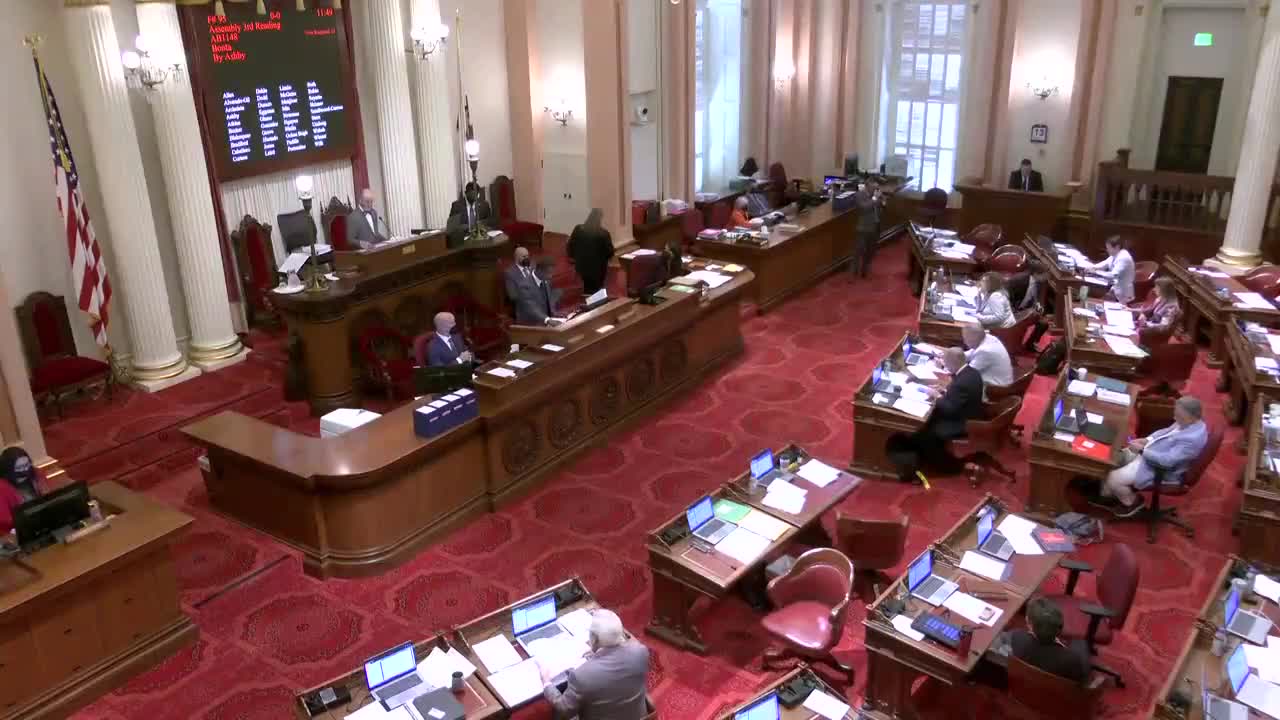 2MIN
Senate Floor
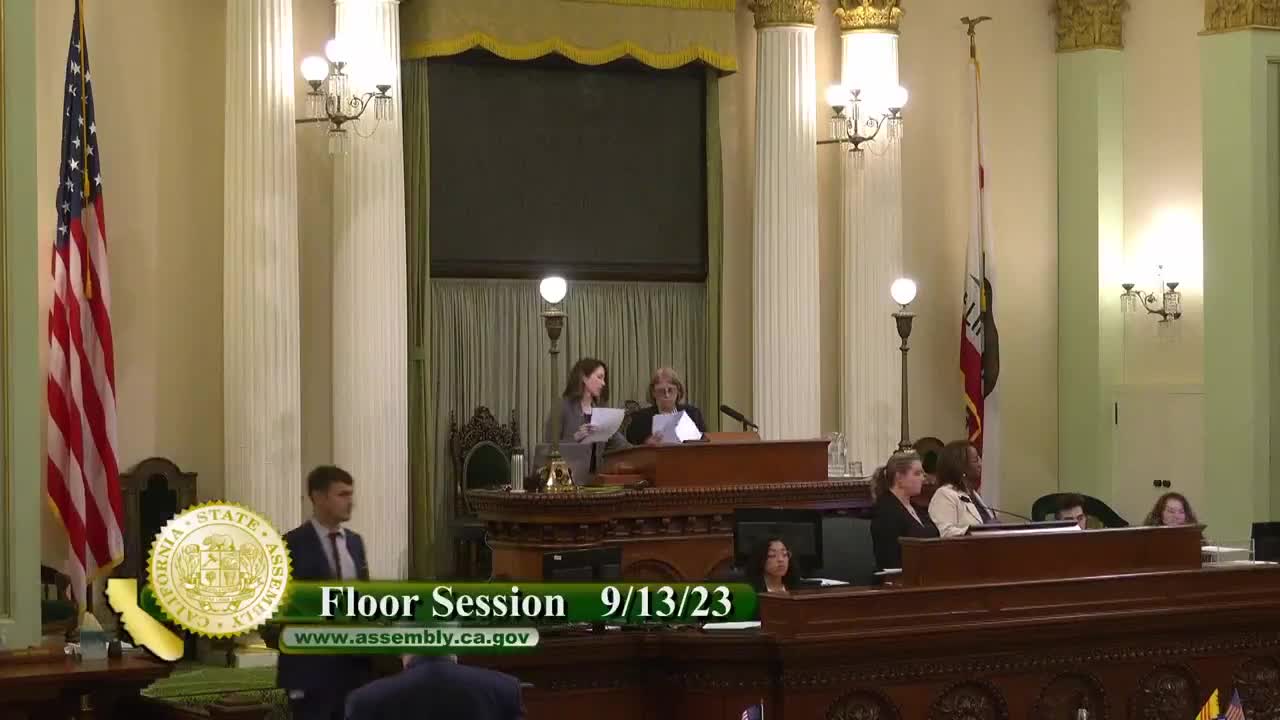 1MIN
Assembly Floor
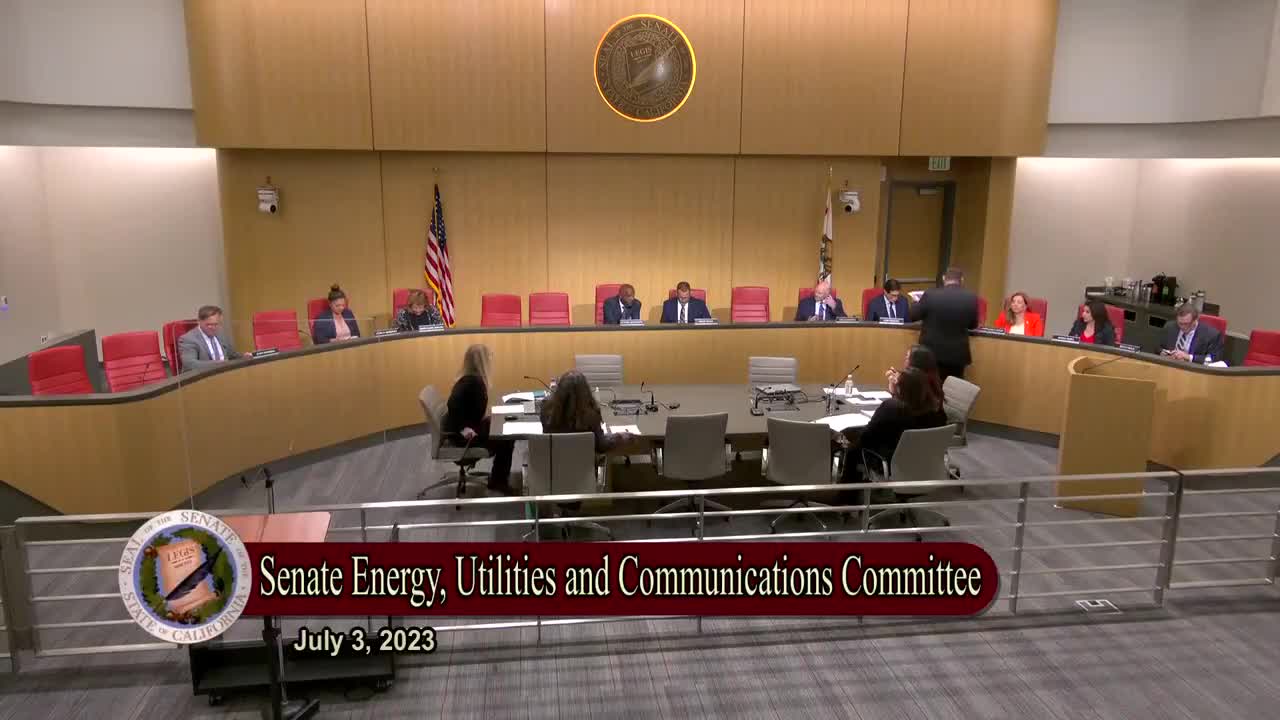 8MIN
Senate Standing Committee on Energy, Utilities and Communications
 1MIN
Assembly Floor
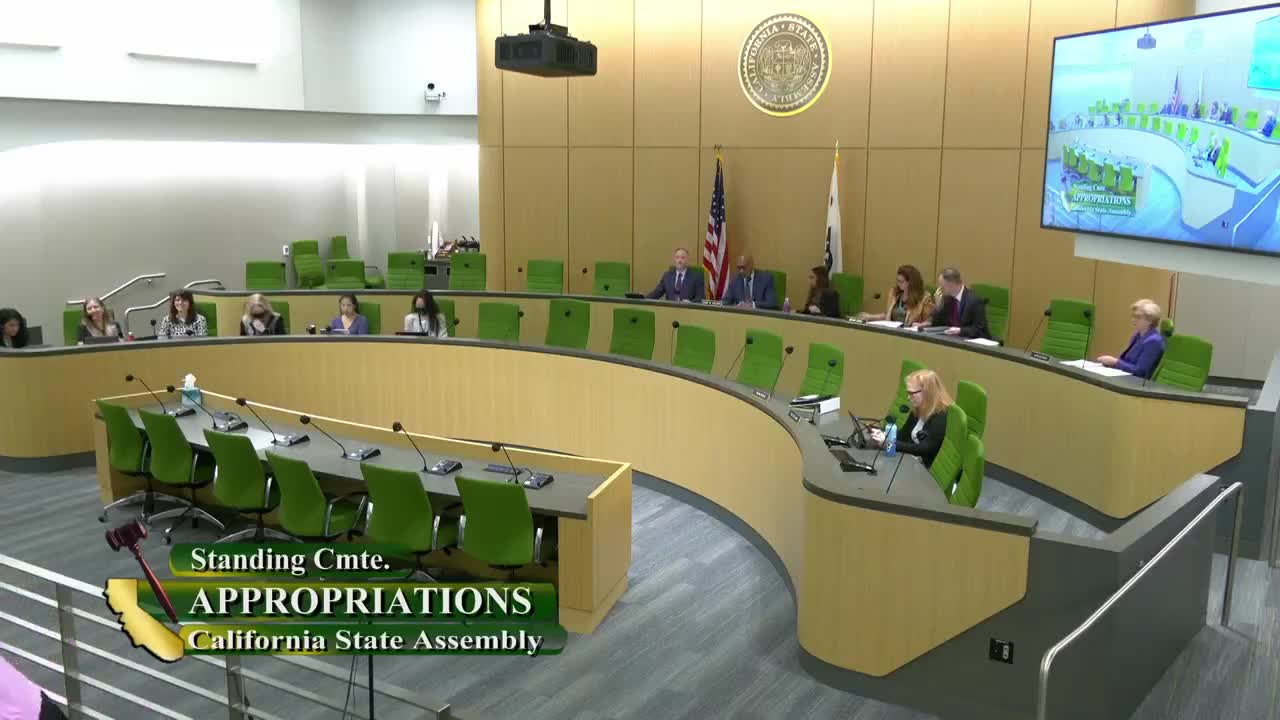 2MIN
Assembly Standing Committee on Appropriations
1MIN
Assembly Standing Committee on Appropriations
 9MIN
Assembly Standing Committee on Natural Resources
Bill Author

Bill Co-Author(s):