AB 690: Legal document assistants and unlawful detainer assistants.
- Session Year: 2023-2024
- House: Assembly
- Latest Version Date: 2023-10-07
Current Status:
Passed
(2023-10-07: Chaptered by Secretary of State - Chapter 341, Statutes of 2023.)
Introduced
In Committee
First Chamber
In Committee
Second Chamber
Enacted
What does this bill do?
This bill extends the rules that regulate legal document assistants and unlawful detainer assistants (people who prepare court or eviction-related forms for others) so those rules remain in effect until January 1, 2030. It keeps county clerks’ duty to register these assistants and maintains the misdemeanor penalties for failing to follow the registration and other requirements.
The summary is provided by generative AI which can make mistakes. For original language, please view the details in the table below.
Existing law provides for the regulation of legal document assistants and unlawful detainer assistants, and requires a legal document assistant or unlawful detainer assistant to be registered by the county clerk in the county in which the legal document assistants or unlawful detainer assistants principal place of business is located and where they maintain a branch office. Existing law makes the failure by a person who engages in acts of a legal document assistant or unlawful detainer assistant to comply with certain requirements for legal document assistants and unlawful detainer assistants a misdemeanor. Existing law repeals those provisions regulating legal document assistants and unlawful detainer assistants on January 1, 2024.
This bill would extend the operation of these provisions to January 1, 2030. Because the bill would continue the duties imposed on county clerks relating to legal document assistants and unlawful detainer assistants and because the bill would extend the operation of various provisions for which a violation is a misdemeanor, the bill would impose a state-mandated local program.
The California Constitution requires the state to reimburse local agencies and school districts for certain costs mandated by the state. Statutory provisions establish procedures for making that reimbursement.
This bill would provide that with regard to certain mandates no reimbursement is required by this act for a specified reason.
With regard to any other mandates, this bill would provide that, if the Commission on State Mandates determines that the bill contains costs so mandated by the state, reimbursement for those costs shall be made pursuant to the statutory provisions noted above.
This chapter shall remain in effect only until January 1, 2030, and as of that date is repealed.
SEC. 2.No reimbursement is required by this act pursuant to Section 6 of Article XIIIB of the California Constitution for certain costs that may be incurred by a local agency or school district because, in that regard, this act creates a new crime or infraction, eliminates a crime or infraction, or changes the penalty for a crime or infraction, within the meaning of Section 17556 of the Government Code, or changes the definition of a crime within the meaning of Section 6 of Article XIIIB of the California Constitution.
However, if the Commission on State Mandates determines that this act contains other costs mandated by the state, reimbursement to local agencies and school districts for those costs shall be made pursuant to Part 7 (commencing with Section 17500) of Division 4 of Title 2 of the Government Code.
This chapter shall remain in effect only until January 1, 2024, 2030, and as of that date is repealed.
SEC. 2.No reimbursement is required by this act pursuant to Section 6 of Article XIIIB of the California Constitution for certain costs that may be incurred by a local agency or school district because, in that regard, this act creates a new crime or infraction, eliminates a crime or infraction, or changes the penalty for a crime or infraction, within the meaning of Section 17556 of the Government Code, or changes the definition of a crime within the meaning of Section 6 of Article XIIIB of the California Constitution.
However, if the Commission on State Mandates determines that this act contains other costs mandated by the state, reimbursement to local agencies and school districts for those costs shall be made pursuant to Part 7 (commencing with Section 17500) of Division 4 of Title 2 of the Government Code.
|
Date
|
Status
|
|---|---|
| Oct 7, 2023 | Chaptered by Secretary of State - Chapter 341, Statutes of 2023. |
| Oct 7, 2023 | Approved by the Governor. |
| Sep 19, 2023 | Enrolled and presented to the Governor at 4 p.m. |
| Sep 12, 2023 | In Assembly. Ordered to Engrossing and Enrolling. |
| Sep 12, 2023 | Read third time. Passed. Ordered to the Assembly. (Ayes 38. Noes 0. Page 2619.). |
| Jun 27, 2023 | Read second time. Ordered to third reading. |
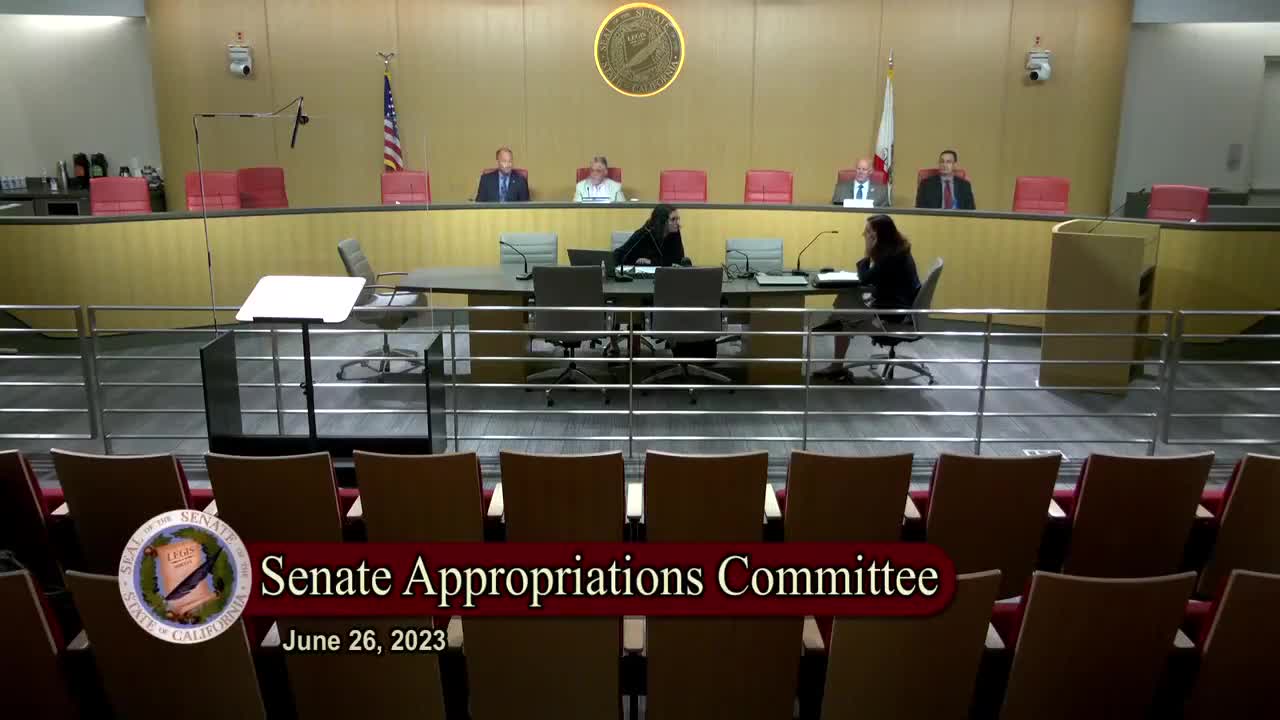
| Jun 26, 2023 | From committee: Do pass. (Ayes 6. Noes 0.) (June 26). |
| Jun 14, 2023 | From committee: Do pass and re-refer to Com. on APPR with recommendation: To Consent Calendar. (Ayes 10. Noes 0.) (June 13). Re-referred to Com. on APPR. |
| May 10, 2023 | Referred to Com. on JUD. |
| Apr 27, 2023 | In Senate. Read first time. To Com. on RLS. for assignment. |
| Apr 27, 2023 | Read third time. Passed. Ordered to the Senate. (Ayes 79. Noes 0. Page 1364.) |
| Apr 20, 2023 | Read second time. Ordered to Consent Calendar. |
| Apr 19, 2023 | From committee: Do pass. To Consent Calendar. (Ayes 14. Noes 0.) (April 19). |
| Mar 21, 2023 | From committee: Do pass and re-refer to Com. on APPR. with recommendation: To Consent Calendar. (Ayes 11. Noes 0.) (March 21). Re-referred to Com. on APPR. |
| Feb 23, 2023 | Referred to Com. on JUD. |
| Feb 14, 2023 | From printer. May be heard in committee March 16. |
| Feb 13, 2023 | Read first time. To print. |
|
Date
|
Description
|
Location
|
Votes
|
|
|---|---|---|---|---|
| Sep 12, 2023 | Assembly 3rd Reading AB690 Chen By Wilk | Senate Floor |
Passed |
|
| Jun 26, 2023 | Do pass | Senate Standing Committee on Appropriations |
Passed |
|
| Jun 13, 2023 | Do pass, but first be re-referred to the Committee on [Appropriations] with the recommendation: To Consent Calendar | Senate Standing Committee on Judiciary |
Passed |
|
| Apr 27, 2023 | AB 690 Chen Consent Calendar Second Day Regular Session | Assembly Floor |
Passed |
|
| Apr 19, 2023 | Do pass. To Consent Calendar. | Assembly Standing Committee on Appropriations |
Passed |
|
| Mar 21, 2023 | Do pass and be re-referred to the Committee on [Appropriations] with recommendation: To Consent Calendar | Assembly Standing Committee on Judiciary |
Passed |
This list shows positions taken on this bill by organizations on the date displayed, which is linked to the original source.
Positions by individuals are not included.
|
Organization
|
Position
|
Date
|
|---|---|---|
| California Apartment Association | ** Support | |
| California Association of Legal Document Assistants | ** Support | |
| Southern California Rental Housing Association | ** Support | |
| The Legal Connection Network | ** Support |
SENATE RULES COMMITTEE Office of Senate Floor Analyses (916) 651-1520 Fax: (916) 327-4478 | AB 690 |
THIRD READING
Bill No: AB 690
Author: Chen (R)
Introduced: 2/13/23
Vote: 21
SENATE JUDICIARY COMMITTEE: 10-0, 6/13/23
AYES: Umberg, Wilk, Allen, Ashby, Caballero, Durazo, Laird, Min, Niello, Wiener
NO VOTE RECORDED: Stern
SENATE APPROPRIATIONS COMMITTEE: 6-0, 6/26/23
AYES: Portantino, Ashby, Bradford, Seyarto, Wahab, Wiener
NO VOTE RECORDED: Jones
ASSEMBLY FLOOR: 79-0, 4/27/23 (Consent) - See last page for vote
SUBJECT: Legal document assistants and unlawful detainer assistants
SOURCE: California Association of Legal Document Assistants
DIGEST:
This bill extends the operation of the provisions of law regulating legal document assistants (LDAs) and unlawful detainer assistants (UDAs) from January 1, 2024, to January 1, 2030, and makes various other technical and nonsubstantive changes.
ANALYSIS:
Existing law:
- Requires an LDA or UDA to be registered by the county clerk in the county in which their principal place of business is located and in which in they maintain a branch office and to provide proof that the registrant has satisfied specified bonding requirements. (Bus. & Prof. Code § 6402 & 6405.)
- Prescribes various requirements an LDA and UDA must comply with when conducting business and prohibits certain acts and practices, such as making any false or misleading statements to the consumer concerning the subject matter, legal issues, or self-help service being provided. (Bus. & Prof. Code §§ 6408 et. seq. & 6411(a).)
- Sunsets these provisions as of January 1, 2024. (Bus. & Prof. Code § 6401.7.)
This bill extends the sunset of these provisions until January 1, 2030.
Comments
Under California law, certain types of legal services can be performed by LDAs or UDAs. LDAs and UDAs provide, for compensation, self-help assistance to members of the public who are representing themselves in legal matters. LDAs and UDAs provide an important service to low income litigants by helping these litigants navigate the legal process without hiring an attorney at a cost of hundreds of dollars an hour. LDAs and UDAs are prohibited from providing legal advice or opinion, but they are permitted to prepare legal documents; provide attorney-authored general information and published legal documents; and file and serve documents at the direction of the client. This bill extends the statutory authorization of LDAs and UDAs by extending the sunset date from January 1, 2024, to January 1, 2030.
The existing statutory framework for LDAs and UDAs provides very little regulatory oversight, as no single state entity is charged with certifying or overseeing LDAs and UDAs. They are required to register at the county level but this registration is not required to be posted online. Consumers can file complaints with the Department of Consumer Affairs, but as the Assembly Judiciary Committee notes “inquiries made by [the Assembly Judiciary Committee in 2019] indicate that neither the Department of Consumer Affairs, nor counties regularly communicate with one another regarding the regulation of legal document assistants.”[1] Without clear regulatory oversight, a consumer who is wronged by an LDA or UDA is has very little recourse except filing a civil action seeking redress, which is likely infeasible given the fact that a person seeking the services of an LDA or UDA likely could not afford to hire an attorney for the prior legal issue in the first place.
Over the past years there has been a recognition from stakeholders that stronger regulation of LDAs and UDAs is probably needed in order to better protect consumers; however, there is no clear consensus on what this would look like. The Assembly Judiciary Committee, and to a certain extent the State Bar of California, have indicated that LDAs and UDAs should be registered with and subject to some regulatory oversight from the State Bar; however, the LDA and UDA industry prefers to be overseen by the Department of Consumer Affairs.[2] The determination about what state entity should be tasked with overseeing LDAs and UDAs, though an important one, may best be left to a later date for several reasons. First, there is no clear consensus on what entity should be tasked with the oversight of LDAs and UDAs. Additionally, at the request of the Assembly Judiciary Committee, the Attorney General is researching and will issue an opinion regarding the legality of the State Bar potentially regulating non-attorneys as these groups do not “practice law”. (Request for Attorney General Opinion No. 22-602.)[3] This opinion has not yet been issued and would likely provide important guidance to crafting an appropriate regulatory framework. Lastly, the Legislature, as a result issues unrelated to LDAs and UDAs, imposed a temporary prohibition on the State Bar from evaluating programs to regulate paraprofessionals and, as such, cannot provide input into any new regulatory proposals during the temporary prohibition.[4]
FISCAL EFFECT: Appropriation: No Fiscal Com.: Yes Local: Yes
According to the Senate Appropriations Committee, there are likely minor and potentially reimbursable costs to county clerk recorders for continued registration of LDAs and UDAs, to the extent that the $175 registration fee is insufficient cover the costs associated with registration (local funds, General Fund). General Fund costs will depend on whether this bill constitutes a reimbursable state mandate subject to a determination by the Commission on State Mandates.
SUPPORT: (Verified 6/28/23)
California Association of Legal Document Assistants (source)
California Apartment Association
Southern California Rental Housing Association
Six individuals
OPPOSITION: (Verified 6/28/23)
None received
ARGUMENTS IN SUPPORT: The author writes:
AB 690 would allow individuals who wish to handle their own legal matters to work with Legal Document Assistants, by extending the sunset date on the statute authorizing and regulating LDAs for another 6 years.
The California Association of Legal Document Assistants writes:
Legal document assistants (LDAs) are experienced professionals authorized to prepare legal documents in a ministerial manner at the express direction of individuals wishing to represent themselves. LDAs provide affordable assistance to legal consumers with routine tasks such as typing and filing paperwork for child support modifications, child custody and visitation orders, domestic violence restraining orders, guardianships, limited conservatorships, and other form-intensive matters. CALDA estimates that there are currently 2,000 LDAs serving in California. […]
Because LDAs serve as a key resource for “self help” individuals, extending the existing statutes governing their profession for an additional six years is critically important. For these reasons, CALDA is pleased to sponsor AB 690 and urges your support when it is heard in the Senate Judiciary Committee.
ASSEMBLY FLOOR: 79-0, 4/27/23
AYES: Addis, Aguiar-Curry, Alanis, Alvarez, Arambula, Bains, Bauer-Kahan, Bennett, Berman, Boerner, Bonta, Bryan, Calderon, Juan Carrillo, Wendy Carrillo, Cervantes, Chen, Connolly, Megan Dahle, Davies, Dixon, Essayli, Flora, Mike Fong, Vince Fong, Friedman, Gabriel, Gallagher, Garcia, Gipson, Grayson, Haney, Hart, Holden, Hoover, Irwin, Jackson, Jones-Sawyer, Kalra, Lackey, Lee, Low, Lowenthal, Maienschein, Mathis, McCarty, McKinnor, Muratsuchi, Stephanie Nguyen, Ortega, Pacheco, Papan, Joe Patterson, Pellerin, Petrie-Norris, Quirk-Silva, Ramos, Reyes, Luz Rivas, Robert Rivas, Rodriguez, Blanca Rubio, Sanchez, Santiago, Schiavo, Soria, Ta, Ting, Valencia, Villapudua, Waldron, Wallis, Ward, Weber, Wicks, Wilson, Wood, Zbur, Rendon
NO VOTE RECORDED: Jim Patterson
Prepared by: Amanda Mattson / JUD. / (916) 651-4113
6/28/23 14:13:43
**** END ****
SENATE COMMITTEE ON
Senator Anthony Portantino, Chair
2023 - 2024 Regular Session
AB 690 (Chen) - Legal document assistants and unlawful detainer assistants
Version: | Policy Vote: |
Urgency: | Mandate: |
Hearing Date: | Consultant: |
Bill Summary:
AB 690 would extend the sunset on the regulatory scheme for legal document assistants (LDAs) and unlawful detainer assistants (UDAs) from January 1, 2024, to January 1, 2030.
Fiscal Impact:
Likely minor and potentially reimbursable costs to county clerk recorders for continued registration of LDAs and UDAs, to the extent that the $175 registration fee is insufficient cover the costs associated with registration (local funds, General Fund). General Fund costs will depend on whether this bill constitutes a reimbursable state mandate subject to a determination by the Commission on State Mandates.
Background:
Under California law, certain types of legal services can be performed by LDAs or UDAs. LDAs and UDAs provide, for compensation, self-help assistance to members of the public who are representing themselves in legal matters. LDAs and UDAs provide an important service to low income litigants by helping these litigants navigate the legal process without hiring an attorney at a cost of hundreds of dollars an hour. LDAs and UDAs are prohibited from providing legal advice or opinion, but they are permitted to prepare legal documents; provide attorney-authored general information and published legal documents; and file and serve documents at the direction of the client. This bill extends the statutory authorization of LDAs and UDAs by extending the sunset date from January 1, 2024, to January 1, 2030.
Proposed Law:
Extends the sunset of the provisions of law regulating LDAs and UDAs until January 1, 2030.
Related Legislation:
- AB 1213 (Chen, Ch. 128, Stats. 2019) extended the sunset date on the provisions governing LDAs and UDAs to January 1, 2024, and made other changes.
- AB 1698 (Gallagher, Ch. 295, Stats. 2015), among other things, added a sunset date of January 1, 2021, to the provisions governing LDAs and UDAs.
- AB 1698 (Committee on Judiciary, Ch. 1018, Stats. 2002) removed the sunset date on the provision relating to LDAs.
- SB 1418 (Rosenthal, Ch. 1079, Stats. 1998) created a new category of legal technician called the LDA, specified the types of services that an LDA may provide, required an LDA to register in the same manner as an UDA, and repealed the provisions relating to LDAs on January 1, 2003.
-- END --
Senator Thomas Umberg, Chair
2023-2024 Regular Session
Bill No: AB 690 (Author:Chen)
Version: February 13, 2023
Hearing Date: June 13, 2023
Fiscal: Yes
Urgency: No
Consultant: AM
SUBJECT
Legal document assistants and unlawful detainer assistants
DIGEST
This bill extends the operation of the provisions of law regulating legal document assistants (LDAs) and unlawful detainer assistants (UDAs) from January 1, 2024, to January 1, 2030, and makes various other technical and nonsubstantive changes.
EXECUTIVE SUMMARY
Existing law, until January 1, 2024, provides for the regulation of LDAs and UDAs by requiring LDAs and UDAs to register with the county clerk in the county in which their principal place of business is located and where they maintain a branch office. This bill would extend the operation of these provisions until January 1, 2030.
The bill is sponsored by the California Association of Legal Document Assistants. The bill is supported by the California Apartment Association, the Southern California Rental Housing Association, and various individuals. There is no known opposition.
PROPOSED CHANGES TO THE LAW
Existing law:
- Requires an LDA or UDA to be registered by the county clerk in the county in which their principal place of business is located and in which in they maintain a branch office and to provide proof that the registrant has satisfied specified bonding requirements. (Bus. & Prof. Code § 6402 & 6405.)
- Prescribes various requirements an LDA and UDA must comply with when conducting business and prohibits certain acts and practices, such as making any false or misleading statements to the consumer concerning the subject matter, legal issues, or self-help service being provided. (Bus. & Prof. Code §§ 6408 et. seq. & 6411(a).)
- Sunsets these provisions as of January 1, 2024. (Bus. & Prof. Code § 6401.7.)
This bill extends the sunset of these provisions until January 1, 2030.
COMMENTS
- Stated need for the bill
The author writes:
AB 690 would allow individuals who wish to handle their own legal matters to work with Legal Document Assistants, by extending the sunset date on the statute authorizing and regulating LDAs for another 6 years.
- This bill extends the sunset date on the authority of LDAs and UDAs to provide self-help assistance until January 1, 2030.
Under California law, certain types of legal services can be performed by LDAs or UDAs. LDAs and UDAs provide, for compensation, self-help assistance to members of the public who are representing themselves in legal matters. LDAs and UDAs provide an important service to low income litigants by helping these litigants navigate the legal process without hiring an attorney at a cost of hundreds of dollars an hour. LDAs and UDAs are prohibited from providing legal advice or opinion, but they are permitted to prepare legal documents; provide attorney-authored general information and published legal documents; and file and serve documents at the direction of the client. This bill extends the statutory authorization of LDAs and UDAs by extending the sunset date from January 1, 2024, to January 1, 2030.
The existing statutory framework for LDAs and UDAs provides very little regulatory oversight, as no single state entity is charged with certifying or overseeing LDAs and UDAs. They are required to register at the county level but this registration is not required to be posted online. Consumers can file complaints with the Department of Consumer Affairs, but as the Assembly Judiciary Committee notes “inquiries made by [the Assembly Judiciary Committee in 2019] indicate that neither the Department of Consumer Affairs, nor counties regularly communicate with one another regarding the regulation of legal document assistants.”[1] Without clear regulatory oversight, a consumer who is wronged by an LDA or UDA is has very little recourse except filing a civil action seeking redress, which is likely infeasible given the fact that a person seeking the services of an LDA or UDA likely could not afford to hire an attorney for the prior legal issue in the first place.
Over the past years there has been a recognition from stakeholders that stronger regulation of LDAs and UDAs is probably needed in order to better protect consumers; however, there is no clear consensus on what this would look like. The Assembly Judiciary Committee, and to a certain extent the State Bar of California, have indicated that LDAs and UDAs should be registered with and subject to some regulatory oversight from the State Bar; however, the LDA and UDA industry prefers to be overseen by the Department of Consumer Affairs.[2] The determination about what state entity should be tasked with overseeing LDAs and UDAs, though an important one, may best be left to a later date for several reasons. First, there is no clear consensus on what entity should be tasked with the oversight of LDAs and UDAs. Additionally, at the request of the Assembly Judiciary Committee, the Attorney General is researching and will issue an opinion regarding the legality of the State Bar potentially regulating non-attorneys as these groups do not “practice law”. (Request for Attorney General Opinion No. 22-602.)[3] This opinion has not yet been issued and would likely provide important guidance to crafting an appropriate regulatory framework. Lastly, the Legislature, as a result issues unrelated to LDAs and UDAs, imposed a temporary prohibition on the State Bar from evaluating programs to regulate paraprofessionals and, as such, cannot provide input into any new regulatory proposals during the temporary prohibition.[4]
- Comments in support
The sponsor of the bill, the California Association of Legal Document Assistants, writes:
Legal document assistants (LDAs) are experienced professionals authorized to prepare legal documents in a ministerial manner at the express direction of individuals wishing to represent themselves. LDAs provide affordable assistance to legal consumers with routine tasks such as typing and filing paperwork for child support modifications, child custody and visitation orders, domestic violence restraining orders, guardianships, limited conservatorships, and other form-intensive matters. CALDA estimates that there are currently 2,000 LDAs serving in California. […]
Because LDAs serve as a key resource for “self help” individuals, extending the existing statutes governing their profession for an additional six years is critically important. For these reasons, CALDA is pleased to sponsor AB 690 and urges your support when it is heard in the Senate Judiciary Committee.
SUPPORT
California Association of Legal Document Assistants (sponsor)
California Apartment Association
Southern California Rental Housing Association
6 individuals
OPPOSITION
None known
RELATED LEGISLATION
Pending Legislation: None known.
Prior Legislation:
AB 1213 (Chen, Ch. 128, Stats. 2019) extended the sunset date on the provisions governing LDAs and UDAs to January 1, 2024, and made other changes.
AB 1698 (Gallagher, Ch. 295, Stats. 2015), among other things, added a sunset date of January 1, 2021, to the provisions governing LDAs and UDAs.
AB 1698 (Committee on Judiciary, Ch. 1018, Stats. 2002) removed the sunset date on the provision relating to LDAs.
SB 1418 (Rosenthal, Ch. 1079, Stats. 1998) created a new category of legal technician called the LDA, specified the types of services that an LDA may provide, required an LDA to register in the same manner as an UDA, and repealed the provisions relating to LDAs on January 1, 2003.
AB 1573 (Burton, Ch. 1010, Stats. 1993) required individuals who render non-legal assistance in the prosecution or defense of an unlawful detainer action for compensation to register in every county in which the individual acts and be bonded as specified.
PRIOR VOTES
Assembly Floor (Ayes 79, Noes 0)
Assembly Appropriations Committee (Ayes 14, Noes 0)
Assembly Judiciary Committee (Ayes 11, Noes 0)
**************
Date of Hearing: April 19, 2023
ASSEMBLY COMMITTEE ON APPROPRIATIONS
Chris Holden, Chair
ABPCA Bill Id:AB 690
Author:(Chen) – As Introduced Ver:February 13, 2023
Policy Committee: | Judiciary | Vote: | 11 - 0 |
|
| ||
|
|
Urgency: No State Mandated Local Program: Yes Reimbursable: Yes
SUMMARY:
This bill extends the sunset date on statutes requiring legal document assistants and unlawful detainer assistants to register with a county clerk and comply with bonding requirements in order to provide legal self-help. This bill sets the sunset date for these provisions at January 1, 2030.
FISCAL EFFECT:
Absorbable, possibly reimbursable costs to county clerk recorders for continued registration of legal document assistants and unlawful detainer assistants. General Fund costs will depend on whether the duties imposed by this bill constitute a reimbursable state mandate, as determined by the Commission on State Mandates.
COMMENTS:
- Purpose. According to the author, “AB 690 would allow individuals who wish to handle their own legal matters to work with Legal Document Assistants, by extending the sunset date on the statute authorizing and regulating legal document assistants for another 6 years.”
- Background. Legal document assistants and unlawful detainer assistants provide self-help services to help litigants who do not have an attorney and are representing themselves in legal proceedings. These services often help low-income litigants navigate the legal process if they cannot afford legal representation. As authorized by statute, legal document assistants and unlawful detainer assistants may perform certain legal self-help services, including completing legal documents, filing legal forms, and serving legal forms at the specific direction of a person who is representing themselves in a legal matter. (Business and Professions Code section 6400, subdivision (d).) Legal document assistants and unlawful detainer assistants are required to register with their local county clerks and provide proof of bond between $25,000 and $100,000 depending on the number of document assistants employed by a particular organization. The original authorization for legal document assistants was enacted in 1998, and authorization has been extended several times since then, last in 2019. (AB 1213 (Chen) Chapter 128, Statutes of 2019.) This bill would extend the authorization again until January 1, 2030, allowing legal document assistants and unlawful detainer assistants to continue to provide self-help legal services to Californians. As summarized in the analysis of this bill by the Assembly Committee on Judiciary, there appear to be long-term concerns about the regulation and supervision of legal document assistants and unlawful detainer assistants; those concerns are not addressed by this bill.
Analysis Prepared by: Annika Carlson / APPR. / (916) 319-2081
Date of Hearing: March 21, 2023
ASSEMBLY COMMITTEE ON JUDICIARY
Brian Maienschein, Chair
ABPCA Bill Id:AB 690
Author:(Chen) – As Introduced Ver:February 13, 2023
PROposed consent
SUBJECT: Legal document assistants and unlawful detainer assistants
KEY ISSUE: should the statutory authority for legal document and unlawful detainer assistants to work in California be extended through January 1, 2030?
SYNOPSIS
Seeking to ensure the ongoing viability of professional legal document assistants and unlawful detainer assistants, this non-controversial measure extends the sunset date on the statutes authorizing and regulating legal document assistants and unlawful detainers assistants until January 1, 2030. Legal document assistants and unlawful detainer assistants provide aid to low-income court filers or “self-help filers” who must frequently file legal documents without the assistance of a licensed attorney. Legal document assistants support self-help filers by completing legal documents in a ministerial manner, providing general published factual information that has been written or approved by an attorney, making published legal documents available to self-help filers, and filing and serving legal forms and documents at the specific direction of a person who is representing himself or herself in a legal matter. The bill would ensure that the industry can continue to conduct business. Recent discussions have explored whether or not additional layers of oversight are necessary to ensure that legal document assistants do not exceed the scope of their permitted practice. However, as discussed in detail in this analysis, this legislative session is not the proper time for those discussions, and thus this measure simply extends the sunset date for the statutes authorizing legal document assistants and unlawful detainer assistants.
This measure is sponsored by the California Association of Legal Document Assistants and supported by the Legal Connection Network, a document assistant firm, in addition to the California Apartment Association. The proponents of this measure note that legal document assistants can provide services to unrepresented clients on ministerial manners, thus assisting these clients who cannot afford licensed attorneys. This measure has no known opposition.
SUMMARY: Extends the sunset date on the statutes authorizing and regulating the work of legal document assistants and unlawful detainer assistants in California to January 1, 2030.
EXISTING LAW:
- Prohibits any legal document assistant, including those employed by a partnership or corporation, from providing any self-help service for compensation, unless the legal document assistant is registered in the county in which their principal place of business is located, as specified. (Business & Professions Code Section 6400 (f).)
- A legal document assistant or unlawful detainer assistant shall be registered by the county clerk in the county in which their principal place of business is located and a county in which they maintain a branch office, and provide proof that the registrant has satisfied the bonding requirement. (Business & Professions Code Section 6402.)
- Provides that in order to be eligible to apply for registration as a legal document assistant, the applicant shall possess at least one of the following:
- A high school diploma or general equivalency diploma, and either a minimum of two years of law-related experience under the supervision of a licensed attorney, or a minimum of two years’ experience, prior to January 1, 1999, providing self-help service;
- A baccalaureate degree in any field and either a minimum of one year of law-related experience under the supervision of a licensed attorney, or a minimum of one year of experience, prior to January 1, 1999, providing self-help service;
- A certificate of completion from a paralegal program that is institutionally accredited but not approved by the American Bar Association, that requires successful completion of a minimum of 24 semester units, or the equivalent, in legal specialization courses; or
- A certificate of completion from a paralegal program approved by the American Bar Association. (Business and Professions Code Section 6402.1.)
- Requires any applicant registering as a legal document assistant to pay a fee of $175 to the county clerk at the time they submit an application for initial registration, including a primary or secondary registration, or renewal of registration. (Business & Professions Code Section 6404.)
- Requires an individual applicant registering as a legal document assistant to post a bond of $25,000, and any partnership or corporation applying for registration to post a bond of $25,000 for one to four assistants, $50,000 for five to nine assistants, and $100,000 for ten or more assistants. (Business & Professions Code Section 6505.)
- Provides that a certificate of registration shall be effective for a period of two years, and requires the county clerk to deny registration or renewal of registration if the applicant has been convicted of specified crimes, has been found guilty of the unauthorized practice of law, has been held civilly liable for negligent, reckless, or willful failure to properly perform their obligation as a legal document assistant, or has had their registration previously revoked, as provided. (Business & Professions Code Section 6406.)
- Requires the county clerk to maintain a register of legal document assistants and unlawful detainer assistants, assign a unique number to each legal document assistant and unlawful detainer assistant, and issue an identification card to each one. Provides that upon renewal of registration, the same number shall be assigned, provided there is no lapse in the period of registration. (Business & Professions Code Section 6407.)
- Requires any registrant as a legal document assistant or unlawful detainer assistant to provide the registrant’s name, business address, telephone number, registration number, expiration date of the registration, and county of registration to appear in any solicitation or advertisement, and on any papers or documents prepared or used by the registrant, including, but not limited to, contracts, letterhead, business cards, correspondence, documents, forms, claims, petitions, checks, receipts, money orders, and pleadings. (Business & Professions Code Section 6408.)
- Requires every legal document assistant and unlawful detainer assistant who enters into a contract or agreement with a client, prior to providing any services, to provide the client with a written contract that meets certain criteria and contains specified statements and disclaimers, as specified by the Department of Consumer Affairs. (Business & Professions Code Section 6410.)
- Provides that the legal authority for registered legal document assistants is repealed on January 1, 2024. (Business and Professions Code Section 6401.7.)
FISCAL EFFECT: As currently in print this bill is keyed fiscal.
COMMENTS: This measure extends the sunset date of the statutory framework that authorizes legal document assistants to practice in California. Legal document assistants are non-attorneys who are permitted to assist persons fill out legal documents in preparation for filing those documents in court. Legal document assistants are prohibited from providing any legal advice or otherwise taking action that would constitute the practice of law. In support of continuing to authorize this profession through 2030, the author states:
AB 690 would allow individuals who wish to handle their own legal matters to work with Legal Document Assistants, by extending the sunset date on the statute authorizing and regulating legal document assistants for another 6 years.
Background on legal document assistants. Existing provisions of the Business and Professions Code regulate both legal document assistants and unlawful detainer assistants. Although they are defined separately in statute, the two groups are subject to the same registration and oversight structure, and unless otherwise stated, will be discussed interchangeably in this analysis. Generally speaking, legal document assistants provide legal document preparation and self-help services to the public within parameters established by existing law. Legal document assistants may not provide any self-help service for compensation unless registered in the county of their principal place of business, and any other county in which they serve clients. The term "self-help services" defines the activities that registered legal document assistants are specifically authorized to perform, namely: (1) completing legal documents in a ministerial manner, selected by a self-represented person, by typing or otherwise completing the documents at the person’s specific direction; (2) providing general published factual information that has been written or approved by an attorney, pertaining to legal procedures, rights, or obligations to a person who is representing themselves in a legal matter, to assist the person in self-representation; (3) making published legal documents available to a person who is representing themselves in a legal matter; and (4) filing and serving legal forms and documents at the specific direction of a person who is representing themselves in a legal matter.
Despite performing a critical role for low-income litigants, legal document assistants are not attorneys. There is little question that legal document assistants provide critical services to low income litigants by helping these litigants navigate the legal process without requiring a person to hire an attorney at a cost of hundreds of dollars an hour. However, despite their training and experience, legal document assistants are not licensed attorneys and are not subject to the same regulation and oversight by the State Bar of California that attorneys face. Indeed, there is little state-level oversight of legal document assistants whatsoever. The lack of statewide oversight of legal document assistants is troubling because, to many lay members of the public, this distinction between a legal document assistant and State Bar licensed attorney may not be entirely clear. Accordingly, existing law requires a legal document assistant, or business thereof, to provide disclaimers noting that the legal document assistant is not an attorney and that the business is not a law firm.
This bill. Recognizing the lack of a comprehensive statewide regulatory apparatus for legal document assistants, this bill is the latest in a series of legislation dealing with the legal framework and statutory authority for legal document assistants. The original authorization for legal document assistants was conducted on a trial basis, and is discussed in greater detail below. In 2002, the Legislature agreed to extend the program and removed the initial sunset. (AB 1698 (Committee on Judiciary) Chap. 1018, Stats 2002.) In 2015, seeking reforms to the legal document assistant program, AB 285 (Gallagher), Chap. 295, Stats. 2015, was enacted subject to a six-year sunset. That sunset was extended in 2019 with the passage of AB 1213 (Chen) Chap. 128, Stats. 2019. At the time of the passage of AB 1213, this Committee noted that a more thorough reexamination of the regulatory framework of legal document assistants would be prudent, given that no one body serves to oversee legal document assistants. Unfortunately, the ensuing COVID-19 pandemic upended any efforts to reform the regulatory framework for legal documents assistants, and, as discussed below, several factors complicate performing the comprehensive and necessary review in this year’s legislation. Nonetheless, to ensure that the entire legal document assistant industry is not arbitrarily eliminated, rendering legal document assistants unemployed and Californians unable to access their services, this bill reauthorizes the statutes that regulate legal document assistants through January 1, 2030.
Although legal document assistants provide helpful services to unrepresented litigants, the existing regulatory structure is woefully inadequate. The existing statutory framework authorizing legal document assistants dates back to the 1990s when the Legislature first began to regulate the profession in response to an epidemic of fraud perpetrated upon vulnerable consumers by non-lawyers who offered legal document preparation and other services for a fee. Because the statute was intended to deter bad actors and stop the spread of activity that was largely presumed to be part of a scheme to commit fraud, the existing statutes contains a number of provisions regulating the profession including the following: minimum educational requirements; continuing education requirements; and strict limitations on the scope of aid that legal document assistants can provide. That framework was set to sunset in the early 2000s. When the original provisions were studied by legal scholars, they noted that "existing enforcement mechanisms are at least minimally sufficient to provide the necessary consumer protection." (J. Clark Kelso, An Assessment of the Legal Document Assistant Pilot Project, (May 2002) McGeorge School of Law [emphasis added].) Accordingly, the Legislature reapproved the legal document assistant framework and has done so two additional times since 2002.
Although these standards are minimally sufficient, they are far from optimal. Indeed, the existing legal framework creates a confusing patchwork of regulations whereby legal document assistants register at the county level; consumers can transmit complaints to the state Department of Consumer Affairs; and no party maintains any clear authority to discipline legal document assistants who actually commit unlawful or unethical conduct. Additionally, inquiries made by this Committee in both 2019 and in evaluating this measure indicate that neither the Department of Consumer Affairs, nor counties regularly communicate with one another regarding the regulation of legal document assistants. Without a clear authority designated to protect the public from unscrupulous actors, any consumer wronged by a legal document assistant has little recourse but to file a civil action against the legal document assistant to seek redress, a task made all the more difficult given the fact that a person seeking the services of a legal document assistant already could not afford to hire an attorney for their prior legal issues. Given that legal document assistant work, by nature, teeters precariously close to the actual practice of law, more stringent oversight of the profession would seem prudent and necessary.
Dueling approaches to future regulation and oversight of legal document assistants. In recent years, multiple stakeholders involved with the broader legal profession, including both the State Bar of California and the legal document assistants themselves, have recognized the need for better regulation of the industry. However, there appear to be two significantly different approaches to accomplishing this goal. This Committee, and to a certain degree the State Bar of California, are generally of the belief that the legal document assistants should register with and be subject to some level of oversight from the State Bar. Given that the State Bar is the regulator of the legal profession in California, this approach seems to be the most practical. However, in broaching the concept of registration and regulation by the State Bar in 2022, the legal document assistants made it abundantly clear they preferred to be regulated by the Department of Consumer Affairs, which would provide the legal document assistants the additional benefit of removing the profession from the oversight of this Committee. Indeed, in one newspaper article on the topic of regulation of legal document assistants in which the legal document assistants also revealed the substance of several conversations with this Committee and its former chair, industry representatives made it clear that they believe the State Bar seeks a “complete takeover” of the legal document assistant profession and that this desire is the result of attorneys fearing competition from legal document assistants. (Robert J Hansen, Bar Wants Supervision and Control of Legal Document Assistant Professionals, Union Says, Davis Vanguard Jul. 18, 2022, available at: https://www.davisvanguard.org/2022/07/bar-wants-supervision-and-control-of-legal-document-assistant-professionals-union-says/.)
The assertions made by the legal document assistant industry regarding the intent of the State Bar of California are somewhat conspiratorial and generally do not comport with public statements of the State Bar, or the organization’s core duty to protect the public from bad actors in the legal profession. Indeed, it appears that the State Bar began considering regulating legal document assistants when it undertook a study of a potential licensing regime for “paraprofessionals,” essentially persons authorized to conduct limited activities in the legal realm in order to help close the justice gap for lower income Californians. In undertaking that study, it seems the State Bar realized that there is a general lack of regulation of legal document assistants; and that more oversight of the industry was necessary in order to protect the public from unscrupulous actors and legal document assistants who veer outside of their scope of practice and provide actual legal advice. Especially given that the State Bar no longer serves as a trade association for attorneys, but solely as a regulator of the practice of law, the fears expressed by legal document assistants that regulation by the State Bar would eliminate competition with attorneys appear to be unfounded. Instead, by moving the legal document assistants under the oversight of the Bar, this Committee could continue its work to better protect the public from bad actors in all aspects of the legal community.
Despite the State Bar’s new interest in regulation of legal document assistants, determining what entity should properly regulate legal document assistants does not appear ripe for consideration during this legislative session. First, as a result of issues unrelated to legal document assistants, the Legislature imposed a short-term prohibition on the State Bar from evaluating programs to regulate paraprofessionals, including regulation of legal document assistants. (AB 2958 (Committee on Judiciary) Chap. 419, Stats. 2022.) Accordingly, given that the State Bar is unable to provide critical input into any new proposals, significant reforms to the statutes providing for oversight and regulation of legal document assistants seems imprudent at this time.
Additionally, in 2022, this bill’s author sought guidance from the Attorney General regarding the legality of the State Bar potentially regulating non-attorneys as these groups do not “practice law”. (Request for Attorney General Opinion No. 22-602.) It should be noted that California courts have typically adopted a more broad interpretation of the “practice of law” than the view adopted by the legal document assistants, with courts noting that the practice of law may include, “the doing and performing services in a court of justice in any matter depending therein throughout its various stages and in conformity with the adopted rules of procedure.” (People v. Merchants Protective Corp. (1922) 189 Cal. 531, 535 [emphasis added].) Nonetheless, the requested opinion has yet to be published by the Attorney General and would likely be helpful to guiding the development of any future regulatory program, thus necessitating further delay in crafting a new regulatory framework for legal document assistants.
Should the Attorney General determine that the State Bar can appropriately regulate legal document assistants, it would be prudent for this Committee to include the State Bar in discussions surrounding the crafting of a comprehensive regulatory structure for legal document assistants to ensure that this Committee retains jurisdiction over professionals working very closely, but not within the practice of law. Nonetheless, while the Committee awaits the Attorney General’s opinion and the end of the embargo on the State Bar’s participation in discussions surrounding paraprofessionals, to ensure the ongoing viability of the legal document assistant industry extending the sunset on the legal authorization of legal document assistants without significant changes to the legal framework appears reasonable.
ARGUMENTS IN SUPPORT: This measure is sponsored by the California Association of Legal Document Assistants. In support of this bill they write:
Legal Document Assistants provide assistance with routine tasks such as typing and filing paperwork for child support modifications, child custody and visitation orders, domestic violence restraining orders, guardianships, limited conservatorships, and other form-intensive matters.
A study commissioned by the State Bar in 2019 identified a significant legal needs gap in California. Among the study’s findings, it was determined that low-income Californians approached legal aid organizations for help with over 450,000 civil legal problems. Of those, the study found that only 30% were fully served by legal aid organizations, with 44% of those individuals needing simple legal help, such as the preparation of documents.
Legal Document Assistants represent a key part of the solution to better serving the unmet needs of Californians, specifically when such matters do not necessitate legal counsel or in instances when individuals wish to represent themselves. Because Legal Document Assistants serve as a key resource for “self-help” individuals, extending the existing statutes governing their profession for an additional six years is critically important
REGISTERED SUPPORT / OPPOSITION:
Support
California Association of Legal Document Assistants (sponsor)
California Apartment Association
The Legal Connection Network
Opposition
None on file
Analysis Prepared by: Nicholas Liedtke / JUD. / (916) 319-2334
Discussed in Hearing
View Older Hearings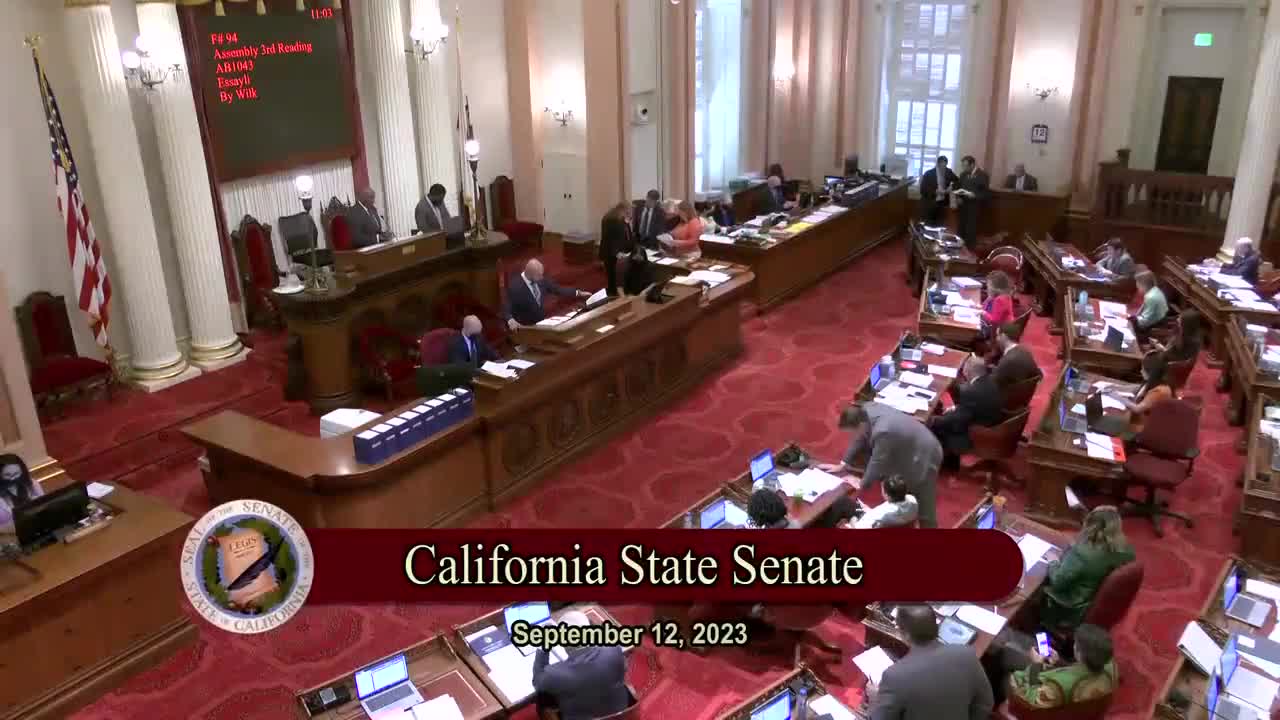
Bill Author

Bill Co-Author(s):