AB 700: California Firefighter Cancer Prevention and Research Program.
- Session Year: 2023-2024
- House: Assembly
- Latest Version Date: 2023-09-30
Current Status:
Passed
(2023-09-30: Chaptered by Secretary of State - Chapter 268, Statutes of 2023.)
Introduced
In Committee
First Chamber
In Committee
Second Chamber
Enacted
The California Constitution provides that the University of California constitutes a public trust administered by the Regents of the University of California, a corporation in the form of a board, with full powers of organization and government, subject to legislative control only for specified purposes. Under existing law, the Regents of the University of California may adopt rules and regulations as may be necessary to operate any project. Existing law establishes and funds various research centers and programs in conjunction with the University of California.
This bill, subject to a resolution adopted by the Regents of the University of California agreeing to undertake the below-described duties, would establish the California Firefighter Cancer Prevention and Research Program, and would request the University of California to develop and administer a competitive grant program to award grants to eligible educational institutions to conduct research on the California fire service using a community-based participatory research model, as defined, in collaboration with California firefighters. The bill would require the University of California, in consultation with the FIRESCOPE Program, to develop the strategic guidelines and priorities of the program and receive and evaluate the applications of the eligible educational institutions. The bill would require the FIRESCOPE Program to make final recommendations to the University of California on which grants should be funded. The bill would also require the University of California, in consultation with the FIRESCOPE Program, to prepare a report to the Legislature, on or before January 1, 2025, with a 2nd report due on or before January 1, 2030, with specified information, including the number and dollar amounts of the grants that have been awarded.
The California Constitution provides that the University of California constitutes a public trust administered by the Regents of the University of California, a corporation in the form of a board, with full powers of organization and government, subject to legislative control only for specified purposes. Under existing law, the Regents of the University of California may adopt rules and regulations as may be necessary to operate any project. Existing law establishes and funds various research centers and programs in conjunction with the University of California.
This bill, subject to an appropriation by the Legislature in the annual Budget Act or another statute for these purposes and a resolution adopted by the Regents of the University of California agreeing to undertake the below-described duties, would establish the California Firefighter Cancer Prevention and Research Program, and would request the University of California to develop and administer a competitive grant program to award grants to eligible educational institutions to conduct research on the California fire service using a fire service community-based participatory research model, as defined. defined, in collaboration with California firefighters. The bill would require the University of California, in consultation with the FIRESCOPE Program, to develop the strategic guidelines and priorities of the program and receive and evaluate the applications of the eligible educational institutions. The bill would require the FIRESCOPE Program to make final recommendations to the University of California on which grants should be funded. The bill would also require the University of California, in consultation with the FIRESCOPE Program, to prepare an annual a report to the Legislature, beginning on or before January 1, 2025, with a 2nd report due on or before January 1, 2030, with specified information, including the number and dollar amounts of the grants that have been awarded.
The California Constitution provides that the University of California constitutes a public trust administered by the Regents of the University of California, a corporation in the form of a board, with full powers of organization and government, subject to legislative control only for specified purposes. Under existing law, the Regents of the University of California may adopt rules and regulations as may be necessary to operate any project. Existing law establishes and funds various research centers and programs in conjunction with the University of California.
This bill would, bill, subject to an appropriation by the Legislature in the annual Budget Act or another statute for these purposes, purposes and a resolution adopted by the Regents of the University of California agreeing to undertake the below-described duties, would establish the California Firefighter Cancer Prevention and Research Program, and would require the State Department of Public Health request the University of California to develop and administer a competitive grant program to award grants to eligible educational institutions to conduct research using a fire service community-based participatory research model, as defined. The bill would require the department, in consultation with the University of California and University of California, in consultation with the FIRESCOPE Program, to develop the strategic guidelines and priorities of the program. The bill would also require the department to program and receive and evaluate the applications of the eligible educational institutions. The bill would require the FIRESCOPE Program to make final recommendations to the department University of California on which grants should be funded. The bill would also require the department University of California, in consultation with the FIRESCOPE Program, to prepare an annual report to the Legislature, beginning on January 1, 2025, with specified information, including the number and dollar amounts of the grants that have been awarded.
Existing law establishes the State Department of Public Health, which is responsible for various programs relating to, among other things, disease prevention and health promotion, including the Cancer Research Program, under which the department provides grants for cancer research.
This bill would, subject to an appropriation by the Legislature in the annual Budget Act or another statute for these purposes, establish the California Firefighter Cancer Prevention and Research Program, and would require the State Department of Public Health, in consultation with the University of California Office of Research and Innovation and the FIRESCOPE Program, to develop and administer the program. The bill would require the department Health to develop and administer a competitive grant program to award grants to eligible educational institutions to conduct research using a fire service community-based participatory research model, as defined. The bill would require the department, in consultation with the University of California and the FIRESCOPE Program, to develop the strategic guidelines and priorities of the program. The bill would also require the department to receive and evaluate the applications of the eligible educational institutions. The bill would require the FIRESCOPE Program to make final recommendations to the department on which grants should be funded. The bill would also require the department to prepare an annual report to the Legislature, beginning on January 1, 2025, with specified information, including the number and dollar amounts of the grants that have been awarded.
Existing law establishes the State Department of Public Health, which is responsible for various programs relating to, among other things, disease prevention and health promotion, including the Cancer Research Program, under which the department provides grants for cancer research.
This bill would, subject to an appropriation by the Legislature in the annual Budget Act or another statute for these purposes, establish the California Firefighter Cancer Prevention and Research Program, and would require the State Department of Public Health, in consultation with the University of California Office of Research and Innovation and the FIRESCOPE Program, to develop and administer the program. The bill would require the department to award grants to eligible educational institutions to conduct research using a fire service community-based participatory research model, as defined.
The Legislature finds and declares all of the following:
(a)Cancer is the leading cause of death among firefighters in the United States. Californias firefighters are exposed to many known and suspected human carcinogens in the line of duty.
(b)In June of 2022, the International Agency for Research on Cancer (IARC) classified occupational exposure as a firefighter as a Group 1 known human carcinogen.
(c)Recent studies from the National Institute for Occupational Safety and Health (NIOSH) confirm an increased risk of cancer in firefighters, including a 14-percent higher risk of dying from cancer than the general United States population, a twofold increase in both the incidence and mortality of firefighters diagnosed with mesothelioma, and a tenfold increase in the incidence of bladder cancer among women in the fire service.
(d)A NIOSH case-control study of California firefighters found significant increases of melanoma, adenocarcinoma of the esophagus, multiple myeloma, acute myeloid leukemia, and prostate, brain, and kidney cancer.
(e)The Office of Emergency Services (Cal OES), Department of Forestry and Fire Protection (Cal Fire), and Office of the State Fire Marshall (SFM) jointly administer the FIRESCOPE Program, which represents the unified voice of the fire service in California. In August 2022, FIRESCOPE established the Cancer Prevention Subcommittee within the program.
(f)The community-based participatory research (CBPR) model involves firefighters and researchers collaboratively developing research aims, study design, and timelines so that research results will have a positive, direct, and timely impact on the California fire service. Conducting CBPR projects is an integral part of Californias 202125 Comprehensive Cancer Control Plan, which seeks to prevent cancer and save lives through collaboration.
(g)It is the intent of the Legislature, in enacting this act, to establish a program to award grants for community-based participatory research examining biomarkers of carcinogenic exposure and effect in order to identify the biological mechanisms that cause cancer in firefighters, and to reduce the incidence of cancer among California firefighters.
SEC. 2.Article 4 (commencing with Section 104210) is added to Chapter 2 of Part 1 of Division 103 of the Health and Safety Code, to read:4.California Firefighter Cancer Prevention and Research Program 104210.For the purposes of this article, the following definitions apply:
(a)Eligible educational institutions means University of California campuses that meet the eligibility criteria developed pursuant to Section 104210.1.
(b)Community-based participatory research means a mechanism by which academic partners establish a meaningful and ongoing collaboration with the population of interest to ensure that the research is relevant and needed in the community and is conducted in a responsible and respectful manner. The research engages communities at different times during the research process.
104210.1.(a)The California Firefighter Cancer Prevention and Research Program is hereby established. The Legislature requests the University of California to develop and administer a competitive grant program for the purpose of awarding grants to eligible educational institutions to conduct research on the California fire service using a community-based participatory research model in collaboration with California firefighters. The research shall include, but not be limited to, understanding of biomarkers of exposure that quantify chemical carcinogens absorbed and metabolized by firefighters and studying biomarkers of effect that quantify cancer-promoting cellular changes that ultimately lead to a cancer diagnosis.
(b)The University of California, in consultation with the FIRESCOPE Program, shall develop the strategic objectives and priorities of the program and receive and evaluate applications of eligible educational institutions.
(c)The FIRESCOPE Program shall make the final recommendations to the University of California on which research grants should be funded based on the research priorities established for the program and the technical merits of the proposals as determined by peer review panels modeled upon the National Institutes of Health peer review process.
(d)The University of California, in consultation with the FIRESCOPE Program, shall prepare a report, to be submitted to the Legislature on or before January 1, 2025, and on or before January 1, 2030. The report shall include, but not be limited to, all of the following:
(1)The number and dollar amounts of research grants that have been awarded.
(2)The name of each eligible educational institution receiving grant awards.
(3)The name of each fire department working with the eligible educational institution conducting research funded by a grant awarded under this section.
(4)A summary of research findings from the research funded by a grant awarded under this section.
(e)(1)The requirement for submitting a report imposed under this section is inoperative on January 1, 2031, pursuant to Section 10231.5 of the Government Code.
(2)A report to be submitted under this section shall be submitted in compliance with Section 9795 of the Government Code.
104210.2.Implementation of this article shall be subject to a resolution adopted by the Regents of the University of California agreeing to undertake the duties outlined in this article.
The Legislature finds and declares all of the following:
(a)Cancer is the leading cause of death among firefighters in the United States. Californias firefighters are exposed to many known and suspected human carcinogens in the line of duty.
(b)In June of 2022, the International Agency for Research on Cancer (IARC) classified occupational exposure as a firefighter as a Group 1 known human carcinogen.
(c)Recent studies from the National Institute for Occupational Safety and Health (NIOSH) confirm an increased risk of cancer in firefighters, including a 14-percent higher risk of dying from cancer than the general United States population, a twofold increase in both the incidence and mortality of firefighters diagnosed with mesothelioma, and a tenfold increase in the incidence of bladder cancer among women in the fire service.
(d)A NIOSH case-control study of California firefighters found significant increases of melanoma, adenocarcinoma of the esophagus, multiple myeloma, acute myeloid leukemia, and prostate, brain, and kidney cancer.
(e)The Office of Emergency Services (Cal OES), Department of Forestry and Fire Protection (Cal Fire), and Office of the State Fire Marshall (SFM) jointly administer the FIRESCOPE Program, which represents the unified voice of the fire service in California. In August 2022, FIRESCOPE established the Cancer Prevention Subcommittee within the program.
(f)The fire service community-based participatory research (CBPR) model involves firefighters and researchers collaboratively developing research aims, study design, and timelines so that research results will have a positive, direct, and timely impact on the California fire service. Conducting CBPR projects is an integral part of Californias 202125 Comprehensive Cancer Control Plan, which seeks to prevent cancer and save lives through collaboration.
(g)It is the intent of the Legislature, in enacting this act, to establish a program to award grants for fire service community-based participatory research examining biomarkers of carcinogenic exposure and effect in order to identify the biological mechanisms that cause cancer in firefighters, and to reduce the incidence of cancer among California firefighters.
SEC. 2.Article 4 (commencing with Section 104210) is added to Chapter 2 of Part 1 of Division 103 of the Health and Safety Code, to read:4.California Firefighter Cancer Prevention and Research Program 104210.For the purposes of this article, the following definitions apply:
(a)Eligible educational institutions means University of California campuses that meet the eligibility criteria developed pursuant to Section 104210.1.
(b)Community-based participatory research means a mechanism by which academic partners establish a meaningful and ongoing collaboration with the population of interest to ensure that the research is relevant and needed in the community and is conducted in a responsible and respectful manner. The research engages communities at different times during the research process.
104210.1.(a)The California Firefighter Cancer Prevention and Research Program is hereby established. The Legislature requests the University of California to develop and administer a competitive grant program for the purpose of awarding grants to eligible educational institutions to conduct research on the California fire service using a fire service community-based participatory research model. model in collaboration with California firefighters. The research shall include, but not be limited to, understanding of biomarkers of exposure that quantify chemical carcinogens absorbed and metabolized by firefighters and studying biomarkers of effect that quantify cancer-promoting cellular changes that ultimately lead to a cancer diagnosis.
(b)The University of California, in consultation with the FIRESCOPE Program, shall develop the strategic objectives and priorities of the program and receive and evaluate applications of eligible educational institutions.
(c)The FIRESCOPE Program shall make the final recommendations to the University of California on which research grants should be funded based on the research priorities established for the program. program and the technical merits of the proposals as determined by peer review panels modeled upon the National Institutes of Health peer review process.
(d)The University of California, in consultation with the FIRESCOPE Program, shall prepare an annual a report, to be submitted to the Legislature on or before January 1, 2025, and every year thereafter. on or before January 1, 2030. The report shall include, but not be limited to, all of the following:
(1)The number and dollar amounts of research grants that have been awarded.
(2)The name of each eligible educational institution receiving grant awards.
(3)The name of each fire department working with the eligible educational institution conducting research funded by a grant awarded under this section.
(4)A summary of research findings from the research funded by a grant awarded under this section.
(e)(1)The requirement for submitting a report imposed under this section is inoperative on January 1, 2029, 2031, pursuant to Section 10231.5 of the Government Code.
(2)A report to be submitted under this section shall be submitted in compliance with Section 9795 of the Government Code.
104210.2.Implementation of this article shall be subject to both of the following: a resolution adopted by the Regents of the University of California agreeing to undertake the duties outlined in this article.
(a)An appropriation by the Legislature in the annual Budget Act or another statute for these purposes.(b)A resolution adopted by the Regents of the University of California agreeing to undertake the duties outlined in this article.The Legislature finds and declares all of the following:
(a)Cancer is the leading cause of death among firefighters in the United States. Californias firefighters are exposed to many known and suspected human carcinogens in the line of duty.
(b)In June of 2022, the International Agency for Research on Cancer (IARC) classified occupational exposure as a firefighter as a Group 1 known human carcinogen.
(c)Recent studies from the National Institute for Occupational Safety and Health (NIOSH) confirm an increased risk of cancer in firefighters, including a 14-percent higher risk of dying from cancer than the general United States population, a twofold increase in both the incidence and mortality of firefighters diagnosed with mesothelioma, and a tenfold increase in the incidence of bladder cancer among women in the fire service.
(d)A NIOSH case-control study of California firefighters found significant increases of melanoma, adenocarcinoma of the esophagus, multiple myeloma, acute myeloid leukemia, and prostate, brain, and kidney cancer.
(e)The Office of Emergency Services (Cal OES), Department of Forestry and Fire Protection (Cal Fire), and Office of the State Fire Marshall (SFM) jointly administer the FIRESCOPE Program, which represents the unified voice of the fire service in California. In August 2022, FIRESCOPE established the Cancer Prevention Subcommittee within the program.
(f)The fire service community-based participatory research (CBPR) model involves firefighters and researchers collaboratively developing research aims, study design, and timelines so that research results will have a positive, direct, and timely impact on the California fire service. Conducting CBPR projects is an integral part of Californias 202125 Comprehensive Cancer Control Plan, which seeks to prevent cancer and save lives through collaboration.
(g)It is the intent of the Legislature, in enacting this act, to establish a program to award grants for fire service community-based participatory research examining biomarkers of carcinogenic exposure and effect in order to identify the biological mechanisms that cause cancer in firefighters, and to reduce the incidence of cancer among California firefighters.
SEC. 2.Article 4 (commencing with Section 104210) is added to Chapter 2 of Part 1 of Division 103 of the Health and Safety Code, to read:4.California Firefighter Cancer Prevention and Research Program 104210.For the purposes of this article, the following definitions apply:
(a)Eligible educational institutions means University of California campuses that meet the eligibility criteria developed pursuant to Section 104210.1.
(b)Community-based participatory research means a mechanism by which academic partners establish a meaningful and ongoing collaboration with the population of interest to ensure that the research is relevant and needed in the community and is conducted in a responsible and respectful manner. The research engages communities at different times during the research process.
104210.1.(a)The California Firefighter Cancer Prevention and Research Program is hereby established. The State Department of Public Health shall develop The Legislature requests the University of California to develop and administer a competitive grant program for the purpose of awarding grants to eligible educational institutions to conduct research using a fire service community-based participatory research model. The research shall include, but not be limited to, understanding of biomarkers of exposure that quantify chemical carcinogens absorbed and metabolized by firefighters and studying biomarkers of effect that quantify cancer-promoting cellular changes that ultimately lead to a cancer diagnosis.
(b)The department, in consultation with the University of California and University of California, in consultation with the FIRESCOPE Program, shall develop the strategic objectives and priorities of the program. program and receive and evaluate applications of eligible educational institutions.
(c)The department, in consultation with the FIRESCOPE Program, shall receive and evaluate applications of eligible educational institutions.(d)(c)The FIRESCOPE Program shall make the final recommendations to the department University of California on which research grants should be funded based on the research priorities established for the program.
(e)(d)The department University of California, in consultation with the FIRESCOPE Program, shall prepare an annual report, to be submitted to the Legislature on or before January 1, 2025, and every year thereafter. The report shall include, but not be limited to, all of the following:
(1)The number and dollar amounts of research grants that have been awarded.
(2)The name of each eligible educational institution receiving grant awards.
(3)The name of each fire department working with the eligible educational institution conducting research funded by a grant awarded under this section.
(4)A summary of research findings from the research funded by a grant awarded under this section.
(f)(e)(1)The requirement for submitting a report imposed under this section is inoperative on January 1, 2029, pursuant to Section 10231.5 of the Government Code.
(2)A report to be submitted under this section shall be submitted in compliance with Section 9795 of the Government Code.
104210.2.Implementation of this article shall be subject to an to both of the following:
(a)An appropriation by the Legislature in the annual Budget Act or another statute for these purposes.
(b)A resolution adopted by the Regents of the University of California agreeing to undertake the duties outlined in this article.
The Legislature finds and declares all of the following:
(a)Cancer is the leading cause of death among firefighters in the United States. Californias firefighters are exposed to many known and suspected human carcinogens in the line of duty.
(b)In June of 2022, the International Agency for Research on Cancer (IARC) classified occupational exposure as a firefighter as a Group 1 known human carcinogen.
(c)Recent studies from the National Institute for Occupational Safety and Health (NIOSH) confirm an increased risk of cancer in firefighters, including a 14-percent higher risk of dying from cancer than the general United States population, a twofold increase in both the incidence and mortality of firefighters diagnosed with mesothelioma, and a tenfold increase in the incidence of bladder cancer among women in the fire service.
(d)A NIOSH case-control study of California firefighters found significant increases of melanoma, adenocarcinoma of the esophagus, multiple myeloma, acute myeloid leukemia, and prostate, brain, and kidney cancer.
(e)The Office of Emergency Services (Cal OES), Department of Forestry and Fire Protection (Cal Fire), and Office of the State Fire Marshall (SFM) jointly administer the FIRESCOPE Program, which represents the unified voice of the fire service in California. In August 2022, FIRESCOPE established the Cancer Prevention Subcommittee within the program.
(f)The fire service community-based participatory research (CBPR) model involves firefighters and researchers collaboratively developing research aims, study design, and timelines so that research results will have a positive, direct, and timely impact on the California fire service. Conducting CBPR projects is an integral part of Californias 2021-2025 202125 Comprehensive Cancer Control Plan, which seeks to prevent cancer and save lives through collaboration.
(g)It is the intent of the Legislature, in enacting this act, to establish a program to award grants for fire service community-based participatory research examining biomarkers of carcinogenic exposure and effect in order to identify the biological mechanisms that cause cancer in firefighters, and to reduce the incidence of cancer among California firefighters.
SEC. 2.Article 4 (commencing with Section 104210) is added to Chapter 2 of Part 1 of Division 103 of the Health and Safety Code, to read:4.California Firefighter Cancer Prevention and Research Program 104210.For the purposes of this article, the following definitions apply:
(a)Eligible educational institutions means University of California campuses that meet the eligibility criteria developed pursuant to Section 104210.1.
(b)Community-based participatory research means a mechanism by which academic partners establish a meaningful and ongoing collaboration with the population of interest to ensure that the research is relevant and needed in the community and is conducted in a responsible and respectful manner. The research engages communities at different times during the research process.
104210.1.(a)The California Firefighter Cancer Prevention and Research Program is hereby established. The State Department of Public Health, in consultation with the University of California Office of Research and Innovation and the FIRESCOPE Program, shall develop and administer the program pursuant to this article. Health shall develop and administer a competitive grant program for the purpose of awarding grants to eligible educational institutions to conduct research using a fire service community-based participatory research model. The research shall include, but not be limited to, understanding of biomarkers of exposure that quantify chemical carcinogens absorbed and metabolized by firefighters and studying biomarkers of effect that quantify cancer-promoting cellular changes that ultimately lead to a cancer diagnosis.
(b)Under the program, the department shall award grants to eligible educational institutions to conduct research using a fire service community-based participatory research model. The research shall include, but not be limited to, understanding of biomarkers of exposure that quantify chemical carcinogens absorbed and metabolized by firefighters and studying biomarkers of effect that quantify cancer-promoting cellular changes that ultimately lead to a cancer diagnosis.(b)The department, in consultation with the University of California and the FIRESCOPE Program, shall develop the strategic objectives and priorities of the program.
(c)The department, in consultation with the FIRESCOPE Program, shall receive and evaluate applications of eligible educational institutions.
(d)The FIRESCOPE Program shall make the final recommendations to the department on which research grants should be funded based on the research priorities established for the program.
(e)The department shall prepare an annual report, to be submitted to the Legislature on or before January 1, 2025, and every year thereafter. The report shall include, but not be limited to, all of the following:
(1)The number and dollar amounts of research grants that have been awarded.
(2)The name of each eligible educational institution receiving grant awards.
(3)The name of each fire department working with the eligible educational institution conducting research funded by a grant awarded under this section.
(4)A summary of research findings from the research funded by a grant awarded under this section.
(f)(1)The requirement for submitting a report imposed under this section is inoperative on January 1, 2029, pursuant to Section 10231.5 of the Government Code.
(2)A report to be submitted under this section shall be submitted in compliance with Section 9795 of the Government Code.
104210.2.Implementation of this article shall be subject to an appropriation by the Legislature in the annual Budget Act or another statute for these purposes.
The Legislature finds and declares all of the following:
(a)Cancer is the leading cause of death among firefighters in the United States. Californias firefighters are exposed to many known and suspected human carcinogens in the line of duty.
(b)In June of 2022, the International Agency for Research on Cancer (IARC) classified occupational exposure as a firefighter as a Group 1 known human carcinogen.
(c)Recent studies from the National Institute for Occupational Safety and Health (NIOSH) confirm an increased risk of cancer in firefighters, including a 14-percent higher risk of dying from cancer than the general United States population, a twofold increase in both the incidence and mortality of firefighters diagnosed with mesothelioma, and a tenfold increase in the incidence of bladder cancer among women in the fire service.
(d)A NIOSH case-control study of California firefighters found significant increases of melanoma, adenocarcinoma of the esophagus, multiple myeloma, acute myeloid leukemia, and prostate, brain, and kidney cancer.
(e)The Office of Emergency Services (Cal OES), Department of Forestry and Fire Protection (Cal Fire), and Office of the State Fire Marshall (SFM) jointly administer the FIRESCOPE Program, which represents the unified voice of the fire service in California. In August 2022, FIRESCOPE established the Cancer Prevention Subcommittee within the program.
(f)The fire service community-based participatory research (CBPR) model involves firefighters and researchers collaboratively developing research aims, study design, and timelines so that research results will have a positive, direct, and timely impact on the California fire service. Conducting CBPR projects is an integral part of Californias 2021-2025 Comprehensive Cancer Control Plan, which seeks to prevent cancer and save lives through collaboration.
(g)It is the intent of the Legislature, in enacting this act, to establish a program to award grants for fire service community-based participatory research examining biomarkers of carcinogenic exposure and effect in order to identify the biological mechanisms that cause cancer in firefighters, and to reduce the incidence of cancer among California firefighters.
SEC. 2.Article 4 (commencing with Section 104210) is added to Chapter 2 of Part 1 of Division 103 of the Health and Safety Code, to read:4.California Firefighter Cancer Prevention and Research Program 104210.For the purposes of this article, the following definitions apply:
(a)Eligible educational institutions means University of California campuses that meet the eligibility criteria developed pursuant to Section 104210.1.
(b)Community-based participatory research means a mechanism by which academic partners establish a meaningful and ongoing collaboration with the population of interest to ensure that the research is relevant and needed in the community and is conducted in a responsible and respectful manner. The research engages communities at different times during the research process.
104210.1.(a)The California Firefighter Cancer Prevention and Research Program is hereby established. The State Department of Public Health, in consultation with the University of California Office of Research and Innovation and the FIRESCOPE Program, shall develop and administer the program pursuant to this article.
(b)Under the program, the department shall award grants to eligible educational institutions to conduct research using a fire service community-based participatory research model. The research shall include, but not be limited to, understanding of biomarkers of exposure that quantify chemical carcinogens absorbed and metabolized by firefighters and studying biomarkers of effect that quantify cancer-promoting cellular changes that ultimately lead to a cancer diagnosis.
104210.2.Implementation of this article shall be subject to an appropriation by the Legislature in the annual Budget Act or another statute for these purposes.
|
Date
|
Status
|
|---|---|
| Sep 30, 2023 | Chaptered by Secretary of State - Chapter 268, Statutes of 2023. |
| Sep 30, 2023 | Approved by the Governor. |
| Sep 21, 2023 | Enrolled and presented to the Governor at 3:30 p.m. |
| Sep 14, 2023 | Senate amendments concurred in. To Engrossing and Enrolling. (Ayes 80. Noes 0. Page 3567.). |
| Sep 13, 2023 | In Assembly. Concurrence in Senate amendments pending. |
| Sep 13, 2023 | Read third time. Passed. Ordered to the Assembly. (Ayes 39. Noes 0. Page 2766.). |
| Sep 8, 2023 | Ordered to special consent calendar. |
| Sep 5, 2023 | Read second time. Ordered to third reading. |
| Sep 1, 2023 | Read second time and amended. Ordered returned to second reading. |
| Sep 1, 2023 | From committee: Amend, and do pass as amended. (Ayes 7. Noes 0.) (September 1). |
| Aug 14, 2023 | In committee: Referred to APPR suspense file. |
| Jul 5, 2023 | From committee: Do pass and re-refer to Com. on APPR with recommendation: To Consent Calendar. (Ayes 7. Noes 0.) (July 5). Re-referred to Com. on APPR. |
| Jun 21, 2023 | Re-referred to Com. on ED. |
| Jun 20, 2023 | Re-referred to Com. on RLS. |
| Jun 20, 2023 | Withdrawn from committee. |
| Jun 20, 2023 | In committee: Hearing postponed by committee. |
| Jun 19, 2023 | From committee chair, with author's amendments: Amend, and re-refer to committee. Read second time, amended, and re-referred to Com. on HEALTH. |
| Jun 14, 2023 | Referred to Com. on HEALTH. |
| Jun 14, 2023 | From committee chair, with author's amendments: Amend, and re-refer to committee. Read second time, amended, and re-referred to Com. on HEALTH. |
| Jun 1, 2023 | In Senate. Read first time. To Com. on RLS. for assignment. |
| May 31, 2023 | Read third time. Passed. Ordered to the Senate. (Ayes 80. Noes 0. Page 2069.) |
| May 18, 2023 | Read second time. Ordered to third reading. |
| May 18, 2023 | From committee: Do pass. (Ayes 15. Noes 0.) (May 18). |
| Apr 19, 2023 | In committee: Set, first hearing. Referred to APPR. suspense file. |
| Mar 29, 2023 | From committee: Do pass and re-refer to Com. on APPR. with recommendation: To Consent Calendar. (Ayes 14. Noes 0.) (March 28). Re-referred to Com. on APPR. |
| Mar 8, 2023 | In committee: Set, first hearing. Hearing canceled at the request of author. |
| Feb 23, 2023 | Referred to Com. on HEALTH. |
| Feb 14, 2023 | From printer. May be heard in committee March 16. |
| Feb 13, 2023 | Read first time. To print. |
|
Date
|
Description
|
Location
|
Votes
|
|
|---|---|---|---|---|
| Sep 14, 2023 | AB 700 Grayson Concurrence in Senate Amendments | Assembly Floor |
Passed |
|
| Sep 13, 2023 | Special Consent AB700 Grayson et al. | Senate Floor |
Passed |
|
| Sep 1, 2023 | Do pass as amended | Senate Standing Committee on Appropriations |
Passed |
|
| Aug 14, 2023 | Placed on suspense file | Senate Standing Committee on Appropriations |
Passed |
|
| Jul 5, 2023 | Do pass, but first be re-referred to the Committee on [Appropriations] with the recommendation: To Consent Calendar | Senate Standing Committee on Education |
Passed |
|
| May 31, 2023 | AB 700 Grayson Assembly Third Reading | Assembly Floor |
Passed |
|
| May 18, 2023 | Do pass. | Assembly Standing Committee on Appropriations |
Passed |
|
| Mar 28, 2023 | Do pass and be re-referred to the Committee on [Appropriations] with recommendation: To Consent Calendar | Assembly Standing Committee on Health |
Passed |
This list shows positions taken on this bill by organizations on the date displayed, which is linked to the original source.
Positions by individuals are not included.
|
Organization
|
Position
|
Date
|
|---|---|---|
| Alameda City Firefighters Local 689 | ** Support | |
| Alameda County Firefighters Local 55 | ** Support | |
| Anaheim Firefighters Association Local 2899 | ** Support | |
| California Fire Chiefs Association | ** Support | |
| California Labor Federation, Afl-Cio | ** Support | |
| California Nurses Association | ** Support | |
| California Professional Firefighters | ** Support | |
| Contra Costa County Professional Firefighters Local 1230 | ** Support | |
| Corona Firefighters Association Local 3757 | ** Support | |
| Costa Mesa Firefighters Local 1465 | ** Support | |
| Davis Professional Firefighters Association Local 3494 | ** Support | |
| Fire Districts Association Of California | ** Support | |
| Fremont Fire Fighters Local 1689 | ** Support | |
| Fresno Firefighters Local 202 | ** Support | |
| Glendale Professional Firefighters Local 776 | ** Support | |
| Hayward Fire Fighters Local 1909 | ** Support | |
| Kern County Firefighters Local 1301 Union | ** Support | |
| LONG BEACH FIRE FIGHTERS LOCAL 372 | ** Support | |
| Marin Professional Firefighters Local 1775 | ** Support | |
| Modesto City Firefighters Local 1289 | ** Support | |
| Monrovia Firefighters Local 2415 | ** Support | |
| Monterey Firefighters Association Local 3707 | ** Support | |
| Nevada County Professional Firefighters Local 3800 | ** Support | |
| Oakland Firefighters Local 55 | ** Support | |
| ontario professional firefighters, local 1430 | ** Support | |
| Orange County Fire Authority | ** Support | |
| Professional Firefighters of Sonoma County Local 1401 | ** Support | |
| Rancho Cucamonga Firefighters Association Local 2274 | ** Support | |
| Redlands Professional Firefighters Association Local 1354 | ** Support | |
| Riverside City Firefighters Association Local 1067 | ** Support | |
| Sacramento Area Firefighters Local 522 | ** Support | |
| Salinas Fire Fighters Local 1270 | ** Support | |
| San Bernardino County Firefighters Local 935 | ** Support | |
| San Jose Fire Fighters Local 230 | ** Support | |
| Santa Clara County Fire Fighters Local 1165 | ** Support | |
| Santa Fe Springs Firefighters Local 3507 | ** Support | |
| Torrance Fire Fighters Association Local 1138 | ** Support | |
| Valley Center Firefighters Local 5187 | ** Support | |
| Vista Firefighters Association Local 4107 | ** Support |
CONCURRENCE IN SENATE AMENDMENTS
CSA1 Bill Id:AB 700
Author:(Grayson)
As Amended Ver:September 1, 2023
Majority vote
SUMMARY
Establishes the California Firefighter Cancer Prevention and Research Program (program), administered by the California Department of Public Health (DPH) to award grants to eligible institutions to conduct research on biomarkers of exposure that quantify chemical carcinogens absorbed and metabolized by firefighters, as specified, that ultimately lead to a cancer diagnosis.
Senate Amendments
Delete the reference to DPH and language making the bill contingent upon an appropriation by the Legislature, and instead, subject to a resolution adopted by the Regents of the University of California (UC), request the UC to develop and administer a competitive grant program to award grants to eligible educational institutions to conduct research on the California fire service.
COMMENTS
Cancer and Firefighters. According to the federal Centers for Disease Control and Prevention, cancer is a leading cause of death among firefighters, and research suggests firefighters are at higher risk of certain types of cancers when compared to the general population. Firefighting settings are complex and contain various hazardous substances. Firefighters can be exposed to hundreds of different chemicals in the form of gases, vapors, and particulates. Some of these chemical substances are known or suspected to cause cancer. Some of these hazardous substances are byproducts of combustion or burning, such as benzene and formaldehyde. Others come from the materials burning or in the fire debris, such as asbestos from older structures.
Firefighters can come into contact with chemicals by breathing them in, getting them on their skin or in their eyes, or by ingesting them. If protective clothing, known as turnout gear, is not adequately cleaned or stored after a fire response or training event, chemicals on the gear or equipment can contaminate vehicles and the fire station. Reusing dirty turnout gear or respiratory protection can also result in exposures to hazardous substances. These exposures can occur by skin contact with contaminated personal protective equipment (PPE) or by breathing in or ingesting particles from contaminated PPE.
According to the Author
Without further research to elucidate the biological mechanisms associated with exposure to carcinogenic agents in the fire service, California's firefighters will continue to face an elevated incidence of cancer. California must prioritize funding for the research needed to address the health and safety of those on the front lines. This bill helps to support firefighters by creating a fire service community based participatory research program examining bio-markers of carcinogenic exposure and effect in order to identify the biological mechanisms that cause cancer in firefighters and to reduce the incidence of cancer among California firefighters. The author concludes that by establishing the research program, this bill would help to address the goal of preventing cancer among California's firefighters.
Arguments in Support
The California Professional Firefighters (CPF), the sponsor of this bill, states research is needed to elucidate the biological mechanisms associated with exposure to carcinogenic agents in the fire service. This includes studying bio-markers of exposure which quantify chemical carcinogens absorbed and metabolized by firefighters, and studying bio-markers of effect which quantify cancer promoting cellular changes that ultimately lead to a cancer diagnosis. Quantifying bio-markers of exposure is key to developing data driven interventions designed to reduce toxic exposures and examining the associated bio-markers of effect is essential to developing cancer risk factor assessments designed to reduce the incidence of cancer and improve treatment outcomes. Without such research, California's firefighters will continue to face an elevated incidence of cancer associated with the performance of their duties. CPF concludes California must prioritize funding for the research needed to address the health and safety of those on the front lines.
Local affiliates of CPF write in support that it is important that any research specifically focused on the men and women of the fire service be conducted using a fire service community based participatory research model with oversight by appropriate representatives from the California fire service. This approach involves firefighters and researchers collaboratively developing research aims, study design, and timelines so that research results will have a positive, direct, and timely impact on the California fire service.
Arguments in Opposition
There is no known opposition to this bill.
FISCAL COMMENTS
According to the Senate Appropriations Committee, AB 102 (Ting), Chapter 38, Statutes of 2023, a Budget Bill Junior associated with the Budget Act of 2023, appropriates $7 million General Fund to UC, in partnership with DPH and the Firefighting Resources of California Organized for Potential Emergencies Program Cancer Prevention Subcommittee at the Office of Emergency Services (OES), for purposes substantially similar to the provisions in this measure.
While the UC indicates no additional costs, the OES estimates General Fund costs of $666,000 in the first year of implementation and ongoing General Fund costs of $619,000 each year to support 2.0 additional positions necessary to comply with the bill's requirements
VOTES:
ASM HEALTH: 14-0-1
YES: Wood, Waldron, Aguiar-Curry, Arambula, Boerner Horvath, Flora, Vince Fong, Maienschein, McCarty, Joe Patterson, Rodriguez, Santiago, Villapudua, Weber
ABS, ABST OR NV: Wendy Carrillo
ASM APPROPRIATIONS: 15-0-1
YES: Holden, Megan Dahle, Bryan, Calderon, Wendy Carrillo, Dixon, Mike Fong, Hart, Lowenthal, Mathis, Papan, Pellerin, Sanchez, Weber, Ortega
ABS, ABST OR NV: Robert Rivas
ASSEMBLY FLOOR: 80-0-0
YES: Addis, Aguiar-Curry, Alanis, Alvarez, Arambula, Bains, Bauer-Kahan, Bennett, Berman, Boerner, Bonta, Bryan, Calderon, Juan Carrillo, Wendy Carrillo, Cervantes, Chen, Connolly, Megan Dahle, Davies, Dixon, Essayli, Flora, Mike Fong, Vince Fong, Friedman, Gabriel, Gallagher, Garcia, Gipson, Grayson, Haney, Hart, Holden, Hoover, Irwin, Jackson, Jones‑Sawyer, Kalra, Lackey, Lee, Low, Lowenthal, Maienschein, Mathis, McCarty, McKinnor, Muratsuchi, Stephanie Nguyen, Ortega, Pacheco, Papan, Jim Patterson, Joe Patterson, Pellerin, Petrie-Norris, Quirk-Silva, Ramos, Reyes, Luz Rivas, Robert Rivas, Rodriguez, Blanca Rubio, Sanchez, Santiago, Schiavo, Soria, Ta, Ting, Valencia, Villapudua, Waldron, Wallis, Ward, Weber, Wicks, Wilson, Wood, Zbur, Rendon
SENATE FLOOR: 39-0-1
YES: Allen, Alvarado-Gil, Archuleta, Ashby, Atkins, Becker, Blakespear, Bradford, Cortese, Dahle, Dodd, Durazo, Eggman, Glazer, Gonzalez, Grove, Hurtado, Jones, Laird, Limón, McGuire, Menjivar, Min, Newman, Nguyen, Niello, Ochoa Bogh, Padilla, Portantino, Roth, Rubio, Seyarto, Skinner, Smallwood-Cuevas, Stern, Umberg, Wahab, Wiener, Wilk
ABS, ABST OR NV: Caballero
UPDATED
VERSION: September 1, 2023
CONSULTANT: Lara Flynn / HEALTH / (916) 319-2097 FN: 0001749
SENATE RULES COMMITTEE Office of Senate Floor Analyses (916) 651-1520 Fax: (916) 327-4478 | AB 700 |
THIRD READING
Bill No: AB 700
Author: Grayson (D), et al.
Amended: 9/1/23 in Senate
Vote: 21
SENATE EDUCATION COMMITTEE: 7-0, 7/5/23
AYES: Newman, Ochoa Bogh, Cortese, Glazer, McGuire, Smallwood-Cuevas, Wilk
SENATE APPROPRIATIONS COMMITTEE: 7-0, 9/1/23
AYES: Portantino, Jones, Ashby, Bradford, Seyarto, Wahab, Wiener
ASSEMBLY FLOOR: 80-0, 5/31/23 - See last page for vote
SUBJECT: California Firefighter Cancer Prevention and Research Program
SOURCE: California Professional Firefighters
DIGEST:
This bill establishes the California Firefighter Cancer Prevention and Research Program and requests the University of California (UC) to develop and administer a competitive grant program for UC campuses to conduct research related to understanding biomarkers of exposure to chemical carcinogens that are absorbed and metabolized by firefighters.
ANALYSIS:
Existing law:
- Establishes, under the California Constitution, the UC as a public trust to be administered by the Regents of the UC with full powers of organization and government, subject only to such legislative control as may be necessary to insure the security of its funds and compliance with the terms of the endowments of the university, and such competitive bidding procedures as may be made applicable to the university for construction contracts, selling real property, and purchasing materials, goods and services. (Constitution of California, Article IX, Section 9)
- States, under the California Constitution, that the university be entirely independent of all political or sectarian influence and kept free therefrom in the appointment of its regents and in the administration of its affairs. (Constitution of California, Article IX, Section 9 (f))
- Provides that statutes related to UC (and most other aspects of the governance and operation of UC) are applicable only to the extent that the Regents of UC make such provisions applicable. (Education Code (EC) § 67400)
- Declares the UC as the primary state-supported academic agency for research. (EC § 66010.4 (c))
- Presumes that cancer developing or manifesting itself arises out of and in the course of the employment of a firefighter, as specified. (Labor Code § 3212.1)
This bill:
- Establishes the California Firefighter Cancer Prevention and Research Program and requests UC to develop and administer a competitive grant program to award grants to applicant UC campuses to conduct research on the California fire service using a community-based participatory research model in collaboration with California firefighters.
- Provides that the research is to include, but not be limited to, understanding of biomarkers of exposure that quantify chemical carcinogens absorbed and metabolized by firefighters and studying biomarkers of effect that quantify cancer-promoting cellular changes that ultimately lead to a cancer diagnosis.
- Requires UC (if the Regents agree to undertake these duties), in consultation with the Firefighting Resources of California Organized for Potential Emergencies (FIRESCOPE) Program (see page 4), to develop the strategic objectives and priorities of the program and receive and evaluate applications of applicant UC campuses.
- Requires the FIRESCOPE Program to make the final recommendations to the UC on which research grants should be funded based on the research priorities established for the program and the technical merits of the proposals as determined by peer review panels modeled upon the National Institutes of Health peer review process.
- Requires UC, in consultation with the FIRESCOPE Program, to prepare a report, to be submitted to the Legislature by January 1, 2025, and before January 1, 2030. This bill requires the reports to include, but not be limited to, all of the following:
- The number and dollar amounts of research grants that have been awarded.
- The name of each UC campus receiving grant awards.
- The name of each fire department working with the UC campus conducting research.
- A summary of research findings from the research.
- Conditions the implementation of this bill on a resolution adopted by the Regents of the UC agreeing to undertake the duties outlined in this bill.
- Defines “community-based participatory research” as a mechanism by which academic partners establish a meaningful and ongoing collaboration with the population of interest to ensure that the research is relevant and needed in the community and is conducted in a responsible and respectful manner. The research engages communities at different times during the research process.
- States legislative intent to establish a program to award grants for community-based participatory research examining biomarkers of carcinogenic exposure and effect in order to identify the biological mechanisms that cause cancer in firefighters, and to reduce the incidence of cancer among California firefighters.
Comments
Need for the bill. According to the author, “Without further research to elucidate the biological mechanisms associated with exposure to carcinogenic agents in the fire service, California’s firefighters will continue to face an elevated incidence of cancer. California must prioritize funding for the research needed to address the health and safety of those on the front lines. AB 700 helps to support firefighters by creating a fire service community based participatory research program examining bio-markers of carcinogenic exposure and effect in order to identify the biological mechanisms that cause cancer in firefighters and to reduce the incidence of cancer among California firefighters. By establishing the research program, AB 700 will help to address the goal of preventing cancer among California’s firefighters.”
FIRESCOPE Program. Existing law requires the Office of Emergency Services to establish and administer the FIRESCOPE Program to maintain and enhance the efficiency and effectiveness of managing multiagency firefighting resources in responding to an incident. The goal of the FIRESCOPE Program is the improvement of fire incident management and the coordination of multiagency firefighting resources on major or multiple incidents. The Office of Emergency Services, Department of Forestry and Fire Protection, and Office of the State Fire Marshall jointly administer the FIRESCOPE Program. In August 2022, FIRESCOPE established the Cancer Prevention Subcommittee within the program; according to FIRESCOPE’s website and minutes of the August 15, 2022 inaugural meeting of the subcommittee, one of the work tasks related to educational materials is “mechanistic process of DNA/cancer biology.”
Funding. AB 102 (Ting, Chapter 38, Statutes of 2023), a Budget Bill Junior associated with the Budget Act of 2023, appropriated $7 million General Fund to UC, in partnership with the State Department of Public Health and the FIRESCOPE Program Cancer Prevention Subcommittee at the Office of Emergency Services, for purposes substantially similar to the provisions in this measure.
FISCAL EFFECT: Appropriation: No Fiscal Com.: Yes Local: No
According to the Senate Appropriations Committee, AB 102 (Ting, Chapter 38, Statutes of 2023), a Budget Bill Junior associated with the Budget Act of 2023, appropriates $7 million General Fund to UC, in partnership with the State Department of Public Health (CDPH) and the Firefighting Resources of California Organized for Potential Emergencies (FIRESCOPE) Program Cancer Prevention Subcommittee at the Office of Emergency Services, for purposes substantially similar to the provisions in this bill.
While the UC indicates no additional costs, the Office of Emergency Services estimates General Fund costs of $666,000 in the first year of implementation and ongoing General Fund costs of $619,000 each year to support 2.0 additional positions necessary to comply with the bill’s requirements.
SUPPORT: (Verified 8/31/23)
California Professional Firefighters (source)
Alameda City Firefighters Local 689
Alameda County Firefighters Local 55
Anaheim Firefighters Association Local 2899
California Fire Chiefs Association
California Labor Federation, AFL-CIO
Contra Costa County Professional Firefighters Local 1230
Corona Firefighters Association Local 3757
Costa Mesa Firefighters Local 1465
Davis Professional Firefighters Association Local 3494
Fire Districts Association of California
Fremont Fire Fighters Local 1689
Fresno Firefighters Local 202
Glendale Professional Firefighters Local 776
Hayward Fire Fighters Local 1909
Kern County Firefighters Local 1301 Union
Long Beach Firefighters Local 372
Marin Professional Firefighters Local 1775
Modesto City Firefighters Local 1289
Monrovia Firefighters Local 2415
Monterey Firefighters Association Local 3707
Nevada County Professional Firefighters Local 3800
Oakland Firefighters Local 55
Ontario Professional Firefighters Local 1430
Professional Firefighters of Sonoma County Local 1401
Rancho Cucamonga Firefighters Association Local 2274
Redlands Professional Firefighters Association Local 1354
Riverside City Firefighters Association Local 1067
Sacramento Area Firefighters Local 522
Salinas Fire Fighters Local 1270
San Bernardino County Firefighters Local 935
San Jose Fire Fighters Local 230
Santa Clara County Firefighters Local 1165
Santa Fe Springs Firefighters Local 3507
Torrance Fire Fighters Association Local 1138
Valley Center Firefighters Local 5187
Vista Firefighters Association Local 4107
OPPOSITION: (Verified 8/31/23)
None received
ASSEMBLY FLOOR: 80-0, 5/31/23
AYES: Addis, Aguiar-Curry, Alanis, Alvarez, Arambula, Bains, Bauer-Kahan, Bennett, Berman, Boerner, Bonta, Bryan, Calderon, Juan Carrillo, Wendy Carrillo, Cervantes, Chen, Connolly, Megan Dahle, Davies, Dixon, Essayli, Flora, Mike Fong, Vince Fong, Friedman, Gabriel, Gallagher, Garcia, Gipson, Grayson, Haney, Hart, Holden, Hoover, Irwin, Jackson, Jones-Sawyer, Kalra, Lackey, Lee, Low, Lowenthal, Maienschein, Mathis, McCarty, McKinnor, Muratsuchi, Stephanie Nguyen, Ortega, Pacheco, Papan, Jim Patterson, Joe Patterson, Pellerin, Petrie-Norris, Quirk-Silva, Ramos, Reyes, Luz Rivas, Robert Rivas, Rodriguez, Blanca Rubio, Sanchez, Santiago, Schiavo, Soria, Ta, Ting, Valencia, Villapudua, Waldron, Wallis, Ward, Weber, Wicks, Wilson, Wood, Zbur, Rendon
Prepared by: Lynn Lorber / ED. / (916) 651-4105
9/2/23 16:58:13
**** END ****
SENATE COMMITTEE ON
Senator Anthony Portantino, Chair
2023 - 2024 Regular Session
AB 700 (Grayson) - California Firefighter Cancer Prevention and Research Program
Version: | Policy Vote: |
Urgency: | Mandate: |
Hearing Date: | Consultant: |
Bill Summary:
This bill establishes the California Firefighter Cancer Prevention and Research Program and requests the University of California (UC) to develop and administer a competitive grant program for UC campuses to conduct research related to understanding biomarkers of exposure to chemical carcinogens that are absorbed and metabolized by firefighters.
*********** ANALYSIS ADDENDUM – SUSPENSE FILE ***********
The following information is revised to reflect amendments
adopted by the committee on September 1, 2023
Fiscal Impact:
AB 102 (Ting, Chapter 38, Statutes of 2023), a Budget Bill Junior associated with the Budget Act of 2023, appropriates $7 million General Fund to UC, in partnership with the State Department of Public Health (CDPH) and the Firefighting Resources of California Organized for Potential Emergencies (FIRESCOPE) Program Cancer Prevention Subcommittee at the Office of Emergency Services, for purposes substantially similar to the provisions in this measure.
While the UC indicates no additional costs, the Office of Emergency Services estimates General Fund costs of $666,000 in the first year of implementation and ongoing General Fund costs of $619,000 each year to support 2.0 additional positions necessary to comply with the bill’s requirements.
Author Amendments:
Remove the provision that specifies the bill shall be subject to an appropriation; modifies the scope of the reporting requirement; and make clarifying changes regarding which research grants should be funded.
-- END --
SENATE COMMITTEE ON
Senator Anthony Portantino, Chair
2023 - 2024 Regular Session
AB 700 (Grayson) - California Firefighter Cancer Prevention and Research Program
Version: | Policy Vote: |
Urgency: | Mandate: |
Hearing Date: | Consultant: |
Bill Summary:
This bill establishes the California Firefighter Cancer Prevention and Research Program and requests the University of California (UC) to develop and administer a competitive grant program for UC campuses to conduct research related to understanding biomarkers of exposure to chemical carcinogens that are absorbed and metabolized by firefighters.
Fiscal Impact:
The bill’s provisions would be subject to an appropriation. AB 102 (Ting, Chapter 38, Statutes of 2023), a Budget Bill Junior associated with the Budget Act of 2023, appropriates $7 million General Fund to UC, in partnership with the State Department of Public Health (CDPH) and the Firefighting Resources of California Organized for Potential Emergencies (FIRESCOPE) Program Cancer Prevention Subcommittee at the Office of Emergency Services, for purposes substantially similar to the provisions in this measure.
While the UC indicates no additional costs, the Office of Emergency Services estimates General Fund costs of $666,000 in the first year of implementation and ongoing General Fund costs of $619,000 each year to support 2.0 additional positions necessary to comply with the bill’s requirements.
Background:
Existing law establishes, under the California Constitution, the UC as a public trust to be administered by the Regents of the UC with full powers of organization and government, subject only to such legislative control as may be necessary to insure the security of its funds and compliance with the terms of the endowments of the university, and such competitive bidding procedures as may be made applicable to the university for construction contracts, selling real property, and purchasing materials, goods and services. It states, under the California Constitution, that the university be entirely independent of all political or sectarian influence and kept free therefrom in the appointment of its regents and in the administration of its affairs.
Existing law requires the Office of Emergency Services to establish and administer the FIRESCOPE Program to maintain and enhance the efficiency and effectiveness of managing multiagency firefighting resources in responding to an incident. The goal of the FIRESCOPE Program is the improvement of fire incident management and the coordination of multiagency firefighting resources on major or multiple incidents. The Office of Emergency Services, Department of Forestry and Fire Protection, and Office of the State Fire Marshall jointly administer the FIRESCOPE Program.
Proposed Law:
This bill establishes the California Firefighter Cancer Prevention and Research Program and requests UC to develop and administer a competitive grant program to award grants to applicant UC campuses to conduct research using a fire service community-based participatory research model. It provides that the research is to include, but not be limited to, understanding of biomarkers of exposure that quantify chemical carcinogens absorbed and metabolized by firefighters and studying biomarkers of effect that quantify cancer-promoting cellular changes that ultimately lead to a cancer diagnosis.
This bill requires UC, in consultation with the Firefighting Resources of California Organized for Potential Emergencies (FIRESCOPE) Program, to develop the strategic objectives and priorities of the program and receive and evaluate applications of applicant UC campuses. The bill also requires the FIRESCOPE Program to make the final recommendations to the UC on which research grants should be funded based on the research priorities established for the program.
This bill requires UC, in consultation with the FIRESCOPE Program, to prepare a report, to be submitted to the Legislature by January 1, 2025, and annually through 2028. This bill requires the report to include, but not be limited to, all of the following:
- The number and dollar amounts of research grants that have been awarded.
- The name of each UC campus receiving grant awards.
- The name of each fire department working with the UC campus conducting research.
- A summary of research findings from the research.
- The number and dollar amounts of research grants that have been awarded.
This bill conditions its implementation on appropriation by the Legislature in the annual Budget Act or another statute and a resolution adopted by the Regents of the UC agreeing to undertake the duties outlined in this bill.
-- END --
SENATE COMMITTEE ON EDUCATION
Senator Josh Newman, Chair
2023 - 2024 Regular
Bill No: AB 700 Hearing Date: July 5, 2023
Author: | |||
Version: | June 19, 2023 | ||
Urgency: | No | Fiscal: | Yes |
Consultant: | Lynn Lorber | ||
Subject: California Firefighter Cancer Prevention and Research Program.
SUMMARY
This bill establishes the California Firefighter Cancer Prevention and Research Program and requests the University of California (UC) to develop and administer a competitive grant program for UC campuses to conduct research related to understanding biomarkers of exposure to chemical carcinogens that are absorbed and metabolized by firefighters.
BACKGROUND
Existing law:
- Establishes, under the California Constitution, the UC as a public trust to be administered by the Regents of the UC with full powers of organization and government, subject only to such legislative control as may be necessary to insure the security of its funds and compliance with the terms of the endowments of the university, and such competitive bidding procedures as may be made applicable to the university for construction contracts, selling real property, and purchasing materials, goods and services. (Constitution of California, Article IX, Section 9)
- States, under the California Constitution, that the university be entirely independent of all political or sectarian influence and kept free therefrom in the appointment of its regents and in the administration of its affairs. (Constitution of California, Article IX, Section 9 (f))
- Provides that statutes related to UC (and most other aspects of the governance and operation of UC) are applicable only to the extent that the Regents of UC make such provisions applicable. (Education Code (EC) § 67400)
- Declares the UC as the primary state-supported academic agency for research. (EC § 66010.4 (c))
- Presumes that cancer developing or manifesting itself arises out of and in the course of the employment of a firefighter, as specified. (Labor Code § 3212.1)
ANALYSIS
This bill establishes the California Firefighter Cancer Prevention and Research Program and requests UC to develop and administer a competitive grant program for UC campuses to conduct research related to understanding biomarkers of exposure to chemical carcinogens that are absorbed and metabolized by firefighters.
- Establishes the California Firefighter Cancer Prevention and Research Program and requests UC to develop and administer a competitive grant program to award grants to applicant UC campuses to conduct research using a fire service community-based participatory research model.
- Provides that the research is to include, but not be limited to, understanding of biomarkers of exposure that quantify chemical carcinogens absorbed and metabolized by firefighters and studying biomarkers of effect that quantify cancer-promoting cellular changes that ultimately lead to a cancer diagnosis.
- Requires UC (if the Regents agree to undertake these duties), in consultation with the Firefighting Resources of California Organized for Potential Emergencies (FIRESCOPE) Program (see comment # 2 on page 3), to develop the strategic objectives and priorities of the program and receive and evaluate applications of applicant UC campuses.
- Requires the FIRESCOPE Program to make the final recommendations to the UC on which research grants should be funded based on the research priorities established for the program.
- Requires UC, in consultation with the FIRESCOPE Program, to prepare a report, to be submitted to the Legislature by January 1, 2025, and annually through 2028. This bill requires the report to include, but not be limited to, all of the following:
- The number and dollar amounts of research grants that have been awarded.
- The name of each UC campus receiving grant awards.
- The name of each fire department working with the UC campus conducting research.
- A summary of research findings from the research.
- The number and dollar amounts of research grants that have been awarded.
- Conditions the implementation of this bill on both of the following:
- An appropriation by the Legislature in the annual Budget Act or another statute.
- A resolution adopted by the Regents of the UC agreeing to undertake the duties outlined in this bill.
- An appropriation by the Legislature in the annual Budget Act or another statute.
- Defines “community-based participatory research” as a mechanism by which academic partners establish a meaningful and ongoing collaboration with the population of interest to ensure that the research is relevant and needed in the community and is conducted in a responsible and respectful manner. The research engages communities at different times during the research process.
- States legislative intent to establish a program to award grants for fire service community-based participatory research examining biomarkers of carcinogenic exposure and effect in order to identify the biological mechanisms that cause cancer in firefighters, and to reduce the incidence of cancer among California firefighters.
STAFF COMMENTS
- Need for the bill. According to the author, “Without further research to elucidate the biological mechanisms associated with exposure to carcinogenic agents in the fire service, California’s firefighters will continue to face an elevated incidence of cancer. California must prioritize funding for the research needed to address the health and safety of those on the front lines. AB 700 helps to support firefighters by creating a fire service community based participatory research program examining bio-markers of carcinogenic exposure and effect in order to identify the biological mechanisms that cause cancer in firefighters and to reduce the incidence of cancer among California firefighters. By establishing the research program, AB 700 will help to address the goal of preventing cancer among California’s firefighters.”
- FIRESCOPE Program. Existing law requires the Office of Emergency Services to establish and administer the FIRESCOPE Program to maintain and enhance the efficiency and effectiveness of managing multiagency firefighting resources in responding to an incident. The goal of the FIRESCOPE Program is the improvement of fire incident management and the coordination of multiagency firefighting resources on major or multiple incidents. The Office of Emergency Services, Department of Forestry and Fire Protection, and Office of the State Fire Marshall jointly administer the FIRESCOPE Program. In August 2022, FIRESCOPE established the Cancer Prevention Subcommittee within the program; according to FIRESCOPE’s website and minutes of the August 15, 2022 inaugural meeting of the subcommittee, one of the work tasks related to educational materials is “mechanistic process of DNA/cancer biology.”
- Related budget activity. AB 102 (Ting, 2023), the Budget Act of 2023 (the Budget Bill Jr.) currently appropriates $7 million to UC for the purposes contained in this bill. AB 102 passed the Legislature and is awaiting the Governor’s action.
- Fiscal impact. According to the Assembly Appropriations Committee, a prior version of this bill would impose the following costs:
- The Department of Public Health (DPH) estimates it will require approximately $1.34 million to $5.34 million (General Fund) annually to establish the program and support coordination with stakeholders, including the equivalent of two full-time program and research staff to oversee fiscal and administrative duties, provide expertise in exposure assessment, and coordinate the grant process. Additionally, the funding would pay for up to ten research grants per year, at a cost of $1 million to $5 million. DPH notes it based this estimate on other DPH grant programs.
- The Office of Emergency Services FIRESCOPE Program and UC estimate negligible costs.
- The Department of Public Health (DPH) estimates it will require approximately $1.34 million to $5.34 million (General Fund) annually to establish the program and support coordination with stakeholders, including the equivalent of two full-time program and research staff to oversee fiscal and administrative duties, provide expertise in exposure assessment, and coordinate the grant process. Additionally, the funding would pay for up to ten research grants per year, at a cost of $1 million to $5 million. DPH notes it based this estimate on other DPH grant programs.
SUPPORT
California Professional Firefighters (Sponsor)
Alameda City Firefighters Local 689
Alameda County Firefighters Local 55
Anaheim Firefighters Association Local 2899
California Labor Federation
Contra Costa County Professional Firefighters Local 1230
Corona Firefighters Association Local 3757
Costa Mesa Firefighters Local 1465
Davis Professional Firefighters Association Local 3494
Fremont Fire Fighters Local 1689
Fresno Firefighters Local 202
Glendale Professional Firefighters Local 776
Hayward Fire Fighters Local 1909
Kern County Firefighters Local 1301 Union
Long Beach Firefighters Local 372
Marin Professional Firefighters Local 1775
Modesto City Firefighters Local 1289
Monrovia Firefighters Local 2415
Monterey Firefighters Association Local 3707
Nevada County Professional Firefighters Local 3800
Oakland Firefighters Local 55
Ontario Professional Firefighters Local 1430
Professional Firefighters of Sonoma County Local 1401
Rancho Cucamonga Firefighters Association Local 2274
Redlands Professional Firefighters Association Local 1354
Riverside City Firefighters Association Local 1067
Sacramento Area Firefighters Local 522
Salinas Fire Fighters Local 1270
San Bernardino County Firefighters Local 935
San Jose Fire Fighters Local 230
Santa Clara County Firefighters Local 1165
Santa Fe Springs Firefighters Local 3507
Torrance Fire Fighters Association Local 1138
Valley Center Firefighters Local 5187
Vista Firefighters Association Local 4107
OPPOSITION
None received
-- END --
ASSEMBLY THIRD READING
ATR Bill Id:AB 700
Author:(Grayson)
As Introduced Ver:February 13, 2023
Majority vote
SUMMARY
Establishes the California Firefighter Cancer Prevention and Research Program (program), administered by the California Department of Public Health (DPH) to award grants to eligible institutions to conduct research on biomarkers of exposure that quantify chemical carcinogens absorbed and metabolized by firefighters, as specified, that ultimately lead to a cancer diagnosis.
Major Provisions
COMMENTS
Cancer and Firefighters. According to the federal Centers for Disease Control and Prevention, cancer is a leading cause of death among firefighters, and research suggests firefighters are at higher risk of certain types of cancers when compared to the general population. Firefighting settings are complex and contain various hazardous substances. Firefighters can be exposed to hundreds of different chemicals in the form of gases, vapors, and particulates. Some of these chemical substances are known or suspected to cause cancer. Some of these hazardous substances are byproducts of combustion or burning, such as benzene and formaldehyde. Others come from the materials burning or in the fire debris, such as asbestos from older structures.
Firefighters can come into contact with chemicals by breathing them in, getting them on their skin or in their eyes, or by ingesting them. If protective clothing, known as turnout gear, is not adequately cleaned or stored after a fire response or training event, chemicals on the gear or equipment can contaminate vehicles and the fire station. Reusing dirty turnout gear or respiratory protection can also result in exposures to hazardous substances. These exposures can occur by skin contact with contaminated personal protective equipment (PPE) or by breathing in or ingesting particles from contaminated PPE.
Budget request. The author has requested a one-time budget allocation of $20 million encumbered for five years to implement this bill.
According to the Author
Without further research to elucidate the biological mechanisms associated with exposure to carcinogenic agents in the fire service, California's firefighters will continue to face an elevated incidence of cancer. California must prioritize funding for the research needed to address the health and safety of those on the front lines. This bill helps to support firefighters by creating a fire service community based participatory research program examining bio-markers of carcinogenic exposure and effect in order to identify the biological mechanisms that cause cancer in firefighters and to reduce the incidence of cancer among California firefighters. The author concludes that by establishing the research program, this bill would help to address the goal of preventing cancer among California's firefighters.
Arguments in Support
The California Professional Firefighters (CPF), the sponsor of this bill, states research is needed to elucidate the biological mechanisms associated with exposure to carcinogenic agents in the fire service. This includes studying bio-markers of exposure which quantify chemical carcinogens absorbed and metabolized by firefighters, and studying bio-markers of effect which quantify cancer promoting cellular changes that ultimately lead to a cancer diagnosis. Quantifying bio-markers of exposure is key to developing data driven interventions designed to reduce toxic exposures and examining the associated bio-markers of effect is essential to developing cancer risk factor assessments designed to reduce the incidence of cancer and improve treatment outcomes. Without such research, California's firefighters will continue to face an elevated incidence of cancer associated with the performance of their duties. CPF concludes California must prioritize funding for the research needed to address the health and safety of those on the front lines.
Local affiliates of CPF write in support that it is important that any research specifically focused on the men and women of the fire service be conducted using a fire service community based participatory research model with oversight by appropriate representatives from the California fire service. This approach involves firefighters and researchers collaboratively developing research aims, study design, and timelines so that research results will have a positive, direct, and timely impact on the California fire service.
Arguments in Opposition
There is no known opposition to this bill.
FISCAL COMMENTS
According to the Assembly Appropriations Committee:
DPH estimates it will require approximately $1.34 million to $5.34 million (General Fund) annually to establish the program and support coordination with stakeholders, including the equivalent of two full-time program and research staff to oversee fiscal and administrative duties, provide expertise in exposure assessment, and coordinate the grant process. Additionally, the funding would pay for up to ten research grants per year, at a cost of $1 million to $5 million. DPH notes it based this estimate on other DPH grant programs.
The Office of Emergency Services FIRESCOPE Program and UC estimate negligible costs.
The author has requested a one-time budget allocation of $20 million encumbered for five years for DPH to implement this bill (General Fund).
VOTES
ASM HEALTH: 14-0-1
YES: Wood, Waldron, Aguiar-Curry, Arambula, Boerner Horvath, Flora, Vince Fong, Maienschein, McCarty, Joe Patterson, Rodriguez, Santiago, Villapudua, Weber
ABS, ABST OR NV: Wendy Carrillo
ASM APPROPRIATIONS: 15-0-1
YES: Holden, Megan Dahle, Bryan, Calderon, Wendy Carrillo, Dixon, Mike Fong, Hart, Lowenthal, Mathis, Papan, Pellerin, Sanchez, Weber, Ortega
ABS, ABST OR NV: Robert Rivas
UPDATED
VERSION: February 13, 2023
CONSULTANT: Rosielyn Pulmano / HEALTH / (916) 319-2097 FN: 0000584
Date of Hearing: April 19, 2023
ASSEMBLY COMMITTEE ON APPROPRIATIONS
Chris Holden, Chair
ABPCA Bill Id:AB 700
Author:(Grayson) – As Introduced Ver:February 13, 2023
Policy Committee: | Health | Vote: | 14 - 0 |
|
| ||
|
|
Urgency: No State Mandated Local Program: No Reimbursable: No
SUMMARY:
This bill establishes the California Firefighter Cancer Prevention and Research Program (program) and requires the California Department of Public Health (DPH), in consultation with the University of California (UC) Office of Research and Innovation and the FIRESCOPE Program, to develop and administer the program to award grants to eligible educational institutions to conduct research to understand biomarkers of exposure that quantify firefighters’ exposure to chemical carcinogens, as specified, and biomarkers of effect that quantify cancer-promoting cellular changes that lead to cancer.
FISCAL EFFECT:
DPH estimates it will require approximately $1.34 million to $5.34 million (General Fund) annually to establish the program and support coordination with stakeholders, including the equivalent of two full-time program and research staff to oversee fiscal and administrative duties, provide expertise in exposure assessment, and coordinate the grant process. Additionally, the funding would pay for up to ten research grants per year, at a cost of $1 million to $5 million. DPH notes it based this estimate on other DPH grant programs.
The Office of Emergency Services FIRESCOPE Program and UC estimate negligible costs.
The author has requested a one-time budget allocation of $20 million encumbered for five years for DPH to implement this bill (General Fund).
COMMENTS:
- Purpose. According to the author:
Without further research to elucidate the biological mechanisms associated with exposure to carcinogenic agents in the fire service, California’s firefighters will continue to face an elevated incidence of cancer. California must prioritize funding for the research needed to address the health and safety of those on the front lines. AB 700 helps to support firefighters by creating a fire service community-based participatory research program examining bio-markers of carcinogenic exposure and effect in order to identify the biological mechanisms that cause cancer in firefighters and to reduce the incidence of cancer among California firefighters. By establishing the research program, AB 700 will help to address the goal of preventing cancer among California’s firefighters.
- Firefighters and Cancer. According to the federal Centers for Disease Control and Prevention, cancer is a leading cause of death among firefighters, and research suggests firefighters are at higher risk of certain types of cancers when compared to the general population. Firefighters can be exposed to hundreds of different chemicals in the form of gases, vapors, and particulates. Some of these chemicals are known or suspected to cause cancer. These exposures may be byproducts of combustion, such as benzene and formaldehyde, while others come from the materials burning or in the fire debris, such as asbestos from older structures.
In 2010, researchers from the National Institute for Occupational Safety and Health (NIOSH), in collaboration with researchers at the National Cancer Institute and UC Davis and supported by the U.S Fire Administration, launched a multi-year study of nearly 30,000 career firefighters from Chicago, Philadelphia, and San Francisco. The researchers found modestly elevated numbers of cancer diagnoses and cancer-related deaths among firefighters relative to the U.S. population. Firefighters were found to have elevated risk for melanoma, multiple myeloma, acute myeloid leukemia; and cancers of the esophagus, prostate, brain and kidney. Black and Hispanic firefighters had increased risks for several major cancers.
In 2022, the International Agency for Research on Cancer (IARC) classified occupational exposure as a firefighter as carcinogenic to humans, on the basis of sufficient evidence for cancer in humans. IARC concluded there was sufficient evidence in humans for firefighting as a cause of mesothelioma and bladder cancer. - Recent Activities to Promote Firefighter Health and Safety.
- SB 1044 (Allen), Chapter 308, Statutes of 2020, prohibits the manufacture, sale, distribution, and use of class B firefighting foam containing per- and polyfluoroalkyl substances (PFAS), with some exceptions, by January 1, 2022, and requires notification of the presence of PFAS in the protective equipment of firefighters.
- AB 2998 (Bloom), Chapter 924, Statutes of 2018, prohibits, on or after January 1, 2020, a person from selling or distributing in commerce any reupholstered furniture or new juvenile products, mattresses, or upholstered furniture that contain specified flame retardant chemicals above specified levels.
- AB 2146 (Skinner), Chapter 811, Statutes of 2014, requires the Department of Industrial Relations (DIR), by January 1, 2016, to convene an advisory committee to evaluate whether changes are needed to align industry safety orders with the applicable and most recent standards of the National Fire Protection Association. In response, DIR promulgated regulations for firefighters’ protective equipment, effective January 1, 2023.
- SB 1044 (Allen), Chapter 308, Statutes of 2020, prohibits the manufacture, sale, distribution, and use of class B firefighting foam containing per- and polyfluoroalkyl substances (PFAS), with some exceptions, by January 1, 2022, and requires notification of the presence of PFAS in the protective equipment of firefighters.
Analysis Prepared by: Allegra Kim / APPR. / (916) 319-2081
Date of Hearing: March 28, 2023
ASSEMBLY COMMITTEE ON HEALTH
Jim Wood, Chair
ABPCA Bill Id:AB 700
Author:(Grayson) – As Introduced Ver:February 13, 2023
SUBJECT: California Firefighter Cancer Prevention and Research Program.
SUMMARY: Establishes the California Firefighter Cancer Prevention and Research Program (program), administered by the California Department of Public Health (DPH) to award grants to eligible institutions to conduct research on biomarkers of exposure that quantify chemical carcinogens absorbed and metabolized by firefighters, as specified, that ultimately lead to a cancer diagnosis. Specifically, this bill:
- Establishes the program and requires DPH, in consultation with the University of California (UC), Office of Research and Innovation and the Firefighting Resources of California Organized for Potential Emergencies (FIRESCOPE) Program, to develop and administer the program.
- Requires DPH to award grants to eligible educational institutions to conduct research using a fire service community-based participatory research model. Requires the research to include, but not be limited to, understanding of biomarkers of exposure that quantify chemical carcinogens absorbed and metabolized by firefighters and studying biomarkers of effect that quantify cancer-promoting cellular changes that ultimately lead to a cancer diagnosis.
- Specifies that implementation of this bill is subject to an appropriation by the Legislature in the annual Budget Act or another statute for these purposes.
- Defines the following terms:
- “Eligible educational institutions” means UC campuses that meet the eligibility criteria developed pursuant to 2) above; and,
- “Community-based participatory research” means a mechanism by which academic partners establish a meaningful and ongoing collaboration with the population of interest to ensure that the research is relevant and needed in the community and is conducted in a responsible and respectful manner, and engages communities at different times during the research process.
- Finds and declares that cancer is the leading cause of death among firefighters in the United States, and that California’s firefighters are exposed to many known and suspected human carcinogens in the line of duty.
EXISTING LAW:
- Establishes DPH, directed by a state Public Health Officer (PHO), to be vested with all the duties, powers, purposes, functions, responsibilities, and jurisdiction as they relate to public health and licensing of health facilities, as specified. Gives the PHO, broad authority to detect, monitor, and prevent the spread of communicable disease in the state. [Health & Safety Code (HSC) Section 131050 and §120130, et seq.]
- Establishes the Alzheimer’s Disease Program, administered by DPH, to, among other functions administer a research grant program for the purpose of research into the causes, treatment, cure, strategies for coping with, prevention, incidence, and prevalence of Alzheimer’s disease and related disorders. [HSC §125280]
- Establishes the California Office of Emergency Services (OES), and requires OES to be responsible for the state’s emergency and disaster response services for natural, technological, or manmade disasters, and emergencies, including responsibility for activities necessary to prevent, respond to, recover from, and mitigate the effect of emergencies and disasters to people and property. [Government Code §8585]
- Requires OES to establish and administer the FIRESCOPE Program to maintain and enhance the efficiency and effectiveness of managing multiagency firefighting resources in responding to an incident. Requires the program to provide for the research, development, and implementation of technologies, facilities, and procedures to assist state and local fire agencies in the better utilization and coordination of firefighting resources in responding to incidents. Establishes the goals of the FIRESCOPE program. [HSC §§13070-13073]
- Presumes that cancer developing or manifesting itself arises out of and in the course of the employment of a firefighter, as specified. [Labor Code §3212.1]
FISCAL EFFECT: Unknown. This bill has not yet been analyzed by a fiscal committee.
COMMENTS:
- PURPOSE OF THIS BILL. According to the author, without further research to elucidate the biological mechanisms associated with exposure to carcinogenic agents in the fire service, California’s firefighters will continue to face an elevated incidence of cancer. California must prioritize funding for the research needed to address the health and safety of those on the front lines. This bill helps to support firefighters by creating a fire service community based participatory research program examining bio-markers of carcinogenic exposure and effect in order to identify the biological mechanisms that cause cancer in firefighters and to reduce the incidence of cancer among California firefighters. The author concludes that by establishing the research program, this bill would help to address the goal of preventing cancer among California’s firefighters.
- BACKGROUND.
- Cancer and Firefighters. According to the federal Centers for Disease Control and Prevention, cancer is a leading cause of death among firefighters, and research suggests firefighters are at higher risk of certain types of cancers when compared to the general population. Firefighting settings are complex and contain various hazardous substances. Firefighters can be exposed to hundreds of different chemicals in the form of gases, vapors, and particulates. Some of these chemical substances are known or suspected to cause cancer. Some of these hazardous substances are byproducts of combustion or burning, such as benzene and formaldehyde. Others come from the materials burning or in the fire debris, such as asbestos from older structures.
Firefighters can come into contact with chemicals by breathing them in, getting them on their skin or in their eyes, or by ingesting them. If protective clothing, known as turnout gear, is not adequately cleaned or stored after a fire response or training event, chemicals on the gear or equipment can contaminate vehicles and the fire station. Reusing dirty turnout gear or respiratory protection can also result in exposures to hazardous substances. These exposures can occur by skin contact with contaminated personal protective equipment (PPE) or by breathing in or ingesting particles from contaminated PPE. - National Institute for Occupational Safety and Health (NIOSH) study. In 2010, researchers from NIOSH, launched a multi-year study to examine whether firefighters have a higher risk of cancer and other causes of death due to job exposures. The study was a joint effort led by researchers at NIOSH in collaboration with researchers at the National Cancer Institute and the University of California at Davis Department of Public Health Sciences, and supported by the U.S Fire Administration. This study was completed in late 2015. The study included nearly 30,000 career firefighters from Chicago, Philadelphia, and San Francisco who were employed at any time between 1950 and 2009. NIOSH researchers found that, when compared to the number of cancers expected using U.S. population rates, the firefighters in this study had a modest increase in cancer diagnoses (9% increase) and cancer-related deaths (14% increase). Black and Hispanic firefighters had increased risks for several major cancers. Specifically, the study identified 3,996 male firefighters with cancer; firefighters were found to have a significantly elevated risk for melanoma, multiple myeloma, acute myeloid leukemia; and cancers of the esophagus, prostate, brain and kidney.
- International Agency for Research on Cancer (IARC) study. In 2022, the IARC, the cancer agency of the World Health Organization, after its evaluation of the carcinogenicity of occupational exposure as a firefighter, classified occupational exposure as a firefighter as carcinogenic to humans (Group 1), on the basis of sufficient evidence for cancer in humans. The evaluation was published in the Lancet and indicated: there was sufficient evidence in humans for mesothelioma and bladder cancer. There was limited evidence for colon, prostate, and testicular cancers, and for melanoma, and non-Hodgkin lymphoma. Firefighters can be exposed to combustion products from fires, building materials (asbestos), chemicals in firefighting foams, flame retardants, diesel exhaust, and other hazards. Uptake of fire effluents or other chemicals can occur through inhalation and dermal absorption and possibly via ingestion.
- Budget request. The author has requested a one-time budget allocation of $20 million encumbered for five years to implement this bill.
- Cancer and Firefighters. According to the federal Centers for Disease Control and Prevention, cancer is a leading cause of death among firefighters, and research suggests firefighters are at higher risk of certain types of cancers when compared to the general population. Firefighting settings are complex and contain various hazardous substances. Firefighters can be exposed to hundreds of different chemicals in the form of gases, vapors, and particulates. Some of these chemical substances are known or suspected to cause cancer. Some of these hazardous substances are byproducts of combustion or burning, such as benzene and formaldehyde. Others come from the materials burning or in the fire debris, such as asbestos from older structures.
- SUPPORT. The California Professional Firefighters (CPF), the sponsor of this bill, states research is needed to elucidate the biological mechanisms associated with exposure to carcinogenic agents in the fire service. This includes studying bio-markers of exposure which quantify chemical carcinogens absorbed and metabolized by firefighters, and studying bio-markers of effect which quantify cancer promoting cellular changes that ultimately lead to a cancer diagnosis. Quantifying bio-markers of exposure is key to developing data driven interventions designed to reduce toxic exposures and examining the associated bio-markers of effect is essential to developing cancer risk factor assessments designed to reduce the incidence of cancer and improve treatment outcomes. Without such research, California’s firefighters will continue to face an elevated incidence of cancer associated with the performance of their duties. CPF concludes California must prioritize funding for the research needed to address the health and safety of those on the front lines.
Local affiliates of CPF write in support that it is important that any research specifically focused on the men and women of the fire service be conducted using a fire service community based participatory research model with oversight by appropriate representatives from the California fire service. This approach involves firefighters and researchers collaboratively developing research aims, study design, and timelines so that research results will have a positive, direct, and timely impact on the California fire service. - PREVIOUS LEGISLATION.
- SB 1044 (Allen), Chapter 308, Statutes of 2020, prohibits the manufacture, sale, distribution, and use of class B firefighting foam containing per- and polyfluoroalkyl substances (PFAS chemicals) by January 1, 2022, with some exceptions, and requires notification of the presence of PFAS in the protective equipment of firefighters.
- AB 2998 (Bloom), Chapter 924, Statutes of 2018, prohibits, on or after January 1, 2020, a person from selling or distributing in commerce any reupholstered furniture or any new juvenile products, mattresses, or upholstered furniture that contain, or a constituent component of which contains, covered flame retardant chemicals above specified levels.
- AB 2146 (Skinner), Chapter 811, Statutes of 2014, requires the Department of Industrial Relations (DIR) by January 1, 2016, to convene an advisory committee to evaluate whether changes are needed to align industry safety order with the applicable and most recently promulgated standards of the National Fire Protection Association.
- SB 1044 (Allen), Chapter 308, Statutes of 2020, prohibits the manufacture, sale, distribution, and use of class B firefighting foam containing per- and polyfluoroalkyl substances (PFAS chemicals) by January 1, 2022, with some exceptions, and requires notification of the presence of PFAS in the protective equipment of firefighters.
REGISTERED SUPPORT / OPPOSITION:
Support
California Professional Firefighters (sponsor)
Alameda City Firefighters Local 689
Alameda County Firefighters Local 55
Anaheim Firefighters Association Local 2899
California Nurses Association
Contra Costa County Professional Firefighters Local 1230
Corona Firefighters Association Local 3757
Costa Mesa Firefighters Local 1465
Fremont Fire Fighters Local 1689
Fresno Firefighters Local 202
Hayward Fire Fighters Local 1909
Kern County Firefighters Local 1301
Long Beach Firefighters Local 372
Marin Professional Firefighters Local 1775
Modesto City Firefighters Local 1289
Monrovia Firefighters Local 2415
Monterey Firefighters Association Local 3707
Oakland Firefighters Local 55
Ontario Professional Firefighters Local 1430
Orange County Fire Authority
Rancho Cucamonga Firefighters Association Local 2274
Redlands Professional Firefighters Association Local 1354
Sacramento Area Firefighters Local 522
Salinas Fire Fighters Local 1270
San Bernardino County Firefighters Local 935
San Jose Fire Fighters Local 230
Santa Clara County Firefighters Local 1162
Santa Fe Springs Firefighters Local 3507
Vista Firefighters Association Local 4107
Opposition
None on file.
Analysis Prepared by: Rosielyn Pulmano / HEALTH / (916) 319-2097
Discussed in Hearing
View Older Hearings
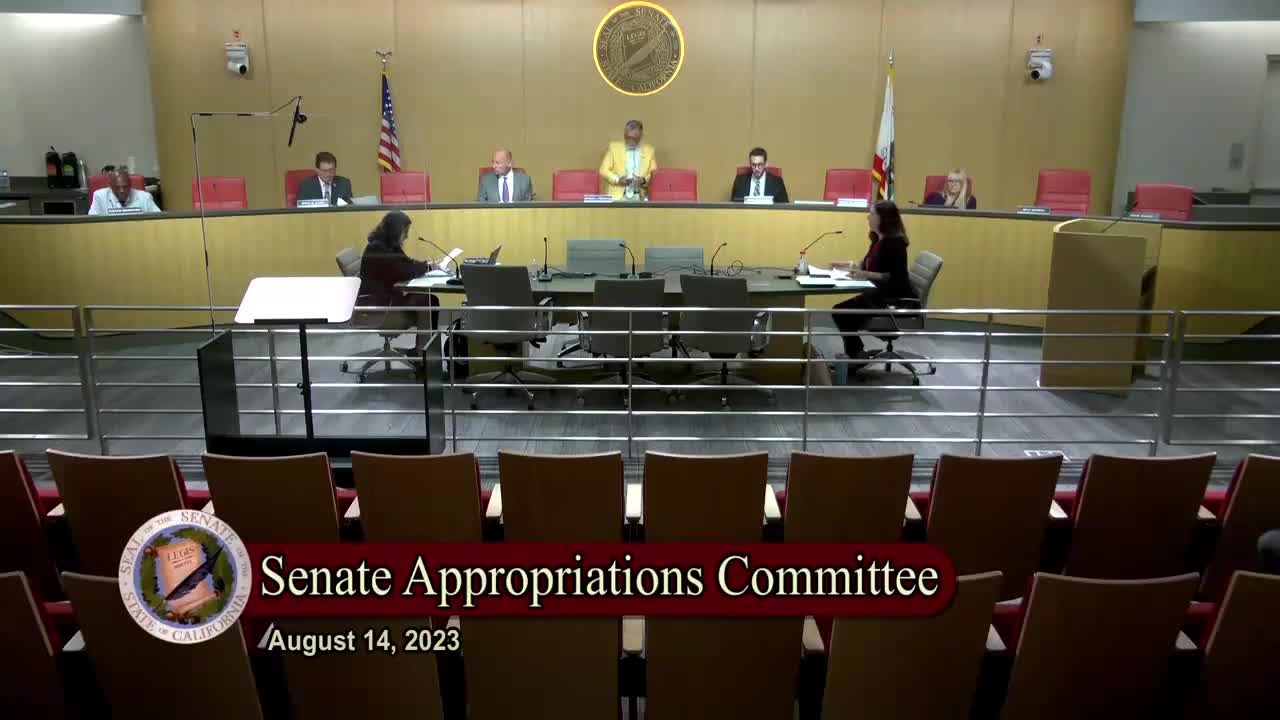
Bill Author