AB 701: Controlled substances: fentanyl.
- Session Year: 2023-2024
- House: Assembly
- Latest Version Date: 2023-10-08
Current Status:
Passed
(2023-10-08: Chaptered by Secretary of State - Chapter 540, Statutes of 2023.)
Introduced
In Committee
First Chamber
In Committee
Second Chamber
Enacted
What does this bill do?
The bill adds fentanyl to the list of drugs that can trigger extra prison time and much larger fines for people convicted of selling or conspiring to sell large amounts of certain controlled substances. It also requires that a defendant knew the substance was a controlled drug before those extra penalties apply, and ties the heightened fines to weight thresholds (including fines up to millions of dollars for the largest amounts).
The summary is provided by generative AI which can make mistakes. For original language, please view the details in the table below.
Existing law classifies controlled substances into 5 schedules and places the greatest restrictions and penalties on the use of those substances placed in Schedule I. Existing law classifies the drug fentanyl in Schedule II. Existing law prohibits a person from possessing for sale or purchasing for purposes of sale specified controlled substances, including fentanyl, and provides for imprisonment in a county jail for 2, 3, or 4 years for a violation of this provision. Existing law also imposes an additional term, and authorizes a trial court to impose a specified fine, upon a person who is convicted of a violation of, or of a conspiracy to violate, specified provisions of law with respect to a substance containing heroin, cocaine base, and cocaine, if the substance exceeds a specified weight.
This bill would add fentanyl to the substances for which additional terms or fines can be imposed and would require a defendant who violates those laws with respect to a substance containing heroin, fentanyl, or cocaine, as specified, to know of the substances nature or character as a controlled substance to be subjected to an additional term and authorized fine. By increasing the penalty for, and by changing the definition of, a crime, the bill would impose a state-mandated local program.
The California Constitution requires the state to reimburse local agencies and school districts for certain costs mandated by the state. Statutory provisions establish procedures for making that reimbursement.
This bill would provide that no reimbursement is required by this act for a specified reason.
Existing law classifies controlled substances into 5 schedules and places the greatest restrictions and penalties on the use of those substances placed in Schedule I. Existing law classifies the drug fentanyl in Schedule II. Existing law prohibits a person from possessing for sale or purchasing for purposes of sale specified controlled substances, including fentanyl, and provides for imprisonment in a county jail for 2, 3, or 4 years for a violation of this provision. Existing law also imposes an additional term, and authorizes a trial court to impose a specified fine, upon a person who is convicted of a violation of, or of a conspiracy to violate, specified provisions of law with respect to a substance containing heroin, cocaine base, and cocaine, if the substance exceeds a specified weight.
This bill would impose that additional term upon, and authorize a fine against, a defendant who violates those laws with respect to a substance containing fentanyl. add fentanyl to the substances for which additional terms or fines can be imposed and would require a defendant who violates those laws with respect to a substance containing heroin, fentanyl, or cocaine, as specified, to know of the substances nature or character as a controlled substance to be subjected to an additional term and authorized fine. By increasing the penalty for for, and by changing the definition of, a crime, the bill would impose a state-mandated local program.
The California Constitution requires the state to reimburse local agencies and school districts for certain costs mandated by the state. Statutory provisions establish procedures for making that reimbursement.
This bill would provide that no reimbursement is required by this act for a specified reason.
Existing law classifies controlled substances into 5 schedules and places the greatest restrictions and penalties on the use of those substances placed in Schedule I. Existing law classifies the drug fentanyl in Schedule II. Existing law prohibits a person from possessing for sale or purchasing for purposes of sale specified controlled substances, including fentanyl, and provides for imprisonment in a county jail for 2, 3, or 4 years for a violation of this provision. Existing law also imposes an additional term, and authorizes a trial court to impose a specified fine, upon a person who is convicted of a violation of, or of a conspiracy to violate, specified provisions of law with respect to a substance containing heroin, cocaine base, and cocaine, if the substance exceeds a specified weight.
This bill would impose that additional term upon, and authorize a fine against, a defendant who violates those laws with respect to a substance containing fentanyl. By increasing the penalty for a crime, the bill would impose a state-mandated local program.
The California Constitution requires the state to reimburse local agencies and school districts for certain costs mandated by the state. Statutory provisions establish procedures for making that reimbursement.
This bill would provide that no reimbursement is required by this act for a specified reason.
(a) (1)A person convicted of a violation of, or of a conspiracy to violate, Section 11351, 11351.5, or 11352 with respect to a substance containing heroin, fentanyl, cocaine base as specified in paragraph (1) of subdivision (f) of Section 11054, or cocaine as specified in paragraph (6) of subdivision (b) of Section 11055, when the person knew of the substances nature or character as a controlled substance, shall receive an additional term as follows:
(A)If the substance exceeds one kilogram by weight, the person shall receive an additional term of three years.
(B)If the substance exceeds four kilograms by weight, the person shall receive an additional term of five years.
(C)If the substance exceeds 10 kilograms by weight, the person shall receive an additional term of 10 years.
(D)If the substance exceeds 20 kilograms by weight, the person shall receive an additional term of 15 years.
(E)If the substance exceeds 40 kilograms by weight, the person shall receive an additional term of 20 years.
(F)If the substance exceeds 80 kilograms by weight, the person shall receive an additional term of 25 years.
(2)The conspiracy enhancements provided for in this subdivision shall not be imposed unless the trier of fact finds that the defendant conspirator was substantially involved in the planning, direction, execution, or financing of the underlying offense.
(b)(1)A person convicted of a violation of, or of conspiracy to violate, Section 11378, 11378.5, 11379, or 11379.5 with respect to a substance containing methamphetamine, amphetamine, phencyclidine (PCP) and its analogs shall receive an additional term as follows:
(A)If the substance exceeds one kilogram by weight, or 30 liters by liquid volume, the person shall receive an additional term of three years.
(B)If the substance exceeds four kilograms by weight, or 100 liters by liquid volume, the person shall receive an additional term of five years.
(C)If the substance exceeds 10 kilograms by weight, or 200 liters by liquid volume, the person shall receive an additional term of 10 years.
(D)If the substance exceeds 20 kilograms by weight, or 400 liters by liquid volume, the person shall receive an additional term of 15 years.
(2)In computing the quantities involved in this subdivision, plant or vegetable material seized shall not be included.
(3)The conspiracy enhancements provided for in this subdivision shall not be imposed unless the trier of fact finds that the defendant conspirator was substantially involved in the planning, direction, execution, or financing of the underlying offense.
(c)The additional terms provided in this section shall not be imposed unless the allegation that the weight of the substance containing heroin, fentanyl, cocaine base as specified in paragraph (1) of subdivision (f) of Section 11054, cocaine as specified in paragraph (6) of subdivision (b) of Section 11055, methamphetamine, amphetamine, or phencyclidine (PCP) and its analogs exceeds the amounts provided in this section is charged in the accusatory pleading and admitted or found to be true by the trier of fact.
(d)The additional terms provided in this section shall be in addition to any other punishment provided by law.
(e)Notwithstanding any other law, the court may strike the additional punishment for the enhancements provided in this section if the court determines that there are circumstances in mitigation of the additional punishment and states on the record its reasons for striking the additional punishment.
SEC. 2.Section 11372 of the Health and Safety Code is amended to read:11372.(a)In addition to the term of imprisonment provided by law for persons convicted of violating Section 11350, 11351, 11351.5, 11352, 11353, 11355, 11359, 11360, or 11361, the trial court may impose a fine not exceeding twenty thousand dollars ($20,000) for each offense. A fine shall not be levied in lieu of or in substitution for the term of imprisonment provided by law for any of these offenses.
(b)A person receiving an additional term pursuant to subparagraph (A) of paragraph (1) of subdivision (a) of Section 11370.4, may, in addition, be fined by an amount not exceeding one million dollars ($1,000,000) for each offense.
(c)A person receiving an additional term pursuant to subparagraph (B) of paragraph (1) of subdivision (a) of Section 11370.4, may, in addition, be fined by an amount not to exceed four million dollars ($4,000,000) for each offense.
(d)A person receiving an additional term pursuant to subparagraph (C) of paragraph (1) of subdivision (a) of Section 11370.4, may, in addition, be fined by an amount not to exceed eight million dollars ($8,000,000) for each offense.
(e)The court shall make a finding, prior to the imposition of the fines authorized by subdivisions (b) through (d), inclusive, that there is a reasonable expectation that the fine, or a substantial portion thereof, could be collected within a reasonable period of time, taking into consideration the defendants income, earning capacity, and financial resources.
SEC. 3.No reimbursement is required by this act pursuant to Section 6 of Article XIIIB of the California Constitution because the only costs that may be incurred by a local agency or school district will be incurred because this act creates a new crime or infraction, eliminates a crime or infraction, or changes the penalty for a crime or infraction, within the meaning of Section 17556 of the Government Code, or changes the definition of a crime within the meaning of Section 6 of Article XIIIB of the California Constitution.
(a) (1)A person convicted of a violation of, or of a conspiracy to violate, Section 11351, 11351.5, or 11352 with respect to a substance containing heroin, fentanyl, cocaine base as specified in paragraph (1) of subdivision (f) of Section 11054, or cocaine as specified in paragraph (6) of subdivision (b) of Section 11055, when the person knew of the substances nature or character as a controlled substance, shall receive an additional term as follows:
(A)If the substance exceeds one kilogram by weight, the person shall receive an additional term of three years.
(B)If the substance exceeds four kilograms by weight, the person shall receive an additional term of five years.
(C)If the substance exceeds 10 kilograms by weight, the person shall receive an additional term of 10 years.
(D)If the substance exceeds 20 kilograms by weight, the person shall receive an additional term of 15 years.
(E)If the substance exceeds 40 kilograms by weight, the person shall receive an additional term of 20 years.
(F)If the substance exceeds 80 kilograms by weight, the person shall receive an additional term of 25 years.
(2)The conspiracy enhancements provided for in this subdivision shall not be imposed unless the trier of fact finds that the defendant conspirator was substantially involved in the planning, direction, execution, or financing of the underlying offense.
(b)(1)A person convicted of a violation of, or of conspiracy to violate, Section 11378, 11378.5, 11379, or 11379.5 with respect to a substance containing methamphetamine, amphetamine, phencyclidine (PCP) and its analogs shall receive an additional term as follows:
(A)If the substance exceeds one kilogram by weight, or 30 liters by liquid volume, the person shall receive an additional term of three years.
(B)If the substance exceeds four kilograms by weight, or 100 liters by liquid volume, the person shall receive an additional term of five years.
(C)If the substance exceeds 10 kilograms by weight, or 200 liters by liquid volume, the person shall receive an additional term of 10 years.
(D)If the substance exceeds 20 kilograms by weight, or 400 liters by liquid volume, the person shall receive an additional term of 15 years.
(2)In computing the quantities involved in this subdivision, plant or vegetable material seized shall not be included.
(3)The conspiracy enhancements provided for in this subdivision shall not be imposed unless the trier of fact finds that the defendant conspirator was substantially involved in the planning, direction, execution, or financing of the underlying offense.
(c)The additional terms provided in this section shall not be imposed unless the allegation that the weight of the substance containing heroin, fentanyl, cocaine base as specified in paragraph (1) of subdivision (f) of Section 11054, cocaine as specified in paragraph (6) of subdivision (b) of Section 11055, methamphetamine, amphetamine, or phencyclidine (PCP) and its analogs exceeds the amounts provided in this section is charged in the accusatory pleading and admitted or found to be true by the trier of fact.
(d)The additional terms provided in this section shall be in addition to any other punishment provided by law.
(e)Notwithstanding any other law, the court may strike the additional punishment for the enhancements provided in this section if it the court determines that there are circumstances in mitigation of the additional punishment and states on the record its reasons for striking the additional punishment.
SEC. 2.Section 11372 of the Health and Safety Code is amended to read:11372.(a)In addition to the term of imprisonment provided by law for persons convicted of violating Section 11350, 11351, 11351.5, 11352, 11353, 11355, 11359, 11360, or 11361, the trial court may impose a fine not exceeding twenty thousand dollars ($20,000) for each offense. A fine shall not be levied in lieu of or in substitution for the term of imprisonment provided by law for any of these offenses.
(b)A person receiving an additional term pursuant to subparagraph (A) of paragraph (1) of subdivision (a) of Section 11370.4, may, in addition, be fined by an amount not exceeding one million dollars ($1,000,000) for each offense.
(c)A person receiving an additional term pursuant to subparagraph (B) of paragraph (1) of subdivision (a) of Section 11370.4, may, in addition, be fined by an amount not to exceed four million dollars ($4,000,000) for each offense.
(d)A person receiving an additional term pursuant to subparagraph (C) of paragraph (1) of subdivision (a) of Section 11370.4, may, in addition, be fined by an amount not to exceed eight million dollars ($8,000,000) for each offense.
(e)The court shall make a finding, prior to the imposition of the fines authorized by subdivisions (b) through (d), inclusive, that there is a reasonable expectation that the fine, or a substantial portion thereof, could be collected within a reasonable period of time, taking into consideration the defendants income, earning capacity, and financial resources.
SEC. 3.No reimbursement is required by this act pursuant to Section 6 of Article XIIIB of the California Constitution because the only costs that may be incurred by a local agency or school district will be incurred because this act creates a new crime or infraction, eliminates a crime or infraction, or changes the penalty for a crime or infraction, within the meaning of Section 17556 of the Government Code, or changes the definition of a crime within the meaning of Section 6 of Article XIIIB of the California Constitution.
(a) (1) A person convicted of a violation of, or of a conspiracy to violate, Section 11351, 11351.5, or 11352 with respect to a substance containing heroin, fentanyl, cocaine base as specified in paragraph (1) of subdivision (f) of Section 11054, or cocaine as specified in paragraph (6) of subdivision (b) of Section 11055 11055, when the person knew of the substances nature or character as a controlled substance, shall receive an additional term as follows:
(A)If the substance exceeds one kilogram by weight, the person shall receive an additional term of three years.
(B)If the substance exceeds four kilograms by weight, the person shall receive an additional term of five years.
(C)If the substance exceeds 10 kilograms by weight, the person shall receive an additional term of 10 years.
(D)If the substance exceeds 20 kilograms by weight, the person shall receive an additional term of 15 years.
(E)If the substance exceeds 40 kilograms by weight, the person shall receive an additional term of 20 years.
(F)If the substance exceeds 80 kilograms by weight, the person shall receive an additional term of 25 years.
(2)The conspiracy enhancements provided for in this subdivision shall not be imposed unless the trier of fact finds that the defendant conspirator was substantially involved in the planning, direction, execution, or financing of the underlying offense.
(b)(1)A person convicted of a violation of, or of conspiracy to violate, Section 11378, 11378.5, 11379, or 11379.5 with respect to a substance containing methamphetamine, amphetamine, phencyclidine (PCP) and its analogs shall receive an additional term as follows:
(A)If the substance exceeds one kilogram by weight, or 30 liters by liquid volume, the person shall receive an additional term of three years.
(B)If the substance exceeds four kilograms by weight, or 100 liters by liquid volume, the person shall receive an additional term of five years.
(C)If the substance exceeds 10 kilograms by weight, or 200 liters by liquid volume, the person shall receive an additional term of 10 years.
(D)If the substance exceeds 20 kilograms by weight, or 400 liters by liquid volume, the person shall receive an additional term of 15 years.
(2)In computing the quantities involved in this subdivision, plant or vegetable material seized shall not be included.
(3)The conspiracy enhancements provided for in this subdivision shall not be imposed unless the trier of fact finds that the defendant conspirator was substantially involved in the planning, direction, execution, or financing of the underlying offense.
(c)The additional terms provided in this section shall not be imposed unless the allegation that the weight of the substance containing heroin, fentanyl, cocaine base as specified in paragraph (1) of subdivision (f) of Section 11054, cocaine as specified in paragraph (6) of subdivision (b) of Section 11055, methamphetamine, amphetamine, or phencyclidine (PCP) and its analogs exceeds the amounts provided in this section is charged in the accusatory pleading and admitted or found to be true by the trier of fact.
(d)The additional terms provided in this section shall be in addition to any other punishment provided by law.
(e)Notwithstanding any other law, the court may strike the additional punishment for the enhancements provided in this section if it determines that there are circumstances in mitigation of the additional punishment and states on the record its reasons for striking the additional punishment.
SEC. 2.Section 11372 of the Health and Safety Code is amended to read:11372.(a) In addition to the term of imprisonment provided by law for persons convicted of violating Section 11350, 11351, 11351.5, 11352, 11353, 11355, 11359, 11360, or 11361, the trial court may impose a fine not exceeding twenty thousand dollars ($20,000) for each offense. A fine shall not be levied in lieu of or in substitution for the term of imprisonment provided by law for any of these offenses.
(b)A person receiving an additional term pursuant to subparagraph (A) of paragraph (1) of subdivision (a) of Section 11370.4, may, in addition, be fined by an amount not exceeding one million dollars ($1,000,000) for each offense.
(c)A person receiving an additional term pursuant to subparagraph (B) of paragraph (1) of subdivision (a) of Section 11370.4, may, in addition, be fined by an amount not to exceed four million dollars ($4,000,000) for each offense.
(d)A person receiving an additional term pursuant to subparagraph (C) of paragraph (1) of subdivision (a) of Section 11370.4, may, in addition, be fined by an amount not to exceed eight million dollars ($8,000,000) for each offense.
(e)The court shall make a finding, prior to the imposition of the fines authorized by subdivisions (b) through (d), inclusive, that there is a reasonable expectation that the fine, or a substantial portion thereof, could be collected within a reasonable period of time, taking into consideration the defendants income, earning capacity, and financial resources.
SEC. 3.No reimbursement is required by this act pursuant to Section 6 of Article XIIIB of the California Constitution because the only costs that may be incurred by a local agency or school district will be incurred because this act creates a new crime or infraction, eliminates a crime or infraction, or changes the penalty for a crime or infraction, within the meaning of Section 17556 of the Government Code, or changes the definition of a crime within the meaning of Section 6 of Article XIIIB of the California Constitution.
(a) (1) A person convicted of a violation of, or of a conspiracy to violate, Section 11351, 11351.5, or 11352 with respect to a substance containing heroin, fentanyl, cocaine base as specified in paragraph (1) of subdivision (f) of Section 11054, or cocaine as specified in paragraph (6) of subdivision (b) of Section 11055 shall receive an additional term as follows:
(A)If the substance exceeds one kilogram by weight, the person shall receive an additional term of three years.
(B)If the substance exceeds four kilograms by weight, the person shall receive an additional term of five years.
(C)If the substance exceeds 10 kilograms by weight, the person shall receive an additional term of 10 years.
(D)If the substance exceeds 20 kilograms by weight, the person shall receive an additional term of 15 years.
(E)If the substance exceeds 40 kilograms by weight, the person shall receive an additional term of 20 years.
(F)If the substance exceeds 80 kilograms by weight, the person shall receive an additional term of 25 years.
(2)The conspiracy enhancements provided for in this subdivision shall not be imposed unless the trier of fact finds that the defendant conspirator was substantially involved in the planning, direction, execution, or financing of the underlying offense.
(b)(1)A person convicted of a violation of, or of conspiracy to violate, Section 11378, 11378.5, 11379, or 11379.5 with respect to a substance containing methamphetamine, amphetamine, phencyclidine (PCP) and its analogs shall receive an additional term as follows:
(A)If the substance exceeds one kilogram by weight, or 30 liters by liquid volume, the person shall receive an additional term of three years.
(B)If the substance exceeds four kilograms by weight, or 100 liters by liquid volume, the person shall receive an additional term of five years.
(C)If the substance exceeds 10 kilograms by weight, or 200 liters by liquid volume, the person shall receive an additional term of 10 years.
(D)If the substance exceeds 20 kilograms by weight, or 400 liters by liquid volume, the person shall receive an additional term of 15 years.
(2)In computing the quantities involved in this subdivision, plant or vegetable material seized shall not be included.
(3)The conspiracy enhancements provided for in this subdivision shall not be imposed unless the trier of fact finds that the defendant conspirator was substantially involved in the planning, direction, execution, or financing of the underlying offense.
(c)The additional terms provided in this section shall not be imposed unless the allegation that the weight of the substance containing heroin, fentanyl, cocaine base as specified in paragraph (1) of subdivision (f) of Section 11054, cocaine as specified in paragraph (6) of subdivision (b) of Section 11055, methamphetamine, amphetamine, or phencyclidine (PCP) and its analogs exceeds the amounts provided in this section is charged in the accusatory pleading and admitted or found to be true by the trier of fact.
(d)The additional terms provided in this section shall be in addition to any other punishment provided by law.
(e)Notwithstanding any other law, the court may strike the additional punishment for the enhancements provided in this section if it determines that there are circumstances in mitigation of the additional punishment and states on the record its reasons for striking the additional punishment.
SEC. 2.Section 11372 of the Health and Safety Code is amended to read:11372.(a) In addition to the term of imprisonment provided by law for persons convicted of violating Section 11350, 11351, 11351.5, 11352, 11353, 11355, 11359, 11360, or 11361, the trial court may impose a fine not exceeding twenty thousand dollars ($20,000) for each offense. A fine shall not be levied in lieu of or in substitution for the term of imprisonment provided by law for any of these offenses.
(b)A person receiving an additional term pursuant to subparagraph (A) of paragraph (1) of subdivision (a) of Section 11370.4, may, in addition, be fined by an amount not exceeding one million dollars ($1,000,000) for each offense.
(c)A person receiving an additional term pursuant to subparagraph (B) of paragraph (1) of subdivision (a) of Section 11370.4, may, in addition, be fined by an amount not to exceed four million dollars ($4,000,000) for each offense.
(d)A person receiving an additional term pursuant to subparagraph (C) of paragraph (1) of subdivision (a) of Section 11370.4, may, in addition, be fined by an amount not to exceed eight million dollars ($8,000,000) for each offense.
(e)The court shall make a finding, prior to the imposition of the fines authorized by subdivisions (b) to through (d), inclusive, that there is a reasonable expectation that the fine, or a substantial portion thereof, could be collected within a reasonable period of time, taking into consideration the defendants income, earning capacity, and financial resources.
SEC. 3.No reimbursement is required by this act pursuant to Section 6 of Article XIIIB of the California Constitution because the only costs that may be incurred by a local agency or school district will be incurred because this act creates a new crime or infraction, eliminates a crime or infraction, or changes the penalty for a crime or infraction, within the meaning of Section 17556 of the Government Code, or changes the definition of a crime within the meaning of Section 6 of Article XIIIB of the California Constitution.
(a) Any (1) A person convicted of a violation of, or of a conspiracy to violate, Section 11351, 11351.5, or 11352 with respect to a substance containing heroin, fentanyl, cocaine base as specified in paragraph (1) of subdivision (f) of Section 11054, or cocaine as specified in paragraph (6) of subdivision (b) of Section 11055 shall receive an additional term as follows:
(1)Where(A)If the substance exceeds one kilogram by weight, the person shall receive an additional term of three years.
(2)Where(B)If the substance exceeds four kilograms by weight, the person shall receive an additional term of five years.
(3)Where(C)If the substance exceeds 10 kilograms by weight, the person shall receive an additional term of 10 years.
(4)Where(D)If the substance exceeds 20 kilograms by weight, the person shall receive an additional term of 15 years.
(5)Where(E)If the substance exceeds 40 kilograms by weight, the person shall receive an additional term of 20 years.
(6)Where(F)If the substance exceeds 80 kilograms by weight, the person shall receive an additional term of 25 years.
The(2)The conspiracy enhancements provided for in this subdivision shall not be imposed unless the trier of fact finds that the defendant conspirator was substantially involved in the planning, direction, execution, or financing of the underlying offense.
(b)Any (1)A person convicted of a violation of, or of conspiracy to violate, Section 11378, 11378.5, 11379, or 11379.5 with respect to a substance containing methamphetamine, amphetamine, phencyclidine (PCP) and its analogs shall receive an additional term as follows:
(1)Where(A)If the substance exceeds one kilogram by weight, or 30 liters by liquid volume, the person shall receive an additional term of three years.
(2)Where(B)If the substance exceeds four kilograms by weight, or 100 liters by liquid volume, the person shall receive an additional term of five years.
(3)Where(C)If the substance exceeds 10 kilograms by weight, or 200 liters by liquid volume, the person shall receive an additional term of 10 years.
(4)Where(D)If the substance exceeds 20 kilograms by weight, or 400 liters by liquid volume, the person shall receive an additional term of 15 years.
In(2)In computing the quantities involved in this subdivision, plant or vegetable material seized shall not be included.
The(3)The conspiracy enhancements provided for in this subdivision shall not be imposed unless the trier of fact finds that the defendant conspirator was substantially involved in the planning, direction, execution, or financing of the underlying offense.
(c)The additional terms provided in this section shall not be imposed unless the allegation that the weight of the substance containing heroin, fentanyl, cocaine base as specified in paragraph (1) of subdivision (f) of Section 11054, cocaine as specified in paragraph (6) of subdivision (b) of Section 11055, methamphetamine, amphetamine, or phencyclidine (PCP) and its analogs exceeds the amounts provided in this section is charged in the accusatory pleading and admitted or found to be true by the trier of fact.
(d)The additional terms provided in this section shall be in addition to any other punishment provided by law.
(e)Notwithstanding any other provision of law, the court may strike the additional punishment for the enhancements provided in this section if it determines that there are circumstances in mitigation of the additional punishment and states on the record its reasons for striking the additional punishment.
SEC. 2.Section 11372 of the Health and Safety Code is amended to read:11372.(a) In addition to the term of imprisonment provided by law for persons convicted of violating Section 11350, 11351, 11351.5, 11352, 11353, 11355, 11359, 11360, or 11361, the trial court may impose a fine not exceeding twenty thousand dollars ($20,000) for each offense. In no event A fine shall a fine not be levied in lieu of or in substitution for the term of imprisonment provided by law for any of these offenses.
(b)Any A person receiving an additional term pursuant to subparagraph (A) of paragraph (1) of subdivision (a) of Section 11370.4, may, in addition, be fined by an amount not exceeding one million dollars ($1,000,000) for each offense.
(c)Any A person receiving an additional term pursuant to subparagraph (B) of paragraph (2) (1) of subdivision (a) of Section 11370.4, may, in addition, be fined by an amount not to exceed four million dollars ($4,000,000) for each offense.
(d)Any A person receiving an additional term pursuant to subparagraph (C) of paragraph (3) (1) of subdivision (a) of Section 11370.4, may, in addition, be fined by an amount not to exceed eight million dollars ($8,000,000) for each offense.
(e)The court shall make a finding, prior to the imposition of the fines authorized by subdivisions (b) to (e), (d), inclusive, that there is a reasonable expectation that the fine, or a substantial portion thereof, could be collected within a reasonable period of time, taking into consideration the defendants income, earning capacity, and financial resources.
SEC. 3.No reimbursement is required by this act pursuant to Section 6 of Article XIIIB of the California Constitution because the only costs that may be incurred by a local agency or school district will be incurred because this act creates a new crime or infraction, eliminates a crime or infraction, or changes the penalty for a crime or infraction, within the meaning of Section 17556 of the Government Code, or changes the definition of a crime within the meaning of Section 6 of Article XIIIB of the California Constitution.
REVISIONS: HeadingLine 1.|
Date
|
Status
|
|---|---|
| Oct 8, 2023 | Chaptered by Secretary of State - Chapter 540, Statutes of 2023. |
| Oct 8, 2023 | Approved by the Governor. |
| Sep 20, 2023 | Enrolled and presented to the Governor at 4 p.m. |
| Sep 13, 2023 | Senate amendments concurred in. To Engrossing and Enrolling. (Ayes 78. Noes 0. Page 3362.). |
| Sep 12, 2023 | In Assembly. Concurrence in Senate amendments pending. |
| Sep 12, 2023 | Read third time. Passed. Ordered to the Assembly. (Ayes 38. Noes 0. Page 2617.). |
| Sep 11, 2023 | Read second time. Ordered to third reading. |
| Sep 8, 2023 | Read third time and amended. Ordered to second reading. |
| Sep 5, 2023 | Read second time. Ordered to third reading. |
| Sep 1, 2023 | Read second time and amended. Ordered returned to second reading. |
| Sep 1, 2023 | From committee: Amend, and do pass as amended. (Ayes 7. Noes 0.) (September 1). |
| Aug 14, 2023 | In committee: Referred to APPR suspense file. |
| Jun 28, 2023 | From committee: Do pass and re-refer to Com. on APPR. (Ayes 5. Noes 0.) (June 27). Re-referred to Com. on APPR. |
| Jun 20, 2023 | From committee chair, with author's amendments: Amend, and re-refer to committee. Read second time, amended, and re-referred to Com. on PUB. S. |
| Jun 7, 2023 | Referred to Com. on PUB S. |
| May 26, 2023 | In Senate. Read first time. To Com. on RLS. for assignment. |
| May 25, 2023 | Read third time. Passed. Ordered to the Senate. (Ayes 72. Noes 0. Page 1755.) |
| May 18, 2023 | Read second time. Ordered to third reading. |
| May 18, 2023 | From committee: Do pass. (Ayes 14. Noes 0.) (May 18). |
| May 18, 2023 | Coauthors revised. |
| May 10, 2023 | In committee: Set, first hearing. Referred to APPR. suspense file. |
| May 1, 2023 | From committee: Do pass and re-refer to Com. on APPR. (Ayes 6. Noes 0.) (April 27). Re-referred to Com. on APPR. |
| Apr 27, 2023 | Joint Rule 62(a), file notice suspended. (Page 1348.) |
| Mar 21, 2023 | In committee: Set, first hearing. Failed passage. Reconsideration granted. |
| Feb 23, 2023 | Referred to Com. on PUB. S. |
| Feb 14, 2023 | From printer. May be heard in committee March 16. |
| Feb 13, 2023 | Read first time. To print. |
|
Date
|
Description
|
Location
|
Votes
|
|
|---|---|---|---|---|
| Sep 13, 2023 | AB 701 Villapudua Concurrence in Senate Amendments | Assembly Floor |
Passed |
|
| Sep 12, 2023 | Assembly 3rd Reading AB701 Villapudua et al. By Dodd | Senate Floor |
Passed |
|
| Sep 1, 2023 | Do pass as amended | Senate Standing Committee on Appropriations |
Passed |
|
| Aug 14, 2023 | Placed on suspense file | Senate Standing Committee on Appropriations |
Passed |
|
| Jun 27, 2023 | Do pass, but first be re-referred to the Committee on [Appropriations] | Senate Standing Committee on Public Safety |
Passed |
|
| May 25, 2023 | AB 701 Villapudua Assembly Third Reading | Assembly Floor |
Passed |
|
| May 18, 2023 | Do pass. | Assembly Standing Committee on Appropriations |
Passed |
|
| Apr 27, 2023 | Do pass and be re-referred to the Committee on [Appropriations] | Assembly Standing Committee on Public Safety |
Passed |
|
| Mar 21, 2023 | Do pass and be re-referred to the Committee on [Appropriations] | Assembly Standing Committee on Public Safety |
Failed |
This list shows positions taken on this bill by organizations on the date displayed, which is linked to the original source.
Positions by individuals are not included.
|
Organization
|
Position
|
Date
|
|---|---|---|
| Aaron Reed and Associates | * Support | Jun 27, 2023 |
| Aclu California Action | ** Against | |
| All of Us or None | * Against | Mar 21, 2023 |
| Association of California Cities - Orange County | ** Support | |
| Attorney General Rob Bonta | ** Support | |
| California Association Of Highway Patrolmen | ** Support | |
| California Contract Cities Association | ** Support | |
| California District Attorneys Association | ** Support | |
| California Peace Officers Association | * Support | Jun 27, 2023 |
| California Public Defenders Association | ** Against | |
| California State Sheriffs Association | ** Support | |
| City of Bakersfield | ** Support | |
| City Of Burbank | * Support | Jun 27, 2023 |
| City of Norwalk | ** Support | |
| Communities United for Restorative Youth Justice | * Against | Jun 27, 2023 |
| County of Orange | ** Support | |
| Crime Victims United Of California | ** Support | |
| District Attorney of San Joaquin County | * Support | Jun 27, 2023 |
| Dream Beyond Bars | * Against | Jun 27, 2023 |
| Drug Policy Alliance | ** Against | |
| Ella Baker Center For Human Rights | ** Against | |
| Felony Murder Elimination Project | * Against | Mar 21, 2023 |
| Friends Committee On Legislation Of California | ** Against | |
| Legal Services for Prisoners with Children | * Against | Mar 21, 2023 |
| Los Angeles County District Attorney'S Office | * Support | Jun 27, 2023 |
| Los Angeles Deputy Sheriffs | * Support | Jun 27, 2023 |
| National Association of Social Workers California Chapter | * Against | Jun 27, 2023 |
| Orange County Sheriff's Department | ** Support | |
| Peace Officers Research Association Of California | ** Support | |
| San Francisco District Attorney Brooke Jenkins | * Support | Mar 21, 2023 |
| San Francisco Public Defender's Office | * Against | Jun 27, 2023 |
| Sister Warriors Freedom Coalition | ** Against | |
| Solano County Board of Supervisors | ** Against | |
| Stone Advocacy | * Support | Jun 27, 2023 |
| Ventura County District Attorney's Office | ** Support | |
| Young Women's Freedom Center | * Against | Mar 21, 2023 |
CONCURRENCE IN SENATE AMENDMENTS
CSA1 Bill Id:AB 701
Author:(Villapudua and Petrie-Norris)
As Amended Ver:September 8, 2023
Majority vote
SUMMARY
Applies the existing weight enhancements that increase the penalty and fine for trafficking substances containing heroin, cocaine base, and cocaine to fentanyl.
Senate Amendments
- Specify that a person must know of the substance's nature or character as a controlled substance in order to be subjected to the additional term of imprisonment.
- Make a technical amendment.
COMMENTS
As Passed by the Assembly: This bill applied the existing weight enhancement that increases the penalty and fine for trafficking substances containing heroin, cocaine base, and cocaine to fentanyl.
Major Provisions
- Provided that a person convicted of specified crimes involving possession of a substance containing fentanyl for the purpose of sale/distribution, or for sale/distribution of a substance containing fentanyl, shall receive the following enhanced punishments:
- If the substance exceeds one kilogram by weight, the person shall receive an additional term of three years;
- If the substance exceeds four kilograms by weight, the person shall receive an additional term of five years;
- If the substance exceeds 10 kilograms by weight, the person shall receive an additional term of 10 years;
- If the substance exceeds 20 kilograms by weight, the person shall receive an additional term of 15 years;
- If the substance exceeds 40 kilograms by weight, the person shall receive an additional term of 20 years; or,
- If the substance exceeds 80 kilograms by weight, the person shall receive an additional term of 25 years.
- Provided that the enhancement shall not be imposed unless the allegation that the weight of the substance containing fentanyl and its analogs exceeds the amounts provided is charged in the accusatory pleading and admitted or found to be true by the trier of fact.
- Specified that a person receiving an additional prison term based on trafficking a substance containing fentanyl that is more than one kilogram may, in addition, be fined by an amount not exceeding $1 million for each offense.
- Provided that a person receiving an additional prison term based on trafficking a substance containing fentanyl that is more than four kilograms may, in addition, be fined by an amount not to exceed $4 million for each offense.
- Stated that a person receiving an additional prison term based on trafficking a substance containing fentanyl that is more than ten kilograms may, in addition, be fined by an amount not to exceed $8 million for each offense.
- Made legislative findings and declarations.
According to the Author
"According to the Center for Disease Control, fentanyl has a heroin-like effect on the body yet is up to 50 times more potent than heroin while also being more addictive and more dangerous. Its availability in the illicit drug market has flourished in recent years, and it can kill even in small doses. In fact, synthetic opioids such as fentanyl are responsible for more than 150 deaths each day, not to mention the number of overdoses which do not result in death thanks to timely medical intervention.
"Even young teens and children have been affected recently by this trend, as accidental ingestions and ingestions by those seeking the drug's effects have caused deaths and addictions spiraling into decreased quality of life not just for the individual, but for society as a whole.
"Further, with illicit fentanyl costing the user up to $20.00 per pill, and chronic users potentially using multiple pills per day to avoid difficult withdrawal symptoms, fentanyl is a valuable commodity on the streets. A kilogram of fentanyl powder would provide enough fentanyl to manufacture approximately one million pills containing fentanyl, which would provide approximately four to 10 million dosages. A kilogram of pills containing fentanyl would equal approximately 9,080 pills, which would provide approximately 36,000 to 92,000 usages, as many fentanyl pill users crush and smoke the pills or take only a portion of a pill for one dosage, saving the rest for a later dosage. Therefore, possession of kilogram-or-greater amounts of this powerful drug demonstrates large-scale trafficking or possession with intent to sell, rather than 'small-time' or 'low-level' drug-dealing, occasional furnishing, or possession for personal use. Possession of these types of significant amounts of this dangerous drug becomes even more profitable when such possession is not punishable to the same extent as is possession of the same exorbitant amount of heroin, its opiate cousin.
"Treating fentanyl possession in amounts exceeding a kilogram differently under the law from the possession of the same excessive amounts of heroin does not serve public safety, nor does it make sense given the potency and danger of fentanyl as compared with heroin in particular.
"AB 701 would add fentanyl by name to the list of drugs mentioned in subdivision (a) of Health and Safety Code section 11370.4, the same subdivision which mentions heroin, to clear up any ambiguity and state with certainty that possession of such large amounts of fentanyl is indeed punishable to the same extent as the same conduct involving heroin. It would close the "lucrativity gap" between possession of exorbitant amounts of heroin and exorbitant amounts of fentanyl, disincentivizing the possession of large amounts of the latter versus the former."
Arguments in Support
According to the California Association of Highway Patrolmen (CAHP), "Existing law prohibits a person from possessing for sale or purchasing for purposes of sale specified controlled substances, including fentanyl, and provides for imprisonment in a county jail for 2, 3, or 4 years for a violation of this provision. AB 701 would impose that additional term upon, and authorize a fine against, a defendant who violates those laws with respect to a substance containing fentanyl. By increasing the penalty for a crime, the bill would impose a state-mandated local program.
"The CAHP supports imposing an additional term upon a defendant who violates the law with respect to a substance containing fentanyl, as a way to combat the fentanyl crisis."
Arguments in Opposition
According to California Public Defenders Association, "AB 701 relies on outdated War on Drugs mentality and would end up creating more harm than it would prevent. Relying on ever increasing penalties for drug offenses has been extensively researched, and we can therefore make some educated predictions about the outcome of bills like AB 701: it would not reduce the distribution of fentanyl nor would it prevent overdoses; it would reduce neither the supply of drugs or the demand for them i; and worse, it could actually discourage effective methods of dealing with the opioid crisis. One study found that states that increase their incarceration rates do not experience a decrease in drug use.ii When a drug seller is incarcerated, the supply of drugs is not reduced nor is the drug market impacted. Because the drug market is driven by demand rather than supply, research indicates that an incarcerated seller will simply be replaced by another individual to fill the market demand. iii
"Many of the people who will be incarcerated by this bill will be addicts themselves. A Bureau of Justice report found that 70% of people incarcerated for drug trafficking in state prisons used drugs prior to the offense. iv These individuals often distribute drugs, not for profit, but as a way to support their own substance use disorder. Often, these "traffickers" are not high-level members of any organized drug distribution scheme, but are rather furnishing narcotics to friends and family members.
"The imposition of harsh penalties for distribution could undermine California's Good Samaritan law, which encourages people to contact emergency services in case of an overdose.v The threat of police involvement and harsh prison sentences may make an individual hesitant to call emergency services or run from the scene rather than help the victim.
"The primary risk of overdose for fentanyl results from its unknowing ingestion. The process of adding fentanyl to heroin is usually done early in the production process. According to the Drug Enforcement Administration, fentanyl is generally added to heroin before it enters the [United States].vi Therefore, low level sellers may not know they are distributing fentanyl. This bill would not reduce the inclusion of fentanyl in the drug supply, as it takes place high in the distribution chain.
"The War on Drugs has had a devastating impact on communities across California. The unintended consequences of using jails and prisons to deal with a public health issue will take decades to unravel. Rather than diminishing the harms of drug misuse, criminalizing people who sell and use drugs amplifies the risk of fatal overdoses and diseases, increases stigma and marginalization, and drives people away from needed treatment, health, and harm reduction services.vii
"Moreover, California voters have signaled, again and again, their preference for using a health approach to drug offenses, and their desire to unwind the failed War on Drugs. Reversing course and increasing criminal penalties not only flies in the face of multiple statewide elections, but it is also simply bad policy. Societal harms associated with drugs are not alleviated by ever longer prison sentences. Rather, these increased penalties impose their own harm, devastating vulnerable communities, particularly communities of color. For all of these reasons, AB 701 would take California in the wrong direction."
FISCAL COMMENTS
According to the Senate Appropriations Committee, unknown costs, likely in the millions of dollars, to the Department of Corrections of Rehabilitation (CDCR) as a result of lengthier commitments to state prison (General Fund).
VOTES:
ASM PUBLIC SAFETY: 6-0-2
YES: Jones-Sawyer, Alanis, Lackey, Ortega, Santiago, Zbur
ABS, ABST OR NV: Bonta, Bryan
ASM APPROPRIATIONS: 14-0-2
YES: Holden, Megan Dahle, Bryan, Calderon, Wendy Carrillo, Dixon, Mike Fong, Hart, Mathis, Papan, Pellerin, Sanchez, Weber, Ortega
ABS, ABST OR NV: Lowenthal, Robert Rivas
ASSEMBLY FLOOR: 72-0-8
YES: Addis, Alanis, Alvarez, Arambula, Bains, Bauer-Kahan, Bennett, Berman, Boerner, Calderon, Juan Carrillo, Wendy Carrillo, Cervantes, Chen, Connolly, Megan Dahle, Davies, Dixon, Essayli, Flora, Mike Fong, Vince Fong, Friedman, Gabriel, Gallagher, Garcia, Gipson, Grayson, Haney, Holden, Hoover, Irwin, Jackson, Jones-Sawyer, Lackey, Low, Lowenthal, Maienschein, McCarty, Muratsuchi, Stephanie Nguyen, Ortega, Pacheco, Papan, Jim Patterson, Joe Patterson, Pellerin, Petrie-Norris, Quirk-Silva, Ramos, Reyes, Luz Rivas, Robert Rivas, Rodriguez, Blanca Rubio, Sanchez, Santiago, Schiavo, Soria, Ta, Ting, Valencia, Villapudua, Waldron, Wallis, Ward, Weber, Wicks, Wilson, Wood, Zbur, Rendon
ABS, ABST OR NV: Aguiar-Curry, Bonta, Bryan, Hart, Kalra, Lee, Mathis, McKinnor
ASM PUBLIC SAFETY: 4-0-4
YES: Alanis, Lackey, Ortega, Zbur
ABS, ABST OR NV: Jones-Sawyer, Bonta, Bryan, Santiago
UPDATED
VERSION: September 8, 2023
CONSULTANT: Andrew Ironside / PUB. S. / (916) 319-3744 FN: 0002310
SENATE RULES COMMITTEE Office of Senate Floor Analyses (916) 651-1520 Fax: (916) 327-4478 | AB 701 |
THIRD READING
Bill No: AB 701
Author: Villapudua (D) and Petrie-Norris (D), et al.
Amended: 9/8/23 in Senate
Vote: 21
SENATE PUBLIC SAFETY COMMITTEE: 5-0, 6/27/23
AYES: Wahab, Ochoa Bogh, Bradford, Skinner, Wiener
SENATE APPROPRIATIONS COMMITTEE: 7-0, 9/1/23
AYES: Portantino, Jones, Ashby, Bradford, Seyarto, Wahab, Wiener
ASSEMBLY FLOOR: 72-0, 5/25/23 - See last page for vote
SUBJECT: Controlled substances: fentanyl
SOURCE: California District Attorneys Association
DIGEST:
This bill imposes an additional term of three to 25 years upon a person who is convicted of specified drug offenses with respect to a substance containing fentanyl, if the substance exceeds a specified weight.
Senate Floor Amendments of 9/8/23 add co-authors.
ANALYSIS:
Existing law:
- Establishes the California Uniform Controlled Substances Act which regulates controlled substances. (Health & Saf. Code, § 11000 et seq.)
- Classifies controlled substances into five schedules according to their danger and potential for abuse. (Health & Saf. Code, §§ 11054-11058.)
- Classifies fentanyl as a Schedule II controlled substance. (Health & Saf. Code, § 11055, subd.(c)(8).)
- Provides the following penalties:
- Possessing for sale or purchasing for purposes of sale of heroin, cocaine, and specified opiates, including fentanyl – 1170(h) felony term of two, three, or four years (Health & Saf. Code, § 11351.)
- Possessing for sale or purchasing for purposes of sale of cocaine base – 1170(h) felony term of two, three, or four years (Health & Saf. Code, § 11351.5.)
- Transporting, importing, selling, furnishing, administering, giving away, etc. of heroin, cocaine, and specified opiates, including fentanyl – 1170(h) felony term of three, four, or five years; if transporting between noncontiguous counties – 1170(h) felony term of three, six, or nine years (Health & Saf. Code, § 11352.)
- Provides the following enhancements for a conviction of possession for sale or purchasing for the purpose of sale of heroin, cocaine, or cocaine base, or transporting, importing, selling, furnishing, administering, or giving away heroin, cocaine, or cocaine base, or conspiracy to commit any of those offenses, based on the weight of the substance containing heroin, cocaine, or cocaine base:
- 1 kilogram- 3 years
- 4 kilograms - 5 years
- 10 kilograms - 10 years
- 20 kilograms - 15 years
- 40 kilograms - 20 years
- 80 kilograms - 25 years
- (Health & Saf. Code, § 11370.4, subd. (a).)
- Prohibits the above listed enhancements from being imposed unless the allegation that the weight of the substance containing fentanyl or its analogs exceeds the amount provided above and is charged in the accusatory pleading and admitted or found to be true by the trier of fact. (Health & Saf. Code, § 11370.4, subd. (c).)
- Provides that the court may strike the additional punishment for the enhancement if it determines that there are circumstances in mitigation of the additional punishment and states on the record its reasons for striking the additional punishment. (Health & Saf. Code, § 11370.4, subd. (e).)
- Provides that in addition to the term of imprisonment provided by law for persons convicted of violating specified drug trafficking crimes, the trial court may impose a fine not exceeding $20,000 for each offense. (Health & Saf. Code, § 11372, subd. (a).)
- Provides that a person receiving an additional prison term for trafficking more than a kilogram of a substance containing heroin, cocaine base, or cocaine may, in addition, be fined by an amount not exceeding $1 million for each offense. (Health & Saf. Code, § 11372, subd. (b).)
- Provides that a person receiving an additional prison term for trafficking more than four kilograms of a substance containing heroin, cocaine base, or cocaine may, in addition, be fined by an amount not to exceed $4 million for each offense. (Health & Saf. Code, § 11372, subd. (c).)
- Provides that a person receiving an additional prison term for trafficking more than four kilograms of a substance containing heroin, cocaine base, or cocaine may, in addition, be fined by an amount not to exceed $8 million for each offense. (Health & Saf. Code, § 11372, subd. (d).)
This bill:
- Adds fentanyl to the list of substances for which the above listed weight enhancements can be imposed.
- Specifies that in order for the weight enhancement to apply, the person must have knowledge of the substance’s nature or character as a controlled substance.
- Makes other technical and conforming changes.
Background
The number of deaths involving fentanyl in California has increased dramatically in recent years. Between 2012 and 2018, fentanyl overdose deaths increased by more than 800%—from 82 to 786. (California Department of Public Health (CDPH), Overdose Prevention Initiative <https://www.cdph.ca.gov/Programs/CCDPHP/DCDIC/SACB/Pages/PrescriptionDrugOverdoseProgram.aspx?msclkid=99f1af92b9e411ec97e3e1fe58cde884 [as of Jun. 19, 2023].) In 2021, there were 5,961 deaths related to fentanyl overdoses. (CDPH, California Overdose Surveillance Dashboard <https://skylab.cdph.ca.gov/ODdash/?tab=Home [as of Jun. 19, 2023].)
Existing Weight Enhancement Covers Many Fentanyl Commerce Crimes
The existing enhancement based on the weight of the drug involved in specified drug commerce crimes includes any substance containing cocaine, cocaine base, or heroin. Illicit drug manufacturers, distributors, and sellers often mix fentanyl or one its analogs with heroin, because it is much more potent than heroin and relatively easy and cheap to manufacture. Fentanyl is also increasingly being mixed with cocaine. A defendant convicted of a drug offense involving a mixture of heroin and fentanyl or cocaine and fentanyl would be subject to the weight enhancement under current law. This bill will only be necessary where the sole drug manufactured, distributed, or sold in the underlying crime was fentanyl or where fentanyl was mixed with one or more substances that are not covered under existing law. However, as noted below, prosecutors will likely still need to use the analog statute as many cases involve fentanyl-related substances rather than solely fentanyl.
Many cases that are reported as involving fentanyl actually involve one of numerous fentanyl-related substances. Fentanyl is a Schedule II controlled substance in California. As reflected in federal law, but not specifically stated in California law, Schedule I controlled substances are deemed to have no medical utility and possess a high potential for abuse. Schedule II controlled substances have legitimate medical uses, but also a high potential for abuse. When a defendant’s crime involves a fentanyl-related drug that is not listed in the controlled substance schedules, the prosecutor must prove that the drug is an analog of fentanyl. The analog statute applies to Schedule I and Schedule II controlled substances. (Health & Saf. Code, §§ 11054 and 11055.)
Health and Safety Code Section 11401 defines an analog as follows:
- A substance the chemical structure of which is substantially similar to the chemical structure of a controlled substance classified in Section 11054 or 11055 or a synthetic cannabinoid compound defined in Section 11357.5.
- A substance that has, is represented as having, or is intended to have a stimulant, depressant, or hallucinogenic effect on the central nervous system that is substantially similar to, or greater than, the stimulant, depressant, or hallucinogenic effect on the central nervous system of a controlled substance classified in Section 11054 or 11055 or a synthetic cannabinoid compound defined in Section 11357.5.
Federal Efforts to Address Fentanyl-Related Crimes
Drug offenses involving fentanyl may also be prosecuted by federal prosecutors as violations of the federal Controlled Substances Act. In response to the challenges federal prosecutors faced when prosecuting crimes involving fentanyl-related substances, the DEA issued a temporary scheduling order in February 2018 to schedule fentanyl-related substances that are not currently listed in any schedule of the federal Controlled Substances Act and their isomers, esters, ethers, salts and salts of isomers, esters, and ethers in Schedule I. (83 Fed. Reg. 5188 (Feb. 6, 2018).) The temporary scheduling order has been extended several times and is currently set to expire on December 31, 2024. (Congressional Research Service, The Controlled Substances Act (CSA): A Legal Overview for the 118th Congress (Jan. 19, 2023) p. 26 available at <https://sgp.fas.org/crs/misc/R45948.pdf .) In 2019, the DOJ and DEA urged Congress to statutorily and permanently schedule the class of fentanyl-related substances. The Biden Administration is supportive of this call to action. (<https://www.dea.gov/sites/default/files/2019-06/DOJ%20DEA%20Fentanyl%20Expiration%20of%20Temp%20Order_SJC_4June19_final.pdf ; <https://www.judiciary.senate.gov/imo/media/doc/Liskamm-McDermott%20Testimony.pdf ; <https://www.whitehouse.gov/ondcp/briefing-room/2021/09/02/biden-harris-administration-provides-recommendations-to-congress-on-reducing-illicit-fentanyl-related-substances/ .)
In order to stop the flow of fentanyl into the U.S. via packages, former President Trump signed the Synthetics Trafficking and Overdose Prevention (STOP) Act of 2018 which requires the U.S. Postal Service to provide advanced electronic data on packages in order to assist law enforcement in identifying and seizing illicit substances sent through the mail.
FISCAL EFFECT: Appropriation: No Fiscal Com.: Yes Local: Yes
According to the Senate Appropriations Committee, unknown costs, likely in the millions of dollars, to the Department of Corrections of Rehabilitation (CDCR) as a result of lengthier commitments to state prison (General Fund).
SUPPORT: (Verified 9/7/23)
California District Attorneys Association (source)
Attorney General Rob Bonta
Association of California Cities - Orange County
California Association of Highway Patrolmen
California Contract Cities Association
California State Sheriffs’ Association
City of Bakersfield
City of Norwalk
County of Orange
Crime Victims United of California
Peace Officers Research Association of California
Ventura County District Attorney’s Office
OPPOSITION: (Verified 9/7/23)
ACLU California Action
California Public Defenders Association
Drug Policy Alliance
Ella Baker Center for Human Rights
Friends Committee on Legislation of California
Sister Warriors Freedom Coalition
Solano County Board of Supervisors
ARGUMENT IN SUPPORT: The California District Attorneys Association, this bill’s sponsor, writes:
… [C]urrent law does not adequately address the ever-increasing threat posed by cartels and organized crime. Currently, possession of large-scale amounts from over a kilo to over 80 kilos of cocaine, crack, and heroin are eligible for enhancement punishments under the law, but fentanyl, which is 50 times stronger than heroin, is not explicitly eligible for that increased punishment. AB 701 would resolve this inconsistency.
Importantly, AB 701 does not target “low-level” dealers or users. A kilo of fentanyl pills is enough for between 36,000 to 92,000 dosages personal-use dosages, and a kilo of fentanyl powder would be enough to manufacture approximately one million pills. AB 701 is precision-targeted to high-level dealers, not mere users, low-level street dealers, or people who occasionally share the drug with others.
By enumerating fentanyl as one of the select controlled substances for which possession of excessive amounts is treated more seriously, AB 701 addresses this outdated oversight and protects California’s public in a tangible way while providing the courts with clarity on the issue.
ARGUMENT IN OPPOSITION: According to the California Public Defenders Association:
AB 701 relies on outdated War on Drugs mentality and would end up creating more harm than it would prevent. Relying on ever increasing penalties for drug offenses has been extensively researched, and we can therefore make some educated predictions about the outcome of bills like AB 701: it would not reduce the distribution of fentanyl nor would it prevent overdoses; it would reduce neither the supply of drugs or the demand for them; and worse, it could actually discourage effective methods of dealing with the opioid crisis. One study found that states that increase their incarceration rates do not experience a decrease in drug use. When a drug seller is incarcerated, the supply of drugs is not reduced nor is the drug market impacted. Because the drug market is driven by demand rather than supply, research indicates that an incarcerated seller will simply be replaced by another individual to fill the market demand.
Many of the people who will be incarcerated by this bill will be addicts themselves. A Bureau of Justice report found that 70% of people incarcerated for drug trafficking in state prisons used drugs prior to the offense. These individuals often distribute drugs, not for profit, but as a way to support their own substance use disorder. Often, these “traffickers” are not high-level members of any organized drug distribution scheme, but are rather furnishing narcotics to friends and family members.
The imposition of harsh penalties for distribution could undermine California’s Good Samaritan law, which encourages people to contact emergency services in case of an overdose. The threat of police involvement and harsh prison sentences may make an individual hesitant to call emergency services or run from the scene rather than help the victim.
The primary risk of overdose for fentanyl results from its unknowing ingestion. The process of adding fentanyl to heroin is usually done early in the production process. According to the Drug Enforcement Administration, fentanyl is generally added to heroin before it enters the U.S. Therefore, low level sellers may not know they are distributing fentanyl. This bill would not reduce the inclusion of fentanyl in the drug supply, as it takes place high in the distribution chain.
The War on Drugs has had a devastating impact on communities across California. The unintended consequences of using jails and prisons to deal with a public health issue will take decades to unravel. Rather than diminishing the harms of drug misuse, criminalizing people who sell and use drugs amplifies the risk of fatal overdoses and diseases, increases stigma and marginalization, and drives people away from needed treatment, health, and harm reduction services.
Moreover, California voters have signaled, again and again, their preference for using a health approach to drug offenses, and their desire to unwind the failed War on Drugs. Reversing course and increasing criminal penalties not only flies in the face of multiple statewide elections, but it is also simply bad policy. Societal harms associated with drugs are not alleviated by ever longer prison sentences. Rather, these increased penalties impose their own harm, devastating vulnerable communities, particularly communities.
ASSEMBLY FLOOR: 72-0, 5/25/23
AYES: Addis, Alanis, Alvarez, Arambula, Bains, Bauer-Kahan, Bennett, Berman, Boerner, Calderon, Juan Carrillo, Wendy Carrillo, Cervantes, Chen, Connolly, Megan Dahle, Davies, Dixon, Essayli, Flora, Mike Fong, Vince Fong, Friedman, Gabriel, Gallagher, Garcia, Gipson, Grayson, Haney, Holden, Hoover, Irwin, Jackson, Jones-Sawyer, Lackey, Low, Lowenthal, Maienschein, McCarty, Muratsuchi, Stephanie Nguyen, Ortega, Pacheco, Papan, Jim Patterson, Joe Patterson, Pellerin, Petrie-Norris, Quirk-Silva, Ramos, Reyes, Luz Rivas, Robert Rivas, Rodriguez, Blanca Rubio, Sanchez, Santiago, Schiavo, Soria, Ta, Ting, Valencia, Villapudua, Waldron, Wallis, Ward, Weber, Wicks, Wilson, Wood, Zbur, Rendon
NO VOTE RECORDED: Aguiar-Curry, Bonta, Bryan, Hart, Kalra, Lee, Mathis, McKinnor
Prepared by: Stephanie Jordan / PUB. S. /
9/11/23 12:23:49
SENATE RULES COMMITTEE Office of Senate Floor Analyses (916) 651-1520 Fax: (916) 327-4478 | AB 701 |
THIRD READING
Bill No: AB 701
Author: Villapudua (D) and Petrie-Norris (D), et al.
Amended: 9/1/23 in Senate
Vote: 21
SENATE PUBLIC SAFETY COMMITTEE: 5-0, 6/27/23
AYES: Wahab, Ochoa Bogh, Bradford, Skinner, Wiener
SENATE APPROPRIATIONS COMMITTEE: 7-0, 9/1/23
AYES: Portantino, Jones, Ashby, Bradford, Seyarto, Wahab, Wiener
ASSEMBLY FLOOR: 72-0, 5/25/23 - See last page for vote
SUBJECT: Controlled substances: fentanyl
SOURCE: California District Attorneys Association
DIGEST:
This bill imposes an additional term of three to 25 years upon a person who is convicted of specified drug offenses with respect to a substance containing fentanyl, if the substance exceeds a specified weight.
ANALYSIS:
Existing law:
- Establishes the California Uniform Controlled Substances Act which regulates controlled substances. (Health & Saf. Code, § 11000 et seq.)
- Classifies controlled substances into five schedules according to their danger and potential for abuse. (Health & Saf. Code, §§ 11054-11058.)
- Classifies fentanyl as a Schedule II controlled substance. (Health & Saf. Code, § 11055, subd.(c)(8).)
- Provides the following penalties:
- Possessing for sale or purchasing for purposes of sale of heroin, cocaine, and specified opiates, including fentanyl – 1170(h) felony term of two, three, or four years (Health & Saf. Code, § 11351.)
- Possessing for sale or purchasing for purposes of sale of cocaine base – 1170(h) felony term of two, three, or four years (Health & Saf. Code, § 11351.5.)
- Transporting, importing, selling, furnishing, administering, giving away, etc. of heroin, cocaine, and specified opiates, including fentanyl – 1170(h) felony term of three, four, or five years; if transporting between noncontiguous counties – 1170(h) felony term of three, six, or nine years (Health & Saf. Code, § 11352.)
- Provides the following enhancements for a conviction of possession for sale or purchasing for the purpose of sale of heroin, cocaine, or cocaine base, or transporting, importing, selling, furnishing, administering, or giving away heroin, cocaine, or cocaine base, or conspiracy to commit any of those offenses, based on the weight of the substance containing heroin, cocaine, or cocaine base:
- 1 kilogram- 3 years
- 4 kilograms - 5 years
- 10 kilograms - 10 years
- 20 kilograms - 15 years
- 40 kilograms - 20 years
- 80 kilograms - 25 years
- (Health & Saf. Code, § 11370.4, subd. (a).)
- Prohibits the above listed enhancements from being imposed unless the allegation that the weight of the substance containing fentanyl or its analogs exceeds the amount provided above and is charged in the accusatory pleading and admitted or found to be true by the trier of fact. (Health & Saf. Code, § 11370.4, subd. (c).)
- Provides that the court may strike the additional punishment for the enhancement if it determines that there are circumstances in mitigation of the additional punishment and states on the record its reasons for striking the additional punishment. (Health & Saf. Code, § 11370.4, subd. (e).)
- Provides that in addition to the term of imprisonment provided by law for persons convicted of violating specified drug trafficking crimes, the trial court may impose a fine not exceeding $20,000 for each offense. (Health & Saf. Code, § 11372, subd. (a).)
- Provides that a person receiving an additional prison term for trafficking more than a kilogram of a substance containing heroin, cocaine base, or cocaine may, in addition, be fined by an amount not exceeding $1 million for each offense. (Health & Saf. Code, § 11372, subd. (b).)
- Provides that a person receiving an additional prison term for trafficking more than four kilograms of a substance containing heroin, cocaine base, or cocaine may, in addition, be fined by an amount not to exceed $4 million for each offense. (Health & Saf. Code, § 11372, subd. (c).)
- Provides that a person receiving an additional prison term for trafficking more than four kilograms of a substance containing heroin, cocaine base, or cocaine may, in addition, be fined by an amount not to exceed $8 million for each offense. (Health & Saf. Code, § 11372, subd. (d).)
This bill:
- Adds fentanyl to the list of substances for which the above listed weight enhancements can be imposed.
- Specifies that in order for the weight enhancement to apply, the person must have knowledge of the substance’s nature or character as a controlled substance.
- Makes other technical and conforming changes.
Background
The number of deaths involving fentanyl in California has increased dramatically in recent years. Between 2012 and 2018, fentanyl overdose deaths increased by more than 800%—from 82 to 786. (California Department of Public Health (CDPH), Overdose Prevention Initiative <https://www.cdph.ca.gov/Programs/CCDPHP/DCDIC/SACB/Pages/PrescriptionDrugOverdoseProgram.aspx?msclkid=99f1af92b9e411ec97e3e1fe58cde884 [as of Jun. 19, 2023].) In 2021, there were 5,961 deaths related to fentanyl overdoses. (CDPH, California Overdose Surveillance Dashboard <https://skylab.cdph.ca.gov/ODdash/?tab=Home [as of Jun. 19, 2023].)
Existing Weight Enhancement Covers Many Fentanyl Commerce Crimes
The existing enhancement based on the weight of the drug involved in specified drug commerce crimes includes any substance containing cocaine, cocaine base, or heroin. Illicit drug manufacturers, distributors, and sellers often mix fentanyl or one its analogs with heroin, because it is much more potent than heroin and relatively easy and cheap to manufacture. Fentanyl is also increasingly being mixed with cocaine. A defendant convicted of a drug offense involving a mixture of heroin and fentanyl or cocaine and fentanyl would be subject to the weight enhancement under current law. This bill will only be necessary where the sole drug manufactured, distributed, or sold in the underlying crime was fentanyl or where fentanyl was mixed with one or more substances that are not covered under existing law. However, as noted below, prosecutors will likely still need to use the analog statute as many cases involve fentanyl-related substances rather than solely fentanyl.
Many cases that are reported as involving fentanyl actually involve one of numerous fentanyl-related substances. Fentanyl is a Schedule II controlled substance in California. As reflected in federal law, but not specifically stated in California law, Schedule I controlled substances are deemed to have no medical utility and possess a high potential for abuse. Schedule II controlled substances have legitimate medical uses, but also a high potential for abuse. When a defendant’s crime involves a fentanyl-related drug that is not listed in the controlled substance schedules, the prosecutor must prove that the drug is an analog of fentanyl. The analog statute applies to Schedule I and Schedule II controlled substances. (Health & Saf. Code, §§ 11054 and 11055.)
Health and Safety Code Section 11401 defines an analog as follows:
- A substance the chemical structure of which is substantially similar to the chemical structure of a controlled substance classified in Section 11054 or 11055 or a synthetic cannabinoid compound defined in Section 11357.5.
- A substance that has, is represented as having, or is intended to have a stimulant, depressant, or hallucinogenic effect on the central nervous system that is substantially similar to, or greater than, the stimulant, depressant, or hallucinogenic effect on the central nervous system of a controlled substance classified in Section 11054 or 11055 or a synthetic cannabinoid compound defined in Section 11357.5.
Federal Efforts to Address Fentanyl-Related Crimes
Drug offenses involving fentanyl may also be prosecuted by federal prosecutors as violations of the federal Controlled Substances Act. In response to the challenges federal prosecutors faced when prosecuting crimes involving fentanyl-related substances, the DEA issued a temporary scheduling order in February 2018 to schedule fentanyl-related substances that are not currently listed in any schedule of the federal Controlled Substances Act and their isomers, esters, ethers, salts and salts of isomers, esters, and ethers in Schedule I. (83 Fed. Reg. 5188 (Feb. 6, 2018).) The temporary scheduling order has been extended several times and is currently set to expire on December 31, 2024. (Congressional Research Service, The Controlled Substances Act (CSA): A Legal Overview for the 118th Congress (Jan. 19, 2023) p. 26 available at <https://sgp.fas.org/crs/misc/R45948.pdf .) In 2019, the DOJ and DEA urged Congress to statutorily and permanently schedule the class of fentanyl-related substances. The Biden Administration is supportive of this call to action. (<https://www.dea.gov/sites/default/files/2019-06/DOJ%20DEA%20Fentanyl%20Expiration%20of%20Temp%20Order_SJC_4June19_final.pdf ; <https://www.judiciary.senate.gov/imo/media/doc/Liskamm-McDermott%20Testimony.pdf ; <https://www.whitehouse.gov/ondcp/briefing-room/2021/09/02/biden-harris-administration-provides-recommendations-to-congress-on-reducing-illicit-fentanyl-related-substances/ .)
In order to stop the flow of fentanyl into the U.S. via packages, former President Trump signed the Synthetics Trafficking and Overdose Prevention (STOP) Act of 2018 which requires the U.S. Postal Service to provide advanced electronic data on packages in order to assist law enforcement in identifying and seizing illicit substances sent through the mail.
FISCAL EFFECT: Appropriation: No Fiscal Com.: Yes Local: Yes
According to the Senate Appropriations Committee, unknown costs, likely in the millions of dollars, to the Department of Corrections of Rehabilitation (CDCR) as a result of lengthier commitments to state prison (General Fund).
SUPPORT: (Verified 9/1/23)
California District Attorneys Association (source)
Attorney General Rob Bonta
Association of California Cities - Orange County
California Association of Highway Patrolmen
California Contract Cities Association
California State Sheriffs’ Association
City of Bakersfield
City of Norwalk
County of Orange
Crime Victims United of California
Peace Officers Research Association of California
Ventura County District Attorney’s Office
OPPOSITION: (Verified 9/1/23)
ACLU California Action
California Public Defenders Association
Drug Policy Alliance
Ella Baker Center for Human Rights
Friends Committee on Legislation of California
Sister Warriors Freedom Coalition
Solano County Board of Supervisors
ARGUMENT IN SUPPORT: The California District Attorneys Association, this bill’s sponsor, writes:
… [C]urrent law does not adequately address the ever-increasing threat posed by cartels and organized crime. Currently, possession of large-scale amounts from over a kilo to over 80 kilos of cocaine, crack, and heroin are eligible for enhancement punishments under the law, but fentanyl, which is 50 times stronger than heroin, is not explicitly eligible for that increased punishment. AB 701 would resolve this inconsistency.
Importantly, AB 701 does not target “low-level” dealers or users. A kilo of fentanyl pills is enough for between 36,000 to 92,000 dosages personal-use dosages, and a kilo of fentanyl powder would be enough to manufacture approximately one million pills. AB 701 is precision-targeted to high-level dealers, not mere users, low-level street dealers, or people who occasionally share the drug with others.
By enumerating fentanyl as one of the select controlled substances for which possession of excessive amounts is treated more seriously, AB 701 addresses this outdated oversight and protects California’s public in a tangible way while providing the courts with clarity on the issue.
ARGUMENT IN OPPOSITION: According to the California Public Defenders Association:
AB 701 relies on outdated War on Drugs mentality and would end up creating more harm than it would prevent. Relying on ever increasing penalties for drug offenses has been extensively researched, and we can therefore make some educated predictions about the outcome of bills like AB 701: it would not reduce the distribution of fentanyl nor would it prevent overdoses; it would reduce neither the supply of drugs or the demand for them; and worse, it could actually discourage effective methods of dealing with the opioid crisis. One study found that states that increase their incarceration rates do not experience a decrease in drug use. When a drug seller is incarcerated, the supply of drugs is not reduced nor is the drug market impacted. Because the drug market is driven by demand rather than supply, research indicates that an incarcerated seller will simply be replaced by another individual to fill the market demand.
Many of the people who will be incarcerated by this bill will be addicts themselves. A Bureau of Justice report found that 70% of people incarcerated for drug trafficking in state prisons used drugs prior to the offense. These individuals often distribute drugs, not for profit, but as a way to support their own substance use disorder. Often, these “traffickers” are not high-level members of any organized drug distribution scheme, but are rather furnishing narcotics to friends and family members.
The imposition of harsh penalties for distribution could undermine California’s Good Samaritan law, which encourages people to contact emergency services in case of an overdose. The threat of police involvement and harsh prison sentences may make an individual hesitant to call emergency services or run from the scene rather than help the victim.
The primary risk of overdose for fentanyl results from its unknowing ingestion. The process of adding fentanyl to heroin is usually done early in the production process. According to the Drug Enforcement Administration, fentanyl is generally added to heroin before it enters the U.S. Therefore, low level sellers may not know they are distributing fentanyl. This bill would not reduce the inclusion of fentanyl in the drug supply, as it takes place high in the distribution chain.
The War on Drugs has had a devastating impact on communities across California. The unintended consequences of using jails and prisons to deal with a public health issue will take decades to unravel. Rather than diminishing the harms of drug misuse, criminalizing people who sell and use drugs amplifies the risk of fatal overdoses and diseases, increases stigma and marginalization, and drives people away from needed treatment, health, and harm reduction services.
Moreover, California voters have signaled, again and again, their preference for using a health approach to drug offenses, and their desire to unwind the failed War on Drugs. Reversing course and increasing criminal penalties not only flies in the face of multiple statewide elections, but it is also simply bad policy. Societal harms associated with drugs are not alleviated by ever longer prison sentences. Rather, these increased penalties impose their own harm, devastating vulnerable communities, particularly communities.
ASSEMBLY FLOOR: 72-0, 5/25/23
AYES: Addis, Alanis, Alvarez, Arambula, Bains, Bauer-Kahan, Bennett, Berman, Boerner, Calderon, Juan Carrillo, Wendy Carrillo, Cervantes, Chen, Connolly, Megan Dahle, Davies, Dixon, Essayli, Flora, Mike Fong, Vince Fong, Friedman, Gabriel, Gallagher, Garcia, Gipson, Grayson, Haney, Holden, Hoover, Irwin, Jackson, Jones-Sawyer, Lackey, Low, Lowenthal, Maienschein, McCarty, Muratsuchi, Stephanie Nguyen, Ortega, Pacheco, Papan, Jim Patterson, Joe Patterson, Pellerin, Petrie-Norris, Quirk-Silva, Ramos, Reyes, Luz Rivas, Robert Rivas, Rodriguez, Blanca Rubio, Sanchez, Santiago, Schiavo, Soria, Ta, Ting, Valencia, Villapudua, Waldron, Wallis, Ward, Weber, Wicks, Wilson, Wood, Zbur, Rendon
NO VOTE RECORDED: Aguiar-Curry, Bonta, Bryan, Hart, Kalra, Lee, Mathis, McKinnor
Prepared by: Stephanie Jordan / PUB. S. /
9/2/23 16:58:13
SENATE COMMITTEE ON
Senator Anthony Portantino, Chair
2023 - 2024 Regular Session
AB 701 (Villapudua) - Controlled substances: fentanyl
Version: | Policy Vote: |
Urgency: | Mandate: |
Hearing Date: | Consultant: |
Bill Summary:
AB 701 would impose an additional term of imprisonment between 3 and 25 years upon a person who is convicted of specified drug offenses with respect to a substance containing fentanyl, if the substance exceeds a specified weight.
*********** ANALYSIS ADDENDUM – SUSPENSE FILE ***********
The following information is revised to reflect amendments
adopted by the committee on September 1, 2023
Fiscal Impact:
Unknown costs, likely in the millions of dollars, to the Department of Corrections of Rehabilitation (CDCR) as a result of lengthier commitments to state prison (General Fund).
Author Amendments:
Specify that a person must know of the substance’s nature or character as a controlled substance in order to be subjected to the additional term of imprisonment.
Committee Amendments: Add a co-author.
-- END --
SENATE COMMITTEE ON APPROPRIATIONS
Senator Anthony Portantino, Chair
2023 - 2024 Regular Session
AB 701 (Villapudua) - Controlled substances: fentanyl
Version: June 20, 2023 | Policy Vote: PUB. S. 5 - 0 |
Urgency: No | Mandate: Yes |
Hearing Date: August 14, 2023 | Consultant: Matthew Fleming |
Bill Summary:
AB 701 would impose an additional term of imprisonment between 3 and 25 years upon a person who is convicted of specified drug offenses with respect to a substance containing fentanyl, if the substance exceeds a specified weight.
Fiscal Impact:
Unknown costs, likely in the millions of dollars, to the Department of Corrections of Rehabilitation (CDCR) as a result of lengthier commitments to state prison (General Fund). See Staff Comments for additional details.
Background:
Fentanyl is a synthetic opioid that is up to 50 times stronger than heroin and 100 times stronger than morphine. It is a major contributor to fatal and nonfatal overdoses in California and the United States. There are two types of fentanyl: pharmaceutical fentanyl and illicitly manufactured fentanyl (illicit fentanyl). Both are synthetic opioids. Pharmaceutical fentanyl is prescribed by doctors to treat severe pain, such as while in the hospital for and after surgery or for advanced-stage cancer. Illicit fentanyl is distributed through illegal drug markets for its heroin-like effect. Fentanyl-related overdose deaths in California have been increasing at rapid and unpredictable pace.
The dramatic increase in fentanyl-related deaths has led to a commensurate interest by federal, state, and local authorities to combat the prevalence of fentanyl within the State. Last year the State budget established the Fentanyl Enforcement Program within the DOJ in order to combat the manufacturing, distribution, and trafficking of fentanyl throughout, and into, the state by organized criminal enterprises. $7.9 million was allocated in 2022-23 with an additional $6.7 million ongoing. In addition, the budget allocated $30 million one-time to the Military Department in order to expand its already existing drug interdiction efforts, with a particular focus on assisting federal, state, and local law enforcement in combatting fentanyl.
The existing enhancement based on the weight of the drug involved in specified drug commerce crimes includes any substance containing cocaine, cocaine base, or heroin. Illicit drug manufacturers, distributors, and sellers often mix fentanyl or one its analogs with heroin, because it is much more potent than heroin and relatively easy and cheap to manufacture. Fentanyl is also increasingly being mixed with cocaine.
Proposed Law:
- Provides that a person convicted of specified crimes involving possession of a substance containing fentanyl for the purpose of sale/distribution, or for sale/distribution of a substance containing fentanyl, shall receive the following enhanced punishments:
- If the substance exceeds one kilogram by weight, the person shall receive an additional term of three years;
- If the substance exceeds four kilograms by weight, the person shall receive an additional term of five years;
- If the substance exceeds 10 kilograms by weight, the person shall receive an additional term of 10 years;
- If the substance exceeds 20 kilograms by weight, the person shall receive an additional term of 15 years;
- If the substance exceeds 40 kilograms by weight, the person shall receive an additional term of 20 years; or,
- If the substance exceeds 80 kilograms by weight, the person shall receive an additional term of 25 years.
- Provides that the enhancement shall not be imposed unless the allegation that the weight of the substance containing fentanyl and its analogs exceeds the amounts provided is charged in the accusatory pleading and admitted or found to be true by the trier of fact.
- Specifies that a person receiving an additional prison term based on trafficking a substance containing fentanyl that is more than one kilogram may, in addition, be fined by an amount not exceeding $1,000,000 for each offense.
- Provides that a person receiving an additional prison term based on trafficking a substance containing fentanyl that is more than four kilograms may, in addition, be fined by an amount not to exceed $4,000,000 for each offense.
- States that a person receiving an additional prison term based on trafficking a substance containing fentanyl that is more than ten kilograms may, in addition, be fined by an amount not to exceed $8,000,000 for each offense.
- Provides that this additional punishment shall be in addition to any other punishment provided by law.
Related Legislation:
- AB 367 (Maienschein, 2023), would apply the “great bodily injury” enhancement to any person who sells, furnishes, administers, or gives away a controlled substance when the person to whom the substance was sold, furnished, administered or given suffers a significant or substantial physical injury from using the substance. AB 367 failed passage in the Assembly Public Safety Committee.
- AB 1058 (Jim Patterson, 2023), would increase the penalty for possessing for sale or for trafficking more than 28.35 grams of fentanyl, an analog of fentanyl, or a substance containing fentanyl or an analog of fentanyl. AB 1058 failed passage in the Assembly Public Safety Committee.
- AB 18 (Joe Patterson, 2023), would require the court to advise a person convicted of specified drug offenses that they could be charged with voluntary manslaughter or murder in the future if they manufacture or distribute controlled substances and somebody dies as a result. AB 18 failed passage in Assembly Public Safety Committee.
- SB 62 (Nguyen, 2023), is identical to this bill. SB 62 failed passage in the Senate Public Safety Committee.
- SB 237 (Grove, 2023), would increase the punishment for drug trafficking fentanyl. SB 237 failed passage in the Senate Public Safety Committee.
- SB 44 (Umberg), is identical to AB 18 (Joe Patterson), referenced above. SB 44 failed passage in the Senate Public Safety Committee.
Staff Comments:
This bill would include fentanyl on the list of drugs for which an additional term of imprisonment, ranging from three to 25 years, can apply depending on the weight of the drug that was involved in the offense. Such offenses are typically punished by imprisonment in the county jail, but depending on criminal history, may result in a state prison sentence. As of December 31, 2022, there were hundreds of incarcerated persons in CDCR facilities for controlled substance offenses that could be subject to the weight enhancements that are implicated by AB 701. It is uncertain however, how many people will be convicted and sentenced to state prison for fentanyl offenses and whether they will be subject to a weight enhancement. The estimated per capita cost to incarcerate an individual in state prison is $127,827 for 2023-24. Given the explosion of fentanyl availability in California, it is likely that the annual costs of AB 701 will be in the millions of dollars.
-- END --
SENATE COMMITTEE ON PUBLIC SAFETY
Senator Aisha Wahab, Chair
2023 - 2024 Regular
Bill No: AB 701 Hearing Date: June 27, 2023
Author: | Villapudua | ||
Version: | June 20, 2023 | ||
Urgency: | No | Fiscal: | Yes |
Consultant: | SJ | ||
Subject: Controlled substances: fentanyl
HISTORY
Source: California District Attorneys Association
Prior Legislation: AB 1955 (Nguyen), failed in Assembly Public Safety Committee 2022
SB 1060 (Bates), failed in Senate Public Safety Committee 2022
SB 75 (Bates), failed in Senate Public Safety Committee 2021
SB 161 (Bates), failed in Senate Public Safety Committee 2019
SB 1103 (Bates), failed in Senate Public Safety Committee 2018
SB 176 (Bates), failed in Senate Public Safety Committee 2017
SB 1323 (Bates), held in Assembly Appropriations Committee 2016
Support: California Association of Highway Patrolmen; California Contract Cities Association; California State Sheriffs’ Association; City of Bakersfield; City of Norwalk; County of Orange; Crime Victims United of California; Peace Officers Research Association of California; Ventura County District Attorney’s Office
Opposition: ACLU California Action; California Public Defenders Association; Drug Policy Alliance; Ella Baker Center for Human Rights; Friends Committee on Legislation of California
Assembly Floor Vote: 72 - 0
PURPOSE
This purpose of this bill is to impose an additional term of 3 to 25 years upon a person who is convicted of specified drug offenses with respect to a substance containing fentanyl, if the substance exceeds a specified weight.
Existing law establishes the California Uniform Controlled Substances Act which regulates controlled substances. (Health & Saf. Code, § 11000 et seq.)
Existing law classifies controlled substances into five schedules according to their danger and potential for abuse. (Health & Saf. Code, §§ 11054-11058.)
Existing law classifies fentanyl as a Schedule II controlled substance. (Health & Saf. Code, § 11055, subd.(c)(8).)
Existing law provides the following penalties:
- Possessing for sale or purchasing for purposes of sale of heroin, cocaine, and specified opiates, including fentanyl – 1170(h) felony term of 2, 3, or 4 years (Health & Saf. Code, § 11351.)
- Possessing for sale or purchasing for purposes of sale of cocaine base – 1170(h) felony term of 2, 3, or 4 years (Health & Saf. Code, § 11351.5.)
- Transporting, importing, selling, furnishing, administering, giving away, etc. of heroin, cocaine, and specified opiates, including fentanyl – 1170(h) felony term of 3, 4, or 5 years (Health & Saf. Code, § 11352.)
- If transporting between noncontiguous counties – 1170(h) felony term of 3, 6, or 9 years (Id.)
Existing law provides the following enhancements for a conviction of possession for sale or purchasing for the purpose of sale of heroin, cocaine, or cocaine base, or transporting, importing, selling, furnishing, administering, or giving away heroin, cocaine, or cocaine base, or conspiracy to commit any of those offenses, based on the weight of the substance containing heroin, cocaine, or cocaine base:
- 1 kilogram- 3 years
- 4 kilograms - 5 years
- 10 kilograms - 10 years
- 20 kilograms - 15 years
- 40 kilograms - 20 years
- 80 kilograms - 25 years
(Health & Saf. Code, § 11370.4, subd. (a).)
Existing law prohibits the above listed enhancements from being imposed unless the allegation that the weight of the substance containing fentanyl or its analogs exceeds the amount provided above and is charged in the accusatory pleading and admitted or found to be true by the trier of fact. (Health & Saf. Code, § 11370.4, subd. (c).)
Existing law provides that the court may strike the additional punishment for the enhancement if it determines that there are circumstances in mitigation of the additional punishment and states on the record its reasons for striking the additional punishment. (Health & Saf. Code, § 11370.4, subd. (e).)
Existing law provides that in addition to the term of imprisonment provided by law for persons convicted of violating specified drug trafficking crimes, the trial court may impose a fine not exceeding $20,000 for each offense. (Health & Saf. Code, § 11372, subd. (a).)
Existing law provides that a person receiving an additional prison term for trafficking more than a kilogram of a substance containing heroin, cocaine base, or cocaine may, in addition, be fined by an amount not exceeding $1,000,000 for each offense. (Health & Saf. Code, § 11372, subd. (b).)
Existing law provides that a person receiving an additional prison term for trafficking more than four kilograms of a substance containing heroin, cocaine base, or cocaine may, in addition, be fined by an amount not to exceed $4,000,000 for each offense. (Health & Saf. Code, § 11372, subd. (c).)
Existing law provides that a person receiving an additional prison term for trafficking more than four kilograms of a substance containing heroin, cocaine base, or cocaine may, in addition, be fined by an amount not to exceed $8,000,000 for each offense. (Health & Saf. Code, § 11372, subd. (d).)
This bill adds fentanyl to the list of substances for which the above listed weight enhancements can be imposed.
This bill makes other technical and conforming changes.
COMMENTS
- Need For This Bill
According to the author:
The use of illicitly produced fentanyl has exploded in the past 7 years, resulting in massive amounts of the dangerous narcotic being dealt on the streets and has led to significant numbers of hospital admissions, overdoses, and tragic deaths. Because the drug up until that point was not in significant black-market circulation, it was not mentioned by name in this State’s weight enhancement, Health and Safety Code section 11370.4. This has resulted in the unconscionable problem of fentanyl not appearing to be eligible for enhanced sentencing when trafficked in large-scale amounts, unlike its more ‘traditional’ cousin, heroin.
With illicit fentanyl costing the user up to $20.00 per pill, and chronic users potentially using multiple pills per day to avoid difficult withdrawal symptoms, fentanyl is a valuable commodity on the streets. A kilogram of fentanyl powder would provide enough fentanyl to manufacture approximately one million pills containing fentanyl, which would provide approximately 4 to 10 million dosages to users. A kilogram of pills containing fentanyl would equal approximately 9,080 pills, which would provide approximately 36,000 to 92,000 usages, as many fentanyl pill users crush and smoke the pills or take only a portion of a pill for one dosage, saving the rest for a later dosage. Therefore, possession of kilogram-or-greater amounts of this powerful drug demonstrates large-scale trafficking or possession with intent to sell, rather than ‘small-time’ or ‘low-level’ drug-dealing, occasional furnishing, or possession for personal use. Possession of these types of significant amounts of this dangerous drug becomes even more profitable when such possession is not punishable to the same extent as is possession of the same exorbitant amount of heroin, its opiate cousin. Treating fentanyl possession in amounts exceeding a kilogram differently from the possession of the same amounts of heroin does not serve public safety, nor does it make logical sense.
- Background
Fentanyl and Fentanyl-Related Substances
Fentanyl was synthesized in 1959 and has been used medically since the 1960s. The Centers for Disease Control and Prevention (CDC) website provides this description of fentanyl:
Fentanyl, a synthetic and short-acting opioid analgesic, is 50-100 times more potent than morphine and approved for managing acute or chronic pain associated with advanced cancer…. [M]ost cases of fentanyl-related morbidity and mortality have been linked to illicitly manufactured fentanyl and fentanyl analogs, collectively referred to as non-pharmaceutical fentanyl (NPF). NPF is sold via illicit drug markets for its heroin-like effect and often mixed with heroin and/or cocaine as a combination product—with or without the user’s knowledge—to increase its euphoric effects. While NPF-related overdoses can be reversed with naloxone, a higher dose or multiple number of doses per overdose event may be required …due to the high potency of NPF. (Internal footnotes omitted.) (<http://emergency.cdc.gov/han/han00384.asp> [as of Mar. 21, 2023].)
Legitimate fentanyl, also known as pharmaceutical fentanyl, is prescribed by a physician in a variety of forms, including lozenges, nasal sprays, and transdermal patches. While some pharmaceutical fentanyl is diverted, this is typically done on a small scale and often for personal use. Illicitly-produced fentanyl is primarily manufactured in laboratories in China and Mexico, and then shipped to the U.S. or smuggled across the U.S.-Mexico border. It is distributed in the form of powder or as counterfeit prescription pills.
Illicitly-produced fentanyl is frequently mixed with heroin, often without the knowledge of the purchaser. The Drug Enforcement Administration (DEA) reports that it is increasingly common
for fentanyl to be mixed with adulterants and diluents and sold as heroin, although no heroin is present in the product. (Id.; see also Nick Miroff, Mexican Traffickers Making New York a Hub for Lucrative –and – Deadly Fentanyl (Nov. 13, 2017) available at <https://www.washingtonpost.com/world/national-security/at-the-new-york-division-of-fentanyl-inc-a-banner-year/2017/11/13/c3cce108-be83-11e7-af84-d3e2ee4b2af1_story.html?noredirect=on&utm_term=.8fd868ed8b2b> [as of Mar. 21, 2023].) Reports by law enforcement agencies and health care providers indicate that fentanyl is appearing in cocaine more frequently than had previously been seen. (Martha Bebinger, Fentanyl-Laced Cocaine Becoming a Deadly Problem Among Drug Users (Mar. 29, 2018) available at <https://www.npr.org/sections/health-shots/2018/03/29/597717402/fentanyl-laced-cocaine-becoming-a-deadly-problem-among-drug-users>; Joseph Frankel, The Hard-To-Trace Ingredient Behind Skyrocketing Cocaine Deaths (May 2, 2018) available at <https://www.theatlantic.com/health/archive/2018/05/americas-opioid-crisis-is-now-a-fentanyl-crisis/559445/>; Julia Lurie, America’s Fentanyl Problem is Reaching a Whole New Group of Users (Apr. 23, 2018) available at <https://www.motherjones.com/politics/2018/04/americas-fentanyl-problem-is-reaching-a-whole-new-group-of-users/> [as of Mar. 21, 2023].) In addition to those individuals who have unknowingly ingested fentanyl while consuming another controlled substance, some individuals are intentionally seeking out fentanyl. (Christine Vestal, Some Drug Users in Western U.S. Seek Out Deadly Fentanyl. Here’s Why (Jan. 7, 2019) available at <https://www.pewtrusts.org/en/research-and-analysis/blogs/stateline/2019/01/07/some-drug-users-in-western-us-seek-out-deadly-fentanyl-heres-why> [as of Mar. 21, 2023].) A recent analysis by the DEA’s Special Testing and Research Laboratory’s Fentanyl Signature Profiling Program conducted on wholesale seizures—defined generally as seizures greater than one kilogram—indicated that “heroin is rarely mixed with fentanyl at the wholesale level…[which] points to the likelihood that U.S.-based drug trafficking organizations and dealers are responsible for mixing fentanyl with heroin at the regional and local levels for retail consumption…allow[ing] dealers to maximize profitability by extending heroin supplies.” (<https://www.dea.gov/sites/default/files/2021-02/DIR-008-21%202020%20National%20Drug%20Threat%20Assessment_WEB.pdf> [as of Mar. 21, 2023].)
Many cases that are reported as involving fentanyl actually involve one of several fentanyl-related substances. Fentanyl-related substances are in the same chemical family as fentanyl and have similar pharmacological effects, but have slight variations in their chemical structure. Fentanyl-related substances are often used by drug traffickers in an attempt to circumvent existing laws regulating controlled substances. In addition, as discussed further below, fentanyl-related substances are more challenging to prosecute.
- Fentanyl in California
The number of deaths involving fentanyl in California has increased dramatically in recent years. Between 2012 and 2018, fentanyl overdose deaths increased by more than 800%—from 82 to 786. (California Department of Public Health (CDPH), Overdose Prevention Initiative <https://www.cdph.ca.gov/Programs/CCDPHP/DCDIC/SACB/Pages/PrescriptionDrugOverdoseProgram.aspx?msclkid=99f1af92b9e411ec97e3e1fe58cde884> [as of Jun. 19, 2023].) In 2021, there were 5,961 deaths related to fentanyl overdoses. (CDPH, California Overdose Surveillance Dashboard <https://skylab.cdph.ca.gov/ODdash/?tab=Home> [as of Jun. 19, 2023]).
- Existing Weight Enhancement Covers Many Fentanyl Commerce Crimes
The existing enhancement based on the weight of the drug involved in specified drug commerce crimes includes any substance containing cocaine, cocaine base, or heroin. Illicit drug manufacturers, distributors, and sellers often mix fentanyl or one its analogs with heroin, because it is much more potent than heroin and relatively easy and cheap to manufacture. Fentanyl is also increasingly being mixed with cocaine. A defendant convicted of a drug offense involving a mixture of heroin and fentanyl or cocaine and fentanyl would be subject to the weight enhancement under current law. This bill would only be necessary where the sole drug manufactured, distributed, or sold in the underlying crime was fentanyl or where fentanyl was mixed with one or more substances that are not covered under existing law. However, as noted below, prosecutors will likely still need to use the analog statute as many cases involve fentanyl-related substances rather than solely fentanyl.
- Many Fentanyl Cases Involve a Fentanyl-Related Substance
As noted above, many cases that are reported as involving fentanyl actually involve one of numerous fentanyl-related substances. Fentanyl is a Schedule II controlled substance in California. As reflected in federal law, but not specifically stated in California law, Schedule I controlled substances are deemed to have no medical utility and possess a high potential for abuse. Schedule II controlled substances have legitimate medical uses, but also a high potential for abuse. When a defendant’s crime involves a fentanyl-related drug that is not listed in the controlled substance schedules, the prosecutor must prove that the drug is an analog of fentanyl. The analog statute applies to Schedule I and Schedule II controlled substances. (Health & Saf. Code, §§ 11054 and 11055.)
Health and Safety Code section 11401 defines an analog as follows:
1) A substance the chemical structure of which is substantially similar to the chemical structure of a controlled substance classified in Section 11054 or 11055 or a synthetic cannabinoid compound defined in Section 11357.5.
2) A substance that has, is represented as having, or is intended to have a stimulant, depressant, or hallucinogenic effect on the central nervous system that is substantially similar to, or greater than, the stimulant, depressant, or hallucinogenic effect on the central nervous system of a controlled substance classified in Section 11054 or 11055 or a synthetic cannabinoid compound defined in Section 11357.5.
- Federal Efforts to Address Fentanyl-Related Crimes
Drug offenses involving fentanyl may also be prosecuted by federal prosecutors as violations of the federal Controlled Substances Act. In response to the challenges federal prosecutors faced when prosecuting crimes involving fentanyl-related substances, the DEA issued a temporary scheduling order in February 2018 to schedule fentanyl-related substances that are not currently listed in any schedule of the federal Controlled Substances Act and their isomers, esters, ethers, salts and salts of isomers, esters, and ethers in Schedule I. (83 Fed. Reg. 5188 (Feb. 6, 2018).) The temporary scheduling order has been extended several times and is currently set to expire on December 31, 2024. (Congressional Research Service, The Controlled Substances Act (CSA): A Legal Overview for the 118th Congress (Jan. 19, 2023) p. 26 available at <https://sgp.fas.org/crs/misc/R45948.pdf>.) In 2019, the DOJ and DEA urged Congress to statutorily and permanently schedule the class of fentanyl-related substances. The Biden Administration is supportive of this call to action. (<https://www.dea.gov/sites/default/files/2019-06/DOJ%20DEA%20Fentanyl%20Expiration%20of%20Temp%20Order_SJC_4June19_final.pdf>; <https://www.judiciary.senate.gov/imo/media/doc/Liskamm-McDermott%20Testimony.pdf>; <https://www.whitehouse.gov/ondcp/briefing-room/2021/09/02/biden-harris-administration-provides-recommendations-to-congress-on-reducing-illicit-fentanyl-related-substances/>.)
In order to stop the flow of fentanyl into the U.S. via packages, former President Trump signed the Synthetics Trafficking and Overdose Prevention (STOP) Act of 2018 which requires the U.S. Postal Service to provide advanced electronic data on packages in order to assist law enforcement in identifying and seizing illicit substances sent through the mail.
- International Efforts to Address the Fentanyl Crisis
Although fentanyl and many fentanyl-related substances are internationally controlled, several unregulated fentanyl analogues have entered the illicit opioid market in recent years. In 2017, U.N. member states agreed to place two common chemicals used to produce fentanyl under international control. (Congressional Research Service, China Primer: Illicit Fentanyl and China’s Role (Dec. 8, 2022) available at <https://sgp.fas.org/crs/row/IF10890.pdf>.) As of December 2022, the U.N. had scheduled fentanyl and more than 30 fentanyl-related substances. (Id.) China scheduled fentanyl-related substances as a class in May 2019, but remains a major source country for precursor chemicals. (Id.)
- Argument in Support
The California District Attorneys Association, the bill’s sponsor, writes:
… [C]urrent law does not adequately address the ever-increasing threat posed by cartels and organized crime. Currently, possession of large-scale amounts from over a kilo to over 80 kilos of cocaine, crack, and heroin are eligible for enhancement punishments under the law, but fentanyl, which is 50 times stronger than heroin, is not explicitly eligible for that increased punishment. AB 701 would resolve this inconsistency.
Importantly, AB 701 does not target “low-level” dealers or users. A kilo of fentanyl pills is enough for between 36,000 to 92,000 dosages personal-use dosages, and a kilo of fentanyl powder would be enough to manufacture approximately one million pills. AB 701 is precision-targeted to high-level dealers, not mere users, low-level street dealers, or people who occasionally share the drug with others.
By enumerating fentanyl as one of the select controlled substances for which possession of excessive amounts is treated more seriously, AB 701 addresses this outdated oversight and protects California’s public in a tangible way while providing the courts with clarity on the issue.
- Argument in Opposition
According to the California Public Defenders Association:
AB 701 relies on outdated War on Drugs mentality and would end up creating more harm than it would prevent. Relying on ever increasing penalties for drug offenses has been extensively researched, and we can therefore make some educated predictions about the outcome of bills like AB 701: it would not reduce the distribution of fentanyl nor would it prevent overdoses; it would reduce neither the supply of drugs or the demand for them; and worse, it could actually discourage effective methods of dealing with the opioid crisis. One study found that states that increase their incarceration rates do not experience a decrease in drug use. When a drug seller is incarcerated, the supply of drugs is not reduced nor is the drug market impacted. Because the drug market is driven by demand rather than supply, research indicates that an incarcerated seller will simply be replaced by another individual to fill the market demand.
Many of the people who will be incarcerated by this bill will be addicts themselves. A Bureau of Justice report found that 70% of people incarcerated for drug trafficking in state prisons used drugs prior to the offense. These individuals often distribute drugs, not for profit, but as a way to support their own substance use disorder. Often, these “traffickers” are not high-level members of any organized drug distribution scheme, but are rather furnishing narcotics to friends and family members.
The imposition of harsh penalties for distribution could undermine California’s Good Samaritan law, which encourages people to contact emergency services in case of an overdose. The threat of police involvement and harsh prison sentences may make an individual hesitant to call emergency services or run from the scene rather than help the victim.
The primary risk of overdose for fentanyl results from its unknowing ingestion. The process of adding fentanyl to heroin is usually done early in the production process. According to the Drug Enforcement Administration, fentanyl is generally added to heroin before it enters the U.S. Therefore, low level sellers may not know they are distributing fentanyl. This bill would not reduce the inclusion of fentanyl in the drug supply, as it takes place high in the distribution chain.
The War on Drugs has had a devastating impact on communities across California. The unintended consequences of using jails and prisons to deal with a public health issue will take decades to unravel. Rather than diminishing the harms of drug misuse, criminalizing people who sell and use drugs amplifies the risk of fatal overdoses and diseases, increases stigma and marginalization, and drives people away from needed treatment, health, and harm reduction services.
Moreover, California voters have signaled, again and again, their preference for using a health approach to drug offenses, and their desire to unwind the failed War on Drugs. Reversing course and increasing criminal penalties not only flies in the face of multiple statewide elections, but it is also simply bad policy. Societal harms associated with drugs are not alleviated by ever longer prison sentences. Rather, these increased penalties impose their own harm, devastating vulnerable communities, particularly communities.
-- END --
ASSEMBLY THIRD READING
ATR Bill Id:AB 701
Author:(Villapudua and Petrie-Norris)
As Introduced Ver:February 13, 2023
Majority vote
SUMMARY
Applies the existing weight enhancements that increase the penalty and fine for trafficking substances containing heroin, cocaine base, and cocaine to fentanyl.
Major Provisions
- Provides that a person convicted of specified crimes involving possession of a substance containing fentanyl for the purpose of sale/distribution, or for sale/distribution of a substance containing fentanyl, shall receive the following enhanced punishments:
- If the substance exceeds one kilogram by weight, the person shall receive an additional term of three years;
- If the substance exceeds four kilograms by weight, the person shall receive an additional term of five years;
- If the substance exceeds 10 kilograms by weight, the person shall receive an additional term of 10 years;
- If the substance exceeds 20 kilograms by weight, the person shall receive an additional term of 15 years;
- If the substance exceeds 40 kilograms by weight, the person shall receive an additional term of 20 years; or,
- If the substance exceeds 80 kilograms by weight, the person shall receive an additional term of 25 years.
- Provides that the enhancement shall not be imposed unless the allegation that the weight of the substance containing fentanyl and its analogs exceeds the amounts provided is charged in the accusatory pleading and admitted or found to be true by the trier of fact.
- Specifies that a person receiving an additional prison term based on trafficking a substance containing fentanyl that is more than one kilogram may, in addition, be fined by an amount not exceeding $1 million for each offense.
- Provides that a person receiving an additional prison term based on trafficking a substance containing fentanyl that is more than four kilograms may, in addition, be fined by an amount not to exceed $4 million for each offense.
- States that a person receiving an additional prison term based on trafficking a substance containing fentanyl that is more than ten kilograms may, in addition, be fined by an amount not to exceed $8 million for each offense.
- Makes legislative findings and declarations.
COMMENTS
According to the Author
"According to the Center for Disease Control, fentanyl has a heroin-like effect on the body yet is up to 50 times more potent than heroin while also being more addictive and more dangerous. Its availability in the illicit drug market has flourished in recent years, and it can kill even in small doses. In fact, synthetic opioids such as fentanyl are responsible for more than 150 deaths each day, not to mention the number of overdoses which do not result in death thanks to timely medical intervention.
"Even young teens and children have been affected recently by this trend, as accidental ingestions and ingestions by those seeking the drug's effects have caused deaths and addictions spiraling into decreased quality of life not just for the individual, but for society as a whole.
"Further, with illicit fentanyl costing the user up to $20.00 per pill, and chronic users potentially using multiple pills per day to avoid difficult withdrawal symptoms, fentanyl is a valuable commodity on the streets. A kilogram of fentanyl powder would provide enough fentanyl to manufacture approximately one million pills containing fentanyl, which would provide approximately 4 to 10 million dosages. A kilogram of pills containing fentanyl would equal approximately 9,080 pills, which would provide approximately 36,000 to 92,000 usages, as many fentanyl pill users crush and smoke the pills or take only a portion of a pill for one dosage, saving the rest for a later dosage. Therefore, possession of kilogram-or-greater amounts of this powerful drug demonstrates large-scale trafficking or possession with intent to sell, rather than 'small-time' or 'low-level' drug-dealing, occasional furnishing, or possession for personal use. Possession of these types of significant amounts of this dangerous drug becomes even more profitable when such possession is not punishable to the same extent as is possession of the same exorbitant amount of heroin, its opiate cousin.
"Treating fentanyl possession in amounts exceeding a kilogram differently under the law from the possession of the same excessive amounts of heroin does not serve public safety, nor does it make sense given the potency and danger of fentanyl as compared with heroin in particular.
"AB 701 would add fentanyl by name to the list of drugs mentioned in subdivision (a) of Health and Safety Code section 11370.4, the same subdivision which mentions heroin, to clear up any ambiguity and state with certainty that possession of such large amounts of fentanyl is indeed punishable to the same extent as the same conduct involving heroin. It would close the "lucrativity gap" between possession of exorbitant amounts of heroin and exorbitant amounts of fentanyl, disincentivizing the possession of large amounts of the latter versus the former."
Arguments in Support
According to the California Association of Highway Patrolmen (CAHP), "Existing law prohibits a person from possessing for sale or purchasing for purposes of sale specified controlled substances, including fentanyl, and provides for imprisonment in a county jail for 2, 3, or 4 years for a violation of this provision. AB 701 would impose that additional term upon, and authorize a fine against, a defendant who violates those laws with respect to a substance containing fentanyl. By increasing the penalty for a crime, the bill would impose a state-mandated local program.
"The CAHP supports imposing an additional term upon a defendant who violates the law with respect to a substance containing fentanyl, as a way to combat the fentanyl crisis."
Arguments in Opposition
According to California Public Defenders Association, "AB 701 relies on outdated War on Drugs mentality and would end up creating more harm than it would prevent. Relying on ever increasing penalties for drug offenses has been extensively researched, and we can therefore make some educated predictions about the outcome of bills like AB 701: it would not reduce the distribution of fentanyl nor would it prevent overdoses; it would reduce neither the supply of drugs or the demand for them i; and worse, it could actually discourage effective methods of dealing with the opioid crisis. One study found that states that increase their incarceration rates do not experience a decrease in drug use.ii When a drug seller is incarcerated, the supply of drugs is not reduced nor is the drug market impacted. Because the drug market is driven by demand rather than supply, research indicates that an incarcerated seller will simply be replaced by another individual to fill the market demand. iii
"Many of the people who will be incarcerated by this bill will be addicts themselves. A Bureau of Justice report found that 70% of people incarcerated for drug trafficking in state prisons used drugs prior to the offense. iv These individuals often distribute drugs, not for profit, but as a way to support their own substance use disorder. Often, these "traffickers" are not high-level members of any organized drug distribution scheme, but are rather furnishing narcotics to friends and family members.
"The imposition of harsh penalties for distribution could undermine California's Good Samaritan law, which encourages people to contact emergency services in case of an overdose.v The threat of police involvement and harsh prison sentences may make an individual hesitant to call emergency services or run from the scene rather than help the victim.
"The primary risk of overdose for fentanyl results from its unknowing ingestion. The process of adding fentanyl to heroin is usually done early in the production process. According to the Drug Enforcement Administration, fentanyl is generally added to heroin before it enters the U.S.vi Therefore, low level sellers may not know they are distributing fentanyl. This bill would not reduce the inclusion of fentanyl in the drug supply, as it takes place high in the distribution chain.
"The War on Drugs has had a devastating impact on communities across California. The unintended consequences of using jails and prisons to deal with a public health issue will take decades to unravel. Rather than diminishing the harms of drug misuse, criminalizing people who sell and use drugs amplifies the risk of fatal overdoses and diseases, increases stigma and marginalization, and drives people away from needed treatment, health, and harm reduction services.vii
"Moreover, California voters have signaled, again and again, their preference for using a health approach to drug offenses, and their desire to unwind the failed War on Drugs. Reversing course and increasing criminal penalties not only flies in the face of multiple statewide elections, but it is also simply bad policy. Societal harms associated with drugs are not alleviated by ever longer prison sentences. Rather, these increased penalties impose their own harm, devastating vulnerable communities, particularly communities of color. For all of these reasons, AB 701 would take California in the wrong direction."
FISCAL COMMENTS
According to the Assembly Appropriations Committee, incarceration costs in the millions of dollars annually (General Fund, local funds) to the California Department of Corrections and Rehabilitation (CDCR) and counties. Some people who receive sentencing enhancements under this bill will serve their terms in county jail; others will serve terms in CDCR. The average annual cost of incarceration per CDCR inmate is $106,000, and the average annual cost of incarceration in county jail is $26,000. If 15 defendants each serve a three-year sentencing enhancement in CDCR due to this bill, the resulting cost to the general fund would be $4.77 million over three years. If 15 defendants each serve a three-year sentencing enhancement in county jail due to this bill, the total cost to counties would be $390,000 over three years. California county jails are increasingly overcrowded – particularly since the enactment of the Realignment Act in 2011. Although new crimes are not considered reimbursable state mandates pursuant to Proposition 30 (2012), overcrowding in county jails creates cost pressure on the General Fund because the state has historically granted new funding to counties to offset overcrowding after the 2011 Realignment Act.
VOTES
ASM PUBLIC SAFETY: 6-0-2
YES: Jones-Sawyer, Alanis, Lackey, Ortega, Santiago, Zbur
ABS, ABST OR NV: Bonta, Bryan
ASM APPROPRIATIONS: 14-0-2
YES: Holden, Megan Dahle, Bryan, Calderon, Wendy Carrillo, Dixon, Mike Fong, Hart, Mathis, Papan, Pellerin, Sanchez, Weber, Ortega
ABS, ABST OR NV: Lowenthal, Robert Rivas
ASM PUBLIC SAFETY: 4-0-4
YES: Alanis, Lackey, Ortega, Zbur
ABS, ABST OR NV: Jones-Sawyer, Bonta, Bryan, Santiago
UPDATED
VERSION: February 13, 2023
CONSULTANT: Andrew Ironside / PUB. S. / (916) 319-3744 FN: 0000717
Date of Hearing: May 10, 2023
ASSEMBLY COMMITTEE ON APPROPRIATIONS
Chris Holden, Chair
ABPCA Bill Id:AB 701
Author:(Villapudua) – As Introduced Ver:February 13, 2023
Policy Committee: | Public Safety | Vote: | 4 - 0 |
Public Safety | 6 - 0 | ||
|
|
Urgency: No State Mandated Local Program: Yes Reimbursable: Yes
SUMMARY:
If a defendant is convicted of possession of a controlled substance containing fentanyl for sale or distribution, this bill requires the court to add a sentencing enhancement to the defendant’s sentence. The length of the sentencing enhancement depends on the weight of the controlled substances that were in the defendant’s possession, ranging from a three-year enhancement to a 25-year enhancement. The bill also allows the court to require a defendant who receives this sentence enhancement to pay a fine.
FISCAL EFFECT:
Incarceration costs in the millions of dollars annually (General Fund, local funds) to the California Department of Corrections and Rehabilitation (CDCR) and counties. Some people who receive sentencing enhancements under this bill will serve their terms in county jail; others will serve terms in CDCR. The average annual cost of incarceration per CDCR inmate is $106,000, and the average annual cost of incarceration in county jail is $26,000. If 15 defendants each serve a three-year sentencing enhancement in CDCR due to this bill, the resulting cost to the general fund would be $4.77 million over three years. If 15 defendants each serve a three-year sentencing enhancement in county jail due to this bill, the total cost to counties would be $390,000 over three years. California county jails are increasingly overcrowded – particularly since the enactment of the Realignment Act in 2011. Although new crimes are not considered reimbursable state mandates pursuant to Proposition 30 (2012), overcrowding in county jails creates cost pressure on the General Fund because the state has historically granted new funding to counties to offset overcrowding after the 2011 Realignment Act.
COMMENTS:
- Author’s Statement. According to the author:
According to the Center for Disease Control, fentanyl has a heroin-like effect on the body yet is up to 50 times more potent than heroin while also being more addictive and more dangerous. Its availability in the illicit drug market has flourished in recent years, and it can kill even in small doses. In fact, synthetic opioids such as fentanyl are responsible for more than 150 deaths each day, not to mention the number of overdoses which do not result in death thanks to timely medical intervention…
Further, with illicit fentanyl costing the user up to $20.00 per pill, and chronic users potentially using multiple pills per day to avoid difficult withdrawal symptoms, fentanyl is a valuable commodity on the streets. A kilogram of fentanyl powder would provide enough fentanyl to manufacture approximately one million pills containing fentanyl, which would provide approximately 4 to 10 million dosages. A kilogram of pills containing fentanyl would equal approximately 9,080 pills, which would provide approximately 36,000 to 92,000 usages, as many fentanyl pill users crush and smoke the pills or take only a portion of a pill for one dosage, saving the rest for a later dosage. Therefore, possession of kilogram-or-greater amounts of this powerful drug demonstrates large-scale trafficking or possession with intent to sell, rather than ‘small-time’ or ‘low-level’ drug-dealing, occasional furnishing, or possession for personal use. Possession of these types of significant amounts of this dangerous drug becomes even more profitable when such possession is not punishable to the same extent as is possession of the same exorbitant amount of heroin, its opiate cousin.
- Background. Existing law requires that a court add sentencing enhancements to a defendant’s underlying sentence if they have been convicted of possession of a substance containing heroin, cocaine base, or cocaine for the purpose of selling or distributing the substance. The amount of the sentencing enhancement depends on the weight of the substance the defendant is convicted of possessing:
- If the substance exceeds one kilogram by weight, the person shall receive an additional term of three years.
- If the substance exceeds four kilograms by weight, the person shall receive an additional term of five years.
- If the substance exceeds 10 kilograms by weight, the person shall receive an additional term of 10 years.
- If the substance exceeds 20 kilograms by weight, the person shall receive an additional term of 15 years.
- If the substance exceeds 40 kilograms by weight, the person shall receive an additional term of 20 years.
- If the substance exceeds 80 kilograms by weight, the person shall receive an additional term of 25 years.
- If the substance exceeds one kilogram by weight, the person shall receive an additional term of three years.
This bill requires a court to add this sentencing enhancement to a defendant’s sentence if they were convicted of possession of a controlled substance containing fentanyl for sale or distribution.
- Deterrence. Studies have shown that, in most circumstances, lengthy criminal sentences do not effectively deter crime. According to the Committee on Revision of the Penal Code, a “major analysis of more than 100 studies concluded that it was a ‘criminological fact’ that incarceration is no better at reducing reoffending than noncustodial sanctions such as probation.” (Committee on Revision of the Penal Code, “Annual Report and Recommendations,” 2021.) In light of the growing cost of incarceration and its limited utility in deterring crime, both the Little Hoover Commission and the Committee on Revision of the Penal Code have encouraged sentencing reform in California, including by limiting sentencing enhancements. Additionally, in 2014, the Little Hoover Commission highlighted several evidence-based approaches to reducing crime, including programs and treatment that address underlying factors that can contribute to crime, such as poverty, homeless, mental health issues, and substance and alcohol abuse disorders. Research has shown that, unlike lengthy prison terms, these approaches have improved public safety outcomes.
- Support and Opposition. According to the California District Attorneys Association, in support:
While fentanyl has occasionally been seen on the streets since the 1970s, the use of this illicit substance has exploded since 2016, resulting in untold numbers of deaths and contributing to the opioid crisis, which has, in turn, increased homelessness, destroyed families, and wrecked the futures of many of the state’s youth. However, current law does not adequately address the ever-increasing threat posed by cartels and organized criminals trafficking in Fentanyl. Currently, possession of large-scale amounts of cocaine, crack, and heroin over one kilo to over 80 kilos are eligible for enhanced punishments, but fentanyl, which is 50 times stronger than heroin, is not explicitly eligible for those increased punishments. AB 701 would fix this inconsistency.
According to the San Francisco Public Defender’s Office, in opposition:
The range of potential enhancements of three to twenty-five years will not reduce the availability or use of fentanyl, but will likely contribute to long-term incarceration of low-level drug mules, or persons in possession of substances that may be contaminated with fentanyl, without the knowledge of the person in possession of a controlled substance. This approach will not help solve the opioid overdose crisis in California, but will make it worse. AB 701 would apply the types of penalties applied to possession for sale or sale of a kilo or more of heroin and cocaine to a substance containing any amount of fentanyl. It is obvious to any observer of US drug markets that these penalty enhancements failed to reduce the availability of heroin and cocaine in the US. California should not replicate this failed policy.
Analysis Prepared by: Annika Carlson / APPR. / (916) 319-2081
Date of Hearing: April 27, 2023
Counsel: Andrew Ironside
ASSEMBLY COMMITTEE ON
Reginald Byron Jones-Sawyer, Sr., Chair
ABPCA Bill Id:
Author:() – As Ver:
Vote Only
SUMMARY:
Applies the existing weight enhancements that increase the penalty and fine for trafficking controlled substances containing heroin, cocaine base, and cocaine to fentanyl. Specifically, this bill:
- Provides that a person convicted of specified crimes involving possession of a substance containing fentanyl for the purpose of sale/distribution, or for sale/distribution of a substance containing fentanyl, shall receive the following enhanced punishments:
- If the substance exceeds one kilogram by weight, the person shall receive an additional term of three years;
- If the substance exceeds four kilograms by weight, the person shall receive an additional term of five years;
- If the substance exceeds 10 kilograms by weight, the person shall receive an additional term of 10 years;
- If the substance exceeds 20 kilograms by weight, the person shall receive an additional term of 15 years;
- If the substance exceeds 40 kilograms by weight, the person shall receive an additional term of 20 years; or,
- If the substance exceeds 80 kilograms by weight, the person shall receive an additional term of 25 years.
- If the substance exceeds one kilogram by weight, the person shall receive an additional term of three years;
- Provides that the enhancement shall not be imposed unless the allegation that the weight of the substance containing fentanyl and its analogs exceeds the amounts provided is charged in the accusatory pleading and admitted or found to be true by the trier of fact.
- Specifies that a person receiving an additional prison term based on trafficking a substance containing fentanyl that is more than one kilogram may, in addition, be fined by an amount not exceeding $1,000,000 for each offense.
- Provides that a person receiving an additional prison term based on trafficking a substance containing fentanyl that is more than four kilograms may, in addition, be fined by an amount not to exceed $4,000,000 for each offense.
- States that a person receiving an additional prison term based on trafficking a substance containing fentanyl that is more than ten kilograms may, in addition, be fined by an amount not to exceed $8,000,000 for each offense.
- Provides that this additional punishment shall be in addition to any other punishment provided by law.
- Makes legislative findings and declarations.
EXISTING LAW:
-
- Provides the following penalties for trafficking of cocaine, cocaine base, heroin and specified opiates, including fentanyl:
- Possession for sale is punishable by imprisonment for two, three, or four years in the county jail (Health & Saf. Code, § 11351);
- Sale is punishable as by imprisonment for three, four, or five years in county jail. Sale includes any transfer or distribution (Health & Saf. Code, § 11352.); and,
- Transportation of fentanyl, to a noncontiguous county, for purposes of sale is punishable by imprisonment for up to nine years in the county jail. (Health & Saf. Code, § 11352.)
- Possession for sale is punishable by imprisonment for two, three, or four years in the county jail (Health & Saf. Code, § 11351);
- Specifies that it is a felony to manufacture specified controlled substances, including fentanyl, and makes that conduct punishable by imprisonment for three, five, or seven years in the county jail. (Health & Saf. Code, § 11379.6.)
- Provides that, except as specified, the term "controlled substance analog" means either of the following:
- A substance the chemical structure of which is substantially similar to the chemical structure of specified controlled substances; or,
- A substance which has, is represented as having, or is intended to have a stimulant, depressant, or hallucinogenic effect on the central nervous system that is substantially similar to, or greater than, the stimulant, depressant, or hallucinogenic effect on the central nervous system of specified controlled substances. (Health & Saf. Code, § 11401, subd. (b)(1) & (2).)
- A substance the chemical structure of which is substantially similar to the chemical structure of specified controlled substances; or,
- Specifies that the term "controlled substance analog" does not mean “any substance for which there is an approved new drug application as specified under the federal Food, Drug, and Cosmetic Act or which is generally recognized as safe and effective as specified by the federal Food, Drug, and Cosmetic Act.” (Health & Saf. Code, § 11401, subd. (c)(1).)
- Provides the following additional sentencing enhancements based on the weight of a substance containing heroin, cocaine base, or cocaine possessed for sale or sold.
- 1 kilogram = 3 years
- 4 kilograms = 5 years
- 10 kilograms = 10 years
- 20 kilograms = 15 years
- 40 kilograms = 20 years
- 80 kilograms = 25 years. (Health and Saf. Code, § 11370.4, subd. (a).)
- 1 kilogram = 3 years
- States that in addition to the term of imprisonment provided by law for persons convicted of violating specified drug trafficking crimes, the trial court may impose a fine not exceeding $20,000 for each offense. (Health & Saf. Code, § 11372, subd. (a).)
- Specifies that a person receiving an additional prison term for trafficking more than a kilogram of a substance containing heroin, cocaine base, or cocaine may, in addition, be fined by an amount not exceeding $1,000,000 for each offense. (Health & Saf. Code, § 11372, subd. (b).)
- Provides that a person receiving an additional prison term for trafficking more than four kilograms of a substance containing heroin, cocaine base, or cocaine may, in addition, be fined by an amount not to exceed $4,000,000 for each offense. (Health & Saf. Code, § 11372, subd. (c).)
- States that a person receiving an additional prison term for trafficking more than four kilograms of a substance containing heroin, cocaine base, or cocaine may, in addition, be fined by an amount not to exceed $8,000,000 for each offense. (Health & Saf. Code, § 11372, subd. (d).)
FISCAL EFFECT:
Unknown
COMMENTS:
- Author's Statement: According to the author, “According to the Center for Disease Control, fentanyl has a heroin-like effect on the body yet is up to 50 times more potent than heroin while also being more addictive and more dangerous. Its availability in the illicit drug market has flourished in recent years, and it can kill even in small doses. In fact, synthetic opioids such as fentanyl are responsible for more than 150 deaths each day, not to mention the number of overdoses which do not result in death thanks to timely medical intervention.
“Even young teens and children have been affected recently by this trend, as accidental ingestions and ingestions by those seeking the drug’s effects have caused deaths and addictions spiraling into decreased quality of life not just for the individual, but for society as a whole.
“Further, with illicit fentanyl costing the user up to $20.00 per pill, and chronic users potentially using multiple pills per day to avoid difficult withdrawal symptoms, fentanyl is a valuable commodity on the streets. A kilogram of fentanyl powder would provide enough fentanyl to manufacture approximately one million pills containing fentanyl, which would provide approximately 4 to 10 million dosages. A kilogram of pills containing fentanyl would equal approximately 9,080 pills, which would provide approximately 36,000 to 92,000 usages, as many fentanyl pill users crush and smoke the pills or take only a portion of a pill for one dosage, saving the rest for a later dosage. Therefore, possession of kilogram-or-greater amounts of this powerful drug demonstrates large-scale trafficking or possession with intent to sell, rather than ‘small-time’ or ‘low-level’ drug-dealing, occasional furnishing, or possession for personal use. Possession of these types of significant amounts of this dangerous drug becomes even more profitable when such possession is not punishable to the same extent as is possession of the same exorbitant amount of heroin, its opiate cousin.
“Treating fentanyl possession in amounts exceeding a kilogram differently under the law from the possession of the same excessive amounts of heroin does not serve public safety, nor does it make sense given the potency and danger of fentanyl as compared with heroin in particular.
“AB 701 would add fentanyl by name to the list of drugs mentioned in subdivision (a) of Health and Safety Code section 11370.4, the same subdivision which mentions heroin, to clear up any ambiguity and state with certainty that possession of such large amounts of fentanyl is indeed punishable to the same extent as the same conduct involving heroin. It would close the “lucrativity gap” between possession of exorbitant amounts of heroin and exorbitant amounts of fentanyl, disincentivizing the possession of large amounts of the latter versus the former.” - Fentanyl Use and Distribution: Drug overdoses have increased dramatically in recent years. In California, the number of deaths involving opioids, and fentanyl in particular, has increased significantly over the course of the last decade. Between 2012 and 2018, while opioid-related overdose deaths increased by 42%, overdose deaths related to fentanyl specifically increased by more than 800%—from 82 to 786. (CDPH, Overdose Prevention Initiative <https://www.cdph.ca.gov/Programs/CCDPHP/DCDIC/SACB/Pages/PrescriptionDrugOverdoseProgram.aspx?msclkid=99f1af92b9e411ec97e3e1fe58cde884> [last viewed Mar. 7, 2023].) In 2021, there were 21,016 emergency room visits resulting from an opioid overdose, 7,176 opioid-related overdose deaths, and 5,961 overdose deaths from fentanyl. (CDPH, Overdose Surveillance Dashboard <https://skylab.cdph.ca.gov/ODdash/?tab=Home> [last visited Mar. 7, 2023].). According to the CDC, “[i]t is a major contributor to fatal and nonfatal overdoses in the U.S.” (CDC, Fentanyl Facts <https://www.cdc.gov/stopoverdose/fentanyl/index.html> [last visited Apr. 25, 2023].)
Most of the illicit fentanyl consumed in the United States originates in China, “a major pipeline of the building blocks of fentanyl, known as fentanyl precursors, according to U.S. officials.” (John et al., The US sanctioned Chinese companies to fight illicit fentanyl. But the drug’s ingredients keep coming, CNN.com (Mar. 30, 2023) < https://www.cnn.com/2023/03/30/americas/fentanyl-us-china-mexico-precursor-intl/index.html> [last visited Mar. 31, 2023].). Chemical manufactures in China ship fentanyl precursors to Mexico where drug cartels make fentanyl and arrange for it to be transported across the U.S./Mexico border. (Ainsley, U.S. and Mexico weighing deal from Mexico to crack down on fentanyl going north while U.S. cracks down on guns going south, NBCNews.com (Mar. 27, 2023) <https://www.nbcnews.com/politics/national-security/fentanyl-gun-smuggling-us-mexico-border-deal-rcna75782> [last visited Mar. 31, 2023].) The vast majority of the fentanyl seizures in the U.S. occur at legal ports of entry or interior vehicle checkpoints, and U.S. citizens are primarily the ones trafficking fentanyl. (Bier, Fentanyl Is Smuggled for U.S. Citizens By U.S. Citizens, Not Asylum Seekers, Cato.org (Sept. 14, 2022) <https://www.cato.org/blog/fentanyl-smuggled-us-citizens-us-citizens-not-asylum-seekers> [last visited Mar. 31, 2023].).
Illicit fentanyl is typically available as either a liquid or powder. It is often mixed with other drugs like heroin, cocaine, or methamphetatime, and is widely used in counterfeit prescription opioids. Because of mixing, many users might not be aware that they are consuming fentanyl. (CDC, Fentanyl Facts <https://www.cdc.gov/stopoverdose/fentanyl/index.html> [last visited Apr. 25, 2023].)
Intentional fentanyl use is also on the rise. “One of the deadliest street drugs, illicit fentanyl, has transitioned from a hidden killer that people often hope to avoid to one that many drug users now seek out on its own.” (Edwards, Once feared, illicit fentanyl is now a drug of choice for many opioid users, NBC News (Aug. 7, 2022) <https://www.nbcnews.com/health/health-news/feared-illicit-fentanyl-now-drug-choice-many-opioids-users-rcna40418> [last visited Apr. 24, 2023].) A recent University of Washington survey of people who had used syringe service programs found that two-thirds had used fentanyl “on purpose” in the last three months. (Kingston et al., University of Washington, Results from the 2021 WA State Syringe Service Program Health Survey (Mar. 2022) at pp. 1, 6 <https://adai.uw.edu/wordpress/wp-content/uploads/ssp-health-survey-2021.pdf> [last visited Apr. 24, 2023].) “More than half of drug users [in the Tenderloin district in San Francisco] purposely seek fentanyl, despite its dangers, according to harm reduction workers who talk to hundreds of drug users every day.” (Vestal, Some Drug Users in Western U.S. Seek Out Deadly Fentanyl. Here’s Why., PEW Charitable Trusts (Jan. 7, 2019) <https://www.pewtrusts.org/en/research-and-analysis/blogs/stateline/2019/01/07/some-drug-users-in-western-us-seek-out-deadly-fentanyl-heres-why> [last view Apr. 24, 2023].) - Harsher Sentences for Drug Trafficking Unlikely to Reduce Drug Use or Deter Criminal Conduct: This bill attempts to reduce the number of people dying of overdoses involving fentanyl by deterring people who traffic fentanyl with a sentencing enhancement ranging from three to 25 years based on amount. Ample research on the impact of increasing penalties for drug offenses on criminal behavior has called into question the effectiveness of such measures. In a report examining the relationship between prison terms and drug misuse, PEW Charitable Trusts found “[n]o relationship between drug imprisonment rates and states’ drug problems,” finding that “high rates of drug imprisonment did not translate into lower rates of drug use, arrests, or overdose deaths.” (PEW, More Imprisonment Does Not Reduce State Drug Problems (Mar. 2018) p. 5 <https://www.pewtrusts.org/-/media/assets/2018/03/pspp_more_imprisonment_does_not_reduce_state_drug_problems.pdf> [last viewed Feb. 6, 2023]; see generally, Przybylski, Correctional and Sentencing Reform for Drug Offenders (Sept. 2009) < http://www.ccjrc.org/wp-content/uploads/2016/02/Correctional_and_Sentencing_Reform_for_Drug_Offenders.pdf> [last visited Mar. 20, 2023].) Put differently, imprisoning more people for longer periods of time for drug trafficking offenses is unlikely to reduce the risk of illicit drugs in our communities.
Unduly long sentences are counterproductive for public safety and contribute to the dynamic of diminishing returns as the incarcerated population expands. (Long-Term Sentences: Time to Reconsider the Scale of Punishment, 87 UMKC L.Rev. 1 (Nov. 5, 2018).) According the U.S. Department of Justice, “Laws and policies designed to deter crime by focusing mainly on increasing the severity of punishment are ineffective partly because criminals know little about the sanctions for specific crimes. More severe punishments do not ‘chasten’ individuals convicted of crimes, and prisons may exacerbate recidivism.” (National Institute of Justice, U.S. Department of Justice, Five Things About Deterrence (June 5, 2016) <https://nij.ojp.gov/topics/articles/five-things-about-deterrence> [last visited Feb. 2, 2023.]) Increasingly punitive sentences add little to the deterrent effect of the criminal justice system; and mass incarceration diverts resources from program and policy initiatives that hold the potential for greater impact on public safety. (Long-Term Sentence, supra.)
Harsher sentences for drug trafficking offenses specifically may be particularly ineffective, in part because of the nature of illicit drug markets. As the National Research Council explains:
(Cmte. On Causes and Consequence of High Rates of Incarceration, National Research Council, The Growth of Incarceration in the United States: Exploring Causes and Consequences (2014) p. 146. <https://nap.nationalacademies.org/catalog/18613/the-growth-of-incarceration-in-the-united-states-exploring-causes> [last visited Apr. 25, 2023].)
More recently, the Council on Criminal Justice reviewed the evidence on the effect of harsher punishments on criminal behavior and came to the same conclusion. It reported:
The empirical evidence on selective incapacitation suggests that long sentences may produce short- and long-term public safety benefits for individuals engaged in violent offending, but may produce the opposite effect for those engaged in drug-related offending…where an incarcerated individual is quickly replaced by a new recruit. This “replacement effect” occurs—and undermines the overall crime-reducing effects of incapacitation—when there is “demand” for a particular criminal activity. The illicit drug business offers the most obvious example: when someone who plays a role in a drug trafficking organization is incarcerated, someone else must take his or her place.
(Long Sentences Task Force, Council on Criminal Justice, The Impact of Long Sentences on Public Safety: A Complex Relationship (Nov. 2022) p. 8 https://counciloncj.org/wp-content/uploads/2022/11/Impact-of-Long-Sentences-on-Public-Safety.pdf [last visited Apr. 2023] [internal citations omitted] [emphasis added].)
According to PEW, “[A] large body of prior research…cast[s] doubt on the theory that stiffer prison terms deter drug misuse, distribution, and other drug-law violations.” (PEW, supra.) PEW concludes:
Putting more drug-law violators behind bars for longer periods of time has generated enormous costs for taxpayers, but it has not yielded a convincing public safety return on those investments. Instead, more imprisonment for drug offenders has meant limited funds are siphoned away from programs, practices, and policies that have been proved to reduce drug use and crime. (Ibid.)
- Many Fentanyl Commerce Crimes are covered by the Current Drug Weight Enhancements: The existing enhancement based on the weight of the drug involved in specified drug commerce crimes includes any substance containing cocaine, cocaine base, or heroin. Illicit drug manufacturers, distributors, and sellers often mix fentanyl or one its analogs with heroin, because it is much more potent than heroin and relatively easy and cheap to manufacture. Fentanyl is also mixed with cocaine. A defendant convicted of a drug offense involving a mixture of heroin and fentanyl or cocaine and fentanyl would be subject to the weight enhancement under current law. This bill would only be necessary where the sole drug manufactured, distributed, or sold in the underlying crime was fentanyl.
- This Bill’s Potential Impact on California’s Jail Population: Realignment began in October 2011. Since that time county jails have had oversight over most non-serious, non-violent, non-sexual felons and parolees who violate their parole. Before realignment, the maximum sentence in county jail was one year. Now that lower-level felons serve sentences in county jail, a portion of the jail population is serving sentences that are much longer than one year. Those factors related to realignment have served to increase population pressure on county jails.
In February 2021, the Public Policy Institute of California (PPIC) published a report discussing population impacts on California jails related to Realignment, Proposition 47 (Prop 47), and the effects of the COVID-19 pandemic. After realignment, the jail population began to rise; as of October 2014, the month before the passage of Proposition 47, it stood at roughly 82,000 inmates, a gain of 14% from 2011. (Lofstrom & Martin, California’s County Jails (Feb. 2021) <http://www.ppic.org/publication/californias-county-jails/>)[last viewed Mar. 21, 2022].)
Voters approved Prop 47 in November 2014, reclassifying several property and drug crimes from felonies to misdemeanors. Prop 47 had an immediate and lasting impact on jail populations: the average daily population dropped by almost 10,000 between October 2014 and January 2015. The jail population remained relatively flat between January 2015 and the onset of the COVID-19 pandemic. By February 2020, the average daily jail population had dropped to about 69,000, although that population grew by roughly 7,200 persons between May and September 2020. California currently has the capacity to house 79,000 persons in long-term county jail facilities. (Lofstrom & Martin, California’s County Jails (Feb. 2021) <http://www.ppic.org/publication/californias-county-jails/>)[last viewed Mar. 21, 2022].)
Moreover, even before realignment, many county jails were struggling with overcrowding. Indeed, “[p]rior to the passage of realignment, many counties were already operating under court-imposed population caps, and others had very little extra capacity in their jail systems.” (Lofstrom et al., Impact of Realignment on County Jail Populations, Public Policy Institute of California (June 2013) p. 7 <https://www.ppic.org/wp-content/uploads/content/pubs/report/R_613MLR.pdf> [last visited Mar. 17, 2023].)
This bill would dramatically increase sentences for individuals convicted of specified criminal offenses involving fentanyl. Many of the individuals sentenced pursuant to the provisions of this bill would serve their sentences in county jail, potentially straining already overcrowded facilities. Some will nonetheless serve prison sentences based on prior convictions. - Argument in Support: According to the California Association of Highway Patrolmen (CAHP), “Existing law prohibits a person from possessing for sale or purchasing for purposes of sale specified controlled substances, including fentanyl, and provides for imprisonment in a county jail for 2, 3, or 4 years for a violation of this provision. AB 701 would impose that additional term upon, and authorize a fine against, a defendant who violates those laws with respect to a substance containing fentanyl. By increasing the penalty for a crime, the bill would impose a state-mandated local program.
“The CAHP supports imposing an additional term upon a defendant who violates the law with respect to a substance containing fentanyl, as a way to combat the fentanyl crisis.” - Argument in Opposition: According to California Public Defenders Association, “AB 701 relies on outdated War on Drugs mentality and would end up creating more harm than it would prevent. Relying on ever increasing penalties for drug offenses has been extensively researched, and we can therefore make some educated predictions about the outcome of bills like AB 701: it would not reduce the distribution of fentanyl nor would it prevent overdoses; it would reduce neither the supply of drugs or the demand for them; and worse, it could actually discourage effective methods of dealing with the opioid crisis. One study found that states that increase their incarceration rates do not experience a decrease in drug use. When a drug seller is incarcerated, the supply of drugs is not reduced nor is the drug market impacted. Because the drug market is driven by demand rather than supply, research indicates that an incarcerated seller will simply be replaced by another individual to fill the market demand.
“Many of the people who will be incarcerated by this bill will be addicts themselves. A Bureau of Justice report found that 70% of people incarcerated for drug trafficking in state prisons used drugs prior to the offense. These individuals often distribute drugs, not for profit, but as a way to support their own substance use disorder. Often, these “traffickers” are not high-level members of any organized drug distribution scheme, but are rather furnishing narcotics to friends and family members.
“The imposition of harsh penalties for distribution could undermine California’s Good Samaritan law, which encourages people to contact emergency services in case of an overdose. The threat of police involvement and harsh prison sentences may make an individual hesitant to call emergency services or run from the scene rather than help the victim.
“The primary risk of overdose for fentanyl results from its unknowing ingestion. The process of adding fentanyl to heroin is usually done early in the production process. According to the Drug Enforcement Administration, fentanyl is generally added to heroin before it enters the U.S. Therefore, low level sellers may not know they are distributing fentanyl. This bill would not reduce the inclusion of fentanyl in the drug supply, as it takes place high in the distribution chain.
“The War on Drugs has had a devastating impact on communities across California. The unintended consequences of using jails and prisons to deal with a public health issue will take decades to unravel. Rather than diminishing the harms of drug misuse, criminalizing people who sell and use drugs amplifies the risk of fatal overdoses and diseases, increases stigma and marginalization, and drives people away from needed treatment, health, and harm reduction services.
“Moreover, California voters have signaled, again and again, their preference for using a health approach to drug offenses, and their desire to unwind the failed War on Drugs. Reversing course and increasing criminal penalties not only flies in the face of multiple statewide elections, but it is also simply bad policy. Societal harms associated with drugs are not alleviated by ever longer prison sentences. Rather, these increased penalties impose their own harm, devastating vulnerable communities, particularly communities of color. For all of these reasons, AB 701 would take California in the wrong direction.” - Related Legislation:
- AB 367 (Maienschein), would apply the “great bodily injury” enhancement to any person who sells, furnishes, administers, or gives away a controlled substance when the person to whom the substance was sold, furnished, administered or given suffers a significant or substantial physical injury from using the substance. AB 367 will be heard today in this committee.
- AB 955 (Petrie-Norris), would provide that a person who sells fentanyl on a social media platform in California shall be punished by imprisonment for a period of three, six, or nine years in county jail. AB 955 will be heard today in this committee.
- AB 1058 (Jim Patterson), would increase the penalty for possessing for sale or for trafficking more than 28.35 grams of fentanyl, an analog of fentanyl, or a substance containing fentanyl or an analog of fentanyl. AB 1058 will be heard today in this committee.
- AB 18 (Joe Patterson), would require the court to advise a person convicted of specified drug offenses that they could be charged with voluntary manslaughter or murder in the future if they manufacture or distribute controlled substances and somebody dies as a result. AB 18 failed passage in this committee, but was granted reconsideration.
- SB 62 (Nguyen), is identical to this bill. SB 62 failed passage in the Senate Public Safety Committee, but was granted reconsideration.
- SB 237 (Grove), would increase the punishment for drug trafficking fentanyl. SB 237 failed passage in the Senate Public Safety Committee, but was granted reconsideration.
- SB 44 (Umberg), is identical to AB 18 (Joe Patterson), referenced above. SB 44 failed passage in the Senate Public Safety Committee.
- AB 367 (Maienschein), would apply the “great bodily injury” enhancement to any person who sells, furnishes, administers, or gives away a controlled substance when the person to whom the substance was sold, furnished, administered or given suffers a significant or substantial physical injury from using the substance. AB 367 will be heard today in this committee.
- Prior Legislation:
- AB 1955 (Nguyen), of the 2021-2022 Legislative Session, was identical to this bill. AB 1955 failed passage in this committee.
- AB 1351 (Petrie-Norris), of the 2021-2022 Legislative Session, was identical to this bill. AB 1351 was not heard in this committee.
- AB 2975 (Petrie-Norris), of the 2019-2020 Legislative Session, was identical to this bill. AB 2975 was not heard in this committee.
- AB 2405 (Patterson), of the 2017-2018 Legislative Session, would have classified carfentanil in Schedule II of the drug schedule and increase penalties for trafficking in carfentanil. AB 2405 failed passage in this committee.
- AB 2467 (Patterson), of the 2017-2018 Legislative Session would have increased the punishment for specified drug crimes involving fentanyl. SB 2467 failed passage in this committee.
- AB 3105 (Waldron), of the 2017-2018 Legislative Session, would have made sale of fentanyl punishable by a term of 10 years to life in a case involving 20 grams or more of a mixture or substance containing a detectable amount of fentanyl, as defined, or 5 grams or more of a mixture or substance containing an analogue. AB 3105 failed passage in this committee.
- SB 176 (Bates), of the 2017-2018 Legislative Session, would have classified carfentanil in Schedule II and would have applied the weight enhancement to a substance containing carfentanil or fentanyl. SB 176 failed passage in the Senate Public Safety Committee.
- SB 1103 (Bates), of the 2017-2018 Legislative Session, was substantially similar to this bill. SB 1103 failed passage in the Senate Public Safety Committee.
- SB 1323 (Bates), of the 2015-2016 Legislative Session, would have applied the weight enhancement for possession for sale, or sale, of specified drugs, to fentanyl. SB 1323 was held on the Assembly Appropriations Committee Suspense File.
- AB 1955 (Nguyen), of the 2021-2022 Legislative Session, was identical to this bill. AB 1955 failed passage in this committee.
REGISTERED SUPPORT / OPPOSITION:
Support
Opposition
Analysis Prepared by:
Date of Hearing: March 21, 2023
Counsel: Andrew Ironside
ASSEMBLY COMMITTEE ON
Reginald Byron Jones-Sawyer, Sr., Chair
ABPCA Bill Id:
Author:() – As Ver:
SUMMARY:
Applies the existing weight enhancements that increase the penalty and fine for trafficking substances containing heroin, cocaine base, and cocaine to fentanyl. Specifically, this bill:
- Provides that a person convicted of specified crimes involving possession of a substance containing fentanyl for the purpose of sale/distribution, or for sale/distribution of a substance containing fentanyl, shall receive the following enhanced punishments:
- If the substance exceeds one kilogram by weight, the person shall receive an additional term of three years;
- If the substance exceeds four kilograms by weight, the person shall receive an additional term of five years;
- If the substance exceeds 10 kilograms by weight, the person shall receive an additional term of 10 years;
- If the substance exceeds 20 kilograms by weight, the person shall receive an additional term of 15 years;
- If the substance exceeds 40 kilograms by weight, the person shall receive an additional term of 20 years; or,
- If the substance exceeds 80 kilograms by weight, the person shall receive an additional term of 25 years.
- If the substance exceeds one kilogram by weight, the person shall receive an additional term of three years;
- Provides that the enhancement shall not be imposed unless the allegation that the weight of the substance containing fentanyl and its analogs exceeds the amounts provided is charged in the accusatory pleading and admitted or found to be true by the trier of fact.
- Specifies that a person receiving an additional prison term based on trafficking a substance containing fentanyl that is more than one kilogram may, in addition, be fined by an amount not exceeding $1,000,000 for each offense.
- Provides that a person receiving an additional prison term based on trafficking a substance containing fentanyl that is more than four kilograms may, in addition, be fined by an amount not to exceed $4,000,000 for each offense.
- States that a person receiving an additional prison term based on trafficking a substance containing fentanyl that is more than ten kilograms may, in addition, be fined by an amount not to exceed $8,000,000 for each offense.
- Makes legislative findings and declarations.
EXISTING LAW:
-
- Provides the following penalties for trafficking of cocaine, cocaine base, heroin and specified opiates, including fentanyl:
- Possession for sale is punishable by imprisonment for two, three, or four years in the county jail (Health & Saf. Code, § 11351);
- Sale is punishable as by imprisonment for three, four, or five years in county jail. Sale includes any transfer or distribution (Health & Saf. Code, § 11352.); and,
- Transportation of fentanyl, to a noncontiguous county, for purposes of sale is punishable by imprisonment for up to nine years in the county jail. (Health & Saf. Code, § 11352.)
- Possession for sale is punishable by imprisonment for two, three, or four years in the county jail (Health & Saf. Code, § 11351);
- Specifies that it is a felony to manufacture specified controlled substances, including fentanyl, and makes that conduct punishable by imprisonment for three, five, or seven years in the county jail. (Health & Saf. Code, § 11379.6.)
- Provides that, except as specified, the term "controlled substance analog" means either of the following:
- A substance the chemical structure of which is substantially similar to the chemical structure of specified controlled substances; or
- A substance which has, is represented as having, or is intended to have a stimulant, depressant, or hallucinogenic effect on the central nervous system that is substantially similar to, or greater than, the stimulant, depressant, or hallucinogenic effect on the central nervous system of specified controlled substances. (Health & Saf. Code, § 11401, subd. (b)(1) & (2).)
- A substance the chemical structure of which is substantially similar to the chemical structure of specified controlled substances; or
- Specifies that the term "controlled substance analog" does not mean “any substance for which there is an approved new drug application as specified under the federal Food, Drug, and Cosmetic Act or which is generally recognized as safe and effective as specified by the federal Food, Drug, and Cosmetic Act.” (Health & Saf. Code, § 11401, subd. (c)(1).)
- Provides the following additional sentencing enhancements based on the weight of a substance containing heroin, cocaine base, or cocaine possessed for sale or sold.
- 1 kilogram = 3 years
- 4 kilograms = 5 years
- 10 kilograms = 10 years
- 20 kilograms = 15 years
- 40 kilograms = 20 years
- 80 kilograms = 25 years (Health and Saf. Code, § 11370.4, subd. (a).)
- 1 kilogram = 3 years
- States that in addition to the term of imprisonment provided by law for persons convicted of violating specified drug trafficking crimes, the trial court may impose a fine not exceeding $20,000 for each offense. (Health & Saf. Code, § 11372, subd. (a).)
- Specifies that a person receiving an additional prison term based on a specified weight enhancement may, in addition, be fined by an amount not exceeding $1,000,000 for each offense. (Health & Saf. Code, § 11372, subd. (b).)
- Provides that a person receiving an additional prison term based on a specified weight enhancement may, in addition, be fined by an amount not to exceed $4,000,000 for each offense. (Health & Saf. Code, § 11372, subd. (c).)
- States that a person receiving an additional prison term based on a specified weight enhancement may, in addition, be fined by an amount not to exceed $8,000,000 for each offense. (Health & Saf. Code, § 11372, subd. (d).)
FISCAL EFFECT:
Unknown
COMMENTS:
- Author's Statement: According to the author, “According to the Center for Disease Control, fentanyl has a heroin-like effect on the body yet is up to 50 times more potent than heroin while also being more addictive and more dangerous. Its availability in the illicit drug market has flourished in recent years, and it can kill even in small doses. In fact, synthetic opioids such as fentanyl are responsible for more than 150 deaths each day, not to mention the number of overdoses which do not result in death thanks to timely medical intervention.
“Even young teens and children have been affected recently by this trend, as accidental ingestions and ingestions by those seeking the drug’s effects have caused deaths and addictions spiraling into decreased quality of life not just for the individual, but for society as a whole.
“Further, with illicit fentanyl costing the user up to $20.00 per pill, and chronic users potentially using multiple pills per day to avoid difficult withdrawal symptoms, fentanyl is a valuable commodity on the streets. A kilogram of fentanyl powder would provide enough fentanyl to manufacture approximately one million pills containing fentanyl, which would provide approximately 4 to 10 million dosages. A kilogram of pills containing fentanyl would equal approximately 9,080 pills, which would provide approximately 36,000 to 92,000 usages, as many fentanyl pill users crush and smoke the pills or take only a portion of a pill for one dosage, saving the rest for a later dosage. Therefore, possession of kilogram-or-greater amounts of this powerful drug demonstrates large-scale trafficking or possession with intent to sell, rather than ‘small-time’ or ‘low-level’ drug-dealing, occasional furnishing, or possession for personal use. Possession of these types of significant amounts of this dangerous drug becomes even more profitable when such possession is not punishable to the same extent as is possession of the same exorbitant amount of heroin, its opiate cousin.
“Treating fentanyl possession in amounts exceeding a kilogram differently under the law from the possession of the same excessive amounts of heroin does not serve public safety, nor does it make sense given the potency and danger of fentanyl as compared with heroin in particular.
“AB 701 would add fentanyl by name to the list of drugs mentioned in subdivision (a) of Health and Safety Code section 11370.4, the same subdivision which mentions heroin, to clear up any ambiguity and state with certainty that possession of such large amounts of fentanyl is indeed punishable to the same extent as the same conduct involving heroin. It would close the “lucrativity gap” between possession of exorbitant amounts of heroin and exorbitant amounts of fentanyl, disincentivizing the possession of large amounts of the latter versus the former.” - Fentanyl in California: In California, the number of deaths involving opioids, and fentanyl in particular, has increased significantly over the course of the last decade. Between 2012 and 2018, opioid-related overdose deaths increased by 42%; fentanyl overdose deaths increased by more than 800%—from 82 to 786. (CDPH, Overdose Prevention Initiative <https://www.cdph.ca.gov/Programs/CCDPHP/DCDIC/SACB/Pages/PrescriptionDrugOverdoseProgram.aspx?msclkid=99f1af92b9e411ec97e3e1fe58cde884> [last viewed Mar. 7, 2023].) In 2021, there were 21,016 emergency room visits resulting from an opioid overdose, 7,176 opioid-related overdose deaths, and 5,961 overdose deaths from fentanyl. (CDPH, California Overdose Surveillance Dashboard < https://skylab.cdph.ca.gov/ODdash/?tab=Home> [last visited Mar. 7, 2023].).
This bill attempts to reduce the number of people dying of overdoses involving fentanyl by deterring people who traffic fentanyl with a sentencing enhancement ranging from three to 25 years based on amount. However, in a report examining the relationship between prison terms and drug misuse, PEW Charitable Trusts found “[n]o relationship between drug imprisonment rates and states’ drug problems,” finding that “high rates of drug imprisonment did not translate into lower rates of drug use, arrests, or overdose deaths.” (PEW, More Imprisonment Does Not Reduce State Drug Problems (Mar. 2018) p. 5 <https://www.pewtrusts.org/-/media/assets/2018/03/pspp_more_imprisonment_does_not_reduce_state_drug_problems.pdf> [last viewed Feb. 6, 2023].) Put differently, imprisoning more people for longer periods of time for drug trafficking offenses is unlikely to reduce the risk of illicit drugs in our communities.
This may be because of the limited deterrent effect of harsher sentences generally. According tothe U.S. Department of Justice, “Laws and policies designed to deter crime by focusing mainly on increasing the severity of punishment are ineffective partly because criminals know little about the sanctions for specific crimes. More severe punishments do not ‘chasten’ individuals convicted of crimes, and prisons may exacerbate recidivism.” (National Institute of Justice, U.S. Department of Justice, Five Things About Deterrence (June 5, 2016) <https://nij.ojp.gov/topics/articles/five-things-about-deterrence> [last visited Feb. 2, 2023]; see also http://www.sentencingproject.org/doc/Deterrence%20Briefing%20.pdf. Noting that “[r]esearch to date generally indicates that increases in the certainty of punishment, as opposed to the severity of punishment, are more likely to produce deterrent benefits”].)
Harsher sentences for drug trafficking offenses specifically may be particularly ineffective, in part because of the nature of illicit drug markets. As the National Research Council explains:
For several categories of offenders, an incapacitation strategy of crime prevention can misfire because most or all of those sent to prison are rapidly replaced in the criminal networks in which they participate. Street-level drug trafficking is the paradigm case. Drug dealing is part of a complex illegal market with low barriers to entry. Net earnings are low, and probabilities of eventual arrest and imprisonment are high… Drug policy research has nonetheless shown consistently that arrested dealers are quickly replaced by new recruits….
Despite the risks of drug dealing and the low average profits, many young disadvantaged people with little social capital and limited life chances sell drugs on street corners because it appears to present opportunities not otherwise available. However, [they] … overestimate the benefits of that activity and underestimate the risks. This perception is compounded by peer influences, social pressures, and deviant role models provided by successful dealers who live affluent lives and…avoid arrest… Arrests and imprisonments of easily replaceable offenders create illicit “opportunities” for others. (Cmte. On Causes and Consequence of High Rates of Incarceration, National Research Council, The Growth of Incarceration in the United States: Exploring Causes and Consequences (2014) p. 146.)
According to PEW, “[A] large body of prior research…cast[s] doubt on the theory that stiffer prison terms deter drug misuse, distribution, and other drug-law violations.” (PEW, supra.) PEW concludes:
Putting more drug-law violators behind bars for longer periods of time has generated enormous costs for taxpayers, but it has not yielded a convincing public safety return on those investments. Instead, more imprisonment for drug offenders has meant limited funds are siphoned away from programs, practices, and policies that have been proved to reduce drug use and crime. (Ibid.)
Based on this research, one might reasonably question whether increasing the penalties for drug trafficking fentanyl would meaningfully impact the drug’s availability or the number of deaths resulting from its illicit fentanyl use.
- Many Fentanyl Commerce Crimes are covered by the Current Drug Weight Enhancements: The existing enhancement based on the weight of the drug involved in specified drug commerce crimes includes any substance containing cocaine, cocaine base, or heroin. Illicit drug manufacturers, distributors, and sellers often mix fentanyl or one its analogs with heroin, because it is much more potent than heroin and relatively easy and cheap to manufacture. Fentanyl is also mixed with cocaine. A defendant convicted of a drug offense involving a mixture of heroin and fentanyl or cocaine and fentanyl would be subject to the weight enhancement under current law. This bill would only be necessary where the sole drug manufactured, distributed, or sold in the underlying crime was fentanyl.
- This Bill’s Potential Impact on California’s Jail Population: Realignment began in October 2011. Since that time county jails have had oversight over most non-serious, non-violent, non-sexual felons and parolees who violate their parole. Before realignment, the maximum sentence in county jail was one year. Now that lower-level felons serve sentences in county jail, a portion of the jail population is serving sentences that are much longer than one year. Those factors related to realignment have served to increase population pressure on county jails.
In February 2021, the Public Policy Institute of California (PPIC) published a report discussing population impacts on California jails related to Realignment, Proposition 47 (Prop 47), and the effects of the COVID-19 pandemic. After realignment, the jail population began to rise; as of October 2014, the month before the passage of Proposition 47, it stood at roughly 82,000 inmates, a gain of 14% from 2011. (Lofstrom & Martin, California’s County Jails (Feb. 2021) <http://www.ppic.org/publication/californias-county-jails/>)[last viewed Mar. 21, 2022].)
Voters approved Prop 47 in November 2014, reclassifying several property and drug crimes from felonies to misdemeanors. Prop 47 had an immediate and lasting impact on jail populations: the average daily population dropped by almost 10,000 between October 2014 and January 2015. The jail population remained relatively flat between January 2015 and the onset of the COVID-19 pandemic. By February 2020, the average daily jail population had dropped to about 69,000, although that population grew by roughly 7,200 persons May and September 2020. California currently has the capacity to house 79,000 persons in long-term county jail facilities. (Lofstrom & Martin, California’s County Jails (Feb. 2021) <http://www.ppic.org/publication/californias-county-jails/>)[last viewed Mar. 21, 2022].)
Moreover, even before realignment, many county jails were struggling with overcrowding. Indeed, “[p]rior to the passage of realignment, many counties were already operating under court-imposed population caps, and others had very little extra capacity in their jail systems.” (Lofstrom et al., Impact of Realignment on County Jail Populations, Public Policy Institute of California (June 2013) p. 7 <https://www.ppic.org/wp-content/uploads/content/pubs/report/R_613MLR.pdf> [last visited Mar. 17, 2023].)
This bill would dramatically increase sentences for individuals convicted of specified criminal offenses involving fentanyl. Many of the individuals sentenced pursuant to the provisions of this bill would serve their sentences in county jail, potentially straining already overcrowded facilities. Some will nonetheless serve prison sentences based on prior convictions. - Argument in Support: According to the California Association of Highway Patrolmen (CAHP), “Existing law prohibits a person from possessing for sale or purchasing for purposes of sale specified controlled substances, including fentanyl, and provides for imprisonment in a county jail for 2, 3, or 4 years for a violation of this provision. AB 701 would impose that additional term upon, and authorize a fine against, a defendant who violates those laws with respect to a substance containing fentanyl. By increasing the penalty for a crime, the bill would impose a state-mandated local program.
“The CAHP supports imposing an additional term upon a defendant who violates the law with respect to a substance containing fentanyl, as a way to combat the fentanyl crisis.” - Argument in Opposition: According to California Public Defenders Association, “AB 701 relies on outdated War on Drugs mentality and would end up creating more harm than it would prevent. Relying on ever increasing penalties for drug offenses has been extensively researched, and we can therefore make some educated predictions about the outcome of bills like AB 701: it would not reduce the distribution of fentanyl nor would it prevent overdoses; it would reduce neither the supply of drugs or the demand for them i; and worse, it could actually discourage effective methods of dealing with the opioid crisis. One study found that states that increase their incarceration rates do not experience a decrease in drug use.ii When a drug seller is incarcerated, the supply of drugs is not reduced nor is the drug market impacted. Because the drug market is driven by demand rather than supply, research indicates that an incarcerated seller will simply be replaced by another individual to fill the market demand. iii
“Many of the people who will be incarcerated by this bill will be addicts themselves. A Bureau of Justice report found that 70% of people incarcerated for drug trafficking in state prisons used drugs prior to the offense. iv These individuals often distribute drugs, not for profit, but as a way to support their own substance use disorder. Often, these “traffickers” are not high-level members of any organized drug distribution scheme, but are rather furnishing narcotics to friends and family members.
“The imposition of harsh penalties for distribution could undermine California’s Good Samaritan law, which encourages people to contact emergency services in case of an overdose.v The threat of police involvement and harsh prison sentences may make an individual hesitant to call emergency services or run from the scene rather than help the victim.
“The primary risk of overdose for fentanyl results from its unknowing ingestion. The process of adding fentanyl to heroin is usually done early in the production process. According to the Drug Enforcement Administration, fentanyl is generally added to heroin before it enters the U.S.vi Therefore, low level sellers may not know they are distributing fentanyl. This bill would not reduce the inclusion of fentanyl in the drug supply, as it takes place high in the distribution chain.
“The War on Drugs has had a devastating impact on communities across California. The unintended consequences of using jails and prisons to deal with a public health issue will take decades to unravel. Rather than diminishing the harms of drug misuse, criminalizing people who sell and use drugs amplifies the risk of fatal overdoses and diseases, increases stigma and marginalization, and drives people away from needed treatment, health, and harm reduction services.vii
“Moreover, California voters have signaled, again and again, their preference for using a health approach to drug offenses, and their desire to unwind the failed War on Drugs. Reversing course and increasing criminal penalties not only flies in the face of multiple statewide elections, but it is also simply bad policy. Societal harms associated with drugs are not alleviated by ever longer prison sentences. Rather, these increased penalties impose their own harm, devastating vulnerable communities, particularly communities of color. For all of these reasons, AB 701 would take California in the wrong direction.” - Related Legislation:
- AB 367 (Maienschein), would apply the “great bodily injury” enhancement to any person who sells, furnishes, administers, or gives away a controlled substance when the person to whom the substance was sold, furnished, administered or given suffers a significant or substantial physical injury from using the substance. AB 367 is currently pending in this committee.
- AB 1058 (Jim Patterson), would increase the penalty for possessing for sale or for trafficking more than 28.35 grams of fentanyl, an analog of fentanyl, or a substance containing fentanyl or an analog of fentanyl. AB 1058 is currently pending in this committee.
- AB 18 (Joe Patterson), would require the court to advise a person convicted of specified drug offenses that they could be charged with voluntary manslaughter or murder in the future if they manufacture or distribute controlled substances and somebody dies as a result. AB 18 failed passage in this committee, but was granted reconsideration.
- SB 62 (Nguyen), is identical to this bill. SB 62 is currently pending in the Senate Public Safety Committee.
- SB 237 (Grove), would increase the punishment for drug trafficking fentanyl. SB 237 is currently pending the Senate Public Safety Committee.
- SB 13 (Ochoa Bogh), is identical to AB 18 (Joe Patterson), referenced above. SB 13 is currently pending in the Senate Public Safety Committee.
- SB 44 (Umberg), is identical to AB 18 (Joe Patterson), referenced above. SB 44 is currently pending in the Senate Public Safety Committee.
- AB 367 (Maienschein), would apply the “great bodily injury” enhancement to any person who sells, furnishes, administers, or gives away a controlled substance when the person to whom the substance was sold, furnished, administered or given suffers a significant or substantial physical injury from using the substance. AB 367 is currently pending in this committee.
- Prior Legislation:
- AB 1955 (Nguyen), of the 2021-2022 Legislative Session, was identical to this bill. AB 1955 failed passage in this committee.
- AB 1351 (Petrie-Norris), of the 2021-2022 Legislative Session, was identical to this bill. AB 1351 was not heard in this committee.
- AB 2975 (Petrie-Norris), of the 2019-2020 Legislative Session, was identical to this bill. AB 2975 was not heard in this committee.
- AB 2405 (Patterson), of the 2017-2018 Legislative Session, would have classified carfentanil in Schedule II of the drug schedule and increase penalties for trafficking in carfentanil. AB 2405 failed passage in this committee.
- AB 2467 (Patterson), of the 2017-2018 Legislative Session would have increased the punishment for specified drug crimes involving fentanyl. SB 2467 failed passage in this committee.
- AB 3105 (Waldron), of the 2017-2018 Legislative Session, would have made sale of fentanyl punishable by a term of 10 years to life in a case involving 20 grams or more of a mixture or substance containing a detectable amount of fentanyl, as defined, or 5 grams or more of a mixture or substance containing an analogue. AB 3105 failed passage in this committee.
- SB 176 (Bates), of the 2017-2018 Legislative Session, would have classified carfentanil in Schedule II and would have applied the weight enhancement to a substance containing carfentanil or fentanyl. SB 176 failed passage in the Senate Public Safety Committee.
- SB 1103 (Bates), of the 2017-2018 Legislative Session, was substantially similar to this bill. SB 1103 failed passage in the Senate Public Safety Committee.
- SB 1323 (Bates), of the 2015-2016 Legislative Session, would have applied the weight enhancement for possession for sale, or sale, of specified drugs, to fentanyl. SB 1323 was held on the Assembly Appropriations Committee Suspense File.
- AB 1955 (Nguyen), of the 2021-2022 Legislative Session, was identical to this bill. AB 1955 failed passage in this committee.
REGISTERED SUPPORT / OPPOSITION:
Support
California District Attorneys Association (Sponsor)
California Association of Highway Patrolmen
California State Sheriffs' Association
Orange County Sheriff's Department
Opposition
California Public Defenders Association (CPDA)
Ella Baker Center for Human Rights
Friends Committee on Legislation of California
Analysis Prepared by:
Discussed in Hearing
 6MIN
Assembly Floor
 5MIN
Senate Floor
 1MIN
Assembly Floor
 41SEC
Senate Standing Committee on Appropriations
 25MIN
Senate Standing Committee on Public Safety
 21MIN
Assembly Floor
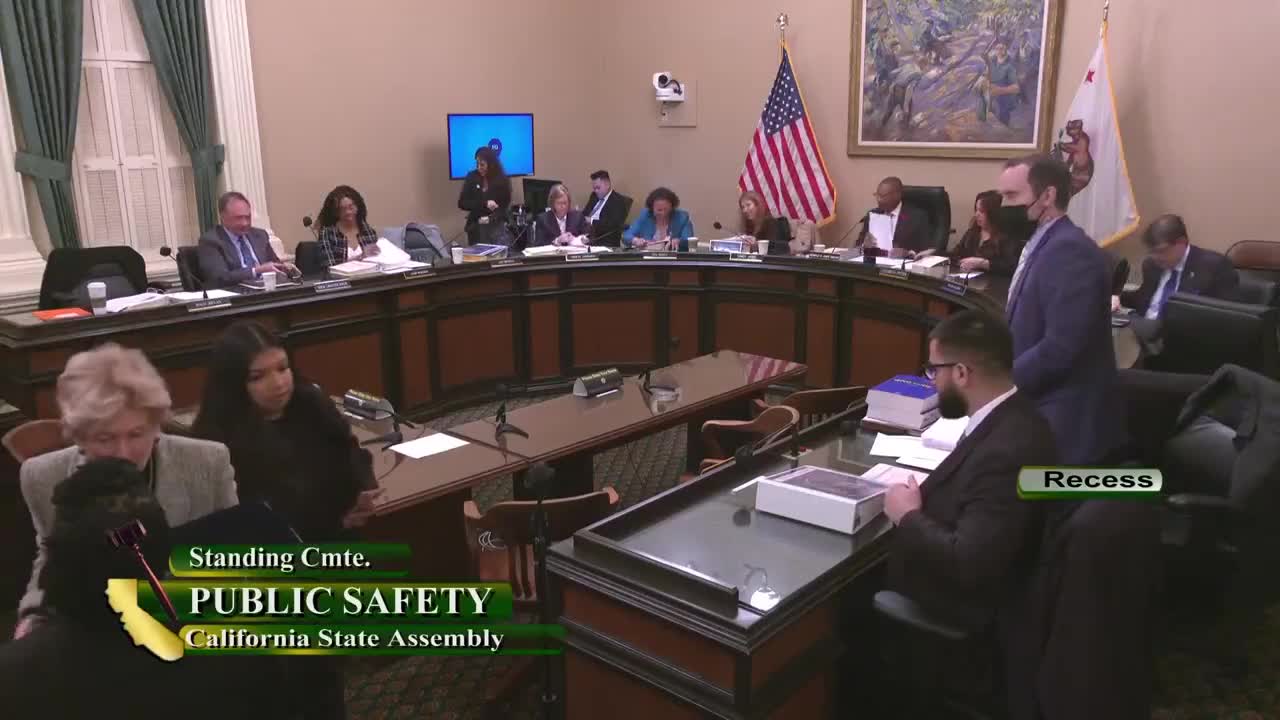 23MIN
Assembly Standing Committee on Public Safety
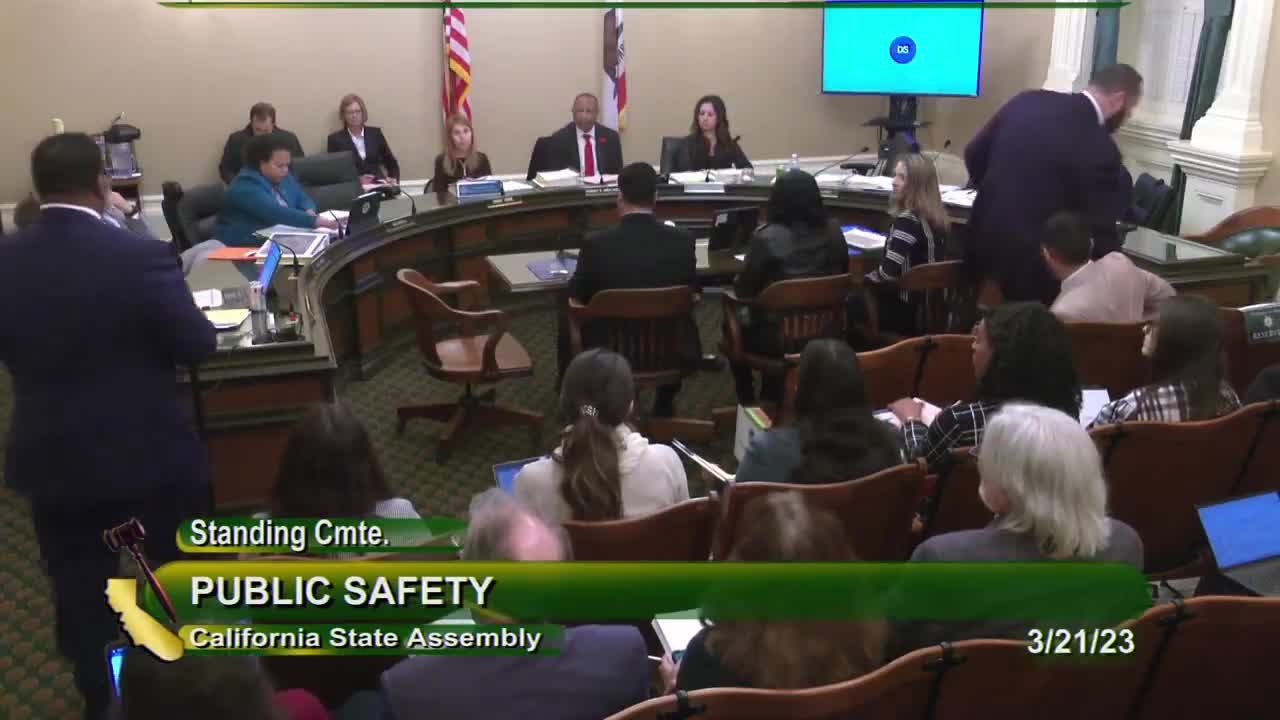 16MIN
Assembly Standing Committee on Public Safety


Bill Co-Author(s):