AB 744: California Transportation Commission: data, modeling, and analytic software tools procurement.
- Session Year: 2023-2024
- House: Assembly
- Latest Version Date: 2023-10-08
Current Status:
Passed
(2023-10-08: Chaptered by Secretary of State - Chapter 541, Statutes of 2023.)
Introduced
In Committee
First Chamber
In Committee
Second Chamber
Enacted
What does this bill do?
The bill directs the California Transportation Commission to lead state and local agencies in evaluating and arranging the purchase or subscription of data, modeling, and analysis software and to create a way for agencies to get access or funding for those tools to support transportation, housing, land use, air quality, economic, and climate goals. Agencies that receive access or funding must report to the commission about how they used the tools, and the commission must report to the Legislature on overall use.
The summary is provided by generative AI which can make mistakes. For original language, please view the details in the table below.
Existing law establishes the California Transportation Commission in the Transportation Agency. Existing law vests the California Transportation Commission with various powers and duties relative to the programming of transportation capital projects and allocation of funds to those projects pursuant to the state transportation improvement program and various other transportation funding programs.
This bill would require the commission to convene relevant state agencies to assess the procurement and implementation of data, modeling, and analytic software tools to support the states sustainable transportation, congestion management, affordable housing, efficient land use, air quality, economic, and climate change strategies and goals, as provided. On or before July 1, 2025, the bill would require the commission to develop a proposal to procure data, modeling, and analytic software tools and a process to grant access to the data it procures directly, or provide a process for direct allocation of funding to agencies for data procurement, or both of those, as provided.
Existing law establishes the California Transportation Commission in the Transportation Agency. Existing law vests the California Transportation Commission with various powers and duties relative to the programming of transportation capital projects and allocation of funds to those projects pursuant to the state transportation improvement program and various other transportation funding programs.
Upon the appropriation of funds by the Legislature, this bill would require the commission to acquire public domain or procure commercially available or open-source licensed data, modeling, and analytic software tools to support the states sustainable transportation, congestion management, affordable housing, efficient land use, air quality, and climate change strategies and goals, as provided.This bill would authorize the commission to provide a direct allocation of funding to local agencies for the above purposes, and would require state and local agencies that receive the funds or access to data, modeling, and analytic software tools to submit reports to the commission no later than August 1, 2026, regarding their use of the data, modeling, and analytic software tools. The bill would require the commission, based on those reports, to submit a report to the Legislature no later than June 1, 2027, regarding the use of the data, modeling, and analytic software tools by state and local agencies.This bill would authorize the commission to establish best practices for use of data in transportation planning and to identify data elements that should be made available to state and local agencies for transportation planning.This bill would require the commission to convene relevant state agencies to assess the procurement and implementation of data, modeling, and analytic software tools to support the states sustainable transportation, congestion management, affordable housing, efficient land use, air quality, economic, and climate change strategies and goals, as provided. On or before July 1, 2025, the bill would require the commission to develop a proposal to procure data, modeling, and analytic software tools and a process to grant access to the data it procures directly, or provide a process for direct allocation of funding to agencies for data procurement, or both of those, as provided.
Existing law establishes the California Transportation Commission in the Transportation Agency. Existing law vests the California Transportation Commission with various powers and duties relative to the programming of transportation capital projects and allocation of funds to those projects pursuant to the state transportation improvement program and various other transportation funding programs.
Upon the appropriation of funds by the Legislature, this bill would require the commission to acquire public domain or procure commercially available or open-source licensed data, modeling, and analytic software tools to support the states sustainable transportation, congestion management, affordable housing, efficient land use, air quality, and climate change strategies and goals. The bill would require the commission to provide access to the data, modeling, and analytic software tools to state and local agencies, as specified. goals, as provided.
This bill would authorize the commission to provide a direct allocation of funding to local agencies for the above purposes, and would require state and local agencies that receive the funds or access to data, modeling, and analytic software tools to submit reports to the commission no later than February August 1, 2026, regarding their use of the data, modeling, and analytic software tools. The bill would require the commission, based on those reports, to submit a report to the Legislature no later than December 1, 2026, June 1, 2027, regarding the use of the data, modeling, and analytic software tools by state and local agencies.
This bill would authorize the commission to establish best practices for use of data in transportation planning and to identify data elements that should be made available to state and local agencies for transportation planning.
Existing law establishes the California Transportation Commission in the Transportation Agency. Existing law vests the California Transportation Commission with various powers and duties relative to the programming of transportation capital projects and allocation of funds to those projects pursuant to the state transportation improvement program and various other transportation funding programs.
Upon the appropriation of funds by the Legislature, this bill would require the commission to acquire public domain or procure commercially available or open-source licensed data, modeling, and analytic software tools to support the states sustainable transportation, congestion management, affordable housing, efficient land use, air quality, and climate change strategies and goals. The bill would require the commission to provide access to the data, modeling, and analytic software tools to state and local agencies, as specified.
This bill would authorize the commission to provide a direct allocation of funding to local agencies for the above purposes, and would require state and local agencies that receive the funds or access to data, modeling, and analytic software tools to submit reports to the commission no later than February 1, 2026, regarding their use of the data, modeling, and analytic software tools. The bill would require the commission, based on those reports, to submit a report to the Legislature no later than December 1, 2026, regarding the use of the data, modeling, and analytic software tools by state and local agencies.
This bill would authorize the commission to establish best practices for use of data in transportation planning and to identify data elements that should be made available to state and local agencies for transportation planning.
Existing law establishes the California Transportation Commission in the Transportation Agency. Existing law vests the California Transportation Commission with various powers and duties relative to the programming of transportation capital projects and allocation of funds to those projects pursuant to the state transportation improvement program and various other transportation funding programs.
Upon the appropriation of funds by the Legislature, this bill would require the commission to acquire public domain or procure commercially available or open-source licensed solutions for data, modeling, and analytic software tools to support the states sustainable transportation, congestion management, affordable housing, efficient land use, air quality, and climate change strategies and goals. The bill would require the commission to provide access to the data, modeling, and analytic software tools to state and local agencies, as specified.
This bill would authorize the commission to provide a direct allocation of funding to local agencies engaged in state-of-the-art technology operations for the above purposes, and would require state and local agencies that receive the funds or access to data, modeling, and analytic software tools to submit reports to the commission no later than February 1, 2026, regarding their use of the data, modeling, and analytic software tools. The bill would require the commission, based on those reports, to submit a report to the Legislature no later than December 1, 2026, regarding the use of the data, modeling, and analytic software tools by state and local agencies.
This bill would authorize the commission to establish best practices for use of data in transportation planning and to identify data elements that should be made available to state and local agencies for transportation planning.
The Legislature finds and declares all of the following:
(a)The adoption of 21st century data, modeling, and analytic software tools is in the best interests of state and local agencies with responsibility for implementing the states climate goals of reducing greenhouse gas emissions.
(b)State agencies, including the Department of Transportation, the State Air Resources Board, and the California Transportation Commission, have already begun procurement programs for big data analytics, but lack coordination and sustainable funding for ongoing investments and determinations about the value of those programs. Regional and local agencies are also participating in procurements without ongoing sustainable funding options.
(c)In accordance with travel demand data and modeling provisions set forth in Section 11205 of the federal Infrastructure Investment and Jobs Act (IIJA) (Public Law 117-58), and in an effort to align with IIJA provisions for travel demand data and modeling, it is in the states interest to procure data and analytical solutions that allow for solutions for vehicular transportation, active transportation, transit modes, and other modes of transportation, including both passenger and commercial freight traffic.
(d)Other benefits include evaluation and assessment of the states progress on climate goals, roadway safety, enhancing and connecting the states multimodal transportation network, improved outcomes in transportation, and land use equity and livability.
(e)The California Transportation Commission already plays a leadership role in the assessment and implementation of data, modeling, and analytic software tools, and should serve as a convener in assisting state and local agencies in accessing data analytic and analysis platforms and programs for the aforementioned goals.
SEC. 2.Section 14533.4 is added to the Government Code, to read:14533.4.(a)(1)The commission shall convene relevant state agencies to assess the procurement and implementation of data, modeling, and analytic software tools to support the states sustainable transportation, congestion management, affordable housing, efficient land use, air quality, economic, and climate change strategies and goals.
(2)For purposes of this section, data, modeling, and analytic software tools may include, but are not limited to, software licenses or subscription licenses to travel demand models, models informed by global positioning system or other spatial information, and other mobility information and data, modeling, and analytic software tools related to commercial freight, demographics, census tract-level land use, transportation safety, transportation-induced emissions, consumer spending, or travel forecasts.
(b)(1)On or before July 1, 2025, the commission shall develop a proposal to procure data, modeling, and analytic software tools and a process by which the commission grants access to state and local agencies to the data it procures directly, or provide a process for direct allocation of funding to agencies for data procurement, or both.
(2)As part of the proposal or process described in paragraph (1), the commission shall identify general types of data sources, desired data outputs, and modeling parameters that may be used by state and local agencies to allow for high-level consistency of data.
(3)As part of the proposal or process described in paragraph (1), the commission may establish best practices for the use of data in transportation planning and may identify data elements that should be made available to state and local agencies wherever possible and consistently used in transportation planning. The commission may incorporate best practices or guidance provided by the secretary in accordance with the federal Infrastructure Investment and Jobs Act (Public Law 117-58).
(4)As a condition of receiving a grant of funds or access to data, modeling, and analytic software tools provided by the commission under this section, a state or local agency shall be required to submit a report no later than August 1, 2027, to the commission about the use of the data, modeling, and analytic software tools for sustainable transportation, safety, active transportation planning, equity, affordable housing, efficient land use, air quality, or climate change-related programs.
(5)The commission shall submit a report to the Legislature no later than June 1, 2028, based on the reports received pursuant to paragraph (4) regarding the use of the data, modeling, and analytic software tools procured pursuant to this section by state and local agencies for sustainable transportation, safety, active transportation planning, equity, affordable housing, efficient land use, air quality, and climate change-related programs.
(c)For purposes of this section, local agency means a county, city, city and county, special district, authority, agency, any other municipal public corporation or district, or other political subdivision of the state, and agencies that have a role in transportation planning, including, but not limited to, regional transportation planning agencies, metropolitan planning organizations, and transportation authorities and commissions.
(d)(1)The requirement for submitting a report imposed under paragraph (5) of subdivision (b) is inoperative on January 1, 2030 pursuant to Section 10231.5 of the Government Code.
(2)A report to be submitted pursuant to paragraph (5) of subdivision (b) shall be submitted in compliance with Section 9795 of the Government Code.
The Legislature finds and declares all of the following:
(a)The adoption of 21st century data, modeling, and analytic software tools is in the best interests of state and local agencies with responsibility for implementing the states climate goals of reducing greenhouse gas emissions.
(b)State agencies, including the Department of Transportation, the State Air Resources Board, and the California Transportation Commission, have already begun procurement programs for big data analytics, but lack coordination and sustainable funding for ongoing investments and determinations about the value of those programs. Regional and local agencies are also participating in procurements without ongoing sustainable funding options.
(c)In accordance with travel demand data and modeling provisions set forth in Section 11205 of the federal Infrastructure Investment and Jobs Act (IIJA) (Public Law 117-58), and in an effort to align with IIJA provisions for travel demand data and modeling, it is in the states interest to procure data and analytical solutions that allow for solutions for vehicular transportation, active transportation, transit modes, and other modes of transportation, including both passenger and commercial freight traffic.
(d)Other benefits include evaluation and assessment of the states progress on climate goals, roadway safety, enhancing and connecting the states multimodal transportation network, improved outcomes in transportation, and land use equity and livability.
(e)The California Transportation Commission already plays a leadership role in the assessment and implementation of data, modeling, and analytic software tools, and should serve as a convener in assisting state and local agencies in accessing data analytic and analysis platforms and programs for the aforementioned goals.
SEC. 2.Section 14533.4 is added to the Government Code, to read:14533.4.(a)(1)Upon the appropriation of funds by the Legislature, the The commission shall acquire public domain or procure commercially available or open-source licensed data, modeling, and analytic software tools to support the states sustainable transportation, congestion management, affordable housing, efficient land use, air quality, economic, and climate change strategies and goals. convene relevant state agencies to assess the procurement and implementation of data, modeling, and analytic software tools to support the states sustainable transportation, congestion management, affordable housing, efficient land use, air quality, economic, and climate change strategies and goals.
(2)Data, For purposes of this section, data, modeling, and analytic software tools procured pursuant to this section tools may include, but are not limited to, the purchase of software licenses, software licenses or subscription licenses to travel demand models, models informed by global positioning system or other spatial information, and other mobility information and data, modeling, and analytic software tools related to commercial freight, demographics, census-tract level census tract-level land use, transportation safety, transportation-induced emissions, consumer spending, or travel forecasts.
(b)(1)On or before July 1, 2025, the commission shall develop a proposal to procure data, modeling, and analytic software tools and a process by which the commission grants access to state and local agencies to the data it procures directly, or provide a process for direct allocation of funding to agencies for data procurement, or both.
(3)The(2)As part of the proposal or process described in paragraph (1), the commission shall identify general types of data sources, desired data outputs, and modeling parameters that may be used by state and local agencies to allow for high-level consistency of data.
(3)As part of the proposal or process described in paragraph (1), the commission may establish best practices for the use of data in transportation planning and may identify data elements that should be made available to state and local agencies wherever possible and consistently used in transportation planning. The commission may incorporate best practices or guidance provided by the secretary in accordance with the federal Infrastructure Investment and Jobs Act (Public Law 117-58).
(4)The commission may provide a direct allocation of funding to local agencies for procurement of data, modeling, and analytic software tools. The commission may grant local agencies access to the data, modeling, and analytic software tools it procures directly.(b)The commission shall convene state agencies to assess and implement data, modeling, and analytic software tools to promote related commercial freight, demographics, census-tract level land use, transportation safety, transportation-induced emissions, consumer spending, or travel forecasts.(c)The commission shall develop a proposal to procure data, modeling, and analytic software tools described in subdivision (a) or a process by which the commission grants access to the data it procures directly, no later than December 31, 2024. The proposal shall include a process for making the data procurement and analytics available to state and local agencies that have a role in transportation planning, including, but not limited to, regional transportation planning agencies, metropolitan planning organizations, and transportation authorities and commissions.(d)(1)As a condition of receiving a grant of funds or access to data, modeling, and analytic software tools provided by the commission under this section, a state or local agency shall submit a report to the commission no later than August 1, 2026, about the use of the data, modeling, and analytic software tools for sustainable transportation, safety, active transportation planning, equity, affordable housing, efficient land use, air quality, or climate change-related programs.(2)(A)The commission shall submit a report to the Legislature, in compliance with Section 9795, no later than June 1, 2027, based on the reports received pursuant to paragraph (1) regarding the use of the data, modeling, and analytic software tools procured pursuant to this section by state and local agencies for sustainable transportation, safety, active transportation planning, equity, affordable housing, efficient land use, air quality, and climate change-related programs.(B)The requirement for submitting a report imposed pursuant to subparagraph (A) is inoperative on December 1, 2030, pursuant to Section 10231.5.(e)Taking into account the information included in the reports outlined in subdivision (d), the commission may establish best practices for the use of data in transportation planning and may identify data elements that should be made available to state and local agencies wherever possible and consistently used in transportation planning. The commission may incorporate best practices or guidance provided by the secretary in accordance with the federal Infrastructure Investment and Jobs Act (Public Law 117-58).(4)As a condition of receiving a grant of funds or access to data, modeling, and analytic software tools provided by the commission under this section, a state or local agency shall be required to submit a report no later than August 1, 2027, to the commission about the use of the data, modeling, and analytic software tools for sustainable transportation, safety, active transportation planning, equity, affordable housing, efficient land use, air quality, or climate change-related programs.
(5)The commission shall submit a report to the Legislature no later than June 1, 2028, based on the reports received pursuant to paragraph (4) regarding the use of the data, modeling, and analytic software tools procured pursuant to this section by state and local agencies for sustainable transportation, safety, active transportation planning, equity, affordable housing, efficient land use, air quality, and climate change-related programs.
(f)(c)For purposes of this section, local agency means a county, city, city and county, special district, authority, agency, any other municipal public corporation or district, or other political subdivision of the state. state, and agencies that have a role in transportation planning, including, but not limited to, regional transportation planning agencies, metropolitan planning organizations, and transportation authorities and commissions.
(d)(1)The requirement for submitting a report imposed under paragraph (5) of subdivision (b) is inoperative on January 1, 2030 pursuant to Section 10231.5 of the Government Code.
(2)A report to be submitted pursuant to paragraph (5) of subdivision (b) shall be submitted in compliance with Section 9795 of the Government Code.
The Legislature finds and declares all of the following:
(a)The adoption of 21st century data, modeling, and analytic software tools is in the best interests of state and local agencies with responsibility for implementing the states climate goals of reducing greenhouse gas emissions.
(b)State agencies, including the Department of Transportation, the State Air Resources Board, and the California Transportation Commission, have already begun procurement programs for big data analytics, but lack coordination and sustainable funding for ongoing investments and determinations about the value of those programs. Regional and local agencies are also participating in procurements without ongoing sustainable funding options.
(c)In accordance with travel demand data and modeling provisions set forth in Section 11205 of the federal Infrastructure Investment and Jobs Act (IIJA) (Public Law 117-58), and in an effort to align with IIJA provisions for travel demand data and modeling, it is in the states interest to procure data and analytical solutions that allow for solutions for vehicular transportation, active transportation, transit modes, and other modes of transportation, including both passenger and commercial freight traffic.
(d)Other benefits include evaluation and assessment of the states progress on climate goals, roadway safety, enhancing and connecting the states multimodal transportation network, improved outcomes in transportation, and land use equity and livability.
(e)The California Transportation Commission already plays a leadership role in the assessment and implementation of data, modeling, and analytic software tools, and should serve as a convener in assisting state and local agencies in accessing data analytic and analysis platforms and programs for the aforementioned goals.
SEC. 2.Section 14533.4 is added to the Government Code, to read:14533.4.(a)(1)Upon the appropriation of funds by the Legislature, the commission shall acquire public domain or procure commercially available or open-source licensed data, modeling, and analytic software tools to support the states sustainable transportation, congestion management, affordable housing, efficient land use, air quality, economic, and climate change strategies and goals.
(2)Data, modeling, and analytic software tools procured pursuant to this section may include, but are not limited to, the purchase of software licenses, or subscription licenses to travel demand models, models informed by global positioning system or other spatial information, and other mobility information and data, modeling, and analytic software tools related to commercial freight, demographics, census-tract level land use, transportation safety, transportation-induced emissions, consumer spending, or travel forecasts.
(3)The commission shall identify general types of data sources, desired data outputs, and modeling parameters that may be used by state and local agencies to allow for high-level consistency of data.
(4)The commission may provide a direct allocation of funding to local agencies for procurement of data, modeling, and analytic software tools. The commission may grant local agencies access to the data, modeling, and analytic software tools it procures directly.
(b)The commission shall convene state agencies to assess and implement data, modeling, and analytic software tools to promote related commercial freight, demographics, census-tract level land use, transportation safety, transportation-induced emissions, consumer spending, or travel forecasts.
(c)The commission shall provide access to the data, modeling, and analytic software tools described in subdivision (a) to state and local agencies that have a role in transportation planning, including, but not limited to, regional transportation planning agencies, metropolitan planning organizations, and transportation authorities and commissions.(d)(c)The commission shall develop a proposal to procure data, modeling, and analytic software tools described in subdivision (a) or a process by which the commission grants access to the data it procures directly, no later than July 1, December 31, 2024. The proposal shall include a process for making the data procurement and analytics available to state and local agencies, no later than 30 days after the award of one or more contracts for the data, modeling, and analytic tools pursuant to this section. agencies that have a role in transportation planning, including, but not limited to, regional transportation planning agencies, metropolitan planning organizations, and transportation authorities and commissions.
(e)(d)(1)As a condition of receiving a grant of funds or access to data, modeling, and analytic software tools provided by the commission under this section, a state or local agency shall submit a report to the commission no later than February August 1, 2026, about the use of the data, modeling, and analytic software tools for sustainable transportation, safety, active transportation planning, equity, affordable housing, efficient land use, air quality, or climate change-related programs.
(2)(A)The commission shall submit a report to the Legislature, in compliance with Section 9795, no later than December 1, 2026, June 1, 2027, based on the reports received pursuant to paragraph (1) regarding the use of the data, modeling, and analytic software tools procured pursuant to this section by state and local agencies for sustainable transportation, safety, active transportation planning, equity, affordable housing, efficient land use, air quality, and climate change-related programs.
(B)The requirement for submitting a report imposed pursuant to subparagraph (A) is inoperative on December 1, 2030, pursuant to Section 10231.5.
(f)(e)Taking into account the information included in the reports outlined in subdivision (e), (d), the commission may establish best practices for the use of data in transportation planning and may identify data elements that should be made available to state and local agencies wherever possible and consistently used in transportation planning. The commission may incorporate best practices or guidance provided by the secretary in accordance with the federal Infrastructure Investment and Jobs Act (Public Law 117-58).
(g)(f)For purposes of this section, local agency means a county, city, city and county, special district, authority, agency, any other municipal public corporation or district, or other political subdivision of the state.
The Legislature finds and declares all of the following:
(a)The adoption of 21st century data, modeling, and analytic software tools is in the best interests of state and local agencies with responsibility for implementing the states climate goals of reducing greenhouse gas emissions.
(b)State agencies, including the Department of Transportation, the State Air Resources Board, and the California Transportation Commission, have already begun procurement programs for big data analytics, but lack coordination and sustainable funding for ongoing investments and determinations about the value of those programs. Regional and local agencies are also participating in procurements without ongoing sustainable funding options.
(c)In accordance with travel demand data and modeling provisions set forth in Section 11205 of the federal Infrastructure Investment and Jobs Act (IIJA) (Public Law 117-58), and in an effort to align with IIJA provisions for travel demand data and modeling, it is in the states interest to procure data and analytical solutions that allow for solutions for vehicular, vehicular transportation, active transportation, transit modes, and other modes of transportation, including both passenger and commercial freight traffic.
(d)Other benefits include evaluation and assessment of the states progress on climate goals, roadway safety, enhancing and connecting the states multimodal transportation network, improved outcomes in transportation, and land use equity and livability.
(e)The California Transportation Commission already plays a leadership role in the assessment and implementation of data, modeling, and analytic software tools, and should serve as a convener in assisting state and local agencies in accessing data analytic and analysis platforms and programs for the aforementioned goals.
SEC. 2.Section 14533.4 is added to the Government Code, to read:14533.4.(a)(1)Upon the appropriation of funds by the Legislature, the commission shall acquire public domain or procure commercially available or open-source licensed data, modeling, and analytic software tools to support the states sustainable transportation, congestion management, affordable housing, efficient land use, air quality, economic, and climate change strategies and goals.
(2)Data, modeling, and analytic software tools procured pursuant to this section may include, but are not limited to, the purchase of software licenses, or subscription licenses to travel demand models, models informed by global positioning system or other spatial information, and other mobility information and data, modeling, and analytic software tools related to commercial freight, demographics, census-tract level land use, transportation safety, transportation-induced emissions, consumer spending, or travel forecasts. The
(3)The commission shall identify general types of data sources, desired data outputs, and modeling parameters that may be used by state and local agencies to allow for high-level consistency of data.
(3)(4)The commission may provide a direct allocation of funding to local agencies for procurement of data, modeling, and analytic software tools. The commission may grant local agencies access to the data, modeling, and analytic software tools it procures directly.
(b)The commission shall convene state agencies to assess and implement data, modeling, and analytic software tools to promote related commercial freight, demographics, census-tract level land use, transportation safety, transportation-induced emissions, consumer spending, or travel forecasts.
(c)The commission shall provide access to the data, modeling, and analytic software tools described in subdivision (a) to state and local agencies required to prepare and adopt a sustainable communities strategy pursuant to Section 65080. that have a role in transportation planning, including, but not limited to, regional transportation planning agencies, metropolitan planning organizations, and transportation authorities and commissions.
(d)The commission shall develop a proposal to procure data, modeling, and analytic software tools or a process by which the commission grants access to the data it procures directly, no later than July 1, 2024. The proposal shall include a process for making the data procurement and analytics available to state and local agencies, no later than 30 days after the award of one or more contracts for the data, modeling, and analytic tools pursuant to this section.
(e)(1)As a condition of receiving a grant of funds or access to data, modeling, and analytic software tools provided by the commission under this section, a state or local agency shall submit a report to the commission no later than February 1, 2026, about the use of the data, modeling, and analytic software tools for sustainable transportation, safety, active transportation planning, equity, affordable housing, efficient land use, air quality, or climate change-related programs.
(2)(A)The commission shall submit a report to the Legislature, in compliance with Section 9795, no later than December 1, 2026, based on the reports received pursuant to paragraph (1) regarding the use of the data, modeling, and analytic software tools procured pursuant to this section by state and local agencies for sustainable transportation, safety, active transportation planning, equity, affordable housing, efficient land use, air quality, and climate change-related programs.
(B)The requirement for submitting a report imposed pursuant to subparagraph (A) is inoperative on December 1, 2030, pursuant to Section 10231.5.
(f)Taking into account the information included in the reports outlined in subdivision (e), the commission may establish best practices for the use of data in transportation planning and may identify data elements that should be made available to state and local agencies wherever possible and consistently used in transportation planning. The commission may incorporate best practices or guidance provided by the secretary in accordance with the federal Infrastructure Investment and Jobs Act (Public Law 117-58) into this guidance. 117-58).
(g)For purposes of this section, local agency means a county, city, city and county, special district, authority, agency, any other municipal public corporation or district, or other political subdivision of the state.
The Legislature finds and declares all of the following:
(a)The adoption of 21st century data, modeling, and analytic software tools is in the best interests of state and local agencies with responsibility for implementing the states climate goals of reducing greenhouse gas emissions.
(b)State agencies, including the Department of Transportation, the State Air Resources Board, and the California Transportation Commission, have already begun procurement programs for big data analytics, but lack coordination and sustainable funding for ongoing investments and determinations about the value of those programs. Regional and local agencies are also participating in procurements without ongoing sustainable funding options.
(c)In accordance with travel demand data and modeling provisions set forth in Section 11205 of the federal Infrastructure Investment and Jobs Act (IIJA) (Public Law 117-58), and in an effort to align with IIJA provisions for travel demand data and modeling, it is in the states interest to procure data and analytical solutions that allow for solutions for vehicular, active transportation, transit modes, and other modes of transportation, including both passenger and commercial freight traffic.
(d)Other benefits include evaluation and assessment of the states progress on climate goals, roadway safety, enhancing and connecting the states multimodal transportation network, improved outcomes in transportation, and land use equity and livability.
(e)The California Transportation Commission already plays a leadership role in the assessment and implementation of data, modeling, and analytic software tools, and should serve as a convener in assisting state and local agencies in accessing data analytic and analysis platforms and programs for the aforementioned goals.
SEC. 2.Section 14533.4 is added to the Government Code, to read:14533.4.(a)(1)Upon the appropriation of funds by the Legislature, the commission shall acquire public domain or procure commercially available or open-source licensed solutions for data, modeling, and analytic software tools to support the states sustainable transportation, congestion management, affordable housing, efficient land use, air quality, economic, and climate change strategies and goals.
(2)Data, modeling, and analytic software tools procured pursuant to this section may include, but are not limited to, the purchase of software licenses, or subscription licenses to travel demand models, models informed by global positioning system or other spatial information, and other mobility information and data, modeling, and analytic software tools related to commercial freight, demographics, census-tract level land use, transportation safety, transportation-induced emissions, consumer spending, or travel forecasts. The commission shall identify general types of data sources, desired data outputs, and modeling parameters that may be used by state and local agencies to allow for high-level consistency of data.
(3)The commission may provide a direct allocation of funding to local agencies engaged in state-of-the-art technology operations as a determined request for procurement of data, modeling, and analytic software tools or a process by which the commission grants tools. The commission may grant local agencies access to the data, modeling, and analytic software tools it procures directly.
(b)The commission shall serve as a convener of state agency coordination for the assessment and implementation of convene state agencies to assess and implement data, modeling, and analytic software tools to promote related commercial freight, demographics, census-tract level land use, transportation safety, transportation-induced emissions, consumer spending, or travel forecasts, among others. forecasts.
(c)The commission shall provide access to the data, modeling, and analytic software tools described in subdivision (a) to state and local agencies required to prepare and adopt a sustainable communities strategy pursuant to Section 65080.
(d)The commission shall develop a proposal to procure data, modeling, and analytic software tools or a process by which the commission grants access to the data it procures directly, no later than July 1, 2024. The proposal shall include a process for making the data procurement and analytics available to state and local agencies, no later than 30 days after the award of one or more contracts for the data, modeling, and analytic tools pursuant to this section.
(e)(1)As a condition of receiving a grant of funds or access to data, modeling, and analytic software tools provided by the commission under this section, a state or local agency shall submit a report to the commission no later than February 1, 2026, about the use of the data, modeling, and analytic software tools for sustainable transportation, safety, active transportation planning, equity, affordable housing, efficient land use, air quality, or climate change-related programs.
(2)(A)The commission shall submit a report to the Legislature, in compliance with Section 9795, no later than December 1, 2026, based on the reports received pursuant to paragraph (1) regarding the use of the data, modeling, and analytic software tools procured pursuant to this section by state and local agencies for sustainable transportation, safety, active transportation planning, equity, affordable housing, efficient land use, air quality, and climate change-related programs.
(B)The requirement for submitting a report imposed pursuant to subparagraph (A) is inoperative on December 1, 2030, pursuant to Section 10231.5.
(f)Taking into account the information included in the reports outlined in subdivision (e), the commission may establish best practices for the use of data in transportation planning and may identify data elements that should be made available to state and local agencies wherever possible and consistently used in transportation planning. The commission may incorporate best practices or guidance provided by the secretary in accordance with the federal Infrastructure Investment and Jobs Act (Public Law 117-58) into this guidance.
(g)For purposes of this section, local agency means a county, city, city and county, special district, authority, agency, any other municipal public corporation or district, or other political subdivision of the state.
The Legislature finds and declares all of the following:
(a)The adoption of 21st century data, modeling, and analytic software tools is in the best interests of state and local agencies with responsibility for implementing the states climate goals of reducing greenhouse gas emissions.
(b)State agencies, including the Department of Transportation, the State Air Resources Board, and the California Transportation Commission, have already begun procurement programs for big data analytics, but lack coordination and sustainable funding for ongoing investments and determinations about the value of those programs. Regional and local agencies are also participating in procurements without ongoing sustainable funding options.
(c)In accordance with travel demand data and modeling provisions set forth in Section 11205 of the federal Infrastructure Investment and Jobs Act (IIJA) (Public Law 117-58), and in an effort to align with IIJA provisions for travel demand data and modeling, it is in the states interest to procure data and analytical solutions that allow for solutions for vehicular, active transportation, transit modes, and other modes of transportation, including both passenger and commercial freight traffic.
(d)Other benefits include evaluation and assessment of the states progress on climate goals, roadway safety, enhancing and connecting the states multimodal transportation network, improved outcomes in transportation, and land use equity and livability.
(e)The California Transportation Commission already plays a leadership role in the assessment and implementation of data, modeling, and analytic software tools, and should serve as a convener in assisting state and local agencies in accessing data analytic and analysis platforms and programs for the aforementioned goals.
SEC. 2.Section 14533.4 is added to the Government Code, to read:14533.4.(a)(1)Upon the appropriation of funds by the Legislature, the commission shall acquire public domain or procure commercially available or open-source licensed solutions for data, modeling, and analytic software tools to support the states sustainable transportation, congestion management, affordable housing, efficient land use, air quality, economic, and climate change strategies and goals.
(2)Data, modeling, and analytic software tools procured pursuant to this section may include, but are not limited to, the purchase of software licenses, or subscription licenses to travel demand models, models informed by global positioning system or other spatial information, and other mobility information and data, modeling, and analytic software tools related to commercial freight, demographics, census-tract level land use, transportation safety, transportation-induced emissions, consumer spending, or travel forecasts. The commission shall identify general types of data sources, desired data outputs, and modeling parameters that may be used by state and local agencies to allow for high-level consistency of data.
(3)The commission may provide a direct allocation of funding to local agencies engaged in state-of-the-art technology operations as a determined request for procurement of data, modeling, and analytic software tools or a process by which the commission grants access to the data, modeling, and analytic software tools it procures directly.
(b)The commission shall serve as a convener of state agency coordination for the assessment and implementation of data, modeling, and analytic software tools to promote related commercial freight, demographics, census-tract level land use, transportation safety, transportation-induced emissions, consumer spending, or travel forecasts, among others.
(c)The commission shall provide access to the data, modeling, and analytic software tools described in subdivision (a) to state and local agencies required to prepare and adopt a sustainable communities strategy pursuant to Section 65080.
(d)The commission shall develop a proposal to procure data, modeling, and analytic software tools or a process by which the commission grants access to the data it procures directly, no later than July 1, 2024. The proposal shall include a process for making the data procurement and analytics available to state and local agencies, no later than 30 days after the award of one or more contracts for the data, modeling, and analytic tools pursuant to this section.
(e)(1)As a condition of receiving a grant of funds or access to data, modeling, and analytic software tools provided by the commission under this section, a state or local agency shall submit a report to the commission no later than February 1, 2026, about the use of the data, modeling, and analytic software tools for sustainable transportation, safety, active transportation planning, equity, affordable housing, efficient land use, air quality, or climate change-related programs.
(2)(A)The commission shall submit a report to the Legislature, in compliance with Section 9795, no later than December 1, 2026, based on the reports received pursuant to paragraph (1) regarding the use of the data, modeling, and analytic software tools procured pursuant to this section by state and local agencies for sustainable transportation, safety, active transportation planning, equity, affordable housing, efficient land use, air quality, and climate change-related programs.
(B)The requirement for submitting a report imposed pursuant to subparagraph (A) is inoperative on December 1, 2030, pursuant to Section 10231.5.
(f)Taking into account the information included in the reports outlined in subdivision (e), the commission may establish best practices for the use of data in transportation planning and may identify data elements that should be made available to state and local agencies wherever possible and consistently used in transportation planning. The commission may incorporate best practices or guidance provided by the secretary in accordance with the federal Infrastructure Investment and Jobs Act (Public Law 117-58) into this guidance.
(g)For purposes of this section, local agency means a county, city, city and county, special district, authority, agency, any other municipal public corporation or district, or other political subdivision of the state.
REVISIONS: HeadingLine 2.|
Date
|
Status
|
|---|---|
| Oct 8, 2023 | Chaptered by Secretary of State - Chapter 541, Statutes of 2023. |
| Oct 8, 2023 | Approved by the Governor. |
| Sep 21, 2023 | Enrolled and presented to the Governor at 3:30 p.m. |
| Sep 14, 2023 | Senate amendments concurred in. To Engrossing and Enrolling. (Ayes 80. Noes 0. Page 3548.). |
| Sep 13, 2023 | In Assembly. Concurrence in Senate amendments pending. |
| Sep 13, 2023 | Read third time. Passed. Ordered to the Assembly. (Ayes 39. Noes 0. Page 2766.). |
| Sep 8, 2023 | Ordered to special consent calendar. |
| Sep 5, 2023 | Read second time. Ordered to third reading. |
| Sep 1, 2023 | Read second time and amended. Ordered returned to second reading. |
| Sep 1, 2023 | From committee: Amend, and do pass as amended. (Ayes 7. Noes 0.) (September 1). |
| Aug 14, 2023 | In committee: Referred to APPR suspense file. |
| Jul 12, 2023 | From committee: Do pass and re-refer to Com. on APPR with recommendation: To Consent Calendar. (Ayes 16. Noes 0.) (July 11). Re-referred to Com. on APPR. |
| Jun 21, 2023 | From committee chair, with author's amendments: Amend, and re-refer to committee. Read second time, amended, and re-referred to Com. on TRANS. |
| Jun 14, 2023 | In committee: Hearing postponed by committee. |
| Jun 8, 2023 | From committee chair, with author's amendments: Amend, and re-refer to committee. Read second time, amended, and re-referred to Com. on TRANS. |
| Jun 7, 2023 | Referred to Com. on TRANS. |
| May 31, 2023 | In Senate. Read first time. To Com. on RLS. for assignment. |
| May 30, 2023 | Read third time. Passed. Ordered to the Senate. (Ayes 79. Noes 0. Page 1911.) |
| May 22, 2023 | Read second time. Ordered to third reading. |
| May 18, 2023 | Read second time and amended. Ordered returned to second reading. |
| May 18, 2023 | From committee: Amend, and do pass as amended. (Ayes 11. Noes 0.) (May 18). |
| May 3, 2023 | In committee: Set, first hearing. Referred to APPR. suspense file. |
| Apr 26, 2023 | In committee: Hearing postponed by committee. |
| Mar 21, 2023 | From committee: Do pass and re-refer to Com. on APPR. with recommendation: To Consent Calendar. (Ayes 15. Noes 0.) (March 20). Re-referred to Com. on APPR. |
| Mar 21, 2023 | Coauthors revised. |
| Mar 2, 2023 | Referred to Com. on TRANS. |
| Feb 14, 2023 | From printer. May be heard in committee March 16. |
| Feb 13, 2023 | Read first time. To print. |
|
Date
|
Description
|
Location
|
Votes
|
|
|---|---|---|---|---|
| Sep 14, 2023 | AB 744 Juan Carrillo Concurrence in Senate Amendments | Assembly Floor |
Passed |
|
| Sep 13, 2023 | Special Consent AB744 Juan Carrillo et al. By Cortese | Senate Floor |
Passed |
|
| Sep 1, 2023 | Do pass as amended | Senate Standing Committee on Appropriations |
Passed |
|
| Aug 14, 2023 | Placed on suspense file | Senate Standing Committee on Appropriations |
Passed |
|
| Jul 11, 2023 | Do pass, but first be re-referred to the Committee on [Appropriations] with the recommendation: To Consent Calendar | Senate Standing Committee on Transportation |
Passed |
|
| May 30, 2023 | AB 744 Juan Carrillo Assembly Third Reading | Assembly Floor |
Passed |
|
| May 18, 2023 | Do pass as amended. | Assembly Standing Committee on Appropriations |
Passed |
|
| Mar 20, 2023 | Do pass and be re-referred to the Committee on [Appropriations] with recommendation: To Consent Calendar | Assembly Standing Committee on Transportation |
Passed |
This list shows positions taken on this bill by organizations on the date displayed, which is linked to the original source.
Positions by individuals are not included.
|
Organization
|
Position
|
Date
|
|---|---|---|
| Association of California Cities - Orange County | ** Support | |
| California Association Of Councils Of Governments | ** Support | |
| California State Association Of Counties | ** Support | |
| City Of Pleasanton | ** Support | |
| City of Thousand Oaks | ** Support | |
| City Of Visalia | ** Support | |
| League Of California Cities | ** Support | |
| Self-Help Counties Coalition | ** Support | |
| Southern California Association Of Governments | ** Support | |
| Streetlight | ** Support | |
| Streetlight Data Inc | ** Support | |
| Streets for All | ** Support | |
| Transportation California | ** Support |
CONCURRENCE IN SENATE AMENDMENTS
CSA1 Bill Id:AB 744
Author:(Juan Carrillo)
As Amended Ver:September 1, 2023
Majority vote
SUMMARY
Requires the California Transportation Commission (CTC), to convene relevant state agencies to assess the procurement and implementation of data, modeling, and analytic software tools to support various state goals, and requires the CTC to develop, by July 1, 2025, a proposal to procure and a process to provide access to data, modeling, and analytic software tools, among other provision.
Senate Amendments
- Strike "Upon appropriation of funds by the Legislature…"
- Require the CTC to convene relevant state agencies to assess the procurement and implementation of data, modeling, and analytic software tools to support the state's sustainable transportation, congestion management, affordable housing, efficient land use, air quality, economic, and climate change strategies and goals.
- Require the CTC, on or before July 1, 2025, to develop a proposal to procure data, modeling, and analytic software tools and a process by which it grants access to state and local agencies to the data it procures directly.
- As a condition of receiving a grant of funds or access to data, modeling, and analytic software tools provided by the CTC, require a state or local agency to submit a report no later than August 1, 2027, to the CTC about the use of the data, modeling, and analytic software tools.
- Require the CTC to submit a report to the Legislature by June 1, 2028, regarding the use of data, modeling, and analytic software tools.
COMMENTS
Existing law established the CTC in the California Transportation Agency (CalSTA), and vests the commission with various powers and duties relative to the programming of transportation capital projects and allocation of funds to those projects pursuant to the state transportation improvement program and various other transportation funding programs.
The availability and use of advanced data has greatly expanded in the transportation sector in the past decade, providing the most up-to-date information to transportation planners for modeling and analytics that are necessary to design and implement plans and strategies to achieve desired outcomes. Real-time data can be used to combine existing location data with mobility, including parcel level land use, daily vehicle miles traveled (VMT) per capita, network link volumes and trip patterns, commercial and on-street parking. These elements can also be combined with demographic data, such as mean household incomes, to create a common operating picture for the state, regional, and local planners to conduct travel demand modeling and analysis for future plans and projects.
Some agencies, including Caltrans, the California Air Resources Board (ARB), and the CTC, have already begun procurement programs for "big data" analytics for certain purposes. At this time, most departments are generally procuring either unique data sets to meet a specific project or ongoing license agreements to work with a provider on a variety of types of data. Local transportation planning agencies are also utilizing data to better understand commute behavior and the VMT impacts of transportation projects.
This bill would implement a process for the procurement of data, modeling, and analytic tools for use by state and local agencies that have a role in transportation planning. This effort is intended to ensure consistency across planning efforts in order to better evaluate progress towards achieving the state's climate and equity goals and improving outcomes throughout the multimodal transportation network.
The CTC would incur administrative costs to convene stakeholders to assess available data, modeling, and analytic tools and develop a proposal to acquire those tools, which may include the purchases subscription for certain data sets or licenses for commercially available tools, as well as developing a process for making the data procurement and analytics available to state and local agencies.
According to the Author
"After coming out of a pandemic, we've seen that many things have changed about how people are using transit - from the trip length, to the time of day of commutes, and even where they start and end their travel. Too often, important decisions are made with data that's out of date, incomplete, or both. Unfortunately, lower-trafficked and rural roads are often overlooked, which can skew the data for city-wide, regional, or national analyses.
As a former City Planner, I understand the challenges of providing local transit options that are reliable, affordable, and easy to use. AB 744 would authorize the CTC to establish best practices for the use of data in transportation planning to rapidly respond to shifting commuter demand. Specifically, this bill would identify data elements, types of data sources, desired data outputs, and modeling parameters that may be used by state and local agencies. These date platforms provide the origin-destination data required to design and implement effective, long-term transportation plans and strategies."
Arguments in Support
Southern California Association of Governments writes, "With historic investments being made to address our state's transportation infrastructure needs, updated data analytic tools are crucial to ensure that the projects we are planning and constructing are adequate to meet not only current but future demands. For these reasons, SCAG is pleased to offer our support for AB 744."
Arguments in Opposition
None on file
FISCAL COMMENTS
According to the Senate Appropriations Committee, the CTC estimates ongoing costs of approximately $217,000 for 1.0 PY of staff to administer the data program, to the extent funding is appropriated for this purpose. (State Highway Account, Public Transportation Account)
The CTC indicates the costs to acquire data, modeling, and analytic software tools, or to provide grants to local agencies for that purpose, could range from the hundreds of thousands to millions of dollars annually ongoing, depending on how the program is implemented, which would be highly dependent upon the amount of funding appropriated for these purposes. For example, costs for a few licensed data sets would be on the lower end of the range, but if multiple tools were procured for each of the 23 regional transportation planning agencies (RTPAs), metropolitan planning agencies (MPOs), and transportation authorities and commission, costs would be in the millions annually, to the extent funding is appropriated for this purpose. (General Fund, various special fund cost pressures)
The Department of Transportation (Caltrans) indicates that any costs to consult with CTC and/or assist in the acquisition of data systems would be minor and absorbable. (State Highway Account)
VOTES:
ASM TRANSPORTATION: 15-0-0
YES: Friedman, Vince Fong, Berman, Juan Carrillo, Davies, Gipson, Hart, Jackson, Kalra, Lowenthal, Stephanie Nguyen, Sanchez, Wallis, Ward, Wicks
ASM APPROPRIATIONS: 11-0-5
YES: Holden, Bryan, Calderon, Wendy Carrillo, Mike Fong, Hart, Lowenthal, Papan, Pellerin, Weber, Ortega
ABS, ABST OR NV: Megan Dahle, Dixon, Mathis, Robert Rivas, Sanchez
ASSEMBLY FLOOR: 79-0-1
YES: Addis, Aguiar-Curry, Alanis, Alvarez, Arambula, Bains, Bauer-Kahan, Bennett, Berman, Boerner, Bonta, Bryan, Calderon, Juan Carrillo, Wendy Carrillo, Cervantes, Chen, Connolly, Megan Dahle, Davies, Dixon, Essayli, Flora, Mike Fong, Vince Fong, Friedman, Gabriel, Gallagher, Garcia, Gipson, Grayson, Haney, Hart, Hoover, Irwin, Jackson, Jones-Sawyer, Kalra, Lackey, Lee, Low, Lowenthal, Maienschein, Mathis, McCarty, McKinnor, Muratsuchi, Stephanie Nguyen, Ortega, Pacheco, Papan, Jim Patterson, Joe Patterson, Pellerin, Petrie-Norris, Quirk-Silva, Ramos, Reyes, Luz Rivas, Robert Rivas, Rodriguez, Blanca Rubio, Sanchez, Santiago, Schiavo, Soria, Ta, Ting, Valencia, Villapudua, Waldron, Wallis, Ward, Weber, Wicks, Wilson, Wood, Zbur, Rendon
ABS, ABST OR NV: Holden
SENATE FLOOR: 39-0-1
YES: Allen, Alvarado-Gil, Archuleta, Ashby, Atkins, Becker, Blakespear, Bradford, Cortese, Dahle, Dodd, Durazo, Eggman, Glazer, Gonzalez, Grove, Hurtado, Jones, Laird, Limón, McGuire, Menjivar, Min, Newman, Nguyen, Niello, Ochoa Bogh, Padilla, Portantino, Roth, Rubio, Seyarto, Skinner, Smallwood-Cuevas, Stern, Umberg, Wahab, Wiener, Wilk
ABS, ABST OR NV: Caballero
UPDATED
VERSION: September 1, 2023
CONSULTANT: Julia Kingsley / TRANS. / (916) 319-2093 FN: 0002276
SENATE COMMITTEE ON APPROPRIATIONS
Senator Anthony Portantino, Chair
2023 - 2024 Regular Session
AB 744 (Juan Carrillo) - California Transportation Commission: data, modeling, and analytic software tools procurement
Version: June 21, 2023 | Policy Vote: TRANS. 16 - 0 |
Urgency: No | Mandate: No |
Hearing Date: September 1, 2023 | Consultant: Mark McKenzie |
Bill Summary:
AB 744 would require the California Transportation Commission (CTC), upon appropriation of funds by the Legislature, to acquire or procure licensed data, modeling, and analytic software tools to support the state’s sustainable transportation, congestion management, affordable housing, efficient land use, air quality, economic, and climate change strategies and goals.
*********** ANALYSIS ADDENDUM – SUSPENSE FILE ***********
The following information is revised to reflect amendments
adopted by the committee on September 1, 2023
Fiscal Impact:
- The CTC estimates ongoing costs of approximately $217,000 for 1.0 PY of staff through the 2027-28 fiscal year to convene relevant state agencies, coordinate with state and local entities to establish best practices, develop a proposal to procure data, modeling, and analytic tools, and a process for granting access to state and local agencies or for direct allocations of funding for those purposes, collect reports from entities who access the data and tools, and report to the Legislature. (State Highway Account, Public Transportation Account)
- The Department of Transportation (Caltrans) indicates that any costs to consult with CTC and/or assist in the planning for acquisition of data systems would be minor and absorbable. (State Highway Account)
- The bill would also create unknown cost pressures for the CTC to procure data, modeling, and analytic tools or provide direct grant funding allocations to state and local agencies for those purposes. Cost pressures could range from the hundreds of thousands to millions of dollars annually ongoing, depending on the results of the assessment and recommendations in the CTC’s proposal to procure and implement data, modeling, and analytic tools. Staff estimates that any proposal to procure those tools or provide grant funding would be evaluated as part of a future state budget process. (General Fund, various special fund cost pressures)
Author Amendments:
- Delete the requirement that the CTC, upon appropriation of funds, acquire public domain or procure commercially available or open-source licensed data, modeling, and analytic software tools to support the state’s sustainable transportation, congestion management, affordable housing, efficient land use, air quality, economic, and climate change strategies and goals.
- Require the CTC to instead convene relevant state agencies to assess the procurement and implementation of data, modeling, and analytic software tools to support the state’s goals noted above.
- Restructure the bill without substantive changes except for the following:
- Delay the due date for the CTC to develop a proposal to procure data, modeling, and analytic tools from December 31, 2024 to July 1, 2025.
- Delay the date by which state or local agencies must submit a report about the use of data, modeling, and analytic tools from August 1, 2026 to August 1, 2027.
- Delay the date by which the CTC must submit a report to the Legislature, based on the reports received from state and local agencies, from June 1, 2027 to June 1, 2028.
- Advance the sunset date on the requirement for the CTC to submit the above report from December 1, 2030 to January 1, 2030.
-- END --
SENATE RULES COMMITTEE Office of Senate Floor Analyses (916) 651-1520 Fax: (916) 327-4478 | AB 744 |
THIRD READING
Bill No: AB 744
Author: Juan Carrillo (D), et al.
Amended: 9/1/23 in Senate
Vote: 21
SENATE TRANSPORTATION COMMITTEE: 16-0, 7/11/23
AYES: Gonzalez, Niello, Allen, Archuleta, Becker, Blakespear, Cortese, Dahle, Durazo, Laird, Limón, McGuire, Newman, Nguyen, Seyarto, Umberg
SENATE APPROPRIATIONS COMMITTEE: 7-0, 9/1/23
AYES: Portantino, Jones, Ashby, Bradford, Seyarto, Wahab, Wiener
ASSEMBLY FLOOR: 79-0, 5/30/23 - See last page for vote
SUBJECT: California Transportation Commission: data, modeling, and analytic software tools procurement
SOURCE: Author
DIGEST:
This bill requires the California Transportation Commission (CTC), on or before July 1, 2025, to develop a proposal to procure data, modeling, and analytic software tools and a process to grant access to state and local agencies to the data it procures directly, or provide a process for direct allocation of funding to agencies for data procurement, or both.
ANALYSIS: Existing law vests the CTC with various powers and duties relative to the programming of transportation capital projects and allocation of funds to those projects pursuant to the state transportation improvement program and various other transportation funding programs.
This bill:
- Makes findings and declarations related to the adoption of data, modeling, and analytic software tools to measure travel demand to assist the state and local agencies.
- Defines “local agency” to mean a county, city, city and county, special district, authority, agency, any other municipal public corporation or district, or other political subdivision of the state, and agencies that have a role in transportation planning, including, but not limited to, regional transportation planning agencies, metropolitan planning organizations, and transportation authorities and commissions
- Defines “data, modeling, and analytic software tools” to include, but are not limited to, software licenses, or subscription licenses to travel demand models; models informed by global positioning system or other spatial information; and other mobility information and data, modeling, and analytic software tools related to commercial freight, demographics, census tract-level land use, transportation safety, transportation-induced emissions, consumer spending, or travel forecasts.
- Requires the CTC to convene relevant state agencies to assess the procurement and implementation of data, modeling, and analytic software tools to support the state’s sustainable transportation, congestion management, affordable housing, efficient land use, air quality, economic, and climate change strategies and goals.
- Requires the CTC, on or before July 1, 2025, to develop a proposal to procure data, modeling, and analytic software tools and a process to grant access to state and local agencies to the data it procures directly, or provide a process for direct allocation of funding to agencies for data procurement, or both.
- Requires CTC, a part of the proposal or process, to identify general types of data sources, desired data outputs, and modeling parameters that may be used by state and local agencies to allow for high-level consistency of data.
- Authorizes the CTC, as part of the proposal or process, to establish best practices for the use of data in transportation planning and may identify data elements that should be made available to state and local agencies wherever possible and consistently used in transportation planning. Further authorizes the CTC to incorporate best practices or guidance provided by the secretary in accordance with the federal Infrastructure Investment and Jobs Act (IIJA, Public Law 117-58).
- Requires a state or local agency which receives a grant of funds or access to data, modeling, and analytic software tools provided by the CTC, to submit a report to the CTC, no later than August 1, 2027, about the use of the data, modeling, and analytic software tools for sustainable transportation, safety, active transportation planning, equity, affordable housing, efficient land use, air quality, or climate change-related programs.
- Requires the CTC to submit a report to the Legislature, no later than June 1, 2028, based on the reports received, as specified, regarding the use of the data, modeling, and analytic software tools procured pursuant to the bill by state and local agencies for sustainable transportation, safety, active transportation planning, equity, affordable housing, efficient land use, air quality, and climate change-related programs.
- Sunsets the report requirement on January 1, 2030.
Comments
- Purpose of the bill. According to the author, “After coming out of a pandemic, we’ve seen that many things have changed about how people are using transit - from the trip length, to the time of day of commutes, and even where they start and end their travel. Too often, important decisions are made with data that’s out of date, incomplete, or both. Unfortunately, lower-trafficked and rural roads are often overlooked, which can skew the data for city-wide, regional, or national analyses. As a former City Planner, I understand the challenges of providing local transit options that are reliable, affordable, and easy to use. AB 744 would authorize the California Transportation Commission to establish best practices for the use of data in transportation planning to rapidly respond to shifting commuter demand. Specifically, this bill would identify data elements, types of data sources, desired data outputs, and modeling parameters that may be used by state and local agencies. These date platforms provide the origin-destination data required to design and implement effective, long-term transportation plans and strategies.”
- “Big Data,” what is it good for? The availability and use of so-called, “Big Data” has greatly expanded in the past decade in transportation, providing the most up-to-date information to transportation planners for modeling and other analyses. For example, the traditional way to gather traffic counts is to send staff onto a handful of targeted roadways to either manually count vehicles or install a temporary “tube” sensor across the roadway to capture counts for the vehicles that drive over it. Unfortunately, there are limitations of this type of traffic counter data, such as lower-trafficked and rural roads are often overlooked, which can skew the data for city-wide, regional, or national analyses; sending staff onto busy roadways can be dangerous; small sample sizes can skew modeled results; temporary traffic counters can drive inaccurate results; and permanent traffic counters are expensive to install and maintain.
Planners also use survey data, asking respondents questions about their travel routes and habits. But surveys may fall short in gathering sufficient traffic counter data for several reasons, including surveys can be expensive, costing hundreds of dollars per household; results are based on small sample sizes and small sample periods; participants are increasingly difficult to recruit due to increased privacy concerns; hard-to-reach populations are systematically under-sampled, and individuals/households tend to underreport travel, especially for short trips, active transportation modes, and non-work purposes.
Today, companies comprising the Big Data space utilize real time data from mostly mobile and Internet of Things (IoT) devices, combined with the scale of cloud compute resources. These data analytic tools collect real-world information that is current and up-to-date. Forecasts are based on real-world location records that reflect current travel patterns. These data platforms provide the origin-destination data required to design and implement long-term transportation plans and strategies.
As mentioned, using conventional tools, a transportation study is something that can takes weeks, months, or even years to complete at great expense. Big Data solutions compress that timeline into less than a day; and all one needs is a computer and an Internet connection.
This data can be used to combine existing location data with mobility, including parcel level land use, daily vehicle miles traveled (VMT) per capita, network link volumes and trip patterns, commercial and on-street parking. It can also be used for demographic data, such as mean household incomes, to create a common operating picture for the state, regional, and local planners.
The data could then be used a wide variety of travel demand modeling and analysis for future plans and projects. It can also be used to measure baselines and understand how policies and projects are helping the state progress towards meeting its goals. Planners can go “back in time” to see what projects were successful in the past, and whether new initiatives are meeting objectives. Additionally, data projections could be used to measure equity impacts from various funding and policy decisions. Statewide demographics and socioeconomic data can be used to analyze what certain communities face in daily transportation decisions – from access to transportation options to commute times to access to jobs, school, healthcare, and recreational activities, as well as pollution exposure due to regional transportation activity.
Currently, there are at least 16 companies that provide this kind of real-time transportation behavior forecasting, including; Cambridge Systematics, Replica, Imrix, CATT Laboratory, Citilabs Streetlytics, Caliper, Streetlight, Here, Wejo Data, GeoTab, Teralytics, TomTom, AirSage , Mobileye Data, Rekor Systems, and UrbanSDK.
- Are we currently using Big Data? State agencies, including California Department of Transportation (Caltrans), the California Air Resources Board (ARB), and the CTC, have already begun procurement programs for big data analytics. The departments are generally procuring either unique data sets to meet a specific project or ongoing license agreements to work with a provider on a variety of types of data.
For example, the CTC procured data and analyses to assist with the development of a Clean Freight Corridor Efficiency Assessment as required by SB 671 (Gonzalez, Chapter 769, Statues of 2021). This includes compiling data such as freight volumes and movement throughout the freight network that will help identifying possible zero-emission charging facilities to support the deployment of zero-emission freight vehicles.
Local agencies are also utilizing this data for all types of analyses, including to better understand commute patterns and behavior after the COVID-19 pandemic. For example, the San Mateo County Transit District (SamTrans), which provides bus service in San Mateo County, wanted to better understand the behavior of commuters on an express bus route to San Francisco. They worked with StreetLight to access on demand metrics to analyze vehicle demand to determine how the pandemic affected commutes. After understanding how commutes had changed, mostly times of day, SamTrans restructured the bus route to a more optimal commute window and saw ridership rise 30%. Additionally, data has been valuable in assisting local agencies in implementing SB 743 (Steinberg, Chapter 386, Statutes of 2013), which requires an analysis of VMT impacts for transportation and other projects under the California Environmental Quality Act (CEQA).
- AB 744 seeks to create state coordination of Big Data procurement and sharing with locals. AB 744 requires the CTC to convene relevant state agencies to assess the procurement and implementation of data, modeling, and analytic software tools to support the state’s sustainable transportation, congestion management, affordable housing, efficient land use, air quality, economic, and climate change strategies and goals.
Additionally, AB 744 requires CTC to develop a proposal, by July 1, 2025, to procure these data, modeling, and analytic software tools and a process for how the CTC will make the data available to other state and local agencies, including those responsible for transportation planning.
The bill also authorizes the CTC to develop a process to provide funding to a local agency for their direct procurement of data, modeling, and analytic software tools. Local agencies would have to submit a report to the CTC by August 1, 2027, detailing their use of the data.
Finally, based on the reports from local agencies and uses of the data by other state agencies, the CTC must report to Legislature no later than June 1, 2028, detailing the use of the data.
Related/Prior Legislation
SB 695 (Gonzalez, 2023) requires Caltrans to compile and publish data and information, as specified, about activities on the state highway system for the last ten years, by June 1, 2024, and annually moving forward. Requires Caltrans to also include data and information on planned, pending projects on the state highway system. Requires the CTC to publish the data and information as part of its annual report to the Legislature. SB 695 is pending on the Assembly Floor.
SB 992 (Beall, 2020) would have required the Transportation Agency to oversee the development and implementation of a comprehensive one-stop reporting interface available to the public through an internet website maintained by the agency, including timely fiscal information regarding the development and implementation status of each transportation program or project funded, at least in part, by revenues from the Road Repair and Accountability Act of 2017. SB 992 died in the Senate Transportation Committee.
FISCAL EFFECT: Appropriation: No Fiscal Com.: Yes Local: No
According to the Senate Appropriations Committee:
- The CTC estimates ongoing costs of approximately $217,000 for 1.0 PY of staff to administer the data program, to the extent funding is appropriated for this purpose. (State Highway Account, Public Transportation Account)
- The CTC indicates the costs to acquire data, modeling, and analytic software tools, or to provide grants to local agencies for that purpose, could range from the hundreds of thousands to millions of dollars annually ongoing, depending on how the program is implemented, which would be highly dependent upon the amount of funding appropriated for these purposes. For example, costs for a few licensed data sets would be on the lower end of the range, but if multiple tools were procured for each of the 23 regional transportation planning agencies (RTPAs), metropolitan planning agencies (MPOs), and transportation authorities and commission, costs would be in the millions annually, to the extent funding is appropriated for this purpose. (General Fund, various special fund cost pressures)
- Caltrans indicates that any costs to consult with CTC and/or assist in the acquisition of data systems would be minor and absorbable. (State Highway Account)
SUPPORT: (Verified 9/1/23)
Association of California Cities - Orange County
California Association of Councils of Governments
California State Association of Counties
City of Pleasanton
City of Thousand Oaks
City of Visalia
League of California Cities
Self-Help Counties Coalition
Southern California Association of Governments
Streetlight Data Inc.
Streets for All
Transportation California
OPPOSITION: (Verified 9/1/23)
None received
ARGUMENTS IN SUPPORT: Writing is support, Transportation California, the League of California Cities, and the California State Association of Counties state, “California’s complex and interrelated policy problems and ambitious policy goals require robust data to inform decision making and support evidence-based outcomes. By combining existing state, regional, and local data with privacy-sensitive data from the private sector, the state and its regional and local partners can create a complete set of metrics to measure the effects of programs and policy-decisions. Setting baselines and measuring outcomes will allow more accurate course corrections over time to ensure investments and policies are achieving the desired outcomes in the most efficient and effective manner.”
ASSEMBLY FLOOR: 79-0, 5/30/23
AYES: Addis, Aguiar-Curry, Alanis, Alvarez, Arambula, Bains, Bauer-Kahan, Bennett, Berman, Boerner, Bonta, Bryan, Calderon, Juan Carrillo, Wendy Carrillo, Cervantes, Chen, Connolly, Megan Dahle, Davies, Dixon, Essayli, Flora, Mike Fong, Vince Fong, Friedman, Gabriel, Gallagher, Garcia, Gipson, Grayson, Haney, Hart, Hoover, Irwin, Jackson, Jones-Sawyer, Kalra, Lackey, Lee, Low, Lowenthal, Maienschein, Mathis, McCarty, McKinnor, Muratsuchi, Stephanie Nguyen, Ortega, Pacheco, Papan, Jim Patterson, Joe Patterson, Pellerin, Petrie-Norris, Quirk-Silva, Ramos, Reyes, Luz Rivas, Robert Rivas, Rodriguez, Blanca Rubio, Sanchez, Santiago, Schiavo, Soria, Ta, Ting, Valencia, Villapudua, Waldron, Wallis, Ward, Weber, Wicks, Wilson, Wood, Zbur, Rendon
NO VOTE RECORDED: Holden
Prepared by: Melissa White / TRANS. / (916) 651-4121
9/2/23 9:51:53
**** END ****
SENATE COMMITTEE ON APPROPRIATIONS
Senator Anthony Portantino, Chair
2023 - 2024 Regular Session
AB 744 (Juan Carrillo) - California Transportation Commission: data, modeling, and analytic software tools procurement
Version: June 21, 2023 | Policy Vote: TRANS. 16 - 0 |
Urgency: No | Mandate: No |
Hearing Date: August 14, 2023 | Consultant: Mark McKenzie |
Bill Summary:
AB 744 would require the California Transportation Commission (CTC), upon appropriation of funds by the Legislature, to acquire or procure licensed data, modeling, and analytic software tools to support the state’s sustainable transportation, congestion management, affordable housing, efficient land use, air quality, economic, and climate change strategies and goals.
Fiscal Impact:
- The CTC estimates ongoing costs of approximately $217,000 for 1.0 PY of staff to administer the data program, to the extent funding is appropriated for this purpose. (State Highway Account, Public Transportation Account)
- The CTC indicates the costs to acquire data, modeling, and analytic software tools, or to provide grants to local agencies for that purpose, could range from the hundreds of thousands to millions of dollars annually ongoing, depending on how the program is implemented, which would be highly dependent upon the amount of funding appropriated for these purposes. For example, costs for a few licensed data sets would be on the lower end of the range, but if multiple tools were procured for each of the 23 regional transportation planning agencies (RTPAs), metropolitan planning agencies (MPOs), and transportation authorities and commission, costs would be in the millions annually, to the extent funding is appropriated for this purpose. (General Fund, various special fund cost pressures)
- The Department of Transportation (Caltrans) indicates that any costs to consult with CTC and/or assist in the acquisition of data systems would be minor and absorbable. (State Highway Account)
Background:
Existing law established the CTC in the California Transportation Agency (CalSTA), and vests the commission with various powers and duties relative to the programming of transportation capital projects and allocation of funds to those projects pursuant to the state transportation improvement program and various other transportation funding programs.
The availability and use of advanced data has greatly expanded in the transportation sector in the past decade, providing the most up-to-date information to transportation planners for modeling and analytics that are necessary to design and implement plans and strategies to achieve desired outcomes. Real-time data can be used to combine existing location data with mobility, including parcel level land use, daily vehicle miles traveled (VMT) per capita, network link volumes and trip patterns, commercial and on-street parking. These elements can also be combined with demographic data, such as mean household incomes, to create a common operating picture for the state, regional, and local planners to conduct travel demand modeling and analysis for future plans and projects.
Some agencies, including Caltrans, the California Air Resources Board (ARB), and the CTC, have already begun procurement programs for “big data” analytics for certain purposes. At this time, most departments are generally procuring either unique data sets to meet a specific project or ongoing license agreements to work with a provider on a variety of types of data. Local transportation planning agencies are also utilizing data to better understand commute behavior and the VMT impacts of transportation projects.
Proposed Law:
AB 744 would require the CTC, upon appropriation of funds by the Legislature, to acquire public domain or procure commercially available or open-source licensed data, modeling, and analytic software tools to support the state’s sustainable transportation, congestion management, affordable housing, efficient land use, air quality, economic, and climate change strategies and goals. The bill would also do the following:
- Specify that these tools may include: the purchase of software licenses, or subscription licenses to travel demand models; models informed by global positioning system or other spatial information; and other mobility information and data, modeling, and analytic software tools related to commercial freight, demographics, census-tract level land use, transportation safety, transportation-induced emissions, consumer spending, or travel forecasts.
- Authorize the CTC to provide a direct allocation of funding to local agencies for the procurement of data, modeling, and analytic tools, and to grant local agencies access to the tools it procures directly.
- Require the CTC to identify general types of data sources, desired data outputs, and modeling parameters that may be used by state and local agencies to allow for high-level consistency of data.
- Require the CTC to convene state agencies to asses and implement data, modeling, and analytic software tools to promote related commercial freight, demographics, census-tract level land use, transportation safety, transportation-induced emissions, consumer spending, or travel forecasts.
- Require the CTC to develop a proposal to procure data, modeling, and analytic software tools, as specified, or a process by which the CTC grants access to the data it procures directly, by December 31, 2024. The proposal must include a process for making the tools available to state and local agencies that have a role in transportation planning, as specified.
- Require state or local agencies receiving grant funding or access to data, modeling, and analytic tools to report to the CTC on the use of those tools by August 1, 2026, as specified.
- Require the CTC to submit a report to the Legislature by June 1, 2027 on state and local agency use of the data, modeling, and analytic tools, for specified purposes and programs, based on the state and local agency reports.
- Authorize the CTC to establish best practices for the use of data in transportation planning based on the reports received, and to identify data elements that should be made available to state and local agencies for consistent use in transportation planning. The CTC may also incorporate best practices or guidance provided by the Secretary of CalSTA in accordance with the federal Infrastructure Investment and Jobs Act.
Staff Comments:
This bill would implement a program, upon appropriation of funds by the Legislature, for the procurement of data, modeling, and analytic tools for use by state and local agencies that have a role in transportation planning. This effort is intended to ensure consistency across planning efforts in order to better evaluate progress towards achieving the state’s climate and equity goals and improving outcomes throughout the multimodal transportation network. The CTC would incur administrative costs to convene stakeholders to assess available data, modeling, and analytic tools and develop a proposal to acquire those tools, which may include the purchases subscription for certain data sets or licenses for commercially available tools, as well as developing a process for making the data procurement and analytics available to state and local agencies. The bill would create significant cost pressures by requiring the CTC to acquire or procure the data, modeling, and analytic tools, and make them available to state and local agencies, upon appropriation of funds by the Legislature. The CTC estimates these costs could be as low as the hundreds of thousands of dollars in a given fiscal year if the program is limited to the acquisition of a few smaller data sets, but could be in the millions to the extent multiple tools are procured and made available to regional transportation planning agencies statewide.
-- END --
SENATE COMMITTEE ON TRANSPORTATION
Senator Lena Gonzalez, Chair
2023 - 2024 Regular
Bill No: Hearing Date: 7/11/2023
Author: | Juan Carrillo | ||
Version: | 6/21/2023 Amended | ||
Urgency: | No | Fiscal: | Yes |
Consultant: | Melissa White | ||
SUBJECT:
DIGEST: This bill requires the California Transportation Commission (CTC), upon appropriation of funds by the Legislature, to acquire solutions for data, modeling, and analytic software tools to support the state’s sustainable transportation, congestion management, affordable housing, efficient land use, air quality, economic, and climate change strategies and goals.
ANALYSIS:
Existing law:
- Vests the CTC with various powers and duties relative to the programming of transportation capital projects and allocation of funds to those projects pursuant to the state transportation improvement program and various other transportation funding programs.
This bill:
- Makes findings and declarations related to the adoption of data, modeling, and analytic software tools to measure travel demand to assist the state and local agencies.
- Requires the CTC, upon appropriation of funds by the Legislature, to acquire public domain or procure commercially available or open-source licensed data, modeling, and analytic software tools that may include, but are not limited to, the purchase of software licenses, or subscription licenses to travel demand models; models informed by global positioning system or other spatial information; and other mobility information and data, modeling, and analytic software tools related to commercial freight, demographics, census-tract level land use, transportation safety, transportation-induced emissions, consumer spending, or travel forecasts.
- Requires the CTC to identify general types of data sources, desired data outputs, and modeling parameters that may be used by state and local agencies to allow for high-level consistency of data.
- Authorizes the CTC to provide a direct allocation of funding to local agencies for procurement of data, modeling, and analytic software tools or a create a process by which the CTC grants access to the data, modeling, and analytic software tools it procures directly.
- Requires the CTC to convene state agencies to asses and implement data, modeling, and analytic software tools to promote related commercial freight, demographics, census-tract level land use, transportation safety, transportation-induced emissions, consumer spending, or travel forecasts.
- Requires the CTC, no later than December 31, 2024, to develop a proposal to procure data, modeling, and analytic software tools, as specified, or a process by which the CTC grants access to the data it procures directly.
- Requires the proposal to include a process for making the data procurement and analytics available to state and local agencies that have a role in transportation planning, including, but not limited to, regional transportation planning agencies (RTPA)s, metropolitan planning agencies (MPO)s, and transportation authorities and commissions.
- Requires a state or local agency which receives a grant of funds or access to data, modeling, and analytic software tools, to submit a report to the CTC, no later than August 1, 2026, about the use of the data, modeling, and analytic software tools for sustainable transportation, safety, active transportation planning, equity, affordable housing, efficient land use, air quality, or climate change-related programs.
- Requires the CTC to submit a report to the Legislature, no later than June 1, 2027, regarding the use of the data, modeling, and analytic software tools procured by state and local agencies for sustainable transportation, safety, active transportation planning, equity, affordable housing, efficient land use, air quality, and climate change-related programs.
- Authorizes the CTC to establish best practices for the use of data in transportation planning based on the reports received. Authorizes CTC to identify data elements that should be made available to state and local agencies whenever possible and consistently used in transportation planning.
- Defines “local agency” to mean a county, city, city and county, special district, authority, agency, any other municipal public corporation or district, or other political subdivision of the state.
COMMENTS:
- Purpose of the bill. According to the author, “After coming out of a pandemic, we’ve seen that many things have changed about how people are using transit - from the trip length, to the time of day of commutes, and even where they start and end their travel. Too often, important decisions are made with data that’s out of date, incomplete, or both. Unfortunately, lower-trafficked and rural roads are often overlooked, which can skew the data for city-wide, regional, or national analyses. As a former City Planner, I understand the challenges of providing local transit options that are reliable, affordable, and easy to use. AB 744 would authorize the California Transportation Commission to establish best practices for the use of data in transportation planning to rapidly respond to shifting commuter demand. Specifically, this bill would identify data elements, types of data sources, desired data outputs, and modeling parameters that may be used by state and local agencies. These date platforms provide the origin-destination data required to design and implement effective, long-term transportation plans and strategies.”
- “Big Data,” what is it good for? The availability and use of so-called, “Big Data” has greatly expanded in the past decade in transportation, providing the most up-to-date information to transportation planners for modeling and other analyses. For example, the traditional way to gather traffic counts is to send staff onto a handful of targeted roadways to either manually count vehicles or install a temporary “tube” sensor across the roadway to capture counts for the vehicles that drive over it. Unfortunately, there are limitations of this type of traffic counter data, such as lower-trafficked and rural roads are often overlooked, which can skew the data for city-wide, regional, or national analyses; sending staff onto busy roadways can be dangerous; small sample sizes can skew modeled results; temporary traffic counters can drive inaccurate results; and permanent traffic counters are expensive to install and maintain.
Planners also use survey data, asking respondents questions about their travel routes and habits. But surveys may fall short in gathering sufficient traffic counter data for several reasons, including surveys can be expensive, costing hundreds of dollars per household; results are based on small sample sizes and small sample periods; participants are increasingly difficult to recruit due to increased privacy concerns; hard-to-reach populations are systematically under-sampled, and individuals/households tend to underreport travel, especially for short trips, active transportation modes, and non-work purposes.
Today, companies comprising the Big Data space utilize real time data from mostly mobile and Internet of Things (IoT) devices, combined with the scale of cloud compute resources. These data analytic tools collect real-world information that is current and up-to-date. Forecasts are based on real-world location records that reflect current travel patterns. These data platforms provide the origin-destination data required to design and implement long-term transportation plans and strategies.
As mentioned, using conventional tools, a transportation study is something that can takes weeks, months, or even years to complete at great expense. Big Data solutions compress that timeline into less than a day; and all one needs is a computer and an Internet connection.
This data can be used to combine existing location data with mobility, including parcel level land use, daily vehicle miles traveled (VMT) per capita, network link volumes and trip patterns, commercial and on-street parking. It can also be used for demographic data, such as mean household incomes, to create a common operating picture for the state, regional, and local planners.
The data could then be used a wide variety of travel demand modeling and analysis for future plans and projects. It can also be used to measure baselines and understand how policies and projects are helping the state progress towards meeting its goals. Planners can go “back in time” to see what projects were successful in the past, and whether new initiatives are meeting objectives. Additionally, data projections could be used to measure equity impacts from various funding and policy decisions. Statewide demographics and socioeconomic data can be used to analyze what certain communities face in daily transportation decisions – from access to transportation options to commute times to access to jobs, school, healthcare, and recreational activities, as well as pollution exposure due to regional transportation activity.
Currently, there are at least 16 companies that provide this kind of real-time transportation behavior forecasting, including; Cambridge Systematics, Replica, Imrix, CATT Laboratory, Citilabs Streetlytics, Caliper, Streetlight, Here, Wejo Data, GeoTab, Teralytics, TomTom, AirSage , Mobileye Data, Rekor Systems, and UrbanSDK.
- Are we currently using Big Data? State agencies, including California Department of Transportation (Caltrans), the California Air Resources Board (ARB), and the CTC, have already begun procurement programs for big data analytics. The departments are generally procuring either unique data sets to meet a specific project or ongoing license agreements to work with a provider on a variety of types of data.
For example, the CTC procured data and analyses to assist with the development of a Clean Freight Corridor Efficiency Assessment as required by SB 671 (Gonzalez, Chapter 769, Statues of 2021). This includes compiling data such as freight volumes and movement throughout the freight network that will help identifying possible zero-emission charging facilities to support the deployment of zero-emission freight vehicles.
Local agencies are also utilizing this data for all types of analyses, including to better understand commute patterns and behavior after the COVID-19 pandemic. For example, the San Mateo County Transit District (SamTrans), which provides bus service in San Mateo County, wanted to better understand the behavior of commuters on an express bus route to San Francisco. They worked with StreetLight to access on demand metrics to analyze vehicle demand to determine how the pandemic affected commutes. After understand how commutes had changed, mostly times of day, SamTrans restructured the bus route to a more optimal commute window and saw ridership rise 30%. Additionally, data has been valuable in assisting local agencies in implementing SB 743 (Steinberg, Chapter 386, Statutes of 2013), which requires an analysis of VMT impacts for transportation and other projects under the California Environmental Quality Act (CEQA).
- AB 744 seeks to create state coordination of Big Data procurement and sharing with locals. AB 744 requires the CTC, upon appropriation of funds by the Legislature, to acquire public domain or procure commercially available or open-licensed data, modeling, and analytic software tools. Specifically, the data tools procured could include the purchase of software licenses, or subscription licenses to travel demand models; models informed by global positioning system or other spatial information; and other mobility information and data, modeling, and analytic software tools related to commercial freight, demographics, census-tract level land use, transportation safety, transportation-induced emissions, consumer spending, or travel forecasts.
AB 744 requires CTC to develop a proposal, by December 31, 2024, to procure these data, modeling, and analytic software tools and a process for how the CTC will make the data available to other state and local agencies, specifically local angecies that have a role in transportation planning, such as RTPAs and MPOs.
The bill also authorizes the CTC to provide funding to a local agency for their direct procurement of data, modeling, and analytic software tools. Local agencies would have to would have to submit a report to the CTC by August 1, 2026 detailing their use of the data.
Finally, based on the reports from local angecies and uses of the data by other state angecies, the CTC must report to Legislature no later than June 1, 2027, detailing the use of the data for sustainable transportation, safety, active transportation planning, equity, affordable housing, efficient land use, air quality, or climate change related programs.
Writing is support, Transportation California, the League of California Cities, and the California State Association of Counties state, “California’s complex and interrelated policy problems and ambitious policy goals require robust data to inform decision making and support evidence-based outcomes. By combining existing state, regional, and local data with privacy-sensitive data from the private sector, the state and its regional and local partners can create a complete set of metrics to measure the effects of programs and policy-decisions. Setting baselines and measuring outcomes will allow more accurate course corrections over time to ensure investments and policies are achieving the desired outcomes in the most efficient and effective manner.”
RELATED/PREVIOUS LEGISLATION
SB 695 (Gonzalez, 2023) -- Would require Caltrans to compile and publish data and information, as specified, about activities on the state highway system for the last ten years, by June 1, 2024, and annually moving forward. Requires Caltrans to also include data and information on planned, pending projects on the state highway system. Requires the CTC to publish the data and information as part of its annual report to the Legislature. SB 695 is pending in the Assembly Appropriations Committee.
SB 992 (Beall, 2020) -- Would have required the Transportation Agency to oversee the development and implementation of a comprehensive one-stop reporting interface available to the public through an internet website maintained by the agency, including timely fiscal information regarding the development and implementation status of each transportation program or project funded, at least in part, by revenues from the Road Repair and Accountability Act of 2017. SB 992 died in the Senate Transportation Committee.
FISCAL EFFECT: Appropriation: No Fiscal Com.: Yes Local: No
According to the Assembly Appropriations Committee:
- Annual costs to CTC of approximately $220,000 for one research data specialist to administer the data program (Public Transportation Account/State Highway Account).
- Cost pressure of a significant amount, ranging from the hundreds of thousands of dollars to the tens of millions of dollars, to fund CTC acquisition or procurement of—or grants for local agencies to acquire or procure—data, modeling and analytic software tools (General Fund)
POSITIONS: (Communicated to the committee before noon on Wednesday,
Wednesday, July 5, 2023.)
SUPPORT:
California Association of Councils of Governments (CALCOG)
California State Association of Counties (CSAC)
City of Pleasanton
City of Thousand Oaks
League of California Cities
Self-help Counties Coalition
Southern California Association of Governments (SCAG)
Streetlight Data INC.
Streets for All
Transportation California
OPPOSITION:
None received
-- END --
ASSEMBLY THIRD READING
ATR Bill Id:AB 744
Author:(Juan Carrillo)
As Amended Ver:May 18, 2023
Majority vote
SUMMARY
Requires the California Transportation Commission (CTC) to acquire solutions for data, modeling, and analytic software tools to support the state's sustainable transportation, congestion management, affordable housing, efficient land use, air quality, economic, and climate change strategies and goals.
Major Provisions
- Makes findings and declarations related to the state need for travel demand data and modeling.
- Requires the CTC to acquire public domain or procure commercially available or open-source licensed data, modeling, and analytic software tools that may include, but are not limited to, the purchase of software licenses, or subscription licenses to travel demand models, models informed by global positioning system or other spatial information, and other mobility information and data, modeling, and analytic software tools related to commercial freight, demographics, census-tract level land use, transportation safety, transportation-induced emissions, consumer spending, or travel forecasts.
- Allows the CTC to provide a direct allocation of funding to local agencies for procurement of data, modeling, and analytic software tools.
- Allows the CTC to convene state agencies to assess and implement data, modeling, and analytic software tools to promote related commercial freight, demographics, census-tract level land use, transportation safety, transportation-induced emissions, consumer spending, or travel forecasts.
- Requires the CTC to provide access to the data, modeling, and analytic software tools to state and local agencies required to prepare and adopt a sustainable communities strategy.
- No later than February 1, 2026, requires a state or local agency which receives a grant of funds or access to data, modeling, and analytic software tool, to submit a report to the commission about the use of the data, modeling, and analytic software tools for sustainable transportation, safety, active transportation planning, equity, affordable housing, efficient land use, air quality, or climate change-related programs.
- No later than July 1, 2024, requires the CTC to develop a proposal to procure data, modeling, and analytic software tools or a process by which the commission grants access to the data it procures directly.
- No later than December 1, 2026, requires the CTC to submit a report to the legislature regarding the use of the data, modeling, and analytic software tools procured by state and local agencies for sustainable transportation, safety, active transportation planning, equity, affordable housing, efficient land use, air quality, and climate change-related programs.
- Provisions in this bill are contingent upon appropriation of funds by the Legislature.
COMMENTS
Accessible data facilitates accountability and transparency for a government's citizens. Effective demonstration of data can establish baselines, benchmarks, and goals to measure the effectiveness of a given strategy. Given the state's myriad of climate, safety, maintenance, efficiency, and equity goals in the transportation sector alone, there is a need for consistent data in order to assess how the state's transportation infrastructure investments align with state goals and benchmarks.
The OPEN Government Data Act requires federal agencies to publish information as open data (i.e., publicly accessible, machine readable, and free to use, modify, and share), maintain data inventories, and engage with the public about agency data.
The California Government Operations Agency sponsors data.ca.gov, a statewide open data portal created to improve collaboration, expand transparency and lead to innovation and increased effectiveness. Participating state departments with an open data portal of their own include: California Natural Resources Agency, California Health and Human Services, California State Controller's Office, California Department of Justice, California State Board of Equalization, California Employment Development Department, California Department of Tax and Fee Administration, California Public Utilities Commission, California State Treasurer, and the California Franchise Tax Board.
The California Department of Transportation (Caltrans) has posted 34 data sets onto data.ca.gov, ranging from emergency road closures to ports of entry to the number of Caltrans employees working from home in 2020. The CTC does not have any datasets posted on data.ca.gov.
Rebuilingca.ca.gov includes information from Caltrans, CTC, California State Transportation Agency (CalSTA), and the United States Department of Transportation (USDOT) on state programs and projects that are funded by the State Road Repair and Accountability Act of 2017, and the federal Infrastructure Investment and Jobs Act of 2021. However, data sets are not published on this site.
Show me the numbers. California lacks a public data portal in the transportation sector that is easy to search, download, combine with data sets from other sources, and simple to use to track how the projects funded align with helping to the state achieve its climate goals.
Many other states (such as Virginia, North Carolina, Texas, and Ohio) have implemented transportation data dashboards that provide access to clear and accessible data such as infrastructure condition, sources of project funding, and project location.
This bill requires the CTC to procure, manage, and create processes for the state and local governments, for the use of advanced data analytics software that can obtain high-quality, detailed data projections of future condition based on expected changes to the population, land use, and transportation infrastructure.
There are at least 16 companies that provide this kind of real-time transportation behavior forecasting, including; Cambridge Systematics, Replica, Imrix, CATT Laboratory, Citilabs Streetlytics, Caliper, Streetlight, Here, Wejo Data, GeoTab, Teralytics, TomTom, AirSage , Mobileye Data, Rekor Systems, and UrbanSDK.
State agencies, including Caltrans, the California Air Resources Board, and CTC, have already begun procurement programs for "big data" analytics, but lack coordination and sustainable funding for ongoing investments and determinations about the value of those programs. Regional and local agencies are also participating in procurements without ongoing, sustainable funding options.
Additional data can be used to combine existing location data with mobility (parcel level land use, daily vehicle miles traveled per capita, network link volumes and trip patterns, commercial and on-street parking) and demographic data (mean household incomes) to create a common operating picture for the state, regions, locals, and interested stakeholders. This data can then be used to measure baselines and understand how policy and siting decisions have impacted zero emission vehicle deployment and progress towards meeting the state's climate goals.
Data projections can be used to measure equity impacts from various funding and policy decisions. Statewide demographics and socioeconomic data can be used to analyze the inequities certain communities face in daily transportation decisions – from access to transportation options to commute times to access to jobs, school, healthcare, and recreational activities, as well as pollution exposure due to regional transportation activity.
While California is lacking consistent, digestible data on current transportation planning and funding decisions, this bill seeks to better inform future transportation planning decisions with robust data and metrics. This bill also seeks to provide equal access to data modeling tools in order to plan and achieve the state's housing, climate, air quality, and land use goals.
According to the Author
"After coming out of a pandemic, we've seen that many things have changed about how people are using transit - from the trip length, to the time of day of commutes, and even where they start and end their travel. Too often, important decisions are made with data that's out of date, incomplete, or both. Unfortunately, lower-trafficked and rural roads are often overlooked, which can skew the data for city-wide, regional, or national analyses.
As a former City Planner, I understand the challenges of providing local transit options that are reliable, affordable, and easy to use. AB 744 would authorize the CTC to establish best practices for the use of data in transportation planning to rapidly respond to shifting commuter demand. Specifically, this bill would identify data elements, types of data sources, desired data outputs, and modeling parameters that may be used by state and local agencies. These date platforms provide the origin-destination data required to design and implement effective, long-term transportation plans and strategies."
Arguments in Support
Streetlight Data, Inc., writes, "By measuring what matters, the State of California would be taking a historic first step to setting baseline for the policy outcomes it envisions as it relates to transportation, housing, climate, sustainable communities, economic development, jobs access and racial equity. Therefore, we are pleased to support AB 744 and look forward to working with you throughout the legislative process."
Arguments in Opposition
None on file.
FISCAL COMMENTS
According to the Assembly Appropriations Committee:
- Annual costs to CTC of approximately $220,000 for one research data specialist to administer the data program (Public Transportation Account/State Highway Account).
- Cost pressure of a significant amount, ranging from the hundreds of thousands of dollars to the tens of millions of dollars, to fund CTC acquisition or procurement of – or grants for local agencies to acquire or procure – data, modeling and analytic software tools (General Fund).
VOTES
ASM TRANSPORTATION: 15-0-0
YES: Friedman, Vince Fong, Berman, Juan Carrillo, Davies, Gipson, Hart, Jackson, Kalra, Lowenthal, Stephanie Nguyen, Sanchez, Wallis, Ward, Wicks
ASM APPROPRIATIONS: 11-0-5
YES: Holden, Bryan, Calderon, Wendy Carrillo, Mike Fong, Hart, Lowenthal, Papan, Pellerin, Weber, Ortega
ABS, ABST OR NV: Megan Dahle, Dixon, Mathis, Robert Rivas, Sanchez
UPDATED
VERSION: May 18, 2023
CONSULTANT: Julia Kingsley / TRANS. / (916) 319-2093 FN: 0000928
Date of Hearing: May 3, 2023
ASSEMBLY COMMITTEE ON APPROPRIATIONS
Chris Holden, Chair
ABPCA Bill Id:AB 744
Author:(Juan Carrillo) – As Introduced Ver:February 13, 2023
Policy Committee: | Transportation | Vote: | 15 - 0 |
|
| ||
|
|
Urgency: No State Mandated Local Program: No Reimbursable: No
SUMMARY:
This bill directs the California Transportation Commission (CTC) to coordinate state assessment and implementation of the use of data, modeling and analytic software tools and requires CTC to acquire or procure such data, modeling and software tools for use by state and local transportation planners.
Specifically, this bill, among other things:
- Generally directs CTC to bring together state agencies to coordinate assessment and implementation of the use of data, modeling and analytic software tools to support the state’s sustainable transportation, congestion management, affordable housing, efficient land use, air quality, economic and climate change strategies and goals.
- Directs CTC to, no later than July 1, 2024, develop a proposal to procure data, modeling and analytic software tools or a process by which the CTC grants access to the data it procures directly, which is to include a process for making the data procurement and analytics available to state and local agencies, no later than 30 days after the award of one or more contracts for the data, modeling, and analytic tools pursuant to the requirements of this bill.
- Directs CTC to, upon appropriation of funds by the Legislature for this purpose, “acquire public domain or procure commercially available or open-source licensed solutions for data, modeling, and analytic software tools to support the state’s sustainable transportation, congestion management, affordable housing, efficient land use, air quality, economic, and climate change strategies and goals.” The bill provides the following examples of data, modeling and analytic software that CTC might procure pursuant to this bill: the purchase of software licenses or subscription licenses to travel demand models, models informed by global positioning system or other spatial information and other mobility information and data, modeling and analytic software tools related to commercial freight, demographics, census-tract level land use, transportation safety, transportation-induced emissions, consumer spending or travel forecasts.
- Authorizes CTC to provide a grant to a local agency so the agency may, itself, procure data, modeling and analytic software tools, as described in the bill, or provide a process by which CTC gives such a local agency access to the data, modeling and analytical software tools CTC procures directly.
- Requires a recipient of CTC grant funds to procure data, modeling and analytic software tools, or access to the same, to submit a report to CTC, by February 1, 2026, about the use of the data, modeling and analytic software tools for sustainable transportation, safety, active transportation planning, equity, affordable housing, efficient land use, air quality or climate change-related programs.
- Requires CTC to submit a report to the Legislature, by December 1, 2026, based on the reports submitted to CTC by state and local agencies, as described above
FISCAL EFFECT:
- Annual costs to CTC of approximately $220,000 for one research data specialist to administer the data program (Public Transportation Account/State Highway Account).
- Cost pressure of a significant amount, ranging from the hundreds of thousands of dollars to the tens of millions of dollars, to fund CTC acquisition or procurement of—or grants for local agencies to acquire or procure—data, modeling and analytic software tools (General Fund)
COMMENTS:
- Purpose. The author intends this bill to enable state and local transportation planners to, collectively and individually, better use data to achieve the state’s transportation, environmental and related objectives.
- Background. Both state and local agencies are involved in planning and maintaining the state’s transportation systems, and doing so in a way that achieves the state’s many policy goals, not least among which is achievement of the state’s environmental and public health policy goals. To do so, these agencies rely on data. Traditionally, they have collected this data manually and stored it locally, where it is generally inaccessible to other transportation planners.
Writing jointly in support of this bill, Transportation California (an association of transportation-related businesses and labor organizations), the League of California Cities and the California State Association of Counties describe the “traditional way” of data collection:
The traditional way to gather traffic counts is to send staff onto a handful of targeted roadways to either manually count vehicles or install a temporary “tube” sensor across the roadway to capture counts for the vehicles that drive over it. Some areas install expensive permanent traffic counters on priority roadways. Data planners also use survey data, asking respondents questions about their travel routes and habits.
The author and bill proponents describe the state’s efforts to move away from the traditional manual approach to data collection and static analysis and, instead, use “big data,” using “21st century data, modeling and analytic software tools.” These buzzy terms are somewhat amorphous. But the bill, more concretely, describes data, modeling and analytic software tools that include, but are not limited to:
the purchase of software licenses, or subscription licenses to travel demand models, models informed by global positioning system or other spatial information, and other mobility information and data, modeling, and analytic software tools related to commercial freight, demographics, census-tract level land use, transportation safety, transportation-induced emissions, consumer spending, or travel forecasts.
In several places, the bill’s language could be clearer and more direct. For example, in one occasion only, the bill refers to “solutions for data, modeling, and analytic software tools.” In every other instance, the bill refers, simply, to “data, modeling and analytic software tools.” The author might want to consider, for consistency and clarity’s sake, to strike the word “solutions.”
Analysis Prepared by: Jay Dickenson / APPR. / (916) 319-2081
Date of Hearing: March 20, 2023
ASSEMBLY COMMITTEE ON TRANSPORTATION
Laura Friedman, Chair
ABPCA Bill Id:AB 744 (
Author:Juan Carrillo) – As Introduced Ver:February 13, 2023
SUBJECT: California Transportation Commission: data, modeling, and analytic software tools procurement
SUMMARY: Requires the California Transportation Commission (CTC) to acquire solutions for data, modeling, and analytic software tools to support the state’s sustainable transportation, congestion management, affordable housing, efficient land use, air quality, economic, and climate change strategies and goals. Specifically, this bill:
- Makes findings and declarations related to the state need for travel demand data and modeling.
- Requires the CTC to acquire public domain or procure commercially available or open-source licensed solutions for data, modeling, and analytic software tools that may include, but are not limited to, the purchase of software licenses, or subscription licenses to travel demand models, models informed by global positioning system or other spatial information, and other mobility information and data, modeling, and analytic software tools related to commercial freight, demographics, census-tract level land use, transportation safety, transportation-induced emissions, consumer spending, or travel forecasts.
- Allows the CTC to provide a direct allocation of funding to local agencies engaged in state-of-the-art technology operations as a determined request for procurement of data, modeling, and analytic software tools or a process by which the commission grants access to the data, modeling, and analytic software tools it procures directly.
- Requires the CTC to serve as a convener of state agency coordination for the assessment and implementation of data, modeling, and analytic software tools to promote related commercial freight, demographics, census-tract level land use, transportation safety, transportation-induced emissions, consumer spending, or travel forecasts, among others.
- Requires the CTC to provide access to the data, modeling, and analytic software tools to state and local agencies required to prepare and adopt a sustainable communities strategy.
- No later than February 1, 2026, requires a state or local agency which receives a grant of funds or access to data, modeling, and analytic software tool, to submit a report to the commission about the use of the data, modeling, and analytic software tools for sustainable transportation, safety, active transportation planning, equity, affordable housing, efficient land use, air quality, or climate change-related programs.
- No later than July 1, 2024, requires the CTC to develop a proposal to procure data, modeling, and analytic software tools or a process by which the commission grants access to the data it procures directly.
- No later than December 1, 2026, requires the CTC to submit a report to the legislature regarding the use of the data, modeling, and analytic software tools procured by state and local agencies for sustainable transportation, safety, active transportation planning, equity, affordable housing, efficient land use, air quality, and climate change-related programs.
- Provisions in this bill are contingent upon appropriation of funds by the Legislature.
EXISTING LAW:
- Establishes the CTC in the Transportation Agency. (Government Code (GOV) 14500)
- Vests the CTC with various powers and duties relative to the programming of transportation capital projects and allocation of funds to those projects pursuant to the state transportation improvement program and various other transportation funding programs. (GOV 14520-14534.1)
FISCAL EFFECT: Unknown
COMMENTS: Accessible data facilitates accountability and transparency for a government’s citizens. Effective demonstration of data can establish baselines, benchmarks, and goals to measure the effectiveness of a given strategy. Given the state’s myriad of climate, safety, maintenance, efficiency, and equity goals in the transportation sector alone, there is a need for consistent data in order to assess how the state’s transportation infrastructure investments align with state goals and benchmarks.
The OPEN Government Data Act requires federal agencies to publish information as open data (i.e., publicly accessible, machine readable, and free to use, modify, and share), maintain data inventories, and engage with the public about agency data.
The California Government Operations Agency sponsors data.ca.gov, a statewide open data portal created to improve collaboration, expand transparency and lead to innovation and increased effectiveness. Participating state departments with an open data portal of their own include: California Natural Resources Agency, California Health and Human Services, California State Controller’s Office, California Department of Justice, California State Board of Equalization, California Employment Development Department, California Department of Tax and Fee Administration, California Public Utilities Commission, California State Treasurer, and the California Franchise Tax Board.
The California Department of Transportation (Caltrans) has posted 34 data sets onto data.ca.gov, ranging from emergency road closures to ports of entry to the number of Caltrans employees working from home in 2020. The CTC does not have any datasets posted on data.ca.gov.
Rebuilingca.ca.gov includes information from Caltrans, CTC, California State Transportation Agency (CalSTA), and the United States Department of Transportation (USDOT) on state programs and projects that are funded by the State Road Repair and Accountability Act of 2017, and the federal Infrastructure Investment and Jobs Act of 2021. However, data sets are not published on this site.
Show me the numbers. California lacks a public data portal in the transportation sector that is easy to search, download, combine with data sets from other sources, and simple to use to track how the projects funded align with helping to the state achieve its climate goals.
Many other states (such as Virginia, North Carolina, Texas, and Ohio) have implemented transportation data dashboards that provide access to clear and accessible data such as infrastructure condition, sources of project funding, and project location.
This bill requires the CTC to procure, manage, and create processes for the state and local governments, for the use of advanced data analytics software that can obtain high-quality, detailed data projections of future condition based on expected changes to the population, land use, and transportation infrastructure.
There are at least 16 companies that provide this kind of real-time transportation behavior forecasting, including; Cambridge Systematics, Replica, Imrix, CATT Laboratory, Citilabs Streetlytics, Caliper, Streetlight, Here, Wejo Data, GeoTab, Teralytics, TomTom, AirSage , Mobileye Data, Rekor Systems, and UrbanSDK.
State agencies, including Caltrans, the California Air Resources Board, and CTC, have already begun procurement programs for “big data” analytics, but lack coordination and sustainable funding for ongoing investments and determinations about the value of those programs. Regional and local agencies are also participating in procurements without ongoing, sustainable funding options.
Additional data can be used to combine existing location data with mobility (parcel level land use, daily vehicle miles traveled per capita, network link volumes and trip patterns, commercial and on-street parking) and demographic data (mean household incomes) to create a common operating picture for the state, regions, locals, and interested stakeholders. This data can then be used to measure baselines and understand how policy and siting decisions have impacted zero emission vehicle deployment and progress towards meeting the state’s climate goals.
Data projections can be used to measure equity impacts from various funding and policy decisions. Statewide demographics and socioeconomic data can be used to analyze the inequities certain communities face in daily transportation decisions – from access to transportation options to commute times to access to jobs, school, healthcare, and recreational activities, as well as pollution exposure due to regional transportation activity.
While California is lacking consistent, digestible data on current transportation planning and funding decisions, this bill seeks to better inform future transportation planning decisions with robust data and metrics. This bill also seeks to provide equal access to data modeling tools in order to plan and achieve the state’s housing, climate, air quality, and land use goals.
According to the author, “After coming out of a pandemic, we’ve seen that many things have changed about how people are using transit - from the trip length, to the time of day of commutes, and even where they start and end their travel. Too often, important decisions are made with data that’s out of date, incomplete, or both. Unfortunately, lower-trafficked and rural roads are often overlooked, which can skew the data for city-wide, regional, or national analyses.
As a former City Planner, I understand the challenges of providing local transit options that are reliable, affordable, and easy to use. AB 744 would authorize the CTC to establish best practices for the use of data in transportation planning to rapidly respond to shifting commuter demand. Specifically, this bill would identify data elements, types of data sources, desired data outputs, and modeling parameters that may be used by state and local agencies. These date platforms provide the origin-destination data required to design and implement effective, long-term transportation plans and strategies.”
In support, Streetlight Data, Inc., writes, “By measuring what matters, the State of California would be taking a historic first step to setting baseline for the policy outcomes it envisions as it relates to transportation, housing, climate, sustainable communities, economic development, jobs access and racial equity. Therefore, we are pleased to support AB 744 and look forward to working with you throughout the legislative process.”
Previous legislation. SB 695 (Gonzalez of 2023) would require the department, beginning November 1, 2024, to annually prepare and make available information and data about activities on the state highway system on a public data portal from the prior fiscal year.
AB 1475 (Fong of 2023) would require CalSTA to create and maintain on its internet website a performance dashboard that, for every project overseen by the Department of Transportation, provides metrics, fiscal information, and operational information, as specified.
SB 992 (Beall of 2020) would have required the Transportation Agency to oversee the development and implementation of a comprehensive one-stop reporting interface available to the public through an internet website maintained by the agency, including timely fiscal information regarding the development and implementation status of each transportation program or project funded, at least in part, by revenues from the Road Repair and Accountability Act of 2017.
SB 1 (Beall) Chapter 5, Statutes of 2017 increases several taxes and fees to raise roughly $52.4 billion over ten years in new transportation revenues and makes adjustments for inflation every year; directs the funding to be used towards deferred maintenance on the state highways and local streets and roads, and to improve the state's trade corridors, transit, and active transportation facilities.
REGISTERED SUPPORT / OPPOSITION:
Support
California State Association of Counties
League of California Cities
Self-help Counties Coalition
Streetlight
Streets for All
Transportation California
Opposition
None on file
Analysis Prepared by: Julia Kingsley / TRANS. / (916) 319-2093
Discussed in Hearing
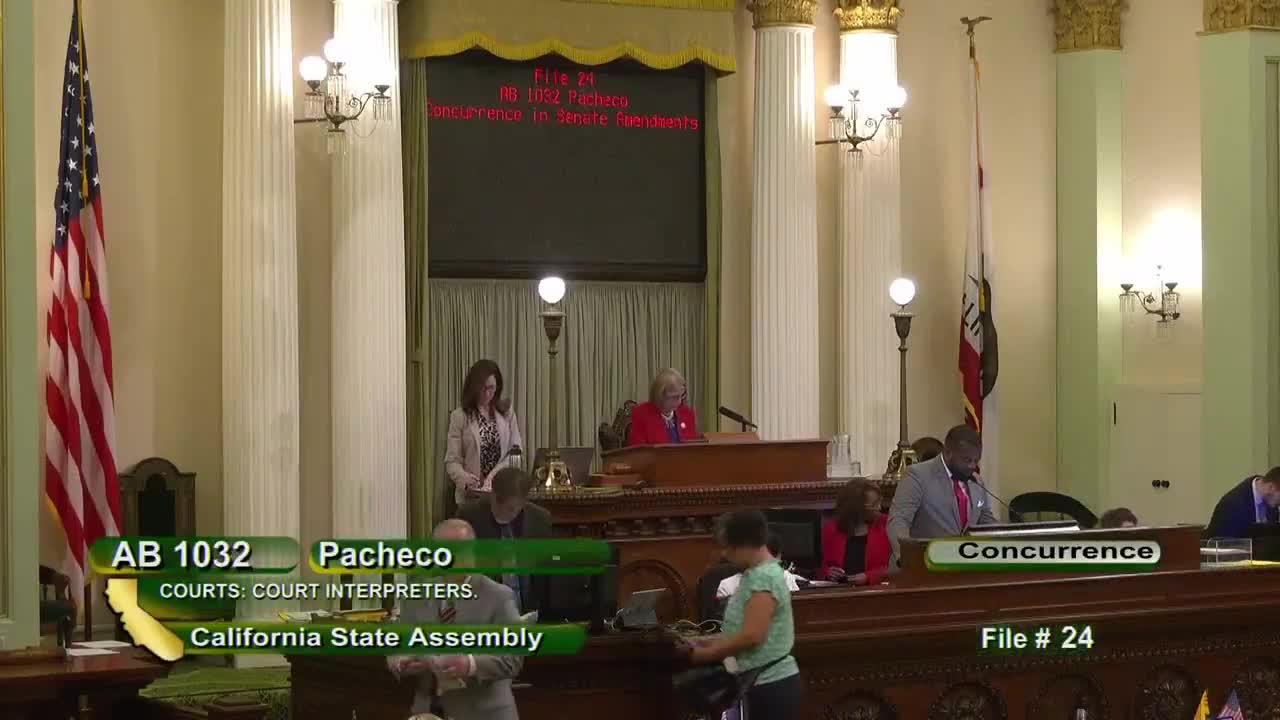 41SEC
Assembly Floor
 1MIN
Senate Standing Committee on Appropriations
 1MIN
Assembly Floor
Bill Author