AB 759: Sanitary districts.
- Session Year: 2023-2024
- House: Assembly
- Latest Version Date: 2023-06-29
Current Status:
Passed
(2023-06-29: Chaptered by Secretary of State - Chapter 19, Statutes of 2023.)
Introduced
In Committee
First Chamber
In Committee
Second Chamber
Enacted
What does this bill do?
The bill lets sanitary district boards adopt procedures allowing the district treasurer (or authorized staff) to pay routine claims and issue checks without prior board approval when the payments are within the district’s approved budget. Those procedures must include internal controls to prevent fraud and meet standard accounting rules, require the board to review paid demands at its next meeting, and any payments that exceed the approved budget still must get board approval.
The summary is provided by generative AI which can make mistakes. For original language, please view the details in the table below.
Existing law authorizes the formation of a sanitary district, pursuant to specified requirements. Existing law authorizes a sanitary district to acquire, plan, construct, reconstruct, alter, enlarge, lay, renew, replace, maintain, and operate garbage dumpsites and garbage collection and disposal systems, sewers, drains, septic tanks, and sewerage collection, outfall, treatment works and other sanitary disposal systems, and storm water drains and storm water collection, outfall and disposal systems, and water recycling and distribution systems, as the deemed necessary and proper by the governing board of the district. Existing law generally authorizes the district to expend money only upon written order of the board.
Existing law also authorizes a district board, as an alternative to the functions of the treasurer, to elect to disburse district funds upon resolution of the board and the filing of a certified copy with the treasurer. Under existing law, the treasurer is then required to deliver all district funds to the district, which can only be withdrawn by written order of the district boards, signed by the president and secretary. Existing law requires the district board to appoint a treasurer responsible for the deposit and withdrawal of district funds.
This bill would instead authorize funds to be withdrawn by a district treasurer or expended by a treasurer upon approval by the board, signed by the president and secretary. This bill would also authorize the board to adopt specified procedures to provide payment of demands and claims without prior approval by the board if a district treasurer determines the demands are payable within the districts approved budget. The bill would also require board approval for any payment exceeding the districts approved budget.
Existing law authorizes the formation of a sanitary district, pursuant to specified requirements. Existing law authorizes a sanitary district to acquire, plan, construct, reconstruct, alter, enlarge, lay, renew, replace, maintain, and operate garbage dumpsites and garbage collection and disposal systems, sewers, drains, septic tanks, and sewerage collection, outfall, treatment works and other sanitary disposal systems, and storm water drains and storm water collection, outfall and disposal systems, and water recycling and distribution systems, as the deemed necessary and proper by the governing board of the district. Existing law generally authorizes the district to expend money only upon written order of the board.
Existing law also authorizes a district board, as an alternative to the functions of the treasurer, to elect to disburse district funds upon resolution of the board and the filing of a certified copy with the treasurer. Under existing law, the treasurer is then required to deliver all district funds to the district, which can only be withdrawn by written order of the district boards, signed by the president and secretary. Existing law requires the district board to appoint a treasurer responsible for the deposit and withdrawal of district funds.
This bill would instead authorize funds to be expended in a manner prescribed by the board. withdrawn by a district treasurer or expended by a treasurer upon approval by the board, signed by the president and secretary. This bill would also authorize the board to adopt specified procedures to provide payment of demands and claims without prior approval by the board if a district treasurer determines the demands are payable within the districts approved budget. The bill would also require board approval for any payment exceeding the districts approved budget.
Existing law authorizes the formation of a sanitary district, pursuant to specified requirements. Existing law authorizes a sanitary district to acquire, plan, construct, reconstruct, alter, enlarge, lay, renew, replace, maintain, and operate garbage dumpsites and garbage collection and disposal systems, sewers, drains, septic tanks, and sewerage collection, outfall, treatment works and other sanitary disposal systems, and storm water drains and storm water collection, outfall and disposal systems, and water recycling and distribution systems, as the deemed necessary and proper by the governing board of the district. Existing law generally authorizes the district to expend money only upon written order of the board.
This bill would instead authorize funds to be expended in a manner prescribed by the board.
(a)The treasurer, or other person or persons that are authorized by the board, shall draw checks or warrants to pay demands when demands have been approved by the board and signed by the president and secretary.
(b)Notwithstanding subdivision (a), the board may adopt a procedure that provides for checks or warrants to pay claims and demands without approval by the board of directors before payment if the district treasurer determines that the demands are payable within the districts approved budget. The procedure shall contain appropriate internal controls with measures to prevent fraud and ensure accountability, and which are necessary for financial reporting in conformance with generally accepted accounting principles. Demands so paid shall be presented to the board of directors at the next regular meeting for review. Demands exceeding the districts approved budget shall be subject to board approval.
SEC. 3.Section 6801 of the Health and Safety Code is amended to read:6801.(a)As an alternative to the functions of the treasurer, the district board may elect to disburse funds of the district. Such election shall be made by resolution of the board and the filing of a certified copy thereof with the treasurer. The treasurer shall thereupon and thereafter deliver to the district all funds of the district. Such funds shall be deposited by the board in a bank or banks, or savings and loan association or savings and loan associations, approved for deposit of public funds. The treasurer shall deposit with the district, prior to October 1st of each year, a surety bond in the annual amount fixed by the district board. The deposit and withdrawal of funds of the district shall thereafter be subject to the provisions of Article 2 (commencing at Section 53630), Chapter 4, Part 1, Division 2, Title 5, of the Government Code. The district board shall appoint a district treasurer who shall be responsible for the deposit and withdrawal of funds of the district.
(b)Funds shall be withdrawn by the district treasurer only by written order of the district board, signed by the president and secretary.
(c)Notwithstanding subdivision (b), the board may adopt a procedure that provides for checks or warrants to pay claims and demands without approval by the board of directors before payment if the district treasurer determines that the demands are payable within the districts approved budget. The procedure shall contain appropriate internal controls with measures to prevent fraud and ensure accountability, and which are necessary for financial reporting in conformance with generally accepted accounting principles. Demands so paid shall be presented to the board of directors at the next regular meeting for review. Demands exceeding the districts approved budget shall be subject to board approval.
(a)The treasurer, or other person or persons that are authorized by the board, shall draw checks or warrants to pay demands when demands have been approved by the board and signed by the president and secretary.
(b)Notwithstanding subdivision (a), the board may adopt a procedure that provides for checks or warrants to pay claims and demands without approval by the board of directors before payment if the district treasurer determines that the demands are payable within the districts approved budget. The procedure shall contain appropriate internal controls with measures to prevent fraud and ensure accountability, and which are necessary for financial reporting in conformance with generally accepted accounting principles. Demands so paid shall be presented to the board of directors at the next regular meeting for review. Demands exceeding the districts approved budget shall be subject to board approval.
SEC. 3.Section 6801 of the Health and Safety Code is amended to read:6801.(a)As an alternative to the functions of the treasurer, the district board may elect to disburse funds of the district. Such election shall be made by resolution of the board and the filing of a certified copy thereof with the treasurer. The treasurer shall thereupon and thereafter deliver to the district all funds of the district. Such funds shall be deposited by the board in a bank or banks, or savings and loan association or savings and loan associations, approved for deposit of public funds. The district board shall appoint a treasurer who shall be responsible for the deposit and withdrawal of funds of the district, in the manner prescribed by the board. The treasurer shall deposit with the district, prior to October 1st of each year, a surety bond in the annual amount fixed by the district board. The deposit and withdrawal of funds of the district shall thereafter be subject to the provisions of Article 2 (commencing at Section 53630), Chapter 4, Part 1, Division 2, Title 5, of the Government Code. The district board shall appoint a district treasurer who shall be responsible for the deposit and withdrawal of funds of the district.
(b)Funds shall be withdrawn by the district treasurer only by written order of the district board, signed by the president and secretary.
(c)Notwithstanding subdivision (b), the board may adopt a procedure that provides for checks or warrants to pay claims and demands without approval by the board of directors before payment if the district treasurer determines that the demands are payable within the districts approved budget. The procedure shall contain appropriate internal controls with measures to prevent fraud and ensure accountability, and which are necessary for financial reporting in conformance with generally accepted accounting principles. Demands so paid shall be presented to the board of directors at the next regular meeting for review. Demands exceeding the districts approved budget shall be subject to board approval.
The treasurer, or other person or persons that are authorized by the board, shall draw checks or warrants to pay demands when demands have been approved in the manner prescribed by the board.
SEC. 3.Section 6801 of the Health and Safety Code is amended to read:6801.As an alternative to the functions of the treasurer, the district board may elect to disburse funds of the district. Such election shall be made by resolution of the board and the filing of a certified copy thereof with the treasurer. The treasurer shall thereupon and thereafter deliver to the district all funds of the district. Such funds shall be deposited by the board in a bank or banks, or savings and loan association or savings and loan associations, approved for deposit of public funds and shall be withdrawn only by written order of the district board, signed by the president and secretary. The order shall specify the name of the payee, the fund from which it is to be paid and state generally the purpose for which payment is to be made. Such order shall be entered in the minutes of the board. funds. The district board shall appoint a treasurer who shall be responsible for the deposit and withdrawal of funds of the district. district, in the manner prescribed by the board. The treasurer shall deposit with the district, prior to October 1st of each year, a surety bond in the annual amount fixed by the district board. The deposit and withdrawal of funds of the district shall thereafter be subject to the provisions of Article 2 (commencing at Section 53630), Chapter 4, Part 1, Division 2, Title 5, of the Government Code.
|
Date
|
Status
|
|---|---|
| Jun 29, 2023 | Chaptered by Secretary of State - Chapter 19, Statutes of 2023. |
| Jun 29, 2023 | Approved by the Governor. |
| Jun 23, 2023 | Enrolled and presented to the Governor at 3 p.m. |
| Jun 15, 2023 | In Assembly. Ordered to Engrossing and Enrolling. |
| Jun 15, 2023 | Read third time. Passed. Ordered to the Assembly. (Ayes 40. Noes 0. Page 1575.). |
| Jun 8, 2023 | Read second time. Ordered to Consent Calendar. |
| Jun 7, 2023 | From committee: Do pass. To Consent Calendar. (Ayes 8. Noes 0.) (June 7). |
| May 3, 2023 | Referred to Com. on GOV. & F. |
| Apr 20, 2023 | In Senate. Read first time. To Com. on RLS. for assignment. |
| Apr 20, 2023 | Read third time. Passed. Ordered to the Senate. (Ayes 77. Noes 0. Page 1269.) |
| Apr 10, 2023 | Read second time. Ordered to third reading. |
| Mar 30, 2023 | Read second time and amended. Ordered returned to second reading. |
| Mar 29, 2023 | From committee: Amend, and do pass as amended. (Ayes 8. Noes 0.) (March 29). |
| Mar 2, 2023 | Referred to Com. on L. GOV. |
| Feb 14, 2023 | From printer. May be heard in committee March 16. |
| Feb 13, 2023 | Read first time. To print. |
|
Date
|
Description
|
Location
|
Votes
|
|
|---|---|---|---|---|
| Jun 15, 2023 | Consent Calendar AB759 Grayson et al. | Senate Floor |
Passed |
|
| Jun 7, 2023 | Do pass and be ordered to the Consent Calendar | Senate Standing Committee on Governance and Finance |
Passed |
|
| Apr 20, 2023 | AB 759 Grayson Assembly Third Reading | Assembly Floor |
Passed |
|
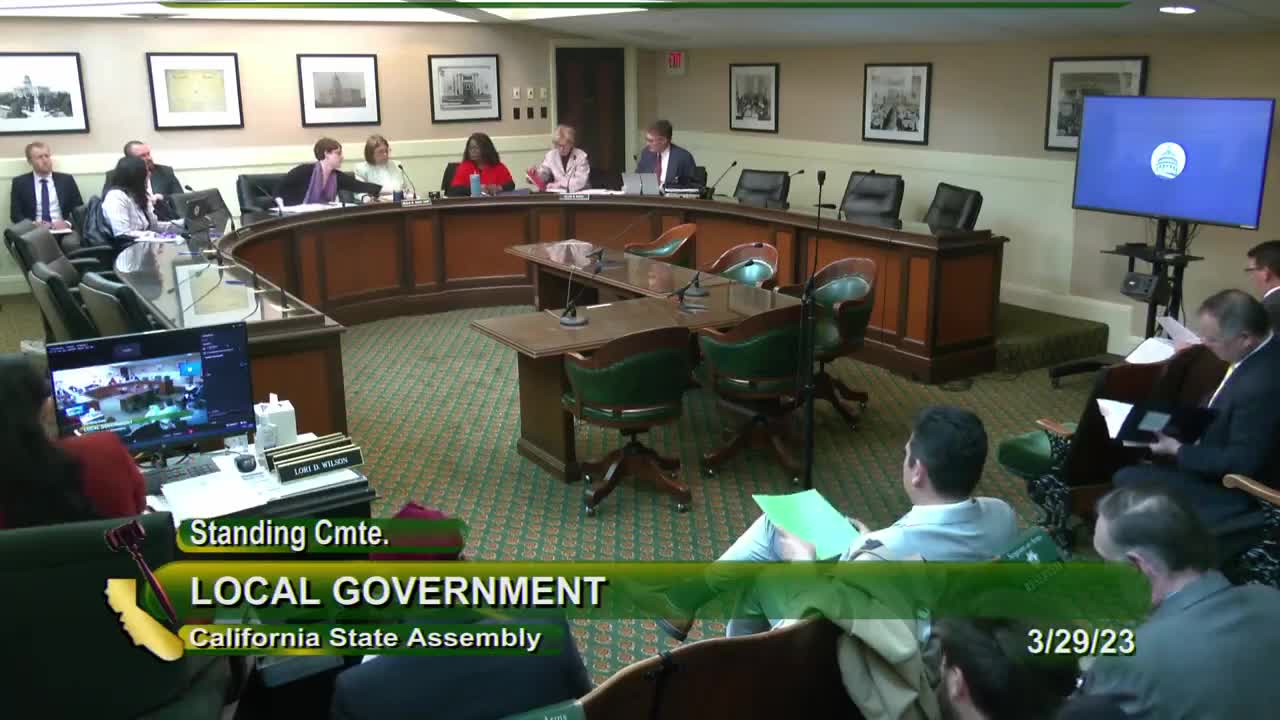
| Mar 29, 2023 | Do pass as amended. | Assembly Standing Committee on Local Government |
Passed |
This list shows positions taken on this bill by organizations on the date displayed, which is linked to the original source.
Positions by individuals are not included.
|
Organization
|
Position
|
Date
|
|---|---|---|
| Association Of California Water Agencies | ** Support | |
| Bayshore Sanitary District | ** Support | |
| California Association Of Sanitation Agencies | ** Support | |
| California Special Districts Association | ** Support | |
| Castro Valley Sanitary District | ** Support | |
| Central Contra Costa Sanitary District | ** Support | |
| Valley Sanitary District | ** Support |
SENATE RULES COMMITTEE Office of Senate Floor Analyses (916) 651-1520 Fax: (916) 327-4478 | AB 759 |
THIRD READING
Bill No: AB 759
Author: Grayson (D), et al.
Amended: 3/30/23 in Assembly
Vote: 21
SENATE GOVERNANCE & FIN. COMMITTEE: 8-0, 6/7/23
AYES: Caballero, Seyarto, Blakespear, Dahle, Durazo, Glazer, Skinner, Wiener
ASSEMBLY FLOOR: 77-0, 4/20/23 - See last page for vote
SUBJECT: Sanitary districts
SOURCE: California Association of Sanitation Agencies
DIGEST:
This bill changes how sanitary districts can pay their bills.
ANALYSIS:
Existing law:
- Authorizes the formation of a sanitary district, pursuant to specified requirements.
- Authorizes a sanitary district to acquire, plan, construct, reconstruct, alter, enlarge, lay, renew, replace, maintain, and operate garbage dumpsites and garbage collection and disposal systems, sewers, drains, septic tanks, and sewerage collection, outfall, treatment works and other sanitary disposal systems, and storm water drains and storm water collection, outfall and disposal systems, and water recycling and distribution systems, as the deemed necessary and proper by the governing board of the district.
- Authorizes, generally, the district to expend money only upon written order of the board.
- Authorizes a district board, as an alternative to the functions of the treasurer, to elect to disburse district funds upon resolution of the board and the filing of a certified copy with the treasurer. Under existing law, the treasurer is then required to deliver all district funds to the district, which can only be withdrawn by written order of the district boards, signed by the president and secretary. Existing law requires the district board to appoint a treasurer responsible for the deposit and withdrawal of district funds.
This bill:
- Repeals the following requirements pertaining to sanitary district payments:
- That the treasurer pay out money of the district only upon written order of the board, signed by the president and countersigned by the secretary.
- That the order specify the name of the payee and state the purpose of the payment.
- That the order be entered into the minutes of the board.
- Requires the sanitary district treasurer – or another person authorized by the sanitary board – to pay bills the board approves.
- Creates an alternative to (2) allowing a sanitary board to adopt a procedure to allow claims to be paid without board approval if the treasurer determines the demands are payable within the district's budget.
- Requires, should a sanitary board adopt this procedure, the board to contain appropriate internal controls to prevent fraud and ensure accountability, and ensure the financial reporting conforms to generally accepted accounting principles. Payments made under this procedure must be presented to the sanitary board at its next regular meeting for review, and any demands exceeding the district’s approved budget shall be subject to board approval.
Background
According to the California Association of Sanitation Agencies, there are approximately 77 sanitary districts in California, most of which have boards of directors composed of five members, directly elected by voters throughout the district.
Under state law dating back to 1959, the sanitary district’s treasurer cannot pay bills until the district’s board of directors issues a written order that is signed by the board president and countersigned by the secretary. The order must specify the name of the payee, the fund from which the money is to be paid, and the purpose for which the payment is to be made.
Since that time, the Legislature has given other local government agencies and special districts the authority to disperse payments according to their own protocols while ensuring taxpayer funds are protected. Municipal water districts, cities, community service districts, and county water districts have all had their payment options updated while at the same time ensuring an appropriate level of fiscal oversight.
For example:
- Since 1949, county water district auditors have been permitted to pay district bills when the bills have been approved by the board.
- Since 1963, municipal water district boards have been allowed to authorize their treasurers to draw checks or warrants to pay bills when the bills have been approved by the board.
- Since 1986, city clerks and finance directors have been able to pay bills and payroll without getting pre-approval from the city council provided the payments conform to an approved city budget.
- Since 2005, community service district treasurers have – when authorized by their boards of directors – been allowed to pay all bills that have been authorized by the board. The board is required to adopt procedures that adhere to generally accepted accounting principles and treasurers can pay bills absent approval from the board provided the bills conform to the district budget.
Comments
- Purpose of bill. According to the author, “This bill updates outdated provisions of the Sanitary District Act of 1939 which currently requires the Board President of a Sanitation District to approve check registers at a Board Meeting before a payment can be dispersed. In most cases, the check registers being ‘approved’ at meetings are for payments that have already been issued. Having to go through these extra steps impede the ability to maintain a reasonable flow of public business. This is a simple governance approach that would cut through red tape and allow district operations to run more efficiently, and would bring sanitation districts in parity with other local agencies and special districts who have already been granted the same authority.”
- The times, they are a changin’. The Legislature enacted the Sanitary District Act in 1923, updated it in 1939, and adopted the current payment requirements in 1959. This bill proposes to update how sanitary districts can pay their bills consistent with how other local governmental entities can pay claims while maintaining the appropriate oversight to ensure taxpayer funds are protected.
The structure and oversight provisions in this bill most closely mirror those applying to community service districts, which were added by SB 135 (Kehoe), Chapter 249, Statutes of 2005.
- Oversight. While providing a sanitary district with the ability to make payments in a timely fashion without having to wait for the sanitary board president and secretary to sign each individual check order is important, so is providing an appropriate level of oversight and accountability to ensure taxpayer funds are protected.
This bill attempts to provide this protection by requiring either that the board:
- Permit the sanitary district treasurer – or another person authorized by the sanitary board – to pay bills that have been approved by the board, or
- Allow claims to be paid without board approval if the treasurer determines the claims are payable within the district’s budget, the board has adopted internal controls to prevent fraud, and all payments are presented to the sanitary board at its next regular meeting for review. Any demands exceeding the district’s approved budget are subject to board approval.
FISCAL EFFECT: Appropriation: No Fiscal Com.: No Local: No
SUPPORT: (Verified 6/7/23)
California Association of Sanitation Agencies (source)
Association of California Water Agencies
Bayshore Sanitary District
California Special Districts Association
Central Contra Costa Sanitary District
Valley Sanitary District
OPPOSITION: (Verified 6/7/23)
None received
ASSEMBLY FLOOR: 77-0, 4/20/23
AYES: Addis, Aguiar-Curry, Alanis, Alvarez, Arambula, Bains, Bauer-Kahan, Bennett, Berman, Boerner Horvath, Bonta, Bryan, Calderon, Juan Carrillo, Wendy Carrillo, Cervantes, Chen, Connolly, Megan Dahle, Davies, Dixon, Essayli, Flora, Mike Fong, Vince Fong, Friedman, Gipson, Grayson, Haney, Hart, Holden, Hoover, Irwin, Jackson, Jones-Sawyer, Kalra, Lackey, Lee, Low, Lowenthal, Maienschein, Mathis, McCarty, McKinnor, Muratsuchi, Stephanie Nguyen, Ortega, Pacheco, Papan, Jim Patterson, Joe Patterson, Pellerin, Petrie-Norris, Quirk-Silva, Ramos, Reyes, Luz Rivas, Robert Rivas, Rodriguez, Blanca Rubio, Sanchez, Santiago, Schiavo, Soria, Ta, Ting, Valencia, Villapudua, Waldron, Wallis, Ward, Weber, Wicks, Wilson, Wood, Zbur, Rendon
NO VOTE RECORDED: Gabriel, Gallagher, Garcia
Prepared by: Evan Goldberg / GOV. & F. / (916) 651-4119
6/9/23 10:13:39
**** END ****
SENATE COMMITTEE ON GOVERNANCE AND FINANCE
Senator Anna M. Caballero, Chair
2023 - 2024 Regular
Bill No: | AB 759 | Hearing Date: | 6/7/23 |
Author: | Grayson | Tax Levy: | No |
Version: | 3/30/23 | Fiscal: | No |
Consultant: | Goldberg | ||
Sanitary districts
Changes how sanitary districts can pay their bills.
Background
According to the California Association of Sanitation Agencies, there are approximately 77 sanitary districts in California, most of which have boards of directors composed of five members, directly elected by voters throughout the district.
Under state law dating back to 1959, the sanitary district’s treasurer cannot pay bills until the district’s board of directors issues a written order that is signed by the board president and countersigned by the secretary. The order must specify the name of the payee, the fund from which the money is to be paid, and the purpose for which the payment is to be made.
Since that time, the Legislature has given other local government agencies and special districts the authority to disperse payments according to their own protocols while ensuring taxpayer funds are protected. Municipal water districts, cities, community service districts, and county water districts have all had their payment options updated while at the same time ensuring an appropriate level of fiscal oversight.
For example:
- Since 1949, county water district auditors have been permitted to pay district bills when the bills have been approved by the board.
- Since 1963, municipal water district boards have been allowed to authorize their treasurers to draw checks or warrants to pay bills when the bills have been approved by the board.
- Since 1986, city clerks and finance directors have been able to pay bills and payroll without getting pre-approval from the city council provided the payments conform to an approved city budget.
- Since 2005, community service district treasurers have – when authorized by their boards of directors – been allowed to pay all bills that have been authorized by the board. The board is required to adopt procedures that adhere to generally accepted accounting principles and treasurers can pay bills absent approval from the board provided the bills conform to the district budget.
The Association wants to modify sanitary district law to allow sanitary districts to pay their bills in a fashion similar to other local government agencies.
Proposed Law
Assembly Bill 759 repeals the following requirements pertaining to sanitary district payments:
- That the treasurer pay out money of the district only upon written order of the board, signed by the president and countersigned by the secretary.
- That the order specify the name of the payee and state the purpose of the payment.
- That the order be entered into the minutes of the board.
In place of those requirements, the bill requires the sanitary district treasurer – or another person authorized by the sanitary board – to pay bills the board approves.
Alternatively, the bill allows a sanitary board to adopt a procedure to allow claims to be paid without board approval if the treasurer determines the demands are payable within the district's budget.
Should a sanitary board adopt this procedure, the bill requires it to contain appropriate internal controls to prevent fraud and ensure accountability, and ensure the financial reporting conforms to generally accepted accounting principles. Payments made under this procedure must be presented to the sanitary board at its next regular meeting for review, and any demands exceeding the district’s approved budget shall be subject to board approval.
State Revenue Impact
No estimate.
Comments
1. Purpose of the bill. According to the author, “This bill updates outdated provisions of the Sanitary District Act of 1939 which currently requires the Board President of a Sanitation District to approve check registers at a Board Meeting before a payment can be dispersed. In most cases, the check registers being ‘approved’ at meetings are for payments that have already been issued. Having to go through these extra steps impede the ability to maintain a reasonable flow of public business. This is a simple governance approach that would cut through red tape and allow district operations to run more efficiently, and would bring sanitation districts in parity with other local agencies and special districts who have already been granted the same authority.”
2. Things have changed in a century. The Legislature enacted the Sanitary District Act in 1923, updated it in 1939, and adopted the current payment requirements in 1959. This bill proposes to update how sanitary districts can pay their bills consistent with how other local governmental entities can pay claims while maintaining the appropriate oversight to ensure taxpayer funds are protected.
The structure and oversight provisions in this bill most closely mirror those that apply to community service districts, which were added by SB 135 (Kehoe, 2005).
3. Oversight. While providing a sanitary district with the ability to make payments in a timely fashion without having to wait for the sanitary board president and secretary to sign each individual check order is important, so is providing an appropriate level of oversight and accountability to ensure taxpayer funds are protected.
This bill attempts to provide this protection by requiring either that the board:
- Permit the sanitary district treasurer – or another person authorized by the sanitary board – to pay bills that have been approved by the board, or
- Allow claims to be paid without board approval if the treasurer determines the claims are payable within the district’s budget, the board has adopted internal controls to prevent fraud, and all payments are presented to the sanitary board at its next regular meeting for review. Any demands exceeding the district’s approved budget are subject to board approval.
Assembly Actions
Assembly Local Government Committee: 8-0
Assembly Floor: 77-0
Support and Opposition
(6/2/23)
Support: California Association of Sanitation Agencies (Sponsor)
Association of California Water Agencies
Bayshore Sanitary District
California Special Districts Association
Central Contra Costa Sanitary District
Valley Sanitary District
Opposition: None submitted.
-- END --
ASSEMBLY THIRD READING
ATR Bill Id:AB 759
Author:(Grayson)
As Amended Ver:March 30, 2023
Majority vote
SUMMARY
Makes changes to the requirements dictating how sanitary districts expend funds.
Major Provisions
- Repeals the following requirements:
- That the treasurer pay out money of the district only upon written order of the board, signed by the president and counstersigned by the secretary.
- The order shall specify the name of the person to whom the money is paid, the fund from which it is to be paid, and shall state generally the purpose for which the payment is to be made.
- The order shall be entered in the minutes of the board.
- Requires a treasurer, or other person or persons that are authorized by the board, to draw checks or warrants to pay demands when demands have been approved by the board, unless the board adopts a procedure that provides for checks or warrants to pay claims and demands without approval by the board before payment if the district treasurer determines that demands are payable within the district's budget, as specified.
- Removes the following requirements for when the district board has elected to disburse funds of the district:
- Funds shall be withdrawn only by written order of the district board and signed by the president and secretary.
- The order shall specify the name of the payee, the fund from which it is to be paid and state generally the purpose for which payment is to be made.
- Such order shall be entered in the minutes of the Board.
- Provides that, when the district board has elected to disburse funds of the district, funds shall be withdrawn by the district treasurer only by written order of the board, as specified, unless the board adopts a procedure that provides for checks and warrants to pay claims and demands without approval by the board before payment if the district treasurer determines that the demands are payable within the district's approved budget, as specified.
COMMENTS
- Sanitary Districts. According to the California Association of Sanitation Agencies, there are approximately 77 sanitary districts in California. Most sanitary districts have boards of directors composed of five members, directly elected by voters throughout the district. A sanitary district may acquire, plan, construct, reconstruct, alter, enlarge, lay, renew, replace, maintain, and operate garbage dumpsites and garbage collection and disposal systems, sewers, drains, septic tanks, and sewerage collection, outfall, treatment works and other sanitary disposal systems, and storm water drains and storm water collection, outfall and disposal systems, and water recycling and distribution systems, among other authorizations.
- District Funds. Each independent special district varies in size and type of service it provides. Some independent special districts' governing boards designate their own treasurers. Other districts use the county treasurer as the district's treasurer. For special districts that use the county treasurer, the process for paying bills can be lengthy and expensive. Sanitary districts were required to utilize the county until 1959. AB 547 (Masterson and Waldie), Chapter 160, Statutes of 1959, allowed a sanitary district board, by resolution, filed with the county treasurer, to disburse district funds. The bill also required that the county treasurer deliver all district funds to the district for deposit in a bank approved for the deposit of public funds, to be withdrawn only by written order of the district board.
The author of AB 547 wrote to the governor that the bill, "provides an alternative system similar to that in the Community Services District Act for the district. At present, districts of large size with a great volume of warrant payments must travel to the County Auditor to have each warrant issued. The Auditor has no control over disbursements except to determine if funds are available. This bill permits the district to deposit and withdraw funds in a local institution approved for deposit of public funds."
According to the Author
According to the author, "AB 759 is a simple bill that would allow the Board of a Sanitation District to establish their own protocols to authorize funds that better reflect current business practices. This bill updates outdated provisions of the Sanitary District Act of 1939 which currently requires the Board President of a Sanitation District to approve check registers at a Board Meeting before a payment can be dispersed. In most cases, the check registers being 'approved' at meetings are for payments that have already been issued. Having to go through these extra steps impede the ability to maintain a reasonable flow of public business. This is a simple governance approach that would cut through red tape and allow district operations to run more efficiently, and would bring sanitation districts in parity with other local agencies and special districts who have already been granted the same authority."
Arguments in Support
According to the Central Contra Costa Sanitary District, "This bill would update the Sanitary District Act of 1939 to modernize existing statutory accounting practices that require Sanitary Districts to submit their check register for approval by the District Board President at each Board meeting. Instead, the bill would give discretion to the Board of a Sanitary District to establish protocols to authorize funds. Central San, a wastewater utility, collects and cleans more than 13 billion gallons of wastewater every year and serves nearly half a million residents and more than 3,000 businesses in the East San Francisco Bay Area. Within its 146 square mile service area, Central San operates a 54 million-gallon-per-day capacity treatment plant, 18 pumping stations, over 1,500 miles of sewer lines, a household hazardous waste collection facility, a laboratory, and provides both commercial and residential recycled water programs.
"The existing approval requirement was enacted in 1939. In practice, it provides minimal oversight as the Board approval is usually performed in retrospect for checks that have already been issued. The modern business climate requires Sanitary Districts to issue payments in a timely manner. Waiting to issue payments until after the Board meets and approves the register impedes the agency's ability to maintain the efficient flow of public business. AB 759 would update the statute to reflect reasonable business procedures for modern utilities and create parity with other special districts that provide similar services. This proposed change to the Sanitary District Act has previously been afforded to a variety of similar special districts and local agencies by the Legislature."
Arguments in Opposition
None on file.
FISCAL COMMENTS
None.
VOTES
ASM LOCAL GOVERNMENT: 8-0-0
YES: Aguiar-Curry, Dixon, Boerner Horvath, Pacheco, Ramos, Robert Rivas, Waldron, Wilson
UPDATED
VERSION: March 30, 2023
CONSULTANT: Jimmy MacDonald / L. GOV. / (916) 319-3958 FN: 0000187
Date of Hearing: March 29, 2023
ASSEMBLY COMMITTEE ON LOCAL GOVERNMENT
Cecilia Aguiar-Curry, Chair
ABPCA Bill Id:AB 759 (
Author:Grayson) – As Introduced Ver:February 13, 2023
SUBJECT: Sanitary districts.
SUMMARY: Makes changes to the requirements dictating how sanitary districts expend funds. Specifically, this bill:
- Repeals the following requirements:
- That the treasurer pay out money of the district only upon written order of the board, signed by the president and counstersigned by the secretary.
- The order shall specify the name of the person to whom the money is paid, the fund from which it is to be paid, and shall state generally the purpose for which the payment is to be made.
- The order shall be entered in the minutes of the board.
- Specifies that the treasurer, or other person or persons that are authorized by the board, shall draw checks or warrants to pay demands when demands have been approved in the manner prescribed by the board.
- Removes the following requirements for when the district board has elected to disburse funds of the district:
- Funds shall be withdrawn only by written order of the district board and signed by the president and secretary.
- The order shall specify the name of the payee, the fund from which it is to be paid and state generally the purpose for which payment is to be made.
- Such order shall be entered in the minutes of the Board.
- Specifies that, for when the district board has elected to disburse funds of the district, the district board shall appoint a treasurer who shall be responsible for the deposit and withdrawal of funds of the district, in the manner prescribed by the board.
EXISTING LAW:
- Establishes the Sanitary District Act and prescribes organization, operations, management, and other powers and duties of sanitary districts. [Health and Safety Code (HSC) § 6400 et. seq.]
- Defines “treasurer” as the treasurer of the county or counties in which a district is located. (HSC § 6405)
- Specifies that, in a fund called the “running expense fund of ______ Sanitary Districts” the treasurer shall place and keep the money levied by the board for that fund. (HSC § 6792)
- Requires the treasurer to pay out money of the district only upon written order of the board, signed by the president and countersigned by the secretary. The order shall specify the name of the person to whom the money is to be paid, the fund from which it is to be paid, and shall state generally the purpose for which the payment is to be made. (HSC § 6794)
- Requires the treasurer to keep the order as the voucher, and keep a specific account of receipts and disbursements for the district. (HSC § 6795)
- Authorizes the board, as an alternative to the functions of the treasurer, to disburse funds of the district. Such election shall be made by resolution of the board and the filing of a certified copy thereof with the treasurer. The treasurer shall thereupon and thereafter deliver to the district all funds of the district. Such funds shall be deposited by the board in a bank or banks, or savings and loan association or savings and loan associations, approved for deposit of public funds and shall be withdrawn only by written order of the district board, signed by the president and secretary. The order shall specify the name of the payee, the fund from which it is to be paid and state generally the purpose for which payment is to be made. Such order shall be entered in the minutes of the board. The district board shall appoint a treasurer who shall be responsible for the deposit and withdrawal of funds of the district. The treasurer shall deposit with the district, prior to October 1st of each year, a surety bond in the annual amount fixed by the district board. The deposit and withdrawal of funds of the district shall thereafter be subject existing law. (HSC § 6801)
FISCAL EFFECT: None.
COMMENTS:
- Sanitary Districts. According to the California Association of Sanitation Agencies, there are approximately 77 sanitary districts in California. Most sanitary districts have boards of directors composed of five members, directly elected by voters throughout the district. A sanitary district may acquire, plan, construct, reconstruct, alter, enlarge, lay, renew, replace, maintain, and operate garbage dumpsites and garbage collection and disposal systems, sewers, drains, septic tanks, and sewerage collection, outfall, treatment works and other sanitary disposal systems, and storm water drains and storm water collection, outfall and disposal systems, and water recycling and distribution systems, among other authorizations.
- District Funds. Each independent special district varies in size and type of service it provides. Some independent special districts’ governing boards designate their own treasurers. Other districts use the county treasurer as the district’s treasurer. For special districts that use the county treasurer, the process for paying bills can be lengthy and expensive. Sanitary districts were required to utilize the county until 1959. AB 547 (Masterson and Waldie), Chapter 160, Statutes of 1959, allowed a sanitary district board, by resolution, filed with the county treasurer, to disburse district funds. The bill also required that the county treasurer deliver all district funds to the district for deposit in a bank approved for the deposit of public funds, to be withdrawn only by written order of the district board.
The author of AB 547 wrote to the governor that the bill, “provides an alternative system similar to that in the Community Services District Act for the district. At present, districts of large size with a great volume of warrant payments must travel to the County Auditor to have each warrant issued. The Auditor has no control over disbursements except to determine if funds are available. This bill permits the district to deposit and withdraw funds in a local institution approved for deposit of public funds.”
- Bill Summary and Author’s Statement. Existing law generally requires expenditures of district funds to be made upon written order of the sanitary district’s board. This bill authorizes funds to be expended in a manner prescribed by the district’s board. The California Association of Sanitation Agencies is the sponsor of this bill.
According to the author, “AB 759 is a simple bill that would allow the Board of a Sanitation District to establish their own protocols to authorize funds that better reflect current business practices. This bill updates outdated provisions of the Sanitary District Act of 1939 which currently requires the Board President of a Sanitation District to approve check registers at a Board Meeting before a payment can be dispersed. In most cases, the check registers being ‘approved’ at meetings are for payments that have already been issued. Having to go through these extra steps impede the ability to maintain a reasonable flow of public business. This is a simple governance approach that would cut through red tape and allow district operations to run more efficiently, and would bring sanitation districts in parity with other local agencies and special districts who have already been granted the same authority.” - Policy Consideration. Many laws governing sanitary districts have not been updated in decades and did not anticipate changes such as electronic payments and the Internet. While this bill seeks to bring a portion of the Sanitary District Act into the 21st century, the potential for fraud and abuse still exists. Each sanitary district varies in size and the services they provide. The budgeting practices also vary from district to district, and supporters contend that any new authority to expend funds should be workable within an approved budget regardless of differing budget practices. Board approval of deposits, withdrawals, and expenditure of funds preserves transparency and accountability. However, in a time where payments frequently need to be made quickly, and often electronically, some sanitary districts proclaim that the modern business climate requires sanitary districts to issue payments in a more timely manner. Waiting to issue payments until after a district board meets impedes the ability to maintain the efficient flow of public business.
While some types of local agencies have more flexibility, many either require board approval to expend funds, or are authorized to expend funds without board approval if the expenditure conforms to the approved agency budget. These requirements allow for limited discretion but ensure a layer of board oversight if an expenditure is outside of the budgetary parameters already approved by the board. The bill instead allows sanitary districts to expend funds in a manner prescribed by the board, potentially removing any requirement that the board approve expenditures. The Committee may wish to consider if this bill contains sufficient protections to ensure the responsible expenditure of taxpayer funds.
- Committee Amendments. In response to the policy consideration above, the Committee may wish amend the bill as follows:
6794. The treasurer, or other person or persons that are authorized by the board, shall draw checks or warrants to pay demands when demands have been approved in the manner prescribed by the board.
6794. (a) The treasurer, or other person or persons that are authorized by the board, shall draw checks or warrants to pay demands when demands have been approved by the board and signed by the president and secretary.
(b) Notwithstanding subdivision (a), the board may adopt a procedure that provides for checks or warrants to pay claims and demands without approval by the board of directors before payment if the district treasurer determines that the demands are payable within the district’s approved budget. The procedure shall contain appropriate internal controls with measures to prevent fraud and ensure accountability, and which are necessary for financial reporting in conformance with generally accepted accounting principles. Demands so paid shall be presented to the board of directors at the next regular meeting for review. Demands exceeding the district’s approved budget shall be subject to board approval.
6801. (a) As an alternative to the functions of the treasurer, the district board may elect to disburse funds of the district. Such election shall be made by resolution of the board and the filing of a certified copy thereof with the treasurer. The treasurer shall thereupon and thereafter deliver to the district all funds of the district. Such funds shall be deposited by the board in a bank or banks, or savings and loan association or savings and loan associations, approved for deposit of public funds. The district board shall appoint a treasurer who shall be responsible for the deposit and withdrawal of funds of the district, in the manner prescribed by the board. The treasurer shall deposit with the district, prior to October 1st of each year, a surety bond in the annual amount fixed by the district board. The deposit and withdrawal of funds of the district shall thereafter be subject to the provisions of Article 2 (commencing at Section 53630), Chapter 4, Part 1, Division 2, Title 5, of the Government Code. The district board shall appoint a district treasurer who shall be responsible for the deposit and withdrawal of funds of the district.
(b) Funds shall be withdrawn by the district treasurer only by written order of the district board, signed by the president and secretary.
(c) Notwithstanding subdivision (b), the board may adopt a procedure that provides for checks or warrants to pay claims and demands without approval by the board of directors before payment if the district treasurer determines that the demands are payable within the district’s approved budget. The procedure shall contain appropriate internal controls with measures to prevent fraud and ensure accountability, and which are necessary for financial reporting in conformance with generally accepted accounting principles. Demands so paid shall be presented to the board of directors at the next regular meeting for review. Demands exceeding the district’s approved budget shall be subject to board approval.
- Arguments in Support. According to the Central Contra Costa Sanitary District, “This bill would update the Sanitary District Act of 1939 to modernize existing statutory accounting practices that require Sanitary Districts to submit their check register for approval by the District Board President at each Board meeting. Instead, the bill would give discretion to the Board of a Sanitary District to establish protocols to authorize funds. Central San, a wastewater utility, collects and cleans more than 13 billion gallons of wastewater every year and serves nearly half a million residents and more than 3,000 businesses in the East San Francisco Bay Area. Within its 146 square mile service area, Central San operates a 54 million-gallon-per-day capacity treatment plant, 18 pumping stations, over 1,500 miles of sewer lines, a household hazardous waste collection facility, a laboratory, and provides both commercial and residential recycled water programs.
“The existing approval requirement was enacted in 1939. In practice, it provides minimal oversight as the Board approval is usually performed in retrospect for checks that have already been issued. The modern business climate requires Sanitary Districts to issue payments in a timely manner. Waiting to issue payments until after the Board meets and approves the register impedes the agency’s ability to maintain the efficient flow of public business. AB 759 would update the statute to reflect reasonable business procedures for modern utilities and create parity with other special districts that provide similar services. This proposed change to the Sanitary District Act has previously been afforded to a variety of similar special districts and local agencies by the Legislature.”
- Arguments in Opposition. None on file.
REGISTERED SUPPORT / OPPOSITION:
Support
California Association of Sanitation Agencies [SPONSOR]
Association of California Water Agencies
Castro Valley Sanitary District
Central Contra Costa Sanitary District
Opposition
None on file
Analysis Prepared by: Jimmy MacDonald / L. GOV. / (916) 319-3958
Discussed in Hearing
 4MIN
Assembly Standing Committee on Local Government
Bill Author


