AB 783: Business licenses: single-user restrooms.
- Session Year: 2023-2024
- House: Assembly
- Latest Version Date: 2023-09-23
Current Status:
Passed
(2023-09-23: Chaptered by Secretary of State - Chapter 223, Statutes of 2023.)
Introduced
In Committee
First Chamber
In Committee
Second Chamber
Enacted
What does this bill do?
This bill requires city and county offices that issue business licenses or permits to give written notice to each new or renewing applicant that state law requires all single‑user restrooms in businesses, public places, and government agencies to be labeled as all‑gender. It affects businesses applying for licenses and the local offices that issue those licenses.
The summary is provided by generative AI which can make mistakes. For original language, please view the details in the table below.
Existing law authorizes the legislative body of an incorporated city and the county board of supervisors to license businesses carried on within their respective jurisdictions and to set license fees as specified. Existing law requires all single-user toilet facilities in any business establishment, place of public accommodation, or government agency to be identified as all-gender toilet facilities, as specified.
This bill would require a city, county, or city and county that issues business licenses, equivalent instruments, or permits within its jurisdiction to provide written notice to each applicant for a new or renewed business license, equivalent instrument, or permit of the requirement that all single-user toilet facilities in any business establishment, place of public accommodation, or government agency be identified as all-gender toilet facilities. By increasing the duties of local officials, this bill would impose a state-mandated local program.
The California Constitution requires the state to reimburse local agencies and school districts for certain costs mandated by the state. Statutory provisions establish procedures for making that reimbursement.
This bill would provide that no reimbursement is required by this act for a specified reason.
The bill would include findings that changes proposed by this bill address a matter of statewide concern rather than a municipal affair and, therefore, apply to all cities, counties, and cities and counties, including charter cities, counties, and cities and counties.
Existing law authorizes the legislative body of an incorporated city and the county board of supervisors to license businesses carried on within their respective jurisdictions and to set license fees as specified. Existing law requires all single-user toilet facilities in any business establishment, place of public accommodation, or government agency to be identified as all-gender toilet facilities, as specified.
This bill would require a city that licenses businesses city, county, or city and county that issues business licenses, equivalent instruments, or permits within its jurisdiction to provide written notice to each applicant for a new or renewed business license license, equivalent instrument, or permit of the requirement that all single-user toilet facilities in any business establishment, place of public accommodation, or government agency be identified as all-gender toilet facilities. By increasing the duties of local officials, this bill would impose a state-mandated local program.
The California Constitution requires the state to reimburse local agencies and school districts for certain costs mandated by the state. Statutory provisions establish procedures for making that reimbursement.
This bill would provide that no reimbursement is required by this act for a specified reason.
The bill would include findings that changes proposed by this bill address a matter of statewide concern rather than a municipal affair and, therefore, apply to all cities, including charter cities. counties, and cities and counties, including charter cities, counties, and cities and counties.
Existing law authorizes the legislative body of an incorporated city and the county board of supervisors to license businesses carried on within their respective jurisdictions and to set license fees as specified. Existing law requires all single-user toilet facilities in any business establishment, place of public accommodation, or government agency to be identified as all-gender toilet facilities, as specified.
This bill would require a city that licenses businesses within its jurisdiction to provide written notice to each applicant for a new or renewed business license of the requirement that all single-user toilet facilities in any business establishment, place of public accommodation, or government agency be identified as all-gender toilet facilities. By increasing the duties of local officials, this bill would impose a state-mandated local program.
The California Constitution requires the state to reimburse local agencies and school districts for certain costs mandated by the state. Statutory provisions establish procedures for making that reimbursement.
This bill would provide that no reimbursement is required by this act for a specified reason.
The bill would include findings that changes proposed by this bill address a matter of statewide concern rather than a municipal affair and, therefore, apply to all cities, including charter cities.
A city, county, or city and county that issues business licenses, equivalent instruments, or permits within its jurisdiction shall provide written notice of the requirements of Section 118600 of the Health and Safety Code to each applicant for a new or renewed business license, equivalent instrument, or permit.
SEC. 2.No reimbursement is required by this act pursuant to Section 6 of Article XIIIB of the California Constitution because a local agency or school district has the authority to levy service charges, fees, or assessments sufficient to pay for the program or level of service mandated by this act, within the meaning of Section 17556 of the Government Code.
SEC. 3.The Legislature finds and declares that access to gender-neutral single-user restrooms is a matter of safety and inclusiveness to all and thus is a matter of statewide concern and is not a municipal affair as that term is used in Section 5 of Article XI of the California Constitution. Therefore, Section 1 of this act adding Section 16000.2 to the Business and Professions Code applies to all cities, counties, and cities and counties, including charter cities, counties, and cities and counties.
A city that licenses businesses city, county, or city and county that issues business licenses, equivalent instruments, or permits within its jurisdiction shall provide written notice of the requirements of Section 118600 of the Health and Safety Code to each applicant for a new or renewed business license of the requirements of Section 118600 of the Health and Safety Code. license, equivalent instrument, or permit.
SEC. 2.No reimbursement is required by this act pursuant to Section 6 of Article XIIIB of the California Constitution because a local agency or school district has the authority to levy service charges, fees, or assessments sufficient to pay for the program or level of service mandated by this act, within the meaning of Section 17556 of the Government Code.
SEC. 3.The Legislature finds and declares that access to gender-neutral single-user restrooms is a matter of safety and inclusiveness to all and thus is a matter of statewide concern and is not a municipal affair as that term is used in Section 5 of Article XI of the California Constitution. Therefore, Section 1 of this act adding Section 16000.2 to the Business and Professions Code applies to all cities, including charter cities. cities, counties, and cities and counties, including charter cities, counties, and cities and counties.
A city that licenses businesses within its jurisdiction shall provide written notice to each applicant for a new or renewed business license of the requirements of Section 118600 of the Health and Safety Code.
SEC. 2.No reimbursement is required by this act pursuant to Section 6 of Article XIIIB of the California Constitution because a local agency or school district has the authority to levy service charges, fees, or assessments sufficient to pay for the program or level of service mandated by this act, within the meaning of Section 17556 of the Government Code.
SEC. 3.The Legislature finds and declares that access to gender-neutral single-user restrooms is a matter of safety and inclusiveness to all and thus is a matter of statewide concern and is not a municipal affair as that term is used in Section 5 of Article XI of the California Constitution. Therefore, Section 1 of this act adding Section 16000.2 to the Business and Professions Code applies to all cities, including charter cities.
REVISIONS: HeadingLine 2.|
Date
|
Status
|
|---|---|
| Sep 23, 2023 | Chaptered by Secretary of State - Chapter 223, Statutes of 2023. |
| Sep 23, 2023 | Approved by the Governor. |
| Sep 14, 2023 | Enrolled and presented to the Governor at 4:30 p.m. |
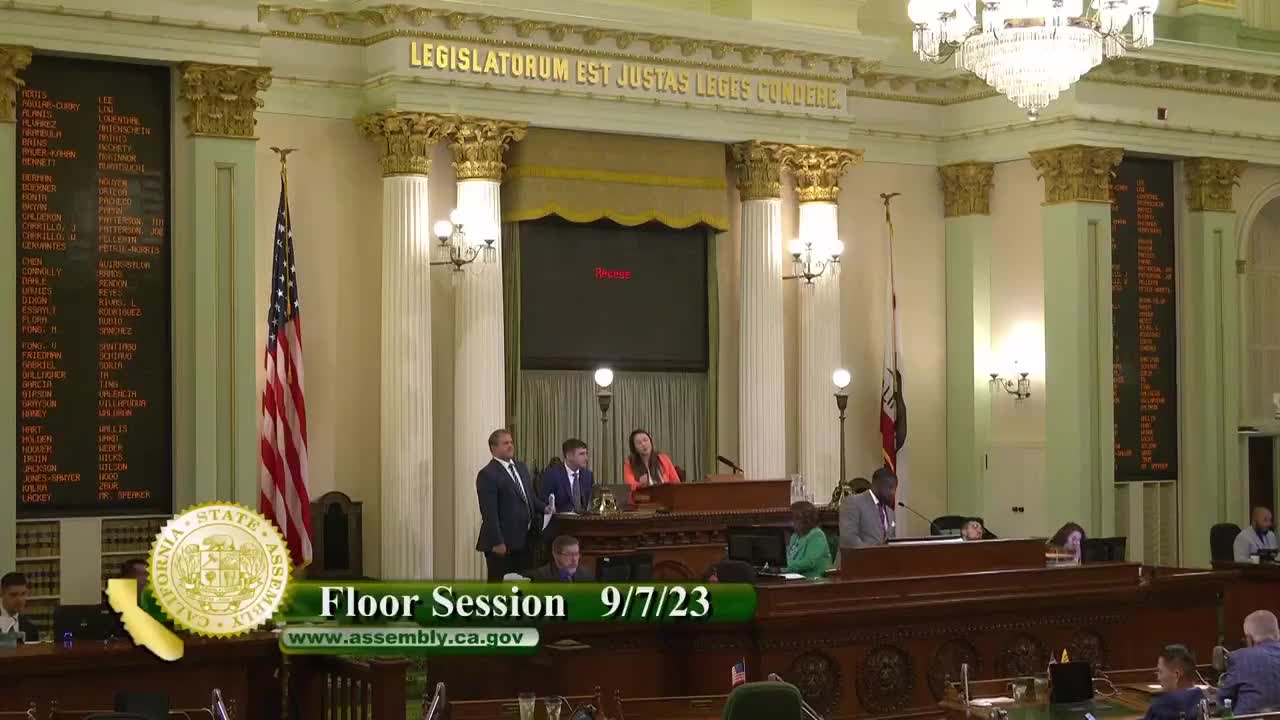
| Sep 7, 2023 | Senate amendments concurred in. To Engrossing and Enrolling. (Ayes 67. Noes 10. Page 3021.). |
| Sep 5, 2023 | In Assembly. Concurrence in Senate amendments pending. May be considered on or after September 7 pursuant to Assembly Rule 77. |
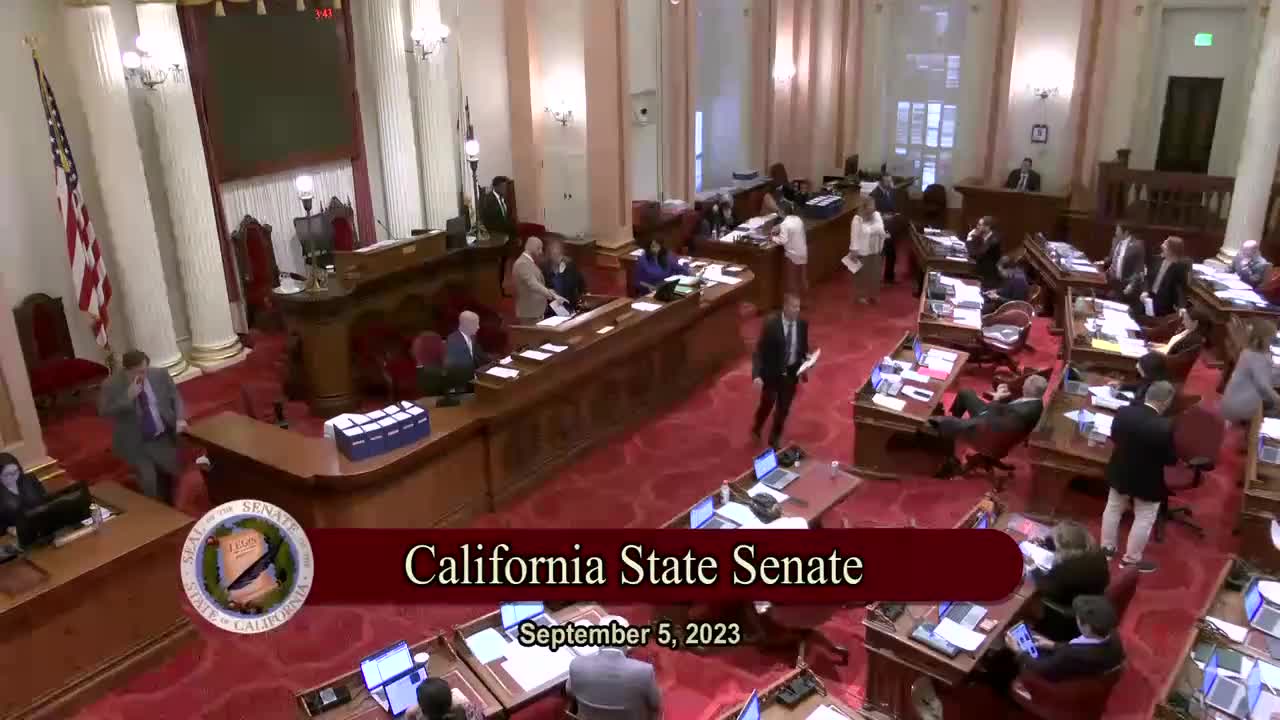
| Sep 5, 2023 | Read third time. Passed. Ordered to the Assembly. (Ayes 31. Noes 7. Page 2368.). |
| Jul 5, 2023 | Read second time. Ordered to third reading. |
| Jul 3, 2023 | From committee: Be ordered to second reading pursuant to Senate Rule 28.8. |
| Jun 22, 2023 | Read second time and amended. Re-referred to Com. on APPR. |
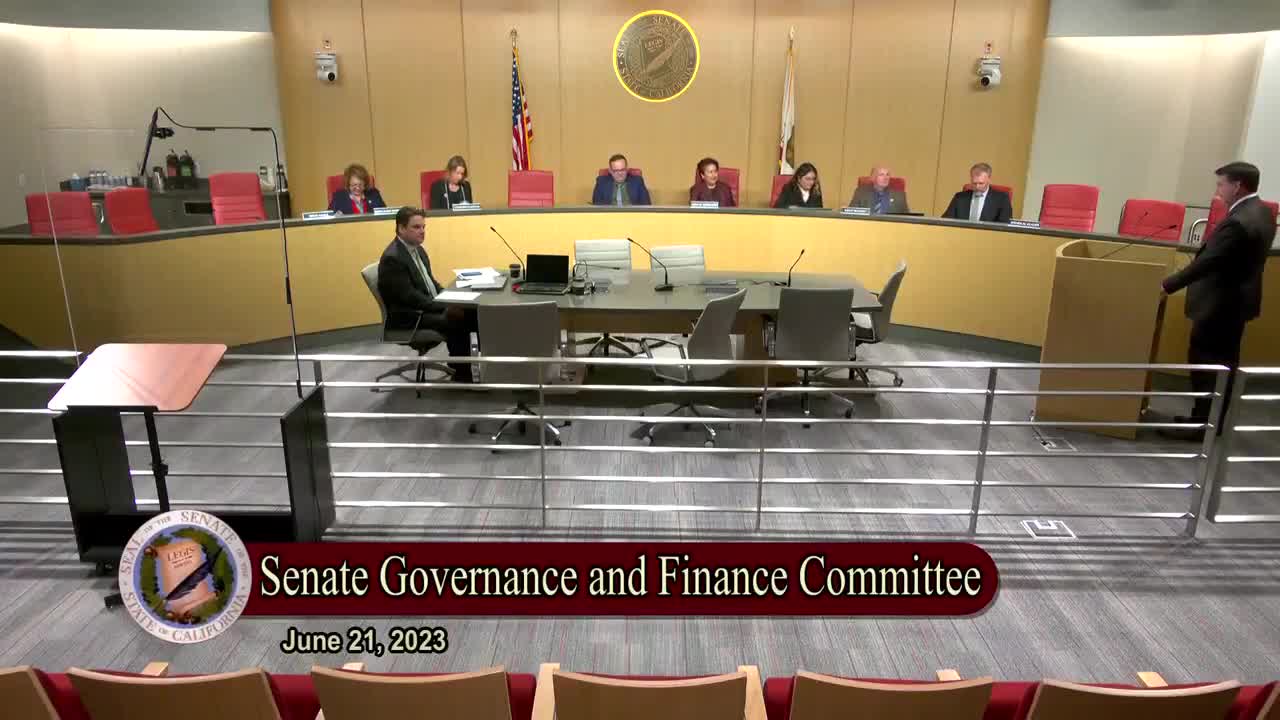
| Jun 21, 2023 | From committee: Amend, and do pass as amended and re-refer to Com. on APPR. (Ayes 6. Noes 2.) (June 21). |
| May 3, 2023 | Referred to Com. on GOV. & F. |
| Apr 24, 2023 | In Senate. Read first time. To Com. on RLS. for assignment. |
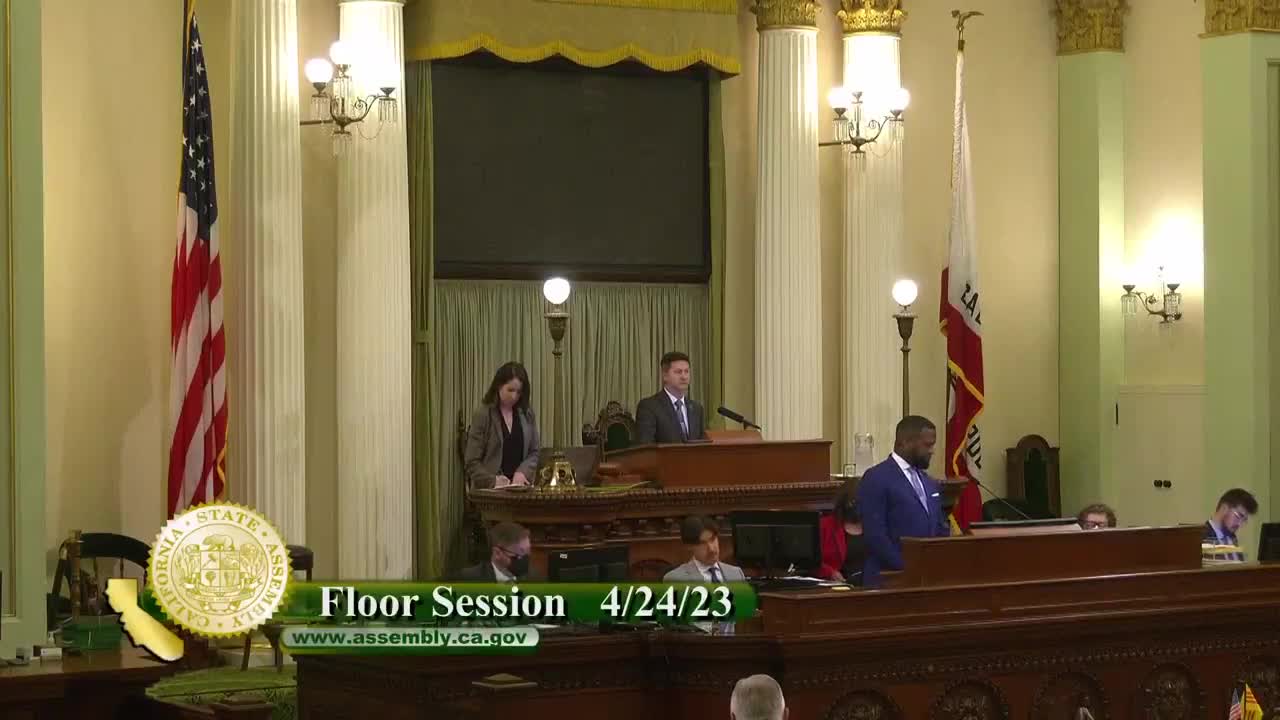
| Apr 24, 2023 | Read third time. Passed. Ordered to the Senate. (Ayes 64. Noes 9. Page 1300.) |
| Apr 20, 2023 | Read second time. Ordered to third reading. |
| Apr 19, 2023 | From committee: Do pass. (Ayes 11. Noes 4.) (April 19). |
| Mar 28, 2023 | From committee: Do pass and re-refer to Com. on APPR. (Ayes 14. Noes 3.) (March 28). Re-referred to Com. on APPR. |
| Mar 28, 2023 | Coauthors revised. |
| Mar 2, 2023 | Referred to Com. on B. & P. |
| Feb 14, 2023 | From printer. May be heard in committee March 16. |
| Feb 13, 2023 | Read first time. To print. |
|
Date
|
Description
|
Location
|
Votes
|
|
|---|---|---|---|---|
| Sep 7, 2023 | AB 783 Ting Concurrence in Senate Amendments | Assembly Floor |
Passed |
|
| Sep 5, 2023 | Assembly 3rd Reading AB783 Ting et al. By Menjivar | Senate Floor |
Passed |
|
| Jun 21, 2023 | Do pass as amended, but first amend, and re-refer to the Committee on [Appropriations] | Senate Standing Committee on Governance and Finance |
Passed |
|
| Apr 24, 2023 | AB 783 Ting Assembly Third Reading | Assembly Floor |
Passed |
|
| Apr 19, 2023 | Do pass. | Assembly Standing Committee on Appropriations |
Passed |
|
| Mar 28, 2023 | Do pass and be re-referred to the Committee on [Appropriations] | Assembly Standing Committee on Business and Professions |
Passed |
This list shows positions taken on this bill by organizations on the date displayed, which is linked to the original source.
Positions by individuals are not included.
|
Organization
|
Position
|
Date
|
|---|---|---|
| Aclu California Action | ** Support | |
| APA Equality-LA | ** Support | |
| API Equality-LA | ** Support | |
| APLA Health | ** Support | |
| CA LGBTQ Health & Human Services Network | ** Support | |
| California LGBTQ Health and Human Services Network | ** Support | |
| Desert Aids Project D/b/a Dap Health | ** Support | |
| Equality California | ** Support | |
| Gender Spectrum | ** Support | |
| LGBT Community Center of the Desert | ** Support | |
| Our Family Coalition | ** Support | |
| San Diego Pride | ** Support | |
| Somos Familia Valle | ** Support | |
| Stonewall Alliance of Chico | ** Support | |
| The LGBTQ Community Center of the Desert | ** Support | |
| Trans Youth Liberation | ** Support |
CONCURRENCE IN SENATE AMENDMENTS
CSA1 Bill Id:AB 783
Author:(Ting)
As Amended Ver:June 22, 2023
Majority vote
SUMMARY
Requires cities, counties, and cities and counties to notify applicants for a business license or permit in writing of the requirement that single-user toilet facilities must be identified as all-gender toilet facilities.
Senate Amendments
- Apply this bill's provisions to counties and cities and counties in addition to cities.
- Expand the bill to any city, county, or city and county that issues the equivalent of business license or a business permit in lieu of a business license.
COMMENTS
Gender-Neutral Restrooms. According to the Williams Institute at the University of California, Los Angeles School of Law, which researches sexual orientation and gender identity and public policy, an estimated 1.6 million people ages 13 and older identify as transgender in the United States. In one study on the experiences of transgender and gender non-conforming people in public restrooms in Washington, D.C., 18 percent of respondents reported being denied access to at least one gender-specific restroom, 68 percent of respondents reported experiencing at least one instance of verbal harassment, and nine percent of respondents reported experiencing at least one instance of physical assault. The author concluded that "negative experiences in public restrooms impacted respondents' education, employment, health, and participation in public life." Need for the bill. In 2016, the Legislature passed AB 1732 (Ting), requiring businesses, places of public accommodation, and state or local government agencies that offer a single-user toilet facility to be designated as an all-gender toilet facility. Although that bill authorizes an inspector, a building official, or another local official responsible for code enforcement to inspect businesses for compliance, it did not include an enforcement mechanism. The author and sponsor of this bill argue that there is anecdotal evidence that some businesses are not complying with the law. This bill seeks to improve compliance by ensuring that businesses are aware of the existing requirements, which the author believes "would help reduce inequities experienced by the LGBTQ+ community, women, and people living with disabilities by ensuring equal access to restrooms."
According to the Author
"Restrooms are a necessity of life, and access to them influences our ability to participate in public life. Restricting access to single-occupancy restrooms by gender creates problems of safety, fairness, and convenience. This issue disproportionately impacts members of the LGBTQ+ community, women, and parents and caretakers of dependents of the opposite gender. My bill, AB 1732, passed in 2016 and required all single-occupancy restrooms in businesses, government buildings, and places of public accommodation be available to everyone. Now, we must enforce existing law to ensure equal access to this solitary room. All-gender single-occupancy restroom facilities benefit everyone. [This bill] is an important follow-up to that landmark legislation that ensures businesses are complying with the law by requiring cities to issue written notice to business license applicants that all single-occupancy restrooms be designated as 'all-gender.'"
Arguments in Support
According to Equality California:
The [United States] Department of Labor's Occupational Safety and Health Administration has named gender-neutral single-occupancy restrooms as a best practice in the workplace. Single-occupancy restrooms increase safety, fairness, and convenience. Designating these bathrooms as gender-neutral protects transgender and gender non-conforming individuals and increases access for women, parents of differently-gendered children, and people living with disabilities who rely on caretakers of a different gender.
AB 1732 [(Ting), Chapter 818, Statutes of 2016] enacted the nation's most progressive restroom access policy in the country, requiring that all single-occupancy restrooms in businesses, government buildings, and places of public accommodation be available to everyone. The bill authorized health inspection officials to check for compliance with this law during a health inspection. Unfortunately, anecdotal evidence suggests that implementation of AB 1732 remains limited in some parts of the state.
Through AB 1732, California committed to ensuring that there is equal access to gender-neutral single-occupancy restrooms. [This bill] follows through on that commitment to ensure that businesses comply with existing law.
Arguments in Opposition
None on file.
FISCAL COMMENTS
According the Senate Appropriations Committee, pursuant to Senate Rule 28.8, no significant state costs anticipated.
VOTES:
ASM BUSINESS AND PROFESSIONS: 14-3-2
YES: Berman, Alvarez, Bains, Bonta, Chen, Gipson, Grayson, Irwin, Jackson, Lee, Lowenthal, McKinnor, Stephanie Nguyen, Ting
NO: Flora, Dixon, Joe Patterson
ABS, ABST OR NV: Alanis, McCarty
ASM APPROPRIATIONS: 11-4-1
YES: Holden, Calderon, Wendy Carrillo, Mike Fong, Hart, Lowenthal, Papan, Pellerin, Robert Rivas, Weber, Wilson
NO: Megan Dahle, Dixon, Mathis, Sanchez
ABS, ABST OR NV: Bryan
ASSEMBLY FLOOR: 64-9-7
YES: Addis, Aguiar-Curry, Alvarez, Arambula, Bains, Bauer-Kahan, Bennett, Berman, Boerner, Bonta, Bryan, Calderon, Juan Carrillo, Wendy Carrillo, Cervantes, Connolly, Mike Fong, Friedman, Gabriel, Garcia, Gipson, Grayson, Haney, Hart, Hoover, Irwin, Jackson, Jones- Sawyer, Kalra, Lee, Low, Lowenthal, Maienschein, McCarty, McKinnor, Muratsuchi, Stephanie Nguyen, Ortega, Pacheco, Papan, Pellerin, Petrie-Norris, Quirk-Silva, Ramos, Reyes, Luz Rivas, Robert Rivas, Rodriguez, Blanca Rubio, Santiago, Schiavo, Soria, Ting, Valencia, Villapudua, Waldron, Wallis, Ward, Weber, Wicks, Wilson, Wood, Zbur, Rendon
NO: Dixon, Vince Fong, Gallagher, Lackey, Mathis, Jim Patterson, Joe Patterson, Sanchez, Ta
ABS, ABST OR NV: Alanis, Chen, Megan Dahle, Davies, Essayli, Flora, Holden
SENATE FLOOR: 31-7-2
YES: Allen, Alvarado-Gil, Archuleta, Ashby, Atkins, Becker, Blakespear, Bradford, Caballero, Cortese, Dodd, Durazo, Eggman, Glazer, Gonzalez, Hurtado, Laird, Limón, McGuire, Menjivar, Min, Newman, Portantino, Roth, Rubio, Skinner, Smallwood-Cuevas, Stern, Umberg, Wahab, Wiener
NO: Dahle, Jones, Nguyen, Niello, Ochoa Bogh, Seyarto, Wilk
ABS, ABST OR NV: Grove, Padilla
UPDATED
VERSION: June 22, 2023
CONSULTANT: Kaitlin Curry / B. & P. / (916) 319-3301 FN: 0001803
SENATE RULES COMMITTEE Office of Senate Floor Analyses (916) 651-1520 Fax: (916) 327-4478 | AB 783 |
THIRD READING
Bill No: AB 783
Author: Ting (D), et al.
Amended: 6/22/23 in Senate
Vote: 21
SENATE GOVERNANCE & FIN. COMMITTEE: 6-2, 6/21/23
AYES: Caballero, Blakespear, Durazo, Glazer, Skinner, Wiener
NOES: Seyarto, Dahle
SENATE APPROPRIATIONS COMMITTEE: Senate Rule 28.8
ASSEMBLY FLOOR: 64-9, 4/24/23 - See last page for vote
SUBJECT: Business licenses: single-user restrooms
SOURCE: Equality California
Our Family Coalition
DIGEST:
This bill requires cities and counties to provide written notice to business license applicants that single user toilet facilities must be identified as all gender toilet facilities.
ANALYSIS:
Existing law:
- Provides cities and counties can license businesses operating in their jurisdiction and impose business license taxes. While most cities and counties require businesses to operate under a business license, there are a number of counties across California that do not, including Orange, San Diego, Santa Clara, and Sonoma. Additionally, at least 19 California cities do not issue business licenses.
- Requires, pursuant to AB 1732 (Ting, Chapter 818, Statutes of 2016), businesses, places of public accommodation, and state and local government agencies offering a single user toilet facility to be designated as an all-gender toilet facility. The extent to which businesses are complying with the law is an open question, so the sponsors want to improve compliance by requiring cities and counties to inform licensed businesses about AB 1732’s requirements related to all-gender restrooms when applying for or renewing a business license.
This bill:
- Requires cities and counties that issue business licenses to provide written notice to each applicant of the state law requirement that all single user toilet facilities be identified as “all-gender” toilet facilities.
- Requires jurisdictions that don’t issue business licenses but do issue an “equivalent instrument or permit” to also comply with its provisions.
Background
According to the Williams Institute at the UCLA School of Law, which researches sexual orientation, gender identity and public policy, an estimated 1.6 million people ages 13 and older identify as transgender in the United States. In one study on the experiences of transgender and gender non-conforming people in public restrooms in Washington, D.C., 18% of those surveyed reported being denied access to at least one gender-specific restroom, 68% reported experiencing at least one instance of verbal harassment, and 9% reported experiencing at least one instance of physical assault.
Comments
- Purpose. According to the author, “Restrooms are a necessity of life, and access to them influences our ability to participate in public life. Restricting access to single-occupancy restrooms by gender creates problems of safety, fairness, and convenience. This issue disproportionately impacts members of the LGBTQ+ community, women, and parents and caretakers of dependents of the opposite gender. My bill, AB 1732, passed in 2016 and required all single-occupancy restrooms in businesses, government buildings, and places of public accommodation be available to everyone. Now, we must enforce existing law to ensure equal access to this solitary room. All-gender single-occupancy restroom facilities benefit everyone. AB 783 is an important follow-up to that landmark legislation that ensures businesses are complying with the law by requiring cities [and counties] to issue written notice to business license applicants that all single-occupancy restrooms be designated as ‘all-gender’.”
- Covering All Bases. As noted above, at least 4 counties and 19 cities do not issue business licenses. To ensure businesses in those areas are notified about the law’s requirement that businesses, places of public accommodation, and state and local government agencies offering a single user toilet facility designate those facilities as “all-gender toilet facilities,” this bill requires all jurisdictions issuing an “equivalent instrument or permit” to also comply with its provisions.
FISCAL EFFECT: Appropriation: No Fiscal Com.: Yes Local: Yes
SUPPORT: (Verified 7/5/23)
Equality California (co-source)
Our Family Coalition (co-source)
ACLU California Action
API Equality-LA
APLA Health
California LGBTQ Health and Human Services Network
Gender Spectrum
San Diego Pride
Stonewall Alliance of Chico
The LGBTQ Community Center of the Desert
Transyouth Liberation
OPPOSITION: (Verified 7/5/23)
None received
ARGUMENTS IN SUPPORT: According to Our Family Coalition:
“The passage of AB 1732, the Equal Restroom Access Act, in 2017 provided a crucial step in ensuring equitable access to restroom facilities for people of any gender. Since its passage, in places where compliance has occurred, the options have provided safer and more numerous restroom accommodations for the public easing the burden on many who have had trouble accessing facilities in the past.
“We applaud these efforts and support the modifications proposed in AB 783 to help business establishments, places of public accommodation, and government agencies by providing them notice of their obligation to this regulation. While the law has been effective in places that have been aware of the regulation, many spaces have yet to update their facilities due to not knowing about it. AB 783 would solve this problem by ensuring that there is a body that will provide notice to these establishments.”
ASSEMBLY FLOOR: 64-9, 4/24/23
AYES: Addis, Aguiar-Curry, Alvarez, Arambula, Bains, Bauer-Kahan, Bennett, Berman, Boerner, Bonta, Bryan, Calderon, Juan Carrillo, Wendy Carrillo, Cervantes, Connolly, Mike Fong, Friedman, Gabriel, Garcia, Gipson, Grayson, Haney, Hart, Hoover, Irwin, Jackson, Jones-Sawyer, Kalra, Lee, Low, Lowenthal, Maienschein, McCarty, McKinnor, Muratsuchi, Stephanie Nguyen, Ortega, Pacheco, Papan, Pellerin, Petrie-Norris, Quirk-Silva, Ramos, Reyes, Luz Rivas, Robert Rivas, Rodriguez, Blanca Rubio, Santiago, Schiavo, Soria, Ting, Valencia, Villapudua, Waldron, Wallis, Ward, Weber, Wicks, Wilson, Wood, Zbur, Rendon
NOES: Dixon, Vince Fong, Gallagher, Lackey, Mathis, Jim Patterson, Joe Patterson, Sanchez, Ta
NO VOTE RECORDED: Alanis, Chen, Megan Dahle, Davies, Essayli, Flora, Holden
Prepared by: Evan Goldberg / GOV. & F. / (916) 651-4119
7/5/23 16:15:08
**** END ****
SENATE COMMITTEE ON GOVERNANCE AND FINANCE
Senator Anna M. Caballero, Chair
2023 - 2024 Regular
Bill No: | AB 783 | Hearing Date: | 6/21/23 |
Author: | Ting | Tax Levy: | No |
Version: | 2/13/23 | Fiscal: | Yes |
Consultant: | Goldberg | ||
Business licenses: single-user restrooms
Requires cities to provide written notice to business license applicants that single user toilet facilities must be identified as all gender toilet facilities.
Background
Cities and counties can license businesses operating in their jurisdiction and impose business license taxes. While most cities and counties require businesses to operate under a business license, there are a number of counties across California that do not, including Orange, San Diego, Santa Clara, and Sonoma. Additionally, at least 19 California cities do not issue business licenses.
According to the Williams Institute at the UCLA School of Law, which researches sexual orientation, gender identity and public policy, an estimated 1.6 million people ages 13 and older identify as transgender in the United States. In one study on the experiences of transgender and gender non-conforming people in public restrooms in Washington, D.C., 18% of those surveyed reported being denied access to at least one gender-specific restroom, 68% reported experiencing at least one instance of verbal harassment, and 9% reported experiencing at least one instance of physical assault.
AB 1732 (Ting, 2016), required businesses, places of public accommodation, and state and local government agencies offering a single user toilet facility to be designated as an all-gender toilet facility. The extent to which businesses are complying with the law is an open question, so the author wants to improve compliance by requiring cities to inform licensed businesses about AB 1732’s requirements related to all-gender restrooms when applying for or renewing a business license.
Proposed Law
Assembly Bill 783 requires a city that issues business licenses to provide written notice to each applicant of the state law requirement that all single user toilet facilities be identified as “all-gender” toilet facilities.
State Revenue Impact
No estimate.
Comments
1. Purpose of the bill. According to the author, “Restrooms are a necessity of life, and access to them influences our ability to participate in public life. Restricting access to single-occupancy restrooms by gender creates problems of safety, fairness, and convenience. This issue disproportionately impacts members of the LGBTQ+ community, women, and parents and caretakers of dependents of the opposite gender. My bill, AB 1732, passed in 2016 and required all single-occupancy restrooms in businesses, government buildings, and places of public accommodation be available to everyone. Now, we must enforce existing law to ensure equal access to this solitary room. All-gender single-occupancy restroom facilities benefit everyone. AB 783 is an important follow-up to that landmark legislation that ensures businesses are complying with the law by requiring cities to issue written notice to business license applicants that all single-occupancy restrooms be designated as “‘all-gender.’”
2. What about counties? This measure requires cities issuing and re-issuing business licenses to entities within the city limits to notify those businesses about the state law requirements related to all-gender toilet facilities. However, for businesses operating outside of a city, in an unincorporated area of a county, they would not receive notice of this requirement because the bill does not impose the same requirement on counties issuing and re-issuing business licenses that it imposes on cities. The Committee may wish to consider expanding the bill’s requirements to apply to counties as well.
3. What about those cities & counties that don’t issue business licenses? As noted above, at least 4 counties and 19 cities do not issue business licenses and as such, would not be covered by the provisions of this bill. SB 891 (Hertzberg, 2022) faced a similar issue when trying to ensure businesses were complying with certain stormwater discharge requirements. To ensure SB 891 reached all businesses, the bill applied not just to cities and counties issuing business licenses, but also to those issuing an “equivalent instrument or permit.” The Committee may wish to consider adopting similar language in this bill.
Assembly Actions
Assembly Business & Professions Committee: 14-3
Assembly Appropriations Committee: 11-4
Assembly Floor: 64-9
Support and Opposition
(6/16/23)
Support:
Our Family Coalition (Sponsor)
Equality California (Co-Sponsor)
ACLU California Action
APA Equality-LA
APLA Health
Gender Spectrum
San Diego Pride
Stonewall Alliance of Chico
LGBTQ Community Center of The Desert
TransYouth Liberation
CA LGBTQ Health & Human Services Network
Opposition: None submitted.
-- END --
ASSEMBLY THIRD READING
ATR Bill Id:AB 783
Author:(Ting)
As Introduced Ver:February 13, 2023
Majority vote
SUMMARY
Requires cities to notify applicants for a business license in writing of the requirement that single-user toilet facilities be identified as all-gender toilet facilities.
Major Provisions
Requires a city that licenses businesses within its jurisdiction to provide written notice to each applicant for a new or renewed business license of the requirement that all single-user toilet facilities in any business establishment, place of public accommodation, or state or local government agency be identified as all-gender toilet facilities by signage that complies with California building standards and designated for use by no more than one occupant at a time or for family or assisted use.
COMMENTS
Gender-Neutral Restrooms. According to the Williams Institute at the University of California, Los Angeles School of Law, which researches sexual orientation and gender identity and public policy, an estimated 1.6 million people ages 13 and older identify as transgender in the United States.[1] In one study on the experiences of transgender and gender non-conforming people in public restrooms in Washington, D.C., 18% of respondents reported being denied access to at least one gender-specific restroom, 68% of respondents reported experiencing at least one instance of verbal harassment, and nine percent of respondents reported experiencing at least one instance of physical assault.[2] The author concluded that "negative experiences in public restrooms impacted respondents' education, employment, health, and participation in public life."[3]
Need for the bill. In 2016, the Legislature passed AB 1732 (Ting), Chapter 818, Statutes of 2016, requiring businesses, places of public accommodation, and state or local government agencies that offer a single-user toilet facility to be designated as an all-gender toilet facility. Although that bill authorizes an inspector, a building official, or another local official responsible for code enforcement to inspect businesses for compliance, it did not include an enforcement mechanism. The author and sponsor of this bill argue that there is anecdotal evidence that some businesses are not complying with the law. This bill seeks to improve compliance by ensuring that businesses are aware of the existing requirements, which the author believes "would help reduce inequities experienced by the LGBTQ+ community, women, and people living with disabilities by ensuring equal access to restrooms."
According to the Author
"Restrooms are a necessity of life, and access to them influences our ability to participate in public life. Restricting access to single-occupancy restrooms by gender creates problems of safety, fairness, and convenience. This issue disproportionately impacts members of the LGBTQ+ community, women, and parents and caretakers of dependents of the opposite gender. My bill, AB 1732, passed in 2016 and required all single-occupancy restrooms in businesses, government buildings, and places of public accommodation be available to everyone. Now, we must enforce existing law to ensure equal access to this solitary room. All-gender single-occupancy restroom facilities benefit everyone. [This bill] is an important follow-up to that landmark legislation that ensures businesses are complying with the law by requiring cities to issue written notice to business license applicants that all single-occupancy restrooms be designated as 'all-gender.'"
Arguments in Support
According to Equality California:
The [United States] Department of Labor's Occupational Safety and Health Administration has named gender-neutral single-occupancy restrooms as a best practice in the workplace. Single-occupancy restrooms increase safety, fairness, and convenience. Designating these bathrooms as gender-neutral protects transgender and gender non-conforming individuals and increases access for women, parents of differently-gendered children, and people living with disabilities who rely on caretakers of a different gender.
AB 1732 [Ting] (Chapter 818, Statutes of 2016) enacted the nation's most progressive restroom access policy in the country, requiring that all single-occupancy restrooms in businesses, government buildings, and places of public accommodation be available to everyone. The bill authorized health inspection officials to check for compliance with this law during a health inspection. Unfortunately, anecdotal evidence suggests that implementation of AB 1732 remains limited in some parts of the state.
Through AB 1732, California committed to ensuring that there is equal access to gender-neutral single-occupancy restrooms. [This bill] follows through on that commitment to ensure that businesses comply with existing law.
Arguments in Opposition
None on file.
FISCAL COMMENTS
According to the Assembly Appropriations Committee, this bill would have the following fiscal impact:
- Negligible state costs.
- Costs of an unknown, but likely minor amount to each of California's 482 cities to provide written notice to each applicant for a new or renewed business license of the signage requirements identifying a single-user toilet facility as an all-gender toilet facility. These costs are not reimbursable by the state because each city has the authority to levy a service charge to cover the cost of providing the notice.
VOTES
ASM BUSINESS AND PROFESSIONS: 14-3-2
YES: Berman, Alvarez, Bains, Bonta, Chen, Gipson, Grayson, Irwin, Jackson, Lee, Lowenthal, McKinnor, Stephanie Nguyen, Ting
NO: Flora, Dixon, Joe Patterson
ABS, ABST OR NV: Alanis, McCarty
ASM APPROPRIATIONS: 11-4-1
YES: Holden, Calderon, Wendy Carrillo, Mike Fong, Hart, Lowenthal, Papan, Pellerin, Robert Rivas, Weber, Wilson
NO: Megan Dahle, Dixon, Mathis, Sanchez
ABS, ABST OR NV: Bryan
UPDATED
VERSION: February 13, 2023
CONSULTANT: Kaitlin Curry / B. & P. / (916) 319-3301 FN: 0000226
Herman, J. L., Flores, A. R., & O'Neill, K. K. (2022, June). How many adults and youth identify as transgender in the United States? Williams Institute. Retrieved March 24, 2023, from https://williamsinstitute.law.ucla.edu/publications/trans-adults-united-states/ ↑
Herman, J. L. (2013, June). Gendered Restrooms and Minority Stress. Williams Institute. Retrieved March 24, 2023, from https://williamsinstitute.law.ucla.edu/publications/gendered-restrooms-minority-stress/ ↑
Ibid. ↑
Date of Hearing: April 19, 2023
ASSEMBLY COMMITTEE ON APPROPRIATIONS
Chris Holden, Chair
ABPCA Bill Id:AB 783
Author:(Ting) – As Introduced Ver:February 13, 2023
Policy Committee: | Business and Professions | Vote: | 14 - 3 |
|
| ||
|
|
Urgency: No State Mandated Local Program: Yes Reimbursable: No
SUMMARY:
This bill requires a city to provide written notice to each applicant for a business license of the existing-law requirement that a single-user toilet facility be identified as an all-gender toilet facility.
Specifically, this bill requires a city, including a charter city, that licenses businesses within its jurisdiction to provide written notice to each applicant for a new or renewed business license of the requirement that each single-user toilet facility in any business establishment, place of public accommodation, or state or local government agency be identified as an all-gender toilet facility by signage that complies with California building standards and be designated for use by no more than one occupant at a time or for family or assisted use.
FISCAL EFFECT:
- Negligible state costs.
- Costs of an unknown, but likely minor amount to each of California’s 482 cities to provide written notice to each applicant for a new or renewed business license of the signage requirements identifying a single-user toilet facility as an all-gender toilet facility. These costs are not reimbursable by the state because each city has the authority to levy a service charge to cover the cost of providing the notice.
COMMENTS:
- Purpose. The author of this bill, in order to improve compliance with the law, seeks to increase awareness of the existing requirement that all single-occupancy restrooms in businesses, government buildings and places of public accommodation be designated as all-gender. According to Equality California, in support of the bill:
The U.S. Department of Labor’s Occupational Safety and Health Administration has named gender-neutral single-occupancy restrooms as a best practice in the workplace. Single-occupancy restrooms increase safety, fairness, and convenience. Designating these bathrooms as gender-neutral protects transgender and gender non-conforming individuals and increases access for women, parents of differently-gendered children, and people living with disabilities who rely on caretakers of a different gender.
- Background. Existing law, AB 1732 (Ting), Chapter 818, Statutes of 2016, requires businesses, places of public accommodation, and state or local government agencies offering a single-user toilet facility to be designated as an all-gender toilet facility by signage that complies with California building standards. Existing law also authorizes, but does not require, an inspector, a building official, or another local official responsible for code enforcement to inspect for compliance. Anecdotal evidence suggests compliance is limited in some areas of the state.
This bill requires each city to inform a business license applicant in writing of the signage requirements for a single-user toilet facility to be designated as an all-gender toilet facility. This bill will not change existing laws with respect to the number of, specifications for, or other facility requirements for restrooms that a business or entity must comply with under existing California building codes or current local ordinances.
- Related Legislation. SB 760 (Newman) requires, by January 1, 2025, each school district, county office of education, and charter school maintaining any combination of classes from kindergarten to grade 12, inclusive, to provide at least one all-gender restroom for student use. SB 760 is pending in this committee.
- Prior Legislation. SB 1194 (Allen), Chapter 839, Statutes of 2022, authorizes a local government to require, by ordinance or resolution, multiuser public toilet facilities within its jurisdiction to be designed, constructed, and identified for use by all genders.
Analysis Prepared by: Jennifer Swenson / APPR. / (916) 319-2081
Date of Hearing:
ASSEMBLY COMMITTEE ON BUSINESS AND PROFESSIONS
Marc Berman, Chair
ABPCA Bill Id:AB 783
Author:(Ting) – As Introduced Ver:February 13, 2023
SUBJECT: Business licenses: single-user restrooms.
SUMMARY: Requires cities to provide written notice to applicants for a business license of the requirement that single-user toilet facilities be identified as all-gender toilet facilities.
EXISTING LAW:
- Requires every public agency conducting an establishment serving the public or open to the public, and that maintains restroom facilities for the public, to make every water closet for each sex maintained within the facilities available without cost or charge. Defines public agency for these purposes as any agency of the state, city, county, or city and county. (Health and Safety Code (HSC) § 118500)
- Requires publicly and privately owned facilities where the public congregates, with exceptions, to be equipped with sufficient temporary or permanent restrooms to meet the needs of the public at peak hours. Defines “facilities where the public congregates” for these purposes to mean sports and entertainment arenas, community and convention halls, specialty event centers, amusement facilities, and ski resorts. (HSC § 118505)
- Requires all single-user toilet facilities, as defined, in any business establishment, place of public accommodation, or state or local government agency to be identified as all-gender toilet facilities by signage that complies with California building standards and designated for use by no more than one occupant at a time or for family or assisted use. (HSC § 118600(a))
- Defines “single-user toilet facility” to mean a toilet facility with no more than one water closet and one urinal with a locking mechanism controlled by the user. (HSC § 118600(c))
- Defines “toilet facility” to mean a room or space containing not less than one lavatory and one water closet. (Title 24 California Code of Regulations 220.0)
- Defines “toilet room” to mean a room within or on the premises containing water closets, urinals, and other required facilities. (Title 24 California Code of Regulations 220.0)
- Requires separate toilet facilities to be provided for each sex, except in residential settings or in the following circumstances:
- In occupancies with a total occupant load, including customers and employees, of 15 or fewer.
- In mercantile occupancies in which the maximum occupant load is 100 or fewer.
- In business occupancies in which the maximum occupant load is 25 or fewer.
- Where single-user toilet rooms are provided.
- Where rooms having both water closets and lavatory fixtures are designed for use by both sexes and privacy for water closets are installed as specified. Urinals shall be located in an area visually separated from the remainder of the facility or each unial that is provided shall be located in a stall.
(Title 24 California Code of Regulations 2902.2)
- Requires single-user toilet facilities and family or assisted-use toilet facilities to be identified as being available for use by all persons regardless of their sex. (Title 24 California Code of Regulations 2902.1.2)
- Requires, where a separate toilet facility is required for each sex, and each toilet facility is required to have only one water closet, two family or assisted-use toilet facilities must be permitted to serve as the required separate facilities. (Title 24 California Code of Regulations 2902.2.1)
THIS BILL:
- Requires a city that licenses businesses within its jurisdiction to provide written notice to each applicant for a new or renewed business license of the requirement that all single-user toilet facilities in any business establishment, place of public accommodation, or state or local government agency be identified as all-gender toilet facilities by signage that complies with California building standards and designated for use by no more than one occupant at a time or for family or assisted use.
FISCAL EFFECT: Unknown. This bill is keyed fiscal by Legislative Counsel.
COMMENTS:
Purpose. This bill is sponsored by Equality California. According to the author:
Restrooms are a necessity of life, and access to them influences our ability to participate in public life. Restricting access to single-occupancy restrooms by gender creates problems of safety, fairness, and convenience. This issue disproportionately impacts members of the LGBTQ+ community, women, and parents and caretakers of dependents of the opposite gender. My bill, AB 1732, passed in 2016 and required all single-occupancy restrooms in businesses, government buildings, and places of public accommodation be available to everyone. Now, we must enforce existing law to ensure equal access to this solitary room. All-gender single-occupancy restroom facilities benefit everyone. [This bill] is an important follow-up to that landmark legislation that ensures businesses are complying with the law by requiring cities to issue written notice to business license applicants that all single-occupancy restrooms be designated as “all-gender.”
Background.
Gender-Neutral Restrooms. According to the Williams Institute at the University of California, Los Angeles School of Law, which researches sexual orientation and gender identity and public policy, an estimated 1.6 million people ages 13 and older identify as transgender in the United States.[1] In one study on the experiences of transgender and gender non-conforming people in public restrooms in Washington, D.C., 18% of respondents reported being denied access to at least one gender-specific restroom, 68% of respondents reported experiencing at least one instance of verbal harassment, and nine percent of respondents reported experiencing at least one instance of physical assault.[2] The author concluded that “negative experiences in public restrooms impacted respondents’ education, employment, health, and participation in public life.”[3]
Need for the bill. In 2016, the Legislature passed AB 1732 (Ting), requiring businesses, places of public accommodation, and state or local government agencies that offer a single-user toilet facility to be designated as an all-gender toilet facility. Although that bill authorizes an inspector, a building official, or another local official responsible for code enforcement to inspect businesses for compliance, it did not include an enforcement mechanism. The author and sponsor of this bill argue that anecdotal evidence suggests that some businesses are not complying with the law. This bill seeks to improve compliance by ensuring that businesses are aware of the existing requirements, which the author believes “would help reduce inequities experienced by the LGBTQ+ community, women, and people living with disabilities by ensuring equal access to restrooms.”
Current Related Legislation.
SB 760 (Newman) would require, on or before January 1, 2025, each school district, county office of education, and charter school, maintaining any combination of classes from kindergarten to grade 12, inclusive, to provide at least one all-gender restroom for student use.
Prior Related Legislation.
AB 1732 (Ting), Chapter 818, Statutes of 2016, requires businesses, places of public accommodation, and state or local government agencies that offer a single-user toilet facility to be designated as an all-gender toilet facility and authorizes an inspector, a building official, or another local official responsible for code enforcement to inspect for compliance.
SB 1194 (Allen) Chapter 839, Statutes of 2022, authorizes a local government to require, by ordinance or resolution, that multiuser public toilet facilities within its jurisdiction be designed, constructed, and identified for use by all genders.
ARGUMENTS IN SUPPORT:
According to Equality California:
The U.S. Department of Labor’s Occupational Safety and Health Administration has named gender-neutral single-occupancy restrooms as a best practice in the workplace. Single-occupancy restrooms increase safety, fairness, and convenience. Designating these bathrooms as gender-neutral protects transgender and gender non-conforming individuals and increases access for women, parents of differently-gendered children, and people living with disabilities who rely on caretakers of a different gender.
AB 1732 (Chapter 818, Statutes of 2016) enacted the nation’s most progressive restroom access policy in the country, requiring that all single-occupancy restrooms in businesses, government buildings, and places of public accommodation be available to everyone. The bill authorized health inspection officials to check for compliance with this law during a health inspection. Unfortunately, anecdotal evidence suggests that implementation of AB 1732 remains limited in some parts of the state.
Through AB 1732, California committed to ensuring that there is equal access to gender-neutral single-occupancy restrooms. [This bill] follows through on that commitment to ensure that businesses comply with existing law.
ARGUMENTS IN OPPOSITION:
None on file.
IMPLEMENTATION ISSUE(S) FOR CONSIDERATION:
Enforcement. While this bill may improve compliance by ensuring that businesses are aware of the requirement that single-user restrooms be identified as all-gender toilet facilities, this bill does not address non-compliance by choice. To the extent that businesses are aware of the requirement and choose not to comply, there is no enforcement mechanism in this bill to remedy this problem.
REGISTERED SUPPORT:
ACLU California Action
California LGTBQ Health and Human Services Network
Desert Aids Project D/b/a Dap Health
Equality California
Somos Familia Valle
Stonewall Alliance of Chico
Transyouth Liberation
REGISTERED OPPOSITION:
None on file.
Analysis Prepared by: Kaitlin Curry / B. & P. / (916) 319-3301
Herman, J. L., Flores, A. R., & O'Neill, K. K. (2022, June). How many adults and youth identify as transgender in the United States? Williams Institute. Retrieved March 24, 2023, from https://williamsinstitute.law.ucla.edu/publications/trans-adults-united-states/ ↑
Herman, J. L. (2013, June). Gendered Restrooms and Minority Stress. Williams Institute. Retrieved March 24, 2023, from https://williamsinstitute.law.ucla.edu/publications/gendered-restrooms-minority-stress/ ↑
Ibid. ↑
Discussed in Hearing
 52SEC
Assembly Floor
 2MIN
Senate Floor
 4MIN
Senate Standing Committee on Governance and Finance
 1MIN
Assembly Floor
 6MIN
Assembly Standing Committee on Business and Professions
 1MIN
Assembly Standing Committee on Business and Professions
Bill Author