AB 800: Workplace Readiness Week: work permits.
- Session Year: 2023-2024
- House: Assembly
- Latest Version Date: 2023-09-30
Current Status:
Passed
(2023-09-30: Chaptered by Secretary of State - Chapter 271, Statutes of 2023.)
Introduced
In Committee
First Chamber
In Committee
Second Chamber
Enacted
What does this bill do?
The bill requires all public high schools, including charter schools, to hold a yearly Workplace Readiness Week (the week that includes April 28) and give students information about their rights as workers. It also requires students applying for a work permit to receive a plain-language handout about basic labor rights, such as child labor rules, wage and hour protections, workplace safety, workers’ compensation, paid leave, unemployment benefits, protection from employer retaliation, and the right to join a union. The bill encourages the UC Berkeley Center for Labor Research and Education to create template handouts and translations and requires the handout to include a web link and QR code to online versions.
The summary is provided by generative AI which can make mistakes. For original language, please view the details in the table below.
Existing law deems the month of May to be Labor History Month throughout the public schools, and encourages school districts to commemorate that month with appropriate educational exercises that make pupils aware of the role the labor movement has played in shaping California and the United States.
This bill would require the week of each year that includes April 28 to be known as Workplace Readiness Week. The bill would require all public high schools, including charter schools, to annually observe that week by providing information to pupils on their rights as workers, and would specify the topics to be covered. The bill would require the observances to be integrated into the regular school program in grades 11 and 12, consistent with the history-social science framework. By imposing additional duties on public school officials, the bill would impose a state-mandated local program. The bill would require the Superintendent of Public Instruction to annually send a written notice to every public high school, including charter schools, with certain information relating to Workplace Readiness Week, as provided.
Existing law authorizes specific school administrators to issue a work permit to pupils subject to specific requirements, including requiring certain information to be included on the work permit.
This bill would require, beginning August 1, 2024, any minor seeking the signature of a verifying authority on a Statement of Intent to Employ a Minor and Request for a Work Permit-Certificate of Age to be issued, before or at the time of receiving the signature of the verifying authority, a document clearly explaining basic labor rights extended to workers, as provided. The bill would encourage the University of California Berkeley Center for Labor Research and Education to produce, with input from bona fide labor organizations, a draft template for the document to be provided to minors, including translations into languages other than English, as specified. The bill would require the document to express those labor rights in plain, natural terminology easily understood by the pupil. The bill would require the document, in English, to be in a physical form and include a Uniform Resource Locator for, and a quick response code linked to, an internet website with electronic versions of the document, including any translated versions of the document, produced by the University of California Berkeley Center for Labor Research and Education. To the extent these requirements would impose additional duties on public school officials, the bill would impose a state-mandated local program.
The California Constitution requires the state to reimburse local agencies and school districts for certain costs mandated by the state. Statutory provisions establish procedures for making that reimbursement.
This bill would provide that, if the Commission on State Mandates determines that the bill contains costs mandated by the state, reimbursement for those costs shall be made pursuant to the statutory provisions noted above.
Existing law deems the month of May to be Labor History Month throughout the public schools, and encourages school districts to commemorate that month with appropriate educational exercises that make pupils aware of the role the labor movement has played in shaping California and the United States.
This bill would require the week of each year that includes April 28 to be known as Workplace Readiness Week. The bill would require all public high schools, including charter schools, to annually observe that week by providing information to pupils on their rights as workers, and would specify the topics to be covered. The bill would require the observances to be integrated into the regular school program in grades 11 and 12, consistent with the history-social science framework. By imposing additional duties on public school officials, the bill would impose a state-mandated local program. The bill would require the Superintendent of Public Instruction to annually send a written notice to every public high school, including charter schools, with certain information relating to Workplace Readiness Week, as provided.
Existing law authorizes specific school administrators to issue a work permit to pupils subject to specific requirements, including requiring certain information to be included on the work permit.
This bill would require require, beginning August 1, 2024, any minor seeking the signature of a verifying authority on a Statement of Intent to Employ a Minor and Request for a Work Permit-Certificate of Age to be issued, before or at the time of receiving the signature of the verifying authority, a document clearly explaining basic labor rights extended to workers, as provided. The bill would encourage the University of California Berkeley Center for Labor Research and Education to produce, with input from bona fide labor organizations, a draft template for the document to be provided to minors, including translations into the additional languages, as specified. The bill would require the document to be in any language spoken by 5% or more of the pupils enrolled in the school, and to express those labor rights in plain, natural terminology easily understood by the pupil. The bill would require the document document, in English, to be in a physical form and would authorize the form to also be provided electronically. form and include a Uniform Resource Locator for, and a quick response code linked to, an internet website with electronic versions of the document, including any translated versions of the document, produced by the University of California Berkeley Center for Labor Research and Education. To the extent these requirements would impose additional duties on public school officials, the bill would impose a state-mandated local program.
The bill would encourage the University of California Labor Center to produce, with input from bona fide labor organizations, a draft template for the document to be provided to minors, including the translations specified.The California Constitution requires the state to reimburse local agencies and school districts for certain costs mandated by the state. Statutory provisions establish procedures for making that reimbursement.
This bill would provide that, if the Commission on State Mandates determines that the bill contains costs mandated by the state, reimbursement for those costs shall be made pursuant to the statutory provisions noted above.
Existing law deems the month of May to be Labor History Month throughout the public schools, and encourages school districts to commemorate that month with appropriate educational exercises that make pupils aware of the role the labor movement has played in shaping California and the United States.
This bill would require the week of each year that includes April 28 to be known as Workplace Readiness Week. The bill would require all secondary schools public high schools, including charter schools, to annually observe that week by providing information to pupils on their rights as workers, and would specify the topics to be covered. The bill would require the observances to be integrated into the regular school program in grades 11 and 12, consistent with the history-social science framework. By imposing additional duties on public school officials, the bill would impose a state-mandated local program. The bill would require the Superintendent of Public Instruction to annually send a written notice to every secondary school public high school, including charter schools, with certain information relating to Workplace Readiness Week, as provided.
Existing law authorizes specific school administrators to issue a work permit to pupils subject to specific requirements, including requiring certain information to be included on the work permit.
This bill would require any minor seeking the signature of a verifying authority on a Statement of Intent to Employ a Minor and Request for a Work Permit-Certificate of Age to be issued, before or at the time of receiving the signature of the verifying authority, a document clearly explaining basic labor rights extended to workers, as provided. The bill would require the document to be in any language spoken by 5% or more of the pupils enrolled in the school, and to express those labor rights in plain, natural terminology easily understood by the pupil. The bill would require the document to be in a physical form and would authorize the form to also be provided electronically. To the extent these requirements would impose additional duties on public school officials, the bill would impose a state-mandated local program.
The bill would encourage the University of California Labor Center to produce, with input from bona fide labor organizations, a draft template for the document to be provided to minors, including the translations specified.
The California Constitution requires the state to reimburse local agencies and school districts for certain costs mandated by the state. Statutory provisions establish procedures for making that reimbursement.
This bill would provide that, if the Commission on State Mandates determines that the bill contains costs mandated by the state, reimbursement for those costs shall be made pursuant to the statutory provisions noted above.
Existing law deems the month of May to be Labor History Month throughout the public schools, and encourages school districts to commemorate that month with appropriate educational exercises that make pupils aware of the role the labor movement has played in shaping California and the United States.
This bill would require the first full week in May week of each year that includes April 28 to be known as Workplace Readiness Week. The bill would require public all secondary schools to annually observe that week and educate by providing information to pupils on their rights as workers, and would specify the topics to be covered. The bill would require the observance and education observances to be integrated into the regular school program and to be mandatory for pupils in grades 11 and 12. 12, consistent with the history-social science framework. By imposing additional duties on public school officials, the bill would impose a state-mandated local program. The bill would require the Superintendent of Public Instruction to annually send a written notice to every secondary school with certain information relating to Workplace Readiness Week, as provided.
Existing law authorizes specific school administrators to issue a work permit to pupils subject to specific requirements, including requiring certain information to be included on the work permit.
This bill would require any minor seeking the signature of a verifying authority on a Statement of Intent to Employ a Minor and Request for a Work Permit-Certificate of Age to be issued, before or at the time of receiving the signature of the verifying authority, a document clearly explaining basic labor rights extended to workers, including specified Workplace Readiness Week education topics. as provided. The bill would require the document to be in the primary language spoken by the pupil any language spoken by 5% or more of the pupils enrolled in the school, and to express those labor rights in plain, natural terminology easily understood by the pupil. The bill would require the document to be in a physical form and would authorize the form to also be provided electronically. The To the extent these requirements would impose additional duties on public school officials, the bill would impose a state-mandated local program.
The bill would authorize bona fide labor organizations to create and provide to public schools sample forms meeting those requirements. To the extent these requirements would impose additional duties on public school officials, the bill would impose a state-mandated local program. encourage the University of California Labor Center to produce, with input from bona fide labor organizations, a draft template for the document to be provided to minors, including the translations specified.
The California Constitution requires the state to reimburse local agencies and school districts for certain costs mandated by the state. Statutory provisions establish procedures for making that reimbursement.
This bill would provide that, if the Commission on State Mandates determines that the bill contains costs mandated by the state, reimbursement for those costs shall be made pursuant to the statutory provisions noted above.
Existing law deems the month of May to be Labor History Month throughout the public schools, and encourages school districts to commemorate that month with appropriate educational exercises that make pupils aware of the role the labor movement has played in shaping California and the United States.
This bill would require the first full week in May to be known as Workplace Readiness Week. The bill would require public schools to annually observe that week and educate pupils on their rights as workers, and would specify the topics to be covered. The bill would require the observance and education to be integrated into the regular school program and to be mandatory for pupils in grades 11 and 12. By imposing additional duties on public school officials, the bill would impose a state-mandated local program.
Existing law authorizes specific school administrators to issue a work permit to pupils subject to specific requirements, including requiring certain information to be included on the work permit.
This bill would require any minor seeking the signature of a verifying authority on a Statement of Intent to Employ a Minor and Request for a Work Permit-Certificate of Age to be issued, before or at the time of receiving the signature of the verifying authority, a document clearly explaining basic labor rights extended to workers, including specified Workplace Readiness Week education topics. The bill would require the document to be in the primary language spoken by the pupil and to express those labor rights in plain, natural terminology easily understood by the pupil. The bill would require the document to be in a physical form and would authorize the form to also be provided electronically. The bill would authorize bona fide labor organizations to create and provide to public schools sample forms meeting those requirements. To the extent these requirements would impose additional duties on public school officials, the bill would impose a state-mandated local program.
The California Constitution requires the state to reimburse local agencies and school districts for certain costs mandated by the state. Statutory provisions establish procedures for making that reimbursement.
This bill would provide that, if the Commission on State Mandates determines that the bill contains costs mandated by the state, reimbursement for those costs shall be made pursuant to the statutory provisions noted above.
The Legislature finds and declares all of the following:
(a)It is the intent of the Legislature that California pupils enter the workforce with a strong understanding of their rights as workers, as well as their explicit rights as employed minors.
(b)It is further the intent of the Legislature to equip pupils with this knowledge to protect them from retaliation and discrimination, to ensure that these young workers receive all wages and benefits to which they are entitled, to empower them to refuse unsafe work when necessary, and to prepare them to assert their labor rights whenever these rights are threatened.
(c)It is further the intent of the Legislature that young Californians enter the workforce having received a thorough education on their right to join or organize a union at their workplace.
(d)It is further the intent of the Legislature that secondary schools present state-approved apprenticeship programs as a path towards a living wage career for any pupils.
SEC. 2.Section 49110.5 is added to the Education Code, to read:49110.5.(a)The week of each year that includes April 28 shall be known as Workplace Readiness Week. All public high schools, including charter schools, shall annually observe that week by providing information to pupils on their rights as workers. The topics covered shall include, but are not limited to, all the following:
(1)Local, state, and federal laws regarding each of the following issues:
(A)Prohibitions against misclassification of employees as independent contractors.
(B)Child labor.
(C)Wage and hour protections.
(D)Worker safety.
(E)Workers compensation.
(F)Unemployment insurance.
(G)Paid Sick Leave, Paid Family Leave, State Disability Insurance, and the California Family Rights Act.
(H)The right to organize a union in the workplace.
(I)Prohibitions against retaliation by employers when workers exercise these or any other rights guaranteed by law.
(2)The labor movements role in winning the protections and benefits described in subparagraphs (A) to (I), inclusive, of paragraph (1).
(3)An introduction to state-approved apprenticeship programs in California, how to access them, the variety of programs available, and how they can provide an alternative career path for those who do not attend college.
(b)For pupils in grades 11 and 12, the observances required by this section shall be integrated into the regular school program, consistent with the history-social science framework, but may also include special events after regular school hours. This integration is encouraged, but not required, to occur during Workplace Readiness Week.
(c)(1)Beginning August 1, 2024, any minor seeking the signature of a verifying authority on a Statement of Intent to Employ a Minor and Request for a Work Permit-Certificate of Age under this chapter shall be issued, before or at the time of receiving the signature of the verifying authority, a document clearly explaining basic labor rights extended to workers.
(2)Topics covered in this document shall include, but are not limited to, those identified in subparagraphs (A) to (I), inclusive, of paragraph (1) of subdivision (a).
(3)The University of California Berkeley Center for Labor Research and Education is encouraged to produce, with input from bona fide labor organizations, a draft template for the document to be provided to minors, including translations into other languages, including, but not limited to, Spanish, Chinese, Tagalog, Vietnamese, and Korean.
(4)The document shall express these labor rights in plain, natural terminology easily understood by the pupil.
(5)The document shall be in a physical form in English and shall include both a Uniform Resource Locator for, and a quick response code linked to, an internet website with electronic versions of the document, and any translated versions of the document, produced by the University of California Berkeley Center for Labor Research and Education pursuant to paragraph (3).
(d)The Superintendent shall annually send a written notice, detailing requirements of Workplace Readiness Week and how teachers may access related instructional materials and other resources, to every public high school, including charter schools, at least one month before Workplace Readiness Week.
SEC. 3.If the Commission on State Mandates determines that this act contains costs mandated by the state, reimbursement to local agencies and school districts for those costs shall be made pursuant to Part 7 (commencing with Section 17500) of Division 4 of Title 2 of the Government Code.
The Legislature finds and declares all of the following:
(a)It is the intent of the Legislature that California pupils enter the workforce with a strong understanding of their rights as workers, as well as their explicit rights as employed minors.
(b)It is further the intent of the Legislature to equip pupils with this knowledge to protect them from retaliation and discrimination, to ensure that these young workers receive all wages and benefits to which they are entitled, to empower them to refuse unsafe work when necessary, and to prepare them to assert their labor rights whenever these rights are threatened.
(c)It is further the intent of the Legislature that young Californians enter the workforce having received a thorough education on their right to join or organize a union at their workplace.
(d)It is further the intent of the Legislature that secondary schools present state-approved apprenticeship programs as a path towards a living wage career for any pupils.
SEC. 2.Section 49110.5 is added to the Education Code, to read:49110.5.(a)The week of each year that includes April 28 shall be known as Workplace Readiness Week. All public high schools, including charter schools, shall annually observe that week by providing information to pupils on their rights as workers. The topics covered shall include, but are not limited to, all the following:
(1)Local, state, and federal laws regarding each of the following issues:
(A)Prohibitions against misclassification of employees as independent contractors.
(A)(B)Child labor.
(B)(C)Wage and hour protections.
(C)(D)Worker safety.
(D)(E)Workers compensation.
(F)Unemployment insurance.
(E)(G)Paid sick leave. Sick Leave, Paid Family Leave, State Disability Insurance, and the California Family Rights Act.
(F)Prohibitions against retaliation.(G)(H)The right to organize a union in the workplace.
(I)Prohibitions against retaliation by employers when workers exercise these or any other rights guaranteed by law.
(2)The labor movements role in winning the protections and benefits described in subparagraphs (A) to (G), inclusive. (I), inclusive, of paragraph (1).
(3)An introduction to state-approved apprenticeship programs in California, how to access them, the variety of programs available, and how they can provide an alternative career path for those who do not attend college.
(b)For pupils in grades 11 and 12, the observances required by this section shall be integrated into the regular school program, consistent with the history-social science framework, but may also include special events after regular school hours. This integration is encouraged, but not required, to occur during Workplace Readiness Week.
(c)Any (1)Beginning August 1, 2024, any minor seeking the signature of a verifying authority on a Statement of Intent to Employ a Minor and Request for a Work Permit-Certificate of Age under this chapter shall be issued, before or at the time of receiving the signature of the verifying authority, a document clearly explaining basic labor rights extended to workers. Topics
(2)Topics covered in this document shall include, but are not limited to, those identified in subparagraphs (A) to (G), (I), inclusive, of paragraph (1) of subdivision (a). The
(3)The University of California Berkeley Center for Labor Research and Education is encouraged to produce, with input from bona fide labor organizations, a draft template for the document to be provided to minors, including translations into other languages, including, but not limited to, Spanish, Chinese, Tagalog, Vietnamese, and Korean.
(4)The document shall be available in any language spoken by 5 percent or more of the pupils enrolled in the school and shall express these labor rights in plain, natural terminology easily understood by the pupil. The
(5)The document shall be in a physical form but may also be provided electronically. The University of California Labor Center is encouraged to produce, with input from bona fide labor organizations, a draft template for the document to be provided to minors, including the translations specified. in English and shall include both a Uniform Resource Locator for, and a quick response code linked to, an internet website with electronic versions of the document, and any translated versions of the document, produced by the University of California Berkeley Center for Labor Research and Education pursuant to paragraph (3).
(d)The Superintendent shall annually send a written notice, detailing requirements of Workplace Readiness Week and how teachers may access related instructional materials and other resources, to every public high school, including charter schools, at least one month before Workplace Readiness Week.
SEC. 3.If the Commission on State Mandates determines that this act contains costs mandated by the state, reimbursement to local agencies and school districts for those costs shall be made pursuant to Part 7 (commencing with Section 17500) of Division 4 of Title 2 of the Government Code.
The Legislature finds and declares all of the following:
(a)It is the intent of the Legislature that California pupils enter the workforce with a strong understanding of their rights as workers, as well as their explicit rights as employed minors.
(b)It is further the intent of the Legislature to equip pupils with this knowledge to protect them from retaliation and discrimination, to ensure that these young workers receive all wages and benefits to which they are entitled, to empower them to refuse unsafe work when necessary, and to prepare them to assert their labor rights whenever these rights are threatened.
(c)It is further the intent of the Legislature that young Californians enter the workforce having received a thorough education on their right to join or organize a union at their workplace.
(d)It is further the intent of the Legislature that secondary schools present state-approved apprenticeship programs as a path towards a living wage career for any pupils.
SEC. 2.Section 49110.5 is added to the Education Code, to read:49110.5.(a)The week of each year that includes April 28 shall be known as Workplace Readiness Week. All secondary schools public high schools, including charter schools, shall annually observe that week by providing information to pupils on their rights as workers. The topics covered shall include, but are not limited to, all the following:
(1)Local, state, and federal laws regarding each of the following issues:
(A)Child labor.
(B)Wage and hour protections.
(C)Worker safety.
(D)Workers compensation.
(E)Paid sick leave.
(F)Prohibitions against retaliation.
(G)The right to organize a union in the workplace.
(2)The labor movements role in winning the protections and benefits described in subparagraphs (A) to (G), inclusive.
(3)An introduction to state-approved apprenticeship programs in California, how to access them, and how they can provide an alternative career path for those who do not attend college.
(b)For pupils in grades 11 and 12, the observances required by this section shall be integrated into the regular school program, consistent with the history-social science framework, but may also include special events after regular school hours. This integration is encouraged, but not required, to occur during Workplace Readiness Week.
(c)Any minor seeking the signature of a verifying authority on a Statement of Intent to Employ a Minor and Request for a Work Permit-Certificate of Age under this chapter shall be issued, before or at the time of receiving the signature of the verifying authority, a document clearly explaining basic labor rights extended to workers. Topics covered in this document shall include, but are not limited to, those identified in subparagraphs (A) to (G), inclusive, of paragraph (1) of subdivision (a). The document shall be available in any language spoken by 5 percent or more of the pupils enrolled in the school and shall express these labor rights in plain, natural terminology easily understood by the pupil. The document shall be in a physical form but may also be provided electronically. The University of California Labor Center is encouraged to produce, with input from bona fide labor organizations, a draft template for the document to be provided to minors, including the translations specified.
(d)The Superintendent shall annually send a written notice, detailing requirements of Workplace Readiness Week and how teachers may access related instructional materials and other resources, to every secondary school public high school, including charter schools, at least one month before Workplace Readiness Week.
SEC. 3.If the Commission on State Mandates determines that this act contains costs mandated by the state, reimbursement to local agencies and school districts for those costs shall be made pursuant to Part 7 (commencing with Section 17500) of Division 4 of Title 2 of the Government Code.
The Legislature finds and declares all of the following:
(a)It is the intent of the Legislature that California pupils enter the workforce with a strong understanding of their rights as workers, as well as their explicit rights as employed minors.
(b)It is further the intent of the Legislature to equip pupils with this knowledge to protect them from retaliation and discrimination, to ensure that these young workers receive all wages and benefits to which they are entitled, to empower them to refuse unsafe work when necessary, and to prepare them to assert their labor rights whenever these rights are threatened.
(c)It is further the intent of the Legislature that young Californians enter the workforce having received a thorough education on their right to join or organize a union at their workplace.
(d)It is further the intent of the Legislature that secondary schools present state-approved apprenticeship programs as a path towards a living wage career for any pupils.
SEC. 2.Section 49110.5 is added to the Education Code, to read:49110.5.(a)The first full week in May week of each year that includes April 28 shall be known as Workplace Readiness Week. All public secondary schools shall annually observe that week and educate by providing information to pupils on their rights as workers. The topics covered shall include, but are not limited to, all the following:
(1)Local, state, and federal laws regarding child each of the following issues:
(A)Child labor.
(2)(B)Wage and hour protections.
(3)(C)Worker safety.
(4)(D)Workers compensation.
(5)(E)Paid sick leave.
(6)(F)Prohibitions against retaliation.
(7)(G)The right to organize a union in the workplace.
(8)The history of the labor movement and the(2)The labor movements role in winning the protections and benefits described in paragraphs (1) to (7), subparagraphs (A) to (G), inclusive.
(3)An introduction to state-approved apprenticeship programs in California, how to access them, and how they can provide an alternative career path for those who do not attend college.
(b)The observance and education For pupils in grades 11 and 12, the observances required by this section shall: shall be integrated into the regular school program, consistent with the history-social science framework, but may also include special events after regular school hours. This integration is encouraged, but not required, to occur during Workplace Readiness Week.
(1)Be integrated into the regular school program but may also include special events after regular school hours.(2)Be mandatory for pupils in grades 11 and 12.(c)(1)Public schools are strongly encouraged to include all grades in observing Workplace Readiness Week.(2)This section does not prohibit or discourage the education required by this section from being taught to pupils in kindergarten or any of grades 1 to 10, inclusive.(d)(c)Any minor seeking the signature of a verifying authority on a Statement of Intent to Employ a Minor and Request for a Work Permit-Certificate of Age under this chapter shall be issued, before or at the time of receiving the signature of the verifying authority, a document clearly explaining basic labor rights extended to workers. Topics covered in this document shall include, but are not limited to, those covered during Workplace Readiness Week, as identified in paragraphs (1) to (7), subparagraphs (A) to (G), inclusive, of paragraph (1) of subdivision (a). The document shall be in the primary language spoken by the pupil available in any language spoken by 5 percent or more of the pupils enrolled in the school and shall express these labor rights in plain, natural terminology easily understood by the pupil. The document shall be in a physical form but may also be provided electronically. Bona fide labor organizations may create and provide to public schools sample forms meeting the requirements of this subdivision. The University of California Labor Center is encouraged to produce, with input from bona fide labor organizations, a draft template for the document to be provided to minors, including the translations specified.
(d)The Superintendent shall annually send a written notice, detailing requirements of Workplace Readiness Week and how teachers may access related instructional materials and other resources, to every secondary school at least one month before Workplace Readiness Week.
SEC. 3.If the Commission on State Mandates determines that this act contains costs mandated by the state, reimbursement to local agencies and school districts for those costs shall be made pursuant to Part 7 (commencing with Section 17500) of Division 4 of Title 2 of the Government Code.
REVISIONS: HeadingLines 3 and 4.The Legislature finds and declares all of the following:
(a)It is the intent of the Legislature that California pupils enter the workforce with a strong understanding of their rights as workers, as well as their explicit rights as employed minors.
(b)It is further the intent of the Legislature to equip pupils with this knowledge to protect them from retaliation and discrimination, to ensure that these young workers receive all wages and benefits to which they are entitled, to empower them to refuse unsafe work when necessary, and to prepare them to assert their labor rights whenever these rights are threatened.
(c)It is further the intent of the Legislature that young Californians enter the workforce having received a thorough education on their right to join or organize a union at their workplace.
(d)It is further the intent of the Legislature that secondary schools present state-approved apprenticeship programs as a path towards a living wage career for any pupils.
SEC. 2.Section 49110.5 is added to the Education Code, to read:49110.5.(a)The first full week in May shall be known as Workplace Readiness Week. All public schools shall annually observe that week and educate pupils on their rights as workers. The topics covered shall include, but are not limited to, all the following:
(1)Local, state, and federal laws regarding child labor.
(2)Wage and hour protections.
(3)Worker safety.
(4)Workers compensation.
(5)Paid sick leave.
(6)Prohibitions against retaliation.
(7)The right to organize a union in the workplace.
(8)The history of the labor movement and the labor movements role in winning the protections and benefits described in paragraphs (1) to (7), inclusive.
(b)The observance and education required by this section shall:
(1)Be integrated into the regular school program but may also include special events after regular school hours.
(2)Be mandatory for pupils in grades 11 and 12.
(c)(1)Public schools are strongly encouraged to include all grades in observing Workplace Readiness Week.
(2)This section does not prohibit or discourage the education required by this section from being taught to pupils in kindergarten or any of grades 1 to 10, inclusive.
(d)Any minor seeking the signature of a verifying authority on a Statement of Intent to Employ a Minor and Request for a Work Permit-Certificate of Age under this chapter shall be issued, before or at the time of receiving the signature of the verifying authority, a document clearly explaining basic labor rights extended to workers. Topics covered in this document shall include, but are not limited to, those covered during Workplace Readiness Week, as identified in paragraphs (1) to (7), inclusive, of subdivision (a). The document shall be in the primary language spoken by the pupil and shall express these labor rights in plain, natural terminology easily understood by the pupil. The document shall be in a physical form but may also be provided electronically. Bona fide labor organizations may create and provide to public schools sample forms meeting the requirements of this subdivision.
SEC. 3.If the Commission on State Mandates determines that this act contains costs mandated by the state, reimbursement to local agencies and school districts for those costs shall be made pursuant to Part 7 (commencing with Section 17500) of Division 4 of Title 2 of the Government Code.
|
Date
|
Status
|
|---|---|
| Sep 30, 2023 | Chaptered by Secretary of State - Chapter 271, Statutes of 2023. |
| Sep 30, 2023 | Approved by the Governor. |
| Sep 19, 2023 | Enrolled and presented to the Governor at 4 p.m. |
| Sep 12, 2023 | Senate amendments concurred in. To Engrossing and Enrolling. (Ayes 67. Noes 8. Page 3237.). |
| Sep 12, 2023 | Assembly Rule 77 suspended. (Page 3228.) |
| Sep 11, 2023 | In Assembly. Concurrence in Senate amendments pending. May be considered on or after September 13 pursuant to Assembly Rule 77. |
| Sep 11, 2023 | Read third time. Passed. Ordered to the Assembly. (Ayes 29. Noes 7. Page 2554.). |
| Sep 5, 2023 | Read second time. Ordered to third reading. |
| Sep 1, 2023 | From committee: Do pass. (Ayes 5. Noes 2.) (September 1). |
| Aug 21, 2023 | In committee: Referred to APPR suspense file. |
| Aug 14, 2023 | From committee chair, with author's amendments: Amend, and re-refer to committee. Read second time, amended, and re-referred to Com. on APPR. |
| Aug 2, 2023 | In committee: Set, first hearing. Hearing canceled at the request of author. |
| Jul 13, 2023 | From committee: Do pass and re-refer to Com. on APPR. (Ayes 4. Noes 0.) (July 12). Re-referred to Com. on APPR. |
| Jun 7, 2023 | Referred to Com. on ED. |
| May 26, 2023 | In Senate. Read first time. To Com. on RLS. for assignment. |
| May 25, 2023 | Read third time. Passed. Ordered to the Senate. (Ayes 64. Noes 5. Page 1809.) |
| May 22, 2023 | Read second time. Ordered to third reading. |
| May 18, 2023 | Read second time and amended. Ordered returned to second reading. |
| May 18, 2023 | From committee: Amend, and do pass as amended. (Ayes 12. Noes 2.) (May 18). |
| May 10, 2023 | In committee: Set, first hearing. Referred to APPR. suspense file. |
| Apr 27, 2023 | From committee: Do pass and re-refer to Com. on APPR. (Ayes 7. Noes 0.) (April 26). Re-referred to Com. on APPR. |
| Apr 13, 2023 | From committee: Do pass and re-refer to Com. on L. & E. (Ayes 5. Noes 2.) (April 12). Re-referred to Com. on L. & E. |
| Apr 13, 2023 | Coauthors revised. |
| Apr 4, 2023 | Re-referred to Com. on ED. |
| Apr 3, 2023 | From committee chair, with author's amendments: Amend, and re-refer to Com. on ED. Read second time and amended. |
| Mar 9, 2023 | In committee: Set, first hearing. Hearing canceled at the request of author. |
| Feb 23, 2023 | Referred to Coms. on ED. and L. & E. |
| Feb 14, 2023 | From printer. May be heard in committee March 16. |
| Feb 13, 2023 | Read first time. To print. |
|
Date
|
Description
|
Location
|
Votes
|
|
|---|---|---|---|---|
| Sep 12, 2023 | AB 800 Ortega Concurrence in Senate Amendments | Assembly Floor |
Passed |
|
| Sep 11, 2023 | Assembly 3rd Reading AB800 Ortega et al. By Smallwood-Cuevas | Senate Floor |
Passed |
|
| Sep 1, 2023 | Do pass | Senate Standing Committee on Appropriations |
Passed |
|
| Aug 21, 2023 | Placed on suspense file | Senate Standing Committee on Appropriations |
Passed |
|
| Jul 12, 2023 | Do pass, but first be re-referred to the Committee on [Appropriations] | Senate Standing Committee on Education |
Passed |
|
| May 25, 2023 | AB 800 Ortega Assembly Third Reading | Assembly Floor |
Passed |
|
| May 18, 2023 | Do pass as amended. | Assembly Standing Committee on Appropriations |
Passed |
|
| Apr 26, 2023 | Do pass and be re-referred to the Committee on [Appropriations] | Assembly Standing Committee on Labor and Employment |
Passed |
|
| Apr 12, 2023 | Do pass and be re-referred to the Committee on [Labor and Employment] | Assembly Standing Committee on Education |
Passed |
This list shows positions taken on this bill by organizations on the date displayed, which is linked to the original source.
Positions by individuals are not included.
|
Organization
|
Position
|
Date
|
|---|---|---|
| Alliance for Boys & Men of Color | ** Support | |
| American Federation of State, County and Municipal Employees | ** Support | |
| California Catholic Conference | * Support | Apr 12, 2023 |
| California Chamber Of Commerce | ** Against | |
| california college democrats | ** Support | |
| California Democratic Party | ** Support | |
| California Federation Of Teachers | ** Support | |
| California High School Democrats | ** Support | |
| California Labor Federation | ** Support | |
| California Nurses Association | ** Support | |
| California School Employees Association | ** Support | |
| California State Council of Service Employees International Union | ** Support | |
| California State Parent Teacher Association | ** Support | |
| City of Calipatria | * Indeterminate | Jul 12, 2023 |
| Faculty Association Of California Community Colleges | ** Support | |
| Faculty Union for American River College | * Support | Jul 12, 2023 |
| Gen Z for Change | ** Support | |
| Generation Up | ** Support | |
| Individual | ** Support | |
| International Brotherhood Of Electrical Workers Local 0018 | * Support | Jul 12, 2023 |
| San Francisco Spca | * Support | Aug 21, 2023 |
| San Francisco Youth Commission | ** Support | |
| SEIU California State Council | ** Support | |
| SEIU Local 1000 | ** Support | |
| Service Employees International Union, Local 1000 | ** Support | |
| State Building & Construction Trades Council Of California | ** Support | |
| State Superintendent of Public Instruction Tony Thurmond | ** Support | |
| The Hayward Youth Commission | ** Support | |
| UFCW - Western States Council | ** Support | |
| Unite-LA | ** Support | |
| University Of California Student Association | ** Support |
CONCURRENCE IN SENATE AMENDMENTS
CSA1 Bill Id:AB 800
Author:(Ortega)
As Amended Ver:August 14, 2023
Majority vote
SUMMARY
Designates the week of each year that includes April 28 as "Workplace Readiness Week" and requires all public high schools to observe that week; requires schools to provide information to students in grades 11 and 12 on labor rights included in the history-social science curriculum framework; and requires schools to provide students seeking a work permit with a document that clearly explains basic labor rights, as specified.
Senate Amendments
- Add the following to the list of local, state, and federal laws to be included in information on labor rights to be provided to pupils: prohibitions against misclassification of employees as independent contractors; unemployment insurance; paid family leave, State Disability Insurance, and the California Family Rights Act; and prohibitions against retaliation by employers when workers exercise rights guaranteed by law.
- Specifies that the requirement for schools to issue a document to students applying for a Work Permit takes effect beginning August 1, 2024.
- Removes the requirement that the document to be provided to students be translated into any language spoken by 5% or more of the enrolled pupils, and encourages the University of California Berkeley Center for Labor Research and Education to include translations into other languages, including but not limited to, Spanish, Chinese, Tagalog, Vietnamese, and Korean.
- Requires that the document provided to students includes both a Uniform Resource Locator (URL) and a quick response code linked to a website with electronic versions of the document and any translated versions of the document.
COMMENTS
High school curriculum includes labor history and worker rights. The California History-Social Science Content Standards, adopted by the State Board of Education in 1998, include numerous references to labor history and the rights of workers for students in grades 11 to 12.
Work permits are issued by school officials. Minors employed in the state of California must have a Permit to Employ and Work (commonly referred to as a "work permit"). Work permits are typically issued by the school where the student is enrolled. Work permits indicate the duties and location where the work will be done as well as the number of hours a minor may work. In most cases it is a two-step process, the minor along with the parent/guardian and employer fill out the B1-1 form and submit to the school local to the minor's address. The school district reviews the form and issues the work permit.
According to the Author
"As we have seen in the news recently, teenage workers are often hired to perform dangerous work with disastrous consequences, where they are likely to injure themselves or even lose their lives on the job. Teenage workers are also more open to exploitation by their employers due to their naivety around workplace rights. To address this pervasive issue, AB 800 establishes a Workplace Readiness Week in California high schools to educate students on their rights as workers, and their explicit rights as employed minors. This information will empower young workers, new to the workforce, to advocate for themselves when faced with unsafe working conditions, exploitation, discrimination, harassment, and retaliation. Additionally, it would provide them with resources as to where they should go in case of workplace complaints, and how to join or form a union to protect their workers' rights."
Arguments in Support
The California Federation of Labor, sponsor of the bill, states "California law allows young people ages 14 years and older to work with certain restrictions, including having a state work permit. Schools issue work permits to students, but are not required to provide workplace readiness training or information on workers' rights. Young workers disproportionately work in low-paid, high turnover industries like food service and retail. Every year, nearly 30 teens under 18 die from work injuries in the United States. Another 27,000 get hurt badly enough that they go to a hospital emergency room.
Teen workers often tolerate poor working conditions because their families depend on their income to make ends meet. They do not have the luxury of quitting because of unsafe conditions or wage theft. To get a driver's license, teens have to take a driver education course. Yet, to get a job at 14, and often work in dangerous situations, all they need is a permit without the same extensive training.
Young workers are concentrated in the service sectors which have seen a surge in unionization and worker activism. Support for unions is high among young people – 74% support a union in their workplace. The 2022 strike by academic workers at the University of California demonstrated that even when teens go to college, they are still entering the workforce and can benefit from knowing their rights, including the right to join a union."
Arguments in Opposition
The California Chamber of Commerce states, "California has historically struggled to keep up with national averages in student performance. But the COVID-19 pandemic pushed students further behind – making every educational moment critical. According to the CDE, about half of all California students tested did not meet state standards in English language arts and about two-thirds did not meet standards in math.
AB 800 compels additional educational time to be spent on the Labor Movement – including a compulsory favorable view of its historical contributions. While some may debate the relative importance of these topics compared to other social and historical trends (and whether they are, in fact, already covered by existing curriculum), one point cannot be debated: educational time is not unlimited. Given the troubling test scores of California students in critical skills – which were only made worse by COVID-19's educational disruptions – we are concerned that AB 800 would take time and educational resources from addressing those issues.
AB 800 would also require any minor who is seeking a work permit to receive a document clearly explaining basic labor rights extended to workers. Notably, we are not opposed to students who seek a work permit receiving such information in a clear and easy-to-read form. However, we are opposed to the limitation that AB 800 seems to create – that the University of California Labor Center, with input from bona fide labor organizations, is the chosen entity to create such a form. Law firms, the Labor Commissioner's Office, or a host of other entities would be well-qualified to create such a summary – and "encouraging" one organization seems to be more a statement of favoritism or virtue-signaling than anything based in policy."
FISCAL COMMENTS
According to the Senate Appropriations Committee:
- By requiring schools to provide information to students about their rights as workers and to provide a document that explains basic labor rights to students seeking a work permit, this bill could result in a state reimbursable mandate. The magnitude of these costs is unknown and would largely depend on how schools elect to comply with the bill's requirements. In addition, for grades 11 and 12, the information shall be integrated in existing instruction, therefore the costs can be lower for those grades. (Proposition 98 General Fund)
- Any costs to the California Department of Education and the University of California for the bill's activities would be minor and absorbable within existing resources.
VOTES:
ASM EDUCATION: 5-2-0
YES: Muratsuchi, Juan Carrillo, Lee, McCarty, Quirk-Silva
NO: Megan Dahle, Hoover
ASM LABOR AND EMPLOYMENT: 7-0-0
YES: Kalra, Flora, Chen, Haney, Ortega, Reyes, Ward
ASM APPROPRIATIONS: 12-2-2
YES: Holden, Bryan, Calderon, Wendy Carrillo, Mike Fong, Hart, Lowenthal, Mathis, Papan, Pellerin, Weber, Ortega
NO: Megan Dahle, Dixon
ABS, ABST OR NV: Robert Rivas, Sanchez
ASSEMBLY FLOOR: 64-5-11
YES: Addis, Alanis, Alvarez, Arambula, Bains, Bauer-Kahan, Bennett, Berman, Boerner, Bonta, Bryan, Calderon, Juan Carrillo, Wendy Carrillo, Cervantes, Chen, Connolly, Davies, Flora, Mike Fong, Friedman, Gabriel, Garcia, Gipson, Grayson, Haney, Hart, Holden, Irwin, Jackson, Jones-Sawyer, Lee, Low, Lowenthal, Maienschein, McCarty, McKinnor, Muratsuchi, Stephanie Nguyen, Ortega, Pacheco, Pellerin, Petrie-Norris, Quirk-Silva, Ramos, Reyes, Luz Rivas, Robert Rivas, Rodriguez, Blanca Rubio, Santiago, Schiavo, Soria, Ting, Valencia, Villapudua, Wallis, Ward, Weber, Wicks, Wilson, Wood, Zbur, Rendon
NO: Megan Dahle, Vince Fong, Gallagher, Hoover, Joe Patterson
ABS, ABST OR NV: Aguiar-Curry, Dixon, Essayli, Kalra, Lackey, Mathis, Papan, Jim Patterson, Sanchez, Ta, Waldron
SENATE FLOOR: 29-7-4
YES: Allen, Archuleta, Ashby, Atkins, Becker, Blakespear, Bradford, Cortese, Dodd, Durazo, Eggman, Gonzalez, Hurtado, Laird, Limón, McGuire, Menjivar, Min, Newman, Padilla, Portantino, Roth, Rubio, Skinner, Smallwood-Cuevas, Stern, Umberg, Wahab, Wiener
NO: Alvarado-Gil, Dahle, Grove, Jones, Nguyen, Niello, Seyarto
ABS, ABST OR NV: Caballero, Glazer, Ochoa Bogh, Wilk
UPDATED
VERSION: August 14, 2023
CONSULTANT: Debbie Look / ED. / (916) 319-2087 FN: 0001879
SENATE RULES COMMITTEE Office of Senate Floor Analyses (916) 651-1520 Fax: (916) 327-4478 | AB 800 |
THIRD READING
Bill No: AB 800
Author: Ortega (D), et al.
Amended: 8/14/23 in Senate
Vote: 21
SENATE EDUCATION COMMITTEE: 4-0, 7/12/23
AYES: Newman, Cortese, McGuire, Smallwood-Cuevas
NO VOTE RECORDED: Ochoa Bogh, Glazer, Wilk
SENATE APPROPRIATIONS COMMITTEE: 5-2, 9/1/23
AYES: Portantino, Ashby, Bradford, Wahab, Wiener
NOES: Jones, Seyarto
ASSEMBLY FLOOR: 64-5, 5/25/23 - See last page for vote
SUBJECT: Workplace Readiness Week: work permits
SOURCE: California Federation of Teachers
California Labor Federation
Generation Up
DIGEST:
This bill designates the week of each year that includes April 28 as "Workplace Readiness Week" and requires all public high schools to annually observe that week by providing information to pupils on their rights as workers, and requires schools to provide students seeking a work permit a document clearly explaining basic labor rights.
ANALYSIS:
Existing law:
- Designates the month of May as Labor History Month throughout the public schools and encourages school districts to commemorate this month with appropriate educational exercises that make pupils aware of the role the labor movement has played in shaping California and the United States. (Education Code (EC) 51009)
- Provides that specified school district, charter school, and private school officials may issue a minor a work permit if requested by the minor’s parent, guardian, foster parent, or caregiver. Any principal issuing a work permit must provide a self-certification that he or she understands the requirements in existing law for issuing a work permit and submit a copy of each work permit he or she issues along with a copy of the application for each work permit to the superintendent of the school district in which the school is located. (EC 49110)
- Specifies that a permit to work may be issued to any minor over the age of 12 years and under the age of 18 years to be employed on a school holiday or during the regular vacation of the school. (EC 49111)
- Authorizes the provision of a work permit to a minor who has completed the equivalent of the 7th grade to work outside of school hours for not more than three hours per day on days when school is in session if the minor is 14 or 15 years of age; four hours per day if the minor is 16 or 17 years of age; or for a minor who is 16 years or older, up to eight hours in any day which is immediately prior to a non-school day. (EC 49112)
- Provides exceptions to the allowable hours of work per day if the minor is 14 or 15 years of age and enrolled in and employed pursuant to a school-supervised and school-administered work experience and career exploration program, and specifies that the minor may be employed for no more than 23 hours per week, any portion of which may be during school hours; or if the minor is 16 or 17 years of age and is employed in personnel attendance occupations as defined, school-approved work experience, or cooperative vocational education programs. (EC 49116)
- Authorizes the school official who has issued the work permit to revoke the permit if evidence is shown that the schoolwork or the health of the minor is being impaired by the employment. (EC 49116)
- Prohibits any person, firm, or corporation from employing any minor under the age of 18 years to work in or in connection with any establishment or occupation without a permit to employ, issued by the proper educational officers in accordance with law. (EC 49160)
This bill
- States that the intent of the Legislature is that California pupils enter the workforce with a strong understanding of their rights as workers, as well as their explicit rights as employed minors.
- Requires each high school in a local educational agency (LEA) to establish the week of April 28 as “Workplace Readiness Week” and must observe that week by providing information to pupils on their rights as workers, including, but not limited to:
- Local, state, and federal laws regarding each of the following issues:
- Child labor;
- Wage and hour protections;
- Worker safety;
- Workers’ compensation;
- Paid sick leave;
- Prohibitions against retaliation; and
- The right to organize a union in the workplace.
- The labor movement’s role in winning the protections and benefits described in i) to vii) above.
- An introduction to state-approved apprenticeship programs in California, how to access them, and how they can provide an alternative career path for those who do not attend college.
- Local, state, and federal laws regarding each of the following issues:
- Requires the observance for pupils in grades 11 and 12 to be integrated into the regular school program, consistent with the history-social science framework, and may also include special events after regular school hours. This integration is encouraged, but not required, to occur during Workplace Readiness Week.
- Requires the State Superintendent of Public Instruction (SPI) to annually send a written notice detailing requirements of Workplace Readiness Week and how teachers may access related instructional materials and other resources to every public high school, including charter schools, at least one month before Workplace Readiness Week.
- Requires a verifying authority to issue a document, both digital or physical, before or at the time of receiving the signature of the verifying authority, clearly explaining basic labor rights extended to workers (including, but not limited to, as specified in i) to vii) above) to any minor seeking the signature of a verifying authority on a Statement of Intent to Employ a Minor and Request for a Work Permit-Certificate of Age.
- Requires the document, as specified in i) to vii), to be available in any language spoken by 5 percent or more of the pupils enrolled in the school and express these labor rights in plain, natural terminology easily understood by the pupil.
- Encourages the University of California Labor Center, with input from bona fide labor organizations, a draft template for the document to be provided to minors, including the translations specified.
Comments
- Need for the bill. According to the author, “As we have seen in the news recently, teenage workers are often hired to perform dangerous work with disastrous consequences, where they are likely to injure themselves or even lose their lives on the job. Teenage workers are also more open to exploitation by their employers due to their naivety around workplace rights. To address this pervasive issue, AB 800 establishes a Workplace Readiness Week in California high schools to educate students on their rights as workers, and their explicit rights as employed minors. This information will empower young workers, new to the workforce, to advocate for themselves when faced with unsafe working conditions, exploitation, discrimination, harassment, and retaliation. Additionally, it would provide them with resources as to where they should go in case of workplace complaints, and how to join or form a union to protect their workers’ rights.”
- History and Social Science Framework Includes Labor History and Worker’s Rights. The California History-Social Science Content Standards, adopted by the State Board of Education (SBE) in 2016, include numerous references to labor history and the rights of workers for students in grades 11 to 12, including, but not limited to, the following:
- 11.2 - Students analyze the relationship between the rise of industrialization, large-scale rural-to-urban migration, and massive immigration from Southern and Eastern Europe. Know the effects of industrialization on living and working conditions, including the portrayal of working conditions and food safety in Upton Sinclair’s The Jungle.
- 11.6 - Trace the advances and retreats of organized labor, from the creation of the American Federation of Labor and the Congress of Industrial Organizations to current issues of a postindustrial, multinational economy, including the United Farm Workers in California.
- 12.2 - Explain how economic rights are secured and their importance to the individual and to society (e.g., the right to acquire, use, transfer, and dispose of property; right to choose one’s work; right to join or not join labor unions; copyright and patent).
- 12.4 - Understand the labor market operations, including the circumstances surrounding the establishment of principal American labor unions, procedures that unions use to gain benefits for their members, the effects of unionization, the minimum wage, and unemployment insurance.
Further, in grade 12, the History and Social Science Framework students are expected to explore “individual and societal economic, social, and cultural freedoms, including property rights, labor rights, children’s rights, patents, and copyright, as well as rights necessary to basic well-being, such as rights to subsistence, education, and health” (p. 437 & 468).
- Child Labor Laws in California. Child labor laws in California exist to prevent the exploitation of minors for labor and ensure that education is prioritized over work. Limitations on child labor vary by age and may include restrictions on the types of work that can be done, maximum hours that may be worked, and limitations on late or overnight work. The employer, never the minor, is liable for child labor violations. Complaints for violations of state child labor standards and wage laws may be filed with the nearest Division of Labor Standards Enforcement office.
Civil Penalties: The state of California provides two types of civil penalties for violations of Child labor laws, Class A and Class B.
Class A violations are the more severe, generally involving underage employment in hazardous occupations. Class A violations include violations regarding manufacturing and underage employment (LC 1292, 1293, 1293.1, 1294, 1294.1, 1294.5); hazardous occupations (LC 1308); door-to-door sales (LC 1308.1); an eight-hour day (LC 1392); hazardous activities (Title 8 California Code of Regulations Sections 11701, 11703, 11707); door-to-door dales (LC 11706); and any other violations that the Director of Industrial Relations present an imminent danger to minor employees or a substantial probability that death or serious physical harm would result there-from. The violation of work hours for the third or subsequent occasions also constitutes a Class A violation.
Class B violations include violations of work permits (LC 1299); entertainment industry (LC 1308.5); and other violations that the Director of Industrial Relations determines have a direct or immediate relationship to minor employees' health, safety, or security other than Class A violations. The violation of the Labor Code related to work hours is a $500 Class B violation upon the first violation and a $1,000 Class B violation on the second violation.
In addition, any employer may be liable for civil penalties for:
- Failure to pay the applicable minimum wage.
- Failure to carry workers’ compensation insurance.
- Failure to provide a written deduction statement.
Criminal Penalties: Criminal violations of child labor laws are misdemeanors punishable by fines ranging up to $10,000 or by confinement in the county jail for periods up to 6 months or both fine and imprisonment. In essence, almost all child labor laws and compulsory education laws have some misdemeanor penalty attached to them.
- The Process of Receiving a Work Permit. Minors work with the permission of the local school district, and no law requires schools to issue permits for the maximum hours allowed by law or for every occupation for which a minor might be eligible. Thus, depending on the minor’s particular circumstances or local district policy, school officials may impose additional restrictions at their discretion. Any violation of such special restrictions subjects the permit to revocation (EC 49164). Any person empowered to issue a permit that knowingly certifies false information on a permit commits a misdemeanor. (EC 49183)
Minors aged six through 15 years must attend school full-time unless the minor is a high school graduate (EC 49110), attends an approved alternative school (EC4822), is tutored (EC 48224), is on an approved leave of absence (EC 48232), has transferred from another state with less than 10 days left in the school year (EC 48231), or has justifiable personal reasons requested by the parent and approved by the principal including, illness, court appearances, religious observances and retreats, funerals, or employment conferences (EC 48205). In rare circumstances, 14 and 15-year-olds enrolled in Work Experience Education may be permitted to work full-time during school hours (EC 49130). Sixteen and seventeen-year-olds who have not graduated from high school or have not received a certificate of proficiency may opt to attend part-time classes. Those who are regularly employed must attend continuation classes for at least four hours per week. Those not regularly employed must attend continuation classes for at least 15 hours per week (EC 48400 & 48402). No minor may legally drop out of school entirely.
Permits to Employ and Work may be denied or canceled at any time by school officials or the Labor Commissioner whenever the conditions for the issuance of the certificate or permit do not exist, no longer exist, or have never existed. School officials who determine that school work or the minor’s health is impaired by the employee may revoke the permit (EC 49116). Permits issued during the school year expire five days after the opening of the next succeeding school year and must be renewed (EC 49118). More information about child labor laws and work permits can be found on the Department of Industrial Relations website.
FISCAL EFFECT: Appropriation: No Fiscal Com.: Yes Local: Yes
According to the Senate Appropriations Committee, “By requiring schools to provide information to students about their rights as workers and to provide a document that explains basic labor rights to students seeking a work permit, this bill could result in a state reimbursable mandate. The magnitude of these costs is unknown and would largely depend on how schools elect to comply with the bill’s requirements. In addition, for grades 11 and 12, the information shall be integrated in existing instruction, therefore the costs can be lower for those grades. (Proposition 98 General Fund). Any costs to the California Department of Education and the University of California for the bill’s activities would be minor and absorbable within existing resources.”
SUPPORT: (Verified 9/1/23)
California Federation of Teachers (co-source)
California Labor Federation (co-source)
Generation Up (co-source)
State Superintendent of Public Instruction Tony Thurmond
Alliance for Boys & Men of Color
American Federation of State, County and Municipal Employees
California College Democrats
California Democratic Party
California High School Democrats
California Nurses Association
California School Employees Association
California State Council of Service Employees International Union
California State Parent Teacher Association
Faculty Association of California Community Colleges
Gen Z for Change
San Francisco Youth Commission
SEIU California State Council
SEIU Local 1000
Service Employees International Union, Local 1000
State Building & Construction Trades Council of California
The Hayward Youth Commission
UFCW - Western States Council
Unite-LA
University of California Student Association
OPPOSITION: (09/01/23)
California Chamber of Commerce
ARGUMENTS IN SUPPORT: According to the California Federation Teachers, “According to the U.S. Bureau of Labor and Statistics, in July 2022, 55.3 percent of young people (aged 16 to 24) were employed, which is equivalent to 21 million people across the United States. The vast majority of employed youth work part-time, low-wage, entry-level jobs. Young people are often unaware of their rights at work, leaving them vulnerable to many kinds of exploitation and abuse at work, including wage theft, unsafe working conditions and workplace injuries, discrimination and sexual harassment. Therefore, it is essential for young Californians entering the workforce to be thoroughly educated on their rights as workers, and how to join or organize a union in their workplace so that they do not face exploitation from their employers. Modeled on the Voter Rights Education Week that is observed across the state, AB 800 would enact a “Workplace Readiness Week” to educate California high school students on their rights as workers, and employed minors, including information on minimum wage and overtime rates, child labor laws, wage and hour protections, and workers’ compensation, when receiving a worker’s permit.”
ARGUMENTS IN OPPOSITION: According to the California Chamber of Commerce, “California has historically struggled to keep up with national averages in student performance. But the COVID-19 pandemic pushed students further behind – making every educational moment critical. According to the State Department of Education, about half of all California students tested did not meet state standards in English language arts and about two-thirds did not meet standards in math. The scores of Black, Latino and economically disadvantaged students were significantly lower, with more than 60% not meeting English standards and about 80% not meeting math standards. This applies particularly to 11th grade students, who would be compelled to take time away from these core skills to focus on the materials covered in AB 800. For example, the 2021-2022 assessment of all 11th graders in English language arts (ELA) and mathematics concluded that 45% of students were below grade level in English language arts, and 73% were below standards in mathematics. And the proportion of economically disadvantaged or students of color who met state standards was even lower: more than 85% Hispanic/Latino and black students failed to meet their 11th grade mathematics standards, and more than 55% failed to meet their English language arts standards. This is a tragedy – and demands attention. These students are lacking basic skills that they will need to achieve economic mobility and support themselves. This dramatic lag in mathematics is particularly troubling given the importance of these skills to scientific and technological professionals – which California’s economy desperately needs more of.”
ASSEMBLY FLOOR: 64-5, 5/25/23
AYES: Addis, Alanis, Alvarez, Arambula, Bains, Bauer-Kahan, Bennett, Berman, Boerner, Bonta, Bryan, Calderon, Juan Carrillo, Wendy Carrillo, Cervantes, Chen, Connolly, Davies, Flora, Mike Fong, Friedman, Gabriel, Garcia, Gipson, Grayson, Haney, Hart, Holden, Irwin, Jackson, Jones-Sawyer, Lee, Low, Lowenthal, Maienschein, McCarty, McKinnor, Muratsuchi, Stephanie Nguyen, Ortega, Pacheco, Pellerin, Petrie-Norris, Quirk-Silva, Ramos, Reyes, Luz Rivas, Robert Rivas, Rodriguez, Blanca Rubio, Santiago, Schiavo, Soria, Ting, Valencia, Villapudua, Wallis, Ward, Weber, Wicks, Wilson, Wood, Zbur, Rendon
NOES: Megan Dahle, Vince Fong, Gallagher, Hoover, Joe Patterson
NO VOTE RECORDED: Aguiar-Curry, Dixon, Essayli, Kalra, Lackey, Mathis, Papan, Jim Patterson, Sanchez, Ta, Waldron
Prepared by: Kordell Hampton / ED. / (916) 651-4105
9/2/23 16:44:09
**** END ****
SENATE COMMITTEE ON APPROPRIATIONS
Senator Anthony Portantino, Chair
2023 - 2024 Regular Session
AB 800 (Ortega) - Workplace Readiness Week: work permits
Version: August 14, 2023 | Policy Vote: ED. 4 - 0 |
Urgency: No | Mandate: Yes |
Hearing Date: August 21, 2023 | Consultant: Lenin Del Castillo |
Bill Summary:
This bill designates the week of each year that includes April 28 as "Workplace Readiness Week" and requires all public high schools to annually observe that week by providing information to pupils on their rights as workers. This bill also requires schools to provide students seeking a work permit with a document that clearly explains basic labor rights.
Fiscal Impact:
- By requiring schools to provide information to students about their rights as workers and to provide a document that explains basic labor rights to students seeking a work permit, this bill could result in a state reimbursable mandate. The magnitude of these costs is unknown and would largely depend on how schools elect to comply with the bill’s requirements. In addition, for grades 11 and 12, the information shall be integrated in existing instruction, therefore the costs can be lower for those grades. (Proposition 98 General Fund)
- Any costs to the California Department of Education and the University of California for the bill’s activities would be minor and absorbable within existing resources.
Background:
Existing law designates the month of May as Labor History Month throughout the public schools and encourages school districts to commemorate this month with appropriate educational exercises that make pupils aware of the role the labor movement has played in shaping California and the United States.
Existing law provides that school district, charter school, and private school officials may issue a minor a work permit if requested by the minor’s parent, guardian, foster parent, or caregiver. Any principal issuing a work permit must provide a self-certification that he or she understands the requirements in existing law for issuing a work permit and submit a copy of each work permit he or she issues along with a copy of the application for each work permit to the superintendent of the school district in which the school is located.
Existing law specifies that a permit to work may be issued to any minor over the age of 12 years and under the age of 18 years to be employed on a school holiday or during the regular vacation of the school.
Existing law authorizes the provision of a work permit to a minor who has completed the equivalent of the 7th grade to work outside of school hours for not more than three hours per day on days when school is in session if the minor is 14 or 15 years of age; four hours per day if the minor is 16 or 17 years of age; or for a minor who is 16 years or older, up to eight hours in any day which is immediately prior to a non-school day. The law provides exceptions to the allowable hours of work per day if the minor is 14 or 15 years of age and enrolled in and employed pursuant to a school-supervised and school-administered work experience and career exploration program, and specifies that the minor may be employed for no more than 23 hours per week, any portion of which may be during school hours; or if the minor is 16 or 17 years of age and is employed in personnel attendance occupations as defined, school-approved work experience, or cooperative vocational education programs. It also authorizes the school official who has issued the work permit to revoke the permit if evidence is shown that the schoolwork or the health of the minor is being impaired by the employment.
Proposed Law:
This bill requires public high schools to observe the week of April 28 each year as “Workplace Readiness Week” by providing information to pupils on their rights as workers with topics that include local, state, and federal laws regarding specified issues such as prohibitions against misclassification of employees as independent contractors, child labor, and wage and hour protections; the labor movement’s role in winning these protections and benefits; and an introduction to state-approved apprenticeship programs in California, how to access them, and how they can provide an alternative career path for those who do not attend college.
This bill requires the observance for pupils in grades 11 and 12 to be integrated into the regular school program, consistent with the history-social science framework, and may also include special events after regular school hours. This integration is encouraged, but not required, to occur during Workplace Readiness Week.
This bill requires the State Superintendent of Public Instruction (SPI) to annually send a written notice detailing requirements of Workplace Readiness Week and how teachers may access related instructional materials and other resources to every public high school, including charter schools, at least one month before Workplace Readiness Week.
This bill, beginning August 1, 2024, requires a verifying authority to issue a document before or at the time of receiving the signature of the verifying authority, clearly explaining basic labor rights extended to workers to any minor seeking the signature of a verifying authority on a Statement of Intent to Employ a Minor and Request for a Work Permit-Certificate of Age.
This bill provides that the document shall express these labor rights in plain, natural terminology easily understood by the pupil. The document shall be in a physical form in English and shall include both a Uniform Resource Locator for, and a quick response code linked to, an internet website with electronic versions of the document, and any translated versions, produced by the University of California Berkeley Center for Labor Research and Education.
This bill encourages the University of California Labor Center, with input from bona fide labor organizations, to produce a draft template for the document to be provided to minors, including translations into other languages, as specified.
Related Legislation:
AB 640 (Lee, 2023) authorizes an employer to use the current Uniform Resource Locator for the employer’s website in place of the address of the place of employment in the notification to employ a minor, subject to a parent or guardian signing an informed consent form identifying the potential dangers to the minor of online work. This bill is pending in the Assembly Labor Committee.
SB 1428 (McGuire, Chapter 420, Statutes of 2018) prohibits a school from denying a work permit for a minor on the basis of the pupil's grades, grade point average, or school attendance if the permit would allow the pupil to participate in a government-administered employment and training program that will occur during the regular summer vacation of the school that the pupil attends.
-- END --
SENATE COMMITTEE ON EDUCATION
Senator Josh Newman, Chair
2023 - 2024 Regular
Bill No: AB 800 Hearing Date: July 12, 2023
Author: | |||
Version: | May 18, 2023 | ||
Urgency: | No | Fiscal: | Yes |
Consultant: | Kordell Hampton | ||
Subject: Workplace Readiness Week: work permits.
SUMMARY
Designates the week of each year that includes April 28 as "Workplace Readiness Week" and requires all public high schools to annually observe that week by providing information to pupils on their rights as workers, and requires schools to provide students seeking a work permit a document clearly explaining basic labor rights.
BACKGROUND
Existing law
Education Code (EC)
- Designates the month of May as Labor History Month throughout the public schools and encourages school districts to commemorate this month with appropriate educational exercises that make pupils aware of the role the labor movement has played in shaping California and the United States. (EC 51009)
- Provides that specified school district, charter school, and private school officials may issue a minor a work permit if requested by the minor’s parent, guardian, foster parent, or caregiver. Any principal issuing a work permit must provide a self-certification that he or she understands the requirements in existing law for issuing a work permit and submit a copy of each work permit he or she issues along with a copy of the application for each work permit to the superintendent of the school district in which the school is located. (EC 49110)
- Specifies that a permit to work may be issued to any minor over the age of 12 years and under the age of 18 years to be employed on a school holiday or during the regular vacation of the school. (EC 49111)
- Authorizes the provision of a work permit to a minor who has completed the equivalent of the 7th grade to work outside of school hours for not more than three hours per day on days when school is in session if the minor is 14 or 15 years of age; four hours per day if the minor is 16 or 17 years of age; or for a minor who is 16 years or older, up to eight hours in any day which is immediately prior to a non-school day. (EC 49112)
- Provides exceptions to the allowable hours of work per day if the minor is 14 or 15 years of age and enrolled in and employed pursuant to a school-supervised and school-administered work experience and career exploration program, and specifies that the minor may be employed for no more than 23 hours per week, any portion of which may be during school hours; or if the minor is 16 or 17 years of age and is employed in personnel attendance occupations as defined, school-approved work experience, or cooperative vocational education programs. (EC 49116)
- Authorizes the school official who has issued the work permit to revoke the permit if evidence is shown that the schoolwork or the health of the minor is being impaired by the employment. (EC 49116)
- Prohibits any person, firm, or corporation from employing any minor under the age of 18 years to work in or in connection with any establishment or occupation without a permit to employ, issued by the proper educational officers in accordance with law. (EC 49160)
ANALYSIS
Designates the week of each year that includes April 28 as "Workplace Readiness Week" and requires all public high schools to annually observe that week by providing information to pupils on their rights as workers, and requires schools to provide students seeking a work permit a document clearly explaining basic labor rights. Specifically, this bill:
Workplace Readiness Week
- States that the intent of the Legislature is that California pupils enter the workforce with a strong understanding of their rights as workers, as well as their explicit rights as employed minors.
- Requires each high school in a local educational agency (LEA) to establish the week of April 28 as “Workplace Readiness Week” and must observe that week by providing information to pupils on their rights as workers, including, but not limited to:
- Local, state, and federal laws regarding each of the following issues:
- Child labor;
- Wage and hour protections;
- Worker safety;
- Workers’ compensation;
- Paid sick leave;
- Prohibitions against retaliation; and
- The right to organize a union in the workplace.
- The labor movement’s role in winning the protections and benefits described in i) to vii) above.
- An introduction to state-approved apprenticeship programs in California, how to access them, and how they can provide an alternative career path for those who do not attend college.
- Local, state, and federal laws regarding each of the following issues:
- Requires the observance for pupils in grades 11 and 12 to be integrated into the regular school program, consistent with the history-social science framework, and may also include special events after regular school hours. This integration is encouraged, but not required, to occur during Workplace Readiness Week.
- Requires the State Superintendent of Public Instruction (SPI) to annually send a written notice detailing requirements of Workplace Readiness Week and how teachers may access related instructional materials and other resources to every public high school, including charter schools, at least one month before Workplace Readiness Week.
Student Work Permits
- Requires a verifying authority to issue a document, both digital or physical, before or at the time of receiving the signature of the verifying authority, clearly explaining basic labor rights extended to workers (including, but not limited to, as specified in i) to vii) above) to any minor seeking the signature of a verifying authority on a Statement of Intent to Employ a Minor and Request for a Work Permit-Certificate of Age.
- Requires the document, as specified in i) to vii), to be available in any language spoken by 5 percent or more of the pupils enrolled in the school and express these labor rights in plain, natural terminology easily understood by the pupil.
- Encourages the University of California Labor Center, with input from bona fide labor organizations, a draft template for the document to be provided to minors, including the translations specified.
STAFF COMMENTS
- Need for the bill. According to the author, “As we have seen in the news recently, teenage workers are often hired to perform dangerous work with disastrous consequences, where they are likely to injure themselves or even lose their lives on the job. Teenage workers are also more open to exploitation by their employers due to their naivety around workplace rights. To address this pervasive issue, AB 800 establishes a Workplace Readiness Week in California high schools to educate students on their rights as workers, and their explicit rights as employed minors. This information will empower young workers, new to the workforce, to advocate for themselves when faced with unsafe working conditions, exploitation, discrimination, harassment, and retaliation. Additionally, it would provide them with resources as to where they should go in case of workplace complaints, and how to join or form a union to protect their workers’ rights.”
- History and Social Science Framework Includes Labor History and Worker’s Rights. The California History-Social Science Content Standards, adopted by the State Board of Education (SBE) in 2016, include numerous references to labor history and the rights of workers for students in grades 11 to 12, including, but not limited to, the following:
- 11.2 - Students analyze the relationship between the rise of industrialization, large-scale rural-to-urban migration, and massive immigration from Southern and Eastern Europe. Know the effects of industrialization on living and working conditions, including the portrayal of working conditions and food safety in Upton Sinclair’s The Jungle.
- 11.6 - Trace the advances and retreats of organized labor, from the creation of the American Federation of Labor and the Congress of Industrial Organizations to current issues of a postindustrial, multinational economy, including the United Farm Workers in California.
- 12.2 - Explain how economic rights are secured and their importance to the individual and to society (e.g., the right to acquire, use, transfer, and dispose of property; right to choose one’s work; right to join or not join labor unions; copyright and patent).
- 12.4 - Understand the labor market operations, including the circumstances surrounding the establishment of principal American labor unions, procedures that unions use to gain benefits for their members, the effects of unionization, the minimum wage, and unemployment insurance.
Further, in grade 12, the History and Social Science Framework students are expected to explore “individual and societal economic, social, and cultural freedoms, including property rights, labor rights, children’s rights, patents, and copyright, as well as rights necessary to basic well-being, such as rights to subsistence, education, and health” (p. 437 & 468).
The History and Social Sciences Framework already requires labor rights to be covered in grades 11 and 12. Therefore, the requirement of this bill to cover labor rights in grades 11 and 12 is duplicative. This bill encourages but does not require that the curriculum related to labor history and worker rights be covered during the designated Workplace Readiness Week.
- Child Labor Laws in California. Child labor laws in California exist to prevent the exploitation of minors for labor and ensure that education is prioritized over work. Limitations on child labor vary by age and may include restrictions on the types of work that can be done, maximum hours that may be worked, and limitations on late or overnight work. The employer, never the minor, is liable for child labor violations. Complaints for violations of state child labor standards and wage laws may be filed with the nearest Division of Labor Standards Enforcement office.
Civil Penalties: The state of California provides two types of civil penalties for violations of Child labor laws, Class A and Class B.
Class A violations are the more severe, generally involving underage employment in hazardous occupations. Class A violations include violations regarding manufacturing and underage employment (LC 1292, 1293, 1293.1, 1294, 1294.1, 1294.5); hazardous occupations (LC 1308); door-to-door sales (LC 1308.1); an eight-hour day (LC 1392); hazardous activities (Title 8 California Code of Regulations Sections 11701, 11703, 11707); door-to-door dales (LC 11706); and any other violations that the Director of Industrial Relations present an imminent danger to minor employees or a substantial probability that death or serious physical harm would result there-from. The violation of work hours for the third or subsequent occasions also constitutes a Class A violation.
Class B violations include violations of work permits (LC 1299); entertainment industry (LC 1308.5); and other violations that the Director of Industrial Relations determines have a direct or immediate relationship to minor employees' health, safety, or security other than Class A violations. The violation of the Labor Code related to work hours is a $500 Class B violation upon the first violation and a $1,000 Class B violation on the second violation.
In addition, any employer may be liable for civil penalties for:
- Failure to pay the applicable minimum wage.
- Failure to carry workers’ compensation insurance.
- Failure to provide a written deduction statement.
Criminal Penalties: Criminal violations of child labor laws are misdemeanors punishable by fines ranging up to $10,000 or by confinement in the county jail for periods up to 6 months or both fine and imprisonment. In essence, almost all child labor laws and compulsory education laws have some misdemeanor penalty attached to them.
- The Process of Receiving a Work Permit. Minors work with the permission of the local school district, and no law requires schools to issue permits for the maximum hours allowed by law or for every occupation for which a minor might be eligible. Thus, depending on the minor’s particular circumstances or local district policy, school officials may impose additional restrictions at their discretion. Any violation of such special restrictions subjects the permit to revocation (EC 49164). Any person empowered to issue a permit that knowingly certifies false information on a permit commits a misdemeanor. (EC 49183)
Minors aged six through 15 years must attend school full-time unless the minor is a high school graduate (EC 49110), attends an approved alternative school (EC4822), is tutored (EC 48224), is on an approved leave of absence (EC 48232), has transferred from another state with less than 10 days left in the school year (EC 48231), or has justifiable personal reasons requested by the parent and approved by the principal including, illness, court appearances, religious observances and retreats, funerals, or employment conferences (EC 48205). In rare circumstances, 14 and 15-year-olds enrolled in Work Experience Education may be permitted to work full-time during school hours (EC 49130). Sixteen and seventeen-year-olds who have not graduated from high school or have not received a certificate of proficiency may opt to attend part-time classes. Those who are regularly employed must attend continuation classes for at least four hours per week. Those not regularly employed must attend continuation classes for at least 15 hours per week (EC 48400 & 48402). No minor may legally drop out of school entirely.
Permits to Employ and Work may be denied or canceled at any time by school officials or the Labor Commissioner whenever the conditions for the issuance of the certificate or permit do not exist, no longer exist, or have never existed. School officials who determine that school work or the minor’s health is impaired by the employee may revoke the permit (EC 49116). Permits issued during the school year expire five days after the opening of the next succeeding school year and must be renewed (EC 49118). More information about child labor laws and work permits can be found on the Department of Industrial Relations website.
- Related Legislation
AB 640 (Lee, 2023) authorizes an employer to use the current Uniform Resource Locator (URL) for the employer’s website in place of the address of the place of employment in the notification to employ a minor, subject to a parent or guardian signing an informed consent form identifying the potential dangers to the minor of online work. This bill is in Assembly Labor Committee.
SB 1428 (McGuire), Chapter 420, Statutes of 2018, prohibits a school from denying a work permit for a minor on the basis of the pupil's grades, grade point average, or school attendance if the permit would allow the pupil to participate in a government-administered employment and training program that will occur during the regular summer vacation of the school that the pupil attends.
SB 702 (McGuire), Chapter 775, Statutes of 2016, extends a Lake County-specific exemption of child labor law that allows minors to work during the peak agricultural season when school is not in session.
SUPPORT
California Federation of Teachers (Co-Sponsor)
California Labor Federation (Co-Sponsor)
Alliance for Boys and Men of Color
American Federation of State, County and Municipal Employees
California School Employees Association
Faculty Association of California Community Colleges
Service Employees International Union, Local 1000
State Building and Construction Trades Council of California
State Superintendent of Public Instruction Tony Thurmond
The Hayward Youth Commission
Unite-LA
OPPOSITION
California Chamber of Commerce
-- END --
ASSEMBLY THIRD READING
ATR Bill Id:AB 800
Author:(Ortega)
As Amended Ver:May 18, 2023
Majority vote
SUMMARY
Designates the week of each year that includes April 28 as "Workplace Readiness Week" and requires all public high schools to annually observe that week by providing information to pupils on their rights as workers, and requires schools to provide students seeking a work permit a document clearly explaining basic labor rights.
Major Provisions
- Designates the week in April that includes April 28th as "Workplace Readiness Week."
- Requires all public high schools, including charter schools, to annually observe that week by providing information to students on their rights as workers, with the topics to include:
- Local, state, and federal laws regarding child labor, wage and hour protections, worker safety, workers' compensation, paid sick leave, prohibitions against retaliation, and the right to organize a union in the workplace;
- The labor movement's role in winning the protections and benefits described above; and
- An introduction to state-approved apprenticeship programs in California, how to access them, and how they provide an alternative career path for those who don't attend college.
- Requires, for students in grades 11 and 12, the observances required be integrated into the regular school program, as per the California History Social Science Framework, and authorizes special events after school hours. Encourages, but does not require, the integration to occur during Workplace Readiness Week.
- Requires school officials, prior to authorizing a minor's work permit, as specified, to issue a document clearly explaining basic labor rights extended to workers.
- Requires the document to be available in any language spoken by 5% or more of the students enrolled in the school in plain, natural terminology easily understood by the student.
- Encourages the University of California Labor Center to produce, with input from bona fide labor organizations, a draft template for the document, including the translations.
- Requires the Superintendent of Public Instruction (SPI) to annually send a notice to every public high school, including charter schools, at least one month prior to Workplace Readiness Week, detailing the requirements of the week, as well as how teachers may access related resources.
COMMENTS
According to the Author
"As we have seen in the news recently, teenage workers are often hired to perform dangerous work with disastrous consequences, where they are likely to injure themselves or even lose their lives on the job. Teenage workers are also more open to exploitation by their employers due to their naivety around workplace rights. To address this pervasive issue, AB 800 establishes a Workplace Readiness Week in California high schools to educate students on their rights as workers, and their explicit rights as employed minors. This information will empower young workers, new to the workforce, to advocate for themselves when faced with unsafe working conditions, exploitation, discrimination, harassment, and retaliation. Additionally, it would provide them with resources as to where they should go in case of workplace complaints, and how to join or form a union to protect their workers' rights."
Arguments in Support
The California Federation of Labor, sponsor of the bill, states "California law allows young people ages 14 years and older to work with certain restrictions, including having a state work permit. Schools issue work permits to students, but are not required to provide workplace readiness training or information on workers' rights. Young workers disproportionately work in low-paid, high turnover industries like food service and retail. Every year, nearly 30 teens under 18 die from work injuries in the United States. Another 27,000 get hurt badly enough that they go to a hospital emergency room.
Teen workers often tolerate poor working conditions because their families depend on their income to make ends meet. They do not have the luxury of quitting because of unsafe conditions or wage theft. To get a driver's license, teens have to take a driver education course. Yet, to get a job at 14, and often work in dangerous situations, all they need is a permit without the same extensive training. Rather than workplace readiness, many high school students take entire classes focused on business law with little mention of labor law from the workers' perspective.
The effect of this oversight is a massive population of young workers unaware of the 8-hour day, minimum wage, overtime, occupational safety and health standards, and a variety of other rights that activists before them fought and literally died for. This leaves young workers far less prepared to stand up for themselves when facing such wrongs as wage theft or unsafe workplaces and far more likely to be victimized by such crimes. Young workers are concentrated in the service sectors which have seen a surge in unionization and worker activism. Support for unions is high among young people – 74% support a union in their workplace. The 2022 strike by UAW union represented academic workers at the University of California demonstrated that even when teens go to college, they are still entering the workforce and can benefit from knowing their rights, including the right to join a union."
Arguments in Opposition
The California Chamber of Commerce states, "California has historically struggled to keep up with national averages in student performance. But the COVID-19 pandemic pushed students further behind – making every educational moment critical. According to the CDE, about half of all California students tested did not meet state standards in English language arts and about two-thirds did not meet standards in math.
AB 800 compels additional educational time to be spent on the Labor Movement – including a compulsory favorable view of its historical contributions. While some may debate the relative importance of these topics compared to other social and historical trends (and whether they are, in fact, already covered by existing curriculum), one point cannot be debated: educational time is not unlimited. Every newly-mandated lesson takes time which educators could use to teach existing curriculum. Given the troubling test scores of California students in critical skills – which were only made worse by COVID-19's educational disruptions – we are concerned that AB 800 would take time and educational resources from addressing those issues.
When weighing the value of AB 800, it is important to note that the Labor Movement and its role in American history is already covered by existing curriculum. In fact, there is already a week of schooling dedicated to the Labor Movement provided in the curriculum – "Labor History Week" – which is the first week of April.
AB 800 would also require any minor who is seeking a work permit to receive a "document clearly explaining basic labor rights extended to workers." Notably, we are not opposed to students who seek a work permit receiving such information in a clear and easy-to-read form. However, we are opposed to the limitation that AB 800 seems to create – that the University of California Labor Center, with input from bona fide labor organizations, is the chosen entity to create such a form. Law firms, the Labor Commissioner's Office, or a host of other entities would be well-qualified to create such a summary – and "encouraging" one organization seems to be more a statement of favoritism or virtue-signaling than anything based in policy."
FISCAL COMMENTS
According to the Assembly Appropriations Committee:
- Ongoing Proposition 98 General Fund costs, of an unknown amount, to high schools to provide information to students about their rights as workers and to provide certain materials to students seeking a work permit.
Costs would depend on how schools provide this information to students. For example, if a school printed out materials and provided the materials to students, costs would be lower than if a school provided several hours of instruction to provide the required information. For grades 11 and 12, the information is to be integrated in existing instruction, therefore costs would likely be lower than the costs to provide instruction in other grades.
If the Commission on State Mandates determines the bill's requirements to be a reimbursable state mandate, the state would need to reimburse these costs to local educational agencies or provide funding through the K-12 Mandate Block Grant.
- Minor and absorbable ongoing General Fund costs to the SPI to provide annual notices to high schools.
- Minor and absorbable one-time General Fund costs to the University to California (UC) Labor Center to produce a draft template for the document to be provided to minors, including translations. The 2022 Budget Act provided $13 million dollars to the UC Labor Center to create five new centers and for other labor-related activities.
VOTES
ASM EDUCATION: 5-2-0
YES: Muratsuchi, Juan Carrillo, Lee, McCarty, Quirk-Silva
NO: Megan Dahle, Hoover
ASM LABOR AND EMPLOYMENT: 7-0-0
YES: Kalra, Flora, Chen, Haney, Ortega, Reyes, Ward
ASM APPROPRIATIONS: 12-2-2
YES: Holden, Bryan, Calderon, Wendy Carrillo, Mike Fong, Hart, Lowenthal, Mathis, Papan, Pellerin, Weber, Ortega
NO: Megan Dahle, Dixon
ABS, ABST OR NV: Robert Rivas, Sanchez
UPDATED
VERSION: May 18, 2023
CONSULTANT: Debbie Look / ED. / (916) 319-2087 FN: 0000969
Date of Hearing: May 10, 2023
ASSEMBLY COMMITTEE ON APPROPRIATIONS
Chris Holden, Chair
ABPCA Bill Id:AB 800
Author:(Ortega) – As Amended Ver:April 3, 2023
Policy Committee: | Education | Vote: | 5 - 2 |
Labor and Employment | 7 - 0 | ||
|
|
Urgency: No State Mandated Local Program: Yes Reimbursable: Yes
SUMMARY:
This bill requires all secondary schools to annually observe a week of the school year as “Workplace Readiness Week.” The bill also requires schools to provide to any minor seeking a work permit from a school official to provide a document to the student explain basic labor rights.
Specifically, this bill:
- Requires all secondary schools to annually observe a week of year that includes April 28th as Workplace Readiness Week. Specifically, schools are to provide information to students on their rights as workers on specified topics. The bill also requires the Superintendent of Public Instruction (SPI) to annually send a written notice to every secondary school at least one month before Workplace Readiness Week detailing requirements of the week and how teachers may access related instructional materials and other resources.
For students in grades 11 and 12, Workplace Readiness Week is to be integrated into the regular school program, consistent with the California History-Social Science Content Standards. The bill encourages the integration to occur during Workplace Readiness Week.
- Requires a school official that issues a work permit to a minor to provide a document to the student explaining basic labor rights. The document is to be available in any language spoken by 5% or more of the students enrolled in the school. (The bill does not specify if the language must be the student’s primary language or language used at home.) The document must be provided in a physical form. The bill encourage the University of California Labor Center to produce a draft template for the document to be provided to minors, including translations.
FISCAL EFFECT:
- Ongoing Proposition 98 General Fund costs, of an unknown amount, to secondary schools to provide information to students about their rights as workers and to provide certain materials to students seeking a work permit.
Costs would depend on how schools provide this information to students. For example, if a school printed out materials and provided the materials to students in grades six through 10, costs would be lower than if a school provided several hours of instruction to provide the required information. For grades 11 and 12, the information is to be integrated in existing instruction, therefore costs would likely be lower than the costs to provide instruction in other grades. The state has about 5,400 middle and high schools and, in the 2022-23 school year, enrolled about 3.5 million students in grades six through 12.
If the Commission on State Mandates determines the bill’s requirements to be a reimbursable state mandate, the state would need to reimburse these costs to local educational agencies or provide funding through the K-12 Mandate Block Grant.
- Minor and absorbable ongoing General Fund costs to the SPI to provide annual notices to secondary schools.
- Minor and absorbable one-time General Fund costs to the UC Labor Center to produce a draft template for the document to be provided to minors, including translations.
The 2022 Budget Act provided $13 million dollars to the UC Labor Center to create five new centers and for other labor-related activities.
COMMENTS:
- Purpose. According to the author:
AB 800 establishes a Workplace Readiness Week in California high schools to educate students on their rights as workers, and their explicit rights as employed minors. This information will empower young workers, new to the workforce, to advocate for themselves when faced with unsafe working conditions, exploitation, discrimination, harassment, and retaliation. Additionally, it would provide them with resources as to where they should go in case of workplace complaints, and how to join or form a union to protect their workers’ rights.
- Background. California law allows young people ages 14 years and older to work with certain restrictions, including having a state work permit. School may issue work permits to enrolled students who meet certain requirements.
The state’s content standards outline what material students are to be taught in school. The state adopted the California History-Social Science Content Standards in 1998. The standards include various references to labor history and the rights of workers for students in grades 11 to 12.
- Support and Opposition. This bill is sponsored by the California Labor Federation and supported by various labor groups and others. The bill is opposed by the California Chamber of Commerce.
Analysis Prepared by: Natasha Collins / APPR. / (916) 319-2081
Date of Hearing: April 26, 2023
ASSEMBLY COMMITTEE ON LABOR AND EMPLOYMENT
Ash Kalra, Chair
ABPCA Bill Id:AB 800 (
Author:Ortega) – As Amended Ver:April 3, 2023
SUBJECT: Workplace Readiness Week: work permits
SUMMARY: Designates the week that includes April 28th as Workplace Readiness Week for secondary schools to observe by providing information on students’ rights as workers and requires a minor requesting a work permit from a verifying authority to be given a document explaining basic labor rights for workers. Specifically, this bill:
- Provides that the week of each year that includes April 28 shall be known as “Workplace Readiness Week.” All secondary schools shall annually observe that week by providing information to pupils on their rights as workers. The topics covered shall include, but are not limited to, all the following:
- Local, state, and federal laws regarding each of the following issues:
- Child labor.
- Wage and hour protections.
- Worker safety.
- Workers’ compensation.
- Paid sick leave.
- Prohibitions against retaliation.
- The right to organize a union in the workplace.
- The labor movement’s role in winning the protections and benefits described in a) above.
- An introduction to state-approved apprenticeship programs in California, how to access them, and how they can provide an alternative career path for those who do not attend college.
- Local, state, and federal laws regarding each of the following issues:
- Requires the above observances, for pupils in grades 11 and 12, to be integrated into the regular school program, consistent with the history-social science framework. Such observances may also include special events after regular school hours.
- Requires any minor seeking the signature of a verifying authority on a Statement of Intent to Employ a Minor and Request for a Work Permit-Certificate of Age to be issued, before or at the time of receiving the signature, a document clearly explaining basic labor rights extended to workers. Topics covered in this document shall include, but are not limited to, those identified in 1a) above.
- Requires the labor rights document to be available in any language spoken by 5 percent or more of the pupils enrolled in the school and to express these labor rights in plain, natural terminology easily understood by the pupil.
- Provides that the labor rights document shall be in a physical form but may also be provided electronically.
- States that the UC Labor Center is encouraged to produce, with input from bona fide labor organizations, a draft template for the document to be provided to minors, including the translations specified.
- Requires the Superintendent to annually send a written notice, detailing requirements of Workplace Readiness Week and how teachers may access related instructional materials and other resources, to every secondary school at least one month before Workplace Readiness Week.
EXISTING LAW:
- Declares that the month of May is deemed to be Labor History Month throughout the public schools, and school districts are encouraged to commemorate this month with appropriate educational exercises that make pupils aware of the role the labor movement has played in shaping California and the United States. Ed. Code §51009.
- Provides that specified school district, charter school, and private school officials may issue a minor a work permit if requested by the minor’s parent, guardian, foster parent, or caregiver. Any principal issuing a work permit must provide a self-certification that he or she understands the requirements in existing law for issuing a work permit and submit a copy of each work permit he or she issues along with a copy of the application for each work permit to the superintendent of the school district in which the school is located. Ed. Code §49110.
- Prohibits any employer employing a minor 15 years of age or younger for more than 8 hours in one day or more than 40 hours in one week, or before 7 am or after 7 pm. Prohibits an employer from employing a minor 16 or 17 years of age for more than 8 hours in one day or more than 48 hours in one week or before 5 am or after 10 pm on any day preceding a school day. Labor Code §1391.
- Prohibits a person, firm or corporation from employing, suffering, or permitting any minor under the age of 18 years to work in or in connection with any establishment or occupation without a permit to employ, issued by the proper educational officers in accordance with law. Ed. Code. §49160.
- Provides that any person, including a parent or guardian, employing either directly or indirectly through third persons, or who employs, or permits any minor to be employed in violation of the law, is guilty of a misdemeanor, punishable by a fine of not less than one thousand dollars ($1,000) nor more than five thousand dollars ($5,000) or imprisonment in the county jail for not more than six months, or both. Labor Code §1303.
- Requires every person, or agent or officer thereof, employing minors, either directly or indirectly through third persons, to keep on file all permits and certificates, either to work or to employ, as specified. These files shall be open at all times to the inspection of the school attendance and probation officers, the State Board of Education, and the officers of the LC. Labor Code §1299.
FISCAL EFFECT: Unknown
COMMENTS: While many Americans believe the issue of child labor and exploitation is a thing of the past, recent investigations of large industrial employers by the federal Department of Labor (DOL) have uncovered a very different reality. In February 2023, the DOL cited a large sanitation services company for illegally employing over 100 children, ages 13 to 17, in hazardous conditions in its meatpacking facilities.[1] In fact, child labor law violations are on the rise, the number of violations having increased 37% in just the last year.[2] These figures should ignite a sense of urgency in ensuring that young workers know their rights and how to assert them.
Young workers are also particularly vulnerable to wage theft. A 2017 study by the Economic Policy Institute found that these workers account for nearly one-third of reported minimum wage violations.[3] This figure does not even account for the fact that most instances of wage theft go unreported, particularly if a young worker fears they will be retaliated against for filing a claim.
According to the author, “As we have seen in the news recently, teenage workers are often hired to perform dangerous work with disastrous consequences, where they are likely to injure themselves or even lose their lives on the job. Teenage workers are also more open to exploitation by their employers due to their naivety around workplace rights. To address this pervasive issue, AB 800 establishes a Workplace Readiness Week in California high schools to educate students on their rights as workers, and their explicit rights as employed minors. This information will empower young workers, new to the workforce, to advocate for themselves when faced with unsafe working conditions, exploitation, discrimination, harassment, and retaliation. Additionally, it would provide them with resources as to where they should go in case of workplace complaints, and how to join or form a union to protect their workers’ rights.”
The author also points out that AB 800 will help marginalized communities because it benefits students who are children to foreign-born workers. She states, “As the foreign-born population in the U.S. increases, so does their presence in the workforce. Foreign-born workers have some of the highest worker fatality rates of any population, and Census data estimates show that a large number of individuals in this population have limited English proficiency and limited education, inhibiting their ability to understand safety and health training as well as other rights on the job. These workers often rely on their English-speaking family members to translate when faced with important decisions related to healthcare, work, or even immigration. This responsibility often lands on workers children, who learn English in school.
Decades of study have shown that Hispanic/Latino and Black workers have higher rates of workplace injury than their white counterparts. According to 2018 numbers provided by the U.S. Bureau of Statistics, although persons identifying as White make up the majority of the national labor force (at 78%), Latino and Black workers have the lowest representation in management, professional and related occupations, the highest paying occupational category industries, at 22% and 31% respectively. The types of industries where the majority of the Latino and Black population tends to be employed (such as service [24% for both populations], construction and maintenance [17% for Latino], and production and transportation [16% for both] industries) include lower-paying, part-time, and non-represented jobs where there is a higher risk of workplace injury, wage theft or harassment. The lack of knowledge related to workers’ rights is detrimental to the foreign-born workforce, as they are more likely to work in higher-risk jobs, unknowingly agree to work in unsafe conditions, and not know what resources are available to them if something goes wrong.
Children of foreign-born workers are often their resource for information, translation services, and transcription for important paperwork. Providing information and resources to working youth on workers’ rights often informs parents involved in low-wage work. This gives the opportunity to empower workers, not only for youth, but also for their foreign-born parents.”
Committee Comments
Under this bill, the information to be provided during Workplace Readiness Week includes the topic of local, state, and federal laws pertaining to issues such as child labor and worker safety. Committee staff points out that noticeably absent from the list of issues is the prohibition on workplace discrimination and harassment. This is a substantial area of labor and employment law that goes back to the Civil Rights Movement. In California, the scope of workplace anti-discrimination law is undergoing an expansion with added protections for certain hairstyles and for off the job and away from the workplace cannabis use.
Arguments in Support
The California Labor Federation, co-sponsor of the bill, states, “AB 800 will require California high schools to implement a “Workplace Readiness Week” during Labor History Month (May) of every year for all 11th and 12th graders. The week will involve programs and events expanding on the current required curriculum to focus on educating students all about their rights as workers. Areas of law such as child labor, wage and hour, occupational safety, apprenticeship programs, and other subjects will be covered, and grades prior to 11th and 12th will also be encouraged to participate.
The bill will also require that students receive a written document—in the language they normally use—outlining such rights prior to receiving a work permit. While California is long overdue for a larger conversation about whether or not children under 18 should have to work at all, in the meantime, a condition of putting children to work in any setting should be a clear written list of their rights against exploitation. Such a document will also be very helpful towards ensuring that young workers can help their parents learn more about these key issues.”
Arguments in Opposition
The California Chamber of Commerce is opposed and states, “AB 800 would…require any minor who is seeking a work permit to receive a “document clearly explaining basic labor rights extended to workers.” Notably, we are not opposed to students who seek a work permit receiving such information in a clear and easy-to-read form. However, we are opposed to the limitation that AB 800 seems to create – that the University of California Labor Center, with input from bona fide labor organizations, is the chosen entity to create such a form. Law firms, the Labor Commissioner’s Office, or a host of other entities would be well-qualified to create such a summary – and “encouraging” one organization seems to be more a statement of favoritism or virtue-signaling than anything based in policy.”
Related and Prior Legislation
AB 640 (Lee) of 2023 would authorize an employer to employ a minor subject to a minor’s work permit to work partially or exclusively online. The bill would also require the CDE to prepare an informed consent form, signed by the parent or guardian of the minor, identifying the potential dangers to the minor of online work for any minor. This measure is pending a hearing in this committee.
AB 2269 (Swanson) Chapter 584, Statutes of 2012 instituted the month of May as Labor History Month to encourage school districts to commemorate that month with appropriate, related educational exercises.
REGISTERED SUPPORT / OPPOSITION:
Support
California Labor Federation (Co-Sponsor)
Genup (Generation Up) (Co-Sponsor)
AFSCME
Alliance for Boys and Men of Color
California College Democrats
California Federation of Teachers
California High School Democrats
California Nurses Association
California School Employees Association
California State Council of Service Employees International Union (SEIU California)
Individual
San Francisco Youth Commission
Service Employees International Union, Local 1000
State Building and Construction Trades Council of CA
UFCW - Western States Council
University of California Student Association
Oppose
California Chamber of Commerce
Analysis Prepared by: Megan Lane / L. & E. /
Sherer, Jennifer and Mast, Nina, “Child labor laws are under attack in states across the country,” Economic Policy Institute, March 14, 2023, p.3. ↑
Ibid. at 2. ↑
Cooper, David, and Kroeger, Teresa, “Employers Steal Billions from Workers’ Paychecks Each Year: Survey Data Show Millions of Workers Are Paid Less Than the Minimum Wage, at Significant Cost to Taxpayers and State Economies,” Economic Policy Institute, May 2017. ↑
Date of Hearing: April 12, 2023
ASSEMBLY COMMITTEE ON EDUCATION
Al Muratsuchi, Chair
ABPCA Bill Id:AB 800 (
Author:Ortega) – As Amended, Ver:April 3, 2023
[Note: This bill is double referred to the Assembly Labor and Employment Committee and will be heard by that Committee as it relates to issues under its jurisdiction.]
SUBJECT: Workplace Readiness Week: work permits
SUMMARY: Designates “Workplace Readiness Week” in April and requires all secondary schools to annually observe that week by providing information to students about their rights as workers; and requires that schools provide students seeking a work permit a document that clearly explains basic labor rights extended to workers. Specifically, this bill:
- Designates the week in April that includes April 28th as “Workplace Readiness Week.”
- Requires all secondary schools to annually observe that week by providing information to students on their rights as workers, with the topics to include, but not be limited to, the following:
- Local, state, and federal laws regarding each of the following:
- Child labor;
- Wage and hour protections;
- Worker safety;
- Workers’ compensation;
- Paid sick leave;
- Prohibitions against retaliation; and
- The right to organize a union in the workplace.
- The labor movement’s role in winning the protections and benefits described above.
- An introduction to state-approved apprenticeship programs in California, how to access them, and how they can provide an alternative career path for those who don’t attend college.
- Requires, for students in grades 11 and 12, the observances required by this section to be integrated into the regular school program, as per the most recent California History Social Science Framework, and also authorizes special events after school hours. Encourages, but does not require, the integration to occur during Workplace Readiness Week.
- Requires school officials, prior to authorizing a minor’s work permit, as specified, to issue a document clearly explaining basic labor rights extended to workers, including those covered during Workplace Readiness Week, as specified in (2) above.
- Requires the document to be available in any language spoken by 5% or more of the students enrolled in the school, and to express these rights in plain, natural terminology easily understood by the student.
- Authorizes the document to be in a physical form or to be provided electronically.
- Encourages the University of California Labor Center to produce, with input from bona fide labor organizations, a draft template for the document to be provided to minors, including the translations, as specified.
- Requires the Superintendent of Public Instruction (SPI) to annually send a notice to every secondary school at least one month prior to Workplace Readiness Week, detailing the requirements of the week, as well as how teachers may access related instructional materials and other resources.
EXISTING LAW:
- Designates the month of May as Labor History Month throughout the public schools and encourages school districts to commemorate this month with appropriate educational exercises that make pupils aware of the role the labor movement has played in shaping California and the United States. (Education Code (EC) 51009)
- Provides that specified school district, charter school, and private school officials may issue a minor a work permit if requested by the minor’s parent, guardian, foster parent, or caregiver. Any principal issuing a work permit must provide a self-certification that he or she understands the requirements in existing law for issuing a work permit and submit a copy of each work permit he or she issues along with a copy of the application for each work permit to the superintendent of the school district in which the school is located. (EC 49110)
- Specifies that a permit to work may be issued to any minor over the age of 12 years and under the age of 18 years to be employed on a school holiday or during the regular vacation of the school. (EC 49111)
- Authorizes the provision of a work permit to a minor who has completed the equivalent of the 7th grade to work outside of school hours for not more than three hours per day on days when school is in session if the minor is 14 or 15 years of age; four hours per day if the minor is 16 or 17 years of age; or for a minor who is 16 years or older, up to eight hours in any day which is immediately prior to a non-school day. (EC 49112)
- Provides exceptions to the allowable hours of work per day if the minor is 14 or 15 years of age and enrolled in and employed pursuant to a school-supervised and school-administered work experience and career exploration program, and specifies that the minor may be employed for no more than 23 hours per week, any portion of which may be during school hours; or if the minor is 16 or 17 years of age and is employed in personnel attendance occupations as defined, school-approved work experience, or cooperative vocational education programs. (EC 49116)
- Authorizes the school official who has issued the work permit to revoke the permit if evidence is shown that the schoolwork or the health of the minor is being impaired by the employment. (EC 49116)
- Prohibits any person, firm or corporation from employing any minor under the age of 18 years to work in or in connection with any establishment or occupation without a permit to employ, issued by the proper educational officers in accordance with law. (EC 49160)
- Prohibits any employer employing a minor 15 years of age or younger for more than 8 hours in one day or more than 40 hours in one week, or before 7 am or after 7 pm. Prohibits an employer from employing a minor 16 or 17 years of age for more than 8 hours in one day or more than 48 hours in one week or before 5 am or after 10 pm on any day preceding a schoolday. (Labor Code (LAB) 1391)
- Prohibits the employment of a minor in any occupation declared particularly hazardous for minors between 16 and 18 years of age, or declared detrimental to their health or well-being, as defined. (LAB 1294.1)
- Provides that any person employing either directly or indirectly through third persons, or who employs, or permits any minor to be employed in violation of the law, is guilty of a misdemeanor, and subject to a fine of $1,000 to $5,000 or imprisonment in the county jail for not more than six months, or both. (LAB 1303)
- Requires employers who are employing minors directly or indirectly through third persons, to maintain files of all work and employment permits and certificates issued and to make this available at all times to inspection by school attendance and probation officers, the State Board of Education (SBE), and officers of the Division of Labor Standards Enforcement. (LAB 1299).
FISCAL EFFECT: The Office of Legislative Counsel has keyed this as a possible state-mandated local program.
COMMENTS:
Need for the bill. According to the author, “As we have seen in the news recently, teenage workers are often hired to perform dangerous work with disastrous consequences, where they are likely to injure themselves or even lose their lives on the job. Teenage workers are also more open to exploitation by their employers due to their naivety around workplace rights. To address this pervasive issue, AB 800 establishes a Workplace Readiness Week in California high schools to educate students on their rights as workers, and their explicit rights as employed minors. This information will empower young workers, new to the workforce, to advocate for themselves when faced with unsafe working conditions, exploitation, discrimination, harassment, and retaliation. Additionally, it would provide them with resources as to where they should go in case of workplace complaints, and how to join or form a union to protect their workers’ rights.”
Young workers have high rates of job-related injury. According to the Centers for Disease Control and Prevention’s National Institute for Occupational Safety and Health (NIOSH), young worker injuries are often the result of the many hazards present in the places they typically work, such as sharp knives and slippery floors in restaurants. Limited or no prior work experience and a lack of safety training also contribute to high injury rates. Middle and high school workers may be at increased risk for injury since they may not have the strength or cognitive ability needed to perform certain job duties. They also note the following national data:
- In 2020, there were about 17.3 million workers under the age of 25. These workers represented 11.7% of the total workforce;
- In 2020, 352 workers under the age of 25 died from work-related injuries;
- In 2020, there were 26 deaths to workers under 18 years of age;
- In 2020, the incidence rate for non-fatal injuries for workers, ages 16–19, was 149.8 per 10,000 full-time employees (FTE) and 141.8 per 10,000 FTE for workers, ages 20–24; and
- In 2020, the rate of work-related injuries treated in emergency departments for workers, ages 15–24, was 1.5 times greater than the rate for workers 25 years of age and older.
Unpaid wages are an issue in California. Filing a claim for unpaid wages with the Labor Commissioner’s Office is one option workers have to recover unpaid wages their employer owes them. According to the Legislative Analyst’s Office (LAO), each year, about 30,000 workers file wage claims. In 2017, workers filed claims for a total of $320 million in unpaid wages—about $10,000 per claim on average—and recovered about $40 million in total. Most wage claims allege several employment law violations, including waiting time penalties, failure to pay regular or minimum wages, and rest and meal period violations. The author notes that the LAO data from 2017 shows that the fields in which young people tend to be concentrated, including food service, retail, childcare, and office support, accounted for 44.2% of the wage theft claims.
Sexual harassment in the workplace is concentrated in industries employing young people. According to data on sexual harassment claims filed with the U.S. Equal Employment Opportunity Commission from 2005 to 2015, more than one-quarter of sexual harassment charges were filed in industries with large numbers of service-sector workers, including many low-wage jobs that are often occupied by women. The largest number of claims were found in the accommodation and food services industry, followed by retail trade, manufacturing, and health care industries.
High school curriculum includes labor history and worker rights. The California History-Social Science Content Standards, adopted by the SBE in 1998, include numerous references to labor history and the rights of workers for students in grades 11 to 12, including, but not limited to, the following:
- 11.2 - Students analyze the relationship among the rise of industrialization, large-scale rural-to-urban migration, and massive immigration from Southern and Eastern Europe. Know the effects of industrialization on living and working conditions, including the portrayal of working conditions and food safety in Upton Sinclair’s The Jungle.
- 11.6 - Trace the advances and retreats of organized labor, from the creation of the American Federation of Labor and the Congress of Industrial Organizations to current issues of a postindustrial, multinational economy, including the United Farm Workers in California.
- 12.2 - Explain how economic rights are secured and their importance to the individual and to society (e.g., the right to acquire, use, transfer, and dispose of property; right to choose one’s work; right to join or not join labor unions; copyright and patent).
- 12.4 - Understand the operations of the labor market, including the circumstances surrounding the establishment of principal American labor unions, procedures that unions use to gain benefits for their members, the effects of unionization, the minimum wage, and unemployment insurance.
This bill, encourages but does not require, that the curriculum related to labor history and worker rights be covered during the designated Workplace Readiness Week.
Work permits are issued by school officials. Minors employed in the state of California must have a Permit to Employ and Work (commonly referred to as a “work permit”). Work permits are typically issued by the school where the student is enrolled. Work permits indicate the duties and location where the work will be done as well as the number of hours a minor may work. In most cases it is a two-step process, the minor along with the parent/guardian and employer fill out the B1-1 form and submit to the school local to the minor's address. The school district reviews the form and issues the work permit.
As the laws relating to the issuance of work permits are permissive, it is solely within the discretion of the authorized school official to determine whether a minor, who is subject to compulsory education laws, may obtain a work permit in order to be employed to work. Schools have the discretion to impose additional requirements for the issuance of a work permit, such as a requirement that the pupil maintain a certain grade point average. In addition, the school issuing the work permit may reduce maximum work hours and impose additional occupational restrictions not specified in statute or regulation, but may not extend hours beyond the maximum hours specified, or waive any occupational restrictions in statute or regulation.
According to the CDE, “the current system has protective laws in place that regulate the times at which the minor may work (not too early and not late at night nor overnight) and the duration of the employment (not too many hours). All of these laws prevent exploitation and ensure the minor is able to attend school and graduate. Then, there are also the laws concerning the regulation of the content of the work performed by the minor where equipment and job duties not appropriate for minors are prohibited. All of these protections are made possible by labor inspectors from the Division of Labor Standards Enforcement (DLSE) of the Department of Industrial Relations and inspectors from the federal Wage and Hour Division of the US Department of Labor physically inspecting worksites.
The present California work permit system helps prevent child labor exploitation by being able to access work sites where the minor is working so that state inspectors from DLSE can check to see that minors are not working more hours than are allowed for their age and that they are not working overnight nor before 5 a.m. They can also check to see if the minors are working during school hours and check the working conditions for unsafe practices like having minors operate dangerous equipment they should not have access to.”
Arguments in support. The California Federation of Labor, sponsor of the bill, states “California law allows young people ages 14 years and older to work with certain restrictions, including having a state work permit. Schools issue work permits to students, but are not required to provide workplace readiness training or information on workers’ rights. Young workers disproportionately work in low-paid, high turnover industries like food service and retail. Every year, nearly 30 teens under 18 die from work injuries in the United States. Another 27,000 get hurt badly enough that they go to a hospital emergency room.
Teen workers often tolerate poor working conditions because their families depend on their income to make ends meet. They do not have the luxury of quitting because of unsafe conditions or wage theft. To get a driver’s license, teens have to take a driver education course. Yet, to get a job at 14, and often work in dangerous situations, all they need is a permit without the same extensive training.
Rather than workplace readiness, many high school students take entire classes focused on business law with little mention of labor law from the workers’ perspective. Many students learn a great deal about management, marketing, finance, accounting, or entrepreneurship yet, enter the workforce unaware of their legal right as workers to organize a union. Some hear repeated statements to the effect that college is the only path to financial stability but go their entire high school careers without hearing one word about high road apprenticeship programs.
The effect of this oversight is a massive population of young workers unaware of the 8-hour day, minimum wage, overtime, occupational safety and health standards, and a variety of other rights that activists before them fought and literally died for. This leaves young workers far less prepared to stand up for themselves when facing such wrongs as wage theft or unsafe workplaces and far more likely to be victimized by such crimes.
Young workers are concentrated in the service sectors which have seen a surge in unionization and worker activism. Support for unions is high among young people—74% support a union in their workplace. The 2022 strike by UAW union represented academic workers at the University of California demonstrated that even when teens go to college, they are still entering the workforce and can benefit from knowing their rights, including the right to join a union.”
Arguments in opposition. The California Chamber of Commerce states, “California has historically struggled to keep up with national averages in student performance. But the COVID-19 pandemic pushed students further behind – making every educational moment critical. According to the CDE, about half of all California students tested did not meet state standards in English language arts and about two-thirds did not meet standards in math. The scores of Black, Latino and economically disadvantaged students were significantly lower, with more than 60% not meeting English standards and about 80% not meeting math standards.
AB 800 compels additional educational time to be spent on the Labor Movement – including a compulsory favorable view of its historical contributions. While some may debate the relative importance of these topics compared to other social and historical trends (and whether they are, in fact, already covered by existing curriculum), one point cannot be debated: educational time is not unlimited. Every newly-mandated lesson takes time which educators could use to teach existing curriculum. Given the troubling test scores of California students in critical skills – which were only made worse by COVID-19’s educational disruptions – we are concerned that AB 800 would take time and educational resources from addressing those issues.
When weighing the value of AB 800, it is important to note that the Labor Movement and its role in American history is already covered by existing curriculum. In fact, there is already a week of schooling dedicated to the Labor Movement provided in the curriculum – “Labor History Week” – which is the first week of April. Put simply – AB 800 appears to be adding material to a topic that is already covered in curriculum.
AB 800 would also require any minor who is seeking a work permit to receive a “document clearly explaining basic labor rights extended to workers.” Notably, we are not opposed to students who seek a work permit receiving such information in a clear and easy-to-read form. However, we are opposed to the limitation that AB 800 seems to create – that the University of California Labor Center, with input from bona fide labor organizations, is the chosen entity to create such a form. Law firms, the Labor Commissioner’s Office, or a host of other entities would be well-qualified to create such a summary – and “encouraging” one organization seems to be more a statement of favoritism or virtue-signaling than anything based in policy.”
Related legislation. AB 640 (Lee) of the 2023-24 Session authorizes an employer to use the current Uniform Resource Locator (URL) for the employer’s website in place of the address of the place of employment in the notification to employ a minor, subject to a parent or guardian signing an informed consent form identifying the potential dangers to the minor of online work.
SB 1428 (McGuire) Chapter 420, Statutes of 2018, prohibits a school from denying a work permit for a minor on the basis of the pupil's grades, grade point average, or school attendance, if the permit would allow the pupil to participate in a government-administered employment and training program that will occur during the regular summer vacation of the school that the pupil attends.
SB 702 (McGuire) Chapter 775, Statutes of 2016, extends a Lake County-specific exemption of child labor law that allows minors to work during the peak agricultural season when school is not in session.
AB 2269 (Swanson) Chapter 584, Statutes of 2012, substitutes the first week of April as Labor History Week with the month of May as Labor History Month and encourages school districts to commemorate that month with appropriate educational exercises that make pupils aware of the role that the labor movement has played in shaping California and the United States.
REGISTERED SUPPORT / OPPOSITION:
Support
California Labor Federation (Sponsor)
AFSCME
Alliance for Boys and Men of Color
California College Democrats
California Federation of Teachers
California High School Democrats
California Labor Federation
California Nurses Association
California School Employees Association
California State Council of Service Employees International Union
California State Parent Teacher Association
GenUp
San Francisco Youth Commission
Service Employees International Union, Local 1000
State Building and Construction Trades Council of California
UFCW - Western States Council
University of California Student Association
Opposition
California Chamber of Commerce
Analysis Prepared by: Debbie Look / ED. / (916) 319-2087
Discussed in Hearing
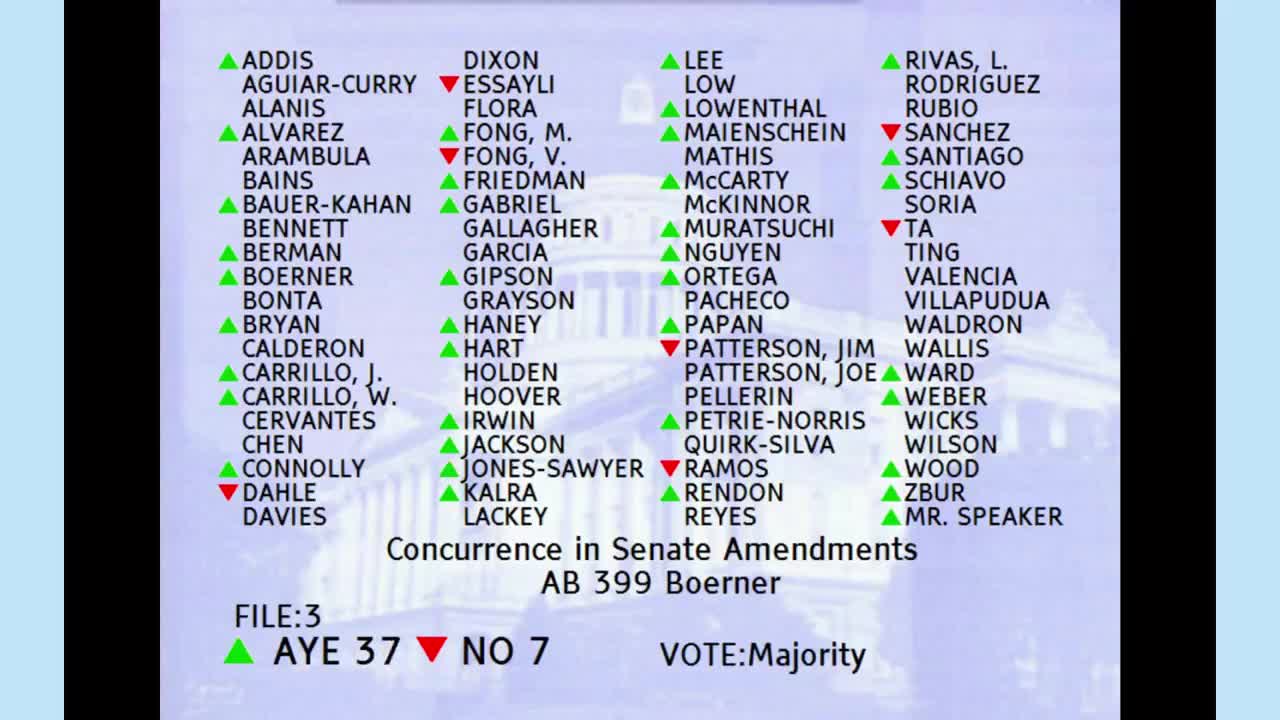 48SEC
Assembly Floor
 2MIN
Senate Floor
 2MIN
Senate Standing Committee on Appropriations
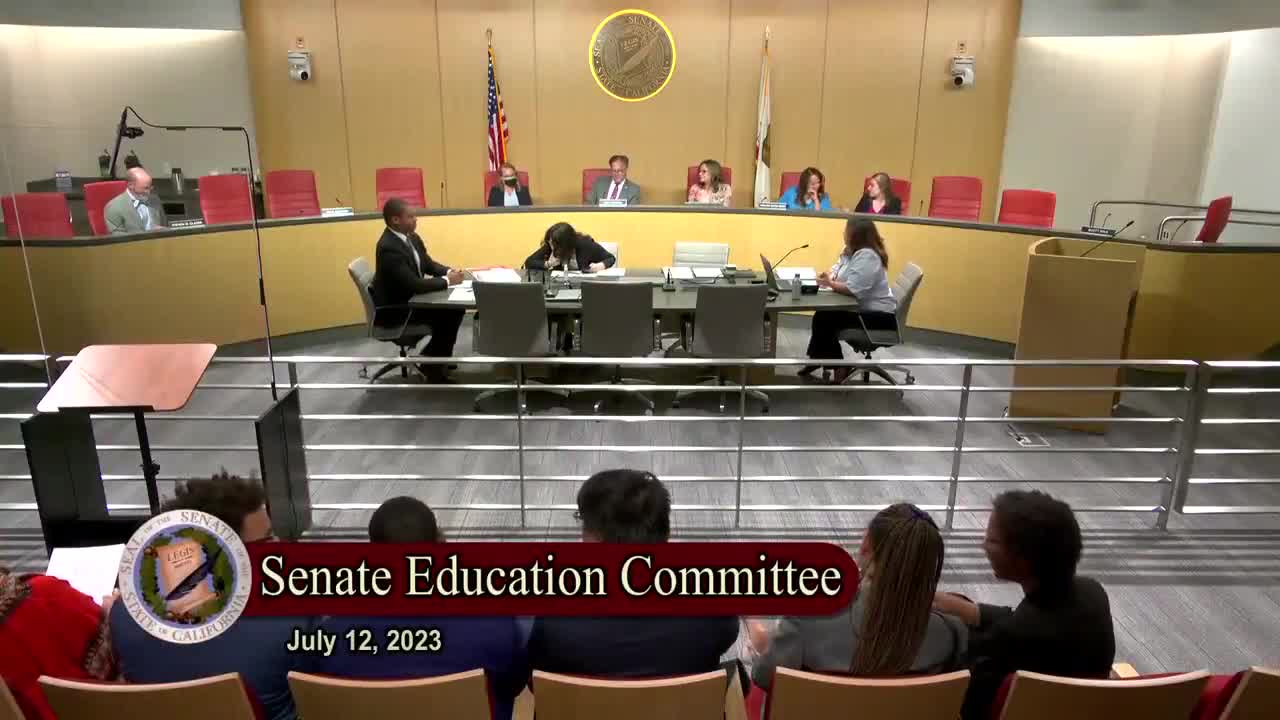 14MIN
Senate Standing Committee on Education
 1MIN
Assembly Floor
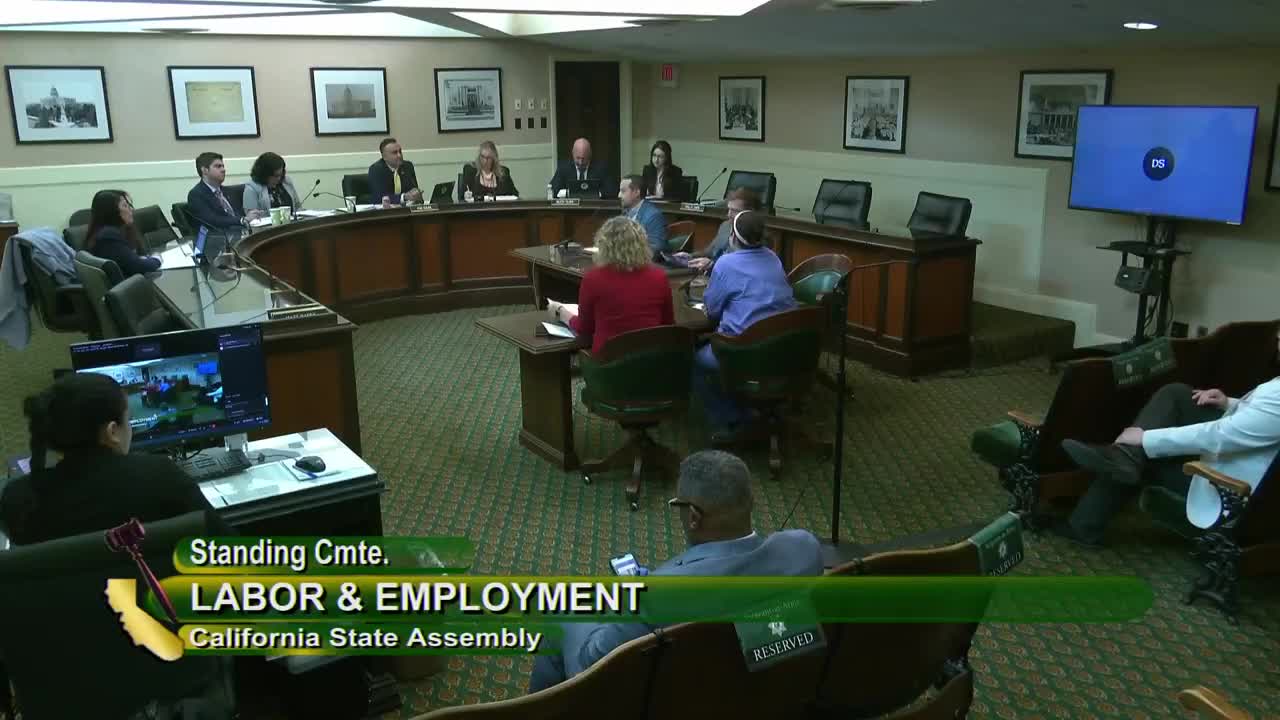 12MIN
Assembly Standing Committee on Labor and Employment
 10MIN