AB 832: California Transportation Commission: membership.
- Session Year: 2023-2024
- House: Assembly
- Latest Version Date: 2024-08-31
Current Status:
Failed
(2024-09-22: Vetoed by Governor.)
Introduced
In Committee
First Chamber
In Committee
Second Chamber
Enacted
What does this bill do?
The bill requires that at least one of the Governor’s appointees to the California Transportation Commission have transportation expertise and professional experience that includes working in or representing disadvantaged communities (low-income or underserved areas).
The summary is provided by generative AI which can make mistakes. For original language, please view the details in the table below.
Existing law establishes the California Transportation Commission in the Transportation Agency. Existing law vests the California Transportation Commission with various powers and duties relative to the programming of transportation capital projects and allocation of funds to those projects pursuant to the state transportation improvement program and various other transportation funding programs. Under existing law, the commission consists of 13 members, including 9 members appointed by the Governor with the advice and consent of the Senate, one member appointed by the Speaker of the Assembly, and one member appointed by the Senate Committee on Rules, as specified. Existing law requires the Governor, in appointing those members to the commission, to make every effort to ensure, among other things, the commission has a diverse membership with expertise in transportation issues, taking into consideration factors, including, but not limited to, socioeconomic background and professional experience, which may include experience working in, or representing, disadvantaged communities.
This bill would require that at least one of those Governor-appointed members of the commission have expertise in transportation issues and professional experience that includes experience working in, or representing, disadvantaged communities.
Existing law establishes the California Transportation Commission in the Transportation Agency. Existing law vests the California Transportation Commission with various powers and duties relative to the programming of transportation capital projects and allocation of funds to those projects pursuant to the state transportation improvement program and various other transportation funding programs. Under existing law, the commission consists of 13 members, including 9 members appointed by the Governor with the advice and consent of the Senate, one member appointed by the Speaker of the Assembly, and one member appointed by the Senate Committee on Rules, as specified. Existing law requires the Governor, in appointing those members to the commission, to make every effort to ensure, among other things, the commission has a diverse membership with expertise in transportation issues, taking into consideration factors, including, but not limited to, socioeconomic background and professional experience, which may include experience working in, or representing, disadvantaged communities.
This bill would delete the above-described requirement that the Governor, in appointing those members to the commission, make every effort to ensure the commission has a diverse membership with expertise in transportation issues and would instead require that at least one of those Governor-appointed members of the commission reside in, and work directly with, communities in the state that are disproportionately burdened by, and vulnerable to, high levels of pollution, including, but not limited to, communities with diverse racial and ethnic populations and communities with low-income populations. have expertise in transportation issues and professional experience that includes experience working in, or representing, disadvantaged communities.
Existing law establishes the Arts Council and sets forth the duties of the council in promoting the arts in the state. Existing law establishes the position of California Poet Laureate, who is appointed for a specified term by the Governor, confirmed by the Senate from a list of nominees garnered by the council through a specified process, and who performs prescribed duties. establishes the California Transportation Commission in the Transportation Agency. Existing law vests the California Transportation Commission with various powers and duties relative to the programming of transportation capital projects and allocation of funds to those projects pursuant to the state transportation improvement program and various other transportation funding programs. Under existing law, the commission consists of 13 members, including 9 members appointed by the Governor with the advice and consent of the Senate, one member appointed by the Speaker of the Assembly, and one member appointed by the Senate Committee on Rules, as specified. Existing law requires the Governor, in appointing those members to the commission, to make every effort to ensure, among other things, the commission has a diverse membership with expertise in transportation issues, taking into consideration factors, including, but not limited to, socioeconomic background and professional experience, which may include experience working in, or representing, disadvantaged communities.
This bill would make nonsubstantive changes to provisions concerning the nomination and appointment of the California Poet Laureate. delete the above-described requirement that the Governor, in appointing those members to the commission, make every effort to ensure the commission has a diverse membership with expertise in transportation issues and would instead require that at least one of those Governor-appointed members of the commission reside in, and work directly with, communities in the state that are disproportionately burdened by, and vulnerable to, high levels of pollution, including, but not limited to, communities with diverse racial and ethnic populations and communities with low-income populations.
Existing law establishes the Arts Council and sets forth the duties of the council in promoting the arts in the state. Existing law establishes the position of California Poet Laureate, who is appointed for a specified term by the Governor, confirmed by the Senate from a list of nominees garnered by the council through a specified process, and who performs prescribed duties.
This bill would make nonsubstantive changes to provisions concerning the nomination and appointment of the California Poet Laureate.
The commission consists of 13 members appointed as follows:
(a)(1)Nine members shall be appointed by the Governor with the advice and consent of the Senate. One member shall be appointed by the Speaker of the Assembly and one member shall be appointed by the Senate Committee on Rules, with neither of these members subject to confirmation by the Senate. A member appointed pursuant to this subdivision shall not simultaneously hold an elected public office, or serve on any local or regional public board or commission with business before the commission.
(2)Of the members appointed by the Governor pursuant to this subdivision, at least one shall have expertise in transportation issues and professional experience that includes experience working in, or representing, disadvantaged communities.
(b)One Member of the Senate appointed by the Senate Committee on Rules and one Member of the Assembly appointed by the Speaker of the Assembly shall be ex officio members without a vote and shall participate in the activities of the commission to the extent that such participation is not incompatible with their positions as Members of the Legislature.
(c)Notwithstanding any other law, a voting member of the commission may serve on the High-Speed Rail Authority as established in the California High-Speed Rail Act (Division 19.5 (commencing with Section 185000) of the Public Utilities Code).
The commission consists of 13 members appointed as follows:
(a)(1)Nine members shall be appointed by the Governor with the advice and consent of the Senate. One member shall be appointed by the Speaker of the Assembly and one member shall be appointed by the Senate Committee on Rules, with neither of these members subject to confirmation by the Senate. A member appointed pursuant to this subdivision shall not simultaneously hold an elected public office, or serve on any local or regional public board or commission with business before the commission.
(2)Of the members appointed by the Governor pursuant to this subdivision, at least one shall reside in, and work directly with, communities in the state that are disproportionately burdened by, and vulnerable to, high levels of pollution, including, but not limited to, communities with diverse racial and ethnic populations and communities with low-income populations. have expertise in transportation issues and professional experience that includes experience working in, or representing, disadvantaged communities.
(b)One Member of the Senate appointed by the Senate Committee on Rules and one Member of the Assembly appointed by the Speaker of the Assembly shall be ex officio members without a vote and shall participate in the activities of the commission to the extent that such participation is not incompatible with their positions as Members of the Legislature.
(c)Notwithstanding any other law, a voting member of the commission may serve on the High-Speed Rail Authority as established in the California High-Speed Rail Act (Division 19.5 (commencing with Section 185000) of the Public Utilities Code).
SEC. 2.Section 14504 of the Government Code is amended to read:14504.(a)In appointing members, the Governor shall make every effort to ensure that there is a geographic balance of representation on the commission as a whole, with members from the northern and southern areas and from the urban and rural areas of the state.(b)Each member of the commission shall represent the state at large.The commission consists of 13 members appointed as follows:
(a)(1)Nine members shall be appointed by the Governor with the advice and consent of the Senate. One member shall be appointed by the Speaker of the Assembly and one member shall be appointed by the Senate Committee on Rules, with neither of these members subject to confirmation by the Senate. A member appointed pursuant to this subdivision shall not simultaneously hold an elected public office, or serve on any local or regional public board or commission with business before the commission.
(2)Of the members appointed pursuant to this subdivision, at least one shall reside in, and work directly with, communities in the state that are disproportionately burdened by, and vulnerable to, high levels of pollution, including, but not limited to, communities with diverse racial and ethnic populations and communities with low-income populations.
(b)One Member of the Senate appointed by the Senate Committee on Rules and one Member of the Assembly appointed by the Speaker of the Assembly shall be ex officio members without vote and shall participate in the activities of the commission to the extent that such participation is not incompatible with their positions as Members of the Legislature.
(c)Notwithstanding any other provision of law, a voting member of the commission may serve on the High-Speed Rail Authority as established in Division the California High-Speed Rail Act (Division 19.5 (commencing with Section 185000) of the Public Utilities Code. Code).
SEC. 2.Section 14504 of the Government Code is amended to read:14504.(a)In appointing members, the Governor shall make every effort to ensure both of the following: that
(1)That there is a geographic balance of representation on the commission as a whole, with members from the northern and southern areas and from the urban and rural areas of the state.
(2)That the commission has a diverse membership with expertise in transportation issues, taking into consideration factors including, but not limited to, socioeconomic background and professional experience, which may include experience working in, or representing, disadvantaged communities.(b)Each member of the commission shall represent the state at large.
SECTION 1.Section 8760 of the Government Code is amended to read:8760.(a)The position of California Poet Laureate is hereby established.(b)The California Poet Laureate shall be appointed by the Governor and confirmed by the Senate from a list of three nominees provided by the Arts Council garnered through the following process:(1)The council shall establish a panel of three literary experts that may include any of the following:(A)Literature professors and teachers, including professional poets teaching in programs such as the California Poets in the Schools and other arts in schools programs.(B)Public and private arts organizations that have a significant literary component.(C)Professional poets.(D)Boards and directors of literary organizations.(E)Literary critics.(F)Others deemed by the director to have expertise in contemporary American poetry.(2)(A)The panel shall solicit nominations from a broad array of literary sources and individuals, including, but not limited to, all of the following:(i)University and college literature departments.(ii)Literary organizations, societies, and centers.(iii)Poetry book publishers and poetry editors.(iv)Directors of poetry reading series.(v)Independent book sellers specializing in poetry.(B)The panel shall make every effort to ensure that information regarding the solicitation of nominations is broadly distributed.(3)The council may establish other rules and regulations regarding the nomination process and expend funds for those purposes.(c)Each nominee for California Poet Laureate submitted by the Arts Council to the Governor shall have resided in California for at least 10 years, have a significant body of published work, and be widely considered to be a poet of stature.(d)A poet laureate appointed pursuant to this section shall serve for a term of two years and may not serve more than two terms.(a)The position of California Poet Laureate is hereby established.
(b)The California Poet Laureate shall be appointed by the Governor and confirmed by the Senate from a list of three nominees provided by the Arts Council garnered through the following process:
(1)The council shall establish a panel of three literary experts, which experts that may include any of the following:
(A)Literature professors and teachers, including professional poets teaching in such programs as programs such as the California Poets in the Schools and other arts in schools programs.
(B)Public and private arts organizations that have a significant literary component.
(C)Professional poets.
(D)Boards and directors of literary organizations.
(E)Literary critics.
(F)Others deemed by the director to have expertise in contemporary American poetry.
(2)(A)The panel shall solicit nominations from a broad array of literary sources and individuals, including, but not limited to, all of the following:
(i)University and college literature departments.
(ii)Literary organizations, societies, and centers.
(iii)Poetry book publishers and poetry editors.
(iv)Directors of poetry reading series.
(v)Independent book sellers specializing in poetry.
(B)The panel shall make every effort to ensure that information regarding the solicitation of nominations is broadly distributed.
(3)The council may establish other rules and regulations regarding the nomination process and expend funds for those purposes.
(c)Each nominee for California Poet Laureate submitted by the Arts Council to the Governor shall have resided in California for at least 10 years, have a significant body of published work, and be widely considered to be a poet of stature.
(d)A poet laureate appointed pursuant to this section shall serve for a term of two years, years and may not serve more than two terms.
|
Date
|
Status
|
|---|---|
| Sep 22, 2024 | Vetoed by Governor. |
| Sep 10, 2024 | Enrolled and presented to the Governor at 4:30 p.m. |
| Aug 28, 2024 | In Assembly. Ordered to Engrossing and Enrolling. |
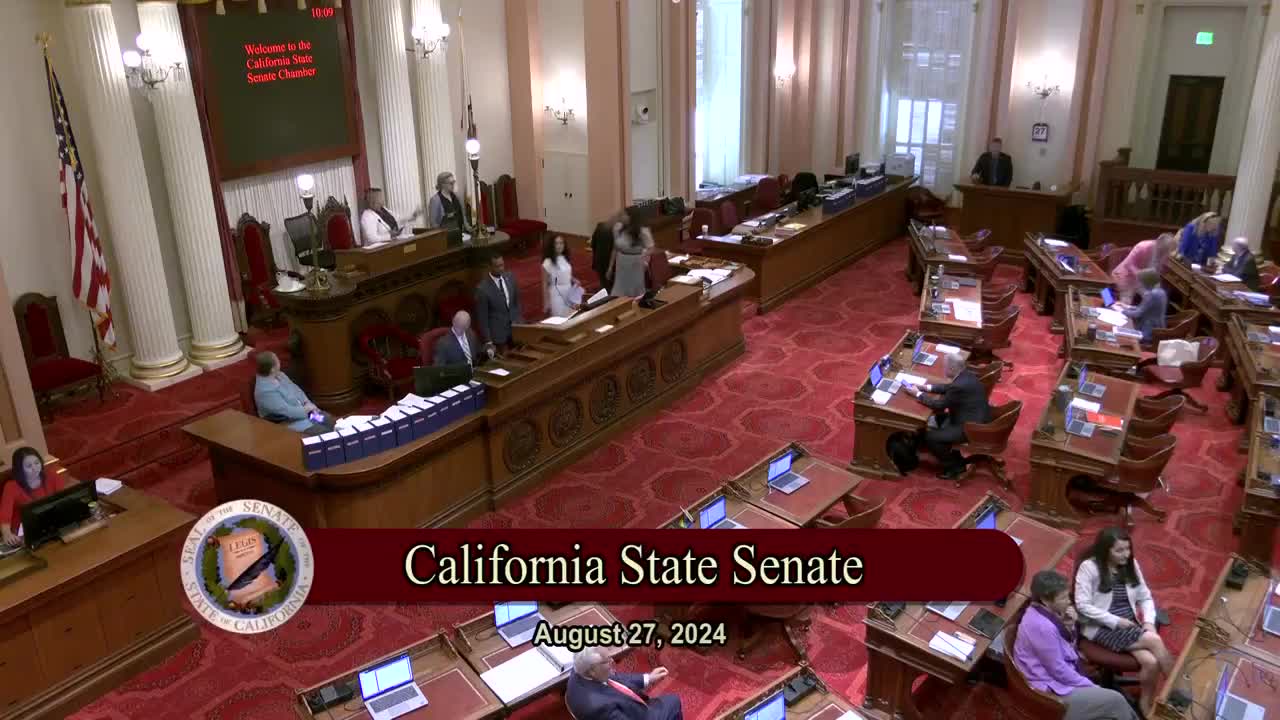
| Aug 27, 2024 | Read third time. Passed. Ordered to the Assembly. (Ayes 30. Noes 9.). |
| Aug 12, 2024 | Read second time. Ordered to third reading. |
| Aug 8, 2024 | Ordered to second reading. |
| Aug 8, 2024 | From inactive file. |
| Sep 13, 2023 | Ordered to inactive file at the request of Senator Roth. |
| Jul 11, 2023 | Read second time. Ordered to third reading. |
| Jul 10, 2023 | From committee: Be ordered to second reading pursuant to Senate Rule 28.8. |
| Jun 29, 2023 | In committee: Hearing postponed by committee. |
| Jun 22, 2023 | In committee: Hearing postponed by committee. |
| Jun 14, 2023 | From committee: Do pass and re-refer to Com. on APPR. (Ayes 12. Noes 4.) (June 13). Re-referred to Com. on APPR. |
| May 31, 2023 | Referred to Com. on TRANS. |
| May 23, 2023 | In Senate. Read first time. To Com. on RLS. for assignment. |
| May 22, 2023 | Read third time. Passed. Ordered to the Senate. (Ayes 61. Noes 15. Page 1686.) |
| Apr 27, 2023 | Read second time. Ordered to third reading. |
| Apr 26, 2023 | From committee: Do pass. (Ayes 12. Noes 4.) (April 26). |
| Mar 28, 2023 | From committee: Do pass and re-refer to Com. on APPR. (Ayes 11. Noes 3.) (March 27). Re-referred to Com. on APPR. |
| Mar 2, 2023 | Re-referred to Com. on TRANS. |
| Mar 1, 2023 | From committee chair, with author's amendments: Amend, and re-refer to Com. on TRANS. Read second time and amended. |
| Feb 27, 2023 | Re-referred to Com. on TRANS. |
| Feb 23, 2023 | Referred to Com. on TRANS. |
| Feb 23, 2023 | From committee chair, with author's amendments: Amend, and re-refer to Com. on TRANS. Read second time and amended. |
| Feb 14, 2023 | From printer. May be heard in committee March 16. |
| Feb 13, 2023 | Read first time. To print. |
|
Date
|
Description
|
Location
|
Votes
|
|
|---|---|---|---|---|
| Aug 27, 2024 | Assembly 3rd Reading AB832 Cervantes By Cortese | Senate Floor |
Passed |
|
| Jun 13, 2023 | Do pass, but first be re-referred to the Committee on [Appropriations] | Senate Standing Committee on Transportation |
Passed |
|
| May 22, 2023 | AB 832 Cervantes Assembly Third Reading | Assembly Floor |
Passed |
|
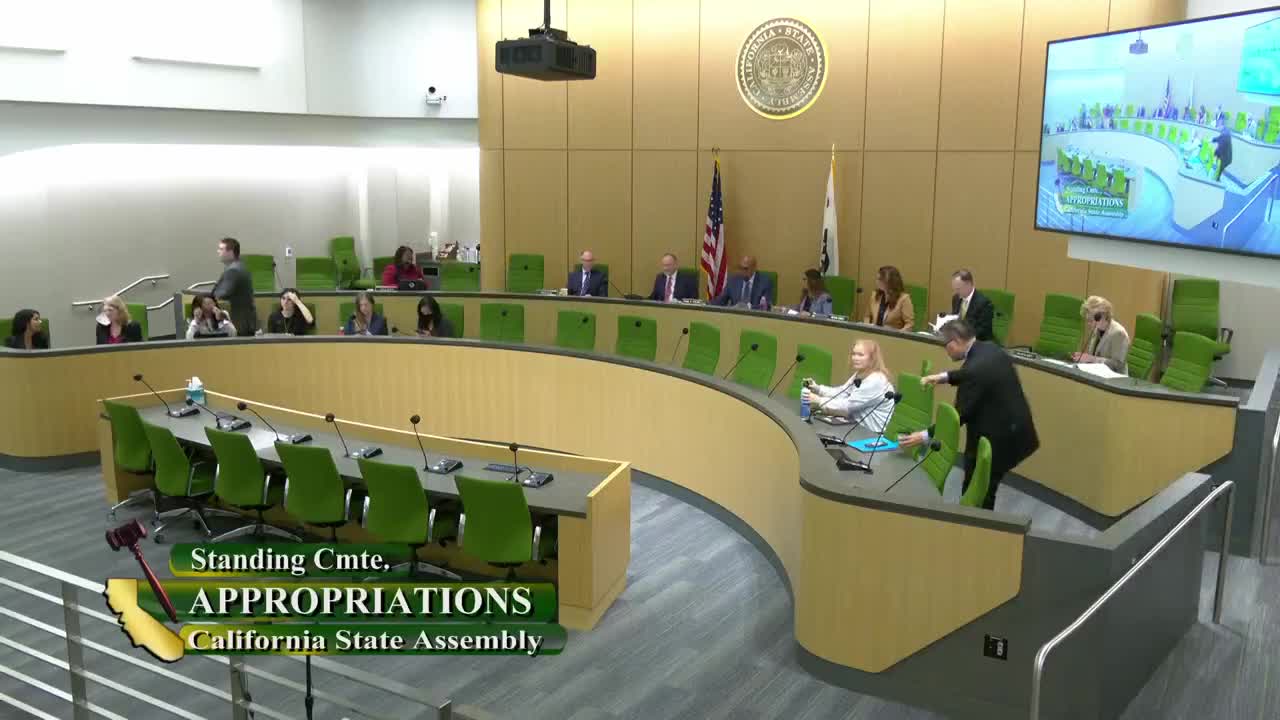
| Apr 26, 2023 | Do pass. | Assembly Standing Committee on Appropriations |
Passed |
|
| Mar 27, 2023 | Do pass and be re-referred to the Committee on [Appropriations] | Assembly Standing Committee on Transportation |
Passed |
This list shows positions taken on this bill by organizations on the date displayed, which is linked to the original source.
Positions by individuals are not included.
|
Organization
|
Position
|
Date
|
|---|---|---|
| Coalition for Clean Air | * Support | Jun 13, 2023 |
| Sierra Club California | * Support | Jun 13, 2023 |
GOVERNOR'S VETO
GV Bill Id:AB 832
Author:(Cervantes)
As Enrolled Ver:August 31, 2024
2/3 vote
SUMMARY
Requires at least one of the Governor's appointees to the California Transportation Commission (CTC) have expertise in transportation issues and professional experience that includes experience working in, or representing, disadvantaged communities.
Governor's Veto Message
This bill would require that at least one of the Governor-appointed members of the California Transportation Commission (CTC) have expertise in transportation issues and professional experience representing disadvantaged communities.
Under existing law, the Governor is already required to make every effort to ensure the CTC has a balanced and diverse membership with expertise in transportation issues, taking into consideration factors including, but not limited to, socioeconomic background and professional experience, which may include experience working in, or representing, disadvantaged communities. This process has proven effective in achieving diverse representation without the need for further codifying specific requirements in statute.
Given this existing statutory commitment, and the authority already vested in the Office of the Governor to make appointments to the CTC, this bill is unnecessary.
COMMENTS
The Legislature created the CTC in 1978 to create a unified statewide vision for transportation policy. The 13-member commission programs and allocates funds for the construction of highway, passenger rail, active transportation, aeronautics, and transit improvements throughout California. CTC also advises and assists the Secretary of the California State Transportation Agency and the Legislature in formulating and evaluating state policies and plans for California's transportation programs.
Since the CTC's creation issues of issues of pollution, climate change, congestion, economic inequality, land use and the creation of new innovative technologies have greatly complicated the CTC's job. It is no longer just about building roads; it is about providing mobility to all residents of California including those in disadvantaged communities. According to the Office of Environmental Health Hazard Assessment, as of 2021, 9.6 million Californians—or 24.3% of the state's population— lives in communities that are designated as disadvantaged communities using CalEnviroScreen. Some, but not all, state boards and commissions require members with specific experience working with disadvantaged communities.
Enactment of AB 179 (Cervantes) Chapter 737, Statutes of 2017, attempted to recognize some of these changes and requires the Governor in appointing members to the CTC to make every effort to ensure that the commission has a diverse membership with expertise in transportation issues, taking into consideration factors including, but not limited to, socioeconomic background and professional experience, which may include experience working in, or representing, disadvantaged communities. Since AB 179 was enacted the diversity of the commission membership has notably increased.
This bill seeks to go beyond requiring the Governor to "make every effort" to ensure there is some diversity on the commission, and instead requires that at least one member has experience working with disadvantaged communities.
According to the Author
"In recent years, the Legislature has enacted bills to provide environmental justice representation on the California Air Resources Board and the California Coastal Commission to ensure that the 9.6 million Californians residing in disadvantaged communities that are most burdened by pollution are given a voice on these important governmental bodies. The 2017 enactment of my Assembly Bill 179 enshrined language strongly urging, but not requiring, the Governor to appoint individuals with professional experience in environmental justice to the California Transportation Commission (CTC). While Governor Newsom has heeded this call with his appointments to CTC, there is no guarantee his successors will do so since existing law contains no such requirement. In order to ensure that future governors follow suit, Assembly Bill 832 would require at least one gubernatorial appointee to CTC possesses professional experience in environmental justice. This would align the CTC with the Air Resources Board and Coastal Commission in guaranteeing environmental justice representation among its voting members."
Arguments in Support
No support on file.
Arguments in Opposition
Transportation California writing in opposition states "AB 832 follows your 2017 legislative proposal to require the appointment of individuals with professional experience in environmental justice to the CTC which was vetoed by the Governor. In our view, the present appointment system is working and view the precedential nature of this measure as unnecessary. The present law (Government Code Section 14504 (a) (2)) already addresses the need for diversity in membership. Further, the Legislature holds the ultimate means to ensure that the CTC includes diverse membership and that this or any future governor will abide by the current law in several ways, including the refusal to confirm an appointee, if deemed necessary, or to direct one of the legislative appointees to aid in reaching the balance of diversity that AB 832 is seeking."
FISCAL COMMENTS
According to the Assembly Appropriations Committee, the CTC anticipates no costs as a result of this bill.
VOTES
ASM TRANSPORTATION: 11-3-1
YES: Friedman, Berman, Juan Carrillo, Gipson, Hart, Jackson, Kalra, Lowenthal, Stephanie Nguyen, Ward, Wicks
NO: Vince Fong, Davies, Sanchez
ABS, ABST OR NV: Wallis
ASM APPROPRIATIONS: 12-4-0
YES: Holden, Bryan, Calderon, Wendy Carrillo, Mike Fong, Hart, Lowenthal, Papan, Pellerin, Robert Rivas, Weber, Wilson
NO: Megan Dahle, Dixon, Mathis, Sanchez
ASSEMBLY FLOOR: 61-15-4
YES: Addis, Aguiar-Curry, Alvarez, Arambula, Bains, Bauer-Kahan, Bennett, Berman, Boerner, Bonta, Bryan, Calderon, Juan Carrillo, Wendy Carrillo, Cervantes, Connolly, Mike Fong, Friedman, Gabriel, Garcia, Gipson, Grayson, Haney, Hart, Holden, Irwin, Jackson, Jones-Sawyer, Kalra, Lee, Low, Lowenthal, Maienschein, McCarty, McKinnor, Muratsuchi, Stephanie Nguyen, Ortega, Pacheco, Papan, Pellerin, Petrie-Norris, Ramos, Reyes, Luz Rivas, Robert Rivas, Rodriguez, Blanca Rubio, Santiago, Schiavo, Soria, Ting, Valencia, Villapudua, Ward, Weber, Wicks, Wilson, Wood, Zbur, Rendon
NO: Alanis, Megan Dahle, Davies, Dixon, Essayli, Flora, Vince Fong, Gallagher, Hoover, Mathis, Jim Patterson, Joe Patterson, Sanchez, Ta, Waldron
ABS, ABST OR NV: Chen, Lackey, Quirk-Silva, Wallis
SENATE FLOOR: 31-9-0
YES: Allen, Archuleta, Ashby, Atkins, Becker, Blakespear, Bradford, Caballero, Cortese, Dodd, Durazo, Eggman, Glazer, Gonzalez, Hurtado, Laird, Limón, McGuire, Menjivar, Min, Newman, Padilla, Portantino, Roth, Rubio, Skinner, Smallwood-Cuevas, Stern, Umberg, Wahab, Wiener
NO: Alvarado-Gil, Dahle, Grove, Jones, Nguyen, Niello, Ochoa Bogh, Seyarto, Wilk
UPDATED
VERSION: August 31, 2024
CONSULTANT: Farra Bracht / TRANS. / (916) 319-2093 FN: 0005082
SENATE RULES COMMITTEE Office of Senate Floor Analyses (916) 651-1520 Fax: (916) 327-4478 | AB 832 |
THIRD READING
Bill No: AB 832
Author: Cervantes (D)
Amended: 3/1/23 in Assembly
Vote: 21
SENATE TRANSPORTATION COMMITTEE: 12-4, 6/13/23
AYES: Gonzalez, Allen, Archuleta, Becker, Blakespear, Cortese, Dodd, Limón, McGuire, Newman, Umberg, Wahab
NOES: Niello, Dahle, Nguyen, Seyarto
SENATE APPROPRIATIONS COMMITTEE: Senate Rule 28.8
ASSEMBLY FLOOR: 61-15, 5/22/23 - See last page for vote
SUBJECT: California Transportation Commission: membership
SOURCE: Author
DIGEST:
This bill requires that at least one of the Governor-appointed members to the California Transportation Commission (CTC) have expertise in transportation issues and professional experience that includes experience working in, or representing, disadvantaged communities.
ANALYSIS:
Existing law:
- Directs CTC to advise and assist the Secretary of Transportation and the Legislature in formulating and evaluating state policies and plans for transportation programs in the state.
- Gives responsibility to CTC for programming and allocating funds for the construction of highway, passenger rail, transit and active transportation improvements throughout California.
- Provides CTC with 13 members, appointed as follows:
- Nine members appointed by the Governor with the advice and consent of the Senate;
- One member appointed by the Speaker of the Assembly;
- One member appointed by the Senate Rules Committee; and,
- Two ex-officio, non-voting members appointed one each from the State Senate and Assembly.
- Provides that CTC members hold office for terms of four years.
- Requires, in appointing members of CTC, that the Governor make every effort to assure that there is a geographic balance of representation, with members from northern and southern areas and from the urban and rural areas of the state, and provides that each member is to serve the state at large.
- Requires the Governor to make every effort to ensure that the CTC has a diverse membership with expertise in transportation issues, taking into consideration factors including socioeconomic background and professional experience, which may include experience working in, or representing, disadvantaged communities.
- Requires that each CTC member represent the state at large.
This bill requires that at least one of the Governor-appointed members to the CTC have expertise in transportation issues and professional experience that includes experience working in, or representing, disadvantaged communities.
Comments
- Author’s Statement. “In recent years, the Legislature has enacted bills to provide environmental justice representation on the California Air Resources Board and the California Coastal Commission to ensure that the 9.6 million Californians residing in disadvantaged communities that are most burdened by pollution are given a voice on these important governmental bodies. The 2017 enactment of my Assembly Bill 179 enshrined language strongly urging, but not requiring, the Governor to appoint individuals with professional experience in environmental justice to the California Transportation Commission (CTC). While Governor Newsom has heeded this call with his appointments to CTC, there is no guarantee his successors will do so since existing law contains no such requirement. In order to ensure that future governors follow suit, Assembly Bill 832 would require at least one gubernatorial appointee to CTC possesses professional experience in environmental justice. This would align the CTC with the Air Resources Board and Coastal Commission in guaranteeing environmental justice representation among its voting members.”
- Current Law Working? Under current law the Governor is required to make every effort to ensure that the CTC has a diverse membership. While this requirement has been honored, the author’s concern is that future Governors may refuse to do so. However, there are already checks and balances under current law that would counter this. The Senate could refuse to confirm a CTC appointee if it felt that the appointee wouldn’t result in a diverse membership. The Senate or Assembly could also use its appointing authority to install a commissioner with experience in disadvantaged communities. Finally, the Senate’s and/or Assembly’s ex-officio member could also represent that perspective.
- Slippery Slope? Under this bill at least one of the nine Governor-appointed CTC Commissioners must have experience working in, or representing, disadvantaged communities. As there is no other requirement for a commissioner to have other relevant experiences, such as with organized labor, protecting the environment, alternative transportation, or building transportation infrastructure, this bill elevates experience with disadvantaged communities over every other experience. This bill may establish a precedent where representatives of other important interests will expect a statutory CTC appointment.
- Who’s qualified? The author correctly notes that both the California Coastal Commission and the ARB are required to have members with experience working with disadvantaged communities. (The ARB requirement only extends to appointments by the Legislature.) However, this is by no means a uniform requirement. For example: The California Public Utilities Commission, the State Board of Education, the High Speed Rail Authority, the California Regional Water Quality Control Boards and the Agricultural Labor Relations Board have no specific qualifications for their members. The California Energy Commission requires that its members represent specified professions.
FISCAL EFFECT: Appropriation: No Fiscal Com.: Yes Local: No
SUPPORT: (Verified 7/11/23)
None received
OPPOSITION: (Verified 7/11/23)
None received
ASSEMBLY FLOOR: 61-15, 5/22/23
AYES: Addis, Aguiar-Curry, Alvarez, Arambula, Bains, Bauer-Kahan, Bennett, Berman, Boerner, Bonta, Bryan, Calderon, Juan Carrillo, Wendy Carrillo, Cervantes, Connolly, Mike Fong, Friedman, Gabriel, Garcia, Gipson, Grayson, Haney, Hart, Holden, Irwin, Jackson, Jones-Sawyer, Kalra, Lee, Low, Lowenthal, Maienschein, McCarty, McKinnor, Muratsuchi, Stephanie Nguyen, Ortega, Pacheco, Papan, Pellerin, Petrie-Norris, Ramos, Reyes, Luz Rivas, Robert Rivas, Rodriguez, Blanca Rubio, Santiago, Schiavo, Soria, Ting, Valencia, Villapudua, Ward, Weber, Wicks, Wilson, Wood, Zbur, Rendon
NOES: Alanis, Megan Dahle, Davies, Dixon, Essayli, Flora, Vince Fong, Gallagher, Hoover, Mathis, Jim Patterson, Joe Patterson, Sanchez, Ta, Waldron
NO VOTE RECORDED: Chen, Lackey, Quirk-Silva, Wallis
Prepared by: Randy Chinn / TRANS. / (916) 651-4121
7/12/23 14:12:44
**** END ****
SENATE COMMITTEE ON TRANSPORTATION
Senator Lena Gonzalez, Chair
2023 - 2024 Regular
Bill No: AB 832 Hearing Date: 6/13/2023
Author: | Cervantes | ||
Version: | 3/1/2023 Amended | ||
Urgency: | No | Fiscal: | Yes |
Consultant: | Randy Chinn | ||
SUBJECT: California Transportation Commission: membership
DIGEST: This bill requires that at least one of the Governor-appointed members to the California Transportation Commission (CTC) have expertise in transportation issues and professional experience that includes experience working in, or representing, disadvantaged communities.
ANALYSIS:
Existing law:
- Directs CTC to advise and assist the Secretary of Transportation and the Legislature in formulating and evaluating state policies and plans for transportation programs in the state.
- Gives responsibility to CTC for programming and allocating funds for the construction of highway, passenger rail, transit and active transportation improvements throughout California.
- Provides CTC with 13 members, appointed as follows:
- Nine members appointed by the Governor with the advice and consent of the Senate;
- One member appointed by the Speaker of the Assembly;
- One member appointed by the Senate Rules Committee; and,
- Two ex-officio, non-voting members appointed one each from the State Senate and Assembly.
- Provides that CTC members hold office for terms of four years.
- Requires, in appointing members of CTC, that the Governor make every effort to assure that there is a geographic balance of representation, with members from northern and southern areas and from the urban and rural areas of the state, and provides that each member is to serve the state at large.
- Requires the Governor to make every effort to ensure that the CTC has a diverse membership with expertise in transportation issues, taking into consideration factors including socioeconomic background and professional experience, which may include experience working in, or representing, disadvantaged communities.
- Requires that each CTC member represent the state at large.
This bill requires that at least one of the Governor-appointed members to the CTC have expertise in transportation issues and professional experience that includes experience working in, or representing, disadvantaged communities.
COMMENTS:
- Author’s Statement. “In recent years, the Legislature has enacted bills to provide environmental justice representation on the California Air Resources Board and the California Coastal Commission to ensure that the 9.6 million Californians residing in disadvantaged communities that are most burdened by pollution are given a voice on these important governmental bodies. The 2017 enactment of my Assembly Bill 179 enshrined language strongly urging, but not requiring, the Governor to appoint individuals with professional experience in environmental justice to the California Transportation Commission (CTC). While Governor Newsom has heeded this call with his appointments to CTC, there is no guarantee his successors will do so since existing law contains no such requirement. In order to ensure that future governors follow suit, Assembly Bill 832 would require at least one gubernatorial appointee to CTC possesses professional experience in environmental justice. This would align the CTC with the Air Resources Board and Coastal Commission in guaranteeing environmental justice representation among its voting members.”
- Current Law Working? Under current law the Governor is required to make every effort to ensure that the CTC has a diverse membership. While this requirement has been honored, the author’s concern is that future Governors may refuse to do so. However, there are already checks and balances under current law that would counter this. The Senate could refuse to confirm a CTC appointee if it felt that the appointee wouldn’t result in a diverse membership. The Senate or Assembly could also use its appointing authority to install a commissioner with experience in disadvantaged communities. Finally, the Senate’s and/or Assembly’s ex-officio member could also represent that perspective.
- Slippery Slope? Under this bill at least one of the nine Governor-appointed CTC Commissioners must have experience working in, or representing, disadvantaged communities. As there is no other requirement for a commissioner to have other relevant experiences, such as with organized labor, protecting the environment, alternative transportation, or building transportation infrastructure, this bill elevates experience with disadvantaged communities over every other experience. This bill may establish a precedent where representatives of other important interests will expect a statutory CTC appointment.
- Who’s qualified? The author correctly notes that both the California Coastal Commission and the ARB are required to have members with experience working with disadvantaged communities. (The ARB requirement only extends to appointments by the Legislature.) However, this is by no means a uniform requirement. For example: The California Public Utilities Commission, the State Board of Education, the High Speed Rail Authority, the California Regional Water Quality Control Boards and the Agricultural Labor Relations Board have no specific qualifications for their members. The California Energy Commission requires that its members represent specified professions.
Related Legislation:
AB 179 (Cervantes) Chapter 179, Statutes of 2017, requires the Governor, in appointing CTC members, to use every effort to ensure that the commission has a diverse membership with expertise in transportation issues, taking into consideration factors including, but not limited to, socioeconomic background and professional experience, which may include experience working in, or representing, disadvantaged communities.
AB 1982 (Bloom of 2016) would have added two members representing disadvantaged communities to CTC. AB 1982 failed passage in the Assembly.
AB 2382 (Lopez of 2016) would have required that at least one member of the California High-Speed Rail Authority Board appointed by the Governor be a person who is from a disadvantaged community. AB 2382 failed passage in the Assembly.
AB 1288 (Atkins) Chapter 586, Statutes of 2015, added two additional legislative appointees to the California Air Resources Board with expertise in environmental justice.
FISCAL EFFECT: Appropriation: Fiscal Com.: Local:
From the Assembly Appropriations Committee: The CTC anticipates no costs as a result of this bill.
POSITIONS: (Communicated to the committee before noon on Wednesday,
June 7, 2023.)
SUPPORT:
None reported
OPPOSITION:
None reported
-- END --
ASSEMBLY THIRD READING
ATR Bill Id:AB 832
Author:(Cervantes)
As Amended Ver:March 1, 2023
Majority vote
SUMMARY
Requires at least one of the Governor's appointees members to the California Transportation Commission (CTC) have expertise in transportation issues and professional experience that includes experience working in, or representing, disadvantaged communities.
Major Provisions
COMMENTS
The Legislature created the CTC in 1978 to create a unified statewide vision for transportation policy. The 13-member commission programs and allocates funds for the construction of highway, passenger rail, active transportation, aeronautics, and transit improvements throughout California. CTC also advises and assists the Secretary of the California State Transportation Agency and the Legislature in formulating and evaluating state policies and plans for California's transportation programs.
Since the CTC's creation issues of issues of pollution, climate change, congestion, economic inequality, land use and the creation of new innovative technologies have greatly complicated the CTC's job. It is no longer just about building roads; it is about providing mobility to all residents of California including those in disadvantaged communities. According to the Office of Environmental Health Hazard Assessment, as of 2021, 9.6 million Californians—or 24.3% of the state's population— lives in communities that are designated as disadvantaged communities using CalEnviroScreen. Some, but not all, state boards and commissions require members with specific experience working with disadvantaged communities.
Enactment of AB 179 (Cervantes) Chapter 737, Statutes of 2017, attempted to recognize some of these changes and requires the Governor in appointing members to the CTC to make every effort to ensure that the commission has a diverse membership with expertise in transportation issues, taking into consideration factors including, but not limited to, socioeconomic background and professional experience, which may include experience working in, or representing, disadvantaged communities. Since AB 179 was enacted the diversity of the commission membership has notably increased.
This bill seeks to go beyond requiring the Governor to "make every effort" to ensure there is some diversity on the commission, and instead requires that at least one member has experience working with disadvantaged communities.
According to the Author
"In recent years, the Legislature has enacted bills to provide environmental justice representation on the California Air Resources Board and the California Coastal Commission to ensure that the 9.6 million Californians residing in disadvantaged communities that are most burdened by pollution are given a voice on these important governmental bodies. The 2017 enactment of my Assembly Bill 179 enshrined language strongly urging, but not requiring, the Governor to appoint individuals with professional experience in environmental justice to the California Transportation Commission (CTC). While Governor Newsom has heeded this call with his appointments to CTC, there is no guarantee his successors will do so since existing law contains no such requirement. In order to ensure that future governors follow suit, Assembly Bill 832 would require at least one gubernatorial appointee to CTC possesses professional experience in environmental justice. This would align the CTC with the Air Resources Board and Coastal Commission in guaranteeing environmental justice representation among its voting members."
Arguments in Support
None on file.
Arguments in Opposition
None on file.
FISCAL COMMENTS
According to the Assembly Appropriations Committee, the CTC anticipates no costs as a result of this bill.
VOTES
ASM TRANSPORTATION: 11-3-1
YES: Friedman, Berman, Juan Carrillo, Gipson, Hart, Jackson, Kalra, Lowenthal, Stephanie Nguyen, Ward, Wicks
NO: Vince Fong, Davies, Sanchez
ABS, ABST OR NV: Wallis
ASM APPROPRIATIONS: 12-4-0
YES: Holden, Bryan, Calderon, Wendy Carrillo, Mike Fong, Hart, Lowenthal, Papan, Pellerin, Robert Rivas, Weber, Wilson
NO: Megan Dahle, Dixon, Mathis, Sanchez
UPDATED
VERSION: March 1, 2023
CONSULTANT: Farra Bracht / TRANS. / (916) 319-2093 FN: 0000255
Date of Hearing: April 26, 2023
ASSEMBLY COMMITTEE ON APPROPRIATIONS
Chris Holden, Chair
ABPCA Bill Id:AB 832
Author:(Cervantes) – As Amended Ver:March 1, 2023
Policy Committee: | Transportation | Vote: | 11 - 3 |
|
| ||
|
|
Urgency: No State Mandated Local Program: No Reimbursable: No
SUMMARY:
This bill requires at least one of the Governor’s appointees to the California Transportation Commission (CTC) have expertise in transportation issues and professional experience that includes experience working in, or representing, disadvantaged communities.
FISCAL EFFECT:
The CTC anticipates no costs as a result of this bill.
COMMENTS:
State law charges the CTC with advising and assisting the Secretary of Transportation and the Legislature in formulating and evaluating state policies and plans for transportation programs. Statute defines the membership of the CTC as consisting of 13 members, as follows:
- Nine members appointed by the Governor with the advice and consent of the Senate.
- One member appointed by the Speaker of the Assembly.
- One member appointed by the Senate Rules Committee.
- Two ex-officio, non-voting members appointed from the Senate and Assembly, usually the respective chair of the transportation policy committee in each house.
The Legislature approved AB 179 (Cervantes), Chapter 737, Statutes of 2017, to require the Governor, in appointing CTC members, to use “every effort” to ensure the CTC has a diverse membership with expertise in transportation issues, “taking into consideration” socioeconomic background and professional experience, “which may include experience working in, or representing, disadvantaged communities.”
It is generally agreed that the Governor has appointed members to the CTC consistent with the outcomes envisioned by the Legislature when it passed AB 179. However, the author wants to ensure future appointees to the CTC have experience working in, or representing, disadvantaged communities. According to the author:
The 2017 enactment of my Assembly Bill 179 enshrined language strongly urging, but not requiring, the Governor to appoint individuals with professional experience in environmental justice to the California Transportation Commission (CTC). While Governor Newsom has heeded this call with his appointments to CTC, there is no guarantee his successors will do so since existing law contains no such requirement. In order to ensure that future governors follow suit, Assembly Bill 832 would require at least one gubernatorial appointee to CTC possesses professional experience in environmental justice. This would align the CTC with the Air Resources Board and Coastal Commission in guaranteeing environmental justice representation among its voting members.
Analysis Prepared by: Jay Dickenson / APPR. / (916) 319-2081
Date of Hearing: March 20, 2023
ASSEMBLY COMMITTEE ON TRANSPORTATION
Laura Friedman, Chair
ABPCA Bill Id:AB 832 (
Author:Cervantes) – As Amended Ver:February 23, 2023
SUBJECT: California Transportation Commission: membership
SUMMARY: Requires that at least one of the Governor-appointed members to the California Transportation Commission (CTC) have expertise in transportation issues and professional experience that includes experience working in, or representing, disadvantaged communities.
EXISTING LAW:
- Directs CTC to advise and assist the Secretary of Transportation and the Legislature in formulating and evaluating state policies and plans for transportation programs in the state. (Government Code (GC) Section 14520)
2) Establishes CTC with 13 members, appointed as follows:
- Nine members appointed by the Governor with the advice and consent of the Senate;
- One member appointed by the Speaker of the Assembly;
- One member appointed by the Senate Rules Committee; and,
- Two ex-officio, non-voting members appointed from the State Senate and Assembly, usually the respective chairs of the transportation policy committee in each house.
(GC 14502)
- Requires that no voting CTC member simultaneously hold an elected public office or serve on any local or regional pubic board or commission with business before the commission. (GC 14502)
- Provides that, other than ex-officio members, CTC members hold office for terms of four years. (GC 14503)
- Requires, in appointing members of CTC, that the Governor make every effort to:
- Ensure that there is a geographic balance of representation, with members from northern and southern areas and from the urban and rural areas of the state, and;
- That the commission has a diverse membership with expertise in transportation issues, taking into consideration factors including, but not limited to, socioeconomic background and professional experience, which may include experience working in, or representing, disadvantaged communities. (GC 14504)
FISCAL EFFECT: Unknown
COMMENTS: The Legislature created the CTC in 1978 to create a unified statewide vision for transportation policy. The 13-member commission programs and allocates funds for the construction of highway, passenger rail, active transportation, aeronautics, and transit improvements throughout California. CTC also advises and assists the Secretary of the California State Transportation Agency and the Legislature in formulating and evaluating state policies and plans for California's transportation programs.
Since the CTC’s creation issues of issues of pollution, climate change, congestion, economic inequality, land use and the creation of new innovative technologies have greatly complicated the CTC’s job. It is no longer just about building roads; it is about providing mobility to all residents of California including those in disadvantaged communities. According to the Office of Environmental Health Hazard Assessment, as of 2021, 9.6 million Californians—or 24.3% of the state’s population— lives in communities that are designated as disadvantaged communities using CalEnviroScreen. Some, but not all, state boards and commissions require members with specific experience working with disadvantaged communities.
Enactment of AB 179 (Cervantes) Chapter 737, Statutes of 2017, attempted to recognize some of these changes and requires the Governor in appointing members to the CTC to make every effort to ensure that the commission has a diverse membership with expertise in transportation issues, taking into consideration factors including, but not limited to, socioeconomic background and professional experience, which may include experience working in, or representing, disadvantaged communities. Since AB 179 was enacted the diversity of the commission membership has notably increased.
This bill seeks to go beyond requiring the Governor to “make every effort” to ensure there is some diversity on the commission, and instead requires that at least one member has experience working with disadvantaged communities.
According to the author, “In recent years, the Legislature has enacted bills to provide environmental justice representation on the California Air Resources Board and the California Coastal Commission to ensure that the 9.6 million Californians residing in disadvantaged communities that are most burdened by pollution are given a voice on these important governmental bodies. The 2017 enactment of my Assembly Bill 179 enshrined language strongly urging, but not requiring, the Governor to appoint individuals with professional experience in environmental justice to the California Transportation Commission (CTC). While Governor Newsom has heeded this call with his appointments to CTC, there is no guarantee his successors will do so since existing law contains no such requirement. In order to ensure that future governors follow suit, Assembly Bill 832 would require at least one gubernatorial appointee to CTC possesses professional experience in environmental justice. This would align the CTC with the Air Resources Board and Coastal Commission in guaranteeing environmental justice representation among its voting members.”
Committee comments:
Some progress has been made. The state has much more work to do to ensure that underrepresented voices are adequately heard. However, it has made some progress and a greater number of the funding guidelines for transportation programs attempt to ensure that disadvantaged communities concerns are considered when funding is awarded. Some state transportation funds specifically target disadvantaged communities and new federal Infrastructure Investment and Jobs Act (IIJA) funds will increase these investments. In addition, to this bill there are other mechanisms for ensuring that underrepresented voices are heard, such as establishing an advisory committee for environmental justice issues or establishing a policy requiring the CTC to consider environmental justice perspectives when making decisions.
Related legislation: AB 179 (Cervantes) Chapter 179, Statutes of 2017, requires the Governor, in appointing CTC members, to use every effort to ensure that the commission has a diverse membership with expertise in transportation issues, taking into consideration factors including, but not limited to, socioeconomic background and professional experience, which may include experience working in, or representing, disadvantaged communities.
AB 174 (Bigelow of 2017) would have required at least one voting member of CTC to reside in a rural county with a population of less than 100,000 individuals. AB 174 was passed out of this committee and later significantly amended into a non-related bill about a tribal-state gaming compact that was ultimately chaptered.
AB 1982 (Bloom of 2016) would have added two members representing disadvantaged communities to CTC. AB 1982 failed passage in this committee.
AB 2382 (Lopez of 2016) would have required that at least one member of the California High-Speed Rail Authority Board appointed by the Governor be a person who is from a disadvantaged community. AB 2382 failed passage in this committee.
AB 1288 (Atkins) Chapter 586, Statutes of 2015, added two additional legislative appointees to the California Air Resources Board with expertise in environmental justice.
AB 1290 (John A. Pérez of 2013) would have modified the composition of the CTC and imposed new duties relative to assessing progress in implementing sustainable communities strategies. AB 1290 was vetoed by the Governor on the grounds that the Governor's Reorganization Plan, which had recently gone into effect, would satisfy the author's objectives.
REGISTERED SUPPORT / OPPOSITION:
Support
None on file
Opposition
None on file
Analysis Prepared by: Farra Bracht / TRANS. / (916) 319-2093
Bill Author

Bill Co-Author(s):