AB 852: Peace officers.
- Session Year: 2023-2024
- House: Assembly
- Latest Version Date: 2024-08-14
Current Status:
Failed
(2024-09-01: Held at Desk.)
Introduced
In Committee
First Chamber
In Committee
Second Chamber
Enacted
Existing law requires the Commission on Peace Officer Standards and Training to establish a certification program for specified peace officers, including officers of the Department of the California Highway Patrol. Existing law requires the commission to establish, among others, basic certificates for the purpose of fostering the education and experience necessary to perform general police service duties. Existing law requires certificates to be awarded on the basis of a combination of training, education, experience, and other prerequisites, as determined by the commission.
Existing law requires the Chancellor of the California Community Colleges, in consultation with specified entities, to develop a modern policing degree program and to prepare and submit a report to the Legislature by no later than June 1, 2023, outlining a plan to implement the program.
Existing law requires peace officers in this state to meet specified minimum standards, including age and education requirements.
This bill would require a peace officer who is hired on or after January 1, 2029, to attain a modern policing degree, as specified, or a bachelors or other advanced degree from an accredited college or university no later than January 1, 2029, or within 36 months of commencing their employment as a peace officer, as applicable. officer.
This bill would declare that it is to take effect immediately as an urgency statute.
Existing law requires the Commission on Peace Officer Standards and Training to establish a certification program for specified peace officers, including officers of the Department of the California Highway Patrol. Existing law requires the commission to establish, among others, basic certificates for the purpose of fostering the education and experience necessary to perform general police service duties. Existing law requires certificates to be awarded on the basis of a combination of training, education, experience, and other prerequisites, as determined by the commission.
Existing law requires the Chancellor of the California Community Colleges, in consultation with specified entities, to develop a modern policing degree program and to prepare and submit a report to the Legislature by no later than June 1, 2023, outlining a plan to implement the program.
Existing law requires peace officers in this state to meet specified minimum standards, including age and education requirements.
Commencing on January 1, 2029, thisThis bill would require a peace officer to attain a modern policing degree, as specified, or a bachelors or other advanced degree from an accredited college or university prior to receiving a basic certificate from the commission. no later than January 1, 2029, or within 36 months of commencing their employment as a peace officer, as applicable.
This bill would declare that it is to take effect immediately as an urgency statute.
Existing law requires the Commission on Peace Officer Standards and Training to establish a certification program for specified peace officers, including officers of the Department of the California Highway Patrol. Existing law requires the commission to establish, among others, basic certificates for the purpose of fostering the education and experience necessary to perform general police service duties. Existing law requires certificates to be awarded on the basis of a combination of training, education, experience, and other prerequisites, as determined by the commission.
Existing law requires the Chancellor of the California Community Colleges, in consultation with specified entities, to develop a modern policing degree program and to prepare and submit a report to the Legislature by no later than June 1, 2023, outlining a plan to implement the program.
Existing law requires peace officers in this state to meet specified minimum standards, including age and education requirements.
Commencing on January 1, 2029, this bill would require a peace officer to attain a modern policing degree, as specified, or a bachelors or other advanced degree from an accredited college or university prior to receiving a basic certificate from the commission.
This bill would declare that it is to take effect immediately as an urgency statute.
Under existing law, a conviction or sentence is unlawfully imposed on the basis of race, ethnicity, or national origin if the defendant proves, among other things, that the defendant was charged or convicted of a more serious offense than defendants of other races, ethnicities, or national origins, or received a longer or more severe sentence, and the evidence establishes that the prosecution more frequently sought or obtained convictions for more serious offenses against people who share the defendants race, ethnicity, or national origin, as specified, or if a longer or more severe sentence was more frequently imposed on defendants of a particular race, ethnicity, or national origin, as specified. This bill would state the intent of the Legislature to rectify racial bias, as specified. The bill would require courts, whenever they have discretion to determine a sentence, to consider the disparate impact on historically disenfranchised and system-impacted populations.Under existing law, a conviction or sentence is unlawfully imposed on the basis of race, ethnicity, or national origin if the defendant proves, among other things, that the defendant was charged or convicted of a more serious offense than defendants of other races, ethnicities, or national origins, or received a longer or more severe sentence, and the evidence establishes that the prosecution more frequently sought or obtained convictions for more serious offenses against people who share the defendants race, ethnicity, or national origin, as specified, or if a longer or more severe sentence was more frequently imposed on defendants of a particular race, ethnicity, or national origin, as specified.
This bill would state the intent of the Legislature to rectify racial bias, as specified. The bill would require courts, whenever they have discretion to determine a sentence, to consider the disparate impact on historically disenfranchised and system-impacted populations.
(a)In addition to the standards in Section 1031, each state officer and employee person designated as a peace officer as described in Sections 830.1, with the exception of a person described in subdivision (c) of that section, 830.2, Section 830.2 of the Penal Code, with the exception of a person described in subdivision (d) of that section, 830.3, Section 830.3 or Section 830.32, or 830.33 of the Penal Code, or any other peace officer employed by an agency that participates in the Peace Officer Standards and Training (POST) program shall be at least 21 years of age at the time of appointment.
(b)Subdivision (a) shall not apply to any person who, as of December 31, 2021, is currently enrolled in a basic academy or is employed as a peace officer by a public entity in California.
(c)A peace officer specified in subdivision (a) who is hired as a peace officer by a public entity on or after January 1, 2029, shall attain one of the following degrees no later than January 1, 2029, or within 36 months of commencing their employment as a peace officer, as applicable: officer:
(1)A modern policing degree, as described in subdivision (a) of Section 13511.1 of the Penal Code, from a California Community College.
(2)A bachelors degree or other advanced degree from an accredited college or university.
(d)Subdivision (c) does not apply to any person who, as of December 31, 2028, is currently enrolled in a basic academy or is was employed as a peace officer by a public entity in California.
SEC. 2.This act is an urgency statute necessary for the immediate preservation of the public peace, health, or safety within the meaning of Article IV of the California Constitution and shall go into immediate effect. The facts constituting the necessity are:
In order to assist community colleges that are in the process of developing a curriculum and avoid affecting law enforcement recruitment efforts, it is necessary for this act to take effect immediately.
(a)In addition to the standards in Section 1031, each state officer and employee designated as a peace officer as described in Section Sections 830.1, with the exception of a person described in subdivision (c) of that section, 830.2, with the exception of a person described in subdivision (d) of that section, 830.3, 830.32, or 830.33 of the Penal Code, or any other peace officer employed by an agency that participates in the Peace Officer Standards and Training (POST) program shall be at least 21 years of age at the time of appointment.
(b)Subdivision (a) shall not apply to any person who, as of December 31, 2021, is currently enrolled in a basic academy or is employed as a peace officer by a public entity in California.
(c)Commencing on January 1, 2029, an A peace officer specified in subdivision (a) shall attain one of the following degrees prior to receiving a basic certificate pursuant to Section 13510.1 of the Penal Code: no later than January 1, 2029, or within 36 months of commencing their employment as a peace officer, as applicable:
(1)A modern policing degree, as described in subdivision (a) of Section 13511.1 of the Penal Code, from a California Community College.
(2)A bachelors degree or other advanced degree from an accredited college or university.
(d)Subdivision (c) does not apply to any person who, as of December 31, 2028, is currently enrolled in a basic academy or is employed as a peace officer by a public entity in California.
SEC. 2.This act is an urgency statute necessary for the immediate preservation of the public peace, health, or safety within the meaning of Article IV of the California Constitution and shall go into immediate effect. The facts constituting the necessity are:
In order to assist community colleges that are in the process of developing a curriculum and avoid affecting law enforcement recruitment efforts, it is necessary for this act to take effect immediately.
(a)In addition to the standards in Section 1031, each state officer and employee designated as a peace officers officer as described in Section 830.1, with the exception of those a person described in subdivision (c) of that section, 830.2, with the exception of those a person described in subdivision (d) of that section, 830.3, 830.32, or 830.33 of the Penal Code, or any other peace officer employed by an agency that participates in the Peace Officer Standards and Training (POST) program shall be at least 21 years of age at the time of appointment.
(b)This section Subdivision (a) shall not apply to any person who, as of December 31, 2021, is currently enrolled in a basic academy or is employed as a peace officer by a public entity in California.
(c)Commencing on January 1, 2029, an officer specified in subdivision (a) shall attain one of the following degrees prior to receiving a basic certificate pursuant to Section 13510.1 of the Penal Code:
(1)A modern policing degree, as described in subdivision (a) of Section 13511.1 of the Penal Code, from a California Community College.
(2)A bachelors degree or other advanced degree from an accredited college or university.
(d)Subdivision (c) does not apply to any person who, as of December 31, 2028, is currently enrolled in a basic academy or is employed as a peace officer by a public entity in California.
SEC. 2.This act is an urgency statute necessary for the immediate preservation of the public peace, health, or safety within the meaning of Article IV of the California Constitution and shall go into immediate effect. The facts constituting the necessity are:
In order to assist community colleges that are in the process of developing a curriculum and avoid affecting law enforcement recruitment efforts, it is necessary for this act to take effect immediately.
SECTION 1.Section 17.3 is added to the Penal Code, to read:17.3.(a)It is the intent of the Legislature to rectify the racial bias that has historically permeated our criminal justice system as documented by the California Task Force to Study and Develop Reparation Proposals for African Americans.(b)Whenever the court has discretion to determine the appropriate sentence according to relevant statutes and the sentencing rules of the Judicial Council, the court presiding over a criminal matter shall consider the disparate impact on historically disenfranchised and system-impacted populations.(a)It is the intent of the Legislature to rectify the racial bias that has historically permeated our criminal justice system as documented by the California Task Force to Study and Develop Reparation Proposals for African Americans.
(b)Whenever the court has discretion to determine the appropriate sentence according to relevant statutes and the sentencing rules of the Judicial Council, the court presiding over a criminal matter shall consider the disparate impact on historically disenfranchised and system-impacted populations.
|
Date
|
Status
|
|---|---|
| Sep 1, 2024 | Held at Desk. |
| Aug 30, 2024 | Urgency clause adopted. Senate amendments concurred in. To Engrossing and Enrolling. (Ayes 69. Noes 0.). |
| Aug 30, 2024 | From committee: That the Senate amendments be concurred in. (Ayes 8. Noes 0.) (August 30). |
| Aug 28, 2024 | Re-referred to Com. on PUB. S. pursuant to Assembly Rule 77.2. |
| Aug 28, 2024 | Joint Rule 62(a) suspended. |
| Aug 27, 2024 | Assembly Rule 77 suspended. |
| Aug 26, 2024 | In Assembly. Concurrence in Senate amendments pending. May be considered on or after August 28 pursuant to Assembly Rule 77. |
| Aug 26, 2024 | Read third time. Urgency clause adopted. Passed. Ordered to the Assembly. (Ayes 39. Noes 0.). |
| Aug 15, 2024 | Read second time. Ordered to third reading. |
| Aug 14, 2024 | Read third time and amended. Ordered to second reading. |
| Jun 19, 2024 | Read second time and amended. Ordered to third reading. |
| Jun 18, 2024 | From committee: Amend, and do pass as amended. (Ayes 5. Noes 0.) (June 18). |
| Jun 6, 2024 | From committee chair, with author's amendments: Amend, and re-refer to committee. Read second time, amended, and re-referred to Com. on PUB S. |
| May 24, 2023 | Referred to Com. on PUB S. |
| May 16, 2023 | In Senate. Read first time. To Com. on RLS. for assignment. |
| May 15, 2023 | Read third time. Passed. Ordered to the Senate. (Ayes 58. Noes 13. Page 1544.) |
| Mar 29, 2023 | Read second time. Ordered to third reading. |
| Mar 28, 2023 | From committee: Do pass. (Ayes 6. Noes 0.) (March 28). |
| Feb 23, 2023 | Referred to Com. on PUB. S. |
| Feb 15, 2023 | From printer. May be heard in committee March 17. |
| Feb 14, 2023 | Read first time. To print. |
|
Date
|
Description
|
Location
|
Votes
|
|
|---|---|---|---|---|
| Aug 30, 2024 | AB 852 Jones-Sawyer Concurrence - Urgency Added | Assembly Floor |
Passed |
|
| Aug 30, 2024 | With recommendation: That Senate amendments be concurred in. | Assembly Standing Committee on Public Safety |
Passed |
|
| Aug 26, 2024 | Assembly 3rd Reading AB852 Jones-Sawyer et al. By Seyarto Urgency Clause | Senate Floor |
Passed |
|
| Jun 18, 2024 | Do pass as amended | Senate Standing Committee on Public Safety |
Passed |
|
| May 15, 2023 | AB 852 Jones-Sawyer Assembly Third Reading | Assembly Floor |
Passed |
|
| Mar 28, 2023 | Do pass. | Assembly Standing Committee on Public Safety |
Passed |
This list shows positions taken on this bill by organizations on the date displayed, which is linked to the original source.
Positions by individuals are not included.
|
Organization
|
Position
|
Date
|
|---|---|---|
| California Academy of Child and Adolescent Psychiatry | ** Support | |
| California Faculty Association | ** Support | |
| California Police Chiefs Association | * Support | Jun 19, 2024 |
| California Public Defenders Association | ** Support | |
| California State Sheriff's Association | * Support | Jun 19, 2024 |
| Californians for Safety and Justice | * Support | Mar 28, 2023 |
| NCCCA | * Support | Jun 18, 2024 |
CONCURRENCE IN SENATE AMENDMENTS
CSA2 Bill Id:AB 852
Author:(Jones-Sawyer)
As Amended Ver:August 14, 2024
2/3 vote. Urgency
SUMMARY
Original Committee of Reference: Assembly Public Safety
Establishes post-secondary educational requirements for peace officers hired on or after January 1, 2029.
Senate Amendments
Current Committee Recommendation: To Concur in
- Require a peace officer, as specified, who is hired as a peace officer by a public entity on or after January 1, 2029, to attain one of the following degrees within 36 months of commencing their employment as a peace officer:
- A modern policing degree from a California Community College; or,
- A bachelor's degree or other advanced degree from an accredited college or university.
- Provide that this education requirement does not apply to any person who, as of December 31, 2028, is currently enrolled in a basic academy or was employed as a peace officer by a public entity in California.
- Make technical and conforming changes.
- Contain an urgency clause.
COMMENTS
As Passed by the Assembly, this bill:
- Stated that it is the intent of the Legislature to rectify racial bias that, as documented by the California Reparations Task Force to Study and Develop Reparation Proposals for African Americans (Reparations Task Force), has historically permeated California's criminal justice system.
- Mandated that a court, with discretion in fashioning a sentence, presiding over a criminal matter must consider the disparate impact on historically disenfranchised and system-impacted populations.
According to the Author
"In 2021, the Legislature passed AB 89, which increased the minimum age and education level for peace officers in the State. This year the California Community College system has crafted a model curriculum for a modern policing degree which will serve as the minimum educational level for peace officers. AB 852 makes the necessary timeline changes to allow community colleges to begin providing the new degree and prospective peace officers to attain it."
Arguments in Support
No longer applicable.
Arguments in Opposition
None on file.
FISCAL COMMENTS
Unknown. This bill is keyed non-fiscal by the Legislative Counsel.
VOTES
ASM PUBLIC SAFETY: 6-0-2
YES: Jones-Sawyer, Bonta, Bryan, Jackson, Santiago, Zbur
ABS, ABST OR NV: Alanis, Lackey
ASSEMBLY FLOOR: 58-13-9
YES: Addis, Aguiar-Curry, Alvarez, Bains, Bauer-Kahan, Bennett, Berman, Boerner, Bonta, Bryan, Calderon, Juan Carrillo, Wendy Carrillo, Cervantes, Connolly, Mike Fong, Gabriel, Garcia, Gipson, Grayson, Haney, Hart, Holden, Jackson, Jones-Sawyer, Kalra, Lee, Low, Lowenthal, Maienschein, McCarty, McKinnor, Stephanie Nguyen, Ortega, Pacheco, Papan, Pellerin, Petrie-Norris, Quirk-Silva, Ramos, Reyes, Luz Rivas, Robert Rivas, Rodriguez, Blanca Rubio, Santiago, Schiavo, Soria, Ting, Valencia, Villapudua, Ward, Weber, Wicks, Wilson, Wood, Zbur, Rendon
NO: Chen, Megan Dahle, Davies, Dixon, Essayli, Flora, Vince Fong, Gallagher, Hoover, Mathis, Jim Patterson, Joe Patterson, Sanchez
ABS, ABST OR NV: Alanis, Arambula, Friedman, Irwin, Lackey, Muratsuchi, Ta, Waldron, Wallis
SENATE FLOOR: 40-0-0
YES: Allen, Alvarado-Gil, Archuleta, Ashby, Atkins, Becker, Blakespear, Bradford, Caballero, Cortese, Dahle, Dodd, Durazo, Eggman, Glazer, Gonzalez, Grove, Hurtado, Jones, Laird, Limón, McGuire, Menjivar, Min, Newman, Nguyen, Niello, Ochoa Bogh, Padilla, Portantino, Roth, Rubio, Seyarto, Skinner, Smallwood-Cuevas, Stern, Umberg, Wahab, Wiener, Wilk
ASM PUBLIC SAFETY: 8-0-0
YES: McCarty, Alanis, Lackey, Stephanie Nguyen, Reyes, Ting, Wilson, Zbur
UPDATED
VERSION: August 14, 2024
CONSULTANT: Andrew Ironside / PUB. S. / (916) 319-3744 FN: 0005025
CONCURRENCE IN SENATE AMENDMENTS
CSA1 Bill Id:AB 852
Author:(Jones-Sawyer)
As Amended Ver:August 14, 2024
2/3 vote
SUMMARY
Establishes post-secondary educational requirements for peace officers hired on or after January 1, 2029.
Senate Amendments delete the Assembly version of the bill, and instead:
- Require a peace officer, as specified, who is hired as a peace officer by a public entity on or after January 1, 2029, to attain one of the following degrees within 36 months of commencing their employment as a peace officer:
- A modern policing degree from a California Community College; or,
- A bachelor's degree or other advanced degree from an accredited college or university.
- Provide that this education requirement does not apply to any person who, as of December 31, 2028, is currently enrolled in a basic academy or was employed as a peace officer by a public entity in California.
- Make technical and conforming changes.
- Contain an urgency clause.
COMMENTS
As Passed by the Assembly, this bill:
- Stated that it is the intent of the Legislature to rectify racial bias that, as documented by the California Reparations Task Force to Study and Develop Reparation Proposals for African Americans (Reparations Task Force), has historically permeated California's criminal justice system.
- Mandated that a court, with discretion in fashioning a sentence, presiding over a criminal matter must consider the disparate impact on historically disenfranchised and system-impacted populations.
According to the Author
"In 2021, the Legislature passed AB 89, which increased the minimum age and education level for peace officers in the State. This year the California Community College system has crafted a model curriculum for a modern policing degree which will serve as the minimum educational level for peace officers. AB 852 makes the necessary timeline changes to allow community colleges to begin providing the new degree and prospective peace officers to attain it."
Arguments in Support
…
Arguments in Opposition
…
FISCAL COMMENTS
Unknown. This bill is keyed non-fiscal by the Legislative Counsel.
VOTES:
ASM PUBLIC SAFETY: 6-0-2
YES: Jones-Sawyer, Bonta, Bryan, Jackson, Santiago, Zbur
ABS, ABST OR NV: Alanis, Lackey
ASSEMBLY FLOOR: 58-13-9
YES: Addis, Aguiar-Curry, Alvarez, Bains, Bauer-Kahan, Bennett, Berman, Boerner, Bonta, Bryan, Calderon, Juan Carrillo, Wendy Carrillo, Cervantes, Connolly, Mike Fong, Gabriel, Garcia, Gipson, Grayson, Haney, Hart, Holden, Jackson, Jones-Sawyer, Kalra, Lee, Low, Lowenthal, Maienschein, McCarty, McKinnor, Stephanie Nguyen, Ortega, Pacheco, Papan, Pellerin, Petrie-Norris, Quirk-Silva, Ramos, Reyes, Luz Rivas, Robert Rivas, Rodriguez, Blanca Rubio, Santiago, Schiavo, Soria, Ting, Valencia, Villapudua, Ward, Weber, Wicks, Wilson, Wood, Zbur, Rendon
NO: Chen, Megan Dahle, Davies, Dixon, Essayli, Flora, Vince Fong, Gallagher, Hoover, Mathis, Jim Patterson, Joe Patterson, Sanchez
ABS, ABST OR NV: Alanis, Arambula, Friedman, Irwin, Lackey, Muratsuchi, Ta, Waldron, Wallis
SENATE FLOOR: 40-0-0
YES: Allen, Alvarado-Gil, Archuleta, Ashby, Atkins, Becker, Blakespear, Bradford, Caballero, Cortese, Dahle, Dodd, Durazo, Eggman, Glazer, Gonzalez, Grove, Hurtado, Jones, Laird, Limón, McGuire, Menjivar, Min, Newman, Nguyen, Niello, Ochoa Bogh, Padilla, Portantino, Roth, Rubio, Seyarto, Skinner, Smallwood-Cuevas, Stern, Umberg, Wahab, Wiener, Wilk
UPDATED
VERSION: August 14, 2024
CONSULTANT: Andrew Ironside / PUB. S. / (916) 319-3744 FN: 0004690
CONCURRENCE IN SENATE AMENDMENTS
CSA1 Bill Id:AB 852
Author:(Jones-Sawyer)
As Amended Ver:August 14, 2024
2/3 vote
SUMMARY
Establishes post-secondary educational requirements for peace officers hired on or after January 1, 2029.
Senate Amendments delete the Assembly version of the bill, and instead:
- Require a peace officer, as specified, who is hired as a peace officer by a public entity on or after January 1, 2029, to attain one of the following degrees within 36 months of commencing their employment as a peace officer:
- A modern policing degree from a California Community College; or,
- A bachelor's degree or other advanced degree from an accredited college or university.
- Provide that this education requirement does not apply to any person who, as of December 31, 2028, is currently enrolled in a basic academy or was employed as a peace officer by a public entity in California.
- Make technical and conforming changes.
- Contain an urgency clause.
COMMENTS
As Passed by the Assembly, this bill:
- Stated that it is the intent of the Legislature to rectify racial bias that, as documented by the California Reparations Task Force to Study and Develop Reparation Proposals for African Americans (Reparations Task Force), has historically permeated California's criminal justice system.
- Mandated that a court, with discretion in fashioning a sentence, presiding over a criminal matter must consider the disparate impact on historically disenfranchised and system-impacted populations.
According to the Author
"In 2021, the Legislature passed AB 89, which increased the minimum age and education level for peace officers in the State. This year the California Community College system has crafted a model curriculum for a modern policing degree which will serve as the minimum educational level for peace officers. AB 852 makes the necessary timeline changes to allow community colleges to begin providing the new degree and prospective peace officers to attain it."
Arguments in Support
…
Arguments in Opposition
…
FISCAL COMMENTS
Unknown. This bill is keyed non-fiscal by the Legislative Counsel.
VOTES:
ASM PUBLIC SAFETY: 6-0-2
YES: Jones-Sawyer, Bonta, Bryan, Jackson, Santiago, Zbur
ABS, ABST OR NV: Alanis, Lackey
ASSEMBLY FLOOR: 58-13-9
YES: Addis, Aguiar-Curry, Alvarez, Bains, Bauer-Kahan, Bennett, Berman, Boerner, Bonta, Bryan, Calderon, Juan Carrillo, Wendy Carrillo, Cervantes, Connolly, Mike Fong, Gabriel, Garcia, Gipson, Grayson, Haney, Hart, Holden, Jackson, Jones-Sawyer, Kalra, Lee, Low, Lowenthal, Maienschein, McCarty, McKinnor, Stephanie Nguyen, Ortega, Pacheco, Papan, Pellerin, Petrie-Norris, Quirk-Silva, Ramos, Reyes, Luz Rivas, Robert Rivas, Rodriguez, Blanca Rubio, Santiago, Schiavo, Soria, Ting, Valencia, Villapudua, Ward, Weber, Wicks, Wilson, Wood, Zbur, Rendon
NO: Chen, Megan Dahle, Davies, Dixon, Essayli, Flora, Vince Fong, Gallagher, Hoover, Mathis, Jim Patterson, Joe Patterson, Sanchez
ABS, ABST OR NV: Alanis, Arambula, Friedman, Irwin, Lackey, Muratsuchi, Ta, Waldron, Wallis
UPDATED
VERSION: August 14, 2024
CONSULTANT: Andrew Ironside / PUB. S. / (916) 319-3744 FN: 0004690
SENATE RULES COMMITTEE Office of Senate Floor Analyses (916) 651-1520 Fax: (916) 327-4478 | AB 852 |
THIRD READING
Bill No: AB 852
Author: Jones-Sawyer (D), et al.
Amended: 8/14/24 in Senate
Vote: 27 - Urgency
SENATE PUBLIC SAFETY COMMITTEE: 5-0, 6/18/24
AYES: Wahab, Seyarto, Bradford, Skinner, Wiener
ASSEMBLY FLOOR: 58-13, 5/15/23 - See last page for vote
SUBJECT: Peace officers
SOURCE: Author
DIGEST:
This bill requires a peace officer who is hired on or after January 1, 2029 to attain a modern policing degree, or a bachelor’s or other advanced degree from an accredited college or university, within 36 months of commencing their employment as a peace officer.
Senate Floor Amendments of 8/14/24 clarify the date on which a person hired as a peace officer is required to obtain a modern policing degree, bachelors degree, or other advanced degree, as specified.
ANALYSIS:
Existing law:
- Establishes the Commission on Peace Officer Standards and Training (POST) to set minimum standards for the recruitment and training of peace officers, develop training courses and curriculum, and establish a professional certificate program that awards different levels of certification based on training, education, experience, and other relevant prerequisites. (Pen. Code, §§ 830-832.10; 13500 et seq.)
- Establishes the powers of POST, including among others, to develop and implement programs to increase the effectiveness of law enforcement, to secure the cooperation of state-level peace officers, agencies, and bodies having jurisdiction over systems of public higher education in continuing the development of college-level training and education programs. (Pen. Code, §§ 830-832.10; 13500 et seq.)
- Requires POST to establish a certification program for peace officers including several levels of certificate for the purpose of fostering professionalization, education, and experience necessary to adequately accomplish the general police service duties performed by peace officers. (Pen. Code § 13510.1, subds. (a), (b).)
- Requires every peace officer in the state to satisfactorily complete an introductory training course prescribed by POST. (Pen. Code, § 832, subd. (a).)
- Requires every peace officer in the state to obtain a basic certificate issued by POST upon completion of probation, but no later than 24 months after his or her employment. (Pen. Code, § 832.4, subd. (b).)
- Provides that each class of public officers or employees declared by law to be peace officers shall meet specified minimum standards, including that they be a high school graduate, pass the General Education Development Test or other high school equivalency test, or have attained a two-year, four-year or advanced degree from an accredited college or university, as specified. (Gov. Code § 1031.)
- Specifies that it shall not be construed to preclude the adoption of additional or higher standards. (Gov. Code § 1031, subd. (g).)
- Requires any person designated as a peace officer, notwithstanding designated exceptions, or any peace officer employed by an agency that participates in a POST program must be at least 21 years of age at the time of appointment. (Gov. Code, § 1031.4, subd. (a).)
- Provides that any person, who as of December 31, 2021, is currently enrolled in a basic academy or is employed as a peace officer by a public entity in California is not subject to the age requirement of 21 years of age. (Gov. Code, § 1031.4, subd. (b).)
- Requires representatives from POST, stakeholders from law enforcement, the California State University, and community organizations to serve as advisors to the office of the Chancellor of the Community Colleges to develop a modern policing degree program. (Pen. Code, § 13511.1, subd (a).)
- Requires the Office of the Chancellor of the California Community Colleges to report recommendations to the Legislature outlining a plan to implement the modern policing degree program on, or by, June 1, 2023. (Pen. Code, § 13511.1, subd (a).)
- Requires the report above to include the following:
- Focus on courses pertinent on law enforcement including, but not limited to, psychology, communications, history, ethnic studies, law, and courses determined to develop necessary critical thinking skills and emotional intelligence;
- Allowances for prior law enforcement experience, appropriate work experience, postsecondary education experience, or military experience;
- Both the modern policing degree program and bachelor’s degree program in the discipline of their choosing as minimum education requirements for employment as a peace officer.
- Recommendations to adopt financial assistance for students of historically underserved and disadvantaged communities with barriers to higher education access to fulfill the minimum requirements to be adopted for employment as a peace officer. (Pen. Code, § 13511.1, subd (a)(1-4).)
- Requires POST to approve and adopt the education criteria for peace officers within two years from the submission of the report to the Legislature. (Pen. Code, § 13511.1, subd (c).)
- Requires POST to adopt rules establishing minimum standards relating to the recruitment, training and fitness of state and local law enforcement officers. (Pen. Code, §§ 13510 & 13510.5.)
This bill:
- Provides that a peace officer who is hired as peace officer by a public entity on or after January 1, 2029 shall attain one of the following degrees within 36 months of commencing their employment as a peace officer:
- A modern policing degree from a California Community College, as specified.
- A bachelor’s degree or other advanced degree from an accredited college or university
- Provides that the above requirement does not apply to any person who, as of December 31, 2028, is currently enrolled in a basic academy or employed as a peace officer by a public entity in California.
- Includes an urgency clause.
Comments
According to the Author, “In 2021, this Legislature successfully passed my bill AB 89, which raised the age and education requirement for Peace Officers in the state to 21 and, once developed, an Associate’s degree in Modern Policing. We now have a model curriculum developed by the Faculty Senate but we need to clean-up the legislative language to allow for implementation. AB 852 will clarify the intent to require an Associate’s degree at minimum and moves implementation dates in line with curriculum development.”
In 2021, multiple bills were introduced which would have increased educational requirements for prospective California peace officers. Senate Bill 387 (Portantino) would have required peace officer applicants to complete at least some college courses in order to obtain a basic certificate from POST, but was never taken up on the Senate Floor. AB 89 (Jones-Sawyer, Chapter 405, Statutes of 2021) as originally introduced would have required prospective peace officers to be at least 25 years of age or, if the prospective officer is under 25, to have a bachelor’s degree. However, that measure was ultimately amended to change the age requirement from 18 to 21 years of age, and to require the Office of the Chancellor of California Community Colleges (hereinafter, “OCC”) to develop a modern policing degree program with POST and other stakeholders. AB 89 also required that stakeholder group to submit a report to the Legislature outlining a plan to implement that program by June 1, 2023. That bill further specified that the OCC’s recommendations must include both the modern policing degree program and bachelor’s degree in the discipline of the work group’s choosing as minimum education requirements for employment as a peace officer. Finally, AB 89 required POST to adopt the education criteria for peace officers within 2 years of the submission of the report to the Legislature by the OCC.
In November 2023, the OCC task force released its final report and recommendations as required by AB 89. Of particular relevance here, the OCC task force recommended the inclusion of “both the modern policing degree program and bachelor’s degree in the discipline of their choosing as minimum education requirements for employments as a peace officer.” Additionally, as part of this broader recommendation, the task force proposed establishing a “Modern Policing Degree” – either an Associate of Arts or Associate of Sciences in Policing – that is foundational and prepares students for a career as a police officer, which shall be completed prior to obtaining a POST basic certificate or within 24 months of initial appointment as a peace officer. Some stakeholders have indicated that the language in the OCC report is confusing in that it appears to require both a bachelor’s degree and a Modern Policing Degree.
With the aim of implementing the education requirement recommended by the OCC task force and resolving any ambiguity about which degrees are required, this bill provides that a person hired as a peace officer by a public entity on or after January 1, 2029 must obtain either a modern policing degree from a California Community College or a bachelor’s degree or other advanced degree from an accredited college or university within 36 months of commencing employment as a peace officer. However, the bill contains an exemption to this requirement for any person who, as of December 31, 2028, is enrolled in a basic academy or employed as a peace officer in California. Thus, individuals that are already officers or training to become officers at the time the education requirement goes into effect will not be obligated to fulfill that requirement.
FISCAL EFFECT: Appropriation: No Fiscal Com.: No Local: No
SUPPORT: (Verified 8/14/24)
California Academy of Child and Adolescent Psychiatry
California Faculty Association
California Public Defenders Association
OPPOSITION: (Verified 8/14/24)
None received
ASSEMBLY FLOOR: 58-13, 5/15/23
AYES: Addis, Aguiar-Curry, Alvarez, Bains, Bauer-Kahan, Bennett, Berman, Boerner, Bonta, Bryan, Calderon, Juan Carrillo, Wendy Carrillo, Cervantes, Connolly, Mike Fong, Gabriel, Garcia, Gipson, Grayson, Haney, Hart, Holden, Jackson, Jones-Sawyer, Kalra, Lee, Low, Lowenthal, Maienschein, McCarty, McKinnor, Stephanie Nguyen, Ortega, Pacheco, Papan, Pellerin, Petrie-Norris, Quirk-Silva, Ramos, Reyes, Luz Rivas, Robert Rivas, Rodriguez, Blanca Rubio, Santiago, Schiavo, Soria, Ting, Valencia, Villapudua, Ward, Weber, Wicks, Wilson, Wood, Zbur, Rendon
NOES: Chen, Megan Dahle, Davies, Dixon, Essayli, Flora, Vince Fong, Gallagher, Hoover, Mathis, Jim Patterson, Joe Patterson, Sanchez
NO VOTE RECORDED: Alanis, Arambula, Friedman, Irwin, Lackey, Muratsuchi, Ta, Waldron, Wallis
Prepared by: Alex Barnett / PUB. S. /
8/16/24 12:47:25
SENATE RULES COMMITTEE Office of Senate Floor Analyses (916) 651-1520 Fax: (916) 327-4478 | AB 852 |
THIRD ERADING
Bill No: AB 852
Author: Jones-Sawyer (D)
Amended: 6/19/24 in Senate
Vote: 27 - Urgency
SENATE PUBLIC SAFETY COMMITTEE: 5-0, 6/18/24
AYES: Wahab, Seyarto, Bradford, Skinner, Wiener
ASSEMBLY FLOOR: PRIOR VOTES NOT RELEVANT
SUBJECT: Peace officers
SOURCE: Author
DIGEST:
This bill requires a peace officer to attain a modern policing degree, a bachelor’s degree, or other advanced degree from an accredited college or university no later than January 1, 2029 or within 36 months of commencing their employment as a peace officer, as specified.
ANALYSIS:
Existing law:
- Establishes the Commission on Peace Officer Standards and Training (POST) to set minimum standards for the recruitment and training of peace officers, develop training courses and curriculum, and establish a professional certificate program that awards different levels of certification based on training, education, experience, and other relevant prerequisites. (Pen. Code, §§ 830-832.10; 13500 et seq.)
- Establishes the powers of POST, including among others, to develop and implement programs to increase the effectiveness of law enforcement, to secure the cooperation of state-level peace officers, agencies, and bodies having jurisdiction over systems of public higher education in continuing the development of college-level training and education programs. (Pen. Code, §§ 830-832.10; 13500 et seq.)
- Requires POST to establish a certification program for peace officers including several levels of certificate for the purpose of fostering professionalization, education, and experience necessary to adequately accomplish the general police service duties performed by peace officers. (Pen. Code § 13510.1, subds. (a), (b).)
- Requires every peace officer in the state to satisfactorily complete an introductory training course prescribed by POST. (Pen. Code, § 832, subd. (a).)
- Requires every peace officer in the state to obtain a basic certificate issued by POST upon completion of probation, but no later than 24 months after his or her employment. (Pen. Code, § 832.4, subd. (b).)
- Provides that each class of public officers or employees declared by law to be peace officers shall meet specified minimum standards, including that they be a high school graduate, pass the General Education Development Test or other high school equivalency test, or have attained a two-year, four-year or advanced degree from an accredited college or university, as specified. (Gov. Code § 1031.)
- Specifies that it shall not be construed to preclude the adoption of additional or higher standards. (Gov. Code § 1031, subd. (g).)
- Requires any person designated as a peace officer, notwithstanding designated exceptions, or any peace officer employed by an agency that participates in a POST program must be at least 21 years of age at the time of appointment. (Gov. Code, § 1031.4, subd. (a).)
- Provides that any person, who as of December 31, 2021, is currently enrolled in a basic academy or is employed as a peace officer by a public entity in California is not subject to the age requirement of 21 years of age. (Gov. Code, § 1031.4, subd. (b).)
- Requires representatives from POST, stakeholders from law enforcement, the California State University, and community organizations to serve as advisors to the office of the Chancellor of the Community Colleges to develop a modern policing degree program. (Pen. Code, § 13511.1, subd (a).)
- Requires the Office of the Chancellor of the California Community Colleges to report recommendations to the Legislature outlining a plan to implement the modern policing degree program on, or by, June 1, 2023. (Pen. Code, § 13511.1, subd (a).)
- Requires the report above to include the following:
- Focus on courses pertinent on law enforcement including, but not limited to, psychology, communications, history, ethnic studies, law, and courses determined to develop necessary critical thinking skills and emotional intelligence;
- Allowances for prior law enforcement experience, appropriate work experience, postsecondary education experience, or military experience;
- Both the modern policing degree program and bachelor’s degree program in the discipline of their choosing as minimum education requirements for employment as a peace officer.
- Recommendations to adopt financial assistance for students of historically underserved and disadvantaged communities with barriers to higher education access to fulfill the minimum requirements to be adopted for employment as a peace officer. (Pen. Code, § 13511.1, subd (a)(1-4).)
- Requires POST to approve and adopt the education criteria for peace officers within two years from the submission of the report to the Legislature. (Pen. Code, § 13511.1, subd (c).)
- Requires POST to adopt rules establishing minimum standards relating to the recruitment, training and fitness of state and local law enforcement officers. (Pen. Code, §§ 13510 & 13510.5.)
This bill:
- Requires a peace officer to attain one of the following degrees no later than January 1, 2029, or within 36 months of commencing their employment as a peace officer:
- A modern policing degree from a California Community College, as specified.
- A bachelor’s degree or other advanced degree from an accredited college or university
- Provides that the above requirement does not apply to any person who, as of December 31, 2028, is currently enrolled in a basic academy or employed as a peace officer by a public entity in California.
- Includes an urgency clause.
Comments
According to the Author, “In 2021, this Legislature successfully passed my bill AB 89, which raised the age and education requirement for Peace Officers in the state to 21 and, once developed, an Associate’s degree in Modern Policing. We now have a model curriculum developed by the Faculty Senate but we need to clean-up the legislative language to allow for implementation. AB 852 will clarify the intent to require an Associate’s degree at minimum and moves implementation dates in line with curriculum development.”
In 2021, multiple bills were introduced which would have increased educational requirements for prospective California peace officers. Senate Bill 387 (Portantino) would have required peace officer applicants to complete at least some college courses in order to obtain a basic certificate from POST, but was never taken up on the Senate Floor. AB 89 (Jones-Sawyer, Chapter 405, Statutes of 2021) as originally introduced would have required prospective peace officers to be at least 25 years of age or, if the prospective officer is under 25, to have a bachelor’s degree. However, that measure was ultimately amended to change the age requirement from 18 to 21 years of age, and to require the Office of the Chancellor of California Community Colleges (hereinafter, “OCC”) to develop a modern policing degree program with POST and other stakeholders. AB 89 also required that stakeholder group to submit a report to the Legislature outlining a plan to implement that program by June 1, 2023. That bill further specified that the OCC’s recommendations must include both the modern policing degree program and bachelor’s degree in the discipline of the work group’s choosing as minimum education requirements for employment as a peace officer. Finally, AB 89 required POST to adopt the education criteria for peace officers within 2 years of the submission of the report to the Legislature by the OCC.
In November 2023, the OCC task force released its final report and recommendations as required by AB 89. Of particular relevance here, the OCC task force recommended the inclusion of “both the modern policing degree program and bachelor’s degree in the discipline of their choosing as minimum education requirements for employments as a peace officer.” Additionally, as part of this broader recommendation, the task force proposed establishing a “Modern Policing Degree” – either an Associate of Arts or Associate of Sciences in Policing – that is foundational and prepares students for a career as a police officer, which shall be completed prior to obtaining a POST basic certificate or within 24 months of initial appointment as a peace officer. Some stakeholders have indicated that the language in the OCC report is confusing in that it appears to require both a bachelor’s degree and a Modern Policing Degree.
With the aim of implementing the education requirement recommended by the OCC task force and resolving any ambiguity about which degrees are required, this bill provides that, commencing January 1, 2029 or within 36 months of commencing employment as a peace officer, peace officers must obtain either a modern policing degree from a California Community College or a bachelor’s degree or other advanced degree from an accredited college or university. However, the bill contains an exemption to this requirement for any person who, as of December 31, 2028, is enrolled in a basic academy or employed as a peace officer in California. Thus, individuals that are already officers or training to become officers at the time the education requirement goes into effect will not be obligated to fulfill that requirement.
FISCAL EFFECT: Appropriation: No Fiscal Com.: No Local: No
SUPPORT: (Verified 6/19/24)
California Academy of Child and Adolescent Psychiatry
California Faculty Association
California Public Defenders Association
OPPOSITION: (Verified 6/19/24)
Prepared by: Alex Barnett / PUB. S. /
6/19/24 11:53:16
**** END ****
SENATE COMMITTEE ON PUBLIC SAFETY
Senator Aisha Wahab, Chair
2023 - 2024 Regular
Bill No: AB 852 Hearing Date: June 18, 2024
Author: | Jones-Sawyer | ||
Version: | June 6, 2024 | ||
Urgency: | Yes | Fiscal: | No |
Consultant: | AB | ||
Subject: Peace officers
HISTORY
Source: Author
Prior Legislation: AB 458 (Jones-Sawyer, 2023), as introduced (later amended to include unrelated contents)
AB 2229 (L. Rivas, Ch. 959, Stats. of 2022)
AB 655 (Kalra, Ch. 854, Stats. of 2022)
SB 960 (Skinner, Ch. 825, Stats. of 2022)
AB 89 (Jones-Sawyer, Ch. 405, Stats. of 2021)
AB 846 (Burke, Ch. 322, Stats. of 2020)
Support: California Public Defenders Association
Opposition: None known
Assembly Floor Vote: N/A
PURPOSE
The purpose of this bill is to require, commencing January 1, 2029, a peace officer to attain a modern policing degree, as specified, or a bachelor’s or other advanced degree from an accredited college or university prior to receiving a basic certificate from the Commission on Peace Officer Standards and Training (POST).
Existing law establishes the Commission on Peace Officer Standards and Training (POST) to set minimum standards for the recruitment and training of peace officers, develop training courses and curriculum, and establish a professional certificate program that awards different levels of certification based on training, education, experience, and other relevant prerequisites. (Pen. Code, §§ 830-832.10; 13500 et seq.)
Existing law establishes the powers of POST, including among others, to develop and implement programs to increase the effectiveness of law enforcement, to secure the cooperation of state-level peace officers, agencies, and bodies having jurisdiction over systems of public higher education in continuing the development of college-level training and education programs. (Pen. Code, §§ 830-832.10; 13500 et seq.)
Existing law requires POST to establish a certification program for peace officers including several levels of certificate for the purpose of fostering professionalization, education, and experience necessary to adequately accomplish the general police service duties performed by peace officers (Pen. Code § 13510.1, subds. (a), (b).)
Existing law requires every peace officer in the state to satisfactorily complete an introductory training course prescribed by POST. (Pen. Code, § 832, subd. (a).)
Existing law requires every peace officer in the state to obtain a basic certificate issued by POST upon completion of probation, but no later than 24 months after his or her employment. (Pen. Code, § 832.4, subd. (b).)
Existing law provides that each class of public officers or employees declared by law to be peace officers shall meet specified minimum standards, including that they be a high school graduate, pass the General Education Development Test or other high school equivalency test, or have attained a two-year, four-year or advanced degree from an accredited college or university, as specified. (Gov. Code § 1031.)
Existing law specifies that it shall not be construed to preclude the adoption of additional or higher standards. (Gov. Code § 1031, subd. (g).)
Existing law requires any person designated as a peace officer, notwithstanding designated exceptions, or any peace officer employed by an agency that participates in a POST program must be at least 21 years of age at the time of appointment. (Gov. Code, § 1031.4, subd. (a).)
Existing law provides that any person, who as of December 31, 2021, is currently enrolled in a basic academy or is employed as a peace officer by a public entity in California is not subject to the age requirement of 21 years of age. (Gov. Code, § 1031.4, subd. (b).)
Existing law requires representatives from POST, stakeholders from law enforcement, the California State University, and community organizations to serve as advisors to the office of the Chancellor of the Community Colleges to develop a modern policing degree program. (Pen. Code, § 13511.1, subd (a).)
Existing law requires the Office of the Chancellor of the California Community Colleges to report recommendations to the Legislature outlining a plan to implement the modern policing degree program on, or by, June 1, 2023. (Pen. Code, § 13511.1, subd (a).)
Existing law requires the report above to include the following:
- Focus on courses pertinent on law enforcement including, but not limited to, psychology, communications, history, ethnic studies, law, and courses determined to develop necessary critical thinking skills and emotional intelligence;
- Allowances for prior law enforcement experience, appropriate work experience, postsecondary education experience, or military experience;
- Both the modern policing degree program and bachelor’s degree program in the discipline of their choosing as minimum education requirements for employment as a peace officer.
- Recommendations to adopt financial assistance for students of historically underserved and disadvantaged communities with barriers to higher education access to fulfill the minimum requirements to be adopted for employment as a peace officer. (Pen. Code, § 13511.1, subd (a)(1-4).)
Existing law requires POST to approve and adopt the education criteria for peace officers within two years from the submission of the report to the Legislature. (Pen. Code, § 13511.1, subd (c).)
Existing law requires POST to adopt rules establishing minimum standards relating to the recruitment, training and fitness of state and local law enforcement officers. (Pen. Code, §§ 13510 & 13510.5.)
This bill provides that, commencing January 1, 2029, a peace officer shall attain one of the following degrees prior to receiving a basic certificate from POST:
- A modern policing degree from a California Community College.
- A bachelor’s degree or other advanced degree from an accredited college or university.
This bill provides that the requirement above does not apply to any person who, as of December 31, 2028, is currently enrolled in a basic academy or is employed as a peace officer by a public entity in California.
This bill includes an urgency clause.
COMMENTS
- Need for This Bill
According to the Author:
In 2021, this Legislature successfully passed my bill AB 89, which raised the age and education requirement for Peace Officers in the state to 21 and, once developed, an Associate’s degree in Modern Policing. We now have a model curriculum developed by the Faculty Senate but we need to clean-up the legislative language to allow for implementation. AB 852 will clarify the intent to require an Associate’s degree at minimum and moves implementation dates in line with curriculum development.
- Law Enforcement Recruitment and Retention Issues
In recent years, law enforcement agencies around the country have experienced mounting challenges related to the recruitment and retention of sworn personnel. A survey conducted by the Police Executive Research Forum in June 2021 found that the departments surveyed were, on average, filling only 93% of the authorized number of positions available.[1] While this does seem striking at first glance, this number belies the fact that many larger departments are seeing dramatic drops in staffing. In Seattle, a record 180 officers left the police department in 2020, and another 170 departed in 2021, putting the agency at its lowest relative staffing level in history.[2] In Minneapolis, a severe shortage of officers has meant that on-duty officers are able to do little else besides respond to 911 calls.[3] According to another recent survey conduct by the International Association of Chief of Police, 78% of respondent agencies reported having difficulty in recruiting qualified candidates, and 25% reported having to reduce or eliminate certain agency services, units or positions because of staffing difficulties.[4]
California has not been immune from officer recruitment and retention challenges. Between September 2021 and February 2022, San Diego lost over 100 officers, with 2022 being the first year the city expects to see retirements and departures outpace new hires.[5] Similarly, as of August 2021, the Los Angeles Police Department had 296 empty officer positions and almost 500 fewer officers on duty than it did the previous year, and as of November 2021, San Francisco was short 533 officers relative to full staffing levels.[6] According to a recent study conducted by the Public Policy Institute of California, between 2020 and 2021, the state lost 2,100 sworn staff and about 1,100 civil staff, and the number of sworn officers per 100,000 residents is the lowest since 1995.[7]
While some argue that much of the shortfall is a direct result of vaccine mandates for public employees related to the COVID-19 pandemic, the scope and duration of the shortage suggests that larger structural forces are at play. For instance, departments staffed by a higher proportion of baby boomers are seeing a wave of retirements, at a time when the attitude of millennials and “gen-Xers” toward police are changing. In addition, increased awareness of police misconduct, especially in low-income areas and communities of color, has sown greater mistrust of police in these communities, making it more difficult for agencies to draw local applicants. Economically, low unemployment rates and a strong job market mean that prospective applicants have multiple options when seeking employment, many of which involve less rigorous entrance requirements.[8]
To address the staffing shortfall, law enforcement agencies have pursued a variety of potential solutions, such as increasing pay and benefits, scaling back job requirements, and hiring more non-sworn support staff. Some states, including California, have sought to address the problem and expand the applicant pool by removing or modifying officer citizenship requirements or raising the maximum age for eligibility.[9]
- Academic Requirements for Peace Officers and Effect of This Bill
Law enforcement education requirements vary by jurisdiction and depending on the type and level of peace officer position. In California, prospective officers are required to have no more than a high school diploma or GED and complete a certain number of training hours through POST. However, California law enforcement officers are already much more likely to have some college education or an associate degree compared to full-time workers in other occupations, and California has more college-educated officers than all but three states.[10] Though with recent increases in and public focus on incidents of excessive force by peace officers, there have been growing efforts to establish higher baseline educational requirements for officers. Studies have shown that officers with education beyond a GED or high school diploma use force less often, use lower levels of force, and receive fewer complaints and disciplinary actions than their non-college educated counterparts.[11]
In 2021, multiple bills were introduced which would have increased educational requirements for prospective California peace officers. Senate Bill 387 (Portantino) would have required peace officer applicants to complete at least some college courses in order to obtain a basic certificate from POST, but was never taken up on the Senate Floor.[12] AB 89 (Jones-Sawyer, Ch. 405, Stats. of 2021) as originally introduced would have required prospective peace officers to be at least 25 years of age or, if the prospective officer is under 25, to have a bachelor’s degree. However, that measure was ultimately amended to change the age requirement from 18 to 21 years of age, and to require the Office of the Chancellor of California Community Colleges (hereinafter, “OCC”) to develop a modern policing degree program with POST and other stakeholders. AB 89 also required that stakeholder group to submit a report to the Legislature outlining a plan to implement that program by June 1, 2023. That bill further specified that the OCC’s recommendations must include both the modern policing degree program and bachelor’s degree in the discipline of the work group’s choosing as minimum education requirements for employment as a peace officer. Finally, AB 89 required POST to adopt the education criteria for peace officers within 2 years of the submission of the report to the Legislature by the OCC.
Last year, AB 458 (Jones-Sawyer, 2023), as originally introduced, would have codified that expected recommendation and required prospective officers to obtain a modern policing degree or bachelor’s degree prior to receiving their basic certificate from POST, unless the officer was already employed by a public agency or enrolled in a basic academy.[13]
In November 2023, the OCC task force released its final report and recommendations as required by AB 89. Of particular relevance here, the OCC task force recommended the inclusion of “both the modern policing degree program and bachelor’s degree in the discipline of their choosing as minimum education requirements for employments as a peace officer.”[14] Additionally, as part of this broader recommendation, the task force proposed establishing a “Modern Policing Degree” – either an Associate of Arts or Associate of Sciences in Policing – that is foundational and prepares students for a career as a police officer, which shall be completed prior to obtaining a POST basic certificate or within 24 months of initial appointment as a peace officer. Some stakeholders have indicated that the language in the OCC report is confusing in that it appears to require both a bachelor’s degree and a Modern Policing Degree.
With the aim of implementing the education requirement recommended by the OCC task force and resolving any ambiguity about which degrees are required, this bill provides that, commencing January 1, 2029, peace officers must obtain either a modern policing degree from a California Community College or a bachelor’s degree or other advanced degree from an accredited college or university. However, the bill contains an exemption to this requirement for any person who, as of December 31, 2028, is enrolled in a basic academy or employed as a peace officer in California. Thus, individuals that are already officers or training to become officers at the time the education requirement goes into effect will not be obligated to fulfill that requirement.
- Related Legislation
SB 1122 (Seyarto) takes a slightly different approach to implementing the OCC task force recommendations and clarifying the timeline for the education requirement. Specifically, SB 1122, which passed out of Assembly Public Safety on June 4, 2024, provides that any requirement for the completion of a bachelor’s degree or an associate’s degree adopted pursuant to existing law (enacted by AB 89) may be satisfied after the completion of the POST training program, and that an individual may complete a bachelor’s degree or associate’s degree within 36 months of employment as a peace officer. While SB 1122 and this bill amend different code sections, the laws they would enact conflict with one another and should be reconciled. The Author may wish to work with the author of SB 1122 to resolve this conflict.
- Argument in Support
According to the California Public Defenders Association:
There can be no doubt that we want California’s police officers to be well trained. The Legislature and POST set forth a rigorous academy training regimen. The question this bill answers, though, is do we also want our police officer to be well educated?” This bill requires police officers to have a college degree, including a modern policing degree to be established in the Community Colleges. An educated police force is definitely a good thing. A study has shown that better educated officers perform better in the academy, receive higher supervisor evaluations, have fewer disciplinary problems and accidents, are assaulted less often, and miss fewer days of work than their counterparts. (Uncodified language, section 2 (d), AB 89 (2021).) Our only reservation is that the modern policing degree curriculum must be high quality and not simply an adjunct of the police academy. The “Assembly Bill 89 Modern Policing Degree Task Force Report and Recommendations” is encouraging. We suggest that the required police academy course of training not be a part of the modern policing degree but instead remain a separate requirement.
- Amendment to Be Taken in Committee
The Author, POST and Senator Seyarto have agreed to the following amendment to include a 3 month grace period for obtaining the required degree:
SECTION 1. Section 1031.4 of the Government Code is amended to read:
(c) Commencing on January 1, 2029, an officer A peace officer specified in subdivision (a) shall attain one of the following degrees prior to receiving a basic certificate pursuant to Section 13510.1 of the Penal Code: no later than January 1, 2029, or within 36 months of commencing their employment as a peace officer, as applicable:
(1) A modern policing degree, as described in subdivision (a) of Section 13511.1 of the Penal Code, from a California Community College.
(2) A bachelor’s degree or other advanced degree from an accredited college or university.
(d) Subdivision (c) does not apply to any person who, as of December 31, 2028, is currently enrolled in a basic academy or is employed as a peace officer by a public entity in California.
-- END –
“Survey on Police Workforce Trends.” Police Executive Research Forum Special Report. 11 June 2021. https://www.policeforum.org/workforcesurveyjune2021 ↑
Ibid. ↑
Ibid. ↑
“The State of Recruitment: A Crisis for Law Enforcement.” International Association of Police Chiefs. https://www.theiacp.org/sites/default/files/239416_IACP_RecruitmentBR_HR_0.pdf ↑
“San Diego facing new police officer vacancy crisis blamed partly on vaccine mandate.” The San Diego Union-Tribune. 3 February 2022. https://www.sandiegouniontribune.com/news/politics/story/2022-02-03/san-diego-facing-new-police-officer-vacancy-crisis-blamed-partly-on-vaccine-mandate ↑
“LAPD is short about 300 officers but the chief hopes to fill the gap.” Los Angeles Daily News. 20 August 2021. https://www.dailynews.com/2021/08/20/lapd-is-short-about-300-officers-but-the-chief-plans-to-fill-the-gap/ ; “SFPD could be short 533 officers amid staffing strains from the vaccine mandate.” ABC 7 News. 1 November 2021. https://abc7news.com/san-francisco-vaccine-mandate-sfpd-sf-city-workers-on-leave/11188916/ ↑
“Law Enforcement Staffing in California.” PPIC. February 2023. https://www.ppic.org/publication/law-enforcement-staffing-in-california/ ↑
For a more comprehensive analysis, see Wilson, Jeremy, et al. “Police Recruitment and Retention for the New Millennium.” RAND Corporation. 2010. https://www.rand.org/content/dam/rand/pubs/monographs/2010/RAND_MG959.pdf ↑
See SB 960 (Skinner, Ch. 825, Stats. of 2022), and AB 1435 (Lackey, 2023), vetoed by the Governor. ↑
“New Law Raises Standards for Police Officers.” Public Police Institute of California. 26 January 2022. New Law Raises Standards for Police Officers - Public Policy Institute of California (ppic.org) ; “Mandate Higher Education for California Police Officers.” Calmatters. 26 March 2021. Mandate higher education for California police officers - CalMatters ↑
Ibid; Rydberg, Jason et. al. “The Effect of Higher Education on Police Behavior.” Police Quarterly: Volume 13, Issue 1. 10 January 2010. The Effect of Higher Education on Police Behavior - Jason Rydberg, William Terrill, 2010 (sagepub.com) ; Mcelvain, James and Augustine Kposowa. “Police Officer Characteristics and the Likelihood of Using Deadly Force.” Criminal Justice and Behavior: Vol. 35, No 4. https://heinonline.org/HOL/Page?handle=hein.journals/crmjusbhv35&id=486&collection=journals&index= ↑
The police-related contents of SB 387 were ultimately removed and new language was inserted related to pupil health. ↑
After being heard in this committee, AB 458 was amended to remove its contents entirely and replace them with a bill outside this committee’s jurisdiction. ↑
“California Assembly Bill 89 Modern Policing Degree Task Force Report and Recommendations.” California Community Colleges Chancellor’s Office. Published 6 November 2023. California Assembly Bill 89 Modern Policing Degree Task Force Report and Recommendations (cccco.edu). See pp. 8-9. ↑
ASSEMBLY THIRD READING
ATR Bill Id:AB 852
Author:(Jones-Sawyer)
As Introduced Ver:February 14, 2023
Majority vote
SUMMARY
Requires a court, when determining what sentence to impose on a defendant, to consider the disparate impact on historically disenfranchised and system-impacted populations.
Major Provisions
- States that it is the intent of the Legislature to rectify racial bias that, as documented by the California Reparations Task Force to Study and Develop Reparation Proposals for African Americans (Reparations Task Force), has historically permeated California's criminal justice system.
- Mandates that a court, with discretion in fashioning a sentence, presiding over a criminal matter must consider the disparate impact on historically disenfranchised and system-impacted populations.
COMMENTS
According to the Author
"California's criminal justice system has long held a bias against particular populations; especially communities of color. AB 852 requires state courts to consider the disparate impact on historically disenfranchised and system-impacted people when sentencing. It also clarifies that the intent of the Legislature is to correct the racial bias that has historically been present in our criminal justice system as illuminated in the interim report developed by the California Task Force to Study and Develop Reparation Proposals for African Americans."
Arguments in Support
According to the California Public Defenders Association, "Criminal sentencing law in California rests on the presumption that all people are treated equally by the law, with each sentence carefully considered and imposed only after an individualized assessment of the facts of the offense and the individual person before the court. Sadly, as every study to consider the issue has determined – that presumption is a myth. In fact, sentencing outcomes frequently turn on the accused's wealth, national origin, poverty, and skin-color.
"AB 852 addresses this problem, in part, by requiring a sentencing judge to consider the disparate impact on historically disenfranchised populations before imposing sentence. While we support AB 852 in principle, we respectfully note our belief that the legislature can and should do more. Funding meaningful alternatives to incarceration for justice-involved individuals, creating job-training programs for accused and formerly accused persons, decriminalizing or reducing reliance on incarceration whenever possible, reforming our mental health system, and requiring better policing and prosecutorial practices are all necessary components of a justice system that protects and helps all communities.
"Nonetheless, while requiring a judge to consider whether they may be continuing a statewide pattern of disparate sentencing for poor or marginalized groups before imposing sentence is certainly not the final step in meaningful reform, it is a step in the right direction."
Arguments in Opposition
None Submitted.
FISCAL COMMENTS
Unknown. This bill is keyed non-fiscal by the Legislative Counsel.
VOTES
ASM PUBLIC SAFETY: 6-0-2
YES: Jones-Sawyer, Bonta, Bryan, Jackson, Santiago, Zbur
ABS, ABST OR NV: Alanis, Lackey
UPDATED
VERSION: February 14, 2023
CONSULTANT: Mureed Rasool / PUB. S. / (916) 319-3744 FN: 0000182
Date of Hearing: March 28, 2023
Counsel: Mureed Rasool
ASSEMBLY COMMITTEE ON
Reginald Byron Jones-Sawyer, Sr., Chair
ABPCA Bill Id:
Author:() – As Ver:
SUMMARY:
Requires a court, when determining what sentence to impose on a defendant, to consider the disparate impact on historically disenfranchised and system-impacted populations. Specifically, this bill:
- States that it is the intent of the Legislature to rectify racial bias that, as documented by the California Reparations Task Force to Study and Develop Reparation Proposals for African Americans (Reparations Task Force), has historically permeated California’s criminal justice system.
- Mandates that a court, with discretion in fashioning a sentence, presiding over a criminal matter must consider the disparate impact on historically disenfranchised and system-impacted populations.
EXISTING LAW:
- Provides that the purpose of sentencing is public safety achieved through punishment, rehabilitation, and restorative justice. (Pen. Code, § 1170, subd. (a)(1).)
- States that when a sentence includes incarceration, its purpose is best served by terms proportionate to the seriousness of the offense and uniformity among offenders in similar situations. (Pen. Code, § 1170, subd. (a)(1).)
- States that a court presiding over a criminal matter must consider alternatives to incarceration such as diversion, probation, and other specified methods. (Pen. Code, § 17.2.)
- Reaffirms a commitment to reducing recidivism among criminal offenders by reinvesting criminal justice resources to support community-based corrections programs and evidence-based practices. (Pen. Code, § 17.5.)
- Prohibits the state from imposing a longer or more severe sentence on the basis of race, ethnicity, or national origin. (Pen. Code, § 745, subd. (a)(4).)
- Requires a court to consider discriminatory racial impact when determining whether to dismiss or strike an enhancement. (Pen. Code, § 1385, subd. (c)(2)(A).)
- Declares the Legislature’s commitment to reducing recidivism among criminal offenders. (Pen. Code, § 3450, subd. (b)(1).)
- States that when an offense specifies three possible terms, the lower, the middle, and the upper term, the court may impose a sentence exceeding the middle term only when there are circumstances in aggravation which have been pled to or proved. (Pen. Code, § 1170, subd. (b)(2).)
- Provides that a court, when sentencing a defendant, may consider among other things, the defendant’s prior convictions, testimony from interested parties such as the defendant or victim, the probation report, and any further evidence introduced at the sentencing hearing. (Pen. Code, § 1170, subd. (b)(4).)
- Requires the court, unless it finds the aggravating circumstances outweigh the mitigating circumstances such that imposition of the lower term would be contrary to the interests of justice, to impose the lower term any of the following was a contributing factor to committing the offense:
- The person experienced childhood trauma such as abuse, neglect, or sexual violence;
- The person was younger than 26 years of age when they committed the offense; or,
- Prior to or near the time of the commission was a domestic violence or human trafficking victim. (Pen. Code, § 1170, subd. (b)(6).)
- Authorizes a court to suspend the imposition or execution of sentence and to place a defendant on probation. (Pen. Code, § 1170, subd. (a)(3).)
- Declares that immigration consequences can be considered in the plea negotiating process. (Pen. Code, § 1016.2.)
- Requires the prosecutor to consider, in the interests of justice, the avoidance of adverse immigration consequences in the plea negotiation process to reach a just resolution. (Pen. Code, 1016.3, subd. (b).)
- Requires the Judicial Council to seek uniformity in sentencing by adopting criteria to be considered by the trial judge at the time of sentencing. (Pen. Code, § 1170.3.)
- Requires the Judicial Council to collect racial and ethnicity data on criminal cases statewide as it relates to the disposition of the case and to report to Legislature annually thereon. (Pen. Code, § 1170.45.)
FISCAL EFFECT:
Unknown
COMMENTS:
- Author's Statement: According to the author, “California’s criminal justice system has long held a bias against particular populations; especially communities of color. AB 852 requires state courts to consider the disparate impact on historically disenfranchised and system-impacted people when sentencing.
It also clarifies that the intent of the Legislature is to correct the racial bias that has historically been present in our criminal justice system as illuminated in the interim report developed by the California Task Force to Study and Develop Reparation Proposals for African Americans.”
- Racial Disparities in Sentencing: In 2010, the US Sentencing Commission (USSC) analyzed federal sentencing data to examine whether the length of sentences imposed on federal offenders varied by demographic characteristics. (USSC. Demographic Differences in Sentencing: An Update to the 2012 Booker Report. (Nov. 2017) (hereafter USSC Sentencing Demographic Differences) <https://www.ussc.gov/research/research-reports/demographic-differences-sentencing> [as of Mar. 23, 2023] at p. 2.) The analysis found, among other things, that Black male offenders received longer sentences than White male offenders, and that the sentence length gap was increasing. (Ibid.) Since then the USSC has twice updated its analysis and expanded its variables, such as violence in an offender’s criminal history, in an attempt include factors that may explain the difference aside from racial bias. (Ibid.) The most recent report, after controlling for a wide variety of sentencing factors, found that Black male offenders continued to receive longer sentences than similarly situated White male offenders. (Ibid.) Black male offenders received sentences on average 19.1% longer than similarly situated White male offenders. (Ibid.)
Federal sentencing guidelines require judges to sentence within a guideline range that is based on a number of factors such as the defendant’s background, character, and conduct. (USSC. Primer on Departures and Variances. (2022) <https://www.ussc.gov/guidelines/primers/departures-and-variances> [as of Mar. 23, 2023] at p. 1.) The guideline range allows for judges to depart from a prescribed sentence, referred to as a “departure;” and case law states that judges can vary from the guideline range so long as they stay within the statutory sentencing parameters, these are called “variances.” (Id. at 1-2.) The federal sentencing data showed that Black male offenders were 21.2% less likely than their White male offender counterparts to receive a more lenient departure or variance from the judge. (Id. at 2.) In contrast, when guideline ranges were adhered to, there was only a
7.9% difference in sentence length between Black male and White male offenders. (Ibid.)
In California, the Judicial Council of California (Judicial Council) has been required to submit annual reports for nearly two decades to the Legislature detailing, among other things, sentencing data that looks into race and ethnicity. (Pen. Code, 1170.45.) In 2021, the Judicial Council report found that there was no statistically significant differences in sentence lengths for similarly situated offenders by race/ethnicity. (Judicial Council. Dispositions of Criminal Cases According to the Race and Ethnicity of the Defendant: 2021 Report to the Legislature. (Nov. 17, 2021) <https://www.courts.ca.gov/documents/lr-2021-criminal-dispositions-by-race-ethnicity_pc1170_45.pdf> [as of Mar. 23, 2023] at p. 15.) However, Black defendants were sentenced to go to prison at a rate of 36.5%, similarly situated White defendants had a rate of 28.2%, similarly situated Hispanic defendants had a rate of 35.4%, and similarly situated Asians had a rate of 27.9%. (Ibid.) These findings are generally consistent with prior reports in that race differences persisted after controlling for relevant legal and demographic factors. (Id. at 16.)
Although California has passed numerous laws to try to reduce its prison population and reform its justice system, the data above indicates there is more to be done. The Reparations Task Force chronicled the manner in which the justice system not just denied equal access, but actively persecuted African Americans. (Reparations Task Force. Interim Report. (Jun. 2022) <https://oag.ca.gov/ab3121/reports> [as of Mar. 23, 2023] at p. 381-2.) To address the systemic problems existing today that have resulted from the systemic issues of the past, the Reparations Task Force has recommended, among many other things, that efforts be made to eliminate racial disparities in criminal sentencing of African Americans. (Id. at 23.) Currently, the sentence imposed on a defendant has to take into account numerous factors so that a just and appropriate sentence may be fashioned. Factors considered include immigration consequences, childhood trauma, age, mental or physical condition, racial discriminatory impact, among other things. (Pen. Code, §§ 745, 1016.3, 1170, 1385.) This bill would require a court to take a more complete perspective when determining a just and equitable sentence by considering the role history played in disenfranchising and impacting populations.
- Argument in Support: According to the California Public Defenders Association, “Criminal sentencing law in California rests on the presumption that all people are treated equally by the law, with each sentence carefully considered and imposed only after an individualized assessment of the facts of the offense and the individual person before the court. Sadly, as every study to consider the issue has determined – that presumption is a myth. In fact, sentencing outcomes frequently turn on the accused’s wealth, national origin, poverty, and skin-color.
“AB 852 addresses this problem, in part, by requiring a sentencing judge to consider the disparate impact on historically disenfranchised populations before imposing sentence. While we support AB 852 in principle, we respectfully note our belief that the legislature can and should do more. Funding meaningful alternatives to incarceration for justice-involved individuals, creating job-training programs for accused and formerly accused persons, decriminalizing or reducing reliance on incarceration whenever possible, reforming our mental health system, and requiring better policing and prosecutorial practices are all necessary components of a justice system that protects and helps all communities.
“Nonetheless, while requiring a judge to consider whether they may be continuing a statewide pattern of disparate sentencing for poor or marginalized groups before imposing sentence is certainly not the final step in meaningful reform, it is a step in the right direction.” - Related Legislation: SB 94 (Cortese), would authorize an individual sentenced to death or life without parole to petition a court for resentencing if the offense occurred before June 5, 1990, or if they have served at least 20 years in custody. SB 94 is currently pending hearing in the Senate Public Safety Committee.
- Prior Legislation:
- AB 2167 (Kalra), Chapter 775, Statutes of 2022, declared the intent of the Legislature that the disposition of any criminal case use the least restrictive means possible, and requires the court presiding over a criminal matter to consider alternatives to incarceration, including, without limitation, collaborative justice court programs, diversion, restorative justice, and probation
- AB 1928 (McCarty), of the 2021-2022 Legislative Session, would have authorized the Counties of San Joaquin, Santa Clara, and Yolo to establish pilot programs to offer secured residential treatment for qualifying individuals suffering from substance use disorders (SUDs) who have been convicted of drug-motivated felony crimes. AB 1928 was held in the Assembly Appropriations Committee.
- AB 2542 (Kalra), Chapter 317, Statutes of 2020, prohibits the state from seeking or upholding a conviction or sentence that is discriminatory based on race, ethnicity, or national origin as specified.
- AB 3121 (Weber), Chapter 319, Statutes of 2020, established the California Task Force to Study and Develop Reparations Proposals for African Americans.
- AB 109 (Blumenfield), Chapter 15, Statutes of 2011, declared a commitment to reducing recidivism among criminal offenders by reinvesting criminal justice resources to support community-based corrections programs and evidence-based practices.
- AB 2167 (Kalra), Chapter 775, Statutes of 2022, declared the intent of the Legislature that the disposition of any criminal case use the least restrictive means possible, and requires the court presiding over a criminal matter to consider alternatives to incarceration, including, without limitation, collaborative justice court programs, diversion, restorative justice, and probation
REGISTERED SUPPORT / OPPOSITION:
Support
California Public Defenders Association (CPDA)
Opposition
None.
Analysis Prepared by:
Discussed in Hearing
 13MIN
Assembly Standing Committee on Public Safety
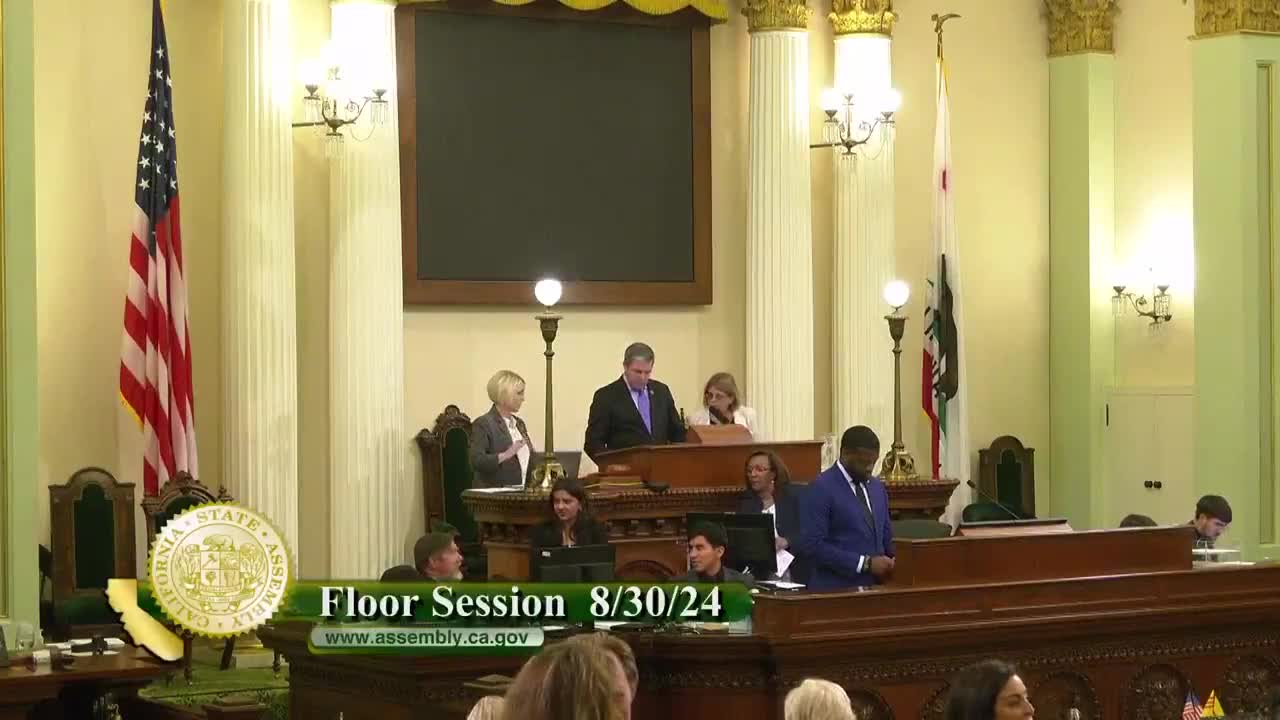 3MIN
Assembly Floor
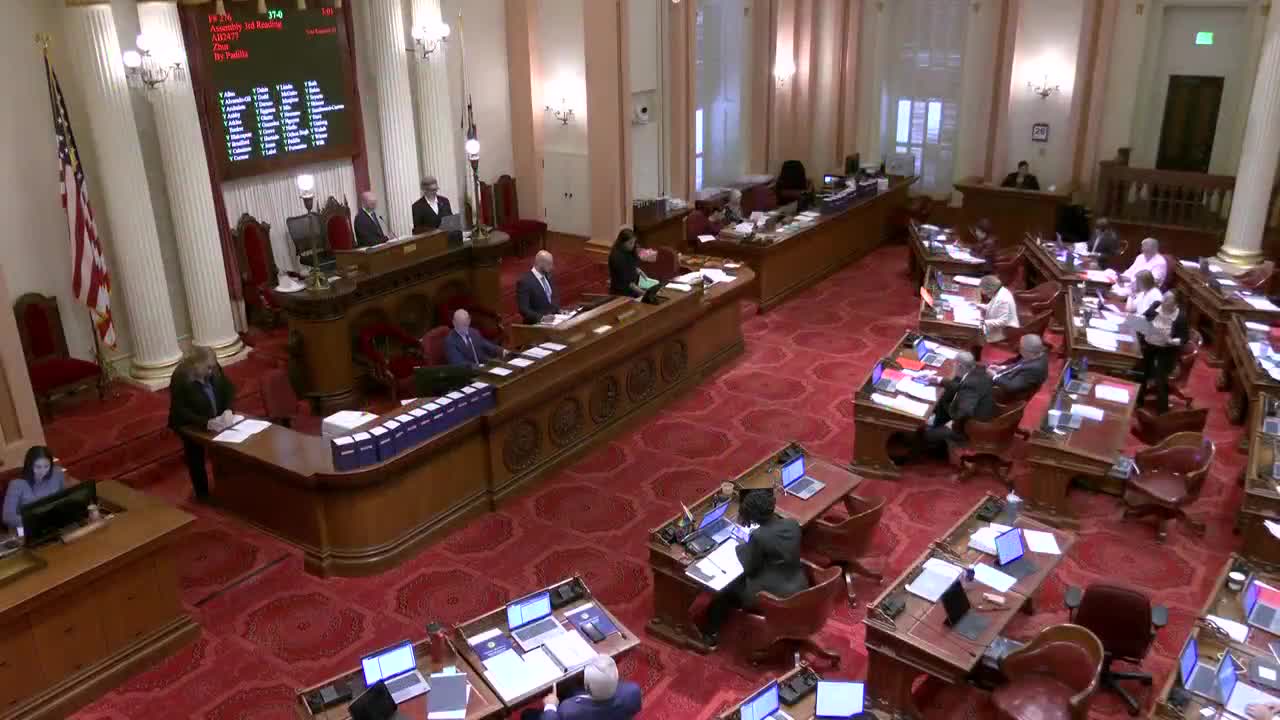 2MIN
Senate Floor
 4MIN
Senate Standing Committee on Public Safety
 3MIN
Assembly Floor
 6MIN
Assembly Standing Committee on Public Safety
Bill Author

Bill Co-Author(s):