AB 892: Kern County Hospital Authority.
- Session Year: 2023-2024
- House: Assembly
- Latest Version Date: 2024-09-27
Current Status:
Passed
(2024-09-27: Chaptered by Secretary of State - Chapter 676, Statutes of 2024.)
Introduced
In Committee
First Chamber
In Committee
Second Chamber
Enacted
What does this bill do?
The bill makes the Kern Medical Center Foundation subject to California’s public records law and requires both the Kern County Hospital Authority and the Foundation to keep accounting records that follow standard accounting rules (government accounting rules for the authority and financial/nonprofit rules for the foundation). It also requires an independent financial audit at least once a year of both entities and that the audit reports be posted on the authority’s website.
The summary is provided by generative AI which can make mistakes. For original language, please view the details in the table below.
Existing law, the Kern County Hospital Authority Act, establishes the Kern County Hospital Authority, which maintains and operates the Kern Medical Center and is governed by a board of governors that is appointed, both initially and continually, by the board of supervisors. Existing law requires the authority to provide management, administration, and other controls as needed to operate the medical center, and maintain its status as a designated public hospital. Existing law requires the authority to maintain financial and accounting records.
Existing law, the California Public Records Act, requires state and local agencies to make their records available for public inspection, unless an exemption from disclosure applies. Existing law requires the authority to comply with the act, except as specified.
This bill would subject the Kern Medical Center Foundation to the California Public Records Act in the same manner as the authority.
The bill would require the authority and the Kern Medical Center Foundation to maintain accounting records and to report accounting transactions in accordance with generally accepted accounting principles, as specified. The bill would require the authority, at least once every 12 months, to engage the services of a qualified accountant of accepted reputation to conduct a financial audit of the accounts and records of both the authority and the Kern Medical Center Foundation, as specified, to prepare a report of the audit, and to make copies of the reports available to the public on the authoritys internet website.
By creating new duties for the authority, the bill would impose a state-mandated local program.
The California Constitution requires the state to reimburse local agencies and school districts for certain costs mandated by the state. Statutory provisions establish procedures for making that reimbursement.
This bill would provide that, if the Commission on State Mandates determines that the bill contains costs mandated by the state, reimbursement for those costs shall be made pursuant to the statutory provisions noted above.
This bill would make legislative findings and declarations as to the necessity of a special statute for the County of Kern and Kern Medical Center Foundation.
Existing law, the Kern County Hospital Authority Act, establishes the Kern County Hospital Authority, which maintains and operates the Kern Medical Center and is governed by a board of governors that is appointed, both initially and continually, by the board of supervisors. Existing law requires the authority to provide management, administration, and other controls as needed to operate the medical center, and maintain its status as a designated public hospital. The Meyers-Milias-Brown Act contains various provisions that govern collective bargaining of local represented employees, and requires the governing body of a public agency to meet and confer in good faith regarding wages, hours, and other terms and conditions of employment with representatives of recognized employee organizations. Existing law, the Ralph M. Brown Act, requires each legislative body of a local agency to provide notice of the time and place for its regular meetings and also requires that all meetings of a legislative body be open and public, and that all persons be permitted to attend unless a closed session is authorized. The Existing law requires the authority to maintain financial and accounting records.
Existing law, the California Public Records Act Act, requires state and local agencies to make their records available for public inspection, unless an exemption from disclosure applies. Existing law requires the authority to comply with the act, except as specified.
This bill would require that all entities controlled, owned, administered, or funded by the authority be subject to the Meyer-Milias-Brown Act, the Ralph M. Brown Act, and the California Public Records Act. subject the Kern Medical Center Foundation to the California Public Records Act in the same manner as the authority.
The bill would require the authority and the Kern Medical Center Foundation to maintain accounting records and to report accounting transactions in accordance with generally accepted accounting principles, as specified. The bill would require the authority, at least once every 12 months, to engage the services of a qualified accountant of accepted reputation to conduct a financial audit of the accounts and records of both the authority and the Kern Medical Center Foundation, as specified, to prepare a report of the audit, and to make copies of the reports available to the public on the authoritys internet website.
By imposing new duties on creating new duties for the authority, the bill would impose a state-mandated local program.
The California Constitution requires the state to reimburse local agencies and school districts for certain costs mandated by the state. Statutory provisions establish procedures for making that reimbursement.
This bill would provide that, if the Commission on State Mandates determines that the bill contains costs mandated by the state, reimbursement for those costs shall be made pursuant to the statutory provisions noted above.
This bill would make legislative findings and declarations as to the necessity of a special statute for the County of Kern and Kern Medical Center Foundation.
Existing law, the Kern County Hospital Authority Act, establishes the Kern County Hospital Authority, which maintains and operates the Kern Medical Center and is governed by a board of governors that is appointed, both initially and continually, by the board of supervisors. Existing law requires the authority to provide management, administration, and other controls as needed to operate the medical center, and maintain its status as a designated public hospital. The Meyers-Milias-Brown Act contains various provisions that govern collective bargaining of local represented employees, and requires the governing body of a public agency to meet and confer in good faith regarding wages, hours, and other terms and conditions of employment with representatives of recognized employee organizations. Existing law, the Ralph M. Brown Act, requires each legislative body of a local agency to provide notice of the time and place for its regular meetings and also requires that all meetings of a legislative body be open and public, and that all persons be permitted to attend unless a closed session is authorized. The California Public Records Act requires state and local agencies to make their records available for public inspection, unless an exemption from disclosure applies.
This bill would require that all entities controlled, owned, administered, or funded by the authority be subject to the Meyer-Milias-Brown Act, the Ralph M. Brown Act, and the California Public Records Act.
By imposing new duties on the authority, the bill would impose a state-mandated local program.
The California Constitution requires the state to reimburse local agencies and school districts for certain costs mandated by the state. Statutory provisions establish procedures for making that reimbursement.
This bill would provide that, if the Commission on State Mandates determines that the bill contains costs mandated by the state, reimbursement for those costs shall be made pursuant to the statutory provisions noted above.
In addition to the requirements of any other applicable law, the Kern Medical Center Foundation shall be subject to the California Public Records Act (Division 10 (commencing with Section 7920.000) of Title 1 of the Government Code) in the same manner as the authority.
SEC. 2.Section 101855.4 is added to the Health and Safety Code, to read:101855.4.(a)The authority shall maintain accounting records and shall report accounting transactions in accordance with generally accepted accounting principles adopted by the Governmental Accounting Standards Board of the Financial Accounting Foundation.
(b)The Kern Medical Center Foundation shall maintain accounting records and shall report accounting transactions in accordance with generally accepted accounting principles published and maintained by the Financial Accounting Standards Board.
(c)At least once every 12 months, the authority shall engage the services of a qualified accountant of accepted reputation to conduct a financial audit of the accounts and records of both the authority and the Kern Medical Center Foundation, and the authority shall prepare a report of the audit. Any financial audit conducted pursuant to this subdivision shall conform to generally accepted government auditing standards and shall follow principles adopted by the Governmental Accounting Standards Board of the Financial Accounting Foundation. The authority shall make copies of the audit reports available to the public on the authoritys internet website.
SEC. 3.If the Commission on State Mandates determines that this act contains costs mandated by the state, reimbursement to local agencies and school districts for those costs shall be made pursuant to Part 7 (commencing with Section 17500) of Division 4 of Title 2 of the Government Code.
SEC. 4.The Legislature finds and declares that a special statute is necessary and that a general statute cannot be made applicable within the meaning of Section 16 of Article IV of the California Constitution because of the unique operating structure of the authority authorized by state law.
In addition to the requirements of any other applicable law, the Kern Medical Center Foundation shall be subject to the California Public Records Act (Division 10 (commencing with Section 7920.000) of Title 1 of the Government Code) in the same manner as the authority.
SEC. 2.Section 101855.4 is added to the Health and Safety Code, to read:101855.4.(a)The authority shall maintain accounting records and shall report accounting transactions in accordance with generally accepted accounting principles adopted by the Governmental Accounting Standards Board of the Financial Accounting Foundation.
(b)The Kern Medical Center Foundation shall maintain accounting records and shall report accounting transactions in accordance with generally accepted accounting principles published and maintained by the Financial Accounting Standards Board.
(c)At least once every 12 months, the authority shall engage the services of a qualified accountant of accepted reputation to conduct a financial audit of the accounts and records of both the authority and the Kern Medical Center Foundation, and the authority shall prepare a report of the audit. Any financial audit conducted pursuant to this subdivision shall conform to generally accepted government auditing standards and shall follow principles adopted by the Governmental Accounting Standards Board of the Financial Accounting Foundation. The authority shall make copies of the audit reports available to the public on the authoritys internet website.
SEC. 2.SEC. 3.If the Commission on State Mandates determines that this act contains costs mandated by the state, reimbursement to local agencies and school districts for those costs shall be made pursuant to Part 7 (commencing with Section 17500) of Division 4 of Title 2 of the Government Code.
SEC. 4.The Legislature finds and declares that a special statute is necessary and that a general statute cannot be made applicable within the meaning of Section 16 of Article IV of the California Constitution because of the unique operating structure of the authority authorized by state law.
All entities controlled, owned, administered, or funded by the authority shall be subject to the provisions of the Meyers-Milias-Brown Act (Chapter 10 (commencing with Section 3500) of Division 4 of Title 1 of the Government Code), the Ralph M. Brown Act (Chapter 9 (commencing with Section 54950) of Part 1 of Division 2 of Title 5 of the Government Code), and the California Public Records Act (Division 10 (commencing with Section 7920.000) of Title 1 of the Government Code).
SEC. 2.If the Commission on State Mandates determines that this act contains costs mandated by the state, reimbursement to local agencies and school districts for those costs shall be made pursuant to Part 7 (commencing with Section 17500) of Division 4 of Title 2 of the Government Code.
|
Date
|
Status
|
|---|---|
| Sep 27, 2024 | Chaptered by Secretary of State - Chapter 676, Statutes of 2024. |
| Sep 27, 2024 | Approved by the Governor. |
| Sep 12, 2024 | Enrolled and presented to the Governor at 4 p.m. |
| Aug 31, 2024 | Senate amendments concurred in. To Engrossing and Enrolling. (Ayes 62. Noes 0.). |
| Aug 30, 2024 | Joint Rule 62(a) suspended. |
| Aug 30, 2024 | From committee: That the Senate amendments be concurred in. (Ayes 8. Noes 0.) (August 30). |
| Aug 29, 2024 | Re-referred to Com. on L. GOV. pursuant to Assembly Rule 77.2. |
| Aug 28, 2024 | In Assembly. Concurrence in Senate amendments pending. May be considered on or after August 30 pursuant to Assembly Rule 77. |
| Aug 28, 2024 | Read third time. Passed. Ordered to the Assembly. (Ayes 30. Noes 8.). |
| Aug 27, 2024 | From committee: That the measure be returned to Senate Floor for consideration. (Ayes 4. Noes 1.) (August 27) |
| Aug 26, 2024 | Read second time. Ordered to third reading. |
| Aug 26, 2024 | Re-referred to Com. on RLS pursuant to Senate Rule 29.10(b). |
| Aug 26, 2024 | From committee: Be re-referred to Com. on L. GOV. pursuant to Senate Rule 29.10(b). (Ayes 5. Noes 0.) Re-referred to Com. on L. GOV. |
| Aug 23, 2024 | Read third time and amended. Ordered to second reading. |
| Aug 19, 2024 | Read second time. Ordered to third reading. |
| Aug 15, 2024 | From inactive file. |
| Aug 15, 2024 | Ordered to second reading. |
| Sep 7, 2023 | Ordered to inactive file at the request of Senator Caballero. |
| Sep 5, 2023 | Read second time. Ordered to third reading. |
| Sep 1, 2023 | From committee: Do pass. (Ayes 5. Noes 2.) (September 1). |
| Aug 14, 2023 | In committee: Referred to APPR suspense file. |
| Jul 12, 2023 | From committee: Do pass and re-refer to Com. on APPR. (Ayes 5. Noes 0.) (July 12). Re-referred to Com. on APPR. |
| Jun 28, 2023 | From committee: Do pass and re-refer to Com. on L., P.E. & R. (Ayes 6. Noes 0.) (June 28). Re-referred to Com. on L., P.E. & R. |
| Jun 7, 2023 | Referred to Coms. on GOV. & F. and L., P.E. & R. |
| May 31, 2023 | In Senate. Read first time. To Com. on RLS. for assignment. |
| May 30, 2023 | Read third time. Passed. Ordered to the Senate. (Ayes 65. Noes 4. Page 1881.) |
| May 18, 2023 | Read second time. Ordered to third reading. |
| May 18, 2023 | From committee: Do pass. (Ayes 12. Noes 1.) (May 18). |
| May 10, 2023 | In committee: Set, first hearing. Referred to APPR. suspense file. |
| Apr 20, 2023 | From committee: Do pass and re-refer to Com. on APPR. (Ayes 7. Noes 0.) (April 19). Re-referred to Com. on APPR. |
| Mar 22, 2023 | From committee: Do pass and re-refer to Com. on L. GOV. (Ayes 6. Noes 1.) (March 22). Re-referred to Com. on L. GOV. |
| Mar 2, 2023 | Referred to Coms. on P.E. & R. and L. GOV. |
| Feb 15, 2023 | From printer. May be heard in committee March 17. |
| Feb 14, 2023 | Read first time. To print. |
|
Date
|
Description
|
Location
|
Votes
|
|
|---|---|---|---|---|
| Aug 31, 2024 | AB 892 Bains Concurrence in Senate Amendments | Assembly Floor |
Passed |
|
| Aug 30, 2024 | With recommendation: That Senate amendments be concurred in. | Assembly Standing Committee on Local Government |
Passed |
|
| Aug 28, 2024 | Assembly 3rd Reading AB892 Bains By Cortese | Senate Floor |
Passed |
|
| Aug 27, 2024 | That the measure be returned to Senate Floor for consideration. Ordered to third reading. | Senate Standing Committee on Local Government |
Passed |
|
| Sep 1, 2023 | Do pass | Senate Standing Committee on Appropriations |
Passed |
|
| Aug 14, 2023 | Placed on suspense file | Senate Standing Committee on Appropriations |
Passed |
|
| Jul 12, 2023 | Do pass, but first be re-referred to the Committee on [Appropriations] | Senate Standing Committee on Labor, Public Employment and Retirement |
Passed |
|
| Jun 28, 2023 | Do pass, but first be re-referred to the Committee on [Labor, Public Employment and Retirement ] | Senate Standing Committee on Governance and Finance |
Passed |
|
| May 30, 2023 | AB 892 Bains Assembly Third Reading | Assembly Floor |
Passed |
|
| May 18, 2023 | Do pass. | Assembly Standing Committee on Appropriations |
Passed |
|
| Apr 19, 2023 | Do pass and be re-referred to the Committee on [Appropriations] | Assembly Standing Committee on Local Government |
Passed |
|
| Mar 22, 2023 | Do pass and be re-referred to the Committee on [Local Government] | Assembly Standing Committee on Public Employment and Retirement |
Passed |
This list shows positions taken on this bill by organizations on the date displayed, which is linked to the original source.
Positions by individuals are not included.
|
Organization
|
Position
|
Date
|
|---|---|---|
| Kern Medical Center | * Support | Jun 28, 2023 |
| SEIU California | ** Support | |
| Up Next Fighting | * Support | Jul 12, 2023 |
Date of Hearing: August 30, 2024
ASSEMBLY COMMITTEE ON LOCAL GOVERNMENT
Juan Carrillo, Chair
ABPCA Bill Id:AB 892 (
Author:Bains) – As Amended Ver:August 23, 2024
SUBJECT: Kern County Hospital Authority
SUMMARY: Subjects the Kern County Hospital Authority (KCHA) and the Kern Medical Center Foundation (Foundation) to certain record keeping requirements, imposes an annual audit requirement, and requires the Foundation to comply with the California Public Records Act (CPRA). Specifically, this bill:
- Requires the Foundation to be subject to the CPRA in the same manner as KCHA.
- Requires KCHA to maintain accounting records and report accounting transactions in accordance with generally accepted accounting principles adopted by the Governmental Accounting Standards Board of the Financial Accounting Foundation.
- Requires the Foundation to maintain accounting records and report accounting transactions in accordance with generally accepted accounting principles published and maintained by the Financial Accounting Standards Board.
- Requires, at least once every 12 months, KCHA to engage the services of a qualified accountant of accepted reputation to conduct a financial audit of the accounts and records of both KCHA and the Foundation, and requires KCHA to prepare a report of the audit.
- Requires any financial audit conducted pursuant to this bill to conform to generally accepted government auditing standards and follow principles adopted by the Governmental Accounting Standards Board of the Financial Accounting Foundation.
- Requires KCHA to make copies of the audit reports required by this bill available to the public on KCHA’s internet website.
- Provides that, if the Commission on State Mandates determines that this bill contains costs mandated by the state, reimbursement to local agencies and school districts for those costs shall be made pursuant to current law governing state mandated local costs.
- Finds and declares that a special statute is necessary and that a general statute cannot be made applicable within the meaning of Section 16 of Article IV of the California Constitution because of the unique operating structure of KCHA authorized by state law.
EXISTING LAW:
- Requires, under the CPRA, all records produced by or submitted to a public agency to be made available for public inspection. [Government Code (GOV) §§ 7920.000 - 7931.000]
- Applies the CPRA to all corporations and non-profit entities that are created by a state or local public agency, but does not apply it to independent corporations or non-profit entities. (GOV §§ 7920.000 - 7931.000)
- Authorizes, pursuant to the Kern County Hospital Authority Act (Act), the Board of Supervisors of the County of Kern (Kern County) to establish KCHA, and specifies the authority’s governance, powers, and procedures [Health and Safety Code (HSC) §§ 101852 – 101856].
- Provides that the purpose of KCHA shall be to do all of the following:
- Provide management, administration, and other controls consistent with the Act as needed to operate the Kern Medical Center (KMC) and maintain its status as a designated public hospital, as specified, and for the operation of additional programs, clinics and other facilities, care organizations, health care service and physician practice plans, and delivery systems that may be affiliated or consolidated with the medical center, to ensure the viability of the health care safety net in Kern County in a manner consistent with the county’s requirements under Section 17000 of the Welfare and Institutions Code.
- Provide management, administration, and other controls consistent with the Act to negotiate and enter into contracts to provide or arrange, or provide directly, on a fee-for-service, capitated, or other basis, health care services to individuals including, but not limited to, those covered under Subchapters XVIII (commencing with Section 1395), XIX (commencing with Section 1396), and XXI (commencing with Section 1397aa) of Chapter 7 of Title 42 of the United States Code, those entitled to coverage under private group coverage, private individual coverage, including without limitation, coverage through Covered California, other publicly supported programs, those employed by public agencies or private businesses, and uninsured or indigent individuals. (HSC § 101853).
- Provides, subject to the requirements of the Act, that the Authority shall have, and be charged with, authority for the maintenance, operation, management, control, ownership, or lease of the medical center and other health-related resources (HSC § 101853).
- Includes, among the powers and duties of KCHA, the authority to establish nonprofit, for-profit, or other entities necessary to carry out the duties of the authority (HSC § 101855).
- Requires KCHA to comply with the Meyers-Milias-Brown Act (MMBA), the CPRA, and the Ralph M. Brown Act (Brown Act), as specified (HSC § 101855).
FISCAL EFFECT: Unknown
COMMENTS:
- Author’s Statement. According to the author, “The San Joaquin Valley is already in the midst of a healthcare workforce shortage with an insufficient number of doctors, nurses, and allied health providers to care for the Valley’s growing population. As our area’s only Level II Trauma Center, the stability and success of Kern Medical is critical to the overall health care of the entire region. AB 892 requires that the Kern County Hospital Authority and its Foundation to operate in compliance with the accounting and recordkeeping best practices established by the Government Accounting Standards Board and Financial Accounting Standards Board. The bill also ensures transparency and accountability by requiring compliance with the California Public Records Act as well as the performance of an annual audit.”
- Bill Summary. This bill imposes a number of requirements on KCHA and the Foundation, as follows:
- Requirements on KCHA. This bill Requires KCHA to maintain accounting records and report accounting transactions in accordance with generally accepted accounting principles adopted by the Governmental Accounting Standards Board of the Financial Accounting Foundation.
At least once every 12 months, KCHA must hire an accountant to conduct a financial audit of the accounts and records of both KCHA and the Foundation. KCHA must prepare a report of each audit and make them available to the public on its website. Audits must conform to generally accepted government auditing standards and follow principles adopted by the Governmental Accounting Standards Board of the Financial Accounting Foundation.
- Requirements on the Foundation. This bill requires the Foundation to maintain accounting records and report accounting transactions in accordance with generally accepted accounting principles published and maintained by the Financial Accounting Standards Board. This bill also requires the Foundation to be subject to the CPRA.
This bill is sponsored by SEIU California.
- Background. The CPRA was enacted in 1968, expressly declaring “access to information concerning the conduct of the people's business is a fundamental and necessary right of every person in this state.” Generally speaking, unless a record is statutorily exempted from the CPRA, all records produced by or submitted to a public agency must be made available for public inspection. Exemptions to the CPRA must be narrowly construed and the public agency bears the burden of proving an exemption applies.
The CPRA applies to all state and local agencies, as well as a board, commission, committee, or other multimember body that governs a private corporation, limited liability company (LLC), or other entity that either:
- Is created by the elected legislative body to exercise authority delegated by the elected governing body to a private corporation, LLC, or other entity; or
- Receives funds from a local agency and includes a member of the legislative body that created the private corporation, LLC, or other entity.
A state or local agency cannot avoid the disclosure requirements mandated by the CPRA by creating a private corporation, LLC, or other entity.
- Kern County Hospital Authority. AB 2546 (Salas), Chapter 613, Statues of 2014, authorized the Kern County Board of Supervisors to establish KCHA to operate KMC and maintain its status as a designated public hospital. The authority was also authorized for the operation of additional programs, clinics and other facilities, care organizations, health care service and physician practice plans, and delivery systems that may be affiliated or consolidated with KMC, to ensure the viability of the health care safety net in Kern County. Among its many provisions, AB 2546 required KCHA to comply with the CPRA, as well as the Brown Act and the MMBA, which provides for collective bargaining for California's municipal, county, and local special district employers and employees.
AB 1350 (Salas), Chapter 790, Statutes of 2015, made a number of changes to the Act, primarily addressing employee relations and benefits, as well as other technical, clarifying, and conforming changes. According to the Authority’s website, “In October 2015, the Kern County Board of Supervisors approved its related Ordinance and in 2016, Kern Medical successfully transitioned to a Hospital Authority. A Hospital Authority is a public entity whose sole purpose is to operate a hospital, clinics and provide health care services to the entire community. It is run by an independent Board of Governors and continues to be a designated public hospital.”
- Kern Medical Center Foundation. Created in 2008, the Foundation is a non-profit corporation formed under section 501(c)(3) of the Internal Revenue Code. It raises money to support the KMC for – according to its website – “patient services, facilities, equipment and for research efforts.” Because the Foundation is a 501(c)(3), contributions made to it are tax deductible under state and federal law.
Tax-exempt organizations are required to file Internal Revenue Service (IRS) Form 990 each year and the IRS requires all U.S. tax-exempt nonprofits to make their three most recent Form 990s – and all related supporting documents – public. According to the Form 990 the Foundation filed in November 2023, it received just over $1.664 million in grants and contributions in 2022, had $0 in liabilities, and had total net assets of just over $4 million. The Foundation employs a staff of approximately five people.
In addition to being able to receive contributions from private individuals and groups, the Foundation can also receive money from the state and federal governments to support the KMC. According to its most recent Form 990 filing, the Foundation has received many grants and awards, including:
- $9.2 million from the California Health Facilities Authority for Kern Medical Pediatrics inpatient and outpatient renovations.
- $2.9 million from the California Department of Health Care Access and Information to increase efforts, and expand health career opportunities for Kern County students.
- $2.2 million in Song Brown Healthcare Workforce Training funding to support primary care residency programs.
- $780,000 from CalMedForce to support Internal Medicine, Emergency Medicine, and Obstetrics and Gynecology Residency Programs.
- $600,000 from the Federal Communications Commission to buy information technology equipment to assist physicians with remote visits and remote work amid the challenges posed by COVID-19.
The Foundation is a completely separate entity from the KCHA. As a non-profit entity, it not only has to file IRS Form 990, which is a public record, it also has to file annual registration forms with the California Attorney General’s Office, a Statement of Information with the California Secretary of State’s Office, and additional forms with the California Franchise Tax Board.
- Policy Considerations. The Committee may wish to consider the following:
- Subjecting a Non-profit Organization to the CPRA. In support of the provision of this bill that requires the Foundation – a private, non-profit organization – to be subject to the CPRA (which generally applies to governmental entities), the sponsors provided the following references:
- 2022 Court Case. In a recent court case, Community Action Agency of Butte County v. Superior Court of Butte County, 79 Cal.App.5th 221 (2022), the court ruled that a non-profit entity could only be subject to the CPRA under “exceptional circumstances,” such as when, as a practical matter, the nonprofit operates as a local public entity. The court adopted a four-factor test to determine whether a private entity should be treated as the functional equivalent of a governmental agency and thus be subject to the CPRA and other requirements, such as the Brown Act. Those four factors are:
- Whether the entity performs a government function;
- The extent to which the government funds the entity’s activities;
- The extent of government involvement in the entity’s activities; and
- Whether the entity was created by the government.
- 2022 Court Case. In a recent court case, Community Action Agency of Butte County v. Superior Court of Butte County, 79 Cal.App.5th 221 (2022), the court ruled that a non-profit entity could only be subject to the CPRA under “exceptional circumstances,” such as when, as a practical matter, the nonprofit operates as a local public entity. The court adopted a four-factor test to determine whether a private entity should be treated as the functional equivalent of a governmental agency and thus be subject to the CPRA and other requirements, such as the Brown Act. Those four factors are:
- Subjecting a Non-profit Organization to the CPRA. In support of the provision of this bill that requires the Foundation – a private, non-profit organization – to be subject to the CPRA (which generally applies to governmental entities), the sponsors provided the following references:
It is not clear that the Foundation would be subject to the CPRA under this test. This bill circumvents the court’s test by using statute to apply the CPRA to the Foundation.
- 2002 Attorney General Opinion. In 2002, Attorney General Bill Lockyer was asked to render an opinion on whether the Brown Act and the CPRA applied to the meetings of the governing board of a private, nonprofit corporation formed to provide programming for a cable television channel pursuant to the cable television’s franchise agreement with a city.
In Opinion No. 01-401 issued on March 14, 2002, the Attorney General wrote that because the non-profit corporation was formed and received authority delegated by a city council – a local agency under the Brown Act and the CPRA – the law subjected the non-profit corporation to the Brown Act and the CPRA. Furthermore, the opinion noted the non-profit corporation itself was actually a legislative body under the Brown Act and the CPRA, because another local agency appointed three of the nonprofit corporation’s five directors and approved the other two. None of these circumstances exist in the relationship between the KCHA and the Foundation, which is why the Foundation cannot be deemed to be subject to the CPRA or the Brown Act under current law.
The Committee may wish to consider the precedent of subjecting a specific private, non-profit entity to the CPRA directly via statute and the potential implications of doing so, both for this specific non-profit organization and more generally as a policy approach.
- Subjecting a Non-Profit Entity to an Audit by a Local Governmental Organization. This bill requires KCHA to audit the Foundation at least once every 12 months, and post the audit reports on the KCHA website. As noted above, the Foundation is subject to numerous reporting requirements to ensure it manages and spends taxpayer funds in accordance with the law. The Committee may wish to consider whether this requirement is redundant or necessary, and the potential ramifications of this policy.
- Previous Legislation. AB 722 (Bonta), Chapter 269, Statutes of 2023, extended from January 1, 2024, to January 1, 2035, limitations on the Alameda Health System’s ability to contract with physicians and surgeons not subject to a collective bargaining agreement.
AB 1350 (Salas), Chapter 790, Statutes of 2015, made a number of changes to the Act, primarily addressing employee relations and benefits, as well as other technical, clarifying, and conforming changes.
AB 2546 (Salas), Chapter 613, Statues of 2014, authorized the Kern County Board of Supervisors to establish the Authority to operate the medical center and maintain its status as a designated public hospital.
AB 276 (Alejo), Chapter 686, Statutes of 2012, authorized the Monterey County Board of Supervisors to establish the Central Coast Hospital Authority.
AB 2374 (Bates), Chapter 816, Statutes of 1996, authorized the County of Alameda to establish a hospital authority to manage the respective county hospitals and county programs of the Alameda County Medical Center.
- Arguments in Support. SEIU California, sponsor of this bill, writes, “This bill provides important reforms to the Kern County Hospital Authority, guaranteeing a strong public hospital and healthcare delivery systems that meet the needs of its workforce and the communities it serves. AB 892 will increase public accountability and financial transparency at the Kern County Hospital Authority (KCHA), a public, local body established to guarantee continued access to quality care at Kern Medical Center and its network of outpatient clinics and services. Specifically, this bill will guarantee that the provisions of the California Public Records Act (CPRA) are applied to records of not only the KCHA, but the Kern Medical Center Foundation (Foundation) too. Importantly, this bill will also guarantee that:
- KCHA and the Foundation maintain financial records that are in keeping with account standards under Governmental Accounting Standards Board (GASB) and Financial Accounting Standards Board (FASB), respectively
- KCHA completes an annual audit that is inclusive of its Foundation, consistent with GASB
- KCHA make annual audits publicly accessible
“For well over a century, Kern County’s diverse communities have been served by a public hospital and health system – Kern Medical Center (KMC). Kern County currently ranks 53rd of 58 California counties on health outcomes and 57th on health factors, like access to care. This legislation not only affirms CPRA’s applicability to the Foundation but also increases the overall financial transparency at the publicly funded KCHA and its Foundation, which is critical to improving care for its patients and community.”
- Arguments in Opposition. None on file.
REGISTERED SUPPORT / OPPOSITION:
Support
SEIU California [SPONSOR]
Opposition
None on file
Analysis Prepared by: Angela Mapp / L. GOV. / (916) 319-3958
CONCURRENCE IN SENATE AMENDMENTS
CSA2 Bill Id:AB 892
Author:(Bains)
As Amended Ver:August 23, 2024
Majority vote
SUMMARY
Original Committee of Reference: Local Government Committee
Subjects the Kern County Hospital Authority (KCHA) and the Kern Medical Center Foundation (Foundation) to certain record keeping requirements, imposes an annual audit requirement, and requires the Foundation to comply with the California Public Records Act (CPRA).
Senate Amendments
Current Committee Recommendation: Concur
- Delete the version of the bill approved by the Assembly.
- Require the Foundation to be subject to the CPRA in the same manner as KCHA.
- Require KCHA to maintain accounting records and report accounting transactions in accordance with generally accepted accounting principles adopted by the Governmental Accounting Standards Board of the Financial Accounting Foundation.
- Require the Foundation to maintain accounting records and report accounting transactions in accordance with generally accepted accounting principles published and maintained by the Financial Accounting Standards Board.
- Require, at least once every 12 months, KCHA to engage the services of a qualified accountant of accepted reputation to conduct a financial audit of the accounts and records of both KCHA and the Foundation, and require KCHA to prepare a report of the audit.
- Require any financial audit conducted pursuant to this bill to conform to generally accepted government auditing standards and follow principles adopted by the Governmental Accounting Standards Board of the Financial Accounting Foundation.
- Require KCHA to make copies of the audit reports required by this bill available to the public on KCHA's internet website.
COMMENTS
The CPRA was enacted in 1968, expressly declaring "access to information concerning the conduct of the people's business is a fundamental and necessary right of every person in this state." Generally speaking, unless a record is statutorily exempted from the CPRA, all records produced by or submitted to a public agency must be made available for public inspection. Exemptions to the CPRA must be narrowly construed and the public agency bears the burden of proving an exemption applies.
The CPRA applies to all state and local agencies, as well as a board, commission, committee, or other multimember body that governs a private corporation, limited liability company (LLC), or other entity that either:
- Is created by the elected legislative body to exercise authority delegated by the elected governing body to a private corporation, LLC, or other entity; or
- Receives funds from a local agency and includes a member of the legislative body that created the private corporation, LLC, or other entity.
In other words, a state or local agency cannot avoid the disclosure requirements mandated by the CPRA by creating a private corporation, LLC, or other entity.
AB 2546 (Salas, 2014) authorized the Kern County Board of Supervisors to establish KCHA to manage, administer, and control the Kern Medical Center (KMC), as well as additional programs, facilities, care organizations, physical practice plans, and delivery systems. The Board of Supervisors passed an ordinance establishing KCHA in October 2015 and, in 2016, KCHA took over management of KMC. Under AB 2546, KCHA is required to comply with the CPRA, as well as California's open meetings law (known at the Brown Act), and the Meyers-Milias-Brown Act (MMBA), which provides for collective bargaining for California's municipal, county, and local special district employers and employees.
The Foundation is a non-profit corporation formed under section 501(c)(3) of the Internal Revenue Code and was created in 2008. It raises money to support the KMC for – according to its website – "patient services, facilities, equipment and for research efforts." Because the Foundation is a 501(c)(3), contributions made to it are tax deductible under state and federal law.
Tax-exempt organizations are required to file Internal Revenue Service (IRS) Form 990 each year and the IRS requires all U.S. tax-exempt nonprofits to make their three most recent Form 990s – and all related supporting documents – public. According to the Form 990 the Foundation filed in November 2023, it received just over $1.664 million in grants and contributions in 2022, had $0 in liabilities, and had total net assets of just over $4 million. The Foundation employs a staff of approximately five people.
In addition to being able to receive contributions from private individuals and groups, the Foundation can also receive money from the state and federal governments to support the KMC.
According to its most recent Form 990 filing, the Foundation has received many grants and awards, including:
- $9.2 million from the California Health Facilities Authority for Kern Medical Pediatrics inpatient and outpatient renovations;
- $2.9 million from the California Department of Health Care Access and Information to increase efforts, and expand health career opportunities for Kern County students;
- $2.2 million in Song Brown Healthcare Workforce Training funding to support primary care residency programs;
- $780,000 from CalMedForce to support Internal Medicine, Emergency Medicine, and Obstetrics and Gynecology Residency Programs; and
- $600,000 from the Federal Communications Commission to buy information technology equipment to assist physicians with remote visits and remote work amid the challenges posed by COVID-19.
The Foundation is a completely separate entity from the KCHA. As a non-profit entity, it not only has to file IRS Form 990, which is a public record, it also has to file annual registration forms with the California Attorney General's Office, a Statement of Information with the California Secretary of State's Office, and additional forms with the California Franchise Tax Board.
According to the Author
The San Joaquin Valley is already in the midst of a healthcare workforce shortage with an insufficient number of doctors, nurses, and allied health providers to care for the Valley's growing population. As our area's only Level II Trauma Center, the stability and success of Kern Medical is critical to the overall health care of the entire region. AB 892 requires that the Kern County Hospital Authority and its Foundation operate in compliance with the accounting and recordkeeping best practices established by the Government Accounting Standards Board and Financial Accounting Standards Board. The bill also ensures transparency and accountability by requiring compliance with the California Public Records Act as well as the performance of an annual audit.
Arguments in Support
SEIU California, sponsor of this bill, writes, "This bill provides important reforms to the Kern County Hospital Authority, guaranteeing a strong public hospital and healthcare delivery systems that meet the needs of its workforce and the communities it serves. AB 892 will increase public accountability and financial transparency at the Kern County Hospital Authority (KCHA), a public, local body established to guarantee continued access to quality care at Kern Medical Center and its network of outpatient clinics and services. Specifically, this bill will guarantee that the provisions of the California Public Records Act (CPRA) are applied to records of not only the KCHA, but the Kern Medical Center Foundation (Foundation) too. Importantly, this bill will also guarantee that:
- KCHA and the Foundation maintain financial records that are in keeping with account standards under Governmental Accounting Standards Board (GASB) and Financial Accounting Standards Board (FASB), respectively
- KCHA completes an annual audit that is inclusive of its Foundation, consistent with GASB
- KCHA make annual audits publicly accessible
"For well over a century, Kern County's diverse communities have been served by a public hospital and health system – Kern Medical Center (KMC). Kern County currently ranks 53rd of 58 California counties on health outcomes and 57th on health factors, like access to care.1 This legislation not only affirms CPRA's applicability to the Foundation but also increases the overall financial transparency at the publicly funded KCHA and its Foundation, which is critical to improving care for its patients and community."
Arguments in Opposition
None on file
FISCAL COMMENTS
Unknown
VOTES
ASM PUBLIC EMPLOYMENT AND RETIREMENT: 6-1-0
YES: McKinnor, Lackey, Addis, Haney, Stephanie Nguyen, Schiavo
NO: Alanis
ASM LOCAL GOVERNMENT: 6-0-1
YES: Aguiar-Curry, Pacheco, Ramos, Robert Rivas, Waldron, Wilson
ABS, ABST OR NV: Dixon
ASM APPROPRIATIONS: 12-1-3
YES: Holden, Bryan, Calderon, Wendy Carrillo, Mike Fong, Hart, Lowenthal, Papan, Pellerin, Sanchez, Weber, Ortega
NO: Megan Dahle
ABS, ABST OR NV: Dixon, Mathis, Robert Rivas
ASSEMBLY FLOOR: 65-4-11
YES: Addis, Aguiar-Curry, Alvarez, Arambula, Bains, Bauer-Kahan, Bennett, Berman, Boerner, Bonta, Bryan, Calderon, Juan Carrillo, Wendy Carrillo, Cervantes, Connolly, Mike Fong, Friedman, Gabriel, Garcia, Gipson, Grayson, Haney, Hart, Holden, Irwin, Jackson, Jones-Sawyer, Kalra, Lackey, Lee, Low, Lowenthal, Maienschein, McCarty, McKinnor, Muratsuchi, Stephanie Nguyen, Ortega, Pacheco, Papan, Pellerin, Petrie-Norris, Quirk-Silva, Ramos, Reyes, Luz Rivas, Robert Rivas, Rodriguez, Blanca Rubio, Sanchez, Santiago, Schiavo, Soria, Ting, Valencia, Villapudua, Waldron, Ward, Weber, Wicks, Wilson, Wood, Zbur, Rendon
NO: Megan Dahle, Essayli, Vince Fong, Gallagher
ABS, ABST OR NV: Alanis, Chen, Davies, Dixon, Flora, Hoover, Mathis, Jim Patterson, Joe Patterson, Ta, Wallis
SENATE FLOOR: 31-8-1
YES: Allen, Archuleta, Ashby, Atkins, Becker, Blakespear, Bradford, Caballero, Cortese, Dodd, Durazo, Eggman, Glazer, Gonzalez, Hurtado, Laird, Limón, McGuire, Menjivar, Min, Newman, Padilla, Portantino, Roth, Rubio, Skinner, Smallwood-Cuevas, Stern, Umberg, Wahab, Wiener
NO: Dahle, Grove, Jones, Nguyen, Niello, Ochoa Bogh, Seyarto, Wilk
ABS, ABST OR NV: Alvarado-Gil
ASM LOCAL GOVERNMENT: 8-0-1
YES: Juan Carrillo, Waldron, Haney, Kalra, Pacheco, Ramos, Ward, Wilson
ABS, ABST OR NV: Essayli
UPDATED
VERSION: August 23, 2024
CONSULTANT: Angela Mapp / L. GOV. / (916) 319-3958 FN: 0005048
CONCURRENCE IN SENATE AMENDMENTS
CSA1 Bill Id:AB 892
Author:(Bains)
As Amended Ver:August 23, 2024
Majority vote
SUMMARY
Subjects the Kern County Hospital Authority (KCHA) and the Kern Medical Center Foundation (Foundation) to certain record keeping requirements, imposes an annual audit requirement, and requires the Foundation to comply with the California Public Records Act (CPRA).
Senate Amendments
- Delete the version of the bill approved by the Assembly.
- Require the Foundation to be subject to the CPRA in the same manner as KCHA.
- Require KCHA to maintain accounting records and report accounting transactions in accordance with generally accepted accounting principles adopted by the Governmental Accounting Standards Board of the Financial Accounting Foundation.
- Require the Foundation to maintain accounting records and report accounting transactions in accordance with generally accepted accounting principles published and maintained by the Financial Accounting Standards Board.
- Require, at least once every 12 months, KCHA to engage the services of a qualified accountant of accepted reputation to conduct a financial audit of the accounts and records of both KCHA and the Foundation, and require KCHA to prepare a report of the audit.
- Require any financial audit conducted pursuant to this bill to conform to generally accepted government auditing standards and follow principles adopted by the Governmental Accounting Standards Board of the Financial Accounting Foundation.
- Require KCHA to make copies of the audit reports required by this bill available to the public on KCHA's internet website.
COMMENTS
The CPRA was enacted in 1968, expressly declaring "access to information concerning the conduct of the people's business is a fundamental and necessary right of every person in this state." Generally speaking, unless a record is statutorily exempted from the CPRA, all records produced by or submitted to a public agency must be made available for public inspection. Exemptions to the CPRA must be narrowly construed and the public agency bears the burden of proving an exemption applies.
The CPRA applies to all state and local agencies, as well as a board, commission, committee, or other multimember body that governs a private corporation, limited liability company (LLC), or other entity that either:
- Is created by the elected legislative body to exercise authority delegated by the elected governing body to a private corporation, LLC, or other entity; or
- Receives funds from a local agency and includes a member of the legislative body that created the private corporation, LLC, or other entity.
In other words, a state or local agency cannot avoid the disclosure requirements mandated by the CPRA by creating a private corporation, LLC, or other entity.
AB 2546 (Salas, 2014) authorized the Kern County Board of Supervisors to establish KCHA to manage, administer, and control the Kern Medical Center (KMC), as well as additional programs, facilities, care organizations, physical practice plans, and delivery systems. The Board of Supervisors passed an ordinance establishing KCHA in October 2015 and, in 2016, KCHA took over management of KMC. Under AB 2546, KCHA is required to comply with the CPRA, as well as California's open meetings law (known at the Brown Act), and the Meyers-Milias-Brown Act (MMBA), which provides for collective bargaining for California's municipal, county, and local special district employers and employees.
The Foundation is a non-profit corporation formed under section 501(c)(3) of the Internal Revenue Code and was created in 2008. It raises money to support the KMC for – according to its website – "patient services, facilities, equipment and for research efforts." Because the Foundation is a 501(c)(3), contributions made to it are tax deductible under state and federal law.
Tax-exempt organizations are required to file Internal Revenue Service (IRS) Form 990 each year and the IRS requires all U.S. tax-exempt nonprofits to make their three most recent Form 990s – and all related supporting documents – public. According to the Form 990 the Foundation filed in November 2023, it received just over $1.664 million in grants and contributions in 2022, had $0 in liabilities, and had total net assets of just over $4 million. The Foundation employs a staff of approximately five people.
In addition to being able to receive contributions from private individuals and groups, the Foundation can also receive money from the state and federal governments to support the KMC.
According to its most recent Form 990 filing, the Foundation has received many grants and awards, including:
- $9.2 million from the California Health Facilities Authority for Kern Medical Pediatrics inpatient and outpatient renovations;
- $2.9 million from the California Department of Health Care Access and Information to increase efforts, and expand health career opportunities for Kern County students;
- $2.2 million in Song Brown Healthcare Workforce Training funding to support primary care residency programs;
- $780,000 from CalMedForce to support Internal Medicine, Emergency Medicine, and Obstetrics and Gynecology Residency Programs; and
- $600,000 from the Federal Communications Commission to buy information technology equipment to assist physicians with remote visits and remote work amid the challenges posed by COVID-19.
The Foundation is a completely separate entity from the KCHA. As a non-profit entity, it not only has to file IRS Form 990, which is a public record, it also has to file annual registration forms with the California Attorney General's Office, a Statement of Information with the California Secretary of State's Office, and additional forms with the California Franchise Tax Board.
According to the Author
The San Joaquin Valley is already in the midst of a healthcare workforce shortage with an insufficient number of doctors, nurses, and allied health providers to care for the Valley's growing population. As our area's only Level II Trauma Center, the stability and success of Kern Medical is critical to the overall health care of the entire region. AB 892 requires that the Kern County Hospital Authority and its Foundation operate in compliance with the accounting and recordkeeping best practices established by the Government Accounting Standards Board and Financial Accounting Standards Board. The bill also ensures transparency and accountability by requiring compliance with the California Public Records Act as well as the performance of an annual audit.
Arguments in Support
SEIU California, sponsor of this bill, writes, "This bill provides important reforms to the Kern County Hospital Authority, guaranteeing a strong public hospital and healthcare delivery systems that meet the needs of its workforce and the communities it serves. AB 892 will increase public accountability and financial transparency at the Kern County Hospital Authority (KCHA), a public, local body established to guarantee continued access to quality care at Kern Medical Center and its network of outpatient clinics and services. Specifically, this bill will guarantee that the provisions of the California Public Records Act (CPRA) are applied to records of not only the KCHA, but the Kern Medical Center Foundation (Foundation) too. Importantly, this bill will also guarantee that:
- KCHA and the Foundation maintain financial records that are in keeping with account standards under Governmental Accounting Standards Board (GASB) and Financial Accounting Standards Board (FASB), respectively
- KCHA completes an annual audit that is inclusive of its Foundation, consistent with GASB
- KCHA make annual audits publicly accessible
"For well over a century, Kern County's diverse communities have been served by a public hospital and health system – Kern Medical Center (KMC). Kern County currently ranks 53rd of 58 California counties on health outcomes and 57th on health factors, like access to care.1 This legislation not only affirms CPRA's applicability to the Foundation but also increases the overall financial transparency at the publicly funded KCHA and its Foundation, which is critical to improving care for its patients and community.
Arguments in Opposition
None on file.
FISCAL COMMENTS
Unknown.
VOTES:
ASM PUBLIC EMPLOYMENT AND RETIREMENT: 6-1-0
YES: McKinnor, Lackey, Addis, Haney, Stephanie Nguyen, Schiavo
NO: Alanis
ASM LOCAL GOVERNMENT: 6-0-1
YES: Aguiar-Curry, Pacheco, Ramos, Robert Rivas, Waldron, Wilson
ABS, ABST OR NV: Dixon
ASM APPROPRIATIONS: 12-1-3
YES: Holden, Bryan, Calderon, Wendy Carrillo, Mike Fong, Hart, Lowenthal, Papan, Pellerin, Sanchez, Weber, Ortega
NO: Megan Dahle
ABS, ABST OR NV: Dixon, Mathis, Robert Rivas
ASSEMBLY FLOOR: 65-4-11
YES: Addis, Aguiar-Curry, Alvarez, Arambula, Bains, Bauer-Kahan, Bennett, Berman, Boerner, Bonta, Bryan, Calderon, Juan Carrillo, Wendy Carrillo, Cervantes, Connolly, Mike Fong, Friedman, Gabriel, Garcia, Gipson, Grayson, Haney, Hart, Holden, Irwin, Jackson, Jones-Sawyer, Kalra, Lackey, Lee, Low, Lowenthal, Maienschein, McCarty, McKinnor, Muratsuchi, Stephanie Nguyen, Ortega, Pacheco, Papan, Pellerin, Petrie-Norris, Quirk-Silva, Ramos, Reyes, Luz Rivas, Robert Rivas, Rodriguez, Blanca Rubio, Sanchez, Santiago, Schiavo, Soria, Ting, Valencia, Villapudua, Waldron, Ward, Weber, Wicks, Wilson, Wood, Zbur, Rendon
NO: Megan Dahle, Essayli, Vince Fong, Gallagher
ABS, ABST OR NV: Alanis, Chen, Davies, Dixon, Flora, Hoover, Mathis, Jim Patterson, Joe Patterson, Ta, Wallis
SENATE FLOOR: 31-8-1
YES: Allen, Archuleta, Ashby, Atkins, Becker, Blakespear, Bradford, Caballero, Cortese, Dodd, Durazo, Eggman, Glazer, Gonzalez, Hurtado, Laird, Limón, McGuire, Menjivar, Min, Newman, Padilla, Portantino, Roth, Rubio, Skinner, Smallwood-Cuevas, Stern, Umberg, Wahab, Wiener
NO: Dahle, Grove, Jones, Nguyen, Niello, Ochoa Bogh, Seyarto, Wilk
ABS, ABST OR NV: Alvarado-Gil
UPDATED
VERSION: August 23, 2024
CONSULTANT: Angela Mapp / L. GOV. / (916) 319-3958 FN: 0004930
SENATE COMMITTEE ON LOCAL GOVERNMENT
Senator María Elena Durazo, Chair
2023 - 2024 Regular
Pursuant to Rule 29.10(b)
Bill No: | AB 892 | Hearing Date: | 8/27/24 |
Author: | Bains | Fiscal: | Yes |
Version: | 8/23/24 | Consultant: | Goldberg |
Kern County Hospital Authority
Subjects the Kern County Hospital Authority and the Kern Medical Center Foundation to certain record keeping requirements, imposes an annual audit requirement, and requires the Kern Medical Center Foundation to comply with the California Public Records Act.
Background
Transparency. The California Public Records Act (CPRA) was enacted in 1968, expressly declaring “access to information concerning the conduct of the people's business is a fundamental and necessary right of every person in this state.” Generally speaking, unless a record is statutorily exempted from the CPRA, all records produced by or submitted to a public agency must be made available for public inspection. Exemptions to the CPRA must be narrowly construed and the public agency bears the burden of proving an exemption applies.
The CPRA applies to all state and local agencies, as well as a board, commission, committee, or other multimember body that governs a private corporation, limited liability company (LLC), or other entity that either:
- Is created by the elected legislative body to exercise authority delegated by the elected governing body to a private corporation, LLC, or other entity; or
- Receives funds from a local agency and includes a member of the legislative body that created the private corporation, LLC, or other entity.
In other words, a state or local agency cannot avoid the disclosure requirements mandated by the CPRA by creating a private corporation, LLC, or other entity.
Kern County Hospital Authority. AB 2546 (Salas, 2014) authorized the Kern County Board of Supervisors to establish the Kern County Hospital Authority (KCHA) to manage, administer, and control the Kern Medical Center (KMC), as well as additional programs, facilities, care organizations, physical practice plans, and delivery systems. The Board of Supervisors passed an ordinance establishing the KCHA in October 2015 and, in 2016, the KCHA took over management of the KMC. Under AB 2546, the KCHA is required to comply with the CPRA, as well as California’s open meetings law (better known at the Brown Act), and the Meyers-Milias-Brown Act (MMBA), which provides for collective bargaining for California's municipal, county, and local special district employers and employees.
Kern Medical Center Foundation. Kern Medical Center Foundation (Foundation) is a non-profit corporation formed under section 501(c)(3) of the Internal Revenue Code and was created in 2008. It raises money to support the KMC for – according to its website – “patient services, facilities, equipment and for research efforts.” Because the Foundation is a 501(c)(3), contributions made to it are tax deductible under state and federal law.
Tax-exempt organizations are required to file Internal Revenue Service (IRS) Form 990 each year and the IRS requires all U.S. tax-exempt nonprofits to make their three most recent Form 990s – and all related supporting documents – public. According to the Form 990 the Foundation filed in November 2023, it received just over $1.664 million in grants and contributions in 2022, had $0 in liabilities, and had total net assets of just over $4 million. The Foundation employs a staff of approximately five people.
In addition to being able to receive contributions from private individuals and groups, the Foundation can also receive money from the state and federal governments to support the KMC.
According to its most recent Form 990 filing, the Foundation has received many grants and awards, including:
- $9.2 million from the California Health Facilities Authority for Kern Medical Pediatrics inpatient and outpatient renovations;
- $2.9 million from the California Department of Health Care Access and Information to increase efforts, and expand health career opportunities for Kern County students;
- $2.2 million in Song Brown Healthcare Workforce Training funding to support primary care residency programs;
- $780,000 from CalMedForce to support Internal Medicine, Emergency Medicine, and Obstetrics and Gynecology Residency Programs; and
- $600,000 from the Federal Communications Commission to buy information technology equipment to assist physicians with remote visits and remote work amid the challenges posed by COVID-19.
The Foundation is a completely separate entity from the KCHA. As a non-profit entity, it not only has to file IRS Form 990, which is a public record, it also has to file annual registration forms with the California Attorney General’s Office, a Statement of Information with the California Secretary of State’s Office, and additional forms with the California Franchise Tax Board.
The author and the sponsor of this bill – the California State Council of Service Employees International Union – want to subject the Foundation to the CPRA to give the public has access to all of its records.
Proposed Law
Assembly Bill 892 requires the Foundation to comply with the CPRA and requires both the KCHA and the Foundation to:
- Maintain accounting records and transactions in accordance with generally accepted accounting principles (GAAP) published and maintained by the Governmental Accounting Standards Board (GASB) in the case of the KCHA or the Financial Accounting Standards Board (FASB) in the case of the Foundation;
- At least once every 12 months, engage the services of a qualified accountant of accepted reputation to conduct an audit of the accounts and records. The audit must conform to generally accepted government auditing standards and follow principles adopted by the GASB of the Financial Accounting Foundation; and
- Make copies of the audit report available to the public on the KCHA website.
Comments
1. Purpose of the bill. According to the author, “The San Joaquin Valley is already in the midst of a healthcare workforce shortage with an insufficient number of doctors, nurses, and allied health providers to care for the Valley’s growing population. As our area’s only Level II Trauma Center, the stability and success of Kern Medical is critical to the overall health care of the entire region. AB 892 requires that the Kern County Hospital Authority and its Foundation operate in compliance with the accounting and recordkeeping best practices established by the Government Accounting Standards Board and Financial Accounting Standards Board. The bill also ensures transparency and accountability by requiring compliance with the California Public Records Act as well as the performance of an annual audit.”
2. Making a non-profit entity subject to the CPRA. Non-profit entities, like other private, non-governmental entities, are not, by definition, subject to the CPRA. Two years ago, this issue was litigated in Community Action Agency of Butte County v. Superior Court of Butte County, 79 Cal.App.5th 221 (2022). The court ruled a non-profit entity could only be subject to the CPRA under “exceptional circumstances,” such as when, as a practical matter, the nonprofit operates as a local public entity.
The court adopted a four-factor test to determine whether a private entity should be treated as the functional equivalent of a governmental agency and thus be subject to the CPRA and other requirements, such as the Brown Act. Those four factors are:
- Whether the entity performs a government function;
- The extent to which the government funds the entity’s activities;
- The extent of government involvement in the entity’s activities; and
- Whether the entity was created by the government.
It does not appear that under this test, the Foundation would be subject to the CPRA but the question is in a sense moot because this bill side-steps the four-factor test created by the court and statutorily applies the CPRA to the Foundation.
3. Attorney General 2002 opinion. In 2002, Attorney General Bill Lockyer was asked to render an opinion on whether the open meeting requirements of the Brown Act and the CPRA applied to the meetings of the governing board of a private, nonprofit corporation formed to provide programming for a cable television channel pursuant to the cable television’s franchise agreement with a city.
The request stemmed from a 1995 decision by the City of Thousand Oaks to grant Ventura County Cablevision a franchise to install and operate a cable television system in Thousand Oaks. Ventura County Cablevision agreed to set aside a channel for educational use and to operate the channel until Thousand Oaks designated a nonprofit corporation to assume operational control.
In Opinion No. 01-401 issued on March 14, 2002, the Attorney General wrote that in the specific case of Thousand Oaks and Ventura County Cablevision, both the Brown Act and the CPRA applied to the nonprofit corporation that was formed to operate one specific cable channel.
However, this conclusion was based on the fact the nonprofit corporation was formed by and delegated the authority to operate the cable television channel by the Thousand Oaks City Council – a local agency under the Brown Act and the CPRA. Furthermore, the opinion noted the nonprofit corporation itself was actually a legislative body under the Brown Act and the CPRA, because the local school district appointed three of the nonprofit corporation’s five directors and approved the other two – and one of the school district’s trustees was a director on the nonprofit corporation with full voting rights.
None of those circumstances exist in the relationship between the KCHA and the Foundation, which is why the Foundation cannot be deemed to be subject to the CPRA or the Brown Act under current law.
4. Practically speaking, what does subjecting the Foundation to the CPRA entail? The CPRA is designed to ensure every member of the public has access to public records in a timely fashion and it establishes a series of timelines designed to preclude a governmental agency from failing to respond to the public’s request for records.
What is a public record? Government Code section 7920.530 defines a public record as:
“… any writing containing information relating to the conduct of the public’s business prepared, owned, used, or retained by any state or local agency regardless of physical form or characteristics.”
Found in Government Code sections 7922.525-7922.545, the procedural requirements of the CPRA generally mandate:
- Public records are open to inspection at all times during the office hours of a state or local agency and every person has a right to inspect any public record, unless those records are exempt from public disclosure;
- The agency has a right to delete the non-disclosable portions of records, but must provide access to the portions of any records that are subject to public disclosure;
- The records must be made available “promptly” once the requestor pays the fees to cover the direct costs of duplication;
- A requester can bring their own equipment on those premises, without being charged any fees or costs, to photograph or otherwise copy or reproduce the record as long as the equipment doesn’t make physical contact with the record;
- The agency may impose any reasonable limits on the use of the requester’s equipment that are necessary to protect the safety of the records or to prevent the copying of records from being an unreasonable burden to the orderly function of the agency and its employees;
- The agency may impose any limit that is necessary to maintain the integrity of, or ensure the long-term preservation of, historic or high-value records;
- After receiving a request for records, an agency has 10 days to determine whether the request, in whole or in part, seeks copies of disclosable public records the agency has in its possession;
- The agency must give the requestor an estimated date and time when the records will be made available; and
- In addition to maintaining public records for public inspection during its office hours, a public agency can alternatively comply with the law by posting any public record on its internet website and, in response to a request for a public record, it can direct a member of the public to the internet website where the public record is posted.
5. What problem does this bill solve – and does it create a different one? As noted earlier, by virtue of being a non-profit entity, the Foundation has to disclose a great deal about its financial operations to the IRS via the Form 990—which along with all of its supporting documentation is a public record—and to the California Attorney General’s Office, among other entities.
By applying the CPRA to the Foundation, this bill will likely provide the public with access to more detailed financial information. However, because the CPRA defines a public record as “… any writing containing information relating to the conduct of the public’s business …,” it will give a requestor access to much more information. For example, email and text messages are forms of public records that under this bill, a person would have access to as part of a public records act request.
On the one hand, it could be argued that the Foundation is, in many cases, receiving taxpayer funds that it is spending to assist the KCHA, so therefore giving the public more information about how those dollars are spent is appropriate.
On the other hand, the reality is that hundreds, if not thousands, of non-profit and for-profit entities receive taxpayer grants, awards, and contracts – and none of them (other than those created by a local agency or those that are legislative bodies) are subject to the CPRA. They, like the Foundation, are subject to numerous reporting requirements to ensure they are managing and spending any taxpayer funds in accordance with the law.
The Committee may wish to consider whether applying the CPRA to the Foundation and effectively defining a private non-profit entity as a public agency for the purposes of accessing its records and making them public is appropriate.
6. Accounting & auditing. The bill requires the KCHA and the Foundation, when it comes to keeping accounting records, to comply with the GAAP published and maintained by the GASB (in the case of the KCHA) or the FASB (in the case of the Foundation). The two entities say they already comply with these standards, so this requirement will not be a significant change in practice for them. The two entities also already have their records audited, so they believe the standards established by this bill will not cause a substantive change in their practices.
7. Special flower. The bill includes findings and declarations that a special statute is necessary and that a general statute cannot be made applicable within the meaning of Section 16 of Article IV of the California Constitution because of the unique operating structure of the KCHA.
8. Committee referral pursuant to Senate Rule 29.10(b). The Senate Governance & Finance Committee approved AB 892 on June 28, 2023, on a 6-0 vote. At that time, the bill was significantly broader in that it subjected all entities controlled, owned, administered, or funded by the KCHA to the MMBA, the Brown Act, and the CPRA. However it did not apply to the Foundation since the Foundation is an independent entity that is not controlled, owned, administered or funded by the KCHA. On August 23, 2024, AB 892 was amended to contain its current provisions and because these amendments rewrite the bill, they triggered Senate Rule 29.10(b) and a referral back to this Committee. Under Senate Rule 29.10(b), the Committee has three options:
- Hold the bill;
- Return the bill to the Senate Floor for consideration; or
- Re-refer the bill to fiscal committee pursuant to Senate Rule 10.5.
Assembly Actions
Assembly Public Employment & Retirement Committee: 6-1
Assembly Local Government Committee: 6-0
Assembly Appropriations Committee: 12-1
Assembly Floor: 65-4
Support and Opposition (8/26/24)
Support: California State Council of Service Employees International Union (Sponsor)
Opposition: None.
-- END --
SENATE RULES COMMITTEE Office of Senate Floor Analyses (916) 651-1520 Fax: (916) 327-4478 | AB 892 |
THIRD READING
Bill No: AB 892
Author: Bains (D)
Amended: 8/23/24 in Senate
Vote: 21
PRIOR VOTES NOT RELEVANT
SENATE LOCAL GOVERNMENT COMMITTEE: 4-1, 8/27/24 - PURSUANT TO 29.10
AYES: Durazo, Skinner, Wahab, Wiener
NOES: Seyarto
NO VOTE RECORDED: Dahle, Glazer
SUBJECT: Kern County Hospital Authority
SOURCE: California State Council of Service Employees International Union
DIGEST:
This bill subjects the Kern County Hospital Authority and the Kern Medical Center Foundation to certain record keeping requirements, imposes an annual audit requirement on the two entities, and subjects the Kern Medical Center Foundation to the California Public Records Act.
Senate Floor Amendments strike that version of the bill and replace it with a requirement that the KCHA and the Foundation be subject to the CPRA.
The amendments also require the two entities to adhere to certain accepted accounting principles and the undergo an audit once every 12 months.
ANALYSIS:
Existing law:
- Requires, under the California Public Records Act (CPRA), all records produced by or submitted to a public agency to be made available for public inspection.
- Applies the CPRA to all corporations and non-profit entities that are created by a state or local public agency, but does not apply it to independent corporations or non-profit entities.
- Authorizes the Kern County Board of Supervisors to establish the Kern County Hospital Authority (KCHA) to manage, administer, and control the Kern Medical Center (KMC), as well as additional programs, facilities, care organizations, physical practice plans, and delivery systems.
- Require the KCHA to comply with the CPRA, as well as California’s open meetings law (better known at the Brown Act), and the Meyers-Milias-Brown Act (MMBA), which provides for collective bargaining for California's municipal, county, and local special district employers and employees.
This bill:
- Requires the independent non-profit Kern Medical Center Foundation (Foundation) to comply with the CPRA.
- Requires both the KCHA and the Foundation to:
- Maintain accounting records and transactions in accordance with generally accepted accounting principles (GAAP) published and maintained by the Governmental Accounting Standards Board (GASB) in the case of the KCHA or the Financial Accounting Standards Board (FASB) in the case of the Foundation;
- At least once every 12 months, engage the services of a qualified accountant of accepted reputation to conduct an audit of the accounts and records. The audit must conform to generally accepted government auditing standards and follow principles adopted by the GASB of the Financial Accounting Foundation; and
- Make copies of the audit report available to the public on the KCHA website.
Background
Transparency. The California Public Records Act (CPRA) was enacted in 1968, expressly declaring “access to information concerning the conduct of the people's business is a fundamental and necessary right of every person in this state.” Generally speaking, unless a record is statutorily exempted from the CPRA, all records produced by or submitted to a public agency must be made available for public inspection. Exemptions to the CPRA must be narrowly construed and the public agency bears the burden of proving an exemption applies.
The CPRA applies to all state and local agencies, as well as a board, commission, committee, or other multimember body that governs a private corporation, limited liability company (LLC), or other entity that either:
- Is created by the elected legislative body to exercise authority delegated by the elected governing body to a private corporation, LLC, or other entity; or
- Receives funds from a local agency and includes a member of the legislative body that created the private corporation, LLC, or other entity.
In other words, a state or local agency cannot avoid the disclosure requirements mandated by the CPRA by creating a private corporation, LLC, or other entity.
Kern County Hospital Authority. AB 2546 (Salas, Chapter 613, Statutes of 2014) authorized the Kern County Board of Supervisors to establish the Kern County Hospital Authority (KCHA) to manage, administer, and control the Kern Medical Center (KMC), as well as additional programs, facilities, care organizations, physical practice plans, and delivery systems. The Board of Supervisors passed an ordinance establishing the KCHA in October 2015 and, in 2016, the KCHA took over management of the KMC. Under AB 2546, the KCHA is required to comply with the CPRA, as well the Brown Act and the MMBA.
Kern Medical Center Foundation. Kern Medical Center Foundation (Foundation) is a non-profit corporation formed under section 501(c)(3) of the Internal Revenue Code and was created in 2008. It raises money to support the KMC for – according to its website – “patient services, facilities, equipment and for research efforts.” Because the Foundation is a 501(c)(3), contributions made to it are tax deductible under state and federal law.
Mandated Filings By Tax-Exempt Organizations. Tax-exempt organizations are required to file Internal Revenue Service (IRS) Form 990 each year and the IRS requires all U.S. tax-exempt nonprofits to make their three most recent Form 990s – and all related supporting documents – public. According to the Form 990 the Foundation filed in November 2023, it received just over $1.664 million in grants and contributions in 2022, had $0 in liabilities, and had total net assets of just over $4 million. The Foundation employs a staff of approximately five people.
In addition to being able to receive contributions from private individuals and groups, the Foundation can also receive money from the state and federal governments to support the KMC.
According to its most recent Form 990 filing, the Foundation has received many grants and awards, including:
- $9.2 million from the California Health Facilities Authority for Kern Medical Pediatrics inpatient and outpatient renovations;
- $2.9 million from the California Department of Health Care Access and Information to increase efforts, and expand health career opportunities for Kern County students;
- $2.2 million in Song Brown Healthcare Workforce Training funding to support primary care residency programs;
- $780,000 from CalMedForce to support Internal Medicine, Emergency Medicine, and Obstetrics and Gynecology Residency Programs; and
- $600,000 from the Federal Communications Commission to buy information technology equipment to assist physicians with remote visits and remote work amid the challenges posed by COVID-19.
The Foundation is a completely separate entity from the KCHA. As a non-profit entity, it not only has to file IRS Form 990, which is a public record, it also has to file annual registration forms with the California Attorney General’s Office, a Statement of Information with the California Secretary of State’s Office, and additional forms with the California Franchise Tax Board.
Commetns
- Purpose of the bill. According to the author, “The San Joaquin Valley is already in the midst of a healthcare workforce shortage with an insufficient number of doctors, nurses, and allied health providers to care for the Valley’s growing population. As our area’s only Level II Trauma Center, the stability and success of Kern Medical is critical to the overall health care of the entire region. AB 892 requires that the Kern County Hospital Authority and its Foundation operate in compliance with the accounting and recordkeeping best practices established by the Government Accounting Standards Board and Financial Accounting Standards Board. The bill also ensures transparency and accountability by requiring compliance with the California Public Records Act as well as the performance of an annual audit.”
- What problem does this bill solve – and does it create a different one? As noted earlier, by virtue of being a non-profit entity, the Foundation has to disclose a great deal about its financial operations to the IRS via the Form 990 – which along with all of its supporting documentation is a public record – and to the California Attorney General’s Office, among other entities.
By applying the CPRA to the Foundation, this bill will likely provide the public with access to more detailed financial information. However, because the CPRA defines a public record as “… any writing containing information relating to the conduct of the public’s business …,” it will give a requestor access to much more information.
For example, email and text messages are forms of public records that under this bill, a person would have access to as part of a public records act request, along with virtually all other documents created or received by the Foundation.
On the one hand, it could be argued that the Foundation is, in many cases, receiving taxpayer funds to be spent to benefit the KCH and the KCHA, so therefore giving the public more information about how those dollars are spent is appropriate.
On the other hand, hundreds, if not thousands, of non-profit and for-profit entities receive taxpayer grants, awards, and contracts – and none of them (other than those created by a local agency or those that are legislative bodies) are subject to the CPRA. They, like the Foundation, are subject to numerous reporting requirements to ensure they are managing and spending any taxpayer funds in accordance with the law.
It is not difficult to envision a scenario where a group wanting to slow or hinder the operations of the Foundation – or another independent non-profit group in the future should the concept in this bill be applied more broadly – by submitting an endless barrage of CPRA requests to the non-profit. Given that generally speaking, a requestor only has to pay for the cost of duplicating a record they want a copy of, going through the CPRA will be significantly less expensive and time-consuming than filing a lawsuit in order to get access to certain records.
- Making a non-profit entity subject to the CPRA. Non-profit entities, like other private, non-governmental entities, are not, by definition, subject to the CPRA.
Two years ago, this issue was litigated in Community Action Agency of Butte County v. Superior Court of Butte County, 79 Cal.App.5th 221 (2022). The court ruled a non-profit entity could only be subject to the CPRA under “exceptional circumstances,” such as when, as a practical matter, the nonprofit operates as a local public entity.
The court adopted a four-factor test to determine whether a private entity should be treated as the functional equivalent of a governmental agency and thus be subject to the CPRA and other requirements, such as the Brown Act. Those four factors are:
- Whether the entity performs a government function;
- The extent to which the government funds the entity’s activities;
- The extent of government involvement in the entity’s activities; and
- Whether the entity was created by the government.
It does not appear that under this test, the Foundation would be subject to the CPRA but the question is in a sense moot because this bill side-steps the four-factor test created by the court and statutorily applies the CPRA to the Foundation.
3) Attorney General 2002 opinion. In 2002, Attorney General Bill Lockyer was asked to render an opinion on whether the Brown Act and the CPRA applied to the meetings of the governing board of a private, nonprofit corporation formed to provide programming for a cable television channel pursuant to the cable television’s franchise agreement with a city.
In Opinion No. 01-401 issued on March 14, 2002, the Attorney General wrote that because the non-profit corporation was formed and received authority delegated by a city council – a local agency under the Brown Act and the CPRA – the law subjected the non-profit corporation to the Brown Act and the CPRA. Furthermore, the opinion noted the non-profit corporation itself was actually a legislative body under the Brown Act and the CPRA, because another local agency appointed three of the nonprofit corporation’s five directors and approved the other two.
None of those circumstances exist in the relationship between the KCHA and the Foundation, which is why the Foundation cannot be deemed to be subject to the CPRA or the Brown Act under current law.
4) Practically speaking, what does subjecting the Foundation to the CPRA entail? The CPRA is designed to ensure every member of the public has access to public records in a timely fashion and it establishes a series of timelines designed to preclude a governmental agency from failing to respond to the public’s request for records.
What is a public record? Government Code section 7920.530 defines a public record as:
“… any writing containing information relating to the conduct of the public’s business prepared, owned, used, or retained by any state or local agency regardless of physical form or characteristics.”
Found in Government Code sections 7922.525-7922.545, the procedural requirements of the CPRA generally mandate:
- Public records are open to inspection at all times during the office hours of a state or local agency and every person has a right to inspect any public record, unless those records are exempt from public disclosure;
- The agency has a right to delete the non-disclosable portions of records, but must provide access to the portions of any records that are subject to public disclosure;
- The records must be made available “promptly” once the requestor pays the fees to cover the direct costs of duplication;
- A requester can bring their own equipment onto the agency’s premises, without being charged any fees or costs, to photograph or otherwise copy or reproduce the record as long as the equipment doesn’t make physical contact with the record;
- The agency may impose any reasonable limits on the use of the requester’s equipment that are necessary to protect the safety of the records or to prevent the copying of records from being an unreasonable burden to the orderly function of the agency and its employees;
- The agency may impose any limit that is necessary to maintain the integrity of, or ensure the long-term preservation of, historic or high-value records;
- After receiving a request for records, an agency has 10 days to determine whether the request, in whole or in part, seeks copies of disclosable public records the agency has in its possession;
- The agency must give the requestor an estimated date and time when the records will be made available; and
- In addition to maintaining public records for public inspection during its office hours, a public agency can alternatively comply with the law by posting any public record on its internet website and, in response to a request for a public record, it can direct a member of the public to the internet website where the public record is posted.
6) Accounting & auditing. The bill requires the KCHA and the Foundation, when it comes to keeping accounting records, to comply with the GAAP published and maintained by the GASB (in the case of the KCHA) or the FASB (in the case of the Foundation). The two entities say they already comply with these standards, so this requirement will not be a significant change in practice for them. The two entities also already have their records audited, so they believe the standards established by this bill will also not cause a substantive change in their practices.
7) Special flower. The bill includes findings and declarations that a special statute is necessary and that a general statute cannot be made applicable within the meaning of Section 16 of Article IV of the California Constitution because of the unique operating structure of the KCHA.
FISCAL EFFECT: Appropriation: No Fiscal Com.: Yes Local: Yes
SUPPORT: (Verified 8/27/24)
California State Council of Service Employees International Union (source)
OPPOSITION: (Verified 8/27/24)
None received
ASSEMBLY FLOOR: 65-4, 5/30/23
AYES: Addis, Aguiar-Curry, Alvarez, Arambula, Bains, Bauer-Kahan, Bennett, Berman, Boerner, Bonta, Bryan, Calderon, Juan Carrillo, Wendy Carrillo, Cervantes, Connolly, Mike Fong, Friedman, Gabriel, Garcia, Gipson, Grayson, Haney, Hart, Holden, Irwin, Jackson, Jones-Sawyer, Kalra, Lackey, Lee, Low, Lowenthal, Maienschein, McCarty, McKinnor, Muratsuchi, Stephanie Nguyen, Ortega, Pacheco, Papan, Pellerin, Petrie-Norris, Quirk-Silva, Ramos, Reyes, Luz Rivas, Robert Rivas, Rodriguez, Blanca Rubio, Sanchez, Santiago, Schiavo, Soria, Ting, Valencia, Villapudua, Waldron, Ward, Weber, Wicks, Wilson, Wood, Zbur, Rendon
NOES: Megan Dahle, Essayli, Vince Fong, Gallagher
NO VOTE RECORDED: Alanis, Chen, Davies, Dixon, Flora, Hoover, Mathis, Jim Patterson, Joe Patterson, Ta, Wallis
Prepared by: Evan Goldberg / L. GOV. / (916) 651-4119
8/27/24 17:21:45
**** END ****
SENATE RULES COMMITTEE Office of Senate Floor Analyses (916) 651-1520 Fax: (916) 327-4478 | AB 892 |
THIRD READING
Bill No: AB 892
Author: Bains (D)
Introduced: 2/14/23
Vote: 21
SENATE GOVERNANCE & FIN. COMMITTEE: 6-0, 6/28/23
AYES: Caballero, Blakespear, Durazo, Glazer, Skinner, Wiener
NO VOTE RECORDED: Seyarto, Dahle
SENATE LABOR, PUB. EMP. & RET. COMMITTEE: 5-0, 7/12/23
AYES: Cortese, Wilk, Durazo, Laird, Smallwood-Cuevas
SENATE APPROPRIATIONS COMMITTEE: 5-2, 9/1/23
AYES: Portantino, Ashby, Bradford, Wahab, Wiener
NOES: Jones, Seyarto
ASSEMBLY FLOOR: 65-4, 5/30/23 - See last page for vote
SUBJECT: Kern County Hospital Authority
SOURCE: SEIU California
DIGEST:
This bill subjects all entities controlled, owned, administered, or funded by the Kern County Hospital Authority to the Meyers-Milias-Brown Act, the Ralph M. Brown Act, and the California Public Records Act.
ANALYSIS:
Existing law:
- Establishes, under the Kern County Hospital Authority Act, the Kern County Hospital Authority (KCHA), which maintains and operates the Kern Medical Center and is governed by a board of governors that is appointed, both initially and continually, by the board of supervisors.
- Requires the authority to provide management, administration, and other controls as needed to operate the medical center, and maintain its status as a designated public hospital.
- Enacts the Meyers-Milias-Brown Act (MMBA), which contains various provisions that govern collective bargaining of local represented employees, and requires the governing body of a public agency to meet and confer in good faith regarding wages, hours, and other terms and conditions of employment with representatives of recognized employee organizations.
- Requires, under the Ralph M. Brown Act (Brown Act), each legislative body of a local agency to provide notice of the time and place for its regular meetings and also requires that all meetings of a legislative body be open and public, and that all persons be permitted to attend unless a closed session is authorized.
- Requires, under the California Public Records Act (CPRA), state and local agencies to make their records available for public inspection, unless an exemption from disclosure applies.
This bill subjects all entities controlled, owned, administered, or funded by the KCHA to the MMBA, the Brown Act, and the CPRA.
Background
- Meyers-Milias-Brown Act. MMBA, the first of California's public sector bargaining laws, was enacted in 1961, and it originally covered all public employers and recognized an employee’s right to participate in and be represented by employee organizations. Over time, the MMBA was narrowed as subsequent statutes removed all employees from coverage in favor of separate statutes designed to cover the various segments of public sector employment in (i.e., state, local, education, higher education, etc.). The revised MMBA of 1968 established collective bargaining for California's municipal, county, and local special district employers and employees, and it was brought under the jurisdiction of the Public Employment Relations Board (PERB) by SB 739 (Solis, Chapter 901, Statutes of 2000).
2) Ralph M. Brown Act. Brown Act, also known as California’s “open meetings law,” was enacted in 1953 and generally requires meetings of public bodies to be noticed in advance, including the posting of an agenda, and be open and accessible to the public. Members of the public must have the opportunity to comment on agenda items, and the Brown Act generally prohibits deliberation or action on items not listed on the agenda.
3) California Public Records Act. CPRA was enacted in 1968, expressly declaring “access to information concerning the conduct of the people's business is a fundamental and necessary right of every person in this state.” Generally speaking, unless a record is statutorily exempted from the CPRA, all records produced by or submitted to a state government agency must be made available for public inspection. Exemptions to the CPRA must be narrowly construed and the public agency bears the burden of proving an exemption applies.
4) Kern County Hospital Authority. AB 2546 (Salas, Chapter 613, Statutes of 2014) authorized the Kern County Board of Supervisors to establish KCHA to manage, administer, and control the Kern Medical Center, as well as additional programs, facilities, care organizations, physical practice plans, and delivery systems.
Comments
Following the enactment of AB 2546, the Kern County Board of Supervisors passed an ordinance establishing the KCHA in October 2015 and in 2016, the KCHA took over management of the Kern Medical Center. Under AB 2546, the KCHA is required to comply with the MMBA, the Brown Act, and the CPRA.
After the KCHA began operating, two private firms – Meridian Healthcare Partners and Cantu Management Group – were brought in to help manage the Kern Medical Center. In addition, the private Kern Medical Surgery Center, LLC (LLC), was created by the KCHA in 2016 and it operated under the direction of the KCHA and the two private firms.
In May 2022, Service Employees International Union, Local 521 (SEIU 521) filed an unfair practice charge (UPC) with PERB against the KCHA. The UPC alleges, among other things, that:
- KCHA owns and governs the LLC.
- The operations of KCHA and the LLC are integrated and their personnel, labor relations, legal representation, and operations management are centralized.
- The LLC’s profits and losses are allocated exclusively to KCHA.
- In addition to managing the Kern Medical Surgery Center, the LLC also operates at least five of KCHA’s medical clinics.
- The LLC does not adhere to the MMBA, despite being owned and governed by the KCHA.
- KCHA interfered with SEIU 521’s ability to organize and represent its members, as well as the right of employees to be represented by the union.
In its response, KCHA stated:
- The people SEIU 521 claims were excluded from the bargaining units were not KCHA employees but rather, they were employees of the LLC.
- Although KCHA created the LLC, the LLC is a separate and private legal entity and as such, it is not a public agency subject to the MMBA.
In July 2022, SEIU 521 filed suit against KCHA in Kern County Superior Court, alleging KCHA had committed “repeated and willful violations” of the Brown Act and the CPRA. The suit states, among other things:
- The LLC does not hold public meetings or post agendas of its meetings 72 hours in advance as required by the Brown Act, does not take official action at open and public meetings, and does not publicly report its actions and the votes of its membership on important actions.
- KCHA has responded to requests for public records related to the LLC by stating the LLC is not a public entity subject to the disclosure requirements of the CPRA.
The KCHA filed several motions to dismiss the case, asserting SEIU 521 did not state a cause of action and gave no legal basis for KCHA to be held responsible for any damages claimed by SEIU 521. In October 2022, the court rejected the requests for dismissal.
The court has scheduled a mandatory settlement conference for September 29, 2023, a final case management conference for October 30, 2023, and, if necessary, a trial for October 30, 2023.
1) Purpose of the bill. According to the author, “The San Joaquin Valley is already in the midst of a healthcare workforce shortage with an insufficient number of doctors, nurses, and allied health providers to care for the Valley’s growing population. As our area’s only Level II Trauma Center, the stability and success of Kern Medical is critical to the overall health care of the entire region. As a public agency, AB 892 requires that the Kern County Hospital Authority operates in compliance with Milias-Brown Act, Ralph M. Brown Act, and the California Public Records Act to ensure Kern Medical is operated transparently and with accountability to the public and the workforce.”
2) Isn’t this already the law? The question of whether the Brown Act and the CPRA, apply to the LLC created by the KCHA is now before a Kern County Superior Court, while the question of whether the MMBA applies to the same LLC is before PERB.
However, it is worth noting the Brown Act, in Government Code Section 54952, states a legislative body subject to the Brown Act includes:
- An LLC created by the elected legislative body to exercise legally delegated authority, as well as
- An LLC that receives funds from a local agency and the membership of whose governing body includes a member of the legislative body of the local agency appointed to that governing body.
3) Does this bill interfere with ongoing litigation? The questions of whether the Brown Act, the CPRA, and the MMBA apply to the LLC created by the KCHA are currently being adjudicated. Regardless of what may be decided in court or at PERB, this bill – if it were to pass the Legislature and become law – is prospective only and would make it clear that as of January 1, 2024, all “entities controlled, owned, administered, or funded” by the KCHA are subject to the Brown Act, the CPRA, and the MMBA.
4) What exactly does “funded” cover? This bill applies the MMBA, the CPRA and the Brown Act to all entities “controlled, owned, administered, or funded” by the KCHA. Use of the term “funded” raises the question of whether the bill could, for example, inadvertently subject a non-profit entity that receives a grant from – or has a contract to provide services to – the KCHA to the MMBA, CPRA, and the Brown Act.
FISCAL EFFECT: Appropriation: No Fiscal Com.: Yes Local: Yes
According to the Senate Appropriations Committee:
- Unknown local costs to KCHA, to the extent that this bill imposes additional collective bargaining and employee relations obligations on KCRA for employees of entities under the direction of KCHA, and to the extent that KCHA incurs additional costs for those entities to comply with open meeting and public records requirements. Some of these costs could be state-reimbursable, subject to a determination by the Commission on State Mandates, should KCHA file a reimbursement claim based on the bill imposing a higher level of service on the local agency. (General Fund)
- PERB estimates negligible costs associated with subjecting the employees of entities under the direction of KCHA to the MMBA. (General Fund)
SUPPORT: (Verified 9/2/23)
SEIU California (source)
OPPOSITION: (Verified 9/2/23)
None received
ARGUMENTS IN SUPPORT: SEIU California writes in support of this bill, “AB 892 is a critical reform to ensure KMC is operated in a transparent and public manner. It guarantees that KCHA and its entities are held to the same standards of public disclosure and accessibility as contained in the Brown Act and CPRA. For decades, the Brown Act and CPRA have brought public transparency to public entities, including local agencies. In clarifying that the MMBA applies to all employees of entities controlled, owned, administered, or funded by KCHA, this bill will also guarantee our critical health workforce has a voice on the job. We are grateful to have this legislative vehicle to not only reaffirm the Brown Act, CPRA, and MMBA applicability to KCHA, but to start a broader conversation on how to improve and reform KCHA for its patients, workforce, and community.”
ASSEMBLY FLOOR: 65-4, 5/30/23
AYES: Addis, Aguiar-Curry, Alvarez, Arambula, Bains, Bauer-Kahan, Bennett, Berman, Boerner, Bonta, Bryan, Calderon, Juan Carrillo, Wendy Carrillo, Cervantes, Connolly, Mike Fong, Friedman, Gabriel, Garcia, Gipson, Grayson, Haney, Hart, Holden, Irwin, Jackson, Jones-Sawyer, Kalra, Lackey, Lee, Low, Lowenthal, Maienschein, McCarty, McKinnor, Muratsuchi, Stephanie Nguyen, Ortega, Pacheco, Papan, Pellerin, Petrie-Norris, Quirk-Silva, Ramos, Reyes, Luz Rivas, Robert Rivas, Rodriguez, Blanca Rubio, Sanchez, Santiago, Schiavo, Soria, Ting, Valencia, Villapudua, Waldron, Ward, Weber, Wicks, Wilson, Wood, Zbur, Rendon
NOES: Megan Dahle, Essayli, Vince Fong, Gallagher
NO VOTE RECORDED: Alanis, Chen, Davies, Dixon, Flora, Hoover, Mathis, Jim Patterson, Joe Patterson, Ta, Wallis
Prepared by: Evan Goldberg / GOV. & F. / (916) 651-4119
9/4/23 8:53:08
**** END ****
SENATE COMMITTEE ON
Senator Anthony Portantino, Chair
2023 - 2024 Regular Session
AB 892 (Bains) - Kern County Hospital Authority
Version: | Policy Vote: |
Urgency: | Mandate: |
Hearing Date: | Consultant: |
Bill Summary:
AB 892 would subject all entities controlled, owned, administered, or funded by the Kern County Hospital Authority (KCHA) to the Meyer-Milias-Brown Act (MMBA), the Ralph M. Brown Act (Brown Act) , and the California Public Records Act (CPRA).
Fiscal Impact:
- Unknown local costs to KCHA, to the extent that the bill imposes additional collective bargaining and employee relations obligations on KCRA for employees of entities under the direction of KCHA, and to the extent that KCHA incurs additional costs for those entities to comply with open meeting and public records requirements. Some of these costs could be state-reimbursable, subject to a determination by the Commission on State Mandates, should KCHA file a reimbursement claim based on the bill imposing a higher level of service on the local agency. See staff comments. (General Fund)
- The Public Employment Relations Board (PERB) estimates negligible costs associated with subjecting the employees of entities under the direction of KCHA to the MMBA. (General Fund)
Background:
Existing law, the CPRA, requires state and local agencies to make public records open to inspection by every person, with specified statutory exceptions, and to provide copies of public records to any person, upon payment of fees covering direct costs of duplication, or a statutory fee if applicable. If a public record is in an electronic format, public agencies are required to make that information available in an electronic format, and in any other electronic format that a public agency has used to create copies for its own use, upon request. Local agencies are required to assist the public with identifying and locating public records, and to respond to requests within ten days, as specified.
Existing law, the Brown Act, requires that all meetings of local legislative bodies be open and public, and requires local agencies to post hearing notices and provide the public with copies of materials distributed during open meetings.
Existing law provides several statutory frameworks under California law to provide public employees collective bargaining rights, govern public employer-employee relations, and limit labor strife and economic disruption in the public sector through a reasonable method of resolving disputes regarding wages, hours and other terms and conditions of employment between public employers and recognized public employee organizations or their exclusive representatives. These include the MMBA, which provides rights, obligations, and a collective bargaining framework for local public employers and employees. Existing law establishes the PERB, a quasi-judicial administrative agency, charged with administering the several statewide collective bargaining statutes covering public employees, including the MMBA.
Existing law, as enacted by AB 2546 (Salas), Chap. 613/2014, authorized the Kern County Board of Supervisors to establish the KCHA to manage, administer, and control the Kern Medical Center and maintain its status as a public hospital, as well as additional programs, facilities, care organizations, and delivery systems that may be affiliated or consolidated with the medical center. Existing law explicitly authorizes KCHA to establish nonprofit, for-profit, or other entities necessary to carry out its duties, and requires KCHA to comply with the MMBA, Brown Act, and CPRA. The Kern County Board of Supervisors passed an ordinance establishing the KCHA in October of 2015, and in 2016, KCHA took over management of the Kern Medical Center. After the KCHA began operating, two private firms – Meridian Healthcare Partners and Cantu Management Group – were brought in to help manage the Kern Medical Center. In addition, the private Kern Medical Surgery Center, LLC (LLC), was created by KCHA in 2016 and it operates under the direction of KCHA and the two private firms.
Currently, there is disagreement about whether provisions of the MMBA, the Brown Act, and the CPRA apply to the LLC operating under the direction of KCHA. Specifically, Service Employees International Union, Local 521 (SEIU 521) filed an unfair practice charge against KCHA with the PERB in May of 2022 alleging that the LLC does not adhere to the MMBA, despite being owned and governed by KCHA. SEIU 521 also filed a lawsuit in the Kern County Superior Court against KCHA in July of 2022 alleging that KCHA has committed repeated and willful violations of the Brown Act and CRPA as a result of the LLC not complying with the requirements of those statutes. Final actions on these allegations are pending.
Proposed Law:
AB 892 would require all entities controlled, owned, administered, or funded by the KCHA to be subject to the provisions of the MMBA, the Brown Act, and the CPRA, as specified.
Staff Comments:
To the extent that the Commission on State Mandates determines that this bill imposes a higher level of service on KCHA by subjecting entities controlled, owned, administered, or funded by KCHA to the MMBA, this bill could result in state costs to reimburse KCHA for additional costs it incurs as a result of those obligations. The magnitude of potential state costs is unknown and would depend upon what specific duties and costs that the Commission on State Mandates determines to be eligible for reimbursement, should KCHA file a successful reimbursement claim. Staff notes, however, that any new costs for entities under the direction of KCHA to comply with the CPRA and Brown Act would not be state-reimbursable because Proposition 42 of 2014 amended the California Constitution to require local agencies to comply with the CPRA and Brown Acts, and to exempt the state from the requirement to reimburse local agencies for state-mandated new programs or higher levels of service enacted within the scope of the CPRA or Brown Act, or any subsequent statutory amendments to those acts, as specified.
-- END --
SENATE COMMITTEE ON LABOR, PUBLIC EMPLOYMENT AND RETIREMENT
Senator Dave Cortese, Chair
2023 - 2024 Regular
Bill No: AB 892 Hearing Date: July 12, 2023
Author: | Bains | ||
Version: | February 14, 2023 | ||
Urgency: | No | Fiscal: | Yes |
Consultant: | Glenn Miles | ||
SUBJECT: Kern County Hospital Authority
KEY ISSUE
Should the Kern County Hospital Authority Act be amended to clarify that all entities controlled, owned, administered, or funded by the Kern County Hospital Authority ((KCHA) be subject to the provisions of the Meyers-Milias-Brown Act (MMBA), the Ralph M. Brown Act (Brown Act), and the California Public Records Act (CPRA)?
ANALYSIS
Existing law:
- Establishes the KCHA and vests it with authority to manage, administer, and control Kern Medical Center (KMC), and control of other health-related resources in the County of Kern. The sole purpose of KCHA is to operate a hospital, clinics, and provide healthcare services to the entire community. It is operated by an independent Board of Governors as a designated public hospital. (Health and Safety Code (HSC) § 101852 et seq.)
- Establishes within the enabling KCHA statute, that the MMBA, Brown Act, and the CPRA apply to the KCHA, itself, and that the KCHA is subject to the jurisdiction of the Public Employment Relations Board (PERB), as provided. (HSC § 101855 (b) (3) and (b) (4))
- Provides several statutory frameworks under California law to provide public employees collective bargaining rights, govern public employer-employee relations, and limit labor strife and economic disruption in the public sector through a reasonable method of resolving disputes regarding wages, hours and other terms and conditions of employment between public employers and recognized public employee organizations or their exclusive representatives. These include the MMBA, which provides rights, obligations, and a collective bargaining framework for local public employers and employees. (Government Code (GC) § 3500 et seq.)
- Establishes the PERB, a quasi-judicial administrative agency, charged with administering the several statewide collective bargaining statutes covering public employees, including the MMBA. (GC § 3541 et seq.)
- Provides that the people have the right of access to information concerning the conduct of the people’s business and, therefore, the writings of public officials and agencies shall be open to public scrutiny. Specifies that any law or rule that limits the public right of access shall be adopted with findings demonstrating the interest protected by the limitation. (Cal. Const. art. I, § 3 (b))
- Establishes, under the CPRA, that public records are open to public inspection upon request, unless the records are otherwise exempt from public disclosure, among other provisions. (GC § 7920.000 et seq.)
The CPRA is premised on the principle that, “access to information concerning the conduct of the people’s business is a fundamental and necessary right of every person in this state.”
- Establishes, under the Brown Act, requirements relating to public meetings of local government entities and bodies. (GC § 54950 et seq.)
This bill:
- Requires all entities controlled, owned, administered, or funded by the Kern County Hospital Authority to be subject to the provisions of the Meyers-Milias-Brown Act, the Ralph M. Brown Act, and the California Public Records Act.
- Provides that if the Commission on State Mandates determines that this act contains costs mandated by the state, reimbursement to local agencies and school districts for state mandated costs shall be made pursuant to the state mandated cost reimbursement process, as specified.
COMMENTS
1. Background
AB 2546 (Salas, 2014) authorized the Kern County Board of Supervisors to establish KCHA to manage, administer, and control the Kern Medical Center, as well as additional programs, facilities, care organizations, physical practice plans, and delivery systems. The Board of Supervisors passed an ordinance establishing the KCHA in October 2015 and in 2016, the KCHA took over management of the Kern Medical Center. Under AB 2546, the KCHA is required to comply with the MMBA, the Brown Act, and the CPRA.
After the KCHA began operating, two private firms – Meridian Healthcare Partners and Cantu Management Group – were brought in to help manage the Kern Medical Center. In addition, the private Kern Medical Surgery Center, LLC (LLC), was created by KCHA in 2016 and it operated under the direction of KCHA and the two private firms.
In May 2022, Service Employees International Union, Local 521 (SEIU 521) filed an unfair
practice charge (UPC) with PERB against KCHA. The UPC alleges, among other things,
that:
• KCHA owns and governs the LLC.
• The operations of KCHA and the LLC are integrated and their personnel, labor relations, legal representation, and operations management are centralized.
• The LLC’s profits and losses are allocated exclusively to KCHA.
• In addition to managing the Kern Medical Surgery Center, the LLC also operates at least five of KCHA’s medical clinics.
• The LLC does not adhere to the MMBA, despite being owned and governed by KCHA.
• KCHA interfered with SEIU 521’s ability to organize and represent its members, as well as the right of employees to be represented by the union.
In its response, KCHA stated:
• The people SEIU 521 claims were excluded from the bargaining units were not KCHA employees but rather, they were employees of the LLC.
• Although KCHA created the LLC, the LLC is a separate and private legal entity and as such, it is not a public agency subject to the MMBA.
In July 2022, SEIU 521 filed suit against KCHA in Kern County Superior Court, alleging KCHA had committed “repeated and willful violations” of the Brown Act and the CPRA. The suit states, among other things:
• The LLC does not hold public meetings nor post agendas to its meetings 72 hours in advance as required by the Brown Act, does not take official action at open and public meetings, and does not publicly report its actions and the votes of its membership on important actions.
• KCHA has responded to requests for public records related to the LLC by stating the LLC is not a public entity subject to the disclosure requirements of the CPRA.
The KCHA filed several motions to dismiss the case, asserting SEIU 521 did not state a cause of action and gave no legal basis for KCHA to be held responsible for any damages claimed by SEIU 521. In October 2022, the court rejected the requests for dismissal.
The court has scheduled a mandatory settlement conference for September 29, 2023, a final case management conference for October 30, 2023, and, if necessary, a trial for October 30, 2023.
2. Need for this bill?
According to the author,
“AB 892 is a critical reform to ensure KMC is operated in a transparent and public manner. It guarantees that KCHA and its entities are held to the same standards of public disclosure and accessibility as contained in the Brown Act and CPRA. For decades, the Brown Act and CPRA have brought public transparency to public entities, including local agencies. In clarifying that the MMBA applies to all employees of entities controlled, owned, administered, or funded by KCHA, this bill will also guarantee our critical health workforce has a voice on the job. With greater pubic engagement, KCHA will be better positioned to deliver on its promise of high quality, timely, and culturally competent care.”
3. Proponent Arguments
According to the sponsor,
“AB 892 will increase public accountability and transparency at the Kern County Hospital Authority (KCHA), a public, local body established to guarantee continued access to quality care at Kern Medical Center and its network of outpatient, community-based clinics and services. Specifically, this bill will guarantee that the provisions of the Ralph M. Brown Act (Brown Act) and the California Public Records Act (CPRA) are applied to all meetings and records of KCHA and all entities controlled, owned, administered, or funded by the authority. Lastly, this bill will guarantee that the Myers-Milias- Brown Act (MMBA), allowing for the right of county, municipality and other local public employees to join organizations of their own choice and be represented by those organizations in their employment relationships is applied to all employees of entities controlled, owned, administered, or funded by KCHA.”
4. Opponent Arguments:
None received.
5. Dual Referral: The Senate Rules Committee referred this bill to the Senate Governance and Finance Committee and the Senate Labor, Public Employment and Retirement Committee.
6. Prior Legislation:
AB 1350 (Salas, Chapter 790, Statutes of 2015) built upon the authority granted to the Kern County Board of Supervisors by AB 2546 to establish the Authority and to transfer the medical center to the separate Authority. The bill made a number of changes to the laws governing the transfer of KMC.
AB 2546 (Salas, Chapter 613, Statutes of 2014) authorized the Kern County Board of Supervisors to establish the Kern County Hospital Authority and specifies the Authority's governance, powers, and procedures.
SUPPORT
Service Employees International Union, California (Sponsor)
OPPOSITION
None received
-- END --
SENATE COMMITTEE ON GOVERNANCE AND FINANCE
Senator Anna M. Caballero, Chair
2023 - 2024 Regular
Bill No: | AB 892 | Hearing Date: | 6/28/23 |
Author: | Bains | Tax Levy: | No |
Version: | 2/14/23 | Fiscal: | Yes |
Consultant: | Goldberg | ||
Kern County Hospital Authority
Subjects all entities controlled, owned, administered, or funded by the Kern County Hospital Authority the Meyers-Milias-Brown Act, the Ralph M. Brown Act, and the California Public Records Act.
Background
Transparency. The Legislature enacted the Meyers-Milias-Brown Act (MMBA), the first of California's public sector bargaining laws, in 1961, and it originally covered all public employers and recognized an employee’s right to participate and be represented by employee organizations. Over time, the MMBA was narrowed as subsequent statutes removed all employees from coverage in favor of separate statutes designed to cover the various segments of public sector employment in (i.e., state, local, education, higher education, etc.). The revised MMBA of 1968 established collective bargaining for California's municipal, county, and local special district employers and employees, and it was brought under the jurisdiction of the Public Employment Relations Board (PERB) in 2000 (SB 739, Solis).
The Ralph M. Brown Act (Brown Act), also known as California’s “open meetings law,” was enacted in 1953 and generally requires meetings of public bodies to be noticed in advance, including the posting of an agenda, and be open and accessible to the public. Members of the public must have the opportunity to comment on agenda items, and the Brown Act generally prohibits deliberation or action on items not listed on the agenda, among other provisions.
The California Public Records Act (CPRA) was enacted in 1968, expressly declaring “access to information concerning the conduct of the people's business is a fundamental and necessary right of every person in this state.” Generally speaking, unless a record is statutorily exempted from the CPRA, all records produced by or submitted to a state government agency must be made available for public inspection. Exemptions to the CPRA must be narrowly construed and the public agency bears the burden of proving an exemption applies.
Kern County Hospital Authority. AB 2546 (Salas, 2014) authorized the Kern County Board of Supervisors to establish the Kern County Hospital Authority (KCHA) to manage, administer, and control the Kern Medical Center, as well as additional programs, facilities, care organizations, physical practice plans, and delivery systems. The Board of Supervisors passed an ordinance establishing the KCHA in October 2015 and in 2016, the KCHA took over management of the Kern Medical Center. Under AB 2546, the KCHA is required to comply with the MMBA, the Brown Act, and the CPRA.
After the KCHA began operating, two private firms – Meridian Healthcare Partners and Cantu Management Group – were brought in to help manage the Kern Medical Center. In addition, the private Kern Medical Surgery Center, LLC (LLC), was created by the KCHA in 2016 and it operated under the direction of the KCHA and the two private firms.
In May 2022, Service Employees International Union, Local 521 (SEIU 521) filed an unfair practice charge (UPC) with PERB against the KCHA. The UPC alleges, among other things, that:
- KCHA owns and governs the LLC.
- The operations of KCHA and the LLC are integrated and their personnel, labor relations, legal representation, and operations management are centralized.
- The LLC’s profits and losses are allocated exclusively to KCHA.
- In addition to managing the Kern Medical Surgery Center, the LLC also operates at least five of KCHA’s medical clinics.
- The LLC does not adhere to the MMBA, despite being owned and governed by the KCHA.
- KCHA interfered with SEIU 521’s ability to organize and represent its members, as well as the right of employees to be represented by the union.
In its response, KCHA stated:
- The people SEIU 521 claims were excluded from the bargaining units were not KCHA employees but rather, they were employees of the LLC.
- Although KCHA created the LLC, the LLC is a separate and private legal entity and as such, it is not a public agency subject to the MMBA.
In July 2022, SEIU 521 filed suit against KCHA in Kern County Superior Court, alleging KCHA had committed “repeated and willful violations” of the Brown Act and the CPRA. The suit states, among other things:
- The LLC does not hold public meetings nor post agendas to its meetings 72 hours in advance as required by the Brown Act, does not take official action at open and public meetings, and does not publicly report its actions and the votes of its membership on important actions.
- KCHA has responded to requests for public records related to the LLC by stating the LLC is not a public entity subject to the disclosure requirements of the CPRA.
The KCHA filed several motions to dismiss the case, asserting SEIU 521 did not state a cause of action and gave no legal basis for KCHA to be held responsible for any damages claimed by SEIU 521. In October 2022, the court rejected the requests for dismissal.
The court has scheduled a mandatory settlement conference for September 29, 2023, a final case management conference for October 30, 2023, and, if necessary, a trial for October 30, 2023.
Proposed Law
Assembly Bill 892 subjects all entities controlled, owned, administered, or funded by the KCHA to the MMBA, the Brown Act, and the CPRA.
State Revenue Impact
No estimate.
Comments
1. Purpose of the bill. According to the author, “As the closure of Madera Community Hospital has shown, the loss of public hospitals and medical facilities can strain already limited healthcare resources and further restrict access to care in California’s most disadvantaged communities. The San Joaquin Valley is already in the midst of a healthcare workforce shortage with an insufficient number of doctors, nurses, and allied health providers to care for the Valley’s growing population. As our area’s only Level II Trauma Center, the stability and success of Kern Medical is critical to the overall health care of the entire region. As a public agency, AB 892 requires that the Kern County Hospital Authority operates in compliance with Milias-Brown Act, Ralph M. Brown Act, and the California Public Records Act to ensure Kern Medical is operated transparently and with accountability to the public and the workforce.”
2. Isn’t this already the law? The question of whether the Brown Act and the CPRA, apply to the LLC created by the KCHA is now before a Kern County Superior Court, while the question of whether the MMBA applies to the same LLC is before PERB.
However, it is worth noting the Brown Act, in Government Code Section 54952, states a legislative body subject to the Brown Act includes:
- An LLC created by the elected legislative body to exercise legally delegated authority, as well as
- An LLC that receives funds from a local agency and the membership of whose governing body includes a member of the legislative body of the local agency appointed to that governing body.
3. Does this bill interfere with ongoing litigation? The questions of whether the Brown Act, the CPRA, and the MMBA apply to the LLC created by the KCHA are currently being adjudicated. Regardless of what may be decided in court or at PERB, this bill – if it were to pass the Legislature and become law – is prospective only and would make it clear that as of January 1, 2024, all “entities controlled, owned, administered, or funded” by the KCHA are subject to the Brown Act, the CPRA, and the MMBA.
4. What exactly does “funded” cover? The bill applies the MMBA, the CPRA and the Brown Act to all entities “controlled, owned, administered, or funded” by the KCHA. Use of the term “funded” raises the question of whether the bill could, for example, inadvertently subject a non-profit entity that receives a grant from – or has a contract to provide services to – the KCHA to the MMBA, CPRA, and the Brown Act. The Committee may wish to consider whether this issue should be clarified and if so, how best to accomplish this goal.
5. Coming and going. The Senate Rules Committee has double referred AB 892, first to the Senate Governance and Finance Committee and then to the Senate Labor, Public Employment & Retirement Committee.
Assembly Actions
Assembly Public Employment & Retirement Committee: 6-1
Assembly Local Government Committee: 6-0
Assembly Appropriations Committee: 12-1
Assembly Floor: 65-4
Support and Opposition
(6/23/23)
Support: California State Council of Service Employees International Union (Sponsor)
Opposition: None submitted.
-- END --
ASSEMBLY THIRD READING
ATR Bill Id:AB 892
Author:(Bains)
As Introduced Ver:February 14, 2023
Majority vote
SUMMARY
Subjects all entities controlled, owned, administered, or funded by the Kern County Hospital Authority (KCHA) to the Meyers-Milias-Brown Act (MMBA), the Ralph M. Brown Act (Brown Act), and the California Public Records Act (CPRA).
Major Provisions
- Requires all entities controlled, owned, administered, or funded by the KCHA to be subject to the provisions of the MMBA, the Brown Act, and the CPRA.
- Provides that, if the Commission on State Mandates determines that this bill contains costs mandated by the state, reimbursement to local agencies and school districts for those costs shall be made pursuant to current law governing state mandated local costs.
COMMENTS
- Brief Background Regrading the KCHA
Established following enactment of Assembly Bill 2546 (Salas), Chapter 613, Statutes of 2014, the Kern County Board of Supervisors was authorized to establish the KCHA to manage, administer, and control the Kern Medical Center and for the operation of additional programs, facilities, care organizations, physical practice plans, and delivery systems that may be affiliated or consolidated with the medical center to ensure the viability of the health care safety net in Kern County. Among its provisions, including new governance, powers and procedures, the enabling statute required the KCHA to comply with the MMBA, the CPRA, and the Brown Act.
- Brief Background Regarding the Brown Act
Originally enacted in 1953, the Brown Act, has been amended numerous times since then. The legislative intent of the Brown Act was expressly declared in its original statute, which remains unchanged: "The Legislature finds and declares that the public commissions, boards and councils and other public agencies in this State exist to aid in the conduct of the people's business. It is the intent of the law that their actions be taken openly and that their deliberations be conducted openly. The people of this State do not yield their sovereignty to the agencies which serve them. The people, in delegating authority, do not give their public servants the right to decide what is good for the people to know and what is not good for them to know. The people insist on remaining informed so that they may retain control over the instruments they have created."
Generally, the Brown Act requires meetings to be noticed in advance, including the posting of an agenda, and generally requires meetings to be open and accessible to the public. The Brown Act also generally requires members of the public to have an opportunity to comment on agenda items, and generally prohibits deliberation or action on items not listed on the agenda, among other provisions.
- Brief Background Regarding the MMBA
The first of California's public sector bargaining laws was enacted in 1961. Known as the "George Brown Act" or "Brown Act," this act originally covered all public employers and recognized employees' right to participate and be represented by employee organizations. It also granted those organizations the right to meet and confer with the employer on matters affecting employment relations prior to action being taken on such matters.
Over time, the breadth of the Brown Act was reduced as subsequent statutes removed all employees from coverage in favor of separate statutes that were enacted covering the various segments of public sector employment in California recognizing the uniqueness of each California governmental sector (i.e., state, local, education, higher education, etc.), their responsibilities, and the uniqueness of their needs and the needs of their respective employees. Among the various statewide collective bargaining statutes, the MMBA was adopted in 1968.
- Equity Solutions and Maximizing Benefits for Underserved and Marginalized Communities
Pursuant to House Resolution (HR) 39 (Gipson, 2021), to continue the Assembly's commitment to investing in equity solutions and maximizing benefits for underserved and marginalized communities, legislative analyses of the Assembly must discuss the equity impact that a bill will, or may, have on such communities, if any.
According to the author, and as previously stated, "[this bill] will impact underserved and marginalized communities in the communities served by the KCHA's hospital, clinics, and services - Kern County (including Bakersfield) as well as surrounding rural counties. For well over a century, Kern County's diverse communities have been served by a public hospital and health system – KMC. With Kern County ranking 53rd of 58 California counties on health outcome, and 57th on health factors, like access to care, KMC is critical to improving the health of the region's most underserved and historically marginalized communities. As the area's only Level II Trauma Center, KMC's care extends beyond Kern's county lines. With 70 percent of KCHA's patients, Medi-Cal recipients, and a patient population that is disproportionally people of color, KCHA must make sure that all voices – regardless of income, race, or immigration status - have equal access to key information and decision makers that impact their care."
- Please see the respective policy committee analyses for a full discussion of this bill.
According to the Author
"As the closure of Madera Community Hospital has shown, the loss of public hospitals and medical facilities can strain already limited health care resources and further restrict access to care in California's most disadvantaged communities. The San Joaquin Valley is already in the midst of a health care workforce shortage with an insufficient number of doctors, nurses, and allied health providers to care for the Valley's growing population. As our area's only Level II Trauma Center, the stability and success of Kern Medical is critical to the overall health care of the entire region. As a public agency, [this bill] requires that the KCHA operate in compliance with MMBA, Brown Act, and the CPRA to ensure Kern Medical is operated transparently and with accountability to the public and the workforce."
Arguments in Support
The Service Employees International Union, California (SEIU CA) states, among other things, that, "[this bill] will increase public accountability and transparency at the KCHA, a public, local body established to guarantee continued access to quality care at KMC and its network of outpatient, community-based clinics and services. This bill will guarantee that the provisions of the Brown Act and the CPRA are applied to all meetings and records of KCHA and all entities, controlled, owned, administered, or funded by the authority. "…this bill will guarantee that the MMBA… is applied to all employees of entities controlled, owned, administered, or funded by KCHA."
Further, "[this bill] is a critical reform to ensure KMC is operated in a transparent and public manner," and "…that KCHA and its entities are held to the same standards of public disclosure and accessibility as contained in the Brown Act and CPRA. In clarifying that the MMBA applies to all employees… this bill will also guarantee our critical health workforce has a voice on the job."
Arguments in Opposition
None.
FISCAL COMMENTS
According to the Assembly Appropriations Committee, this bill would likely would not result in costs to any state agency. However, to the extent this bill qualifies additional employees for collective bargaining rights afforded under MMBA that they are not currently afforded, or imposes additional requirements for records and meetings, the KCHA may incur additional costs of an unknown amount. To the extent the Commission on State Mandates determines that the provisions of this bill create a new program or impose a higher level of service for which the state is financially responsible, Kern County could claim reimbursement of those costs (General Fund).
VOTES
ASM PUBLIC EMPLOYMENT AND RETIREMENT: 6-1-0
YES: McKinnor, Lackey, Addis, Haney, Stephanie Nguyen, Schiavo
NO: Alanis
ASM LOCAL GOVERNMENT: 6-0-1
YES: Aguiar-Curry, Pacheco, Ramos, Robert Rivas, Waldron, Wilson
ABS, ABST OR NV: Dixon
ASM APPROPRIATIONS: 12-1-3
YES: Holden, Bryan, Calderon, Wendy Carrillo, Mike Fong, Hart, Lowenthal, Papan, Pellerin, Sanchez, Weber, Ortega
NO: Megan Dahle
ABS, ABST OR NV: Dixon, Mathis, Robert Rivas
UPDATED
VERSION: February 14, 2023
CONSULTANT: Michael Bolden / P. E. & R. / (916) 319-3957 FN: 0000507
Date of Hearing: May 10, 2023
ASSEMBLY COMMITTEE ON APPROPRIATIONS
Chris Holden, Chair
ABPCA Bill Id:AB 892
Author:(Bains) – As Introduced Ver:February 14, 2023
Policy Committee: | Public Employment and Retirement | Vote: | 6 - 1 |
Local Government | 7 - 0 | ||
|
|
Urgency: No State Mandated Local Program: Yes Reimbursable: Yes
SUMMARY:
This bill subjects all entities controlled, owned, administered, or funded by the Kern County Hospital Authority to the Meyers-Milias-Brown Act (MMBA), the California Public Records Act (CPRA), and the Ralph M. Brown Act (Brown Act).
FISCAL EFFECT:
This bill likely would not result in costs to any state agency. However, to the extent this bill qualifies additional employees for collective bargaining rights afforded under MMBA that they are not currently afforded, or imposes additional requirements for records and meetings, the Kern County Hospital Authority may incur additional costs of an unknown amount. To the extent the Commission on State Mandates determines that the provisions of this bill create a new program or impose a higher level of service for which the state is financially responsible, Kern County could claim reimbursement of those costs (General Fund).
COMMENTS:
- Purpose. According to the author:
As the closure of Madera Community Hospital has shown, the loss of public hospitals and medical facilities can strain already limited health care resources and further restrict access to care in California’s most disadvantaged communities. The San Joaquin Valley is already in the midst of a health care workforce shortage with an insufficient number of doctors, nurses, and allied health providers to care for the Valley’s growing population. As our area’s only Level II Trauma Center, the stability and success of Kern Medical is critical to the overall health care of the entire region. As a public agency, AB 892 requires that the Kern County Hospital Authority operate in compliance with (the Meyers-) Milias-Brown Act, Ralph M. Brown Act, and the California Public Records Act to ensure Kern Medical is operated transparently and with accountability to the public and the workforce.
This bill is sponsored by Service Employees International Union (SEIU) California.
- Background. A Hospital Authority is a public entity whose purpose is to operate a public hospital and clinics, and to provide health care services to the entire community.
AB 2546 (Salas), Chapter 613, Statues of 2014, authorized the Kern County Board of Supervisors to establish the Kern County Hospital Authority to operate a medical center and maintain its status as a designated public hospital. The Kern County Hospital Authority was also authorized for the operation of additional programs, clinics and other facilities, care organizations, health care service and physician practice plans, and delivery systems that may be affiliated or consolidated with the medical center. The bill specifically gave the Kern County Hospital Authority the authority to establish nonprofit, for-profit, or other entities necessary to carry out its duties. Among other provisions, AB 2546 required the Kern County Hospital Authority to comply with the MMBA, the CPRA, and the Brown Act. In short, the MMBA provides collective bargaining rights to public employees, the CPRA requires public entities maintain public records, and the Brown Act requires public entities provide certain notices and hold public meetings.
AB 1350 (Salas), Chapter 790, Statutes of 2015, made a number of changes to the AB 2546, primarily addressing employee relations and benefits. Soon after, the Kern County Board of Supervisors established the Kern County Hospital Authority.
Although authorizing legislation required the Kern County Hospital Authority to comply with MMBA, CPRA, and the Brown Act, locally, there is disagreement about whether these provisions apply to all entities organized under the Kern Country Hospital Authority. Namely, the authority recently expanded to include an LLC and foundation under its authority. According to the proponents of this bill, the authority has not extended the MMBA, CPRA, or Brown Act to these entities and there is local disagreement as to whether current law requires they be extended.
According to this bill’s proponents, this bill seeks to clarify MMBS, CPRA, and the Brown Act apply to all entities controlled, owned, administered, or funded by the Kern County Hospital Authority.
- Prior Legislation. AB 1313 (Hertzberg), of the 2021-22 Legislative Session, would have prohibited Los Angeles County from offering superior health benefit plan options to its employees who are not members of a union. The bill stated that its provisions would have been declaratory of existing law. The bill was vetoed by the Governor.
Analysis Prepared by: Natasha Collins / APPR. / (916) 319-2081
Date of Hearing: April 19, 2023
ASSEMBLY COMMITTEE ON LOCAL GOVERNMENT
Cecilia Aguiar-Curry, Chair
ABPCA Bill Id:AB 892 (
Author:Bains) – As Introduced Ver:February 14, 2023
SUBJECT: Kern County Hospital Authority.
SUMMARY: Subjects all entities controlled, owned, administered, or funded by the Kern County Hospital Authority (Authority) to the Meyers-Milias-Brown Act (MMBA), the Ralph M. Brown Act (Brown Act), and the California Public Records Act (CPRA). Specifically, this bill:
- Requires all entities controlled, owned, administered, or funded by the Authority to be subject to the provisions of the MMBA, the Brown Act, and the CPRA, as specified.
- Provides that, if the Commission on State Mandates determines that this bill contains costs mandated by the state, reimbursement to local agencies and school districts for those costs shall be made pursuant to current law governing state mandated local costs.
EXISTING LAW:
- Authorizes, pursuant to the Kern County Hospital Authority Act (Act), the Board of Supervisors of the County of Kern (Kern County) to establish the Authority, and specifies the Authority’s governance, powers, and procedures [Health and Safety Code (HSC) §§ 101852 – 101856].
- Provides that the purpose of the Authority shall be to do all of the following:
- Provide management, administration, and other controls consistent with the Act as needed to operate the Kern County Medical Center (medical center) and maintain its status as a designated public hospital, as specified, and for the operation of additional programs, clinics and other facilities, care organizations, health care service and physician practice plans, and delivery systems that may be affiliated or consolidated with the medical center, to ensure the viability of the health care safety net in Kern County in a manner consistent with the county’s requirements under Section 17000 of the Welfare and Institutions Code.
- Provide management, administration, and other controls consistent with the Act to negotiate and enter into contracts to provide or arrange, or provide directly, on a fee-for-service, capitated, or other basis, health care services to individuals including, but not limited to, those covered under Subchapters XVIII (commencing with Section 1395), XIX (commencing with Section 1396), and XXI (commencing with Section 1397aa) of Chapter 7 of Title 42 of the United States Code, those entitled to coverage under private group coverage, private individual coverage, including without limitation, coverage through Covered California, other publicly supported programs, those employed by public agencies or private businesses, and uninsured or indigent individuals. (HSC § 101853).
- Provides, subject to the requirements of the Act, that the Authority shall have, and be charged with, authority for the maintenance, operation, management, control, ownership, or lease of the medical center and other health-related resources (HSC § 101853).
- Includes, among the powers and duties of the Authority, the authority to establish nonprofit, for-profit, or other entities necessary to carry out the duties of the authority (HSC § 101855).
- Requires the Authority to comply with the MMBA, the CPRA, and the Brown Act, as specified (HSC § 101855).
FISCAL EFFECT: This bill is keyed fiscal and contains a state-mandated local program.
COMMENTS:
- Author’s Statement and Bill Summary. According to the author, “As the closure of Madera Community Hospital has shown, the loss of public hospitals and medical facilities can strain already limited health care resources and further restrict access to care in California’s most disadvantaged communities. The San Joaquin Valley is already in the midst of a health care workforce shortage with an insufficient number of doctors, nurses, and allied health providers to care for the Valley’s growing population. As our area’s only Level II Trauma Center, the stability and success of Kern Medical is critical to the overall health care of the entire region. As a public agency, AB 892 requires that the Kern County Hospital Authority operate in compliance with (the Meyers-) Milias-Brown Act, Ralph M. Brown Act, and the California Public Records Act to ensure Kern Medical is operated transparently and with accountability to the public and the workforce.”
This bill specifies that all entities controlled, owned, administered, or funded by the Authority are subject to the MMBA, the Brown Act, and the CPRA.
This bill is sponsored by Service Employees International Union (SEIU) California.
- Background. AB 2546 (Salas), Chapter 613, Statues of 2014, authorized the Kern County Board of Supervisors to establish the Authority to operate the medical center and maintain its status as a designated public hospital. The Authority was also authorized for the operation of additional programs, clinics and other facilities, care organizations, health care service and physician practice plans, and delivery systems that may be affiliated or consolidated with the medical center, to ensure the viability of the health care safety net in Kern County. Among its many provisions, AB 2546 required the Authority to comply with the MMBA, the CPRA, and the Brown Act.
AB 1350 (Salas), Chapter 790, Statutes of 2015, made a number of changes to the Act, primarily addressing employee relations and benefits, as well as other technical, clarifying, and conforming changes. According to the Authority’s website, “In October 2015, the Kern County Board of Supervisors approved its related Ordinance and in 2016, Kern Medical successfully transitioned to a Hospital Authority. A Hospital Authority is a public entity whose sole purpose is to operate a hospital, clinics and provide health care services to the entire community. It is run by an independent Board of Governors and continues to be a designated public hospital.”
- Brown Act. The Brown Act was originally enacted in 1953 and has been amended numerous times since then. The legislative intent of the Brown Act was expressly declared in its original statute, which remains unchanged:
“The Legislature finds and declares that the public commissions, boards and councils and other public agencies in this State exist to aid in the conduct of the people’s business. It is the intent of the law that their actions be taken openly and that their deliberations be conducted openly. The people of this State do not yield their sovereignty to the agencies which serve them. The people, in delegating authority, do not give their public servants the right to decide what is good for the people to know and what is not good for them to know. The people insist on remaining informed so that they may retain control over the instruments they have created.”
The Brown Act generally requires meetings to be noticed in advance, including the posting of an agenda, and generally requires meetings to be open and accessible to the public. The Brown Act also generally requires members of the public to have an opportunity to comment on agenda items, and generally prohibits deliberation or action on items not listed on the agenda.
The Brown Act defines “local agency” to mean a county, city, whether general law or chartered, city and county, town, school district, municipal corporation, district, political subdivision, or any board, commission or agency thereof, or other local public agency.
The Brown Act defines “legislative body” to mean:
- The governing body of a local agency or any other local body created by state or federal statute.
- A commission, committee, board, or other body of a local agency, whether permanent or temporary, decision-making or advisory, created by charter, ordinance, resolution, or formal action of a legislative body. Advisory committees composed solely of the members of the legislative body that are less than a quorum of the legislative body are not legislative bodies. Standing committees of a legislative body, irrespective of their composition, that have a continuing subject matter jurisdiction or a meeting schedule fixed by charter, ordinance, resolution, or formal action of a legislative body are legislative bodies.
- A board, commission, committee, or other multimember body that governs a private corporation, limited liability company, or other entity that either:
- Is created by the elected legislative body in order to exercise authority that may lawfully be delegated by the elected governing body to a private corporation, limited liability company, or other entity; or,
- Receives funds from a local agency and the membership of whose governing body includes a member of the legislative body of the local agency appointed to that governing body as a full voting member by the legislative body of the local agency.
The Brown Act defines a “meeting” as “any congregation of a majority of the member of a legislative body at the same time and location, including teleconference locations, to hear, discuss, deliberate, or take action on any item that is within the subject matter jurisdiction of the legislative body.”
The Brown Act allows a district attorney or any interested person to seek a judicial determination that an action taken by a local agency’s legislative body violates specified provisions of the Brown Act – including the provisions governing open meeting requirements, teleconferencing, and agendas – and is therefore null and void.
- Related Legislation. AB 722 (Bonta) prohibits, indefinitely, the Alameda Health System Hospital Authority (AHS) from entering into a contract with any other person or entity, including, but not limited to, a subsidiary or other entity established by AHS, to replace services being provided by physicians and surgeons who are employed by AHS and in a recognized collective bargaining unit without clear and convincing evidence that the needed medical care can only be delivered cost effectively by another person or entity. This committee passed AB 722 on a 7-1 vote on March 29, 2023.
- Previous Legislation. AB 1350 (Salas), Chapter 790, Statutes of 2015, made a number of changes to the Act, primarily addressing employee relations and benefits, as well as other technical, clarifying, and conforming changes.
AB 2546 (Salas), Chapter 613, Statues of 2014, authorized the Kern County Board of Supervisors to establish the Authority to operate the medical center and maintain its status as a designated public hospital.
AB 276 (Alejo), Chapter 686, Statutes of 2012, authorized the Monterey County Board of Supervisors to establish the Central Coast Hospital Authority.
AB 2374 (Bates), Chapter 816, Statutes of 1996, authorized the County of Alameda to establish a hospital authority to manage the respective county hospitals and county programs of the Alameda County Medical Center.
- Arguments in Support. SEIU California, sponsor of this bill, writes, “For well over a century, Kern County’s diverse communities have been served by a public hospital and health system – Kern Medical Center (KMC). With Kern County ranking 53rd of 58 California counties on health outcomes, and 57th on health factors, like access to care, KMC is critical to improving the health of the region’s most underserved and historically marginalized communities. As the area’s only Level II Trauma Center, KMC’s care extends beyond county lines.
“In the 2010s, with mounting financial concerns that threatened the long-term sustainability of a public hospital and health system in Kern, the legislature took action. AB 2546 (Chaptered, 2014) followed by AB 1350 (Chaptered, 2015) created a new pathway forward with the creation of the Kern County Hospital Authority (KCHA). In 2016, after these legislative action and subsequent actions by the Kern County Board of Supervisors, KMC was transitioned to the new hospital authority, a public entity that exists solely to operate the hospital and its network of clinics, health facilities, and services.
“The enabling KCHA legislation, and subsequent statute, did include key language regarding the application of the Ralph M. Brown Act (Brown Act), the California Public Records Act (CPRA), and the Meyer-Milias-Brown Act (MMBA). That being said, the Authority has evolved since its formation. The need to reaffirm the applicability of the Brown Act, CPRA, and MMBA is applied all entities controlled, owned, administered, or funded by KCHA has become evident. AB 892 does just that.
“KCHA’s Board of Governors, appointed by the Kern County Board of Supervisors, have a responsibility to not only maintain a designated public hospital, but to be responsive to the people of Kern and surrounding counties. With 70% of their patients on Medi-Cal and a patient population that is disproportionally people of color, KCHA must make sure that all voices - regardless of income, race, or immigration status - have equal access to key information and decision makers that impact their care. The transparent operation of KCHA is critical to ensuring accountability and must include opportunities for stakeholders from all backgrounds to provide input on the operation of this vital public resource. KCHA must also guarantee that all its employees have equal access to representation.
“A number of circumstances locally have brought these commitments into question for SEIU and our members at KCHA. Regrettably, since taking over, KCHA has shown a lack of public transparency, including eliminating much of their own oversight, granting extensive power and key decision making to their CEO and a third-party firm. KCHA also created subsidiaries with no public accountability. KCHA is engaged in legal cases related to the formation of the Kern Medical Surgery Center, LLC – cases with implications to its workforce and patients. Over the same time, care challenges have mounted and ability to train the next generations of physicians has been challenged. With worsening staff turnover, and over half of RN positions unfilled with permanent staff, the California Dept. of Public Health is now receiving complaints at three times the rate of similarly sized general acute hospitals.
“We are grateful to have this legislative vehicle to not only reaffirm the Brown Act, CPRA, and MMBA applicability to KCHA, but to start a broader conversation on how to improve and reform KCHA for its patients, workforce, and community. In closing, AB 892 is a critical reform to ensure KMC is operated in a transparent and public manner. It guarantees that KCHA and its entities are held to the same standards of public disclosure and accessibility as contained in the Brown Act and CPRA. For decades, the Brown Act and CPRA have brought public transparency to public entities, including local agencies. In clarifying that the MMBA applies to all employees of entities controlled, owned, administered, or funded by KCHA, this bill will also guarantee our critical health workforce has a voice on the job. We are grateful to have this legislative vehicle to not only reaffirm the Brown Act, CPRA, and MMBA applicability to KCHA, but to start a broader conversation on how to improve and reform KCHA for its patients, workforce, and community.”
- Arguments in Opposition. None on file.
- Double-Referral. This bill is double-referred to the Assembly Public Employment and Retirement Committee, where it passed on a 6-1 vote on March 22, 2023.
REGISTERED SUPPORT / OPPOSITION:
Support
Service Employees International Union California [SPONSOR]
Opposition
None on file
Analysis Prepared by: Angela Mapp / L. GOV. / (916) 319-3958
Date of Hearing: March 22, 2023
ASSEMBLY COMMITTEE ON PUBLIC EMPLOYMENT AND RETIREMENT
Tina S. McKinnor, Chair
ABPCA Bill Id:AB 892 (
Author:Bains) – As Introduced Ver:February 14, 2023
SUBJECT: Kern County Hospital Authority
SUMMARY: Requires all entities controlled, owned, administered, or funded by the Kern County Hospital Authority (KCHA) to be subject to the Meyers-Milias-Brown Act (MMBA), the Ralph M. Brown Act (Brown Act), and the California Public Records Act (CPRA), and includes pro forma provisions relating to mandated reimbursement of costs to local agencies and school districts as determined by the Commission on State Mandates.
EXISTING LAW:
- Establishes the KCHA and vests it with authority to manage, administer, and control Kern Medical Center (KMC), and control of other health-related resources in the County of Kern.[1] The sole purpose of KCHA is to operate a hospital, clinics, and provide healthcare services to the entire community. It is operated by an independent Board of Governors as a designated public hospital.
- Establishes within the enabling KCHA statute, that the MMBA, Brown Act, and the CPRA apply to the KCHA, itself, and that the KCHA is subject to the jurisdiction of the Public Employment Relations Board (PERB), as provided.[2]
- Governs collective bargaining in the private sector under the federal National Labor Relations Act (NLRA) but leaves to the states the regulation of collective bargaining in their respective public sectors. While the NLRA and the decisions of its National Labor Relations Board (NLRB) often provide persuasive precedent in interpreting state collective bargaining law, public employees generally have no collective bargaining rights absent specific statutory authority establishing those rights.[3]
- Provides several statutory frameworks under California law to provide public employees collective bargaining rights, govern public employer-employee relations, and limit labor strife and economic disruption in the public sector through a reasonable method of resolving disputes regarding wages, hours and other terms and conditions of employment between public employers and recognized public employee organizations or their exclusive representatives. These include the MMBA, which provides rights, obligations, and a collective bargaining framework for local public employers and employees,[4] is among those frameworks.
- Establishes the PERB, a quasi-judicial administrative agency, charged with administering the several statewide collective bargaining statutes covering public employees, including the MMBA.[5]
- Establishes the County Employees Retirement Law (CERL), commonly referred to the “1937 Act” or “’37 Act” and administered by 20 independent County Public Employee Retirement Associations, in which its statutory purpose is to recognize a public obligation to county and district employees who become incapacitated by age or long service in public employment and its accompanying physical disabilities by making provision for retirement compensation and death benefits as additional elements of compensation for future services, and to provide a means by which public employees who become incapacitated may be replaced by more capable employees to the betterment of public service without prejudice and without inflicting a hardship upon the employees removed.[6]
Among the 20 independent County Public Employee Retirement Association, the Kern County Employees’ Retirement Association (KCERA) is a multi-employer, defined benefit pension plan in Kern County that is governed by, and responsible for administering, the CERL in relation to the County of Kern.
- Provides that the people have the right of access to information concerning the conduct of the people’s business and, therefore, the writings of public officials and agencies shall be open to public scrutiny. Specifies that any law or rule that limits the public right of access shall be adopted with findings demonstrating the interest protected by the limitation.[7]
- Establishes, under the CPRA, that public records are open to public inspection upon request, unless the records are otherwise exempt from public disclosure, among other provisions.[8] The CPRA is premised on the principle that, “access to information concerning the conduct of the people’s business is a fundamental and necessary right of every person in this state.”
- Establishes, under the Ralph M. Brown Act (Brown Act), requirements relating to public meetings of local government entities and bodies, among other provisions.[9]
- Directs, under the States Records Management Act, the Secretary of State to establish and administer a records management program that applies efficient and economical management methods to the creation, utilization, maintenance, retention, preservation, and disposal of State records.[10]
FISCAL EFFECT: Unknown. This bill is flagged as fiscal by Legislative Counsel.
COMMENTS: Information provided by the author states that, “[f]or well over a century, Kern County’s diverse communities have been served by a public hospital and health system – KMC. With Kern County ranking 53rd of 58 California counties on health outcomes, and 57th on health factors, like access to care,[11] KMC is critical to improving the health of the region’s most underserved and historically marginalized communities. As the area’s only Level II Trauma Center, KMC’s care extends beyond county lines.
“In 2016, a series of actions by the California Legislature and Kern County Board of Supervisors established KCHA and transitioned KMC to the new hospital authority, a public entity that exists solely to operate the hospital and its network of clinics, health facilities, and services.
“KCHA’s Board of Governors, appointed by the Kern County Board of Supervisors, have a responsibility to not only maintain a designated public hospital, but to be responsive to the people of Kern and surrounding counties. With 70 percent of their patients on Medi-Cal and a patient population that is disproportionally people of color, KCHA must make sure that all voices - regardless of income, race, or immigration status - have equal access to key information and decision makers that impact their care. KCHA must also guarantee that all its employees have equal access to representation.”
In addition, “[a]s the closure of Madera Community Hospital has shown, the loss of public hospitals and medical facilities can strain already limited health care resources and further restrict access to care in California’s most disadvantaged communities. The transparent operation of KCHA is critical to ensuring accountability and must include opportunities for stakeholders from all backgrounds to provide input on the operation of this vital public resource. Regrettably, Kern Medical was stripped of its surgery residency program accreditation in 2018.[12] Other care challenges have mounted with higher rates of staff turnover, and over half of registered nurse positions unfilled with permanent staff. The California Department of Public Health reports a complaint rate that is nearly three times the rate of similarly sized general acute hospitals.[13]
“[This bill] is a critical reform to ensure KMC is operated in a transparent and public manner. It guarantees that KCHA and its entities are held to the same standards of public disclosure and accessibility as contained in the Brown Act and CPRA. For decades, the Brown Act and CPRA have brought public transparency to public entities, including local agencies. In clarifying that the MMBA applies to all employees of entities controlled, owned, administered, or funded by KCHA, this bill will also guarantee our critical health workforce has a voice on the job. With greater public engagement, KCHA will be better positioned to deliver on its promise of high quality, timely, and culturally competent care.”
For purposes of this bill, the author states that, “[a]s the closure of Madera Community Hospital has shown, the loss of public hospitals and medical facilities can strain already limited health care resources and further restrict access to care in California’s most disadvantaged communities. The San Joaquin Valley is already in the midst of a health care workforce shortage with an insufficient number of doctors, nurses, and allied health providers to care for the Valley’s growing population. As our area’s only Level II Trauma Center, the stability and success of Kern Medical is critical to the overall health care of the entire region. As a public agency, [this bill] requires that the [KCHA] operate in compliance with [the MMBA], Ralph M. Brown Act, and the [CPRA] to ensure Kern Medical is operated transparently and with accountability to the public and the workforce.”
- Dual Referral
The committee is informed that this bill also is referred to the Assembly Committee on Local Government.
- Brief Background Regrading the KCHA
As previously discussed, established following enactment of Chapter 613, Statutes of 2014 (Assembly Bill 2546, Salas), the Kern County Board of Supervisors was authorized to establish the KCHA to manage, administer, and control the KMC and for the operation of additional programs, facilities, care organizations, physical practice plans, and delivery systems that may be affiliated or consolidated with the medical center, including new governance, powers and procedures.
- Brief Background Regarding the MMBA
Adopted in 1968, the MMBA removed local government agencies from the George Brown Act (Brown Act), that, when established in 1961, was the first of California’s public sector bargaining laws covering all public employers. Acknowledging the inherent differences and interests among the various levels of California government and public sector employees, the breadth of the Brown Act was reduced over time in favor of several public employer-employee relations statutes that seperately cover a range of public employers and their employees.
The establishment of the MMBA afforded a number of new rights and obligations of local public employers, their employees, and employee organizations. It also permits each agency to enact rules governing employment relations where a significant number of cities, counties, and special districts adopted such ordinances or charter provisions to implement the MMBA.[14]
- The Application of the MMBA as Proposed by This Bill
As previously stated under “Existing Law,” the MMBA currently applies to the KCHA, itself, and the jurisdiction of the PERB also applies upon the KCHA adopting rules and regulations, as authorized under the MMBA.[15]
Among other things, this bill expands the application of the MMBA to entities controlled, owned, administered, or funded by the KCHA.
- Employment and Retirement Under the Enabling KCHA Statute
Under the enabling KCHA statute, “legacy employees” is defined to mean employees of the county who retired from the medical center prior to the date of transfer of control of the medical center, employees of the county who are initially transferred to the authority on the date of transfer of control of the medical center, and employees first hired by or retired from the authority during the 24-month period following the date of transfer of control of the medical center.[16] Further, “new employees” are defined as employees first hired by the authority after the 24-month period following the date of transfer of control of the medical center.[17]
The enabling statutory authority for the Kern County Board of Supervisors to establish the KCHA provides for, among other things, the adoption of a personnel transition plan containing specified elements; qualifications and retention of current employees; maintenance of current employees’ seniority and benefits; changes in current employee classifications and job descriptions; employees’ eligibility for membership in the Kern County Employee’s Retirement Association (KCERA); recognition of exclusive representatives of employee’s bargaining units, and the continuation of an existing memorandum of understanding or agreement covering the terms and conditions, including the level of wages and benefits, of current employees.
Given the aforementioned, as a public entity that employs public employees, this bill builds upon the enabling KCHA statute. The application of the MMBA to the KCHA, as provided, makes expressly clear that employer-employee relations for its local public employees and the administration of such relations are within the jurisdiction of the PERB.
- Equity Solutions and Maximizing Benefits for Underserved and Marginalized Communities
Pursuant to House Resolution (HR) 39 (Gipson, 2021), to continue the Assembly’s commitment to investing in equity solutions and maximizing benefits for underserved and marginalized communities, legislative analyses of the Assembly must discuss the equity impact that a bill will, or may, have on such communities, if any.
According to the author, and as previously stated, “[this bill] will impact underserved and marginalized communities in the communities served by the KCHA’s hospital, clinics, and services - Kern County (including Bakersfield) as well as surrounding rural counties. For well over a century, Kern County’s diverse communities have been served by a public hospital and health system – KMC. With Kern County ranking 53rd of 58 California counties on health outcome, and 57th on health factors, like access to care, KMC is critical to improving the health of the region’s most underserved and historically marginalized communities. As the area’s only Level II Trauma Center, KMC’s care extends beyond Kern’s county lines. With 70 percent of KCHA’s patients, Medi-Cal recipients, and a patient population that is disproportionally people of color, KCHA must make sure that all voices – regardless of income, race, or immigration status - have equal access to key information and decision makers that impact their care.”
- Prior or Related Legislation
Chapter 790, Statutes of 2015 (Assembly Bill 1350, Salas) made changes to existing law authorizing the Kern County Board of Supervisors to establish the KCHA. Changes included requiring the county to be obligated to ensure that required employer contributions to fund retirement benefits for employees are paid, requiring an expired memorandum of understanding to be adhered to in the same manner as a memorandum of understanding that has not expired, as well as other technical, clarifying, and conforming changes.
Chapter 613, Statutes of 2014 (Assembly Bill 2546, Salas) authorized the Kern County Board of Supervisors to establish the KCHA, as previously discussed.
- Comments by Supporters
The Service Employees International Union, California (SEIU CA) states, among other things, that, “[this bill] will increase public accountability and transparency at the KCHA, a public, local body established to guarantee continued access to quality care at KMC and its network of outpatient, community-based clinics and services. This bill will guarantee that the provisions of the Brown Act and the CPRA are applied to all meetings and records of KCHA and all entities, controlled, owned, administered, or funded by the authority. “…this bill will guarantee that the MMBA… is applied to all employees of entities controlled, owned, administered, or funded by KCHA.”
Further, “[this bill] is a critical reform to ensure KMC is operated in a transparent and public manner,” and “…that KCHA and its entities are held to the same standards of public disclosure and accessibility as contained in the Brown Act and CPRA. In clarifying that the MMBA applies to all employees… this bill will also guarantee our critical health workforce has a voice on the job.”
REGISTERED SUPPORT / OPPOSITION:
Support
Service Employees International Union, California (Sponsor)
Opposition
None on file.
Analysis Prepared by: Michael Bolden / P. E. & R. / (916) 319-3957
Sections 101852 et seq. of the Health and Safety Code. ↑
Sections 101855 (b) (3) and (4) of the Health and Safety Code. ↑
Sections 151 et seq., Title 29, United States Code. ↑
Sections 3500 et seq. of the Gov. Code. ↑
Sections 3541 et seq. of the Gov. Code. ↑
Sections 31450 et seq. of the Gov. Code. ↑
Section 3, art. I, Cal. Const. ↑
Sections 7920.000 et seq. of the Gov. Code. Previously, the CPRA was codified commencing with Sections 6250 et seq. of the Gov. Code. Effective January 1, 2023, Chapter 614, Statutes of 2021 (Assembly Bill 473m Chau) recodified and reorganized the CPRA without making substantive changes to the act, among relating findings. ↑
Sections 54950 et seq. of the Gov. Code. ↑
Sections 12270 through 12279, inclusive, of the Gov. Code. ↑
“2022 California State Report.” County Health Rankings and Roadmaps. Visit: www.countyhealthrankings.com/reports/state/-reports/2022-callifornia-state-report ↑
“Kern Medical Center vows to get student doctor program back after losing accreditation.” Bakersfield.com,
April 12, 2018. ↑
California Health Find Database, California Department of Public Health. Visit: www.cdph.ca.gov/Programs/CHCQ/LCP/CalHealthFind/Pages/Home.aspx ↑
Section 3507 of the Gov. Code. ↑
Here, as applied to the KCHA, the existing rules adopted by the county contained in the county’s employer-employee relations resolution continue to apply, until the KCHA adopts rules and regulations pursuant to the MMBA (Section 3507 of the Gov. Code). ↑
Section 101852.1 (f) of the Health and Safety Code. ↑
Section 101852.1 (h), ibid. ↑
Discussed in Hearing
 1MIN
Assembly Floor
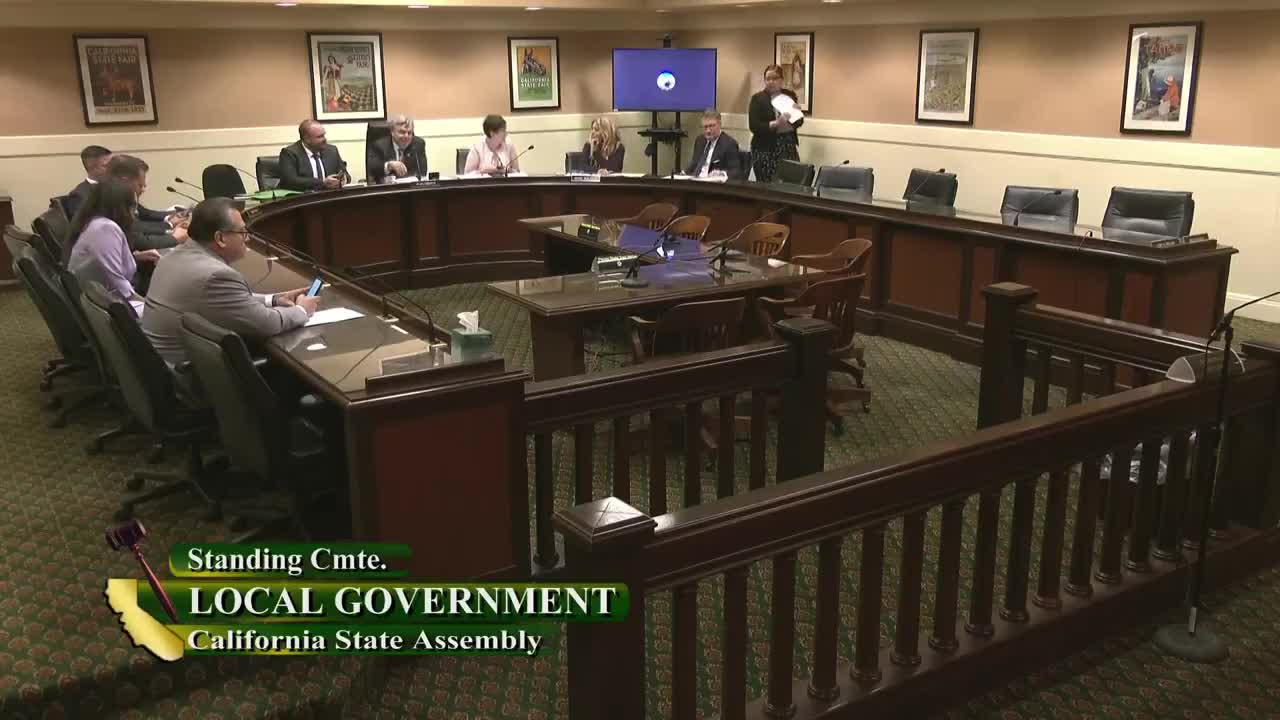 4MIN
Assembly Standing Committee on Local Government
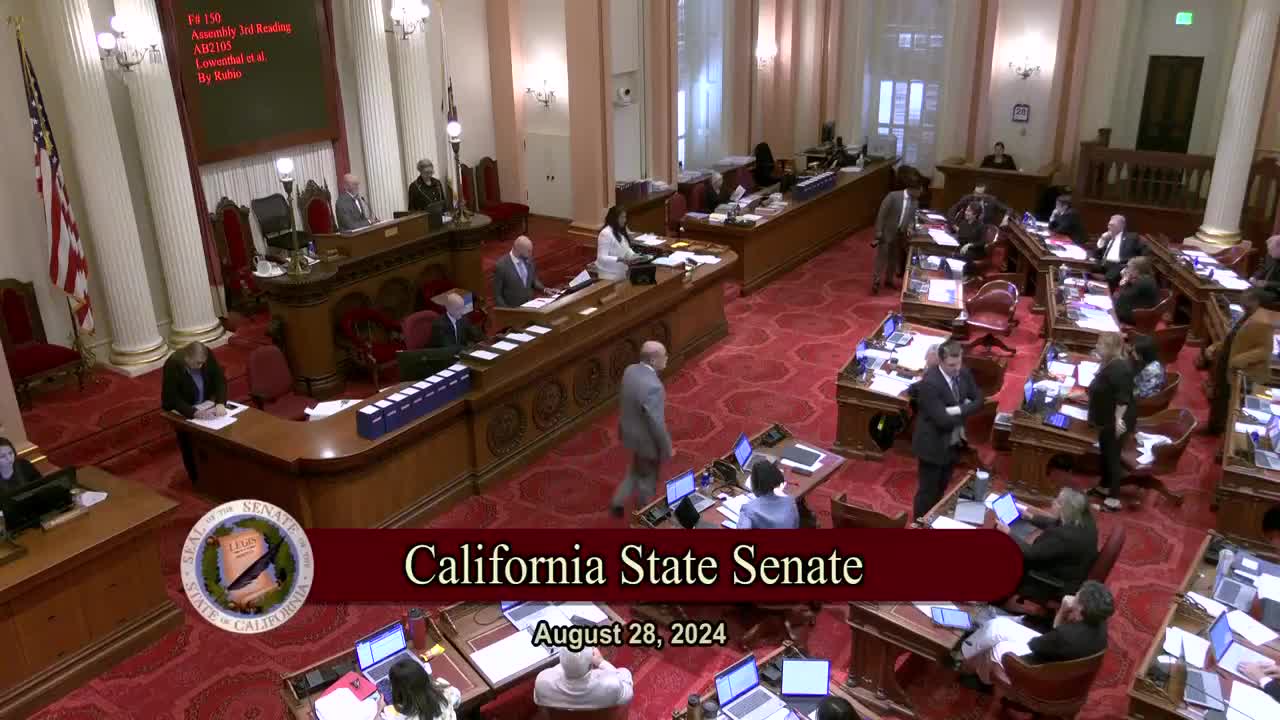 2MIN
Senate Floor
 9MIN
Senate Standing Committee on Local Government
 55SEC
Senate Standing Committee on Appropriations
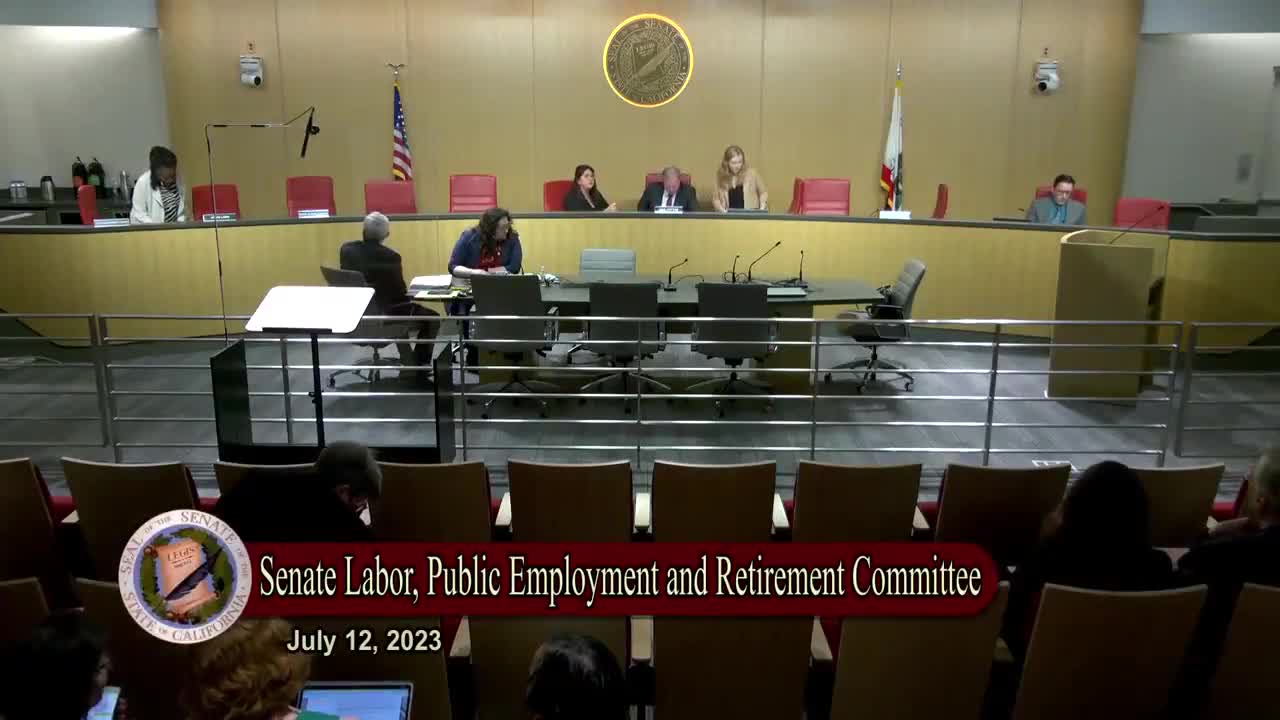 8MIN
Senate Standing Committee on Labor, Public Employment and Retirement
 23MIN
Senate Standing Committee on Governance and Finance
 56SEC
Assembly Floor
Bill Author

Bill Co-Author(s):