AB 932: Accessory dwelling units: Accessory Dwelling Unit Program: reports.
- Session Year: 2023-2024
- House: Assembly
- Latest Version Date: 2023-09-08
Current Status:
Passed
(2023-09-08: Chaptered by Secretary of State - Chapter 169, Statutes of 2023.)
Introduced
In Committee
First Chamber
In Committee
Second Chamber
Enacted
What does this bill do?
Requires the California Housing Finance Agency to evaluate its Accessory Dwelling Unit program and report the agency’s findings to the state Legislature. The report must be delivered by January 1, 2025.
The summary is provided by generative AI which can make mistakes. For original language, please view the details in the table below.
Under existing law, the California Housing Finance Agency (CalHFA) administers the Accessory Dwelling Unit Program, for the purpose of assisting homeowners in qualifying for loans to construct accessory dwelling units and junior accessory dwelling units on the homeowners property and increasing access to capital for homeowners interested in building accessory dwelling units. Existing law requires the CalHFA to convene a working group to develop recommendations for the program, as specified.
This bill would require CalHFA to evaluate the program and report CalHFAs findings to the Legislature by January 1, 2025.
Under existing law, the California Housing Finance Agency (CalHFA) administers the Accessory Dwelling Unit Program, for the purpose of assisting homeowners in qualifying for loans to construct accessory dwelling units and junior accessory dwelling units on the homeowners property and increasing access to capital for homeowners interested in building accessory dwelling units. Existing law requires the CalHFA to convene a working group to develop recommendations for the program, as specified. Existing law requires the working group to finish developing recommendations by July 1, 2023, for CalHFA to consider in the next update of its accessory dwelling unit guidelines.
This bill would additionally require the working group to report its recommendations to the Legislature by April 1, 2024, as specified. The bill would also require CalHFA to evaluate the program and report CalHFAs findings to the Legislature by January 1, 2025.
Under existing law, the California Housing Finance Agency (CalHFA) administers the Accessory Dwelling Unit Program, for the purpose of assisting homeowners in qualifying for loans to construct accessory dwelling units and junior accessory dwelling units on the homeowners property and increasing access to capital for homeowners interested in building accessory dwelling units. Existing law requires the CalHFA to convene a working group to develop recommendations for the program, as specified. Existing law requires the working group to finish developing recommendations by July 1, 2023, for CalHFA to consider in the next update of its accessory dwelling unit guidelines.
This bill would additionally require the working group to report its recommendations to the Legislature by January 1, 2025, April 1, 2024, as specified. The bill would also require CalHFA to evaluate the program and report CalHFAs findings to the Legislature by January 1, 2025.
Under existing law, the California Housing Finance Agency (CalHFA) administers the Accessory Dwelling Unit Program, for the purpose of assisting homeowners in qualifying for loans to construct accessory dwelling units and junior accessory dwelling units on the homeowners property and increasing access to capital for homeowners interested in building accessory dwelling units. Existing law requires the CalHFA to convene a working group to develop recommendations for the program, as specified. Existing law requires the working group to finish developing recommendations by July 1, 2023, for CalHFA to consider in the next update of its accessory dwelling unit guidelines.
This bill would additionally require the working group to report its recommendations to the Legislature by January 1, 2025, as specified.
Existing law provides for the creation of junior accessory dwelling units by local ordinance, or, if a local agency has not adopted an ordinance, by ministerial approval, in accordance with specified standards and conditions. Existing law requires a permitting agency to either approve or deny an application for a permit pursuant to these provisions within 60 days from the date the local agency receives a completed application if there is an existing single-family dwelling on the lot. If the applicant requests a delay, existing law requires this time period to be tolled for the period of the delay.This bill would change that time period to 45 days. By imposing new duties on local agencies, this bill would impose a state-mandated local program.The California Constitution requires the state to reimburse local agencies and school districts for certain costs mandated by the state. Statutory provisions establish procedures for making that reimbursement.This bill would provide that no reimbursement is required by this act for a specified reason.Existing law provides for the creation of junior accessory dwelling units by local ordinance, or, if a local agency has not adopted an ordinance, by ministerial approval, in accordance with specified standards and conditions. Existing law requires a permitting agency to either approve or deny an application for a permit pursuant to these provisions within 60 days from the date the local agency receives a completed application if there is an existing single-family dwelling on the lot. If the applicant requests a delay, existing law requires this time period to be tolled for the period of the delay.
This bill would change that time period to 45 days. By imposing new duties on local agencies, this bill would impose a state-mandated local program.
The California Constitution requires the state to reimburse local agencies and school districts for certain costs mandated by the state. Statutory provisions establish procedures for making that reimbursement.
This bill would provide that no reimbursement is required by this act for a specified reason.
The agency shall conduct an evaluation of the program and shall report the agencys findings to the Legislature by no later than January 1, 2025. The report shall be submitted in compliance with Section 9795 of the Government Code.
The agency shall conduct an evaluation of the program and shall report the agencys findings to the Legislature by no later than January 1, 2025. The report shall be submitted in compliance with Section 9795 of the Government Code.
The agency shall conduct an evaluation of the program and shall report its the agencys findings to the Legislature by no later than January 1, 2025. The report shall be submitted in compliance with Section 9795 of the Government Code.
(a)The agency shall convene a working group to develop recommendations for the purposes of the program. The purpose of the program is to assist homeowners in qualifying for loans to construct accessory dwelling units and junior accessory dwelling units on their property and to increase access to capital for homeowners interested in building accessory dwelling units.
(1)The working group shall include, but not be limited to, representatives from federal mortgage agencies, private lenders, community development financial institutions, community-based organizations, local housing trust funds, joint powers authorities, regional housing finance authorities, and credit unions.
(2)The working group shall explore the feasibility of different options to increase program utilization, including, but not limited to, a loan loss reserve or other credit enhancements to encourage lending, and different loan products such as renovation loans, bridge loans, and second mortgages.
(3)The working group shall explore different opportunities to mitigate risks for lenders, including, but not limited to, loan guarantees, mortgage insurance, managed escrow, and rental income guidelines.
(4)The working group shall explore opportunities to increase outreach and education to inform homeowners about the various loan and grant products available to them.
(5)The working group shall explore expanding financing options to construction costs and factory-built accessory dwelling units, including through partnerships with local agencies and qualified nonprofits. The working group shall also explore matching fund opportunities for the grants.
(6)The working group shall explore different opportunities to ease constraints that limit the loan process for homeowners, including issues that are not controlled by the agency, including, but not limited to, federal lending standards and local practices.
(b)The working group shall finish developing recommendations by July 1, 2023, for the agency to consider in the next update of its accessory dwelling unit guidelines.
(c)(1)The working group shall report its recommendations to the Legislature by January 1, 2025. April 1, 2024.
(2)The report to the Legislature pursuant to paragraph (1) shall be submitted in compliance with Section 9795 of the Government Code.
SEC. 2.Section 51532 is added to the Health and Safety Code, immediately following Section 51531, to read:51532.The agency shall conduct an evaluation of the program and shall report its findings to the Legislature by no later than January 1, 2025. The report shall be submitted in compliance with Section 9795 of the Government Code.
(a)The agency shall convene a working group to develop recommendations for the purposes of the program. The purpose of the program is to assist homeowners in qualifying for loans to construct accessory dwelling units and junior accessory dwelling units on their property and to increase access to capital for homeowners interested in building accessory dwelling units.
(1)The working group shall include, but not be limited to, representatives from federal mortgage agencies, private lenders, community development financial institutions, community-based organizations, local housing trust funds, joint powers authorities, regional housing finance authorities, and credit unions.
(2)The working group shall explore the feasibility of different options to increase program utilization, including, but not limited to, a loan loss reserve or other credit enhancements to encourage lending, and different loan products such as renovation loans, bridge loans, and second mortgages.
(3)The working group shall explore different opportunities to mitigate risks for lenders, including, but not limited to, loan guarantees, mortgage insurance, managed escrow, and rental income guidelines.
(4)The working group shall explore opportunities to increase outreach and education to inform homeowners about the various loan and grant products available to them.
(5)The working group shall explore expanding financing options to construction costs and factory-built accessory dwelling units, including through partnerships with local agencies and qualified nonprofits. The working group shall also explore matching fund opportunities for the grants.
(6)The working group shall explore different opportunities to ease constraints that limit the loan process for homeowners, including issues that are not controlled by the agency, including, but not limited to, federal lending standards and local practices.
(b)The working group shall finish developing recommendations by July 1, 2023, for the agency to consider in the next update of its accessory dwelling unit guidelines.
(c)(1)The working group shall report its recommendations to the Legislature by January 1, 2025.
(2)The report to the Legislature pursuant to paragraph (1) shall be submitted in compliance with Section 9795 of the Government Code.
SECTION 1.Section 65852.22 of the Government Code is amended to read:65852.22.(a)Notwithstanding Section 65852.2, a local agency may, by ordinance, provide for the creation of junior accessory dwelling units in single-family residential zones. The ordinance may require a permit to be obtained for the creation of a junior accessory dwelling unit, and shall do all of the following:(1)Limit the number of junior accessory dwelling units to one per residential lot zoned for single-family residences with a single-family residence built, or proposed to be built, on the lot.(2)Require owner-occupancy in the single family residence in which the junior accessory dwelling unit will be permitted. The owner may reside in either the remaining portion of the structure or the newly created junior accessory dwelling unit. Owner-occupancy shall not be required if the owner is another governmental agency, land trust, or housing organization.(3)Require the recordation of a deed restriction, which shall run with the land, shall be filed with the permitting agency, and shall include both of the following:(A)A prohibition on the sale of the junior accessory dwelling unit separate from the sale of the single-family residence, including a statement that the deed restriction may be enforced against future purchasers.(B)A restriction on the size and attributes of the junior accessory dwelling unit that conforms with this section.(4)Require a permitted junior accessory dwelling unit to be constructed within the walls of the proposed or existing single-family residence. For purposes of this paragraph, enclosed uses within the residence, such as attached garages, are considered a part of the proposed or existing single-family residence.(5)(A)Require a permitted junior accessory dwelling unit to include a separate entrance from the main entrance to the proposed or existing single-family residence.(B)If a permitted junior accessory dwelling unit does not include a separate bathroom, the permitted junior accessory dwelling unit shall include a separate entrance from the main entrance to the structure, with an interior entry to the main living area.(6)Require the permitted junior accessory dwelling unit to include an efficiency kitchen, which shall include all of the following:(A)A cooking facility with appliances.(B)A food preparation counter and storage cabinets that are of reasonable size in relation to the size of the junior accessory dwelling unit.(b)(1)An ordinance shall not require additional parking as a condition to grant a permit.(2)This subdivision shall not be interpreted to prohibit the requirement of an inspection, including the imposition of a fee for that inspection, to determine if the junior accessory dwelling unit complies with applicable building standards.(c)(1)An application for a permit pursuant to this section shall, notwithstanding Section 65901 or 65906 or any local ordinance regulating the issuance of variances or special use permits, be considered ministerially, without discretionary review or a hearing. The permitting agency shall either approve or deny the application to create or serve a junior accessory dwelling unit within 45 days from the date the local agency receives a completed application if there is an existing single-family dwelling on the lot. If the permit application to create or serve a junior accessory dwelling unit is submitted with a permit application to create or serve a new single-family dwelling on the lot, the permitting agency may delay approving or denying the permit application for the junior accessory dwelling unit until the permitting agency approves or denies the permit application to create or serve the new single-family dwelling, but the application to create or serve the junior accessory dwelling unit shall still be considered ministerially without discretionary review or a hearing. If the applicant requests a delay, the 45-day time period shall be tolled for the period of the delay. A local agency may charge a fee to reimburse the local agency for costs incurred in connection with the issuance of a permit pursuant to this section.(2)If a permitting agency denies an application for a junior accessory dwelling unit pursuant to paragraph (1), the permitting agency shall, within the time period described in paragraph (1), return in writing a full set of comments to the applicant with a list of items that are defective or deficient and a description of how the application can be remedied by the applicant.(d)A local agency shall not deny an application for a permit to create a junior accessory dwelling unit pursuant to this section due to the correction of nonconforming zoning conditions, building code violations, or unpermitted structures that do not present a threat to public health and safety and that are not affected by the construction of the junior accessory dwelling unit.(e)For purposes of any fire or life protection ordinance or regulation, a junior accessory dwelling unit shall not be considered a separate or new dwelling unit. This section shall not be construed to prohibit a city, county, city and county, or other local public entity from adopting an ordinance or regulation relating to fire and life protection requirements within a single-family residence that contains a junior accessory dwelling unit so long as the ordinance or regulation applies uniformly to all single-family residences within the zone regardless of whether the single-family residence includes a junior accessory dwelling unit or not.(f)For purposes of providing service for water, sewer, or power, including a connection fee, a junior accessory dwelling unit shall not be considered a separate or new dwelling unit.(g)This section shall not be construed to prohibit a local agency from adopting an ordinance or regulation related to a service or a connection fee for water, sewer, or power, that applies to a single-family residence that contains a junior accessory dwelling unit, so long as that ordinance or regulation applies uniformly to all single-family residences regardless of whether the single-family residence includes a junior accessory dwelling unit.(h)If a local agency has not adopted a local ordinance pursuant to this section, the local agency shall ministerially approve a permit to construct a junior accessory dwelling unit that satisfies the requirements set forth in subparagraph (A) of paragraph (1) of subdivision (e) of Section 65852.2 and the requirements of this section.(i)For purposes of this section, the following terms have the following meanings:(1)Junior accessory dwelling unit means a unit that is no more than 500 square feet in size and contained entirely within a single-family residence. A junior accessory dwelling unit may include separate sanitation facilities, or may share sanitation facilities with the existing structure.(2)Local agency means a city, county, or city and county, whether general law or chartered.(3)Permitting agency means any entity that is involved in the review of a permit for an accessory dwelling unit or junior accessory dwelling unit and for which there is no substitute, including, but not limited to, applicable planning departments, building departments, utilities, and special districts.SEC. 2.No reimbursement is required by this act pursuant to Section 6 of Article XIIIB of the California Constitution because a local agency or school district has the authority to levy service charges, fees, or assessments sufficient to pay for the program or level of service mandated by this act, within the meaning of Section 17556 of the Government Code.(a)Notwithstanding Section 65852.2, a local agency may, by ordinance, provide for the creation of junior accessory dwelling units in single-family residential zones. The ordinance may require a permit to be obtained for the creation of a junior accessory dwelling unit, and shall do all of the following:
(1)Limit the number of junior accessory dwelling units to one per residential lot zoned for single-family residences with a single-family residence built, or proposed to be built, on the lot.
(2)Require owner-occupancy in the single family residence in which the junior accessory dwelling unit will be permitted. The owner may reside in either the remaining portion of the structure or the newly created junior accessory dwelling unit. Owner-occupancy shall not be required if the owner is another governmental agency, land trust, or housing organization.
(3)Require the recordation of a deed restriction, which shall run with the land, shall be filed with the permitting agency, and shall include both of the following:
(A)A prohibition on the sale of the junior accessory dwelling unit separate from the sale of the single-family residence, including a statement that the deed restriction may be enforced against future purchasers.
(B)A restriction on the size and attributes of the junior accessory dwelling unit that conforms with this section.
(4)Require a permitted junior accessory dwelling unit to be constructed within the walls of the proposed or existing single-family residence. For purposes of this paragraph, enclosed uses within the residence, such as attached garages, are considered a part of the proposed or existing single-family residence.
(5)(A)Require a permitted junior accessory dwelling unit to include a separate entrance from the main entrance to the proposed or existing single-family residence.
(B)If a permitted junior accessory dwelling unit does not include a separate bathroom, the permitted junior accessory dwelling unit shall include a separate entrance from the main entrance to the structure, with an interior entry to the main living area.
(6)Require the permitted junior accessory dwelling unit to include an efficiency kitchen, which shall include all of the following:
(A)A cooking facility with appliances.
(B)A food preparation counter and storage cabinets that are of reasonable size in relation to the size of the junior accessory dwelling unit.
(b)(1)An ordinance shall not require additional parking as a condition to grant a permit.
(2)This subdivision shall not be interpreted to prohibit the requirement of an inspection, including the imposition of a fee for that inspection, to determine if the junior accessory dwelling unit complies with applicable building standards.
(c)(1)An application for a permit pursuant to this section shall, notwithstanding Section 65901 or 65906 or any local ordinance regulating the issuance of variances or special use permits, be considered ministerially, without discretionary review or a hearing. The permitting agency shall either approve or deny the application to create or serve a junior accessory dwelling unit within 60 45 days from the date the local agency receives a completed application if there is an existing single-family dwelling on the lot. If the permit application to create or serve a junior accessory dwelling unit is submitted with a permit application to create or serve a new single-family dwelling on the lot, the permitting agency may delay approving or denying the permit application for the junior accessory dwelling unit until the permitting agency approves or denies the permit application to create or serve the new single-family dwelling, but the application to create or serve the junior accessory dwelling unit shall still be considered ministerially without discretionary review or a hearing. If the applicant requests a delay, the 60-day 45-day time period shall be tolled for the period of the delay. A local agency may charge a fee to reimburse the local agency for costs incurred in connection with the issuance of a permit pursuant to this section.
(2)If a permitting agency denies an application for a junior accessory dwelling unit pursuant to paragraph (1), the permitting agency shall, within the time period described in paragraph (1), return in writing a full set of comments to the applicant with a list of items that are defective or deficient and a description of how the application can be remedied by the applicant.
(d)A local agency shall not deny an application for a permit to create a junior accessory dwelling unit pursuant to this section due to the correction of nonconforming zoning conditions, building code violations, or unpermitted structures that do not present a threat to public health and safety and that are not affected by the construction of the junior accessory dwelling unit.
(e)For purposes of any fire or life protection ordinance or regulation, a junior accessory dwelling unit shall not be considered a separate or new dwelling unit. This section shall not be construed to prohibit a city, county, city and county, or other local public entity from adopting an ordinance or regulation relating to fire and life protection requirements within a single-family residence that contains a junior accessory dwelling unit so long as the ordinance or regulation applies uniformly to all single-family residences within the zone regardless of whether the single-family residence includes a junior accessory dwelling unit or not.
(f)For purposes of providing service for water, sewer, or power, including a connection fee, a junior accessory dwelling unit shall not be considered a separate or new dwelling unit.
(g)This section shall not be construed to prohibit a local agency from adopting an ordinance or regulation related to a service or a connection fee for water, sewer, or power, that applies to a single-family residence that contains a junior accessory dwelling unit, so long as that ordinance or regulation applies uniformly to all single-family residences regardless of whether the single-family residence includes a junior accessory dwelling unit.
(h)If a local agency has not adopted a local ordinance pursuant to this section, the local agency shall ministerially approve a permit to construct a junior accessory dwelling unit that satisfies the requirements set forth in subparagraph (A) of paragraph (1) of subdivision (e) of Section 65852.2 and the requirements of this section.
(i)For purposes of this section, the following terms have the following meanings:
(1)Junior accessory dwelling unit means a unit that is no more than 500 square feet in size and contained entirely within a single-family residence. A junior accessory dwelling unit may include separate sanitation facilities, or may share sanitation facilities with the existing structure.
(2)Local agency means a city, county, or city and county, whether general law or chartered.
(3)Permitting agency means any entity that is involved in the review of a permit for an accessory dwelling unit or junior accessory dwelling unit and for which there is no substitute, including, but not limited to, applicable planning departments, building departments, utilities, and special districts.
SEC. 2.No reimbursement is required by this act pursuant to Section 6 of Article XIIIB of the California Constitution because a local agency or school district has the authority to levy service charges, fees, or assessments sufficient to pay for the program or level of service mandated by this act, within the meaning of Section 17556 of the Government Code.
|
Date
|
Status
|
|---|---|
| Sep 8, 2023 | Chaptered by Secretary of State - Chapter 169, Statutes of 2023. |
| Sep 8, 2023 | Approved by the Governor. |
| Aug 29, 2023 | Enrolled and presented to the Governor at 11:30 a.m. |
| Aug 17, 2023 | In Assembly. Ordered to Engrossing and Enrolling. |
| Aug 17, 2023 | Read third time. Passed. Ordered to the Assembly. (Ayes 38. Noes 0. Page 2140.). |
| Aug 15, 2023 | Read second time. Ordered to Consent Calendar. |
| Aug 14, 2023 | From committee: Be ordered to second reading file pursuant to Senate Rule 28.8 and ordered to Consent Calendar. |
| Jun 21, 2023 | From committee: Do pass and re-refer to Com. on APPR with recommendation: To Consent Calendar. (Ayes 11. Noes 0.) (June 20). Re-referred to Com. on APPR. |
| Jun 7, 2023 | Referred to Com. on HOUSING. |
| May 31, 2023 | In Senate. Read first time. To Com. on RLS. for assignment. |
| May 30, 2023 | Read third time. Passed. Ordered to the Senate. (Ayes 80. Noes 0. Page 1883.) |
| May 22, 2023 | Read second time. Ordered to third reading. |
| May 18, 2023 | Read second time and amended. Ordered returned to second reading. |
| May 18, 2023 | From committee: Amend, and do pass as amended. (Ayes 11. Noes 0.) (May 18). |
| May 3, 2023 | In committee: Set, first hearing. Referred to APPR. suspense file. |
| Apr 26, 2023 | In committee: Hearing postponed by committee. |
| Apr 12, 2023 | From committee: Do pass and re-refer to Com. on APPR. with recommendation: To Consent Calendar. (Ayes 8. Noes 0.) (April 12). Re-referred to Com. on APPR. |
| Apr 3, 2023 | Re-referred to Com. on H. & C.D. |
| Mar 30, 2023 | From committee chair, with author's amendments: Amend, and re-refer to Com. on H. & C.D. Read second time and amended. |
| Mar 23, 2023 | In committee: Hearing postponed by committee. |
| Mar 16, 2023 | Re-referred to Com. on H. & C.D. |
| Mar 15, 2023 | From committee chair, with author's amendments: Amend, and re-refer to Com. on H. & C.D. Read second time and amended. |
| Mar 2, 2023 | Referred to Coms. on H. & C.D. and L. GOV. |
| Feb 15, 2023 | From printer. May be heard in committee March 17. |
| Feb 14, 2023 | Read first time. To print. |
|
Date
|
Description
|
Location
|
Votes
|
|
|---|---|---|---|---|
| Aug 17, 2023 | Consent Calendar 2nd AB932 Ting | Senate Floor |
Passed |
|
| Jun 20, 2023 | Do pass, but first be re-referred to the Committee on [Appropriations] with the recommendation: To Consent Calendar | Senate Standing Committee on Housing |
Passed |
|
| May 30, 2023 | AB 932 Ting Assembly Third Reading | Assembly Floor |
Passed |
|
| May 18, 2023 | Do pass as amended. | Assembly Standing Committee on Appropriations |
Passed |
|
| Apr 12, 2023 | Do pass and be re-referred to the Committee on [Appropriations] with recommendation: To Consent Calendar | Assembly Standing Committee on Housing and Community Development |
Passed |
This list shows positions taken on this bill by organizations on the date displayed, which is linked to the original source.
Positions by individuals are not included.
|
Organization
|
Position
|
Date
|
|---|---|---|
| Bay Area Council | ** Support |
SENATE RULES COMMITTEE Office of Senate Floor Analyses (916) 651-1520 Fax: (916) 327-4478 | AB 932 |
CONSENT
Bill No: AB 932
Author: Ting (D)
Amended: 5/18/23 in Assembly
Vote: 21
SENATE HOUSING COMMITTEE: 11-0, 6/20/23
AYES: Wiener, Ochoa Bogh, Blakespear, Caballero, Cortese, McGuire, Padilla, Seyarto, Skinner, Umberg, Wahab
SENATE APPROPRIATIONS COMMITTEE: Senate Rule 28.8
ASSEMBLY FLOOR: 80-0, 5/30/23 - See last page for vote
SUBJECT: Accessory dwelling units: Accessory Dwelling Unit Program: reports
SOURCE: Author
DIGEST:
This bill requires the California Housing Finance Agency (CalHFA) to conduct an analysis of its Accessory Dwelling Units (ADU) Program and report its findings to the Legislature by January 1, 2025.
ANALYSIS:
Existing law:
- Establishes the ADU Program for the purpose of:
- Assist homeowners in qualifying for loans to construct ADUs and junior accessory dwelling units (JADUs) on their property; and
- Increase access to capital for homeowners interested in building ADUs.
- Requires CalHFA to convene a working group to develop recommendations for the purposes of the ADU Program.
- Requires the working group to include, but not be limited to, representatives from federal mortgage agencies, private lenders, community development financial institutions, community-based organizations, local housing trust funds, joint powers authorities, regional housing finance authorities, and credit unions.
- Mandates the working group to explore:
- The feasibility of different options to increase program utilization;
- Opportunities to mitigate risks for lenders;
- Opportunities to increase outreach and education to inform homeowners about the various loan and grant products available to them;
- Expanding financing options to construction costs and factory-built ADUs; and,
- Opportunities to ease constraints that limit the loan process for homeowners.
- Requires the working group to finish developing recommendations by July 1, 2023.
- Requires CalHFA to consider the working group’s recommendations in the next update of its ADU guidelines.
This bill requires CalHFA to conduct an analysis of its ADU Program and report its findings to the Legislature by January 1, 2025.
Background
California’s high — and rising — land costs necessitate dense housing construction for a project to be financially viable and for the housing to ultimately be affordable to lower-income households. Yet, recent trends in California show that new housing has not commensurately increased in density. In a 2016 analysis, the Legislative Analyst’s Office (LAO) found that the housing density of a typical neighborhood in California’s coastal metropolitan areas increased only by four percent during the 2000s. In addition, the pattern of development in California has changed in ways that limit new housing opportunities. A 2016 analysis by BuildZoom found that new development has shifted from moderate but widespread density to pockets of high-density housing near downtown cores surrounded by vast swaths of low-density single-family housing. Specifically, construction of moderately-dense housing (2 to 49 units) in California peaked in the 1960s and 1970s and has slowed in recent decades.
Recently, there has been a national trend to allow for more "gentle density" (e.g., ADUs, duplexes, four-plexes, townhomes, and other moderately dense developments that were common before the imposition of zoning). In recent years, the Legislature has taken a more active role in facilitating such gentle density. In 2016, AB 2299 (Bloom, Chapter 735, Statutes of 2016) and SB 1069 (Wieckowski, Chapter 720, Statutes of 2016), permitted ADUs by right on all residentially-zoned parcels in the state. By permitting an ADU as a second unit on all single-family lots, these laws effectively doubled their allowed density.
Prior to the Legislature requiring ministerial approval of ADUs in 2017, ADUs were less than one percent of permitted new construction. Now they are approximately 10%, at over 9,600 completed units in 2022. Additionally, because ADUs are typically smaller than the average home in a community, they tend to be more affordable than other market-rate units. A survey of ADU owners found that, in the Bay Area, ADUs rents were affordable to households making the median income.
Comments
- Author’s Statement. According to the author, “As we all know, California has a housing crisis where a lack of housing supply has in turn increased rents and exasperated the cost of living. ADUs are the fastest way that we can grow housing but unfortunately many homeowners struggle to get financing to build ADUs. AB 932 requires that California Housing Finance Agency conduct an evaluation of its ADU Grant Program, which utilized $100 million in grants to build up to 2,500 ADUs. This report will allow the Legislature to consider which programs provide the best value for the funding when it comes to ADU programs.”
- Financial Barriers to Creating ADUs. Research has shown that property owners with a new ADU on their property are more affluent than the typical homeowner in California. A recent survey of property owners who build ADUs revealed that 62% utilized cash and 43% utilized mortgage products that rely on the homeowner having equity in their primary unit.
The FY 2019-2020 and 2020-2021 state budgets collectively included $100 million to CalHFA to help low- and moderate-income households finance ADUs. CalHFA's ADU Grant Program provided up to $40,000 towards pre-development and non-reoccurring closing costs associated with the construction of the ADU. According to CalHFA, all of the $100 million has now been deployed, and is expected to yield between 2,200 – 2,400 new ADUs.
This bill requires CalHFA to conduct an evaluation of this program and report its findings to the Legislature no later than January 1, 2025.
Related/Prior Legislation
AB 157 (Committee on Budget, Chapter 570, Statutes of 2022) created the ADU Program and the requirements for a working group to make recommendations to CalHFA on how to implement the program.
FISCAL EFFECT: Appropriation: No Fiscal Com.: Yes Local: No
SUPPORT: (Verified 8/15/23)
Bay Area Council
OPPOSITION: (Verified 8/15/23)
None received
ASSEMBLY FLOOR: 80-0, 5/30/23
AYES: Addis, Aguiar-Curry, Alanis, Alvarez, Arambula, Bains, Bauer-Kahan, Bennett, Berman, Boerner, Bonta, Bryan, Calderon, Juan Carrillo, Wendy Carrillo, Cervantes, Chen, Connolly, Megan Dahle, Davies, Dixon, Essayli, Flora, Mike Fong, Vince Fong, Friedman, Gabriel, Gallagher, Garcia, Gipson, Grayson, Haney, Hart, Holden, Hoover, Irwin, Jackson, Jones-Sawyer, Kalra, Lackey, Lee, Low, Lowenthal, Maienschein, Mathis, McCarty, McKinnor, Muratsuchi, Stephanie Nguyen, Ortega, Pacheco, Papan, Jim Patterson, Joe Patterson, Pellerin, Petrie-Norris, Quirk-Silva, Ramos, Reyes, Luz Rivas, Robert Rivas, Rodriguez, Blanca Rubio, Sanchez, Santiago, Schiavo, Soria, Ta, Ting, Valencia, Villapudua, Waldron, Wallis, Ward, Weber, Wicks, Wilson, Wood, Zbur, Rendon
Prepared by: Mehgie Tabar / HOUSING / (916) 651-4124
8/16/23 14:22:05
**** END ****
SENATE COMMITTEE ON HOUSING
Senator Scott Wiener, Chair
2023 - 2024 Regular
Bill No: AB 932 Hearing Date: 6/20/2023
Author: | Ting | ||
Version: | 5/18/2023 | ||
Urgency: | No | Fiscal: | Yes |
Consultant: | Mehgie Tabar | ||
SUBJECT: Accessory dwelling units: Accessory Dwelling Unit Program: reports
DIGEST: This bill requires the California Housing Finance Agency (CalHFA) to conduct an analysis of its Accessory Dwelling Units (ADU) Program and report its findings to the Legislature by January 1, 2025.
ANALYSIS:
Existing law:
- Establishes the Accessory Dwelling Unit Program (Program) for the purpose of:
- Assist homeowners in qualifying for loans to construct ADUs and junior accessory dwelling units (JADUs) on their property; and
- Increase access to capital for homeowners interested in building ADUs.
- Requires CalHFA to convene a working group to develop recommendations for the purposes of the Program.
- Requires the working group to include, but not be limited to, representatives from federal mortgage agencies, private lenders, community development financial institutions, community-based organizations, local housing trust funds, joint powers authorities, regional housing finance authorities, and credit unions.
- Mandates the working group to explore:
- The feasibility of different options to increase program utilization;
- Opportunities to mitigate risks for lenders;
- Opportunities to increase outreach and education to inform homeowners about the various loan and grant products available to them;
- Expanding financing options to construction costs and factory-built ADUs; and
- Opportunities to ease constraints that limit the loan process for homeowners.
- Requires the working group to finish developing recommendations by July 1, 2023.
- Requires CalHFA to consider the working group’s recommendations in the next update of its ADU guidelines.
This bill:
- Requires CalHFA to conduct an analysis of its ADU Program and report its findings to the Legislature by January 1, 2025.
COMMENTS:
- Author’s statement. “As we all know, California has a housing crisis where a lack of housing supply has in turn increased rents and exasperated the cost of living. ADUs are the fastest way that we can grow housing but unfortunately many homeowners struggle to get financing to build ADUs. AB 932 requires that California Housing Finance Agency conduct an evaluation of its ADU Grant Program, which utilized $100 million in grants to build up to 2,500 ADUs. This report will allow the Legislature to consider which programs provide the best value for the funding when it comes to ADU programs.”
- Second Units as a Solution to the Housing Crisis? California’s high — and rising — land costs necessitate dense housing construction for a project to be financially viable and for the housing to ultimately be affordable to lower-income households. Yet, recent trends in California show that new housing has not commensurately increased in density. In a 2016 analysis, the Legislative Analyst’s Office (LAO) found that the housing density of a typical neighborhood in California’s coastal metropolitan areas increased only by four percent during the 2000s. In addition, the pattern of development in California has changed in ways that limit new housing opportunities. A 2016 analysis by BuildZoom found that new development has shifted from moderate but widespread density to pockets of high-density housing near downtown cores surrounded by vast swaths of low-density single-family housing. Specifically, construction of moderately-dense housing (2 to 49 units) in California peaked in the 1960s and 1970s and has slowed in recent decades.
Recently, there has been a national trend to allow for more "gentle density" (e.g., ADUs, duplexes, four-plexes, townhomes, and other moderately dense developments that were common before the imposition of zoning). In recent years, the Legislature has taken a more active role in facilitating such gentle density. In 2016, AB 2299 (Bloom) and SB 1069 (Wieckowski), permitted ADUs by right on all residentially-zoned parcels in the state. By permitting an ADU as a second unit on all single-family lots, these laws effectively doubled their allowed density.
Prior to the Legislature requiring ministerial approval of ADUs in 2017, ADUs were less than one percent of permitted new construction. Now they are approximately 10%, at over 9,600 completed units in 2022. Additionally, because ADUs are typically smaller than the average home in a community, they tend to be more affordable than other market-rate units. A survey of ADU owners found that, in the Bay Area, ADUs rents were affordable to households making the median income.
- Financial Barriers to Creating ADUs. Research has shown that property owners with a new ADU on their property are more affluent than the typical homeowner in California.[1] A recent survey of property owners who build ADUs revealed that 62% utilized cash and 43% utilized mortgage products that rely on the homeowner having equity in their primary unit.[2]
The 2019-2020 and 2020-2021 budgets collectively included $100 million to CalHFA to help low- and moderate-income households finance ADUs. CalHFA's ADU Grant Program provided up to $40,000 towards pre-development and non-reoccurring closing costs associated with the construction of the ADU.[3] According to CalHFA, all of the $100 million has now been deployed, and is expected to yield between 2,200 – 2,400 new ADUs.
This bill requires CalHFA to conduct an evaluation of this program and report its findings to the Legislature no later than January 1, 2025.
Related Legislation:
AB 157 (Committee on the Budget, Chapter 570, Statutes of 2022) — created the ADU Dwelling Unit Program and the requirements for a working group to make recommendations to CalHFA on how to implement the program.
FISCAL EFFECT: Appropriation: Fiscal Com.: Local:
POSITIONS: (Communicated to the committee before noon on Wednesday,
June 14, 2023.)
SUPPORT:
Bay Area Council
OPPOSITION:
None received.
-- END --
Ibid. ↑
USC Lusk Center for Real Estate and UC Berkeley Terner Center for Housing Innovation, "ADU Construction Financing: Opportunities to Expand Access for Homeowners," July 2022: https://ternercenter.berkeley.edu/wp-content/uploads/2022/07/ADU-Paper-FINAL-July-7th.pdf ↑
CalHFA's ADU Grant Program: https://www.calhfa.ca.gov/adu/index.htm ↑
ASSEMBLY THIRD READING
ATR Bill Id:AB 932
Author:(Ting)
As Amended Ver:May 18, 2023
Majority vote
SUMMARY
Requires the California Housing Finance Agency (CalHFA) to conduct an analysis of its Accessory Dwelling Units (ADU) Program and report its findings to the Legislature by January 1, 2025.
Major Provisions
Requires CalHFA to conduct an analysis of its ADU Program and report its findings to the Legislature by January 1, 2025.
COMMENTS
Second Units as a Solution to the Housing Crisis: In California, most of the land suitable for housing has already been developed. The remaining developable areas are typically far from job centers, in high-risk wildfire areas, and/or land that is environmentally sensitive or important for agriculture. Therefore, addressing the housing crisis in an environmentally responsible way will require an increase in density in already developed areas.
Increasing density can occur in multiple ways. In recent decades, this has often meant high-density housing near major transit stops. However, such housing is both expensive to build, and limited in geographic scope. Recently, there has been a national trend to allow for more "gentle density," e.g., ADUs, duplexes, four-plexes, townhomes, and other moderately dense developments that were common before the imposition of zoning. In recent years, the Legislature has taken a more active role in facilitating such gentle density. In 2016, AB 2299 (Bloom), Chapter 735 and SB 1069 (Wieckowski), Chapter 720 permitted ADUs by right on all residentially-zoned parcels in the state. By permitting an ADU as a second unit on all single-family lots, these laws effectively doubled their allowed density.
Prior to the Legislature requiring ministerial approval of ADUs in 2017, ADUs were less than 1% of permitted new construction. Now they are approximately 10%, at over 9,600 completed units in 2022.[1] Additionally, because ADUs are typically smaller than the average home in a community, they tend to be more affordable than other market-rate units. A survey of ADU owners found that, in the Bay Area, ADUs rents were affordable to households making the median income.[2]
Financial Barriers to Creating ADUs: Research has shown that property owners with a new ADU on their property are more affluent than the typical homeowner in California.[3] A recent survey of property owners who build ADUs revealed that 62% utilized cash and 43% utilized mortgage products that rely on the homeowner having equity in their primary unit.[4]
The 2019-2020 and 2020-2021 budgets collectively included $100 million to CalHFA to help low- and moderate-income households finance ADUs. CalHFA's ADU Grant Program provided up to $40,000 towards pre-development and non-reoccurring closing costs associated with the construction of the ADU.[5] According to CalHFA, all of the $100 million has now been deployed, and is expected to yield between 2,200 – 2,400 new ADUs.
This bill requires CalHFA to conduct an evaluation of this program and report its findings to the Legislature no later than January 1, 2025.
According to the Author
"As we all know, California has a housing crisis where a lack of housing supply has in turn increased rents and exasperated the cost of living. ADUs are the fastest way that we can grow housing but unfortunately many homeowners struggle to get financing to build ADUs. AB 932 requires that CalHFA conduct an evaluation of its ADU Grant Program, which utilized $100 million in grants to build up to 2,500 ADUs."
Arguments in Support
The sponsor of the bill, the Bay Area Council, argues that it would help maximize the benefits of the efforts CalHFA has made to improve ADU financing, which is important because "ADUs are the fastest way to increase housing, but unfortunately many owners struggle to get financing to build ADUs."
Arguments in Opposition
None on file.
FISCAL COMMENTS
According to the Assembly Committee on Appropriations:
CalHFA anticipates minor and absorbable costs.
VOTES
ASM HOUSING AND COMMUNITY DEVELOPMENT: 8-0-0
YES: Wicks, Joe Patterson, Wendy Carrillo, Gabriel, Kalra, Quirk-Silva, Sanchez, Ward
ASM APPROPRIATIONS: 11-0-5
YES: Holden, Bryan, Calderon, Wendy Carrillo, Mike Fong, Hart, Lowenthal, Papan, Pellerin, Weber, Ortega
ABS, ABST OR NV: Megan Dahle, Dixon, Mathis, Robert Rivas, Sanchez
UPDATED
VERSION: May 18, 2023
CONSULTANT: Steve Wertheim / H. & C.D. / (916) 319-2085 FN: 0000424
Per the Department of Housing and Community Development's "APR Dashboard", page 2:
https://www.hcd.ca.gov/planning-and-community-development/housing-open-data-tools/housing-element-implementation-and-apr-dashboard ↑
Chapple et al, Implementing the Backyard Revolution: Perspectives of California's ADU Owners, UC Berkeley Center for Community Innovation, April 2021: https://www.aducalifornia.org/wp-content/uploads/2021/04/Implementing-the-Backyard-Revolution.pdf ↑
Ibid. ↑
USC Lusk Center for Real Estate and UC Berkeley Terner Center for Housing Innovation, "ADU Construction Financing: Opportunities to Expand Access for Homeowners," July 2022: https://ternercenter.berkeley.edu/wp-content/uploads/2022/07/ADU-Paper-FINAL-July-7th.pdf ↑
CalHFA's ADU Grant Program: https://www.calhfa.ca.gov/adu/index.htm ↑
Date of Hearing: May 3, 2023
ASSEMBLY COMMITTEE ON APPROPRIATIONS
Chris Holden, Chair
ABPCA Bill Id:AB 932
Author:(Ting) – As Amended Ver:March 30, 2023
Policy Committee: | Housing and Community Development | Vote: | 8 - 0 |
|
| ||
|
|
Urgency: No State Mandated Local Program: No Reimbursable: No
SUMMARY:
This bill requires the California Housing Finance Agency (CalHFA) conduct an evaluation of its Accessory Dwelling Unit (ADU) Program and report its findings to the Legislature by January 1, 2025. This bill also requires CalHFA’s ADU Working Group to report its recommendations to the Legislature by April 1, 2024.
FISCAL EFFECT:
CalHFA anticipates minor and absorbable costs.
It is the policy of this committee to place any bill the committee concludes has the primary purpose of creating a task force, a commission, a work group, a pilot project or a pilot project extension, a report or a study, on the committee’s suspense file, regardless of cost.
COMMENTS:
- Purpose. According to the author:
The California Housing Finance Agency (CalHFA) has convened a working group with housing developers, nonprofits, and finance entities in order to figure out how to encourage lending to build ADUs. In order to see the most benefit from this working group, CalHFA should prepare a report to the Legislature to ensure that we can see all the options available to help homeowners build ADUs. Additionally, AB 932 requires that CalHFA conduct an evaluation of its ADU grant program, which utilized $100 million in grants to build up to 2,500 ADUs. Both reports will allow the Legislature to consider which programs provide the best value for the funding when it comes to ADU programs.
- Background. Research shows that property owners with a new ADU on their property are more affluent than the typical homeowner in California. A recent survey of property owners who build ADUs revealed that 62% utilized cash and 43% utilized mortgage products that rely on the homeowner having equity in their primary unit.
The 2019-2020 and 2020-2021 state budgets collectively included $100 million to CalHFA to provide grants to low- and moderate-income households to finance the construction of ADUs. CalHFA’s grant program provided up to $40,000 towards pre-development and non-reoccurring closing costs associated with the construction of the ADU. According to CalHFA, the grant recipients have utilized the $100 million, which CalHFA expects to yield between 2,200 and 2,400 new ADUs. This bill requires CalHFA to conduct an evaluation of this program and report its findings to the Legislature no later than January 1, 2025.
AB 157 (Committee on the Budget), Chapter 570, Statutes of 2022, required CalHFA to convene a working group comprised of housing finance experts to develop recommendations by July 1, 2023, to assist homeowners in qualifying for loans to construct ADUs and junior ADUs on their property and increase access to capital for homeowners interested in building ADUs. This bill additionally requires the working group to report its recommendations to the Legislature by April 1, 2024.
Analysis Prepared by: Jennifer Swenson / APPR. / (916) 319-2081
Date of Hearing: April 12, 2023
ASSEMBLY COMMITTEE ON HOUSING AND COMMUNITY DEVELOPMENT
Buffy Wicks, Chair
ABPCA Bill Id:AB 932 (
Author:Ting) – As Amended Ver:March 30, 2023
SUBJECT: Accessory dwelling units: Accessory Dwelling Unit Program: reports
SUMMARY: Requires the California Housing Finance Agency (CalHFA) to provide reports to the Legislature regarding its work on Accessory Dwelling Units (ADUs). Specifically, this bill:
- Requires CalHFA’s ADU Working Group to report its recommendations to the Legislature by April 1, 2024.
- Requires CalHFA to conduct an evaluation of its ADU Program and report its findings to the Legislature by no later than January 1, 2025.
EXISTING LAW: Establishes the Accessory Dwelling Unit Program (Program), including that:
- The purpose of the Program is to:
- Assist homeowners in qualifying for loans to construct ADUs and junior accessory dwelling units (JADUs) on their property; and
- Increase access to capital for homeowners interested in building ADUs.
- CalHFA must convene a working group to develop recommendations for the purposes of the Program.
- The working group must include, but not be limited to, representatives from federal mortgage agencies, private lenders, community development financial institutions, community-based organizations, local housing trust funds, joint powers authorities, regional housing finance authorities, and credit unions.
- The working group must explore:
- The feasibility of different options to increase program utilization;
- Opportunities to mitigate risks for lenders;
- Opportunities to increase outreach and education to inform homeowners about the various loan and grant products available to them;
- Expanding financing options to construction costs and factory-built ADUs; and
- Opportunities to ease constraints that limit the loan process for homeowners.
- The working group must finish developing recommendations by July 1, 2023.
- CalHFA must consider the working group’s recommendations in the next update of its ADU guidelines (Health and Safety Code Section 51531).
FISCAL EFFECT: Unknown.
COMMENTS:
Author’s Statement: According to the author, “As we all know, California has a housing crisis where a lack of housing supply has in turn increased rents and exasperated the cost of living. ADUs are the fastest way that we can grow housing but unfortunately many homeowners struggle to get financing to build ADUs. The California Housing Finance Agency (CalHFA) has convened a working group with housing developers, nonprofits, and finance entities in order to figure out how to encourage lending to build ADUs. In order to see the most benefit from this working group, CalHFA should prepare a report to the Legislature to ensure that we can see all the options available to help homeowners build ADUs. Additionally, AB 932 requires that CalHFA conduct an evaluation of its ADU Grant Program, which utilized $100 million in grants to build up to 2,500 ADUs. Both reports will allow the Legislature to consider which programs provide the best value for the funding when it comes to ADU programs.”
Second Units as a Solution to the Housing Crisis: In California, most of the land suitable for housing has already been developed. The remaining developable areas are typically far from job centers, in high-risk wildfire areas, and/or land that is environmentally sensitive or important for agriculture. Therefore, addressing the housing crisis in an environmentally responsible way will require an increase in density in already developed areas.
Increasing density can occur in multiple ways. In recent decades, this has often meant high-density housing near major transit stops. However, such housing is both expensive to build, and limited in geographic scope. Recently, there has been a national trend to allow for more “gentle density,” e.g., ADUs, duplexes, four-plexes, townhomes, and other moderately dense developments that were common before the imposition of zoning. In recent years, the Legislature has taken a more active role in facilitating such gentle density. In 2016, AB 2299 (Bloom, Chapter 735, Statutes of 2016) and SB 1069 (Wieckowski, Chapter 720, Statutes of 2016) permitted ADUs by right on all residentially-zoned parcels in the state. By permitting an ADU as a second unit on all single-family lots, these laws effectively doubled their allowed density.
Prior to the Legislature requiring ministerial approval of ADUs in 2017, ADUs were less than one percent of permitted new construction. Now they are approximately 10 percent, at over 9,600 completed units in 2022.[1] Additionally, because ADUs are typically smaller than the average home in a community, they tend to be more affordable than other market-rate units. A survey of ADU owners found that, in the Bay Area, ADUs rents were affordable to households making the median income.[2]
Financial Barriers to Creating ADUs: Research has shown that property owners with a new ADU on their property are more affluent than the typical homeowner in California.[3] A recent survey of property owners who build ADUs revealed that 62 percent utilized cash and 43 percent utilized mortgage products that rely on the homeowner having equity in their primary unit.[4]
The 2019-2020 and 2020-2021 budgets collectively included $100 million to CalHFA to help low- and moderate-income households finance ADUs. CalHFA’s ADU Grant Program provided up to $40,000 towards pre-development and non-reoccurring closing costs associated with the construction of the ADU.[5] According to CalHFA, all of the $100 million has now been deployed, and is expected to yield between 2,200 – 2,400 new ADUs. This bill requires CalHFA to conduct an evaluation of this program and report its findings to the Legislature no later than January 1, 2025.
In 2022, AB 157 (Committee on the Budget, Chapter 570, Statutes of 2022) created an ADU Program at CalHFA. The purpose of this program is to assist homeowners in qualifying for loans to construct ADUs and junior ADUs on their property and to increase access to capital for homeowners interested in building ADUs. This bill also tasked CalHFA with creating a working group comprised of housing finance experts to develop recommendations to help implement CalHFA’s ADU program. Through early April 2023, CalHFA had constituted the working group of over 50 members, and held three meeting with the group. AB 157 requires the working group to finish developing recommendations by July 1, 2023, but does not include any reporting requirements. This bill requires the working group to report its recommendations to the Legislature by April 1, 2024.
Arguments in Support: The sponsor of the bill, the Bay Area Council, argues that it would help maximize the benefits of the efforts CalHFA has made to improve ADU financing, which is important because “ADUs are the fastest way to increase housing, but unfortunately many owners struggle to get financing to build ADUs.”
Arguments in Opposition: None on file.
Related Legislation:
AB 157 (Committee on the Budget), Chapter 570, Statutes of 2022: Created the ADU Dwelling Unit Program and the requirements for a working group to make recommendations to CalHFA on how to implement the program.
REGISTERED SUPPORT / OPPOSITION:
Support
Bay Area Council (Sponsor)
Opposition
None on file.
Analysis Prepared by: Steve Wertheim / H. & C.D. / (916) 319-2085
Per the Department of Housing and Community Development’s “APR Dashboard”, page 2:
https://www.hcd.ca.gov/planning-and-community-development/housing-open-data-tools/housing-element-implementation-and-apr-dashboard ↑
Chapple et al, Implementing the Backyard Revolution: Perspectives of California’s ADU Owners, UC Berkeley Center for Community Innovation, April 2021: https://www.aducalifornia.org/wp-content/uploads/2021/04/Implementing-the-Backyard-Revolution.pdf ↑
Ibid. ↑
USC Lusk Center for Real Estate and UC Berkeley Terner Center for Housing Innovation, “ADU Construction Financing: Opportunities to Expand Access for Homeowners,” July 2022: https://ternercenter.berkeley.edu/wp-content/uploads/2022/07/ADU-Paper-FINAL-July-7th.pdf ↑
CalHFA’s ADU Grant Program: https://www.calhfa.ca.gov/adu/index.htm ↑
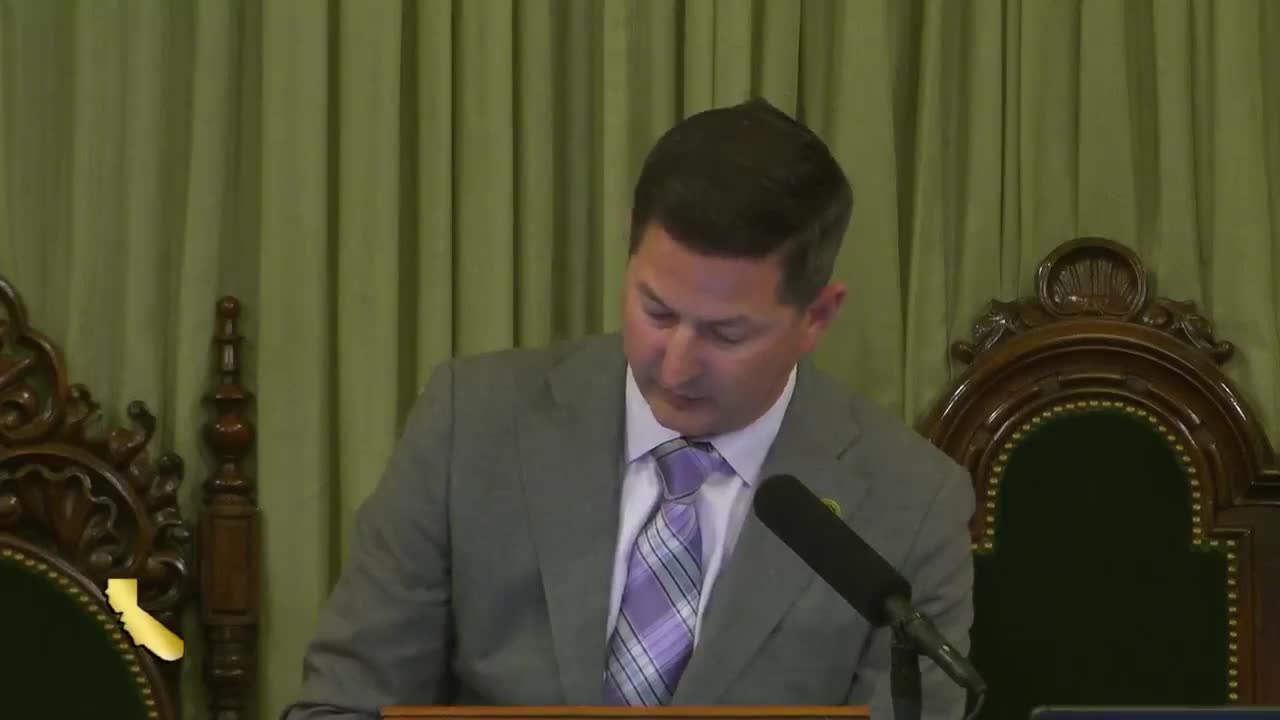
Bill Author

Bill Co-Author(s):