AB 945: Criminal procedure: expungement of records.
- Session Year: 2023-2024
- House: Assembly
- Latest Version Date: 2023-09-18
Current Status:
Failed
(2024-01-29: Consideration of Governor's veto stricken from file.)
Introduced
In Committee
First Chamber
In Committee
Second Chamber
Enacted
Existing law allows a defendant who successfully participated in the California Conservation Camp program as an incarcerated individual hand crew member, or successfully participated as a member of a county incarcerated individual hand crew, or participated at an institutional firehouse, except as specified, to petition the court to have the pleading dismissed, thus releasing the person of any penalties and disabilities of conviction, except as otherwise provided.
This bill would require, beginning May 1, 2026, and every other year thereafter, each superior court to report to the Judicial Council specified data regarding petitions seeking relief pursuant to the above-described provisions. The bill would require the Judicial Council to report the statewide data regarding these petitions beginning June 1, 2026, and every other year thereafter. The bill would repeal these provisions on January 1, 2036.
Existing law allows a defendant who successfully participated in the California Conservation Camp program as an incarcerated individual hand crew member, or successfully participated as a member of a county incarcerated individual hand crew, or participated at an institutional firehouse, except as specified, to petition the court to have the pleading dismissed, thus releasing the person of any penalties and disabilities of conviction, except as otherwise provided.
This bill would require, beginning May 1, 2024, 2026, and every other year thereafter, each superior court to report to the Department of Justice Judicial Council specified data regarding petitions seeking relief pursuant to the above-described provisions. The bill would require the department Judicial Council to report the statewide data regarding these petitions beginning June 1, 2024, 2026, and every other year thereafter. The bill would repeal these provisions on January 1, 2034. 2036.
Existing law allows a defendant who successfully participated in the California Conservation Camp program as an incarcerated individual hand crew member, or successfully participated as a member of a county incarcerated individual hand crew, or participated at an institutional firehouse, except as specified, to petition the court to have the pleading dismissed, thus releasing the person of any penalties and disabilities of conviction, except as otherwise provided.
This bill would require, beginning May 1, 2024, and every other year thereafter, each superior court to report to the Department of Justice specified data regarding petitions seeking relief pursuant to the above-described provisions. The bill would require the department to report the statewide data regarding these petitions beginning June 1, 2024, and every other year thereafter. The bill would repeal these provisions on January 1, 2034.
Existing law allows a defendant who successfully participated in the California Conservation Camp program as an incarcerated individual hand crew member, or successfully participated as a member of a county incarcerated individual hand crew, or participated at an institutional firehouse, except as specified, to petition the court to have the pleading dismissed, thus releasing the person of any penalties and disabilities of conviction, except as otherwise provided.
This bill would require, beginning May 1, 2024, and every other year thereafter, each superior court to report to the Department of Justice specified data regarding petitions seeking relief pursuant to the above-described provisions. The bill would require the department to report the statewide data regarding these petitions beginning June 1, 2024, and every other year thereafter.
Existing law declares the commitment of the Legislature to reducing recidivism among criminal offenders by, among other things, investment of criminal justice resources in community-based corrections programs that use community-based punishment for offender populations. Existing law defines community-based punishment as including, among other things, restorative justice programs such as mandatory victim restitution and victim-offender reconciliation.This bill would make a technical, nonsubstantive change to those provisions.Existing law declares the commitment of the Legislature to reducing recidivism among criminal offenders by, among other things, investment of criminal justice resources in community-based corrections programs that use community-based punishment for offender populations. Existing law defines community-based punishment as including, among other things, restorative justice programs such as mandatory victim restitution and victim-offender reconciliation.
This bill would make a technical, nonsubstantive change to those provisions.
(a)On or before May 1, 2026, and on or before May 1 of every other year thereafter, each superior court shall report the following information to the Judicial Council regarding petitions filed pursuant to Section 1203.4b:
(1)The number of petitions filed requesting relief pursuant to Section 1203.4b.
(2)The date a petition was filed.
(3)The date a decision was issued for the petition.
(4)The number of petitions granted.
(5)The number of petitions denied.
(6)The number of pending petitions at the time of the report to the Judicial Council.
(7)Whether the petition was filed by a public defenders office, defense counsel, nonprofit organization, or a self-represented defendant.
(b)On or before June 1, 2026, and on or before June 1 of every other year thereafter, the Judicial Council shall compile the data received from each superior court and submit a report to the Legislature containing the statewide data for each of the categories of information requested in subdivision (a). The report shall be submitted in compliance with Section 9795 of the Government Code.
(c)This section shall remain in effect only until January 1, 2036, and as of that date is repealed.
(a)On or before May 1, 2026, and on or before May 1 of every other year thereafter, each superior court shall report the following information to the Judicial Council regarding petitions filed pursuant to Section 1203.4b:
(1)The number of petitions filed requesting relief pursuant to Section 1203.4b.
(2)The date a petition was filed.
(3)The date a decision was issued for the petition.
(4)The number of petitions granted.
(5)The number of petitions denied.
(6)The number of pending petitions at the time of the report to the department. Judicial Council.
(7)Whether the petition was filed by a public defenders office, defense counsel, nonprofit organization, or a self-represented defendant.
(b)On or before June 1, 2026, and on or before June 1 of every other year thereafter, the Judicial Council shall compile the data received from each superior court and submit a report to the Legislature containing the statewide data for each of the categories of information requested in subdivision (a). The report shall be submitted in compliance with Section 9795 of the Government Code.
(c)This section shall remain in effect only until January 1, 2036, and as of that date is repealed.
(a)On or before May 1, 2024, 2026, and on or before May 1 of every other year thereafter, each superior court shall report the following information to the Department of Justice Judicial Council regarding petitions filed pursuant to Section 1203.4b:
(1)The number of petitions filed requesting relief pursuant to Section 1203.4b.
(2)The date a petition was filed.
(3)The date a decision was issued for the petition.
(4)The number of petitions granted.
(5)The number of petitions denied.
(6)The number of pending petitions at the time of the report to the department.
(7)Whether the petition was filed by a public defenders office, defense counsel, nonprofit organization, or a self-represented defendant.
(b)On or before June 1, 2024, 2026, and on or before June 1 of every other year thereafter, the department Judicial Council shall compile the data received from each superior court and submit a report to the Legislature containing the statewide data for each of the categories of information requested in subdivision (a). The report shall be submitted in compliance with Section 9795 of the Government Code.
(c)This section shall remain in effect only until January 1, 2034, 2036, and as of that date is repealed.
(a)On or before May 1, 2024, and on or before May 1 of every other year thereafter, each superior court shall report the following information to the Department of Justice regarding petitions filed pursuant to Section 1203.4b:
(1)The number of petitions filed requesting relief pursuant to Section 1203.4b.
(2)The date a petition was filed.
(3)The date a decision was issued for the petition.
(4)The number of petitions granted.
(5)The number of petitions denied.
(6)The number of pending petitions at the time of the report to the department.
(7)Whether the petition was filed by a public defenders office, defense counsel, nonprofit organization, or a self-represented defendant.
(b)On or before June 1, 2024, and on or before June 1 of every other year thereafter, the department shall compile the data received from each superior court and submit a report to the Legislature containing the statewide data for each of the categories of information requested in subdivision (a). The report shall be submitted in compliance with Section 9795 of the Government Code.
(c)This section shall remain in effect only until January 1, 2034, and as of that date is repealed.
(a)On or before May 1, 2024, and on or before May 1 of every other year thereafter, each superior court shall report the following information to the Department of Justice regarding petitions filed pursuant to Section 1203.4b:
(1)The number of petitions filed requesting relief pursuant to Section 1203.4b.
(2)The date a petition was filed.
(3)The date a decision was issued for the petition.
(4)The number of petitions granted.
(5)The number of petitions denied.
(6)The number of pending petitions at the time of the report to the department.
(7)Whether the petition was filed by a public defenders office, defense counsel, nonprofit organization, or a self-represented defendant.
(b)On or before June 1, 2024, and on or before June 1 of every other year thereafter, the department shall compile the data received from each superior court and submit a report to the Legislature containing the statewide data for each of the categories of information requested in subdivision (a). The report shall be submitted in compliance with Section 9795 of the Government Code.
SECTION 1.Section 17.5 of the Penal Code is amended to read:17.5.(a)The Legislature finds and declares all of the following:(1)The Legislature reaffirms its commitment to reducing recidivism among criminal offenders.(2)Despite the dramatic increase in corrections spending over the past two decades, national reincarceration rates for people released from prison remain unchanged or have worsened. National data show that about 40 percent of released individuals are reincarcerated within three years. In California, the recidivism rate for persons who have served time in prison is even greater than the national average.(3)Criminal justice policies that rely on building and operating more prisons to address community safety concerns are not sustainable, and will not result in improved public safety.(4)California must reinvest its criminal justice resources to support community-based corrections programs and evidence-based practices that will achieve improved public safety returns on this states substantial investment in its criminal justice system.(5)Realigning low-level felony offenders who do not have prior convictions for serious, violent, or sex offenses to locally run community-based corrections programs, which are strengthened through community-based punishment, evidence-based practices, improved supervision strategies, and enhanced secured capacity, will improve public safety outcomes among adult felons and facilitate their reintegration back into society.(6)Community-based corrections programs require a partnership between local public safety entities and the county to provide and expand the use of community-based punishment for low-level offender populations. Each countys Local Community Corrections Partnership, as established in paragraph (2) of subdivision (b) of Section 1230, should play a critical role in developing programs and ensuring appropriate outcomes for low-level offenders.(7)Fiscal policy and correctional practices should align to promote a justice reinvestment strategy that fits each county. Justice reinvestment is a data-driven approach to reduce corrections and related criminal justice spending and reinvest savings in strategies designed to increase public safety. The purpose of justice reinvestment is to manage and allocate criminal justice populations more cost-effectively, generating savings that can be reinvested in evidence-based strategies that increase public safety while holding offenders accountable.(8)Community-based punishment means correctional sanctions and programming encompassing a range of custodial and noncustodial responses to criminal or noncompliant offender activity. Community-based punishment may be provided by local public safety entities directly or through community-based public or private correctional service providers, and include, but are not limited to, the following:(A)Short-term flash incarceration in jail for a period of not more than 10 days.(B)Intensive community supervision.(C)Home detention with electronic monitoring or GPS monitoring.(D)Mandatory community service.(E)Restorative justice programs such as mandatory victim restitution and victim-offender reconciliation.(F)Work, training, or education in a furlough program pursuant to Section 1208.(G)Work, in lieu of confinement, in a work release program pursuant to Section 4024.2.(H)Day reporting.(I)Mandatory residential or nonresidential substance abuse treatment programs.(J)Mandatory random drug testing.(K)Mother-infant care programs.(L)Community-based residential programs offering structure, supervision, drug treatment, alcohol treatment, literacy programming, employment counseling, psychological counseling, mental health treatment, or any combination of these and other interventions.(9)Evidence-based practices refers to supervision policies, procedures, programs, and practices demonstrated by scientific research to reduce recidivism among individuals under probation, parole, or postrelease supervision.(b)The provisions of this act are not intended to alleviate state prison overcrowding.(a)The Legislature finds and declares all of the following:
(1)The Legislature reaffirms its commitment to reducing recidivism among criminal offenders.
(2)Despite the dramatic increase in corrections spending over the past two decades, national reincarceration rates for people released from prison remain unchanged or have worsened. National data show that about 40 percent of released individuals are reincarcerated within three years. In California, the recidivism rate for persons who have served time in prison is even greater than the national average.
(3)Criminal justice policies that rely on building and operating more prisons to address community safety concerns are not sustainable, and will not result in improved public safety.
(4)California must reinvest its criminal justice resources to support community-based corrections programs and evidence-based practices that will achieve improved public safety returns on this states substantial investment in its criminal justice system.
(5)Realigning low-level felony offenders who do not have prior convictions for serious, violent, or sex offenses to locally run community-based corrections programs, which are strengthened through community-based punishment, evidence-based practices, improved supervision strategies, and enhanced secured capacity, will improve public safety outcomes among adult felons and facilitate their reintegration back into society.
(6)Community-based corrections programs require a partnership between local public safety entities and the county to provide and expand the use of community-based punishment for low-level offender populations. Each countys Local Community Corrections Partnership, as established in paragraph (2) of subdivision (b) of Section 1230, should play a critical role in developing programs and ensuring appropriate outcomes for low-level offenders.
(7)Fiscal policy and correctional practices should align to promote a justice reinvestment strategy that fits each county. Justice reinvestment is a data-driven approach to reduce corrections and related criminal justice spending and reinvest savings in strategies designed to increase public safety. The purpose of justice reinvestment is to manage and allocate criminal justice populations more cost-effectively, generating savings that can be reinvested in evidence-based strategies that increase public safety while holding offenders accountable.
(8)Community-based punishment means correctional sanctions and programming encompassing a range of custodial and noncustodial responses to criminal or noncompliant offender activity. Community-based punishment may be provided by local public safety entities directly or through community-based public or private correctional service providers, and include, but are not limited to, the following:
(A)Short-term flash incarceration in jail for a period of not more than 10 days.
(B)Intensive community supervision.
(C)Home detention with electronic monitoring or GPS monitoring.
(D)Mandatory community service.
(E)Restorative justice programs such as mandatory victim restitution and victim-offender reconciliation.
(F)Work, training, or education in a furlough program pursuant to Section 1208.
(G)Work, in lieu of confinement, in a work release program pursuant to Section 4024.2.
(H)Day reporting.
(I)Mandatory residential or nonresidential substance abuse treatment programs.
(J)Mandatory random drug testing.
(K)Mother-infant care programs.
(L)Community-based residential programs offering structure, supervision, drug treatment, alcohol treatment, literacy programming, employment counseling, psychological counseling, mental health treatment, or any combination of these and other interventions.
(9)Evidence-based practices refers to supervision policies, procedures, programs, and practices demonstrated by scientific research to reduce recidivism among individuals under probation, parole, or post release postrelease supervision.
(b)The provisions of this act are not intended to alleviate state prison overcrowding.
|
Date
|
Status
|
|---|---|
| Jan 29, 2024 | Consideration of Governor's veto stricken from file. |
| Jan 3, 2024 | Consideration of Governor's veto pending. |
| Oct 8, 2023 | Vetoed by Governor. |
| Sep 21, 2023 | Enrolled and presented to the Governor at 3:30 p.m. |
| Sep 14, 2023 | Senate amendments concurred in. To Engrossing and Enrolling. (Ayes 80. Noes 0. Page 3559.). |
| Sep 13, 2023 | In Assembly. Concurrence in Senate amendments pending. |
| Sep 13, 2023 | Read third time. Passed. Ordered to the Assembly. (Ayes 39. Noes 0. Page 2760.). |
| Sep 11, 2023 | Read second time. Ordered to third reading. |
| Sep 8, 2023 | Read third time and amended. Ordered to second reading. |
| Sep 5, 2023 | Read second time. Ordered to third reading. |
| Sep 1, 2023 | Read second time and amended. Ordered returned to second reading. |
| Sep 1, 2023 | From committee: Amend, and do pass as amended. (Ayes 7. Noes 0.) (September 1). |
| Aug 14, 2023 | In committee: Referred to APPR suspense file. |
| Jun 29, 2023 | Read second time and amended. Re-referred to Com. on APPR. |
| Jun 28, 2023 | From committee: Amend, and do pass as amended and re-refer to Com. on APPR with recommendation: To Consent Calendar. (Ayes 5. Noes 0.) (June 27). |
| Jun 8, 2023 | In committee: Hearing postponed by committee. |
| Jun 7, 2023 | Referred to Com. on PUB S. |
| May 26, 2023 | In Senate. Read first time. To Com. on RLS. for assignment. |
| May 25, 2023 | Read third time. Passed. Ordered to the Senate. (Ayes 77. Noes 0. Page 1781.) |
| May 18, 2023 | Read second time. Ordered to third reading. |
| May 18, 2023 | From committee: Do pass. (Ayes 15. Noes 0.) (May 18). |
| May 10, 2023 | In committee: Set, first hearing. Referred to APPR. suspense file. |
| May 3, 2023 | In committee: Hearing postponed by committee. |
| Apr 26, 2023 | In committee: Hearing postponed by committee. |
| Apr 12, 2023 | From committee: Do pass and re-refer to Com. on APPR. with recommendation: To Consent Calendar. (Ayes 8. Noes 0.) (April 11). Re-referred to Com. on APPR. |
| Mar 20, 2023 | Re-referred to Com. on PUB. S. |
| Mar 16, 2023 | Referred to Com. on PUB. S. |
| Mar 16, 2023 | From committee chair, with author's amendments: Amend, and re-refer to Com. on PUB. S. Read second time and amended. |
| Feb 15, 2023 | From printer. May be heard in committee March 17. |
| Feb 14, 2023 | Read first time. To print. |
|
Date
|
Description
|
Location
|
Votes
|
|
|---|---|---|---|---|
| Sep 14, 2023 | AB 945 Reyes Concurrence in Senate Amendments | Assembly Floor |
Passed |
|
| Sep 13, 2023 | Assembly 3rd Reading AB945 Reyes By Becker | Senate Floor |
Passed |
|
| Sep 1, 2023 | Do pass as amended | Senate Standing Committee on Appropriations |
Passed |
|
| Aug 14, 2023 | Placed on suspense file | Senate Standing Committee on Appropriations |
Passed |
|
| Jun 27, 2023 | Do pass as amended, but first amend, and re-refer to the Committee on [Appropriations] with the recommendation: To Consent Calendar | Senate Standing Committee on Public Safety |
Passed |
|
| May 25, 2023 | AB 945 Reyes Assembly Third Reading | Assembly Floor |
Passed |
|
| May 18, 2023 | Do pass. | Assembly Standing Committee on Appropriations |
Passed |
|
| Apr 11, 2023 | Do pass and be re-referred to the Committee on [Appropriations] with recommendation: To Consent Calendar | Assembly Standing Committee on Public Safety |
Passed |
This list shows positions taken on this bill by organizations on the date displayed, which is linked to the original source.
Positions by individuals are not included.
|
Organization
|
Position
|
Date
|
|---|---|---|
| Anti-Recidivism Coalition | ** Support |
GOVERNOR'S VETO
GV Bill Id:AB 945
Author:(Reyes)
As Enrolled Ver:September 18, 2023
2/3 vote
SUMMARY
Requires courts to report specified data to the Judicial Council regarding petitions for expungement relief filed on the basis of having successfully participated as an incarcerated fire camp member or at an institutional firehouse.
Senate Amendments
- Require courts to report the expungement relief data to the Judicial Council instead of the Department of Justice (DOJ).
- Require the Judicial Council, rather than DOJ, to report the statewide data to the Legislature.
- Delay implementation until May 1, 2026.
- Repeal these provisions on January 1, 2036.
Governor’s Veto Message
This bill would require, beginning May 1, 2026, each court to report to the Judicial Council the rate of expungements granted to individuals who successfully participated as an incarcerated fire camp member or at an institutional firehouse. It would also require the Judicial Council to report the statewide data regarding these petitions. This bill would sunset on January 1, 2036.
While I appreciate the author's dedication to ensuring that these individuals can reenter society and obtain meaningful employment, this bill would cost the state millions of dollars and must be considered in the annual budget process.
In partnership with the Legislature, we enacted a budget that closed a shortfall of more than $30 billion through balanced solutions that avoided deep program cuts and protected education, health care, climate, public safety, and social service programs that are relied on by millions of Californians. This year, however, the Legislature sent me bills outside of this budget process that, if all enacted, would add nearly $19 billion of unaccounted costs in the budget, of which $11 billion would be ongoing.
With our state facing continuing economic risk and revenue uncertainty, it is important to remain disciplined when considering bills with significant fiscal implications, such as this measure.
COMMENTS
As Passed by the Assembly: This bill required courts to report specified data to the DOJ regarding petitions for expungement relief filed on the basis of having successfully participated as an incarcerated fire camp member or at an institutional firehouse.
Major Provisions
1) Provided that on or before May 1, 2024, and on or before May 1 of every other year thereafter, each superior court shall report the following information to the DOJ regarding petitions filed for expungement relief on the basis of having successfully participated in the California Conservation Camp program, or a county incarcerated individual hand crew, or an institutional firehouse:
- The number of petitions filed requesting relief;
- The date a petition was filed;
- The date a decision was issued for the petition;
- The number of petitions granted;
- The number of petitions denied;
- The number of pending petitions at the time of the report to the DOJ; and,
- Whether the petition was filed by a public defender's office, defense counsel, nonprofit organization, or a self-represented defendant.
2) Required that on or before June 1, 2024, and on or before June 1 of every other year thereafter, the DOJ shall compile the data received from each superior court and submit a report to the Legislature containing the statewide data for each of the categories of information requested.
According to the Author
"AB 945 will require a report be submitted to the legislature detailing the rate of expungements granted to individuals who successfully participated in the California Conservation Camp program as an incarcerated hand crew member. In 2020, AB 2147 was signed into law to provide individuals with the opportunity to apply for an expungement once they were released from custody and had participated in the Conservation Camp Program. AB 2147 was a step in the right direction in providing individuals with a pathway towards rehabilitation and integration. Since its passage, the opportunity for meaningful employment has been granted, now it is time to review the data of the rate of the expungements granted. AB 945 will require the collection of data and help ensure that there is appropriate follow-through on the effectiveness of previous legislation."
Arguments in Support
According to the Anti-Recidivism Coalition, "The California Conservation Camp Program was initiated by the California Department of Corrections and Rehabilitation (CDCR) to provide incarcerated individuals the opportunity to work on meaningful projects throughout the state. These projects include clearing fire breaks, restoring historical structures, maintaining parks, sand bagging and flood protection, reforestation and clearing fallen trees and debris.
"However, despite their time providing critical services to the state of California, many who participated struggled to find permanent and stable employment once released from custody. This was in part due to the significant barriers in place for individuals with prior convictions.
"In response, AB 2147 (Reyes), Chapter 60, Statutes of 2020 was introduced and signed into law which allowed an individual who successfully participated as an incarcerated hand crew member under the California Conservation Camp Program to apply for an expungement upon release from custody. AB 2147 set a pathway for many individuals who served our state as hand crew members to seek meaningful employment, reintegration, and true rehabilitation.
"ARC is a partner in the Ventura Training Camp (VTC), which trains and develops participants for careers in firefighting, providing emergency response, and resource conservation while enhancing rehabilitative efforts in the State of California. ARC has helped 53 of our participants apply and at least 14 members have been granted expungement under AB 2147. With roughly 35 people still awaiting decisions, we have seen a broad range of interpretations to the law.
"Two years since this this landmark piece of legislation, the rate of expungements granted to these individuals is unclear. Without this information, the Legislature cannot determine the effectiveness of the intent of AB 2147 or the opportunities being provided to our previously incarcerated hand crew members.
"AB 2147 was a step in the right direction in providing individuals with a pathway towards rehabilitation and integration. Since its passage, the opportunity for meaningful employment has been granted, now it is time to review the data of the rate of the expungements granted. AB 945 will require the collection of data and help ensure that there is appropriate follow-through on the effectiveness of previous legislation."
Arguments in Opposition
None on file.
FISCAL COMMENTS
According to the Senate Appropriations Committee:
- One-time costs of approximately $300,000 for IT data storage and ongoing costs of approximately $110,000 to the DOJ until 2033-34 for additional staff to perform data collection, act as the liaison with the reporting agencies, perform data quality control, and perform data extractions to prepare the information for publication. (General Fund).
- Unknown one-time and ongoing costs, potentially in the millions, for the courts and the Judicial Council (JCC) to collect the necessary data elements, and design a system that allows the Council to provide the data points securely to the DOJ (Trial Court Trust Fund, General Fund). See Staff Comments for additional detail.
VOTES
ASM PUBLIC SAFETY: 8-0-0
YES: Jones-Sawyer, Alanis, Bonta, Jackson, Lackey, Ortega, Santiago, Zbur
ASM APPROPRIATIONS: 15-0-1
YES: Holden, Megan Dahle, Bryan, Calderon, Wendy Carrillo, Dixon, Mike Fong, Hart, Lowenthal, Mathis, Papan, Pellerin, Sanchez, Weber, Ortega
ABS, ABST OR NV: Robert Rivas
ASSEMBLY FLOOR: 77-0-3
YES: Addis, Alanis, Alvarez, Arambula, Bains, Bauer-Kahan, Bennett, Berman, Boerner, Bonta, Bryan, Calderon, Juan Carrillo, Wendy Carrillo, Cervantes, Chen, Connolly, Megan Dahle, Davies, Dixon, Essayli, Flora, Mike Fong, Vince Fong, Friedman, Gabriel, Gallagher, Garcia, Gipson, Grayson, Haney, Hart, Holden, Hoover, Irwin, Jackson, Jones‑Sawyer, Kalra, Lackey, Lee, Low, Lowenthal, Maienschein, McCarty, McKinnor, Muratsuchi, Stephanie Nguyen, Ortega, Pacheco, Jim Patterson, Joe Patterson, Pellerin, Petrie‑Norris, Quirk-Silva, Ramos, Reyes, Luz Rivas, Robert Rivas, Rodriguez, Blanca Rubio, Sanchez, Santiago, Schiavo, Soria, Ta, Ting, Valencia, Villapudua, Waldron, Wallis, Ward, Weber, Wicks, Wilson, Wood, Zbur, Rendon
ABS, ABST OR NV: Aguiar-Curry, Mathis, Papan
SENATE FLOOR: 39-0-1
YES: Allen, Alvarado-Gil, Archuleta, Ashby, Atkins, Becker, Blakespear, Bradford, Cortese, Dahle, Dodd, Durazo, Eggman, Glazer, Gonzalez, Grove, Hurtado, Jones, Laird, Limón, McGuire, Menjivar, Min, Newman, Nguyen, Niello, Ochoa Bogh, Padilla, Portantino, Roth, Rubio, Seyarto, Skinner, Smallwood-Cuevas, Stern, Umberg, Wahab, Wiener, Wilk
ABS, ABST OR NV: Caballero
ASSEMBLY FLOOR: 80-0-0
YES: Addis, Aguiar-Curry, Alanis, Alvarez, Arambula, Bains, Bauer-Kahan, Bennett, Berman, Boerner, Bonta, Bryan, Calderon, Juan Carrillo, Wendy Carrillo, Cervantes, Chen, Connolly, Megan Dahle, Davies, Dixon, Essayli, Flora, Mike Fong, Vince Fong, Friedman, Gabriel, Gallagher, Garcia, Gipson, Grayson, Haney, Hart, Holden, Hoover, Irwin, Jackson, Jones‑Sawyer, Kalra, Lackey, Lee, Low, Lowenthal, Maienschein, Mathis, McCarty, McKinnor, Muratsuchi, Stephanie Nguyen, Ortega, Pacheco, Papan, Jim Patterson, Joe Patterson, Pellerin, Petrie-Norris, Quirk-Silva, Ramos, Rendon, Reyes, Luz Rivas, Rodriguez, Blanca Rubio, Sanchez, Santiago, Schiavo, Soria, Ta, Ting, Valencia, Villapudua, Waldron, Wallis, Ward, Weber, Wicks, Wilson, Wood, Zbur, Robert Rivas
UPDATED
VERSION: September 18, 2023
CONSULTANT: Cheryl Anderson / PUB. S. / (916) 319-3744 FN: 0002564
CONCURRENCE IN SENATE AMENDMENTS
CSA1 Bill Id:AB 945
Author:(Reyes)
As Amended Ver:September 8, 2023
Majority vote
SUMMARY
Requires courts to report specified data to the Judicial Council regarding petitions for expungement relief filed on the basis of having successfully participated as an incarcerated fire camp member or at an institutional firehouse.
Senate Amendments
- Require courts to report the expungement relief data to the Judicial Council instead of the Department of Justice (DOJ).
- Require the Judicial Council, rather than DOJ, to report the statewide data to the Legislature.
- Delay implementation until May 1, 2026.
- Repeal these provisions on January 1, 2036.
COMMENTS
As Passed by the Assembly: This bill required courts to report specified data to the DOJ regarding petitions for expungement relief filed on the basis of having successfully participated as an incarcerated fire camp member or at an institutional firehouse.
Major Provisions
1) Provided that on or before May 1, 2024, and on or before May 1 of every other year thereafter, each superior court shall report the following information to the DOJ regarding petitions filed for expungement relief on the basis of having successfully participated in the California Conservation Camp program, or a county incarcerated individual hand crew, or an institutional firehouse:
- The number of petitions filed requesting relief;
- The date a petition was filed;
- The date a decision was issued for the petition;
- The number of petitions granted;
- The number of petitions denied;
- The number of pending petitions at the time of the report to the DOJ; and,
- Whether the petition was filed by a public defender's office, defense counsel, nonprofit organization, or a self-represented defendant.
2) Required that on or before June 1, 2024, and on or before June 1 of every other year thereafter, the DOJ shall compile the data received from each superior court and submit a report to the Legislature containing the statewide data for each of the categories of information requested.
According to the Author
"AB 945 will require a report be submitted to the legislature detailing the rate of expungements granted to individuals who successfully participated in the California Conservation Camp program as an incarcerated hand crew member. In 2020, AB 2147 was signed into law to provide individuals with the opportunity to apply for an expungement once they were released from custody and had participated in the Conservation Camp Program. AB 2147 was a step in the right direction in providing individuals with a pathway towards rehabilitation and integration. Since its passage, the opportunity for meaningful employment has been granted, now it is time to review the data of the rate of the expungements granted. AB 945 will require the collection of data and help ensure that there is appropriate follow-through on the effectiveness of previous legislation."
Arguments in Support
According to the Anti-Recidivism Coalition, "The California Conservation Camp Program was initiated by the California Department of Corrections and Rehabilitation (CDCR) to provide incarcerated individuals the opportunity to work on meaningful projects throughout the state. These projects include clearing fire breaks, restoring historical structures, maintaining parks, sand bagging and flood protection, reforestation and clearing fallen trees and debris.
"However, despite their time providing critical services to the state of California, many who participated struggled to find permanent and stable employment once released from custody. This was in part due to the significant barriers in place for individuals with prior convictions.
"In response, AB 2147 (Reyes), Chapter 60, Statutes of 2020 was introduced and signed into law which allowed an individual who successfully participated as an incarcerated hand crew member under the California Conservation Camp Program to apply for an expungement upon release from custody. AB 2147 set a pathway for many individuals who served our state as hand crew members to seek meaningful employment, reintegration, and true rehabilitation.
"ARC is a partner in the Ventura Training Camp (VTC), which trains and develops participants for careers in firefighting, providing emergency response, and resource conservation while enhancing rehabilitative efforts in the State of California. ARC has helped 53 of our participants apply and at least 14 members have been granted expungement under AB 2147. With roughly 35 people still awaiting decisions, we have seen a broad range of interpretations to the law.
"Two years since this this landmark piece of legislation, the rate of expungements granted to these individuals is unclear. Without this information, the Legislature cannot determine the effectiveness of the intent of AB 2147 or the opportunities being provided to our previously incarcerated hand crew members.
"AB 2147 was a step in the right direction in providing individuals with a pathway towards rehabilitation and integration. Since its passage, the opportunity for meaningful employment has been granted, now it is time to review the data of the rate of the expungements granted. AB 945 will require the collection of data and help ensure that there is appropriate follow-through on the effectiveness of previous legislation."
Arguments in Opposition
None on file
FISCAL COMMENTS
According to the Senate Appropriations Committee:
- One-time costs of approximately $300,000 for IT data storage and ongoing costs of approximately $110,000 to the DOJ until 2033-34 for additional staff to perform data collection, act as the liaison with the reporting agencies, perform data quality control, and perform data extractions to prepare the information for publication. (General Fund).
- Unknown one-time and ongoing costs, potentially in the millions, for the courts and the Judicial Council (JCC) to collect the necessary data elements, and design a system that allows the Council to provide the data points securely to the DOJ (Trial Court Trust Fund, General Fund). See Staff Comments for additional detail.
VOTES:
ASM PUBLIC SAFETY: 8-0-0
YES: Jones-Sawyer, Alanis, Bonta, Jackson, Lackey, Ortega, Santiago, Zbur
ASM APPROPRIATIONS: 15-0-1
YES: Holden, Megan Dahle, Bryan, Calderon, Wendy Carrillo, Dixon, Mike Fong, Hart, Lowenthal, Mathis, Papan, Pellerin, Sanchez, Weber, Ortega
ABS, ABST OR NV: Robert Rivas
ASSEMBLY FLOOR: 77-0-3
YES: Addis, Alanis, Alvarez, Arambula, Bains, Bauer-Kahan, Bennett, Berman, Boerner, Bonta, Bryan, Calderon, Juan Carrillo, Wendy Carrillo, Cervantes, Chen, Connolly, Megan Dahle, Davies, Dixon, Essayli, Flora, Mike Fong, Vince Fong, Friedman, Gabriel, Gallagher, Garcia, Gipson, Grayson, Haney, Hart, Holden, Hoover, Irwin, Jackson, Jones‑Sawyer, Kalra, Lackey, Lee, Low, Lowenthal, Maienschein, McCarty, McKinnor, Muratsuchi, Stephanie Nguyen, Ortega, Pacheco, Jim Patterson, Joe Patterson, Pellerin, Petrie‑Norris, Quirk-Silva, Ramos, Reyes, Luz Rivas, Robert Rivas, Rodriguez, Blanca Rubio, Sanchez, Santiago, Schiavo, Soria, Ta, Ting, Valencia, Villapudua, Waldron, Wallis, Ward, Weber, Wicks, Wilson, Wood, Zbur, Rendon
ABS, ABST OR NV: Aguiar-Curry, Mathis, Papan
SENATE FLOOR: 39-0-1
YES: Allen, Alvarado-Gil, Archuleta, Ashby, Atkins, Becker, Blakespear, Bradford, Cortese, Dahle, Dodd, Durazo, Eggman, Glazer, Gonzalez, Grove, Hurtado, Jones, Laird, Limón, McGuire, Menjivar, Min, Newman, Nguyen, Niello, Ochoa Bogh, Padilla, Portantino, Roth, Rubio, Seyarto, Skinner, Smallwood-Cuevas, Stern, Umberg, Wahab, Wiener, Wilk
ABS, ABST OR NV: Caballero
UPDATED
VERSION: September 8, 2023
CONSULTANT: Cheryl Anderson / PUB. S. / (916) 319-3744 FN: 0002298
SENATE RULES COMMITTEE Office of Senate Floor Analyses (916) 651-1520 Fax: (916) 327-4478 | AB 945 |
THIRD READING
Bill No: AB 945
Author: Reyes (D)
Amended: 9/8/23 in Senate
Vote: 21
SENATE PUBLIC SAFETY COMMITTEE: 5-0, 6/27/23
AYES: Wahab, Ochoa Bogh, Bradford, Skinner, Wiener
ASSEMBLY FLOOR: 77-0, 5/25/23 - See last page for vote
SUBJECT: Criminal procedure: expungement of records
SOURCE: Author
DIGEST:
This bill requires, beginning May 1, 2026, and every other year thereafter until January 1, 2036, each superior court to report to the Judicial Council data regarding petitions seeking expungement relief on the basis of having successfully participated as an incarcerated fire camp member or at an institutional firehouse, and requires Judicial Council to submit a report containing this data to the Legislature.
Senate Floor Amendments of 9/8/23 replace erroneous reference to “the department” and replace it with “Judicial Council.”
ANALYSIS:
Existing law:
- Provides that the following defendants, after having been released from custody, are eligible to petition for expungement relief:
- A defendant who successfully participated in the California Conservation Camp program as an incarcerated individual hand crew member, as determined by the Secretary of the Department of Corrections and Rehabilitation (CDCR);
- A defendant who successfully participated as a member of a county incarcerated individual hand crew, as determined by the appropriate county authority; or,
- A defendant who participated at an institutional firehouse, as determined by the Secretary of CDCR. (Pen. Code, § 1203.4b, subd. (a)(1).)
- Makes automatically ineligible for expungement individuals who have been convicted of any of the following crimes:
- Murder;
- Kidnapping;
- Rape;
- Lewd acts on a child under 14;
- Any felony punishable by death or imprisonment in prison for life;
- Any sex offense requiring registration;
- Escape from a secure perimeter within the previous 10 years; or,
- Arson. (Pen. Code, § 1203.4b, subd. (a)(1)(A)-(H).)
- States that any denial of relief shall be without prejudice. (Pen. Code, § 1203.4b, subd. (a)(2).)
- States that successful participation in a conservation camp program or a program at an institutional firehouse and successful participation as a member of a county incarcerated individual hand crew, as determined by the appropriate county authority, means the incarcerated individual adequately performed their duties without any conduct that warranted removal from the program. (Pen. Code, § 1203.4b, subd. (a)(3).)
- Provides that the defendant may file a petition for relief with the court in the county where the defendant was sentenced. The court shall provide a copy of the petition with the secretary of CDCR, or in the case of a county incarcerated individual hand crew member, the appropriate county authority. (Pen. Code, § 1203.4b, subd. (b)(1).)
- States that if the secretary or appropriate county authority certifies to the court that the formerly incarcerated individual successfully participated in the conservation camp program, or institutional firehouse, or successfully participated as a member of a county incarcerated individual hand crew, as determined by the appropriate county authority, as specified, and has been released from custody, the court, in its discretion and in the interests of justice, may issue an order for relief, as specified. (Pen. Code, § 1203.4b, subd. (b)(2).)
- Provides that to be eligible for relief, the defendant is not required to complete the term of their probation, parole, or supervised release. Notwithstanding any other law, the court, in providing relief, shall order early termination of probation, parole, or supervised release if the court determines that the defendant has not violated any terms or conditions of probation, parole, or supervised release prior to, and during the pendency of, the petition for relief. (Pen. Code, § 1203.4b, subd. (b)(3).)
- Provides that all convictions for which the defendant is serving a sentence at the time the defendant successfully participates in a program are subject to relief. (Pen. Code, § 1203.4b, subd. (b)(4).)
- States that a defendant who is granted an order of relief shall not be required to disclose the conviction on an application for licensure by any state or local agency. Specifies this does not apply to an application for licensure by the Commission on Teacher Credentialing, a position as a peace officer, public office, or for contracting with the California State Lottery Commission. (Pen. Code, § 1203.4b, subd. (b)(5).)
- Provides that if the requirements of this provision are met, the court, in its discretion and in the interest of justice, may permit the defendant to withdraw the plea of guilty or plea of nolo contendere and enter a plea of not guilty, or, if the defendant has been convicted after a plea of not guilty, the court shall set aside the verdict of guilty, and, in either case, the court shall thereupon dismiss the accusations or information against the defendant and the defendant shall thereafter be released from all penalties and disabilities resulting from the offense of which the defendant has been convicted, except revocation or suspension of the privilege to drive a vehicle. (Pen. Code, § 1203.4b, subd. (c)(1).)
- Prohibits relief if the defendant is currently charged with the commission of any other offense. (Pen. Code, § 1203.4b, subd. (c)(2).)
- Allows the defendant to make the application and change of plea in person or by attorney. (Pen. Code, § 1203.4b, subd. (c)(3).)
- Prohibits granting relief unless the prosecuting attorney has been given 15 days’ notice of the petition for relief, but presumes notice has been received if proof of service is filed with the court (Pen. Code, § 1203.4b, subd. (e).)
- States that if, after receiving notice, the prosecuting attorney fails to appear and object to a petition for dismissal, the prosecuting attorney may not move to set aside or otherwise appeal the grant of that petition. (Pen. Code, § 1203.4b, subd. (e)(2).)
This bill:
- Requires, on or before May 1, 2026, and on or before May 1 of every other year thereafter, each superior court to report the following information to Judicial Council regarding petitions filed for expungement relief based on successful participation as an incarcerated fire camp member or at an institutional firehouse:
- The number of petitions filed requesting relief;
- The date a petition was filed;
- The date a decision was issued for the petition;
- The number of petitions granted;
- The number of petitions denied;
- The number of pending petitions at the time of the report to Judicial Council; and,
- Whether the petition was filed by a public defender’s office, defense counsel, nonprofit organization, or a self-represented defendant.
- States that on or before June 1, 2026, and on or before June 1 of every other year thereafter, Judicial Council shall compile data received from each superior court and submit a report to the Legislature containing the statewide data for each of the specified categories.
- This bill sunsets its provisions on January 1, 2036.
Comments
According to the author of this bill:
AB 945 will require a report be submitted to the legislature detailing the rate of expungements granted to individuals who successfully participated in the California Conservation Camp program as an incarcerated hand crew member. In 2020, AB 2147 was signed into law to provide individuals with the opportunity to apply for an expungement once they were released from custody and had participated in the Conservation Camp Program. AB 2147 was a step in the right direction in providing individuals with a pathway towards rehabilitation and integration. Since its passage, the opportunity for meaningful employment has been granted, now it is time to review the data of the rate of the expungements granted. AB 945 will require the collection of data and help ensure that there is appropriate follow-through on the effectiveness of previous legislation.
FISCAL EFFECT: Appropriation: No Fiscal Com.: Yes Local: No
According to the Senate Appropriations Committee: Unknown costs in years 2025-26 through 2035-36, potentially in the millions, for the courts and the Judicial Council (JCC) to collect, store, and report the necessary data elements.
SUPPORT: (Verified 9/8/23)
Anti-Recidivism Coalition
OPPOSITION: (Verified 9/8/23)
None received
ASSEMBLY FLOOR: 77-0, 5/25/23
AYES: Addis, Alanis, Alvarez, Arambula, Bains, Bauer-Kahan, Bennett, Berman, Boerner, Bonta, Bryan, Calderon, Juan Carrillo, Wendy Carrillo, Cervantes, Chen, Connolly, Megan Dahle, Davies, Dixon, Essayli, Flora, Mike Fong, Vince Fong, Friedman, Gabriel, Gallagher, Garcia, Gipson, Grayson, Haney, Hart, Holden, Hoover, Irwin, Jackson, Jones-Sawyer, Kalra, Lackey, Lee, Low, Lowenthal, Maienschein, McCarty, McKinnor, Muratsuchi, Stephanie Nguyen, Ortega, Pacheco, Jim Patterson, Joe Patterson, Pellerin, Petrie-Norris, Quirk-Silva, Ramos, Reyes, Luz Rivas, Robert Rivas, Rodriguez, Blanca Rubio, Sanchez, Santiago, Schiavo, Soria, Ta, Ting, Valencia, Villapudua, Waldron, Wallis, Ward, Weber, Wicks, Wilson, Wood, Zbur, Rendon
NO VOTE RECORDED: Aguiar-Curry, Mathis, Papan
Prepared by: Stella Choe / PUB. S. /
9/11/23 12:01:52
**** END ****
SENATE COMMITTEE ON APPROPRIATIONS
Senator Anthony Portantino, Chair
2023 - 2024 Regular Session
AB 945 (Reyes) - Criminal procedure: expungement of records
Version: June 29, 2023 | Policy Vote: PUB. S. 5 - 0 |
Urgency: No | Mandate: No |
Hearing Date: September 1, 2023 | Consultant: Matthew Fleming |
Bill Summary:
AB 945 would require, beginning May 1, 2024, and until January 1, 2034, each superior court to report to the Department of Justice (DOJ) data regarding petitions seeking expungement relief on the basis of having successfully participated as an incarcerated fire camp member or at an institutional firehouse, and would require the DOJ to submit a report containing this data to the Legislature.
*********** ANALYSIS ADDENDUM – SUSPENSE FILE ***********
The following information is revised to reflect amendments
adopted by the committee on September 1, 2023
Fiscal Impact:
Unknown costs in years 2025-26 through 2035-36, potentially in the millions, for the courts and the Judicial Council (JCC) to collect, store, and report the necessary data elements.
Author Amendments:
- Delay implementation until May 1, 2026, and extend the sunset date to January 1, 2036.
- Provide that the JCC shall receive the reports rather than the DOJ.
-- END --
SENATE COMMITTEE ON APPROPRIATIONS
Senator Anthony Portantino, Chair
2023 - 2024 Regular Session
AB 945 (Reyes) - Criminal procedure: expungement of records
Version: June 29, 2023 | Policy Vote: PUB. S. 5 - 0 |
Urgency: No | Mandate: No |
Hearing Date: August 14, 2023 | Consultant: Matthew Fleming |
Bill Summary:
AB 945 would require, beginning May 1, 2024, and until January 1, 2034, each superior court to report to the Department of Justice (DOJ) data regarding petitions seeking expungement relief on the basis of having successfully participated as an incarcerated fire camp member or at an institutional firehouse, and would require the DOJ to submit a report containing this data to the Legislature.
Fiscal Impact:
- One-time costs of approximately $300,000 for IT data storage and ongoing costs of approximately $110,000 to the DOJ until 2033-34 for additional staff to perform data collection, act as the liaison with the reporting agencies, perform data quality control, and perform data extractions to prepare the information for publication. (General Fund).
- Unknown one-time and ongoing costs, potentially in the millions, for the courts and the Judicial Council (JCC) to collect the necessary data elements, and design a system that allows the Council to provide the data points securely to the DOJ (Trial Court Trust Fund, General Fund). See Staff Comments for additional detail.
Background:
CDCR, in cooperation with California Department of Forestry and Fire Protection (Cal Fire) and the Los Angeles County Fire Department, jointly operates 35 conservation camps, commonly referred to as fire camps, located in 25 counties. Two of the camps are for incarcerated women. CDCR employees oversee the fire camps, which are all minimum-security facilities. The primary mission of the Conservation Camp Program is to support state, local and federal government agencies as they respond to emergencies such as fires, floods, and other natural or manmade disasters. CDCR reports that approximately 3,100 inmates work at fire camps, and approximately 2,200 inmates are fire-line qualified. Inmates receive the same entry-level training as Cal Fire’s seasonal firefighters as well as ongoing training from Cal Fire throughout their time in the program.
Under existing law, a person who successfully participated in a fire camp or at an institutionalized firehouse is eligible to petition the court for expungement upon release from incarceration. The law excludes people convicted of: murder; kidnapping; rape by force or threats; lewd acts on a child under 14 years of age; any felony punishable by death or imprisonment in the state prison for life; any sex offense requiring registration; escape from a secure perimeter within the previous 10 years; and arson. Any of these convictions disqualifies a person from participating in a fire camp. The Secretary of CDCR or the appropriate county agency is responsible for certifying to the court that the petitioner has successfully participated in such a program.
It is within the court’s discretion and in the interests of justice to grant the petition and all convictions for which the defendant is serving a sentence at the time are subject to relief. If granted, the court shall dismiss the convictions and the defendant shall not be required to disclose the conviction on an application for licensure by any state or local agency, subject to specified exceptions. The petitioner is still subject to some form of supervised release, and if the court determines that the defendant has not violated any terms of probation, parole or supervised release prior to, and during the pendency of, the petition for expungement, the court shall order early termination of supervision.
Proposed Law:
- Requires, on or before May 1, 2024, and on or before May 1 of every other year thereafter, each superior court to report the following information to DOJ regarding petitions filed for expungement relief based on successful participation as an incarcerated fire camp member or at an institutional firehouse:
- The number of petitions filed requesting relief;
- The date a petition was filed;
- The date a decision was issued for the petition;
- The number of petitions granted;
- The number of petitions denied;
- The number of pending petitions at the time of the report to DOJ; and,
- Whether the petition was filed by a public defender’s office, defense counsel, nonprofit organization, or a self-represented defendant.
- Provides that on or before June 1, 2024, and on or before June 1 of every other year thereafter, DOJ shall compile data received from each superior court and submit a report to the Legislature containing the statewide data for each of the specified categories.
- Sunsets these provisions on January 1, 2034.
Related Legislation:
AB 160 (Budget Committee), Chapter 771, Statutes of 2022, clarified that incarcerated individuals who successfully participate in an institutional firehouse program may petition to have their pleading dismissed, consistent with existing policy for incarcerated individuals who participate as hand crew members in conservation camps.
Staff Comments:
The JCC reports that it does not currently track the data elements identified in AB 945. If the bill were to be implemented, the JCC would need to coordinate with the DOJ to design a secure system for data sharing. The process to determine system parameters, designing the system, and providing the data would take approximately two years, therefore a delayed implementation date may be necessary. Actual costs will depend on the precise system requirements that result from coordination with JCC and the DOJ. According to the JCC, other efforts to collect and report data elements have been estimated to cost over $2 million in one-time implementation cost and over $3 million in ongoing costs for data validation and storage.
-- END --
SENATE COMMITTEE ON PUBLIC SAFETY
Senator Aisha Wahab, Chair
2023 - 2024 Regular
Bill No: AB 945 Hearing Date: June 27, 2023
Author: | Reyes | ||
Version: | March 16, 2023 | ||
Urgency: | No | Fiscal: | Yes |
Consultant: | SC | ||
Subject: Criminal procedure: expungement of records
HISTORY
Source: Author
Prior Legislation: AB 160 (Committee on Budget), Ch. 771, Stats. 2022
AB 2147 (Reyes), Ch. 60, Stats. 2020
Support: Anti-Recidivism Coalition
Opposition: None known
Assembly Floor Vote: 77 - 0
PURPOSE
The purpose of this bill is to require, beginning May 1, 2024, and every other year thereafter, each superior court to report to the Department of Justice (DOJ) data regarding petitions seeking expungement relief on the basis of having successfully participated as an incarcerated fire camp member or at an institutional firehouse, and require DOJ to submit a report containing this data to the Legislature.
Existing law provides that the following defendants, after having been released from custody, are eligible to petition for expungement relief:
- A defendant who successfully participated in the California Conservation Camp program as an incarcerated individual hand crew member, as determined by the Secretary of the Department of Corrections and Rehabilitation (CDCR);
- A defendant who successfully participated as a member of a county incarcerated individual hand crew, as determined by the appropriate county authority; or,
- A defendant who participated at an institutional firehouse, as determined by the Secretary of CDCR. (Pen. Code, § 1203.4b, subd. (a)(1).)
Existing law makes automatically ineligible for expungement individuals who have been convicted of any of the following crimes:
- Murder;
- Kidnapping;
- Rape;
- Lewd acts on a child under 14;
- Any felony punishable by death or imprisonment in prison for life;
- Any sex offense requiring registration;
- Escape from a secure perimeter within the previous 10 years; or,
- Arson. (Pen. Code, § 1203.4b, subd. (a)(1)(A)-(H).)
Existing law states that any denial of relief shall be without prejudice. (Pen. Code, § 1203.4b, subd. (a)(2).)
Existing law states that successful participation in a conservation camp program or a program at an institutional firehouse and successful participation as a member of a county incarcerated individual hand crew, as determined by the appropriate county authority, means the incarcerated individual adequately performed their duties without any conduct that warranted removal from the program. (Pen. Code, § 1203.4b, subd. (a)(3).)
Existing law provides that the defendant may file a petition for relief with the court in the county where the defendant was sentenced. The court shall provide a copy of the petition with the secretary of CDCR, or in the case of a county incarcerated individual hand crew member, the appropriate county authority. (Pen. Code, § 1203.4b, subd. (b)(1).)
Existing law states that if the secretary or appropriate county authority certifies to the court that the formerly incarcerated individual successfully participated in the conservation camp program, or institutional firehouse, or successfully participated as a member of a county incarcerated individual hand crew, as determined by the appropriate county authority, as specified, and has been released from custody, the court, in its discretion and in the interests of justice, may issue an order for relief, as specified. (Pen. Code, § 1203.4b, subd. (b)(2).)
Existing law provides that to be eligible for relief, the defendant is not required to complete the term of their probation, parole, or supervised release. Notwithstanding any other law, the court, in providing relief, shall order early termination of probation, parole, or supervised release if the court determines that the defendant has not violated any terms or conditions of probation, parole, or supervised release prior to, and during the pendency of, the petition for relief. (Pen. Code, § 1203.4b, subd. (b)(3).)
Existing law provides that all convictions for which the defendant is serving a sentence at the time the defendant successfully participates in a program are subject to relief. (Pen. Code, § 1203.4b, subd. (b)(4).)
Existing law states that a defendant who is granted an order of relief shall not be required to disclose the conviction on an application for licensure by any state or local agency. Specifies this does not apply to an application for licensure by the Commission on Teacher Credentialing, a position as a peace officer, public office, or for contracting with the California State Lottery Commission. (Pen. Code, § 1203.4b, subd. (b)(5).)
Existing law provides that if the requirements of this provision are met, the court, in its discretion and in the interest of justice, may permit the defendant to withdraw the plea of guilty or plea of nolo contendere and enter a plea of not guilty, or, if the defendant has been convicted after a plea of not guilty, the court shall set aside the verdict of guilty, and, in either case, the court shall thereupon dismiss the accusations or information against the defendant and the defendant shall thereafter be released from all penalties and disabilities resulting from the offense of which the defendant has been convicted, except revocation or suspension of the privilege to drive a vehicle. (Pen. Code, § 1203.4b, subd. (c)(1).)
Existing law prohibits relief if the defendant is currently charged with the commission of any other offense. (Pen. Code, § 1203.4b, subd. (c)(2).)
Existing law allows the defendant to make the application and change of plea in person or by attorney. (Pen. Code, § 1203.4b, subd. (c)(3).)
Existing law prohibits granting relief unless the prosecuting attorney has been given 15 days’ notice of the petition for relief, but presumes notice has been received if proof of service is filed with the court (Pen. Code, § 1203.4b, subd. (e).)
Existing law states that if, after receiving notice, the prosecuting attorney fails to appear and object to a petition for dismissal, the prosecuting attorney may not move to set aside or otherwise appeal the grant of that petition. (Pen. Code, § 1203.4b, subd. (e)(2).)
This bill requires, on or before May 1, 2024, and on or before May 1 of every other year thereafter, each superior court to report the following information to DOJ regarding petitions filed for expungement relief based on successful participation as an incarcerated fire camp member or at an institutional firehouse:
- The number of petitions filed requesting relief;
- The date a petition was filed;
- The date a decision was issued for the petition;
- The number of petitions granted;
- The number of petitions denied;
- The number of pending petitions at the time of the report to DOJ; and,
- Whether the petition was filed by a public defender’s office, defense counsel, nonprofit organization, or a self-represented defendant.
This bill states that on or before June 1, 2024, and on or before June 1 of every other year thereafter, DOJ shall compile data received from each superior court and submit a report to the Legislature containing the statewide data for each of the specified categories.
COMMENTS
- Need for This Bill
According to the author of this bill:
AB 945 will require a report be submitted to the legislature detailing the rate of expungements granted to individuals who successfully participated in the California Conservation Camp program as an incarcerated hand crew member. In 2020, AB 2147 was signed into law to provide individuals with the opportunity to apply for an expungement once they were released from custody and had participated in the Conservation Camp Program. AB 2147 was a step in the right direction in providing individuals with a pathway towards rehabilitation and integration. Since its passage, the opportunity for meaningful employment has been granted, now it is time to review the data of the rate of the expungements granted. AB 945 will require the collection of data and help ensure that there is appropriate follow-through on the effectiveness of previous legislation.
- Conservation (Fire) Camp Program
CDCR, in cooperation with California Department of Forestry and Fire Protection (Cal Fire) and the Los Angeles County Fire Department, jointly operates 35 conservation camps, commonly referred to as fire camps, located in 25 counties. Two of the camps are for incarcerated women. CDCR employees oversee the fire camps, which are all minimum-security facilities. The primary mission of the Conservation Camp Program is to support state, local and federal government agencies as they respond to emergencies such as fires, floods, and other natural or manmade disasters. CDCR reports that approximately 3,100 inmates work at fire camps, and approximately 2,200 inmates are fire-line qualified. (See https://www.cdcr.ca.gov/conservation-camps/ [as of June 14, 2023].)
Inmates receive the same entry-level training as Cal Fire’s seasonal firefighters as well as ongoing training from Cal Fire throughout their time in the program. An inmate must volunteer for the fire camp program and must be medically-cleared before being accepted. Some convictions automatically make an inmate ineligible for fire camp assignment, including sex offenses, arson, and escape with force or violence. Inmate volunteers must have “minimum custody” status, or the lowest classification for inmates based on their sustained good behavior in prison, their conforming to rules within the prison and participating in rehabilitative programming. CDCR is responsible for the selection, supervision, care and discipline of the inmates. Cal Fire maintains the camp, supervises the work of the inmate fire crews, and is responsible for inmate custody while on daily grade projects. In addition to fighting fires, inmate firefighters perform conservation and community service projects, including clearing brush and fallen trees to reduce the chance of fire, maintaining parks, sand bagging, flood protection and reforestation. (See https://www.cdcr.ca.gov/cdcr-job-opportunities-for-the-population-in-prison-and-beyond/ [as of June 14, 2023].)
In effort to expand employment opportunities for incarcerated persons paroling from fire camps, CDCR, CAL FIRE and the California Conservation Corps, in partnership with the Anti-Recidivism Coalition, partnered to implement a Firefighter Training and Certification Program in Ventura County in October 2018. The Ventura Training Center (VTC) is an 18-month program that provides advanced firefighter training to eligible former offenders on parole who have recently been part of a trained firefighting workforce housed in fire camps or institutional firehouses operated by CAL FIRE and CDCR. Members of the California Conservation Corps are also eligible to participate.
Participants in the certification program are provided with additional rehabilitation and job training skills to help them be more successful after completion of the program. Cadets who complete the program are also qualified to apply for entry-level firefighting jobs with local, state, and federal firefighting agencies.
Many former incarcerated firefighters from the state’s Conservation Camp Program go on to gain employment with CAL FIRE, the United States Forest Service and interagency hotshot crews, which do not require EMT certifications. CAL FIRE does not require EMT certification to be employed as a firefighter with their department, nor do federal firefighting crews or private municipal fire departments. (Id.)
- Expungement Relief for Successful Participation in Fire Camp or Institutional Firehouse
Under existing law, a person who successfully participated in a fire camp or at an institutionalized firehouse is eligible to petition the court for expungement upon release from incarceration. (Pen. Code, § 1203.4b.) The law excludes people convicted of: murder; kidnapping; rape by force or threats; lewd acts on a child under 14 years of age; any felony punishable by death or imprisonment in the state prison for life; any sex offense requiring registration; escape from a secure perimeter within the previous 10 years; and arson. Any of these convictions disqualifies a person from participating in a fire camp. The Secretary of CDCR or the appropriate county agency is responsible for certifying to the court that the petitioner has successfully participated in such a program.
It is within the court’s discretion and in the interests of justice to grant the petition and all convictions for which the defendant is serving a sentence at the time are subject to relief. If granted, the court shall dismiss the convictions and the defendant shall not be required to disclose the conviction on an application for licensure by any state or local agency, subject to specified exceptions. The petitioner is still subject to some form of supervised release, and if the court determines that the defendant has not violated any terms of probation, parole or supervised release prior to, and during the pendency of, the petition for expungement, the court shall order early termination of supervision. Expungement relief pursuant to this section has the same limitations that exist in other expungement sections: (1) the conviction may be used in a subsequent prosecution to prove a prior conviction; (2) the conviction must be disclosed in an application for a peace officer, public officer, licensure by the Commission on Teacher Credentialing, or contracting with the California State Lottery Commission; (3) firearm prohibitions remain; (4) does not permit holding public office if the conviction would otherwise prohibit it; and does not relieve the person of the terms and conditions of specified unexpired criminal protective orders.
This bill would require courts to report specified data regarding petitions for expungement relief for incarcerated firefighters to the DOJ. The DOJ would, in turn, be required to provide a report to the Legislature to facilitate evaluating the implementation of this relief.
- Argument in Support
According to the Anti-Recidivism Coalition (ARC):
The California Conservation Camp Program was initiated by the California Department of Corrections and Rehabilitation (CDCR) to provide incarcerated individuals the opportunity to work on meaningful projects throughout the state. These projects include clearing fire breaks, restoring historical structures, maintaining parks, sand bagging and flood protection, reforestation and clearing fallen trees and debris.
However, despite their time providing critical services to the state of California, many who participated struggled to find permanent and stable employment once released from custody. This was in part due to the significant barriers in place for individuals with prior convictions.
In response, AB 2147 (Reyes, 2020) was introduced and signed into law which allowed an individual who successfully participated as an incarcerated hand crew member under the California Conservation Camp Program to apply for an expungement upon release from custody. AB 2147 set a pathway for many individuals who served our state as hand crew members to seek meaningful employment, reintegration, and true rehabilitation.
ARC is a partner in the Ventura Training Camp (VTC), which trains and develops participants for careers in firefighting, providing emergency response, and resource conservation while enhancing rehabilitative efforts in the State of California. ARC has helped 53 of our participants apply and at least 14 members have been granted expungement under AB 2147. With roughly 35 people still awaiting decisions, we have seen a broad range of interpretations to the law.
Two years since this this landmark piece of legislation, the rate of expungements granted to these individuals is unclear. Without this information, the Legislature cannot determine the effectiveness of the intent of AB 2147 or the opportunities being provided to our previously incarcerated hand crew members.
AB 2147 was a step in the right direction in providing individuals with a pathway towards rehabilitation and integration. Since its passage, the opportunity for meaningful employment has been granted, now it is time to review the data of the rate of the expungements granted. AB 945 will require the collection of data and help ensure that there is appropriate follow-through on the effectiveness of previous legislation.
-- END –
ASSEMBLY THIRD READING
ATR Bill Id:AB 945
Author:(Reyes)
As Amended Ver:March 16, 2023
Majority vote
SUMMARY
Requires courts to report specified data to the Department of Justice (DOJ) regarding petitions for expungement relief filed on the basis of having successfully participated as an incarcerated fire camp member or at an institutional firehouse.
Major Provisions
- Provides that on or before May 1, 2024, and on or before May 1 of every other year thereafter, each superior court shall report the following information to the DOJ regarding petitions filed for expungement relief on the basis of having successfully participated in the California Conservation Camp program, or a county incarcerated individual hand crew, or an institutional firehouse:
- The number of petitions filed requesting relief;
- The date a petition was filed;
- The date a decision was issued for the petition;
- The number of petitions granted;
- The number of petitions denied;
- The number of pending petitions at the time of the report to the DOJ; and,
- Whether the petition was filed by a public defender's office, defense counsel, nonprofit organization, or a self-represented defendant.
- Requires that on or before June 1, 2024, and on or before June 1 of every other year thereafter, the DOJ shall compile the data received from each superior court and submit a report to the Legislature containing the statewide data for each of the categories of information requested.
COMMENTS
According to the Author
"AB 945 will require a report be submitted to the legislature detailing the rate of expungements granted to individuals who successfully participated in the California Conservation Camp program as an incarcerated hand crew member. In 2020, AB 2147 was signed into law to provide individuals with the opportunity to apply for an expungement once they were released from custody and had participated in the Conservation Camp Program. AB 2147 was a step in the right direction in providing individuals with a pathway towards rehabilitation and integration. Since its passage, the opportunity for meaningful employment has been granted, now it is time to review the data of the rate of the expungements granted. AB 945 will require the collection of data and help ensure that there is appropriate follow-through on the effectiveness of previous legislation."
Arguments in Support
According to the Anti-Recidivism Coalition, "The California Conservation Camp Program was initiated by the California Department of Corrections and Rehabilitation (CDCR) to provide incarcerated individuals the opportunity to work on meaningful projects throughout the state. These projects include clearing fire breaks, restoring historical structures, maintaining parks, sand bagging and flood protection, reforestation and clearing fallen trees and debris.
"However, despite their time providing critical services to the state of California, many who participated struggled to find permanent and stable employment once released from custody. This was in part due to the significant barriers in place for individuals with prior convictions.
"In response, AB 2147 (Reyes, 2020) was introduced and signed into law which allowed an individual who successfully participated as an incarcerated hand crew member under the California Conservation Camp Program to apply for an expungement upon release from custody. AB 2147 set a pathway for many individuals who served our state as hand crew members to seek meaningful employment, reintegration, and true rehabilitation.
"ARC is a partner in the Ventura Training Camp (VTC), which trains and develops participants for careers in firefighting, providing emergency response, and resource conservation while enhancing rehabilitative efforts in the State of California. ARC has helped 53 of our participants apply and at least 14 members have been granted expungement under AB 2147. With roughly 35 people still awaiting decisions, we have seen a broad range of interpretations to the law.
"Two years since this this landmark piece of legislation, the rate of expungements granted to these individuals is unclear. Without this information, the Legislature cannot determine the effectiveness of the intent of AB 2147 or the opportunities being provided to our previously incarcerated hand crew members.
"AB 2147 was a step in the right direction in providing individuals with a pathway towards rehabilitation and integration. Since its passage, the opportunity for meaningful employment has been granted, now it is time to review the data of the rate of the expungements granted. AB 945 will require the collection of data and help ensure that there is appropriate follow-through on the effectiveness of previous legislation."
Arguments in Opposition
FISCAL COMMENTS
According to the Assembly Appropriations Committee, "Costs to the courts and DOJ (Trial Court Trust Fund, General Fund) of an unknown amount. Actual costs will depend on whether courts already track and collect the data required by this bill and whether DOJ has systems in place to track this type of data. In any case, because this bill has the primary purpose of creating a reporting requirement, it is a candidate for the committee’s suspense file, consistent with the committee's rules and practice."
VOTES
ASM PUBLIC SAFETY: 8-0-0
YES: Jones-Sawyer, Alanis, Bonta, Jackson, Lackey, Ortega, Santiago, Zbur
ASM APPROPRIATIONS: 15-0-1
YES: Holden, Megan Dahle, Bryan, Calderon, Wendy Carrillo, Dixon, Mike Fong, Hart, Lowenthal, Mathis, Papan, Pellerin, Sanchez, Weber, Ortega
ABS, ABST OR NV: Robert Rivas
UPDATED
VERSION: March 16, 2023
CONSULTANT: Cheryl Anderson / PUB. S. / (916) 319-3744 FN: 0000696
Date of Hearing: May 10, 2023
ASSEMBLY COMMITTEE ON APPROPRIATIONS
Chris Holden, Chair
ABPCA Bill Id:AB 945
Author:(Reyes) – As Amended Ver:March 16, 2023
Policy Committee: | Public Safety | Vote: | 8 - 0 |
|
| ||
|
|
Urgency: No State Mandated Local Program: No Reimbursable: No
SUMMARY:
This bill requires each superior court to send the Department of Justice (DOJ) specified information about expungement petitions filed by people who successfully participated in any specified fire crew programs while incarcerated. The bill also requires DOJ to compile the superior court data and report it to the Legislature every two years.
FISCAL EFFECT:
Costs to the courts and DOJ (Trial Court Trust Fund, General Fund) of an unknown amount. Actual costs will depend on whether courts already track and collect the data required by this bill and whether DOJ has systems in place to track this type of data. In any case, because this bill has the primary purpose of creating a reporting requirement, it is a candidate for the committee’s suspense file, consistent with the committee’s rules and practice.
COMMENTS:
- Author’s Statement. According to the author:
AB 945 will require a report be submitted to the legislature detailing the rate of expungements granted to individuals who successfully participated in the California Conservation Camp program as an incarcerated hand crew member. In 2020, AB 2147 was signed into law to provide individuals with the opportunity to apply for an expungement once they were released from custody and had participated in the Conservation Camp Program. AB 2147 was a step in the right direction in providing individuals with a pathway towards rehabilitation and integration. Since its passage, the opportunity for meaningful employment has been granted, now it is time to review the data of the rate of the expungements granted. AB 945 will require the collection of data and help ensure that there is appropriate follow-through on the effectiveness of previous legislation.
- Background. In 2020, the Legislature passed AB 2147 (Reyes), Chapter 60, Statutes of 2020, which allows a defendant who successfully participated in the California Conservation Camp Program or a county hand crew to petition for their conviction to be expunged from their record. As a result of that bill, a court may, in its discretion and in the interest of justice, if the defendant is otherwise eligible for relief, dismiss the conviction against the defendant and release the defendant from all penalties and disabilities resulting from the offense.
This bill creates a reporting requirement for superior courts and DOJ to collect and report information about how many AB 2147 petitions are made, granted, and dismissed, among other data points specified by this bill.
Analysis Prepared by: Annika Carlson / APPR. / (916) 319-2081
Date of Hearing:
Counsel: Cheryl Anderson
ASSEMBLY COMMITTEE ON PUBLIC SAFETY
Reginald Byron Jones-Sawyer, Sr., Chair
ABPCA Bill Id:AB 945
Author:(Reyes) – As Amended Ver:March 16, 2023
SUMMARY:
Requires courts to report specified data to the Department of Justice (DOJ) regarding petitions for expungement relief filed on the basis of having successfully participated as an incarcerated fire camp member or at an institutional firehouse. Specifically, this bill:
- Provides that on or before May 1, 2024, and on or before May 1 of every other year thereafter, each superior court shall report the following information to the DOJ regarding petitions filed for expungement relief on the basis of having successfully participated in the California Conservation Camp program, or a county incarcerated individual hand crew, or an institutional firehouse:
- The number of petitions filed requesting relief;
- The date a petition was filed;
- The date a decision was issued for the petition;
- The number of petitions granted;
- The number of petitions denied;
- The number of pending petitions at the time of the report to the DOJ; and,
- Whether the petition was filed by a public defender’s office, defense counsel, nonprofit organization, or a self-represented defendant.
- Requires that on or before June 1, 2024, and on or before June 1 of every other year thereafter, the DOJ shall compile the data received from each superior court and submit a report to the Legislature containing the statewide data for each of the categories of information requested.
EXISTING LAW:
- Provides that the following defendants, after having been released from custody, are eligible to petition for expungement relief:
- A defendant who successfully participated in the California Conservation Camp program as an incarcerated individual hand crew member, as determined by the Secretary of the Department of Corrections and Rehabilitation (CDCR);
- A defendant who successfully participated as a member of a county incarcerated individual hand crew, as determined by the appropriate county authority; or,
- A defendant who participated at an institutional firehouse, as determined by the Secretary of CDCR. (Pen. Code, § 1203.4b, subd. (a)(1).)
- Makes incarcerated individuals who have been convicted of any of the following crimes ineligible for expungement relief:
- Murder;
- Kidnapping.
- Rape by force or threats of retaliation;
- Lewd acts on a child under 14 years of age;
- Any felony punishable by death or imprisonment in the state prison for life;
- Any sex offense requiring registration;
- Escape from a secure perimeter within the previous 10 years; or
- Arson. (Pen. Code, § 1203.4b, subd. (a)(1).)
- Provides that any denial of relief pursuant to this section shall be without prejudice. (Pen. Code, § 1203.4b, subd. (a)(2).)
- States that successful participation in a conservation camp program or a program at an institutional firehouse and successful participation as a member of a county incarcerated individual hand crew, as determined by the appropriate county authority, means the incarcerated individual adequately performed their duties without any conduct that warranted removal from the program. (Pen. Code, § 1203.4b, subd. (a)(3).)
- Provides that the defendant may file a petition for relief with the court in the county where the defendant was sentenced. The court shall provide a copy of the petition to the secretary, or, in the case of a county incarcerated individual hand crew member, the appropriate county authority. (Pen. Code, § 1203.4b, subd. (b)(1).)
- States that if the secretary or appropriate county authority certifies to the court that the formerly incarcerated individual successfully participated in the conservation camp program, or institutional firehouse, or successfully participated as a member of a county incarcerated individual hand crew, as determined by the appropriate county authority, as specified, and has been released from custody, the court, in its discretion and in the interests of justice, may issue an order for relief, as specified. (Pen. Code, § 1203.4b, subd. (b)(2).)
- Provides that to be eligible for relief, the defendant is not required to complete the term of their probation, parole, or supervised release. Notwithstanding any other law, the court, in providing relief, shall order early termination of probation, parole, or supervised release if the court determines that the defendant has not violated any terms or conditions of probation, parole, or supervised release prior to, and during the pendency of, the petition for relief. (Pen. Code, § 1203.4b, subd. (b)(3).)
- Provides that all convictions for which the defendant is serving a sentence at the time the defendant successfully participates in a program are subject to relief. (Pen. Code, § 1203.4b, subd. (b)(4).)
- States that a defendant who is granted an order of relief shall not be required to disclose the conviction on an application for licensure by any state or local agency. Specifies this does not apply to an application for licensure by the Commission on Teacher Credentialing, a position as a peace officer, public office, or for contracting with the California State Lottery Commission. (Pen. Code, § 1203.4b, subd. (b)(5).)
- Provides that if the requirements of this provision are met, the court, in its discretion and in the interest of justice, may permit the defendant to withdraw the plea of guilty or plea of nolo contendere and enter a plea of not guilty, or, if the defendant has been convicted after a plea of not guilty, the court shall set aside the verdict of guilty, and, in either case, the court shall thereupon dismiss the accusations or information against the defendant and the defendant shall thereafter be released from all penalties and disabilities resulting from the offense of which the defendant has been convicted, except revocation or suspension of the privilege to drive a vehicle. (Pen. Code, § 1203.4b, subd. (c)(1).)
- Prohibits relief if the defendant is currently charged with the commission of any other offense. (Pen. Code, § 1203.4b, subd. (c)(2).)
- Allows the defendant to make the application and change of plea in person or by attorney. (Pen. Code, § 1203.4b, subd. (c)(3).)
- Provides that relief granted is subject to the following conditions:
- In any subsequent prosecution for any other offense, the prior conviction may be pleaded and proved and shall have the same effect as if it had not been dismissed;
- That the order does not relieve the defendant of the obligation to disclose the conviction in response to any direct question contained in any questionnaire or application for licensure by the Commission on Teacher Credentialing, a peace officer, public office, or for contracting with the California State Lottery Commission;
- That dismissal does not permit a person to own, possess, or have in the person’s custody or control any firearm or prevent their conviction for being a prohibited person in possession of a firearm;
- That dismissal does not permit a person prohibited from holding public office as a result of that conviction to hold public office; and,
- That dismissal does not release the defendant from the terms and conditions of any unexpired criminal protective order that has been issued by the court, as specified. These protective orders shall remain in full effect until expiration or until any further order by the court modifying or terminating the order, despite the dismissal of the underlying accusation or information. (Pen. Code, § 1203.4b, subd. (d).)
- Prohibits granting relief unless the prosecuting attorney has been given 15 days’ notice of the petition for relief. (Pen. Code, § 1203.4b, subd. (e)(1).)
- Presumes that the prosecuting attorney has received notice if proof of service is filed with the court. (Pen. Code, § 1203.4b, subd. (e)(2).)
- States that if, after receiving notice, the prosecuting attorney fails to appear and object to a petition for dismissal, the prosecuting attorney may not move to set aside or otherwise appeal the grant of that petition. (Pen. Code, § 1203.4b, subd. (e)(2).)
FISCAL EFFECT:
Unknown
COMMENTS:
- Author's Statement: According to the author, “AB 945 will require a report be submitted to the legislature detailing the rate of expungements granted to individuals who successfully participated in the California Conservation Camp program as an incarcerated hand crew member. In 2020, AB 2147 was signed into law to provide individuals with the opportunity to apply for an expungement once they were released from custody and had participated in the Conservation Camp Program. AB 2147 was a step in the right direction in providing individuals with a pathway towards rehabilitation and integration. Since its passage, the opportunity for meaningful employment has been granted, now it is time to review the data of the rate of the expungements granted. AB 945 will require the collection of data and help ensure that there is appropriate follow-through on the effectiveness of previous legislation.”
- Expungement Relief for Successful Participation as a Member of an Incarcerated Fire Camp or at an Institutional Firehouse: Under Penal Code section 1203.4b, a person who successfully participated in a fire camp or at an institutionalized firehouse is eligible to petition the court for expungement upon release from incarceration. Penal Code section 1203.4b excludes people convicted of: murder; kidnapping; rape by force or threats; lewd acts on a child under 14 years of age; any felony punishable by death or imprisonment in the state prison for life; any sex offense requiring registration; escape from a secure perimeter within the previous 10 years; and arson. Any of these convictions disqualifies a person from participating in a fire camp. The Secretary of CDCR or the appropriate county agency is responsible for certifying to the court that the petitioner has successfully participated in such a program. It is within the court’s discretion and in the interests of justice to grant the petition. If the petitioner is still subject to some form of supervised release, and if the court determines that the defendant has not violated any terms of probation, parole or supervised release prior to, and during the pendency of, the petition for expungement, the court shall order early termination of supervision. Expungement relief pursuant to this section has the same limitations that exist in other expungement sections: (1) the conviction may be used in a subsequent prosecution to prove a prior conviction; (2) the conviction must be disclosed in an application for a peace officer, public officer, licensure by the Commission on Teacher Credentialing, or contracting with the California State Lottery Commission; (3) firearm prohibitions remain; (4) does not permit holding public office if the conviction would otherwise prohibit it; and does not relieve the person of the terms and conditions of specified unexpired criminal protective orders.
The benefits of expungement and its impacts on public safety have been studied and evaluated. One study, in particular, found that people who get their records expunged tend to have lower recidivism rates than the general population. (Prescott and Starr, The Case for Expunging Criminal Records: A new study shows the benefits of giving people a clean slate, New York Times (Mar. 20, 2019); Prescott et al. Expungement of Criminal Convictions: An Empirical Study (2019) Harv. L. Rev. 133 < https://www.nytimes.com/2019/03/20/opinion/expunge-criminal-records.html.>)
This bill would require courts to report specified data regarding petitions for expungement relief for incarcerated firefighters to the DOJ. The DOJ would, in turn, be required to provide a report to the Legislature to facilitate evaluating the implementation of this relief. - Argument in Support: According to the Anti-Recidivism Coalition, “The California Conservation Camp Program was initiated by the California Department of Corrections and Rehabilitation (CDCR) to provide incarcerated individuals the opportunity to work on meaningful projects throughout the state. These projects include clearing fire breaks, restoring historical structures, maintaining parks, sand bagging and flood protection, reforestation and clearing fallen trees and debris.
“However, despite their time providing critical services to the state of California, many who participated struggled to find permanent and stable employment once released from custody. This was in part due to the significant barriers in place for individuals with prior convictions.
“In response, AB 2147 (Reyes, 2020) was introduced and signed into law which allowed an individual who successfully participated as an incarcerated hand crew member under the California Conservation Camp Program to apply for an expungement upon release from custody. AB 2147 set a pathway for many individuals who served our state as hand crew members to seek meaningful employment, reintegration, and true rehabilitation.
“ARC is a partner in the Ventura Training Camp (VTC), which trains and develops participants for careers in firefighting, providing emergency response, and resource conservation while enhancing rehabilitative efforts in the State of California. ARC has helped 53 of our participants apply and at least 14 members have been granted expungement under AB 2147. With roughly 35 people still awaiting decisions, we have seen a broad range of interpretations to the law.
“Two years since this this landmark piece of legislation, the rate of expungements granted to these individuals is unclear. Without this information, the Legislature cannot determine the effectiveness of the intent of AB 2147 or the opportunities being provided to our previously incarcerated hand crew members.
“AB 2147 was a step in the right direction in providing individuals with a pathway towards rehabilitation and integration. Since its passage, the opportunity for meaningful employment has been granted, now it is time to review the data of the rate of the expungements granted. AB 945 will require the collection of data and help ensure that there is appropriate follow-through on the effectiveness of previous legislation.” - Argument in Opposition: None on file.
- Related Legislation: AB 1746 (Hoover), provides that a person convicted of specific child endangerment or abuse crimes resulting in death of the child ineligible to earn enhanced credits for participation as an inmate firefighter or after completing inmate firefighting training. AB 1746 is pending hearing in this committee today.
- Prior Legislation:
- AB 160 (Budget Committee), Chapter 771, Statutes of 2022, clarified that incarcerated individuals who successfully participate in an institutional firehouse program may petition to have their pleading dismissed, consistent with existing policy for incarcerated individuals who participate as hand crew members in conservation camps.
- AB 1281 (B. Rubio), Chapter 209, Statutes of 2021, provided that expungement of a criminal conviction does not release the defendant from specified, unexpired criminal protective orders issued by the court in the underlying case.
- AB 2147 (Reyes), Chapter 60, Statutes of 2020, allowed a defendant who successfully participated in the California Conservation Camp Program (Fire Camp) or a county inmate hand crew to petition for a dismissal of their conviction.
- AB 2808 (Cervantes), of the 2019 - 2020 Legislative Session, would have provided that expungement of a criminal conviction does not release the defendant from any unexpired criminal protective order. AB 2808 was not heard in the Senate Public Safety Committee.
REGISTERED SUPPORT / OPPOSITION:
Support
Anti Recidivism Coalition
Opposition
None on file
Analysis Prepared by:
Cheryl Anderson / PUB. S. / (916) 319-3744
Discussed in Hearing
 44SEC
Assembly Floor
 50SEC
Senate Floor
 53SEC
Senate Standing Committee on Appropriations
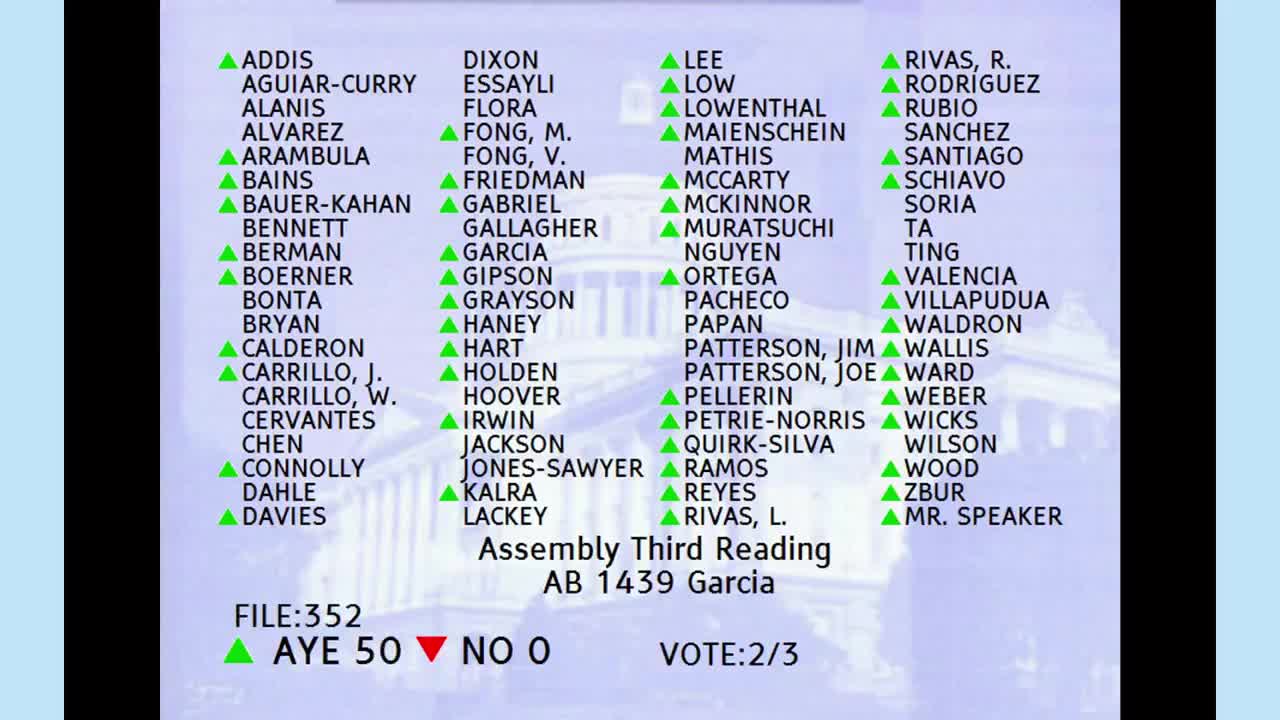 35SEC
Assembly Floor
Bill Author

Bill Co-Author(s):