AB 96: Public employment: local public transit agencies: autonomous transit vehicle technology.
- Session Year: 2023-2024
- House: Assembly
- Latest Version Date: 2023-10-08
Current Status:
Passed
(2023-10-08: Chaptered by Secretary of State - Chapter 419, Statutes of 2023.)
Introduced
In Committee
First Chamber
In Committee
Second Chamber
Enacted
What does this bill do?
The bill requires public transit employers (cities, counties, transit districts and similar agencies) to notify the workforce’s union or bargaining representative at least 10 months before starting a purchasing process to acquire or deploy autonomous vehicle technology that would eliminate jobs. If the union requests it, the employer must promptly negotiate on developing and implementing the technology, a transition plan for affected workers, and training for new roles, and the state labor board (PERB) may hear unfair-practice complaints from covered transit districts about violations.
The summary is provided by generative AI which can make mistakes. For original language, please view the details in the table below.
Existing law creates various transit districts and prescribes requirements applicable to their labor relations, including those that address the recognition and certification of exclusive employee representatives, unit determinations, and procedures for meeting and conferring on matters subject to collective bargaining. Existing law establishes the Public Employment Relations Board (PERB) in state government as a means of resolving disputes and enforcing the statutory duties and rights of specified public employers and employees under various acts regulating collective bargaining. Existing law includes within PERBs jurisdiction the resolution of disputes alleging violation of rules and regulations adopted by a public agency, as defined, concerning unit determinations, representations, recognition, and elections, as specified. Existing law authorizes PERB to adopt rules and regulations to carry out its purposes, as provided. Existing law does not apply the above provisions to employees of specified public transit agencies.
This bill would require a public transit employer, at least 10 months before beginning a procurement process to acquire or deploy any autonomous transit vehicle technology for public transit services that would eliminate job functions or jobs of a workforce, to provide written notice to the exclusive employee representative of the workforce affected by the autonomous transit vehicle technology of its determination to begin that procurement process. The bill would require the public transit employer and exclusive employee representative, upon written request by the exclusive employee representative, to commence collective bargaining within a specified time period on certain subjects, including creating plans to train and prepare the affected workforce to fill new positions created by the autonomous transit vehicle technology. The bill would vest PERB with jurisdiction to process unfair practice charges alleging violations of these provisions, but only as to transit district employers where PERB has jurisdiction to process unfair practice charges. Should an employee organization file an unfair practice charge with PERB, the bill would require PERBs powers and duties to apply, as appropriate, and would require PERBs regulations to apply. The bill would authorize PERB to make additional emergency regulations, as specified.
Existing law creates various transit districts and prescribes requirements applicable to their labor relations, including those that address the recognition and certification of exclusive employee representatives, unit determinations, and procedures for meeting and conferring on matters subject to collective bargaining.
This bill would require a public transit employer, at least 10 months before beginning a procurement process to acquire or deploy any autonomous transit vehicle technology for public transit services that would eliminate job functions or jobs of a workforce, to provide written notice to the exclusive employee representative of the workforce affected by the autonomous transit vehicle technology of its determination to begin that procurement process. The bill would require the public transit employer and exclusive employee representative, upon written request by the exclusive employee representative, to commence collective bargaining within a specified time period on certain subjects, including creating plans to train and prepare the affected workforce to fill new positions created by the autonomous transit vehicle technology.
Existing law creates various transit districts and prescribes requirements applicable to their labor relations, including those that address the recognition and certification of exclusive employee representatives, unit determinations, and procedures for meeting and conferring on matters subject to collective bargaining.
This bill would require a public transit employer employer, at least 10 months before beginning a procurement process to acquire or deploy any autonomous transit vehicle technology for public transit services that would eliminate job functions or jobs of a workforce, to provide written notice to the exclusive employee representative of the workforce affected by the autonomous transit vehicle technology of its determination to begin, or its substantive progress toward initiating, any begin that procurement process or a plan to acquire or deploy any autonomous transit vehicle technology for public transit services that would eliminate job functions or jobs of the workforce to which the autonomous transit vehicle technology applies not less than 12 months before commencing the process, plan, or deployment. The bill would require a public transit employer, upon a written request of the exclusive employee representative, to provide specified information to the exclusive employee representative, including the potential gaps in skills that may result from the new service. process. The bill would require the public transit employer, following the employer and exclusive employee representative, upon written request for information by the exclusive employee representative, and within 30 days of receiving the specified information, to commence collective bargaining within a specified time period on specified certain subjects, including creating plans to train and prepare the affected workforce to fill new positions created by the autonomous transit vehicle technology.
Existing law creates various transit districts and prescribes requirements applicable to their labor relations, including those that address the recognition and certification of exclusive employee representatives, unit determinations, and procedures for meeting and conferring on matters subject to collective bargaining.
This bill would require a public transit employer to provide written notice to the exclusive employee representative of the workforce affected by autonomous transit vehicle technology of its determination to begin, or its substantive progress toward initiating, any procurement process or a plan to acquire or deploy any autonomous transit vehicle technology for public transit services that would eliminate job functions or jobs of the workforce to which the autonomous transit vehicle technology applies not less than 12 months before commencing the process, plan, or deployment. The bill would require a public transit employer, upon a written request of the exclusive employee representative, to provide specified information to the exclusive employee representative, including the potential gaps in skills that may result from the new service. The bill would require the public transit employer, following the written request for information by the exclusive employee representative, and within 30 days of receiving the specified information, to commence collective bargaining on specified subjects, including creating plans to train and prepare the affected workforce to fill new positions created by the autonomous transit vehicle technology.
For the purposes of this chapter:
(a)Autonomous transit vehicle technology means technology that has the capability to drive a vehicle without the active physical control by a human operator.
(b)Plan to acquire or deploy includes any public notification that initiates acquisition or deployment of autonomous transit vehicle technology.
(c)Procurement process means the issuance of a request for proposals, a solicitation of proposals, or a request for quotations.
(d)Public transit employer means any local governmental agency, including any city, county, city and county, special district, transit district, or joint powers authority, that provides public transit services within the state.
(e)Public transit services means the provision of passenger transportation services by the public transit employer to the general public, including paratransit service.
3126.(a)At least 10 months before beginning a procurement process to acquire or deploy any autonomous transit vehicle technology for public transit services that would eliminate job functions or jobs of the workforce, a public transit employer shall notify, in writing, the exclusive employee representative of the workforce affected by the autonomous transit vehicle technology of its determination to begin that procurement process.
(b)Nothing in this section shall supersede the exclusive employee representatives right to disclosure of information by the public transit employer pursuant to the California Public Records Act (Division 10 (commencing with Section 7920.000)).
3127.(a)Upon a written request by the exclusive employee representative, the public transit employer and exclusive employee representative shall commence collective bargaining within 30 days of the exclusive employee representative receiving the notification required by subdivision (a) of Section 3126 or within 10 days of the public transit employer receiving the written request, whichever occurs later.
(b)The exclusive employee representative and the public transit employer shall only bargain over the following subjects, or related mandatory subjects of bargaining:
(1)Developing the new autonomous transit vehicle technology.
(2)Implementing the new autonomous transit vehicle technology.
(3)Creating a transition plan for affected workers.
(4)Creating plans to train and prepare the affected workforce to fill new positions created by a new autonomous transit vehicle technology.
3128.This chapter shall not be construed as creating any labor requirements that are less protective of employees than any labor requirements created pursuant to statute or a collective bargaining agreement.
3129.The provisions of this chapter are severable. If any provision of this chapter or its application is held invalid, the invalidity shall not affect other provisions or applications that can be given effect without the invalid provision or application.
3130.The Public Employment Relations Board shall have jurisdiction to process unfair practice charges alleging violations of this chapter, but only as to transit district employers where the board has jurisdiction to process unfair practice charges. Should an employee organization file an unfair practice charge with the board under this chapter, the powers and duties of the board described in Section 3541.3 shall apply, as appropriate, to this chapter, and the regulations of the board shall apply to this chapter. The board shall perform its duties under this section consistent with its regulations and may make additional regulations. The board may also adopt, amend, or repeal all rules and regulations necessary to carry out this chapter as emergency regulations in accordance with the rulemaking provisions of the Administrative Procedure Act (Chapter 3.5 (commencing with Section 11340) of Part 1 of Division 3 of Title 2). The adoption, amendment, or repeal of regulations pursuant to this section is conclusively presumed to be necessary for the immediate preservation of the public peace, health, safety, or general welfare within the meaning of Section 11346.1.
For the purposes of this chapter:
(a)Autonomous transit vehicle technology means technology that has the capability to drive a vehicle without the active physical control by a human operator.
(b)Plan to acquire or deploy includes any public notification that initiates acquisition or deployment of autonomous transit vehicle technology.
(c)Procurement process means the issuance of a request for proposals, a solicitation of proposals, or a request for quotations.
(d)Public transit employer means any local governmental agency, including any city, county, city and county, special district, transit district, or joint powers authority, that provides public transit services within the state.
(e)Public transit services means the provision of passenger transportation services by the public transit employer to the general public, including paratransit service.
3126.(a)At least 10 months before beginning a procurement process to acquire or deploy any autonomous transit vehicle technology for public transit services that would eliminate job functions or jobs of the workforce, a public transit employer shall notify, in writing, the exclusive employee representative of the workforce affected by the autonomous transit vehicle technology of its determination to begin that procurement process.
(b)Nothing in this section shall supersede the exclusive employee representatives right to disclosure of information by the public transit employer pursuant to the California Public Records Act (Division 10 (commencing with Section 7920.000)).
3127.(a)Upon a written request by the exclusive employee representative, the public transit employer and exclusive employee representative shall commence collective bargaining within 30 days of the exclusive employee representative receiving the notification required by subdivision (a) of Section 3126. 3126 or within 10 days of the public transit employer receiving the written request, whichever occurs later.
(b)The exclusive employee representative and the public transit employer shall only bargain over the following subjects, or related mandatory subjects of bargaining:
(1)Developing the new autonomous transit vehicle technology.
(2)Implementing the new autonomous transit vehicle technology.
(3)Creating a transition plan for affected workers.
(4)Creating plans to train and prepare the affected workforce to fill new positions created by a new autonomous transit vehicle technology.
3128.This chapter shall not be construed as creating any labor requirements that are less protective of employees than any labor requirements created pursuant to statute or a collective bargaining agreement.
3129.The provisions of this chapter are severable. If any provision of this chapter or its application is held invalid, the invalidity shall not affect other provisions or applications that can be given effect without the invalid provision or application.
For the purposes of this chapter:
(a)Autonomous transit vehicle technology means technology that has the capability to drive a vehicle without the active physical control by a human operator.
(b)Plan to acquire or deploy includes any public notification that initiates acquisition or deployment of autonomous transit vehicle technology.
(c)Procurement process means the issuance of a request for proposals, a solicitation of proposals, or a request for quotations.
(d)Public transit employer means any local governmental agency, including any city, county, city and county, special district, transit district, or joint powers authority, that provides public transit services within the state.
(e)Public transit services means the provision of passenger transportation services by the public transit employer to the general public, including paratransit service.
3126.(a)A At least 10 months before beginning a procurement process to acquire or deploy any autonomous transit vehicle technology for public transit services that would eliminate job functions or jobs of the workforce, a public transit employer shall notify, in writing, the exclusive employee representative of the workforce affected by the autonomous transit vehicle technology of its determination to begin, or its substantive progress toward initiating, any procurement process or plan to acquire or deploy any autonomous transit vehicle technology for public transit services as described in subdivision (b) not less than 12 months before commencing the process, plan, or deployment. begin that procurement process.
(b)The notification required by subdivision (a) shall apply to any autonomous transit vehicle technology for public transit services, including automated vehicles, that eliminates job functions or jobs of the workforce to which the autonomous transit vehicle technology will apply.(c)After the notification required by subdivision (a) and upon written request by the exclusive employee representative, the public transit employer, within 15 days of its next regular governing board meeting, shall provide the following information to the exclusive employee representative:(1)A comprehensive analysis of the effects of new products, services, or types of operation on workers, including workers who may not be adequately skilled in their use or may be fully displaced by them.(2)The potential gaps in skills that may result from the new service on the workers to which it will apply.(3)The total amount budgeted for, and descriptions of, training and retraining programs for affected workers.(d)(b)Nothing in this section shall supersede the exclusive employee representatives right to disclosure of information by the public transit employer pursuant to the California Public Records Act (Division 10 (commencing with Section 7920.000)).
3127.(a)Following the Upon a written request by the exclusive employee representative and representative, the public transit employer and exclusive employee representative shall commence collective bargaining within 30 days of the exclusive employee representative receiving the information notification required by subdivision (c) (a) of Section 3126, the public transit employer shall commence collective bargaining. 3126.
(b)The exclusive employee representative and the public transit employer shall only bargain over the following subjects: subjects, or related mandatory subjects of bargaining:
(1)Developing the new autonomous transit vehicle technology.
(2)Implementing the new autonomous transit vehicle technology.
(3)Creating a transition plan for affected workers.
(4)Creating plans to train and prepare the affected workforce to fill new positions created by a new autonomous transit vehicle technology.
3128.This chapter shall not be construed as creating any labor requirements that are less protective of employees than any labor requirements created pursuant to statute or a collective bargaining agreement.
3129.The provisions of this chapter are severable. If any provision of this chapter or its application is held invalid, the invalidity shall not affect other provisions or applications that can be given effect without the invalid provision or application.
For the purposes of this chapter:
(a)Autonomous transit vehicle technology means technology that has the capability to drive a vehicle without the active physical control by a human operator.
(b)Plan to acquire or deploy includes any public notification that initiates acquisition or deployment of autonomous transit vehicle technology.
(c)Procurement process means the issuance of a request for proposals, a solicitation of proposals, or a request for quotations.
(d)Public transit employer means any local governmental agency, including any city, county, city and county, special district, transit district, or joint powers authority, that provides public transit services within the state.
(e)Public transit services means the provision of passenger transportation services by the public transit employer to the general public, including paratransit service.
3126.(a)A public transit employer shall notify, in writing, the exclusive employee representative of the workforce affected by autonomous transit vehicle technology of its determination to begin, or its substantive progress toward initiating, any procurement process or plan to acquire or deploy any autonomous transit vehicle technology for public transit services as described in subdivision (b) not less than 12 months before commencing the process, plan, or deployment.
(b)The notification required by subdivision (a) shall apply to any autonomous transit vehicle technology for public transit services, including automated vehicles, that eliminates job functions or jobs of the workforce to which the autonomous transit vehicle technology will apply.
(c)After the notification required by subdivision (a) and upon written request by the exclusive employee representative, the public transit employer, within 15 days of its next regular governing board meeting, shall provide the following information to the exclusive employee representative:
(1)A comprehensive analysis of the effects of new products, services, or types of operation on workers, including workers who may not be adequately skilled in their use or may be fully displaced by them.
(2)The potential gaps in skills that may result from the new service on the workers to which it will apply.
(3)The total amount budgeted for, and descriptions of, training and retraining programs for affected workers.
(d)Nothing in this section shall supersede the exclusive employee representatives right to disclosure of information by the public transit employer pursuant to the California Public Records Act (Division 10 (commencing with Section 7920.000)).
3127.(a)Following the written request by the exclusive employee representative and within 30 days of the exclusive employee representative receiving the information required by subdivision (c) of Section 3126, the public transit employer shall commence collective bargaining.
(b)The exclusive employee representative and the public transit employer shall bargain over the following subjects:
(1)Developing the new autonomous transit vehicle technology.
(2)Implementing the new autonomous transit vehicle technology.
(3)Creating a transition plan for affected workers.
(4)Creating plans to train and prepare the affected workforce to fill new positions created by a new autonomous transit vehicle technology.
3128.This chapter shall not be construed as creating any labor requirements that are less protective of employees than any labor requirements created pursuant to statute or a collective bargaining agreement.
3129.The provisions of this chapter are severable. If any provision of this chapter or its application is held invalid, the invalidity shall not affect other provisions or applications that can be given effect without the invalid provision or application.
|
Date
|
Status
|
|---|---|
| Oct 8, 2023 | Chaptered by Secretary of State - Chapter 419, Statutes of 2023. |
| Oct 8, 2023 | Approved by the Governor. |
| Sep 21, 2023 | Enrolled and presented to the Governor at 3:30 p.m. |
| Sep 14, 2023 | Senate amendments concurred in. To Engrossing and Enrolling. (Ayes 63. Noes 12. Page 3615.). |
| Sep 14, 2023 | In Assembly. Concurrence in Senate amendments pending. |
| Sep 14, 2023 | Assembly Rule 63 suspended. (Page 3614.) |
| Sep 14, 2023 | Read third time. Passed. Ordered to the Assembly. (Ayes 31. Noes 8. Page 2821.). |
| Sep 13, 2023 | Read second time. Ordered to third reading. |
| Sep 12, 2023 | From committee: Be ordered to second reading pursuant to Senate Rule 28.8. |
| Sep 7, 2023 | Read second time. Ordered to third reading. |
| Sep 7, 2023 | Re-referred to Com. on APPR pursuant to Joint Rule 10.5. |
| Sep 6, 2023 | Read third time and amended. Ordered to second reading. |
| Jun 15, 2023 | Read second time and amended. Ordered to third reading. |
| Jun 14, 2023 | From committee: Amend, and do pass as amended. (Ayes 4. Noes 1.) (June 14). |
| May 17, 2023 | Referred to Com. on L., P.E. & R. |
| May 9, 2023 | In Senate. Read first time. To Com. on RLS. for assignment. |
| May 8, 2023 | Read third time. Passed. Ordered to the Senate. (Ayes 56. Noes 10. Page 1482.) |
| May 1, 2023 | Read third time and amended. Ordered to third reading. (Page 1406.) |
| Mar 23, 2023 | Read second time. Ordered to third reading. |
| Mar 22, 2023 | From committee: Do pass. (Ayes 5. Noes 0.) (March 22). |
| Jan 30, 2023 | Re-referred to Com. on P.E. & R. pursuant to Assembly Rule 96. |
| Jan 26, 2023 | Referred to Com. on L. & E. |
| Jan 10, 2023 | From printer. May be heard in committee February 9. |
| Jan 9, 2023 | Read first time. To print. |
|
Date
|
Description
|
Location
|
Votes
|
|
|---|---|---|---|---|
| Sep 14, 2023 | AB 96 KALRA Concurrence in Senate Amendments | Assembly Floor |
Passed |
|
| Sep 14, 2023 | Assembly 3rd Reading AB96 Kalra By Gonzalez | Senate Floor |
Passed |
|
| Jun 14, 2023 | Do pass as amended | Senate Standing Committee on Labor, Public Employment and Retirement |
Passed |
|
| May 8, 2023 | AB 96 Kalra Assembly Third Reading | Assembly Floor |
Passed |
|
| Mar 22, 2023 | Do pass. | Assembly Standing Committee on Public Employment and Retirement |
Passed |
This list shows positions taken on this bill by organizations on the date displayed, which is linked to the original source.
Positions by individuals are not included.
|
Organization
|
Position
|
Date
|
|---|---|---|
| Amalgamated Transit Union | * Support | Jun 14, 2023 |
| American Federation Of State, County And Municipal Employees, Afl-Cio | ** Support | |
| Autonomous Vehicle Industry Association | ** Against | |
| California Conference Board Of The Amalgamated Transit Union | ** Support | |
| California Labor Federation, Afl-Cio | ** Support | |
| California Nurses Association | ** Support | |
| California School Employees Association | ** Support | |
| California Teamsters Public Affairs Council | ** Support | |
| California Transit Association | * Against Unless Amend | Mar 22, 2023 |
| Contra Costa County Transportation Authority | * Against | Mar 22, 2023 |
| International Union of Operating Engineers | * Support | Jun 14, 2023 |
| Jobs Move America | * Support | Jun 14, 2023 |
| San Francisco State University | * Support | Mar 22, 2023 |
| SEIU California | * Support | Mar 22, 2023 |
| SMART Transportation Division | * Support | Jun 14, 2023 |
| Smart Transportation Union, Local 1201 | * Support | Jun 14, 2023 |
| State Building and Construction Trades Council of California | ** Support | |
| The California State Legislative Board of the Sheet Metal, Air, Rail and Transportation Workers – Transportation Division | ** Support |
(Without Reference to File)
CONCURRENCE IN SENATE AMENDMENTS
CSA1 Bill Id:AB 96
Author:(Kalra)
As Amended Ver:September 6, 2023
Majority vote
SUMMARY
Requires a public transit employer to provide written notice to an exclusive representative of the workforce affected by autonomous transit vehicle technology, and that collective bargaining commence within a certain timeframe, among other provisions.
Senate Amendments
- Require, upon a written request by the union, that the public transit employer and the union commence collective bargaining within 30 days of the union's receipt of the notice by the employer of its intention to begin the procurement process or within 10 days of the public transit employer receiving the written request, whichever occurs later.
As previously passed by the Assembly, this bill only required collective bargaining to commence within 30 days of the exclusive employee representative receiving the notification from the public transit employer.
- Vest the Public Employment Relations Board (PERB) with jurisdiction to process allegations of unfair practice violations relating to these provisions; limit its jurisdiction to those public transit district employers in which the PERB's powers and duties already apply, as appropriate; require that the PERB's regulations apply; and, authorize the PERB to make additional emergency regulations, as provided.
COMMENTS
- Background: Public Transit District Employer-Employee Relations
As to public employer-employee relations, many public transit districts are not subject to a common statutory framework or an administrative agency that has jurisdiction over the conduct of employer-employee relations. The governance of these relations for some are embedded in the Public Utilities Code; whereas, the Meyers-Milias-Brown Act (MMBA) governing local public employer-employee relations may apply to others, or these relations are stipulated in joint powers agreements or articles of incorporation.
- This Bill
While technological advances may bring improvements and efficiencies to the provision of public transit services, such technology also may supplant certain employees, positions, or jobs. In addition, certain (but not all) technologies may also require that employers hire employees, and/or that employees be trained in the use and maintenance of the technology.
This bill prescribes that certain information be provided by a public transit district employer to an exclusive employee representative and includes provisions relating to collective bargaining that generally involve the development and implementation of autonomous transit vehicle technology, the creation of a transition plan for affected workers, and creation of plans to train and prepare such workers to fill new positions created by such technology. Further, it vests the PERB with jurisdiction over these matters, but limits its powers and duties to apply only to those public transit district employers in which the PERB has jurisdiction.
This bill does not foreclose a public transit district from procuring, acquiring, or deploying use of autonomous transit vehicle technology. Rather, it resolves to allow employees, through their exclusive representative, the ability to provide input regarding such technology via the collective bargaining process.
- Equity Solutions and Maximizing Benefits for Underserved and Marginalized Communities
Pursuant to HR 39 (Gipson) of 2021, to continue the Assembly's commitment to investing in equity solutions and maximizing benefits for underserved and marginalized communities, legislative analyses of the Assembly must discuss the equity impact that a bill will, or may, have on such communities, if any.
This bill does not present a particular focus towards addressing equity in relation to maximizing benefits for underserved or marginalized communities as articulated in HR 39. However, under a broader context, the author asserts that, "[t]his bill would preserve union jobs and helping [individuals] stay in a good job with benefits and access to collective bargaining can help build up more equitable communities."
- Please see the policy committee analysis for a full discussion of this bill.
According to the Author
"There are no existing protections for transit workers who face displacement with the implementation of autonomous driving technology. Autonomous technologies that may displace workers are enticing to transit agencies as it would allow them to save money on labor costs. Transit employees play a critical role in facilitating a safe and smooth passenger experience for commuters and passengers across the state. In fulfilling non-driving responsibilities, workers can increase accessibility for riders with disabilities, elderly riders, riders who speak other languages, and even younger riders.
"As technology continues to advance, we do not need to leave workers behind. Workers deserve a seat at the table when it comes to major changes in their workplace. [This bill] will put workers and riders' safety at the forefront of transitions to the future of work with autonomous technology in public transit."
Arguments in Support
The California Teamsters Public Affairs Public Affairs Council states in part that, "[This bill] is a comprehensive measure meant to restore and protect transit workers' voice in the implementation of new transit service, including automated vehicles. Regrettably, public transit employers have already begun to earmark dollars or show interest in the implementation of services that displace career-sustaining jobs across the industry. These new technologies may cut labor costs in the short term but fail to recognize the importance transit employees play in facilitating a safe and smooth passenger experience for commuters and passengers across the state."
Arguments in Opposition
Among other things, the Automated Vehicle Industry Association states that, "[a]s recognized by the Newsom Administration in vetoing this exact bill last year, the bill would impose onerous requirements on transit agencies that would delay the rollout of autonomous vehicles ("AV") for use in public transit, and by doing so, would deny Californians the substantial transit-related benefits offered by AVs. In addition, we believe enactment of his bill will threaten California transit agencies' ability to compete for federal and state funding that value innovative solutions, particularly in serving vulnerable and/or underserved populations."
FISCAL COMMENTS
This bill was passed by the Senate Appropriations Committee pursuant to Senate Rule 28.8.
VOTES:
ASM PUBLIC EMPLOYMENT AND RETIREMENT: 5-0-2
YES: McKinnor, Addis, Haney, Stephanie Nguyen, Schiavo
ABS, ABST OR NV: Lackey, Alanis
ASSEMBLY FLOOR: 56-10-14
YES: Addis, Aguiar-Curry, Alvarez, Bains, Bauer-Kahan, Bennett, Berman, Boerner, Bonta, Bryan, Calderon, Wendy Carrillo, Connolly, Davies, Mike Fong, Friedman, Gabriel, Garcia, Gipson, Grayson, Haney, Holden, Irwin, Jackson, Jones-Sawyer, Kalra, Low, Lowenthal, Maienschein, McKinnor, Muratsuchi, Stephanie Nguyen, Pacheco, Papan, Pellerin, Petrie‑Norris, Quirk-Silva, Ramos, Reyes, Luz Rivas, Robert Rivas, Rodriguez, Blanca Rubio, Santiago, Schiavo, Soria, Ting, Valencia, Villapudua, Waldron, Weber, Wicks, Wilson, Wood, Zbur, Rendon
NO: Megan Dahle, Dixon, Essayli, Flora, Vince Fong, Gallagher, Hoover, Mathis, Joe Patterson, Sanchez
ABS, ABST OR NV: Alanis, Arambula, Juan Carrillo, Cervantes, Chen, Hart, Lackey, Lee, McCarty, Ortega, Jim Patterson, Ta, Wallis, Ward
UPDATED
VERSION: September 6, 2023
CONSULTANT: Michael Bolden / P. E. & R. / (916) 319-3957 FN: 0002430
SENATE RULES COMMITTEE Office of Senate Floor Analyses (916) 651-1520 Fax: (916) 327-4478 | AB 96 |
THIRD READING
Bill No: AB 96
Author: Kalra (D)
Amended: 9/6/23 in Senate
Vote: 21
SENATE LABOR, PUB. EMP. & RET. COMMITTEE: 4-1, 6/14/23
AYES: Cortese, Durazo, Laird, Smallwood-Cuevas
NOES: Wilk
SENATE APPROPRIATIONS COMMITTEE: Senate Rule 28.8
ASSEMBLY FLOOR: 56-10, 5/8/23 - See last page for vote
SUBJECT: Public employment: local public transit agencies: autonomous transit vehicle technology
SOURCE: California Conference Board of the Amalgamated Transit Union
California Labor Federation, AFL-CIO
California State Legislative Board of the Sheet Metal, Air, Rail and Transportation Workers – Transportation Division
California Teamsters Public Affairs Council
DIGEST:
This bill requires public transit districts to notify, in writing, their employees’ unions of the district’s intention to begin any procurement process to acquire or deploy any autonomous transit vehicle technology for public transit services that would eliminate job functions or jobs of the workforce at least 10 months before beginning that procurement process.
Senate Floor Amendments of 9/6/23:
- Clarify that the Public Employment Relations Board (PERB) has jurisdiction to process unfair practice charges (ULPs) alleging violations of this bill’s provisions but only at transit districts where it has jurisdiction to process ULPs.
- Provide that PERB’s statutory and regulatory powers and duties shall apply, as appropriate, if a union files a ULP charge under this bill’s provisions.
- Require PERB to perform its duties under the bill consistent with its regulations; authorizes PERB to make additional regulations; and authorizes PERB to adopt, amend, or repeal all rules and regulations necessary to carry out this bill’s provisions as emergency regulations.
- Provide that PERB’s adoption, amendment, or repeal of regulations pursuant to the bill’s provisions, as specified, is conclusively presumed to be necessary for the immediate preservation of the public peace, health, safety, or general welfare.
ANALYSIS:
Existing law:
- Establishes transit districts pursuant to various sections of the Public Utilities Code (PUC) for the purposes of providing public transportation services. However, cities, counties, and other local governmental entities may also establish transit agencies pursuant to their local authority under the Government Code or local charter. (PUC §§ 24501 through §§ 107025).
- Governs collective bargaining in the private sector under the federal National Labor Relations Act (NLRA) but leaves to the states the regulation of collective bargaining in their respective public sectors. While the NLRA and the decisions of its National Labor Relations Board (NLRB) often provide persuasive precedent in interpreting state collective bargaining law, public employees generally have no collective bargaining rights absent specific statutory authority establishing those rights. (29 United State Code § 151 et seq.)
- Provides several statutory frameworks under California law to provide public employees collective bargaining rights, govern public employer-employee relations, and limit labor strife and economic disruption in the public sector through a reasonable method of resolving disputes regarding wages, hours and other terms and conditions of employment between public employers and recognized public employee organizations or their exclusive representatives. These include the Meyers-Milias-Brown Act (MMBA) which provides for public employer-employee relations between local government employers and their employees, including some, but not all public transit districts. (Government Code § 3500 et seq.)
- Establishes the Public Employment Relations Board (PERB), a quasi-judicial administrative agency charged with administering certain statutory frameworks governing employer-employee relations, resolving disputes, and enforcing the statutory duties and rights of public agency employers and employee organizations, but provides the City and County of Los Angeles, respectively, local alternatives to PERB oversight. (GC § 3541)
- Does not cover California’s public transit districts by a common collective bargaining statute. Instead, while some transit agencies are subject to the MMBA, many transit agencies are instead still subject to labor relations provisions found in each district’s specific PUC enabling statute, in joint powers agreements, or in articles of incorporation and bylaws. (e.g., Public Utilities Code § 28500)
- Provides transit employees not under the MMBA with basic rights to organization and representation, but does not define or prohibit unfair labor practices. Unlike other California public agencies and employees, these transit agencies and their employees generally rely upon the courts to remedy alleged violations unless otherwise provided in their enabling statute. Additionally, they may be subject to provisions of the federal Labor Management Relations Act of 1947 (Taft-Hartley) and the 1964 Urban Mass Transit Act, now known as the Federal Transit Act. (PUC § 24501 et seq.; 49 United State Code § 5333 (b) )
- Provides that the following provisions shall govern disputes between exclusive bargaining representatives of public transit employees and local agencies not covered by the MMBA:
- The disputes shall not be subject to any fact-finding procedure otherwise provided by law.
- Each party shall exchange contract proposals not less than 90 days before the expiration of a contract, and shall be in formal collective bargaining not less than 60 days before that expiration.
- Each party shall supply to the other party all reasonable data as requested by the other party.
- At the request of either party to a dispute, a conciliator from the California State Mediation and Conciliation Service shall be assigned to mediate the dispute and shall have access to all formal negotiations. (GC § 3611).
This bill:
- Requires public transit districts to notify, in writing, their employees’ unions of the district’s intention to begin any procurement process to acquire or deploy any autonomous transit vehicle technology for public transit services that would eliminate job functions or jobs of the workforce at least 10 months before beginning that procurement process.
- Provides that this bill’s notification requirement does not supersede the union’s right to disclosure of information by the public transit employer pursuant to the California Public Records Act (Division 10 (commencing with Section 7920.000)).
- Requires, upon a written request by the union, that the public transit employer and the union commence collective bargaining within 30 days of the union’s receipt of the notice by the employer of its intention to begin the procurement process or within 10 days of the public transit employer receiving the written request, whichever occurs later.
- Requires the union and the public transit employer to only bargain over the following subjects, or related mandatory subjects of bargaining:
- Developing the new autonomous transit vehicle technology.
- Implementing the new autonomous transit vehicle technology.
- Creating a transition plan for affected workers.
- Creating plans to train and prepare the affected workforce to fill new positions created by a new autonomous transit vehicle technology.
- Makes the following definitions:
- “Autonomous transit vehicle technology” means technology that has the capability to drive a vehicle without the active physical control by a human operator.
- “Plan to acquire or deploy” includes any public notification that initiates acquisition or deployment of autonomous transit vehicle technology.
- “Procurement process” means the issuance of a request for proposals, a solicitation of proposals, or a request for quotations.
- “Public transit employer” means any local governmental agency, including any city, county, city and county, special district, transit district, or joint powers authority, that provides public transit services within the state.
- “Public transit services” means the provision of passenger transportation services by the public transit employer to the general public, including paratransit service.
- Specifies that this bill’s provisions shall not be construed as creating any labor requirements that are less protective of employees than any labor requirements created pursuant to statute or a collective bargaining agreement.
- Makes this bill’s provisions severable and provides that if any provision or its application is held invalid, the invalidity shall not affect other provisions or applications that can be given effect without the invalid provision or application.
- Limits PERB’s jurisdiction to process unfair practice charges (ULPs) alleging violations of this bill’s provisions only to transit districts where it has jurisdiction to process ULPs.
- Applies PERB’s statutory and regulatory powers and duties, as appropriate, if a union files a ULP charge under this bill’s provisions.
- Requires PERB to perform its duties under this bill consistent with its regulations; authorizes PERB to make additional regulations; and authorizes PERB to adopt, amend, or repeal all rules and regulations necessary to carry out this bill’s provisions as emergency regulations.
- Provides that PERB’s adoption, amendment, or repeal of regulations pursuant to this bill’s provisions, as specified, is conclusively presumed to be necessary for the immediate preservation of the public peace, health, safety, or general welfare.
Comments
Need for this bill? According to the author, “There are no existing protections for transit workers who face displacement with the implementation of autonomous driving technology. Autonomous technologies that may displace workers are enticing to transit agencies as it would allow them to save money on labor costs. Transit employees play a critical role in facilitating a safe and smooth passenger experience for commuters and passengers across the state. In fulfilling non-driving responsibilities, workers can increase accessibility for riders with disabilities, elderly riders, riders who speak other languages, and even younger riders.
“As technology continues to advance, we do not need to leave workers behind. Workers deserve a seat at the table when it comes to major changes in their workplace. AB 96 will put workers and riders’ safety at the forefront of transitions to the future of work with autonomous technology in public transit.”
Related/Prior Legislation
AB 2441 (Kalra, 2022) would have required a public transit district to provide notice 12 months before "any plan to acquire or deploy" new autonomous transit vehicle technology and negotiate with employee representatives before deploying such technology. The Governor vetoed the bill.
FISCAL EFFECT: Appropriation: No Fiscal Com.: Yes Local: No
SUPPORT: (Verified 9/7/23)
California Conference Board of the Amalgamated Transit Union (co-source)
California Labor Federation, AFL-CIO (co-source)
California State Legislative Board of the Sheet Metal, Air, Rail and Transportation Workers – Transportation Division (co-source)
California Teamsters Public Affairs Council (co-source)
American Federation of State, County and Municipal Employees, AFL-CIO
California Nurses Association
California School Employees Association
State Building and Construction Trades Council of California
OPPOSITION: (Verified 9/7/23)
Autonomous Vehicle Industry Association
ARGUMENTS IN SUPPORT: According to the California Teamsters Public Affairs Council, “AB 96 is a comprehensive measure meant to restore and protect transit workers’ voice in the implementation of new transit service, including automated vehicles. Regrettably, public transit employers have already begun to earmark dollars or show interest in the implementation of services that displace career-sustaining jobs across the industry. These new technologies may cut labor costs in the short term but fail to recognize the importance transit employees play in facilitating a safe and smooth passenger experience for commuters and passengers across the state.”
ARGUMENTS IN OPPOSITION: According the Automated Vehicle Industry Association, “As recognized by the Newsom Administration in vetoing this exact bill last year, the bill would impose onerous requirements on transit agencies that would delay the rollout of autonomous vehicles (“AV”) for use in public transit, and by doing so, would deny Californians the substantial transit-related benefits offered by AVs. In addition, we believe enactment of his bill will threaten California transit agencies’ ability to compete for federal and state funding that value innovative solutions, particularly in serving vulnerable and/or underserved populations. For these reasons, we encourage the Committee to vote against the bill.”
ASSEMBLY FLOOR: 56-10, 5/8/23
AYES: Addis, Aguiar-Curry, Alvarez, Bains, Bauer-Kahan, Bennett, Berman, Boerner, Bonta, Bryan, Calderon, Wendy Carrillo, Connolly, Davies, Mike Fong, Friedman, Gabriel, Garcia, Gipson, Grayson, Haney, Holden, Irwin, Jackson, Jones-Sawyer, Kalra, Low, Lowenthal, Maienschein, McKinnor, Muratsuchi, Stephanie Nguyen, Pacheco, Papan, Pellerin, Petrie-Norris, Quirk-Silva, Ramos, Reyes, Luz Rivas, Robert Rivas, Rodriguez, Blanca Rubio, Santiago, Schiavo, Soria, Ting, Valencia, Villapudua, Waldron, Weber, Wicks, Wilson, Wood, Zbur, Rendon
NOES: Megan Dahle, Dixon, Essayli, Flora, Vince Fong, Gallagher, Hoover, Mathis, Joe Patterson, Sanchez
NO VOTE RECORDED: Alanis, Arambula, Juan Carrillo, Cervantes, Chen, Hart, Lackey, Lee, McCarty, Ortega, Jim Patterson, Ta, Wallis, Ward
Prepared by: Glenn Miles / L., P.E. & R. / (916) 651-1556
9/12/23 18:48:07
SENATE COMMITTEE ON LABOR, PUBLIC EMPLOYMENT AND RETIREMENT
Senator Dave Cortese, Chair
2023 - 2024 Regular
Bill No: AB 96 Hearing Date: June 14, 2023
Author: | Kalra | ||
Version: | May 1, 2023 | ||
Urgency: | No | Fiscal: | No |
Consultant: | Glenn Miles | ||
SUBJECT: Public employment: local public transit agencies: autonomous transit vehicle technology
KEY ISSUE
Should the Legislature require public transit districts to notify, in writing, their employees’ unions of the district’s intention to begin any procurement process to acquire or deploy any autonomous transit vehicle technology for public transit services that would eliminate job functions or jobs of the workforce at least 10 months before beginning that procurement process?
ANALYSIS
Existing law:
- Establishes transit districts pursuant to various sections of the Public Utilities Code (PUC) for the purposes of providing public transportation services. However, cities, counties, and other local governmental entities may also establish transit agencies pursuant to their local authority under the Government Code or local charter. (PUC §§ 24501 through §§ 107025).
- Governs collective bargaining in the private sector under the federal National Labor Relations Act (NLRA) but leaves to the states the regulation of collective bargaining in their respective public sectors. While the NLRA and the decisions of its National Labor Relations Board (NLRB) often provide persuasive precedent in interpreting state collective bargaining law, public employees generally have no collective bargaining rights absent specific statutory authority establishing those rights. (29 United State Code § 151 et seq.)
- Provides several statutory frameworks under California law to provide public employees collective bargaining rights, govern public employer-employee relations, and limit labor strife and economic disruption in the public sector through a reasonable method of resolving disputes regarding wages, hours and other terms and conditions of employment between public employers and recognized public employee organizations or their exclusive representatives. These include the Meyers-Milias-Brown Act (MMBA) which provides for public employer-employee relations between local government employers and their employees, including some, but not all public transit districts. (Government Code § 3500 et seq.)
- Establishes the Public Employment Relations Board (PERB), a quasi-judicial administrative agency charged with administering certain statutory frameworks governing employer-employee relations, resolving disputes, and enforcing the statutory duties and rights of public agency employers and employee organizations, but provides the City and County of Los Angeles, respectively, local alternatives to PERB oversight. (GC § 3541)
- Does not cover California’s public transit districts by a common collective bargaining statute. Instead, while some transit agencies are subject to the MMBA, many transit agencies are instead still subject to labor relations provisions found in each district’s specific PUC enabling statute, in joint powers agreements, or in articles of incorporation and bylaws. (e.g., Public Utilities Code § 28500)
- Provides transit employees not under the MMBA with basic rights to organization and representation, but does not define or prohibit unfair labor practices. Unlike other California public agencies and employees, these transit agencies and their employees generally rely upon the courts to remedy alleged violations unless otherwise provided in their enabling statute. Additionally, they may be subject to provisions of the federal Labor Management Relations Act of 1947 (Taft-Hartley) and the 1964 Urban Mass Transit Act, now known as the Federal Transit Act. (PUC § 24501 et seq.; 49 United State Code § 5333 (b) )
- Provides that the following provisions shall govern disputes between exclusive bargaining representatives of public transit employees and local agencies not covered by the MMBA:
(a) The disputes shall not be subject to any fact-finding procedure otherwise provided by law.
(b) Each party shall exchange contract proposals not less than 90 days before the expiration of a contract, and shall be in formal collective bargaining not less than 60 days before that expiration.
(c) Each party shall supply to the other party all reasonable data as requested by the other party.
(d) At the request of either party to a dispute, a conciliator from the California State Mediation and Conciliation Service shall be assigned to mediate the dispute and shall have access to all formal negotiations. (GC § 3611).
This bill:
- Requires public transit districts to notify, in writing, their employees’ unions of the district’s intention to begin any procurement process to acquire or deploy any autonomous transit vehicle technology for public transit services that would eliminate job functions or jobs of the workforce at least 10 months before beginning that procurement process.
- Provides that the bill’s notification requirement does not supersede the union’s right to disclosure of information by the public transit employer pursuant to the California Public Records Act (Division 10 (commencing with Section 7920.000)).
- Requires, upon a written request by the union, that the public transit employer and the union commence collective bargaining within 30 days of the union’s receipt of the notice by the employer of its intention to begin the procurement process.
- Requires the union and the public transit employer to only bargain over the following subjects, or related mandatory subjects of bargaining:
- Developing the new autonomous transit vehicle technology.
- Implementing the new autonomous transit vehicle technology.
- Creating a transition plan for affected workers.
- Creating plans to train and prepare the affected workforce to fill new positions created by a new autonomous transit vehicle technology.
- Makes the following definitions:
- “Autonomous transit vehicle technology” means technology that has the capability to drive a vehicle without the active physical control by a human operator.
- “Plan to acquire or deploy” includes any public notification that initiates acquisition or deployment of autonomous transit vehicle technology.
- “Procurement process” means the issuance of a request for proposals, a solicitation of proposals, or a request for quotations.
- “Public transit employer” means any local governmental agency, including any city, county, city and county, special district, transit district, or joint powers authority, that provides public transit services within the state.
- “Public transit services” means the provision of passenger transportation services by the public transit employer to the general public, including paratransit service.
- Specifies that the bill’s provisions shall not be construed as creating any labor requirements that are less protective of employees than any labor requirements created pursuant to statute or a collective bargaining agreement.
- Makes the bill’s provisions severable and provides that if any provision or its application is held invalid, the invalidity shall not affect other provisions or applications that can be given effect without the invalid provision or application.
COMMENTS
1. Need for this bill?
According to the author,
“There are no existing protections for transit workers who face displacement with the implementation of autonomous driving technology. Autonomous technologies that may displace workers are enticing to transit agencies as it would allow them to save money on labor costs. Transit employees play a critical role in facilitating a safe and smooth passenger experience for commuters and passengers across the state. In fulfilling non-driving responsibilities, workers can increase accessibility for riders with disabilities, elderly riders, riders who speak other languages, and even younger riders.”
“As technology continues to advance, we do not need to leave workers behind. Workers deserve a seat at the table when it comes to major changes in their workplace. AB 96 will put workers and riders’ safety at the forefront of transitions to the future of work with autonomous technology in public transit.”
2. Committee Recommended Amendments
The bill language creates confusion regarding the timing between when the union can request bargaining over the employer’s intent to begin a procurement process and when the bargaining must commence. The committee recommends the following amendment:
3127. (a) Upon a written request by the exclusive employee representative, the public transit employer and exclusive employee representative shall commence collective bargaining
within 30 days of the exclusive employee representative receiving the notification required by subdivision (a) of Section 3126 or within 10 days of the public transit employer receiving the written request, whichever occurs later.
3. Proponent Arguments
According to the California Teamsters Public Affairs Council,
“AB 96 is a comprehensive measure meant to restore and protect transit workers’ voice in the implementation of new transit service, including automated vehicles. Regrettably, public transit employers have already begun to earmark dollars or show interest in the implementation of services that displace career-sustaining jobs across the industry. These new technologies may cut labor costs in the short term but fail to recognize the importance transit employees play in facilitating a safe and smooth passenger experience for commuters and passengers across the state.”
4. Opponent Arguments:
According the Automated Vehicle Industry Association,
“As recognized by the Newsom Administration in vetoing this exact bill last year, the bill would impose onerous requirements on transit agencies that would delay the rollout of autonomous vehicles (“AV”) for use in public transit, and by doing so, would deny Californians the substantial transit-related benefits offered by AVs. In addition, we believe enactment of his bill will threaten California transit agencies’ ability to compete for federal and state funding that value innovative solutions, particularly in serving vulnerable and/or underserved populations. For these reasons, we encourage the Committee to vote against the bill.”
5. Prior Legislation:
AB 2441 (Kalra) would have required a public transit district to provide notice 12 months before "any plan to acquire or deploy" new autonomous transit vehicle technology and negotiate with employee representatives before deploying such technology. The Governor vetoed the bill.
SUPPORT
California Conference Board of the Amalgamated Transit Union (Co-sponsor)
California Labor Federation, AFL-CIO (Co-sponsor)
California Teamsters Public Affairs Council (Co-sponsor)
The California State Legislative Board of the Sheet Metal, Air, Rail and Transportation Workers – Transportation Division (SMART-TD) (Co-Sponsor)
American Federation of State, County and Municipal Employees, AFL-CIO
California Nurses Association
California School Employees Association
OPPOSITION
Autonomous Vehicle Industry Association
-- END --
ASSEMBLY THIRD READING
ATR Bill Id:AB 96
Author:(Kalra)
As Amended Ver:May 1, 2023
Majority vote
SUMMARY
Requires a public transit district to provide written notice to an exclusive representative of the workforce affected by autonomous transit vehicle technology, among other provisions.
Major Provisions
- Require a public transit employer, at least 10 months before beginning a procurement process to acquire or deploy any autonomous vehicle technology for public transit services that would eliminate job functions or jobs of a workforce, to provide written notice to the exclusive representative of the workforce affected by the technology of its determination to begin that procurement process.
- Require, upon written request by the exclusive representative, the public transit employer and exclusive representative to commence collective bargaining within 30 days of the exclusive representative receiving the aforementioned written notice; however, collective bargaining is limited to the following subjects, or related mandatory subjects of bargaining:
- Developing and implementing the new autonomous transit vehicle technology, and
- Creating plans to train and prepare the affected workforce to fill new positions created by a new autonomous transit vehicle technology.
- Expressly establish that these provisions must not be construed to create any labor requirements that are less protective of employees than other labor requirements created pursuant to a collective bargaining agreement.
- Expressly establish that these provisions must not supersede the rights of an exclusive representative to the disclosure of information by a public transit employer pursuant to the California Public Records Act, as provided.
- Include a severability clause to shield otherwise valid provisions from becoming invalid.
- Define several terms for these purposes.
COMMENTS
- Technology and Public Transit Districts: Employer-Employee Common Interests: Harmonious Relations
This bill prescribes that certain specified information be provided by a public transit employer to an employee organization and includes provisions relating to collective bargaining that generally involve the development and implementation of autonomous transit vehicle technology, the creation of a transition plan for affected workers, and creation of plans to train and prepare such workers to fill new positions created by such technology. While technological advances may bring improvements and efficiencies to the provision of public transit services, certain (but not all) technologies may also require that employers hire employees, employees be trained in the use of the technology, or the technology may supplant employees.
Many public transit districts are not subject to a common statutory scheme or an administrative agency that has jurisdiction over the conduct of employer-employee relations. The governance of these relations for some are embedded in the P.U.C., whereas, the Meyers-Milias-Brown Act (MMBA) governing local public employer-employee relations may apply to others, or relations are stipulated in joint powers agreements or articles of incorporation.
This bill does not foreclose a public transit district from procuring, acquiring, or deploying use of autonomous transit vehicle technology. Rather, this bill resolves to allow employees, through their exclusive representative, the ability to have input, through receipt of written receipt of information from the employer and the collective bargaining process, regarding such technology, as provided.
- Please see the policy committee analysis for a full discussion of this bill.
According to the Author
"As technology continues to advance, we do not need to leave workers behind. Workers deserve a seat at the table when it comes to major changes in their workplace. [This bill] will put workers and riders' safety at the forefront of transitions to the future of work with autonomous technology in public transit."
Arguments in Support
The California Teamsters Public Affairs Council (Teamsters) states in part that, "[This bill] is a comprehensive measure meant to restore and protect transit workers' voice in the implementation of new transit services, including automated vehicles. Regrettably, public transit employers have already begun to earmark dollars or show interest in the implementation of services that displace career-sustaining jobs across the country. These new technologies may cut costs in the short term, but fail to recognize the importance [that] transit employees play in facilitating a safe and smooth passenger experience for commuters and passengers across the state." In addition, "[m]ost recently, we have seen the necessity of transit employees in the face of a growing number of environmental disasters fueled by climate change. Just recently, workers at MTA in New York City helped evacuate passengers stranded by flash flooding during Hurricane Ida. Without a human operator on board, one can only imagine the chaos that would have ensued during a storm that took the lives of 20 residents of the city."
The California State Legislative Board of the SMART Transportation Division states in part that, "[w]e believe that workers deserve a voice in how new technologies are implemented in the transit industry. New technologies should assist workers in providing a better overall transit service, not replace them. The requirements in this bill will put workers and riders' safety at the forefront of transitions to the future work with autonomous technology in public transit."
The American Federation of State, County and Municipal Employees (AFSCME), AFL-CIO, and the California Labor Federation, AFL-CIO, express statements similar to those of the Teamsters.
Arguments in Opposition
Registering a position of "oppose, unless amended" on this bill, the California Transit Association states in part that, "[w]e understand the bill is an effort to require notification and potentially bargaining prior to the deployment of autonomous vehicles if the technology would pose workforce impacts. As we have maintained since 2022, this bill is premature and unnecessary for two key reasons: 1) a lengthy regulatory process at the Department of Motor Vehicles to permit the use of heavy-duty autonomous transit vehicles has not been conducted and is needed before transit agencies could consider procuring such vehicles; and 2) transit agencies routinely engage in collective bargaining with their employees and the Association believes that how employees are managed vis-à-vis autonomous vehicle deployment would be subject to those processes moving forward.
"In addition to the lack of a regulatory path forward, it is worth noting again that there have been only a few nascent pilots of small-scale autonomous shuttles at business parks or for first-/last-mile connections on closed campuses. None of these have displaced workers and agencies do not currently have plans to procure autonomous vehicles that would replace existing service."
The California Transit Associations further states that, "[the MMBA] already requires that transit employers 'meet and confer in good faith regarding wages, hours, and other terms and conditions of employment' and that both parties are under an 'obligation personally to meet and confer promptly upon request by either party and continue for a reasonable period of time in order to exchange freely information, opinions, and proposals, and to endeavor to reach agreement on matters within the scope of representation prior to the adoption by the public agency of its final budget for the ensuing year.' Our member agencies consider worker displacement or loss of job function to be "terms and conditions" of employment that would trigger the meet and confer process."
FISCAL COMMENTS
None.
VOTES
ASM PUBLIC EMPLOYMENT AND RETIREMENT: 5-0-2
YES: McKinnor, Addis, Haney, Stephanie Nguyen, Schiavo
ABS, ABST OR NV: Lackey, Alanis
UPDATED
VERSION: May 1, 2023
CONSULTANT: Michael Bolden / P. E. & R. / (916) 319-3957 FN: 0000266
ASSEMBLY THIRD READING
ATR Bill Id:AB 96
Author:(Kalra)
As Introduced Ver:January 9, 2023
Majority vote
SUMMARY
Requires a public transit district to provide written notice to an exclusive representative of the workforce affected by autonomous transit vehicle technology, among other provisions.
Major Provisions
- Require a public transit employer to notify the exclusive representative in writing of the workforce affected by autonomous transit vehicle technology of its determination to begin, or substantive progress toward initiating, any procurement process or plan to acquire or deploy such technology for public transit services, as provided, not less than 12 months before commencing the process, plan, or deployment.
- Establish that the written notification must apply to any autonomous transit vehicle technology for public transit services, including automated vehicles, that eliminate job functions or jobs of the workforce to which such technology will apply.
- Provide that after the aforementioned mandatory written notification, and upon written request by the exclusive representative, the public transit employer must provide the exclusive representative the following information within 15 days of the employer's next regular governing board meeting: a) a comprehensive analysis of the effects of new services, or type of operation on workers, including workers who may not be adequately skilled in their use or may be fully displaced by them; b) the potential gaps in skills that may result from the new service on the workers to which it will apply, and c) The total amount budgeted for, and description of, training and retraining programs for affected workers.
- Require that following the prescribed written request by the exclusive representative and within 30 days of the exclusive representative receiving the aforementioned information from the employer, the public transit employer must commence collective bargaining over: a) developing and implementing the new autonomous transit vehicle technology, and b) creating a transition plan for affected workers, and plans to train and prepare the affected workforce to fill new positions created by a new autonomous transit vehicle technology.
- Expressly establish that these provisions must not be construed to create any labor requirements that are less protective of employees than other labor requirements created pursuant to a collective bargaining agreement.
- Expressly establish that written notifications by a public transit employer and written requests by the exclusive representative to a public transit employer do not supersede the exclusive representative's right to disclosure of information by the employer pursuant to the California Public Records Act, as provided.
- Define several terms for these purposes.
COMMENTS
- Technology and Public Transit Districts: Employer-Employee Common Interests: Harmonious Relations
This bill prescribes that certain specified information be provided by a public transit employer to an employee organization and includes provisions relating to collective bargaining that generally involve the development and implementation of autonomous transit vehicle technology, the creation of a transition plan for affected workers, and creation of plans to train and prepare such workers to fill new positions created by such technology. While technological advances may bring improvements and efficiencies to the provision of public transit services, certain (but not all) technologies may also require that employers hire employees, employees be trained in the use of the technology, or the technology may supplant employees.
Many public transit districts are not subject to a common statutory scheme or an administrative agency that has jurisdiction over the conduct of employer-employee relations. The governance of these relations for some are embedded in the P.U.C., whereas, the Meyers-Milias-Brown Act (MMBA) governing local public employer-employee relations may apply to others, or relations are stipulated in joint powers agreements or articles of incorporation.
This bill does not foreclose a public transit district from procuring, acquiring, or deploying use of autonomous transit vehicle technology. Rather, this bill resolves to allow employees, through their exclusive representative, the ability to have input, through receipt of written receipt of information from the employer and the collective bargaining process, regarding such technology, as provided.
- Please see the policy committee analysis for a full discussion of this bill
According to the Author
"As technology continues to advance, we do not need to leave workers behind. Workers deserve a seat at the table when it comes to major changes in their workplace. [This bill] will put workers and riders' safety at the forefront of transitions to the future of work with autonomous technology in public transit."
Arguments in Support
The California Teamsters Public Affairs Council (Teamsters) states in part that, "[This bill] is a comprehensive measure meant to restore and protect transit workers' voice in the implementation of new transit services, including automated vehicles. Regrettably, public transit employers have already begun to earmark dollars or show interest in the implementation of services that displace career-sustaining jobs across the country. These new technologies may cut costs in the short term, but fail to recognize the importance [that] transit employees play in facilitating a safe and smooth passenger experience for commuters and passengers across the state." In addition, "[m]ost recently, we have seen the necessity of transit employees in the face of a growing number of environmental disasters fueled by climate change. Just recently, workers at MTA in New York City helped evacuate passengers stranded by flash flooding during Hurricane Ida. Without a human operator on board, one can only imagine the chaos that would have ensued during a storm that took the lives of 20 residents of the city."
The California State Legislative Board of the SMART Transportation Division states in part that, "[w]e believe that workers deserve a voice in how new technologies are implemented in the transit industry. New technologies should assist workers in providing a better overall transit service, not replace them. The requirements in this bill will put workers and riders' safety at the forefront of transitions to the future work with autonomous technology in public transit."
The American Federation of State, County and Municipal Employees (AFSCME), AFL-CIO, and the California Labor Federation, AFL-CIO, express statements similar to those of the Teamsters.
Arguments in Opposition
The California Transit Association (CTA) states in part that, "[w]e understand the bill is an effort to require notification and potentially bargaining prior to the deployment of autonomous vehicles if the technology would pose workforce impacts. As we have maintained since 2022, this bill is premature and unnecessary for two key reasons: 1) A lengthy regulatory process at the Department of Motor Vehicles to permit the use of heavy-duty autonomous transit vehicles has not been conducted and is needed before transit agencies could consider procuring such vehicles, and 2) transit agencies routinely engage in collective bargaining with their employees and the Association believes that how employees are managed vis-à-vis autonomous vehicle deployment would be subject to those processes moving forward.
"In addition to the lack of a regulatory path forward, it is worth noting again that there have been only a few nascent pilots of small-scale autonomous shuttles at business parks or for first-/last-mile connections on closed campuses. None of these have displaced workers and agencies do not currently have plans to procure autonomous vehicles that would replace existing service. [The MMBA] already requires [that the parties meet and confer, including promptly upon request of either party to exchange freely information, opinions, and proposals, towards reaching an agreement on matters within the scope of representation prior to the adoption by the public agency of its final budget for the ensuring year]. Our member agencies consider worker displacement or loss of job function to be "terms and conditions" of employment that would trigger the meet and confer process."
Among other things, the Autonomous Vehicle Technology Industry Association states that, "[b]y requiring transit agencies to notify employee workforce representatives at least one
year before commencing a process to acquire or to deploy any "autonomous transit vehicle technology" for public transit, [this bill] would increase burdens on public transit agencies while reducing the ability of these agencies to swiftly deploy innovative transit solutions needed in California." [This bill] would significantly inhibit transit agencies' abilities to bring such solutions to Californians in a timely manner," which, "…may have the unintentional effect of incentivizing California-based companies to innovate and create jobs in neighboring states, which risks California losing its position as a leader in the advancement of autonomous vehicle (AV) technology. Increasing barriers to transit agencies interested in using AVs stands in conflict with California's own Autonomous Vehicle Strategic Framework released last year," which, "… is intended to guide California policy with respect to AVs and reflects the collaborative work of multiple state agencies and stakeholder input to create a statewide vision for how AVs could be best integrated into California's transportation ecosystem."
FISCAL COMMENTS
None.
VOTES
ASM PUBLIC EMPLOYMENT AND RETIREMENT: 5-0-2
YES: McKinnor, Addis, Haney, Stephanie Nguyen, Schiavo
ABS, ABST OR NV: Lackey, Alanis
UPDATED
VERSION: January 9, 2023
CONSULTANT: Michael Bolden / P. E. & R. / (916) 319-3957 FN: 0000164
Date of Hearing: March 22, 2023
ASSEMBLY COMMITTEE ON PUBLIC EMPLOYMENT AND RETIREMENT
Tina S. McKinnor, Chair
ABPCA Bill Id:AB 96 (
Author:Kalra) – As Introduced Ver:January 9, 2023
SUBJECT: Public employment: local public transit agencies: autonomous transit vehicle technology
SUMMARY: Requires a public transit district to provide written notice to an exclusive representative of the workforce affected by autonomous transit vehicle technology, among other provisions. Specifically, this bill:
- Requires a public transit employer to notify the exclusive representative in writing of the workforce affected by autonomous transit vehicle technology of its determination to begin, or substantive progress toward initiating, any procurement process or plan to acquire or deploy such technology for public transit services, as provided, not less than 12 months before commencing the process, plan, or deployment.
- Establishes that the written notification must apply to any autonomous transit vehicle technology for public transit services, including automated vehicles, that eliminate job functions or jobs of the workforce to which such technology will apply.
- Provides that after the aforementioned mandatory written notification, and upon written request by the exclusive representative, the public transit employer must provide the exclusive representative the following information within 15 days of the employer’s next regular governing board meeting:
- A comprehensive analysis of the effects of new services, or type of operation on workers, including workers who may not be adequately skilled in their use or may be fully displaced by them;
- The potential gaps in skills that may result from the new service on the workers to which it will apply, and
- The total amount budgeted for, and description of, training and retraining programs for affected workers.
- Requires that following the prescribed written request by the exclusive representative and within 30 days of the exclusive representative receiving the aforementioned information from the employer, the public transit employer must commence collective bargaining over the following subjects:
- Developing the new autonomous transit vehicle technology;
- Implementing the new autonomous transit vehicle technology;
- Creating a transition plan for affected workers, and
- Creating plans to train and prepare the affected workforce to fill new positions created by a new autonomous transit vehicle technology.
- Expressly establishes that these provisions must not be construed to create any labor requirements that are less protective of employees than other labor requirements created pursuant to a collective bargaining agreement.
- Expressly establishes that written notifications by a public transit employer and written requests by the exclusive representative to a public transit employer do not supersede the exclusive representative’s right to disclosure of information by the employer pursuant to the California Public Records Act, as provided.
- Includes a severability clause to shield otherwise valid provisions and the application of the law from becoming invalid, if other provisions are later deemed to be invalid.
- Defines the following for these purposes:
- “Autonomous transit vehicle technology” to mean technology that has the capability to drive a vehicle without the active physical control by a human operator.
- “Plan to acquire or deploy” to include any public notification that initiates the acquisition or deployment of autonomous transit vehicle technology.
- “Procurement process” to mean the issuance of a request for proposals, a solicitation of proposals, or a request for quotations.
- “Public transit employer” to mean any local government agency, including a city, county, special district, transit district, or joint powers authority that provides public transit services within the state.
- “Public transit services” to mean the provision of passenger transportation services by the public transit employer to the general public, including paratransit service.
EXISTING LAW:
- Governs collective bargaining in the private sector under the federal National Labor Relations Act (NLRA) but leaves it to the states to regulate collective bargaining in their respective public sectors.[1]
While the NLRA and the decisions of its National Labor Relations Board often provide persuasive precedent in interpreting state collective bargaining law, public employees have no collective bargaining rights absent specific statutory authority establishing those rights.
- Provides several statutory frameworks under California law to provide public employees collective bargaining rights, govern public employer-employee relations, and limit labor strife and economic disruption in the public sector through a reasonable method of resolving disputes regarding wages, hours and other terms and conditions of employment between public employers and recognized public employee organizations or their exclusive representatives. These include the Meyers-Milias-Brown Act (MMBA) which provides for public employer-employee relations between local government employers and their employees, including some, but not all public transit districts.[2]
- Establishes the Public Employment Relations Board (PERB), a quasi-judicial administrative agency charged with administering certain statutory frameworks governing employer-employee relations, resolving disputes, and enforcing the statutory duties and rights of public agency employers and employee organizations, but provides the City and County of Los Angeles a local alternative to PERB oversight. [3]
- Does not cover all California’s public transit districts by a common collective bargaining statute. Instead, while some transit agencies are subject to the MMBA, the majority of transit agencies are subject to labor relations provisions that are found in each district’s specific P.U.C. enabling statute, in joint powers agreements, or in articles of incorporation and bylaws.
These provisions provide employees with basic rights to organization and representation, but do not define or prohibit unfair labor practices. Unlike other California public agencies and employees, these transit agencies and their employees have no recourse to the PERB. Instead, they must rely upon the courts to remedy any alleged violations. Additionally, they may be subject to provisions of the federal Labor Management Relations Act of 1947 and the 1964 Urban Mass Transit Act (now known as the Federal Transit Act).
- Establishes, pursuant to various sections of the Public Utilities Code (P.U.C.) and generally referred to as “Transit District Law,” public transit districts for the purposes of providing mass transportation services to public passengers and their baggage by any means within designated areas of geographic service.[4]
FISCAL EFFECT: None. This bill is keyed as nonfiscal by Legislative Counsel.
COMMENTS: Information provided by the author states that, “[t]here are no existing protections for transit workers who face displacement with the implementation of autonomous technology. Autonomous technologies and other products that may displace workers are enticing to transit agencies as it would allow them to save money on labor costs. Transit employees play a critical role in facilitating a safe and smooth passenger experience for commuters and passengers across the state. In fulfilling non-driving responsibilities, workers can increase accessibility for riders with disabilities, elderly riders, riders who speak other languages, and even younger riders. Additionally, some autonomous technology companies attract transit agencies by offering their own staff to perform maintenance on these systems. This eliminates the need for transit agencies to keep staff in-house to work on systems issues and further disrupts the existing workforce.”
“While a transit agency may score a cost-savings in labor costs when transitioning in autonomous technology, the state must be vigilant in ensuring public safety and maintaining an adequate workforce. [This bill] would require public transit employers to notify transit unions of their intention to procure or deploy new technologies for public transit services, including autonomous transit vehicles, at least one year prior. Additionally, employers would be required to provide the union with a detailed analysis on worker displacement, gaps in training, and plans to retrain eligible employees. Upon notification, the transit employer would be required to bargain with the union over the development and implementation of the new technology, as well as the creation of a transition or retraining plan for affected workers. Nothing in the bill would prohibit the use of or prevent a transit agency from exploring autonomous technology. Instead, [this bill] rightfully recognizes these technologies often come with impacts on the existing workforce that should be reviewed.”
Regarding this bill, the author states that, “[a]s technology continues to advance, we do not need to leave workers behind. Workers deserve a seat at the table when it comes to major changes in their workplace. [This bill] will put workers and riders’ safety at the forefront of transitions to the future of work with autonomous technology in public transit.”
- Technology and Public Transit Districts: Employer-Employee Common Interests: Harmonious Relations
This bill prescribes that certain specified information be provided by a public transit employer to an employee organization and includes provisions relating to collective bargaining that generally involve the development and implementation of autonomous transit vehicle technology, the creation of a transition plan for affected workers, and creation of plans to train and prepare such workers to fill new positions created by such technology. While technological advances may bring improvements and efficiencies to the provision of public transit services, certain (but not all) technologies may also require that employers hire employees, employees be trained in the use of the technology, or the technology may supplant employees.
As discussed under “Existing Law” above, many public transit districts are not subject to a common statutory scheme or an administrative agency that has jurisdiction over the conduct of employer-employee relations. The governance of these relations for some are embedded in the P.U.C., whereas, the MMBA may apply to others, or relations are stipulated in joint powers agreements or articles of incorporation.
This bill does not foreclose a public transit district from procuring, acquiring, or deploying use of autonomous transit vehicle technology. Rather, this bill resolves to allow employees, through their exclusive representative, the ability to have input, through receipt of written receipt of information from the employer and the collective bargaining process, regarding such technology, as provided.
- Equity Solutions and Maximizing Benefits for Underserved and Marginalized Communities
Pursuant to House Resolution (HR) 39 (Gipson, 2021), to continue the Assembly’s commitment to investing in equity solutions and maximizing benefits for underserved and marginalized communities, legislative analyses of the Assembly must discuss the equity impact that a bill will, or may, have on such communities, if any.
This bill does not present a particular focus towards addressing equity in relation to maximizing benefits for underserved or marginalized communities as articulated in HR 39. However, under a broader context, information provided by the author states that, “[t]his bill would preserve union jobs and helping [individuals] stay in a good job with benefits and access to collective bargaining can help build up more equitable communities.”
- Comments by Supporters
The California Teamsters Public Affairs Council (Teamsters) states in part that, “[This bill] is a comprehensive measure meant to restore and protect transit workers’ voice in the implementation of new transit services, including automated vehicles. Regrettably, public transit employers have already begun to earmark dollars or show interest in the implementation of services that displace career-sustaining jobs across the country. These new technologies may cut costs in the short term, but fail to recognize the importance [that] transit employees play in facilitating a safe and smooth passenger experience for commuters and passengers across the state.” In addition, “[m]ost recently, we have seen the necessity of transit employees in the face of a growing number of environmental disasters fueled by climate change. Just recently, workers at MTA in New York City helped evacuate passengers stranded by flash flooding during Hurricane Ida. Without a human operator on board, one can only imagine the chaos that would have ensued during a storm that took the lives of 20 residents of the city.”
The California State Legislative Board of the SMART Transportation Division states in part that, “[w]e believe that workers deserve a voice in how new technologies are implemented in the transit industry. New technologies should assist workers in providing a better overall transit service, not replace them. The requirements in this bill will put workers and riders’ safety at the forefront of transitions to the future work with autonomous technology in public transit.”
The American Federation of State, County and Municipal Employees (AFSCME), AFL-CIO, and the California Labor Federation, AFL-CIO, express statements similar to those of the Teamsters.
- Comments by Opponents
Registering a position of “oppose, unless amended” on this bill, the California Transit Association states in part that, “[w]e understand the bill is an effort to require notification and potentially bargaining prior to the deployment of autonomous vehicles if the technology would pose workforce impacts. As we have maintained since 2022, this bill is premature and unnecessary for two key reasons: 1) a lengthy regulatory process at the Department of Motor Vehicles to permit the use of heavy-duty autonomous transit vehicles has not been conducted and is needed before transit agencies could consider procuring such vehicles; and 2) transit agencies routinely engage in collective bargaining with their employees and the Association believes that how employees are managed vis-à-vis autonomous vehicle deployment would be subject to those processes moving forward.
“In addition to the lack of a regulatory path forward, it is worth noting again that there have been only a few nascent pilots of small-scale autonomous shuttles at business parks or for first-/last-mile connections on closed campuses. None of these have displaced workers and agencies do not currently have plans to procure autonomous vehicles that would replace existing service.”
The California Transit Associations further states that, “[the MMBA] already requires that transit employers ‘meet and confer in good faith regarding wages, hours, and other terms and conditions of employment’ and that both parties are under an ‘obligation personally to meet and confer promptly upon request by either party and continue for a reasonable period of time in order to exchange freely information, opinions, and proposals, and to endeavor to reach agreement on matters within the scope of representation prior to the adoption by the public agency of its final budget for the ensuing year.’ Our member agencies consider worker displacement or loss of job function to be “terms and conditions” of employment that would trigger the meet and confer process.”
- California Transit Association Proposes Amendments
As to its concerns, the California Transit Association states that, “… after meeting several times with the author and the sponsors, we still endeavor to find a compromise and have come to understand that the collective bargaining requirement is paramount to the purpose of the bill. Thus, we hope to work towards a compromise that contains bargaining. The Association, in our proposed amendments to the author… does just that. We suggest a path forward that does several things, including placing additional guardrails on bargaining to ensure only issues related to the vehicle deployment are raised and establishing reasonable timelines for meeting the bill’s requirements, as well as cleaning up the statutory text to ensure a transit agency’s role is clearly understood.”
It is noted that written correspondence to the committee from the California Transit Association includes their proposed amendments to this bill.
Among other things, the Autonomous Vehicle Technology Industry Association states that, “[b]y requiring transit agencies to notify employee workforce representatives at least one
year before commencing a process to acquire or to deploy any “autonomous transit vehicle technology” for public transit, [this bill] would increase burdens on public transit agencies while reducing the ability of these agencies to swiftly deploy innovative transit solutions needed in California.” [This bill] would significantly inhibit transit agencies’ abilities to bring such solutions to Californians in a timely manner. Additionally, this may have the unintentional effect of incentivizing California-based companies to innovate and create jobs in neighboring states, which risks California losing its position as a leader in the advancement of autonomous vehicle (AV) technology. Finally, increasing barriers to transit agencies interested in using AVs stands in conflict with California’s own “Autonomous Vehicle Strategic Framework” (“Framework”) released last year.” Moreover, “[t]he Framework is intended to guide California policy with respect to AVs and reflects the collaborative work of multiple state agencies and stakeholder input to create a statewide vision for how AVs could be best integrated into California’s transportation ecosystem. In particular, the Framework recommends that California ‘[c]ontemplate a range of deployment models, including…integration with public transit.’ We believe [this bill] would make it more difficult for transit agencies to deploy AVs in such a way and reduce the ability for transit agencies to align with the Frameworks as a result.”
- Prior or Related Legislation
Assembly Bill 2441 (Kalra, 2022) required a public transit district to provide written notice to an exclusive representative of the workforce affected by autonomous transit vehicle technology, among other provisions. This bill was vetoed by the Governor who stated that:
“I am supportive of ensuring workers affected by new technology are consulted and have input upon decision that will impact their job. However, I am returning this bill without my signature because it contains some ambiguous terms that may lead to more adjudications than intended, and I believe more work is needed to clearly define the scope and application of the bill. I look forward to continuing to work on this issue with the stakeholders to ensure workers’ voices are fairly represented and addressed when new transit technology is deployed.”
Assembly Bill 2873 (Kalra, 2020) proposed to require a public transit operator to also take recommendations and best practice standards developed by an exclusive representative into consideration for the purpose of changing or introducing new technology that may affect the nature of work of the transit operator’s employees, among other provisions. This bill was held in the Assembly Committee on Transportation.
Senate Bill 336 (Dodd, 2019) proposed to require, until January 1, 2025, transit operators to staff their autonomous transit vehicles with at least one trained employee. This bill was held in the Assembly Committee on Transportation at the request of the author.
Chapter 375, Statutes of 2013 (Assembly Bill 179, Bocanegra) extends privacy protections that state law gives to toll bridge and toll road users to riders of transit systems employing electronic fare collection systems.
REGISTERED SUPPORT / OPPOSITION:
Support
California Conference Board of the Amalgamated Transit Union (Co-Sponsor)
California Labor Federation, AFL-CIO (Co-Sponsor)
California State Legislative Board of the Sheet Metal, Air, Rail and Transportation (SMART)
Workers – Transportation Division (Co-Sponsor)
California Teamsters Public Affairs Council (Co-Sponsor)
American Federation of State, County and Municipal Employees, AFL-CIO
California Nurses Association
California School Employees Association, AFL-CIO
Opposition
Autonomous Vehicle Industry Association
California Transit Association (Oppose Unless Amended)
Analysis Prepared by: Michael Bolden / P. E. & R. / (916) 319-3957
Discussed in Hearing
 2MIN
Senate Floor
 18MIN
Senate Standing Committee on Labor, Public Employment and Retirement
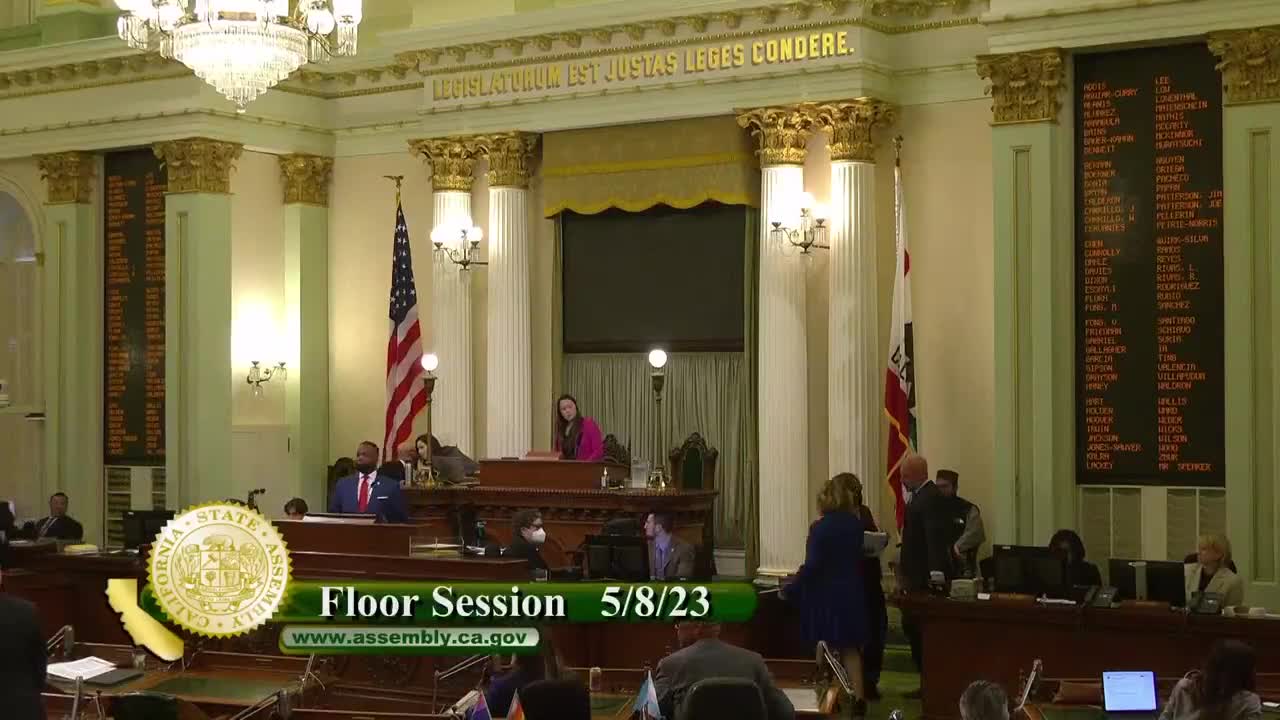 2MIN
Assembly Floor
 36SEC
Assembly Floor
 7MIN
Assembly Standing Committee on Public Employment and Retirement
Bill Author

Bill Co-Author(s):