ACA 8: Slavery.
- Session Year: 2023-2024
- House: Assembly
- Latest Version Date: 2024-06-27
Current Status:
Passed
(2024-06-27: Chaptered by Secretary of State - Res. Chapter 133, Statutes of 2024.)
Introduced
In Committee
First Chamber
In Committee
Second Chamber
Enacted
The California Constitution prohibits slavery and prohibits involuntary servitude, except as punishment to a crime.
This measure would instead prohibit slavery in any form. This measure would prohibit the Department of Corrections and Rehabilitation from disciplining any incarcerated person for refusing a work assignment. The measure would also clarify that its provisions do not prohibit the Department of Corrections and Rehabilitation from awarding credits to an incarcerated person who voluntarily accepts a work assignment.
The California Constitution prohibits slavery and prohibits involuntary servitude, except as punishment to a crime.
This measure would instead prohibit slavery in any form. This measure would prohibit the Department of Corrections and Rehabilitation or any local entity operating a jail facility from punishing disciplining any incarcerated person for refusing a work assignment. The measure would also clarify that its provisions do not prohibit the Department of Corrections and Rehabilitation or any local entity operating a jail facility from awarding credits to an incarcerated person credit toward their sentence for voluntarily accepting who voluntarily accepts a work assignment.
The California Constitution prohibits slavery and prohibits involuntary servitude, except as punishment to a crime.
This measure would instead prohibit slavery in any form. This measure would prohibit the Department of Corrections and Rehabilitation or any local entity operating a jail facility from punishing any incarcerated person for refusing a work assignment. The measure would also clarify that its provisions do not prohibit the Department of Corrections and Rehabilitation or any local entity operating a jail facility from awarding an incarcerated person credit towards toward their sentence for voluntarily accepting a work assignment.
The California Constitution prohibits slavery and prohibits involuntary servitude, except as punishment to a crime.
This measure would instead prohibit slavery in any form, including forced labor compelled by the use or threat of physical or legal coercion. form. This measure would prohibit the Department of Corrections and Rehabilitation or any local entity operating a jail facility from punishing any incarcerated person for refusing a work assignment. The measure would also clarify that its provisions do not prohibit the Department of Corrections and Rehabilitation or any local entity operating a jail facility from awarding an incarcerated person credit towards their sentence for voluntarily accepting a work assignment.
The California Constitution prohibits slavery and prohibits involuntary servitude, except as punishment to a crime.
This measure would instead prohibit slavery in any form, including forced labor compelled by the use or threat of physical or legal coercion.
WHEREAS, The California Constitution has explicitly allowed involuntary servitude as punishment for a crime since 1849, more than 15 years before slavery was abolished in the United States; and
WHEREAS, More than 150 years after slavery was abolished, correctional institutions continue to rely on the involuntary servitude exception in the California Constitution to demand forced labor from incarcerated people; and
WHEREAS, Forced labor has no redeeming qualities and is inconsistent with Californias respect for human dignity; and
WHEREAS, It is the intent of the Legislature that no person in the State of California, regardless of their circumstance of confinement, be subjected to slavery or involuntary servitude in the state of California and any place subject to its jurisdiction; now, therefore, be it
Resolved by the Assembly, the Senate concurring, That the Legislature of the State of California at its 202324 Regular Session commencing on the fifth day of December 2022, two-thirds of the membership of each house concurring, hereby proposes to the people of the State of California, that the Constitution of the State be amended as follows:
(a)Slavery and involuntary servitude are prohibited.
(b)The Department of Corrections and Rehabilitation shall not discipline any incarcerated person for refusing a work assignment.
(c)Nothing in this section shall prohibit the Department of Corrections and Rehabilitation from awarding credits to an incarcerated person who voluntarily accepts a work assignment.
(d)Amendments made to this section by the measure adding this subdivision shall become operative on January 1, 2025.
WHEREAS, The California Constitution has explicitly allowed involuntary servitude as punishment for a crime since 1849, more than 15 years before slavery was abolished in the United States; and
WHEREAS, More than 150 years after slavery was abolished, correctional institutions continue to rely on the involuntary servitude exception in the California Constitution to demand forced labor from incarcerated people; and
WHEREAS, Forced labor has no redeeming qualities and is inconsistent with Californias respect for human dignity; and
WHEREAS, It is the intent of the Legislature that no person in the State of California, regardless of their circumstance of confinement, be subjected to slavery or involuntary servitude in the state of California and any place subject to its jurisdiction; now, therefore, be it
Resolved by the Assembly, the Senate concurring, That the Legislature of the State of California at its 202324 Regular Session commencing on the fifth day of December 2022, two-thirds of the membership of each house concurring, hereby proposes to the people of the State of California, that the Constitution of the State be amended as follows:
(a)Slavery in any form is and involuntary servitude are prohibited.
(b)The Department of Corrections and Rehabilitation or any local entity operating a jail facility shall not punish discipline any incarcerated person for refusing a work assignment.
(c)This section does not Nothing in this section shall prohibit the Department of Corrections and Rehabilitation or any local entity operating a jail facility from awarding credits to an incarcerated person credit toward their sentence for who voluntarily accepting accepts a work assignment.
(d)Amendments made to this section by the measure adding this subdivision shall become operative on January 1, 2025.
Resolved by the Assembly, the Senate concurring, That the Legislature of the State of California at its 202324 Regular Session commencing on the fifth day of December 2022, two-thirds of the membership of each house concurring, hereby proposes to the people of the State of California, that the Constitution of the State be amended as follows:
(a)Slavery in any form is prohibited.
(b)The Department of Corrections and Rehabilitation or any local entity operating a jail facility shall not punish any incarcerated person for refusing a work assignment.
(c)This section does not prohibit the Department of Corrections and Rehabilitation or any local entity operating a jail facility from awarding an incarcerated person credit towards toward their sentence for voluntarily accepting a work assignment.
Resolved by the Assembly, the Senate concurring, That the Legislature of the State of California at its 202324 Regular Session commencing on the fifth day of December 2022, two-thirds of the membership of each house concurring, hereby proposes to the people of the State of California, that the Constitution of the State be amended as follows:
(a)Slavery in any form is prohibited.
(b)As used in this section, slavery includes forced labor compelled by the use or threat of physical or legal coercion.(b)The Department of Corrections and Rehabilitation or any local entity operating a jail facility shall not punish any incarcerated person for refusing a work assignment.
(c)This section does not prohibit the Department of Corrections and Rehabilitation or any local entity operating a jail facility from awarding an incarcerated person credit towards their sentence for voluntarily accepting a work assignment.
Resolved by the Assembly, the Senate concurring, That the Legislature of the State of California at its 202324 Regular Session commencing on the fifth day of December 2022, two-thirds of the membership of each house concurring, hereby proposes to the people of the State of California, that the Constitution of the State be amended as follows:
(a)Slavery in any form is prohibited. Involuntary servitude is prohibited except to punish crime.
(b)As used in this section, slavery includes forced labor compelled by the use or threat of physical or legal coercion.
|
Date
|
Status
|
|---|---|
| Jun 27, 2024 | Chaptered by Secretary of State - Res. Chapter 133, Statutes of 2024. |
| Jun 27, 2024 | Enrolled and filed with the Secretary of State at 1 p.m. |
| Jun 27, 2024 | Senate amendments concurred in. To Engrossing and Enrolling. (Ayes 68. Noes 0. Page 6087.). |
| Jun 27, 2024 | In Assembly. Concurrence in Senate amendments pending. May be considered on or after June 29 pursuant to Assembly Rule 77. |
| Jun 27, 2024 | Assembly Rule 77 suspended. (Page 6083.) |
| Jun 27, 2024 | Assembly Rule 63 suspended. (Page 6083.) |
| Jun 27, 2024 | Read third time. Adopted. (Ayes 33. Noes 3.) |
| Jun 27, 2024 | Ordered to the Assembly. |
| Jun 26, 2024 | Read second time. Ordered to third reading. |
| Jun 26, 2024 | From committee: Be adopted. (Ayes 5. Noes 1.) (June 26). |
| Jun 24, 2024 | Joint Rule 62(a) suspended. (Ayes 30. Noes 6. Page 4666.) |
| Jun 20, 2024 | From committee chair, with author's amendments: Amend, and re-refer to committee. Read second time, amended, and re-referred to Com. on APPR. |
| Jun 19, 2024 | Read second time and amended. Re-referred to Com. on APPR. |
| Jun 18, 2024 | From committee: Amend, and be adopted as amended, and re-refer to Com. on APPR. (Ayes 6. Noes 0.) (June 18). |
| Jun 12, 2024 | From committee chair, with author's amendments: Amend, and re-refer to committee. Read second time, amended, and re-referred to Com. on E. & C.A. |
| Jun 11, 2024 | From committee: Be adopted, and re-refer to Com. on E. & C.A. Re-referred. (Ayes 4. Noes 1.) (June 11). Re-referred to Com. on E. & C.A. |
| May 29, 2024 | Referred to Coms. on PUB S. and E. & C.A. |
| Sep 13, 2023 | In Senate. Read first time. To Com. on RLS. for assignment. |
| Sep 13, 2023 | Read third time. Adopted. (Ayes 68. Noes 4. Page 3439.) |
| Sep 13, 2023 | Ordered to the Senate. |
| May 18, 2023 | Read second time. Ordered to third reading. |
| May 18, 2023 | From committee: Be adopted. (Ayes 11. Noes 2.) (May 18). |
| May 10, 2023 | In committee: Set, first hearing. Referred to APPR. suspense file. |
| Apr 25, 2023 | From committee: Be adopted, and re-refer to Com. on APPR. Re-referred. (Ayes 7. Noes 0.) (April 25). Re-referred to Com. on APPR. |
| Apr 20, 2023 | Referred to Com. on PUB. S. |
| Feb 18, 2023 | From printer. May be heard in committee March 20. |
| Feb 17, 2023 | Read first time. To print. |
|
Date
|
Description
|
Location
|
Votes
|
|
|---|---|---|---|---|
| Jun 27, 2024 | ACA 8 WILSON Concurrence in Senate Amendments | Assembly Floor |
Passed |
|
| Jun 27, 2024 | Assembly 3rd Reading ACA8 Wilson et al. By Bradford | Senate Floor |
Passed |
|
| Jun 26, 2024 | Be adopted | Senate Standing Committee on Appropriations |
Passed |
|
| Jun 18, 2024 | Be adopted as amended, but first amend, and re-refer to the Committee on [Appropriations] | Senate Standing Committee on Elections and Constitutional Amendments |
Passed |
|
| Jun 11, 2024 | Be adopted, but first be re-referred to the Committee on [Elections and Constitutional Amendments] | Senate Standing Committee on Public Safety |
Passed |
|
| Sep 13, 2023 | ACA 8 Wilson Assembly Third Reading | Assembly Floor |
Passed |
|
| May 18, 2023 | Be adopted. | Assembly Standing Committee on Appropriations |
Passed |
|
| Apr 25, 2023 | Be adopted and re-referred to the Committee on [Appropriations] | Assembly Standing Committee on Public Safety |
Passed |
This list shows positions taken on this bill by organizations on the date displayed, which is linked to the original source.
Positions by individuals are not included.
|
Organization
|
Position
|
Date
|
|---|---|---|
| 10P Program | ** Support | |
| A New Way of life | ** Support | |
| A.B.O. Comix | ** Support | |
| Abolish Slavery National Network | ** Support | |
| ACLU | * Support | Jun 26, 2024 |
| Aclu California Action | ** Support | |
| Aging People in Prison - Human Rights Campaign | ** Support | |
| All of Us or None | ** Support | |
| Alliance for Boys and Men of Color | ** Support | |
| Alliance of Californians for Community Empowerment Action | ** Support | |
| American Redress Coalition of California, Bay Area | ** Support | |
| Anti-Recidivism Coalition | ** Support | |
| Anti-Violence Safety and Accountability Project | ** Support | |
| Arts for Healing and Justice Network | ** Support | |
| ASCRIBE | ** Support | |
| Asian Americans and Pacific Islanders for Civic Empowerment | ** Support | |
| Asian Prisoner Support Committee | ** Support | |
| Bend The Arc: Jewish Action | ** Support | |
| Black Equity Collective | ** Support | |
| Black Women Organized for Political Action | ** Support | |
| Brian Getz Law Office | * Support | Jun 11, 2024 |
| California Black Chamber of Commerce | ** Support | |
| California Black Power Network | ** Support | |
| California Coalition for Women Prisoners | * Support | Apr 25, 2023 |
| California Faculty Association | ** Support | |
| California for Safety and Justice | ** Support | |
| California Hawaii State Conference NAACP | * Support | Jun 18, 2024 |
| California Immigrant Policy Center | ** Support | |
| California Lawyers for the Arts | ** Support | |
| California National Organization For Women | ** Support | |
| California Native Vote Project | ** Support | |
| California Prison Focus | * Support | Jun 11, 2024 |
| California Public Defenders Association | ** Support | |
| California Public Funders Association | * Support | Jun 11, 2024 |
| California Reparations Task Force Member Don Tamaki | ** Support | |
| California Reparations Task Force Member Dr. Cheryl Grills | ** Support | |
| California Reparations Task Force Member Lisa Holder | ** Support | |
| California Teachers Association | ** Support | |
| Californians for Safety and Justice | ** Support | |
| Californians United for a Responsible Budget | ** Support | |
| Caravan 4 Justice | ** Support | |
| Catalyst California | ** Support | |
| Childrens Defense Fund - CA | ** Support | |
| City and County of San Francisco, Board of Supervisors | ** Support | |
| Coalition for A Just and Equitable California | ** Support | |
| Coalition on Homelessness, San Francisco | ** Support | |
| Coalition to Abolish Slavery and Trafficking | ** Support | |
| Communities United for Restorative Youth Justice | ** Support | |
| Community Interventions | ** Support | |
| County of Los Angeles Board of Supervisors | ** Support | |
| Crop Organization | * Support | Jun 18, 2024 |
| Culver City Democratic Club | ** Support | |
| Edifye | ** Support | |
| Ella Baker Center For Human Rights | ** Support | |
| Emend the Mass Media Group | ** Support | |
| Empowering Women Impacted by Incarceration | ** Support | |
| Equal Justice Society | ** Support | |
| Faith in Action, East Bay | ** Support | |
| Families Inspiring Reentry & Reunification 4 Everyone | ** Support | |
| Felony Murder Elimination Project | * Support | Jun 11, 2024 |
| free indeed reentry project, inc. | ** Support | |
| Freedom 4 Youth | ** Support | |
| Freedom United | ** Support | |
| Freedom Within Project | ** Support | |
| Friends Committee On Legislation Of California | ** Support | |
| Glide Foundation | ** Support | |
| Grace Cathedral, San Francisco | ** Support | |
| Grip Training Institute | ** Support | |
| Haiti Action Committee | ** Support | |
| HavMoneyHavHeart LLC | ** Support | |
| HealthRight 360 | ** Support | |
| Homies Unidos | ** Support | |
| Honoring Resilience | ** Support | |
| Humane Prison Hospice Project | ** Support | |
| ikar | ** Support | |
| Impact Justice | ** Support | |
| indivisible | ** Support | |
| Initiate Justice | ** Support | |
| Initiate Justice Action | ** Support | |
| Inland Empire United | ** Support | |
| Inmate Family Council | * Support | Jun 18, 2024 |
| Interfaith Coalition for Justice in Our Jails | ** Support | |
| Interfaith Movement for Human Integrity | ** Support | |
| Just Cities | ** Support | |
| Kehilla Community Synagogue | ** Support | |
| Lawyers Committee for Civil Rights of the San Francisco Bay Area | ** Support | |
| League Of Women Voters Of California | ** Support | |
| Legal Aid At Work | ** Support | |
| Legal Services for Prisoners with Children | ** Support | |
| Livefree California | ** Support | |
| MPACT Collective | * Support | Jun 18, 2024 |
| Multi-faith Action Coalition | ** Support | |
| Multiple Individuals | ** Support | |
| National Volunteer Council on Freedman Affairs | ** Support | |
| Norcal Resist | ** Support | |
| pacifica social justice | ** Support | |
| Pico California | * Support | Jun 18, 2024 |
| Planting Justice | ** Support | |
| Pride in Truth | ** Support | |
| Prison From the Inside Out | ** Support | |
| Prison Law Office | ** Support | |
| Prison Yoga + Meditation | ** Support | |
| Represent Justice | ** Support | |
| Riverside All of Us or None | ** Support | |
| Rosen Bien Galvan & Grunfeld LLP | ** Support | |
| Sacramento Act | * Support | Jun 18, 2024 |
| San Francisco Public Defender | ** Support | |
| Santa Monica Democratic Club | ** Support | |
| SEIU California | ** Support | |
| Showing Up For Racial Justice, Bay Area | ** Support | |
| Silicon Valley De-Bug | * Support | Jun 18, 2024 |
| Sister Warriors Freedom Coalition | ** Support | |
| Smart Justice California | ** Support | |
| Southeast Asia Resource Action Center | ** Support | |
| St. Mark's United Methodist Church | * Support | Jun 18, 2024 |
| St. Mark's United Methodist Church | * Support | Jun 18, 2024 |
| Starting Over | ** Support | |
| Starting Over Strong | ** Support | |
| Starting Over, Inc. | ** Support | |
| Taquas Youth Diversity | * Support | Jun 11, 2024 |
| The CROP Organization | ** Support | |
| The Greenlining Institute | ** Support | |
| The Love We Don’t See | ** Support | |
| Theatreworkers Project | ** Support | |
| Timedone | ** Support | |
| Transformative In-Prison Workgroup | * Support | Apr 25, 2023 |
| transitions clinic network | ** Support | |
| Uc Berkeley Alumni | * Support | Jun 18, 2024 |
| UC Berkeley's Underground Scholars Initiative | ** Support | |
| Uncommon Law | ** Support | |
| Village Advocates | ** Support | |
| Voices for Progress | * Support | Jun 18, 2024 |
| western center on law & poverty | ** Support | |
| Why Not Prosper, Inc. | ** Support | |
| Worksafe | ** Support | |
| Youth Leadership Institute | ** Support |
(Without Reference to File)
CONCURRENCE IN SENATE AMENDMENTS
CSA1 Bill Id:ACA 8
Author:(Wilson)
As Amended Ver:June 20, 2024
2/3 vote
SUMMARY
Deletes language in the state Constitution that allows involuntary servitude as punishment for a crime.
Senate Amendments
- Prohibits the California Department of Corrections and Rehabilitation (CDCR) from disciplining any incarcerated person for refusing work assignment.
- States that nothing shall prohibit CDCR from awarding credits to an incarcerated person who voluntarily accepts a work assignment.
COMMENTS
As Passed by the Assembly, this bill:
- Amended the California Constitution by prohibiting the use of involuntary servitude as punishment for a crime.
- Stated that slavery includes forced labor compelled by the use or threat of physical or legal coercion.
According to the Author
"California is among only 16 states with an exception clause for involuntary servitude in its state constitutions. Most recently, voters in Alabama, Oregon, Tennessee, and Vermont removed involuntary servitude language from their state constitutions. ACA 8 is an opportunity to catch up to these states and serve as a model for others in the nation.
"Involuntary servitude is an extension of slavery. There's no room for slavery in our constitution, which should reflect our values in 2023. The legacy of slavery and forced labor runs deep in California's history, from the exploitation of Indigenous people in Spanish missions to Black slaves forced to mine for gold. Today, slavery takes on the modern form of involuntary servitude, including forced labor in prisons. Slavery is wrong in all forms and California should be clear in denouncing that in the Constitution.
"ACA 8 prioritizes rehabilitation for incarcerated people. Incarcerated people should be able to choose jobs and shifts that allow them to continue their education, use the law library, get counseling, and participate in other rehabilitative programs that facilitate growth and transformation."
Arguments in Support
According to the Anti-Ricidivism Coalition, a co-sponsor of this bill, "Despite the Thirteenth Amendment outlawing slavery and involuntary servitude, the California Constitution states, 'Involuntary servitude is prohibited except to punish crime.’ But Black’s law dictionary makes clear that involuntary servitude is 'when a person is forced to work against his will. Slavery.' In short, involuntary servitude is a form of slavery.
"The legacy of slavery and forced labor runs deep in California’s history, from the 1850 Indian Indenture Act that criminalized everyday behavior and wrote racist language into California law, to Africans and African Americans who were forced to mine for gold and help build prisons. Though California entered the union as a 'free' state, there were more than 1,000 enslaved African Americans as well as thousands of enslaved Indigenous people in California at a time when the total population was just 100,000. Continuing through the early 1940s, African Americans were 'leased out' to plantation owners and manufacturers as cheap labor throughout the country – a system that was then replaced by ‘chain gangs,’ a dehumanizing practice of chaining together incarcerated people to perform manual labor. While the labor has changed to manufacturing, farming, and firefighting, the system of slavery is largely the same.
"Incarcerated people in California today are still forced to follow orders to work or face cruel treatment for any work absences: physical violence, solitary confinement, denial of phone calls and family visits, and disciplinary action that results in longer prison terms. Punishments are often issued even when absences are due to illness or injuries sustained through the work itself.
"More than 94,000 Californians are currently enslaved in state prison. African Americans account for 28% of the prison population despite making up less than 6% of California's overall population. Although no courts explicitly order forced labor as a part of criminal sentencing, it's standard practice to force incarcerated people to perform labor.
"The vast majority of incarcerated people want to work, further their education, and participate in rehabilitative programs — all of which facilitate personal transformation and successful reintegration. Incarcerated people often face a dilemma: report to CDCR-mandated work assignments or report to court-mandated rehabilitative programs such as Narcotics Anonymous. If they follow orders to work, their record will show they failed to complete programming as required. If they do not show up to their shifts, they receive a rules violation (at minimum). Either choice leads to one result: unjust disciplinary action.
"Involuntary servitude leads to dangerous work conditions with virtually no accommodations, whether in CDCR factory settings or ever-increasing wildfires outside the prison. Consider the case of Samual Nathaniel Brown, whose near-death experience with being forced to clean COVID-19-infected facilities while incarcerated at California State Prison Lancaster inspired this proposed Constitutional Amendment. Across prisons, the State leaned on incarcerated workers to produce hand sanitizer, soaps, and masks during this time. In further exploitation, incarcerated workers were not allowed to use this same protective equipment they produced to keep themselves safe during their essential work.
"The psychological effects of slavery and involuntary servitude are well documented throughout the history of California. People who suffer under these conditions develop long-term mental health conditions, including trauma, loss of self-esteem, and the stigma and shame of dehumanization.
"ACA 8 is part of a national movement to ban slavery in all its forms. In 2022, Alabama, Oregon, Tennessee, and Vermont joined Nebraska (2020), Utah (2020), and Colorado (2018) as states that have passed constitutional amendments prohibiting slavery and involuntary servitude. In 2020, U.S. Senator Jeff Merkley (OR) introduced a resolution to remove involuntary servitude from the U.S. Constitution as a punishment for crime. Today, 16 states prohibit enslavement and involuntary servitude, but maintain exception provisions for criminal punishment; 9 states permit involuntary servitude as a criminal punishment – California being one of them.
"It is a moral imperative that California dissolves the remnants of slavery from our constitution. The End Slavery in California Act would give voters the opportunity to amend Article 1, Section 6 of the California Constitution to prohibit slavery and involuntary servitude without exception."
Arguments in Opposition
None on file
FISCAL COMMENTS
According to the Senate Appropriations Committee:
- Unknown, potentially significant ongoing state costs (General Fund) to the California Department of Corrections and Rehabilitation (CDCR), as a result of prohibiting involuntary servitude in state prisons. (See staff comments.)
- Unknown, potentially significant non-reimbursable ongoing local costs (local funds) for local correctional facilities as a result of prohibiting involuntary servitude in local jails.
- One-time costs of approximately $1.6 million to the Secretary of State (SOS) (General Fund), for printing and mailing expenses associated with placing this measure on the ballot at the next statewide election.
VOTES:
ASM PUBLIC SAFETY: 7-0-1
YES: Jones-Sawyer, Alanis, Bonta, Bryan, Ortega, Santiago, Zbur
ABS, ABST OR NV: Lackey
ASM APPROPRIATIONS: 11-2-3
YES: Holden, Bryan, Calderon, Wendy Carrillo, Mike Fong, Hart, Lowenthal, Papan, Pellerin, Weber, Ortega
NO: Megan Dahle, Sanchez
ABS, ABST OR NV: Dixon, Mathis, Robert Rivas
ASSEMBLY FLOOR: 68-4-8
YES: Addis, Aguiar-Curry, Alanis, Alvarez, Arambula, Bains, Bauer-Kahan, Bennett, Berman, Boerner, Bonta, Bryan, Calderon, Juan Carrillo, Wendy Carrillo, Cervantes, Chen, Connolly, Flora, Mike Fong, Friedman, Gabriel, Garcia, Gipson, Grayson, Haney, Hart, Holden, Hoover, Irwin, Jackson, Jones-Sawyer, Kalra, Lee, Low, Lowenthal, Maienschein, McCarty, McKinnor, Muratsuchi, Stephanie Nguyen, Ortega, Pacheco, Papan, Pellerin, Petrie-Norris, Quirk-Silva, Ramos, Rendon, Reyes, Luz Rivas, Rodriguez, Blanca Rubio, Santiago, Schiavo, Soria, Ting, Valencia, Villapudua, Waldron, Wallis, Ward, Weber, Wicks, Wilson, Wood, Zbur, Robert Rivas
NO: Megan Dahle, Dixon, Gallagher, Sanchez
ABS, ABST OR NV: Davies, Essayli, Vince Fong, Lackey, Mathis, Jim Patterson, Joe Patterson, Ta
UPDATED
VERSION: June 20, 2024
CONSULTANT: Elizabeth Potter / PUB. S. / (916) 319-3744 FN: 0003659
SENATE COMMITTEE ON APPROPRIATIONS
Senator Anna Caballero, Chair
2023 - 2024 Regular Session
ACA 8 (Wilson) - Slavery
Version: June 20, 2024 | Policy Vote: PUB. S. 4 - 1, E. & C.A. 6 - 0 |
Urgency: No | Mandate: No |
Hearing Date: June 26, 2024 | Consultant: Liah Burnley |
Bill Summary:
ACA 8 would, if approved by the voters, abolish involuntary servitude, operative January 1, 2025.
Fiscal Impact:
- Unknown, potentially significant ongoing state costs (General Fund) to the California Department of Corrections and Rehabilitation (CDCR), as a result of prohibiting involuntary servitude in state prisons. (See staff comments.)
- Unknown, potentially significant non-reimbursable ongoing local costs (local funds) for local correctional facilities as a result of prohibiting involuntary servitude in local jails.
- One-time costs of approximately $1.6 million to the Secretary of State (SOS) (General Fund), for printing and mailing expenses associated with placing this measure on the ballot at the next statewide election.
Background:
The 13th Amendment of the United States Constitution prohibits slavery and involuntary servitude. However, there is an exception if involuntary servitude is imposed as punishment for a crime. The California Constitution contains the same prohibition. Section 6 of Article I of the California Constitution provides: “Slavery is prohibited. Involuntary servitude is prohibited except to punish crime.” Otherwise, it is felony to hold any person in involuntary servitude. (Pen. Code, § 181.)
The United States Supreme Court has clearly defined involuntary servitude as a condition of servitude in which a person is forced to work by the use or threat of physical restraint or physical injury or by the use or threat of coercion through law or the legal process. This definition encompasses cases in which the person is held in servitude by placing them in fear of such physical restraint or injury or legal coercion. (United States v. Kozminski (1988) 487 U.S. 939, 953.)
This amendment to the California Constitution seeks to prohibit involuntary servitude under all circumstances by eliminating the exception for punishment of a crime. Passage of this constitutional amendment by the Legislature would place the issue before the California voters.
It is not clear how the elimination of involuntary servitude for punishment of crime in the California Constitution would affect inmate labor in California prisons and jails as it currently exists. To withstand constitutional challenges, courts would evaluate whether working conditions imposed upon incarcerated persons constitute forced labor compelled by the use or threat of physical or legal coercion.
Existing state law, which would be unaffected by this ACA, coerces inmate labor in state prisons. Penal Code section 2700 requires “of every able-bodied prisoner imprisoned in any state prison as many hours of faithful labor in each day and every day during his or her term of imprisonment as shall be prescribed by the rules and regulations [of the department].” Incarcerated individuals cannot refuse a job assignment and may be disciplined for refusing or failing to show up to work. Refusal to accept or perform in a work or training assignment can also lead to reduced privileges, including limitations on visits, phone calls, canteen purchases, and yard, entertainment and recreation access.
Proposed Law:
This constitutional amendment would prohibit slavery and involuntary servitude in any form. In addition, ACA 8 would add the following provisions to Section 6, Article I of the Constitution:
- “The Department of Corrections and Rehabilitation shall not discipline any incarcerated person for refusing a work assignment.”; and,
- “Nothing in this section shall prohibit the Department of Corrections and Rehabilitation from awarding credits to an incarcerated person who voluntarily accepts a work assignment.”
Related Legislation:
- AB 628 (Wilson), of the 2023-2024 Legislative Session, is a companion bill to this ACA and is contingent upon voter approval of ACA 8. AB 628 provides for the implementation of ACA 8 by eliminating the requirement that every able-bodied prisoner imprisoned by CDCR work as many hours of faithful labor in each day and every day during the person’s term of imprisonment, as specified. AB 628 is pending in this Committee.
- ACA 3 (Kamlager), of the 2021-2022 Legislative Session, was substantially similar to this ACA. ACA 3 was ordered to the Senate Inactive File.
- SB 1371 (Bradford), of the 2021-2022 Legislative Session, would have required CDCR to adopt a 5-year implementation plan to increase inmate wages. SB 1371 was vetoed.
- SCR 69 (Bradford), of the 2019-2020 Legislative Session, would have expressed the Legislature’s support for fair and just wages for incarcerated persons. SCR 69 was never heard in the Assembly Public Safety Committee.
Staff Comments: The fiscal impact of this proposed constitutional amendment cannot be known until the conclusion of anticipated litigation. CDCR notes costs resulting from this constitutional amendment will depend on whether courts require incarcerated individuals to be paid minimum wage for work performed in prison. CDCR also notes significant litigation costs given the lack of clarity as to whether this change to the California Constitution would eliminate the current use of inmate labor.
Courts have consistently held that state prisoners are not employees entitled to minimum wage. (Burleson v. California (1996) 83 F.3d 311.) The provision of the California Constitution allowing involuntary servitude justifies not paying incarcerated persons a minimum wage, and presumably any other legal entitlement relating to employment. (Serra v. Lapin (9th Cir. 2010) 600 F.3d 1191; Piatt v. MacDougall (9th Cir. 1985) 733 F.2d 1032, 1035.) Thus, it is uncertain whether this amendment to the California Constitution would require incarcerated workers who receive compensation to be classified as “employees,” for the purposes of minimum wage laws.
Generally, case law finding that inmates are not employees entitled to wages is based on the constitutional exception to the prohibition on involuntary servitude for punishment. It is unclear whether the fact that a person is incarcerated forecloses being considered an employee for purposes of the minimum wage provisions of the Fair Labor Standards Act (FLSA). The category of prison inmate is not one of the groups Congress expressly excluded from coverage by FLSA. (Watson v. Graves, 909 F.2d 1549, 1554 (5th Cir. 1990); see also, Hale v. Arizona, 993 F.2d 1387 (9th Cir. 1993) [stating “we do not believe that prisoners are categorically excluded from the FLSA,” but declining to extend the FLSA to inmates because “convicted criminals do not have the right freely to sell their labor and are not protected by the Thirteenth Amendment against involuntary servitude”].)
The Ninth Circuit has adapted the "economic reality" test to the circumstances of inmate workers, noting that the "economic reality of the relationship between the worker and the entity for which the work was performed lies in the relationship between prison and prisoner. It is penological, not pecuniary." The court concluded that the economic reality is that inmates’ labor belongs to the institution, and held that inmates were not employees of the prison entitled to be paid a minimum wage under the FLSA. (Burleson v. State of California (1996) 83 F.3d 311, 313.) The court’s analysis hinged upon the fact that in California incarcerated persons are required to work pursuant to state statute.
Accordingly, if involuntary servitude as punishment for a crime is abolished, and if correctional facilities set and pay compensation, the “economic reality” of the relationship between prisons and prisoners would need to be re-examined. Given that this ACA would prohibit CDCR from disciplining incarcerated persons who choose not work, the relationship may no longer be penological. Incarcerated persons could presumably be considered “employees” and could have employment rights under state and federal law, including state and federal minimum wage laws like the FSLA.
There would be a substantial increase in current inmate pay rates if CDCR is required to pay a minimum wage.[1] Due to the Constitution’s acquiescence to involuntary servitude as punishment for a crime, the state has had access to a captive pool of workers that it pays token wages well below the legal minimum. The state is not obligated to cover unemployment insurance, social security, worker's compensation insurance, or other employee benefit plans for incarcerated workers. And, in certain circumstances, the state can forgo hiring more expensive non-inmate employees because certain labor needs are in cheap and easy supply.
The most current pay rates for most inmate jobs at CDCR are as follows[2]:
Skill Level | Hourly (Min/Max) |
Level 1 (Lead Person) | $0.64-$0.74 |
Level 2 (Special Skill) | $0.38-$0.64 |
Level 3 (Technician) | $0.30-$0.48 |
Level 4 (Semi-Skilled) | $0.22-$0.36 |
Level 5 (Laborer) | $0.16-$0.26 |
Incarcerated individuals housed at one of the state’s conservation/fire camps are subject to a different pay scale with a pay rate of $5.80 to $10.24 per day based on skill level and position. Individuals working for the California Prison Industry Authority (CalPIA) are also subject to a different pay scale with the lowest paid ranging from $0.35-$0.45 per hour and the highest scale ranging from $0.80 to $1 per hour. (Cal. Code Regs., tit. 15, § 8006, subd. (d)(1).)
Assuming the average work week for a state prisoner is 20 hours, with pay rates ranging from $0.26 to $1.00 per hour, an incarcerated person’s annual income currently ranges from about $250.00 to $960 a year. The current federal minimum wage is $7.25 per hour; the state minimum wage is $16.00 per hour. Thus, a part-time incarcerated person working 20 hours a week earn an annual salary of $6,960 or $15,360 per year, if paid a minimum wage.
In 2021, CDCR reported it had nearly 65,000 work assignments for incarcerated persons. If this measure is approved by the voters and if CDCR is required to pay minimum wage, increase costs could be in the billions of dollars annually, assuming CDCR maintains its current level of work assignments. Paying incarcerated persons minimum wage would result in significant cost pressures to the state, but a fraction could be offset by an increase in state and local income tax[3], paid restitution fines to compensate victims of crime and the state Restitution Fund[4], to family support and court ordered debt via wage garnishments, and some amounts could be applied to the incarcerated person’s room and board.[5] To the extent inmates are paid a higher wage, the measure could have other unknown effects on state and local government programs. For example, it could reduce the need for people exiting the incarceration to rely on government services, such as subsidized housing.
Alternatively, correctional facilities could allow incarcerated persons to choose, without coercion, to volunteer for work programs. In addition to relying on the exception to involuntary servitude for punishment for a crime, federal courts have found that inmate work does not constitute “involuntary servitude” when the person has a choice to work. For example, the Fifth District Court of Appeals held that participation in a work release program did not constitute involuntary servitude, because the incarcerated persons voluntarily chose to participate. (Watson v. Graves (1990) 909 F.2d 1549, 1552.) Under federal law, individuals who performs hours of service for a public agency for civic, charitable, or humanitarian reasons, without promise, expectation or receipt of compensation for services rendered, can be considered volunteers only where their services are offered freely and without pressure or coercion, direct or implied. (29 CFR 553.101.) Prisons and jails would not be required to provide any compensation to true volunteers, which could result in a costs savings. However, as discussed above, if incarcerated persons are unable to earn wages while imprisoned, CDCR would not be able to garnish their pay to cover restitution orders, fines and fees, which could impact the Restitution Fund.
-- END --
AB 628 (Wilson), of the 2023–24 Regular Session, would become operative upon the passage and subsequent approval by the voters of ACA 8. The provisions of AB 628, which is pending hearing in this Committee, are intended to implement this constitutional amendment. Accordingly, the fiscal impact of this constitutional amendment, and AB 628 should be considered in conjunction. AB 628 would delete the requirement that every person imprisoned in CDCR work, and instead provide for a voluntary work program. In addition, AB 628 would require, notwithstanding any state or local minimum wage, CDCR and counties and cities to set compensation for any inmate work assignment. As discussed in the Senate Appropriations Committee analysis of AB 628, even if state law exempts incarcerated persons from the state minimum wage, it is likely that incarcerated persons classified as “employees” would have to be paid the federal minimum wage. (29 U.S.C. § 218.) ↑
Beginning on April 16, 2024, CDCR increased wages for all incarcerated workers to a maximum of $0.74 per hour. CDCR expects that up to 75 percent of assignments will be half-time. (Cal. Code Regs., tit. 15, § 3041.2, subd. (a)(1).) ↑
See, California Franchise Tax Board, 2023 California Tax Rate Schedules [Individuals who earn under $10,412 are taxed at 1%; individuals who earn $10,412 to $24,684 are taxed a 2%]. ↑
CDCR automatically collects 50% of prison wages or other money deposited into an incarcerated person’s trust account to pay court ordered restitution. CDCR always collects money to pay direct orders to victims before collecting money to pay for restitution fines, which are deposited into the Restitution Fund. The Restitution Fund has been operating under a structural deficiency for a number of years. ↑
For example, current law allows state prisoners employed in the Joint Venture Program to “earn wages paid by the joint-venture employer” comparable to wages earned by non-inmate employees performing similar work for the employer, and subjects those wages to deductions, including “reasonable charges for room and board, which shall be remitted to [CDCR].” (Pen. Code, § 2717.9.) ↑
SENATE RULES COMMITTEE Office of Senate Floor Analyses (916) 651-1520 Fax: (916) 327-4478 | ACA 8 |
THIRD READING
Bill No: ACA 8
Author: Wilson (D), et al.
Amended: 6/20/24 in Senate
Vote: 27
SENATE PUBLIC SAFETY COMMITTEE: 4-1, 6/11/24
AYES: Wahab, Bradford, Skinner, Wiener
NOES: Seyarto
SENATE ELECTIONS & C.A. COMMITTEE: 6-0, 6/18/24
AYES: Blakespear, Allen, Menjivar, Newman, Portantino, Umberg
NO VOTE RECORDED: Nguyen
SENATE APPROPRIATIONS COMMITTEE: 5-1, 6/26/24
AYES: Caballero, Ashby, Becker, Bradford, Wahab
NOES: Seyarto
NO VOTE RECORDED: Jones
ASSEMBLY FLOOR: 68-4, 9/13/23 - See last page for vote
SUBJECT: Slavery
SOURCE: 10P Program
A New Way of Life
Abolish Slavery National Network
ACLU California Action
Aging People in Prison Human Rights Campaign
All of Us or None; Anti-Recidivism Coalition
Anti-Violence Safety and Accountability Project
ASCRIBE; Asian Prisoner Support Committee
California Lawyers for the Arts
Coalition for a Just and Equitable California
Coalition to Abolish Slavery and Trafficking
Communities United for Restorative Youth Justice
EDIFYE
Freedom United
GLIDE Foundation
Homies Unidos
Impact Justice
Indivisible
Just Cities
Legal Aid at Work
Legal Services for Prisoners with Children
March On
Norcal Resist
Pride in Truth
Prison from the Inside Out
Represent Justice
Sister Warriors Freedom Coalition
Starting Over, Inc.
The Love We Don’t See
TimeDone
Village Advocates
Youth Leadership Institute
DIGEST:
This constitutional amendment prohibits involuntary servitude, prohibits the California Department of Corrections and Rehabilitation (CDCR) or a local entity from punishing an incarcerated person for refusing a work assignment, and clarifies that its provisions do not prohibit CDCR or a local entity from awarding credits to an incarcerated person who voluntarily accepts a work assignment.
ANALYSIS: Existing federal law states that neither slavery nor involuntary servitude, except as a punishment for crime whereof the party shall have been duly convicted, shall exist within the United States, or any place subject to their jurisdiction. (U.S. Const., 13th Amend.)
Existing state law:
- Prohibits slavery. (Cal. Const., art. I, § 6)
- Prohibits involuntary servitude except to punish crime. (Cal. Const., art. I, § 6)
- Authorizes the Secretary of CDCR to enter into contracts with public entities, nonprofit or for profit organizations, and businesses for the purpose of conducting programs which use the labor of incarcerated individuals. (Cal. Const., art. XIV, § 5)
- Authorizes CDCR to employ incarcerated individuals for the rendering of services that are needed by the state or any political subdivision thereof, including any county, district, city, school or other public use, or for use by the federal government, or any agency or department thereof, or that may be needed for use by the government of any other state, or any department, agency, or corporation thereof, and allows CDCR to enter into contracts for this purpose. (Penal (Pen.) Code, § 2701, subd. (a))
- Allows CDCR to employ incarcerated individuals for the rendering of emergency services for the preservation of life or property within the state, whether that property is owned by public entities or private citizens, when a county level state of emergency has been declared due to a natural disaster and the local governing board has requested assistance. (Pen. Code, § 2701, subd. (b))
- Provides that CDCR require every able-bodied incarcerated individual imprisoned in any state prison as many hours of faithful labor in each day and every day during the person’s term of imprisonment as is prescribed by the rules and regulations of the Secretary. (Pen. Code, § 2700)
- States that one of the purposes of the Prison Industry Authority (PIA) is to operate a work program for incarcerated individuals which will ultimately be self-supporting by generating sufficient funds from the sale of products and services to pay all the expenses of the program, and one which will provide goods and services which are or will be used by CDCR, thereby reducing the cost of its operation. (Pen. Code, § 2801, subd. (c))
- Establishes a minimum wage. Requires the Director of Finance to calculate and adjust the minimum wage annually, as specified. (Labor Code, § 1182.12)
- Makes it a felony to hold, or attempt to hold, any person in involuntary servitude, or assumes, or attempts to assume, rights of ownership over any person, or who sells, or attempts to sell, any person to another, or receives money or anything of value, in consideration of placing any person in the custody, or under the power or control of another, or who knowingly aids and assists in any manner anyone doing any of those things. (Pen. Code, § 181)
- Establishes the crime of human trafficking if a person deprives or violates the personal liberty of another with the intent to obtain forced labor or services, and makes punishable by imprisonment in the state prison for 5, 8, or 12 years and a fine of not more than $5,000. (Pen. Code, § 236.1, subd. (a))
This constitutional amendment:
- Prohibits slavery and involuntary servitude.
- Prohibits CDCR or a local entity from punishing an incarcerated person for refusing a work assignment
- Clarifies that its provisions do not prohibit CDCR or a local entity from awarding credits to an incarcerated person who voluntarily accepts a work assignment.
Background
The Thirteenth Amendment of the U.S. Constitution was ratified in 1865 and prohibited slavery and involuntary servitude. However, an exception was allowed if involuntary servitude was imposed as punishment for a crime. Article I, section 6, of the California Constitution contains the same prohibitions on slavery and involuntary servitude and the same exception for involuntary servitude as punishment for crime. The California Supreme Court has interpreted the prohibition on slavery and involuntary servitude contained in Article I, section 6 of the California Constitution to be coextensive with the protection afforded by the Thirteenth Amendment. (Moss v. Superior Court (1998) 17 Cal.4th 396, 418)
This constitutional amendment amends the state Constitution to prohibit involuntary servitude. This constitutional amendment also prohibits CDCR or a local entity from punishing an incarcerated person for refusing a work assignment, and clarifies that its provisions do not prohibit CDCR or a local entity from awarding credits to an incarcerated person who voluntarily accepts a work assignment. Passage of this constitutional amendment by the Legislature would place this constitutional amendment on the ballot to be decided by the voters.
FISCAL EFFECT: Appropriation: No Fiscal Com.: Yes Local: No
SUPPORT: (Verified 6/25/24)
10P Program (co-source)
A New Way of Life (co-source)
Abolish Slavery National Network (co-source)
ACLU California Action (co-source)
Aging People in Prison Human Rights Campaign (co-source)
All of Us or None (co-source)
Anti-Recidivism Coalition (co-source)
Anti-Violence Safety and Accountability Project (co-source)
ASCRIBE (co-source)
Asian Prisoner Support Committee (co-source)
California Lawyers for the Arts (co-source)
Coalition for a Just and Equitable California (co-source)
Coalition to Abolish Slavery and Trafficking (co-source)
Communities United for Restorative Youth Justice (co-source)
EDIFYE (co-source)
Freedom United (co-source)
GLIDE Foundation (co-source)
Homies Unidos (co-source)
Impact Justice (co-source)
Indivisible (co-source)
Just Cities (co-source)
Legal Aid at Work (co-source)
Legal Services for Prisoners with Children (co-source)
March On (co-source)
Norcal Resist (co-source)
Pride In Truth (co-source)
Prison from the Inside Out
Represent Justice (co-source)
Sister Warriors Freedom Coalition (co-source)
Starting Over, Inc. (co-source)
The Love We Don’t See (co-source)
TimeDone (co-source)
Village Advocates (co-source)
Youth Leadership Institute (co-source)
A.B.O. Comix
Alliance for Boys and Men of Color
Alliance of Californians for Community Empowerment Action
American Redress Coalition of California Bay Area
Arts for Healing and Justice Network
Asian Americans and Pacific Islanders for Civic Empowerment
Bend the Arc: Jewish Action
Black Equity Collective
Black Women Organized for Political Action
California Black Chamber of Commerce
California Black Power Network
California Faculty Association
California for Safety and Justice
California Immigrant Policy Center
California Lawyers for the Arts
California National Organization for Women
California Native Vote Project
California Public Defenders Association
California Reparations Task Force Members Dr. Cheryl Grills, Lisa Holder, and Don Tamaki
California Teachers Association
Californians for Safety and Justice
Californians United for A Responsible Budget
Caravan 4 Justice
Catalyst California
Children’s Defense Fund - CA
City and County of San Francisco, Board of Supervisors
Coalition on Homelessness, San Francisco
Community Interventions
County of Los Angeles Board of Supervisors
Culver City Democratic Club
Ella Baker Center for Human Rights
Emend the Mass Media Group
Empowering Women Impacted by Incarceration
Equal Justice Society
Faith in Action East Bay
Families Inspiring Reentry & Reunification 4 Everyone
Free Indeed Reentry Project, Inc.
Freedom 4 Youth
Freedom Within Project
Friends Committee on Legislation of California
Grace Cathedral, San Francisco
GRIP Training Institute
Haiti Action Committee
HavMoneyHavHeart LLC
Healthright 360
Honoring Resilience
Humane Prison Hospice Project
IKAR
Initiate Justice
Initiate Justice Action
Inland Empire United
Interfaith Coalition for Justice in Our Jails
Interfaith Movement for Human Integrity
Kehilla Community Synagogue
Lawyers’ Committee for Civil Rights of the San Francisco Bay Area
League of Women Voters of California
Live Free California
Multi-faith ACTION Coalition
National Volunteer Council on Freedmen Affairs
Pacifica Social Justice
Planting Justice
Prison Law Office
Prison Yoga + Meditation
Riverside All of Us or None
Rosen Bien Galvan & Grunfeld, LLP
San Francisco Public Defender
Santa Monica Democratic Club
SEIU California
Showing Up for Racial Justice Bay Area
Smart Justice California
Southeast Asia Resource Action Center
Starting Over
Starting Over Strong
The CROP Organization
The Greenlining Institute
TheatreWorkers Project
Transitions Clinic Network
UC Berkeley’s Underground Scholars Initiative
UnCommon Law
Western Center on Law & Poverty
Why Not Prosper, Inc.
Worksafe
Multiple Individuals
OPPOSITION: (Verified 6/25/24)
None received
ARGUMENT IN SUPPORT: Several organizations, including ACLU California Action, California Immigrant Policy Center, Catalyst California, Ella Baker Center for Human Rights, Initiate Justice, Legal Services for Prisoners With Children, Sister Warriors Freedom Coalition, and the Western Center on Law & Poverty, write:
Despite the Thirteenth Amendment outlawing slavery and involuntary servitude, the California Constitution states, “Involuntary servitude is prohibited except to punish crime.”… But Black’s law dictionary defines involuntary servitude as “when a person is forced to work against his or her will. Slavery.” In short, involuntary servitude is a form of slavery. This forced labor exception has led to the exploitation of thousands of individuals and had a deep effect on a disproportionate number of those of African, Indigenous, and Indigenous/Latina descent.
The legacy of slavery and forced labor runs deep in California’s history, from the 1850 Indian Indenture Act that criminalized everyday behavior and wrote racist language into California law, to Africans and African Americans who were forced to mine for gold and help build prisons. Though California entered the union as a “free” state, there were more than 1,000 enslaved African Americans as well as thousands of enslaved Indigenous people in California at a time when the total population was just 100,000.
…
Incarcerated people in California today are still forced to follow orders to work or face cruel treatment for any work absences: physical violence, solitary confinement, denial of phone calls and family visits, and disciplinary action that results in longer prison terms. Punishments are often issued even when absences are due to illness or injuries sustained through the work itself.
More than 94,000 Californians are currently enslaved in state prison. African Americans account for 28% of the prison population despite making up less than 6% of California’s overall population. Although no courts explicitly order forced labor as a part of criminal sentencing, it’s standard practice to force incarcerated people to perform labor.
The vast majority of incarcerated people want to work, further their education, and participate in rehabilitative programs — all of which facilitate personal transformation and successful reintegration. Incarcerated people often face a dilemma: report to CDCR-mandated work assignments or report to court-mandated rehabilitative programs such as Narcotics Anonymous. If they follow orders to work, their record will show they failed to complete programming as required. If they do not show up to their shifts, they receive a rules violation (at minimum). Either choice leads to one result: unjust disciplinary action.
Involuntary servitude leads to dangerous work conditions with virtually no accommodations, whether in CDCR factory settings or ever-increasing wildfires outside the prison. …
The psychological effects of slavery and involuntary servitude are well documented throughout the history of California. People who suffer under these conditions develop long-term mental health conditions, including trauma, loss of self-esteem, and the stigma and shame of dehumanization.
ACA 8 is part of a national movement to ban slavery in all its forms. …
It is a moral imperative that California dissolve the remnants of slavery from our constitution. The End Slavery in California Act would give voters the opportunity to amend Article 1, Section 6 of the California Constitution to prohibit slavery and involuntary servitude without exception.
ASSEMBLY FLOOR: 68-4, 9/13/23
AYES: Addis, Aguiar-Curry, Alanis, Alvarez, Arambula, Bains, Bauer-Kahan, Bennett, Berman, Boerner, Bonta, Bryan, Calderon, Juan Carrillo, Wendy Carrillo, Cervantes, Chen, Connolly, Flora, Mike Fong, Friedman, Gabriel, Garcia, Gipson, Grayson, Haney, Hart, Holden, Hoover, Irwin, Jackson, Jones-Sawyer, Kalra, Lee, Low, Lowenthal, Maienschein, McCarty, McKinnor, Muratsuchi, Stephanie Nguyen, Ortega, Pacheco, Papan, Pellerin, Petrie-Norris, Quirk-Silva, Ramos, Rendon, Reyes, Luz Rivas, Rodriguez, Blanca Rubio, Santiago, Schiavo, Soria, Ting, Valencia, Villapudua, Waldron, Wallis, Ward, Weber, Wicks, Wilson, Wood, Zbur, Robert Rivas
NOES: Megan Dahle, Dixon, Gallagher, Sanchez
NO VOTE RECORDED: Davies, Essayli, Vince Fong, Lackey, Mathis, Jim Patterson, Joe Patterson, Ta
Prepared by: Stephanie Jordan / PUB. S. /
6/26/24 20:19:53
SENATE COMMITTEE ON
ELECTIONS AND CONSTITUTIONAL AMENDMENTS
Senator Catherine Blakespear, Chair
2023 - 2024 Regular
Bill No: 8 Hearing Date: 6/18/24
Author: | Wilson | ||
Version: |
| ||
Urgency: | Fiscal: | ||
Consultant: | |||
Subject:
DIGEST
This measure, if approved by voters, prohibits slavery in any form.
ANALYSIS
Existing law:
- Provides, pursuant to the 13th Amendment to the United States Constitution, either slavery nor involuntary servitude, except as a punishment for crime where the party has been duly convicted, shall exist within the United States, or any place subject to its jurisdiction.
- Prohibits, pursuant to the California Constitution, slavery is prohibited and involuntary servitude only permitted to punish someone for committing a crime.
- Authorizes the Secretary of the California Department of Corrections and Rehabilitation (CDCR) to enter into contracts with public entities, nonprofit or for profit organizations, and businesses to conduct programs using the labor of incarcerated individuals.
- Authorizes CDCR to employ incarcerated individuals to provide services needed by the state or any political subdivision including any county, district, city, school or other public use. CDCR can also contract with the federal government, or any of its agencies or departments, and with the government of any other state for the use of incarcerated Californians.
- Allows CDCR to employ incarcerated individuals to provide emergency services for the preservation of life or property within the state, whether that property is owned by public entities or private citizens, when a county level state of emergency has been declared due to a natural disaster and the local governing board has requested assistance.
- Allows CDCR to require every able-bodied incarcerated individual imprisoned in any state prison to work as many hours of faithful labor in each and every day during the person’s term of imprisonment as is prescribed by the rules and regulations of the Secretary of CDCR.
- Makes it a felony to hold, or attempt to hold, any person in involuntary servitude, or assume, or attempt to assume, rights of ownership over any person. It is also a felony to sell, or attempt to sell, any person to another, or receive money or anything of value for placing a person in the custody, or under the power or control of another, or to knowingly aid and assist in any manner any of those crimes.
- Establishes the crime of human trafficking if a person deprives or violates the personal liberty of another with the intent to obtain forced labor or services. A person convicted of this crime is subject to imprisonment in the state prison for 5, 8, or 12 years and a fine of not more than $5,000.
This measure:
- Prohibits, subject to voter approval, slavery in any form.
- Prohibits a person incarcerated by CDCR or in a jail facility from being punished for refusing a work assignment.
- Provides the prohibition on slavery does not prevent CDCR or any local entity operating a jail facility from awarding an incarcerated person credit toward their sentence for voluntarily accepting a work assignment.
BACKGROUND
Involuntary Servitude. The Thirteenth Amendment of the U.S. Constitution was ratified in 1865 and prohibited slavery and involuntary servitude. However, an exception was allowed if involuntary servitude was imposed as punishment for a crime. Article I, Section 6, of the California Constitution contains the same prohibitions on slavery and involuntary servitude and the same exception for involuntary servitude as punishment for a crime. The California Supreme Court has interpreted the prohibition on slavery and involuntary servitude contained in Article I, Section 6 of the California Constitution to be coextensive with the protection afforded by the Thirteenth Amendment. (Moss v. Superior Court (1998) 17 Cal.4th 396, 418.)
Labor in Prisons. Penal Code section 2700 requires CDCR to “require of every able-bodied prisoner imprisoned in any state prison as many hours of faithful labor in each day and every day during his or her term of imprisonment as shall be prescribed by the rules and regulations [of the department].” Upon arrival at a prison reception center, incarcerated individuals go through a classification process and are placed on waiting lists for jobs and rehabilitative programs. Incarcerated individuals cannot refuse a job assignment and may be disciplined for refusing or failing to show up to work. Refusal to accept or perform in a work or training assignment can also lead to reduced privileges, including limitations on visits, phone calls, canteen purchases, and yard, entertainment and recreation access. Notably, incarcerated individuals may be assigned to a job in lieu of enrollment and participation in rehabilitative programs without the individual’s consent.
Wages in Prisons. Beginning on April 16, 2024, CDCR increased wages for all incarcerated workers, a move that is expected to result in many full-time jobs being converted to part-time jobs. In fact, CDCR expects that up to 75% of assignments will be half-time. Given many incarcerated people have historically worked full-time assignments and had to choose between work assignments and rehabilitative programs, CDCR asserts these changes will expand opportunities for incarcerated people to work and programs. Wages were increased to a maximum of $0.74 per hour.
Incarcerated individuals housed at one of the state’s conservation/fire camps are subject to a different pay scale with a pay rate of $5.80 to $10.24 per day based on skill level and position. The new maximum daily wage of $10.24 represents a doubling of the previous daily wage.
Individuals working for the California Prison Industry Authority (CalPIA) are also subject to a different pay scale. CalPIA is a self-supporting state entity established to operate industrial, agricultural, and service enterprises employing incarcerated individuals in CDCR facilities to provide products and services needed by the state or other public entities. Penal Code section 2801 requires CalPIA to create and maintain working conditions within the enterprises as much like those which prevail in private industry as possible, to assure incarcerated individuals employed by CalPIA have the opportunity to work productively, to earn funds, and to acquire or improve effective work habits and occupational skills. CalPIA manages over 100 manufacturing, service, and consumable operations, including optical labs, carpentry and custodial services, production of license plates, among others. Penal Code section 2811 prohibits CalPIA compensation from exceeding half of the state’s minimum wage. CalPIA currently has a five-level pay scale with the lowest paid scale ranging from $0.35-$0.45 per hour and the highest scale ranging from $0.80 to $1 per hour.
State prison and county jail officials are also able to contract with public entities, businesses, and others to provide the labor of incarcerated workers through the Joint Venture Program established by Proposition 139 in 1990. Wages are required to be comparable to the wages of non-incarcerated individuals doing similar work. These wages are subject to deductions for federal, state, and local taxes, reasonable charges for room and board, court or victim restitution, and allocations for family support. The total amount of the deductions cannot in the aggregate exceed 80% of gross wages.
COMMENTS
- According to the Author: “Involuntary servitude is an extension of slavery. There’s no room for slavery in our constitution, which should reflect our values in 2023. The legacy of slavery and forced labor runs deep in California’s history, from the exploitation of Indigenous people in Spanish missions to Black slaves forced to mine for gold. Today, slavery takes on the modern form of involuntary servitude, including forced labor in prisons. Slavery is wrong in all forms and California should be clear in denouncing that in the Constitution.
“ACA 8 prioritizes rehabilitation for incarcerated people. Incarcerated people should be able to choose jobs and shifts that allow them to continue their education, use the law library, get counseling, and participate in other rehabilitative programs that facilitate growth and transformation.”
- Moving From Coercion to Incentive. The California Constitution prohibits slavery and prohibits involuntary servitude, except to punish a crime.
This measure eliminates the provisions related to involuntary servitude and replaces them with a provision that prohibits CDCR and the operator of a local jail facility from punishing any incarcerated individual for refusing a work assignment.
The measure does permit CDCR and the operator of a local jail facility to award an incarcerated person credit towards their sentence for voluntarily accepting a work assignment.
Put more plainly, the measure prohibits incarcerated individuals from being required to work and from being punished if they refuse to work, but it does permit them to be offered credit towards their sentence if the voluntarily agree to work.
- Companion Bill. AB 628 (Wilson) of 2024 is a companion bill for ACA 8 and is contingent upon voter approval of ACA 8. AB 628 provides for the implementation of ACA 8 by eliminating the requirement that every able-bodied prisoner imprisoned by CDCR work as many hours of faithful labor in each day and every day during the person’s term of imprisonment. That would be replaced by a requirement that CDCR develop a voluntary work program and prescribe rules and regulations regarding work and programming assignments for CDCR inmates, including how the incarcerated individuals should be compensated for work assignments.
A proposed amendment or revision to the California Constitution approved by voters takes effect on the fifth day after the Secretary of State files the statement of the vote following the election unless the measure specifies a different operative date. However, as ACA 8 does not provide a different operative date, if it is approved by voters at the November 5, 2024, general election, then it will take effect prior to January 1, 2025. This relates to the companion bill because bills take effect at the beginning on each year, unless otherwise noted in the bill. In order for the companion bill to take effect after voters approve ACA 8 and before the start of 2025, an urgency provision in AB 628 is needed.
- Technical Amendment. Committee staff recommends the following amendment in Page 2, Line 16 of the measure:
(c) This section does not prohibit the Department of Corrections and Rehabilitation or any local entity operating a jail facility from awarding an incarcerated person credit towards toward their sentence for voluntarily accepting a work assignment.
- Double Referral. Prior to being considered by this committee, ACA 8 was heard in the Senate Committee on Public Safety and approved on a 4-1 vote.
RELATED/PRIOR LEGISLATION
AB 628 (Wilson) of 2024 requires CDCR to develop a voluntary work program and prescribe rules and regulations regarding work and programming assignments for CDCR inmates, including the wages for work assignments. AB 628 is pending in the Senate Committee on Public Safety and its enactment is contingent upon voter approval of ACA 8.
ACA 3 (Kamlager) of 2022 would have removed language in the California Constitution that allows involuntary servitude as punishment to a crime. This measure failed passage on the Senate Floor.
SB 1371 (Bradford) of 2022 would have required CDCR to adopt a five-year implementation schedule to increase the wages of individuals incarcerated in the state’s prisons. SB 1371 was vetoed by Governor Newsom, who stated, in part:
With our state facing lower-than-expected revenues over the first few months of this fiscal year, it is important to remain disciplined when it comes to spending, particularly spending that is ongoing. We must prioritize existing obligations and priorities, including education, health care, public safety and safety-net programs.
The Legislature sent measures with potential costs of well over $20 billion in one-time spending commitments and more than $10 billion in ongoing commitments not accounted for in the state budget. Bills with significant fiscal impact, such as this measure, should be considered and accounted for as part of the annual budget process.
PRIOR ACTION
Senate Public Safety Committee: | 4 - 1 |
Assembly Floor: | 68 - 4 |
Assembly Appropriations Committee: | 11 - 2 |
Assembly Committee: | 7 - 0 |
POSITIONS
Sponsor: The 10P Program
A New Way of Life
Abolish Slavery National Network
ACLU California Action
Aging People in Prison Human Rights Campaign
All of Us or None
Anti-Recidivism Coalition
Anti-Violence Safety and Accountability Project
ASCRIBE
Asian Prisoner Support Committee
California Lawyers for the Arts
Cast LA
Coalition for a Just and Equitable California
Communities United for Restorative Youth Justice
EDIFYE
Freedom United
GLIDE Foundation
Homies Unidos
Impact Justice
Indivisible CA: StateStrong
Just Cities
Legal Aid at Work
Legal Services for Prisoners with Children
March On
Norcal Resist
Pride In Truth
Prison from the Inside Out
Represent Justice
Sister Warriors Freedom Coalition
Starting Over Inc.
The Love We Don’t See
TimeDone
Village Advocates
Youth Leadership Institute
Support: California Innocence Coalition
California Teachers Association
California United for a Responsible Budget
Children’s Defense Fund – California
Courage California
Fair Chance Project
League of Women Voters of California
PICO California
Riverside All of us or None
San Diego Democrats for Equality
San Francisco Public Defender’s Office
Starting Over Strong
Underground Scholars Initiative at the University of California, Berkeley
Worksafe
Young Women’s Freedom Center
3 individuals
Oppose: 1 individual
-- END --
SENATE COMMITTEE ON PUBLIC SAFETY
Senator Aisha Wahab, Chair
2023 - 2024 Regular
Bill No: ACA 8 Hearing Date: June 11, 2024
Author: | Wilson | ||
Version: | February 17, 2023 | ||
Urgency: | No | Fiscal: | Yes |
Consultant: | SJ | ||
Subject: Slavery
HISTORY
Source: 10P Program; A New Way of Life; Abolish Slavery National Network; ACLU California Action; Aging People in Prison Human Rights Campaign; All of Us or None; Anti-Recidivism Coalition; Anti-Violence Safety and Accountability Project; ASCRIBE; Asian Prisoner Support Committee; California Lawyers for the Arts; Coalition for a Just and Equitable California; Coalition to Abolish Slavery and Trafficking; Communities United for Restorative Youth Justice; EDIFYE; Freedom United; GLIDE Foundation; Homies Unidos; Impact Justice; Indivisible; Just Cities; Legal Aid at Work; Legal Services for Prisoners with Children; March On; Norcal Resist; Pride In Truth; Prison from the Inside Out; Represent Justice; Sister Warriors Freedom Coalition; Starting Over, Inc.; The Love We Don’t See; TimeDone; Village Advocates; Youth Leadership Institute
Prior Legislation: ACA 3 (Kamlager), failed passage on the Senate Floor 2022
SB 1371 (Bradford), vetoed in 2022
SCR 69 (Bradford), not heard in Assembly Public Safety 2020
Support: A.B.O. Comix; Alliance for Boys and Men of Color; Alliance of Californians for Community Empowerment Action; American Redress Coalition of California Bay Area; Arts for Healing and Justice Network; Asian Americans and Pacific Islanders for Civic Empowerment; Bend the Arc: Jewish Action; Black Equity Collective; California Black Chamber of Commerce; California Black Power Network; California Faculty Association; California Immigrant Policy Center; California Public Defenders Association; California Reparations Task Force Members Dr. Cheryl Grills, Lisa Holder, and Don Tamaki; Californians for Safety and Justice; California Native Vote Project; Californians for Safety and Justice; Caravan 4 Justice; Catalyst California; City and County of San Francisco, Board of Supervisors; Coalition for A Just and Equitable California; Coalition on Homelessness, San Francisco; Community Interventions; County of Los Angeles Board of Supervisors; Culver City Democratic Club; Ella Baker Center for Human Rights; Emend the Mass Media Group; Equal Justice Society; Faith in Action East Bay; Families Inspiring Reentry & Reunification 4 Everyone; Freedom 4 Youth; Freedom Within Project; Friends Committee on Legislation of California; GRIP Training Institute; Haiti Action Committee; Healthright 360; Honoring Resilience; Humane Prison Hospice Project; IKAR; Indivisible CA: StateStrong; Initiate Justice; Initiate Justice Action; Inland Empire United; Interfaith Coalition for Justice in Our Jails; Interfaith Movement for Human Integrity; Kehilla Community Synagogue; Lawyers’ Committee for Civil Rights of the San Francisco Bay Area; League of Women Voters of California; Live Free California; Multi-faith ACTION Coalition; Pacifica Social Justice; Planting Justice; Prison Law Office; Prison Yoga + Meditation; Rosen Bien Galvan & Grunfeld, LLP; San Francisco Public Defender; Santa Monica Democratic Club; SEIU California; Showing Up for Racial Justice Bay Area; Smart Justice California; Southeast Asia Resource Action Center; Riverside All of Us or None; Starting Over Strong; The Greenlining Institute; TheatreWorkers Project; Transitions Clinic Network; UC Berkeley’s Underground Scholars Initiative; UnCommon Law; Western Center on Law & Poverty; Worksafe; 3 individuals
Opposition: None known
Assembly Floor Vote: 68 - 4
PURPOSE
The purpose of this measure is to prohibit slavery in any form, including forced labor compelled by the use or threat of physical or legal coercion.
Existing federal law states that neither slavery nor involuntary servitude, except as a punishment for crime whereof the party shall have been duly convicted, shall exist within the United States, or any place subject to their jurisdiction. (U.S. Const., 13th Amend.)
Existing law prohibits slavery. (Cal. Const., art. I, § 6.)
Existing law prohibits involuntary servitude except to punish crime. (Cal. Const., art. I, § 6.)
Existing law authorizes the Secretary of the California Department of Corrections and Rehabilitation (CDCR) to enter into contracts with public entities, nonprofit or for profit organizations, and businesses for the purpose of conducting programs which use the labor of incarcerated individuals. (Cal. Const., art. XIV, § 5.)
Existing law authorizes CDCR to employ incarcerated individuals for the rendering of services that are needed by the state or any political subdivision thereof, including any county, district, city, school or other public use, or for use by the federal government, or any agency or department thereof, or that may be needed for use by the government of any other state, or any department, agency, or corporation thereof, and allows CDCR to enter into contracts for this purpose. (Pen. Code, § 2701, subd. (a).)
Existing law allows CDCR to employ incarcerated individuals for the rendering of emergency services for the preservation of life or property within the state, whether that property is owned by public entities or private citizens, when a county level state of emergency has been declared due to a natural disaster and the local governing board has requested assistance. (Pen. Code, § 2701, subd. (b).)
Existing law provides that CDCR require every able-bodied incarcerated individual imprisoned in any state prison as many hours of faithful labor in each day and every day during the person’s term of imprisonment as is prescribed by the rules and regulations of the Secretary. (Pen. Code, § 2700.)
Existing law states that one of the purposes of the Prison Industry Authority (PIA) is to operate a work program for incarcerated individuals which will ultimately be self-supporting by generating sufficient funds from the sale of products and services to pay all the expenses of the program, and one which will provide goods and services which are or will be used by CDCR, thereby reducing the cost of its operation. (Pen. Code, § 2801, subd. (c).)
Existing law establishes a minimum wage. Requires the Director of Finance to calculate and adjust the minimum wage annually, as specified. (Lab. Code, § 1182.12.)
Existing law makes it a felony to hold, or attempt to hold, any person in involuntary servitude, or assumes, or attempts to assume, rights of ownership over any person, or who sells, or attempts to sell, any person to another, or receives money or anything of value, in consideration of placing any person in the custody, or under the power or control of another, or who knowingly aids and assists in any manner anyone doing any of those things. (Pen. Code, § 181.)
Existing law establishes the crime of human trafficking if a person deprives or violates the personal liberty of another with the intent to obtain forced labor or services, and makes punishable by imprisonment in the state prison for 5, 8, or 12 years and a fine of not more than $5,000. (Pen. Code, § 236.1, subd. (a).)
This measure removes language in the state Constitution that allows involuntary servitude as punishment to a crime.
This measure prohibits slavery in any form, including forced labor compelled by the use or threat of physical or legal coercion.
COMMENTS
- Need for This Measure
According to the author:
California is among only 16 states with an exception clause for involuntary servitude in its state constitutions. Most recently, voters in Alabama, Oregon, Tennessee, and Vermont removed involuntary servitude language from their state constitutions. ACA 8 is an opportunity to catch up to these states and serve as a model for others in the nation.
Involuntary servitude is an extension of slavery. There’s no room for slavery in our constitution, which should reflect our values in 2023. The legacy of slavery and forced labor runs deep in California’s history, from the exploitation of Indigenous people in Spanish missions to Black slaves forced to mine for gold. Today, slavery takes on the modern form of involuntary servitude, including forced labor in prisons. Slavery is wrong in all forms and California should be clear in denouncing that in the Constitution.
ACA 8 prioritizes rehabilitation for incarcerated people. Incarcerated people should be able to choose jobs and shifts that allow them to continue their education, use the law library, get counseling, and participate in other rehabilitative programs that facilitate growth and transformation.
- Involuntary Servitude
The Thirteenth Amendment of the U.S. Constitution was ratified in 1865 and prohibited slavery and involuntary servitude. However, an exception was allowed if involuntary servitude was imposed as punishment for a crime. The U.S. Supreme Court discussed the intent of the Thirteenth Amendment as it applied to involuntary servitude in the case of Pollock v. Williams:
The undoubted aim of the Thirteenth Amendment as implemented by the Antipeonage Act was not merely to end slavery but to maintain a system of completely free and voluntary labor throughout the United States. Forced labor in some special circumstances may be consistent with the general basic system of free labor. For example, forced labor has been sustained as a means of punishing crime, and there are duties such as work on highways which society may compel. But in general the defense against oppressive hours, pay, working conditions, or treatment is the right to change employers. When the master can compel and the laborer cannot escape the obligation to go on, there is no power below to redress and no incentive above to relieve a harsh overlordship or unwholesome conditions of work. (Pollock v. Williams (1944) 322 U.S. 4, 17-18.)
The Court subsequently stated:
Our precedents reveal that not all situations in which labor is compelled by physical coercion or force of law violate the Thirteenth Amendment. By its terms the Amendment excludes involuntary servitude imposed as legal punishment for a crime. Similarly, the Court has recognized that the prohibition against involuntary servitude does not prevent the State or Federal Governments from compelling their citizens, by threat of criminal sanction, to perform certain civic duties. See Hurtado v. United States, 410 U.S. 578, 589, n. 11 (1973) (jury service); Selective Draft Law Cases, 245 U.S. 366, 390 (1918) (military service); Butler v. Perry, supra (roadwork). Moreover, in Robertson v. Baldwin, 165 U.S. 275 (1897), the Court observed that the Thirteenth Amendment was not intended to apply to “exceptional” cases well established in the common law at the time of the Thirteenth Amendment, such as “the right of parents and guardians to the custody of their minor children or wards,” id., at 282, or laws preventing sailors who contracted to work on vessels from deserting their ships. Id., at 288.
Putting aside such exceptional circumstances, none of which are present in this case, our precedents clearly define a Thirteenth Amendment prohibition of involuntary servitude enforced by the use or threatened use of physical or legal coercion. (United States v. Kozminski (1988) 487 U.S. 931, 943-44.)
Article I, section 6, of the California Constitution contains the same prohibitions on slavery and involuntary servitude and the same exception for involuntary servitude as punishment for crime. The California Supreme Court has interpreted the prohibition on slavery and involuntary servitude contained in Article I, section 6 of the California Constitution to be coextensive with the protection afforded by the Thirteenth Amendment. (Moss v. Superior Court (1998) 17 Cal.4th 396, 418.)
This measure amends the state Constitution by eliminating the reference to involuntary servitude, as well as the exception to involuntary servitude for punishment of a crime. This measure also specifies that slavery includes forced labor compelled by the use or threat of physical or legal coercion. Passage of this constitutional amendment by the Legislature would place this measure on the ballot to be decided by the voters.
- Prison Labor Generally
Federal courts have held that the U.S. Constitution does not prohibit a requirement that incarcerated persons must work nor does it provide an incarcerated person a right to wages for work done in custody. Courts have consistently held that individuals incarcerated in state prisons are not employees entitled to minimum wage. (Burleson v. California (1996) 83 F.3d 311.)
In Serra v. Lappin (9th Cir. 2010) 600 F.3d 1191, current and former federal inmates alleged that the low wages they were paid for work performed in prison violated their due process rights and international law. In Serra, the federal inmates were paid for their work in prison based on a schedule set by the Inmate Work and Performance Pay Program. The wages were established by regulations promulgated by the Bureau of Prisons under the authority of the Attorney General. (Id. at p. 1195.) The incarcerated individuals earned between $19.00 and $145.00 per month at rates as low as nineteen cents per hour. (Ibid.) They argued the Federal Bureau of Prisons violated their rights by paying them such low wages. (Ibid.)
The Ninth Circuit Court of Appeals held that the U.S. Constitution does not provide incarcerated individuals any substantive entitlement to compensation for their labor. (Id. at p. 1196, citing Piatt v. MacDougall (9th Cir. 1985) 733 F.2d 1032, 1035 [holding that the state does not deprive a prisoner of a constitutionally protected liberty interest by forcing him to work without pay].) The court noted that, “Although the Constitution includes, in the Thirteenth Amendment, a general prohibition against involuntary servitude, it expressly excepts from that general prohibition forced labor “as a punishment for crime whereof the party shall have been duly convicted.” (Ibid.)
In addition to relying on the exception to involuntary servitude for punishment for a crime, federal courts have found that work performed by incarcerated individuals does not constitute “involuntary servitude” when the person has a choice to work. For example, the Fifth District Court of Appeals held that participation in a work release program did not constitute involuntary servitude, because the incarcerated persons were not “compelled” to participate in the work release program. The court acknowledged that the choice of whether to work outside of the jail for twenty dollars a day or remain inside the jail and earn nothing may have indeed been “painful” and quite possibly illegal under state law, but stated that the individuals were not forced to work or continued to work against their will. (Watson v. Graves (1990) 909 F.2d 1549, 1552.)
- Work and Wages for the Incarcerated Population in California Prisons
Penal Code section 2700 provides that CDCR “require of every able-bodied prisoner imprisoned in any state prison as many hours of faithful labor in each day and every day during his or her term of imprisonment as shall be prescribed by the rules and regulations [of the department].” (See also Cal. Code Regs., tit. 15, § 3040, subd. (a).) Upon arrival at a prison reception center, incarcerated individuals go through a classification process. During the classification process, incarcerated individuals are placed on waiting lists for jobs and rehabilitative programs. Incarcerated individuals cannot refuse a job assignment and may be disciplined for refusing or failing to show up to work. Refusal to accept or perform in a work or training assignment can also lead to reduced privileges, including limitations on visits, phone calls, canteen purchases, and yard, entertainment and recreation access. (https://www.cdcr.ca.gov/ombuds/ombuds/entering-a-prison-faqs/) Notably, incarcerated individuals may be assigned to a job in lieu of enrollment and participation in rehabilitative programs without the individual’s consent. (Cal. Code Regs., tit. 15, § 3040, subd. (g).)
Wages Generally
Beginning on April 16, 2024, CDCR increased wages for all incarcerated workers. The wage increase is expected to result in an increase in the number of half-time versus full-time jobs. In fact, CDCR expects that up to 75 percent of assignments will be half-time. Given that many incarcerated people have historically worked full-time assignments and had to choose between work assignments and rehabilitative programs, CDCR asserts that these changes expand opportunities for incarcerated people to work and programs. Wages were increased to a maximum of $0.74 per hour. (Cal. Code Regs., tit. 15, § 3041.2, subd. (a)(1).) Current pay rates for most jobs are as follows:
Skill Level | Hourly (Min/Max) |
Level 1 (Lead Person) | $0.64-$0.74 |
Level 2 (Special Skill) | $0.38-$0.64 |
Level 3 (Technician) | $0.30-$0.48 |
Level 4 (Semi-Skilled) | $0.22-$0.36 |
Level 5 (Laborer) | $0.16-$0.26 |
Fire Camps
Incarcerated individuals housed at one of the state’s conservation/fire camps are subject to a different pay scale with a pay rate of $5.80 to $10.24 per day based on skill level and position. The new maximum daily wage of $10.24 represents a doubling of the previous daily wage.
CalPIA
Individuals working for the California Prison Industry Authority (CalPIA) are also subject to a different pay scale. CalPIA is a self-supporting state entity that was established to operate industrial, agricultural, and service enterprises employing incarcerated individuals in CDCR facilities to provide products and services needed by the state or other public entity or public use. Penal Code section 2801 provides that CalPIA is required to create and maintain working conditions within the enterprises as much like those which prevail in private industry as possible, to assure incarcerated individuals employed by CalPIA have the opportunity to work productively, to earn funds, and to acquire or improve effective work habits and occupational skills. CalPIA manages over 100 manufacturing, service, and consumable operations, including optical labs, carpentry and custodial services, production of license plates, among others.
Penal Code section 2811 prohibits CalPIA compensation from exceeding half of the minimum wage. CalPIA currently has a five-level pay scale with the lowest paid scale ranging from $0.35-$0.45 per hour and the highest scale ranging from $0.80 to $1 per hour. (Cal. Code Regs., tit. 15, § 8006, subd. (d)(1).)
Joint Venture Program
The Joint Venture Program was established via Proposition 139 in 1990 which allowed state prison and county jail officials to contract with public entities, businesses, and others to provide
the labor of incarcerated workers. Wages are required to be comparable to the wages of non-incarcerated individuals doing similar work. These wages are subject to the following deductions which cannot in the aggregate exceed 80 percent of gross wages: federal, state, and local taxes, reasonable charges for room and board, court or victim restitution, and allocations for family support. (Pen. Code, § 2717.8.)
The following distributions are made from an incarcerated individual’s net wages:
- 20% is sent to CDCR as a reimbursement for room and board
- 20% is used to pay restitution fines or paid directly to local crime victims’ programs
- 20% is sent directly to the incarcerated individual’s family for support or used to pay court ordered wage garnishments (i.e., child support)
- 20% is deposited in a mandatory savings account which is available to the person upon their release
- 20% is placed in the person’s trust account at the institution for personal use
(https://jointventureprogram.calpia.ca.gov/workers-wages/)
- Work Groups and Privileges
Individuals incarcerated in the state’s prisons are assigned to a work group. Each work group has associated privileges, with Work Group A having the most privileges. (Cal. Code Regs., tit. 15, § 3044.) Regulations provide that “inmate privileges are administratively authorized activities and benefits required of the secretary, by statute, case law, governmental regulations, or executive orders… governed by an inmate’s behavior, custody classification and assignment.” (Cal. Code Regs., tit. 15, § 3044, subd. (c).) Individuals in Privilege Group A generally have a full-time work or training assignment, as defined. (Cal. Code Regs., tit. 15, § 3044, subd. (d)(1).) Privileges afforded to Group A include family visits, the maximum monthly canteen draw, phone and tablet access, access to yard, recreation, and entertainment activities during the person’s non-working or non-training hours, excused time off, and the receipt of four packages per year. (Cal. Code Regs., tit. 15, § 3044, subd. (d)(2).) In contrast, Privilege Group B is allowed fewer visits and seventy-five percent of the maximum monthly canteen draw. (Cal. Code Regs., tit. 15, § 3044, subd. (e)(2).) Individuals in Privilege Group C, including individuals who refuse to accept or perform in a work or training assignment, are not allowed family visits, access to recreation or entertainment activities, or to receive packages. (Cal. Code Regs., tit. 15, § 3044, subd. (f)(2).) In addition, individuals in Privilege Group C are only allowed twenty-five percent of the maximum monthly canteen draw and one personal call per week, and allowed exercise time that may be outdoors or in an enclosed setting as opposed to the access to yard that individuals in Groups A and B are allowed. (Ibid.)
- Effect of This Measure
It is not clear how elimination of the exception to involuntary servitude for punishment of crime in the California Constitution would affect labor in the state’s prisons as it currently exists.
This measure adopts a definition of slavery that is similar to the U.S. Supreme Court’s definition of involuntary servitude in Kozminksi (i.e., “a condition of servitude in which the victim is forced to work for [another person] by the use or threat of physical restraint or physical injury, or by the use or threat of coercion through law or the legal process” (Kozminksi, supra, at p. 952).) It is unclear whether or how much compensation must be offered in order for the labor not to be “forced” or “coerced.”
If litigated, courts would need to evaluate whether the working conditions for incarcerated individuals constitute forced labor compelled by the use or threat of physical or legal coercion. For example, would the fact that an individual who would prefer to participate solely in non-work programming but who chooses to work because certain privileges are only afforded to individuals with a work assignment be considered legal coercion?
- Arguments in Support
Several organizations, including ACLU California Action, California Immigrant Policy Center, Catalyst California, Ella Baker Center for Human Rights, Initiate Justice, Legal Services for Prisoners With Children, Sister Warriors Freedom Coalition, and the Western Center on Law & Poverty, write:
Despite the Thirteenth Amendment outlawing slavery and involuntary servitude, the California Constitution states, “Involuntary servitude is prohibited except to punish crime.” But Black’s law dictionary makes clear that involuntary servitude is “when a person is forced to work against his or her will”. Slavery.” In short, involuntary servitude is a form of slavery. This forced labor exception has led to the exploitation of thousands of individuals and had a deep effect on a disproportionate number of those of African, Indigenous, and Indigenous/Latina descent.
The legacy of slavery and forced labor runs deep in California’s history, from the 1850 Indian Indenture Act that criminalized everyday behavior and wrote racist language into California law, to Africans and African Americans who were forced to mine for gold and help build prisons. Though California entered the union as a “free” state, there were more than 1,000 enslaved African Americans as well as thousands of enslaved Indigenous people in California at a time when the total population was just 100,000.
…
Incarcerated people in California today are still forced to follow orders to work or face cruel treatment for any work absences: physical violence, solitary confinement, denial of phone calls and family visits, and disciplinary action that results in longer prison terms. Punishments are often issued even when absences are due to illness or injuries sustained through the work itself.
More than 94,000 Californians are currently enslaved in state prison. African Americans account for 28% of the prison population despite making up less than 6% of California’s overall population. Although no courts explicitly order forced labor as a part of criminal sentencing, it’s standard practice to force incarcerated people to perform labor.
The vast majority of incarcerated people want to work, further their education, and participate in rehabilitative programs — all of which facilitate personal transformation and successful reintegration. Incarcerated people often face a dilemma: report to CDCR-mandated work assignments or report to court-mandated rehabilitative programs such as Narcotics Anonymous. If they follow orders to work, their record will show they failed to complete programming as required. If they do not show up to their shifts, they receive a rules violation (at minimum). Either choice leads to one result: unjust disciplinary action.
Involuntary servitude leads to dangerous work conditions with virtually no accommodations, whether in CDCR factory settings or ever-increasing wildfires outside the prison. …
The psychological effects of slavery and involuntary servitude are well documented throughout the history of California. People who suffer under these conditions develop long-term mental health conditions, including trauma, loss of self-esteem, and the stigma and shame of dehumanization.
ACA 8 is part of a national movement to ban slavery in all its forms. …
It is a moral imperative that California dissolve the remnants of slavery from our constitution. The End Slavery in California Act would give voters the opportunity to amend Article 1, Section 6 of the California Constitution to prohibit slavery and involuntary servitude without exception.
The Prison Law Office and Rosen Bien Galvan & Grunfeld, LLP write:
… It is time for California to end involuntary servitude (slavery by another name).
Our organizations . . . represent every individual incarcerated in California’s Department of Corrections and Rehabilitation adult institutions (“CDCR”) as plaintiffs in the Armstrong, Clark, Coleman, and Plata class actions. We also represent certified putative classes of people incarcerated in numerous jails across the state…
Through our litigation on behalf of incarcerated people, we pursue rehabilitation and decarceration. …
By law, CDCR forces many of the 93,000 people incarcerated in its facilities to work. …
…
This work is not voluntary. … CDCR punishes people who refuse to work by placing then in “Privilege Group C” and denying them good conduct credits, thereby lengthening the amount of time they remain in prison. CDCR also sharply curtails “privileges” for people who do not work, limiting their family visits, telephone calls, recreation, entertainment, outdoor exercise, and canteen (food and sundries access). These are necessities for physical and mental well-being while incarcerated. Failure to work can also result in disciplinary write-ups that present parole grants at the Board of Parole Hearings.
Many people in prison want to work. But they should have meaningful opportunities, not involuntary servitude. It is dehumanizing to force people to work for essentially no pay. It perpetuates the cycles of poverty that contribute to racial inequity and fuel overincarceration.
…
Honest pay for voluntary work will make CDCR safer and reduce recidivism. For decades, CDCR has required oversight by multiple judges in class actions seeking to stop staff abuse, suicide, and disability discrimination. … Despite these measures, nothing will change until CDCR reforms its culture. Fair pay shows respect for incarcerated people and would allow them to save money to get back on their feet after returning to society.
…
Passing ACA 8 is a necessary first step toward reforming California’s broken prison system.
-- END --
SENATE COMMITTEE ON PUBLIC SAFETY
Senator Aisha Wahab, Chair
2023 - 2024 Regular
Bill No: ACA 8 Hearing Date: June 11, 2024
Author: | Wilson | ||
Version: | February 17, 2023 | ||
Urgency: | No | Fiscal: | Yes |
Consultant: | SJ | ||
Subject: Slavery
HISTORY
Source: A New Way of Life Reentry Project
ACLU California Action
Anti-Recidivism Coalition
Coalition to Abolish Slavery and Trafficking
Californians United for A Responsible Budget
GLIDE
Sister Warriors Freedom Coalition
Prior Legislation: ACA 3 (Kamlager), failed passage on the Senate Floor 2022
SB 1371 (Bradford), vetoed in 2022
SCR 69 (Bradford), not heard in Assembly Public Safety 2020
Support: 10P Program; A.B.O. Comix; Abolish Slavery National Network; All of Us or None; Alliance for Boys and Men of Color; Alliance of Californians for Community Empowerment Action; American Redress Coalition of California Bay Area; Arts for Healing and Justice Network; Asian Americans and Pacific Islanders for Civic Empowerment; Asian Prisoner Support Committee; Bend the Arc: Jewish Action; Black Equity Collective; California Black Chamber of Commerce; California Black Power Network; California Faculty Association; California Immigrant Policy Center; California Lawyers for the Arts; California Public Defenders Association; California Reparations Task Force Members Dr. Cheryl Grills, Lisa Holder, and Don Tamaki; Californians for Safety and Justice; California Native Vote Project; Californians for Safety and Justice; Caravan 4 Justice; Catalyst California; City and County of San Francisco, Board of Supervisors; Coalition for A Just and Equitable California; Coalition on Homelessness, San Francisco; Communities United for Restorative Youth Justice; Community Interventions; County of Los Angeles Board of Supervisors; Culver City Democratic Club; Edifye; Ella Baker Center for Human Rights; Emend the Mass Media Group; Equal Justice Society; Faith in Action East Bay; Families Inspiring Reentry & Reunifiaction 4 Everyone; Freedom 4 Youth; Freedom Within Project; Friends Committee on Legislation of California; GRIP Training Institute; Haiti Action Committee; Healthright 360; Homies Unidos Inc.; Honoring Resilience; Humane Prison Hospice Project; IKAR; Indivisible CA: StateStrong; Initiate Justice; Initiate Justice Action; Inland Empire United; Interfaith Coalition for Justice in Our Jails; Interfaith Movement for Human Integrity; Kehilla Community Synagogue; Lawyers’ Committee for Civil Rights of the San Francisco Bay Area; League of Women Voters of California; Legal Aid at Work; Legal Services for Prisoners With Children; Live Free California; Multi-faith ACTION Coalition; Pacifica Social Justice; Planting Justice; Prison Law Office; Prison Yoga + Meditation; Rosen Bien Galvan & Grunfeld, LLP; San Francisco Public Defender; Santa Monica Democratic Club; SEIU California; Showing Up for Racial Justice Bay Area; Smart Justice California; Southeast Asia Resource Action Center; Riverside All of Us or None; Starting Over; Starting Over Strong; The Greenlining Institute; TheatreWorkers Project; Transitions Clinic Network; UC Berkeley’s Underground Scholars Initiative; UnCommon Law; Western Center on Law & Poverty; Worksafe; Youth Leadership Institute; 3 individuals
Opposition: None known
Assembly Floor Vote: 68 - 4
PURPOSE
The purpose of this measure is to prohibit slavery in any form, including forced labor compelled by the use or threat of physical or legal coercion.
Existing federal law states that neither slavery nor involuntary servitude, except as a punishment for crime whereof the party shall have been duly convicted, shall exist within the United States, or any place subject to their jurisdiction. (U.S. Const., 13th Amend.)
Existing law prohibits slavery. (Cal. Const., art. I, § 6.)
Existing law prohibits involuntary servitude except to punish crime. (Cal. Const., art. I, § 6.)
Existing law authorizes the Secretary of the California Department of Corrections and Rehabilitation (CDCR) to enter into contracts with public entities, nonprofit or for profit organizations, and businesses for the purpose of conducting programs which use the labor of incarcerated individuals. (Cal. Const., art. XIV, § 5.)
Existing law authorizes CDCR to employ incarcerated individuals for the rendering of services that are needed by the state or any political subdivision thereof, including any county, district, city, school or other public use, or for use by the federal government, or any agency or department thereof, or that may be needed for use by the government of any other state, or any department, agency, or corporation thereof, and allows CDCR to enter into contracts for this purpose. (Pen. Code, § 2701, subd. (a).)
Existing law allows CDCR to employ incarcerated individuals for the rendering of emergency services for the preservation of life or property within the state, whether that property is owned by public entities or private citizens, when a county level state of emergency has been declared due to a natural disaster and the local governing board has requested assistance. (Pen. Code, § 2701, subd. (b).)
Existing law provides that CDCR require every able-bodied incarcerated individual imprisoned in any state prison as many hours of faithful labor in each day and every day during the person’s term of imprisonment as is prescribed by the rules and regulations of the Secretary. (Pen. Code, § 2700.)
Existing law states that one of the purposes of the Prison Industry Authority (PIA) is to operate a work program for incarcerated individuals which will ultimately be self-supporting by generating sufficient funds from the sale of products and services to pay all the expenses of the program, and one which will provide goods and services which are or will be used by CDCR, thereby reducing the cost of its operation. (Pen. Code, § 2801, subd. (c).)
Existing law establishes a minimum wage. Requires the Director of Finance to calculate and adjust the minimum wage annually, as specified. (Lab. Code, § 1182.12.)
Existing law makes it a felony to hold, or attempt to hold, any person in involuntary servitude, or assumes, or attempts to assume, rights of ownership over any person, or who sells, or attempts to sell, any person to another, or receives money or anything of value, in consideration of placing any person in the custody, or under the power or control of another, or who knowingly aids and assists in any manner anyone doing any of those things. (Pen. Code, § 181.)
Existing law establishes the crime of human trafficking if a person deprives or violates the personal liberty of another with the intent to obtain forced labor or services, and makes punishable by imprisonment in the state prison for 5, 8, or 12 years and a fine of not more than $5,000. (Pen. Code, § 236.1, subd. (a).)
This measure removes language in the state Constitution that allows involuntary servitude as punishment to a crime.
This measure prohibits slavery in any form, including forced labor compelled by the use or threat of physical or legal coercion.
COMMENTS
- Need for This Measure
According to the author:
California is among only 16 states with an exception clause for involuntary servitude in its state constitutions. Most recently, voters in Alabama, Oregon, Tennessee, and Vermont removed involuntary servitude language from their state constitutions. ACA 8 is an opportunity to catch up to these states and serve as a model for others in the nation.
Involuntary servitude is an extension of slavery. There’s no room for slavery in our constitution, which should reflect our values in 2023. The legacy of slavery and forced labor runs deep in California’s history, from the exploitation of Indigenous people in Spanish missions to Black slaves forced to mine for gold. Today, slavery takes on the modern form of involuntary servitude, including forced labor in prisons. Slavery is wrong in all forms and California should be clear in denouncing that in the Constitution.
ACA 8 prioritizes rehabilitation for incarcerated people. Incarcerated people should be able to choose jobs and shifts that allow them to continue their education, use the law library, get counseling, and participate in other rehabilitative programs that facilitate growth and transformation.
- Involuntary Servitude
The Thirteenth Amendment of the U.S. Constitution was ratified in 1865 and prohibited slavery and involuntary servitude. However, an exception was allowed if involuntary servitude was imposed as punishment for a crime. The U.S. Supreme Court discussed the intent of the Thirteenth Amendment as it applied to involuntary servitude in the case of Pollock v. Williams:
The undoubted aim of the Thirteenth Amendment as implemented by the Antipeonage Act was not merely to end slavery but to maintain a system of completely free and voluntary labor throughout the United States. Forced labor in some special circumstances may be consistent with the general basic system of free labor. For example, forced labor has been sustained as a means of punishing crime, and there are duties such as work on highways which society may compel. But in general the defense against oppressive hours, pay, working conditions, or treatment is the right to change employers. When the master can compel and the laborer cannot escape the obligation to go on, there is no power below to redress and no incentive above to relieve a harsh overlordship or unwholesome conditions of work. (Pollock v. Williams (1944) 322 U.S. 4, 17-18.)
The Court subsequently stated:
Our precedents reveal that not all situations in which labor is compelled by physical coercion or force of law violate the Thirteenth Amendment. By its terms the Amendment excludes involuntary servitude imposed as legal punishment for a crime. Similarly, the Court has recognized that the prohibition against involuntary servitude does not prevent the State or Federal Governments from compelling their citizens, by threat of criminal sanction, to perform certain civic duties. See Hurtado v. United States, 410 U.S. 578, 589, n. 11 (1973) (jury service); Selective Draft Law Cases, 245 U.S. 366, 390 (1918) (military service); Butler v. Perry, supra (roadwork). Moreover, in Robertson v. Baldwin, 165 U.S. 275 (1897), the Court observed that the Thirteenth Amendment was not intended to apply to “exceptional” cases well established in the common law at the time of the Thirteenth Amendment, such as “the right of parents and guardians to the custody of their minor children or wards,” id., at 282, or laws preventing sailors who contracted to work on vessels from deserting their ships. Id., at 288.
Putting aside such exceptional circumstances, none of which are present in this case, our precedents clearly define a Thirteenth Amendment prohibition of involuntary servitude enforced by the use or threatened use of physical or legal coercion. (United States v. Kozminski (1988) 487 U.S. 931, 943-44.)
Article I, section 6, of the California Constitution contains the same prohibitions on slavery and involuntary servitude and the same exception for involuntary servitude as punishment for crime. The California Supreme Court has interpreted the prohibition on slavery and involuntary servitude contained in Article I, section 6 of the California Constitution to be coextensive with the protection afforded by the Thirteenth Amendment. (Moss v. Superior Court (1998) 17 Cal.4th 396, 418.)
This measure amends the state Constitution by eliminating the reference to involuntary servitude, as well as the exception to involuntary servitude for punishment of a crime. This measure also specifies that slavery includes forced labor compelled by the use or threat of physical or legal coercion. Passage of this constitutional amendment by the Legislature would place this measure on the ballot to be decided by the voters.
- Prison Labor Generally
Federal courts have held that the U.S. Constitution does not prohibit a requirement that incarcerated persons must work nor does it provide an incarcerated person a right to wages for work done in custody. Courts have consistently held that individuals incarcerated in state prisons are not employees entitled to minimum wage. (Burleson v. California (1996) 83 F.3d 311.)
In Serra v. Lappin (9th Cir. 2010) 600 F.3d 1191, current and former federal inmates alleged that the low wages they were paid for work performed in prison violated their due process rights and international law. In Serra, the federal inmates were paid for their work in prison based on a schedule set by the Inmate Work and Performance Pay Program. The wages were established by regulations promulgated by the Bureau of Prisons under the authority of the Attorney General. (Id. at p. 1195.) The incarcerated individuals earned between $19.00 and $145.00 per month at rates as low as nineteen cents per hour. (Ibid.) They argued the Federal Bureau of Prisons violated their rights by paying them such low wages. (Ibid.)
The Ninth Circuit Court of Appeals held that the U.S. Constitution does not provide incarcerated individuals any substantive entitlement to compensation for their labor. (Id. at p. 1196, citing Piatt v. MacDougall (9th Cir. 1985) 733 F.2d 1032, 1035 [holding that the state does not deprive a prisoner of a constitutionally protected liberty interest by forcing him to work without pay].) The court noted that, “Although the Constitution includes, in the Thirteenth Amendment, a general prohibition against involuntary servitude, it expressly excepts from that general prohibition forced labor “as a punishment for crime whereof the party shall have been duly convicted.” (Ibid.)
In addition to relying on the exception to involuntary servitude for punishment for a crime, federal courts have found that work performed by incarcerated individuals does not constitute “involuntary servitude” when the person has a choice to work. For example, the Fifth District Court of Appeals held that participation in a work release program did not constitute involuntary servitude, because the incarcerated persons were not “compelled” to participate in the work release program. The court acknowledged that the choice of whether to work outside of the jail for twenty dollars a day or remain inside the jail and earn nothing may have indeed been “painful” and quite possibly illegal under state law, but stated that the individuals were not forced to work or continued to work against their will. (Watson v. Graves (1990) 909 F.2d 1549, 1552.)
- Work and Wages for the Incarcerated Population in California Prisons
Penal Code section 2700 provides that CDCR “require of every able-bodied prisoner imprisoned in any state prison as many hours of faithful labor in each day and every day during his or her term of imprisonment as shall be prescribed by the rules and regulations [of the department].” (See also Cal. Code Regs., tit. 15, § 3040, subd. (a).) Upon arrival at a prison reception center, incarcerated individuals go through a classification process. During the classification process, incarcerated individuals are placed on waiting lists for jobs and rehabilitative programs. Incarcerated individuals cannot refuse a job assignment and may be disciplined for refusing or failing to show up to work. Refusal to accept or perform in a work or training assignment can also lead to reduced privileges, including limitations on visits, phone calls, canteen purchases, and yard, entertainment and recreation access. (https://www.cdcr.ca.gov/ombuds/ombuds/entering-a-prison-faqs/) Notably, incarcerated individuals may be assigned to a job in lieu of enrollment and participation in rehabilitative programs without the individual’s consent. (Cal. Code Regs., tit. 15, § 3040, subd. (g).)
Wages Generally
Beginning on April 16, 2024, CDCR increased wages for all incarcerated workers. The wage increase is expected to result in an increase in the number of half-time versus full-time jobs. In fact, CDCR expects that up to 75 percent of assignments will be half-time. Given that many incarcerated people have historically worked full-time assignments and had to choose between work assignments and rehabilitative programs, CDCR asserts that these changes expand opportunities for incarcerated people to work and programs. Wages were increased to a maximum of $0.74 per hour. (Cal. Code Regs., tit. 15, § 3041.2, subd. (a)(1).) Current pay rates for most jobs are as follows:
Skill Level | Hourly (Min/Max) |
Level 1 (Lead Person) | $0.64-$0.74 |
Level 2 (Special Skill) | $0.38-$0.64 |
Level 3 (Technician) | $0.30-$0.48 |
Level 4 (Semi-Skilled) | $0.22-$0.36 |
Level 5 (Laborer) | $0.16-$0.26 |
Fire Camps
Incarcerated individuals housed at one of the state’s conservation/fire camps are subject to a different pay scale with a pay rate of $5.80 to $10.24 per day based on skill level and position. The new maximum daily wage of $10.24 represents a doubling of the previous daily wage.
CalPIA
Individuals working for the California Prison Industry Authority (CalPIA) are also subject to a different pay scale. CalPIA is a self-supporting state entity that was established to operate industrial, agricultural, and service enterprises employing incarcerated individuals in CDCR facilities to provide products and services needed by the state or other public entity or public use. Penal Code section 2801 provides that CalPIA is required to create and maintain working conditions within the enterprises as much like those which prevail in private industry as possible, to assure incarcerated individuals employed by CalPIA have the opportunity to work productively, to earn funds, and to acquire or improve effective work habits and occupational skills. CalPIA manages over 100 manufacturing, service, and consumable operations, including optical labs, carpentry and custodial services, production of license plates, among others.
Penal Code section 2811 prohibits CalPIA compensation from exceeding half of the minimum wage. CalPIA currently has a five-level pay scale with the lowest paid scale ranging from $0.35-$0.45 per hour and the highest scale ranging from $0.80 to $1 per hour. (Cal. Code Regs., tit. 15, § 8006, subd. (d)(1).)
Joint Venture Program
The Joint Venture Program was established via Proposition 139 in 1990 which allowed state prison and county jail officials to contract with public entities, businesses, and others to provide
the labor of incarcerated workers. Wages are required to be comparable to the wages of non-incarcerated individuals doing similar work. These wages are subject to the following deductions which cannot in the aggregate exceed 80 percent of gross wages: federal, state, and local taxes, reasonable charges for room and board, court or victim restitution, and allocations for family support. (Pen. Code, § 2717.8.)
The following distributions are made from an incarcerated individual’s net wages:
- 20% is sent to CDCR as a reimbursement for room and board
- 20% is used to pay restitution fines or paid directly to local crime victims’ programs
- 20% is sent directly to the incarcerated individual’s family for support or used to pay court ordered wage garnishments (i.e., child support)
- 20% is deposited in a mandatory savings account which is available to the person upon their release
- 20% is placed in the person’s trust account at the institution for personal use
(https://jointventureprogram.calpia.ca.gov/workers-wages/)
- Work Groups and Privileges
Individuals incarcerated in the state’s prisons are assigned to a work group. Each work group has associated privileges, with Work Group A having the most privileges. (Cal. Code Regs., tit. 15, § 3044.) Regulations provide that “inmate privileges are administratively authorized activities and benefits required of the secretary, by statute, case law, governmental regulations, or executive orders… governed by an inmate’s behavior, custody classification and assignment.” (Cal. Code Regs., tit. 15, § 3044, subd. (c).) Individuals in Privilege Group A generally have a full-time work or training assignment, as defined. (Cal. Code Regs., tit. 15, § 3044, subd. (d)(1).) Privileges afforded to Group A include family visits, the maximum monthly canteen draw, phone and tablet access, access to yard, recreation, and entertainment activities during the person’s non-working or non-training hours, excused time off, and the receipt of four packages per year. (Cal. Code Regs., tit. 15, § 3044, subd. (d)(2).) In contrast, Privilege Group B is allowed fewer visits and seventy-five percent of the maximum monthly canteen draw. (Cal. Code Regs., tit. 15, § 3044, subd. (e)(2).) Individuals in Privilege Group C, including individuals who refuse to accept or perform in a work or training assignment, are not allowed family visits, access to recreation or entertainment activities, or to receive packages. (Cal. Code Regs., tit. 15, § 3044, subd. (f)(2).) In addition, individuals in Privilege Group C are only allowed twenty-five percent of the maximum monthly canteen draw and one personal call per week, and allowed exercise time that may be outdoors or in an enclosed setting as opposed to the access to yard that individuals in Groups A and B are allowed. (Ibid.)
- Effect of This Measure
It is not clear how elimination of the exception to involuntary servitude for punishment of crime in the California Constitution would affect labor in the state’s prisons as it currently exists.
This measure adopts a definition of slavery that is similar to the U.S. Supreme Court’s definition of involuntary servitude in Kozminksi (i.e., “a condition of servitude in which the victim is forced to work for [another person] by the use or threat of physical restraint or physical injury, or by the use or threat of coercion through law or the legal process” (Kozminksi, supra, at p. 952).) It is unclear whether or how much compensation must be offered in order for the labor not to be “forced” or “coerced.”
If litigated, courts would need to evaluate whether the working conditions for incarcerated individuals constitute forced labor compelled by the use or threat of physical or legal coercion. For example, would the fact that an individual who would prefer to participate solely in non-work programming but who chooses to work because certain privileges are only afforded to individuals with a work assignment be considered legal coercion?
- Arguments in Support
Several organizations, including ACLU California Action, California Immigrant Policy Center, Catalyst California, Ella Baker Center for Human Rights, Initiate Justice, Legal Services for Prisoners With Children, Sister Warriors Freedom Coalition, and the Western Center on Law & Poverty, write:
Despite the Thirteenth Amendment outlawing slavery and involuntary servitude, the California Constitution states, “Involuntary servitude is prohibited except to punish crime.” But Black’s law dictionary makes clear that involuntary servitude is “when a person is forced to work against his or her will”. Slavery.” In short, involuntary servitude is a form of slavery. This forced labor exception has led to the exploitation of thousands of individuals and had a deep effect on a disproportionate number of those of African, Indigenous, and Indigenous/Latina descent.
The legacy of slavery and forced labor runs deep in California’s history, from the 1850 Indian Indenture Act that criminalized everyday behavior and wrote racist language into California law, to Africans and African Americans who were forced to mine for gold and help build prisons. Though California entered the union as a “free” state, there were more than 1,000 enslaved African Americans as well as thousands of enslaved Indigenous people in California at a time when the total population was just 100,000.
…
Incarcerated people in California today are still forced to follow orders to work or face cruel treatment for any work absences: physical violence, solitary confinement, denial of phone calls and family visits, and disciplinary action that results in longer prison terms. Punishments are often issued even when absences are due to illness or injuries sustained through the work itself.
More than 94,000 Californians are currently enslaved in state prison. African Americans account for 28% of the prison population despite making up less than 6% of California’s overall population. Although no courts explicitly order forced labor as a part of criminal sentencing, it’s standard practice to force incarcerated people to perform labor.
The vast majority of incarcerated people want to work, further their education, and participate in rehabilitative programs — all of which facilitate personal transformation and successful reintegration. Incarcerated people often face a dilemma: report to CDCR-mandated work assignments or report to court-mandated rehabilitative programs such as Narcotics Anonymous. If they follow orders to work, their record will show they failed to complete programming as required. If they do not show up to their shifts, they receive a rules violation (at minimum). Either choice leads to one result: unjust disciplinary action.
Involuntary servitude leads to dangerous work conditions with virtually no accommodations, whether in CDCR factory settings or ever-increasing wildfires outside the prison. …
The psychological effects of slavery and involuntary servitude are well documented throughout the history of California. People who suffer under these conditions develop long-term mental health conditions, including trauma, loss of self-esteem, and the stigma and shame of dehumanization.
ACA 8 is part of a national movement to ban slavery in all its forms. …
It is a moral imperative that California dissolve the remnants of slavery from our constitution. The End Slavery in California Act would give voters the opportunity to amend Article 1, Section 6 of the California Constitution to prohibit slavery and involuntary servitude without exception.
The Prison Law Office and Rosen Bien Galvan & Grunfeld, LLP write:
… It is time for California to end involuntary servitude (slavery by another name).
Our organizations . . . represent every individual incarcerated in California’s Department of Corrections and Rehabilitation adult institutions (“CDCR”) as plaintiffs in the Armstrong, Clark, Coleman, and Plata class actions. We also represent certified putative classes of people incarcerated in numerous jails across the state…
Through our litigation on behalf of incarcerated people, we pursue rehabilitation and decarceration. …
By law, CDCR forces many of the 93,000 people incarcerated in its facilities to work. …
…
This work is not voluntary. … CDCR punishes people who refuse to work by placing then in “Privilege Group C” and denying them good conduct credits, thereby lengthening the amount of time they remain in prison. CDCR also sharply curtails “privileges” for people who do not work, limiting their family visits, telephone calls, recreation, entertainment, outdoor exercise, and canteen (food and sundries access). These are necessities for physical and mental well-being while incarcerated. Failure to work can also result in disciplinary write-ups that present parole grants at the Board of Parole Hearings.
Many people in prison want to work. But they should have meaningful opportunities, not involuntary servitude. It is dehumanizing to force people to work for essentially no pay. It perpetuates the cycles of poverty that contribute to racial inequity and fuel overincarceration.
…
Honest pay for voluntary work will make CDCR safer and reduce recidivism. For decades, CDCR has required oversight by multiple judges in class actions seeking to stop staff abuse, suicide, and disability discrimination. … Despite these measures, nothing will change until CDCR reforms its culture. Fair pay shows respect for incarcerated people and would allow them to save money to get back on their feet after returning to society.
…
Passing ACA 8 is a necessary first step toward reforming California’s broken prison system.
-- END –
A ASSEMBLY THIRD READING
ATR Bill Id:ACA 8
Author:(Wilson)
As Introduced Ver:February 17, 2023
2/3 vote
SUMMARY
Removes language in the state Constitution that allows involuntary servitude as punishment to a crime.
Major Provisions
- Amends the California Constitution by prohibiting the use of involuntary servitude as punishment for a crime.
- States that slavery includes forced labor compelled by the use or threat of physical or legal coercion.
COMMENTS
According to the Author
"California is among only 16 states with an exception clause for involuntary servitude in its state constitutions. Most recently, voters in Alabama, Oregon, Tennessee, and Vermont removed involuntary servitude language from their state constitutions. ACA 8 is an opportunity to catch up to these states and serve as a model for others in the nation.
"Involuntary servitude is an extension of slavery. There's no room for slavery in our constitution, which should reflect our values in 2023. The legacy of slavery and forced labor runs deep in California's history, from the exploitation of Indigenous people in Spanish missions to Black slaves forced to mine for gold. Today, slavery takes on the modern form of involuntary servitude, including forced labor in prisons. Slavery is wrong in all forms and California should be clear in denouncing that in the Constitution.
"ACA 8 prioritizes rehabilitation for incarcerated people. Incarcerated people should be able to choose jobs and shifts that allow them to continue their education, use the law library, get counseling, and participate in other rehabilitative programs that facilitate growth and transformation."
Arguments in Support
According to the Anti-Ricidivism Coalition, a co-sponsor of this bill, "Despite the Thirteenth Amendment outlawing slavery and involuntary servitude, the California Constitution states, 'Involuntary servitude is prohibited except to punish crime.' But Black's law dictionary makes clear that involuntary servitude is 'when a person is forced to work against his will. Slavery.' In short, involuntary servitude is a form of slavery.
"The legacy of slavery and forced labor runs deep in California's history, from the 1850 Indian Indenture Act that criminalized everyday behavior and wrote racist language into California law, to Africans and African Americans who were forced to mine for gold and help build prisons. Though California entered the union as a 'free' state, there were more than 1,000 enslaved African Americans as well as thousands of enslaved Indigenous people in California at a time when the total population was just 100,000. Continuing through the early 1940s, African Americans were 'leased out' to plantation owners and manufacturers as cheap labor throughout the country – a system that was then replaced by 'chain gangs,' a dehumanizing practice of chaining together incarcerated people to perform manual labor. While the labor has changed to manufacturing, farming, and firefighting, the system of slavery is largely the same.
"Incarcerated people in California today are still forced to follow orders to work or face cruel treatment for any work absences: physical violence, solitary confinement, denial of phone calls and family visits, and disciplinary action that results in longer prison terms. Punishments are often issued even when absences are due to illness or injuries sustained through the work itself.
"More than 94,000 Californians are currently enslaved in state prison. African Americans account for 28% of the prison population despite making up less than 6% of California's overall population. Although no courts explicitly order forced labor as a part of criminal sentencing, it's standard practice to force incarcerated people to perform labor.
"The vast majority of incarcerated people want to work, further their education, and participate in rehabilitative programs — all of which facilitate personal transformation and successful reintegration. Incarcerated people often face a dilemma: report to CDCR-mandated work assignments or report to court-mandated rehabilitative programs such as Narcotics Anonymous. If they follow orders to work, their record will show they failed to complete programming as required. If they do not show up to their shifts, they receive a rules violation (at minimum). Either choice leads to one result: unjust disciplinary action.
"Involuntary servitude leads to dangerous work conditions with virtually no accommodations, whether in CDCR factory settings or ever-increasing wildfires outside the prison. Consider the case of Samual Nathaniel Brown, whose near-death experience with being forced to clean COVID-19-infected facilities while incarcerated at California State Prison Lancaster inspired this proposed Constitutional Amendment. Across prisons, the State leaned on incarcerated workers to produce hand sanitizer, soaps, and masks during this time. In further exploitation, incarcerated workers were not allowed to use this same protective equipment they produced to keep themselves safe during their essential work.
"The psychological effects of slavery and involuntary servitude are well documented throughout the history of California. People who suffer under these conditions develop long-term mental health conditions, including trauma, loss of self-esteem, and the stigma and shame of dehumanization.
"ACA 8 is part of a national movement to ban slavery in all its forms. In 2022, Alabama, Oregon, Tennessee, and Vermont joined Nebraska (2020), Utah (2020), and Colorado (2018) as states that have passed constitutional amendments prohibiting slavery and involuntary servitude. In 2020, [United States (U.S.)] Senator Jeff Merkley (OR) introduced a resolution to remove involuntary servitude from the U.S. Constitution as a punishment for crime. Today, 16 states prohibit enslavement and involuntary servitude, but maintain exception provisions for criminal punishment; 9 states permit involuntary servitude as a criminal punishment – California being one of them.
"It is a moral imperative that California dissolves the remnants of slavery from our constitution. The End Slavery in California Act would give voters the opportunity to amend Article 1, Section 6 of the California Constitution to prohibit slavery and involuntary servitude without exception."
Arguments in Opposition
None on file.
FISCAL COMMENTS
According to the Assembly Appropriations Committee:
- Ongoing costs (General Fund) of an unknown, but significant, amount annually to the California Department of Corrections and Rehabilitation (CDCR) and the California Prison Industry Authority (CalPIA) in increased wages for inmate labor. In 2021, CDCR reported it had nearly 65,000 work assignments for incarcerated persons, including about 7,000 CalPIA assignments. The average work week for CDCR and CalPIA assignments is 30 hours and 35 hours, respectively, with pay rates ranging from $0.08 to $1.00 per hour. If this measure is approved by the voters and CDCR and CalPIA are required to pay a minimum wage for inmate work, costs to pay inmates a minimum wage could be in the billions of dollars annually. The fiscal impact of this proposed constitutional amendment cannot be known until the conclusion of anticipated litigation regarding CDCR's and CalPIA's obligations to pay increased wages for inmate labor.
- One-time costs to the Secretary of State (SOS) for printing and mailing expenses associated with placing this measure on the ballot at the next statewide election (General Fund). SOS reports one-time costs of approximately $1.6 million for printing and mailing to place a measure on the November 2024 ballot.
VOTES
ASM PUBLIC SAFETY: 7-0-1
YES: Jones-Sawyer, Alanis, Bonta, Bryan, Ortega, Santiago, Zbur
ABS, ABST OR NV: Lackey
ASM APPROPRIATIONS: 11-2-3
YES: Holden, Bryan, Calderon, Wendy Carrillo, Mike Fong, Hart, Lowenthal, Papan, Pellerin, Weber, Ortega
NO: Megan Dahle, Sanchez
ABS, ABST OR NV: Dixon, Mathis, Robert Rivas
UPDATED
VERSION: February 17, 2023
CONSULTANT: Sandy Uribe / PUB. S. / (916) 319-3744 FN: 0000644
Date of Hearing: May 10, 2023
ASSEMBLY COMMITTEE ON APPROPRIATIONS
Chris Holden, Chair
ABPCA Bill Id:ACA 8
Author:(Wilson) – As Introduced Ver:February 17, 2023
Policy Committee: | Public Safety | Vote: | 7 - 0 |
|
| ||
|
|
Urgency: State Mandated Local Program: No Reimbursable: No
SUMMARY:
This bill amends the California Constitution to prohibit any kind of involuntary servitude.
FISCAL EFFECT:
- Ongoing costs (General Fund) of an unknown, but significant, amount annually to the California Department of Corrections and Rehabilitation (CDCR) and the California Prison Industry Authority (CalPIA) in increased wages for inmate labor. In 2021, CDCR reported it had nearly 65,000 work assignments for incarcerated persons, including about 7,000 CalPIA assignments. The average work week for CDCR and CalPIA assignments is 30 hours and 35 hours, respectively, with pay rates ranging from $0.08 to $1.00 per hour. If this measure is approved by the voters and CDCR and CalPIA are required to pay a minimum wage for inmate work, costs to pay inmates a minimum wage could be in the billions of dollars annually. The fiscal impact of this proposed constitutional amendment cannot be known until the conclusion of anticipated litigation regarding CDCR’s and CalPIA’s obligations to pay increased wages for inmate labor.
- One-time costs to the Secretary of State (SOS) for printing and mailing expenses associated with placing this measure on the ballot at the next statewide election (General Fund). SOS reports one-time costs of approximately $1.6 million for printing and mailing to place a measure on the November 2024 ballot.
COMMENTS:
- Author’s Statement. According to the author:
California is among only 16 states with an exception clause for involuntary servitude in its state constitutions. Most recently, voters in Alabama, Oregon, Tennessee, and Vermont removed involuntary servitude language from their state constitutions. ACA 8 is an opportunity to catch up to these states and serve as a model for others in the nation.
Involuntary servitude is an extension of slavery. There’s no room for slavery in our constitution, which should reflect our values in 2023. The legacy of slavery and forced labor runs deep in California’s history, from the exploitation of Indigenous people in Spanish missions to Black slaves forced to mine for gold. Today, slavery takes on the modern form of involuntary servitude, including forced labor in prisons. Slavery is wrong in all forms and California should be clear in denouncing that in the Constitution.
ACA 8 prioritizes rehabilitation for incarcerated people. Incarcerated people should be able to choose jobs and shifts that allow them to continue their education, use the law library, get counseling, and participate in other rehabilitative programs that facilitate growth and transformation.
- Background. Inmates in CDCR are required to work or participate in rehabilitative or educational programs. When an inmate arrives at a prison reception center, they go through a risk classification process. The classification process determines the security level of the CDCR facility where the inmate will be housed. Inmates are paid based on five job classifications with wages paid as follows:
General Pay Scale Table Pay Rate Table | |||||||
Title | Pay Grade | Hourly Pay Rates | Monthly Pay Rates | ||||
Low | Mid | High | Low | Mid | High | ||
Lead Person Level 1 DOT 9 | 1 | $0.32 | $0.35 | $0.37 | $48 | $53 | $56 |
Special Skill Level DOT 7–8 | 2 | $0.19 | $0.26 | $0.32 | $29 | $39 | $48 |
Technician Level 3 DOT 5–6 | 3 | $0.15 | $0.20 | $0.24 | $23 | $30 | $36 |
Semi-Skill Level 4 DOT 3–4 | 4 | $0.11 | $0.15 | $0.18 | $17 | $23 | $27 |
Level 4 DOT 1–2 | 5 | $0.08 | $0.11 | $0.13 | $12 | $17 | $20 |
Existing case law states an inmate is not entitled to any set minimum wage for work performed in prison because the 13th Amendment authorizes involuntary servitude as a form of punishment. Courts have also determined inmate work does not constitute involuntary servitude if an inmate has a choice to work. CDCR allows inmates to participate in rehabilitative programs instead of work. CDCR notes costs resulting from this proposed constitutional amendment will depend on whether courts require inmates to be paid minimum wage for work performed in prison. CDCR also notes significant litigation costs given the lack of clarity as to whether this change to the Constitution would eliminate the current use of inmate labor.
- Prior Legislation. ACA 3 (Kamlager), of the 2021-2022 Legislative Session, was substantially similar to this measure. ACA 3 was ordered to the Senate Inactive File.
SB 1371 (Bradford), of the 2021-2022 Legislative Session, would have required CDCR to adopt a 5-year implementation plan to increase inmate wages. SB 1371 was vetoed.
Analysis Prepared by: Annika Carlson / APPR. / (916) 319-2081
Date of Hearing:
Chief Counsel: Sandy Uribe
ASSEMBLY COMMITTEE ON PUBLIC SAFETY
Reginald Byron Jones-Sawyer, Sr., Chair
ABPCA Bill Id:ACA 8
Author:(Wilson) – As Introduced Ver:February 17, 2023
SUMMARY:
Removes language in the state Constitution that allows involuntary servitude as punishment to a crime. Specifically, this measure:
- Amends the California Constitution by prohibiting the use of involuntary servitude as punishment for a crime.
- States that slavery includes forced labor compelled by the use or threat of physical or legal coercion.
EXISTING FEDERAL LAW: States that neither slavery nor involuntary servitude, except as a punishment for crime whereof the party shall have been duly convicted, shall exist within the United States, or any place subject to their jurisdiction. (U.S. Const., 13th Amendment.)
EXISTING STATE LAW:
- Prohibits slavery. (Cal. Const., Art. I, § 6.)
- Prohibits involuntary servitude except to punish crime. (Cal. Const., Art. I, § 6.)
- Allows the Secretary of the California Department of Corrections and Rehabilitation (CDCR) to enter into contracts with public entities, organizations, and businesses for the purpose of conducting programs which use the labor of incarcerated persons. (Cal. Const., Art. XIV, § 5.)
- States that CDCR shall require of every able-bodied prisoner imprisoned in any state prison as many hours of faithful labor in each day and every day during his or her term of imprisonment. (Pen. Code, § 2700.)
- Allows CDCR to employ incarcerated persons for the rendering of services that are needed by the state or any political subdivision thereof, including any county, district, city, school or other public use or for use by the federal government, or any agency or department thereof and allows CDCR to enter into contracts for this purpose. (Pen. Code, § 2701.)
- Allows CDCR to employ incarcerated persons for the rendering of emergency services for the preservation of life or property within the state, whether that property is owned by public entities or private citizens, when a county level state of emergency has been declared due to a natural disaster and the local governing board has requested assistance. (Pen. Code, § 2701.)
- States that every able-bodied person committed to the custody of CDCR is obligated to work as assigned by department staff and by personnel of other agencies to whom the inmate's custody and supervision may be delegated. Assignment may be up to a full day of work, or other programs including rehabilitative programs, as defined, or a combination of work or other programs. (Cal. Code Regs., Tit. 15, § 3040, subd. (a).)
- Specifies that inmates in CDCR are expected to work or participate in rehabilitative programs and activities to prepare for their eventual return to society. Inmates who comply with the regulations and rules of CDCR and perform the duties assigned to them shall be eligible to earn good conduct credit as specified. (Cal. Code Regs., Tit. 15, § 3043, subd. (a).)
- Provides that pay rates at each CDCR facility for paid inmate assignments should reflect the level of skill and productivity required, and will be set with the assistance of the Institutional Inmate Pay Committee. Monthly rates apply to full time employment in the job classifications and will be paid from the support budget or inmate welfare funds. (Cal. Code Regs., Tit. 15, § 3041.2, subd. (a)(1)(2).)
- Establishes the Prison Industry Authority (PIA), a work program for incarcerated persons to provide goods and services used by CDCR and thereby reducing the costs of its operations. (Pen. Code, §§ 2800-2880.)
- Provides that the compensation schedule for incarcerated employees in the PIA program shall be based on quantity and quality of work performed and shall be required, but in no event shall that compensation exceed one-half the minimum wage provided in the Labor Code, except as otherwise provided. (Pen. Code, § 2811.)
- States that incarcerated persons not engaged in PIA programs, but who are engaged in productive labor outside of such programs may be compensated in like manner. (Pen. Code, § 2700.)
- Sets the minimum wage at $15 per hour, commencing January 1, 2023. On August 1, 2023 and every year thereafter, the Director of Finance is required to calculate and increase in the minimum wage, as specified. (Lab. Code, § 1118.12.)
- Makes it a felony to hold any person in involuntary servitude, or assume rights of ownership over any person, or sell any person to another, or receive money or anything of value, in consideration of placing any person in the custody, or under the power or control of another. (Pen. Code, § 181.)
- Provides that a person who deprives or violates the personal liberty of another with the intent to obtain forced labor or services, is guilty of human trafficking and shall be punished by imprisonment in the state prison for 5, 8, or 12 years and a fine of not more than $5,000. (Pen. Code, § 236.1, subd. (a).)
FISCAL EFFECT:
Unknown
COMMENTS:
- Author's Statement: According to the author, “California is among only 16 states with an exception clause for involuntary servitude in its state constitutions. Most recently, voters in Alabama, Oregon, Tennessee, and Vermont removed involuntary servitude language from their state constitutions. ACA 8 is an opportunity to catch up to these states and serve as a model for others in the nation.
“Involuntary servitude is an extension of slavery. There’s no room for slavery in our constitution, which should reflect our values in 2023. The legacy of slavery and forced labor runs deep in California’s history, from the exploitation of Indigenous people in Spanish missions to Black slaves forced to mine for gold. Today, slavery takes on the modern form of involuntary servitude, including forced labor in prisons. Slavery is wrong in all forms and California should be clear in denouncing that in the Constitution.
“ACA 8 prioritizes rehabilitation for incarcerated people. Incarcerated people should be able to choose jobs and shifts that allow them to continue their education, use the law library, get counseling, and participate in other rehabilitative programs that facilitate growth and transformation.”
- Involuntary Servitude: The Thirteenth Amendment of the U.S. Constitution, ratified in 1865, prohibited slavery and involuntary servitude. However, an exception was allowed if involuntary servitude was imposed as punishment for a crime. The United States Supreme Court discussed the intent of the Thirteenth Amendment as it applied to involuntary servitude in the case of Pollock v. Williams (1944) 322 U.S. 4.
The undoubted aim of the Thirteenth Amendment as implemented by the Antipeonage Act was not merely to end slavery but to maintain a system of completely free and voluntary labor throughout the United States. Forced labor in some special circumstances may be consistent with the general basic system of free labor. For example, forced labor has been sustained as a means of punishing crime, and there are duties such as work on highways which society may compel. But in general the defense against oppressive hours, pay, working conditions, or treatment is the right to change employers. When the master can compel and the laborer cannot escape the obligation to go on, there is no power below to redress and no incentive above to relieve a harsh overlordship or unwholesome conditions of work. (Id. at pp. 17-18.)
The U.S. Supreme Court has stated, “. . ., our precedents clearly define a Thirteenth Amendment prohibition of involuntary servitude enforced by the use or threatened use of physical or legal coercion.” (United States v. Kozminski (1988) 487 U.S. 931, 944.)
Article I, section 6, of the California Constitution contains the same prohibitions on slavery and involuntary servitude and the same exception for involuntary servitude as punishment for crime. The California Supreme Court has interpreted the prohibition on slavery and involuntary servitude contained in Article I, section 6 of the California Constitution to be coextensive with the protection afforded by the Thirteenth Amendment. (Moss v. Superior Court (1998) 17 Cal.4th 396, 418.)
This ACA would amend the California Constitution by eliminating the reference to involuntary servitude, as well as the exception to involuntary servitude for punishment of a crime. This ACA would further specify that slavery includes forced labor compelled by the use or threat of physical or legal coercion. Passage of this constitutional amendment by the Legislature would place the issue before the California voters.
- Inmate Work in Prisons: Federal courts have held that the U.S. Constitution does not prohibit a requirement that incarcerated persons must work nor does it provide an incarcerated person a right to wages for work done in custody. Courts have consistently held that state prisoners are not employees entitled to minimum wage. (Burleson v. California (1996) 83 F.3d 311.)
In the case of Serra v. Lapin (9th Cir. 2010) 600 F.3d 1191, current and former federal prisoners alleged that the low wages they were paid for work performed in prison violated their due process rights and various sources of international law. In Serra, the federal inmates were paid for their work in prison based on a schedule set by the Inmate Work and Performance Pay Program. The wages were established by regulations promulgated by the Bureau of Prisons under the authority of the Attorney General. (Id. at 1195.) The incarcerated individuals earned between $ 19.00 and $ 145.00 per month at rates as low as nineteen cents per hour. They contended that by paying them such low wages, that the Federal Bureau of prisons denied their rights. (Ibid.)
The Ninth Circuit Court of Appeals held that the U.S. Constitution does not provide prisoners any substantive entitlement to compensation for their labor. (Serra v. Lapin, supra, at p. 1196, citing Piatt v. MacDougall, 773 (9th Cir. 1985) F.2d 1032, 1035 [holding that the state does not deprive a prisoner of a constitutionally protected liberty interest by forcing him to work without pay].) The court noted that, “Although the Constitution includes, in the Thirteenth Amendment, a general prohibition against involuntary servitude, it expressly excepts from that general prohibition forced labor “as a punishment for crime whereof the party shall have been duly convicted.” (Ibid.)
In addition to relying on the exception to involuntary servitude for punishment for a crime, federal courts have found that inmate work does not constitute “involuntary servitude” when the person has a choice to work. For example, the Fifth District Court of Appeals held that participation in a work release program did not constitute involuntary servitude, because the incarcerated persons were not “compelled” to participate in the work release program. The court acknowledged that the choice of whether to work outside of the jail for twenty dollars a day or remain inside the jail and earn nothing may have indeed been “painful” and quite possibly illegal under state law, but stated that the individuals were not forced to work or continued to work against their will. (Watson v. Graves (1990) 909 F.2d 1549, 1552.)
- Inmate Work at CDCR: Persons incarcerated at CDCR are required to work or participate in rehabilitative or educational programs. When an individual arrives at a prison reception center they go through a classification process. The classification process determines the security level of the CDCR facility where the person will be housed. During the classification process, incarcerated person are placed on waiting lists for jobs and for rehabilitative programs. The classification process for jobs begins upon reception and periodically throughout the prison term.
Standard CDCR jobs do not have minimum requirements, such as a high school diploma/GED certificate. Standard jobs can be part-time, full-time, and can include weekend/night shifts. These jobs include clerks, porters, dining work, yard workers and plant operations (painter, plumber, carpenter, etc.).
Some incarcerated persons are eligible to participate in jobs through PIA. PIA jobs have specific requirements that an incarcerated individual must possess in order to qualify for a particular job. This can include factors such as high school diploma/GED, being disciplinary free for a set period of time, as well as their release date history. There is an application process for PIA jobs and every job has a certification or multiple certifications attached to it. PIA jobs are higher paying than the standard job and incarcerated individuals receive industry-accredited certifications, credits, and training that can be applied upon release for jobs such as meat cutting, coffee roasting, optical, dental, and health care facilities maintenance.
Participating in work while incarcerated can help promote rehabilitation. Inmates can potentially gain skills that can be utilized to facilitate their reintegration in society. Those skills can range from technical knowledge needed to pursue a specific trade or the life skills helpful in navigating work place environments. However, given the potentially coercive nature of work within a custodial environment there exists the danger for abuse of inmate work. Moreover, the payment for labor done by incarcerated person’s is abysimally low.
Existing law specifies that pay rates at each prison for paid inmate assignments should reflect the level of skill and productivity required, and will be set with the assistance of the Institutional Inmate Pay Committee. (Cal. Code Regs., Tit. § 3041.2 (a)(1)(2).)
Generally, incarcerated workers are paid the following wages, as determined by the Secretary of CDCR:
General Pay Scale Table Pay Rate Table[1] | |||||||
Title | Pay Grade | Hourly Pay Rates | Monthly Pay Rates | ||||
Low | Mid | High | Low | Mid | High | ||
Lead Person Level 1 DOT 9 | 1 | $0.32 | $0.35 | $0.37 | $48 | $53 | $56 |
Special Skill Level DOT 7–8 | 2 | $0.19 | $0.26 | $0.32 | $29 | $39 | $48 |
Technician Level 3 DOT 5–6 | 3 | $0.15 | $0.20 | $0.24 | $23 | $30 | $36 |
Semi-Skill Level 4 DOT 3–4 | 4 | $0.11 | $0.15 | $0.18 | $17 | $23 | $27 |
Level 4 DOT 1–2 | 5 | $0.08 | $0.11 | $0.13 | $12 | $17 | $20 |
Incarcerated individuals working within the Prison Industry Authority, the Joint Venture Program, and at conservation camps and fire camps are paid more.
It is not clear how the elimination of the exception to involuntary servitude for punishment of crime in the California Constitution would affect labor in California prisons as it currently exists. The current wages received by most CDCR inmates are arguably coercive. Moreover, California courts would not be able to rely on the justification of punishment in examining an inmate’s claim of that their working conditions violate the California Constitution because it constitutes involuntary servitude.
However, the U.S. Supreme Court’s definition of involuntary servitude as “a condition of servitude in which the victim is forced to work for [another person] by the use or threat of physical restraint or physical injury, or by the use or threat of coercion through law or the legal process” (See United States v. Kozminksi, supra, 487 U.S. 931, at p. 952.), and which this bill would deem to constitute slavery, does not give any indication as to whether or how much compensation must be offered in order for the labor not to be “forced” or “coerced.”
Courts would still have to evaluate whether the working conditions for incarcerated persons constitutes forced labor compelled by the use or threat of physical or legal coercion. Courts might consider whether incarcerated persons are receiving other benefits such as additional credits or certifications to offset the lack of meaningful wages, or whether the required labor might satisfy a legitimate public purpose. Alternatively, CDCR could pay incarcerated persons some lesser amount than minimum wage per hour sufficient to either avoid the definition above or to entice enough incarcerated persons to voluntarily work.
- Argument in Support: According to the Anti-Ricidivism Coalition, a co-sponsor of this bill, “Despite the Thirteenth Amendment outlawing slavery and involuntary servitude, the California Constitution states, ‘Involuntary servitude is prohibited except to punish crime.’ But Black’s law dictionary makes clear that involuntary servitude is ‘when a person is forced to work against his will. Slavery.’ In short, involuntary servitude is a form of slavery.
“The legacy of slavery and forced labor runs deep in California’s history, from the 1850 Indian Indenture Act that criminalized everyday behavior and wrote racist language into California law, to Africans and African Americans who were forced to mine for gold and help build prisons. Though California entered the union as a ‘free’ state, there were more than 1,000 enslaved African Americans as well as thousands of enslaved Indigenous people in California at a time when the total population was just 100,000. Continuing through the early 1940s, African Americans were ‘leased out’ to plantation owners and manufacturers as cheap labor throughout the country – a system that was then replaced by ‘chain gangs,’ a dehumanizing practice of chaining together incarcerated people to perform manual labor. While the labor has changed to manufacturing, farming, and firefighting, the system of slavery is largely the same.
“Incarcerated people in California today are still forced to follow orders to work or face cruel treatment for any work absences: physical violence, solitary confinement, denial of phone calls and family visits, and disciplinary action that results in longer prison terms. Punishments are often issued even when absences are due to illness or injuries sustained through the work itself.
“More than 94,000 Californians are currently enslaved in state prison. African Americans account for 28% of the prison population despite making up less than 6% of California’s overall population. Although no courts explicitly order forced labor as a part of criminal sentencing, it’s standard practice to force incarcerated people to perform labor.
“The vast majority of incarcerated people want to work, further their education, and
participate in rehabilitative programs — all of which facilitate personal transformation and
successful reintegration. Incarcerated people often face a dilemma: report to CDCR-mandated work assignments or report to court-mandated rehabilitative programs such as Narcotics Anonymous. If they follow orders to work, their record will show they failed to complete programming as required. If they do not show up to their shifts, they receive a rules violation (at minimum). Either choice leads to one result: unjust disciplinary action.
“Involuntary servitude leads to dangerous work conditions with virtually no accommodations, whether in CDCR factory settings or ever-increasing wildfires outside the prison. Consider the case of Samual Nathaniel Brown, whose near-death experience with being forced to clean COVID-19-infected facilities while incarcerated at California State Prison Lancaster inspired this proposed Constitutional Amendment. Across prisons, the State leaned on incarcerated workers to produce hand sanitizer, soaps, and masks during this time. In further exploitation, incarcerated workers were not allowed to use this same protective equipment they produced to keep themselves safe during their essential work.
“The psychological effects of slavery and involuntary servitude are well documented throughout the history of California. People who suffer under these conditions develop long-term mental health conditions, including trauma, loss of self-esteem, and the stigma and shame of dehumanization.
“ACA 8 is part of a national movement to ban slavery in all its forms. In 2022, Alabama,
Oregon, Tennessee, and Vermont joined Nebraska (2020), Utah (2020), and Colorado (2018)
as states that have passed constitutional amendments prohibiting slavery and involuntary
servitude. In 2020, U.S. Senator Jeff Merkley (OR) introduced a resolution to remove
involuntary servitude from the U.S. Constitution as a punishment for crime. Today, 16 states
prohibit enslavement and involuntary servitude, but maintain exception provisions for criminal punishment; 9 states permit involuntary servitude as a criminal punishment – California being one of them.
“It is a moral imperative that California dissolves the remnants of slavery from our constitution. The End Slavery in California Act would give voters the opportunity to amend Article 1, Section 6 of the California Constitution to prohibit slavery and involuntary servitude without exception.”
- Prior Legislation:
- ACA 3 (Kamlager), of the 2021-2022 Legislative Session, was substantially similar to this ACA. ACA 3 was ordered to the Senate Inactive File.
- SB 1371 (Bradford), of the 2021-2022 Legislative Session, would have required CDCR to adopt a 5-year implementation plan to increase inmate wages. SB 1371 was vetoed.
- SCR 69 (Bradford), of the 2019-2020 Legislative Session, would have expressed the Legislature’s support for fair and just wages for incarcerated persons working for the PIA, the Division of Juvenile Facilities, and CDCR. SCR 69 was never heard in the Assembly Public Safety Committee.
- ACA 3 (Kamlager), of the 2021-2022 Legislative Session, was substantially similar to this ACA. ACA 3 was ordered to the Senate Inactive File.
REGISTERED SUPPORT / OPPOSITION:
Support
ACLU California Action (Co-Sponsor)
Anti Recidivism Coalition (Co-Sponsor)
California Native Vote Project
Californians for Safety and Justice
Catalyst California
Coalition for A Just and Equitable California
Communities United for Restorative Youth Justice (CURYJ)
Culver City Democratic Club
Edifye
Grip Training Institute
Initiate Justice
Initiate Justice Action
League of Women Voters of California
Legal Services for Prisoners With Children
Planting Justice
San Francisco Public Defender
Showing Up for Racial Justice (SURJ) Bay Area
Sister Warriors Freedom Coalition
Smart Justice California
Opposition
None.
Analysis Prepared by:
Sandy Uribe / PUB. S. / (916) 319-3744
Source: Department of Finance, Inmate Pay, available at: https://esd.dof.ca.gov/Documents/bcp/1819/FY1819_ORG5225_BCP1687.pdf. ↑
Discussed in Hearing
 8MIN
Assembly Floor
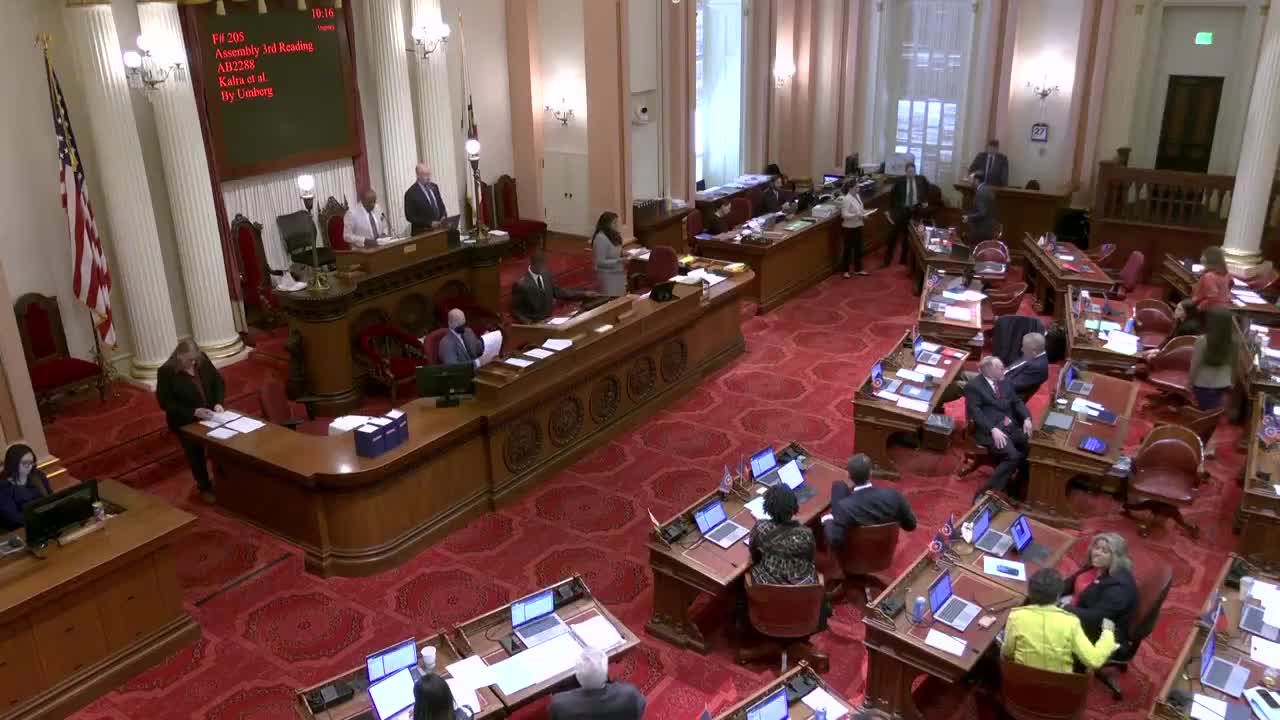 10MIN
Senate Floor
 3MIN
Senate Standing Committee on Appropriations
 29MIN
Senate Standing Committee on Elections and Constitutional Amendments
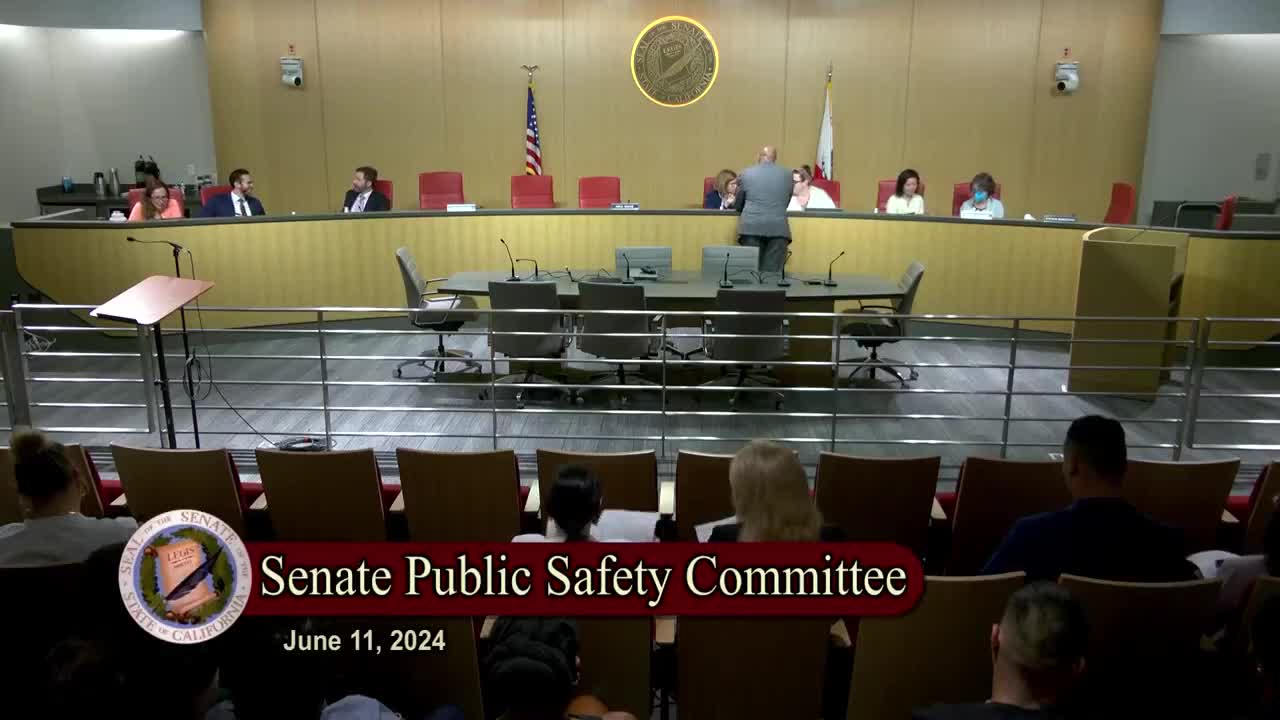 21MIN
Senate Standing Committee on Public Safety
 10MIN
Assembly Floor
 26MIN
Assembly Standing Committee on Public Safety
Bill Author

Bill Co-Author(s):