ACR 102: California Lowrider Day.
- Session Year: 2023-2024
- House: Assembly
- Latest Version Date: 2023-08-30
Current Status:
Passed
(2023-08-30: Chaptered by Secretary of State - Res. Chapter 148, Statutes of 2023.)
Introduced
In Committee
First Chamber
In Committee
Second Chamber
Enacted
This measure would celebrate the history and culture of lowriding and cruising, encourage local officials and law enforcement to work with local car clubs to conduct safe cruising events, and declare the first Sunday of summer to be observed as California Lowrider Day.
This measure would celebrate the history and culture of lowriding and cruising, encourage local officials and law enforcement to work with local car clubs to conduct safe cruising events, and declare the first Sunday of summer to be observed as California Lowrider Day.
This measure would celebrate the history and culture of lowriding and cruising, encourage local officials and law enforcement to work with local car clubs to conduct safe cruising events, and declare the first Sunday of summer to be observed as California Lowrider Day.
WHEREAS, One of Californias proudest traits is the plethora of rich, diverse cultures residing within the state, and Californias Latino community, being one of the largest in the country, has contributed to the states flourishment in countless ways; and
WHEREAS, Lowriders, classic cars equipped with various hydraulic and visual modifications, originated in our own state in the mid-1940s in the City of Los Angeles, and grew alongside the Chicano movement in the 1960s; and
WHEREAS, Lowriding originated largely in the 1960s in the City of Los Angeles, at the time when Mexican American culture in the United States and those displaying Chicano identities were impacted by inequality, segregation, and resistance; and
WHEREAS, As Mexican Americans began collectively reimagining their identity during the Chicano movement in the 1970s, lowriders took on a formalized political statement; and
WHEREAS, Chicanos took this opportunity to create custom cars utilizing scraps and spare parts typically found in junkyards; and
WHEREAS, During the Chicano art movement, many Chicanos chose to express their cultural values, histories, folklore, personal stories, and religious beliefs through the delicately created artistry found throughout their vehicles; and
WHEREAS, Car clubs, which were forming then, began offering community services, such as fundraising for the United Farm Workers labor union and hosting health initiatives; and
WHEREAS, The lowrider culture has evolved into giving back to others and a strong sense of unity as a means of asserting a sense of ownership over Latino culture; and
WHEREAS, Lowriders challenge erasure, containment, and class immobility histories to emphasize the politics of presence portrayed in lowrider interior and exterior adornment of the cars; and
WHEREAS, By being visible, lowriders have the power to reach communities outside of the barrios and show how Chicano identities and culture have formed as a result of discriminatory segregation; and
WHEREAS, The lowriding practices serve to change the hurdles of mobility, correspond to experienced limitations, and allow for the ability to express and facilitate preferred forms of comradery; and
WHEREAS, Lowrider car culture has created an alternate cultural space for performance, participation, and interpretation that allows for the challenging of norms and stereotypes that have been plaguing our Latino community while asserting cultural identity and defying racial discrimination and class identification; and
WHEREAS, Pachucas and other Mexican American women were not acknowledged in the Chicano movement; and
WHEREAS, Women have always had a prominent role in the lowrider car scene, where they were able to challenge men who have usually predetermined their place to be in the passenger seat; and
WHEREAS, This outdated thinking excluded women from the drivers seat and has increased the womens car clubs as a space for women who want to drive and work on their own lowrider cars so that other young women can see that it is possible for women to be behind the wheel, too; and
WHEREAS, It is today that we recognize the lowrider culture and shift our point of view to one of appreciation, celebration, and encouragement; and
WHEREAS, Cruises, coordinated Low and Slow drives with the purpose of showing others the work that has gone into a lowrider vehicle, have been widely attended events in the Latino community for decades; and
WHEREAS, Cruising ordinances were first enacted in the 1980s by several cities that unjustly correlated lowriders with street gangs and sideshows, and the lowrider community resurged post-COVID-19 pandemic. Leaders successfully achieved the repeal of cruising bans in the Cities of San Jose, Sacramento, Salinas, and San Diego; and
WHEREAS, Ushered in with the new generation of lowriders is also a renewed sense of celebration and diversity within the Latino community; and
WHEREAS, While cruising is most popular among Latinos, cruising is becoming increasingly popular among many other groups, including Armenians, African Americans, and Persians; and
WHEREAS, Car clubs are often engaged with their communities and collaborate with local law enforcement and elected officials to conduct toy drives, fundraisers, and other philanthropic activities; and
WHEREAS, Car clubs have participated in COVID-19 vaccine drives, raised money for local causes, raised awareness about the census count, engaged in activism, and advocated for the community; now, therefore, be it
Resolved by the Assembly of the State of California, the Senate thereof concurring, That the Legislature appreciates the cultural and artistic significance that lowriding and cruising has in California history and encourages all to take a moment to learn more about the rich history that surrounds lowriding and cruising; and be it further
Resolved, That the Legislature celebrates the history and culture of cruising and encourages local officials and law enforcement to work with local car clubs to conduct safe cruising events; and be it further
Resolved, That the Legislature declares the first Sunday of summer to be observed as California Lowrider Day; and be it further
Resolved, That the Chief Clerk of the Assembly transmit copies of this resolution to the author for appropriate distribution.
|
Date
|
Status
|
|---|---|
| Aug 30, 2023 | Chaptered by Secretary of State - Res. Chapter 148, Statutes of 2023. |
| Aug 30, 2023 | Enrolled and filed with the Secretary of State at 3 p.m. |
| Aug 17, 2023 | In Assembly. Ordered to Engrossing and Enrolling. |
| Aug 17, 2023 | Adopted and to Assembly. (Ayes 38. Noes 0. Page 2138.) |
| Aug 16, 2023 | From committee: Ordered to third reading. |
| Jul 11, 2023 | In Senate. To Com. on RLS. |
| Jul 10, 2023 | Adopted and to Senate. (Page 2590.) |
| Jul 10, 2023 | Coauthors revised. |
| Jun 30, 2023 | Coauthors revised. |
| Jun 30, 2023 | From committee: Be adopted. Ordered to Third Reading. (Ayes 7. Noes 0.) (June 29). |
| Jun 29, 2023 | Referred to Com. on RLS. |
| Jun 28, 2023 | From printer. |
| Jun 27, 2023 | Introduced. To print. |
|
Date
|
Description
|
Location
|
Votes
|
|
|---|---|---|---|---|
| Aug 17, 2023 | Assembly 3rd Reading ACR102 Cervantes et al. By Padilla | Senate Floor |
Passed |
|
| Jun 29, 2023 | Be adopted. To third reading. | Assembly Standing Committee on Rules |
Passed |
This list shows positions taken on this bill by organizations on the date displayed, which is linked to the original source.
Positions by individuals are not included.
SENATE RULES COMMITTEE Office of Senate Floor Analyses (916) 651-1520 Fax: (916) 327-4478 | ACR 102 |
THIRD READING
Bill No: ACR 102
Author: Cervantes (D) and Luz Rivas (D), et al.
Introduced: 6/27/23
ASSEMBLY FLOOR; Read and adopted, 7/10/23
SUBJECT: California Lowrider Day
DIGEST:
This resolution celebrates the history and culture of lowriding and cruising, encourages local officials and law enforcement to work with local car clubs to conduct safe cruising events, and declares the first Sunday of summer to be observed as California Lowrider Day.
ANALYSIS: This resolution makes the following legislative findings:
- One of California’s proudest traits is the plethora of rich, diverse cultures residing within the state, and California’s Latino community, being one of the largest in the country, has contributed to the state’s flourishment in countless ways.
- Lowriders, classic cars equipped with various hydraulic and visual modifications, originated in our own state in the mid-1940s in the City of Los Angeles, and grew alongside the Chicano movement in the 1960s.
- Lowriding originated largely in the 1960s in the City of Los Angeles, at the time when Mexican American culture in the United States and those displaying Chicano identities were impacted by inequality, segregation, and resistance.
- As Mexican Americans began collectively reimagining their identity during the Chicano movement in the 1970s, lowriders took on a formalized political statement.
- Chicanos took this opportunity to create custom cars utilizing scraps and spare parts typically found in junkyards.
- During the Chicano art movement, many Chicanos chose to express their cultural values, histories, folklore, personal stories, and religious beliefs through the delicately created artistry found throughout their vehicles.
- Car clubs, which were forming then, began offering community services, such as fundraising for the United Farm Workers labor union and hosting health initiatives.
- The lowrider culture has evolved into giving back to others and a strong sense of unity as a means of asserting a sense of ownership over Latino culture.
- While cruising is most popular among Latinos, cruising is becoming increasingly popular among many other groups, including Armenians, African Americans, and Persians.
- Car clubs are often engaged with their communities and collaborate with local law enforcement and elected officials to conduct toy drives, fundraisers, and other philanthropic activities.
This resolution celebrates the history and culture of lowriding and cruising, encourages local officials and law enforcement to work with local car clubs to conduct safe cruising events, and declares the first Sunday of summer to be observed as California Lowrider Day.
FISCAL EFFECT: Appropriation: No Fiscal Com.: No Local: No
SUPPORT: (Verified 8/14/23)
None received
OPPOSITION: (Verified 8/14/23)
None received
Prepared by: Russell Manning / SFA / (916) 651-1520
8/16/23 10:42:19
**** END ****
ASSEMBLY THIRD READING
ATR Bill Id:ACR 102
Author:(Cervantes and Luz Rivas)
As Introduced Ver:June 27, 2023
Majority vote
SUMMARY
Declares the first Sunday of summer to be observed as California Lowrider Day, to celebrate the history and culture of lowriding and cruising; and, to learn more about the rich history in California that surrounds lowriding and cruising.
Major Provisions
- Lowriders, classic cars equipped with various hydraulic and visual modifications, originated in our own state in the mid-1940s in the City of Los Angeles, and grew alongside the Chicano movement in the 1960s.
- Lowriding originated largely in the 1960s in the City of Los Angeles, at the time when Mexican American culture in the United States and those displaying Chicano identities were impacted by inequality, segregation, and resistance.
- As Mexican Americans began collectively reimagining their identity during the Chicano movement in the 1970s, lowriders took on a formalized political statement. During the Chicano art movement, many Chicanos chose to express their cultural values, histories, folklore, personal stories, and religious beliefs through the delicately created artistry found throughout their vehicles.
- Lowrider car culture has created an alternate cultural space for performance, participation, and interpretation that allows for the challenging of norms and stereotypes that have been plaguing California's Latino community while asserting cultural identity and defying racial discrimination and class identification.
- Cruising ordinances were first enacted in the 1980s by several cities that unjustly correlated lowriders with street gangs and sideshows, and the lowrider community resurged post-COVID-19 pandemic. Leaders successfully achieved the repeal of cruising bans in the Cities of San Jose, Sacramento, Salinas, and San Diego.
- Ushered in with the new generation of lowriders is also a renewed sense of celebration and diversity within the Latino community. While cruising is most popular among Latinos, cruising is becoming increasingly popular among many other groups, including Armenians, African Americans, and Persians.
- Car clubs are often engaged with their communities and collaborate with local law enforcement and elected officials to conduct toy drives, fundraisers, and other philanthropic activities. Car clubs have participated in COVID-19 vaccine drives, raised money for local causes, raised awareness about the census count, engaged in activism, and advocated for the community.
- It is important to appreciate the cultural and artistic significance that lowriding and cruising has in California history and to take a moment to learn more about the rich history that surrounds lowriding and cruising.
COMMENTS
According to the Author
Lowriding and cruising originated in Los Angeles in the 1940s, and grew alongside the Chicano movement of the 1960s. Assembly Concurrent Resolution 102 would designate the first Sunday of summer as California Lowrider Day, celebrate the history and culture of lowriding and cruising, and encourage local governments and law enforcement to collaborate with local car and cruising clubs to help conduct safe cruising events.
Arguments in Support
None on file.
Arguments in Opposition
None on file.
FISCAL COMMENTS
No fiscal impact. This resolution is keyed non-fiscal by Legislative Counsel.
VOTES
ASM RULES: 7-0-6
YES: Ramos, Waldron, Dixon, Ortega, Pacheco, Papan, Valencia
ABS, ABST OR NV: Addis, Juan Carrillo, Essayli, Low, Pellerin, Blanca Rubio
UPDATED
VERSION: June 27, 2023
CONSULTANT: Michael Erke / RLS. / (916) 319-2800 FN: 0001188
Date of Hearing: June 29, 2023
ASSEMBLY COMMITTEE ON RULES
James Ramos, Chair
ABPCA Bill Id:ACR 102 (
Author:Cervantes) – As Introduced Ver:June 27, 2023
SUBJECT: California Lowrider Day.
SUMMARY: Declares the first Sunday of summer to be observed as California Lowrider Day, to celebrate the history and culture of lowriding and cruising; and, to learn more about the rich history in California that surrounds lowriding and cruising. Specifically, this resolution makes the following legislative findings:
- Lowriders, classic cars equipped with various hydraulic and visual modifications, originated in our own state in the mid-1940s in the City of Los Angeles, and grew alongside the Chicano movement in the 1960s.
- Lowriding originated largely in the 1960s in the City of Los Angeles, at the time when Mexican American culture in the United States and those displaying Chicano identities were impacted by inequality, segregation, and resistance.
- As Mexican Americans began collectively reimagining their identity during the Chicano movement in the 1970s, lowriders took on a formalized political statement. During the Chicano art movement, many Chicanos chose to express their cultural values, histories, folklore, personal stories, and religious beliefs through the delicately created artistry found throughout their vehicles.
- Lowrider car culture has created an alternate cultural space for performance, participation, and interpretation that allows for the challenging of norms and stereotypes that have been plaguing California’s Latino community while asserting cultural identity and defying racial discrimination and class identification.
- Cruising ordinances were first enacted in the 1980s by several cities that unjustly correlated lowriders with street gangs and sideshows, and the lowrider community resurged post-COVID-19 pandemic. Leaders successfully achieved the repeal of cruising bans in the Cities of San Jose, Sacramento, Salinas, and San Diego.
- Ushered in with the new generation of lowriders is also a renewed sense of celebration and diversity within the Latino community. While cruising is most popular among Latinos, cruising is becoming increasingly popular among many other groups, including Armenians, African Americans, and Persians.
- Car clubs are often engaged with their communities and collaborate with local law enforcement and elected officials to conduct toy drives, fundraisers, and other philanthropic activities. Car clubs have participated in COVID-19 vaccine drives, raised money for local causes, raised awareness about the census count, engaged in activism, and advocated for the community.
- It is important to appreciate the cultural and artistic significance that lowriding and cruising has in California history and to take a moment to learn more about the rich history that surrounds lowriding and cruising.
FISCAL EFFECT: None
REGISTERED SUPPORT / OPPOSITION:
Support
None on file
Opposition
None on file
Analysis Prepared by: Michael Erke / RLS. / (916) 319-2800
Discussed in Hearing
View Older Hearings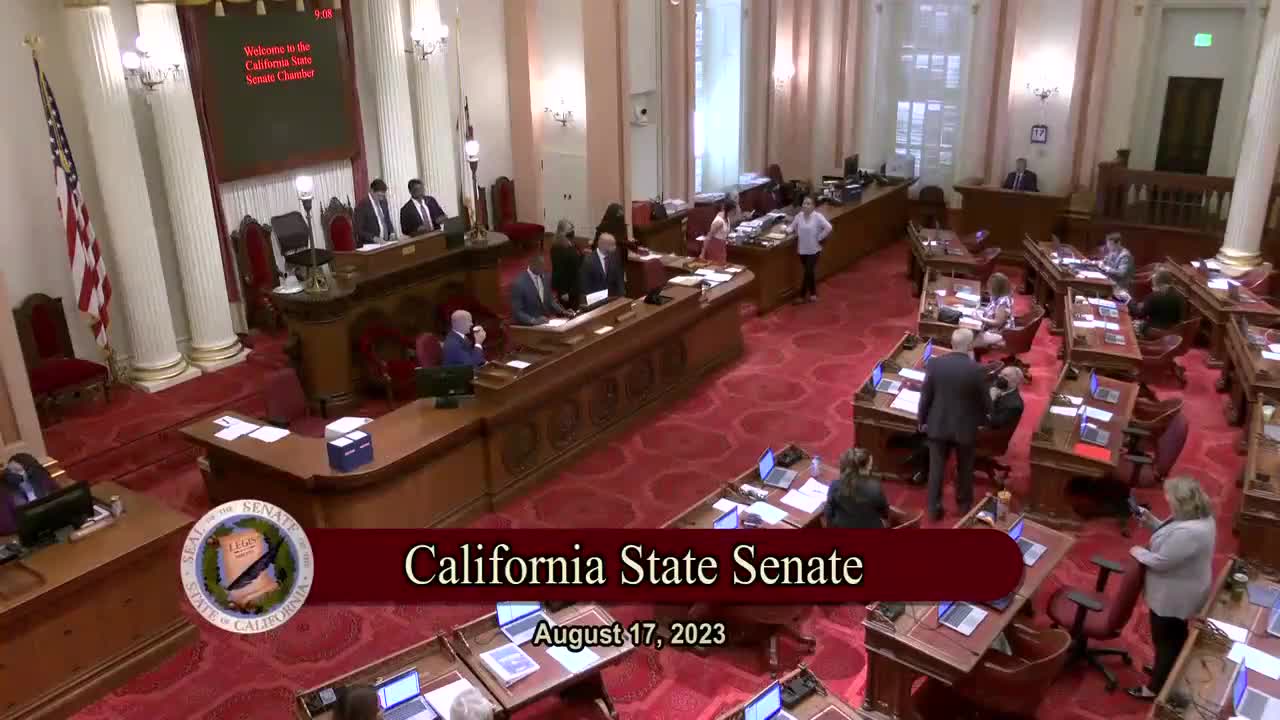


Bill Co-Author(s):