ACR 157: Adult Education Week.
- Session Year: 2023-2024
- House: Assembly
- Latest Version Date: 2024-05-08
Current Status:
Passed
(2024-05-08: Chaptered by Secretary of State - Res. Chapter 62, Statutes of 2024.)
Introduced
In Committee
First Chamber
In Committee
Second Chamber
Enacted
This measure would proclaim the week of April 7 through April 13, 2024, as Adult Education Week, and would salute the teachers, administrators, classified staff, and students of adult education programs statewide, honoring their efforts, persistence, and accomplishments.
This measure would proclaim the week of April 7 through April 13, 2024, as Adult Education Week, and would salute the teachers, administrators, classified staff, and students of adult education programs statewide, honoring their efforts, persistence, and accomplishments.
This measure would proclaim the week of April 7 through April 13, 2024, as Adult Education Week, and would salute the teachers, administrators, classified staff, and students of adult education programs statewide, honoring their efforts, persistence, and accomplishments.
WHEREAS, The State of California will observe April 7 through April 13, 2024, as Adult Education Week, recognizing the unique accomplishments of California adult schools; and
WHEREAS, The California State Legislature acknowledges that K12-based adult schools offer quality programs to meet the ever-changing economic and workforce development and lifelong learning needs of our diverse state; and
WHEREAS, The first recorded adult education class in California was held in the basement of St. Marys Cathedral in San Francisco in 1856. The class was authorized by the San Francisco Board of Education to teach English to Irish, Italian, and Chinese immigrants. John Swett, who was the first volunteer teacher for the class, later became a California State Superintendent of Public Instruction; and
WHEREAS, Most students served through adult education deal with illiteracy, poverty, and high unemployment, and are the most negatively impacted group when the state faces economic, social, and health challenges, most recently seen through the impact of the COVID-19 pandemic; and
WHEREAS, Adult schools have been used on numerous occasions to assist the state as it dealt with significant social, political, and economic issues through job training programs during World War II, immigration reform of the 1980s, and, most recently, the Great Recession; and
WHEREAS, Adult education in California overcame its biggest challenge as a result of the severe economic crisis facing both the state and the nation in 200809. Funding that was previously reserved for adult education was redistributed to other levels of education in the state, resulting in many adult schools decreasing in size and some closing; and
WHEREAS, Over 66 percent of adult learners enrolled in adult schools across California during the 202223 school year were between 25 and 54 years of age, making them very likely to have children in our public school system. The impact of adult education is felt across generations, particularly for early childhood learners who have been characterized as a priority of the Governor and the Legislature; and
WHEREAS, In the 202223 school year, adult education provided over 42,000,000 reportable hours of instruction to Californias adults; and
WHEREAS, Adult schools are a primary community resource for the teaching and instruction of adult literacy, working in collaboration with community colleges, community centers, and libraries; and
WHEREAS, In the 202223 school year, over 113,000 adult learners enrolled in high school diploma or equivalency classes and another 69,000 enrolled in adult basic education classes. Adult schools provide a way for adults to complete secondary studies and obtain a high school diploma or equivalency at their own pace, and to prepare for and transition to postsecondary education and career training; and
WHEREAS, Adult schools provide critical opportunities to bring recent school dropouts back to school; and
WHEREAS, In the 202223 school year, over 257,000 adult learners enrolled in English as a Second Language classes. Adult schools provide instruction to those in the state who need English as a Second Language and citizenship courses, and play a key role in immigrant integration and the path to United States citizenship, which is so important for our diverse communities and in this time of immigration reform; and
WHEREAS, Adult schools, recognizing that to break the cycle of illiteracy and to support educational equity for all our children we must focus on educating parents, provide programs in family literacy at elementary schools in conjunction with community-based organizations; and
WHEREAS, In the 202223 school year, nearly 110,000 adult learners enrolled in career training classes. Adult schools provide short-term career and technical training for adults seeking changes or enhancements in their career pathway, especially for highly educated immigrants from other countries to integrate and use their prior skills and experience; and
WHEREAS, In the 202223 school year, over 7,000 adults were served in programs designed for adults with intellectual or developmental disabilities; and
WHEREAS, Adult schools in California were saved from the brink of closure across the state as a result of the Legislature and administration establishing the California Adult Education Program in 2015 that is helping to restore access and programming for adult learners with planning and collaboration on a regional scale; and
WHEREAS, Amid the COVID-19 pandemic, adult schools continued to provide critical programming and services to adult education students and their families via literacy and basic skills to help ensure K12 students were successful as they navigated the challenge of distance learning to finish the school year; and
WHEREAS, Amid the COVID-19 pandemic and ongoing today, adult schools provide important short-term career training programs, including for critical health care positions, to address both the short- and long-term impacts of the pandemic and to respond to Governor Gavin Newsoms charge to meet the moment and address the needs of our communities; and
WHEREAS, Adult schools in California are diverse places of learning for students safe from discrimination and bullying that seek to support all students regardless of their ethnicity, race, faith, and orientation; and
WHEREAS, The California Adult Education Program celebrates its 10th anniversary this year, having been established in law in 2014; now, therefore, be it
Resolved by the Assembly of the State of California, the Senate thereof concurring, That the Legislature does hereby proclaim the week of April 7 through April 13, 2024, as Adult Education Week and salutes the teachers, administrators, classified staff, and students of adult education programs statewide, honoring their efforts, persistence, and accomplishments; and be it further
Resolved, That the Chief Clerk of the Assembly transmit copies of this resolution to the author for appropriate distribution.
|
Date
|
Status
|
|---|---|
| May 8, 2024 | Chaptered by Secretary of State - Res. Chapter 62, Statutes of 2024. |
| May 8, 2024 | Enrolled and filed with the Secretary of State at 1:30 p.m. |
| May 2, 2024 | In Assembly. Ordered to Engrossing and Enrolling. |
| May 2, 2024 | Adopted and to Assembly. (Ayes 38. Noes 0. Page 3832.) |
| Apr 30, 2024 | Ordered to special consent calendar. |
| Apr 17, 2024 | From committee: Ordered to third reading. |
| Apr 9, 2024 | In Senate. To Com. on RLS. |
| Apr 8, 2024 | Adopted and to Senate. (Ayes 76. Noes 0. Page 4659.) |
| Apr 8, 2024 | Coauthors revised. |
| Mar 21, 2024 | From committee: Be adopted. Ordered to Third Reading. (Ayes 8. Noes 0.) (March 21). |
| Mar 11, 2024 | Referred to Com. on RLS. |
| Mar 7, 2024 | From printer. |
| Mar 6, 2024 | Introduced. To print. |
|
Date
|
Description
|
Location
|
Votes
|
|
|---|---|---|---|---|
| May 2, 2024 | Special Consent ACR157 Pacheco et al. | Senate Floor |
Passed |
|
| Mar 21, 2024 | Be adopted. To third reading. | Assembly Standing Committee on Rules |
Passed |
This list shows positions taken on this bill by organizations on the date displayed, which is linked to the original source.
Positions by individuals are not included.
|
Organization
|
Position
|
Date
|
|---|---|---|
| California Adult Education Administrators Association | ** Support | |
| California Council For Adult Education | ** Support |
SENATE RULES COMMITTEE Office of Senate Floor Analyses (916) 651-1520 Fax: (916) 327-4478 | ACR 157 |
THIRD READING
Bill No: ACR 157
Author: Pacheco (D), et al.
Introduced: 3/6/24
Vote: 21
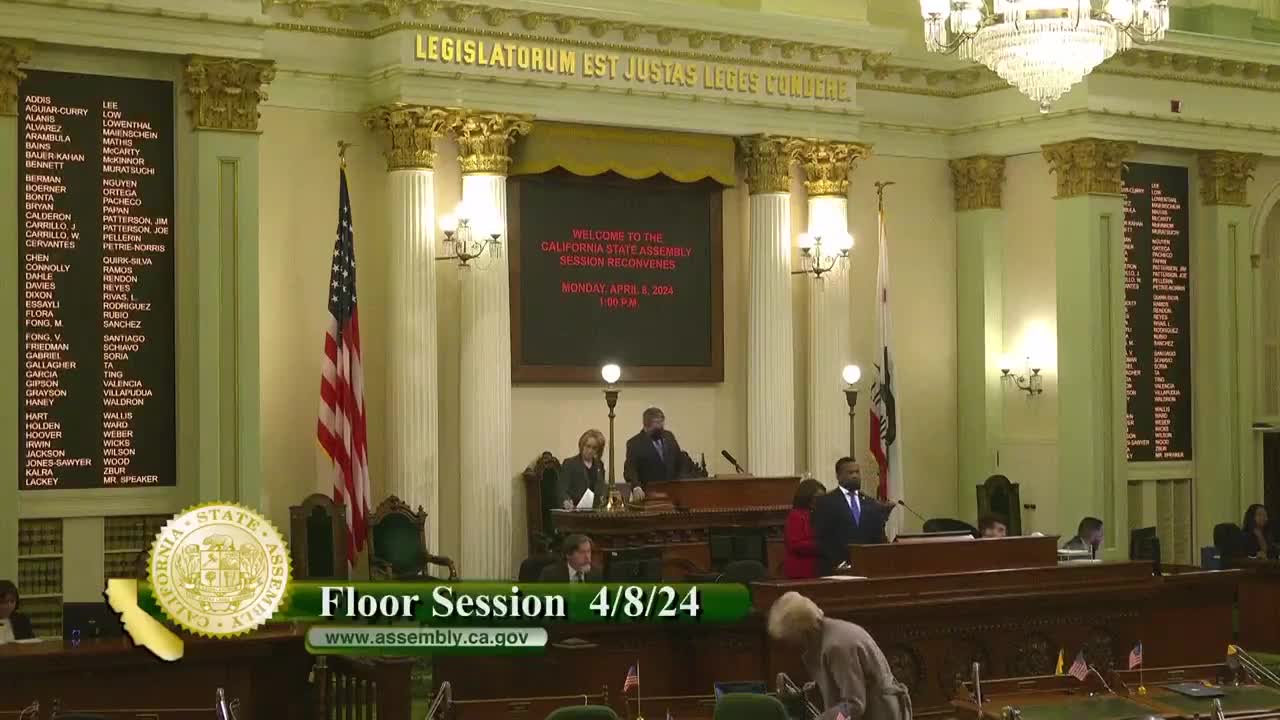
ASSEMBLY FLOOR: Read and adopted, 4/8/24
SUBJECT: Adult Education Week
SOURCE: California Adult Education Administrators Association
California Council for Adult Education
DIGEST:
This resolution proclaims the week of April 7 through April 13, 2024, as Adult Education Week, and would salute the teachers, administrators, classified staff, and students of adult education programs statewide, honoring their efforts, persistence, and accomplishments.
ANALYSIS: This resolution makes the following legislative findings:
- The first recorded adult education class in California was held in the basement of St. Mary’s Cathedral in San Francisco in 1856. The class was authorized by the San Francisco Board of Education to teach English to Irish, Italian, and Chinese immigrants. John Swett, who was the first volunteer teacher for the class, later became a California State Superintendent of Public Instruction.
- Adult schools have been used on numerous occasions to assist the state as it dealt with significant social, political, and economic issues through job training programs during World War II, immigration reform of the 1980s, and, most recently, the Great Recession.
- In the 2022–23 school year, over 113,000 adult learners enrolled in high school diploma or equivalency classes and another 69,000 enrolled in adult basic education classes. Adult schools provide a way for adults to complete secondary studies and obtain a high school diploma or equivalency at their own pace, and to prepare for and transition to postsecondary education and career training.
- In the 2022–23 school year, nearly 110,000 adult learners enrolled in career training classes. Adult schools provide short-term career and technical training for adults seeking changes or enhancements in their career pathway, especially for highly educated immigrants from other countries to integrate and use their prior skills and experience.
This proclaims the week of April 7 through April 13, 2024, as Adult Education Week and salutes the teachers, administrators, classified staff, and students of adult education programs statewide, honoring their efforts, persistence, and accomplishments.
Comments
According to the author:
I am proud to author Assembly Concurrent Resolution 157, which proclaims April 7 through April 13, 2024, as Adult Education Week. Adult education is a public education program offering free to low-cost classes for adults 18 and older in high school equivalency, basic skills, English as a Second Language, citizenship, and short term career technical education training. It provides important access to programs supporting immigrant integration and job retraining that will be critical as we navigate the current economic downturn and to insulate against the potential for an actual recession.
Related/Prior Legislation
The following are the most recent measures proclaiming Adult Education Week:
- ACR 31 (Pacheco, Resolution Chapter 40. Statutes of 2023).
- ACR 163 (Medina, Resolution Chapter 51, Statutes of 2022).
- SCR 25 (Hurtado, Resolution Chapter 62, Statutes of 2021).
FISCAL EFFECT: Appropriation: No Fiscal Com.: No Local: No
SUPPORT: (Verified 4/15/24)
California Adult Education Administrators Association (co-source)
California Council for Adult Education (co-source)
OPPOSITION: (Verified 4/15/24)
None received
Prepared by: Russell Manning / SFA / (916) 651-1520
4/17/24 13:55:19
**** END ****
ASSEMBLY THIRD READING
ATR Bill Id:ACR 157
Author:(Pacheco)
As Introduced Ver:March 6, 2024
Majority vote
SUMMARY
Proclaims the week of April 7, 2024, through April 13, 2024, as Adult Education Week, and salutes the teachers, administrators, classified staff, and students of adult education programs statewide for their efforts, persistence, and accomplishments.
Major Provisions
- The first recorded adult education class in California was held in the basement of St. Mary's Cathedral in San Francisco in 1856. The class was authorized by the San Francisco Board of Education to teach English to Irish, Italian, and Chinese immigrants. John Swett, who was the first volunteer teacher for the class, later became a Superintendent of Public Instruction.
- Adult schools have been used on numerous occasions to assist the state as it dealt with significant social, political, and economic issues though job training programs during World War II, immigration reform of the 1980s, and most recently, the Great Recession.
- Adult education in California overcame its biggest challenge as a result of the severe economic crisis facing both the state and the nation in 2008-09. Funding that was previously reserved for adult education was redistributed to other levels of education in the state, resulting in many adult schools decreasing in size and some closing.
- Most students served through adult education deal with illiteracy, poverty, and high unemployment, and are the most negatively impacted group when the state faces economic, social, and health challenges, most recently seen through the impact of the COVID-19 pandemic.
- Over 66% of adult learners enrolled in adult schools across California during the 2022–23 school year were between 25 and 54 years of age, making them very likely to have children in our public school system. The impact of adult education is felt across generations, particularly for early childhood learners who have been characterized as a priority of the Governor and the Legislature.
- Adult schools, recognizing that to break the cycle of illiteracy and to support educational equity for all our children we must focus on educating parents, provide programs in family literacy at elementary schools in conjunction with community-based organizations.
- Adult schools in California are diverse places of learning for students safe from discrimination and bullying that seek to support all students regardless of their ethnicity, race, faith, and orientation.
- The week of April 7, 2024, through April 13, 2024, is observed as Adult Education Week, recognizing the unique accomplishments of California adult schools. The California Adult Education Program celebrates its 10th anniversary this year, having been established in law in 2014.
COMMENTS
According to the Author
Assembly Concurrent Resolution 157 proclaims April 7 through April 13, 2024, as Adult Education Week. Adult education is a public education program offering free to low-cost classes for adults 18 and older in high school equivalency, basic skills, English as a Second Language, citizenship, and short term career technical education training. It provides important access to programs supporting immigrant integration and job retraining that will be critical as we navigate the current economic downturn and to insulate against the potential for an actual recession.
Arguments in Support
None on file.
Arguments in Opposition
None on file.
FISCAL COMMENTS
No fiscal impact. This resolution is keyed non-fiscal by Legislative Counsel.
VOTES
ASM RULES: 8-0-3
YES: Pacheco, Flora, Friedman, Holden, Low, Maienschein, Ting, Waldron
ABS, ABST OR NV: Mathis, Cervantes, Jones-Sawyer
UPDATED
VERSION: March 6, 2024
CONSULTANT: Michael Erke / RLS. / (916) 319-2800 FN: 0002678
Date of Hearing: March 21, 2024
ASSEMBLY COMMITTEE ON RULES
Blanca Pacheco, Chair
ABPCA Bill Id:ACR 157 (
Author:Pacheco) – As Introduced Ver:March 6, 2024
SUBJECT: Adult Education Week.
SUMMARY: Proclaims the week of April 7, 2024, through April 13, 2024, as Adult Education Week, and salutes the teachers, administrators, classified staff, and students of adult education programs statewide for their efforts, persistence, and accomplishments. Specifically, this resolution makes the following legislative findings:
- The first recorded adult education class in California was held in the basement of St. Mary’s Cathedral in San Francisco in 1856. The class was authorized by the San Francisco Board of Education to teach English to Irish, Italian, and Chinese immigrants. John Swett, who was the first volunteer teacher for the class, later became a Superintendent of Public Instruction.
- Adult schools have been used on numerous occasions to assist the state as it dealt with significant social, political, and economic issues though job training programs during World War II, immigration reform of the 1980s, and most recently, the Great Recession.
- Adult education in California overcame its biggest challenge as a result of the severe economic crisis facing both the state and the nation in 2008-09. Funding that was previously reserved for adult education was redistributed to other levels of education in the state, resulting in many adult schools decreasing in size and some closing.
- Most students served through adult education deal with illiteracy, poverty, and high unemployment, and are the most negatively impacted group when the state faces economic, social, and health challenges, most recently seen through the impact of the COVID-19 pandemic.
- Over 66 percent of adult learners enrolled in adult schools across California during the 2022–23 school year were between 25 and 54 years of age, making them very likely to have children in our public school system. The impact of adult education is felt across generations, particularly for early childhood learners who have been characterized as a priority of the Governor and the Legislature.
- Adult schools, recognizing that to break the cycle of illiteracy and to support educational equity for all our children we must focus on educating parents, provide programs in family literacy at elementary schools in conjunction with community-based organizations.
- Adult schools in California are diverse places of learning for students safe from discrimination and bullying that seek to support all students regardless of their ethnicity, race, faith, and orientation.
- The week of April 7, 2024, through April 13, 2024, is observed as Adult Education Week, recognizing the unique accomplishments of California adult schools. The California Adult Education Program celebrates its 10th anniversary this year, having been established in law in 2014.
FISCAL EFFECT: None
REGISTERED SUPPORT / OPPOSITION:
Support
None on file
Opposition
None on file
Analysis Prepared by: Michael Erke / RLS. / (916) 319-2800
Bill Author

Bill Co-Author(s):