ACR 86: Animals: overpopulation: spay and neutering services.
- Session Year: 2023-2024
- House: Assembly
- Latest Version Date: 2024-04-19
Current Status:
Passed
(2024-04-19: Chaptered by Secretary of State - Res. Chapter 51, Statutes of 2024.)
Introduced
In Committee
First Chamber
In Committee
Second Chamber
Enacted
This measure would encourage the state and local municipalities to develop and fund high-volume spay and neuter clinics across the state to provide sterilization services, and would encourage other actions relating to pets, including actions to control animal breeding and encourage spaying and neutering, as specified.
This measure would encourage the state and local municipalities to develop and fund high-volume spay and neuter clinics across the state to provide sterilization services, and would encourage other actions relating to pets, including actions to control animal breeding and encourage spaying and neutering, as specified.
This measure would encourage various actions by the state, the Veterinary Medical Board, local municipalities, public and private shelters, nonprofit rescue organizations, and private foundations to increase their support for spay and neuter services, veterinary care licensing, and shelter animal adoption to address pet overpopulation, the state and local municipalities to develop and fund high-volume spay and neuter clinics across the state to provide sterilization services, and would encourage other actions relating to pets, including actions to control animal breeding and encourage spaying and neutering, as specified.
This measure would encourage various actions by the state, the Veterinary Medical Board, local municipalities, public and private shelters, nonprofit rescue organizations, and private foundations to increase their support for spay and neuter services, veterinary care licensing, and shelter animal adoption to address pet overpopulation, as specified.
This measure would encourage various actions by the state, the Veterinary Medical Board, local municipalities, public and private shelters, nonprofit rescue organizations, and private foundations to increase their support for spay and neuter services, veterinary care licensing, and shelter animal adoption to address pet overpopulation, as specified.
WHEREAS, There is a pet overpopulation crisis in California; and
WHEREAS, Californias private and public shelters and the private rescue organizations that support them are overwhelmed with animals; and
WHEREAS, Californias private and public shelters are chronically underfunded while tasked with tackling many of the states animal needs, such as fighting animal abuse, addressing mental health issues, including hoarding, providing safekeeping for pets when owners are arrested or placed in the hospital, supporting public safety, including rabies control, assisting first responders during emergencies and natural disasters, reunifying pets with their people, and providing life-impacting veterinary interventions and care, animal behavioral support, and adoptions; and
WHEREAS, Due to breeding and lack of access to spaying and neutering services, the states shelters are experiencing overcrowding, leading to higher rates of illness, euthanasia, and operational hardships; and
WHEREAS, Due to shelter overcrowding, shelters are turning away animals from intake, leading to higher rates of animals procreating and struggling to survive on the streets; and
WHEREAS, There has been an influx of rabbits, horses, pigs, and other agricultural animals into shelters whose higher level of care puts further strain on shelter resources; and
WHEREAS, The COVID-19 pandemic exacerbated the challenges that shelters face due to shelter closures or highly reduced hours, staffing shortages, and functional interruptions; and
WHEREAS, Californians adopted pets at record numbers during the COVID-19 pandemic and many Californians underestimated the time that was needed to care for pets and then returned to work, leading to higher rates of owner relinquishment; and
WHEREAS, Due to the brief spike in demand for pets during the pandemic, many Californians, seeing an economic opportunity, began breeding dogs for monetary gain, thereby contributing to the pet overpopulation crisis; and
WHEREAS, Californians are currently not adopting pets from shelters and rescues at the level needed; and
WHEREAS, Californians are buying unaltered purebred animals from both in-state and out-of-state breeders; and
WHEREAS, There is a shortage of pet-friendly housing in California, leading to increased owner relinquishment; and
WHEREAS, Due to the pandemic, veterinary clinics and shelters were not able to perform routine spay and neuter surgeries, which has resulted in more unwanted litters; and
WHEREAS, There is insufficient community access to low-cost or free spay and neuter clinics, as well as a lack of resources needed to fully enforce state and local laws concerning licensing, breeding, spaying, and neutering; and
WHEREAS, There is a lack of affordable veterinary services available to Californians and their companion animals, which contributes to animal suffering and increased owner relinquishments; and
WHEREAS, There are only two veterinary schools in California, both with limited seating, which fail to meet the states demand for licensed veterinarians, and there are not enough academic faculty at those institutions to teach veterinary students; and
WHEREAS, There are not enough licensed veterinarians and registered veterinary technicians, particularly those trained to perform high-volume spay and neuter surgeries, to meet the service demands of Californias shelters, leading to shelter animals being adopted unaltered, thus adding to the pet overpopulation crisis; and
WHEREAS, There is a mental health crisis among veterinarians and shelter and rescue volunteers and staff due to occupational stress, leading to reported suicide rates four to five times higher than the general population; and
WHEREAS, Local jurisdictions spend over $400,000,000 per year in operating the states shelters to house, adopt out, and euthanize homeless animals; and
WHEREAS, The only annual state funding for shelters is the roughly $500,000 allocated through the Pet Lovers Fund funded by the Pet Lovers specialized license plates program, and a tax check-off program for low-cost spay and neuter; and
WHEREAS, Millions of private and philanthropic dollars are spent every year to assist Californias shelter animals; and
WHEREAS, The Legislature has failed to appropriate ongoing funds to carry out the mandates of Senate Bill 1785 (Chapter 752 of the Statutes of 1998), authored by Senator Tom Hayden; now, therefore, be it
Resolved by the Assembly of the State of California, the Senate thereof concurring, That the Veterinary Medical Board, with support from the Governor, other state boards and agencies, and interested stakeholders, should encourage out-of-state licensed veterinarians and registered veterinary technicians to become licensed in California to perform or assist with the necessary spay and neuter surgeries and other medical services in order to address pet overpopulation; and be it further
Resolved, That the state and local municipalities, in cooperation with public and private shelters, nonprofit rescue organizations, and private foundations, are encouraged to develop and fund high-volume spay and neuter clinics across the state to provide sterilization services; and be it further
Resolved, That allocation of adequate funding for statewide spay and neuter programs and resources for broader enforcement of state and local licensing, breeding, and spay and neuter laws is urgently needed; and be it further
Resolved, That the state is encouraged to conduct a public relations campaign urging Californians to adopt shelter animals rather than buying an animal from a breeder, and to always spay and neuter them; and be it further
Resolved, That the Chief Clerk of the Assembly transmit copies of this resolution to the author for appropriate distribution.
WHEREAS, There is a pet overpopulation crisis in California; and
WHEREAS, Californias private and public shelters and the private rescue organizations that support them are overwhelmed with animals; and
WHEREAS, Californias private and public shelters are chronically underfunded while tasked with tackling many of the states animal needs, such as fighting animal abuse, addressing mental health issues, such as including hoarding, providing safekeeping for pets when owners are arrested or placed in the hospital, supporting public safety, such as including rabies control, assisting first responders during emergencies and natural disasters, reunifying pets with their people, and providing life-impacting veterinary interventions and care, animal behavioral support, and adoptions; and
WHEREAS, Due to breeding and lack of access to spaying and neutering services, the states shelters are experiencing overcrowding, leading to higher rates of illness, euthanasia, and operational hardships; and
WHEREAS, Due to shelter overcrowding, shelters are turning away animals from intake, leading to higher rates of animals procreating and struggling to survive on the streets; and
WHEREAS, There has been an influx of rabbits, horses, pigs, and other agricultural animals into shelters whose higher level of care puts further strain on shelter resources; and
WHEREAS, The COVID-19 pandemic exacerbated the challenges that shelters face due to shelter closures or highly reduced hours, staffing shortages, and functional interruptions; and
WHEREAS, Californians adopted pets at record numbers during the COVID-19 pandemic and many Californians underestimated the time that was needed to care for pets and then returned to work, leading to higher rates of owner relinquishment; and
WHEREAS, Due to the brief spike in demand for pets during the pandemic, many Californians, seeing an economic opportunity, began breeding dogs for monetary gain, thereby contributing to the pet overpopulation crisis; and
WHEREAS, Californians are currently not adopting pets from shelters and rescues at the level needed; and
WHEREAS, Californians are buying unaltered purebred animals from both in-state and out-of-state breeders; and
WHEREAS, There is a shortage of pet-friendly housing in California, leading to increased owner relinquishment; and
WHEREAS, Due to the pandemic, veterinary clinics and shelters were not able to perform routine spay and neuter surgeries, which has resulted in more unwanted litters; and
WHEREAS, There is insufficient community access to low-cost or free spay and neuter clinics, as well as a lack of resources needed to fully enforce state and local laws concerning licensing, breeding, spaying, and neutering; and
WHEREAS, There is a lack of affordable veterinary services available to Californians and their companion animals, which contributes to animal suffering and increased owner relinquishments; and
WHEREAS, There are only two veterinary schools in California, both with limited seating, which fail to meet the states demand for licensed veterinarians, and there are not enough academic faculty at those institutions to teach veterinary students; and
WHEREAS, There are not enough licensed veterinarians and registered veterinary technicians, particularly those trained to perform high-volume spay and neuter surgeries, to meet the service demands of Californias shelters, leading to shelter animals being adopted unaltered, thus adding to the pet overpopulation crisis; and
WHEREAS, There is a mental health crisis among veterinarians and shelter and rescue volunteers and staff due to occupational stress, leading to reported suicide rates four to five times higher than the general population; and
WHEREAS, Local jurisdictions spend over $400,000,000 per year in operating the states shelters to house, adopt out, and euthanize homeless animals; and
WHEREAS, The only annual state funding for shelters is the roughly $500,000 allocated through the Pet Lovers Fund funded by the Pet Lovers specialized license plates program, and a tax check-off program for low-cost spay and neuter; and
WHEREAS, Millions of private and philanthropic dollars are spent every year to assist Californias shelter animals; and
WHEREAS, The Legislature has failed to appropriate ongoing funds to carry out the mandates of Senate Bill 1785 (Chapter 752 of the Statutes of 1998), authored by Senator Tom Hayden; now, therefore, be it
Resolved by the Assembly of the State of California, the Senate thereof concurring, That the Veterinary Medical Board, with support from the Governor, other state boards and agencies, and interested stakeholders, should encourage out-of-state licensed veterinarians and registered veterinary technicians to become licensed in California to perform or assist with the necessary spay and neuter surgeries and other medical services in order to address pet overpopulation; and be it further
Resolved, That the state and local municipalities, in cooperation with public and private shelters, nonprofit rescue organizations, and private foundations, are encouraged to develop and fund high-volume spay and neuter clinics across the state to provide sterilization services; and be it further
Resolved, That allocation of adequate funding for statewide spay and neuter programs and resources for broader enforcement of state and local licensing, breeding, and spay and neuter laws is urgently needed; and be it further
Resolved, That the State of California state is encouraged to conduct a public relations campaign urging Californians to adopt shelter animals rather than buying an animal from a breeder, and to always spay and neuter them; and be it further
Resolved, That the Chief Clerk of the Assembly transmit copies of this resolution to the author for appropriate distribution.
WHEREAS, There is a pet overpopulation crisis in California; and
WHEREAS, Californias private and public shelters and the private rescue organizations that support them are overwhelmed with animals; and
WHEREAS, Californias private and public shelters are chronically underfunded while tasked with tackling many of the states animal needs, such as fighting animal abuse, addressing mental health issues, such as hoarding, providing safekeeping for pets when owners are arrested or placed in the hospital, supporting public safety, such as rabies control, assisting first responders during emergencies and natural disasters, reunifying pets with their people, and providing life-impacting veterinary interventions and care, animal behavioral support, and adoptions; and
WHEREAS, Due to breeding and lack of access to spaying and neutering services, the states shelters are experiencing overcrowding, leading to higher rates of illness, euthanasia, and operational hardships; and
WHEREAS, Due to shelter overcrowding, shelters are turning away animals from intake, leading to higher rates of animals procreating and struggling to survive on the streets; and
WHEREAS, There has been an influx of rabbits, horses, pigs, and other agricultural animals into shelters whose higher level of care puts further strain on shelter resources; and
WHEREAS, The COVID-19 pandemic exacerbated the challenges that shelters face due to shelter closures or highly reduced hours, staffing shortages, and functional interruptions; and
WHEREAS, Californians adopted pets at record numbers during the COVID-19 pandemic and many Californians underestimated the time that was needed to care for pets and then returned to work, leading to higher rates of owner relinquishment; and
WHEREAS, Due to the brief spike in demand for pets during the pandemic, many Californians, seeing an economic opportunity, began breeding dogs for monetary gain, thereby contributing to the pet overpopulation crisis; and
WHEREAS, Californians are currently not adopting pets from shelters and rescues at the level needed; and
WHEREAS, Californians are buying unaltered purebred animals from both in-state and out-of-state breeders; and
WHEREAS, There is a shortage of pet-friendly housing in California, leading to increased owner relinquishment; and
WHEREAS, Due to the pandemic, veterinary clinics and shelters were not able to perform routine spay and neuter surgeries, perpetuating which has resulted in more unwanted litters; and
WHEREAS, There is insufficient community access to low-cost or free spay and neuter clinics, as well as a lack of resources needed to fully enforce state and local laws concerning licensing, breeding, spaying, and neutering; and
WHEREAS, There is a lack of affordable veterinary services available to Californians and their companion animals, which contributes to animal suffering and increased owner relinquishments; and
WHEREAS, There are only two veterinary schools in California, both with limited seating, which fail to meet the states demand for licensed veterinarians, and there are not enough academic faculty at those institutions to teach veterinary students; and
WHEREAS, There are not enough licensed veterinarians and registered veterinary technicians, particularly those trained to perform high-volume spay and neuter surgeries, to meet the service demands of Californias shelters, leading to shelter animals being adopted unaltered, thus adding to the pet overpopulation crisis; and
WHEREAS, There is a mental health crisis among veterinarians and shelter and rescue volunteers and staff due to occupational stress, leading to reported suicide rates four to five times higher than the general population; and
WHEREAS, Local jurisdictions spend over $400,000,000 per year in operating the states shelters to house, adopt out, and euthanize homeless animals; and
WHEREAS, The only annual state funding for shelters is the roughly $500,000 allocated through the Pet Lovers Fund funded by the Pet Lovers specialized license plates program, and a tax check-off program for low-cost spay and neuter; and
WHEREAS, Millions of private and philanthropic dollars are spent every year to assist Californias shelter animals; and
WHEREAS, The Legislature has failed to appropriate ongoing funds to carry out the mandates of Senate Bill 1785 (Chapter 752 of the Statutes of 1998), authored by Senator Tom Hayden; now, therefore, be it
Resolved by the Assembly of the State of California, the Senate thereof concurring, That the Veterinary Medical Board, with support from the Governor, other state boards and agencies, and interested stakeholders, encourages should encourage out-of-state licensed veterinarians and registered veterinary technicians to become licensed in California to perform or assist with the necessary spay and neuter surgeries and other medical services in order to address pet overpopulation; and be it further
Resolved, That the state and local municipalities, in cooperation with public and private shelters, nonprofit rescue organizations, and private foundations, are encouraged to develop and fund high-volume spay and neuter clinics across the state to provide sterilization services; and be it further
Resolved, That allocation of adequate funding for statewide spay and neuter programs and resources for broader enforcement of state and local licensing, breeding, and spay and neuter laws is urgently needed; and be it further
Resolved, That the State of California is encouraged to conduct a public relations campaign urging Californians to adopt shelter animals rather than buying an animal from a breeder, and to always spay and neuter them; and be it further
Resolved, That the Chief Clerk of the Assembly transmit copies of this resolution to the author for appropriate distribution.
WHEREAS, There is a pet overpopulation crisis in California; and
WHEREAS, Californias private and public shelters and the private rescue organizations that support them are overwhelmed with animals; and
WHEREAS, Californias private and public shelters are chronically underfunded while tasked with tackling many of the states animal needs, such as fighting animal abuse, addressing mental health issues, such as hoarding, providing safekeeping for pets when owners are arrested or placed in the hospital, supporting public safety, such as rabies control, assisting first responders during emergencies and natural disasters, reunifying pets with their people, and providing life-impacting veterinary interventions and care, animal behavioral support, and adoptions; and
WHEREAS, Due to breeding and lack of access to spaying and neutering services, the states shelters are experiencing overcrowding, leading to higher rates of illness, euthanasia, and operational hardships; and
WHEREAS, Due to shelter overcrowding, shelters are turning away animals from intake, leading to higher rates of animals procreating and struggling to survive on the streets; and
WHEREAS, There has been an influx of rabbits, horses, pigs, and other agricultural animals into shelters whose higher level of care puts further strain on shelter resources; and
WHEREAS, The COVID-19 pandemic exacerbated the challenges that shelters face due to shelter closures or highly reduced hours, staffing shortages, and functional interruptions; and
WHEREAS, Californians adopted pets at record numbers during the COVID-19 pandemic and many Californians underestimated the time that was needed to care for pets and then returned to work, leading to higher rates of owner relinquishment; and
WHEREAS, Due to the brief spike in demand for pets during the pandemic, many Californians, seeing an economic opportunity, began breeding dogs for monetary gain, thereby contributing to the pet overpopulation crisis; and
WHEREAS, Californians are currently not adopting pets from shelters and rescues at the level needed; and
WHEREAS, Californians are buying unaltered purebred animals from both in-state and out-of-state breeders; and
WHEREAS, There is a shortage of pet-friendly housing in California, leading to increased owner relinquishment; and
WHEREAS, Due to the pandemic, veterinary clinics and shelters were not able to perform routine spay and neuter surgeries, perpetuating more unwanted litters; and
WHEREAS, There is insufficient community access to low-cost or free spay and neuter clinics, as well as a lack of resources needed to fully enforce state and local laws concerning licensing, breeding, spaying, and neutering; and
WHEREAS, There is a lack of affordable veterinary services available to Californians and their companion animals, which contributes to animal suffering and increased owner relinquishments; and
WHEREAS, There are only two veterinary schools in California, both with limited seating, which fail to meet the states demand for licensed veterinarians, and there are not enough academic faculty at those institutions to teach veterinary students; and
WHEREAS, There are not enough licensed veterinarians and registered veterinary technicians, particularly those trained to perform high-volume spay and neuter surgeries, to meet the service demands of Californias shelters, leading to shelter animals being adopted unaltered, thus adding to the pet overpopulation crisis; and
WHEREAS, There is a mental health crisis among veterinarians and shelter and rescue volunteers and staff due to occupational stress, leading to reported suicide rates four to five times higher than the general population; and
WHEREAS, Local jurisdictions spend over $400,000,000 per year in operating the states shelters to house, adopt out, and euthanize homeless animals; and
WHEREAS, The only annual state funding for shelters is the roughly $500,000 allocated through the Pet Lovers Fund funded by the Pet Lovers specialized license plates program, and a tax check-off program for low-cost spay and neuter; and
WHEREAS, Millions of private and philanthropic dollars are spent every year to assist Californias shelter animals; and
WHEREAS, The Legislature has failed to appropriate ongoing funds to carry out the mandates of Senate Bill 1785 (Chapter 752 of the Statutes of 1998), authored by Senator Tom Hayden; now, therefore, be it
Resolved by the Assembly of the State of California, the Senate thereof concurring, That the Veterinary Medical Board, with support from the Governor, other state boards and agencies, and interested stakeholders, encourages out-of-state licensed veterinarians and registered veterinary technicians to become licensed in California to perform the necessary spay and neuter surgeries and other medical services in order to address pet overpopulation; and be it further
Resolved, That the state and local municipalities, in cooperation with public and private shelters, nonprofit rescue organizations, and private foundations, are encouraged to develop and fund high-volume spay and neuter clinics across the state to provide sterilization services; and be it further
Resolved, That allocation of adequate funding for statewide spay and neuter programs and resources for broader enforcement of state and local licensing, breeding, and spay and neuter laws is urgently needed; and be it further
Resolved, That the State of California is encouraged to conduct a public relations campaign urging Californians to adopt shelter animals rather than buying an animal from a breeder, and to always spay and neuter them; and be it further
Resolved, That the Chief Clerk of the Assembly transmit copies of this resolution to the author for appropriate distribution.
|
Date
|
Status
|
|---|---|
| Apr 19, 2024 | Chaptered by Secretary of State - Res. Chapter 51, Statutes of 2024. |
| Apr 19, 2024 | Enrolled and filed with the Secretary of State at 3:30 p.m. |
| Apr 18, 2024 | Senate amendments concurred in. To Engrossing and Enrolling. (Ayes 67. Noes 0.). |
| Mar 18, 2024 | In Assembly. Concurrence in Senate amendments pending. |
| Mar 18, 2024 | Adopted and to Assembly. (Ayes 40. Noes 0. Page 3326.) |
| Mar 11, 2024 | Read second time. Ordered to third reading. |
| Mar 7, 2024 | Ordered to second reading. |
| Mar 7, 2024 | From inactive file. |
| Sep 14, 2023 | Ordered to inactive file at the request of Senator Glazer. |
| Sep 7, 2023 | Read second time. Ordered to third reading. |
| Sep 6, 2023 | Read third time and amended. Ordered to second reading. |
| Aug 30, 2023 | Read second time. Ordered to third reading. |
| Aug 29, 2023 | From committee: Be ordered to second reading pursuant to Senate Rule 28.8. |
| Aug 28, 2023 | From committee: Be adopted, and re-refer to Com. on APPR. Re-referred. (Ayes 12. Noes 0.) (August 28). Re-referred to Com. on APPR. |
| Aug 17, 2023 | From committee chair, with author's amendments: Amend, and re-refer to committee. Read second time, amended, and re-referred to Com. on B., P. & E. D. |
| Jul 5, 2023 | Referred to Com. on B., P. & E. D. |
| Jul 3, 2023 | In Senate. To Com. on RLS. |
| Jul 3, 2023 | Adopted and to Senate. (Ayes 68. Noes 0. Page 2538.) |
| Jun 28, 2023 | From committee: Be adopted. Ordered to Third Reading. (Ayes 14. Noes 0.) (June 28). |
| Jun 20, 2023 | From committee: Be adopted, and re-refer to Com. on APPR. Re-referred. (Ayes 18. Noes 0.) (June 20). Re-referred to Com. on APPR. |
| Jun 1, 2023 | Referred to Com. on B. & P. |
| May 25, 2023 | From printer. |
| May 24, 2023 | Introduced. To print. |
|
Date
|
Description
|
Location
|
Votes
|
|
|---|---|---|---|---|
| Apr 18, 2024 | ACR 86 Kalra Concurrence in Senate Amendments | Assembly Floor |
Passed |
|
| Mar 18, 2024 | Assembly 3rd Reading ACR86 Kalra et al. By Eggman | Senate Floor |
Passed |
|
| Aug 28, 2023 | Be adopted, but first be re-referred to the Committee on [Appropriations] | Senate Standing Committee on Business, Professions and Economic Development |
Passed |
|
| Jul 3, 2023 | ACR 86 Kalra Assembly Third Reading | Assembly Floor |
Passed |
|
| Jun 28, 2023 | Be adopted. To third reading. | Assembly Standing Committee on Appropriations |
Passed |
|
| Jun 20, 2023 | Be adopted and re-referred to the Committee on [Appropriations] | Assembly Standing Committee on Business and Professions |
Passed |
This list shows positions taken on this bill by organizations on the date displayed, which is linked to the original source.
Positions by individuals are not included.
|
Organization
|
Position
|
Date
|
|---|---|---|
| 4 Dogs Farm Rescue | ** Support | |
| Animal Welfare Data Center | ** Support | |
| Association of German Shepherd Rescuers, Inc. | ** Support | |
| Cal Coast Pet Rescue | ** Support | |
| Caring Friends Cat Rescue | ** Support | |
| CAUSE for SB Paws | ** Support | |
| Coastside Feral Care | ** Support | |
| Compassionate Bay | ** Support | |
| Dogwood Animal Rescue | ** Support | |
| Feline the Love | * Support | Aug 28, 2023 |
| Feline the Love | ** Support | |
| Four Paws to Love | ** Support | |
| Fresno Furry Friends, Inc. | ** Support | |
| Friends of Plumas County Animals | ** Support | |
| Front Harness by the Front Dog | ** Support | |
| Gingeroo Animal Rescue Network | ** Support | |
| Greater Los Angeles Animals Spay Neuter Collaborative | ** Support | |
| Holstein Haven Calf Rescue | ** Support | |
| Latino Alliance for Animal Care Foundation | ** Support | |
| Los Angeles Democrats for the Protection of Animals | ** Support | |
| Lufa World | ** Support | |
| Mendocino Coast Humane Society | ** Support | |
| Michelson Center For Public Policy | ** Support | |
| Milo Foundation | ** Support | |
| Motherlode Feral Cat Alliance | ** Support | |
| Muttville Senior Dog Rescue | ** Support | |
| One Love CBD | ** Support | |
| Our Honor | ** Support | |
| Outta the Cage | ** Support | |
| Partners in Animal Care & Compassion | ** Support | |
| Pink Paws for the CAUSE | ** Support | |
| Project Minnie | ** Support | |
| Project Purr | ** Support | |
| Rabbits in Need, INC. | ** Support | |
| Sacramento SPCA | * Support | Jun 20, 2023 |
| Seeds 4 Change Now Animal Rescue | ** Support | |
| Singer Sanctuary | ** Support | |
| Social Compassion In Legislation | ** Support | |
| Soul 2 Soul Animal Rescue | ** Support | |
| starfish animal rescue | ** Support | |
| Take Me Home | ** Support | |
| The Animal Rescue Mission | ** Support | |
| The Frank and Lucy Project | ** Support | |
| The Pepper Foundation | ** Support | |
| The Puppy Coalition | ** Support | |
| Tippedears | ** Support | |
| UnchainedTV | ** Support | |
| United Spay Alliance | ** Support | |
| Urban Panthers Rescue | ** Support | |
| Vegan Flag | ** Support | |
| Ventura County Animal Services | ** Support | |
| Women United for Animal Welfare | ** Support |
CONCURRENCE IN SENATE AMENDMENTS
CSA1 Bill Id:ACR 86
Author:(Kalra)
As Amended Ver:September 6, 2023
Majority vote
SUMMARY
Makes various declarations in support of an assertion that there is a pet overpopulation crisis in California; urges state and local action to address this crisis; and resolves that adequate funding for spay and neuter programs and enforcement efforts is urgently needed.
Senate Amendments
- Make minor and nonsubstantive changes.
- Add coauthors.
COMMENTS
Animal Welfare Laws. In 1966, Congress enacted the Animal Welfare Act to provide standards on the humane handling, care, and treatment of animals. California is home to a number of additional animal protection laws intended to safeguard the wellbeing and life of animals in various settings. For example, the Lockyer-Polanco-Farr Pet Protection Act establishes animal welfare and consumer protection requirements on pet dealers and the animals they sell.
Breeding. California regulates the sale of dogs by dog breeders through the Polanco-Lockyer Pet Breeder Warranty Act. Under the Warranty Act, "dog breeders" are defined as a person, firm, partnership, corporation, or other association that has sold, transferred, or given away all or part of three or more litters or 20 or more dogs during the preceding 12 months that were bred and reared on the premises of the person, firm, partnership, corporation, or other association. Broadly, the Warranty Act allows a consumer to receive a refund or reimbursement should they purchase a sick pet, or a pet that is found to have a hereditary or congenital condition.
"Backyard breeder" is an informal catch-all term referring to breeders with little experience or knowledge in the practice of animal breeding. While such breeders are not necessarily unethical, breeding without the training, knowledge, or even support of a kennel club can lead to genetic issues and put the health and safety of the animal and their offspring at risk. Untrained breeders may have various reasons for breeding an animal, from making extra income, or having extra puppies or kittens for their own family. Over the years, local jurisdictions have reported untrained breeders selling sick or injured animals who were raised in inhumane conditions. This resolution further contends that the COVID-19 pandemic has led to a spike in demand for pets that caused many Californians "seeking an economic opportunity" to begin backyard breeding, contributing to pet overpopulation and overcrowding at shelters.
Efforts to Reduce Euthanasia of Adoptable Animals. The California State Assembly declared in 2015 that the official State Pet is the shelter pet. According to information provided by the ASCPA in 2019, approximately 6.5 million companion animals enter animal shelters in the United States every year. While animal shelters play a critical role in caring for homeless pets, the number of animals entering shelters each year often exceeds the available resources and capacity to care for them, resulting in overcrowding. One of the options that shelters may consider is euthanasia as a means of managing the number of animals in their care.
In 1998, the Legislature enacted Senate Bill 1785 by Senator Tom Hayden, Chapter 752, which formally established that the State of California's policy is "that no adoptable animal should be euthanized if it can be adopted into a suitable home" and "that no treatable animal should be euthanized." The Hayden Law required shelters to hold animals for a minimum of four to six days before euthanizing them, giving owners a chance to reclaim their pets or allowing animals to be adopted. Key provisions in the Hayden Law included a requirement that shelters postpone euthanasia for any animal until after the expiration of the minimum holding period, with exceptions only for injured or very sick.
Much of the Hayden law has not been effectively implemented due to fiscal challenges. In 2000, local governments successfully obtained a decision from the Commission on State Mandates that costs incurred by cities and counties in complying with the law must be reimbursed by the state. Subsequently beginning with the Budget Act of 2009, the state has not provided funding for this reimbursement. While a proposal by Governor Jerry Brown to repeal portions of the Hayden Law in 2012 were rejected by the Legislature, animal welfare advocates have argued that the bill was effectively annulled through its lack of funding, as referenced by this resolution.
Since the enactment of the Hayden Law, euthanasia rates in California animal shelters have remained high. According to data from the California Department of Public Health, 158,191 dogs and cats were euthanized in 2016. While it should be noted that this number is meaningfully lower than in previous years, there has been a call for action to further reduce euthanasia rates in California.
After a successful campaign by the sponsor of this resolution and the Veterinary Medical Board (VMB), a Pet Lover's License Plate program was established in 2012, and in 2014, Senate Bill 1323 (Lieu) was enacted to allocate the proceeds from purchases of this specialty license plate to fund a grant program to eligible veterinary facilities that offer low-cost or no-cost animal sterilization services under the VMB. The most recent distribution of grand funding in 2023 allocated approximately $488,000. This consisted of an estimated amount of $25,000 – $50,000 per award.
The Legislature enacted Assembly Bill 485 (Williams) in 2015 to create a voluntary tax return checkoff to provide revenue to a Prevention of Animal Homelessness and Cruelty Fund. This checkoff allocates money to local animal control agencies and shelters to support spay and neuter activities and to prevent and eliminate dog and cat homelessness. In 2022, a total of $308,449 was contributed through the checkoff, and approximately $250,000 was awarded that year to eligible agencies, with an estimated amount of $7,500 – $22,500 per award.
Language enacted as part of the Budget Act of 2021 established the Animal Shelter Assistance Act. This legislation provided $50 million in competitive grants for outreach, regional conferences and resources on best practices for improving animal health and care in animal shelters, and in person assessments and training for local animal control agencies or shelters, societies for prevention of cruelty to animals, and humane societies. The Budget Act also required the University of California to submit a report by March 31, 2023 on the use of funds, activities supported, a list of grantees, and analysis of the programs impact.
In February of 2022, the California for All Animals program was launched to advance marketing and outreach efforts designed to engage shelters in every region of the state that met the goals outlined in the Animal Shelter Assistance Act. $15.5 million in grant awards has since been awarded, along with $12.5 million for in-person visits, trainings, outreach, and program expenses. Grant funding is prioritized for programs to increase low-cost and free spay/neuter services, access to low cost and free veterinary care to prevent owner relinquishment to animal shelters, and programs that reunite lost pets with their owners and incentivize making adoption accessible for all communities.
In its report to the Legislature dated March 22, 2023, the University of California provided an overview of the state's efforts to reduce euthanasia within animal shelters. The report noted that "over 180,000 animals still lost their lives in animal shelters two decades after SB 1785 was enacted and this trend has recently accelerated." The University of California further explained:
"Prior to the COVID-19 pandemic, programs were in place to help keep pets out of shelters, which included free and low-cost veterinary care, spay/neuter services, and supplies to keep pets in homes; however, the COVID-19 pandemic drastically reduced the availability of affordable and accessible spay/neuter services and growing economic hardship has led to an increase in animals brought to shelters. In particular, animal shelters are taking in puppies and large dogs at a rate that has not been seen in many years."
This resolution notes that the Pet Lover's License Plate program and the voluntary checkoff are the only annual state funding sources for shelters. Meanwhile, the resolution asserts that millions of private and philanthropic dollars are spent to assist shelter animals in California. This bill would resolve that "the allocation of adequate funding for statewide spay and neuter programs and resources for broader enforcement of state and local licensing, breeding, and spay and neuter laws is urgently needed." Such an allocation would have to be discussed and approved for a future fiscal year through the Legislature's budget process.
Veterinary Medical Board. The goal of the VMB is to protect the California public from the incompetent, unprofessional, and unlicensed practice of veterinary medicine. If shelters are providing veterinary care, they are practicing veterinary medicine and are subject to the VMB's authority, and only licensed veterinarians may perform spay and neuter surgeries. In order for state programs to increase access to spay and neuter programs to be effective, there must be an adequate supply of licensed veterinarians to perform those surgeries.
While advocates and policymakers have highlighted affordable spay and neuter programs as a key component to addressing animal overpopulation, this resolution asserts that there is an insufficient number of licensed veterinarians and RVTs in the state, "particularly those trained to perform high-volume spay and neuter surgeries, to meet the service demands of California's shelters, leading to shelter animals being adopted unaltered, thus adding to the pet overpopulation crisis." The resolution further argues that the two veterinary schools in California have limited seating and "fail to meet the state's demand for licensed veterinarians." This resolution therefore resolves that the VMB, with support from other agencies and stakeholders, "[encourage] out-of-state licensed veterinarians and [RVTs] to become licensed in California to perform the necessary spay and neuter surgeries and other medical services in order to address pet overpopulation."
According to the Author
"California's animal shelters are overpopulated and overwhelmed. This had led to mounting costs, diminished conditions, and the euthanasia of countless healthy, adoptable animals who could have otherwise become lifelong members of Californian families. The best way to address this issue is through robust spay-and-neuter practices, which reduce cat and dog populations through safe and convenient sterilization surgeries. However, spay-and-neuter surgeries are expensive, and there are not enough affordable spay-and-neuter services to address demand. ACR 86 not only recognizes the multitude of causes that have contributed to the shelter overpopulation crisis, but encourages the state to pursue meaningful solutions that will fund and staff the high-volume spay-and-neuter services that Californians need."
Arguments in Support
The sponsor of this bill is Social Compassion in Legislation (SCIL). SCIL writes: "ACR 86 shines a spotlight on the dire pet overpopulation we are facing. By passing this resolution, the California legislature will give the issue the spotlight it deserves and buoy all stakeholders to come together to drive both short-term and long-term solutions needed to ultimately solve this issue."
Arguments in Opposition
None on file.
FISCAL COMMENTS
Pursuant to Senate Rule 28.8, negligible state costs.
VOTES:
ASM BUSINESS AND PROFESSIONS: 18-0-1
YES: Berman, Flora, Alanis, Alvarez, Bains, Bonta, Chen, Dixon, Gipson, Grayson, Irwin, Jackson, Lee, Lowenthal, McCarty, McKinnor, Stephanie Nguyen, Ting
ABS, ABST OR NV: Joe Patterson
ASM APPROPRIATIONS: 14-0-2
YES: Holden, Megan Dahle, Bryan, Calderon, Wendy Carrillo, Dixon, Mike Fong, Hart, Lowenthal, Mathis, Papan, Sanchez, Weber, Wilson
ABS, ABST OR NV: Pellerin, Robert Rivas
ASSEMBLY FLOOR: 68-0-12
YES: Addis, Aguiar-Curry, Alanis, Alvarez, Arambula, Bauer-Kahan, Bennett, Berman, Boerner, Bonta, Bryan, Juan Carrillo, Wendy Carrillo, Cervantes, Chen, Connolly, Megan Dahle, Davies, Dixon, Essayli, Mike Fong, Vince Fong, Friedman, Gabriel, Garcia, Gipson, Grayson, Haney, Hart, Holden, Hoover, Irwin, Jackson, Jones-Sawyer, Kalra, Lee, Low, Maienschein, Mathis, McCarty, McKinnor, Muratsuchi, Stephanie Nguyen, Ortega, Pacheco, Papan, Pellerin, Petrie-Norris, Quirk-Silva, Ramos, Reyes, Luz Rivas, Rodriguez, Blanca Rubio, Santiago, Schiavo, Soria, Ta, Ting, Valencia, Villapudua, Waldron, Ward, Wicks, Wilson, Wood, Zbur, Robert Rivas
ABS, ABST OR NV: Bains, Calderon, Flora, Gallagher, Lackey, Lowenthal, Jim Patterson, Joe Patterson, Rendon, Sanchez, Wallis, Weber
UPDATED
VERSION: September 6, 2023
CONSULTANT: Robert Sumner / B. & P. / (916) 319-3301 FN: 0002663
SENATE RULES COMMITTEE Office of Senate Floor Analyses (916) 651-1520 Fax: (916) 327-4478 | ACR 86 |
THIRD READING
Bill No: ACR 86
Author: Kalra (D), et al.
Amended: 9/6/23 in Senate
Vote: 21
SENATE BUS., PROF. & ECON. DEV. COMMITTEE: 12-0, 8/28/23
AYES: Roth, Nguyen, Alvarado-Gil, Archuleta, Ashby, Becker, Dodd, Eggman, Glazer, Niello, Smallwood-Cuevas, Wahab
NO VOTE RECORDED: Wilk
SENATE APPROPRIATIONS COMMITTEE: Senate Rule 28.8
ASSEMBLY FLOOR: 68-0, 7/3/23 - See last page for vote
SUBJECT: Animals: overpopulation: spay and neutering services
SOURCE: Social Compassion in Legislation
DIGEST:
This resolution encourages various actions by the state and different state entities to address pet overpopulation, including increasing the veterinarian and the Registered Veterinarian Technician (RVT) workforce and support for spay and neuter services.
Senate Floor Amendments of 9/6/23 add coauthors and make minor technical changes.
ANALYSIS:
This resolution:
- Makes statements which declare the following:
- There is a pet overpopulation crisis in California;
- California’s private and public shelters and the private rescue organizations that support them are overwhelmed with animals;
- California’s private and public shelters are chronically underfunded while tasked with tackling many of the state’s animal needs, such as fighting animal abuse, addressing mental health issues, such as hoarding, providing safekeeping for pets when owners are arrested or placed in the hospital, supporting public safety, such as rabies control, assisting first responders during emergencies and natural disasters, reunifying pets with their people, and providing life-impacting veterinary interventions and care, animal behavioral support, and adoptions;
- Due to breeding and lack of access to spaying and neutering services, the state’s shelters are experiencing overcrowding, leading to higher rates of illness, euthanasia, and operational hardships;
- Due to shelter overcrowding, shelters are turning away animals from intake, leading to higher rates of animals procreating and struggling to survive on the streets;
- There has been an influx of rabbits, horses, pigs, and other agricultural animals into shelters whose higher level of care puts further strain on shelter resources;
- The COVID-19 pandemic exacerbated the challenges that shelters face due to shelter closures or highly reduced hours, staffing shortages, and functional interruptions;
- Californians adopted pets at record numbers during the COVID-19 pandemic and many Californians underestimated the time that was needed to care for pets and then returned to work, leading to higher rates of owner relinquishment;
- Due to the brief spike in demand for pets during the pandemic, many Californians, seeing an economic opportunity, began breeding dogs for monetary gain, thereby contributing to the pet overpopulation crisis;
- Californians are currently not adopting pets from shelters and rescues at the level needed;
- Californians are buying unaltered “purebred” animals from both in-state and out-of-state breeders;
- There is a shortage of pet-friendly housing in California, leading to increased owner relinquishment;
- Due to the pandemic, veterinary clinics and shelters were not able to perform routine spay and neuter surgeries, perpetuating more unwanted litters;
- There is insufficient community access to low-cost or free spay and neuter clinics, as well as a lack of resources needed to fully enforce state and local laws concerning licensing, breeding, spaying, and neutering;
- There is a lack of affordable veterinary services available to Californians and their companion animals, which contributes to animal suffering and increased owner relinquishments;
- There are only two veterinary schools in California, which fail to meet the state’s demand for licensed veterinarians, and there are not enough academic faculty at those institutions to teach veterinary students;
- There are not enough licensed veterinarians and RVTs, particularly those trained to perform high-volume spay and neuter surgeries, to meet the service demands of California’s shelters, leading to shelter animals being adopted unaltered, thus adding to the pet overpopulation crisis;
- There is a mental health crisis among veterinarians and shelter and rescue volunteers and staff due to occupational stress, leading to reported suicide rates four to five times higher than the general population;
- Local jurisdictions spend over $400,000,000 per year in operating the state’s shelters to house, adopt out, and euthanize homeless animals;
- The only annual state funding for shelters is the roughly $500,000 allocated through the Pet Lover’s Fund funded by the Pet Lover’s specialized license plates program, and a tax check-off program for low-cost spay and neuter;
- Millions of private and philanthropic dollars are spent every year to assist California’s shelter animals; and;
- The Legislature has failed to appropriate ongoing funds to carry out the mandates of SB 1785 (Chapter 752 of the Statutes of 1998).
- Resolves the following by the Legislature:
- The Veterinary Medical Board, with support from the Governor, other state boards and agencies, and interested stakeholders, should encourage out-of-state licensed veterinarians and RVTS to become licensed in California to perform or assist with the necessary spay and neuter surgeries and other medical services in order to address pet overpopulation;
- State and local municipalities, in cooperation with public and private shelters, nonprofit rescue organizations, and private foundations, are encouraged to develop and fund high-volume spay and neuter clinics across the state to provide sterilization services;
- The allocation of adequate funding for statewide spay and neuter programs and resources for broader enforcement of state and local licensing, breeding, and spay and neuter laws is urgently needed; and,
- The State of California is encouraged to conduct a public relations campaign urging Californians to adopt shelter animals rather than buying an animal from a breeder, and to always spay and neuter them.
Background
Animal shelters in California are operated by local governments and private not for profit entities and are overseen by local jurisdictions. Currently, funding for public animal shelters and private shelters contracting with local governments receiving funding independently through each local jurisdiction. Private shelters and rescue organization who do not contract with local governments are funded through grants and other charitable donations. There is not currently an on-going general fund appropriation for animal shelters in California. The 2020-2021 and 2021-2022 state budgets included a total of $50 million investment for a statewide Animal Shelter Assistance Program (program) administered by UC Davis to provide the state’s animal shelters with training and resources they need to work toward the state’s no-kill goal. As part of that money, the program administers grant funding to address multiple facets of shelter work in addition to spay and neuter and access issues. The Budget Act also required the University of California to submit a report by March 31, 2023 on the use of funds, activities supported, a list of grantees, and analysis of the program’s impact and provide a second report to the Legislature no later than March 31, 2026.
According to the American Society for the Prevention of Cruelty to Animals, as of 2019, approximately 6.3 million companion animals enter U.S. shelters nationwide and each year approximately 920,000 animals are euthanized; and, between 2011 and 2019, the number of dogs and cats annually euthanized in shelters was down from 2.6 million in 2011. As reported in the University of California’s report to the Legislature on the Animal Shelter Assistance Program, UC Davis, in 2021, a survey of animal shelters reported that the years 2017 to 2021, found that animal intakes and euthanasia was on a gradual decline until 2021, post-pandemic, the trend towards increased intake and euthanasia is accelerating. Currently, animal shelters are not mandated to report data about personnel or workforce, animal care or provide information specific to the animal population they interact with leaving a void in official statewide data. Because there is not a mandated central data-reporting agency for animal shelters, most data numbers are estimates. Additional data may be helpful in determining areas with the greatest need and where additional veterinary services or high volume and spay and neuter resources would be most beneficial for purposes of both shelters and private care.
California has established a variety of animal welfare laws regarding the care and well-being of animals. Within the past few years, the Legislature has passed, and the Governor has signed multiple pieces of legislation aimed at improving animal welfare and care of animals in shelter systems in California. However, it is notable that many of the new laws do not address those pets obtained from out-of-state breeders, in-state breeders, or through other private transactions.
SB 1785 (Hayden, Chapter 752, Statutes of 1998) often referred to as “Hayden Law” created this state’s policy “that no adoptable animal should be euthanized if it can be adopted into a suitable home” and “that no treatable animal should be euthanized.” The Hayden Law specified that shelters are to hold animals for a minimum of four to six days intended to give owners a chance to reclaim their pets or find animals a new home. Much of the Hayden law has not been effectively implemented due to fiscal challenges, which has resulted in the inability of shelters to fully comply with all aspects of the law. In 2001, the Commission on State Mandates determined that large portions of the Hayden Law needed to be suspended because the state was not reimbursing shelters for the additional cost of holding animals longer than current law allowed.
The VMB is the regulatory entity with oversight of both the licensing and enforcement of veterinarians, RVTs, veterinary controlled substance permits, and veterinary premises (those places where veterinary medicine is practiced). According to survey responses from the San Francisco SPCA’s Access to Veterinary Care in California Animal Shelters survey, which assessed available veterinary care in animal shelters, it was reported that approximately 1/5 of all veterinary and RVT positions are unfilled in many of the shelters across California and the primary reason was that these shelter organizations are unable to recruit a qualified candidate. It was noted that the lack of veterinarians and RVTs available to provide care to animals in shelters increases the length of stay and prohibits the necessary spay and neuter services from being made available. While advocates and policymakers have highlighted affordable spay and neuter programs as a key component to addressing animal overpopulation, this resolution asserts that there is an insufficient number of licensed veterinarians and RVTs in the state.
There is not a statewide requirement that all dogs or cats be spayed or neutered. However, some local jurisdictions may require it and shelters are required to provide spay and neuter services prior to adoption. There is also no statewide requirement that pets be implanted with a microchip-unless however the animal is from a shelter or rescue group. According to the University of California’s Report to the Legislature on the Animal Shelter Assistance Program, UC Davis, “Spay/neuter services, the long-time bedrock of humane population management in the United States, have declined significantly since the beginning of the COVID-19 pandemic. It has been estimated that COVID-related shutdowns and reduced clinical capacity resulted in a deficit of nearly 3 million spay/neuter surgeries in the first two years of the pandemic.”
California currently offers 15 specialized license plates of where a portion of each plate sale goes into a fund for designated charitable purposes. One of those plates is the “Pet Lovers License Plate”. The purpose of the program is to help stop pet overpopulation in California by providing funds for spay/neuter services to municipalities and non‐profit organizations in California. The revenue received from the sale and renewal of the license plate is awarded annually through grant agreements to eligible organizations.
FISCAL EFFECT: Appropriation: No Fiscal Com.: No Local: No
SUPPORT: (Verified 3/7/24)
Social Compassion in Legislation (source)
4 Dogs Farm Rescue
Animal Welfare Data Center
Association of German Shepherd Rescuers, Inc.
Cal Coast Pet Rescue
Caring Friends Cat Rescue
CAUSE for SB Paws
Coastside Feral Care
Compassionate Bay
Dogwood Animal Rescue
Feline the Love
Four Paws to Love
Fresno Furry Friends, Inc.
Friends of Plumas County Animals
Front Harness by the Front Dog
Gingeroo Animal Rescue Network
Greater Los Angeles Animal Spay Neuter Collaborative
Holstein Haven Calf Rescue
Latino Alliance for Animal Care Foundation
Los Angeles Democrats for the Protection of Animals
Lufa World
Mendocino Coast Humane Society
Michelson Center for Public Policy
Milo Foundation
Motherlode Feral Cat Alliance
Muttville Senior Dog Rescue
One Love CBD
Our Honor
Outta the Cage
Partners in Animal Care & Compassion
Pink Paws for he CAUSE
Project Minnie
Project Purr
Rabbits in Need Inc.
Seeds 4 Change Now Animal Rescue
Singer Sanctuary
Soul 2 Soul Animal Rescue
Starfish Animal Rescue
Take Me Home
The Animal Rescue Mission
The Frank and Lucy Project
The Pepper Foundation
The Puppy Coalition
Tippedears
Unchainedtv
United Spay Alliance
Urban Panthers Rescue
Vegan Flag
Ventura County Animal Services
Women United for Animal Welfare
532 Individuals
OPPOSITION: (Verified 3/7/24)
None received
ARGUMENTS IN SUPPORT: Supporters note, “ACR 86 highlights various factors contributing to the current pet overpopulation problem in our state while calling on the various state and local entities to encourage out-of-state veterinarians to apply for California licensing, to fund both high-volume and long term spay and neuter programs, to fund efforts to more broadly enforce spay and neuter and breeding laws, and to conduct a public relations campaign urging Californians to adopt shelter animals rather than buying animals from breeders.”
ASSEMBLY FLOOR: 68-0, 7/3/23
AYES: Addis, Aguiar-Curry, Alanis, Alvarez, Arambula, Bauer-Kahan, Bennett, Berman, Boerner, Bonta, Bryan, Juan Carrillo, Wendy Carrillo, Cervantes, Chen, Connolly, Megan Dahle, Davies, Dixon, Essayli, Mike Fong, Vince Fong, Friedman, Gabriel, Garcia, Gipson, Grayson, Haney, Hart, Holden, Hoover, Irwin, Jackson, Jones-Sawyer, Kalra, Lee, Low, Maienschein, Mathis, McCarty, McKinnor, Muratsuchi, Stephanie Nguyen, Ortega, Pacheco, Papan, Pellerin, Petrie-Norris, Quirk-Silva, Ramos, Reyes, Luz Rivas, Rodriguez, Blanca Rubio, Santiago, Schiavo, Soria, Ta, Ting, Valencia, Villapudua, Waldron, Ward, Wicks, Wilson, Wood, Zbur, Robert Rivas
NO VOTE RECORDED: Bains, Calderon, Flora, Gallagher, Lackey, Lowenthal, Jim Patterson, Joe Patterson, Rendon, Sanchez, Wallis, Weber
Prepared by: Elissa Silva / B., P. & E.D. /
3/8/24 9:39:15
**** END ****
SENATE RULES COMMITTEE Office of Senate Floor Analyses (916) 651-1520 Fax: (916) 327-4478 | ACR 86 |
THIRD READING
Bill No: ACR 86
Author: Kalra (D), et al.
Amended: 9/6/23 in Senate
Vote: 21
SENATE BUS., PROF. & ECON. DEV. COMMITTEE: 12-0, 8/28/23
AYES: Roth, Nguyen, Alvarado-Gil, Archuleta, Ashby, Becker, Dodd, Eggman, Glazer, Niello, Smallwood-Cuevas, Wahab
NO VOTE RECORDED: Wilk
SENATE APPROPRIATIONS COMMITTEE: Senate Rule 28.8
ASSEMBLY FLOOR: 68-0, 7/3/23 - See last page for vote
SUBJECT: Animals: overpopulation: spay and neutering services
SOURCE: Social Compassion in Legislation
DIGEST:
This resolution encourages various actions by the state and different state entities to address pet overpopulation, including increasing the veterinarian and the Registered Veterinarian Technician (RVT) workforce and support for spay and neuter services.
Senate Floor Amendments of 9/6/23 add coauthors and make minor technical changes.
ANALYSIS:
This resolution:
- Makes statements which declare the following:
- There is a pet overpopulation crisis in California;
- California’s private and public shelters and the private rescue organizations that support them are overwhelmed with animals;
- California’s private and public shelters are chronically underfunded while tasked with tackling many of the state’s animal needs, such as fighting animal abuse, addressing mental health issues, such as hoarding, providing safekeeping for pets when owners are arrested or placed in the hospital, supporting public safety, such as rabies control, assisting first responders during emergencies and natural disasters, reunifying pets with their people, and providing life-impacting veterinary interventions and care, animal behavioral support, and adoptions;
- Due to breeding and lack of access to spaying and neutering services, the state’s shelters are experiencing overcrowding, leading to higher rates of illness, euthanasia, and operational hardships;
- Due to shelter overcrowding, shelters are turning away animals from intake, leading to higher rates of animals procreating and struggling to survive on the streets;
- There has been an influx of rabbits, horses, pigs, and other agricultural animals into shelters whose higher level of care puts further strain on shelter resources;
- The COVID-19 pandemic exacerbated the challenges that shelters face due to shelter closures or highly reduced hours, staffing shortages, and functional interruptions;
- Californians adopted pets at record numbers during the COVID-19 pandemic and many Californians underestimated the time that was needed to care for pets and then returned to work, leading to higher rates of owner relinquishment;
- Due to the brief spike in demand for pets during the pandemic, many Californians, seeing an economic opportunity, began breeding dogs for monetary gain, thereby contributing to the pet overpopulation crisis;
- Californians are currently not adopting pets from shelters and rescues at the level needed;
- Californians are buying unaltered “purebred” animals from both in-state and out-of-state breeders;
- There is a shortage of pet-friendly housing in California, leading to increased owner relinquishment;
- Due to the pandemic, veterinary clinics and shelters were not able to perform routine spay and neuter surgeries, perpetuating more unwanted litters;
- There is insufficient community access to low-cost or free spay and neuter clinics, as well as a lack of resources needed to fully enforce state and local laws concerning licensing, breeding, spaying, and neutering;
- There is a lack of affordable veterinary services available to Californians and their companion animals, which contributes to animal suffering and increased owner relinquishments;
- There are only two veterinary schools in California, which fail to meet the state’s demand for licensed veterinarians, and there are not enough academic faculty at those institutions to teach veterinary students;
- There are not enough licensed veterinarians and RVTs, particularly those trained to perform high-volume spay and neuter surgeries, to meet the service demands of California’s shelters, leading to shelter animals being adopted unaltered, thus adding to the pet overpopulation crisis;
- There is a mental health crisis among veterinarians and shelter and rescue volunteers and staff due to occupational stress, leading to reported suicide rates four to five times higher than the general population;
- Local jurisdictions spend over $400,000,000 per year in operating the state’s shelters to house, adopt out, and euthanize homeless animals;
- The only annual state funding for shelters is the roughly $500,000 allocated through the Pet Lover’s Fund funded by the Pet Lover’s specialized license plates program, and a tax check-off program for low-cost spay and neuter;
- Millions of private and philanthropic dollars are spent every year to assist California’s shelter animals; and;
- The Legislature has failed to appropriate ongoing funds to carry out the mandates of SB 1785 (Chapter 752 of the Statutes of 1998).
- Resolves the following by the Legislature:
- The Veterinary Medical Board, with support from the Governor, other state boards and agencies, and interested stakeholders, should encourage out-of-state licensed veterinarians and RVTS to become licensed in California to perform or assist with the necessary spay and neuter surgeries and other medical services in order to address pet overpopulation;
- State and local municipalities, in cooperation with public and private shelters, nonprofit rescue organizations, and private foundations, are encouraged to develop and fund high-volume spay and neuter clinics across the state to provide sterilization services;
- The allocation of adequate funding for statewide spay and neuter programs and resources for broader enforcement of state and local licensing, breeding, and spay and neuter laws is urgently needed; and,
- The State of California is encouraged to conduct a public relations campaign urging Californians to adopt shelter animals rather than buying an animal from a breeder, and to always spay and neuter them.
Background
Animal shelters in California are operated by local governments and private not for profit entities and are overseen by local jurisdictions. Currently, funding for public animal shelters and private shelters contracting with local governments receiving funding independently through each local jurisdiction. Private shelters and rescue organization who do not contract with local governments are funded through grants and other charitable donations. There is not currently an on-going general fund appropriation for animal shelters in California. The 2020-2021 and 2021-2022 state budgets included a total of $50 million investment for a statewide Animal Shelter Assistance Program (program) administered by UC Davis to provide the state’s animal shelters with training and resources they need to work toward the state’s no-kill goal. As part of that money, the program administers grant funding to address multiple facets of shelter work in addition to spay and neuter and access issues. The Budget Act also required the University of California to submit a report by March 31, 2023 on the use of funds, activities supported, a list of grantees, and analysis of the program’s impact and provide a second report to the Legislature no later than March 31, 2026.
According to the American Society for the Prevention of Cruelty to Animals, as of 2019, approximately 6.3 million companion animals enter U.S. shelters nationwide and each year approximately 920,000 animals are euthanized; and, between 2011 and 2019, the number of dogs and cats annually euthanized in shelters was down from 2.6 million in 2011. As reported in the University of California’s report to the Legislature on the Animal Shelter Assistance Program, UC Davis, in 2021, a survey of animal shelters reported that the years 2017 to 2021, found that animal intakes and euthanasia was on a gradual decline until 2021, post-pandemic, the trend towards increased intake and euthanasia is accelerating. Currently, animal shelters are not mandated to report data about personnel or workforce, animal care or provide information specific to the animal population they interact with leaving a void in official statewide data. Because there is not a mandated central data-reporting agency for animal shelters, most data numbers are estimates. Additional data may be helpful in determining areas with the greatest need and where additional veterinary services or high volume and spay and neuter resources would be most beneficial for purposes of both shelters and private care.
California has established a variety of animal welfare laws regarding the care and well-being of animals. Within the past few years, the Legislature has passed, and the Governor has signed multiple pieces of legislation aimed at improving animal welfare and care of animals in shelter systems in California. However, it is notable that many of the new laws do not address those pets obtained from out-of-state breeders, in-state breeders, or through other private transactions.
SB 1785 (Hayden, Chapter 752, Statutes of 1998) often referred to as “Hayden Law” created this state’s policy “that no adoptable animal should be euthanized if it can be adopted into a suitable home” and “that no treatable animal should be euthanized.” The Hayden Law specified that shelters are to hold animals for a minimum of four to six days intended to give owners a chance to reclaim their pets or find animals a new home. Much of the Hayden law has not been effectively implemented due to fiscal challenges, which has resulted in the inability of shelters to fully comply with all aspects of the law. In 2001, the Commission on State Mandates determined that large portions of the Hayden Law needed to be suspended because the state was not reimbursing shelters for the additional cost of holding animals longer than current law allowed.
The VMB is the regulatory entity with oversight of both the licensing and enforcement of veterinarians, RVTs, veterinary controlled substance permits, and veterinary premises (those places where veterinary medicine is practiced). According to survey responses from the San Francisco SPCA’s Access to Veterinary Care in California Animal Shelters survey, which assessed available veterinary care in animal shelters, it was reported that approximately 1/5 of all veterinary and RVT positions are unfilled in many of the shelters across California and the primary reason was that these shelter organizations are unable to recruit a qualified candidate. It was noted that the lack of veterinarians and RVTs available to provide care to animals in shelters increases the length of stay and prohibits the necessary spay and neuter services from being made available. While advocates and policymakers have highlighted affordable spay and neuter programs as a key component to addressing animal overpopulation, this resolution asserts that there is an insufficient number of licensed veterinarians and RVTs in the state.
There is not a statewide requirement that all dogs or cats be spayed or neutered. However, some local jurisdictions may require it and shelters are required to provide spay and neuter services prior to adoption. There is also no statewide requirement that pets be implanted with a microchip-unless however the animal is from a shelter or rescue group. According to the University of California’s Report to the Legislature on the Animal Shelter Assistance Program, UC Davis, “Spay/neuter services, the long-time bedrock of humane population management in the United States, have declined significantly since the beginning of the COVID-19 pandemic. It has been estimated that COVID-related shutdowns and reduced clinical capacity resulted in a deficit of nearly 3 million spay/neuter surgeries in the first two years of the pandemic.”
California currently offers 15 specialized license plates of where a portion of each plate sale goes into a fund for designated charitable purposes. One of those plates is the “Pet Lovers License Plate”. The purpose of the program is to help stop pet overpopulation in California by providing funds for spay/neuter services to municipalities and non‐profit organizations in California. The revenue received from the sale and renewal of the license plate is awarded annually through grant agreements to eligible organizations.
FISCAL EFFECT: Appropriation: No Fiscal Com.: No Local: No
SUPPORT: (Verified 9/6/23)
Social Compassion in Legislation (source)
4 Dogs Farm Rescue
Animal Welfare Data Center
Association of German Shepherd Rescuers, Inc.
Cal Coast Pet Rescue
Caring Friends Cat Rescue
CAUSE for SB Paws
Coastside Feral Care
Compassionate Bay
Dogwood Animal Rescue
Feline the Love
Four Paws to Love
Fresno Furry Friends, Inc.
Friends of Plumas County Animals
Front Harness by the Front Dog
Gingeroo Animal Rescue Network
Greater Los Angeles Animal Spay Neuter Collaborative
Holstein Haven Calf Rescue
Latino Alliance for Animal Care Foundation
Los Angeles Democrats for the Protection of Animals
Lufa World
Mendocino Coast Humane Society
Michelson Center for Public Policy
Milo Foundation
Motherlode Feral Cat Alliance
Muttville Senior Dog Rescue
One Love CBD
Our Honor
Outta the Cage
Partners in Animal Care & Compassion
Pink Paws for he CAUSE
Project Minnie
Project Purr
Rabbits in Need Inc.
Seeds 4 Change Now Animal Rescue
Singer Sanctuary
Soul 2 Soul Animal Rescue
Starfish Animal Rescue
Take Me Home
The Animal Rescue Mission
The Frank and Lucy Project
The Pepper Foundation
The Puppy Coalition
Tippedears
Unchainedtv
United Spay Alliance
Urban Panthers Rescue
Vegan Flag
Ventura County Animal Services
Women United for Animal Welfare
532 Individuals
OPPOSITION: (Verified 9/6/23)
None received
ARGUMENTS IN SUPPORT: Supporters note, “ACR 86 highlights various factors contributing to the current pet overpopulation problem in our state while calling on the various state and local entities to encourage out-of-state veterinarians to apply for California licensing, to fund both high-volume and long term spay and neuter programs, to fund efforts to more broadly enforce spay and neuter and breeding laws, and to conduct a public relations campaign urging Californians to adopt shelter animals rather than buying animals from breeders.”
ASSEMBLY FLOOR: 68-0, 7/3/23
AYES: Addis, Aguiar-Curry, Alanis, Alvarez, Arambula, Bauer-Kahan, Bennett, Berman, Boerner, Bonta, Bryan, Juan Carrillo, Wendy Carrillo, Cervantes, Chen, Connolly, Megan Dahle, Davies, Dixon, Essayli, Mike Fong, Vince Fong, Friedman, Gabriel, Garcia, Gipson, Grayson, Haney, Hart, Holden, Hoover, Irwin, Jackson, Jones-Sawyer, Kalra, Lee, Low, Maienschein, Mathis, McCarty, McKinnor, Muratsuchi, Stephanie Nguyen, Ortega, Pacheco, Papan, Pellerin, Petrie-Norris, Quirk-Silva, Ramos, Reyes, Luz Rivas, Rodriguez, Blanca Rubio, Santiago, Schiavo, Soria, Ta, Ting, Valencia, Villapudua, Waldron, Ward, Wicks, Wilson, Wood, Zbur, Robert Rivas
NO VOTE RECORDED: Bains, Calderon, Flora, Gallagher, Lackey, Lowenthal, Jim Patterson, Joe Patterson, Rendon, Sanchez, Wallis, Weber
Prepared by: Elissa Silva / B., P. & E.D. /
9/7/23 11:10:15
**** END ****
SENATE COMMITTEE ON
BUSINESS, PROFESSIONS AND ECONOMIC DEVELOPMENT
Senator Richard Roth, Chair
2023 - 2024 Regular
Bill No: Hearing Date: August 28, 2023
Author: | |||
Version: | August 17, 2023 | ||
Urgency: |
| Fiscal: | Yes |
Consultant: | Elissa Silva | ||
Subject:
SUMMARY:
Encourages various actions by the state and different state entities to address pet overpopulation, including increasing the veterinarian and the Registered Veterinarian Technician (RVT) workforce and support for spay and neuter services.
Existing law:
- Requires all public animal shelters, shelters operated by societies for the prevention of cruelty to animals, and humane shelters, that contract to perform public animal control services, to provide the owners of lost animals and those who find lost animals with all of the following:
- Ability to list the animals they have lost or found on “Lost and Found” lists maintained by the animal shelter.
- Referrals to animals listed that may be the animals the owners or finders have lost or found.
- The telephone numbers and addresses of other animal shelters in the same vicinity.
- Advice as to means of publishing and disseminating information regarding lost animals.
- The telephone numbers and addresses of volunteer groups that may be of assistance in locating lost animals. (Food and Agriculture Code (FAC) § 32001(a))
- Ability to list the animals they have lost or found on “Lost and Found” lists maintained by the animal shelter.
- Requires all public and private animal shelters to keep accurate records on each animal taken up, medically treated, or impounded, as specified. (FAC § 32003)
- Prohibits animals who are irremediably suffering from serious illness or injury from being held for owner redemption or adoption, as specified. (FAC) § 17006)
- Requires a public animal control agency or shelter to microchip a cat or dog with current information before releasing a cat or dog to an owner seeking to reclaim the animal, adopt out, sell, or rehome to a new owner. Allows a shelter or rescue group that does not have microchipping capability on location to enter into an agreement with the owner or new owner to present proof, within 30 days, that the cat or dog is microchipped. (FAC §§ 31108.3; 31752.1)
- Requires a public animal control agency or shelter to microchip a cat or dog with current information before releasing a cat or dog to an owner seeking to reclaim the animal, adopt out, sell, or rehome to a new owner. Allows a shelter or rescue group that does not have microchipping capability on location to enter into an agreement with the owner or new owner to present proof, within 30 days, that the cat or dog is microchipped. (Food and Agriculture Code (FAC) §§ 31108.3; 31752.1)
- Sets the minimum holding period for an impounded stray cat or dog to six business days, with specified exceptions. (FAC §§ 31108 (a)(1); 31752 (a)(1))
- Requires an agency, shelter, or group does that not have microchipping capability on location, to make a good faith effort to locate available free or discounted regional microchipping services and provide that information to the owner or new owner. (FAC §§ 31108.3 (a)(2), 31752.1 (a)(2))
- Specifies that a shelter or rescue group may require proof that the cat or dog is microchipped with current information on the owner reclaiming the animal or new owner receiving the cat or dog before releasing, adopting out, selling or giving away as specified. (FAC §§ 31108.3 (a)(3); 31752.1 (a)(3))
- Exempts from the requirement for the cat or dog to be microchipped if a licensed veterinarian certifies in writing that the cat or dog is medically unfit for the microchipping procedure due to the animal’s physical condition that could potentially be aggravated by the procedure. (FAC §§ 31108.3 (b)(1); 31752.1 (b)(1))
- Exempts from the requirement for the dog or cat to be microchipped if the agency, shelter, or group receives a signed form from the owner reclaiming the dog or new owner receiving the dog that states that the cost of microchipping would impose an economic hardship for the owner or new owner. (FAC §§ 31108.3 (b)(2); 31752.1 (b)(2))
- Specifies that shelter or rescue group that does not provide the microchip is subject to a civil penalty of $100, unless it does not have microchipping capability on location upon the owner or new owner obtaining the agreement. (FAC §§ 31108.3 (c)(1); 31752.1 (c)(1)).
- Prohibits a public animal control agency or shelter, society for the prevention of cruelty to animals shelter, humane society shelter, or rescue group from selling or giving away to a new owner any dog or cat that has not been spayed or neutered, unless exempted for specified healthcare purposes, in a county that has a population exceeding 100,000 persons and to cities within that county. (FAC §§ 30503(a), 31751.3(a))
- Requires every breeder of dogs to deliver a written disclosure to each purchaser of a dog containing all of the following:
- The breeders name and address and federal license number, if applicable;
- The date of the dog’s birth and date the breeder received the dog, and if the dog is not a purebred, is registered or registerable, the date may be approximated;
- Breed, sex, color, or other identifying marks at the time of sale, as specified;
- Whether the dog is capable of registration and registration numbers, if known, as specified;
- A record of inoculations and worming treatments; and,
- A record of any veterinarian treatment or medication received by the dog while in possession of the breeder, as specified. (Health and Safety Code (HSC) § 122050(a))
- Prohibits the conditions in a mobile or traveling housing facility for dogs and cats from endangering the health or well-being of an animal due to heat, cold, lack of adequate ventilation, lack of food or water, or other circumstances that could reasonably be expected to cause suffering, disability, or death to the animal and specifies that this prohibition is only applicable to any public animal control agency or shelter, society for the prevention of cruelty to animals shelter, humane society shelter, or rescue group that is in a cooperative agreement with at least one private or public shelter, as specified. (HSC §§ 122390.2, 122390.3)
- Authorizes an individual to designate on a tax return, a contribution in excess of the tax liability, if any, to the Prevention of Animal Homelessness and Cruelty Voluntary Tax Contribution Fund, as specified. (Revenue and Taxation Code §§ 18901, 18901.2)
- Establishes the Veterinary Medical Board (VMB) to license and regulate veterinarians, RVTs, to issue premises permits for veterinary hospitals, and to issue Veterinary Assistant Controlled Substances Permits. (Business and Professions Code § 4800 et seq.)
This bill:
- Makes statements which declare the following:
- There is a pet overpopulation crisis in California;
- California’s private and public shelters and the private rescue organizations that support them are overwhelmed with animals;
- California’s private and public shelters are chronically underfunded while tasked with tackling many of the state’s animal needs, such as fighting animal abuse, addressing mental health issues, such as hoarding, providing safekeeping for pets when owners are arrested or placed in the hospital, supporting public safety, such as rabies control, assisting first responders during emergencies and natural disasters, reunifying pets with their people, and providing life-impacting veterinary interventions and care, animal behavioral support, and adoptions;
- Due to breeding and lack of access to spaying and neutering services, the state’s shelters are experiencing overcrowding, leading to higher rates of illness, euthanasia, and operational hardships;
- Due to shelter overcrowding, shelters are turning away animals from intake, leading to higher rates of animals procreating and struggling to survive on the streets;
- There has been an influx of rabbits, horses, pigs, and other agricultural animals into shelters whose higher level of care puts further strain on shelter resources;
- The COVID-19 pandemic exacerbated the challenges that shelters face due to shelter closures or highly reduced hours, staffing shortages, and functional interruptions;
- Californians adopted pets at record numbers during the COVID-19 pandemic and many Californians underestimated the time that was needed to care for pets and then returned to work, leading to higher rates of owner relinquishment;
- Due to the brief spike in demand for pets during the pandemic, many Californians, seeing an economic opportunity, began breeding dogs for monetary gain, thereby contributing to the pet overpopulation crisis;
- Californians are currently not adopting pets from shelters and rescues at the level needed;
- Californians are buying unaltered “purebred” animals from both in-state and out-of-state breeders;
- There is a shortage of pet-friendly housing in California, leading to increased owner relinquishment;
- Due to the pandemic, veterinary clinics and shelters were not able to perform routine spay and neuter surgeries, perpetuating more unwanted litters;
- There is insufficient community access to low-cost or free spay and neuter clinics, as well as a lack of resources needed to fully enforce state and local laws concerning licensing, breeding, spaying, and neutering;
- There is a lack of affordable veterinary services available to Californians and their companion animals, which contributes to animal suffering and increased owner relinquishments;
- There are only two veterinary schools in California, both with limited seating, which fail to meet the state’s demand for licensed veterinarians, and there are not enough academic faculty at those institutions to teach veterinary students;
- There are not enough licensed veterinarians and RVTs, particularly those trained to perform high-volume spay and neuter surgeries, to meet the service demands of California’s shelters, leading to shelter animals being adopted unaltered, thus adding to the pet overpopulation crisis;
- There is a mental health crisis among veterinarians and shelter and rescue volunteers and staff due to occupational stress, leading to reported suicide rates four to five times higher than the general population;
- Local jurisdictions spend over $400,000,000 per year in operating the state’s shelters to house, adopt out, and euthanize homeless animals;
- The only annual state funding for shelters is the roughly $500,000 allocated through the Pet Lover’s Fund funded by the Pet Lover’s specialized license plates program, and a tax check-off program for low-cost spay and neuter;
- Millions of private and philanthropic dollars are spent every year to assist California’s shelter animals; and;
- The Legislature has failed to appropriate ongoing funds to carry out the mandates of Senate Bill 1785 (Chapter 752 of the Statutes of 1998), authored by Senator Tom Hayden.
- There is a pet overpopulation crisis in California;
- Resolves the following by the Legislature:
- The Veterinary Medical Board, with support from the Governor, other state boards and agencies, and interested stakeholders, should encourage out-of-state licensed veterinarians and RVTS to become licensed in California to perform or assist with the necessary spay and neuter surgeries and other medical services in order to address pet overpopulation;
- State and local municipalities, in cooperation with public and private shelters, nonprofit rescue organizations, and private foundations, are encouraged to develop and fund high-volume spay and neuter clinics across the state to provide sterilization services;
- The allocation of adequate funding for statewide spay and neuter programs and resources for broader enforcement of state and local licensing, breeding, and spay and neuter laws is urgently needed; and,
- The State of California is encouraged to conduct a public relations campaign urging Californians to adopt shelter animals rather than buying an animal from a breeder, and to always spay and neuter them.
- The Veterinary Medical Board, with support from the Governor, other state boards and agencies, and interested stakeholders, should encourage out-of-state licensed veterinarians and RVTS to become licensed in California to perform or assist with the necessary spay and neuter surgeries and other medical services in order to address pet overpopulation;
FISCAL EFFECT:
This resolution is keyed fiscal. According to the Assembly Committee on Appropriations, it will not result in no costs.
COMMENTS:
- Purpose. This resolution is sponsored by Social Compassion in Legislation. According to the author, “Currently, California pours over $400,000,000 dollars into its animal shelter system, not including the many millions more it dedicates to the construction of new facilities. Even with this great investment, tens of thousands of animals are still being euthanized in the state’s severely overcrowded shelters. For example, the California Department of Public Health reported that 58,454 dogs and 99,737 cats were euthanized by local animal control authorities in 2016 alone. While some are put down due to severe medical issues, many others are actually healthy, adoptable pets that shelters simply do not have the space or resources to care for.”
The best way to address this problem is to reduce shelter populations, and the most effective means of accomplishing this is to foster robust spay-and-neuter practices throughout the state. When enough animals are spayed and neutered, dog and cat reproduction rates fall so low that shelters see a meaningful lull in the stream of animals coming through their doors. For example, Maryland’s affordable spay-and-neuter program is correlated with a 12.1% decrease in stray animal intakes and a 49.7% decrease in euthanasia due to lack of shelter space. Thus, spay-and-neuter services not only save the lives of countless animals, but also reduce the burden shouldered by both shelters and the taxpayers that fund them.”
Yet, spay-and-neuter services are often inaccessible, held hostage behind insurmountable financial barriers. For example, many private, unsubsidized spay-and-neuter services cost hundreds of dollars per animal, putting an untenable burden on many lower-income Californians. Some organizations have tried to abate this issue by offering low-and-no-cost spay and neuter services. Unfortunately, demand far exceeds supply, forcing many organizations to put interested pet owners on months-long waiting lists.”
This leaves the state with a great need for expanded high-volume spay-and-neuter services and the staffing required to manage those services. The first item can be addressed with adequate funding for spay-and-neuter services and the establishment of more spay-and-neuter clinics across the state. The second is more complicated, as the state is currently facing a critical veterinarian shortage that is already impeding existing spay-and-neuter efforts. However, the Veterinary Medical Board does allow out-of-state veterinarians to register to practice in the state of California. If more out-of-state veterinarians took advantage of this program, then the veterinarian shortage could be significantly abated.”
- Background.
Animal Care and Regulation in California. Animal shelters in California are operated by local governments and private not for profit entities and are overseen by local jurisdictions. Public animal shelters run by cities and counties vary in oversight in each jurisdiction. Currently, funding for public animal shelters and those private not for profit shelters contracting with local governments are funded independently through each local jurisdiction. Private shelters and rescue organization who do not contract with local governments are funded through grants and other charitable donations. There is not currently an on-going general fund appropriation for shelters in California. According to information provided by the sponsor, shelters across California spent a little over 400,000,000 in FY 2021-2022. Funding amounts dedicated for each shelter varies across local jurisdictions.
One-time Shelter Funding. The 2020-2021 and 2021-2022 state budgets included a total of $50 million investment for a statewide Animal Shelter Assistance Program (program) administered by UC Davis to provide the state’s animal shelters with training and resources they need to work toward the state’s no-kill goal. As part of that money, the program administered grant funding to address multiple facets of shelter work in addition to spay and neuter and access issues, including shelter outreach, best practices to reduce euthanasia, training for shelters including behavior training and enrichment, and shelter operations including marketing and facility designs. The Budget Act also required the University of California to submit a report by March 31, 2023 on the use of funds, activities supported, a list of grantees, and analysis of the program’s impact. As noted in the first report, the program has awarded $28 million in grant funding, training, in-person assessments, technical assistance, outreach and consultations to help reduce the euthanasia of healthy and adoptable animals. The remaining $22 million in funding is to be awarded by the 4th quarter of 2025. The program is required to provide a second report to the Legislature no later than March 31, 2026, to provide updates and information on the shelters who received funding including an analysis of program impacts.
Animal Welfare. According to the American Society for the Prevention of Cruelty to Animals, as of 2019, approximately 6.3 million companion animals enter U.S. shelters nationwide and each year approximately 920,000 animals are euthanized; and, between 2011 and 2019, the number of dogs and cats annually euthanized in shelters was down from 2.6 million in 2011. According to the Shelter Animals Count, Q1-Q4 2022 Analysis, nationally, while 2022 had a 4.2% increase in community intakes compared to 2021, the overall intakes remain 15.5% less than in 2019. As reported in the University of California’s report to the Legislature on the Animal Shelter Assistance Program, UC Davis, in 2021, a survey of animal shelters reported that the years between 2017 to 2021, found that animal intakes and euthanasia was on a gradual decline until 2021, post-pandemic, the trend towards increased intake and euthanasia is accelerating.
Currently, animal shelters are not mandated to report data about personnel or workforce, animal care or provide information specific to the animal population they interact with leaving a void in official statewide data. Because there is not a mandated central data-reporting agency for animal shelters, most data numbers are estimates. While this resolution highlights a lack of access to, and funding for, veterinary spay and neuter services combined with a noted workforce shortage of licensed veterinarians and RVTs broadly, there may be areas of the state in which the shortage of licensed professionals may be more prevalent and certain communities or areas experience the effects of these shortages more than others. Additional data may be helpful in determining areas with the greatest need and where additional veterinary services or high volume and spay and neuter resources would be most beneficial for purposes of both shelters and private care.
California has established a variety of animal welfare laws regarding the care and well-being of animals. Within the past few years, the Legislature has passed, and the Governor has signed multiple pieces of legislation aimed at improving animal welfare and care of animals in shelter systems in California. However, it is notable that many of the new laws do not address those pets obtained from out-of-state breeders, in-state breeders, or through other private transactions. AB 1781 (Blanca Rubio, Chapter, Statutes of 2021) established safe transportation standards for animals under the care of public shelters. SB 573 (Chang, Chapter 108, Statutes of 2020) required a specified public animal control agency or shelter to microchip a dog or cat with current information before releasing the animal to an owner seeking to reclaim it, adopt out, sell, or give away to a new owner. As a follow up, AB 2723 (Holden, Chapter 529 Statues of 2022) specifies microchip registration requirements for shelters as part of the adoption process. AB 485 (O’Donnell, Chapter 740, Statutes of 2017) prohibited a pet store operator from selling a live cat, dog, or rabbit in a pet store unless they were obtained from a public animal control agency or shelter, specified nonprofit or animal rescue or adoption organization.
Hayden Law. In 1998, the Legislature passed SB 1785 (Hayden, Chapter 752, Statutes of 1998) which, at the time, aimed to reduce the euthanasia rate in California. SB 1785, often referred to as “Hayden Law” created the State of California’s policy “that no adoptable animal should be euthanized if it can be adopted into a suitable home” and “that no treatable animal should be euthanized.” The Hayden Law specified that shelters are to hold animals for a minimum of four to six days intended to give owners a chance to reclaim their pets or find animals a new home. Key provisions in the Hayden Law to support that policy included requirements that animal shelters do all of the following:
- Work to increase the number of animals reunited with owners by increasing the holding period for sheltered animals.
- Establish minimum holding periods for all owner-relinquished animals.
- Postpone euthanasia for any animal until after the expiration of the minimum holding period, with exceptions only for injured or very sick.
- Release animals slated for euthanasia to rescue groups upon request.
- Provide prompt and necessary veterinary care, nutrition, and shelter.
- Maintain a system of record keeping essential for reuniting lost animals with owners, managing housing, and documenting holding times and medical care.
Much of the Hayden law has not been effectively implemented due to fiscal challenges, which has resulted in the inability of shelters to fully comply with all aspects of the law. In 2001, the Commission on State Mandates determined that large portions of the Hayden Law needed to be suspended because the state was not reimbursing shelters for the additional cost of holding animals longer than current law allowed.
The findings and declarations included in SB 1785 stated that public and private shelters and humane groups should work together to end euthanasia of adoptable and treatable animals by 2010. Information from the Shelters Animal Count data dashboard indicate that over 3,600 dogs and cats were euthanized in shelters last year, based on self-reporting from shelters that chose to share data.
Pet Warranty and Breeder Act and Cost of Pet Care. There is not a statewide licensure requirement for pet breeders in California. The operation and location of such facilities is subject to local jurisdiction requirements. However, the Polanco-Farr Pet Breeders Warranty Act does provide requirements for purchases of pets from pet breeders to ensure a consumer has recourse should something be wrong with the pet. While this resolution declares: due to breeding and lack of access to spaying and neutering services, the state’s shelters are experiencing overcrowding, leading to higher rates of illness, euthanasia, and operational hardships, it is important to note that there are likely additional factors which also contribute to the circumstances surrounding increasing animal populations in California’s animal shelters. These factors include, but are not limited to, the increased cost of providing for a pet, housing issues, and overall increases in the cost of living. According to information available on the American Pet Products Association website, in 2022 U.S. consumers spent a total of $35.9 billion on veterinary care and product sales, and for 2023 that figure is projected to reach $37.0 billion. Total spending for all animal related services is projected to reach $143.6 billion in 2023.
Veterinary Services and Access to Veterinary Care. Medical care for animals is provided by licensed veterinarians, licensed RVTs and unlicensed veterinary assistants. The VMB is the regulatory entity with oversight responsibility for both the licensing and enforcement of veterinarians, RVTs, veterinary controlled substance permits, and veterinary premises (those places where veterinary medicine is practiced). The veterinarian population has slowly increased in California from approximately 13,800 licensed veterinarians in 2016 to 15,800 in FY 2021-2022, according to information provided in the Department of Consumer Affair’s Annual Reports between years 2016-2022. However, this increase of licensees may not take into account the number of veterinarians needed in California to provide services, and those that may hold a license but choose to no longer practice. For RVTs, the information contained in the Annual Reports show an increase of RVT’s licensing population from approximately 9,400 in 2016 to only 10,500 in FY 2021-2022. Many news reports and reports from shelter groups note concerns about shortages of licensed veterinarians and RVT practitioners both in California and nationally. According to survey responses from the San Francisco SPCA’s Access to Veterinary Care in California Animal Shelters survey, which assessed available veterinary care in animal shelters, it was reported that approximately 1/5 of all veterinary and RVT positions are unfilled in many of the shelters across California and the primary reason was that these shelter organizations are unable to recruit a qualified candidate. At that time of the survey, it was also found that 344,460 animals were in California shelters with all no allocated FTEs for veterinarians or who had unfilled veterinarian FTEs. It was reported that the lack of veterinarians and RVTs available to provide care to animals in shelters increases the length of stay and prohibits the necessary spay and neuter services from being made available.
According to the Bureau of Labor Statistics, nationally, employment of veterinarians is projected to grow 19 percent from 2021 to 2031, much faster than the average for all occupations. About 4,800 openings for veterinarians are projected each year, on average, over the decade. Many of those openings are expected to result from the need to replace workers who transfer to different occupations or exit the labor force, such as to retire.
While advocates and policymakers have highlighted affordable spay and neuter programs as a key component to addressing animal overpopulation, this resolution asserts that there is an insufficient number of licensed veterinarians and RVTs in the state, “particularly those trained to perform high-volume spay and neuter surgeries, to meet the service demands of California’s shelters, leading to shelter animals being adopted unaltered, thus adding to the pet overpopulation crisis.”
One attempt to help shelters in need of veterinarians to perform spay and neuter services, was the passage of AB 2300 (Maienschein, Chapter 236, Statutes of 2018) which aimed to incentivize veterinarians licensed by the VMB to earn up to six hours towards the required minimum of 36 hours of continuing education by performing self-study courses or by providing pro bono spaying or neutering services to residents of low-income communities. Yet, shelters continue to note shortages of veterinarians and RVTs available to perform and assist with spay and neuter services. In addition, as highlighted in this resolution, the cost to perform spay and neuter service can be cost prohibitive for some residents, and fees for such surgeries vary across jurisdictions and veterinary practices.
Spaying and Neutering and Microchip. There is not a statewide requirement that all dogs or cats be spayed or neutered. However, some local jurisdictions may require it and shelters are required to provide spay and neuter services prior to adoption. There is also no statewide requirement that pets be implanted with a microchip-unless however the animal is from a shelter or rescue group. A microchip is considered best practice as a means to quickly reunite a lost pet with its owner. As noted in this resolution, during the COVID-19 pandemic, many shelters were unable to provide spay and neuter services prior to adopting animals into new homes as had been common practice prior to the pandemic. According to the University of California’s Report to the Legislature on the Animal Shelter Assistance Program, UC Davis, “Spay/neuter services, the long-time bedrock of humane population management in the United States, have declined significantly since the beginning of the COVID-19 pandemic. It has been estimated that COVID-related shutdowns and reduced clinical capacity resulted in a deficit of nearly 3 million spay/neuter surgeries in the first two years of the pandemic.”
Pet Lovers License Plate and Voluntary Tax Contribution Fund. California currently offers 15 specialized license plates of where a portion of each plate sale goes into a fund for designated charitable purposes. One of those plates is the Pet Lovers License Plate. The purpose of the program is to help stop pet overpopulation in California by providing funds for spay/neuter services to municipalities and non‐profit organizations in California. The revenue received from the sale and renewal of the license plate is awarded annually through grant agreements to eligible organizations. In late 2022, the CDFA had submitted a request for proposals to provide grant funding for organizations to provide spay and neuter services. On April 14, 2023, the CDFA released a press release highlighting the total of grant funds that have been awarded for projects to help address the pet population: nine projects received $396,456 from the Pet Lover’s License Plate Program and 15 projects received $184,000 from the Prevention of Animal Homelessness and Cruelty Voluntary Tax Contribution Fund. The Prevention of Animal Homeless and Cruelty Voluntary Tax Contribution Fund is supported by California taxpayer contributions. Taxpayers can designate on their tax return a specific amount in excess of their tax liability, to be transferred to the Fund to provide additional financial resources for the program.
- Related Legislation. AB 2723 (Holden, Chapter 549, Statutes of 2022) establishes additional requirements on animal shelters regarding the release of a dog or cat required to be microchipped to an owner. Specifies that the owner of a dog or cat, not the shelter or rescue agency, shall be registered with the microchip registry as the primary owner of the dog or cat.
SB 573 (Chang, Chapter 108, Statutes of 2020) required a public animal control agency or shelter, as specified, to microchip a dog or cat with current information before releasing a dog or cat to an owner seeking to reclaim it, or adopt out, sell, or give away to a new owner. That bill also allowed a shelter or rescue group that does not have microchipping capability on location to enter into an agreement with the owner or new owner to present proof, within 30 days, that the dog or cat is microchipped.
AB 1881 (Santiago of 2022) would have required each public animal control agency, shelter, or specified rescue group to make a notice related to essential needs and care for dogs and cats available and makes finding and declarations related to the basic care and emotional well-being of dogs and cats. (Status: This bill died on the Senate Floor)
AB 1781 (Blanca Rubio, Chapter 80, Statutes of 2022) establishes safe transportation standards for dogs and cats in the care of public or private shelters or animal control agencies.
SB 573 (Chang, Chapter 108, Statutes of 2020) required a public animal control agency or shelter, as specified, to microchip a dog or cat with current information before releasing a dog or cat to an owner seeking to reclaim it, or adopt out, sell, or give away to a new owner. That bill also allowed a shelter or rescue group that does not have microchipping capability on location to enter into an agreement with the owner or new owner to present proof, within 30 days, that the dog or cat is microchipped.
AB 2791 (Chapter 194, Statutes of 2018) Allowed newborn animals that need maternal care as well as puppies and kittens under eight weeks of age that are reasonably believed to be unowned, which have been impounded by a public or private shelter, to be eligible for release to a qualifying nonprofit animal rescue or adoption organization upon request prior to being euthanized.
AB 2445 (O’Donnell, Chapter 145, Statutes of 2018) required a pet store selling an animal obtained from an animal shelter to maintain health and other records for a minimum of two years and to make these records available to law enforcement, animal control, or purchasers of the animal during normal business hours. Required the pet store to make the veterinary medical records available to the purchaser and provide information as to the terms and conditions under which the animal will be eligible for veterinary care covered by the pet store.
AB 485 (O’Donnell, Chapter 740, Statutes of 2017) prohibited pet store operators from selling a live cat, dog, or rabbit in a retail pet store unless the animal was obtained from a public animal control agency or shelter or rescue group.
AB 2343 (Gatto of 2014) would have made changes to the adoption and release policies for public and private animal shelters and provided an appropriation for state mandates regarding policies of the Hayden Law. (Status: This bill was held in Assembly Local Government Committee.)
AB 1279 (Fletcher of 2011) would have changed and deleted obsolete terminology in provisions of the Business and Professions Code, the Civil Code, the FAC, the Health and Safety Code and the Penal Code dealing with the seizure, impounding, rescue, adoption, and euthanasia of abandoned and surrendered animals by animal shelters and rescue organizations. (Status: This bill passed the Senate and Assembly and was enrolled to the Governor but was then returned by the Governor at the request of the Assembly and ordered to the Senate. The measure was held at the Senate Desk.)
SB 1785 (Hayden, Chapter 752, Statutes of 1998) specified the duties and responsibilities of public and private animal shelters and how shelters are to handle and process stray and homeless animals, and specified certain holding periods for animals held at their facility.
- Arguments in Support. Supporters note, “ACR 86 highlights various factors contributing to the current pet overpopulation problem in our state while calling on the various state and local entities to encourage out-of-state veterinarians to apply for California licensing, to fund both high-volume and long term spay and neuter programs, to fund efforts to more broadly enforce spay and neuter and breeding laws, and to conduct a public relations campaign urging Californians to adopt shelter animals rather than buying animals from breeders.
“During the Covid-19 pandemic, many Californians adopted animals from shelters, but unfortunately many more decided to buy from breeders. In response to this short-term uptick in demand for dogs, breeders pushed their animals to produce more litters while we also saw a surge in “backyard” breeders looking to make a quick dollar by breeding their family animals. Additionally, animal shelters around the state faced service disruptions and resource constraints which continue to affect how they are able to serve their communities.
“At the same time as we saw a surge in the breeding of animals, access to affordable and timely veterinarian care dropped. Various factors have contributed to the lack of veterinarian access –a systemic lack of access to veterinary education, a mental health crisis in the veterinary profession pushing some to leave the practice, cost pressures due to inflation and corporate consolidation of veterinary practices, among other factors. The lack access to affordable veterinary care has contributed to many animals not being spayed or neutered which has exacerbated the pet overpopulation problem.”
SUPPORT AND OPPOSITION:
Support:
Social Compassion in Legislation (Sponsor)
4 Dogs Farm Rescue
Animal Welfare Data Center
Association of German Shepherd Rescuers, INC.
Cal Coast Pet Rescue
Caring Friends Cat Rescue
CAUSE for Sb Paws
Coastside Feral Care
Compassionate Bay
Dogwood Animal Rescue
Feline the Love
Four Paws to Love
Fresno Furry Friends, INC.
Friends of Plumas County Animals
Front Harness by The Front Dog
Gingeroo Animal Rescue Network
Greater Los Angeles Animal Spay Neuter Collaborative
Holstein Haven Calf Rescue
Latino Alliance for Animal Care Foundation
Los Angeles Democrats for The Protection of Animals
Lufa World
Mendocino Coast Humane Society
Michelson Center for Public Policy
Milo Foundation
Motherlode Feral Cat Alliance
Muttville Senior Dog Rescue
One Love CBD
Our Honor
Outta the Cage
Partners in Animal Care & Compassion
Pink Paws for The CAUSE
Project Minnie
Project Purr
Rabbits in Need Inc.
Seeds 4 Change Now Animal Rescue
Singer Sanctuary
Soul 2 Soul Animal Rescue
Starfish Animal Rescue
Take Me Home
The Animal Rescue Mission
The Frank and Lucy Project
The Pepper Foundation
The Puppy Coalition
Tippedears
Unchainedtv
United Spay Alliance
Urban Panthers Rescue
Vegan Flag
Ventura County Animal Services
Women United for Animal Welfare
532 Individuals
Opposition:
None received
-- END --
ASSEMBLY THIRD READING
ATR Bill Id:ACR 86
Author:(Kalra)
As Introduced Ver:May 24, 2023
Majority vote
SUMMARY
Makes various declarations in support of an assertion that there is a pet overpopulation crisis in California; urges state and local action to address this crisis; and resolves that adequate funding for spay and neuter programs and enforcement efforts is urgently needed.
Major Provisions
- Declares that there is a pet overpopulation crisis in California.
- Declares that California's private and public shelters are chronically underfunded while tasked with tackling many of the state's animal needs.
- Declares that the state's shelters are experiencing overcrowding due to breeding and lack of access to spay and neutering services, and that this overcrowding is leading to shelters are turning away animals from intake.
- Declares that there has been an influx of rabbits, horses, pigs, and other agricultural animals into shelters whose higher level of care puts further strain on shelter resources.
- Declares that the COVID-19 pandemic exacerbated the challenges that shelters face due to shelter closures or highly reduced hours, staffing shortages, and functional interruptions.
- Declares that the brief spike in demand for pets during the pandemic led to many Californians breeding dogs for monetary gain, contributing to the pet overpopulation crisis.
- Declares that Californians are currently not adopting pets from shelters and rescues at the level needed and are instead buying unaltered "purebred" animals from both in-state and out-of-state breeders.
- Declares that there is a shortage of pet-friendly housing in California, leading to increased owner relinquishment.
- Declares that, due to the pandemic, veterinary clinics and shelters were not able to perform routine spay and neuter surgeries, perpetuating more unwanted litters.
- Declares that there is insufficient community access to low-cost or free spay and neuter clinics, as well as a lack of resources needed to fully enforce state and local laws concerning licensing, breeding, spaying, and neutering.
- Declares that there is a lack of affordable veterinary services available to Californians and their companion animals, which contributes to animal suffering and increased owner relinquishments.
- Declares that the two veterinary schools in California are failing to meet the state's demand for licensed veterinarians.
- Declares that there are not enough licensed veterinarians and registered veterinary technicians, particularly those trained to perform high-volume spay and neuter surgeries, to meet the service demands of California's shelters.
- Declares that there is a mental health crisis among veterinarians and shelter and rescue volunteers and staff due to occupational stress, leading to reported suicide rates four to five times higher than the general population.
- Declares that local jurisdictions spend over $400 million per year in operating the state's shelters to house, adopt out, and euthanize homeless animals but that the only annual state funding for shelters is the roughly $500,000 allocated through the Pet Lover's specialized license plates program and a tax check-off program, and that millions of private and philanthropic dollars are spent every year to assist California's shelter animals.
- Declares that the Legislature has failed to appropriate ongoing funds to carry out the mandates of Senate Bill 1785, authored by Senator Tom Hayden.
- Resolves that the Veterinary Medical Board (VMB), with support from the Governor, other state boards and agencies, and interested stakeholders, encourages out-of-state licensed veterinarians and registered veterinary technicians to become licensed in California to perform the necessary spay and neuter surgeries and other medical services in order to address pet overpopulation.
- Resolves that state and local municipalities, in cooperation with public and private shelters, nonprofit rescue organizations, and private foundations, are encouraged to develop and fund high-volume spay and neuter clinics across the state to provide sterilization services.
- Resolves that allocation of adequate funding for statewide spay and neuter programs and resources for broader enforcement of state and local licensing, breeding, and spay and neuter laws is urgently needed.
- Resolves that the State of California is encouraged to conduct a public relations campaign urging Californians to adopt shelter animals rather than buying an animal from a breeder, and to always spay and neuter them.
COMMENTS
Animal Welfare Laws. In 1966, Congress enacted the Animal Welfare Act to provide standards on the humane handling, care, and treatment of animals. California is home to a number of additional animal protection laws intended to safeguard the wellbeing and life of animals in various settings. For example, the Lockyer-Polanco-Farr Pet Protection Act establishes animal welfare and consumer protection requirements on pet dealers and the animals they sell.
Breeding. California regulates the sale of dogs by dog breeders through the Polanco-Lockyer Pet Breeder Warranty Act. Under the Warranty Act, "dog breeders" are defined as a person, firm, partnership, corporation, or other association that has sold, transferred, or given away all or part of three or more litters or 20 or more dogs during the preceding 12 months that were bred and reared on the premises of the person, firm, partnership, corporation, or other association. Broadly, the Warranty Act allows a consumer to receive a refund or reimbursement should they purchase a sick pet, or a pet that is found to have a hereditary or congenital condition.
"Backyard breeder" is an informal catch-all term referring to breeders with little experience or knowledge in the practice of animal breeding. While such breeders are not necessarily unethical, breeding without the training, knowledge, or even support of a kennel club can lead to genetic issues and put the health and safety of the animal and their offspring at risk. Untrained breeders may have various reasons for breeding an animal, from making extra income, or having extra puppies or kittens for their own family. Over the years, local jurisdictions have reported untrained breeders selling sick or injured animals who were raised in inhumane conditions. This resolution further contends that the COVID-19 pandemic has led to a spike in demand for pets that caused many Californians "seeking an economic opportunity" to begin backyard breeding, contributing to pet overpopulation and overcrowding at shelters.
Efforts to Reduce Euthanasia of Adoptable Animals. The California State Assembly declared in 2015 that the official State Pet is the shelter pet. According to information provided by the ASCPA in 2019, approximately 6.5 million companion animals enter animal shelters in the United States every year. While animal shelters play a critical role in caring for homeless pets, the number of animals entering shelters each year often exceeds the available resources and capacity to care for them, resulting in overcrowding. One of the options that shelters may consider is euthanasia as a means of managing the number of animals in their care.
In 1998, the Legislature enacted Senate Bill 1785 by Senator Tom Hayden, which formally established that the State of California's policy is "that no adoptable animal should be euthanized if it can be adopted into a suitable home" and "that no treatable animal should be euthanized." The Hayden Law required shelters to hold animals for a minimum of four to six days before euthanizing them, giving owners a chance to reclaim their pets or allowing animals to be adopted. Key provisions in the Hayden Law included a requirement that shelters postpone euthanasia for any animal until after the expiration of the minimum holding period, with exceptions only for injured or very sick.
Much of the Hayden law has not been effectively implemented due to fiscal challenges. In 2000, local governments successfully obtained a decision from the Commission on State Mandates that costs incurred by cities and counties in complying with the law must be reimbursed by the state. Subsequently beginning with the Budget Act of 2009, the state has not provided funding for this reimbursement. While a proposal by Governor Jerry Brown to repeal portions of the Hayden Law in 2012 were rejected by the Legislature, animal welfare advocates have argued that the bill was effectively annulled through its lack of funding, as referenced by this resolution.
Since the enactment of the Hayden Law, euthanasia rates in California animal shelters have remained high. According to data from the California Department of Public Health, 158,191 dogs and cats were euthanized in 2016. While it should be noted that this number is meaningfully lower than in previous years, there has been a call for action to further reduce euthanasia rates in California.
After a successful campaign by the sponsor of this resolution and the VMB, a Pet Lover's License Plate program was established in 2012, and in 2014, Senate Bill 1323 (Lieu) was enacted to allocate the proceeds from purchases of this specialty license plate to fund a grant program to eligible veterinary facilities that offer low-cost or no-cost animal sterilization services under the VMB. The most recent distribution of grand funding in 2023 allocated approximately $488,000. This consisted of an estimated amount of $25,000 – $50,000 per award.
The Legislature enacted Assembly Bill 485 (Williams) in 2015 to create a voluntary tax return checkoff to provide revenue to a Prevention of Animal Homelessness and Cruelty Fund. This checkoff allocates money to local animal control agencies and shelters to support spay and neuter activities and to prevent and eliminate dog and cat homelessness. In 2022, a total of $308,449 was contributed through the checkoff, and approximately $250,000 was awarded that year to eligible agencies, with an estimated amount of $7,500 – $22,500 per award.
Language enacted as part of the Budget Act of 2021 established the Animal Shelter Assistance Act. This legislation provided $50 million in competitive grants for outreach, regional conferences and resources on best practices for improving animal health and care in animal shelters, and in person assessments and training for local animal control agencies or shelters, societies for prevention of cruelty to animals, and humane societies. The Budget Act also required the University of California to submit a report by March 31, 2023 on the use of funds, activities supported, a list of grantees, and analysis of the programs impact.
In February of 2022, the California for All Animals program was launched to advance marketing and outreach efforts designed to engage shelters in every region of the state that met the goals outlined in the Animal Shelter Assistance Act. $15.5 million in grant awards has since been awarded, along with $12.5 million for in-person visits, trainings, outreach, and program expenses. Grant funding is prioritized for programs to increase low-cost and free spay/neuter services, access to low cost and free veterinary care to prevent owner relinquishment to animal shelters, and programs that reunite lost pets with their owners and incentivize making adoption accessible for all communities.
In its report to the Legislature dated March 22, 2023, the University of California provided an overview of the state's efforts to reduce euthanasia within animal shelters. The report noted that "over 180,000 animals still lost their lives in animal shelters two decades after SB 1785 was enacted and this trend has recently accelerated." The University of California further explained:
"Prior to the COVID-19 pandemic, programs were in place to help keep pets out of shelters, which included free and low-cost veterinary care, spay/neuter services, and supplies to keep pets in homes; however, the COVID-19 pandemic drastically reduced the availability of affordable and accessible spay/neuter services and growing economic hardship has led to an increase in animals brought to shelters. In particular, animal shelters are taking in puppies and large dogs at a rate that has not been seen in many years."
This resolution notes that the Pet Lover's License Plate program and the voluntary checkoff are the only annual state funding sources for shelters. Meanwhile, the resolution asserts that millions of private and philanthropic dollars are spent to assist shelter animals in California. This bill would resolve that "the allocation of adequate funding for statewide spay and neuter programs and resources for broader enforcement of state and local licensing, breeding, and spay and neuter laws is urgently needed." Such an allocation would have to be discussed and approved for a future fiscal year through the Legislature's budget process.
Veterinary Medical Board. The goal of the VMB is to protect the California public from the incompetent, unprofessional, and unlicensed practice of veterinary medicine. If shelters are providing veterinary care, they are practicing veterinary medicine and are subject to the VMB's authority, and only licensed veterinarians may perform spay and neuter surgeries. In order for state programs to increase access to spay and neuter programs to be effective, there must be an adequate supply of licensed veterinarians to perform those surgeries.
While advocates and policymakers have highlighted affordable spay and neuter programs as a key component to addressing animal overpopulation, this resolution asserts that there is an insufficient number of licensed veterinarians and RVTs in the state, "particularly those trained to perform high-volume spay and neuter surgeries, to meet the service demands of California's shelters, leading to shelter animals being adopted unaltered, thus adding to the pet overpopulation crisis." The resolution further argues that the two veterinary schools in California have limited seating and "fail to meet the state's demand for licensed veterinarians." This resolution therefore resolves that the VMB, with support from other agencies and stakeholders, "[encourage] out-of-state licensed veterinarians and [RVTs] to become licensed in California to perform the necessary spay and neuter surgeries and other medical services in order to address pet overpopulation."
According to the Author
"California's animal shelters are overpopulated and overwhelmed. This had led to mounting costs, diminished conditions, and the euthanasia of countless healthy, adoptable animals who could have otherwise become lifelong members of Californian families. The best way to address this issue is through robust spay-and-neuter practices, which reduce cat and dog populations through safe and convenient sterilization surgeries. However, spay-and-neuter surgeries are expensive, and there are not enough affordable spay-and-neuter services to address demand. ACR 86 not only recognizes the multitude of causes that have contributed to the shelter overpopulation crisis, but encourages the state to pursue meaningful solutions that will fund and staff the high-volume spay-and-neuter services that Californians need."
Arguments in Support
The sponsor of this bill is Social Compassion in Legislation (SCIL). SCIL writes: "ACR 86 shines a spotlight on the dire pet overpopulation we are facing. By passing this resolution, the California legislature will give the issue the spotlight it deserves and buoy all stakeholders to come together to drive both short-term and long-term solutions needed to ultimately solve this issue."
Arguments in Opposition
None on file.
FISCAL COMMENTS
According to the Assembly Committee on Appropriations, no costs.
VOTES
ASM BUSINESS AND PROFESSIONS: 18-0-1
YES: Berman, Flora, Alanis, Alvarez, Bains, Bonta, Chen, Dixon, Gipson, Grayson, Irwin, Jackson, Lee, Lowenthal, McCarty, McKinnor, Stephanie Nguyen, Ting
ABS, ABST OR NV: Joe Patterson
ASM APPROPRIATIONS: 14-0-2
YES: Holden, Megan Dahle, Bryan, Calderon, Wendy Carrillo, Dixon, Mike Fong, Hart, Lowenthal, Mathis, Papan, Sanchez, Weber, Wilson
ABS, ABST OR NV: Pellerin, Robert Rivas
UPDATED
VERSION: May 24, 2023
CONSULTANT: Robert Sumner / B. & P. / (916) 319-3301 FN: 0001166
Date of Hearing: June 28, 2023
ASSEMBLY COMMITTEE ON APPROPRIATIONS
Chris Holden, Chair
ABPCA Bill Id:ACR 86
Author:(Kalra) – As Introduced Ver:May 24, 2023
Policy Committee: | Business and Professions | Vote: | 18 - 0 |
|
| ||
|
|
Urgency: No State Mandated Local Program: No Reimbursable: No
SUMMARY:
This bill makes numerous declarations concerning a pet overpopulation crisis and 1) encourages out-of-state licensed veterinarians and registered veterinary technicians to become licensed in California to provide services to address pet overpopulation; 2) encourages state and local action to address the crisis; and 3) encourages the state to conduct a public relations campaign urging Californians to adopt animals from shelters and to spay and neuter the animals.
FISCAL EFFECT:
No costs.
COMMENTS:
- Purpose. This bill is sponsored by Social Compassion in Legislation. According to the author:
California’s animal shelters are overpopulated and overwhelmed. This had led to mounting costs, diminished conditions, and the euthanasia of countless healthy, adoptable animals who could have otherwise become lifelong members of Californian families. The best way to address this issue is through robust spay-and-neuter practices, which reduce cat and dog populations through safe and convenient sterilization surgeries. However, spay-and-neuter surgeries are expensive, and there are not enough affordable spay-and-neuter services to address demand. ACR 86 not only recognizes the multitude of causes that have contributed to the shelter overpopulation crisis, but encourages the state to pursue meaningful solutions that will fund and staff the high-volume spay-and-neuter services that Californians need.
- Related Legislation.
- AB 595 (Essayli) requires every animal shelter to provide public notice at least 72 hours before euthanizing any dog, cat, or rabbit, except as specified, and requires the California Department of Food and Agriculture (CDFA) to conduct a study on animal shelter overcrowding. AB 595 was held on this committee’s suspense file.
- AB 491 (Essayli) is identical to AB 595 and is pending in the Senate Committee on Rules.
- AB 595 (Essayli) requires every animal shelter to provide public notice at least 72 hours before euthanizing any dog, cat, or rabbit, except as specified, and requires the California Department of Food and Agriculture (CDFA) to conduct a study on animal shelter overcrowding. AB 595 was held on this committee’s suspense file.
- Prior Legislation.
- AB 132 (Committee on Budget), Chapter 144, Statutes of 2021, establishes the Animal Shelter Assistance Act, which creates a five-year, $50 million grant program, administered by the University of California, Davis. Grant funding is prioritized for programs to increase low-cost and free spay/neuter services, increase access to low-cost and free veterinary care to prevent owner relinquishment to animal shelters, and incentivize making adoption accessible for all communities, among other activities.
- AB 2152 (Gloria), Chapter 96, Statutes of 2020, prohibits a pet store from selling dogs, cats, or rabbits, but allows a pet store to provide space to display animals for adoption if the animals are displayed by either a shelter or animal rescue group, as defined, and establishes a fee limit, inclusive of the adoption fee, for animals adopted at a pet store.
- AB 2791 (Muratsuchi), Chapter 194, Statutes of 2018, permits a shelter to make available for release to a nonprofit rescue or adoption organization, before euthanasia, a puppy or kitten that is reasonably believed to be unowned and is impounded in a shelter.
- AB 485 (O’Donnell), Chapter 740, Statutes of 2017, prohibits a pet store operator from selling a live cat, dog, or rabbit unless they are offered through a public animal control agency or shelter, nonprofit, or animal rescue or adoption organization, as defined.
- SB 673 (Newman), Chapter 813, Statutes of 2017, transferred administration of the Pet Lover’s specialized license plate program from the Veterinary Medical Board to the CDFA.
- AB 485 (Williams), Chapter 557, Statutes of 2015, established a voluntary checkoff to the state’s personal income tax return to provide revenue to a Prevention of Animal Homelessness and Cruelty Fund.
- AB 1323 (Lieu), Chapter 375, Statutes of 2014, requires the Department of Motor Vehicles to deposit fees collected for a specialized license plate issued under the Pet Lover’s License Plate Program into the Pet Lover's Specialized License Plate Fund.
- SB 1785 (Hayden), Chapter 752, Statutes of 1998, established the state’s policy that no adoptable animal should be euthanized if the animal can be adopted into a suitable home.
Analysis Prepared by: Allegra Kim / APPR. / (916) 319-2081
Date of Hearing:
ASSEMBLY COMMITTEE ON BUSINESS AND PROFESSIONS
Marc Berman, Chair
ABPCA Bill Id:ACR 86
Author:(Kalra) – As Introduced Ver:May 24, 2023
SUBJECT: Animals: overpopulation: spay and neutering services.
SUMMARY: Makes various declarations in support of an assertion that there is a pet overpopulation crisis in California; urges state and local action to address this crisis; and resolves that adequate funding for spay and neuter programs and enforcement efforts is urgently needed.
EXISTING LAW:
- Enacts the Veterinary Medicine Practice Act, outlining the licensure requirements, scope of practice, and responsibilities of individuals practicing veterinary medicine in California. (Business and Professions Code (BPC) §§ 4811 et seq.)
- Establishes the Veterinary Medical Board (VMB) under the jurisdiction of the Department of Consumer Affairs, responsible for enforcing the provisions of the Veterinary Medicine Practice Act, and regulating veterinarians, registered veterinary technicians, veterinary assistant substance controlled permit holders, and veterinary premises. (BPC § 4800)
- Provides that protection of the public shall be the highest priority for the VMB in exercising its licensing, regulatory, and disciplinary functions. (BPC § 4800.1)
- Declares that it is unlawful to practice veterinary medicine in California unless a person holds a valid, unexpired, and unrevoked license issued by the VMB, with certain exceptions. (BPC § 4825)
- Defines the practice of veterinary medicine, surgery, and dentistry when a person engages in various acts, including representing themselves as a veterinarian; diagnosing or prescribing a drug, medicine, appliance, application, or treatment; performing a surgical or dental operation or manual procedure for diagnosis; or collecting blood. (BPC § 4826)
- Outlines the requirements for obtaining a veterinarian license. (BPC § 4848)
- Requires all premises where veterinary medicine, dentistry and surgery is practiced to be registered with the VMB; defines “premises” to include a building, kennel, mobile unit, or vehicle, and specifies that every registration of veterinary premises must include the name of the responsible licensee manager for the licensed premises. (BPC § 4853)
- Specifies a list of prohibited activities for individuals licensed under the VMB, such as fraud, misleading advertising, and cruelty to animals; provides that the VMB may deny, revoke, or suspend a license or registration, or assess a fine, if any a person under its jurisdiction is found to have engaged in prohibited activities. (BPC §§ 4883 et seq.)
- Establishes the Polanco-Lockyer Pet Breeder Warranty Act, which regulates the sale dogs by dog breeders. (Health and Safety Code (HSC) §§ 122045 et seq.)
- Requires every dog breeder to deliver to each purchaser of a dog a specified written disclosure and record of veterinary treatment. (HSC § 122050)
- Requires dog breeders to maintain a written record on the health, status, and disposition of each dog for a period of not less than one year after disposition of the dog. (HSC § 122055)
- Prohibits a dog breeder from knowingly selling a dog that is diseased, ill or has a condition, which requires hospitalization or nonelective surgical procedures. (HSC § 122060)
- Requires every breeder who sells a dog to provide the purchaser at the time of sale, and a prospective purchaser upon request, with a written notice of rights, including conditions to return a dog and be eligible to receive a refund for an animal or reimbursement for veterinarian fees. (HSC § 122100)
- Authorizes cities and counties to enact dog breed-specific ordinances pertaining only to mandatory spay or neuter programs and breeding requirements, provided that no specific dog breed, or mixed dog breed, shall be declared potentially dangerous or vicious under those ordinances; directs any cities or counties enacting such ordinances to measure the effect of those programs by compiling specified statistical information on dog bites, and report the information to the State Public Health Veterinarian. (HSC § 122331)
- Establishes the responsibilities of a pet store operator, including facility and maintenance requirements, standards for animal enclosures, animal care requirements, and record keeping protocols. (HSC §§ 122350 et seq.)
- Prohibits a pet store operator from selling a live dog, cat, or rabbit in a pet store unless the animal was obtained from a public animal control agency or shelter, society for the prevention of cruelty to animals shelter, humane society shelter, or rescue group that is in a cooperative agreement with at least one private or public shelter. (HSC § 122354.5)
- Provides that an animal control officer, humane officer, or peace officer, who detects a violation of law by a pet store, may issue a single notice to correct. (HSC § 122356)
- Governs the operation of animal shelters by, among other things, setting a minimum holding period for stray dogs, cats, and other animals, and requiring animal shelters to ensure that those animals, if adopted, are spayed or neutered and, with exceptions, microchipped. (Food and Agricultural Code (FAC) §§ 30501 et seq.; § 31108.3; §§ 31751 et seq.; §§ 32000 et seq.)
- Requires that during the shelter’s holding period and prior to adoption or euthanasia of a dog, a public or private shelter shall scan the dog for a microchip that identifies the owner of that dog and shall make reasonable efforts to contact the owner and notify them that their dog is impounded and is available for redemption. (FAC § 31108)
- Requires that during the shelter’s holding period and prior to adoption or euthanasia of a cat, a public or private shelter shall scan the cat for a microchip that identifies the owner of that cat and shall make reasonable efforts to contact the owner and notify them that their cat is impounded and is available for redemption. (FAC § 31752)
- Requires all public animal shelters operated by societies for the prevention of cruelty to animals, and humane shelters that perform public animal control services, to provide the owners of lost animals and those who find lost animals with all of the following:
- Ability to list the animals they have lost or found on “Lost and Found” lists maintained by the animal shelter.
- Referrals to animals listed that may be the animals the owners or finders have lost or found.
- The telephone numbers and addresses of other animal shelters in the same vicinity.
- Advice as to means of publishing and disseminating information regarding lost animals.
- The telephone numbers and addresses of volunteer groups that may be of assistance in locating lost animals.
(FAC § 32001)
- Requires all public and private animal shelters to keep accurate records on each animal taken up, medically treated, or impounded, which shall include all of the following information and any other information required by the VMB:
- The date the animal was taken up, medically treated, euthanized, or impounded.
- The circumstances under which the animal was taken up, medically treated, euthanized, or impounded.
- The names of the personnel who took up, medically treated, euthanized, or impounded the animal.
- A description of any medical treatment provided to the animal and the name of the veterinarian of record.
- The final disposition of the animal, including the name of the person who euthanized the animal or the name and address of the adopting party. These records shall be maintained for three years after the date on which the animal’s impoundment ends.
(FAC § 32003)
- Provides that every person who maliciously and intentionally maims, mutilates, tortures, or wounds a living animal, or maliciously and intentionally kills an animal, is guilty of a crime. (Penal Code (PEN) § 597)
- Requires any peace officer, humane society officer, or animal control officer to convey all injured cats and dogs found without their owners in a public place directly to a veterinarian known by the officer to be a veterinarian who ordinarily treats dogs and cats for a determination of whether the animal shall be immediately and humanely euthanized or shall be hospitalized under proper care and given emergency treatment. (PEN 597.1)
- Requires that any person who impounds, or causes to be impounded in any animal shelter, any domestic animal, must supply it during confinement with a sufficient quantity of good and wholesome food and water. (PEN § 597e)
- Provides that it is the policy of the state that no adoptable animal should be euthanized if it can be adopted into a suitable home. (PEN § 599d; Civil Code § 1834.4)
- Establishes the Pet Lover’s Fund within the Specialized License Plate Fund, which provides for grant funding to eligible veterinary facilities that offer low-cost or no-cost animal sterilization services. (Vehicle Code § 5168)
THIS BILL:
- Declares that there is a pet overpopulation crisis in California.
- Declares that California’s private and public shelters are chronically underfunded while tasked with tackling many of the state’s animal needs.
- Declares that the state’s shelters are experiencing overcrowding due to breeding and lack of access to spay and neutering services, and that this overcrowding is leading to shelters are turning away animals from intake.
- Declares that there has been an influx of rabbits, horses, pigs, and other agricultural animals into shelters whose higher level of care puts further strain on shelter resources.
- Declares that the COVID-19 pandemic exacerbated the challenges that shelters face due to shelter closures or highly reduced hours, staffing shortages, and functional interruptions.
- Declares that the brief spike in demand for pets during the pandemic led to many Californians breeding dogs for monetary gain, contributing to the pet overpopulation crisis.
- Declares that Californians are currently not adopting pets from shelters and rescues at the level needed and are instead buying unaltered “purebred” animals from both in-state and out-of-state breeders.
- Declares that there is a shortage of pet-friendly housing in California, leading to increased owner relinquishment.
- Declares that, due to the pandemic, veterinary clinics and shelters were not able to perform routine spay and neuter surgeries, perpetuating more unwanted litters.
- Declares that there is insufficient community access to low-cost or free spay and neuter clinics, as well as a lack of resources needed to fully enforce state and local laws concerning licensing, breeding, spaying, and neutering.
- Declares that there is a lack of affordable veterinary services available to Californians and their companion animals, which contributes to animal suffering and increased owner relinquishments.
- Declares that the two veterinary schools in California are failing to meet the state’s demand for licensed veterinarians.
- Declares that there are not enough licensed veterinarians and registered veterinary technicians, particularly those trained to perform high-volume spay and neuter surgeries, to meet the service demands of California’s shelters.
- Declares that there is a mental health crisis among veterinarians and shelter and rescue volunteers and staff due to occupational stress, leading to reported suicide rates four to five times higher than the general population.
- Declares that local jurisdictions spend over $400,000,000 per year in operating the state’s shelters to house, adopt out, and euthanize homeless animals but that the only annual state funding for shelters is the roughly $500,000 allocated through the Pet Lover’s specialized license plates program and a tax check-off program, and that millions of private and philanthropic dollars are spent every year to assist California’s shelter animals.
- Declares that the Legislature has failed to appropriate ongoing funds to carry out the mandates of Senate Bill 1785, authored by Senator Tom Hayden.
- Resolves that the VMB, with support from the Governor, other state boards and agencies, and interested stakeholders, encourages out-of-state licensed veterinarians and registered veterinary technicians to become licensed in California to perform the necessary spay and neuter surgeries and other medical services in order to address pet overpopulation.
- Resolves that state and local municipalities, in cooperation with public and private shelters, nonprofit rescue organizations, and private foundations, are encouraged to develop and fund high-volume spay and neuter clinics across the state to provide sterilization services.
- Resolves that allocation of adequate funding for statewide spay and neuter programs and resources for broader enforcement of state and local licensing, breeding, and spay and neuter laws is urgently needed.
- Resolves that the State of California is encouraged to conduct a public relations campaign urging Californians to adopt shelter animals rather than buying an animal from a breeder, and to always spay and neuter them.
FISCAL EFFECT: Unknown; this bill is keyed fiscal by the Legislative Counsel.
COMMENTS:
Purpose. This bill is sponsored by Social Compassion in Legislation. According to the author:
“California’s animal shelters are overpopulated and overwhelmed. This had led to mounting costs, diminished conditions, and the euthanasia of countless healthy, adoptable animals who could have otherwise become lifelong members of Californian families. The best way to address this issue is through robust spay-and-neuter practices, which reduce cat and dog populations through safe and convenient sterilization surgeries. However, spay-and-neuter surgeries are expensive, and there are not enough affordable spay-and-neuter services to address demand. ACR 86 not only recognizes the multitude of causes that have contributed to the shelter overpopulation crisis, but encourages the state to pursue meaningful solutions that will fund and staff the high-volume spay-and-neuter services that Californians need.”
Background.
Animal Welfare Laws. In 1966, the United States Congress enacted the Animal Welfare Act (AWA) to provide standards on the humane handling, care, and treatment of animals. Enforced by the United States Department of Agriculture (USDA), the AWA regulates animal rights in various settings, including scientific research, public exhibitions, or transportation. California is home to a number of additional animal protection laws intended to safeguard the wellbeing and life of animals in various settings. In terms of laws intended to protect animals from being harmed or discomforted by their owners, only certain categories of severe neglect or mistreatment are expressly unlawful. The malicious and intentional maiming, mutilation, torture, or wounding of any living animal is a crime under the Penal Code. Similarly, anyone who overdrives, overloads, overworks, tortures, torments, deprives of necessary sustenance, drink, or shelter, cruelly beats, mutilates, or cruelly kills any animal is guilty of a crime. There are also provisions in the Penal Code that provide punishment for those who severely neglect an animal and allows those animals to be seized and treated. Similarly, laws like the Lockyer-Polanco-Farr Pet Protection Act establishes animal welfare and consumer protection requirements on pet dealers and the animals they sell.
Animal Breeding. California regulates the sale of dogs by dog breeders through the Polanco-Lockyer Pet Breeder Warranty Act. Under the Warranty Act, “dog breeders” are defined as a person, firm, partnership, corporation, or other association that has sold, transferred, or given away all or part of three or more litters or 20 or more dogs during the preceding 12 months that were bred and reared on the premises of the person, firm, partnership, corporation, or other association. Broadly, the Warranty Act allows a consumer to receive a refund or reimbursement should they purchase a sick pet, or a pet that is found to have a hereditary or congenital condition requiring surgery or hospitalization. The Warranty Act further regulates California dog breeders by requiring breeders to provide specific written disclosures, including the breeder’s name, address, information on the dog, as well as signed statements that the dog has no known diseases or illnesses, as well as a notice of the purchaser’s rights to obtain a refund or reimbursement.
Professional breeders are generally recognized as responsible breeding operations who adhere to strict animal health, safety, and breeding standards; maintain active membership in their kennel clubs, and conduct extensive research on breed lineage, health risks, and canine or feline obstetrics. Professional breeders comply with all existing state laws when selling an animal, and ensure that contracts meet existing requirements on health guarantees such as the ones outlined in the Warranty Act.
Commercial breeders—sometimes referred to “puppy mills” or “kitten factories”—generally refer to commercial, high-volume breeding facilities that mass produce animals for retail sale. Although commercial breeders are required to abide by the federal AWA, with some operations even licensed under the USDA, there is limited oversight and enforcement of the requirements. According to several animal welfare groups, mills often rear animals in squalid and inhumane conditions, with certain facilities having long and documented histories of repeated violations of the AWA. Over the years, public scrutiny and subsequent legislative action has been placed curbing the sale of animals coming from large-scale commercial operations. AB 485 (O’Donnell) was enacted in 2017 to prohibit pet store operators from selling a live cat, dog, or rabbit unless the animal is offered through a public animal control agency or shelter, specified nonprofit, or animal rescue or adoption organization. That bill attempted to address both overcrowding in California animal shelters and reduce sales from out-of-state puppy mills.
“Backyard breeder” is an informal catch-all term referring to breeders with little experience or knowledge in the practice of animal breeding. While such breeders are not necessarily unethical, breeding without the training, knowledge, or even support of a kennel club can lead to genetic issues and put the health and safety of the animal and their offspring at risk. Untrained breeders may have various reasons for breeding an animal, from making extra income, or having extra puppies or kittens for their own family. Over the years, local jurisdictions have reported untrained breeders selling sick or injured animals who were raised in inhumane conditions. This resolution further contends that the COVID-19 pandemic has led to a spike in demand for pets that caused many Californians “seeking an economic opportunity” to begin backyard breeding, contributing to pet overpopulation and overcrowding at shelters.
Efforts to Reduce Euthanasia of Adoptable Animals. The California State Assembly declared in 2015 that the official State Pet is the shelter pet. According to information provided by the ASCPA in 2019, approximately 6.5 million companion animals enter animal shelters in the United States every year. While animal shelters play a critical role in caring for homeless pets, the number of animals entering shelters each year often exceeds the available resources and capacity to care for them, resulting in overcrowding. One of the options that shelters may consider is euthanasia as a means of managing the number of animals in their care.
In 1998, the Legislature enacted Senate Bill 1785 by Senator Tom Hayden, which formally established that the State of California’s policy is “that no adoptable animal should be euthanized if it can be adopted into a suitable home” and “that no treatable animal should be euthanized.” The Hayden Law required shelters to hold animals for a minimum of four to six days before euthanizing them, giving owners a chance to reclaim their pets or allowing animals to be adopted. Key provisions in the Hayden Law to support that policy included requirements that animal shelters do all of the following:
- Work to increase the number of animals reunited with owners by increasing the holding period for sheltered animals.
- Establish minimum holding periods for all owner-relinquished animals.
- Postpone euthanasia for any animal until after the expiration of the minimum holding period, with exceptions only for injured or very sick.
- Release animals slated for euthanasia to rescue groups upon request.
- Provide prompt and necessary veterinary care, nutrition, and shelter.
- Maintain a system of record keeping essential for reuniting lost animals with owners, managing housing, and documenting holding times and medical care.
Much of the Hayden law has not been effectively implemented due to fiscal challenges. In 2000, local governments successfully obtained a decision from the Commission on State Mandates that costs incurred by cities and counties in complying with the law must be reimbursed by the state. Subsequently beginning with the Budget Act of 2009, the state has not provided funding for this reimbursement. While a proposal by Governor Jerry Brown to repeal portions of the Hayden Law in 2012 were rejected by the Legislature, animal welfare advocates have argued that the bill was effectively annulled through its lack of funding, as referenced by this resolution.
Since the enactment of the Hayden Law, euthanasia rates in California animal shelters have remained high. According to data from the California Department of Public Health, 158,191 dogs and cats were euthanized in 2016. While it should be noted that this number is meaningfully lower than in previous years, there has been a call for action to further reduce euthanasia rates in California.
After a successful campaign by the sponsor of this resolution and the VMB, a Pet Lover’s License Plate program was established in 2012, and in 2014, Senate Bill 1323 (Lieu) was enacted to allocate the proceeds from purchases of this specialty license plate to fund a grant program to eligible veterinary facilities that offer low-cost or no-cost animal sterilization services under the VMB. Legislation enacted in 2015 clarified that the VMB had authority to utilize nonprofits to assist with the disbursement of grant funds, and in 2017 the Legislature shifted responsibility for the program from the VMB to the California Department of Food and Agriculture (CDFA) after members of the VMB raised conflict-of-interest concerns. The most recent distribution of grand funding by the CDFA in 2023 allocated approximately $488,000, with an estimated amount of $25,000 – $50,000 per award.
The Legislature additionally enacted Assembly Bill 485 (Williams) in 2015 to establish a voluntary checkoff to the state’s personal income tax return to provide revenue to a Prevention of Animal Homelessness and Cruelty Fund. The intent of this checkoff was to fund a program through which the CDFA would allocate money to local animal control agencies and shelters to support spay and neuter activities and to prevent and eliminate dog and cat homelessness. In 2022, a total of $308,449 was contributed through the checkoff, and approximately $250,000 was awarded that year to eligible agencies, with an estimated amount of $7,500 – $22,500 per award.
Language enacted as part of the Budget Act of 2021 established the Animal Shelter Assistance Act. This legislation provided $50 million in competitive grants for outreach, regional conferences and resources on best practices for improving animal health and care in animal shelters, and in person assessments and training for local animal control agencies or shelters, societies for prevention of cruelty to animals, and humane societies. The Budget Act also required the University of California to submit a report by March 31, 2023 on the use of funds, activities supported, a list of grantees, and analysis of the programs impact.
In February of 2022, the California for All Animals program was launched to advance marketing and outreach efforts designed to engage shelters in every region of the state that met the goals outlined in the Animal Shelter Assistance Act. $15.5 million in grant awards has since been awarded, along with $12.5 million for in-person visits, trainings, outreach, and program expenses. Grant funding is prioritized for programs to increase low-cost and free spay/neuter services, access to low cost and free veterinary care to prevent owner relinquishment to animal shelters, and programs that reunite lost pets with their owners and incentivize making adoption accessible for all communities.
In its report to the Legislature dated March 22, 2023, the University of California provided an overview of the state’s efforts to reduce euthanasia within animal shelters. The report noted that “over 180,000 animals still lost their lives in animal shelters two decades after SB 1785 was enacted and this trend has recently accelerated.” The University of California further explained in its report:
“Prior to the COVID-19 pandemic, programs were in place to help keep pets out of shelters, which included free and low-cost veterinary care, spay/neuter services, and supplies to keep pets in homes; however, the COVID-19 pandemic drastically reduced the availability of affordable and accessible spay/neuter services and growing economic hardship has led to an increase in animals brought to shelters. In particular, animal shelters are taking in puppies and large dogs at a rate that has not been seen in many years.”
This resolution notes that the Pet Lover’s License Plate program and the voluntary checkoff are the only annual state funding sources for shelters. Meanwhile, the resolution asserts that millions of private and philanthropic dollars are spent to assist shelter animals in California. This bill would resolve that “the allocation of adequate funding for statewide spay and neuter programs and resources for broader enforcement of state and local licensing, breeding, and spay and neuter laws is urgently needed.” Such an allocation would have to be discussed and approved for a future fiscal year through the Legislature’s budget process.
Veterinary Medical Board. The VMB traces its origins back to 1893, originally established as the State Board of Veterinary Examiners. Over the next century, the VMB has regulated the veterinary medical profession through many of its changes and evolution: from opening the first California veterinary college in 1894, to helping eradicate the Hog cholera in 1972, to the creation of the animal health technician profession in 1975. Today, the VMB licenses and regulates veterinarians, registered veterinary technicians (RVTs), veterinary assistant controlled substances permit (VACSP) holders, veterinary schools, and veterinary premises.
The VMB derives its authority through the enforcement of the Veterinary Medicine Practice Act. The goal of the VMB is to protect the California public from the incompetent, unprofessional, and unlicensed practice of veterinary medicine. The VMB requires adherence to strict licensure requirements for California veterinarians, RVTs, and VACSP holders, and ensures that each licensee possesses the level of competence required to perform animal health care services. The VMB further protects the public by investigating complaints—and if violations are found, take disciplinary actions against licensees.
If shelters are providing veterinary care, they are practicing veterinary medicine and are subject to the VMB’s authority, and only licensed veterinarians may perform spay and neuter surgeries. Microchipping is not considered to be veterinary medicine and may therefore be performed by an RVT or veterinary assistant, as well as certain emergency procedures and forms of euthanasia. In order for state programs to increase access to spay and neuter programs to be effective, there must be an adequate supply of licensed veterinarians to perform those surgeries.
While advocates and policymakers have highlighted affordable spay and neuter programs as a key component to addressing animal overpopulation, this resolution asserts that there is an insufficient number of licensed veterinarians and RVTs in the state, “particularly those trained to perform high-volume spay and neuter surgeries, to meet the service demands of California’s shelters, leading to shelter animals being adopted unaltered, thus adding to the pet overpopulation crisis.” The resolution further argues that the two veterinary schools in California have limited seating and “fail to meet the state’s demand for licensed veterinarians.” This resolution therefore resolves that the VMB, with support from other agencies and stakeholders, “[encourage] out-of-state licensed veterinarians and [RVTs] to become licensed in California to perform the necessary spay and neuter surgeries and other medical services in order to address pet overpopulation.”
Current Related Legislation.
SB 669 (Cortese) would authorize a veterinarian to allow an RVT to act as their agent for the purpose of establishing the veterinarian-client-patient relationship and administrating preventative or prophylactic vaccines or medications. This bill is pending in this committee.
AB 1399 (Friedman) would expand the authority of a licensed veterinarian to establish a veterinarian-client-patient relationship and practice veterinary medicine through the use of telehealth. This bill is pending in the Senate Committee on Rules.
AB 595 (Essayli) would have required every animal shelter to provide public notice at least 72 hours before euthanizing any dog, cat, or rabbit and would have required the CDFA to conduct a study on animal shelter overcrowding. This bill was held on the Assembly Committee on Appropriations suspense file.
AB 491 (Essayli) is identical to AB 595. This bill is pending in the Senate Committee on Rules.
Prior Related Legislation.
AB 2723 (Holden, Chapter 549, Statutes of 2022) established additional requirements on various types of public animal shelters related to microchip registration and the release of dogs and cats.
AB 2380 (Maienschein, Chapter 548, Statutes of 2022) prohibited, under the Lockyer-Polanco-Farr Pet Protection Act, an online pet retailer from offering or facilitating a loan or other financing for the adoption or sale of a dog, cat, or rabbit.
AB 1881 (Santiago) from 2022 would have required every public animal control agency, shelter, or rescue group to conspicuously post or provide a copy of a Dog and Cat Bill of Rights. This bill died on the Senate Floor.
AB 1535 (Committee on Business and Professions, Chapter 631, Statutes of 2021) extended the sunset date for the Veterinary Medical Board and made additional changes resulting from the sunset review process.
AB 702 (Santiago) from 2021 would have required local jurisdictions, animal control agencies, or the entities responsible for enforcing animal-related laws, to establish permit programs regulating the breeding of cats and dogs. This bill died in this committee.
AB 2152 (Gloria, Chapter 96, Statutes of 2020) prohibited a pet store from selling dogs, cats, or rabbits, but allows a pet store to provide space to display animals for adoption if the animals are displayed by either a shelter or animal rescue group, as defined, and establishes a fee limit, inclusive of the adoption fee, for animals adopted at a pet store.
AB 588 (Chen, Chapter 430, Statutes of 2019) required any shelter or rescue group in California to disclose when a dog with a bite history when it is being adopted out.
AB 2791 (Muratsuchi, Chapter 194, Statutes of 2018) permitted a puppy or kitten that is reasonably believed to be unowned and is impounded in a shelter to be immediately made available for release to a nonprofit animal rescue or adoption organization before euthanasia.
AB 2445 (O’Donnell, Chapter 145, Statutes of 2018) required a pet store operator to maintain records to document the health, status, and disposition of each animal it sells for a period of not less than two years, and provide to the prospective purchaser of any animal the veterinary medical records, as specified, and the pet store return policy including the circumstances, if any, under which the pet store will provide follow-up veterinary care for the animal in the event of illness.
ACR 153 (Santiago, Chapter 72, 2018) urged communities in California to implement policies that support the adoption of healthy cats and dogs from shelters by 2025.
AB 485 (O’Donnell, Chapter 740, Statutes of 2017) prohibited, beginning January 1, 2019, a pet store operator from selling a live cat, dog, or rabbit in a pet store unless they are offered through a public animal control agency or shelter, specified nonprofit, or animal rescue or adoption organization, as defined; permits a public or private shelter to enter into a cooperative agreement with animal rescue or adoption organizations regarding rabbits; requires dogs or cats sold in a retail pet store to comply with current spay and neuter laws; provides specified exemptions to the pet warranty law; and permits an animal control officer, a humane officer, or a peace officer to enforce the pet store prohibition.
AB 1491 (Caballero, Chapter 731, Statutes of 2017) declares as void against public policy a contract for the purchase of a dog or cat which is made contingent on making of payments over a period of time, or other types of lease-to-own agreements that do not immediately transfer ownership of the animal to the purchaser.
SB 673 (Newman, Chapter 813, Statutes of 2017) transferred administration of the Pet Lover’s specialized license plate program from the VMB to the CDFA.
AB 485 (Williams, Chapter 557, Statutes of 2015) established a voluntary checkoff to the state’s personal income tax return to provide revenue to a Prevention of Animal Homelessness and Cruelty Fund.
AB 1323 (Lieu, Chapter 375, Statutes of 2014) required the Department of Motor Vehicles to deposit fees collected for a specialized license plate issued under the Pet Lover’s Specialized License Plate Program into the Pet Lover's Specialized License Plate Fund.
AB 610 (Solorio, Chapter 9, Statutes of 2012) provided an additional 12 months for the collection of the 7,500 paid applications necessary for the VMB to successfully sponsor a specialized license plate.
SB 1785 (Hayden, Chapter 752, Statutes of 1998) established that the State of California’s policy is that no adoptable animal should be euthanized if it can be adopted into a suitable home.
ARGUMENTS IN SUPPORT:
The sponsor of this bill is Social Compassion in Legislation (SCIL). SCIL writes: “ACR 86 shines a spotlight on the dire pet overpopulation we are facing. By passing this resolution, the California legislature will give the issue the spotlight it deserves and buoy all stakeholders to come together to drive both short-term and long-term solutions needed to ultimately solve this issue.”
ARGUMENTS IN OPPOSITION:
None on file.
REGISTERED SUPPORT:
Social Compassion in Legislation (Sponsor)
4 Dogs Farm Rescue
The Animal Rescue Mission
Animal Welfare Data Center
Association of German Shepherd Rescuers, Inc.
Cal Coast Pet Rescue
Caring Friends Cat Rescue
CAUSE for SB Paws
Coastside Feral Care
Compassionate Bay
Dogwood Animal Rescue
Feline the Love
Four Paws to Love
The Frank and Lucy Project
Fresno Furry Friends, Inc.
Friends of Plumas County Animals
Front Harness by the Front Dog
Gingeroo Animal Rescue Network
Greater Los Angeles Animal Spay Neuter Collaborative
Holstein Haven Calf Rescue
Latino Alliance for Animal Care Foundation
Los Angeles Democrats for the Protection of Animals
Lufa World
Mendocino Coast Humane Society
Michelson Center for Public Policy
Milo Foundation
Motherlode Feral Cat Alliance
Muttville Senior Dog Rescue
One Love CBD
Our Honor
Outta the Cage
Partners in Animal Care & Compassion
The Pepper Foundation
Pink Paws for the CAUSE
Project Minnie
Project Purr
The Puppy Coalition
Seeds 4 Change Now Animal Rescue
Singer Sanctuary
Soul 2 Soul Animal Rescue
Starfish Animal Rescue
Take Me Home Rescue
Tippedears
UnchainedTV
United Spay Alliance
Urban Panthers Rescue
Vegan Flag
Ventura County Animal Services
Women United for Animal Welfare
532 Individuals
REGISTERED OPPOSITION:
None on file.
Analysis Prepared by: Robert Sumner / B. & P. / (916) 319-3301
Discussed in Hearing
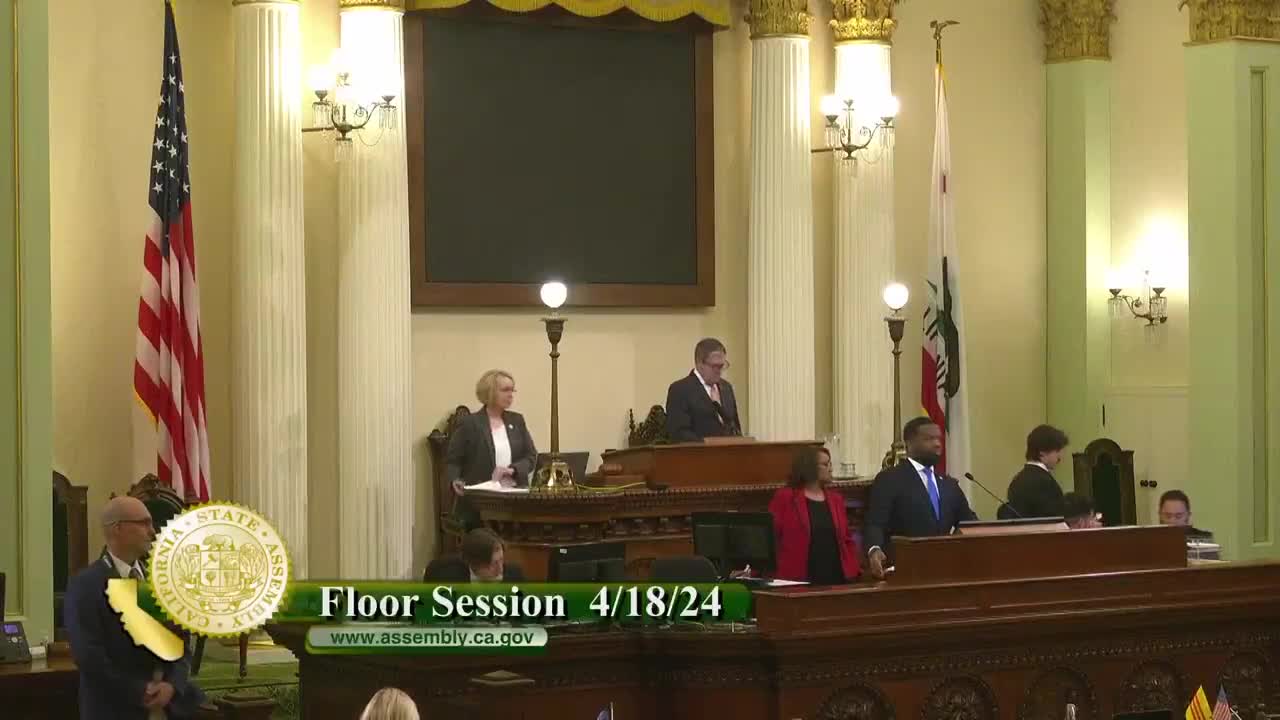 1MIN
Assembly Floor
 2MIN
Senate Floor
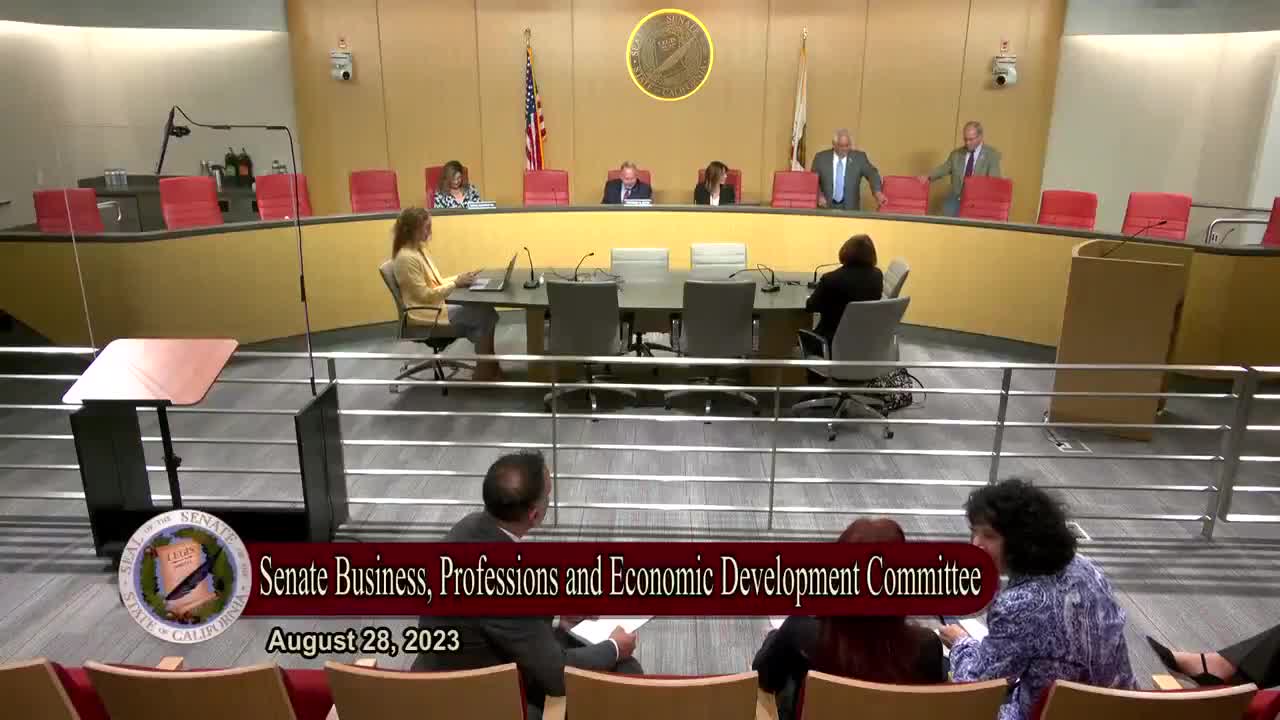 29MIN
Senate Standing Committee on Business, Professions and Economic Development
 1MIN
Assembly Floor
 4MIN
Assembly Standing Committee on Appropriations
 7MIN