AJR 1: Republic of Artsakh.
- Session Year: 2023-2024
- House: Assembly
- Latest Version Date: 2023-07-17
Current Status:
Passed
(2023-07-17: Chaptered by Secretary of State - Res. Chapter 123, Statutes of 2023.)
Introduced
In Committee
First Chamber
In Committee
Second Chamber
Enacted
This measure would condemn Azerbaijans blockade of the Republic of Artsakh and urge the United States government to take immediate action to assist the Armenians of Artsakh.
This measure would condemn Azerbaijans blockade of the Republic of Artsakh and urge the United States government to take immediate action to assist the Armenians of Artsakh.
This measure would condemn Azerbaijans blockade of the Republic of Artsakh and urge the United States government to take immediate action to assist the Armenians of Artsakh.
This measure would condemn Azerbaijans blockade of the Republic of Artsakh and urge the United States government to take immediate action to assist the Armenians of Artsakh.
This measure would condemn Azerbaijans blockade of the Republic of Artsakh and urge the United States government to take immediate action to assist the Armenians of Artsakh.
WHEREAS, Artsakh is the ancestral homeland of the Armenian people and has been a center of Armenian language, culture, and religion, having maintained its autonomy for over two millennia; and
WHEREAS, The Armenians of Artsakh were targeted during the Armenian Genocide of 1915 by Azerbaijani nationalists with the backing of the Ottoman Empire, where they massacred over 30,000 Armenians in Baku, over 20,000 Armenians in Shushi, and over 10,000 Armenians in Nakhichevan; and
WHEREAS, Artsakh was an integral part of the First Republic of Armenia founded in the wake of the Armenian Genocide due to the advocacy of United States President Woodrow Wilson, who recognized the independence of the fledgling Armenian state; and
WHEREAS, Despite Artsakhs distinctly Armenian identity, it was arbitrarily and illegally separated from Armenia by the Soviet Union at the direction of Joseph Stalin in 1921 and placed under the administrative control of Soviet Azerbaijan; and
WHEREAS, For over 70 years, the Armenians of Artsakh suffered routine discrimination and persecution at the hands of Soviet Azerbaijani authorities culminating in anti-Armenian pogroms in Sumgait (1988), Kirovabad (1988), and Baku (1990), resulting in hundreds of deaths and the forced displacement of over 400,000 Armenians; and
WHEREAS, In response to escalating anti-Armenian violence, the Armenians of Artsakh exerted their right to self-determination and declared their independence on September 2, 1991, which was reaffirmed by referendum on December 10 of the same year, recognizing that the Azerbaijani government was unable and unwilling to ensure the fundamental rights of the Armenian people; and
WHEREAS, Azerbaijan shortly thereafter launched a war of aggression against Armenia and Artsakh that saw Azerbaijani lay siege to Armenian towns and cities, and perpetrate human rights violations, which ended in Armenian victory with a ceasefire brokered by Russia; and
WHEREAS, For the next 25 years, the Armenians of Artsakh consolidated a free and democratic society despite constant attempts by Azerbaijan to undermine the security and prosperity of the region; and
WHEREAS, In September 2020, Azerbaijan abandoned decades of multilateral diplomacy and launched a war of territorial expansion against the Armenians of Artsakh that resulted in the ethnic cleansing of over 70 percent of Artsakh territory; and
WHEREAS, Azerbaijan perpetrated widely documented human rights abuses, including the unlawful targeting of schools, homes, hospitals, and churches with prohibited weapons, the execution of Armenian civilians, and torture of Armenian prisoners of war; and
WHEREAS, Following a trilateral ceasefire statement signed in November 2020, Azerbaijans aggression has continued unabated, including routine incursions in Artsakhs territory and the continuous invasions and occupation of the sovereign territory of the Republic of Armenia since May 2021; and
WHEREAS, Azerbaijan has maintained a total blockade of Artsakh since December 12, 2022, completely severing Artsakhs only humanitarian lifeline to Armenia, preventing the transport of food, fuel, medicine, and other vital humanitarian supplies to the region, and leaving Artsakhs 120,000 Armenians facing critical shortages of life-sustaining goods; and
WHEREAS, The State of California is home to the largest Armenian American population in the United States, and Armenians living in California have enriched our state through their contributions in business, agriculture, academia, government, and the arts; and
WHEREAS, The State of California encouraged and supported the continuing efforts of the Armenians of Artsakh to develop as a free and independent nation in 2014 and has been at the forefront of efforts to raise awareness of the plight of its indigenous Armenian population amidst Azerbaijans relentless aggression; and
WHEREAS, The United States acknowledged the threat Azerbaijan poses to the Armenians of Artsakh with the passage of Section 907 of the FREEDOM Support Act in 1992, which prohibited the provision of United States assistance to Azerbaijan until the time it ceases all blockades and the offensive use of force against Armenia and Nagorno-Karabakh; and
WHEREAS, Azerbaijan remains committed to enacting a policy of ethnic cleansing against the Armenians of Artsakh to impose its will on the Armenian people through the use of coercion, intimidation, and the use of force; now, therefore, be it
Resolved, By the Assembly and the Senate of the State of California, jointly, That the State of California unequivocally condemns the illegal and inhumane blockade enforced by Azerbaijan against Artsakh; and be it further
Resolved, That the Legislature respectfully calls on the President of the United States and the United States Department of State to condemn Azerbaijans blockade against the Armenian people and immediately take action to hold Azerbaijan accountable for its human rights abuses and war crimes through the enforcement of restrictions on the provision of military assistance to Azerbaijan pursuant to Section 907 of the FREEDOM Support Act, and through the imposition of targeted sanctions on Azerbaijani officials involved directly in the commissioning of war crimes; and be it further
Resolved, That the Legislature calls on the President of the United States and the United States Agency for International Development to work to immediately facilitate the provision of urgent humanitarian assistance by way of airlift to the Armenians of Artsakh in order to prevent an impending humanitarian catastrophe; and be it further
Resolved, That the Legislature calls on the Biden administration to introduce a United Nations Security Council resolution to establish a United Nations Mission in Nagorno-Karabakh, consisting of at least 5,000 military personnel and representing at least two permanent members of the United Nations Security Council and the OSCE Minsk Group co-chairs; and be it further
Resolved, That the Legislature reaffirms its support for the continuing efforts of the Armenians of Artsakh to develop as a free and independent nation, urges the President and Congress of the United States to support the self-determination of the Armenians of Artsakh and recognize the democratic independence of the Republic of Artsakh, and calls on the President of the United States and the United States Department of State to engage proactively in multilateral conflict resolution efforts to ensure a lasting resolution to this conflict that ensure the fundamental right to self-determination for the Armenians of Artsakh; and be it further
Resolved, That the Legislature urges the United States government to take immediate action to assist the Armenians of Artsakh; and be it further
Resolved, That the Chief Clerk of the Assembly transmit copies of this resolution to the President and Vice President of the United States, to the Secretary of State, to the United States Agency for International Developments Administrator, and to the Speaker of the House of Representatives.
WHEREAS, Artsakh is the ancestral homeland of the Armenian people and has been a center of Armenian language, culture, and religion, having maintained its autonomy for over two millennia; and
WHEREAS, The Armenians of Artsakh were targeted during the Armenian Genocide of 1915 by Azerbaijani nationalists with the backing of the Ottoman Empire, where they massacred over 30,000 Armenians in Baku, over 20,000 Armenians in Shushi, and over 10,000 Armenians in Nakhichevan; and
WHEREAS, Artsakh was an integral part of the First Republic of Armenia founded in the wake of the Armenian Genocide due to the advocacy of United States President Woodrow Wilson, who recognized the independence of the fledgling Armenian state; and
WHEREAS, Despite Artsakhs distinctly Armenian identity, it was arbitrarily and illegally separated from Armenia by the Soviet Union at the direction of Joseph Stalin in 1921 and placed under the administrative control of Soviet Azerbaijan; and
WHEREAS, For over 70 years, the Armenians of Artsakh suffered routine discrimination and persecution at the hands of Soviet Azerbaijani authorities culminating in anti-Armenian pogroms in Sumgait (1988), Kirovabad (1988), and Baku (1990), resulting in hundreds of deaths and the forced displacement of over 400,000 Armenians; and
WHEREAS, In response to escalating anti-Armenian violence, the Armenians of Artsakh exerted their right to self-determination and declared their independence on September 2, 1991, which was reaffirmed by referendum on December 10 of the same year, recognizing that the Azerbaijani government was unable and unwilling to ensure the fundamental rights of the Armenian people; and
WHEREAS, Azerbaijan shortly thereafter launched a war of aggression against Armenia and Artsakh that saw Azerbaijani lay siege to Armenian towns and cities, and perpetrate human rights violations, which ended in Armenian victory with a ceasefire brokered by Russia; and
WHEREAS, For the next 25 years, the Armenians of Artsakh consolidated a free and democratic society despite constant attempts by Azerbaijan to undermine the security and prosperity of the region; and
WHEREAS, In September 2020, Azerbaijan abandoned decades of multilateral diplomacy and launched a war of territorial expansion against the Armenians of Artsakh that resulted in the ethnic cleansing of over 70 percent of Artsakh territory; and
WHEREAS, Azerbaijan perpetrated widely documented human rights abuses, including the unlawful targeting of schools, homes, hospitals, and churches with prohibited weapons, the execution of Armenian civilians, and torture of Armenian prisoners of war; and
WHEREAS, Following a trilateral ceasefire statement signed in November 2020, Azerbaijans aggression has continued unabated, including routine incursions in Artsakhs territory and the continuous invasions and occupation of the sovereign territory of the Republic of Armenia since May 2021; and
WHEREAS, Azerbaijan has maintained a total blockade of the Republic of Artsakh since December 12, 2022, completely severing Artsakhs only humanitarian lifeline to Armenia, preventing the transport of food, fuel, medicine, and other vital humanitarian supplies to the region, and leaving Artsakhs 120,000 Armenians facing critical shortages of life-sustaining goods; and
WHEREAS, The State of California is home to the largest Armenian American population in the United States, and Armenians living in California have enriched our state through their contributions in business, agriculture, academia, government, and the arts; and
WHEREAS, The State of California recognized the independence of the Republic of Artsakh encouraged and supported the continuing efforts of the Armenians of Artsakh to develop as a free and independent nation in 2014 and has been at the forefront of efforts to raise awareness of the plight of its indigenous Armenian population amidst Azerbaijans relentless aggression; and
WHEREAS, The United States acknowledged the threat Azerbaijan poses to the Armenians of Artsakh with the passage of Section 907 of the FREEDOM Support Act in 1992, which prohibited the provision of United States assistance to Azerbaijan until the time it ceases all blockades and the offensive use of force against Armenia and Nagorno-Karabakh; and
WHEREAS, Azerbaijan remains committed to enacting a policy of ethnic cleansing against the Armenians of Artsakh to impose its will on the Armenian people through the use of coercion, intimidation, and the use of force; now, therefore, be it
Resolved, By the Assembly and the Senate of the State of California, jointly, That the State of California unequivocally condemns the illegal and inhumane blockade enforced by Azerbaijan against Artsakh; and be it further
Resolved, That the Legislature respectfully calls on the President of the United States and the United States Department of State to condemn Azerbaijans blockade against the Armenian people and immediately take action to hold Azerbaijan accountable for its human rights abuses and war crimes through the enforcement of restrictions on the provision of military assistance to Azerbaijan pursuant to Section 907 of the FREEDOM Support Act, and through the imposition of targeted sanctions on Azerbaijani officials involved directly in the commissioning of war crimes; and be it further
Resolved, That the Legislature calls on the President of the United States and the United States Agency for International Development to work to immediately facilitate the provision of urgent humanitarian assistance by way of airlift to the Armenians of Artsakh in order to prevent an impending humanitarian catastrophe; and be it further
Resolved, That the Legislature calls on the Biden administration to introduce a United Nations Security Council resolution to establish a United Nations Mission in Nagorno-Karabakh, consisting of at least 5,000 military personnel and representing at least two permanent members of the United Nations Security Council and the OSCE Minsk Group co-chairs; and be it further
Resolved, That the Legislature reaffirms its recognition of the Republic of Artsakh support for the continuing efforts of the Armenians of Artsakh to develop as a free and independent nation, urges the President and Congress of the United States to support the self-determination of the Armenians of Artsakh and recognize the democratic independence of the Republic of Artsakh, and calls on the President of the United States and the United States Department of State to engage proactively in multilateral conflict resolution efforts to ensure a lasting resolution to this conflict that ensure the fundamental right to self-determination for the Armenians of Artsakh; and be it further
Resolved, That the Legislature condemns Azerbaijans blockade of the Republic of Artsakh and urges the United States government to take immediate action to assist the Armenians of Artsakh; and be it further
Resolved, That the Chief Clerk of the Assembly transmit copies of this resolution to the President and Vice President of the United States, to the Secretary of State, to the United States Agency for International Developments Administrator, and to the Speaker of the House of Representatives.
WHEREAS, Artsakh is the ancestral homeland of the Armenian people and has been a center of Armenian language, culture, and religion, having maintained its autonomy for over two millennia; and
WHEREAS, The Armenians of Artsakh were targeted during the Armenian Genocide of 1915 by Azerbaijani nationalists with the backing of the Ottoman Empire, where they massacred over 30,000 Armenians in Baku, over 20,000 Armenians in Shushi, and over 10,000 Armenians in Nakhichevan; and
WHEREAS, Artsakh was an integral part of the First Republic of Armenia founded in the wake of the Armenian Genocide due to the advocacy of United States President Woodrow Wilson, who recognized the independence of the fledgling Armenian state; and
WHEREAS, Despite Artsakhs distinctly Armenian identity, it was arbitrarily and illegally separated from Armenia by the Soviet Union at the direction of Joseph Stalin in 1921 and placed under the administrative control of Soviet Azerbaijan; and
WHEREAS, For over 70 years, the Armenians of Artsakh suffered routine discrimination and persecution at the hands of Soviet Azerbaijani authorities culminating in anti-Armenian pogroms in Sumgait (1988), Kirovabad (1988), and Baku (1990), resulting in hundreds of deaths and the forced displacement of over 400,000 Armenians; and
WHEREAS, In response to escalating anti-Armenian violence, the Armenians of Artsakh exerted their right to self-determination and declared their independence on September 2, 1991, which was reaffirmed by referendum on December 10 of the same year, recognizing that the Azerbaijani government was unable and unwilling to ensure the fundamental rights of the Armenian people; and
WHEREAS, Azerbaijan shortly thereafter launched a war of aggression against Armenia and Artsakh that saw Azerbaijani lay siege to Armenian towns and cities, and perpetrate human rights violations, which ended in Armenian victory with a ceasefire brokered by Russia; and
WHEREAS, For the next 25 years, the Armenians of Artsakh consolidated a free and democratic society despite constant attempts by Azerbaijan to undermine the security and prosperity of the region; and
WHEREAS, In September 2020, Azerbaijan abandoned decades of multilateral diplomacy and launched a war of territorial expansion against the Armenians of Artsakh that resulted in the ethnic cleansing of over to 70 percent of Artsakh territory; and
WHEREAS, Azerbaijan perpetrated widely documented human rights abuses, including the unlawful targeting of schools, homes, hospitals, and churches with prohibited weapons, the execution of Armenian civilians, and torture of Armenian prisoners of war; and
WHEREAS, Following a trilateral ceasefire agreement statement signed in November 2020, Azerbaijans aggression has continued unabated, including routine incursions in Artsakhs territory and the full-scale assault on continuous invasions and occupation of the sovereign territory of the Republic of Armenia in September, 2022 since May 2021; and
WHEREAS, Azerbaijan has maintained a total blockade of the Republic of Artsakh since December 12, 2022, completely severing Artsakhs only humanitarian lifeline to Armenia, preventing the transport of food, fuel, medicine, and other vital humanitarian supplies to the region, and leaving Artsakhs 120,000 Armenians facing critical shortages of life-sustaining goods; and
WHEREAS, The State of California is home to the largest Armenian American population in the United States, and Armenians living in California have enriched our state through their contributions in business, agriculture, academia, government, and the arts; and
WHEREAS, The State of California recognized the independence of the Republic of Artsakh in 2014 and has been at the forefront of efforts to raise awareness of the plight of its indigenous Armenian population amidst Azerbaijans relentless aggression; and
WHEREAS, The United States acknowledged the threat Azerbaijan poses to the Armenians of Artsakh with the passage of Section 907 of the FREEDOM Support Act in 1992, which prohibited the provision of United States assistance to Azerbaijan until the time it ceases all blockades and the offensive use of force against Armenia and Nagorno-Karabakh; and
WHEREAS, Azerbaijan remains committed to enacting a policy of ethnic cleansing against the Armenians of Artsakh to impose its will on the Armenian people through the use of coercion, intimidation, and the use of force; now, therefore, be it
Resolved, By the Assembly and the Senate of the State of California, jointly, That the State of California unequivocally condemns the illegal and inhumane blockade enforced by Azerbaijan against Artsakh; and be it further
Resolved, That the Legislature respectfully calls on the President of the United States and the United States Department of State to condemn Azerbaijans blockade against the Armenian people and immediately take action to hold Azerbaijan accountable for its human rights abuses and war crimes through the enforcement of restrictions on the provision of military assistance to Azerbaijan pursuant to Section 907 of the FREEDOM Support Act, and through the imposition of targeted sanctions on Azerbaijani officials involved directly in the commissioning of war crimes; and be it further
Resolved, That the Legislature calls on the President of the United States and the United States Agency for International Development to work to immediately facilitate the provision of urgent humanitarian assistance by way of airlift to the Armenians of Artsakh in order to prevent an impending humanitarian catastrophe; and be it further
Resolved, That the Legislature calls on the Biden administration to introduce a United Nations Security Council resolution to establish a United Nations Mission in Nagorno-Karabakh, consisting of at least 5,000 military personnel and representing at least two permanent members of the United Nations Security Council and the OSCE Minsk Group co-chairs; and be it further
Resolved, That the Legislature reaffirms its recognition of the Republic of Artsakh and calls on the President of the United States and the United States Department of State to engage proactively in multilateral conflict resolution efforts to ensure a lasting resolution to this conflict that ensure the fundamental right to self-determination for the Armenians of Artsakh; and be it further
Resolved, That the Legislature condemns Azerbaijans blockade of the Republic of Artsakh and urges the United States government to take immediate action to assist the Armenians of Artsakh; and be it further
Resolved, That the Chief Clerk of the Assembly transmit copies of this resolution to the President and Vice President of the United States, to the Secretary of State, to the United States Agency for International Developments Administrator, and to the Speaker of the House of Representatives.
WHEREAS, Artsakh is the ancestral homeland of the Armenian people and has been a center of Armenian language, culture, and religion, having maintained its autonomy for over two millennia; and
WHEREAS, The Armenians of Artsakh were targeted during the Armenian Genocide of 1915 by Azerbaijani nationalists with the backing of the Ottoman Empire, where they massacred over 30,000 Armenians in Baku, over 20,000 Armenians in Shushi, and over 10,000 Armenians in Nakhichevan; and
WHEREAS, Artsakh was an integral part of the First Republic of Armenia founded in the wake of the Armenian Genocide due to the advocacy of United States President Woodrow Wilson, who recognized the independence of the fledgling Armenian state; and
WHEREAS, Despite Artsakhs distinctly Armenian identity, it was arbitrarily and illegally separated from Armenia by the Soviet Union at the direction of Joseph Stalin in 1921 and placed under the administrative control of Soviet Azerbaijan; and
WHEREAS, For over 70 years, the Armenians of Artsakh suffered routine discrimination and persecution at the hands of Soviet Azerbaijani authorities culminating in anti-Armenian pogroms in Sumgait (1988), Kirovabad (1988), and Baku (1990), resulting in hundreds of deaths and the forced displacement of over 400,000 Armenians; and
WHEREAS, In response to escalating anti-Armenian violence, the Armenians of Artsakh exerted their right to self-determination and declared their independence on September 2, 1991, which was reaffirmed by referendum on December 10 of the same year, recognizing that the Azerbaijani government was unable and unwilling to ensure the fundamental rights of the Armenian people; and
WHEREAS, Azerbaijan shortly thereafter launched a war of aggression against Armenia and Artsakh that saw Azerbaijani lay siege to Armenian towns and cities, and perpetrate human rights violations, which ended in Armenian victory with a ceasefire brokered by Russia; and
WHEREAS, For the next 25 years, the Armenians of Artsakh consolidated a free and democratic society despite constant attempts by Azerbaijan to undermine the security and prosperity of the region; and
WHEREAS, In September 2020, Azerbaijan abandoned decades of multilateral diplomacy and launched a war of territorial expansion against the Armenians of Artsakh that resulted in the ethnic cleansing of over to 70 percent of Artsakh territory; and
WHEREAS, Azerbaijan perpetrated widely documented human rights abuses, including the unlawful targeting of schools, homes, hospitals, and churches with prohibited weapons, the execution of Armenian civilians, and torture of Armenian prisoners of war; and
WHEREAS, Following a ceasefire agreement in November 2020, Azerbaijans aggression has continued unabated, including routine incursions in Artsakhs territory and the full-scale assault on the sovereign territory of the Republic of Armenia in September, 2022; and
WHEREAS, Azerbaijan has maintained a total blockade of the Republic of Artsakh since December 12, 2022, completely severing Artsakhs only humanitarian lifeline to Armenia, preventing the transport of food, fuel, medicine, and other vital humanitarian supplies to the region, and leaving Artsakhs 120,000 Armenians facing critical shortages of life-sustaining goods; and
WHEREAS, The State of California is home to the largest Armenian American population in the United States, and Armenians living in California have enriched our state through their contributions in business, agriculture, academia, government, and the arts; and
WHEREAS, The State of California recognized the independence of the Republic of Artsakh in 2014 and has been at the forefront of efforts to raise awareness of the plight of its indigenous Armenian population amidst Azerbaijans relentless aggression; and
WHEREAS, The United States acknowledged the threat Azerbaijan poses to the Armenians of Artsakh with the passage of Section 907 of the FREEDOM Support Act in 1992, which prohibited the provision of United States assistance to Azerbaijan until the time it ceases the offensive use of force against Armenia and Nagorno-Karabakh; and
WHEREAS, Azerbaijan remains committed to enacting a policy of ethnic cleansing against the Armenians of Artsakh to impose its will on the Armenian people through the use of coercion, intimidation, and the use of force; now, therefore, be it
Resolved, By the Assembly and the Senate of the State of California, jointly, That the State of California unequivocally condemns the illegal and inhumane blockade enforced by Azerbaijan against Artsakh; and be it further
Resolved, That the Legislature respectfully calls on the President of the United States and the United States Department of State to condemn Azerbaijans blockade against the Armenian people and immediately take action to hold Azerbaijan accountable for its human rights abuses and war crimes through the enforcement of restrictions on the provision of military assistance to Azerbaijan pursuant to Section 907 of the FREEDOM Support Act, and through the imposition of targeted sanctions on Azerbaijani officials involved directly in the commissioning of war crimes; and be it further
Resolved, That the Legislature calls on the President of the United States and the United States Agency for International Development to work to immediately facilitate the provision of urgent humanitarian assistance by way of airlift to the Armenians of Artsakh in order to prevent an impending humanitarian catastrophe; and be it further
Resolved, That the Legislature reaffirms its recognition of the Republic of Artsakh and calls on the President of the United States and the United States Department of State to engage proactively in multilateral conflict resolution efforts to ensure a lasting resolution to this conflict that ensure the fundamental right to self-determination for the Armenians of Artsakh; and be it further
Resolved, That the Legislature condemns Azerbaijans blockade of the Republic of Artsakh and urges the United States government to take immediate action to assist the Armenians of Artsakh; and be it further
Resolved, That the Chief Clerk of the Assembly transmit copies of this resolution to the President and Vice President of the United States, to the Secretary of State, to the United States Agency for International Developments Administrator, and to the Speaker of the House of Representatives.
|
Date
|
Status
|
|---|---|
| Jul 17, 2023 | Chaptered by Secretary of State - Res. Chapter 123, Statutes of 2023. |
| Jul 17, 2023 | Enrolled and filed with the Secretary of State at 2 p.m. |
| Jul 10, 2023 | In Assembly. Ordered to Engrossing and Enrolling. |
| Jul 10, 2023 | Adopted and to Assembly. (Ayes 39. Noes 0. Page 1959.) |
| Jun 14, 2023 | From committee: Be adopted. Ordered to Third Reading. (Ayes 10. Noes 0.) (June 13). |
| Apr 19, 2023 | Referred to Com. on JUD. |
| Apr 10, 2023 | In Senate. To Com. on RLS. |
| Mar 30, 2023 | Adopted and to Senate. (Ayes 65. Noes 0. Page 1004.) |
| Mar 30, 2023 | Coauthors revised. |
| Mar 29, 2023 | Amended. Ordered to third reading. |
| Mar 28, 2023 | From committee: Amend, and be adopted as amended. (Ayes 10. Noes 0.) (March 28). |
| Mar 27, 2023 | Re-referred to Com. on JUD. |
| Mar 23, 2023 | From committee chair, with author's amendments: Amend, and re-refer to Com. on JUD. Amended. |
| Mar 23, 2023 | Referred to Com. on JUD. |
| Feb 10, 2023 | From printer. |
| Feb 9, 2023 | Introduced. To print. |
|
Date
|
Description
|
Location
|
Votes
|
|
|---|---|---|---|---|
| Jul 10, 2023 | Assembly 3rd Reading AJR1 Holden et al. By Portantino | Senate Floor |
Passed |
|
| Jun 13, 2023 | Be adopted. Ordered to third reading | Senate Standing Committee on Judiciary |
Passed |
|
| Mar 30, 2023 | AJR 1 Holden Assembly Third Reading | Assembly Floor |
Passed |
|
| Mar 28, 2023 | Be adopted as amended. | Assembly Standing Committee on Judiciary |
Passed |
This list shows positions taken on this bill by organizations on the date displayed, which is linked to the original source.
Positions by individuals are not included.
|
Organization
|
Position
|
Date
|
|---|---|---|
| Acting Consular General for the Consulate of the Republic of Azerbaijan in Los Angeles | ** Against | |
| Armenian National Committee of America | ** Support | |
| Armenian National Committee of America - Western Region | ** Support | |
| Armenian National Committee of San Franciso and Bay Area | * Support | Mar 28, 2023 |
| Armenian Relief Society of Western USA | ** Support | |
| City of Glendale | * Support | Jun 13, 2023 |
| City of Pasadena | ** Support | |
| Consul General of The Republic of Azerbaijan | ** Against | |
| Counselor of the Consulate General of Armenia in Los Angeles | ** Support | |
| Former U.S Marine | * Support | Mar 28, 2023 |
SENATE RULES COMMITTEE Office of Senate Floor Analyses (916) 651-1520 Fax: (916) 327-4478 | AJR 1 |
THIRD READING
Bill No: AJR 1
Author: Holden (D), Wendy Carrillo (D) and Friedman (D), et al.
Amended: 3/29/23 in Assembly
Vote: 21
SENATE JUDICIARY COMMITTEE: 10-0, 6/13/23
AYES: Umberg, Wilk, Allen, Ashby, Caballero, Durazo, Laird, Min, Niello, Wiener
NO VOTE RECORDED: Stern
ASSEMBLY FLOOR: 65-0, 3/30/23 - See last page for vote
SUBJECT: Republic of Artsakh
SOURCE: Author
DIGEST:
This resolution condemns Azerbaijan’s blockade of Artsakh and urges the federal government to take immediate action to assist the Armenians of Artsakh.
ANALYSIS:
This resolution:
- Declares that:
- Artsakh is the ancestral homeland of the Armenian people and has been a center of Armenian language, culture, and religion, having maintained its autonomy for over two millennia;
- The Armenians of Artsakh were targeted during the Armenian Genocide of 1915 by Azerbaijani nationalists with the backing of the Ottoman Empire, where they massacred over 30,000 Armenians in Baku, over 20,000 Armenians in Shushi, and over 10,000 Armenians in Nakhichevan;
- Artsakh was an integral part of the First Republic of Armenia founded in the wake of the Armenian Genocide due to the advocacy of United States President Woodrow Wilson, who recognized the independence of the fledgling Armenian state;
- Despite Artsakh’s distinctly Armenian identity, it was arbitrarily and illegally separated from Armenia by the Soviet Union at the direction of Joseph Stalin in 1921 and placed under the administrative control of Soviet Azerbaijan;
- For over 70 years, the Armenians of Artsakh suffered routine discrimination and persecution at the hands of Soviet Azerbaijani authorities culminating in anti-Armenian pogroms in Sumgait (1988), Kirovabad (1988), and Baku (1990), resulting in hundreds of deaths and forced displacement of over 400,000 Armenians;
- In response to escalating anti-Armenian violence, the Armenians of Artsakh exerted their right to self-determination and declared their independence on September 2, 1991, which was reaffirmed by referendum on December 10 of the same year, recognizing that the Azerbaijani government was unable and unwilling to ensure the fundamental rights of the Armenian people;
- Azerbaijan shortly thereafter launched a war of aggression against Armenia and Artsakh that saw Azerbaijani lay siege to Armenian towns and cities, and perpetrate human rights violations, which ended in Armenian victory with a ceasefire brokered by Russia;
- For the next 25 years, the Armenians of Artsakh consolidated a free and democratic society despite attempts by Azerbaijan to undermine the security and prosperity of the region;
- In September 2020, Azerbaijan abandoned decades of multilateral diplomacy and launched a war of territorial expansion against the Armenians of Artsakh that resulted in the ethnic cleansing of over 70 percent of Artsakh territory;
- Azerbaijan perpetrated widely documented human rights abuses, including the unlawful targeting of schools, homes, hospitals, and churches with prohibited weapons, the execution of Armenian civilians, and torture of Armenian prisoners of war;
- Following a trilateral ceasefire agreement signed in November 2020, Azerbaijan’s aggression has continued unabated, including routine incursions into Artsakh’s territory and the continuous invasions and occupation of the sovereign territory of the Republic of Armenia since May 2021;
- Azerbaijan has maintained a total blockade of Artsakh since December 12, 2022, completely severing Artsakh’s only humanitarian lifeline to Armenia, preventing the transport of food, fuel, medicine, and other vital humanitarian supplies to the region, leaving Artsakh’s 120,000 Armenians facing critical shortages of life-sustaining goods;
- The State of California is home to the largest Armenian American population in the United States, and Armenians living in California have enriched our state through their contributions in business, agriculture, academia, government, and the arts;
- The State of California encouraged and supported the continuing efforts of the Armenians of Artsakh to develop as a free and independent nation in 2014 and has been at the forefront of efforts to raise awareness of the plight of its indigenous Armenian population amidst Azerbaijan’s relentless aggression;
- The United States acknowledged the threat Azerbaijan poses to the Armenians of Artsakh with the passage of Section 907 of the FREEDOM Support Act in 1992, which prohibited the provision of United States assistance to Azerbaijan until the time it ceases all blockades and the offensive use of force against Armenia and Nagorno-Karabakh;
- Azerbaijan remains committed to enacting a policy of ethnic cleansing against the Armenians of Artsakh to impose its will on the Armenian people through the use of coercion, intimidation, and the use of force.
- Resolves on behalf of the Assembly and the Senate of the State of California, jointly, the following
- The State of California unequivocally condemns the illegal and inhumane blockade enforced by Azerbaijan against Artsakh.
- The Legislature respectfully calls on the President of the United States and the United States Department of State to condemn Azerbaijan’s blockade against the Armenian people and immediately take action to hold Azerbaijan accountable for its human rights abuses and war crimes through the enforcement of restrictions on the provision of military assistance to Azerbaijan pursuant to Section 907 of the FREEDOM Support Act, and through the imposition of targeted sanctions on Azerbaijani officials involved directly in the commissioning of war crimes.
- The Legislature calls on the President of the United States and the United States Agency for International Development to work to immediately facilitate the provision of urgent humanitarian assistance by way of airlift to the Armenians of Artsakh in order to prevent an impending humanitarian catastrophe.
- The Legislature calls on the Biden administration to introduce a United Nations Security Council resolution to establish a United Nations Mission in Nagorno-Karabakh, consisting of at least 5,000 military personnel and representing at least two permanent members of the United Nations Security Council and the OSCE Minsk Group co-chairs.
- The Legislature reaffirms its support for the continuing efforts of the Armenians of Artsakh to develop as a free and independent nation, urges the President and Congress of the United States to support the self-determination of the Armenians of Artsakh, and calls on the President of the United States and the United States Department of State to engage proactively in multilateral conflict resolution efforts to ensure a lasting resolution to this conflict that ensures the fundamental right to self-determination for the Armenians of Artsakh.
- The Legislature urges the United States government to take immediate action to assist the Armenians of Artsakh.
- The Chief Clerk of the Assembly shall transmit copies of this resolution to the President and Vice President of the United States, to the Secretary of State, to the Administrator of the United States Agency for International Development, and to the Speaker of the House of Representatives.
Comments
We need to provide assistance to the Armenians in the Republic of Artsakh to prevent a catastrophic humanitarian crisis. Azerbaijan has cut off power to Artsakh during the blockade that began on December 12, 2022. Over 120,000 people, including women, children, and elderly, disabled [individuals,] among others are left 53 days without heat in the freezing winter. The blockade completely severs Artsakh's only humanitarian lifeline to Armenia, preventing the transport of food, fuel, medicine, and other vital humanitarian supplies to the region. California is home to a large diaspora of Armenian Americans, many whose family and friends are being impacted by the continued blockade.
FISCAL EFFECT: Appropriation: No Fiscal Com.: No Local: No
SUPPORT: (Verified 6/14/23)
Armenian National Committee of America
Armenian National Committee of America – Western Region
Armenian Relief Society of Western USA
City of Pasadena
Counselor of the Consulate General of Armenia in Los Angeles
OPPOSITION: (Verified 6/14/23)
Acting Consular General for the Consulate of the Republic of Azerbaijan in Los Angeles
ARGUMENTS IN SUPPORT: According to the Counselor of the Consulate General of Armenia in Los Angeles:
Today, the most urgent and pressing issue before us is the unfolding humanitarian crisis in the Lachin Corridor. As you know, for 106 days now, Azerbaijan blockaded Artsakh by closing the Lachin Corridor—the only road connecting Artsakh to Armenia and the rest of the world, thus pursuing to forceful resolution of the conflict [between Armenia and Azerbaijan] by denial of fundamental human rights and violations of the International Humanitarian Law. As a result of the blockade, the Armenian population of Artsakh of 120,000 people have been left without food, medicine and other life-sustaining goods. The electricity and gas inflow are deliberately being cut off, leading to a number of adverse humanitarian consequences, especially having harsh impact on all at-risk groups including women, older people and people with disabilities. This has also resulted in massive unemployment; due to the blockade, people suspended operating their businesses. Schools and kindergartens are closed due to lack of heating and electricity shortages.
ARGUMENTS IN OPPOSITION: The Acting Consular General for the Consulate of the Republic of Azerbaijan in Los Angeles disputes many of the factual statements set forth in the resolution and the resolution’s characterization of the blockade, and states:
Azerbaijan again calls on all third parties, foreign countries and their officials to refrain from one-sided actions and statements, feeding separatism in the territory of Azerbaijan. Such statements do not help fostering dialogue between Azerbaijani authorities and local ethnic Armenians.
ASSEMBLY FLOOR: 65-0, 3/30/23
AYES: Addis, Aguiar-Curry, Alanis, Arambula, Bains, Bauer-Kahan, Bennett, Berman, Boerner Horvath, Bryan, Juan Carrillo, Wendy Carrillo, Cervantes, Chen, Connolly, Megan Dahle, Davies, Essayli, Flora, Mike Fong, Vince Fong, Friedman, Gallagher, Gipson, Hart, Holden, Hoover, Jones-Sawyer, Lackey, Lee, Low, Lowenthal, Maienschein, Mathis, McCarty, McKinnor, Muratsuchi, Stephanie Nguyen, Pacheco, Papan, Jim Patterson, Joe Patterson, Petrie-Norris, Ramos, Reyes, Luz Rivas, Robert Rivas, Rodriguez, Blanca Rubio, Sanchez, Santiago, Schiavo, Soria, Ta, Ting, Valencia, Villapudua, Waldron, Wallis, Weber, Wicks, Wilson, Wood, Zbur, Rendon
NO VOTE RECORDED: Alvarez, Bonta, Calderon, Dixon, Gabriel, Garcia, Grayson, Haney, Irwin, Jackson, Kalra, Ortega, Pellerin, Quirk-Silva, Ward
Prepared by: Allison Whitt Meredith / JUD. / (916) 651-4113
6/14/23 13:18:50
**** END ****
Senator Thomas Umberg, Chair
2023-2024 Regular Session
Bill No: AJR 1 (Author:Holden)
Version: March 29, 2023
Hearing Date: June 13, 2023
Fiscal: No
Urgency: No
Consultant: AWM
SUBJECT
Republic of Artsakh
DIGEST
This joint resolution condemns Azerbaijan’s blockade of Artsakh and urges the federal government to take immediate action to assist the Armenians of Artsakh.
EXECUTIVE SUMMARY
The Republic of Artsakh is an enclave within Azerbaijan with a population that is ethnically majority Armenian. Beginning in 2022, the sole connecting land route between the Artsakh region and Armenia was blockaded by Azerbaijanis, creating a humanitarian crisis as Armenians in Artsakh are unable to access medical supplies, fuel, and other necessities of life. This resolution condemns Azerbaijan’s blockade of Artsakh; calls for the Biden Administration to recognize the independence of Artsakh and take tangible action to hold Azerbaijan accountable for the blockade; and requests immediate humanitarian assistance to Armenians in Artsakh.
The resolution starts by recounting the 2,000 year history of the Armenian people living in and around Artsakh, as well as the long history of their oppression, including the Armenian Genocide of 1915; the separation of Artsakh from Armenia by Azerbaijani authorities; and reprisals for the democratic vote of the Armenians of Artsakh for their own independence. The resolution also celebrates the Armenians of Artsakh for their ability to consolidate a free and democratic society, including by holding a successful referendum for independence in 1991, despite constant attempts by Azerbaijan to undermine the security and prosperity of Artsakh.
This resolution is sponsored by the author and is supported by the Armenian National Committee of America, the Armenian National Committee of America – Western Region, the Armenian Relief Society of Western USA, and the Counselor of the Consulate General of Armenia in Los Angeles. This resolution is opposed by the Acting Consular General for the Consulate of the Republic of Azerbaijan in Los Angeles.
PROPOSED CHANGES TO THE LAW
This resolution:
- Declares that:
- Artsakh is the ancestral homeland of the Armenian people and has been a center of Armenian language, culture, and religion, having maintained its autonomy for over two millennia;
- The Armenians of Artsakh were targeted during the Armenian Genocide of 1915 by Azerbaijani nationalists with the backing of the Ottoman Empire, where they massacred over 30,000 Armenians in Baku, over 20,000 Armenians in Shushi, and over 10,000 Armenians in Nakhichevan;
- Artsakh was an integral part of the First Republic of Armenia founded in the wake of the Armenian Genocide due to the advocacy of United States President Woodrow Wilson, who recognized the independence of the fledgling Armenian state;
- Despite Artsakh’s distinctly Armenian identity, it was arbitrarily and illegally separated from Armenia by the Soviet Union at the direction of Joseph Stalin in 1921 and placed under the administrative control of Soviet Azerbaijan;
- For over 70 years, the Armenians of Artsakh suffered routine discrimination and persecution at the hands of Soviet Azerbaijani authorities culminating in anti-Armenian pogroms in Sumgait (1988), Kirovabad (1988), and Baku (1990), resulting in hundreds of deaths and forced displacement of over 400,000 Armenians;
- In response to escalating anti-Armenian violence, the Armenians of Artsakh exerted their right to self-determination and declared their independence on September 2, 1991, which was reaffirmed by referendum on December 10 of the same year, recognizing that the Azerbaijani government was unable and unwilling to ensure the fundamental rights of the Armenian people;
- Azerbaijan shortly thereafter launched a war of aggression against Armenia and Artsakh that saw Azerbaijani lay siege to Armenian towns and cities, and perpetrate human rights violations, which ended in Armenian victory with a ceasefire brokered by Russia;
- For the next 25 years, the Armenians of Artsakh consolidated a free and democratic society despite attempts by Azerbaijan to undermine the security and prosperity of the region;
- In September 2020, Azerbaijan abandoned decades of multilateral diplomacy and launched a war of territorial expansion against the Armenians of Artsakh that resulted in the ethnic cleansing of over 70 percent of Artsakh territory;
- Azerbaijan perpetrated widely documented human rights abuses, including the unlawful targeting of schools, homes, hospitals, and churches with prohibited weapons, the execution of Armenian civilians, and torture of Armenian prisoners of war;
- Following a trilateral ceasefire agreement signed in November 2020, Azerbaijan’s aggression has continued unabated, including routine incursions into Artsakh’s territory and the continuous invasions and occupation of the sovereign territory of the Republic of Armenia since May 2021;
- Azerbaijan has maintained a total blockade of Artsakh since December 12, 2022, completely severing Artsakh’s only humanitarian lifeline to Armenia, preventing the transport of food, fuel, medicine, and other vital humanitarian supplies to the region, leaving Artsakh’s 120,000 Armenians facing critical shortages of life-sustaining goods;
- The State of California is home to the largest Armenian American population in the United States, and Armenians living in California have enriched our state through their contributions in business, agriculture, academia, government, and the arts;
- The State of California encouraged and supported the continuing efforts of the Armenians of Artsakh to develop as a free and independent nation in 2014 and has been at the forefront of efforts to raise awareness of the plight of its indigenous Armenian population amidst Azerbaijan’s relentless aggression;
- The United States acknowledged the threat Azerbaijan poses to the Armenians of Artsakh with the passage of Section 907 of the FREEDOM Support Act in 1992, which prohibited the provision of United States assistance to Azerbaijan until the time it ceases all blockades and the offensive use of force against Armenia and Nagorno-Karabakh;
- Azerbaijan remains committed to enacting a policy of ethnic cleansing against the Armenians of Artsakh to impose its will on the Armenian people through the use of coercion, intimidation, and the use of force.
- Resolves on behalf of the Assembly and the Senate of the State of California, jointly, the following
- The State of California unequivocally condemns the illegal and inhumane blockade enforced by Azerbaijan against Artsakh.
- The Legislature respectfully calls on the President of the United States and the United States Department of State to condemn Azerbaijan’s blockade against the Armenian people and immediately take action to hold Azerbaijan accountable for its human rights abuses and war crimes through the enforcement of restrictions on the provision of military assistance to Azerbaijan pursuant to Section 907 of the FREEDOM Support Act, and through the imposition of targeted sanctions on Azerbaijani officials involved directly in the commissioning of war crimes.
- The Legislature calls on the President of the United States and the United States Agency for International Development to work to immediately facilitate the provision of urgent humanitarian assistance by way of airlift to the Armenians of Artsakh in order to prevent an impending humanitarian catastrophe.
- The Legislature calls on the Biden administration to introduce a United Nations Security Council resolution to establish a United Nations Mission in Nagorno-Karabakh, consisting of at least 5,000 military personnel and representing at least two permanent members of the United Nations Security Council and the OSCE Minsk Group co-chairs.
- The Legislature reaffirms its support for the continuing efforts of the Armenians of Artsakh to develop as a free and independent nation, urges the President and Congress of the United States to support the self-determination of the Armenians of Artsakh, and calls on the President of the United States and the United States Department of State to engage proactively in multilateral conflict resolution efforts to ensure a lasting resolution to this conflict that ensures the fundamental right to self-determination for the Armenians of Artsakh.
- The Legislature urges the United States government to take immediate action to assist the Armenians of Artsakh.
- The Chief Clerk of the Assembly shall transmit copies of this resolution to the President and Vice President of the United States, to the Secretary of State, to the Administrator of the United States Agency for International Development, and to the Speaker of the House of Representatives.
COMMENTS
- Author’s comment
According to the author:
We need to provide assistance to the Armenians in the Republic of Artsakh to prevent a catastrophic humanitarian crisis. Azerbaijan has cut off power to Artsakh during the blockade that began on December 12, 2022. Over 120,000 people, including women, children, and elderly, disabled [individuals,] among others are left 53 days without heat in the freezing winter. The blockade completely severs Artsakh's only humanitarian lifeline to Armenia, preventing the transport of food, fuel, medicine, and other vital humanitarian supplies to the region. California is home to a large diaspora of Armenian Americans, many whose family and friends are being impacted by the continued blockade.
2. Background on Armenia, Artsakh, and the current blockade
The Kingdom of Armenia dates back to the fourth century B.C.E., and “Armenia prides itself on being the first state to formally adopt Christianity” in the same period.[1] Since then, Armenia has existed as an entity with “varying geographical boundaries and differing levels of political independence.”[2] At the beginning of the twentieth century, millions of Armenians lived under Russian or Ottoman rule.[3]
As the Ottoman Empire crumbled and Turkish nationalism rose in popularity, Ottoman officials increasingly restricted learning, property ownership, and religious practices for minorities, including the Armenians, in the empire.[4] The beginning of World War I, and the Ottoman decision to ally with Germany over Russia, provided cover for what would become the Armenian Genocide.[5] According to the University of Minnesota’s Genocide Education Outreach Program:
In May 1915, the deportation of the Armenians from Empire’s eastern provinces began apace. A series of consecutive laws passed by the Turkish government gave it the right to confiscate or otherwise impound Armenian properties and businesses left behind by the departing deportees as a wartime necessity. Other restrictions of similar or harsher nature soon followed, leaving the Armenian population defenseless, property-less, and generally destitute. Forced marches, massacres became more commonplace and widespread, especially on deportation routes. The Turkish military instituted a number of gruesome methods to exterminate the Armenian population, some of which would be adopted and refined by the Nazis a mere 25 years later. Those who were not killed outright by the military often faced starvation along the way. Rapes of women and girls were also commonplace.[6]
The Ottomans’ forced marches culminated in placing Armenians in concentration camps created by the Ottoman military; conditions in the camps were inhumane and many Armenians did not survive.[7] Prior to World War I, there were over two million Armenians in the Ottoman Empire; by 1922, there were only 387,800.[8]
Although Armenia declared independence from Russia in 1918, it was reconquered by the Soviet Army in 1920.[9] Armenia was subsequently incorporated into the USSR.[10] The USSR placed the Nagorno-Karabakh region—also known as Artsakh—in its own autonomous oblast within Soviet Azerbaijan, even though Armenians are the ethnic majority in the region.[11] An Armenian separatist movement within Artsakh sought to end Azerbaijani control over the region; actual fighting began in 1988 and escalated with the fall of the USSR in 1991, at which point the Armenians of Artsakh declared independence.[12] In 1992, as part of the FREEDOM Support Act intended to assist nations in the former Soviet Union,[13] Congress prohibited the provision of assistance to the Government of Azerbaijan until the President determined that the Government of Azerbaijan was “taking demonstrable steps to cease all blockades and other offensive uses of force against Armenia and Nagorno-Karabakh.”[14] After a ceasefire in 1994, Armenians controlled Artsakh as an enclave within Azerbaijan.[15] Artsakh and Armenia remained connected by the Lachin Corridor, a five-kilometer-wide road which passes through Azerbaijan; in a 2005 statement to the United Nations, the Azerbaijani Minister of Foreign Affairs suggested that the Lachin Corridor be available to Armenians and Azerbaijanis and that security be provided by multinational peacekeeping forces.[16] Both Armenia and Azerbaijan continue to assert their claims to Artsakh/Nagorno-Karabakh.
In 2020, Azerbaijan commenced a military effort to retake Artsakh; following a Russian-brokered ceasefire, Azerbaijan took control over much of the region.[17] Following the ceasefire, the Lachin Corridor—the only remaining connection between Artsakh and Armenia—was placed under the control of Russian peacekeepers.[18] In December 2022, however, Azerbaijanis blockaded the Lachin corridor.[19] According to Amnesty International, the blockade has left the Armenians in Artsakh without access to essential goods—including food and fuel—services, and life-saving medications.[20] In February 2023, the International Court of Justice (ICJ) ordered Azerbaijan to “take all measures at its disposal to ensure unimpeded movement of persons, vehicles, and cargo along the Lachin Corridor in both directions.”[21] In April 2023, Azerbaijan instituted a checkpoint on the Lachin Corridor; the United States State Department issued a statement that it was “deeply concerned” that the checkpoint “undermines efforts to establish confidence in the peace process” and reiterated that “there should be free and open movement of people and commerce on the Lachin [C]orridor.”[22]
The Acting Consular General for the Consulate of the Republic of Azerbaijan in Los Angeles, writing in opposition, has expressed disagreement with the factual statements in the resolution and the characterization of the blockade. The Counselor for the Consular General of Armenia in Los Angeles, writing in support, reiterates the humanitarian crisis being faced by residents of Artsakh and cites the ICJ’s order that the Lachin Corridor remain unimpeded as proof that the ongoing blockade is targeting Armenians in Artsakh.
3. This resolution condemns the blockade of Artsakh and calls for various federal actions to aid Armenians in Artsakh
This resolution starts by recounting the 2,000 year history of the Armenian people living in and around Artsakh, as well as the long history of their oppression, including the Armenian Genocide of 1915; the separation of Artsakh from Armenia by Azerbaijani authorities; persecution during the reign of Joseph Stalin; death and displacement suffered under Soviet Azerbaijani rule; and reprisals for the democratic vote of the Armenians of Artsakh for their own independence. The resolution also celebrates the Armenians of Artsakh for their ability to consolidate a free and democratic society, including by holding a successful referendum for independence in 1991, despite constant attempts by Azerbaijan to undermine the security and prosperity of Artsakh. The resolution further notes that California is home to the largest Armenian population in the United States.
The resolution then recounts Azerbaijan’s blockade of Artsakh and condemns it; calls for the Biden Administration to recognize the independence of Artsakh and take tangible action to hold Azerbaijan accountable for the blockade; and requests immediate humanitarian assistance to Armenians in Artsakh.
SUPPORT
Armenian National Committee of America
Armenian National Committee of America – Western Region
Armenian Relief Society of Western USA
Counselor of the Consulate General of Armenia in Los Angeles
OPPOSITION
Acting Consular General for the Consulate of the Republic of Azerbaijan in Los Angeles
RELATED LEGISLATION
Pending Legislation: None known.
Prior Legislation:
SR 28 (Portantino, 2023) recognized April 24, 2022, as “State of California Day of Commemoration of the 107th Anniversary of the Armenian Genocide of 1915–1923,” and called upon the President of the United States and the United States Congress to formally and consistently reaffirm the historical truth that the atrocities committed against the Armenian people constituted genocide.
HR 26 (Friedman, 2023) was substantially similar to SR 28.
AJR 27 (Nazarian, Res. Ch. 146, Stats. 2022) was substantially similar to SR 28.
SR 82 (Durazo, 2021) was substantially similar to SR 28.
HR 21 (Nazarian, 2021) was substantially similar to SR 28.
SR 31 (Borgeas, 2019) was substantially similar to SR 28.
AJR 16 (Rivas, Ch. 150, Stats. 2019) was substantially similar to SR 28.
SR 107 (Portantino, 2018) was substantially similar to SR 28.
SR 29 (Portantino, 2017) was substantially similar to SR 28.
AJR 37 (Friedman, Res. Ch. 75, Stats. 2018) was substantially similar to SR 28.
AJR 3 (Nazarian, Res. Ch. 56, Stats. 2017) was substantially similar to SR 28.
PRIOR VOTES:
Assembly Floor (Ayes 65, Noes 0)
Assembly Judiciary Committee (Ayes 10, Noes 0)
**************
CIA World Factbook, Armenia (last updated May 9, 2023), https://www.cia.gov/the-world-factbook/countries/armenia/. All links in this analysis are current as of June 8, 2023 ↑
Ibid. ↑
Ibid. ↑
University of Minnesota, Holocaust and Genocide Studies, Armenia, https://cla.umn.edu/chgs/holocaust-genocide-education/resource-guides/armenia. ↑
Ibid. ↑
Ibid. ↑
Ibid. ↑
Kifner, Armenian Genocide of 1915: An Overview, N.Y. Times, https://archive.nytimes.com/www.nytimes.com/ref/timestopics/topics_armeniangenocide.html?mcubz=0. ↑
CIA World Factbook, supra. ↑
Ibid. ↑
Ibid. ↑
Ibid. Artsakh is not recognized as an independent nation by the United States. ↑
P.L. 102-511, 106 Stat. 3320 (1992). ↑
Id., § 907. In 2002, as part of post-9/11 anti-terrorism efforts, Congress authorized the President to waive this prohibition with respect to certain types of assistance, provided that the President made certain certifications about the need for the assistance, including that the assistance would not undermine or hamper ongoing efforts to negotiate a peaceful settlement between Armenia and Azerbaijan or be used for offensive purposes against Armenia. (P.L. 107-115, 115 Stat. 2118, 2128-2129.) The waiver was renewed most recently in 2022. (87 Fed. Reg. 39886-01 (Jul. 5, 2022).) In the same year, the United States Government Accountability Office (GAO) found that the State Department had not been providing Congress with adequate information about the assistance being provided to Azerbaijan pursuant to the waiver, and recommended a series of steps to better ensure that Congress had adequate information. (See GAO, Foreign Assistance: Agencies Should Take Steps to Improve Reporting on Assistance to the Government of Azerbaijan (Jan. 1, 2022), https://www.gao.gov/products/gao-22-104619.) ↑
CIA World Factbook, supra. ↑
Statement by H.E. Mr. Elmar Mammadyarov at the General Debate of the 60th Session of the General Assembly (Sept. 18, 2005), available at https://www.un.org/webcast/ga/60/statements/aze050918eng.pdf. ↑
CIA World Factbook, supra. ↑
Ibid. ↑
Heitz, Analysis: Why tensions are high over a blockaded road in Azerbaijan, PBS Newshour (Jan. 22, 2023), https://www.pbs.org/newshour/world/analysis-why-tensions-are-high-over-a-blockaded-road-in-azerbaijan. ↑
Amnesty International, Azerbaijan: Blockade of Lachin corridor putting thousands of lives in peril must be immediately lifted (Feb. 9, 2023), https://www.amnesty.org/en/latest/news/2023/02/azerbaijan-blockade-of-lachin-corridor-putting-thousands-of-lives-in-peril-must-be-immediately-lifted/. ↑
International Court of Justice, Application of the International Convention on the Elimination of All Forms of Racial Discrimination (Armenia v. Azerbaijan), Order (Feb. 22, 2023), p. 13, available at https://www.icj-cij.org/public/files/case-related/180/180-20230222-ORD-01-00-EN.pdf. ↑
United States Department of State, Press Statement by Principal Deputy Spokesperson Vedant Patel, Actions on the Lachin Corridor (Apr. 23, 2023), https://www.state.gov/actions-on-the-lachin-corridor/. ↑
ASSEMBLY THIRD READING
ATR Bill Id:AJR 1
Author:(Holden, et al.)
As Amended Ver:March 23, 2023
Majority vote
SUMMARY
Condemns Azerbaijan's blockade of Artsakh; calls for the Biden Administration to recognize the independence of Artsakh and take tangible action to hold Azerbaijan accountable for the blockade; and requests immediate humanitarian assistance to Armenians in Artsakh.
Major Provisions
Resolves, on behalf of the Assembly and the Senate of the State of California, jointly, the following:
- The State of California unequivocally condemns the illegal and inhumane blockade enforced by Azerbaijan against Artsakh.
- The Legislature respectfully calls on the President of the United States and the United States Department of State to condemn Azerbaijan's blockade against the Armenian people and immediately take action to hold Azerbaijan accountable for its human rights abuses and war crimes through the enforcement of restrictions on the provision of military assistance to Azerbaijan pursuant to Section 907 of the FREEDOM Support Act, and through the imposition of targeted sanctions on Azerbaijani officials involved directly in the commissioning of war crimes.
- The Legislature calls on the President of the United States and the United States Agency for International Development to work to immediately facilitate the provision of urgent humanitarian assistance by way of airlift to the Armenians of Artsakh in order to prevent an impending humanitarian catastrophe.
- The Legislature reaffirms its support for the continuing efforts of Armenians of Artsakh to develop as a free and independent nation, urges the President and Congress of the United States to support the self-determination of the Armenians of Artsakh and recognize the democratic independence of the Republic of Artsakh, and calls on the President of the United States and the United States Department of State to engage proactively in multilateral conflict resolution efforts to ensure a lasting resolution to this conflict that ensure the fundamental right to self-determination for the Armenians of Artsakh.
- The Legislature calls on the Biden administration to introduce a United Nations Security Council resolution to establish a United Nations Mission in Nagorno-Karabakh, consisting of at least 5,000 military personnel and representing at least two permanent members of the United Nations Security Council and the OSCE Minsk Group co-chairs.
- The Legislature urges the United States government to take immediate action to assist the Armenians of Artsakh.
- The Chief Clerk of the Assembly transmit copies of this resolution to the President and Vice President of the United States, to the Secretary of State, to the United States Agency for International Development's Administrator, and to the Speaker of the House of Representatives.
COMMENTS
Artsakh and its Conflict with Azerbaijan. Populated for centuries by Christian Armenian and Turkic Azeris, Artsakh became part of the Russian empire in the 19th Century. (Artsakh is the Armenian name for the region. Since its democratic vote for independence in 1991, the Armenians in Artsakh consider to be the Artsakh Republic. The area also is referred to as Nagorno-Karabakh, or the Nagorno-Karabakh Republic. Neither the United States, nor any member state of the United Nations recognizes Artsakh or Nagorno-Karabakh as an independent nation.) The conflict in Artsakh region dates back to the early 20th century when the region was part of the Russian Empire. The region was largely populated by Armenian Christians and Muslim Azerbaijanis.
After the collapse of the Soviet Union, the region was claimed by both Armenia and Azerbaijan. In 1988, the Nagorno-Karabakh Autonomous Oblast, which was mostly Armenian, voted to secede from Azerbaijan and join Armenia. In 1991, Azerbaijan declared its independence from the Soviet Union, and the conflict escalated into a full-scale war. The violence reached its peak in the early 1990s, when both sides were accused of ethnic cleansing and forced population transfers.
In 1994, a ceasefire was declared when Artsakh and seven surrounding districts were controlled by Armenia. However, the conflict remained unresolved, with sporadic armed clashes and tensions continuing. In September 2020, the conflict escalated again, with Azerbaijani forces launching an offensive to retake control of the disputed territories. The fighting lasted for 44 days, resulted in the deaths of thousands of people, and displaced hundreds of thousands. A Russian-brokered ceasefire was declared in November 2020, with Azerbaijan regaining control of several of the disputed territories.
The conflict remains unresolved today, with both sides continuing to assert their claims to Nagorno-Karabakh. Negotiations have so far failed to produce a permanent peace agreement. Russia, France, and the United States (U.S.) co-chair the OSCE's Minsk Group, which had been attempting to broker an end to the dispute but this has been thrown into doubt by Russia's 2022 invasion of Ukraine. The EU is also seeking to aid a peaceful resolution of the issue. In 2014, the California Legislature recognized and encouraged the efforts of the ethnic Armenian majority within the Nagorno-Karabakh region to gain independence and be recognized as an independent nation (See AJR 32 (Gatto), Resolution Chapter 168, Statutes of 2014).
The Current Blockade of Artsakh. Late last year, Azerbaijanis claiming to be environmental activists began blocking a winding road known as the Lachin Corridor that forms the only land connection between Armenia and Artsakh. The blockade threatens food supplies to Artsakh's 120,000 people. Armenia argues that the protests are orchestrated by Azerbaijan and says the country also has repeatedly halted supplies of gas to the region – claims that Azerbaijan adamantly rejects. The current blockade of Artsakh, which had already been economically isolated, became more acute during the six-week fighting that erupted last year, leading to the displacement of thousands of people and the loss of lives on both sides. (Corder, Mike, "Armenia urges UN [United Nations]court to order Azerbaijan to end road block" (January 30, 2023) AP News, available at https://apnews.com/article/politics-united-nations-international-court-of-justice-armenia-azerbaijan-866f477e6686e3a130e05d57b6ee7080.)
Last month, the United Nations' highest court ordered Azerbaijan to "take all steps at its disposal" to allow free movement of traffic along the only road between Armenia and the ethnic Armenian Nagorno-Karabakh region in Azerbaijan that has been blocked by protesters in a move that has further fueled tensions between the two countries. (Corder, Mike, "UN court calls for end to Nagorno-Karabakh roadblock in Azerbaijan" (February 22, 2023), PBS News Hour, available at https://www.pbs.org/newshour/world/un-court-calls-for-end-to-nagorno-karabakh-roadblock-in-azerbaijan.) The legally binding 13-2 ruling by the International Court of Justice results from the latest legal skirmishes in a long-running feud between Armenia and Azerbaijan over Artsakh. (Ibid.)
This resolution condemns Azerbaijan's blockade of Artsakh; calls for the Biden Administration to recognize the independence of Artsakh and take tangible action to hold Azerbaijan accountable for the blockade; and requests immediate humanitarian assistance to Armenians in Artsakh. The resolution starts by recounting the 2,000 year history of the Armenian people living in and around Artsakh, as well as the long history of their oppression, including the Armenian Genocide of 1915; the separation of Artsakh from Armenia by Azerbaijani authorities; persecution during the reign of Joseph Stalin; death and displacement suffered under Soviet Azerbaijani rule; and reprisals for the democratic vote of the Armenians of Artsakh for their own independence. This resolution also celebrates the Armenians of Artsakh for their ability to consolidate a free and democratic society, including by holding a successful referendum for independence in 1991, despite constant attempts by Azerbaijan to undermine the security and prosperity of Artsakh.
According to the Author
We need to provide assistance to the Armenians in the Republic of Artsakh to prevent a catastrophic humanitarian crisis. Azerbaijan has cut off power to Artsakh during the blockade that began on December 12, 2022. Over 120,000 people, including women, children, elderly, disabled among others are left 53 days without heat in the freezing winter. The blockade completely severs Artsakh's only humanitarian lifeline to Armenia, preventing the transport of food, fuel, medicine, and other vital humanitarian supplies to the region. California is home to a large diaspora of Armenian Americans, many whose family and friends are being impacted by the continued blockade.
Arguments in Support
The Armenian National Committee of America – Western Region emphasizes the strong and historic connections between Armenians and the State of California in its letter of support for the resolution:
The State of California is home to the largest concentration of Armenians outside of Armenia and Artsakh, many of which have family and ancestral connections to Artsakh. In 2014, the State of California overwhelmingly recognized Artsakh's independence. The Armenian-American community looks to California's leadership to exert pressure on the Biden Administration to use all tools at its disposal to compel Azerbaijan to end the illegal blockade and rescue our compatriots in Artsakh who remain under siege. We ask that the California State Legislature again stands with the people of Artsakh by supporting AJR 1. The passage of this resolution will send a clear message to Azerbaijan that Californians will not tolerate the threat of starvation, isolation, or worse - genocide - to uproot the Armenians of Artsakh from their rightful homeland.
Arguments in Opposition
Ramiz Dashdamirov, Acting Consul General of the Republic of Azerbaijan writes the following in opposition to the resolution:
I am writing to express our strong opposition to the California State Assembly Joint Resolution 1 (AJR-1) which is prepared on the basis of false and fake information. The resolution puts the esteemed California State Legislature in the middle of a complicated foreign policy issue 7,000 miles away, and contradicts and hurts U.S. foreign policy and national interests.
It's Armenia that launched a new war of aggression against Azerbaijan in 2020, bombing our major cities outside the war zone, using even the widely banned cluster munitions (as Human Rights Watch and Amnesty International also confirmed), as a result of which 101 Azerbaijani civilians, including 12 infants and children, were killed, 423 civilians were wounded, and 80,000 displaced. Yet the resolution fails to mention it too. It's Armenia that razed to the ground 10,000 square kilometers of Azerbaijani territory, completely obliterating 900 villages and seven cities, and heavily contaminating them with hundreds of thousands of landmines.
As for the claims stating that the Lachin road was closed, and the Armenian residents living in the area are allegedly facing the threat of a humanitarian crisis, it should be noted that the Lachin road was closed not by Azerbaijani protesters, but by the peacekeeping contingent of the Russian Federation temporarily deployed in the territory of the Republic of Azerbaijan. Azerbaijan is ready to facilitate humanitarian needs of all Armenian residents living on its territories, and the claims of Armenian side are baseless.
Azerbaijan again calls on all third parties, foreign countries and their officials to refrain from one-sided actions and statements, feeding separatism in the territory of Azerbaijan. Such statements do not help fostering dialogue between Azerbaijani authorities and local ethnic Armenians, who unlike those who have been illegally implanted there for malign political purposes, are eligible for such a dialogue and reintegration.
Azerbaijan has been a long-standing and reliable partner of the United States. Our two countries enjoy vital cooperation in the fields as strategic as energy diversification, counterterrorism, and nonproliferation. The U.S. has also repeatedly - under both Democratic and Republican Administrations - stated its full support to Azerbaijan's territorial integrity.
FISCAL COMMENTS
None.
VOTES
ASM JUDICIARY: 10-0-1
YES: Maienschein, Essayli, Connolly, Dixon, Haney, Pacheco, Papan, Reyes, Robert Rivas, Sanchez
ABS, ABST OR NV: Kalra
UPDATED
VERSION: March 23, 2023
CONSULTANT: Alison Merrilees / JUD. / (916) 319-2334 FN: 0000181
Date of Hearing: March 28, 2023
ASSEMBLY COMMITTEE ON JUDICIARY
Brian Maienschein, Chair
ABPCA Bill Id:AJR 1 (
Author:Holden) – As Amended Ver:March 23, 2023
As Proposed to be Amended
SUBJECT: ARMENIANS of Artsakh
KEY ISSUE: SHOULD THE CALIFORNIA LEGISLATURE condemn Azerbaijan’s blockade of Artsakh; call for the Biden Administration to recognize the indepenDENce of ARTSAKH and to take tangible action to hold THE AzerbaIjani government accountable FOR THE BLOCKADE; AND request immediate humanitarian assistance to the Armenians of Artsakh?
SYNOPSIS
The Armenian people have resided in the Caucasus region of Eurasia for several millennia. In the 4th century CE, the Kingdom of Armenia was the first nation to embrace Christianity as its official religion and the Armenian people continue to strongly identify with Christianity. Today, roughly three million Armenians reside in the Republic of Armenia, which consists of a portion of the Armenians’ historic homelands. A diaspora of several million more Armenians, scattered in the aftermath of the genocide, are concentrated in Russia, France, and the United States. Populated for centuries by Christian Armenian and Turkic Azeris, Artsakh became part of the Russian empire in the 19th Century. After the collapse of the Soviet Union, the region was claimed by both Armenia and Azerbaijan. In 1988, the Nagorno-Karabakh Autonomous Oblast, which was mostly Armenian, voted to secede from Azerbaijan and join Armenia. In 1991, Azerbaijan declared its independence from the Soviet Union, and the conflict escalated into a full-scale war. The violence reached its peak in the early 1990s, when both sides were accused of ethnic cleansing and forced population transfers. The conflict remains unresolved today, with both sides continuing to assert their claims to Nagorno Karabakh. Negotiations have so far failed to produce a permanent peace agreement. Russia, France, and the U.S. co-chair the OSCE's Minsk Group, which had been attempting to broker an end to the dispute but this has been thrown into doubt by Russia's 2022 invasion of Ukraine.
Late last year, Azerbaijanis claiming to be environmental activists began blocking a winding road known as the Lachin Corridor that forms the only land connection between Armenia and Artsakh. The blockade threatens food supplies to Artsakh’s 120,000 people. Armenia argues that the protests are orchestrated by Azerbaijan and says the country also has repeatedly halted supplies of gas to the region—claims that Azerbaijan adamantly rejects. The current blockade of Artsakh, which had already been economically isolated, became more acute during the six-week fighting that erupted last year, leading to the displacement of thousands of people and the loss of lives on both sides.
This resolution condemns Azerbaijan’s blockade of Artsakh; calls for the Biden Administration to recognize the independence of Artsakh and take tangible action to hold Azerbaijan accountable for the blockade; and requests immediate humanitarian assistance to Armenians in Artsakh. The resolution starts by recounting the 2,000 year history of the Armenian people living in and around Artsakh, as well as the long history of their oppression, including the Armenian Genocide of 1915; the separation of Artsakh from Armenia by Azerbaijani authorities; persecution during the reign of Joseph Stalin; death and displacement suffered under Soviet Azerbaijani rule; and reprisals for the democratic vote of the Armenians of Artsakh for their own independence. The resolution also celebrates the Armenians of Artsakh for their ability to consolidate a free and democratic society, including by holding a successful referendum for independence in 1991, despite constant attempts by Azerbaijan to undermine the security and prosperity of Artsakh.
The author proposes a number of minor clarifying amendments about the name of Artsakh and the Legislature’s past support for Artsakh to develop as a free and independent nation. The amendments are incorporated into the Summary of the bill and explained in the analysis.
SUMMARY: Condemns Azerbaijan’s blockade of Artsakh; calls for the Biden Administration to recognize the independence of Artsakh and take tangible action to hold Azerbaijan accountable for the blockade; and requests immediate humanitarian assistance to Armenians in Artsakh. Specifically, this resolution:
- Makes the following findings:
- Artsakh is the ancestral homeland of the Armenian people and has been a center of Armenian language, culture, and religion, having maintained its autonomy for over two millennia.
- The Armenians of Artsakh were targeted during the Armenian Genocide of 1915 by Azerbaijani nationalists with the backing of the Ottoman Empire, where they massacred over 30,000 Armenians in Baku, over 20,000 Armenians in Shushi, and over 10,000 Armenians in Nakhichevan.
- Artsakh was an integral part of the First Republic of Armenia founded in the wake of the Armenian Genocide due to the advocacy of United States President Woodrow Wilson, who recognized the independence of the fledgling Armenian state.
- Despite Artsakh’s distinctly Armenian identity, it was arbitrarily and illegally separated from Armenia by the Soviet Union at the direction of Joseph Stalin in 1921 and placed under the administrative control of Soviet Azerbaijan.
- For over 70 years, the Armenians of Artsakh suffered routine discrimination and persecution at the hands of Soviet Azerbaijani authorities culminating in anti-Armenian pogroms in Sumgait (1988), Kirovabad (1988), and Baku (1990), resulting in hundreds of deaths and the forced displacement of over 400,000 Armenians.
- In response to escalating anti-Armenian violence, the Armenians of Artsakh exerted their right to self-determination and declared their independence on September 2, 1991, which was reaffirmed by referendum on December 10 of the same year, recognizing that the Azerbaijani government was unable and unwilling to ensure the fundamental rights of the Armenian people.
- Azerbaijan shortly thereafter launched a war of aggression against Armenia and Artsakh that saw Azerbaijani lay siege to Armenian towns and cities, and perpetrate human rights violations, which ended in Armenian victory with a ceasefire brokered by Russia.
- For the next 25 years, the Armenians of Artsakh consolidated a free and democratic society despite constant attempts by Azerbaijan to undermine the security and prosperity of the region.
- In September 2020, Azerbaijan abandoned decades of multilateral diplomacy and launched a war of territorial expansion against the Armenians of Artsakh that resulted in the ethnic cleansing of over 70 percent of Artsakh territory.
- Azerbaijan perpetrated widely documented human rights abuses, including the unlawful targeting of schools, homes, hospitals, and churches with prohibited weapons, the execution of Armenian civilians, and torture of Armenian prisoners of war.
- Following a trilateral ceasefire statement signed in November 2020, Azerbaijan’s aggression has continued unabated, including routine incursions in Artsakh’s territory and the continuous invasions and occupation of the sovereign territory of the Republic of Armenia since May 2021.
- Azerbaijan has maintained a total blockade of Artsakh since December 12, 2022, completely severing Artsakh’s only humanitarian lifeline to Armenia, preventing the transport of food, fuel, medicine, and other vital humanitarian supplies to the region, and leaving Artsakh’s 120,000 Armenians facing critical shortages of life-sustaining goods.
- The State of California is home to the largest Armenian American population in the United States, and Armenians living in California have enriched our state through their contributions in business, agriculture, academia, government, and the arts.
- The State of California encouraged and supported the continuing efforts of Armenians of Artsakh to develop as a free and independent nation in 2014 and has been at the forefront of efforts to raise awareness of the plight of its indigenous Armenian population amidst Azerbaijan’s relentless aggression.
- The United States acknowledged the threat Azerbaijan poses to the Armenians of Artsakh with the passage of Section 907 of the FREEDOM Support Act in 1992, which prohibited the provision of United States assistance to Azerbaijan until the time it ceases the offensive use of force against Armenia and Nagorno-Karabakh.
- Azerbaijan remains committed to enacting a policy of ethnic cleansing against the Armenians of Artsakh to impose its will on the Armenian people through the use of coercion, intimidation, and the use of force.
- Resolves, on behalf of the Assembly and the Senate of the State of California, jointly, the following:
- The State of California unequivocally condemns the illegal and inhumane blockade enforced by Azerbaijan against Artsakh.
- The Legislature respectfully calls on the President of the United States and the United States Department of State to condemn Azerbaijan’s blockade against the Armenian people and immediately take action to hold Azerbaijan accountable for its human rights abuses and war crimes through the enforcement of restrictions on the provision of military assistance to Azerbaijan pursuant to Section 907 of the FREEDOM Support Act, and through the imposition of targeted sanctions on Azerbaijani officials involved directly in the commissioning of war crimes.
- The Legislature calls on the President of the United States and the United States Agency for International Development to work to immediately facilitate the provision of urgent humanitarian assistance by way of airlift to the Armenians of Artsakh in order to prevent an impending humanitarian catastrophe.
- The Legislature reaffirms its support for the continuing efforts of Armenians of Artsakh to develop as a free and independent nation, urges the President and Congress of the United States to support the self-determination of the Armenians of Artsakh and recognize the democratic independence of the Republic of Artsakh, and calls on the President of the United States and the United States Department of State to engage proactively in multilateral conflict resolution efforts to ensure a lasting resolution to this conflict that ensure the fundamental right to self-determination for the Armenians of Artsakh.
- The Legislature calls on the Biden administration to introduce a United Nations Security Council resolution to establish a United Nations Mission in Nagorno-Karabakh, consisting of at least 5,000 military personnel and representing at least two permanent members of the United Nations Security Council and the OSCE Minsk Group co-chairs.
- The Legislature urges the United States government to take immediate action to assist the Armenians of Artsakh.
- The Chief Clerk of the Assembly transmit copies of this resolution to the President and Vice President of the United States, to the Secretary of State, to the United States Agency for International Development’s Administrator, and to the Speaker of the House of Representatives.
EXISTING LAW: Not applicable.
FISCAL EFFECT: As currently in print this measure is keyed non-fiscal.
COMMENTS: This resolution condemns Azerbaijan’s blockade of Artsakh, a semi-autonomous zone in Nagorno-Karabakh with a majority Armenian population that seeks recognition as an independent nation; calls for the Biden Administration to recognize the independence of Artsakh as an independent nation and take tangible action to hold Azerbaijan accountable for the blockade; and requests immediate humanitarian assistance to the Armenians of Artsakh. According to the author:
We need to provide assistance to the Armenians in the Republic of Artsakh to prevent a catastrophic humanitarian crisis. Azerbaijan has cut off power to Artsakh during the blockade that began on December 12, 2022. Over 120,000 people, including women, children, elderly, disabled among others are left fifty-three days without heat in the freezing winter. The blockade completely severs Artsakh’s only humanitarian lifeline to Armenia, preventing the transport of food, fuel, medicine, and other vital humanitarian supplies to the region. California is home to a large diaspora of Armenian Americans, many whose family and friends are being impacted by the continued blockade.
Background -- Armenians in Artsakh. The Armenian people have resided in the Caucasus region of Eurasia for several millennia. In the 4th century CE, the Kingdom of Armenia was the first nation to embrace Christianity as its official religion and the Armenian people continue to strongly identify with Christianity. Today, roughly three million Armenians reside in the Republic of Armenia, which consists of a portion of the Armenians’ historic homelands. A diaspora of several million more Armenians, scattered in the aftermath of the genocide, are concentrated in Russia, France, and the United States. (Ian Black, A small country but a big nation: how genocide shaped the Armenia of today (Apr. 22, 2015) The Guardian, available at https://www.theguardian.com/world/2015/apr/22/turkish-silence-fans-century-of-armenian-grief-over-genocide.)
For much of their history, Armenians have lived under the rule of a succession of empires. (CIA World Factbook, Armenia, available at https://www.cia.gov/library/publications/the-world-factbook/geos/am.html.) The Ottoman Empire controlled most of the Middle East, including the historic homelands of the Armenians, from the 15th century until World War I when the Armenian Genocide unfolded. (Encyclopedia Britannica, “Armenians” available at https://www.britannica.com/topic/Armenian-people.) Although religious and ethnic minorities, including the Armenians, were granted some autonomy, they were often subjected to disparate treatment, including higher taxes. In the latter half of the 19th century, the Ottoman Empire endured military defeats, economic contraction, and political instability, which corresponded with the rise of Turkish nationalism and a growing hostility toward religious and ethnic minorities. (Armenia, University of Minnesota, Holocaust and Genocide Studies, available at https://cla.umn.edu/chgs/holocaust-genocide-education/resource-guides/armenia.)
As Armenians pressed for political and economic reforms, they suffered reprisals in the mid-1890s by Turkish troops who rampaged through Armenian villages, ransacking an estimated one million houses and massacring hundreds of thousands. (Oren, The Mass Murder They Still Deny (May 2007) New York Review of Books.) As the Ottoman Empire crumbled, the Committee of Union and Progress (more commonly known as the Young Turks)—a nationalist movement of junior army officers determined to modernize, strengthen, and “Turkify” the Ottoman Empire—seized power in 1908. (Kifner, Armenian Genocide of 1915: An Overview, New York Times, available at https://archive.nytimes.com/www.nytimes.com/ref/timestopics/topics_armeniangenocide.html?mcubz=0.) A troika of senior officials consolidated power—Ismail Enver, the Minister of War, Ahmed Djemal, the Minister of the Navy, and Mehmed Talaat, the Minister of the Interior—and ultimately presided over the genocide.
In 1914, the Turks entered World War I in alliance with Germany and the Austro-Hungarian Empire. When it declared war on Turkey later that year, Russia “had invited Armenians living within Turkey to rise up against Ottoman rule, which a small minority did,” writes Samantha Power, a genocide scholar and former United States Ambassador to the United Nations. (Power, A Problem from Hell: America in the Age of Genocide (2003), p. 3.) However, “most [Armenians] expressed loyalty to Constantinople.” When Turkey joined World War I, two million Armenians lived in the Ottoman Empire. By 1922, fewer than 400,000 remained. (Armenia, University of Minnesota, Holocaust and Genocide Studies.) The rest were killed in the Armenian Genocide. According to the Holocaust Encyclopedia, victims of the Armenian Genocide included people killed in local massacres that began in the spring of 1915; others died during deportations, under conditions of starvation, dehydration, exposure, and disease. (The Armenian Genocide (1915-16): Overview, The Holocaust Encyclopedia, available at https://encyclopedia.ushmm.org/content/en/article/the-armenian-genocide-1915-16-overview.) Additionally, tens of thousands of Armenian children were forcibly removed from their families and converted to Islam. (Ibid.) It is broadly recognized that the Armenian Genocide began in earnest on April 24, 1915, when the Turkish government arrested and executed several hundred Armenian intellectuals.
Artsakh and its Conflict with Azerbaijan. Populated for centuries by Christian Armenian and Turkic Azeris, Artsakh became part of the Russian empire in the 19th Century. (Artsakh is the Armenian name for the region. Since its democratic vote for independence in 1991, the Armenians in Artsakh consider to be the Artsakh Republic. The area also is referred to as Nagorno-Karabakh, or the Nagorno-Karabakh Republic. Neither the United States, nor any member state of the United Nations recognizes Artsakh or Nagorno-Karabakh as an independent nation.) The conflict in Artsakh region dates back to the early 20th century when the region was part of the Russian Empire. The region was largely populated by Armenian Christians and Muslim Azerbaijanis.
After the collapse of the Soviet Union, the region was claimed by both Armenia and Azerbaijan. In 1988, the Nagorno-Karabakh Autonomous Oblast, which was mostly Armenian, voted to secede from Azerbaijan and join Armenia. In 1991, Azerbaijan declared its independence from the Soviet Union, and the conflict escalated into a full-scale war. The violence reached its peak in the early 1990s, when both sides were accused of ethnic cleansing and forced population transfers.
In 1994, a ceasefire was declared when Artsakh and seven surrounding districts were controlled by Armenia. However, the conflict remained unresolved, with sporadic armed clashes and tensions continuing. In September 2020, the conflict escalated again, with Azerbaijani forces launching an offensive to retake control of the disputed territories. The fighting lasted for 44 days, resulted in the deaths of thousands of people, and displaced hundreds of thousands. A Russian-brokered ceasefire was declared in November 2020, with Azerbaijan regaining control of several of the disputed territories.
The conflict remains unresolved today, with both sides continuing to assert their claims to Nagorno-Karabakh. Negotiations have so far failed to produce a permanent peace agreement. Russia, France, and the U.S. co-chair the OSCE's Minsk Group, which had been attempting to broker an end to the dispute but this has been thrown into doubt by Russia's 2022 invasion of Ukraine. The EU is also seeking to aid a peaceful resolution of the issue. In 2014, the California Legislature recognized and encouraged the efforts of the ethnic Armenian majority within the Nagorno-Karabakh region to gain independence and be recognized as an independent nation (see discussion of AJR 32 (Gatto), Res. Chap. 168, Stats. 2014, below).
The Current Blockade of Artsakh. Late last year, Azerbaijanis claiming to be environmental activists began blocking a winding road known as the Lachin Corridor that forms the only land connection between Armenia and Artsakh. The blockade threatens food supplies to Artsakh’s 120,000 people. Armenia argues that the protests are orchestrated by Azerbaijan and says the country also has repeatedly halted supplies of gas to the region—claims that Azerbaijan adamantly rejects. The current blockade of Artsakh, which had already been economically isolated, became more acute during the six-week fighting that erupted last year, leading to the displacement of thousands of people and the loss of lives on both sides. (Corder, Mike, “Armenia urges UN court to order Azerbaijan to end road block” (Jan. 30, 2023) AP News, available at https://apnews.com/article/politics-united-nations-international-court-of-justice-armenia-azerbaijan-866f477e6686e3a130e05d57b6ee7080.)
Last month, the United Nations’ highest court ordered Azerbaijan to “take all steps at its disposal” to allow free movement of traffic along the only road between Armenia and the ethnic Armenian Nagorno-Karabakh region in Azerbaijan that has been blocked by protesters in a move that has further fueled tensions between the two countries. (Corder, Mike, “UN court calls for end to Nagorno-Karabakh roadblock in Azerbaijan” (Feb. 22, 2023), PBS News Hour, available at https://www.pbs.org/newshour/world/un-court-calls-for-end-to-nagorno-karabakh-roadblock-in-azerbaijan.) The legally binding 13-2 ruling by the International Court of Justice results from the latest legal skirmishes in a long-running feud between Armenia and Azerbaijan over Artsakh. (Ibid.)
U.S. Government Response. A January 31, 2022 report (publicly released on March 2, 2022) by the Government Accountability Office (GAO) opined about whether the U.S. legally could and should become more actively involved in the conflict between Armenia and Azerbaijan over Artsakh. The summary of the GAO report reads as follows:
To avoid worsening a dispute between Azerbaijan and neighboring Armenia, U.S. law generally restricts assistance to the government of Azerbaijan. However, the President may waive this restriction by certifying that the assistance is necessary and won't hamper peace efforts between the two countries.
The State Department, which makes these certifications, must report the assistance annually to Congress. But we found State didn't provide Congress with all required information—such as the impact of aid on the military balance between Azerbaijan and Armenia.
We recommended that State provide all required information to Congress. (U.S. GAO, Foreign Assistance: Agencies Should Take Steps to Improve Reporting on Assistance to the Government of Azerbaijan, GAO-22-104619 (Published: Jan 31, 2022. Publicly Released: Mar 02, 2022), available at https://www.gao.gov/products/gao-22-104619.)
On March 21, 2023, the U.S. Department of State released the following statement about the conflict:
Secretary of State Antony J. Blinken called Azerbaijan’s President Ilham Aliyev to offer continued U.S. assistance in facilitating bilateral peace discussions with Armenia. Secretary Blinken encouraged finding solutions to outstanding issues and underscored that there is no military solution. He reaffirmed the importance of reopening the Lachin corridor to commercial and private vehicles. Secretary Blinken said the United States looked forward to continued cooperation with Azerbaijan on the peace process. (U.S. Department of State, Readout, Office of the Spokesperson, “Secretary Blinken’s Call with Azerbaijani President Aliyev” (March 21, 2023), available at https://www.state.gov/secretary-blinkens-call-with-azerbaijani-president-aliyev-11/.)
This resolution condemns Azerbaijan’s blockade of Artsakh; calls for the Biden Administration to recognize the independence of Artsakh and take tangible action to hold Azerbaijan accountable for the blockade; and requests immediate humanitarian assistance to Armenians in Artsakh. The resolution starts by recounting the 2,000 year history of the Armenian people living in and around Artsakh, as well as the long history of their oppression, including the Armenian Genocide of 1915; the separation of Artsakh from Armenia by Azerbaijani authorities; persecution during the reign of Joseph Stalin; death and displacement suffered under Soviet Azerbaijani rule; and reprisals for the democratic vote of the Armenians of Artsakh for their own independence. The resolution also celebrates the Armenians of Artsakh for their ability to consolidate a free and democratic society, including by holding a successful referendum for independence in 1991, despite constant attempts by Azerbaijan to undermine the security and prosperity of Artsakh.
The resolution in print repeatedly uses the term “Republic of Artsakh.” As mentioned above, Artsakh is not recognized as a separate nation or republic by the U.S. or any other member of the United Nations.
Among other things, the resolution in print mentions that California has, “encouraged and supported the Nagorno-Karabakh Republic's continuing efforts to develop as a free and independent nation, and urged the President and Congress of the United States to support the self-determination and democratic independence of the Nagorno-Karabakh Republic. It also states the following: “The State of California recognized the independence of the Republic of Artsakh in 2014 . . . [.]”
In 2014, the Legislature adopted AJR 32, (Gatto), Res. Chap. 168, Stats. 2014, regarding the Nagorno-Karabakh Republic. AJR 32 found, in one of its WHEREAS clauses, that the “people of the Nagorno-Karabakh Republic voted in favor of independence.” It also encouraged the people of the region “to develop as a free and independent nation.” Finally, it urged the U.S. government to exercise its constitutional power to recognize the Nagorno-Karabakh Republic as a nation.
Although AJR 32 used the term “Nagorno-Karabakh Republic,” it did not officially “recognize” either the Nagorno-Karabakh Republic, or the Republic of Artsakh as a nation. Nor does the Legislature (or the State of California) have the power to do so. The U.S. Constitution gives the federal government the sole power to manage the United States’ foreign relations. Article I, Section 10, in fact, prohibits states from engaging in a set of activities that implicate international affairs. Likewise, the Supremacy Clause, Foreign Commerce Clause, and other constitutional provisions place key elements of this power solely with the federal government. Interpreting these provisions, the Supreme Court has described the United States’ foreign affairs power not only as superior to the states, but as residing exclusively in the national government. With respect to foreign relations, the Supreme Court said that, “state lines disappear” and the “purpose of the State ... does not exist.” (United States v. Belmont (1937) 301 U.S. 324, 331; see also Mulligan, Stephen, “Constitutional Limits on States’ Power over Foreign Affairs,” Congressional Research Service (Aug. 15, 2022), available at Constitutional Limits on States Power over Foreign Affairs.pdf.)
Author’s amendments. Given that neither the State of California, nor the California Legislature has the power to officially recognize Artsakh as a nation or republic—but can encourage the U.S. government to do so—the author proposes the following minor clarifying amendments:
- Substitute just “Artsakh” for “Republic of Artsakh” throughout the resolution.
- Rather than saying, “WHEREAS, The State of California recognized the independence of the Republic of Artsakh in 2014 and . . .”
The revised wording would read, “WHEREAS, The State of California recognized the independence of the Republic of Artsakh encouraged and supported the continuing efforts of Armenians of Artsakh to develop as a free and independent nation in 2014 and . . .”
- Rather than saying, “the Legislature reaffirms its recognition of the Republic of Artsakh”
The revised wording would read, “the Legislature reaffirms its support for the continuing efforts of Armenians of Artsakh to develop as a free and independent nation, urges the President and Congress of the United States to support the self-determination of the Armenians of Artsakh, and to recognize the democratic independence of the Republic of Artsakh, and”
- Removal of duplicative language from the fifth RESOLVED clause.
The Armenian National Committee of America – Western Region response to Opposition. The Armenian National Committee of America–Western Region, provided the Committee with the following response to the letter of opposition submitted to the Committee by the Acting Consul General of the Republic of Azerbaijan (the full text of which is duplicated below):
In his letter, the Acting Consul General of Azerbaijan presented the official positions of the Republic of Azerbaijan which consisted of misinformation, manipulations, and outright lies.
1. Manipulation (3rd Paragraph of the Letter):
It’s Armenia that invaded, ethnically cleansed and occupied 20 percent of Azerbaijan’s sovereign territory, forcibly displacing 800,000 Azerbaijanis for 30 years. The UN Security Council condemned this invasion, occupation and ethnic cleansing with four resolutions.
The Truth: In 1988, the Soviet Azerbaijani government led a series of ethnically motivated massacres and pogroms targeting the Armenian population of Azerbaijan, including Sumgait (1988), Kirovabad (1988), Baku (1990), and Maragha (1992) which prompted the First Nagorno Karabakh War (1988-1994). Between 1988 and 1990, 300,000-350,000 Armenians were ethnically cleansed or deported by the Azerbaijani authorities, according to Human Rights Watch.
The First Nagorno Karabakh War was fought between the indigenous Armenian forces of the Nagorno Karabakh Republic [and Azerbaijan], which obtained its independence in accordance to the constitution and the laws of the Union of the Soviet Socialist Republic (USSR), and the principles of the Universal Declaration of Human Rights, the International Covenant on Economic, Social and Cultural Rights and the International Covenant on Civil and Political Rights.
Below are all references to the Republic of Armenia in the four UN Security Council resolutions sited [sic.] by the acting consul general of Azerbaijan. None of the resolutions passed by the UN Security Council label the Republic of Armenia as an invading or occupying party. In fact, all resolutions make a clear distinction between the Republic of Armenia, which is a member state of the United Nations, and the local Armenian forces of the Nagorno Karabakh Republic.
[Reference omitted.]
2. Misinformation (3rd Paragraph of the Letter):
Armenia also expelled 250,000 Azerbaijanis who lived in Armenia for centuries. Thus, the number of Azerbaijani refugees reached over 1 million.
The Truth: The United Nations High Commissioner for Refugees identified 185,000 refugees that fled Armenia to Azerbaijan and 299,000 that were forcedly expelled from Azerbaijan to Armenia as of 1996. The distortion of data indicates a bad faith effort to depict Armenia as the sole perpetrator of violence and displacement when in fact, more Armenians have been forcibly displaced from Azerbaijan than Azeris have been displaced from Armenia.
3. Misinformation and Manipulation:
It’s Armenia that launched a new war of aggression against Azerbaijan in 2020, bombing our major cities outside the war zone…
The Truth:
Response 1: “We had peace talks for 28 years. Can you imagine? From 1992 until 2020. And if we didn’t resolve the Karabakh Conflict on the battlefield, these peace talks would have continued for another 28 years. It was absolutely acceptable for Armenia because they wanted to seal the situation…But it was not acceptable for us. And we were preparing: we were mobilizing our efforts. We were growing a new generation which came and liberated our lands… You have to restore justice by force…,” said Illham Aliyev, the President of Azerbaijan during the 2023 Munich Security Conference on February 18, 2023.
Response 2: As confirmed in the “Human Rights Violations during the 44-Day War in Artsakh” report: A few days after the cessation of hostilities in Tavush in July 2020, several Middle East and Syria based activists, analysts and media outlets started reporting about the recruitment of Syrian mercenaries by the Republic of Turkey with the aim of sending the mercenaries to Azerbaijan to fight against the Armenians of Artsakh/Nagorno Karabakh.[Footnote omitted.]
In an Arabic op-ed titled: “Borders of Armenia and Azerbaijan: The New Epicenter of Turkish Chaos Through the Use of Syrian Mercenaries?”, Mr. Muhammad Shihab El-Idrisi, the Executive Director of the Institute for Innovative Studies in Beirut wrote on July 19, 2020, “Turkey is not content with only incitement. The head of its defense industries recently announced that Turkish drones and artillery are at the disposal of the Azerbaijani army. At the same time, news is spread from the Syrian territories occupied by Turkey that it has started to open offices in Afrin, Jindires, and Rajo to recruit Syrian mercenaries in exchange for salaries ranging between $2,000 and $2,500. This is a direct continuation of Turkey’s strategy in Libya: the use of Israeli technology and terrorist mercenaries.” [Footnote omitted.]
The reports about the recruitment of Syrian mercenaries in July 2020 and the eventual deployment of mercenaries to fight against the Armenians of Nagorno Karabakh Republic during the 2020 NK Conflict (Sept. 27-Nov. 9, 2020) unequivocally confirm that Azerbaijan, backed by Turkey, launched the 2020 War Against the Armenians of Nagorno Karabakh, in total contradiction to the lies of the Acting Consul General of Azerbaijan in Los Angeles.
. . .
4. Misinformation and Manipulation:
It’s Armenia that razed to the ground 10,000 square kilometers of Azerbaijani territory, completely obliterating 900 villages and 7 cities, and heavily contaminating them with hundreds of thousands of landmines.
The Truth: It is farcical to claim that the Republic of Armenia perpetrated any of the alleged crimes purported by the Acting Consul General of Azerbaijan in Los Angeles since the 2020 Conflict was a conflict launched by Azerbaijan against the Armenians of the Nagorno Karabakh Republic, not the Republic of Armenia so Armenia was not even a party to the 2020 conflict. More importantly, the Caucasus Heritage Watch, a research initiative led by archaeologists at Cornell and Purdue Universities, has published five reports featuring satellite imagery analysis which clearly documents the fact that the vast majority of the destruction in the territories of the Nagorno Karabakh Republic and the surrounding territories took place after those territories came under Azerbaijani occupation. As such, it is the criminal regime of Illham Aliyev which has orchestrated the systematic destruction of cultural, religious and heritage sites in Nagorno Karabakh, primarily targeting Armenian tombstones, cross stones, churches, and cultural heritage.
5. Misinformation and Manipulation:
The Lachin road, which is maliciously referred to by some representatives of foreign countries as “Lachin Corridor” is a part of sovereign territory of the Republic of Azerbaijan and runs from the Lachin district through Khankendi city of the Republic of Azerbaijan.
The Truth: Point 6 of the Trilateral statement signed by Armenia, Azerbaijan, and Russia as published on the websites of the Ministries of Foreign Affairs of all three countries, including Azerbaijan’s states:
“The Republic of Armenia shall return Kalbajar district to the Republic of Azerbaijan by 15 November 2020 and Lachin district by 1 December 2020. The Lachin corridor (5km wide), which shall provide a connection of Nagorno-Karabakh with Armenia and shall not affect the city of Shusha, shall remain under the control of the Russian Federation’s peacekeeping contingent.
By agreement of the Parties, a plan for the construction of a new route along the Lachin corridor shall be determined in the next three years, providing communication between Nagorno-Karabakh and Armenia, with the subsequent redeployment of the Russian peacekeeping contingent to protect this route.”
As such, the Consul General of Azerbaijan is referring to Illham Aliyev when claiming that “some representatives of foreign countries” refer to the route connecting the Republic of Armenia with the Republic of Nagorno Karabakh as a “corridor” because Illham Aliyev has personally signed the November 9, 2020 statement which refers to that route as a “corridor”.
6. Misinformation:
On the other hand, it must be Armenia still fails to fulfill its obligations take by the provisions of the Statement signed by the leaders of the three states on November 10, 2020 and abuses Lachin road for military provocations, as well as for illegal economic activity, obstructs the opening of all transport communications in the region and refuses to withdraw its armed forces from the territory of Azerbaijan.
The Truth: The list of Azerbaijan’s violations of the terms of the November 9-10, 2020 statement is too long to document below, but this brief timeline highlights some of Azerbaijan’s continued violations of the terms of the ceasefire statement:
[Chart of incidents between December 12, 2020 and August 25, 2022 omitted.]
ARGUMENTS IN SUPPORT: The Armenian National Committee of America – Western Region emphasizes the strong and historic connections between Armenians and the State of California in its letter of support for the resolution:
The State of California is home to the largest concentration of Armenians outside of Armenia and Artsakh, many of which have family and ancestral connections to Artsakh. In 2014, the State of California overwhelmingly recognized Artsakh's independence. The Armenian-American community looks to California's leadership to exert pressure on the Biden Administration to use all tools at its disposal to compel Azerbaijan to end the illegal blockade and rescue our compatriots in Artsakh who remain under siege. We ask that the California State Legislature again stands with the people of Artsakh by supporting AJR 1. The passage of this resolution will send a clear message to Azerbaijan that Californians will not tolerate the threat of starvation, isolation, or worse - genocide - to uproot the Armenians of Artsakh from their rightful homeland.
The Armenian National Committee of America similarly writes:
California has long led the charge not only in the United States, but globally in the effort to defend Armenia’s sovereignty and Artsakh’s self-determination in the face of Turkey and Azerbaijan’s unabated aggression. In these dire times, AJR 1 marks an important step towards ensuring the United States stands on the right side of history, and defends the values we hold dear – particularly in a time where the forces of authoritarianism threaten the very foundations of our democratic world order.
ARGUMENTS IN OPPOSITION: Ramiz Dashdamirov, Acting Consul General of the Republic of Azerbaijan writes the following in opposition to the resolution:
I am writing to express our strong opposition to the California State Assembly Joint Resolution 1 (AJR-1) which is prepared on the basis of false and fake information. The resolution puts the esteemed California State Legislature in the middle of a complicated foreign policy issue 7,000 miles away, and contradicts and hurts U.S. foreign policy and national interests.
At the same time, this resolution is an unfair approach to tens of thousands of Azerbaijanian-American population of the State of California.
Here are some solid facts:
It’s Armenia that invaded, ethnically cleansed and occupied 20 percent of Azerbaijan’s sovereign territory, forcibly displacing 800,000 Azerbaijanis for 30 years. The UN Security Council condemned this invasion, occupation and ethnic cleansing with four resolutions. In addition to the 800,000 Azerbaijanis, Armenia also expelled 250,000 Azerbaijanis who lived in Armenia for centuries. Thus, the number of Azerbaijani refugees reached over 1 million. Yet, the resolution does not mention these ONE MILLION Azerbaijani refugees, who are still unable to return to their lands.
After the invasion, Armenia established an illegal regime in Azerbaijan's occupied territories, calling it the “Nagorno-Karabakh Republic” or the “Republic of Artsakh”. No country in the world has recognized this unlawful entity, which has been involved in countless criminal activities. The entire international community, including the United States Government and the United Nations, recognize the region of Karabakh as an integral part of the Republic of Azerbaijan. The resolution about this illegal and murderous regime is nothing but an attempt to legitimize it and its horrendous crimes against humanity.
It’s Armenia that launched a new war of aggression against Azerbaijan in 2020, bombing our major cities outside the war zone, using even the widely banned cluster munitions (as Human Rights Watch and Amnesty International also confirmed), as a result of which 101 Azerbaijani civilians, including 12 infants and children, were killed, 423 civilians were wounded, and 80,000 displaced. Yet the resolution fails to mention it too. It’s Armenia that razed to the ground 10,000 square kilometers of Azerbaijani territory, completely obliterating 900 villages and 7 cities, and heavily contaminating them with hundreds of thousands of landmines.
The Lachin road, which is maliciously referred to by some representatives of foreign countries as “Lachin Corridor” is a part of sovereign territory of the Republic of Azerbaijan and runs from the Lachin district through Khankendi city of the Republic of Azerbaijan.
As for the claims stating that the Lachin road was closed, and the Armenian residents living in the area are allegedly facing the threat of a humanitarian crisis, it should be noted that the Lachin road was closed not by Azerbaijani protesters, but by the peacekeeping contingent of the Russian Federation temporarily deployed in the territory of the Republic of Azerbaijan. Azerbaijan is ready to facilitate humanitarian needs of all Armenian residents living on its territories, and the claims of Armenian side are baseless.
On the other hand, it must be Armenia still fails to fulfill its obligations take by the provisions of the Statement signed by the leaders of the three states on November 10, 2020 and abuses Lachin road for military provocations, as well as for illegal economic activity, obstructs the opening of all transport communications in the region and refuses to withdraw its armed forces from the territory of Azerbaijan.
Armenia also uses Lachin road to transport and plant Armenian made landmines in the territory of Azerbaijan which is one of the main threats to the large-scale restoration and reconstruction work carried out in the post-conflict period, to the civilian population working in these areas, as well as to the return of internally displaced persons and to their peaceful life in their homes. As a result of Armenia's ongoing provocations, since the end of the 2020 war, 276 citizens of Azerbaijan have become victims of landmine explosions, and 46 people, including 3 journalists, have died. 35 of the 46 killed were civilians.
Azerbaijan again calls on all third parties, foreign countries and their officials to refrain from one-sided actions and statements, feeding separatism in the territory of Azerbaijan. Such statements do not help fostering dialogue between Azerbaijani authorities and local ethnic Armenians, who unlike those who have been illegally implanted there for malign political purposes, are eligible for such a dialogue and reintegration.
Azerbaijan has been a long-standing and reliable partner of the United States. Our two countries enjoy vital cooperation in the fields as strategic as energy diversification, counterterrorism, and nonproliferation. The U.S. has also repeatedly - under both Democratic and Republican Administrations - stated its full support to Azerbaijan's territorial integrity.
Other Prior Similar Legislation. ACR 26 (Nazarian, 2021) Commends California businesses that have considered the Republic of Turkey’s recent acts of aggression against Armenia and have chosen to suspend business dealings with the government of the Republic of Turkey.
AJR 27 (Nazarian, Res. Chap. 146, Stats. 2022.) Commemorates the Armenian Genocide and calls upon the United States President and Congress to formally and consistently recognize the genocide.
SR 82 (Durazo, 2021) was virtually identical to AJR 27.
HR 21 (Nazarian, 2021) was virtually identical to AJR 27.
SR 31 (Borgeas, 2019) was virtually identical to AJR.
AJR 16 (Rivas, Ch. 150, Stats. 2019) was virtually identical to AJR 27.
SR 107 (Portantino, 2018) was virtually identical to AJR 27.
SR 29 (Portantino, 2017) was virtually identical to AJR 27.
AJR 37 (Friedman, Res. Chap. 75, Stats. 2018) was virtually identical to AJR 27.
AJR 3 (Nazarian, Res. Chap. 56, Stats. 2017) was virtually identical to AJR 27.
REGISTERED SUPPORT / OPPOSITION:
Support
Armenian National Committee of America
Armenian National Committee of America - Western Region
Opposition
Consul General of The Republic of Azerbaijan
Analysis Prepared by: Alison Merrilees / JUD. / (916) 319-2334
Discussed in Hearing
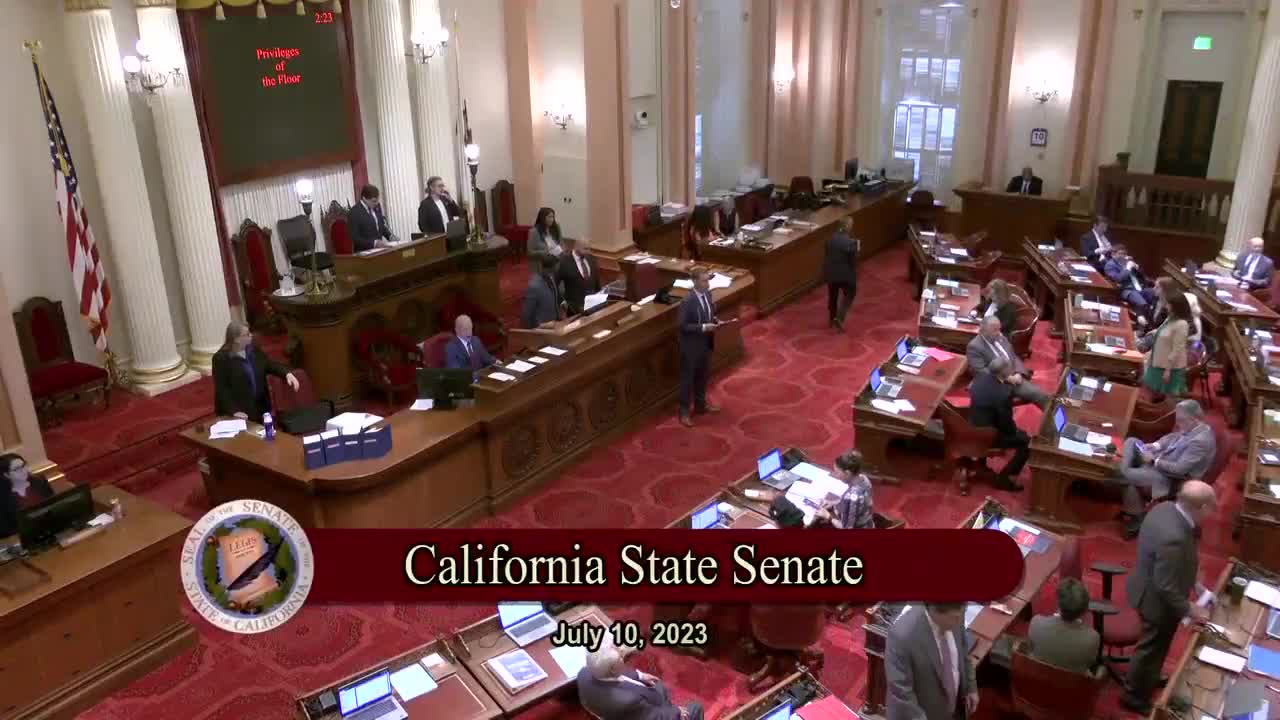 7MIN
Senate Floor
 6MIN
Senate Standing Committee on Judiciary
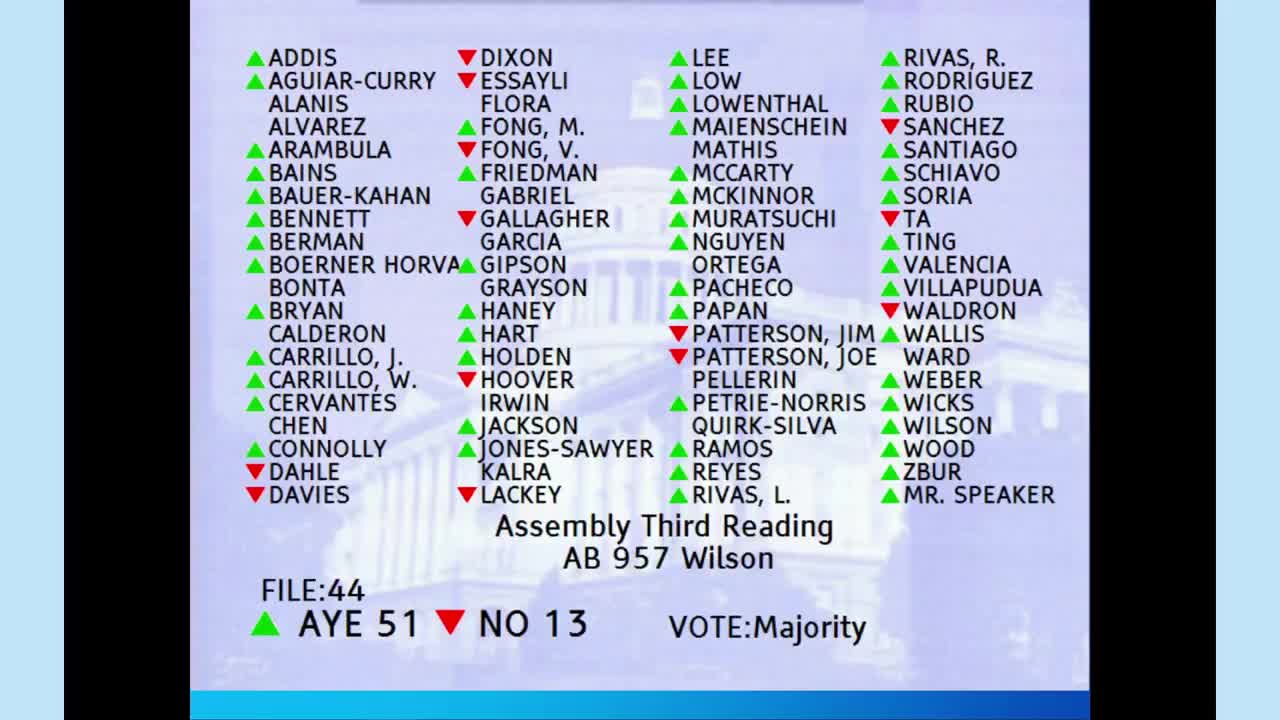 9MIN
Assembly Floor
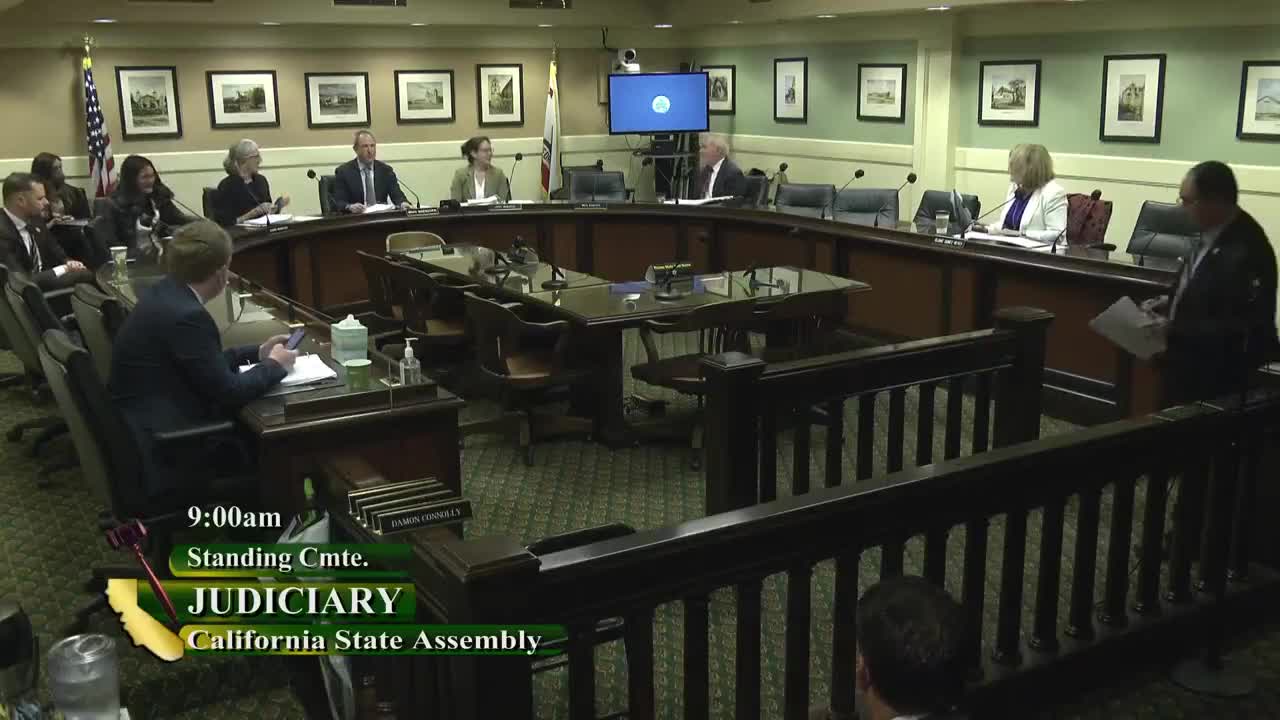 9MIN
Assembly Standing Committee on Judiciary



Bill Co-Author(s):