AJR 2: Sikh genocide.
- Session Year: 2023-2024
- House: Assembly
- Latest Version Date: 2023-07-20
Current Status:
Passed
(2023-07-20: Chaptered by Secretary of State - Res. Chapter 129, Statutes of 2023.)
Introduced
In Committee
First Chamber
In Committee
Second Chamber
Enacted
This measure would condemn the November 1984 anti-Sikh violence in India as genocide and would urge the United States Congress to formally recognize and condemn the November 1984 anti-Sikh violence in India as genocide.
This measure would condemn the November 1984 anti-Sikh violence in India as genocide and would urge the United States Congress to formally recognize and condemn the November 1984 anti-Sikh violence in India as genocide.
This measure would condemn the November 1984 anti-Sikh violence in India as genocide and would urge the United States Congress to formally recognize and condemn the November 1984 anti-Sikh violence in India as genocide.
This measure would condemn the November 1984 anti-Sikh violence in India as genocide and would urge the United States Congress to formally recognize and condemn the November 1984 anti-Sikh violence in India as genocide.
WHEREAS, The Sikh community, which originated in Punjab, a region of South Asia now in Pakistan and India, began immigrating to the United States over 100 years ago and has played an important role in building agriculture, infrastructure, and communities across the United States and California; and
WHEREAS, Sikhism is the fifth-largest religion in the world with nearly 30,000,000 adherents, including approximately 500,000 in the United States, one-half of whom call California home; and
WHEREAS, Systemic and orchestrated genocidal violence was perpetrated against Sikhs in November 1984 in the capital territory of Delhi, the states of Jharkhand, Madhya Pradesh, Haryana, Uttarakhand, Bihar, Uttar Pradesh, West Bengal, Himachal Pradesh, Rajasthan, Odisha, Chhattisgarh, Tripura, Tamil Nadu, Gujarat, Andhra Pradesh, Kerala, and Maharashtra, and the union territory of Jammu and Kashmir; and
WHEREAS, During the anti-Sikh genocide, Sikhs were assaulted, tortured, burned alive, and murdered, and Sikh women, many of whom lost their families during the genocide, were sexually assaulted and raped by groups of attackers; and
WHEREAS, Sikh homes, businesses, and gurdwaras, or houses of worship, were looted, damaged, and destroyed during the genocide, causing the intentional destruction of many Sikh families, communities, homes, and businesses; and
WHEREAS, The Indian government, through officials and Members of Parliament and with the support of the police, led genocidal attacks and participated in, and failed to intervene to prevent, the genocide; and
WHEREAS, Over three days in November 1984, over 30,000 Sikhs were murdered; and
WHEREAS, The Widow Colony in New Delhi still houses Sikh women who were assaulted, raped, tortured, and forced to witness the dismemberment, burning, and murder of their families, and who are still calling for justice against the perpetrators; and
WHEREAS, The Sikh community in the United States has not recovered from the physical and psychological trauma of the genocide, as they keep alive the memory of those who were killed, and will never forget the anti-Sikh genocide; and
WHEREAS, The United Nations Convention on Genocide states in Article II that, genocide means any of the following acts committed with intent to destroy, in whole or in part, a national, ethnical, racial, or religious group as such; (a) Killing members of the group; (b) Causing serious bodily or mental harm to members of the group; (c) Deliberately inflicting on the group conditions of life calculated to bring about its physical destruction in whole or in part; and
WHEREAS, On January 6, 2022, the Senate of the State of New Jersey unanimously passed Senate Resolution 142 condemning the November 1984 anti-Sikh violence in India as genocide; and
WHEREAS, On October 17, 2018, the General Assembly of the Commonwealth of Pennsylvania unanimously passed House Resolution 1160 condemning the November 1984 anti-Sikh violence as genocide; and
WHEREAS, Recognizing the state-sponsored violence that targeted Sikhs across India is an important and historic step towards justice, accountability, and reconciliation, which should be an example to other governments; now, therefore, be it
Resolved by the Assembly and the Senate of the State of California, jointly, That the Legislature of the State of California condemns the November 1984 anti-Sikh violence in India as genocide; and be it further
Resolved, That the Legislature of the State of California urges the United States Congress to formally recognize and condemn the November 1984 anti-Sikh violence in India as genocide; and be it further
Resolved, That the Chief Clerk of the Assembly transmit copies of this resolution to the President and Vice President of the United States, the Speaker and Minority Leader of the United States House of Representatives, the Majority Leader and Minority Leader of the United States Senate, and each member of the California delegation to the United States Congress.
WHEREAS, The Sikh community, which originated in Punjab, a region of South Asia now in Pakistan and India, began immigrating to the United States over 100 years ago and has played an important role in building agriculture, infrastructure, and communities across the United States and California; and
WHEREAS, Sikhism is the fifth-largest religion in the world with nearly 30,000,000 adherents, including approximately 500,000 in the United States, one-half of whom call California home; and
WHEREAS, Systemic and orchestrated genocidal violence was perpetrated against Sikhs in November 1984 in the capital territory of Delhi, the states of Jharkhand, Madhya Pradesh, Haryana, Uttarakhand, Bihar, Uttar Pradesh, West Bengal, Himachal Pradesh, Rajasthan, Odisha, Chhattisgarh, Tripura, Tamil Nadu, Gujarat, Andhra Pradesh, Kerala, and Maharashtra, and the union territory of Jammu and Kashmir; and
WHEREAS, During the anti-Sikh genocide, Sikhs were assaulted, tortured, burned alive, and murdered, and Sikh women, many of whom lost their families during the genocide, were sexually assaulted and raped by groups of attackers; and
WHEREAS, Sikh homes, businesses, and gurdwaras, or houses of worships, worship, were looted, damaged, and destroyed during the genocide, causing the intentional destruction of many Sikh families, communities, homes, and businesses; and
WHEREAS, The Indian government, through officials and Members of Parliament and with the support of the police, led genocidal attacks and participated in, and failed to intervene to prevent, the genocide; and
WHEREAS, Over three days in November 1984, over 30,000 Sikhs were murdered; and
WHEREAS, The Widow Colony in New Delhi still houses Sikh women who were assaulted, raped, tortured, and forced to witness the dismemberment, burning, and murder of their families, and who are still calling for justice against the perpetrators; and
WHEREAS, The Sikh community in the United States has not recovered from the physical and psychological trauma of the genocide, as they keep alive the memory of those who were killed, and will never forget the anti-Sikh genocide; and
WHEREAS, The United Nations Convention on Genocide states in Article II that, genocide means any of the following acts committed with intent to destroy, in whole or in part, a national, ethnical, racial, or religious group as such; (a) Killing members of the group; (b) Causing serious bodily or mental harm to members of the group; (c) Deliberately inflicting on the group conditions of life calculated to bring about its physical destruction in whole or in part; and
WHEREAS, On January 6, 2022, the Senate of the State of New Jersey unanimously passed Senate Resolution 142 condemning the November 1984 anti-Sikh violence in India as genocide; and
WHEREAS, On October 17, 2018, the General Assembly of the Commonwealth of Pennsylvania unanimously passed House Resolution 1160 condemning the November 1984 anti-Sikh violence as genocide; and
WHEREAS, Recognizing the state-sponsored violence that targeted Sikhs across India is an important and historic step towards justice, accountability, and reconciliation, which should be an example to other governments; now, therefore, be it
Resolved by the Assembly and the Senate of the State of California, jointly, That the Legislature of the State of California condemns the November 1984 anti-Sikh violence in India as genocide; and be it further
Resolved, That the Legislature of the State of California urges the United States Congress to formally recognize and condemn the November 1984 anti-Sikh violence in India as genocide; and be it further
Resolved, That the Chief Clerk of the Assembly transmit copies of this resolution to the President and Vice President of the United States, the Speaker and Minority Leader of the United States House of Representatives, the Majority Leader and Minority Leader of the United States Senate, and each member of the California delegation to the United States Congress.
WHEREAS, The Sikh community, which originated in Punjab, a region of South Asia now in Pakistan and India, began immigrating to the United States over 100 years ago and has played an important role in building agriculture, infrastructure, and communities across the United States and California; and
WHEREAS, Sikhism is the fifth-largest religion in the world with nearly 30,000,000 adherents, including approximately 500,000 in the United States, one-half of whom call California home; and
WHEREAS, Systemic and orchestrated genocidal violence was perpetrated against Sikhs in November 1984 in the capital territory of Delhi, the states of Jharkhand, Madhya Pradesh, Haryana, Uttarakhand, Bihar, Uttar Pradesh, West Bengal, Himachal Pradesh, Rajasthan, Odisha, Chhattisgarh, Tripura, Tamil Nadu, Gujarat, Andhra Pradesh, Kerala, and Maharashtra, and the union territory of Jammu and Kashmir; and
WHEREAS, During the anti-Sikh genocide, Sikhs were assaulted, tortured, burned alive, and murdered, and Sikh women, many of whom lost their families during the genocide, were sexually assaulted and raped by groups of attackers; and
WHEREAS, Sikh homes, businesses, and gurdwaras, or houses of worships, were looted, damaged, and destroyed during the genocide, causing the intentional destruction of many Sikh families, communities, homes, and businesses; and
WHEREAS, The Indian government, through officials and Members of Parliament and with the support of the police, led genocidal and participated in, and failed to intervene to prevent, the genocide; and
WHEREAS, Over three days in November 1984, over 30,000 Sikhs were murdered; and
WHEREAS, The Widow Colony in New Delhi still houses Sikh women who were assaulted, raped, tortured, and forced to witness the dismemberment, burning, and murder of their families, and who are still calling for justice against the perpetrators; and
WHEREAS, The Sikh community in the United States has not recovered from the physical and psychological trauma of the genocide, as they keep alive the memory of those who were killed, and will never forget the anti-Sikh genocide; and
WHEREAS, The United Nations Convention on Genocide states in Article II that, genocide means any of the following acts committed with intent to destroy, in whole or in part, a national, ethnical, racial, or religious group as such; (a) Killing members of the group; (b) Causing serious bodily or mental harm to members of the group; (c) Deliberately inflicting on the group conditions of life calculated to bring about its physical destruction in whole or in part; and
WHEREAS, On January 6, 2022, the Senate of the State of New Jersey unanimously passed Senate Resolution 142 condemning the November 1984 anti-Sikh violence in India as genocide; and
WHEREAS, On October 17, 2018, the General Assembly of the Commonwealth of Pennsylvania unanimously passed House Resolution 1160 condemning the November 1984 anti-Sikh violence as genocide; and
WHEREAS, Recognizing the state-sponsored violence that targeted Sikhs across India is an important and historic step towards justice, accountability, and reconciliation, which should be an example to other governments; now, therefore, be it
Resolved by the Assembly and the Senate of the State of California, jointly, That the Legislature of the State of California condemns the November 1984 anti-Sikh violence in India as genocide; and be it further
Resolved, That the Legislature of the State of California urges the United States Congress to formally recognize and condemn the November 1984 anti-Sikh violence in India as genocide; and be it further
Resolved, That the Chief Clerk of the Assembly transmit copies of this resolution to the President and Vice President of the United States, the Speaker and Minority Leader of the United States House of Representatives, the Majority Leader and Minority Leader of the United States Senate, and each member of the California delegation to the United States Congress.
|
Date
|
Status
|
|---|---|
| Jul 20, 2023 | Chaptered by Secretary of State - Res. Chapter 129, Statutes of 2023. |
| Jul 20, 2023 | Enrolled and filed with the Secretary of State at 2 p.m. |
| Jul 13, 2023 | Senate amendments concurred in. To Engrossing and Enrolling. (Ayes 73. Noes 0. Page 2643.). |
| Jul 6, 2023 | In Assembly. Concurrence in Senate amendments pending. |
| Jul 6, 2023 | Adopted and to Assembly. (Ayes 40. Noes 0. Page 1915.) |
| Jun 29, 2023 | Read second time. Ordered to Consent Calendar. |
| Jun 28, 2023 | From committee: Be adopted. To Consent Calendar. (Ayes 11. Noes 0.) (June 27). |
| Jun 14, 2023 | From committee chair, with author's amendments: Amend, and re-refer to committee. Read second time, amended, and re-referred to Com. on JUD. |
| May 10, 2023 | Referred to Com. on JUD. |
| Apr 11, 2023 | In Senate. To Com. on RLS. |
| Apr 10, 2023 | Adopted and to Senate. (Ayes 66. Noes 0. Page 1078.) |
| Apr 10, 2023 | Coauthors revised. |
| Mar 30, 2023 | From committee: Be adopted. Ordered to Third Reading. (Ayes 11. Noes 0.) (March 30). |
| Mar 30, 2023 | Referred to Com. on RLS. |
| Mar 23, 2023 | From printer. |
| Mar 22, 2023 | Introduced. To print. |
|
Date
|
Description
|
Location
|
Votes
|
|
|---|---|---|---|---|
| Jul 13, 2023 | AJR 2 Bains Concurrence in Senate Amendments | Assembly Floor |
Passed |
|
| Jul 6, 2023 | Consent Calendar AJR2 Bains et al. | Senate Floor |
Passed |
|
| Jun 27, 2023 | Be adopted and be ordered to the Consent Calendar | Senate Standing Committee on Judiciary |
Passed |
|
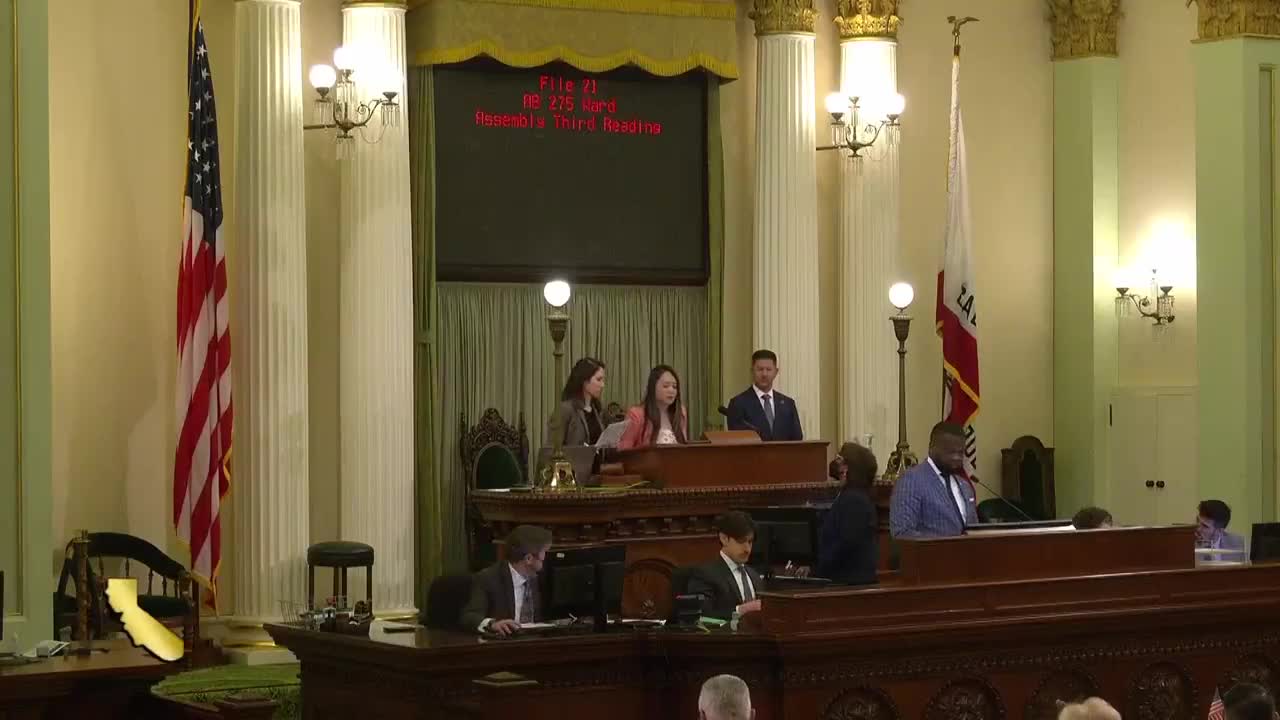
| Apr 10, 2023 | AJR 2 Bains Assembly Third Reading | Assembly Floor |
Passed |
|
| Mar 30, 2023 | Be adopted. To third reading. | Assembly Standing Committee on Rules |
Passed |
This list shows positions taken on this bill by organizations on the date displayed, which is linked to the original source.
Positions by individuals are not included.
CONCURRENCE IN SENATE AMENDMENTS
CSA1 Bill Id:AJR 2
Author:(Bains)
As Amended Ver:June 14, 2023
Majority vote
SUMMARY
Condemns the November 1984 anti-Sikh violence in India as genocide and urges the United States Congress to formally recognize and condemn the November 1984 anti-Sikh violence in India as genocide.
Senate Amendments
Made technical, clarifying changes.
COMMENTS
According to the Author
Recognizing the state-sponsored violence that targeted Sikhs across India is an important and historic step towards justice, accountability, and reconciliation. As the effects of the 1984 Sikh Genocide continue to ripple through history, this moment of acknowledgement is critical to encourage cultural and social healing for Sikhs living throughout the world.
Arguments in Support
The Jakara Movement writes in support: "The resolution will historically recognize the genocide against the Sikh peoples throughout India during November 1984. This allows the next generation of Americans to learn about the genocide, the Sikh community, and all their contributions to the State of California, the United States of America, and beyond."
Arguments in Opposition
None on file.
FISCAL COMMENTS
No fiscal impact. This resolution is keyed non-fiscal by Legislative Counsel.
VOTES:
ASM RULES: 11-0-2
YES: Ramos, Waldron, Addis, Juan Carrillo, Essayli, Flora, Low, Pacheco, Papan, Blanca Rubio, Valencia
ABS, ABST OR NV: Ortega, Pellerin
ASSEMBLY FLOOR: 66-0-14
YES: Addis, Alanis, Alvarez, Arambula, Bains, Bennett, Berman, Boerner Horvath, Bonta, Calderon, Juan Carrillo, Wendy Carrillo, Cervantes, Connolly, Dixon, Flora, Mike Fong, Vince Fong, Friedman, Gabriel, Gallagher, Garcia, Gipson, Grayson, Haney, Hart, Holden, Hoover, Irwin, Jackson, Jones-Sawyer, Kalra, Lackey, Lee, Low, Lowenthal, Maienschein, Mathis, McCarty, Muratsuchi, Stephanie Nguyen, Ortega, Pacheco, Papan, Joe Patterson, Pellerin, Ramos, Reyes, Luz Rivas, Robert Rivas, Rodriguez, Blanca Rubio, Santiago, Schiavo, Soria, Ta, Ting, Villapudua, Waldron, Wallis, Ward, Weber, Wicks, Wood, Zbur, Rendon
ABS, ABST OR NV: Aguiar-Curry, Bauer-Kahan, Bryan, Chen, Megan Dahle, Davies, Essayli, McKinnor, Jim Patterson, Petrie-Norris, Quirk-Silva, Sanchez, Valencia, Wilson
SENATE FLOOR: 40-0-0
YES: Allen, Alvarado-Gil, Archuleta, Ashby, Atkins, Becker, Blakespear, Bradford, Caballero, Cortese, Dahle, Dodd, Durazo, Eggman, Glazer, Gonzalez, Grove, Hurtado, Jones, Laird, Limón, McGuire, Menjivar, Min, Newman, Nguyen, Niello, Ochoa Bogh, Padilla, Portantino, Roth, Rubio, Seyarto, Skinner, Smallwood-Cuevas, Stern, Umberg, Wahab, Wiener, Wilk
UPDATED
VERSION: June 14, 2023
CONSULTANT: Michael Erke / RLS. / (916) 319-2800 FN: 0001205
SENATE RULES COMMITTEE Office of Senate Floor Analyses (916) 651-1520 Fax: (916) 327-4478 | AJR 2 |
CONSENT
Bill No: AJR 2
Author: Bains (D), et al.
Amended: 6/14/23 in Senate
Vote: 21
SENATE JUDICIARY COMMITTEE: 11-0, 6/27/23
AYES: Umberg, Wilk, Allen, Ashby, Caballero, Durazo, Laird, Min, Niello, Stern, Wiener
ASSEMBLY FLOOR: 66-0, 4/10/23 - See last page for vote
SUBJECT: Sikh genocide
SOURCE: Author
DIGEST:
This resolution condemns the November 1984 anti-Sikh violence in India as genocide and urges the United States Congress to formally recognize and condemn the November 1984 anti-Sikh violence in India as genocide.
ANALYSIS:
This resolution:
- Declares that:
- The Sikh community, which originated in Punjab, a region of South Asia now in Pakistan and India, began immigrating to the United States over 100 years ago and has played an important role in building agriculture, infrastructure, and communities across the United States and California.
- Sikhism is the fifth-largest religion in the world with nearly 30,000,000 adherents, including approximately 500,000 in the United States, half of whom call California home.
- Systematic and orchestrated genocidal violence was perpetuated against Sikhs in November 1984 in the capital territory of Delhi, the states of Jharkhand, Madhya Pradesh, Haryana, Uttarakhand, Bihar, Uttar Pradesh, West Bengal, Himachal Pradesh, Rajasthan, Odisha, Chhattisgarh, Tripura, Tamil Nadu, Gujarat, Andhra Pradesh, Kerala, and Maharashtra, and the union territory of Jammu and Kashmir.
- During the anti-Sikh genocide, Sikhs were assaulted, tortured, burned alive, and murdered, and Sikh women, many of whom lost their families during the genocide, were sexually assaulted and raped by groups of attackers.
- Sikh homes, businesses, and gurdwaras, or houses of worship, were looted, damaged, and destroyed during the genocide, causing the intentional destruction of many Sikh families, communities, homes, and businesses.
- The Indian government, through officials and Members of Parliament and with the support of the police, led genocidal attacks and participated in, and failed to intervene to prevent, the genocide.
- Over three days in November, 1984, over 30,000 Sikhs were murdered.
- The “Widow Colony” in New Delhi still houses Sikh women who were assaulted, raped, tortured, and forced to witness the dismemberment, burning, and murder of their families, who are still calling for justice against the perpetrators.
- The Sikh community in the United States has not recovered from the physical and psychological trauma of the genocide, as they keep alive the memory of those who were killed, and will never forget the anti-Sikh genocide.
- The United Nations Convention on Genocide states in Article II that, “genocide means any of the following acts committed with intent to destroy, in whole or in part, a national, ethnic, racial, or religious group such as (a) Killing members of the group; (b) Causing serious bodily or mental harm to members of the group; (c) Deliberately inflicting on the group conditions of life calculated to bring about its physical destruction in whole or in part.”
- On January 6, 2022, the Senate of the State of New Jersey unanimously passed Senate Resolution 142 condemning the November 1984 anti-Sikh violence in India as genocide.
- On October 17, 2018, the General Assembly of the Commonwealth of Pennsylvania unanimously passed House Resolution 1160 condemning the November 1984 anti-Sikh violence as genocide.
- Recognizing the state-sponsored violence that targeted Sikhs across India is an important and historic step towards justice, accountability, and reconciliation, which should be an example to other governments.
- Resolves by the Assembly and the State Senate of California, jointly, that:
- The Legislature of the State of California condemns the November 1984 anti-Sikh violence in India as genocide.
- The Legislature of the State of California urges the United States Congress to formally recognize and condemn the November 1984 anti-Sikh violence as genocide.
- The Chief Clerk of the Assembly transmit copies of this resolution to the President and Vice President of the United States, the Speaker and Minority Leader of the United States House of Representatives, the Majority Leader and Minority Leader of the United States Senate, and each member of the California delegation to the United States Congress.
Comments
In June of 1984, Indian Prime Minister Indira Gandhi ordered a military attack on the Golden Temple, the most significant religious center for Sikhs, located in Amritsar, Punjab.[1] On October 31, 1984, Gandhi was assassinated by two of her Sikh bodyguards.[2] Her assassination triggered a nationwide violent response. The Indian Government’s official death toll for the three-day rampage was 3,000; unofficial estimates are much higher, with some putting the death toll as high as 30,000.[3] Additionally, women were subjected to mass rapes and sexual violence, Sikh homes, businesses, and gurdwaras were destroyed, and thousands of Sikhs were displaced.[4] The violence was particularly severe in New Delhi, the capital, but extended across the entire country.[5]
Eyewitnesses and other reports indicate that Indian governmental actors, such as law enforcement and government officials, encouraged and participated in, and even organized, the anti-Sikh violence.[6] Human Rights Watch also reports that independent civil society inquiries found that police and members of the Congress Party were complicit in the attacks.[7] The Indian government, however, has continued to characterize the event as a “riot” and a spontaneous reaction to the Prime Minister’s assassination.[8] The severity of the violence has also been downplayed within the criminal courts; as of November 2022, only nine persons had received criminal convictions for killings during the anti-Sikh attacks.[9]
This resolution recites the events in November 1984 and states that “recognizing the state-sponsored violence that targeted Sikhs across India is an important and historic step towards justice, accountability, and reconciliation, which should be an example to other governments.” Accordingly, this resolution provides that both houses of the Legislature, jointly, condemn the November 1984 anti-Sikh violence as genocide, and urges the United States Congress to formally recognize and condemn the violence as genocide. This resolution further requires the Chief Clerk of the Assembly to transmit copies of this resolution to specified members of the federal and legislative branches.
FISCAL EFFECT: Appropriation: No Fiscal Com.: No Local: No
SUPPORT: (Verified 6/29/23)
None received
OPPOSITION: (Verified 6/29/23)
None received
ASSEMBLY FLOOR: 66-0, 4/10/23
AYES: Addis, Alanis, Alvarez, Arambula, Bains, Bennett, Berman, Boerner Horvath, Bonta, Calderon, Juan Carrillo, Wendy Carrillo, Cervantes, Connolly, Dixon, Flora, Mike Fong, Vince Fong, Friedman, Gabriel, Gallagher, Garcia, Gipson, Grayson, Haney, Hart, Holden, Hoover, Irwin, Jackson, Jones-Sawyer, Kalra, Lackey, Lee, Low, Lowenthal, Maienschein, Mathis, McCarty, Muratsuchi, Stephanie Nguyen, Ortega, Pacheco, Papan, Joe Patterson, Pellerin, Ramos, Reyes, Luz Rivas, Robert Rivas, Rodriguez, Blanca Rubio, Santiago, Schiavo, Soria, Ta, Ting, Villapudua, Waldron, Wallis, Ward, Weber, Wicks, Wood, Zbur, Rendon
NO VOTE RECORDED: Aguiar-Curry, Bauer-Kahan, Bryan, Chen, Megan Dahle, Davies, Essayli, McKinnor, Jim Patterson, Petrie-Norris, Quirk-Silva, Sanchez, Valencia, Wilson
Prepared by: Allison Whitt Meredith / JUD. / (916) 651-4113
6/30/23 13:34:27
**** END ****
Singh, It’s Time India Accept Responsibility for Its 1984 Sikh Genocide, TIME (Oct. 31, 2014), available at https://time.com/3545867/india-1984-sikh-genocide-anniversary/. All links in this analysis are current as of June 23, 2023. ↑
Ibid. ↑
Ibid.; Global Diligence, Mass Violence Against the Sikh People in India: The Events of November 1984 (Nov. 2019; updated Oct. 2022), p. 5. ↑
Mass Violence Against the Sikh People in India: The Events of November 1984, supra, at p. 5. ↑
Human Rights Watch, Protecting the Killers: A Policy of Impunity in Punjab, India (Oct. 17, 2007), available at https://www.hrw.org/report/2007/10/17/protecting-killers/policy-impunity-punjab-india; Sikhs for Justice, Know the Facts of the 1984 Genocide (May 19, 2019), https://www.sikhpa.com/know-the-facts-of-1984-sikh-genocide/. ↑
Mass Violence Against the Sikh People in India: The Events of November 1984, supra, at pp. 13-14; It’s Time India Accept Responsibility for Its 1984 Sikh Genocide, supra; Protecting the Killers: A Policy of Impunity in Punjab, India (Oct. 17, 2007), supra. ↑
Human Rights Watch, India: No Justice for 1984 Anti-Sikh Bloodshed (Oct. 29, 2014), https://www.hrw.org/news/2014/10/29/india-no-justice-1984-anti-sikh-bloodshed. ↑
Ibid.; It’s Time India Accept Responsibility for Its 1984 Sikh Genocide, supra. ↑
The Federal, 1984 anti-Sikh riots: Justice delayed and denied, convictions few and far between (Nov. 4, 2022), https://thefederal.com/news/1984-anti-sikh-riots-justice-delayed-and-denied-convictions-few-and-far-between/. ↑
Senator Thomas Umberg, Chair
2023-2024 Regular Session
Bill No: AJR 2 (Author:Bains)
Version: June 14, 2023
Hearing Date: June 27, 2023
Fiscal: No
Urgency: No
Consultant: AWM
SUBJECT
Sikh genocide
SYNOPSIS
This resolution condemns the November 1984 anti-Sikh violence in India as genocide and urges the United States Congress to formally recognize and condemn the November 1984 anti-Sikh violence in India as genocide.
This resolution is sponsored by the author. There is no known opposition.
SUMMARY
This resolution:
- Declares that:
- The Sikh community, which originated in Punjab, a region of South Asia now in Pakistan and India, began immigrating to the United States over 100 years ago and has played an important role in building agriculture, infrastructure, and communities across the United States and California.
- Sikhism is the fifth-largest religion in the world with nearly 30,000,000 adherents, including approximately 500,000 in the United States, half of whom call California home.
- Systematic and orchestrated genocidal violence was perpetuated against Sikhs in November 1984 in the capital territory of Delhi, the states of Jharkhand, Madhya Pradesh, Haryana, Uttarakhand, Bihar, Uttar Pradesh, West Bengal, Himachal Pradesh, Rajasthan, Odisha, Chhattisgarh, Tripura, Tamil Nadu, Gujarat, Andhra Pradesh, Kerala, and Maharashtra, and the union territory of Jammu and Kashmir.
- During the anti-Sikh genocide, Sikhs were assaulted, tortured, burned alive, and murdered, and Sikh women, many of whom lost their families during the genocide, were sexually assaulted and raped by groups of attackers.
- Sikh homes, businesses, and gurdwaras, or houses of worship, were looted, damaged, and destroyed during the genocide, causing the intentional destruction of many Sikh families, communities, homes, and businesses.
- The Indian government, through officials and Members of Parliament and with the support of the police, led genocidal attacks and participated in, and failed to intervene to prevent, the genocide.
- Over three days in November, 1984, over 30,000 Sikhs were murdered.
- The “Widow Colony” in New Delhi still houses Sikh women who were assaulted, raped, tortured, and forced to witness the dismemberment, burning, and murder of their families, who are still calling for justice against the perpetrators.
- The Sikh community in the United States has not recovered from the physical and psychological trauma of the genocide, as they keep alive the memory of those who were killed, and will never forget the anti-Sikh genocide.
- The United Nations Convention on Genocide states in Article II that, “genocide means any of the following acts committed with intent to destroy, in whole or in part, a national, ethnic, racial, or religious group such as (a) Killing members of the group; (b) Causing serious bodily or mental harm to members of the group; (c) Deliberately inflicting on the group conditions of life calculated to bring about its physical destruction in whole or in part.”
- On January 6, 2022, the Senate of the State of New Jersey unanimously passed Senate Resolution 142 condemning the November 1984 anti-Sikh violence in India as genocide.
- On October 17, 2018, the General Assembly of the Commonwealth of Pennsylvania unanimously passed House Resolution 1160 condemning the November 1984 anti-Sikh violence as genocide.
- Recognizing the state-sponsored violence that targeted Sikhs across India is an important and historic step towards justice, accountability, and reconciliation, which should be an example to other governments.
- Resolves by the Assembly and the State Senate of California, jointly, that:
- The Legislature of the State of California condemns the November 1984 anti-Sikh violence in India as genocide.
- The Legislature of the State of California urges the United States Congress to formally recognize and condemn the November 1984 anti-Sikh violence as genocide.
- The Chief Clerk of the Assembly transmit copies of this resolution to the President and Vice President of the United States, the Speaker and Minority Leader of the United States House of Representatives, the Majority Leader and Minority Leader of the United States Senate, and each member of the California delegation to the United States Congress.
COMMENTS
- Author’s statement:
According to the author:
Recognizing the state-sponsored violence that targeted Sikhs across India is an important and historic step towards justice, accountability, and reconciliation. As the effects of the 1984 Sikh Genocide continue to ripple through history, this moment of acknowledgement is critical to encourage cultural and social healing for Sikhs living throughout the world.
2. The 1984 anti-Sikh violence
Sikhism is a religion founded in the 15th century in South Asia.[1] Sikhs began immigrating to the United States over 100 years ago.[2] There are between 25 million and 30 million Sikhs worldwide, with the vast majority living in India.[3] Approximately 500,000 Sikhs live in the United States, with a significant Sikh presence in California.[4] Although Sikhism is the fifth-largest religion in the world, Sikhs are a religious minority in India.[5]
In June of 1984, Indian Prime Minister Indira Gandhi ordered a military attack on the Golden Temple, the most significant religious center for Sikhs, located in Amritsar, Punjab.[6] On October 31, 1984, Gandhi was assassinated by two of her Sikh bodyguards.[7] Her assassination triggered a nationwide violent response, in the capital and around the country; as reported by TIME at the time:
Frenzied mobs of young Hindu thugs, thirsting for revenge, burned Sikh-owned stores to the ground, dragged Sikhs out of their homes, cars and trains, then clubbed them to death or set them aflame before raging off in search of other victims.[8]
The Indian Government’s official death toll for the three-day rampage was 3,000; unofficial estimates are much higher, with some putting the death toll as high as 30,000.[9] Additionally, women were subjected to mass rapes and sexual violence, Sikh homes, businesses, and gurdwaras were destroyed, and thousands of Sikhs were displaced.[10] The violence was particularly severe in New Delhi, the capital, but extended across the entire country.[11]
Eyewitnesses and other reports indicate that Indian governmental actors, such as law enforcement and government officials, encouraged and participated in, and even organized, the anti-Sikh violence.[12] Human Rights Watch also reports that independent civil society inquiries found that police and members of the Congress Party were complicit in the attacks.[13] The Indian government, however, has continued to characterize the event as a “riot” and a spontaneous reaction to the Prime Minister’s assassination.[14] The severity of the violence has also been downplayed within the criminal courts; as of November 2022, only nine persons had received criminal convictions for killings during the anti-Sikh attacks.[15]
3. The significance of the label “genocide”
For centuries, “genocide” was not conceptualized as a crime; the term was not even coined until 1944.[16] That changed in the aftermath of World War II. In 1948, the United Nations General Assembly voted to adopt the Convention on the Prevention and Punishment of the Crime of Genocide (Genocide Convention), which was the first human rights treaty adopted by the General Assembly.[17] The Genocide Convention defines “genocide” as:
any of the following acts committed with intent to destroy, in whole or in part, a national, ethnical, racial or religious group, as such:
- Killing members of the group;
- Causing seriously bodily or mental harm to members of the group;
- Deliberately inflicting on the group conditions of life calculated to bring about its physical destruction in whole or in part;
- Imposing measures intended to prevent births within the group;
- Forcibly transferring children of the group to another group.[18]
A key element of the crime of genocide is that victims must be deliberately targeted as a member or perceived member of the protected national, ethnic, racial, or religious group.[19] It is this intent element that distinguishes “genocide” from other forms of mass violence—and why states have an interest in characterizing acts of violence against a particular group as random, spontaneous, or generalized.
For many Sikhs, the failure of the Indian government to acknowledge that the killings in 1984 were both organized and specifically targeted at Sikhs—in other words, a genocide—is a source of ongoing pain.[20] While many other countries have taken responsibility for past atrocities, the failure to address the scope and trauma of the Sikh genocide both prevents any attempts to atone or provide reparations for the violence, and continues to delay and deny justice in court for the victims.[21]
4. This resolution condemns the 1984 anti-Sikh violence as genocide and calls on Congress to do the same
This resolution recites the history of the anti-Sikh violence set forth in Part 2 and states that “recognizing the state-sponsored violence that targeted Sikhs across India is an important and historic step towards justice, accountability, and reconciliation, which should be an example to other governments.” Accordingly, the resolution provides that both houses of the Legislature, jointly, condemn the November 1984 anti-Sikh violence as genocide, and urges the United States Congress to formally recognize and condemn the violence as genocide. The resolution further requires the Chief Clerk of the Assembly to transmit copies of the resolution to specified members of the federal and legislative branches.
The New Jersey Senate and the Pennsylvania General Assembly have adopted similar resolutions condemning the 1984 anti-Sikh violence as genocide and asking the federal government to formally recognize the events as a genocide.[22]
SUPPORT
None known
OPPOSITION
None known
RELATED LEGISLATION
Pending Legislation: None known.
Prior Legislation: ACR 34 (Cooper, 2015) resolved to remember those who lost their lives in the November 1984 anti-Sikh pogroms.
PRIOR VOTES:
Assembly Floor (Ayes 66, Noes 0)
Assembly Rules Committee (Ayes 11, Noes 0)
**************
SikhNet, Who are Siks? What is Sikhism? (2023), https://www.sikhnet.com/pages/who-are-sikhs-what-is-sikhism. All links in this analysis are current as of June 23, 2023. ↑
Ibid. ↑
The Sikh Coalition, Sikhi at a Glance (2023), https://www.sikhcoalition.org/about-sikhs/; id., Sikhs in America (2023), https://www.sikhcoalition.org/about-sikhs/sikhs-in-america/. ↑
The Sikh Coalition, Sikhi at a Glance, supra; SikhiWiki, Sikhism in the USA (2011), https://www.sikhiwiki.org/index.php/Sikhism_in_the_USA. ↑
The Sikh Coalition, Sikhi at a Glance, supra; Pew Research Center, Report: Religious Composition of India (Sept. 21, 2021), available at https://www.pewresearch.org/religion/2021/09/21/religious-composition-of-india/. ↑
Singh, It’s Time India Accept Responsibility for Its 1984 Sikh Genocide, TIME (Oct. 31, 2014), available at https://time.com/3545867/india-1984-sikh-genocide-anniversary/. ↑
Ibid. ↑
Ibid. ↑
Ibid.; Global Diligence, Mass Violence Against the Sikh People in India: The Events of November 1984 (Nov. 2019; updated Oct. 2022), p. 5. ↑
Mass Violence Against the Sikh People in India: The Events of November 1984, supra, at p. 5. ↑
Human Rights Watch, Protecting the Killers: A Policy of Impunity in Punjab, India (Oct. 17, 2007), available at https://www.hrw.org/report/2007/10/17/protecting-killers/policy-impunity-punjab-india; Sikhs for Justice, Know the Facts of the 1984 Genocide (May 19, 2019), https://www.sikhpa.com/know-the-facts-of-1984-sikh-genocide/. ↑
Mass Violence Against the Sikh People in India: The Events of November 1984, supra, at pp. 13-14; It’s Time India Accept Responsibility for Its 1984 Sikh Genocide, supra; Protecting the Killers: A Policy of Impunity in Punjab, India (Oct. 17, 2007), supra. ↑
Human Rights Watch, India: No Justice for 1984 Anti-Sikh Bloodshed (Oct. 29, 2014), https://www.hrw.org/news/2014/10/29/india-no-justice-1984-anti-sikh-bloodshed. ↑
Ibid.; It’s Time India Accept Responsibility for Its 1984 Sikh Genocide, supra. ↑
The Federal, 1984 anti-Sikh riots: Justice delayed and denied, convictions few and far between (Nov. 4, 2022), https://thefederal.com/news/1984-anti-sikh-riots-justice-delayed-and-denied-convictions-few-and-far-between/. ↑
United Nations Office on Genocide Prevention and the Responsibility to Protect, Genocide, https://www.un.org/en/genocideprevention/genocide.shtml. ↑
United Nations Office on Genocide Prevention and the Responsibility to Protect, Legal Framework: The Genocide Convention, https://www.un.org/en/genocideprevention/genocide-convention.shtml. ↑
U.N. Convention on the Prevention and Punishment of the Crime of Genocide, approved Dec. 9, 1948, art. II. ↑
United Nations Office on Genocide Prevention and the Responsibility to Protect, Genocide, supra. ↑
It’s Time India Accept Responsibility for Its 1984 Sikh Genocide, supra. ↑
Ibid. ↑
N.J. SR 142 (2022); Penn. HR 1160 (2018). ↑
ASSEMBLY THIRD READING
ATR Bill Id:AJR 2
Author:(Bains)
As Introduced Ver:March 22, 2023
Majority vote
SUMMARY
Condemns the November 1984 anti-Sikh violence in India as genocide and urges the United States Congress to formally recognize and condemn the November 1984 anti-Sikh violence in India as genocide.
Major Provisions
- The Sikh community, which originated in Punjab, a region of South Asia now in Pakistan and India, began immigrating to the United States over 100 years ago and has played an important role in building agriculture, infrastructure, and communities across the United States and California.
- Sikhism is the fifth-largest religion in the world with nearly 30 million adherents, including approximately 500,000 in the United States, one-half of whom call California home.
- Systemic and orchestrated genocidal violence was perpetrated against Sikhs in November 1984. During the anti-Sikh genocide, Sikhs were assaulted, tortured, burned alive, and murdered, and Sikh women, many of whom lost their families during the genocide, were sexually assaulted and raped by groups of attackers. Over three days in November 1984, over 30,000 Sikhs were murdered.
- The Sikh community in the United States has not recovered from the physical and psychological trauma of the genocide, as they keep alive the memory of those who were killed, and will never forget the anti-Sikh genocide.
- Recognizing the state-sponsored violence that targeted Sikhs across India is an important and historic step towards justice, accountability, and reconciliation, which should be an example to other governments.
COMMENTS
According to the Author
Recognizing the state-sponsored violence that targeted Sikhs across India is an important and historic step towards justice, accountability, and reconciliation. As the effects of the 1984 Sikh Genocide continue to ripple through history, this moment of acknowledgement is critical to encourage cultural and social healing for Sikhs living throughout the world.
Arguments in Support
None on file.
Arguments in Opposition
None on file.
FISCAL COMMENTS
No fiscal impact.
VOTES
ASM RULES: 11-0-2
YES: Ramos, Waldron, Addis, Juan Carrillo, Essayli, Flora, Low, Pacheco, Papan, Blanca Rubio, Valencia
ABS, ABST OR NV: Ortega, Pellerin
UPDATED
VERSION: March 22, 2023
CONSULTANT: Michael Erke / RLS. / (916) 319-2800 FN: 0000189
Date of Hearing: March 30, 2023
ASSEMBLY COMMITTEE ON RULES
James Ramos, Chair
ABPCA Bill Id:AJR 2 (
Author:Bains) – As Introduced Ver:March 22, 2023
SUBJECT: Sikh genocide.
SUMMARY: Condemns the November 1984 anti-Sikh violence in India as genocide and urges the United States Congress to formally recognize and condemn the November 1984 anti-Sikh violence in India as genocide. Specifically, this resolution makes the following legislative findings:
- The Sikh community, which originated in Punjab, a region of South Asia now in Pakistan and India, began immigrating to the United States over 100 years ago and has played an important role in building agriculture, infrastructure, and communities across the United States and California.
- Sikhism is the fifth-largest religion in the world with nearly 30,000,000 adherents, including approximately 500,000 in the United States, one-half of whom call California home.
- Systemic and orchestrated genocidal violence was perpetrated against Sikhs in November 1984. During the anti-Sikh genocide, Sikhs were assaulted, tortured, burned alive, and murdered, and Sikh women, many of whom lost their families during the genocide, were sexually assaulted and raped by groups of attackers. Over three days in November 1984, over 30,000 Sikhs were murdered.
- The Sikh community in the United States has not recovered from the physical and psychological trauma of the genocide, as they keep alive the memory of those who were killed, and will never forget the anti-Sikh genocide.
- Recognizing the state-sponsored violence that targeted Sikhs across India is an important and historic step towards justice, accountability, and reconciliation, which should be an example to other governments.
FISCAL EFFECT: None
REGISTERED SUPPORT / OPPOSITION:
Support
None on file
Opposition
None on file
Analysis Prepared by: Michael Erke / RLS. / (916) 319-2800
Discussed in Hearing
View Older Hearings
Bill Author

Bill Co-Author(s):