AJR 3: Affordable Housing Credit Improvement Act of 2023.
- Session Year: 2023-2024
- House: Assembly
- Latest Version Date: 2023-08-22
Current Status:
Passed
(2023-08-22: Chaptered by Secretary of State - Res. Chapter 132, Statutes of 2023.)
Introduced
In Committee
First Chamber
In Committee
Second Chamber
Enacted
This measure would declare that the Legislature supports a reduction to the threshold for tax-exempt bond financing and joins the Treasurer in urging the passage of the federal Affordable Housing Credit Improvement Act of 2023.
This measure would declare that the Legislature supports a reduction to the threshold for tax-exempt bond financing and joins the Treasurer in urging the passage of the federal Affordable Housing Credit Improvement Act of 2023.
This measure would declare that the Legislature supports a reduction to the threshold for tax-exempt bond financing and joins the Treasurer in urging the reintroduction and passage of the federal Affordable Housing Credit Improvement Act of 2021. 2023.
This measure would declare that the Legislature supports a reduction to the threshold for tax-exempt bond financing and joins the Treasurer in urging the reintroduction and passage of the federal Affordable Housing Credit Improvement Act of 2021.
WHEREAS, Our nation and state are facing an affordable housing crisis, and we need to take a proactive approach to affordable housing financing; and
WHEREAS, A large majority of affordable housing is dependent on low-income housing tax credits coupled with tax-exempt private activity bond financing; and
WHEREAS, When the federal low-income housing tax credit was first established by the Tax Reform Act of 1986, the bond financing threshold to qualify for the full amount of 4 percent credits was 70 percent; and
WHEREAS, The amount of hard debt that a property can service monthly is determined by rent payments, which are used to pay back a propertys debt over time; and
WHEREAS, Congress lowered the threshold to 50 percent through the Low-Income Housing Tax Credit Act of 1989 in recognition of the fact that the 70-percent debt level rendered most properties financially infeasible; and
WHEREAS, Today, even 50 percent of debt is far more than the majority of properties need or can support. For every $1,000,000 in reduced debt financing, rent can be reduced by $6,000 per month, enabling properties to serve even lower income households; and
WHEREAS, Lowering the bond financing threshold from 50 percent to 25 percent could produce or preserve as many as 1,490,000 additional affordable rental homes over the next 10 years; and
WHEREAS, The proposed threshold lowering would free up $93 billion of private activity bond volume cap over 10 years, which would allow the building of more affordable housing; and
WHEREAS, The United States Congress is considering the federal Affordable Housing Credit Improvement Act of 2023 (Sen. No. 1557 and H.R. No. 3238, 118th Cong., 1st Sess.), which seeks to, among other things, lower the bond financing threshold from 50 percent to 25 percent; now, therefore, be it
Resolved by the Assembly and the Senate of the State of California, jointly, That the Legislature supports a reduction to the threshold for tax-exempt private activity bond financing from 50 percent to 25 percent in order to qualify for the full amount of 4 percent credits; and be it further
Resolved, That the Legislature joins the Treasurer in urging the passage of the federal Affordable Housing Credit Improvement Act of 2023; and be it further
Resolved, That the Chief Clerk of the Assembly transmit copies of this resolution to the President and Vice President of the United States, to the Speaker of the House of Representatives, to the Majority Leader of the Senate, to each Senator and Representative from California in the Congress of the United States, and to the author for appropriate distribution.
WHEREAS, Our nation and state are facing an affordable housing crisis, and we need to take a proactive approach to affordable housing financing; and
WHEREAS, A large majority of affordable housing is dependent on low-income housing tax credits coupled with tax-exempt private activity bond financing; and
WHEREAS, When the federal low-income housing tax credit was first established by the Tax Reform Act of 1986, the bond financing threshold to qualify for the full amount of 4 percent credits was 70 percent; and
WHEREAS, The amount of hard debt that a property can service monthly is determined by rent payments, which are used to pay back a propertys debt over time; and
WHEREAS, Congress lowered the threshold to 50 percent through the Low-Income Housing Tax Credit Act of 1989 in recognition of the fact that the 70-percent debt level rendered most properties financially infeasible; and
WHEREAS, Today, even 50 percent of debt is far more than the majority of properties need or can support. For every $1,000,000 in reduced debt financing, rent can be reduced by $6,000 per month, enabling properties to serve even lower income households; and
WHEREAS, Lowering the bond financing threshold from 50 percent to 25 percent could produce or preserve as many as 1,490,000 additional affordable rental homes over the next 10 years; and
WHEREAS, The proposed threshold lowering would free up $93 billion of private activity bond volume cap over 10 years, which would allow the building of more affordable housing; and
WHEREAS, The United States Congress is considering the federal Affordable Housing Credit Improvement Act of 2023 (Sen. No. 1557 and H.R. No. 3238, 118th Cong., 1st Sess.), which seeks to, among other things, lower the bond financing threshold from 50 percent to 25 percent; now, therefore, be it
Resolved by the Assembly and the Senate of the State of California, jointly, That the Legislature supports a reduction to the threshold for tax-exempt private activity bond financing from 50 percent to 25 percent in order to qualify for the full amount of 4 percent credits; and be it further
Resolved, That the Legislature joins the Treasurer in urging the passage of the federal Affordable Housing Credit Improvement Act of 2023; and be it further
Resolved, That the Chief Clerk of the Assembly transmit copies of this resolution to the President and Vice President of the United States, to the Speaker of the House of Representatives, to the Majority Leader of the Senate, to each Senator and Representative from California in the Congress of the United States, and to the author for appropriate distribution.
WHEREAS, Our nation and state are facing an affordable housing crisis, and we need to take a proactive approach to affordable housing financing; and
WHEREAS, A large majority of affordable housing is dependent on low-income housing tax credits coupled with tax-exempt private activity bond financing; and
WHEREAS, When the federal low-income housing tax credit was first established by the Tax Reform Act of 1986, the bond financing threshold to qualify for the full amount of 4 percent credits was 70 percent; and
WHEREAS, The amount of hard debt that a property can service monthly is determined by rent payments, which are used to pay back a propertys debt over time; and
WHEREAS, Congress lowered the threshold to 50 percent through the Low-Income Housing Tax Credit Act of 1989 in recognition of the fact that the 70-percent debt level rendered most properties financially infeasible; and
WHEREAS, Today, even 50 percent of debt is far more than the majority of properties need or can support. For every $1,000,000 in reduced debt financing, rent can be reduced by $6,000 per month, enabling properties to serve even lower income households; and
WHEREAS, Lowering the bond financing threshold from 50 percent to 25 percent could produce or preserve as many as 1,490,000 additional affordable rental homes over the next 10 years; and
WHEREAS, The proposed threshold lowering would free up $93 billion of private activity bond volume cap over 10 years, which would allow the building of more affordable housing; and
WHEREAS, The United States Congress has previously considered is considering the federal Affordable Housing Credit Improvement Act of 2021 2023 (Sen. No. 1136 1557 and H.R. No. 2573, 117th 3238, 118th Cong., 1st Sess.), which sought seeks to, among other things, lower the bond financing threshold from 50 percent to 25 percent; now, therefore, be it
Resolved by the Assembly and the Senate of the State of California, jointly, That the Legislature supports a reduction to the threshold for tax-exempt private activity bond financing from 50 percent to 25 percent in order to qualify for the full amount of 4 percent credits; and be it further
Resolved, That the Legislature joins the Treasurer in urging the reintroduction and passage of the federal Affordable Housing Credit Improvement Act of 2021; 2023; and be it further
Resolved, That the Chief Clerk of the Assembly transmit copies of this resolution to the President and Vice President of the United States, to the Speaker of the House of Representatives, to the Majority Leader of the Senate, to each Senator and Representative from California in the Congress of the United States, and to the author for appropriate distribution.
WHEREAS, Our nation and state are facing an affordable housing crisis, and we need to take a proactive approach to affordable housing financing; and
WHEREAS, A large majority of affordable housing is dependent on low-income housing tax credits coupled with tax-exempt private activity bond financing; and
WHEREAS, When the federal low-income housing tax credit was first established by the Tax Reform Act of 1986, the bond financing threshold to qualify for the full amount of 4 percent credits was 70 percent; and
WHEREAS, The amount of hard debt that a property can service monthly is determined by rent payments, which are used to pay back a propertys debt over time; and
WHEREAS, Congress lowered the threshold to 50 percent through the Low-Income Housing Tax Credit Act of 1989 in recognition of the fact that the 70-percent debt level rendered most properties financially infeasible; and
WHEREAS, Today, even 50 percent of debt is far more than the majority of properties need or can support. For every $1,000,000 in reduced debt financing, rent can be reduced by $6,000 per month, enabling properties to serve even lower income households; and
WHEREAS, Lowering the bond financing threshold from 50 percent to 25 percent could produce or preserve as many as 1,490,000 additional affordable rental homes over the next 10 years; and
WHEREAS, The proposed threshold lowering would free up $93 billion of private activity bond volume cap over 10 years, which would allow the building of more affordable housing; and
WHEREAS, The United States Congress has previously considered the federal Affordable Housing Credit Improvement Act of 2021 (Sen. No. 1136 and H.R. No. 2573, 117th Cong., 1st Sess.), which sought to, among other things, lower the bond financing threshold from 50 percent to 25 percent; now, therefore, be it
Resolved by the Assembly and the Senate of the State of California, jointly, That the Legislature supports a reduction to the threshold for tax-exempt private activity bond financing from 50 percent to 25 percent in order to qualify for the full amount of 4 percent credits; and be it further
Resolved, That the Legislature joins the Treasurer in urging the reintroduction and passage of the federal Affordable Housing Credit Improvement Act of 2021; and be it further
Resolved, That the Chief Clerk of the Assembly transmit copies of this resolution to the President and Vice President of the United States, to the Speaker of the House of Representatives, to the Majority Leader of the Senate, to each Senator and Representative from California in the Congress of the United States, and to the author for appropriate distribution.
|
Date
|
Status
|
|---|---|
| Aug 22, 2023 | Chaptered by Secretary of State - Res. Chapter 132, Statutes of 2023. |
| Aug 22, 2023 | Enrolled and filed with the Secretary of State at 3:30 p.m. |
| Aug 14, 2023 | In Assembly. Ordered to Engrossing and Enrolling. |
| Aug 14, 2023 | Adopted and to Assembly. (Ayes 38. Noes 0. Page 2099.) |
| Jul 12, 2023 | Read second time. Ordered to Consent Calendar. |
| Jul 11, 2023 | From committee: Be adopted. To Consent Calendar. (Ayes 11. Noes 0.) (July 10). |
| Jun 28, 2023 | Referred to Com. on HOUSING. |
| Jun 20, 2023 | In Senate. To Com. on RLS. |
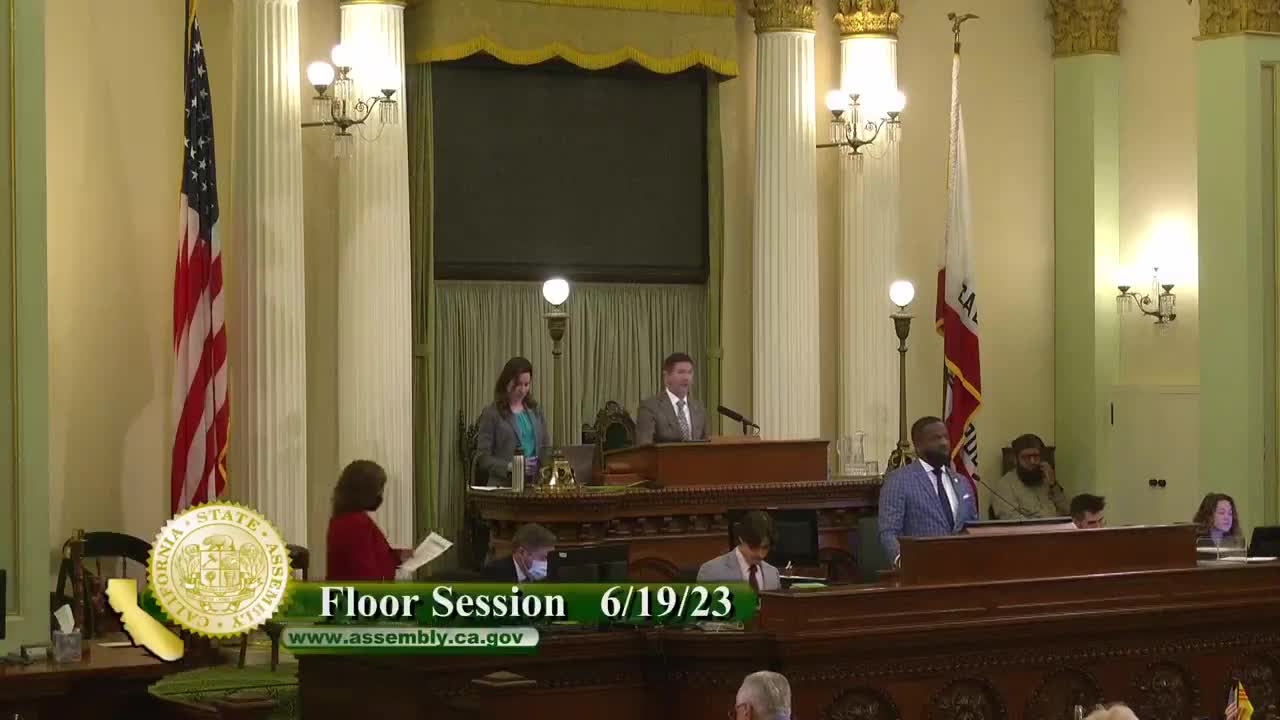
| Jun 19, 2023 | Adopted and to Senate. (Ayes 69. Noes 0. Page 2285.) |
| Jun 19, 2023 | Coauthors revised. |
| Jun 8, 2023 | Amended. Ordered to third reading. |
| Jun 7, 2023 | From committee: Amend, and be adopted as amended. (Ayes 8. Noes 0.) (June 7). |
| Mar 30, 2023 | Referred to Com. on H. & C.D. |
| Mar 28, 2023 | From printer. |
| Mar 27, 2023 | Introduced. To print. |
|
Date
|
Description
|
Location
|
Votes
|
|
|---|---|---|---|---|
| Aug 14, 2023 | Consent Calendar 2nd AJR3 Grayson et al. | Senate Floor |
Passed |
|
| Jul 10, 2023 | Be adopted and be ordered to the Consent Calendar | Senate Standing Committee on Housing |
Passed |
|
| Jun 19, 2023 | AJR 3 Grayson Assembly Third Reading | Assembly Floor |
Passed |
|
| Jun 7, 2023 | Be adopted as amended. | Assembly Standing Committee on Housing and Community Development |
Passed |
This list shows positions taken on this bill by organizations on the date displayed, which is linked to the original source.
Positions by individuals are not included.
|
Organization
|
Position
|
Date
|
|---|---|---|
| California Housing Consortium | * Support | Jun 7, 2023 |
| California Housing Partnership Corporation | ** Support | |
| California State Treasurer | ** Support |
SENATE RULES COMMITTEE Office of Senate Floor Analyses (916) 651-1520 Fax: (916) 327-4478 | AJR 3 |
CONSENT
Bill No: AJR 3
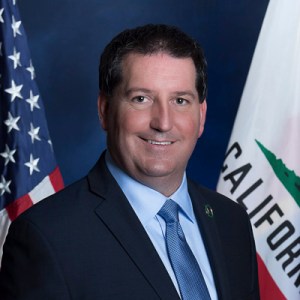
Author: Grayson (D), et al.
Amended: 6/8/23 in Assembly
Vote: 21
SENATE HOUSING COMMITTEE: 11-0, 7/10/23
AYES: Wiener, Ochoa Bogh, Blakespear, Caballero, Cortese, McGuire, Padilla, Seyarto, Skinner, Umberg, Wahab
ASSEMBLY FLOOR: 69-0, 6/19/23 - See last page for vote
SUBJECT: Affordable Housing Credit Improvement Act of 2023
SOURCE: California State Treasurer
DIGEST:
This resolution declares the support of the Legislature for a reduction to the threshold for tax-exempt private activity bond (PAB) financing cap from 50 to 25% and joins the California State Treasurer in urging the passage of the federal Affordable Housing Credit Improvement Act (AHCIA) of 2023.
ANALYSIS:
Existing law:
- Allows a state low-income housing tax credit (LIHTC) for costs related to construction, rehabilitation, or acquisition of low-income housing. This credit, which mirrors the federal LIHTC, may be used by taxpayers to offset the tax under the Personal Income Tax, the Corporation Tax, and the Insurance Tax laws.
- Requires the state Tax Credit Allocation Committee (TCAC), under the State Treasurer’s Office, to annually allocate the California LIHTC based upon specified qualifications of the applicant and proposed project. The California LIHTC is available only to projects that receive an allocation of the federal LIHTC.
- Limits the annual aggregate amount of the state LIHTC to $70 million, as adjusted for an increase in the California consumer price index, plus any unused LIHTC from the preceding calendar year and any LIHTC returned in the calendar year. The state LIHTC awarded may be claimed as a credit over a four-year period.
- Limits, pursuant to federal law, the amount of tax-exempt debt a state may issue in a calendar year for private projects that have a qualified public benefit. This cap is determined by a population-based formula. The California Debt Limit Allocation Committee (CDLAC), also under the State Treasurer’s Office, sets and allocates California’s annual debt ceiling and administers the state’s tax-exempt bond program to issue the debt.
This resolution calls on Congress to enact, and the President to sign into law, the AHCIA of 2023, which will enable California to award additional tax-exempt activity bonds and to draw additional federal LIHTC.
Background
The federal and state LIHTC program. Two types of federal tax credits are available: the 9% and 4% credits. These terms refer to the approximate percentage of a project’s “eligible basis” a taxpayer may deduct from his/her annual federal tax liability in each of 10 years. “Eligible basis” means the cost of development excluding land, transaction costs, and costs incurred for work outside the property boundary. For projects that are not financed with a federal subsidy, the applicable rate is 9%. For projects that are federally subsidized (including projects financed more than 50% with tax-exempt bonds), the applicable rate is 4%. Although the credits are known as the “9% and 4% credits,” the actual tax rates fluctuate every month, based on the determination made by the Internal Revenue Service on a monthly basis. Generally, the 9% tax credit amounts to 70% of a taxpayer’s eligible basis and the 4% tax credit amounts to 30% of a taxpayer’s eligible basis, spread over a 10-year period.
Each year, the federal government allocates funding to the states for LIHTC on the basis of a per-resident formula. In California, TCAC is the entity that reviews proposals submitted by developers and selects projects based on a variety of prescribed criteria. Only rental housing buildings, which are either undergoing rehabilitation or newly constructed, are eligible for the LIHTC. In addition, the qualified low-income housing projects must comply with both rent and income restrictions.
Each state receives an annual ceiling of 9% federal tax credits and they are oversubscribed by a 2:1 ratio. Unlike 9% LIHTC, federal 4% tax credits are not capped; however, they must be used in conjunction with tax-exempt private activity mortgage revenue bonds, administered by CDLAC, which are capped. In 2020, the state ceiling for PABs was set at $4 billion. The value of the 4% tax credits is less than half of the 9% tax credits and, as a result, 4% federal credits are generally used in conjunction with another funding source, like state housing bonds or local funding sources.
In 1987, the Legislature authorized a state LIHTC program to augment the federal tax credit program. State tax credits can only be awarded to projects that have also received, or are concurrently receiving, an allocation of the federal LIHTC. The amount of state LIHTC that may be annually allocated by the TCAC is limited to $70 million, adjusted for inflation. In 2020, the total credit amount available for allocation was $111 million plus any unused or returned credit allocations from previous years. Current state tax law generally conforms to federal law with respect to the LIHTC, except that it is limited to projects located in California.
Comments
- Author’s statement. "California has a massive and growing housing production and affordability gap: six of the nation's most expensive large metropolitan rental markets are located here. According to the Roadmap Home 2030, California needs to build 1.2 million new affordable homes, 120,000 per year to meet the needs of low-income families over the next ten years. Yet California has never produced more than 20,000 new affordable rental homes in any year. AJR 3 urges Congress to reintroduce the Affordable Housing Credit Improvement Act of 2021 in order to reduce the bond financing threshold from 50% to 25%. In doing so, this would allow the production of badly needed housing in California and the entire nation."
- Breaking the logjam. In order to access the unlimited 4% federal LIHTC, federal law requires 50% of a development’s costs to be financed with tax-exempt PABs issued by CDLAC. However, the 50% threshold has not been updated since 1990, when it was lowered from 70%. Moreover, each state’s allocation of tax-exempt PABs is limited by federal law. As a result, California’s tax-exempt bonds are oversubscribed, leaving hundreds of shovel-ready affordable housing developments stuck in the queue. The AHCIA of 2023, among many other provisions, proposes to reduce the bond financing threshold requirement for 4% credit projects from 50 to 25% of initial costs. If passed, California could immediately award tax-exempt bonds to twice as many affordable housing developments and draw twice as many federal 4% credits to California to meet the state’s housing needs.
- If at first you don’t succeed… In 2021, the Legislature adopted SJR 6 (Wiener, Resolution Chapter 130, Statutes of 2021), which was substantially similar to this resolution.
FISCAL EFFECT: Appropriation: No Fiscal Com.: No Local: No
SUPPORT: (Verified 7/12/23)
California State Treasurer (source)
California Housing Partnership Corporation
OPPOSITION: (Verified 7/12/23)
None received
ASSEMBLY FLOOR: 69-0, 6/19/23
AYES: Addis, Aguiar-Curry, Alanis, Alvarez, Arambula, Bains, Bauer-Kahan, Bennett, Boerner, Bonta, Calderon, Juan Carrillo, Wendy Carrillo, Chen, Connolly, Megan Dahle, Davies, Dixon, Flora, Mike Fong, Vince Fong, Friedman, Gabriel, Garcia, Gipson, Grayson, Haney, Hart, Holden, Hoover, Irwin, Jackson, Jones-Sawyer, Kalra, Lackey, Lee, Lowenthal, Mathis, Muratsuchi, Stephanie Nguyen, Ortega, Pacheco, Papan, Jim Patterson, Joe Patterson, Pellerin, Petrie-Norris, Quirk-Silva, Ramos, Reyes, Luz Rivas, Robert Rivas, Rodriguez, Blanca Rubio, Santiago, Schiavo, Soria, Ta, Ting, Valencia, Villapudua, Waldron, Wallis, Ward, Wicks, Wilson, Wood, Zbur, Rendon
NO VOTE RECORDED: Berman, Bryan, Cervantes, Essayli, Gallagher, Low, Maienschein, McCarty, McKinnor, Sanchez, Weber
Prepared by: Alison Hughes / HOUSING / (916) 651-4124
7/12/23 14:15:02
**** END ****
SENATE COMMITTEE ON HOUSING
Senator Scott Wiener, Chair
2023 - 2024 Regular
Bill No: AJR 3 Hearing Date: 7/10/2023
Author: | Grayson | ||
Version: | 6/8/2023 | ||
Urgency: | No | Fiscal: | No |
Consultant: | Alison Hughes | ||
SUBJECT: Affordable Housing Credit Improvement Act of 2023
DIGEST: This bill declares the support of the Legislature for a reduction to the threshold for tax-exempt private activity bond (PAB) financing cap from 50 to 25% and joins the California State Treasurer in urging the passage of the federal Affordable Housing Credit Improvement Act (AHCIA) of 2023.
ANALYSIS:
Existing law:
- Allows a state low-income housing tax credit (LIHTC) for costs related to construction, rehabilitation, or acquisition of low-income housing. This credit, which mirrors the federal LIHTC, may be used by taxpayers to offset the tax under the Personal Income Tax, the Corporation Tax, and the Insurance Tax laws.
- Requires the state Tax Credit Allocation Committee (TCAC), under the State Treasurer’s Office, to annually allocate the California LIHTC based upon specified qualifications of the applicant and proposed project. The California LIHTC is available only to projects that receive an allocation of the federal LIHTC.
- Limits the annual aggregate amount of the state LIHTC to $70 million, as adjusted for an increase in the California consumer price index, plus any unused LIHTC from the preceding calendar year and any LIHTC returned in the calendar year. The state LIHTC awarded may be claimed as a credit over a four-year period.
- Limits, pursuant to federal law, the amount of tax-exempt debt a state may issue in a calendar year for private projects that have a qualified public benefit. This cap is determined by a population-based formula. The California Debt Limit Allocation Committee (CDLAC), also under the State Treasurer’s Office, sets and allocates California’s annual debt ceiling and administers the state’s tax-exempt bond program to issue the debt.
This resolution calls on Congress to enact, and the President to sign into law, the AHCIA of 2023, which will enable California to award additional tax-exempt activity bonds and to draw additional federal LIHTC.
COMMENTS:
- Author’s statement. "California has a massive and growing housing production and affordability gap: six of the nation's most expensive large metropolitan rental markets are located here. According to the Roadmap Home 2030, California needs to build 1.2 million new affordable homes, 120,000 per year to meet the needs of low-income families over the next ten years. Yet California has never produced more than 20,000 new affordable rental homes in any year. AJR 3 urges Congress to reintroduce the Affordable Housing Credit Improvement Act of 2021 in order to reduce the bond financing threshold from 50% to 25%. In doing so, this would allow the production of badly needed housing in California and the entire nation."
- The federal LIHTC program. Two types of federal tax credits are available: the 9% and 4% credits. These terms refer to the approximate percentage of a project’s “eligible basis” a taxpayer may deduct from his/her annual federal tax liability in each of 10 years. “Eligible basis” means the cost of development excluding land, transaction costs, and costs incurred for work outside the property boundary. For projects that are not financed with a federal subsidy, the applicable rate is 9%. For projects that are federally subsidized (including projects financed more than 50% with tax-exempt bonds), the applicable rate is 4%. Although the credits are known as the “9% and 4% credits,” the actual tax rates fluctuate every month, based on the determination made by the Internal Revenue Service on a monthly basis. Generally, the 9% tax credit amounts to 70% of a taxpayer’s eligible basis and the 4% tax credit amounts to 30% of a taxpayer’s eligible basis, spread over a 10-year period.
Each year, the federal government allocates funding to the states for LIHTC on the basis of a per-resident formula. In California, TCAC is the entity that reviews proposals submitted by developers and selects projects based on a variety of prescribed criteria. Only rental housing buildings, which are either undergoing rehabilitation or newly constructed, are eligible for the LIHTC. In addition, the qualified low-income housing projects must comply with both rent and income restrictions.
Each state receives an annual ceiling of 9% federal tax credits and they are oversubscribed by a 2:1 ratio. Unlike 9% LIHTC, federal 4% tax credits are not capped; however, they must be used in conjunction with tax-exempt private activity mortgage revenue bonds, administered by CDLAC, which are capped. In 2020, the state ceiling for PABs was set at $4 billion. The value of the 4% tax credits is less than half of the 9% tax credits and, as a result, 4% federal credits are generally used in conjunction with another funding source, like state housing bonds or local funding sources.
- The state LIHTC program. In 1987, the Legislature authorized a state LIHTC program to augment the federal tax credit program. State tax credits can only be awarded to projects that have also received, or are concurrently receiving, an allocation of the federal LIHTC. The amount of state LIHTC that may be annually allocated by the TCAC is limited to $70 million, adjusted for inflation. In 2020, the total credit amount available for allocation was $111 million plus any unused or returned credit allocations from previous years. Current state tax law generally conforms to federal law with respect to the LIHTC, except that it is limited to projects located in California.
- Breaking the logjam. In order to access the unlimited 4% federal LIHTC, federal law requires 50% of a development’s costs to be financed with tax-exempt PABs issued by CDLAC. However, the 50% threshold has not been updated since 1990, when it was lowered from 70%. Moreover, each state’s allocation of tax-exempt PABs is limited by federal law. As a result, California’s tax-exempt bonds are oversubscribed, leaving hundreds of shovel-ready affordable housing developments stuck in the queue. The AHCIA of 2023, among many other provisions, proposes to reduce the bond financing threshold requirement for 4% credit projects from 50 to 25% of initial costs. If passed, California could immediately award tax-exempt bonds to twice as many affordable housing developments and draw twice as many federal 4% credits to California to meet the state’s housing needs.
- If at first you don’t succeed… The Legislature adopted SJR 6 (Wiener) in 2021, which was substantially similar to this resolution.
Related Legislation:
SJR 6 (Wiener, Resolution Chapter 130, Statutes of 2021) — requested that Congress enact, and that President Biden sign into law, the AHCIA of 2021.
FISCAL EFFECT: Appropriation: Fiscal Com.: No Local: No
POSITIONS: (Communicated to the committee before noon on Wednesday,
July 5, 2023.)
SUPPORT:
California State Treasurer (Sponsor)
California Housing Partnership Corporation
OPPOSITION:
None received.
-- END --
ASSEMBLY THIRD READING
ATR Bill Id:AJR 3
Author:(Grayson)
As Introduced Ver:March 27, 2023
Majority vote
SUMMARY
Declares the support of the Legislature for a reduction to the threshold for tax-exempt private activity bond (PAB) financing cap from 50 to 25% and joins the California State Treasurer in urging the passage of the federal Affordable Housing Credit Improvement Act of 2023.
Major Provisions
COMMENTS
Background on Low-Income Housing Tax Credit (LIHTC): The LIHTC is an indirect federal subsidy developed in 1986 to incentivize the private development of affordable rental housing for low-income households. The program enables affordable housing sponsors and developers to raise financing through the allocation of tax benefits to investors. In California, the Tax Credit Allocation Committee administers the program and awards credits to qualified developers who can then sell those credits to private investors who use the credits to reduce their federal tax liability. The developer in turn invests the capital into the affordable housing project. Only rental housing buildings that are undergoing rehabilitation or newly constructed are eligible for LIHTC. Two types of federal tax credits are available: 9% and 4% credits. The 9% and 4% credits refer to the approximate percentage of a project's "eligible basis" a taxpayer may deduct from their annual federal tax liability in each year for 10 years. Generally, the 9% tax credit amounts to 70% of a taxpayer's eligible basis and the 4% tax credit amounts to 30% of a taxpayer's eligible basis, spread over a 10-year period.
Each state receives an annual ceiling of 9% credits. They are oversubscribed in California, meaning for every project that is awarded a LIHTC, there are multiple eligible projects waiting in the queue. Unlike 9% LIHTC, federal 4% tax credits are not capped; however, they must be used in conjunction with tax-exempt PABs, which are capped and are administered by the Debt Limit Allocation Committee. PABs are issued by state and local government agencies and are generally purchased by banks who use them for federal Community Reinvestment Act compliance. The current state PAB ceiling is $4.68 billion. Therefore, the limiting factor for the 4% credit comes from this overall bond volume cap. As described above, the value of the 4% tax credits is less than half of the 9% tax credits and, as a result, 4% federal credits are generally used in conjunction with another funding source to fill out the developer's "capital stack," like state housing grant awards or local funding sources. Once the PAB cap is met, the number of additional projects that can be approved under the 4% credit substantially tapers off.
PAB Threshold Requirement: Under federal rules, in order for a project to receive the full 4% of credits it is eligible to receive, at least half of the development (land and building) costs must be initially financed with bond authority from the state's PAB allocation. This 50% threshold is arbitrary and creates inefficiencies by over-allocating PABs to developments that do not require that much debt financing. The amount of debt that a property can service is determined by rent payments, which are restricted by the affordability of the development. The Affordable Housing Credit Improvement Act of 2023, among many other provisions, proposes to reduce the bond financing threshold requirement for 4% credit projects from 50 to 25% of initial costs. This modification would allow states to leverage their bond authority more efficiently, including in California where the 4% credits have recently become competitive and awards are now constrained. According to federal estimates, lowering the bond financing threshold from 50 to 25% could free up roughly $93 billion in volume capacity to support the production or preservation of nearly 1.5 million additional affordable rental homes over the next decade nationwide. There is precedent for such a move, as the original 1986 Act that created the LIHTC program required a 70% bond financing threshold, which was then lowered to 50% in 1989.
According to the Author
"California has a massive and growing housing production and affordability gap: six of the nation's most expensive large metropolitan rental markets are located here. According to the Roadmap Home 2030, California needs to build 1.2 million new affordable homes, 120,000 per year to meet the needs of low-income families over the next ten years. Yet California has never produced more than 20,000 new affordable rental homes in any year. AJR 3 urges Congress to reintroduce the Affordable Housing Credit Improvement Act of 2021 in order to reduce the bond financing threshold from 50% to 25%. In doing so, this would allow the production of badly needed housing in California and the entire nation."
Arguments in Support
According to the California Housing Partnership, "The Partnership and Housing California published California's Roadmap Home 2030 to provide a blueprint to state leaders on how to protect low-income households from losing their housing while ending homelessness, eliminating the affordable housing gap, and increasing racial equity. Enacting the Affordable Housing Credit Improvement Act of 2021, especially the provision that reduces the 50% bond threshold test to 25%, is a core solution and the single biggest thing Congress can do to increase affordable housing production in California. It will create up to 15,000 additional affordable rental homes each year, an increase of 75% over current production levels. Thank you for authoring this resolution to support such critical federal legislation."
Arguments in Opposition
None on file.
FISCAL COMMENTS
None.
VOTES
ASM HOUSING AND COMMUNITY DEVELOPMENT: 8-0-0
YES: Wicks, Joe Patterson, Wendy Carrillo, Gabriel, Kalra, Quirk-Silva, Sanchez, Ward
UPDATED
VERSION: March 27, 2023
CONSULTANT: Nicole Restmeyer / H. & C.D. / (916) 319-2085 FN: 0001064
Date of Hearing: June 7, 2023
ASSEMBLY COMMITTEE ON HOUSING AND COMMUNITY DEVELOPMENT
Buffy Wicks, Chair
ABPCA Bill Id:AJR 3 (
Author:Grayson) – As Introduced Ver:March 27, 2023
SUBJECT: Affordable Housing Credit Improvement Act of 2021
SUMMARY: Declares the support of the Legislature for a reduction to the threshold for tax-exempt private activity bond (PAB) financing cap from 50 to 25 percent and joins the California State Treasurer in urging the reintroduction and passage of the federal Affordable Housing Credit Improvement Act of 2021.
EXISTING LAW:
- Existing federal law allocates low-income housing tax credits (LIHTC) to states for the costs of constructing, rehabilitating, or acquiring low-income housing. The Tax Reform Act of 1986 established the 9 percent and 4 percent credits, and required 4 percent credits to be paired with PABs. The Act created a PAB volume ceiling for each state which caps the total bond issuance authority. In order for a financed development to receive a full 4 percent credit, at least 50 percent of the project’s development costs must be initially financed with PABs. (Internal Revenue Code Section 42)
- Establishes the California Tax Credit Allocation Committee (TCAC) and the California Debt Limit Allocation Committee (CDLAC) to administer federal and state LIHTC awards as well as PABs. (Health and Safety Code Section 50199.7 and Government Code Section 8869.83)
FISCAL EFFECT: None.
COMMENTS:
Author’s Statement: According to the author, “California has a massive and growing housing production and affordability gap: six of the nation’s most expensive large metropolitan rental markets are located here. According to the Roadmap Home 2030, California needs to build 1.2 million new affordable homes, 120,000 per year to meet the needs of low-income families over the next ten years. Yet California has never produced more than 20,000 new affordable rental homes in any year. AJR 3 urges Congress to reintroduce the Affordable Housing Credit Improvement Act of 2021 in order to reduce the bond financing threshold from 50 percent to 25 percent. In doing so, this would allow the production of badly needed housing in California and the entire nation.”
Background on LIHTC: The LIHTC is an indirect federal subsidy developed in 1986 to incentivize the private development of affordable rental housing for low-income households. The federal LIHTC program enables affordable housing sponsors and developers to raise financing through the allocation of tax benefits to investors. TCAC administers the program and awards credits to qualified developers who can then sell those credits to private investors who use the credits to reduce their federal tax liability. The developer in turn invests the capital into the affordable housing project. Only rental housing buildings that are either undergoing rehabilitation or newly constructed are eligible for the LIHTC programs. Two types of federal tax credits are available: the 9 percent and 4 percent credits. The 9 percent credit is generally reserved for new construction, while the 4 percent credit can be claimed for rehabilitation or new construction. In addition, developments must comply with both rent and income restrictions.
The 9 percent and 4 percent credits refer to the approximate percentage of a project’s “eligible basis” a taxpayer may deduct from their annual federal tax liability in each year for 10 years. “Eligible basis” means the cost of development excluding land, transaction costs, and costs incurred for work outside the property boundary. For projects that are not financed with a federal subsidy, the applicable rate is 9 percent. For projects that are federally subsidized, the applicable rate is 4 percent. Generally, the 9 percent tax credit amounts to 70 percent of a taxpayer’s eligible basis and the 4 percent tax credit amounts to 30 percent of a taxpayer’s eligible basis, spread over a 10-year period.
Each state receives an annual ceiling of 9 percent federal tax credits. Currently, in California they are oversubscribed, meaning for every project that is awarded a LIHTC, there are multiple eligible projects waiting in the queue who did not receive an award. Unlike 9 percent LIHTC, federal 4 percent tax credits are not capped; however, they must be used in conjunction with tax-exempt PABs, which are capped and are administered by CDLAC. PABs are issued by state and local government agencies and are purchased by the private sector, generally a bank (who can use the bond for purposes of federal Community Reinvestment Act compliance). The current state PAB ceiling is $4.68 billion. Therefore, the limiting factor for the 4 percent credit comes from this overall bond volume cap. As described above, the value of the 4 percent tax credits is less than half of the 9 percent tax credits and, as a result, 4 percent federal credits are generally used in conjunction with another funding source to fill out the developer’s “capital stack,” like state housing grant awards or local funding sources. The limitation on the 4 percent credit comes from the bond volume cap, not the credit allocation itself. Once the cap is met, the number of additional projects (and, to a certain degree, units) that can be approved under the 4 percent credit substantially tapers off.
PAB Threshold Requirement: Under federal rules, in order for a project to receive the full 4 percent of credits it is eligible to receive, at least half of the development (land and building) costs must be initially financed with bond authority from the state’s PAB allocation. This threshold is arbitrary and creates inefficiencies by over-allocating PABs to developments that do not require that much debt financing. The amount of debt that a property can service is determined by rent payments, which are restricted by the affordability of the development. The Affordable Housing Credit Improvement Act of 2021, among many other provisions, proposed to reduce the bond financing threshold requirement for 4 percent credit projects from 50 to 25 percent of initial costs. This modification would allow states to leverage their bond authority more efficiently, including in California where the 4 percent credits have recently become competitive and awards are now constrained by our overall bond volume cap. According to federal estimates, lowering the bond financing threshold from 50 to 25 percent could free up roughly $93 billion in volume capacity to support the production or preservation of nearly 1.5 million additional affordable rental homes over the next decade nationwide. There is precedent for such a move, as the original 1986 Act that created the LIHTC program required a 70 percent bond financing threshold, which was then lowered to 50 percent in 1989.
Arguments in Support: According to the California Housing Partnership, “The Partnership and Housing California published California’s Roadmap Home 2030 to provide a blueprint to state leaders on how to protect low-income households from losing their housing while ending homelessness, eliminating the affordable housing gap, and increasing racial equity. Enacting the Affordable Housing Credit Improvement Act of 2021, especially the provision that reduces the 50% bond threshold test to 25%, is a core solution and the single biggest thing Congress can do to increase affordable housing production in California. It will create up to 15,000 additional affordable rental homes each year, an increase of 75% over current production levels. Thank you for authoring this resolution to support such critical federal legislation.”
Arguments in Opposition: None on file.
Committee Amendments: AJR 3 expresses the Legislature’s support for reintroducing the Affordable Housing Credit Improvement Act of 2021; however, this has already occurred via the introduction of the Affordable Housing Credit Improvement Act of 2023, proposed in the 118th Congress, First Session. Staff therefore recommends the resolution be amended to refer to the most recent introduced version of the federal legislation.
Related Legislation:
AB 346 (Quirk-Silva) of the current legislative session allows TCAC, for any calendar year in which CDLAC has declared a competition for the award of tax-exempt bond authority for qualified residential rental projects, to reallocate some or all of the $500 million in enhanced state LIHTCs made available for 4 percent LIHTC projects to 9 percent LIHTC projects, and makes other changes. This bill passed out of this committee on a 7-0 vote and is pending referral in the Senate Rules Committee.
REGISTERED SUPPORT / OPPOSITION:
Support
California Housing Partnership Corporation
Opposition
None on file.
Analysis Prepared by: Nicole Restmeyer / H. & C.D. / (916) 319-2085
Discussed in Hearing
 2MIN
Assembly Floor
 7MIN
Assembly Standing Committee on Housing and Community Development
Bill Author
Bill Co-Author(s):