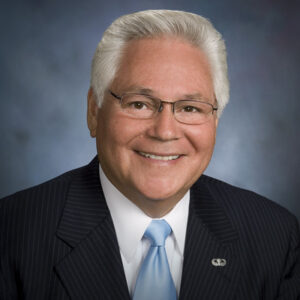
SB 10: Pupil health: opioid overdose prevention and treatment: Melanie’s Law.
- Session Year: 2023-2024
- House: Senate
- Latest Version Date: 2023-10-13
Current Status:
Passed
(2023-10-13: Chaptered by Secretary of State. Chapter 856, Statutes of 2023.)
Introduced
In Committee
First Chamber
In Committee
Second Chamber
Enacted
(1)Existing law authorizes a public or private elementary or secondary school to determine whether or not to make emergency naloxone hydrochloride or another opioid antagonist and trained personnel available at its school, and to designate one or more volunteers to receive related training to address an opioid overdose, as specified.
This bill would state the Legislatures encouragement of county offices of education to establish a County Working Group on Fentanyl Education in Schools, as provided, for the purposes of outreach, building awareness, and collaborating with local health agencies regarding fentanyl overdoses. The bill would require the State Department of Education to curate and maintain on its internet website, among other things, informational materials containing awareness and safety advice, for school staff, pupils, and parents or guardians of pupils, on how to prevent an opioid overdose.
(2)Under existing law, each school district and county office of education is responsible for the overall development of a comprehensive school safety plan for each of its schools operating kindergarten or any of grades 1 to 12, inclusive, in cooperation with certain local entities. Existing law requires that the plan identify appropriate strategies and programs that will provide or maintain a high level of school safety and address the schools procedures for complying with existing laws related to school safety. Existing law requires a petition to establish a charter school to include, among other things, a reasonably comprehensive description of the procedures that the charter school will follow to ensure the health and safety of pupils and staff, including requiring the development and annual update of a school safety plan that includes certain safety topics and procedures.
This bill would additionally require a comprehensive school safety plan, and the school safety plan of a charter school, for a school serving pupils in any of grades 7 to 12, inclusive, to include the development of a protocol in the event a pupil is suffering or is reasonably believed to be suffering from an opioid overdose. By creating new duties for local educational agencies, the bill would impose a state-mandated local program.
(3)Existing law states the intent of the Legislature that alternatives to suspension or expulsion be imposed against a pupil who is truant, tardy, or otherwise absent from school activities. Existing law further states legislative intent that the Multi-Tiered System of Supports, which includes restorative justice practices, among other things, may be used to help pupils, as specified.
This bill would state the intent of the Legislature that a school use alternatives to a referral of a pupil to a law enforcement agency in response to an incident involving the pupils misuse of an opioid, to the extent not in conflict with any other law requiring that referral. The bill would state legislative intent that the above-described Multi-Tiered System of Supports may be used to achieve these alternatives.
(4)This bill would incorporate additional changes to Section 32282 of the Education Code proposed by SB 323 and SB 671 to be operative only if this bill and either or both of those bills are enacted and this bill is enacted last.
This bill would incorporate additional changes to Section 47605 of the Education Code proposed by AB 1604 and SB 671 to be operative only if this bill and either or both of those bills are enacted and this bill is enacted last.
This bill would incorporate additional changes to Section 47605.6 of the Education Code proposed by AB 1604 and SB 671 to be operative only if this bill and either or both of those bills are enacted and this bill is enacted last.
(5)The California Constitution requires the state to reimburse local agencies and school districts for certain costs mandated by the state. Statutory provisions establish procedures for making that reimbursement.
This bill would provide that, if the Commission on State Mandates determines that the bill contains costs mandated by the state, reimbursement for those costs shall be made pursuant to the statutory provisions noted above.
(1)Existing law authorizes a public or private elementary or secondary school to determine whether or not to make emergency naloxone hydrochloride or another opioid antagonist and trained personnel available at its school, and to designate one or more volunteers to receive related training to address an opioid overdose, as specified.
This bill would state the Legislatures encouragement of county offices of education to establish a County Working Group on Fentanyl Education in Schools, as provided, for the purposes of outreach, building awareness, and collaborating with local health agencies regarding fentanyl overdoses. The bill would require the department to curate and maintain on its internet website, among other things, informational materials containing awareness and safety advice, for school staff, pupils, and parents or guardians of pupils, on how to prevent an opioid overdose.
(2)Under existing law, each school district and county office of education is responsible for the overall development of a comprehensive school safety plan for each of its schools operating kindergarten or any of grades 1 to 12, inclusive, in cooperation with certain local entities. Existing law requires that the plan identify appropriate strategies and programs that will provide or maintain a high level of school safety and address the schools procedures for complying with existing laws related to school safety. Existing law requires a petition to establish a charter school to include, among other things, a reasonably comprehensive description of the procedures that the charter school will follow to ensure the health and safety of pupils and staff, including requiring the development and annual update of a school safety plan that includes certain safety topics and procedures.
This bill would additionally require a comprehensive school safety plan, and the school safety plan of a charter school, for a school serving pupils in any of grades 7 to 12, inclusive, to include the development of a protocol in the event a pupil is suffering or is reasonably believed to be suffering from an opioid overdose. By creating new duties for local educational agencies, the bill would impose a state-mandated local program.
(3)Existing law states the intent of the Legislature that alternatives to suspension or expulsion be imposed against a pupil who is truant, tardy, or otherwise absent from school activities. Existing law further states legislative intent that the Multi-Tiered System of Supports, which includes restorative justice practices, among other things, may be used to help pupils, as specified.
This bill would state the intent of the Legislature that a school use alternatives to a referral of a pupil to a law enforcement agency in response to an incident involving the pupils misuse of an opioid, to the extent not in conflict with any other law requiring that referral. The bill would state legislative intent that the above-described Multi-Tiered System of Supports may be used to achieve these alternatives.
(4)This bill would incorporate additional changes to Section 32282 of the Education Code proposed by SB 323 and SB 671 to be operative only if this bill and either or both of those bills are enacted and this bill is enacted last.
This bill would incorporate additional changes to Section 47605 of the Education Code proposed by AB 1604 and SB 671 to be operative only if this bill and either or both of those bills are enacted and this bill is enacted last.
This bill would incorporate additional changes to Section 47605.6 of the Education Code proposed by AB 1604 and SB 671 to be operative only if this bill and either or both of those bills are enacted and this bill is enacted last.
(4)(5)The California Constitution requires the state to reimburse local agencies and school districts for certain costs mandated by the state. Statutory provisions establish procedures for making that reimbursement.
This bill would provide that, if the Commission on State Mandates determines that the bill contains costs mandated by the state, reimbursement for those costs shall be made pursuant to the statutory provisions noted above.
(1)Existing law authorizes a public or private elementary or secondary school to determine whether or not to make emergency naloxone hydrochloride or another opioid antagonist and trained personnel available at its school, and to designate one or more volunteers to receive related training to address an opioid overdose, as specified.
This bill would require the State Department of Education, in collaboration with the California Health and Human Services Agency, to establish the State Working Group on Fentanyl Education in Schools, for the purpose of promoting public education, awareness, and prevention of fentanyl overdoses, with the outreach aimed at staff and pupils in schools. The bill would state the Legislatures encouragement of county offices of education to establish similar county working groups. a County Working Group on Fentanyl Education in Schools, as provided, for the purposes of outreach, building awareness, and collaborating with local health agencies regarding fentanyl overdoses. The bill would require the department to curate and maintain on its internet website, among other things, informational materials containing awareness and safety advice, for school staff, pupils, and parents or guardians of pupils, on how to prevent an opioid overdose.
The bill would require the State Working Group on Fentanyl Education in Schools, in collaboration with specified relevant entities, to develop a School Resource Guide on Opioids, serving as a toolkit that may be accessed by school staff. The bill would require that certain information be included in the guide and would require the guide to be completed and provided to the department on or before July 1, 2024. The bill would require the department to make the guide available to all county offices of education, school districts, state special schools, and charter schools serving pupils in any of grades 7 to 12, inclusive, and that each of those local educational agencies make the guide available to their school campuses, as specified.The bill would also require the department and the agency to collaborate to develop informational materials containing safety advice, for pupils and parents or guardians of pupils, on how to prevent an opioid overdose. The bill would require the department to make the informational materials available to all local educational agencies, and would require the local educational agencies to make the informational materials available to their school campuses, as provided. The bill would require a school to annually notify pupils and parents or guardians of pupils of the informational materials, as specified.The bill would condition implementation of these provisions on an appropriation. By creating new duties for local educational agencies, the bill would impose a state-mandated local program.(2)Under existing law, each school district and county office of education is responsible for the overall development of a comprehensive school safety plan for each of its schools operating kindergarten or any of grades 1 to 12, inclusive, in cooperation with certain local entities. Existing law requires that the plan identify appropriate strategies and programs that will provide or maintain a high level of school safety and address the schools procedures for complying with existing laws related to school safety. Existing law requires a petition to establish a charter school to include, among other things, a reasonably comprehensive description of the procedures that the charter school will follow to ensure the health and safety of pupils and staff, including requiring the development and annual update of a school safety plan that includes certain safety topics and procedures.
This bill would additionally require a comprehensive school safety plan, and the school safety plan of a charter school, for a school serving pupils in any of grades 7 to 12, inclusive, to include the development of a protocol in the event a pupil is suffering or is reasonably believed to be suffering from an opioid overdose. By creating new duties for local educational agencies, the bill would impose a state-mandated local program.
(3)Existing law states the intent of the Legislature that alternatives to suspension or expulsion be imposed against a pupil who is truant, tardy, or otherwise absent from school activities. Existing law further states legislative intent that the Multi-Tiered System of Supports, which includes restorative justice practices, among other things, may be used to help pupils, as specified.
This bill would state the intent of the Legislature that a school use alternatives to a referral of a pupil to a law enforcement agency in response to an incident involving the pupils misuse of an opioid, to the extent not in conflict with any other law requiring that referral. The bill would state legislative intent that the above-described Multi-Tiered System of Supports may be used to achieve these alternatives.
(4)The California Constitution requires the state to reimburse local agencies and school districts for certain costs mandated by the state. Statutory provisions establish procedures for making that reimbursement.
This bill would provide that, if the Commission on State Mandates determines that the bill contains costs mandated by the state, reimbursement for those costs shall be made pursuant to the statutory provisions noted above.
(1)Existing law authorizes a public or private elementary or secondary school to determine whether or not to make emergency naloxone hydrochloride or another opioid antagonist and trained personnel available at its school, and to designate one or more volunteers to receive related training to address an opioid overdose, as specified.
This bill would require the State Department of Education, in collaboration with the California Health and Human Services Agency, to establish the State Working Group on Fentanyl Education in Schools, for the purpose of promoting public education, awareness, and prevention of fentanyl overdoses, with the outreach aimed at staff and pupils in schools. The bill would state the Legislatures encouragement of county offices of education to establish similar county working groups.
The bill would require the State Working Group on Fentanyl Education in Schools, in collaboration with specified relevant entities, to develop a School Resource Guide on Opioids, serving as a toolkit that may be accessed by school staff. The bill would require that certain information be included in the guide, that guide and would require the guide to be completed and provided to the department on or before July 1, 2024. The bill would require the department distribute to make the guide available to all county offices of education, school districts, state special schools, and charter schools serving pupils in any of grades 7 to 12, inclusive, and that each of those local educational agencies distribute it make the guide available to their school campuses, as specified.
The bill would also require the department and the agency to collaborate to develop informational materials containing safety advice, for pupils and parents or guardians of pupils, on how to prevent an opioid overdose. The bill would require the department to distribute make the informational materials available to the all local educational agencies, and would require the local educational agencies to distribute make the informational materials available to their school campuses. campuses, as provided. The bill would require a school to annually notify pupils and parents or guardians of pupils of the informational materials, as specified.
The bill would condition implementation of these provisions on an appropriation. By creating new duties for local educational agencies, the bill would impose a state-mandated local program.
(2)Under existing law, each school district and county office of education is responsible for the overall development of a comprehensive school safety plan for each of its schools operating kindergarten or any of grades 1 to 12, inclusive, in cooperation with certain local entities. Existing law requires that the plan identify appropriate strategies and programs that will provide or maintain a high level of school safety and address the schools procedures for complying with existing laws related to school safety. Existing law requires a petition to establish a charter school to include, among other things, a reasonably comprehensive description of the procedures that the charter school will follow to ensure the health and safety of pupils and staff, including requiring the development and annual update of a school safety plan that includes certain safety topics and procedures.
This bill would additionally require a comprehensive school safety plan, and the school safety plan of a charter school, for a school serving pupils in any of grades 7 to 12, inclusive, to include the development of a protocol in the event a pupil is suffering or is reasonably believed to be suffering from an opioid overdose. By creating new duties for local educational agencies, the bill would impose a state-mandated local program.
(3)Existing law states the intent of the Legislature that alternatives to suspension or expulsion be imposed against a pupil who is truant, tardy, or otherwise absent from school activities. Existing law further states legislative intent that the Multi-Tiered System of Supports, which includes restorative justice practices, among other things, may be used to help pupils, as specified.
This bill would state the intent of the Legislature that a school use alternatives to a referral of a pupil to a law enforcement agency in response to an incident involving the pupils misuse of an opioid, to the extent not in conflict with any other law requiring that referral. The bill would state legislative intent that the above-described Multi-Tiered System of Supports may be used to achieve these alternatives.
(4)The California Constitution requires the state to reimburse local agencies and school districts for certain costs mandated by the state. Statutory provisions establish procedures for making that reimbursement.
This bill would provide that, if the Commission on State Mandates determines that the bill contains costs mandated by the state, reimbursement for those costs shall be made pursuant to the statutory provisions noted above.
(1)Existing law authorizes a public or private elementary or secondary school to determine whether or not to make emergency naloxone hydrochloride or another opioid antagonist and trained personnel available at its school, and to designate one or more volunteers to receive related training to address an opioid overdose, as specified.
This bill would require the State Department of Education, in collaboration with the California Health and Human Services Agency, to establish the State Working Group on Fentanyl Education in Schools, for the purpose of promoting public education, awareness, and prevention of fentanyl overdoses, with the outreach aimed at staff and pupils in schools. The bill would state the Legislatures encouragement of county offices of education to establish similar county working groups.
The bill would require the State Working Group on Fentanyl Education in Schools, in collaboration with specified relevant entities, to develop a School Resource Guide on Opioids, serving as a toolkit that may be accessed by school staff. The bill would require that certain information be included in the guide, that the department distribute the guide to all county offices of education, school districts, state special schools, and charter schools serving pupils in any of grades 7 to 12, inclusive, and that each of those local educational agencies distribute it to their school campuses, as specified.
The bill would also require the department and the agency to collaborate to develop informational materials containing safety advice, for pupils and parents or guardians of pupils, on how to prevent an opioid overdose. The bill would require the department to distribute the informational materials to the local educational agencies, and would require the local educational agencies to distribute the informational materials to school campuses. The bill would require a school to notify pupils and parents or guardians of pupils of the informational materials, as specified.
The bill would condition implementation of these provisions on an appropriation. By creating new duties for local educational agencies, the bill would impose a state-mandated local program.
(2)Under existing law, each school district and county office of education is responsible for the overall development of a comprehensive school safety plan for each of its schools operating kindergarten or any of grades 1 to 12, inclusive, in cooperation with certain local entities. Existing law requires that the plan identify appropriate strategies and programs that will provide or maintain a high level of school safety and address the schools procedures for complying with existing laws related to school safety. Existing law requires a petition to establish a charter school to include, among other things, a reasonably comprehensive description of the procedures that the charter school will follow to ensure the health and safety of pupils and staff, including requiring the development and annual update of a school safety plan that includes certain safety topics and procedures.
This bill would additionally require a comprehensive school safety plan, and the school safety plan of a charter school, to include the development of a protocol in the event a pupil is suffering or is reasonably believed to be suffering from an opioid overdose. By creating new duties for local educational agencies, the bill would impose a state-mandated local program.
(3)Existing law states the intent of the Legislature that alternatives to suspension or expulsion be imposed against a pupil who is truant, tardy, or otherwise absent from school activities. Existing law further states legislative intent that the Multi-Tiered System of Supports, which includes restorative justice practices, among other things, may be used to help pupils, as specified.
This bill would state the intent of the Legislature that a school use alternatives to a referral of a pupil to a law enforcement agency in response to an incident involving the pupils misuse of an opioid, to the extent not in conflict with any other law requiring that referral. The bill would state legislative intent that the above-described Multi-Tiered System of Supports may be used to achieve these alternatives.
(4)The California Constitution requires the state to reimburse local agencies and school districts for certain costs mandated by the state. Statutory provisions establish procedures for making that reimbursement.
This bill would provide that, if the Commission on State Mandates determines that the bill contains costs mandated by the state, reimbursement for those costs shall be made pursuant to the statutory provisions noted above.
(1)Existing law authorizes a public or private elementary or secondary school to determine whether or not to make emergency naloxone hydrochloride or another opioid antagonist and trained personnel available at its school, and to designate one or more volunteers to receive related training to address an opioid overdose, as specified.
This bill would require the State Department of Education, in collaboration with the California Health and Human Services Agency, to establish the State Working Group on Fentanyl Education in Schools, for the purpose of promoting public education, awareness, and prevention of fentanyl overdoses, with the outreach aimed at staff and pupils in schools. The bill would state the Legislatures encouragement of county offices of education to establish similar county working groups.
The bill would require the State Working Group on Fentanyl Education in Schools, in collaboration with specified relevant entities, to develop a School Resource Guide on Opioids, serving as a toolkit that may be accessed by school staff. The bill would require that certain information be included in the guide, that the department distribute the guide to all county offices of education, school districts, state special schools, and charter schools serving pupils in any of grades 7 to 12, inclusive, and that each of those local educational agencies distribute it to their school campuses, as specified.
The bill would also require the department and the agency to collaborate to develop informational materials containing safety advice, for pupils and parents or guardians of pupils, on how to prevent an opioid overdose. The bill would set forth the distribution requirements for the informational materials, from the department, require the department to distribute the informational materials to the local educational agencies, and to school campuses, with notifications to the would require the local educational agencies to distribute the informational materials to school campuses. The bill would require a school to notify pupils and parents or guardians of pupils, pupils of the informational materials, as specified.
The bill would condition implementation of these provisions on an appropriation. By creating new duties for local educational agencies, the bill would impose a state-mandated local program.
(2)Under existing law, each school district and county office of education is responsible for the overall development of a comprehensive school safety plan for each of its schools operating kindergarten or any of grades 1 to 12, inclusive, in cooperation with certain local entities. Existing law requires that the plan include identification of identify appropriate strategies and programs that will provide or maintain a high level of school safety and address the schools procedures for complying with existing laws related to school safety. Existing law requires a petition to establish a charter school to include, among other things, a reasonably comprehensive description of the procedures that the charter school will follow to ensure the health and safety of pupils and staff, including requiring the development and annual update of a school safety plan that includes certain safety topics and procedures.
This bill would additionally require a comprehensive school safety plan, and the school safety plan of a charter school, to include the development of a protocol in the event a pupil is suffering or is reasonably believed to be suffering from an opioid overdose. By creating new duties for local educational agencies, the bill would impose a state-mandated local program.
(3)Existing law states the intent of the Legislature that alternatives to suspension or expulsion be imposed against a pupil who is truant, tardy, or otherwise absent from school activities. Existing law further states legislative intent that the Multi-Tiered System of Supports, which includes restorative justice practices, among other things, may be used to help pupils, as specified.
This bill would state the intent of the Legislature that a school use alternatives to a referral of a pupil to a law enforcement agency in response to an incident involving the pupils misuse of an opioid, to the extent not in conflict with any other law requiring that referral. The bill would state legislative intent that the above-described Multi-Tiered System of Supports may be used to achieve these alternatives.
(4)The California Constitution requires the state to reimburse local agencies and school districts for certain costs mandated by the state. Statutory provisions establish procedures for making that reimbursement.
This bill would provide that, if the Commission on State Mandates determines that the bill contains costs mandated by the state, reimbursement for those costs shall be made pursuant to the statutory provisions noted above.
(1)Existing law authorizes a public or private elementary or secondary school to determine whether or not to make emergency naloxone hydrochloride or another opioid antagonist and trained personnel available at its school, and to designate one or more volunteers to receive related training to address an opioid overdose, as specified.
Existing law establishes the Children and Youth Behavioral Health Initiative, administered by the California Health and Human Services Agency and its departments, in order to transform the states behavioral health system, including services in schools, into an innovative ecosystem in which all children and youth 25 years of age and younger are screened, supported, and served for emerging and existing behavioral health needs.This bill would, as a component of the initiative, require the agency, in collaboration with the State Department of Education, would require the State Department of Education, in collaboration with the California Health and Human Services Agency, to establish the State Working Group on Fentanyl Education in Schools, for the purpose of promoting public education, awareness, and prevention of fentanyl overdoses, with the outreach aimed at staff and pupils in schools. The bill would state the Legislatures encouragement of counties county offices of education to establish similar county working groups.
The bill would require the department and the agency to collaborate State Working Group on Fentanyl Education in Schools, in collaboration with specified relevant entities, to develop a School Training and Resource Guide for Opioid Overdose Prevention and Treatment, on Opioids, serving as a toolkit that may be accessed by school staff. The bill would require that certain information be included in the guide, that the department distribute the guide to all local educational agencies, as defined, county offices of education, school districts, state special schools, and charter schools serving pupils in any of grades 7 to 12, inclusive, and that each of those local educational agency agencies distribute it to its their school campuses, as specified.
The bill would also require the department and the agency to collaborate to develop informational materials containing safety advice, for pupils and parents or guardians of pupils, on how to prevent an opioid overdose. The bill would set forth the distribution requirements for the informational materials, from the department, to the local educational agencies, and to school campuses, with notifications to the pupils and parents or guardians of pupils, as specified.
The bill would condition implementation of these provisions on an appropriation. By creating new duties for local educational agencies, the bill would impose a state-mandated local program.
(3)(2)Under existing law, each school district and county office of education is responsible for the overall development of a comprehensive school safety plan for each of its schools operating kindergarten or any of grades 1 to 12, inclusive, in cooperation with certain local entities. Existing law requires that the plan include identification of appropriate strategies and programs that will provide or maintain a high level of school safety and address the schools procedures for complying with existing laws related to school safety. Existing law requires a petition to establish a charter school to include, among other things, a reasonably comprehensive description of the procedures that the charter school will follow to ensure the health and safety of pupils and staff, including requiring the development and annual update of a school safety plan that includes certain safety topics and procedures.
This bill would additionally require, as part of the require a comprehensive school safety plan, and the school safety plan of a charter school, to include the development of strategies for the prevention and treatment of opioid overdoses. The bill would make conforming changes to related provisions regarding petitions for the establishment of a charter school. a protocol in the event a pupil is suffering or is reasonably believed to be suffering from an opioid overdose. By creating new duties for local educational agencies, the bill would impose a state-mandated local program.
(4)(3)Existing law states the intent of the Legislature that alternatives to suspension or expulsion be imposed against a pupil who is truant, tardy, or otherwise absent from school activities. Existing law further states legislative intent that the Multi-Tiered System of Supports, which includes restorative justice practices, among other things, may be used to help pupils, as specified.
This bill would state the intent of the Legislature that a school use alternatives to a referral of a pupil to a law enforcement agency in response to an incident involving the pupils misuse of an opioid, to the extent not in conflict with any other law requiring that referral. The bill would state legislative intent that the above-described Multi-Tiered System of Supports may be used to achieve these alternatives.
(5)(4)The California Constitution requires the state to reimburse local agencies and school districts for certain costs mandated by the state. Statutory provisions establish procedures for making that reimbursement.
This bill would provide that, if the Commission on State Mandates determines that the bill contains costs mandated by the state, reimbursement for those costs shall be made pursuant to the statutory provisions noted above.
(1)Existing law sets forth various provisions regarding opioid overdose prevention and treatment, including, among others, provisions relating to a naloxone grant program and standing orders for the distribution of an opioid antagonist, as defined.
Existing law, subject to an appropriation, requires the State Department of Education, on or before January 1, 2023, to recommend best practices and identify training programs for use by local educational agencies, as defined, to address youth behavioral health, including staff and pupil training. Existing law requires the department to ensure that each identified training program, among other requirements, provides instruction on recognizing the signs and symptoms of youth behavioral health disorders, including common psychiatric conditions and substance use disorders, such as opioid and alcohol abuse.
This bill would, on or before July 1, 2024, add as a new requirement for the training programs the provision of instruction only to school staff on the use of emergency opioid antagonists for purposes of treating an opioid overdose, with the recommended training following specified standards and criteria.
(2)Existing law authorizes a public or private elementary or secondary school to determine whether or not to make emergency naloxone hydrochloride or another opioid antagonist and trained personnel available at its school, and to designate one or more volunteers to receive related training to address an opioid overdose, as specified.
Existing law establishes the Children and Youth Behavioral Health Initiative, administered by the California Health and Human Services Agency and its departments, in order to transform the states behavioral health system, including services in schools, into an innovative ecosystem in which all children and youth 25 years of age and younger are screened, supported, and served for emerging and existing behavioral health needs.
This bill would, as a component of the initiative, require the agency, in collaboration with the State Department of Education, to establish the State Working Group on Fentanyl Education in Schools, for the purpose of promoting public education, awareness, and prevention of fentanyl overdoses, with the outreach aimed at staff and pupils in schools. The bill would state the Legislatures encouragement of counties to establish similar county working groups.
The bill would require the department and the agency to collaborate to develop a School Training and Resource Guide for Opioid Overdose Prevention and Treatment, serving as a toolkit that may be accessed by school staff. The bill would require that certain information be included in the guide, that the department distribute the guide to all local educational agencies, as defined, and that each local educational agency distribute it to its school campuses, as specified.
The bill would also require the department and the agency to collaborate to develop informational materials containing safety advice, for pupils and parents or guardians of pupils, on how to prevent an opioid overdose. The bill would set forth the distribution requirements for the informational materials, from the department, to the local educational agencies, and to school campuses, with notifications to the pupils and parents or guardians of pupils, as specified.
The bill would condition implementation of these provisions on an appropriation. By creating new duties for local educational agencies, the bill would impose a state-mandated local program.
(3)Under existing law, each school district and county office of education is responsible for the overall development of a comprehensive school safety plan for each of its schools operating kindergarten or any of grades 1 to 12, inclusive, in cooperation with certain local entities. Existing law requires that the plan include identification of appropriate strategies and programs that will provide or maintain a high level of school safety and address the schools procedures for complying with existing laws related to school safety.
This bill would additionally require, as part of the comprehensive school safety plan, the development of strategies for the prevention and treatment of opioid overdoses. The bill would make conforming changes to related provisions regarding petitions for the establishment of a charter school. By creating new duties for local educational agencies, the bill would impose a state-mandated local program.
(4)Existing law states the intent of the Legislature that alternatives to suspension or expulsion be imposed against a pupil who is truant, tardy, or otherwise absent from school activities. Existing law further states legislative intent that the Multi-Tiered System of Supports, which includes restorative justice practices, among other things, may be used to help pupils, as specified.
This bill would state the intent of the Legislature that a school use alternatives to a referral of a pupil to a law enforcement agency in response to an incident involving the pupils misuse of an opioid, to the extent not in conflict with any other law requiring that referral. The bill would state legislative intent that the above-described Multi-Tiered System of Supports may be used to achieve these alternatives.
(5)The California Constitution requires the state to reimburse local agencies and school districts for certain costs mandated by the state. Statutory provisions establish procedures for making that reimbursement.
This bill would provide that, if the Commission on State Mandates determines that the bill contains costs mandated by the state, reimbursement for those costs shall be made pursuant to the statutory provisions noted above.
This act shall be known, and may be cited, as Melanies Law.
SEC. 2.Section 32282 of the Education Code is amended to read:32282.(a)The comprehensive school safety plan shall include, but not be limited to, both of the following:
(1)Assessing the current status of school crime committed on school campuses and at school-related functions.
(2)Identifying appropriate strategies and programs that will provide or maintain a high level of school safety and address the schools procedures for complying with existing laws related to school safety, which shall include the development of all of the following:
(A)Child abuse reporting procedures consistent with Article 2.5 (commencing with Section 11164) of Chapter 2 of Title 1 of Part 4 of the Penal Code.
(B)Disaster procedures, routine and emergency, including adaptations for pupils with disabilities in accordance with the federal Americans with Disabilities Act of 1990 (42 U.S.C. Sec. 12101 et seq.). The disaster procedures shall also include, but not be limited to, both of the following:
(i)Establishing an earthquake emergency procedure system in every public school building having an occupant capacity of 50 or more pupils or more than one classroom. A school district or county office of education may work with the Office of Emergency Services and the Alfred E. Alquist Seismic Safety Commission to develop and establish the earthquake emergency procedure system. The system shall include, but not be limited to, all of the following:
(I)A school building disaster plan, ready for implementation at any time, for maintaining the safety and care of pupils and staff. The department shall provide general direction to school districts and county offices of education on what to include in the school building disaster plan.
(II)A drop procedure whereby each pupil and staff member takes cover under a table or desk, dropping to their knees, with the head protected by the arms, and the back to the windows. A drop procedure practice shall be held at least once a school quarter in elementary schools and at least once a semester in secondary schools.
(III)Protective measures to be taken before, during, and following an earthquake.
(IV)A program to ensure that pupils and both the certificated and classified staff are aware of, and properly trained in, the earthquake emergency procedure system.
(ii)Establishing a procedure to allow a public agency, including the American Red Cross, to use school buildings, grounds, and equipment for mass care and welfare shelters during disasters or other emergencies affecting the public health and welfare. The school district or county office of education shall cooperate with the public agency in furnishing and maintaining the services as the school district or county office of education may deem necessary to meet the needs of the community.
(C)Policies pursuant to subdivision (d) of Section 48915 for pupils who committed an act listed in subdivision (c) of Section 48915 and other school-designated serious acts that would lead to suspension, expulsion, or mandatory expulsion recommendations pursuant to Article 1 (commencing with Section 48900) of Chapter 6 of Part 27 of Division 4 of Title 2.
(D)Procedures to notify teachers of dangerous pupils pursuant to Section 49079.
(E)A discrimination and harassment policy consistent with the prohibition against discrimination contained in Chapter 2 (commencing with Section 200) of Part 1.
(F)The provisions of any schoolwide dress code, pursuant to Section 35183, that prohibits pupils from wearing gang-related apparel, if the school has adopted that type of a dress code. For those purposes, the comprehensive school safety plan shall define gang-related apparel. The definition shall be limited to apparel that, if worn or displayed on a school campus, reasonably could be determined to threaten the health and safety of the school environment. A schoolwide dress code established pursuant to this section and Section 35183 shall be enforced on the school campus and at any school-sponsored activity by the principal of the school or the person designated by the principal. For purposes of this subparagraph, gang-related apparel shall not be considered a protected form of speech pursuant to Section 48950.
(G)Procedures for safe ingress and egress of pupils, parents, and school employees to and from school.
(H)A safe and orderly environment conducive to learning at the school.
(I)The rules and procedures on school discipline adopted pursuant to Sections 35291, 35291.5, 47605, and 47605.6.
(J)Procedures for conducting tactical responses to criminal incidents, including procedures related to individuals with guns on school campuses and at school-related functions. The procedures to prepare for active shooters or other armed assailants shall be based on the specific needs and context of each school and community.
(K)For schools that serve pupils in any of grades 7 to 12, inclusive, a protocol in the event a pupil is suffering or is reasonably believed to be suffering from an opioid overdose.
(b)It is the intent of the Legislature that schools develop comprehensive school safety plans using existing resources, including the materials and services of the partnership, pursuant to this chapter. It is also the intent of the Legislature that schools use the handbook developed and distributed in partnership by the State Department of Educations Safe Schools and Violence Prevention Center and the Attorney Generals Crime and Violence Prevention Center entitled Safe Schools: A Planning Guide for Action in conjunction with developing their plan for school safety.
(c)Each schoolsite council or school safety planning committee, in developing and updating a comprehensive school safety plan, shall, where practical, consult, cooperate, and coordinate with other schoolsite councils or school safety planning committees.
(d)The comprehensive school safety plan may be evaluated and amended, as needed, by the school safety planning committee, but shall be evaluated at least once a year, to ensure that the comprehensive school safety plan is properly implemented. An updated file of all safety-related plans and materials shall be readily available for inspection by the public.
(e)As comprehensive school safety plans are reviewed and updated, the Legislature encourages all plans, to the extent that resources are available, to include policies and procedures aimed at the prevention of bullying.
(f)The comprehensive school safety plan, as written and updated by the schoolsite council or school safety planning committee, shall be submitted for approval pursuant to subdivision (a) of Section 32288.
(g)The department shall maintain and conspicuously post on its internet website a compliance checklist for developing a comprehensive school safety plan, and shall update the checklist when necessary.
SEC. 2.1.Section 32282 of the Education Code is amended to read:32282.(a)The comprehensive school safety plan shall include, but not be limited to, both of the following:
(1)Assessing the current status of school crime committed on school campuses and at school-related functions.
(2)Identifying appropriate strategies and programs that will provide or maintain a high level of school safety and address the schools procedures for complying with existing laws related to school safety, which shall include the development of all of the following:
(A)Child abuse reporting procedures consistent with Article 2.5 (commencing with Section 11164) of Chapter 2 of Title 1 of Part 4 of the Penal Code.
(B)(i)Disaster procedures, routine and emergency, including adaptations for pupils with disabilities in accordance with the federal Americans with Disabilities Act of 1990 (42 U.S.C. Sec. 12101 et seq.), the federal Individuals with Disabilities Education Act (20 U.S.C. Sec. 1400 et seq.), and Section 504 of the federal Rehabilitation Act of 1973 (29 U.S.C. Sec. 794(a)). The disaster procedures shall also include, but not be limited to, both of the following:
(I)Establishing an earthquake emergency procedure system in every public school building having an occupant capacity of 50 or more pupils or more than one classroom. A school district or county office of education may work with the Office of Emergency Services and the Alfred E. Alquist Seismic Safety Commission to develop and establish the earthquake emergency procedure system. The system shall include, but not be limited to, all of the following:
(ia)A school building disaster plan, ready for implementation at any time, for maintaining the safety and care of pupils and staff. The department shall provide general direction to school districts and county offices of education on what to include in the school building disaster plan.
(ib)A drop procedure whereby each pupil and staff member takes cover under a table or desk, dropping to their knees, with the head protected by the arms, and the back to the windows. A drop procedure practice shall be held at least once a school quarter in elementary schools and at least once a semester in secondary schools.
(ic)Protective measures to be taken before, during, and following an earthquake.
(id)A program to ensure that pupils and both the certificated and classified staff are aware of, and properly trained in, the earthquake emergency procedure system.
(II)Establishing a procedure to allow a public agency, including the American Red Cross, to use school buildings, grounds, and equipment for mass care and welfare shelters during disasters or other emergencies affecting the public health and welfare. The school district or county office of education shall cooperate with the public agency in furnishing and maintaining the services as the school district or county office of education may deem necessary to meet the needs of the community.
(ii)The evaluation of a comprehensive school safety plan pursuant to subdivision (d) and the review of a school safety plan pursuant to clause (iii) of subparagraph (F) of paragraph (5) of subdivision (c) of Section 47605 or clause (iii) of subparagraph (G) of paragraph (5) of subdivision (b) of Section 47605.6, as applicable, shall include ensuring that the plan includes appropriate adaptations for pupils with disabilities, as required pursuant to clause (i).
(iii)(I)After the first evaluation or review, as applicable, for purposes of subdivision (d) and clause (ii) is conducted, and after each annual evaluation or review thereafter, a school employee, a pupils parent, guardian, or educational rights holder, or a pupil themselves may bring concerns about an individual pupils ability to access disaster safety procedures described in the comprehensive school safety plan or the school safety plan to the school principal. If the school principal determines there is merit to a concern, the principal shall direct the schoolsite council, school safety planning committee, or charter school, as applicable, to make appropriate modifications to the comprehensive school safety plan or school safety plan, as applicable, during the evaluation of the comprehensive school safety plan pursuant to subdivision (d) or the review of the school safety plan pursuant to clause (iii) of subparagraph (F) of paragraph (5) of subdivision (c) of Section 47605 or clause (iii) of subparagraph (G) of paragraph (5) of subdivision (b) of Section 47605.6, as applicable. The school principal may direct the schoolsite council, the school safety planning committee, or the charter school, as applicable, to make such modifications before the evaluation of the comprehensive school safety plan pursuant to subdivision (d) or the review of the school safety plan pursuant to clause (iii) of subparagraph (F) of paragraph (5) of subdivision (c) of Section 47605 or clause (iii) of subparagraph (G) of paragraph (5) of subdivision (b) of Section 47605.6, as applicable.
(II)Subclause (I) does not prohibit a school employee, a pupils parent, guardian, or educational rights holder, or a pupil themselves from bringing their concerns to the school principal before an evaluation or review, as applicable, for purposes of subdivision (d) and clause (ii) is conducted.
(iv)All deliberations of the schoolsite council, school safety planning committee, or charter school, as applicable, related to individual pupils with disabilities for purposes of the requirements of clauses (i) to (iii), inclusive, shall be subject to applicable state and federal laws regarding the privacy of pupil information.
(C)Policies pursuant to subdivision (d) of Section 48915 for pupils who committed an act listed in subdivision (c) of Section 48915 and other school-designated serious acts that would lead to suspension, expulsion, or mandatory expulsion recommendations pursuant to Article 1 (commencing with Section 48900) of Chapter 6 of Part 27 of Division 4 of Title 2.
(D)Procedures to notify teachers of dangerous pupils pursuant to Section 49079.
(E)A discrimination and harassment policy consistent with the prohibition against discrimination contained in Chapter 2 (commencing with Section 200) of Part 1.
(F)The provisions of any schoolwide dress code, pursuant to Section 35183, that prohibits pupils from wearing gang-related apparel, if the school has adopted that type of a dress code. For those purposes, the comprehensive school safety plan shall define gang-related apparel. The definition shall be limited to apparel that, if worn or displayed on a school campus, reasonably could be determined to threaten the health and safety of the school environment. A schoolwide dress code established pursuant to this section and Section 35183 shall be enforced on the school campus and at any school-sponsored activity by the principal of the school or the person designated by the principal. For purposes of this subparagraph, gang-related apparel shall not be considered a protected form of speech pursuant to Section 48950.
(G)Procedures for safe ingress and egress of pupils, parents, and school employees to and from school.
(H)A safe and orderly environment conducive to learning at the school.
(I)The rules and procedures on school discipline adopted pursuant to Sections 35291, 35291.5, 47605, and 47605.6.
(J)Procedures for conducting tactical responses to criminal incidents, including procedures related to individuals with guns on school campuses and at school-related functions. The procedures to prepare for active shooters or other armed assailants shall be based on the specific needs and context of each school and community.
(K)For schools that serve pupils in any of grades 7 to 12, inclusive, a protocol in the event a pupil is suffering or is reasonably believed to be suffering from an opioid overdose.
(b)It is the intent of the Legislature that schools develop comprehensive school safety plans using existing resources, including the materials and services of the partnership, pursuant to this chapter. It is also the intent of the Legislature that schools use the handbook developed and distributed in partnership by the State Department of Educations Safe Schools and Violence Prevention Center and the Attorney Generals Crime and Violence Prevention Center entitled Safe Schools: A Planning Guide for Action in conjunction with developing their plan for school safety.
(c)Each schoolsite council or school safety planning committee, in developing and updating a comprehensive school safety plan, shall, where practical, consult, cooperate, and coordinate with other schoolsite councils or school safety planning committees.
(d)The comprehensive school safety plan may be evaluated and amended, as needed, by the school safety planning committee, but shall be evaluated at least once a year, to ensure that the comprehensive school safety plan is properly implemented. An updated file of all safety-related plans and materials shall be readily available for inspection by the public.
(e)As comprehensive school safety plans are reviewed and updated, the Legislature encourages all plans, to the extent that resources are available, to include policies and procedures aimed at the prevention of bullying.
(f)The comprehensive school safety plan, as written and updated by the schoolsite council or school safety planning committee, shall be submitted for approval pursuant to subdivision (a) of Section 32288.
(g)The department shall maintain and conspicuously post on its internet website a compliance checklist for developing a comprehensive school safety plan, and shall update the checklist when necessary.
SEC. 2.2.Section 32282 of the Education Code is amended to read:32282.(a)The comprehensive school safety plan shall include, but not be limited to, both of the following:
(1)Assessing the current status of school crime committed on school campuses and at school-related functions.
(2)Identifying appropriate strategies and programs that will provide or maintain a high level of school safety and address the schools procedures for complying with existing laws related to school safety, which shall include the development of all of the following:
(A)Child abuse reporting procedures consistent with Article 2.5 (commencing with Section 11164) of Chapter 2 of Title 1 of Part 4 of the Penal Code.
(B)Disaster procedures, routine and emergency, including adaptations for pupils with disabilities in accordance with the federal Americans with Disabilities Act of 1990 (42 U.S.C. Sec. 12101 et seq.). The disaster procedures shall also include, but not be limited to, both of the following:
(i)Establishing an earthquake emergency procedure system in every public school building having an occupant capacity of 50 or more pupils or more than one classroom. A school district or county office of education may work with the Office of Emergency Services and the Alfred E. Alquist Seismic Safety Commission to develop and establish the earthquake emergency procedure system. The system shall include, but not be limited to, all of the following:
(I)A school building disaster plan, ready for implementation at any time, for maintaining the safety and care of pupils and staff. The department shall provide general direction to school districts and county offices of education on what to include in the school building disaster plan.
(II)A drop procedure whereby each pupil and staff member takes cover under a table or desk, dropping to their knees, with the head protected by the arms, and the back to the windows. A drop procedure practice shall be held at least once a school quarter in elementary schools and at least once a semester in secondary schools.
(III)Protective measures to be taken before, during, and following an earthquake.
(IV)A program to ensure that pupils and both the certificated and classified staff are aware of, and properly trained in, the earthquake emergency procedure system.
(ii)Establishing a procedure to allow a public agency, including the American Red Cross, to use school buildings, grounds, and equipment for mass care and welfare shelters during disasters or other emergencies affecting the public health and welfare. The school district or county office of education shall cooperate with the public agency in furnishing and maintaining the services as the school district or county office of education may deem necessary to meet the needs of the community.
(C)Policies pursuant to subdivision (d) of Section 48915 for pupils who committed an act listed in subdivision (c) of Section 48915 and other school-designated serious acts that would lead to suspension, expulsion, or mandatory expulsion recommendations pursuant to Article 1 (commencing with Section 48900) of Chapter 6 of Part 27 of Division 4 of Title 2.
(D)Procedures to notify teachers of dangerous pupils pursuant to Section 49079.
(E)A discrimination and harassment policy consistent with the prohibition against discrimination contained in Chapter 2 (commencing with Section 200) of Part 1.
(F)The provisions of any schoolwide dress code, pursuant to Section 35183, that prohibits pupils from wearing gang-related apparel, if the school has adopted that type of a dress code. For those purposes, the comprehensive school safety plan shall define gang-related apparel. The definition shall be limited to apparel that, if worn or displayed on a school campus, reasonably could be determined to threaten the health and safety of the school environment. A schoolwide dress code established pursuant to this section and Section 35183 shall be enforced on the school campus and at any school-sponsored activity by the principal of the school or the person designated by the principal. For purposes of this subparagraph, gang-related apparel shall not be considered a protected form of speech pursuant to Section 48950.
(G)Procedures for safe ingress and egress of pupils, parents, and school employees to and from school.
(H)A safe and orderly environment conducive to learning at the school.
(I)The rules and procedures on school discipline adopted pursuant to Sections 35291, 35291.5, 47605, and 47605.6.
(J)Procedures for conducting tactical responses to criminal incidents, including procedures related to individuals with guns on school campuses and at school-related functions. The procedures to prepare for active shooters or other armed assailants shall be based on the specific needs and context of each school and community.
(K)Procedures to assess and respond to reports of any dangerous, violent, or unlawful activity that is being conducted or threatened to be conducted at the school, at an activity sponsored by the school, or on a schoolbus serving the school.
(L)For schools that serve pupils in any of grades 7 to 12, inclusive, a protocol in the event a pupil is suffering or is reasonably believed to be suffering from an opioid overdose.
(b)It is the intent of the Legislature that schools develop comprehensive school safety plans using existing resources, including the materials and services of the partnership, pursuant to this chapter. It is also the intent of the Legislature that schools use the handbook developed and distributed in partnership by the State Department of Educations Safe Schools and Violence Prevention Center and the Attorney Generals Crime and Violence Prevention Center entitled Safe Schools: A Planning Guide for Action in conjunction with developing their plan for school safety.
(c)Each schoolsite council or school safety planning committee, in developing and updating a comprehensive school safety plan, shall, where practical, consult, cooperate, and coordinate with other schoolsite councils or school safety planning committees.
(d)The comprehensive school safety plan may be evaluated and amended, as needed, by the school safety planning committee, but shall be evaluated at least once a year, to ensure that the comprehensive school safety plan is properly implemented. An updated file of all safety-related plans and materials shall be readily available for inspection by the public.
(e)As comprehensive school safety plans are reviewed and updated, the Legislature encourages all plans, to the extent that resources are available, to include policies and procedures aimed at the prevention of bullying.
(f)The comprehensive school safety plan, as written and updated by the schoolsite council or school safety planning committee, shall be submitted for approval pursuant to subdivision (a) of Section 32288.
(g)The department shall maintain and conspicuously post on its internet website a compliance checklist for developing a comprehensive school safety plan, and shall update the checklist when necessary.
SEC. 2.3.Section 32282 of the Education Code is amended to read:32282.(a)The comprehensive school safety plan shall include, but not be limited to, both of the following:
(1)Assessing the current status of school crime committed on school campuses and at school-related functions.
(2)Identifying appropriate strategies and programs that will provide or maintain a high level of school safety and address the schools procedures for complying with existing laws related to school safety, which shall include the development of all of the following:
(A)Child abuse reporting procedures consistent with Article 2.5 (commencing with Section 11164) of Chapter 2 of Title 1 of Part 4 of the Penal Code.
(B)(i)Disaster procedures, routine and emergency, including adaptations for pupils with disabilities in accordance with the federal Americans with Disabilities Act of 1990 (42 U.S.C. Sec. 12101 et seq.), the federal Individuals with Disabilities Education Act (20 U.S.C. Sec. 1400 et seq.), and Section 504 of the federal Rehabilitation Act of 1973 (29 U.S.C. Sec. 794(a)). The disaster procedures shall also include, but not be limited to, both of the following:
(I)Establishing an earthquake emergency procedure system in every public school building having an occupant capacity of 50 or more pupils or more than one classroom. A school district or county office of education may work with the Office of Emergency Services and the Alfred E. Alquist Seismic Safety Commission to develop and establish the earthquake emergency procedure system. The system shall include, but not be limited to, all of the following:
(ia)A school building disaster plan, ready for implementation at any time, for maintaining the safety and care of pupils and staff. The department shall provide general direction to school districts and county offices of education on what to include in the school building disaster plan.
(ib)A drop procedure whereby each pupil and staff member takes cover under a table or desk, dropping to their knees, with the head protected by the arms, and the back to the windows. A drop procedure practice shall be held at least once a school quarter in elementary schools and at least once a semester in secondary schools.
(ic)Protective measures to be taken before, during, and following an earthquake.
(id)A program to ensure that pupils and both the certificated and classified staff are aware of, and properly trained in, the earthquake emergency procedure system.
(II)Establishing a procedure to allow a public agency, including the American Red Cross, to use school buildings, grounds, and equipment for mass care and welfare shelters during disasters or other emergencies affecting the public health and welfare. The school district or county office of education shall cooperate with the public agency in furnishing and maintaining the services as the school district or county office of education may deem necessary to meet the needs of the community.
(ii)The evaluation of a comprehensive school safety plan pursuant to subdivision (d) and the review of a school safety plan pursuant to clause (iii) of subparagraph (F) of paragraph (5) of subdivision (c) of Section 47605 or clause (iii) of subparagraph (G) of paragraph (5) of subdivision (b) of Section 47605.6, as applicable, shall include ensuring that the plan includes appropriate adaptations for pupils with disabilities, as required pursuant to clause (i).
(iii)(I)After the first evaluation or review, as applicable, for purposes of subdivision (d) and clause (ii) is conducted, and after each annual evaluation or review thereafter, a school employee, a pupils parent, guardian, or educational rights holder, or a pupil themselves may bring concerns about an individual pupils ability to access disaster safety procedures described in the comprehensive school safety plan or the school safety plan to the school principal. If the school principal determines there is merit to a concern, the principal shall direct the schoolsite council, school safety planning committee, or charter school, as applicable, to make appropriate modifications to the comprehensive school safety plan or school safety plan, as applicable, during the evaluation of the comprehensive school safety plan pursuant to subdivision (d) or the review of the school safety plan pursuant to clause (iii) of subparagraph (F) of paragraph (5) of subdivision (c) of Section 47605 or clause (iii) of subparagraph (G) of paragraph (5) of subdivision (b) of Section 47605.6, as applicable. The school principal may direct the schoolsite council, the school safety planning committee, or the charter school, as applicable, to make such modifications before the evaluation of the comprehensive school safety plan pursuant to subdivision (d) or the review of the school safety plan pursuant to clause (iii) of subparagraph (F) of paragraph (5) of subdivision (c) of Section 47605 or clause (iii) of subparagraph (G) of paragraph (5) of subdivision (b) of Section 47605.6, as applicable.
(II)Subclause (I) does not prohibit a school employee, a pupils parent, guardian, or educational rights holder, or a pupil themselves from bringing their concerns to the school principal before an evaluation or review, as applicable, for purposes of subdivision (d) and clause (ii) is conducted.
(iv)All deliberations of the schoolsite council, school safety planning committee, or charter school, as applicable, related to individual pupils with disabilities for purposes of the requirements of clauses (i) to (iii), inclusive, shall be subject to applicable state and federal laws regarding the privacy of pupil information.
(C)Policies pursuant to subdivision (d) of Section 48915 for pupils who committed an act listed in subdivision (c) of Section 48915 and other school-designated serious acts that would lead to suspension, expulsion, or mandatory expulsion recommendations pursuant to Article 1 (commencing with Section 48900) of Chapter 6 of Part 27 of Division 4 of Title 2.
(D)Procedures to notify teachers of dangerous pupils pursuant to Section 49079.
(E)A discrimination and harassment policy consistent with the prohibition against discrimination contained in Chapter 2 (commencing with Section 200) of Part 1.
(F)The provisions of any schoolwide dress code, pursuant to Section 35183, that prohibits pupils from wearing gang-related apparel, if the school has adopted that type of a dress code. For those purposes, the comprehensive school safety plan shall define gang-related apparel. The definition shall be limited to apparel that, if worn or displayed on a school campus, reasonably could be determined to threaten the health and safety of the school environment. A schoolwide dress code established pursuant to this section and Section 35183 shall be enforced on the school campus and at any school-sponsored activity by the principal of the school or the person designated by the principal. For purposes of this subparagraph, gang-related apparel shall not be considered a protected form of speech pursuant to Section 48950.
(G)Procedures for safe ingress and egress of pupils, parents, and school employees to and from school.
(H)A safe and orderly environment conducive to learning at the school.
(I)The rules and procedures on school discipline adopted pursuant to Sections 35291, 35291.5, 47605, and 47605.6.
(J)Procedures for conducting tactical responses to criminal incidents, including procedures related to individuals with guns on school campuses and at school-related functions. The procedures to prepare for active shooters or other armed assailants shall be based on the specific needs and context of each school and community.
(K)Procedures to assess and respond to reports of any dangerous, violent, or unlawful activity that is being conducted or threatened to be conducted at the school, at an activity sponsored by the school, or on a schoolbus serving the school.
(L)For schools that serve pupils in any of grades 7 to 12, inclusive, a protocol in the event a pupil is suffering or is reasonably believed to be suffering from an opioid overdose.
(b)It is the intent of the Legislature that schools develop comprehensive school safety plans using existing resources, including the materials and services of the partnership, pursuant to this chapter. It is also the intent of the Legislature that schools use the handbook developed and distributed in partnership by the State Department of Educations Safe Schools and Violence Prevention Center and the Attorney Generals Crime and Violence Prevention Center entitled Safe Schools: A Planning Guide for Action in conjunction with developing their plan for school safety.
(c)Each schoolsite council or school safety planning committee, in developing and updating a comprehensive school safety plan, shall, where practical, consult, cooperate, and coordinate with other schoolsite councils or school safety planning committees.
(d)The comprehensive school safety plan may be evaluated and amended, as needed, by the school safety planning committee, but shall be evaluated at least once a year, to ensure that the comprehensive school safety plan is properly implemented. An updated file of all safety-related plans and materials shall be readily available for inspection by the public.
(e)As comprehensive school safety plans are reviewed and updated, the Legislature encourages all plans, to the extent that resources are available, to include policies and procedures aimed at the prevention of bullying.
(f)The comprehensive school safety plan, as written and updated by the schoolsite council or school safety planning committee, shall be submitted for approval pursuant to subdivision (a) of Section 32288.
(g)The department shall maintain and conspicuously post on its internet website a compliance checklist for developing a comprehensive school safety plan, and shall update the checklist when necessary.
SEC. 3.Section 47605 of the Education Code is amended to read:47605.(a)(1)Except as set forth in paragraph (2), a petition for the establishment of a charter school within a school district may be circulated by one or more persons seeking to establish the charter school. A petition for the establishment of a charter school shall identify a single charter school that will operate within the geographic boundaries of that school district. A charter school may propose to operate at multiple sites within the school district if each location is identified in the charter school petition. The petition may be submitted to the governing board of the school district for review after either of the following conditions is met:
(A)The petition is signed by a number of parents or legal guardians of pupils that is equivalent to at least one-half of the number of pupils that the charter school estimates will enroll in the charter school for its first year of operation.
(B)The petition is signed by a number of teachers that is equivalent to at least one-half of the number of teachers that the charter school estimates will be employed at the charter school during its first year of operation.
(2)A petition that proposes to convert an existing public school to a charter school that would not be eligible for a loan pursuant to subdivision (c) of Section 41365 may be circulated by one or more persons seeking to establish the charter school. The petition may be submitted to the governing board of the school district for review after the petition is signed by not less than 50 percent of the permanent status teachers currently employed at the public school to be converted.
(3)A petition shall include a prominent statement that a signature on the petition means that the parent or legal guardian is meaningfully interested in having their child or ward attend the charter school, or in the case of a teachers signature, means that the teacher is meaningfully interested in teaching at the charter school. The proposed charter shall be attached to the petition.
(4)After receiving approval of its petition, a charter school that proposes to expand operations to one or more additional sites or grade levels shall request a material revision to its charter and shall notify the chartering authority of those additional locations or grade levels. The chartering authority shall consider whether to approve those additional locations or grade levels at an open, public meeting. If the additional locations or grade levels are approved pursuant to the standards and criteria described in subdivision (c), they shall be a material revision to the charter schools charter.
(5)(A)A charter school that established one site outside the boundaries of the school district, but within the county in which that school district is located before January 1, 2020, may continue to operate that site until the charter school submits a request for the renewal of its charter petition. To continue operating the site, the charter school shall do either of the following:
(i)First, before submitting the request for the renewal of the charter petition, obtain approval in writing from the school district where the site is operating.
(ii)Submit a request for the renewal of the charter petition pursuant to Section 47607 to the school district in which the charter school is located.
(B)If a Presidential declaration of a major disaster or emergency is issued in accordance with the federal Robert T. Stafford Disaster Relief and Emergency Assistance Act (42 U.S.C. Sec. 5121 et seq.) for an area in which a charter schoolsite is located and operating, the charter school, for not more than five years, may relocate that site outside the area subject to the Presidential declaration if the charter school first obtains the written approval of the school district where the site is being relocated to.
(C)Notwithstanding subparagraph (A), if a charter school was relocated from December 31, 2016, to December 31, 2019, inclusive, due to a Presidential declaration of a major disaster or emergency in accordance with the federal Robert T. Stafford Disaster Relief and Emergency Assistance Act (42 U.S.C. Sec. 5121 et seq.), that charter school shall be allowed to return to its original campus location in perpetuity.
(D)(i)A charter school in operation and providing educational services to pupils before October 1, 2019, located on a federally recognized California Indian reservation or rancheria or operated by a federally recognized California Indian tribe shall be exempt from the geographic restrictions of paragraph (1) and subparagraph (A) of this paragraph and the geographic restrictions of subdivision (a) of Section 47605.1.
(ii)The exemption to the geographic restrictions of subdivision (a) of Section 47605.1 in clause (i) does not apply to nonclassroom-based charter schools operating pursuant to Section 47612.5.
(E)The department shall regard as a continuing charter school for all purposes a charter school that was granted approval of its petition, that was providing educational services to pupils before October 1, 2019, and is authorized by a different chartering authority due to changes to this paragraph that took effect January 1, 2020. This paragraph shall be implemented only to the extent it does not conflict with federal law. In order to prevent any potential conflict with federal law, this paragraph does not apply to covered programs as identified in Section 8101(11) of the federal Elementary and Secondary Education Act of 1965 (20 U.S.C. Sec. 7801) to the extent the affected charter school is the restructured portion of a divided charter school pursuant to Section 47654.
(6)Commencing January 1, 2003, a petition to establish a charter school shall not be approved to serve pupils in a grade level that is not served by the school district of the governing board considering the petition, unless the petition proposes to serve pupils in all of the grade levels served by that school district.
(b)No later than 60 days after receiving a petition, in accordance with subdivision (a), the governing board of the school district shall hold a public hearing on the provisions of the charter, at which time the governing board of the school district shall consider the level of support for the petition by teachers employed by the school district, other employees of the school district, and parents. Following review of the petition and the public hearing, the governing board of the school district shall either grant or deny the charter within 90 days of receipt of the petition, provided, however, that the date may be extended by an additional 30 days if both parties agree to the extension. A petition is deemed received by the governing board of the school district for purposes of commencing the timelines described in this subdivision on the day the petitioner submits a petition to the district office, along with a signed certification that the petitioner deems the petition to be complete. The governing board of the school district shall publish all staff recommendations, including the recommended findings and, if applicable, the certification from the county superintendent of schools prepared pursuant to paragraph (8) of subdivision (c), regarding the petition at least 15 days before the public hearing at which the governing board of the school district will either grant or deny the charter. At the public hearing at which the governing board of the school district will either grant or deny the charter, petitioners shall have equivalent time and procedures to present evidence and testimony to respond to the staff recommendations and findings.
(c)In reviewing petitions for the establishment of charter schools pursuant to this section, the chartering authority shall be guided by the intent of the Legislature that charter schools are and should become an integral part of the California educational system and that the establishment of charter schools should be encouraged. The governing board of the school district shall grant a charter for the operation of a school under this part if it is satisfied that granting the charter is consistent with sound educational practice and with the interests of the community in which the school is proposing to locate. The governing board of the school district shall consider the academic needs of the pupils the school proposes to serve. The governing board of the school district shall not deny a petition for the establishment of a charter school unless it makes written factual findings, specific to the particular petition, setting forth specific facts to support one or more of the following findings:
(1)The charter school presents an unsound educational program for the pupils to be enrolled in the charter school.
(2)The petitioners are demonstrably unlikely to successfully implement the program set forth in the petition.
(3)The petition does not contain the number of signatures required by subdivision (a).
(4)The petition does not contain an affirmation of each of the conditions described in subdivision (e).
(5)The petition does not contain reasonably comprehensive descriptions of all of the following:
(A)(i)The educational program of the charter school, designed, among other things, to identify those whom the charter school is attempting to educate, what it means to be an educated person in the 21st century, and how learning best occurs. The goals identified in that program shall include the objective of enabling pupils to become self-motivated, competent, and lifelong learners.
(ii)The annual goals for the charter school for all pupils and for each subgroup of pupils identified pursuant to Section 52052, to be achieved in the state priorities, as described in subdivision (d) of Section 52060, that apply for the grade levels served, and specific annual actions to achieve those goals. A charter petition may identify additional school priorities, the goals for the school priorities, and the specific annual actions to achieve those goals.
(iii)If the proposed charter school will serve high school pupils, the manner in which the charter school will inform parents about the transferability of courses to other public high schools and the eligibility of courses to meet college entrance requirements. Courses offered by the charter school that are accredited by the Western Association of Schools and Colleges may be considered transferable and courses approved by the University of California or the California State University as creditable under the A to G admissions criteria may be considered to meet college entrance requirements.
(B)The measurable pupil outcomes identified for use by the charter school. Pupil outcomes, for purposes of this part, means the extent to which all pupils of the charter school demonstrate that they have attained the skills, knowledge, and attitudes specified as goals in the charter schools educational program. Pupil outcomes shall include outcomes that address increases in pupil academic achievement both schoolwide and for all pupil subgroups served by the charter school, as that term is defined in subdivision (a) of Section 52052. The pupil outcomes shall align with the state priorities, as described in subdivision (d) of Section 52060, that apply for the grade levels served by the charter school.
(C)The method by which pupil progress in meeting those pupil outcomes is to be measured. To the extent practicable, the method for measuring pupil outcomes for state priorities shall be consistent with the way information is reported on a school accountability report card.
(D)The governance structure of the charter school, including, but not limited to, the process to be followed by the charter school to ensure parental involvement.
(E)The qualifications to be met by individuals to be employed by the charter school.
(F)The procedures that the charter school will follow to ensure the health and safety of pupils and staff. These procedures shall require all of the following:
(i)That each employee of the charter school furnish the charter school with a criminal record summary as described in Section 44237.
(ii)For all schools, the development of a school safety plan, which shall include the safety topics listed in subparagraphs (A) to (J), inclusive, of paragraph (2) of subdivision (a) of Section 32282. For schools serving pupils in any of grades 7 to 12, inclusive, the development of a school safety plan shall also include the safety topic listed in subparagraph (K) of paragraph (2) of subdivision (a) of Section 32282.
(iii)That the school safety plan be reviewed and updated by March 1 of every year by the charter school.
(G)The means by which the charter school will achieve a balance of racial and ethnic pupils, special education pupils, and English learner pupils, including redesignated fluent English proficient pupils, as defined by the evaluation rubrics in Section 52064.5, that is reflective of the general population residing within the territorial jurisdiction of the school district to which the charter petition is submitted. Upon renewal, for a charter school not deemed to be a local educational agency for purposes of special education pursuant to Section 47641, the chartering authority may consider the effect of school placements made by the chartering authority in providing a free and appropriate public education as required by the federal Individuals with Disabilities Education Act (Public Law 101-476), on the balance of pupils with disabilities at the charter school.
(H)Admission policies and procedures, consistent with subdivision (e).
(I)The manner in which annual, independent financial audits shall be conducted, which shall employ generally accepted accounting principles, and the manner in which audit exceptions and deficiencies shall be resolved to the satisfaction of the chartering authority.
(J)The procedures by which pupils can be suspended or expelled from the charter school for disciplinary reasons or otherwise involuntarily removed from the charter school for any reason. These procedures, at a minimum, shall include an explanation of how the charter school will comply with federal and state constitutional procedural and substantive due process requirements that are consistent with all of the following:
(i)For suspensions of fewer than 10 days, provide oral or written notice of the charges against the pupil and, if the pupil denies the charges, an explanation of the evidence that supports the charges and an opportunity for the pupil to present the pupils side of the story.
(ii)For suspensions of 10 days or more and all other expulsions for disciplinary reasons, both of the following:
(I)Provide timely, written notice of the charges against the pupil and an explanation of the pupils basic rights.
(II)Provide a hearing adjudicated by a neutral officer within a reasonable number of days at which the pupil has a fair opportunity to present testimony, evidence, and witnesses and confront and cross-examine adverse witnesses, and at which the pupil has the right to bring legal counsel or an advocate.
(iii)Contain a clear statement that no pupil shall be involuntarily removed by the charter school for any reason unless the parent or guardian of the pupil has been provided written notice of intent to remove the pupil no less than five schooldays before the effective date of the action. The written notice shall be in the native language of the pupil or the pupils parent or guardian, or, if the pupil is a homeless child or youth, or a foster child or youth, in the native language of the homeless or foster childs educational rights holder. In the case of a foster child or youth, the written notice shall also be provided to the foster childs attorney and county social worker. If the pupil is an Indian child, as defined in Section 224.1 of the Welfare and Institutions Code, the written notice shall also be provided to the Indian childs tribal social worker and, if applicable, county social worker. The written notice shall inform the pupil, the pupils parent or guardian, the homeless childs educational rights holder, the foster childs educational rights holder, attorney, and county social worker, or the Indian childs tribal social worker and, if applicable, county social worker of the right to initiate the procedures specified in clause (ii) before the effective date of the action. If the pupils parent or guardian, the homeless childs educational rights holder, the foster childs educational rights holder, attorney, or county social worker, or the Indian childs tribal social worker or, if applicable, county social worker initiates the procedures specified in clause (ii), the pupil shall remain enrolled and shall not be removed until the charter school issues a final decision. For purposes of this clause, involuntarily removed includes disenrolled, dismissed, transferred, or terminated, but does not include suspensions specified in clauses (i) and (ii).
(iv)A foster childs educational rights holder, attorney, and county social worker and an Indian childs tribal social worker and, if applicable, county social worker shall have the same rights a parent or guardian of a child has to receive a suspension notice, expulsion notice, manifestation determination notice, involuntary transfer notice, and other documents and related information.
(K)The manner by which staff members of the charter schools will be covered by the State Teachers Retirement System, the Public Employees Retirement System, or federal social security.
(L)The public school attendance alternatives for pupils residing within the school district who choose not to attend charter schools.
(M)The rights of an employee of the school district upon leaving the employment of the school district to work in a charter school, and of any rights of return to the school district after employment at a charter school.
(N)The procedures to be followed by the charter school and the chartering authority to resolve disputes relating to provisions of the charter.
(O)The procedures to be used if the charter school closes. The procedures shall ensure a final audit of the charter school to determine the disposition of all assets and liabilities of the charter school, including plans for disposing of any net assets and for the maintenance and transfer of pupil records.
(6)The petition does not contain a declaration of whether or not the charter school shall be deemed the exclusive public employer of the employees of the charter school for purposes of Chapter 10.7 (commencing with Section 3540) of Division 4 of Title 1 of the Government Code.
(7)The charter school is demonstrably unlikely to serve the interests of the entire community in which the school is proposing to locate. Analysis of this finding shall include consideration of the fiscal impact of the proposed charter school. A written factual finding under this paragraph shall detail specific facts and circumstances that analyze and consider the following factors:
(A)The extent to which the proposed charter school would substantially undermine existing services, academic offerings, or programmatic offerings.
(B)Whether the proposed charter school would duplicate a program currently offered within the school district and the existing program has sufficient capacity for the pupils proposed to be served within reasonable proximity to where the charter school intends to locate.
(8)The school district is not positioned to absorb the fiscal impact of the proposed charter school. A school district satisfies this paragraph if it has a qualified interim certification pursuant to Section 42131 and the county superintendent of schools, in consultation with the County Office Fiscal Crisis and Management Assistance Team, certifies that approving the charter school would result in the school district having a negative interim certification pursuant to Section 42131, has a negative interim certification pursuant to Section 42131, or is under state receivership. Charter schools proposed in a school district satisfying one of these conditions shall be subject to a rebuttable presumption of denial.
(d)(1)Charter schools shall meet all statewide standards and conduct the pupil assessments required pursuant to Section 60605 and any other statewide standards authorized in statute or pupil assessments applicable to pupils in noncharter public schools.
(2)Charter schools shall, on a regular basis, consult with their parents, legal guardians, and teachers regarding the charter schools educational programs.
(e)(1)In addition to any other requirement imposed under this part, a charter school shall be nonsectarian in its programs, admission policies, employment practices, and all other operations, shall not charge tuition, and shall not discriminate against a pupil on the basis of the characteristics listed in Section 220. Except as provided in paragraph (2), admission to a charter school shall not be determined according to the place of residence of the pupil, or of that pupils parent or legal guardian, within this state, except that an existing public school converting partially or entirely to a charter school under this part shall adopt and maintain a policy giving admission preference to pupils who reside within the former attendance area of that public school.
(2)(A)A charter school shall admit all pupils who wish to attend the charter school.
(B)If the number of pupils who wish to attend the charter school exceeds the charter schools capacity, attendance, except for existing pupils of the charter school, shall be determined by a public random drawing. Preference shall be extended to pupils currently attending the charter school and pupils who reside in the school district except as provided for in Section 47614.5. Preferences, including, but not limited to, siblings of pupils admitted or attending the charter school and children of the charter schools teachers, staff, and founders identified in the initial charter, may also be permitted by the chartering authority on an individual charter school basis. Priority order for any preference shall be determined in the charter petition in accordance with all of the following:
(i)Each type of preference shall be approved by the chartering authority at a public hearing.
(ii)Preferences shall be consistent with federal law, the California Constitution, and Section 200.
(iii)Preferences shall not result in limiting enrollment access for pupils with disabilities, academically low-achieving pupils, English learners, neglected or delinquent pupils, homeless pupils, or pupils who are economically disadvantaged, as determined by eligibility for any free or reduced-price meal program, foster youth, or pupils based on nationality, race, ethnicity, or sexual orientation.
(iv)In accordance with Section 49011, preferences shall not require mandatory parental volunteer hours as a criterion for admission or continued enrollment.
(C)In the event of a drawing, the chartering authority shall make reasonable efforts to accommodate the growth of the charter school and shall not take any action to impede the charter school from expanding enrollment to meet pupil demand.
(3)If a pupil is expelled or leaves the charter school without graduating or completing the school year for any reason, the charter school shall notify the superintendent of the school district of the pupils last known address within 30 days, and shall, upon request, provide that school district with a copy of the cumulative record of the pupil, including report cards or a transcript of grades, and health information. If the pupil is subsequently expelled or leaves the school district without graduating or completing the school year for any reason, the school district shall provide this information to the charter school within 30 days if the charter school demonstrates that the pupil had been enrolled in the charter school. This paragraph applies only to pupils subject to compulsory full-time education pursuant to Section 48200.
(4)(A)A charter school shall not discourage a pupil from enrolling or seeking to enroll in the charter school for any reason, including, but not limited to, academic performance of the pupil or because the pupil exhibits any of the characteristics described in clause (iii) of subparagraph (B) of paragraph (2).
(B)A charter school shall not request a pupils records or require a parent, guardian, or pupil to submit the pupils records to the charter school before enrollment.
(C)A charter school shall not encourage a pupil currently attending the charter school to disenroll from the charter school or transfer to another school for any reason, including, but not limited to, academic performance of the pupil or because the pupil exhibits any of the characteristics described in clause (iii) of subparagraph (B) of paragraph (2). This subparagraph shall not apply to actions taken by a charter school pursuant to the procedures described in subparagraph (J) of paragraph (5) of subdivision (c).
(D)The department shall develop a notice of the requirements of this paragraph. This notice shall be posted on a charter schools internet website. A charter school shall provide a parent or guardian, or a pupil if the pupil is 18 years of age or older, a copy of this notice at all of the following times:
(i)When a parent, guardian, or pupil inquires about enrollment.
(ii)Before conducting an enrollment lottery.
(iii)Before disenrollment of a pupil.
(E)(i)A person who suspects that a charter school has violated this paragraph may file a complaint with the chartering authority.
(ii)The department shall develop a template to be used for filing complaints pursuant to clause (i).
(5)Notwithstanding any other law, a charter school in operation as of July 1, 2019, that operates in partnership with the California National Guard may dismiss a pupil from the charter school for failing to maintain the minimum standards of conduct required by the Military Department.
(f)The governing board of a school district shall not require an employee of the school district to be employed in a charter school.
(g)The governing board of a school district shall not require a pupil enrolled in the school district to attend a charter school.
(h)The governing board of a school district shall require that the petitioner or petitioners provide information regarding the proposed operation and potential effects of the charter school, including, but not limited to, the facilities to be used by the charter school, the manner in which administrative services of the charter school are to be provided, and potential civil liability effects, if any, upon the charter school and upon the school district. The description of the facilities to be used by the charter school shall specify where the charter school intends to locate. The petitioner or petitioners also shall be required to provide financial statements that include a proposed first-year operational budget, including startup costs, and cashflow and financial projections for the first three years of operation. If the school is to be operated by, or as, a nonprofit public benefit corporation, the petitioner shall provide the names and relevant qualifications of all persons whom the petitioner nominates to serve on the governing body of the charter school.
(i)In reviewing petitions for the establishment of charter schools within the school district, the governing board of the school district shall give preference to petitions that demonstrate the capability to provide comprehensive learning experiences to pupils identified by the petitioner or petitioners as academically low achieving pursuant to the standards established by the department under Section 54032, as that section read before July 19, 2006.
(j)Upon the approval of the petition by the governing board of the school district, the petitioner or petitioners shall provide written notice of that approval, including a copy of the petition, to the applicable county superintendent of schools, the department, and the state board.
(k)(1)(A)(i)If the governing board of a school district denies a petition, the petitioner may elect to submit the petition for the establishment of a charter school to the county board of education. The petitioner shall submit the petition to the county board of education within 30 days of a denial by the governing board of the school district. At the same time the petition is submitted to the county board of education, the petitioner shall also provide a copy of the petition to the school district. The county board of education shall review the petition pursuant to subdivisions (b) and (c). If the petition submitted on appeal contains new or different material terms, the county board of education shall immediately remand the petition to the governing board of the school district for reconsideration, which shall grant or deny the petition within 30 days. If the governing board of the school district denies a petition after reconsideration, the petitioner may elect to resubmit the petition for the establishment of a charter school to the county board of education.
(ii)The county board of education shall review the appeal petition pursuant to subdivision (c). If the denial of the petition was made pursuant to paragraph (8) of subdivision (c), the county board of education shall also review the school districts findings pursuant to paragraph (8) of subdivision (c).
(iii)As used in this subdivision, material terms of the petition means the signatures, affirmations, disclosures, documents, and descriptions described in subdivisions (a), (b), (c), and (h), but shall not include minor administrative updates to the petition or related documents due to changes in circumstances based on the passage of time related to fiscal affairs, facilities arrangements, or state law, or to reflect the county board of education as the chartering authority.
(B)If the governing board of a school district denies a petition and the county board of education has jurisdiction over a single school district, the petitioner may elect to submit the petition for the establishment of a charter school to the state board. The state board shall review a petition submitted pursuant to this subparagraph pursuant to subdivision (c). If the denial of a charter petition is reversed by the state board pursuant to this subparagraph, the state board shall designate the governing board of the school district in which the charter school is located as the chartering authority.
(2)If the county board of education denies a petition, the petitioner may appeal that denial to the state board.
(A)The petitioner shall submit the petition to the state board within 30 days of a denial by the county board of education. The petitioner shall include the findings and documentary record from the governing board of the school district and the county board of education and a written submission detailing, with specific citations to the documentary record, how the governing board of the school district and the county board of education abused their discretion. The governing board of the school district and county board of education shall prepare the documentary record, including transcripts of the public hearing at which the governing board of the school district and county board of education denied the charter, at the request of the petitioner. The documentary record shall be prepared by the governing board of the school district and county board of education no later than 10 business days after the request of the petitioner is made. At the same time the petition and supporting documentation is submitted to the state board, the petitioner shall also provide a copy of the petition and supporting documentation to the school district and the county board of education.
(B)If the appeal contains new or different material terms, as defined in clause (iii) of subparagraph (A) of paragraph (1), the state board shall immediately remand the petition to the governing board of the school district to which the petition was submitted for reconsideration. The governing board of the school district shall grant or deny the petition within 30 days. If the governing board of the school district denies a petition after reconsideration, the petitioner may elect to resubmit the petition to the state board.
(C)Within 30 days of receipt of the appeal submitted to the state board, the governing board of the school district or county board of education may submit a written opposition to the state board detailing, with specific citations to the documentary record, how the governing board of the school district or the county board of education did not abuse its discretion in denying the petition. The governing board of the school district or the county board of education may submit supporting documentation or evidence from the documentary record that was considered by the governing board of the school district or the county board of education.
(D)The state boards Advisory Commission on Charter Schools shall hold a public hearing to review the appeal and documentary record. Based on its review, the Advisory Commission on Charter Schools shall submit a recommendation to the state board whether there is sufficient evidence to hear the appeal or to summarily deny review of the appeal based on the documentary record. If the Advisory Commission on Charter Schools does not submit a recommendation to the state board, the state board shall consider the appeal, and shall either hear the appeal or summarily deny review of the appeal based on the documentary record at a regular public meeting of the state board.
(E)The state board shall either hear the appeal or summarily deny review of the appeal based on the documentary record. If the state board hears the appeal, the state board may affirm the determination of the governing board of the school district or the county board of education, or both of those determinations, or may reverse only upon a determination that there was an abuse of discretion by each of the governing board of the school district and the county board of education. Abuse of discretion is the most deferential standard of review, under which the state board must give deference to the decisions of the governing board of the school district and the county board of education to deny the petition. If the denial of a charter petition is reversed by the state board, the state board shall designate, in consultation with the petitioner, either the governing board of the school district or the county board of education in which the charter school is located as the chartering authority.
(3)A charter school for which a charter is granted by either the county board of education or the state board based on an appeal pursuant to this subdivision shall qualify fully as a charter school for all funding and other purposes of this part.
(4)A charter school that receives approval of its petition from a county board of education or from the state board on appeal shall be subject to the same requirements concerning geographic location to which it would otherwise be subject if it received approval from the chartering authority to which it originally submitted its petition. A charter petition that is submitted to either a county board of education or to the state board shall meet all otherwise applicable petition requirements, including the identification of the proposed site or sites where the charter school will operate.
(5)Upon the approval of the petition by the county board of education, the petition or petitioners shall provide written notice of that approval, including a copy of the petition, to the governing board of the school district in which the charter school is located, the department, and the state board.
(6)If either the county board of education or the state board fails to act on a petition within 180 days of receipt, the decision of the governing board of the school district to deny the petition shall be subject to judicial review.
(l)(1)Teachers in charter schools shall hold the Commission on Teacher Credentialing certificate, permit, or other document required for the teachers certificated assignment. These documents shall be maintained on file at the charter school and are subject to periodic inspection by the chartering authority. A governing body of a direct-funded charter school may use local assignment options authorized in statute and regulations for the purpose of legally assigning certificated teachers, in accordance with all of the requirements of the applicable statutes or regulations in the same manner as a governing board of a school district. A charter school shall have authority to request an emergency permit or a waiver from the Commission on Teacher Credentialing for individuals in the same manner as a school district.
(2)By July 1, 2020, all teachers in charter schools shall obtain a certificate of clearance and satisfy the requirements for professional fitness pursuant to Sections 44339, 44340, and 44341.
(3)The Commission on Teacher Credentialing shall include in the bulletins it issues pursuant to subdivision (k) of Section 44237 to provide notification to local educational agencies of any adverse actions taken against the holders of any commission documents, notice of any adverse actions taken against teachers employed by charter schools, and shall make this bulletin available to all chartering authorities and charter schools in the same manner in which it is made available to local educational agencies.
(m)A charter school shall transmit a copy of its annual, independent financial audit report for the preceding fiscal year, as described in subparagraph (I) of paragraph (5) of subdivision (c), to its chartering authority, the Controller, the county superintendent of schools of the county in which the charter school is sited, unless the county board of education of the county in which the charter school is sited is the chartering authority, and the department by December 15 of each year. This subdivision does not apply if the audit of the charter school is encompassed in the audit of the chartering authority pursuant to Section 41020.
(n)A charter school may encourage parental involvement, but shall notify the parents and guardians of applicant pupils and currently enrolled pupils that parental involvement is not a requirement for acceptance to, or continued enrollment at, the charter school.
(o)The requirements of this section shall not be waived by the state board pursuant to Section 33050 or any other law.
SEC. 3.1.Section 47605 of the Education Code is amended to read:47605.(a)(1)Except as set forth in paragraph (2), a petition for the establishment of a charter school within a school district may be circulated by one or more persons seeking to establish the charter school. A petition for the establishment of a charter school shall identify a single charter school that will operate within the geographic boundaries of that school district. A charter school may propose to operate at multiple sites within the school district if each location is identified in the charter school petition. The petition may be submitted to the governing board of the school district for review after either of the following conditions is met:
(A)The petition is signed by a number of parents or legal guardians of pupils that is equivalent to at least one-half of the number of pupils that the charter school estimates will enroll in the charter school for its first year of operation.
(B)The petition is signed by a number of teachers that is equivalent to at least one-half of the number of teachers that the charter school estimates will be employed at the charter school during its first year of operation.
(2)A petition that proposes to convert an existing public school to a charter school that would not be eligible for a loan pursuant to subdivision (c) of Section 41365 may be circulated by one or more persons seeking to establish the charter school. The petition may be submitted to the governing board of the school district for review after the petition is signed by not less than 50 percent of the permanent status teachers currently employed at the public school to be converted.
(3)A petition shall include a prominent statement that a signature on the petition means that the parent or legal guardian is meaningfully interested in having their child or ward attend the charter school, or in the case of a teachers signature, means that the teacher is meaningfully interested in teaching at the charter school. The proposed charter shall be attached to the petition.
(4)After receiving approval of its petition, a charter school that proposes to expand operations to one or more additional sites or grade levels shall request a material revision to its charter and shall notify the chartering authority of those additional locations or grade levels. The chartering authority shall consider whether to approve those additional locations or grade levels at an open, public meeting. If the additional locations or grade levels are approved pursuant to the standards and criteria described in subdivision (c), they shall be a material revision to the charter schools charter.
(5)(A)A charter school that established one site outside the boundaries of the school district, but within the county in which that school district is located before January 1, 2020, may continue to operate that site until the charter school submits a request for the renewal of its charter petition. To continue operating the site, the charter school shall do either of the following:
(i)First, before submitting the request for the renewal of the charter petition, obtain approval in writing from the school district where the site is operating.
(ii)Submit a request for the renewal of the charter petition pursuant to Section 47607 to the school district in which the charter school is located.
(B)If a Presidential declaration of a major disaster or emergency is issued in accordance with the federal Robert T. Stafford Disaster Relief and Emergency Assistance Act (42 U.S.C. Sec. 5121 et seq.) for an area in which a charter schoolsite is located and operating, the charter school, for not more than five years, may relocate that site outside the area subject to the Presidential declaration if the charter school first obtains the written approval of the school district where the site is being relocated to.
(C)Notwithstanding subparagraph (A), if a charter school was relocated from December 31, 2016, to December 31, 2019, inclusive, due to a Presidential declaration of a major disaster or emergency in accordance with the federal Robert T. Stafford Disaster Relief and Emergency Assistance Act (42 U.S.C. Sec. 5121 et seq.), that charter school shall be allowed to return to its original campus location in perpetuity.
(D)(i)A charter school in operation and providing educational services to pupils before October 1, 2019, located on a federally recognized California Indian reservation or rancheria or operated by a federally recognized California Indian tribe shall be exempt from the geographic restrictions of paragraph (1) and subparagraph (A) of this paragraph and the geographic restrictions of subdivision (a) of Section 47605.1.
(ii)The exemption to the geographic restrictions of subdivision (a) of Section 47605.1 in clause (i) does not apply to nonclassroom-based charter schools operating pursuant to Section 47612.5.
(E)The department shall regard as a continuing charter school for all purposes a charter school that was granted approval of its petition, that was providing educational services to pupils before October 1, 2019, and is authorized by a different chartering authority due to changes to this paragraph that took effect January 1, 2020. This paragraph shall be implemented only to the extent it does not conflict with federal law. In order to prevent any potential conflict with federal law, this paragraph does not apply to covered programs as identified in Section 8101(11) of the federal Elementary and Secondary Education Act of 1965 (20 U.S.C. Sec. 7801) to the extent the affected charter school is the restructured portion of a divided charter school pursuant to Section 47654.
(6)Commencing January 1, 2003, a petition to establish a charter school shall not be approved to serve pupils in a grade level that is not served by the school district of the governing board considering the petition, unless the petition proposes to serve pupils in all of the grade levels served by that school district.
(b)No later than 60 days after receiving a petition, in accordance with subdivision (a), the governing board of the school district shall hold a public hearing on the provisions of the charter, at which time the governing board of the school district shall consider the level of support for the petition by teachers employed by the school district, other employees of the school district, and parents. Following review of the petition and the public hearing, the governing board of the school district shall either grant or deny the charter within 90 days of receipt of the petition, provided, however, that the date may be extended by an additional 30 days if both parties agree to the extension. A petition is deemed received by the governing board of the school district for purposes of commencing the timelines described in this subdivision on the day the petitioner submits a petition to the district office, along with a signed certification that the petitioner deems the petition to be complete. The governing board of the school district shall publish all staff recommendations, including the recommended findings and, if applicable, the certification from the county superintendent of schools prepared pursuant to paragraph (8) of subdivision (c), regarding the petition at least 15 days before the public hearing at which the governing board of the school district will either grant or deny the charter. At the public hearing at which the governing board of the school district will either grant or deny the charter, petitioners shall have equivalent time and procedures to present evidence and testimony to respond to the staff recommendations and findings.
(c)In reviewing petitions for the establishment of charter schools pursuant to this section, the chartering authority shall be guided by the intent of the Legislature that charter schools are and should become an integral part of the California educational system and that the establishment of charter schools should be encouraged. The governing board of the school district shall grant a charter for the operation of a school under this part if it is satisfied that granting the charter is consistent with sound educational practice and with the interests of the community in which the school is proposing to locate. The governing board of the school district shall consider the academic needs of the pupils the school proposes to serve. The governing board of the school district shall not deny a petition for the establishment of a charter school unless it makes written factual findings, specific to the particular petition, setting forth specific facts to support one or more of the following findings:
(1)The charter school presents an unsound educational program for the pupils to be enrolled in the charter school.
(2)The petitioners are demonstrably unlikely to successfully implement the program set forth in the petition.
(3)The petition does not contain the number of signatures required by subdivision (a).
(4)The petition does not contain an affirmation of each of the conditions described in subdivision (e).
(5)The petition does not contain reasonably comprehensive descriptions of all of the following:
(A)(i)The educational program of the charter school, designed, among other things, to identify those whom the charter school is attempting to educate, what it means to be an educated person in the 21st century, and how learning best occurs. The goals identified in that program shall include the objective of enabling pupils to become self-motivated, competent, and lifelong learners.
(ii)The annual goals for the charter school for all pupils and for each subgroup of pupils identified pursuant to Section 52052, to be achieved in the state priorities, as described in subdivision (d) of Section 52060, that apply for the grade levels served, and specific annual actions to achieve those goals. A charter petition may identify additional school priorities, the goals for the school priorities, and the specific annual actions to achieve those goals.
(iii)If the proposed charter school will serve high school pupils, the manner in which the charter school will inform parents about the transferability of courses to other public high schools and the eligibility of courses to meet college entrance requirements. Courses offered by the charter school that are accredited by the Western Association of Schools and Colleges may be considered transferable and courses approved by the University of California or the California State University as creditable under the A to G admissions criteria may be considered to meet college entrance requirements.
(B)The measurable pupil outcomes identified for use by the charter school. Pupil outcomes, for purposes of this part, means the extent to which all pupils of the charter school demonstrate that they have attained the skills, knowledge, and attitudes specified as goals in the charter schools educational program. Pupil outcomes shall include outcomes that address increases in pupil academic achievement both schoolwide and for all pupil subgroups served by the charter school, as that term is defined in subdivision (a) of Section 52052. The pupil outcomes shall align with the state priorities, as described in subdivision (d) of Section 52060, that apply for the grade levels served by the charter school.
(C)The method by which pupil progress in meeting those pupil outcomes is to be measured. To the extent practicable, the method for measuring pupil outcomes for state priorities shall be consistent with the way information is reported on a school accountability report card.
(D)The governance structure of the charter school, including, but not limited to, the process to be followed by the charter school to ensure parental involvement.
(E)The qualifications to be met by individuals to be employed by the charter school.
(F)The procedures that the charter school will follow to ensure the health and safety of pupils and staff. These procedures shall require all of the following:
(i)That each employee of the charter school furnish the charter school with a criminal record summary as described in Section 44237.
(ii)For all schools, the development of a school safety plan, which shall include the safety topics listed in subparagraphs (A) to (J), inclusive, of paragraph (2) of subdivision (a) of Section 32282. For schools serving pupils in any of grades 7 to 12, inclusive, the development of a school safety plan shall also include the safety topic listed in subparagraph (K) of paragraph (2) of subdivision (a) of Section 32282.
(iii)That the school safety plan be reviewed and updated by March 1 of every year by the charter school.
(G)The means by which the charter school will achieve a balance of racial and ethnic pupils, special education pupils, and English learner pupils, including redesignated fluent English proficient pupils, as defined by the evaluation rubrics in Section 52064.5, that is reflective of the general population residing within the territorial jurisdiction of the school district to which the charter petition is submitted. Upon renewal, for a charter school not deemed to be a local educational agency for purposes of special education pursuant to Section 47641, the chartering authority may consider the effect of school placements made by the chartering authority in providing a free and appropriate public education as required by the federal Individuals with Disabilities Education Act (Public Law 101-476), on the balance of pupils with disabilities at the charter school.
(H)Admission policies and procedures, consistent with subdivision (e).
(I)The manner in which annual, independent financial audits shall be conducted, which shall employ generally accepted accounting principles, and the manner in which audit exceptions and deficiencies shall be resolved to the satisfaction of the chartering authority.
(J)The procedures by which pupils can be suspended or expelled from the charter school for disciplinary reasons or otherwise involuntarily removed from the charter school for any reason. These procedures, at a minimum, shall include an explanation of how the charter school will comply with federal and state constitutional procedural and substantive due process requirements that are consistent with all of the following:
(i)For suspensions of fewer than 10 days, provide oral or written notice of the charges against the pupil and, if the pupil denies the charges, an explanation of the evidence that supports the charges and an opportunity for the pupil to present the pupils side of the story.
(ii)For suspensions of 10 days or more and all other expulsions for disciplinary reasons, both of the following:
(I)Provide timely, written notice of the charges against the pupil and an explanation of the pupils basic rights.
(II)Provide a hearing adjudicated by a neutral officer within a reasonable number of days at which the pupil has a fair opportunity to present testimony, evidence, and witnesses and confront and cross-examine adverse witnesses, and at which the pupil has the right to bring legal counsel or an advocate.
(iii)Contain a clear statement that no pupil shall be involuntarily removed by the charter school for any reason unless the parent or guardian of the pupil has been provided written notice of intent to remove the pupil no less than five schooldays before the effective date of the action. The written notice shall be in the native language of the pupil or the pupils parent or guardian, or, if the pupil is a homeless child or youth, or a foster child or youth, in the native language of the homeless or foster childs educational rights holder. In the case of a foster child or youth, the written notice shall also be provided to the foster childs attorney and county social worker. If the pupil is an Indian child, as defined in Section 224.1 of the Welfare and Institutions Code, the written notice shall also be provided to the Indian childs tribal social worker and, if applicable, county social worker. The written notice shall inform the pupil, the pupils parent or guardian, the homeless childs educational rights holder, the foster childs educational rights holder, attorney, and county social worker, or the Indian childs tribal social worker and, if applicable, county social worker of the right to initiate the procedures specified in clause (ii) before the effective date of the action. If the pupils parent or guardian, the homeless childs educational rights holder, the foster childs educational rights holder, attorney, or county social worker, or the Indian childs tribal social worker or, if applicable, county social worker initiates the procedures specified in clause (ii), the pupil shall remain enrolled and shall not be removed until the charter school issues a final decision. For purposes of this clause, involuntarily removed includes disenrolled, dismissed, transferred, or terminated, but does not include suspensions specified in clauses (i) and (ii).
(iv)A foster childs educational rights holder, attorney, and county social worker and an Indian childs tribal social worker and, if applicable, county social worker shall have the same rights a parent or guardian of a child has to receive a suspension notice, expulsion notice, manifestation determination notice, involuntary transfer notice, and other documents and related information.
(K)The manner by which staff members of the charter schools will be covered by the State Teachers Retirement System, the Public Employees Retirement System, or federal social security.
(L)The public school attendance alternatives for pupils residing within the school district who choose not to attend charter schools.
(M)The rights of an employee of the school district upon leaving the employment of the school district to work in a charter school, and of any rights of return to the school district after employment at a charter school.
(N)The procedures to be followed by the charter school and the chartering authority to resolve disputes relating to provisions of the charter.
(O)The procedures to be used if the charter school closes. The procedures shall ensure a final audit of the charter school to determine the disposition of all assets and liabilities of the charter school, including plans for disposing of any net assets and for the maintenance and transfer of pupil records. If the charter school leases or rents its facility from a related party or subsidiary, as identified in its audited financial statements according to generally accepted accounting principles in the United States, or owns its facility, the charter school shall include a statement describing its plans for the use of the facility in its final audit.
(6)The petition does not contain a declaration of whether or not the charter school shall be deemed the exclusive public employer of the employees of the charter school for purposes of Chapter 10.7 (commencing with Section 3540) of Division 4 of Title 1 of the Government Code.
(7)The charter school is demonstrably unlikely to serve the interests of the entire community in which the school is proposing to locate. Analysis of this finding shall include consideration of the fiscal impact of the proposed charter school. A written factual finding under this paragraph shall detail specific facts and circumstances that analyze and consider the following factors:
(A)The extent to which the proposed charter school would substantially undermine existing services, academic offerings, or programmatic offerings.
(B)Whether the proposed charter school would duplicate a program currently offered within the school district and the existing program has sufficient capacity for the pupils proposed to be served within reasonable proximity to where the charter school intends to locate.
(8)The school district is not positioned to absorb the fiscal impact of the proposed charter school. A school district satisfies this paragraph if it has a qualified interim certification pursuant to Section 42131 and the county superintendent of schools, in consultation with the County Office Fiscal Crisis and Management Assistance Team, certifies that approving the charter school would result in the school district having a negative interim certification pursuant to Section 42131, has a negative interim certification pursuant to Section 42131, or is under state receivership. Charter schools proposed in a school district satisfying one of these conditions shall be subject to a rebuttable presumption of denial.
(d)(1)Charter schools shall meet all statewide standards and conduct the pupil assessments required pursuant to Section 60605 and any other statewide standards authorized in statute or pupil assessments applicable to pupils in noncharter public schools.
(2)Charter schools shall, on a regular basis, consult with their parents, legal guardians, and teachers regarding the charter schools educational programs.
(e)(1)In addition to any other requirement imposed under this part, a charter school shall be nonsectarian in its programs, admission policies, employment practices, and all other operations, shall not charge tuition, and shall not discriminate against a pupil on the basis of the characteristics listed in Section 220. Except as provided in paragraph (2), admission to a charter school shall not be determined according to the place of residence of the pupil, or of that pupils parent or legal guardian, within this state, except that an existing public school converting partially or entirely to a charter school under this part shall adopt and maintain a policy giving admission preference to pupils who reside within the former attendance area of that public school.
(2)(A)A charter school shall admit all pupils who wish to attend the charter school.
(B)If the number of pupils who wish to attend the charter school exceeds the charter schools capacity, attendance, except for existing pupils of the charter school, shall be determined by a public random drawing. Preference shall be extended to pupils currently attending the charter school and pupils who reside in the school district except as provided for in Section 47614.5. Preferences, including, but not limited to, siblings of pupils admitted or attending the charter school and children of the charter schools teachers, staff, and founders identified in the initial charter, may also be permitted by the chartering authority on an individual charter school basis. Priority order for any preference shall be determined in the charter petition in accordance with all of the following:
(i)Each type of preference shall be approved by the chartering authority at a public hearing.
(ii)Preferences shall be consistent with federal law, the California Constitution, and Section 200.
(iii)Preferences shall not result in limiting enrollment access for pupils with disabilities, academically low-achieving pupils, English learners, neglected or delinquent pupils, homeless pupils, or pupils who are economically disadvantaged, as determined by eligibility for any free or reduced-price meal program, foster youth, or pupils based on nationality, race, ethnicity, or sexual orientation.
(iv)In accordance with Section 49011, preferences shall not require mandatory parental volunteer hours as a criterion for admission or continued enrollment.
(C)In the event of a drawing, the chartering authority shall make reasonable efforts to accommodate the growth of the charter school and shall not take any action to impede the charter school from expanding enrollment to meet pupil demand.
(3)If a pupil is expelled or leaves the charter school without graduating or completing the school year for any reason, the charter school shall notify the superintendent of the school district of the pupils last known address within 30 days, and shall, upon request, provide that school district with a copy of the cumulative record of the pupil, including report cards or a transcript of grades, and health information. If the pupil is subsequently expelled or leaves the school district without graduating or completing the school year for any reason, the school district shall provide this information to the charter school within 30 days if the charter school demonstrates that the pupil had been enrolled in the charter school. This paragraph applies only to pupils subject to compulsory full-time education pursuant to Section 48200.
(4)(A)A charter school shall not discourage a pupil from enrolling or seeking to enroll in the charter school for any reason, including, but not limited to, academic performance of the pupil or because the pupil exhibits any of the characteristics described in clause (iii) of subparagraph (B) of paragraph (2).
(B)A charter school shall not request a pupils records or require a parent, guardian, or pupil to submit the pupils records to the charter school before enrollment.
(C)A charter school shall not encourage a pupil currently attending the charter school to disenroll from the charter school or transfer to another school for any reason, including, but not limited to, academic performance of the pupil or because the pupil exhibits any of the characteristics described in clause (iii) of subparagraph (B) of paragraph (2). This subparagraph shall not apply to actions taken by a charter school pursuant to the procedures described in subparagraph (J) of paragraph (5) of subdivision (c).
(D)The department shall develop a notice of the requirements of this paragraph. This notice shall be posted on a charter schools internet website. A charter school shall provide a parent or guardian, or a pupil if the pupil is 18 years of age or older, a copy of this notice at all of the following times:
(i)When a parent, guardian, or pupil inquires about enrollment.
(ii)Before conducting an enrollment lottery.
(iii)Before disenrollment of a pupil.
(E)(i)A person who suspects that a charter school has violated this paragraph may file a complaint with the chartering authority.
(ii)The department shall develop a template to be used for filing complaints pursuant to clause (i).
(5)Notwithstanding any other law, a charter school in operation as of July 1, 2019, that operates in partnership with the California National Guard may dismiss a pupil from the charter school for failing to maintain the minimum standards of conduct required by the Military Department.
(f)The governing board of a school district shall not require an employee of the school district to be employed in a charter school.
(g)The governing board of a school district shall not require a pupil enrolled in the school district to attend a charter school.
(h)The governing board of a school district shall require that the petitioner or petitioners provide information regarding the proposed operation and potential effects of the charter school, including, but not limited to, the facilities to be used by the charter school, the manner in which administrative services of the charter school are to be provided, and potential civil liability effects, if any, upon the charter school and upon the school district. The description of the facilities to be used by the charter school shall specify where the charter school intends to locate. The petitioner or petitioners also shall be required to provide financial statements that include a proposed first-year operational budget, including startup costs, and cashflow and financial projections for the first three years of operation. If the school is to be operated by, or as, a nonprofit public benefit corporation, the petitioner shall provide the names and relevant qualifications of all persons whom the petitioner nominates to serve on the governing body of the charter school.
(i)In reviewing petitions for the establishment of charter schools within the school district, the governing board of the school district shall give preference to petitions that demonstrate the capability to provide comprehensive learning experiences to pupils identified by the petitioner or petitioners as academically low achieving pursuant to the standards established by the department under Section 54032, as that section read before July 19, 2006.
(j)Upon the approval of the petition by the governing board of the school district, the petitioner or petitioners shall provide written notice of that approval, including a copy of the petition, to the applicable county superintendent of schools, the department, and the state board.
(k)(1)(A)(i)If the governing board of a school district denies a petition, the petitioner may elect to submit the petition for the establishment of a charter school to the county board of education. The petitioner shall submit the petition to the county board of education within 30 days of a denial by the governing board of the school district. At the same time the petition is submitted to the county board of education, the petitioner shall also provide a copy of the petition to the school district. The county board of education shall review the petition pursuant to subdivisions (b) and (c). If the petition submitted on appeal contains new or different material terms, the county board of education shall immediately remand the petition to the governing board of the school district for reconsideration, which shall grant or deny the petition within 30 days. If the governing board of the school district denies a petition after reconsideration, the petitioner may elect to resubmit the petition for the establishment of a charter school to the county board of education.
(ii)The county board of education shall review the appeal petition pursuant to subdivision (c). If the denial of the petition was made pursuant to paragraph (8) of subdivision (c), the county board of education shall also review the school districts findings pursuant to paragraph (8) of subdivision (c).
(iii)As used in this subdivision, material terms of the petition means the signatures, affirmations, disclosures, documents, and descriptions described in subdivisions (a), (b), (c), and (h), but shall not include minor administrative updates to the petition or related documents due to changes in circumstances based on the passage of time related to fiscal affairs, facilities arrangements, or state law, or to reflect the county board of education as the chartering authority.
(B)If the governing board of a school district denies a petition and the county board of education has jurisdiction over a single school district, the petitioner may elect to submit the petition for the establishment of a charter school to the state board. The state board shall review a petition submitted pursuant to this subparagraph pursuant to subdivision (c). If the denial of a charter petition is reversed by the state board pursuant to this subparagraph, the state board shall designate the governing board of the school district in which the charter school is located as the chartering authority.
(2)If the county board of education denies a petition, the petitioner may appeal that denial to the state board.
(A)The petitioner shall submit the petition to the state board within 30 days of a denial by the county board of education. The petitioner shall include the findings and documentary record from the governing board of the school district and the county board of education and a written submission detailing, with specific citations to the documentary record, how the governing board of the school district and the county board of education abused their discretion. The governing board of the school district and county board of education shall prepare the documentary record, including transcripts of the public hearing at which the governing board of the school district and county board of education denied the charter, at the request of the petitioner. The documentary record shall be prepared by the governing board of the school district and county board of education no later than 10 business days after the request of the petitioner is made. At the same time the petition and supporting documentation is submitted to the state board, the petitioner shall also provide a copy of the petition and supporting documentation to the school district and the county board of education.
(B)If the appeal contains new or different material terms, as defined in clause (iii) of subparagraph (A) of paragraph (1), the state board shall immediately remand the petition to the governing board of the school district to which the petition was submitted for reconsideration. The governing board of the school district shall grant or deny the petition within 30 days. If the governing board of the school district denies a petition after reconsideration, the petitioner may elect to resubmit the petition to the state board.
(C)Within 30 days of receipt of the appeal submitted to the state board, the governing board of the school district or county board of education may submit a written opposition to the state board detailing, with specific citations to the documentary record, how the governing board of the school district or the county board of education did not abuse its discretion in denying the petition. The governing board of the school district or the county board of education may submit supporting documentation or evidence from the documentary record that was considered by the governing board of the school district or the county board of education.
(D)The state boards Advisory Commission on Charter Schools shall hold a public hearing to review the appeal and documentary record. Based on its review, the Advisory Commission on Charter Schools shall submit a recommendation to the state board whether there is sufficient evidence to hear the appeal or to summarily deny review of the appeal based on the documentary record. If the Advisory Commission on Charter Schools does not submit a recommendation to the state board, the state board shall consider the appeal, and shall either hear the appeal or summarily deny review of the appeal based on the documentary record at a regular public meeting of the state board.
(E)The state board shall either hear the appeal or summarily deny review of the appeal based on the documentary record. If the state board hears the appeal, the state board may affirm the determination of the governing board of the school district or the county board of education, or both of those determinations, or may reverse only upon a determination that there was an abuse of discretion by each of the governing board of the school district and the county board of education. Abuse of discretion is the most deferential standard of review, under which the state board must give deference to the decisions of the governing board of the school district and the county board of education to deny the petition. If the denial of a charter petition is reversed by the state board, the state board shall designate, in consultation with the petitioner, either the governing board of the school district or the county board of education in which the charter school is located as the chartering authority.
(3)A charter school for which a charter is granted by either the county board of education or the state board based on an appeal pursuant to this subdivision shall qualify fully as a charter school for all funding and other purposes of this part.
(4)A charter school that receives approval of its petition from a county board of education or from the state board on appeal shall be subject to the same requirements concerning geographic location to which it would otherwise be subject if it received approval from the chartering authority to which it originally submitted its petition. A charter petition that is submitted to either a county board of education or to the state board shall meet all otherwise applicable petition requirements, including the identification of the proposed site or sites where the charter school will operate.
(5)Upon the approval of the petition by the county board of education, the petition or petitioners shall provide written notice of that approval, including a copy of the petition, to the governing board of the school district in which the charter school is located, the department, and the state board.
(6)If either the county board of education or the state board fails to act on a petition within 180 days of receipt, the decision of the governing board of the school district to deny the petition shall be subject to judicial review.
(l)(1)Teachers in charter schools shall hold the Commission on Teacher Credentialing certificate, permit, or other document required for the teachers certificated assignment. These documents shall be maintained on file at the charter school and are subject to periodic inspection by the chartering authority. A governing body of a direct-funded charter school may use local assignment options authorized in statute and regulations for the purpose of legally assigning certificated teachers, in accordance with all of the requirements of the applicable statutes or regulations in the same manner as a governing board of a school district. A charter school shall have authority to request an emergency permit or a waiver from the Commission on Teacher Credentialing for individuals in the same manner as a school district.
(2)By July 1, 2020, all teachers in charter schools shall obtain a certificate of clearance and satisfy the requirements for professional fitness pursuant to Sections 44339, 44340, and 44341.
(3)The Commission on Teacher Credentialing shall include in the bulletins it issues pursuant to subdivision (k) of Section 44237 to provide notification to local educational agencies of any adverse actions taken against the holders of any commission documents, notice of any adverse actions taken against teachers employed by charter schools, and shall make this bulletin available to all chartering authorities and charter schools in the same manner in which it is made available to local educational agencies.
(m)A charter school shall transmit a copy of its annual, independent financial audit report for the preceding fiscal year, as described in subparagraph (I) of paragraph (5) of subdivision (c), to its chartering authority, the Controller, the county superintendent of schools of the county in which the charter school is sited, unless the county board of education of the county in which the charter school is sited is the chartering authority, and the department by December 15 of each year. This subdivision does not apply if the audit of the charter school is encompassed in the audit of the chartering authority pursuant to Section 41020.
(n)A charter school may encourage parental involvement, but shall notify the parents and guardians of applicant pupils and currently enrolled pupils that parental involvement is not a requirement for acceptance to, or continued enrollment at, the charter school.
(o)The requirements of this section shall not be waived by the state board pursuant to Section 33050 or any other law.
SEC. 3.2.Section 47605 of the Education Code is amended to read:47605.(a)(1)Except as set forth in paragraph (2), a petition for the establishment of a charter school within a school district may be circulated by one or more persons seeking to establish the charter school. A petition for the establishment of a charter school shall identify a single charter school that will operate within the geographic boundaries of that school district. A charter school may propose to operate at multiple sites within the school district if each location is identified in the charter school petition. The petition may be submitted to the governing board of the school district for review after either of the following conditions is met:
(A)The petition is signed by a number of parents or legal guardians of pupils that is equivalent to at least one-half of the number of pupils that the charter school estimates will enroll in the charter school for its first year of operation.
(B)The petition is signed by a number of teachers that is equivalent to at least one-half of the number of teachers that the charter school estimates will be employed at the charter school during its first year of operation.
(2)A petition that proposes to convert an existing public school to a charter school that would not be eligible for a loan pursuant to subdivision (c) of Section 41365 may be circulated by one or more persons seeking to establish the charter school. The petition may be submitted to the governing board of the school district for review after the petition is signed by not less than 50 percent of the permanent status teachers currently employed at the public school to be converted.
(3)A petition shall include a prominent statement that a signature on the petition means that the parent or legal guardian is meaningfully interested in having their child or ward attend the charter school, or in the case of a teachers signature, means that the teacher is meaningfully interested in teaching at the charter school. The proposed charter shall be attached to the petition.
(4)After receiving approval of its petition, a charter school that proposes to expand operations to one or more additional sites or grade levels shall request a material revision to its charter and shall notify the chartering authority of those additional locations or grade levels. The chartering authority shall consider whether to approve those additional locations or grade levels at an open, public meeting. If the additional locations or grade levels are approved pursuant to the standards and criteria described in subdivision (c), they shall be a material revision to the charter schools charter.
(5)(A)A charter school that established one site outside the boundaries of the school district, but within the county in which that school district is located before January 1, 2020, may continue to operate that site until the charter school submits a request for the renewal of its charter petition. To continue operating the site, the charter school shall do either of the following:
(i)First, before submitting the request for the renewal of the charter petition, obtain approval in writing from the school district where the site is operating.
(ii)Submit a request for the renewal of the charter petition pursuant to Section 47607 to the school district in which the charter school is located.
(B)If a Presidential declaration of a major disaster or emergency is issued in accordance with the federal Robert T. Stafford Disaster Relief and Emergency Assistance Act (42 U.S.C. Sec. 5121 et seq.) for an area in which a charter schoolsite is located and operating, the charter school, for not more than five years, may relocate that site outside the area subject to the Presidential declaration if the charter school first obtains the written approval of the school district where the site is being relocated to.
(C)Notwithstanding subparagraph (A), if a charter school was relocated from December 31, 2016, to December 31, 2019, inclusive, due to a Presidential declaration of a major disaster or emergency in accordance with the federal Robert T. Stafford Disaster Relief and Emergency Assistance Act (42 U.S.C. Sec. 5121 et seq.), that charter school shall be allowed to return to its original campus location in perpetuity.
(D)(i)A charter school in operation and providing educational services to pupils before October 1, 2019, located on a federally recognized California Indian reservation or rancheria or operated by a federally recognized California Indian tribe shall be exempt from the geographic restrictions of paragraph (1) and subparagraph (A) of this paragraph and the geographic restrictions of subdivision (a) of Section 47605.1.
(ii)The exemption to the geographic restrictions of subdivision (a) of Section 47605.1 in clause (i) does not apply to nonclassroom-based charter schools operating pursuant to Section 47612.5.
(E)The department shall regard as a continuing charter school for all purposes a charter school that was granted approval of its petition, that was providing educational services to pupils before October 1, 2019, and is authorized by a different chartering authority due to changes to this paragraph that took effect January 1, 2020. This paragraph shall be implemented only to the extent it does not conflict with federal law. In order to prevent any potential conflict with federal law, this paragraph does not apply to covered programs as identified in Section 8101(11) of the federal Elementary and Secondary Education Act of 1965 (20 U.S.C. Sec. 7801) to the extent the affected charter school is the restructured portion of a divided charter school pursuant to Section 47654.
(6)Commencing January 1, 2003, a petition to establish a charter school shall not be approved to serve pupils in a grade level that is not served by the school district of the governing board considering the petition, unless the petition proposes to serve pupils in all of the grade levels served by that school district.
(b)No later than 60 days after receiving a petition, in accordance with subdivision (a), the governing board of the school district shall hold a public hearing on the provisions of the charter, at which time the governing board of the school district shall consider the level of support for the petition by teachers employed by the school district, other employees of the school district, and parents. Following review of the petition and the public hearing, the governing board of the school district shall either grant or deny the charter within 90 days of receipt of the petition, provided, however, that the date may be extended by an additional 30 days if both parties agree to the extension. A petition is deemed received by the governing board of the school district for purposes of commencing the timelines described in this subdivision on the day the petitioner submits a petition to the district office, along with a signed certification that the petitioner deems the petition to be complete. The governing board of the school district shall publish all staff recommendations, including the recommended findings and, if applicable, the certification from the county superintendent of schools prepared pursuant to paragraph (8) of subdivision (c), regarding the petition at least 15 days before the public hearing at which the governing board of the school district will either grant or deny the charter. At the public hearing at which the governing board of the school district will either grant or deny the charter, petitioners shall have equivalent time and procedures to present evidence and testimony to respond to the staff recommendations and findings.
(c)In reviewing petitions for the establishment of charter schools pursuant to this section, the chartering authority shall be guided by the intent of the Legislature that charter schools are and should become an integral part of the California educational system and that the establishment of charter schools should be encouraged. The governing board of the school district shall grant a charter for the operation of a school under this part if it is satisfied that granting the charter is consistent with sound educational practice and with the interests of the community in which the school is proposing to locate. The governing board of the school district shall consider the academic needs of the pupils the school proposes to serve. The governing board of the school district shall not deny a petition for the establishment of a charter school unless it makes written factual findings, specific to the particular petition, setting forth specific facts to support one or more of the following findings:
(1)The charter school presents an unsound educational program for the pupils to be enrolled in the charter school.
(2)The petitioners are demonstrably unlikely to successfully implement the program set forth in the petition.
(3)The petition does not contain the number of signatures required by subdivision (a).
(4)The petition does not contain an affirmation of each of the conditions described in subdivision (e).
(5)The petition does not contain reasonably comprehensive descriptions of all of the following:
(A)(i)The educational program of the charter school, designed, among other things, to identify those whom the charter school is attempting to educate, what it means to be an educated person in the 21st century, and how learning best occurs. The goals identified in that program shall include the objective of enabling pupils to become self-motivated, competent, and lifelong learners.
(ii)The annual goals for the charter school for all pupils and for each subgroup of pupils identified pursuant to Section 52052, to be achieved in the state priorities, as described in subdivision (d) of Section 52060, that apply for the grade levels served, and specific annual actions to achieve those goals. A charter petition may identify additional school priorities, the goals for the school priorities, and the specific annual actions to achieve those goals.
(iii)If the proposed charter school will serve high school pupils, the manner in which the charter school will inform parents about the transferability of courses to other public high schools and the eligibility of courses to meet college entrance requirements. Courses offered by the charter school that are accredited by the Western Association of Schools and Colleges may be considered transferable and courses approved by the University of California or the California State University as creditable under the A to G admissions criteria may be considered to meet college entrance requirements.
(B)The measurable pupil outcomes identified for use by the charter school. Pupil outcomes, for purposes of this part, means the extent to which all pupils of the charter school demonstrate that they have attained the skills, knowledge, and attitudes specified as goals in the charter schools educational program. Pupil outcomes shall include outcomes that address increases in pupil academic achievement both schoolwide and for all pupil subgroups served by the charter school, as that term is defined in subdivision (a) of Section 52052. The pupil outcomes shall align with the state priorities, as described in subdivision (d) of Section 52060, that apply for the grade levels served by the charter school.
(C)The method by which pupil progress in meeting those pupil outcomes is to be measured. To the extent practicable, the method for measuring pupil outcomes for state priorities shall be consistent with the way information is reported on a school accountability report card.
(D)The governance structure of the charter school, including, but not limited to, the process to be followed by the charter school to ensure parental involvement.
(E)The qualifications to be met by individuals to be employed by the charter school.
(F)The procedures that the charter school will follow to ensure the health and safety of pupils and staff. These procedures shall require all of the following:
(i)That each employee of the charter school furnish the charter school with a criminal record summary as described in Section 44237.
(ii)For all schools, the development of a school safety plan, which shall include the safety topics listed in subparagraphs (A) to (K), inclusive, of paragraph (2) of subdivision (a) of Section 32282. For schools serving pupils in any of grades 7 to 12, inclusive, the development of a school safety plan shall also include the safety topic listed in subparagraph (L) of paragraph (2) of subdivision (a) of Section 32282.
(iii)That the school safety plan be reviewed and updated by March 1 of every year by the charter school.
(G)The means by which the charter school will achieve a balance of racial and ethnic pupils, special education pupils, and English learner pupils, including redesignated fluent English proficient pupils, as defined by the evaluation rubrics in Section 52064.5, that is reflective of the general population residing within the territorial jurisdiction of the school district to which the charter petition is submitted. Upon renewal, for a charter school not deemed to be a local educational agency for purposes of special education pursuant to Section 47641, the chartering authority may consider the effect of school placements made by the chartering authority in providing a free and appropriate public education as required by the federal Individuals with Disabilities Education Act (Public Law 101-476), on the balance of pupils with disabilities at the charter school.
(H)Admission policies and procedures, consistent with subdivision (e).
(I)The manner in which annual, independent financial audits shall be conducted, which shall employ generally accepted accounting principles, and the manner in which audit exceptions and deficiencies shall be resolved to the satisfaction of the chartering authority.
(J)The procedures by which pupils can be suspended or expelled from the charter school for disciplinary reasons or otherwise involuntarily removed from the charter school for any reason. These procedures, at a minimum, shall include an explanation of how the charter school will comply with federal and state constitutional procedural and substantive due process requirements that are consistent with all of the following:
(i)For suspensions of fewer than 10 days, provide oral or written notice of the charges against the pupil and, if the pupil denies the charges, an explanation of the evidence that supports the charges and an opportunity for the pupil to present the pupils side of the story.
(ii)For suspensions of 10 days or more and all other expulsions for disciplinary reasons, both of the following:
(I)Provide timely, written notice of the charges against the pupil and an explanation of the pupils basic rights.
(II)Provide a hearing adjudicated by a neutral officer within a reasonable number of days at which the pupil has a fair opportunity to present testimony, evidence, and witnesses and confront and cross-examine adverse witnesses, and at which the pupil has the right to bring legal counsel or an advocate.
(iii)Contain a clear statement that no pupil shall be involuntarily removed by the charter school for any reason unless the parent or guardian of the pupil has been provided written notice of intent to remove the pupil no less than five schooldays before the effective date of the action. The written notice shall be in the native language of the pupil or the pupils parent or guardian, or, if the pupil is a homeless child or youth, or a foster child or youth, in the native language of the homeless or foster childs educational rights holder. In the case of a foster child or youth, the written notice shall also be provided to the foster childs attorney and county social worker. If the pupil is an Indian child, as defined in Section 224.1 of the Welfare and Institutions Code, the written notice shall also be provided to the Indian childs tribal social worker and, if applicable, county social worker. The written notice shall inform the pupil, the pupils parent or guardian, the homeless childs educational rights holder, the foster childs educational rights holder, attorney, and county social worker, or the Indian childs tribal social worker and, if applicable, county social worker of the right to initiate the procedures specified in clause (ii) before the effective date of the action. If the pupils parent or guardian, the homeless childs educational rights holder, the foster childs educational rights holder, attorney, or county social worker, or the Indian childs tribal social worker or, if applicable, county social worker initiates the procedures specified in clause (ii), the pupil shall remain enrolled and shall not be removed until the charter school issues a final decision. For purposes of this clause, involuntarily removed includes disenrolled, dismissed, transferred, or terminated, but does not include suspensions specified in clauses (i) and (ii).
(iv)A foster childs educational rights holder, attorney, and county social worker and an Indian childs tribal social worker and, if applicable, county social worker shall have the same rights a parent or guardian of a child has to receive a suspension notice, expulsion notice, manifestation determination notice, involuntary transfer notice, and other documents and related information.
(K)The manner by which staff members of the charter schools will be covered by the State Teachers Retirement System, the Public Employees Retirement System, or federal social security.
(L)The public school attendance alternatives for pupils residing within the school district who choose not to attend charter schools.
(M)The rights of an employee of the school district upon leaving the employment of the school district to work in a charter school, and of any rights of return to the school district after employment at a charter school.
(N)The procedures to be followed by the charter school and the chartering authority to resolve disputes relating to provisions of the charter.
(O)The procedures to be used if the charter school closes. The procedures shall ensure a final audit of the charter school to determine the disposition of all assets and liabilities of the charter school, including plans for disposing of any net assets and for the maintenance and transfer of pupil records.
(6)The petition does not contain a declaration of whether or not the charter school shall be deemed the exclusive public employer of the employees of the charter school for purposes of Chapter 10.7 (commencing with Section 3540) of Division 4 of Title 1 of the Government Code.
(7)The charter school is demonstrably unlikely to serve the interests of the entire community in which the school is proposing to locate. Analysis of this finding shall include consideration of the fiscal impact of the proposed charter school. A written factual finding under this paragraph shall detail specific facts and circumstances that analyze and consider the following factors:
(A)The extent to which the proposed charter school would substantially undermine existing services, academic offerings, or programmatic offerings.
(B)Whether the proposed charter school would duplicate a program currently offered within the school district and the existing program has sufficient capacity for the pupils proposed to be served within reasonable proximity to where the charter school intends to locate.
(8)The school district is not positioned to absorb the fiscal impact of the proposed charter school. A school district satisfies this paragraph if it has a qualified interim certification pursuant to Section 42131 and the county superintendent of schools, in consultation with the County Office Fiscal Crisis and Management Assistance Team, certifies that approving the charter school would result in the school district having a negative interim certification pursuant to Section 42131, has a negative interim certification pursuant to Section 42131, or is under state receivership. Charter schools proposed in a school district satisfying one of these conditions shall be subject to a rebuttable presumption of denial.
(d)(1)Charter schools shall meet all statewide standards and conduct the pupil assessments required pursuant to Section 60605 and any other statewide standards authorized in statute or pupil assessments applicable to pupils in noncharter public schools.
(2)Charter schools shall, on a regular basis, consult with their parents, legal guardians, and teachers regarding the charter schools educational programs.
(e)(1)In addition to any other requirement imposed under this part, a charter school shall be nonsectarian in its programs, admission policies, employment practices, and all other operations, shall not charge tuition, and shall not discriminate against a pupil on the basis of the characteristics listed in Section 220. Except as provided in paragraph (2), admission to a charter school shall not be determined according to the place of residence of the pupil, or of that pupils parent or legal guardian, within this state, except that an existing public school converting partially or entirely to a charter school under this part shall adopt and maintain a policy giving admission preference to pupils who reside within the former attendance area of that public school.
(2)(A)A charter school shall admit all pupils who wish to attend the charter school.
(B)If the number of pupils who wish to attend the charter school exceeds the charter schools capacity, attendance, except for existing pupils of the charter school, shall be determined by a public random drawing. Preference shall be extended to pupils currently attending the charter school and pupils who reside in the school district except as provided for in Section 47614.5. Preferences, including, but not limited to, siblings of pupils admitted or attending the charter school and children of the charter schools teachers, staff, and founders identified in the initial charter, may also be permitted by the chartering authority on an individual charter school basis. Priority order for any preference shall be determined in the charter petition in accordance with all of the following:
(i)Each type of preference shall be approved by the chartering authority at a public hearing.
(ii)Preferences shall be consistent with federal law, the California Constitution, and Section 200.
(iii)Preferences shall not result in limiting enrollment access for pupils with disabilities, academically low-achieving pupils, English learners, neglected or delinquent pupils, homeless pupils, or pupils who are economically disadvantaged, as determined by eligibility for any free or reduced-price meal program, foster youth, or pupils based on nationality, race, ethnicity, or sexual orientation.
(iv)In accordance with Section 49011, preferences shall not require mandatory parental volunteer hours as a criterion for admission or continued enrollment.
(C)In the event of a drawing, the chartering authority shall make reasonable efforts to accommodate the growth of the charter school and shall not take any action to impede the charter school from expanding enrollment to meet pupil demand.
(3)If a pupil is expelled or leaves the charter school without graduating or completing the school year for any reason, the charter school shall notify the superintendent of the school district of the pupils last known address within 30 days, and shall, upon request, provide that school district with a copy of the cumulative record of the pupil, including report cards or a transcript of grades, and health information. If the pupil is subsequently expelled or leaves the school district without graduating or completing the school year for any reason, the school district shall provide this information to the charter school within 30 days if the charter school demonstrates that the pupil had been enrolled in the charter school. This paragraph applies only to pupils subject to compulsory full-time education pursuant to Section 48200.
(4)(A)A charter school shall not discourage a pupil from enrolling or seeking to enroll in the charter school for any reason, including, but not limited to, academic performance of the pupil or because the pupil exhibits any of the characteristics described in clause (iii) of subparagraph (B) of paragraph (2).
(B)A charter school shall not request a pupils records or require a parent, guardian, or pupil to submit the pupils records to the charter school before enrollment.
(C)A charter school shall not encourage a pupil currently attending the charter school to disenroll from the charter school or transfer to another school for any reason, including, but not limited to, academic performance of the pupil or because the pupil exhibits any of the characteristics described in clause (iii) of subparagraph (B) of paragraph (2). This subparagraph shall not apply to actions taken by a charter school pursuant to the procedures described in subparagraph (J) of paragraph (5) of subdivision (c).
(D)The department shall develop a notice of the requirements of this paragraph. This notice shall be posted on a charter schools internet website. A charter school shall provide a parent or guardian, or a pupil if the pupil is 18 years of age or older, a copy of this notice at all of the following times:
(i)When a parent, guardian, or pupil inquires about enrollment.
(ii)Before conducting an enrollment lottery.
(iii)Before disenrollment of a pupil.
(E)(i)A person who suspects that a charter school has violated this paragraph may file a complaint with the chartering authority.
(ii)The department shall develop a template to be used for filing complaints pursuant to clause (i).
(5)Notwithstanding any other law, a charter school in operation as of July 1, 2019, that operates in partnership with the California National Guard may dismiss a pupil from the charter school for failing to maintain the minimum standards of conduct required by the Military Department.
(f)The governing board of a school district shall not require an employee of the school district to be employed in a charter school.
(g)The governing board of a school district shall not require a pupil enrolled in the school district to attend a charter school.
(h)The governing board of a school district shall require that the petitioner or petitioners provide information regarding the proposed operation and potential effects of the charter school, including, but not limited to, the facilities to be used by the charter school, the manner in which administrative services of the charter school are to be provided, and potential civil liability effects, if any, upon the charter school and upon the school district. The description of the facilities to be used by the charter school shall specify where the charter school intends to locate. The petitioner or petitioners also shall be required to provide financial statements that include a proposed first-year operational budget, including startup costs, and cashflow and financial projections for the first three years of operation. If the school is to be operated by, or as, a nonprofit public benefit corporation, the petitioner shall provide the names and relevant qualifications of all persons whom the petitioner nominates to serve on the governing body of the charter school.
(i)In reviewing petitions for the establishment of charter schools within the school district, the governing board of the school district shall give preference to petitions that demonstrate the capability to provide comprehensive learning experiences to pupils identified by the petitioner or petitioners as academically low achieving pursuant to the standards established by the department under Section 54032, as that section read before July 19, 2006.
(j)Upon the approval of the petition by the governing board of the school district, the petitioner or petitioners shall provide written notice of that approval, including a copy of the petition, to the applicable county superintendent of schools, the department, and the state board.
(k)(1)(A)(i)If the governing board of a school district denies a petition, the petitioner may elect to submit the petition for the establishment of a charter school to the county board of education. The petitioner shall submit the petition to the county board of education within 30 days of a denial by the governing board of the school district. At the same time the petition is submitted to the county board of education, the petitioner shall also provide a copy of the petition to the school district. The county board of education shall review the petition pursuant to subdivisions (b) and (c). If the petition submitted on appeal contains new or different material terms, the county board of education shall immediately remand the petition to the governing board of the school district for reconsideration, which shall grant or deny the petition within 30 days. If the governing board of the school district denies a petition after reconsideration, the petitioner may elect to resubmit the petition for the establishment of a charter school to the county board of education.
(ii)The county board of education shall review the appeal petition pursuant to subdivision (c). If the denial of the petition was made pursuant to paragraph (8) of subdivision (c), the county board of education shall also review the school districts findings pursuant to paragraph (8) of subdivision (c).
(iii)As used in this subdivision, material terms of the petition means the signatures, affirmations, disclosures, documents, and descriptions described in subdivisions (a), (b), (c), and (h), but shall not include minor administrative updates to the petition or related documents due to changes in circumstances based on the passage of time related to fiscal affairs, facilities arrangements, or state law, or to reflect the county board of education as the chartering authority.
(B)If the governing board of a school district denies a petition and the county board of education has jurisdiction over a single school district, the petitioner may elect to submit the petition for the establishment of a charter school to the state board. The state board shall review a petition submitted pursuant to this subparagraph pursuant to subdivision (c). If the denial of a charter petition is reversed by the state board pursuant to this subparagraph, the state board shall designate the governing board of the school district in which the charter school is located as the chartering authority.
(2)If the county board of education denies a petition, the petitioner may appeal that denial to the state board.
(A)The petitioner shall submit the petition to the state board within 30 days of a denial by the county board of education. The petitioner shall include the findings and documentary record from the governing board of the school district and the county board of education and a written submission detailing, with specific citations to the documentary record, how the governing board of the school district and the county board of education abused their discretion. The governing board of the school district and county board of education shall prepare the documentary record, including transcripts of the public hearing at which the governing board of the school district and county board of education denied the charter, at the request of the petitioner. The documentary record shall be prepared by the governing board of the school district and county board of education no later than 10 business days after the request of the petitioner is made. At the same time the petition and supporting documentation is submitted to the state board, the petitioner shall also provide a copy of the petition and supporting documentation to the school district and the county board of education.
(B)If the appeal contains new or different material terms, as defined in clause (iii) of subparagraph (A) of paragraph (1), the state board shall immediately remand the petition to the governing board of the school district to which the petition was submitted for reconsideration. The governing board of the school district shall grant or deny the petition within 30 days. If the governing board of the school district denies a petition after reconsideration, the petitioner may elect to resubmit the petition to the state board.
(C)Within 30 days of receipt of the appeal submitted to the state board, the governing board of the school district or county board of education may submit a written opposition to the state board detailing, with specific citations to the documentary record, how the governing board of the school district or the county board of education did not abuse its discretion in denying the petition. The governing board of the school district or the county board of education may submit supporting documentation or evidence from the documentary record that was considered by the governing board of the school district or the county board of education.
(D)The state boards Advisory Commission on Charter Schools shall hold a public hearing to review the appeal and documentary record. Based on its review, the Advisory Commission on Charter Schools shall submit a recommendation to the state board whether there is sufficient evidence to hear the appeal or to summarily deny review of the appeal based on the documentary record. If the Advisory Commission on Charter Schools does not submit a recommendation to the state board, the state board shall consider the appeal, and shall either hear the appeal or summarily deny review of the appeal based on the documentary record at a regular public meeting of the state board.
(E)The state board shall either hear the appeal or summarily deny review of the appeal based on the documentary record. If the state board hears the appeal, the state board may affirm the determination of the governing board of the school district or the county board of education, or both of those determinations, or may reverse only upon a determination that there was an abuse of discretion by each of the governing board of the school district and the county board of education. Abuse of discretion is the most deferential standard of review, under which the state board must give deference to the decisions of the governing board of the school district and the county board of education to deny the petition. If the denial of a charter petition is reversed by the state board, the state board shall designate, in consultation with the petitioner, either the governing board of the school district or the county board of education in which the charter school is located as the chartering authority.
(3)A charter school for which a charter is granted by either the county board of education or the state board based on an appeal pursuant to this subdivision shall qualify fully as a charter school for all funding and other purposes of this part.
(4)A charter school that receives approval of its petition from a county board of education or from the state board on appeal shall be subject to the same requirements concerning geographic location to which it would otherwise be subject if it received approval from the chartering authority to which it originally submitted its petition. A charter petition that is submitted to either a county board of education or to the state board shall meet all otherwise applicable petition requirements, including the identification of the proposed site or sites where the charter school will operate.
(5)Upon the approval of the petition by the county board of education, the petition or petitioners shall provide written notice of that approval, including a copy of the petition, to the governing board of the school district in which the charter school is located, the department, and the state board.
(6)If either the county board of education or the state board fails to act on a petition within 180 days of receipt, the decision of the governing board of the school district to deny the petition shall be subject to judicial review.
(l)(1)Teachers in charter schools shall hold the Commission on Teacher Credentialing certificate, permit, or other document required for the teachers certificated assignment. These documents shall be maintained on file at the charter school and are subject to periodic inspection by the chartering authority. A governing body of a direct-funded charter school may use local assignment options authorized in statute and regulations for the purpose of legally assigning certificated teachers, in accordance with all of the requirements of the applicable statutes or regulations in the same manner as a governing board of a school district. A charter school shall have authority to request an emergency permit or a waiver from the Commission on Teacher Credentialing for individuals in the same manner as a school district.
(2)By July 1, 2020, all teachers in charter schools shall obtain a certificate of clearance and satisfy the requirements for professional fitness pursuant to Sections 44339, 44340, and 44341.
(3)The Commission on Teacher Credentialing shall include in the bulletins it issues pursuant to subdivision (k) of Section 44237 to provide notification to local educational agencies of any adverse actions taken against the holders of any commission documents, notice of any adverse actions taken against teachers employed by charter schools, and shall make this bulletin available to all chartering authorities and charter schools in the same manner in which it is made available to local educational agencies.
(m)A charter school shall transmit a copy of its annual, independent financial audit report for the preceding fiscal year, as described in subparagraph (I) of paragraph (5) of subdivision (c), to its chartering authority, the Controller, the county superintendent of schools of the county in which the charter school is sited, unless the county board of education of the county in which the charter school is sited is the chartering authority, and the department by December 15 of each year. This subdivision does not apply if the audit of the charter school is encompassed in the audit of the chartering authority pursuant to Section 41020.
(n)A charter school may encourage parental involvement, but shall notify the parents and guardians of applicant pupils and currently enrolled pupils that parental involvement is not a requirement for acceptance to, or continued enrollment at, the charter school.
(o)The requirements of this section shall not be waived by the state board pursuant to Section 33050 or any other law.
SEC. 3.3.Section 47605 of the Education Code is amended to read:47605.(a)(1)Except as set forth in paragraph (2), a petition for the establishment of a charter school within a school district may be circulated by one or more persons seeking to establish the charter school. A petition for the establishment of a charter school shall identify a single charter school that will operate within the geographic boundaries of that school district. A charter school may propose to operate at multiple sites within the school district if each location is identified in the charter school petition. The petition may be submitted to the governing board of the school district for review after either of the following conditions is met:
(A)The petition is signed by a number of parents or legal guardians of pupils that is equivalent to at least one-half of the number of pupils that the charter school estimates will enroll in the charter school for its first year of operation.
(B)The petition is signed by a number of teachers that is equivalent to at least one-half of the number of teachers that the charter school estimates will be employed at the charter school during its first year of operation.
(2)A petition that proposes to convert an existing public school to a charter school that would not be eligible for a loan pursuant to subdivision (c) of Section 41365 may be circulated by one or more persons seeking to establish the charter school. The petition may be submitted to the governing board of the school district for review after the petition is signed by not less than 50 percent of the permanent status teachers currently employed at the public school to be converted.
(3)A petition shall include a prominent statement that a signature on the petition means that the parent or legal guardian is meaningfully interested in having their child or ward attend the charter school, or in the case of a teachers signature, means that the teacher is meaningfully interested in teaching at the charter school. The proposed charter shall be attached to the petition.
(4)After receiving approval of its petition, a charter school that proposes to expand operations to one or more additional sites or grade levels shall request a material revision to its charter and shall notify the chartering authority of those additional locations or grade levels. The chartering authority shall consider whether to approve those additional locations or grade levels at an open, public meeting. If the additional locations or grade levels are approved pursuant to the standards and criteria described in subdivision (c), they shall be a material revision to the charter schools charter.
(5)(A)A charter school that established one site outside the boundaries of the school district, but within the county in which that school district is located before January 1, 2020, may continue to operate that site until the charter school submits a request for the renewal of its charter petition. To continue operating the site, the charter school shall do either of the following:
(i)First, before submitting the request for the renewal of the charter petition, obtain approval in writing from the school district where the site is operating.
(ii)Submit a request for the renewal of the charter petition pursuant to Section 47607 to the school district in which the charter school is located.
(B)If a Presidential declaration of a major disaster or emergency is issued in accordance with the federal Robert T. Stafford Disaster Relief and Emergency Assistance Act (42 U.S.C. Sec. 5121 et seq.) for an area in which a charter schoolsite is located and operating, the charter school, for not more than five years, may relocate that site outside the area subject to the Presidential declaration if the charter school first obtains the written approval of the school district where the site is being relocated to.
(C)Notwithstanding subparagraph (A), if a charter school was relocated from December 31, 2016, to December 31, 2019, inclusive, due to a Presidential declaration of a major disaster or emergency in accordance with the federal Robert T. Stafford Disaster Relief and Emergency Assistance Act (42 U.S.C. Sec. 5121 et seq.), that charter school shall be allowed to return to its original campus location in perpetuity.
(D)(i)A charter school in operation and providing educational services to pupils before October 1, 2019, located on a federally recognized California Indian reservation or rancheria or operated by a federally recognized California Indian tribe shall be exempt from the geographic restrictions of paragraph (1) and subparagraph (A) of this paragraph and the geographic restrictions of subdivision (a) of Section 47605.1.
(ii)The exemption to the geographic restrictions of subdivision (a) of Section 47605.1 in clause (i) does not apply to nonclassroom-based charter schools operating pursuant to Section 47612.5.
(E)The department shall regard as a continuing charter school for all purposes a charter school that was granted approval of its petition, that was providing educational services to pupils before October 1, 2019, and is authorized by a different chartering authority due to changes to this paragraph that took effect January 1, 2020. This paragraph shall be implemented only to the extent it does not conflict with federal law. In order to prevent any potential conflict with federal law, this paragraph does not apply to covered programs as identified in Section 8101(11) of the federal Elementary and Secondary Education Act of 1965 (20 U.S.C. Sec. 7801) to the extent the affected charter school is the restructured portion of a divided charter school pursuant to Section 47654.
(6)Commencing January 1, 2003, a petition to establish a charter school shall not be approved to serve pupils in a grade level that is not served by the school district of the governing board considering the petition, unless the petition proposes to serve pupils in all of the grade levels served by that school district.
(b)No later than 60 days after receiving a petition, in accordance with subdivision (a), the governing board of the school district shall hold a public hearing on the provisions of the charter, at which time the governing board of the school district shall consider the level of support for the petition by teachers employed by the school district, other employees of the school district, and parents. Following review of the petition and the public hearing, the governing board of the school district shall either grant or deny the charter within 90 days of receipt of the petition, provided, however, that the date may be extended by an additional 30 days if both parties agree to the extension. A petition is deemed received by the governing board of the school district for purposes of commencing the timelines described in this subdivision on the day the petitioner submits a petition to the district office, along with a signed certification that the petitioner deems the petition to be complete. The governing board of the school district shall publish all staff recommendations, including the recommended findings and, if applicable, the certification from the county superintendent of schools prepared pursuant to paragraph (8) of subdivision (c), regarding the petition at least 15 days before the public hearing at which the governing board of the school district will either grant or deny the charter. At the public hearing at which the governing board of the school district will either grant or deny the charter, petitioners shall have equivalent time and procedures to present evidence and testimony to respond to the staff recommendations and findings.
(c)In reviewing petitions for the establishment of charter schools pursuant to this section, the chartering authority shall be guided by the intent of the Legislature that charter schools are and should become an integral part of the California educational system and that the establishment of charter schools should be encouraged. The governing board of the school district shall grant a charter for the operation of a school under this part if it is satisfied that granting the charter is consistent with sound educational practice and with the interests of the community in which the school is proposing to locate. The governing board of the school district shall consider the academic needs of the pupils the school proposes to serve. The governing board of the school district shall not deny a petition for the establishment of a charter school unless it makes written factual findings, specific to the particular petition, setting forth specific facts to support one or more of the following findings:
(1)The charter school presents an unsound educational program for the pupils to be enrolled in the charter school.
(2)The petitioners are demonstrably unlikely to successfully implement the program set forth in the petition.
(3)The petition does not contain the number of signatures required by subdivision (a).
(4)The petition does not contain an affirmation of each of the conditions described in subdivision (e).
(5)The petition does not contain reasonably comprehensive descriptions of all of the following:
(A)(i)The educational program of the charter school, designed, among other things, to identify those whom the charter school is attempting to educate, what it means to be an educated person in the 21st century, and how learning best occurs. The goals identified in that program shall include the objective of enabling pupils to become self-motivated, competent, and lifelong learners.
(ii)The annual goals for the charter school for all pupils and for each subgroup of pupils identified pursuant to Section 52052, to be achieved in the state priorities, as described in subdivision (d) of Section 52060, that apply for the grade levels served, and specific annual actions to achieve those goals. A charter petition may identify additional school priorities, the goals for the school priorities, and the specific annual actions to achieve those goals.
(iii)If the proposed charter school will serve high school pupils, the manner in which the charter school will inform parents about the transferability of courses to other public high schools and the eligibility of courses to meet college entrance requirements. Courses offered by the charter school that are accredited by the Western Association of Schools and Colleges may be considered transferable and courses approved by the University of California or the California State University as creditable under the A to G admissions criteria may be considered to meet college entrance requirements.
(B)The measurable pupil outcomes identified for use by the charter school. Pupil outcomes, for purposes of this part, means the extent to which all pupils of the charter school demonstrate that they have attained the skills, knowledge, and attitudes specified as goals in the charter schools educational program. Pupil outcomes shall include outcomes that address increases in pupil academic achievement both schoolwide and for all pupil subgroups served by the charter school, as that term is defined in subdivision (a) of Section 52052. The pupil outcomes shall align with the state priorities, as described in subdivision (d) of Section 52060, that apply for the grade levels served by the charter school.
(C)The method by which pupil progress in meeting those pupil outcomes is to be measured. To the extent practicable, the method for measuring pupil outcomes for state priorities shall be consistent with the way information is reported on a school accountability report card.
(D)The governance structure of the charter school, including, but not limited to, the process to be followed by the charter school to ensure parental involvement.
(E)The qualifications to be met by individuals to be employed by the charter school.
(F)The procedures that the charter school will follow to ensure the health and safety of pupils and staff. These procedures shall require all of the following:
(i)That each employee of the charter school furnish the charter school with a criminal record summary as described in Section 44237.
(ii)For all schools, the development of a school safety plan, which shall include the safety topics listed in subparagraphs (A) to (K), inclusive, of paragraph (2) of subdivision (a) of Section 32282. For schools serving pupils in any of grades 7 to 12, inclusive, the development of a school safety plan shall also include the safety topic listed in subparagraph (L) of paragraph (2) of subdivision (a) of Section 32282.
(iii)That the school safety plan be reviewed and updated by March 1 of every year by the charter school.
(G)The means by which the charter school will achieve a balance of racial and ethnic pupils, special education pupils, and English learner pupils, including redesignated fluent English proficient pupils, as defined by the evaluation rubrics in Section 52064.5, that is reflective of the general population residing within the territorial jurisdiction of the school district to which the charter petition is submitted. Upon renewal, for a charter school not deemed to be a local educational agency for purposes of special education pursuant to Section 47641, the chartering authority may consider the effect of school placements made by the chartering authority in providing a free and appropriate public education as required by the federal Individuals with Disabilities Education Act (Public Law 101-476), on the balance of pupils with disabilities at the charter school.
(H)Admission policies and procedures, consistent with subdivision (e).
(I)The manner in which annual, independent financial audits shall be conducted, which shall employ generally accepted accounting principles, and the manner in which audit exceptions and deficiencies shall be resolved to the satisfaction of the chartering authority.
(J)The procedures by which pupils can be suspended or expelled from the charter school for disciplinary reasons or otherwise involuntarily removed from the charter school for any reason. These procedures, at a minimum, shall include an explanation of how the charter school will comply with federal and state constitutional procedural and substantive due process requirements that are consistent with all of the following:
(i)For suspensions of fewer than 10 days, provide oral or written notice of the charges against the pupil and, if the pupil denies the charges, an explanation of the evidence that supports the charges and an opportunity for the pupil to present the pupils side of the story.
(ii)For suspensions of 10 days or more and all other expulsions for disciplinary reasons, both of the following:
(I)Provide timely, written notice of the charges against the pupil and an explanation of the pupils basic rights.
(II)Provide a hearing adjudicated by a neutral officer within a reasonable number of days at which the pupil has a fair opportunity to present testimony, evidence, and witnesses and confront and cross-examine adverse witnesses, and at which the pupil has the right to bring legal counsel or an advocate.
(iii)Contain a clear statement that no pupil shall be involuntarily removed by the charter school for any reason unless the parent or guardian of the pupil has been provided written notice of intent to remove the pupil no less than five schooldays before the effective date of the action. The written notice shall be in the native language of the pupil or the pupils parent or guardian, or, if the pupil is a homeless child or youth, or a foster child or youth, in the native language of the homeless or foster childs educational rights holder. In the case of a foster child or youth, the written notice shall also be provided to the foster childs attorney and county social worker. If the pupil is an Indian child, as defined in Section 224.1 of the Welfare and Institutions Code, the written notice shall also be provided to the Indian childs tribal social worker and, if applicable, county social worker. The written notice shall inform the pupil, the pupils parent or guardian, the homeless childs educational rights holder, the foster childs educational rights holder, attorney, and county social worker, or the Indian childs tribal social worker and, if applicable, county social worker of the right to initiate the procedures specified in clause (ii) before the effective date of the action. If the pupils parent or guardian, the homeless childs educational rights holder, the foster childs educational rights holder, attorney, or county social worker, or the Indian childs tribal social worker or, if applicable, county social worker initiates the procedures specified in clause (ii), the pupil shall remain enrolled and shall not be removed until the charter school issues a final decision. For purposes of this clause, involuntarily removed includes disenrolled, dismissed, transferred, or terminated, but does not include suspensions specified in clauses (i) and (ii).
(iv)A foster childs educational rights holder, attorney, and county social worker and an Indian childs tribal social worker and, if applicable, county social worker shall have the same rights a parent or guardian of a child has to receive a suspension notice, expulsion notice, manifestation determination notice, involuntary transfer notice, and other documents and related information.
(K)The manner by which staff members of the charter schools will be covered by the State Teachers Retirement System, the Public Employees Retirement System, or federal social security.
(L)The public school attendance alternatives for pupils residing within the school district who choose not to attend charter schools.
(M)The rights of an employee of the school district upon leaving the employment of the school district to work in a charter school, and of any rights of return to the school district after employment at a charter school.
(N)The procedures to be followed by the charter school and the chartering authority to resolve disputes relating to provisions of the charter.
(O)The procedures to be used if the charter school closes. The procedures shall ensure a final audit of the charter school to determine the disposition of all assets and liabilities of the charter school, including plans for disposing of any net assets and for the maintenance and transfer of pupil records. If the charter school leases or rents its facility from a related party or subsidiary, as identified in its audited financial statements according to generally accepted accounting principles in the United States, or owns its facility, the charter school shall include a statement describing its plans for the use of the facility in its final audit.
(6)The petition does not contain a declaration of whether or not the charter school shall be deemed the exclusive public employer of the employees of the charter school for purposes of Chapter 10.7 (commencing with Section 3540) of Division 4 of Title 1 of the Government Code.
(7)The charter school is demonstrably unlikely to serve the interests of the entire community in which the school is proposing to locate. Analysis of this finding shall include consideration of the fiscal impact of the proposed charter school. A written factual finding under this paragraph shall detail specific facts and circumstances that analyze and consider the following factors:
(A)The extent to which the proposed charter school would substantially undermine existing services, academic offerings, or programmatic offerings.
(B)Whether the proposed charter school would duplicate a program currently offered within the school district and the existing program has sufficient capacity for the pupils proposed to be served within reasonable proximity to where the charter school intends to locate.
(8)The school district is not positioned to absorb the fiscal impact of the proposed charter school. A school district satisfies this paragraph if it has a qualified interim certification pursuant to Section 42131 and the county superintendent of schools, in consultation with the County Office Fiscal Crisis and Management Assistance Team, certifies that approving the charter school would result in the school district having a negative interim certification pursuant to Section 42131, has a negative interim certification pursuant to Section 42131, or is under state receivership. Charter schools proposed in a school district satisfying one of these conditions shall be subject to a rebuttable presumption of denial.
(d)(1)Charter schools shall meet all statewide standards and conduct the pupil assessments required pursuant to Section 60605 and any other statewide standards authorized in statute or pupil assessments applicable to pupils in noncharter public schools.
(2)Charter schools shall, on a regular basis, consult with their parents, legal guardians, and teachers regarding the charter schools educational programs.
(e)(1)In addition to any other requirement imposed under this part, a charter school shall be nonsectarian in its programs, admission policies, employment practices, and all other operations, shall not charge tuition, and shall not discriminate against a pupil on the basis of the characteristics listed in Section 220. Except as provided in paragraph (2), admission to a charter school shall not be determined according to the place of residence of the pupil, or of that pupils parent or legal guardian, within this state, except that an existing public school converting partially or entirely to a charter school under this part shall adopt and maintain a policy giving admission preference to pupils who reside within the former attendance area of that public school.
(2)(A)A charter school shall admit all pupils who wish to attend the charter school.
(B)If the number of pupils who wish to attend the charter school exceeds the charter schools capacity, attendance, except for existing pupils of the charter school, shall be determined by a public random drawing. Preference shall be extended to pupils currently attending the charter school and pupils who reside in the school district except as provided for in Section 47614.5. Preferences, including, but not limited to, siblings of pupils admitted or attending the charter school and children of the charter schools teachers, staff, and founders identified in the initial charter, may also be permitted by the chartering authority on an individual charter school basis. Priority order for any preference shall be determined in the charter petition in accordance with all of the following:
(i)Each type of preference shall be approved by the chartering authority at a public hearing.
(ii)Preferences shall be consistent with federal law, the California Constitution, and Section 200.
(iii)Preferences shall not result in limiting enrollment access for pupils with disabilities, academically low-achieving pupils, English learners, neglected or delinquent pupils, homeless pupils, or pupils who are economically disadvantaged, as determined by eligibility for any free or reduced-price meal program, foster youth, or pupils based on nationality, race, ethnicity, or sexual orientation.
(iv)In accordance with Section 49011, preferences shall not require mandatory parental volunteer hours as a criterion for admission or continued enrollment.
(C)In the event of a drawing, the chartering authority shall make reasonable efforts to accommodate the growth of the charter school and shall not take any action to impede the charter school from expanding enrollment to meet pupil demand.
(3)If a pupil is expelled or leaves the charter school without graduating or completing the school year for any reason, the charter school shall notify the superintendent of the school district of the pupils last known address within 30 days, and shall, upon request, provide that school district with a copy of the cumulative record of the pupil, including report cards or a transcript of grades, and health information. If the pupil is subsequently expelled or leaves the school district without graduating or completing the school year for any reason, the school district shall provide this information to the charter school within 30 days if the charter school demonstrates that the pupil had been enrolled in the charter school. This paragraph applies only to pupils subject to compulsory full-time education pursuant to Section 48200.
(4)(A)A charter school shall not discourage a pupil from enrolling or seeking to enroll in the charter school for any reason, including, but not limited to, academic performance of the pupil or because the pupil exhibits any of the characteristics described in clause (iii) of subparagraph (B) of paragraph (2).
(B)A charter school shall not request a pupils records or require a parent, guardian, or pupil to submit the pupils records to the charter school before enrollment.
(C)A charter school shall not encourage a pupil currently attending the charter school to disenroll from the charter school or transfer to another school for any reason, including, but not limited to, academic performance of the pupil or because the pupil exhibits any of the characteristics described in clause (iii) of subparagraph (B) of paragraph (2). This subparagraph shall not apply to actions taken by a charter school pursuant to the procedures described in subparagraph (J) of paragraph (5) of subdivision (c).
(D)The department shall develop a notice of the requirements of this paragraph. This notice shall be posted on a charter schools internet website. A charter school shall provide a parent or guardian, or a pupil if the pupil is 18 years of age or older, a copy of this notice at all of the following times:
(i)When a parent, guardian, or pupil inquires about enrollment.
(ii)Before conducting an enrollment lottery.
(iii)Before disenrollment of a pupil.
(E)(i)A person who suspects that a charter school has violated this paragraph may file a complaint with the chartering authority.
(ii)The department shall develop a template to be used for filing complaints pursuant to clause (i).
(5)Notwithstanding any other law, a charter school in operation as of July 1, 2019, that operates in partnership with the California National Guard may dismiss a pupil from the charter school for failing to maintain the minimum standards of conduct required by the Military Department.
(f)The governing board of a school district shall not require an employee of the school district to be employed in a charter school.
(g)The governing board of a school district shall not require a pupil enrolled in the school district to attend a charter school.
(h)The governing board of a school district shall require that the petitioner or petitioners provide information regarding the proposed operation and potential effects of the charter school, including, but not limited to, the facilities to be used by the charter school, the manner in which administrative services of the charter school are to be provided, and potential civil liability effects, if any, upon the charter school and upon the school district. The description of the facilities to be used by the charter school shall specify where the charter school intends to locate. The petitioner or petitioners also shall be required to provide financial statements that include a proposed first-year operational budget, including startup costs, and cashflow and financial projections for the first three years of operation. If the school is to be operated by, or as, a nonprofit public benefit corporation, the petitioner shall provide the names and relevant qualifications of all persons whom the petitioner nominates to serve on the governing body of the charter school.
(i)In reviewing petitions for the establishment of charter schools within the school district, the governing board of the school district shall give preference to petitions that demonstrate the capability to provide comprehensive learning experiences to pupils identified by the petitioner or petitioners as academically low achieving pursuant to the standards established by the department under Section 54032, as that section read before July 19, 2006.
(j)Upon the approval of the petition by the governing board of the school district, the petitioner or petitioners shall provide written notice of that approval, including a copy of the petition, to the applicable county superintendent of schools, the department, and the state board.
(k)(1)(A)(i)If the governing board of a school district denies a petition, the petitioner may elect to submit the petition for the establishment of a charter school to the county board of education. The petitioner shall submit the petition to the county board of education within 30 days of a denial by the governing board of the school district. At the same time the petition is submitted to the county board of education, the petitioner shall also provide a copy of the petition to the school district. The county board of education shall review the petition pursuant to subdivisions (b) and (c). If the petition submitted on appeal contains new or different material terms, the county board of education shall immediately remand the petition to the governing board of the school district for reconsideration, which shall grant or deny the petition within 30 days. If the governing board of the school district denies a petition after reconsideration, the petitioner may elect to resubmit the petition for the establishment of a charter school to the county board of education.
(ii)The county board of education shall review the appeal petition pursuant to subdivision (c). If the denial of the petition was made pursuant to paragraph (8) of subdivision (c), the county board of education shall also review the school districts findings pursuant to paragraph (8) of subdivision (c).
(iii)As used in this subdivision, material terms of the petition means the signatures, affirmations, disclosures, documents, and descriptions described in subdivisions (a), (b), (c), and (h), but shall not include minor administrative updates to the petition or related documents due to changes in circumstances based on the passage of time related to fiscal affairs, facilities arrangements, or state law, or to reflect the county board of education as the chartering authority.
(B)If the governing board of a school district denies a petition and the county board of education has jurisdiction over a single school district, the petitioner may elect to submit the petition for the establishment of a charter school to the state board. The state board shall review a petition submitted pursuant to this subparagraph pursuant to subdivision (c). If the denial of a charter petition is reversed by the state board pursuant to this subparagraph, the state board shall designate the governing board of the school district in which the charter school is located as the chartering authority.
(2)If the county board of education denies a petition, the petitioner may appeal that denial to the state board.
(A)The petitioner shall submit the petition to the state board within 30 days of a denial by the county board of education. The petitioner shall include the findings and documentary record from the governing board of the school district and the county board of education and a written submission detailing, with specific citations to the documentary record, how the governing board of the school district and the county board of education abused their discretion. The governing board of the school district and county board of education shall prepare the documentary record, including transcripts of the public hearing at which the governing board of the school district and county board of education denied the charter, at the request of the petitioner. The documentary record shall be prepared by the governing board of the school district and county board of education no later than 10 business days after the request of the petitioner is made. At the same time the petition and supporting documentation is submitted to the state board, the petitioner shall also provide a copy of the petition and supporting documentation to the school district and the county board of education.
(B)If the appeal contains new or different material terms, as defined in clause (iii) of subparagraph (A) of paragraph (1), the state board shall immediately remand the petition to the governing board of the school district to which the petition was submitted for reconsideration. The governing board of the school district shall grant or deny the petition within 30 days. If the governing board of the school district denies a petition after reconsideration, the petitioner may elect to resubmit the petition to the state board.
(C)Within 30 days of receipt of the appeal submitted to the state board, the governing board of the school district or county board of education may submit a written opposition to the state board detailing, with specific citations to the documentary record, how the governing board of the school district or the county board of education did not abuse its discretion in denying the petition. The governing board of the school district or the county board of education may submit supporting documentation or evidence from the documentary record that was considered by the governing board of the school district or the county board of education.
(D)The state boards Advisory Commission on Charter Schools shall hold a public hearing to review the appeal and documentary record. Based on its review, the Advisory Commission on Charter Schools shall submit a recommendation to the state board whether there is sufficient evidence to hear the appeal or to summarily deny review of the appeal based on the documentary record. If the Advisory Commission on Charter Schools does not submit a recommendation to the state board, the state board shall consider the appeal, and shall either hear the appeal or summarily deny review of the appeal based on the documentary record at a regular public meeting of the state board.
(E)The state board shall either hear the appeal or summarily deny review of the appeal based on the documentary record. If the state board hears the appeal, the state board may affirm the determination of the governing board of the school district or the county board of education, or both of those determinations, or may reverse only upon a determination that there was an abuse of discretion by each of the governing board of the school district and the county board of education. Abuse of discretion is the most deferential standard of review, under which the state board must give deference to the decisions of the governing board of the school district and the county board of education to deny the petition. If the denial of a charter petition is reversed by the state board, the state board shall designate, in consultation with the petitioner, either the governing board of the school district or the county board of education in which the charter school is located as the chartering authority.
(3)A charter school for which a charter is granted by either the county board of education or the state board based on an appeal pursuant to this subdivision shall qualify fully as a charter school for all funding and other purposes of this part.
(4)A charter school that receives approval of its petition from a county board of education or from the state board on appeal shall be subject to the same requirements concerning geographic location to which it would otherwise be subject if it received approval from the chartering authority to which it originally submitted its petition. A charter petition that is submitted to either a county board of education or to the state board shall meet all otherwise applicable petition requirements, including the identification of the proposed site or sites where the charter school will operate.
(5)Upon the approval of the petition by the county board of education, the petition or petitioners shall provide written notice of that approval, including a copy of the petition, to the governing board of the school district in which the charter school is located, the department, and the state board.
(6)If either the county board of education or the state board fails to act on a petition within 180 days of receipt, the decision of the governing board of the school district to deny the petition shall be subject to judicial review.
(l)(1)Teachers in charter schools shall hold the Commission on Teacher Credentialing certificate, permit, or other document required for the teachers certificated assignment. These documents shall be maintained on file at the charter school and are subject to periodic inspection by the chartering authority. A governing body of a direct-funded charter school may use local assignment options authorized in statute and regulations for the purpose of legally assigning certificated teachers, in accordance with all of the requirements of the applicable statutes or regulations in the same manner as a governing board of a school district. A charter school shall have authority to request an emergency permit or a waiver from the Commission on Teacher Credentialing for individuals in the same manner as a school district.
(2)By July 1, 2020, all teachers in charter schools shall obtain a certificate of clearance and satisfy the requirements for professional fitness pursuant to Sections 44339, 44340, and 44341.
(3)The Commission on Teacher Credentialing shall include in the bulletins it issues pursuant to subdivision (k) of Section 44237 to provide notification to local educational agencies of any adverse actions taken against the holders of any commission documents, notice of any adverse actions taken against teachers employed by charter schools, and shall make this bulletin available to all chartering authorities and charter schools in the same manner in which it is made available to local educational agencies.
(m)A charter school shall transmit a copy of its annual, independent financial audit report for the preceding fiscal year, as described in subparagraph (I) of paragraph (5) of subdivision (c), to its chartering authority, the Controller, the county superintendent of schools of the county in which the charter school is sited, unless the county board of education of the county in which the charter school is sited is the chartering authority, and the department by December 15 of each year. This subdivision does not apply if the audit of the charter school is encompassed in the audit of the chartering authority pursuant to Section 41020.
(n)A charter school may encourage parental involvement, but shall notify the parents and guardians of applicant pupils and currently enrolled pupils that parental involvement is not a requirement for acceptance to, or continued enrollment at, the charter school.
(o)The requirements of this section shall not be waived by the state board pursuant to Section 33050 or any other law.
SEC. 4.Section 47605.6 of the Education Code is amended to read:47605.6.(a)(1)In addition to the authority provided by Section 47605.5, a county board of education may also approve a petition for the operation of a charter school that operates at one or more sites within the geographic boundaries of the county and that provides instructional services that are not generally provided by a county office of education. A county board of education may approve a countywide charter only if it finds, in addition to the other requirements of this section, that the educational services to be provided by the charter school will offer services to a pupil population that will benefit from those services and that cannot be served as well by a charter school that operates in only one school district in the county. A petition for the establishment of a countywide charter school pursuant to this subdivision may be circulated throughout the county by any one or more persons seeking to establish the charter school. The petition may be submitted to the county board of education for review after either of the following conditions is met:
(A)The petition is signed by a number of parents or guardians of pupils residing within the county that is equivalent to at least one-half of the number of pupils that the charter school estimates will enroll in the school for its first year of operation and each of the school districts where the charter school petitioner proposes to operate a facility has received at least 30 days notice of the petitioners intent to operate a charter school pursuant to this section.
(B)The petition is signed by a number of teachers that is equivalent to at least one-half of the number of teachers that the charter school estimates will be employed at the school during its first year of operation and each of the school districts where the charter school petitioner proposes to operate a facility has received at least 30 days notice of the petitioners intent to operate a charter school pursuant to this section.
(2)An existing public school shall not be converted to a charter school in accordance with this section.
(3)After receiving approval of its petition, a charter school that proposes to establish operations at additional sites within the geographic boundaries of the county board of education shall notify the school districts where those sites will be located. The charter school shall also request a material revision of its charter by the county board of education that approved its charter and the county board of education shall consider whether to approve those additional locations at an open, public meeting, held no sooner than 30 days following notification of the school districts where the sites will be located. If approved, the location of the approved sites shall be a material revision of the charter schools approved charter.
(4)A petition shall include a prominent statement indicating that a signature on the petition means that the parent or guardian is meaningfully interested in having their child or ward attend the charter school, or in the case of a teachers signature, means that the teacher is meaningfully interested in teaching at the charter school. The proposed charter shall be attached to the petition.
(b)No later than 60 days after receiving a petition, in accordance with subdivision (a), the county board of education shall hold a public hearing on the provisions of the charter, at which time the county board of education shall consider the level of support for the petition by teachers, parents or guardians, and the school districts where the charter school petitioner proposes to place school facilities. Following review of the petition and the public hearing, the county board of education shall either grant or deny the charter within 90 days of receipt of the petition. However, this date may be extended by an additional 30 days if both parties agree to the extension. A petition is deemed received by the county board of education for purposes of commencing the timelines described in this subdivision when the petitioner submits a petition, in accordance with subparagraph (A) or (B) of paragraph (1) of subdivision (a), to the county office of education. The county board of education shall publish all staff recommendations, including the recommended findings, regarding the petition at least 15 days before the public hearing at which the county board of education will either grant or deny the charter. At the public hearing at which the county board of education will either grant or deny the charter, petitioners shall have equivalent time and procedures to present evidence and testimony to respond to the staff recommendations and findings. A county board of education may impose any additional requirements beyond those required by this section that it considers necessary for the sound operation of a countywide charter school. A county board of education may grant a charter for the operation of a charter school under this part only if it is satisfied that granting the charter is consistent with sound educational practice and that the charter school has reasonable justification for why it could not be established by petition to a school district pursuant to Section 47605. The county board of education shall deny a petition for the establishment of a charter school if it finds one or more of the following:
(1)The charter school presents an unsound educational program for the pupils to be enrolled in the charter school.
(2)The petitioners are demonstrably unlikely to successfully implement the program set forth in the petition.
(3)The petition does not contain the number of signatures required by subdivision (a).
(4)The petition does not contain an affirmation of each of the conditions described in subdivision (e).
(5)The petition does not contain reasonably comprehensive descriptions of all of the following:
(A)(i)The educational program of the charter school, designed, among other things, to identify those pupils whom the charter school is attempting to educate, what it means to be an educated person in the 21st century, and how learning best occurs. The goals identified in that program shall include the objective of enabling pupils to become self-motivated, competent, and lifelong learners.
(ii)The annual goals for the charter school for all pupils and for each subgroup of pupils identified pursuant to Section 52052, to be achieved in the state priorities, as described in subdivision (d) of Section 52060, that apply for the grade levels served by the charter school, and specific annual actions to achieve those goals. A charter petition may identify additional school priorities, the goals for the school priorities, and the specific annual actions to achieve those goals.
(iii)If the proposed charter school will enroll high school pupils, the manner in which the charter school will inform parents regarding the transferability of courses to other public high schools. Courses offered by the charter school that are accredited by the Western Association of Schools and Colleges may be considered to be transferable to other public high schools.
(iv)If the proposed charter school will enroll high school pupils, information as to the manner in which the charter school will inform parents as to whether each individual course offered by the charter school meets college entrance requirements. Courses approved by the University of California or the California State University as satisfying their prerequisites for admission may be considered as meeting college entrance requirements for purposes of this clause.
(B)The measurable pupil outcomes identified for use by the charter school. Pupil outcomes, for purposes of this part, means the extent to which all pupils of the charter school demonstrate that they have attained the skills, knowledge, and aptitudes specified as goals in the charter schools educational program. Pupil outcomes shall include outcomes that address increases in pupil academic achievement both schoolwide and for all pupil subgroups served by the charter school, as that term is defined in subdivision (a) of Section 52052. The pupil outcomes shall align with the state priorities, as described in subdivision (d) of Section 52060, that apply for the grade levels served by the charter school.
(C)The method by which pupil progress in meeting those pupil outcomes is to be measured. To the extent practicable, the method for measuring pupil outcomes for state priorities shall be consistent with the way information is reported on a school accountability report card.
(D)The location of each charter school facility that the petitioner proposes to operate.
(E)The governance structure of the charter school, including, but not limited to, the process to be followed by the charter school to ensure parental involvement.
(F)The qualifications to be met by individuals to be employed by the charter school.
(G)The procedures that the charter school will follow to ensure the health and safety of pupils and staff. These procedures shall require all of the following:
(i)That each employee of the charter school furnish the charter school with a criminal record summary as described in Section 44237.
(ii)For all schools, the development of a school safety plan, which shall include the safety topics listed in subparagraphs (A) to (J), inclusive, of paragraph (2) of subdivision (a) of Section 32282. For schools serving pupils in any of grades 7 to 12, inclusive, the development of a school safety plan shall also include the safety topic listed in subparagraph (K) of paragraph (2) of subdivision (a) of Section 32282.
(iii)That the school safety plan be reviewed and updated by March 1 of every year by the charter school.
(H)The means by which the charter school will achieve a balance of racial and ethnic pupils, special education pupils, and English learner pupils, including redesignated fluent English proficient pupils as defined by the evaluation rubrics in Section 52064.5, that is reflective of the general population residing within the territorial jurisdiction of the county board of education to which the charter petition is submitted. Upon renewal, for a charter school not deemed to be a local educational agency for purposes of special education pursuant to Section 47641, the chartering authority may consider the effect of school placements made by the chartering authority in providing a free and appropriate public education as required by the federal Individuals with Disabilities Education Act (Public Law 101-476), on the balance of pupils with disabilities at the charter school.
(I)The manner in which annual, independent financial audits shall be conducted, in accordance with regulations established by the state board, and the manner in which audit exceptions and deficiencies shall be resolved.
(J)The procedures by which pupils can be suspended or expelled from the charter school for disciplinary reasons or otherwise involuntarily removed from the charter school for any reason. These procedures, at a minimum, shall include an explanation of how the charter school will comply with federal and state constitutional procedural and substantive due process requirements that is consistent with all of the following:
(i)For suspensions of fewer than 10 days, provide oral or written notice of the charges against the pupil and, if the pupil denies the charges, an explanation of the evidence that supports the charges and an opportunity for the pupil to present the pupils side of the story.
(ii)For suspensions of 10 days or more and all other expulsions for disciplinary reasons, both of the following:
(I)Provide timely, written notice of the charges against the pupil and an explanation of the pupils basic rights.
(II)Provide a hearing adjudicated by a neutral officer within a reasonable number of days at which the pupil has a fair opportunity to present testimony, evidence, and witnesses and confront and cross-examine adverse witnesses, and at which the pupil has the right to bring legal counsel or an advocate.
(iii)Contain a clear statement that no pupil shall be involuntarily removed by the charter school for any reason unless the parent or guardian of the pupil has been provided written notice of intent to remove the pupil no less than five schooldays before the effective date of the action. The written notice shall be in the native language of the pupil or the pupils parent or guardian, or, if the pupil is a homeless child or youth, or a foster child or youth, in the native language of the homeless or foster childs educational rights holder. In the case of a foster child or youth, the written notice shall also be provided to the foster childs attorney and county social worker. If the pupil is an Indian child, as defined in Section 224.1 of the Welfare and Institutions Code, the written notice shall also be provided to the Indian childs tribal social worker and, if applicable, county social worker. The written notice shall inform the pupil, the pupils parent or guardian, the homeless childs educational rights holder, the foster childs educational rights holder, attorney, and county social worker, or the Indian childs tribal social worker and, if applicable, county social worker of the right to initiate the procedures specified in clause (ii) before the effective date of the action. If the pupils parent or guardian, the homeless childs educational rights holder, the foster childs educational rights holder, attorney, or county social worker, or the Indian childs tribal social worker or, if applicable, county social worker initiates the procedures specified in clause (ii), the pupil shall remain enrolled and shall not be removed until the charter school issues a final decision. For purposes of this clause, involuntarily removed includes disenrolled, dismissed, transferred, or terminated, but does not include suspensions specified in clauses (i) and (ii).
(iv)A foster childs educational rights holder, attorney, and county social worker and an Indian childs tribal social worker and, if applicable, county social worker shall have the same rights a parent or guardian of a child has to receive a suspension notice, expulsion notice, manifestation determination notice, involuntary transfer notice, and other documents and related information.
(K)The manner by which staff members of the charter school will be covered by the State Teachers Retirement System, the Public Employees Retirement System, or federal social security.
(L)The procedures to be followed by the charter school and the county board of education to resolve disputes relating to provisions of the charter.
(M)Admission policy and procedures, consistent with subdivision (e).
(N)The public school attendance alternatives for pupils residing within the county who choose not to attend the charter school.
(O)The rights of an employee of the county office of education, upon leaving the employment of the county office of education, to be employed by the charter school, and any rights of return to the county office of education that an employee may have upon leaving the employment of the charter school.
(P)The procedures to be used if the charter school closes. The procedures shall ensure a final audit of the charter school to determine the disposition of all assets and liabilities of the charter school, including plans for disposing of any net assets and for the maintenance and transfer of public records.
(6)A declaration of whether or not the charter school shall be deemed the exclusive public school employer of the employees of the charter school for purposes of the Educational Employment Relations Act (Chapter 10.7 (commencing with Section 3540) of Division 4 of Title 1 of the Government Code).
(7)Any other basis that the county board of education finds justifies the denial of the petition.
(c)A county board of education that approves a petition for the operation of a countywide charter may, as a condition of charter approval, enter into an agreement with a third party, at the expense of the charter school, to oversee, monitor, and report to the county board of education on the operations of the charter school. The county board of education may prescribe the aspects of the charter schools operations to be monitored by the third party and may prescribe appropriate requirements regarding the reporting of information concerning the operations of the charter school to the county board of education.
(d)(1)Charter schools shall meet all statewide standards and conduct the pupil assessments required pursuant to Section 60605 and any other statewide standards authorized in statute or pupil assessments applicable to pupils in noncharter public schools.
(2)Charter schools shall on a regular basis consult with their parents and teachers regarding the charter schools educational programs.
(e)(1)In addition to any other requirement imposed under this part, a charter school shall be nonsectarian in its programs, admission policies, employment practices, and all other operations, shall not charge tuition, and shall not discriminate against any pupil on the basis of ethnicity, national origin, gender, gender identity, gender expression, or disability. Except as provided in paragraph (2), admission to a charter school shall not be determined according to the place of residence of the pupil, or of the pupils parent or guardian, within this state.
(2)(A)A charter school shall admit all pupils who wish to attend the charter school.
(B)If the number of pupils who wish to attend the charter school exceeds the charter schools capacity, attendance, except for existing pupils of the charter school, shall be determined by a public random drawing. Preference shall be extended to pupils currently attending the charter school and pupils who reside in the county except as provided for in Section 47614.5. Preferences, including, but not limited to, siblings of pupils admitted or attending the charter school and children of the charter schools teachers, staff, and founders identified in the initial charter, may also be permitted by the chartering authority on an individual charter school basis. Priority order for any preference shall be determined in the charter petition in accordance with all of the following:
(i)Each type of preference shall be approved by the chartering authority at a public hearing.
(ii)Preferences shall be consistent with federal law, the California Constitution, and Section 200.
(iii)Preferences shall not result in limiting enrollment access for pupils with disabilities, academically low-achieving pupils, English learners, neglected or delinquent pupils, homeless pupils, or pupils who are economically disadvantaged, as determined by eligibility for any free or reduced-price meal program, foster youth, or pupils based on nationality, race, ethnicity, or sexual orientation.
(iv)In accordance with Section 49011, preferences shall not require mandatory parental volunteer hours as a criterion for admission or continued enrollment.
(C)In the event of a drawing, the county board of education shall make reasonable efforts to accommodate the growth of the charter school and in no event shall take any action to impede the charter school from expanding enrollment to meet pupil demand.
(3)If a pupil is expelled or leaves the charter school without graduating or completing the school year for any reason, the charter school shall notify the superintendent of the school district of the pupils last known address within 30 days and shall, upon request, provide that school district with a copy of the cumulative record of the pupil, including report cards or a transcript of grades, and health information. If the pupil is subsequently expelled or leaves the school district without graduating or completing the school year for any reason, the school district shall provide this information to the charter school within 30 days if the charter school demonstrates that the pupil had been enrolled in the charter school. This paragraph applies only to pupils subject to compulsory full-time education pursuant to Section 48200.
(4)(A)A charter school shall not discourage a pupil from enrolling or seeking to enroll in the charter school for any reason, including, but not limited to, academic performance of the pupil or because the pupil exhibits any of the characteristics described in clause (iii) of subparagraph (B) of paragraph (2).
(B)A charter school shall not request a pupils records or require a parent, guardian, or pupil to submit the pupils records to the charter school before enrollment.
(C)A charter school shall not encourage a pupil currently attending the charter school to disenroll from the charter school or transfer to another school for any reason, including, but not limited to, academic performance of the pupil or because the pupil exhibits any of the characteristics described in clause (iii) of subparagraph (B) of paragraph (2). This subparagraph shall not apply to actions taken by a charter school pursuant to the procedures described in subparagraph (J) of paragraph (5) of subdivision (b).
(D)The department shall develop a notice of the requirements of this paragraph. This notice shall be posted on a charter schools internet website. A charter school shall provide a parent or guardian, or a pupil if the pupil is 18 years of age or older, a copy of this notice at all of the following times:
(i)When a parent, guardian, or pupil inquires about enrollment.
(ii)Before conducting an enrollment lottery.
(iii)Before disenrollment of a pupil.
(E)(i)A person who suspects that a charter school has violated this paragraph may file a complaint with the chartering authority.
(ii)The department shall develop a template to be used for filing complaints pursuant to clause (i).
(5)Notwithstanding any other law, a charter school in operation as of July 1, 2019, that operates in partnership with the California National Guard may dismiss a pupil from the charter school for failing to maintain the minimum standards of conduct required by the Military Department.
(f)The county board of education shall not require an employee of the county or a school district to be employed in a charter school.
(g)The county board of education shall not require a pupil enrolled in a county program to attend a charter school.
(h)The county board of education shall require that the petitioner or petitioners provide information regarding the proposed operation and potential effects of the charter school, including, but not limited to, the facilities to be used by the charter school, the manner in which administrative services of the charter school are to be provided, and potential civil liability effects, if any, upon the charter school, any school district where the charter school may operate, and upon the county board of education. The petitioner or petitioners shall also be required to provide financial statements that include a proposed first-year operational budget, including startup costs, and cashflow and financial projections for the first three years of operation. If the charter school is to be operated by, or as, a nonprofit public benefit corporation, the petitioner shall provide the names and relevant qualifications of all persons whom the petitioner nominates to serve on the governing body of the charter school.
(i)In reviewing petitions for the establishment of charter schools within the county, the county board of education shall give preference to petitions that demonstrate the capability to provide comprehensive learning experiences to pupils identified by the petitioner or petitioners as academically low achieving pursuant to the standards established by the department under Section 54032, as that section read before July 19, 2006.
(j)Upon the approval of the petition by the county board of education, the petitioner or petitioners shall provide written notice of that approval, including a copy of the petition, to the school districts within the county, the Superintendent, and the state board.
(k)If a county board of education denies a petition, the petitioner shall not elect to submit the petition for the establishment of the charter school to the state board.
(l)(1)Teachers in charter schools shall be required to hold the Commission on Teacher Credentialing certificate, permit, or other document required for the teachers certificated assignment. These documents shall be maintained on file at the charter school and shall be subject to periodic inspection by the chartering authority. A governing body of a direct-funded charter school may use local assignment options authorized in statute and regulations for the purpose of legally assigning certificated teachers, in accordance with all of the requirements of the applicable statutes or regulations in the same manner as a governing board of a school district. A charter school shall have authority to request an emergency permit or a waiver from the Commission on Teacher Credentialing for individuals in the same manner as a school district.
(2)The Commission on Teacher Credentialing shall include in the bulletins it issues pursuant to subdivision (k) of Section 44237 to provide notification to local educational agencies of any adverse actions taken against the holders of any commission documents, notice of any adverse actions taken against teachers employed by charter schools. The Commission on Teacher Credentialing shall make this bulletin available to all chartering authorities and charter schools in the same manner in which it is made available to local educational agencies.
(m)A charter school shall transmit a copy of its annual, independent, financial audit report for the preceding fiscal year, as described in subparagraph (I) of paragraph (5) of subdivision (b), to the county office of education, the Controller, and the department by December 15 of each year. This subdivision does not apply if the audit of the charter school is encompassed in the audit of the chartering authority pursuant to Section 41020.
(n)A charter school may encourage parental involvement but shall notify the parents and guardians of applicant pupils and currently enrolled pupils that parental involvement is not a requirement for acceptance to, or continued enrollment at, the charter school.
(o)The requirements of this section shall not be waived by the state board pursuant to Section 33050 or any other law.
SEC. 4.1.Section 47605.6 of the Education Code is amended to read:47605.6.(a)(1)In addition to the authority provided by Section 47605.5, a county board of education may also approve a petition for the operation of a charter school that operates at one or more sites within the geographic boundaries of the county and that provides instructional services that are not generally provided by a county office of education. A county board of education may approve a countywide charter only if it finds, in addition to the other requirements of this section, that the educational services to be provided by the charter school will offer services to a pupil population that will benefit from those services and that cannot be served as well by a charter school that operates in only one school district in the county. A petition for the establishment of a countywide charter school pursuant to this subdivision may be circulated throughout the county by any one or more persons seeking to establish the charter school. The petition may be submitted to the county board of education for review after either of the following conditions is met:
(A)The petition is signed by a number of parents or guardians of pupils residing within the county that is equivalent to at least one-half of the number of pupils that the charter school estimates will enroll in the school for its first year of operation and each of the school districts where the charter school petitioner proposes to operate a facility has received at least 30 days notice of the petitioners intent to operate a charter school pursuant to this section.
(B)The petition is signed by a number of teachers that is equivalent to at least one-half of the number of teachers that the charter school estimates will be employed at the school during its first year of operation and each of the school districts where the charter school petitioner proposes to operate a facility has received at least 30 days notice of the petitioners intent to operate a charter school pursuant to this section.
(2)An existing public school shall not be converted to a charter school in accordance with this section.
(3)After receiving approval of its petition, a charter school that proposes to establish operations at additional sites within the geographic boundaries of the county board of education shall notify the school districts where those sites will be located. The charter school shall also request a material revision of its charter by the county board of education that approved its charter and the county board of education shall consider whether to approve those additional locations at an open, public meeting, held no sooner than 30 days following notification of the school districts where the sites will be located. If approved, the location of the approved sites shall be a material revision of the charter schools approved charter.
(4)A petition shall include a prominent statement indicating that a signature on the petition means that the parent or guardian is meaningfully interested in having their child or ward attend the charter school, or in the case of a teachers signature, means that the teacher is meaningfully interested in teaching at the charter school. The proposed charter shall be attached to the petition.
(b)No later than 60 days after receiving a petition, in accordance with subdivision (a), the county board of education shall hold a public hearing on the provisions of the charter, at which time the county board of education shall consider the level of support for the petition by teachers, parents or guardians, and the school districts where the charter school petitioner proposes to place school facilities. Following review of the petition and the public hearing, the county board of education shall either grant or deny the charter within 90 days of receipt of the petition. However, this date may be extended by an additional 30 days if both parties agree to the extension. A petition is deemed received by the county board of education for purposes of commencing the timelines described in this subdivision when the petitioner submits a petition, in accordance with subparagraph (A) or (B) of paragraph (1) of subdivision (a), to the county office of education. The county board of education shall publish all staff recommendations, including the recommended findings, regarding the petition at least 15 days before the public hearing at which the county board of education will either grant or deny the charter. At the public hearing at which the county board of education will either grant or deny the charter, petitioners shall have equivalent time and procedures to present evidence and testimony to respond to the staff recommendations and findings. A county board of education may impose any additional requirements beyond those required by this section that it considers necessary for the sound operation of a countywide charter school. A county board of education may grant a charter for the operation of a charter school under this part only if it is satisfied that granting the charter is consistent with sound educational practice and that the charter school has reasonable justification for why it could not be established by petition to a school district pursuant to Section 47605. The county board of education shall deny a petition for the establishment of a charter school if it finds one or more of the following:
(1)The charter school presents an unsound educational program for the pupils to be enrolled in the charter school.
(2)The petitioners are demonstrably unlikely to successfully implement the program set forth in the petition.
(3)The petition does not contain the number of signatures required by subdivision (a).
(4)The petition does not contain an affirmation of each of the conditions described in subdivision (e).
(5)The petition does not contain reasonably comprehensive descriptions of all of the following:
(A)(i)The educational program of the charter school, designed, among other things, to identify those pupils whom the charter school is attempting to educate, what it means to be an educated person in the 21st century, and how learning best occurs. The goals identified in that program shall include the objective of enabling pupils to become self-motivated, competent, and lifelong learners.
(ii)The annual goals for the charter school for all pupils and for each subgroup of pupils identified pursuant to Section 52052, to be achieved in the state priorities, as described in subdivision (d) of Section 52060, that apply for the grade levels served by the charter school, and specific annual actions to achieve those goals. A charter petition may identify additional school priorities, the goals for the school priorities, and the specific annual actions to achieve those goals.
(iii)If the proposed charter school will enroll high school pupils, the manner in which the charter school will inform parents regarding the transferability of courses to other public high schools. Courses offered by the charter school that are accredited by the Western Association of Schools and Colleges may be considered to be transferable to other public high schools.
(iv)If the proposed charter school will enroll high school pupils, information as to the manner in which the charter school will inform parents as to whether each individual course offered by the charter school meets college entrance requirements. Courses approved by the University of California or the California State University as satisfying their prerequisites for admission may be considered as meeting college entrance requirements for purposes of this clause.
(B)The measurable pupil outcomes identified for use by the charter school. Pupil outcomes, for purposes of this part, means the extent to which all pupils of the charter school demonstrate that they have attained the skills, knowledge, and aptitudes specified as goals in the charter schools educational program. Pupil outcomes shall include outcomes that address increases in pupil academic achievement both schoolwide and for all pupil subgroups served by the charter school, as that term is defined in subdivision (a) of Section 52052. The pupil outcomes shall align with the state priorities, as described in subdivision (d) of Section 52060, that apply for the grade levels served by the charter school.
(C)The method by which pupil progress in meeting those pupil outcomes is to be measured. To the extent practicable, the method for measuring pupil outcomes for state priorities shall be consistent with the way information is reported on a school accountability report card.
(D)The location of each charter school facility that the petitioner proposes to operate.
(E)The governance structure of the charter school, including, but not limited to, the process to be followed by the charter school to ensure parental involvement.
(F)The qualifications to be met by individuals to be employed by the charter school.
(G)The procedures that the charter school will follow to ensure the health and safety of pupils and staff. These procedures shall require all of the following:
(i)That each employee of the charter school furnish the charter school with a criminal record summary as described in Section 44237.
(ii)For all schools, the development of a school safety plan, which shall include the safety topics listed in subparagraphs (A) to (J), inclusive, of paragraph (2) of subdivision (a) of Section 32282. For schools serving pupils in any of grades 7 to 12, inclusive, the development of a school safety plan shall also include the safety topic listed in subparagraph (K) of paragraph (2) of subdivision (a) of Section 32282.
(iii)That the school safety plan be reviewed and updated by March 1 of every year by the charter school.
(H)The means by which the charter school will achieve a balance of racial and ethnic pupils, special education pupils, and English learner pupils, including redesignated fluent English proficient pupils as defined by the evaluation rubrics in Section 52064.5, that is reflective of the general population residing within the territorial jurisdiction of the county board of education to which the charter petition is submitted. Upon renewal, for a charter school not deemed to be a local educational agency for purposes of special education pursuant to Section 47641, the chartering authority may consider the effect of school placements made by the chartering authority in providing a free and appropriate public education as required by the federal Individuals with Disabilities Education Act (Public Law 101-476), on the balance of pupils with disabilities at the charter school.
(I)The manner in which annual, independent financial audits shall be conducted, in accordance with regulations established by the state board, and the manner in which audit exceptions and deficiencies shall be resolved.
(J)The procedures by which pupils can be suspended or expelled from the charter school for disciplinary reasons or otherwise involuntarily removed from the charter school for any reason. These procedures, at a minimum, shall include an explanation of how the charter school will comply with federal and state constitutional procedural and substantive due process requirements that is consistent with all of the following:
(i)For suspensions of fewer than 10 days, provide oral or written notice of the charges against the pupil and, if the pupil denies the charges, an explanation of the evidence that supports the charges and an opportunity for the pupil to present the pupils side of the story.
(ii)For suspensions of 10 days or more and all other expulsions for disciplinary reasons, both of the following:
(I)Provide timely, written notice of the charges against the pupil and an explanation of the pupils basic rights.
(II)Provide a hearing adjudicated by a neutral officer within a reasonable number of days at which the pupil has a fair opportunity to present testimony, evidence, and witnesses and confront and cross-examine adverse witnesses, and at which the pupil has the right to bring legal counsel or an advocate.
(iii)Contain a clear statement that no pupil shall be involuntarily removed by the charter school for any reason unless the parent or guardian of the pupil has been provided written notice of intent to remove the pupil no less than five schooldays before the effective date of the action. The written notice shall be in the native language of the pupil or the pupils parent or guardian, or, if the pupil is a homeless child or youth, or a foster child or youth, in the native language of the homeless or foster childs educational rights holder. In the case of a foster child or youth, the written notice shall also be provided to the foster childs attorney and county social worker. If the pupil is an Indian child, as defined in Section 224.1 of the Welfare and Institutions Code, the written notice shall also be provided to the Indian childs tribal social worker and, if applicable, county social worker. The written notice shall inform the pupil, the pupils parent or guardian, the homeless childs educational rights holder, the foster childs educational rights holder, attorney, and county social worker, or the Indian childs tribal social worker and, if applicable, county social worker of the right to initiate the procedures specified in clause (ii) before the effective date of the action. If the pupils parent or guardian, the homeless childs educational rights holder, the foster childs educational rights holder, attorney, or county social worker, or the Indian childs tribal social worker or, if applicable, county social worker initiates the procedures specified in clause (ii), the pupil shall remain enrolled and shall not be removed until the charter school issues a final decision. For purposes of this clause, involuntarily removed includes disenrolled, dismissed, transferred, or terminated, but does not include suspensions specified in clauses (i) and (ii).
(iv)A foster childs educational rights holder, attorney, and county social worker and an Indian childs tribal social worker and, if applicable, county social worker shall have the same rights a parent or guardian of a child has to receive a suspension notice, expulsion notice, manifestation determination notice, involuntary transfer notice, and other documents and related information.
(K)The manner by which staff members of the charter school will be covered by the State Teachers Retirement System, the Public Employees Retirement System, or federal social security.
(L)The procedures to be followed by the charter school and the county board of education to resolve disputes relating to provisions of the charter.
(M)Admission policy and procedures, consistent with subdivision (e).
(N)The public school attendance alternatives for pupils residing within the county who choose not to attend the charter school.
(O)The rights of an employee of the county office of education, upon leaving the employment of the county office of education, to be employed by the charter school, and any rights of return to the county office of education that an employee may have upon leaving the employment of the charter school.
(P)The procedures to be used if the charter school closes. The procedures shall ensure a final audit of the charter school to determine the disposition of all assets and liabilities of the charter school, including plans for disposing of any net assets and for the maintenance and transfer of public records. If the charter school leases or rents its facility from a related party or subsidiary, as identified in its audited financial statements according to generally accepted accounting principles in the United States, or owns its facility, the charter school shall include a statement describing its plans for the use of the facility in its final audit.
(6)A declaration of whether or not the charter school shall be deemed the exclusive public school employer of the employees of the charter school for purposes of the Educational Employment Relations Act (Chapter 10.7 (commencing with Section 3540) of Division 4 of Title 1 of the Government Code).
(7)Any other basis that the county board of education finds justifies the denial of the petition.
(c)A county board of education that approves a petition for the operation of a countywide charter may, as a condition of charter approval, enter into an agreement with a third party, at the expense of the charter school, to oversee, monitor, and report to the county board of education on the operations of the charter school. The county board of education may prescribe the aspects of the charter schools operations to be monitored by the third party and may prescribe appropriate requirements regarding the reporting of information concerning the operations of the charter school to the county board of education.
(d)(1)Charter schools shall meet all statewide standards and conduct the pupil assessments required pursuant to Section 60605 and any other statewide standards authorized in statute or pupil assessments applicable to pupils in noncharter public schools.
(2)Charter schools shall on a regular basis consult with their parents and teachers regarding the charter schools educational programs.
(e)(1)In addition to any other requirement imposed under this part, a charter school shall be nonsectarian in its programs, admission policies, employment practices, and all other operations, shall not charge tuition, and shall not discriminate against any pupil on the basis of ethnicity, national origin, gender, gender identity, gender expression, or disability. Except as provided in paragraph (2), admission to a charter school shall not be determined according to the place of residence of the pupil, or of the pupils parent or guardian, within this state.
(2)(A)A charter school shall admit all pupils who wish to attend the charter school.
(B)If the number of pupils who wish to attend the charter school exceeds the charter schools capacity, attendance, except for existing pupils of the charter school, shall be determined by a public random drawing. Preference shall be extended to pupils currently attending the charter school and pupils who reside in the county except as provided for in Section 47614.5. Preferences, including, but not limited to, siblings of pupils admitted or attending the charter school and children of the charter schools teachers, staff, and founders identified in the initial charter, may also be permitted by the chartering authority on an individual charter school basis. Priority order for any preference shall be determined in the charter petition in accordance with all of the following:
(i)Each type of preference shall be approved by the chartering authority at a public hearing.
(ii)Preferences shall be consistent with federal law, the California Constitution, and Section 200.
(iii)Preferences shall not result in limiting enrollment access for pupils with disabilities, academically low-achieving pupils, English learners, neglected or delinquent pupils, homeless pupils, or pupils who are economically disadvantaged, as determined by eligibility for any free or reduced-price meal program, foster youth, or pupils based on nationality, race, ethnicity, or sexual orientation.
(iv)In accordance with Section 49011, preferences shall not require mandatory parental volunteer hours as a criterion for admission or continued enrollment.
(C)In the event of a drawing, the county board of education shall make reasonable efforts to accommodate the growth of the charter school and in no event shall take any action to impede the charter school from expanding enrollment to meet pupil demand.
(3)If a pupil is expelled or leaves the charter school without graduating or completing the school year for any reason, the charter school shall notify the superintendent of the school district of the pupils last known address within 30 days and shall, upon request, provide that school district with a copy of the cumulative record of the pupil, including report cards or a transcript of grades, and health information. If the pupil is subsequently expelled or leaves the school district without graduating or completing the school year for any reason, the school district shall provide this information to the charter school within 30 days if the charter school demonstrates that the pupil had been enrolled in the charter school. This paragraph applies only to pupils subject to compulsory full-time education pursuant to Section 48200.
(4)(A)A charter school shall not discourage a pupil from enrolling or seeking to enroll in the charter school for any reason, including, but not limited to, academic performance of the pupil or because the pupil exhibits any of the characteristics described in clause (iii) of subparagraph (B) of paragraph (2).
(B)A charter school shall not request a pupils records or require a parent, guardian, or pupil to submit the pupils records to the charter school before enrollment.
(C)A charter school shall not encourage a pupil currently attending the charter school to disenroll from the charter school or transfer to another school for any reason, including, but not limited to, academic performance of the pupil or because the pupil exhibits any of the characteristics described in clause (iii) of subparagraph (B) of paragraph (2). This subparagraph shall not apply to actions taken by a charter school pursuant to the procedures described in subparagraph (J) of paragraph (5) of subdivision (b).
(D)The department shall develop a notice of the requirements of this paragraph. This notice shall be posted on a charter schools internet website. A charter school shall provide a parent or guardian, or a pupil if the pupil is 18 years of age or older, a copy of this notice at all of the following times:
(i)When a parent, guardian, or pupil inquires about enrollment.
(ii)Before conducting an enrollment lottery.
(iii)Before disenrollment of a pupil.
(E)(i)A person who suspects that a charter school has violated this paragraph may file a complaint with the chartering authority.
(ii)The department shall develop a template to be used for filing complaints pursuant to clause (i).
(5)Notwithstanding any other law, a charter school in operation as of July 1, 2019, that operates in partnership with the California National Guard may dismiss a pupil from the charter school for failing to maintain the minimum standards of conduct required by the Military Department.
(f)The county board of education shall not require an employee of the county or a school district to be employed in a charter school.
(g)The county board of education shall not require a pupil enrolled in a county program to attend a charter school.
(h)The county board of education shall require that the petitioner or petitioners provide information regarding the proposed operation and potential effects of the charter school, including, but not limited to, the facilities to be used by the charter school, the manner in which administrative services of the charter school are to be provided, and potential civil liability effects, if any, upon the charter school, any school district where the charter school may operate, and upon the county board of education. The petitioner or petitioners shall also be required to provide financial statements that include a proposed first-year operational budget, including startup costs, and cashflow and financial projections for the first three years of operation. If the charter school is to be operated by, or as, a nonprofit public benefit corporation, the petitioner shall provide the names and relevant qualifications of all persons whom the petitioner nominates to serve on the governing body of the charter school.
(i)In reviewing petitions for the establishment of charter schools within the county, the county board of education shall give preference to petitions that demonstrate the capability to provide comprehensive learning experiences to pupils identified by the petitioner or petitioners as academically low achieving pursuant to the standards established by the department under Section 54032, as that section read before July 19, 2006.
(j)Upon the approval of the petition by the county board of education, the petitioner or petitioners shall provide written notice of that approval, including a copy of the petition, to the school districts within the county, the Superintendent, and the state board.
(k)If a county board of education denies a petition, the petitioner shall not elect to submit the petition for the establishment of the charter school to the state board.
(l)(1)Teachers in charter schools shall be required to hold the Commission on Teacher Credentialing certificate, permit, or other document required for the teachers certificated assignment. These documents shall be maintained on file at the charter school and shall be subject to periodic inspection by the chartering authority. A governing body of a direct-funded charter school may use local assignment options authorized in statute and regulations for the purpose of legally assigning certificated teachers, in accordance with all of the requirements of the applicable statutes or regulations in the same manner as a governing board of a school district. A charter school shall have authority to request an emergency permit or a waiver from the Commission on Teacher Credentialing for individuals in the same manner as a school district.
(2)The Commission on Teacher Credentialing shall include in the bulletins it issues pursuant to subdivision (k) of Section 44237 to provide notification to local educational agencies of any adverse actions taken against the holders of any commission documents, notice of any adverse actions taken against teachers employed by charter schools. The Commission on Teacher Credentialing shall make this bulletin available to all chartering authorities and charter schools in the same manner in which it is made available to local educational agencies.
(m)A charter school shall transmit a copy of its annual, independent financial audit report for the preceding fiscal year, as described in subparagraph (I) of paragraph (5) of subdivision (b), to the county office of education, the Controller, and the department by December 15 of each year. This subdivision does not apply if the audit of the charter school is encompassed in the audit of the chartering authority pursuant to Section 41020.
(n)A charter school may encourage parental involvement but shall notify the parents and guardians of applicant pupils and currently enrolled pupils that parental involvement is not a requirement for acceptance to, or continued enrollment at, the charter school.
(o)The requirements of this section shall not be waived by the state board pursuant to Section 33050 or any other law.
SEC. 4.2.Section 47605.6 of the Education Code is amended to read:47605.6.(a)(1)In addition to the authority provided by Section 47605.5, a county board of education may also approve a petition for the operation of a charter school that operates at one or more sites within the geographic boundaries of the county and that provides instructional services that are not generally provided by a county office of education. A county board of education may approve a countywide charter only if it finds, in addition to the other requirements of this section, that the educational services to be provided by the charter school will offer services to a pupil population that will benefit from those services and that cannot be served as well by a charter school that operates in only one school district in the county. A petition for the establishment of a countywide charter school pursuant to this subdivision may be circulated throughout the county by any one or more persons seeking to establish the charter school. The petition may be submitted to the county board of education for review after either of the following conditions is met:
(A)The petition is signed by a number of parents or guardians of pupils residing within the county that is equivalent to at least one-half of the number of pupils that the charter school estimates will enroll in the school for its first year of operation and each of the school districts where the charter school petitioner proposes to operate a facility has received at least 30 days notice of the petitioners intent to operate a charter school pursuant to this section.
(B)The petition is signed by a number of teachers that is equivalent to at least one-half of the number of teachers that the charter school estimates will be employed at the school during its first year of operation and each of the school districts where the charter school petitioner proposes to operate a facility has received at least 30 days notice of the petitioners intent to operate a charter school pursuant to this section.
(2)An existing public school shall not be converted to a charter school in accordance with this section.
(3)After receiving approval of its petition, a charter school that proposes to establish operations at additional sites within the geographic boundaries of the county board of education shall notify the school districts where those sites will be located. The charter school shall also request a material revision of its charter by the county board of education that approved its charter and the county board of education shall consider whether to approve those additional locations at an open, public meeting, held no sooner than 30 days following notification of the school districts where the sites will be located. If approved, the location of the approved sites shall be a material revision of the charter schools approved charter.
(4)A petition shall include a prominent statement indicating that a signature on the petition means that the parent or guardian is meaningfully interested in having their child or ward attend the charter school, or in the case of a teachers signature, means that the teacher is meaningfully interested in teaching at the charter school. The proposed charter shall be attached to the petition.
(b)No later than 60 days after receiving a petition, in accordance with subdivision (a), the county board of education shall hold a public hearing on the provisions of the charter, at which time the county board of education shall consider the level of support for the petition by teachers, parents or guardians, and the school districts where the charter school petitioner proposes to place school facilities. Following review of the petition and the public hearing, the county board of education shall either grant or deny the charter within 90 days of receipt of the petition. However, this date may be extended by an additional 30 days if both parties agree to the extension. A petition is deemed received by the county board of education for purposes of commencing the timelines described in this subdivision when the petitioner submits a petition, in accordance with subparagraph (A) or (B) of paragraph (1) of subdivision (a), to the county office of education. The county board of education shall publish all staff recommendations, including the recommended findings, regarding the petition at least 15 days before the public hearing at which the county board of education will either grant or deny the charter. At the public hearing at which the county board of education will either grant or deny the charter, petitioners shall have equivalent time and procedures to present evidence and testimony to respond to the staff recommendations and findings. A county board of education may impose any additional requirements beyond those required by this section that it considers necessary for the sound operation of a countywide charter school. A county board of education may grant a charter for the operation of a charter school under this part only if it is satisfied that granting the charter is consistent with sound educational practice and that the charter school has reasonable justification for why it could not be established by petition to a school district pursuant to Section 47605. The county board of education shall deny a petition for the establishment of a charter school if it finds one or more of the following:
(1)The charter school presents an unsound educational program for the pupils to be enrolled in the charter school.
(2)The petitioners are demonstrably unlikely to successfully implement the program set forth in the petition.
(3)The petition does not contain the number of signatures required by subdivision (a).
(4)The petition does not contain an affirmation of each of the conditions described in subdivision (e).
(5)The petition does not contain reasonably comprehensive descriptions of all of the following:
(A)(i)The educational program of the charter school, designed, among other things, to identify those pupils whom the charter school is attempting to educate, what it means to be an educated person in the 21st century, and how learning best occurs. The goals identified in that program shall include the objective of enabling pupils to become self-motivated, competent, and lifelong learners.
(ii)The annual goals for the charter school for all pupils and for each subgroup of pupils identified pursuant to Section 52052, to be achieved in the state priorities, as described in subdivision (d) of Section 52060, that apply for the grade levels served by the charter school, and specific annual actions to achieve those goals. A charter petition may identify additional school priorities, the goals for the school priorities, and the specific annual actions to achieve those goals.
(iii)If the proposed charter school will enroll high school pupils, the manner in which the charter school will inform parents regarding the transferability of courses to other public high schools. Courses offered by the charter school that are accredited by the Western Association of Schools and Colleges may be considered to be transferable to other public high schools.
(iv)If the proposed charter school will enroll high school pupils, information as to the manner in which the charter school will inform parents as to whether each individual course offered by the charter school meets college entrance requirements. Courses approved by the University of California or the California State University as satisfying their prerequisites for admission may be considered as meeting college entrance requirements for purposes of this clause.
(B)The measurable pupil outcomes identified for use by the charter school. Pupil outcomes, for purposes of this part, means the extent to which all pupils of the charter school demonstrate that they have attained the skills, knowledge, and aptitudes specified as goals in the charter schools educational program. Pupil outcomes shall include outcomes that address increases in pupil academic achievement both schoolwide and for all pupil subgroups served by the charter school, as that term is defined in subdivision (a) of Section 52052. The pupil outcomes shall align with the state priorities, as described in subdivision (d) of Section 52060, that apply for the grade levels served by the charter school.
(C)The method by which pupil progress in meeting those pupil outcomes is to be measured. To the extent practicable, the method for measuring pupil outcomes for state priorities shall be consistent with the way information is reported on a school accountability report card.
(D)The location of each charter school facility that the petitioner proposes to operate.
(E)The governance structure of the charter school, including, but not limited to, the process to be followed by the charter school to ensure parental involvement.
(F)The qualifications to be met by individuals to be employed by the charter school.
(G)The procedures that the charter school will follow to ensure the health and safety of pupils and staff. These procedures shall require all of the following:
(i)That each employee of the charter school furnish the charter school with a criminal record summary as described in Section 44237.
(ii)For all schools, the development of a school safety plan, which shall include the safety topics listed in subparagraphs (A) to (K), inclusive, of paragraph (2) of subdivision (a) of Section 32282. For schools serving pupils in any of grades 7 to 12, inclusive, the development of a school safety plan shall also include the safety topic listed in subparagraph (L) of paragraph (2) of subdivision (a) of Section 32282.
(iii)That the school safety plan be reviewed and updated by March 1 of every year by the charter school.
(H)The means by which the charter school will achieve a balance of racial and ethnic pupils, special education pupils, and English learner pupils, including redesignated fluent English proficient pupils as defined by the evaluation rubrics in Section 52064.5, that is reflective of the general population residing within the territorial jurisdiction of the county board of education to which the charter petition is submitted. Upon renewal, for a charter school not deemed to be a local educational agency for purposes of special education pursuant to Section 47641, the chartering authority may consider the effect of school placements made by the chartering authority in providing a free and appropriate public education as required by the federal Individuals with Disabilities Education Act (Public Law 101-476), on the balance of pupils with disabilities at the charter school.
(I)The manner in which annual, independent financial audits shall be conducted, in accordance with regulations established by the state board, and the manner in which audit exceptions and deficiencies shall be resolved.
(J)The procedures by which pupils can be suspended or expelled from the charter school for disciplinary reasons or otherwise involuntarily removed from the charter school for any reason. These procedures, at a minimum, shall include an explanation of how the charter school will comply with federal and state constitutional procedural and substantive due process requirements that is consistent with all of the following:
(i)For suspensions of fewer than 10 days, provide oral or written notice of the charges against the pupil and, if the pupil denies the charges, an explanation of the evidence that supports the charges and an opportunity for the pupil to present the pupils side of the story.
(ii)For suspensions of 10 days or more and all other expulsions for disciplinary reasons, both of the following:
(I)Provide timely, written notice of the charges against the pupil and an explanation of the pupils basic rights.
(II)Provide a hearing adjudicated by a neutral officer within a reasonable number of days at which the pupil has a fair opportunity to present testimony, evidence, and witnesses and confront and cross-examine adverse witnesses, and at which the pupil has the right to bring legal counsel or an advocate.
(iii)Contain a clear statement that no pupil shall be involuntarily removed by the charter school for any reason unless the parent or guardian of the pupil has been provided written notice of intent to remove the pupil no less than five schooldays before the effective date of the action. The written notice shall be in the native language of the pupil or the pupils parent or guardian, or, if the pupil is a homeless child or youth, or a foster child or youth, in the native language of the homeless or foster childs educational rights holder. In the case of a foster child or youth, the written notice shall also be provided to the foster childs attorney and county social worker. If the pupil is an Indian child, as defined in Section 224.1 of the Welfare and Institutions Code, the written notice shall also be provided to the Indian childs tribal social worker and, if applicable, county social worker. The written notice shall inform the pupil, the pupils parent or guardian, the homeless childs educational rights holder, the foster childs educational rights holder, attorney, and county social worker, or the Indian childs tribal social worker and, if applicable, county social worker of the right to initiate the procedures specified in clause (ii) before the effective date of the action. If the pupils parent or guardian, the homeless childs educational rights holder, the foster childs educational rights holder, attorney, or county social worker, or the Indian childs tribal social worker or, if applicable, county social worker initiates the procedures specified in clause (ii), the pupil shall remain enrolled and shall not be removed until the charter school issues a final decision. For purposes of this clause, involuntarily removed includes disenrolled, dismissed, transferred, or terminated, but does not include suspensions specified in clauses (i) and (ii).
(iv)A foster childs educational rights holder, attorney, and county social worker and an Indian childs tribal social worker and, if applicable, county social worker shall have the same rights a parent or guardian of a child has to receive a suspension notice, expulsion notice, manifestation determination notice, involuntary transfer notice, and other documents and related information.
(K)The manner by which staff members of the charter school will be covered by the State Teachers Retirement System, the Public Employees Retirement System, or federal social security.
(L)The procedures to be followed by the charter school and the county board of education to resolve disputes relating to provisions of the charter.
(M)Admission policy and procedures, consistent with subdivision (e).
(N)The public school attendance alternatives for pupils residing within the county who choose not to attend the charter school.
(O)The rights of an employee of the county office of education, upon leaving the employment of the county office of education, to be employed by the charter school, and any rights of return to the county office of education that an employee may have upon leaving the employment of the charter school.
(P)The procedures to be used if the charter school closes. The procedures shall ensure a final audit of the charter school to determine the disposition of all assets and liabilities of the charter school, including plans for disposing of any net assets and for the maintenance and transfer of public records.
(6)A declaration of whether or not the charter school shall be deemed the exclusive public school employer of the employees of the charter school for purposes of the Educational Employment Relations Act (Chapter 10.7 (commencing with Section 3540) of Division 4 of Title 1 of the Government Code).
(7)Any other basis that the county board of education finds justifies the denial of the petition.
(c)A county board of education that approves a petition for the operation of a countywide charter may, as a condition of charter approval, enter into an agreement with a third party, at the expense of the charter school, to oversee, monitor, and report to the county board of education on the operations of the charter school. The county board of education may prescribe the aspects of the charter schools operations to be monitored by the third party and may prescribe appropriate requirements regarding the reporting of information concerning the operations of the charter school to the county board of education.
(d)(1)Charter schools shall meet all statewide standards and conduct the pupil assessments required pursuant to Section 60605 and any other statewide standards authorized in statute or pupil assessments applicable to pupils in noncharter public schools.
(2)Charter schools shall on a regular basis consult with their parents and teachers regarding the charter schools educational programs.
(e)(1)In addition to any other requirement imposed under this part, a charter school shall be nonsectarian in its programs, admission policies, employment practices, and all other operations, shall not charge tuition, and shall not discriminate against any pupil on the basis of ethnicity, national origin, gender, gender identity, gender expression, or disability. Except as provided in paragraph (2), admission to a charter school shall not be determined according to the place of residence of the pupil, or of the pupils parent or guardian, within this state.
(2)(A)A charter school shall admit all pupils who wish to attend the charter school.
(B)If the number of pupils who wish to attend the charter school exceeds the charter schools capacity, attendance, except for existing pupils of the charter school, shall be determined by a public random drawing. Preference shall be extended to pupils currently attending the charter school and pupils who reside in the county except as provided for in Section 47614.5. Preferences, including, but not limited to, siblings of pupils admitted or attending the charter school and children of the charter schools teachers, staff, and founders identified in the initial charter, may also be permitted by the chartering authority on an individual charter school basis. Priority order for any preference shall be determined in the charter petition in accordance with all of the following:
(i)Each type of preference shall be approved by the chartering authority at a public hearing.
(ii)Preferences shall be consistent with federal law, the California Constitution, and Section 200.
(iii)Preferences shall not result in limiting enrollment access for pupils with disabilities, academically low-achieving pupils, English learners, neglected or delinquent pupils, homeless pupils, or pupils who are economically disadvantaged, as determined by eligibility for any free or reduced-price meal program, foster youth, or pupils based on nationality, race, ethnicity, or sexual orientation.
(iv)In accordance with Section 49011, preferences shall not require mandatory parental volunteer hours as a criterion for admission or continued enrollment.
(C)In the event of a drawing, the county board of education shall make reasonable efforts to accommodate the growth of the charter school and in no event shall take any action to impede the charter school from expanding enrollment to meet pupil demand.
(3)If a pupil is expelled or leaves the charter school without graduating or completing the school year for any reason, the charter school shall notify the superintendent of the school district of the pupils last known address within 30 days and shall, upon request, provide that school district with a copy of the cumulative record of the pupil, including report cards or a transcript of grades, and health information. If the pupil is subsequently expelled or leaves the school district without graduating or completing the school year for any reason, the school district shall provide this information to the charter school within 30 days if the charter school demonstrates that the pupil had been enrolled in the charter school. This paragraph applies only to pupils subject to compulsory full-time education pursuant to Section 48200.
(4)(A)A charter school shall not discourage a pupil from enrolling or seeking to enroll in the charter school for any reason, including, but not limited to, academic performance of the pupil or because the pupil exhibits any of the characteristics described in clause (iii) of subparagraph (B) of paragraph (2).
(B)A charter school shall not request a pupils records or require a parent, guardian, or pupil to submit the pupils records to the charter school before enrollment.
(C)A charter school shall not encourage a pupil currently attending the charter school to disenroll from the charter school or transfer to another school for any reason, including, but not limited to, academic performance of the pupil or because the pupil exhibits any of the characteristics described in clause (iii) of subparagraph (B) of paragraph (2). This subparagraph shall not apply to actions taken by a charter school pursuant to the procedures described in subparagraph (J) of paragraph (5) of subdivision (b).
(D)The department shall develop a notice of the requirements of this paragraph. This notice shall be posted on a charter schools internet website. A charter school shall provide a parent or guardian, or a pupil if the pupil is 18 years of age or older, a copy of this notice at all of the following times:
(i)When a parent, guardian, or pupil inquires about enrollment.
(ii)Before conducting an enrollment lottery.
(iii)Before disenrollment of a pupil.
(E)(i)A person who suspects that a charter school has violated this paragraph may file a complaint with the chartering authority.
(ii)The department shall develop a template to be used for filing complaints pursuant to clause (i).
(5)Notwithstanding any other law, a charter school in operation as of July 1, 2019, that operates in partnership with the California National Guard may dismiss a pupil from the charter school for failing to maintain the minimum standards of conduct required by the Military Department.
(f)The county board of education shall not require an employee of the county or a school district to be employed in a charter school.
(g)The county board of education shall not require a pupil enrolled in a county program to attend a charter school.
(h)The county board of education shall require that the petitioner or petitioners provide information regarding the proposed operation and potential effects of the charter school, including, but not limited to, the facilities to be used by the charter school, the manner in which administrative services of the charter school are to be provided, and potential civil liability effects, if any, upon the charter school, any school district where the charter school may operate, and upon the county board of education. The petitioner or petitioners shall also be required to provide financial statements that include a proposed first-year operational budget, including startup costs, and cashflow and financial projections for the first three years of operation. If the charter school is to be operated by, or as, a nonprofit public benefit corporation, the petitioner shall provide the names and relevant qualifications of all persons whom the petitioner nominates to serve on the governing body of the charter school.
(i)In reviewing petitions for the establishment of charter schools within the county, the county board of education shall give preference to petitions that demonstrate the capability to provide comprehensive learning experiences to pupils identified by the petitioner or petitioners as academically low achieving pursuant to the standards established by the department under Section 54032, as that section read before July 19, 2006.
(j)Upon the approval of the petition by the county board of education, the petitioner or petitioners shall provide written notice of that approval, including a copy of the petition, to the school districts within the county, the Superintendent, and the state board.
(k)If a county board of education denies a petition, the petitioner shall not elect to submit the petition for the establishment of the charter school to the state board.
(l)(1)Teachers in charter schools shall be required to hold the Commission on Teacher Credentialing certificate, permit, or other document required for the teachers certificated assignment. These documents shall be maintained on file at the charter school and shall be subject to periodic inspection by the chartering authority. A governing body of a direct-funded charter school may use local assignment options authorized in statute and regulations for the purpose of legally assigning certificated teachers, in accordance with all of the requirements of the applicable statutes or regulations in the same manner as a governing board of a school district. A charter school shall have authority to request an emergency permit or a waiver from the Commission on Teacher Credentialing for individuals in the same manner as a school district.
(2)The Commission on Teacher Credentialing shall include in the bulletins it issues pursuant to subdivision (k) of Section 44237 to provide notification to local educational agencies of any adverse actions taken against the holders of any commission documents, notice of any adverse actions taken against teachers employed by charter schools. The Commission on Teacher Credentialing shall make this bulletin available to all chartering authorities and charter schools in the same manner in which it is made available to local educational agencies.
(m)A charter school shall transmit a copy of its annual, independent, financial audit report for the preceding fiscal year, as described in subparagraph (I) of paragraph (5) of subdivision (b), to the county office of education, the Controller, and the department by December 15 of each year. This subdivision does not apply if the audit of the charter school is encompassed in the audit of the chartering authority pursuant to Section 41020.
(n)A charter school may encourage parental involvement but shall notify the parents and guardians of applicant pupils and currently enrolled pupils that parental involvement is not a requirement for acceptance to, or continued enrollment at, the charter school.
(o)The requirements of this section shall not be waived by the state board pursuant to Section 33050 or any other law.
SEC. 4.3.Section 47605.6 of the Education Code is amended to read:47605.6.(a)(1)In addition to the authority provided by Section 47605.5, a county board of education may also approve a petition for the operation of a charter school that operates at one or more sites within the geographic boundaries of the county and that provides instructional services that are not generally provided by a county office of education. A county board of education may approve a countywide charter only if it finds, in addition to the other requirements of this section, that the educational services to be provided by the charter school will offer services to a pupil population that will benefit from those services and that cannot be served as well by a charter school that operates in only one school district in the county. A petition for the establishment of a countywide charter school pursuant to this subdivision may be circulated throughout the county by any one or more persons seeking to establish the charter school. The petition may be submitted to the county board of education for review after either of the following conditions is met:
(A)The petition is signed by a number of parents or guardians of pupils residing within the county that is equivalent to at least one-half of the number of pupils that the charter school estimates will enroll in the school for its first year of operation and each of the school districts where the charter school petitioner proposes to operate a facility has received at least 30 days notice of the petitioners intent to operate a charter school pursuant to this section.
(B)The petition is signed by a number of teachers that is equivalent to at least one-half of the number of teachers that the charter school estimates will be employed at the school during its first year of operation and each of the school districts where the charter school petitioner proposes to operate a facility has received at least 30 days notice of the petitioners intent to operate a charter school pursuant to this section.
(2)An existing public school shall not be converted to a charter school in accordance with this section.
(3)After receiving approval of its petition, a charter school that proposes to establish operations at additional sites within the geographic boundaries of the county board of education shall notify the school districts where those sites will be located. The charter school shall also request a material revision of its charter by the county board of education that approved its charter and the county board of education shall consider whether to approve those additional locations at an open, public meeting, held no sooner than 30 days following notification of the school districts where the sites will be located. If approved, the location of the approved sites shall be a material revision of the charter schools approved charter.
(4)A petition shall include a prominent statement indicating that a signature on the petition means that the parent or guardian is meaningfully interested in having their child or ward attend the charter school, or in the case of a teachers signature, means that the teacher is meaningfully interested in teaching at the charter school. The proposed charter shall be attached to the petition.
(b)No later than 60 days after receiving a petition, in accordance with subdivision (a), the county board of education shall hold a public hearing on the provisions of the charter, at which time the county board of education shall consider the level of support for the petition by teachers, parents or guardians, and the school districts where the charter school petitioner proposes to place school facilities. Following review of the petition and the public hearing, the county board of education shall either grant or deny the charter within 90 days of receipt of the petition. However, this date may be extended by an additional 30 days if both parties agree to the extension. A petition is deemed received by the county board of education for purposes of commencing the timelines described in this subdivision when the petitioner submits a petition, in accordance with subparagraph (A) or (B) of paragraph (1) of subdivision (a), to the county office of education. The county board of education shall publish all staff recommendations, including the recommended findings, regarding the petition at least 15 days before the public hearing at which the county board of education will either grant or deny the charter. At the public hearing at which the county board of education will either grant or deny the charter, petitioners shall have equivalent time and procedures to present evidence and testimony to respond to the staff recommendations and findings. A county board of education may impose any additional requirements beyond those required by this section that it considers necessary for the sound operation of a countywide charter school. A county board of education may grant a charter for the operation of a charter school under this part only if it is satisfied that granting the charter is consistent with sound educational practice and that the charter school has reasonable justification for why it could not be established by petition to a school district pursuant to Section 47605. The county board of education shall deny a petition for the establishment of a charter school if it finds one or more of the following:
(1)The charter school presents an unsound educational program for the pupils to be enrolled in the charter school.
(2)The petitioners are demonstrably unlikely to successfully implement the program set forth in the petition.
(3)The petition does not contain the number of signatures required by subdivision (a).
(4)The petition does not contain an affirmation of each of the conditions described in subdivision (e).
(5)The petition does not contain reasonably comprehensive descriptions of all of the following:
(A)(i)The educational program of the charter school, designed, among other things, to identify those pupils whom the charter school is attempting to educate, what it means to be an educated person in the 21st century, and how learning best occurs. The goals identified in that program shall include the objective of enabling pupils to become self-motivated, competent, and lifelong learners.
(ii)The annual goals for the charter school for all pupils and for each subgroup of pupils identified pursuant to Section 52052, to be achieved in the state priorities, as described in subdivision (d) of Section 52060, that apply for the grade levels served by the charter school, and specific annual actions to achieve those goals. A charter petition may identify additional school priorities, the goals for the school priorities, and the specific annual actions to achieve those goals.
(iii)If the proposed charter school will enroll high school pupils, the manner in which the charter school will inform parents regarding the transferability of courses to other public high schools. Courses offered by the charter school that are accredited by the Western Association of Schools and Colleges may be considered to be transferable to other public high schools.
(iv)If the proposed charter school will enroll high school pupils, information as to the manner in which the charter school will inform parents as to whether each individual course offered by the charter school meets college entrance requirements. Courses approved by the University of California or the California State University as satisfying their prerequisites for admission may be considered as meeting college entrance requirements for purposes of this clause.
(B)The measurable pupil outcomes identified for use by the charter school. Pupil outcomes, for purposes of this part, means the extent to which all pupils of the charter school demonstrate that they have attained the skills, knowledge, and aptitudes specified as goals in the charter schools educational program. Pupil outcomes shall include outcomes that address increases in pupil academic achievement both schoolwide and for all pupil subgroups served by the charter school, as that term is defined in subdivision (a) of Section 52052. The pupil outcomes shall align with the state priorities, as described in subdivision (d) of Section 52060, that apply for the grade levels served by the charter school.
(C)The method by which pupil progress in meeting those pupil outcomes is to be measured. To the extent practicable, the method for measuring pupil outcomes for state priorities shall be consistent with the way information is reported on a school accountability report card.
(D)The location of each charter school facility that the petitioner proposes to operate.
(E)The governance structure of the charter school, including, but not limited to, the process to be followed by the charter school to ensure parental involvement.
(F)The qualifications to be met by individuals to be employed by the charter school.
(G)The procedures that the charter school will follow to ensure the health and safety of pupils and staff. These procedures shall require all of the following:
(i)That each employee of the charter school furnish the charter school with a criminal record summary as described in Section 44237.
(ii)For all schools, the development of a school safety plan, which shall include the safety topics listed in subparagraphs (A) to (K), inclusive, of paragraph (2) of subdivision (a) of Section 32282. For schools serving pupils in any of grades 7 to 12, inclusive, the development of a school safety plan shall also include the safety topic listed in subparagraph (L) of paragraph (2) of subdivision (a) of Section 32282.
(iii)That the school safety plan be reviewed and updated by March 1 of every year by the charter school.
(H)The means by which the charter school will achieve a balance of racial and ethnic pupils, special education pupils, and English learner pupils, including redesignated fluent English proficient pupils as defined by the evaluation rubrics in Section 52064.5, that is reflective of the general population residing within the territorial jurisdiction of the county board of education to which the charter petition is submitted. Upon renewal, for a charter school not deemed to be a local educational agency for purposes of special education pursuant to Section 47641, the chartering authority may consider the effect of school placements made by the chartering authority in providing a free and appropriate public education as required by the federal Individuals with Disabilities Education Act (Public Law 101-476), on the balance of pupils with disabilities at the charter school.
(I)The manner in which annual, independent financial audits shall be conducted, in accordance with regulations established by the state board, and the manner in which audit exceptions and deficiencies shall be resolved.
(J)The procedures by which pupils can be suspended or expelled from the charter school for disciplinary reasons or otherwise involuntarily removed from the charter school for any reason. These procedures, at a minimum, shall include an explanation of how the charter school will comply with federal and state constitutional procedural and substantive due process requirements that is consistent with all of the following:
(i)For suspensions of fewer than 10 days, provide oral or written notice of the charges against the pupil and, if the pupil denies the charges, an explanation of the evidence that supports the charges and an opportunity for the pupil to present the pupils side of the story.
(ii)For suspensions of 10 days or more and all other expulsions for disciplinary reasons, both of the following:
(I)Provide timely, written notice of the charges against the pupil and an explanation of the pupils basic rights.
(II)Provide a hearing adjudicated by a neutral officer within a reasonable number of days at which the pupil has a fair opportunity to present testimony, evidence, and witnesses and confront and cross-examine adverse witnesses, and at which the pupil has the right to bring legal counsel or an advocate.
(iii)Contain a clear statement that no pupil shall be involuntarily removed by the charter school for any reason unless the parent or guardian of the pupil has been provided written notice of intent to remove the pupil no less than five schooldays before the effective date of the action. The written notice shall be in the native language of the pupil or the pupils parent or guardian, or, if the pupil is a homeless child or youth, or a foster child or youth, in the native language of the homeless or foster childs educational rights holder. In the case of a foster child or youth, the written notice shall also be provided to the foster childs attorney and county social worker. If the pupil is an Indian child, as defined in Section 224.1 of the Welfare and Institutions Code, the written notice shall also be provided to the Indian childs tribal social worker and, if applicable, county social worker. The written notice shall inform the pupil, the pupils parent or guardian, the homeless childs educational rights holder, the foster childs educational rights holder, attorney, and county social worker, or the Indian childs tribal social worker and, if applicable, county social worker of the right to initiate the procedures specified in clause (ii) before the effective date of the action. If the pupils parent or guardian, the homeless childs educational rights holder, the foster childs educational rights holder, attorney, or county social worker, or the Indian childs tribal social worker or, if applicable, county social worker initiates the procedures specified in clause (ii), the pupil shall remain enrolled and shall not be removed until the charter school issues a final decision. For purposes of this clause, involuntarily removed includes disenrolled, dismissed, transferred, or terminated, but does not include suspensions specified in clauses (i) and (ii).
(iv)A foster childs educational rights holder, attorney, and county social worker and an Indian childs tribal social worker and, if applicable, county social worker shall have the same rights a parent or guardian of a child has to receive a suspension notice, expulsion notice, manifestation determination notice, involuntary transfer notice, and other documents and related information.
(K)The manner by which staff members of the charter school will be covered by the State Teachers Retirement System, the Public Employees Retirement System, or federal social security.
(L)The procedures to be followed by the charter school and the county board of education to resolve disputes relating to provisions of the charter.
(M)Admission policy and procedures, consistent with subdivision (e).
(N)The public school attendance alternatives for pupils residing within the county who choose not to attend the charter school.
(O)The rights of an employee of the county office of education, upon leaving the employment of the county office of education, to be employed by the charter school, and any rights of return to the county office of education that an employee may have upon leaving the employment of the charter school.
(P)The procedures to be used if the charter school closes. The procedures shall ensure a final audit of the charter school to determine the disposition of all assets and liabilities of the charter school, including plans for disposing of any net assets and for the maintenance and transfer of public records. If the charter school leases or rents its facility from a related party or subsidiary, as identified in its audited financial statements according to generally accepted accounting principles in the United States, or owns its facility, the charter school shall include a statement describing its plans for the use of the facility in its final audit.
(6)A declaration of whether or not the charter school shall be deemed the exclusive public school employer of the employees of the charter school for purposes of the Educational Employment Relations Act (Chapter 10.7 (commencing with Section 3540) of Division 4 of Title 1 of the Government Code).
(7)Any other basis that the county board of education finds justifies the denial of the petition.
(c)A county board of education that approves a petition for the operation of a countywide charter may, as a condition of charter approval, enter into an agreement with a third party, at the expense of the charter school, to oversee, monitor, and report to the county board of education on the operations of the charter school. The county board of education may prescribe the aspects of the charter schools operations to be monitored by the third party and may prescribe appropriate requirements regarding the reporting of information concerning the operations of the charter school to the county board of education.
(d)(1)Charter schools shall meet all statewide standards and conduct the pupil assessments required pursuant to Section 60605 and any other statewide standards authorized in statute or pupil assessments applicable to pupils in noncharter public schools.
(2)Charter schools shall on a regular basis consult with their parents and teachers regarding the charter schools educational programs.
(e)(1)In addition to any other requirement imposed under this part, a charter school shall be nonsectarian in its programs, admission policies, employment practices, and all other operations, shall not charge tuition, and shall not discriminate against any pupil on the basis of ethnicity, national origin, gender, gender identity, gender expression, or disability. Except as provided in paragraph (2), admission to a charter school shall not be determined according to the place of residence of the pupil, or of the pupils parent or guardian, within this state.
(2)(A)A charter school shall admit all pupils who wish to attend the charter school.
(B)If the number of pupils who wish to attend the charter school exceeds the charter schools capacity, attendance, except for existing pupils of the charter school, shall be determined by a public random drawing. Preference shall be extended to pupils currently attending the charter school and pupils who reside in the county except as provided for in Section 47614.5. Preferences, including, but not limited to, siblings of pupils admitted or attending the charter school and children of the charter schools teachers, staff, and founders identified in the initial charter, may also be permitted by the chartering authority on an individual charter school basis. Priority order for any preference shall be determined in the charter petition in accordance with all of the following:
(i)Each type of preference shall be approved by the chartering authority at a public hearing.
(ii)Preferences shall be consistent with federal law, the California Constitution, and Section 200.
(iii)Preferences shall not result in limiting enrollment access for pupils with disabilities, academically low-achieving pupils, English learners, neglected or delinquent pupils, homeless pupils, or pupils who are economically disadvantaged, as determined by eligibility for any free or reduced-price meal program, foster youth, or pupils based on nationality, race, ethnicity, or sexual orientation.
(iv)In accordance with Section 49011, preferences shall not require mandatory parental volunteer hours as a criterion for admission or continued enrollment.
(C)In the event of a drawing, the county board of education shall make reasonable efforts to accommodate the growth of the charter school and in no event shall take any action to impede the charter school from expanding enrollment to meet pupil demand.
(3)If a pupil is expelled or leaves the charter school without graduating or completing the school year for any reason, the charter school shall notify the superintendent of the school district of the pupils last known address within 30 days and shall, upon request, provide that school district with a copy of the cumulative record of the pupil, including report cards or a transcript of grades, and health information. If the pupil is subsequently expelled or leaves the school district without graduating or completing the school year for any reason, the school district shall provide this information to the charter school within 30 days if the charter school demonstrates that the pupil had been enrolled in the charter school. This paragraph applies only to pupils subject to compulsory full-time education pursuant to Section 48200.
(4)(A)A charter school shall not discourage a pupil from enrolling or seeking to enroll in the charter school for any reason, including, but not limited to, academic performance of the pupil or because the pupil exhibits any of the characteristics described in clause (iii) of subparagraph (B) of paragraph (2).
(B)A charter school shall not request a pupils records or require a parent, guardian, or pupil to submit the pupils records to the charter school before enrollment.
(C)A charter school shall not encourage a pupil currently attending the charter school to disenroll from the charter school or transfer to another school for any reason, including, but not limited to, academic performance of the pupil or because the pupil exhibits any of the characteristics described in clause (iii) of subparagraph (B) of paragraph (2). This subparagraph shall not apply to actions taken by a charter school pursuant to the procedures described in subparagraph (J) of paragraph (5) of subdivision (b).
(D)The department shall develop a notice of the requirements of this paragraph. This notice shall be posted on a charter schools internet website. A charter school shall provide a parent or guardian, or a pupil if the pupil is 18 years of age or older, a copy of this notice at all of the following times:
(i)When a parent, guardian, or pupil inquires about enrollment.
(ii)Before conducting an enrollment lottery.
(iii)Before disenrollment of a pupil.
(E)(i)A person who suspects that a charter school has violated this paragraph may file a complaint with the chartering authority.
(ii)The department shall develop a template to be used for filing complaints pursuant to clause (i).
(5)Notwithstanding any other law, a charter school in operation as of July 1, 2019, that operates in partnership with the California National Guard may dismiss a pupil from the charter school for failing to maintain the minimum standards of conduct required by the Military Department.
(f)The county board of education shall not require an employee of the county or a school district to be employed in a charter school.
(g)The county board of education shall not require a pupil enrolled in a county program to attend a charter school.
(h)The county board of education shall require that the petitioner or petitioners provide information regarding the proposed operation and potential effects of the charter school, including, but not limited to, the facilities to be used by the charter school, the manner in which administrative services of the charter school are to be provided, and potential civil liability effects, if any, upon the charter school, any school district where the charter school may operate, and upon the county board of education. The petitioner or petitioners shall also be required to provide financial statements that include a proposed first-year operational budget, including startup costs, and cashflow and financial projections for the first three years of operation. If the charter school is to be operated by, or as, a nonprofit public benefit corporation, the petitioner shall provide the names and relevant qualifications of all persons whom the petitioner nominates to serve on the governing body of the charter school.
(i)In reviewing petitions for the establishment of charter schools within the county, the county board of education shall give preference to petitions that demonstrate the capability to provide comprehensive learning experiences to pupils identified by the petitioner or petitioners as academically low achieving pursuant to the standards established by the department under Section 54032, as that section read before July 19, 2006.
(j)Upon the approval of the petition by the county board of education, the petitioner or petitioners shall provide written notice of that approval, including a copy of the petition, to the school districts within the county, the Superintendent, and the state board.
(k)If a county board of education denies a petition, the petitioner shall not elect to submit the petition for the establishment of the charter school to the state board.
(l)(1)Teachers in charter schools shall be required to hold the Commission on Teacher Credentialing certificate, permit, or other document required for the teachers certificated assignment. These documents shall be maintained on file at the charter school and shall be subject to periodic inspection by the chartering authority. A governing body of a direct-funded charter school may use local assignment options authorized in statute and regulations for the purpose of legally assigning certificated teachers, in accordance with all of the requirements of the applicable statutes or regulations in the same manner as a governing board of a school district. A charter school shall have authority to request an emergency permit or a waiver from the Commission on Teacher Credentialing for individuals in the same manner as a school district.
(2)The Commission on Teacher Credentialing shall include in the bulletins it issues pursuant to subdivision (k) of Section 44237 to provide notification to local educational agencies of any adverse actions taken against the holders of any commission documents, notice of any adverse actions taken against teachers employed by charter schools. The Commission on Teacher Credentialing shall make this bulletin available to all chartering authorities and charter schools in the same manner in which it is made available to local educational agencies.
(m)A charter school shall transmit a copy of its annual, independent financial audit report for the preceding fiscal year, as described in subparagraph (I) of paragraph (5) of subdivision (b), to the county office of education, the Controller, and the department by December 15 of each year. This subdivision does not apply if the audit of the charter school is encompassed in the audit of the chartering authority pursuant to Section 41020.
(n)A charter school may encourage parental involvement but shall notify the parents and guardians of applicant pupils and currently enrolled pupils that parental involvement is not a requirement for acceptance to, or continued enrollment at, the charter school.
(o)The requirements of this section shall not be waived by the state board pursuant to Section 33050 or any other law.
SEC. 5.Section 49414.4 is added to the Education Code, to read:49414.4.(a)It is the intent of the Legislature that, as part of a restorative justice framework, a school use alternatives to a referral of a pupil to a law enforcement agency in response to an incident involving the pupils misuse of an opioid, to the extent not in conflict with any other law requiring that referral.
(b)It is further the intent of the Legislature that the Multi-Tiered System of Supports, which includes restorative justice practices, trauma-informed practices, social and emotional learning, and schoolwide positive behavior interventions and support, may be used to achieve the alternatives described in subdivision (a), in order to help pupils gain critical social and emotional skills, receive support to help transform trauma-related responses, understand the impact of their actions, and develop meaningful methods for repairing harm to the school community.
SEC. 6.Section 49428.16 is added to the Education Code, to read:49428.16.(a)It is the intent of the Legislature to assist local educational agencies in developing strategies for preventing pupil opioid overdoses, including synthetic opioids.
(b)The Legislature encourages county offices of education to establish a County Working Group on Fentanyl Education in Schools for the purposes of outreach, building awareness, and collaborating with local health agencies regarding fentanyl overdoses. A County Working Group on Fentanyl Education in Schools is encouraged to, at a minimum, include representatives of local educational agencies within the county and the county public health department.
(c)The department shall curate and maintain on its internet website all of the following:
(1)Informational materials containing awareness and safety advice, for school staff, pupils, and parents or guardians of pupils, on how to prevent an opioid overdose and any relevant information developed by a County Working Group on Fentanyl Education in Schools established pursuant to subdivision (b).
(2)Resource information on an entitys application process for the statewide standing order issued by the State Public Health Officer pursuant to Section 1714.22 of the Civil Code, and resource information on an entitys participation in the Naloxone Distribution Project administered by the State Department of Health Care Services.
(3)Resource information on the provision of emergency naloxone hydrochloride or another opioid antagonist, as described in Section 49414.3.
(d)For purposes of this section, the following definitions apply:
(1)Local educational agency means a county office of education, school district, state special school, or charter school that serves pupils in any of grades 7 to 12, inclusive.
(2)Opioid antagonist means naloxone hydrochloride or another drug approved by the federal Food and Drug Administration that, when administered, negates or neutralizes in whole or in part the pharmacological effects of an opioid in the body, and has been approved for the treatment of an opioid overdose.
SEC. 7.(a)(1)Section 2.1 of this bill incorporates amendments to Section 32282 of the Education Code proposed by both this bill and Senate Bill 323. That section of this bill shall only become operative if (A) both bills are enacted and become effective on or before January 1, 2024, (B) each bill amends Section 32282 of the Education Code, (C) Senate Bill 671 is not enacted or as enacted does not amend that section, and (D) this bill is enacted after Senate Bill 323, in which case Sections 2, 2.2, and 2.3 of this bill shall not become operative.
(2)Section 2.2 of this bill incorporates amendments to Section 32282 of the Education Code proposed by both this bill and Senate Bill 671. That section of this bill shall only become operative if (A) both bills are enacted and become effective on or before January 1, 2024, (B) each bill amends Section 32282 of the Education Code, (C) Senate Bill 323 is not enacted or as enacted does not amend that section, and (D) this bill is enacted after Senate Bill 671, in which case Sections 2, 2.1, and 2.3 of this bill shall not become operative.
(3)Section 2.3 of this bill incorporates amendments to Section 32282 of the Education Code proposed by this bill, Senate Bill 323, and Senate Bill 671. That section of this bill shall only become operative if (A) all three bills are enacted and become effective on or before January 1, 2024, (B) all three bills amend Section 32282 of the Education Code, and (C) this bill is enacted after Senate Bill 323 and Senate Bill 671, in which case Sections 2, 2.1, and 2.2 of this bill shall not become operative.
(b)(1)Section 3.1 of this bill incorporates amendments to Section 47605 of the Education Code proposed by both this bill and Assembly Bill 1604. That section of this bill shall only become operative if (A) both bills are enacted and become effective on or before January 1, 2024, (B) each bill amends Section 47605 of the Education Code, (C) Senate Bill 671 is not enacted or as enacted does not amend that section, and (D) this bill is enacted after Assembly Bill 1604, in which case Sections 3, 3.2, and 3.3 of this bill shall not become operative.
(2)Section 3.2 of this bill incorporates amendments to Section 47605 of the Education Code proposed by both this bill and Senate Bill 671. That section of this bill shall only become operative if (A) both bills are enacted and become effective on or before January 1, 2024, (B) each bill amends Section 47605 of the Education Code, (C) Assembly Bill 1604 is not enacted or as enacted does not amend that section, and (D) this bill is enacted after Senate Bill 671, in which case Sections 3, 3.1, and 3.3 of this bill shall not become operative.
(3)Section 3.3 of this bill incorporates amendments to Section 47605 of the Education Code proposed by this bill, Assembly Bill 1604, and Senate Bill 671. That section of this bill shall only become operative if (A) all three bills are enacted and become effective on or before January 1, 2024, (B) all three bills amend Section 47605 of the Education Code, and (C) this bill is enacted after Assembly Bill 1604 and Senate Bill 671, in which case Sections 3, 3.1, and 3.2 of this bill shall not become operative.
(c)(1)Section 4.1 of this bill incorporates amendments to Section 47605.6 of the Education Code proposed by both this bill and Assembly Bill 1604. That section of this bill shall only become operative if (A) both bills are enacted and become effective on or before January 1, 2024, (B) each bill amends Section 47605.6 of the Education Code, (C) Senate Bill 671 is not enacted or as enacted does not amend that section, and (D) this bill is enacted after Assembly Bill 1604, in which case Sections 4, 4.2, and 4.3 of this bill shall not become operative.
(2)Section 4.2 of this bill incorporates amendments to Section 47605.6 of the Education Code proposed by both this bill and Senate Bill 671. That section of this bill shall only become operative if (A) both bills are enacted and become effective on or before January 1, 2024, (B) each bill amends Section 47605.6 of the Education Code, (C) Assembly Bill 1604 is not enacted or as enacted does not amend that section, and (D) this bill is enacted after Senate Bill 671, in which case Sections 4, 4.1, and 4.3 of this bill shall not become operative.
(3)Section 4.3 of this bill incorporates amendments to Section 47605.6 of the Education Code proposed by this bill, Assembly Bill 1604, and Senate Bill 671. That section of this bill shall only become operative if (A) all three bills are enacted and become effective on or before January 1, 2024, (B) all three bills amend Section 47605.6 of the Education Code, and (C) this bill is enacted after Assembly Bill 1604 and Senate Bill 671, in which case Sections 4, 4.1, and 4.2 of this bill shall not become operative.
SEC. 8.If the Commission on State Mandates determines that this act contains costs mandated by the state, reimbursement to local agencies and school districts for those costs shall be made pursuant to Part 7 (commencing with Section 17500) of Division 4 of Title 2 of the Government Code.
This act shall be known, and may be cited, as Melanies Law.
SEC. 2.Section 32282 of the Education Code is amended to read:32282.(a)The comprehensive school safety plan shall include, but not be limited to, both of the following:
(1)Assessing the current status of school crime committed on school campuses and at school-related functions.
(2)Identifying appropriate strategies and programs that will provide or maintain a high level of school safety and address the schools procedures for complying with existing laws related to school safety, which shall include the development of all of the following:
(A)Child abuse reporting procedures consistent with Article 2.5 (commencing with Section 11164) of Chapter 2 of Title 1 of Part 4 of the Penal Code.
(B)Disaster procedures, routine and emergency, including adaptations for pupils with disabilities in accordance with the federal Americans with Disabilities Act of 1990 (42 U.S.C. Sec. 12101 et seq.). The disaster procedures shall also include, but not be limited to, both of the following:
(i)Establishing an earthquake emergency procedure system in every public school building having an occupant capacity of 50 or more pupils or more than one classroom. A school district or county office of education may work with the Office of Emergency Services and the Alfred E. Alquist Seismic Safety Commission to develop and establish the earthquake emergency procedure system. The system shall include, but not be limited to, all of the following:
(I)A school building disaster plan, ready for implementation at any time, for maintaining the safety and care of pupils and staff. The department shall provide general direction to school districts and county offices of education on what to include in the school building disaster plan.
(II)A drop procedure whereby each pupil and staff member takes cover under a table or desk, dropping to the pupils or staff members their knees, with the head protected by the arms, and the back to the windows. A drop procedure practice shall be held at least once a school quarter in elementary schools and at least once a semester in secondary schools.
(III)Protective measures to be taken before, during, and following an earthquake.
(IV)A program to ensure that pupils and both the certificated and classified staff are aware of, and properly trained in, the earthquake emergency procedure system.
(ii)Establishing a procedure to allow a public agency, including the American Red Cross, to use school buildings, grounds, and equipment for mass care and welfare shelters during disasters or other emergencies affecting the public health and welfare. The school district or county office of education shall cooperate with the public agency in furnishing and maintaining the services as the school district or county office of education may deem necessary to meet the needs of the community.
(C)Policies pursuant to subdivision (d) of Section 48915 for pupils who committed an act listed in subdivision (c) of Section 48915 and other school-designated serious acts that would lead to suspension, expulsion, or mandatory expulsion recommendations pursuant to Article 1 (commencing with Section 48900) of Chapter 6 of Part 27 of Division 4 of Title 2.
(D)Procedures to notify teachers of dangerous pupils pursuant to Section 49079.
(E)A discrimination and harassment policy consistent with the prohibition against discrimination contained in Chapter 2 (commencing with Section 200) of Part 1.
(F)The provisions of any schoolwide dress code, pursuant to Section 35183, that prohibits pupils from wearing gang-related apparel, if the school has adopted that type of a dress code. For those purposes, the comprehensive school safety plan shall define gang-related apparel. The definition shall be limited to apparel that, if worn or displayed on a school campus, reasonably could be determined to threaten the health and safety of the school environment. A schoolwide dress code established pursuant to this section and Section 35183 shall be enforced on the school campus and at any school-sponsored activity by the principal of the school or the person designated by the principal. For purposes of this subparagraph, gang-related apparel shall not be considered a protected form of speech pursuant to Section 48950.
(G)Procedures for safe ingress and egress of pupils, parents, and school employees to and from school.
(H)A safe and orderly environment conducive to learning at the school.
(I)The rules and procedures on school discipline adopted pursuant to Sections 35291, 35291.5, 47605, and 47605.6.
(J)Procedures for conducting tactical responses to criminal incidents, including procedures related to individuals with guns on school campuses and at school-related functions. The procedures to prepare for active shooters or other armed assailants shall be based on the specific needs and context of each school and community.
(K)For schools that serve pupils in any of grades 7 to 12, inclusive, a protocol in the event a pupil is suffering or is reasonably believed to be suffering from an opioid overdose.
(b)It is the intent of the Legislature that schools develop comprehensive school safety plans using existing resources, including the materials and services of the partnership, pursuant to this chapter. It is also the intent of the Legislature that schools use the handbook developed and distributed in partnership by the State Department of Educations Safe Schools and Violence Prevention Center and the Attorney Generals Crime and Violence Prevention Center entitled Safe Schools: A Planning Guide for Action in conjunction with developing their plan for school safety.
(c)Each schoolsite council or school safety planning committee, in developing and updating a comprehensive school safety plan, shall, where practical, consult, cooperate, and coordinate with other schoolsite councils or school safety planning committees.
(d)The comprehensive school safety plan may be evaluated and amended, as needed, by the school safety planning committee, but shall be evaluated at least once a year, to ensure that the comprehensive school safety plan is properly implemented. An updated file of all safety-related plans and materials shall be readily available for inspection by the public.
(e)As comprehensive school safety plans are reviewed and updated, the Legislature encourages all plans, to the extent that resources are available, to include policies and procedures aimed at the prevention of bullying.
(f)The comprehensive school safety plan, as written and updated by the schoolsite council or school safety planning committee, shall be submitted for approval pursuant to subdivision (a) of Section 32288.
(g)The department shall maintain and conspicuously post on its internet website a compliance checklist for developing a comprehensive school safety plan, and shall update the checklist when necessary.
SEC. 2.1.Section 32282 of the Education Code is amended to read:32282.(a)The comprehensive school safety plan shall include, but not be limited to, both of the following:
(1)Assessing the current status of school crime committed on school campuses and at school-related functions.
(2)Identifying appropriate strategies and programs that will provide or maintain a high level of school safety and address the schools procedures for complying with existing laws related to school safety, which shall include the development of all of the following:
(A)Child abuse reporting procedures consistent with Article 2.5 (commencing with Section 11164) of Chapter 2 of Title 1 of Part 4 of the Penal Code.
(B)(i)Disaster procedures, routine and emergency, including adaptations for pupils with disabilities in accordance with the federal Americans with Disabilities Act of 1990 (42 U.S.C. Sec. 12101 et seq.). seq.), the federal Individuals with Disabilities Education Act (20 U.S.C. Sec. 1400 et seq.), and Section 504 of the federal Rehabilitation Act of 1973 (29 U.S.C. Sec. 794(a)). The disaster procedures shall also include, but not be limited to, both of the following:
(i)(I)Establishing an earthquake emergency procedure system in every public school building having an occupant capacity of 50 or more pupils or more than one classroom. A school district or county office of education may work with the Office of Emergency Services and the Alfred E. Alquist Seismic Safety Commission to develop and establish the earthquake emergency procedure system. The system shall include, but not be limited to, all of the following:
(I)(ia)A school building disaster plan, ready for implementation at any time, for maintaining the safety and care of pupils and staff. The department shall provide general direction to school districts and county offices of education on what to include in the school building disaster plan.
(II)(ib)A drop procedure whereby each pupil and staff member takes cover under a table or desk, dropping to his or her their knees, with the head protected by the arms, and the back to the windows. A drop procedure practice shall be held at least once each a school quarter in elementary schools and at least once a semester in secondary schools.
(III)(ic)Protective measures to be taken before, during, and following an earthquake.
(IV)(id)A program to ensure that pupils and both the certificated and classified staff are aware of, and properly trained in, the earthquake emergency procedure system.
(ii)(II)Establishing a procedure to allow a public agency, including the American Red Cross, to use school buildings, grounds, and equipment for mass care and welfare shelters during disasters or other emergencies affecting the public health and welfare. The school district or county office of education shall cooperate with the public agency in furnishing and maintaining the services as the school district or county office of education may deem necessary to meet the needs of the community.
(ii)The evaluation of a comprehensive school safety plan pursuant to subdivision (d) and the review of a school safety plan pursuant to clause (iii) of subparagraph (F) of paragraph (5) of subdivision (c) of Section 47605 or clause (iii) of subparagraph (G) of paragraph (5) of subdivision (b) of Section 47605.6, as applicable, shall include ensuring that the plan includes appropriate adaptations for pupils with disabilities, as required pursuant to clause (i).
(iii)(I)After the first evaluation or review, as applicable, for purposes of subdivision (d) and clause (ii) is conducted, and after each annual evaluation or review thereafter, a school employee, a pupils parent, guardian, or educational rights holder, or a pupil themselves may bring concerns about an individual pupils ability to access disaster safety procedures described in the comprehensive school safety plan or the school safety plan to the school principal. If the school principal determines there is merit to a concern, the principal shall direct the schoolsite council, school safety planning committee, or charter school, as applicable, to make appropriate modifications to the comprehensive school safety plan or school safety plan, as applicable, during the evaluation of the comprehensive school safety plan pursuant to subdivision (d) or the review of the school safety plan pursuant to clause (iii) of subparagraph (F) of paragraph (5) of subdivision (c) of Section 47605 or clause (iii) of subparagraph (G) of paragraph (5) of subdivision (b) of Section 47605.6, as applicable. The school principal may direct the schoolsite council, the school safety planning committee, or the charter school, as applicable, to make such modifications before the evaluation of the comprehensive school safety plan pursuant to subdivision (d) or the review of the school safety plan pursuant to clause (iii) of subparagraph (F) of paragraph (5) of subdivision (c) of Section 47605 or clause (iii) of subparagraph (G) of paragraph (5) of subdivision (b) of Section 47605.6, as applicable.
(II)Subclause (I) does not prohibit a school employee, a pupils parent, guardian, or educational rights holder, or a pupil themselves from bringing their concerns to the school principal before an evaluation or review, as applicable, for purposes of subdivision (d) and clause (ii) is conducted.
(iv)All deliberations of the schoolsite council, school safety planning committee, or charter school, as applicable, related to individual pupils with disabilities for purposes of the requirements of clauses (i) to (iii), inclusive, shall be subject to applicable state and federal laws regarding the privacy of pupil information.
(C)Policies pursuant to subdivision (d) of Section 48915 for pupils who committed an act listed in subdivision (c) of Section 48915 and other school-designated serious acts that would lead to suspension, expulsion, or mandatory expulsion recommendations pursuant to Article 1 (commencing with Section 48900) of Chapter 6 of Part 27 of Division 4 of Title 2.
(D)Procedures to notify teachers of dangerous pupils pursuant to Section 49079.
(E)A discrimination and harassment policy consistent with the prohibition against discrimination contained in Chapter 2 (commencing with Section 200) of Part 1.
(F)The provisions of any schoolwide dress code, pursuant to Section 35183, that prohibits pupils from wearing gang-related apparel, if the school has adopted that type of a dress code. For those purposes, the comprehensive school safety plan shall define gang-related apparel. The definition shall be limited to apparel that, if worn or displayed on a school campus, reasonably could be determined to threaten the health and safety of the school environment. A schoolwide dress code established pursuant to this section and Section 35183 shall be enforced on the school campus and at any school-sponsored activity by the principal of the school or the person designated by the principal. For purposes of this paragraph, subparagraph, gang-related apparel shall not be considered a protected form of speech pursuant to Section 48950.
(G)Procedures for safe ingress and egress of pupils, parents, and school employees to and from school.
(H)A safe and orderly environment conducive to learning at the school.
(I)The rules and procedures on school discipline adopted pursuant to Sections 35291, 35291.5, 47605, and 47605.6.
(J)Procedures for conducting tactical responses to criminal incidents, including procedures related to individuals with guns on school campuses and at school-related functions. The procedures to prepare for active shooters or other armed assailants shall be based on the specific needs and context of each school and community.
(K)For schools that serve pupils in any of grades 7 to 12, inclusive, a protocol in the event a pupil is suffering or is reasonably believed to be suffering from an opioid overdose.
(b)It is the intent of the Legislature that schools develop comprehensive school safety plans using existing resources, including the materials and services of the partnership, pursuant to this chapter. It is also the intent of the Legislature that schools use the handbook developed and distributed by the School/Law Enforcement Partnership Program in partnership by the State Department of Educations Safe Schools and Violence Prevention Center and the Attorney Generals Crime and Violence Prevention Center entitled Safe Schools: A Planning Guide for Action in conjunction with developing their plan for school safety.
(c)Each schoolsite council or school safety planning committee, in developing and updating a comprehensive school safety plan, shall, where practical, consult, cooperate, and coordinate with other schoolsite councils or school safety planning committees.
(d)The comprehensive school safety plan may be evaluated and amended, as needed, by the school safety planning committee, but shall be evaluated at least once a year, to ensure that the comprehensive school safety plan is properly implemented. An updated file of all safety-related plans and materials shall be readily available for inspection by the public.
(e)As comprehensive school safety plans are reviewed and updated, the Legislature encourages all plans, to the extent that resources are available, to include policies and procedures aimed at the prevention of bullying.
(f)The comprehensive school safety plan, as written and updated by the schoolsite council or school safety planning committee, shall be submitted for approval pursuant to subdivision (a) of Section 32288.
(g)The department shall maintain and conspicuously post on its Internet Web site internet website a compliance checklist for developing a comprehensive school safety plan, and shall update the checklist when necessary.
SEC. 2.2.Section 32282 of the Education Code is amended to read:32282.(a)The comprehensive school safety plan shall include, but not be limited to, both of the following:
(1)Assessing the current status of school crime committed on school campuses and at school-related functions.
(2)Identifying appropriate strategies and programs that will provide or maintain a high level of school safety and address the schools procedures for complying with existing laws related to school safety, which shall include the development of all of the following:
(A)Child abuse reporting procedures consistent with Article 2.5 (commencing with Section 11164) of Chapter 2 of Title 1 of Part 4 of the Penal Code.
(B)Disaster procedures, routine and emergency, including adaptations for pupils with disabilities in accordance with the federal Americans with Disabilities Act of 1990 (42 U.S.C. Sec. 12101 et seq.). The disaster procedures shall also include, but not be limited to, both of the following:
(i)Establishing an earthquake emergency procedure system in every public school building having an occupant capacity of 50 or more pupils or more than one classroom. A school district or county office of education may work with the Office of Emergency Services and the Alfred E. Alquist Seismic Safety Commission to develop and establish the earthquake emergency procedure system. The system shall include, but not be limited to, all of the following:
(I)A school building disaster plan, ready for implementation at any time, for maintaining the safety and care of pupils and staff. The department shall provide general direction to school districts and county offices of education on what to include in the school building disaster plan.
(II)A drop procedure whereby each pupil and staff member takes cover under a table or desk, dropping to his or her their knees, with the head protected by the arms, and the back to the windows. A drop procedure practice shall be held at least once each a school quarter in elementary schools and at least once a semester in secondary schools.
(III)Protective measures to be taken before, during, and following an earthquake.
(IV)A program to ensure that pupils and both the certificated and classified staff are aware of, and properly trained in, the earthquake emergency procedure system.
(ii)Establishing a procedure to allow a public agency, including the American Red Cross, to use school buildings, grounds, and equipment for mass care and welfare shelters during disasters or other emergencies affecting the public health and welfare. The school district or county office of education shall cooperate with the public agency in furnishing and maintaining the services as the school district or county office of education may deem necessary to meet the needs of the community.
(C)Policies pursuant to subdivision (d) of Section 48915 for pupils who committed an act listed in subdivision (c) of Section 48915 and other school-designated serious acts that would lead to suspension, expulsion, or mandatory expulsion recommendations pursuant to Article 1 (commencing with Section 48900) of Chapter 6 of Part 27 of Division 4 of Title 2.
(D)Procedures to notify teachers of dangerous pupils pursuant to Section 49079.
(E)A discrimination and harassment policy consistent with the prohibition against discrimination contained in Chapter 2 (commencing with Section 200) of Part 1.
(F)The provisions of any schoolwide dress code, pursuant to Section 35183, that prohibits pupils from wearing gang-related apparel, if the school has adopted that type of a dress code. For those purposes, the comprehensive school safety plan shall define gang-related apparel. The definition shall be limited to apparel that, if worn or displayed on a school campus, reasonably could be determined to threaten the health and safety of the school environment. A schoolwide dress code established pursuant to this section and Section 35183 shall be enforced on the school campus and at any school-sponsored activity by the principal of the school or the person designated by the principal. For purposes of this paragraph, subparagraph, gang-related apparel shall not be considered a protected form of speech pursuant to Section 48950.
(G)Procedures for safe ingress and egress of pupils, parents, and school employees to and from school.
(H)A safe and orderly environment conducive to learning at the school.
(I)The rules and procedures on school discipline adopted pursuant to Sections 35291, 35291.5, 47605, and 47605.6.
(J)Procedures for conducting tactical responses to criminal incidents, including procedures related to individuals with guns on school campuses and at school-related functions. The procedures to prepare for active shooters or other armed assailants shall be based on the specific needs and context of each school and community.
(K)Procedures to assess and respond to reports of any dangerous, violent, or unlawful activity that is being conducted or threatened to be conducted at the school, at an activity sponsored by the school, or on a schoolbus serving the school.
(L)For schools that serve pupils in any of grades 7 to 12, inclusive, a protocol in the event a pupil is suffering or is reasonably believed to be suffering from an opioid overdose.
(b)It is the intent of the Legislature that schools develop comprehensive school safety plans using existing resources, including the materials and services of the partnership, pursuant to this chapter. It is also the intent of the Legislature that schools use the handbook developed and distributed by the School/Law Enforcement Partnership Program in partnership by the State Department of Educations Safe Schools and Violence Prevention Center and the Attorney Generals Crime and Violence Prevention Center entitled Safe Schools: A Planning Guide for Action in conjunction with developing their plan for school safety.
(c)Each schoolsite council or school safety planning committee, in developing and updating a comprehensive school safety plan, shall, where practical, consult, cooperate, and coordinate with other schoolsite councils or school safety planning committees.
(d)The comprehensive school safety plan may be evaluated and amended, as needed, by the school safety planning committee, but shall be evaluated at least once a year, to ensure that the comprehensive school safety plan is properly implemented. An updated file of all safety-related plans and materials shall be readily available for inspection by the public.
(e)As comprehensive school safety plans are reviewed and updated, the Legislature encourages all plans, to the extent that resources are available, to include policies and procedures aimed at the prevention of bullying.
(f)The comprehensive school safety plan, as written and updated by the schoolsite council or school safety planning committee, shall be submitted for approval pursuant to subdivision (a) of Section 32288.
(g)The department shall maintain and conspicuously post on its Internet Web site internet website a compliance checklist for developing a comprehensive school safety plan, and shall update the checklist when necessary.
SEC. 2.3.Section 32282 of the Education Code is amended to read:32282.(a)The comprehensive school safety plan shall include, but not be limited to, both of the following:
(1)Assessing the current status of school crime committed on school campuses and at school-related functions.
(2)Identifying appropriate strategies and programs that will provide or maintain a high level of school safety and address the schools procedures for complying with existing laws related to school safety, which shall include the development of all of the following:
(A)Child abuse reporting procedures consistent with Article 2.5 (commencing with Section 11164) of Chapter 2 of Title 1 of Part 4 of the Penal Code.
(B)(i)Disaster procedures, routine and emergency, including adaptations for pupils with disabilities in accordance with the federal Americans with Disabilities Act of 1990 (42 U.S.C. Sec. 12101 et seq.). seq.), the federal Individuals with Disabilities Education Act (20 U.S.C. Sec. 1400 et seq.), and Section 504 of the federal Rehabilitation Act of 1973 (29 U.S.C. Sec. 794(a)). The disaster procedures shall also include, but not be limited to, both of the following:
(i)(I)Establishing an earthquake emergency procedure system in every public school building having an occupant capacity of 50 or more pupils or more than one classroom. A school district or county office of education may work with the Office of Emergency Services and the Alfred E. Alquist Seismic Safety Commission to develop and establish the earthquake emergency procedure system. The system shall include, but not be limited to, all of the following:
(I)(ia)A school building disaster plan, ready for implementation at any time, for maintaining the safety and care of pupils and staff. The department shall provide general direction to school districts and county offices of education on what to include in the school building disaster plan.
(II)(ib)A drop procedure whereby each pupil and staff member takes cover under a table or desk, dropping to his or her their knees, with the head protected by the arms, and the back to the windows. A drop procedure practice shall be held at least once each a school quarter in elementary schools and at least once a semester in secondary schools.
(III)(ic)Protective measures to be taken before, during, and following an earthquake.
(IV)(id)A program to ensure that pupils and both the certificated and classified staff are aware of, and properly trained in, the earthquake emergency procedure system.
(ii)(II)Establishing a procedure to allow a public agency, including the American Red Cross, to use school buildings, grounds, and equipment for mass care and welfare shelters during disasters or other emergencies affecting the public health and welfare. The school district or county office of education shall cooperate with the public agency in furnishing and maintaining the services as the school district or county office of education may deem necessary to meet the needs of the community.
(ii)The evaluation of a comprehensive school safety plan pursuant to subdivision (d) and the review of a school safety plan pursuant to clause (iii) of subparagraph (F) of paragraph (5) of subdivision (c) of Section 47605 or clause (iii) of subparagraph (G) of paragraph (5) of subdivision (b) of Section 47605.6, as applicable, shall include ensuring that the plan includes appropriate adaptations for pupils with disabilities, as required pursuant to clause (i).
(iii)(I)After the first evaluation or review, as applicable, for purposes of subdivision (d) and clause (ii) is conducted, and after each annual evaluation or review thereafter, a school employee, a pupils parent, guardian, or educational rights holder, or a pupil themselves may bring concerns about an individual pupils ability to access disaster safety procedures described in the comprehensive school safety plan or the school safety plan to the school principal. If the school principal determines there is merit to a concern, the principal shall direct the schoolsite council, school safety planning committee, or charter school, as applicable, to make appropriate modifications to the comprehensive school safety plan or school safety plan, as applicable, during the evaluation of the comprehensive school safety plan pursuant to subdivision (d) or the review of the school safety plan pursuant to clause (iii) of subparagraph (F) of paragraph (5) of subdivision (c) of Section 47605 or clause (iii) of subparagraph (G) of paragraph (5) of subdivision (b) of Section 47605.6, as applicable. The school principal may direct the schoolsite council, the school safety planning committee, or the charter school, as applicable, to make such modifications before the evaluation of the comprehensive school safety plan pursuant to subdivision (d) or the review of the school safety plan pursuant to clause (iii) of subparagraph (F) of paragraph (5) of subdivision (c) of Section 47605 or clause (iii) of subparagraph (G) of paragraph (5) of subdivision (b) of Section 47605.6, as applicable.
(II)Subclause (I) does not prohibit a school employee, a pupils parent, guardian, or educational rights holder, or a pupil themselves from bringing their concerns to the school principal before an evaluation or review, as applicable, for purposes of subdivision (d) and clause (ii) is conducted.
(iv)All deliberations of the schoolsite council, school safety planning committee, or charter school, as applicable, related to individual pupils with disabilities for purposes of the requirements of clauses (i) to (iii), inclusive, shall be subject to applicable state and federal laws regarding the privacy of pupil information.
(C)Policies pursuant to subdivision (d) of Section 48915 for pupils who committed an act listed in subdivision (c) of Section 48915 and other school-designated serious acts that would lead to suspension, expulsion, or mandatory expulsion recommendations pursuant to Article 1 (commencing with Section 48900) of Chapter 6 of Part 27 of Division 4 of Title 2.
(D)Procedures to notify teachers of dangerous pupils pursuant to Section 49079.
(E)A discrimination and harassment policy consistent with the prohibition against discrimination contained in Chapter 2 (commencing with Section 200) of Part 1.
(F)The provisions of any schoolwide dress code, pursuant to Section 35183, that prohibits pupils from wearing gang-related apparel, if the school has adopted that type of a dress code. For those purposes, the comprehensive school safety plan shall define gang-related apparel. The definition shall be limited to apparel that, if worn or displayed on a school campus, reasonably could be determined to threaten the health and safety of the school environment. A schoolwide dress code established pursuant to this section and Section 35183 shall be enforced on the school campus and at any school-sponsored activity by the principal of the school or the person designated by the principal. For purposes of this paragraph, subparagraph, gang-related apparel shall not be considered a protected form of speech pursuant to Section 48950.
(G)Procedures for safe ingress and egress of pupils, parents, and school employees to and from school.
(H)A safe and orderly environment conducive to learning at the school.
(I)The rules and procedures on school discipline adopted pursuant to Sections 35291, 35291.5, 47605, and 47605.6.
(J)Procedures for conducting tactical responses to criminal incidents, including procedures related to individuals with guns on school campuses and at school-related functions. The procedures to prepare for active shooters or other armed assailants shall be based on the specific needs and context of each school and community.
(K)Procedures to assess and respond to reports of any dangerous, violent, or unlawful activity that is being conducted or threatened to be conducted at the school, at an activity sponsored by the school, or on a schoolbus serving the school.
(L)For schools that serve pupils in any of grades 7 to 12, inclusive, a protocol in the event a pupil is suffering or is reasonably believed to be suffering from an opioid overdose.
(b)It is the intent of the Legislature that schools develop comprehensive school safety plans using existing resources, including the materials and services of the partnership, pursuant to this chapter. It is also the intent of the Legislature that schools use the handbook developed and distributed by the School/Law Enforcement Partnership Program in partnership by the State Department of Educations Safe Schools and Violence Prevention Center and the Attorney Generals Crime and Violence Prevention Center entitled Safe Schools: A Planning Guide for Action in conjunction with developing their plan for school safety.
(c)Each schoolsite council or school safety planning committee, in developing and updating a comprehensive school safety plan, shall, where practical, consult, cooperate, and coordinate with other schoolsite councils or school safety planning committees.
(d)The comprehensive school safety plan may be evaluated and amended, as needed, by the school safety planning committee, but shall be evaluated at least once a year, to ensure that the comprehensive school safety plan is properly implemented. An updated file of all safety-related plans and materials shall be readily available for inspection by the public.
(e)As comprehensive school safety plans are reviewed and updated, the Legislature encourages all plans, to the extent that resources are available, to include policies and procedures aimed at the prevention of bullying.
(f)The comprehensive school safety plan, as written and updated by the schoolsite council or school safety planning committee, shall be submitted for approval pursuant to subdivision (a) of Section 32288.
(g)The department shall maintain and conspicuously post on its Internet Web site internet website a compliance checklist for developing a comprehensive school safety plan, and shall update the checklist when necessary.
SEC. 3.Section 47605 of the Education Code is amended to read:47605.(a)(1)Except as set forth in paragraph (2), a petition for the establishment of a charter school within a school district may be circulated by one or more persons seeking to establish the charter school. A petition for the establishment of a charter school shall identify a single charter school that will operate within the geographic boundaries of that school district. A charter school may propose to operate at multiple sites within the school district if each location is identified in the charter school petition. The petition may be submitted to the governing board of the school district for review after either of the following conditions is met:
(A)The petition is signed by a number of parents or legal guardians of pupils that is equivalent to at least one-half of the number of pupils that the charter school estimates will enroll in the charter school for its first year of operation.
(B)The petition is signed by a number of teachers that is equivalent to at least one-half of the number of teachers that the charter school estimates will be employed at the charter school during its first year of operation.
(2)A petition that proposes to convert an existing public school to a charter school that would not be eligible for a loan pursuant to subdivision (c) of Section 41365 may be circulated by one or more persons seeking to establish the charter school. The petition may be submitted to the governing board of the school district for review after the petition is signed by not less than 50 percent of the permanent status teachers currently employed at the public school to be converted.
(3)A petition shall include a prominent statement that a signature on the petition means that the parent or legal guardian is meaningfully interested in having their child or ward attend the charter school, or in the case of a teachers signature, means that the teacher is meaningfully interested in teaching at the charter school. The proposed charter shall be attached to the petition.
(4)After receiving approval of its petition, a charter school that proposes to expand operations to one or more additional sites or grade levels shall request a material revision to its charter and shall notify the chartering authority of those additional locations or grade levels. The chartering authority shall consider whether to approve those additional locations or grade levels at an open, public meeting. If the additional locations or grade levels are approved pursuant to the standards and criteria described in subdivision (c), they shall be a material revision to the charter schools charter.
(5)(A)A charter school that established one site outside the boundaries of the school district, but within the county in which that school district is located before January 1, 2020, may continue to operate that site until the charter school submits a request for the renewal of its charter petition. To continue operating the site, the charter school shall do either of the following:
(i)First, before submitting the request for the renewal of the charter petition, obtain approval in writing from the school district where the site is operating.
(ii)Submit a request for the renewal of the charter petition pursuant to Section 47607 to the school district in which the charter school is located.
(B)If a Presidential declaration of a major disaster or emergency is issued in accordance with the federal Robert T. Stafford Disaster Relief and Emergency Assistance Act (42 U.S.C. Sec. 5121 et seq.) for an area in which a charter schoolsite is located and operating, the charter school, for not more than five years, may relocate that site outside the area subject to the Presidential declaration if the charter school first obtains the written approval of the school district where the site is being relocated to.
(C)Notwithstanding subparagraph (A), if a charter school was relocated from December 31, 2016, to December 31, 2019, inclusive, due to a Presidential declaration of a major disaster or emergency in accordance with the federal Robert T. Stafford Disaster Relief and Emergency Assistance Act (42 U.S.C. Sec. 5121 et seq.), that charter school shall be allowed to return to its original campus location in perpetuity.
(D)(i)A charter school in operation and providing educational services to pupils before October 1, 2019, located on a federally recognized California Indian reservation or rancheria or operated by a federally recognized California Indian tribe shall be exempt from the geographic restrictions of paragraph (1) and subparagraph (A) of this paragraph and the geographic restrictions of subdivision (a) of Section 47605.1.
(ii)The exemption to the geographic restrictions of subdivision (a) of Section 47605.1 in clause (i) does not apply to nonclassroom-based charter schools operating pursuant to Section 47612.5.
(E)The department shall regard as a continuing charter school for all purposes a charter school that was granted approval of its petition, that was providing educational services to pupils before October 1, 2019, and is authorized by a different chartering authority due to changes to this paragraph that took effect January 1, 2020. This paragraph shall be implemented only to the extent it does not conflict with federal law. In order to prevent any potential conflict with federal law, this paragraph does not apply to covered programs as identified in Section 8101(11) of the federal Elementary and Secondary Education Act of 1965 (20 U.S.C. Sec. 7801) to the extent the affected charter school is the restructured portion of a divided charter school pursuant to Section 47654.
(6)Commencing January 1, 2003, a petition to establish a charter school shall not be approved to serve pupils in a grade level that is not served by the school district of the governing board considering the petition, unless the petition proposes to serve pupils in all of the grade levels served by that school district.
(b)No later than 60 days after receiving a petition, in accordance with subdivision (a), the governing board of the school district shall hold a public hearing on the provisions of the charter, at which time the governing board of the school district shall consider the level of support for the petition by teachers employed by the school district, other employees of the school district, and parents. Following review of the petition and the public hearing, the governing board of the school district shall either grant or deny the charter within 90 days of receipt of the petition, provided, however, that the date may be extended by an additional 30 days if both parties agree to the extension. A petition is deemed received by the governing board of the school district for purposes of commencing the timelines described in this subdivision on the day the petitioner submits a petition to the district office, along with a signed certification that the petitioner deems the petition to be complete. The governing board of the school district shall publish all staff recommendations, including the recommended findings and, if applicable, the certification from the county superintendent of schools prepared pursuant to paragraph (8) of subdivision (c), regarding the petition at least 15 days before the public hearing at which the governing board of the school district will either grant or deny the charter. At the public hearing at which the governing board of the school district will either grant or deny the charter, petitioners shall have equivalent time and procedures to present evidence and testimony to respond to the staff recommendations and findings.
(c)In reviewing petitions for the establishment of charter schools pursuant to this section, the chartering authority shall be guided by the intent of the Legislature that charter schools are and should become an integral part of the California educational system and that the establishment of charter schools should be encouraged. The governing board of the school district shall grant a charter for the operation of a school under this part if it is satisfied that granting the charter is consistent with sound educational practice and with the interests of the community in which the school is proposing to locate. The governing board of the school district shall consider the academic needs of the pupils the school proposes to serve. The governing board of the school district shall not deny a petition for the establishment of a charter school unless it makes written factual findings, specific to the particular petition, setting forth specific facts to support one or more of the following findings:
(1)The charter school presents an unsound educational program for the pupils to be enrolled in the charter school.
(2)The petitioners are demonstrably unlikely to successfully implement the program set forth in the petition.
(3)The petition does not contain the number of signatures required by subdivision (a).
(4)The petition does not contain an affirmation of each of the conditions described in subdivision (e).
(5)The petition does not contain reasonably comprehensive descriptions of all of the following:
(A)(i)The educational program of the charter school, designed, among other things, to identify those whom the charter school is attempting to educate, what it means to be an educated person in the 21st century, and how learning best occurs. The goals identified in that program shall include the objective of enabling pupils to become self-motivated, competent, and lifelong learners.
(ii)The annual goals for the charter school for all pupils and for each subgroup of pupils identified pursuant to Section 52052, to be achieved in the state priorities, as described in subdivision (d) of Section 52060, that apply for the grade levels served, and specific annual actions to achieve those goals. A charter petition may identify additional school priorities, the goals for the school priorities, and the specific annual actions to achieve those goals.
(iii)If the proposed charter school will serve high school pupils, the manner in which the charter school will inform parents about the transferability of courses to other public high schools and the eligibility of courses to meet college entrance requirements. Courses offered by the charter school that are accredited by the Western Association of Schools and Colleges may be considered transferable and courses approved by the University of California or the California State University as creditable under the A to G admissions criteria may be considered to meet college entrance requirements.
(B)The measurable pupil outcomes identified for use by the charter school. Pupil outcomes, for purposes of this part, means the extent to which all pupils of the charter school demonstrate that they have attained the skills, knowledge, and attitudes specified as goals in the charter schools educational program. Pupil outcomes shall include outcomes that address increases in pupil academic achievement both schoolwide and for all pupil subgroups served by the charter school, as that term is defined in subdivision (a) of Section 52052. The pupil outcomes shall align with the state priorities, as described in subdivision (d) of Section 52060, that apply for the grade levels served by the charter school.
(C)The method by which pupil progress in meeting those pupil outcomes is to be measured. To the extent practicable, the method for measuring pupil outcomes for state priorities shall be consistent with the way information is reported on a school accountability report card.
(D)The governance structure of the charter school, including, but not limited to, the process to be followed by the charter school to ensure parental involvement.
(E)The qualifications to be met by individuals to be employed by the charter school.
(F)The procedures that the charter school will follow to ensure the health and safety of pupils and staff. These procedures shall require all of the following:
(i)That each employee of the charter school furnish the charter school with a criminal record summary as described in Section 44237.
(ii)For all schools, the development of a school safety plan, which shall include the safety topics listed in subparagraphs (A) to (J), inclusive, of paragraph (2) of subdivision (a) of Section 32282. For schools serving pupils in any of grades 7 to 12, inclusive, the development of a school safety plan shall also include the safety topic listed in subparagraph (K) of paragraph (2) of subdivision (a) of Section 32282.
(iii)That the school safety plan be reviewed and updated by March 1 of every year by the charter school.
(G)The means by which the charter school will achieve a balance of racial and ethnic pupils, special education pupils, and English learner pupils, including redesignated fluent English proficient pupils, as defined by the evaluation rubrics in Section 52064.5, that is reflective of the general population residing within the territorial jurisdiction of the school district to which the charter petition is submitted. Upon renewal, for a charter school not deemed to be a local educational agency for purposes of special education pursuant to Section 47641, the chartering authority may consider the effect of school placements made by the chartering authority in providing a free and appropriate public education as required by the federal Individuals with Disabilities Education Act (Public Law 101-476), on the balance of pupils with disabilities at the charter school.
(H)Admission policies and procedures, consistent with subdivision (e).
(I)The manner in which annual, independent financial audits shall be conducted, which shall employ generally accepted accounting principles, and the manner in which audit exceptions and deficiencies shall be resolved to the satisfaction of the chartering authority.
(J)The procedures by which pupils can be suspended or expelled from the charter school for disciplinary reasons or otherwise involuntarily removed from the charter school for any reason. These procedures, at a minimum, shall include an explanation of how the charter school will comply with federal and state constitutional procedural and substantive due process requirements that are consistent with all of the following:
(i)For suspensions of fewer than 10 days, provide oral or written notice of the charges against the pupil and, if the pupil denies the charges, an explanation of the evidence that supports the charges and an opportunity for the pupil to present the pupils side of the story.
(ii)For suspensions of 10 days or more and all other expulsions for disciplinary reasons, both of the following:
(I)Provide timely, written notice of the charges against the pupil and an explanation of the pupils basic rights.
(II)Provide a hearing adjudicated by a neutral officer within a reasonable number of days at which the pupil has a fair opportunity to present testimony, evidence, and witnesses and confront and cross-examine adverse witnesses, and at which the pupil has the right to bring legal counsel or an advocate.
(iii)Contain a clear statement that no pupil shall be involuntarily removed by the charter school for any reason unless the parent or guardian of the pupil has been provided written notice of intent to remove the pupil no less than five schooldays before the effective date of the action. The written notice shall be in the native language of the pupil or the pupils parent or guardian, or, if the pupil is a homeless child or youth, or a foster child or youth, in the native language of the homeless or foster childs educational rights holder. In the case of a foster child or youth, the written notice shall also be provided to the foster childs attorney and county social worker. If the pupil is an Indian child, as defined in Section 224.1 of the Welfare and Institutions Code, the written notice shall also be provided to the Indian childs tribal social worker and, if applicable, county social worker. The written notice shall inform the pupil, the pupils parent or guardian, the homeless childs educational rights holder, the foster childs educational rights holder, attorney, and county social worker, or the Indian childs tribal social worker and, if applicable, county social worker of the right to initiate the procedures specified in clause (ii) before the effective date of the action. If the pupils parent or guardian, the homeless childs educational rights holder, the foster childs educational rights holder, attorney, or county social worker, or the Indian childs tribal social worker or, if applicable, county social worker initiates the procedures specified in clause (ii), the pupil shall remain enrolled and shall not be removed until the charter school issues a final decision. For purposes of this clause, involuntarily removed includes disenrolled, dismissed, transferred, or terminated, but does not include suspensions specified in clauses (i) and (ii).
(iv)A foster childs educational rights holder, attorney, and county social worker and an Indian childs tribal social worker and, if applicable, county social worker shall have the same rights a parent or guardian of a child has to receive a suspension notice, expulsion notice, manifestation determination notice, involuntary transfer notice, and other documents and related information.
(K)The manner by which staff members of the charter schools will be covered by the State Teachers Retirement System, the Public Employees Retirement System, or federal social security.
(L)The public school attendance alternatives for pupils residing within the school district who choose not to attend charter schools.
(M)The rights of an employee of the school district upon leaving the employment of the school district to work in a charter school, and of any rights of return to the school district after employment at a charter school.
(N)The procedures to be followed by the charter school and the chartering authority to resolve disputes relating to provisions of the charter.
(O)The procedures to be used if the charter school closes. The procedures shall ensure a final audit of the charter school to determine the disposition of all assets and liabilities of the charter school, including plans for disposing of any net assets and for the maintenance and transfer of pupil records.
(6)The petition does not contain a declaration of whether or not the charter school shall be deemed the exclusive public employer of the employees of the charter school for purposes of Chapter 10.7 (commencing with Section 3540) of Division 4 of Title 1 of the Government Code.
(7)The charter school is demonstrably unlikely to serve the interests of the entire community in which the school is proposing to locate. Analysis of this finding shall include consideration of the fiscal impact of the proposed charter school. A written factual finding under this paragraph shall detail specific facts and circumstances that analyze and consider the following factors:
(A)The extent to which the proposed charter school would substantially undermine existing services, academic offerings, or programmatic offerings.
(B)Whether the proposed charter school would duplicate a program currently offered within the school district and the existing program has sufficient capacity for the pupils proposed to be served within reasonable proximity to where the charter school intends to locate.
(8)The school district is not positioned to absorb the fiscal impact of the proposed charter school. A school district satisfies this paragraph if it has a qualified interim certification pursuant to Section 42131 and the county superintendent of schools, in consultation with the County Office Fiscal Crisis and Management Assistance Team, certifies that approving the charter school would result in the school district having a negative interim certification pursuant to Section 42131, has a negative interim certification pursuant to Section 42131, or is under state receivership. Charter schools proposed in a school district satisfying one of these conditions shall be subject to a rebuttable presumption of denial.
(d)(1)Charter schools shall meet all statewide standards and conduct the pupil assessments required pursuant to Section 60605 and any other statewide standards authorized in statute or pupil assessments applicable to pupils in noncharter public schools.
(2)Charter schools shall, on a regular basis, consult with their parents, legal guardians, and teachers regarding the charter schools educational programs.
(e)(1)In addition to any other requirement imposed under this part, a charter school shall be nonsectarian in its programs, admission policies, employment practices, and all other operations, shall not charge tuition, and shall not discriminate against a pupil on the basis of the characteristics listed in Section 220. Except as provided in paragraph (2), admission to a charter school shall not be determined according to the place of residence of the pupil, or of that pupils parent or legal guardian, within this state, except that an existing public school converting partially or entirely to a charter school under this part shall adopt and maintain a policy giving admission preference to pupils who reside within the former attendance area of that public school.
(2)(A)A charter school shall admit all pupils who wish to attend the charter school.
(B)If the number of pupils who wish to attend the charter school exceeds the charter schools capacity, attendance, except for existing pupils of the charter school, shall be determined by a public random drawing. Preference shall be extended to pupils currently attending the charter school and pupils who reside in the school district except as provided for in Section 47614.5. Preferences, including, but not limited to, siblings of pupils admitted or attending the charter school and children of the charter schools teachers, staff, and founders identified in the initial charter, may also be permitted by the chartering authority on an individual charter school basis. Priority order for any preference shall be determined in the charter petition in accordance with all of the following:
(i)Each type of preference shall be approved by the chartering authority at a public hearing.
(ii)Preferences shall be consistent with federal law, the California Constitution, and Section 200.
(iii)Preferences shall not result in limiting enrollment access for pupils with disabilities, academically low-achieving pupils, English learners, neglected or delinquent pupils, homeless pupils, or pupils who are economically disadvantaged, as determined by eligibility for any free or reduced-price meal program, foster youth, or pupils based on nationality, race, ethnicity, or sexual orientation.
(iv)In accordance with Section 49011, preferences shall not require mandatory parental volunteer hours as a criterion for admission or continued enrollment.
(C)In the event of a drawing, the chartering authority shall make reasonable efforts to accommodate the growth of the charter school and shall not take any action to impede the charter school from expanding enrollment to meet pupil demand.
(3)If a pupil is expelled or leaves the charter school without graduating or completing the school year for any reason, the charter school shall notify the superintendent of the school district of the pupils last known address within 30 days, and shall, upon request, provide that school district with a copy of the cumulative record of the pupil, including report cards or a transcript of grades, and health information. If the pupil is subsequently expelled or leaves the school district without graduating or completing the school year for any reason, the school district shall provide this information to the charter school within 30 days if the charter school demonstrates that the pupil had been enrolled in the charter school. This paragraph applies only to pupils subject to compulsory full-time education pursuant to Section 48200.
(4)(A)A charter school shall not discourage a pupil from enrolling or seeking to enroll in the charter school for any reason, including, but not limited to, academic performance of the pupil or because the pupil exhibits any of the characteristics described in clause (iii) of subparagraph (B) of paragraph (2).
(B)A charter school shall not request a pupils records or require a parent, guardian, or pupil to submit the pupils records to the charter school before enrollment.
(C)A charter school shall not encourage a pupil currently attending the charter school to disenroll from the charter school or transfer to another school for any reason, including, but not limited to, academic performance of the pupil or because the pupil exhibits any of the characteristics described in clause (iii) of subparagraph (B) of paragraph (2). This subparagraph shall not apply to actions taken by a charter school pursuant to the procedures described in subparagraph (J) of paragraph (5) of subdivision (c).
(D)The department shall develop a notice of the requirements of this paragraph. This notice shall be posted on a charter schools internet website. A charter school shall provide a parent or guardian, or a pupil if the pupil is 18 years of age or older, a copy of this notice at all of the following times:
(i)When a parent, guardian, or pupil inquires about enrollment.
(ii)Before conducting an enrollment lottery.
(iii)Before disenrollment of a pupil.
(E)(i)A person who suspects that a charter school has violated this paragraph may file a complaint with the chartering authority.
(ii)The department shall develop a template to be used for filing complaints pursuant to clause (i).
(5)Notwithstanding any other law, a charter school in operation as of July 1, 2019, that operates in partnership with the California National Guard may dismiss a pupil from the charter school for failing to maintain the minimum standards of conduct required by the Military Department.
(f)The governing board of a school district shall not require an employee of the school district to be employed in a charter school.
(g)The governing board of a school district shall not require a pupil enrolled in the school district to attend a charter school.
(h)The governing board of a school district shall require that the petitioner or petitioners provide information regarding the proposed operation and potential effects of the charter school, including, but not limited to, the facilities to be used by the charter school, the manner in which administrative services of the charter school are to be provided, and potential civil liability effects, if any, upon the charter school and upon the school district. The description of the facilities to be used by the charter school shall specify where the charter school intends to locate. The petitioner or petitioners also shall be required to provide financial statements that include a proposed first-year operational budget, including startup costs, and cashflow and financial projections for the first three years of operation. If the school is to be operated by, or as, a nonprofit public benefit corporation, the petitioner shall provide the names and relevant qualifications of all persons whom the petitioner nominates to serve on the governing body of the charter school.
(i)In reviewing petitions for the establishment of charter schools within the school district, the governing board of the school district shall give preference to petitions that demonstrate the capability to provide comprehensive learning experiences to pupils identified by the petitioner or petitioners as academically low achieving pursuant to the standards established by the department under Section 54032, as that section read before July 19, 2006.
(j)Upon the approval of the petition by the governing board of the school district, the petitioner or petitioners shall provide written notice of that approval, including a copy of the petition, to the applicable county superintendent of schools, the department, and the state board.
(k)(1)(A)(i)If the governing board of a school district denies a petition, the petitioner may elect to submit the petition for the establishment of a charter school to the county board of education. The petitioner shall submit the petition to the county board of education within 30 days of a denial by the governing board of the school district. At the same time the petition is submitted to the county board of education, the petitioner shall also provide a copy of the petition to the school district. The county board of education shall review the petition pursuant to subdivisions (b) and (c). If the petition submitted on appeal contains new or different material terms, the county board of education shall immediately remand the petition to the governing board of the school district for reconsideration, which shall grant or deny the petition within 30 days. If the governing board of the school district denies a petition after reconsideration, the petitioner may elect to resubmit the petition for the establishment of a charter school to the county board of education.
(ii)The county board of education shall review the appeal petition pursuant to subdivision (c). If the denial of the petition was made pursuant to paragraph (8) of subdivision (c), the county board of education shall also review the school districts findings pursuant to paragraph (8) of subdivision (c).
(iii)As used in this subdivision, material terms of the petition means the signatures, affirmations, disclosures, documents, and descriptions described in subdivisions (a), (b), (c), and (h), but shall not include minor administrative updates to the petition or related documents due to changes in circumstances based on the passage of time related to fiscal affairs, facilities arrangements, or state law, or to reflect the county board of education as the chartering authority.
(B)If the governing board of a school district denies a petition and the county board of education has jurisdiction over a single school district, the petitioner may elect to submit the petition for the establishment of a charter school to the state board. The state board shall review a petition submitted pursuant to this subparagraph pursuant to subdivision (c). If the denial of a charter petition is reversed by the state board pursuant to this subparagraph, the state board shall designate the governing board of the school district in which the charter school is located as the chartering authority.
(2)If the county board of education denies a petition, the petitioner may appeal that denial to the state board.
(A)The petitioner shall submit the petition to the state board within 30 days of a denial by the county board of education. The petitioner shall include the findings and documentary record from the governing board of the school district and the county board of education and a written submission detailing, with specific citations to the documentary record, how the governing board of the school district and the county board of education abused their discretion. The governing board of the school district and county board of education shall prepare the documentary record, including transcripts of the public hearing at which the governing board of the school district and county board of education denied the charter, at the request of the petitioner. The documentary record shall be prepared by the governing board of the school district and county board of education no later than 10 business days after the request of the petitioner is made. At the same time the petition and supporting documentation is submitted to the state board, the petitioner shall also provide a copy of the petition and supporting documentation to the school district and the county board of education.
(B)If the appeal contains new or different material terms, as defined in clause (iii) of subparagraph (A) of paragraph (1), the state board shall immediately remand the petition to the governing board of the school district to which the petition was submitted for reconsideration. The governing board of the school district shall grant or deny the petition within 30 days. If the governing board of the school district denies a petition after reconsideration, the petitioner may elect to resubmit the petition to the state board.
(C)Within 30 days of receipt of the appeal submitted to the state board, the governing board of the school district or county board of education may submit a written opposition to the state board detailing, with specific citations to the documentary record, how the governing board of the school district or the county board of education did not abuse its discretion in denying the petition. The governing board of the school district or the county board of education may submit supporting documentation or evidence from the documentary record that was considered by the governing board of the school district or the county board of education.
(D)The state boards Advisory Commission on Charter Schools shall hold a public hearing to review the appeal and documentary record. Based on its review, the Advisory Commission on Charter Schools shall submit a recommendation to the state board whether there is sufficient evidence to hear the appeal or to summarily deny review of the appeal based on the documentary record. If the Advisory Commission on Charter Schools does not submit a recommendation to the state board, the state board shall consider the appeal, and shall either hear the appeal or summarily deny review of the appeal based on the documentary record at a regular public meeting of the state board.
(E)The state board shall either hear the appeal or summarily deny review of the appeal based on the documentary record. If the state board hears the appeal, the state board may affirm the determination of the governing board of the school district or the county board of education, or both of those determinations, or may reverse only upon a determination that there was an abuse of discretion by each of the governing board of the school district and the county board of education. Abuse of discretion is the most deferential standard of review, under which the state board must give deference to the decisions of the governing board of the school district and the county board of education to deny the petition. If the denial of a charter petition is reversed by the state board, the state board shall designate, in consultation with the petitioner, either the governing board of the school district or the county board of education in which the charter school is located as the chartering authority.
(3)A charter school for which a charter is granted by either the county board of education or the state board based on an appeal pursuant to this subdivision shall qualify fully as a charter school for all funding and other purposes of this part.
(4)A charter school that receives approval of its petition from a county board of education or from the state board on appeal shall be subject to the same requirements concerning geographic location to which it would otherwise be subject if it received approval from the chartering authority to which it originally submitted its petition. A charter petition that is submitted to either a county board of education or to the state board shall meet all otherwise applicable petition requirements, including the identification of the proposed site or sites where the charter school will operate.
(5)Upon the approval of the petition by the county board of education, the petition or petitioners shall provide written notice of that approval, including a copy of the petition, to the governing board of the school district in which the charter school is located, the department, and the state board.
(6)If either the county board of education or the state board fails to act on a petition within 180 days of receipt, the decision of the governing board of the school district to deny the petition shall be subject to judicial review.
(l)(1)Teachers in charter schools shall hold the Commission on Teacher Credentialing certificate, permit, or other document required for the teachers certificated assignment. These documents shall be maintained on file at the charter school and are subject to periodic inspection by the chartering authority. A governing body of a direct-funded charter school may use local assignment options authorized in statute and regulations for the purpose of legally assigning certificated teachers, in accordance with all of the requirements of the applicable statutes or regulations in the same manner as a governing board of a school district. A charter school shall have authority to request an emergency permit or a waiver from the Commission on Teacher Credentialing for individuals in the same manner as a school district.
(2)By July 1, 2020, all teachers in charter schools shall obtain a certificate of clearance and satisfy the requirements for professional fitness pursuant to Sections 44339, 44340, and 44341.
(3)The Commission on Teacher Credentialing shall include in the bulletins it issues pursuant to subdivision (k) of Section 44237 to provide notification to local educational agencies of any adverse actions taken against the holders of any commission documents, notice of any adverse actions taken against teachers employed by charter schools, and shall make this bulletin available to all chartering authorities and charter schools in the same manner in which it is made available to local educational agencies.
(m)A charter school shall transmit a copy of its annual, independent financial audit report for the preceding fiscal year, as described in subparagraph (I) of paragraph (5) of subdivision (c), to its chartering authority, the Controller, the county superintendent of schools of the county in which the charter school is sited, unless the county board of education of the county in which the charter school is sited is the chartering authority, and the department by December 15 of each year. This subdivision does not apply if the audit of the charter school is encompassed in the audit of the chartering authority pursuant to Section 41020.
(n)A charter school may encourage parental involvement, but shall notify the parents and guardians of applicant pupils and currently enrolled pupils that parental involvement is not a requirement for acceptance to, or continued enrollment at, the charter school.
(o)The requirements of this section shall not be waived by the state board pursuant to Section 33050 or any other law.
SEC. 3.1.Section 47605 of the Education Code is amended to read:47605.(a)(1)Except as set forth in paragraph (2), a petition for the establishment of a charter school within a school district may be circulated by one or more persons seeking to establish the charter school. A petition for the establishment of a charter school shall identify a single charter school that will operate within the geographic boundaries of that school district. A charter school may propose to operate at multiple sites within the school district if each location is identified in the charter school petition. The petition may be submitted to the governing board of the school district for review after either of the following conditions is met:
(A)The petition is signed by a number of parents or legal guardians of pupils that is equivalent to at least one-half of the number of pupils that the charter school estimates will enroll in the charter school for its first year of operation.
(B)The petition is signed by a number of teachers that is equivalent to at least one-half of the number of teachers that the charter school estimates will be employed at the charter school during its first year of operation.
(2)A petition that proposes to convert an existing public school to a charter school that would not be eligible for a loan pursuant to subdivision (c) of Section 41365 may be circulated by one or more persons seeking to establish the charter school. The petition may be submitted to the governing board of the school district for review after the petition is signed by not less than 50 percent of the permanent status teachers currently employed at the public school to be converted.
(3)A petition shall include a prominent statement that a signature on the petition means that the parent or legal guardian is meaningfully interested in having their child or ward attend the charter school, or in the case of a teachers signature, means that the teacher is meaningfully interested in teaching at the charter school. The proposed charter shall be attached to the petition.
(4)After receiving approval of its petition, a charter school that proposes to expand operations to one or more additional sites or grade levels shall request a material revision to its charter and shall notify the chartering authority of those additional locations or grade levels. The chartering authority shall consider whether to approve those additional locations or grade levels at an open, public meeting. If the additional locations or grade levels are approved pursuant to the standards and criteria described in subdivision (c), they shall be a material revision to the charter schools charter.
(5)(A)A charter school that established one site outside the boundaries of the school district, but within the county in which that school district is located before January 1, 2020, may continue to operate that site until the charter school submits a request for the renewal of its charter petition. To continue operating the site, the charter school shall do either of the following:
(i)First, before submitting the request for the renewal of the charter petition, obtain approval in writing from the school district where the site is operating.
(ii)Submit a request for the renewal of the charter petition pursuant to Section 47607 to the school district in which the charter school is located.
(B)If a Presidential declaration of a major disaster or emergency is issued in accordance with the federal Robert T. Stafford Disaster Relief and Emergency Assistance Act (42 U.S.C. Sec. 5121 et seq.) for an area in which a charter schoolsite is located and operating, the charter school, for not more than five years, may relocate that site outside the area subject to the Presidential declaration if the charter school first obtains the written approval of the school district where the site is being relocated to.
(C)Notwithstanding subparagraph (A), if a charter school was relocated from December 31, 2016, to December 31, 2019, inclusive, due to a Presidential declaration of a major disaster or emergency in accordance with the federal Robert T. Stafford Disaster Relief and Emergency Assistance Act (42 U.S.C. Sec. 5121 et seq.), that charter school shall be allowed to return to its original campus location in perpetuity.
(D)(i)A charter school in operation and providing educational services to pupils before October 1, 2019, located on a federally recognized California Indian reservation or rancheria or operated by a federally recognized California Indian tribe shall be exempt from the geographic restrictions of paragraph (1) and subparagraph (A) of this paragraph and the geographic restrictions of subdivision (a) of Section 47605.1.
(ii)The exemption to the geographic restrictions of subdivision (a) of Section 47605.1 in clause (i) does not apply to nonclassroom-based charter schools operating pursuant to Section 47612.5.
(E)The department shall regard as a continuing charter school for all purposes a charter school that was granted approval of its petition, that was providing educational services to pupils before October 1, 2019, and is authorized by a different chartering authority due to changes to this paragraph that took effect January 1, 2020. This paragraph shall be implemented only to the extent it does not conflict with federal law. In order to prevent any potential conflict with federal law, this paragraph does not apply to covered programs as identified in Section 8101(11) of the federal Elementary and Secondary Education Act of 1965 (20 U.S.C. Sec. 7801) to the extent the affected charter school is the restructured portion of a divided charter school pursuant to Section 47654.
(6)Commencing January 1, 2003, a petition to establish a charter school shall not be approved to serve pupils in a grade level that is not served by the school district of the governing board considering the petition, unless the petition proposes to serve pupils in all of the grade levels served by that school district.
(b)No later than 60 days after receiving a petition, in accordance with subdivision (a), the governing board of the school district shall hold a public hearing on the provisions of the charter, at which time the governing board of the school district shall consider the level of support for the petition by teachers employed by the school district, other employees of the school district, and parents. Following review of the petition and the public hearing, the governing board of the school district shall either grant or deny the charter within 90 days of receipt of the petition, provided, however, that the date may be extended by an additional 30 days if both parties agree to the extension. A petition is deemed received by the governing board of the school district for purposes of commencing the timelines described in this subdivision on the day the petitioner submits a petition to the district office, along with a signed certification that the petitioner deems the petition to be complete. The governing board of the school district shall publish all staff recommendations, including the recommended findings and, if applicable, the certification from the county superintendent of schools prepared pursuant to paragraph (8) of subdivision (c), regarding the petition at least 15 days before the public hearing at which the governing board of the school district will either grant or deny the charter. At the public hearing at which the governing board of the school district will either grant or deny the charter, petitioners shall have equivalent time and procedures to present evidence and testimony to respond to the staff recommendations and findings.
(c)In reviewing petitions for the establishment of charter schools pursuant to this section, the chartering authority shall be guided by the intent of the Legislature that charter schools are and should become an integral part of the California educational system and that the establishment of charter schools should be encouraged. The governing board of the school district shall grant a charter for the operation of a school under this part if it is satisfied that granting the charter is consistent with sound educational practice and with the interests of the community in which the school is proposing to locate. The governing board of the school district shall consider the academic needs of the pupils the school proposes to serve. The governing board of the school district shall not deny a petition for the establishment of a charter school unless it makes written factual findings, specific to the particular petition, setting forth specific facts to support one or more of the following findings:
(1)The charter school presents an unsound educational program for the pupils to be enrolled in the charter school.
(2)The petitioners are demonstrably unlikely to successfully implement the program set forth in the petition.
(3)The petition does not contain the number of signatures required by subdivision (a).
(4)The petition does not contain an affirmation of each of the conditions described in subdivision (e).
(5)The petition does not contain reasonably comprehensive descriptions of all of the following:
(A)(i)The educational program of the charter school, designed, among other things, to identify those whom the charter school is attempting to educate, what it means to be an educated person in the 21st century, and how learning best occurs. The goals identified in that program shall include the objective of enabling pupils to become self-motivated, competent, and lifelong learners.
(ii)The annual goals for the charter school for all pupils and for each subgroup of pupils identified pursuant to Section 52052, to be achieved in the state priorities, as described in subdivision (d) of Section 52060, that apply for the grade levels served, and specific annual actions to achieve those goals. A charter petition may identify additional school priorities, the goals for the school priorities, and the specific annual actions to achieve those goals.
(iii)If the proposed charter school will serve high school pupils, the manner in which the charter school will inform parents about the transferability of courses to other public high schools and the eligibility of courses to meet college entrance requirements. Courses offered by the charter school that are accredited by the Western Association of Schools and Colleges may be considered transferable and courses approved by the University of California or the California State University as creditable under the A to G admissions criteria may be considered to meet college entrance requirements.
(B)The measurable pupil outcomes identified for use by the charter school. Pupil outcomes, for purposes of this part, means the extent to which all pupils of the charter school demonstrate that they have attained the skills, knowledge, and attitudes specified as goals in the charter schools educational program. Pupil outcomes shall include outcomes that address increases in pupil academic achievement both schoolwide and for all pupil subgroups served by the charter school, as that term is defined in subdivision (a) of Section 52052. The pupil outcomes shall align with the state priorities, as described in subdivision (d) of Section 52060, that apply for the grade levels served by the charter school.
(C)The method by which pupil progress in meeting those pupil outcomes is to be measured. To the extent practicable, the method for measuring pupil outcomes for state priorities shall be consistent with the way information is reported on a school accountability report card.
(D)The governance structure of the charter school, including, but not limited to, the process to be followed by the charter school to ensure parental involvement.
(E)The qualifications to be met by individuals to be employed by the charter school.
(F)The procedures that the charter school will follow to ensure the health and safety of pupils and staff. These procedures shall require all of the following:
(i)That each employee of the charter school furnish the charter school with a criminal record summary as described in Section 44237.
(ii)The For all schools, the development of a school safety plan, which shall include the safety topics listed in subparagraphs (A) to (J), inclusive, of paragraph (2) of subdivision (a) of Section 32282. For schools serving pupils in any of grades 7 to 12, inclusive, the development of a school safety plan shall also include the safety topic listed in subparagraph (K) of paragraph (2) of subdivision (a) of Section 32282.
(iii)That the school safety plan be reviewed and updated by March 1 of every year by the charter school.
(G)The means by which the charter school will achieve a balance of racial and ethnic pupils, special education pupils, and English learner pupils, including redesignated fluent English proficient pupils, as defined by the evaluation rubrics in Section 52064.5, that is reflective of the general population residing within the territorial jurisdiction of the school district to which the charter petition is submitted. Upon renewal, for a charter school not deemed to be a local educational agency for purposes of special education pursuant to Section 47641, the chartering authority may consider the effect of school placements made by the chartering authority in providing a free and appropriate public education as required by the federal Individuals with Disabilities Education Act (Public Law 101-476), on the balance of pupils with disabilities at the charter school.
(H)Admission policies and procedures, consistent with subdivision (e).
(I)The manner in which annual, independent financial audits shall be conducted, which shall employ generally accepted accounting principles, and the manner in which audit exceptions and deficiencies shall be resolved to the satisfaction of the chartering authority.
(J)The procedures by which pupils can be suspended or expelled from the charter school for disciplinary reasons or otherwise involuntarily removed from the charter school for any reason. These procedures, at a minimum, shall include an explanation of how the charter school will comply with federal and state constitutional procedural and substantive due process requirements that are consistent with all of the following:
(i)For suspensions of fewer than 10 days, provide oral or written notice of the charges against the pupil and, if the pupil denies the charges, an explanation of the evidence that supports the charges and an opportunity for the pupil to present the pupils side of the story.
(ii)For suspensions of 10 days or more and all other expulsions for disciplinary reasons, both of the following:
(I)Provide timely, written notice of the charges against the pupil and an explanation of the pupils basic rights.
(II)Provide a hearing adjudicated by a neutral officer within a reasonable number of days at which the pupil has a fair opportunity to present testimony, evidence, and witnesses and confront and cross-examine adverse witnesses, and at which the pupil has the right to bring legal counsel or an advocate.
(iii)Contain a clear statement that no pupil shall be involuntarily removed by the charter school for any reason unless the parent or guardian of the pupil has been provided written notice of intent to remove the pupil no less than five schooldays before the effective date of the action. The written notice shall be in the native language of the pupil or the pupils parent or guardian, or, if the pupil is a homeless child or youth, or a foster child or youth, in the native language of the homeless or foster childs educational rights holder. In the case of a foster child or youth, the written notice shall also be provided to the foster childs attorney and county social worker. If the pupil is a an Indian child, as defined in Section 224.1 of the Welfare and Institutions Code, the written notice shall also be provided to the Indian childs tribal social worker and, if applicable, county social worker. The written notice shall inform the pupil, the pupils parent or guardian, the homeless childs educational rights holder, the foster childs educational rights holder, attorney, and county social worker, or the Indian childs tribal social worker and, if applicable, county social worker of the right to initiate the procedures specified in clause (ii) before the effective date of the action. If the pupils parent or guardian, the homeless childs educational rights holder, the foster childs educational rights holder, attorney, or county social worker, or the Indian childs tribal social worker or, if applicable, county social worker initiates the procedures specified in clause (ii), the pupil shall remain enrolled and shall not be removed until the charter school issues a final decision. For purposes of this clause, involuntarily removed includes disenrolled, dismissed, transferred, or terminated, but does not include suspensions specified in clauses (i) and (ii).
(iv)A foster childs educational rights holder, attorney, and county social worker and an Indian childs tribal social worker and, if applicable, county social worker shall have the same rights a parent or guardian of a child has to receive a suspension notice, expulsion notice, manifestation determination notice, involuntary transfer notice, and other documents and related information.
(K)The manner by which staff members of the charter schools will be covered by the State Teachers Retirement System, the Public Employees Retirement System, or federal social security.
(L)The public school attendance alternatives for pupils residing within the school district who choose not to attend charter schools.
(M)The rights of an employee of the school district upon leaving the employment of the school district to work in a charter school, and of any rights of return to the school district after employment at a charter school.
(N)The procedures to be followed by the charter school and the chartering authority to resolve disputes relating to provisions of the charter.
(O)The procedures to be used if the charter school closes. The procedures shall ensure a final audit of the charter school to determine the disposition of all assets and liabilities of the charter school, including plans for disposing of any net assets and for the maintenance and transfer of pupil records. If the charter school leases or rents its facility from a related party or subsidiary, as identified in its audited financial statements according to generally accepted accounting principles in the United States, or owns its facility, the charter school shall include a statement describing its plans for the use of the facility in its final audit.
(6)The petition does not contain a declaration of whether or not the charter school shall be deemed the exclusive public employer of the employees of the charter school for purposes of Chapter 10.7 (commencing with Section 3540) of Division 4 of Title 1 of the Government Code.
(7)The charter school is demonstrably unlikely to serve the interests of the entire community in which the school is proposing to locate. Analysis of this finding shall include consideration of the fiscal impact of the proposed charter school. A written factual finding under this paragraph shall detail specific facts and circumstances that analyze and consider the following factors:
(A)The extent to which the proposed charter school would substantially undermine existing services, academic offerings, or programmatic offerings.
(B)Whether the proposed charter school would duplicate a program currently offered within the school district and the existing program has sufficient capacity for the pupils proposed to be served within reasonable proximity to where the charter school intends to locate.
(8)The school district is not positioned to absorb the fiscal impact of the proposed charter school. A school district satisfies this paragraph if it has a qualified interim certification pursuant to Section 42131 and the county superintendent of schools, in consultation with the County Office Fiscal Crisis and Management Assistance Team, certifies that approving the charter school would result in the school district having a negative interim certification pursuant to Section 42131, has a negative interim certification pursuant to Section 42131, or is under state receivership. Charter schools proposed in a school district satisfying one of these conditions shall be subject to a rebuttable presumption of denial.
(d)(1)Charter schools shall meet all statewide standards and conduct the pupil assessments required pursuant to Section 60605 and any other statewide standards authorized in statute or pupil assessments applicable to pupils in noncharter public schools.
(2)Charter schools shall, on a regular basis, consult with their parents, legal guardians, and teachers regarding the charter schools educational programs.
(e)(1)In addition to any other requirement imposed under this part, a charter school shall be nonsectarian in its programs, admission policies, employment practices, and all other operations, shall not charge tuition, and shall not discriminate against a pupil on the basis of the characteristics listed in Section 220. Except as provided in paragraph (2), admission to a charter school shall not be determined according to the place of residence of the pupil, or of that pupils parent or legal guardian, within this state, except that an existing public school converting partially or entirely to a charter school under this part shall adopt and maintain a policy giving admission preference to pupils who reside within the former attendance area of that public school.
(2)(A)A charter school shall admit all pupils who wish to attend the charter school.
(B)If the number of pupils who wish to attend the charter school exceeds the charter schools capacity, attendance, except for existing pupils of the charter school, shall be determined by a public random drawing. Preference shall be extended to pupils currently attending the charter school and pupils who reside in the school district except as provided for in Section 47614.5. Preferences, including, but not limited to, siblings of pupils admitted or attending the charter school and children of the charter schools teachers, staff, and founders identified in the initial charter, may also be permitted by the chartering authority on an individual charter school basis. Priority order for any preference shall be determined in the charter petition in accordance with all of the following:
(i)Each type of preference shall be approved by the chartering authority at a public hearing.
(ii)Preferences shall be consistent with federal law, the California Constitution, and Section 200.
(iii)Preferences shall not result in limiting enrollment access for pupils with disabilities, academically low-achieving pupils, English learners, neglected or delinquent pupils, homeless pupils, or pupils who are economically disadvantaged, as determined by eligibility for any free or reduced-price meal program, foster youth, or pupils based on nationality, race, ethnicity, or sexual orientation.
(iv)In accordance with Section 49011, preferences shall not require mandatory parental volunteer hours as a criterion for admission or continued enrollment.
(C)In the event of a drawing, the chartering authority shall make reasonable efforts to accommodate the growth of the charter school and shall not take any action to impede the charter school from expanding enrollment to meet pupil demand.
(3)If a pupil is expelled or leaves the charter school without graduating or completing the school year for any reason, the charter school shall notify the superintendent of the school district of the pupils last known address within 30 days, and shall, upon request, provide that school district with a copy of the cumulative record of the pupil, including report cards or a transcript of grades, and health information. If the pupil is subsequently expelled or leaves the school district without graduating or completing the school year for any reason, the school district shall provide this information to the charter school within 30 days if the charter school demonstrates that the pupil had been enrolled in the charter school. This paragraph applies only to pupils subject to compulsory full-time education pursuant to Section 48200.
(4)(A)A charter school shall not discourage a pupil from enrolling or seeking to enroll in the charter school for any reason, including, but not limited to, academic performance of the pupil or because the pupil exhibits any of the characteristics described in clause (iii) of subparagraph (B) of paragraph (2).
(B)A charter school shall not request a pupils records or require a parent, guardian, or pupil to submit the pupils records to the charter school before enrollment.
(C)A charter school shall not encourage a pupil currently attending the charter school to disenroll from the charter school or transfer to another school for any reason, including, but not limited to, academic performance of the pupil or because the pupil exhibits any of the characteristics described in clause (iii) of subparagraph (B) of paragraph (2). This subparagraph shall not apply to actions taken by a charter school pursuant to the procedures described in subparagraph (J) of paragraph (5) of subdivision (c).
(D)The department shall develop a notice of the requirements of this paragraph. This notice shall be posted on a charter schools internet website. A charter school shall provide a parent or guardian, or a pupil if the pupil is 18 years of age or older, a copy of this notice at all of the following times:
(i)When a parent, guardian, or pupil inquires about enrollment.
(ii)Before conducting an enrollment lottery.
(iii)Before disenrollment of a pupil.
(E)(i)A person who suspects that a charter school has violated this paragraph may file a complaint with the chartering authority.
(ii)The department shall develop a template to be used for filing complaints pursuant to clause (i).
(5)Notwithstanding any other law, a charter school in operation as of July 1, 2019, that operates in partnership with the California National Guard may dismiss a pupil from the charter school for failing to maintain the minimum standards of conduct required by the Military Department.
(f)The governing board of a school district shall not require an employee of the school district to be employed in a charter school.
(g)The governing board of a school district shall not require a pupil enrolled in the school district to attend a charter school.
(h)The governing board of a school district shall require that the petitioner or petitioners provide information regarding the proposed operation and potential effects of the charter school, including, but not limited to, the facilities to be used by the charter school, the manner in which administrative services of the charter school are to be provided, and potential civil liability effects, if any, upon the charter school and upon the school district. The description of the facilities to be used by the charter school shall specify where the charter school intends to locate. The petitioner or petitioners also shall be required to provide financial statements that include a proposed first-year operational budget, including startup costs, and cashflow and financial projections for the first three years of operation. If the school is to be operated by, or as, a nonprofit public benefit corporation, the petitioner shall provide the names and relevant qualifications of all persons whom the petitioner nominates to serve on the governing body of the charter school.
(i)In reviewing petitions for the establishment of charter schools within the school district, the governing board of the school district shall give preference to petitions that demonstrate the capability to provide comprehensive learning experiences to pupils identified by the petitioner or petitioners as academically low achieving pursuant to the standards established by the department under Section 54032, as that section read before July 19, 2006.
(j)Upon the approval of the petition by the governing board of the school district, the petitioner or petitioners shall provide written notice of that approval, including a copy of the petition, to the applicable county superintendent of schools, the department, and the state board.
(k)(1)(A)(i)If the governing board of a school district denies a petition, the petitioner may elect to submit the petition for the establishment of a charter school to the county board of education. The petitioner shall submit the petition to the county board of education within 30 days of a denial by the governing board of the school district. At the same time the petition is submitted to the county board of education, the petitioner shall also provide a copy of the petition to the school district. The county board of education shall review the petition pursuant to subdivisions (b) and (c). If the petition submitted on appeal contains new or different material terms, the county board of education shall immediately remand the petition to the governing board of the school district for reconsideration, which shall grant or deny the petition within 30 days. If the governing board of the school district denies a petition after reconsideration, the petitioner may elect to resubmit the petition for the establishment of a charter school to the county board of education.
(ii)The county board of education shall review the appeal petition pursuant to subdivision (c). If the denial of the petition was made pursuant to paragraph (8) of subdivision (c), the county board of education shall also review the school districts findings pursuant to paragraph (8) of subdivision (c).
(iii)As used in this subdivision, material terms of the petition means the signatures, affirmations, disclosures, documents, and descriptions described in subdivisions (a), (b), (c), and (h), but shall not include minor administrative updates to the petition or related documents due to changes in circumstances based on the passage of time related to fiscal affairs, facilities arrangements, or state law, or to reflect the county board of education as the chartering authority.
(B)If the governing board of a school district denies a petition and the county board of education has jurisdiction over a single school district, the petitioner may elect to submit the petition for the establishment of a charter school to the state board. The state board shall review a petition submitted pursuant to this subparagraph pursuant to subdivision (c). If the denial of a charter petition is reversed by the state board pursuant to this subparagraph, the state board shall designate the governing board of the school district in which the charter school is located as the chartering authority.
(2)If the county board of education denies a petition, the petitioner may appeal that denial to the state board.
(A)The petitioner shall submit the petition to the state board within 30 days of a denial by the county board of education. The petitioner shall include the findings and documentary record from the governing board of the school district and the county board of education and a written submission detailing, with specific citations to the documentary record, how the governing board of the school district and the county board of education abused their discretion. The governing board of the school district and county board of education shall prepare the documentary record, including transcripts of the public hearing at which the governing board of the school district and county board of education denied the charter, at the request of the petitioner. The documentary record shall be prepared by the governing board of the school district and county board of education no later than 10 business days after the request of the petitioner is made. At the same time the petition and supporting documentation is submitted to the state board, the petitioner shall also provide a copy of the petition and supporting documentation to the school district and the county board of education.
(B)If the appeal contains new or different material terms, as defined in clause (iii) of subparagraph (A) of paragraph (1), the state board shall immediately remand the petition to the governing board of the school district to which the petition was submitted for reconsideration. The governing board of the school district shall grant or deny the petition within 30 days. If the governing board of the school district denies a petition after reconsideration, the petitioner may elect to resubmit the petition to the state board.
(C)Within 30 days of receipt of the appeal submitted to the state board, the governing board of the school district or county board of education may submit a written opposition to the state board detailing, with specific citations to the documentary record, how the governing board of the school district or the county board of education did not abuse its discretion in denying the petition. The governing board of the school district or the county board of education may submit supporting documentation or evidence from the documentary record that was considered by the governing board of the school district or the county board of education.
(D)The state boards Advisory Commission on Charter Schools shall hold a public hearing to review the appeal and documentary record. Based on its review, the Advisory Commission on Charter Schools shall submit a recommendation to the state board whether there is sufficient evidence to hear the appeal or to summarily deny review of the appeal based on the documentary record. If the Advisory Commission on Charter Schools does not submit a recommendation to the state board, the state board shall consider the appeal, and shall either hear the appeal or summarily deny review of the appeal based on the documentary record at a regular public meeting of the state board.
(E)The state board shall either hear the appeal or summarily deny review of the appeal based on the documentary record. If the state board hears the appeal, the state board may affirm the determination of the governing board of the school district or the county board of education, or both of those determinations, or may reverse only upon a determination that there was an abuse of discretion by each of the governing board of the school district and the county board of education. Abuse of discretion is the most deferential standard of review, under which the state board must give deference to the decisions of the governing board of the school district and the county board of education to deny the petition. If the denial of a charter petition is reversed by the state board, the state board shall designate, in consultation with the petitioner, either the governing board of the school district or the county board of education in which the charter school is located as the chartering authority.
(3)A charter school for which a charter is granted by either the county board of education or the state board based on an appeal pursuant to this subdivision shall qualify fully as a charter school for all funding and other purposes of this part.
(4)A charter school that receives approval of its petition from a county board of education or from the state board on appeal shall be subject to the same requirements concerning geographic location to which it would otherwise be subject if it received approval from the chartering authority to which it originally submitted its petition. A charter petition that is submitted to either a county board of education or to the state board shall meet all otherwise applicable petition requirements, including the identification of the proposed site or sites where the charter school will operate.
(5)Upon the approval of the petition by the county board of education, the petition or petitioners shall provide written notice of that approval, including a copy of the petition, to the governing board of the school district in which the charter school is located, the department, and the state board.
(6)If either the county board of education or the state board fails to act on a petition within 180 days of receipt, the decision of the governing board of the school district to deny the petition shall be subject to judicial review.
(l)(1)Teachers in charter schools shall hold the Commission on Teacher Credentialing certificate, permit, or other document required for the teachers certificated assignment. These documents shall be maintained on file at the charter school and are subject to periodic inspection by the chartering authority. A governing body of a direct-funded charter school may use local assignment options authorized in statute and regulations for the purpose of legally assigning certificated teachers, in accordance with all of the requirements of the applicable statutes or regulations in the same manner as a governing board of a school district. A charter school shall have authority to request an emergency permit or a waiver from the Commission on Teacher Credentialing for individuals in the same manner as a school district.
(2)By July 1, 2020, all teachers in charter schools shall obtain a certificate of clearance and satisfy the requirements for professional fitness pursuant to Sections 44339, 44340, and 44341.
(3)The Commission on Teacher Credentialing shall include in the bulletins it issues pursuant to subdivision (k) of Section 44237 to provide notification to local educational agencies of any adverse actions taken against the holders of any commission documents, notice of any adverse actions taken against teachers employed by charter schools, and shall make this bulletin available to all chartering authorities and charter schools in the same manner in which it is made available to local educational agencies.
(m)A charter school shall transmit a copy of its annual, independent financial audit report for the preceding fiscal year, as described in subparagraph (I) of paragraph (5) of subdivision (c), to its chartering authority, the Controller, the county superintendent of schools of the county in which the charter school is sited, unless the county board of education of the county in which the charter school is sited is the chartering authority, and the department by December 15 of each year. This subdivision does not apply if the audit of the charter school is encompassed in the audit of the chartering authority pursuant to Section 41020.
(n)A charter school may encourage parental involvement, but shall notify the parents and guardians of applicant pupils and currently enrolled pupils that parental involvement is not a requirement for acceptance to, or continued enrollment at, the charter school.
(o)The requirements of this section shall not be waived by the state board pursuant to Section 33050 or any other law.
SEC. 3.2.Section 47605 of the Education Code is amended to read:47605.(a)(1)Except as set forth in paragraph (2), a petition for the establishment of a charter school within a school district may be circulated by one or more persons seeking to establish the charter school. A petition for the establishment of a charter school shall identify a single charter school that will operate within the geographic boundaries of that school district. A charter school may propose to operate at multiple sites within the school district if each location is identified in the charter school petition. The petition may be submitted to the governing board of the school district for review after either of the following conditions is met:
(A)The petition is signed by a number of parents or legal guardians of pupils that is equivalent to at least one-half of the number of pupils that the charter school estimates will enroll in the charter school for its first year of operation.
(B)The petition is signed by a number of teachers that is equivalent to at least one-half of the number of teachers that the charter school estimates will be employed at the charter school during its first year of operation.
(2)A petition that proposes to convert an existing public school to a charter school that would not be eligible for a loan pursuant to subdivision (c) of Section 41365 may be circulated by one or more persons seeking to establish the charter school. The petition may be submitted to the governing board of the school district for review after the petition is signed by not less than 50 percent of the permanent status teachers currently employed at the public school to be converted.
(3)A petition shall include a prominent statement that a signature on the petition means that the parent or legal guardian is meaningfully interested in having their child or ward attend the charter school, or in the case of a teachers signature, means that the teacher is meaningfully interested in teaching at the charter school. The proposed charter shall be attached to the petition.
(4)After receiving approval of its petition, a charter school that proposes to expand operations to one or more additional sites or grade levels shall request a material revision to its charter and shall notify the chartering authority of those additional locations or grade levels. The chartering authority shall consider whether to approve those additional locations or grade levels at an open, public meeting. If the additional locations or grade levels are approved pursuant to the standards and criteria described in subdivision (c), they shall be a material revision to the charter schools charter.
(5)(A)A charter school that established one site outside the boundaries of the school district, but within the county in which that school district is located before January 1, 2020, may continue to operate that site until the charter school submits a request for the renewal of its charter petition. To continue operating the site, the charter school shall do either of the following:
(i)First, before submitting the request for the renewal of the charter petition, obtain approval in writing from the school district where the site is operating.
(ii)Submit a request for the renewal of the charter petition pursuant to Section 47607 to the school district in which the charter school is located.
(B)If a Presidential declaration of a major disaster or emergency is issued in accordance with the federal Robert T. Stafford Disaster Relief and Emergency Assistance Act (42 U.S.C. Sec. 5121 et seq.) for an area in which a charter schoolsite is located and operating, the charter school, for not more than five years, may relocate that site outside the area subject to the Presidential declaration if the charter school first obtains the written approval of the school district where the site is being relocated to.
(C)Notwithstanding subparagraph (A), if a charter school was relocated from December 31, 2016, to December 31, 2019, inclusive, due to a Presidential declaration of a major disaster or emergency in accordance with the federal Robert T. Stafford Disaster Relief and Emergency Assistance Act (42 U.S.C. Sec. 5121 et seq.), that charter school shall be allowed to return to its original campus location in perpetuity.
(D)(i)A charter school in operation and providing educational services to pupils before October 1, 2019, located on a federally recognized California Indian reservation or rancheria or operated by a federally recognized California Indian tribe shall be exempt from the geographic restrictions of paragraph (1) and subparagraph (A) of this paragraph and the geographic restrictions of subdivision (a) of Section 47605.1.
(ii)The exemption to the geographic restrictions of subdivision (a) of Section 47605.1 in clause (i) does not apply to nonclassroom-based charter schools operating pursuant to Section 47612.5.
(E)The department shall regard as a continuing charter school for all purposes a charter school that was granted approval of its petition, that was providing educational services to pupils before October 1, 2019, and is authorized by a different chartering authority due to changes to this paragraph that took effect January 1, 2020. This paragraph shall be implemented only to the extent it does not conflict with federal law. In order to prevent any potential conflict with federal law, this paragraph does not apply to covered programs as identified in Section 8101(11) of the federal Elementary and Secondary Education Act of 1965 (20 U.S.C. Sec. 7801) to the extent the affected charter school is the restructured portion of a divided charter school pursuant to Section 47654.
(6)Commencing January 1, 2003, a petition to establish a charter school shall not be approved to serve pupils in a grade level that is not served by the school district of the governing board considering the petition, unless the petition proposes to serve pupils in all of the grade levels served by that school district.
(b)No later than 60 days after receiving a petition, in accordance with subdivision (a), the governing board of the school district shall hold a public hearing on the provisions of the charter, at which time the governing board of the school district shall consider the level of support for the petition by teachers employed by the school district, other employees of the school district, and parents. Following review of the petition and the public hearing, the governing board of the school district shall either grant or deny the charter within 90 days of receipt of the petition, provided, however, that the date may be extended by an additional 30 days if both parties agree to the extension. A petition is deemed received by the governing board of the school district for purposes of commencing the timelines described in this subdivision on the day the petitioner submits a petition to the district office, along with a signed certification that the petitioner deems the petition to be complete. The governing board of the school district shall publish all staff recommendations, including the recommended findings and, if applicable, the certification from the county superintendent of schools prepared pursuant to paragraph (8) of subdivision (c), regarding the petition at least 15 days before the public hearing at which the governing board of the school district will either grant or deny the charter. At the public hearing at which the governing board of the school district will either grant or deny the charter, petitioners shall have equivalent time and procedures to present evidence and testimony to respond to the staff recommendations and findings.
(c)In reviewing petitions for the establishment of charter schools pursuant to this section, the chartering authority shall be guided by the intent of the Legislature that charter schools are and should become an integral part of the California educational system and that the establishment of charter schools should be encouraged. The governing board of the school district shall grant a charter for the operation of a school under this part if it is satisfied that granting the charter is consistent with sound educational practice and with the interests of the community in which the school is proposing to locate. The governing board of the school district shall consider the academic needs of the pupils the school proposes to serve. The governing board of the school district shall not deny a petition for the establishment of a charter school unless it makes written factual findings, specific to the particular petition, setting forth specific facts to support one or more of the following findings:
(1)The charter school presents an unsound educational program for the pupils to be enrolled in the charter school.
(2)The petitioners are demonstrably unlikely to successfully implement the program set forth in the petition.
(3)The petition does not contain the number of signatures required by subdivision (a).
(4)The petition does not contain an affirmation of each of the conditions described in subdivision (e).
(5)The petition does not contain reasonably comprehensive descriptions of all of the following:
(A)(i)The educational program of the charter school, designed, among other things, to identify those whom the charter school is attempting to educate, what it means to be an educated person in the 21st century, and how learning best occurs. The goals identified in that program shall include the objective of enabling pupils to become self-motivated, competent, and lifelong learners.
(ii)The annual goals for the charter school for all pupils and for each subgroup of pupils identified pursuant to Section 52052, to be achieved in the state priorities, as described in subdivision (d) of Section 52060, that apply for the grade levels served, and specific annual actions to achieve those goals. A charter petition may identify additional school priorities, the goals for the school priorities, and the specific annual actions to achieve those goals.
(iii)If the proposed charter school will serve high school pupils, the manner in which the charter school will inform parents about the transferability of courses to other public high schools and the eligibility of courses to meet college entrance requirements. Courses offered by the charter school that are accredited by the Western Association of Schools and Colleges may be considered transferable and courses approved by the University of California or the California State University as creditable under the A to G admissions criteria may be considered to meet college entrance requirements.
(B)The measurable pupil outcomes identified for use by the charter school. Pupil outcomes, for purposes of this part, means the extent to which all pupils of the charter school demonstrate that they have attained the skills, knowledge, and attitudes specified as goals in the charter schools educational program. Pupil outcomes shall include outcomes that address increases in pupil academic achievement both schoolwide and for all pupil subgroups served by the charter school, as that term is defined in subdivision (a) of Section 52052. The pupil outcomes shall align with the state priorities, as described in subdivision (d) of Section 52060, that apply for the grade levels served by the charter school.
(C)The method by which pupil progress in meeting those pupil outcomes is to be measured. To the extent practicable, the method for measuring pupil outcomes for state priorities shall be consistent with the way information is reported on a school accountability report card.
(D)The governance structure of the charter school, including, but not limited to, the process to be followed by the charter school to ensure parental involvement.
(E)The qualifications to be met by individuals to be employed by the charter school.
(F)The procedures that the charter school will follow to ensure the health and safety of pupils and staff. These procedures shall require all of the following:
(i)That each employee of the charter school furnish the charter school with a criminal record summary as described in Section 44237.
(ii)The For all schools, the development of a school safety plan, which shall include the safety topics listed in subparagraphs (A) to (J), (K), inclusive, of paragraph (2) of subdivision (a) of Section 32282. For schools serving pupils in any of grades 7 to 12, inclusive, the development of a school safety plan shall also include the safety topic listed in subparagraph (L) of paragraph (2) of subdivision (a) of Section 32282.
(iii)That the school safety plan be reviewed and updated by March 1 of every year by the charter school.
(G)The means by which the charter school will achieve a balance of racial and ethnic pupils, special education pupils, and English learner pupils, including redesignated fluent English proficient pupils, as defined by the evaluation rubrics in Section 52064.5, that is reflective of the general population residing within the territorial jurisdiction of the school district to which the charter petition is submitted. Upon renewal, for a charter school not deemed to be a local educational agency for purposes of special education pursuant to Section 47641, the chartering authority may consider the effect of school placements made by the chartering authority in providing a free and appropriate public education as required by the federal Individuals with Disabilities Education Act (Public Law 101-476), on the balance of pupils with disabilities at the charter school.
(H)Admission policies and procedures, consistent with subdivision (e).
(I)The manner in which annual, independent financial audits shall be conducted, which shall employ generally accepted accounting principles, and the manner in which audit exceptions and deficiencies shall be resolved to the satisfaction of the chartering authority.
(J)The procedures by which pupils can be suspended or expelled from the charter school for disciplinary reasons or otherwise involuntarily removed from the charter school for any reason. These procedures, at a minimum, shall include an explanation of how the charter school will comply with federal and state constitutional procedural and substantive due process requirements that are consistent with all of the following:
(i)For suspensions of fewer than 10 days, provide oral or written notice of the charges against the pupil and, if the pupil denies the charges, an explanation of the evidence that supports the charges and an opportunity for the pupil to present the pupils side of the story.
(ii)For suspensions of 10 days or more and all other expulsions for disciplinary reasons, both of the following:
(I)Provide timely, written notice of the charges against the pupil and an explanation of the pupils basic rights.
(II)Provide a hearing adjudicated by a neutral officer within a reasonable number of days at which the pupil has a fair opportunity to present testimony, evidence, and witnesses and confront and cross-examine adverse witnesses, and at which the pupil has the right to bring legal counsel or an advocate.
(iii)Contain a clear statement that no pupil shall be involuntarily removed by the charter school for any reason unless the parent or guardian of the pupil has been provided written notice of intent to remove the pupil no less than five schooldays before the effective date of the action. The written notice shall be in the native language of the pupil or the pupils parent or guardian, or, if the pupil is a homeless child or youth, or a foster child or youth, in the native language of the homeless or foster childs educational rights holder. In the case of a foster child or youth, the written notice shall also be provided to the foster childs attorney and county social worker. If the pupil is a an Indian child, as defined in Section 224.1 of the Welfare and Institutions Code, the written notice shall also be provided to the Indian childs tribal social worker and, if applicable, county social worker. The written notice shall inform the pupil, the pupils parent or guardian, the homeless childs educational rights holder, the foster childs educational rights holder, attorney, and county social worker, or the Indian childs tribal social worker and, if applicable, county social worker of the right to initiate the procedures specified in clause (ii) before the effective date of the action. If the pupils parent or guardian, the homeless childs educational rights holder, the foster childs educational rights holder, attorney, or county social worker, or the Indian childs tribal social worker or, if applicable, county social worker initiates the procedures specified in clause (ii), the pupil shall remain enrolled and shall not be removed until the charter school issues a final decision. For purposes of this clause, involuntarily removed includes disenrolled, dismissed, transferred, or terminated, but does not include suspensions specified in clauses (i) and (ii).
(iv)A foster childs educational rights holder, attorney, and county social worker and an Indian childs tribal social worker and, if applicable, county social worker shall have the same rights a parent or guardian of a child has to receive a suspension notice, expulsion notice, manifestation determination notice, involuntary transfer notice, and other documents and related information.
(K)The manner by which staff members of the charter schools will be covered by the State Teachers Retirement System, the Public Employees Retirement System, or federal social security.
(L)The public school attendance alternatives for pupils residing within the school district who choose not to attend charter schools.
(M)The rights of an employee of the school district upon leaving the employment of the school district to work in a charter school, and of any rights of return to the school district after employment at a charter school.
(N)The procedures to be followed by the charter school and the chartering authority to resolve disputes relating to provisions of the charter.
(O)The procedures to be used if the charter school closes. The procedures shall ensure a final audit of the charter school to determine the disposition of all assets and liabilities of the charter school, including plans for disposing of any net assets and for the maintenance and transfer of pupil records.
(6)The petition does not contain a declaration of whether or not the charter school shall be deemed the exclusive public employer of the employees of the charter school for purposes of Chapter 10.7 (commencing with Section 3540) of Division 4 of Title 1 of the Government Code.
(7)The charter school is demonstrably unlikely to serve the interests of the entire community in which the school is proposing to locate. Analysis of this finding shall include consideration of the fiscal impact of the proposed charter school. A written factual finding under this paragraph shall detail specific facts and circumstances that analyze and consider the following factors:
(A)The extent to which the proposed charter school would substantially undermine existing services, academic offerings, or programmatic offerings.
(B)Whether the proposed charter school would duplicate a program currently offered within the school district and the existing program has sufficient capacity for the pupils proposed to be served within reasonable proximity to where the charter school intends to locate.
(8)The school district is not positioned to absorb the fiscal impact of the proposed charter school. A school district satisfies this paragraph if it has a qualified interim certification pursuant to Section 42131 and the county superintendent of schools, in consultation with the County Office Fiscal Crisis and Management Assistance Team, certifies that approving the charter school would result in the school district having a negative interim certification pursuant to Section 42131, has a negative interim certification pursuant to Section 42131, or is under state receivership. Charter schools proposed in a school district satisfying one of these conditions shall be subject to a rebuttable presumption of denial.
(d)(1)Charter schools shall meet all statewide standards and conduct the pupil assessments required pursuant to Section 60605 and any other statewide standards authorized in statute or pupil assessments applicable to pupils in noncharter public schools.
(2)Charter schools shall, on a regular basis, consult with their parents, legal guardians, and teachers regarding the charter schools educational programs.
(e)(1)In addition to any other requirement imposed under this part, a charter school shall be nonsectarian in its programs, admission policies, employment practices, and all other operations, shall not charge tuition, and shall not discriminate against a pupil on the basis of the characteristics listed in Section 220. Except as provided in paragraph (2), admission to a charter school shall not be determined according to the place of residence of the pupil, or of that pupils parent or legal guardian, within this state, except that an existing public school converting partially or entirely to a charter school under this part shall adopt and maintain a policy giving admission preference to pupils who reside within the former attendance area of that public school.
(2)(A)A charter school shall admit all pupils who wish to attend the charter school.
(B)If the number of pupils who wish to attend the charter school exceeds the charter schools capacity, attendance, except for existing pupils of the charter school, shall be determined by a public random drawing. Preference shall be extended to pupils currently attending the charter school and pupils who reside in the school district except as provided for in Section 47614.5. Preferences, including, but not limited to, siblings of pupils admitted or attending the charter school and children of the charter schools teachers, staff, and founders identified in the initial charter, may also be permitted by the chartering authority on an individual charter school basis. Priority order for any preference shall be determined in the charter petition in accordance with all of the following:
(i)Each type of preference shall be approved by the chartering authority at a public hearing.
(ii)Preferences shall be consistent with federal law, the California Constitution, and Section 200.
(iii)Preferences shall not result in limiting enrollment access for pupils with disabilities, academically low-achieving pupils, English learners, neglected or delinquent pupils, homeless pupils, or pupils who are economically disadvantaged, as determined by eligibility for any free or reduced-price meal program, foster youth, or pupils based on nationality, race, ethnicity, or sexual orientation.
(iv)In accordance with Section 49011, preferences shall not require mandatory parental volunteer hours as a criterion for admission or continued enrollment.
(C)In the event of a drawing, the chartering authority shall make reasonable efforts to accommodate the growth of the charter school and shall not take any action to impede the charter school from expanding enrollment to meet pupil demand.
(3)If a pupil is expelled or leaves the charter school without graduating or completing the school year for any reason, the charter school shall notify the superintendent of the school district of the pupils last known address within 30 days, and shall, upon request, provide that school district with a copy of the cumulative record of the pupil, including report cards or a transcript of grades, and health information. If the pupil is subsequently expelled or leaves the school district without graduating or completing the school year for any reason, the school district shall provide this information to the charter school within 30 days if the charter school demonstrates that the pupil had been enrolled in the charter school. This paragraph applies only to pupils subject to compulsory full-time education pursuant to Section 48200.
(4)(A)A charter school shall not discourage a pupil from enrolling or seeking to enroll in the charter school for any reason, including, but not limited to, academic performance of the pupil or because the pupil exhibits any of the characteristics described in clause (iii) of subparagraph (B) of paragraph (2).
(B)A charter school shall not request a pupils records or require a parent, guardian, or pupil to submit the pupils records to the charter school before enrollment.
(C)A charter school shall not encourage a pupil currently attending the charter school to disenroll from the charter school or transfer to another school for any reason, including, but not limited to, academic performance of the pupil or because the pupil exhibits any of the characteristics described in clause (iii) of subparagraph (B) of paragraph (2). This subparagraph shall not apply to actions taken by a charter school pursuant to the procedures described in subparagraph (J) of paragraph (5) of subdivision (c).
(D)The department shall develop a notice of the requirements of this paragraph. This notice shall be posted on a charter schools internet website. A charter school shall provide a parent or guardian, or a pupil if the pupil is 18 years of age or older, a copy of this notice at all of the following times:
(i)When a parent, guardian, or pupil inquires about enrollment.
(ii)Before conducting an enrollment lottery.
(iii)Before disenrollment of a pupil.
(E)(i)A person who suspects that a charter school has violated this paragraph may file a complaint with the chartering authority.
(ii)The department shall develop a template to be used for filing complaints pursuant to clause (i).
(5)Notwithstanding any other law, a charter school in operation as of July 1, 2019, that operates in partnership with the California National Guard may dismiss a pupil from the charter school for failing to maintain the minimum standards of conduct required by the Military Department.
(f)The governing board of a school district shall not require an employee of the school district to be employed in a charter school.
(g)The governing board of a school district shall not require a pupil enrolled in the school district to attend a charter school.
(h)The governing board of a school district shall require that the petitioner or petitioners provide information regarding the proposed operation and potential effects of the charter school, including, but not limited to, the facilities to be used by the charter school, the manner in which administrative services of the charter school are to be provided, and potential civil liability effects, if any, upon the charter school and upon the school district. The description of the facilities to be used by the charter school shall specify where the charter school intends to locate. The petitioner or petitioners also shall be required to provide financial statements that include a proposed first-year operational budget, including startup costs, and cashflow and financial projections for the first three years of operation. If the school is to be operated by, or as, a nonprofit public benefit corporation, the petitioner shall provide the names and relevant qualifications of all persons whom the petitioner nominates to serve on the governing body of the charter school.
(i)In reviewing petitions for the establishment of charter schools within the school district, the governing board of the school district shall give preference to petitions that demonstrate the capability to provide comprehensive learning experiences to pupils identified by the petitioner or petitioners as academically low achieving pursuant to the standards established by the department under Section 54032, as that section read before July 19, 2006.
(j)Upon the approval of the petition by the governing board of the school district, the petitioner or petitioners shall provide written notice of that approval, including a copy of the petition, to the applicable county superintendent of schools, the department, and the state board.
(k)(1)(A)(i)If the governing board of a school district denies a petition, the petitioner may elect to submit the petition for the establishment of a charter school to the county board of education. The petitioner shall submit the petition to the county board of education within 30 days of a denial by the governing board of the school district. At the same time the petition is submitted to the county board of education, the petitioner shall also provide a copy of the petition to the school district. The county board of education shall review the petition pursuant to subdivisions (b) and (c). If the petition submitted on appeal contains new or different material terms, the county board of education shall immediately remand the petition to the governing board of the school district for reconsideration, which shall grant or deny the petition within 30 days. If the governing board of the school district denies a petition after reconsideration, the petitioner may elect to resubmit the petition for the establishment of a charter school to the county board of education.
(ii)The county board of education shall review the appeal petition pursuant to subdivision (c). If the denial of the petition was made pursuant to paragraph (8) of subdivision (c), the county board of education shall also review the school districts findings pursuant to paragraph (8) of subdivision (c).
(iii)As used in this subdivision, material terms of the petition means the signatures, affirmations, disclosures, documents, and descriptions described in subdivisions (a), (b), (c), and (h), but shall not include minor administrative updates to the petition or related documents due to changes in circumstances based on the passage of time related to fiscal affairs, facilities arrangements, or state law, or to reflect the county board of education as the chartering authority.
(B)If the governing board of a school district denies a petition and the county board of education has jurisdiction over a single school district, the petitioner may elect to submit the petition for the establishment of a charter school to the state board. The state board shall review a petition submitted pursuant to this subparagraph pursuant to subdivision (c). If the denial of a charter petition is reversed by the state board pursuant to this subparagraph, the state board shall designate the governing board of the school district in which the charter school is located as the chartering authority.
(2)If the county board of education denies a petition, the petitioner may appeal that denial to the state board.
(A)The petitioner shall submit the petition to the state board within 30 days of a denial by the county board of education. The petitioner shall include the findings and documentary record from the governing board of the school district and the county board of education and a written submission detailing, with specific citations to the documentary record, how the governing board of the school district and the county board of education abused their discretion. The governing board of the school district and county board of education shall prepare the documentary record, including transcripts of the public hearing at which the governing board of the school district and county board of education denied the charter, at the request of the petitioner. The documentary record shall be prepared by the governing board of the school district and county board of education no later than 10 business days after the request of the petitioner is made. At the same time the petition and supporting documentation is submitted to the state board, the petitioner shall also provide a copy of the petition and supporting documentation to the school district and the county board of education.
(B)If the appeal contains new or different material terms, as defined in clause (iii) of subparagraph (A) of paragraph (1), the state board shall immediately remand the petition to the governing board of the school district to which the petition was submitted for reconsideration. The governing board of the school district shall grant or deny the petition within 30 days. If the governing board of the school district denies a petition after reconsideration, the petitioner may elect to resubmit the petition to the state board.
(C)Within 30 days of receipt of the appeal submitted to the state board, the governing board of the school district or county board of education may submit a written opposition to the state board detailing, with specific citations to the documentary record, how the governing board of the school district or the county board of education did not abuse its discretion in denying the petition. The governing board of the school district or the county board of education may submit supporting documentation or evidence from the documentary record that was considered by the governing board of the school district or the county board of education.
(D)The state boards Advisory Commission on Charter Schools shall hold a public hearing to review the appeal and documentary record. Based on its review, the Advisory Commission on Charter Schools shall submit a recommendation to the state board whether there is sufficient evidence to hear the appeal or to summarily deny review of the appeal based on the documentary record. If the Advisory Commission on Charter Schools does not submit a recommendation to the state board, the state board shall consider the appeal, and shall either hear the appeal or summarily deny review of the appeal based on the documentary record at a regular public meeting of the state board.
(E)The state board shall either hear the appeal or summarily deny review of the appeal based on the documentary record. If the state board hears the appeal, the state board may affirm the determination of the governing board of the school district or the county board of education, or both of those determinations, or may reverse only upon a determination that there was an abuse of discretion by each of the governing board of the school district and the county board of education. Abuse of discretion is the most deferential standard of review, under which the state board must give deference to the decisions of the governing board of the school district and the county board of education to deny the petition. If the denial of a charter petition is reversed by the state board, the state board shall designate, in consultation with the petitioner, either the governing board of the school district or the county board of education in which the charter school is located as the chartering authority.
(3)A charter school for which a charter is granted by either the county board of education or the state board based on an appeal pursuant to this subdivision shall qualify fully as a charter school for all funding and other purposes of this part.
(4)A charter school that receives approval of its petition from a county board of education or from the state board on appeal shall be subject to the same requirements concerning geographic location to which it would otherwise be subject if it received approval from the chartering authority to which it originally submitted its petition. A charter petition that is submitted to either a county board of education or to the state board shall meet all otherwise applicable petition requirements, including the identification of the proposed site or sites where the charter school will operate.
(5)Upon the approval of the petition by the county board of education, the petition or petitioners shall provide written notice of that approval, including a copy of the petition, to the governing board of the school district in which the charter school is located, the department, and the state board.
(6)If either the county board of education or the state board fails to act on a petition within 180 days of receipt, the decision of the governing board of the school district to deny the petition shall be subject to judicial review.
(l)(1)Teachers in charter schools shall hold the Commission on Teacher Credentialing certificate, permit, or other document required for the teachers certificated assignment. These documents shall be maintained on file at the charter school and are subject to periodic inspection by the chartering authority. A governing body of a direct-funded charter school may use local assignment options authorized in statute and regulations for the purpose of legally assigning certificated teachers, in accordance with all of the requirements of the applicable statutes or regulations in the same manner as a governing board of a school district. A charter school shall have authority to request an emergency permit or a waiver from the Commission on Teacher Credentialing for individuals in the same manner as a school district.
(2)By July 1, 2020, all teachers in charter schools shall obtain a certificate of clearance and satisfy the requirements for professional fitness pursuant to Sections 44339, 44340, and 44341.
(3)The Commission on Teacher Credentialing shall include in the bulletins it issues pursuant to subdivision (k) of Section 44237 to provide notification to local educational agencies of any adverse actions taken against the holders of any commission documents, notice of any adverse actions taken against teachers employed by charter schools, and shall make this bulletin available to all chartering authorities and charter schools in the same manner in which it is made available to local educational agencies.
(m)A charter school shall transmit a copy of its annual, independent financial audit report for the preceding fiscal year, as described in subparagraph (I) of paragraph (5) of subdivision (c), to its chartering authority, the Controller, the county superintendent of schools of the county in which the charter school is sited, unless the county board of education of the county in which the charter school is sited is the chartering authority, and the department by December 15 of each year. This subdivision does not apply if the audit of the charter school is encompassed in the audit of the chartering authority pursuant to Section 41020.
(n)A charter school may encourage parental involvement, but shall notify the parents and guardians of applicant pupils and currently enrolled pupils that parental involvement is not a requirement for acceptance to, or continued enrollment at, the charter school.
(o)The requirements of this section shall not be waived by the state board pursuant to Section 33050 or any other law.
SEC. 3.3.Section 47605 of the Education Code is amended to read:47605.(a)(1)Except as set forth in paragraph (2), a petition for the establishment of a charter school within a school district may be circulated by one or more persons seeking to establish the charter school. A petition for the establishment of a charter school shall identify a single charter school that will operate within the geographic boundaries of that school district. A charter school may propose to operate at multiple sites within the school district if each location is identified in the charter school petition. The petition may be submitted to the governing board of the school district for review after either of the following conditions is met:
(A)The petition is signed by a number of parents or legal guardians of pupils that is equivalent to at least one-half of the number of pupils that the charter school estimates will enroll in the charter school for its first year of operation.
(B)The petition is signed by a number of teachers that is equivalent to at least one-half of the number of teachers that the charter school estimates will be employed at the charter school during its first year of operation.
(2)A petition that proposes to convert an existing public school to a charter school that would not be eligible for a loan pursuant to subdivision (c) of Section 41365 may be circulated by one or more persons seeking to establish the charter school. The petition may be submitted to the governing board of the school district for review after the petition is signed by not less than 50 percent of the permanent status teachers currently employed at the public school to be converted.
(3)A petition shall include a prominent statement that a signature on the petition means that the parent or legal guardian is meaningfully interested in having their child or ward attend the charter school, or in the case of a teachers signature, means that the teacher is meaningfully interested in teaching at the charter school. The proposed charter shall be attached to the petition.
(4)After receiving approval of its petition, a charter school that proposes to expand operations to one or more additional sites or grade levels shall request a material revision to its charter and shall notify the chartering authority of those additional locations or grade levels. The chartering authority shall consider whether to approve those additional locations or grade levels at an open, public meeting. If the additional locations or grade levels are approved pursuant to the standards and criteria described in subdivision (c), they shall be a material revision to the charter schools charter.
(5)(A)A charter school that established one site outside the boundaries of the school district, but within the county in which that school district is located before January 1, 2020, may continue to operate that site until the charter school submits a request for the renewal of its charter petition. To continue operating the site, the charter school shall do either of the following:
(i)First, before submitting the request for the renewal of the charter petition, obtain approval in writing from the school district where the site is operating.
(ii)Submit a request for the renewal of the charter petition pursuant to Section 47607 to the school district in which the charter school is located.
(B)If a Presidential declaration of a major disaster or emergency is issued in accordance with the federal Robert T. Stafford Disaster Relief and Emergency Assistance Act (42 U.S.C. Sec. 5121 et seq.) for an area in which a charter schoolsite is located and operating, the charter school, for not more than five years, may relocate that site outside the area subject to the Presidential declaration if the charter school first obtains the written approval of the school district where the site is being relocated to.
(C)Notwithstanding subparagraph (A), if a charter school was relocated from December 31, 2016, to December 31, 2019, inclusive, due to a Presidential declaration of a major disaster or emergency in accordance with the federal Robert T. Stafford Disaster Relief and Emergency Assistance Act (42 U.S.C. Sec. 5121 et seq.), that charter school shall be allowed to return to its original campus location in perpetuity.
(D)(i)A charter school in operation and providing educational services to pupils before October 1, 2019, located on a federally recognized California Indian reservation or rancheria or operated by a federally recognized California Indian tribe shall be exempt from the geographic restrictions of paragraph (1) and subparagraph (A) of this paragraph and the geographic restrictions of subdivision (a) of Section 47605.1.
(ii)The exemption to the geographic restrictions of subdivision (a) of Section 47605.1 in clause (i) does not apply to nonclassroom-based charter schools operating pursuant to Section 47612.5.
(E)The department shall regard as a continuing charter school for all purposes a charter school that was granted approval of its petition, that was providing educational services to pupils before October 1, 2019, and is authorized by a different chartering authority due to changes to this paragraph that took effect January 1, 2020. This paragraph shall be implemented only to the extent it does not conflict with federal law. In order to prevent any potential conflict with federal law, this paragraph does not apply to covered programs as identified in Section 8101(11) of the federal Elementary and Secondary Education Act of 1965 (20 U.S.C. Sec. 7801) to the extent the affected charter school is the restructured portion of a divided charter school pursuant to Section 47654.
(6)Commencing January 1, 2003, a petition to establish a charter school shall not be approved to serve pupils in a grade level that is not served by the school district of the governing board considering the petition, unless the petition proposes to serve pupils in all of the grade levels served by that school district.
(b)No later than 60 days after receiving a petition, in accordance with subdivision (a), the governing board of the school district shall hold a public hearing on the provisions of the charter, at which time the governing board of the school district shall consider the level of support for the petition by teachers employed by the school district, other employees of the school district, and parents. Following review of the petition and the public hearing, the governing board of the school district shall either grant or deny the charter within 90 days of receipt of the petition, provided, however, that the date may be extended by an additional 30 days if both parties agree to the extension. A petition is deemed received by the governing board of the school district for purposes of commencing the timelines described in this subdivision on the day the petitioner submits a petition to the district office, along with a signed certification that the petitioner deems the petition to be complete. The governing board of the school district shall publish all staff recommendations, including the recommended findings and, if applicable, the certification from the county superintendent of schools prepared pursuant to paragraph (8) of subdivision (c), regarding the petition at least 15 days before the public hearing at which the governing board of the school district will either grant or deny the charter. At the public hearing at which the governing board of the school district will either grant or deny the charter, petitioners shall have equivalent time and procedures to present evidence and testimony to respond to the staff recommendations and findings.
(c)In reviewing petitions for the establishment of charter schools pursuant to this section, the chartering authority shall be guided by the intent of the Legislature that charter schools are and should become an integral part of the California educational system and that the establishment of charter schools should be encouraged. The governing board of the school district shall grant a charter for the operation of a school under this part if it is satisfied that granting the charter is consistent with sound educational practice and with the interests of the community in which the school is proposing to locate. The governing board of the school district shall consider the academic needs of the pupils the school proposes to serve. The governing board of the school district shall not deny a petition for the establishment of a charter school unless it makes written factual findings, specific to the particular petition, setting forth specific facts to support one or more of the following findings:
(1)The charter school presents an unsound educational program for the pupils to be enrolled in the charter school.
(2)The petitioners are demonstrably unlikely to successfully implement the program set forth in the petition.
(3)The petition does not contain the number of signatures required by subdivision (a).
(4)The petition does not contain an affirmation of each of the conditions described in subdivision (e).
(5)The petition does not contain reasonably comprehensive descriptions of all of the following:
(A)(i)The educational program of the charter school, designed, among other things, to identify those whom the charter school is attempting to educate, what it means to be an educated person in the 21st century, and how learning best occurs. The goals identified in that program shall include the objective of enabling pupils to become self-motivated, competent, and lifelong learners.
(ii)The annual goals for the charter school for all pupils and for each subgroup of pupils identified pursuant to Section 52052, to be achieved in the state priorities, as described in subdivision (d) of Section 52060, that apply for the grade levels served, and specific annual actions to achieve those goals. A charter petition may identify additional school priorities, the goals for the school priorities, and the specific annual actions to achieve those goals.
(iii)If the proposed charter school will serve high school pupils, the manner in which the charter school will inform parents about the transferability of courses to other public high schools and the eligibility of courses to meet college entrance requirements. Courses offered by the charter school that are accredited by the Western Association of Schools and Colleges may be considered transferable and courses approved by the University of California or the California State University as creditable under the A to G admissions criteria may be considered to meet college entrance requirements.
(B)The measurable pupil outcomes identified for use by the charter school. Pupil outcomes, for purposes of this part, means the extent to which all pupils of the charter school demonstrate that they have attained the skills, knowledge, and attitudes specified as goals in the charter schools educational program. Pupil outcomes shall include outcomes that address increases in pupil academic achievement both schoolwide and for all pupil subgroups served by the charter school, as that term is defined in subdivision (a) of Section 52052. The pupil outcomes shall align with the state priorities, as described in subdivision (d) of Section 52060, that apply for the grade levels served by the charter school.
(C)The method by which pupil progress in meeting those pupil outcomes is to be measured. To the extent practicable, the method for measuring pupil outcomes for state priorities shall be consistent with the way information is reported on a school accountability report card.
(D)The governance structure of the charter school, including, but not limited to, the process to be followed by the charter school to ensure parental involvement.
(E)The qualifications to be met by individuals to be employed by the charter school.
(F)The procedures that the charter school will follow to ensure the health and safety of pupils and staff. These procedures shall require all of the following:
(i)That each employee of the charter school furnish the charter school with a criminal record summary as described in Section 44237.
(ii)The For all schools, the development of a school safety plan, which shall include the safety topics listed in subparagraphs (A) to (J), (K), inclusive, of paragraph (2) of subdivision (a) of Section 32282. For schools serving pupils in any of grades 7 to 12, inclusive, the development of a school safety plan shall also include the safety topic listed in subparagraph (L) of paragraph (2) of subdivision (a) of Section 32282.
(iii)That the school safety plan be reviewed and updated by March 1 of every year by the charter school.
(G)The means by which the charter school will achieve a balance of racial and ethnic pupils, special education pupils, and English learner pupils, including redesignated fluent English proficient pupils, as defined by the evaluation rubrics in Section 52064.5, that is reflective of the general population residing within the territorial jurisdiction of the school district to which the charter petition is submitted. Upon renewal, for a charter school not deemed to be a local educational agency for purposes of special education pursuant to Section 47641, the chartering authority may consider the effect of school placements made by the chartering authority in providing a free and appropriate public education as required by the federal Individuals with Disabilities Education Act (Public Law 101-476), on the balance of pupils with disabilities at the charter school.
(H)Admission policies and procedures, consistent with subdivision (e).
(I)The manner in which annual, independent financial audits shall be conducted, which shall employ generally accepted accounting principles, and the manner in which audit exceptions and deficiencies shall be resolved to the satisfaction of the chartering authority.
(J)The procedures by which pupils can be suspended or expelled from the charter school for disciplinary reasons or otherwise involuntarily removed from the charter school for any reason. These procedures, at a minimum, shall include an explanation of how the charter school will comply with federal and state constitutional procedural and substantive due process requirements that are consistent with all of the following:
(i)For suspensions of fewer than 10 days, provide oral or written notice of the charges against the pupil and, if the pupil denies the charges, an explanation of the evidence that supports the charges and an opportunity for the pupil to present the pupils side of the story.
(ii)For suspensions of 10 days or more and all other expulsions for disciplinary reasons, both of the following:
(I)Provide timely, written notice of the charges against the pupil and an explanation of the pupils basic rights.
(II)Provide a hearing adjudicated by a neutral officer within a reasonable number of days at which the pupil has a fair opportunity to present testimony, evidence, and witnesses and confront and cross-examine adverse witnesses, and at which the pupil has the right to bring legal counsel or an advocate.
(iii)Contain a clear statement that no pupil shall be involuntarily removed by the charter school for any reason unless the parent or guardian of the pupil has been provided written notice of intent to remove the pupil no less than five schooldays before the effective date of the action. The written notice shall be in the native language of the pupil or the pupils parent or guardian, or, if the pupil is a homeless child or youth, or a foster child or youth, in the native language of the homeless or foster childs educational rights holder. In the case of a foster child or youth, the written notice shall also be provided to the foster childs attorney and county social worker. If the pupil is a an Indian child, as defined in Section 224.1 of the Welfare and Institutions Code, the written notice shall also be provided to the Indian childs tribal social worker and, if applicable, county social worker. The written notice shall inform the pupil, the pupils parent or guardian, the homeless childs educational rights holder, the foster childs educational rights holder, attorney, and county social worker, or the Indian childs tribal social worker and, if applicable, county social worker of the right to initiate the procedures specified in clause (ii) before the effective date of the action. If the pupils parent or guardian, the homeless childs educational rights holder, the foster childs educational rights holder, attorney, or county social worker, or the Indian childs tribal social worker or, if applicable, county social worker initiates the procedures specified in clause (ii), the pupil shall remain enrolled and shall not be removed until the charter school issues a final decision. For purposes of this clause, involuntarily removed includes disenrolled, dismissed, transferred, or terminated, but does not include suspensions specified in clauses (i) and (ii).
(iv)A foster childs educational rights holder, attorney, and county social worker and an Indian childs tribal social worker and, if applicable, county social worker shall have the same rights a parent or guardian of a child has to receive a suspension notice, expulsion notice, manifestation determination notice, involuntary transfer notice, and other documents and related information.
(K)The manner by which staff members of the charter schools will be covered by the State Teachers Retirement System, the Public Employees Retirement System, or federal social security.
(L)The public school attendance alternatives for pupils residing within the school district who choose not to attend charter schools.
(M)The rights of an employee of the school district upon leaving the employment of the school district to work in a charter school, and of any rights of return to the school district after employment at a charter school.
(N)The procedures to be followed by the charter school and the chartering authority to resolve disputes relating to provisions of the charter.
(O)The procedures to be used if the charter school closes. The procedures shall ensure a final audit of the charter school to determine the disposition of all assets and liabilities of the charter school, including plans for disposing of any net assets and for the maintenance and transfer of pupil records. If the charter school leases or rents its facility from a related party or subsidiary, as identified in its audited financial statements according to generally accepted accounting principles in the United States, or owns its facility, the charter school shall include a statement describing its plans for the use of the facility in its final audit.
(6)The petition does not contain a declaration of whether or not the charter school shall be deemed the exclusive public employer of the employees of the charter school for purposes of Chapter 10.7 (commencing with Section 3540) of Division 4 of Title 1 of the Government Code.
(7)The charter school is demonstrably unlikely to serve the interests of the entire community in which the school is proposing to locate. Analysis of this finding shall include consideration of the fiscal impact of the proposed charter school. A written factual finding under this paragraph shall detail specific facts and circumstances that analyze and consider the following factors:
(A)The extent to which the proposed charter school would substantially undermine existing services, academic offerings, or programmatic offerings.
(B)Whether the proposed charter school would duplicate a program currently offered within the school district and the existing program has sufficient capacity for the pupils proposed to be served within reasonable proximity to where the charter school intends to locate.
(8)The school district is not positioned to absorb the fiscal impact of the proposed charter school. A school district satisfies this paragraph if it has a qualified interim certification pursuant to Section 42131 and the county superintendent of schools, in consultation with the County Office Fiscal Crisis and Management Assistance Team, certifies that approving the charter school would result in the school district having a negative interim certification pursuant to Section 42131, has a negative interim certification pursuant to Section 42131, or is under state receivership. Charter schools proposed in a school district satisfying one of these conditions shall be subject to a rebuttable presumption of denial.
(d)(1)Charter schools shall meet all statewide standards and conduct the pupil assessments required pursuant to Section 60605 and any other statewide standards authorized in statute or pupil assessments applicable to pupils in noncharter public schools.
(2)Charter schools shall, on a regular basis, consult with their parents, legal guardians, and teachers regarding the charter schools educational programs.
(e)(1)In addition to any other requirement imposed under this part, a charter school shall be nonsectarian in its programs, admission policies, employment practices, and all other operations, shall not charge tuition, and shall not discriminate against a pupil on the basis of the characteristics listed in Section 220. Except as provided in paragraph (2), admission to a charter school shall not be determined according to the place of residence of the pupil, or of that pupils parent or legal guardian, within this state, except that an existing public school converting partially or entirely to a charter school under this part shall adopt and maintain a policy giving admission preference to pupils who reside within the former attendance area of that public school.
(2)(A)A charter school shall admit all pupils who wish to attend the charter school.
(B)If the number of pupils who wish to attend the charter school exceeds the charter schools capacity, attendance, except for existing pupils of the charter school, shall be determined by a public random drawing. Preference shall be extended to pupils currently attending the charter school and pupils who reside in the school district except as provided for in Section 47614.5. Preferences, including, but not limited to, siblings of pupils admitted or attending the charter school and children of the charter schools teachers, staff, and founders identified in the initial charter, may also be permitted by the chartering authority on an individual charter school basis. Priority order for any preference shall be determined in the charter petition in accordance with all of the following:
(i)Each type of preference shall be approved by the chartering authority at a public hearing.
(ii)Preferences shall be consistent with federal law, the California Constitution, and Section 200.
(iii)Preferences shall not result in limiting enrollment access for pupils with disabilities, academically low-achieving pupils, English learners, neglected or delinquent pupils, homeless pupils, or pupils who are economically disadvantaged, as determined by eligibility for any free or reduced-price meal program, foster youth, or pupils based on nationality, race, ethnicity, or sexual orientation.
(iv)In accordance with Section 49011, preferences shall not require mandatory parental volunteer hours as a criterion for admission or continued enrollment.
(C)In the event of a drawing, the chartering authority shall make reasonable efforts to accommodate the growth of the charter school and shall not take any action to impede the charter school from expanding enrollment to meet pupil demand.
(3)If a pupil is expelled or leaves the charter school without graduating or completing the school year for any reason, the charter school shall notify the superintendent of the school district of the pupils last known address within 30 days, and shall, upon request, provide that school district with a copy of the cumulative record of the pupil, including report cards or a transcript of grades, and health information. If the pupil is subsequently expelled or leaves the school district without graduating or completing the school year for any reason, the school district shall provide this information to the charter school within 30 days if the charter school demonstrates that the pupil had been enrolled in the charter school. This paragraph applies only to pupils subject to compulsory full-time education pursuant to Section 48200.
(4)(A)A charter school shall not discourage a pupil from enrolling or seeking to enroll in the charter school for any reason, including, but not limited to, academic performance of the pupil or because the pupil exhibits any of the characteristics described in clause (iii) of subparagraph (B) of paragraph (2).
(B)A charter school shall not request a pupils records or require a parent, guardian, or pupil to submit the pupils records to the charter school before enrollment.
(C)A charter school shall not encourage a pupil currently attending the charter school to disenroll from the charter school or transfer to another school for any reason, including, but not limited to, academic performance of the pupil or because the pupil exhibits any of the characteristics described in clause (iii) of subparagraph (B) of paragraph (2). This subparagraph shall not apply to actions taken by a charter school pursuant to the procedures described in subparagraph (J) of paragraph (5) of subdivision (c).
(D)The department shall develop a notice of the requirements of this paragraph. This notice shall be posted on a charter schools internet website. A charter school shall provide a parent or guardian, or a pupil if the pupil is 18 years of age or older, a copy of this notice at all of the following times:
(i)When a parent, guardian, or pupil inquires about enrollment.
(ii)Before conducting an enrollment lottery.
(iii)Before disenrollment of a pupil.
(E)(i)A person who suspects that a charter school has violated this paragraph may file a complaint with the chartering authority.
(ii)The department shall develop a template to be used for filing complaints pursuant to clause (i).
(5)Notwithstanding any other law, a charter school in operation as of July 1, 2019, that operates in partnership with the California National Guard may dismiss a pupil from the charter school for failing to maintain the minimum standards of conduct required by the Military Department.
(f)The governing board of a school district shall not require an employee of the school district to be employed in a charter school.
(g)The governing board of a school district shall not require a pupil enrolled in the school district to attend a charter school.
(h)The governing board of a school district shall require that the petitioner or petitioners provide information regarding the proposed operation and potential effects of the charter school, including, but not limited to, the facilities to be used by the charter school, the manner in which administrative services of the charter school are to be provided, and potential civil liability effects, if any, upon the charter school and upon the school district. The description of the facilities to be used by the charter school shall specify where the charter school intends to locate. The petitioner or petitioners also shall be required to provide financial statements that include a proposed first-year operational budget, including startup costs, and cashflow and financial projections for the first three years of operation. If the school is to be operated by, or as, a nonprofit public benefit corporation, the petitioner shall provide the names and relevant qualifications of all persons whom the petitioner nominates to serve on the governing body of the charter school.
(i)In reviewing petitions for the establishment of charter schools within the school district, the governing board of the school district shall give preference to petitions that demonstrate the capability to provide comprehensive learning experiences to pupils identified by the petitioner or petitioners as academically low achieving pursuant to the standards established by the department under Section 54032, as that section read before July 19, 2006.
(j)Upon the approval of the petition by the governing board of the school district, the petitioner or petitioners shall provide written notice of that approval, including a copy of the petition, to the applicable county superintendent of schools, the department, and the state board.
(k)(1)(A)(i)If the governing board of a school district denies a petition, the petitioner may elect to submit the petition for the establishment of a charter school to the county board of education. The petitioner shall submit the petition to the county board of education within 30 days of a denial by the governing board of the school district. At the same time the petition is submitted to the county board of education, the petitioner shall also provide a copy of the petition to the school district. The county board of education shall review the petition pursuant to subdivisions (b) and (c). If the petition submitted on appeal contains new or different material terms, the county board of education shall immediately remand the petition to the governing board of the school district for reconsideration, which shall grant or deny the petition within 30 days. If the governing board of the school district denies a petition after reconsideration, the petitioner may elect to resubmit the petition for the establishment of a charter school to the county board of education.
(ii)The county board of education shall review the appeal petition pursuant to subdivision (c). If the denial of the petition was made pursuant to paragraph (8) of subdivision (c), the county board of education shall also review the school districts findings pursuant to paragraph (8) of subdivision (c).
(iii)As used in this subdivision, material terms of the petition means the signatures, affirmations, disclosures, documents, and descriptions described in subdivisions (a), (b), (c), and (h), but shall not include minor administrative updates to the petition or related documents due to changes in circumstances based on the passage of time related to fiscal affairs, facilities arrangements, or state law, or to reflect the county board of education as the chartering authority.
(B)If the governing board of a school district denies a petition and the county board of education has jurisdiction over a single school district, the petitioner may elect to submit the petition for the establishment of a charter school to the state board. The state board shall review a petition submitted pursuant to this subparagraph pursuant to subdivision (c). If the denial of a charter petition is reversed by the state board pursuant to this subparagraph, the state board shall designate the governing board of the school district in which the charter school is located as the chartering authority.
(2)If the county board of education denies a petition, the petitioner may appeal that denial to the state board.
(A)The petitioner shall submit the petition to the state board within 30 days of a denial by the county board of education. The petitioner shall include the findings and documentary record from the governing board of the school district and the county board of education and a written submission detailing, with specific citations to the documentary record, how the governing board of the school district and the county board of education abused their discretion. The governing board of the school district and county board of education shall prepare the documentary record, including transcripts of the public hearing at which the governing board of the school district and county board of education denied the charter, at the request of the petitioner. The documentary record shall be prepared by the governing board of the school district and county board of education no later than 10 business days after the request of the petitioner is made. At the same time the petition and supporting documentation is submitted to the state board, the petitioner shall also provide a copy of the petition and supporting documentation to the school district and the county board of education.
(B)If the appeal contains new or different material terms, as defined in clause (iii) of subparagraph (A) of paragraph (1), the state board shall immediately remand the petition to the governing board of the school district to which the petition was submitted for reconsideration. The governing board of the school district shall grant or deny the petition within 30 days. If the governing board of the school district denies a petition after reconsideration, the petitioner may elect to resubmit the petition to the state board.
(C)Within 30 days of receipt of the appeal submitted to the state board, the governing board of the school district or county board of education may submit a written opposition to the state board detailing, with specific citations to the documentary record, how the governing board of the school district or the county board of education did not abuse its discretion in denying the petition. The governing board of the school district or the county board of education may submit supporting documentation or evidence from the documentary record that was considered by the governing board of the school district or the county board of education.
(D)The state boards Advisory Commission on Charter Schools shall hold a public hearing to review the appeal and documentary record. Based on its review, the Advisory Commission on Charter Schools shall submit a recommendation to the state board whether there is sufficient evidence to hear the appeal or to summarily deny review of the appeal based on the documentary record. If the Advisory Commission on Charter Schools does not submit a recommendation to the state board, the state board shall consider the appeal, and shall either hear the appeal or summarily deny review of the appeal based on the documentary record at a regular public meeting of the state board.
(E)The state board shall either hear the appeal or summarily deny review of the appeal based on the documentary record. If the state board hears the appeal, the state board may affirm the determination of the governing board of the school district or the county board of education, or both of those determinations, or may reverse only upon a determination that there was an abuse of discretion by each of the governing board of the school district and the county board of education. Abuse of discretion is the most deferential standard of review, under which the state board must give deference to the decisions of the governing board of the school district and the county board of education to deny the petition. If the denial of a charter petition is reversed by the state board, the state board shall designate, in consultation with the petitioner, either the governing board of the school district or the county board of education in which the charter school is located as the chartering authority.
(3)A charter school for which a charter is granted by either the county board of education or the state board based on an appeal pursuant to this subdivision shall qualify fully as a charter school for all funding and other purposes of this part.
(4)A charter school that receives approval of its petition from a county board of education or from the state board on appeal shall be subject to the same requirements concerning geographic location to which it would otherwise be subject if it received approval from the chartering authority to which it originally submitted its petition. A charter petition that is submitted to either a county board of education or to the state board shall meet all otherwise applicable petition requirements, including the identification of the proposed site or sites where the charter school will operate.
(5)Upon the approval of the petition by the county board of education, the petition or petitioners shall provide written notice of that approval, including a copy of the petition, to the governing board of the school district in which the charter school is located, the department, and the state board.
(6)If either the county board of education or the state board fails to act on a petition within 180 days of receipt, the decision of the governing board of the school district to deny the petition shall be subject to judicial review.
(l)(1)Teachers in charter schools shall hold the Commission on Teacher Credentialing certificate, permit, or other document required for the teachers certificated assignment. These documents shall be maintained on file at the charter school and are subject to periodic inspection by the chartering authority. A governing body of a direct-funded charter school may use local assignment options authorized in statute and regulations for the purpose of legally assigning certificated teachers, in accordance with all of the requirements of the applicable statutes or regulations in the same manner as a governing board of a school district. A charter school shall have authority to request an emergency permit or a waiver from the Commission on Teacher Credentialing for individuals in the same manner as a school district.
(2)By July 1, 2020, all teachers in charter schools shall obtain a certificate of clearance and satisfy the requirements for professional fitness pursuant to Sections 44339, 44340, and 44341.
(3)The Commission on Teacher Credentialing shall include in the bulletins it issues pursuant to subdivision (k) of Section 44237 to provide notification to local educational agencies of any adverse actions taken against the holders of any commission documents, notice of any adverse actions taken against teachers employed by charter schools, and shall make this bulletin available to all chartering authorities and charter schools in the same manner in which it is made available to local educational agencies.
(m)A charter school shall transmit a copy of its annual, independent financial audit report for the preceding fiscal year, as described in subparagraph (I) of paragraph (5) of subdivision (c), to its chartering authority, the Controller, the county superintendent of schools of the county in which the charter school is sited, unless the county board of education of the county in which the charter school is sited is the chartering authority, and the department by December 15 of each year. This subdivision does not apply if the audit of the charter school is encompassed in the audit of the chartering authority pursuant to Section 41020.
(n)A charter school may encourage parental involvement, but shall notify the parents and guardians of applicant pupils and currently enrolled pupils that parental involvement is not a requirement for acceptance to, or continued enrollment at, the charter school.
(o)The requirements of this section shall not be waived by the state board pursuant to Section 33050 or any other law.
SEC. 4.Section 47605.6 of the Education Code is amended to read:47605.6.(a)(1)In addition to the authority provided by Section 47605.5, a county board of education may also approve a petition for the operation of a charter school that operates at one or more sites within the geographic boundaries of the county and that provides instructional services that are not generally provided by a county office of education. A county board of education may approve a countywide charter only if it finds, in addition to the other requirements of this section, that the educational services to be provided by the charter school will offer services to a pupil population that will benefit from those services and that cannot be served as well by a charter school that operates in only one school district in the county. A petition for the establishment of a countywide charter school pursuant to this subdivision may be circulated throughout the county by any one or more persons seeking to establish the charter school. The petition may be submitted to the county board of education for review after either of the following conditions is met:
(A)The petition is signed by a number of parents or guardians of pupils residing within the county that is equivalent to at least one-half of the number of pupils that the charter school estimates will enroll in the school for its first year of operation and each of the school districts where the charter school petitioner proposes to operate a facility has received at least 30 days notice of the petitioners intent to operate a charter school pursuant to this section.
(B)The petition is signed by a number of teachers that is equivalent to at least one-half of the number of teachers that the charter school estimates will be employed at the school during its first year of operation and each of the school districts where the charter school petitioner proposes to operate a facility has received at least 30 days notice of the petitioners intent to operate a charter school pursuant to this section.
(2)An existing public school shall not be converted to a charter school in accordance with this section.
(3)After receiving approval of its petition, a charter school that proposes to establish operations at additional sites within the geographic boundaries of the county board of education shall notify the school districts where those sites will be located. The charter school shall also request a material revision of its charter by the county board of education that approved its charter and the county board of education shall consider whether to approve those additional locations at an open, public meeting, held no sooner than 30 days following notification of the school districts where the sites will be located. If approved, the location of the approved sites shall be a material revision of the charter schools approved charter.
(4)A petition shall include a prominent statement indicating that a signature on the petition means that the parent or guardian is meaningfully interested in having their child or ward attend the charter school, or in the case of a teachers signature, means that the teacher is meaningfully interested in teaching at the charter school. The proposed charter shall be attached to the petition.
(b)No later than 60 days after receiving a petition, in accordance with subdivision (a), the county board of education shall hold a public hearing on the provisions of the charter, at which time the county board of education shall consider the level of support for the petition by teachers, parents or guardians, and the school districts where the charter school petitioner proposes to place school facilities. Following review of the petition and the public hearing, the county board of education shall either grant or deny the charter within 90 days of receipt of the petition. However, this date may be extended by an additional 30 days if both parties agree to the extension. A petition is deemed received by the county board of education for purposes of commencing the timelines described in this subdivision when the petitioner submits a petition, in accordance with subparagraph (A) or (B) of paragraph (1) of subdivision (a), to the county office of education. The county board of education shall publish all staff recommendations, including the recommended findings, regarding the petition at least 15 days before the public hearing at which the county board of education will either grant or deny the charter. At the public hearing at which the county board of education will either grant or deny the charter, petitioners shall have equivalent time and procedures to present evidence and testimony to respond to the staff recommendations and findings. A county board of education may impose any additional requirements beyond those required by this section that it considers necessary for the sound operation of a countywide charter school. A county board of education may grant a charter for the operation of a charter school under this part only if it is satisfied that granting the charter is consistent with sound educational practice and that the charter school has reasonable justification for why it could not be established by petition to a school district pursuant to Section 47605. The county board of education shall deny a petition for the establishment of a charter school if it finds one or more of the following:
(1)The charter school presents an unsound educational program for the pupils to be enrolled in the charter school.
(2)The petitioners are demonstrably unlikely to successfully implement the program set forth in the petition.
(3)The petition does not contain the number of signatures required by subdivision (a).
(4)The petition does not contain an affirmation of each of the conditions described in subdivision (e).
(5)The petition does not contain reasonably comprehensive descriptions of all of the following:
(A)(i)The educational program of the charter school, designed, among other things, to identify those pupils whom the charter school is attempting to educate, what it means to be an educated person in the 21st century, and how learning best occurs. The goals identified in that program shall include the objective of enabling pupils to become self-motivated, competent, and lifelong learners.
(ii)The annual goals for the charter school for all pupils and for each subgroup of pupils identified pursuant to Section 52052, to be achieved in the state priorities, as described in subdivision (d) of Section 52060, that apply for the grade levels served by the charter school, and specific annual actions to achieve those goals. A charter petition may identify additional school priorities, the goals for the school priorities, and the specific annual actions to achieve those goals.
(iii)If the proposed charter school will enroll high school pupils, the manner in which the charter school will inform parents regarding the transferability of courses to other public high schools. Courses offered by the charter school that are accredited by the Western Association of Schools and Colleges may be considered to be transferable to other public high schools.
(iv)If the proposed charter school will enroll high school pupils, information as to the manner in which the charter school will inform parents as to whether each individual course offered by the charter school meets college entrance requirements. Courses approved by the University of California or the California State University as satisfying their prerequisites for admission may be considered as meeting college entrance requirements for purposes of this clause.
(B)The measurable pupil outcomes identified for use by the charter school. Pupil outcomes, for purposes of this part, means the extent to which all pupils of the charter school demonstrate that they have attained the skills, knowledge, and aptitudes specified as goals in the charter schools educational program. Pupil outcomes shall include outcomes that address increases in pupil academic achievement both schoolwide and for all pupil subgroups served by the charter school, as that term is defined in subdivision (a) of Section 52052. The pupil outcomes shall align with the state priorities, as described in subdivision (d) of Section 52060, that apply for the grade levels served by the charter school.
(C)The method by which pupil progress in meeting those pupil outcomes is to be measured. To the extent practicable, the method for measuring pupil outcomes for state priorities shall be consistent with the way information is reported on a school accountability report card.
(D)The location of each charter school facility that the petitioner proposes to operate.
(E)The governance structure of the charter school, including, but not limited to, the process to be followed by the charter school to ensure parental involvement.
(F)The qualifications to be met by individuals to be employed by the charter school.
(G)The procedures that the charter school will follow to ensure the health and safety of pupils and staff. These procedures shall require all of the following:
(i)That each employee of the charter school furnish the charter school with a criminal record summary as described in Section 44237.
(ii)For all schools, the development of a school safety plan, which shall include the safety topics listed in subparagraphs (A) to (J), inclusive, of paragraph (2) of subdivision (a) of Section 32282. For schools serving pupils in any of grades 7 to 12, inclusive, the development of a school safety plan shall also include the safety topic listed in subparagraph (K) of paragraph (2) of subdivision (a) of Section 32282.
(iii)That the school safety plan be reviewed and updated by March 1 of every year by the charter school.
(H)The means by which the charter school will achieve a balance of racial and ethnic pupils, special education pupils, and English learner pupils, including redesignated fluent English proficient pupils as defined by the evaluation rubrics in Section 52064.5, that is reflective of the general population residing within the territorial jurisdiction of the county board of education to which the charter petition is submitted. Upon renewal, for a charter school not deemed to be a local educational agency for purposes of special education pursuant to Section 47641, the chartering authority may consider the effect of school placements made by the chartering authority in providing a free and appropriate public education as required by the federal Individuals with Disabilities Education Act (Public Law 101-476), on the balance of pupils with disabilities at the charter school.
(I)The manner in which annual, independent financial audits shall be conducted, in accordance with regulations established by the state board, and the manner in which audit exceptions and deficiencies shall be resolved.
(J)The procedures by which pupils can be suspended or expelled from the charter school for disciplinary reasons or otherwise involuntarily removed from the charter school for any reason. These procedures, at a minimum, shall include an explanation of how the charter school will comply with federal and state constitutional procedural and substantive due process requirements that is consistent with all of the following:
(i)For suspensions of fewer than 10 days, provide oral or written notice of the charges against the pupil and, if the pupil denies the charges, an explanation of the evidence that supports the charges and an opportunity for the pupil to present the pupils side of the story.
(ii)For suspensions of 10 days or more and all other expulsions for disciplinary reasons, both of the following:
(I)Provide timely, written notice of the charges against the pupil and an explanation of the pupils basic rights.
(II)Provide a hearing adjudicated by a neutral officer within a reasonable number of days at which the pupil has a fair opportunity to present testimony, evidence, and witnesses and confront and cross-examine adverse witnesses, and at which the pupil has the right to bring legal counsel or an advocate.
(iii)Contain a clear statement that no pupil shall be involuntarily removed by the charter school for any reason unless the parent or guardian of the pupil has been provided written notice of intent to remove the pupil no less than five schooldays before the effective date of the action. The written notice shall be in the native language of the pupil or the pupils parent or guardian, or, if the pupil is a homeless child or youth, or a foster child or youth, in the native language of the homeless or foster childs educational rights holder. In the case of a foster child or youth, the written notice shall also be provided to the foster childs attorney and county social worker. If the pupil is an Indian child, as defined in Section 224.1 of the Welfare and Institutions Code, the written notice shall also be provided to the Indian childs tribal social worker and, if applicable, county social worker. The written notice shall inform the pupil, the pupils parent or guardian, the homeless childs educational rights holder, the foster childs educational rights holder, attorney, and county social worker, or the Indian childs tribal social worker and, if applicable, county social worker of the right to initiate the procedures specified in clause (ii) before the effective date of the action. If the pupils parent or guardian, the homeless childs educational rights holder, the foster childs educational rights holder, attorney, or county social worker, or the Indian childs tribal social worker or, if applicable, county social worker initiates the procedures specified in clause (ii), the pupil shall remain enrolled and shall not be removed until the charter school issues a final decision. For purposes of this clause, involuntarily removed includes disenrolled, dismissed, transferred, or terminated, but does not include suspensions specified in clauses (i) and (ii).
(iv)A foster childs educational rights holder, attorney, and county social worker and an Indian childs tribal social worker and, if applicable, county social worker shall have the same rights a parent or guardian of a child has to receive a suspension notice, expulsion notice, manifestation determination notice, involuntary transfer notice, and other documents and related information.
(K)The manner by which staff members of the charter school will be covered by the State Teachers Retirement System, the Public Employees Retirement System, or federal social security.
(L)The procedures to be followed by the charter school and the county board of education to resolve disputes relating to provisions of the charter.
(M)Admission policy and procedures, consistent with subdivision (e).
(N)The public school attendance alternatives for pupils residing within the county who choose not to attend the charter school.
(O)The rights of an employee of the county office of education, upon leaving the employment of the county office of education, to be employed by the charter school, and any rights of return to the county office of education that an employee may have upon leaving the employment of the charter school.
(P)The procedures to be used if the charter school closes. The procedures shall ensure a final audit of the charter school to determine the disposition of all assets and liabilities of the charter school, including plans for disposing of any net assets and for the maintenance and transfer of public records.
(6)A declaration of whether or not the charter school shall be deemed the exclusive public school employer of the employees of the charter school for purposes of the Educational Employment Relations Act (Chapter 10.7 (commencing with Section 3540) of Division 4 of Title 1 of the Government Code).
(7)Any other basis that the county board of education finds justifies the denial of the petition.
(c)A county board of education that approves a petition for the operation of a countywide charter may, as a condition of charter approval, enter into an agreement with a third party, at the expense of the charter school, to oversee, monitor, and report to the county board of education on the operations of the charter school. The county board of education may prescribe the aspects of the charter schools operations to be monitored by the third party and may prescribe appropriate requirements regarding the reporting of information concerning the operations of the charter school to the county board of education.
(d)(1)Charter schools shall meet all statewide standards and conduct the pupil assessments required pursuant to Section 60605 and any other statewide standards authorized in statute or pupil assessments applicable to pupils in noncharter public schools.
(2)Charter schools shall on a regular basis consult with their parents and teachers regarding the charter schools educational programs.
(e)(1)In addition to any other requirement imposed under this part, a charter school shall be nonsectarian in its programs, admission policies, employment practices, and all other operations, shall not charge tuition, and shall not discriminate against any pupil on the basis of ethnicity, national origin, gender, gender identity, gender expression, or disability. Except as provided in paragraph (2), admission to a charter school shall not be determined according to the place of residence of the pupil, or of the pupils parent or guardian, within this state.
(2)(A)A charter school shall admit all pupils who wish to attend the charter school.
(B)If the number of pupils who wish to attend the charter school exceeds the charter schools capacity, attendance, except for existing pupils of the charter school, shall be determined by a public random drawing. Preference shall be extended to pupils currently attending the charter school and pupils who reside in the county except as provided for in Section 47614.5. Preferences, including, but not limited to, siblings of pupils admitted or attending the charter school and children of the charter schools teachers, staff, and founders identified in the initial charter, may also be permitted by the chartering authority on an individual charter school basis. Priority order for any preference shall be determined in the charter petition in accordance with all of the following:
(i)Each type of preference shall be approved by the chartering authority at a public hearing.
(ii)Preferences shall be consistent with federal law, the California Constitution, and Section 200.
(iii)Preferences shall not result in limiting enrollment access for pupils with disabilities, academically low-achieving pupils, English learners, neglected or delinquent pupils, homeless pupils, or pupils who are economically disadvantaged, as determined by eligibility for any free or reduced-price meal program, foster youth, or pupils based on nationality, race, ethnicity, or sexual orientation.
(iv)In accordance with Section 49011, preferences shall not require mandatory parental volunteer hours as a criterion for admission or continued enrollment.
(C)In the event of a drawing, the county board of education shall make reasonable efforts to accommodate the growth of the charter school and in no event shall take any action to impede the charter school from expanding enrollment to meet pupil demand.
(3)If a pupil is expelled or leaves the charter school without graduating or completing the school year for any reason, the charter school shall notify the superintendent of the school district of the pupils last known address within 30 days and shall, upon request, provide that school district with a copy of the cumulative record of the pupil, including report cards or a transcript of grades, and health information. If the pupil is subsequently expelled or leaves the school district without graduating or completing the school year for any reason, the school district shall provide this information to the charter school within 30 days if the charter school demonstrates that the pupil had been enrolled in the charter school. This paragraph applies only to pupils subject to compulsory full-time education pursuant to Section 48200.
(4)(A)A charter school shall not discourage a pupil from enrolling or seeking to enroll in the charter school for any reason, including, but not limited to, academic performance of the pupil or because the pupil exhibits any of the characteristics described in clause (iii) of subparagraph (B) of paragraph (2).
(B)A charter school shall not request a pupils records or require a parent, guardian, or pupil to submit the pupils records to the charter school before enrollment.
(C)A charter school shall not encourage a pupil currently attending the charter school to disenroll from the charter school or transfer to another school for any reason, including, but not limited to, academic performance of the pupil or because the pupil exhibits any of the characteristics described in clause (iii) of subparagraph (B) of paragraph (2). This subparagraph shall not apply to actions taken by a charter school pursuant to the procedures described in subparagraph (J) of paragraph (5) of subdivision (b).
(D)The department shall develop a notice of the requirements of this paragraph. This notice shall be posted on a charter schools internet website. A charter school shall provide a parent or guardian, or a pupil if the pupil is 18 years of age or older, a copy of this notice at all of the following times:
(i)When a parent, guardian, or pupil inquires about enrollment.
(ii)Before conducting an enrollment lottery.
(iii)Before disenrollment of a pupil.
(E)(i)A person who suspects that a charter school has violated this paragraph may file a complaint with the chartering authority.
(ii)The department shall develop a template to be used for filing complaints pursuant to clause (i).
(5)Notwithstanding any other law, a charter school in operation as of July 1, 2019, that operates in partnership with the California National Guard may dismiss a pupil from the charter school for failing to maintain the minimum standards of conduct required by the Military Department.
(f)The county board of education shall not require an employee of the county or a school district to be employed in a charter school.
(g)The county board of education shall not require a pupil enrolled in a county program to attend a charter school.
(h)The county board of education shall require that the petitioner or petitioners provide information regarding the proposed operation and potential effects of the charter school, including, but not limited to, the facilities to be used by the charter school, the manner in which administrative services of the charter school are to be provided, and potential civil liability effects, if any, upon the charter school, any school district where the charter school may operate, and upon the county board of education. The petitioner or petitioners shall also be required to provide financial statements that include a proposed first-year operational budget, including startup costs, and cashflow and financial projections for the first three years of operation. If the charter school is to be operated by, or as, a nonprofit public benefit corporation, the petitioner shall provide the names and relevant qualifications of all persons whom the petitioner nominates to serve on the governing body of the charter school.
(i)In reviewing petitions for the establishment of charter schools within the county, the county board of education shall give preference to petitions that demonstrate the capability to provide comprehensive learning experiences to pupils identified by the petitioner or petitioners as academically low achieving pursuant to the standards established by the department under Section 54032, as that section read before July 19, 2006.
(j)Upon the approval of the petition by the county board of education, the petitioner or petitioners shall provide written notice of that approval, including a copy of the petition, to the school districts within the county, the Superintendent, and the state board.
(k)If a county board of education denies a petition, the petitioner shall not elect to submit the petition for the establishment of the charter school to the state board.
(l)(1)Teachers in charter schools shall be required to hold the Commission on Teacher Credentialing certificate, permit, or other document required for the teachers certificated assignment. These documents shall be maintained on file at the charter school and shall be subject to periodic inspection by the chartering authority. A governing body of a direct-funded charter school may use local assignment options authorized in statute and regulations for the purpose of legally assigning certificated teachers, in accordance with all of the requirements of the applicable statutes or regulations in the same manner as a governing board of a school district. A charter school shall have authority to request an emergency permit or a waiver from the Commission on Teacher Credentialing for individuals in the same manner as a school district.
(2)The Commission on Teacher Credentialing shall include in the bulletins it issues pursuant to subdivision (k) of Section 44237 to provide notification to local educational agencies of any adverse actions taken against the holders of any commission documents, notice of any adverse actions taken against teachers employed by charter schools. The Commission on Teacher Credentialing shall make this bulletin available to all chartering authorities and charter schools in the same manner in which it is made available to local educational agencies.
(m)A charter school shall transmit a copy of its annual, independent, financial audit report for the preceding fiscal year, as described in subparagraph (I) of paragraph (5) of subdivision (b), to the county office of education, the Controller, and the department by December 15 of each year. This subdivision does not apply if the audit of the charter school is encompassed in the audit of the chartering authority pursuant to Section 41020.
(n)A charter school may encourage parental involvement but shall notify the parents and guardians of applicant pupils and currently enrolled pupils that parental involvement is not a requirement for acceptance to, or continued enrollment at, the charter school.
(o)The requirements of this section shall not be waived by the state board pursuant to Section 33050 or any other law.
SEC. 4.1.Section 47605.6 of the Education Code is amended to read:47605.6.(a)(1)In addition to the authority provided by Section 47605.5, a county board of education may also approve a petition for the operation of a charter school that operates at one or more sites within the geographic boundaries of the county and that provides instructional services that are not generally provided by a county office of education. A county board of education may approve a countywide charter only if it finds, in addition to the other requirements of this section, that the educational services to be provided by the charter school will offer services to a pupil population that will benefit from those services and that cannot be served as well by a charter school that operates in only one school district in the county. A petition for the establishment of a countywide charter school pursuant to this subdivision may be circulated throughout the county by any one or more persons seeking to establish the charter school. The petition may be submitted to the county board of education for review after either of the following conditions is met:
(A)The petition is signed by a number of parents or guardians of pupils residing within the county that is equivalent to at least one-half of the number of pupils that the charter school estimates will enroll in the school for its first year of operation and each of the school districts where the charter school petitioner proposes to operate a facility has received at least 30 days notice of the petitioners intent to operate a charter school pursuant to this section.
(B)The petition is signed by a number of teachers that is equivalent to at least one-half of the number of teachers that the charter school estimates will be employed at the school during its first year of operation and each of the school districts where the charter school petitioner proposes to operate a facility has received at least 30 days notice of the petitioners intent to operate a charter school pursuant to this section.
(2)An existing public school shall not be converted to a charter school in accordance with this section.
(3)After receiving approval of its petition, a charter school that proposes to establish operations at additional sites within the geographic boundaries of the county board of education shall notify the school districts where those sites will be located. The charter school shall also request a material revision of its charter by the county board of education that approved its charter and the county board of education shall consider whether to approve those additional locations at an open, public meeting, held no sooner than 30 days following notification of the school districts where the sites will be located. If approved, the location of the approved sites shall be a material revision of the charter schools approved charter.
(4)A petition shall include a prominent statement indicating that a signature on the petition means that the parent or guardian is meaningfully interested in having their child or ward attend the charter school, or in the case of a teachers signature, means that the teacher is meaningfully interested in teaching at the charter school. The proposed charter shall be attached to the petition.
(b)No later than 60 days after receiving a petition, in accordance with subdivision (a), the county board of education shall hold a public hearing on the provisions of the charter, at which time the county board of education shall consider the level of support for the petition by teachers, parents or guardians, and the school districts where the charter school petitioner proposes to place school facilities. Following review of the petition and the public hearing, the county board of education shall either grant or deny the charter within 90 days of receipt of the petition. However, this date may be extended by an additional 30 days if both parties agree to the extension. A petition is deemed received by the county board of education for purposes of commencing the timelines described in this subdivision when the petitioner submits a petition, in accordance with subparagraph (A) or (B) of paragraph (1) of subdivision (a), to the county office of education. The county board of education shall publish all staff recommendations, including the recommended findings, regarding the petition at least 15 days before the public hearing at which the county board of education will either grant or deny the charter. At the public hearing at which the county board of education will either grant or deny the charter, petitioners shall have equivalent time and procedures to present evidence and testimony to respond to the staff recommendations and findings. A county board of education may impose any additional requirements beyond those required by this section that it considers necessary for the sound operation of a countywide charter school. A county board of education may grant a charter for the operation of a charter school under this part only if it is satisfied that granting the charter is consistent with sound educational practice and that the charter school has reasonable justification for why it could not be established by petition to a school district pursuant to Section 47605. The county board of education shall deny a petition for the establishment of a charter school if it finds one or more of the following:
(1)The charter school presents an unsound educational program for the pupils to be enrolled in the charter school.
(2)The petitioners are demonstrably unlikely to successfully implement the program set forth in the petition.
(3)The petition does not contain the number of signatures required by subdivision (a).
(4)The petition does not contain an affirmation of each of the conditions described in subdivision (e).
(5)The petition does not contain reasonably comprehensive descriptions of all of the following:
(A)(i)The educational program of the charter school, designed, among other things, to identify those pupils whom the charter school is attempting to educate, what it means to be an educated person in the 21st century, and how learning best occurs. The goals identified in that program shall include the objective of enabling pupils to become self-motivated, competent, and lifelong learners.
(ii)The annual goals for the charter school for all pupils and for each subgroup of pupils identified pursuant to Section 52052, to be achieved in the state priorities, as described in subdivision (d) of Section 52060, that apply for the grade levels served by the charter school, and specific annual actions to achieve those goals. A charter petition may identify additional school priorities, the goals for the school priorities, and the specific annual actions to achieve those goals.
(iii)If the proposed charter school will enroll high school pupils, the manner in which the charter school will inform parents regarding the transferability of courses to other public high schools. Courses offered by the charter school that are accredited by the Western Association of Schools and Colleges may be considered to be transferable to other public high schools.
(iv)If the proposed charter school will enroll high school pupils, information as to the manner in which the charter school will inform parents as to whether each individual course offered by the charter school meets college entrance requirements. Courses approved by the University of California or the California State University as satisfying their prerequisites for admission may be considered as meeting college entrance requirements for purposes of this clause.
(B)The measurable pupil outcomes identified for use by the charter school. Pupil outcomes, for purposes of this part, means the extent to which all pupils of the charter school demonstrate that they have attained the skills, knowledge, and aptitudes specified as goals in the charter schools educational program. Pupil outcomes shall include outcomes that address increases in pupil academic achievement both schoolwide and for all pupil subgroups served by the charter school, as that term is defined in subdivision (a) of Section 52052. The pupil outcomes shall align with the state priorities, as described in subdivision (d) of Section 52060, that apply for the grade levels served by the charter school.
(C)The method by which pupil progress in meeting those pupil outcomes is to be measured. To the extent practicable, the method for measuring pupil outcomes for state priorities shall be consistent with the way information is reported on a school accountability report card.
(D)The location of each charter school facility that the petitioner proposes to operate.
(E)The governance structure of the charter school, including, but not limited to, the process to be followed by the charter school to ensure parental involvement.
(F)The qualifications to be met by individuals to be employed by the charter school.
(G)The procedures that the charter school will follow to ensure the health and safety of pupils and staff. These procedures shall require all of the following:
(i)That each employee of the charter school furnish the charter school with a criminal record summary as described in Section 44237.
(ii)The For all schools, the development of a school safety plan, which shall include the safety topics listed in subparagraphs (A) to (J), inclusive, of paragraph (2) of subdivision (a) of Section 32282. For schools serving pupils in any of grades 7 to 12, inclusive, the development of a school safety plan shall also include the safety topic listed in subparagraph (K) of paragraph (2) of subdivision (a) of Section 32282.
(iii)That the school safety plan be reviewed and updated by March 1 of every year by the charter school.
(H)The means by which the charter school will achieve a balance of racial and ethnic pupils, special education pupils, and English learner pupils, including redesignated fluent English proficient pupils as defined by the evaluation rubrics in Section 52064.5, that is reflective of the general population residing within the territorial jurisdiction of the county board of education to which the charter petition is submitted. Upon renewal, for a charter school not deemed to be a local educational agency for purposes of special education pursuant to Section 47641, the chartering authority may consider the effect of school placements made by the chartering authority in providing a free and appropriate public education as required by the federal Individuals with Disabilities Education Act (Public Law 101-476), on the balance of pupils with disabilities at the charter school.
(I)The manner in which annual, independent financial audits shall be conducted, in accordance with regulations established by the state board, and the manner in which audit exceptions and deficiencies shall be resolved.
(J)The procedures by which pupils can be suspended or expelled from the charter school for disciplinary reasons or otherwise involuntarily removed from the charter school for any reason. These procedures, at a minimum, shall include an explanation of how the charter school will comply with federal and state constitutional procedural and substantive due process requirements that is consistent with all of the following:
(i)For suspensions of fewer than 10 days, provide oral or written notice of the charges against the pupil and, if the pupil denies the charges, an explanation of the evidence that supports the charges and an opportunity for the pupil to present the pupils side of the story.
(ii)For suspensions of 10 days or more and all other expulsions for disciplinary reasons, both of the following:
(I)Provide timely, written notice of the charges against the pupil and an explanation of the pupils basic rights.
(II)Provide a hearing adjudicated by a neutral officer within a reasonable number of days at which the pupil has a fair opportunity to present testimony, evidence, and witnesses and confront and cross-examine adverse witnesses, and at which the pupil has the right to bring legal counsel or an advocate.
(iii)Contain a clear statement that no pupil shall be involuntarily removed by the charter school for any reason unless the parent or guardian of the pupil has been provided written notice of intent to remove the pupil no less than five schooldays before the effective date of the action. The written notice shall be in the native language of the pupil or the pupils parent or guardian, or, if the pupil is a homeless child or youth, or a foster child or youth, in the native language of the homeless or foster childs educational rights holder. In the case of a foster child or youth, the written notice shall also be provided to the foster childs attorney and county social worker. If the pupil is a an Indian child, as defined in Section 224.1 of the Welfare and Institutions Code, the written notice shall also be provided to the Indian childs tribal social worker and, if applicable, county social worker. The written notice shall inform the pupil, the pupils parent or guardian, the homeless childs educational rights holder, the foster childs educational rights holder, attorney, and county social worker, or the Indian childs tribal social worker and, if applicable, county social worker of the right to initiate the procedures specified in clause (ii) before the effective date of the action. If the pupils parent or guardian, the homeless childs educational rights holder, the foster childs educational rights holder, attorney, or county social worker, or the Indian childs tribal social worker or, if applicable, county social worker initiates the procedures specified in clause (ii), the pupil shall remain enrolled and shall not be removed until the charter school issues a final decision. For purposes of this clause, involuntarily removed includes disenrolled, dismissed, transferred, or terminated, but does not include suspensions specified in clauses (i) and (ii).
(iv)A foster childs educational rights holder, attorney, and county social worker and an Indian childs tribal social worker and, if applicable, county social worker shall have the same rights a parent or guardian of a child has to receive a suspension notice, expulsion notice, manifestation determination notice, involuntary transfer notice, and other documents and related information.
(K)The manner by which staff members of the charter school will be covered by the State Teachers Retirement System, the Public Employees Retirement System, or federal social security.
(L)The procedures to be followed by the charter school and the county board of education to resolve disputes relating to provisions of the charter.
(M)Admission policy and procedures, consistent with subdivision (e).
(N)The public school attendance alternatives for pupils residing within the county who choose not to attend the charter school.
(O)The rights of an employee of the county office of education, upon leaving the employment of the county office of education, to be employed by the charter school, and any rights of return to the county office of education that an employee may have upon leaving the employment of the charter school.
(P)The procedures to be used if the charter school closes. The procedures shall ensure a final audit of the charter school to determine the disposition of all assets and liabilities of the charter school, including plans for disposing of any net assets and for the maintenance and transfer of public records. If the charter school leases or rents its facility from a related party or subsidiary, as identified in its audited financial statements according to generally accepted accounting principles in the United States, or owns its facility, the charter school shall include a statement describing its plans for the use of the facility in its final audit.
(6)A declaration of whether or not the charter school shall be deemed the exclusive public school employer of the employees of the charter school for purposes of the Educational Employment Relations Act (Chapter 10.7 (commencing with Section 3540) of Division 4 of Title 1 of the Government Code).
(7)Any other basis that the county board of education finds justifies the denial of the petition.
(c)A county board of education that approves a petition for the operation of a countywide charter may, as a condition of charter approval, enter into an agreement with a third party, at the expense of the charter school, to oversee, monitor, and report to the county board of education on the operations of the charter school. The county board of education may prescribe the aspects of the charter schools operations to be monitored by the third party and may prescribe appropriate requirements regarding the reporting of information concerning the operations of the charter school to the county board of education.
(d)(1)Charter schools shall meet all statewide standards and conduct the pupil assessments required pursuant to Section 60605 and any other statewide standards authorized in statute or pupil assessments applicable to pupils in noncharter public schools.
(2)Charter schools shall on a regular basis consult with their parents and teachers regarding the charter schools educational programs.
(e)(1)In addition to any other requirement imposed under this part, a charter school shall be nonsectarian in its programs, admission policies, employment practices, and all other operations, shall not charge tuition, and shall not discriminate against any pupil on the basis of ethnicity, national origin, gender, gender identity, gender expression, or disability. Except as provided in paragraph (2), admission to a charter school shall not be determined according to the place of residence of the pupil, or of the pupils parent or guardian, within this state.
(2)(A)A charter school shall admit all pupils who wish to attend the charter school.
(B)If the number of pupils who wish to attend the charter school exceeds the charter schools capacity, attendance, except for existing pupils of the charter school, shall be determined by a public random drawing. Preference shall be extended to pupils currently attending the charter school and pupils who reside in the county except as provided for in Section 47614.5. Preferences, including, but not limited to, siblings of pupils admitted or attending the charter school and children of the charter schools teachers, staff, and founders identified in the initial charter, may also be permitted by the chartering authority on an individual charter school basis. Priority order for any preference shall be determined in the charter petition in accordance with all of the following:
(i)Each type of preference shall be approved by the chartering authority at a public hearing.
(ii)Preferences shall be consistent with federal law, the California Constitution, and Section 200.
(iii)Preferences shall not result in limiting enrollment access for pupils with disabilities, academically low-achieving pupils, English learners, neglected or delinquent pupils, homeless pupils, or pupils who are economically disadvantaged, as determined by eligibility for any free or reduced-price meal program, foster youth, or pupils based on nationality, race, ethnicity, or sexual orientation.
(iv)In accordance with Section 49011, preferences shall not require mandatory parental volunteer hours as a criterion for admission or continued enrollment.
(C)In the event of a drawing, the county board of education shall make reasonable efforts to accommodate the growth of the charter school and in no event shall take any action to impede the charter school from expanding enrollment to meet pupil demand.
(3)If a pupil is expelled or leaves the charter school without graduating or completing the school year for any reason, the charter school shall notify the superintendent of the school district of the pupils last known address within 30 days and shall, upon request, provide that school district with a copy of the cumulative record of the pupil, including report cards or a transcript of grades, and health information. If the pupil is subsequently expelled or leaves the school district without graduating or completing the school year for any reason, the school district shall provide this information to the charter school within 30 days if the charter school demonstrates that the pupil had been enrolled in the charter school. This paragraph applies only to pupils subject to compulsory full-time education pursuant to Section 48200.
(4)(A)A charter school shall not discourage a pupil from enrolling or seeking to enroll in the charter school for any reason, including, but not limited to, academic performance of the pupil or because the pupil exhibits any of the characteristics described in clause (iii) of subparagraph (B) of paragraph (2).
(B)A charter school shall not request a pupils records or require a parent, guardian, or pupil to submit the pupils records to the charter school before enrollment.
(C)A charter school shall not encourage a pupil currently attending the charter school to disenroll from the charter school or transfer to another school for any reason, including, but not limited to, academic performance of the pupil or because the pupil exhibits any of the characteristics described in clause (iii) of subparagraph (B) of paragraph (2). This subparagraph shall not apply to actions taken by a charter school pursuant to the procedures described in subparagraph (J) of paragraph (5) of subdivision (b).
(D)The department shall develop a notice of the requirements of this paragraph. This notice shall be posted on a charter schools internet website. A charter school shall provide a parent or guardian, or a pupil if the pupil is 18 years of age or older, a copy of this notice at all of the following times:
(i)When a parent, guardian, or pupil inquires about enrollment.
(ii)Before conducting an enrollment lottery.
(iii)Before disenrollment of a pupil.
(E)(i)A person who suspects that a charter school has violated this paragraph may file a complaint with the chartering authority.
(ii)The department shall develop a template to be used for filing complaints pursuant to clause (i).
(5)Notwithstanding any other law, a charter school in operation as of July 1, 2019, that operates in partnership with the California National Guard may dismiss a pupil from the charter school for failing to maintain the minimum standards of conduct required by the Military Department.
(f)The county board of education shall not require an employee of the county or a school district to be employed in a charter school.
(g)The county board of education shall not require a pupil enrolled in a county program to attend a charter school.
(h)The county board of education shall require that the petitioner or petitioners provide information regarding the proposed operation and potential effects of the charter school, including, but not limited to, the facilities to be used by the charter school, the manner in which administrative services of the charter school are to be provided, and potential civil liability effects, if any, upon the charter school, any school district where the charter school may operate, and upon the county board of education. The petitioner or petitioners shall also be required to provide financial statements that include a proposed first-year operational budget, including startup costs, and cashflow and financial projections for the first three years of operation. If the charter school is to be operated by, or as, a nonprofit public benefit corporation, the petitioner shall provide the names and relevant qualifications of all persons whom the petitioner nominates to serve on the governing body of the charter school.
(i)In reviewing petitions for the establishment of charter schools within the county, the county board of education shall give preference to petitions that demonstrate the capability to provide comprehensive learning experiences to pupils identified by the petitioner or petitioners as academically low achieving pursuant to the standards established by the department under Section 54032, as that section read before July 19, 2006.
(j)Upon the approval of the petition by the county board of education, the petitioner or petitioners shall provide written notice of that approval, including a copy of the petition, to the school districts within the county, the Superintendent, and the state board.
(k)If a county board of education denies a petition, the petitioner shall not elect to submit the petition for the establishment of the charter school to the state board.
(l)(1)Teachers in charter schools shall be required to hold the Commission on Teacher Credentialing certificate, permit, or other document required for the teachers certificated assignment. These documents shall be maintained on file at the charter school and shall be subject to periodic inspection by the chartering authority. A governing body of a direct-funded charter school may use local assignment options authorized in statute and regulations for the purpose of legally assigning certificated teachers, in accordance with all of the requirements of the applicable statutes or regulations in the same manner as a governing board of a school district. A charter school shall have authority to request an emergency permit or a waiver from the Commission on Teacher Credentialing for individuals in the same manner as a school district.
(2)The Commission on Teacher Credentialing shall include in the bulletins it issues pursuant to subdivision (k) of Section 44237 to provide notification to local educational agencies of any adverse actions taken against the holders of any commission documents, notice of any adverse actions taken against teachers employed by charter schools. The Commission on Teacher Credentialing shall make this bulletin available to all chartering authorities and charter schools in the same manner in which it is made available to local educational agencies.
(m)A charter school shall transmit a copy of its annual, independent, independent financial audit report for the preceding fiscal year, as described in subparagraph (I) of paragraph (5) of subdivision (b), to the county office of education, the Controller, and the department by December 15 of each year. This subdivision does not apply if the audit of the charter school is encompassed in the audit of the chartering authority pursuant to Section 41020.
(n)A charter school may encourage parental involvement but shall notify the parents and guardians of applicant pupils and currently enrolled pupils that parental involvement is not a requirement for acceptance to, or continued enrollment at, the charter school.
(o)The requirements of this section shall not be waived by the state board pursuant to Section 33050 or any other law.
SEC. 4.2.Section 47605.6 of the Education Code is amended to read:47605.6.(a)(1)In addition to the authority provided by Section 47605.5, a county board of education may also approve a petition for the operation of a charter school that operates at one or more sites within the geographic boundaries of the county and that provides instructional services that are not generally provided by a county office of education. A county board of education may approve a countywide charter only if it finds, in addition to the other requirements of this section, that the educational services to be provided by the charter school will offer services to a pupil population that will benefit from those services and that cannot be served as well by a charter school that operates in only one school district in the county. A petition for the establishment of a countywide charter school pursuant to this subdivision may be circulated throughout the county by any one or more persons seeking to establish the charter school. The petition may be submitted to the county board of education for review after either of the following conditions is met:
(A)The petition is signed by a number of parents or guardians of pupils residing within the county that is equivalent to at least one-half of the number of pupils that the charter school estimates will enroll in the school for its first year of operation and each of the school districts where the charter school petitioner proposes to operate a facility has received at least 30 days notice of the petitioners intent to operate a charter school pursuant to this section.
(B)The petition is signed by a number of teachers that is equivalent to at least one-half of the number of teachers that the charter school estimates will be employed at the school during its first year of operation and each of the school districts where the charter school petitioner proposes to operate a facility has received at least 30 days notice of the petitioners intent to operate a charter school pursuant to this section.
(2)An existing public school shall not be converted to a charter school in accordance with this section.
(3)After receiving approval of its petition, a charter school that proposes to establish operations at additional sites within the geographic boundaries of the county board of education shall notify the school districts where those sites will be located. The charter school shall also request a material revision of its charter by the county board of education that approved its charter and the county board of education shall consider whether to approve those additional locations at an open, public meeting, held no sooner than 30 days following notification of the school districts where the sites will be located. If approved, the location of the approved sites shall be a material revision of the charter schools approved charter.
(4)A petition shall include a prominent statement indicating that a signature on the petition means that the parent or guardian is meaningfully interested in having their child or ward attend the charter school, or in the case of a teachers signature, means that the teacher is meaningfully interested in teaching at the charter school. The proposed charter shall be attached to the petition.
(b)No later than 60 days after receiving a petition, in accordance with subdivision (a), the county board of education shall hold a public hearing on the provisions of the charter, at which time the county board of education shall consider the level of support for the petition by teachers, parents or guardians, and the school districts where the charter school petitioner proposes to place school facilities. Following review of the petition and the public hearing, the county board of education shall either grant or deny the charter within 90 days of receipt of the petition. However, this date may be extended by an additional 30 days if both parties agree to the extension. A petition is deemed received by the county board of education for purposes of commencing the timelines described in this subdivision when the petitioner submits a petition, in accordance with subparagraph (A) or (B) of paragraph (1) of subdivision (a), to the county office of education. The county board of education shall publish all staff recommendations, including the recommended findings, regarding the petition at least 15 days before the public hearing at which the county board of education will either grant or deny the charter. At the public hearing at which the county board of education will either grant or deny the charter, petitioners shall have equivalent time and procedures to present evidence and testimony to respond to the staff recommendations and findings. A county board of education may impose any additional requirements beyond those required by this section that it considers necessary for the sound operation of a countywide charter school. A county board of education may grant a charter for the operation of a charter school under this part only if it is satisfied that granting the charter is consistent with sound educational practice and that the charter school has reasonable justification for why it could not be established by petition to a school district pursuant to Section 47605. The county board of education shall deny a petition for the establishment of a charter school if it finds one or more of the following:
(1)The charter school presents an unsound educational program for the pupils to be enrolled in the charter school.
(2)The petitioners are demonstrably unlikely to successfully implement the program set forth in the petition.
(3)The petition does not contain the number of signatures required by subdivision (a).
(4)The petition does not contain an affirmation of each of the conditions described in subdivision (e).
(5)The petition does not contain reasonably comprehensive descriptions of all of the following:
(A)(i)The educational program of the charter school, designed, among other things, to identify those pupils whom the charter school is attempting to educate, what it means to be an educated person in the 21st century, and how learning best occurs. The goals identified in that program shall include the objective of enabling pupils to become self-motivated, competent, and lifelong learners.
(ii)The annual goals for the charter school for all pupils and for each subgroup of pupils identified pursuant to Section 52052, to be achieved in the state priorities, as described in subdivision (d) of Section 52060, that apply for the grade levels served by the charter school, and specific annual actions to achieve those goals. A charter petition may identify additional school priorities, the goals for the school priorities, and the specific annual actions to achieve those goals.
(iii)If the proposed charter school will enroll high school pupils, the manner in which the charter school will inform parents regarding the transferability of courses to other public high schools. Courses offered by the charter school that are accredited by the Western Association of Schools and Colleges may be considered to be transferable to other public high schools.
(iv)If the proposed charter school will enroll high school pupils, information as to the manner in which the charter school will inform parents as to whether each individual course offered by the charter school meets college entrance requirements. Courses approved by the University of California or the California State University as satisfying their prerequisites for admission may be considered as meeting college entrance requirements for purposes of this clause.
(B)The measurable pupil outcomes identified for use by the charter school. Pupil outcomes, for purposes of this part, means the extent to which all pupils of the charter school demonstrate that they have attained the skills, knowledge, and aptitudes specified as goals in the charter schools educational program. Pupil outcomes shall include outcomes that address increases in pupil academic achievement both schoolwide and for all pupil subgroups served by the charter school, as that term is defined in subdivision (a) of Section 52052. The pupil outcomes shall align with the state priorities, as described in subdivision (d) of Section 52060, that apply for the grade levels served by the charter school.
(C)The method by which pupil progress in meeting those pupil outcomes is to be measured. To the extent practicable, the method for measuring pupil outcomes for state priorities shall be consistent with the way information is reported on a school accountability report card.
(D)The location of each charter school facility that the petitioner proposes to operate.
(E)The governance structure of the charter school, including, but not limited to, the process to be followed by the charter school to ensure parental involvement.
(F)The qualifications to be met by individuals to be employed by the charter school.
(G)The procedures that the charter school will follow to ensure the health and safety of pupils and staff. These procedures shall require all of the following:
(i)That each employee of the charter school furnish the charter school with a criminal record summary as described in Section 44237.
(ii)The For all schools, the development of a school safety plan, which shall include the safety topics listed in subparagraphs (A) to (J), (K), inclusive, of paragraph (2) of subdivision (a) of Section 32282. For schools serving pupils in any of grades 7 to 12, inclusive, the development of a school safety plan shall also include the safety topic listed in subparagraph (L) of paragraph (2) of subdivision (a) of Section 32282.
(iii)That the school safety plan be reviewed and updated by March 1 of every year by the charter school.
(H)The means by which the charter school will achieve a balance of racial and ethnic pupils, special education pupils, and English learner pupils, including redesignated fluent English proficient pupils as defined by the evaluation rubrics in Section 52064.5, that is reflective of the general population residing within the territorial jurisdiction of the county board of education to which the charter petition is submitted. Upon renewal, for a charter school not deemed to be a local educational agency for purposes of special education pursuant to Section 47641, the chartering authority may consider the effect of school placements made by the chartering authority in providing a free and appropriate public education as required by the federal Individuals with Disabilities Education Act (Public Law 101-476), on the balance of pupils with disabilities at the charter school.
(I)The manner in which annual, independent financial audits shall be conducted, in accordance with regulations established by the state board, and the manner in which audit exceptions and deficiencies shall be resolved.
(J)The procedures by which pupils can be suspended or expelled from the charter school for disciplinary reasons or otherwise involuntarily removed from the charter school for any reason. These procedures, at a minimum, shall include an explanation of how the charter school will comply with federal and state constitutional procedural and substantive due process requirements that is consistent with all of the following:
(i)For suspensions of fewer than 10 days, provide oral or written notice of the charges against the pupil and, if the pupil denies the charges, an explanation of the evidence that supports the charges and an opportunity for the pupil to present the pupils side of the story.
(ii)For suspensions of 10 days or more and all other expulsions for disciplinary reasons, both of the following:
(I)Provide timely, written notice of the charges against the pupil and an explanation of the pupils basic rights.
(II)Provide a hearing adjudicated by a neutral officer within a reasonable number of days at which the pupil has a fair opportunity to present testimony, evidence, and witnesses and confront and cross-examine adverse witnesses, and at which the pupil has the right to bring legal counsel or an advocate.
(iii)Contain a clear statement that no pupil shall be involuntarily removed by the charter school for any reason unless the parent or guardian of the pupil has been provided written notice of intent to remove the pupil no less than five schooldays before the effective date of the action. The written notice shall be in the native language of the pupil or the pupils parent or guardian, or, if the pupil is a homeless child or youth, or a foster child or youth, in the native language of the homeless or foster childs educational rights holder. In the case of a foster child or youth, the written notice shall also be provided to the foster childs attorney and county social worker. If the pupil is a an Indian child, as defined in Section 224.1 of the Welfare and Institutions Code, the written notice shall also be provided to the Indian childs tribal social worker and, if applicable, county social worker. The written notice shall inform the pupil, the pupils parent or guardian, the homeless childs educational rights holder, the foster childs educational rights holder, attorney, and county social worker, or the Indian childs tribal social worker and, if applicable, county social worker of the right to initiate the procedures specified in clause (ii) before the effective date of the action. If the pupils parent or guardian, the homeless childs educational rights holder, the foster childs educational rights holder, attorney, or county social worker, or the Indian childs tribal social worker or, if applicable, county social worker initiates the procedures specified in clause (ii), the pupil shall remain enrolled and shall not be removed until the charter school issues a final decision. For purposes of this clause, involuntarily removed includes disenrolled, dismissed, transferred, or terminated, but does not include suspensions specified in clauses (i) and (ii).
(iv)A foster childs educational rights holder, attorney, and county social worker and an Indian childs tribal social worker and, if applicable, county social worker shall have the same rights a parent or guardian of a child has to receive a suspension notice, expulsion notice, manifestation determination notice, involuntary transfer notice, and other documents and related information.
(K)The manner by which staff members of the charter school will be covered by the State Teachers Retirement System, the Public Employees Retirement System, or federal social security.
(L)The procedures to be followed by the charter school and the county board of education to resolve disputes relating to provisions of the charter.
(M)Admission policy and procedures, consistent with subdivision (e).
(N)The public school attendance alternatives for pupils residing within the county who choose not to attend the charter school.
(O)The rights of an employee of the county office of education, upon leaving the employment of the county office of education, to be employed by the charter school, and any rights of return to the county office of education that an employee may have upon leaving the employment of the charter school.
(P)The procedures to be used if the charter school closes. The procedures shall ensure a final audit of the charter school to determine the disposition of all assets and liabilities of the charter school, including plans for disposing of any net assets and for the maintenance and transfer of public records.
(6)A declaration of whether or not the charter school shall be deemed the exclusive public school employer of the employees of the charter school for purposes of the Educational Employment Relations Act (Chapter 10.7 (commencing with Section 3540) of Division 4 of Title 1 of the Government Code).
(7)Any other basis that the county board of education finds justifies the denial of the petition.
(c)A county board of education that approves a petition for the operation of a countywide charter may, as a condition of charter approval, enter into an agreement with a third party, at the expense of the charter school, to oversee, monitor, and report to the county board of education on the operations of the charter school. The county board of education may prescribe the aspects of the charter schools operations to be monitored by the third party and may prescribe appropriate requirements regarding the reporting of information concerning the operations of the charter school to the county board of education.
(d)(1)Charter schools shall meet all statewide standards and conduct the pupil assessments required pursuant to Section 60605 and any other statewide standards authorized in statute or pupil assessments applicable to pupils in noncharter public schools.
(2)Charter schools shall on a regular basis consult with their parents and teachers regarding the charter schools educational programs.
(e)(1)In addition to any other requirement imposed under this part, a charter school shall be nonsectarian in its programs, admission policies, employment practices, and all other operations, shall not charge tuition, and shall not discriminate against any pupil on the basis of ethnicity, national origin, gender, gender identity, gender expression, or disability. Except as provided in paragraph (2), admission to a charter school shall not be determined according to the place of residence of the pupil, or of the pupils parent or guardian, within this state.
(2)(A)A charter school shall admit all pupils who wish to attend the charter school.
(B)If the number of pupils who wish to attend the charter school exceeds the charter schools capacity, attendance, except for existing pupils of the charter school, shall be determined by a public random drawing. Preference shall be extended to pupils currently attending the charter school and pupils who reside in the county except as provided for in Section 47614.5. Preferences, including, but not limited to, siblings of pupils admitted or attending the charter school and children of the charter schools teachers, staff, and founders identified in the initial charter, may also be permitted by the chartering authority on an individual charter school basis. Priority order for any preference shall be determined in the charter petition in accordance with all of the following:
(i)Each type of preference shall be approved by the chartering authority at a public hearing.
(ii)Preferences shall be consistent with federal law, the California Constitution, and Section 200.
(iii)Preferences shall not result in limiting enrollment access for pupils with disabilities, academically low-achieving pupils, English learners, neglected or delinquent pupils, homeless pupils, or pupils who are economically disadvantaged, as determined by eligibility for any free or reduced-price meal program, foster youth, or pupils based on nationality, race, ethnicity, or sexual orientation.
(iv)In accordance with Section 49011, preferences shall not require mandatory parental volunteer hours as a criterion for admission or continued enrollment.
(C)In the event of a drawing, the county board of education shall make reasonable efforts to accommodate the growth of the charter school and in no event shall take any action to impede the charter school from expanding enrollment to meet pupil demand.
(3)If a pupil is expelled or leaves the charter school without graduating or completing the school year for any reason, the charter school shall notify the superintendent of the school district of the pupils last known address within 30 days and shall, upon request, provide that school district with a copy of the cumulative record of the pupil, including report cards or a transcript of grades, and health information. If the pupil is subsequently expelled or leaves the school district without graduating or completing the school year for any reason, the school district shall provide this information to the charter school within 30 days if the charter school demonstrates that the pupil had been enrolled in the charter school. This paragraph applies only to pupils subject to compulsory full-time education pursuant to Section 48200.
(4)(A)A charter school shall not discourage a pupil from enrolling or seeking to enroll in the charter school for any reason, including, but not limited to, academic performance of the pupil or because the pupil exhibits any of the characteristics described in clause (iii) of subparagraph (B) of paragraph (2).
(B)A charter school shall not request a pupils records or require a parent, guardian, or pupil to submit the pupils records to the charter school before enrollment.
(C)A charter school shall not encourage a pupil currently attending the charter school to disenroll from the charter school or transfer to another school for any reason, including, but not limited to, academic performance of the pupil or because the pupil exhibits any of the characteristics described in clause (iii) of subparagraph (B) of paragraph (2). This subparagraph shall not apply to actions taken by a charter school pursuant to the procedures described in subparagraph (J) of paragraph (5) of subdivision (b).
(D)The department shall develop a notice of the requirements of this paragraph. This notice shall be posted on a charter schools internet website. A charter school shall provide a parent or guardian, or a pupil if the pupil is 18 years of age or older, a copy of this notice at all of the following times:
(i)When a parent, guardian, or pupil inquires about enrollment.
(ii)Before conducting an enrollment lottery.
(iii)Before disenrollment of a pupil.
(E)(i)A person who suspects that a charter school has violated this paragraph may file a complaint with the chartering authority.
(ii)The department shall develop a template to be used for filing complaints pursuant to clause (i).
(5)Notwithstanding any other law, a charter school in operation as of July 1, 2019, that operates in partnership with the California National Guard may dismiss a pupil from the charter school for failing to maintain the minimum standards of conduct required by the Military Department.
(f)The county board of education shall not require an employee of the county or a school district to be employed in a charter school.
(g)The county board of education shall not require a pupil enrolled in a county program to attend a charter school.
(h)The county board of education shall require that the petitioner or petitioners provide information regarding the proposed operation and potential effects of the charter school, including, but not limited to, the facilities to be used by the charter school, the manner in which administrative services of the charter school are to be provided, and potential civil liability effects, if any, upon the charter school, any school district where the charter school may operate, and upon the county board of education. The petitioner or petitioners shall also be required to provide financial statements that include a proposed first-year operational budget, including startup costs, and cashflow and financial projections for the first three years of operation. If the charter school is to be operated by, or as, a nonprofit public benefit corporation, the petitioner shall provide the names and relevant qualifications of all persons whom the petitioner nominates to serve on the governing body of the charter school.
(i)In reviewing petitions for the establishment of charter schools within the county, the county board of education shall give preference to petitions that demonstrate the capability to provide comprehensive learning experiences to pupils identified by the petitioner or petitioners as academically low achieving pursuant to the standards established by the department under Section 54032, as that section read before July 19, 2006.
(j)Upon the approval of the petition by the county board of education, the petitioner or petitioners shall provide written notice of that approval, including a copy of the petition, to the school districts within the county, the Superintendent, and the state board.
(k)If a county board of education denies a petition, the petitioner shall not elect to submit the petition for the establishment of the charter school to the state board.
(l)(1)Teachers in charter schools shall be required to hold the Commission on Teacher Credentialing certificate, permit, or other document required for the teachers certificated assignment. These documents shall be maintained on file at the charter school and shall be subject to periodic inspection by the chartering authority. A governing body of a direct-funded charter school may use local assignment options authorized in statute and regulations for the purpose of legally assigning certificated teachers, in accordance with all of the requirements of the applicable statutes or regulations in the same manner as a governing board of a school district. A charter school shall have authority to request an emergency permit or a waiver from the Commission on Teacher Credentialing for individuals in the same manner as a school district.
(2)The Commission on Teacher Credentialing shall include in the bulletins it issues pursuant to subdivision (k) of Section 44237 to provide notification to local educational agencies of any adverse actions taken against the holders of any commission documents, notice of any adverse actions taken against teachers employed by charter schools. The Commission on Teacher Credentialing shall make this bulletin available to all chartering authorities and charter schools in the same manner in which it is made available to local educational agencies.
(m)A charter school shall transmit a copy of its annual, independent, financial audit report for the preceding fiscal year, as described in subparagraph (I) of paragraph (5) of subdivision (b), to the county office of education, the Controller, and the department by December 15 of each year. This subdivision does not apply if the audit of the charter school is encompassed in the audit of the chartering authority pursuant to Section 41020.
(n)A charter school may encourage parental involvement but shall notify the parents and guardians of applicant pupils and currently enrolled pupils that parental involvement is not a requirement for acceptance to, or continued enrollment at, the charter school.
(o)The requirements of this section shall not be waived by the state board pursuant to Section 33050 or any other law.
SEC. 4.3.Section 47605.6 of the Education Code is amended to read:47605.6.(a)(1)In addition to the authority provided by Section 47605.5, a county board of education may also approve a petition for the operation of a charter school that operates at one or more sites within the geographic boundaries of the county and that provides instructional services that are not generally provided by a county office of education. A county board of education may approve a countywide charter only if it finds, in addition to the other requirements of this section, that the educational services to be provided by the charter school will offer services to a pupil population that will benefit from those services and that cannot be served as well by a charter school that operates in only one school district in the county. A petition for the establishment of a countywide charter school pursuant to this subdivision may be circulated throughout the county by any one or more persons seeking to establish the charter school. The petition may be submitted to the county board of education for review after either of the following conditions is met:
(A)The petition is signed by a number of parents or guardians of pupils residing within the county that is equivalent to at least one-half of the number of pupils that the charter school estimates will enroll in the school for its first year of operation and each of the school districts where the charter school petitioner proposes to operate a facility has received at least 30 days notice of the petitioners intent to operate a charter school pursuant to this section.
(B)The petition is signed by a number of teachers that is equivalent to at least one-half of the number of teachers that the charter school estimates will be employed at the school during its first year of operation and each of the school districts where the charter school petitioner proposes to operate a facility has received at least 30 days notice of the petitioners intent to operate a charter school pursuant to this section.
(2)An existing public school shall not be converted to a charter school in accordance with this section.
(3)After receiving approval of its petition, a charter school that proposes to establish operations at additional sites within the geographic boundaries of the county board of education shall notify the school districts where those sites will be located. The charter school shall also request a material revision of its charter by the county board of education that approved its charter and the county board of education shall consider whether to approve those additional locations at an open, public meeting, held no sooner than 30 days following notification of the school districts where the sites will be located. If approved, the location of the approved sites shall be a material revision of the charter schools approved charter.
(4)A petition shall include a prominent statement indicating that a signature on the petition means that the parent or guardian is meaningfully interested in having their child or ward attend the charter school, or in the case of a teachers signature, means that the teacher is meaningfully interested in teaching at the charter school. The proposed charter shall be attached to the petition.
(b)No later than 60 days after receiving a petition, in accordance with subdivision (a), the county board of education shall hold a public hearing on the provisions of the charter, at which time the county board of education shall consider the level of support for the petition by teachers, parents or guardians, and the school districts where the charter school petitioner proposes to place school facilities. Following review of the petition and the public hearing, the county board of education shall either grant or deny the charter within 90 days of receipt of the petition. However, this date may be extended by an additional 30 days if both parties agree to the extension. A petition is deemed received by the county board of education for purposes of commencing the timelines described in this subdivision when the petitioner submits a petition, in accordance with subparagraph (A) or (B) of paragraph (1) of subdivision (a), to the county office of education. The county board of education shall publish all staff recommendations, including the recommended findings, regarding the petition at least 15 days before the public hearing at which the county board of education will either grant or deny the charter. At the public hearing at which the county board of education will either grant or deny the charter, petitioners shall have equivalent time and procedures to present evidence and testimony to respond to the staff recommendations and findings. A county board of education may impose any additional requirements beyond those required by this section that it considers necessary for the sound operation of a countywide charter school. A county board of education may grant a charter for the operation of a charter school under this part only if it is satisfied that granting the charter is consistent with sound educational practice and that the charter school has reasonable justification for why it could not be established by petition to a school district pursuant to Section 47605. The county board of education shall deny a petition for the establishment of a charter school if it finds one or more of the following:
(1)The charter school presents an unsound educational program for the pupils to be enrolled in the charter school.
(2)The petitioners are demonstrably unlikely to successfully implement the program set forth in the petition.
(3)The petition does not contain the number of signatures required by subdivision (a).
(4)The petition does not contain an affirmation of each of the conditions described in subdivision (e).
(5)The petition does not contain reasonably comprehensive descriptions of all of the following:
(A)(i)The educational program of the charter school, designed, among other things, to identify those pupils whom the charter school is attempting to educate, what it means to be an educated person in the 21st century, and how learning best occurs. The goals identified in that program shall include the objective of enabling pupils to become self-motivated, competent, and lifelong learners.
(ii)The annual goals for the charter school for all pupils and for each subgroup of pupils identified pursuant to Section 52052, to be achieved in the state priorities, as described in subdivision (d) of Section 52060, that apply for the grade levels served by the charter school, and specific annual actions to achieve those goals. A charter petition may identify additional school priorities, the goals for the school priorities, and the specific annual actions to achieve those goals.
(iii)If the proposed charter school will enroll high school pupils, the manner in which the charter school will inform parents regarding the transferability of courses to other public high schools. Courses offered by the charter school that are accredited by the Western Association of Schools and Colleges may be considered to be transferable to other public high schools.
(iv)If the proposed charter school will enroll high school pupils, information as to the manner in which the charter school will inform parents as to whether each individual course offered by the charter school meets college entrance requirements. Courses approved by the University of California or the California State University as satisfying their prerequisites for admission may be considered as meeting college entrance requirements for purposes of this clause.
(B)The measurable pupil outcomes identified for use by the charter school. Pupil outcomes, for purposes of this part, means the extent to which all pupils of the charter school demonstrate that they have attained the skills, knowledge, and aptitudes specified as goals in the charter schools educational program. Pupil outcomes shall include outcomes that address increases in pupil academic achievement both schoolwide and for all pupil subgroups served by the charter school, as that term is defined in subdivision (a) of Section 52052. The pupil outcomes shall align with the state priorities, as described in subdivision (d) of Section 52060, that apply for the grade levels served by the charter school.
(C)The method by which pupil progress in meeting those pupil outcomes is to be measured. To the extent practicable, the method for measuring pupil outcomes for state priorities shall be consistent with the way information is reported on a school accountability report card.
(D)The location of each charter school facility that the petitioner proposes to operate.
(E)The governance structure of the charter school, including, but not limited to, the process to be followed by the charter school to ensure parental involvement.
(F)The qualifications to be met by individuals to be employed by the charter school.
(G)The procedures that the charter school will follow to ensure the health and safety of pupils and staff. These procedures shall require all of the following:
(i)That each employee of the charter school furnish the charter school with a criminal record summary as described in Section 44237.
(ii)The For all schools, the development of a school safety plan, which shall include the safety topics listed in subparagraphs (A) to (J), (K), inclusive, of paragraph (2) of subdivision (a) of Section 32282. For schools serving pupils in any of grades 7 to 12, inclusive, the development of a school safety plan shall also include the safety topic listed in subparagraph (L) of paragraph (2) of subdivision (a) of Section 32282.
(iii)That the school safety plan be reviewed and updated by March 1 of every year by the charter school.
(H)The means by which the charter school will achieve a balance of racial and ethnic pupils, special education pupils, and English learner pupils, including redesignated fluent English proficient pupils as defined by the evaluation rubrics in Section 52064.5, that is reflective of the general population residing within the territorial jurisdiction of the county board of education to which the charter petition is submitted. Upon renewal, for a charter school not deemed to be a local educational agency for purposes of special education pursuant to Section 47641, the chartering authority may consider the effect of school placements made by the chartering authority in providing a free and appropriate public education as required by the federal Individuals with Disabilities Education Act (Public Law 101-476), on the balance of pupils with disabilities at the charter school.
(I)The manner in which annual, independent financial audits shall be conducted, in accordance with regulations established by the state board, and the manner in which audit exceptions and deficiencies shall be resolved.
(J)The procedures by which pupils can be suspended or expelled from the charter school for disciplinary reasons or otherwise involuntarily removed from the charter school for any reason. These procedures, at a minimum, shall include an explanation of how the charter school will comply with federal and state constitutional procedural and substantive due process requirements that is consistent with all of the following:
(i)For suspensions of fewer than 10 days, provide oral or written notice of the charges against the pupil and, if the pupil denies the charges, an explanation of the evidence that supports the charges and an opportunity for the pupil to present the pupils side of the story.
(ii)For suspensions of 10 days or more and all other expulsions for disciplinary reasons, both of the following:
(I)Provide timely, written notice of the charges against the pupil and an explanation of the pupils basic rights.
(II)Provide a hearing adjudicated by a neutral officer within a reasonable number of days at which the pupil has a fair opportunity to present testimony, evidence, and witnesses and confront and cross-examine adverse witnesses, and at which the pupil has the right to bring legal counsel or an advocate.
(iii)Contain a clear statement that no pupil shall be involuntarily removed by the charter school for any reason unless the parent or guardian of the pupil has been provided written notice of intent to remove the pupil no less than five schooldays before the effective date of the action. The written notice shall be in the native language of the pupil or the pupils parent or guardian, or, if the pupil is a homeless child or youth, or a foster child or youth, in the native language of the homeless or foster childs educational rights holder. In the case of a foster child or youth, the written notice shall also be provided to the foster childs attorney and county social worker. If the pupil is a an Indian child, as defined in Section 224.1 of the Welfare and Institutions Code, the written notice shall also be provided to the Indian childs tribal social worker and, if applicable, county social worker. The written notice shall inform the pupil, the pupils parent or guardian, the homeless childs educational rights holder, the foster childs educational rights holder, attorney, and county social worker, or the Indian childs tribal social worker and, if applicable, county social worker of the right to initiate the procedures specified in clause (ii) before the effective date of the action. If the pupils parent or guardian, the homeless childs educational rights holder, the foster childs educational rights holder, attorney, or county social worker, or the Indian childs tribal social worker or, if applicable, county social worker initiates the procedures specified in clause (ii), the pupil shall remain enrolled and shall not be removed until the charter school issues a final decision. For purposes of this clause, involuntarily removed includes disenrolled, dismissed, transferred, or terminated, but does not include suspensions specified in clauses (i) and (ii).
(iv)A foster childs educational rights holder, attorney, and county social worker and an Indian childs tribal social worker and, if applicable, county social worker shall have the same rights a parent or guardian of a child has to receive a suspension notice, expulsion notice, manifestation determination notice, involuntary transfer notice, and other documents and related information.
(K)The manner by which staff members of the charter school will be covered by the State Teachers Retirement System, the Public Employees Retirement System, or federal social security.
(L)The procedures to be followed by the charter school and the county board of education to resolve disputes relating to provisions of the charter.
(M)Admission policy and procedures, consistent with subdivision (e).
(N)The public school attendance alternatives for pupils residing within the county who choose not to attend the charter school.
(O)The rights of an employee of the county office of education, upon leaving the employment of the county office of education, to be employed by the charter school, and any rights of return to the county office of education that an employee may have upon leaving the employment of the charter school.
(P)The procedures to be used if the charter school closes. The procedures shall ensure a final audit of the charter school to determine the disposition of all assets and liabilities of the charter school, including plans for disposing of any net assets and for the maintenance and transfer of public records. If the charter school leases or rents its facility from a related party or subsidiary, as identified in its audited financial statements according to generally accepted accounting principles in the United States, or owns its facility, the charter school shall include a statement describing its plans for the use of the facility in its final audit.
(6)A declaration of whether or not the charter school shall be deemed the exclusive public school employer of the employees of the charter school for purposes of the Educational Employment Relations Act (Chapter 10.7 (commencing with Section 3540) of Division 4 of Title 1 of the Government Code).
(7)Any other basis that the county board of education finds justifies the denial of the petition.
(c)A county board of education that approves a petition for the operation of a countywide charter may, as a condition of charter approval, enter into an agreement with a third party, at the expense of the charter school, to oversee, monitor, and report to the county board of education on the operations of the charter school. The county board of education may prescribe the aspects of the charter schools operations to be monitored by the third party and may prescribe appropriate requirements regarding the reporting of information concerning the operations of the charter school to the county board of education.
(d)(1)Charter schools shall meet all statewide standards and conduct the pupil assessments required pursuant to Section 60605 and any other statewide standards authorized in statute or pupil assessments applicable to pupils in noncharter public schools.
(2)Charter schools shall on a regular basis consult with their parents and teachers regarding the charter schools educational programs.
(e)(1)In addition to any other requirement imposed under this part, a charter school shall be nonsectarian in its programs, admission policies, employment practices, and all other operations, shall not charge tuition, and shall not discriminate against any pupil on the basis of ethnicity, national origin, gender, gender identity, gender expression, or disability. Except as provided in paragraph (2), admission to a charter school shall not be determined according to the place of residence of the pupil, or of the pupils parent or guardian, within this state.
(2)(A)A charter school shall admit all pupils who wish to attend the charter school.
(B)If the number of pupils who wish to attend the charter school exceeds the charter schools capacity, attendance, except for existing pupils of the charter school, shall be determined by a public random drawing. Preference shall be extended to pupils currently attending the charter school and pupils who reside in the county except as provided for in Section 47614.5. Preferences, including, but not limited to, siblings of pupils admitted or attending the charter school and children of the charter schools teachers, staff, and founders identified in the initial charter, may also be permitted by the chartering authority on an individual charter school basis. Priority order for any preference shall be determined in the charter petition in accordance with all of the following:
(i)Each type of preference shall be approved by the chartering authority at a public hearing.
(ii)Preferences shall be consistent with federal law, the California Constitution, and Section 200.
(iii)Preferences shall not result in limiting enrollment access for pupils with disabilities, academically low-achieving pupils, English learners, neglected or delinquent pupils, homeless pupils, or pupils who are economically disadvantaged, as determined by eligibility for any free or reduced-price meal program, foster youth, or pupils based on nationality, race, ethnicity, or sexual orientation.
(iv)In accordance with Section 49011, preferences shall not require mandatory parental volunteer hours as a criterion for admission or continued enrollment.
(C)In the event of a drawing, the county board of education shall make reasonable efforts to accommodate the growth of the charter school and in no event shall take any action to impede the charter school from expanding enrollment to meet pupil demand.
(3)If a pupil is expelled or leaves the charter school without graduating or completing the school year for any reason, the charter school shall notify the superintendent of the school district of the pupils last known address within 30 days and shall, upon request, provide that school district with a copy of the cumulative record of the pupil, including report cards or a transcript of grades, and health information. If the pupil is subsequently expelled or leaves the school district without graduating or completing the school year for any reason, the school district shall provide this information to the charter school within 30 days if the charter school demonstrates that the pupil had been enrolled in the charter school. This paragraph applies only to pupils subject to compulsory full-time education pursuant to Section 48200.
(4)(A)A charter school shall not discourage a pupil from enrolling or seeking to enroll in the charter school for any reason, including, but not limited to, academic performance of the pupil or because the pupil exhibits any of the characteristics described in clause (iii) of subparagraph (B) of paragraph (2).
(B)A charter school shall not request a pupils records or require a parent, guardian, or pupil to submit the pupils records to the charter school before enrollment.
(C)A charter school shall not encourage a pupil currently attending the charter school to disenroll from the charter school or transfer to another school for any reason, including, but not limited to, academic performance of the pupil or because the pupil exhibits any of the characteristics described in clause (iii) of subparagraph (B) of paragraph (2). This subparagraph shall not apply to actions taken by a charter school pursuant to the procedures described in subparagraph (J) of paragraph (5) of subdivision (b).
(D)The department shall develop a notice of the requirements of this paragraph. This notice shall be posted on a charter schools internet website. A charter school shall provide a parent or guardian, or a pupil if the pupil is 18 years of age or older, a copy of this notice at all of the following times:
(i)When a parent, guardian, or pupil inquires about enrollment.
(ii)Before conducting an enrollment lottery.
(iii)Before disenrollment of a pupil.
(E)(i)A person who suspects that a charter school has violated this paragraph may file a complaint with the chartering authority.
(ii)The department shall develop a template to be used for filing complaints pursuant to clause (i).
(5)Notwithstanding any other law, a charter school in operation as of July 1, 2019, that operates in partnership with the California National Guard may dismiss a pupil from the charter school for failing to maintain the minimum standards of conduct required by the Military Department.
(f)The county board of education shall not require an employee of the county or a school district to be employed in a charter school.
(g)The county board of education shall not require a pupil enrolled in a county program to attend a charter school.
(h)The county board of education shall require that the petitioner or petitioners provide information regarding the proposed operation and potential effects of the charter school, including, but not limited to, the facilities to be used by the charter school, the manner in which administrative services of the charter school are to be provided, and potential civil liability effects, if any, upon the charter school, any school district where the charter school may operate, and upon the county board of education. The petitioner or petitioners shall also be required to provide financial statements that include a proposed first-year operational budget, including startup costs, and cashflow and financial projections for the first three years of operation. If the charter school is to be operated by, or as, a nonprofit public benefit corporation, the petitioner shall provide the names and relevant qualifications of all persons whom the petitioner nominates to serve on the governing body of the charter school.
(i)In reviewing petitions for the establishment of charter schools within the county, the county board of education shall give preference to petitions that demonstrate the capability to provide comprehensive learning experiences to pupils identified by the petitioner or petitioners as academically low achieving pursuant to the standards established by the department under Section 54032, as that section read before July 19, 2006.
(j)Upon the approval of the petition by the county board of education, the petitioner or petitioners shall provide written notice of that approval, including a copy of the petition, to the school districts within the county, the Superintendent, and the state board.
(k)If a county board of education denies a petition, the petitioner shall not elect to submit the petition for the establishment of the charter school to the state board.
(l)(1)Teachers in charter schools shall be required to hold the Commission on Teacher Credentialing certificate, permit, or other document required for the teachers certificated assignment. These documents shall be maintained on file at the charter school and shall be subject to periodic inspection by the chartering authority. A governing body of a direct-funded charter school may use local assignment options authorized in statute and regulations for the purpose of legally assigning certificated teachers, in accordance with all of the requirements of the applicable statutes or regulations in the same manner as a governing board of a school district. A charter school shall have authority to request an emergency permit or a waiver from the Commission on Teacher Credentialing for individuals in the same manner as a school district.
(2)The Commission on Teacher Credentialing shall include in the bulletins it issues pursuant to subdivision (k) of Section 44237 to provide notification to local educational agencies of any adverse actions taken against the holders of any commission documents, notice of any adverse actions taken against teachers employed by charter schools. The Commission on Teacher Credentialing shall make this bulletin available to all chartering authorities and charter schools in the same manner in which it is made available to local educational agencies.
(m)A charter school shall transmit a copy of its annual, independent, independent financial audit report for the preceding fiscal year, as described in subparagraph (I) of paragraph (5) of subdivision (b), to the county office of education, the Controller, and the department by December 15 of each year. This subdivision does not apply if the audit of the charter school is encompassed in the audit of the chartering authority pursuant to Section 41020.
(n)A charter school may encourage parental involvement but shall notify the parents and guardians of applicant pupils and currently enrolled pupils that parental involvement is not a requirement for acceptance to, or continued enrollment at, the charter school.
(o)The requirements of this section shall not be waived by the state board pursuant to Section 33050 or any other law.
SEC. 5.Section 49414.4 is added to the Education Code, to read:49414.4.(a)It is the intent of the Legislature that, as part of a restorative justice framework, a school use alternatives to a referral of a pupil to a law enforcement agency in response to an incident involving the pupils misuse of an opioid, to the extent not in conflict with any other law requiring that referral.
(b)It is further the intent of the Legislature that the Multi-Tiered System of Supports, which includes restorative justice practices, trauma-informed practices, social and emotional learning, and schoolwide positive behavior interventions and support, may be used to achieve the alternatives described in subdivision (a), in order to help pupils gain critical social and emotional skills, receive support to help transform trauma-related responses, understand the impact of their actions, and develop meaningful methods for repairing harm to the school community.
SEC. 6.Section 49428.16 is added to the Education Code, to read:49428.16.(a)It is the intent of the Legislature to assist local educational agencies in developing strategies for preventing pupil opioid overdoses, including synthetic opioids.
(b)The Legislature encourages county offices of education to establish a County Working Group on Fentanyl Education in Schools for the purposes of outreach, building awareness, and collaborating with local health agencies regarding fentanyl overdoses. A County Working Group on Fentanyl Education in Schools is encouraged to, at a minimum, include representatives of local educational agencies within the county and the county public health department.
(c)The department shall curate and maintain on its internet website all of the following:
(1)Informational materials containing awareness and safety advice, for school staff, pupils, and parents or guardians of pupils, on how to prevent an opioid overdose and any relevant information developed by a County Working Group on Fentanyl Education in Schools established pursuant to subdivision (b).
(2)Resource information on an entitys application process for the statewide standing order issued by the State Public Health Officer pursuant to Section 1714.22 of the Civil Code, and resource information on an entitys participation in the Naloxone Distribution Project administered by the State Department of Health Care Services.
(3)Resource information on the provision of emergency naloxone hydrochloride or another opioid antagonist, as described in Section 49414.3.
(d)For purposes of this section, the following definitions apply:
(1)Local educational agency means a county office of education, school district, state special school, or charter school that serves pupils in any of grades 7 to 12, inclusive.
(2)Opioid antagonist means naloxone hydrochloride or another drug approved by the federal Food and Drug Administration that, when administered, negates or neutralizes in whole or in part the pharmacological effects of an opioid in the body, and has been approved for the treatment of an opioid overdose.
SEC. 7.(a)(1)Section 2.1 of this bill incorporates amendments to Section 32282 of the Education Code proposed by both this bill and Senate Bill 323. That section of this bill shall only become operative if (A) both bills are enacted and become effective on or before January 1, 2024, (B) each bill amends Section 32282 of the Education Code, (C) Senate Bill 671 is not enacted or as enacted does not amend that section, and (D) this bill is enacted after Senate Bill 323, in which case Sections 2, 2.2, and 2.3 of this bill shall not become operative.
(2)Section 2.2 of this bill incorporates amendments to Section 32282 of the Education Code proposed by both this bill and Senate Bill 671. That section of this bill shall only become operative if (A) both bills are enacted and become effective on or before January 1, 2024, (B) each bill amends Section 32282 of the Education Code, (C) Senate Bill 323 is not enacted or as enacted does not amend that section, and (D) this bill is enacted after Senate Bill 671, in which case Sections 2, 2.1, and 2.3 of this bill shall not become operative.
(3)Section 2.3 of this bill incorporates amendments to Section 32282 of the Education Code proposed by this bill, Senate Bill 323, and Senate Bill 671. That section of this bill shall only become operative if (A) all three bills are enacted and become effective on or before January 1, 2024, (B) all three bills amend Section 32282 of the Education Code, and (C) this bill is enacted after Senate Bill 323 and Senate Bill 671, in which case Sections 2, 2.1, and 2.2 of this bill shall not become operative.
(b)(1)Section 3.1 of this bill incorporates amendments to Section 47605 of the Education Code proposed by both this bill and Assembly Bill 1604. That section of this bill shall only become operative if (A) both bills are enacted and become effective on or before January 1, 2024, (B) each bill amends Section 47605 of the Education Code, (C) Senate Bill 671 is not enacted or as enacted does not amend that section, and (D) this bill is enacted after Assembly Bill 1604, in which case Sections 3, 3.2, and 3.3 of this bill shall not become operative.
(2)Section 3.2 of this bill incorporates amendments to Section 47605 of the Education Code proposed by both this bill and Senate Bill 671. That section of this bill shall only become operative if (A) both bills are enacted and become effective on or before January 1, 2024, (B) each bill amends Section 47605 of the Education Code, (C) Assembly Bill 1604 is not enacted or as enacted does not amend that section, and (D) this bill is enacted after Senate Bill 671, in which case Sections 3, 3.1, and 3.3 of this bill shall not become operative.
(3)Section 3.3 of this bill incorporates amendments to Section 47605 of the Education Code proposed by this bill, Assembly Bill 1604, and Senate Bill 671. That section of this bill shall only become operative if (A) all three bills are enacted and become effective on or before January 1, 2024, (B) all three bills amend Section 47605 of the Education Code, and (C) this bill is enacted after Assembly Bill 1604 and Senate Bill 671, in which case Sections 3, 3.1, and 3.2 of this bill shall not become operative.
(c)(1)Section 4.1 of this bill incorporates amendments to Section 47605.6 of the Education Code proposed by both this bill and Assembly Bill 1604. That section of this bill shall only become operative if (A) both bills are enacted and become effective on or before January 1, 2024, (B) each bill amends Section 47605.6 of the Education Code, (C) Senate Bill 671 is not enacted or as enacted does not amend that section, and (D) this bill is enacted after Assembly Bill 1604, in which case Sections 4, 4.2, and 4.3 of this bill shall not become operative.
(2)Section 4.2 of this bill incorporates amendments to Section 47605.6 of the Education Code proposed by both this bill and Senate Bill 671. That section of this bill shall only become operative if (A) both bills are enacted and become effective on or before January 1, 2024, (B) each bill amends Section 47605.6 of the Education Code, (C) Assembly Bill 1604 is not enacted or as enacted does not amend that section, and (D) this bill is enacted after Senate Bill 671, in which case Sections 4, 4.1, and 4.3 of this bill shall not become operative.
(3)Section 4.3 of this bill incorporates amendments to Section 47605.6 of the Education Code proposed by this bill, Assembly Bill 1604, and Senate Bill 671. That section of this bill shall only become operative if (A) all three bills are enacted and become effective on or before January 1, 2024, (B) all three bills amend Section 47605.6 of the Education Code, and (C) this bill is enacted after Assembly Bill 1604 and Senate Bill 671, in which case Sections 4, 4.1, and 4.2 of this bill shall not become operative.
SEC. 7.SEC. 8.If the Commission on State Mandates determines that this act contains costs mandated by the state, reimbursement to local agencies and school districts for those costs shall be made pursuant to Part 7 (commencing with Section 17500) of Division 4 of Title 2 of the Government Code.
This act shall be known, and may be cited, as Melanies Law.
SEC. 2.Section 32282 of the Education Code is amended to read:32282.(a)The comprehensive school safety plan shall include, but not be limited to, both of the following:
(1)Assessing the current status of school crime committed on school campuses and at school-related functions.
(2)Identifying appropriate strategies and programs that will provide or maintain a high level of school safety and address the schools procedures for complying with existing laws related to school safety, which shall include the development of all of the following:
(A)Child abuse reporting procedures consistent with Article 2.5 (commencing with Section 11164) of Chapter 2 of Title 1 of Part 4 of the Penal Code.
(B)Disaster procedures, routine and emergency, including adaptations for pupils with disabilities in accordance with the federal Americans with Disabilities Act of 1990 (42 U.S.C. Sec. 12101 et seq.). The disaster procedures shall also include, but not be limited to, both of the following:
(i)Establishing an earthquake emergency procedure system in every public school building having an occupant capacity of 50 or more pupils or more than one classroom. A school district or county office of education may work with the Office of Emergency Services and the Alfred E. Alquist Seismic Safety Commission to develop and establish the earthquake emergency procedure system. The system shall include, but not be limited to, all of the following:
(I)A school building disaster plan, ready for implementation at any time, for maintaining the safety and care of pupils and staff. The department shall provide general direction to school districts and county offices of education on what to include in the school building disaster plan.
(II)A drop procedure whereby each pupil and staff member takes cover under a table or desk, dropping to the pupils or staff members knees, with the head protected by the arms, and the back to the windows. A drop procedure practice shall be held at least once a school quarter in elementary schools and at least once a semester in secondary schools.
(III)Protective measures to be taken before, during, and following an earthquake.
(IV)A program to ensure that pupils and both the certificated and classified staff are aware of, and properly trained in, the earthquake emergency procedure system.
(ii)Establishing a procedure to allow a public agency, including the American Red Cross, to use school buildings, grounds, and equipment for mass care and welfare shelters during disasters or other emergencies affecting the public health and welfare. The school district or county office of education shall cooperate with the public agency in furnishing and maintaining the services as the school district or county office of education may deem necessary to meet the needs of the community.
(C)Policies pursuant to subdivision (d) of Section 48915 for pupils who committed an act listed in subdivision (c) of Section 48915 and other school-designated serious acts that would lead to suspension, expulsion, or mandatory expulsion recommendations pursuant to Article 1 (commencing with Section 48900) of Chapter 6 of Part 27 of Division 4 of Title 2.
(D)Procedures to notify teachers of dangerous pupils pursuant to Section 49079.
(E)A discrimination and harassment policy consistent with the prohibition against discrimination contained in Chapter 2 (commencing with Section 200) of Part 1.
(F)The provisions of any schoolwide dress code, pursuant to Section 35183, that prohibits pupils from wearing gang-related apparel, if the school has adopted that type of a dress code. For those purposes, the comprehensive school safety plan shall define gang-related apparel. The definition shall be limited to apparel that, if worn or displayed on a school campus, reasonably could be determined to threaten the health and safety of the school environment. A schoolwide dress code established pursuant to this section and Section 35183 shall be enforced on the school campus and at any school-sponsored activity by the principal of the school or the person designated by the principal. For purposes of this subparagraph, gang-related apparel shall not be considered a protected form of speech pursuant to Section 48950.
(G)Procedures for safe ingress and egress of pupils, parents, and school employees to and from school.
(H)A safe and orderly environment conducive to learning at the school.
(I)The rules and procedures on school discipline adopted pursuant to Sections 35291, 35291.5, 47605, and 47605.6.
(J)Procedures for conducting tactical responses to criminal incidents, including procedures related to individuals with guns on school campuses and at school-related functions. The procedures to prepare for active shooters or other armed assailants shall be based on the specific needs and context of each school and community.
(K)For schools that serve pupils in any of grades 7 to 12, inclusive, a protocol in the event a pupil is suffering or is reasonably believed to be suffering from an opioid overdose.
(b)It is the intent of the Legislature that schools develop comprehensive school safety plans using existing resources, including the materials and services of the partnership, pursuant to this chapter. It is also the intent of the Legislature that schools use the handbook developed and distributed in partnership by the State Department of Educations Safe Schools and Violence Prevention Center and the Attorney Generals Crime and Violence Prevention Center entitled Safe Schools: A Planning Guide for Action in conjunction with developing their plan for school safety.
(c)Each schoolsite council or school safety planning committee, in developing and updating a comprehensive school safety plan, shall, where practical, consult, cooperate, and coordinate with other schoolsite councils or school safety planning committees.
(d)The comprehensive school safety plan may be evaluated and amended, as needed, by the school safety planning committee, but shall be evaluated at least once a year, to ensure that the comprehensive school safety plan is properly implemented. An updated file of all safety-related plans and materials shall be readily available for inspection by the public.
(e)As comprehensive school safety plans are reviewed and updated, the Legislature encourages all plans, to the extent that resources are available, to include policies and procedures aimed at the prevention of bullying.
(f)The comprehensive school safety plan, as written and updated by the schoolsite council or school safety planning committee, shall be submitted for approval pursuant to subdivision (a) of Section 32288.
(g)The department shall maintain and conspicuously post on its internet website a compliance checklist for developing a comprehensive school safety plan, and shall update the checklist when necessary.
SEC. 3.Section 47605 of the Education Code is amended to read:47605.(a)(1)Except as set forth in paragraph (2), a petition for the establishment of a charter school within a school district may be circulated by one or more persons seeking to establish the charter school. A petition for the establishment of a charter school shall identify a single charter school that will operate within the geographic boundaries of that school district. A charter school may propose to operate at multiple sites within the school district if each location is identified in the charter school petition. The petition may be submitted to the governing board of the school district for review after either of the following conditions is met:(A)The petition is signed by a number of parents or legal guardians of pupils that is equivalent to at least one-half of the number of pupils that the charter school estimates will enroll in the charter school for its first year of operation.(B)The petition is signed by a number of teachers that is equivalent to at least one-half of the number of teachers that the charter school estimates will be employed at the charter school during its first year of operation.(2)A petition that proposes to convert an existing public school to a charter school that would not be eligible for a loan pursuant to subdivision (c) of Section 41365 may be circulated by one or more persons seeking to establish the charter school. The petition may be submitted to the governing board of the school district for review after the petition is signed by not less than 50 percent of the permanent status teachers currently employed at the public school to be converted.(3)A petition shall include a prominent statement that a signature on the petition means that the parent or legal guardian is meaningfully interested in having their child or ward attend the charter school, or in the case of a teachers signature, means that the teacher is meaningfully interested in teaching at the charter school. The proposed charter shall be attached to the petition.(4)After receiving approval of its petition, a charter school that proposes to expand operations to one or more additional sites or grade levels shall request a material revision to its charter and shall notify the chartering authority of those additional locations or grade levels. The chartering authority shall consider whether to approve those additional locations or grade levels at an open, public meeting. If the additional locations or grade levels are approved pursuant to the standards and criteria described in subdivision (c), they shall be a material revision to the charter schools charter.(5)(A)A charter school that established one site outside the boundaries of the school district, but within the county in which that school district is located before January 1, 2020, may continue to operate that site until the charter school submits a request for the renewal of its charter petition. To continue operating the site, the charter school shall do either of the following:(i)First, before submitting the request for the renewal of the charter petition, obtain approval in writing from the school district where the site is operating.(ii)Submit a request for the renewal of the charter petition pursuant to Section 47607 to the school district in which the charter school is located.(B)If a Presidential declaration of a major disaster or emergency is issued in accordance with the federal Robert T. Stafford Disaster Relief and Emergency Assistance Act (42 U.S.C. Sec. 5121 et seq.) for an area in which a charter schoolsite is located and operating, the charter school, for not more than five years, may relocate that site outside the area subject to the Presidential declaration if the charter school first obtains the written approval of the school district where the site is being relocated to.(C)Notwithstanding subparagraph (A), if a charter school was relocated from December 31, 2016, to December 31, 2019, inclusive, due to a Presidential declaration of a major disaster or emergency in accordance with the federal Robert T. Stafford Disaster Relief and Emergency Assistance Act (42 U.S.C. Sec. 5121 et seq.), that charter school shall be allowed to return to its original campus location in perpetuity.(D)(i)A charter school in operation and providing educational services to pupils before October 1, 2019, located on a federally recognized California Indian reservation or rancheria or operated by a federally recognized California Indian tribe shall be exempt from the geographic restrictions of paragraph (1) and subparagraph (A) of this paragraph and the geographic restrictions of subdivision (a) of Section 47605.1.(ii)The exemption to the geographic restrictions of subdivision (a) of Section 47605.1 in clause (i) does not apply to nonclassroom-based charter schools operating pursuant to Section 47612.5.(E)The department shall regard as a continuing charter school for all purposes a charter school that was granted approval of its petition, that was providing educational services to pupils before October 1, 2019, and is authorized by a different chartering authority due to changes to this paragraph that took effect January 1, 2020. This paragraph shall be implemented only to the extent it does not conflict with federal law. In order to prevent any potential conflict with federal law, this paragraph does not apply to covered programs as identified in Section 8101(11) of the federal Elementary and Secondary Education Act of 1965 (20 U.S.C. Sec. 7801) to the extent the affected charter school is the restructured portion of a divided charter school pursuant to Section 47654.(6)Commencing January 1, 2003, a petition to establish a charter school shall not be approved to serve pupils in a grade level that is not served by the school district of the governing board considering the petition, unless the petition proposes to serve pupils in all of the grade levels served by that school district.(b)No later than 60 days after receiving a petition, in accordance with subdivision (a), the governing board of the school district shall hold a public hearing on the provisions of the charter, at which time the governing board of the school district shall consider the level of support for the petition by teachers employed by the school district, other employees of the school district, and parents. Following review of the petition and the public hearing, the governing board of the school district shall either grant or deny the charter within 90 days of receipt of the petition, provided, however, that the date may be extended by an additional 30 days if both parties agree to the extension. A petition is deemed received by the governing board of the school district for purposes of commencing the timelines described in this subdivision on the day the petitioner submits a petition to the district office, along with a signed certification that the petitioner deems the petition to be complete. The governing board of the school district shall publish all staff recommendations, including the recommended findings and, if applicable, the certification from the county superintendent of schools prepared pursuant to paragraph (8) of subdivision (c), regarding the petition at least 15 days before the public hearing at which the governing board of the school district will either grant or deny the charter. At the public hearing at which the governing board of the school district will either grant or deny the charter, petitioners shall have equivalent time and procedures to present evidence and testimony to respond to the staff recommendations and findings.(c)In reviewing petitions for the establishment of charter schools pursuant to this section, the chartering authority shall be guided by the intent of the Legislature that charter schools are and should become an integral part of the California educational system and that the establishment of charter schools should be encouraged. The governing board of the school district shall grant a charter for the operation of a school under this part if it is satisfied that granting the charter is consistent with sound educational practice and with the interests of the community in which the school is proposing to locate. The governing board of the school district shall consider the academic needs of the pupils the school proposes to serve. The governing board of the school district shall not deny a petition for the establishment of a charter school unless it makes written factual findings, specific to the particular petition, setting forth specific facts to support one or more of the following findings:(1)The charter school presents an unsound educational program for the pupils to be enrolled in the charter school.(2)The petitioners are demonstrably unlikely to successfully implement the program set forth in the petition.(3)The petition does not contain the number of signatures required by subdivision (a).(4)The petition does not contain an affirmation of each of the conditions described in subdivision (e).(5)The petition does not contain reasonably comprehensive descriptions of all of the following:(A)(i)The educational program of the charter school, designed, among other things, to identify those whom the charter school is attempting to educate, what it means to be an educated person in the 21st century, and how learning best occurs. The goals identified in that program shall include the objective of enabling pupils to become self-motivated, competent, and lifelong learners.(ii)The annual goals for the charter school for all pupils and for each subgroup of pupils identified pursuant to Section 52052, to be achieved in the state priorities, as described in subdivision (d) of Section 52060, that apply for the grade levels served, and specific annual actions to achieve those goals. A charter petition may identify additional school priorities, the goals for the school priorities, and the specific annual actions to achieve those goals.(iii)If the proposed charter school will serve high school pupils, the manner in which the charter school will inform parents about the transferability of courses to other public high schools and the eligibility of courses to meet college entrance requirements. Courses offered by the charter school that are accredited by the Western Association of Schools and Colleges may be considered transferable and courses approved by the University of California or the California State University as creditable under the A to G admissions criteria may be considered to meet college entrance requirements.(B)The measurable pupil outcomes identified for use by the charter school. Pupil outcomes, for purposes of this part, means the extent to which all pupils of the charter school demonstrate that they have attained the skills, knowledge, and attitudes specified as goals in the charter schools educational program. Pupil outcomes shall include outcomes that address increases in pupil academic achievement both schoolwide and for all pupil subgroups served by the charter school, as that term is defined in subdivision (a) of Section 52052. The pupil outcomes shall align with the state priorities, as described in subdivision (d) of Section 52060, that apply for the grade levels served by the charter school.(C)The method by which pupil progress in meeting those pupil outcomes is to be measured. To the extent practicable, the method for measuring pupil outcomes for state priorities shall be consistent with the way information is reported on a school accountability report card.(D)The governance structure of the charter school, including, but not limited to, the process to be followed by the charter school to ensure parental involvement.(E)The qualifications to be met by individuals to be employed by the charter school.(F)The procedures that the charter school will follow to ensure the health and safety of pupils and staff. These procedures shall require all of the following:(i)That each employee of the charter school furnish the charter school with a criminal record summary as described in Section 44237.(ii)For all schools, the development of a school safety plan, which shall include the safety topics listed in subparagraphs (A) to (J), inclusive, of paragraph (2) of subdivision (a) of Section 32282. For schools serving pupils in any of grades 7 to 12, inclusive, the development of a school safety plan shall also include the safety topic listed in subparagraph (K) of paragraph (2) of subdivision (a) of Section 32282.(iii)That the school safety plan be reviewed and updated by March 1 of every year by the charter school.(G)The means by which the charter school will achieve a balance of racial and ethnic pupils, special education pupils, and English learner pupils, including redesignated fluent English proficient pupils, as defined by the evaluation rubrics in Section 52064.5, that is reflective of the general population residing within the territorial jurisdiction of the school district to which the charter petition is submitted. Upon renewal, for a charter school not deemed to be a local educational agency for purposes of special education pursuant to Section 47641, the chartering authority may consider the effect of school placements made by the chartering authority in providing a free and appropriate public education as required by the federal Individuals with Disabilities Education Act (Public Law 101-476), on the balance of pupils with disabilities at the charter school.(H)Admission policies and procedures, consistent with subdivision (e).(I)The manner in which annual, independent financial audits shall be conducted, which shall employ generally accepted accounting principles, and the manner in which audit exceptions and deficiencies shall be resolved to the satisfaction of the chartering authority.(J)The procedures by which pupils can be suspended or expelled from the charter school for disciplinary reasons or otherwise involuntarily removed from the charter school for any reason. These procedures, at a minimum, shall include an explanation of how the charter school will comply with federal and state constitutional procedural and substantive due process requirements that is consistent with all of the following:(i)For suspensions of fewer than 10 days, provide oral or written notice of the charges against the pupil and, if the pupil denies the charges, an explanation of the evidence that supports the charges and an opportunity for the pupil to present the pupils side of the story.(ii)For suspensions of 10 days or more and all other expulsions for disciplinary reasons, both of the following:(I)Provide timely, written notice of the charges against the pupil and an explanation of the pupils basic rights.(II)Provide a hearing adjudicated by a neutral officer within a reasonable number of days at which the pupil has a fair opportunity to present testimony, evidence, and witnesses and confront and cross-examine adverse witnesses, and at which the pupil has the right to bring legal counsel or an advocate.(iii)Contain a clear statement that no pupil shall be involuntarily removed by the charter school for any reason unless the parent or guardian of the pupil has been provided written notice of intent to remove the pupil no less than five schooldays before the effective date of the action. The written notice shall be in the native language of the pupil or the pupils parent or guardian, or, if the pupil is a homeless child or youth, or a foster child or youth, in the native language of the homeless or foster childs educational rights holder. In the case of a foster child or youth, the written notice shall also be provided to the foster childs attorney and county social worker. If the pupil is an Indian child, as defined in Section 224.1 of the Welfare and Institutions Code, the written notice shall also be provided to the Indian childs tribal social worker and, if applicable, county social worker. The written notice shall inform the pupil, the pupils parent or guardian, the homeless childs educational rights holder, the foster childs educational rights holder, attorney, and county social worker, or the Indian childs tribal social worker and, if applicable, county social worker of the right to initiate the procedures specified in clause (ii) before the effective date of the action. If the pupils parent or guardian, the homeless childs educational rights holder, the foster childs educational rights holder, attorney, or county social worker, or the Indian childs tribal social worker or, if applicable, county social worker initiates the procedures specified in clause (ii), the pupil shall remain enrolled and shall not be removed until the charter school issues a final decision. For purposes of this clause, involuntarily removed includes disenrolled, dismissed, transferred, or terminated, but does not include suspensions specified in clauses (i) and (ii).(iv)A foster childs educational rights holder, attorney, and county social worker and an Indian childs tribal social worker and, if applicable, county social worker shall have the same rights a parent or guardian of a child has to receive a suspension notice, expulsion notice, manifestation determination notice, involuntary transfer notice, and other documents and related information.(K)The manner by which staff members of the charter schools will be covered by the State Teachers Retirement System, the Public Employees Retirement System, or federal social security.(L)The public school attendance alternatives for pupils residing within the school district who choose not to attend charter schools.(M)The rights of an employee of the school district upon leaving the employment of the school district to work in a charter school, and of any rights of return to the school district after employment at a charter school.(N)The procedures to be followed by the charter school and the chartering authority to resolve disputes relating to provisions of the charter.(O)The procedures to be used if the charter school closes. The procedures shall ensure a final audit of the charter school to determine the disposition of all assets and liabilities of the charter school, including plans for disposing of any net assets and for the maintenance and transfer of pupil records.(6)The petition does not contain a declaration of whether or not the charter school shall be deemed the exclusive public employer of the employees of the charter school for purposes of Chapter 10.7 (commencing with Section 3540) of Division 4 of Title 1 of the Government Code.(7)The charter school is demonstrably unlikely to serve the interests of the entire community in which the school is proposing to locate. Analysis of this finding shall include consideration of the fiscal impact of the proposed charter school. A written factual finding under this paragraph shall detail specific facts and circumstances that analyze and consider the following factors:(A)The extent to which the proposed charter school would substantially undermine existing services, academic offerings, or programmatic offerings.(B)Whether the proposed charter school would duplicate a program currently offered within the school district and the existing program has sufficient capacity for the pupils proposed to be served within reasonable proximity to where the charter school intends to locate.(8)The school district is not positioned to absorb the fiscal impact of the proposed charter school. A school district satisfies this paragraph if it has a qualified interim certification pursuant to Section 42131 and the county superintendent of schools, in consultation with the County Office Fiscal Crisis and Management Assistance Team, certifies that approving the charter school would result in the school district having a negative interim certification pursuant to Section 42131, has a negative interim certification pursuant to Section 42131, or is under state receivership. Charter schools proposed in a school district satisfying one of these conditions shall be subject to a rebuttable presumption of denial.(d)(1)Charter schools shall meet all statewide standards and conduct the pupil assessments required pursuant to Section 60605 and any other statewide standards authorized in statute or pupil assessments applicable to pupils in noncharter public schools.(2)Charter schools shall, on a regular basis, consult with their parents, legal guardians, and teachers regarding the charter schools educational programs.(e)(1)In addition to any other requirement imposed under this part, a charter school shall be nonsectarian in its programs, admission policies, employment practices, and all other operations, shall not charge tuition, and shall not discriminate against a pupil on the basis of the characteristics listed in Section 220. Except as provided in paragraph (2), admission to a charter school shall not be determined according to the place of residence of the pupil, or of that pupils parent or legal guardian, within this state, except that an existing public school converting partially or entirely to a charter school under this part shall adopt and maintain a policy giving admission preference to pupils who reside within the former attendance area of that public school.(2)(A)A charter school shall admit all pupils who wish to attend the charter school.(B)If the number of pupils who wish to attend the charter school exceeds the charter schools capacity, attendance, except for existing pupils of the charter school, shall be determined by a public random drawing. Preference shall be extended to pupils currently attending the charter school and pupils who reside in the school district except as provided for in Section 47614.5. Preferences, including, but not limited to, siblings of pupils admitted or attending the charter school and children of the charter schools teachers, staff, and founders identified in the initial charter, may also be permitted by the chartering authority on an individual charter school basis. Priority order for any preference shall be determined in the charter petition in accordance with all of the following:(i)Each type of preference shall be approved by the chartering authority at a public hearing.(ii)Preferences shall be consistent with federal law, the California Constitution, and Section 200.(iii)Preferences shall not result in limiting enrollment access for pupils with disabilities, academically low-achieving pupils, English learners, neglected or delinquent pupils, homeless pupils, or pupils who are economically disadvantaged, as determined by eligibility for any free or reduced-price meal program, foster youth, or pupils based on nationality, race, ethnicity, or sexual orientation.(iv)In accordance with Section 49011, preferences shall not require mandatory parental volunteer hours as a criterion for admission or continued enrollment.(C)In the event of a drawing, the chartering authority shall make reasonable efforts to accommodate the growth of the charter school and shall not take any action to impede the charter school from expanding enrollment to meet pupil demand.(3)If a pupil is expelled or leaves the charter school without graduating or completing the school year for any reason, the charter school shall notify the superintendent of the school district of the pupils last known address within 30 days, and shall, upon request, provide that school district with a copy of the cumulative record of the pupil, including report cards or a transcript of grades, and health information. If the pupil is subsequently expelled or leaves the school district without graduating or completing the school year for any reason, the school district shall provide this information to the charter school within 30 days if the charter school demonstrates that the pupil had been enrolled in the charter school. This paragraph applies only to pupils subject to compulsory full-time education pursuant to Section 48200.(4)(A)A charter school shall not discourage a pupil from enrolling or seeking to enroll in the charter school for any reason, including, but not limited to, academic performance of the pupil or because the pupil exhibits any of the characteristics described in clause (iii) of subparagraph (B) of paragraph (2).(B)A charter school shall not request a pupils records or require a parent, guardian, or pupil to submit the pupils records to the charter school before enrollment.(C)A charter school shall not encourage a pupil currently attending the charter school to disenroll from the charter school or transfer to another school for any reason, including, but not limited to, academic performance of the pupil or because the pupil exhibits any of the characteristics described in clause (iii) of subparagraph (B) of paragraph (2). This subparagraph shall not apply to actions taken by a charter school pursuant to the procedures described in subparagraph (J) of paragraph (5) of subdivision (c).(D)The department shall develop a notice of the requirements of this paragraph. This notice shall be posted on a charter schools internet website. A charter school shall provide a parent or guardian, or a pupil if the pupil is 18 years of age or older, a copy of this notice at all of the following times:(i)When a parent, guardian, or pupil inquires about enrollment.(ii)Before conducting an enrollment lottery.(iii)Before disenrollment of a pupil.(E)(i)A person who suspects that a charter school has violated this paragraph may file a complaint with the chartering authority.(ii)The department shall develop a template to be used for filing complaints pursuant to clause (i).(5)Notwithstanding any other law, a charter school in operation as of July 1, 2019, that operates in partnership with the California National Guard may dismiss a pupil from the charter school for failing to maintain the minimum standards of conduct required by the Military Department.(f)The governing board of a school district shall not require an employee of the school district to be employed in a charter school.(g)The governing board of a school district shall not require a pupil enrolled in the school district to attend a charter school.(h)The governing board of a school district shall require that the petitioner or petitioners provide information regarding the proposed operation and potential effects of the charter school, including, but not limited to, the facilities to be used by the charter school, the manner in which administrative services of the charter school are to be provided, and potential civil liability effects, if any, upon the charter school and upon the school district. The description of the facilities to be used by the charter school shall specify where the charter school intends to locate. The petitioner or petitioners also shall be required to provide financial statements that include a proposed first-year operational budget, including startup costs, and cashflow and financial projections for the first three years of operation. If the school is to be operated by, or as, a nonprofit public benefit corporation, the petitioner shall provide the names and relevant qualifications of all persons whom the petitioner nominates to serve on the governing body of the charter school.(i)In reviewing petitions for the establishment of charter schools within the school district, the governing board of the school district shall give preference to petitions that demonstrate the capability to provide comprehensive learning experiences to pupils identified by the petitioner or petitioners as academically low achieving pursuant to the standards established by the department under Section 54032, as that section read before July 19, 2006.(j)Upon the approval of the petition by the governing board of the school district, the petitioner or petitioners shall provide written notice of that approval, including a copy of the petition, to the applicable county superintendent of schools, the department, and the state board.(k)(1)(A)(i)If the governing board of a school district denies a petition, the petitioner may elect to submit the petition for the establishment of a charter school to the county board of education. The petitioner shall submit the petition to the county board of education within 30 days of a denial by the governing board of the school district. At the same time the petition is submitted to the county board of education, the petitioner shall also provide a copy of the petition to the school district. The county board of education shall review the petition pursuant to subdivisions (b) and (c). If the petition submitted on appeal contains new or different material terms, the county board of education shall immediately remand the petition to the governing board of the school district for reconsideration, which shall grant or deny the petition within 30 days. If the governing board of the school district denies a petition after reconsideration, the petitioner may elect to resubmit the petition for the establishment of a charter school to the county board of education.(ii)The county board of education shall review the appeal petition pursuant to subdivision (c). If the denial of the petition was made pursuant to paragraph (8) of subdivision (c), the county board of education shall also review the school districts findings pursuant to paragraph (8) of subdivision (c).(iii)As used in this subdivision, material terms of the petition means the signatures, affirmations, disclosures, documents, and descriptions described in subdivisions (a), (b), (c), and (h), but shall not include minor administrative updates to the petition or related documents due to changes in circumstances based on the passage of time related to fiscal affairs, facilities arrangements, or state law, or to reflect the county board of education as the chartering authority.(B)If the governing board of a school district denies a petition and the county board of education has jurisdiction over a single school district, the petitioner may elect to submit the petition for the establishment of a charter school to the state board. The state board shall review a petition submitted pursuant to this subparagraph pursuant to subdivision (c). If the denial of a charter petition is reversed by the state board pursuant to this subparagraph, the state board shall designate the governing board of the school district in which the charter school is located as the chartering authority.(2)If the county board of education denies a petition, the petitioner may appeal that denial to the state board.(A)The petitioner shall submit the petition to the state board within 30 days of a denial by the county board of education. The petitioner shall include the findings and documentary record from the governing board of the school district and the county board of education and a written submission detailing, with specific citations to the documentary record, how the governing board of the school district or the county board of education, or both, abused their discretion. The governing board of the school district and county board of education shall prepare the documentary record, including transcripts of the public hearing at which the governing board of the school district and county board of education denied the charter, at the request of the petitioner. The documentary record shall be prepared by the governing board of the school district and county board of education no later than 10 business days after the request of the petitioner is made. At the same time the petition and supporting documentation is submitted to the state board, the petitioner shall also provide a copy of the petition and supporting documentation to the school district and the county board of education.(B)If the appeal contains new or different material terms, as defined in clause (iii) of subparagraph (A) of paragraph (1), the state board shall immediately remand the petition to the governing board of the school district to which the petition was submitted for reconsideration. The governing board of the school district shall grant or deny the petition within 30 days. If the governing board of the school district denies a petition after reconsideration, the petitioner may elect to resubmit the petition to the state board.(C)Within 30 days of receipt of the appeal submitted to the state board, the governing board of the school district or county board of education may submit a written opposition to the state board detailing, with specific citations to the documentary record, how the governing board of the school district or the county board of education did not abuse its discretion in denying the petition. The governing board of the school district or the county board of education may submit supporting documentation or evidence from the documentary record that was considered by the governing board of the school district or the county board of education.(D)The state boards Advisory Commission on Charter Schools shall hold a public hearing to review the appeal and documentary record. Based on its review, the Advisory Commission on Charter Schools shall submit a recommendation to the state board whether there is sufficient evidence to hear the appeal or to summarily deny review of the appeal based on the documentary record. If the Advisory Commission on Charter Schools does not submit a recommendation to the state board, the state board shall consider the appeal, and shall either hear the appeal or summarily deny review of the appeal based on the documentary record at a regular public meeting of the state board.(E)The state board shall either hear the appeal or summarily deny review of the appeal based on the documentary record. If the state board hears the appeal, the state board may affirm the determination of the governing board of the school district or the county board of education, or both of those determinations, or may reverse only upon a determination that there was an abuse of discretion. If the denial of a charter petition is reversed by the state board, the state board shall designate, in consultation with the petitioner, either the governing board of the school district or the county board of education in which the charter school is located as the chartering authority.(3)A charter school for which a charter is granted by either the county board of education or the state board based on an appeal pursuant to this subdivision shall qualify fully as a charter school for all funding and other purposes of this part.(4)A charter school that receives approval of its petition from a county board of education or from the state board on appeal shall be subject to the same requirements concerning geographic location to which it would otherwise be subject if it received approval from the chartering authority to which it originally submitted its petition. A charter petition that is submitted to either a county board of education or to the state board shall meet all otherwise applicable petition requirements, including the identification of the proposed site or sites where the charter school will operate.(5)Upon the approval of the petition by the county board of education, the petition or petitioners shall provide written notice of that approval, including a copy of the petition, to the governing board of the school district in which the charter school is located, the department, and the state board.(6)If either the county board of education or the state board fails to act on a petition within 180 days of receipt, the decision of the governing board of the school district to deny the petition shall be subject to judicial review.(l)(1)Teachers in charter schools shall hold the Commission on Teacher Credentialing certificate, permit, or other document required for the teachers certificated assignment. These documents shall be maintained on file at the charter school and are subject to periodic inspection by the chartering authority. A governing body of a direct-funded charter school may use local assignment options authorized in statute and regulations for the purpose of legally assigning certificated teachers, in accordance with all of the requirements of the applicable statutes or regulations in the same manner as a governing board of a school district. A charter school shall have authority to request an emergency permit or a waiver from the Commission on Teacher Credentialing for individuals in the same manner as a school district.(2)By July 1, 2020, all teachers in charter schools shall obtain a certificate of clearance and satisfy the requirements for professional fitness pursuant to Sections 44339, 44340, and 44341.(3)The Commission on Teacher Credentialing shall include in the bulletins it issues pursuant to subdivision (k) of Section 44237 to provide notification to local educational agencies of any adverse actions taken against the holders of any commission documents, notice of any adverse actions taken against teachers employed by charter schools, and shall make this bulletin available to all chartering authorities and charter schools in the same manner in which it is made available to local educational agencies.(m)A charter school shall transmit a copy of its annual, independent financial audit report for the preceding fiscal year, as described in subparagraph (I) of paragraph (5) of subdivision (c), to its chartering authority, the Controller, the county superintendent of schools of the county in which the charter school is sited, unless the county board of education of the county in which the charter school is sited is the chartering authority, and the department by December 15 of each year. This subdivision does not apply if the audit of the charter school is encompassed in the audit of the chartering authority pursuant to Section 41020.(n)A charter school may encourage parental involvement, but shall notify the parents and guardians of applicant pupils and currently enrolled pupils that parental involvement is not a requirement for acceptance to, or continued enrollment at, the charter school.(o)The requirements of this section shall not be waived by the state board pursuant to Section 33050 or any other law.SEC. 3.Section 47605 of the Education Code is amended to read:47605.(a)(1)Except as set forth in paragraph (2), a petition for the establishment of a charter school within a school district may be circulated by one or more persons seeking to establish the charter school. A petition for the establishment of a charter school shall identify a single charter school that will operate within the geographic boundaries of that school district. A charter school may propose to operate at multiple sites within the school district if each location is identified in the charter school petition. The petition may be submitted to the governing board of the school district for review after either of the following conditions is met:
(A)The petition is signed by a number of parents or legal guardians of pupils that is equivalent to at least one-half of the number of pupils that the charter school estimates will enroll in the charter school for its first year of operation.
(B)The petition is signed by a number of teachers that is equivalent to at least one-half of the number of teachers that the charter school estimates will be employed at the charter school during its first year of operation.
(2)A petition that proposes to convert an existing public school to a charter school that would not be eligible for a loan pursuant to subdivision (c) of Section 41365 may be circulated by one or more persons seeking to establish the charter school. The petition may be submitted to the governing board of the school district for review after the petition is signed by not less than 50 percent of the permanent status teachers currently employed at the public school to be converted.
(3)A petition shall include a prominent statement that a signature on the petition means that the parent or legal guardian is meaningfully interested in having their child or ward attend the charter school, or in the case of a teachers signature, means that the teacher is meaningfully interested in teaching at the charter school. The proposed charter shall be attached to the petition.
(4)After receiving approval of its petition, a charter school that proposes to expand operations to one or more additional sites or grade levels shall request a material revision to its charter and shall notify the chartering authority of those additional locations or grade levels. The chartering authority shall consider whether to approve those additional locations or grade levels at an open, public meeting. If the additional locations or grade levels are approved pursuant to the standards and criteria described in subdivision (c), they shall be a material revision to the charter schools charter.
(5)(A)A charter school that established one site outside the boundaries of the school district, but within the county in which that school district is located before January 1, 2020, may continue to operate that site until the charter school submits a request for the renewal of its charter petition. To continue operating the site, the charter school shall do either of the following:
(i)First, before submitting the request for the renewal of the charter petition, obtain approval in writing from the school district where the site is operating.
(ii)Submit a request for the renewal of the charter petition pursuant to Section 47607 to the school district in which the charter school is located.
(B)If a Presidential declaration of a major disaster or emergency is issued in accordance with the federal Robert T. Stafford Disaster Relief and Emergency Assistance Act (42 U.S.C. Sec. 5121 et seq.) for an area in which a charter schoolsite is located and operating, the charter school, for not more than five years, may relocate that site outside the area subject to the Presidential declaration if the charter school first obtains the written approval of the school district where the site is being relocated to.
(C)Notwithstanding subparagraph (A), if a charter school was relocated from December 31, 2016, to December 31, 2019, inclusive, due to a Presidential declaration of a major disaster or emergency in accordance with the federal Robert T. Stafford Disaster Relief and Emergency Assistance Act (42 U.S.C. Sec. 5121 et seq.), that charter school shall be allowed to return to its original campus location in perpetuity.
(D)(i)A charter school in operation and providing educational services to pupils before October 1, 2019, located on a federally recognized California Indian reservation or rancheria or operated by a federally recognized California Indian tribe shall be exempt from the geographic restrictions of paragraph (1) and subparagraph (A) of this paragraph and the geographic restrictions of subdivision (a) of Section 47605.1.
(ii)The exemption to the geographic restrictions of subdivision (a) of Section 47605.1 in clause (i) does not apply to nonclassroom-based charter schools operating pursuant to Section 47612.5.
(E)The department shall regard as a continuing charter school for all purposes a charter school that was granted approval of its petition, that was providing educational services to pupils before October 1, 2019, and is authorized by a different chartering authority due to changes to this paragraph that took effect January 1, 2020. This paragraph shall be implemented only to the extent it does not conflict with federal law. In order to prevent any potential conflict with federal law, this paragraph does not apply to covered programs as identified in Section 8101(11) of the federal Elementary and Secondary Education Act of 1965 (20 U.S.C. Sec. 7801) to the extent the affected charter school is the restructured portion of a divided charter school pursuant to Section 47654.
(6)Commencing January 1, 2003, a petition to establish a charter school shall not be approved to serve pupils in a grade level that is not served by the school district of the governing board considering the petition, unless the petition proposes to serve pupils in all of the grade levels served by that school district.
(b)No later than 60 days after receiving a petition, in accordance with subdivision (a), the governing board of the school district shall hold a public hearing on the provisions of the charter, at which time the governing board of the school district shall consider the level of support for the petition by teachers employed by the school district, other employees of the school district, and parents. Following review of the petition and the public hearing, the governing board of the school district shall either grant or deny the charter within 90 days of receipt of the petition, provided, however, that the date may be extended by an additional 30 days if both parties agree to the extension. A petition is deemed received by the governing board of the school district for purposes of commencing the timelines described in this subdivision on the day the petitioner submits a petition to the district office, along with a signed certification that the petitioner deems the petition to be complete. The governing board of the school district shall publish all staff recommendations, including the recommended findings and, if applicable, the certification from the county superintendent of schools prepared pursuant to paragraph (8) of subdivision (c), regarding the petition at least 15 days before the public hearing at which the governing board of the school district will either grant or deny the charter. At the public hearing at which the governing board of the school district will either grant or deny the charter, petitioners shall have equivalent time and procedures to present evidence and testimony to respond to the staff recommendations and findings.
(c)In reviewing petitions for the establishment of charter schools pursuant to this section, the chartering authority shall be guided by the intent of the Legislature that charter schools are and should become an integral part of the California educational system and that the establishment of charter schools should be encouraged. The governing board of the school district shall grant a charter for the operation of a school under this part if it is satisfied that granting the charter is consistent with sound educational practice and with the interests of the community in which the school is proposing to locate. The governing board of the school district shall consider the academic needs of the pupils the school proposes to serve. The governing board of the school district shall not deny a petition for the establishment of a charter school unless it makes written factual findings, specific to the particular petition, setting forth specific facts to support one or more of the following findings:
(1)The charter school presents an unsound educational program for the pupils to be enrolled in the charter school.
(2)The petitioners are demonstrably unlikely to successfully implement the program set forth in the petition.
(3)The petition does not contain the number of signatures required by subdivision (a).
(4)The petition does not contain an affirmation of each of the conditions described in subdivision (e).
(5)The petition does not contain reasonably comprehensive descriptions of all of the following:
(A)(i)The educational program of the charter school, designed, among other things, to identify those whom the charter school is attempting to educate, what it means to be an educated person in the 21st century, and how learning best occurs. The goals identified in that program shall include the objective of enabling pupils to become self-motivated, competent, and lifelong learners.
(ii)The annual goals for the charter school for all pupils and for each subgroup of pupils identified pursuant to Section 52052, to be achieved in the state priorities, as described in subdivision (d) of Section 52060, that apply for the grade levels served, and specific annual actions to achieve those goals. A charter petition may identify additional school priorities, the goals for the school priorities, and the specific annual actions to achieve those goals.
(iii)If the proposed charter school will serve high school pupils, the manner in which the charter school will inform parents about the transferability of courses to other public high schools and the eligibility of courses to meet college entrance requirements. Courses offered by the charter school that are accredited by the Western Association of Schools and Colleges may be considered transferable and courses approved by the University of California or the California State University as creditable under the A to G admissions criteria may be considered to meet college entrance requirements.
(B)The measurable pupil outcomes identified for use by the charter school. Pupil outcomes, for purposes of this part, means the extent to which all pupils of the charter school demonstrate that they have attained the skills, knowledge, and attitudes specified as goals in the charter schools educational program. Pupil outcomes shall include outcomes that address increases in pupil academic achievement both schoolwide and for all pupil subgroups served by the charter school, as that term is defined in subdivision (a) of Section 52052. The pupil outcomes shall align with the state priorities, as described in subdivision (d) of Section 52060, that apply for the grade levels served by the charter school.
(C)The method by which pupil progress in meeting those pupil outcomes is to be measured. To the extent practicable, the method for measuring pupil outcomes for state priorities shall be consistent with the way information is reported on a school accountability report card.
(D)The governance structure of the charter school, including, but not limited to, the process to be followed by the charter school to ensure parental involvement.
(E)The qualifications to be met by individuals to be employed by the charter school.
(F)The procedures that the charter school will follow to ensure the health and safety of pupils and staff. These procedures shall require all of the following:
(i)That each employee of the charter school furnish the charter school with a criminal record summary as described in Section 44237.
(ii)The For all schools, the development of a school safety plan, which shall include the safety topics listed in subparagraphs (A) to (J), inclusive, of paragraph (2) of subdivision (a) of Section 32282. For schools serving pupils in any of grades 7 to 12, inclusive, the development of a school safety plan shall also include the safety topic listed in subparagraph (K) of paragraph (2) of subdivision (a) of Section 32282.
(iii)That the school safety plan be reviewed and updated by March 1 of every year by the charter school.
(G)The means by which the charter school will achieve a balance of racial and ethnic pupils, special education pupils, and English learner pupils, including redesignated fluent English proficient pupils, as defined by the evaluation rubrics in Section 52064.5, that is reflective of the general population residing within the territorial jurisdiction of the school district to which the charter petition is submitted. Upon renewal, for a charter school not deemed to be a local educational agency for purposes of special education pursuant to Section 47641, the chartering authority may consider the effect of school placements made by the chartering authority in providing a free and appropriate public education as required by the federal Individuals with Disabilities Education Act (Public Law 101-476), on the balance of pupils with disabilities at the charter school.
(H)Admission policies and procedures, consistent with subdivision (e).
(I)The manner in which annual, independent financial audits shall be conducted, which shall employ generally accepted accounting principles, and the manner in which audit exceptions and deficiencies shall be resolved to the satisfaction of the chartering authority.
(J)The procedures by which pupils can be suspended or expelled from the charter school for disciplinary reasons or otherwise involuntarily removed from the charter school for any reason. These procedures, at a minimum, shall include an explanation of how the charter school will comply with federal and state constitutional procedural and substantive due process requirements that are consistent with all of the following:
(i)For suspensions of fewer than 10 days, provide oral or written notice of the charges against the pupil and, if the pupil denies the charges, an explanation of the evidence that supports the charges and an opportunity for the pupil to present the pupils side of the story.
(ii)For suspensions of 10 days or more and all other expulsions for disciplinary reasons, both of the following:
(I)Provide timely, written notice of the charges against the pupil and an explanation of the pupils basic rights.
(II)Provide a hearing adjudicated by a neutral officer within a reasonable number of days at which the pupil has a fair opportunity to present testimony, evidence, and witnesses and confront and cross-examine adverse witnesses, and at which the pupil has the right to bring legal counsel or an advocate.
(iii)Contain a clear statement that no pupil shall be involuntarily removed by the charter school for any reason unless the parent or guardian of the pupil has been provided written notice of intent to remove the pupil no less than five schooldays before the effective date of the action. The written notice shall be in the native language of the pupil or the pupils parent or guardian, or, if the pupil is a homeless child or youth, or a foster child or youth, in the native language of the homeless or foster childs educational rights holder. In the case of a foster child or youth, the written notice shall also be provided to the foster childs attorney and county social worker. If the pupil is a an Indian child, as defined in Section 224.1 of the Welfare and Institutions Code, the written notice shall also be provided to the Indian childs tribal social worker and, if applicable, county social worker. The written notice shall inform the pupil, the pupils parent or guardian, the homeless childs educational rights holder, the foster childs educational rights holder, attorney, and county social worker, or the Indian childs tribal social worker and, if applicable, county social worker of the right to initiate the procedures specified in clause (ii) before the effective date of the action. If the pupils parent or guardian, the homeless childs educational rights holder, the foster childs educational rights holder, attorney, or county social worker, or the Indian childs tribal social worker or, if applicable, county social worker initiates the procedures specified in clause (ii), the pupil shall remain enrolled and shall not be removed until the charter school issues a final decision. For purposes of this clause, involuntarily removed includes disenrolled, dismissed, transferred, or terminated, but does not include suspensions specified in clauses (i) and (ii).
(iv)A foster childs educational rights holder, attorney, and county social worker and an Indian childs tribal social worker and, if applicable, county social worker shall have the same rights a parent or guardian of a child has to receive a suspension notice, expulsion notice, manifestation determination notice, involuntary transfer notice, and other documents and related information.
(K)The manner by which staff members of the charter schools will be covered by the State Teachers Retirement System, the Public Employees Retirement System, or federal social security.
(L)The public school attendance alternatives for pupils residing within the school district who choose not to attend charter schools.
(M)The rights of an employee of the school district upon leaving the employment of the school district to work in a charter school, and of any rights of return to the school district after employment at a charter school.
(N)The procedures to be followed by the charter school and the chartering authority to resolve disputes relating to provisions of the charter.
(O)The procedures to be used if the charter school closes. The procedures shall ensure a final audit of the charter school to determine the disposition of all assets and liabilities of the charter school, including plans for disposing of any net assets and for the maintenance and transfer of pupil records.
(6)The petition does not contain a declaration of whether or not the charter school shall be deemed the exclusive public employer of the employees of the charter school for purposes of Chapter 10.7 (commencing with Section 3540) of Division 4 of Title 1 of the Government Code.
(7)The charter school is demonstrably unlikely to serve the interests of the entire community in which the school is proposing to locate. Analysis of this finding shall include consideration of the fiscal impact of the proposed charter school. A written factual finding under this paragraph shall detail specific facts and circumstances that analyze and consider the following factors:
(A)The extent to which the proposed charter school would substantially undermine existing services, academic offerings, or programmatic offerings.
(B)Whether the proposed charter school would duplicate a program currently offered within the school district and the existing program has sufficient capacity for the pupils proposed to be served within reasonable proximity to where the charter school intends to locate.
(8)The school district is not positioned to absorb the fiscal impact of the proposed charter school. A school district satisfies this paragraph if it has a qualified interim certification pursuant to Section 42131 and the county superintendent of schools, in consultation with the County Office Fiscal Crisis and Management Assistance Team, certifies that approving the charter school would result in the school district having a negative interim certification pursuant to Section 42131, has a negative interim certification pursuant to Section 42131, or is under state receivership. Charter schools proposed in a school district satisfying one of these conditions shall be subject to a rebuttable presumption of denial.
(d)(1)Charter schools shall meet all statewide standards and conduct the pupil assessments required pursuant to Section 60605 and any other statewide standards authorized in statute or pupil assessments applicable to pupils in noncharter public schools.
(2)Charter schools shall, on a regular basis, consult with their parents, legal guardians, and teachers regarding the charter schools educational programs.
(e)(1)In addition to any other requirement imposed under this part, a charter school shall be nonsectarian in its programs, admission policies, employment practices, and all other operations, shall not charge tuition, and shall not discriminate against a pupil on the basis of the characteristics listed in Section 220. Except as provided in paragraph (2), admission to a charter school shall not be determined according to the place of residence of the pupil, or of that pupils parent or legal guardian, within this state, except that an existing public school converting partially or entirely to a charter school under this part shall adopt and maintain a policy giving admission preference to pupils who reside within the former attendance area of that public school.
(2)(A)A charter school shall admit all pupils who wish to attend the charter school.
(B)If the number of pupils who wish to attend the charter school exceeds the charter schools capacity, attendance, except for existing pupils of the charter school, shall be determined by a public random drawing. Preference shall be extended to pupils currently attending the charter school and pupils who reside in the school district except as provided for in Section 47614.5. Preferences, including, but not limited to, siblings of pupils admitted or attending the charter school and children of the charter schools teachers, staff, and founders identified in the initial charter, may also be permitted by the chartering authority on an individual charter school basis. Priority order for any preference shall be determined in the charter petition in accordance with all of the following:
(i)Each type of preference shall be approved by the chartering authority at a public hearing.
(ii)Preferences shall be consistent with federal law, the California Constitution, and Section 200.
(iii)Preferences shall not result in limiting enrollment access for pupils with disabilities, academically low-achieving pupils, English learners, neglected or delinquent pupils, homeless pupils, or pupils who are economically disadvantaged, as determined by eligibility for any free or reduced-price meal program, foster youth, or pupils based on nationality, race, ethnicity, or sexual orientation.
(iv)In accordance with Section 49011, preferences shall not require mandatory parental volunteer hours as a criterion for admission or continued enrollment.
(C)In the event of a drawing, the chartering authority shall make reasonable efforts to accommodate the growth of the charter school and shall not take any action to impede the charter school from expanding enrollment to meet pupil demand.
(3)If a pupil is expelled or leaves the charter school without graduating or completing the school year for any reason, the charter school shall notify the superintendent of the school district of the pupils last known address within 30 days, and shall, upon request, provide that school district with a copy of the cumulative record of the pupil, including report cards or a transcript of grades, and health information. If the pupil is subsequently expelled or leaves the school district without graduating or completing the school year for any reason, the school district shall provide this information to the charter school within 30 days if the charter school demonstrates that the pupil had been enrolled in the charter school. This paragraph applies only to pupils subject to compulsory full-time education pursuant to Section 48200.
(4)(A)A charter school shall not discourage a pupil from enrolling or seeking to enroll in the charter school for any reason, including, but not limited to, academic performance of the pupil or because the pupil exhibits any of the characteristics described in clause (iii) of subparagraph (B) of paragraph (2).
(B)A charter school shall not request a pupils records or require a parent, guardian, or pupil to submit the pupils records to the charter school before enrollment.
(C)A charter school shall not encourage a pupil currently attending the charter school to disenroll from the charter school or transfer to another school for any reason, including, but not limited to, academic performance of the pupil or because the pupil exhibits any of the characteristics described in clause (iii) of subparagraph (B) of paragraph (2). This subparagraph shall not apply to actions taken by a charter school pursuant to the procedures described in subparagraph (J) of paragraph (5) of subdivision (c).
(D)The department shall develop a notice of the requirements of this paragraph. This notice shall be posted on a charter schools internet website. A charter school shall provide a parent or guardian, or a pupil if the pupil is 18 years of age or older, a copy of this notice at all of the following times:
(i)When a parent, guardian, or pupil inquires about enrollment.
(ii)Before conducting an enrollment lottery.
(iii)Before disenrollment of a pupil.
(E)(i)A person who suspects that a charter school has violated this paragraph may file a complaint with the chartering authority.
(ii)The department shall develop a template to be used for filing complaints pursuant to clause (i).
(5)Notwithstanding any other law, a charter school in operation as of July 1, 2019, that operates in partnership with the California National Guard may dismiss a pupil from the charter school for failing to maintain the minimum standards of conduct required by the Military Department.
(f)The governing board of a school district shall not require an employee of the school district to be employed in a charter school.
(g)The governing board of a school district shall not require a pupil enrolled in the school district to attend a charter school.
(h)The governing board of a school district shall require that the petitioner or petitioners provide information regarding the proposed operation and potential effects of the charter school, including, but not limited to, the facilities to be used by the charter school, the manner in which administrative services of the charter school are to be provided, and potential civil liability effects, if any, upon the charter school and upon the school district. The description of the facilities to be used by the charter school shall specify where the charter school intends to locate. The petitioner or petitioners also shall be required to provide financial statements that include a proposed first-year operational budget, including startup costs, and cashflow and financial projections for the first three years of operation. If the school is to be operated by, or as, a nonprofit public benefit corporation, the petitioner shall provide the names and relevant qualifications of all persons whom the petitioner nominates to serve on the governing body of the charter school.
(i)In reviewing petitions for the establishment of charter schools within the school district, the governing board of the school district shall give preference to petitions that demonstrate the capability to provide comprehensive learning experiences to pupils identified by the petitioner or petitioners as academically low achieving pursuant to the standards established by the department under Section 54032, as that section read before July 19, 2006.
(j)Upon the approval of the petition by the governing board of the school district, the petitioner or petitioners shall provide written notice of that approval, including a copy of the petition, to the applicable county superintendent of schools, the department, and the state board.
(k)(1)(A)(i)If the governing board of a school district denies a petition, the petitioner may elect to submit the petition for the establishment of a charter school to the county board of education. The petitioner shall submit the petition to the county board of education within 30 days of a denial by the governing board of the school district. At the same time the petition is submitted to the county board of education, the petitioner shall also provide a copy of the petition to the school district. The county board of education shall review the petition pursuant to subdivisions (b) and (c). If the petition submitted on appeal contains new or different material terms, the county board of education shall immediately remand the petition to the governing board of the school district for reconsideration, which shall grant or deny the petition within 30 days. If the governing board of the school district denies a petition after reconsideration, the petitioner may elect to resubmit the petition for the establishment of a charter school to the county board of education.
(ii)The county board of education shall review the appeal petition pursuant to subdivision (c). If the denial of the petition was made pursuant to paragraph (8) of subdivision (c), the county board of education shall also review the school districts findings pursuant to paragraph (8) of subdivision (c).
(iii)As used in this subdivision, material terms of the petition means the signatures, affirmations, disclosures, documents, and descriptions described in subdivisions (a), (b), (c), and (h), but shall not include minor administrative updates to the petition or related documents due to changes in circumstances based on the passage of time related to fiscal affairs, facilities arrangements, or state law, or to reflect the county board of education as the chartering authority.
(B)If the governing board of a school district denies a petition and the county board of education has jurisdiction over a single school district, the petitioner may elect to submit the petition for the establishment of a charter school to the state board. The state board shall review a petition submitted pursuant to this subparagraph pursuant to subdivision (c). If the denial of a charter petition is reversed by the state board pursuant to this subparagraph, the state board shall designate the governing board of the school district in which the charter school is located as the chartering authority.
(2)If the county board of education denies a petition, the petitioner may appeal that denial to the state board.
(A)The petitioner shall submit the petition to the state board within 30 days of a denial by the county board of education. The petitioner shall include the findings and documentary record from the governing board of the school district and the county board of education and a written submission detailing, with specific citations to the documentary record, how the governing board of the school district and the county board of education abused their discretion. The governing board of the school district and county board of education shall prepare the documentary record, including transcripts of the public hearing at which the governing board of the school district and county board of education denied the charter, at the request of the petitioner. The documentary record shall be prepared by the governing board of the school district and county board of education no later than 10 business days after the request of the petitioner is made. At the same time the petition and supporting documentation is submitted to the state board, the petitioner shall also provide a copy of the petition and supporting documentation to the school district and the county board of education.
(B)If the appeal contains new or different material terms, as defined in clause (iii) of subparagraph (A) of paragraph (1), the state board shall immediately remand the petition to the governing board of the school district to which the petition was submitted for reconsideration. The governing board of the school district shall grant or deny the petition within 30 days. If the governing board of the school district denies a petition after reconsideration, the petitioner may elect to resubmit the petition to the state board.
(C)Within 30 days of receipt of the appeal submitted to the state board, the governing board of the school district or county board of education may submit a written opposition to the state board detailing, with specific citations to the documentary record, how the governing board of the school district or the county board of education did not abuse its discretion in denying the petition. The governing board of the school district or the county board of education may submit supporting documentation or evidence from the documentary record that was considered by the governing board of the school district or the county board of education.
(D)The state boards Advisory Commission on Charter Schools shall hold a public hearing to review the appeal and documentary record. Based on its review, the Advisory Commission on Charter Schools shall submit a recommendation to the state board whether there is sufficient evidence to hear the appeal or to summarily deny review of the appeal based on the documentary record. If the Advisory Commission on Charter Schools does not submit a recommendation to the state board, the state board shall consider the appeal, and shall either hear the appeal or summarily deny review of the appeal based on the documentary record at a regular public meeting of the state board.
(E)The state board shall either hear the appeal or summarily deny review of the appeal based on the documentary record. If the state board hears the appeal, the state board may affirm the determination of the governing board of the school district or the county board of education, or both of those determinations, or may reverse only upon a determination that there was an abuse of discretion by each of the governing board of the school district and the county board of education. Abuse of discretion is the most deferential standard of review, under which the state board must give deference to the decisions of the governing board of the school district and the county board of education to deny the petition. If the denial of a charter petition is reversed by the state board, the state board shall designate, in consultation with the petitioner, either the governing board of the school district or the county board of education in which the charter school is located as the chartering authority.
(3)A charter school for which a charter is granted by either the county board of education or the state board based on an appeal pursuant to this subdivision shall qualify fully as a charter school for all funding and other purposes of this part.
(4)A charter school that receives approval of its petition from a county board of education or from the state board on appeal shall be subject to the same requirements concerning geographic location to which it would otherwise be subject if it received approval from the chartering authority to which it originally submitted its petition. A charter petition that is submitted to either a county board of education or to the state board shall meet all otherwise applicable petition requirements, including the identification of the proposed site or sites where the charter school will operate.
(5)Upon the approval of the petition by the county board of education, the petition or petitioners shall provide written notice of that approval, including a copy of the petition, to the governing board of the school district in which the charter school is located, the department, and the state board.
(6)If either the county board of education or the state board fails to act on a petition within 180 days of receipt, the decision of the governing board of the school district to deny the petition shall be subject to judicial review.
(l)(1)Teachers in charter schools shall hold the Commission on Teacher Credentialing certificate, permit, or other document required for the teachers certificated assignment. These documents shall be maintained on file at the charter school and are subject to periodic inspection by the chartering authority. A governing body of a direct-funded charter school may use local assignment options authorized in statute and regulations for the purpose of legally assigning certificated teachers, in accordance with all of the requirements of the applicable statutes or regulations in the same manner as a governing board of a school district. A charter school shall have authority to request an emergency permit or a waiver from the Commission on Teacher Credentialing for individuals in the same manner as a school district.
(2)By July 1, 2020, all teachers in charter schools shall obtain a certificate of clearance and satisfy the requirements for professional fitness pursuant to Sections 44339, 44340, and 44341.
(3)The Commission on Teacher Credentialing shall include in the bulletins it issues pursuant to subdivision (k) of Section 44237 to provide notification to local educational agencies of any adverse actions taken against the holders of any commission documents, notice of any adverse actions taken against teachers employed by charter schools, and shall make this bulletin available to all chartering authorities and charter schools in the same manner in which it is made available to local educational agencies.
(m)A charter school shall transmit a copy of its annual, independent financial audit report for the preceding fiscal year, as described in subparagraph (I) of paragraph (5) of subdivision (c), to its chartering authority, the Controller, the county superintendent of schools of the county in which the charter school is sited, unless the county board of education of the county in which the charter school is sited is the chartering authority, and the department by December 15 of each year. This subdivision does not apply if the audit of the charter school is encompassed in the audit of the chartering authority pursuant to Section 41020.
(n)A charter school may encourage parental involvement, but shall notify the parents and guardians of applicant pupils and currently enrolled pupils that parental involvement is not a requirement for acceptance to, or continued enrollment at, the charter school.
(o)The requirements of this section shall not be waived by the state board pursuant to Section 33050 or any other law.
SEC. 4.Section 47605.6 of the Education Code is amended to read:47605.6.(a)(1)In addition to the authority provided by Section 47605.5, a county board of education may also approve a petition for the operation of a charter school that operates at one or more sites within the geographic boundaries of the county and that provides instructional services that are not generally provided by a county office of education. A county board of education may approve a countywide charter only if it finds, in addition to the other requirements of this section, that the educational services to be provided by the charter school will offer services to a pupil population that will benefit from those services and that cannot be served as well by a charter school that operates in only one school district in the county. A petition for the establishment of a countywide charter school pursuant to this subdivision may be circulated throughout the county by any one or more persons seeking to establish the charter school. The petition may be submitted to the county board of education for review after either of the following conditions is met:
(A)The petition is signed by a number of parents or guardians of pupils residing within the county that is equivalent to at least one-half of the number of pupils that the charter school estimates will enroll in the school for its first year of operation and each of the school districts where the charter school petitioner proposes to operate a facility has received at least 30 days notice of the petitioners intent to operate a charter school pursuant to this section.
(B)The petition is signed by a number of teachers that is equivalent to at least one-half of the number of teachers that the charter school estimates will be employed at the school during its first year of operation and each of the school districts where the charter school petitioner proposes to operate a facility has received at least 30 days notice of the petitioners intent to operate a charter school pursuant to this section.
(2)An existing public school shall not be converted to a charter school in accordance with this section.
(3)After receiving approval of its petition, a charter school that proposes to establish operations at additional sites within the geographic boundaries of the county board of education shall notify the school districts where those sites will be located. The charter school shall also request a material revision of its charter by the county board of education that approved its charter and the county board of education shall consider whether to approve those additional locations at an open, public meeting, held no sooner than 30 days following notification of the school districts where the sites will be located. If approved, the location of the approved sites shall be a material revision of the charter schools approved charter.
(4)A petition shall include a prominent statement indicating that a signature on the petition means that the parent or guardian is meaningfully interested in having their child or ward attend the charter school, or in the case of a teachers signature, means that the teacher is meaningfully interested in teaching at the charter school. The proposed charter shall be attached to the petition.
(b)No later than 60 days after receiving a petition, in accordance with subdivision (a), the county board of education shall hold a public hearing on the provisions of the charter, at which time the county board of education shall consider the level of support for the petition by teachers, parents or guardians, and the school districts where the charter school petitioner proposes to place school facilities. Following review of the petition and the public hearing, the county board of education shall either grant or deny the charter within 90 days of receipt of the petition. However, this date may be extended by an additional 30 days if both parties agree to the extension. A petition is deemed received by the county board of education for purposes of commencing the timelines described in this subdivision when the petitioner submits a petition, in accordance with subparagraph (A) or (B) of paragraph (1) of subdivision (a), to the county office of education. The county board of education shall publish all staff recommendations, including the recommended findings, regarding the petition at least 15 days before the public hearing at which the county board of education will either grant or deny the charter. At the public hearing at which the county board of education will either grant or deny the charter, petitioners shall have equivalent time and procedures to present evidence and testimony to respond to the staff recommendations and findings. A county board of education may impose any additional requirements beyond those required by this section that it considers necessary for the sound operation of a countywide charter school. A county board of education may grant a charter for the operation of a charter school under this part only if it is satisfied that granting the charter is consistent with sound educational practice and that the charter school has reasonable justification for why it could not be established by petition to a school district pursuant to Section 47605. The county board of education shall deny a petition for the establishment of a charter school if it finds one or more of the following:
(1)The charter school presents an unsound educational program for the pupils to be enrolled in the charter school.
(2)The petitioners are demonstrably unlikely to successfully implement the program set forth in the petition.
(3)The petition does not contain the number of signatures required by subdivision (a).
(4)The petition does not contain an affirmation of each of the conditions described in subdivision (e).
(5)The petition does not contain reasonably comprehensive descriptions of all of the following:
(A)(i)The educational program of the charter school, designed, among other things, to identify those pupils whom the charter school is attempting to educate, what it means to be an educated person in the 21st century, and how learning best occurs. The goals identified in that program shall include the objective of enabling pupils to become self-motivated, competent, and lifelong learners.
(ii)The annual goals for the charter school for all pupils and for each subgroup of pupils identified pursuant to Section 52052, to be achieved in the state priorities, as described in subdivision (d) of Section 52060, that apply for the grade levels served by the charter school, and specific annual actions to achieve those goals. A charter petition may identify additional school priorities, the goals for the school priorities, and the specific annual actions to achieve those goals.
(iii)If the proposed charter school will enroll high school pupils, the manner in which the charter school will inform parents regarding the transferability of courses to other public high schools. Courses offered by the charter school that are accredited by the Western Association of Schools and Colleges may be considered to be transferable to other public high schools.
(iv)If the proposed charter school will enroll high school pupils, information as to the manner in which the charter school will inform parents as to whether each individual course offered by the charter school meets college entrance requirements. Courses approved by the University of California or the California State University as satisfying their prerequisites for admission may be considered as meeting college entrance requirements for purposes of this clause.
(B)The measurable pupil outcomes identified for use by the charter school. Pupil outcomes, for purposes of this part, means the extent to which all pupils of the charter school demonstrate that they have attained the skills, knowledge, and aptitudes specified as goals in the charter schools educational program. Pupil outcomes shall include outcomes that address increases in pupil academic achievement both schoolwide and for all pupil subgroups served by the charter school, as that term is defined in subdivision (a) of Section 52052. The pupil outcomes shall align with the state priorities, as described in subdivision (d) of Section 52060, that apply for the grade levels served by the charter school.
(C)The method by which pupil progress in meeting those pupil outcomes is to be measured. To the extent practicable, the method for measuring pupil outcomes for state priorities shall be consistent with the way information is reported on a school accountability report card.
(D)The location of each charter school facility that the petitioner proposes to operate.
(E)The governance structure of the charter school, including, but not limited to, the process to be followed by the charter school to ensure parental involvement.
(F)The qualifications to be met by individuals to be employed by the charter school.
(G)The procedures that the charter school will follow to ensure the health and safety of pupils and staff. These procedures shall require all of the following:
(i)That each employee of the charter school furnish the charter school with a criminal record summary as described in Section 44237.
(ii)For all schools, the development of a school safety plan, which shall include the safety topics listed in subparagraphs (A) to (J), inclusive, of paragraph (2) of subdivision (a) of Section 32282. For schools serving pupils in any of grades 7 to 12, inclusive, the development of a school safety plan shall also include the safety topic listed in subparagraph (K) of paragraph (2) of subdivision (a) of Section 32282.
(iii)That the school safety plan be reviewed and updated by March 1 of every year by the charter school.
(H)The means by which the charter school will achieve a balance of racial and ethnic pupils, special education pupils, and English learner pupils, including redesignated fluent English proficient pupils as defined by the evaluation rubrics in Section 52064.5, that is reflective of the general population residing within the territorial jurisdiction of the county board of education to which the charter petition is submitted. Upon renewal, for a charter school not deemed to be a local educational agency for purposes of special education pursuant to Section 47641, the chartering authority may consider the effect of school placements made by the chartering authority in providing a free and appropriate public education as required by the federal Individuals with Disabilities Education Act (Public Law 101-476), on the balance of pupils with disabilities at the charter school.
(I)The manner in which annual, independent financial audits shall be conducted, in accordance with regulations established by the state board, and the manner in which audit exceptions and deficiencies shall be resolved.
(J)The procedures by which pupils can be suspended or expelled from the charter school for disciplinary reasons or otherwise involuntarily removed from the charter school for any reason. These procedures, at a minimum, shall include an explanation of how the charter school will comply with federal and state constitutional procedural and substantive due process requirements that is consistent with all of the following:
(i)For suspensions of fewer than 10 days, provide oral or written notice of the charges against the pupil and, if the pupil denies the charges, an explanation of the evidence that supports the charges and an opportunity for the pupil to present the pupils side of the story.
(ii)For suspensions of 10 days or more and all other expulsions for disciplinary reasons, both of the following:
(I)Provide timely, written notice of the charges against the pupil and an explanation of the pupils basic rights.
(II)Provide a hearing adjudicated by a neutral officer within a reasonable number of days at which the pupil has a fair opportunity to present testimony, evidence, and witnesses and confront and cross-examine adverse witnesses, and at which the pupil has the right to bring legal counsel or an advocate.
(iii)Contain a clear statement that no pupil shall be involuntarily removed by the charter school for any reason unless the parent or guardian of the pupil has been provided written notice of intent to remove the pupil no less than five schooldays before the effective date of the action. The written notice shall be in the native language of the pupil or the pupils parent or guardian, or, if the pupil is a homeless child or youth, or a foster child or youth, in the native language of the homeless or foster childs educational rights holder. In the case of a foster child or youth, the written notice shall also be provided to the foster childs attorney and county social worker. If the pupil is an Indian child, as defined in Section 224.1 of the Welfare and Institutions Code, the written notice shall also be provided to the Indian childs tribal social worker and, if applicable, county social worker. The written notice shall inform the pupil, the pupils parent or guardian, the homeless childs educational rights holder, the foster childs educational rights holder, attorney, and county social worker, or the Indian childs tribal social worker and, if applicable, county social worker of the right to initiate the procedures specified in clause (ii) before the effective date of the action. If the pupils parent or guardian, the homeless childs educational rights holder, the foster childs educational rights holder, attorney, or county social worker, or the Indian childs tribal social worker or, if applicable, county social worker initiates the procedures specified in clause (ii), the pupil shall remain enrolled and shall not be removed until the charter school issues a final decision. For purposes of this clause, involuntarily removed includes disenrolled, dismissed, transferred, or terminated, but does not include suspensions specified in clauses (i) and (ii).
(iv)A foster childs educational rights holder, attorney, and county social worker and an Indian childs tribal social worker and, if applicable, county social worker shall have the same rights a parent or guardian of a child has to receive a suspension notice, expulsion notice, manifestation determination notice, involuntary transfer notice, and other documents and related information.
(K)The manner by which staff members of the charter school will be covered by the State Teachers Retirement System, the Public Employees Retirement System, or federal social security.
(L)The procedures to be followed by the charter school and the county board of education to resolve disputes relating to provisions of the charter.
(M)Admission policy and procedures, consistent with subdivision (e).
(N)The public school attendance alternatives for pupils residing within the county who choose not to attend the charter school.
(O)The rights of an employee of the county office of education, upon leaving the employment of the county office of education, to be employed by the charter school, and any rights of return to the county office of education that an employee may have upon leaving the employment of the charter school.
(P)The procedures to be used if the charter school closes. The procedures shall ensure a final audit of the charter school to determine the disposition of all assets and liabilities of the charter school, including plans for disposing of any net assets and for the maintenance and transfer of public records.
(6)A declaration of whether or not the charter school shall be deemed the exclusive public school employer of the employees of the charter school for purposes of the Educational Employment Relations Act (Chapter 10.7 (commencing with Section 3540) of Division 4 of Title 1 of the Government Code).
(7)Any other basis that the county board of education finds justifies the denial of the petition.
(c)A county board of education that approves a petition for the operation of a countywide charter may, as a condition of charter approval, enter into an agreement with a third party, at the expense of the charter school, to oversee, monitor, and report to the county board of education on the operations of the charter school. The county board of education may prescribe the aspects of the charter schools operations to be monitored by the third party and may prescribe appropriate requirements regarding the reporting of information concerning the operations of the charter school to the county board of education.
(d)(1)Charter schools shall meet all statewide standards and conduct the pupil assessments required pursuant to Section 60605 and any other statewide standards authorized in statute or pupil assessments applicable to pupils in noncharter public schools.
(2)Charter schools shall on a regular basis consult with their parents and teachers regarding the charter schools educational programs.
(e)(1)In addition to any other requirement imposed under this part, a charter school shall be nonsectarian in its programs, admission policies, employment practices, and all other operations, shall not charge tuition, and shall not discriminate against any pupil on the basis of ethnicity, national origin, gender, gender identity, gender expression, or disability. Except as provided in paragraph (2), admission to a charter school shall not be determined according to the place of residence of the pupil, or of the pupils parent or guardian, within this state.
(2)(A)A charter school shall admit all pupils who wish to attend the charter school.
(B)If the number of pupils who wish to attend the charter school exceeds the charter schools capacity, attendance, except for existing pupils of the charter school, shall be determined by a public random drawing. Preference shall be extended to pupils currently attending the charter school and pupils who reside in the county except as provided for in Section 47614.5. Preferences, including, but not limited to, siblings of pupils admitted or attending the charter school and children of the charter schools teachers, staff, and founders identified in the initial charter, may also be permitted by the chartering authority on an individual charter school basis. Priority order for any preference shall be determined in the charter petition in accordance with all of the following:
(i)Each type of preference shall be approved by the chartering authority at a public hearing.
(ii)Preferences shall be consistent with federal law, the California Constitution, and Section 200.
(iii)Preferences shall not result in limiting enrollment access for pupils with disabilities, academically low-achieving pupils, English learners, neglected or delinquent pupils, homeless pupils, or pupils who are economically disadvantaged, as determined by eligibility for any free or reduced-price meal program, foster youth, or pupils based on nationality, race, ethnicity, or sexual orientation.
(iv)In accordance with Section 49011, preferences shall not require mandatory parental volunteer hours as a criterion for admission or continued enrollment.
(C)In the event of a drawing, the county board of education shall make reasonable efforts to accommodate the growth of the charter school and in no event shall take any action to impede the charter school from expanding enrollment to meet pupil demand.
(3)If a pupil is expelled or leaves the charter school without graduating or completing the school year for any reason, the charter school shall notify the superintendent of the school district of the pupils last known address within 30 days and shall, upon request, provide that school district with a copy of the cumulative record of the pupil, including report cards or a transcript of grades, and health information. If the pupil is subsequently expelled or leaves the school district without graduating or completing the school year for any reason, the school district shall provide this information to the charter school within 30 days if the charter school demonstrates that the pupil had been enrolled in the charter school. This paragraph applies only to pupils subject to compulsory full-time education pursuant to Section 48200.
(4)(A)A charter school shall not discourage a pupil from enrolling or seeking to enroll in the charter school for any reason, including, but not limited to, academic performance of the pupil or because the pupil exhibits any of the characteristics described in clause (iii) of subparagraph (B) of paragraph (2).
(B)A charter school shall not request a pupils records or require a parent, guardian, or pupil to submit the pupils records to the charter school before enrollment.
(C)A charter school shall not encourage a pupil currently attending the charter school to disenroll from the charter school or transfer to another school for any reason, including, but not limited to, academic performance of the pupil or because the pupil exhibits any of the characteristics described in clause (iii) of subparagraph (B) of paragraph (2). This subparagraph shall not apply to actions taken by a charter school pursuant to the procedures described in subparagraph (J) of paragraph (5) of subdivision (b).
(D)The department shall develop a notice of the requirements of this paragraph. This notice shall be posted on a charter schools internet website. A charter school shall provide a parent or guardian, or a pupil if the pupil is 18 years of age or older, a copy of this notice at all of the following times:
(i)When a parent, guardian, or pupil inquires about enrollment.
(ii)Before conducting an enrollment lottery.
(iii)Before disenrollment of a pupil.
(E)(i)A person who suspects that a charter school has violated this paragraph may file a complaint with the chartering authority.
(ii)The department shall develop a template to be used for filing complaints pursuant to clause (i).
(5)Notwithstanding any other law, a charter school in operation as of July 1, 2019, that operates in partnership with the California National Guard may dismiss a pupil from the charter school for failing to maintain the minimum standards of conduct required by the Military Department.
(f)The county board of education shall not require an employee of the county or a school district to be employed in a charter school.
(g)The county board of education shall not require a pupil enrolled in a county program to attend a charter school.
(h)The county board of education shall require that the petitioner or petitioners provide information regarding the proposed operation and potential effects of the charter school, including, but not limited to, the facilities to be used by the charter school, the manner in which administrative services of the charter school are to be provided, and potential civil liability effects, if any, upon the charter school, any school district where the charter school may operate, and upon the county board of education. The petitioner or petitioners shall also be required to provide financial statements that include a proposed first-year operational budget, including startup costs, and cashflow and financial projections for the first three years of operation. If the charter school is to be operated by, or as, a nonprofit public benefit corporation, the petitioner shall provide the names and relevant qualifications of all persons whom the petitioner nominates to serve on the governing body of the charter school.
(i)In reviewing petitions for the establishment of charter schools within the county, the county board of education shall give preference to petitions that demonstrate the capability to provide comprehensive learning experiences to pupils identified by the petitioner or petitioners as academically low achieving pursuant to the standards established by the department under Section 54032, as that section read before July 19, 2006.
(j)Upon the approval of the petition by the county board of education, the petitioner or petitioners shall provide written notice of that approval, including a copy of the petition, to the school districts within the county, the Superintendent, and the state board.
(k)If a county board of education denies a petition, the petitioner shall not elect to submit the petition for the establishment of the charter school to the state board.
(l)(1)Teachers in charter schools shall be required to hold the Commission on Teacher Credentialing certificate, permit, or other document required for the teachers certificated assignment. These documents shall be maintained on file at the charter school and shall be subject to periodic inspection by the chartering authority. A governing body of a direct-funded charter school may use local assignment options authorized in statute and regulations for the purpose of legally assigning certificated teachers, in accordance with all of the requirements of the applicable statutes or regulations in the same manner as a governing board of a school district. A charter school shall have authority to request an emergency permit or a waiver from the Commission on Teacher Credentialing for individuals in the same manner as a school district.
(2)The Commission on Teacher Credentialing shall include in the bulletins it issues pursuant to subdivision (k) of Section 44237 to provide notification to local educational agencies of any adverse actions taken against the holders of any commission documents, notice of any adverse actions taken against teachers employed by charter schools. The Commission on Teacher Credentialing shall make this bulletin available to all chartering authorities and charter schools in the same manner in which it is made available to local educational agencies.
(m)A charter school shall transmit a copy of its annual, independent, financial audit report for the preceding fiscal year, as described in subparagraph (I) of paragraph (5) of subdivision (b), to the county office of education, the Controller, and the department by December 15 of each year. This subdivision does not apply if the audit of the charter school is encompassed in the audit of the chartering authority pursuant to Section 41020.
(n)A charter school may encourage parental involvement but shall notify the parents and guardians of applicant pupils and currently enrolled pupils that parental involvement is not a requirement for acceptance to, or continued enrollment at, the charter school.
(o)The requirements of this section shall not be waived by the state board pursuant to Section 33050 or any other law.
SEC. 5.Section 49414.4 is added to the Education Code, to read:49414.4.(a)It is the intent of the Legislature that, as part of a restorative justice framework, a school use alternatives to a referral of a pupil to a law enforcement agency in response to an incident involving the pupils misuse of an opioid, to the extent not in conflict with any other law requiring that referral.
(b)It is further the intent of the Legislature that the Multi-Tiered System of Supports, which includes restorative justice practices, trauma-informed practices, social and emotional learning, and schoolwide positive behavior interventions and support, may be used to achieve the alternatives described in subdivision (a), in order to help pupils gain critical social and emotional skills, receive support to help transform trauma-related responses, understand the impact of their actions, and develop meaningful methods for repairing harm to the school community.
SEC. 6.Section 49428.16 is added to the Education Code, to read:49428.16.(a)It is the intent of the Legislature to assist local educational agencies in developing strategies for preventing pupil opioid overdoses, including synthetic opioids.
(b)(1)The State Department of Education, in collaboration with the California Health and Human Services Agency, shall establish the State Working Group on Fentanyl Education in Schools. The purpose of the working group shall be the promotion of public education, awareness, and prevention of fentanyl overdoses, with the outreach aimed at staff and pupils in schools.(2)(b)The Legislature encourages county offices of education to establish their own respective a County Working Group on Fentanyl Education in Schools, in accordance with the purpose and outreach described in paragraph (1). The County Working Group on Fentanyl Education in Schools shall include, but is not limited to, Schools for the purposes of outreach, building awareness, and collaborating with local health agencies regarding fentanyl overdoses. A County Working Group on Fentanyl Education in Schools is encouraged to, at a minimum, include representatives of local educational agencies within the county and the county public health department.
(c)(1)The State Working Group on Fentanyl Education in Schools shall collaborate with relevant entities, which may include, but not be limited to, the following, to develop a School Resource Guide on Opioids, serving as a toolkit that may be accessed by school staff:(A)The California Society of Addiction Medicine.(B)The Emergency Medical Services Authority.(C)The California School Nurses Organization.(D)The California Medical Association.(E)The American Academy of Pediatrics.(F)The California AfterSchool Network.(2)The guide shall include, but not be limited to, all of the following information:(c)The department shall curate and maintain on its internet website all of the following:
(1)Informational materials containing awareness and safety advice, for school staff, pupils, and parents or guardians of pupils, on how to prevent an opioid overdose and any relevant information developed by a County Working Group on Fentanyl Education in Schools established pursuant to subdivision (b).
(A)(2)Resource information on an entitys application process for the statewide standing order issued by the State Public Health Officer pursuant to Section 1714.22 of the Civil Code, and resource information on an entitys participation in the Naloxone Distribution Project administered by the State Department of Health Care Services.
(B)(3)Resource information on the provision of emergency naloxone hydrochloride or another opioid antagonist, as described in Section 49414.3.
(3)The guide shall be completed and provided to the State Department of Education on or before July 1, 2024.(4)The State Department of Education shall make the guide available to all local educational agencies by posting the guide on the State Department of Educations internet website. Each local educational agency shall make the guide available to its school campuses by posting the guide on the local educational agencys internet website, making sure that the guide is available to school staff.(d) (1)The State Department of Education and the California Health and Human Services Agency shall collaborate to develop informational materials containing safety advice, for pupils and parents or guardians of pupils, on how to prevent an opioid overdose. The State Department of Education shall make the informational materials available to all local educational agencies by posting the guide on the State Department of Educations internet website. Each local educational agency shall make the informational materials available to its school campuses by posting the guide on the local educational agencys internet website.(2)A school of a local educational agency shall annually notify pupils and parents or guardians of pupils of the informational materials described in paragraph (1), in accordance with the requirements described in subdivision (a) of Section 48980.(e)(d)For purposes of this section, the following definitions apply:
(1)Local educational agency means a county office of education, school district, state special school, or charter school that serves pupils in any of grades 7 to 12, inclusive.
(2)Opioid antagonist means naloxone hydrochloride or another drug approved by the federal Food and Drug Administration that, when administered, negates or neutralizes in whole or in part the pharmacological effects of an opioid in the body, and has been approved for the treatment of an opioid overdose.
(f)Any provision of this section shall be implemented only to the extent that an appropriation is made in the annual Budget Act or another statute for the respective purpose of the provision.SEC. 7.If the Commission on State Mandates determines that this act contains costs mandated by the state, reimbursement to local agencies and school districts for those costs shall be made pursuant to Part 7 (commencing with Section 17500) of Division 4 of Title 2 of the Government Code.
This act shall be known, and may be cited, as Melanies Law.
SEC. 2.Section 32282 of the Education Code is amended to read:32282.(a)The comprehensive school safety plan shall include, but not be limited to, both of the following:
(1)Assessing the current status of school crime committed on school campuses and at school-related functions.
(2)Identifying appropriate strategies and programs that will provide or maintain a high level of school safety and address the schools procedures for complying with existing laws related to school safety, which shall include the development of all of the following:
(A)Child abuse reporting procedures consistent with Article 2.5 (commencing with Section 11164) of Chapter 2 of Title 1 of Part 4 of the Penal Code.
(B)Disaster procedures, routine and emergency, including adaptations for pupils with disabilities in accordance with the federal Americans with Disabilities Act of 1990 (42 U.S.C. Sec. 12101 et seq.). The disaster procedures shall also include, but not be limited to, both of the following:
(i)Establishing an earthquake emergency procedure system in every public school building having an occupant capacity of 50 or more pupils or more than one classroom. A school district or county office of education may work with the Office of Emergency Services and the Alfred E. Alquist Seismic Safety Commission to develop and establish the earthquake emergency procedure system. The system shall include, but not be limited to, all of the following:
(I)A school building disaster plan, ready for implementation at any time, for maintaining the safety and care of pupils and staff. The department shall provide general direction to school districts and county offices of education on what to include in the school building disaster plan.
(II)A drop procedure whereby each pupil and staff member takes cover under a table or desk, dropping to the pupils or staff members knees, with the head protected by the arms, and the back to the windows. A drop procedure practice shall be held at least once a school quarter in elementary schools and at least once a semester in secondary schools.
(III)Protective measures to be taken before, during, and following an earthquake.
(IV)A program to ensure that pupils and both the certificated and classified staff are aware of, and properly trained in, the earthquake emergency procedure system.
(ii)Establishing a procedure to allow a public agency, including the American Red Cross, to use school buildings, grounds, and equipment for mass care and welfare shelters during disasters or other emergencies affecting the public health and welfare. The school district or county office of education shall cooperate with the public agency in furnishing and maintaining the services as the school district or county office of education may deem necessary to meet the needs of the community.
(C)Policies pursuant to subdivision (d) of Section 48915 for pupils who committed an act listed in subdivision (c) of Section 48915 and other school-designated serious acts that would lead to suspension, expulsion, or mandatory expulsion recommendations pursuant to Article 1 (commencing with Section 48900) of Chapter 6 of Part 27 of Division 4 of Title 2.
(D)Procedures to notify teachers of dangerous pupils pursuant to Section 49079.
(E)A discrimination and harassment policy consistent with the prohibition against discrimination contained in Chapter 2 (commencing with Section 200) of Part 1.
(F)The provisions of any schoolwide dress code, pursuant to Section 35183, that prohibits pupils from wearing gang-related apparel, if the school has adopted that type of a dress code. For those purposes, the comprehensive school safety plan shall define gang-related apparel. The definition shall be limited to apparel that, if worn or displayed on a school campus, reasonably could be determined to threaten the health and safety of the school environment. A schoolwide dress code established pursuant to this section and Section 35183 shall be enforced on the school campus and at any school-sponsored activity by the principal of the school or the person designated by the principal. For purposes of this subparagraph, gang-related apparel shall not be considered a protected form of speech pursuant to Section 48950.
(G)Procedures for safe ingress and egress of pupils, parents, and school employees to and from school.
(H)A safe and orderly environment conducive to learning at the school.
(I)The rules and procedures on school discipline adopted pursuant to Sections 35291, 35291.5, 47605, and 47605.6.
(J)Procedures for conducting tactical responses to criminal incidents, including procedures related to individuals with guns on school campuses and at school-related functions. The procedures to prepare for active shooters or other armed assailants shall be based on the specific needs and context of each school and community.
(K)A For schools that serve pupils in any of grades 7 to 12, inclusive, a protocol in the event a pupil is suffering or is reasonably believed to be suffering from an opioid overdose.
(b)It is the intent of the Legislature that schools develop comprehensive school safety plans using existing resources, including the materials and services of the partnership, pursuant to this chapter. It is also the intent of the Legislature that schools use the handbook developed and distributed in partnership by the State Department of Educations Safe Schools and Violence Prevention Center and the Attorney Generals Crime and Violence Prevention Center entitled Safe Schools: A Planning Guide for Action in conjunction with developing their plan for school safety.
(c)Each schoolsite council or school safety planning committee, in developing and updating a comprehensive school safety plan, shall, where practical, consult, cooperate, and coordinate with other schoolsite councils or school safety planning committees.
(d)The comprehensive school safety plan may be evaluated and amended, as needed, by the school safety planning committee, but shall be evaluated at least once a year, to ensure that the comprehensive school safety plan is properly implemented. An updated file of all safety-related plans and materials shall be readily available for inspection by the public.
(e)As comprehensive school safety plans are reviewed and updated, the Legislature encourages all plans, to the extent that resources are available, to include policies and procedures aimed at the prevention of bullying.
(f)The comprehensive school safety plan, as written and updated by the schoolsite council or school safety planning committee, shall be submitted for approval pursuant to subdivision (a) of Section 32288.
(g)The department shall maintain and conspicuously post on its internet website a compliance checklist for developing a comprehensive school safety plan, and shall update the checklist when necessary.
SEC. 3.Section 47605 of the Education Code is amended to read:47605.(a)(1)Except as set forth in paragraph (2), a petition for the establishment of a charter school within a school district may be circulated by one or more persons seeking to establish the charter school. A petition for the establishment of a charter school shall identify a single charter school that will operate within the geographic boundaries of that school district. A charter school may propose to operate at multiple sites within the school district if each location is identified in the charter school petition. The petition may be submitted to the governing board of the school district for review after either of the following conditions is met:
(A)The petition is signed by a number of parents or legal guardians of pupils that is equivalent to at least one-half of the number of pupils that the charter school estimates will enroll in the charter school for its first year of operation.
(B)The petition is signed by a number of teachers that is equivalent to at least one-half of the number of teachers that the charter school estimates will be employed at the charter school during its first year of operation.
(2)A petition that proposes to convert an existing public school to a charter school that would not be eligible for a loan pursuant to subdivision (c) of Section 41365 may be circulated by one or more persons seeking to establish the charter school. The petition may be submitted to the governing board of the school district for review after the petition is signed by not less than 50 percent of the permanent status teachers currently employed at the public school to be converted.
(3)A petition shall include a prominent statement that a signature on the petition means that the parent or legal guardian is meaningfully interested in having their child or ward attend the charter school, or in the case of a teachers signature, means that the teacher is meaningfully interested in teaching at the charter school. The proposed charter shall be attached to the petition.
(4)After receiving approval of its petition, a charter school that proposes to expand operations to one or more additional sites or grade levels shall request a material revision to its charter and shall notify the chartering authority of those additional locations or grade levels. The chartering authority shall consider whether to approve those additional locations or grade levels at an open, public meeting. If the additional locations or grade levels are approved pursuant to the standards and criteria described in subdivision (c), they shall be a material revision to the charter schools charter.
(5)(A)A charter school that established one site outside the boundaries of the school district, but within the county in which that school district is located before January 1, 2020, may continue to operate that site until the charter school submits a request for the renewal of its charter petition. To continue operating the site, the charter school shall do either of the following:
(i)First, before submitting the request for the renewal of the charter petition, obtain approval in writing from the school district where the site is operating.
(ii)Submit a request for the renewal of the charter petition pursuant to Section 47607 to the school district in which the charter school is located.
(B)If a Presidential declaration of a major disaster or emergency is issued in accordance with the federal Robert T. Stafford Disaster Relief and Emergency Assistance Act (42 U.S.C. Sec. 5121 et seq.) for an area in which a charter schoolsite is located and operating, the charter school, for not more than five years, may relocate that site outside the area subject to the Presidential declaration if the charter school first obtains the written approval of the school district where the site is being relocated to.
(C)Notwithstanding subparagraph (A), if a charter school was relocated from December 31, 2016, to December 31, 2019, inclusive, due to a Presidential declaration of a major disaster or emergency in accordance with the federal Robert T. Stafford Disaster Relief and Emergency Assistance Act (42 U.S.C. Sec. 5121 et seq.), that charter school shall be allowed to return to its original campus location in perpetuity.
(D)(i)A charter school in operation and providing educational services to pupils before October 1, 2019, located on a federally recognized California Indian reservation or rancheria or operated by a federally recognized California Indian tribe shall be exempt from the geographic restrictions of paragraph (1) and subparagraph (A) of this paragraph and the geographic restrictions of subdivision (a) of Section 47605.1.
(ii)The exemption to the geographic restrictions of subdivision (a) of Section 47605.1 in clause (i) does not apply to nonclassroom-based charter schools operating pursuant to Section 47612.5.
(E)The department shall regard as a continuing charter school for all purposes a charter school that was granted approval of its petition, that was providing educational services to pupils before October 1, 2019, and is authorized by a different chartering authority due to changes to this paragraph that took effect January 1, 2020. This paragraph shall be implemented only to the extent it does not conflict with federal law. In order to prevent any potential conflict with federal law, this paragraph does not apply to covered programs as identified in Section 8101(11) of the federal Elementary and Secondary Education Act of 1965 (20 U.S.C. Sec. 7801) to the extent the affected charter school is the restructured portion of a divided charter school pursuant to Section 47654.
(6)Commencing January 1, 2003, a petition to establish a charter school shall not be approved to serve pupils in a grade level that is not served by the school district of the governing board considering the petition, unless the petition proposes to serve pupils in all of the grade levels served by that school district.
(b)No later than 60 days after receiving a petition, in accordance with subdivision (a), the governing board of the school district shall hold a public hearing on the provisions of the charter, at which time the governing board of the school district shall consider the level of support for the petition by teachers employed by the school district, other employees of the school district, and parents. Following review of the petition and the public hearing, the governing board of the school district shall either grant or deny the charter within 90 days of receipt of the petition, provided, however, that the date may be extended by an additional 30 days if both parties agree to the extension. A petition is deemed received by the governing board of the school district for purposes of commencing the timelines described in this subdivision on the day the petitioner submits a petition to the district office, along with a signed certification that the petitioner deems the petition to be complete. The governing board of the school district shall publish all staff recommendations, including the recommended findings and, if applicable, the certification from the county superintendent of schools prepared pursuant to paragraph (8) of subdivision (c), regarding the petition at least 15 days before the public hearing at which the governing board of the school district will either grant or deny the charter. At the public hearing at which the governing board of the school district will either grant or deny the charter, petitioners shall have equivalent time and procedures to present evidence and testimony to respond to the staff recommendations and findings.
(c)In reviewing petitions for the establishment of charter schools pursuant to this section, the chartering authority shall be guided by the intent of the Legislature that charter schools are and should become an integral part of the California educational system and that the establishment of charter schools should be encouraged. The governing board of the school district shall grant a charter for the operation of a school under this part if it is satisfied that granting the charter is consistent with sound educational practice and with the interests of the community in which the school is proposing to locate. The governing board of the school district shall consider the academic needs of the pupils the school proposes to serve. The governing board of the school district shall not deny a petition for the establishment of a charter school unless it makes written factual findings, specific to the particular petition, setting forth specific facts to support one or more of the following findings:
(1)The charter school presents an unsound educational program for the pupils to be enrolled in the charter school.
(2)The petitioners are demonstrably unlikely to successfully implement the program set forth in the petition.
(3)The petition does not contain the number of signatures required by subdivision (a).
(4)The petition does not contain an affirmation of each of the conditions described in subdivision (e).
(5)The petition does not contain reasonably comprehensive descriptions of all of the following:
(A)(i)The educational program of the charter school, designed, among other things, to identify those whom the charter school is attempting to educate, what it means to be an educated person in the 21st century, and how learning best occurs. The goals identified in that program shall include the objective of enabling pupils to become self-motivated, competent, and lifelong learners.
(ii)The annual goals for the charter school for all pupils and for each subgroup of pupils identified pursuant to Section 52052, to be achieved in the state priorities, as described in subdivision (d) of Section 52060, that apply for the grade levels served, and specific annual actions to achieve those goals. A charter petition may identify additional school priorities, the goals for the school priorities, and the specific annual actions to achieve those goals.
(iii)If the proposed charter school will serve high school pupils, the manner in which the charter school will inform parents about the transferability of courses to other public high schools and the eligibility of courses to meet college entrance requirements. Courses offered by the charter school that are accredited by the Western Association of Schools and Colleges may be considered transferable and courses approved by the University of California or the California State University as creditable under the A to G admissions criteria may be considered to meet college entrance requirements.
(B)The measurable pupil outcomes identified for use by the charter school. Pupil outcomes, for purposes of this part, means the extent to which all pupils of the charter school demonstrate that they have attained the skills, knowledge, and attitudes specified as goals in the charter schools educational program. Pupil outcomes shall include outcomes that address increases in pupil academic achievement both schoolwide and for all pupil subgroups served by the charter school, as that term is defined in subdivision (a) of Section 52052. The pupil outcomes shall align with the state priorities, as described in subdivision (d) of Section 52060, that apply for the grade levels served by the charter school.
(C)The method by which pupil progress in meeting those pupil outcomes is to be measured. To the extent practicable, the method for measuring pupil outcomes for state priorities shall be consistent with the way information is reported on a school accountability report card.
(D)The governance structure of the charter school, including, but not limited to, the process to be followed by the charter school to ensure parental involvement.
(E)The qualifications to be met by individuals to be employed by the charter school.
(F)The procedures that the charter school will follow to ensure the health and safety of pupils and staff. These procedures shall require all of the following:
(i)That each employee of the charter school furnish the charter school with a criminal record summary as described in Section 44237.
(ii)The For all schools, the development of a school safety plan, which shall include the safety topics listed in subparagraphs (A) to (K), (J), inclusive, of paragraph (2) of subdivision (a) of Section 32282. For schools serving pupils in any of grades 7 to 12, inclusive, the development of a school safety plan shall also include the safety topic listed in subparagraph (K) of paragraph (2) of subdivision (a) of Section 32282.
(iii)That the school safety plan be reviewed and updated by March 1 of every year by the charter school.
(G)The means by which the charter school will achieve a balance of racial and ethnic pupils, special education pupils, and English learner pupils, including redesignated fluent English proficient pupils, as defined by the evaluation rubrics in Section 52064.5, that is reflective of the general population residing within the territorial jurisdiction of the school district to which the charter petition is submitted. Upon renewal, for a charter school not deemed to be a local educational agency for purposes of special education pursuant to Section 47641, the chartering authority may consider the effect of school placements made by the chartering authority in providing a free and appropriate public education as required by the federal Individuals with Disabilities Education Act (Public Law 101-476), on the balance of pupils with disabilities at the charter school.
(H)Admission policies and procedures, consistent with subdivision (e).
(I)The manner in which annual, independent financial audits shall be conducted, which shall employ generally accepted accounting principles, and the manner in which audit exceptions and deficiencies shall be resolved to the satisfaction of the chartering authority.
(J)The procedures by which pupils can be suspended or expelled from the charter school for disciplinary reasons or otherwise involuntarily removed from the charter school for any reason. These procedures, at a minimum, shall include an explanation of how the charter school will comply with federal and state constitutional procedural and substantive due process requirements that is consistent with all of the following:
(i)For suspensions of fewer than 10 days, provide oral or written notice of the charges against the pupil and, if the pupil denies the charges, an explanation of the evidence that supports the charges and an opportunity for the pupil to present the pupils side of the story.
(ii)For suspensions of 10 days or more and all other expulsions for disciplinary reasons, both of the following:
(I)Provide timely, written notice of the charges against the pupil and an explanation of the pupils basic rights.
(II)Provide a hearing adjudicated by a neutral officer within a reasonable number of days at which the pupil has a fair opportunity to present testimony, evidence, and witnesses and confront and cross-examine adverse witnesses, and at which the pupil has the right to bring legal counsel or an advocate.
(iii)Contain a clear statement that no pupil shall be involuntarily removed by the charter school for any reason unless the parent or guardian of the pupil has been provided written notice of intent to remove the pupil no less than five schooldays before the effective date of the action. The written notice shall be in the native language of the pupil or the pupils parent or guardian, or, if the pupil is a homeless child or youth, or a foster child or youth, in the native language of the homeless or foster childs educational rights holder. In the case of a foster child or youth, the written notice shall also be provided to the foster childs attorney and county social worker. If the pupil is an Indian child, as defined in Section 224.1 of the Welfare and Institutions Code, the written notice shall also be provided to the Indian childs tribal social worker and, if applicable, county social worker. The written notice shall inform the pupil, the pupils parent or guardian, the homeless childs educational rights holder, the foster childs educational rights holder, attorney, and county social worker, or the Indian childs tribal social worker and, if applicable, county social worker of the right to initiate the procedures specified in clause (ii) before the effective date of the action. If the pupils parent or guardian, the homeless childs educational rights holder, the foster childs educational rights holder, attorney, or county social worker, or the Indian childs tribal social worker or, if applicable, county social worker initiates the procedures specified in clause (ii), the pupil shall remain enrolled and shall not be removed until the charter school issues a final decision. For purposes of this clause, involuntarily removed includes disenrolled, dismissed, transferred, or terminated, but does not include suspensions specified in clauses (i) and (ii).
(iv)A foster childs educational rights holder, attorney, and county social worker and an Indian childs tribal social worker and, if applicable, county social worker shall have the same rights a parent or guardian of a child has to receive a suspension notice, expulsion notice, manifestation determination notice, involuntary transfer notice, and other documents and related information.
(K)The manner by which staff members of the charter schools will be covered by the State Teachers Retirement System, the Public Employees Retirement System, or federal social security.
(L)The public school attendance alternatives for pupils residing within the school district who choose not to attend charter schools.
(M)The rights of an employee of the school district upon leaving the employment of the school district to work in a charter school, and of any rights of return to the school district after employment at a charter school.
(N)The procedures to be followed by the charter school and the chartering authority to resolve disputes relating to provisions of the charter.
(O)The procedures to be used if the charter school closes. The procedures shall ensure a final audit of the charter school to determine the disposition of all assets and liabilities of the charter school, including plans for disposing of any net assets and for the maintenance and transfer of pupil records.
(6)The petition does not contain a declaration of whether or not the charter school shall be deemed the exclusive public employer of the employees of the charter school for purposes of Chapter 10.7 (commencing with Section 3540) of Division 4 of Title 1 of the Government Code.
(7)The charter school is demonstrably unlikely to serve the interests of the entire community in which the school is proposing to locate. Analysis of this finding shall include consideration of the fiscal impact of the proposed charter school. A written factual finding under this paragraph shall detail specific facts and circumstances that analyze and consider the following factors:
(A)The extent to which the proposed charter school would substantially undermine existing services, academic offerings, or programmatic offerings.
(B)Whether the proposed charter school would duplicate a program currently offered within the school district and the existing program has sufficient capacity for the pupils proposed to be served within reasonable proximity to where the charter school intends to locate.
(8)The school district is not positioned to absorb the fiscal impact of the proposed charter school. A school district satisfies this paragraph if it has a qualified interim certification pursuant to Section 42131 and the county superintendent of schools, in consultation with the County Office Fiscal Crisis and Management Assistance Team, certifies that approving the charter school would result in the school district having a negative interim certification pursuant to Section 42131, has a negative interim certification pursuant to Section 42131, or is under state receivership. Charter schools proposed in a school district satisfying one of these conditions shall be subject to a rebuttable presumption of denial.
(d)(1)Charter schools shall meet all statewide standards and conduct the pupil assessments required pursuant to Section 60605 and any other statewide standards authorized in statute or pupil assessments applicable to pupils in noncharter public schools.
(2)Charter schools shall, on a regular basis, consult with their parents, legal guardians, and teachers regarding the charter schools educational programs.
(e)(1)In addition to any other requirement imposed under this part, a charter school shall be nonsectarian in its programs, admission policies, employment practices, and all other operations, shall not charge tuition, and shall not discriminate against a pupil on the basis of the characteristics listed in Section 220. Except as provided in paragraph (2), admission to a charter school shall not be determined according to the place of residence of the pupil, or of that pupils parent or legal guardian, within this state, except that an existing public school converting partially or entirely to a charter school under this part shall adopt and maintain a policy giving admission preference to pupils who reside within the former attendance area of that public school.
(2)(A)A charter school shall admit all pupils who wish to attend the charter school.
(B)If the number of pupils who wish to attend the charter school exceeds the charter schools capacity, attendance, except for existing pupils of the charter school, shall be determined by a public random drawing. Preference shall be extended to pupils currently attending the charter school and pupils who reside in the school district except as provided for in Section 47614.5. Preferences, including, but not limited to, siblings of pupils admitted or attending the charter school and children of the charter schools teachers, staff, and founders identified in the initial charter, may also be permitted by the chartering authority on an individual charter school basis. Priority order for any preference shall be determined in the charter petition in accordance with all of the following:
(i)Each type of preference shall be approved by the chartering authority at a public hearing.
(ii)Preferences shall be consistent with federal law, the California Constitution, and Section 200.
(iii)Preferences shall not result in limiting enrollment access for pupils with disabilities, academically low-achieving pupils, English learners, neglected or delinquent pupils, homeless pupils, or pupils who are economically disadvantaged, as determined by eligibility for any free or reduced-price meal program, foster youth, or pupils based on nationality, race, ethnicity, or sexual orientation.
(iv)In accordance with Section 49011, preferences shall not require mandatory parental volunteer hours as a criterion for admission or continued enrollment.
(C)In the event of a drawing, the chartering authority shall make reasonable efforts to accommodate the growth of the charter school and shall not take any action to impede the charter school from expanding enrollment to meet pupil demand.
(3)If a pupil is expelled or leaves the charter school without graduating or completing the school year for any reason, the charter school shall notify the superintendent of the school district of the pupils last known address within 30 days, and shall, upon request, provide that school district with a copy of the cumulative record of the pupil, including report cards or a transcript of grades, and health information. If the pupil is subsequently expelled or leaves the school district without graduating or completing the school year for any reason, the school district shall provide this information to the charter school within 30 days if the charter school demonstrates that the pupil had been enrolled in the charter school. This paragraph applies only to pupils subject to compulsory full-time education pursuant to Section 48200.
(4)(A)A charter school shall not discourage a pupil from enrolling or seeking to enroll in the charter school for any reason, including, but not limited to, academic performance of the pupil or because the pupil exhibits any of the characteristics described in clause (iii) of subparagraph (B) of paragraph (2).
(B)A charter school shall not request a pupils records or require a parent, guardian, or pupil to submit the pupils records to the charter school before enrollment.
(C)A charter school shall not encourage a pupil currently attending the charter school to disenroll from the charter school or transfer to another school for any reason, including, but not limited to, academic performance of the pupil or because the pupil exhibits any of the characteristics described in clause (iii) of subparagraph (B) of paragraph (2). This subparagraph shall not apply to actions taken by a charter school pursuant to the procedures described in subparagraph (J) of paragraph (5) of subdivision (c).
(D)The department shall develop a notice of the requirements of this paragraph. This notice shall be posted on a charter schools internet website. A charter school shall provide a parent or guardian, or a pupil if the pupil is 18 years of age or older, a copy of this notice at all of the following times:
(i)When a parent, guardian, or pupil inquires about enrollment.
(ii)Before conducting an enrollment lottery.
(iii)Before disenrollment of a pupil.
(E)(i)A person who suspects that a charter school has violated this paragraph may file a complaint with the chartering authority.
(ii)The department shall develop a template to be used for filing complaints pursuant to clause (i).
(5)Notwithstanding any other law, a charter school in operation as of July 1, 2019, that operates in partnership with the California National Guard may dismiss a pupil from the charter school for failing to maintain the minimum standards of conduct required by the Military Department.
(f)The governing board of a school district shall not require an employee of the school district to be employed in a charter school.
(g)The governing board of a school district shall not require a pupil enrolled in the school district to attend a charter school.
(h)The governing board of a school district shall require that the petitioner or petitioners provide information regarding the proposed operation and potential effects of the charter school, including, but not limited to, the facilities to be used by the charter school, the manner in which administrative services of the charter school are to be provided, and potential civil liability effects, if any, upon the charter school and upon the school district. The description of the facilities to be used by the charter school shall specify where the charter school intends to locate. The petitioner or petitioners also shall be required to provide financial statements that include a proposed first-year operational budget, including startup costs, and cashflow and financial projections for the first three years of operation. If the school is to be operated by, or as, a nonprofit public benefit corporation, the petitioner shall provide the names and relevant qualifications of all persons whom the petitioner nominates to serve on the governing body of the charter school.
(i)In reviewing petitions for the establishment of charter schools within the school district, the governing board of the school district shall give preference to petitions that demonstrate the capability to provide comprehensive learning experiences to pupils identified by the petitioner or petitioners as academically low achieving pursuant to the standards established by the department under Section 54032, as that section read before July 19, 2006.
(j)Upon the approval of the petition by the governing board of the school district, the petitioner or petitioners shall provide written notice of that approval, including a copy of the petition, to the applicable county superintendent of schools, the department, and the state board.
(k)(1)(A)(i)If the governing board of a school district denies a petition, the petitioner may elect to submit the petition for the establishment of a charter school to the county board of education. The petitioner shall submit the petition to the county board of education within 30 days of a denial by the governing board of the school district. At the same time the petition is submitted to the county board of education, the petitioner shall also provide a copy of the petition to the school district. The county board of education shall review the petition pursuant to subdivisions (b) and (c). If the petition submitted on appeal contains new or different material terms, the county board of education shall immediately remand the petition to the governing board of the school district for reconsideration, which shall grant or deny the petition within 30 days. If the governing board of the school district denies a petition after reconsideration, the petitioner may elect to resubmit the petition for the establishment of a charter school to the county board of education.
(ii)The county board of education shall review the appeal petition pursuant to subdivision (c). If the denial of the petition was made pursuant to paragraph (8) of subdivision (c), the county board of education shall also review the school districts findings pursuant to paragraph (8) of subdivision (c).
(iii)As used in this subdivision, material terms of the petition means the signatures, affirmations, disclosures, documents, and descriptions described in subdivisions (a), (b), (c), and (h), but shall not include minor administrative updates to the petition or related documents due to changes in circumstances based on the passage of time related to fiscal affairs, facilities arrangements, or state law, or to reflect the county board of education as the chartering authority.
(B)If the governing board of a school district denies a petition and the county board of education has jurisdiction over a single school district, the petitioner may elect to submit the petition for the establishment of a charter school to the state board. The state board shall review a petition submitted pursuant to this subparagraph pursuant to subdivision (c). If the denial of a charter petition is reversed by the state board pursuant to this subparagraph, the state board shall designate the governing board of the school district in which the charter school is located as the chartering authority.
(2)If the county board of education denies a petition, the petitioner may appeal that denial to the state board.
(A)The petitioner shall submit the petition to the state board within 30 days of a denial by the county board of education. The petitioner shall include the findings and documentary record from the governing board of the school district and the county board of education and a written submission detailing, with specific citations to the documentary record, how the governing board of the school district or the county board of education, or both, abused their discretion. The governing board of the school district and county board of education shall prepare the documentary record, including transcripts of the public hearing at which the governing board of the school district and county board of education denied the charter, at the request of the petitioner. The documentary record shall be prepared by the governing board of the school district and county board of education no later than 10 business days after the request of the petitioner is made. At the same time the petition and supporting documentation is submitted to the state board, the petitioner shall also provide a copy of the petition and supporting documentation to the school district and the county board of education.
(B)If the appeal contains new or different material terms, as defined in clause (iii) of subparagraph (A) of paragraph (1), the state board shall immediately remand the petition to the governing board of the school district to which the petition was submitted for reconsideration. The governing board of the school district shall grant or deny the petition within 30 days. If the governing board of the school district denies a petition after reconsideration, the petitioner may elect to resubmit the petition to the state board.
(C)Within 30 days of receipt of the appeal submitted to the state board, the governing board of the school district or county board of education may submit a written opposition to the state board detailing, with specific citations to the documentary record, how the governing board of the school district or the county board of education did not abuse its discretion in denying the petition. The governing board of the school district or the county board of education may submit supporting documentation or evidence from the documentary record that was considered by the governing board of the school district or the county board of education.
(D)The state boards Advisory Commission on Charter Schools shall hold a public hearing to review the appeal and documentary record. Based on its review, the Advisory Commission on Charter Schools shall submit a recommendation to the state board whether there is sufficient evidence to hear the appeal or to summarily deny review of the appeal based on the documentary record. If the Advisory Commission on Charter Schools does not submit a recommendation to the state board, the state board shall consider the appeal, and shall either hear the appeal or summarily deny review of the appeal based on the documentary record at a regular public meeting of the state board.
(E)The state board shall either hear the appeal or summarily deny review of the appeal based on the documentary record. If the state board hears the appeal, the state board may affirm the determination of the governing board of the school district or the county board of education, or both of those determinations, or may reverse only upon a determination that there was an abuse of discretion. If the denial of a charter petition is reversed by the state board, the state board shall designate, in consultation with the petitioner, either the governing board of the school district or the county board of education in which the charter school is located as the chartering authority.
(3)A charter school for which a charter is granted by either the county board of education or the state board based on an appeal pursuant to this subdivision shall qualify fully as a charter school for all funding and other purposes of this part.
(4)A charter school that receives approval of its petition from a county board of education or from the state board on appeal shall be subject to the same requirements concerning geographic location to which it would otherwise be subject if it received approval from the chartering authority to which it originally submitted its petition. A charter petition that is submitted to either a county board of education or to the state board shall meet all otherwise applicable petition requirements, including the identification of the proposed site or sites where the charter school will operate.
(5)Upon the approval of the petition by the county board of education, the petition or petitioners shall provide written notice of that approval, including a copy of the petition, to the governing board of the school district in which the charter school is located, the department, and the state board.
(6)If either the county board of education or the state board fails to act on a petition within 180 days of receipt, the decision of the governing board of the school district to deny the petition shall be subject to judicial review.
(l)(1)Teachers in charter schools shall hold the Commission on Teacher Credentialing certificate, permit, or other document required for the teachers certificated assignment. These documents shall be maintained on file at the charter school and are subject to periodic inspection by the chartering authority. A governing body of a direct-funded charter school may use local assignment options authorized in statute and regulations for the purpose of legally assigning certificated teachers, in accordance with all of the requirements of the applicable statutes or regulations in the same manner as a governing board of a school district. A charter school shall have authority to request an emergency permit or a waiver from the Commission on Teacher Credentialing for individuals in the same manner as a school district.
(2)By July 1, 2020, all teachers in charter schools shall obtain a certificate of clearance and satisfy the requirements for professional fitness pursuant to Sections 44339, 44340, and 44341.
(3)The Commission on Teacher Credentialing shall include in the bulletins it issues pursuant to subdivision (k) of Section 44237 to provide notification to local educational agencies of any adverse actions taken against the holders of any commission documents, notice of any adverse actions taken against teachers employed by charter schools, and shall make this bulletin available to all chartering authorities and charter schools in the same manner in which it is made available to local educational agencies.
(m)A charter school shall transmit a copy of its annual, independent financial audit report for the preceding fiscal year, as described in subparagraph (I) of paragraph (5) of subdivision (c), to its chartering authority, the Controller, the county superintendent of schools of the county in which the charter school is sited, unless the county board of education of the county in which the charter school is sited is the chartering authority, and the department by December 15 of each year. This subdivision does not apply if the audit of the charter school is encompassed in the audit of the chartering authority pursuant to Section 41020.
(n)A charter school may encourage parental involvement, but shall notify the parents and guardians of applicant pupils and currently enrolled pupils that parental involvement is not a requirement for acceptance to, or continued enrollment at, the charter school.
(o)The requirements of this section shall not be waived by the state board pursuant to Section 33050 or any other law.
SEC. 4.Section 47605.6 of the Education Code is amended to read:47605.6.(a)(1)In addition to the authority provided by Section 47605.5, a county board of education may also approve a petition for the operation of a charter school that operates at one or more sites within the geographic boundaries of the county and that provides instructional services that are not generally provided by a county office of education. A county board of education may approve a countywide charter only if it finds, in addition to the other requirements of this section, that the educational services to be provided by the charter school will offer services to a pupil population that will benefit from those services and that cannot be served as well by a charter school that operates in only one school district in the county. A petition for the establishment of a countywide charter school pursuant to this subdivision may be circulated throughout the county by any one or more persons seeking to establish the charter school. The petition may be submitted to the county board of education for review after either of the following conditions is met:
(A)The petition is signed by a number of parents or guardians of pupils residing within the county that is equivalent to at least one-half of the number of pupils that the charter school estimates will enroll in the school for its first year of operation and each of the school districts where the charter school petitioner proposes to operate a facility has received at least 30 days notice of the petitioners intent to operate a charter school pursuant to this section.
(B)The petition is signed by a number of teachers that is equivalent to at least one-half of the number of teachers that the charter school estimates will be employed at the school during its first year of operation and each of the school districts where the charter school petitioner proposes to operate a facility has received at least 30 days notice of the petitioners intent to operate a charter school pursuant to this section.
(2)An existing public school shall not be converted to a charter school in accordance with this section.
(3)After receiving approval of its petition, a charter school that proposes to establish operations at additional sites within the geographic boundaries of the county board of education shall notify the school districts where those sites will be located. The charter school shall also request a material revision of its charter by the county board of education that approved its charter and the county board of education shall consider whether to approve those additional locations at an open, public meeting, held no sooner than 30 days following notification of the school districts where the sites will be located. If approved, the location of the approved sites shall be a material revision of the charter schools approved charter.
(4)A petition shall include a prominent statement indicating that a signature on the petition means that the parent or guardian is meaningfully interested in having their child or ward attend the charter school, or in the case of a teachers signature, means that the teacher is meaningfully interested in teaching at the charter school. The proposed charter shall be attached to the petition.
(b)No later than 60 days after receiving a petition, in accordance with subdivision (a), the county board of education shall hold a public hearing on the provisions of the charter, at which time the county board of education shall consider the level of support for the petition by teachers, parents or guardians, and the school districts where the charter school petitioner proposes to place school facilities. Following review of the petition and the public hearing, the county board of education shall either grant or deny the charter within 90 days of receipt of the petition. However, this date may be extended by an additional 30 days if both parties agree to the extension. A petition is deemed received by the county board of education for purposes of commencing the timelines described in this subdivision when the petitioner submits a petition, in accordance with subparagraph (A) or (B) of paragraph (1) of subdivision (a), to the county office of education. The county board of education shall publish all staff recommendations, including the recommended findings, regarding the petition at least 15 days before the public hearing at which the county board of education will either grant or deny the charter. At the public hearing at which the county board of education will either grant or deny the charter, petitioners shall have equivalent time and procedures to present evidence and testimony to respond to the staff recommendations and findings. A county board of education may impose any additional requirements beyond those required by this section that it considers necessary for the sound operation of a countywide charter school. A county board of education may grant a charter for the operation of a charter school under this part only if it is satisfied that granting the charter is consistent with sound educational practice and that the charter school has reasonable justification for why it could not be established by petition to a school district pursuant to Section 47605. The county board of education shall deny a petition for the establishment of a charter school if it finds one or more of the following:
(1)The charter school presents an unsound educational program for the pupils to be enrolled in the charter school.
(2)The petitioners are demonstrably unlikely to successfully implement the program set forth in the petition.
(3)The petition does not contain the number of signatures required by subdivision (a).
(4)The petition does not contain an affirmation of each of the conditions described in subdivision (e).
(5)The petition does not contain reasonably comprehensive descriptions of all of the following:
(A)(i)The educational program of the charter school, designed, among other things, to identify those pupils whom the charter school is attempting to educate, what it means to be an educated person in the 21st century, and how learning best occurs. The goals identified in that program shall include the objective of enabling pupils to become self-motivated, competent, and lifelong learners.
(ii)The annual goals for the charter school for all pupils and for each subgroup of pupils identified pursuant to Section 52052, to be achieved in the state priorities, as described in subdivision (d) of Section 52060, that apply for the grade levels served by the charter school, and specific annual actions to achieve those goals. A charter petition may identify additional school priorities, the goals for the school priorities, and the specific annual actions to achieve those goals.
(iii)If the proposed charter school will enroll high school pupils, the manner in which the charter school will inform parents regarding the transferability of courses to other public high schools. Courses offered by the charter school that are accredited by the Western Association of Schools and Colleges may be considered to be transferable to other public high schools.
(iv)If the proposed charter school will enroll high school pupils, information as to the manner in which the charter school will inform parents as to whether each individual course offered by the charter school meets college entrance requirements. Courses approved by the University of California or the California State University as satisfying their prerequisites for admission may be considered as meeting college entrance requirements for purposes of this clause.
(B)The measurable pupil outcomes identified for use by the charter school. Pupil outcomes, for purposes of this part, means the extent to which all pupils of the charter school demonstrate that they have attained the skills, knowledge, and aptitudes specified as goals in the charter schools educational program. Pupil outcomes shall include outcomes that address increases in pupil academic achievement both schoolwide and for all pupil subgroups served by the charter school, as that term is defined in subdivision (a) of Section 52052. The pupil outcomes shall align with the state priorities, as described in subdivision (d) of Section 52060, that apply for the grade levels served by the charter school.
(C)The method by which pupil progress in meeting those pupil outcomes is to be measured. To the extent practicable, the method for measuring pupil outcomes for state priorities shall be consistent with the way information is reported on a school accountability report card.
(D)The location of each charter school facility that the petitioner proposes to operate.
(E)The governance structure of the charter school, including, but not limited to, the process to be followed by the charter school to ensure parental involvement.
(F)The qualifications to be met by individuals to be employed by the charter school.
(G)The procedures that the charter school will follow to ensure the health and safety of pupils and staff. These procedures shall require all of the following:
(i)That each employee of the charter school furnish the charter school with a criminal record summary as described in Section 44237.
(ii)The For all schools, the development of a school safety plan, which shall include the safety topics listed in subparagraphs (A) to (K), (J), inclusive, of paragraph (2) of subdivision (a) of Section 32282. For schools serving pupils in any of grades 7 to 12, inclusive, the development of a school safety plan shall also include the safety topic listed in subparagraph (K) of paragraph (2) of subdivision (a) of Section 32282.
(iii)That the school safety plan be reviewed and updated by March 1 of every year by the charter school.
(H)The means by which the charter school will achieve a balance of racial and ethnic pupils, special education pupils, and English learner pupils, including redesignated fluent English proficient pupils as defined by the evaluation rubrics in Section 52064.5, that is reflective of the general population residing within the territorial jurisdiction of the county board of education to which the charter petition is submitted. Upon renewal, for a charter school not deemed to be a local educational agency for purposes of special education pursuant to Section 47641, the chartering authority may consider the effect of school placements made by the chartering authority in providing a free and appropriate public education as required by the federal Individuals with Disabilities Education Act (Public Law 101-476), on the balance of pupils with disabilities at the charter school.
(I)The manner in which annual, independent financial audits shall be conducted, in accordance with regulations established by the state board, and the manner in which audit exceptions and deficiencies shall be resolved.
(J)The procedures by which pupils can be suspended or expelled from the charter school for disciplinary reasons or otherwise involuntarily removed from the charter school for any reason. These procedures, at a minimum, shall include an explanation of how the charter school will comply with federal and state constitutional procedural and substantive due process requirements that is consistent with all of the following:
(i)For suspensions of fewer than 10 days, provide oral or written notice of the charges against the pupil and, if the pupil denies the charges, an explanation of the evidence that supports the charges and an opportunity for the pupil to present the pupils side of the story.
(ii)For suspensions of 10 days or more and all other expulsions for disciplinary reasons, both of the following:
(I)Provide timely, written notice of the charges against the pupil and an explanation of the pupils basic rights.
(II)Provide a hearing adjudicated by a neutral officer within a reasonable number of days at which the pupil has a fair opportunity to present testimony, evidence, and witnesses and confront and cross-examine adverse witnesses, and at which the pupil has the right to bring legal counsel or an advocate.
(iii)Contain a clear statement that no pupil shall be involuntarily removed by the charter school for any reason unless the parent or guardian of the pupil has been provided written notice of intent to remove the pupil no less than five schooldays before the effective date of the action. The written notice shall be in the native language of the pupil or the pupils parent or guardian, or, if the pupil is a homeless child or youth, or a foster child or youth, in the native language of the homeless or foster childs educational rights holder. In the case of a foster child or youth, the written notice shall also be provided to the foster childs attorney and county social worker. If the pupil is an Indian child, as defined in Section 224.1 of the Welfare and Institutions Code, the written notice shall also be provided to the Indian childs tribal social worker and, if applicable, county social worker. The written notice shall inform the pupil, the pupils parent or guardian, the homeless childs educational rights holder, the foster childs educational rights holder, attorney, and county social worker, or the Indian childs tribal social worker and, if applicable, county social worker of the right to initiate the procedures specified in clause (ii) before the effective date of the action. If the pupils parent or guardian, the homeless childs educational rights holder, the foster childs educational rights holder, attorney, or county social worker, or the Indian childs tribal social worker or, if applicable, county social worker initiates the procedures specified in clause (ii), the pupil shall remain enrolled and shall not be removed until the charter school issues a final decision. For purposes of this clause, involuntarily removed includes disenrolled, dismissed, transferred, or terminated, but does not include suspensions specified in clauses (i) and (ii).
(iv)A foster childs educational rights holder, attorney, and county social worker and an Indian childs tribal social worker and, if applicable, county social worker shall have the same rights a parent or guardian of a child has to receive a suspension notice, expulsion notice, manifestation determination notice, involuntary transfer notice, and other documents and related information.
(K)The manner by which staff members of the charter school will be covered by the State Teachers Retirement System, the Public Employees Retirement System, or federal social security.
(L)The procedures to be followed by the charter school and the county board of education to resolve disputes relating to provisions of the charter.
(M)Admission policy and procedures, consistent with subdivision (e).
(N)The public school attendance alternatives for pupils residing within the county who choose not to attend the charter school.
(O)The rights of an employee of the county office of education, upon leaving the employment of the county office of education, to be employed by the charter school, and any rights of return to the county office of education that an employee may have upon leaving the employment of the charter school.
(P)The procedures to be used if the charter school closes. The procedures shall ensure a final audit of the charter school to determine the disposition of all assets and liabilities of the charter school, including plans for disposing of any net assets and for the maintenance and transfer of public records.
(6)A declaration of whether or not the charter school shall be deemed the exclusive public school employer of the employees of the charter school for purposes of the Educational Employment Relations Act (Chapter 10.7 (commencing with Section 3540) of Division 4 of Title 1 of the Government Code).
(7)Any other basis that the county board of education finds justifies the denial of the petition.
(c)A county board of education that approves a petition for the operation of a countywide charter may, as a condition of charter approval, enter into an agreement with a third party, at the expense of the charter school, to oversee, monitor, and report to the county board of education on the operations of the charter school. The county board of education may prescribe the aspects of the charter schools operations to be monitored by the third party and may prescribe appropriate requirements regarding the reporting of information concerning the operations of the charter school to the county board of education.
(d)(1)Charter schools shall meet all statewide standards and conduct the pupil assessments required pursuant to Section 60605 and any other statewide standards authorized in statute or pupil assessments applicable to pupils in noncharter public schools.
(2)Charter schools shall on a regular basis consult with their parents and teachers regarding the charter schools educational programs.
(e)(1)In addition to any other requirement imposed under this part, a charter school shall be nonsectarian in its programs, admission policies, employment practices, and all other operations, shall not charge tuition, and shall not discriminate against any pupil on the basis of ethnicity, national origin, gender, gender identity, gender expression, or disability. Except as provided in paragraph (2), admission to a charter school shall not be determined according to the place of residence of the pupil, or of the pupils parent or guardian, within this state.
(2)(A)A charter school shall admit all pupils who wish to attend the charter school.
(B)If the number of pupils who wish to attend the charter school exceeds the charter schools capacity, attendance, except for existing pupils of the charter school, shall be determined by a public random drawing. Preference shall be extended to pupils currently attending the charter school and pupils who reside in the county except as provided for in Section 47614.5. Preferences, including, but not limited to, siblings of pupils admitted or attending the charter school and children of the charter schools teachers, staff, and founders identified in the initial charter, may also be permitted by the chartering authority on an individual charter school basis. Priority order for any preference shall be determined in the charter petition in accordance with all of the following:
(i)Each type of preference shall be approved by the chartering authority at a public hearing.
(ii)Preferences shall be consistent with federal law, the California Constitution, and Section 200.
(iii)Preferences shall not result in limiting enrollment access for pupils with disabilities, academically low-achieving pupils, English learners, neglected or delinquent pupils, homeless pupils, or pupils who are economically disadvantaged, as determined by eligibility for any free or reduced-price meal program, foster youth, or pupils based on nationality, race, ethnicity, or sexual orientation.
(iv)In accordance with Section 49011, preferences shall not require mandatory parental volunteer hours as a criterion for admission or continued enrollment.
(C)In the event of a drawing, the county board of education shall make reasonable efforts to accommodate the growth of the charter school and in no event shall take any action to impede the charter school from expanding enrollment to meet pupil demand.
(3)If a pupil is expelled or leaves the charter school without graduating or completing the school year for any reason, the charter school shall notify the superintendent of the school district of the pupils last known address within 30 days and shall, upon request, provide that school district with a copy of the cumulative record of the pupil, including report cards or a transcript of grades, and health information. If the pupil is subsequently expelled or leaves the school district without graduating or completing the school year for any reason, the school district shall provide this information to the charter school within 30 days if the charter school demonstrates that the pupil had been enrolled in the charter school. This paragraph applies only to pupils subject to compulsory full-time education pursuant to Section 48200.
(4)(A)A charter school shall not discourage a pupil from enrolling or seeking to enroll in the charter school for any reason, including, but not limited to, academic performance of the pupil or because the pupil exhibits any of the characteristics described in clause (iii) of subparagraph (B) of paragraph (2).
(B)A charter school shall not request a pupils records or require a parent, guardian, or pupil to submit the pupils records to the charter school before enrollment.
(C)A charter school shall not encourage a pupil currently attending the charter school to disenroll from the charter school or transfer to another school for any reason, including, but not limited to, academic performance of the pupil or because the pupil exhibits any of the characteristics described in clause (iii) of subparagraph (B) of paragraph (2). This subparagraph shall not apply to actions taken by a charter school pursuant to the procedures described in subparagraph (J) of paragraph (5) of subdivision (b).
(D)The department shall develop a notice of the requirements of this paragraph. This notice shall be posted on a charter schools internet website. A charter school shall provide a parent or guardian, or a pupil if the pupil is 18 years of age or older, a copy of this notice at all of the following times:
(i)When a parent, guardian, or pupil inquires about enrollment.
(ii)Before conducting an enrollment lottery.
(iii)Before disenrollment of a pupil.
(E)(i)A person who suspects that a charter school has violated this paragraph may file a complaint with the chartering authority.
(ii)The department shall develop a template to be used for filing complaints pursuant to clause (i).
(5)Notwithstanding any other law, a charter school in operation as of July 1, 2019, that operates in partnership with the California National Guard may dismiss a pupil from the charter school for failing to maintain the minimum standards of conduct required by the Military Department.
(f)The county board of education shall not require an employee of the county or a school district to be employed in a charter school.
(g)The county board of education shall not require a pupil enrolled in a county program to attend a charter school.
(h)The county board of education shall require that the petitioner or petitioners provide information regarding the proposed operation and potential effects of the charter school, including, but not limited to, the facilities to be used by the charter school, the manner in which administrative services of the charter school are to be provided, and potential civil liability effects, if any, upon the charter school, any school district where the charter school may operate, and upon the county board of education. The petitioner or petitioners shall also be required to provide financial statements that include a proposed first-year operational budget, including startup costs, and cashflow and financial projections for the first three years of operation. If the charter school is to be operated by, or as, a nonprofit public benefit corporation, the petitioner shall provide the names and relevant qualifications of all persons whom the petitioner nominates to serve on the governing body of the charter school.
(i)In reviewing petitions for the establishment of charter schools within the county, the county board of education shall give preference to petitions that demonstrate the capability to provide comprehensive learning experiences to pupils identified by the petitioner or petitioners as academically low achieving pursuant to the standards established by the department under Section 54032, as that section read before July 19, 2006.
(j)Upon the approval of the petition by the county board of education, the petitioner or petitioners shall provide written notice of that approval, including a copy of the petition, to the school districts within the county, the Superintendent, and the state board.
(k)If a county board of education denies a petition, the petitioner shall not elect to submit the petition for the establishment of the charter school to the state board.
(l)(1)Teachers in charter schools shall be required to hold the Commission on Teacher Credentialing certificate, permit, or other document required for the teachers certificated assignment. These documents shall be maintained on file at the charter school and shall be subject to periodic inspection by the chartering authority. A governing body of a direct-funded charter school may use local assignment options authorized in statute and regulations for the purpose of legally assigning certificated teachers, in accordance with all of the requirements of the applicable statutes or regulations in the same manner as a governing board of a school district. A charter school shall have authority to request an emergency permit or a waiver from the Commission on Teacher Credentialing for individuals in the same manner as a school district.
(2)The Commission on Teacher Credentialing shall include in the bulletins it issues pursuant to subdivision (k) of Section 44237 to provide notification to local educational agencies of any adverse actions taken against the holders of any commission documents, notice of any adverse actions taken against teachers employed by charter schools. The Commission on Teacher Credentialing shall make this bulletin available to all chartering authorities and charter schools in the same manner in which it is made available to local educational agencies.
(m)A charter school shall transmit a copy of its annual, independent, financial audit report for the preceding fiscal year, as described in subparagraph (I) of paragraph (5) of subdivision (b), to the county office of education, the Controller, and the department by December 15 of each year. This subdivision does not apply if the audit of the charter school is encompassed in the audit of the chartering authority pursuant to Section 41020.
(n)A charter school may encourage parental involvement but shall notify the parents and guardians of applicant pupils and currently enrolled pupils that parental involvement is not a requirement for acceptance to, or continued enrollment at, the charter school.
(o)The requirements of this section shall not be waived by the state board pursuant to Section 33050 or any other law.
SEC. 5.Section 49414.4 is added to the Education Code, to read:49414.4.(a)It is the intent of the Legislature that, as part of a restorative justice framework, a school use alternatives to a referral of a pupil to a law enforcement agency in response to an incident involving the pupils misuse of an opioid, to the extent not in conflict with any other law requiring that referral.
(b)It is further the intent of the Legislature that the Multi-Tiered System of Supports, which includes restorative justice practices, trauma-informed practices, social and emotional learning, and schoolwide positive behavior interventions and support, may be used to achieve the alternatives described in subdivision (a), in order to help pupils gain critical social and emotional skills, receive support to help transform trauma-related responses, understand the impact of their actions, and develop meaningful methods for repairing harm to the school community.
SEC. 6.Section 49428.16 is added to the Education Code, to read:49428.16.(a)It is the intent of the Legislature to assist local educational agencies in developing strategies for preventing pupil opioid overdoses, including synthetic opioids.
(b)(1)The State Department of Education, in collaboration with the California Health and Human Services Agency, shall establish the State Working Group on Fentanyl Education in Schools. The purpose of the working group shall be the promotion of public education, awareness, and prevention of fentanyl overdoses, with the outreach aimed at staff and pupils in schools.
(2)The Legislature encourages county offices of education to establish their own respective County Working Group on Fentanyl Education in Schools, in accordance with the purpose and outreach described in paragraph (1). The County Working Group on Fentanyl Education in Schools shall include, but is not limited to, representatives of local educational agencies within the county and the county public health department.
(c)(1)The State Working Group on Fentanyl Education in Schools shall collaborate with relevant entities, including, which may include, but not be limited to, all of the following, to develop a School Resource Guide on Opioids, serving as a toolkit that may be accessed by school staff:
(A)The California Society of Addiction Medicine.
(B)The Emergency Medical Services Authority.
(C)The California School Nurses Organization.
(D)The California Medical Association.
(E)The American Academy of Pediatrics.
(F)The California AfterSchool Network.
(2)The guide shall include, but not be limited to, all of the following information:
(A)Resource information on an entitys application process for the statewide standing order issued by the State Public Health Officer pursuant to Section 1714.22 of the Civil Code, and resource information on an entitys participation in the Naloxone Distribution Project administered by the State Department of Health Care Services.
(B)Resource information on the provision of emergency naloxone hydrochloride or another opioid antagonist, as described in Section 49414.3.
(3)The guide shall be completed and provided to the State Department of Education on or before July 1, 2024.
(3)(4)The State Department of Education shall distribute make the guide available to all local educational agencies. agencies by posting the guide on the State Department of Educations internet website. Each local educational agency shall distribute make the guide available to its school campuses, campuses by posting the guide on the local educational agencys internet website, making sure that the guide is available to school staff.
(d)(1)The State Department of Education and the California Health and Human Services Agency shall collaborate to develop informational materials containing safety advice, for pupils and parents or guardians of pupils, on how to prevent an opioid overdose. The department State Department of Education shall distribute make the informational materials available to all local educational agencies. agencies by posting the guide on the State Department of Educations internet website. Each local educational agency shall distribute make the informational materials available to its school campuses. campuses by posting the guide on the local educational agencys internet website.
(2)A school of a local educational agency shall annually notify pupils and parents or guardians of pupils of the informational materials described in paragraph (1), in accordance with the methodology and frequency requirements described in subdivision (a) of Section 49428. 48980.
(e)For purposes of this section, the following definitions apply:
(1)Local educational agency has the same meaning as set forth in Section 49428.15. means a county office of education, school district, state special school, or charter school that serves pupils in any of grades 7 to 12, inclusive.
(2)Opioid antagonist has the same meaning as set forth in Section 49414.3. means naloxone hydrochloride or another drug approved by the federal Food and Drug Administration that, when administered, negates or neutralizes in whole or in part the pharmacological effects of an opioid in the body, and has been approved for the treatment of an opioid overdose.
(f)Any provision of this section shall be implemented only to the extent that an appropriation is made in the annual Budget Act or another statute for the respective purpose of the provision.
SEC. 7.If the Commission on State Mandates determines that this act contains costs mandated by the state, reimbursement to local agencies and school districts for those costs shall be made pursuant to Part 7 (commencing with Section 17500) of Division 4 of Title 2 of the Government Code.
This act shall be known, and may be cited, as Melanies Law.
SEC. 2.Section 32282 of the Education Code is amended to read:32282.(a)The comprehensive school safety plan shall include, but not be limited to, both of the following:
(1)Assessing the current status of school crime committed on school campuses and at school-related functions.
(2)Identifying appropriate strategies and programs that will provide or maintain a high level of school safety and address the schools procedures for complying with existing laws related to school safety, which shall include the development of all of the following:
(A)Child abuse reporting procedures consistent with Article 2.5 (commencing with Section 11164) of Chapter 2 of Title 1 of Part 4 of the Penal Code.
(B)Disaster procedures, routine and emergency, including adaptations for pupils with disabilities in accordance with the federal Americans with Disabilities Act of 1990 (42 U.S.C. Sec. 12101 et seq.). The disaster procedures shall also include, but not be limited to, both of the following:
(i)Establishing an earthquake emergency procedure system in every public school building having an occupant capacity of 50 or more pupils or more than one classroom. A school district or county office of education may work with the Office of Emergency Services and the Alfred E. Alquist Seismic Safety Commission to develop and establish the earthquake emergency procedure system. The system shall include, but not be limited to, all of the following:
(I)A school building disaster plan, ready for implementation at any time, for maintaining the safety and care of pupils and staff. The department shall provide general direction to school districts and county offices of education on what to include in the school building disaster plan.
(II)A drop procedure whereby each pupil and staff member takes cover under a table or desk, dropping to the pupils or staff members knees, with the head protected by the arms, and the back to the windows. A drop procedure practice shall be held at least once a school quarter in elementary schools and at least once a semester in secondary schools.
(III)Protective measures to be taken before, during, and following an earthquake.
(IV)A program to ensure that pupils and both the certificated and classified staff are aware of, and properly trained in, the earthquake emergency procedure system.
(ii)Establishing a procedure to allow a public agency, including the American Red Cross, to use school buildings, grounds, and equipment for mass care and welfare shelters during disasters or other emergencies affecting the public health and welfare. The school district or county office of education shall cooperate with the public agency in furnishing and maintaining the services as the school district or county office of education may deem necessary to meet the needs of the community.
(C)Policies pursuant to subdivision (d) of Section 48915 for pupils who committed an act listed in subdivision (c) of Section 48915 and other school-designated serious acts that would lead to suspension, expulsion, or mandatory expulsion recommendations pursuant to Article 1 (commencing with Section 48900) of Chapter 6 of Part 27 of Division 4 of Title 2.
(D)Procedures to notify teachers of dangerous pupils pursuant to Section 49079.
(E)A discrimination and harassment policy consistent with the prohibition against discrimination contained in Chapter 2 (commencing with Section 200) of Part 1.
(F)The provisions of any schoolwide dress code, pursuant to Section 35183, that prohibits pupils from wearing gang-related apparel, if the school has adopted that type of a dress code. For those purposes, the comprehensive school safety plan shall define gang-related apparel. The definition shall be limited to apparel that, if worn or displayed on a school campus, reasonably could be determined to threaten the health and safety of the school environment. A schoolwide dress code established pursuant to this section and Section 35183 shall be enforced on the school campus and at any school-sponsored activity by the principal of the school or the person designated by the principal. For purposes of this subparagraph, gang-related apparel shall not be considered a protected form of speech pursuant to Section 48950.
(G)Procedures for safe ingress and egress of pupils, parents, and school employees to and from school.
(H)A safe and orderly environment conducive to learning at the school.
(I)The rules and procedures on school discipline adopted pursuant to Sections 35291, 35291.5, 47605, and 47605.6.
(J)Procedures for conducting tactical responses to criminal incidents, including procedures related to individuals with guns on school campuses and at school-related functions. The procedures to prepare for active shooters or other armed assailants shall be based on the specific needs and context of each school and community.
(K)A protocol in the event a pupil is suffering or is reasonably believed to be suffering from an opioid overdose.
(b)It is the intent of the Legislature that schools develop comprehensive school safety plans using existing resources, including the materials and services of the partnership, pursuant to this chapter. It is also the intent of the Legislature that schools use the handbook developed and distributed in partnership by the School/Law Enforcement Partnership Program State Department of Educations Safe Schools and Violence Prevention Center and the Attorney Generals Crime and Violence Prevention Center entitled Safe Schools: A Planning Guide for Action in conjunction with developing their plan for school safety.
(c)Each schoolsite council or school safety planning committee, in developing and updating a comprehensive school safety plan, shall, where practical, consult, cooperate, and coordinate with other schoolsite councils or school safety planning committees.
(d)The comprehensive school safety plan may be evaluated and amended, as needed, by the school safety planning committee, but shall be evaluated at least once a year, to ensure that the comprehensive school safety plan is properly implemented. An updated file of all safety-related plans and materials shall be readily available for inspection by the public.
(e)As comprehensive school safety plans are reviewed and updated, the Legislature encourages all plans, to the extent that resources are available, to include policies and procedures aimed at the prevention of bullying.
(f)The comprehensive school safety plan, as written and updated by the schoolsite council or school safety planning committee, shall be submitted for approval pursuant to subdivision (a) of Section 32288.
(g)The department shall maintain and conspicuously post on its internet website a compliance checklist for developing a comprehensive school safety plan, and shall update the checklist when necessary.
SEC. 3.Section 47605 of the Education Code is amended to read:47605.(a)(1)Except as set forth in paragraph (2), a petition for the establishment of a charter school within a school district may be circulated by one or more persons seeking to establish the charter school. A petition for the establishment of a charter school shall identify a single charter school that will operate within the geographic boundaries of that school district. A charter school may propose to operate at multiple sites within the school district if each location is identified in the charter school petition. The petition may be submitted to the governing board of the school district for review after either of the following conditions is met:
(A)The petition is signed by a number of parents or legal guardians of pupils that is equivalent to at least one-half of the number of pupils that the charter school estimates will enroll in the charter school for its first year of operation.
(B)The petition is signed by a number of teachers that is equivalent to at least one-half of the number of teachers that the charter school estimates will be employed at the charter school during its first year of operation.
(2)A petition that proposes to convert an existing public school to a charter school that would not be eligible for a loan pursuant to subdivision (c) of Section 41365 may be circulated by one or more persons seeking to establish the charter school. The petition may be submitted to the governing board of the school district for review after the petition is signed by not less than 50 percent of the permanent status teachers currently employed at the public school to be converted.
(3)A petition shall include a prominent statement that a signature on the petition means that the parent or legal guardian is meaningfully interested in having their child or ward attend the charter school, or in the case of a teachers signature, means that the teacher is meaningfully interested in teaching at the charter school. The proposed charter shall be attached to the petition.
(4)After receiving approval of its petition, a charter school that proposes to expand operations to one or more additional sites or grade levels shall request a material revision to its charter and shall notify the chartering authority of those additional locations or grade levels. The chartering authority shall consider whether to approve those additional locations or grade levels at an open, public meeting. If the additional locations or grade levels are approved pursuant to the standards and criteria described in subdivision (c), they shall be a material revision to the charter schools charter.
(5)(A)A charter school that established one site outside the boundaries of the school district, but within the county in which that school district is located before January 1, 2020, may continue to operate that site until the charter school submits a request for the renewal of its charter petition. To continue operating the site, the charter school shall do either of the following:
(i)First, before submitting the request for the renewal of the charter petition, obtain approval in writing from the school district where the site is operating.
(ii)Submit a request for the renewal of the charter petition pursuant to Section 47607 to the school district in which the charter school is located.
(B)If a Presidential declaration of a major disaster or emergency is issued in accordance with the federal Robert T. Stafford Disaster Relief and Emergency Assistance Act (42 U.S.C. Sec. 5121 et seq.) for an area in which a charter schoolsite is located and operating, the charter school, for not more than five years, may relocate that site outside the area subject to the Presidential declaration if the charter school first obtains the written approval of the school district where the site is being relocated to.
(C)Notwithstanding subparagraph (A), if a charter school was relocated from December 31, 2016, to December 31, 2019, inclusive, due to a Presidential declaration of a major disaster or emergency in accordance with the federal Robert T. Stafford Disaster Relief and Emergency Assistance Act (42 U.S.C. Sec. 5121 et seq.), that charter school shall be allowed to return to its original campus location in perpetuity.
(D)(i)A charter school in operation and providing educational services to pupils before October 1, 2019, located on a federally recognized California Indian reservation or rancheria or operated by a federally recognized California Indian tribe shall be exempt from the geographic restrictions of paragraph (1) and subparagraph (A) of this paragraph and the geographic restrictions of subdivision (a) of Section 47605.1.
(ii)The exemption to the geographic restrictions of subdivision (a) of Section 47605.1 in clause (i) does not apply to nonclassroom-based charter schools operating pursuant to Section 47612.5.
(E)The department shall regard as a continuing charter school for all purposes a charter school that was granted approval of its petition, that was providing educational services to pupils before October 1, 2019, and is authorized by a different chartering authority due to changes to this paragraph that took effect January 1, 2020. This paragraph shall be implemented only to the extent it does not conflict with federal law. In order to prevent any potential conflict with federal law, this paragraph does not apply to covered programs as identified in Section 8101(11) of the federal Elementary and Secondary Education Act of 1965 (20 U.S.C. Sec. 7801) to the extent the affected charter school is the restructured portion of a divided charter school pursuant to Section 47654.
(6)Commencing January 1, 2003, a petition to establish a charter school shall not be approved to serve pupils in a grade level that is not served by the school district of the governing board considering the petition, unless the petition proposes to serve pupils in all of the grade levels served by that school district.
(b)No later than 60 days after receiving a petition, in accordance with subdivision (a), the governing board of the school district shall hold a public hearing on the provisions of the charter, at which time the governing board of the school district shall consider the level of support for the petition by teachers employed by the school district, other employees of the school district, and parents. Following review of the petition and the public hearing, the governing board of the school district shall either grant or deny the charter within 90 days of receipt of the petition, provided, however, that the date may be extended by an additional 30 days if both parties agree to the extension. A petition is deemed received by the governing board of the school district for purposes of commencing the timelines described in this subdivision on the day the petitioner submits a petition to the district office, along with a signed certification that the petitioner deems the petition to be complete. The governing board of the school district shall publish all staff recommendations, including the recommended findings and, if applicable, the certification from the county superintendent of schools prepared pursuant to paragraph (8) of subdivision (c), regarding the petition at least 15 days before the public hearing at which the governing board of the school district will either grant or deny the charter. At the public hearing at which the governing board of the school district will either grant or deny the charter, petitioners shall have equivalent time and procedures to present evidence and testimony to respond to the staff recommendations and findings.
(c)In reviewing petitions for the establishment of charter schools pursuant to this section, the chartering authority shall be guided by the intent of the Legislature that charter schools are and should become an integral part of the California educational system and that the establishment of charter schools should be encouraged. The governing board of the school district shall grant a charter for the operation of a school under this part if it is satisfied that granting the charter is consistent with sound educational practice and with the interests of the community in which the school is proposing to locate. The governing board of the school district shall consider the academic needs of the pupils the school proposes to serve. The governing board of the school district shall not deny a petition for the establishment of a charter school unless it makes written factual findings, specific to the particular petition, setting forth specific facts to support one or more of the following findings:
(1)The charter school presents an unsound educational program for the pupils to be enrolled in the charter school.
(2)The petitioners are demonstrably unlikely to successfully implement the program set forth in the petition.
(3)The petition does not contain the number of signatures required by subdivision (a).
(4)The petition does not contain an affirmation of each of the conditions described in subdivision (e).
(5)The petition does not contain reasonably comprehensive descriptions of all of the following:
(A)(i)The educational program of the charter school, designed, among other things, to identify those whom the charter school is attempting to educate, what it means to be an educated person in the 21st century, and how learning best occurs. The goals identified in that program shall include the objective of enabling pupils to become self-motivated, competent, and lifelong learners.
(ii)The annual goals for the charter school for all pupils and for each subgroup of pupils identified pursuant to Section 52052, to be achieved in the state priorities, as described in subdivision (d) of Section 52060, that apply for the grade levels served, and specific annual actions to achieve those goals. A charter petition may identify additional school priorities, the goals for the school priorities, and the specific annual actions to achieve those goals.
(iii)If the proposed charter school will serve high school pupils, the manner in which the charter school will inform parents about the transferability of courses to other public high schools and the eligibility of courses to meet college entrance requirements. Courses offered by the charter school that are accredited by the Western Association of Schools and Colleges may be considered transferable and courses approved by the University of California or the California State University as creditable under the A to G admissions criteria may be considered to meet college entrance requirements.
(B)The measurable pupil outcomes identified for use by the charter school. Pupil outcomes, for purposes of this part, means the extent to which all pupils of the charter school demonstrate that they have attained the skills, knowledge, and attitudes specified as goals in the charter schools educational program. Pupil outcomes shall include outcomes that address increases in pupil academic achievement both schoolwide and for all pupil subgroups served by the charter school, as that term is defined in subdivision (a) of Section 52052. The pupil outcomes shall align with the state priorities, as described in subdivision (d) of Section 52060, that apply for the grade levels served by the charter school.
(C)The method by which pupil progress in meeting those pupil outcomes is to be measured. To the extent practicable, the method for measuring pupil outcomes for state priorities shall be consistent with the way information is reported on a school accountability report card.
(D)The governance structure of the charter school, including, but not limited to, the process to be followed by the charter school to ensure parental involvement.
(E)The qualifications to be met by individuals to be employed by the charter school.
(F)The procedures that the charter school will follow to ensure the health and safety of pupils and staff. These procedures shall require all of the following:
(i)That each employee of the charter school furnish the charter school with a criminal record summary as described in Section 44237.
(ii)The development of a school safety plan, which shall include the safety topics listed in subparagraphs (A) to (K), inclusive, of paragraph (2) of subdivision (a) of Section 32282.
(iii)That the school safety plan be reviewed and updated by March 1 of every year by the charter school.
(G)The means by which the charter school will achieve a balance of racial and ethnic pupils, special education pupils, and English learner pupils, including redesignated fluent English proficient pupils, as defined by the evaluation rubrics in Section 52064.5, that is reflective of the general population residing within the territorial jurisdiction of the school district to which the charter petition is submitted. Upon renewal, for a charter school not deemed to be a local educational agency for purposes of special education pursuant to Section 47641, the chartering authority may consider the effect of school placements made by the chartering authority in providing a free and appropriate public education as required by the federal Individuals with Disabilities Education Act (Public Law 101-476), on the balance of pupils with disabilities at the charter school.
(H)Admission policies and procedures, consistent with subdivision (e).
(I)The manner in which annual, independent financial audits shall be conducted, which shall employ generally accepted accounting principles, and the manner in which audit exceptions and deficiencies shall be resolved to the satisfaction of the chartering authority.
(J)The procedures by which pupils can be suspended or expelled from the charter school for disciplinary reasons or otherwise involuntarily removed from the charter school for any reason. These procedures, at a minimum, shall include an explanation of how the charter school will comply with federal and state constitutional procedural and substantive due process requirements that is consistent with all of the following:
(i)For suspensions of fewer than 10 days, provide oral or written notice of the charges against the pupil and, if the pupil denies the charges, an explanation of the evidence that supports the charges and an opportunity for the pupil to present the pupils side of the story.
(ii)For suspensions of 10 days or more and all other expulsions for disciplinary reasons, both of the following:
(I)Provide timely, written notice of the charges against the pupil and an explanation of the pupils basic rights.
(II)Provide a hearing adjudicated by a neutral officer within a reasonable number of days at which the pupil has a fair opportunity to present testimony, evidence, and witnesses and confront and cross-examine adverse witnesses, and at which the pupil has the right to bring legal counsel or an advocate.
(iii)Contain a clear statement that no pupil shall be involuntarily removed by the charter school for any reason unless the parent or guardian of the pupil has been provided written notice of intent to remove the pupil no less than five schooldays before the effective date of the action. The written notice shall be in the native language of the pupil or the pupils parent or guardian, or, if the pupil is a homeless child or youth, or a foster child or youth, in the native language of the homeless or foster childs educational rights holder. In the case of a foster child or youth, the written notice shall also be provided to the foster childs attorney and county social worker. If the pupil is a an Indian child, as defined in Section 224.1 of the Welfare and Institutions Code, the written notice shall also be provided to the Indian childs tribal social worker and, if applicable, county social worker. The written notice shall inform the pupil, the pupils parent or guardian, the homeless childs educational rights holder, the foster childs educational rights holder, attorney, and county social worker, or the Indian childs tribal social worker and, if applicable, county social worker of the right to initiate the procedures specified in clause (ii) before the effective date of the action. If the pupils parent or guardian, the homeless childs educational rights holder, the foster childs educational rights holder, attorney, or county social worker, or the Indian childs tribal social worker or, if applicable, county social worker initiates the procedures specified in clause (ii), the pupil shall remain enrolled and shall not be removed until the charter school issues a final decision. For purposes of this clause, involuntarily removed includes disenrolled, dismissed, transferred, or terminated, but does not include suspensions specified in clauses (i) and (ii).
(iv)A foster childs educational rights holder, attorney, and county social worker and an Indian childs tribal social worker and, if applicable, county social worker shall have the same rights a parent or guardian of a child has to receive a suspension notice, expulsion notice, manifestation determination notice, involuntary transfer notice, and other documents and related information.
(K)The manner by which staff members of the charter schools will be covered by the State Teachers Retirement System, the Public Employees Retirement System, or federal social security.
(L)The public school attendance alternatives for pupils residing within the school district who choose not to attend charter schools.
(M)The rights of an employee of the school district upon leaving the employment of the school district to work in a charter school, and of any rights of return to the school district after employment at a charter school.
(N)The procedures to be followed by the charter school and the chartering authority to resolve disputes relating to provisions of the charter.
(O)The procedures to be used if the charter school closes. The procedures shall ensure a final audit of the charter school to determine the disposition of all assets and liabilities of the charter school, including plans for disposing of any net assets and for the maintenance and transfer of pupil records.
(6)The petition does not contain a declaration of whether or not the charter school shall be deemed the exclusive public employer of the employees of the charter school for purposes of Chapter 10.7 (commencing with Section 3540) of Division 4 of Title 1 of the Government Code.
(7)The charter school is demonstrably unlikely to serve the interests of the entire community in which the school is proposing to locate. Analysis of this finding shall include consideration of the fiscal impact of the proposed charter school. A written factual finding under this paragraph shall detail specific facts and circumstances that analyze and consider the following factors:
(A)The extent to which the proposed charter school would substantially undermine existing services, academic offerings, or programmatic offerings.
(B)Whether the proposed charter school would duplicate a program currently offered within the school district and the existing program has sufficient capacity for the pupils proposed to be served within reasonable proximity to where the charter school intends to locate.
(8)The school district is not positioned to absorb the fiscal impact of the proposed charter school. A school district satisfies this paragraph if it has a qualified interim certification pursuant to Section 42131 and the county superintendent of schools, in consultation with the County Office Fiscal Crisis and Management Assistance Team, certifies that approving the charter school would result in the school district having a negative interim certification pursuant to Section 42131, has a negative interim certification pursuant to Section 42131, or is under state receivership. Charter schools proposed in a school district satisfying one of these conditions shall be subject to a rebuttable presumption of denial.
(d)(1)Charter schools shall meet all statewide standards and conduct the pupil assessments required pursuant to Section 60605 and any other statewide standards authorized in statute or pupil assessments applicable to pupils in noncharter public schools.
(2)Charter schools shall, on a regular basis, consult with their parents, legal guardians, and teachers regarding the charter schools educational programs.
(e)(1)In addition to any other requirement imposed under this part, a charter school shall be nonsectarian in its programs, admission policies, employment practices, and all other operations, shall not charge tuition, and shall not discriminate against a pupil on the basis of the characteristics listed in Section 220. Except as provided in paragraph (2), admission to a charter school shall not be determined according to the place of residence of the pupil, or of that pupils parent or legal guardian, within this state, except that an existing public school converting partially or entirely to a charter school under this part shall adopt and maintain a policy giving admission preference to pupils who reside within the former attendance area of that public school.
(2)(A)A charter school shall admit all pupils who wish to attend the charter school.
(B)If the number of pupils who wish to attend the charter school exceeds the charter schools capacity, attendance, except for existing pupils of the charter school, shall be determined by a public random drawing. Preference shall be extended to pupils currently attending the charter school and pupils who reside in the school district except as provided for in Section 47614.5. Preferences, including, but not limited to, siblings of pupils admitted or attending the charter school and children of the charter schools teachers, staff, and founders identified in the initial charter, may also be permitted by the chartering authority on an individual charter school basis. Priority order for any preference shall be determined in the charter petition in accordance with all of the following:
(i)Each type of preference shall be approved by the chartering authority at a public hearing.
(ii)Preferences shall be consistent with federal law, the California Constitution, and Section 200.
(iii)Preferences shall not result in limiting enrollment access for pupils with disabilities, academically low-achieving pupils, English learners, neglected or delinquent pupils, homeless pupils, or pupils who are economically disadvantaged, as determined by eligibility for any free or reduced-price meal program, foster youth, or pupils based on nationality, race, ethnicity, or sexual orientation.
(iv)In accordance with Section 49011, preferences shall not require mandatory parental volunteer hours as a criterion for admission or continued enrollment.
(C)In the event of a drawing, the chartering authority shall make reasonable efforts to accommodate the growth of the charter school and shall not take any action to impede the charter school from expanding enrollment to meet pupil demand.
(3)If a pupil is expelled or leaves the charter school without graduating or completing the school year for any reason, the charter school shall notify the superintendent of the school district of the pupils last known address within 30 days, and shall, upon request, provide that school district with a copy of the cumulative record of the pupil, including report cards or a transcript of grades, and health information. If the pupil is subsequently expelled or leaves the school district without graduating or completing the school year for any reason, the school district shall provide this information to the charter school within 30 days if the charter school demonstrates that the pupil had been enrolled in the charter school. This paragraph applies only to pupils subject to compulsory full-time education pursuant to Section 48200.
(4)(A)A charter school shall not discourage a pupil from enrolling or seeking to enroll in the charter school for any reason, including, but not limited to, academic performance of the pupil or because the pupil exhibits any of the characteristics described in clause (iii) of subparagraph (B) of paragraph (2).
(B)A charter school shall not request a pupils records or require a parent, guardian, or pupil to submit the pupils records to the charter school before enrollment.
(C)A charter school shall not encourage a pupil currently attending the charter school to disenroll from the charter school or transfer to another school for any reason, including, but not limited to, academic performance of the pupil or because the pupil exhibits any of the characteristics described in clause (iii) of subparagraph (B) of paragraph (2). This subparagraph shall not apply to actions taken by a charter school pursuant to the procedures described in subparagraph (J) of paragraph (5) of subdivision (c).
(D)The department shall develop a notice of the requirements of this paragraph. This notice shall be posted on a charter schools internet website. A charter school shall provide a parent or guardian, or a pupil if the pupil is 18 years of age or older, a copy of this notice at all of the following times:
(i)When a parent, guardian, or pupil inquires about enrollment.
(ii)Before conducting an enrollment lottery.
(iii)Before disenrollment of a pupil.
(E)(i)A person who suspects that a charter school has violated this paragraph may file a complaint with the chartering authority.
(ii)The department shall develop a template to be used for filing complaints pursuant to clause (i).
(5)Notwithstanding any other law, a charter school in operation as of July 1, 2019, that operates in partnership with the California National Guard may dismiss a pupil from the charter school for failing to maintain the minimum standards of conduct required by the Military Department.
(f)The governing board of a school district shall not require an employee of the school district to be employed in a charter school.
(g)The governing board of a school district shall not require a pupil enrolled in the school district to attend a charter school.
(h)The governing board of a school district shall require that the petitioner or petitioners provide information regarding the proposed operation and potential effects of the charter school, including, but not limited to, the facilities to be used by the charter school, the manner in which administrative services of the charter school are to be provided, and potential civil liability effects, if any, upon the charter school and upon the school district. The description of the facilities to be used by the charter school shall specify where the charter school intends to locate. The petitioner or petitioners also shall be required to provide financial statements that include a proposed first-year operational budget, including startup costs, and cashflow and financial projections for the first three years of operation. If the school is to be operated by, or as, a nonprofit public benefit corporation, the petitioner shall provide the names and relevant qualifications of all persons whom the petitioner nominates to serve on the governing body of the charter school.
(i)In reviewing petitions for the establishment of charter schools within the school district, the governing board of the school district shall give preference to petitions that demonstrate the capability to provide comprehensive learning experiences to pupils identified by the petitioner or petitioners as academically low achieving pursuant to the standards established by the department under Section 54032, as that section read before July 19, 2006.
(j)Upon the approval of the petition by the governing board of the school district, the petitioner or petitioners shall provide written notice of that approval, including a copy of the petition, to the applicable county superintendent of schools, the department, and the state board.
(k)(1)(A)(i)If the governing board of a school district denies a petition, the petitioner may elect to submit the petition for the establishment of a charter school to the county board of education. The petitioner shall submit the petition to the county board of education within 30 days of a denial by the governing board of the school district. At the same time the petition is submitted to the county board of education, the petitioner shall also provide a copy of the petition to the school district. The county board of education shall review the petition pursuant to subdivisions (b) and (c). If the petition submitted on appeal contains new or different material terms, the county board of education shall immediately remand the petition to the governing board of the school district for reconsideration, which shall grant or deny the petition within 30 days. If the governing board of the school district denies a petition after reconsideration, the petitioner may elect to resubmit the petition for the establishment of a charter school to the county board of education.
(ii)The county board of education shall review the appeal petition pursuant to subdivision (c). If the denial of the petition was made pursuant to paragraph (8) of subdivision (c), the county board of education shall also review the school districts findings pursuant to paragraph (8) of subdivision (c).
(iii)As used in this subdivision, material terms of the petition means the signatures, affirmations, disclosures, documents, and descriptions described in subdivisions (a), (b), (c), and (h), but shall not include minor administrative updates to the petition or related documents due to changes in circumstances based on the passage of time related to fiscal affairs, facilities arrangements, or state law, or to reflect the county board of education as the chartering authority.
(B)If the governing board of a school district denies a petition and the county board of education has jurisdiction over a single school district, the petitioner may elect to submit the petition for the establishment of a charter school to the state board. The state board shall review a petition submitted pursuant to this subparagraph pursuant to subdivision (c). If the denial of a charter petition is reversed by the state board pursuant to this subparagraph, the state board shall designate the governing board of the school district in which the charter school is located as the chartering authority.
(2)If the county board of education denies a petition, the petitioner may appeal that denial to the state board.
(A)The petitioner shall submit the petition to the state board within 30 days of a denial by the county board of education. The petitioner shall include the findings and documentary record from the governing board of the school district and the county board of education and a written submission detailing, with specific citations to the documentary record, how the governing board of the school district or the county board of education, or both, abused their discretion. The governing board of the school district and county board of education shall prepare the documentary record, including transcripts of the public hearing at which the governing board of the school district and county board of education denied the charter, at the request of the petitioner. The documentary record shall be prepared by the governing board of the school district and county board of education no later than 10 business days after the request of the petitioner is made. At the same time the petition and supporting documentation is submitted to the state board, the petitioner shall also provide a copy of the petition and supporting documentation to the school district and the county board of education.
(B)If the appeal contains new or different material terms, as defined in clause (iii) of subparagraph (A) of paragraph (1), the state board shall immediately remand the petition to the governing board of the school district to which the petition was submitted for reconsideration. The governing board of the school district shall grant or deny the petition within 30 days. If the governing board of the school district denies a petition after reconsideration, the petitioner may elect to resubmit the petition to the state board.
(C)Within 30 days of receipt of the appeal submitted to the state board, the governing board of the school district or county board of education may submit a written opposition to the state board detailing, with specific citations to the documentary record, how the governing board of the school district or the county board of education did not abuse its discretion in denying the petition. The governing board of the school district or the county board of education may submit supporting documentation or evidence from the documentary record that was considered by the governing board of the school district or the county board of education.
(D)The state boards Advisory Commission on Charter Schools shall hold a public hearing to review the appeal and documentary record. Based on its review, the Advisory Commission on Charter Schools shall submit a recommendation to the state board whether there is sufficient evidence to hear the appeal or to summarily deny review of the appeal based on the documentary record. If the Advisory Commission on Charter Schools does not submit a recommendation to the state board, the state board shall consider the appeal, and shall either hear the appeal or summarily deny review of the appeal based on the documentary record at a regular public meeting of the state board.
(E)The state board shall either hear the appeal or summarily deny review of the appeal based on the documentary record. If the state board hears the appeal, the state board may affirm the determination of the governing board of the school district or the county board of education, or both of those determinations, or may reverse only upon a determination that there was an abuse of discretion. If the denial of a charter petition is reversed by the state board, the state board shall designate, in consultation with the petitioner, either the governing board of the school district or the county board of education in which the charter school is located as the chartering authority.
(3)A charter school for which a charter is granted by either the county board of education or the state board based on an appeal pursuant to this subdivision shall qualify fully as a charter school for all funding and other purposes of this part.
(4)A charter school that receives approval of its petition from a county board of education or from the state board on appeal shall be subject to the same requirements concerning geographic location to which it would otherwise be subject if it received approval from the chartering authority to which it originally submitted its petition. A charter petition that is submitted to either a county board of education or to the state board shall meet all otherwise applicable petition requirements, including the identification of the proposed site or sites where the charter school will operate.
(5)Upon the approval of the petition by the county board of education, the petition or petitioners shall provide written notice of that approval, including a copy of the petition, to the governing board of the school district in which the charter school is located, the department, and the state board.
(6)If either the county board of education or the state board fails to act on a petition within 180 days of receipt, the decision of the governing board of the school district to deny the petition shall be subject to judicial review.
(l)(1)Teachers in charter schools shall hold the Commission on Teacher Credentialing certificate, permit, or other document required for the teachers certificated assignment. These documents shall be maintained on file at the charter school and are subject to periodic inspection by the chartering authority. A governing body of a direct-funded charter school may use local assignment options authorized in statute and regulations for the purpose of legally assigning certificated teachers, in accordance with all of the requirements of the applicable statutes or regulations in the same manner as a governing board of a school district. A charter school shall have authority to request an emergency permit or a waiver from the Commission on Teacher Credentialing for individuals in the same manner as a school district.
(2)By July 1, 2020, all teachers in charter schools shall obtain a certificate of clearance and satisfy the requirements for professional fitness pursuant to Sections 44339, 44340, and 44341.
(3)The Commission on Teacher Credentialing shall include in the bulletins it issues pursuant to subdivision (k) of Section 44237 to provide notification to local educational agencies of any adverse actions taken against the holders of any commission documents, notice of any adverse actions taken against teachers employed by charter schools, and shall make this bulletin available to all chartering authorities and charter schools in the same manner in which it is made available to local educational agencies.
(m)A charter school shall transmit a copy of its annual, independent financial audit report for the preceding fiscal year, as described in subparagraph (I) of paragraph (5) of subdivision (c), to its chartering authority, the Controller, the county superintendent of schools of the county in which the charter school is sited, unless the county board of education of the county in which the charter school is sited is the chartering authority, and the department by December 15 of each year. This subdivision does not apply if the audit of the charter school is encompassed in the audit of the chartering authority pursuant to Section 41020.
(n)A charter school may encourage parental involvement, but shall notify the parents and guardians of applicant pupils and currently enrolled pupils that parental involvement is not a requirement for acceptance to, or continued enrollment at, the charter school.
(o)The requirements of this section shall not be waived by the state board pursuant to Section 33050 or any other law.
SEC. 4.Section 47605.6 of the Education Code is amended to read:47605.6.(a)(1)In addition to the authority provided by Section 47605.5, a county board of education may also approve a petition for the operation of a charter school that operates at one or more sites within the geographic boundaries of the county and that provides instructional services that are not generally provided by a county office of education. A county board of education may approve a countywide charter only if it finds, in addition to the other requirements of this section, that the educational services to be provided by the charter school will offer services to a pupil population that will benefit from those services and that cannot be served as well by a charter school that operates in only one school district in the county. A petition for the establishment of a countywide charter school pursuant to this subdivision may be circulated throughout the county by any one or more persons seeking to establish the charter school. The petition may be submitted to the county board of education for review after either of the following conditions is met:
(A)The petition is signed by a number of parents or guardians of pupils residing within the county that is equivalent to at least one-half of the number of pupils that the charter school estimates will enroll in the school for its first year of operation and each of the school districts where the charter school petitioner proposes to operate a facility has received at least 30 days notice of the petitioners intent to operate a charter school pursuant to this section.
(B)The petition is signed by a number of teachers that is equivalent to at least one-half of the number of teachers that the charter school estimates will be employed at the school during its first year of operation and each of the school districts where the charter school petitioner proposes to operate a facility has received at least 30 days notice of the petitioners intent to operate a charter school pursuant to this section.
(2)An existing public school shall not be converted to a charter school in accordance with this section.
(3)After receiving approval of its petition, a charter school that proposes to establish operations at additional sites within the geographic boundaries of the county board of education shall notify the school districts where those sites will be located. The charter school shall also request a material revision of its charter by the county board of education that approved its charter and the county board of education shall consider whether to approve those additional locations at an open, public meeting, held no sooner than 30 days following notification of the school districts where the sites will be located. If approved, the location of the approved sites shall be a material revision of the charter schools approved charter.
(4)A petition shall include a prominent statement indicating that a signature on the petition means that the parent or guardian is meaningfully interested in having their child or ward attend the charter school, or in the case of a teachers signature, means that the teacher is meaningfully interested in teaching at the charter school. The proposed charter shall be attached to the petition.
(b)No later than 60 days after receiving a petition, in accordance with subdivision (a), the county board of education shall hold a public hearing on the provisions of the charter, at which time the county board of education shall consider the level of support for the petition by teachers, parents or guardians, and the school districts where the charter school petitioner proposes to place school facilities. Following review of the petition and the public hearing, the county board of education shall either grant or deny the charter within 90 days of receipt of the petition. However, this date may be extended by an additional 30 days if both parties agree to the extension. A petition is deemed received by the county board of education for purposes of commencing the timelines described in this subdivision when the petitioner submits a petition, in accordance with subparagraph (A) or (B) of paragraph (1) of subdivision (a), to the county office of education. The county board of education shall publish all staff recommendations, including the recommended findings, regarding the petition at least 15 days before the public hearing at which the county board of education will either grant or deny the charter. At the public hearing at which the county board of education will either grant or deny the charter, petitioners shall have equivalent time and procedures to present evidence and testimony to respond to the staff recommendations and findings. A county board of education may impose any additional requirements beyond those required by this section that it considers necessary for the sound operation of a countywide charter school. A county board of education may grant a charter for the operation of a charter school under this part only if it is satisfied that granting the charter is consistent with sound educational practice and that the charter school has reasonable justification for why it could not be established by petition to a school district pursuant to Section 47605. The county board of education shall deny a petition for the establishment of a charter school if it finds one or more of the following:
(1)The charter school presents an unsound educational program for the pupils to be enrolled in the charter school.
(2)The petitioners are demonstrably unlikely to successfully implement the program set forth in the petition.
(3)The petition does not contain the number of signatures required by subdivision (a).
(4)The petition does not contain an affirmation of each of the conditions described in subdivision (e).
(5)The petition does not contain reasonably comprehensive descriptions of all of the following:
(A)(i)The educational program of the charter school, designed, among other things, to identify those pupils whom the charter school is attempting to educate, what it means to be an educated person in the 21st century, and how learning best occurs. The goals identified in that program shall include the objective of enabling pupils to become self-motivated, competent, and lifelong learners.
(ii)The annual goals for the charter school for all pupils and for each subgroup of pupils identified pursuant to Section 52052, to be achieved in the state priorities, as described in subdivision (d) of Section 52060, that apply for the grade levels served by the charter school, and specific annual actions to achieve those goals. A charter petition may identify additional school priorities, the goals for the school priorities, and the specific annual actions to achieve those goals.
(iii)If the proposed charter school will enroll high school pupils, the manner in which the charter school will inform parents regarding the transferability of courses to other public high schools. Courses offered by the charter school that are accredited by the Western Association of Schools and Colleges may be considered to be transferable to other public high schools.
(iv)If the proposed charter school will enroll high school pupils, information as to the manner in which the charter school will inform parents as to whether each individual course offered by the charter school meets college entrance requirements. Courses approved by the University of California or the California State University as satisfying their prerequisites for admission may be considered as meeting college entrance requirements for purposes of this clause.
(B)The measurable pupil outcomes identified for use by the charter school. Pupil outcomes, for purposes of this part, means the extent to which all pupils of the charter school demonstrate that they have attained the skills, knowledge, and aptitudes specified as goals in the charter schools educational program. Pupil outcomes shall include outcomes that address increases in pupil academic achievement both schoolwide and for all pupil subgroups served by the charter school, as that term is defined in subdivision (a) of Section 52052. The pupil outcomes shall align with the state priorities, as described in subdivision (d) of Section 52060, that apply for the grade levels served by the charter school.
(C)The method by which pupil progress in meeting those pupil outcomes is to be measured. To the extent practicable, the method for measuring pupil outcomes for state priorities shall be consistent with the way information is reported on a school accountability report card.
(D)The location of each charter school facility that the petitioner proposes to operate.
(E)The governance structure of the charter school, including, but not limited to, the process to be followed by the charter school to ensure parental involvement.
(F)The qualifications to be met by individuals to be employed by the charter school.
(G)The procedures that the charter school will follow to ensure the health and safety of pupils and staff. These procedures shall require all of the following:
(i)That each employee of the charter school furnish the charter school with a criminal record summary as described in Section 44237.
(ii)The development of a school safety plan, which shall include the safety topics listed in subparagraphs (A) to (K), inclusive, of paragraph (2) of subdivision (a) of Section 32282.
(iii)That the school safety plan be reviewed and updated by March 1 of every year by the charter school.
(H)The means by which the charter school will achieve a balance of racial and ethnic pupils, special education pupils, and English learner pupils, including redesignated fluent English proficient pupils as defined by the evaluation rubrics in Section 52064.5, that is reflective of the general population residing within the territorial jurisdiction of the county board of education to which the charter petition is submitted. Upon renewal, for a charter school not deemed to be a local educational agency for purposes of special education pursuant to Section 47641, the chartering authority may consider the effect of school placements made by the chartering authority in providing a free and appropriate public education as required by the federal Individuals with Disabilities Education Act (Public Law 101-476), on the balance of pupils with disabilities at the charter school.
(I)The manner in which annual, independent financial audits shall be conducted, in accordance with regulations established by the state board, and the manner in which audit exceptions and deficiencies shall be resolved.
(J)The procedures by which pupils can be suspended or expelled from the charter school for disciplinary reasons or otherwise involuntarily removed from the charter school for any reason. These procedures, at a minimum, shall include an explanation of how the charter school will comply with federal and state constitutional procedural and substantive due process requirements that is consistent with all of the following:
(i)For suspensions of fewer than 10 days, provide oral or written notice of the charges against the pupil and, if the pupil denies the charges, an explanation of the evidence that supports the charges and an opportunity for the pupil to present the pupils side of the story.
(ii)For suspensions of 10 days or more and all other expulsions for disciplinary reasons, both of the following:
(I)Provide timely, written notice of the charges against the pupil and an explanation of the pupils basic rights.
(II)Provide a hearing adjudicated by a neutral officer within a reasonable number of days at which the pupil has a fair opportunity to present testimony, evidence, and witnesses and confront and cross-examine adverse witnesses, and at which the pupil has the right to bring legal counsel or an advocate.
(iii)Contain a clear statement that no pupil shall be involuntarily removed by the charter school for any reason unless the parent or guardian of the pupil has been provided written notice of intent to remove the pupil no less than five schooldays before the effective date of the action. The written notice shall be in the native language of the pupil or the pupils parent or guardian, or, if the pupil is a homeless child or youth, or a foster child or youth, in the native language of the homeless or foster childs educational rights holder. In the case of a foster child or youth, the written notice shall also be provided to the foster childs attorney and county social worker. If the pupil is a an Indian child, as defined in Section 224.1 of the Welfare and Institutions Code, the written notice shall also be provided to the Indian childs tribal social worker and, if applicable, county social worker. The written notice shall inform the pupil, the pupils parent or guardian, the homeless childs educational rights holder, the foster childs educational rights holder, attorney, and county social worker, or the Indian childs tribal social worker and, if applicable, county social worker of the right to initiate the procedures specified in clause (ii) before the effective date of the action. If the pupils parent or guardian, the homeless childs educational rights holder, the foster childs educational rights holder, attorney, or county social worker, or the Indian childs tribal social worker or, if applicable, county social worker initiates the procedures specified in clause (ii), the pupil shall remain enrolled and shall not be removed until the charter school issues a final decision. For purposes of this clause, involuntarily removed includes disenrolled, dismissed, transferred, or terminated, but does not include suspensions specified in clauses (i) and (ii).
(iv)A foster childs educational rights holder, attorney, and county social worker and an Indian childs tribal social worker and, if applicable, county social worker shall have the same rights a parent or guardian of a child has to receive a suspension notice, expulsion notice, manifestation determination notice, involuntary transfer notice, and other documents and related information.
(K)The manner by which staff members of the charter school will be covered by the State Teachers Retirement System, the Public Employees Retirement System, or federal social security.
(L)The procedures to be followed by the charter school and the county board of education to resolve disputes relating to provisions of the charter.
(M)Admission policy and procedures, consistent with subdivision (e).
(N)The public school attendance alternatives for pupils residing within the county who choose not to attend the charter school.
(O)The rights of an employee of the county office of education, upon leaving the employment of the county office of education, to be employed by the charter school, and any rights of return to the county office of education that an employee may have upon leaving the employment of the charter school.
(P)The procedures to be used if the charter school closes. The procedures shall ensure a final audit of the charter school to determine the disposition of all assets and liabilities of the charter school, including plans for disposing of any net assets and for the maintenance and transfer of public records.
(6)A declaration of whether or not the charter school shall be deemed the exclusive public school employer of the employees of the charter school for purposes of the Educational Employment Relations Act (Chapter 10.7 (commencing with Section 3540) of Division 4 of Title 1 of the Government Code).
(7)Any other basis that the county board of education finds justifies the denial of the petition.
(c)A county board of education that approves a petition for the operation of a countywide charter may, as a condition of charter approval, enter into an agreement with a third party, at the expense of the charter school, to oversee, monitor, and report to the county board of education on the operations of the charter school. The county board of education may prescribe the aspects of the charter schools operations to be monitored by the third party and may prescribe appropriate requirements regarding the reporting of information concerning the operations of the charter school to the county board of education.
(d)(1)Charter schools shall meet all statewide standards and conduct the pupil assessments required pursuant to Section 60605 and any other statewide standards authorized in statute or pupil assessments applicable to pupils in noncharter public schools.
(2)Charter schools shall on a regular basis consult with their parents and teachers regarding the charter schools educational programs.
(e)(1)In addition to any other requirement imposed under this part, a charter school shall be nonsectarian in its programs, admission policies, employment practices, and all other operations, shall not charge tuition, and shall not discriminate against any pupil on the basis of ethnicity, national origin, gender, gender identity, gender expression, or disability. Except as provided in paragraph (2), admission to a charter school shall not be determined according to the place of residence of the pupil, or of the pupils parent or guardian, within this state.
(2)(A)A charter school shall admit all pupils who wish to attend the charter school.
(B)If the number of pupils who wish to attend the charter school exceeds the charter schools capacity, attendance, except for existing pupils of the charter school, shall be determined by a public random drawing. Preference shall be extended to pupils currently attending the charter school and pupils who reside in the county except as provided for in Section 47614.5. Preferences, including, but not limited to, siblings of pupils admitted or attending the charter school and children of the charter schools teachers, staff, and founders identified in the initial charter, may also be permitted by the chartering authority on an individual charter school basis. Priority order for any preference shall be determined in the charter petition in accordance with all of the following:
(i)Each type of preference shall be approved by the chartering authority at a public hearing.
(ii)Preferences shall be consistent with federal law, the California Constitution, and Section 200.
(iii)Preferences shall not result in limiting enrollment access for pupils with disabilities, academically low-achieving pupils, English learners, neglected or delinquent pupils, homeless pupils, or pupils who are economically disadvantaged, as determined by eligibility for any free or reduced-price meal program, foster youth, or pupils based on nationality, race, ethnicity, or sexual orientation.
(iv)In accordance with Section 49011, preferences shall not require mandatory parental volunteer hours as a criterion for admission or continued enrollment.
(C)In the event of a drawing, the county board of education shall make reasonable efforts to accommodate the growth of the charter school and in no event shall take any action to impede the charter school from expanding enrollment to meet pupil demand.
(3)If a pupil is expelled or leaves the charter school without graduating or completing the school year for any reason, the charter school shall notify the superintendent of the school district of the pupils last known address within 30 days and shall, upon request, provide that school district with a copy of the cumulative record of the pupil, including report cards or a transcript of grades, and health information. If the pupil is subsequently expelled or leaves the school district without graduating or completing the school year for any reason, the school district shall provide this information to the charter school within 30 days if the charter school demonstrates that the pupil had been enrolled in the charter school. This paragraph applies only to pupils subject to compulsory full-time education pursuant to Section 48200.
(4)(A)A charter school shall not discourage a pupil from enrolling or seeking to enroll in the charter school for any reason, including, but not limited to, academic performance of the pupil or because the pupil exhibits any of the characteristics described in clause (iii) of subparagraph (B) of paragraph (2).
(B)A charter school shall not request a pupils records or require a parent, guardian, or pupil to submit the pupils records to the charter school before enrollment.
(C)A charter school shall not encourage a pupil currently attending the charter school to disenroll from the charter school or transfer to another school for any reason, including, but not limited to, academic performance of the pupil or because the pupil exhibits any of the characteristics described in clause (iii) of subparagraph (B) of paragraph (2). This subparagraph shall not apply to actions taken by a charter school pursuant to the procedures described in subparagraph (J) of paragraph (5) of subdivision (b).
(D)The department shall develop a notice of the requirements of this paragraph. This notice shall be posted on a charter schools internet website. A charter school shall provide a parent or guardian, or a pupil if the pupil is 18 years of age or older, a copy of this notice at all of the following times:
(i)When a parent, guardian, or pupil inquires about enrollment.
(ii)Before conducting an enrollment lottery.
(iii)Before disenrollment of a pupil.
(E)(i)A person who suspects that a charter school has violated this paragraph may file a complaint with the chartering authority.
(ii)The department shall develop a template to be used for filing complaints pursuant to clause (i).
(5)Notwithstanding any other law, a charter school in operation as of July 1, 2019, that operates in partnership with the California National Guard may dismiss a pupil from the charter school for failing to maintain the minimum standards of conduct required by the Military Department.
(f)The county board of education shall not require an employee of the county or a school district to be employed in a charter school.
(g)The county board of education shall not require a pupil enrolled in a county program to attend a charter school.
(h)The county board of education shall require that the petitioner or petitioners provide information regarding the proposed operation and potential effects of the charter school, including, but not limited to, the facilities to be used by the charter school, the manner in which administrative services of the charter school are to be provided, and potential civil liability effects, if any, upon the charter school, any school district where the charter school may operate, and upon the county board of education. The petitioner or petitioners shall also be required to provide financial statements that include a proposed first-year operational budget, including startup costs, and cashflow and financial projections for the first three years of operation. If the charter school is to be operated by, or as, a nonprofit public benefit corporation, the petitioner shall provide the names and relevant qualifications of all persons whom the petitioner nominates to serve on the governing body of the charter school.
(i)In reviewing petitions for the establishment of charter schools within the county, the county board of education shall give preference to petitions that demonstrate the capability to provide comprehensive learning experiences to pupils identified by the petitioner or petitioners as academically low achieving pursuant to the standards established by the department under Section 54032, as that section read before July 19, 2006.
(j)Upon the approval of the petition by the county board of education, the petitioner or petitioners shall provide written notice of that approval, including a copy of the petition, to the school districts within the county, the Superintendent, and the state board.
(k)If a county board of education denies a petition, the petitioner shall not elect to submit the petition for the establishment of the charter school to the state board.
(l)(1)Teachers in charter schools shall be required to hold the Commission on Teacher Credentialing certificate, permit, or other document required for the teachers certificated assignment. These documents shall be maintained on file at the charter school and shall be subject to periodic inspection by the chartering authority. A governing body of a direct-funded charter school may use local assignment options authorized in statute and regulations for the purpose of legally assigning certificated teachers, in accordance with all of the requirements of the applicable statutes or regulations in the same manner as a governing board of a school district. A charter school shall have authority to request an emergency permit or a waiver from the Commission on Teacher Credentialing for individuals in the same manner as a school district.
(2)The Commission on Teacher Credentialing shall include in the bulletins it issues pursuant to subdivision (k) of Section 44237 to provide notification to local educational agencies of any adverse actions taken against the holders of any commission documents, notice of any adverse actions taken against teachers employed by charter schools. The Commission on Teacher Credentialing shall make this bulletin available to all chartering authorities and charter schools in the same manner in which it is made available to local educational agencies.
(m)A charter school shall transmit a copy of its annual, independent, financial audit report for the preceding fiscal year, as described in subparagraph (I) of paragraph (5) of subdivision (b), to the county office of education, the Controller, and the department by December 15 of each year. This subdivision does not apply if the audit of the charter school is encompassed in the audit of the chartering authority pursuant to Section 41020.
(n)A charter school may encourage parental involvement but shall notify the parents and guardians of applicant pupils and currently enrolled pupils that parental involvement is not a requirement for acceptance to, or continued enrollment at, the charter school.
(o)The requirements of this section shall not be waived by the state board pursuant to Section 33050 or any other law.
SEC. 5.Section 49414.4 is added to the Education Code, to read:49414.4.(a)It is the intent of the Legislature that, as part of a restorative justice framework, a school use alternatives to a referral of a pupil to a law enforcement agency in response to an incident involving the pupils misuse of an opioid, to the extent not in conflict with any other law requiring that referral.
(b)It is further the intent of the Legislature that the Multi-Tiered System of Supports, which includes restorative justice practices, trauma-informed practices, social and emotional learning, and schoolwide positive behavior interventions and support, may be used to achieve the alternatives described in subdivision (a), in order to help pupils gain critical social and emotional skills, receive support to help transform trauma-related responses, understand the impact of their actions, and develop meaningful methods for repairing harm to the school community.
SEC. 6.Section 49428.16 is added to the Education Code, to read:49428.16.(a)It is the intent of the Legislature to assist local educational agencies in developing strategies for preventing pupil opioid overdoses, including synthetic opioids.
(b)(1)The State Department of Education, in collaboration with the California Health and Human Services Agency, shall establish the State Working Group on Fentanyl Education in Schools. The purpose of the working group shall be the promotion of public education, awareness, and prevention of fentanyl overdoses, with the outreach aimed at staff and pupils in schools.
(2)The Legislature encourages county offices of education to establish their own respective County Working Group on Fentanyl Education in Schools, in accordance with the purpose and outreach described in paragraph (1). The County Working Group on Fentanyl Education in Schools shall include, but is not limited to, representatives of local educational agencies within the county and the county public health department.
(c)(1)The State Working Group on Fentanyl Education in Schools shall collaborate with relevant entities, including, but not limited to, all of the following, to develop a School Resource Guide on Opioids, serving as a toolkit that may be accessed by school staff:
(A)The California Society of Addiction Medicine.
(B)The Emergency Medical Services Authority.
(C)The California School Nurses Organization.
(D)The California Medical Association.
(E)The American Academy of Pediatrics.
(2)The guide shall include, but not be limited to, all of the following information:
(A)Resource information on an entitys application process for the statewide standing order issued by the State Public Health Officer pursuant to Section 1714.22 of the Civil Code, and resource information on an entitys participation in the Naloxone Distribution Project administered by the State Department of Health Care Services.
(B)Resource information on the provision of emergency naloxone hydrochloride or another opioid antagonist, as described in Section 49414.3.
(3)The State Department of Education shall distribute the guide to all local educational agencies. Each local educational agency shall distribute the guide to its school campuses, making sure that the guide is available to school staff.
(d)(1)The State Department of Education and the California Health and Human Services Agency shall collaborate to develop informational materials containing safety advice, for pupils and parents or guardians of pupils, on how to prevent an opioid overdose. The department shall distribute the informational materials to all local educational agencies. Each local educational agency shall distribute the informational materials to its school campuses.
(2)A school of a local educational agency shall notify pupils and parents or guardians of pupils of the informational materials described in paragraph (1), in accordance with the methodology and frequency requirements described in Section 49428.
(e)For purposes of this section, the following definitions apply:
(1)Local educational agency has the same meaning as set forth in Section 49428.15.
(2)Opioid antagonist has the same meaning as set forth in Section 49414.3.
(f)Any provision of this section shall be implemented only to the extent that an appropriation is made in the annual Budget Act or another statute for the respective purpose of the provision.
SEC. 7.If the Commission on State Mandates determines that this act contains costs mandated by the state, reimbursement to local agencies and school districts for those costs shall be made pursuant to Part 7 (commencing with Section 17500) of Division 4 of Title 2 of the Government Code.
This act shall be known, and may be cited, as Melanies Law.
SECTION 1.SEC. 2.Section 32282 of the Education Code is amended to read:32282.(a)The comprehensive school safety plan shall include, but not be limited to, both of the following:
(1)Assessing the current status of school crime committed on school campuses and at school-related functions.
(2)Identifying appropriate strategies and programs that will provide or maintain a high level of school safety and address the schools procedures for complying with existing laws related to school safety, which shall include the development of all of the following:
(A)Child abuse reporting procedures consistent with Article 2.5 (commencing with Section 11164) of Chapter 2 of Title 1 of Part 4 of the Penal Code.
(B)Disaster procedures, routine and emergency, including adaptations for pupils with disabilities in accordance with the federal Americans with Disabilities Act of 1990 (42 U.S.C. Sec. 12101 et seq.). The disaster procedures shall also include, but not be limited to, both of the following:
(i)Establishing an earthquake emergency procedure system in every public school building having an occupant capacity of 50 or more pupils or more than one classroom. A school district or county office of education may work with the Office of Emergency Services and the Alfred E. Alquist Seismic Safety Commission to develop and establish the earthquake emergency procedure system. The system shall include, but not be limited to, all of the following:
(I)A school building disaster plan, ready for implementation at any time, for maintaining the safety and care of pupils and staff. The department shall provide general direction to school districts and county offices of education on what to include in the school building disaster plan.
(II)A drop procedure whereby each pupil and staff member takes cover under a table or desk, dropping to the pupils or staff members knees, with the head protected by the arms, and the back to the windows. A drop procedure practice shall be held at least once a school quarter in elementary schools and at least once a semester in secondary schools.
(III)Protective measures to be taken before, during, and following an earthquake.
(IV)A program to ensure that pupils and both the certificated and classified staff are aware of, and properly trained in, the earthquake emergency procedure system.
(ii)Establishing a procedure to allow a public agency, including the American Red Cross, to use school buildings, grounds, and equipment for mass care and welfare shelters during disasters or other emergencies affecting the public health and welfare. The school district or county office of education shall cooperate with the public agency in furnishing and maintaining the services as the school district or county office of education may deem necessary to meet the needs of the community.
(C)Policies pursuant to subdivision (d) of Section 48915 for pupils who committed an act listed in subdivision (c) of Section 48915 and other school-designated serious acts that would lead to suspension, expulsion, or mandatory expulsion recommendations pursuant to Article 1 (commencing with Section 48900) of Chapter 6 of Part 27 of Division 4 of Title 2.
(D)Procedures to notify teachers of dangerous pupils pursuant to Section 49079.
(E)A discrimination and harassment policy consistent with the prohibition against discrimination contained in Chapter 2 (commencing with Section 200) of Part 1.
(F)The provisions of any schoolwide dress code, pursuant to Section 35183, that prohibits pupils from wearing gang-related apparel, if the school has adopted that type of a dress code. For those purposes, the comprehensive school safety plan shall define gang-related apparel. The definition shall be limited to apparel that, if worn or displayed on a school campus, reasonably could be determined to threaten the health and safety of the school environment. A schoolwide dress code established pursuant to this section and Section 35183 shall be enforced on the school campus and at any school-sponsored activity by the principal of the school or the person designated by the principal. For purposes of this paragraph, subparagraph, gang-related apparel shall not be considered a protected form of speech pursuant to Section 48950.
(G)Procedures for safe ingress and egress of pupils, parents, and school employees to and from school.
(H)A safe and orderly environment conducive to learning at the school.
(I)The rules and procedures on school discipline adopted pursuant to Sections 35291, 35291.5, 47605, and 47605.6.
(J)Procedures for conducting tactical responses to criminal incidents, including procedures related to individuals with guns on school campuses and at school-related functions. The procedures to prepare for active shooters or other armed assailants shall be based on the specific needs and context of each school and community.
(K)A protocol in the event a pupil is suffering or is reasonably believed to be suffering from an opioid overdose.
(b)It is the intent of the Legislature that schools develop comprehensive school safety plans using existing resources, including the materials and services of the partnership, pursuant to this chapter. It is also the intent of the Legislature that schools use the handbook developed and distributed by the School/Law Enforcement Partnership Program entitled Safe Schools: A Planning Guide for Action in conjunction with developing their plan for school safety.
(c)Each schoolsite council or school safety planning committee, in developing and updating a comprehensive school safety plan, shall, where practical, consult, cooperate, and coordinate with other schoolsite councils or school safety planning committees.
(d)The comprehensive school safety plan may be evaluated and amended, as needed, by the school safety planning committee, but shall be evaluated at least once a year, to ensure that the comprehensive school safety plan is properly implemented. An updated file of all safety-related plans and materials shall be readily available for inspection by the public.
(e)As comprehensive school safety plans are reviewed and updated, the Legislature encourages all plans, to the extent that resources are available, to include policies and procedures aimed at the prevention of bullying.
(f)The comprehensive school safety plan, as written and updated by the schoolsite council or school safety planning committee, shall be submitted for approval pursuant to subdivision (a) of Section 32288.
(g)The department shall maintain and conspicuously post on its internet website a compliance checklist for developing a comprehensive school safety plan, and shall update the checklist when necessary.
SEC. 2.SEC. 3.Section 47605 of the Education Code is amended to read:47605.(a)(1)Except as set forth in paragraph (2), a petition for the establishment of a charter school within a school district may be circulated by one or more persons seeking to establish the charter school. A petition for the establishment of a charter school shall identify a single charter school that will operate within the geographic boundaries of that school district. A charter school may propose to operate at multiple sites within the school district if each location is identified in the charter school petition. The petition may be submitted to the governing board of the school district for review after either of the following conditions is met:
(A)The petition is signed by a number of parents or legal guardians of pupils that is equivalent to at least one-half of the number of pupils that the charter school estimates will enroll in the charter school for its first year of operation.
(B)The petition is signed by a number of teachers that is equivalent to at least one-half of the number of teachers that the charter school estimates will be employed at the charter school during its first year of operation.
(2)A petition that proposes to convert an existing public school to a charter school that would not be eligible for a loan pursuant to subdivision (c) of Section 41365 may be circulated by one or more persons seeking to establish the charter school. The petition may be submitted to the governing board of the school district for review after the petition is signed by not less than 50 percent of the permanent status teachers currently employed at the public school to be converted.
(3)A petition shall include a prominent statement that a signature on the petition means that the parent or legal guardian is meaningfully interested in having their child or ward attend the charter school, or in the case of a teachers signature, means that the teacher is meaningfully interested in teaching at the charter school. The proposed charter shall be attached to the petition.
(4)After receiving approval of its petition, a charter school that proposes to expand operations to one or more additional sites or grade levels shall request a material revision to its charter and shall notify the chartering authority of those additional locations or grade levels. The chartering authority shall consider whether to approve those additional locations or grade levels at an open, public meeting. If the additional locations or grade levels are approved pursuant to the standards and criteria described in subdivision (c), they shall be a material revision to the charter schools charter.
(5)(A)A charter school that established one site outside the boundaries of the school district, but within the county in which that school district is located before January 1, 2020, may continue to operate that site until the charter school submits a request for the renewal of its charter petition. To continue operating the site, the charter school shall do either of the following:
(i)First, before submitting the request for the renewal of the charter petition, obtain approval in writing from the school district where the site is operating.
(ii)Submit a request for the renewal of the charter petition pursuant to Section 47607 to the school district in which the charter school is located.
(B)If a Presidential declaration of a major disaster or emergency is issued in accordance with the federal Robert T. Stafford Disaster Relief and Emergency Assistance Act (42 U.S.C. Sec. 5121 et seq.) for an area in which a charter schoolsite is located and operating, the charter school, for not more than five years, may relocate that site outside the area subject to the Presidential declaration if the charter school first obtains the written approval of the school district where the site is being relocated to.
(C)Notwithstanding subparagraph (A), if a charter school was relocated from December 31, 2016, to December 31, 2019, inclusive, due to a Presidential declaration of a major disaster or emergency in accordance with the federal Robert T. Stafford Disaster Relief and Emergency Assistance Act (42 U.S.C. Sec. 5121 et seq.), that charter school shall be allowed to return to its original campus location in perpetuity.
(D)(i)A charter school in operation and providing educational services to pupils before October 1, 2019, located on a federally recognized California Indian reservation or rancheria or operated by a federally recognized California Indian tribe shall be exempt from the geographic restrictions of paragraph (1) and subparagraph (A) of this paragraph and the geographic restrictions of subdivision (a) of Section 47605.1.
(ii)The exemption to the geographic restrictions of subdivision (a) of 47605.1 in clause (i) does not apply to nonclassroom-based charter schools operating pursuant to Section 47612.5.
(E)The department shall regard as a continuing charter school for all purposes a charter school that was granted approval of its petition, that was providing educational services to pupils before October 1, 2019, and is authorized by a different chartering authority due to changes to this paragraph that took effect January 1, 2020. This paragraph shall be implemented only to the extent it does not conflict with federal law. In order to prevent any potential conflict with federal law, this paragraph does not apply to covered programs as identified in Section 8101(11) of the federal Elementary and Secondary Education Act of 1965 (20 U.S.C. Sec. 7801) to the extent the affected charter school is the restructured portion of a divided charter school pursuant to Section 47654.
(6)Commencing January 1, 2003, a petition to establish a charter school shall not be approved to serve pupils in a grade level that is not served by the school district of the governing board considering the petition, unless the petition proposes to serve pupils in all of the grade levels served by that school district.
(b)No later than 60 days after receiving a petition, in accordance with subdivision (a), the governing board of the school district shall hold a public hearing on the provisions of the charter, at which time the governing board of the school district shall consider the level of support for the petition by teachers employed by the school district, other employees of the school district, and parents. Following review of the petition and the public hearing, the governing board of the school district shall either grant or deny the charter within 90 days of receipt of the petition, provided, however, that the date may be extended by an additional 30 days if both parties agree to the extension. A petition is deemed received by the governing board of the school district for purposes of commencing the timelines described in this subdivision on the day the petitioner submits a petition to the district office, along with a signed certification that the petitioner deems the petition to be complete. The governing board of the school district shall publish all staff recommendations, including the recommended findings and, if applicable, the certification from the county superintendent of schools prepared pursuant to paragraph (8) of subdivision (c), regarding the petition at least 15 days before the public hearing at which the governing board of the school district will either grant or deny the charter. At the public hearing at which the governing board of the school district will either grant or deny the charter, petitioners shall have equivalent time and procedures to present evidence and testimony to respond to the staff recommendations and findings.
(c)In reviewing petitions for the establishment of charter schools pursuant to this section, the chartering authority shall be guided by the intent of the Legislature that charter schools are and should become an integral part of the California educational system and that the establishment of charter schools should be encouraged. The governing board of the school district shall grant a charter for the operation of a school under this part if it is satisfied that granting the charter is consistent with sound educational practice and with the interests of the community in which the school is proposing to locate. The governing board of the school district shall consider the academic needs of the pupils the school proposes to serve. The governing board of the school district shall not deny a petition for the establishment of a charter school unless it makes written factual findings, specific to the particular petition, setting forth specific facts to support one or more of the following findings:
(1)The charter school presents an unsound educational program for the pupils to be enrolled in the charter school.
(2)The petitioners are demonstrably unlikely to successfully implement the program set forth in the petition.
(3)The petition does not contain the number of signatures required by subdivision (a).
(4)The petition does not contain an affirmation of each of the conditions described in subdivision (e).
(5)The petition does not contain reasonably comprehensive descriptions of all of the following:
(A)(i)The educational program of the charter school, designed, among other things, to identify those whom the charter school is attempting to educate, what it means to be an educated person in the 21st century, and how learning best occurs. The goals identified in that program shall include the objective of enabling pupils to become self-motivated, competent, and lifelong learners.
(ii)The annual goals for the charter school for all pupils and for each subgroup of pupils identified pursuant to Section 52052, to be achieved in the state priorities, as described in subdivision (d) of Section 52060, that apply for the grade levels served, and specific annual actions to achieve those goals. A charter petition may identify additional school priorities, the goals for the school priorities, and the specific annual actions to achieve those goals.
(iii)If the proposed charter school will serve high school pupils, the manner in which the charter school will inform parents about the transferability of courses to other public high schools and the eligibility of courses to meet college entrance requirements. Courses offered by the charter school that are accredited by the Western Association of Schools and Colleges may be considered transferable and courses approved by the University of California or the California State University as creditable under the A to G admissions criteria may be considered to meet college entrance requirements.
(B)The measurable pupil outcomes identified for use by the charter school. Pupil outcomes, for purposes of this part, means the extent to which all pupils of the charter school demonstrate that they have attained the skills, knowledge, and attitudes specified as goals in the charter schools educational program. Pupil outcomes shall include outcomes that address increases in pupil academic achievement both schoolwide and for all pupil subgroups served by the charter school, as that term is defined in subdivision (a) of Section 52052. The pupil outcomes shall align with the state priorities, as described in subdivision (d) of Section 52060, that apply for the grade levels served by the charter school.
(C)The method by which pupil progress in meeting those pupil outcomes is to be measured. To the extent practicable, the method for measuring pupil outcomes for state priorities shall be consistent with the way information is reported on a school accountability report card.
(D)The governance structure of the charter school, including, but not limited to, the process to be followed by the charter school to ensure parental involvement.
(E)The qualifications to be met by individuals to be employed by the charter school.
(F)The procedures that the charter school will follow to ensure the health and safety of pupils and staff. These procedures shall require all of the following:
(i)That each employee of the charter school furnish the charter school with a criminal record summary as described in Section 44237.
(ii)The development of a school safety plan, which shall include the safety topics listed in subparagraphs (A) to (K), inclusive, of paragraph (2) of subdivision (a) of Section 32282.
(iii)That the school safety plan be reviewed and updated by March 1 of every year by the charter school.
(G)The means by which the charter school will achieve a balance of racial and ethnic pupils, special education pupils, and English learner pupils, including redesignated fluent English proficient pupils, as defined by the evaluation rubrics in Section 52064.5, that is reflective of the general population residing within the territorial jurisdiction of the school district to which the charter petition is submitted. Upon renewal, for a charter school not deemed to be a local educational agency for purposes of special education pursuant to Section 47641, the chartering authority may consider the effect of school placements made by the chartering authority in providing a free and appropriate public education as required by the federal Individuals with Disabilities Education Act (Public Law 101-476), on the balance of pupils with disabilities at the charter school.
(H)Admission policies and procedures, consistent with subdivision (e).
(I)The manner in which annual, independent financial audits shall be conducted, which shall employ generally accepted accounting principles, and the manner in which audit exceptions and deficiencies shall be resolved to the satisfaction of the chartering authority.
(J)The procedures by which pupils can be suspended or expelled from the charter school for disciplinary reasons or otherwise involuntarily removed from the charter school for any reason. These procedures, at a minimum, shall include an explanation of how the charter school will comply with federal and state constitutional procedural and substantive due process requirements that is consistent with all of the following:
(i)For suspensions of fewer than 10 days, provide oral or written notice of the charges against the pupil and, if the pupil denies the charges, an explanation of the evidence that supports the charges and an opportunity for the pupil to present the pupils side of the story.
(ii)For suspensions of 10 days or more and all other expulsions for disciplinary reasons, both of the following:
(I)Provide timely, written notice of the charges against the pupil and an explanation of the pupils basic rights.
(II)Provide a hearing adjudicated by a neutral officer within a reasonable number of days at which the pupil has a fair opportunity to present testimony, evidence, and witnesses and confront and cross-examine adverse witnesses, and at which the pupil has the right to bring legal counsel or an advocate.
(iii)Contain a clear statement that no pupil shall be involuntarily removed by the charter school for any reason unless the parent or guardian of the pupil has been provided written notice of intent to remove the pupil no less than five schooldays before the effective date of the action. The written notice shall be in the native language of the pupil or the pupils parent or guardian, or, if the pupil is a homeless child or youth, or a foster child or youth, in the native language of the homeless or foster childs educational rights holder. In the case of a foster child or youth, the written notice shall also be provided to the foster childs attorney and county social worker. If the pupil is a Indian child, as defined in Section 224.1 of the Welfare and Institutions Code, the written notice shall also be provided to the Indian childs tribal social worker and, if applicable, county social worker. The written notice shall inform the pupil, the pupils parent or guardian, the homeless childs educational rights holder, the foster childs educational rights holder, attorney, and county social worker, or the Indian childs tribal social worker and, if applicable, county social worker of the right to initiate the procedures specified in clause (ii) before the effective date of the action. If the pupils parent or guardian, the homeless childs educational rights holder, the foster childs educational rights holder, attorney, or county social worker, or the Indian childs tribal social worker or, if applicable, county social worker initiates the procedures specified in clause (ii), the pupil shall remain enrolled and shall not be removed until the charter school issues a final decision. For purposes of this clause, involuntarily removed includes disenrolled, dismissed, transferred, or terminated, but does not include suspensions specified in clauses (i) and (ii).
(iv)A foster childs educational rights holder, attorney, and county social worker and an Indian childs tribal social worker and, if applicable, county social worker shall have the same rights a parent or guardian of a child has to receive a suspension notice, expulsion notice, manifestation determination notice, involuntary transfer notice, and other documents and related information.
(K)The manner by which staff members of the charter schools will be covered by the State Teachers Retirement System, the Public Employees Retirement System, or federal social security.
(L)The public school attendance alternatives for pupils residing within the school district who choose not to attend charter schools.
(M)The rights of an employee of the school district upon leaving the employment of the school district to work in a charter school, and of any rights of return to the school district after employment at a charter school.
(N)The procedures to be followed by the charter school and the chartering authority to resolve disputes relating to provisions of the charter.
(O)The procedures to be used if the charter school closes. The procedures shall ensure a final audit of the charter school to determine the disposition of all assets and liabilities of the charter school, including plans for disposing of any net assets and for the maintenance and transfer of pupil records.
(6)The petition does not contain a declaration of whether or not the charter school shall be deemed the exclusive public employer of the employees of the charter school for purposes of Chapter 10.7 (commencing with Section 3540) of Division 4 of Title 1 of the Government Code.
(7)The charter school is demonstrably unlikely to serve the interests of the entire community in which the school is proposing to locate. Analysis of this finding shall include consideration of the fiscal impact of the proposed charter school. A written factual finding under this paragraph shall detail specific facts and circumstances that analyze and consider the following factors:
(A)The extent to which the proposed charter school would substantially undermine existing services, academic offerings, or programmatic offerings.
(B)Whether the proposed charter school would duplicate a program currently offered within the school district and the existing program has sufficient capacity for the pupils proposed to be served within reasonable proximity to where the charter school intends to locate.
(8)The school district is not positioned to absorb the fiscal impact of the proposed charter school. A school district satisfies this paragraph if it has a qualified interim certification pursuant to Section 42131 and the county superintendent of schools, in consultation with the County Office Fiscal Crisis and Management Assistance Team, certifies that approving the charter school would result in the school district having a negative interim certification pursuant to Section 42131, has a negative interim certification pursuant to Section 42131, or is under state receivership. Charter schools proposed in a school district satisfying one of these conditions shall be subject to a rebuttable presumption of denial.
(d)(1)Charter schools shall meet all statewide standards and conduct the pupil assessments required pursuant to Section 60605 and any other statewide standards authorized in statute or pupil assessments applicable to pupils in noncharter public schools.
(2)Charter schools shall, on a regular basis, consult with their parents, legal guardians, and teachers regarding the charter schools educational programs.
(e)(1)In addition to any other requirement imposed under this part, a charter school shall be nonsectarian in its programs, admission policies, employment practices, and all other operations, shall not charge tuition, and shall not discriminate against a pupil on the basis of the characteristics listed in Section 220. Except as provided in paragraph (2), admission to a charter school shall not be determined according to the place of residence of the pupil, or of that pupils parent or legal guardian, within this state, except that an existing public school converting partially or entirely to a charter school under this part shall adopt and maintain a policy giving admission preference to pupils who reside within the former attendance area of that public school.
(2)(A)A charter school shall admit all pupils who wish to attend the charter school.
(B)If the number of pupils who wish to attend the charter school exceeds the charter schools capacity, attendance, except for existing pupils of the charter school, shall be determined by a public random drawing. Preference shall be extended to pupils currently attending the charter school and pupils who reside in the school district except as provided for in Section 47614.5. Preferences, including, but not limited to, siblings of pupils admitted or attending the charter school and children of the charter schools teachers, staff, and founders identified in the initial charter, may also be permitted by the chartering authority on an individual charter school basis. Priority order for any preference shall be determined in the charter petition in accordance with all of the following:
(i)Each type of preference shall be approved by the chartering authority at a public hearing.
(ii)Preferences shall be consistent with federal law, the California Constitution, and Section 200.
(iii)Preferences shall not result in limiting enrollment access for pupils with disabilities, academically low-achieving pupils, English learners, neglected or delinquent pupils, homeless pupils, or pupils who are economically disadvantaged, as determined by eligibility for any free or reduced-price meal program, foster youth, or pupils based on nationality, race, ethnicity, or sexual orientation.
(iv)In accordance with Section 49011, preferences shall not require mandatory parental volunteer hours as a criterion for admission or continued enrollment.
(C)In the event of a drawing, the chartering authority shall make reasonable efforts to accommodate the growth of the charter school and shall not take any action to impede the charter school from expanding enrollment to meet pupil demand.
(3)If a pupil is expelled or leaves the charter school without graduating or completing the school year for any reason, the charter school shall notify the superintendent of the school district of the pupils last known address within 30 days, and shall, upon request, provide that school district with a copy of the cumulative record of the pupil, including report cards or a transcript of grades, and health information. If the pupil is subsequently expelled or leaves the school district without graduating or completing the school year for any reason, the school district shall provide this information to the charter school within 30 days if the charter school demonstrates that the pupil had been enrolled in the charter school. This paragraph applies only to pupils subject to compulsory full-time education pursuant to Section 48200.
(4)(A)A charter school shall not discourage a pupil from enrolling or seeking to enroll in the charter school for any reason, including, but not limited to, academic performance of the pupil or because the pupil exhibits any of the characteristics described in clause (iii) of subparagraph (B) of paragraph (2).
(B)A charter school shall not request a pupils records or require a parent, guardian, or pupil to submit the pupils records to the charter school before enrollment.
(C)A charter school shall not encourage a pupil currently attending the charter school to disenroll from the charter school or transfer to another school for any reason, including, but not limited to, academic performance of the pupil or because the pupil exhibits any of the characteristics described in clause (iii) of subparagraph (B) of paragraph (2). This subparagraph shall not apply to actions taken by a charter school pursuant to the procedures described in subparagraph (J) of paragraph (5) of subdivision (c).
(D)The department shall develop a notice of the requirements of this paragraph. This notice shall be posted on a charter schools internet website. A charter school shall provide a parent or guardian, or a pupil if the pupil is 18 years of age or older, a copy of this notice at all of the following times:
(i)When a parent, guardian, or pupil inquires about enrollment.
(ii)Before conducting an enrollment lottery.
(iii)Before disenrollment of a pupil.
(E)(i)A person who suspects that a charter school has violated this paragraph may file a complaint with the chartering authority.
(ii)The department shall develop a template to be used for filing complaints pursuant to clause (i).
(5)Notwithstanding any other law, a charter school in operation as of July 1, 2019, that operates in partnership with the California National Guard may dismiss a pupil from the charter school for failing to maintain the minimum standards of conduct required by the Military Department.
(f)The governing board of a school district shall not require an employee of the school district to be employed in a charter school.
(g)The governing board of a school district shall not require a pupil enrolled in the school district to attend a charter school.
(h)The governing board of a school district shall require that the petitioner or petitioners provide information regarding the proposed operation and potential effects of the charter school, including, but not limited to, the facilities to be used by the charter school, the manner in which administrative services of the charter school are to be provided, and potential civil liability effects, if any, upon the charter school and upon the school district. The description of the facilities to be used by the charter school shall specify where the charter school intends to locate. The petitioner or petitioners also shall be required to provide financial statements that include a proposed first-year operational budget, including startup costs, and cashflow and financial projections for the first three years of operation. If the school is to be operated by, or as, a nonprofit public benefit corporation, the petitioner shall provide the names and relevant qualifications of all persons whom the petitioner nominates to serve on the governing body of the charter school.
(i)In reviewing petitions for the establishment of charter schools within the school district, the governing board of the school district shall give preference to petitions that demonstrate the capability to provide comprehensive learning experiences to pupils identified by the petitioner or petitioners as academically low achieving pursuant to the standards established by the department under Section 54032, as that section read before July 19, 2006.
(j)Upon the approval of the petition by the governing board of the school district, the petitioner or petitioners shall provide written notice of that approval, including a copy of the petition, to the applicable county superintendent of schools, the department, and the state board.
(k)(1)(A)(i)If the governing board of a school district denies a petition, the petitioner may elect to submit the petition for the establishment of a charter school to the county board of education. The petitioner shall submit the petition to the county board of education within 30 days of a denial by the governing board of the school district. At the same time the petition is submitted to the county board of education, the petitioner shall also provide a copy of the petition to the school district. The county board of education shall review the petition pursuant to subdivisions (b) and (c). If the petition submitted on appeal contains new or different material terms, the county board of education shall immediately remand the petition to the governing board of the school district for reconsideration, which shall grant or deny the petition within 30 days. If the governing board of the school district denies a petition after reconsideration, the petitioner may elect to resubmit the petition for the establishment of a charter school to the county board of education.
(ii)The county board of education shall review the appeal petition pursuant to subdivision (c). If the denial of the petition was made pursuant to paragraph (8) of subdivision (c), the county board of education shall also review the school districts findings pursuant to paragraph (8) of subdivision (c).
(iii)As used in this subdivision, material terms of the petition means the signatures, affirmations, disclosures, documents, and descriptions described in subdivisions (a), (b), (c), and (h), but shall not include minor administrative updates to the petition or related documents due to changes in circumstances based on the passage of time related to fiscal affairs, facilities arrangements, or state law, or to reflect the county board of education as the chartering authority.
(B)If the governing board of a school district denies a petition and the county board of education has jurisdiction over a single school district, the petitioner may elect to submit the petition for the establishment of a charter school to the state board. The state board shall review a petition submitted pursuant to this subparagraph pursuant to subdivision (c). If the denial of a charter petition is reversed by the state board pursuant to this subparagraph, the state board shall designate the governing board of the school district in which the charter school is located as the chartering authority.
(2)If the county board of education denies a petition, the petitioner may appeal that denial to the state board.
(A)The petitioner shall submit the petition to the state board within 30 days of a denial by the county board of education. The petitioner shall include the findings and documentary record from the governing board of the school district and the county board of education and a written submission detailing, with specific citations to the documentary record, how the governing board of the school district or the county board of education, or both, abused their discretion. The governing board of the school district and county board of education shall prepare the documentary record, including transcripts of the public hearing at which the governing board of the school district and county board of education denied the charter, at the request of the petitioner. The documentary record shall be prepared by the governing board of the school district and county board of education no later than 10 business days after the request of the petitioner is made. At the same time the petition and supporting documentation is submitted to the state board, the petitioner shall also provide a copy of the petition and supporting documentation to the school district and the county board of education.
(B)If the appeal contains new or different material terms, as defined in clause (iii) of subparagraph (A) of paragraph (1), the state board shall immediately remand the petition to the governing board of the school district to which the petition was submitted for reconsideration. The governing board of the school district shall grant or deny the petition within 30 days. If the governing board of the school district denies a petition after reconsideration, the petitioner may elect to resubmit the petition to the state board.
(C)Within 30 days of receipt of the appeal submitted to the state board, the governing board of the school district or county board of education may submit a written opposition to the state board detailing, with specific citations to the documentary record, how the governing board of the school district or the county board of education did not abuse its discretion in denying the petition. The governing board of the school district or the county board of education may submit supporting documentation or evidence from the documentary record that was considered by the governing board of the school district or the county board of education.
(D)The state boards Advisory Commission on Charter Schools shall hold a public hearing to review the appeal and documentary record. Based on its review, the Advisory Commission on Charter Schools shall submit a recommendation to the state board whether there is sufficient evidence to hear the appeal or to summarily deny review of the appeal based on the documentary record. If the Advisory Commission on Charter Schools does not submit a recommendation to the state board, the state board shall consider the appeal, and shall either hear the appeal or summarily deny review of the appeal based on the documentary record at a regular public meeting of the state board.
(E)The state board shall either hear the appeal or summarily deny review of the appeal based on the documentary record. If the state board hears the appeal, the state board may affirm the determination of the governing board of the school district or the county board of education, or both of those determinations, or may reverse only upon a determination that there was an abuse of discretion. If the denial of a charter petition is reversed by the state board, the state board shall designate, in consultation with the petitioner, either the governing board of the school district or the county board of education in which the charter school is located as the chartering authority.
(3)A charter school for which a charter is granted by either the county board of education or the state board based on an appeal pursuant to this subdivision shall qualify fully as a charter school for all funding and other purposes of this part.
(4)A charter school that receives approval of its petition from a county board of education or from the state board on appeal shall be subject to the same requirements concerning geographic location to which it would otherwise be subject if it received approval from the chartering authority to which it originally submitted its petition. A charter petition that is submitted to either a county board of education or to the state board shall meet all otherwise applicable petition requirements, including the identification of the proposed site or sites where the charter school will operate.
(5)Upon the approval of the petition by the county board of education, the petition or petitioners shall provide written notice of that approval, including a copy of the petition, to the governing board of the school district in which the charter school is located, the department, and the state board.
(6)If either the county board of education or the state board fails to act on a petition within 180 days of receipt, the decision of the governing board of the school district to deny the petition shall be subject to judicial review.
(l)(1)Teachers in charter schools shall hold the Commission on Teacher Credentialing certificate, permit, or other document required for the teachers certificated assignment. These documents shall be maintained on file at the charter school and are subject to periodic inspection by the chartering authority. A governing body of a direct-funded charter school may use local assignment options authorized in statute and regulations for the purpose of legally assigning certificated teachers, in accordance with all of the requirements of the applicable statutes or regulations in the same manner as a governing board of a school district. A charter school shall have authority to request an emergency permit or a waiver from the Commission on Teacher Credentialing for individuals in the same manner as a school district.
(2)By July 1, 2020, all teachers in charter schools shall obtain a certificate of clearance and satisfy the requirements for professional fitness pursuant to Sections 44339, 44340, and 44341.
(3)The Commission on Teacher Credentialing shall include in the bulletins it issues pursuant to subdivision (k) of Section 44237 to provide notification to local educational agencies of any adverse actions taken against the holders of any commission documents, notice of any adverse actions taken against teachers employed by charter schools, and shall make this bulletin available to all chartering authorities and charter schools in the same manner in which it is made available to local educational agencies.
(m)A charter school shall transmit a copy of its annual, independent financial audit report for the preceding fiscal year, as described in subparagraph (I) of paragraph (5) of subdivision (c), to its chartering authority, the Controller, the county superintendent of schools of the county in which the charter school is sited, unless the county board of education of the county in which the charter school is sited is the chartering authority, and the department by December 15 of each year. This subdivision does not apply if the audit of the charter school is encompassed in the audit of the chartering authority pursuant to Section 41020.
(n)A charter school may encourage parental involvement, but shall notify the parents and guardians of applicant pupils and currently enrolled pupils that parental involvement is not a requirement for acceptance to, or continued enrollment at, the charter school.
(o)The requirements of this section shall not be waived by the state board pursuant to Section 33050 or any other law.
SEC. 3.SEC. 4.Section 47605.6 of the Education Code is amended to read:47605.6.(a)(1)In addition to the authority provided by Section 47605.5, a county board of education may also approve a petition for the operation of a charter school that operates at one or more sites within the geographic boundaries of the county and that provides instructional services that are not generally provided by a county office of education. A county board of education may approve a countywide charter only if it finds, in addition to the other requirements of this section, that the educational services to be provided by the charter school will offer services to a pupil population that will benefit from those services and that cannot be served as well by a charter school that operates in only one school district in the county. A petition for the establishment of a countywide charter school pursuant to this subdivision may be circulated throughout the county by any one or more persons seeking to establish the charter school. The petition may be submitted to the county board of education for review after either of the following conditions is met:
(A)The petition is signed by a number of parents or guardians of pupils residing within the county that is equivalent to at least one-half of the number of pupils that the charter school estimates will enroll in the school for its first year of operation and each of the school districts where the charter school petitioner proposes to operate a facility has received at least 30 days notice of the petitioners intent to operate a charter school pursuant to this section.
(B)The petition is signed by a number of teachers that is equivalent to at least one-half of the number of teachers that the charter school estimates will be employed at the school during its first year of operation and each of the school districts where the charter school petitioner proposes to operate a facility has received at least 30 days notice of the petitioners intent to operate a charter school pursuant to this section.
(2)An existing public school shall not be converted to a charter school in accordance with this section.
(3)After receiving approval of its petition, a charter school that proposes to establish operations at additional sites within the geographic boundaries of the county board of education shall notify the school districts where those sites will be located. The charter school shall also request a material revision of its charter by the county board of education that approved its charter and the county board of education shall consider whether to approve those additional locations at an open, public meeting, held no sooner than 30 days following notification of the school districts where the sites will be located. If approved, the location of the approved sites shall be a material revision of the charter schools approved charter.
(4)A petition shall include a prominent statement indicating that a signature on the petition means that the parent or guardian is meaningfully interested in having their child or ward attend the charter school, or in the case of a teachers signature, means that the teacher is meaningfully interested in teaching at the charter school. The proposed charter shall be attached to the petition.
(b)No later than 60 days after receiving a petition, in accordance with subdivision (a), the county board of education shall hold a public hearing on the provisions of the charter, at which time the county board of education shall consider the level of support for the petition by teachers, parents or guardians, and the school districts where the charter school petitioner proposes to place school facilities. Following review of the petition and the public hearing, the county board of education shall either grant or deny the charter within 90 days of receipt of the petition. However, this date may be extended by an additional 30 days if both parties agree to the extension. A petition is deemed received by the county board of education for purposes of commencing the timelines described in this subdivision when the petitioner submits a petition, in accordance with subparagraph (A) or (B) of paragraph (1) of subdivision (a), to the county office of education. The county board of education shall publish all staff recommendations, including the recommended findings, regarding the petition at least 15 days before the public hearing at which the county board of education will either grant or deny the charter. At the public hearing at which the county board of education will either grant or deny the charter, petitioners shall have equivalent time and procedures to present evidence and testimony to respond to the staff recommendations and findings. A county board of education may impose any additional requirements beyond those required by this section that it considers necessary for the sound operation of a countywide charter school. A county board of education may grant a charter for the operation of a charter school under this part only if it is satisfied that granting the charter is consistent with sound educational practice and that the charter school has reasonable justification for why it could not be established by petition to a school district pursuant to Section 47605. The county board of education shall deny a petition for the establishment of a charter school if it finds one or more of the following:
(1)The charter school presents an unsound educational program for the pupils to be enrolled in the charter school.
(2)The petitioners are demonstrably unlikely to successfully implement the program set forth in the petition.
(3)The petition does not contain the number of signatures required by subdivision (a).
(4)The petition does not contain an affirmation of each of the conditions described in subdivision (e).
(5)The petition does not contain reasonably comprehensive descriptions of all of the following:
(A)(i)The educational program of the charter school, designed, among other things, to identify those pupils whom the charter school is attempting to educate, what it means to be an educated person in the 21st century, and how learning best occurs. The goals identified in that program shall include the objective of enabling pupils to become self-motivated, competent, and lifelong learners.
(ii)The annual goals for the charter school for all pupils and for each subgroup of pupils identified pursuant to Section 52052, to be achieved in the state priorities, as described in subdivision (d) of Section 52060, that apply for the grade levels served by the charter school, and specific annual actions to achieve those goals. A charter petition may identify additional school priorities, the goals for the school priorities, and the specific annual actions to achieve those goals.
(iii)If the proposed charter school will enroll high school pupils, the manner in which the charter school will inform parents regarding the transferability of courses to other public high schools. Courses offered by the charter school that are accredited by the Western Association of Schools and Colleges may be considered to be transferable to other public high schools.
(iv)If the proposed charter school will enroll high school pupils, information as to the manner in which the charter school will inform parents as to whether each individual course offered by the charter school meets college entrance requirements. Courses approved by the University of California or the California State University as satisfying their prerequisites for admission may be considered as meeting college entrance requirements for purposes of this clause.
(B)The measurable pupil outcomes identified for use by the charter school. Pupil outcomes, for purposes of this part, means the extent to which all pupils of the charter school demonstrate that they have attained the skills, knowledge, and aptitudes specified as goals in the charter schools educational program. Pupil outcomes shall include outcomes that address increases in pupil academic achievement both schoolwide and for all pupil subgroups served by the charter school, as that term is defined in subdivision (a) of Section 52052. The pupil outcomes shall align with the state priorities, as described in subdivision (d) of Section 52060, that apply for the grade levels served by the charter school.
(C)The method by which pupil progress in meeting those pupil outcomes is to be measured. To the extent practicable, the method for measuring pupil outcomes for state priorities shall be consistent with the way information is reported on a school accountability report card.
(D)The location of each charter school facility that the petitioner proposes to operate.
(E)The governance structure of the charter school, including, but not limited to, the process to be followed by the charter school to ensure parental involvement.
(F)The qualifications to be met by individuals to be employed by the charter school.
(G)The procedures that the charter school will follow to ensure the health and safety of pupils and staff. These procedures shall require all of the following:
(i)That each employee of the charter school furnish the charter school with a criminal record summary as described in Section 44237.
(ii)The development of a school safety plan, which shall include the safety topics listed in subparagraphs (A) to (K), inclusive, of paragraph (2) of subdivision (a) of Section 32282.
(iii)That the school safety plan be reviewed and updated by March 1 of every year by the charter school.
(H)The means by which the charter school will achieve a balance of racial and ethnic pupils, special education pupils, and English learner pupils, including redesignated fluent English proficient pupils as defined by the evaluation rubrics in Section 52064.5, that is reflective of the general population residing within the territorial jurisdiction of the county board of education to which the charter petition is submitted. Upon renewal, for a charter school not deemed to be a local educational agency for purposes of special education pursuant to Section 47641, the chartering authority may consider the effect of school placements made by the chartering authority in providing a free and appropriate public education as required by the federal Individuals with Disabilities Education Act (Public Law 101-476), on the balance of pupils with disabilities at the charter school.
(I)The manner in which annual, independent financial audits shall be conducted, in accordance with regulations established by the state board, and the manner in which audit exceptions and deficiencies shall be resolved.
(J)The procedures by which pupils can be suspended or expelled from the charter school for disciplinary reasons or otherwise involuntarily removed from the charter school for any reason. These procedures, at a minimum, shall include an explanation of how the charter school will comply with federal and state constitutional procedural and substantive due process requirements that is consistent with all of the following:
(i)For suspensions of fewer than 10 days, provide oral or written notice of the charges against the pupil and, if the pupil denies the charges, an explanation of the evidence that supports the charges and an opportunity for the pupil to present the pupils side of the story.
(ii)For suspensions of 10 days or more and all other expulsions for disciplinary reasons, both of the following:
(I)Provide timely, written notice of the charges against the pupil and an explanation of the pupils basic rights.
(II)Provide a hearing adjudicated by a neutral officer within a reasonable number of days at which the pupil has a fair opportunity to present testimony, evidence, and witnesses and confront and cross-examine adverse witnesses, and at which the pupil has the right to bring legal counsel or an advocate.
(iii)Contain a clear statement that no pupil shall be involuntarily removed by the charter school for any reason unless the parent or guardian of the pupil has been provided written notice of intent to remove the pupil no less than five schooldays before the effective date of the action. The written notice shall be in the native language of the pupil or the pupils parent or guardian, or, if the pupil is a homeless child or youth, or a foster child or youth, in the native language of the homeless or foster childs educational rights holder. In the case of a foster child or youth, the written notice shall also be provided to the foster childs attorney and county social worker. If the pupil is a Indian child, as defined in Section 224.1 of the Welfare and Institutions Code, the written notice shall also be provided to the Indian childs tribal social worker and, if applicable, county social worker. The written notice shall inform the pupil, the pupils parent or guardian, the homeless childs educational rights holder, the foster childs educational rights holder, attorney, and county social worker, or the Indian childs tribal social worker and, if applicable, county social worker of the right to initiate the procedures specified in clause (ii) before the effective date of the action. If the pupils parent or guardian, the homeless childs educational rights holder, the foster childs educational rights holder, attorney, or county social worker, or the Indian childs tribal social worker or, if applicable, county social worker initiates the procedures specified in clause (ii), the pupil shall remain enrolled and shall not be removed until the charter school issues a final decision. For purposes of this clause, involuntarily removed includes disenrolled, dismissed, transferred, or terminated, but does not include suspensions specified in clauses (i) and (ii).
(iv)A foster childs educational rights holder, attorney, and county social worker and an Indian childs tribal social worker and, if applicable, county social worker shall have the same rights a parent or guardian of a child has to receive a suspension notice, expulsion notice, manifestation determination notice, involuntary transfer notice, and other documents and related information.
(K)The manner by which staff members of the charter school will be covered by the State Teachers Retirement System, the Public Employees Retirement System, or federal social security.
(L)The procedures to be followed by the charter school and the county board of education to resolve disputes relating to provisions of the charter.
(M)Admission policy and procedures, consistent with subdivision (e).
(N)The public school attendance alternatives for pupils residing within the county who choose not to attend the charter school.
(O)The rights of an employee of the county office of education, upon leaving the employment of the county office of education, to be employed by the charter school, and any rights of return to the county office of education that an employee may have upon leaving the employment of the charter school.
(P)The procedures to be used if the charter school closes. The procedures shall ensure a final audit of the charter school to determine the disposition of all assets and liabilities of the charter school, including plans for disposing of any net assets and for the maintenance and transfer of public records.
(6)A declaration of whether or not the charter school shall be deemed the exclusive public school employer of the employees of the charter school for purposes of the Educational Employment Relations Act (Chapter 10.7 (commencing with Section 3540) of Division 4 of Title 1 of the Government Code).
(7)Any other basis that the county board of education finds justifies the denial of the petition.
(c)A county board of education that approves a petition for the operation of a countywide charter may, as a condition of charter approval, enter into an agreement with a third party, at the expense of the charter school, to oversee, monitor, and report to the county board of education on the operations of the charter school. The county board of education may prescribe the aspects of the charter schools operations to be monitored by the third party and may prescribe appropriate requirements regarding the reporting of information concerning the operations of the charter school to the county board of education.
(d)(1)Charter schools shall meet all statewide standards and conduct the pupil assessments required pursuant to Section 60605 and any other statewide standards authorized in statute or pupil assessments applicable to pupils in noncharter public schools.
(2)Charter schools shall on a regular basis consult with their parents and teachers regarding the charter schools educational programs.
(e)(1)In addition to any other requirement imposed under this part, a charter school shall be nonsectarian in its programs, admission policies, employment practices, and all other operations, shall not charge tuition, and shall not discriminate against any pupil on the basis of ethnicity, national origin, gender, gender identity, gender expression, or disability. Except as provided in paragraph (2), admission to a charter school shall not be determined according to the place of residence of the pupil, or of the pupils parent or guardian, within this state.
(2)(A)A charter school shall admit all pupils who wish to attend the charter school.
(B)If the number of pupils who wish to attend the charter school exceeds the charter schools capacity, attendance, except for existing pupils of the charter school, shall be determined by a public random drawing. Preference shall be extended to pupils currently attending the charter school and pupils who reside in the county except as provided for in Section 47614.5. Preferences, including, but not limited to, siblings of pupils admitted or attending the charter school and children of the charter schools teachers, staff, and founders identified in the initial charter, may also be permitted by the chartering authority on an individual charter school basis. Priority order for any preference shall be determined in the charter petition in accordance with all of the following:
(i)Each type of preference shall be approved by the chartering authority at a public hearing.
(ii)Preferences shall be consistent with federal law, the California Constitution, and Section 200.
(iii)Preferences shall not result in limiting enrollment access for pupils with disabilities, academically low-achieving pupils, English learners, neglected or delinquent pupils, homeless pupils, or pupils who are economically disadvantaged, as determined by eligibility for any free or reduced-price meal program, foster youth, or pupils based on nationality, race, ethnicity, or sexual orientation.
(iv)In accordance with Section 49011, preferences shall not require mandatory parental volunteer hours as a criterion for admission or continued enrollment.
(C)In the event of a drawing, the county board of education shall make reasonable efforts to accommodate the growth of the charter school and in no event shall take any action to impede the charter school from expanding enrollment to meet pupil demand.
(3)If a pupil is expelled or leaves the charter school without graduating or completing the school year for any reason, the charter school shall notify the superintendent of the school district of the pupils last known address within 30 days and shall, upon request, provide that school district with a copy of the cumulative record of the pupil, including report cards or a transcript of grades, and health information. If the pupil is subsequently expelled or leaves the school district without graduating or completing the school year for any reason, the school district shall provide this information to the charter school within 30 days if the charter school demonstrates that the pupil had been enrolled in the charter school. This paragraph applies only to pupils subject to compulsory full-time education pursuant to Section 48200.
(4)(A)A charter school shall not discourage a pupil from enrolling or seeking to enroll in the charter school for any reason, including, but not limited to, academic performance of the pupil or because the pupil exhibits any of the characteristics described in clause (iii) of subparagraph (B) of paragraph (2).
(B)A charter school shall not request a pupils records or require a parent, guardian, or pupil to submit the pupils records to the charter school before enrollment.
(C)A charter school shall not encourage a pupil currently attending the charter school to disenroll from the charter school or transfer to another school for any reason, including, but not limited to, academic performance of the pupil or because the pupil exhibits any of the characteristics described in clause (iii) of subparagraph (B) of paragraph (2). This subparagraph shall not apply to actions taken by a charter school pursuant to the procedures described in subparagraph (J) of paragraph (5) of subdivision (b).
(D)The department shall develop a notice of the requirements of this paragraph. This notice shall be posted on a charter schools internet website. A charter school shall provide a parent or guardian, or a pupil if the pupil is 18 years of age or older, a copy of this notice at all of the following times:
(i)When a parent, guardian, or pupil inquires about enrollment.
(ii)Before conducting an enrollment lottery.
(iii)Before disenrollment of a pupil.
(E)(i)A person who suspects that a charter school has violated this paragraph may file a complaint with the chartering authority.
(ii)The department shall develop a template to be used for filing complaints pursuant to clause (i).
(5)Notwithstanding any other law, a charter school in operation as of July 1, 2019, that operates in partnership with the California National Guard may dismiss a pupil from the charter school for failing to maintain the minimum standards of conduct required by the Military Department.
(f)The county board of education shall not require an employee of the county or a school district to be employed in a charter school.
(g)The county board of education shall not require a pupil enrolled in a county program to attend a charter school.
(h)The county board of education shall require that the petitioner or petitioners provide information regarding the proposed operation and potential effects of the charter school, including, but not limited to, the facilities to be used by the charter school, the manner in which administrative services of the charter school are to be provided, and potential civil liability effects, if any, upon the charter school, any school district where the charter school may operate, and upon the county board of education. The petitioner or petitioners shall also be required to provide financial statements that include a proposed first-year operational budget, including startup costs, and cashflow and financial projections for the first three years of operation. If the charter school is to be operated by, or as, a nonprofit public benefit corporation, the petitioner shall provide the names and relevant qualifications of all persons whom the petitioner nominates to serve on the governing body of the charter school.
(i)In reviewing petitions for the establishment of charter schools within the county, the county board of education shall give preference to petitions that demonstrate the capability to provide comprehensive learning experiences to pupils identified by the petitioner or petitioners as academically low achieving pursuant to the standards established by the department under Section 54032, as that section read before July 19, 2006.
(j)Upon the approval of the petition by the county board of education, the petitioner or petitioners shall provide written notice of that approval, including a copy of the petition, to the school districts within the county, the Superintendent, and the state board.
(k)If a county board of education denies a petition, the petitioner shall not elect to submit the petition for the establishment of the charter school to the state board.
(l)(1)Teachers in charter schools shall be required to hold the Commission on Teacher Credentialing certificate, permit, or other document required for the teachers certificated assignment. These documents shall be maintained on file at the charter school and shall be subject to periodic inspection by the chartering authority. A governing body of a direct-funded charter school may use local assignment options authorized in statute and regulations for the purpose of legally assigning certificated teachers, in accordance with all of the requirements of the applicable statutes or regulations in the same manner as a governing board of a school district. A charter school shall have authority to request an emergency permit or a waiver from the Commission on Teacher Credentialing for individuals in the same manner as a school district.
(2)The Commission on Teacher Credentialing shall include in the bulletins it issues pursuant to subdivision (k) of Section 44237 to provide notification to local educational agencies of any adverse actions taken against the holders of any commission documents, notice of any adverse actions taken against teachers employed by charter schools. The Commission on Teacher Credentialing shall make this bulletin available to all chartering authorities and charter schools in the same manner in which it is made available to local educational agencies.
(m)A charter school shall transmit a copy of its annual, independent, financial audit report for the preceding fiscal year, as described in subparagraph (I) of paragraph (5) of subdivision (b), to the county office of education, the Controller, and the department by December 15 of each year. This subdivision does not apply if the audit of the charter school is encompassed in the audit of the chartering authority pursuant to Section 41020.
(n)A charter school may encourage parental involvement but shall notify the parents and guardians of applicant pupils and currently enrolled pupils that parental involvement is not a requirement for acceptance to, or continued enrollment at, the charter school.
(o)The requirements of this section shall not be waived by the state board pursuant to Section 33050 or any other law.
SEC. 4.SEC. 5.Section 49414.4 is added to the Education Code, to read:49414.4.(a)It is the intent of the Legislature that, as part of a restorative justice framework, a school use alternatives to a referral of a pupil to a law enforcement agency in response to an incident involving the pupils misuse of an opioid, to the extent not in conflict with any other law requiring that referral.
(b)It is further the intent of the Legislature that the Multi-Tiered System of Supports, which includes restorative justice practices, trauma-informed practices, social and emotional learning, and schoolwide positive behavior interventions and support, may be used to achieve the alternatives described in subdivision (a), in order to help pupils gain critical social and emotional skills, receive support to help transform trauma-related responses, understand the impact of their actions, and develop meaningful methods for repairing harm to the school community.
SEC. 5.SEC. 6.Section 49428.16 is added to the Education Code, to read:49428.16.(a)It is the intent of the Legislature to assist local educational agencies in developing strategies for preventing pupil opioid overdoses, including synthetic opioids.
(b)(1)The State Department of Education, in collaboration with the California Health and Human Services Agency, shall establish the State Working Group on Fentanyl Education in Schools. The purpose of the working group shall be the promotion of public education, awareness, and prevention of fentanyl overdoses, with the outreach aimed at staff and pupils in schools.
(2)The Legislature encourages county offices of education to establish their own respective County Working Group on Fentanyl Education in Schools, in accordance with the purpose and outreach described in paragraph (1). The County Working Group on Fentanyl Education in Schools shall include, but is not limited to, representatives of local educational agencies within the county and the county public health department.
(c)(1)The State Working Group on Fentanyl Education in Schools shall collaborate with relevant entities, including, but not limited to, all of the following, to develop a School Resource Guide on Opioids, serving as a toolkit that may be accessed by school staff:
(A)The California Society of Addiction Medicine.
(B)The Emergency Medical Services Authority.
(C)The California School Nurses Organization.
(D)The California Medical Association.
(E)The American Academy of Pediatrics.
(2)The guide shall include, but not be limited to, all of the following information:
(A)Resource information on an entitys application process for the statewide standing order issued by the State Public Health Officer pursuant to Section 1714.22 of the Civil Code, and resource information on an entitys participation in the Naloxone Distribution Project administered by the State Department of Health Care Services.
(B)Resource information on the provision of emergency naloxone hydrochloride or another opioid antagonist, as described in Section 49414.3.
(3)The State Department of Education shall distribute the guide to all local educational agencies. Each local educational agency shall distribute the guide to its school campuses, making sure that the guide is available to school staff.
(d)(1)The State Department of Education and the California Health and Human Services Agency shall collaborate to develop informational materials containing safety advice, for pupils and parents or guardians of pupils, on how to prevent an opioid overdose. The department shall distribute the informational materials to all local educational agencies. Each local educational agency shall distribute the informational materials to its school campuses.
(2)A school of a local educational agency shall notify pupils and parents or guardians of pupils of the informational materials described in paragraph (1), in accordance with the methodology and frequency requirements described in Section 49428.
(e)For purposes of this section, the following definitions apply:
(1)Local educational agency has the same meaning as set forth in Section 49428.15.
(2)Opioid antagonist has the same meaning as set forth in Section 49414.3.
(f)Any provision of this section shall be implemented only to the extent that an appropriation is made in the annual Budget Act or another statute for the respective purpose of the provision.
SEC. 6.SEC. 7.If the Commission on State Mandates determines that this act contains costs mandated by the state, reimbursement to local agencies and school districts for those costs shall be made pursuant to Part 7 (commencing with Section 17500) of Division 4 of Title 2 of the Government Code.
(a)The comprehensive school safety plan shall include, but not be limited to, both of the following:
(1)Assessing the current status of school crime committed on school campuses and at school-related functions.
(2)Identifying appropriate strategies and programs that will provide or maintain a high level of school safety and address the schools procedures for complying with existing laws related to school safety, which shall include the development of all of the following:
(A)Child abuse reporting procedures consistent with Article 2.5 (commencing with Section 11164) of Chapter 2 of Title 1 of Part 4 of the Penal Code.
(B)Disaster procedures, routine and emergency, including adaptations for pupils with disabilities in accordance with the federal Americans with Disabilities Act of 1990 (42 U.S.C. Sec. 12101 et seq.). The disaster procedures shall also include, but not be limited to, both of the following:
(i)Establishing an earthquake emergency procedure system in every public school building having an occupant capacity of 50 or more pupils or more than one classroom. A school district or county office of education may work with the Office of Emergency Services and the Alfred E. Alquist Seismic Safety Commission to develop and establish the earthquake emergency procedure system. The system shall include, but not be limited to, all of the following:
(I)A school building disaster plan, ready for implementation at any time, for maintaining the safety and care of pupils and staff. The department shall provide general direction to school districts and county offices of education on what to include in the school building disaster plan.
(II)A drop procedure whereby each pupil and staff member takes cover under a table or desk, dropping to the pupils or staff members knees, with the head protected by the arms, and the back to the windows. A drop procedure practice shall be held at least once each a school quarter in elementary schools and at least once a semester in secondary schools.
(III)Protective measures to be taken before, during, and following an earthquake.
(IV)A program to ensure that pupils and both the certificated and classified staff are aware of, and properly trained in, the earthquake emergency procedure system.
(ii)Establishing a procedure to allow a public agency, including the American Red Cross, to use school buildings, grounds, and equipment for mass care and welfare shelters during disasters or other emergencies affecting the public health and welfare. The school district or county office of education shall cooperate with the public agency in furnishing and maintaining the services as the school district or county office of education may deem necessary to meet the needs of the community.
(C)Policies pursuant to subdivision (d) of Section 48915 for pupils who committed an act listed in subdivision (c) of Section 48915 and other school-designated serious acts that would lead to suspension, expulsion, or mandatory expulsion recommendations pursuant to Article 1 (commencing with Section 48900) of Chapter 6 of Part 27 of Division 4 of Title 2.
(D)Procedures to notify teachers of dangerous pupils pursuant to Section 49079.
(E)A discrimination and harassment policy consistent with the prohibition against discrimination contained in Chapter 2 (commencing with Section 200) of Part 1.
(F)The provisions of any schoolwide dress code, pursuant to Section 35183, that prohibits pupils from wearing gang-related apparel, if the school has adopted that type of a dress code. For those purposes, the comprehensive school safety plan shall define gang-related apparel. The definition shall be limited to apparel that, if worn or displayed on a school campus, reasonably could be determined to threaten the health and safety of the school environment. A schoolwide dress code established pursuant to this section and Section 35183 shall be enforced on the school campus and at any school-sponsored activity by the principal of the school or the person designated by the principal. For purposes of this paragraph, gang-related apparel shall not be considered a protected form of speech pursuant to Section 48950.
(G)Procedures for safe ingress and egress of pupils, parents, and school employees to and from school.
(H)A safe and orderly environment conducive to learning at the school.
(I)The rules and procedures on school discipline adopted pursuant to Sections 35291, 35291.5, 47605, and 47605.6.
(J)Procedures for conducting tactical responses to criminal incidents, including procedures related to individuals with guns on school campuses and at school-related functions. The procedures to prepare for active shooters or other armed assailants shall be based on the specific needs and context of each school and community.
(K)Strategies for the prevention and treatment of overdoses from opioids, including, but not limited to, synthetic opioids, such as fentanyl.(K)A protocol in the event a pupil is suffering or is reasonably believed to be suffering from an opioid overdose.
(b)It is the intent of the Legislature that schools develop comprehensive school safety plans using existing resources, including the materials and services of the partnership, pursuant to this chapter. It is also the intent of the Legislature that schools use the handbook developed and distributed by the School/Law Enforcement Partnership Program entitled Safe Schools: A Planning Guide for Action in conjunction with developing their plan for school safety.
(c)Each schoolsite council or school safety planning committee, in developing and updating a comprehensive school safety plan, shall, where practical, consult, cooperate, and coordinate with other schoolsite councils or school safety planning committees.
(d)The comprehensive school safety plan may be evaluated and amended, as needed, by the school safety planning committee, but shall be evaluated at least once a year, to ensure that the comprehensive school safety plan is properly implemented. An updated file of all safety-related plans and materials shall be readily available for inspection by the public.
(e)As comprehensive school safety plans are reviewed and updated, the Legislature encourages all plans, to the extent that resources are available, to include policies and procedures aimed at the prevention of bullying.
(f)The comprehensive school safety plan, as written and updated by the schoolsite council or school safety planning committee, shall be submitted for approval pursuant to subdivision (a) of Section 32288.
(g)The department shall maintain and conspicuously post on its internet website a compliance checklist for developing a comprehensive school safety plan, and shall update the checklist when necessary.
SEC. 2.Section 47605 of the Education Code, as amended by Section 1 of Chapter 400 of the Statutes of 2022, is amended to read:47605.SEC. 2.Section 47605 of the Education Code is amended to read:47605.(a)(1)Except as set forth in paragraph (2), a petition for the establishment of a charter school within a school district may be circulated by one or more persons seeking to establish the charter school. A petition for the establishment of a charter school shall identify a single charter school that will operate within the geographic boundaries of that school district. A charter school may propose to operate at multiple sites within the school district if each location is identified in the charter school petition. The petition may be submitted to the governing board of the school district for review after either of the following conditions is met:
(A)The petition is signed by a number of parents or legal guardians of pupils that is equivalent to at least one-half of the number of pupils that the charter school estimates will enroll in the charter school for its first year of operation.
(B)The petition is signed by a number of teachers that is equivalent to at least one-half of the number of teachers that the charter school estimates will be employed at the charter school during its first year of operation.
(2)A petition that proposes to convert an existing public school to a charter school that would not be eligible for a loan pursuant to subdivision (c) of Section 41365 may be circulated by one or more persons seeking to establish the charter school. The petition may be submitted to the governing board of the school district for review after the petition is signed by not less than 50 percent of the permanent status teachers currently employed at the public school to be converted.
(3)A petition shall include a prominent statement that a signature on the petition means that the parent or legal guardian is meaningfully interested in having their child or ward attend the charter school, or in the case of a teachers signature, means that the teacher is meaningfully interested in teaching at the charter school. The proposed charter shall be attached to the petition.
(4)After receiving approval of its petition, a charter school that proposes to expand operations to one or more additional sites or grade levels shall request a material revision to its charter and shall notify the chartering authority of those additional locations or grade levels. The chartering authority shall consider whether to approve those additional locations or grade levels at an open, public meeting. If the additional locations or grade levels are approved pursuant to the standards and criteria described in subdivision (c), they shall be a material revision to the charter schools charter.
(5)(A)A charter school that established one site outside the boundaries of the school district, but within the county in which that school district is located before January 1, 2020, may continue to operate that site until the charter school submits a request for the renewal of its charter petition. To continue operating the site, the charter school shall do either of the following:
(i)First, before submitting the request for the renewal of the charter petition, obtain approval in writing from the school district where the site is operating.
(ii)Submit a request for the renewal of the charter petition pursuant to Section 47607 to the school district in which the charter school is located.
(B)If a Presidential declaration of a major disaster or emergency is issued in accordance with the federal Robert T. Stafford Disaster Relief and Emergency Assistance Act (42 U.S.C. Sec. 5121 et seq.) for an area in which a charter schoolsite is located and operating, the charter school, for not more than five years, may relocate that site outside the area subject to the Presidential declaration if the charter school first obtains the written approval of the school district where the site is being relocated to.
(C)Notwithstanding subparagraph (A), if a charter school was relocated from December 31, 2016, to December 31, 2019, inclusive, due to a Presidential declaration of a major disaster or emergency in accordance with the federal Robert T. Stafford Disaster Relief and Emergency Assistance Act (42 U.S.C. Sec. 5121 et seq.), that charter school shall be allowed to return to its original campus location in perpetuity.
(D)(i)A charter school in operation and providing educational services to pupils before October 1, 2019, located on a federally recognized California Indian reservation or rancheria or operated by a federally recognized California Indian tribe shall be exempt from the geographic restrictions of paragraph (1) and subparagraph (A) of this paragraph and the geographic restrictions of subdivision (a) of Section 47605.1.
(ii)The exemption to the geographic restrictions of subdivision (a) of 47605.1 in clause (i) does not apply to nonclassroom-based charter schools operating pursuant to Section 47612.5.
(E)The department shall regard as a continuing charter school for all purposes a charter school that was granted approval of its petition, that was providing educational services to pupils before October 1, 2019, and is authorized by a different chartering authority due to changes to this paragraph that took effect January 1, 2020. This paragraph shall be implemented only to the extent it does not conflict with federal law. In order to prevent any potential conflict with federal law, this paragraph does not apply to covered programs as identified in Section 8101(11) of the federal Elementary and Secondary Education Act of 1965 (20 U.S.C. Sec. 7801) to the extent the affected charter school is the restructured portion of a divided charter school pursuant to Section 47654.
(6)Commencing January 1, 2003, a petition to establish a charter school shall not be approved to serve pupils in a grade level that is not served by the school district of the governing board considering the petition, unless the petition proposes to serve pupils in all of the grade levels served by that school district.
(b)No later than 60 days after receiving a petition, in accordance with subdivision (a), the governing board of the school district shall hold a public hearing on the provisions of the charter, at which time the governing board of the school district shall consider the level of support for the petition by teachers employed by the school district, other employees of the school district, and parents. Following review of the petition and the public hearing, the governing board of the school district shall either grant or deny the charter within 90 days of receipt of the petition, provided, however, that the date may be extended by an additional 30 days if both parties agree to the extension. A petition is deemed received by the governing board of the school district for purposes of commencing the timelines described in this subdivision on the day the petitioner submits a petition to the district office, along with a signed certification that the petitioner deems the petition to be complete. The governing board of the school district shall publish all staff recommendations, including the recommended findings and, if applicable, the certification from the county superintendent of schools prepared pursuant to paragraph (8) of subdivision (c), regarding the petition at least 15 days before the public hearing at which the governing board of the school district will either grant or deny the charter. At the public hearing at which the governing board of the school district will either grant or deny the charter, petitioners shall have equivalent time and procedures to present evidence and testimony to respond to the staff recommendations and findings.
(c)In reviewing petitions for the establishment of charter schools pursuant to this section, the chartering authority shall be guided by the intent of the Legislature that charter schools are and should become an integral part of the California educational system and that the establishment of charter schools should be encouraged. The governing board of the school district shall grant a charter for the operation of a school under this part if it is satisfied that granting the charter is consistent with sound educational practice and with the interests of the community in which the school is proposing to locate. The governing board of the school district shall consider the academic needs of the pupils the school proposes to serve. The governing board of the school district shall not deny a petition for the establishment of a charter school unless it makes written factual findings, specific to the particular petition, setting forth specific facts to support one or more of the following findings:
(1)The charter school presents an unsound educational program for the pupils to be enrolled in the charter school.
(2)The petitioners are demonstrably unlikely to successfully implement the program set forth in the petition.
(3)The petition does not contain the number of signatures required by subdivision (a).
(4)The petition does not contain an affirmation of each of the conditions described in subdivision (e).
(5)The petition does not contain reasonably comprehensive descriptions of all of the following:
(A)(i)The educational program of the charter school, designed, among other things, to identify those whom the charter school is attempting to educate, what it means to be an educated person in the 21st century, and how learning best occurs. The goals identified in that program shall include the objective of enabling pupils to become self-motivated, competent, and lifelong learners.
(ii)The annual goals for the charter school for all pupils and for each subgroup of pupils identified pursuant to Section 52052, to be achieved in the state priorities, as described in subdivision (d) of Section 52060, that apply for the grade levels served, and specific annual actions to achieve those goals. A charter petition may identify additional school priorities, the goals for the school priorities, and the specific annual actions to achieve those goals.
(iii)If the proposed charter school will serve high school pupils, the manner in which the charter school will inform parents about the transferability of courses to other public high schools and the eligibility of courses to meet college entrance requirements. Courses offered by the charter school that are accredited by the Western Association of Schools and Colleges may be considered transferable and courses approved by the University of California or the California State University as creditable under the A to G admissions criteria may be considered to meet college entrance requirements.
(B)The measurable pupil outcomes identified for use by the charter school. Pupil outcomes, for purposes of this part, means the extent to which all pupils of the charter school demonstrate that they have attained the skills, knowledge, and attitudes specified as goals in the charter schools educational program. Pupil outcomes shall include outcomes that address increases in pupil academic achievement both schoolwide and for all pupil subgroups served by the charter school, as that term is defined in subdivision (a) of Section 52052. The pupil outcomes shall align with the state priorities, as described in subdivision (d) of Section 52060, that apply for the grade levels served by the charter school.
(C)The method by which pupil progress in meeting those pupil outcomes is to be measured. To the extent practicable, the method for measuring pupil outcomes for state priorities shall be consistent with the way information is reported on a school accountability report card.
(D)The governance structure of the charter school, including, but not limited to, the process to be followed by the charter school to ensure parental involvement.
(E)The qualifications to be met by individuals to be employed by the charter school.
(F)The procedures that the charter school will follow to ensure the health and safety of pupils and staff. These procedures shall require all of the following:
(i)That each employee of the charter school furnish the charter school with a criminal record summary as described in Section 44237.
(ii)The development of a school safety plan, which shall include the safety topics listed in subparagraphs (A) to (K), inclusive, of paragraph (2) of subdivision (a) of Section 32282.
(iii)That the school safety plan be reviewed and updated by March 1 of every year by the charter school.
(G)The means by which the charter school will achieve a balance of racial and ethnic pupils, special education pupils, and English learner pupils, including redesignated fluent English proficient pupils, as defined by the evaluation rubrics in Section 52064.5, that is reflective of the general population residing within the territorial jurisdiction of the school district to which the charter petition is submitted. Upon renewal, for a charter school not deemed to be a local educational agency for purposes of special education pursuant to Section 47641, the chartering authority may consider the effect of school placements made by the chartering authority in providing a free and appropriate public education as required by the federal Individuals with Disabilities Education Act (Public Law 101-476), on the balance of pupils with disabilities at the charter school.
(H)Admission policies and procedures, consistent with subdivision (e).
(I)The manner in which annual, independent financial audits shall be conducted, which shall employ generally accepted accounting principles, and the manner in which audit exceptions and deficiencies shall be resolved to the satisfaction of the chartering authority.
(J)The procedures by which pupils can be suspended or expelled from the charter school for disciplinary reasons or otherwise involuntarily removed from the charter school for any reason. These procedures, at a minimum, shall include an explanation of how the charter school will comply with federal and state constitutional procedural and substantive due process requirements that is consistent with all of the following:
(i)For suspensions of fewer than 10 days, provide oral or written notice of the charges against the pupil and, if the pupil denies the charges, an explanation of the evidence that supports the charges and an opportunity for the pupil to present the pupils side of the story.
(ii)For suspensions of 10 days or more and all other expulsions for disciplinary reasons, both of the following:
(I)Provide timely, written notice of the charges against the pupil and an explanation of the pupils basic rights.
(II)Provide a hearing adjudicated by a neutral officer within a reasonable number of days at which the pupil has a fair opportunity to present testimony, evidence, and witnesses and confront and cross-examine adverse witnesses, and at which the pupil has the right to bring legal counsel or an advocate.
(iii)Contain a clear statement that no pupil shall be involuntarily removed by the charter school for any reason unless the parent or guardian of the pupil has been provided written notice of intent to remove the pupil no less than five schooldays before the effective date of the action. The written notice shall be in the native language of the pupil or the pupils parent or guardian, or, if the pupil is a homeless child or youth, or a foster child or youth, in the native language of the homeless or foster childs educational rights holder. In the case of a foster child or youth, the written notice shall also be provided to the foster childs attorney and county social worker. If the pupil is a Indian child, as defined in Section 224.1 of the Welfare and Institutions Code, the written notice shall also be provided to the Indian childs tribal social worker and, if applicable, county social worker. The written notice shall inform the pupil, the pupils parent or guardian, the homeless childs educational rights holder, the foster childs educational rights holder, attorney, and county social worker, or the Indian childs tribal social worker and, if applicable, county social worker of the right to initiate the procedures specified in clause (ii) before the effective date of the action. If the pupils parent or guardian, the homeless childs educational rights holder, the foster childs educational rights holder, attorney, or county social worker, or the Indian childs tribal social worker or, if applicable, county social worker initiates the procedures specified in clause (ii), the pupil shall remain enrolled and shall not be removed until the charter school issues a final decision. For purposes of this clause, involuntarily removed includes disenrolled, dismissed, transferred, or terminated, but does not include suspensions specified in clauses (i) and (ii).
(iv)A foster childs educational rights holder, attorney, and county social worker and an Indian childs tribal social worker and, if applicable, county social worker shall have the same rights a parent or guardian of a child has to receive a suspension notice, expulsion notice, manifestation determination notice, involuntary transfer notice, and other documents and related information.
(K)The manner by which staff members of the charter schools will be covered by the State Teachers Retirement System, the Public Employees Retirement System, or federal social security.
(L)The public school attendance alternatives for pupils residing within the school district who choose not to attend charter schools.
(M)The rights of an employee of the school district upon leaving the employment of the school district to work in a charter school, and of any rights of return to the school district after employment at a charter school.
(N)The procedures to be followed by the charter school and the chartering authority to resolve disputes relating to provisions of the charter.
(O)The procedures to be used if the charter school closes. The procedures shall ensure a final audit of the charter school to determine the disposition of all assets and liabilities of the charter school, including plans for disposing of any net assets and for the maintenance and transfer of pupil records.
(6)The petition does not contain a declaration of whether or not the charter school shall be deemed the exclusive public employer of the employees of the charter school for purposes of Chapter 10.7 (commencing with Section 3540) of Division 4 of Title 1 of the Government Code.
(7)The charter school is demonstrably unlikely to serve the interests of the entire community in which the school is proposing to locate. Analysis of this finding shall include consideration of the fiscal impact of the proposed charter school. A written factual finding under this paragraph shall detail specific facts and circumstances that analyze and consider the following factors:
(A)The extent to which the proposed charter school would substantially undermine existing services, academic offerings, or programmatic offerings.
(B)Whether the proposed charter school would duplicate a program currently offered within the school district and the existing program has sufficient capacity for the pupils proposed to be served within reasonable proximity to where the charter school intends to locate.
(8)The school district is not positioned to absorb the fiscal impact of the proposed charter school. A school district satisfies this paragraph if it has a qualified interim certification pursuant to Section 42131 and the county superintendent of schools, in consultation with the County Office Fiscal Crisis and Management Assistance Team, certifies that approving the charter school would result in the school district having a negative interim certification pursuant to Section 42131, has a negative interim certification pursuant to Section 42131, or is under state receivership. Charter schools proposed in a school district satisfying one of these conditions shall be subject to a rebuttable presumption of denial.
(d)(1)Charter schools shall meet all statewide standards and conduct the pupil assessments required pursuant to Section 60605 and any other statewide standards authorized in statute or pupil assessments applicable to pupils in noncharter public schools.
(2)Charter schools shall, on a regular basis, consult with their parents, legal guardians, and teachers regarding the charter schools educational programs.
(e)(1)In addition to any other requirement imposed under this part, a charter school shall be nonsectarian in its programs, admission policies, employment practices, and all other operations, shall not charge tuition, and shall not discriminate against a pupil on the basis of the characteristics listed in Section 220. Except as provided in paragraph (2), admission to a charter school shall not be determined according to the place of residence of the pupil, or of that pupils parent or legal guardian, within this state, except that an existing public school converting partially or entirely to a charter school under this part shall adopt and maintain a policy giving admission preference to pupils who reside within the former attendance area of that public school.
(2)(A)A charter school shall admit all pupils who wish to attend the charter school.
(B)If the number of pupils who wish to attend the charter school exceeds the charter schools capacity, attendance, except for existing pupils of the charter school, shall be determined by a public random drawing. Preference shall be extended to pupils currently attending the charter school and pupils who reside in the school district except as provided for in Section 47614.5. Preferences, including, but not limited to, siblings of pupils admitted or attending the charter school and children of the charter schools teachers, staff, and founders identified in the initial charter, may also be permitted by the chartering authority on an individual charter school basis. Priority order for any preference shall be determined in the charter petition in accordance with all of the following:
(i)Each type of preference shall be approved by the chartering authority at a public hearing.
(ii)Preferences shall be consistent with federal law, the California Constitution, and Section 200.
(iii)Preferences shall not result in limiting enrollment access for pupils with disabilities, academically low-achieving pupils, English learners, neglected or delinquent pupils, homeless pupils, or pupils who are economically disadvantaged, as determined by eligibility for any free or reduced-price meal program, foster youth, or pupils based on nationality, race, ethnicity, or sexual orientation.
(iv)In accordance with Section 49011, preferences shall not require mandatory parental volunteer hours as a criterion for admission or continued enrollment.
(C)In the event of a drawing, the chartering authority shall make reasonable efforts to accommodate the growth of the charter school and shall not take any action to impede the charter school from expanding enrollment to meet pupil demand.
(3)If a pupil is expelled or leaves the charter school without graduating or completing the school year for any reason, the charter school shall notify the superintendent of the school district of the pupils last known address within 30 days, and shall, upon request, provide that school district with a copy of the cumulative record of the pupil, including report cards or a transcript of grades, and health information. If the pupil is subsequently expelled or leaves the school district without graduating or completing the school year for any reason, the school district shall provide this information to the charter school within 30 days if the charter school demonstrates that the pupil had been enrolled in the charter school. This paragraph applies only to pupils subject to compulsory full-time education pursuant to Section 48200.
(4)(A)A charter school shall not discourage a pupil from enrolling or seeking to enroll in the charter school for any reason, including, but not limited to, academic performance of the pupil or because the pupil exhibits any of the characteristics described in clause (iii) of subparagraph (B) of paragraph (2).
(B)A charter school shall not request a pupils records or require a parent, guardian, or pupil to submit the pupils records to the charter school before enrollment.
(C)A charter school shall not encourage a pupil currently attending the charter school to disenroll from the charter school or transfer to another school for any reason, including, but not limited to, academic performance of the pupil or because the pupil exhibits any of the characteristics described in clause (iii) of subparagraph (B) of paragraph (2). This subparagraph shall not apply to actions taken by a charter school pursuant to the procedures described in subparagraph (J) of paragraph (5) of subdivision (c).
(D)The department shall develop a notice of the requirements of this paragraph. This notice shall be posted on a charter schools internet website. A charter school shall provide a parent or guardian, or a pupil if the pupil is 18 years of age or older, a copy of this notice at all of the following times:
(i)When a parent, guardian, or pupil inquires about enrollment.
(ii)Before conducting an enrollment lottery.
(iii)Before disenrollment of a pupil.
(E)(i)A person who suspects that a charter school has violated this paragraph may file a complaint with the chartering authority.
(ii)The department shall develop a template to be used for filing complaints pursuant to clause (i).
(5)Notwithstanding any other law, a charter school in operation as of July 1, 2019, that operates in partnership with the California National Guard may dismiss a pupil from the charter school for failing to maintain the minimum standards of conduct required by the Military Department.
(f)The governing board of a school district shall not require an employee of the school district to be employed in a charter school.
(g)The governing board of a school district shall not require a pupil enrolled in the school district to attend a charter school.
(h)The governing board of a school district shall require that the petitioner or petitioners provide information regarding the proposed operation and potential effects of the charter school, including, but not limited to, the facilities to be used by the charter school, the manner in which administrative services of the charter school are to be provided, and potential civil liability effects, if any, upon the charter school and upon the school district. The description of the facilities to be used by the charter school shall specify where the charter school intends to locate. The petitioner or petitioners also shall be required to provide financial statements that include a proposed first-year operational budget, including startup costs, and cashflow and financial projections for the first three years of operation. If the school is to be operated by, or as, a nonprofit public benefit corporation, the petitioner shall provide the names and relevant qualifications of all persons whom the petitioner nominates to serve on the governing body of the charter school.
(i)In reviewing petitions for the establishment of charter schools within the school district, the governing board of the school district shall give preference to petitions that demonstrate the capability to provide comprehensive learning experiences to pupils identified by the petitioner or petitioners as academically low achieving pursuant to the standards established by the department under Section 54032, as that section read before July 19, 2006.
(j)Upon the approval of the petition by the governing board of the school district, the petitioner or petitioners shall provide written notice of that approval, including a copy of the petition, to the applicable county superintendent of schools, the department, and the state board.
(k)(1)(A)(i)If the governing board of a school district denies a petition, the petitioner may elect to submit the petition for the establishment of a charter school to the county board of education. The petitioner shall submit the petition to the county board of education within 30 days of a denial by the governing board of the school district. At the same time the petition is submitted to the county board of education, the petitioner shall also provide a copy of the petition to the school district. The county board of education shall review the petition pursuant to subdivisions (b) and (c). If the petition submitted on appeal contains new or different material terms, the county board of education shall immediately remand the petition to the governing board of the school district for reconsideration, which shall grant or deny the petition within 30 days. If the governing board of the school district denies a petition after reconsideration, the petitioner may elect to resubmit the petition for the establishment of a charter school to the county board of education.
(ii)The county board of education shall review the appeal petition pursuant to subdivision (c). If the denial of the petition was made pursuant to paragraph (8) of subdivision (c), the county board of education shall also review the school districts findings pursuant to paragraph (8) of subdivision (c).
(iii)As used in this subdivision, material terms of the petition means the signatures, affirmations, disclosures, documents, and descriptions described in subdivisions (a), (b), (c), and (h), but shall not include minor administrative updates to the petition or related documents due to changes in circumstances based on the passage of time related to fiscal affairs, facilities arrangements, or state law, or to reflect the county board of education as the chartering authority.
(B)If the governing board of a school district denies a petition and the county board of education has jurisdiction over a single school district, the petitioner may elect to submit the petition for the establishment of a charter school to the state board. The state board shall review a petition submitted pursuant to this subparagraph pursuant to subdivision (c). If the denial of a charter petition is reversed by the state board pursuant to this subparagraph, the state board shall designate the governing board of the school district in which the charter school is located as the chartering authority.
(2)If the county board of education denies a petition, the petitioner may appeal that denial to the state board.
(A)The petitioner shall submit the petition to the state board within 30 days of a denial by the county board of education. The petitioner shall include the findings and documentary record from the governing board of the school district and the county board of education and a written submission detailing, with specific citations to the documentary record, how the governing board of the school district or the county board of education, or both, abused their discretion. The governing board of the school district and county board of education shall prepare the documentary record, including transcripts of the public hearing at which the governing board of the school district and county board of education denied the charter, at the request of the petitioner. The documentary record shall be prepared by the governing board of the school district and county board of education no later than 10 business days after the request of the petitioner is made. At the same time the petition and supporting documentation is submitted to the state board, the petitioner shall also provide a copy of the petition and supporting documentation to the school district and the county board of education.
(B)If the appeal contains new or different material terms, as defined in clause (iii) of subparagraph (A) of paragraph (1), the state board shall immediately remand the petition to the governing board of the school district to which the petition was submitted for reconsideration. The governing board of the school district shall grant or deny the petition within 30 days. If the governing board of the school district denies a petition after reconsideration, the petitioner may elect to resubmit the petition to the state board.
(C)Within 30 days of receipt of the appeal submitted to the state board, the governing board of the school district or county board of education may submit a written opposition to the state board detailing, with specific citations to the documentary record, how the governing board of the school district or the county board of education did not abuse its discretion in denying the petition. The governing board of the school district or the county board of education may submit supporting documentation or evidence from the documentary record that was considered by the governing board of the school district or the county board of education.
(D)The state boards Advisory Commission on Charter Schools shall hold a public hearing to review the appeal and documentary record. Based on its review, the Advisory Commission on Charter Schools shall submit a recommendation to the state board whether there is sufficient evidence to hear the appeal or to summarily deny review of the appeal based on the documentary record. If the Advisory Commission on Charter Schools does not submit a recommendation to the state board, the state board shall consider the appeal, and shall either hear the appeal or summarily deny review of the appeal based on the documentary record at a regular public meeting of the state board.
(E)The state board shall either hear the appeal or summarily deny review of the appeal based on the documentary record. If the state board hears the appeal, the state board may affirm the determination of the governing board of the school district or the county board of education, or both of those determinations, or may reverse only upon a determination that there was an abuse of discretion. If the denial of a charter petition is reversed by the state board, the state board shall designate, in consultation with the petitioner, either the governing board of the school district or the county board of education in which the charter school is located as the chartering authority.
(3)A charter school for which a charter is granted by either the county board of education or the state board based on an appeal pursuant to this subdivision shall qualify fully as a charter school for all funding and other purposes of this part.
(4)A charter school that receives approval of its petition from a county board of education or from the state board on appeal shall be subject to the same requirements concerning geographic location to which it would otherwise be subject if it received approval from the chartering authority to which it originally submitted its petition. A charter petition that is submitted to either a county board of education or to the state board shall meet all otherwise applicable petition requirements, including the identification of the proposed site or sites where the charter school will operate.
(5)Upon the approval of the petition by the county board of education, the petition or petitioners shall provide written notice of that approval, including a copy of the petition, to the governing board of the school district in which the charter school is located, the department, and the state board.
(6)If either the county board of education or the state board fails to act on a petition within 180 days of receipt, the decision of the governing board of the school district to deny the petition shall be subject to judicial review.
(l)(1)Teachers in charter schools shall hold the Commission on Teacher Credentialing certificate, permit, or other document required for the teachers certificated assignment. These documents shall be maintained on file at the charter school and are subject to periodic inspection by the chartering authority. A governing body of a direct-funded charter school may use local assignment options authorized in statute and regulations for the purpose of legally assigning certificated teachers, in accordance with all of the requirements of the applicable statutes or regulations in the same manner as a governing board of a school district. A charter school shall have authority to request an emergency permit or a waiver from the Commission on Teacher Credentialing for individuals in the same manner as a school district.
(2)By July 1, 2020, all teachers in charter schools shall obtain a certificate of clearance and satisfy the requirements for professional fitness pursuant to Sections 44339, 44340, and 44341.
(3)The Commission on Teacher Credentialing shall include in the bulletins it issues pursuant to subdivision (k) of Section 44237 to provide notification to local educational agencies of any adverse actions taken against the holders of any commission documents, notice of any adverse actions taken against teachers employed by charter schools, and shall make this bulletin available to all chartering authorities and charter schools in the same manner in which it is made available to local educational agencies.
(m)A charter school shall transmit a copy of its annual, independent financial audit report for the preceding fiscal year, as described in subparagraph (I) of paragraph (5) of subdivision (c), to its chartering authority, the Controller, the county superintendent of schools of the county in which the charter school is sited, unless the county board of education of the county in which the charter school is sited is the chartering authority, and the department by December 15 of each year. This subdivision does not apply if the audit of the charter school is encompassed in the audit of the chartering authority pursuant to Section 41020.
(n)A charter school may encourage parental involvement, but shall notify the parents and guardians of applicant pupils and currently enrolled pupils that parental involvement is not a requirement for acceptance to, or continued enrollment at, the charter school.
(o)The requirements of this section shall not be waived by the state board pursuant to Section 33050 or any other law.
SEC. 3.Section 47605.6 of the Education Code, as amended by Section 2 of Chapter 400 of the Statutes of 2022, is amended to read:47605.6.SEC. 3.Section 47605.6 of the Education Code is amended to read:47605.6.(a)(1)In addition to the authority provided by Section 47605.5, a county board of education may also approve a petition for the operation of a charter school that operates at one or more sites within the geographic boundaries of the county and that provides instructional services that are not generally provided by a county office of education. A county board of education may approve a countywide charter only if it finds, in addition to the other requirements of this section, that the educational services to be provided by the charter school will offer services to a pupil population that will benefit from those services and that cannot be served as well by a charter school that operates in only one school district in the county. A petition for the establishment of a countywide charter school pursuant to this subdivision may be circulated throughout the county by any one or more persons seeking to establish the charter school. The petition may be submitted to the county board of education for review after either of the following conditions is met:
(A)The petition is signed by a number of parents or guardians of pupils residing within the county that is equivalent to at least one-half of the number of pupils that the charter school estimates will enroll in the school for its first year of operation and each of the school districts where the charter school petitioner proposes to operate a facility has received at least 30 days notice of the petitioners intent to operate a charter school pursuant to this section.
(B)The petition is signed by a number of teachers that is equivalent to at least one-half of the number of teachers that the charter school estimates will be employed at the school during its first year of operation and each of the school districts where the charter school petitioner proposes to operate a facility has received at least 30 days notice of the petitioners intent to operate a charter school pursuant to this section.
(2)An existing public school shall not be converted to a charter school in accordance with this section.
(3)After receiving approval of its petition, a charter school that proposes to establish operations at additional sites within the geographic boundaries of the county board of education shall notify the school districts where those sites will be located. The charter school shall also request a material revision of its charter by the county board of education that approved its charter and the county board of education shall consider whether to approve those additional locations at an open, public meeting, held no sooner than 30 days following notification of the school districts where the sites will be located. If approved, the location of the approved sites shall be a material revision of the charter schools approved charter.
(4)A petition shall include a prominent statement indicating that a signature on the petition means that the parent or guardian is meaningfully interested in having their child or ward attend the charter school, or in the case of a teachers signature, means that the teacher is meaningfully interested in teaching at the charter school. The proposed charter shall be attached to the petition.
(b)No later than 60 days after receiving a petition, in accordance with subdivision (a), the county board of education shall hold a public hearing on the provisions of the charter, at which time the county board of education shall consider the level of support for the petition by teachers, parents or guardians, and the school districts where the charter school petitioner proposes to place school facilities. Following review of the petition and the public hearing, the county board of education shall either grant or deny the charter within 90 days of receipt of the petition. However, this date may be extended by an additional 30 days if both parties agree to the extension. A petition is deemed received by the county board of education for purposes of commencing the timelines described in this subdivision when the petitioner submits a petition, in accordance with subparagraph (A) or (B) of paragraph (1) of subdivision (a), to the county office of education. The county board of education shall publish all staff recommendations, including the recommended findings, regarding the petition at least 15 days before the public hearing at which the county board of education will either grant or deny the charter. At the public hearing at which the county board of education will either grant or deny the charter, petitioners shall have equivalent time and procedures to present evidence and testimony to respond to the staff recommendations and findings. A county board of education may impose any additional requirements beyond those required by this section that it considers necessary for the sound operation of a countywide charter school. A county board of education may grant a charter for the operation of a charter school under this part only if it is satisfied that granting the charter is consistent with sound educational practice and that the charter school has reasonable justification for why it could not be established by petition to a school district pursuant to Section 47605. The county board of education shall deny a petition for the establishment of a charter school if it finds one or more of the following:
(1)The charter school presents an unsound educational program for the pupils to be enrolled in the charter school.
(2)The petitioners are demonstrably unlikely to successfully implement the program set forth in the petition.
(3)The petition does not contain the number of signatures required by subdivision (a).
(4)The petition does not contain an affirmation of each of the conditions described in subdivision (e).
(5)The petition does not contain reasonably comprehensive descriptions of all of the following:
(A)(i)The educational program of the charter school, designed, among other things, to identify those pupils whom the charter school is attempting to educate, what it means to be an educated person in the 21st century, and how learning best occurs. The goals identified in that program shall include the objective of enabling pupils to become self-motivated, competent, and lifelong learners.
(ii)The annual goals for the charter school for all pupils and for each subgroup of pupils identified pursuant to Section 52052, to be achieved in the state priorities, as described in subdivision (d) of Section 52060, that apply for the grade levels served by the charter school, and specific annual actions to achieve those goals. A charter petition may identify additional school priorities, the goals for the school priorities, and the specific annual actions to achieve those goals.
(iii)If the proposed charter school will enroll high school pupils, the manner in which the charter school will inform parents regarding the transferability of courses to other public high schools. Courses offered by the charter school that are accredited by the Western Association of Schools and Colleges may be considered to be transferable to other public high schools.
(iv)If the proposed charter school will enroll high school pupils, information as to the manner in which the charter school will inform parents as to whether each individual course offered by the charter school meets college entrance requirements. Courses approved by the University of California or the California State University as satisfying their prerequisites for admission may be considered as meeting college entrance requirements for purposes of this clause.
(B)The measurable pupil outcomes identified for use by the charter school. Pupil outcomes, for purposes of this part, means the extent to which all pupils of the charter school demonstrate that they have attained the skills, knowledge, and aptitudes specified as goals in the charter schools educational program. Pupil outcomes shall include outcomes that address increases in pupil academic achievement both schoolwide and for all pupil subgroups served by the charter school, as that term is defined in subdivision (a) of Section 52052. The pupil outcomes shall align with the state priorities, as described in subdivision (d) of Section 52060, that apply for the grade levels served by the charter school.
(C)The method by which pupil progress in meeting those pupil outcomes is to be measured. To the extent practicable, the method for measuring pupil outcomes for state priorities shall be consistent with the way information is reported on a school accountability report card.
(D)The location of each charter school facility that the petitioner proposes to operate.
(E)The governance structure of the charter school, including, but not limited to, the process to be followed by the charter school to ensure parental involvement.
(F)The qualifications to be met by individuals to be employed by the charter school.
(G)The procedures that the charter school will follow to ensure the health and safety of pupils and staff. These procedures shall require all of the following:
(i)That each employee of the charter school furnish the charter school with a criminal record summary as described in Section 44237.
(ii)The development of a school safety plan, which shall include the safety topics listed in subparagraphs (A) to (K), inclusive, of paragraph (2) of subdivision (a) of Section 32282.
(iii)That the school safety plan be reviewed and updated by March 1 of every year by the charter school.
(H)The means by which the charter school will achieve a balance of racial and ethnic pupils, special education pupils, and English learner pupils, including redesignated fluent English proficient pupils as defined by the evaluation rubrics in Section 52064.5, that is reflective of the general population residing within the territorial jurisdiction of the county board of education to which the charter petition is submitted. Upon renewal, for a charter school not deemed to be a local educational agency for purposes of special education pursuant to Section 47641, the chartering authority may consider the effect of school placements made by the chartering authority in providing a free and appropriate public education as required by the federal Individuals with Disabilities Education Act (Public Law 101-476), on the balance of pupils with disabilities at the charter school.
(I)The manner in which annual, independent financial audits shall be conducted, in accordance with regulations established by the state board, and the manner in which audit exceptions and deficiencies shall be resolved.
(J)The procedures by which pupils can be suspended or expelled from the charter school for disciplinary reasons or otherwise involuntarily removed from the charter school for any reason. These procedures, at a minimum, shall include an explanation of how the charter school will comply with federal and state constitutional procedural and substantive due process requirements that is consistent with all of the following:
(i)For suspensions of fewer than 10 days, provide oral or written notice of the charges against the pupil and, if the pupil denies the charges, an explanation of the evidence that supports the charges and an opportunity for the pupil to present the pupils side of the story.
(ii)For suspensions of 10 days or more and all other expulsions for disciplinary reasons, both of the following:
(I)Provide timely, written notice of the charges against the pupil and an explanation of the pupils basic rights.
(II)Provide a hearing adjudicated by a neutral officer within a reasonable number of days at which the pupil has a fair opportunity to present testimony, evidence, and witnesses and confront and cross-examine adverse witnesses, and at which the pupil has the right to bring legal counsel or an advocate.
(iii)Contain a clear statement that no pupil shall be involuntarily removed by the charter school for any reason unless the parent or guardian of the pupil has been provided written notice of intent to remove the pupil no less than five schooldays before the effective date of the action. The written notice shall be in the native language of the pupil or the pupils parent or guardian, or, if the pupil is a homeless child or youth, or a foster child or youth, in the native language of the homeless or foster childs educational rights holder. In the case of a foster child or youth, the written notice shall also be provided to the foster childs attorney and county social worker. If the pupil is a Indian child, as defined in Section 224.1 of the Welfare and Institutions Code, the written notice shall also be provided to the Indian childs tribal social worker and, if applicable, county social worker. The written notice shall inform the pupil, the pupils parent or guardian, the homeless childs educational rights holder, the foster childs educational rights holder, attorney, and county social worker, or the Indian childs tribal social worker and, if applicable, county social worker of the right to initiate the procedures specified in clause (ii) before the effective date of the action. If the pupils parent or guardian, the homeless childs educational rights holder, the foster childs educational rights holder, attorney, or county social worker, or the Indian childs tribal social worker or, if applicable, county social worker initiates the procedures specified in clause (ii), the pupil shall remain enrolled and shall not be removed until the charter school issues a final decision. For purposes of this clause, involuntarily removed includes disenrolled, dismissed, transferred, or terminated, but does not include suspensions specified in clauses (i) and (ii).
(iv)A foster childs educational rights holder, attorney, and county social worker and an Indian childs tribal social worker and, if applicable, county social worker shall have the same rights a parent or guardian of a child has to receive a suspension notice, expulsion notice, manifestation determination notice, involuntary transfer notice, and other documents and related information.
(K)The manner by which staff members of the charter school will be covered by the State Teachers Retirement System, the Public Employees Retirement System, or federal social security.
(L)The procedures to be followed by the charter school and the county board of education to resolve disputes relating to provisions of the charter.
(M)Admission policy and procedures, consistent with subdivision (e).
(N)The public school attendance alternatives for pupils residing within the county who choose not to attend the charter school.
(O)The rights of an employee of the county office of education, upon leaving the employment of the county office of education, to be employed by the charter school, and any rights of return to the county office of education that an employee may have upon leaving the employment of the charter school.
(P)The procedures to be used if the charter school closes. The procedures shall ensure a final audit of the charter school to determine the disposition of all assets and liabilities of the charter school, including plans for disposing of any net assets and for the maintenance and transfer of public records.
(6)A declaration of whether or not the charter school shall be deemed the exclusive public school employer of the employees of the charter school for purposes of the Educational Employment Relations Act (Chapter 10.7 (commencing with Section 3540) of Division 4 of Title 1 of the Government Code).
(7)Any other basis that the county board of education finds justifies the denial of the petition.
(c)A county board of education that approves a petition for the operation of a countywide charter may, as a condition of charter approval, enter into an agreement with a third party, at the expense of the charter school, to oversee, monitor, and report to the county board of education on the operations of the charter school. The county board of education may prescribe the aspects of the charter schools operations to be monitored by the third party and may prescribe appropriate requirements regarding the reporting of information concerning the operations of the charter school to the county board of education.
(d)(1)Charter schools shall meet all statewide standards and conduct the pupil assessments required pursuant to Section 60605 and any other statewide standards authorized in statute or pupil assessments applicable to pupils in noncharter public schools.
(2)Charter schools shall on a regular basis consult with their parents and teachers regarding the charter schools educational programs.
(e)(1)In addition to any other requirement imposed under this part, a charter school shall be nonsectarian in its programs, admission policies, employment practices, and all other operations, shall not charge tuition, and shall not discriminate against any pupil on the basis of ethnicity, national origin, gender, gender identity, gender expression, or disability. Except as provided in paragraph (2), admission to a charter school shall not be determined according to the place of residence of the pupil, or of the pupils parent or guardian, within this state.
(2)(A)A charter school shall admit all pupils who wish to attend the charter school.
(B)If the number of pupils who wish to attend the charter school exceeds the charter schools capacity, attendance, except for existing pupils of the charter school, shall be determined by a public random drawing. Preference shall be extended to pupils currently attending the charter school and pupils who reside in the county except as provided for in Section 47614.5. Preferences, including, but not limited to, siblings of pupils admitted or attending the charter school and children of the charter schools teachers, staff, and founders identified in the initial charter, may also be permitted by the chartering authority on an individual charter school basis. Priority order for any preference shall be determined in the charter petition in accordance with all of the following:
(i)Each type of preference shall be approved by the chartering authority at a public hearing.
(ii)Preferences shall be consistent with federal law, the California Constitution, and Section 200.
(iii)Preferences shall not result in limiting enrollment access for pupils with disabilities, academically low-achieving pupils, English learners, neglected or delinquent pupils, homeless pupils, or pupils who are economically disadvantaged, as determined by eligibility for any free or reduced-price meal program, foster youth, or pupils based on nationality, race, ethnicity, or sexual orientation.
(iv)In accordance with Section 49011, preferences shall not require mandatory parental volunteer hours as a criterion for admission or continued enrollment.
(C)In the event of a drawing, the county board of education shall make reasonable efforts to accommodate the growth of the charter school and in no event shall take any action to impede the charter school from expanding enrollment to meet pupil demand.
(3)If a pupil is expelled or leaves the charter school without graduating or completing the school year for any reason, the charter school shall notify the superintendent of the school district of the pupils last known address within 30 days and shall, upon request, provide that school district with a copy of the cumulative record of the pupil, including report cards or a transcript of grades, and health information. If the pupil is subsequently expelled or leaves the school district without graduating or completing the school year for any reason, the school district shall provide this information to the charter school within 30 days if the charter school demonstrates that the pupil had been enrolled in the charter school. This paragraph applies only to pupils subject to compulsory full-time education pursuant to Section 48200.
(4)(A)A charter school shall not discourage a pupil from enrolling or seeking to enroll in the charter school for any reason, including, but not limited to, academic performance of the pupil or because the pupil exhibits any of the characteristics described in clause (iii) of subparagraph (B) of paragraph (2).
(B)A charter school shall not request a pupils records or require a parent, guardian, or pupil to submit the pupils records to the charter school before enrollment.
(C)A charter school shall not encourage a pupil currently attending the charter school to disenroll from the charter school or transfer to another school for any reason, including, but not limited to, academic performance of the pupil or because the pupil exhibits any of the characteristics described in clause (iii) of subparagraph (B) of paragraph (2). This subparagraph shall not apply to actions taken by a charter school pursuant to the procedures described in subparagraph (J) of paragraph (5) of subdivision (b).
(D)The department shall develop a notice of the requirements of this paragraph. This notice shall be posted on a charter schools internet website. A charter school shall provide a parent or guardian, or a pupil if the pupil is 18 years of age or older, a copy of this notice at all of the following times:
(i)When a parent, guardian, or pupil inquires about enrollment.
(ii)Before conducting an enrollment lottery.
(iii)Before disenrollment of a pupil.
(E)(i)A person who suspects that a charter school has violated this paragraph may file a complaint with the chartering authority.
(ii)The department shall develop a template to be used for filing complaints pursuant to clause (i).
(5)Notwithstanding any other law, a charter school in operation as of July 1, 2019, that operates in partnership with the California National Guard may dismiss a pupil from the charter school for failing to maintain the minimum standards of conduct required by the Military Department.
(f)The county board of education shall not require an employee of the county or a school district to be employed in a charter school.
(g)The county board of education shall not require a pupil enrolled in a county program to attend a charter school.
(h)The county board of education shall require that the petitioner or petitioners provide information regarding the proposed operation and potential effects of the charter school, including, but not limited to, the facilities to be used by the charter school, the manner in which administrative services of the charter school are to be provided, and potential civil liability effects, if any, upon the charter school, any school district where the charter school may operate, and upon the county board of education. The petitioner or petitioners shall also be required to provide financial statements that include a proposed first-year operational budget, including startup costs, and cashflow and financial projections for the first three years of operation. If the charter school is to be operated by, or as, a nonprofit public benefit corporation, the petitioner shall provide the names and relevant qualifications of all persons whom the petitioner nominates to serve on the governing body of the charter school.
(i)In reviewing petitions for the establishment of charter schools within the county, the county board of education shall give preference to petitions that demonstrate the capability to provide comprehensive learning experiences to pupils identified by the petitioner or petitioners as academically low achieving pursuant to the standards established by the department under Section 54032, as that section read before July 19, 2006.
(j)Upon the approval of the petition by the county board of education, the petitioner or petitioners shall provide written notice of that approval, including a copy of the petition, to the school districts within the county, the Superintendent, and the state board.
(k)If a county board of education denies a petition, the petitioner shall not elect to submit the petition for the establishment of the charter school to the state board.
(l)(1)Teachers in charter schools shall be required to hold the Commission on Teacher Credentialing certificate, permit, or other document required for the teachers certificated assignment. These documents shall be maintained on file at the charter school and shall be subject to periodic inspection by the chartering authority. A governing body of a direct-funded charter school may use local assignment options authorized in statute and regulations for the purpose of legally assigning certificated teachers, in accordance with all of the requirements of the applicable statutes or regulations in the same manner as a governing board of a school district. A charter school shall have authority to request an emergency permit or a waiver from the Commission on Teacher Credentialing for individuals in the same manner as a school district.
(2)The Commission on Teacher Credentialing shall include in the bulletins it issues pursuant to subdivision (k) of Section 44237 to provide notification to local educational agencies of any adverse actions taken against the holders of any commission documents, notice of any adverse actions taken against teachers employed by charter schools. The Commission on Teacher Credentialing shall make this bulletin available to all chartering authorities and charter schools in the same manner in which it is made available to local educational agencies.
(m)A charter school shall transmit a copy of its annual, independent, financial audit report for the preceding fiscal year, as described in subparagraph (I) of paragraph (5) of subdivision (b), to the county office of education, the Controller, and the department by December 15 of each year. This subdivision does not apply if the audit of the charter school is encompassed in the audit of the chartering authority pursuant to Section 41020.
(n)A charter school may encourage parental involvement but shall notify the parents and guardians of applicant pupils and currently enrolled pupils that parental involvement is not a requirement for acceptance to, or continued enrollment at, the charter school.
(o)The requirements of this section shall not be waived by the state board pursuant to Section 33050 or any other law.
SEC. 4.Section 49414.4 is added to the Education Code, to read:49414.4.(a)It is the intent of the Legislature that, as part of a restorative justice framework, a school use alternatives to a referral of a pupil to a law enforcement agency in response to an incident involving the pupils misuse of an opioid, to the extent not in conflict with any other law requiring that referral.
(b)It is further the intent of the Legislature that the Multi-Tiered System of Supports, which includes restorative justice practices, trauma-informed practices, social and emotional learning, and schoolwide positive behavior interventions and support, may be used to achieve the alternatives described in subdivision (a), in order to help pupils gain critical social and emotional skills, receive support to help transform trauma-related responses, understand the impact of their actions, and develop meaningful methods for repairing harm to the school community.
SEC. 5.Section 49428.15 of the Education Code is amended to read:49428.15.(a)For purposes of this section, the following definitions apply:(1)Evidence-based means peer-reviewed, scientific research evidence, including studies based on research methodologies that control threats to both the internal and the external validity of the research findings.(2)Evidence-informed means using research that is already available and has been tested for efficacy and effectiveness. This evidence is then combined with the experiences and expertise of the training program developers to best fit the population intended to be served.(3)Local educational agency means a county office of education, school district, state special school, or charter school that serves pupils in any of grades 7 to 12, inclusive.(4)Youth behavioral health disorders means pupil mental health and substance use disorders.(5)Youth behavioral health training means training addressing the signs and symptoms of a pupil mental health or substance use disorder.(b)The department shall, on or before January 1, 2023, recommend best practices, and identify evidence-based and evidence-informed training programs for schools to address youth behavioral health, including, but not necessarily limited to, staff and pupil training.(c)In identifying one or more evidence-based or evidence-informed youth behavioral health training programs for use by local educational agencies to train school staff or pupils pursuant to subdivision (b), the department shall ensure that each training program meets all of the following requirements:(1)(A)Provides instruction on recognizing the signs and symptoms of youth behavioral health disorders, including common psychiatric conditions and substance use disorders such as opioid and alcohol abuse.(B)Notwithstanding the deadline specified in subdivision (b), on or before July 1, 2024, provides instruction only to school staff on the use of emergency opioid antagonists for purposes of treating an overdose from an opioid, including, but not limited to, a synthetic opioid, such as fentanyl. The recommended training shall be in accordance with the training standards described in subdivision (e) of Section 49414.3 and with the training criteria described in subdivisions (a) and (d) of Section 1714.22 of the Civil Code. For purposes of this subparagraph, opioid antagonist has the same meaning as set forth in Section 49414.3.(2)Provides instruction on how school staff can best provide referrals to youth behavioral health services or other support to individuals in the early stages of developing a youth behavioral health disorder.(3)Provides instruction on how to maintain pupil privacy and confidentiality in a manner consistent with federal and state privacy laws.(4)Provides instruction on the safe deescalation of crisis situations involving individuals with a youth behavioral health disorder.(5)Is capable of assessing trainee knowledge before and after training is provided in order to measure training outcomes.(6)Is administered by a nationally recognized training authority in youth behavioral health disorders or by a local educational agency.(7)(A)Includes in-person and virtual training with certified instructors who can recommend resources available in the community for individuals with a youth behavioral health disorder.(B)For purposes of this paragraph, certified instructors means individuals who obtain or have obtained a certification to provide the selected youth behavioral health training.(d)This section shall be implemented only to the extent that an appropriation is made in the annual Budget Act or another statute for these purposes.SEC. 6.SEC. 5.Section 49428.16 is added to the Education Code, to read:49428.16.(a)(1)As a component of the Children and Youth Behavioral Health Initiative described in Chapter 2 (commencing with Section 5961) of Part 7 of Division 5 of the Welfare and Institutions Code, the California Health and Human Services Agency, in collaboration with the State Department of Education, 49428.16.(a)It is the intent of the Legislature to assist local educational agencies in developing strategies for preventing pupil opioid overdoses, including synthetic opioids.
(b)(1)The State Department of Education, in collaboration with the California Health and Human Services Agency, shall establish the State Working Group on Fentanyl Education in Schools. The purpose of the working group shall be the promotion of public education, awareness, and prevention of fentanyl overdoses, with the outreach aimed at staff and pupils in schools.
(2)The Legislature encourages counties county offices of education to establish their own respective County Working Group on Fentanyl Education in Schools, in accordance with the purpose and outreach described in paragraph (1). The County Working Group on Fentanyl Education in Schools shall include, but is not limited to, representatives of local educational agencies within the county and the county public health department.
(b)(c)(1)The State Department of Education and the California Health and Human Services Agency shall collaborate to develop a School Training and Resource Guide for Opioid Overdose Prevention and Treatment, Working Group on Fentanyl Education in Schools shall collaborate with relevant entities, including, but not limited to, all of the following, to develop a School Resource Guide on Opioids, serving as a toolkit that may be accessed by school staff. staff:
(A)The California Society of Addiction Medicine.
(B)The Emergency Medical Services Authority.
(C)The California School Nurses Organization.
(D)The California Medical Association.
(E)The American Academy of Pediatrics.
(2)The guide shall include, but not be limited to, all of the following information:
(A)Training information on the use of emergency opioid antagonists for purposes of treating an overdose from an opioid, including, but not limited to, a synthetic opioid, such as fentanyl. The training information shall be in accordance with the training standards described in subdivision (e) of Section 49414.3 and with the training criteria described in subdivisions (a) and (d) of Section 1714.22 of the Civil Code.(B)(A)Resource information on an entitys application process for the statewide standing order issued by the State Public Health Officer pursuant to Section 1714.22 of the Civil Code, and resource information on an entitys participation in the Naloxone Distribution Project administered by the State Department of Health Care Services.
(C)(B)Resource information on the provision of emergency naloxone hydrochloride or another opioid antagonist, as described in Section 49414.3.
(3)The State Department of Education shall distribute the guide to all local educational agencies. Each local educational agency shall distribute the guide to its school campuses, making sure that the guide is available to school staff.
(c)(d)(1)The State Department of Education and the California Health and Human Services Agency shall collaborate to develop informational materials containing safety advice, for pupils and parents or guardians of pupils, on how to prevent an opioid overdose. The department shall distribute the informational materials to all local educational agencies. Each local educational agency shall distribute the informational materials to its school campuses.
(2)A school of a local educational agency shall notify pupils and parents or guardians of pupils of the informational materials described in paragraph (1), in accordance with the methodology and frequency requirements described in Section 49428.
(d)(e)For purposes of this section, the following definitions apply:
(1)Local educational agency has the same meaning as set forth in Section 49428.15.
(2)Opioid antagonist has the same meaning as set forth in Section 49414.3.
(e)(f)Any provision of this section shall be implemented only to the extent that an appropriation is made in the annual Budget Act or another statute for the respective purpose of the provision.
SEC. 7.SEC. 6.If the Commission on State Mandates determines that this act contains costs mandated by the state, reimbursement to local agencies and school districts for those costs shall be made pursuant to Part 7 (commencing with Section 17500) of Division 4 of Title 2 of the Government Code.
(a)The comprehensive school safety plan shall include, but not be limited to, both of the following:
(1)Assessing the current status of school crime committed on school campuses and at school-related functions.
(2)Identifying appropriate strategies and programs that will provide or maintain a high level of school safety and address the schools procedures for complying with existing laws related to school safety, which shall include the development of all of the following:
(A)Child abuse reporting procedures consistent with Article 2.5 (commencing with Section 11164) of Chapter 2 of Title 1 of Part 4 of the Penal Code.
(B)Disaster procedures, routine and emergency, including adaptations for pupils with disabilities in accordance with the federal Americans with Disabilities Act of 1990 (42 U.S.C. Sec. 12101 et seq.). The disaster procedures shall also include, but not be limited to, both of the following:
(i)Establishing an earthquake emergency procedure system in every public school building having an occupant capacity of 50 or more pupils or more than one classroom. A school district or county office of education may work with the Office of Emergency Services and the Alfred E. Alquist Seismic Safety Commission to develop and establish the earthquake emergency procedure system. The system shall include, but not be limited to, all of the following:
(I)A school building disaster plan, ready for implementation at any time, for maintaining the safety and care of pupils and staff. The department shall provide general direction to school districts and county offices of education on what to include in the school building disaster plan.
(II)A drop procedure whereby each pupil and staff member takes cover under a table or desk, dropping to his or her the pupils or staff members knees, with the head protected by the arms, and the back to the windows. A drop procedure practice shall be held at least once each school quarter in elementary schools and at least once a semester in secondary schools.
(III)Protective measures to be taken before, during, and following an earthquake.
(IV)A program to ensure that pupils and both the certificated and classified staff are aware of, and properly trained in, the earthquake emergency procedure system.
(ii)Establishing a procedure to allow a public agency, including the American Red Cross, to use school buildings, grounds, and equipment for mass care and welfare shelters during disasters or other emergencies affecting the public health and welfare. The school district or county office of education shall cooperate with the public agency in furnishing and maintaining the services as the school district or county office of education may deem necessary to meet the needs of the community.
(C)Policies pursuant to subdivision (d) of Section 48915 for pupils who committed an act listed in subdivision (c) of Section 48915 and other school-designated serious acts that would lead to suspension, expulsion, or mandatory expulsion recommendations pursuant to Article 1 (commencing with Section 48900) of Chapter 6 of Part 27 of Division 4 of Title 2.
(D)Procedures to notify teachers of dangerous pupils pursuant to Section 49079.
(E)A discrimination and harassment policy consistent with the prohibition against discrimination contained in Chapter 2 (commencing with Section 200) of Part 1.
(F)The provisions of any schoolwide dress code, pursuant to Section 35183, that prohibits pupils from wearing gang-related apparel, if the school has adopted that type of a dress code. For those purposes, the comprehensive school safety plan shall define gang-related apparel. The definition shall be limited to apparel that, if worn or displayed on a school campus, reasonably could be determined to threaten the health and safety of the school environment. A schoolwide dress code established pursuant to this section and Section 35183 shall be enforced on the school campus and at any school-sponsored activity by the principal of the school or the person designated by the principal. For purposes of this paragraph, gang-related apparel shall not be considered a protected form of speech pursuant to Section 48950.
(G)Procedures for safe ingress and egress of pupils, parents, and school employees to and from school.
(H)A safe and orderly environment conducive to learning at the school.
(I)The rules and procedures on school discipline adopted pursuant to Sections 35291, 35291.5, 47605, and 47605.6.
(J)Procedures for conducting tactical responses to criminal incidents, including procedures related to individuals with guns on school campuses and at school-related functions. The procedures to prepare for active shooters or other armed assailants shall be based on the specific needs and context of each school and community.
(K)Strategies for the prevention and treatment of overdoses from opioids, including, but not limited to, synthetic opioids, such as fentanyl.
(b)It is the intent of the Legislature that schools develop comprehensive school safety plans using existing resources, including the materials and services of the partnership, pursuant to this chapter. It is also the intent of the Legislature that schools use the handbook developed and distributed by the School/Law Enforcement Partnership Program entitled Safe Schools: A Planning Guide for Action in conjunction with developing their plan for school safety.
(c)Each schoolsite council or school safety planning committee, in developing and updating a comprehensive school safety plan, shall, where practical, consult, cooperate, and coordinate with other schoolsite councils or school safety planning committees.
(d)The comprehensive school safety plan may be evaluated and amended, as needed, by the school safety planning committee, but shall be evaluated at least once a year, to ensure that the comprehensive school safety plan is properly implemented. An updated file of all safety-related plans and materials shall be readily available for inspection by the public.
(e)As comprehensive school safety plans are reviewed and updated, the Legislature encourages all plans, to the extent that resources are available, to include policies and procedures aimed at the prevention of bullying.
(f)The comprehensive school safety plan, as written and updated by the schoolsite council or school safety planning committee, shall be submitted for approval pursuant to subdivision (a) of Section 32288.
(g)The department shall maintain and conspicuously post on its Internet Web site internet website a compliance checklist for developing a comprehensive school safety plan, and shall update the checklist when necessary.
SEC. 2.Section 47605 of the Education Code, as amended by Section 1 of Chapter 400 of the Statutes of 2022, is amended to read:47605.(a)(1)Except as set forth in paragraph (2), a petition for the establishment of a charter school within a school district may be circulated by one or more persons seeking to establish the charter school. A petition for the establishment of a charter school shall identify a single charter school that will operate within the geographic boundaries of that school district. A charter school may propose to operate at multiple sites within the school district if each location is identified in the charter school petition. The petition may be submitted to the governing board of the school district for review after either of the following conditions is met:
(A)The petition is signed by a number of parents or legal guardians of pupils that is equivalent to at least one-half of the number of pupils that the charter school estimates will enroll in the charter school for its first year of operation.
(B)The petition is signed by a number of teachers that is equivalent to at least one-half of the number of teachers that the charter school estimates will be employed at the charter school during its first year of operation.
(2)A petition that proposes to convert an existing public school to a charter school that would not be eligible for a loan pursuant to subdivision (c) of Section 41365 may be circulated by one or more persons seeking to establish the charter school. The petition may be submitted to the governing board of the school district for review after the petition is signed by not less than 50 percent of the permanent status teachers currently employed at the public school to be converted.
(3)A petition shall include a prominent statement that a signature on the petition means that the parent or legal guardian is meaningfully interested in having their child or ward attend the charter school, or in the case of a teachers signature, means that the teacher is meaningfully interested in teaching at the charter school. The proposed charter shall be attached to the petition.
(4)After receiving approval of its petition, a charter school that proposes to expand operations to one or more additional sites or grade levels shall request a material revision to its charter and shall notify the chartering authority of those additional locations or grade levels. The chartering authority shall consider whether to approve those additional locations or grade levels at an open, public meeting. If the additional locations or grade levels are approved pursuant to the standards and criteria described in subdivision (c), they shall be a material revision to the charter schools charter.
(5)(A)A charter school that established one site outside the boundaries of the school district, but within the county in which that school district is located before January 1, 2020, may continue to operate that site until the charter school submits a request for the renewal of its charter petition. To continue operating the site, the charter school shall do either of the following:
(i)First, before submitting the request for the renewal of the charter petition, obtain approval in writing from the school district where the site is operating.
(ii)Submit a request for the renewal of the charter petition pursuant to Section 47607 to the school district in which the charter school is located.
(B)If a Presidential declaration of a major disaster or emergency is issued in accordance with the federal Robert T. Stafford Disaster Relief and Emergency Assistance Act (42 U.S.C. Sec. 5121 et seq.) for an area in which a charter schoolsite is located and operating, the charter school, for not more than five years, may relocate that site outside the area subject to the Presidential declaration if the charter school first obtains the written approval of the school district where the site is being relocated to.
(C)Notwithstanding subparagraph (A), if a charter school was relocated from December 31, 2016, to December 31, 2019, inclusive, due to a Presidential declaration of a major disaster or emergency in accordance with the federal Robert T. Stafford Disaster Relief and Emergency Assistance Act (42 U.S.C. Sec. 5121 et seq.), that charter school shall be allowed to return to its original campus location in perpetuity.
(D)(i)A charter school in operation and providing educational services to pupils before October 1, 2019, located on a federally recognized California Indian reservation or rancheria or operated by a federally recognized California Indian tribe shall be exempt from the geographic restrictions of paragraph (1) and subparagraph (A) of this paragraph and the geographic restrictions of subdivision (a) of Section 47605.1.
(ii)The exemption to the geographic restrictions of subdivision (a) of 47605.1 in clause (i) does not apply to nonclassroom-based charter schools operating pursuant to Section 47612.5.
(E)The department shall regard as a continuing charter school for all purposes a charter school that was granted approval of its petition, that was providing educational services to pupils before October 1, 2019, and is authorized by a different chartering authority due to changes to this paragraph that took effect January 1, 2020. This paragraph shall be implemented only to the extent it does not conflict with federal law. In order to prevent any potential conflict with federal law, this paragraph does not apply to covered programs as identified in Section 8101(11) of the federal Elementary and Secondary Education Act of 1965 (20 U.S.C. Sec. 7801) to the extent the affected charter school is the restructured portion of a divided charter school pursuant to Section 47654.
(6)Commencing January 1, 2003, a petition to establish a charter school shall not be approved to serve pupils in a grade level that is not served by the school district of the governing board considering the petition, unless the petition proposes to serve pupils in all of the grade levels served by that school district.
(b)No later than 60 days after receiving a petition, in accordance with subdivision (a), the governing board of the school district shall hold a public hearing on the provisions of the charter, at which time the governing board of the school district shall consider the level of support for the petition by teachers employed by the school district, other employees of the school district, and parents. Following review of the petition and the public hearing, the governing board of the school district shall either grant or deny the charter within 90 days of receipt of the petition, provided, however, that the date may be extended by an additional 30 days if both parties agree to the extension. A petition is deemed received by the governing board of the school district for purposes of commencing the timelines described in this subdivision on the day the petitioner submits a petition to the district office, along with a signed certification that the petitioner deems the petition to be complete. The governing board of the school district shall publish all staff recommendations, including the recommended findings and, if applicable, the certification from the county superintendent of schools prepared pursuant to paragraph (8) of subdivision (c), regarding the petition at least 15 days before the public hearing at which the governing board of the school district will either grant or deny the charter. At the public hearing at which the governing board of the school district will either grant or deny the charter, petitioners shall have equivalent time and procedures to present evidence and testimony to respond to the staff recommendations and findings.
(c)In reviewing petitions for the establishment of charter schools pursuant to this section, the chartering authority shall be guided by the intent of the Legislature that charter schools are and should become an integral part of the California educational system and that the establishment of charter schools should be encouraged. The governing board of the school district shall grant a charter for the operation of a school under this part if it is satisfied that granting the charter is consistent with sound educational practice and with the interests of the community in which the school is proposing to locate. The governing board of the school district shall consider the academic needs of the pupils the school proposes to serve. The governing board of the school district shall not deny a petition for the establishment of a charter school unless it makes written factual findings, specific to the particular petition, setting forth specific facts to support one or more of the following findings:
(1)The charter school presents an unsound educational program for the pupils to be enrolled in the charter school.
(2)The petitioners are demonstrably unlikely to successfully implement the program set forth in the petition.
(3)The petition does not contain the number of signatures required by subdivision (a).
(4)The petition does not contain an affirmation of each of the conditions described in subdivision (e).
(5)The petition does not contain reasonably comprehensive descriptions of all of the following:
(A)(i)The educational program of the charter school, designed, among other things, to identify those whom the charter school is attempting to educate, what it means to be an educated person in the 21st century, and how learning best occurs. The goals identified in that program shall include the objective of enabling pupils to become self-motivated, competent, and lifelong learners.
(ii)The annual goals for the charter school for all pupils and for each subgroup of pupils identified pursuant to Section 52052, to be achieved in the state priorities, as described in subdivision (d) of Section 52060, that apply for the grade levels served, and specific annual actions to achieve those goals. A charter petition may identify additional school priorities, the goals for the school priorities, and the specific annual actions to achieve those goals.
(iii)If the proposed charter school will serve high school pupils, the manner in which the charter school will inform parents about the transferability of courses to other public high schools and the eligibility of courses to meet college entrance requirements. Courses offered by the charter school that are accredited by the Western Association of Schools and Colleges may be considered transferable and courses approved by the University of California or the California State University as creditable under the A to G admissions criteria may be considered to meet college entrance requirements.
(B)The measurable pupil outcomes identified for use by the charter school. Pupil outcomes, for purposes of this part, means the extent to which all pupils of the charter school demonstrate that they have attained the skills, knowledge, and attitudes specified as goals in the charter schools educational program. Pupil outcomes shall include outcomes that address increases in pupil academic achievement both schoolwide and for all pupil subgroups served by the charter school, as that term is defined in subdivision (a) of Section 52052. The pupil outcomes shall align with the state priorities, as described in subdivision (d) of Section 52060, that apply for the grade levels served by the charter school.
(C)The method by which pupil progress in meeting those pupil outcomes is to be measured. To the extent practicable, the method for measuring pupil outcomes for state priorities shall be consistent with the way information is reported on a school accountability report card.
(D)The governance structure of the charter school, including, but not limited to, the process to be followed by the charter school to ensure parental involvement.
(E)The qualifications to be met by individuals to be employed by the charter school.
(F)The procedures that the charter school will follow to ensure the health and safety of pupils and staff. These procedures shall require all of the following:
(i)That each employee of the charter school furnish the charter school with a criminal record summary as described in Section 44237.
(ii)The development of a school safety plan, which shall include the safety topics listed in subparagraphs (A) to (J), (K), inclusive, of paragraph (2) of subdivision (a) of Section 32282.
(iii)That the school safety plan be reviewed and updated by March 1 of every year by the charter school.
(G)The means by which the charter school will achieve a balance of racial and ethnic pupils, special education pupils, and English learner pupils, including redesignated fluent English proficient pupils, as defined by the evaluation rubrics in Section 52064.5, that is reflective of the general population residing within the territorial jurisdiction of the school district to which the charter petition is submitted. Upon renewal, for a charter school not deemed to be a local educational agency for purposes of special education pursuant to Section 47641, the chartering authority may consider the effect of school placements made by the chartering authority in providing a free and appropriate public education as required by the federal Individuals with Disabilities Education Act (Public Law 101-476), on the balance of pupils with disabilities at the charter school.
(H)Admission policies and procedures, consistent with subdivision (e).
(I)The manner in which annual, independent financial audits shall be conducted, which shall employ generally accepted accounting principles, and the manner in which audit exceptions and deficiencies shall be resolved to the satisfaction of the chartering authority.
(J)The procedures by which pupils can be suspended or expelled from the charter school for disciplinary reasons or otherwise involuntarily removed from the charter school for any reason. These procedures, at a minimum, shall include an explanation of how the charter school will comply with federal and state constitutional procedural and substantive due process requirements that is consistent with all of the following:
(i)For suspensions of fewer than 10 days, provide oral or written notice of the charges against the pupil and, if the pupil denies the charges, an explanation of the evidence that supports the charges and an opportunity for the pupil to present the pupils side of the story.
(ii)For suspensions of 10 days or more and all other expulsions for disciplinary reasons, both of the following:
(I)Provide timely, written notice of the charges against the pupil and an explanation of the pupils basic rights.
(II)Provide a hearing adjudicated by a neutral officer within a reasonable number of days at which the pupil has a fair opportunity to present testimony, evidence, and witnesses and confront and cross-examine adverse witnesses, and at which the pupil has the right to bring legal counsel or an advocate.
(iii)Contain a clear statement that no pupil shall be involuntarily removed by the charter school for any reason unless the parent or guardian of the pupil has been provided written notice of intent to remove the pupil no less than five schooldays before the effective date of the action. The written notice shall be in the native language of the pupil or the pupils parent or guardian, or, if the pupil is a homeless child or youth, or a foster child or youth, in the native language of the homeless or foster childs educational rights holder. In the case of a foster child or youth, the written notice shall also be provided to the foster childs attorney and county social worker. If the pupil is a Indian child, as defined in Section 224.1 of the Welfare and Institutions Code, the written notice shall also be provided to the Indian childs tribal social worker and, if applicable, county social worker. The written notice shall inform the pupil, the pupils parent or guardian, the homeless childs educational rights holder, the foster childs educational rights holder, attorney, and county social worker, or the Indian childs tribal social worker and, if applicable, county social worker of the right to initiate the procedures specified in clause (ii) before the effective date of the action. If the pupils parent or guardian, the homeless childs educational rights holder, the foster childs educational rights holder, attorney, or county social worker, or the Indian childs tribal social worker or, if applicable, county social worker initiates the procedures specified in clause (ii), the pupil shall remain enrolled and shall not be removed until the charter school issues a final decision. For purposes of this clause, involuntarily removed includes disenrolled, dismissed, transferred, or terminated, but does not include suspensions specified in clauses (i) and (ii).
(iv)A foster childs educational rights holder, attorney, and county social worker and an Indian childs tribal social worker and, if applicable, county social worker shall have the same rights a parent or guardian of a child has to receive a suspension notice, expulsion notice, manifestation determination notice, involuntary transfer notice, and other documents and related information.
(K)The manner by which staff members of the charter schools will be covered by the State Teachers Retirement System, the Public Employees Retirement System, or federal social security.
(L)The public school attendance alternatives for pupils residing within the school district who choose not to attend charter schools.
(M)The rights of an employee of the school district upon leaving the employment of the school district to work in a charter school, and of any rights of return to the school district after employment at a charter school.
(N)The procedures to be followed by the charter school and the chartering authority to resolve disputes relating to provisions of the charter.
(O)The procedures to be used if the charter school closes. The procedures shall ensure a final audit of the charter school to determine the disposition of all assets and liabilities of the charter school, including plans for disposing of any net assets and for the maintenance and transfer of pupil records.
(6)The petition does not contain a declaration of whether or not the charter school shall be deemed the exclusive public employer of the employees of the charter school for purposes of Chapter 10.7 (commencing with Section 3540) of Division 4 of Title 1 of the Government Code.
(7)The charter school is demonstrably unlikely to serve the interests of the entire community in which the school is proposing to locate. Analysis of this finding shall include consideration of the fiscal impact of the proposed charter school. A written factual finding under this paragraph shall detail specific facts and circumstances that analyze and consider the following factors:
(A)The extent to which the proposed charter school would substantially undermine existing services, academic offerings, or programmatic offerings.
(B)Whether the proposed charter school would duplicate a program currently offered within the school district and the existing program has sufficient capacity for the pupils proposed to be served within reasonable proximity to where the charter school intends to locate.
(8)The school district is not positioned to absorb the fiscal impact of the proposed charter school. A school district satisfies this paragraph if it has a qualified interim certification pursuant to Section 42131 and the county superintendent of schools, in consultation with the County Office Fiscal Crisis and Management Assistance Team, certifies that approving the charter school would result in the school district having a negative interim certification pursuant to Section 42131, has a negative interim certification pursuant to Section 42131, or is under state receivership. Charter schools proposed in a school district satisfying one of these conditions shall be subject to a rebuttable presumption of denial.
(d)(1)Charter schools shall meet all statewide standards and conduct the pupil assessments required pursuant to Section 60605 and any other statewide standards authorized in statute or pupil assessments applicable to pupils in noncharter public schools.
(2)Charter schools shall, on a regular basis, consult with their parents, legal guardians, and teachers regarding the charter schools educational programs.
(e)(1)In addition to any other requirement imposed under this part, a charter school shall be nonsectarian in its programs, admission policies, employment practices, and all other operations, shall not charge tuition, and shall not discriminate against a pupil on the basis of the characteristics listed in Section 220. Except as provided in paragraph (2), admission to a charter school shall not be determined according to the place of residence of the pupil, or of that pupils parent or legal guardian, within this state, except that an existing public school converting partially or entirely to a charter school under this part shall adopt and maintain a policy giving admission preference to pupils who reside within the former attendance area of that public school.
(2)(A)A charter school shall admit all pupils who wish to attend the charter school.
(B)If the number of pupils who wish to attend the charter school exceeds the charter schools capacity, attendance, except for existing pupils of the charter school, shall be determined by a public random drawing. Preference shall be extended to pupils currently attending the charter school and pupils who reside in the school district except as provided for in Section 47614.5. Preferences, including, but not limited to, siblings of pupils admitted or attending the charter school and children of the charter schools teachers, staff, and founders identified in the initial charter, may also be permitted by the chartering authority on an individual charter school basis. Priority order for any preference shall be determined in the charter petition in accordance with all of the following:
(i)Each type of preference shall be approved by the chartering authority at a public hearing.
(ii)Preferences shall be consistent with federal law, the California Constitution, and Section 200.
(iii)Preferences shall not result in limiting enrollment access for pupils with disabilities, academically low-achieving pupils, English learners, neglected or delinquent pupils, homeless pupils, or pupils who are economically disadvantaged, as determined by eligibility for any free or reduced-price meal program, foster youth, or pupils based on nationality, race, ethnicity, or sexual orientation.
(iv)In accordance with Section 49011, preferences shall not require mandatory parental volunteer hours as a criterion for admission or continued enrollment.
(C)In the event of a drawing, the chartering authority shall make reasonable efforts to accommodate the growth of the charter school and shall not take any action to impede the charter school from expanding enrollment to meet pupil demand.
(3)If a pupil is expelled or leaves the charter school without graduating or completing the school year for any reason, the charter school shall notify the superintendent of the school district of the pupils last known address within 30 days, and shall, upon request, provide that school district with a copy of the cumulative record of the pupil, including report cards or a transcript of grades, and health information. If the pupil is subsequently expelled or leaves the school district without graduating or completing the school year for any reason, the school district shall provide this information to the charter school within 30 days if the charter school demonstrates that the pupil had been enrolled in the charter school. This paragraph applies only to pupils subject to compulsory full-time education pursuant to Section 48200.
(4)(A)A charter school shall not discourage a pupil from enrolling or seeking to enroll in the charter school for any reason, including, but not limited to, academic performance of the pupil or because the pupil exhibits any of the characteristics described in clause (iii) of subparagraph (B) of paragraph (2).
(B)A charter school shall not request a pupils records or require a parent, guardian, or pupil to submit the pupils records to the charter school before enrollment.
(C)A charter school shall not encourage a pupil currently attending the charter school to disenroll from the charter school or transfer to another school for any reason, including, but not limited to, academic performance of the pupil or because the pupil exhibits any of the characteristics described in clause (iii) of subparagraph (B) of paragraph (2). This subparagraph shall not apply to actions taken by a charter school pursuant to the procedures described in subparagraph (J) of paragraph (5) of subdivision (c).
(D)The department shall develop a notice of the requirements of this paragraph. This notice shall be posted on a charter schools internet website. A charter school shall provide a parent or guardian, or a pupil if the pupil is 18 years of age or older, a copy of this notice at all of the following times:
(i)When a parent, guardian, or pupil inquires about enrollment.
(ii)Before conducting an enrollment lottery.
(iii)Before disenrollment of a pupil.
(E)(i)A person who suspects that a charter school has violated this paragraph may file a complaint with the chartering authority.
(ii)The department shall develop a template to be used for filing complaints pursuant to clause (i).
(5)Notwithstanding any other law, a charter school in operation as of July 1, 2019, that operates in partnership with the California National Guard may dismiss a pupil from the charter school for failing to maintain the minimum standards of conduct required by the Military Department.
(f)The governing board of a school district shall not require an employee of the school district to be employed in a charter school.
(g)The governing board of a school district shall not require a pupil enrolled in the school district to attend a charter school.
(h)The governing board of a school district shall require that the petitioner or petitioners provide information regarding the proposed operation and potential effects of the charter school, including, but not limited to, the facilities to be used by the charter school, the manner in which administrative services of the charter school are to be provided, and potential civil liability effects, if any, upon the charter school and upon the school district. The description of the facilities to be used by the charter school shall specify where the charter school intends to locate. The petitioner or petitioners also shall be required to provide financial statements that include a proposed first-year operational budget, including startup costs, and cashflow and financial projections for the first three years of operation. If the school is to be operated by, or as, a nonprofit public benefit corporation, the petitioner shall provide the names and relevant qualifications of all persons whom the petitioner nominates to serve on the governing body of the charter school.
(i)In reviewing petitions for the establishment of charter schools within the school district, the governing board of the school district shall give preference to petitions that demonstrate the capability to provide comprehensive learning experiences to pupils identified by the petitioner or petitioners as academically low achieving pursuant to the standards established by the department under Section 54032, as that section read before July 19, 2006.
(j)Upon the approval of the petition by the governing board of the school district, the petitioner or petitioners shall provide written notice of that approval, including a copy of the petition, to the applicable county superintendent of schools, the department, and the state board.
(k)(1)(A)(i)If the governing board of a school district denies a petition, the petitioner may elect to submit the petition for the establishment of a charter school to the county board of education. The petitioner shall submit the petition to the county board of education within 30 days of a denial by the governing board of the school district. At the same time the petition is submitted to the county board of education, the petitioner shall also provide a copy of the petition to the school district. The county board of education shall review the petition pursuant to subdivisions (b) and (c). If the petition submitted on appeal contains new or different material terms, the county board of education shall immediately remand the petition to the governing board of the school district for reconsideration, which shall grant or deny the petition within 30 days. If the governing board of the school district denies a petition after reconsideration, the petitioner may elect to resubmit the petition for the establishment of a charter school to the county board of education.
(ii)The county board of education shall review the appeal petition pursuant to subdivision (c). If the denial of the petition was made pursuant to paragraph (8) of subdivision (c), the county board of education shall also review the school districts findings pursuant to paragraph (8) of subdivision (c).
(iii)As used in this subdivision, material terms of the petition means the signatures, affirmations, disclosures, documents, and descriptions described in subdivisions (a), (b), (c), and (h), but shall not include minor administrative updates to the petition or related documents due to changes in circumstances based on the passage of time related to fiscal affairs, facilities arrangements, or state law, or to reflect the county board of education as the chartering authority.
(B)If the governing board of a school district denies a petition and the county board of education has jurisdiction over a single school district, the petitioner may elect to submit the petition for the establishment of a charter school to the state board. The state board shall review a petition submitted pursuant to this subparagraph pursuant to subdivision (c). If the denial of a charter petition is reversed by the state board pursuant to this subparagraph, the state board shall designate the governing board of the school district in which the charter school is located as the chartering authority.
(2)If the county board of education denies a petition, the petitioner may appeal that denial to the state board.
(A)The petitioner shall submit the petition to the state board within 30 days of a denial by the county board of education. The petitioner shall include the findings and documentary record from the governing board of the school district and the county board of education and a written submission detailing, with specific citations to the documentary record, how the governing board of the school district or the county board of education, or both, abused their discretion. The governing board of the school district and county board of education shall prepare the documentary record, including transcripts of the public hearing at which the governing board of the school district and county board of education denied the charter, at the request of the petitioner. The documentary record shall be prepared by the governing board of the school district and county board of education no later than 10 business days after the request of the petitioner is made. At the same time the petition and supporting documentation is submitted to the state board, the petitioner shall also provide a copy of the petition and supporting documentation to the school district and the county board of education.
(B)If the appeal contains new or different material terms, as defined in clause (iii) of subparagraph (A) of paragraph (1), the state board shall immediately remand the petition to the governing board of the school district to which the petition was submitted for reconsideration. The governing board of the school district shall grant or deny the petition within 30 days. If the governing board of the school district denies a petition after reconsideration, the petitioner may elect to resubmit the petition to the state board.
(C)Within 30 days of receipt of the appeal submitted to the state board, the governing board of the school district or county board of education may submit a written opposition to the state board detailing, with specific citations to the documentary record, how the governing board of the school district or the county board of education did not abuse its discretion in denying the petition. The governing board of the school district or the county board of education may submit supporting documentation or evidence from the documentary record that was considered by the governing board of the school district or the county board of education.
(D)The state boards Advisory Commission on Charter Schools shall hold a public hearing to review the appeal and documentary record. Based on its review, the Advisory Commission on Charter Schools shall submit a recommendation to the state board whether there is sufficient evidence to hear the appeal or to summarily deny review of the appeal based on the documentary record. If the Advisory Commission on Charter Schools does not submit a recommendation to the state board, the state board shall consider the appeal, and shall either hear the appeal or summarily deny review of the appeal based on the documentary record at a regular public meeting of the state board.
(E)The state board shall either hear the appeal or summarily deny review of the appeal based on the documentary record. If the state board hears the appeal, the state board may affirm the determination of the governing board of the school district or the county board of education, or both of those determinations, or may reverse only upon a determination that there was an abuse of discretion. If the denial of a charter petition is reversed by the state board, the state board shall designate, in consultation with the petitioner, either the governing board of the school district or the county board of education in which the charter school is located as the chartering authority.
(3)A charter school for which a charter is granted by either the county board of education or the state board based on an appeal pursuant to this subdivision shall qualify fully as a charter school for all funding and other purposes of this part.
(4)A charter school that receives approval of its petition from a county board of education or from the state board on appeal shall be subject to the same requirements concerning geographic location to which it would otherwise be subject if it received approval from the chartering authority to which it originally submitted its petition. A charter petition that is submitted to either a county board of education or to the state board shall meet all otherwise applicable petition requirements, including the identification of the proposed site or sites where the charter school will operate.
(5)Upon the approval of the petition by the county board of education, the petition or petitioners shall provide written notice of that approval, including a copy of the petition, to the governing board of the school district in which the charter school is located, the department, and the state board.
(6)If either the county board of education or the state board fails to act on a petition within 180 days of receipt, the decision of the governing board of the school district to deny the petition shall be subject to judicial review.
(l)(1)Teachers in charter schools shall hold the Commission on Teacher Credentialing certificate, permit, or other document required for the teachers certificated assignment. These documents shall be maintained on file at the charter school and are subject to periodic inspection by the chartering authority. A governing body of a direct-funded charter school may use local assignment options authorized in statute and regulations for the purpose of legally assigning certificated teachers, in accordance with all of the requirements of the applicable statutes or regulations in the same manner as a governing board of a school district. A charter school shall have authority to request an emergency permit or a waiver from the Commission on Teacher Credentialing for individuals in the same manner as a school district.
(2)By July 1, 2020, all teachers in charter schools shall obtain a certificate of clearance and satisfy the requirements for professional fitness pursuant to Sections 44339, 44340, and 44341.
(3)The Commission on Teacher Credentialing shall include in the bulletins it issues pursuant to subdivision (k) of Section 44237 to provide notification to local educational agencies of any adverse actions taken against the holders of any commission documents, notice of any adverse actions taken against teachers employed by charter schools, and shall make this bulletin available to all chartering authorities and charter schools in the same manner in which it is made available to local educational agencies.
(m)A charter school shall transmit a copy of its annual, independent financial audit report for the preceding fiscal year, as described in subparagraph (I) of paragraph (5) of subdivision (c), to its chartering authority, the Controller, the county superintendent of schools of the county in which the charter school is sited, unless the county board of education of the county in which the charter school is sited is the chartering authority, and the department by December 15 of each year. This subdivision does not apply if the audit of the charter school is encompassed in the audit of the chartering authority pursuant to Section 41020.
(n)A charter school may encourage parental involvement, but shall notify the parents and guardians of applicant pupils and currently enrolled pupils that parental involvement is not a requirement for acceptance to, or continued enrollment at, the charter school.
(o)The requirements of this section shall not be waived by the state board pursuant to Section 33050 or any other law.
SEC. 3.Section 47605.6 of the Education Code, as amended by Section 2 of Chapter 400 of the Statutes of 2022, is amended to read:47605.6.(a)(1)In addition to the authority provided by Section 47605.5, a county board of education may also approve a petition for the operation of a charter school that operates at one or more sites within the geographic boundaries of the county and that provides instructional services that are not generally provided by a county office of education. A county board of education may approve a countywide charter only if it finds, in addition to the other requirements of this section, that the educational services to be provided by the charter school will offer services to a pupil population that will benefit from those services and that cannot be served as well by a charter school that operates in only one school district in the county. A petition for the establishment of a countywide charter school pursuant to this subdivision may be circulated throughout the county by any one or more persons seeking to establish the charter school. The petition may be submitted to the county board of education for review after either of the following conditions is met:
(A)The petition is signed by a number of parents or guardians of pupils residing within the county that is equivalent to at least one-half of the number of pupils that the charter school estimates will enroll in the school for its first year of operation and each of the school districts where the charter school petitioner proposes to operate a facility has received at least 30 days notice of the petitioners intent to operate a charter school pursuant to this section.
(B)The petition is signed by a number of teachers that is equivalent to at least one-half of the number of teachers that the charter school estimates will be employed at the school during its first year of operation and each of the school districts where the charter school petitioner proposes to operate a facility has received at least 30 days notice of the petitioners intent to operate a charter school pursuant to this section.
(2)An existing public school shall not be converted to a charter school in accordance with this section.
(3)After receiving approval of its petition, a charter school that proposes to establish operations at additional sites within the geographic boundaries of the county board of education shall notify the school districts where those sites will be located. The charter school shall also request a material revision of its charter by the county board of education that approved its charter and the county board of education shall consider whether to approve those additional locations at an open, public meeting, held no sooner than 30 days following notification of the school districts where the sites will be located. If approved, the location of the approved sites shall be a material revision of the charter schools approved charter.
(4)A petition shall include a prominent statement indicating that a signature on the petition means that the parent or guardian is meaningfully interested in having their child or ward attend the charter school, or in the case of a teachers signature, means that the teacher is meaningfully interested in teaching at the charter school. The proposed charter shall be attached to the petition.
(b)No later than 60 days after receiving a petition, in accordance with subdivision (a), the county board of education shall hold a public hearing on the provisions of the charter, at which time the county board of education shall consider the level of support for the petition by teachers, parents or guardians, and the school districts where the charter school petitioner proposes to place school facilities. Following review of the petition and the public hearing, the county board of education shall either grant or deny the charter within 90 days of receipt of the petition. However, this date may be extended by an additional 30 days if both parties agree to the extension. A petition is deemed received by the county board of education for purposes of commencing the timelines described in this subdivision when the petitioner submits a petition, in accordance with subparagraph (A) or (B) of paragraph (1) of subdivision (a), to the county office of education. The county board of education shall publish all staff recommendations, including the recommended findings, regarding the petition at least 15 days before the public hearing at which the county board of education will either grant or deny the charter. At the public hearing at which the county board of education will either grant or deny the charter, petitioners shall have equivalent time and procedures to present evidence and testimony to respond to the staff recommendations and findings. A county board of education may impose any additional requirements beyond those required by this section that it considers necessary for the sound operation of a countywide charter school. A county board of education may grant a charter for the operation of a charter school under this part only if it is satisfied that granting the charter is consistent with sound educational practice and that the charter school has reasonable justification for why it could not be established by petition to a school district pursuant to Section 47605. The county board of education shall deny a petition for the establishment of a charter school if it finds one or more of the following:
(1)The charter school presents an unsound educational program for the pupils to be enrolled in the charter school.
(2)The petitioners are demonstrably unlikely to successfully implement the program set forth in the petition.
(3)The petition does not contain the number of signatures required by subdivision (a).
(4)The petition does not contain an affirmation of each of the conditions described in subdivision (e).
(5)The petition does not contain reasonably comprehensive descriptions of all of the following:
(A)(i)The educational program of the charter school, designed, among other things, to identify those pupils whom the charter school is attempting to educate, what it means to be an educated person in the 21st century, and how learning best occurs. The goals identified in that program shall include the objective of enabling pupils to become self-motivated, competent, and lifelong learners.
(ii)The annual goals for the charter school for all pupils and for each subgroup of pupils identified pursuant to Section 52052, to be achieved in the state priorities, as described in subdivision (d) of Section 52060, that apply for the grade levels served by the charter school, and specific annual actions to achieve those goals. A charter petition may identify additional school priorities, the goals for the school priorities, and the specific annual actions to achieve those goals.
(iii)If the proposed charter school will enroll high school pupils, the manner in which the charter school will inform parents regarding the transferability of courses to other public high schools. Courses offered by the charter school that are accredited by the Western Association of Schools and Colleges may be considered to be transferable to other public high schools.
(iv)If the proposed charter school will enroll high school pupils, information as to the manner in which the charter school will inform parents as to whether each individual course offered by the charter school meets college entrance requirements. Courses approved by the University of California or the California State University as satisfying their prerequisites for admission may be considered as meeting college entrance requirements for purposes of this clause.
(B)The measurable pupil outcomes identified for use by the charter school. Pupil outcomes, for purposes of this part, means the extent to which all pupils of the charter school demonstrate that they have attained the skills, knowledge, and aptitudes specified as goals in the charter schools educational program. Pupil outcomes shall include outcomes that address increases in pupil academic achievement both schoolwide and for all pupil subgroups served by the charter school, as that term is defined in subdivision (a) of Section 52052. The pupil outcomes shall align with the state priorities, as described in subdivision (d) of Section 52060, that apply for the grade levels served by the charter school.
(C)The method by which pupil progress in meeting those pupil outcomes is to be measured. To the extent practicable, the method for measuring pupil outcomes for state priorities shall be consistent with the way information is reported on a school accountability report card.
(D)The location of each charter school facility that the petitioner proposes to operate.
(E)The governance structure of the charter school, including, but not limited to, the process to be followed by the charter school to ensure parental involvement.
(F)The qualifications to be met by individuals to be employed by the charter school.
(G)The procedures that the charter school will follow to ensure the health and safety of pupils and staff. These procedures shall require all of the following:
(i)That each employee of the charter school furnish the charter school with a criminal record summary as described in Section 44237.
(ii)The development of a school safety plan, which shall include the safety topics listed in subparagraphs (A) to (J), (K), inclusive, of paragraph (2) of subdivision (a) of Section 32282.
(iii)That the school safety plan be reviewed and updated by March 1 of every year by the charter school.
(H)The means by which the charter school will achieve a balance of racial and ethnic pupils, special education pupils, and English learner pupils, including redesignated fluent English proficient pupils as defined by the evaluation rubrics in Section 52064.5, that is reflective of the general population residing within the territorial jurisdiction of the county board of education to which the charter petition is submitted. Upon renewal, for a charter school not deemed to be a local educational agency for purposes of special education pursuant to Section 47641, the chartering authority may consider the effect of school placements made by the chartering authority in providing a free and appropriate public education as required by the federal Individuals with Disabilities Education Act (Public Law 101-476), on the balance of pupils with disabilities at the charter school.
(I)The manner in which annual, independent financial audits shall be conducted, in accordance with regulations established by the state board, and the manner in which audit exceptions and deficiencies shall be resolved.
(J)The procedures by which pupils can be suspended or expelled from the charter school for disciplinary reasons or otherwise involuntarily removed from the charter school for any reason. These procedures, at a minimum, shall include an explanation of how the charter school will comply with federal and state constitutional procedural and substantive due process requirements that is consistent with all of the following:
(i)For suspensions of fewer than 10 days, provide oral or written notice of the charges against the pupil and, if the pupil denies the charges, an explanation of the evidence that supports the charges and an opportunity for the pupil to present the pupils side of the story.
(ii)For suspensions of 10 days or more and all other expulsions for disciplinary reasons, both of the following:
(I)Provide timely, written notice of the charges against the pupil and an explanation of the pupils basic rights.
(II)Provide a hearing adjudicated by a neutral officer within a reasonable number of days at which the pupil has a fair opportunity to present testimony, evidence, and witnesses and confront and cross-examine adverse witnesses, and at which the pupil has the right to bring legal counsel or an advocate.
(iii)Contain a clear statement that no pupil shall be involuntarily removed by the charter school for any reason unless the parent or guardian of the pupil has been provided written notice of intent to remove the pupil no less than five schooldays before the effective date of the action. The written notice shall be in the native language of the pupil or the pupils parent or guardian, or, if the pupil is a homeless child or youth, or a foster child or youth, in the native language of the homeless or foster childs educational rights holder. In the case of a foster child or youth, the written notice shall also be provided to the foster childs attorney and county social worker. If the pupil is a Indian child, as defined in Section 224.1 of the Welfare and Institutions Code, the written notice shall also be provided to the Indian childs tribal social worker and, if applicable, county social worker. The written notice shall inform the pupil, the pupils parent or guardian, the homeless childs educational rights holder, the foster childs educational rights holder, attorney, and county social worker, or the Indian childs tribal social worker and, if applicable, county social worker of the right to initiate the procedures specified in clause (ii) before the effective date of the action. If the pupils parent or guardian, the homeless childs educational rights holder, the foster childs educational rights holder, attorney, or county social worker, or the Indian childs tribal social worker or, if applicable, county social worker initiates the procedures specified in clause (ii), the pupil shall remain enrolled and shall not be removed until the charter school issues a final decision. For purposes of this clause, involuntarily removed includes disenrolled, dismissed, transferred, or terminated, but does not include suspensions specified in clauses (i) and (ii).
(iv)A foster childs educational rights holder, attorney, and county social worker and an Indian childs tribal social worker and, if applicable, county social worker shall have the same rights a parent or guardian of a child has to receive a suspension notice, expulsion notice, manifestation determination notice, involuntary transfer notice, and other documents and related information.
(K)The manner by which staff members of the charter school will be covered by the State Teachers Retirement System, the Public Employees Retirement System, or federal social security.
(L)The procedures to be followed by the charter school and the county board of education to resolve disputes relating to provisions of the charter.
(M)Admission policy and procedures, consistent with subdivision (e).
(N)The public school attendance alternatives for pupils residing within the county who choose not to attend the charter school.
(O)The rights of an employee of the county office of education, upon leaving the employment of the county office of education, to be employed by the charter school, and any rights of return to the county office of education that an employee may have upon leaving the employment of the charter school.
(P)The procedures to be used if the charter school closes. The procedures shall ensure a final audit of the charter school to determine the disposition of all assets and liabilities of the charter school, including plans for disposing of any net assets and for the maintenance and transfer of public records.
(6)A declaration of whether or not the charter school shall be deemed the exclusive public school employer of the employees of the charter school for purposes of the Educational Employment Relations Act (Chapter 10.7 (commencing with Section 3540) of Division 4 of Title 1 of the Government Code).
(7)Any other basis that the county board of education finds justifies the denial of the petition.
(c)A county board of education that approves a petition for the operation of a countywide charter may, as a condition of charter approval, enter into an agreement with a third party, at the expense of the charter school, to oversee, monitor, and report to the county board of education on the operations of the charter school. The county board of education may prescribe the aspects of the charter schools operations to be monitored by the third party and may prescribe appropriate requirements regarding the reporting of information concerning the operations of the charter school to the county board of education.
(d)(1)Charter schools shall meet all statewide standards and conduct the pupil assessments required pursuant to Section 60605 and any other statewide standards authorized in statute or pupil assessments applicable to pupils in noncharter public schools.
(2)Charter schools shall on a regular basis consult with their parents and teachers regarding the charter schools educational programs.
(e)(1)In addition to any other requirement imposed under this part, a charter school shall be nonsectarian in its programs, admission policies, employment practices, and all other operations, shall not charge tuition, and shall not discriminate against any pupil on the basis of ethnicity, national origin, gender, gender identity, gender expression, or disability. Except as provided in paragraph (2), admission to a charter school shall not be determined according to the place of residence of the pupil, or of the pupils parent or guardian, within this state.
(2)(A)A charter school shall admit all pupils who wish to attend the charter school.
(B)If the number of pupils who wish to attend the charter school exceeds the charter schools capacity, attendance, except for existing pupils of the charter school, shall be determined by a public random drawing. Preference shall be extended to pupils currently attending the charter school and pupils who reside in the county except as provided for in Section 47614.5. Preferences, including, but not limited to, siblings of pupils admitted or attending the charter school and children of the charter schools teachers, staff, and founders identified in the initial charter, may also be permitted by the chartering authority on an individual charter school basis. Priority order for any preference shall be determined in the charter petition in accordance with all of the following:
(i)Each type of preference shall be approved by the chartering authority at a public hearing.
(ii)Preferences shall be consistent with federal law, the California Constitution, and Section 200.
(iii)Preferences shall not result in limiting enrollment access for pupils with disabilities, academically low-achieving pupils, English learners, neglected or delinquent pupils, homeless pupils, or pupils who are economically disadvantaged, as determined by eligibility for any free or reduced-price meal program, foster youth, or pupils based on nationality, race, ethnicity, or sexual orientation.
(iv)In accordance with Section 49011, preferences shall not require mandatory parental volunteer hours as a criterion for admission or continued enrollment.
(C)In the event of a drawing, the county board of education shall make reasonable efforts to accommodate the growth of the charter school and in no event shall take any action to impede the charter school from expanding enrollment to meet pupil demand.
(3)If a pupil is expelled or leaves the charter school without graduating or completing the school year for any reason, the charter school shall notify the superintendent of the school district of the pupils last known address within 30 days and shall, upon request, provide that school district with a copy of the cumulative record of the pupil, including report cards or a transcript of grades, and health information. If the pupil is subsequently expelled or leaves the school district without graduating or completing the school year for any reason, the school district shall provide this information to the charter school within 30 days if the charter school demonstrates that the pupil had been enrolled in the charter school. This paragraph applies only to pupils subject to compulsory full-time education pursuant to Section 48200.
(4)(A)A charter school shall not discourage a pupil from enrolling or seeking to enroll in the charter school for any reason, including, but not limited to, academic performance of the pupil or because the pupil exhibits any of the characteristics described in clause (iii) of subparagraph (B) of paragraph (2).
(B)A charter school shall not request a pupils records or require a parent, guardian, or pupil to submit the pupils records to the charter school before enrollment.
(C)A charter school shall not encourage a pupil currently attending the charter school to disenroll from the charter school or transfer to another school for any reason, including, but not limited to, academic performance of the pupil or because the pupil exhibits any of the characteristics described in clause (iii) of subparagraph (B) of paragraph (2). This subparagraph shall not apply to actions taken by a charter school pursuant to the procedures described in subparagraph (J) of paragraph (5) of subdivision (b).
(D)The department shall develop a notice of the requirements of this paragraph. This notice shall be posted on a charter schools internet website. A charter school shall provide a parent or guardian, or a pupil if the pupil is 18 years of age or older, a copy of this notice at all of the following times:
(i)When a parent, guardian, or pupil inquires about enrollment.
(ii)Before conducting an enrollment lottery.
(iii)Before disenrollment of a pupil.
(E)(i)A person who suspects that a charter school has violated this paragraph may file a complaint with the chartering authority.
(ii)The department shall develop a template to be used for filing complaints pursuant to clause (i).
(5)Notwithstanding any other law, a charter school in operation as of July 1, 2019, that operates in partnership with the California National Guard may dismiss a pupil from the charter school for failing to maintain the minimum standards of conduct required by the Military Department.
(f)The county board of education shall not require an employee of the county or a school district to be employed in a charter school.
(g)The county board of education shall not require a pupil enrolled in a county program to attend a charter school.
(h)The county board of education shall require that the petitioner or petitioners provide information regarding the proposed operation and potential effects of the charter school, including, but not limited to, the facilities to be used by the charter school, the manner in which administrative services of the charter school are to be provided, and potential civil liability effects, if any, upon the charter school, any school district where the charter school may operate, and upon the county board of education. The petitioner or petitioners shall also be required to provide financial statements that include a proposed first-year operational budget, including startup costs, and cashflow and financial projections for the first three years of operation. If the charter school is to be operated by, or as, a nonprofit public benefit corporation, the petitioner shall provide the names and relevant qualifications of all persons whom the petitioner nominates to serve on the governing body of the charter school.
(i)In reviewing petitions for the establishment of charter schools within the county, the county board of education shall give preference to petitions that demonstrate the capability to provide comprehensive learning experiences to pupils identified by the petitioner or petitioners as academically low achieving pursuant to the standards established by the department under Section 54032, as that section read before July 19, 2006.
(j)Upon the approval of the petition by the county board of education, the petitioner or petitioners shall provide written notice of that approval, including a copy of the petition, to the school districts within the county, the Superintendent, and the state board.
(k)If a county board of education denies a petition, the petitioner shall not elect to submit the petition for the establishment of the charter school to the state board.
(l)(1)Teachers in charter schools shall be required to hold the Commission on Teacher Credentialing certificate, permit, or other document required for the teachers certificated assignment. These documents shall be maintained on file at the charter school and shall be subject to periodic inspection by the chartering authority. A governing body of a direct-funded charter school may use local assignment options authorized in statute and regulations for the purpose of legally assigning certificated teachers, in accordance with all of the requirements of the applicable statutes or regulations in the same manner as a governing board of a school district. A charter school shall have authority to request an emergency permit or a waiver from the Commission on Teacher Credentialing for individuals in the same manner as a school district.
(2)The Commission on Teacher Credentialing shall include in the bulletins it issues pursuant to subdivision (k) of Section 44237 to provide notification to local educational agencies of any adverse actions taken against the holders of any commission documents, notice of any adverse actions taken against teachers employed by charter schools. The Commission on Teacher Credentialing shall make this bulletin available to all chartering authorities and charter schools in the same manner in which it is made available to local educational agencies.
(m)A charter school shall transmit a copy of its annual, independent, financial audit report for the preceding fiscal year, as described in subparagraph (I) of paragraph (5) of subdivision (b), to the county office of education, the Controller, and the department by December 15 of each year. This subdivision does not apply if the audit of the charter school is encompassed in the audit of the chartering authority pursuant to Section 41020.
(n)A charter school may encourage parental involvement but shall notify the parents and guardians of applicant pupils and currently enrolled pupils that parental involvement is not a requirement for acceptance to, or continued enrollment at, the charter school.
(o)The requirements of this section shall not be waived by the state board pursuant to Section 33050 or any other law.
SEC. 4.Section 49414.4 is added to the Education Code, to read:49414.4.(a)It is the intent of the Legislature that, as part of a restorative justice framework, a school use alternatives to a referral of a pupil to a law enforcement agency in response to an incident involving the pupils misuse of an opioid, to the extent not in conflict with any other law requiring that referral.
(b)It is further the intent of the Legislature that the Multi-Tiered System of Supports, which includes restorative justice practices, trauma-informed practices, social and emotional learning, and schoolwide positive behavior interventions and support, may be used to achieve the alternatives described in subdivision (a), in order to help pupils gain critical social and emotional skills, receive support to help transform trauma-related responses, understand the impact of their actions, and develop meaningful methods for repairing harm to the school community.
SEC. 5.Section 49428.15 of the Education Code is amended to read:49428.15.(a)For purposes of this section, the following definitions apply:
(1)Evidence-based means peer-reviewed, scientific research evidence, including studies based on research methodologies that control threats to both the internal and the external validity of the research findings.
(2)Evidence-informed means using research that is already available and has been tested for efficacy and effectiveness. This evidence is then combined with the experiences and expertise of the training program developers to best fit the population intended to be served.
(3)Local educational agency means a county office of education, school district, state special school, or charter school that serves pupils in any of grades 7 to 12, inclusive.
(4)Youth behavioral health disorders means pupil mental health and substance use disorders.
(5)Youth behavioral health training means training addressing the signs and symptoms of a pupil mental health or substance use disorder.
(b)The department shall, on or before January 1, 2023, recommend best practices, and identify evidence-based and evidence-informed training programs for schools to address youth behavioral health, including, but not necessarily limited to, staff and pupil training.
(c)In identifying one or more evidence-based or evidence-informed youth behavioral health training programs for use by local educational agencies to train school staff or pupils pursuant to subdivision (b), the department shall ensure that each training program meets all of the following requirements:
(1)(A)Provides instruction on recognizing the signs and symptoms of youth behavioral health disorders, including common psychiatric conditions and substance use disorders such as opioid and alcohol abuse.
(B)Notwithstanding the deadline specified in subdivision (b), on or before July 1, 2024, provides instruction only to school staff on the use of emergency opioid antagonists for purposes of treating an overdose from an opioid, including, but not limited to, a synthetic opioid, such as fentanyl. The recommended training shall be in accordance with the training standards described in subdivision (e) of Section 49414.3 and with the training criteria described in subdivisions (a) and (d) of Section 1714.22 of the Civil Code. For purposes of this subparagraph, opioid antagonist has the same meaning as set forth in Section 49414.3.
(2)Provides instruction on how school staff can best provide referrals to youth behavioral health services or other support to individuals in the early stages of developing a youth behavioral health disorder.
(3)Provides instruction on how to maintain pupil privacy and confidentiality in a manner consistent with federal and state privacy laws.
(4)Provides instruction on the safe deescalation of crisis situations involving individuals with a youth behavioral health disorder.
(5)Is capable of assessing trainee knowledge before and after training is provided in order to measure training outcomes.
(6)Is administered by a nationally recognized training authority in youth behavioral health disorders or by a local educational agency.
(7)(A)Includes in-person and virtual training with certified instructors who can recommend resources available in the community for individuals with a youth behavioral health disorder.
(B)For purposes of this paragraph, certified instructors means individuals who obtain or have obtained a certification to provide the selected youth behavioral health training.
(d)This section shall be implemented only to the extent that an appropriation is made in the annual Budget Act or another statute for these purposes.
SEC. 6.Section 49428.16 is added to the Education Code, to read:49428.16.(a)(1)As a component of the Children and Youth Behavioral Health Initiative described in Chapter 2 (commencing with Section 5961) of Part 7 of Division 5 of the Welfare and Institutions Code, the California Health and Human Services Agency, in collaboration with the State Department of Education, shall establish the State Working Group on Fentanyl Education in Schools. The purpose of the working group shall be the promotion of public education, awareness, and prevention of fentanyl overdoses, with the outreach aimed at staff and pupils in schools.
(2)The Legislature encourages counties to establish their own respective County Working Group on Fentanyl Education in Schools, in accordance with the purpose and outreach described in paragraph (1).
(b)(1)The State Department of Education and the California Health and Human Services Agency shall collaborate to develop a School Training and Resource Guide for Opioid Overdose Prevention and Treatment, serving as a toolkit that may be accessed by school staff.
(2)The guide shall include, but not be limited to, all of the following information:
(A)Training information on the use of emergency opioid antagonists for purposes of treating an overdose from an opioid, including, but not limited to, a synthetic opioid, such as fentanyl. The training information shall be in accordance with the training standards described in subdivision (e) of Section 49414.3 and with the training criteria described in subdivisions (a) and (d) of Section 1714.22 of the Civil Code.
(B)Resource information on an entitys application process for the statewide standing order issued by the State Public Health Officer pursuant to Section 1714.22 of the Civil Code, and resource information on an entitys participation in the Naloxone Distribution Project administered by the State Department of Health Care Services.
(C)Resource information on the provision of emergency naloxone hydrochloride or another opioid antagonist, as described in Section 49414.3.
(3)The State Department of Education shall distribute the guide to all local educational agencies. Each local educational agency shall distribute the guide to its school campuses, making sure that the guide is available to school staff.
(c)(1)The State Department of Education and the California Health and Human Services Agency shall collaborate to develop informational materials containing safety advice, for pupils and parents or guardians of pupils, on how to prevent an opioid overdose. The department shall distribute the informational materials to all local educational agencies. Each local educational agency shall distribute the informational materials to its school campuses.
(2)A school of a local educational agency shall notify pupils and parents or guardians of pupils of the informational materials described in paragraph (1), in accordance with the methodology and frequency requirements described in Section 49428.
(d)For purposes of this section, the following definitions apply:
(1)Local educational agency has the same meaning as set forth in Section 49428.15.
(2)Opioid antagonist has the same meaning as set forth in Section 49414.3.
(e)Any provision of this section shall be implemented only to the extent that an appropriation is made in the annual Budget Act or another statute for the respective purpose of the provision.
SEC. 7.If the Commission on State Mandates determines that this act contains costs mandated by the state, reimbursement to local agencies and school districts for those costs shall be made pursuant to Part 7 (commencing with Section 17500) of Division 4 of Title 2 of the Government Code.
|
Date
|
Status
|
|---|---|
| Oct 13, 2023 | Chaptered by Secretary of State. Chapter 856, Statutes of 2023. |
| Oct 13, 2023 | Approved by the Governor. |
| Sep 21, 2023 | Enrolled and presented to the Governor at 4 p.m. |
| Sep 14, 2023 | Assembly amendments concurred in. (Ayes 40. Noes 0. Page 2796.) Ordered to engrossing and enrolling. |
| Sep 13, 2023 | In Senate. Concurrence in Assembly amendments pending. |
| Sep 13, 2023 | Read third time. Passed. (Ayes 80. Noes 0. Page 3393.) Ordered to the Senate. |
| Sep 7, 2023 | Assembly Rule 69 suspended. (Ayes 62. Noes 15. Page 3010.) |
| Sep 7, 2023 | Ordered to third reading. |
| Sep 7, 2023 | Read third time and amended. |
| Sep 5, 2023 | Read second time. Ordered to third reading. |
| Sep 1, 2023 | Read second time and amended. Ordered to second reading. |
| Sep 1, 2023 | From committee: Do pass as amended. (Ayes 11. Noes 0.) (September 1). |
| Aug 16, 2023 | August 16 set for first hearing. Placed on suspense file. |
| Jul 12, 2023 | From committee: Do pass and re-refer to Com. on APPR. with recommendation: To consent calendar. (Ayes 15. Noes 0.) (July 11). Re-referred to Com. on APPR. |
| Jun 30, 2023 | Read second time and amended. Re-referred to Com. on HEALTH. |
| Jun 29, 2023 | From committee: Do pass as amended and re-refer to Com. on HEALTH. (Ayes 7. Noes 0.) (June 28). |
| Jun 8, 2023 | Referred to Coms. on ED. and HEALTH. |
| May 31, 2023 | In Assembly. Read first time. Held at Desk. |
| May 30, 2023 | Read third time. Passed. (Ayes 40. Noes 0. Page 1362.) Ordered to the Assembly. |
| May 26, 2023 | Ordered to special consent calendar. |
| May 22, 2023 | Read second time. Ordered to third reading. |
| May 18, 2023 | Read second time and amended. Ordered to second reading. |
| May 18, 2023 | From committee: Do pass as amended. (Ayes 7. Noes 0. Page 1156.) (May 18). |
| May 12, 2023 | Set for hearing May 18. |
| Apr 24, 2023 | April 24 hearing: Placed on APPR suspense file. |
| Apr 18, 2023 | Set for hearing April 24. |
| Apr 13, 2023 | From committee: Do pass and re-refer to Com. on APPR with recommendation: To consent calendar. (Ayes 11. Noes 0. Page 709.) (April 12). Re-referred to Com. on APPR. |
| Apr 10, 2023 | From committee with author's amendments. Read second time and amended. Re-referred to Com. on HEALTH. |
| Mar 28, 2023 | Set for hearing April 12. |
| Mar 23, 2023 | Read second time and amended. Re-referred to Com. on HEALTH. |
| Mar 22, 2023 | From committee: Do pass as amended and re-refer to Com. on HEALTH with recommendation: To consent calendar. (Ayes 7. Noes 0. Page 450.) (March 22). |
| Mar 20, 2023 | Set for hearing March 29 in HEALTH pending receipt. |
| Mar 20, 2023 | March 29 hearing postponed by committee. |
| Mar 2, 2023 | Set for hearing March 22. |
| Jan 18, 2023 | Referred to Coms. on ED. and HEALTH. |
| Dec 6, 2022 | From printer. May be acted upon on or after January 5. |
| Dec 5, 2022 | Introduced. Read first time. To Com. on RLS. for assignment. To print. |
|
Date
|
Description
|
Location
|
Votes
|
|
|---|---|---|---|---|
| Sep 14, 2023 | Unfinished Business SB10 Cortese et al. Concurrence | Senate Floor |
Passed |
|
| Sep 13, 2023 | SB 10 Cortese Senate Third Reading By Low | Assembly Floor |
Passed |
|
| Sep 1, 2023 | Do pass as amended. | Assembly Standing Committee on Appropriations |
Passed |
|
| Jul 11, 2023 | Do pass and be re-referred to the Committee on [Appropriations] with recommendation: To Consent Calendar | Assembly Standing Committee on Health |
Passed |
|
| Jun 28, 2023 | Do pass as amended and be re-referred to the Committee on [Health] | Assembly Standing Committee on Education |
Passed |
|
| May 30, 2023 | Special Consent SB10 Cortese et al. | Senate Floor |
Passed |
|
| May 18, 2023 | Do pass as amended | Senate Standing Committee on Appropriations |
Passed |
|
| Apr 24, 2023 | Placed on suspense file | Senate Standing Committee on Appropriations |
Passed |
|
| Apr 12, 2023 | Do pass, but first be re-referred to the Committee on [Appropriations] with the recommendation: To Consent Calendar | Senate Standing Committee on Health |
Passed |
|
| Mar 22, 2023 | Do pass as amended, but first amend, and re-refer to the Committee on [Health] with the recommendation: To Consent Calendar | Senate Standing Committee on Education |
Passed |
This list shows positions taken on this bill by organizations on the date displayed, which is linked to the original source.
Positions by individuals are not included.
|
Organization
|
Position
|
Date
|
|---|---|---|
| Aclu California Action | ** Support | |
| Alameda County Office Of Education | ** Support | |
| Anaheim Lighthouse | ** Support | |
| Arcadia Police Officers' Association | ** Support | |
| Bay Area Psychological Association | ** Support | |
| Bill Wilson Center | ** Support | |
| Bold Recovery | ** Support | |
| Burbank Police Officers' Association | ** Support | |
| California Academy of Child & Adolescent Psychiatry | * Support | Jun 28, 2023 |
| California Alliance for State Advocacy | ** Support | |
| California Association For Health, Physical Education, Recreation & Dance | ** Support | |
| California Association of Student Councils | ** Support | |
| California Coalition of School Safety Professionals | ** Support | |
| California Consortium of Addiction Programs and Professionals | ** Support | |
| California Federation Of Teachers | ** Support | |
| California Psychological Association | ** Support | |
| California School Nurses Organization | ** Support | |
| California Society Of Addiction Medicine | ** Support | |
| California State PTA | * Support | Jun 28, 2023 |
| California Teachers Association | ** Support | |
| California Tribal Business Alliance | ** Support | |
| Californians for Safety and Justice | * Support | Jun 28, 2023 |
| CLAREMONT POLICE OFFICERS ASSOCIATION | ** Support | |
| Community Social Model Advocates | ** Support | |
| Community Social Model Advocates, Inc. | ** Support | |
| Corona Police Officers Association | ** Support | |
| County of Santa Clara | ** Support | |
| Culver City Police Officers' Association | ** Support | |
| Depression And Bipolar Support Alliance | ** Support | |
| Deputy Sheriffs Association of Monterey County | ** Support | |
| First Responder Health | ** Support | |
| Fred Brown Recovery Services | ** Support | |
| Fred Brown's Recovery Services, INC. | ** Support | |
| Fresno Unified School District | * Support | Jun 28, 2023 |
| Fullerton Police Officers' Association | ** Support | |
| Govern for California | ** Support | |
| Health Officers Association Of California | ** Support | |
| Healthcare Services, Inc. | ** Support | |
| Healthier Kids Foundation | ** Support | |
| Los Angeles County Office Of Education | ** Support | |
| los angeles school police officers association | ** Support | |
| McAlister Institute | ** Support | |
| Mental Health Services Oversight and Accountability Commission | ** Support | |
| Murrieta Police Officers' Association | ** Support | |
| Native American Training Institute | ** Support | |
| Newport Beach Police Association | ** Support | |
| Orange County Recovery Collaboration | ** Support | |
| Palos Verdes Police Officers Association | ** Support | |
| PLACER COUNTY DEPUTY SHERIFFS ASSOCIATION | ** Support | |
| Pomona Police Officers' Association | ** Support | |
| Recovery Advocacy Project California | ** Support | |
| RIVERSIDE POLICE OFFICERS ASSOCIATION | ** Support | |
| Riverside Sheriffs' Association | ** Support | |
| Santa Ana Police Officers Association | ** Support | |
| Santa Clara County Office Of Education | ** Support | |
| Santa Clara County School Boards Association | ** Support | |
| Sister Warriors Freedom Coalition | ** Support | |
| State Superintendent of Public Instruction Tony Thurmond | ** Support | |
| Steinberg Institute | ** Support | |
| Tarzana Treatment Centers | ** Support | |
| The Purpose of Recovery | ** Support | |
| The Turning Point Home | ** Support | |
| Upland Police Officers Association | ** Support |
SENATE RULES COMMITTEE Office of Senate Floor Analyses (916) 651-1520 Fax: (916) 327-4478 | SB 10 |
UNFINISHED BUSINESS
Bill No: SB 10
Author: Cortese (D), et al.
Amended: 9/7/23
Vote: 21
SENATE EDUCATION COMMITTEE: 7-0, 3/22/23
AYES: Newman, Ochoa Bogh, Cortese, Glazer, McGuire, Smallwood-Cuevas, Wilk
SENATE HEALTH COMMITTEE: 11-0, 4/12/23
AYES: Eggman, Nguyen, Glazer, Gonzalez, Hurtado, Limón, Menjivar, Roth, Rubio, Wahab, Wiener
NO VOTE RECORDED: Grove
SENATE APPROPRIATIONS COMMITTEE: 7-0, 5/18/23
AYES: Portantino, Jones, Ashby, Bradford, Seyarto, Wahab, Wiener
SENATE FLOOR: 40-0, 5/30/23
AYES: Allen, Alvarado-Gil, Archuleta, Ashby, Atkins, Becker, Blakespear, Bradford, Caballero, Cortese, Dahle, Dodd, Durazo, Eggman, Glazer, Gonzalez, Grove, Hurtado, Jones, Laird, Limón, McGuire, Menjivar, Min, Newman, Nguyen, Niello, Ochoa Bogh, Padilla, Portantino, Roth, Rubio, Seyarto, Skinner, Smallwood-Cuevas, Stern, Umberg, Wahab, Wiener, Wilk
ASSEMBLY FLOOR: 80-0, 9/13/23 - See last page for vote
SUBJECT: Pupil health: opioid overdose prevention and treatment: Melanie’s Law
SOURCE: California Consortium of Addiction Programs and Professionals
County of Santa Clara
Santa Clara County Office of Education
DIGEST:
This bill requires school safety plans of schools, including charter schools, serving students in grades seven to 12 to include a protocol for responding to a student's opioid overdose; requires the California Department of Education (CDE) to post informational materials on its website on opioid overdose prevention; and encourages county offices of education (COEs) to establish working groups on fentanyl education in schools.
Assembly Amendments:
- Specify the grade range in which schools must include in their school safety plan a protocol in the event a pupil is suffering or is reasonably believed to be suffering from an opioid overdose;
- Eliminate the State Group on Fentanyl Education in Schools and instead encourages COE to establish a County Working Group on Fentanyl Education;
- Require the CDE to curate and maintain on its internet website in formation and resource developed by County Working Group on Fentanyl Education;
- Define “Opioid antagonist” as naloxone hydrochloride or another drug approved by the federal Food and Drug Administration that, when administered, negates or neutralizes in whole or in part the pharmacological effects of an opioid in the body, and has been approved for the treatment of an opioid overdose; and
- Add double-jointing language to avoid chaptering out issues with AB 1604 (Bonta, 2023), SB 323 (Portantino, 2023), and SB 671 (Portantino, 2023).
ANALYSIS:
Existing law:
- Permits a school nurses or trained personnel who have volunteered to provide emergency naloxone hydrochloride or another opioid antagonist, by nasal spray or by auto-injector, to persons suffering, or reasonably believed to be suffering, from an opioid overdose. (Education Code (EC) § 49414.3(a))
- Requires the Superintendent of Public Instruction (SPI) to establish, and revise every five years or sooner, minimum standards of training for the administration of naloxone hydrochloride or another opioid antagonist as specified. The CDE shall maintain a clearinghouse for best practices in training nonmedical personnel to administer naloxone hydrochloride or another opioid antagonist to pupils. (EC § 49414.3(e))
- Requires an the local education agency (LEA), COE, or charter school electing to utilize naloxone hydrochloride or another opioid antagonist for emergency aid to ensure that each employee who volunteers are provided defense and indemnification by the LEA, COE, or charter school for any and all civil liability. Provides that this information shall be reduced to writing, provided to the volunteer, and retained in the volunteer’s personnel file. (EC 49414.3(i))
- Provides a school no more than two weeks to restock their supply of naloxone hydrochloride or another opioid antagonist after use. (EC § 49414.3(h))
- Provides that, if a school district, charter school, or private school elects to offer an athletic program, the school district, charter school, or private school shall annually give the Opioid Factsheet for Patients published by the Centers for Disease Control and Prevention to each athlete. Provides that the athlete and, if the athlete is 17 years of age or younger, the athlete’s parent or guardian shall sign a document acknowledging receipt of the Opioid Factsheet for Patients and return that document to the school district, charter school, or private school before the athlete initiates practice or competition. Povides that the Opioid Factsheet for Patients may be sent and returned through an electronic medium, including, but not limited to, fax or email. (EC § 49476)
- Requires each LEA and COE to be responsible for the overall development of all comprehensive school safety plans for its schools operating kindergarten or any of grades 1 through 12. (EC § 32281(a))
- Specifies that the schoolsite council or a school safety planning committee is responsible for developing the comprehensive school safety plan. (EC § 32281(b))
- Specifies that the comprehensive school safety plan must include an assessment of the current status of school crime committed on school campuses and at school-related functions and identification of appropriate strategies and programs to provide or maintain a high level of school safety and address the school’s procedures for complying with existing laws related to school safety, including child abuse reporting procedures; disaster procedures; an earthquake emergency procedure system; policies regarding pupils who commit specified acts that would lead to suspension or expulsion; procedures to notify teachers of dangerous pupils; a discrimination and harassment policy; the provisions of any schoolwide dress code; procedures for safe ingress and egress of pupils, parents, and school employees to and from school; a safe and orderly environment conducive to learning; and rules and procedures on school discipline. (EC § 32282(a))
- Requires the comprehensive school safety plan to be evaluated at least once a year. (EC § 32282(d))
- Permits a licensed health care provider who is authorized by law to prescribe an opioid antagonist may issue standing orders for the distribution of an opioid antagonist to a person at risk of an opioid-related overdose or to a family member, friend, or other person in a position to assist a person at risk of an opioid-related overdose. (Civil Code § 1747.22(c))
This bill:
- Requires comprehensive school safety plans of schools serving students in grades 7 to 12 to include a protocol in the event a student is suffering or is reasonably believed to be suffering from an opioid overdose.
- Requires charter school safety plans of schools serving students in grades seven to 12 to include a protocol in the event a student is suffering or is reasonably believed to be suffering from an opioid overdose.
- Encourages COEs to establish County Working Groups on Fentanyl Education in Schools to conduct outreach, build awareness, and collaborate with local health agencies regarding fentanyl overdoses.
- Requires the CDE to curate, and maintain on its website, informational materials on opioid overdose prevention as well as any relevant information developed by a County Working Group on Fentanyl Education in Schools.
Comments
- Need for the bill. According to the author, “Fentanyl was responsible for an astounding one in five youth deaths, ages 15-to-24, in California last year. In one year alone (2019-2020), fentanyl overdoses among youth nearly doubled and we have seen that trend continue to increase. This drug can be found in fake and counterfeit pills that are sold through social media or e-commerce platforms, making them available to youth. SB 10 will expand statewide prevention and education efforts to combat the skyrocketing overdoses and fentanyl-related deaths that have plagued youth statewide.”
- California Department of Public Health (CPDH) Statewide Standing Order for Naloxone. Naloxone can help reduce opioid overdose deaths in California, but many organizations find it difficult to obtain the required standing order to obtain naloxone from health care providers. According to CDPH, of the 6,843 opioid-related overdose deaths in 2021, 5,722 were related to fentanyl. CDPH issued the standing order, in 2017, to address this need and support equitable naloxone access. The standing order:
- Allow community organizations and other entities in California that are not currently working with a physician, to distribute naloxone to a person at risk of an opioid-related overdose or to a family member, friend, or other person in a position to assist; and
- Allow for the administration of naloxone by a family member, friend, or other person to a person experiencing or reasonably suspected of experiencing an opioid overdose.
Among the organizations and entities that can distribute naloxone under the order are colleges and universities. An individual at risk of experiencing an overdose or someone who can assist an individual at risk is allowed to do so. Under the statewide standing order, staff of community organizations and other entities distributing naloxone must be trained. They are also required to provide training to individuals who receive naloxone from them. Colleges and other organizations may apply to use the statewide standing order if they meet certain conditions.
A separate distribution program administered through The Department of Health Care Services (DHCS) allows universities and colleges to apply for and obtain naloxone at no cost to the institution. According to the CDPH website, since October 2018, their Naloxone Distribution Project (NDP) has distributed over 1 million units of naloxone, and recorded over 57,000 overdose reversals.
- Addressing Fentanyl Among California Youth. According to CDPH, fentanyl-related overdose deaths increased 625 percent among ages 10-19 from 2018 to 2020. In 2021, there were 224 fentanyl-related overdose deaths among teens ages 15–19 years old in California. Pursuant to Chapter 55, Statutes of 2016 (AB 1748), among other things, requires the SPI to establish minimum training standards for school employees who volunteer to administer naloxone or another opioid antagonist. In addition to setting minimum training standards, the CDE must maintain on its website a clearinghouse for best practices in training nonmedical personnel to administer naloxone or another opioid antagonist to pupils.
The CDE, in conjunction with the CDPH, provide LEAs with resources and information that they can readily share with parents and students to help keep them safe. The shareable Fentanyl Awareness and Prevention toolkit page offer information about the risks of fentanyl and how to prevent teen use and overdoses. In addition to the toolkit, the CDPH’s Substance and Addiction Prevention branch also provides resources for parents, guardians, caretakers, educators, schools, and youth-serving providers.
LEAs and COEs have also adjusted to address this growing crisis. For example, the Lake County Office of Education and Washington Unified School District in West Sacramento recently implemented a local school naloxone policy consistent with state statutes. San Diego Unified School District created its naloxone toolkit to aid other LEAs and inform parents and guardians.
FISCAL EFFECT: Appropriation: No Fiscal Com.: Yes Local: Yes
According the Assembly Appropriations Committee analysis,
“One-time General Fund costs of $196,000 to CDE for staff to establish the workgroup and develop materials. One-time General Fund costs in the low hundreds of thousands of dollars to HHS to delegate this bill’s responsibilities to the Department of Health Care Services for staff to implement the requirements of this bill. Ongoing Proposition 98 General Fund costs, potentially in the tens of thousands of dollars annually to low hundreds of thousands of dollars annually, for LEAs to provide written notifications. California has about six million students. Assuming printing costs of between $0.01 and $0.03 per notification, costs would be between $60,000 and $180,000 annually. Costs could be lower to the extent the information for the notification is added to AB 889’s notification requirement. If the Commission on State Mandates determines the bill’s requirements to be a reimbursable state mandate, the state would need to reimburse these costs to LEAs or provide funding through the K-12 Mandate Block Grant.”
SUPPORT: (Verified 9/13/23)
California Consortium of Addiction Programs and Professionals (co-source)
County of Santa Clara (co-source)
Santa Clara County Office of Education (co-source)
State Superintendent of Public Instruction Tony Thurmond
ACLU California Action
Alameda County Office of Education
Anaheim Lighthouse
Arcadia Police Officers' Association
Bay Area Psychological Association
Bill Wilson Center
Bold Recovery
Burbank Police Officers' Association
California Alliance for State Advocacy
California Association for Health, Physical Education, Recreation & Dance
California Association of Student Councils
California Coalition of School Safety Professionals
California Federation of Teachers
California Psychological Association
California School Nurses Organization
California Society of Addiction Medicine
California Teachers Association
California Tribal Business Alliance
Claremont Police Officers Association
Community Social Model Advocates, Inc.
Corona Police Officers Association
Culver City Police Officers' Association
Depression and Bipolar Support Alliance
Deputy Sheriffs' Association of Monterey County
First Responder Health
Fred Brown's Recovery Services, INC.
Fullerton Police Officers' Association
Govern for California
Health Officers Association of California
Healthier Kids Foundation
Los Angeles County Office of Education
Los Angeles School Police Officers Association
McAlister Institute
Mental Health Services Oversight and Accountability Commission
Murrieta Police Officers' Association
Native American Training Institute
Newport Beach Police Association
Orange County Recovery Collaboration
Palos Verdes Police Officers Association
Placer County Deputy Sheriffs' Association
Pomona Police Officers' Association
Recovery Advocacy Project California
Riverside Police Officers Association
Riverside Sheriffs' Association
Santa Ana Police Officers Association
Santa Clara County School Boards Association
Sister Warriors Freedom Coalition
Steinberg Institute
Tarzana Treatment Centers
The Purpose of Recovery
The Turning Point Home
Upland Police Officers Association
OPPOSITION: (Verified 9/13/23)
None received
ARGUMENTS IN SUPPORT: According to the Santa Clara County Office of Education (SCCOE), "Fentanyl is now responsible for one in five deaths among California youths aged 15-to-24 years old. In Santa Clara alone, fentanyl overdose deaths increased by 1000% between 2018 and 2021, from 11 to 106 deaths. Tragically, many of these deaths are children or young adults who are unaware that the drug they are ingesting contains fentanyl and/or ignorant of the severe risk that fentanyl poses. The SCCOE has partnered with the County of Santa Clara, the Santa Clara County Behavioral Health Services, and the Santa Clara County Opioid Overdose Prevention Project to lead a multipronged approach to fentanyl prevention and education in which schools both raise awareness of the drugs dangers while also ensuring that schools have life-saving opioid reversal medication at school sites. This program launched less than a year ago and has already been used successfully to save multiple students' lives. SB 10 builds upon the successful model established in Santa Clara by providing a state framework that will help ensure students and school staff have access to educational and training resources needed to prevent future fentanyl poisoning and overdoses. This bill is complimentary to the Governor's January Budget proposal to provide
funding for opioid reversal kits to all middle and high schools and would provide critical training resources to help with implementation."
ASSEMBLY FLOOR: 80-0, 9/13/23
AYES: Addis, Aguiar-Curry, Alanis, Alvarez, Arambula, Bains, Bauer-Kahan, Bennett, Berman, Boerner, Bonta, Bryan, Calderon, Juan Carrillo, Wendy Carrillo, Cervantes, Chen, Connolly, Megan Dahle, Davies, Dixon, Essayli, Flora, Mike Fong, Vince Fong, Friedman, Gabriel, Gallagher, Garcia, Gipson, Grayson, Haney, Hart, Holden, Hoover, Irwin, Jackson, Jones-Sawyer, Kalra, Lackey, Lee, Low, Lowenthal, Maienschein, Mathis, McCarty, McKinnor, Muratsuchi, Stephanie Nguyen, Ortega, Pacheco, Papan, Jim Patterson, Joe Patterson, Pellerin, Petrie-Norris, Quirk-Silva, Ramos, Rendon, Reyes, Luz Rivas, Rodriguez, Blanca Rubio, Sanchez, Santiago, Schiavo, Soria, Ta, Ting, Valencia, Villapudua, Waldron, Wallis, Ward, Weber, Wicks, Wilson, Wood, Zbur, Robert Rivas
Prepared by: Kordell Hampton / ED. / (916) 651-4105
9/14/23 10:10:38
**** END ****
SENATE THIRD READING
STR Bill Id:SB 10
Author:(Cortese)
As Amended Ver:September 7, 2023
Majority vote
SUMMARY
Requires school safety plans of schools, including charter schools, serving students in grades seven to 12 to include a protocol for responding to a student's opioid overdose; requires the California Department of Education (CDE) to post informational materials on its website on opioid overdose prevention; and encourages county offices of education (COEs) to establish working groups on fentanyl education in schools.
Major Provisions
- Requires comprehensive school safety plans of schools serving students in grades seven to 12 to include a protocol in the event a student is suffering or is reasonably believed to be suffering from an opioid overdose.
- Requires charter school safety plans of schools serving students in grades seven to 12 to include a protocol in the event a student is suffering or is reasonably believed to be suffering from an opioid overdose.
- Encourages COEs to establish County Working Groups on Fentanyl Education in Schools to conduct outreach, build awareness, and collaborate with local health agencies regarding fentanyl overdoses.
- Requires the CDE to curate, and maintain on its website, informational materials on opioid overdose prevention as well as any relevant information developed by a County Working Group on Fentanyl Education in Schools.
- Add double-jointing language to avoid chaptering out issues with AB 1604 (Bonta), SB 323 (Portantino), and SB 671 (Portantino), all of the current legislative session.
COMMENTS
Addressing Fentanyl Among California Youth. According to the California Department of Public Health (CDPH), fentanyl-related overdose deaths increased 625% among ages 10-19 from 2018 to 2020. In 2021, there were 224 fentanyl-related overdose deaths among teens ages 15–19 years old in California.Current law requires the Superintendent of Public Instruction (SPI) to establish minimum training standards for school employees who volunteer to administer naloxone or another opioid antagonist. In addition to setting minimum training standards, the CDE must maintain on its website a clearinghouse for best practices in training nonmedical personnel to administer naloxone or another opioid antagonist to pupils.
The CDE, in conjunction with the CDPH, has developed resources and information that LEAs can readily share with parents and students to help keep them safe. The Fentanyl Awareness and Prevention webpage offers information about the risks of fentanyl and how to prevent teen use and overdoses. In addition to the toolkit, the CDPH's Substance and Addiction Prevention branch also provides resources for parents, guardians, caretakers, educators, schools, and youth-serving providers.
According to the Author
"Fentanyl was responsible for an astounding one in five youth deaths, ages 15-to-24, in California last year. In one year alone (2019-2020), fentanyl overdoses among youth nearly doubled and we have seen that trend continue to increase. This drug can be found in fake and counterfeit pills that are sold through social media or e-commerce platforms, making them available to youth. SB 10 will expand statewide prevention and education efforts to combat the skyrocketing overdoses and fentanyl-related deaths that have plagued youth statewide."
Arguments in Support
According to the Santa Clara County Office of Education (SCCOE), "Fentanyl is now responsible for one in five deaths among California youths aged 15-to-24 years old. In Santa Clara alone, fentanyl overdose deaths increased by 1000% between 2018 and 2021, from 11 to 106 deaths. Tragically, many of these deaths are children or young adults who are unaware that the drug they are ingesting contains fentanyl and/or ignorant of the severe risk that fentanyl poses.
The SCCOE has partnered with the County of Santa Clara, the Santa Clara County Behavioral Health Services, and the Santa Clara County Opioid Overdose Prevention Project to lead a multipronged approach to fentanyl prevention and education in which schools both raise awareness of the drugs dangers while also ensuring that schools have life-saving opioid reversal medication at school sites. This program launched less than a year ago and has already been used successfully to save multiple students' lives.
SB 10 builds upon the successful model established in Santa Clara by providing a state framework that will help ensure students and school staff have access to educational and training resources needed to prevent future fentanyl poisoning and overdoses. This bill is complimentary to the Governor's January Budget proposal to provide funding for opioid reversal kits to all middle and high schools and would provide critical training resources to help with implementation."
Arguments in Opposition
None on file
FISCAL COMMENTS
According to the Assembly Appropriations Committee:
- One-time General Fund costs of $196,000 to CDE for staff to establish the workgroup and develop materials.
- One-time General Fund costs in the low hundreds of thousands of dollars to HHS to delegate this bill's responsibilities to the Department of Health Care Services for staff to implement the requirements of this bill.
- Ongoing Proposition 98 General Fund costs, potentially in the tens of thousands of dollars annually to low hundreds of thousands of dollars annually, for LEAs to provide written notifications and to include protocols in some school safety plans. California has about six million students. Assuming printing costs of between $0.01 and $0.03 per notification, costs would be between $60,000 and $180,000 annually.
VOTES
SENATE FLOOR: 40-0-0
YES: Allen, Alvarado-Gil, Archuleta, Ashby, Atkins, Becker, Blakespear, Bradford, Caballero, Cortese, Dahle, Dodd, Durazo, Eggman, Glazer, Gonzalez, Grove, Hurtado, Jones, Laird, Limón, McGuire, Menjivar, Min, Newman, Nguyen, Niello, Ochoa Bogh, Padilla, Portantino, Roth, Rubio, Seyarto, Skinner, Smallwood-Cuevas, Stern, Umberg, Wahab, Wiener, Wilk
ASM EDUCATION: 7-0-0
YES: Muratsuchi, Megan Dahle, Juan Carrillo, Hoover, Lee, McCarty, Quirk-Silva
ASM HEALTH: 15-0-0
YES: Wood, Waldron, Aguiar-Curry, Arambula, Boerner, Wendy Carrillo, Flora, Vince Fong, Maienschein, McCarty, Joe Patterson, Rodriguez, Santiago, Villapudua, Weber
ASM APPROPRIATIONS: 11-0-5
YES: Holden, Bryan, Calderon, Wendy Carrillo, Mike Fong, Hart, Lowenthal, Papan, Pellerin, Weber, Wilson
ABS, ABST OR NV: Megan Dahle, Dixon, Mathis, Sanchez, Soria
UPDATED
VERSION: September 7, 2023
CONSULTANT: Debbie Look / ED. / (916) 319-2087 FN: 0001984
SENATE THIRD READING
STR Bill Id:SB 10
Author:(Cortese)
As Amended Ver:September 1, 2023
Majority vote
SUMMARY
Requires school safety plans of schools, including charter schools, serving students in grades seven to 12 to include a protocol for responding to a student's opioid overdose; requires the California Department of Education (CDE) to post informational materials on its website on opioid overdose prevention; and encourages county offices of education (COEs) to establish working groups on fentanyl education in schools.
Major Provisions
- Requires comprehensive school safety plans of schools serving students in grades seven to 12 to include a protocol in the event a student is suffering or is reasonably believed to be suffering from an opioid overdose.
- Requires charter school safety plans of schools serving students in grades seven to 12 to include a protocol in the event a student is suffering or is reasonably believed to be suffering from an opioid overdose.
- Encourages COEs to establish County Working Groups on Fentanyl Education in Schools to conduct outreach, build awareness, and collaborate with local health agencies regarding fentanyl overdoses.
- Requires the CDE to curate, and maintain on its website, informational materials on opioid overdose prevention as well as any relevant information developed by a County Working Group on Fentanyl Education in Schools.
COMMENTS
Addressing Fentanyl Among California Youth. According to the California Department of Public Health (CDPH), fentanyl-related overdose deaths increased 625% among ages 10-19 from 2018 to 2020. In 2021, there were 224 fentanyl-related overdose deaths among teens ages 15–19 years old in California. Current law requires the Superintendent of Public Instruction (SPI) to establish minimum training standards for school employees who volunteer to administer naloxone or another opioid antagonist. In addition to setting minimum training standards, the CDE must maintain on its website a clearinghouse for best practices in training nonmedical personnel to administer naloxone or another opioid antagonist to pupils.
The CDE, in conjunction with the CDPH, has developed resources and information that LEAs can readily share with parents and students to help keep them safe. The Fentanyl Awareness and Prevention webpage offers information about the risks of fentanyl and how to prevent teen use and overdoses. In addition to the toolkit, the CDPH's Substance and Addiction Prevention branch also provides resources for parents, guardians, caretakers, educators, schools, and youth-serving providers.
According to the Author
"Fentanyl was responsible for an astounding one in five youth deaths, ages 15-to-24, in California last year. In one year alone (2019-2020), fentanyl overdoses among youth nearly doubled and we have seen that trend continue to increase. This drug can be found in fake and counterfeit pills that are sold through social media or e-commerce platforms, making them available to youth. SB 10 will expand statewide prevention and education efforts to combat the skyrocketing overdoses and fentanyl-related deaths that have plagued youth statewide."
Arguments in Support
According to the Santa Clara County Office of Education (SCCOE), "Fentanyl is now responsible for one in five deaths among California youths aged 15-to-24 years old. In Santa Clara alone, fentanyl overdose deaths increased by 1000% between 2018 and 2021, from 11 to 106 deaths. Tragically, many of these deaths are children or young adults who are unaware that the drug they are ingesting contains fentanyl and/or ignorant of the severe risk that fentanyl poses.
The SCCOE has partnered with the County of Santa Clara, the Santa Clara County Behavioral Health Services, and the Santa Clara County Opioid Overdose Prevention Project to lead a multipronged approach to fentanyl prevention and education in which schools both raise awareness of the drugs dangers while also ensuring that schools have life-saving opioid reversal medication at school sites. This program launched less than a year ago and has already been used successfully to save multiple students' lives.
SB 10 builds upon the successful model established in Santa Clara by providing a state framework that will help ensure students and school staff have access to educational and training resources needed to prevent future fentanyl poisoning and overdoses. This bill is complimentary to the Governor's January Budget proposal to provide funding for opioid reversal kits to all middle and high schools and would provide critical training resources to help with implementation."
Arguments in Opposition
None on file
FISCAL COMMENTS
According to the Assembly Appropriations Committee:
- One-time General Fund costs of $196,000 to CDE for staff to establish the workgroup and develop materials.
- One-time General Fund costs in the low hundreds of thousands of dollars to HHS to delegate this bill's responsibilities to the Department of Health Care Services for staff to implement the requirements of this bill.
- Ongoing Proposition 98 General Fund costs, potentially in the tens of thousands of dollars annually to low hundreds of thousands of dollars annually, for LEAs to provide written notifications and to include protocols in some school safety plans. California has about six million students. Assuming printing costs of between $0.01 and $0.03 per notification, costs would be between $60,000 and $180,000 annually.
VOTES
SENATE FLOOR: 40-0-0
YES: Allen, Alvarado-Gil, Archuleta, Ashby, Atkins, Becker, Blakespear, Bradford, Caballero, Cortese, Dahle, Dodd, Durazo, Eggman, Glazer, Gonzalez, Grove, Hurtado, Jones, Laird, Limón, McGuire, Menjivar, Min, Newman, Nguyen, Niello, Ochoa Bogh, Padilla, Portantino, Roth, Rubio, Seyarto, Skinner, Smallwood-Cuevas, Stern, Umberg, Wahab, Wiener, Wilk
ASM EDUCATION: 7-0-0
YES: Muratsuchi, Megan Dahle, Juan Carrillo, Hoover, Lee, McCarty, Quirk-Silva
ASM HEALTH: 15-0-0
YES: Wood, Waldron, Aguiar-Curry, Arambula, Boerner, Wendy Carrillo, Flora, Vince Fong, Maienschein, McCarty, Joe Patterson, Rodriguez, Santiago, Villapudua, Weber
ASM APPROPRIATIONS: 11-0-5
YES: Holden, Bryan, Calderon, Wendy Carrillo, Mike Fong, Hart, Lowenthal, Papan, Pellerin, Weber, Wilson
ABS, ABST OR NV: Megan Dahle, Dixon, Mathis, Sanchez, Soria
UPDATED
VERSION: September 1, 2023
CONSULTANT: Debbie Look / ED. / (916) 319-2087 FN: 0001570
Date of Hearing: August 16, 2023
ASSEMBLY COMMITTEE ON APPROPRIATIONS
Chris Holden, Chair
SBPCA Bill Id:SB 10
Author:(Cortese) – As Amended Ver:June 30, 2023
Policy Committee: | Education | Vote: | 7 - 0 |
Health | 15 - 0 | ||
|
|
Urgency: No State Mandated Local Program: Yes Reimbursable: Yes
SUMMARY:
This bill requires, subject to appropriation, the California Department of Education (CDE), in collaboration with the Health and Human Services Agency (HHS), to establish a working group on fentanyl education in schools and develop certain materials. The bill also requires each local educational agency (LEA) to notify parents and guardians of the materials as part of its annual notification.
Specifically, the working group is to develop a school resource guide on opioids by July 1, 2024, and post the guide publically on its website. Each LEA must also post the guide on its website, and make sure that the guide is available to school staff. In addition, CDE and HHS are to collaborate to develop informational materials containing safety advice for students and parents on how to prevent an opioid overdose and post this information on CDE’s website. Each LEA is to post these informational materials on its website. In addition, each school is to notify annually students and parents of the informational materials as part of its existing annual notification process.
FISCAL EFFECT:
- One-time General Fund costs of $196,000 to CDE for staff to establish the workgroup and develop materials.
- One-time General Fund costs in the low hundreds of thousands of dollars to HHS to delegate this bill’s responsibilities to the Department of Health Care Services for staff to implement the requirements of this bill.
- Ongoing Proposition 98 General Fund costs, potentially in the tens of thousands of dollars annually to low hundreds of thousands of dollars annually, for LEAs to provide written notifications. California has about six million students. Assuming printing costs of between $0.01 and $0.03 per notification, costs would be between $60,000 and $180,000 annually. Costs could be lower to the extent the information for the notification is added to AB 889’s notification requirement, described in comment 4, below.
If the Commission on State Mandates determines the bill’s requirements to be a reimbursable state mandate, the state would need to reimburse these costs to LEAs or provide funding through the K-12 Mandate Block Grant.
COMMENTS:
1) Purpose. According to the author:
Fentanyl was responsible for an astounding one in five youth deaths, ages 15-to-24, in California last year. In one year alone (2019-2020), fentanyl overdoses among youth nearly doubled and we have seen that trend continue to increase. This drug can be found in fake and counterfeit pills that are sold through social media or e-commerce platforms, making them available to youth. SB 10 will expand statewide prevention and education efforts to combat the skyrocketing overdoses and fentanyl-related deaths that have plagued youth statewide.
- Background. Fentanyl is a potent synthetic opioid drug approximately 50 times stronger than heroin and 100 times stronger than morphine. Recent cases of fentanyl-related overdoses are linked to illicitly manufactured fentanyl that is distributed through illegal drug markets and sometimes added to counterfeit pills.
Current law requires each LEA to provide an “annual notification” containing various information to the parents and guardians of its students. For example, current law requires an LEA’s annual notification to include information about investing for college, the availability of state funds to cover Advanced Placement exam fees, the LEA’s sexual harassment policy, and various other items. Current law allows for LEAs to provide the notifications using regular mail, any other method normally used to communicate with the parents or guardians in writing, or electronically if a parent or guardian requests it.
- Related Legislation. AB 889 (Joe Patterson), Chapter 123, Statutes of 2023, requires each LEA to provide written notice, as part of an existing annual notification, to inform the parent or guardian of enrolled student about the dangers associated with synthetic drugs, such as fentanyl, and of the possibility that dangerous synthetic drugs can be found in counterfeit pills. In addition, the bill requires each LEA to post this information on its website, if it maintains a website.
Analysis Prepared by: Natasha Collins / APPR. / (916) 319-2081
Date of Hearing: July 11, 2023
ASSEMBLY COMMITTEE ON HEALTH
Jim Wood, Chair
SBPCA Bill Id:SB 10
Author:(Cortese) – As Amended Ver:June 30, 2023
SENATE VOTE: 40-0
SUBJECT: Pupil health: opioid overdose prevention and treatment: Melanie’s Law.
SUMMARY: Establishes Melanie’s Law which requires school safety plans of schools serving students in grades seven to 12 to include a protocol for responding to a student’s opioid overdose; requires the California Department of Education (CDE) and the California Health and Human Services Agency (CHHSA), subject to an appropriation for this purpose, to establish the State Working Group on Fentanyl Education in Schools (Working Group), to promote public education, awareness, and prevention of fentanyl overdoses, through outreach to staff and students in schools; requires the working group to develop a School Resource Guide on Opioids (Guide) and other informational materials on preventing opioid overdoses; and, requires local education agencies (LEAs) to provide these materials to staff, students, and parents. Specifically, this bill:
- Requires comprehensive school safety plans of schools serving students in grades seven to 12 to include a protocol in the event a student is suffering or is reasonably believed to be suffering from an opioid overdose.
- Requires charter school safety plans of schools serving students in grades seven to 12 to include a protocol in the event a student is suffering or is reasonably believed to be suffering from an opioid overdose.
- Requires the CDE, in collaboration with the CHHSA, to establish the State Working Group on Fentanyl Education in Schools, to promote public education, awareness, and prevention of fentanyl overdoses, through outreach to staff and students in schools.
- Encourages county offices of education (COEs) to establish their own respective County Working Groups on Fentanyl Education in Schools, including representatives of LEAs within the county and the county public health department.
- Requires the Working Group to develop a Guide, to serve as a toolkit for use by school staff, through collaboration with relevant entities, which may include, but not be limited to, the following:
- California Society of Addiction Medicine;
- Emergency Medical Services Authority;
- California School Nurses Organization;
- California Medical Association;
- American Academy of Pediatrics; and,
- California AfterSchool Network.
- Requires the Guide to include information on the process to participate in the Naloxone Distribution Project (NDP) administered by the Department of Health Care Services (DHCS), as well as resource information on the provision of emergency naloxone hydrochloride or another opioid antagonist.
- Requires the guide to be completed and provided to the CDE by July 1, 2024.
- Requires the CDE to make the guide available to all LEAs by posting it on the CDE’s` website. Requires each LEA to make the guide available to its school campuses by posting it on the LEA’s website, making sure that the guide is available to school staff.
- Requires the CDE and the CHHSA to collaborate to develop informational materials containing safety advice, for all students and their parents or guardians, on how to prevent an opioid overdose. Requires CDE to make the informational materials available to all LEAs by posting on CDE’s website. Requires each LEA to make the informational materials available to schools by posting it on the LEA’s website.
- Requires a school of an LEA to annually notify students and parents or guardians of students of the informational materials, as specified.
- Specifies that the requirements in 3) through 9) above are subject to an appropriation for these purposes.
- Expresses the intent of the Legislature that a school use alternatives to a referral of a student to a law enforcement agency in response to an incident involving the pupil’s misuse of an opioid, to the extent this is not in conflict with any other law requiring that referral.
- Expresses the intent of the Legislature that the Multi-Tiered System of Supports (MTSS), including restorative justice practices, trauma-informed practices, social and emotional learning, and school-wide positive behavior intervention and supports (PBIS) be used as alternatives to referrals to law enforcement in order to help students gain critical social and emotional skills, receive support to help transform trauma-related responses, understand the impact of their actions, and develop meaningful methods for repairing harm to the school community. Expresses the intent of the Legislature to assist LEAs in developing strategies for preventing student opioid overdoses.
- Defines “LEA” as a COE, school district, state special school, or charter school that serves pupils in any of grades seven to 12, inclusive.
- Defines “opioid antagonist” as naloxone hydrochloride or another drug approved by the federal Food and Drug Administration (FDA) that, when administered, negates or neutralizes in whole or in part the pharmacological effects of an opioid in the body, and has been approved for the treatment of an opioid overdose.
- Makes other technical and clarifying changes.
EXISTING LAW:
- Authorizes licensed health care providers to issue a standing order for the distribution or the administration of naloxone to a person at risk of overdose, or family members, friends, or other persons in a position to assist a person at risk of an opioid-related overdose. Requires a person who is prescribed or possesses naloxone under a standing order to receive training, as specified. [Civil Code § 1714.22 et seq.]
- Requires each COE and school district to develop comprehensive school safety plans for its schools serving students in any of kindergarten through grade 12.[Education Code (EC) §32281)
- Requires the petition for the establishment of a charter school to include the development of a school safety plan. [EC §47605 and §47605.6]
- Authorizes school districts, COEs, and charter schools to provide emergency naloxone or another opioid antagonist to school nurses or trained volunteer personnel for the purpose of providing emergency medical aid to persons suffering, or reasonably believed to be suffering, from an opioid overdose. [EC §49414.3]
- Prohibits a student from being suspended from school or recommended for expulsion, unless the superintendent of the school district, or the principal of the school, determines that the student has committed one of numerous identified offenses, including unlawfully possessing, using, selling, or otherwise furnishing a controlled substance. [EC §48900]
- Requires the principal or superintendent of schools to recommend the expulsion of a student for unlawful possession of any controlled substance, among other offenses, committed at school or at a school activity off school grounds, unless it is determined that the expulsion should not be recommended under the circumstances or that an alternative means of correction would address the conduct. [EC §48915]
- Requires that a suspension only be imposed when other means of correction fail to bring about proper conduct. Specifies that other means of correction may include, but are not limited to, the following:
- A conference between school personnel, the student's parent or guardian, and the student;
- Referrals to the school counselor, psychologist, social worker, child welfare attendance personnel, or other school support personnel for case management and counseling;
- Study teams, guidance teams, resource panel teams, or other intervention-related teams that assess the behavior, and develop and implement individualized plans to address the behavior in partnership with the student and his or her parents;
- Referral for a comprehensive psychosocial or psychoeducational assessment;
- Enrollment in a program for teaching prosocial behavior or anger management;
- Participation in a restorative justice program;
- A positive behavior support approach with tiered interventions that occur during the school day on campus; and,
- Afterschool programs that address specific behavioral issues or expose students to positive activities and behaviors. [EC §48900.5]
- Requires the principal, or their designee, to notify law enforcement authorities before the suspension or expulsion of a student based upon specified acts, including the possession, use, or sale of controlled substances. (EC §48902]
FISCAL EFFECT: According to the Senate Appropriations Committee, by requiring LEAs to include protocols related to the treatment and prevention of an opioid overdose in their comprehensive school safety plans, this bill could result in a reimbursable state mandate. The extent of these costs is unknown, but based on the existing Comprehensive School Safety Plan I and II mandates, the Proposition 98 General Fund (GF) costs could be in the low hundreds of thousands of dollars each year. Further, by expanding the existing Comprehensive School Safety Plan mandates, this bill could place unknown cost pressure on the K-12 Mandates Block Grant. The CDE estimates one-time GF costs of approximately $196,000 for various administrative activities associated with the establishment of the work group and producing the resource guide on opioids.
COMMENTS:
- PURPOSE OF THIS BILL. According to the author, fentanyl was responsible for an astounding one in five deaths, among youth ages 15-to-24, in California last year. In one year alone (2019-2020), fentanyl overdoses among youth nearly doubled and that trend continues to increase. This drug can be found in fake and counterfeit pills that are sold through social media or e-commerce platforms, making them available to youth. The author concludes that this bill will expand statewide prevention and education efforts to combat the skyrocketing overdoses and fentanyl-related deaths that have plagued youth statewide
- BACKGROUND.
- Fentanyl. Fentanyl is a potent synthetic opioid drug approved by the FDA for use as an analgesic and anesthetic. It is approximately 50 times stronger than heroin and 100 times stronger than morphine. First developed in 1959, it was introduced in the 1960’s as an intravenous anesthetic. Fentanyl is legally manufactured and distributed in the US; however, there are two types of fentanyl: pharmaceutical fentanyl and illicitly manufactured fentanyl. Both are considered synthetic opioids. Pharmaceutical fentanyl is prescribed by doctors to treat severe pain, especially after surgery and for advanced-stage cancer. Most recently, cases of fentanyl-related overdoses are linked to illicitly manufactured fentanyl that is distributed through illegal drug markets for its heroin-like effect. It is often added to other drugs because of its extreme potency, which makes drugs cheaper, more powerful, more addictive, and more dangerous.
The Centers for Disease Control and Prevention (CDC) reports that over 150 people die every day from overdoses related to synthetic opioids like fentanyl. According to the CDC, only three states, California, Illinois, and Virginia experienced a statistically significant increase in overdose death rates involving synthetic opioids from 2016 to 2017. Eighteen states reflected no statistically significant change in overdose deaths and 25 states plus the District of Columbia had remained stable. In stark contrast, the 2019-2020 figures reflect that 40 states and the District of Columbia experienced a statistically significant increase in opioid related deaths while only four states did not have a significant increase and only seven states remained stable. - Fentanyl in California. Fentanyl is a major contributor to fatal and nonfatal overdoses in California. In 2021, fentanyl was involved in over 83% of the 7,175 opioid related deaths. The number of deaths each year involving fentanyl increased dramatically between 2012 and 2021. During this time period fentanyl related overdose deaths increased by more than 7,250% from 82 deaths in 2012 to 5,961 death in 2021.
- Naloxone. According to the California Department of Public Health (DPH) website, naloxone is an opioid antagonist that works almost immediately to reverse opiate overdose and has few known adverse effects, no potential for abuse, and can be rapidly administered through intramuscular injection or nasal spray. Programs to train and equip bystanders, such as friends, family, and other non-health care providers, and drug users themselves, have gained momentum as an effective way to respond to and reverse an opioid overdose. On March 29, 2023, the FDA approved four milligram naloxone nasal spray for over-the-counter (OTC), nonprescription, use—the first naloxone product approved for use without a prescription. This action, according to the FDA, paves the way for the life-saving medication to reverse an opioid overdose to be sold directly to consumers in places like drug stores, convenience stores, grocery stores, and gas stations, as well as online. The timeline for availability and price of this OTC product is determined by the manufacturer. The FDA will work with all stakeholders to help facilitate the continued availability of naloxone nasal spray products during the time needed to implement the switch from prescription to OTC status, which may take months. Other formulations and dosages of naloxone will remain available by prescription only.
- Statewide standing order for naloxone distribution. DPH issued a statewide standing order for naloxone in June 2018. The order allows organizations and entities, including K-12 schools, colleges, and universities, to distribute naloxone to a person who is at risk of experiencing an overdose or an individual in a position to assist an at-risk person. Staff of community organizations and other entities distributing naloxone under the statewide standing order are required to receive training, and are also required to provide training to individuals who receive naloxone from them. Organizations, including colleges, may apply to use the statewide standing order and meet certain terms and conditions. A separate distribution program administered through DHCS allows organizations to apply for and obtain naloxone at no cost.
- NDP. The NDP, operated by DHCS aims to reduce opioid overdose deaths through the provision of free naloxone. Entities can apply to DHCS to have naloxone shipped directly to their address. Eligible entities include:
- Law enforcement such as police departments, county jails, and probation;
- Fire, emergency medical services, and first responders;
- Schools and universities;
- County public health and behavioral health departments; and,
- Community organizations, such as harm reduction organizations, tribal organizations, or community opioid coalitions.
- Fentanyl. Fentanyl is a potent synthetic opioid drug approved by the FDA for use as an analgesic and anesthetic. It is approximately 50 times stronger than heroin and 100 times stronger than morphine. First developed in 1959, it was introduced in the 1960’s as an intravenous anesthetic. Fentanyl is legally manufactured and distributed in the US; however, there are two types of fentanyl: pharmaceutical fentanyl and illicitly manufactured fentanyl. Both are considered synthetic opioids. Pharmaceutical fentanyl is prescribed by doctors to treat severe pain, especially after surgery and for advanced-stage cancer. Most recently, cases of fentanyl-related overdoses are linked to illicitly manufactured fentanyl that is distributed through illegal drug markets for its heroin-like effect. It is often added to other drugs because of its extreme potency, which makes drugs cheaper, more powerful, more addictive, and more dangerous.
Since it began in October 2018, the NDP has distributed more than 2.2 million naloxone kits, which have been used to reverse more than 140,000 overdoses. The NDP receives State General Funds and opioid settlement funds.
- Addressing Opioids among K-12 students. CDE, in conjunction with DPH, provides LEAs with resources and information that they can readily share with parents and students to help keep them safe. The shareable Fentanyl Awareness and Prevention toolkit page offers information about the risks of fentanyl and how to prevent teen use and overdoses. In addition to the toolkit, DPH’s Substance and Addiction Prevention branch also provides resources for parents, guardians, caretakers, educators, schools, and youth-serving providers.
- Punitive versus supportive approaches to substance abuse. This bill expresses the intent of the Legislature that schools use alternatives within a MTSS, including restorative justice practices, trauma-informed practices, social and emotional learning, and school wide PBIS, rather than referring a student to law enforcement, in response to an incident involving the student’s misuse of an opioid, to the extent permitted by law. Current law requires that schools notify law enforcement prior to the suspension or expulsion of a student for a drug-related offense.
Current law also requires that suspension only be imposed when other means of correction fail to bring about proper conduct. These other means of correction include many of those cited as legislative intent in this bill, including restorative justice programs, PBIS, as well as referrals to school support personnel for case management and counseling. The legislative intent to employ these alternative means of correction would appear to be consistent with current law.
In recent years, there has been a general movement in U.S. and Canadian schools away from more traditional authoritarian or punitive disciplinary approaches to more supportive strategies in response to the use of drugs on school property or during school hours. This is often characterized by a shift away from zero-tolerance to progressive disciplinary approaches, where sanctions get stronger with each violation. Punitive approaches have traditionally been used to scare students into compliance, but some research suggests this can further alienate students that need help, potentially increasing their likelihood of substance use, drop out, and delinquent behavior. In schools where certain disciplinary consequences such as out-of-school suspensions for substance use violations were used, students were found to be 1.6 times more likely to use cannabis compared to those schools not using this approach. Student assistance programs which coordinate preventative school-based services, ranging from educational to remediation and counseling programs, have been linked to positive school climate and have been shown to predict reductions in the likelihood of later drug use by an average of 50%.
- SUPPORT. According to the Santa Clara County Office of Education (SCCOE), a sponsor of the bill, Fentanyl is now responsible for one in five deaths among California youths aged 15-to-24 years old. In Santa Clara alone, fentanyl overdose deaths increased by 1,000% between 2018 and 2021, from 11 to 106 deaths. Tragically, many of these deaths are children or young adults who are unaware that the drug they are ingesting contains fentanyl and/or ignorant of the severe risk that fentanyl poses. SCCOE states that they partnered with the County of Santa Clara, the Santa Clara County Behavioral Health Services, and the Santa Clara County Opioid Overdose Prevention Project to lead a multipronged approach to fentanyl prevention and education in which schools both raise awareness of the drugs dangers while also ensuring that schools have life-saving opioid reversal medication at school sites. This program launched less than a year ago and has already been used successfully to save multiple students’ lives. In concluding, SCCOE states that this bill builds upon the successful model established in Santa Clara by providing a state framework that will help ensure students and school staff have access to educational and training resources needed to prevent future fentanyl poisoning and overdoses.
- DOUBLE REFERRAL. This bill is double referred, it passed the Assembly Committee on Education with a 7-0 vote on June 28, 2023.
- RELATED LEGISLATION.
- AB 19 (Joe Patterson) would require public schools to maintain at least two doses of naloxone hydrochloride or another opioid antagonist to provide emergency medical aid to a person suffering from an opioid overdose. SB 19 is pending hearing in the Senate Appropriations Committee.
- AB 33 (Bains) would establish the Fentanyl Addiction and Overdose Prevention Task Force to undertake specified duties relating to fentanyl abuse. AB 33 is pending hearing in the Senate Appropriations Committee.
- AB 599 (Ward) would, beginning July 1, 2025, no longer allow a student to be suspended or expelled from school for possessing or using tobacco or nicotine products, and beginning July 1, 2025, no longer require a student to be expelled from school for the unlawful possession of certain controlled substances. Would also require the CDE by July 1, 2025, to develop and make available a model policy for a public health approach to addressing student possession and use of drugs on school property. AB 599 is pending hearing in the Senate Health Committee.
- AB 889 (Joe Patterson) would require a school district, COE, and charter school to annually inform parents or guardians of the dangers associated with using synthetic drugs at the beginning of the first semester or quarter of the regular school term, and to post this information on their websites. AB 899 is pending hearing in the Senate Appropriations Committee.
- AB 915 (Arambula) would require DPH to establish, by March 1, 2025, a certification training program for public middle school and public high school students in grades five to 12 to gain skills in how to administer Narcan nasal spray, during an opioid overdose, and how to store and dispose of Narcan nasal spray. The bill would also authorize public middle and high schools serving pupils in any of grades five to 12 to voluntarily determine whether or not to host the program on their campuses. The bill would require the CDE to collaborate with drug prevention organizations, community health centers and experts, and nonprofits with related expertise to provide pupils with integrated, comprehensive, accurate, and unbiased educational materials on opioid and drug overdose prevention, opioid and drug safety, and stigma reduction. AB 915 is pending hearing in the Senate Health Committee.
- SB 234 (Portantino) would require schools kindergarten to 12th grade, institutions of higher education, stadiums, concert venues, and amusement parks, at all times, to maintain unexpired doses of naloxone hydrochloride or any other opioid antagonist on its premise, ensure that at least two employees are aware of the location of the naloxone hydrochloride or other opioid antagonist, and expand community colleges ability to administer naloxone. SB 234 is pending hearing in the Assembly Health Committee.
- SB 472 (Hurtado) would have required each campus of a public school operated by an LEA, COE, or charter school to maintain at least two doses on its campus, and distribute, naloxone hydrochloride or another opioid antagonist pursuant to the standing order for naloxone and would have required LEAs, COEs, and charter school to report to the DHCS for failure to distribute naloxone. SB 472 was held on the Senate Appropriations Committee suspense file.
- PREVIOUS LEGISLATION.
- SB 367 (Hurtado), Chapter 218, Statutes of 2022, requires each community college, California State University campus, and requests University of California campuses with on-campus health centers to distribute opioid overdose reversal medication in accordance with the statewide standing order issued by the State Public Health Officer and to participate in the NDP.
- AB 1748 (Mayes), Chapter 557, Statues of 2016, authorizes school districts to provide an emergency opioid antagonist to school nurses or trained personnel and authorizes a school nurse or trained personnel to administer an opioid antagonist to a person suffering from an opioid overdose.
REGISTERED SUPPORT / OPPOSITION:
Support
County of Santa Clara, cosponsor
Santa Clara County Office of Education, cosponsor
ACLU California Action
Alameda County Office of Education
Anaheim Lighthouse
Arcadia Police Officers' Association
Bill Wilson Center
Bold Recovery
Burbank Police Officers' Association
California Alliance for State Advocacy
California Association for Health, Physical Education, Recreation & Dance
California Association of Student Councils
California Coalition of School Safety Professionals
California Consortium of Addiction Programs and Professionals
California Federation of Teachers
California Psychological Association
California School Nurses Organization
California Society of Addiction Medicine
California Teachers Association
Claremont Police Officers Association
Community Social Model Advocates, INC.
Corona Police Officers Association
Culver City Police Officers' Association
Depression and Bipolar Support Alliance - California
Deputy Sheriffs' Association of Monterey County
First Responder Health
Fred Brown's Recovery Services, INC.
Fullerton Police Officers' Association
Govern for California
Health Officers Association of California
Healthcare Services, INC.
Healthier Kids Foundation
Los Angeles County Office of Education
Los Angeles School Police Officers Association
McAlister Institute
Murrieta Police Officers' Association
Native American Training Institute
Newport Beach Police Association
Orange County Recovery Collaboration
Palos Verdes Police Officers Association
Placer County Deputy Sheriffs' Association
Pomona Police Officers' Association
Recovery Advocacy Project California
Riverside Police Officers Association
Riverside Sheriffs' Association
Santa Ana Police Officers Association
Santa Clara County School Boards Association
Sister Warriors Freedom Coalition
Steinberg Institute
Tarzana Treatment Centers, INC.
The Purpose of Recovery
The Turning Point Home
Upland Police Officers Association
Opposition
None on file.
Analysis Prepared by: Judith Babcock / HEALTH / (916) 319-2097
Date of Hearing: June 28, 2023
ASSEMBLY COMMITTEE ON EDUCATION
Al Muratsuchi, Chair
SBPCA Bill Id:SB 10
Author:(Cortese) – As Amended Ver:May 18, 2023
[Note: This bill is double referred to the Assembly Health Committee and will be heard by that Committee as it relates to issues under its jurisdiction.]
SENATE VOTE: 40-0 on consent
SUBJECT: Pupil health: opioid overdose prevention and treatment
SUMMARY: Requires school safety plans of schools serving students in grades 7 to 12 to include a protocol for responding to a student’s opioid overdose; requires the California Department of Education (CDE) and the California Health and Human Services Agency (CHHS), subject to an appropriation for this purpose, to establish the State Working Group on Fentanyl Education in Schools, to promote public education, awareness, and prevention of fentanyl overdoses, through outreach to staff and students in schools; requires the working group to develop a School Resource Guide on Opioids and other informational materials on preventing opioid overdoses; and requires local education agencies (LEAs) to provide these materials to staff, students, and parents. Specifically, this bill:
- Requires comprehensive school safety plans of schools serving students in grades 7 to 12 to include a protocol in the event a student is suffering or is reasonably believed to be suffering from an opioid overdose.
- Requires charter school safety plans of schools serving students in grades 7 to 12 to include a protocol in the event a student is suffering or is reasonably believed to be suffering from an opioid overdose.
- Requires the CDE, in collaboration with the CHHS, to establish the State Working Group on Fentanyl Education in Schools, to promote public education, awareness, and prevention of fentanyl overdoses, through outreach to staff and students in schools.
- Encourages county offices of education (COEs) to establish their own respective County Working Groups on Fentanyl Education in Schools, including representatives of LEAs within the county and the county public health department.
- Requires the State Working Group on Fentanyl Education in Schools to develop a School Resource Guide on Opioids (Guide), to serve as a toolkit for use by school staff, through collaboration with relevant entities, including but not limited to all of the following:
- California Society of Addiction Medicine;
- Emergency Medical Services Authority;
- California School Nurses Organization;
- California Medical Association; and
- American Academy of Pediatrics.
- Requires the resource guide to include information on the process to participate in the Naloxone Distribution Project administered by the Department of Health Care Services (DHCS), as well as resource information on the provision of emergency naloxone hydrochloride or another opioid antagonist.
- Requires the CDE to distribute the Guide to all LEAs, and requires each LEA to distribute the Guide to its school campuses and ensure that it is available to school staff.
- Requires the CDE and the CHHS to collaborate to develop informational materials containing safety advice, for all students and their parents or guardians, on how to prevent an opioid overdose; requires CDE to distribute these materials to all LEAs, and requires each LEA to distribute the materials to its schools.
- Requires a school of an LEA to notify students and parents or guardians of these informational materials at least twice during the school year using at least two of the following methods:
- Distributing the information in a document or school publication electronically or in hardcopy;
- Including the information in student orientation materials or student handbook at the beginning of the school year; and
- Posting the information on the school’s website or social media webpage.
- Specifies that the requirements in (3) through (9) are subject to an appropriation for these purposes.
- Expresses the intent of the Legislature that a school use alternatives to a referral of a student to a law enforcement agency in response to an incident involving the pupil’s misuse of an opioid, to the extent this is not in conflict with any other law requiring that referral.
- Expresses the intent of the Legislature that the Multi-Tiered System of Supports (MTSS), including restorative justice practices, trauma-informed practices, social and emotional learning, and school-wide positive behavior intervention and supports (PBIS) be used as alternatives to referrals to law enforcement in order to help students gain critical social and emotional skills, receive support to help transform trauma-related responses, understand the impact of their actions, and develop meaningful methods for repairing harm to the school community. Expresses the intent of the Legislature to assist LEAs in developing strategies for preventing student opioid overdoses.
- Defines “local educational agency” as a COE, school district, state special school, or charter school that serves pupils in any of grades 7 to 12, inclusive.
- Defines “opioid antagonist” as naloxone hydrochloride or another drug approved by the federal Food and Drug Administration (FDA) that, when administered, negates or neutralizes in whole or in part the pharmacological effects of an opioid in the body, and has been approved for the treatment of an opioid overdose.
- Other technical and clarifying changes.
EXISTING LAW:
- Requires each COE and school district to develop comprehensive school safety plans for its schools serving students in any of kindergarten through grade 12. (Education Code (EC) 32281)
- Requires the petition for the establishment of a charter school to include the development of a school safety plan. (EC 47605 and 47605.6)
- Authorizes school districts, COEs and charter schools to provide emergency naloxone or another opioid antagonist to school nurses or trained volunteer personnel for the purpose of providing emergency medical aid to persons suffering, or reasonably believed to be suffering, from an opioid overdose. (EC 49414.3)
- Prohibits a student from being suspended from school or recommended for expulsion, unless the superintendent of the school district, or the principal of the school, determines that the student has committed one of numerous identified offenses, including unlawfully possessing, using, selling, or otherwise furnishing a controlled substance. (EC 48900)
- Requires the principal or superintendent of schools to recommend the expulsion of a student for unlawful possession of any controlled substance, among other offenses, committed at school or at a school activity off school grounds, unless it is determined that the expulsion should not be recommended under the circumstances or that an alternative means of correction would address the conduct. (EC 48915)
- Requires that a suspension only be imposed when other means of correction fail to bring about proper conduct. Specifies that other means of correction may include, but are not limited to, the following:
- A conference between school personnel, the student's parent or guardian, and the student;
- Referrals to the school counselor, psychologist, social worker, child welfare attendance personnel, or other school support personnel for case management and counseling;
- Study teams, guidance teams, resource panel teams, or other intervention-related teams that assess the behavior, and develop and implement individualized plans to address the behavior in partnership with the student and his or her parents;
- Referral for a comprehensive psychosocial or psychoeducational assessment;
- Enrollment in a program for teaching prosocial behavior or anger management;
- Participation in a restorative justice program;
- A positive behavior support approach with tiered interventions that occur during the schoolday on campus; and,
- Afterschool programs that address specific behavioral issues or expose students to positive activities and behaviors. (EC 48900.5)
- Requires the principal, or their designee, to notify law enforcement authorities before the suspension or expulsion of a student based upon specified acts, including the possession, use, or sale of controlled substances. (EC 48902)
FISCAL EFFECT: According to the Senate Appropriations Committee:
- By requiring LEAs to include protocols related to the treatment and prevention of an opioid overdose in their comprehensive school safety plans, this bill could result in a reimbursable state mandate. The extent of these costs is unknown, but based on the existing Comprehensive School Safety Plan I and II mandates, the Proposition 98 General Fund costs could be in the low hundreds of thousands of dollars each year. Further, by expanding the existing Comprehensive School Safety Plan mandates, this bill could place unknown cost pressure on the K-12 Mandates Block Grant.
- The CDE estimates one-time General Fund costs of approximately $196,000 for various administrative activities associated with the establishment of the work group and producing the resource guide on opioids.
COMMENTS:
Need for the bill. According to the author, “Fentanyl was responsible for an astounding one in five youth deaths, ages 15-to-24, in California last year. In one year alone (2019-2020), fentanyl overdoses among youth nearly doubled and we have seen that trend continue to increase. This drug can be found in fake and counterfeit pills that are sold through social media or e-commerce platforms, making them available to youth. SB 10 will expand statewide prevention and education efforts to combat the skyrocketing overdoses and fentanyl-related deaths that have plagued youth statewide.”
Dangers associated with Fentanyl. Fentanyl is a potent synthetic opioid drug approved by the Food and Drug Administration (FDA) for use as an analgesic and anesthetic. It is approximately 50 times stronger than heroin and 100 times stronger than morphine. First developed in 1959, it was introduced in the 1960’s as an intravenous anesthetic. Fentanyl is legally manufactured and distributed in the United States; however, there are two types of fentanyl: pharmaceutical fentanyl and illicitly manufactured fentanyl. Both are considered synthetic opioids.
Pharmaceutical fentanyl is prescribed by doctors to treat severe pain, especially after surgery and for advanced-stage cancer. Most recently, cases of fentanyl-related overdoses are linked to illicitly manufactured fentanyl that is distributed through illegal drug markets for its heroin-like effect. It is often added to other drugs because of its extreme potency, which makes drugs cheaper, more powerful, more addictive, and more dangerous.
Addressing Fentanyl Among California Youth. According to the California Department of Public Health (CDPH), fentanyl-related overdose deaths increased 625% among ages 10-19 from 2018 to 2020. In 2021, there were 224 fentanyl-related overdose deaths among teens ages 15–19 years old in California. Current law requires the Superintendent of Public Instruction (SPI) to establish minimum training standards for school employees who volunteer to administer naloxone or another opioid antagonist. In addition to setting minimum training standards, the CDE must maintain on its website a clearinghouse for best practices in training nonmedical personnel to administer naloxone or another opioid antagonist to pupils.
The CDE, in conjunction with the CDPH, has developed resources and information that LEAs can readily share with parents and students to help keep them safe. The Fentanyl Awareness and Prevention webpage offers information about the risks of fentanyl and how to prevent teen use and overdoses. In addition to the toolkit, the CDPH’s Substance and Addiction Prevention branch also provides resources for parents, guardians, caretakers, educators, schools, and youth-serving providers.
Reversing opioid overdoses. Naloxone is the generic name for an opioid antagonist that rapidly reverses an opioid overdose. It attaches to opioid receptors and reverses and blocks the effects of other opioids. Naloxone can quickly restore normal breathing to a person if their breathing has slowed or stopped because of an opioid overdose. Naloxone comes in two FDA-approved forms: injectable and prepackaged nasal spray. A distribution program administered through the DHCS allows schools, universities and colleges to apply for and obtain naloxone at no cost to the institution.
Some California school districts have opted to make Naloxone available. The Los Angeles Unified School District (LAUSD), the state’s largest school district, announced plans to stock naloxone at over 1,400 elementary, middle, and high schools in response to numerous incidents of students experiencing overdoses, including at least one death in 2022. San Diego Unified School District, the state’s second-largest school system stocks naloxone at schools with students in sixth grade or higher. Since 2020, Elk Grove Unified School District, a large district in Northern California, has provided naloxone to school security officers and their supervisors. In Los Angeles County, the Palos Verdes Peninsula Unified School District trained all the district’s registered nurses on how to administer naloxone and made it available to them at that district’s high schools.
Increasing awareness of the dangers of Fentanyl. This bill requires the establishment of a State Working Group on Fentanyl Education in Schools, and encourages COEs to establish county-level groups, to promote public education, awareness, and prevention of fentanyl overdoses. The State Group is required to develop a School Resource Guide on Opioids to serve as a toolkit for use by school staff.
Numerous resources currently exist to inform the working groups, including the “Opioid Overdose Prevention Toolkit” produced by the federal Substance Abuse and Mental Health Services Administration (SAMHSA), which includes a list of other relevant resources. The CDPH also provides a toolkit, “Fentanyl and Opioid Overdose Prevention” on their website.
Student drug and alcohol use in California. The California Healthy Kids Survey (CHKS) is administered to students in grades 7, 9, and 11 in schools opting to administer the survey. The most recently available survey results are from the survey administered between the fall of 2017 and spring 2019. Among other topics, the survey measures alcohol and other drug use, including use at school. Key findings in these areas include the following:
- Lifetime marijuana use was reported by 6%, 17%, and 29% of students by ascending grade. Trends varied, increasing by two points in 7th grade, stable in 9th, and down almost three points in 11th, after large declines in 2015/17;
- Current use of prescription drugs to get “high” declined slightly in 9th and 11th grade, by 1.5 points to 2% in both grades, continuing its decline since 2013/15. There was little change in current inhalant use in any grade, which remained below 2%;
- Current heavy drug use was reported by 2%, 6%, and 10% of 7th, 9th, and 11th graders, respectively, remaining unchanged from 2015/17. Heavy drug use has declined by between two and five percentage points since 2013/15;
- 3.1% of 11th graders reported using prescription pain medication, opioids, tranquilizers, or sedatives at least 4 or more times in their life in 2017/19, down from 8.2% in 2013/15;
- Current alcohol and other drug (AOD) use on school property increased slightly in all grades (to 4%, 7%, and 8%) after declining since 2011/13. The uptick occurred primarily due to the increase in marijuana use at school; and
- The percentage of high school students who were ever drunk or “high” on drugs on school property was stable in 9th grade at 8% but declined two points in 11th to 12%. The rate has steadily declined since 2011/13, by about half in all grades.
The CHKS also asks students about the likelihood of getting help at school for drug or alcohol use, and the likelihood of being suspended or expelled for use or possession at school. Findings from the 2017-19 survey include the following:
- 53.6% of 11th graders and 56.2% of 9th graders reported that it was very likely or likely that they could find help at school for quitting or reducing AOD use; and
- 75.4% of 11th graders and 71.5% of 9th graders believe that it is very likely or likely that they would be suspended, expelled, or transferred due to AOD use or possession.
Punitive versus supportive approaches to substance abuse. This bill expresses the intent of the Legislature that schools use alternatives within a Multi-Tiered System of Support (MTSS), including restorative justice practices, trauma-informed practices, social and emotional learning, and schoolwide positive behavior interventions and support (PBIS), rather than referring a student to law enforcement, in response to an incident involving the student’s misuse of an opioid, to the extent permitted by law. Current law requires that schools notify law enforcement prior to the suspension or expulsion of a student for a drug-related offense. The Committee may wish to consider whether it is advisable for law enforcement authorities to be aware of the presence of fentanyl on local school campuses.
Current law also requires that suspension only be imposed when other means of correction fail to bring about proper conduct. These other means of correction include many of those cited as legislative intent in this bill, including restorative justice programs, PBIS, as well as referrals to school support personnel for case management and counseling. The legislative intent to employ these alternative means of correction would appear to be consistent with current law.
In recent years, there has been a general movement in U.S. and Canadian schools away from more traditional authoritarian or punitive disciplinary approaches to more supportive strategies in response to the use of drugs on school property or during school hours. This is often characterized by a shift away from zero-tolerance to progressive disciplinary approaches, where sanctions get stronger with each violation. Punitive approaches have traditionally been used to scare students into compliance, but some research suggests this can further alienate students that need help, potentially increasing their likelihood of substance use, drop out, and delinquent behavior. In schools where certain disciplinary consequences such as out-of-school suspensions for substance use violations were used, students were found to be 1.6 times more likely to use cannabis compared to those schools not using this approach. Student assistance programs which coordinate preventative school-based services, ranging from educational to remediation and counseling programs, have been linked to positive school climate and have been shown to predict reductions in the likelihood of later drug use by an average of 50%. (Magier, 2020)
Students are being suspended and expelled for illicit drug use or possession. According to CDE statewide data from 2021-22, a total of 50,467 or 17% of all suspensions, and 712 or 17% of all expulsions were illicit drug-related. These numbers are down from 2018-19, when there were 63,132 suspensions and 1,754 expulsions for illicit drug-related offenses. The data does not differentiate between possession, use, or sale of drugs. The suspensions and expulsions were disproportionately students of color as shown in the table below:
Ethnicity | % of total statewide enrollment | % of illicit drug expulsions | % of illicit drug suspensions |
African American | 5.2% | 6.2% | 7.6% |
Hispanic or Latino | 55.8% | 71.9% | 65.1% |
White | 21.0% | 15.0% | 18.7% |
Source: CDE DataQuest 2021-22
Impacts of exclusionary discipline policies. Research suggests that harsh discipline practices and the over-policing of students of color that occurs in many schools has undermined the creation of safe and inclusive learning environments. Disproportionalities in suspension and expulsion rates between students of color and their white peers appear as early as preschool and continue through the K-12th grades. Black youth often receive harsher punishments for minor offenses and are more than twice as likely as white students to receive a referral to law enforcement or be subject to a school-related arrest. (Learning Policy Institute (LPI), March 2021).
Alternatives to suspension and expulsion. This bill expresses the intent of the Legislature that alternatives be used rather than referring a student to law enforcement in response to the misuse of an opioid. Schoolwide strategies currently being employed by California school districts to improve school climate and reduce exclusionary discipline include PBIS, which is a schoolwide approach to discipline that is intended to create safe, predictable, and positive school environments. When PBIS is implemented with fidelity, schools see fewer students with serious behavior problems and an overall improvement in school climate. The key PBIS practices include:
- Clearly defining behavioral expectations of the school community;
- Proactively teaching what those expected behaviors look like in various school settings, on a regular basis;
- Frequently recognizing students who comply with behavioral expectations;
- Administering a clearly defined continuum of consequences for behavioral violations; and
- Continuously collecting and analyzing data to assess students’ responsiveness to the behavioral supports provided.
Implementation of PBIS follows a multi-tiered response to intervention model:
- Tier 1 – Universal support is provided to all students by being exposed to explicit instruction on behavioral expectations;
- Tier 2 – Students who do not respond sufficiently to Tier 1 receive additional support, often in the form of a check-in/check-out program; and
- Tier 3 – Students with significant behavioral challenges receive individualized support by a behavioral support team, or are referred for additional services.
What is restorative justice? Another alternative approach to dealing with student discipline issues is restorative justice. The use of restorative justice and restorative practices in schools offers a respectful and equitable approach to discipline, as well as a proactive strategy to create a connected, inclusive school culture. Inspired by indigenous values, restorative justice is a philosophy and a theory of justice that emphasizes bringing together everyone affected by wrongdoing to address needs and responsibilities, and to heal the harm to relationships as much as possible. The term “restorative practices” is used by a number of practitioners to describe how the concepts of restorative justice are utilized to create change in school systems. These practices are an alternative to zero-tolerance policies that mandate suspension or expulsion of students from school for a wide variety of misbehaviors that are not necessarily violent or dangerous. (Fix School Discipline, 2022)
According to the LPI, “Safe, supportive learning environments, where students feel a sense of belonging and where relational trust prevails, are the foundation of a restorative approach to education. Research shows that stable, caring relationships with teachers and other adults are linked to better school performance and engagement. Even one stable relationship with a committed adult can help buffer a child from the effects of serious adversity. Restorative structures, such as advisory systems, support community building and relationships and provide consistent opportunities for teachers to check in on students’ academic, social-emotional, and mental health needs and connect them to appropriate supports.” (LPI, March 2021).
A growing body of research suggests that restorative practices are beneficial. Numerous studies have found that restorative practices are not only associated with improvement in student behavior (e.g. decreases in fighting and bullying), but also with a decrease in office referrals, classroom removals, suspensions, and expulsions. Studies also suggest a link between restorative approaches and improved school climate outcomes, including increased levels of student connectedness, improved relationships between students and teachers, and improved perceptions of school climate. (LPI, October 2021).
Recommended Committee Amendments. Staff recommends that the bill be amended as follows:
- Clarify that school comprehensive safety plans and charter school safety plans be required to include a protocol for opioid overdoses only for those schools serving students in grades 7 to 12.
- Authorize, but do not require the State Working Group on Fentanyl Education in schools to collaborate with all of the listed entities, and add the California AfterSchool Network to the list of entities (at the author’s request).
- Require the State Working Group to complete the toolkit by July 1, 2024.
- Remove the requirement for the CDE to distribute the toolkit to LEAs and for LEAs to distribute it to all school campuses, and instead, require the CDE and LEAs to make the toolkit available to all schools, by distributing it electronically, or by posting it on relevant websites.
- Remove the requirement for the CDE to distribute informational materials on preventing an opioid overdose to LEAs, and LEAs to distribute these materials to schools, and require that CDE make these materials available to LEAs through electronic distribution or posting on their website, and that LEAs make these available to schools through similar means.
- Remove the requirement for LEAs to notify students and parents of these informational materials as described in Section 49428, and require that LEAs notify students and parents of these informational materials in the annual notification pursuant to Section 48980.
- Define “local education agency” as a COE, school district, state special school, or charter school that serves pupils in any of grades 7 to 12, inclusive, rather than through a cross-reference.
- Define “opioid antagonist” as naloxone hydrochloride or another drug approved by the federal Food and Drug Administration that, when administered, negates or neutralizes in whole or in part the pharmacological effects of an opioid in the body, and has been approved for the treatment of an opioid overdose, rather than through a cross reference.
Arguments in support. According to the Santa Clara County Office of Education (SCCOE), “Fentanyl is now responsible for one in five deaths among California youths aged 15-to-24 years
old. In Santa Clara alone, fentanyl overdose deaths increased by 1000% between 2018 and 2021,
from 11 to 106 deaths. Tragically, many of these deaths are children or young adults who are
unaware that the drug they are ingesting contains fentanyl and/or ignorant of the severe risk
that fentanyl poses.
The SCCOE has partnered with the County of Santa Clara, the Santa Clara County Behavioral
Health Services, and the Santa Clara County Opioid Overdose Prevention Project to lead a
multipronged approach to fentanyl prevention and education in which schools both raise
awareness of the drugs dangers while also ensuring that schools have life-saving opioid reversal
medication at school sites. This program launched less than a year ago and has already been
used successfully to save multiple students’ lives.
SB 10 builds upon the successful model established in Santa Clara by providing a state
framework that will help ensure students and school staff have access to educational and
training resources needed to prevent future fentanyl poisoning and overdoses. This bill is
complimentary to the Governor’s January Budget proposal to provide funding for opioid reversal
kits to all middle and high schools and would provide critical training resources to help with
implementation.”
Related legislation. AB 889 (Joe Patterson) of the 2023-24 Session would require a school district, COE, and charter school to annually inform parents or guardians of the dangers associated with using synthetic drugs at the beginning of the first semester or quarter of the regular school term, and to post this information on their websites.
AB 19 (Joe Patterson) would require public schools to maintain at least two doses of naloxone hydrochloride or another opioid antagonist to provide emergency medical aid to a person suffering from an opioid overdose.
SB 234 (Portantino) of the 2023-24 Session would require schools kindergarten to 12th grade, institutions of higher education, stadiums, concert venues, and amusement parks, at all times, to maintain unexpired doses of naloxone hydrochloride or any other opioid antagonist on its premise, ensure that at least two employees are aware of the location of the naloxone hydrochloride or other opioid antagonist, and expand community colleges ability to administer naloxone.
SB 472 (Hurtado) of the 2023-24 Session would require each campus of a public school operated by an LEA, COE, or charter school to maintain at least two doses on its campus, and distribute, naloxone hydrochloride or another opioid antagonist pursuant to the standing order for naloxone and requires LEAs, COEs, and charter school to report to the DHCS for failure to distribute naloxone.
AB 599 (Ward) of the 2023-24 Session, beginning July 1, 2025 would no longer allow a student to be suspended or expelled from school for possessing or using tobacco or nicotine products, and beginning July 1, 2025, no longer require a student to be expelled from school for the unlawful possession of certain controlled substances. Would also require the CDE to develop and make available a model policy for a public health approach to addressing student possession and use of drugs on school property, by July 1, 2025.
AB 915 (Arambula) of the 2023-24 Session would require the CDPH to establish, by March 1, 2025, a certification training program for public middle school and public high school students in grades 5 to 12 to gain skills in how to administer Narcan nasal spray, during an opioid overdose, and how to store and dispose of Narcan nasal spray. The bill would also authorize public middle and high schools serving pupils in any of grades 5 to 12 to voluntarily determine whether or not to host the program on their campuses. The bill would require the CDE to collaborate with drug prevention organizations, community health centers and experts, and nonprofits with related expertise to provide pupils with integrated, comprehensive, accurate, and unbiased educational materials on opioid and drug overdose prevention, opioid and drug safety, and stigma reduction.
AB 33 (Bains) of the 2023-24 Session would establish the Fentanyl Addiction and Overdose Prevention Task Force to undertake specified duties relating to fentanyl abuse.
AB 2598 (Weber) Chapter 914, Statutes of 2022, requires the CDE to develop and post on its website by June 1, 2024, evidence-based best practices for restorative justice practices for LEAs to implement to improve campus culture and climate.
AB 1748 (Mayes) Chapter 557, Statutes of 2016, authorizes school nurses and other trained personnel to use naloxone or another opioid antagonist to provide emergency medical aid to persons suffering, or reasonably believed to be suffering, from an opioid overdose.
REGISTERED SUPPORT / OPPOSITION:
Support
ACLU California Action
Alameda County Office of Education
Anaheim Lighthouse
Arcadia Police Officers' Association
Bill Wilson Center
Bold Recovery
Burbank Police Officers' Association
California Alliance for State Advocacy
California Association for Health, Physical Education, Recreation and Dance
California Association of Student Councils
California Coalition of School Safety Professionals
California Consortium of Addiction Programs and Professionals
California Federation of Teachers
California Psychological Association
California School Nurses Organization
California Society of Addiction Medicine
California Teachers Association
Claremont Police Officers’ Association
Community Social Model Advocates
Corona Police Officers’ Association
County of Santa Clara
Culver City Police Officers' Association
Deputy Sheriffs' Association of Monterey County
First Responder Health
Fred Brown's Recovery Services
Fullerton Police Officers' Association
Govern for California
Health Officers Association of California
Healthier Kids Foundation
Los Angeles County Office of Education
Los Angeles School Police Officers’ Association
McAlister Institute
Murrieta Police Officers' Association
Native American Training Institute
Newport Beach Police Association
Orange County Recovery Collaboration
Palos Verdes Police Officers’ Association
Placer County Deputy Sheriffs' Association
Pomona Police Officers' Association
Recovery Advocacy Project California
Riverside Police Officers’ Association
Riverside Sheriffs' Association
Santa Ana Police Officers’ Association
Santa Clara County Office of Education
Santa Clara County School Boards Association
Sister Warriors Freedom Coalition
Steinberg Institute
Tarzana Treatment Centers
The Purpose of Recovery
The Turning Point Home
Upland Police Officers’ Association
Opposition
None on file
Analysis Prepared by: Debbie Look / ED. / (916) 319-2087
SENATE RULES COMMITTEE Office of Senate Floor Analyses (916) 651-1520 Fax: (916) 327-4478 | SB 10 |
THIRD READING
Bill No: SB 10
Author: Cortese (D), et al.
Amended: 5/18/23
Vote: 21
SENATE EDUCATION COMMITTEE: 7-0, 3/22/23
AYES: Newman, Ochoa Bogh, Cortese, Glazer, McGuire, Smallwood-Cuevas, Wilk
SENATE HEALTH COMMITTEE: 11-0, 4/12/23
AYES: Eggman, Nguyen, Glazer, Gonzalez, Hurtado, Limón, Menjivar, Roth, Rubio, Wahab, Wiener
NO VOTE RECORDED: Grove
SENATE APPROPRIATIONS COMMITTEE: 7-0, 5/18/23
AYES: Portantino, Jones, Ashby, Bradford, Seyarto, Wahab, Wiener
SUBJECT: Pupil health: opioid overdose prevention and treatment: Melanie’s Law
SOURCE: California Consortium of Addiction Programs and Professionals
County of Santa Clara
Santa Clara County Office of Education
DIGEST:
This bill requires Local Educational Agencies (LEA) and County Offices of Education (COE) to include strategies for the prevention and treatment of an opioid overdose in their school safety plans, and requires the California Department of Education (CDE) to develop training materials on the use of emergency opioid antagonists for school personnel, and safety materials for parents, guardians, and pupils in conjunction with the California Health and Human Services Agency (CalHHS).
ANALYSIS:
Existing law:
- Permits school nurses or trained personnel who have volunteered to provide emergency naloxone hydrochloride or another opioid antagonist, by nasal spray or by auto-injector, to persons suffering, or reasonably believed to be suffering, from an opioid overdose. (EC § 49414.3(a))
- Requires the Superintendent of Public Instruction (SPI) to establish and revise every five years or sooner, minimum standards of training for the administration of naloxone hydrochloride or another opioid antagonist as specified. The CDE shall maintain a clearinghouse for best practices in training nonmedical personnel to administer naloxone hydrochloride or another opioid antagonist to pupils. (EC § 49414.3(e))
- Requires an LEA, COE, or charter school electing to utilize naloxone hydrochloride or another opioid antagonist for emergency aid to ensure that each employee who volunteers are provided defense and indemnification by the LEA, COE, or charter school for any and all civil liability. This information shall be reduced to writing, provided to the volunteer, and retained in the volunteer’s personnel file. (EC 49414.3(i))
- Provides a school with no more than two weeks to restock their supply of naloxone hydrochloride or another opioid antagonist after use. (EC § 49414.3(h))
- Requires, if a school district, charter school, or private school elects to offer an athletic program, the school district, charter school, or private school to annually give the Opioid Factsheet for Patients published by the Centers for Disease Control and Prevention to each athlete. The athlete and, if the athlete is 17 years of age or younger, the athlete’s parent or guardian shall sign a document acknowledging receipt of the Opioid Factsheet for Patients and return that document to the school district, charter school, or private school before the athlete initiates practice or competition. The Opioid Factsheet for Patients may be sent and returned through an electronic medium, including, but not limited to, fax or email. (EC § 49476)
- Requires each LEA and COE to be responsible for the overall development of all comprehensive school safety plans for its schools operating in kindergarten or any grades 1 through 12. (EC § 32281(a))
- Specifies that the schoolsite council or a school safety planning committee is responsible for developing the comprehensive school safety plan. (EC § 32281(b))
- Specifies that the comprehensive school safety plan must include an assessment of the current status of school crime committed on school campuses and at school-related functions and identification of appropriate strategies and programs to provide or maintain a high level of school safety and address the school’s procedures for complying with existing laws related to school safety, including child abuse reporting procedures; disaster procedures; an earthquake emergency procedure system; policies regarding pupils who commit specified acts that would lead to suspension or expulsion; procedures to notify teachers of dangerous pupils; a discrimination and harassment policy; the provisions of any schoolwide dress code; procedures for safe ingress and egress of pupils, parents, and school employees to and from school; a safe and orderly environment conducive to learning; and rules and procedures on school discipline. (EC § 32282(a))
- Requires the comprehensive school safety plan to be evaluated at least once a year. (EC § 32282(d))
- Permits a licensed health care provider who is authorized by law to prescribe an opioid antagonist may issue standing orders for the distribution of an opioid antagonist to a person at risk of an opioid-related overdose or to a family member, friend, or other person in a position to assist a person at risk of an opioid-related overdose. (CIV § 1747.22(c))
This bill
- Requires each LEA and COE to incorporate strategies for preventing and treating overdoses from opioids, including, but not limited to, synthetic opioids, such as fentanyl, in their school safety plan.
- Requires CDE in collaboration with CalHHS, rather than the Children and Youth Behavioral Health Initiative, upon appropriation, to develop materials on how to prevent an opioid overdose to LEAs and for LEAs to distribute the information materials to pupils and parents or guardians.
- Encourages counties to establish a Working Group on Fentanyl Education in Schools to promote public education, awareness, and prevention of fentanyl overdoses.
- Requires, upon appropriation, the CDE and the CalHHS to develop and share informational materials containing safety advice on how to prevent an opioid overdose to LEAs and for LEAs to distribute the information materials to pupils and parents or guardians as specified.
- Declares the Legislature intends that as part of a restorative justice framework, a school use alternatives to a referral of a pupil to a law enforcement agency in response to an incident involving the pupil’s misuse of an opioid, to the extent not in conflict with any other law requiring that referral.
- Declares the Legislature intends that the Multi-Tiered System of Supports, which includes restorative justice practices, trauma-informed practices, social and emotional learning, and schoolwide positive behavior interventions and support, may be used to achieve the alternatives described as specified to help pupils gain critical social and emotional skills, receive support to help transform trauma-related responses, understand the impact of their actions, and develop meaningful methods for repairing harm to the school community.
- Makes technical changes.
Comments
- Need for the bill. According to the author, “Fentanyl was responsible for an astounding one in five youth deaths, ages 15-to-24, in California last year. In one year alone (2019-2020), fentanyl overdoses among youth nearly doubled and we have seen that trend continue to increase. This drug can be found in fake and counterfeit pills that are sold through social media or e-commerce platforms, making them available to youth. SB 10 will expand statewide prevention and education efforts to combat the skyrocketing overdoses and fentanyl-related deaths that have plagued youth statewide."
- California Department of Public Health (CPDH) Statewide Standing Order for Naloxone. Naloxone can help reduce opioid overdose deaths in California, but many organizations find it difficult to obtain the required standing order to obtain naloxone from health care providers. According to CDPH, of the 6,843 opioid-related overdose deaths in 2021, 5,722 were related to fentanyl. CDPH issued the standing order, in 2017, to address this need and support equitable naloxone access. The standing order:
- Allow community organizations and other entities in California that are not currently working with a physician, to distribute naloxone to a person at risk of an opioid-related overdose or to a family member, friend, or other person in a position to assist; and
- Allow for the administration of naloxone by a family member, friend, or other person to a person experiencing or reasonably suspected of experiencing an opioid overdose.
Among the organizations and entities that can distribute naloxone under the order are colleges and universities. An individual at risk of experiencing an overdose or someone who can assist an individual at risk is allowed to do so. Under the statewide standing order, staff of community organizations and other entities distributing naloxone must be trained. They are also required to provide training to individuals who receive naloxone from them. Colleges and other organizations may apply to use the statewide standing order if they meet certain conditions.
A separate distribution program administered through The Department of Health Care Services (DHCS) allows universities and colleges to apply for and obtain naloxone at no cost to the institution. According to the CDPH website, since October 2018, their Naloxone Distribution Project (NDP) has distributed over 1 million units of naloxone, and recorded over 57,000 overdose reversals.
- Addressing Fentanyl Among California Youth. According to CDPH, fentanyl-related overdose deaths increased 625 percent among ages 10-19 from 2018 to 2020. In 2021, there were 224 fentanyl-related overdose deaths among teens ages 15–19 years old in California. Pursuant to Chapter 55, Statutes of 2016 (AB 1748), among other things, requires the SPI to establish minimum training standards for school employees who volunteer to administer naloxone or another opioid antagonist. In addition to setting minimum training standards, the CDE must maintain on its website a clearinghouse for best practices in training nonmedical personnel to administer naloxone or another opioid antagonist to pupils.
The CDE, in conjunction with the CDPH, provide LEAs with resources and information that they can readily share with parents and students to help keep them safe. The shareable Fentanyl Awareness and Prevention toolkit page offer information about the risks of fentanyl and how to prevent teen use and overdoses. In addition to the toolkit, the CDPH’s Substance and Addiction Prevention branch also provides resources for parents, guardians, caretakers, educators, schools, and youth-serving providers.
LEAs and COEs have also adjusted to address this growing crisis. For example, the Lake County Office of Education and Washington Unified School District in West Sacramento recently implemented a local school naloxone policy consistent with state statutes. San Diego Unified School District created its naloxone toolkit to aid other LEAs and inform parents and guardians.
- Health Education Framework. The health education standards shape the direction of health education instruction for children and youths in California’s public schools: they provide LEAs with fundamental tools for developing health education curricula and improving student attainment in this area, and they help ensure that all students in kindergarten through high school receive high-quality health education instruction, providing students with the knowledge, skills, and confidence to lead healthy lives. Health education has undergone a paradigm shift over the last 15 years. Data from national and state surveys, including the California Healthy Kids Survey, indicated that although youths knew what was harmful to their health, they did not have the skills to avoid risky behaviors. To ensure students not only knew about the harms of drugs, alcohol, and tobacco but also learned how to prevent and recognize these behaviors, the State Board of Education adopted a revised health education curriculum in 2019. The framework aims to achieve the following goals through different grades.
FISCAL EFFECT: Appropriation: No Fiscal Com.: Yes Local: Yes
According to the Senate Appropriations Committee, by requiring LEAs to include protocols related to the treatment and prevention of an opioid overdose in their comprehensive school safety plans, this bill could result in a reimbursable state mandate. The extent of these costs is unknown, but based on the existing Comprehensive School Safety Plan I and II mandates, the Proposition 98 General Fund costs could be in the low hundreds of thousands of dollars each year. Further, by expanding the existing Comprehensive School Safety Plan mandates, this bill could place unknown cost pressure on the K-12 Mandates Block Grant. The CDE estimates one-time General Fund costs of approximately $196,000 for various administrative activities associated with the establishment of the work group and producing the resource guide on opioids.
SUPPORT: (Verified 5/18/23)
California Consortium of Addiction Programs and Professionals (co-source)
County of Santa Clara (co-source)
Santa Clara County Office of Education (co-source)
California Association for Health, Physical Education, Recreation & Dance
California Association of Student Councils
California Psychological Association
California School Nurses Organization
Healthier Kids Foundation
Los Angeles County Office of Education
Mcalister Institute
Native American Training Institute
Santa Clara County School Boards Association
Steinberg Institute
Tarzana Treatment Centers, Inc.
The Turning Point Home
OPPOSITION: (Verified 5/18/23)
None received
ARGUMENTS IN SUPPORT: According to the Los Angeles County Office of Education “Fentanyl was responsible for an astounding one in five youth deaths (ages 15-to-24) in California last year. In one year alone (2019-2020), fentanyl overdoses among youth nearly doubled and we have seen that trend continue to increase. This drug is responsible for more deaths among youth than all other drugs combined. Fentanyl can be found in fake and counterfeit pills that are sold through social media or e-commerce platforms, making them available to youth. Across America, the Drug Enforcement Agency has noted a considerable rise in the amount of fake and counterfeit pills containing a deadly dose of fentanyl – nearly a 502 percent increase since 2019. SB 10 would enhance efforts already allowed in school districts to provide resources to educate and support the prevention of opioid misuse among the youth.”
Prepared by: Kordell Hampton / ED. / (916) 651-4105
5/23/23 11:55:29
SENATE COMMITTEE ON
Senator Anthony Portantino, Chair
2023 - 2024 Regular Session
SB 10 (Cortese) - Pupil health: opioid overdose prevention and treatment: Melanie’s Law
Version: | Policy Vote: |
Urgency: | Mandate: |
Hearing Date: | Consultant: |
Bill Summary:
This bill would require local educational agencies (LEAs) to include protocols for the prevention and treatment of an opioid overdose in their comprehensive school safety plans. This bill would also requires the California Department of Education (CDE) to establish the State Working Group on Fentanyl Education in Schools to promote public education, awareness, and prevention of fentanyl overdoses.
*********** ANALYSIS ADDENDUM – SUSPENSE FILE ***********
The following information is revised to reflect amendments
adopted by the committee on May 18, 2023
Fiscal Impact:
- By requiring LEAs to include protocols related to the treatment and prevention of an opioid overdose in their comprehensive school safety plans, this bill could result in a reimbursable state mandate. The extent of these costs is unknown, but based on the existing Comprehensive School Safety Plan I and II mandates, the Proposition 98 General Fund costs could be in the low hundreds of thousands of dollars each year. Further, by expanding the existing Comprehensive School Safety Plan mandates, this bill could place unknown cost pressure on the K-12 Mandates Block Grant.
- The CDE estimates one-time General Fund costs of approximately $196,000 for various administrative activities associated with the establishment of the work group and producing the resource guide on opioids.
Committee Amendments:
Add Senator Portantino as a coauthor.
-- END --
SENATE COMMITTEE ON APPROPRIATIONS
Senator Anthony Portantino, Chair
2023 - 2024 Regular Session
SB 10 (Cortese) - Pupil health: opioid overdose prevention and treatment: Melanie’s Law
Version: April 10, 2023 | Policy Vote: ED. 7 - 0, HEALTH 11 - 0 |
Urgency: No | Mandate: Yes |
Hearing Date: April 24, 2023 | Consultant: Lenin Del Castillo |
Bill Summary:
This bill would require local educational agencies (LEAs) to include protocols for the prevention and treatment of an opioid overdose in their comprehensive school safety plans. This bill would also requires the California Department of Education (CDE) to establish the State Working Group on Fentanyl Education in Schools to promote public education, awareness, and prevention of fentanyl overdoses.
Fiscal Impact:
- By requiring LEAs to include protocols related to the treatment and prevention of an opioid overdose in their comprehensive school safety plans, this bill could result in a reimbursable state mandate. The extent of these costs is unknown, but based on the existing Comprehensive School Safety Plan I and II mandates, the Proposition 98 General Fund costs could be in the low hundreds of thousands of dollars each year. Further, by expanding the existing Comprehensive School Safety Plan mandates, this bill could place unknown cost pressure on the K-12 Mandates Block Grant.
- The CDE estimates one-time General Fund costs of approximately $196,000 for various administrative activities associated with the establishment of the work group and producing the resource guide on opioids.
Background:
Existing law permits school nurses or trained personnel who have volunteered to provide emergency naloxone hydrochloride or another opioid antagonist, by nasal spray or by auto-injector, to persons suffering, or reasonably believed to be suffering, from an opioid overdose.
Existing law requires the Superintendent of Public Instruction (SPI) to establish, and revise every five years or sooner, minimum standards of training for the administration of naloxone hydrochloride or another opioid antagonist as specified. The CDE shall maintain a clearinghouse for best practices in training nonmedical personnel to administer naloxone hydrochloride or another opioid antagonist to pupils.
Existing law requires LEAs electing to utilize naloxone hydrochloride or another opioid antagonist for emergency aid to ensure that each employee who volunteers are provided defense and indemnification by the LEA, COE, or charter school for any and all civil liability. The law provides a school no more than two weeks to restock their supply of naloxone hydrochloride or another opioid antagonist after use.
Existing law requires LEAs to be responsible for the overall development of all comprehensive school safety plans for its schools operating kindergarten or any of grades 1 through 12. The law provides that the comprehensive school safety plan must include an assessment of the current status of school crime committed on school campuses and at school-related functions and identification of appropriate strategies and programs to provide or maintain a high level of school safety and address the school’s procedures for complying with existing laws related to school safety, including child abuse reporting procedures; disaster procedures; an earthquake emergency procedure system; policies regarding pupils who commit specified acts that would lead to suspension or expulsion; procedures to notify teachers of dangerous pupils; a discrimination and harassment policy; the provisions of any schoolwide dress code; procedures for safe ingress and egress of pupils, parents, and school employees to and from school; a safe and orderly environment conducive to learning; and rules and procedures on school discipline.
Proposed Law:
This bill establishes Melanie’s Law, which adds to the list of requirements for a comprehensive school safety plan a protocol in the event a pupil is suffering or is reasonably believed to be suffering from an opioid overdose.
This bill requires the CDE, in collaboration with the California Health and Human Services Agency (CHHSA), to establish the State Working Group on Fentanyl Education in Schools (SWGFES) to promote public education, awareness, and prevention of fentanyl overdoses, with the outreach aimed at staff and pupils in schools. States Legislative intent to assist LEAs in developing strategies for preventing pupil opioid overdoses, including synthetic opioids.
This bill requires the SWGFES to collaborate with relevant entities, as specified, to develop a School Resource Guide on Opioids that serves as a toolkit that may be accessed by school staff. It requires the guide to include information, such as: resource information on an entity’s application process for the statewide standing order for naloxone and on an entity’s participation in the Naloxone Distribution Project (NDP), and on the provision of emergency naloxone or another opioid antagonist.
This bill encourages county offices of education to establish their own respective County Working Group on Fentanyl Education in Schools, as specified, to include representatives of LEAs within the county and the county public health department. It requires CDE to distribute the guide to all LEAs, and requires all LEAs to distribute it to its school campuses, making sure that the guide is available to school staff.
This bill requires CDE and CHHSA to collaborate to develop informational materials containing safety advice for pupils and parent or guardians of pupils on how to prevent an opioid overdose. It also requires CDE to distribute the materials to all LEAs, and all LEAs to distribute to its school campuses. Schools are then required to notify pupils and parents or guardians of pupils of these materials.
This bill provides that its provisions shall be implemented only to the extent that an appropriation is made in the annual Budget Act or another statute for these purposes.
Related Legislation:
SB 234 (Portantino) requires schools, college campuses, stadiums, concert venues, and amusement parks to, at all times, maintain unexpired doses of naloxone hydrochloride or any other opioid antagonist. Requires these entities to ensure that at least two employees are aware of the location of the naloxone or other opioid antagonist.
SB 472 (Hurtado) requires schools to maintain at least two doses of naloxone or another opioid antagonist on its campus and for them to report to the CDE and the Department of Health Care Services specified information by July 31, 2024, and annually thereafter.
SB 367 (Hurtado, Chapter 218, Statutes of 2022) requires each community college, CSU campus, and requests UC campuses with on-campus health centers to distribute opioid overdose reversal medication in accordance with the statewide standing order issued by the State Public Health Officer.
AB 1748 (Mayes, Chapter 557, Statues of 2016) authorizes school districts to provide an emergency opioid antagonist to school nurses or trained personnel and authorizes a school nurse or trained personnel to administer an opioid antagonist to a person suffering from an opioid overdose.
Staff Comments:
This bill would require LEAs to include protocols for the prevention and treatment of an opioid overdose in their comprehensive school safety plans. Consistent with previous determinations by the Commission on State Mandates regarding school safety plans, the Commission is likely to determine the activities required by this bill to be a higher level of service and therefore a reimbursable state mandate. The associated costs could be significant, potentially in the low hundreds of thousands of dollars each year. Alternatively, if school districts elect not to submit mandate claims to the Commission, there could be pressure for the state to increase the K-12 Mandates Block grant. The amount of funding provided through the block grant is tied to the mandates that the Commission has approved as well as the costs for those mandates. School districts that choose to participate in the block grant receive a per-student amount to cover the cost of the various state mandated activities in lieu of submitting mandate claims for reimbursement. Charter schools may participate in the block grant, but are not eligible to submit mandate claims nor receive reimbursement from the state. The 2022 Budget Act includes $242.3 million for the K-12 Mandates Block Grant.
-- END --
SENATE COMMITTEE ON HEALTH
Senator Dr. Susan Talamantes Eggman, Chair
BILL NO: SB 10
AUTHOR: | Cortese | ||
VERSION: | April 10, 2023 | ||
HEARING DATE: | April 12, 2023 | ||
CONSULTANT: | Reyes Diaz | ||
SUBJECT: Pupil health: opioid overdose prevention and treatment
SUMMARY:
Adds to the list of requirements for a comprehensive school safety plan a protocol in the event a pupil is suffering or is reasonably believed to be suffering from an opioid overdose. Requires the Department of Education, in collaboration with the California Health and Human Services Agency, to establish the State Working Group on Fentanyl Education in Schools to promote public education, awareness, and prevention of fentanyl overdoses, with the outreach aimed at staff and pupils in schools.
Existing law:
- Authorizes licensed health care providers to issue a standing order for the distribution or the administration of naloxone to a person at risk of overdose, or family members, friends, or other persons in a position to assist a person at risk of an opioid-related overdose. Requires a person who is prescribed or possesses naloxone pursuant to a standing order to receive training, as specified. [CIV §1714.22, et seq.]
- States Legislative intent that all California public schools, in kindergarten, and grades 1 to 12, operated by school districts, develop a comprehensive school safety plan that addresses the safety concerns identified through a systematic planning process, and that all school staff be trained on the comprehensive school safety plan. States that each school district and county office of education is responsible for the overall development of all comprehensive school safety plans for its schools operating kindergarten or any of grades 1 to 12. [EDC §32280 and §32281]
- Requires a comprehensive school safety plan to include an assessment of the current status of school crime committed on school campuses and at school-related functions and identification of appropriate strategies and programs to provide or maintain a high level of school safety and address the school’s procedures for complying with existing laws related to school safety, including child abuse reporting procedures; disaster procedures; an earthquake emergency procedure system; policies regarding pupils who commit specified acts that would lead to suspension or expulsion; procedures to notify teachers of dangerous pupils; a discrimination and harassment policy; the provisions of any school-wide dress code; procedures for safe ingress and egress of pupils, parents, and school employees to and from school; a safe and orderly environment conducive to learning; and, rules and procedures on school discipline Requires the comprehensive school safety plan to be evaluated at least once a year. [EDC §32282]
This bill:
- Establishes Melanie’s Law, which adds to the list of requirements for a comprehensive school safety plan a protocol in the event a pupil is suffering or is reasonably believed to be suffering from an opioid overdose.
- Requires the Department of Education (CDE), in collaboration with the California Health and Human Services Agency (CHHSA), to establish the State Working Group on Fentanyl Education in Schools (SWGFES) to promote public education, awareness, and prevention of fentanyl overdoses, with the outreach aimed at staff and pupils in schools. States Legislative intent to assist local educational agencies (LEAs) in developing strategies for preventing pupil opioid overdoses, including synthetic opioids.
- Requires the SWGFES to collaborate with relevant entities, as specified, to develop a School Resource Guide on Opioids that serves as a toolkit that may be accessed by school staff. Requires the guide to include information, such as: resource information on an entity’s application process for the statewide standing order for naloxone and on an entity’s participation in the Naloxone Distribution Project (NDP), and on the provision of emergency naloxone or another opioid antagonist.
- Encourages county offices of education to establish their own respective County Working Group on Fentanyl Education in Schools, as specified, to include representatives of LEAs within the county and the county public health department.
- Requires CDE to distribute the guide to all LEAs, and requires all LEAs to distribute it to its school campuses, making sure that the guide is available to school staff.
- Requires CDE and CHHSA to collaborate to develop informational materials containing safety advice for pupils and parent or guardians of pupils on how to prevent an opioid overdose. Requires CDE to distribute the materials to all LEAs, and all LEAs to distribute to its school campuses. Requires a school of a LEA to notify pupils and parents or guardians of pupils of these materials.
- States Legislative intent that, as part of a restorative justice framework, a school use alternatives to a referral of a pupil to a law enforcement agency in response to an incident involving the pupil’s misuse of an opioid, to the extent not in conflict with any other law requiring that referral. Further states Legislative intent that the Multi-tiered System of Supports be used in order to help pupils gain critical social and emotional skills, receive support to help transform trauma-related responses, understand the impact of their actions, and develop meaningful methods for repairing harm to the school community.
- Requires provisions in this bill to be implemented only to the extent that an appropriation is made in the annual Budget Act or another statute for these purposes.
FISCAL EFFECT:
This bill has not been analyzed by a fiscal committee.
COMMENTS:
- Author’s statement. According to the author, fentanyl was responsible for an astounding one in five youth deaths, ages 15 to 24, in California last year. In one year alone (2019-2020), fentanyl overdoses among youth nearly doubled and we have seen that trend continue to increase. This drug can be found in fake and counterfeit pills that are sold through social media or e-commerce platforms, making them available to youth. This bill will expand statewide prevention and education efforts to combat the skyrocketing overdoses and fentanyl-related deaths that have plagued youth statewide. This bill requires LEAs to embed opioid overdose prevention and treatment in their school safety plans, including synthetic opioids, such as fentanyl; requires CDE to work with the California Department of Public Health (CDPH) to develop and distribute an Opioid Antagonist Training & School Resource Guide to all LEAs regarding the emergency use of opioid antagonists, such as naloxone, on school campuses; requires LEAs distribute safety advice to families regarding opioid overdose prevention, including through student orientation materials and through posting online information; and, establishes a State Working Group on Fentanyl in Schools focused on public education, awareness, prevention, and minimizing overdoses.
- Naloxone. According to the CDPH website, naloxone is an opioid antagonist that works almost immediately to reverse opiate overdose and has few known adverse effects, no potential for abuse, and can be rapidly administered through intramuscular injection or nasal spray. Programs to train and equip bystanders, such as friends, family, and other non-health care providers, and drug users themselves, have gained momentum as an effective way to respond to and reverse an opioid overdose. On March 29, 2023, the U.S. Food and Drug Administration (FDA) approved four milligram naloxone nasal spray for over-the-counter (OTC), nonprescription, use—the first naloxone product approved for use without a prescription. This action, according to the FDA, paves the way for the life-saving medication to reverse an opioid overdose to be sold directly to consumers in places like drug stores, convenience stores, grocery stores, and gas stations, as well as online. The timeline for availability and price of this OTC product is determined by the manufacturer. The FDA will work with all stakeholders to help facilitate the continued availability of naloxone nasal spray products during the time needed to implement the switch from prescription to OTC status, which may take months. Other formulations and dosages of naloxone will remain available by prescription only.
- Statewide standing order for naloxone distribution. CDPH issued a statewide standing order for naloxone in June 2018. The order allows organizations and entities, including k-12 schools, colleges, and universities, to distribute naloxone to a person who is at risk of experiencing an overdose or an individual in a position to assist an at-risk person. Staff of community organizations and other entities distributing naloxone under the statewide standing order are required to receive training, and are also required to provide training to individuals who receive naloxone from them. Organizations, including colleges, may apply to use the statewide standing order and meet certain terms and conditions. A separate distribution program administered through DHCS allows organizations to apply for and obtain naloxone at no cost.
- NDP. The NDP aims to reduce opioid overdose deaths through the provision of free naloxone. Entities can apply to DHCS to have naloxone shipped directly to their address. Eligible entities include:
- Law enforcement such as police departments, county jails, and probation;
- Fire, EMS, and first responders;
- Schools and universities;
- County public health and behavioral health departments; and,
- Community organizations, such as harm reduction organizations or community opioid coalitions.
Since it began in October 2018, the NDP has distributed more than 2,200,000 kits of naloxone, which have been used to reverse more than 140,000 overdoses. The NDP receives State General Funds and opioid settlement funds from the Janssen and Distributors (J&D) Settlement Agreements.
- Addressing opioids among K-12 students. CDE, in conjunction with CDPH, provides LEAs with resources and information that they can readily share with parents and students to help keep them safe. The shareable Fentanyl Awareness and Prevention toolkit page offer information about the risks of fentanyl and how to prevent teen use and overdoses. In addition to the toolkit, the CDPH’s Substance and Addiction Prevention branch also provides resources for parents, guardians, caretakers, educators, schools, and youth-serving providers.
- Double referral. This bill passed the Senate Education Committee by a vote of 7-0 on March 22, 2023.
- Related legislation. SB 234 (Portantino and Umberg) requires schools, college campuses, stadiums, concert venues, and amusement parks to, at all times, maintain unexpired doses of naloxone hydrochloride or any other opioid antagonist. Requires these entities to ensure that at least two employees are aware of the location of the naloxone or other opioid antagonist. SB 234 is set to be heard in this Committee on April 12, 2023.
SB 472 (Hurtado) requires each individual public school operated by a school district, county office of education, or charter school to maintain at least two doses of naloxone or another opioid antagonist on its campus. Requires those entities to report to the California Department of Education and the Department of Health Care Services specified information by July 31, 2024, and annually thereafter. SB 472 is set to be heard in this Committee on April 12, 2023.
AB 19 (Patterson) requires each public school operated by a school district, COE, or charter school to maintain at least two doses of naloxone or another opioid antagonist, as specified. AB 19 is set to be heard in the Assembly Education Committee on April 12, 2023.
AB 24 (Haney) requires a person or entity that owns, manages, or is responsible for a bar, gas station, public library, or single-room occupancy hotel in a county that is experiencing an opioid overdose crisis to acquire and post an opioid antagonist kit in areas that are readily accessible only by employees, including, but not limited to, a break room, and to restock the opioid antagonist kit after each use. AB 24 is set to be heard in the Assembly Health Committee on April 11, 2023.
- Prior legislation. SB 367 (Hurtado, Chapter 218, Statutes of 2022), requires each community college, CSU campus, and requests UC campuses with on-campus health centers to distribute opioid overdose reversal medication in accordance with the statewide standing order issued by the State Public Health Officer and to participate in the NPD.
AB 1748 (Mayes, Chapter 557, Statues of 2016) authorizes school districts to provide an emergency opioid antagonist to school nurses or trained personnel and authorizes a school nurse or trained personnel to administer an opioid antagonist to a person suffering from an opioid overdose.
- Support. The cosponsors and other supporters of this bill, largely treatment advocates and law enforcement entities, cite that on September 14, 2022, a 15 year-old girl was found dead from apparent fentanyl overdose at Bernstein High School in Hollywood; she was one of 10 students that suffered from overdose as the result of fentanyl poisoning from drugs obtained at a park located a couple of blocks from her school. This tragedy is merely an example of the pattern perpetuated by the rise of access to fentanyl. Supporters state that as fentanyl continues to propel opioid deaths to record highs, it is important to remember that our youth are also a part of this devastating trend. Fentanyl is responsible for more deaths among youth than all other drugs combined; in fact, it was reported that fentanyl was responsible for one-in-five deaths for youth ages 15 to 24. Supporters argue that is why harm reduction measures in youth hubs, like education institutions, will be key in turning the tide against raising fentanyl-related deaths.
- Support if amended. The Depression and Bipolar Support Alliance urges the Legislature to be careful and judicious in finding alternatives to suspensions when a student possesses or uses dangerous drugs on campus and recommends that these decisions be left to K-12 administrations.
SUPPORT AND OPPOSITION:
Support: California Consortium of Addiction Programs and Professionals (cosponsor)
County of Santa Clara (cosponsor)
Santa Clara County Office of Education (cosponsor)
Anaheim Lighthouse
Arcadia Police Officers’ Association
Bill Wilson Center
Bold Recovery
Burbank Police Officers’ Association
California Association for Health, Physical Education, Recreation & Dance
California Association of Student Councils
California Coalition of School Safety Professionals
California Psychological Association
California School Nurses Organization
California Teachers Association
Claremont Police Officers’ Association
Community Social Model Advocates
Corona Police Officers’ Association
Culver City Police Officers’ Association
Deputy Sheriffs’ Association of Monterey County
First Responder Health
Fred Brown’s Recovery Services
Fullerton Police Officers’ Association
Govern for California
Healthcare Services, Inc.
Healthier Kids Foundation
Los Angeles County Office of Education
Los Angeles School Police Officers’ Association
McAlister Institute
Murrieta Police Officers’ Association
Native American Training Institute
Newport Beach Police Association
Palos Verdes Police Officers’ Association
Placer County Deputy Sheriffs’ Association
Pomona Police Officers’ Association
Riverside Police Officers’ Association
Riverside Sheriffs’ Association
Santa Ana Police Officers’ Association
Santa Clara County School Boards Association Legislative Action Committee
Steinberg Institute
Tarzana Treatment Centers, Inc.
The Purpose of Recovery
The Turning Point Home
Upland Police Officers’ Association
Oppose: None received
-- END --
SENATE COMMITTEE ON EDUCATION
Senator Josh Newman, Chair
2023 - 2024 Regular
Bill No: Hearing Date: March 22, 2023
Author: | Cortese | ||
Version: |
| ||
Urgency: | Fiscal: | ||
Consultant: | |||
Subject: .
NOTE: This bill has been referred to the Committees on Education and Health. A "do pass" motion should include referral to the Committee on Health.
SUMMARY
This bill requires Local Educational Agencies (LEA) and County Offices of Education (COE) to include strategies for the prevention and treatment of an opioid overdose in their school safety plans, and requires the California Department of Education (CDE) to develop training materials on the use of emergency opioid antagonists for school personnel, and safety materials for parents, guardians, and pupils in conjunction with the California Health and Human Services Agency (CalHHS).
BACKGROUND
Existing Law:
Education Code (EDC)
- Permits a school nurses or trained personnel who have volunteered to provide emergency naloxone hydrochloride or another opioid antagonist, by nasal spray or by auto-injector, to persons suffering, or reasonably believed to be suffering, from an opioid overdose. (EDC § 49414.3(a))
- Requires the Superintendent of Public Instruction (SPI) to establish, and revise every five years or sooner, minimum standards of training for the administration of naloxone hydrochloride or another opioid antagonist as specified. The CDE shall maintain a clearinghouse for best practices in training nonmedical personnel to administer naloxone hydrochloride or another opioid antagonist to pupils. (EDC § 49414.3(e))
- Requires an LEA, COE, or charter school electing to utilize naloxone hydrochloride or another opioid antagonist for emergency aid to ensure that each employee who volunteers are provided defense and indemnification by the LEA, COE, or charter school for any and all civil liability. This information shall be reduced to writing, provided to the volunteer, and retained in the volunteer’s personnel file. (EDC 49414.3(i))
- Provides a school no more than two weeks to restock their supply of naloxone hydrochloride or another opioid antagonist after use. (EDC § 49414.3(h))
- If a school district, charter school, or private school elects to offer an athletic program, the school district, charter school, or private school shall annually give the Opioid Factsheet for Patients published by the Centers for Disease Control and Prevention to each athlete. The athlete and, if the athlete is 17 years of age or younger, the athlete’s parent or guardian shall sign a document acknowledging receipt of the Opioid Factsheet for Patients and return that document to the school district, charter school, or private school before the athlete initiates practice or competition. The Opioid Factsheet for Patients may be sent and returned through an electronic medium, including, but not limited to, fax or email. (EDC § 49476)
- Requires each LEA and COE to be responsible for the overall development of all comprehensive school safety plans for its schools operating kindergarten or any of grades 1 through 12. (EDC § 32281(a))
- Specifies that the schoolsite council or a school safety planning committee is responsible for developing the comprehensive school safety plan. (EDC § 32281(b))
- Specifies that the comprehensive school safety plan must include an assessment of the current status of school crime committed on school campuses and at school-related functions and identification of appropriate strategies and programs to provide or maintain a high level of school safety and address the school’s procedures for complying with existing laws related to school safety, including child abuse reporting procedures; disaster procedures; an earthquake emergency procedure system; policies regarding pupils who commit specified acts that would lead to suspension or expulsion; procedures to notify teachers of dangerous pupils; a discrimination and harassment policy; the provisions of any schoolwide dress code; procedures for safe ingress and egress of pupils, parents, and school employees to and from school; a safe and orderly environment conducive to learning; and rules and procedures on school discipline. (EDC § 32282(a))
- Requires the comprehensive school safety plan to be evaluated at least once a year. (EDC § 32282(d))
Civil Code (CIV)
- Permits a licensed health care provider who is authorized by law to prescribe an opioid antagonist may issue standing orders for the distribution of an opioid antagonist to a person at risk of an opioid-related overdose or to a family member, friend, or other person in a position to assist a person at risk of an opioid-related overdose. (CIV § 1747.22(c))
ANALYSIS
This bill requires LEAs and COEs to include strategies for the prevention and treatment of opioid overdose in their school safety plans and the CDE to develop training and safety materials. Specifically, this bill:
- Requires each LEA and COE to include strategies for preventing and treating overdoses from opioids, including, but not limited to, synthetic opioids, such as fentanyl, in their school safety plan.
- Upon appropriation, requires the CDE on or before July 1, 2024, to ensure that each training program provides instruction only to school staff on the use of emergency opioid antagonists for purposes of treating an overdose from an opioid, including, but not limited to, a synthetic opioid, in alignment with the minimum standards for training established by the SPI.
- Upon appropriation, establishes the State Working Group on Fentanyl Education in Schools as a component of the Children and Youth Behavioral Health Initiative and requires the CDE and the CalHHS to develop a School Training and Resource Guide for Opioid Overdose Prevention and Treatment, as specified, to serve as a toolkit that may be accessed by school staff and LEAs.
- Encourages counties to establish a Working Group on Fentanyl Education in Schools to promote public education, awareness, and prevention of fentanyl overdoses.
- Upon appropriation, requires the CDE and the CalHHS to develop and share informational materials containing safety advice on how to prevent an opioid overdose to LEAs and for LEAs to distribute the information materials to pupils and parents or guardians as specified.
- Declares the Legislature intends that as part of a restorative justice framework, a school use alternatives to a referral of a pupil to a law enforcement agency in response to an incident involving the pupil’s misuse of an opioid, to the extent not in conflict with any other law requiring that referral.
- Declares the Legislature intends that the Multi-Tiered System of Supports, which includes restorative justice practices, trauma-informed practices, social and emotional learning, and schoolwide positive behavior interventions and support, may be used to achieve the alternatives described as specified to help pupils gain critical social and emotional skills, receive support to help transform trauma-related responses, understand the impact of their actions, and develop meaningful methods for repairing harm to the school community.
- Makes technical changes.
STAFF COMMENTS
- Need for the bill. According to the author, “Fentanyl was responsible for an astounding one in five youth deaths, ages 15-to-24, in California last year. In one year alone (2019-2020), fentanyl overdoses among youth nearly doubled and we have seen that trend continue to increase. This drug can be found in fake and counterfeit pills that are sold through social media or e-commerce platforms, making them available to youth. SB 10 will expand statewide prevention and education efforts to combat the skyrocketing overdoses and fentanyl-related deaths that have plagued youth statewide.
- California Department of Public Health (CPDH) Statewide Standing Order for Naloxone. Naloxone can help reduce opioid overdose deaths in California, but many organizations find it difficult to obtain the required standing order to obtain naloxone from health care providers. According to CDPH, of the 6,843 opioid-related overdose deaths in 2021, 5,722 were related to fentanyl. CDPH issued the standing order, in 2017, to address this need and support equitable naloxone access. The standing order:
- Allow community organizations and other entities in California that are not currently working with a physician, to distribute naloxone to a person at risk of an opioid-related overdose or to a family member, friend, or other person in a position to assist; and
- Allow for the administration of naloxone by a family member, friend, or other person to a person experiencing or reasonably suspected of experiencing an opioid overdose.
Among the organizations and entities that can distribute naloxone under the order are colleges and universities. An individual at risk of experiencing an overdose or someone who can assist an individual at risk is allowed to do so. Under the statewide standing order, staff of community organizations and other entities distributing naloxone must be trained. They are also required to provide training to individuals who receive naloxone from them. Colleges and other organizations may apply to use the statewide standing order if they meet certain conditions.
A separate distribution program administered through The Department of Health Care Services (DHCS) allows universities and colleges to apply for and obtain naloxone at no cost to the institution. According to the CDPH website, since October 2018, their Naloxone Distribution Project (NDP) has distributed over 1 million units of naloxone, and recorded over 57,000 overdose reversals.
According to DHCS website, schools are an eligible entity that may receive naloxone through the NDP.
- Addressing Fentanyl Among California Youth. According to CDPH, fentanyl-related overdose deaths increased 625 percent among ages 10-19 from 2018 to 2020. In 2021, there were 224 fentanyl-related overdose deaths among teens ages 15–19 years old in California. Pursuant to Chapter 55, Statutes of 2016 (AB 1748), among other things, requires the SPI to establish minimum training standards for school employees who volunteer to administer naloxone or another opioid antagonist. In addition to setting minimum training standards, the CDE must maintain on its website a clearinghouse for best practices in training nonmedical personnel to administer naloxone or another opioid antagonist to pupils.
The CDE, in conjunction with the CDPH, provide LEAs with resources and information that they can readily share with parents and students to help keep them safe. The shareable Fentanyl Awareness and Prevention toolkit page offer information about the risks of fentanyl and how to prevent teen use and overdoses. In addition to the toolkit, the CDPH’s Substance and Addiction Prevention branch also provides resources for parents, guardians, caretakers, educators, schools, and youth-serving providers.
LEAs and COEs have also adjusted to address this growing crisis. For example, the Lake County Office of Education and Washington Unified School District in West Sacramento recently implemented a local school naloxone policy consistent with state statutes. San Diego Unified School District created its naloxone toolkit to aid other LEAs and inform parents and guardians.
- Health Education Framework. The health education standards shape the direction of health education instruction for children and youths in California’s public schools: they provide LEAs with fundamental tools for developing health education curricula and improving student attainment in this area, and they help ensure that all students in kindergarten through high school receive high-quality health education instruction, providing students with the knowledge, skills, and confidence to lead healthy lives. Health education has undergone a paradigm shift over the last 15 years. Data from national and state surveys, including the California Healthy Kids Survey, indicated that although youths knew what was harmful to their health, they did not have the skills to avoid risky behaviors. To ensure students not only knew about the harms of drugs, alcohol, and tobacco but also learned how to prevent and recognize these behaviors, the State Board of Education adopted a revised health education curriculum in 2019. The framework aims to achieve the following goals through different grades.
- Kindergarten
- Ability to explain why medicines are used and why they can be helpful or harmful.
- Recognize medicines should be taken only under the supervision of a trusted adult; that some household products are harmful if ingested or inhaled; and that tobacco smoke is harmful to health and should be avoided.
- Grade 2
- Distinguish between helpful and harmful substances (including alcohol, tobacco, and other drugs).
- Explain why household products are harmful if ingested or inhaled; that a drug is a chemical that changes how the body and brain work; why it is dangerous to taste, swallow, sniff, or play with unknown substances; why it is important to follow the medical recommendations for prescription and nonprescription medicines.
- Identify rules for taking medicine at school and at home and refusal skills when confronted or pressured to use alcohol, tobacco, or other drugs.
- Grade 4
- Describe the harmful short- and long-term effects of alcohol, tobacco, and other drugs, including inhalants.
- Explain the differences between medicines and illicit drugs and why individual reactions to alcohol and drug use may vary.
- Identify family and school rules about alcohol, tobacco, and drug use; ways to cope with situations involving alcohol, tobacco, and other drugs.
- Grade 6
- Explain short- and long-term effects of alcohol, tobacco, inhalant, and other drug use, including social, legal, and economic implications; the dangers of secondhand smoke; the stages of drug dependence and addiction and the effects of drugs on the adolescent brain.
- Identify positive alternatives to alcohol, tobacco, and other drug use; the benefits of a tobacco-free environment; and the effects of alcohol, tobacco, and other drug use on physical activity, including athletic performance.
- Differentiate between the use and misuse of prescription and nonprescription medicines.
- Grades 7-8
- Describe the harmful short- and long-term effects of alcohol, tobacco, and other drugs, including steroids, performance-enhancing drugs and inhalants; the relationship between using alcohol, tobacco, and other drugs and engaging in other risky behaviors; the consequences of using alcohol, tobacco, and other drugs during pregnancy, including fetal alcohol spectrum disorders.
- Explain the dangers of drug dependence and addiction; the short- and long-term consequences of using alcohol and other drugs to cope with problems; why most youths do not use alcohol, tobacco, or other drugs; school policies and community laws related to the use, possession, and sale of alcohol, tobacco, and illegal drugs.
- Analyze the harmful effects of using diet pills without physician supervision.
- Grades 9-12
- Describe the health benefits of abstaining from or discontinuing use of alcohol, tobacco, and other drugs; the use and abuse of prescription and nonprescription medicines and illegal substances.
- Explain the impact of alcohol, tobacco, and other drug use on brain chemistry, brain function, and behavior; the connection between alcohol and tobacco use and the risk of oral cancer; the impact of alcohol and other drug use on vehicle crashes, injuries, violence, and risky sexual behavior.
- Identify the social and legal implications of using and abusing alcohol, tobacco, and other drugs.
- Analyze the consequences for the mother and child of using alcohol, tobacco, and other drugs during pregnancy—including fetal alcohol spectrum disorders and other birth defects; the consequences of binge drinking and its relationship to cancer; to liver, pancreatic, and cardiovascular diseases; and to a variety of gastrointestinal problems, neurological disorders, and reproductive system disorders.
- Clarify myths regarding the scope of alcohol, tobacco, and other drug use among adolescents.
- Committee Amendments. The author has agreed to take the following amendments.
- Require LEAs and COEs to incorporate a protocol, rather than create strategies, as part of their school safety plan, in the event a pupil is suffering, or reasonably believed to be suffering, from an opioid overdose.
- Strike the duplicative provision requiring CDE to develop best practices in training nonmedical personnel to administer naloxone hydrochloride or another opioid antagonist to pupils.
- Require CDE in collaboration with CalHHS, rather than the Children and Youth Behavioral Health Initiative, upon appropriation, to develop materials on how to prevent an opioid overdose to LEAs and for LEAs to distribute the information materials to pupils and parents or guardians
- Clarify that the County Working Group on Fentanyl Education is to be led by a county office of education and must include, but is not limited to, representatives of LEAs and the county department of public health.
- Add intent language stating the purpose of the state and county working groups.
- Add Coauthors
As amended, this bill would require 1) LEAs and COEs to establish a protocol in the event a pupil is suffering, or reasonably believed to be suffering, from an opioid overdose as part of their school safety plan; 2) Requires CDE, in collaboration with the CalHHS to develop materials about fentanyl awareness, prevention; and 3) clarify that a COE may establish a County Working Group on Fentanyl Education.
- Governor’s Proposed Budget. Currently, the Governor’s budget proposes $3.5 million ongoing for all middle and high school sites to maintain at least two doses of naloxone hydrochloride or another medication to reverse an opioid overdose on campus for emergency aid and an additional $79 million to the NPD.
- Related Legislation.
SB 234 (Portantino and Umberg, 2023) would require schools kindergarten to 12 grade, institutions of higher education, stadiums, concert venues, and amusement parks, at all times, to maintain unexpired doses of naloxone hydrochloride or any other opioid antagonist on its premise, ensure that at least two employees are aware of the location of the naloxone hydrochloride or other opioid antagonist, and expand community colleges ability to administer naloxone. SB 234 also provides civil protections to a person who administers naloxone hydrochloride or another opioid antagonist on a college campus stadium, concert venue, or amusement park to a person who appears to be experiencing an opioid overdose.
AB 19 (Patterson, 2023) would require each public school operated by a LEA, COE, or charter school to maintain at least two doses of naloxone hydrochloride or another opioid antagonist for purposes of those authorizations.
SB 472 (Hurtado, 2023) would require each campus of a public school operated by an LEA, COE, or charter school to maintain at least two doses on its campus, and distribute, naloxone hydrochloride or another opioid antagonist pursuant to the standing order for naloxone and requires LEAs, COEs, and charter school to report to the California Department of Health Care Services (DHCS) for failure to distribute naloxone..
AB 1748 (Mayes) Chapter 557, Statues of 2016, authorizes LEAs to provide an emergency opioid antagonist to school nurses or trained personnel and authorizes a school nurse or trained personnel to administer an opioid antagonist to a person suffering from an opioid overdose.
SB 367 (Hurtado) Chapter 218, Statues of 2022, requires each institution of higher education to 1) provide educational and preventive information provided by the CDPH about opioid overdose and the use and location of opioid overdose reversal medication; 2) to require each campus health center located on a campus to apply to use the statewide standing order issued by the State Public Health Officer to distribute dosages of a federally approved opioid overdose reversal medication.
SUPPORT
Santa Clara County Office of Education (Sponsor)
California Association of Student Councils (Co-Sponsor)
County of Santa Clara (Co-Sponsor)
California Association for Health, Physical Education, Recreation & Dance
California Consortium of Addiction Programs and Professionals
California Psychological Association
California School Nurses Organization
Los Angeles County Office of Education
Mcalister Institute
Native American Training Institute
Santa Clara County School Boards Association
Steinberg Institute
OPPOSITION
None received
-- END --
Discussed in Hearing
 42SEC
Senate Floor
 39SEC
Assembly Floor
 27SEC
Assembly Floor
 13MIN