SB 19: Fentanyl Misuse and Overdose Prevention Task Force.
- Session Year: 2023-2024
- House: Senate
- Latest Version Date: 2023-10-13
Current Status:
Passed
(2023-10-13: Chaptered by Secretary of State. Chapter 857, Statutes of 2023.)
Introduced
In Committee
First Chamber
In Committee
Second Chamber
Enacted
Existing law, the California Uniform Controlled Substances Act, classifies controlled substances into 5 schedules and places the greatest restrictions and penalties on the use of those substances placed in Schedule I. The act classifies the drug fentanyl in Schedule II. Existing law prohibits a person from possessing for sale or purchasing for purposes of sale, specified controlled substances, including fentanyl, and provides for imprisonment in a county jail for 2, 3, or 4 years for a violation of this provision. Existing law also requires a local health officer to assume that the fentanyl manufacturing process has led to some degree of chemical contamination and take action, as prescribed, if a fentanyl laboratory activity has taken place at a property.
This bill would, upon appropriation by the Legislature, establish the Fentanyl Misuse and Overdose Prevention Task Force to undertake various duties relating to fentanyl misuse including, among others, collecting and organizing data on the nature and extent of fentanyl misuse in California and evaluating approaches to increase public awareness of fentanyl misuse. The bill would require the task force to be co-chaired by the Attorney General and the State Public Health Officer or their designees, and would specify the membership of the task force. The bill would require the first meeting of the task force to take place no later than June 1, 2024, and would require the task force to meet at least once every 2 months. The bill would require the task force to submit an interim report on its findings and recommendations to the Attorney General, the Governor, and the Legislature by July 1, 2025, and submit a final report by December 1, 2025. The bill would repeal these provisions on January 1, 2026.
Existing law, the California Uniform Controlled Substances Act, classifies controlled substances into 5 schedules and places the greatest restrictions and penalties on the use of those substances placed in Schedule I. The act classifies the drug fentanyl in Schedule II. Existing law prohibits a person from possessing for sale or purchasing for purposes of sale, specified controlled substances, including fentanyl, and provides for imprisonment in a county jail for 2, 3, or 4 years for a violation of this provision. Existing law also requires a local health officer to assume that the fentanyl manufacturing process has led to some degree of chemical contamination and take action, as prescribed, if a fentanyl laboratory activity has taken place at a property.
This bill would, upon appropriation by the Legislature, establish the Anti-Fentanyl Abuse Fentanyl Misuse and Overdose Prevention Task Force to undertake various duties relating to fentanyl abuse misuse including, among others, collecting and organizing data on the nature and extent of fentanyl abuse misuse in California and evaluating approaches to increase public awareness of fentanyl abuse. misuse. The bill would require the task force to be chaired by the Attorney General, or their designee, co-chaired by the Attorney General and the State Public Health Officer or their designees, and would specify the membership of the task force. The bill would require the first meeting of the task force to take place no later than March June 1, 2024, and would require the task force to meet at least once every 2 months. The bill would require the task force to report submit an interim report on its findings and recommendations to the Attorney General, the Governor, and the Legislature by July 1, 2025. 2025, and submit a final report by December 1, 2025. The bill would repeal these provisions on January 1, 2026.
Existing law, the California Uniform Controlled Substances Act, classifies controlled substances into 5 schedules and places the greatest restrictions and penalties on the use of those substances placed in Schedule I. The act classifies the drug fentanyl in Schedule II. Existing law prohibits a person from possessing for sale or purchasing for purposes of sale, specified controlled substances, including fentanyl, and provides for imprisonment in a county jail for 2, 3, or 4 years for a violation of this provision. Existing law also requires a local health officer to assume that the fentanyl manufacturing process has led to some degree of chemical contamination and take action, as prescribed, if a fentanyl laboratory activity has taken place at a property.
This bill would, upon appropriation by the Legislature, establish the Anti-Fentanyl Abuse Task Force to undertake various duties relating to fentanyl abuse including, among others, collecting and organizing data on the nature and extent of fentanyl abuse in California and evaluating approaches to increase public awareness of fentanyl abuse. The bill would require the task force to be chaired by the Attorney General, or their designee, and would specify the membership of the task force. The bill would require the first meeting of the task force to take place no later than March 1, 2024, and would require the task force to meet at least once every 2 months. The bill would require the task force to report its findings and recommendations to the Attorney General, the Governor, and the Legislature by July 1, 2025. The bill would repeal these provisions on January 1, 2026.
(a)Upon appropriation by the Legislature, there is hereby established the Fentanyl Misuse and Overdose Prevention Task Force to do the following, to the extent feasible:
(1)Collect and organize data on the nature and extent of misuse in California.
(2)Identify and assess sources and drivers of legal and illicit fentanyl and xylazine activity in California.
(3)Measure and evaluate the progress and effectiveness of the states education, prevention, treatment, and enforcement efforts in preventing fentanyl misuse and death from the intentional use of fentanyl or the unintentional use of illicit substances containing fentanyl or xylazine, including the prosecution of persons engaged in the illegal manufacture, sale, and trafficking of fentanyl.
(4)Evaluate approaches to increase public awareness of fentanyl misuse.
(5)Analyze existing statutes for their adequacy in addressing fentanyl misuse and, if the analysis determines that those statutes are inadequate, recommend revisions to those statutes or the enactment of new statutes that specifically define and address fentanyl misuse.
(6)Consult with governmental and nongovernmental organizations in developing recommendations to strengthen state and local efforts to prevent fentanyl misuse and death from the intentional use of fentanyl or the unintentional use of illicit substances containing fentanyl or xylazine, protect and assist persons who misuse fentanyl or other illicit substances that may contain fentanyl or xylazine, develop policy recommendations on the implementation of evidence-based practices to reduce fentanyl overdoses, and prosecute individuals engaged in the illegal manufacture, sale, and trafficking of fentanyl.
(7)Review and recommend model treatment protocols for medication-assisted treatment (MAT) of fentanyl misuse including, but not limited to, the prescription of buprenorphine and other medications.
(8)Recommend strategies to increase the ability and willingness of the medical community to treat fentanyl misuse, including identifying barriers to accessing medical care, biases within the medical community against people who misuse fentanyl or other illicit substances that may contain fentanyl, and legal, regulatory, and practical hurdles in the delivery of MAT, behavioral therapy, and other medical strategies critical in the treatment of fentanyl misuse, which may include, but are not limited to, overdose prevention centers, fentanyl testing strip distribution, and access to overdose reversal treatment.
(9)Assess gaps in federal, state, and local resources to address fentanyl addiction and abuse.
(b)The task force shall be co-chaired by the Attorney General and the State Public Health Officer or their designees. The Department of Justice shall provide staff and support for the task force, to the extent that resources are available.
(c)The members of the task force shall serve at the pleasure of the respective appointing authority. The task force shall be comprised of the following representatives or their designees:
(1)The Attorney General as co-chair
(2)The State Public Health Officer as co-chair.
(3)The Director of Health Care Services.
(4)The Director of Social Services.
(5)One Member of the Senate, appointed by the Senate Rules Committee.
(6)One Member of the Assembly, appointed by the Speaker of the Assembly.
(7)The Chairperson of the Judicial Council.
(8)One representative from the California District Attorneys Association.
(9)One representative from the California Public Defenders Association.
(10)One representative of a local educational agency, appointed by the Superintendent of Public Instruction.
(11)One representative from the California Hospital Association.
(12)One representative from the California Medical Association.
(13)One representative from the County Health Executives Association of California.
(14)One representative from the County Behavioral Health Directors Association of California.
(15)One representative from a local health department, appointed by the Governor.
(16)Three representatives of law enforcement, one selected by the California State Sheriffs Association, one selected by the California Police Chiefs Association, and one selected by the Department of the California Highway Patrol.
(17)One representative from the California Society of Addiction Medicine who is a mental health professional.
(18)One representative who is in recovery from fentanyl or opioid misuse, appointed by the Governor.
(19)One representative from a federally qualified health center, appointed by the Governor.
(20)One representative from an organization that provides services to homeless individuals, one representative from an organization that provides services to individuals with substance use disorders, and one representative from an organization that serves persons who misuse fentanyl or other illicit substances that may contain fentanyl, appointed by the Governor.
(21)One representative from an organization that provides services to youths relating to substance misuse.
(d)Whenever possible, members of the task force shall have experience providing services to persons who misuse fentanyl or other illicit substances that may contain fentanyl or have knowledge of fentanyl misuse issues.
(e)The task force shall meet at least once every two months. Subcommittees may be formed and meet as necessary. All meetings shall be open to the public. The first meeting of the task force shall be held no later than June 1, 2024.
(f)(1)On or before December 1, 2025, the task force shall report its findings and recommendations to the Governor, the Attorney General, and the Legislature. At the request of any member, the report may include minority findings and recommendations.
(2)On or before July 1, 2025, the task force shall submit an interim report to the Governor and the Legislature.
(3)A report to be submitted pursuant to this subdivision shall be submitted in compliance with Section 9795 of the Government Code.
(g)For the purposes of this section, fentanyl misuse means the use of fentanyl or products containing fentanyl in a manner or with a frequency that negatively impacts one or more areas of physical, mental, or emotional health.
(h)This section shall remain in effect only until January 1, 2026, and as of that date is repealed.
(a)Upon appropriation by the Legislature, there is hereby established the Anti-Fentanyl Abuse Fentanyl Misuse and Overdose Prevention Task Force to do the following, to the extent feasible:
(1)Collect and organize data on the nature and extent of fentanyl abuse misuse in California.
(2)Examine collaborative models between government and nongovernmental organizations for protecting persons who misuse fentanyl or other illicit substances that may contain fentanyl, and develop policy recommendations on the implementation of evidence-based practices to reduce fentanyl overdoses, including, without limitation, overdose prevention centers, fentanyl testing strip distribution, and access to overdose reversal treatments.(3)Measure and evaluate the progress of the state in preventing fentanyl abuse and death from the intentional use of fentanyl or the unintentional use of illicit substances containing fentanyl, protecting and providing assistance to persons who misuse fentanyl or other illicit substances that may contain fentanyl, and prosecuting persons engaged in the illegal manufacture, sale, and trafficking of fentanyl.(2)Identify and assess sources and drivers of legal and illicit fentanyl and xylazine activity in California.
(3)Measure and evaluate the progress and effectiveness of the states education, prevention, treatment, and enforcement efforts in preventing fentanyl misuse and death from the intentional use of fentanyl or the unintentional use of illicit substances containing fentanyl or xylazine, including the prosecution of persons engaged in the illegal manufacture, sale, and trafficking of fentanyl.
(4)Evaluate approaches to increase public awareness of fentanyl abuse. misuse.
(5)Analyze existing statutes for their adequacy in addressing fentanyl abuse misuse and, if the analysis determines that those statutes are inadequate, recommend revisions to those statutes or the enactment of new statutes that specifically define and address fentanyl abuse misuse.
(6)Consult with governmental and nongovernmental organizations in developing recommendations to strengthen state and local efforts to prevent fentanyl abuse misuse and death from the intentional use of fentanyl or the unintentional use of illicit substances containing fentanyl, fentanyl or xylazine, protect and assist persons who misuse fentanyl or other illicit substances that may contain fentanyl, fentanyl or xylazine, develop policy recommendations on the implementation of evidence-based practices to reduce fentanyl overdoses, and prosecute individuals engaged in the illegal manufacture, sale, and trafficking of fentanyl.
(7)Review and recommend model treatment protocols for medication-assisted treatment (MAT) of fentanyl misuse including, but not limited to, the prescription of buprenorphine and other medications.
(8)Recommend strategies to increase the ability and willingness of the medical community to treat fentanyl misuse, including identifying barriers to accessing medical care, biases within the medical community against people who misuse fentanyl or other illicit substances that may contain fentanyl, and legal, regulatory, and practical hurdles in the delivery of MAT, behavioral therapy, and other medical strategies critical in the treatment of fentanyl misuse, which may include, but are not limited to, overdose prevention centers, fentanyl testing strip distribution, and access to overdose reversal treatment.
(9)Assess gaps in federal, state, and local resources to address fentanyl addiction and abuse.
(b)The task force shall be chaired by the Attorney General or their designee. co-chaired by the Attorney General and the State Public Health Officer or their designees. The Department of Justice shall provide staff and support for the task force, to the extent that resources are available.
(c)The members of the task force shall serve at the pleasure of the respective appointing authority. The task force shall be comprised of the following representatives or their designees:
(1)The Attorney General.(2)The Chairperson of the Judicial Council of California.(3)The Director of the State Department of Public Health.(4)The Director of the State Department of Health Care Services.(5)One Member of the Senate, appointed by the Senate Rules Committee.(6)One Member of the Assembly, appointed by the Speaker of the Assembly.(7)One representative from the California District Attorneys Association.(8)One representative from the California Public Defenders Association.(9)One representative from the California Hospital Association.(10)One representative from the California Society of Addiction Medicine.(11)One representative from the County Health Executives Association of California.(12)Three representatives of law enforcement, one selected by the California State Sheriffs Association, one selected by the California Police Chiefs Association, and one selected by the Department of the California Highway Patrol.(13)One representative from a community organization representing persons suffering from opioid use disorder, appointed by the Governor.(14)The Governor shall appoint one university researcher and one mental health professional.(15)The Superintendent of Public Instruction shall appoint one representative of a local educational agency.(16)The Speaker of the Assembly shall appoint one representative from an organization that provides services to homeless individuals and one representative from an organization that serves persons who misuse fentanyl or other illicit substances that may contain fentanyl in southern California.(17)The Senate Rules Committee shall appoint one representative from an organization that provides services to homeless individuals and one representative from an organization that serves persons who misuse fentanyl or other illicit substances that may contain fentanyl in northern California.(18)The Governor shall appoint one person in recovery from fentanyl or opioid abuse, and one person who has lost a family member to a fatal fentanyl overdose.(1)The Attorney General as co-chair
(2)The State Public Health Officer as co-chair.
(3)The Director of Health Care Services.
(4)The Director of Social Services.
(5)One Member of the Senate, appointed by the Senate Rules Committee.
(6)One Member of the Assembly, appointed by the Speaker of the Assembly.
(7)The Chairperson of the Judicial Council.
(8)One representative from the California District Attorneys Association.
(9)One representative from the California Public Defenders Association.
(10)One representative of a local educational agency, appointed by the Superintendent of Public Instruction.
(11)One representative from the California Hospital Association.
(12)One representative from the California Medical Association.
(13)One representative from the County Health Executives Association of California.
(14)One representative from the County Behavioral Health Directors Association of California.
(15)One representative from a local health department, appointed by the Governor.
(16)Three representatives of law enforcement, one selected by the California State Sheriffs Association, one selected by the California Police Chiefs Association, and one selected by the Department of the California Highway Patrol.
(17)One representative from the California Society of Addiction Medicine who is a mental health professional.
(18)One representative who is in recovery from fentanyl or opioid misuse, appointed by the Governor.
(19)One representative from a federally qualified health center, appointed by the Governor.
(20)One representative from an organization that provides services to homeless individuals, one representative from an organization that provides services to individuals with substance use disorders, and one representative from an organization that serves persons who misuse fentanyl or other illicit substances that may contain fentanyl, appointed by the Governor.
(21)One representative from an organization that provides services to youths relating to substance misuse.
(d)Whenever possible, members of the task force shall have experience providing services to persons who misuse fentanyl or other illicit substances that may contain fentanyl or have knowledge of fentanyl abuse misuse issues.
(e)The task force shall meet at least once every two months. Subcommittees may be formed and meet as necessary. All meetings shall be open to the public. The first meeting of the task force shall be held no later than March June 1, 2024.
(f)(1)On or before July December 1, 2025, the task force shall report its findings and recommendations to the Governor, the Attorney General, and the Legislature. At the request of any member, the report may include minority findings and recommendations.
(2)On or before July 1, 2025, the task force shall submit an interim report to the Governor and the Legislature.
(2)(3)A report to be submitted pursuant to this subdivision shall be submitted in compliance with Section 9795 of the Government Code.
(g)For the purposes of this section, fentanyl abuse misuse means the use of fentanyl or products containing fentanyl in a manner or with a frequency that negatively impacts one or more areas of physical, mental, or emotional health.
(h)This section shall remain in effect only until January 1, 2026, and as of that date is repealed.
(a)Upon appropriation by the Legislature, there is hereby established the Anti-Fentanyl Abuse Task Force to do the following, to the extent feasible:
(1)Collect and organize data on the nature and extent of fentanyl abuse in California.
(2)Examine collaborative models between government and nongovernmental organizations for protecting persons who misuse fentanyl or other illicit substances that may contain fentanyl, and develop policy recommendations on the implementation of evidence-based practices to reduce fentanyl overdoses, including, without limitation, overdose prevention centers, fentanyl testing strip distribution, and access to overdose reversal treatments.
(3)Measure and evaluate the progress of the state in preventing fentanyl abuse and death from the intentional use of fentanyl or the unintentional use of illicit substances containing fentanyl, protecting and providing assistance to persons who misuse fentanyl or other illicit substances that may contain fentanyl, and prosecuting persons engaged in the illegal manufacture, sale, and trafficking of fentanyl.
(4)Evaluate approaches to increase public awareness of fentanyl abuse.
(5)Analyze existing statutes for their adequacy in addressing fentanyl abuse and, if the analysis determines that those statutes are inadequate, recommend revisions to those statutes or the enactment of new statutes that specifically define and address fentanyl abuse.
(6)Consult with governmental and nongovernmental organizations in developing recommendations to strengthen state and local efforts to prevent fentanyl abuse and death from the intentional use of fentanyl or the unintentional use of illicit substances containing fentanyl, protect and assist persons who misuse fentanyl or other illicit substances that may contain fentanyl, and prosecute individuals engaged in the illegal manufacture, sale, and trafficking of fentanyl.
(b)The task force shall be chaired by the Attorney General or their designee. The Department of Justice shall provide staff and support for the task force, to the extent that resources are available.
(c)The members of the task force shall serve at the pleasure of the respective appointing authority. Reimbursement of necessary expenses may be provided at the discretion of the respective appointing authority or agency participating in the task force. The task force shall be comprised of the following representatives or their designees:
(1)The Attorney General.
(2)The Chairperson of the Judicial Council of California.
(3)The Director of the State Department of Public Health.
(4)The Director of the State Department of Health Care Services.
(5)One Member of the Senate, appointed by the Senate Rules Committee.
(6)One Member of the Assembly, appointed by the Speaker of the Assembly.
(7)One representative from the California District Attorneys Association.
(8)One representative from the California Public Defenders Association.
(9)One representative from the California Hospital Association.
(10)One representative from the California Society of Addiction Medicine.
(11)One representative from the County Health Executives Association of California.
(12)Three representatives of law enforcement, one selected by the California State Sheriffs Association, one selected by the California Police Chiefs Association, and one selected by the Department of the California Highway Patrol.
(13)One representative from a community organization representing persons suffering from opioid use disorder, appointed by the Governor.
(14)The Governor shall appoint one university researcher and one mental health professional.
(15)The Superintendent of Public Instruction shall appoint one representative of a local educational agency.
(16)The Speaker of the Assembly shall appoint one representative from an organization that provides services to homeless individuals and one representative from an organization that serves persons who misuse fentanyl or other illicit substances that may contain fentanyl in southern California.
(17)The Senate Rules Committee shall appoint one representative from an organization that provides services to homeless individuals and one representative from an organization that serves persons who misuse fentanyl or other illicit substances that may contain fentanyl in northern California.
(18)The Governor shall appoint one person in recovery from fentanyl or opioid abuse, and one person who has lost a family member to a fatal fentanyl overdose.
(d)Whenever possible, members of the task force shall have experience providing services to persons who misuse fentanyl or other illicit substances that may contain fentanyl or have knowledge of fentanyl abuse issues.
(e)The task force shall meet at least once every two months. Subcommittees may be formed and meet as necessary. All meetings shall be open to the public. The first meeting of the task force shall be held no later than March 1, 2024.
(f)(1)On or before July 1, 2025, the task force shall report its findings and recommendations to the Governor, the Attorney General, and the Legislature. At the request of any member, the report may include minority findings and recommendations.
(2)A report to be submitted pursuant to this subdivision shall be submitted in compliance with Section 9795 of the Government Code.
(g)For the purposes of this section, fentanyl abuse means the use of fentanyl or products containing fentanyl in a manner or with a frequency that negatively impacts one or more areas of physical, mental, or emotional health.
(h)This section shall remain in effect only until January 1, 2026, and as of that date is repealed.
(a)Upon appropriation by the Legislature, there is hereby established the Anti-Fentanyl Abuse Task Force to do the following, to the extent feasible:
(1)Collect and organize data on the nature and extent of fentanyl abuse in California.
(2)Examine collaborative models between government and nongovernmental organizations for protecting persons who misuse fentanyl or other illicit substances that may contain fentanyl, and develop policy recommendations on the implementation of evidence-based practices to reduce fentanyl overdoses, including, without limitation, overdose prevention centers, fentanyl testing strip distribution, and access to overdose reversal treatments.
(3)Measure and evaluate the progress of the state in preventing fentanyl abuse and death from the intentional use of fentanyl or the unintentional use of illicit substances containing fentanyl, protecting and providing assistance to persons who misuse fentanyl or other illicit substances that may contain fentanyl, and prosecuting persons engaged in the illegal manufacture, sale, and trafficking of fentanyl.
(4)Evaluate approaches to increase public awareness of fentanyl abuse.
(5)Analyze existing statutes for their adequacy in addressing fentanyl abuse and, if the analysis determines that those statutes are inadequate, recommend revisions to those statutes or the enactment of new statutes that specifically define and address fentanyl abuse.
(6)Consult with governmental and nongovernmental organizations in developing recommendations to strengthen state and local efforts to prevent fentanyl abuse and death from the intentional use of fentanyl or the unintentional use of illicit substances containing fentanyl, protect and assist persons who misuse fentanyl or other illicit substances that may contain fentanyl, and prosecute individuals engaged in the illegal manufacture, sale, and trafficking of fentanyl.
(b)The task force shall be chaired by the Attorney General or their designee. The Department of Justice shall provide staff and support for the task force, to the extent that resources are available.
(c)The members of the task force shall serve at the pleasure of the respective appointing authority. Reimbursement of necessary expenses may be provided at the discretion of the respective appointing authority or agency participating in the task force. The task force shall be comprised of the following representatives or their designees:
(1)The Attorney General.
(2)The Chairperson of the Judicial Council of California.
(3)The Director of the State Department of Public Health.
(4)The Director of the State Department of Health Care Services.
(5)One Member of the Senate, appointed by the Senate Rules Committee.
(6)One Member of the Assembly, appointed by the Speaker of the Assembly.
(7)One representative from the California District Attorneys Association.
(8)One representative from the California Public Defenders Association.
(9)One representative from the California Hospital Association.
(10)One representative from the California Society of Addiction Medicine.
(10)(11)One representative from the County Health Executives Association of California.
(11)(12)Three representatives of law enforcement, one selected by the California State Sheriffs Association, one selected by the California Police Chiefs Association, and one selected by the Department of the California Highway Patrol.
(12)(13)One representative from a community organization representing persons suffering from opioid use disorder, appointed by the Governor.
(13)(14)The Governor shall appoint one university researcher and one mental health professional.
(15)The Superintendent of Public Instruction shall appoint one representative of a local educational agency.
(14)(16)The Speaker of the Assembly shall appoint one representative from an organization that provides services to homeless individuals and one representative from an organization that serves persons who misuse fentanyl or other illicit substances that may contain fentanyl in southern California.
(15)(17)The Senate Rules Committee shall appoint one representative from an organization that provides services to homeless individuals and one representative from an organization that serves persons who misuse fentanyl or other illicit substances that may contain fentanyl in northern California.
(16)(18)The Governor shall appoint one person in recovery from fentanyl or opioid abuse, and one person who has lost a family member to a fatal fentanyl overdose.
(d)Whenever possible, members of the task force shall have experience providing services to persons who misuse fentanyl or other illicit substances that may contain fentanyl or have knowledge of fentanyl abuse issues.
(e)The task force shall meet at least once every two months. Subcommittees may be formed and meet as necessary. All meetings shall be open to the public. The first meeting of the task force shall be held no later than March 1, 2024.
(f)(1)On or before July 1, 2025, the task force shall report its findings and recommendations to the Governor, the Attorney General, and the Legislature. At the request of any member, the report may include minority findings and recommendations.
(2)A report to be submitted pursuant to this subdivision shall be submitted in compliance with Section 9795 of the Government Code.
(g)For the purposes of this section, fentanyl abuse means the use of fentanyl or products containing fentanyl in a manner or with a frequency that negatively impacts one or more areas of physical, mental, or emotional health.
(h)This section shall remain in effect only until January 1, 2026, and as of that date is repealed.
(a)Upon appropriation by the Legislature, there is hereby established the Anti-Fentanyl Abuse Task Force to do the following, to the extent feasible:
(1)Collect and organize data on the nature and extent of fentanyl abuse in California.
(2)Examine collaborative models between government and nongovernmental organizations for protecting persons who misuse fentanyl or other illicit substances that may contain fentanyl, and develop policy recommendations on the implementation of evidence-based practices to reduce fentanyl overdoses, including, without limitation, overdose prevention centers, fentanyl testing strip distribution, and access to overdose reversal treatments.
(3)Measure and evaluate the progress of the state in preventing fentanyl abuse and death from the intentional use of fentanyl or the unintentional use of illicit substances containing fentanyl, protecting and providing assistance to persons who misuse fentanyl or other illicit substances that may contain fentanyl, and prosecuting persons engaged in the illegal manufacture, sale, and trafficking of fentanyl.
(4)Evaluate approaches to increase public awareness of fentanyl abuse.
(5)Analyze existing statutes for their adequacy in addressing fentanyl abuse and, if the analysis determines that those statutes are inadequate, recommend revisions to those statutes or the enactment of new statutes that specifically define and address fentanyl abuse.
(6)Consult with governmental and nongovernmental organizations in developing recommendations to strengthen state and local efforts to prevent fentanyl abuse and death from the intentional use of fentanyl or the unintentional use of illicit substances containing fentanyl, protect and assist persons who misuse fentanyl or other illicit substances that may contain fentanyl, and prosecute individuals engaged in the illegal manufacture, sale, and trafficking of fentanyl.
(b)The task force shall be chaired by the Attorney General or their designee. The Department of Justice shall provide staff and support for the task force, to the extent that resources are available.
(c)The members of the task force shall serve at the pleasure of the respective appointing authority. Reimbursement of necessary expenses may be provided at the discretion of the respective appointing authority or agency participating in the task force. The task force shall be comprised of the following representatives or their designees:
(1)The Attorney General.
(2)The Chairperson of the Judicial Council of California.
(3)The Director of the State Department of Public Health.
(4)The Director of the State Department of Health Care Services.
(5)One Member of the Senate, appointed by the Senate Rules Committee.
(6)One Member of the Assembly, appointed by the Speaker of the Assembly.
(7)One representative from the California District Attorneys Association.
(8)One representative from the California Public Defenders Association.
(9)One representative from the California Hospital Association.
(10)One representative from the County Health Executives Association of California.
(11)Three representatives of law enforcement, one selected by the California State Sheriffs Association, one selected by the California Police Chiefs Association, and one selected by the Department of the California Highway Patrol.
(12)One representative from the County Welfare Directors Association. (13)Two representatives from community organizations(12)One representative from a community organization representing persons suffering from opioid use disorder, appointed by the Governor.
(14)(13)The Governor shall appoint one university researcher and one mental health professional.
(15)(14)The Speaker of the Assembly shall appoint one representative from an organization that provides services to homeless individuals, one representative from an organization that provides services to individuals with alcohol or other substance use disorders, individuals and one representative from an organization that serves persons who misuse fentanyl or other illicit substances that may contain fentanyl in southern California.
(16)(15)The Senate Rules Committee shall appoint one representative from an organization that provides services to homeless individuals, one representative from an organization that provides services to individuals with alcohol or other substance use disorders, individuals and one representative from an organization that serves persons who misuse fentanyl or other illicit substances that may contain fentanyl in northern California.
(17)(16)The Governor shall appoint two persons one person in recovery from fentanyl or opioid abuse, and one person who has lost a family member to a fatal fentanyl overdose.
(d)Whenever possible, members of the task force shall have experience providing services to persons who misuse fentanyl or other illicit substances that may contain fentanyl or have knowledge of fentanyl abuse issues.
(e)The task force shall meet at least once every two months. Subcommittees may be formed and meet as necessary. All meetings shall be open to the public. The first meeting of the task force shall be held no later than March 1, 2024.
(f)(1)On or before July 1, 2025, the task force shall report its findings and recommendations to the Governor, the Attorney General, and the Legislature. At the request of any member, the report may include minority findings and recommendations.
(2)A report to be submitted pursuant to this subdivision shall be submitted in compliance with Section 9795 of the Government Code.
(g)For the purposes of this section, fentanyl abuse means the use of fentanyl or products containing fentanyl in a manner or with a frequency that negatively impacts one or more areas of physical, mental, or emotional health.
(h)This section shall remain in effect only until January 1, 2026, and as of that date is repealed.
(a)Upon appropriation by the Legislature, there is hereby established the Anti-Fentanyl Abuse Task Force to do the following, to the extent feasible:
(1)Collect and organize data on the nature and extent of fentanyl abuse in California.
(2)Examine collaborative models between government and nongovernmental organizations for protecting persons who misuse fentanyl or other illicit substances that may contain fentanyl, and develop policy recommendations on the implementation of evidence-based practices to reduce fentanyl overdoses, including, without limitation, overdose prevention centers, fentanyl testing strip distribution, and access to overdose reversal treatments.
(3)Measure and evaluate the progress of the state in preventing fentanyl abuse and death from the intentional use of fentanyl or the unintentional use of illicit substances containing fentanyl, protecting and providing assistance to persons who misuse fentanyl or other illicit substances that may contain fentanyl, and prosecuting persons engaged in the illegal manufacture, sale, and trafficking of fentanyl.
(4)Evaluate approaches to increase public awareness of fentanyl abuse.
(5)Analyze existing statutes for their adequacy in addressing fentanyl abuse and, if the analysis determines that those statutes are inadequate, recommend revisions to those statutes or the enactment of new statutes that specifically define and address fentanyl abuse.
(6)Consult with governmental and nongovernmental organizations in developing recommendations to strengthen state and local efforts to prevent fentanyl abuse and death from the intentional use of fentanyl or the unintentional use of illicit substances containing fentanyl, protect and assist persons who misuse fentanyl or other illicit substances that may contain fentanyl, and prosecute individuals engaged in the illegal manufacture, sale, and trafficking of fentanyl.
(b)The task force shall be chaired by the Attorney General or their designee. The Department of Justice shall provide staff and support for the task force, to the extent that resources are available.
(c)The members of the task force shall serve at the pleasure of the respective appointing authority. Reimbursement of necessary expenses may be provided at the discretion of the respective appointing authority or agency participating in the task force. The task force shall be comprised of the following representatives or their designees:
(1)The Attorney General.
(2)The Chairperson of the Judicial Council of California.
(3)The Director of the State Department of Public Health.
(4)The Director of the State Department of Health Care Services.
(5)One Member of the Senate, appointed by the Senate Rules Committee.
(6)One Member of the Assembly, appointed by the Speaker of the Assembly.
(7)One representative from the California District Attorneys Association.
(8)One representative from the California Public Defenders Association.
(9)One representative from the California Hospital Association.
(10)One representative from the County Health Executives Association of California.
(11)Three representatives of law enforcement, one selected by the California State Sheriffs Association, one selected by the California Police Chiefs Association, and one selected by the Department of the California Highway Patrol.
(12)One representative from the County Welfare Directors Association.
(13)Two representatives from community organizations representing persons suffering from opioid use disorder, appointed by the Governor.
(14)The Governor shall appoint one university researcher and one mental health professional.
(15)The Speaker of the Assembly shall appoint one representative from an organization that provides services to homeless individuals, one representative from an organization that provides services to individuals with alcohol or other substance use disorders, and one representative from an organization that serves persons who misuse fentanyl or other illicit substances that may contain fentanyl in southern California.
(16)The Senate Rules Committee shall appoint one representative from an organization that provides services to homeless individuals, one representative from an organization that provides services to individuals with alcohol or other substance use disorders, and one representative from an organization that serves persons who misuse fentanyl or other illicit substances that may contain fentanyl in northern California.
(17)The Governor shall appoint two persons in recovery from fentanyl or opioid abuse, and one person who has lost a family member to a fatal fentanyl overdose.
(d)Whenever possible, members of the task force shall have experience providing services to persons who misuse fentanyl or other illicit substances that may contain fentanyl or have knowledge of fentanyl abuse issues.
(e)The task force shall meet at least once every two months. Subcommittees may be formed and meet as necessary. All meetings shall be open to the public. The first meeting of the task force shall be held no later than March 1, 2024.
(f)(1)On or before July 1, 2025, the task force shall report its findings and recommendations to the Governor, the Attorney General, and the Legislature. At the request of any member, the report may include minority findings and recommendations.
(2)A report to be submitted pursuant to this subdivision shall be submitted in compliance with Section 9795 of the Government Code.
(g)For the purposes of this section, fentanyl abuse means the use of fentanyl or products containing fentanyl in a manner or with a frequency that negatively impacts one or more areas of physical, mental, or emotional health.
(h)This section shall remain in effect only until January 1, 2026, and as of that date is repealed.
|
Date
|
Status
|
|---|---|
| Oct 13, 2023 | Chaptered by Secretary of State. Chapter 857, Statutes of 2023. |
| Oct 13, 2023 | Approved by the Governor. |
| Sep 21, 2023 | Enrolled and presented to the Governor at 4 p.m. |
| Sep 14, 2023 | Assembly amendments concurred in. (Ayes 40. Noes 0. Page 2797.) Ordered to engrossing and enrolling. |
| Sep 13, 2023 | In Senate. Concurrence in Assembly amendments pending. |
| Sep 13, 2023 | Read third time. Passed. (Ayes 79. Noes 0. Page 3393.) Ordered to the Senate. |
| Sep 7, 2023 | Read third time and amended. |
| Sep 7, 2023 | Ordered to third reading. |
| Sep 7, 2023 | Assembly Rule 69 suspended. |
| Sep 5, 2023 | Read second time. Ordered to third reading. |
| Sep 1, 2023 | Read second time and amended. Ordered to second reading. |
| Sep 1, 2023 | From committee: Do pass as amended. (Ayes 15. Noes 0.) (September 1). |
| Aug 16, 2023 | August 16 set for first hearing. Placed on suspense file. |
| Jul 12, 2023 | From committee: Do pass and re-refer to Com. on APPR. (Ayes 8. Noes 0.) (July 11). Re-referred to Com. on APPR. |
| Jun 22, 2023 | Read second time and amended. Re-referred to Com. on PUB. S. |
| Jun 21, 2023 | From committee: Do pass as amended and re-refer to Com. on PUB. S. with recommendation: To consent calendar. (Ayes 14. Noes 0.) (June 20). |
| Jun 8, 2023 | Referred to Coms. on HEALTH and PUB. S. |
| May 25, 2023 | In Assembly. Read first time. Held at Desk. |
| May 25, 2023 | Read third time. Passed. (Ayes 40. Noes 0. Page 1295.) Ordered to the Assembly. |
| May 23, 2023 | Ordered to special consent calendar. |
| May 18, 2023 | Read second time. Ordered to third reading. |
| May 18, 2023 | From committee: Do pass. (Ayes 7. Noes 0. Page 1157.) (May 18). |
| May 12, 2023 | Set for hearing May 18. |
| Apr 10, 2023 | April 10 hearing: Placed on APPR suspense file. |
| Mar 28, 2023 | Set for hearing April 10. |
| Mar 14, 2023 | From committee: Do pass and re-refer to Com. on APPR. (Ayes 4. Noes 0. Page 340.) (March 14). Re-referred to Com. on APPR. |
| Mar 7, 2023 | From committee with author's amendments. Read second time and amended. Re-referred to Com. on PUB S. |
| Feb 23, 2023 | Set for hearing March 14. |
| Jan 18, 2023 | Referred to Com. on PUB S. |
| Dec 6, 2022 | From printer. May be acted upon on or after January 5. |
| Dec 5, 2022 | Introduced. Read first time. To Com. on RLS. for assignment. To print. |
|
Date
|
Description
|
Location
|
Votes
|
|
|---|---|---|---|---|
| Sep 14, 2023 | Unfinished Business SB19 Seyarto et al. Concurrence | Senate Floor |
Passed |
|
| Sep 13, 2023 | SB 19 Seyarto Senate Third Reading By Bains | Assembly Floor |
Passed |
|
| Sep 1, 2023 | Do pass as amended. | Assembly Standing Committee on Appropriations |
Passed |
|
| Jul 11, 2023 | Do pass and be re-referred to the Committee on [Appropriations] | Assembly Standing Committee on Public Safety |
Passed |
|
| Jun 20, 2023 | Do pass as amended, and be re-referred to the Committee on [Public Safety] with recommendation: To Consent Calendar | Assembly Standing Committee on Health |
Passed |
|
| May 25, 2023 | Special Consent SB19 Seyarto et al. | Senate Floor |
Passed |
|
| May 18, 2023 | Do pass | Senate Standing Committee on Appropriations |
Passed |
|
| Apr 10, 2023 | Placed on suspense file | Senate Standing Committee on Appropriations |
Passed |
|
| Mar 14, 2023 | Do pass, but first be re-referred to the Committee on [Appropriations] | Senate Standing Committee on Public Safety |
Passed |
This list shows positions taken on this bill by organizations on the date displayed, which is linked to the original source.
Positions by individuals are not included.
|
Organization
|
Position
|
Date
|
|---|---|---|
| ARCADIA POLICE OFFICERS ASSOCIATION | ** Support | |
| Association Of California School Administrators | ** Support | |
| Burbank Police Officers Association | ** Support | |
| California Academy Of Family Physicians | ** Support | |
| California Coalition of School Safety Professionals | ** Support | |
| California District Attorneys Association | * Support | Jul 11, 2023 |
| California Hospital Association | ** Support | |
| California Society of Health System Pharmacists | ** Support | |
| California State Sheriffs Association | ** Support | |
| City of Alameda | ** Support | |
| City of Carlsbad | * Support | Jul 11, 2023 |
| city of laguna niguel | ** Support | |
| City of Murrieta | ** Support | |
| City of Norwalk | ** Support | |
| City Of Placentia | ** Support | |
| City of Riverside | ** Support | |
| CLAREMONT POLICE OFFICERS ASSOCIATION | ** Support | |
| Colusa County | * Support | Mar 14, 2023 |
| Corona Police Officers Association | ** Support | |
| County Health Executives Association Of California | ** Support | |
| Culver City Police Officers' Association | ** Support | |
| Drug Policy Alliance | ** Against | |
| FULLERTON POLICE OFFICERS ASSOCIATION | ** Support | |
| Inglewood Police Officers Association | ** Support | |
| League Of California Cities | ** Support | |
| los angeles school police officers association | ** Support | |
| Newport Beach Police Association | ** Support | |
| Orange County Board of Supervisors | * Support | Jul 11, 2023 |
| Orange County District Attorney | ** Support | |
| Palos Verdes Police Officers Association | ** Support | |
| Peace Officers Research Association Of California | ** Support | |
| Placer County Deputy Sheriffs’ Association | ** Support | |
| POMONA POLICE OFFICERS ASSOCIATION | ** Support | |
| RIVERSIDE POLICE OFFICERS ASSOCIATION | ** Support | |
| Riverside Sheriff's Office | * Support | Jul 11, 2023 |
| Riverside Sheriffs Association | ** Support | |
| Sacramento County District Attorney | * Support | Jul 11, 2023 |
| Upland Police Officers Association | ** Support |
SENATE RULES COMMITTEE Office of Senate Floor Analyses (916) 651-1520 Fax: (916) 327-4478 | SB 19 |
UNFINISHED BUSINESS
Bill No: SB 19
Author: Seyarto (R), et al.
Amended: 9/7/23
Vote: 21
SENATE PUBLIC SAFETY COMMITTEE: 4-0, 3/14/23
AYES: Wahab, Bradford, Skinner, Wiener
NO VOTE RECORDED: Ochoa Bogh
SENATE APPROPRIATIONS COMMITTEE: 7-0, 5/18/23
AYES: Portantino, Jones, Ashby, Bradford, Seyarto, Wahab, Wiener
SENATE FLOOR: 40-0, 5/25/23
AYES: Allen, Alvarado-Gil, Archuleta, Ashby, Atkins, Becker, Blakespear, Bradford, Caballero, Cortese, Dahle, Dodd, Durazo, Eggman, Glazer, Gonzalez, Grove, Hurtado, Jones, Laird, Limón, McGuire, Menjivar, Min, Newman, Nguyen, Niello, Ochoa Bogh, Padilla, Portantino, Roth, Rubio, Seyarto, Skinner, Smallwood-Cuevas, Stern, Umberg, Wahab, Wiener, Wilk
ASSEMBLY FLOOR: 79-0, 9/13/23 - See last page for vote
SUBJECT: Fentanyl Misuse and Overdose Prevention Task Force
SOURCE: Author
DIGEST:
This bill establishes, upon an appropriation by the Legislature, the Anti-Fentanyl Abuse Task Force to evaluate the nature and extent of fentanyl abuse in the state and to develop policy recommendations for addressing it.
Assembly Amendments
rename the task force to the Fentanyl Misuse and Overdose Prevention Task Force; add xylazine to the substances covered; change the term “abuse” to “misuse” throughout the bill; and make changes to the responsibilities of the task force, the timelines in the bill, and composition of the task force to conform the language in this bill to AB 33 (Bains, 2023).
ANALYSIS:
Existing law:
- Establishes the California Uniform Controlled Substances Act, which regulates controlled substances. (Health & Saf. Code, § 11000 et seq.)
- Classifies controlled substances into five schedules according to their danger and potential for abuse. (Health & Saf. Code, §§ 11054-11058.)
- Classifies fentanyl as a Schedule II controlled substance. (Health & Saf. Code, § 11055, subd.(c)(8).)
This bill:
- Establishes, upon an appropriation by the Legislature, the Anti-Fentanyl Abuse Task Force to do the following:
- Collect and organize data on the nature and extent of fentanyl abuse in California.
- Examine collaborative models between government and nongovernmental organizations for protecting persons who misuse fentanyl or other illicit substances that may contain fentanyl, and develop policy recommendations on the implementation of evidence-based practices to reduce fentanyl overdoses, including, without limitation, overdose prevention centers, fentanyl testing strip distribution, and access to overdose reversal treatments.
- Measure and evaluate the progress of the state in preventing fentanyl abuse and death from the intentional use of fentanyl or the unintentional use of illicit substances containing fentanyl, protecting and providing assistance to persons who misuse fentanyl or other illicit substances that may contain fentanyl, and prosecuting persons engaged in the illegal manufacture, sale, and trafficking of fentanyl.
- Evaluate approaches to increase public awareness of fentanyl abuse.
- Analyze existing statutes for their adequacy in addressing fentanyl abuse and, if the analysis determines that those statutes are inadequate, recommend revisions to those statutes or the enactment of new statutes that specifically define and address fentanyl abuse.
- Consult with governmental and nongovernmental organizations in developing recommendations to strengthen state and local efforts to prevent fentanyl abuse and death from the intentional use of fentanyl or the unintentional use of illicit substances containing fentanyl, protect and assist persons who misuse fentanyl or other illicit substances that may contain fentanyl, and prosecute individuals engaged in the illegal manufacture, sale, and trafficking of fentanyl.
- Provides that the task force is chaired by the Attorney General or their designee. Requires the Department of Justice to provide staff and support for the task force, to the extent that resources are available.
- Provides that the members of the task force serve at the pleasure of the respective appointing authority. Provides that reimbursement of necessary expenses may be provided at the discretion of the respective appointing authority or agency participating in the task force.
- Provides that the task force be comprised of the following representatives or their designees:
- The Attorney General.
- The Chairperson of the Judicial Council of California.
- The Director of the State Department of Public Health.
- The Director of the State Department of Health Care Services.
- One Member of the Senate, appointed by the Senate Rules Committee.
- One Member of the Assembly, appointed by the Speaker of the Assembly.
- One representative from the California District Attorneys Association.
- One representative from the California Public Defenders Association.
- One representative from the California Hospital Association.
- One representative from the County Health Executives Association of California.
- Three representatives of law enforcement, one selected by the California State Sheriffs’ Association, one selected by the California Police Chiefs’ Association, and one selected by the Department of the California Highway Patrol.
- One representative from a community organization representing persons suffering from opioid use disorder, appointed by the Governor.
- One university researcher and one mental health professional, appointed by the Governor.
- One representative from an organization that provides services to homeless individuals and one representative from an organization that serves persons who misuse fentanyl or other illicit substances that may contain fentanyl in southern California, appointed by the Speaker of the Assembly.
- One representative from an organization that provides services to homeless individuals and one representative from an organization that serves persons who misuse fentanyl or other illicit substances that may contain fentanyl in northern California, appointed by the Senate Rules Committee.
- One person in recovery from fentanyl or opioid abuse, and one person who has lost a family member to a fatal fentanyl overdose, appointed by the Governor.
- Provides that whenever possible, members of the task force have experience providing services to persons who misuse fentanyl or other illicit substances that may contain fentanyl or have knowledge of fentanyl abuse issues.
- Specifies that the task force meet at least once every two months. Provides that subcommittees may be formed and meet as necessary, and that all meetings are open to the public. Provides that the first meeting of the task force be held no later than March 1, 2024.
- Requires the task force to report its findings and recommendations to the Governor, the Attorney General, and the Legislature on or before July 1, 2025. Provides that at the request of any member, the report may include minority findings and recommendations.
- Provides that the report be submitted in compliance with Section 9795 of the Government Code.
- Provides that for the purposes of this section, “fentanyl abuse” means the use of fentanyl or products containing fentanyl in a manner or with a frequency that negatively impacts one or more areas of physical, mental, or emotional health.
- Includes a sunset provision and specifies that the provisions of this bill only remain in effect until January 1, 2026, and are repealed thereafter.
Background
The number of deaths involving fentanyl in California has increased dramatically in recent years. Between 2012 and 2018, fentanyl overdose deaths increased by more than 800%—from 82 to 786. (CDPH, Overdose Prevention Initiative <https://www.cdph.ca.gov/Programs/CCDPHP/DCDIC/SACB/Pages/PrescriptionDrugOverdoseProgram.aspx?msclkid=99f1af92b9e411ec97e3e1fe58cde884 [last visited Mar. 7, 2023].) In 2021, there were 5,961 deaths related to fentanyl overdoses. (CDPH, California Overdose Surveillance Dashboard <https://skylab.cdph.ca.gov/ODdash/?tab=Home [last visited Mar. 7, 2023]).
In order to address the ongoing fentanyl crisis, this bill establishes the Anti-Fentanyl Abuse Task Force to do a number of things, including collect data on the nature and extent of fentanyl abuse in the state, develop policy recommendations on the implementation of evidence-based practices to reduce fentanyl overdoses, evaluate the progress of the state in preventing fentanyl abuse and death from the intentional use of fentanyl or the unintentional use of illicit substances containing fentanyl, evaluate approaches to increase public awareness of fentanyl abuse, and analyze existing statutes for their adequacy in addressing fentanyl abuse and recommend revisions to those statutes or the enactment of new statutes that specifically define and address fentanyl abuse if the analysis determines that those statutes are inadequate. The task force includes 22 members, including the Attorney General, Director of the Department of Public Health, Director of the Department of Health Care Services, representatives of law enforcement organizations, an individual in recovery from fentanyl or opioid abuse, a mental health professional, and representatives of organizations that provide services to homeless individuals and individuals who misuse fentanyl or other illicit substances that may contain fentanyl, among others.
This bill specifies that the task force meet at least once every two months and that the first meeting of the task force be held by March 1, 2024. The task force must report its findings and recommendations to the Governor, the Attorney General, and the Legislature by July 1, 2025. The provisions of this bill sunset on January 1, 2026.
FISCAL EFFECT: Appropriation: No Fiscal Com.: Yes Local: No
According to the Assembly Appropriations Committee:
The Department of Justice (DOJ) estimates General Fund costs of $2.57 million in fiscal year (FY) 2023-24, $4.54 million in FY 2024-25, and $2.44 million in FY 2025-26 to fund 18 new limited-term positions to conduct research; provide legal advice and assistance on Open Meeting-related matters; analyze existing statutes and recommendations to strengthen state and local efforts to prosecute individuals engaged in the illegal manufacture, sale, and trafficking of fentanyl; examine collaborative models for protecting victims of fentanyl abuse; measure and evaluate the progress of the state in preventing fentanyl abuse; protect and assist victims of fentanyl abuse; and evaluate approaches to increase public awareness of fentanyl abuse. The estimate also includes costs for consultants, legal experts and witnesses, travel, and printing.
SUPPORT: (Verified 9/11/23)
Arcadia Police Officers’ Association
Association of California School Administrators
Burbank Police Officers’ Association
California Coalition of School Safety Professionals
California Hospital Association
California State Sheriffs’ Association
City of Placentia
Claremont Police Officers Association
Corona Police Officers Association
County Health Executives Association of California
Culver City Police Officers’ Association
Fullerton Police Officers’ Association
Inglewood Police Officers Association
Los Angeles School Police Officers Association
Newport Beach Police Association
Orange County District Attorney
Palos Verdes Police Officers Association
Placer County Deputy Sheriffs’ Association
Pomona Police Officers’ Association
Riverside Police Officers Association
Riverside Sheriffs’ Association
Upland Police Officers Association
OPPOSITION: (Verified 9/11/23)
Drug Policy Alliance
ASSEMBLY FLOOR: 79-0, 9/13/23
AYES: Addis, Aguiar-Curry, Alanis, Alvarez, Arambula, Bains, Bauer-Kahan, Bennett, Berman, Boerner, Bonta, Bryan, Calderon, Juan Carrillo, Wendy Carrillo, Cervantes, Chen, Connolly, Megan Dahle, Davies, Dixon, Essayli, Flora, Mike Fong, Vince Fong, Friedman, Gabriel, Gallagher, Garcia, Gipson, Grayson, Haney, Hart, Holden, Hoover, Irwin, Jackson, Jones-Sawyer, Kalra, Lackey, Low, Lowenthal, Maienschein, Mathis, McCarty, McKinnor, Muratsuchi, Stephanie Nguyen, Ortega, Pacheco, Papan, Jim Patterson, Joe Patterson, Pellerin, Petrie-Norris, Quirk-Silva, Ramos, Rendon, Reyes, Luz Rivas, Rodriguez, Blanca Rubio, Sanchez, Santiago, Schiavo, Soria, Ta, Ting, Valencia, Villapudua, Waldron, Wallis, Ward, Weber, Wicks, Wilson, Wood, Zbur, Robert Rivas
NO VOTE RECORDED: Lee
Prepared by: Stephanie Jordan / PUB. S. /
9/14/23 10:10:39
**** END ****
SENATE THIRD READING
STR Bill Id:SB 19
Author:(Seyarto)
As Amended Ver:September 7, 2023
Majority vote
SUMMARY
Establishes, subject to an appropriation by the Legislature, the Fentanyl Misuse and Overdose Prevention Task Force (Task Force) to undertake specified duties relating to fentanyl abuse. This bill mirrors AB 33 (Bains) of the current legislative session.
Major Provisions
COMMENTS
- Controlled Substances. Certain drugs are classified under the federal Controlled Substances Act of 1970 (CSA) into one of five schedules. Placement in a given schedule depends on whether a drug has a currently accepted medical use, its relative abuse potential, and its likelihood of causing either addiction or physical dependency when abused. Most opioid analgesics are Schedule II drugs, in that they have a recognized medical use, but also have a high potential for abuse that may lead to severe psychological and/or physical dependence. The CSA places a number of restrictions on prescribers and pharmacies that dispense controlled substances like opioids. For example, refills are not permitted and a new written prescription must be presented each time the drug is dispensed. Fentanyl is currently classified as Schedule II. The California Uniform Controlled Substances Act very closely mirrors the Federal CSA related to drug/opioid classification.
- Fentanyl. Fentanyl is a potent synthetic opioid drug approved by the United States Food and Drug Administration (FDA) for use as an analgesic and anesthetic. It is approximately 50 times stronger than heroin and 100 times stronger than morphine. First developed in 1959, it was introduced in the 1960's as an intravenous anesthetic. Fentanyl is legally manufactured and distributed in the United States; however, there are two types of fentanyl: pharmaceutical fentanyl and illicitly manufactured fentanyl. Both are considered synthetic opioids. Pharmaceutical fentanyl is prescribed by doctors to treat severe pain, especially after surgery and for advanced-stage cancer. Most recently, cases of fentanyl-related overdoses are linked to illicitly manufactured fentanyl that is distributed through illegal drug markets for its heroin-like effect. It is often added to other drugs because of its extreme potency, which makes drugs cheaper, more powerful, more addictive, and more dangerous.
The Centers for Disease Control and Prevention (CDC) reports that over 150 people die every day from overdoses related to synthetic opioids like fentanyl. According to the CDC, only three states, California, Illinois, and Virginia experienced a statistically significant change in overdose death rates involving synthetic opioids from 2016 to 2017. Eighteen states reflected no statistically significant change in overdose deaths and 25 states plus the District of Columbia had remained stable. In stark contrast, the 2019-2020 figures reflect that 40 states and the District of Columbia experienced a statistically significant increase in opioid related deaths while only four states did not have a significant increase and only seven states remained stable.
- Fentanyl in California. Fentanyl is a major contributor to fatal and nonfatal overdoses in California. According to the Department of Public Health (DPH) Opioid Overdose Dashboard, fentanyl was involved in over 83% of the 7,175 opioid related deaths in 2021. The number of deaths each year involving fentanyl increased dramatically between 2012 and 2021. During this time period fentanyl related overdose deaths increased by more than 7,250% from 82 to 5,961 in 2021.
- Governor's Master Plan for Tackling Fentanyl and Opioid Crisis (master plan). In March 2023, the Governor unveiled California's master plan for tackling the fentanyl and opioid crisis. The master plan includes allocations and activities in the following areas:
- $79 million for enhancement of the Naloxone distribution program (NDP) (Since the NDP inception, over 2.2 million naloxone doses have been distributed and more than 130,000 opioid overdoses reversals have been reported);
- $10 million in grants for education, testing, recovery, and support services;
- $4 million to make test strips more available;
- $3.5 million to provide overdose medications provided to all middle and high schools;
- $30 million to expand California National Guard's work to prevent drug-trafficking through the hiring, training and embedding of 144 new members (in 2022, 28,765 pounds of fentanyl were seized in operations supported by Cal Guard, an increase of 594% in seizures since 2021);
- $15 million over two years to establish and operate the Fentanyl Enforcement Program with the Department of Justice (DOJ) to combat manufacturing, distribution, and trafficking;
- $40.8 million for an education and awareness campaign to establish partnerships and create messaging and education tools for parents and educators;
- $23 million to develop substance use disorder (SUD) training for non-behavioral health professionals working with children and youth; and,
- Through CalRx, California will seek to manufacture its own Naloxone.
Additionally, California is engaged in several settlement agreements with the opioid manufacturers, distributors, and pharmacies who helped fuel the opioid crisis through their unlawful practices and profited from it. Billions of dollars will flow to California from these settlements and will be available to California communities to, among other things, be used to:
- Increase support for SUD facilities and improve infrastructure for treatment;
- Address the needs of communities of color and vulnerable populations, including those who are unhoused;
- Strengthen viability of Naloxone or other FDA-approved overdose reversal drugs;
- Double down on interventions for drug addiction in vulnerable youth and supporting those in the juvenile justice system with treatment options;
- Improve training and resources for law enforcement and first responders regarding appropriate practices and precautions when dealing with fentanyl or other drugs, including with regard to addressing the needs of criminal justice-involved persons with opioid use disorder and mental health issues;
- Implement best practices for outreach, diversion and deflection;
- Support job creating programs to help connect those recovering from SUD with gainful employment and pathways to financial stability; and,
- Improve data-sharing and management systems to detect suspicious activity, including the prescription of controlled substances.
- Joint Assembly Committee Hearing: Overview on the Fentanyl and Overdose Crisis. On May 24, 2023, a joint hearing was held by the Assembly Select Committee on Fentanyl, Opioid Addiction and Overdose Prevention, the Assembly Health Committee and the Assembly Public Safety Committee. The first in what is anticipated to be a number of hearings, the primary purpose of this hearing was to obtain an overview of existing and future state and local public health, legal, and educational efforts aimed at addressing the fentanyl/opioid crisis. In addition to physicians with specialty training in addiction and family members of overdose victims, those testifying before the committees included the DPH, the DOJ, the State Superintendent of Public, public defenders, district attorneys, law enforcement representatives and representatives from community based organizations. Hearing testimony revealed that significant focus, resources and efforts are currently being directed at addressing the fentanyl and overdose crisis. Law enforcement efforts are frequently crossing jurisdictional boundaries to ensure coordinated activities. Community and school-based programs are working to ensure that programs provide continuity across services and promote well-document evidence based programs. The DPH has undertaken the development of a robust statewide media campaign using trusted and preferred channels, prioritizing social and digital media and will engage local communities, provide families and communities with the information they need; and to elevate local personal success storied. This media campaign is slated to roll out this year in late summer.
According to the Author
The potency and availability of illicit fentanyl is a threat to all Californians. Local agencies need the tools to keep our communities safe and to hold those responsible for poisoning our communities accountable for this catastrophe. This task force will identify the resources necessary to respond to and bring the scourge of fentanyl under control. The author concludes that fentanyl is a new threat and unlike anything the state has seen before. Our communities deserve a coordinated policy response with proven strategies which this taskforce will recommend.
Arguments in Support
The California District Attorneys Association (CDAA), in a support position, states that fentanyl is a synthetic opioid 100 times more potent than morphine. It can be found in methamphetamine, cocaine, heroin, and vaping products, as well as counterfeit pharmaceutical pills such as Xanax, Percocet, hydrocodone, or Oxycodone among others. Statistics show the opioid crisis has significantly worsened since fentanyl entered the illicit drug market. Specifically, fentanyl was the number one cause of death last year for people ages 18- 45, outpacing suicides, automobile accidents, and COVID-19. Fentanyl causes a fatality approximately every seven to eight minutes and is linked to 64% of total drug fatalities in 2021. CDAA concludes by stating that this bill will help address the opioid overdose epidemic by establishing the task force to undertake various duties relating to fentanyl abuse, including collecting and organizing data on the nature of fentanyl abuse in California and evaluating approaches to increase public awareness of fentanyl abuse.
The County Health Executives Association of California (CHEAC) also in a support position states that California's local health departments have been proactive at the local level implementing prevention and education programs on opioids as well as fentanyl. As an example, one jurisdiction has established a program to enhance their overdose morbidity and mortality local surveillance efforts and to use that enhanced surveillance data to guide overdose prevention efforts. Another jurisdiction has implemented a vending machine network that has placed four vending machines throughout their county to provide residents with preventative health and harm reduction items such as sharps containers, naloxone, and fentanyl testing strips among other items. CHEAC concludes by stating that California's local health departments strongly support efforts to reduce and prevent costly SUDs and related problems, and it is for these reasons CHEAC supports the bill.
Arguments in Opposition
The Drug Policy Alliance (DPA) in an oppose position states that they understand the need to evaluate statewide efforts to help inform strategies to reduce the harms associated with fentanyl use, however, any attempt to examine and measure the impact of fentanyl must be led by public health experts, with the specialty in harm reduction and SUD treatment as well as drug policy experts. The approach taken in this bill structures the task force as being more prosecutorial focused rather than recognizing substance use as being a health crisis. In a year when the state is facing billions of dollars in deficit, it's counterproductive to pour more funds into a law enforcement approach to analyze the state's work on mitigating the harms of fentanyl. Creating another enforcement styled body will not help solve the opioid overdose crisis in our state, rather it runs the risk of operating counter to existing health centered task forces and working groups. Additionally, the structure of this bill strays away from the evidence-based healthcare treatment approaches that have been proven to work. DPA concludes by stating that until this task force is restructured, the Legislature should continue to support the work that the DPH is already doing and ensuring that the state makes investments in harm reduction, increasing access to treatment on demand, and building out the substance use assessment system so that referrals and information can be provided directly and in real time to those individuals and communities in need.
Other
The Association of California School Administrators (CASA) advocating for the inclusion of an education partners in the proposed task force states that strategies for youth outreach must be tailored differently than outreach to adults since youth are more likely to be experimenting with drugs versus adults who might already be suffering with substance abuse. CASA concluded that schools and partnerships with educators lend a critical viewpoint on how to effectively message to students.
FISCAL COMMENTS
According to the Senate Appropriations Committee related to AB 33 which this bill now mirrors, General Fund (GF) cost pressures in the millions of dollars. The Department of Justice reports costs of $3.7 million in 2023-24, $4.6 million in 2024-25 and $2.5 million in 2025-26, for additional staffing to establish, support, and manage the Task Force (GF). DPH reports costs in the hundreds of thousands for additional staffing until 2025-26 (Opioid Settlements Fund, GF).
VOTES
SENATE FLOOR: 40-0-0
YES: Allen, Alvarado-Gil, Archuleta, Ashby, Atkins, Becker, Blakespear, Bradford, Caballero, Cortese, Dahle, Dodd, Durazo, Eggman, Glazer, Gonzalez, Grove, Hurtado, Jones, Laird, Limón, McGuire, Menjivar, Min, Newman, Nguyen, Niello, Ochoa Bogh, Padilla, Portantino, Roth, Rubio, Seyarto, Skinner, Smallwood-Cuevas, Stern, Umberg, Wahab, Wiener, Wilk
ASM HEALTH: 14-0-1
YES: Wood, Waldron, Aguiar-Curry, Arambula, Boerner, Wendy Carrillo, Vince Fong, Maienschein, McCarty, Joe Patterson, Rodriguez, Santiago, Villapudua, Weber
ABS, ABST OR NV: Flora
ASM PUBLIC SAFETY: 8-0-0
YES: Jones-Sawyer, Alanis, Bonta, Bryan, Lackey, Ortega, Santiago, Zbur
ASM APPROPRIATIONS: 15-0-1
YES: Holden, Megan Dahle, Bryan, Calderon, Wendy Carrillo, Dixon, Mike Fong, Hart, Lowenthal, Mathis, Papan, Pellerin, Sanchez, Weber, Wilson
ABS, ABST OR NV: Soria
UPDATED
VERSION: September 7, 2023
CONSULTANT: Judith Babcock / HEALTH / (916) 319-2097 FN: 0002060
SENATE THIRD READING
STR Bill Id:SB 19
Author:(Seyarto)
As Amended Ver:September 1, 2023
Majority vote
SUMMARY
Establishes upon appropriation by the Legislature, the Anti-Fentanyl Abuse Task Force (task force) to evaluate the nature and extent of fentanyl abuse in the state and to develop policy recommendations for addressing it. Specifies task force membership and reporting requirements.
Major Provisions
COMMENTS
- Controlled Substances. Certain drugs are classified under the federal Controlled Substances Act of 1970 (CSA) into one of five schedules. Placement in a given schedule depends on whether a drug has a currently accepted medical use, its relative abuse potential, and its likelihood of causing either addiction or physical dependency when abused. Most opioid analgesics are Schedule II drugs, in that they have a recognized medical use, but also have a high potential for abuse that may lead to severe psychological and/or physical dependence. The CSA places a number of restrictions on prescribers and pharmacies that dispense controlled substances like opioids. For example, refills are not permitted and a new written prescription must be presented each time the drug is dispensed. Fentanyl is currently classified as Schedule II. The California Uniform Controlled Substances Act very closely mirrors the Federal CSA related to drug/opioid classification.
- Fentanyl. Fentanyl is a potent synthetic opioid drug approved by the United States Food and Drug Administration (FDA) for use as an analgesic and anesthetic. It is approximately 50 times stronger than heroin and 100 times stronger than morphine. First developed in 1959, it was introduced in the 1960's as an intravenous anesthetic. Fentanyl is legally manufactured and distributed in the United States; however, there are two types of fentanyl: pharmaceutical fentanyl and illicitly manufactured fentanyl. Both are considered synthetic opioids. Pharmaceutical fentanyl is prescribed by doctors to treat severe pain, especially after surgery and for advanced-stage cancer. Most recently, cases of fentanyl-related overdoses are linked to illicitly manufactured fentanyl that is distributed through illegal drug markets for its heroin-like effect. It is often added to other drugs because of its extreme potency, which makes drugs cheaper, more powerful, more addictive, and more dangerous.
The Centers for Disease Control and Prevention (CDC) reports that over 150 people die every day from overdoses related to synthetic opioids like fentanyl. According to the CDC, only three states, California, Illinois, and Virginia experienced a statistically significant change in overdose death rates involving synthetic opioids from 2016 to 2017. Eighteen states reflected no statistically significant change in overdose deaths and 25 states plus the District of Columbia had remained stable. In stark contrast, the 2019-2020 figures reflect that 40 states and the District of Columbia experienced a statistically significant increase in opioid related deaths while only four states did not have a significant increase and only seven states remained stable.
- Fentanyl in California. Fentanyl is a major contributor to fatal and nonfatal overdoses in California. According to the Department of Public Health (DPH) Opioid Overdose Dashboard, fentanyl was involved in over 83% of the 7,175 opioid related deaths in 2021. The number of deaths each year involving fentanyl increased dramatically between 2012 and 2021. During this time period fentanyl related overdose deaths increased by more than 7,250% from 82 to 5,961 in 2021.
- Governor's Master Plan for Tackling Fentanyl and Opioid Crisis (master plan). In March 2023, the Governor unveiled California's master plan for tackling the fentanyl and opioid crisis. The master plan includes allocations and activities in the following areas:
- $79 million for enhancement of the Naloxone distribution program (NDP) (Since the NDP inception, over 2.2 million naloxone doses have been distributed and more than 130,000 opioid overdoses reversals have been reported);
- $10 million in grants for education, testing, recovery, and support services;
- $4 million to make test strips more available;
- $3.5 million to provide overdose medications provided to all middle and high schools;
- $30 million to expand California National Guard's work to prevent drug-trafficking through the hiring, training and embedding of 144 new members (in 2022, 28,765 pounds of fentanyl were seized in operations supported by Cal Guard, an increase of 594% in seizures since 2021);
- $15 million over two years to establish and operate the Fentanyl Enforcement Program with the Department of Justice (DOJ) to combat manufacturing, distribution, and trafficking;
- $40.8 million for an education and awareness campaign to establish partnerships and create messaging and education tools for parents and educators;
- $23 million to develop substance use disorder (SUD) training for non-behavioral health professionals working with children and youth; and,
- Through CalRx, California will seek to manufacture its own Naloxone.
Additionally, California is engaged in several settlement agreements with the opioid manufacturers, distributors, and pharmacies who helped fuel the opioid crisis through their unlawful practices and profited from it. Billions of dollars will flow to California from these settlements and will be available to California communities to, among other things, be used to:
- Increase support for SUD facilities and improve infrastructure for treatment;
- Address the needs of communities of color and vulnerable populations, including those who are unhoused;
- Strengthen viability of Naloxone or other FDA-approved overdose reversal drugs;
- Double down on interventions for drug addiction in vulnerable youth and supporting those in the juvenile justice system with treatment options;
- Improve training and resources for law enforcement and first responders regarding appropriate practices and precautions when dealing with fentanyl or other drugs, including with regard to addressing the needs of criminal justice-involved persons with opioid use disorder and mental health issues;
- Implement best practices for outreach, diversion and deflection;
- Support job creating programs to help connect those recovering from SUD with gainful employment and pathways to financial stability; and,
- Improve data-sharing and management systems to detect suspicious activity, including the prescription of controlled substances.
- Joint Assembly Committee Hearing: Overview on the Fentanyl and Overdose Crisis. On May 24, 2023, a joint hearing was held by the Assembly Select Committee on Fentanyl, Opioid Addiction and Overdose Prevention, the Assembly Health Committee and the Assembly Public Safety Committee. The first in what is anticipated to be a number of hearings, the primary purpose of this hearing was to obtain an overview of existing and future state and local public health, legal, and educational efforts aimed at addressing the fentanyl/opioid crisis. In addition to physicians with specialty training in addiction and family members of overdose victims, those testifying before the committees included the DPH, the DOJ, the State Superintendent of Public, public defenders, district attorneys, law enforcement representatives and representatives from community based organizations. Hearing testimony revealed that significant focus, resources and efforts are currently being directed at addressing the fentanyl and overdose crisis. Law enforcement efforts are frequently crossing jurisdictional boundaries to ensure coordinated activities. Community and school-based programs are working to ensure that programs provide continuity across services and promote well-document evidence based programs. The DPH has undertaken the development of a robust statewide media campaign using trusted and preferred channels, prioritizing social and digital media and will engage local communities, provide families and communities with the information they need; and to elevate local personal success storied. This media campaign is slated to roll out this year in late summer.
According to the Author
The potency and availability of illicit fentanyl is a threat to all Californians. Local agencies need the tools to keep our communities safe and to hold those responsible for poisoning our communities accountable for this catastrophe. This task force will identify the resources necessary to respond to and bring the scourge of fentanyl under control. The author concludes that fentanyl is a new threat and unlike anything the state has seen before. Our communities deserve a coordinated policy response with proven strategies which this taskforce will recommend.
Arguments in Support
The California District Attorneys Association (CDAA), in a support position, states that fentanyl is a synthetic opioid 100 times more potent than morphine. It can be found in methamphetamine, cocaine, heroin, and vaping products, as well as counterfeit pharmaceutical pills such as Xanax, Percocet, hydrocodone, or Oxycodone among others. Statistics show the opioid crisis has significantly worsened since fentanyl entered the illicit drug market. Specifically, fentanyl was the number one cause of death last year for people ages 18- 45, outpacing suicides, automobile accidents, and COVID-19. Fentanyl causes a fatality approximately every seven to eight minutes and is linked to 64% of total drug fatalities in 2021. CDAA concludes by stating that this bill will help address the opioid overdose epidemic by establishing the task force to undertake various duties relating to fentanyl abuse, including collecting and organizing data on the nature of fentanyl abuse in California and evaluating approaches to increase public awareness of fentanyl abuse.
The County Health Executives Association of California (CHEAC) also in a support position states that California's local health departments have been proactive at the local level implementing prevention and education programs on opioids as well as fentanyl. As an example, one jurisdiction has established a program to enhance their overdose morbidity and mortality local surveillance efforts and to use that enhanced surveillance data to guide overdose prevention efforts. Another jurisdiction has implemented a vending machine network that has placed four vending machines throughout their county to provide residents with preventative health and harm reduction items such as sharps containers, naloxone, and fentanyl testing strips among other items. CHEAC concludes by stating that California's local health departments strongly support efforts to reduce and prevent costly SUDs and related problems, and it is for these reasons CHEAC supports the bill.
Arguments in Opposition
The Drug Policy Alliance (DPA) in an oppose position states that they understand the need to evaluate statewide efforts to help inform strategies to reduce the harms associated with fentanyl use, however, any attempt to examine and measure the impact of fentanyl must be led by public health experts, with the specialty in harm reduction and SUD treatment as well as drug policy experts. The approach taken in this bill structures the task force as being more prosecutorial focused rather than recognizing substance use as being a health crisis. In a year when the state is facing billions of dollars in deficit, it's counterproductive to pour more funds into a law enforcement approach to analyze the state's work on mitigating the harms of fentanyl. Creating another enforcement styled body will not help solve the opioid overdose crisis in our state, rather it runs the risk of operating counter to existing health centered task forces and working groups. Additionally, the structure of this bill strays away from the evidence-based healthcare treatment approaches that have been proven to work. DPA concludes by stating that until this task force is restructured, the Legislature should continue to support the work that the DPH is already doing and ensuring that the state makes investments in harm reduction, increasing access to treatment on demand, and building out the substance use assessment system so that referrals and information can be provided directly and in real time to those individuals and communities in need.
Other
The Association of California School Administrators (CASA) advocating for the inclusion of an education partners in the proposed task force states that strategies for youth outreach must be tailored differently than outreach to adults since youth are more likely to be experimenting with drugs versus adults who might already be suffering with substance abuse. CASA concluded that schools and partnerships with educators lend a critical viewpoint on how to effectively message to students
FISCAL COMMENTS
According to the Assembly Committee on Appropriations, the DOJ estimates General Fund costs of $2.57 million in fiscal year (FY) 2023-24, $4.54 million in FY 2024-25, and $2.44 million in FY 2025-26 to fund 18 new limited-term positions to conduct research; provide legal advice and assistance on Open Meeting-related matters; analyze existing statutes and recommendations to strengthen state and local efforts to prosecute individuals engaged in the illegal manufacture, sale, and trafficking of fentanyl; examine collaborative models for protecting victims of fentanyl abuse; measure and evaluate the progress of the state in preventing fentanyl abuse; protect and assist victims of fentanyl abuse; and evaluate approaches to increase public awareness of fentanyl abuse. The estimate also includes costs for consultants, legal experts and witnesses, travel, and printing.
VOTES
SENATE FLOOR: 40-0-0
YES: Allen, Alvarado-Gil, Archuleta, Ashby, Atkins, Becker, Blakespear, Bradford, Caballero, Cortese, Dahle, Dodd, Durazo, Eggman, Glazer, Gonzalez, Grove, Hurtado, Jones, Laird, Limón, McGuire, Menjivar, Min, Newman, Nguyen, Niello, Ochoa Bogh, Padilla, Portantino, Roth, Rubio, Seyarto, Skinner, Smallwood-Cuevas, Stern, Umberg, Wahab, Wiener, Wilk
ASM HEALTH: 14-0-1
YES: Wood, Waldron, Aguiar-Curry, Arambula, Boerner, Wendy Carrillo, Vince Fong, Maienschein, McCarty, Joe Patterson, Rodriguez, Santiago, Villapudua, Weber
ABS, ABST OR NV: Flora
ASM PUBLIC SAFETY: 8-0-0
YES: Jones-Sawyer, Alanis, Bonta, Bryan, Lackey, Ortega, Santiago, Zbur
ASM APPROPRIATIONS: 15-0-1
YES: Holden, Megan Dahle, Bryan, Calderon, Wendy Carrillo, Dixon, Mike Fong, Hart, Lowenthal, Mathis, Papan, Pellerin, Sanchez, Weber, Wilson
ABS, ABST OR NV: Soria
UPDATED
VERSION: September 1, 2023
CONSULTANT: Judith Babcock / HEALTH / (916) 319-2097 FN: 0001629
Date of Hearing: August 16, 2023
ASSEMBLY COMMITTEE ON APPROPRIATIONS
Chris Holden, Chair
SBPCA Bill Id:SB 19
Author:(Seyarto) – As Amended Ver:June 22, 2023
Policy Committee: | Health | Vote: | 14 - 0 |
Public Safety | 8 - 0 | ||
|
|
Urgency: No State Mandated Local Program: No Reimbursable: No
SUMMARY:
This bill establishes, upon appropriation by the Legislature, the Anti-Fentanyl Abuse Task Force (task force) to study fentanyl abuse in California and develop recommendations to strengthen efforts to prevent fentanyl abuse and death from fentanyl exposure.
Specifically, this bill:
- Requires the Attorney General (AG) or their designee to chair the task force.
- Requires the task force, to the extent feasible, to collect and organize data on the nature and extent of fentanyl abuse in California, evaluate approaches to increase public awareness of fentanyl abuse, examine models for protecting persons who use fentanyl or substances that may contain fentanyl, develop policy recommendations on the implementation of evidence-based practices to reduce fentanyl overdoses, evaluate progress towards addressing the fentanyl problem, among other activities.
- Requires the task force be composed of representatives from specified state government, legislative, health, local government, law enforcement, justice-related, education and other organizations, and authorizes the respective appointing authority or agency participating in the task force to reimburse members for necessary expenses.
- Requires the task force, beginning no later than March 1, 2024, to meet at least once every two months, and to report its findings and recommendations to the AG, the Governor, and the Legislature by July 1, 2025.
FISCAL EFFECT:
The Department of Justice (DOJ) estimates General Fund costs of $2.57 million in fiscal year (FY) 2023-24, $4.54 million in FY 2024-25, and $2.44 million in FY 2025-26 to fund 18 new limited-term positions to conduct research; provide legal advice and assistance on Open Meeting-related matters; analyze existing statutes and recommendations to strengthen state and local efforts to prosecute individuals engaged in the illegal manufacture, sale, and trafficking of fentanyl; examine collaborative models for protecting victims of fentanyl abuse; measure and evaluate the progress of the state in preventing fentanyl abuse; protect and assist victims of fentanyl abuse; and evaluate approaches to increase public awareness of fentanyl abuse. The estimate also includes costs for consultants, legal experts and witnesses, travel, and printing.
COMMENTS:
- Purpose. According to the author:
The potency and availability of illicit fentanyl is a threat to all Californians. Local agencies need the tools to keep our communities safe and to hold those responsible for poisoning our communities accountable for this catastrophe. This taskforce will identify the resources necessary to respond to and bring the scourge of fentanyl under control. Fentanyl is a new threat and unlike anything the state has seen before, our communities deserve a coordinated policy response with proven strategies which this taskforce will recommend.
- Duplication of Effort? The state’s 2022-23 budget included $7.9 million in 2022-23 and $6.7 million ongoing to fund the Fentanyl Enforcement Program within DOJ to tackle the fentanyl crisis. The State Opioid Task Force includes 25 positions within DOJ to support those efforts. The state also has within the Department of Public Health an Overdose Prevention Initiative, whose mission is to advance and amplify the department’s unified response to reduce the harms from substance misuse and end the evolving drug overdose crisis through increased information sharing, policy development, and implementation. The state’s 2023-24 budget allocates $159 million over the next four years to expand the Naloxone Distribution Project; $14 million over four years to increase local efforts in education, testing, recovery, and support services, and support innovative approaches to make fentanyl test strips and naloxone more widely available; and $3.5 million for overdose medication for all middle, high, and adult school sites. This bill requires DOJ to provide staff and support for another task force, which could result in some duplication of effort.
- Related Legislation: AB 33 (Bains) establishes the Fentanyl Addiction and Overdose Prevention Task Force. AB 33 is pending in the Senate Committee on Appropriations.
- Prior Legislation:
- AB 2365 (Patterson), Chapter 783, Statutes of 2022, requires the California Health and Human Services Agency to, upon appropriation, establish a grant program to reduce fentanyl overdoses and use throughout the state by giving six one-time grants to increase local efforts in education, testing, recovery, and support services, as specified.
- AB 1673 (Seyarto), of the 2021-22 Legislative Session, was substantially similar to this bill and was held on this committee’s suspense file.
- SB 1395 (Bates), of the 2019-20 Legislative Session, would have required the AG to establish and chair the Southern California Fentanyl Task Force, which would have developed information, made recommendations, and reported findings to the DOJ and to the Legislature regarding matters relating to the fentanyl crisis in Southern California communities. SB 1395 was held in the Senate Committee on Public Safety.
- AB 2365 (Patterson), Chapter 783, Statutes of 2022, requires the California Health and Human Services Agency to, upon appropriation, establish a grant program to reduce fentanyl overdoses and use throughout the state by giving six one-time grants to increase local efforts in education, testing, recovery, and support services, as specified.
Analysis Prepared by: Allegra Kim / APPR. / (916) 319-2081
Date of Hearing: July 11, 2023
Consultant: Elizabeth Potter
ASSEMBLY COMMITTEE ON PUBLIC SAFETY
Reginald Byron Jones-Sawyer, Sr., Chair
SBPCA Bill Id:SB 19
Author:(Seyarto) – As Amended Ver:June 22, 2023
SUMMARY: Creates the Anti-Fentanyl Abuse Task Force to evaluate the nature and extent fentanyl abuse in California and to develop policy recommendations for addressing it. Specifically, this bill:
- Establishes the Anti-Fentanyl Abuse Task Force, upon appropriation by the Legislature, to:
- Collect and organize data on the nature and extent of fentanyl abuse in California;
- Examine collaborative models between government and nongovernmental organizations for protecting persons who misuse fentanyl or other illicit substances that may contain fentanyl.
- Develop policy recommendations for the implementation of evidence-based practices to reduce fentanyl overdoses, including, without limitation, overdose prevention centers, fentanyl testing strip distribution, and access to overdose reversal treatments.
- Measure and evaluate the progress of the state in preventing fentanyl abuse and fatal fentanyl overdoses, protecting and providing assistance to persons who misuse fentanyl or other illicit substances that may contain fentanyl, and prosecuting persons engaged in the illegal manufacture, sale, and trafficking of fentanyl;
- Evaluate approaches to increase public awareness of fentanyl abuse;
- Analyze existing statutes for their adequacy in addressing fentanyl abuse and, if the analysis determines that those statutes are inadequate, recommend revisions to those statutes or the enactment of new statutes that specifically define and address fentanyl abuse; and,
- Consult with governmental and nongovernmental organizations in developing recommendations to strengthen state and local efforts to prevent fentanyl abuse and fatal fentanyl overdoses, protect and assist persons who misuse fentanyl or other illicit substances that may contain fentanyl, and prosecute individuals engaged in the illegal manufacture, sale, and trafficking of fentanyl.
- Collect and organize data on the nature and extent of fentanyl abuse in California;
- Requires the Attorney General or their designee to chair the task force, and requires the Department of Justice (DOJ) to provide staff and support for the task force, to the extent that resources are available.
- Provides that members of the task force serve at the pleasure of the respective appointing authority, and that reimbursement of necessary expenses may be provided at the discretion of the respective appointing authority or agency participating in the task force.
- Provides that the task force shall be comprised of the following representatives or their designees:
- The Attorney General;
- The Chairperson of the Judicial Council of California;
- The Director of the State Department of Public Health;
- The Director of the State Department of Health Care Services;
- One member of the Senate, appointed by the Senate Rules Committee;
- One member of the Assembly, appointed by the Speaker of the Assembly;
- One representative from the California District Attorneys Association;
- One representative from the California Public Defenders Association;
- One representative from the California Hospital Association;
- One representative from the California Society of Addiction of Medicine;
- One representative from the County Health Executives Association of California;
- Three representatives of local law enforcement, one selected by the California State Sheriff’s Association and one selected by the California Police Chiefs’ Association, one selected by the California Highway Patrol;
- One representative from a community organizations representing persons with opioid use disorder, appointed by the Governor;
- One university researcher and one mental health professional, appointed by the Governor;
- A representative of a local educational agency, appointed by the Superintendent of Public Instruction;
- The Speaker of the Assembly shall appoint one representative from an organization that provides services to homeless individuals and one representative from an organization that services persons who misuse fentanyl or other illicit substances that may contain fentanyl in southern California;
- The Senate Rules Committee shall appoint one representative from an organization that provides services to homeless individuals and one representative from an organization that serves persons who misuse fentanyl or other illicit substances that may contain fentanyl in northern California; and
- The Governor shall appoint one person in recovery from fentanyl or opioid abuse, and one person who has lost a family member to a fatal fentanyl overdose.
- The Attorney General;
- Requires members of the task force, whenever possible, to have experience providing services to persons who misuse fentanyl or other illicit substances that may contain fentanyl, or to have knowledge of fentanyl abuse issues.
- Provides that the task force must meet once every two months.
- Provides that subcommittees may be formed and meet as necessary.
- Requires all meetings to be open to the public.
- Provides that the first meeting of the task force shall be held no later than March 1, 2024.
- Requires the task force, on or before July 1, 2025, to report its findings and recommendations to the Governor, the Attorney General, and the Legislature.
- Provides that, at the request of any member, the report may include minority findings and recommendations.
- Defines “fentanyl abuse” as “the use of fentanyl or produces containing fentanyl in a manner or with a frequency that negatively impacts one or more areas of physical, mental, or emotional health.”
- Provides a sunset date of January 1, 2026.
EXISTING LAW:
- Lists controlled substances in five “schedules” - intended to list drugs in decreasing order of harm and increasing medical utility or safety - and provides penalties for possession of and commerce in controlled substances. Schedule I includes the most serious and heavily controlled substances, with Schedule V being the least serious and most lightly controlled substances. (Health & Saf. Code, §§ 11054-11058.)
- Lists fentanyl on Schedule II. (Health & Saf. Code, § 11055.)
- Provides that a person who possesses any controlled substance, as specified, unless upon a valid prescription, shall be punished by imprisonment in a county jail for not more than one year, unless that person has had one or more prior convictions, as specified. (Health & Saf. Code, § 11350.)
- States that in addition to the term of imprisonment provided by law for persons convicted of violating specified drug offenses, including possession, the trial court may impose a fine not exceeding $20,000 for each offense. (Health & Saf. Code, § 11372, subd. (a).)
- Commits the state to reinvesting criminal justice resources to support community corrections programs and evidence-based practices that will achieve improved public safety returns on the state’s substantial investment in its criminal justice system. (Pen. Code, § 3450, subd. (b)(4).)
FISCAL EFFECT: Unknown.
COMMENTS:
- Author's Statement: According to the author, "The potency and availability of illicit fentanyl is a threat to all Californians. Local agencies need the tools to keep our communities safe and to hold those responsible for poisoning our communities accountable for this catastrophe. This taskforce will identify the resources necessary to respond to and bring the scourge of fentanyl under control. Fentanyl is a new threat and unlike anything the state has seen before, our communities deserve a coordinated policy response with proven strategies which this taskforce will recommend.”
- The Use of Fentanyl: The Drug Enforcement Agency classifies Fentanyl as a Schedule II drug. Schedule II drugs are considered highly addictive and therefore highly regulated. Drugs on this list are for medical use and require a medical prescription.
According to the Centers for Disease Control (CDC), “Pharmaceutical fentanyl is a synthetic opioid, approved for treating severe pain, typically advanced cancer pain. It is 50 to 100 times more potent than morphine. It is prescribed in the form of transdermal patches or lozenges and can be diverted for misuse and abuse in the United States.
“However, most recent cases of fentanyl-related harm, overdose, and death in the U.S. are linked to illegally made fentanyl.2 It is sold through illegal drug markets for its heroin-like effect. It is often mixed with heroin and/or cocaine as a combination product—with or without the user’s knowledge—to increase its euphoric effects.” (https://www.cdc.gov/opioids/basics/fentanyl.html)
In California, the number of overdoses relating to fentanyl are growing at an unprecedented rate. The California Department of Public Health (CDPH) states that, “The opiod epidemic is dynamic, complex, and rapidly changing. Between 2012 and 2018, fentanyl overdose deaths increased by more than 800%—from 82 to 786.” (CDPH, Overdose Prevention Initiative <https://www.cdph.ca.gov/Programs/CCDPHP/DCDIC/SACB/Pages/PrescriptionDrugOverdoseProgram.aspx?msclkid=99f1af92b9e411ec97e3e1fe58cde884> [last visited Jun. 29, 2023].) In 2021, there were 5,961 deaths related to fentanyl overdoses. (CDPH, California Overdose Surveillance Dashboard <https://skylab.cdph.ca.gov/ODdash/?tab=Home> [last visited Jun. 29, 2023]).
CDPH is at the forefront of the fentanyl crisis in California. According to their website, “CDPH works closely with local health departments, opioid safety coalitions, and other local level partners to support local prevention and intervention efforts. Working closely with local health departments, opioid safety coalitions, and other local level partners allows CDPH to support local prevention and intervention efforts that address the specific and unique trends and needs of California's communities.” (https://www.cdph.ca.gov/Programs/CCDPHP/sapb/Pages/Fentanyl.aspx?utm_source=dc_gs&utm_medium=paidsearch&utm_campaign=dc_ope__mc_en&utm_term=na_na&utm_content=na&gclid=Cj0KCQjw1_SkBhDwARIsANbGpFs7N_SNtVe0W987Ci8tTS1QeDJgCOO3yCHv9_OSYWO_WvE1DzXcYxcaAsoKEALw_wcB) [last visited Jun. 29, 2023]). - Current Law Enforcement Efforts: Due to the severity and rapid prevalence of the fentanyl crisis, the Drug Enforcement Administration (DEA) announced on February 7, 2022 a new initiative aimed -- Operation Overdrive --at combatting the rising rates of drug-related violent crime and overdose deaths plaguing American communities. (<https://www.dea.gov/press-releases/2022/02/07/dea-washington-division-launches-operation-overdrive> [July 5, 2023]). In January, the DEA Washington Division announced their new data-driven approach to combatting violent crime and overdose deaths across the area, in order to devote its law enforcement resources to where they will have the most impact: the communities where criminal drug networks are causing the most harm. (Id.)
Operation Overdrive, launching in 34 cities and 23 states across the U.S., is launching in 3 cities in our area – Baltimore, Maryland; Washington, D.C.; and Richmond, Virginia. Operation Overdrive aims to use a data-driven, intelligence-led approach to identifying and dismantling criminal drug networks operating in areas with the highest rates of violence and overdoses. (Id.)
Speaker Emerita Pelosi requested to have San Francisco included as part of Operation Overdrive. The U.S. Department of Justice responded to the inquiry with the following, “The Deputy Attorney General and the DEA Administrator are committed to including San Francisco in the upcoming phase of Operation Overdrive. DEA is now assessing the results of their enforcement operations in 57 Operation Overdrive locations across the country, while also reviewing the most recent violent crime and drug poisoning data, to select the remaining Operation Overdrive locations. DEA expects to launch this next phase of Operation Overdrive in the coming months.”
In addition to efforts at the federal level, the Governor has also made a commitment to combat the fentanyl crisis. In a recent press release, the governor’s office announced, “As part of the joint public safety partnership with the City of San Francisco, today Governor Gavin Newsom announced he is directing the California Highway Patrol (CHP) to expand its operational footprint — doubling the number of officers deployed — and authorizing the CHP to conduct targeted surges with law enforcement partners to fight crime and further crackdown on the fentanyl crisis gripping San Francisco. Personnel assigned to the expanded operation are expected to include some of the more than 100 new CHP officers slated to graduate from the CHP Academy this week, as well as active officers within the CHP’s Golden Gate Division.” (<https://www.gov.ca.gov/2023/06/page/6/> [Jul. 5, 2023])
This bill would create a task force to address the fentanyl crisis and would consist of 20 individuals from various backgrounds including, but not limited to: the Attorney General; the Chairperson of the Judicial Council of California; law enforcement representatives; public health officials; and individuals with substance use disorders. This bill would require that the task force meet at least once every two months and that the first meeting of the task force be held by March 1, 2024. The task force must report its findings and recommendations to the Governor, the Attorney General, and the Legislature by July 1, 2025. The provisions of this bill would sunset on January 1, 2026. - Duplication of Efforts – The State Opioid Task Force: The state’s 2022-23 budget included $7.9 million in 2022-23 and $6.7 million ongoing to fund the Fentanyl Task Force within DOJ to help tackle the fentanyl crisis. (Governor’s Budget Summary – 2023-24 at p. 117 <https://ebudget.ca.gov/2022-23/pdf/Enacted/BudgetSummary/FullBudgetSummary.pdf> [Jun. 29, 2023].) The task force includes 25 new positions within DOJ to support those efforts. (Ibid.) This bill would require the DOJ to provide staff and support for a separate task force, which could result in some duplication of effort.
Building on the 2022-23 Budget, the State’s 2023-24 allocates additional funding to combat fentanyl abuse. The budget allocates $93 million over the next four years, including $79 million for Naloxone distribution projects; $10 million for grants for education, testing, recovery, and support services; $4 million to make test strips more available; and, $3.5 million for overdose medication for all middle and high schools. (Governor’s Budget Summary – 2023-24 at p. 69 <https://ebudget.ca.gov/FullBudgetSummary.pdf> [Jun. 29, 2023].)
The Governor’s Master Plan for Tackling the Fentanyl and Opioid Crisis also includes $30 million to expand California National Guard’s work to prevent drug-trafficking transnational criminal organizations and $15 million over two years to establish and operate the Fentanyl Enforcement Program within the Department of Justice to combat manufacturing, distribution, and trafficking. To the extent this bill requires the task force to conduct a public awareness campaign, the Governor has allocated $40.8 million education and awareness campaign to establish partnerships an create messaging and education tools for parents and educators and $23 million substance use disorder workforce grants to develop substance use disorder training for non-behavioral health professionals working with children and youth. (Governor Newsom’s Master Plan for Tackling the Fentanyl and Opioid Crisis <https://www.gov.ca.gov/wp-content/uploads/2023/03/Fentanyl-Opioids-Glossy-Plan_3.20.23.pdf?emrc=86c07e> [Jun. 29, 2023].) - Argument in Support: According to The California Hospital Association, “While the Statewide Overdose Safety Workgroup (established in 2014 by the California Department of Public Health) works to address opioid use, misuse, addiction, and related overdoses, the proposed task force would have additional responsibilities that are not supported by the workgroup, such as analyzing whether existing law adequately addresses fentanyl abuse. In addition, the task force would focus on fentanyl while the workgroup is tasked with addressing opioids more broadly. Having a specific focus would allow the task force to enhance the state’s current work by examining and providing recommendations to state leadership on fentanyl-related issues from a coordinated, collaborative, and multisector approach.
“As hospitals are on the front lines of this growing problem and treat fentanyl patients daily, we greatly appreciate that SB 19 includes a representative of CHA on the task force. Having a hospital voice at the table is critical to understanding the best response to this crisis from all perspectives, including health care providers tasked with caring for people in crisis.” - Argument in Opposition: According to Drug Policy Alliance (DPA), “DPA understands the need to evaluate statewide efforts to help inform strategies to reduce the harms associated with fentanyl use, however, we strongly believe that any attempt to examine and measure the impact of fentanyl must be led by public health experts, with the specialty in harm reduction and substance use disorder treatment as well as drug policy experts. The approach taken in SB 19 structures this task force as being more prosecutorial focused rather than recognizing substance use as being a health crisis. In a year when the state is facing billions of dollars in deficit, it’s counterproductive to pour more funds into a law enforcement approach to analyze the state’s work on mitigating the harms of fentanyl. Creating another enforcement styled body will not help solve the opioid overdose crisis in our state, rather it runs the risk of operating counter to existing health centered task forces and working groups. Additionally, the structure of this bill strays away from the evidence-based healthcare treatment approaches that have been proven to work.
“To best accomplish the bills stated goal to “mobilize state and local resources to evaluate the best practices for combating fentanyl,” we believe it is necessary to have majority representation by directly-involved academics and experts including California health providers, harm reduction organizations and treatment professionals. It’s concerning that out of the twenty-one members of the task force only two members will be people with lived experience.
“The state would be better served by further investing in a work group that is overseen by experts prioritizing and centering health approaches to addressing the root causes of the overdose crisis. We’d also recommend to revisit the reimbursement provision in the bill as it doesn’t seem fair to have “reimbursement of necessary expenses” at the discretion of the person/entity appointing the member.
“Until this task force is restructured, we ask the legislature to support the work that the California Department of Public Health is already doing and ensuring that the state makes investments in harm reduction, increasing access to treatment on demand, and building out the substance use assessment system so that referrals and information can be provided directly and in real time to those individuals and communities in need.” - Related Legislation: AB 33 (Bains), would establish the Fentanyl Addiction and Overdose Prevention Task Force. AB 33 is substantially similar to this bill and is pending hearing in the Senate Committee on Appropriations.
- Prior Legislation:
- AB 1673 (Seyarto), was substantially similar to this bill. AB 1673 was held in the Assembly Committee on Appropriations.
- AB 2365 (Patterson), Chapter 783, Statutes of 2022, requires the California Health and Human Services Agency to, upon appropriation, establish a grant program to reduce fentanyl overdoses and use throughout the state by giving six one-time grants to increase local efforts in education, testing, recovery, and support services, as specified.
- SB 1395 (Bates) of the 2019 – 2020 Legislative, would have required the AG to establish and chair the Southern California Fentanyl Task Force (SCFTF), which would have developed information, made recommendations, and reported findings to the DOJ and to the Legislature regarding matters relating to the fentanyl crisis in southern California communities. SB 1395 was held in the Senate Public Safety Committee.
- AB 186 (Eggman), of the 2017 – 2018 Legislative Session, would have authorized the City and County of San Francisco to approve entities to operate an overdose prevention program for adults supervised by healthcare professionals or other trained staff where people can safely use drugs and get access to referrals to addiction treatment. AB 186 was vetoed by Governor Brown.
- AB 1673 (Seyarto), was substantially similar to this bill. AB 1673 was held in the Assembly Committee on Appropriations.
REGISTERED SUPPORT / OPPOSITION:
Support
Arcadia Police Officers' Association
Burbank Police Officers' Association
California Academy of Family Physicians
California Coalition of School Safety Professionals
California District Attorneys Association
California Hospital Association
California Society of Health System Pharmacists
California State Sheriffs' Association
City of Alameda
City of Carlsbad
City of Laguna Niguel
City of Murrieta
City of Norwalk
City of Placentia
City of Riverside
Claremont Police Officers Association
Corona Police Officers Association
County Health Executives Association of California (CHEAC)
Culver City Police Officers' Association
Fullerton Police Officers' Association
Inglewood Police Officers Association
League of California Cities
Los Angeles School Police Officers Association
Newport Beach Police Association
Orange County District Attorney
Orange; County of
Palos Verdes Police Officers Association
Peace Officers Research Association of California (PORAC)
Placer County Deputy Sheriffs' Assocation
Pomona Police Officers' Association
Riverside Police Officers Association
Riverside Sheriffs' Association
Upland Police Officers Association
Oppose
Drug Policy Alliance
Analysis Prepared by: Elizabeth Potter / PUB. S. / (916) 319-3744
Date of Hearing: June 20, 2023
ASSEMBLY COMMITTEE ON HEALTH
Jim Wood, Chair
SBPCA Bill Id:SB 19
Author:(Seyarto) – As Amended Ver:March 7, 2023
SENATE VOTE: 40-0
SUBJECT: Anti-Fentanyl Abuse Task Force.
SUMMARY: Establishes upon appropriation by the Legislature, the Anti-Fentanyl Abuse Task Force (task force) to evaluate the nature and extent of fentanyl abuse in the state and to develop policy recommendations for addressing it. Specifies task force membership and reporting requirements.
- Establishes, upon an appropriation by the Legislature, the task force to do the following:
- Collect and organize data on the nature and extent of fentanyl abuse in California;
- Examine collaborative models between government and nongovernmental organizations for protecting persons who misuse fentanyl or other illicit substances that may contain fentanyl, and develop policy recommendations on the implementation of evidence-based practices to reduce fentanyl overdoses, including, without limitation, overdose prevention centers, fentanyl testing strip distribution, and access to overdose reversal treatments;
- Measure and evaluate the progress of the state in preventing fentanyl abuse and death from the intentional use of fentanyl or the unintentional use of illicit substances containing fentanyl, protecting and providing assistance to persons who misuse fentanyl or other illicit substances that may contain fentanyl, and prosecuting persons engaged in the illegal manufacture, sale, and trafficking of fentanyl;
- Evaluate approaches to increase public awareness of fentanyl abuse;
- Analyze existing statutes for their adequacy in addressing fentanyl abuse and, if the analysis determines that those statutes are inadequate, recommend revisions to those statutes or the enactment of new statutes that specifically define and address fentanyl abuse; and,
- Consult with governmental and nongovernmental organizations in developing recommendations to strengthen state and local efforts to prevent fentanyl abuse and death from the intentional use of fentanyl or the unintentional use of illicit substances containing fentanyl, protect and assist persons who misuse fentanyl or other illicit substances that may contain fentanyl, and prosecute individuals engaged in the illegal manufacture, sale, and trafficking of fentanyl.
- Provides that the task force is chaired by the Attorney General (AG) or their designee. Requires the Department of Justice (DOJ) to provide staff and support for the task force, to the extent resources are available.
- Requires members of the task force serve at the pleasure of their appointing authority. Allows reimbursement of necessary expenses at the discretion of their respective appointing authority or agency participating in the task force.
- Requires the task force to be comprised of the following representatives or their designees:
- The AG;
- The Chairperson of the Judicial Council of California;
- The Director of the State Department of Public Health (DPH);
- The Director of the State Department of Health Care Services;
- One Member of the Senate, appointed by the Senate Rules Committee;
- One Member of the Assembly, appointed by the Speaker of the Assembly;
- One representative from the California District Attorneys Association (CDAA);
- One representative from the California Public Defenders Association;
- One representative from the California Hospital Association;
- One representative from the County Health Executives Association of California;
- Three representatives of law enforcement: one selected by the California State Sheriffs’ Association, one selected by the California Police Chiefs’ Association, and one selected by the Department of the California Highway Patrol;
- One representative from a community organization representing persons suffering from opioid use disorder, appointed by the Governor;
- One university researcher and one mental health professional, appointed by the Governor;
- One representative from an organization that provides services to homeless individuals and one representative from an organization that serves persons who misuse fentanyl or other illicit substances that may contain fentanyl in southern California, appointed by the Speaker of the Assembly;
- One representative from an organization that provides services to homeless individuals and one representative from an organization that serves persons who misuse fentanyl or other illicit substances that may contain fentanyl in northern California, appointed by the Senate Rules Committee; and,
- One person in recovery from fentanyl or opioid abuse, and one person who has lost a family member to a fatal fentanyl overdose, appointed by the Governor.
- Provides that members of the task force have experience providing services to persons who misuse fentanyl or other illicit substances that may contain fentanyl or have knowledge of fentanyl abuse issues.
- Requires the task force to meet at least once every two months. Permits subcommittees to be formed and meet as necessary, and requires all meetings to be open to the public. Requires the first meeting of the task force be held no later than March 1, 2024.
- Requires the task force to report its findings and recommendations to the Governor, the AG, and the Legislature on or before July 1, 2025. Permits, at the request of any member, the report to include minority findings and recommendations.
- Defines “fentanyl abuse” as the use of fentanyl or products containing fentanyl in a manner or with a frequency that negatively impacts one or more areas of physical, mental, or emotional health.
- Sunsets this bill on January 1, 2026.
EXISTING LAW:
- Classifies controlled substances under the California Uniform Controlled Substances Act (CUCSA), into five schedules and places the greatest restrictions and penalties on the use of those substances placed in Schedule I. Classifies the drug fentanyl in Schedule II. [Health & Safety Code (HSC), §11054-11058]
- Requires that a person who possesses any controlled substance, as specified, unless upon a valid prescription, be punished by imprisonment in a county jail for not more than one year, unless that person has had one or more prior convictions, as specified. [HSC §11350]
- Requires for two, three, or four years imprisonment for the possession for sale or purchasing for purposes of sale any controlled substance, as specified, or any controlled substances classified in Schedule III, IV, or V which is a narcotic drug. [HSC §11351]
- Requires for three, four, or five years imprisonment for drug trafficking of any controlled substance, as specified, or any controlled substance classified in Schedule III, IV, or V which is a narcotic drug, unless upon a written prescription by a licensed medical provider. [HSC
§11352]
- Permits a trial court, in addition to the term of imprisonment provided by law for persons convicted of violating specified drug offenses, including possession, to impose a fine not exceeding $20,000 for each offense. [HSC §11372 (a)]
- Requires a local health officer to assume that the fentanyl manufacturing process has led to some degree of chemical contamination and to take action, as prescribed, if a fentanyl laboratory activity has taken place at a property. [HSC § 25400.17]
FISCAL EFFECT: According to the Senate Appropriations Committee, annual and ongoing cost pressures over the next three years in the millions of dollars in order for the DOJ to implement. The DOJ reports costs of $2.6 million in 2023-2024, $4.6 million in 2024-2025, and $2.4 million in 2025-2026 (General Fund).
COMMENTS:
- PURPOSE OF THIS BILL. According to the author, the potency and availability of illicit fentanyl is a threat to all Californians. Local agencies need the tools to keep our communities safe and to hold those responsible for poisoning our communities accountable for this catastrophe. This task force will identify the resources necessary to respond to and bring the scourge of fentanyl under control. The author concludes that fentanyl is a new threat and unlike anything the state has seen before. Our communities deserve a coordinated policy response with proven strategies which this taskforce will recommend.
- BACKGROUND.
- Controlled Substances. Certain drugs are classified under the federal Controlled Substances Act of 1970 (CSA) into one of five schedules. Placement in a given schedule depends on whether a drug has a currently accepted medical use, its relative abuse potential, and its likelihood of causing either addiction or physical dependency when abused. Most opioid analgesics are Schedule II drugs, in that they have a recognized medical use, but also have a high potential for abuse that may lead to severe psychological and/or physical dependence. The CSA places a number of restrictions on prescribers and pharmacies that dispense controlled substances like opioids. For example, refills are not permitted and a new written prescription must be presented each time the drug is dispensed. Fentanyl is currently classified as Schedule II. CUCSA very closely mirrors the Federal CSA related to drug/opioid classification.
- Fentanyl. Fentanyl is a potent synthetic opioid drug approved by the United States Food and Drug Administration (FDA) for use as an analgesic and anesthetic. It is approximately 50 times stronger than heroin and 100 times stronger than morphine. First developed in 1959, it was introduced in the 1960’s as an intravenous anesthetic. Fentanyl is legally manufactured and distributed in the United States; however, there are two types of fentanyl: pharmaceutical fentanyl and illicitly manufactured fentanyl. Both are considered synthetic opioids. Pharmaceutical fentanyl is prescribed by doctors to treat severe pain, especially after surgery and for advanced-stage cancer. Most recently, cases of fentanyl-related overdoses are linked to illicitly manufactured fentanyl that is distributed through illegal drug markets for its heroin-like effect. It is often added to other drugs because of its extreme potency, which makes drugs cheaper, more powerful, more addictive, and more dangerous.
The Centers for Disease Control and Prevention (CDC) reports that over 150 people die every day from overdoses related to synthetic opioids like fentanyl. According to the CDC, only three states, California, Illinois, and Virginia experienced a statistically significant change in overdose death rates involving synthetic opioids from 2016 to 2017. Eighteen states reflected no statistically significant change in overdose deaths and 25 states plus the District of Columbia had remained stable. In stark contrast, the 2019-2020 figures reflect that 40 states and the District of Columbia experienced a statistically significant increase in opioid related deaths while only four states did not have a significant increase and only seven states remained stable. - Fentanyl in California. Fentanyl is a major contributor to fatal and nonfatal overdoses in California. According to the DPH Opioid Overdose Dashboard, fentanyl was involved in over 83% of the 7,175 opioid related deaths in 2021. The number of deaths each year involving fentanyl increased dramatically between 2012 and 2021. During this time period fentanyl related overdose deaths increased by more than 7,250% from 82 to 5,961 in 2021.
- Governor’s Master Plan for Tackling Fentanyl and Opioid Crisis (master plan). In March 2023, the Governor unveiled California’s master plan for tackling the fentanyl and opioid crisis. The master plan includes allocations and activities in the following areas:
- $79 million for enhancement of the Naloxone distribution program (NDP) (Since the NDP inception, over 2.2 million naloxone doses have been distributed and more than 130,000 opioid overdoses reversals have been reported);
- $10 million in grants for education, testing, recovery, and support services;
- $4 million to make test strips more available;
- $3.5 million to provide overdose medications provided to all middle and high schools;
- $30 million to expand California National Guard’s work to prevent drug-trafficking through the hiring, training and embedding of 144 new members (in 2022, 28,765 pounds of fentanyl were seized in operations supported by Cal Guard, an increase of 594% in seizures since 2021);
- $15 million over two years to establish and operate the Fentanyl Enforcement Program with the DOJ to combat manufacturing, distribution, and trafficking;
- $40.8 million for an education and awareness campaign to establish partnerships and create messaging and education tools for parents and educators;
- $23 million to develop substance use disorder (SUD) training for non-behavioral health professionals working with children and youth; and,
- Through CalRx, California will seek to manufacture its own Naloxone.
Additionally, California is engaged in several settlement agreements with the opioid manufacturers, distributors, and pharmacies who helped fuel the opioid crisis through their unlawful practices and profited from it. Billions of dollars will flow to California from these settlements and will be available to California communities to, among other things, be used to:
- Increase support for SUD facilities and improve infrastructure for treatment;
- Address the needs of communities of color and vulnerable populations, including those who are unhoused;
- Strengthen viability of Naloxone or other FDA-approved overdose reversal drugs;
- Double down on interventions for drug addiction in vulnerable youth and supporting those in the juvenile justice system with treatment options;
- Improve training and resources for law enforcement and first responders regarding appropriate practices and precautions when dealing with fentanyl or other drugs, including with regard to addressing the needs of criminal justice-involved persons with opioid use disorder and mental health issues;
- Implement best practices for outreach, diversion and deflection;
- Support job creating programs to help connect those recovering from SUD with gainful employment and pathways to financial stability; and,
- Improve data-sharing and management systems to detect suspicious activity, including the prescription of controlled substances.
- Joint Assembly Committee Hearing: Overview on the Fentanyl and Overdose Crisis. On May 24, 2023, a joint hearing was held by the Assembly Select Committee on Fentanyl, Opioid Addiction and Overdose Prevention, the Assembly Health Committee and the Assembly Public Safety Committee. The first in what is anticipated to be a number of hearings, the primary purpose of this hearing was to obtain an overview of existing and future state and local public health, legal, and educational efforts aimed at addressing the fentanyl/opioid crisis. In addition to physicians with specialty training in addiction and family members of overdose victims, those testifying before the committees included the DPH, the DOJ, the State Superintendent of Public, public defenders, district attorneys, law enforcement representatives and representatives from community based organizations. Hearing testimony revealed that significant focus, resources and efforts are currently being directed at addressing the fentanyl and overdose crisis. Law enforcement efforts are frequently crossing jurisdictional boundaries to ensure coordinated activities. Community and school-based programs are working to ensure that programs provide continuity across services and promote well-document evidence based programs. The DPH has undertaken the development of a robust statewide media campaign using trusted and preferred channels, prioritizing social and digital media and will engage local communities, provide families and communities with the information they need; and to elevate local personal success storied. This media campaign is slated to roll out this year in late Summer.
- SUPPORT. CDAA, in a support position, states that fentanyl is a synthetic opioid 100 times more potent than morphine. It can be found in methamphetamine, cocaine, heroin, and vaping products, as well as counterfeit pharmaceutical pills such as Xanax, Percocet, hydrocodone, or Oxycodone among others. Statistics show the opioid crisis has significantly worsened since fentanyl entered the illicit drug market. Specifically, fentanyl was the number one cause of death last year for people ages 18- 45, outpacing suicides, automobile accidents, and COVID-19. Fentanyl causes a fatality approximately every seven to eight minutes and is linked to 64% of total drug fatalities in 2021. CDAA concludes by stating that this bill will help address the opioid overdose epidemic by establishing the task force to undertake various duties relating to fentanyl abuse, including collecting and organizing data on the nature of fentanyl abuse in California and evaluating approaches to increase public awareness of fentanyl abuse.
The County Health Executives Association of California (CHEAC) also in a support position states that California’s local health departments have been proactive at the local level implementing prevention and education programs on opioids as well as fentanyl. As an example, one jurisdiction has established a program to enhance their overdose morbidity and mortality local surveillance efforts and to use that enhanced surveillance data to guide overdose prevention efforts. Another jurisdiction has implemented a vending machine network that has placed four vending machines throughout their county to provide residents with preventative health and harm reduction items such as sharps containers, naloxone, and fentanyl testing strips among other items. CHEAC concludes by stating that California’s local health departments strongly support efforts to reduce and prevent costly SUDs and related problems, and it is for these reasons CHEAC supports the bill. - OPPOSE. The Drug Policy Alliance (DPA) in an oppose position states that they understand the need to evaluate statewide efforts to help inform strategies to reduce the harms associated with fentanyl use, however, any attempt to examine and measure the impact of fentanyl must be led by public health experts, with the specialty in harm reduction and SUD treatment as well as drug policy experts. The approach taken in this bill structures the task force as being more prosecutorial focused rather than recognizing substance use as being a health crisis. In a year when the state is facing billion of dollars in deficit, it’s counterproductive to pour more funds into a law enforcement approach to analyze the state’s work on mitigating the harms of fentanyl. Creating another enforcement styled body will not help solve the opioid overdose crisis in our state, rather it runs the risk of operating counter to existing health centered task forces and working groups. Additionally, the structure of this bill strays away from the evidence-based healthcare treatment approaches that have been proven to work. DPA concludes by stating that until this task force is restructured, the Legislature should continue to support the work that the DPH is already doing and ensuring that the state makes investments in harm reduction, increasing access to treatment on demand, and building out the substance use assessment system so that referrals and information can be provided directly and in real time to those individuals and communities in need.
- OTHER. The Association of California School Administrators (CASA) advocating for the inclusion of an education partners in the proposed task force states that strategies for youth outreach must be tailored differently than outreach to adults since youth are more likely to be experimenting with drugs versus adults who might already be suffering with substance abuse. CASA concluded that schools and partnerships with educators lend a critical viewpoint on how to effectively message to students.
- RELATED LEGISLATION.
- AB 33 (Bains) is substantially similar to this bill and establishes the Fentanyl Addiction and Overdose Prevention Task Force to undertake specified duties relating to fentanyl abuse. AB 33 is pending hearing in the Senate Committee on Public Safety.
- AB 1058 (Jim Patterson) increases penalties for possession for the purposes of sale and for transportation and sale of a controlled substance if the controlled substance involved was more than 28.35 grams of fentanyl, more than 28.35 grams of an analog of fentanyl, a substance containing more than 28.35 grams of fentanyl, or a substance containing more than 28.35 grams of an analog of fentanyl. AB 1058 was held in the Assembly Public Safety Committee.
- SB 44 (Umberg) requires a person who is convicted of, or who pleads guilty or no contest to possession for sale or purchase for the purpose of sale, transport, sell, furnish, administer, give away, manufacture, compound, convert, produce, derive, process or prepare various controlled substances, including fentanyl, to receive a written advisory of the danger of manufacturing or distribution of controlled substances and that, if a person dies as a result of that action, the manufacturer or distributor can be charged with voluntary manslaughter or murder. SB 44 was held in the Senate Public Safety Committee.
- PREVIOUS LEGISLATION.
- SB 1053 (Bates) of 2022 would have defined great bodily injury to include a person who sells, furnishes, administers, or gives away a controlled substance whenever the person sold, furnished, administered, or given the controlled substance suffers from great bodily injury from using the controlled substance. SB 1053 was held in the Senate Public Safety Committee.
- SB 1060 (Bates) of 2022 would have imposed an additional sentence term upon a person who is convicted of a violation of, or of a conspiracy to violate, specified provisions of law with respect to a substance containing either fentanyl or oxycodone, if the substance exceeds a specified weight. Would have prohibited the court from imposing those additional penalties unless there are circumstances in aggravation to support that additional punishment. SB 1060 was held in the Senate Public Safety Committee.
- AB 2365 (Jim Patterson), Chapter 783, Statutes of 2022, requires the California Health and Human Services Agency to, upon appropriation, establish a grant program to reduce fentanyl overdoses and use throughout the state by giving out six one-time grants to increase local efforts in education, testing, recovery, and support services, as specified
- AB 1673 (Seyarto) of 2021 was similar to this bill and would have created the Anti-Fentanyl Abuse Task Force to evaluate the extent of fentanyl abuse in California and to develop policy recommendations for addressing it. AB 1673 was held in the Assembly Appropriations Committee.
- SB 1395 (Bates) of 2020 would have required the AG to establish and chair the Southern California Fentanyl Task Force (SCFTF). Would have required the SCFTF to develop information, make recommendations, and report findings to the DOJ and to the Legislature regarding matters relating to the fentanyl crisis in southern California communities. SB 1395 was held in the Senate Public Safety Committee.
- AB 2467 (Patterson) of 2017 would have punished the possession, sale, or purchase for sale of fentanyl by imprisonment in a county jail for four, five or six years, the transportation, importation, sale, furnishing, administering, or giving away of fentanyl by imprisonment in a county jail for seven, eight of nine years, and the trafficking of fentanyl by imprisonment in a county jail for seven, 10, or 13 years. AB 2467 failed passage in the Assembly Public Safety Committee.
- DOUBLE REFERRAL. This bill has been double referred; upon passage of this committee, it will be referred to the Assembly Committee on Public Safety.
- COMMITTEE AMENDMENT. The makeup of the task force as currently constructed does not have representation of either a physician specialist in addiction medicine or an education partner. The Committee may wish to amend this bill by adding a position on the task force for one representative from the California Society of Addiction Medicine and one representative from a Local Educational Agency appointed by the California Superintendent of Public Instruction.
REGISTERED SUPPORT / OPPOSITION:
Support
Arcadia Police Officers' Association
Burbank Police Officers' Association
California Academy of Family Physicians
California Coalition of School Safety Professionals
California District Attorneys Association
California Hospital Association
California Society of Health System Pharmacists
California State Sheriffs' Association
City of Alameda
City of Laguna Niguel
City of Norwalk
City of Placentia
Claremont Police Officers Association
Corona Police Officers Association
County Health Executives Association of California (CHEAC)
Culver City Police Officers' Association
Fullerton Police Officers' Association
Inglewood Police Officers Association
League of California Cities
Los Angeles School Police Officers Association
Newport Beach Police Association
Orange County
Orange County District Attorney
Palos Verdes Police Officers Association
Peace Officers Research Association of California (PORAC)
Placer County Deputy Sheriffs' Association
Pomona Police Officers' Association
Riverside Police Officers Association
Riverside Sheriffs' Association
Upland Police Officers Association
Opposition
Drug Policy Alliance
Analysis Prepared by: Judith Babcock / HEALTH / (916) 319-2097
SENATE RULES COMMITTEE Office of Senate Floor Analyses (916) 651-1520 Fax: (916) 327-4478 | SB 19 |
THIRD READING
Bill No: SB 19
Author: Seyarto (R), et al.
Amended: 3/7/23
Vote: 21
SENATE PUBLIC SAFETY COMMITTEE: 4-0, 3/14/23
AYES: Wahab, Bradford, Skinner, Wiener
NO VOTE RECORDED: Ochoa Bogh
SENATE APPROPRIATIONS COMMITTEE: 7-0, 5/18/23
AYES: Portantino, Jones, Ashby, Bradford, Seyarto, Wahab, Wiener
SUBJECT: Anti-Fentanyl Abuse Task Force
SOURCE: Author
DIGEST:
This bill establishes, upon an appropriation by the Legislature, the Anti-Fentanyl Abuse Task Force to evaluate the nature and extent of fentanyl abuse in the state and to develop policy recommendations for addressing it.
ANALYSIS:
Existing law:
- Establishes the California Uniform Controlled Substances Act, which regulates controlled substances. (Health & Saf. Code, § 11000 et seq.)
- Classifies controlled substances into five schedules according to their danger and potential for abuse. (Health & Saf. Code, §§ 11054-11058.)
- Classifies fentanyl as a Schedule II controlled substance. (Health & Saf. Code, § 11055, subd.(c)(8).)
This bill:
- Establishes, upon an appropriation by the Legislature, the Anti-Fentanyl Abuse Task Force to do the following:
- Collect and organize data on the nature and extent of fentanyl abuse in California.
- Examine collaborative models between government and nongovernmental organizations for protecting persons who misuse fentanyl or other illicit substances that may contain fentanyl, and develop policy recommendations on the implementation of evidence-based practices to reduce fentanyl overdoses, including, without limitation, overdose prevention centers, fentanyl testing strip distribution, and access to overdose reversal treatments.
- Measure and evaluate the progress of the state in preventing fentanyl abuse and death from the intentional use of fentanyl or the unintentional use of illicit substances containing fentanyl, protecting and providing assistance to persons who misuse fentanyl or other illicit substances that may contain fentanyl, and prosecuting persons engaged in the illegal manufacture, sale, and trafficking of fentanyl.
- Evaluate approaches to increase public awareness of fentanyl abuse.
- Analyze existing statutes for their adequacy in addressing fentanyl abuse and, if the analysis determines that those statutes are inadequate, recommend revisions to those statutes or the enactment of new statutes that specifically define and address fentanyl abuse.
- Consult with governmental and nongovernmental organizations in developing recommendations to strengthen state and local efforts to prevent fentanyl abuse and death from the intentional use of fentanyl or the unintentional use of illicit substances containing fentanyl, protect and assist persons who misuse fentanyl or other illicit substances that may contain fentanyl, and prosecute individuals engaged in the illegal manufacture, sale, and trafficking of fentanyl.
- Provides that the task force is chaired by the Attorney General or their designee. Requires the Department of Justice to provide staff and support for the task force, to the extent that resources are available.
- Provides that the members of the task force serve at the pleasure of the respective appointing authority. Provides that reimbursement of necessary expenses may be provided at the discretion of the respective appointing authority or agency participating in the task force.
- Provides that the task force be comprised of the following representatives or their designees:
- The Attorney General.
- The Chairperson of the Judicial Council of California.
- The Director of the State Department of Public Health.
- The Director of the State Department of Health Care Services.
- One Member of the Senate, appointed by the Senate Rules Committee.
- One Member of the Assembly, appointed by the Speaker of the Assembly.
- One representative from the California District Attorneys Association.
- One representative from the California Public Defenders Association.
- One representative from the California Hospital Association.
- One representative from the County Health Executives Association of California.
- Three representatives of law enforcement, one selected by the California State Sheriffs’ Association, one selected by the California Police Chiefs’ Association, and one selected by the Department of the California Highway Patrol.
- One representative from a community organization representing persons suffering from opioid use disorder, appointed by the Governor.
- One university researcher and one mental health professional, appointed by the Governor.
- One representative from an organization that provides services to homeless individuals and one representative from an organization that serves persons who misuse fentanyl or other illicit substances that may contain fentanyl in southern California, appointed by the Speaker of the Assembly.
- One representative from an organization that provides services to homeless individuals and one representative from an organization that serves persons who misuse fentanyl or other illicit substances that may contain fentanyl in northern California, appointed by the Senate Rules Committee.
- One person in recovery from fentanyl or opioid abuse, and one person who has lost a family member to a fatal fentanyl overdose, appointed by the Governor.
- Provides that whenever possible, members of the task force have experience providing services to persons who misuse fentanyl or other illicit substances that may contain fentanyl or have knowledge of fentanyl abuse issues.
- Specifies that the task force meet at least once every two months. Provides that subcommittees may be formed and meet as necessary, and that all meetings are open to the public. Provides that the first meeting of the task force be held no later than March 1, 2024.
- Requires the task force to report its findings and recommendations to the Governor, the Attorney General, and the Legislature on or before July 1, 2025. Provides that at the request of any member, the report may include minority findings and recommendations.
- Provides that the report be submitted in compliance with Section 9795 of the Government Code.
- Provides that for the purposes of this section, “fentanyl abuse” means the use of fentanyl or products containing fentanyl in a manner or with a frequency that negatively impacts one or more areas of physical, mental, or emotional health.
- Includes a sunset provision and specifies that the provisions of this bill only remain in effect until January 1, 2026, and are repealed thereafter.
Background
The number of deaths involving fentanyl in California has increased dramatically in recent years. Between 2012 and 2018, fentanyl overdose deaths increased by more than 800%—from 82 to 786. (CDPH, Overdose Prevention Initiative <https://www.cdph.ca.gov/Programs/CCDPHP/DCDIC/SACB/Pages/PrescriptionDrugOverdoseProgram.aspx?msclkid=99f1af92b9e411ec97e3e1fe58cde884 [last visited Mar. 7, 2023].) In 2021, there were 5,961 deaths related to fentanyl overdoses. (CDPH, California Overdose Surveillance Dashboard <https://skylab.cdph.ca.gov/ODdash/?tab=Home [last visited Mar. 7, 2023]).
In order to address the ongoing fentanyl crisis, this bill establishes the Anti-Fentanyl Abuse Task Force to do a number of things, including collect data on the nature and extent of fentanyl abuse in the state, develop policy recommendations on the implementation of evidence-based practices to reduce fentanyl overdoses, evaluate the progress of the state in preventing fentanyl abuse and death from the intentional use of fentanyl or the unintentional use of illicit substances containing fentanyl, evaluate approaches to increase public awareness of fentanyl abuse, and analyze existing statutes for their adequacy in addressing fentanyl abuse and recommend revisions to those statutes or the enactment of new statutes that specifically define and address fentanyl abuse if the analysis determines that those statutes are inadequate. The task force includes 22 members, including the Attorney General, Director of the Department of Public Health, Director of the Department of Health Care Services, representatives of law enforcement organizations, an individual in recovery from fentanyl or opioid abuse, a mental health professional, and representatives of organizations that provide services to homeless individuals and individuals who misuse fentanyl or other illicit substances that may contain fentanyl, among others.
This bill specifies that the task force meet at least once every two months and that the first meeting of the task force be held by March 1, 2024. The task force must report its findings and recommendations to the Governor, the Attorney General, and the Legislature by July 1, 2025. The provisions of this bill sunset on January 1, 2026.
FISCAL EFFECT: Appropriation: No Fiscal Com.: Yes Local: No
According to the Senate Appropriations Committee, annual and ongoing cost pressures over the next three years in the millions of dollars in order for the Department of Justice (DOJ) to implement SB 19. The DOJ reports costs of $2.6 million in 2023 – 2024, $4.6 million in 2024 – 2025, and $2.4 million in 2025 – 2026 (General Fund).
SUPPORT: (Verified 5/18/23)
Arcadia Police Officers’ Association
Association of California School Administrators
Burbank Police Officers’ Association
California Coalition of School Safety Professionals
California Hospital Association
California State Sheriffs’ Association
Claremont Police Officers Association
Corona Police Officers Association
County Health Executives Association of California
Culver City Police Officers’ Association
Fullerton Police Officers’ Association
Inglewood Police Officers Association
Los Angeles School Police Officers Association
Newport Beach Police Association
Orange County District Attorney
Palos Verdes Police Officers Association
Placer County Deputy Sheriffs’ Association
Pomona Police Officers’ Association
Riverside Police Officers Association
Riverside Sheriffs’ Association
Upland Police Officers Association
OPPOSITION: (Verified 5/18/23)
Drug Policy Alliance
Prepared by: Stephanie Jordan / PUB. S. /
5/20/23 12:37:41
**** END ****
SENATE COMMITTEE ON APPROPRIATIONS
Senator Anthony Portantino, Chair
2023 - 2024 Regular Session
SB 19 (Seyarto) - Anti-Fentanyl Abuse Task Force
Version: March 7, 2023 | Policy Vote: PUB. S. 4 - 0 |
Urgency: No | Mandate: No |
Hearing Date: April 10, 2023 | Consultant: Matthew Fleming |
Bill Summary:
SB 19 would, subject to an appropriation, establish the Anti-Fentanyl Abuse Task Force, chaired by the Attorney General, in order to undertake various duties relating to fentanyl abuse can conduct regular meetings at two-month intervals.
Fiscal Impact:
Annual and ongoing cost pressures over the next three years in the millions of dollars in order for the Department of Justice (DOJ) to implement SB 19. The DOJ reports costs of $2.6 million in 2023 – 2024, $4.6 million in 2024 – 2025, and $2.4 million in 2025 – 2026 (General Fund). See Staff Comments for additional details.
Background:
Fentanyl is a potent, synthetic opioid drug approved by the Food and Drug Administration for use as an analgesic and anesthetic. Introduced in the 1960’s as an intravenous anesthetic, fentanyl is approximately 100 times more potent than morphine and 50 times more potent than heroin as an analgesic. It is legally manufactured and distributed in the United States, however, fentanyl pharmaceutical products are often diverted via theft, fraudulent prescriptions and illicit distribution by patients, physicians and pharmacists.
The number of deaths involving fentanyl in California has increased dramatically in recent years. There has been a commensurate interest by state and local authorities to combat the prevalence of fentanyl within the State. Last year the State budget established the Fentanyl Enforcement Program within the DOJ in order to combat the manufacturing, distribution, and trafficking of fentanyl throughout, and into, the state by organized criminal enterprises. $7.9 million was allocated in 2022-23 with an additional $6.7 million ongoing. In addition, the budget allocated $30 million one-time to the Military Department in order to expand its already existing drug interdiction efforts, with a particular focus on assisting federal, state, and local law enforcement in combatting fentanyl.
This bill expands upon the State’s efforts to combat the fentanyl crisis. It establishes the Anti-Fentanyl Abuse Task Force to do a number of things, including collect data on the nature and extent of fentanyl abuse in the state, develop policy recommendations on the implementation of evidence-based practices to reduce fentanyl overdoses, evaluate the progress of the state in preventing fentanyl abuse and death from the intentional use of fentanyl or the unintentional use of illicit substances containing fentanyl, evaluate approaches to increase public awareness of fentanyl abuse, and analyze existing statutes for their adequacy in addressing fentanyl abuse and recommend revisions to those statutes or the enactment of new statutes that specifically define and address fentanyl abuse if the analysis determines that those statutes are inadequate. The task force includes 22 members, including the Attorney General, Director of the Department of Public Health, Director of the Department of Health Care Services, representatives of law enforcement organizations, an individual in recovery from fentanyl or opioid abuse, a mental health professional, and representatives of organizations that provide services to homeless individuals and individuals who misuse fentanyl or other illicit substances that may contain fentanyl, among others.
The bill specifies that the task force meet at least once every two months and that the first meeting of the task force be held by March 1, 2024. The task force must report its findings and recommendations to the Governor, the Attorney General, and the Legislature by July 1, 2025. The provisions of this bill sunset on January 1, 2026.
Proposed Law:
- Establishes, upon an appropriation by the Legislature, the Anti-Fentanyl Abuse Task Force to do the following:
- Collect and organize data on the nature and extent of fentanyl abuse in California.
- Examine collaborative models between government and nongovernmental organizations for protecting persons who misuse fentanyl or other illicit substances that may contain fentanyl, and develop policy recommendations on the implementation of evidence-based practices to reduce fentanyl overdoses, including, without limitation, overdose prevention centers, fentanyl testing strip distribution, and access to overdose reversal treatments.
- Measure and evaluate the progress of the state in preventing fentanyl abuse and death from the intentional use of fentanyl or the unintentional use of illicit substances containing fentanyl, protecting and providing assistance to persons who misuse fentanyl or other illicit substances that may contain fentanyl, and prosecuting persons engaged in the illegal manufacture, sale, and trafficking of fentanyl.
- Evaluate approaches to increase public awareness of fentanyl abuse.
- Analyze existing statutes for their adequacy in addressing fentanyl abuse and, if the analysis determines that those statutes are inadequate, recommend revisions to those statutes or the enactment of new statutes that specifically define and address fentanyl abuse.
- Consult with governmental and nongovernmental organizations in developing recommendations to strengthen state and local efforts to prevent fentanyl abuse and death from the intentional use of fentanyl or the unintentional use of illicit substances containing fentanyl, protect and assist persons who misuse fentanyl or other illicit substances that may contain fentanyl, and prosecute individuals engaged in the illegal manufacture, sale, and trafficking of fentanyl.
- Provides that the task force is chaired by the Attorney General or their designee. Requires the Department of Justice to provide staff and support for the task force, to the extent that resources are available.
- Provides that the members of the task force serve at the pleasure of the respective appointing authority. Provides that reimbursement of necessary expenses may be provided at the discretion of the respective appointing authority or agency participating in the task force.
- Provides that the task force be comprised of the following representatives or their designees:
- The Attorney General.
- The Chairperson of the Judicial Council of California.
- The Director of the State Department of Public Health.
- The Director of the State Department of Health Care Services.
- One Member of the Senate, appointed by the Senate Rules Committee.
- One Member of the Assembly, appointed by the Speaker of the Assembly.
- One representative from the California District Attorneys Association.
- One representative from the California Public Defenders Association.
- One representative from the California Hospital Association.
- One representative from the County Health Executives Association of California.
- Three representatives of law enforcement, one selected by the California State Sheriffs’ Association, one selected by the California Police Chiefs’ Association, and one selected by the Department of the California Highway Patrol.
- One representative from a community organization representing persons suffering from opioid use disorder, appointed by the Governor.
- One university researcher and one mental health professional, appointed by the Governor.
- One representative from an organization that provides services to homeless individuals and one representative from an organization that serves persons who misuse fentanyl or other illicit substances that may contain fentanyl in southern California, appointed by the Speaker of the Assembly.
- One representative from an organization that provides services to homeless individuals and one representative from an organization that serves persons who misuse fentanyl or other illicit substances that may contain fentanyl in northern California, appointed by the Senate Rules Committee.
- One person in recovery from fentanyl or opioid abuse, and one person who has lost a family member to a fatal fentanyl overdose, appointed by the Governor.
- Provides that whenever possible, members of the task force have experience providing services to persons who misuse fentanyl or other illicit substances that may contain fentanyl or have knowledge of fentanyl abuse issues.
- Specifies that the task force meet at least once every two months. Provides that subcommittees may be formed and meet as necessary, and that all meetings are open to the public. Provides that the first meeting of the task force be held no later than March 1, 2024.
- Requires the task force to report its findings and recommendations to the Governor, the Attorney General, and the Legislature on or before July 1, 2025. Provides that at the request of any member, the report may include minority findings and recommendations.
- Provides that the report be submitted in compliance with Section 9795 of the Government Code.
- Provides that for the purposes of this section, “fentanyl abuse” means the use of fentanyl or products containing fentanyl in a manner or with a frequency that negatively impacts one or more areas of physical, mental, or emotional health.
- Sunsets these provisions on January 1, 2026.
Related Legislation:
AB 1673 (Seyarto) of the 2021-22 legislative session was identical to this bill. AB 1673 was held in the Assembly Appropriations Committee.
Staff Comments: SB 19 would require the Attorney General to chair the newly established Fentanyl Abuse Task Force and would require the DOJ to provide staff and support for the task force, to the extent that resources are available. DOJ reports that it would require limited term research data analyst positions as well as hundreds of Deputy Attorney General hours in order to properly support the SB 19 task force. The criminal law division, specifically the Appeals, Writs, and Trials Section, would require 2.0 Deputy Attorneys General (DAG), 1.0 Associate Governmental Program Analyst (AGPA), and the legal complement of 1.0 Legal Secretary (LS) from FY 2023-24 through FY 2025-26 to analyze existing statutes and recommendations to strengthen state and local efforts to prosecute individuals engaged in the illegal manufacture, sale, and trafficking of fentanyl. Further, the Healthcare Rights and Access Section within DOJ’s Public Rights Division would require 1.0 Supervising Deputy Attorney General, 4.0 Deputy Attorneys General, 2.0 Associate Governmental Program Analysts, 1.0 Senior Legal Analyst, and the legal complement of 4.0 Legal Secretaries beginning January 1, 2024 until January 1, 2026. Their duties would include examining collaborative models between government and nongovernmental organizations for protecting victims of fentanyl abuse, measuring and evaluating the progress of the state in preventing fentanyl abuse, protecting and providing assistance to victims of fentanyl abuse, and evaluating approaches to increase public awareness of fentanyl abuse. The estimates include additional annual costs associated to consultants, legal experts and witnesses, travel, as well as costs related to the publication of the required report.
Staff notes that the 2022-23 budget included $7.9 million in 2022-23 and $6.7 million ongoing to fund the Fentanyl Task Force within DOJ to help tackle the fentanyl crisis. The task force included 25 new positions within DOJ to support those efforts. Staff queries whether the additional resources required to implement this bill may result in some duplication of effort and resources.
-- END --
SENATE COMMITTEE ON PUBLIC SAFETY
Senator Aisha Wahab, Chair
2023 - 2024 Regular
Bill No: SB 19 Hearing Date: March 14, 2023
Author: | Seyarto | ||
Version: | March 7, 2023 Amended | ||
Urgency: | No | Fiscal: | Yes |
Consultant: | SJ | ||
Subject: Anti-Fentanyl Abuse Task Force
HISTORY
Source: Author
Prior Legislation: AB 1673 (Seyarto), held in Assembly Appropriations
Support: Arcadia Police Officers’ Association; Association of California School Administrators; Burbank Police Officers’ Association; California Coalition of School Safety Professionals; California Hospital Association; California State Sheriffs’ Association; Claremont Police Officers Association; Corona Police Officers Association; County Health Executives Association of California; Culver City Police Officers’ Association; Fullerton Police Officers’ Association; Inglewood Police Officers Association; Los Angeles School Police Officers Association; Newport Beach Police Association; Palos Verdes Police Officers Association; Placer County Deputy Sheriffs’ Association; Pomona Police Officers’ Association; Riverside Police Officers Association; Riverside Sheriffs’ Association; Upland Police Officers Association
Opposition: None known
PURPOSE
The purpose of this bill is to establish, upon an appropriation by the Legislature, the Anti-Fentanyl Abuse Task Force to evaluate the nature and extent of fentanyl abuse in the state and to develop policy recommendations for addressing it.
Existing law establishes the California Uniform Controlled Substances Act, which regulates controlled substances. (Health & Saf. Code, § 11000 et seq.)
Existing law classifies controlled substances into five schedules according to their danger and potential for abuse. (Health & Saf. Code, §§ 11054-11058.)
Existing law classifies fentanyl as a Schedule II controlled substance. (Health & Saf. Code, § 11055, subd.(c)(8).)
This bill establishes, upon an appropriation by the Legislature, the Anti-Fentanyl Abuse Task Force to do the following:
- Collect and organize data on the nature and extent of fentanyl abuse in California.
- Examine collaborative models between government and nongovernmental organizations for protecting persons who misuse fentanyl or other illicit substances that may contain fentanyl, and develop policy recommendations on the implementation of evidence-based practices to reduce fentanyl overdoses, including, without limitation, overdose prevention centers, fentanyl testing strip distribution, and access to overdose reversal treatments.
- Measure and evaluate the progress of the state in preventing fentanyl abuse and death from the intentional use of fentanyl or the unintentional use of illicit substances containing fentanyl, protecting and providing assistance to persons who misuse fentanyl or other illicit substances that may contain fentanyl, and prosecuting persons engaged in the illegal manufacture, sale, and trafficking of fentanyl.
- Evaluate approaches to increase public awareness of fentanyl abuse.
- Analyze existing statutes for their adequacy in addressing fentanyl abuse and, if the analysis determines that those statutes are inadequate, recommend revisions to those statutes or the enactment of new statutes that specifically define and address fentanyl abuse.
- Consult with governmental and nongovernmental organizations in developing recommendations to strengthen state and local efforts to prevent fentanyl abuse and death from the intentional use of fentanyl or the unintentional use of illicit substances containing fentanyl, protect and assist persons who misuse fentanyl or other illicit substances that may contain fentanyl, and prosecute individuals engaged in the illegal manufacture, sale, and trafficking of fentanyl.
This bill provides that the task force is chaired by the Attorney General or their designee. Requires the Department of Justice to provide staff and support for the task force, to the extent that resources are available.
This bill provides that the members of the task force serve at the pleasure of the respective appointing authority. Provides that reimbursement of necessary expenses may be provided at the discretion of the respective appointing authority or agency participating in the task force.
This bill provides that the task force be comprised of the following representatives or their designees:
- The Attorney General.
- The Chairperson of the Judicial Council of California.
- The Director of the State Department of Public Health.
- The Director of the State Department of Health Care Services.
- One Member of the Senate, appointed by the Senate Rules Committee.
- One Member of the Assembly, appointed by the Speaker of the Assembly.
- One representative from the California District Attorneys Association.
- One representative from the California Public Defenders Association.
- One representative from the California Hospital Association.
- One representative from the County Health Executives Association of California.
- Three representatives of law enforcement, one selected by the California State Sheriffs’ Association, one selected by the California Police Chiefs’ Association, and one selected by the Department of the California Highway Patrol.
- One representative from a community organization representing persons suffering from opioid use disorder, appointed by the Governor.
- One university researcher and one mental health professional, appointed by the Governor.
- One representative from an organization that provides services to homeless individuals and one representative from an organization that serves persons who misuse fentanyl or other illicit substances that may contain fentanyl in southern California, appointed by the Speaker of the Assembly.
- One representative from an organization that provides services to homeless individuals and one representative from an organization that serves persons who misuse fentanyl or other illicit substances that may contain fentanyl in northern California, appointed by the Senate Rules Committee.
- One person in recovery from fentanyl or opioid abuse, and one person who has lost a family member to a fatal fentanyl overdose, appointed by the Governor.
This bill provides that whenever possible, members of the task force have experience providing services to persons who misuse fentanyl or other illicit substances that may contain fentanyl or have knowledge of fentanyl abuse issues.
This bill specifies that the task force meet at least once every two months. Provides that subcommittees may be formed and meet as necessary, and that all meetings are open to the public. Provides that the first meeting of the task force be held no later than March 1, 2024.
This bill requires the task force to report its findings and recommendations to the Governor, the Attorney General, and the Legislature on or before July 1, 2025. Provides that at the request of any member, the report may include minority findings and recommendations.
This bill provides that the report be submitted in compliance with Section 9795 of the Government Code.
This bill provides that for the purposes of this section, “fentanyl abuse” means the use of fentanyl or products containing fentanyl in a manner or with a frequency that negatively impacts one or more areas of physical, mental, or emotional health.
This bill includes a sunset provision and specifies that the provisions of this bill only remain in effect until January 1, 2026, and are repealed thereafter.
COMMENTS
- Need For This Bill
According to the author:
Californians are falling victim to drug dealers who prey on the potency and availability of illicit fentanyl. We need to give local agencies the tools they need to keep our communities safe and those responsible for this epidemic accountable. This task force will identify the resources necessary to respond and bring this epidemic under control.
- Fentanyl-Related Deaths in California
The number of deaths involving fentanyl in California has increased dramatically in recent years. Between 2012 and 2018, fentanyl overdose deaths increased by more than 800%—from 82 to 786. (CDPH, Overdose Prevention Initiative <https://www.cdph.ca.gov/Programs/CCDPHP/DCDIC/SACB/Pages/PrescriptionDrugOverdoseProgram.aspx?msclkid=99f1af92b9e411ec97e3e1fe58cde884> [last visited Mar. 7, 2023].) In 2021, there were 5,961 deaths related to fentanyl overdoses. (CDPH, California Overdose Surveillance Dashboard <https://skylab.cdph.ca.gov/ODdash/?tab=Home> [last visited Mar. 7, 2023]).
- Anti-Abuse Fentanyl Task Force
In order to address the ongoing fentanyl crisis, this bill establishes the Anti-Fentanyl Abuse Task Force to do a number of things, including collect data on the nature and extent of fentanyl abuse in the state, develop policy recommendations on the implementation of evidence-based practices to reduce fentanyl overdoses, evaluate the progress of the state in preventing fentanyl abuse and death from the intentional use of fentanyl or the unintentional use of illicit substances containing fentanyl, evaluate approaches to increase public awareness of fentanyl abuse, and analyze existing statutes for their adequacy in addressing fentanyl abuse and recommend revisions to those statutes or the enactment of new statutes that specifically define and address fentanyl abuse if the analysis determines that those statutes are inadequate. The task force includes 22 members, including the Attorney General, Director of the Department of Public Health, Director of the Department of Health Care Services, representatives of law enforcement organizations, an individual in recovery from fentanyl or opioid abuse, a mental health professional, and representatives of organizations that provide services to homeless individuals and individuals who misuse fentanyl or other illicit substances that may contain fentanyl, among others.
The bill specifies that the task force meet at least once every two months and that the first meeting of the task force be held by March 1, 2024. The task force must report its findings and recommendations to the Governor, the Attorney General, and the Legislature by July 1, 2025. The provisions of this bill sunset on January 1, 2026.
-- END --
Discussed in Hearing
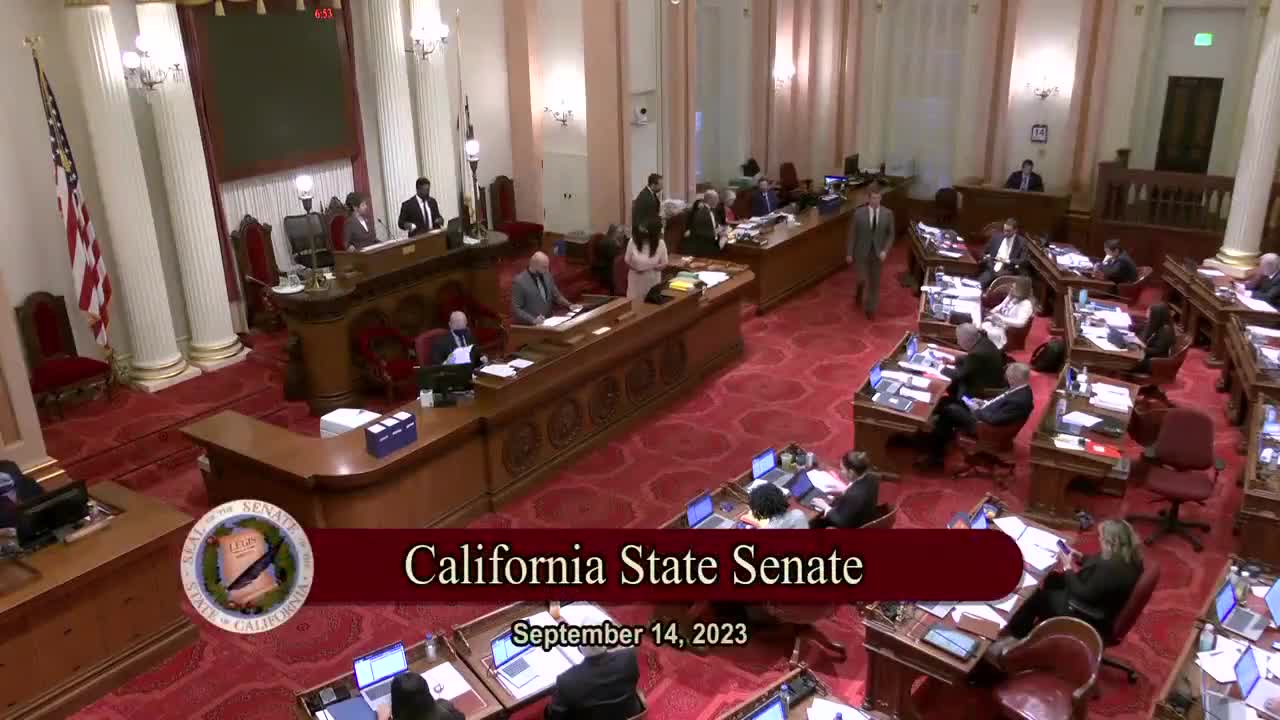 48SEC
Senate Floor
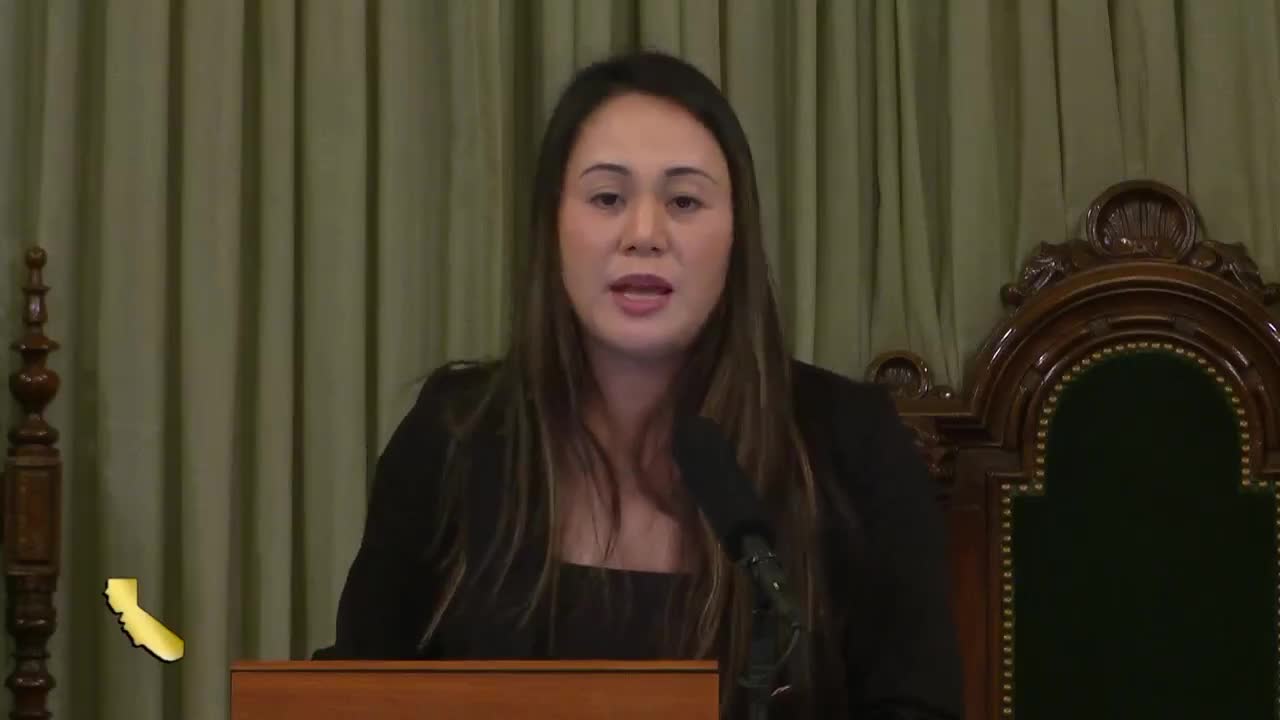 2MIN
Assembly Floor
 4MIN
Assembly Standing Committee on Public Safety
 5MIN
Senate Standing Committee on Public Safety
Bill Author