SB 240: Surplus state real property: affordable housing and housing for formerly incarcerated individuals.
- Session Year: 2023-2024
- House: Senate
- Latest Version Date: 2023-10-11
Current Status:
Passed
(2023-10-11: Chaptered by Secretary of State. Chapter 775, Statutes of 2023.)
Introduced
In Committee
First Chamber
In Committee
Second Chamber
Enacted
Existing law authorizes the Department of General Services to dispose of surplus state real property, as defined, as authorized by the Legislature, upon any terms and conditions and subject to any reservations and exceptions the department deems to be in the best interests of the state. Existing law requires the department to first offer surplus state real property to a local agency, as defined, and then to nonprofit affordable housing sponsors, as defined, prior to being offered for sale to private entities or individuals. Existing law requires a local agency or nonprofit affordable housing sponsor to satisfy certain requirements to be considered as a potential priority buyer of the surplus state real property, including that the local agency or nonprofit affordable housing sponsor demonstrate, to the satisfaction of the department, that the surplus state real property, or portion of that surplus state real property, is to be used by the local agency or nonprofit affordable housing sponsor for open space, public parks, affordable housing projects, or development of local government-owned facilities. Existing law authorizes the department to sell surplus state real property, or a portion of surplus state real property, to a local agency, or to a nonprofit affordable housing sponsor if no local agency is interested in the surplus state real property, for affordable housing projects at a sales price less than fair market value if the department determines that such a discount will enable the provision of housing for persons and families of low or moderate income.
This bill would additionally authorize a local agency or nonprofit affordable housing sponsor to be considered as a potential priority buyer of surplus state real property upon demonstration that the property is to be used by the agency or sponsor for housing for formerly incarcerated individuals, subject to the same provisions described above, as specified.
The California Environmental Quality Act (CEQA) requires a lead agency, as defined, to prepare, or cause to be prepared, and certify the completion of, an environmental impact report on a project that it proposes to carry out or approve that may have a significant effect on the environment or to adopt a negative declaration if it finds that the project will not have that effect. CEQA also requires a lead agency to prepare a mitigated negative declaration for a project that may have a significant effect on the environment if revisions in the project would avoid or mitigate that effect and there is no substantial evidence that the project, as revised, would have a significant effect on the environment. CEQA does not apply to the approval of ministerial projects.
This bill would provide that development of surplus state real property by a local agency or nonprofit affordable housing sponsor for an affordable housing project is by right, making the development ministerial in nature and exempt from CEQA requirements.
Existing law authorizes the Department of General Services to dispose of surplus state real property, as defined, as authorized by the Legislature, upon any terms and conditions and subject to any reservations and exceptions the department deems to be in the best interests of the state. Existing law requires the department to first offer surplus state real property to a local agency, as defined, and then to nonprofit affordable housing sponsors, as defined, prior to being offered for sale to private entities or individuals. Existing law requires a local agency or nonprofit affordable housing sponsor to satisfy certain requirements to be considered as a potential priority buyer of the surplus state real property, including that the local agency or nonprofit affordable housing sponsor demonstrate, to the satisfaction of the department, that the surplus state real property, or portion of that surplus state real property, is to be used by the local agency or nonprofit affordable housing sponsor for open space, public parks, affordable housing projects, or development of local government-owned facilities. Existing law authorizes the department to sell surplus state real property, or a portion of surplus state real property, to a local agency, or to a nonprofit affordable housing sponsor if no local agency is interested in the surplus state real property, for affordable housing projects at a sales price less than fair market value if the department determines that such a discount will enable the provision of housing for persons and families of low or moderate income.
This bill would additionally authorize a local agency or nonprofit affordable housing sponsor to be considered as a potential priority buyer of surplus state real property upon demonstration that the property is to be used by the agency or sponsor for housing for formerly incarcerated individuals, subject to the same provisions described above, as specified.
The California Environmental Quality Act (CEQA) requires a lead agency, as defined, to prepare, or cause to be prepared, and certify the completion of, an environmental impact report on a project that it proposes to carry out or approve that may have a significant effect on the environment or to adopt a negative declaration if it finds that the project will not have that effect. CEQA also requires a lead agency to prepare a mitigated negative declaration for a project that may have a significant effect on the environment if revisions in the project would avoid or mitigate that effect and there is no substantial evidence that the project, as revised, would have a significant effect on the environment. CEQA does not apply to the approval of ministerial projects.
This bill would provide that development of surplus state real property by a local agency or nonprofit affordable housing sponsor for an affordable housing project or housing for formerly incarcerated individuals is by right, making the development ministerial in nature and exempt from CEQA requirements.
Existing law authorizes the Department of General Services to dispose of surplus state real property, as defined, as authorized by the Legislature, upon any terms and conditions and subject to any reservations and exceptions the department deems to be in the best interests of the state. Existing law requires the department to first offer surplus state real property to a local agency, as defined, and then to nonprofit affordable housing sponsors, as defined, prior to being offered for sale to private entities or individuals. Existing law requires a local agency or nonprofit affordable housing sponsor to satisfy certain requirements to be considered as a potential priority buyer of the surplus state real property, including that the local agency or nonprofit affordable housing sponsor demonstrate, to the satisfaction of the department, that the surplus state real property, or portion of that surplus state real property, is to be used by the local agency or nonprofit affordable housing sponsor for open space, public parks, affordable housing projects, or development of local government-owned facilities. Existing law authorizes the department to sell surplus state real property, or a portion of surplus state real property, to a local agency, or to a nonprofit affordable housing sponsor if no local agency is interested in the surplus state real property, for affordable housing projects at a sales price less than fair market value if the department determines that such a discount will enable the provision of housing for persons and families of low or moderate income.
This bill would additionally authorize a local agency or nonprofit affordable housing sponsor to be considered as a potential priority buyer of surplus state real property upon demonstration that the property is to be used by the agency or sponsor for transitional housing for formerly incarcerated individuals, subject to the same provisions described above, as specified.
The California Environmental Quality Act (CEQA) requires a lead agency, as defined, to prepare, or cause to be prepared, and certify the completion of, an environmental impact report on a project that it proposes to carry out or approve that may have a significant effect on the environment or to adopt a negative declaration if it finds that the project will not have that effect. CEQA also requires a lead agency to prepare a mitigated negative declaration for a project that may have a significant effect on the environment if revisions in the project would avoid or mitigate that effect and there is no substantial evidence that the project, as revised, would have a significant effect on the environment. CEQA does not apply to the approval of ministerial projects.
This bill would provide that development of surplus state real property by a local agency or nonprofit affordable housing sponsor for an affordable housing project or transitional housing for formerly incarcerated individuals is by right, making the development ministerial in nature and exempt from CEQA requirements.
Existing law authorizes the Department of General Services to dispose of surplus state real property, as defined, as authorized by the Legislature, upon any terms and conditions and subject to any reservations and exceptions the department deems to be in the best interests of the state. Existing law requires the department to first offer surplus state real property to a local agency, as defined, and then to nonprofit affordable housing sponsors, as defined, prior to being offered for sale to private entities or individuals. Existing law requires a local agency or nonprofit affordable housing sponsor to satisfy certain requirements to be considered as a potential priority buyer of the surplus state real property, including that the local agency or nonprofit affordable housing sponsor demonstrate, to the satisfaction of the department, that the surplus state real property, or portion of that surplus state real property, is to be used by the local agency or nonprofit affordable housing sponsor for open space, public parks, affordable housing projects, or development of local government-owned facilities. Existing law authorizes the department to sell surplus state real property, or a portion of surplus state real property, to a local agency, or to a nonprofit affordable housing sponsor if no local agency is interested in the surplus state real property, for affordable housing projects at a sales price less than fair market value if the department determines that such a discount will enable the provision of housing for persons and families of low or moderate income. Existing law also authorizes the Director of General Services to transfer surplus state real property to a local agency for less than fair market value if the agency uses the surplus state real property for parks or open-space purposes.
This bill would remove authorization for additionally authorize a local agency or nonprofit affordable housing sponsor to be considered as a potential priority buyer of surplus state real property upon demonstration that the property is to be used by the agency or sponsor for open space or a public park. The bill would, where surplus state real property that is to be used by the local agency or nonprofit affordable housing sponsor for affordable housing projects and the affordable housing project is not completed within 5 years of the date the property was acquired by the local agency or nonprofit affordable housing sponsor, require the local agency or nonprofit affordable housing sponsor to pay a penalty in the amount of 1% of the purchase price. The bill would remove authorization to transfer surplus state real property to a local agency for less than fair market value if the agency proposes to use the surplus state real property for parks or open-space purposes. transitional housing for formerly incarcerated individuals, subject to the same provisions described above, as specified.
The California Environmental Quality Act (CEQA) requires a lead agency, as defined, to prepare, or cause to be prepared, and certify the completion of, an environmental impact report on a project that it proposes to carry out or approve that may have a significant effect on the environment or to adopt a negative declaration if it finds that the project will not have that effect. CEQA also requires a lead agency to prepare a mitigated negative declaration for a project that may have a significant effect on the environment if revisions in the project would avoid or mitigate that effect and there is no substantial evidence that the project, as revised, would have a significant effect on the environment. CEQA does not apply to the approval of ministerial projects.
This bill would provide that development of surplus state real property by a local agency or nonprofit affordable housing sponsor for an affordable housing purposes project or transitional housing for formerly incarcerated individuals is by right, making the development ministerial in nature and exempt from CEQA requirements.
Existing law authorizes the Department of General Services to dispose of surplus state real property, as defined, as authorized by the Legislature, upon any terms and conditions and subject to any reservations and exceptions the department deems to be in the best interests of the state. Existing law requires the department to first offer surplus state real property to a local agency, as defined, and then to nonprofit affordable housing sponsors, as defined, prior to being offered for sale to private entities or individuals. Existing law requires a local agency or nonprofit affordable housing sponsor to satisfy certain requirements to be considered as a potential priority buyer of the surplus state real property, including that the local agency or nonprofit affordable housing sponsor demonstrate, to the satisfaction of the department, that the surplus state real property, or portion of that surplus state real property, is to be used by the local agency or nonprofit affordable housing sponsor for open space, public parks, affordable housing projects, or development of local government-owned facilities. Existing law authorizes the department to sell surplus state real property, or a portion of surplus state real property, to a local agency, or to a nonprofit affordable housing sponsor if no local agency is interested in the surplus state real property, for affordable housing projects at a sales price less than fair market value if the department determines that such a discount will enable the provision of housing for persons and families of low or moderate income. Existing law also authorizes the Director of General Services to transfer surplus state real property to a local agency for less than fair market value if the agency uses the surplus state real property for parks or open-space purposes.
This bill would remove authorization for a local agency or nonprofit affordable housing sponsor to be considered as a potential priority buyer of surplus state real property upon demonstration that the property is to be used by the agency or sponsor for open space or a public park. The bill would, where surplus state real property that is to be used by the local agency or nonprofit affordable housing sponsor for affordable housing projects and the affordable housing project is not completed within 5 years of the date the property was acquired by the local agency or nonprofit affordable housing sponsor, require the local agency or nonprofit affordable housing sponsor to pay a penalty in the amount of 1% of the purchase price. The bill would remove authorization to transfer surplus state real property to a local agency for less than fair market value if the agency proposes to use the surplus state real property for parks or open-space purposes.
The California Environmental Quality Act (CEQA) requires a lead agency, as defined, to prepare, or cause to be prepared, and certify the completion of, an environmental impact report on a project that it proposes to carry out or approve that may have a significant effect on the environment or to adopt a negative declaration if it finds that the project will not have that effect. CEQA also requires a lead agency to prepare a mitigated negative declaration for a project that may have a significant effect on the environment if revisions in the project would avoid or mitigate that effect and there is no substantial evidence that the project, as revised, would have a significant effect on the environment. CEQA does not apply to the approval of ministerial projects.
This bill would provide that development of surplus state real property by a local agency or nonprofit affordable housing sponsor for affordable housing purposes is by right, making the development ministerial in nature and exempt from CEQA requirements.
(a)Notwithstanding any other provision of law, except Article 8.5 (commencing with Section 54235) of Chapter 5 of Part 1 of Division 2 of Title 5, the disposal of surplus state real property by the Department of General Services shall be subject to the requirements of this section. For purposes of this section, surplus state real property means real property declared surplus by the Legislature and directed to be disposed of by the Department of General Services, including any real property previously declared surplus by the Legislature but not yet disposed of by the Department of General Services prior to the enactment of this section.
(b)(1)The department may dispose of surplus state real property by sale, lease, exchange, a sale combined with an exchange, or other manner of disposition of property, as authorized by the Legislature, upon any terms and conditions and subject to any reservations and exceptions the department deems to be in the best interests of the state.
(2)(A)The Legislature finds and declares that the provision of decent housing for all Californians is a state goal of the highest priority. The disposal of surplus state real property is a direct and substantial public purpose of statewide concern and will serve an important public purpose, including mitigating the environmental effects of state activities. Therefore, it is the intent of the Legislature that priority be given, as specified in this section, to the disposal of surplus state real property to housing for persons and families of low or moderate income, where land is suitable for housing and there is a need for housing in the community.
(B)Surplus state real property that has been determined by the department not to be needed by any state agency shall be offered to any local agency, as defined in subdivision (a) of Section 54221, and then to nonprofit affordable housing sponsors, prior to being offered for sale to private entities or individuals. As used in this section, nonprofit affordable housing sponsor means any of the following:
(i)A nonprofit corporation incorporated pursuant to Division 2 (commencing with Section 5000) of Title 1 of the Corporations Code.
(ii)A cooperative housing corporation which is a stock cooperative, as defined by Section 11003.2 of the Business and Professions Code.
(iii)A limited-dividend housing corporation.
(C)The department, subject to this section, shall maintain a list of surplus state real property in a conspicuous place on its internet website. The department shall provide local agencies and, upon request, members of the public, with electronic notification of updates to the list of properties.
(D)To be considered as a potential priority buyer of the surplus state real property, a local agency or nonprofit affordable housing sponsor shall do both of the following:
(i)Notify the department of its interest in the surplus state real property within 90 days of the department posting on its internet website the notice of the availability of the surplus state real property.
(ii)Demonstrate, to the satisfaction of the department, that the surplus state real property, or portion of that surplus state real property, is to be used by the local agency or nonprofit affordable housing sponsor for open space, public parks, affordable housing projects, housing for formerly incarcerated individuals, or development of local government-owned facilities.
(E)When more than one local agency expresses an interest in the surplus state real property, priority shall be given to the local agency that intends to use the surplus state real property for affordable housing or housing for formerly incarcerated individuals. If no agreement or transfer of title occurs, the priority shall next be given to the local agency that intends to use the surplus state real property for open space, public parks, or development of local government-owned facilities. The sales agreement shall be executed by the local agency or nonprofit affordable housing sponsor within 60 days after the director determines the local agency or nonprofit affordable housing sponsor is to receive the surplus state real property. The sale of the surplus state real property to a local agency or nonprofit affordable housing sponsor pursuant to this section shall be completed, and title transferred, within 60 days of the date the department executes the sales agreement, or, if required by law, no later than 60 days after the State Public Works Board has authorized the sale. If the sale of a surplus state real property to a local agency or nonprofit affordable housing sponsor is not completed within the timeframe specified in this subparagraph, then the department shall proceed with the process for disposal to other private entities or individuals. If no local agency or nonprofit affordable housing sponsor informs the department of its interest in acquiring the property within 90 days of the department posting on its internet website the notice of the availability of the surplus state real property, the department shall notify the chairpersons of the fiscal committees of the Legislature within 30 days of the expiration of the initial 90-day timeframe.
(F)Use of surplus state real property, or a portion of that surplus state real property, by a local agency or nonprofit affordable housing sponsor for an affordable housing project pursuant to this section shall be a use by right and shall not constitute a project for purposes of Division 13 (commencing with Section 21000) of the Public Resources Code.
(c)(1)If more than one local agency desires the surplus state real property for use as an open space, a public park, or the development of a local government-owned facility, the department shall transfer the surplus state real property to the local agency offering the highest price above fair market value. If more than one local agency desires the surplus state real property for use as an affordable housing project or as housing for formerly incarcerated individuals, the department shall transfer the surplus state real property to the local agency offering the greatest number of affordable housing units or units of housing for formerly incarcerated individuals. If more than one nonprofit affordable housing sponsor desires the surplus state real property for use as an affordable housing project or as housing for formerly incarcerated individuals, the department shall transfer the surplus state real property to the nonprofit affordable housing sponsor offering the greatest number of affordable housing units or units of housing for formerly incarcerated individuals.
(2)If no local agency or nonprofit affordable housing sponsor is interested, or an agreement, as provided above, is not reached, then the disposal of the surplus state real property to private entities or individuals shall be pursuant to a public bidding process designed to obtain the highest most certain return for the state from a responsible bidder, and any transaction based on such a bidding process shall be deemed to be the fair market value for the purposes of the reporting requirements pursuant to subdivision (d).
(3)Notwithstanding any other provision of law, the department may sell surplus state real property, or a portion of surplus state real property, to a local agency, or to a nonprofit affordable housing sponsor if no local agency is interested in the surplus state real property, for affordable housing projects or housing for formerly incarcerated individuals at a sales price less than fair market value if the department determines that such a discount will enable the provision of housing for persons and families of low or moderate income or formerly incarcerated individuals. Nothing shall preclude a local agency that purchases the surplus state real property for affordable housing or housing for formerly incarcerated individuals from reconveying the surplus state real property to a nonprofit affordable housing sponsor for development of affordable housing or housing for formerly incarcerated individuals. Transfer of title to the surplus state real property or lease of the surplus state real property for affordable housing or housing for formerly incarcerated individuals shall be conditioned upon continued use of the surplus state real property as housing for persons and families of low and moderate income or formerly incarcerated individuals for at least 40 years and the department shall record a regulatory agreement that imposes affordability covenants, conditions, and restrictions on the surplus state real property. The regulatory agreement shall be a first priority lien on the surplus state real property and last for a period of at least 40 years, and if another state agency is lending funds for a project, a combined regulatory agreement shall be utilized. Notwithstanding any other provision of law, the regulatory agreement shall not be subordinated to any other lien or encumbrance except for any federal loan program the statutes or regulations of which require a first priority lien for that federal loan.
(4)Notwithstanding any other provision of law, the Director of General Services may transfer surplus state real property to a local agency for less than fair market value if the local agency uses the surplus state real property for parks or open-space purposes. The deed or other instrument of transfer shall provide that the surplus state real property would revert to the state if the use changed to a use other than parks or open-space purposes during the period of 25 years after the transfer date. For the purpose of this paragraph, open-space purposes means the use of land for public recreation, enjoyment of scenic beauty, or conservation or use of natural resources.
(d)Thirty days prior to executing a transaction for a sale, lease, exchange, a sale combined with an exchange, or other manner of disposition of the surplus state real property for less than fair market value or for affordable housing or housing for formerly incarcerated individuals, or as authorized by the Legislature, the Director of General Services shall report to the chairpersons of the fiscal committees of the Legislature all of the following:
(1)The financial terms of the transaction.
(2)A comparison of fair market value for the surplus state real property and the terms listed in paragraph (1).
(3)The basis for agreeing to terms and conditions other than fair market value.
(e)As to surplus state real property sold or exchanged pursuant to this section, the director shall except and reserve to the state all mineral deposits, as described in Section 6407 of the Public Resources Code, together with the right to prospect for, mine, and remove the deposits. If, however, the director determines that there is little or no potential for mineral deposits, the reservation may be without surface right of entry above a depth of 500 feet, or the rights to prospect for, mine, and remove the deposits shall be limited to those areas of the surplus state real property conveyed that the director determines to be reasonably necessary for the removal of the deposits.
(f)The failure to comply with this section, except for subdivision (d), shall not invalidate the transfer or conveyance of surplus state real property to a purchaser for value.
(g)For purposes of this section, fair market value is established by an appraisal and economic evaluation conducted by the department or approved by the department.
(a)Notwithstanding any other provision of law, except Article 8.5 (commencing with Section 54235) of Chapter 5 of Part 1 of Division 2 of Title 5, the disposal of surplus state real property by the Department of General Services shall be subject to the requirements of this section. For purposes of this section, surplus state real property means real property declared surplus by the Legislature and directed to be disposed of by the Department of General Services, including any real property previously declared surplus by the Legislature but not yet disposed of by the Department of General Services prior to the enactment of this section.
(b)(1)The department may dispose of surplus state real property by sale, lease, exchange, a sale combined with an exchange, or other manner of disposition of property, as authorized by the Legislature, upon any terms and conditions and subject to any reservations and exceptions the department deems to be in the best interests of the state.
(2)(A)The Legislature finds and declares that the provision of decent housing for all Californians is a state goal of the highest priority. The disposal of surplus state real property is a direct and substantial public purpose of statewide concern and will serve an important public purpose, including mitigating the environmental effects of state activities. Therefore, it is the intent of the Legislature that priority be given, as specified in this section, to the disposal of surplus state real property to housing for persons and families of low or moderate income, where land is suitable for housing and there is a need for housing in the community.
(B)Surplus state real property that has been determined by the department not to be needed by any state agency shall be offered to any local agency, as defined in subdivision (a) of Section 54221, and then to nonprofit affordable housing sponsors, prior to being offered for sale to private entities or individuals. As used in this section, nonprofit affordable housing sponsor means any of the following:
(i)A nonprofit corporation incorporated pursuant to Division 2 (commencing with Section 5000) of Title 1 of the Corporations Code.
(ii)A cooperative housing corporation which is a stock cooperative, as defined by Section 11003.2 of the Business and Professions Code.
(iii)A limited-dividend housing corporation.
(C)The department, subject to this section, shall maintain a list of surplus state real property in a conspicuous place on its internet website. The department shall provide local agencies and, upon request, members of the public, with electronic notification of updates to the list of properties.
(D)To be considered as a potential priority buyer of the surplus state real property, a local agency or nonprofit affordable housing sponsor shall do both of the following:
(i)Notify the department of its interest in the surplus state real property within 90 days of the department posting on its internet website the notice of the availability of the surplus state real property.
(ii)Demonstrate, to the satisfaction of the department, that the surplus state real property, or portion of that surplus state real property, is to be used by the local agency or nonprofit affordable housing sponsor for open space, public parks, affordable housing projects, housing for formerly incarcerated individuals, or development of local government-owned facilities.
(E)When more than one local agency expresses an interest in the surplus state real property, priority shall be given to the local agency that intends to use the surplus state real property for affordable housing or housing for formerly incarcerated individuals. If no agreement or transfer of title occurs, the priority shall next be given to the local agency that intends to use the surplus state real property for open space, public parks, or development of local government-owned facilities. The sales agreement shall be executed by the local agency or nonprofit affordable housing sponsor within 60 days after the director determines the local agency or nonprofit affordable housing sponsor is to receive the surplus state real property. The sale of the surplus state real property to a local agency or nonprofit affordable housing sponsor pursuant to this section shall be completed, and title transferred, within 60 days of the date the department executes the sales agreement, or, if required by law, no later than 60 days after the State Public Works Board has authorized the sale. If the sale of a surplus state real property to a local agency or nonprofit affordable housing sponsor is not completed within the timeframe specified in this subparagraph, then the department shall proceed with the process for disposal to other private entities or individuals. If no local agency or nonprofit affordable housing sponsor informs the department of its interest in acquiring the property within 90 days of the department posting on its internet website the notice of the availability of the surplus state real property, the department shall notify the chairpersons of the fiscal committees of the Legislature within 30 days of the expiration of the initial 90-day timeframe.
(F)Use of surplus state real property, or a portion of that surplus state real property, by a local agency or nonprofit affordable housing sponsor for an affordable housing project or housing for formerly incarcerated individuals pursuant to this section shall be a use by right and shall not constitute a project for purposes of Division 13 (commencing with Section 21000) of the Public Resources Code.
(c)(1)If more than one local agency desires the surplus state real property for use as an open space, a public park, or the development of a local government-owned facility, the department shall transfer the surplus state real property to the local agency offering the highest price above fair market value. If more than one local agency desires the surplus state real property for use as an affordable housing project or as housing for formerly incarcerated individuals, the department shall transfer the surplus state real property to the local agency offering the greatest number of affordable housing units or units of housing for formerly incarcerated individuals. If more than one nonprofit affordable housing sponsor desires the surplus state real property for use as an affordable housing project or as housing for formerly incarcerated individuals, the department shall transfer the surplus state real property to the nonprofit affordable housing sponsor offering the greatest number of affordable housing units or units of housing for formerly incarcerated individuals.
(2)If no local agency or nonprofit affordable housing sponsor is interested, or an agreement, as provided above, is not reached, then the disposal of the surplus state real property to private entities or individuals shall be pursuant to a public bidding process designed to obtain the highest most certain return for the state from a responsible bidder, and any transaction based on such a bidding process shall be deemed to be the fair market value for the purposes of the reporting requirements pursuant to subdivision (d).
(3)Notwithstanding any other provision of law, the department may sell surplus state real property, or a portion of surplus state real property, to a local agency, or to a nonprofit affordable housing sponsor if no local agency is interested in the surplus state real property, for affordable housing projects or housing for formerly incarcerated individuals at a sales price less than fair market value if the department determines that such a discount will enable the provision of housing for persons and families of low or moderate income or formerly incarcerated individuals. Nothing shall preclude a local agency that purchases the surplus state real property for affordable housing or housing for formerly incarcerated individuals from reconveying the surplus state real property to a nonprofit affordable housing sponsor for development of affordable housing or housing for formerly incarcerated individuals. Transfer of title to the surplus state real property or lease of the surplus state real property for affordable housing or housing for formerly incarcerated individuals shall be conditioned upon continued use of the surplus state real property as housing for persons and families of low and moderate income or formerly incarcerated individuals for at least 40 years and the department shall record a regulatory agreement that imposes affordability covenants, conditions, and restrictions on the surplus state real property. The regulatory agreement shall be a first priority lien on the surplus state real property and last for a period of at least 40 years, and if another state agency is lending funds for a project, a combined regulatory agreement shall be utilized. Notwithstanding any other provision of law, the regulatory agreement shall not be subordinated to any other lien or encumbrance except for any federal loan program the statutes or regulations of which require a first priority lien for that federal loan.
(4)Notwithstanding any other provision of law, the Director of General Services may transfer surplus state real property to a local agency for less than fair market value if the local agency uses the surplus state real property for parks or open-space purposes. The deed or other instrument of transfer shall provide that the surplus state real property would revert to the state if the use changed to a use other than parks or open-space purposes during the period of 25 years after the transfer date. For the purpose of this paragraph, open-space purposes means the use of land for public recreation, enjoyment of scenic beauty, or conservation or use of natural resources.
(d)Thirty days prior to executing a transaction for a sale, lease, exchange, a sale combined with an exchange, or other manner of disposition of the surplus state real property for less than fair market value or for affordable housing or housing for formerly incarcerated individuals, or as authorized by the Legislature, the Director of General Services shall report to the chairpersons of the fiscal committees of the Legislature all of the following:
(1)The financial terms of the transaction.
(2)A comparison of fair market value for the surplus state real property and the terms listed in paragraph (1).
(3)The basis for agreeing to terms and conditions other than fair market value.
(e)As to surplus state real property sold or exchanged pursuant to this section, the director shall except and reserve to the state all mineral deposits, as described in Section 6407 of the Public Resources Code, together with the right to prospect for, mine, and remove the deposits. If, however, the director determines that there is little or no potential for mineral deposits, the reservation may be without surface right of entry above a depth of 500 feet, or the rights to prospect for, mine, and remove the deposits shall be limited to those areas of the surplus state real property conveyed that the director determines to be reasonably necessary for the removal of the deposits.
(f)The failure to comply with this section, except for subdivision (d), shall not invalidate the transfer or conveyance of surplus state real property to a purchaser for value.
(g)For purposes of this section, fair market value is established by an appraisal and economic evaluation conducted by the department or approved by the department.
REVISIONS: HeadingLine 2.(a)Notwithstanding any other provision of law, except Article 8.5 (commencing with Section 54235) of Chapter 5 of Part 1 of Division 2 of Title 5, the disposal of surplus state real property by the Department of General Services shall be subject to the requirements of this section. For purposes of this section, surplus state real property means real property declared surplus by the Legislature and directed to be disposed of by the Department of General Services, including any real property previously declared surplus by the Legislature but not yet disposed of by the Department of General Services prior to the enactment of this section.
(b)(1)The department may dispose of surplus state real property by sale, lease, exchange, a sale combined with an exchange, or other manner of disposition of property, as authorized by the Legislature, upon any terms and conditions and subject to any reservations and exceptions the department deems to be in the best interests of the state.
(2)(A)The Legislature finds and declares that the provision of decent housing for all Californians is a state goal of the highest priority. The disposal of surplus state real property is a direct and substantial public purpose of statewide concern and will serve an important public purpose, including mitigating the environmental effects of state activities. Therefore, it is the intent of the Legislature that priority be given, as specified in this section, to the disposal of surplus state real property to housing for persons and families of low or moderate income, where land is suitable for housing and there is a need for housing in the community.
(B)Surplus state real property that has been determined by the department not to be needed by any state agency shall be offered to any local agency, as defined in subdivision (a) of Section 54221, and then to nonprofit affordable housing sponsors, prior to being offered for sale to private entities or individuals. As used in this section, nonprofit affordable housing sponsor means any of the following:
(i)A nonprofit corporation incorporated pursuant to Division 2 (commencing with Section 5000) of Title 1 of the Corporations Code.
(ii)A cooperative housing corporation which is a stock cooperative, as defined by Section 11003.2 of the Business and Professions Code.
(iii)A limited-dividend housing corporation.
(C)The department, subject to this section, shall maintain a list of surplus state real property in a conspicuous place on its internet website. The department shall provide local agencies and, upon request, members of the public, with electronic notification of updates to the list of properties.
(D)To be considered as a potential priority buyer of the surplus state real property, a local agency or nonprofit affordable housing sponsor shall do both of the following:
(i)Notify the department of its interest in the surplus state real property within 90 days of the department posting on its internet website the notice of the availability of the surplus state real property.
(ii)Demonstrate, to the satisfaction of the department, that the surplus state real property, or portion of that surplus state real property, is to be used by the local agency or nonprofit affordable housing sponsor for open space, public parks, affordable housing projects, transitional housing for formerly incarcerated individuals, or development of local government-owned facilities.
(E)When more than one local agency expresses an interest in the surplus state real property, priority shall be given to the local agency that intends to use the surplus state real property for affordable housing or transitional housing for formerly incarcerated individuals. If no agreement or transfer of title occurs, the priority shall next be given to the local agency that intends to use the surplus state real property for open space, public parks, or development of local government-owned facilities. The sales agreement shall be executed by the local agency or nonprofit affordable housing sponsor within 60 days after the director determines the local agency or nonprofit affordable housing sponsor is to receive the surplus state real property. The sale of the surplus state real property to a local agency or nonprofit affordable housing sponsor pursuant to this section shall be completed, and title transferred, within 60 days of the date the department executes the sales agreement, or, if required by law, no later than 60 days after the State Public Works Board has authorized the sale. If the sale of a surplus state real property to a local agency or nonprofit affordable housing sponsor is not completed within the timeframe specified in this subparagraph, then the department shall proceed with the process for disposal to other private entities or individuals. If no local agency or nonprofit affordable housing sponsor informs the department of its interest in acquiring the property within 90 days of the department posting on its internet website the notice of the availability of the surplus state real property, the department shall notify the chairpersons of the fiscal committees of the Legislature within 30 days of the expiration of the initial 90-day timeframe.
(F)Use of surplus state real property, or a portion of that surplus state real property, by a local agency or nonprofit affordable housing sponsor for an affordable housing project or transitional housing for formerly incarcerated individuals pursuant to this section shall be a use by right and shall not constitute a project for purposes of Division 13 (commencing with Section 21000) of the Public Resources Code.
(c)(1)If more than one local agency desires the surplus state real property for use as an open space, a public park, or the development of a local government-owned facility, the department shall transfer the surplus state real property to the local agency offering the highest price above fair market value. If more than one local agency desires the surplus state real property for use as an affordable housing project or as transitional housing for formerly incarcerated individuals, the department shall transfer the surplus state real property to the local agency offering the greatest number of affordable housing units or transitional units of housing units. for formerly incarcerated individuals. If more than one nonprofit affordable housing sponsor desires the surplus state real property for use as an affordable housing project or as transitional housing for formerly incarcerated individuals individuals, the department shall transfer the surplus state real property to the nonprofit affordable housing sponsor offering the greatest number of affordable housing units or transitional units of housing units. for formerly incarcerated individuals.
(2)If no local agency or nonprofit affordable housing sponsor is interested, or an agreement, as provided above, is not reached, then the disposal of the surplus state real property to private entities or individuals shall be pursuant to a public bidding process designed to obtain the highest most certain return for the state from a responsible bidder, and any transaction based on such a bidding process shall be deemed to be the fair market value for the purposes of the reporting requirements pursuant to subdivision (d).
(3)Notwithstanding any other provision of law, the department may sell surplus state real property, or a portion of surplus state real property, to a local agency, or to a nonprofit affordable housing sponsor if no local agency is interested in the surplus state real property, for affordable housing projects or transitional housing for formerly incarcerated individuals at a sales price less than fair market value if the department determines that such a discount will enable the provision of housing for persons and families of low or moderate income or formerly incarcerated individuals. Nothing shall preclude a local agency that purchases the surplus state real property for affordable housing or transitional housing for formerly incarcerated individuals from reconveying the surplus state real property to a nonprofit affordable housing sponsor for development of affordable housing or transitional housing. housing for formerly incarcerated individuals. Transfer of title to the surplus state real property or lease of the surplus state real property for affordable housing or transitional housing for formerly incarcerated individuals shall be conditioned upon continued use of the surplus state real property as housing for persons and families of low and moderate income or formerly incarcerated individuals for at least 40 years and the department shall record a regulatory agreement that imposes affordability covenants, conditions, and restrictions on the surplus state real property. The regulatory agreement shall be a first priority lien on the surplus state real property and last for a period of at least 40 years, and if another state agency is lending funds for a project, a combined regulatory agreement shall be utilized. Notwithstanding any other provision of law, the regulatory agreement shall not be subordinated to any other lien or encumbrance except for any federal loan program the statutes or regulations of which require a first priority lien for that federal loan.
(4)Notwithstanding any other provision of law, the Director of General Services may transfer surplus state real property to a local agency for less than fair market value if the local agency uses the surplus state real property for parks or open-space purposes. The deed or other instrument of transfer shall provide that the surplus state real property would revert to the state if the use changed to a use other than parks or open-space purposes during the period of 25 years after the transfer date. For the purpose of this paragraph, open-space purposes means the use of land for public recreation, enjoyment of scenic beauty, or conservation or use of natural resources.
(d)Thirty days prior to executing a transaction for a sale, lease, exchange, a sale combined with an exchange, or other manner of disposition of the surplus state real property for less than fair market value or for affordable housing or transitional housing for formerly incarcerated individuals, or as authorized by the Legislature, the Director of General Services shall report to the chairpersons of the fiscal committees of the Legislature all of the following:
(1)The financial terms of the transaction.
(2)A comparison of fair market value for the surplus state real property and the terms listed in paragraph (1).
(3)The basis for agreeing to terms and conditions other than fair market value.
(e)As to surplus state real property sold or exchanged pursuant to this section, the director shall except and reserve to the state all mineral deposits, as described in Section 6407 of the Public Resources Code, together with the right to prospect for, mine, and remove the deposits. If, however, the director determines that there is little or no potential for mineral deposits, the reservation may be without surface right of entry above a depth of 500 feet, or the rights to prospect for, mine, and remove the deposits shall be limited to those areas of the surplus state real property conveyed that the director determines to be reasonably necessary for the removal of the deposits.
(f)The failure to comply with this section, except for subdivision (d), shall not invalidate the transfer or conveyance of surplus state real property to a purchaser for value.
(g)For purposes of this section, fair market value is established by an appraisal and economic evaluation conducted by the department or approved by the department.
(a)Notwithstanding any other provision of law, except Article 8.5 (commencing with Section 54235) of Chapter 5 of Part 1 of Division 2 of Title 5, the disposal of surplus state real property by the Department of General Services shall be subject to the requirements of this section. For purposes of this section, surplus state real property means real property declared surplus by the Legislature and directed to be disposed of by the Department of General Services, including any real property previously declared surplus by the Legislature but not yet disposed of by the Department of General Services prior to the enactment of this section.
(b)(1)The department may dispose of surplus state real property by sale, lease, exchange, a sale combined with an exchange, or other manner of disposition of property, as authorized by the Legislature, upon any terms and conditions and subject to any reservations and exceptions the department deems to be in the best interests of the state.
(2)(A)The Legislature finds and declares that the provision of decent housing for all Californians is a state goal of the highest priority. The disposal of surplus state real property is a direct and substantial public purpose of statewide concern and will serve an important public purpose, including mitigating the environmental effects of state activities. Therefore, it is the intent of the Legislature that priority be given, as specified in this section, to the disposal of surplus state real property to housing for persons and families of low or moderate income, where land is suitable for housing and there is a need for housing in the community.
(B)Surplus state real property that has been determined by the department not to be needed by any state agency shall be offered to any local agency, as defined in subdivision (a) of Section 54221, and then to nonprofit affordable housing sponsors, prior to being offered for sale to private entities or individuals. As used in this subdivision, section, nonprofit affordable housing sponsor means any of the following:
(i)A nonprofit corporation incorporated pursuant to Division 2 (commencing with Section 5000) of Title 1 of the Corporations Code.
(ii)A cooperative housing corporation which is a stock cooperative, as defined by Section 11003.2 of the Business and Professions Code.
(iii)A limited-dividend housing corporation.
(C)The department, subject to this section, shall maintain a list of surplus state real property in a conspicuous place on its internet website. The department shall provide local agencies and, upon request, members of the public, with electronic notification of updates to the list of properties.
(D)To be considered as a potential priority buyer of the surplus state real property, a local agency or nonprofit affordable housing sponsor shall do both of the following:
(i)Notify the department of its interest in the surplus state real property within 90 days of the department posting on its internet website the notice of the availability of the surplus state real property.
(ii)Demonstrate, to the satisfaction of the department, that the surplus state real property, or portion of that surplus state real property, is to be used by the local agency or nonprofit affordable housing sponsor for open space, public parks, affordable housing projects projects, transitional housing for formerly incarcerated individuals, or development of local government-owned facilities.
(E)When more than one local agency expresses an interest in the surplus state real property, priority shall be given to the local agency that intends to use the surplus state real property for affordable housing. housing or transitional housing for formerly incarcerated individuals. If no agreement or transfer of title occurs, the priority shall next be given to the local agency that intends to use the surplus state real property for open space, public parks, or development of local government-owned facilities. The sales agreement shall be executed by the local agency or nonprofit affordable housing sponsor within 60 days after the director determines the local agency or nonprofit affordable housing sponsor is to receive the surplus state real property. The sale of the surplus state real property to a local agency or nonprofit affordable housing sponsor pursuant to this section shall be completed, and title transferred, within 60 days of the date the department executes the sales agreement, or, if required by law, no later than 60 days after the State Public Works Board has authorized the sale. If the sale of a surplus state real property to a local agency or nonprofit affordable housing sponsor is not completed within the timeframe specified in this subparagraph, then the department shall proceed with the process for disposal to other private entities or individuals. If no local agency or nonprofit affordable housing sponsor informs the department of its interest in acquiring the property within 90 days of the department posting on its internet website the notice of the availability of the surplus state real property, the department shall notify the chairpersons of the fiscal committees of the Legislature within 30 days of the expiration of the initial 90-day timeframe.
(F)If surplus state real property, or a portion of that surplus state real property, is to be used by a local agency or nonprofit affordable housing sponsor for an affordable housing project and the affordable housing project is not completed within five years of the date the property was acquired by the local agency or nonprofit affordable housing sponsor, the local agency or nonprofit affordable housing sponsor shall pay a penalty in the amount of 1 percent of the purchase price.(G)(F)Use of surplus state real property, or a portion of that surplus state real property, by a local agency or nonprofit affordable housing sponsor for an affordable housing project or transitional housing for formerly incarcerated individuals pursuant to this section shall be a use by right and shall not constitute a project for purposes of Division 13 (commencing with Section 21000) of the Public Resources Code.
(c)(1)If more than one local agency desires the surplus state real property for use as an open space, a public park, or the development of a local government-owned facility, the department shall transfer the surplus state real property to the local agency offering the highest price above fair market value. If more than one local agency desires the surplus state real property for use as an affordable housing project, project or as transitional housing for formerly incarcerated individuals, the department shall transfer the surplus state real property to the local agency offering the greatest number of affordable housing or transitional housing units. If more than one nonprofit affordable housing sponsor desires the surplus state real property for use as an affordable housing project, project or as transitional housing for formerly incarcerated individuals the department shall transfer the surplus state real property to the nonprofit affordable housing sponsor offering the greatest number of affordable housing or transitional housing units.
(2)If no local agency or nonprofit affordable housing sponsor is interested, or an agreement, as provided above, is not reached, then the disposal of the surplus state real property to private entities or individuals shall be pursuant to a public bidding process designed to obtain the highest most certain return for the state from a responsible bidder, and any transaction based on such a bidding process shall be deemed to be the fair market value for the purposes of the reporting requirements pursuant to subdivision (d).
(3)Notwithstanding any other provision of law, the department may sell surplus state real property, or a portion of surplus state real property, to a local agency, or to a nonprofit affordable housing sponsor if no local agency is interested in the surplus state real property, for affordable housing projects or transitional housing for formerly incarcerated individuals at a sales price less than fair market value if the department determines that such a discount will enable the provision of housing for persons and families of low or moderate income. income or formerly incarcerated individuals. Nothing shall preclude a local agency that purchases the surplus state real property for affordable housing or transitional housing for formerly incarcerated individuals from reconveying the surplus state real property to a nonprofit affordable housing sponsor for development of affordable or transitional housing. Transfer of title to the surplus state real property or lease of the surplus state real property for affordable housing or transitional housing for formerly incarcerated individuals shall be conditioned upon continued use of the surplus state real property as housing for persons and families of low and moderate income or formerly incarcerated individuals for at least 40 years and the department shall record a regulatory agreement that imposes affordability covenants, conditions, and restrictions on the surplus state real property. The regulatory agreement shall be a first priority lien on the surplus state real property and last for a period of at least 40 years, and if another state agency is lending funds for a project, a combined regulatory agreement shall be utilized. Notwithstanding any other provision of law, the regulatory agreement shall not be subordinated to any other lien or encumbrance except for any federal loan program the statutes or regulations of which require a first priority lien for that federal loan.
(4)Notwithstanding any other provision of law, the Director of General Services may transfer surplus state real property to a local agency for less than fair market value if the local agency uses the surplus state real property for parks or open-space purposes. The deed or other instrument of transfer shall provide that the surplus state real property would revert to the state if the use changed to a use other than parks or open-space purposes during the period of 25 years after the transfer date. For the purpose of this paragraph, open-space purposes means the use of land for public recreation, enjoyment of scenic beauty, or conservation or use of natural resources.
(d)Thirty days prior to executing a transaction for a sale, lease, exchange, a sale combined with an exchange, or other manner of disposition of the surplus state real property for less than fair market value or for affordable housing, housing or transitional housing for formerly incarcerated individuals, or as authorized by the Legislature, the Director of General Services shall report to the chairpersons of the fiscal committees of the Legislature all of the following:
(1)The financial terms of the transaction.
(2)A comparison of fair market value for the surplus state real property and the terms listed in paragraph (1).
(3)The basis for agreeing to terms and conditions other than fair market value.
(e)As to surplus state real property sold or exchanged pursuant to this section, the director shall except and reserve to the state all mineral deposits, as described in Section 6407 of the Public Resources Code, together with the right to prospect for, mine, and remove the deposits. If, however, the director determines that there is little or no potential for mineral deposits, the reservation may be without surface right of entry above a depth of 500 feet, or the rights to prospect for, mine, and remove the deposits shall be limited to those areas of the surplus state real property conveyed that the director determines to be reasonably necessary for the removal of the deposits.
(f)The failure to comply with this section, except for subdivision (d), shall not invalidate the transfer or conveyance of surplus state real property to a purchaser for value.
(g)For purposes of this section, fair market value is established by an appraisal and economic evaluation conducted by the department or approved by the department.
(a)Notwithstanding any other provision of law, except Article 8.5 (commencing with Section 54235) of Chapter 5 of Part 1 of Division 2 of Title 5, the disposal of surplus state real property by the Department of General Services shall be subject to the requirements of this section. For purposes of this section, surplus state real property means real property declared surplus by the Legislature and directed to be disposed of by the Department of General Services, including any real property previously declared surplus by the Legislature but not yet disposed of by the Department of General Services prior to the enactment of this section.
(b)(1)The department may dispose of surplus state real property by sale, lease, exchange, a sale combined with an exchange, or other manner of disposition of property, as authorized by the Legislature, upon any terms and conditions and subject to any reservations and exceptions the department deems to be in the best interests of the state.
(2)(A)The Legislature finds and declares that the provision of decent housing for all Californians is a state goal of the highest priority. The disposal of surplus state real property is a direct and substantial public purpose of statewide concern and will serve an important public purpose, including mitigating the environmental effects of state activities. Therefore, it is the intent of the Legislature that priority be given, as specified in this section, to the disposal of surplus state real property to housing for persons and families of low or moderate income, where land is suitable for housing and there is a need for housing in the community.
(B)Surplus state real property that has been determined by the department not to be needed by any state agency shall be offered to any local agency, as defined in subdivision (a) of Section 54221, and then to nonprofit affordable housing sponsors, prior to being offered for sale to private entities or individuals. As used in this subdivision, nonprofit affordable housing sponsor means any of the following:
(i)A nonprofit corporation incorporated pursuant to Division 2 (commencing with Section 5000) of Title 1 of the Corporations Code.
(ii)A cooperative housing corporation which is a stock cooperative, as defined by Section 11003.2 of the Business and Professions Code.
(iii)A limited-dividend housing corporation.
(C)The department, subject to this section, shall maintain a list of surplus state real property in a conspicuous place on its Internet Web site. internet website. The department shall provide local agencies and, upon request, members of the public, with electronic notification of updates to the list of properties.
(D)To be considered as a potential priority buyer of the surplus state real property, a local agency or nonprofit affordable housing sponsor shall notify do both of the following:
(i)Notify the department of its interest in the surplus state real property within 90 days of the department posting on its Internet Web site internet website the notice of the availability of the surplus state real property. The local agency or nonprofit affordable housing sponsor shall demonstrate,
(ii)Demonstrate, to the satisfaction of the department, that the surplus state real property, or portion of that surplus state real property, is to be used by the local agency or nonprofit affordable housing sponsor for open space, public parks, affordable housing projects, projects or development of local government-owned facilities. When
(E)When more than one local agency expresses an interest in the surplus state real property, priority shall be given to the local agency that intends to use the surplus state real property for affordable housing. If no agreement or transfer of title occurs, the priority shall next be given to the local agency that intends to use the surplus state real property for open space, public parks, or development of local government-owned facilities. The sales agreement shall be executed by the local agency or nonprofit affordable housing sponsor within 60 days after the director determines the local agency or nonprofit affordable housing sponsor is to receive the surplus state real property. The sale of the surplus state real property to a local agency or nonprofit affordable housing sponsor pursuant to this section shall be completed, and title transferred, within 60 days of the date the department executes the sales agreement, or, if required by law, no later than 60 days after the State Public Works Board has authorized the sale. If the sale of a surplus state real property to a local agency or nonprofit affordable housing sponsor is not completed within the timeframe specified in this subparagraph, then the department shall proceed with the process for disposal to other private entities or individuals. If no local agency or nonprofit affordable housing sponsor informs the department of its interest in acquiring the property within 90 days of the department posting on its Internet Web site internet website the notice of the availability of the surplus state real property, the department shall notify the chairpersons of the fiscal committees of the Legislature within 30 days of the expiration of the initial 90-day timeframe.
(F)If surplus state real property, or a portion of that surplus state real property, is to be used by a local agency or nonprofit affordable housing sponsor for an affordable housing project and the affordable housing project is not completed within five years of the date the property was acquired by the local agency or nonprofit affordable housing sponsor, the local agency or nonprofit affordable housing sponsor shall pay a penalty in the amount of 1 percent of the purchase price.
(G)Use of surplus state real property, or a portion of that surplus state real property, by a local agency or nonprofit affordable housing sponsor for an affordable housing project pursuant to this section shall be a use by right and shall not constitute a project for purposes of Division 13 (commencing with Section 21000) of the Public Resources Code.
(c)(1)If more than one local agency desires the surplus state real property for use as an open space, a public park, or the development of a local government-owned facility, the department shall transfer the surplus state real property to the local agency offering the highest price above fair market value. If more than one local agency desires the surplus state real property for use as an affordable housing project, the department shall transfer the surplus state real property to the local agency offering the greatest number of affordable housing units. If more than one nonprofit affordable housing sponsor desires the surplus state real property for use as an affordable housing project, the department shall transfer the surplus state real property to the nonprofit affordable housing sponsor offering the greatest number of affordable housing units.
(2)If no local agency or nonprofit affordable housing sponsor is interested, or an agreement, as provided above, is not reached, then the disposal of the surplus state real property to private entities or individuals shall be pursuant to a public bidding process designed to obtain the highest most certain return for the state from a responsible bidder, and any transaction based on such a bidding process shall be deemed to be the fair market value for the purposes of the reporting requirements pursuant to subdivision (d).
(3)Notwithstanding any other provision of law, the department may sell surplus state real property, or a portion of surplus state real property, to a local agency, or to a nonprofit affordable housing sponsor if no local agency is interested in the surplus state real property, for affordable housing projects at a sales price less than fair market value if the department determines that such a discount will enable the provision of housing for persons and families of low or moderate income. Nothing shall preclude a local agency that purchases the surplus state real property for affordable housing from reconveying the surplus state real property to a nonprofit affordable housing sponsor for development of affordable housing. Transfer of title to the surplus state real property or lease of the surplus state real property for affordable housing shall be conditioned upon continued use of the surplus state real property as housing for persons and families of low and moderate income for at least 40 years and the department shall record a regulatory agreement that imposes affordability covenants, conditions, and restrictions on the surplus state real property. The regulatory agreement shall be a first priority lien on the surplus state real property and last for a period of at least 40 years, and if another state agency is lending funds for a project, a combined regulatory agreement shall be utilized. Notwithstanding any other provision of law, the regulatory agreement shall not be subordinated to any other lien or encumbrance except for any federal loan program the statutes or regulations of which require a first priority lien for that federal loan.
(4)Notwithstanding any other provision of law, the Director of General Services may transfer surplus state real property to a local agency for less than fair market value if the local agency uses the surplus state real property for parks or open-space purposes. The deed or other instrument of transfer shall provide that the surplus state real property would revert to the state if the use changed to a use other than parks or open-space purposes during the period of 25 years after the transfer date. For the purpose of this paragraph, open-space purposes means the use of land for public recreation, enjoyment of scenic beauty, or conservation or use of natural resources.(d)Thirty days prior to executing a transaction for a sale, lease, exchange, a sale combined with an exchange, or other manner of disposition of the surplus state real property for less than fair market value or for affordable housing, or as authorized by the Legislature, the Director of General Services shall report to the chairpersons of the fiscal committees of the Legislature all of the following:
(1)The financial terms of the transaction.
(2)A comparison of fair market value for the surplus state real property and the terms listed in paragraph (1).
(3)The basis for agreeing to terms and conditions other than fair market value.
(e)As to surplus state real property sold or exchanged pursuant to this section, the director shall except and reserve to the state all mineral deposits, as described in Section 6407 of the Public Resources Code, together with the right to prospect for, mine, and remove the deposits. If, however, the director determines that there is little or no potential for mineral deposits, the reservation may be without surface right of entry above a depth of 500 feet, or the rights to prospect for, mine, and remove the deposits shall be limited to those areas of the surplus state real property conveyed that the director determines to be reasonably necessary for the removal of the deposits.
(f)The failure to comply with this section, except for subdivision (d), shall not invalidate the transfer or conveyance of surplus state real property to a purchaser for value.
(g)For purposes of this section, fair market value is established by an appraisal and economic evaluation conducted by the department or approved by the department.
|
Date
|
Status
|
|---|---|
| Oct 11, 2023 | Chaptered by Secretary of State. Chapter 775, Statutes of 2023. |
| Oct 11, 2023 | Approved by the Governor. |
| Sep 15, 2023 | Enrolled and presented to the Governor at 3 p.m. |
| Sep 11, 2023 | In Senate. Ordered to engrossing and enrolling. |
| Sep 11, 2023 | Read third time. Passed. (Ayes 78. Noes 0. Page 3149.) Ordered to the Senate. |
| Sep 5, 2023 | Read second time. Ordered to third reading. |
| Sep 1, 2023 | From committee: Do pass. (Ayes 16. Noes 0.) (September 1). |
| Aug 16, 2023 | August 16 set for first hearing. Placed on suspense file. |
| Jul 12, 2023 | From committee: Do pass and re-refer to Com. on APPR. with recommendation: To consent calendar. (Ayes 8. Noes 0.) (July 12). Re-referred to Com. on APPR. |
| Jul 12, 2023 | Coauthors revised. |
| Jun 21, 2023 | From committee: Do pass and re-refer to Com. on H. & C.D. with recommendation: To consent calendar. (Ayes 6. Noes 0.) (June 21). Re-referred to Com. on H. & C.D. |
| Jun 8, 2023 | Referred to Coms. on A. & A.R. and H. & C.D. |
| May 25, 2023 | In Assembly. Read first time. Held at Desk. |
| May 25, 2023 | Read third time. Passed. (Ayes 40. Noes 0. Page 1296.) Ordered to the Assembly. |
| May 23, 2023 | Ordered to special consent calendar. |
| May 18, 2023 | From committee: Do pass. (Ayes 7. Noes 0. Page 1161.) (May 18). |
| May 18, 2023 | Read second time. Ordered to third reading. |
| May 12, 2023 | Set for hearing May 18. |
| May 8, 2023 | May 8 hearing: Placed on APPR suspense file. |
| May 2, 2023 | From committee with author's amendments. Read second time and amended. Re-referred to Com. on APPR. |
| May 1, 2023 | Set for hearing May 8. |
| Apr 26, 2023 | May 1 hearing postponed by committee. |
| Apr 25, 2023 | Set for hearing May 1. |
| Apr 20, 2023 | Read second time and amended. Re-referred to Com. on APPR. |
| Apr 19, 2023 | From committee: Do pass as amended and re-refer to Com. on APPR. (Ayes 10. Noes 0. Page 796.) (April 18). |
| Apr 13, 2023 | Set for hearing April 18. |
| Apr 11, 2023 | From committee: Do pass and re-refer to Com. on HOUSING. (Ayes 14. Noes 0. Page 655.) (April 11). Re-referred to Com. on HOUSING. |
| Mar 28, 2023 | Set for hearing April 11. |
| Mar 21, 2023 | March 28 set for first hearing canceled at the request of author. |
| Mar 16, 2023 | From committee with author's amendments. Read second time and amended. Re-referred to Com. on G.O. |
| Mar 14, 2023 | Set for hearing March 28. |
| Feb 15, 2023 | Referred to Coms. on G.O. and HOUSING. |
| Jan 26, 2023 | From printer. May be acted upon on or after February 25. |
| Jan 25, 2023 | Introduced. Read first time. To Com. on RLS. for assignment. To print. |
|
Date
|
Description
|
Location
|
Votes
|
|
|---|---|---|---|---|
| Sep 11, 2023 | SB 240 Ochoa Bogh Senate Third Reading By Dixon | Assembly Floor |
Passed |
|
| Sep 1, 2023 | Do pass. | Assembly Standing Committee on Appropriations |
Passed |
|
| Jul 12, 2023 | Do pass and be re-referred to the Committee on [Appropriations] with recommendation: To Consent Calendar | Assembly Standing Committee on Housing and Community Development |
Passed |
|
| Jun 21, 2023 | Do pass and be re-referred to the Committee on [Housing and Community Development] with recommendation: To Consent Calendar | Assembly Standing Committee on Accountability and Administrative Review |
Passed |
|
| May 25, 2023 | Special Consent SB240 Ochoa Bogh et al. | Senate Floor |
Passed |
|
| May 18, 2023 | Do pass | Senate Standing Committee on Appropriations |
Passed |
|
| May 8, 2023 | Placed on suspense file | Senate Standing Committee on Appropriations |
Passed |
|
| Apr 18, 2023 | Do pass as amended, but first amend, and re-refer to the Committee on [Appropriations] | Senate Standing Committee on Housing |
Passed |
|
| Apr 11, 2023 | Do pass, but first be re-referred to the Committee on [Housing] | Senate Standing Committee on Governmental Organization |
Passed |
This list shows positions taken on this bill by organizations on the date displayed, which is linked to the original source.
Positions by individuals are not included.
|
Organization
|
Position
|
Date
|
|---|---|---|
| Affordable Housing Management Association Pacific Southwest | ** Against | |
| Apartment Association Of Orange County | ** Against | |
| California Apartment Association | ** Support | |
| California State Association Of Counties | ** Support | |
| East Bay Rental Housing Association | ** Against | |
| East Bay YIMBY | ** Support | |
| Fresno County Board of Supervisors | ** Support | |
| Grow the Richmond | ** Support | |
| How to ADU | ** Support | |
| Mountain View YIMBY | ** Support | |
| Napa-Solano for Everyone | ** Support | |
| Northern Neighbors | ** Support | |
| Peninsula for Everyone | ** Support | |
| People For Housing Orange County | ** Support | |
| Progress Now Valley | ** Support | |
| San Francisco Yimby | ** Support | |
| San Luis Obispo Yimby | ** Support | |
| Santa Cruz Yimby | ** Support | |
| Santa Rosa Yimby | ** Support | |
| South Bay Yimby | ** Support | |
| Southside YIMBY | ** Support | |
| Ventura County YIMBY | ** Support | |
| Yimby Action | ** Support |
SENATE THIRD READING
STR Bill Id:SB 240
Author:(Ochoa Bogh)
As Amended Ver:May 2, 2023
Majority vote
SUMMARY
Adds housing for formerly incarcerated individuals as a priority in the disposal of state surplus land and provides that these projects are a use by-right.
Major Provisions
- Authorizes a local agency or nonprofit affordable housing sponsor to be considered as a potential priority buyer of surplus state real property upon demonstration that the property is to be used by the agency or housing sponsor for formerly incarcerated individuals, as specified.
- Provides that development of surplus state real property by a local agency or nonprofit affordable housing sponsor for an affordable housing project for formerly incarcerated individuals is a by-right.
COMMENTS
Excess and Surplus State Land. The State of California owns over 3,100 properties and over 44,000 parcels totaling nearly seven million acres in size. Most of these are actively in use by the state's departments and agencies, or are non-developable land. Each year, state agencies review their lands, identify real properties which are excess to their needs, and report them to the Department of General Services (DGS). Until recently, DGS's prioritization for the disposal had been to transfer surplus properties to other state agencies, sell them to local governments, sell them to affordable housing developers, or sell them on the open market, in that order. During the period between 2010 and 2020, DGS disposed of 64 properties, of which seven were utilized for affordable housing.
In January 2019, Governor Newsome issued Executive Order (EO) N-06-19, which ordered DGS and the California Department of Housing and Community Development (HCD) to identify and inventory excess state-owned property for affordable housing projects. The EO reoriented DGS's priorities to focus on facilitating the conversion of excess property to affordable housing. Within the three months required, DGS reviewed over 44,000 parcels, and identified 92 properties potentially suitable for housing. Since the beginning of implementation in 2019, DGS has awarded 16 of these state properties, totaling 24 projects, for affordable housing development, each of which is proceeding through the planning, development, or construction phase. Collectively, these properties will provided approximately 5,000 units of affordable housing through a low-cost ($1/year), long term (99+ years) ground lease with the state. In 2023, DGS will select and award at least 5 more additional sites for development of affordable housing.
If excess state lands are not viable for affordable housing development, DGS will then offer the properties to other state agencies in order to maximize state use of existing facilities. If no state agencies express interest, DGS will ask to include the properties in the annual surplus property bill and requests legislative authorization to sell or dispose of those properties. The Legislature must declare the property to be surplus and must authorize the Director of DGS to sell, exchange, lease, or transfer the surplus property according to specified procedures set forth in law.
Generally, current law requires surplus property to be transferred or sold at market value, or upon such other terms and conditions that DGS determines are in the best interest of the state. Current law gives the right of first refusal for any surplus property to a local agency and then to a nonprofit affordable housing sponsor, prior to being offered for sale to private entities or individuals in the open market. In addition, DGS is authorized to sell surplus property to a local agency or to a nonprofit affordable housing sponsor at a sales price less than fair market value if DGS determines that such a discount will enable housing for individuals or families of low or moderate income.
This bill would add "housing for formerly incarcerated individuals" to the types of activities that would qualify for discounted surplus property.
Approving Housing Developments. Before new housing can be built, housing developers must obtain one or more permits from local planning departments and must also obtain approval from local planning commissions, city councils, or county board of supervisors. Some housing projects can be permitted by city or county planning staff ministerially or without further approval from elected officials. Projects reviewed ministerially require only an administrative review designed to ensure they are consistent with existing general plan and zoning rules, as well as meet standards for building quality, health, and safety. Most large housing projects are not allowed ministerial review. Instead, these projects are vetted through both public hearings and administrative review. Most housing projects that require discretionary review and approval are subject to review under the California Environmental Quality Act (CEQA), while projects permitted ministerially generally are not.
In addition to bypassing the CEQA process and the potential for litigation, housing streamlining provides more certainty as to what is required for permitting approval, and generally also requires approval within specified timelines. The certainty and shortened approval timelines are particularly beneficial to affordable housing developers seeking funding from multiple federal, state, and local public funding sources. Additionally, this certainty provides more opportunities for multifamily developers to build in jurisdictions that are not housing friendly. Some local governments have intentionally made entitlement and permitting onerous to such a degree developers – and in particular affordable housing developers—have avoided working in those jurisdictions altogether. Longer, uncertain permitting situations are risky for developers, and could kill projects all together. Streamlining unlocks more land opportunities, particularly in higher-resources, unfriendly housing cities.
This bill would allow surplus state land developed by a local agency or nonprofit affordable housing sponsor for an affordable housing project or housing for formerly incarcerated individuals a use by-right, making the development ministerial in nature.
According to the Author
The lack of new housing development has continued to increase the cost of housing in California to the point the vast majority of housing units are unaffordable. According to the Department of Finance, the median price of a single-family home peaked in May 2022 at $898,980. To afford this, a family would need a combined income of $180,000, more than twice California's median household income and almost five times the California Poverty Measure (CPM) line of $36,900. The Legislature must look for every available opportunity to incentivize stakeholders to build affordable housing.
The Legislature has already found that the 'provision of decent housing for all Californians is a state goal of the highest priority' and that the 'disposal of surplus state real property is a direct and substantial public purpose of statewide concern.' SB 240 will address these concerns by ensuring the timely development of affordable housing is further prioritized in statute.
Arguments in Support
According to the California Apartment Association, "this bill would be a positive step to address California's homelessness crisis by ensuring that affordable housing is developed for individuals who need assistance transitioning outside of the criminal justice system back into our communities."
Arguments in Opposition
None on file.
FISCAL COMMENTS
According to the Assembly Appropriations Committee, costs of an unknown, but potentially significant, amount in forgone revenue to the state, to the extent providing by-right affordable housing development and adding an additional priority and discounted use for surplus state real property increases disposal of such property for lower sales prices (Special Fund for Economic Uncertainties or fund that paid for the property).
VOTES
SENATE FLOOR: 40-0-0
YES: Allen, Alvarado-Gil, Archuleta, Ashby, Atkins, Becker, Blakespear, Bradford, Caballero, Cortese, Dahle, Dodd, Durazo, Eggman, Glazer, Gonzalez, Grove, Hurtado, Jones, Laird, Limón, McGuire, Menjivar, Min, Newman, Nguyen, Niello, Ochoa Bogh, Padilla, Portantino, Roth, Rubio, Seyarto, Skinner, Smallwood-Cuevas, Stern, Umberg, Wahab, Wiener, Wilk
ASM ACCOUNTABILITY AND ADMINISTRATIVE REVIEW: 6-0-1
YES: Petrie-Norris, Dixon, Bains, Davies, Stephanie Nguyen, Rodriguez
ABS, ABST OR NV: Wilson
ASM HOUSING AND COMMUNITY DEVELOPMENT: 8-0-0
YES: Wicks, Joe Patterson, Wendy Carrillo, Grayson, Kalra, Quirk-Silva, Sanchez, Ward
ASM APPROPRIATIONS: 16-0-0
YES: Holden, Megan Dahle, Bryan, Calderon, Wendy Carrillo, Dixon, Mike Fong, Hart, Lowenthal, Mathis, Papan, Pellerin, Sanchez, Soria, Weber, Wilson
UPDATED
VERSION: May 2, 2023
CONSULTANT: Bernie Orozco / A. & A.R. / (916) 319-3600 FN: 0001547
Date of Hearing: August 16, 2023
ASSEMBLY COMMITTEE ON APPROPRIATIONS
Chris Holden, Chair
SBPCA Bill Id:SB 240
Author:(Ochoa Bogh) – As Amended Ver:May 2, 2023
Policy Committee: | Accountability and Administrative Review | Vote: | 6 - 0 |
Housing and Community Development | 8 - 0 | ||
|
|
Urgency: No State Mandated Local Program: No Reimbursable: No
SUMMARY:
This bill provides that use of surplus state real property by a local agency or nonprofit affordable housing sponsor for an affordable housing project is a use by right and not a “project” under the California Environmental Quality Act (CEQA).
This bill also adds housing for formerly incarcerated individuals as a use for such property that: (a) qualifies a local agency or nonprofit affordable housing sponsor as a potential priority buyer of such property and (b) allows such property to be sold at less than fair market value.
FISCAL EFFECT:
Costs of an unknown, but potentially significant, amount in forgone revenue to the state, to the extent providing by-right affordable housing development and adding an additional priority and discounted use for surplus state real property increases disposal of such property for lower sales prices (Special Fund for Economic Uncertainties or fund that paid for the property).
COMMENTS:
- Purpose. According to the author:
The Legislature has already found that the “provision of decent housing for all Californians is a state goal of the highest priority” and that the “disposal of surplus state real property is a direct and substantial public purpose of statewide concern.” SB 240 will address these concerns by ensuring the timely development of affordable housing is further prioritized in statute.
This bill is supported by the California Apartment Association, California State Association of Counties, and pro-growth housing groups.
- Background.
Surplus State Real Property. Surplus state real property is real property declared surplus by the Legislature for disposal by the Department of General Services (DGS). Existing law declares the intent of the Legislature that priority is given to the disposal of surplus state real property for housing persons and families of low or moderate income, where land is suitable for housing and there is a need for housing in the community.
Disposal Process. A local agency, followed by a nonprofit affordable housing sponsor, has right of first refusal to purchase surplus state real property before DGS can sell the property to private entities or individuals in the open market. To be considered a potential priority buyer, a local agency or nonprofit affordable housing sponsor must notify DGS of its interest in an available property within 90 days of the property’s listing on DGS’s website and demonstrate the property will be used for open space, public parks, affordable housing, or development of local government-owned facilities. While surplus state real property must generally be sold at market value, DGS may sell such property at less than fair market value to a local agency or nonprofit affordable housing sponsor if the discount will enable the provision of housing for persons and families of low to moderate income. This bill adds housing for formerly incarcerated individuals as a use for which a local agency or nonprofit affordable housing sponsor can qualify as a priority buyer, and for which surplus state real property may be sold at less than fair market value.
Development By Right. Existing law exempts ministerial projects from CEQA’s environmental review requirements. A ministerial project is one that requires conformance with a fixed standard or objective measurement and requires little or no personal judgment by a public official. Thus, housing projects reviewed ministerially require only an administrative review designed to ensure consistency with existing general plan and zoning rules, as well as standards for building quality, health, and safety. However, most large housing projects require discretionary review and are subject to CEQA and public hearings. This bill provides that use of surplus state real property by a local agency or nonprofit affordable housing sponsor for an affordable housing project is a use by right, making the development ministerial in nature and exempt from CEQA review. Such housing streamlining generally provides more certainty and shortened approval timelines, which is beneficial to affordable housing developers seeking funding from multiple federal, state, and local sources, especially when building in unfriendly jurisdictions.
Unlike other provisions of this bill, this by-right provision does not extend to housing for formerly incarcerated individuals.
Analysis Prepared by: Irene Ho / APPR. / (916) 319-2081
Date of Hearing: July 12, 2023
ASSEMBLY COMMITTEE ON HOUSING AND COMMUNITY DEVELOPMENT
Buffy Wicks, Chair
SBPCA Bill Id:SB 240
Author:(Ochoa Bogh) – As Amended Ver:May 2, 2023
SENATE VOTE: 40-0
SUBJECT: Surplus state real property: affordable housing and housing for formerly incarcerated individuals
SUMMARY: Adds housing for formerly incarcerated individuals as a priority in the disposal of state surplus land and provides that these projects are a use by-right. Specifically, this bill:
- Authorizes a local agency or nonprofit affordable housing sponsor to be considered as a potential priority buyer of surplus state real property upon demonstration that the property is to be used by the agency or sponsor housing for formerly incarcerated individuals, as specified.
- Provides that development of surplus state real property by a local agency or nonprofit affordable housing sponsor for an affordable housing project or transitional housing for formerly incarcerated individuals is a use by-right.
EXISTING LAW:
- Authorizes the California Department of General Services (DGS), subject to legislative approval, to sell, lease, exchange, or transfer various specified properties for current market value, or upon such other terms and conditions that DGS determines are in the best interest of the state. (Government Code (GC) Section 11011.1 (b))
- Requires each state agency, on or before December 31 of each year, to make a review of all proprietary state lands to determine what, if any, land is in excess of its foreseeable needs and report that information to DGS. (GC 11011(a))
- Establishes criteria for state agencies to use in determining and reporting excess lands. A state agency must report land as excess that is:
- Not currently utilized, or is underutilized, for any existing or ongoing programs;
- Land for which the agency cannot identify a specific utilization relative to future needs; and,
- Land not identified by the state agency within its master plan for facility development. (GC 11011(a))
- Requires DGS to dispose of surplus state real property in a specified manner, and prescribes the priority of disposition of the property before DGS may offer it for sale to private entities or individuals. (GC 11011.1(b)(2)(B))
- Authorizes DGS to sell surplus real property to a local agency or to a nonprofit affordable housing sponsor for affordable housing projects at a sale price less than fair market value if DGS determines that such a discount will enable housing for persons and families of low or moderate income. (GC 11011.1(c)(3))
- Requires a local agency or nonprofit affordable housing sponsor to satisfy certain requirements to be considered as a potential priority buyer of the surplus state real property, including that the local agency or nonprofit affordable housing sponsor demonstrates, to the satisfaction of DGS, that the surplus state real property, or portion of that surplus state real property, is to be used by the local agency or nonprofit affordable housing sponsor for open space, public parks, affordable housing projects, or development of local government-owned facilities. (GC 11011.1(b)(2)(D))
FISCAL EFFECT: Unknown.
COMMENTS:
Author’s Statement: According to the author, “The lack of new housing development has continued to increase the cost of housing in California to the point the vast majority of housing units are unaffordable. According to the Department of Finance, the median price of a single-family home peaked in May 2022 at $898,980. To afford this, a family would need a combined income of $180,000, more than twice California's median household income and almost five times the California Poverty Measure (CPM) line of $36,900. The Legislature must look for every available opportunity to incentivize stakeholders to build affordable housing.
The Legislature has already found that the ‘provision of decent housing for all Californians is a state goal of the highest priority’ and that the ‘disposal of surplus state real property is a direct and substantial public purpose of statewide concern.’ SB 240 will address these concerns by ensuring the timely development of affordable housing is further prioritized in statute.”
Excess and Surplus State Land: The State of California owns over 3,100 properties and over 44,000 parcels totaling nearly seven million acres in size. Most of these are actively in use by the state's departments and agencies, or are non-developable land. Each year, state agencies review their lands, identify real properties which are excess to their needs, and report them to DGS. Until recently, DGS’s prioritization for this disposal was to transfer to other state agencies, sell to local governments, sell to affordable housing developers, or sell on the open market, in that order. During the period between 2010 and 2020, DGS disposed of 64 properties, of which seven were utilized for affordable housing.
In January 2019, Governor Newsom issued Executive Order (EO) N-06-19, which ordered DGS and HCD to identify and inventory excess state-owned property for affordable housing projects. The EO reoriented DGS' priorities to focus on facilitating the conversion of excess property to affordable housing. Within the required three months, DGS reviewed over 44,000 parcels, and identified 92 properties potentially suitable for housing. Since the beginning of implementation in 2019, DGS has awarded 16 of these state properties, totally 24 projects, for affordable housing development, each of which is proceeding through the planning, development, or construction phase. These properties will provide approximately 5,000 units of affordable housing through a low-cost ($1/year), long-term (99+ years) ground lease with the state. In 2023, DGS will select and award at least 5 more sites for the development of affordable housing.
If excess state lands are not viable for affordable housing development, DGS will then offer the properties to other state agencies in order to maximize state use of existing facilities. If no state agencies express interest, DGS asks to include the properties in the annual surplus property bill and requests legislative authorization to sell or dispose of those properties. The Legislature must declare the property to be surplus and must authorize the Director of DGS to sell, exchange, lease, or transfer the surplus property according to specified procedures set forth in law.
Generally, current law requires surplus property to be transferred or sold at market value, or upon such other terms and conditions that DGS determines are in the best interest of the state. Current law gives right of first refusal on any surplus property to a local agency and then to a nonprofit affordable housing sponsor, prior to being offered for sale to private entities or individuals in the open market. In addition, DGS is authorized to sell surplus property to a local agency or to a nonprofit affordable housing sponsor at a sales price less than fair market value if DGS determines that such a discount will enable housing for individuals or families of low or moderate income.
This bill would add “housing for formerly incarcerated individuals” to the type of activities that would qualify for discounted surplus property.
Approving Housing Developments: Before new housing can be built, housing developers must obtain one or more permits from local planning departments and must also obtain approval from local planning commissions, city councils, or county board of supervisors. Some housing projects can be permitted by city or county planning staff ministerially or without further approval from elected officials. Projects reviewed ministerially require only an administrative review designed to ensure they are consistent with existing general plan and zoning rules, as well as meet standards for building quality, health, and safety. Most large housing projects are not allowed ministerial review. Instead, these projects are vetted through both public hearings and administrative review. Most housing projects that require discretionary review and approval are subject to review under the California Environmental Quality Act (CEQA), while projects permitted ministerially generally are not.
In addition to bypassing the CEQA process and the potential for litigation, housing streamlining provides more certainty as to what is required for permitting approval, and generally also requires approval within specified timelines. This certainty and shortened approval timelines are particularly beneficial to affordable housing developers seeking funding from multiple federal, state, and local public funding sources. Additionally, this certainty provides more opportunities for multifamily developers to build in jurisdictions that are not housing friendly. Some local governments have intentionally made entitlement and permitting onerous to such a degree developers—and in particular affordable housing developers—have avoided working in those jurisdictions altogether. Longer, uncertain permitting situations are risky for developers, and could kill projects all together. Streamlining unlocks more land opportunities, particularly in higher-resource, unfriendly housing cities.
This bill would allow surplus state land developed by a local agency or nonprofit affordable housing sponsor for an affordable housing purposes project or housing for formerly incarcerated individuals a use by-right, making the development ministerial in nature.
Arguments in Support: According to the California Apartment Association, “this bill would be a positive step to address California’s homelessness crisis by ensuring that affordable housing is developed for individuals who need assistance transiting outside of the criminal justice system back into our communities.”
Arguments in Opposition: None on file.
Related Legislation:
SB 561 (Dodd, Chapter 446, Statues of 2022) requires DGS to develop criteria to evaluate the suitability of state-owned parcels determined to be used for affordable housing and to conduct a comprehensive survey of state-owned parcels using that criteria by January 1, 2024, and every four years thereafter.
AB 2233 (Quirk-Silva, Chapter 428, Statutes of 2022) requires DGS to develop a plan to facilitate the development of affordable housing on state-owned excess land, as specified.
AB 2592 (McCarty, Chapter 439, Statures of 2022) requires DGS to prepare and report to the Legislature a streamlined plan to transition underutilized multistory state buildings into housing, as specified.
SB 886 (Wiener, Chapter 663, Statutes of 2022) exempts, until January 1, 2030, faculty and staff housing projects and student housing projects meeting specified requirements from CEQA.
SB 1336 (Wiener, 2022) would have provided that housing is a use by right on land owned by a religious institution or nonprofit college, as specified. (Never heard in the Assembly Natural Resources Committee)
SB 899 (Wiener, 2020) would have provided that housing is a use by right on land owned by a religious institution or nonprofit college. (Held in the Assembly Appropriations Suspense File)
SB 6 (Beall, Chapter 667, Statutes of 2019) requires DGS, in coordination with HCD, to create a public inventory of local sites suitable for residential development, along with state surplus lands.
Double Referred: This bill is double referred. It was heard in the Assembly Committee on Accountability and Administrative Review and passed on a vote of 6-0 on June 21, 2023.
REGISTERED SUPPORT / OPPOSITION:
Support
California Apartment Association
California State Association of Counties
Fresno County Board of Supervisors
Opposition
None on file.
Analysis Prepared by: Lisa Engel / H. & C.D. / (916) 319-2085
Date of Hearing: June 21, 2023
ASSEMBLY COMMITTEE ON ACCOUNTABILITY AND ADMINISTRATIVE REVIEW
Cottie Petrie-Norris, Chair
SBPCA Bill Id:SB 240
Author:(Ochoa Bogh) – As Amended Ver:May 2, 2023
SENATE VOTE: 40-0
SUBJECT: Surplus state real property: affordable housing and housing for formerly incarcerated individuals
SUMMARY: This bill adds transitional housing projects intended for formerly incarcerated individuals as a priority in the disposal of state surplus land and provides that these projects are a use by right. Specifically, this bill:
- Authorizes a local agency or nonprofit affordable housing sponsor to be considered as a potential priority buyer of surplus state real property upon demonstration that the property is to be used for transitional housing for formerly incarcerated individuals, as specified.
- Provides that the development of surplus state real property by a local agency or nonprofit affordable housing sponsor for an affordable housing project or transitional housing for formerly incarcerated individuals is by right, making the development ministerial in nature and exempt from the California Environmental Quality Act (CEQA) requirements.
EXISTING LAW:
- Authorizes the California Department of General Services (DGS), subject to legislative approval, to sell, lease, exchange, or transfer various specified properties for current market value, or upon such other terms and conditions that DGS determines are in the best interest of the state. (Gov. Code Sec. 11011.1 (b))
- Requires each state agency, on or before December 31 of each year, to make a review of all proprietary state lands to determine what, if any, land is in excess of its foreseeable needs and report that information to DGS. (Gov. Code Sec. 11011(a))
- Establishes criteria for state agencies to use in determining and reporting excess lands. A state agency must report land as excess that is:
- Not currently utilized, or is underutilized, for any existing or ongoing programs;
- Land for which the agency cannot identify a specific utilization relative to future needs; and,
- Land not identified by the state agency within its master plan for facility development. (Gov. Code Sec. 11011(a))
- Requires DGS to dispose of surplus state real property in a specified manner, and prescribes the priority of disposition of the property before DGS may offer it for sale to private entities or individuals. (Gov. Code Sec. 11011.1(b)(2)(B))
- Authorizes DGS to sell surplus real property to a local agency or to a nonprofit affordable housing sponsor for affordable housing projects at a sale price less than fair market value if DGS determines that such a discount will enable housing for persons and families of low or moderate income. (Gov. Code Sec. 11011.1(c)(3))
- Requires a local agency or nonprofit affordable housing sponsor to satisfy certain requirements to be considered as a potential priority buyer of the surplus state real property, including that the local agency or nonprofit affordable housing sponsor demonstrates, to the satisfaction of DGS, that the surplus state real property, or portion of that surplus state real property, is to be used by the local agency or nonprofit affordable housing sponsor for open space, public parks, affordable housing projects, or development of local government-owned facilities. (Gov. Code Sec. 11011.1(b)(2)(D))
FISCAL EFFECT: Legislative Counsel has keyed this bill as Fiscal.
COMMENTS:
- According to the Author:
“The lack of new housing development has continued to increase the cost of housing in California to the point the vast majority of housing units are unaffordable. According to the Department of Finance, the median price of a single-family home peaked in May 2022 at $898,980. To afford this, a family would need a combined income of $180,000, more than twice California's median household income and almost five times the California Poverty Measure (CPM) line of $36,900. The Legislature must look for every available opportunity to incentivize stakeholders to build affordable housing.
The Legislature has already found that the ‘provision of decent housing for all Californians is a state goal of the highest priority’ and that the ‘disposal of surplus state real property is a direct and substantial public purpose of statewide concern.’ SB 240 will address these concerns by ensuring the timely development of affordable housing is further prioritized in statute.”
- Executive Order N-06-19. In January 2019, Governor Newsom issued Executive Order (EO) N-06-19, which directed DGS and the California Department of Housing and Community Development to identify and prioritize excess state-owned property suitable for affordable housing projects. DGS reviewed over 44,000 parcels and identified roughly 92 properties suitable for housing of which 20 properties are currently proceeding through the planning, development, or construction phase.[1] EO N-06-19 is making progress in repurposing surplus state real property for affordable housing.
- Homeless Rate for Formerly Incarcerated. The formerly incarcerated are at a higher risk of homelessness. Prior research has found that formerly incarcerated people are about 10 times more likely to be homeless than the general public. “People who have been to prison just once experience homelessness at a rate nearly 7 times higher than the general public. But people who have been incarcerated more than once have rates 13 times higher than the general public.”[2] This bill will add more affordable housing projects intended for formerly incarcerated individuals as a priority in the disposal of surplus state real property.
In support of the bill, the California Association of Counties writes:
“Roughly 70% of California’s unsheltered homeless population are criminal justice involved. Given this high percentage, it is imperative that the justice-involved population receives the necessary services and resources that are essential for successful reentry. … Ultimately, additional housing support improves reentry outcomes and also plays a significant role in the prevention of crime and homelessness.”
- CEQA Exemption. CEQA generally requires a lead agency to prepare and certify the completion of an environmental impact report on a project that may have a significant effect on the environment or to adopt a negative declaration if it finds that the project will not have that effect.
CEQA provides for a number of exemptions, including projects that are considered ministerial. A ministerial project is one that requires only conformance with a fixed standard or objective measurement and requires little or no personal judgment by a public official as to the wisdom or manner of carrying out the project. The public official merely applies the law to the facts as presented but uses no discretion or judgment in reaching a decision.
This bill provides that the development of surplus state real property by a local agency or nonprofit affordable housing sponsor for the development of affordable housing projects or transitional housing for formerly incarcerated individuals is by right, making the development ministerial in nature and exempt from CEQA requirements. This is intended to ensure the timely development of affordable housing on surplus state real property.
- Prior Legislation:
SB 561 (Dodd, Chapter 446, Statues of 2022) requires DGS to develop criteria to evaluate the suitability of state-owned parcels determined to be used for affordable housing and to conduct a comprehensive survey of state-owned parcels using that criteria by January 1, 2024, and every four years thereafter.
AB 2233 (Quirk-Silva, Chapter 428, Statutes of 2022) requires DGS to develop a plan to facilitate the development of affordable housing on state-owned excess land, as specified.
AB 2592 (McCarty, Chapter 439, Statures of 2022) requires DGS to prepare and report to the Legislature a streamlined plan to transition underutilized multistory state buildings into housing, as specified.
SB 886 (Wiener, Chapter 663, Statutes of 2022) exempts, until January 1, 2030, faculty and staff housing projects and student housing projects meeting specified requirements from CEQA.
SB 1336 (Wiener, 2022) would have provided that housing is a use by right on land owned by a religious institution or nonprofit college, as specified. (Never heard in the Assembly Natural Resources Committee)
SB 899 (Wiener, 2020) would have provided that housing is a use by right on land owned by a religious institution or nonprofit college. (Held in the Assembly Appropriations Suspense File)
SB 6 (Beall, Chapter 667, Statutes of 2019) requires DGS, in coordination with HCD, to create a public inventory of local sites suitable for residential development, along with state surplus lands.
REGISTERED SUPPORT / OPPOSITION:
Support
California Apartment Association
California State Association of Counties
Fresno County Board of Supervisors
Opposition
None on file.
Analysis Prepared by: Bernie Orozco / A. & A.R. / (916) 319-3600
SENATE RULES COMMITTEE Office of Senate Floor Analyses (916) 651-1520 Fax: (916) 327-4478 | SB 240 |
THIRD READING
Bill No: SB 240
Author: Ochoa Bogh (R), et al.
Amended: 5/2/23
Vote: 21
SENATE GOVERNMENTAL ORG. COMMITTEE: 14-0, 4/11/23
AYES: Dodd, Alvarado-Gil, Archuleta, Ashby, Bradford, Glazer, Jones, Nguyen, Ochoa Bogh, Padilla, Portantino, Roth, Rubio, Seyarto
NO VOTE RECORDED: Wilk
SENATE HOUSING COMMITTEE: 10-0, 4/18/23
AYES: Wiener, Ochoa Bogh, Blakespear, Caballero, Cortese, McGuire, Seyarto, Skinner, Umberg, Wahab
NO VOTE RECORDED: Padilla
SENATE APPROPRIATIONS COMMITTEE: 7-0, 5/18/23
AYES: Portantino, Jones, Ashby, Bradford, Seyarto, Wahab, Wiener
SUBJECT: Surplus state real property: affordable housing and housing for formerly incarcerated individuals
SOURCE: Author
DIGEST: This bill authorizes a local agency or nonprofit affordable housing sponsors to be considered as a potential priority buyer of surplus state real property upon demonstration that the property is to be used for transitional housing for formerly incarcerated individuals, as specified. Additionally, the bill provides that the development of surplus state real property by a local agency or nonprofit housing for an affordable housing project is by right, making the development ministerial in nature and exempt from requirements under the California Environmental Quality Act (CEQA).
ANALYSIS:
Existing law:
- Establishes the Department of General Services (DGS) for purposes of, among other things, planning, acquiring, constructing, and maintaining state buildings and property.
- Authorizes DGS, subject to legislative approval, to sell, lease, exchange, or transfer various specified properties for current market value, or upon such other terms and conditions that DGS determines are in the best interest of the state.
- Requires, by executive order, DGS to, among other things, create a digitized inventory of all excess state land, create screening tools for prioritizing affordable housing development on excess state land, and issue requests for proposals and select affordable housing developments on excess state land, as described.
- Establishes criteria for state agencies to use in determining and reporting excess lands. A state agency must report land as surplus that is:
- Not currently utilized, or is underutilized, for any existing or ongoing programs;
- Land for which the agency cannot identify a specific utilization relative to future needs; and,
- Land not identified by the state agency within its master plan for facility development.
- Requires DGS to dispose of surplus state real property in a specified manner, and prescribes the priority of disposition of the property before DGS may offer it for sale to private entities or individuals.
- Authorizes DGS to sell surplus real property to a local agency or to a nonprofit affordable housing sponsor for affordable housing projects at a sales price less than fair market value if DGS determines that such a discount will enable housing for persons and families of low or moderate income.
- Requires DGS, in consultation with the California Department of Housing and Community Development, to develop criteria to evaluate the suitability of excess state-owned parcels for affordable housing, as specified.
- Authorizes the Department of Transportation, if it determines that real property or an interest therein acquired by the state for highway purposes is no longer necessary for those purposes, to sell to DGS surplus property at less than the property’s current fair market value, to the extent permissible, if the property is used for the development of affordable housing.
- Requires, under the California Environmental Quality Act (CEQA), a lead agency, as defined, to prepare and certify the completion of an environmental impact report on a project that it proposes to carry out or approve that may have significant effect on the environment.
- Requires, under CEQA, a lead agency to prepare a mitigated negative evidence that the project, as revised, would have a significant effect on the environment.
- Provides that CEQA does not apply to the approval of ministerial projects.
- Provides that supportive housing, in which 100% of units are dedicated to low-income households and are receiving public funding to ensure affordability, shall be used by right in all zones where multifamily and mixed uses are allowed, as specified.
This bill:
- Authorizes a local agency or nonprofit affordable housing sponsors to be considered as a potential priority buyer of surplus state real property upon demonstration that the property is to be used for transitional housing for formerly incarcerated individuals, as specified.
- Provides that the development of surplus state real property by a local agency or nonprofit housing for an affordable housing project is by right, making the development ministerial in nature and exempt from CEQA requirements.
Background
Purpose of the bill. According to the author’s office, “the lack of new housing development has continued to increase the cost of housing in California to the point the vast majority of housing units are unaffordable. According to the Department of Finance, the median price of a single-family home peaked in May 2022 at $898,980. To afford this, a family would need a combined income of $180,000, more than twice California’s median household income and almost five times the California Poverty Measure line of $36,900. The Legislature must look for every available opportunity to incentivize stakeholders to build affordable housing.”
The author’s office further argues that, “the Legislature has already found that the ‘provision of decent housing for all Californians is a state goal of the highest priority’ and that the ‘disposal of surplus state real property is a direct and substantial public purpose of statewide concern.’ SB 240 will address these concerns by ensuring timely development of affordable housing is further prioritized in statute.”
Current Process for Disposal of Surplus Property. DGS is currently responsible for the disposition of state-owned property that has been declared surplus to future state needs. The Legislature must declare the property to be surplus and must authorize the Director of DGS to sell, exchange, lease, or transfer the surplus property according to specified procedures set forth in law.
Generally, current law requires surplus property to be transferred or sold at market value, or upon such other terms and conditions that DGS determines are in the best interest of the state. Current law gives right of first refusal on any surplus property to a local agency and then to a nonprofit affordable housing sponsor, prior to being offered for sale to private entities or individuals in the open market. In addition, DGS is authorized to sell surplus property to a local agency or to a nonprofit affordable housing sponsor at a sales price less than fair market value if DGS determines that such a discount will enable housing for individuals or families of low or moderate income.
This bill additionally adds “transitional housing for formerly incarcerated individuals” to the provisions discussed above. This would authorize DGS to sell surplus property to a local agency or to a nonprofit affordable housing sponsor at a sales price less than fair market value if DGS determines that such a discount will enable transitional housing for formerly incarcerated individuals.
CEQA Exemption. The California Environmental Quality Act generally requires a lead agency to prepare and certify the completion of an environmental impact report on a project that may have a significant effect on the environment or to adopt a negative declaration if it finds that the project will not have that effect.
CEQA does include a number of exemptions, including projects that are considered ministerial. A ministerial project is one that requires only conformance with a fixed standard or objective measurement and requires little or no personal judgement by a public official as to the wisdom or manner of carrying out the project. The public official merely applies the law to the facts as presented but uses no discretion or judgement in reaching a decision.
This bill provides that the development of surplus state real property by a local agency or nonprofit affordable housing sponsors for the development of affordable housing projects is by right, making the development ministerial in nature and exempt from CEQA requirements.
Executive Order N-06-19. In January 2019, Governor Newsom issued Executive Order (EO) N-06-19, which directed DGS and HCD to identify and inventory excess state-owned property for affordable housing projects. Within the required three months, DGS reviewed over 44,000 parcels, and identified 92 properties that were potentially suitable for housing. As of March 2022, DGS had offered 19 of these properties for affordable housing development, each of which is proceeding through the planning, development, or construction phase. The properties will provide approximately 1,700 affordable housing units.
Last year the Legislature passed and the Governor signed a number of bills to permanently set in statue many of the provisions of EO N-06-19. In doing so, the state has facilitated the process of developing affordable housing on state properties without the need for DGS to obtain authorization to declare a state property surplus. It is therefore not surprising that since the issuance of EO N-06-19, it does not appear that any state properties have been sold to local agencies or affordable housing sponsors for purposes of affordable housing outside of the provisions of EO N-06-19. This is likely because those properties that DGS and HCD have found are suitable for housing are already captured under the executive order long before the state declares those properties surplus. If so, the impact on this bill in the development of affordable housing or transitional housing for formerly incarcerated individuals might be marginal.
Related/Prior Legislation
SB 387 (Dodd, 2023) authorizes DGS, with the consent of the agency concerned, to lease real property under the jurisdiction of a state agency, department, or district agricultural association in support of broadband development in the state, at an amount less than fair market value. (Pending in the Assembly Accountability and Administrative Review Committee)
SB 561 (Dodd, Chapter 446, Statues of 2022) required DGS to develop criteria to evaluate the suitability of state-owned parcels determined to be used for affordable housing and to conduct a comprehensive survey of state-owned parcels using that criteria by January 1, 2024, and every four years thereafter.
AB 2233 (Quirk-Silva, Chapter 428, Statutes of 2022) required DGS to develop a plan to facilitate the development of affordable housing on state-owned excess land, as specified.
AB 2592 (McCarty, Chapter 439, Statures of 2022) required DGS to prepare and report to the Legislature a streamlined plan to transition underutilized multistory state buildings into housing, as specified.
SB 886 (Wiener, Chapter 663, Statutes of 2022) exempted, until January 1, 2030, faculty and staff housing projects and student housing projects meeting specified requirements from CEQA.
SB 1336 (Wiener, 2022) would have provided that housing is a “use by right” on land owned by a religious institution or nonprofit college, as specified. (Never Heard in the Assembly Natural Resources Committee)
SB 899 (Wiener, 2020) would have provided that housing is a use by right on land owned by a religious institution or nonprofit college. (Held in the Assembly Appropriations Suspense File)
FISCAL EFFECT: Appropriation: No Fiscal Com.: Yes Local: No
According to the Senate Appropriations Committee:
- The Department of General Services (DGS) reports unknown, potentially significant foregone revenues from the disposal of surplus state real property at less than fair market value, to the extent this bill limits the sale of real property for housing for formerly incarcerated individuals.
- The California Department of Housing and Community Development (HCD) anticipates any fiscal impact to be minor and absorbable.
SUPPORT: (Verified 5/18/23)
California Apartment Association
California State Association of Counties
East Bay YIMBY
Grow the Richmond
How to ADU
Mountain View YIMBY
Napa-Solano for Everyone
Northern Neighbors
Peninsula for Everyone
People for Housing Orange County
Progress Now Valley
Santa Cruz YIMBY
San Francisco YIMBY
San Luis Obispo YIMBY
Santa Rosa YIMBY
South Bay YIMBY
Southside YIMBY
Ventura County YIMBY
YIMBY Action
OPPOSITION: (Verified 5/18/23)
None received
ARGUMENTS IN SUPPORT: According to the California Apartment Association, “current surplus property disposal laws require the state to offer surplus property to local entities for the development of low and moderate-income housing, open spaces, public parks, and government-owned facilities. SB 240 would expand that authority to serve critically overlook population: formerly incarcerated individuals. SB 240 would be a positive step to address California’s
homelessness crisis by ensuring that affordable housing is developed for individuals who need assistance transiting outside of the criminal justice system back into our communities.”
Prepared by: Felipe Lopez / G.O. / (916) 651-1530
5/20/23 12:41:00
**** END ****
SENATE COMMITTEE ON
Senator Anthony Portantino, Chair
2023 - 2024 Regular Session
SB 240 (Ochoa Bogh) - Surplus state real property: affordable housing and housing for formerly incarcerated individuals
Version: | Policy Vote: |
Urgency: | Mandate: |
Hearing Date: | Consultant: |
Bill Summary:
SB 240 authorizes a local agency or nonprofit affordable housing sponsors to be considered as a potential priority buyer of surplus state real property upon demonstration that the property is to be used for housing for formerly incarcerated individuals.
Fiscal Impact:
The Department of General Services (DGS) reports unknown, potentially significant foregone revenues from the disposal of surplus state real property at less than fair market value, to the extent this bill limits the sale of real property for housing for formerly incarcerated individuals.
The California Department of Housing and Community Development (HCD) anticipates any fiscal impact to be minor and absorbable.
Background:
DGS is currently responsible for the disposition of state-owned property that has been declared surplus to future state needs. The Legislature must declare the property to be surplus and must authorize the Director of DGS to sell, exchange, lease, or transfer the surplus property according to specified procedures set forth in law.
Generally, current law requires surplus property to be transferred or sold at market value, or upon such other terms and conditions that DGS determines are in the best interest of the state. Current law gives right of first refusal on any surplus property to a local agency and then to a nonprofit affordable housing sponsor, prior to being offered for sale to private entities or individuals in the open market. In addition, DGS is authorized to sell surplus property to a local agency or to a nonprofit affordable housing sponsor at a sales price less than fair market value if DGS determines that such a discount will enable housing for individuals or families of low or moderate income.
Proposed Law:
- Adds housing for formerly incarcerated individuals to the list of uses in considering a local agency or nonprofit affordable housing sponsor as a potential priority buyer of surplus state real property.
- Makes other technical, non-substantive, and conforming changes.
-- END --
SENATE COMMITTEE ON HOUSING
Senator Scott Wiener, Chair
2023 - 2024 Regular
Bill No: SB 240 Hearing Date: 4/18/2023
Author: | Ochoa Bogh | ||
Version: | 3/16/2023 | ||
Urgency: | No | Fiscal: | Yes |
Consultant: | Mehgie Tabar | ||
SUBJECT: Surplus state real property: affordable and transition housing
DIGEST: This bill adds transitional housing projects intended for formerly incarcerated individuals as a priority in the disposal of state surplus land and provides that these projects are a use by-right.
ANALYSIS:
Existing law:
- Authorizes the California Department of General Services (DGS), subject to legislative approval, to sell, lease, exchange, or transfer various specified properties for current market value, or upon such other terms and conditions that DGS determines are in the best interest of the state.
- Establishes criteria for state agencies to use in determining and reporting excess lands. A state agency must report land as excess that is:
- Not currently utilized, or is underutilized, for any existing or ongoing programs;
- Land for which the agency cannot identify a specific utilization relative to future needs; and,
- Land not identified by the state agency within its master plan for facility development.
- Requires DGS to dispose of surplus state real property in a specified manner, and prescribes the priority of disposition of the property before DGS may offer it for sale to private entities or individuals.
- Authorizes DGS to sell surplus real property to a local agency or to a nonprofit affordable housing sponsor for affordable housing projects at a sales price less than fair market value if DGS determines that such a discount will enable housing for persons and families of low or moderate income.
- Current law requires a local agency or nonprofit affordable housing sponsor to satisfy certain requirements to be considered as a potential priority buyer of the surplus state real property, including that the local agency or nonprofit affordable housing sponsor demonstrate, to the satisfaction of the department, that the surplus state real property, or portion of that surplus state real property, is to be used by the local agency or nonprofit affordable housing sponsor for open space, public parks, affordable housing projects, or development of local government-owned facilities.
This bill:
- Adds authorization for a local agency or nonprofit affordable housing sponsor to be considered as a potential priority buyer of surplus state real property upon demonstration that the property is to be used by the agency or sponsor for transitional housing for formerly incarcerated individuals, as specified.
- Provides that development of surplus state real property by a local agency or nonprofit affordable housing sponsor for an affordable housing purposes project or transitional housing for formerly incarcerated individuals is a use by right.
COMMENTS:
- Author’s statement. “The lack of new housing development has continued to increase the cost of housing in California to the point the vast majority of housing units are unaffordable. According to the Department of Finance, the median price of a single-family home peaked in May 2022 at $898,980. To afford this, a family would need a combined income of $180,000, more than twice California's median household income and almost five times the California Poverty Measure (CPM) line of $36,900. The Legislature must look for every available opportunity to incentivize stakeholders to build affordable housing. The Legislature has already found that the ‘provision of decent housing for all Californians is a state goal of the highest priority’ and that the ‘disposal of surplus state real property is a direct and substantial public purpose of statewide concern.’ SB 240 will address these concerns by ensuring the timely development of affordable housing is further prioritized in statute.”
- Excess and Surplus State Land. The State of California owns over 3,100 properties and over 44,000 parcels totaling nearly seven million acres in size. Most of these are actively in use by the state's departments and agencies, or are non-developable land.
Each year, state agencies review their lands, identify real properties which are excess to their needs, and report them to DGS. Until recently, DGS' prioritization for this disposal was to transfer to other state agencies, sell to local governments, sell to affordable housing developers, or sell on the open market, in that order. During the period between 2010 and 2020, DGS disposed of 64 properties, of which seven were utilized for affordable housing.
In January 2019, Governor Newsom issued Executive Order (EO) N-06-19, which ordered DGS and HCD to identify and inventory excess state-owned property for affordable housing projects. In doing so, this EO reoriented DGS' priorities to focus on facilitating the conversion of excess property to affordable housing. Within the required three months, DGS reviewed over 44,000 parcels, and identified 92 properties potentially suitable for housing. Since the beginning of implementation in 2019, DGS has awarded 16 of these state properties, totally 24 projects, for affordable housing development, each of which is proceeding through the planning, development, or construction phase. These properties will provide approximately 5,000 units of affordable housing through a low-cost ($1/year), long-term (99+ years) ground lease with the state. In 2023, DGS will select and award at least 5 more sites for the development of affordable housing.
If excess state lands are not viable for affordable housing development, DGS will then offer the properties to other state agencies in order to maximize state use of existing facilities. If no state agencies express interest, DGS asks to include the properties in the annual surplus property bill and requests legislative authorization to sell or dispose of those properties. The Legislature must declare the property to be surplus and must authorize the Director of DGS to sell, exchange, lease, or transfer the surplus property according to specified procedures set forth in law.
Generally, current law requires surplus property to be transferred or sold at market value, or upon such other terms and conditions that DGS determines are in the best interest of the state. Current law gives right of first refusal on any surplus property to a local agency and then to a nonprofit affordable housing sponsor, prior to being offered for sale to private entities or individuals in the open market. In addition, DGS is authorized to sell surplus property to a local agency or to a nonprofit affordable housing sponsor at a sales price less than fair market value if DGS determines that such a discount will enable housing for individuals or families of low or moderate income.
This bill would add “transitional housing for formerly incarcerated individuals” to the type of activities that would qualify for discounted surplus property.
- California’s Housing Market and Affordability. California has an existing housing deficit of over a million units of housing. To address this gap, HCD estimates that California must plan for the development of more than 2.5 million homes over the next eight years, and no less than one million of those homes must meet the needs of lower-income households (more than 640,000 very low-income and 385,000 low-income units are needed).
The lack of housing in California has created a systemic and persistent housing crisis, where homeownership is out of reach to all but the most affluent, lower income households struggle to pay the rent, and homelessness is rampant.
As a result of the severe housing shortage, millions of Californians, who are disproportionately lower-income and people of color, must make hard decisions about paying for housing at the expense of food, health care, child care, and transportation—one in three households in the state don’t earn enough money to meet their basic needs.[1]
A lack of affordable housing is the biggest contributor to homelessness.[2] As housing costs continue to rise, rent becomes less affordable for lower-income households, who are forced to live beyond their means (paying more than 30% of income on housing costs) or are pushed out of their homes, leading to rapid increases in homelessness.[3] Variation in rates of homelessness cannot be explained by variation in rates of individual factors such as poverty or mental illness, however, cities with higher rents and lower rental vacancy rates (i.e., tighter housing markets) are directly linked to higher per capita rates of homelessness. [4]
- Clarifying an outdated reference. “Transitional housing” is not used in housing policy today and, in fact, no longer funded at the federal or state level. The author has agreed to remove the word “transitional” so any reference to the eligible housing type says “housing for formerly incarcerated individuals”.
- Approving Housing Developments. Before new housing can be built, housing developers must obtain one or more permits from local planning departments and must also obtain approval from local planning commissions, city councils, or county board of supervisors. Some housing projects can be permitted by city or county planning staff ministerially or without further approval from elected officials. Projects reviewed ministerially require only an administrative review designed to ensure they are consistent with existing general plan and zoning rules, as well as meet standards for building quality, health, and safety. Most large housing projects are not allowed ministerial review. Instead, these projects are vetted through both public hearings and administrative review. Most housing projects that require discretionary review and approval are subject to review under the California Environmental Quality Act (CEQA), while projects permitted ministerially generally are not.
In addition to bypassing the CEQA process and the potential for litigation, housing streamlining provides more certainty as to what is required for permitting approval, and generally also requires approval within specified timelines. This certainty and shortened approval timelines are particularly beneficial to affordable housing developers seeking funding from multiple federal, state, and local public funding sources. Additionally, this certainty provides more opportunities for multifamily developers to build in jurisdictions that are not housing friendly. Some local governments have intentionally made entitlement and permitting onerous to such a degree developers—and in particular affordable housing developers—have avoided working in those jurisdictions altogether. Longer, uncertain permitting situations are risky for developers, and could kill projects all together. Streamlining unlocks more land opportunities, particularly in higher-resource, unfriendly housing cities.
This bill would allow surplus state land developed by a local agency or nonprofit affordable housing sponsor for an affordable housing purposes project or housing for formerly incarcerated individuals a use by-right, making the development ministerial in nature.
- Opposition. Opponents argue that, “SB 240 does not comport with appropriate government scrutiny and could potentially cause unintended consequences – further isolating formerly incarcerated individuals.” The author has agreed to work with the opposition on their concerns in the next committee.
- Double-referral. This bill was first referred to the Committee on Governmental Organization, where it passed on a 14-0 vote on April 11, 2023.
Related Legislation:
AB 2233 (Quirk-Silva, Chapter 438, Statutes of 2022) — required DGS to develop a plan (i.e., establish an ongoing system for identifying and disposing of state land) to facilitate development of affordable housing on state-owned excess land, codifying a portion of Executive Order N-06-19.
AB 2592 (McCarty, Chapter 439, Statutes of 2022) — required DGS to prepare and report to the Legislature a streamlined plan to transition underutilized multistory state buildings into housing for the purpose of expanding affordable housing development and adaptive reuse opportunities.
SB 6 (Beall, Chapter 667, Statutes of 2019) — required DGS to create a public, searchable database of sites in local government’s housing element inventory of land suitable for residential development and state surplus properties.
FISCAL EFFECT: Appropriation: Fiscal Com.: Local:
POSITIONS: (Communicated to the committee before noon on Wednesday,
April 12, 2023.)
SUPPORT:
California Apartment Association
OPPOSITION:
Affordable Housing Management Association - Pacific Southwest
Apartment Association of Orange County
East Bay Rental Housing Association
-- END --
National Low Income Housing Coalition’s 2022 Out of Reach Report. Accessible here: https://nlihc.org/oor/state/ca ↑
Thomas H. Byrne, Benjamin F. Henwood, and Anthony W. Orlando, “A Rising Tide Drowns Unstable Boats: How Inequality Creates Homelessness,” The ANNALS of the American Academy of Political and Social Science 693, no. 1 (2021): 28-45. Accessible here: https://doi.org/10.1177/0002716220981864/ ↑
Chris Glynn, Thomas H. Byrne, and Dennis P. Culhane. "Inflection points in community-level homeless rates." The Annals of Applied Statistics, 15(2) 1037-1053 June 2021. Accessible here: https://doi.org/10.1214/20-AOAS1414 ↑
Sightline Institute (2022). Homelessness is a Housing Problem. https://www.sightline.org/2022/03/16/homelessness-is-a-housing-problem/ ↑
SENATE COMMITTEE ON GOVERNMENTAL ORGANIZATION
Senator Bill Dodd
Chair
2023 - 2024 Regular
Bill No: SB Hearing Date: 4/11/2023
Author: | Ochoa Bogh, et al. | ||
Version: | Amended | ||
Urgency: | Fiscal: | ||
Consultant: | |||
SUBJECT:
DIGEST: This bill authorizes a local agency or nonprofit affordable housing sponsors to be considered as a potential priority buyer of surplus state real property upon demonstration that the property is to be used for transitional housing for formerly incarcerated individuals, as specified. Additionally, the bill provides that the development of surplus state real property by a local agency or nonprofit housing for an affordable housing project or transitional housing for formerly incarcerated individuals is by right, making the development ministerial in nature and exempt from requirements under the California Environmental Quality Act (CEQA).
ANALYSIS:
Existing law:
- Establishes the Department of General Services (DGS) for purposes of, among other things, planning, acquiring, constructing, and maintaining state buildings and property.
- Authorizes DGS, subject to legislative approval, to sell, lease, exchange, or transfer various specified properties for current market value, or upon such other terms and conditions that DGS determines are in the best interest of the state.
- Requires, by executive order, DGS to, among other things, create a digitized inventory of all excess state land, create screening tools for prioritizing affordable housing development on excess state land, and issue requests for proposals and select affordable housing developments on excess state land, as described.
- Establishes criteria for state agencies to use in determining and reporting excess lands. A state agency must report land as surplus that is:
- Not currently utilized, or is underutilized, for any existing or ongoing programs;
- Land for which the agency cannot identify a specific utilization relative to future needs; and,
- Land not identified by the state agency within its master plan for facility development.
- Requires DGS to dispose of surplus state real property in a specified manner, and prescribes the priority of disposition of the property before DGS may offer it for sale to private entities or individuals.
- Authorizes DGS to sell surplus real property to a local agency or to a nonprofit affordable housing sponsor for affordable housing projects at a sales price less than fair market value if DGS determines that such a discount will enable housing for persons and families of low or moderate income.
- Requires DGS, in consultation with the California Department of Housing and Community Development, to develop criteria to evaluate the suitability of excess state-owned parcels for affordable housing, as specified.
- Authorizes the Department of Transportation, if it determines that real property or an interest therein acquired by the state for highway purposes is no longer necessary for those purposes, to sell to DGS surplus property at less than the property’s current fair market value, to the extent permissible, if the property is used for the development of affordable housing.
- Requires, under the California Environmental Quality Act (CEQA), a lead agency, as defined, to prepare and certify the completion of an environmental impact report on a project that it proposes to carry out or approve that may have significant effect on the environment.
- Requires, under CEQA, a lead agency to prepare a mitigated negative evidence that the project, as revised, would have a significant effect on the environment.
- Provides that CEQA does not apply to the approval of ministerial projects.
- Provides that supportive housing, in which 100% of units are dedicated to low-income households and are receiving public funding to ensure affordability, shall be used by right in all zones where multifamily and mixed uses are allowed, as specified.
This bill:
- Authorizes a local agency or nonprofit affordable housing sponsors to be considered as a potential priority buyer of surplus state real property upon demonstration that the property is to be used for transitional housing for formerly incarcerated individuals, as specified.
- Provides that the development of surplus state real property by a local agency or nonprofit housing for an affordable housing project or transitional housing for formerly incarcerated individuals is by right, making the development ministerial in nature and exempt from CEQA requirements.
Background
Purpose of the Bill. According to the author’s office, “the lack of new housing development has continued to increase the cost of housing in California to the point the vast majority of housing units are unaffordable. According to the Department of Finance, the median price of a single-family home peaked in May 2022 at $898,980. To afford this, a family would need a combined income of $180,000, more than twice California’s median household income and almost five times the California Poverty Measure line of $36,900. The Legislature must look for every available opportunity to incentivize stakeholders to build affordable housing.”
The author’s office further argues that, “the Legislature has already found that the ‘provision of decent housing for all Californians is a state goal of the highest priority’ and that the ‘disposal of surplus state real property is a direct and substantial public purpose of statewide concern.’ SB 240 will address these concerns by ensuring timely development of affordable housing is further prioritized in statute.”
Current Process for Disposal of Surplus Property. DGS is currently responsible for the disposition of state-owned property that has been declared surplus to future state needs. The Legislature must declare the property to be surplus and must authorize the Director of DGS to sell, exchange, lease, or transfer the surplus property according to specified procedures set forth in law.
Generally, current law requires surplus property to be transferred or sold at market value, or upon such other terms and conditions that DGS determines are in the best interest of the state. Current law gives right of first refusal on any surplus property to a local agency and then to a nonprofit affordable housing sponsor, prior to being offered for sale to private entities or individuals in the open market. In addition, DGS is authorized to sell surplus property to a local agency or to a nonprofit affordable housing sponsor at a sales price less than fair market value if DGS determines that such a discount will enable housing for individuals or families of low or moderate income.
This bill would additionally add “transitional housing for formerly incarcerated individuals” to the provisions discussed above. This would authorize DGS to sell surplus property to a local agency or to a nonprofit affordable housing sponsor at a sales price less than fair market value if DGS determines that such a discount will enable transitional housing for formerly incarcerated individuals.
CEQA Exemption. The California Environmental Quality Act generally requires a lead agency to prepare and certify the completion of an environmental impact report on a project that may have a significant effect on the environment or to adopt a negative declaration if it finds that the project will not have that effect.
CEQA does include a number of exemptions, including projects that are considered ministerial. A ministerial project is one that requires only conformance with a fixed standard or objective measurement and requires little or no personal judgement by a public official as to the wisdom or manner of carrying out the project. The public official merely applies the law to the facts as presented but uses no discretion or judgement in reaching a decision.
This bill would provide that the development of surplus state real property by a local agency or nonprofit affordable housing sponsors for the development of affordable housing projects or transitional housing for formerly incarcerated individuals is by right, making the development ministerial in nature and exempt from CEQA requirements.
Executive Order N-06-19. In January 2019, Governor Newsom issued Executive Order (EO) N-06-19, which directed DGS and HCD to identify and inventory excess state-owned property for affordable housing projects. Within the required three months, DGS reviewed over 44,000 parcels, and identified 92 properties that were potentially suitable for housing. As of March 2022, DGS had offered 19 of these properties for affordable housing development, each of which is proceeding through the planning, development, or construction phase. The properties will provide approximately 1,700 affordable housing units.
Last year the Legislature passed and the Governor signed a number of bills to permanently set in statue many of the provisions of EO N-06-19. In doing so, the state has facilitated the process of developing affordable housing on state properties without the need for DGS to obtain authorization to declare a state property surplus. It is therefore not surprising that since the issuance of EO N-06-19, it does not appear that any state properties have been sold to local agencies or affordable housing sponsors for purposes of affordable housing outside of the provisions of EO N-06-19. This is likely because those properties that DGS and HCD have found are suitable for housing are already captured under the executive order long before the state declares those properties surplus. If so, the impact on this bill in the development of affordable housing or transitional housing for formerly incarcerated individuals might be marginal.
Prior/Related Legislation
SB 387 (Dodd, 2023) would authorize DGS, with the consent of the agency concerned, to lease real property under the jurisdiction of a state agency, department, or district agricultural association in support of broadband development in the state, at an amount less than fair market value. (Pending in the Senate Governmental Organization Committee)
SB 561 (Dodd, Chapter 446, Statues of 2022) requires DGS to develop criteria to evaluate the suitability of state-owned parcels determined to be used for affordable housing and to conduct a comprehensive survey of state-owned parcels using that criteria by January 1, 2024, and every four years thereafter.
AB 2233 (Quirk-Silva, Chapter 428, Statutes of 2022) requires DGS to develop a plan to facilitate the development of affordable housing on state-owned excess land, as specified.
AB 2592 (McCarty, Chapter 439, Statures of 2022) requires DGS to prepare and report to the Legislature a streamlined plan to transition underutilized multistory state buildings into housing, as specified.
SB 886 (Wiener, Chapter 663, Statutes of 2022 ) exempts, until January 1, 2030, faculty and staff housing projects and student housing projects meeting specified requirements from CEQA.
SB 1336 (Wiener, 2022) would have provided that housing is a “use by right” on land owned by a religious institution or nonprofit college, as specified. (Never Heard in the Assembly Natural Resources Committee)
SB 899 (Wiener, 2020) would have provided that housing is a use by right on land owned by a religious institution or nonprofit college. (Held in the Assembly Appropriations Suspense File)
FISCAL EFFECT: Appropriation: No Fiscal Com.: Yes Local: No
SUPPORT:
California Apartment Association
OPPOSITION:
Affordable Housing Management Association, Pacific Southwest
Apartment Association of Orange County
East Bay Rental Housing Association
ARGUMENTS IN SUPPORT: According to the California Apartment Association, “current surplus property disposal laws require the state to offer surplus property to local entities for the development of low and moderate-income housing, open spaces, public parks, and government-owned facilities. SB 240 would expand that authority to serve critically overlook population: formerly incarcerated individuals. SB 240 would be a positive step to address California’s homelessness crisis by ensuring that affordable housing is developed for individuals who need assistance transiting outside of the criminal justice system back into our communities.”
ARGUMENTS IN OPPOSITION: Opponents argue that, “SB 240 does not comport with appropriate government scrutiny and could potentially cause unintended consequences – further isolating formerly incarcerated individuals. We also believe there are alternative ways in which [the author’s] goal to advance awareness of Surplus Property for affordable housing can be attained.”
DUAL REFERRAL: Governmental Organization Committee & Housing Committee
Discussed in Hearing
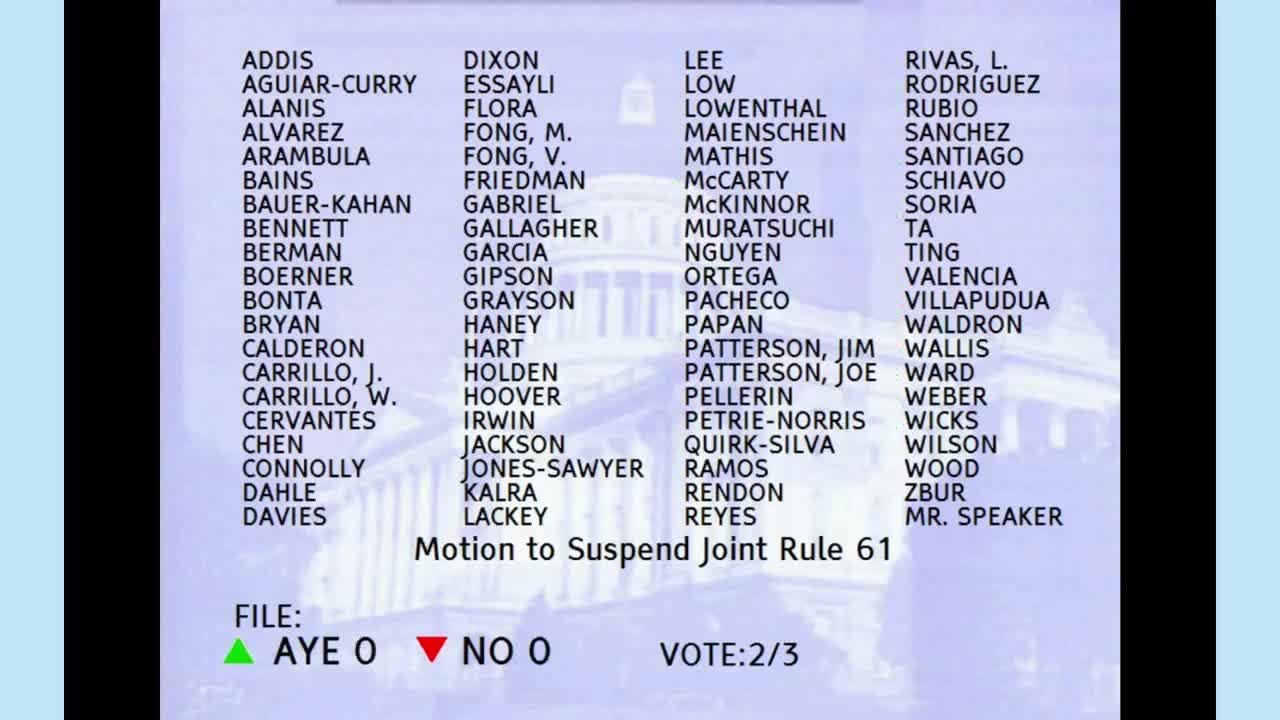 1MIN
Assembly Floor
 6MIN
Senate Standing Committee on Housing
 5MIN
Senate Standing Committee on Governmental Organization
Bill Author