SB 241: Firearms: dealer requirements.
- Session Year: 2023-2024
- House: Senate
- Latest Version Date: 2023-09-26
Current Status:
Passed
(2023-09-26: Chaptered by Secretary of State. Chapter 250, Statutes of 2023.)
Introduced
In Committee
First Chamber
In Committee
Second Chamber
Enacted
Existing law prohibits any person from selling, leasing, or transferring any firearm unless the person is licensed as a firearms dealer, as specified. Existing law prescribes certain requirements and prohibitions for licensed firearms dealers. A violation of any of these requirements or prohibitions is grounds for forfeiture of a firearms dealers license.
Commencing on July 1, 2026, this bill would require a licensee and any employees that handle firearms to annually complete specified training. The bill would require the Department of Justice, on or before February 1, 2026, to develop and implement a training course, as specified, including a testing certification component. The bill would authorize the department to adopt regulations to carry out the provisions of the bill.
Existing law prohibits any person from selling, leasing, or transferring any firearm unless the person is licensed as a firearms dealer, as specified. Existing law prescribes certain requirements and prohibitions for licensed firearms dealers. A violation of any of these requirements or prohibitions is grounds for forfeiture of a firearms dealers license.
ThisCommencing on July 1, 2026, this bill would require a licensee and any employees that handle firearms to annually complete specified training. The bill would require the Department of Justice Justice, on or before February 1, 2026, to develop and implement a training course, as specified, including a testing certification component. The bill would authorize the department to adopt regulations to carry out the provisions of the bill.
Existing law prohibits any person from selling, leasing, or transferring any firearm unless the person is licensed as a firearms dealer, as specified. Existing law prescribes certain requirements and prohibitions for licensed firearms dealers. A violation of any of these requirements or prohibitions is grounds for forfeiture of a firearms dealers license.
This bill would require a licensee and any employees that handle firearms to annually complete specified training. The bill would require the Department of Justice to develop and implement a training course, as specified, including a testing certification component. The bill would authorize the department to adopt regulations to carry out the provisions of the bill.
Existing law prohibits any person from selling, leasing, or transferring any firearm unless the person is licensed as a firearms dealer, as specified. Existing law prescribes certain requirements and prohibitions for licensed firearms dealers. A violation of any of these requirements or prohibitions is grounds for forfeiture of a firearms dealers license.
This bill would require a licensee and any employees that handle firearms to annually complete specified training. The bill would require the Department of Justice to develop and implement an online a training course, as specified, including a testing certification component. The bill would authorize the department to adopt regulations to carry out the provisions of the bill.
Existing law prohibits any person from selling, leasing, or transferring any firearm unless the person is licensed as a firearms dealer, as specified. Existing law prescribes certain requirements and prohibitions for licensed firearms dealers. A violation of any of these requirements or prohibitions is grounds for forfeiture of a firearms dealers license.
This bill would require a licensee and any employees that handle firearms to annually complete specified training. The bill would require the Department of Justice to develop and implement an online training course, as specified, including a testing certification component.
(a)Commencing July 1, 2026, every licensee, and every employee thereof who handles or processes the sale, loan, or transfer of firearms or ammunition in the course of their normal duties, shall annually complete the training and certification described in subdivision (c).
(b)Every licensee shall maintain records of certification for all employees on the business premises and shall make these records available to any agent of the department or a licensing authority conducting an inspection of the licensees premises.
(c)(1)The department shall, by no later than February 1, 2026, develop and implement a course of training for licensees and their employees who handle or process the sale, loan, or transfer of firearms or ammunition in the course of their normal duties.
(2)The training described in paragraph (1) shall include, without limitation, all of the following:
(A)Federal and state laws governing sales and transfers of firearms and ammunition.
(B)How to recognize and identify straw purchasers and fraudulent activity.
(C)Indicators that a person is attempting to purchase a firearm illegally.
(D)How to recognize and identify indicators that an individual intends to use a firearm for unlawful purposes.
(E)How to recognize and identify indicators that an individual intends to use a firearm for self-harm.
(F)How to prevent theft or burglary of firearms and ammunition.
(G)How to respond to circumstances described in subparagraphs (A) to (F), inclusive, and any applicable reporting requirement.
(H)How to teach consumers rules of firearm safety, including, but not limited to, the safe handling and storage of firearms.
(I)How to accurately and precisely complete all state and federal forms related to the sale of firearms, firearms accessories, and ammunition.
(J)Other reasonable business practices that the department determines will deter gun trafficking or the unlawful use of firearms.
(3)The training shall include an examination with not fewer than 20 questions derived from the course materials and intended to confirm that a course participant has learned the information covered by the course. A participant that answers at least 70 percent of the examination questions correctly shall receive a certificate of completion valid for one year from the date of completion.
(4)In addition to the training course, the department shall prepare supplemental written materials that shall be available to all course participants and shall include, without limitation, all of the following:
(A)An outline of indicators that a prospective firearm transferee may be involved in gun trafficking or straw purchasing, including all of the following:
(i)The person is accompanied by one or more individuals.
(ii)The person is communicating with other individuals by telephone or other means.
(iii)The person is buying multiple firearms.
(iv)The person has been the subject of a crime gun trace.
(v)The person has purchased a firearm in the preceding 30 days.
(vi)The person otherwise indicates that a firearm is being obtained for another person.
(B)How to ascertain whether a prospective firearm purchaser is lawfully purchasing a firearm, including by asking questions of the prospective firearm purchaser.
(C)How to report a suspected fraudulent firearm purchase to the federal Bureau of Alcohol, Tobacco, Firearms and Explosives and to the Department of Justice.
(5)The department shall regularly review the training materials and update them as necessary.
(d)The department may adopt regulations for the purpose of implementing this section.
(a)Commencing July 1, 2025, 2026, every licensee, and every employee thereof who handles or processes the sale, loan, or transfer of firearms or ammunition in the course of their normal duties, shall annually complete the training and certification described in subdivision (c).
(b)Every licensee shall maintain records of certification for all employees on the business premises and shall make these records available to any agent of the department or a licensing authority conducting an inspection of the licensees premises.
(c)(1)The department shall, by no later than January 1, 2025, February 1, 2026, develop and implement a course of training for licensees and their employees who handle or process the sale, loan, or transfer of firearms or ammunition in the course of their normal duties.
(2)The training described in paragraph (1) shall include, without limitation, all of the following:
(A)Federal and state laws governing sales and transfers of firearms and ammunition.
(B)How to recognize and identify straw purchasers and fraudulent activity.
(C)Indicators that a person is attempting to purchase a firearm illegally.
(D)How to recognize and identify indicators that an individual intends to use a firearm for unlawful purposes.
(E)How to recognize and identify indicators that an individual intends to use a firearm for self-harm.
(F)How to prevent theft or burglary of firearms and ammunition.
(G)How to respond to circumstances described in subparagraphs (A) to (F), inclusive, and any applicable reporting requirement.
(H)How to teach consumers rules of firearm safety, including, but not limited to, the safe handling and storage of firearms.
(I)How to accurately and precisely complete all state and federal forms related to the sale of firearms, firearms accessories, and ammunition.
(I)(J)Other reasonable business practices that the department determines will deter gun trafficking or the unlawful use of firearms.
(3)The training shall include an examination with not fewer than 20 questions derived from the course materials and intended to confirm that a course participant has learned the information covered by the course. A participant that answers at least 70 percent of the examination questions correctly shall receive a certificate of completion valid for one year from the date of completion.
(4)In addition to the training course, the department shall prepare supplemental written materials that shall be available to all course participants and shall include, without limitation, all of the following:
(A)An outline of indicators that a prospective firearm transferee may be involved in gun trafficking or straw purchasing, including all of the following:
(i)The person is accompanied by one or more individuals.
(ii)The person is communicating with other individuals by telephone or other means.
(iii)The person is buying multiple firearms.
(iv)The person has been the subject of a crime gun trace.
(v)The person has purchased a firearm in the preceding 30 days.
(vi)The person otherwise indicates that a firearm is being obtained for another person.
(B)How to ascertain whether a prospective firearm purchaser is lawfully purchasing a firearm, including by asking questions of the prospective firearm purchaser.
(C)How to report a suspected fraudulent firearm purchase to the federal Bureau of Alcohol, Tobacco, Firearms and Explosives and to the Department of Justice.
(5)The department shall regularly review the training materials and update them as necessary.
(d)The department may adopt regulations for the purpose of implementing this section.
(a)Commencing July 1, 2025, every licensee, and every employee thereof who handles or processes the sale, loan, or transfer of firearms or ammunition in the course of their normal duties, shall annually complete the training and certification described in subdivision (c).
(b)Every licensee shall maintain records of certification for all employees on the business premises and shall make these records available to any agent of the department or a licensing authority conducting an inspection of the licensees premises.
(c)(1)The department shall, by no later than January 1, 2025, develop and implement a course of training for licensees and their employees who handle or process the sale, loan, or transfer of firearms or ammunition in the course of their normal duties.
(2)The training described in paragraph (1) shall include, without limitation, all of the following:
(A)Federal and state laws governing sales and transfers of firearms and ammunition.
(B)How to recognize and identify straw purchasers and fraudulent activity.
(C)Indicators that a person is attempting to purchase a firearm illegally.
(D)How to recognize and identify indicators that an individual intends to use a firearm for unlawful purposes.
(E)How to recognize and identify indicators that an individual intends to use a firearm for self-harm.
(F)How to prevent theft or burglary of firearms and ammunition.
(G)How to respond to circumstances described in subparagraphs (A) to (F), inclusive, and any applicable reporting requirement.
(H)How to teach consumers rules of firearm safety, including, but not limited to, the safe handling and storage of firearms.
(I)Other reasonable business practices that the department determines will deter gun trafficking or the unlawful use of firearms.
(3)The training shall include an examination with not fewer than 20 questions derived from the course materials and intended to confirm that a course participant has learned the information covered by the course. A participant that answers at least 70 percent of the examination questions correctly shall receive a certificate of completion valid for one year from the date of completion.
(4)In addition to the training course, the department shall prepare supplemental written materials that shall be available to all course participants and shall include, without limitation, all of the following:
(A)An outline of indicators that a prospective firearm transferee may be involved in gun trafficking or straw purchasing, including all of the following:
(i)The person is accompanied by one or more individuals.
(ii)The person is communicating with other individuals by telephone or other means.
(iii)The person is buying multiple firearms.
(iv)The person has been the subject of a crime gun trace.
(v)The person has purchased a firearm in the preceding 30 days.
(vi)The person otherwise indicates that a firearm is being obtained for another person.
(B)How to ascertain whether a prospective firearm purchaser is lawfully purchasing a firearm, including by asking questions of the prospective firearm purchaser.
(C)How to report a suspected fraudulent firearm purchase to the federal Bureau of Alcohol, Tobacco, Firearms and Explosives and to the Department of Justice.
(5)The department shall regularly review the training materials and update them as necessary.
(d)This section does not preclude any local authority from requiring a more stringent requirement regarding the training.(e)(d)The department may adopt regulations for the purpose of implementing this section.
(a)Commencing July 1, 2025, every licensee, and every employee thereof who handles or processes the sale, loan, or transfer of firearms or ammunition in the course of their normal duties, shall annually complete the training and certification described in subdivision (c).
(b)Every licensee shall maintain records of certification for all employees on the business premises and shall make these records available to any agent of the department or a licensing authority conducting an inspection of the licensees premises.
(c)(1)The department shall, by no later than January 1, 2025, develop and implement a course of training for licensees and their employees who handle or process the sale, loan, or transfer of firearms or ammunition in the course of their normal duties.
(2)The training described in paragraph (1) shall include, without limitation, all of the following:
(A)Federal and state laws governing sales and transfers of firearms and ammunition.
(B)How to recognize and identify straw purchasers and fraudulent activity.
(C)Indicators that a person is attempting to purchase a firearm illegally.
(D)How to recognize and identify indicators that an individual intends to use a firearm for unlawful purposes.
(E)How to recognize and identify indicators that an individual intends to use a firearm for self-harm.
(F)How to prevent theft or burglary of firearms and ammunition.
(G)How to respond to circumstances described in subparagraphs (A) to (F), inclusive, and any applicable reporting requirement.
(H)How to teach consumers rules of firearm safety, including, but not limited to, the safe handling and storage of firearms.
(I)Other reasonable business practices that the department determines will deter gun trafficking or the unlawful use of firearms.
(3)The training shall be available in an online format and shall include an examination with not fewer than 20 questions derived from the course materials and intended to confirm that a course participant has learned the information covered by the course. A participant that answers at least 70 percent of the examination questions correctly shall receive a printable certificate of completion valid for one year from the date of completion.
(4)In addition to the online training course, the department shall prepare supplemental written materials that shall be available to all course participants to print and shall include, without limitation, all of the following:
(A)An outline of indicators that a prospective firearm transferee may be involved in gun trafficking or straw purchasing, including all of the following:
(i)The person is accompanied by one or more individuals.
(ii)The person is communicating with other individuals by telephone or other means.
(iii)The person is buying multiple firearms.
(iv)The person has been the subject of a crime gun trace.
(v)The person has purchased a firearm in the preceding 30 days.
(vi)The person otherwise indicates that a firearm is being obtained for another person.
(B)How to ascertain whether a prospective firearm purchaser is lawfully purchasing a firearm, including by asking questions of the prospective firearm purchaser.
(C)How to report a suspected fraudulent firearm purchase to the federal Bureau of Alcohol, Tobacco, Firearms and Explosives and to the Department of Justice.
(5)The department shall regularly review the training materials and update them as necessary.
(d)This section does not preclude any local authority from requiring a more stringent requirement regarding the training.
(e)The department may adopt regulations for the purpose of implementing this section.
(a)Commencing July 1, 2025, every licensee, and every employee thereof who handles or processes the sale, loan, or transfer of firearms or ammunition in the course of their normal duties, shall annually complete the training and certification described in subdivision (c).
(b)Every licensee shall maintain records of certification for all employees on the business premises and shall make these records available to any agent of the department or a licensing authority conducting an inspection of the licensees premises.
(c)(1)The department shall, by no later than January 1, 2025, develop and implement a course of training for licensees and their employees who handle or process the sale, loan, or transfer of firearms or ammunition in the course of their normal duties.
(2)The training described in paragraph (1) shall include, without limitation, all of the following:
(A)Federal and state laws governing sales and transfers of firearms and ammunition.
(B)How to recognize and identify straw purchasers and fraudulent activity.
(C)Indicators that a person is attempting to purchase a firearm illegally.
(D)How to recognize and identify indicators that an individual intends to use a firearm for unlawful purposes.
(E)How to recognize and identify indicators that an individual intends to use a firearm for self-harm.
(F)How to prevent theft or burglary of firearms and ammunition.
(G)How to respond to circumstances described in subparagraphs (A) to (F), inclusive, and any applicable reporting requirement.
(H)How to teach consumers rules of firearm safety, including, but not limited to, the safe handling and storage of firearms.
(I)Other reasonable business practices that the department determines will deter gun trafficking or the unlawful use of firearms.
(3)The training shall be available in an online format and shall include an examination with not fewer than 20 questions derived from the course materials and intended to confirm that a course participant has learned the information covered by the course. A participant that answers at least 70 percent of the examination questions correctly shall receive a printable certificate of completion valid for one year from the date of completion.
(4)In addition to the online training course, the department shall prepare supplemental written materials that shall be available to all course participants to print and shall include, without limitation, all of the following:
(A)An outline of indicators that a prospective firearm transferee may be involved in gun trafficking or straw purchasing, including all of the following:
(i)The person is accompanied by one or more individuals.
(ii)The person is communicating with other individuals by telephone or other means.
(iii)The person is buying multiple firearms.
(iv)The person has been the subject of a crime gun trace.
(v)The person has purchased a firearm in the preceding 30 days.
(vi)The person otherwise indicates that a firearm is being obtained for another person.
(B)How to ascertain whether a prospective firearm purchaser is lawfully purchasing a firearm, including by asking questions of the prospective firearm purchaser.
(C)How to report a suspected fraudulent firearm purchase to the federal Bureau of Alcohol, Tobacco, Firearms and Explosives and to the Department of Justice.
(5)The department shall regularly review the training materials and update them as necessary.
(d)This section does not preclude any local authority from requiring a more stringent requirement regarding the training.
|
Date
|
Status
|
|---|---|
| Sep 26, 2023 | Chaptered by Secretary of State. Chapter 250, Statutes of 2023. |
| Sep 26, 2023 | Approved by the Governor. |
| Sep 21, 2023 | Enrolled and presented to the Governor at 4 p.m. |
| Sep 14, 2023 | Assembly amendments concurred in. (Ayes 29. Noes 10. Page 2823.) Ordered to engrossing and enrolling. |
| Sep 14, 2023 | In Senate. Concurrence in Assembly amendments pending. |
| Sep 14, 2023 | Read third time. Passed. (Ayes 61. Noes 14. Page 3525.) Ordered to the Senate. |
| Sep 8, 2023 | Read third time and amended. |
| Sep 8, 2023 | Ordered to third reading. |
| Sep 8, 2023 | Assembly Rule 63 suspended. |
| Sep 8, 2023 | Action rescinded whereby bill read third time, passed, and ordered to Senate. |
| Sep 7, 2023 | Read third time. Passed. (Ayes 60. Noes 13. Page 3065.) Ordered to the Senate. |
| Sep 5, 2023 | Read second time. Ordered to third reading. |
| Sep 1, 2023 | From committee: Do pass. (Ayes 12. Noes 3.) (September 1). |
| Aug 16, 2023 | August 16 set for first hearing. Placed on suspense file. |
| Jun 29, 2023 | Read second time and amended. Re-referred to Com. on APPR. |
| Jun 28, 2023 | From committee: Do pass as amended and re-refer to Com. on APPR. (Ayes 6. Noes 0.) (June 27). |
| Jun 8, 2023 | Referred to Com. on PUB. S. |
| May 31, 2023 | In Assembly. Read first time. Held at Desk. |
| May 30, 2023 | Read third time. Passed. (Ayes 31. Noes 6. Page 1359.) Ordered to the Assembly. |
| May 22, 2023 | Read second time. Ordered to third reading. |
| May 18, 2023 | Read second time and amended. Ordered to second reading. |
| May 18, 2023 | From committee: Do pass as amended. (Ayes 5. Noes 2. Page 1162.) (May 18). |
| May 12, 2023 | Set for hearing May 18. |
| Apr 10, 2023 | April 10 hearing: Placed on APPR suspense file. |
| Mar 28, 2023 | Set for hearing April 10. |
| Mar 14, 2023 | From committee: Do pass and re-refer to Com. on APPR. (Ayes 4. Noes 0. Page 341.) (March 14). Re-referred to Com. on APPR. |
| Feb 16, 2023 | Set for hearing March 14. |
| Feb 1, 2023 | Referred to Com. on PUB S. |
| Jan 26, 2023 | From printer. May be acted upon on or after February 25. |
| Jan 25, 2023 | Introduced. Read first time. To Com. on RLS. for assignment. To print. |
|
Date
|
Description
|
Location
|
Votes
|
|
|---|---|---|---|---|
| Sep 14, 2023 | SB 241 Min Senate Third Reading By Gipson | Assembly Floor |
Passed |
|
| Sep 14, 2023 | Unfinished Business SB241 Min et al. Concurrence | Senate Floor |
Passed |
|
| Sep 7, 2023 | SB 241 Min Senate Third Reading | Assembly Floor |
Passed |
|
| Sep 1, 2023 | Do pass. | Assembly Standing Committee on Appropriations |
Passed |
|
| Jun 27, 2023 | Do pass as amended and be re-referred to the Committee on [Appropriations] | Assembly Standing Committee on Public Safety |
Passed |
|
| May 30, 2023 | Senate 3rd Reading SB241 Min | Senate Floor |
Passed |
|
| May 18, 2023 | Do pass as amended | Senate Standing Committee on Appropriations |
Passed |
|
| Apr 10, 2023 | Placed on suspense file | Senate Standing Committee on Appropriations |
Passed |
|
| Mar 14, 2023 | Do pass, but first be re-referred to the Committee on [Appropriations] | Senate Standing Committee on Public Safety |
Passed |
This list shows positions taken on this bill by organizations on the date displayed, which is linked to the original source.
Positions by individuals are not included.
|
Organization
|
Position
|
Date
|
|---|---|---|
| Brady Campaign | ** Support | |
| California Rifle and Pistol Association | ** Against | |
| City of Alameda | ** Support | |
| City of Alhambra | ** Support | |
| City of Monterey Park | ** Support | |
| County Of Los Angeles | * Support | Jun 27, 2023 |
| Everytown for Gun Safety Action Fund | ** Support | |
| Everytown Survivor Network | * Support | Jun 27, 2023 |
| Gun Owners Of California Inc | ** Against | |
| Initiate Justice | ** Support | |
| Los Angeles County Board of Supervisors | ** Support | |
| Los Angeles County District AttorneyS Office | ** Support | |
| Moms Demand Action for Gun Sense in America | * Support | Jun 27, 2023 |
| National Shooting Sports Foundation, Inc. | * Against Unless Amend | Jun 27, 2023 |
| Prosecutors Alliance California | ** Support | |
| Women for American Values and Ethics Action Fund | ** Support |
SENATE RULES COMMITTEE Office of Senate Floor Analyses (916) 651-1520 Fax: (916) 327-4478 | SB 241 |
UNFINISHED BUSINESS
Bill No: SB 241
Author: Min (D), et al.
Amended: 9/8/23
Vote: 21
SENATE PUBLIC SAFETY COMMITTEE: 4-0, 3/14/23
AYES: Wahab, Bradford, Skinner, Wiener
NO VOTE RECORDED: Ochoa Bogh
SENATE APPROPRIATIONS COMMITTEE: 5-2, 5/18/23
AYES: Portantino, Ashby, Bradford, Wahab, Wiener
NOES: Jones, Seyarto
SENATE FLOOR: 31-6, 5/30/23
AYES: Allen, Archuleta, Ashby, Atkins, Becker, Blakespear, Bradford, Caballero, Cortese, Dodd, Durazo, Eggman, Glazer, Gonzalez, Hurtado, Laird, Limón, McGuire, Menjivar, Min, Newman, Padilla, Portantino, Rubio, Skinner, Smallwood-Cuevas, Stern, Umberg, Wahab, Wiener, Wilk
NOES: Alvarado-Gil, Dahle, Grove, Jones, Niello, Seyarto
NO VOTE RECORDED: Nguyen, Ochoa Bogh, Roth
ASSEMBLY FLOOR: 44-15, 9/14/23
(ROLL CALL NOT AVAILABLE)
SUBJECT: Firearms: dealer requirements
SOURCE: Brady Campaign
DIGEST:
This bill requires firearms dealers and their employees, commencing July 1, 2026, to annually complete a training course and certification developed by the Department of Justice.
Assembly Amendments
delay the operative date of the training requirement to July 1, 2026 and the development of the training by DOJ to February 1, 2026. The amendments also include, as a required topic of the training, how to accurately and precisely complete state and federal forms related to firearms.
ANALYSIS:
Existing law:
- Prohibits, generally, the sale, lease or transfer of firearms unless the person has been issued a license by the California Department of Justice, and establishes various exceptions to this prohibition. (Penal Code §§26500 – 26625)
- Requires that prospective firearms dealers (licensees) satisfy the following requirements:
- Has a valid federal firearms license from the federal Bureau of Alcohol, Tobacco and Firearms (ATF).
- Has any regulatory or business license, or licenses, required by local government.
- Has a valid seller’s permit issued by the State Board of Equalization
- Has a Certificate of Eligibility issued by DOJ demonstrating that the applicant is not prohibited from acquiring or possessing firearms
- Has an annual license granted by the licensing authority of any city, county, or city and county.
- Is on the DOJ’s centralized list of all persons licensed to sell firearms. (Penal Code §26700(a)-(f).)
- Provides that a license to sell firearms is subject to forfeiture for any violation of a number of specified prohibitions and requirements, with limited exceptions. (Penal Code §26800(a).)
- Provides that the DOJ may assess specified civil fines against a licensee for any breach of a prohibition or requirement that subjects the licensee to forfeiture of their license to sell firearms. (Penal Code §26800(b).)
- Prohibits a dealer from delivering a firearm unless the person receiving the firearm presents to the dealer a valid firearm safety certificate, or, in the case of a handgun, an unexpired handgun safety certificate, and requires the dealer to retain a photocopy of the certificate as proof of compliance with this section. (Penal Code §26840(a).)
- Provides that no firearms dealer may deliver a handgun or long gun unless the recipient performs a safe handling demonstration with that handgun or long gun. Existing law also enumerates the elements of these safe handling demonstrations. (Penal Code §§ 26850-26860.)
- Provides that a licensee shall require any agent or employee who handles, sells or delivers firearms to obtain and provide to the licensee a certificate of eligibility from the DOJ verifying that the agent or employee is not prohibited from acquiring or possessing firearms. (Penal Code §26915(a).)
- Provides that the DOJ shall notify the firearms licensee in the event that the agent or employee who was a certificate of eligibility is or becomes prohibited from possessing firearms. (Penal Code §26915(b).)
- Requires a licensee to prohibit any agent who the licensee knows or reasonably should know is within a class of persons prohibited from possessing firearms pursuant to existing law from coming into contact with any firearm that is not secured and from accessing any key, combination, code, or other means to open specified locking devices. (Penal Code §26915(d).)
This bill:
- Provides that, commencing July 1, 2026, every licensee, and every employee thereof who handles or processes the sale, loan or transfer of firearms or ammunition in the course of their normal duties, shall annually complete a training course and certification.
- Provides that every licensee shall maintain records of certification for all employees on the business premises and make those records available to any agent of the DOJ or a licensing authority conducting an inspection of the licensee’s premises.
- Requires the DOJ, by no later than February 1, 2026, to develop and implement a course of training for licensees and their employees, which must include instruction on all of the following topics:
- Federal and state laws governing sales and transfers of firearms and ammunition.
- How to recognize and identify straw purchasers and fraudulent activity.
- Indicators that a person is attempting to purchase a firearm illegally.
- How to recognize and identify indicators that an individual intends to use a firearm for unlawful purposes.
- How to recognize and identify indicators that an individual intends to use a firearm for self-harm.
- How to prevent theft or burglary of firearms and ammunition.
- How to respond to circumstances described above, and any applicable reporting requirement.
- How to teach consumers rules of firearm safety, including, but not limited to, the safe handling and storage of firearms.
- How to accurately and precisely complete all state and federal forms related to the sale of firearms, firearms accessories, and ammunition.
- Other reasonable business practices that the DOJ determines will deter gun trafficking or the unlawful use of firearms.
- Provides that the training course shall include an examination with not fewer than 20 questions derived from the course materials and intended to confirm that a course participant has learned the information covered by the course.
- Provides that a participant that answers at least 70 percent of the examination questions correctly shall receive a certificate of completion valid for one year from the date of completion.
- Requires the DOJ to prepare supplemental written materials that shall be available to all course participants and shall include the following:
- An outline of specified indicators that a prospective firearm transferee may be involved in gun trafficking or straw purchasing.
- How to ascertain whether a prospective firearm purchaser is lawfully purchasing a firearm, including by asking questions of the purchaser.
- How to report a suspected fraudulent firearm purchase to the federal Bureau of Alcohol, Tobacco, Firearms and Explosives (ATF) and to the federal Department of Justice.
- Provides that the DOJ shall regularly review the training materials and update them as necessary.
- Authorizes the DOJ to adopt regulations for the purpose of implementing its provisions.
Comments
According to the Author, “To aid the state’s efforts to end gun violence, this bill will help to reduce the proliferation of guns in communities across California by requiring federally licensed gun dealers to undergo mandatory training to prevent theft, fraud, and illegal purchases. Many other industries require training to reduce harm to the public, and the firearm industry should be no exception. This training would enhance protections against illegal firearm purchases and put in place responsible sales practices to ensure that every legal gun sale is thoroughly scrutinized by the person processing the transaction.
The mandatory training reflects similar public safety trends that led to the recent Responsible Beverage Service (RBS) testing for restaurant employees as administered under the Alcoholic Beverage Control. By requiring restaurant servers to undergo safety training to prevent underage drinking or to identify the signs of over serving patrons, RBS is a key tool to help reduce the risks of drunk driving and subsequent harm to communities. Similarly, giving firearm dealers the tools to spot theft or fraudulent purchases, dealers can bolster our ability to prevent illegal firearm sales that too often lead to gun violence and other nefarious activities.”
Federal law requires firearms dealers to obtain a license (also known as a “federal firearms license,” or “FFL”) through the Bureau of Alcohol, Tobacco, Firearms and Explosives (ATF). An FFL is necessary but not sufficient for obtaining a firearms dealer license in California. Additional requirements include any business license required by local government, a seller’s permit issued by the California Department of Tax and Fee Administration, a seller’s license issued by the local licensing authority of a local government, a certificate of eligibility (background check) issued by the DOJ, and being recorded on the DOJ’s centralized list of firearms dealers. State law requires employees of firearm licensees to provide their employers with a certificate of eligibility from the DOJ, verifying that they are not prohibited from acquiring or possessing firearms. Should the employee later become prohibited from acquiring or possessing a firearm, the DOJ must notify the licensee. However, it is on the licensee to prevent any employee or agent who is a prohibited person from coming into contact with a firearm or accessing the means to open certain locking devices.
Existing law imposes no training requirements on licensed gun dealers in California. This bill requires all licensees and their employees to annually complete an online training, examination and certification program developed by the DOJ. The bill additionally requires licensees to maintain records of employee certification and make those records available to the DOJ upon request. The training required under the bill must cover a host of topics, including state and federal laws applicable to gun dealers, how to recognize straw purchasing and other illegal activity, how to prevent theft or burglary of firearms, and how to teach consumers about firearm safety, among other issues. Many of the topics required to be included in the licensee training program are arguably outside the DOJ’s expertise, including how to recognize indicators that an individual intends to use a firearm for unlawful purposes or self-harm, and how to teach consumers about firearm safety, particularly with regard to firearm handling and storage.
The provisions of this bill were originally included in SB 1384 (Min, Ch. 995, Stats. of 2022), a more expansive bill regarding firearm licensee physical security requirements, but were amended out in Assembly Appropriations. The provisions of this bill are virtually identical to the training provisions initially included in SB 1384, which passed off the Senate Floor by a vote of 27-9.
FISCAL EFFECT: Appropriation: No Fiscal Com.: Yes Local: No
According to the Assembly Appropriations Committee, costs (Dealer Record of Sale (DROS) Account, General Fund) to DOJ in the low millions of dollars annually for additional staffing, IT system development, storage, and server configuration. DOJ estimates costs of approximately $985,000 in fiscal year (FY) 2023-24, $1.5 million in FY 2024-25, $1.4 million in FY 2025-26, and $1.3 million annually thereafter. DOJ reports that it requires delayed implementation of this measure until April 1, 2026, and that a General Fund appropriation may be needed if the DROS Account cannot support these costs.
SUPPORT: (Verified 9/11/23)
Brady Campaign (source)
City of Alameda
City of Alhambra
City of Monterey Park
Everytown for Gun Safety Action Fund
Initiate Justice
Los Angeles County Board of Supervisors
Los Angeles County District Attorneys Office
Prosecutors Alliance California
Women for American Values and Ethics Action Fund
OPPOSITION: (Verified 9/11/23)
California Rifle and Pistol Association
Gun Owners of California, Inc.
Prepared by: Alex Barnett / PUB. S. /
9/14/23 14:57:55
**** END ****
SENATE THIRD READING
STR Bill Id:SB 241
Author:(Min)
As Amended Ver:September 8, 2023
Majority vote
SUMMARY
Requires the Department of Justice (DOJ) to create a firearm-sales training course and certification that firearm dealers, and their employees must complete annually.
Major Provisions
- Requires the DOJ to develop and implement a training course by February 1, 2026, for firearm dealers and their employees.
- Requires, commencing, July 1, 2026, that firearm dealers and their employees who regularly process the sale, loan, or transfer of a firearm or ammunition, to annually complete the DOJ's firearm-sales training course.
- States that firearm dealers must maintain records of their firearm-sales course certification on their business premise and make such records available for inspection.
- Provides that the firearm-sales training course must include, at minimum, training on the following subjects:
- Applicable state and federal laws governing firearm and ammunition transfers;
- Identifying straw purchasers and fraudulent activity;
- Indicators a person is attempting to illegally purchase a firearm;
- Indicators a person intends to use the firearm for unlawful purposes or self-harm;
- Preventing burglaries or theft of firearms and ammunition;
- Reporting requirements and how to otherwise respond to the above-mentioned circumstances;
- How to teach purchasers firearm safety rules;
- How to accurately complete applicable state and federal forms related to the sale of firearms, firearms accessories, and ammunition; and,
- Other reasonable business practices the DOJ determines suitable to further deter the unlawful use of firearms.
- States that the training course shall include an examination of no less than 20 questions to test the participant's understanding of the material, and provides answering 70% or more of the questions correctly shall result in receiving a one-year certificate of completion.
- States that the supplemental written materials must include, at minimum, the following indicators of firearm trafficking or straw purchasing:
- A purchaser buying multiple firearms;
- A purchaser being accompanied by another person;
- A purchaser communicating with others via phone or other means;
- A purchaser being the subject of a crime gun trace;
- A purchaser having purchased another firearm in the preceding 30 days;
- A purchaser indicating the firearm is for another person;
- How to determine the firearm is being legally purchased, including by asking the purchaser questions; and,
- How to report suspected fraud.
- Requires the DOJ to regularly review and update the training materials as needed.
- Authorizes the DOJ to adopt regulations to implement these provisions.
COMMENTS
Gun Store Thefts and Straw Purchases: Thefts from licensed gun retailers have been a persistent problem in California. In 2015, according to data compiled by the ATF and California DOJ, more than 400 guns were reported stolen from gun stores. The following year, the Sacramento area alone saw five gun store thefts in a period of less than three months, during which more than 200 guns were stolen. ("Gun Stores in Northern California Getting Hit Harder by Thieves." NBC Bay Area. 1 November 2016. <https://www.nbcbayarea.com/news/local/gun-stores-in-northern-california-getting-hit-harder-by-thieves/2010754/#ixzz4aandO02M> [as of Jun. 16, 2023].) Many of these thefts involved the perpetrators ramming vehicles through storefronts, bypassing any security measures. Between 2012 and 2019, 1,937 guns were reported stolen from federally licensed gun dealers in California, the 7th highest rate of theft for any state during that period. (The Center for American Progress. "Gun theft in the United States: A state-by-state analysis." (hereafter Center for American Progress) (Mar. 4, 2020.) <https://www.americanprogress.org/article/gun-theft-united-states-state-state-analysis/> [as of Jun. 16, 2023].) However, the rate of gun store thefts seems to have tapered slightly in recent years since peaking in 2016 (690), with 208 reported thefts in 2021. ("Federal Firearms Licensee Theft/Loss Report." Bureau of Alcohol, Tobacco, Firearms and Explosives (ATF). January 1, 2021 – December 31, 2021. <https://www.atf.gov/resource-center/federal-firearms-licensee-theftloss-report-2021> [as of Jun. 16, 2023]; Center for American Progress.)
Another practice contributing to the illicit gun market is "straw purchasing," the illegal purchase of a firearm by one person for another. Data compiled by Giffords Law Center to Prevent Gun Violence illustrates the problem:
Data from a national survey of firearm licensees suggests that there are more than 30,000 attempted straw purchases each year. A representative survey found that more than two-thirds of dealers experienced at least one attempted straw purchase in the year preceding the survey. Researchers have also found that gun dealers are willing to make gun sales under conditions that suggest straw purchases. In one investigation, one in five gun sellers were willing to sell guns to people explicitly asking to buy firearms on behalf of someone else. (Trafficking & Straw Purchasing. Giffords Law Center. <https://giffords.org/lawcenter/gun-laws/policy-areas/crime-guns/trafficking-straw-purchasing/#:~:text=Data%20from%20a%20national%20survey,the%20year%20preceding%20the%20survey> [as of Jun. 16, 2023].)
Existing California law makes it illegal for any corporation, person or dealer to sell, loan or transfer a firearm to anyone they know or have cause to believe is not the actual purchaser or the person actually being loaned the firearm, if they know that the firearm is to be subsequently sold or transferred in violation of various requirements. (Penal Code Section 27515.) Existing law also prohibits a person from acquiring a firearm with the intention of selling, loaning, or transferring it in violation of the requirement that private sales or transfers be conducted through a licensed dealer. (Penal Code Section 27520(b).) While existing law does impose certain requirements on firearm dealers, it does not require firearm dealers to take trainings that would assist them in further securing inventory or determining when a prospective purchaser may intend to break the law.
Although a great deal of guns used in crimes nationwide are stolen from private citizens (approximately 1 million out of 1.4 million crime guns successfully traced were stolen from a private citizen in 2017-2021) this bill would focus on the less frequent, but just as pernicious, thefts and straw purchases from firearm dealers. (ATF. National Firearms Commerce and Trafficking Assessment (NFCTA): Crime Guns – Volume Two. (Jan. 11, 2023) <https://www.atf.gov/firearms/national-firearms-commerce-and-trafficking-assessment-nfcta-crime-guns-volume-two> [as of Jun. 19, 2023] at Part III p. 1-2, and Part V p. 2.) This bill seeks to curb gun store theft and straw purchasing proactively via mandatory training for licensees and their employees on these practices and how to identify them among potential buyers.
According to the Author
"To aid the state's efforts to end gun violence, this bill will help to reduce the proliferation of guns in communities across California by requiring federally licensed gun dealers to undergo mandatory training to prevent theft, fraud, and illegal purchases. Many other industries require training to reduce harm to the public, and the firearm industry should be no exception. This training would enhance protections against illegal firearm purchases and put in place responsible sales practices to ensure that every legal gun sale is thoroughly scrutinized by the person processing the transaction. Giving firearm dealers the tools to spot theft or fraudulent purchases, dealers can bolster our ability to prevent illegal firearm sales that too often lead to gun violence and other nefarious activities."
Arguments in Support
According to this bill's sponsor, Brady United Against Gun Violence, "Gun dealers play the critical role of gatekeepers, including using the Brady Background Check System to confirm the eligibility of potential gun purchasers, and their conduct has a direct bearing on whether guns are diverted to illegal markets through straw sales or theft, or are made available to individuals who would harm themselves or others. Almost all guns enter circulation through the legal market: built by licensed manufacturers and sold by gun dealers. Illegal guns begin as legal firearms, initially sold by dealers and subsequently funneled into an illegal market, often through straw purchases where a person buys a firearm on behalf of another while falsely representing that it is for themselves. Straw purchases, which undermine the background check system, make it more difficult for law enforcement to trace illegal guns, or guns or bullet casings found at crime scenes. Straw purchases are the most frequent type of trafficking channel identified in investigations carried out by the Bureau of Alcohol, Tobacco, Firearms and Explosives (ATF). Shockingly, ATF inspection reports show that dealers that allow straw purchases are allowed to stay in business more often than not.
"Legal firearms also enter the illegal market through thefts from gun dealer premises that are not adequately secured. According to recent data from ATF, approximately 16,900 firearms are reported lost or stolen from gun dealers each year – with many of these firearms later traced to violent crime. Gun theft is on the rise across the country because stolen guns are easy for criminals to sell. As the chief of the ATF's Intelligence Unit noted: '[g]uns are the hottest commodity out there, except for . . . cold, hard cash.' The threat of stolen guns to public safety is substantial. Most stolen guns are recovered in connection with crime in cities near the location from where they were stolen. ATF expressed concerns about persistent theft from licensed dealers in 2018, calling it one of the agency's primary 'external challenges.' Without action to require dealers to implement safe business practices, this trend will continue.
"Despite these substantial risks and the fact that gun dealers can play a critical role in preventing violence in our communities, they are not sufficiently regulated. The ATF considers dealers to be "the first line in maintaining the security and lawful transfer of firearms" but it merely issues guidance on safe business practices that dealers can adopt on a voluntary basis and it provides almost no oversight of those business practices. For example, there are no federal laws or regulations that require gun dealers t or train their employees on recognizing signs of illegal activity.
"While most Americans have been touched by gun violence in some way, communities of color are disproportionately impacted by this epidemic. Negligent, irresponsible, and illegal conduct by gun dealers has immense consequences, especially for communities of color that bear the heaviest burden of gun violence. Every year, hundreds of thousands of guns used in crime are recovered and traced by law enforcement. Tens of thousands of guns are also trafficked across state lines, often from states with weak laws to states with much stronger laws. These guns do not just appear on America's streets. Appropriate conduct by gun dealers and their employees is critical to keeping guns out of impacted communities. According to CDC data, 89 percent of gun homicides take place in urban settings, and 78 percent of gun homicide victims are Black or Hispanic.
"The role that gun dealers and their employees can play in preventing gun violence cannot be overstated. This bill simply requires gun dealer training to ensure that dealers are trained on the tools they have to prevent gun trafficking and understand their obligation to engage in responsible business practices. Specifically, this bill will require firearm retailers and their employees to complete regular training created and overseen by the California Department of Justice to prevent illegal sales and enhance their business practices. This is not burdensome and it is common sense. In fact, a similar requirement passed last year in New York. This legislation is critical to curbing dangerous sales, preventing guns from being diverted into the criminal market and reducing the likelihood of straw purchases, theft, burglary, and loss of inventory."
Arguments in Opposition
According to the California Rifle and Pistol Association, "The author is quoted as stating in a January 25, 2023, press release, 'We have got to do something to reduce the gun violence in this country. While this bill will not end gun violence, it will help to reduce it, by requiring gun dealers to undergo training to prevent theft, fraud, and illegal purchases.' This bill as stated will have no demonstrable impact on gun violence as numerous national studies have shown that criminals do not follow the law, and do not purchase firearms legally.
"Federal Firearms License dealers already take extensive training through the National Shooting Sports Foundation (NSSF) which provides annual Firearm Industry Compliance education at SHOT Show and online (https://www.nssf.org/articles/2022-firearm-industry-compliance-education/). NSSF also provides straw purchase avoidance training such as 'Strawman: The Customer You Do Not Want – Tactics to Help FFLs Avoid Straw Purchase Sales' which is written by industry experts and former ATF agents. The fact that this is the status quo, demonstrates that the purported significance of this proposed legislation is limited at best.
"The Department of Justice (CADOJ) has repeatedly fallen short of legislative expectations in implementing laws passed by the legislature over several years. The lack of a stakeholder group providing real-world experience to training designed to protect all Californians is demonstrable. of a bill that is not well thought out. CADOJ has numerous current projects they seem to be unable to meet general performance standards to keep Californians safe.
"CRPA will continue to support sound legislation to reduce crime and get criminals off our streets and out of our communities. Our motto for 150 years has been 'Be Safe' and we will support sound legislation that does so. Making a law to advise FFLs to do what they are already doing does not keep firearms out of the hands of criminals and therefore SB 241 will not deliver on that promise. For the foregoing reasons, the California Rifle & Pistol Association strongly opposes SB 241."
FISCAL COMMENTS
According to the Assembly Appropriations Committee, costs (Dealer Record of Sale (DROS) Account, General Fund) to DOJ in the low millions of dollars annually for additional staffing, IT system development, storage, and server configuration. DOJ estimates costs of approximately $985,000 in fiscal year (FY) 2023-24, $1.5 million in FY 2024-25, $1.4 million in FY 2025-26, and $1.3 million annually thereafter. DOJ reports that it requires delayed implementation of this measure until April 1, 2026, and that a General Fund appropriation may be needed if the DROS Account cannot support these costs.
VOTES
SENATE FLOOR: 31-6-3
YES: Allen, Archuleta, Ashby, Atkins, Becker, Blakespear, Bradford, Caballero, Cortese, Dodd, Durazo, Eggman, Glazer, Gonzalez, Hurtado, Laird, Limón, McGuire, Menjivar, Min, Newman, Padilla, Portantino, Rubio, Skinner, Smallwood-Cuevas, Stern, Umberg, Wahab, Wiener, Wilk
NO: Alvarado-Gil, Dahle, Grove, Jones, Niello, Seyarto
ABS, ABST OR NV: Nguyen, Ochoa Bogh, Roth
ASM PUBLIC SAFETY: 6-0-2
YES: Jones-Sawyer, Bonta, Bryan, Ortega, Santiago, Jackson
ABS, ABST OR NV: Alanis, Lackey
ASM APPROPRIATIONS: 12-3-1
YES: Holden, Bryan, Calderon, Wendy Carrillo, Mike Fong, Hart, Lowenthal, Papan, Pellerin, Soria, Weber, Wilson
NO: Megan Dahle, Dixon, Sanchez
ABS, ABST OR NV: Mathis
ASSEMBLY FLOOR: 60-13-7
YES: Addis, Aguiar-Curry, Alvarez, Arambula, Bains, Bauer-Kahan, Bennett, Berman, Boerner, Bonta, Bryan, Calderon, Juan Carrillo, Wendy Carrillo, Cervantes, Connolly, Mike Fong, Friedman, Gabriel, Garcia, Gipson, Haney, Hart, Holden, Irwin, Jackson, Jones-Sawyer, Kalra, Lee, Low, Lowenthal, Maienschein, McCarty, McKinnor, Muratsuchi, Stephanie Nguyen, Ortega, Pacheco, Papan, Pellerin, Petrie-Norris, Quirk-Silva, Ramos, Rendon, Reyes, Luz Rivas, Blanca Rubio, Santiago, Schiavo, Soria, Ting, Valencia, Villapudua, Ward, Weber, Wicks, Wilson, Wood, Zbur, Robert Rivas
NO: Megan Dahle, Dixon, Flora, Vince Fong, Gallagher, Hoover, Mathis, Jim Patterson, Joe Patterson, Sanchez, Ta, Waldron, Wallis
ABS, ABST OR NV: Alanis, Chen, Davies, Essayli, Grayson, Lackey, Rodriguez
UPDATED
VERSION: September 8, 2023
CONSULTANT: Mureed Rasool / PUB. S. / (916) 319-3744 FN: 0002152
SENATE THIRD READING
STR Bill Id:SB 241
Author:(Min)
As Amended Ver:June 29, 2023
Majority vote
SUMMARY
Requires the Department of Justice (DOJ) to create a firearm-sales training course and certification that firearm dealers, and their employees must complete annually.
Major Provisions
- Requires the DOJ to develop and implement a training course by January 1, 2025, for firearm dealers and their employees.
- Requires, commencing, July 1, 2025, that firearm dealers and their employees who regularly process the sale, loan, or transfer of a firearm or ammunition, to annually complete the DOJ's firearm-sales training course.
- States that firearm dealers must maintain records of their firearm-sales course certification on their business premise and make such records available for inspection.
- Provides that the firearm-sales training course must include, at minimum, training on the following subjects:
- Applicable state and federal laws governing firearm and ammunition transfers;
- Identifying straw purchasers and fraudulent activity;
- Indicators a person is attempting to illegally purchase a firearm;
- Indicators a person intends to use the firearm for unlawful purposes or self-harm;
- Preventing burglaries or theft of firearms and ammunition;
- Reporting requirements and how to otherwise respond to the above-mentioned circumstances;
- How to teach purchasers firearm safety rules; and,
- Other reasonable business practices the DOJ determines suitable to further deter the unlawful use of firearms.
- States that the training course shall include an examination of no less than 20 questions to test the participant's understanding of the material, and provides answering 70% or more of the questions correctly shall result in receiving a one-year certificate of completion.
- States that the supplemental written materials must include, at minimum, the following indicators of firearm trafficking or straw purchasing:
- A purchaser buying multiple firearms;
- A purchaser being accompanied by another person;
- A purchaser communicating with others via phone or other means;
- A purchaser being the subject of a crime gun trace;
- A purchaser having purchased another firearm in the preceding 30 days;
- A purchaser indicating the firearm is for another person;
- How to determine the firearm is being legally purchased, including by asking the purchaser questions; and,
- How to report suspected fraud.
- Requires the DOJ to regularly review and update the training materials as needed.
- Authorizes the DOJ to adopt regulations to implement these provisions.
COMMENTS
Gun Store Thefts and Straw Purchases: Thefts from licensed gun retailers have been a persistent problem in California. In 2015, according to data compiled by the ATF and California DOJ, more than 400 guns were reported stolen from gun stores. The following year, the Sacramento area alone saw five gun store thefts in a period of less than three months, during which more than 200 guns were stolen. ("Gun Stores in Northern California Getting Hit Harder by Thieves." NBC Bay Area. 1 November 2016. <https://www.nbcbayarea.com/news/local/gun-stores-in-northern-california-getting-hit-harder-by-thieves/2010754/#ixzz4aandO02M> [as of Jun. 16, 2023].) Many of these thefts involved the perpetrators ramming vehicles through storefronts, bypassing any security measures. Between 2012 and 2019, 1,937 guns were reported stolen from federally licensed gun dealers in California, the 7th highest rate of theft for any state during that period. (The Center for American Progress. "Gun theft in the United States: A state-by-state analysis." (hereafter Center for American Progress) (Mar. 4, 2020.) <https://www.americanprogress.org/article/gun-theft-united-states-state-state-analysis/> [as of Jun. 16, 2023].) However, the rate of gun store thefts seems to have tapered slightly in recent years since peaking in 2016 (690), with 208 reported thefts in 2021. ("Federal Firearms Licensee Theft/Loss Report." Bureau of Alcohol, Tobacco, Firearms and Explosives (ATF). January 1, 2021 – December 31, 2021. <https://www.atf.gov/resource-center/federal-firearms-licensee-theftloss-report-2021> [as of Jun. 16, 2023]; Center for American Progress.)
Another practice contributing to the illicit gun market is "straw purchasing," the illegal purchase of a firearm by one person for another. Data compiled by Giffords Law Center to Prevent Gun Violence illustrates the problem:
Data from a national survey of firearm licensees suggests that there are more than 30,000 attempted straw purchases each year. A representative survey found that more than two-thirds of dealers experienced at least one attempted straw purchase in the year preceding the survey. Researchers have also found that gun dealers are willing to make gun sales under conditions that suggest straw purchases. In one investigation, one in five gun sellers were willing to sell guns to people explicitly asking to buy firearms on behalf of someone else. (Trafficking & Straw Purchasing. Giffords Law Center. <https://giffords.org/lawcenter/gun-laws/policy-areas/crime-guns/trafficking-straw-purchasing/#:~:text=Data%20from%20a%20national%20survey,the%20year%20preceding%20the%20survey> [as of Jun. 16, 2023].)
Existing California law makes it illegal for any corporation, person or dealer to sell, loan or transfer a firearm to anyone they know or have cause to believe is not the actual purchaser or the person actually being loaned the firearm, if they know that the firearm is to be subsequently sold or transferred in violation of various requirements. (Penal Code Section 27515.) Existing law also prohibits a person from acquiring a firearm with the intention of selling, loaning, or transferring it in violation of the requirement that private sales or transfers be conducted through a licensed dealer. (Penal Code Section 27520(b).) While existing law does impose certain requirements on firearm dealers, it does not require firearm dealers to take trainings that would assist them in further securing inventory or determining when a prospective purchaser may intend to break the law.
Although a great deal of guns used in crimes nationwide are stolen from private citizens (approximately 1 million out of 1.4 million crime guns successfully traced were stolen from a private citizen in 2017-2021) this bill would focus on the less frequent, but just as pernicious, thefts and straw purchases from firearm dealers. (ATF. National Firearms Commerce and Trafficking Assessment (NFCTA): Crime Guns – Volume Two. (Jan. 11, 2023) <https://www.atf.gov/firearms/national-firearms-commerce-and-trafficking-assessment-nfcta-crime-guns-volume-two> [as of Jun. 19, 2023] at Part III p. 1-2, and Part V p. 2.) This bill seeks to curb gun store theft and straw purchasing proactively via mandatory training for licensees and their employees on these practices and how to identify them among potential buyers.
According to the Author
"To aid the state's efforts to end gun violence, this bill will help to reduce the proliferation of guns in communities across California by requiring federally licensed gun dealers to undergo mandatory training to prevent theft, fraud, and illegal purchases. Many other industries require training to reduce harm to the public, and the firearm industry should be no exception. This training would enhance protections against illegal firearm purchases and put in place responsible sales practices to ensure that every legal gun sale is thoroughly scrutinized by the person processing the transaction. Giving firearm dealers the tools to spot theft or fraudulent purchases, dealers can bolster our ability to prevent illegal firearm sales that too often lead to gun violence and other nefarious activities."
Arguments in Support
According to this bill's sponsor, Brady United Against Gun Violence, "Gun dealers play the critical role of gatekeepers, including using the Brady Background Check System to confirm the eligibility of potential gun purchasers, and their conduct has a direct bearing on whether guns are diverted to illegal markets through straw sales or theft, or are made available to individuals who would harm themselves or others. Almost all guns enter circulation through the legal market: built by licensed manufacturers and sold by gun dealers. Illegal guns begin as legal firearms, initially sold by dealers and subsequently funneled into an illegal market, often through straw purchases where a person buys a firearm on behalf of another while falsely representing that it is for themselves. Straw purchases, which undermine the background check system, make it more difficult for law enforcement to trace illegal guns, or guns or bullet casings found at crime scenes. Straw purchases are the most frequent type of trafficking channel identified in investigations carried out by the Bureau of Alcohol, Tobacco, Firearms and Explosives (ATF). Shockingly, ATF inspection reports show that dealers that allow straw purchases are allowed to stay in business more often than not.
"Legal firearms also enter the illegal market through thefts from gun dealer premises that are not adequately secured. According to recent data from ATF, approximately 16,900 firearms are reported lost or stolen from gun dealers each year – with many of these firearms later traced to violent crime. Gun theft is on the rise across the country because stolen guns are easy for criminals to sell. As the chief of the ATF's Intelligence Unit noted: '[g]uns are the hottest commodity out there, except for . . . cold, hard cash.' The threat of stolen guns to public safety is substantial. Most stolen guns are recovered in connection with crime in cities near the location from where they were stolen. ATF expressed concerns about persistent theft from licensed dealers in 2018, calling it one of the agency's primary 'external challenges.' Without action to require dealers to implement safe business practices, this trend will continue.
"Despite these substantial risks and the fact that gun dealers can play a critical role in preventing violence in our communities, they are not sufficiently regulated. The ATF considers dealers to be "the first line in maintaining the security and lawful transfer of firearms" but it merely issues guidance on safe business practices that dealers can adopt on a voluntary basis and it provides almost no oversight of those business practices. For example, there are no federal laws or regulations that require gun dealers t or train their employees on recognizing signs of illegal activity.
"While most Americans have been touched by gun violence in some way, communities of color are disproportionately impacted by this epidemic. Negligent, irresponsible, and illegal conduct by gun dealers has immense consequences, especially for communities of color that bear the heaviest burden of gun violence. Every year, hundreds of thousands of guns used in crime are recovered and traced by law enforcement. Tens of thousands of guns are also trafficked across state lines, often from states with weak laws to states with much stronger laws. These guns do not just appear on America's streets. Appropriate conduct by gun dealers and their employees is critical to keeping guns out of impacted communities. According to CDC data, 89 percent of gun homicides take place in urban settings, and 78 percent of gun homicide victims are Black or Hispanic.
"The role that gun dealers and their employees can play in preventing gun violence cannot be overstated. This bill simply requires gun dealer training to ensure that dealers are trained on the tools they have to prevent gun trafficking and understand their obligation to engage in responsible business practices. Specifically, this bill will require firearm retailers and their employees to complete regular training created and overseen by the California Department of Justice to prevent illegal sales and enhance their business practices. This is not burdensome and it is common sense. In fact, a similar requirement passed last year in New York. This legislation is critical to curbing dangerous sales, preventing guns from being diverted into the criminal market and reducing the likelihood of straw purchases, theft, burglary, and loss of inventory."
Arguments in Opposition
According to the California Rifle and Pistol Association, "The author is quoted as stating in a January 25, 2023, press release, 'We have got to do something to reduce the gun violence in this country. While this bill will not end gun violence, it will help to reduce it, by requiring gun dealers to undergo training to prevent theft, fraud, and illegal purchases.' This bill as stated will have no demonstrable impact on gun violence as numerous national studies have shown that criminals do not follow the law, and do not purchase firearms legally.
"Federal Firearms License dealers already take extensive training through the National Shooting Sports Foundation (NSSF) which provides annual Firearm Industry Compliance education at SHOT Show and online (https://www.nssf.org/articles/2022-firearm-industry-compliance-education/). NSSF also provides straw purchase avoidance training such as 'Strawman: The Customer You Do Not Want – Tactics to Help FFLs Avoid Straw Purchase Sales' which is written by industry experts and former ATF agents. The fact that this is the status quo, demonstrates that the purported significance of this proposed legislation is limited at best.
"The Department of Justice (CADOJ) has repeatedly fallen short of legislative expectations in implementing laws passed by the legislature over several years. The lack of a stakeholder group providing real-world experience to training designed to protect all Californians is demonstrable. of a bill that is not well thought out. CADOJ has numerous current projects they seem to be unable to meet general performance standards to keep Californians safe.
"CRPA will continue to support sound legislation to reduce crime and get criminals off our streets and out of our communities. Our motto for 150 years has been 'Be Safe' and we will support sound legislation that does so. Making a law to advise FFLs to do what they are already doing does not keep firearms out of the hands of criminals and therefore SB 241 will not deliver on that promise. For the foregoing reasons, the California Rifle & Pistol Association strongly opposes SB 241."
FISCAL COMMENTS
According to the Assembly Appropriations Committee, costs (Dealer Record of Sale (DROS) Account, General Fund) to DOJ in the low millions of dollars annually for additional staffing, IT system development, storage, and server configuration. DOJ estimates costs of approximately $985,000 in fiscal year (FY) 2023-24, $1.5 million in FY 2024-25, $1.4 million in FY 2025-26, and $1.3 million annually thereafter. DOJ reports that it requires delayed implementation of this measure until April 1, 2026, and that a General Fund appropriation may be needed if the DROS Account cannot support these costs.
VOTES
SENATE FLOOR: 31-6-3
YES: Allen, Archuleta, Ashby, Atkins, Becker, Blakespear, Bradford, Caballero, Cortese, Dodd, Durazo, Eggman, Glazer, Gonzalez, Hurtado, Laird, Limón, McGuire, Menjivar, Min, Newman, Padilla, Portantino, Rubio, Skinner, Smallwood-Cuevas, Stern, Umberg, Wahab, Wiener, Wilk
NO: Alvarado-Gil, Dahle, Grove, Jones, Niello, Seyarto
ABS, ABST OR NV: Nguyen, Ochoa Bogh, Roth
ASM PUBLIC SAFETY: 6-0-2
YES: Jones-Sawyer, Bonta, Bryan, Ortega, Santiago, Jackson
ABS, ABST OR NV: Alanis, Lackey
ASM APPROPRIATIONS: 12-3-1
YES: Holden, Bryan, Calderon, Wendy Carrillo, Mike Fong, Hart, Lowenthal, Papan, Pellerin, Soria, Weber, Wilson
NO: Megan Dahle, Dixon, Sanchez
ABS, ABST OR NV: Mathis
UPDATED
VERSION: June 29, 2023
CONSULTANT: Mureed Rasool / PUB. S. / (916) 319-3744 FN: 0001473
Date of Hearing: August 16, 2023
ASSEMBLY COMMITTEE ON APPROPRIATIONS
Chris Holden, Chair
SBPCA Bill Id:SB 241
Author:(Min) – As Amended Ver:June 29, 2023
Policy Committee: | Public Safety | Vote: | 6 - 0 |
|
| ||
|
|
Urgency: No State Mandated Local Program: No Reimbursable: No
SUMMARY:
This bill requires the Department of Justice (DOJ) to develop and implement a firearm sales training course and examination that firearms dealers and their employees must complete annually.
Specifically this bill:
- Requires DOJ to develop and implement a firearm sales training course by January 1, 2025, for firearm dealers and their employees, and specifies topics that the training course must cover.
- Requires firearm dealers and qualifying employees to complete DOJ’s firearm sales training course annually.
- Requires the training course to include an examination.
- Provides that a participant who answers 70% or more of the examination questions correctly, will receive a one-year certificate of completion.
- Requires DOJ to prepare supplemental written materials to be made available to participants.
- Authorizes DOJ to adopt regulations to implement these provisions.
FISCAL EFFECT:
Costs (Dealer Record of Sale (DROS) Account, General Fund) to DOJ in the low millions of dollars annually for additional staffing, IT system development, storage, and server configuration. DOJ estimates costs of approximately $985,000 in fiscal year (FY) 2023-24, $1.5 million in FY 2024-25, $1.4 million in FY 2025-26, and $1.3 million annually thereafter. DOJ reports that it requires delayed implementation of this measure until April 1, 2026, and that a General Fund appropriation may be needed if the DROS Account cannot support these costs.
COMMENTS:
- Purpose. According to the author:
To aid the state’s efforts to end gun violence, this bill will help to reduce the proliferation of guns in communities across California by requiring federally licensed gun dealers to undergo mandatory training to prevent theft, fraud, and illegal purchases. Many other industries require training to reduce harm to the public, and the firearm industry should be no exception. This training would enhance protections against illegal firearm purchases and put in place responsible sales practices to ensure that every legal gun sale is thoroughly scrutinized by the person processing the transaction. Giving firearm dealers the tools to spot theft or fraudulent purchases, dealers can bolster our ability to prevent illegal firearm sales that too often lead to gun violence and other nefarious activities.
- Background. According to the analysis of this bill by the Assembly Committee on Public Safety, straw purchases of firearms and thefts from licensed firearms dealers are an ongoing problem in California. A straw purchase occurs when one person buys a firearm for another person – a practice that can be used to obtain firearms for people who are prohibited from possessing firearms and make it more difficult to trace ownership of individual firearms.
This bill requires DOJ to develop a training course that firearms dealers and their qualifying employees must take annually. The course must include information about applicable state and federal laws governing firearms and ammunition transfers, identifying straw purchasers and fraudulent activity, indicators a person is trying to illegally purchase a firearm, and preventing burglaries and theft of firearms, among other topics. After taking the course, a participant must pass an examination about the material.
- Support and Opposition. In support, Everytown for Gun Safety writes:
A comprehensive approach to reducing gun violence must include a focus on the upstream source of crime guns that are infiltrating communities. Businesses that sell deadly weapons need to put basic protections in place to keep communities safe. This includes training employees on how to avoid selling guns that fuel crime - by teaching gun store employees how to spot signs of straw purchases and gun trafficking, and how to prevent theft of firearms from their stores… Gun dealers and their employees are truly the first, and most important, line of defense to prevent firearms from landing in dangerous hands.
In opposition, Gun Owners of California writes:
Every aspect of this bill is already covered by federal law, regulations, and practices except for the testing aspect. Given that the Department of Justice/Firearms Division has been incapable of maintaining and operating all its present responsibilities, GOC believes it unwise to further saddle DOJ with yet another program. This will undoubtably detract from all other legislatively mandated responsibilities.
- Prior Legislation. SB 1384 (Min), Chapter 995, Statutes of 2022, which requires a firearms dealer to use a digital video surveillance system and carry general liability insurance, originally contained provisions that were substantially similar to this bill. Those provisions were amended out in this committee.
Analysis Prepared by: Annika Carlson / APPR. / (916) 319-2081
Date of Hearing: June 27, 2023
Counsel: Mureed Rasool
ASSEMBLY COMMITTEE ON PUBLIC SAFETY
Reginald Byron Jones-Sawyer, Sr., Chair
SBPCA Bill Id:SB 241
Author:(Min) – As Amended Ver:May 18, 2023
As Proposed to be Amended in Committee
SUMMARY: Requires the Department of Justice (DOJ) to create a firearm-sales training course and certification that firearm dealers, and their employees must complete annually. Specifically, this bill:
- Requires the DOJ to develop and implement a training course by January 1, 2025, for firearm dealers and their employees.
- Requires, commencing, July 1, 2025, that firearm dealers and their employees who regularly process the sale, loan, or transfer of a firearm or ammunition, to annually complete the DOJ’s firearm-sales training course.
- States that firearm dealers must maintain records of their firearm-sales course certification on their business premise and make such records available for inspection.
- Provides that the firearm-sales training course must include, at minimum, training on the following subjects:
- Applicable state and federal laws governing firearm and ammunition transfers;
- Identifying straw purchasers and fraudulent activity;
- Indicators a person is attempting to illegally purchase a firearm;
- Indicators a person intends to use the firearm for unlawful purposes or self-harm;
- Preventing burglaries or theft of firearms and ammunition;
- Reporting requirements and how to otherwise respond to the above-mentioned circumstances;
- How to teach purchasers firearm safety rules; and,
- Other reasonable business practices the DOJ determines suitable to further deter the unlawful use of firearms.
- States that the training course shall include an examination of no less than 20 questions to test the participant’s understanding of the material, and provides answering 70% or more of the questions correctly shall result in receiving a one-year certificate of completion.
- Requires the DOJ to also prepare supplemental written materials to be made available to participants.
- States that the supplemental written materials must include, at minimum, the following indicators of firearm trafficking or straw purchasing:
- A purchaser buying multiple firearms;
- A purchaser being accompanied by another person;
- A purchaser communicating with others via phone or other means;
- A purchaser being the subject of a crime gun trace;
- A purchaser having purchased another firearm in the preceding 30 days;
- A purchaser indicating the firearm is for another person;
- How to determine the firearm is being legally purchased, including by asking the purchaser questions; and,
- How to report suspected fraud.
- Requires the DOJ to regularly review and update the training materials as needed.
- States that local authorities are not preempted from imposing more stringent requirements regarding the training.
- Authorizes the DOJ to adopt regulations to implement these provisions.
EXISTING LAW:
- Requires a person to have a firearms dealer license before they can sell, lease, or transfer a firearm, with specified exemptions. (Pen. Code, § 26500 et seq.)
- Provides that a firearm dealer must have a valid federal firearms license, appropriate local business licenses, and a certificate of eligibility from the DOJ, among other things. (Pen. Code, § 26700.)
- Provides that a license to sell firearms is subject to forfeiture for any violation of a number of specified prohibitions and requirements, with limited exceptions. (Pen. Code, § 26800.)
- Prohibits a dealer from delivering a firearm unless the person receiving the firearm presents to the dealer a valid firearm safety certificate, or, in the case of a handgun, an unexpired handgun safety certificate, and requires the dealer to retain a photocopy of the certificate as proof of compliance with this section. (Pen. Code, § 26840, subd. (a).)
- Provides that a firearm dealer shall require every agent or employee who handles, sells or delivers firearms to obtain and provide to the dealer, a certificate of eligibility from the DOJ verifying that the agent or employee is not prohibited from acquiring or possessing firearms. (Penal Code §26915(a).)
- States that a firearm dealer must prohibit any agent who they know, or reasonably should know, is a person prohibited from possessing a firearm, from coming into contact with a firearm, as specified. (Pen. Code, § 26915, subd. (e).)
- Prohibits anyone, including firearm dealers, from giving a firearm to a person who they have cause to believe is a person prohibited from possessing a firearm. (Pen. Code, § 27500.)
- Prohibits anyone, including firearm dealers, from giving a firearm to a person who they know, or have cause to believe, is not the actual purchaser or transferee of the firearm, or who may subsequently transfer the firearm in order to circumvent firearm transfer laws. (Pen. Code, § 27515.)
- Prohibits anyone from acquiring a firearm for the purpose of giving it to a person under 21 years of age or to evade conducting the transfer through a firearm dealer. (Pen. Code, § 27520.)
- Requires, with exception, that any time when the licensee is not open for business, all inventory firearms must be stored in the licensed location. All firearms must be secured using one of the following methods as to each particular firearm:
- Store the firearm in a secure facility that is a part of, or that constitutes, the licensees business premises;
- Secure the firearm with a hardened steel rod or cable of at least one-eighth inch in diameter through the trigger guard of the firearm. The steel rod or cable shall be secured with a hardened steel lock that has a shackle. The lock and shackle shall be protected or shielded from the use of a bolt cutter and the rod or cable shall be anchored in a manner that prevents the removal of the firearm from the premises; or,
- Store the firearm in a locked fireproof safe or vault in the licensees business premises. (Pen. Code, § 26890, subd. (a).)
- Defines a “secure facility,” for the purposes of firearms dealers, as a building that satisfies the certain requirements, such as having steel perimeter doorways, steel-barred windows, and other specified structural security features. (Pen. Code, § 17110.)
- Requires, commencing January 1, 2024, firearms dealers to have digital video surveillance systems that record for 24 hours a day, have audio, and keep recordings for a minimum of one year, among other things. (Pen. Code, § 26806.)
- States that no permit or license to purchase, own, possess, or carry, shall be required of any adult citizen unless they are prohibited from possessing a firearm. (Pen. Code, § 25605.)
FISCAL EFFECT: Unknown.
COMMENTS:
- Author's Statement: According to the author, “To aid the state’s efforts to end gun violence, this bill will help to reduce the proliferation of guns in communities across California by requiring federally licensed gun dealers to undergo mandatory training to prevent theft, fraud, and illegal purchases. Many other industries require training to reduce harm to the public, and the firearm industry should be no exception. This training would enhance protections against illegal firearm purchases and put in place responsible sales practices to ensure that every legal gun sale is thoroughly scrutinized by the person processing the transaction. Giving firearm dealers the tools to spot theft or fraudulent purchases, dealers can bolster our ability to prevent illegal firearm sales that too often lead to gun violence and other nefarious activities.”
- Gun Store Thefts and Straw Purchases: Thefts from licensed gun retailers have been a persistent problem in California. In 2015, according to data compiled by the ATF and California DOJ, more than 400 guns were reported stolen from gun stores. The following year, the Sacramento area alone saw five gun store thefts in a period of less than three months, during which more than 200 guns were stolen. (“Gun Stores in Northern California Getting Hit Harder by Thieves.” NBC Bay Area. 1 November 2016. <https://www.nbcbayarea.com/news/local/gun-stores-in-northern-california-getting-hit-harder-by-thieves/2010754/#ixzz4aandO02M> [as of Jun. 16, 2023].) Many of these thefts involved the perpetrators ramming vehicles through storefronts, bypassing any security measures. Between 2012 and 2019, 1,937 guns were reported stolen from federally licensed gun dealers in California, the 7th highest rate of theft for any state during that period. (The Center for American Progress. “Gun theft in the United States: A state-by-state analysis.” (hereafter Center for American Progress) (Mar. 4, 2020.) <https://www.americanprogress.org/article/gun-theft-united-states-state-state-analysis/> [as of Jun. 16, 2023].) However, the rate of gun store thefts seems to have tapered slightly in recent years since peaking in 2016 (690), with 208 reported thefts in 2021. (“Federal Firearms Licensee Theft/Loss Report.” Bureau of Alcohol, Tobacco, Firearms and Explosives (ATF). January 1, 2021 – December 31, 2021. <https://www.atf.gov/resource-center/federal-firearms-licensee-theftloss-report-2021> [as of Jun. 16, 2023]; Center for American Progress.)
Another practice contributing to the illicit gun market is “straw purchasing,” the illegal purchase of a firearm by one person for another. Data compiled by Giffords Law Center to Prevent Gun Violence illustrates the problem:
“Data from a national survey of firearm licensees suggests that there are more than 30,000 attempted straw purchases each year. A representative survey found that more than two-thirds of dealers experienced at least one attempted straw purchase in the year preceding the survey. Researchers have also found that gun dealers are willing to make gun sales under conditions that suggest straw purchases. In one investigation, one in five gun sellers were willing to sell guns to people explicitly asking to buy firearms on behalf of someone else.” (Trafficking & Straw Purchasing. Giffords Law Center. <https://giffords.org/lawcenter/gun-laws/policy-areas/crime-guns/trafficking-straw-purchasing/#:~:text=Data%20from%20a%20national%20survey,the%20year%20preceding%20the%20survey> [as of Jun. 16, 2023].)
Existing California law makes it illegal for any corporation, person or dealer to sell, loan or transfer a firearm to anyone they know or have cause to believe is not the actual purchaser or the person actually being loaned the firearm, if they know that the firearm is to be subsequently sold or transferred in violation of various requirements. (Pen. Code, § 27515.) Existing law also prohibits a person from acquiring a firearm with the intention of selling, loaning, or transferring it in violation of the requirement that private sales or transfers be conducted through a licensed dealer. (Pen. Code, § 27520(b).) While existing law does impose certain requirements on firearm dealers, it does not require firearm dealers to take trainings that would assist them in further securing inventory or determining when a prospective purchaser may intend to break the law.
Although a great deal of guns used in crimes nationwide are stolen from private citizens (approximately 1 million out of 1.4 million crime guns successfully traced were stolen from a private citizen in 2017-2021) this bill would focus on the less frequent, but just as pernicious, thefts and straw purchases from firearm dealers. (ATF. National Firearms Commerce and Trafficking Assessment (NFCTA): Crime Guns – Volume Two. (Jan. 11, 2023) <https://www.atf.gov/firearms/national-firearms-commerce-and-trafficking-assessment-nfcta-crime-guns-volume-two> [as of Jun. 19, 2023] at Part III p. 1-2, and Part V p. 2.) This bill seeks to curb gun store theft and straw purchasing proactively via mandatory training for licensees and their employees on these practices and how to identify them among potential buyers.
- Preemption and Firearm Dealer Licensing Requirements: Preemption occurs when a higher level of government removes regulatory power from a lower level of government. Under article XI, section 7 of the California Constitution, a county or city is allowed to create and enforce all local, police, sanitary, and other ordinances within its jurisdictional limits so long as it does not conflict with state laws. A conflict can occur if the local legislation if it duplicates, contradicts, or enters an area fully occupied by general law. (Sherwin-Williams Co. v. City of Los Angeles (hereafter Sherwin-Williams) (1993) 4 Cal.4th 893, 897-898.)
Relevant to this bill, preemption is where the state has expressly manifested its intent to “fully occupy” an area of law. (Sherwin-Williams 4 Cal.4th at 898.) This is because, in 1969, California created a statute stating that the Legislature intended,
“to occupy the whole field of regulation of the registration or licensing of commercially manufactured firearms as encompassed by the provisions of the Penal Code, and such provisions shall be exclusive of all local regulations, relating to the registration or licensing of commercially manufactured firearms…”
(Gov. Code, § 53071.)
Case law reviewing gun law preemption cases have indicated that the Legislature preempted discrete areas of gun regulation rather than the entire field of gun control. (Great Western Shows v. County of Los Angeles (hereafter Great Western) (2002) 27 Cal.4th 853, 861.) Previous case law regarding county ordinances and firearm dealers seem to indicate when it comes to licensing, counties are preempted for the most part, depending on whether state laws already cover the topic. (Fiscal v. City and County of San Francisco (2008) 158 Cal.App.4th 895, 911; Suter v. City of Lafayette (herafter Suter) (1997) 57 Cal.App.4th 1109, 1124-25.) For example, a city may have the ability to confine firearm dealers to certain commercially zoned areas, but may not regulate firearm storage requirements already covered by state law. (Great Western, supra, 27 Cal.4th at 863 [citing Suter, supra, 57 Cal.App.4th at 1118-1119].)
This bill would require the DOJ to create a training and certification framework for firearm dealers, and would also allow local authorities to make more stringent requirements regarding the training. By allowing local authorities to make more stringent requirements, this bill would create an exception from preemption language in Government Code Section 53071.
One important question is whether allowing local authorities to come up with an additional licensing training course is a prudent choice. First, would the course created by the DOJ not be enough to properly train firearm dealers? Furthermore, would this allow for a local authority to require too stringent of a course that ultimately drives out firearm dealers in their jurisdiction? Similar tactics have been used before and led to case law unfavorable to gun control measures. (Teixeira v. City of Alameda (2017) 873 F.3d 670.)
- Argument in Support: According to the bill’s sponsor, Brady United Against Gun Violence, “Gun dealers play the critical role of gatekeepers, including using the Brady Background Check System to confirm the eligibility of potential gun purchasers, and their conduct has a direct bearing on whether guns are diverted to illegal markets through straw sales or theft, or are made available to individuals who would harm themselves or others. Almost all guns enter circulation through the legal market: built by licensed manufacturers and sold by gun dealers. Illegal guns begin as legal firearms, initially sold by dealers and subsequently funneled into an illegal market, often through straw purchases where a person buys a firearm on behalf of another while falsely representing that it is for themselves. Straw purchases, which undermine the background check system, make it more difficult for law enforcement to trace illegal guns, or guns or bullet casings found at crime scenes. Straw purchases are the most frequent type of trafficking channel identified in investigations carried out by the Bureau of Alcohol, Tobacco, Firearms and Explosives (ATF). Shockingly, ATF inspection reports show that dealers that allow straw purchases are allowed to stay in business more often than not.
“Legal firearms also enter the illegal market through thefts from gun dealer premises that are not adequately secured. According to recent data from ATF, approximately 16,900 firearms are reported lost or stolen from gun dealers each year – with many of these firearms later traced to violent crime. Gun theft is on the rise across the country because stolen guns are easy for criminals to sell. As the chief of the ATF’s Intelligence Unit noted: ‘[g]uns are the hottest commodity out there, except for . . . cold, hard cash.’ The threat of stolen guns to public safety is substantial. Most stolen guns are recovered in connection with crime in cities near the location from where they were stolen. ATF expressed concerns about persistent theft from licensed dealers in 2018, calling it one of the agency’s primary ‘external challenges.’ Without action to require dealers to implement safe business practices, this trend will continue.
“Despite these substantial risks and the fact that gun dealers can play a critical role in preventing violence in our communities, they are not sufficiently regulated. The ATF considers dealers to be “the first line in maintaining the security and lawful transfer of firearms” but it merely issues guidance on safe business practices that dealers can adopt on a voluntary basis and it provides almost no oversight of those business practices. For example, there are no federal laws or regulations that require gun dealers t or train their employees on recognizing signs of illegal activity..
“While most Americans have been touched by gun violence in some way, communities of color are disproportionately impacted by this epidemic. Negligent, irresponsible, and illegal conduct by gun dealers has immense consequences, especially for communities of color that bear the heaviest burden of gun violence. Every year, hundreds of thousands of guns used in crime are recovered and traced by law enforcement. Tens of thousands of guns are also trafficked across state lines, often from states with weak laws to states with much stronger laws. These guns do not just appear on America’s streets. Appropriate conduct by gun dealers and their employees is critical to keeping guns out of impacted communities. According to CDC data, 89 percent of gun homicides take place in urban settings, and 78 percent of gun homicide victims are Black or Hispanic.
“The role that gun dealers and their employees can play in preventing gun violence cannot be overstated. This bill simply requires gun dealer training to ensure that dealers are trained on the tools they have to prevent gun trafficking and understand their obligation to engage in responsible business practices. Specifically, this bill will require firearm retailers and their employees to complete regular training created and overseen by the California Department of Justice to prevent illegal sales and enhance their business practices. This is not burdensome and it is common sense. In fact, a similar requirement passed last year in New York. This legislation is critical to curbing dangerous sales, preventing guns from being diverted into the criminal market and reducing the likelihood of straw purchases, theft, burglary, and loss of inventory.” - Argument in Opposition: According to the California Rifle & Pistol Association, “The author is quoted as stating in a January 25, 2023, press release, ‘We have got to do something to reduce the gun violence in this country. While this bill will not end gun violence, it will help to reduce it, by requiring gun dealers to undergo training to prevent theft, fraud, and illegal purchases.’ This bill as stated will have no demonstrable impact on gun violence as numerous national studies have shown that criminals do not follow the law, and do not purchase firearms legally.
“Federal Firearms License dealers already take extensive training through the National Shooting Sports Foundation (NSSF) which provides annual Firearm Industry Compliance education at SHOT Show and online (https://www.nssf.org/articles/2022-firearm-industry-compliance-education/). NSSF also provides straw purchase avoidance training such as ‘Strawman: The Customer You Do Not Want – Tactics to Help FFLs Avoid Straw Purchase Sales’ which is written by industry experts and former ATF agents. The fact that this is the status quo, demonstrates that the purported significance of this proposed legislation is limited at best.
“The Department of Justice (CADOJ) has repeatedly fallen short of legislative expectations in implementing laws passed by the legislature over several years. The lack of a stakeholder group providing real-world experience to training designed to protect all Californians is demonstrable. of a bill that is not well thought out. CADOJ has numerous current projects they seem to be unable to meet general performance standards to keep Californians safe.
“CRPA will continue to support sound legislation to reduce crime and get criminals off our streets and out of our communities. Our motto for 150 years has been ‘Be Safe’ and we will support sound legislation that does so. Making a law to advise FFLs to do what they are already doing does not keep firearms out of the hands of criminals and therefore SB 241 will not deliver on that promise. For the foregoing reasons, the California Rifle & Pistol Association strongly opposes SB 241.” - Prior Legislation: SB 1384 (Min), Chapter 995, Statutes of 2022, among other things, contained provisions substantially similar to this bill. Those provisions were removed in the Assembly Appropriations Committee.
REGISTERED SUPPORT / OPPOSITION:
Support
Brady California (Sponsor)
Brady United Against Gun Violence
City of Alameda
City of Alhambra
City of Monterey Park
County of Los Angeles Board of Supervisors
Everytown for Gun Safety Action Fund
Initiate Justice (UNREG)
Los Angeles County
Los Angeles County District Attorney's Office
Prosecutors Alliance California
Women for American Values and Ethics Action Fund
Opposition
California Rifle and Pistol Association, INC.
Gun Owners of California, INC.
Analysis Prepared by: Mureed Rasool / PUB. S. / (916) 319-3744
SENATE RULES COMMITTEE Office of Senate Floor Analyses (916) 651-1520 Fax: (916) 327-4478 | SB 241 |
THIRD READING
Bill No: SB 241
Author: Min (D)
Introduced: 5/18/23
Vote: 21
SENATE PUBLIC SAFETY COMMITTEE: 4-0, 3/14/23
AYES: Wahab, Bradford, Skinner, Wiener
NO VOTE RECORDED: Ochoa Bogh
SENATE APPROPRIATIONS COMMITTEE: 5-2, 5/18/23
AYES: Portantino, Ashby, Bradford, Wahab, Wiener
NOES: Jones, Seyarto
SUBJECT: Firearms: dealer requirements
SOURCE: Brady Campaign
DIGEST:
This bill requires firearms dealers and their employees to annually complete a training course and certification developed by the Department of Justice.
ANALYSIS:
Existing law:
- Generally prohibits the sale, lease or transfer of firearms unless the person has been issued a license by the California Department of Justice, and establishes various exceptions to this prohibition. (Penal Code §§26500 – 26625)
- Requires that prospective firearms dealers (licensees) satisfy the following requirements:
- Has a valid federal firearms license from the federal Bureau of Alcohol, Tobacco and Firearms (ATF).
- Has any regulatory or business license, or licenses, required by local government.
- Has a valid seller’s permit issued by the State Board of Equalization
- Has a Certificate of Eligibility issued by DOJ demonstrating that the applicant is not prohibited from acquiring or possessing firearms
- Has an annual license granted by the licensing authority of any city, county, or city and county.
- Is on the DOJ’s centralized list of all persons licensed to sell firearms. (Penal Code §26700(a)-(f).)
- Provides that a license to sell firearms is subject to forfeiture for any violation of a number of specified prohibitions and requirements, with limited exceptions. (Penal Code §26800(a).)
- Provides that the DOJ may assess specified civil fines against a licensee for any breach of a prohibition or requirement that subjects the licensee to forfeiture of their license to sell firearms. (Penal Code §26800(b).)
- Prohibits a dealer from delivering a firearm unless the person receiving the firearm presents to the dealer a valid firearm safety certificate, or, in the case of a handgun, an unexpired handgun safety certificate, and requires the dealer to retain a photocopy of the certificate as proof of compliance with this section. (Penal Code §26840(a).)
- Provides that no firearms dealer may deliver a handgun or long gun unless the recipient performs a safe handling demonstration with that handgun or long gun. Existing law also enumerates the elements of these safe handling demonstrations. (Penal Code §§ 26850-26860.)
- Provides that a licensee shall require any agent or employee who handles, sells or delivers firearms to obtain and provide to the licensee a certificate of eligibility from the DOJ verifying that the agent or employee is not prohibited from acquiring or possessing firearms. (Penal Code §26915(a).)
- Provides that the DOJ shall notify the firearms licensee in the event that the agent or employee who was a certificate of eligibility is or becomes prohibited from possessing firearms. (Penal Code §26915(b).)
- Requires a licensee to prohibit any agent who the licensee knows or reasonably should know is within a class of persons prohibited from possessing firearms pursuant to existing law from coming into contact with any firearm that is not secured and from accessing any key, combination, code, or other means to open specified locking devices. (Penal Code §26915(d).)
This bill:
- Provides that, commencing July 1, 2025, every licensee, and every employee thereof who handles or processes the sale, loan or transfer of firearms or ammunition in the course of their normal duties, shall annually complete a training course and certification.
- Provides that every licensee shall maintain records of certification for all employees on the business premises and make those records available to any agent of the DOJ or a licensing authority conducting an inspection of the licensee’s premises.
- Requires the DOJ, by no later than January 1, 2025, to develop and implement a course of training for licensees and their employees, which must include instruction on all of the following topics:
- Federal and state laws governing sales and transfers of firearms and ammunition.
- How to recognize and identify straw purchasers and fraudulent activity.
- Indicators that a person is attempting to purchase a firearm illegally.
- How to recognize and identify indicators that an individual intends to use a firearm for unlawful purposes.
- How to recognize and identify indicators that an individual intends to use a firearm for self-harm.
- How to prevent theft or burglary of firearms and ammunition.
- How to respond to circumstances described above, and any applicable reporting requirement.
- How to teach consumers rules of firearm safety, including, but not limited to, the safe handling and storage of firearms.
- Other reasonable business practices that the DOJ determines will deter gun trafficking or the unlawful use of firearms.
- Provides that the training course shall include an examination with not fewer than 20 questions derived from the course materials and intended to confirm that a course participant has learned the information covered by the course.
- Provides that a participant that answers at least 70 percent of the examination questions correctly shall receive a certificate of completion valid for one year from the date of completion.
- Requires the DOJ to prepare supplemental written materials that shall be available to all course participants and shall include the following:
- An outline of specified indicators that a prospective firearm transferee may be involved in gun trafficking or straw purchasing.
- How to ascertain whether a prospective firearm purchaser is lawfully purchasing a firearm, including by asking questions of the purchaser.
- How to report a suspected fraudulent firearm purchase to the federal Bureau of Alcohol, Tobacco, Firearms and Explosives (ATF) and to the federal Department of Justice.
- Provides that the DOJ shall regularly review the training materials and update them as necessary.
- Authorizes the DOJ to adopt regulations for the purpose of implementing its provisions.
- Specifies that its provisions do not preclude any local authority from requiring a more stringent requirement regarding the training of firearm licensees and their employees.
Comments
According to the author:
To aid the state’s efforts to end gun violence, this bill will help to reduce the proliferation of guns in communities across California by requiring federally licensed gun dealers to undergo mandatory training to prevent theft, fraud, and illegal purchases. Many other industries require training to reduce harm to the public, and the firearm industry should be no exception. This training would enhance protections against illegal firearm purchases and put in place responsible sales practices to ensure that every legal gun sale is thoroughly scrutinized by the person processing the transaction.
The mandatory training reflects similar public safety trends that led to the recent Responsible Beverage Service (RBS) testing for restaurant employees as administered under the Alcoholic Beverage Control. By requiring restaurant servers to undergo safety training to prevent underage drinking or to identify the signs of over serving patrons, RBS is a key tool to help reduce the risks of drunk driving and subsequent harm to communities. Similarly, giving firearm dealers the tools to spot theft or fraudulent purchases, dealers can bolster our ability to prevent illegal firearm sales that too often lead to gun violence and other nefarious activities.
Federal law requires firearms dealers to obtain a license (also known as a “federal firearms license,” or “FFL”) through the Bureau of Alcohol, Tobacco, Firearms and Explosives (ATF). An FFL is necessary but not sufficient for obtaining a firearms dealer license in California. Additional requirements include any business license required by local government, a seller’s permit issued by the California Department of Tax and Fee Administration, a seller’s license issued by the local licensing authority of a local government, a certificate of eligibility (background check) issued by the DOJ, and being recorded on the DOJ’s centralized list of firearms dealers. State law requires employees of firearm licensees to provide their employers with a certificate of eligibility from the DOJ, verifying that they are not prohibited from acquiring or possessing firearms. Should the employee later become prohibited from acquiring or possessing a firearm, the DOJ must notify the licensee. However, it is on the licensee to prevent any employee or agent who is a prohibited person from coming into contact with a firearm or accessing the means to open certain locking devices.
Existing law imposes no training requirements on licensed gun dealers in California. This bill requires all licensees and their employees to annually complete an online training, examination and certification program developed by the DOJ. The bill additionally requires licensees to maintain records of employee certification and make those records available to the DOJ upon request. The training required under the bill must cover a host of topics, including state and federal laws applicable to gun dealers, how to recognize straw purchasing and other illegal activity, how to prevent theft or burglary of firearms, and how to teach consumers about firearm safety, among other issues. Many of the topics required to be included in the licensee training program are arguably outside the DOJ’s expertise, including how to recognize indicators that an individual intends to use a firearm for unlawful purposes or self-harm, and how to teach consumers about firearm safety, particularly with regard to firearm handling and storage.
The provisions of this bill were originally included in SB 1384 (Min, Chapter 995, Statutes of 2022), a more expansive bill regarding firearm licensee physical security requirements, but were amended out in Assembly Appropriations. The provisions of this bill are virtually identical to the training provisions initially included in SB 1384, which passed off the Senate Floor by a vote of 27-9.
FISCAL EFFECT: Appropriation: No Fiscal Com.: Yes Local: No
According to the Senate Appropriations Committee:
Staff notes unknown one-time and ongoing costs, likely in the low hundreds of thousands to the DOJ in order to develop and implement the training course and promulgate regulations (Dealer Record of Sale Fund).
SUPPORT: (Verified 5/18/23)
Brady Campaign (source)
City of Alameda
City of Alhambra
City of Monterey Park
Everytown for Gun Safety Action Fund
Los Angeles County Board of Supervisors
Prosecutors Alliance California
Women for American Values and Ethics Action Fund
OPPOSITION: (Verified 5/18/23)
Gun Owners of California, Inc.
Prepared by: Alex Barnett / PUB. S. /
5/23/23 11:55:26
**** END ****
SENATE COMMITTEE ON
Senator Anthony Portantino, Chair
2023 - 2024 Regular Session
SB 241 (Min) - Firearms: dealer requirements
Version: | Policy Vote: |
Urgency: | Mandate: |
Hearing Date: | Consultant: |
Bill Summary:
SB 241 would require firearms dealers and their employees to annually complete an online training course and certification developed by the Department of Justice (DOJ).
*********** ANALYSIS ADDENDUM – SUSPENSE FILE ***********
The following information is revised to reflect amendments
adopted by the committee on May 18, 2023
Fiscal Impact:
Staff notes unknown one-time and ongoing costs, likely in the low hundreds of thousands to the DOJ in order to develop and implement the training course and promulgate regulations (Dealer Record of Sale Fund).
Author Amendments:
- Remove the requirement that the training be available online.
- Authorize the DOJ to adopt regulations for the purpose of implementing the bill.
-- END --
SENATE COMMITTEE ON APPROPRIATIONS
Senator Anthony Portantino, Chair
2023 - 2024 Regular Session
SB 241 (Min) - Firearms: dealer requirements
Version: January 25, 2023 | Policy Vote: PUB. S. 4 - 0 |
Urgency: No | Mandate: No |
Hearing Date: April 10, 2023 | Consultant: Matthew Fleming |
Bill Summary:
SB 241 would require firearms dealers and their employees to annually complete an online training course and certification developed by the Department of Justice (DOJ).
Fiscal Impact:
The DOJ reports costs of $1.5 million in 2023-24, $2.7 million in 2024-25, $2.6 million in 2025-26, and $1.2 million ongoing thereafter (Dealer Record of Sale Special Fund). See Staff Comments for additional detail.
Background:
Federal law requires firearms dealers to obtain a license (also known as a “federal firearms license,” or “FFL”) through the Bureau of Alcohol, Tobacco, Firearms and Explosives (ATF). An FFL is necessary but not sufficient for obtaining a firearms dealer license in California. Additional requirements include any business license required by local government, a seller’s permit issued by the California Department of Tax and Fee Administration, a seller’s license issued by the local licensing authority of a local government, a certificate of eligibility (background check) issued by the DOJ, and being recorded on the DOJ’s centralized list of firearms dealers. State law requires employees of firearm licensees to provide their employers with a certificate of eligibility from the DOJ, verifying that they are not prohibited from acquiring or possessing firearms.
This bill would impose an additional training and certification requirement upon firearms dealers and their employees. The bill requires licensees to maintain records of employee certification and make those records available to the DOJ upon request. The training required under the bill must cover a host of topics, including state and federal laws applicable to gun dealers, how to recognize straw purchasing and other illegal activity, how to prevent theft or burglary of firearms, and how to teach consumers about firearm safety, among other issues.
Proposed Law:
- Provides that, commencing July 1, 2025, every licensee, and every employee thereof who handles or processes the sale, loan or transfer of firearms or ammunition in the course of their normal duties, shall annually complete a training course and certification.
- Provides that every licensee shall maintain records of certification for all employees on the business premises and make those records available to any agent of the DOJ or a licensing authority conducting an inspection of the licensee’s premises.
- Requires the DOJ, by no later than January 1, 2025, to develop and implement a course of training for licensees and their employees, which must include instruction on all of the following topics:
- Federal and state laws governing sales and transfers of firearms and ammunition.
- How to recognize and identify straw purchasers and fraudulent activity.
- Indicators that a person is attempting to purchase a firearm illegally.
- How to recognize and identify indicators that an individual intends to use a firearm for unlawful purposes.
- How to recognize and identify indicators that an individual intends to use a firearm for self-harm.
- How to prevent theft or burglary of firearms and ammunition.
- How to respond to circumstances described above, and any applicable reporting requirement.
- How to teach consumers rules of firearm safety, including, but not limited to, the safe handling and storage of firearms.
- Other reasonable business practices that the DOJ determines will deter gun trafficking or the unlawful use of firearms.
- Provides that the training shall be available in an online format and shall include an examination with not fewer than 20 questions derived from the course materials and intended to confirm that a course participant has learned the information covered by the course.
- Provides that a participant that answers at least 70 percent of the examination questions correctly shall receive a printable certificate of completion valid for one year from the date of completion.
- Requires the DOJ to prepare supplemental written materials that shall be available to all course participants to print and shall include the following:
- An outline of specified indicators that a prospective firearm transferee may be involved in gun trafficking or straw purchasing, including all of the following:
- The person is accompanied by one or more individuals.
- The person is communicating with other individuals by telephone or other means.
- The person is buying multiple firearms.
- The person has been the subject of a crime gun trace.
- The person has purchased a firearm in the preceding 30 days.
- The person otherwise indicates that a firearm is being obtained for another person.
- How to ascertain whether a prospective firearm purchaser is lawfully purchasing a firearm, including by asking questions of the purchaser.
- How to report a suspected fraudulent firearm purchase to the federal Bureau of Alcohol, Tobacco, Firearms and Explosives (ATF) and to the federal Department of Justice.
- An outline of specified indicators that a prospective firearm transferee may be involved in gun trafficking or straw purchasing, including all of the following:
- Provides that the DOJ shall regularly review the training materials and update them as necessary.
- Specifies that its provisions do not preclude any local authority from requiring a more stringent requirement regarding the training of firearm licensees and their employees.
Related Legislation:
SB 1384 (Min) Ch. 995, Stats. of 2022, required licensed firearm dealers to have a digital video surveillance system on their business premises and required that dealer to carry a policy of general liability insurance. In its original version, SB 1384 contained the provisions of this bill as well; those provisions were amended out in the Assembly Appropriations Committee.
Staff Comments:
DOJ reports that the California Justice Information Services (CJIS) Division proposes utilizing third-party software for user administration, online training course, testing certification, and file extraction. The project would require software market research to determine and confirm the cost of the third-party software. Estimated one-time costs to acquire and implement the software could range from $1 million to $2 million. There will be an ongoing support cost for staff, software renewals, and data needs, which will also be determined during market research and could range from $500,000 to $800,000 annually, to support the third-party software and an increase of $1.60 per examinee based on the addition of 200 new candidates per year. CJIS would require numerous permanent positions and temporary help and consulting hours in order to implement the IT solutions required by this bill. Additionally, the DOJ reports that the Division of Law Enforcement (DLE) would require a two-year limited term Associate Governmental Program Analyst and numerous overtime hours to develop regulations, review forms and process revisions, develop exam criteria, offer the curricula, exam, supporting materials, certificate available in an online format, conduct user acceptance testing, and perform other tasks.
-- END --
SENATE COMMITTEE ON PUBLIC SAFETY
Senator Aisha Wahab, Chair
2023 - 2024 Regular
Bill No: SB 241 Hearing Date: March 14, 2023
Author: | Min | ||
Version: | January 25, 2023 | ||
Urgency: | No | Fiscal: | Yes |
Consultant: | AB | ||
Subject: Firearms: dealer requirements
HISTORY
Source: Brady United Against Gun Violence
Brady California
Prior Legislation: SB 1384 (Min), Ch. 995, Stats. of 2022
AB 1064 (Muratsuchi, 2019), held in Assembly Appropriations
SB 220 (Hill, 2019), died on Assembly Floor
SB 464 (Hill, 2017), vetoed by the Governor
AB 2459 (McCarty, 2016), failed in Assembly Privacy
Support: Everytown for Gun Safety Action Fund; Los Angeles County Board of Supervisors; Prosecutors Alliance California; Women for American Values and Ethics Action Fund
Opposition: None known
PURPOSE
The purpose of this bill is to require firearms dealers and their employees to annually complete an online training course and certification developed by the Department of Justice.
Existing law generally prohibits the sale, lease or transfer of firearms unless the person has been issued a license by the California Department of Justice, and establishes various exceptions to this prohibition. (Penal Code §§26500 – 26625)
Existing law requires that prospective firearms dealers (licensees) satisfy the following requirements:
- Has a valid federal firearms license from the federal Bureau of Alcohol, Tobacco and Firearms (ATF).
- Has any regulatory or business license, or licenses, required by local government.
- Has a valid seller’s permit issued by the State Board of Equalization
- Has a Certificate of Eligibility issued by DOJ demonstrating that the applicant is not prohibited from acquiring or possessing firearms
- Has an annual license granted by the licensing authority of any city, county, or city and county.
- Is on the DOJ’s centralized list of all persons licensed to sell firearms. (Penal Code §26700(a)-(f).)
Existing law provides that a license to sell firearms is subject to forfeiture for any violation of a number of specified prohibitions and requirements, with limited exceptions. (Penal Code §26800(a).)
Existing law provides that the DOJ may assess specified civil fines against a licensee for any breach of a prohibition or requirement that subjects the licensee to forfeiture of their license to sell firearms. (Penal Code §26800(b).)
Existing law prohibits a dealer from delivering a firearm unless the person receiving the firearm presents to the dealer a valid firearm safety certificate, or, in the case of a handgun, an unexpired handgun safety certificate, and requires the dealer to retain a photocopy of the certificate as proof of compliance with this section. (Penal Code §26840(a).)
Existing law provides that no firearms dealer may deliver a handgun or long gun unless the recipient performs a safe handling demonstration with that handgun or long gun. Existing law also enumerates the elements of these safe handling demonstrations. (Penal Code §§ 26850-26860.)
Existing law provides that a licensee shall require any agent or employee who handles, sells or delivers firearms to obtain and provide to the licensee a certificate of eligibility from the DOJ verifying that the agent or employee is not prohibited from acquiring or possessing firearms. (Penal Code §26915(a).)
Existing law provides that the DOJ shall notify the firearms licensee in the event that the agent or employee who was a certificate of eligibility is or becomes prohibited from possessing firearms. (Penal Code §26915(b).)
Existing law requires a licensee to prohibit any agent who the licensee knows or reasonably should know is within a class of persons prohibited from possessing firearms pursuant to existing law from coming into contact with any firearm that is not secured and from accessing any key, combination, code, or other means to open specified locking devices. (Penal Code §26915(d).)
This bill provides that, commencing July 1, 2025, every licensee, and every employee thereof who handles or processes the sale, loan or transfer of firearms or ammunition in the course of their normal duties, shall annually complete a training course and certification.
This bill provides that every licensee shall maintain records of certification for all employees on the business premises and make those records available to any agent of the DOJ or a licensing authority conducting an inspection of the licensee’s premises.
This bill requires the DOJ, by no later than January 1, 2025, to develop and implement a course of training for licensees and their employees, which must include instruction on all of the following topics:
- Federal and state laws governing sales and transfers of firearms and ammunition.
- How to recognize and identify straw purchasers and fraudulent activity.
- Indicators that a person is attempting to purchase a firearm illegally.
- How to recognize and identify indicators that an individual intends to use a firearm for unlawful purposes.
- How to recognize and identify indicators that an individual intends to use a firearm for self-harm.
- How to prevent theft or burglary of firearms and ammunition.
- How to respond to circumstances described above, and any applicable reporting requirement.
- How to teach consumers rules of firearm safety, including, but not limited to, the safe handling and storage of firearms.
- Other reasonable business practices that the DOJ determines will deter gun trafficking or the unlawful use of firearms.
This bill provides that the training shall be available in an online format and shall include an examination with not fewer than 20 questions derived from the course materials and intended to confirm that a course participant has learned the information covered by the course.
This bill provides that a participant that answers at least 70 percent of the examination questions correctly shall receive a printable certificate of completion valid for one year from the date of completion.
This bill requires the DOJ to prepare supplemental written materials that shall be available to all course participants to print and shall include the following:
- An outline of specified indicators that a prospective firearm transferee may be involved in gun trafficking or straw purchasing.
- How to ascertain whether a prospective firearm purchaser is lawfully purchasing a firearm, including by asking questions of the purchaser.
- How to report a suspected fraudulent firearm purchase to the federal Bureau of Alcohol, Tobacco, Firearms and Explosives (ATF) and to the federal Department of Justice.
This bill provides that the DOJ shall regularly review the training materials and update them as necessary.
This bill specifies that its provisions do not preclude any local authority from requiring a more stringent requirement regarding the training of firearm licensees and their employees.
COMMENTS
- Need for This Bill
According to the Author:
To aid the state’s efforts to end gun violence, this bill will help to reduce the proliferation of guns in communities across California by requiring federally licensed gun dealers to undergo mandatory training to prevent theft, fraud, and illegal purchases. Many other industries require training to reduce harm to the public, and the firearm industry should be no exception. This training would enhance protections against illegal firearm purchases and put in place responsible sales practices to ensure that every legal gun sale is thoroughly scrutinized by the person processing the transaction.
The mandatory training reflects similar public safety trends that led to the recent Responsible Beverage Service (RBS) testing for restaurant employees as administered under the Alcoholic Beverage Control. By requiring restaurant servers to undergo safety training to prevent underage drinking or to identify the signs of over serving patrons, RBS is a key tool to help reduce the risks of drunk driving and subsequent harm to communities. Similarly, giving firearm dealers the tools to spot theft or fraudulent purchases, dealers can bolster our ability to prevent illegal firearm sales that too often lead to gun violence and other nefarious activities.
- Gun Store Thefts and Straw Purchases
Thefts from licensed gun retailers have been a persistent problem in California. In 2015, according to data compiled by the ATF and California DOJ, more than 400 guns were reported stolen from gun stores. The following year, the Sacramento area alone saw five gun store thefts in a period of less than three months, during which more than 200 guns were stolen.[1] Many of these thefts involved the perpetrators ramming vehicles through storefronts, bypassing any security measures. Between 2012 and 2019, 1,937 guns were reported stolen from federally licensed gun dealers in California, the 7th highest rate of theft for any state during that period.[2] However, the rate of gun store thefts seems to have tapered slightly in recent years since peaking in 2016 (690), with 208 reported thefts in 2021.[3]
Another practice contributing to the illicit gun market is “straw purchasing,” the illegal purchase of a firearm by one person for another. Data compiled by Giffords Law Center to Prevent Gun Violence illustrates the problem:
Data from a national survey of firearm licensees suggests that there are more than 30,000 attempted straw purchases each year. A representative survey found that more than two-thirds of dealers experienced at least one attempted straw purchase in the year preceding the survey. Researchers have also found that gun dealers are willing to make gun sales under conditions that suggest straw purchases. In one investigation, one in five gun sellers were willing to sell guns to people explicitly asking to buy firearms on behalf of someone else.[4]
Existing California law makes it illegal for any corporation, person or dealer to sell, loan or transfer a firearm to anyone they know or have cause to believe is not the actual purchaser or the person actually being loaned the firearm, if they know that the firearm is to be subsequently sold or transferred in violation of various requirements.[5] Existing law also prohibits a person from acquiring a firearm with the intention of selling, loaning, or transferring it in violation of the requirement that private sales or transfers be conducted through a licensed dealer.[6] However, proving these crimes in court can be a challenge, as prosecutors must show evidence connecting the straw purchaser and person for whom they are purchasing the gun. For instance, a straw purchaser could claim that the gun was stolen from their house, or was sold to someone else who then sold it to the intended recipient. This bill ostensibly seeks to curb gun store theft and straw purchasing proactively via mandatory training for licensees and their employees on these practices and how to identify them among potential buyers.
- Firearms Dealers Licensing and Employee Requirements
Federal law requires firearms dealers to obtain a license (also known as a “federal firearms license,” or “FFL”) through the Bureau of Alcohol, Tobacco, Firearms and Explosives (ATF). An FFL is necessary but not sufficient for obtaining a firearms dealer license in California. Additional requirements include any business license required by local government, a seller’s permit issued by the California Department of Tax and Fee Administration, a seller’s license issued by the local licensing authority of a local government, a certificate of eligibility (background check) issued by the DOJ, and being recorded on the DOJ’s centralized list of firearms dealers.[7] State law requires employees of firearm licensees to provide their employers with a certificate of eligibility from the DOJ, verifying that they are not prohibited from acquiring or possessing firearms.[8] Should the employee later become prohibited from acquiring or possessing a firearm, the DOJ must notify the licensee.[9] However, it is on the licensee to prevent any employee or agent who is a prohibited person from coming into contact with a firearm or accessing the means to open certain locking devices.[10]
Existing law imposes no training requirements on licensed gun dealers in California. This bill requires all licensees and their employees to annually complete an online training, examination and certification program developed by the DOJ. The bill additionally requires licensees to maintain records of employee certification and make those records available to the DOJ upon request. The training required under the bill must cover a host of topics, including state and federal laws applicable to gun dealers, how to recognize straw purchasing and other illegal activity, how to prevent theft or burglary of firearms, and how to teach consumers about firearm safety, among other issues. Many of the topics required to be included in the licensee training program are arguably outside the DOJ’s expertise, including how to recognize indicators that an individual intends to use a firearm for unlawful purposes or self-harm, and how to teach consumers about firearm safety, particularly with regard to firearm handling and storage. The Author may wish to either narrow the scope of the required topics in consultation with the DOJ or authorize DOJ to contract with another entity to develop the training program.
- Recent Legislation
The provisions of this bill were originally included in SB 1384 (Min, Ch. 995, Stats. of 2022), a more expansive bill regarding firearm licensee physical security requirements, but were amended out in Assembly Appropriations. The provisions of this bill are virtually identical to the training provisions initially included in SB 1384. SB 1384 passed out of this committee by a vote of 4-1.
- Argument in Support
According to the bill’s sponsor, Brady Campaign California:
Despite […] substantial risks and the fact that gun dealers can play a critical role in preventing violence in our communities, they are not sufficiently regulated. The ATF considers dealers to be “the first line in maintaining the security and lawful transfer of firearms” but it merely issues guidance on safe business practices that dealers can adopt on a voluntary basis and it provides almost no oversight of those business practices.[11] For example, there are no federal laws or regulations that require gun dealers to train their employees on recognizing signs of illegal activity. California has worked to fill many of these gaps, including through last year’s SB 1384 (Min), but state gun dealer standards and oversight must be further strengthened to create an environment where dealers are trained on the tools they need to prevent gun trafficking and understand their responsibility to engage in responsible business practices.
The role that gun dealers and their employees can play in preventing gun violence cannot be overstated. This bill simply requires gun dealer training to ensure that dealers are trained on the tools they have to prevent gun trafficking and understand their obligation to engage in responsible business practices. Specifically, this bill will require firearm retailers and their employees to complete regular training created and overseen by the California Department of Justice to prevent illegal sales and enhance their business practices. This is not burdensome and it is common sense. In fact, a similar requirement just passed in New York. This legislation is critical to curbing dangerous sales, preventing guns from being diverted into the criminal market and reducing the likelihood of straw purchases, theft, burglary, and loss of inventory.
-- END –
“Gun Stores in Northern California Getting Hit Harder by Thieves.” NBC Bay Area. 1 November 2016. https://www.nbcbayarea.com/news/local/gun-stores-in-northern-california-getting-hit-harder-by-thieves/2010754/#ixzz4aandO02M ; that year (2016) the ATF reported 690 thefts from licensed dealers ↑
“Gun theft in the United States: A state-by-state analysis.” The Center for American Progress. 4 March 2020. https://www.americanprogress.org/article/gun-theft-united-states-state-state-analysis/ ↑
“Federal Firearms Licensee Theft/Loss Report.” Bureau of Alcohol, Tobacco, Firearms and Explosives. January 1, 2021 – December 31, 2021. https://www.atf.gov/resource-center/federal-firearms-licensee-theftloss-report-2021 ↑
https://giffords.org/lawcenter/gun-laws/policy-areas/crime-guns/trafficking-straw-purchasing/ ↑
Penal Code §27515. ↑
Penal Code §27520(b). ↑
Penal Code §26700 ↑
Penal Code §26915(a) ↑
Penal Code §26915(b) ↑
Penal Code §26915(d) ↑
Bureau of Alcohol, Tobacco, Firearms, and Explosives, Safety and Security Information for Federal Firearms Licensees (June 2021), available at https://www.atf.gov/firearms/docs/guide/safety-and-security-information-federal-firearms-licensees-atf-p-33172/download. ↑
Discussed in Hearing
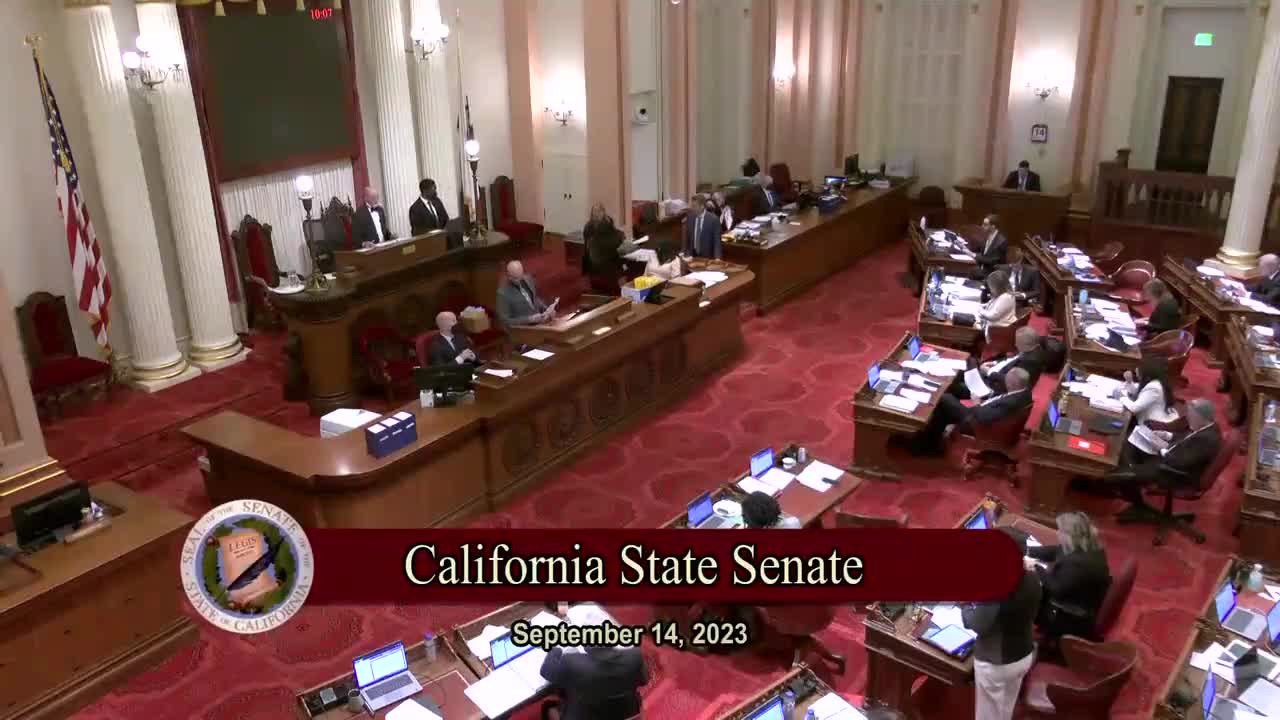 2MIN
Senate Floor
 2MIN
Assembly Floor
 50SEC
Assembly Floor
 2MIN
Assembly Floor
 1MIN
Assembly Floor
 13MIN
Assembly Standing Committee on Public Safety
 2MIN
Senate Floor
 6MIN
Senate Standing Committee on Public Safety
Bill Author
Bill Co-Author(s):